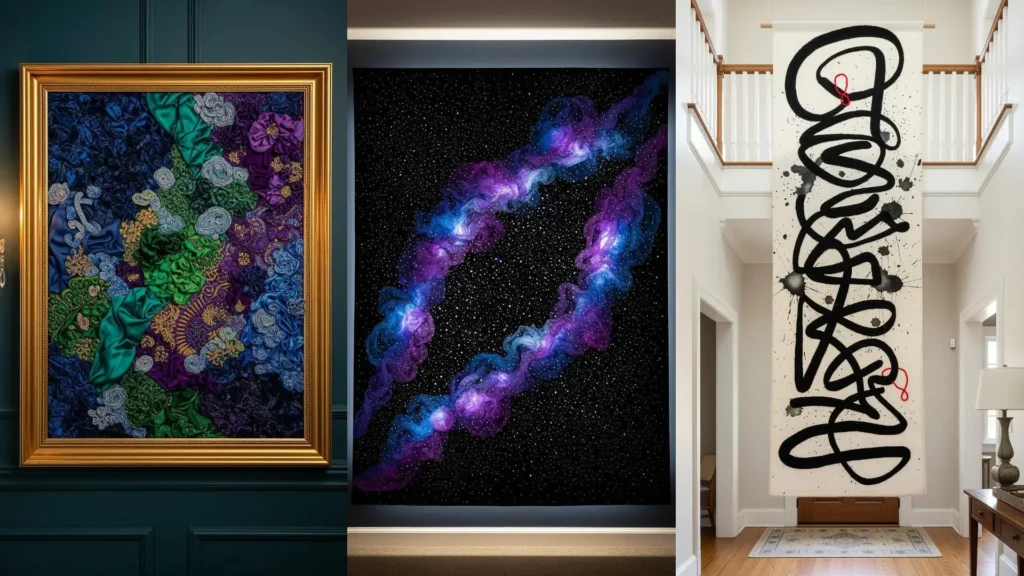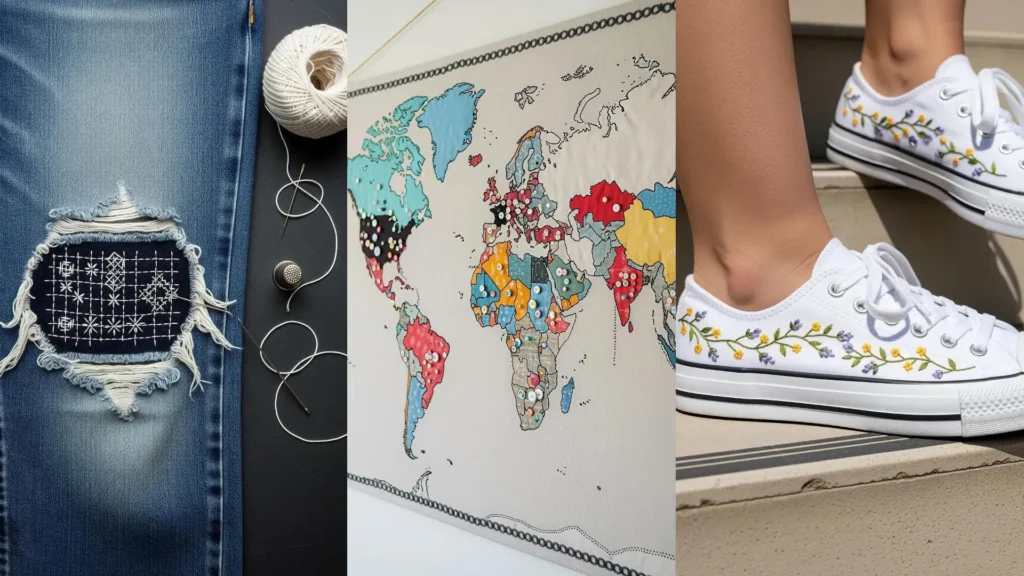
Sometimes, the quiet act of pulling a needle and thread through fabric is exactly what we need. But it’s easy to feel stuck, repeating the same stitches and patterns, wondering how to make your work feel truly special—more like art, and less like a craft kit.
The secret isn’t in learning hundreds of new, complicated stitches. Instead, it’s about making small, intentional choices. It’s in understanding how changing the direction of a stitch can mimic light, how layering textures can tell a story, or how a single, perfect line can have more power than a thousand messy ones.
Think of these ideas not just as projects to be copied, but as techniques to be understood and adapted. Here, you’ll find the methods that will add that layer of polish, depth, and confidence you’ve been looking for, turning every piece of fabric into a surface for your own unique expression.
1. Master Large-Scale Apparel Embroidery

To tackle a large design on denim, focus on how the direction of your stitches can create the illusion of light and movement.
Use long-and-short stitch to blend your reds, oranges, and golds, which gives the feathers a smooth, painterly gradient.
Reserve metallic threads for strategic highlights only; they add a brilliant flash but can be challenging to work with over large areas.
Always back the denim with a heavy-duty cut-away stabilizer before you begin stitching. This prevents the fabric from puckering under the weight of a dense design and ensures your finished piece lays flat.
2. Elevate Kitchen Linens with Botanical Accuracy
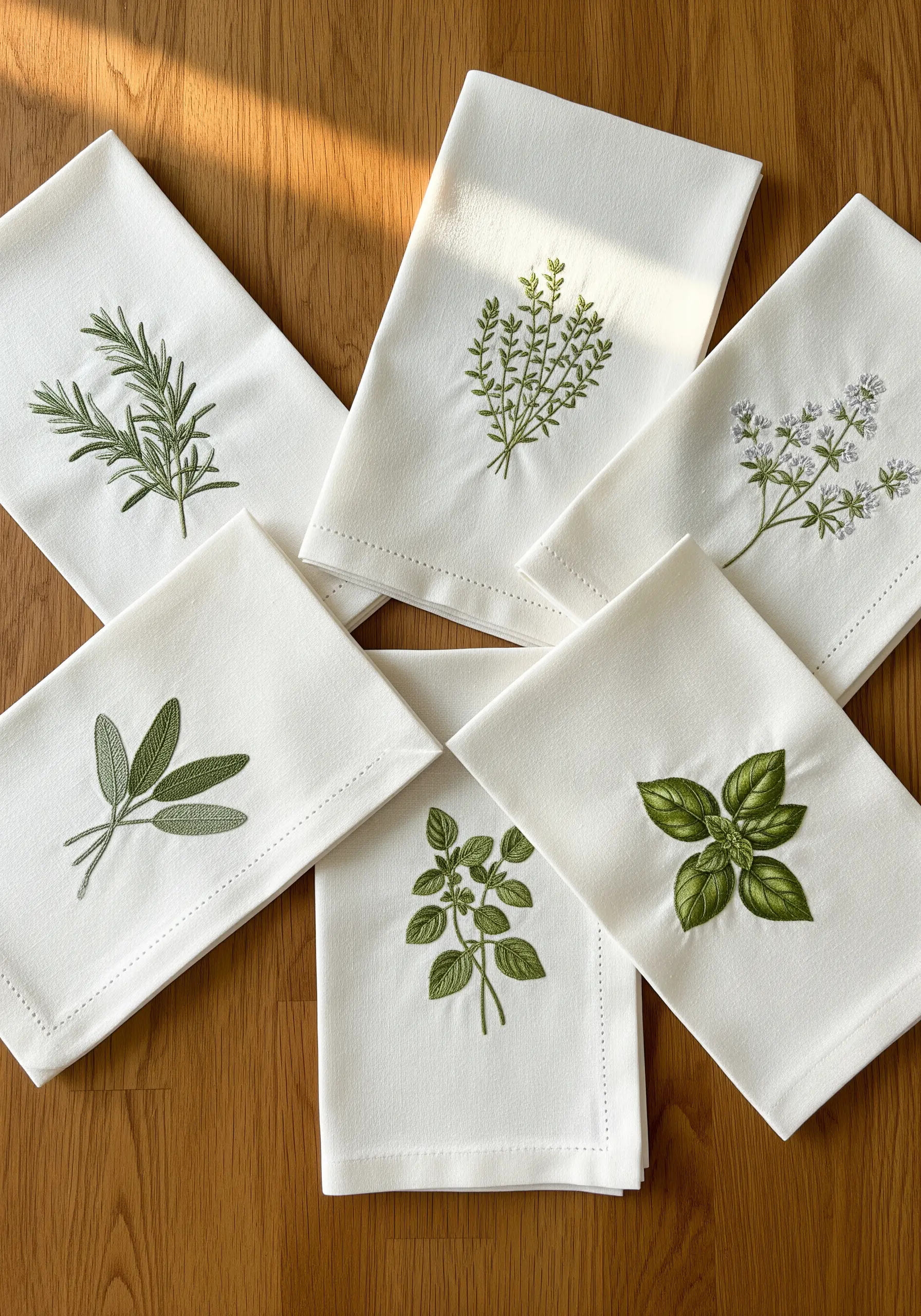
Move beyond simple outlines and use directional stitching to give your embroidered herbs a lifelike quality.
For basil leaves, use a satin stitch that radiates outward from the central vein, which perfectly mimics the leaf’s natural curve and sheen.
For finer textures like rosemary or thyme, use tiny detached chain stitches or single straight stitches to create the impression of individual needles and leaves.
This careful attention to detail turns a functional item like a tea towel into a small piece of botanical art.
3. Create High-Impact Texture with Yarn Couching
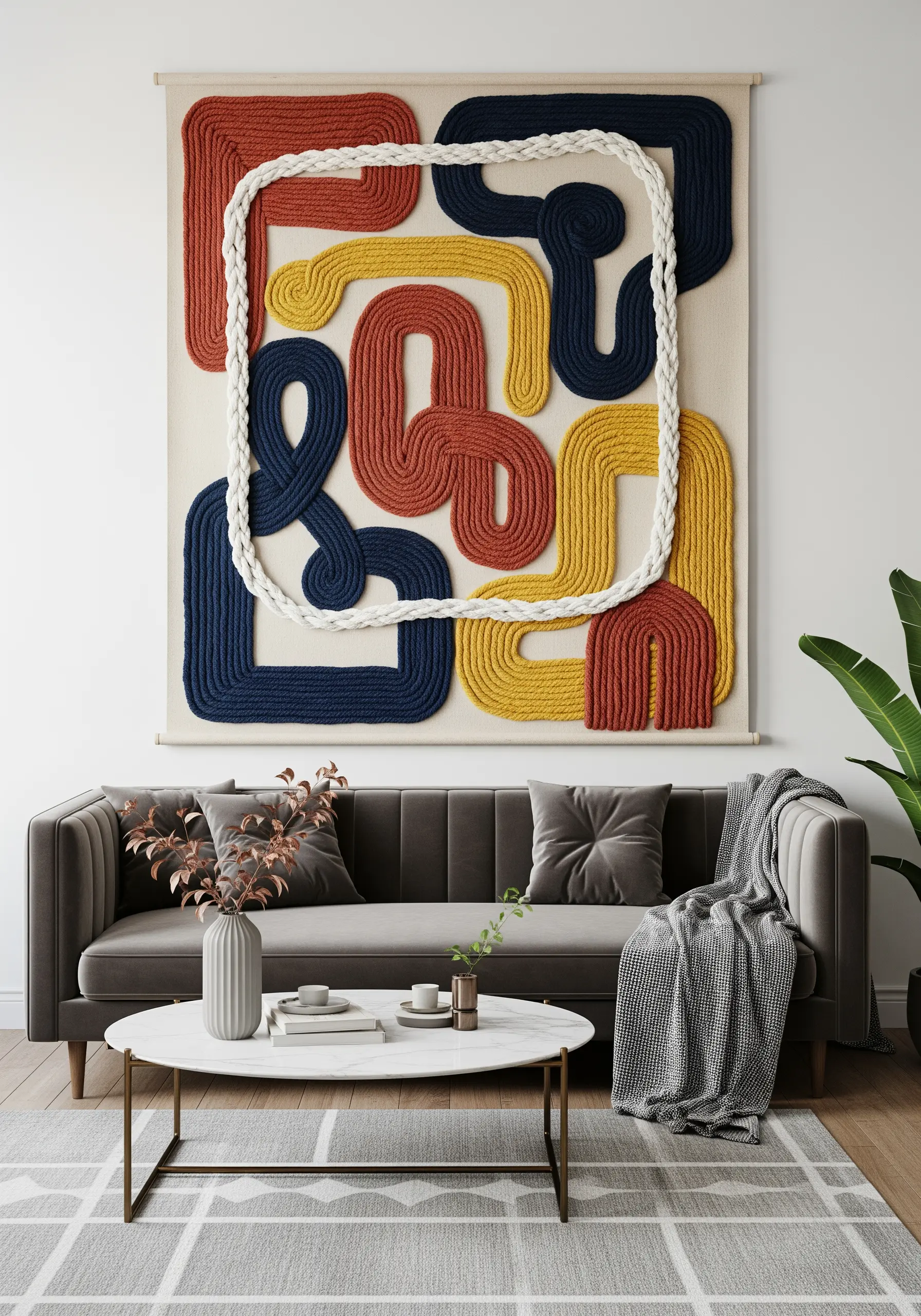
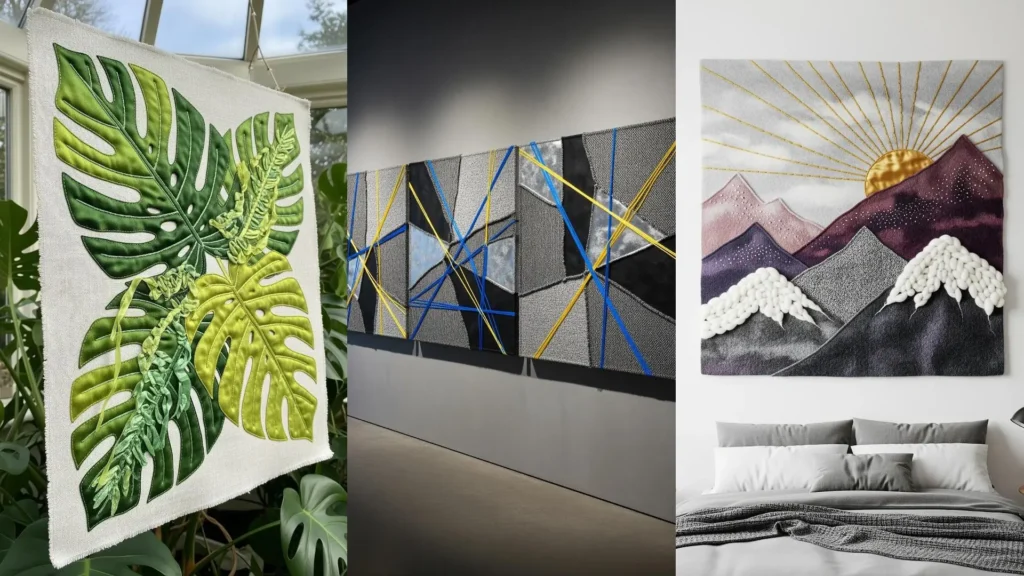
For large-scale abstract art, abandon floss and embrace the bold texture of thick yarn or wool roving.
The technique is called couching: you lay the yarn on your canvas and use a thinner, contrasting thread to tack it down with small, evenly spaced stitches.
This method allows you to create graphic shapes and cover large areas quickly, resulting in yarn wall art projects with dramatic, three-dimensional appeal that satin stitch could never achieve.
4. Use Appliqué for Bold, Graphic Statements
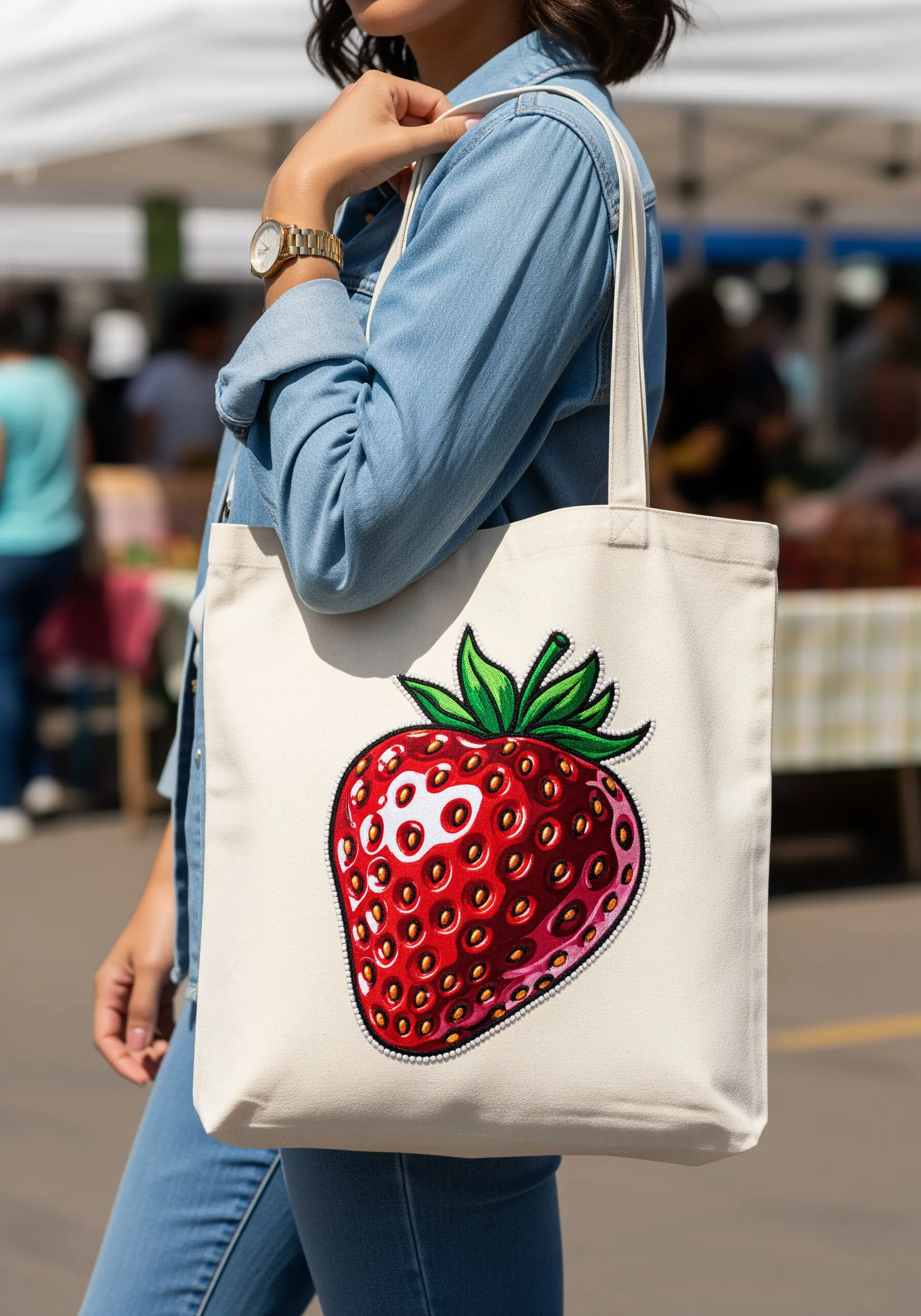
When you want a large motif to have a clean, solid impact on a tote bag or jacket, combine appliqué with your embroidery.
Cut the main shape from a non-fraying fabric like felt, secure it, and then use a dense satin stitch around the edge to create a sharp, raised border.
This method saves an enormous amount of thread, prevents the base fabric from warping, and makes your central design pop with graphic clarity.
5. Integrate Embroidery Directly into Upholstery
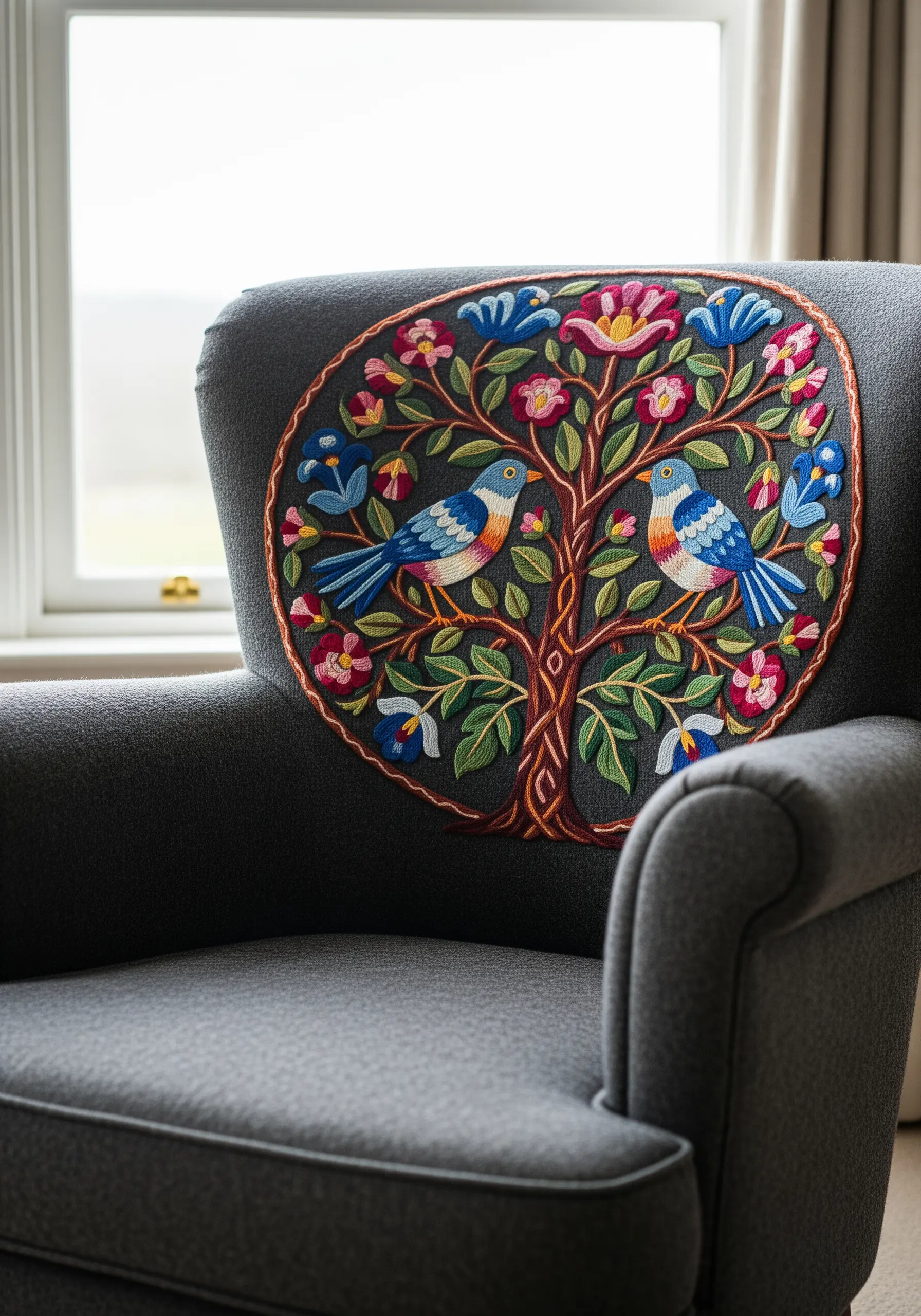
Elevate a piece of furniture by embroidering a design onto the fabric panel before it’s upholstered.
Work on a durable, tightly woven fabric and use a heavy-duty needle that can handle the thickness.
A dense satin stitch or classic crewelwork provides the necessary durability and visual weight to complement the scale of the furniture.
The final result is a truly custom piece that merges textile art with interior design, creating an instant heirloom.
6. Add Subtle Elegance with Minimal Line Art

You can transform an everyday object like a journal with just a few perfectly placed lines.
Use a single strand of metallic or high-contrast cotton floss and a simple backstitch or stem stitch.
The key to making this minimalist approach work is precision. Carefully transfer your pattern and focus on maintaining a consistent stitch length.
This proves that thoughtful restraint can be more powerful than a dense, fully covered design, and it’s a perfect way to experiment with botanical line art embroidery patterns.
7. Customize Canvas Shoes with Trailing Vines
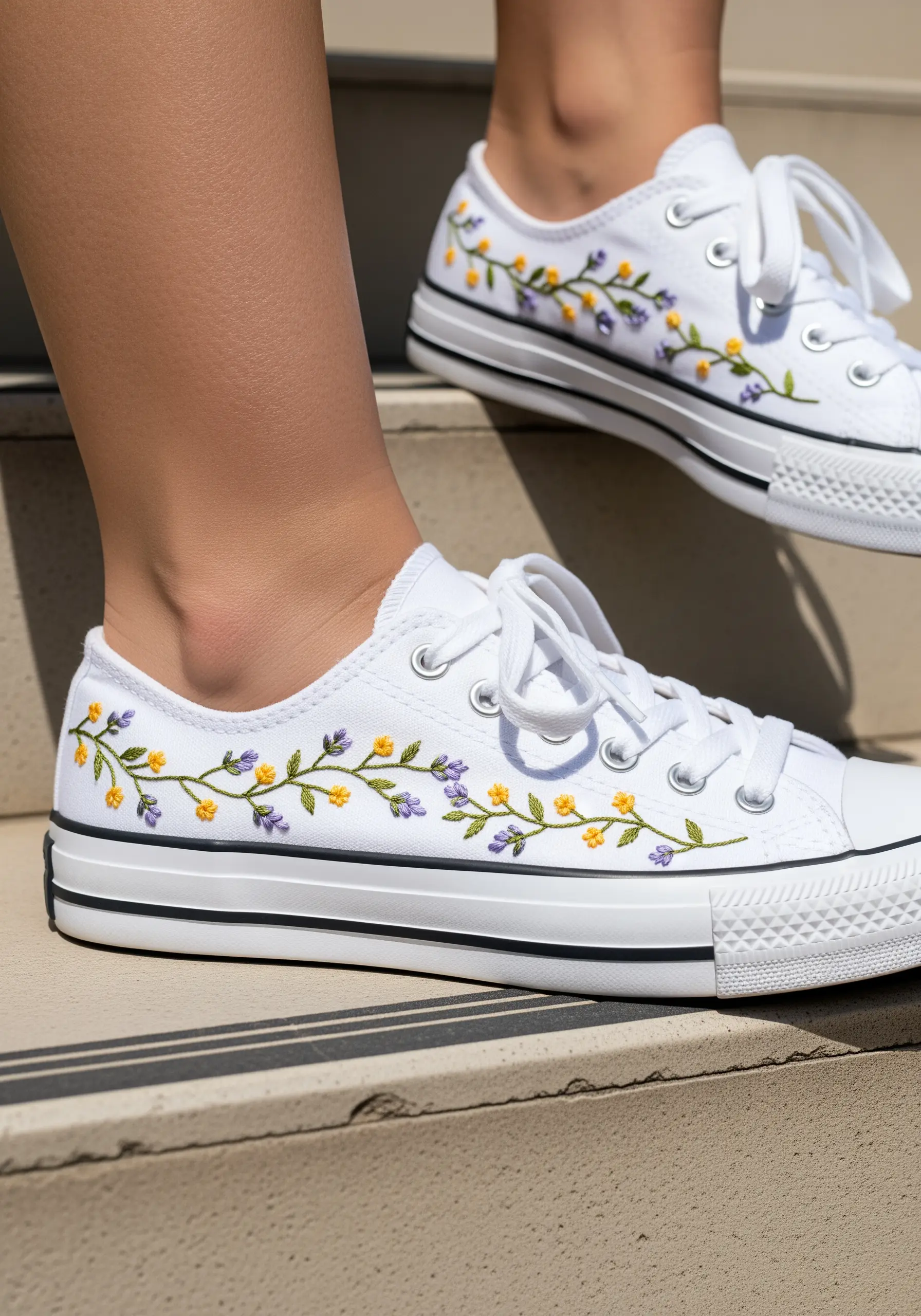
When embroidering on sturdy canvas sneakers, your most important tools are a curved needle and a thimble to help you navigate tight corners and push through the tough fabric.
Choose a durable, colorfast thread like pearl cotton that can withstand scuffs and weather.
A flexible design built from stem stitches for the vines and French knots for blossoms will move with the shoe without pulling or distorting.
8. Create Luminous Textures with Thread Painting
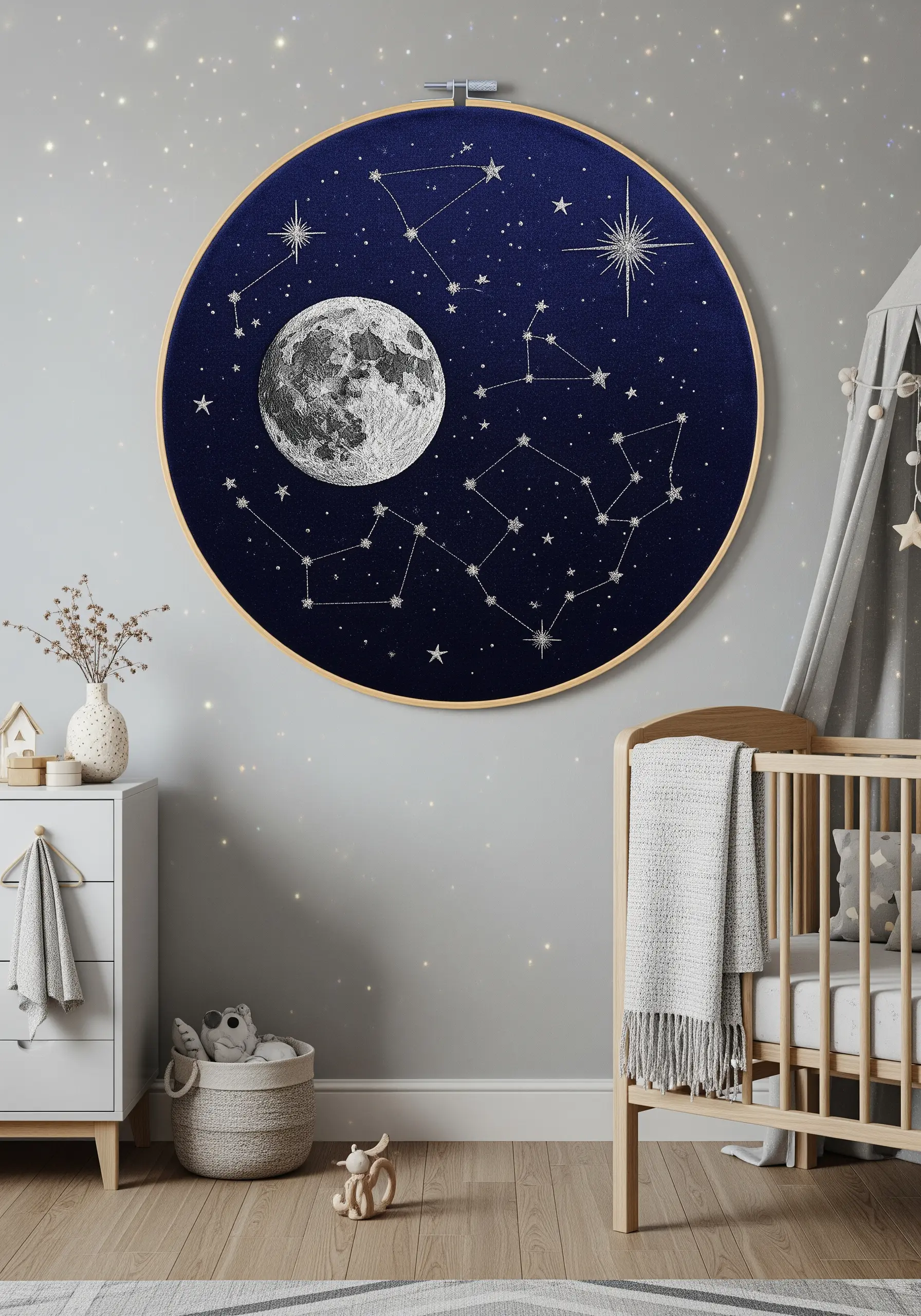
To stitch a realistic moon, use a thread painting technique with a single strand of floss.
Work in a circular or spiral pattern, using a dozen shades of grey, silver, and white to build up the highlights and shadows of the craters.
For the surrounding constellations, a single strand of metallic silver thread and tiny seed stitches will make them glitter against the dark fabric, creating beautiful and emotional nursery decor.
9. Explore Dimensional Stitching for Lifelike Insects
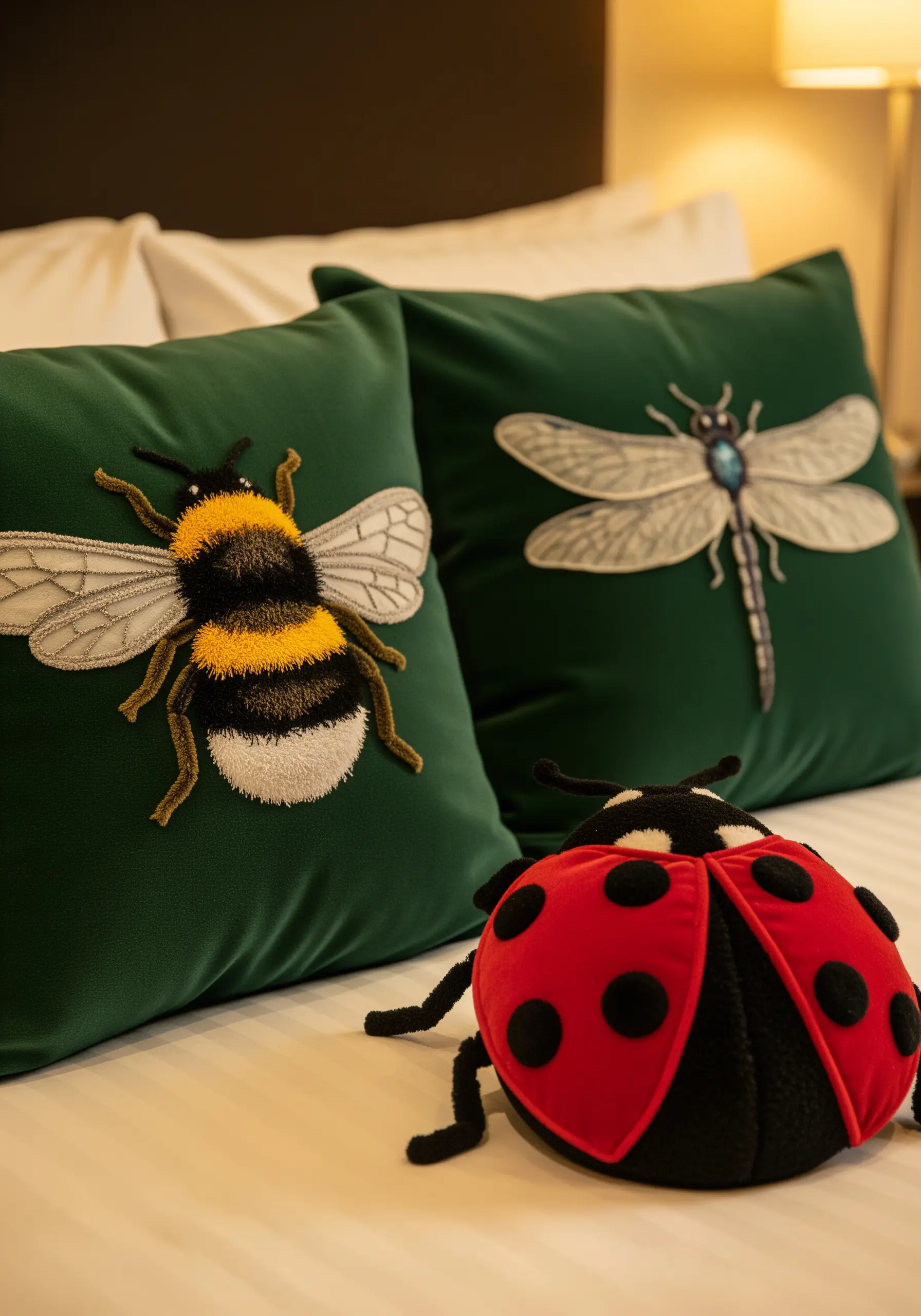
Bring textile insects to life by incorporating dimensional stitches and materials.
For the bee’s fuzzy thorax, use the turkey work stitch, leaving loops that you can later trim to create a soft, velvety pile.
To give the dragonfly’s wings a realistic translucency, stitch a fine outline on a layer of sheer organza and then appliqué it onto the velvet cushion.
These tactile animal-themed pillow stitching ideas invite touch and add a layer of sophistication.
10. Design a Cohesive Theme for Table Linens
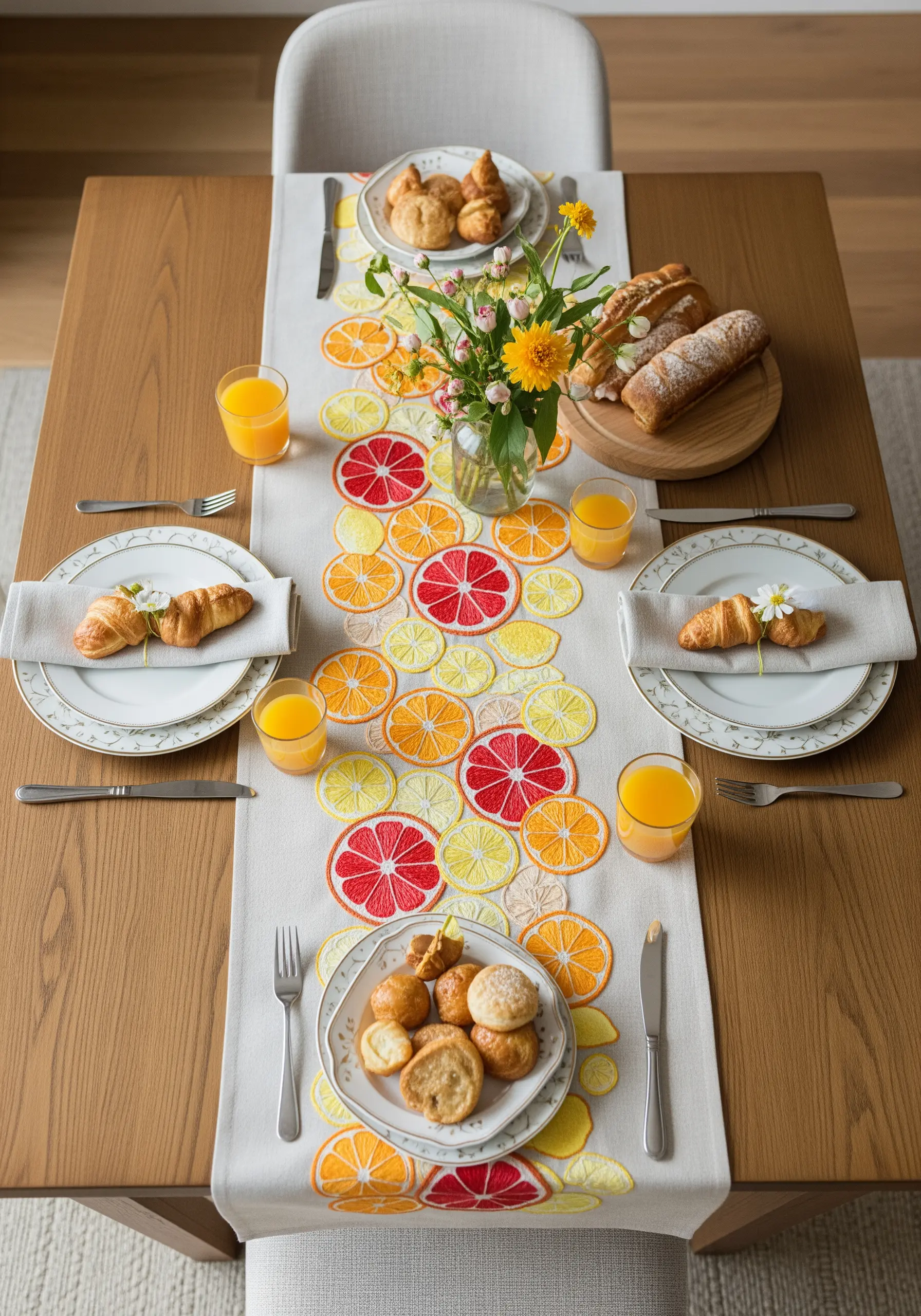
To create a vibrant table runner, choose a single motif and repeat it in a scattered, organic pattern.
Give the citrus slices a plump, juicy look by using a padded satin stitch. You can achieve this by first laying down a base of straight stitches within the shape before covering it with your final satin stitch.
Outlining each segment in a split stitch first will give you a crisp, clean edge to fill against. It’s a professional touch that elevates simple line art garden motifs that transform table runners.
11. Embroider on Unexpected Surfaces like Lampshades
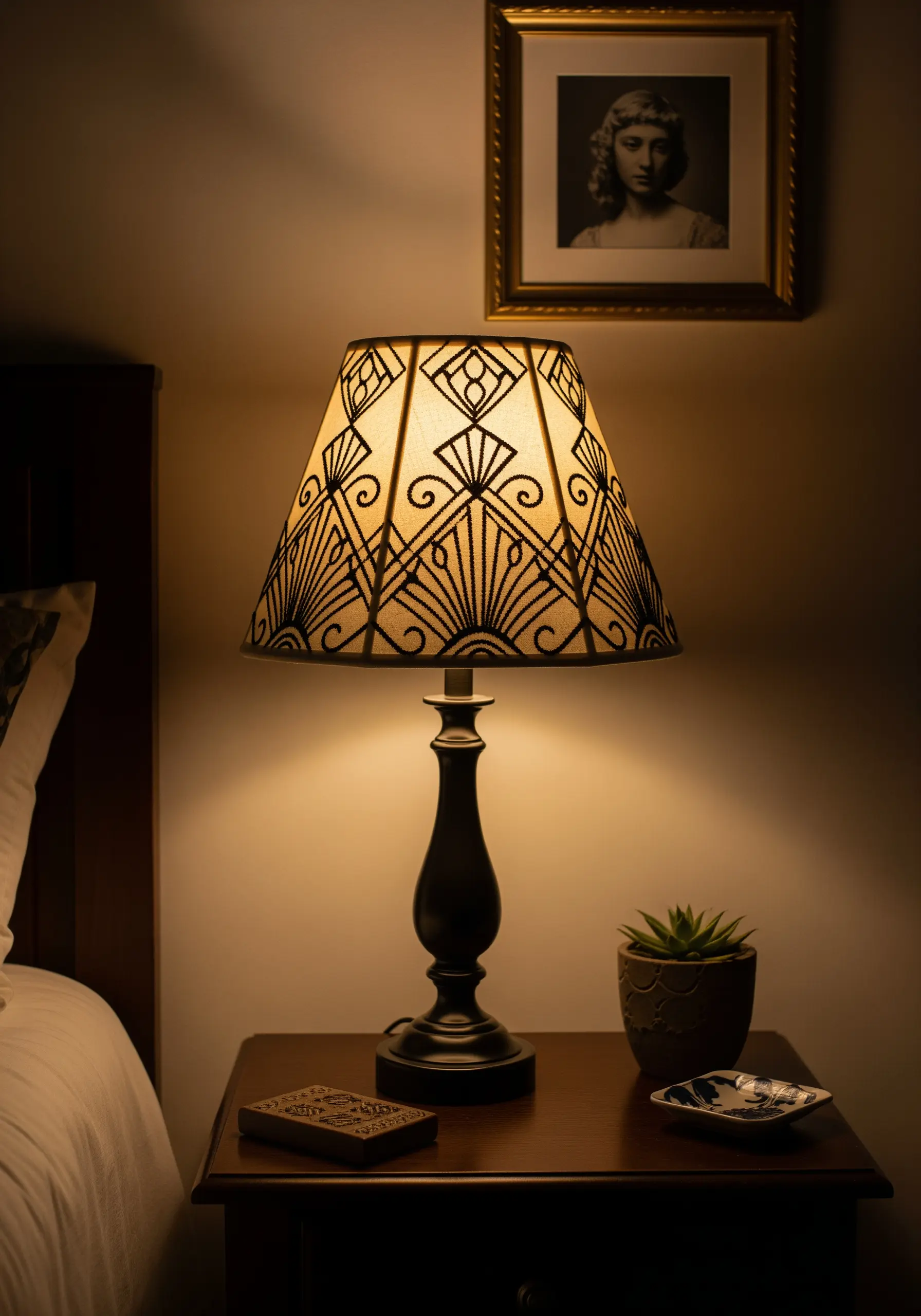
A lampshade can become a canvas for dramatic light and shadow play.
Choose a bold, graphic pattern and stitch it with a simple backstitch or stem stitch using a dark, heavy thread.
You will need to carefully remove the fabric from the wire frame, stitch your design flat while using a stabilizer, and then re-adhere it.
When the lamp is turned on, the embroidered lines will cast intricate shadows, transforming the entire room’s ambiance.
12. Add a Graceful Border to Sheer Fabrics
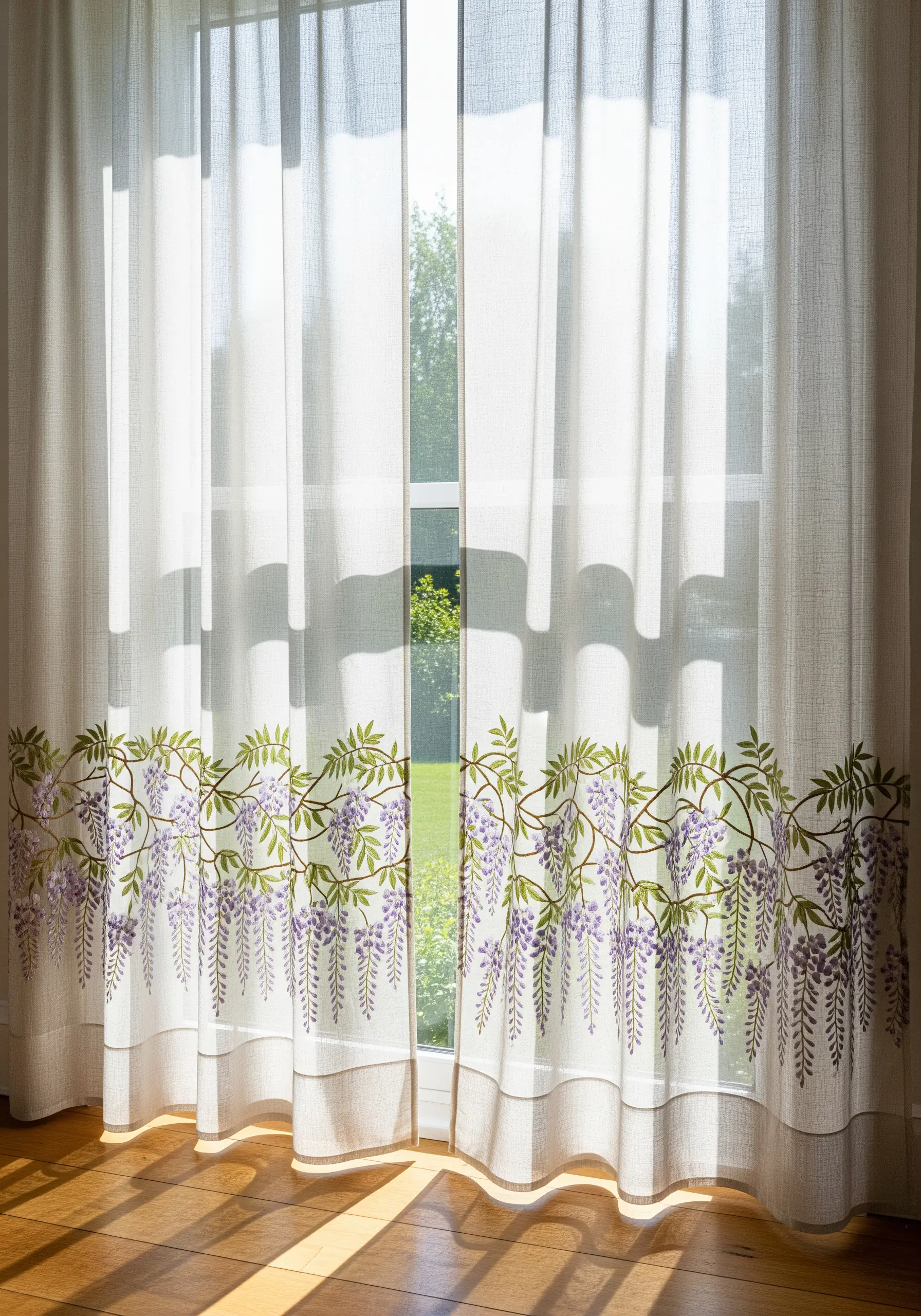
When embroidering on a delicate, sheer fabric like curtain linen, a lightweight tear-away stabilizer is essential. It provides support during stitching without adding permanent bulk.
Use airy, delicate stitches that won’t weigh down the fabric. French knots and detached chain stitches are perfect for creating the impression of cascading wisteria blossoms.
This technique creates a beautiful effect where the design seems to float, allowing sunlight to filter through your stitches.
13. Transform Mending into Visible Art with Sashiko
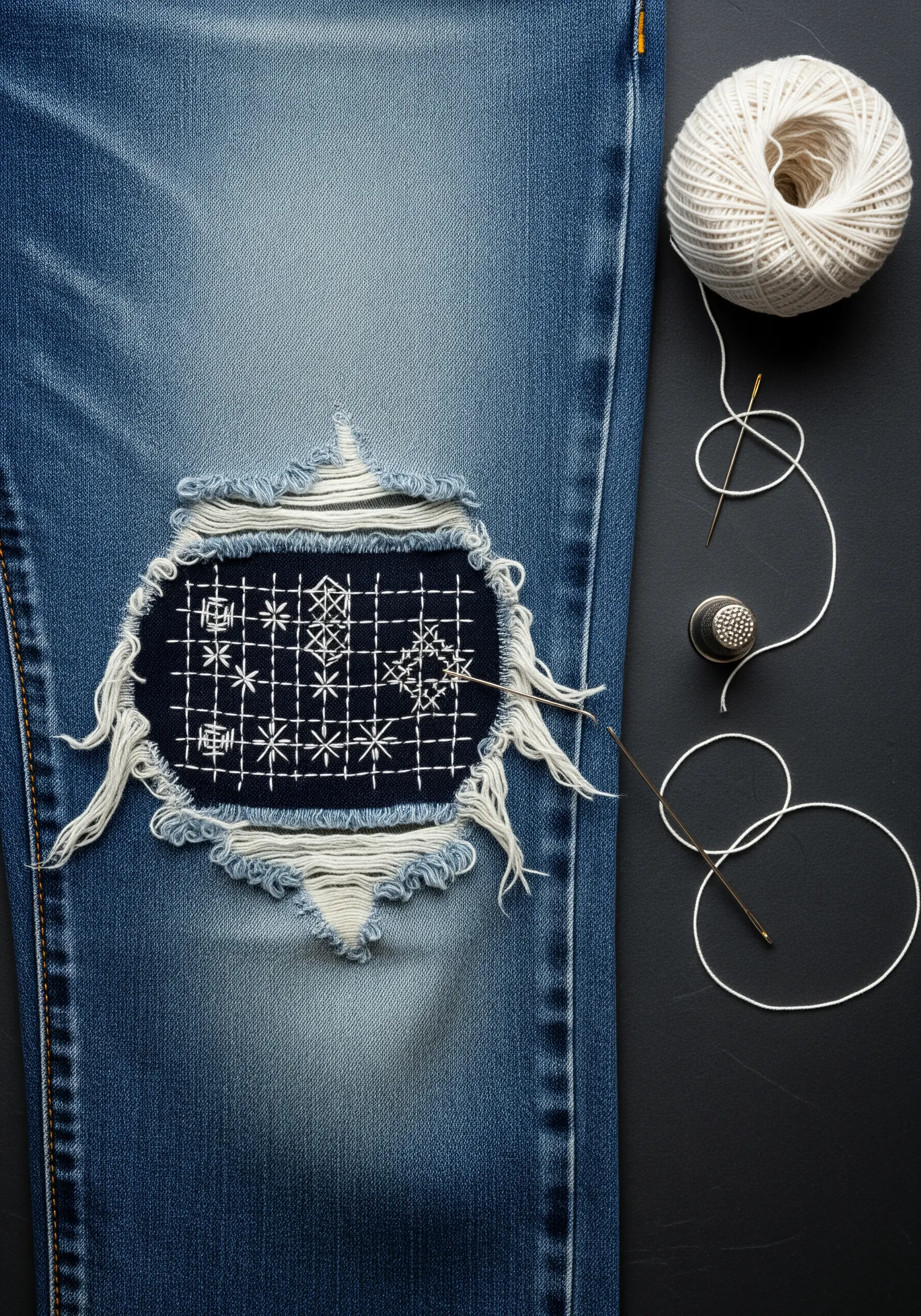
Instead of hiding a tear in your denim, celebrate it with the Japanese art of Sashiko.
Place a sturdy patch behind the hole and use a thick, contrasting thread to work a geometric pattern of running stitches over the entire area.
These stitches are not just decorative; they create strong reinforcement lines that make the mended area more durable than the original fabric. It’s a philosophy of finding beauty in imperfection.
14. Achieve Photorealism with Needle Painting
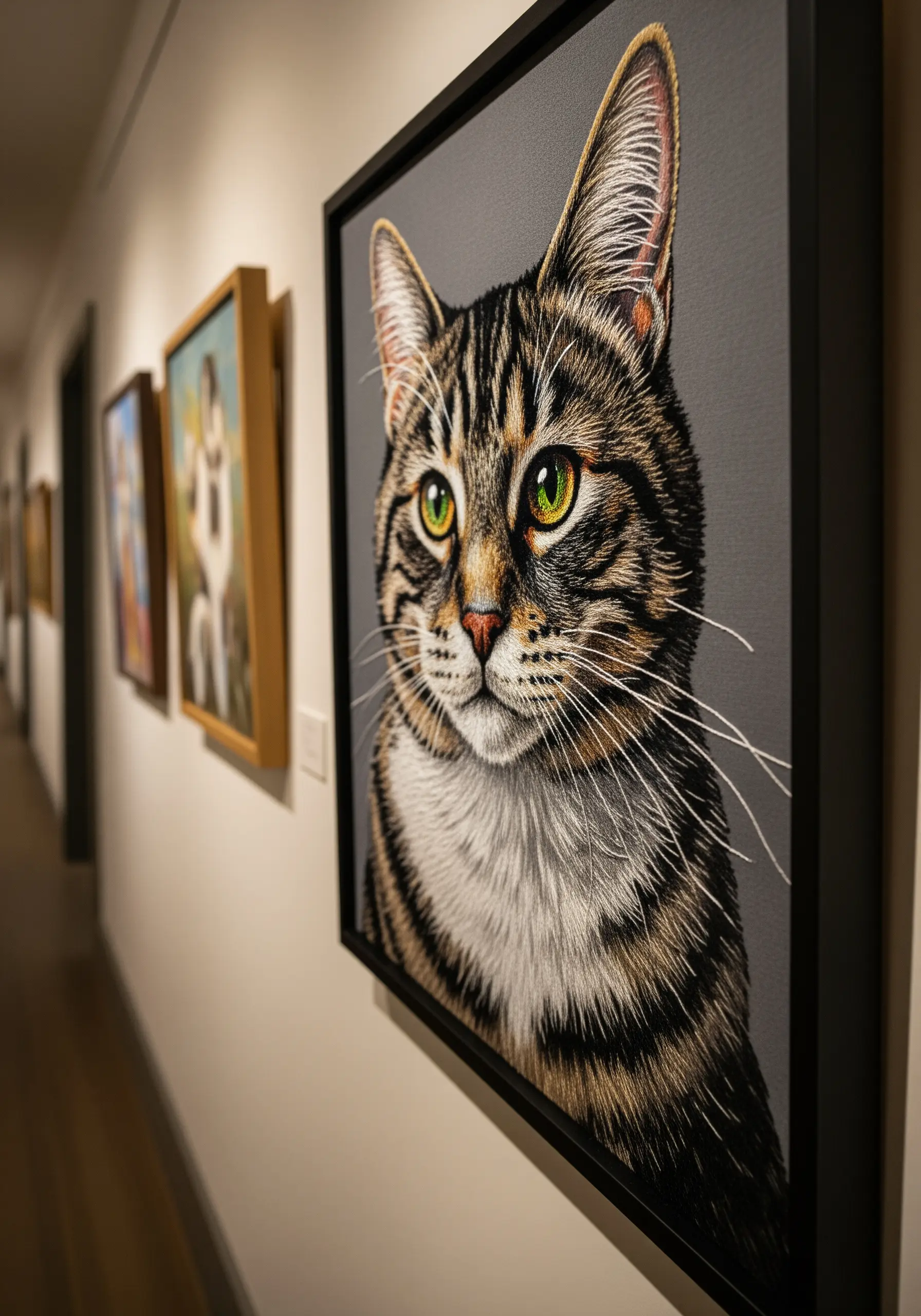
To create a portrait with the depth and realism of a photograph, you must master the long-and-short stitch, also known as needle painting.
The entire piece is worked with just one or two strands of floss, allowing you to blend dozens of colors seamlessly to capture the subtle shifts in fur or skin tone.
Pay close attention to the direction of your stitches—they must follow the contours and growth patterns of your subject. This patient technique results in some of the most stunning framed embroidery pieces you can imagine.
15. Create Graphic Pop Art for Everyday Items

For a clean, modern, cartoon-style look on kitchen towels, the key is a flawless satin stitch fill and a bold, crisp outline.
To prevent gaps and achieve that smooth, solid block of color, always use a stabilizer and ensure your stitch tension is perfectly even.
A strong backstitch or stem stitch in a contrasting color like black will define the shapes and give them that playful, graphic quality. These cartoon style embroidery ideas work well because of their simplicity and bold execution.
16. Integrate Beadwork for Luxurious Texture
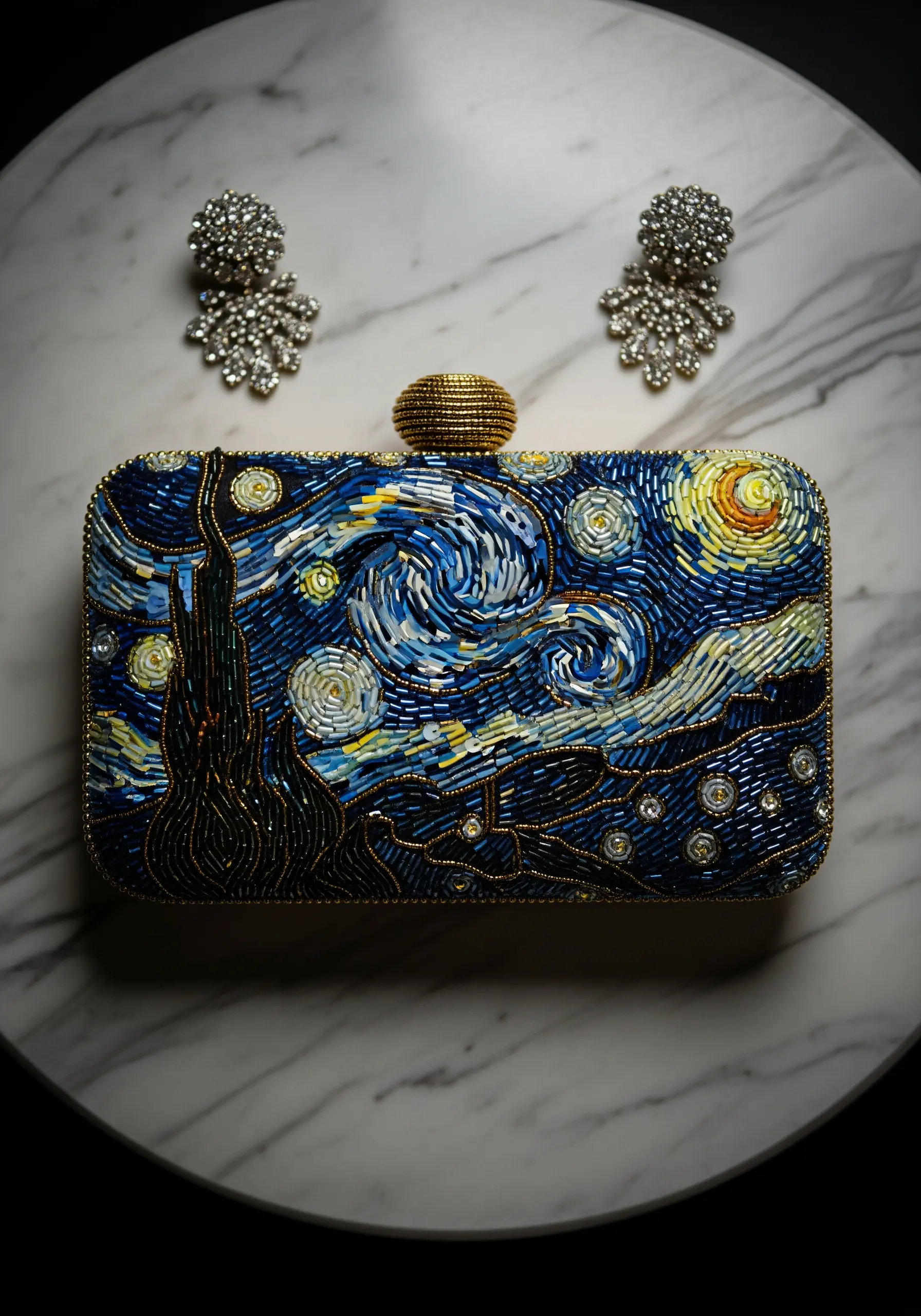
To add dimension and a light-catching quality to your work, combine beading with traditional embroidery.
Lay down a foundation of straight stitches or thread fills to act as a guide, then come back over the top to secure your beads.
Use long bugle beads for straight lines and tiny seed beads for filling curves. This mixed-media approach transforms a flat design into a rich, tactile surface, turning an accessory into a piece of art.
17. Capture Detail with Architectural Blackwork
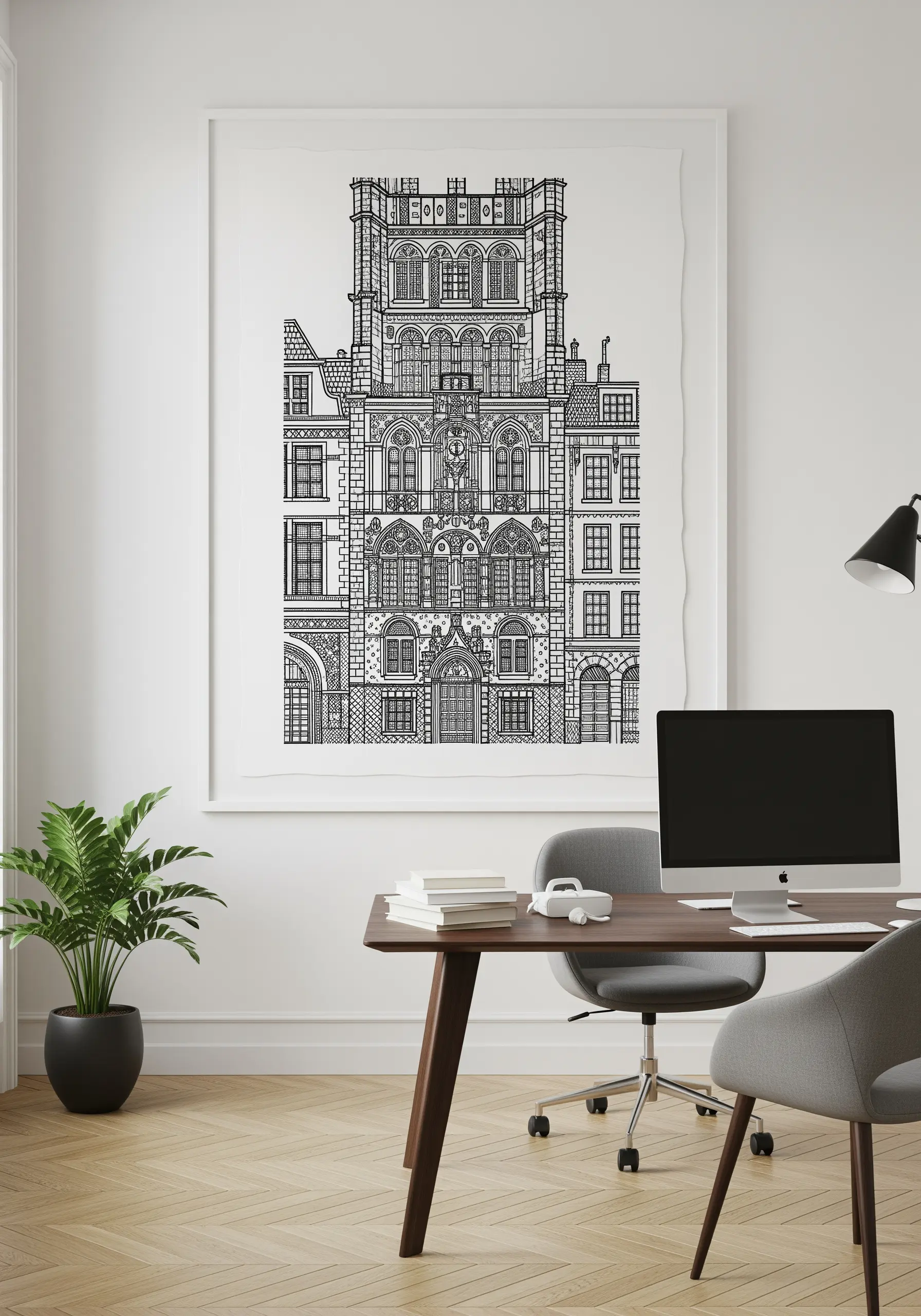
Blackwork embroidery is traditionally defined by its use of repeating geometric patterns to create texture and shading, making it perfect for architectural subjects.
Using just a single strand of black thread on a high-count fabric, you can vary the density and scale of these fill patterns—known as diaper patterns—to create a sense of light, shadow, and depth.
This transforms a simple line drawing into a complex study of form and texture.
18. Add Warmth and Weight with Crewel Embroidery
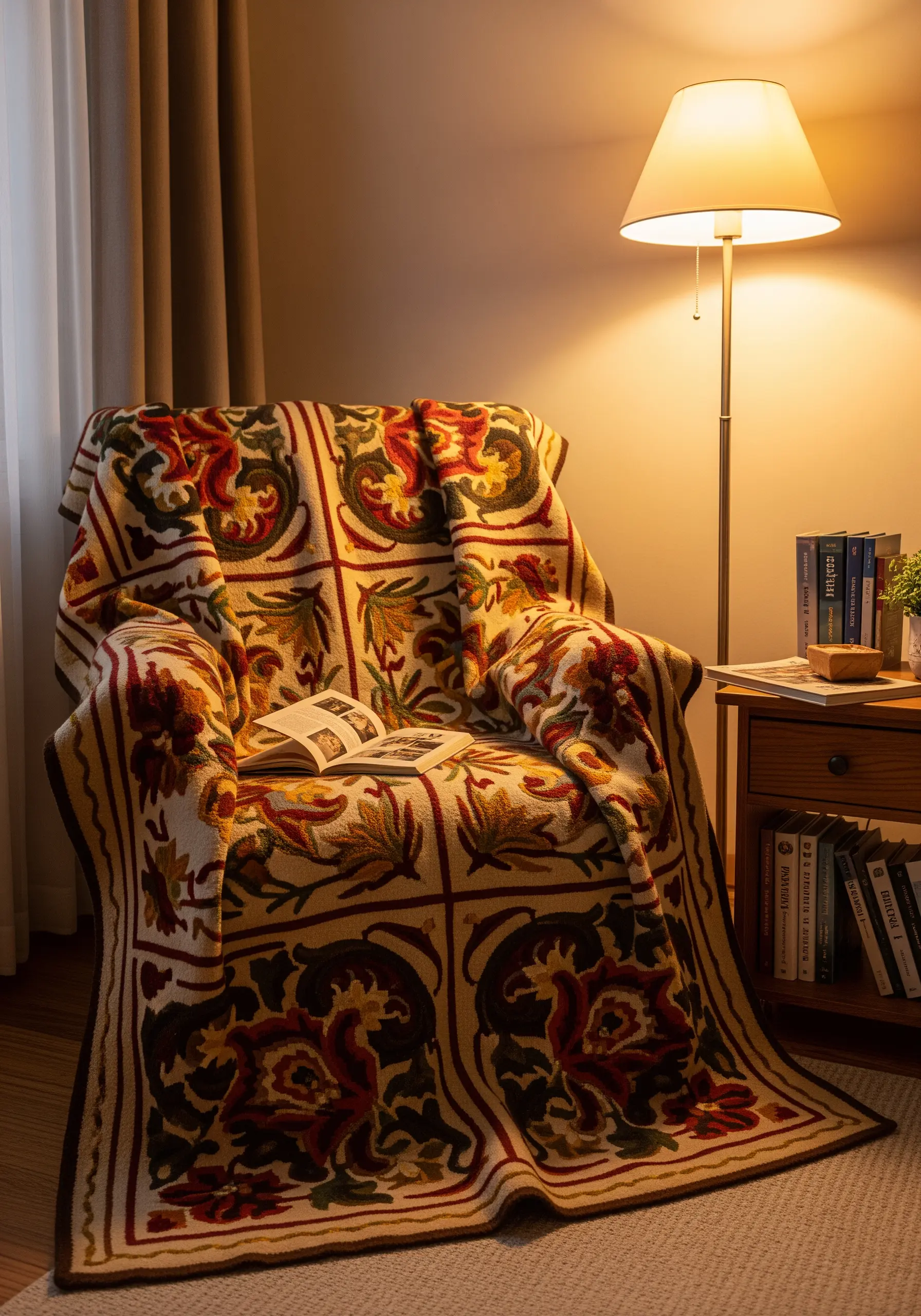
For a project that feels as cozy as it looks, try crewelwork. This traditional technique uses wool thread on a heavy ground fabric like linen twill or wool.
The thickness of the wool thread allows you to fill large areas quickly, and it creates a raised, dimensional texture that cotton floss can’t replicate.
It is the ideal technique for embroidered throws and blankets, adding both visual and physical warmth.
19. Combine Felt Appliqué with Simple Stitches
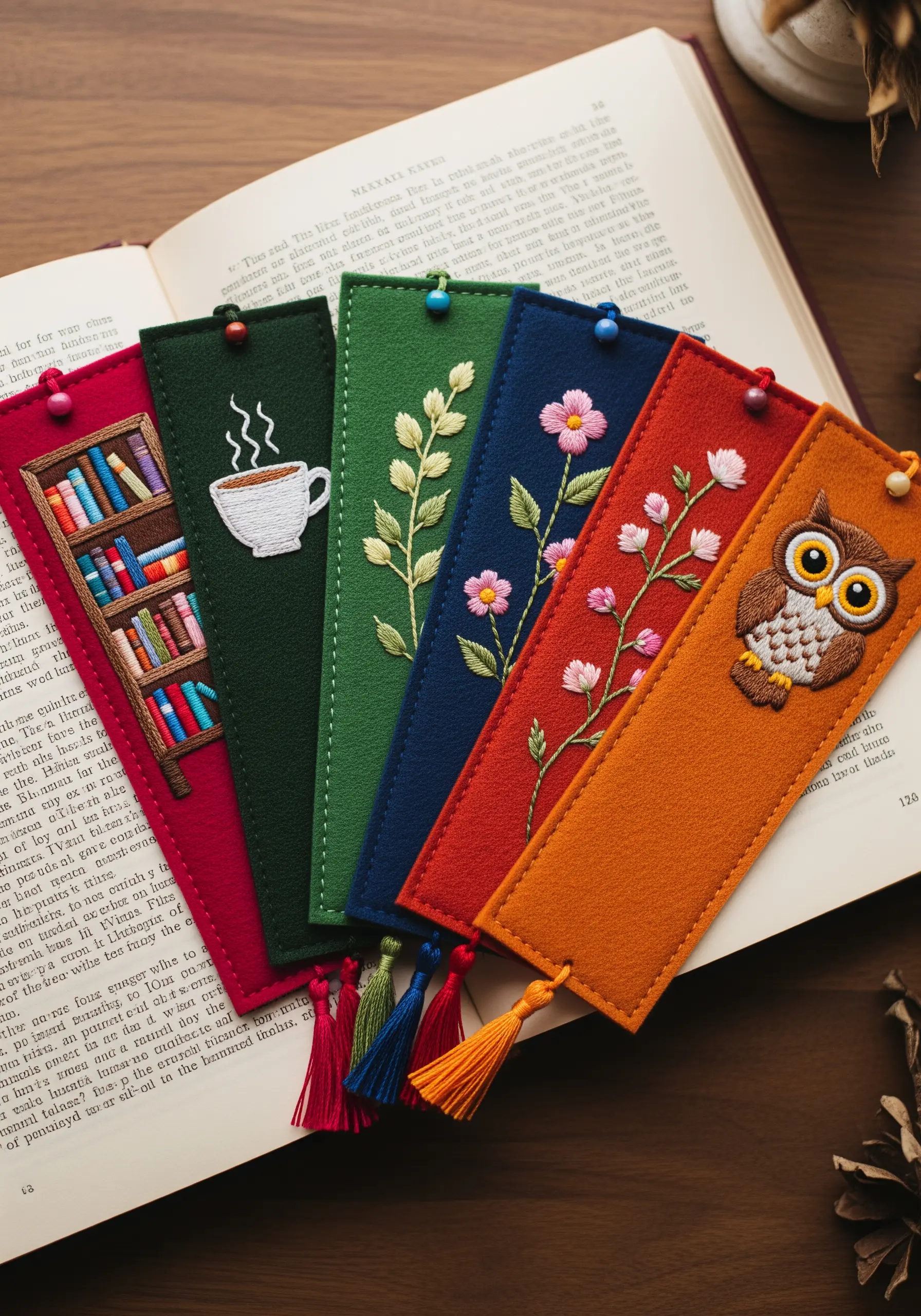
Felt is an ideal material for quick and satisfying projects like bookmarks because its edges don’t fray.
This allows you to cut out intricate shapes and appliqué them onto a felt base with a simple whipstitch or running stitch.
Once your main shapes are secure, you can add finer details with basic embroidery stitches. The combination of layered felt and thread creates a charming, sturdy result.
20. Embellish a Collar for a Touch of Sparkle
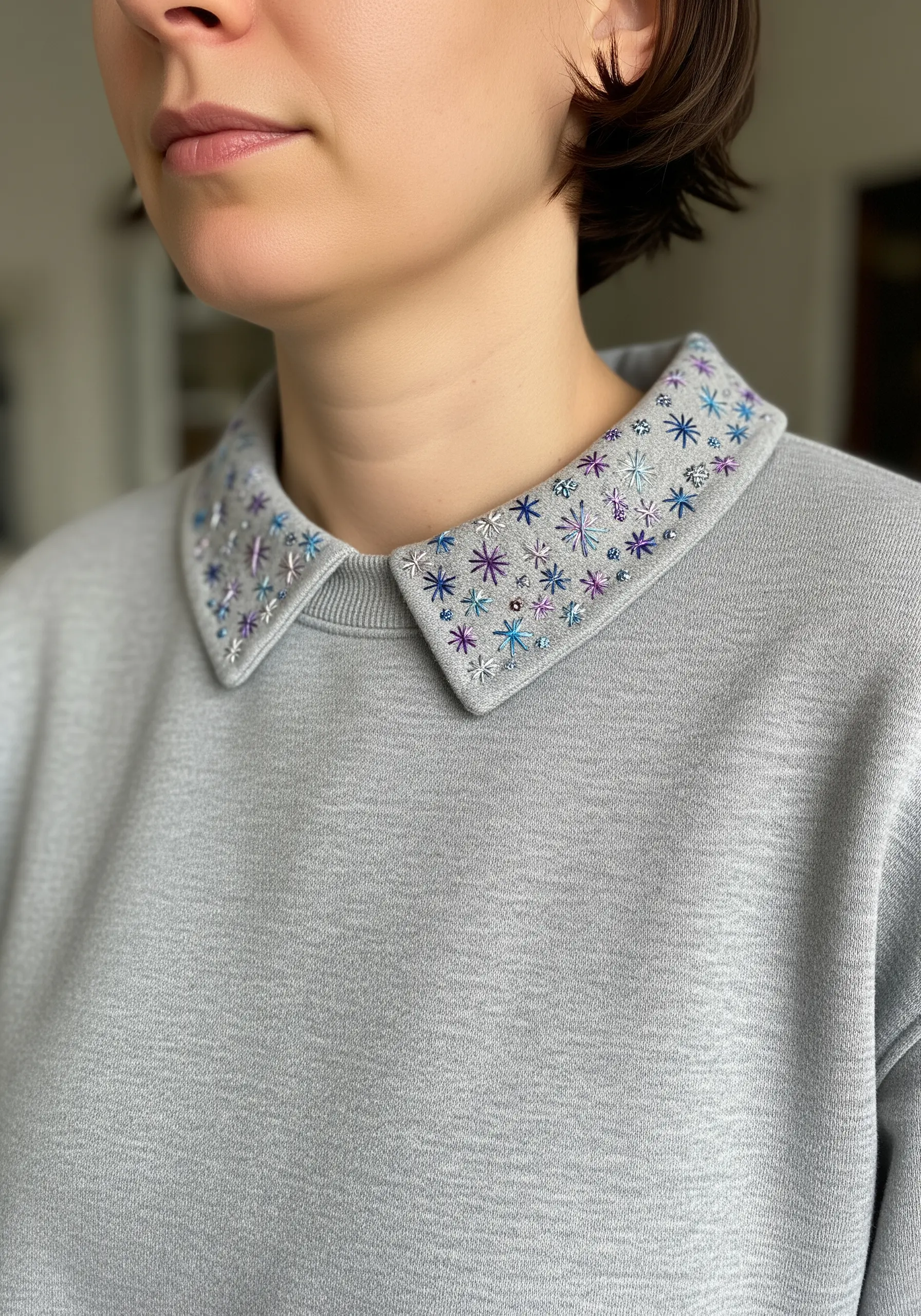
You can instantly elevate a plain sweatshirt or blouse by treating the collar as a piece of jewelry.
Create a scattered pattern of star stitches or lazy daisies, then anchor a seed bead or a small, subtle sequin in the center of each motif.
This technique adds a delicate, textural sparkle that feels intentional and custom. It’s proof that tiny embroidery patterns that make your clothes look custom-made can have a huge impact.
21. Go Big with Large-Scale Fabric Art
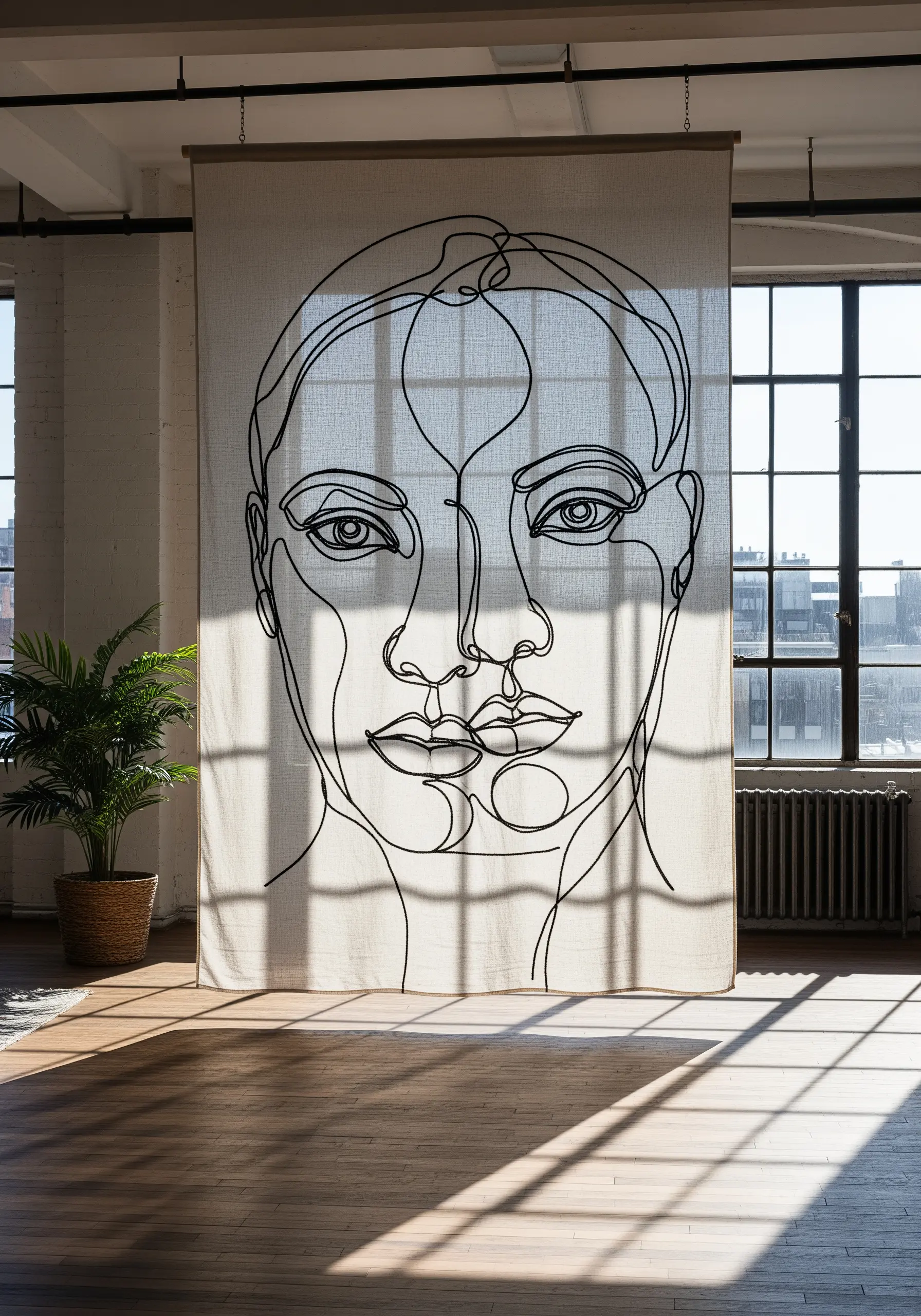
To create a wall hanging with major visual impact, scale up a simple continuous-line drawing.
Instead of embroidery floss, use thick black yarn or even a soft rope, and couch it onto a large piece of neutral-colored canvas.
This technique allows you to create bold, graphic lines that command attention and function as a piece of architectural art within the space. The drama comes from the scale, proving that stitched details that make plain walls pop elegantly.
22. Mix Quilting and Appliqué for a Charming Scene

Create a delightful, layered scene by combining three distinct textile techniques.
Start with a quilted base to provide background texture. Then, use appliqué to create the large, solid shapes of your subjects, like the vegetables.
Finally, add the finest details—like the veins on the cabbage leaves or the texture of the soil—with embroidery.
This layered approach builds a rich, narrative quality with wonderful depth and character.
23. Explore the Ancient Art of Goldwork
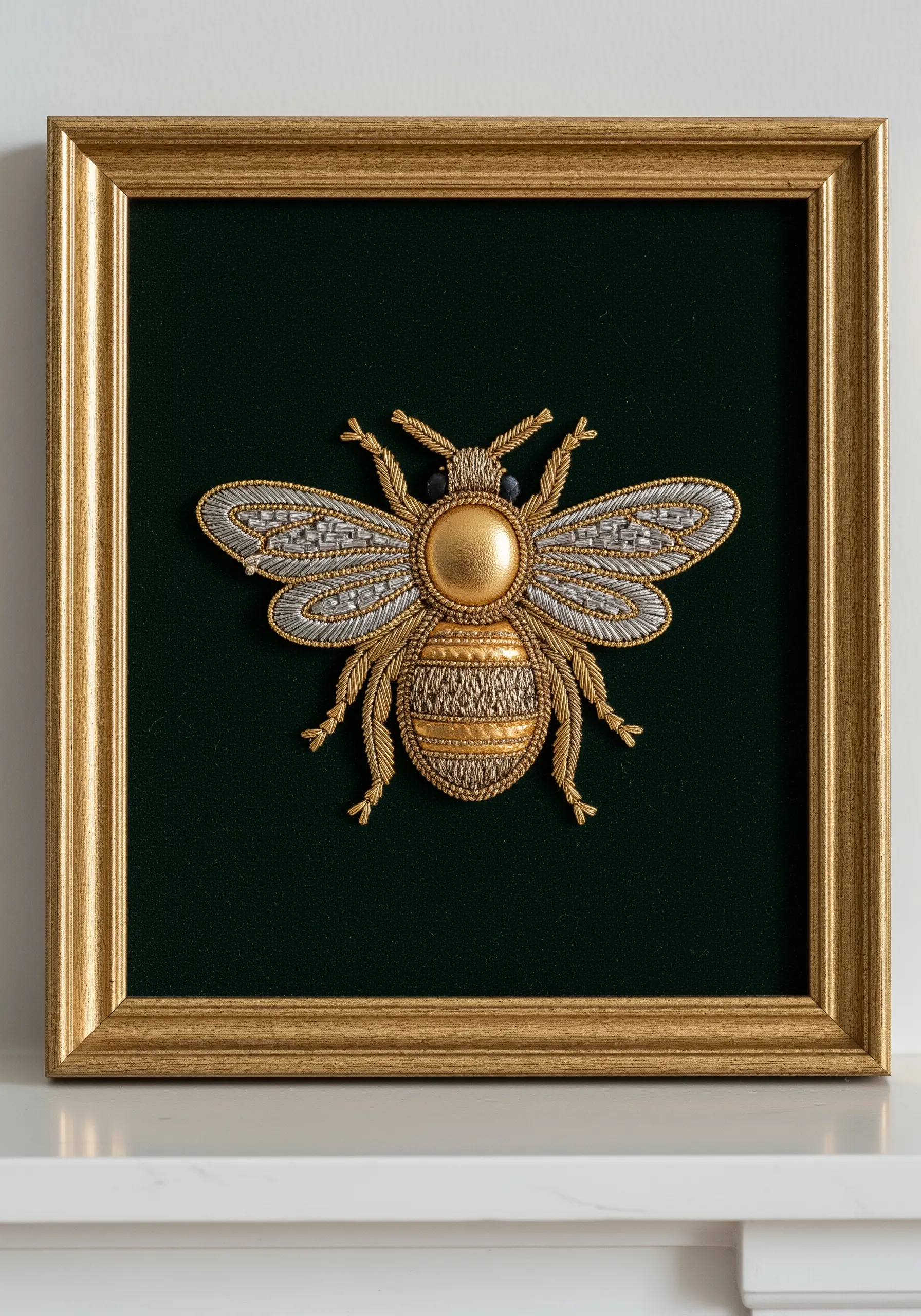
Goldwork is a historic embroidery technique that uses metal threads to create opulent, three-dimensional designs.
You apply the threads to the surface of the fabric—often over felt padding to create a raised, sculptural effect.
By using different types of metal thread, such as smooth passing thread versus textured pearl purl, you can create incredible contrast and detail.
Mounting your finished piece on a dark, rich fabric like velvet makes the metal truly shine.
24. Create Serene Landscapes with Stumpwork
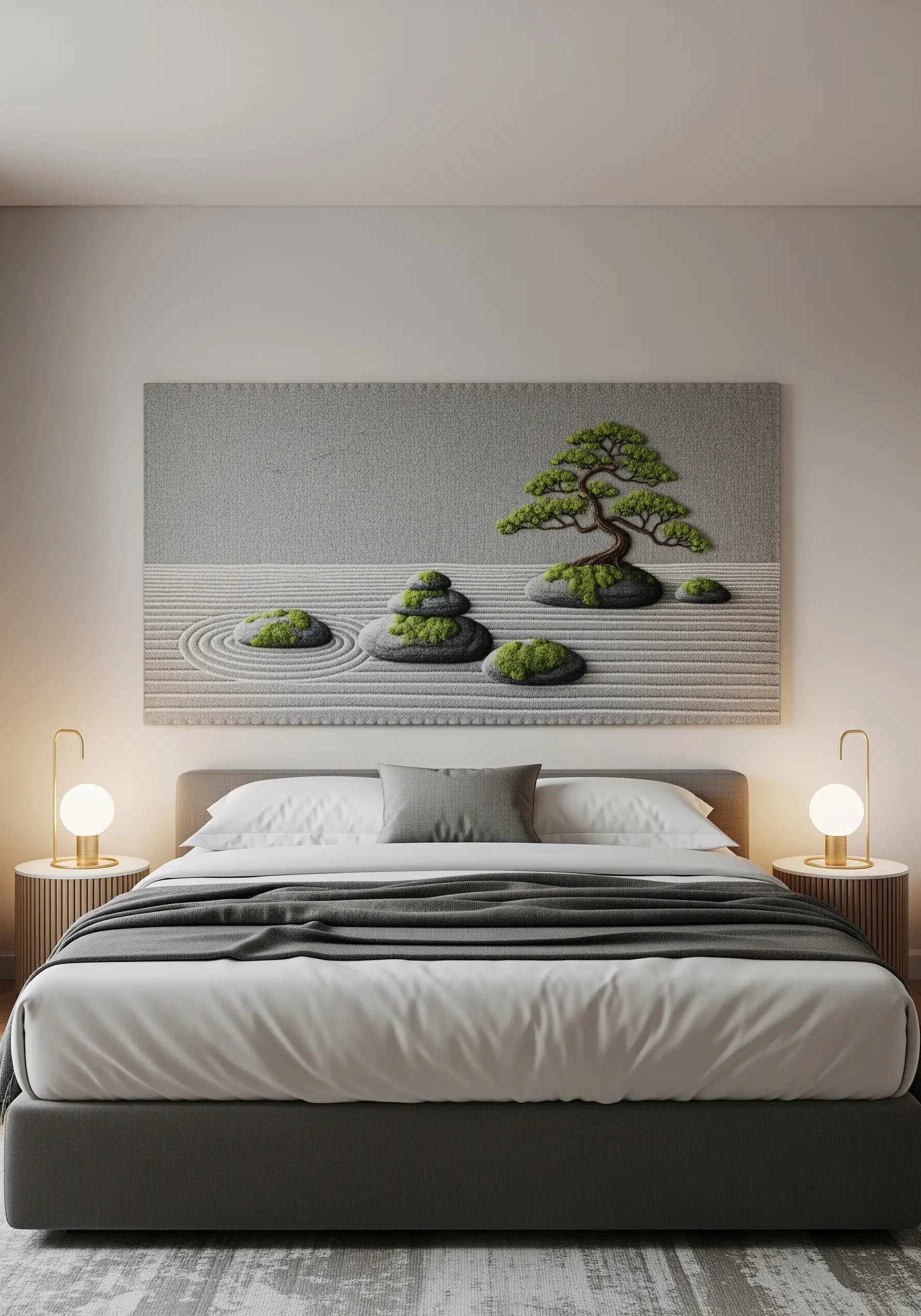
To build a truly three-dimensional Zen garden, explore the techniques of Stumpwork.
Create the rocks by embroidering over padded felt forms to give them volume. For the bonsai tree, stitch the foliage onto a separate piece of fabric over a fine wire frame, then cut it out and attach it to the main canvas so the leaves stand away from the background.
These are the kind of handmade embroidery touches that make every room feel natural and serene.
25. Build Whimsical Worlds with Layered Stitches
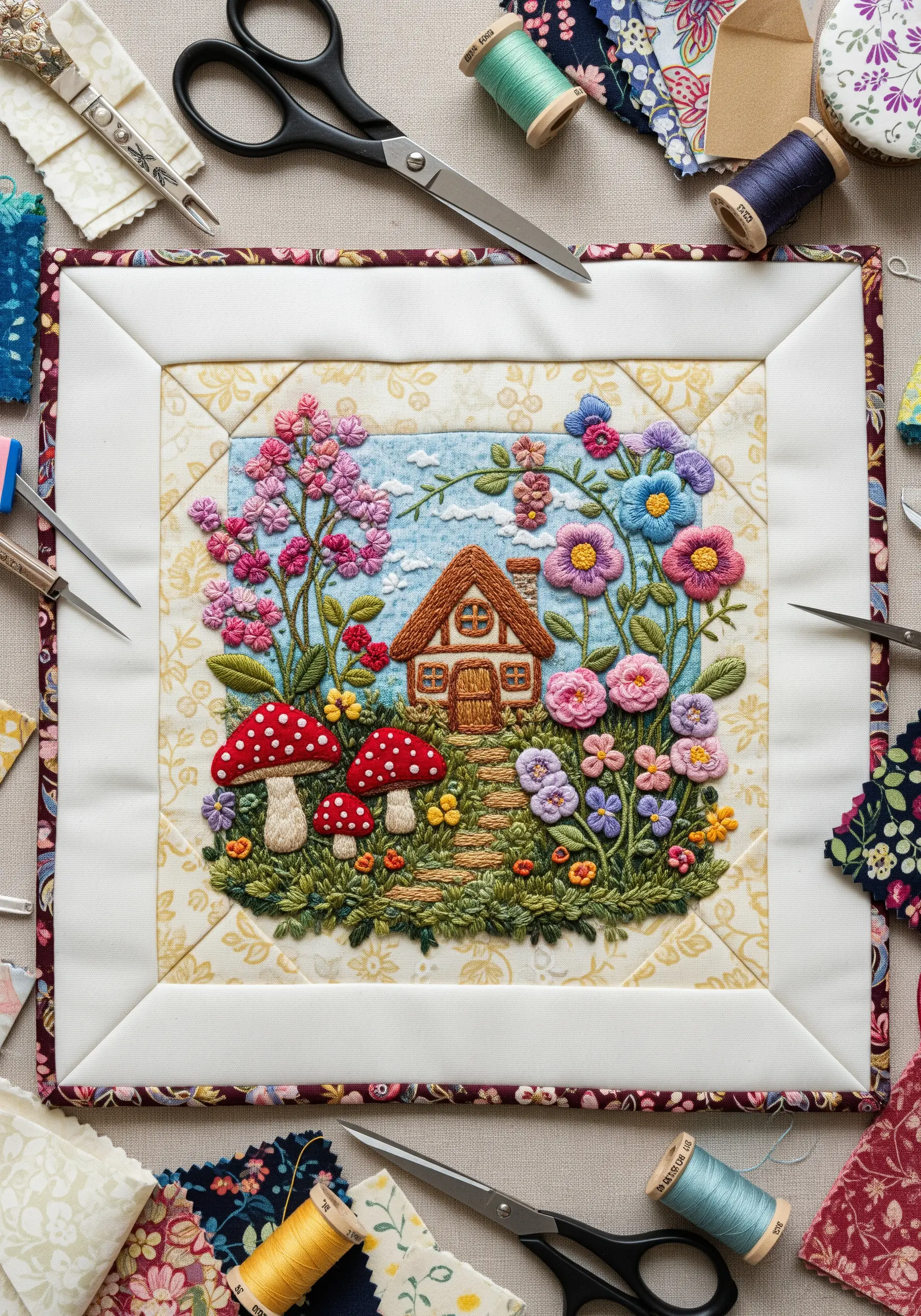
The key to a magical, storybook scene is a rich variety of textures that invites the viewer to look closer.
Layer different dimensional stitches to create depth. Use bullion knots for tightly coiled rosebuds, French knots for fluffy flower centers, and padded satin stitch to make your mushrooms look plump and round.
This is the essence of high-texture fabric collage embroidery projects, where the combination of stitches is what tells the story.
26. Document Your Travels with a Stitched Map
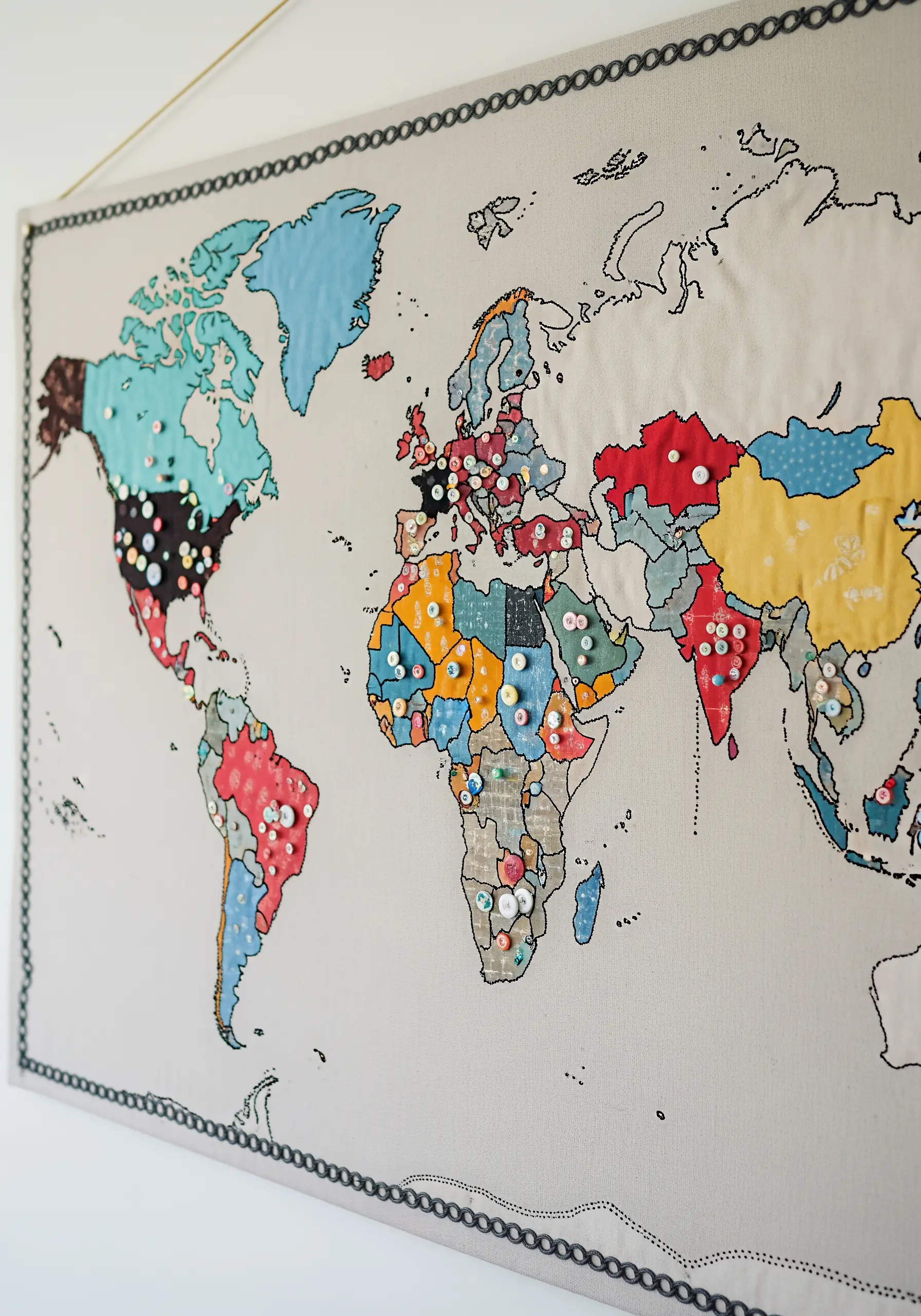
Create a living piece of art that chronicles your adventures. Start with a printed map on fabric, or appliqué fabric scraps for the continents.
Use a simple backstitch to define the coastlines and borders. Then, as you travel, mark each destination with a unique stitch, a tiny button, or a colorful pin.
Your map becomes a personal and ever-evolving record of your life’s journeys. You can even add tiny line art travel adventure symbols for places you’ve been.
27. Design a Modern Heirloom with Pixel Portraits
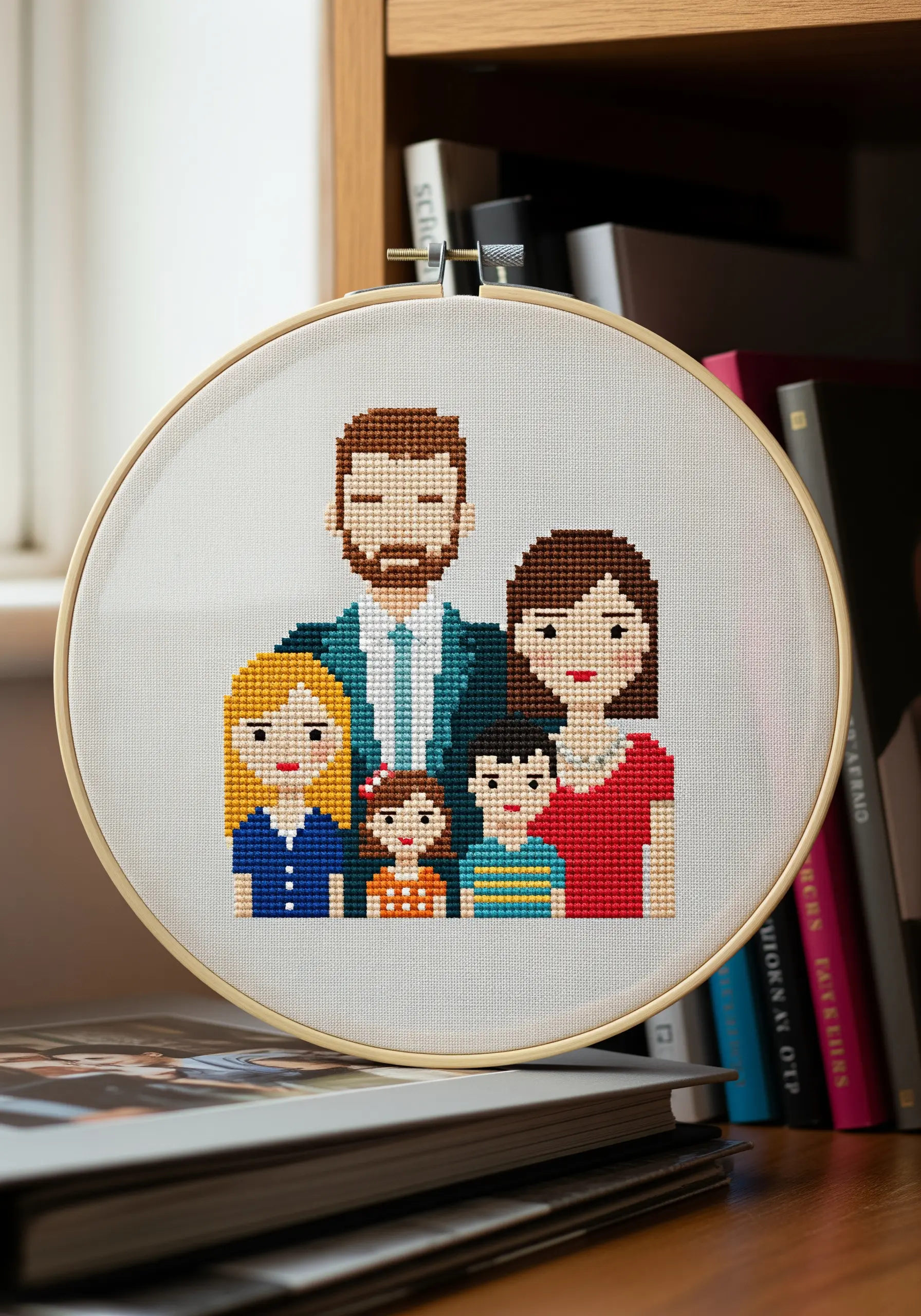
You can capture the spirit of your family with a modern, stylized cross-stitch portrait.
The key is not to strive for realism, but to simplify each person into their essential, recognizable features—a specific hairstyle, a favorite shirt, or a signature accessory.
This minimalist, geometric approach to portraiture results in a piece that is full of charm, personality, and a contemporary warmth that feels fresh and timeless.
28. Create a Cohesive Gallery Wall with Redwork
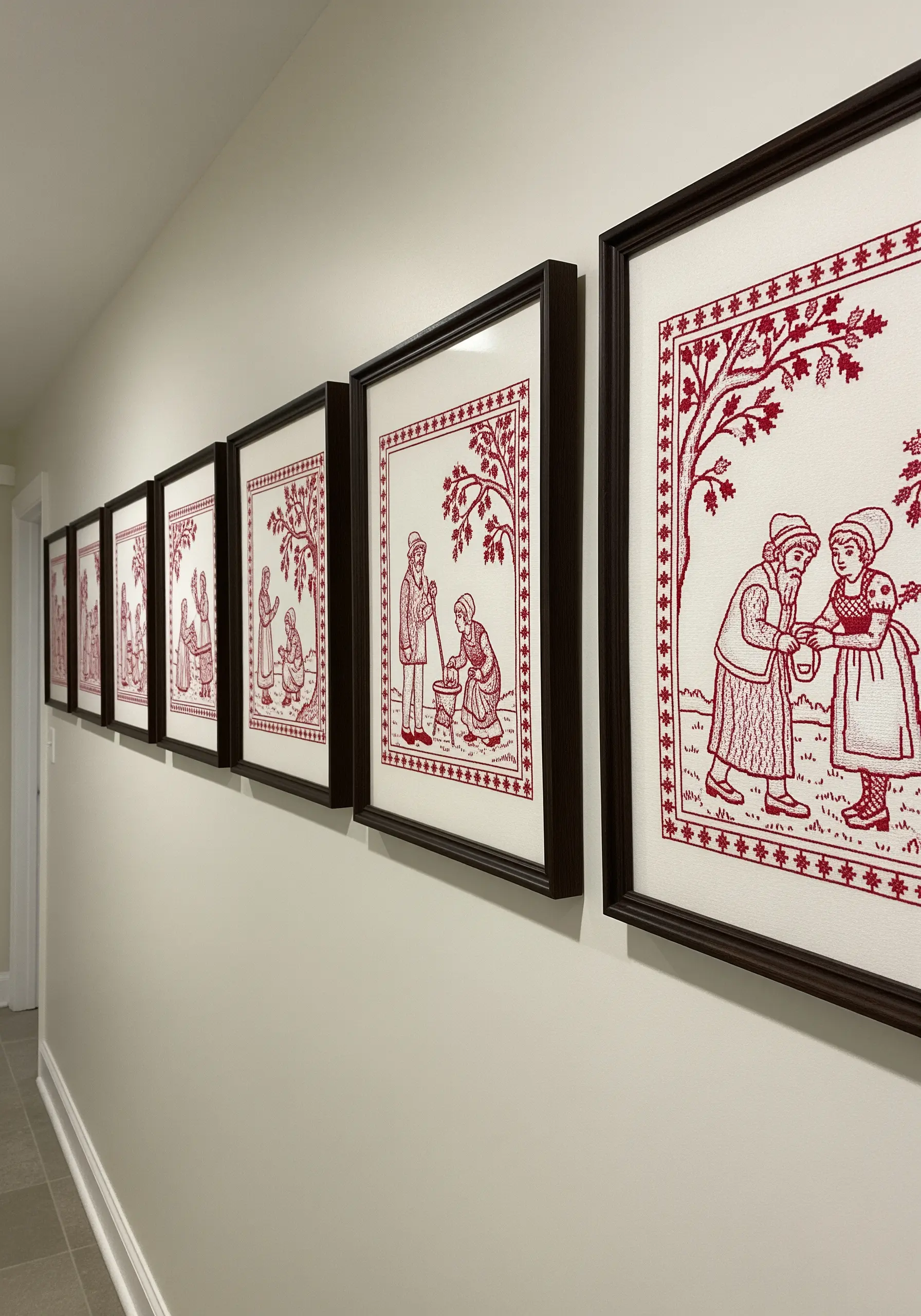
To create a powerful gallery wall display, unify your pieces with a single color.
Redwork, a traditional technique using red floss on a white or off-white background, is perfect for this. The strict color limitation forces the viewer to focus on the story and the quality of your line work.
Use a simple, clean outline stitch like a backstitch or stem stitch, and frame each piece identically for a curated, high-impact collection.