

Before you pick up another piece of fabric, I want you to look at the blank walls in your home—not as empty spaces, but as quiet canvases waiting for your story.
You have the skill, the threads, and the desire to create something beautiful. What’s often missing is the bridge between a simple craft project and a piece of intentional art that truly transforms a space. That bridge isn’t about complexity; it’s about clarity, composition, and confidence.
These ideas are designed to give you that clarity. They are not just patterns, but approaches—ways of thinking about texture, color, and form that will elevate your work. You can turn a forgotten hallway into a personal gallery, one thoughtful stitch at a time. Let’s begin.
1. Create a Cohesive Triptych with Interlocking Grids
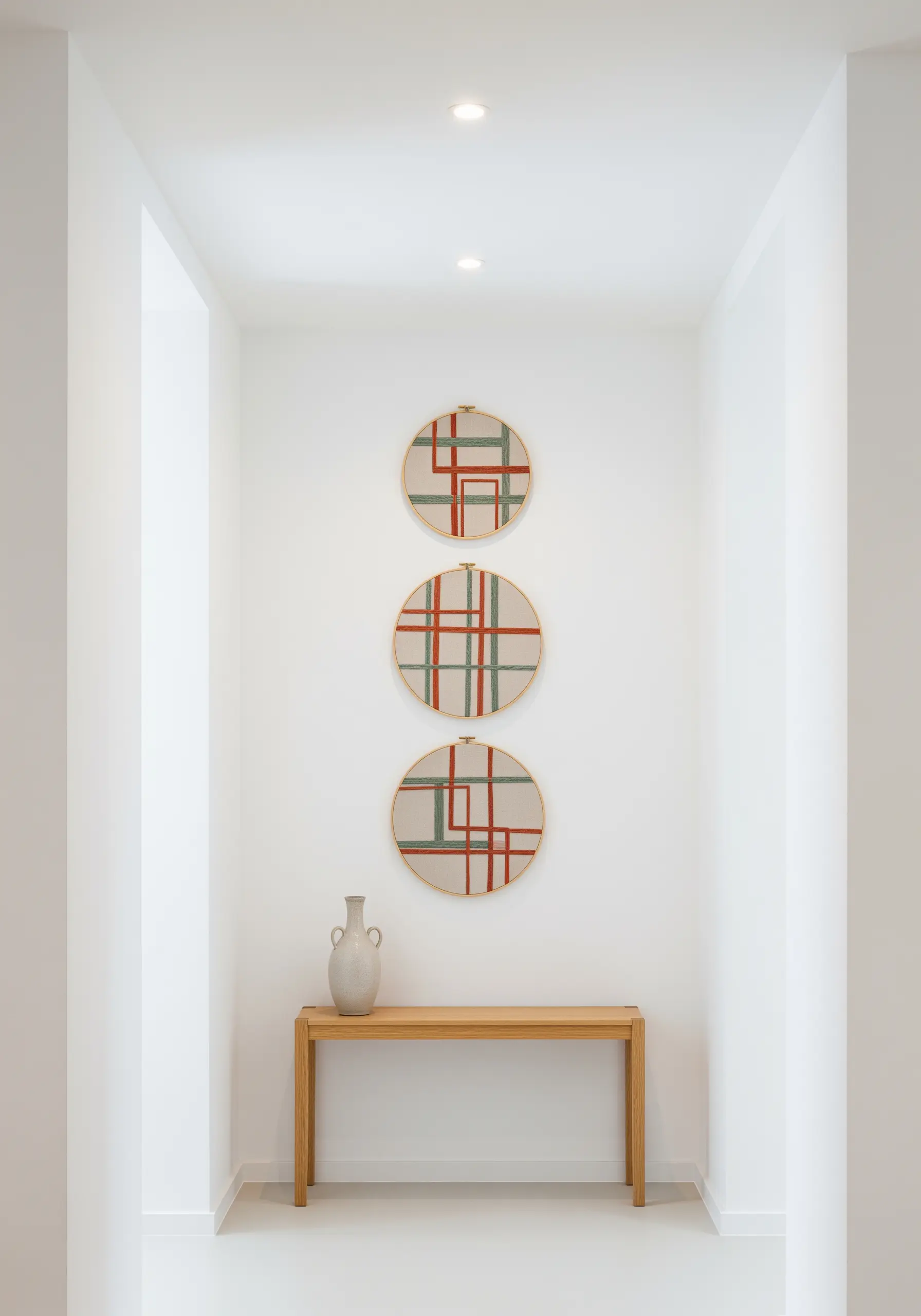
Transform simple hoops into a unified art piece by designing a pattern that flows across them.
Use painter’s tape to mark your lines on the fabric before you stitch, ensuring your grid is perfectly straight and consistent from one hoop to the next.
Vary the width of your lines by using a different number of strands—six strands for thick bars and two or three for thinner ones—to create visual hierarchy.
This method turns basic straight stitches into a sophisticated, interconnected statement, proving that thoughtful composition elevates even the simplest techniques into compelling hooped wall collage layouts.
2. Sculpt with Chunky Yarn for Dramatic Texture
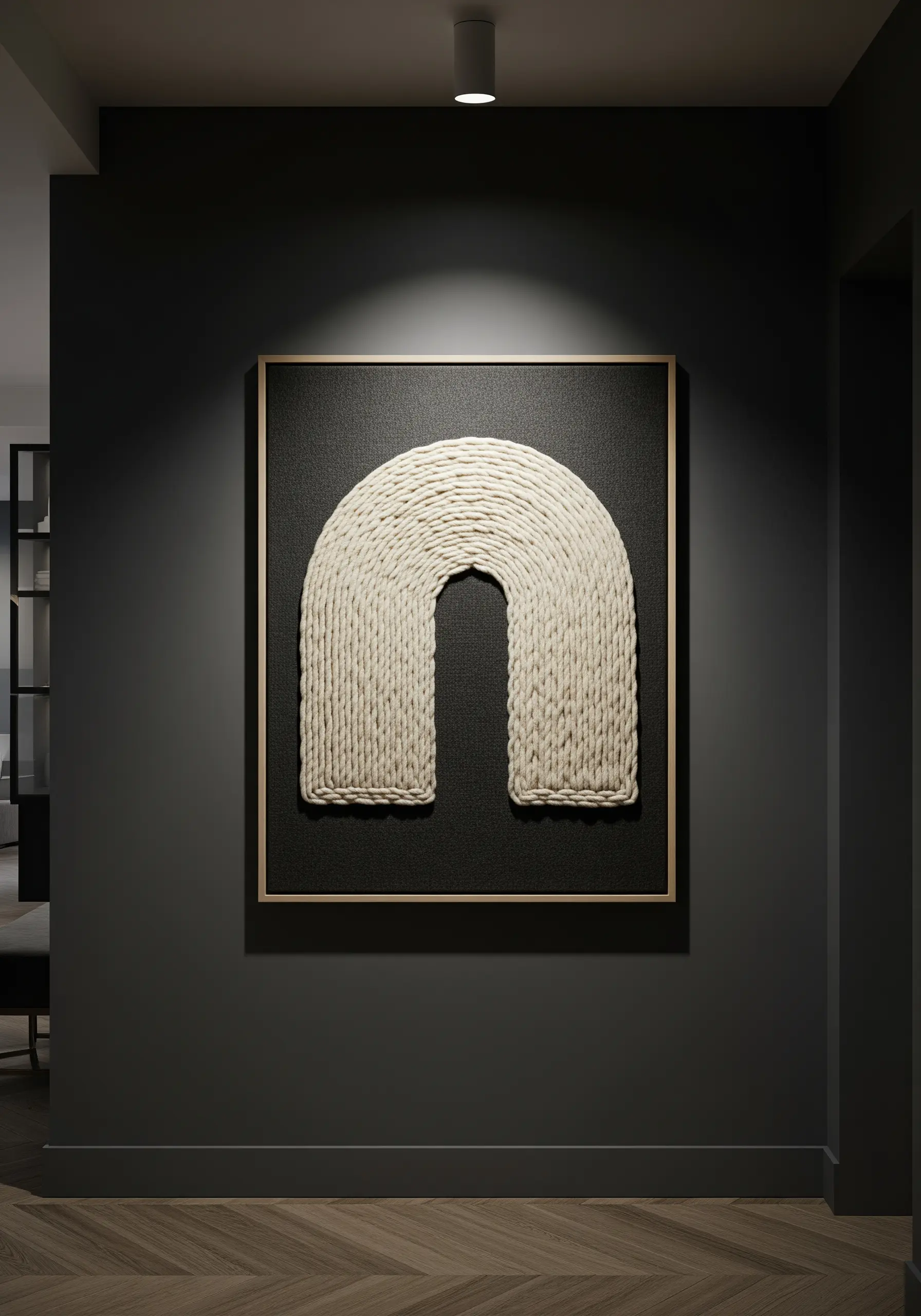
Move beyond floss to create bold, sculptural pieces that command attention.
Use a chunky wool or cotton yarn and the couching technique: lay the thick yarn on your fabric’s surface and use a thinner, matching thread to tack it down with small, evenly spaced stitches.
This allows you to create clean, dramatic curves and shapes that would be impossible with traditional embroidery, adding depth and shadow to your work.
Mount the finished piece on a dark, contrasting fabric to make the texture pop, turning your embroidery into a true tactile masterpiece using contemporary texture techniques.
3. Compose a Mini Gallery Wall with Geometric Studies
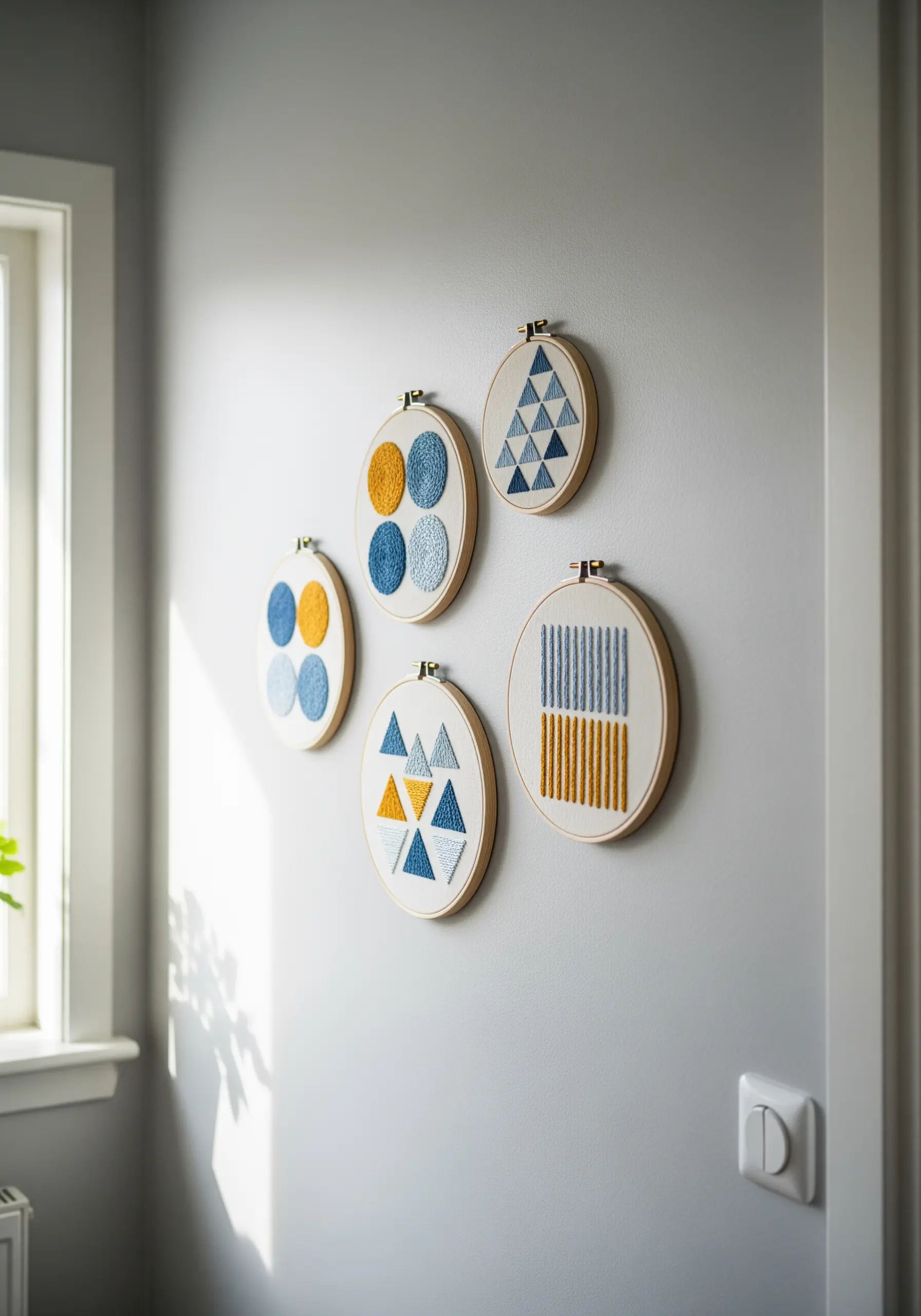
A collection of small, related pieces often has more impact than a single large one.
Choose a strict color palette of three to four colors and explore simple geometric motifs—circles, triangles, lines—across several small hoops.
Fill your shapes with a perfectly smooth satin stitch, ensuring your stitches lay flat and parallel.
Arrange them in an organic cluster on the wall; this creates a dynamic rhythm and turns a simple hallway into a curated exhibition of your own inspiring hoop art projects.
4. Tell a Story Across Multiple Panels

Expand your canvas by treating separate fabric panels as a single, continuous scene.
Sketch a simple, flowing design, like a mountain range or coastline, and divide it across three vertical panels.
Use a clean backstitch or stem stitch to maintain a consistent line weight, creating the feeling of a single pen stroke.
This technique elevates simple line art into a panoramic statement, perfect for hanging above a console table or bench. It’s a beautiful example of minimalist line art nature embroidery.
5. Layer with Unconventional Materials
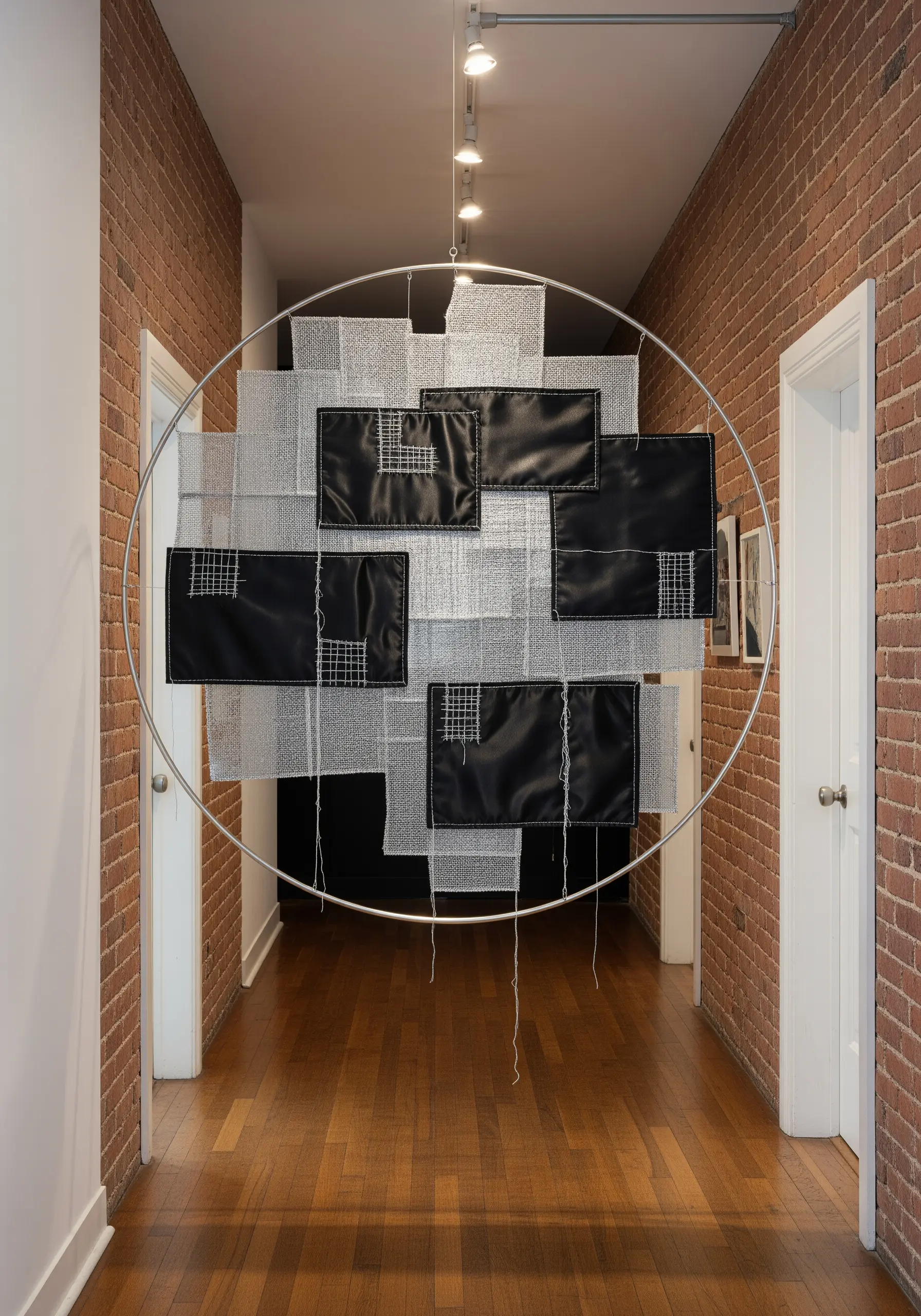
Push the boundaries of embroidery by incorporating non-traditional textiles like mesh, leatherette, or sheer organza.
Create a base by weaving or layering different fabrics, then use simple grid-like running stitches to connect them, adding both stability and a graphic element.
The contrast between the industrial feel of mesh and the softness of thread creates a compelling visual tension.
These experimental mixed media techniques result in a piece that feels both architectural and deeply personal.
6. Fill Organic Shapes with Dense Knot Work

Create rich, touchable surfaces by filling organic, pebble-like shapes with a sea of French knots or colonial knots.
Draw your shapes first, then work from the outside in to ensure a clean, defined edge.
Vary the texture by changing the number of times you wrap the thread around the needle—one wrap for a tiny, tight knot and two or three for a larger, plusher one.
A muted, earthy color palette enhances the natural feel, turning these organic texture embroidery designs into a serene, tactile landscape.
7. Achieve a ‘Painted’ Look with Bold Satin Stitch

Give your embroidery the clean, graphic impact of a modern painting by mastering the satin stitch.
To achieve that perfectly smooth, block-color effect, use a split stitch to outline your shape first; this gives you a raised edge to tuck your satin stitches under, resulting in a razor-sharp finish.
Choose vibrant, high-contrast colors and frame the pieces simply to let the colors do the talking.
This technique is ideal for bold color pop embroidery that energizes a dark or neutral wall.
8. Master Tension with Linear Thread Art
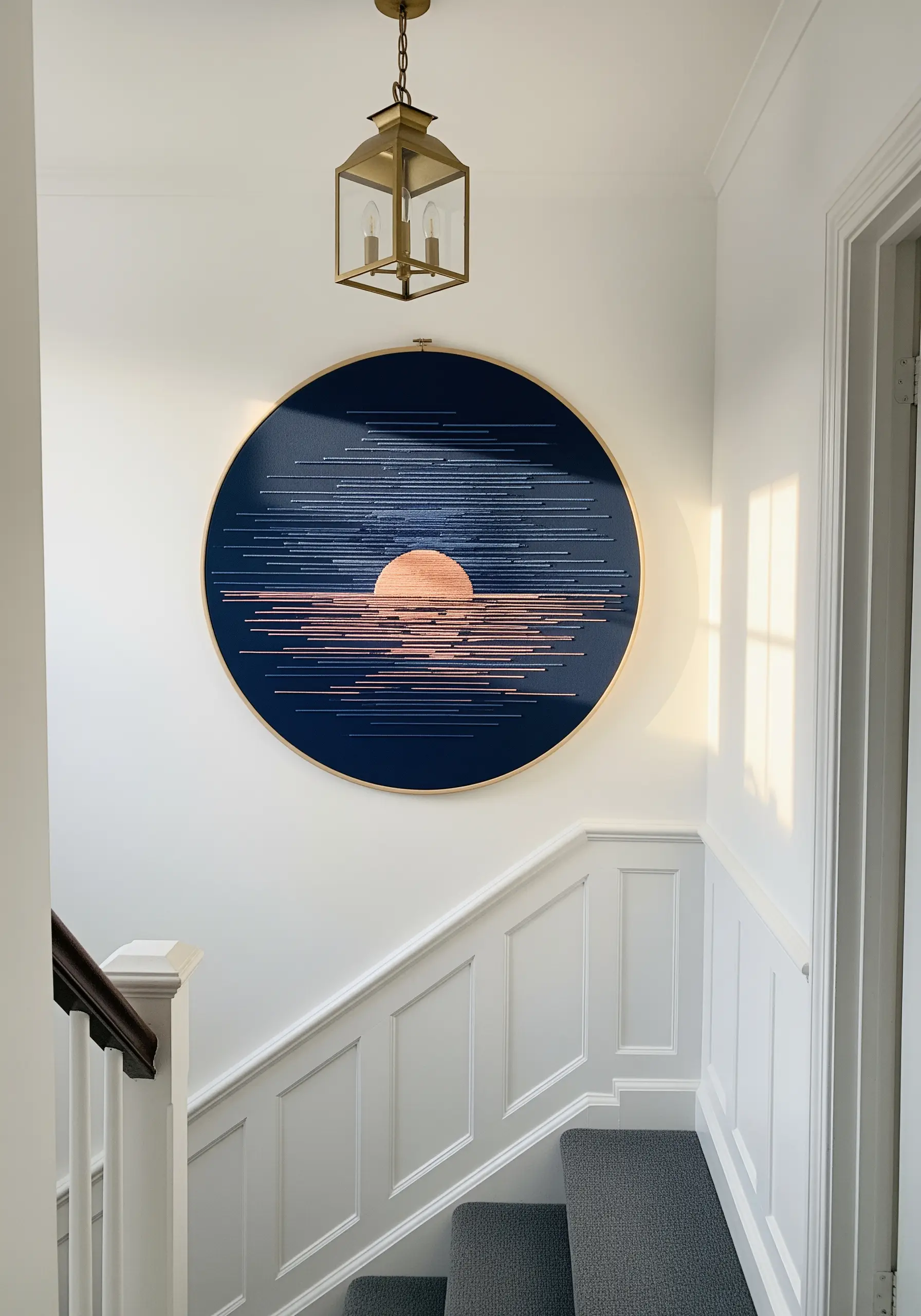
Use your hoop not just to hold fabric, but as the frame for a string-art-inspired masterpiece.
This technique relies on long, straight stitches pulled taut across the fabric from one side of the hoop to the other.
Mark your entry and exit points precisely around the hoop’s edge to ensure parallel lines. Use a high-contrast fabric, like navy blue linen, to make your threads stand out.
The result is a stunningly modern piece that plays with light, color, and geometry, turning thread into one of many powerful abstract nature-inspired embroidery motifs.
9. Embrace the Power of a Single, Expressive Line
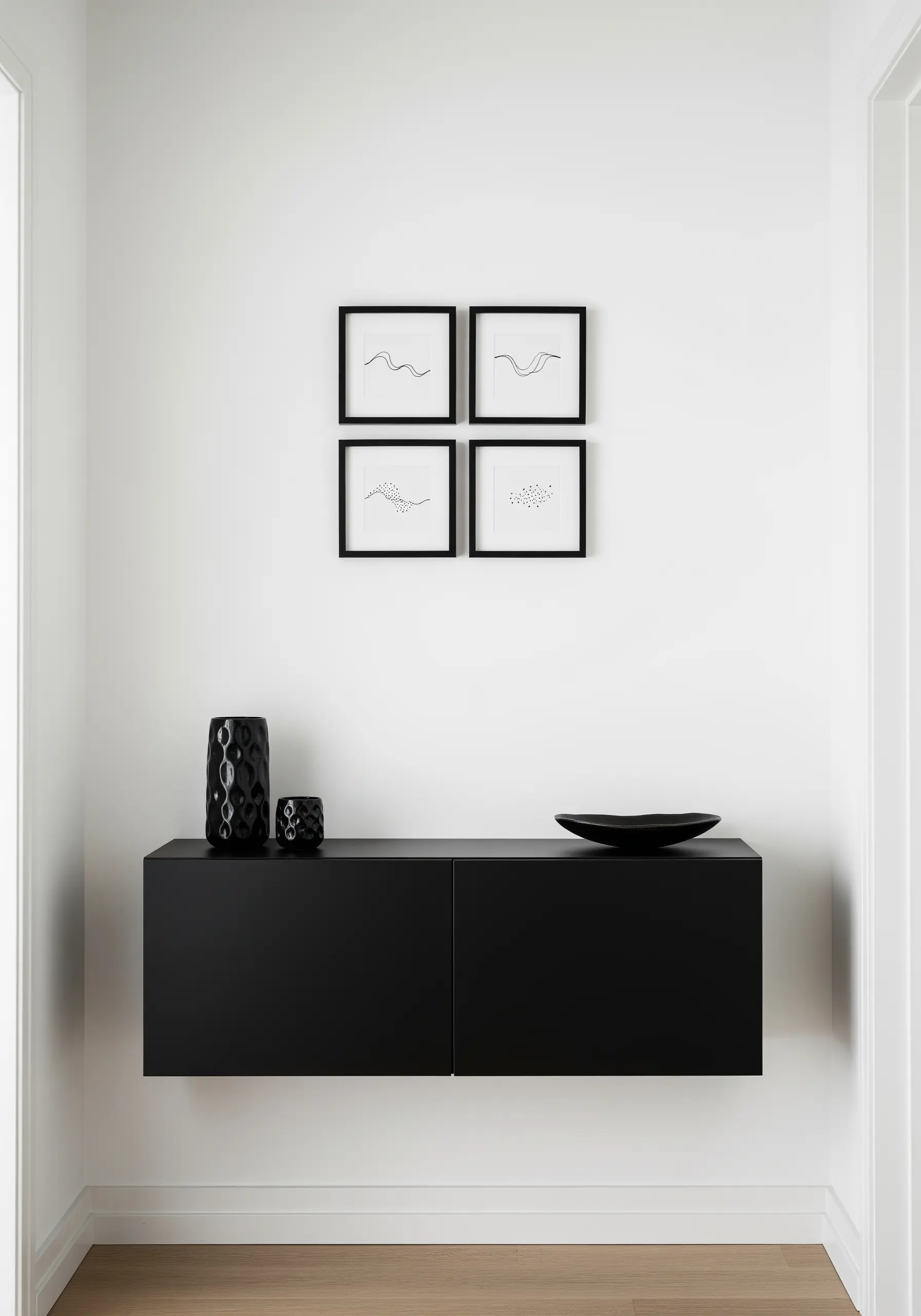
Prove that less is more by focusing on the purity of a single line.
Choose a simple, fluid motif, like a wave or a contour line, and stitch it with a single strand of black thread using a delicate backstitch.
The key here is negative space—the unstitched areas of the fabric are just as important as the line itself, giving the composition room to breathe.
Grouping four of these minimalist stitched art pieces together creates a quiet, sophisticated rhythm that feels effortlessly chic.
10. Layer Metallic Threads for a Luxe Finish

Introduce a touch of glamour into your work by layering with metallic floss.
To combat the notorious difficulty of metallic thread, use shorter lengths (no more than 12 inches) and a thread conditioner like beeswax to prevent tangling and fraying.
Create your design by stitching overlapping circles or arcs with satin stitch, layering different metallic tones like gold, bronze, and copper for a rich, dynamic effect.
These are just some of the unexpected ways to use metallic thread to create art that shimmers and catches the light.
11. Fill Large Spaces with Sculptural Punch Needle

When you need to cover a large area, switch from traditional needle and floss to a punch needle and yarn.
This technique creates dense, looped textures quickly and effectively, allowing you to ‘paint’ with yarn.
Draw your abstract, free-flowing design onto monk’s cloth, then fill the shapes with contrasting colors.
The resulting piece has a plush, sculptural quality that makes for incredible statement-size embroidered textile hangings, perfect for adding warmth and organic energy to a long hallway.
12. Capture Fluidity with Mixed Stitches
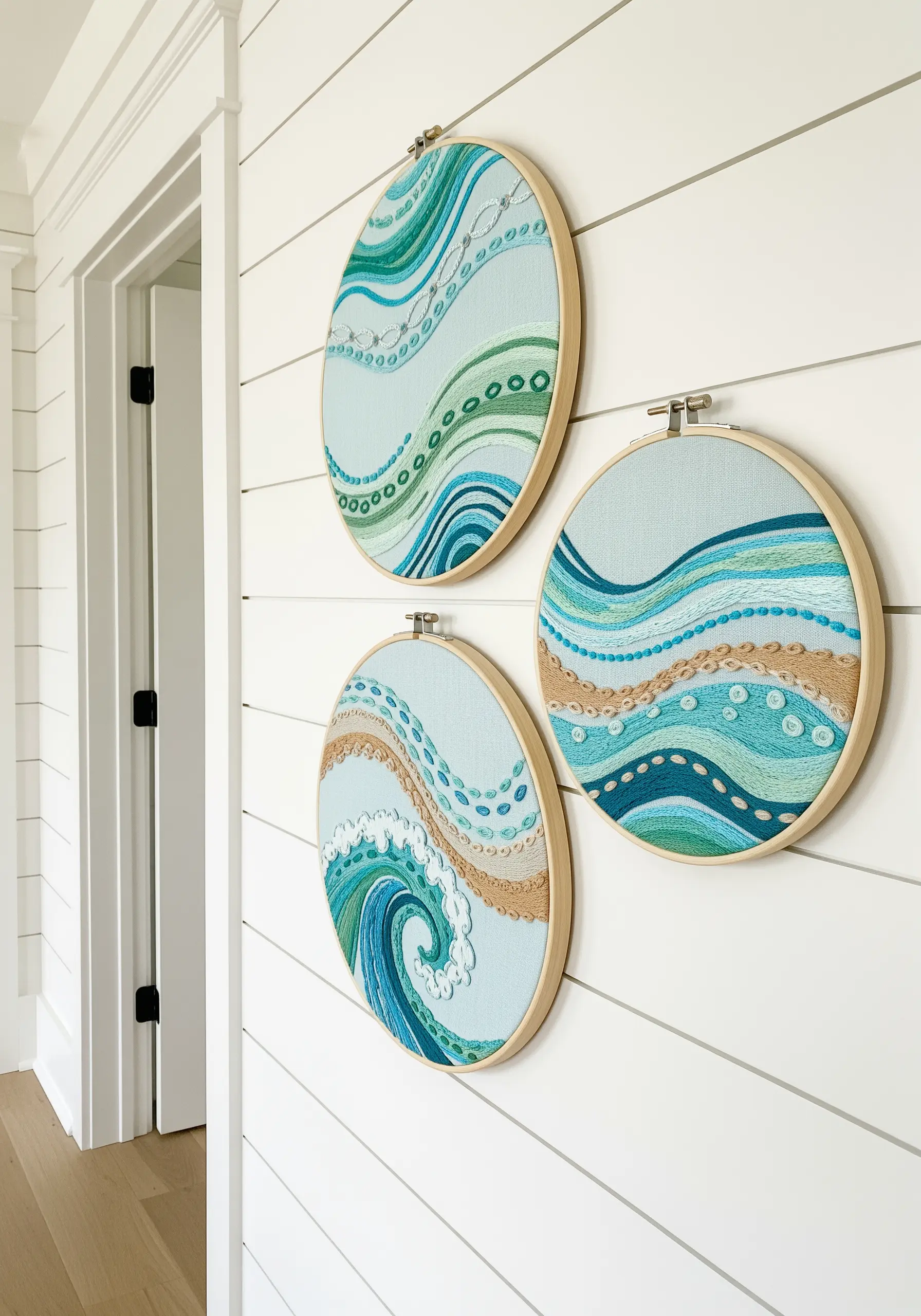
Evoke the movement of water by combining a variety of stitches within a single piece.
Use smooth satin stitch for calm sections, swirling chain stitch for currents, and French knots or seed stitch for sea foam and bubbles.
By varying the texture, you create a dynamic surface that feels alive and constantly in motion.
A cool, analogous color palette of blues, greens, and teals enhances these coastal, ocean-inspired designs, turning each hoop into a miniature seascape.
13. Create Drama with High-Contrast Constellations
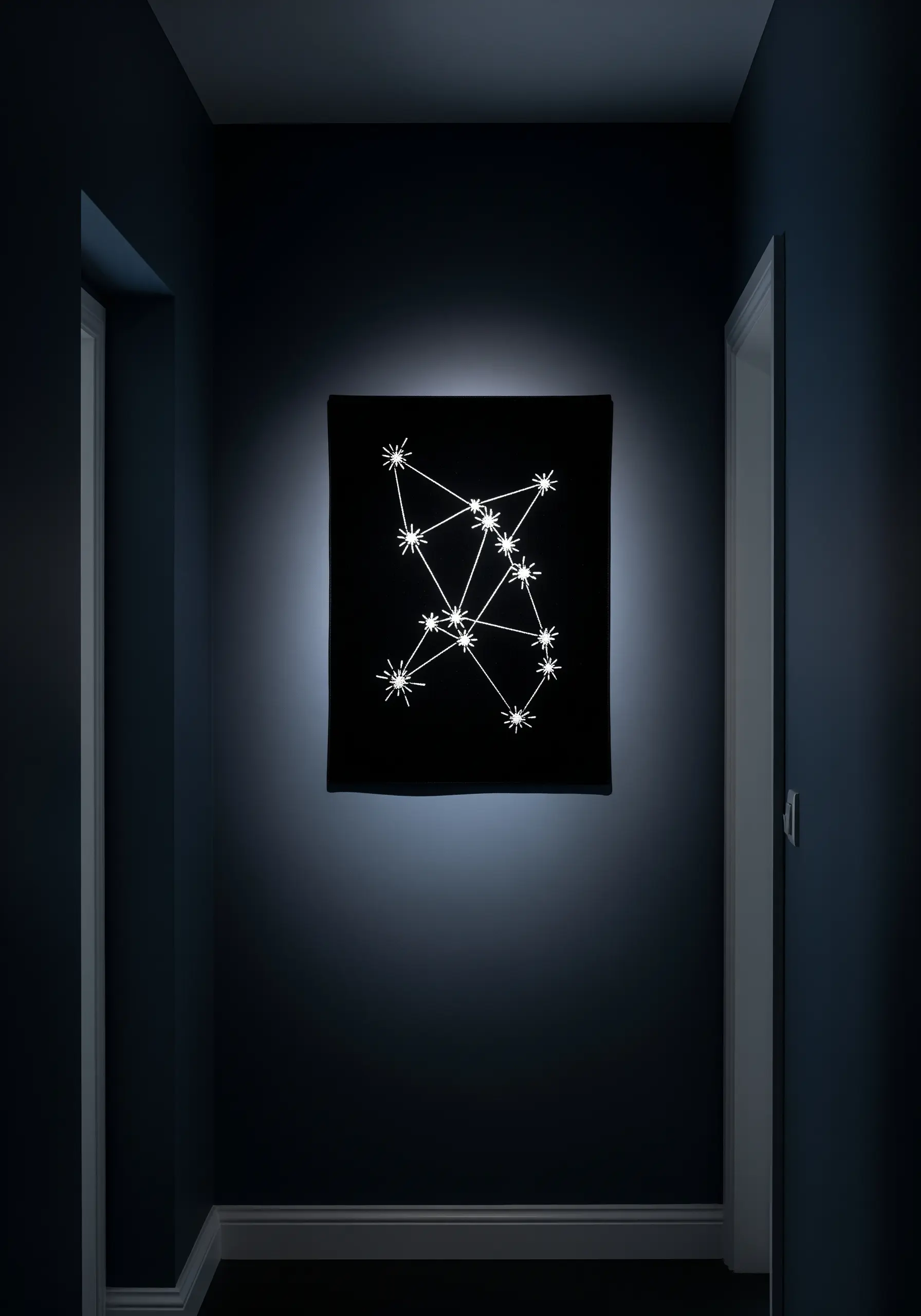
Make your stitches shine by working on a dark, dramatic background.
Choose a heavy black or navy blue cotton fabric to serve as your night sky.
Use a bright white or silver metallic floss to stitch your favorite constellation, using simple straight stitches for the lines and star stitches or small French knots for the stars themselves.
The extreme contrast creates a sharp, graphic look, turning simple stitches into striking aesthetic embroidery projects that glow in a dimly lit hallway.
14. Block Out Shapes with Architectural Precision
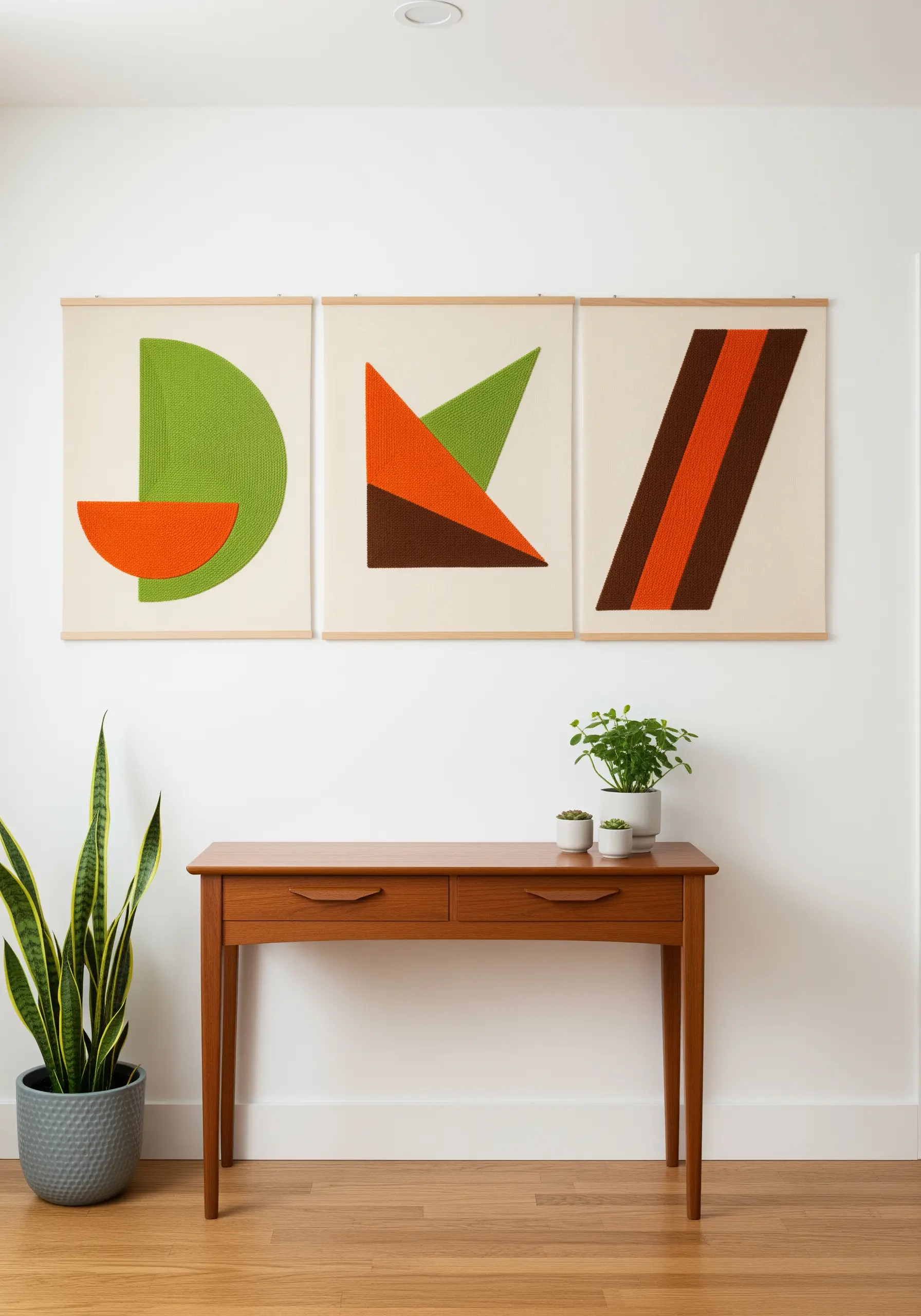
Approach your embroidery like a graphic designer by focusing on clean shapes and flawless fills.
This style relies on perfect satin stitch with no gaps or puckering. To achieve this, keep your stitch length relatively short (no more than half an inch) and ensure even tension.
Working on individual panels allows you to focus on one composition at a time before grouping them.
The result is a triptych of bold geometric abstract thread patterns that feels both handmade and impeccably designed.
15. Explore Texture in a Monochromatic Palette

Challenge yourself to create a visually compelling piece using only one color.
When color is removed from the equation, texture becomes the star. Fill different sections of your design with a variety of stitches: tight French knots, looped bullion stitches, woven spiderweb wheels, and straight satin stitches.
The way light hits the different textures creates a subtle and sophisticated design full of depth and shadow.
Tone-on-tone embroidery techniques are perfect for creating serene, high-end art that complements any decor.
16. Paint Landscapes with Directional Stitches
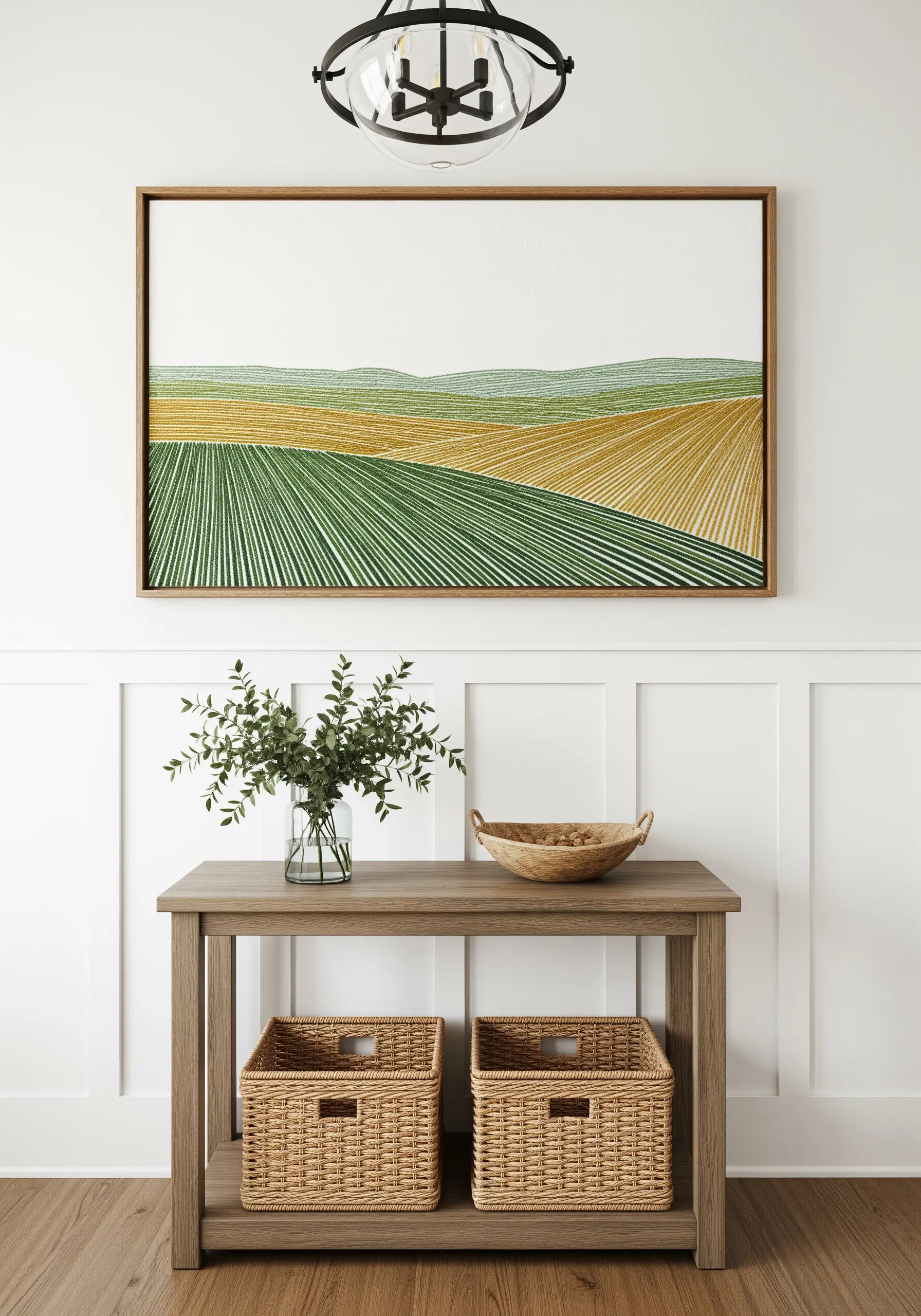
You don’t need complex stitches to create a sense of depth and perspective.
Mimic the contoured rows of a farmer’s field or the slope of a hill by using thousands of simple straight stitches or seed stitches.
Vary the direction of your stitches to define different areas and create a sense of movement.
By layering blocks of color and texture, you can build surprisingly detailed abstract thread landscapes that draw the viewer in.
17. Plot Intersecting Lines for Geometric Impact
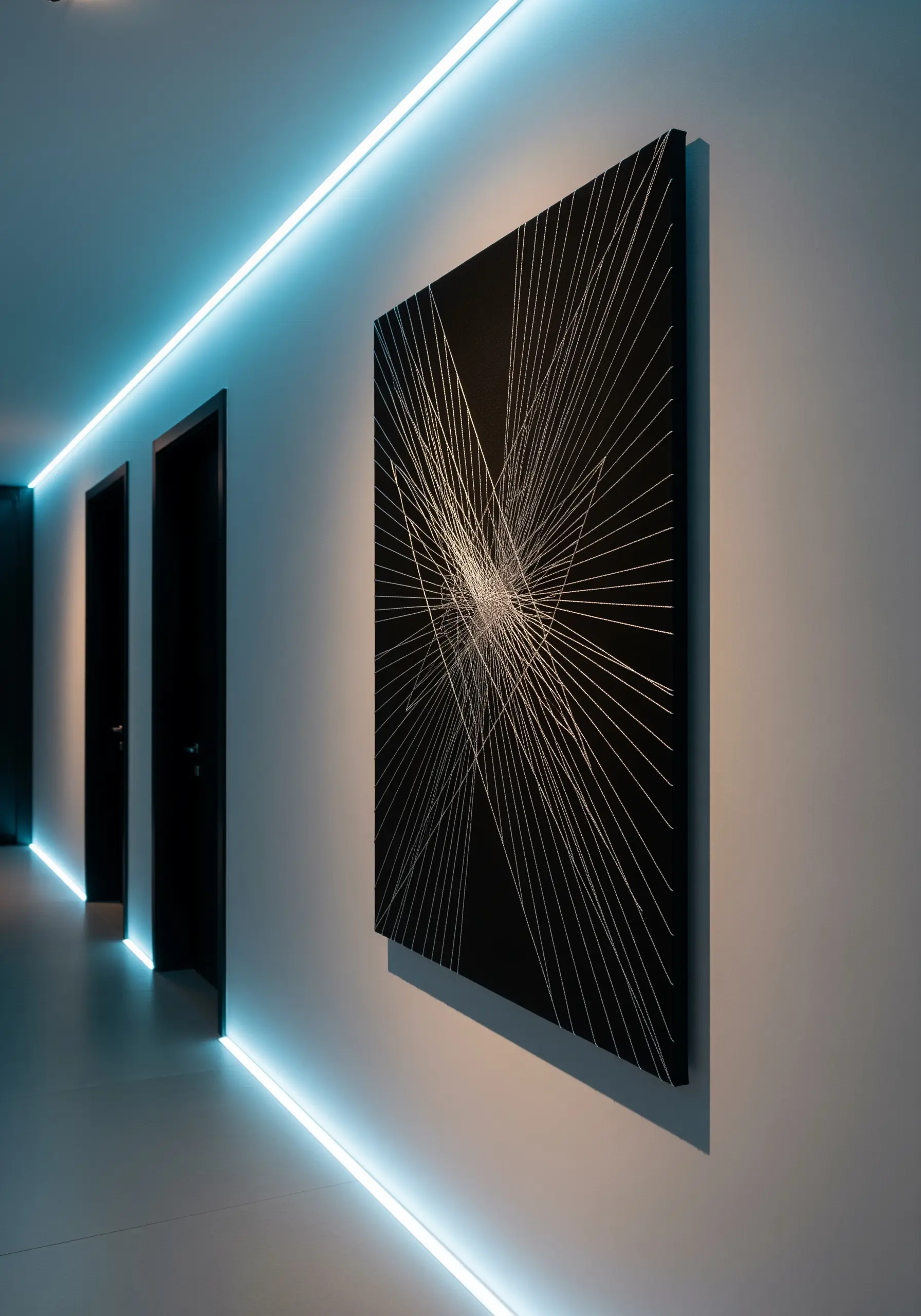
Create complex-looking geometric art with a technique that is surprisingly simple.
Start by lightly marking a grid of dots on your fabric or canvas.
Then, use a single, long strand of thread to connect these dots in a systematic pattern, creating radiating or intersecting lines.
This string-art method works beautifully on a stretched canvas and is one of the most effective abstract thread embroidery ideas for a modern, architectural look.
18. Combine Appliqué and Stitching for Soft Forms
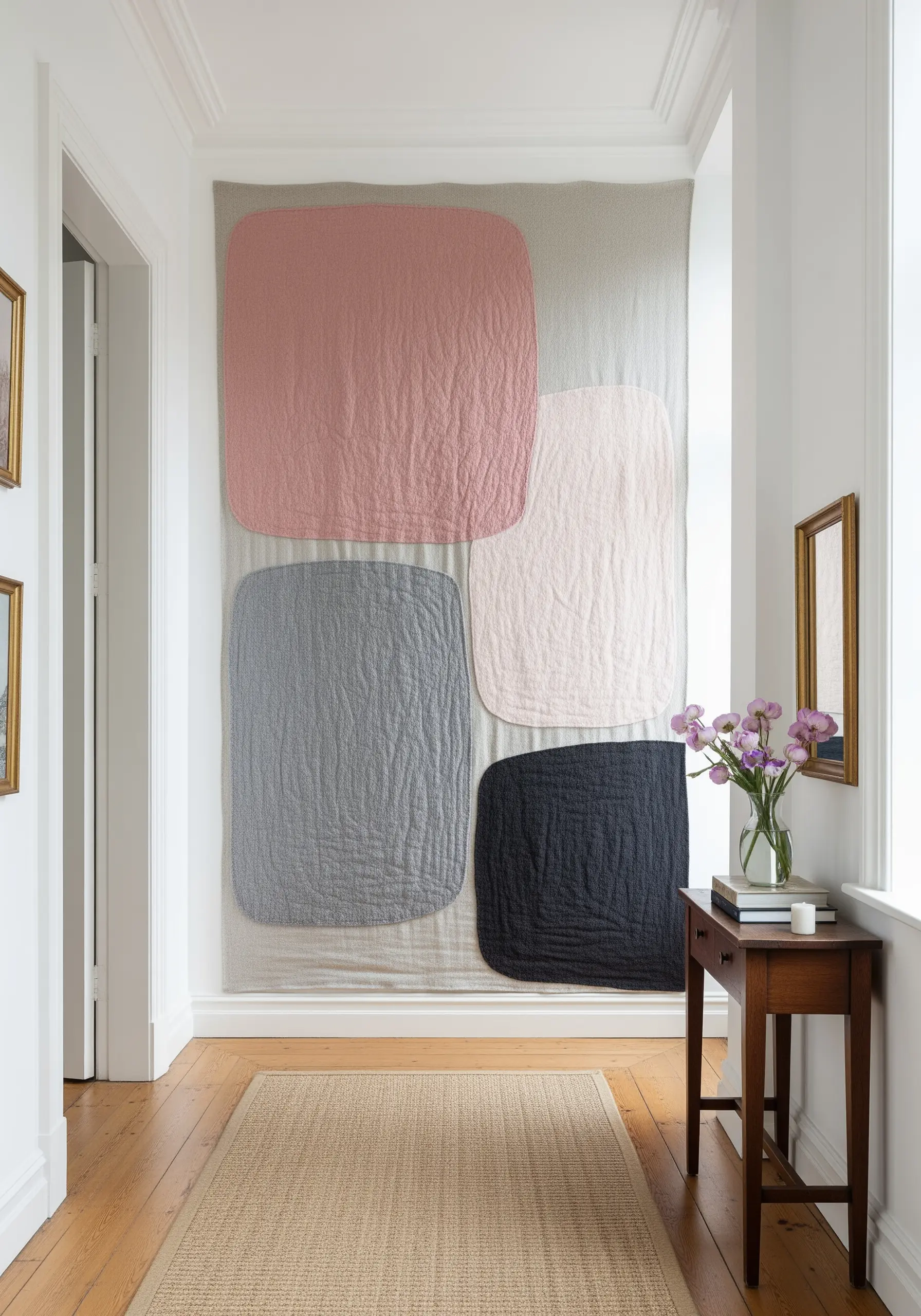
For large blocks of color with a soft, tactile quality, turn to fabric appliqué.
Cut your rounded shapes from soft, textured fabrics like linen or muslin, and use an iron-on adhesive to fix them in place.
Then, go over the entire piece with a subtle running stitch or seed stitch. This not only secures the appliqué but also adds a delicate, quilted texture that unifies the composition.
You can even use scrap fabric collage embroidery ideas to create these beautiful, minimalist wall hangings.
19. Create a Personal Language of Stitched Symbols
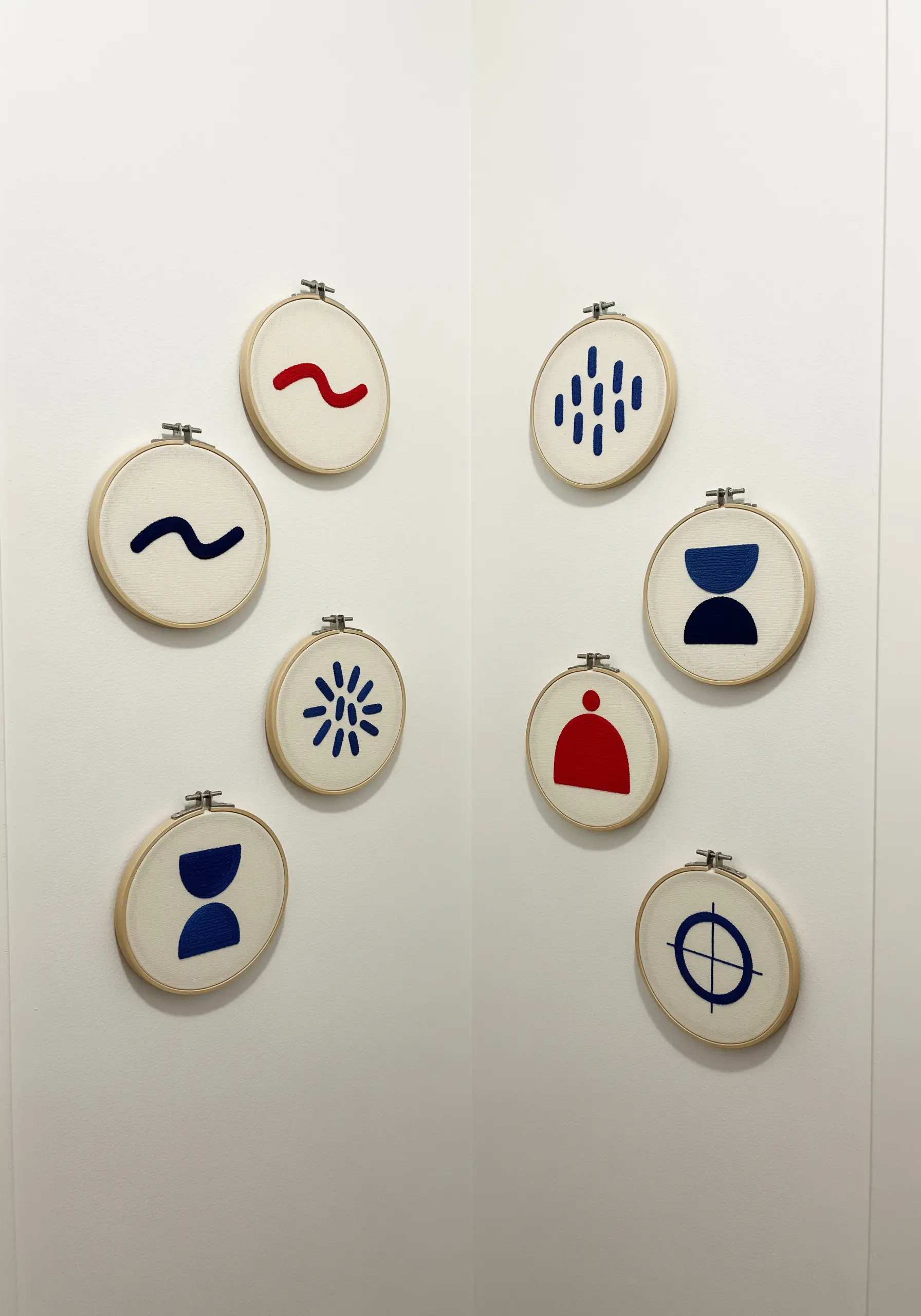
Develop a collection of small, personal symbols and arrange them as a scattered gallery wall.
Think of it as creating your own visual alphabet. Each hoop contains a single, simple motif stitched in a bold, limited color palette.
The beauty of this approach is its flexibility; you can add to the collection over time. It’s an ideal way to build micro-hoop embroidery collections that feel playful, personal, and endlessly creative.
20. Elevate Simple Outlines with High Contrast

A single, well-executed line can be more powerful than a fully rendered image.
Choose a dark, richly textured fabric like black felt or deep green linen to serve as your canvas.
Using a contrasting thread, like a vibrant spring green, stitch a delicate botanical outline with a simple backstitch or stem stitch.
Framing the pieces in gold elevates the composition, making these minimalist botanical stitch designs feel like precious specimens.
21. Stitch a Vortex of Color and Movement

Capture pure energy on your canvas by using straight stitches that radiate from a central point.
To create the swirling vortex effect, slightly offset the angle of each stitch as you work your way around the center.
The magic happens in the color choices. Plan a smooth gradient that transitions from warm yellows and oranges to cool blues and purples.
These vibrant, abstract color-blend stitch ideas create a mesmerizing sense of depth and motion.
22. Find Zen in Repetitive, Meditative Stitching
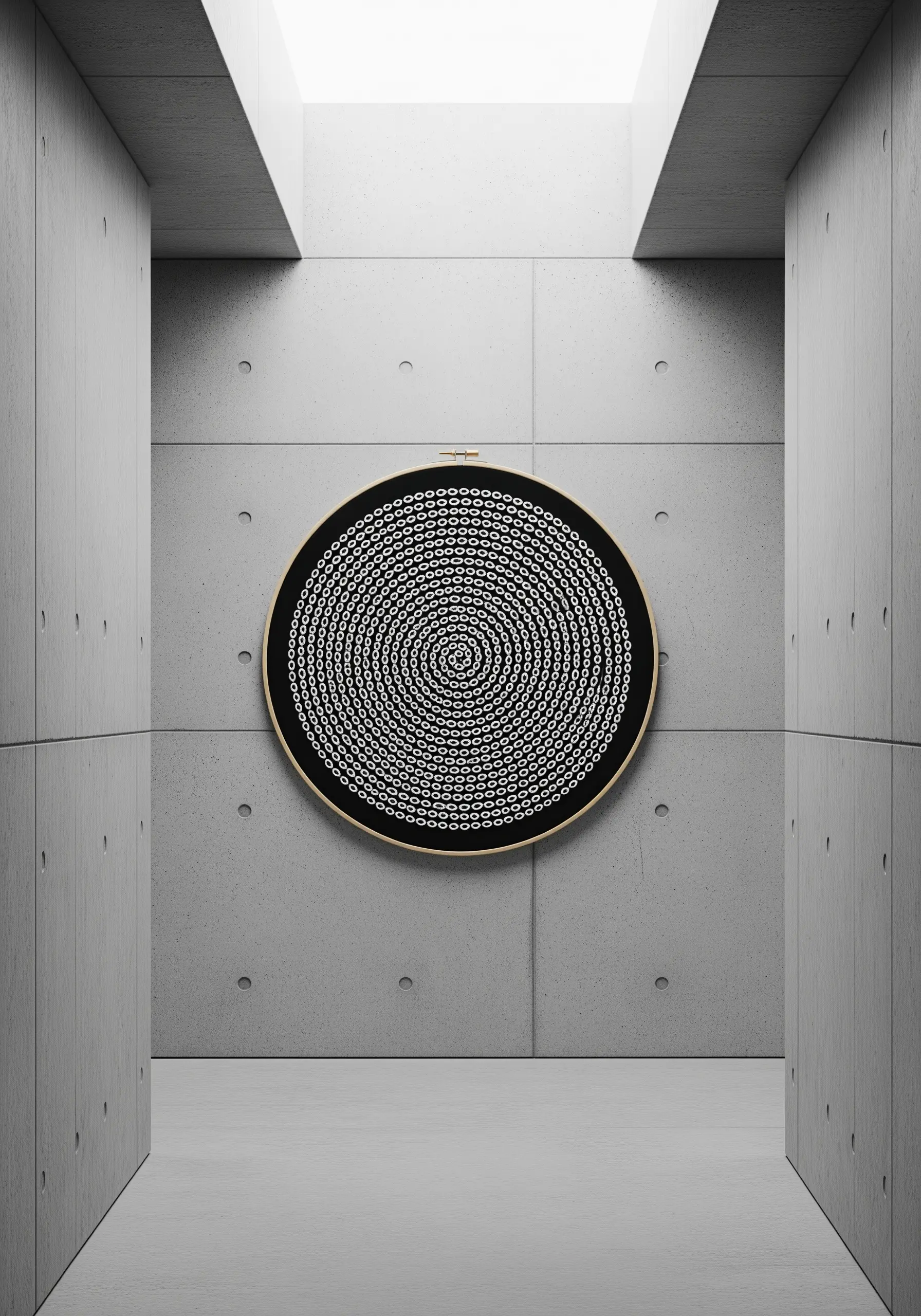
Create a mesmerizing pattern through the simple, repeated action of a single stitch.
Fill a large hoop with concentric circles of French knots, seed stitches, or even tiny eyelet stitches.
The key is consistency in stitch size and spacing. While it requires patience, the process becomes a form of active meditation.
The final piece, with its intricate, hypnotic texture, is a testament to the beauty of focus and discipline, similar to the process of creating modern thread mandala ideas.
23. Mix Formats for a Layered, Earthy Display

Create a richer gallery wall by combining different types of textile art.
Pair a large, appliqué wall hanging with a smaller, complementary hoop art piece.
To ensure the display feels cohesive, use a unified color palette of warm, earthy tones like terracotta, sand, and ochre across both pieces.
This approach adds visual interest and depth, allowing you to play with scale and texture. You can even create your own boho-inspired wall hoop embroidery ideas to match larger tapestries.
24. Translate Graphic Motifs into Thread
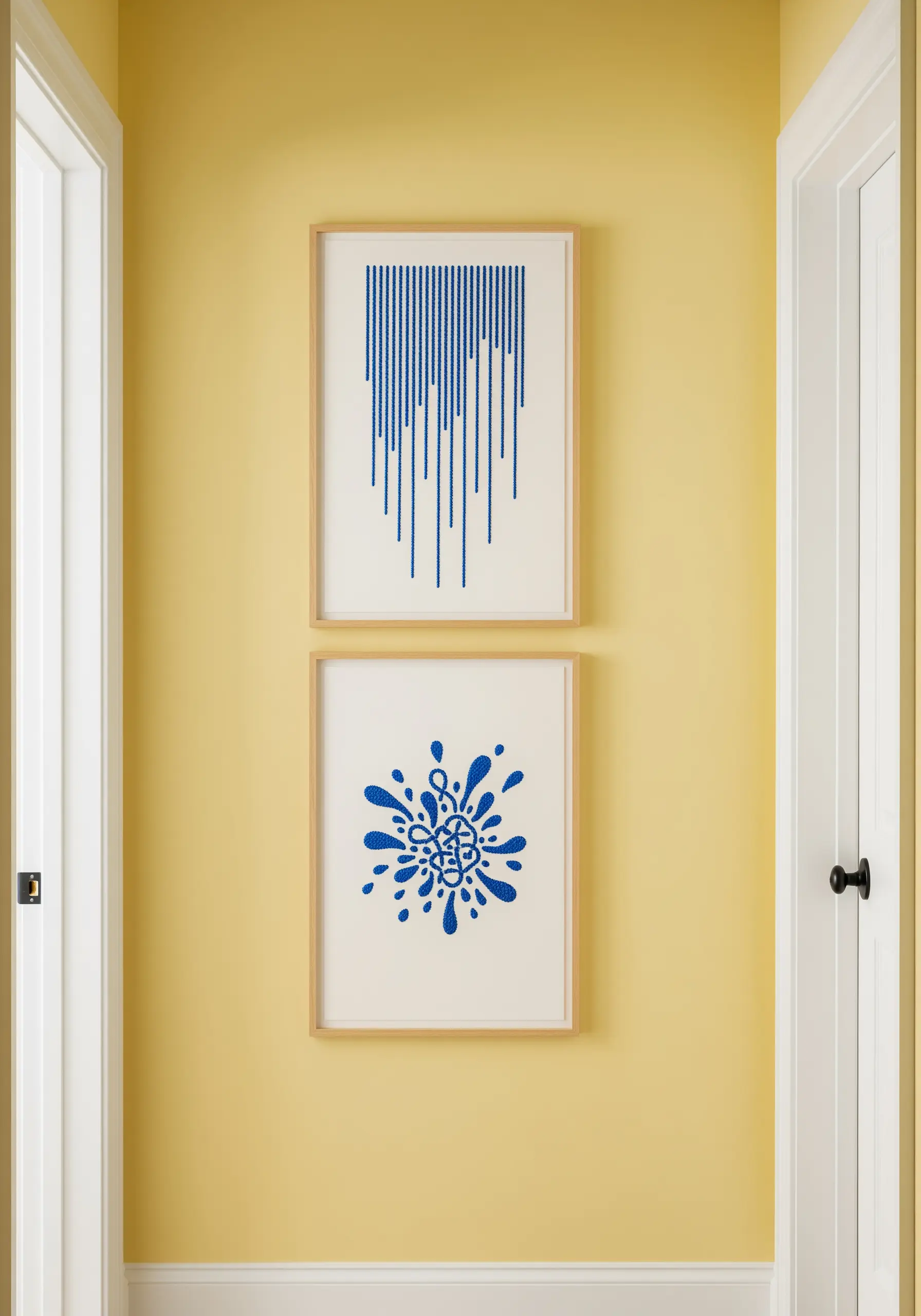
Look to the world of graphic design for clean, impactful embroidery inspiration.
Translate motifs like paint drips, splashes, or simple icons into thread using two key stitches: a tight satin stitch for filled areas and a clean backstitch for lines.
A single, bold color against a crisp white background creates maximum graphic impact.
These easy-to-make framed embroidery pieces prove that a strong concept is just as important as complex technique.
25. Explore a Theme Across a Series
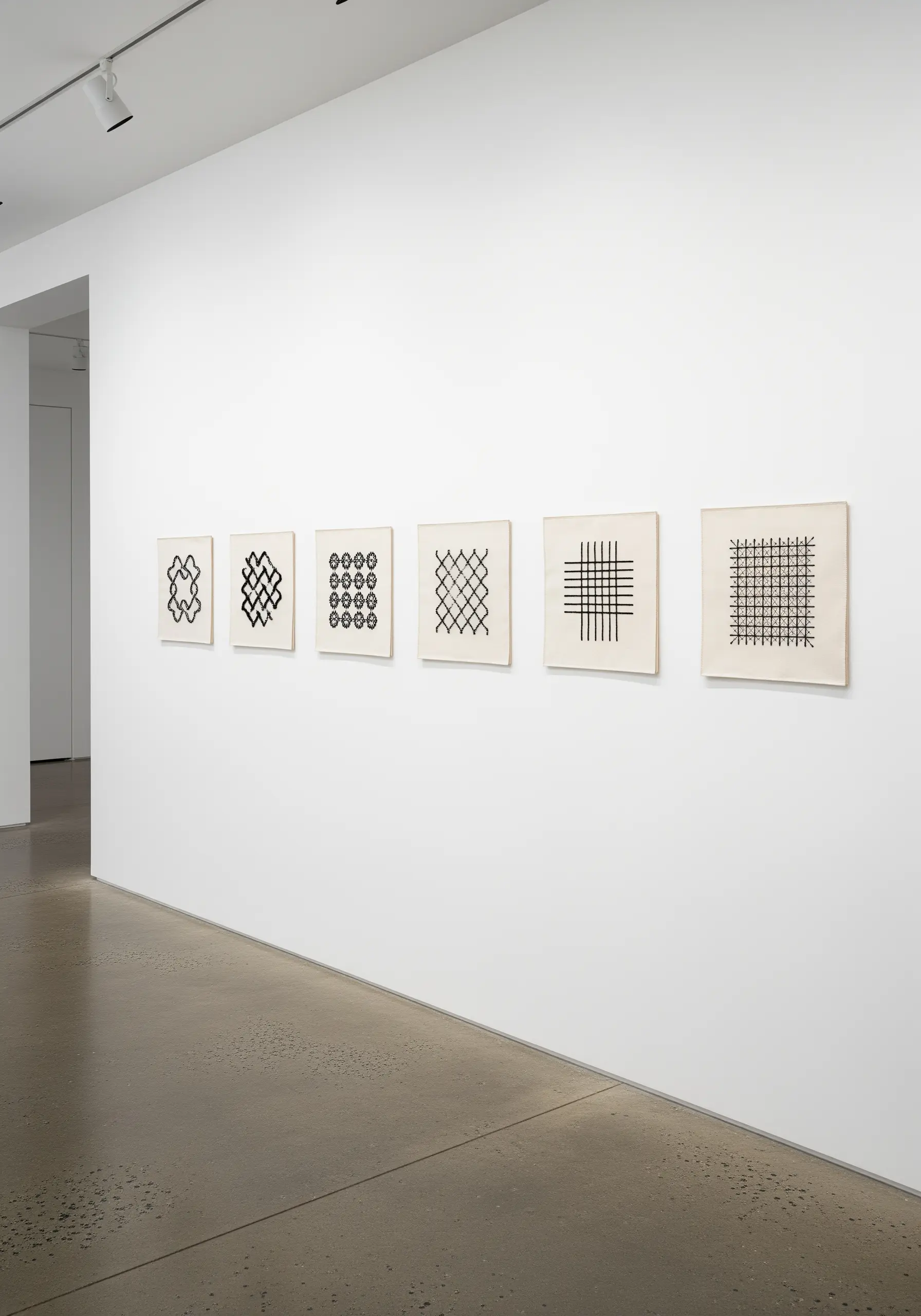
Deepen your artistic practice by exploring a single concept across multiple canvases.
Choose a theme, such as ‘grids’ or ‘intersections,’ and create a series of small, square studies, each offering a different interpretation.
Using only black thread on a neutral background forces you to focus on composition, line, and pattern.
Displaying the series in a clean, linear fashion transforms your hallway into a thoughtful exhibition of monochrome embroidery wall art.
26. Go Big with a Statement Wall Banner
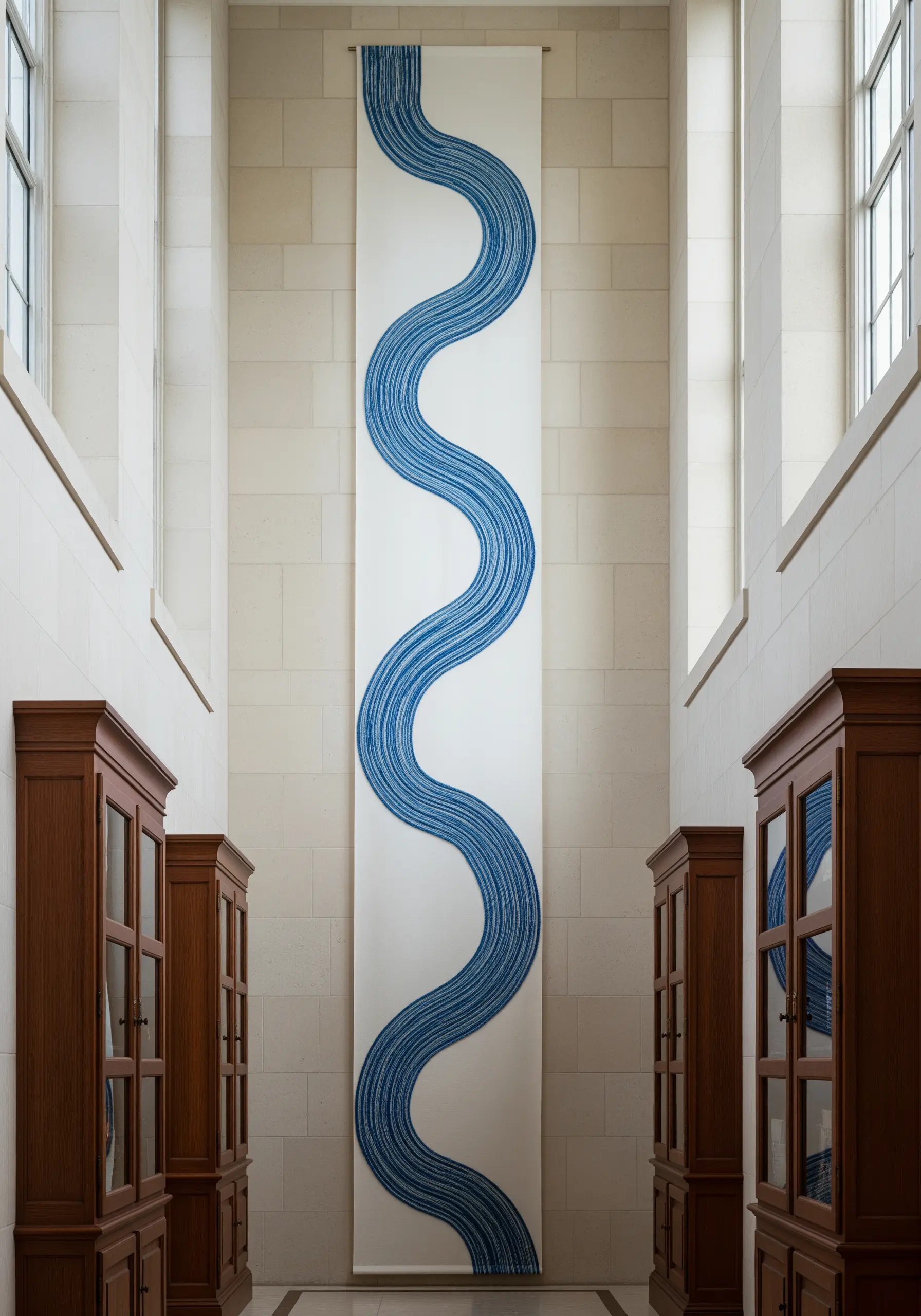
For high-ceilinged spaces or long, narrow hallways, think beyond the hoop and embrace a grander scale.
Create a long, flowing design, like a river or winding path, on a large roll of canvas or heavy linen.
Fill the shape with dense, parallel running stitches or satin stitches to create a sense of texture and movement.
Large, impactful embroidered wall panels can define a space and serve as a stunning focal point.
27. Cluster French Knots for a Soft, Floral Effect
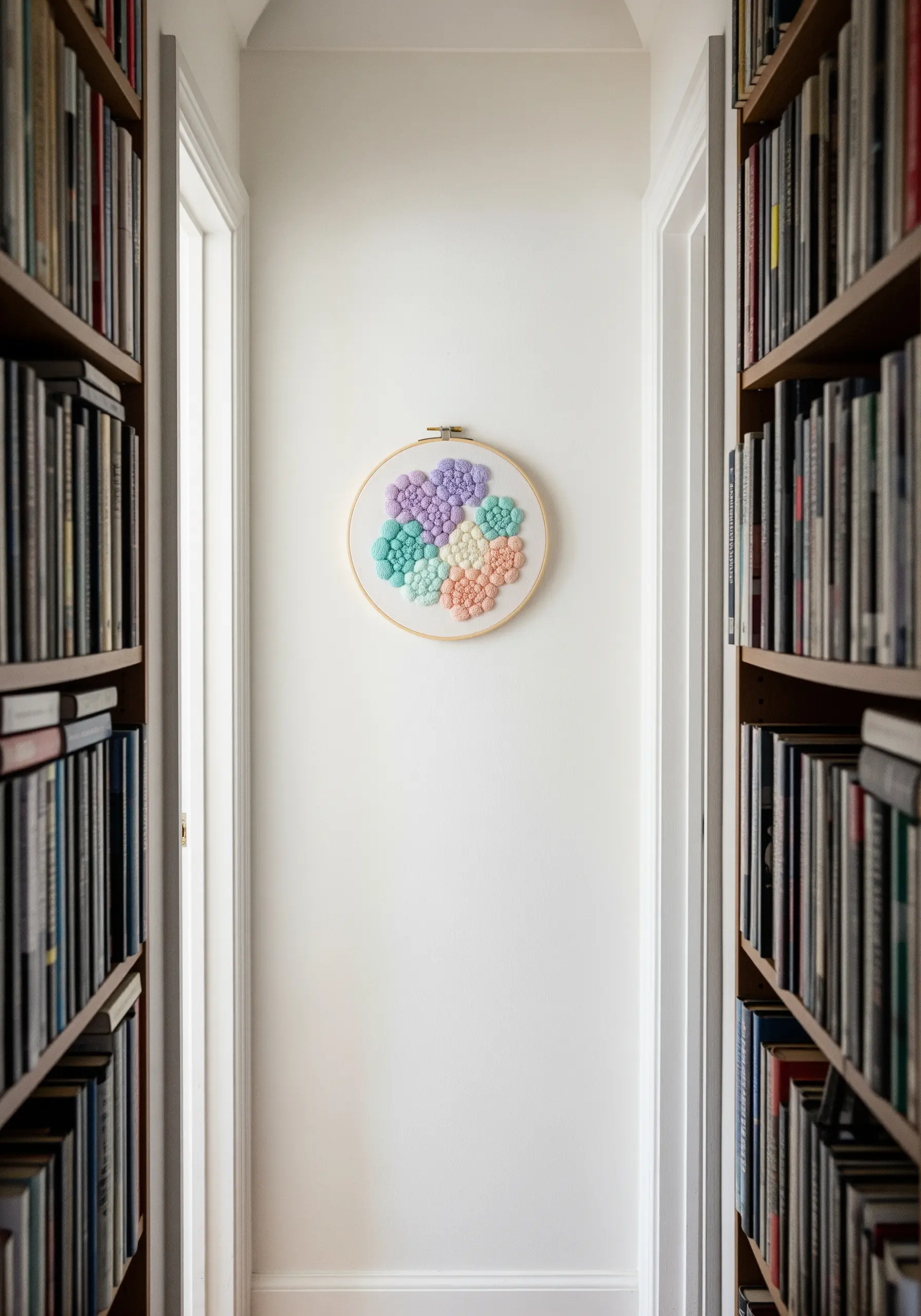
Create soft, three-dimensional clusters that resemble tiny blossoms or succulents using only French knots.
Group your knots tightly together, varying the colors to define different sections of the cluster.
For a fuller, more plush knot, use all six strands of floss and wrap the needle two or three times.
These textural, subtle floral embroidery motifs are perfect for adding a touch of softness and dimension to a minimalist space.


