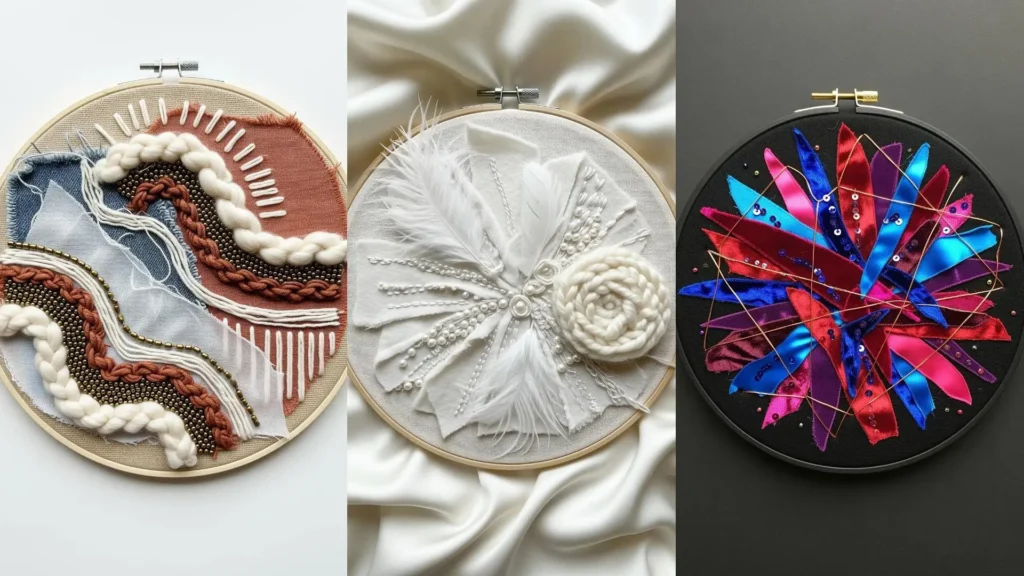
Your pillow covers are more than just soft furnishings; they are canvases waiting for a story. Forget predictable patterns and intricate florals for a moment. Instead, let’s explore the language of abstract shapes—a way to bring texture, color, and sophisticated artistry into your home with just a needle and thread.
These designs are not about perfection, but intention. They invite you to play with the weight of a line, the feel of a chunky yarn, or the subtle shimmer of a single bead. Each project is an opportunity to transform a simple piece of fabric into something that feels personal, modern, and curated—like a piece of decor you’d discover in a small, independent boutique.
Here, you’ll find techniques that offer incredible visual impact without unnecessary complexity. You’ll see how to make thread feel sculptural, how to block in color with confidence, and how to create rhythm and movement with the simplest of stitches. This is your invitation to stitch with a new kind of freedom and create pieces that truly elevate your space.
1. Create Raised Arches with Cord Couching

To achieve this highly textural, three-dimensional effect, you’ll be using a technique called couching.
Simply lay down a thick yarn or cord in your desired arch shape and use a thinner, matching thread to tack it onto the pillow cover with small, evenly spaced stitches.
This method allows you to add bold, sculptural elements much faster than with traditional fill stitches, and it works beautifully with chunky, natural fibers for an organic feel.
The key is to keep the tacking stitches discreet, letting the texture of the cord become the main focus.
2. Stitch Architectural Lines with Metallic Thread

Create a sharp, contemporary look by stitching a geometric web of intersecting lines.
For this, a high-quality metallic thread is essential, but it can be tricky to work with.
To prevent snagging and breakage, use a shorter length of thread than you normally would and consider a needle with a larger eye.
A simple backstitch will give you the clean, crisp lines needed for this architectural style, creating a sophisticated contrast against a dark, matte fabric.
Keeping your tension consistent is crucial for a smooth, professional finish.
3. Combine Fabric Appliqué and Simple Outlines

For quick and impactful color blocking, turn to fabric appliqué.
Cut organic, stone-like shapes from various muted-tone fabrics and arrange them on your pillow cover.
Secure them with an iron-on adhesive first for stability, then stitch a simple, clean backstitch or stem stitch around the edges in a contrasting dark thread.
This technique combines the speed of collage with the handmade touch of embroidery, giving you a polished, graphic result with minimal time spent on filling large areas.
4. Master Bold Color Blocking with Corded Texture

This design makes a statement through its confident use of color and texture.
Choose three bold, contrasting colors and couch thick cord or yarn onto a plain white pillow cover to form clean, geometric shapes.
The technique involves laying the cord on the fabric surface and securing it with small, invisible stitches.
This approach emphasizes form and texture over intricate stitching, resulting in a piece that feels both modern and tactile. The raised quality of the cord adds a satisfying depth.
5. Explore a Sampler of Textural Circles

Turn a simple pillow into a study of texture by filling circles with different stitches.
Create dense, satisfying swirls with a woven wheel stitch, or use a radiating straight stitch for a starburst effect.
For a smoother, more subtle texture, try a padded satin stitch.
By limiting your color palette to neutrals and grays, you allow the various textures to become the design’s focal point. This is a perfect way to practice and showcase a range of stitches in one cohesive piece.
6. Couch Expressive Contours for Modern Line Art

Recreate the effortless feel of a one-line drawing by couching a thick black cord onto a neutral linen base.
Instead of stitching the line itself, you lay the cord along your design and tack it down with a fine, matching thread.
This method creates a bold, continuous line that stands off the fabric, giving the artwork a sculptural quality.
Focus on maintaining smooth, fluid curves, which is easier with couching than with traditional stitching, to capture the spontaneity of the original sketch.
7. Add Cosmic Texture with Celestial Beading

Elevate your design from simple embroidery to a mixed-media piece by incorporating beads.
Fill circular planet shapes with densely packed seed beads, stitching them down in either concentric circles or random patterns for different light-reflecting textures.
Connect these celestial bodies with fine metallic thread using a simple backstitch for orbits and add scattered single beads for distant stars.
This technique adds a touch of glamour and dimension that thread alone cannot achieve, especially on a satin or sateen fabric that enhances the shimmer.
8. Fill Mid-Century Motifs with Smooth Satin Stitch

Channel a retro vibe with these iconic mid-century modern boomerang and starburst shapes.
To get that clean, graphic look, focus on a flawless satin stitch fill.
First, outline each shape with a split stitch; this creates a raised, sharp edge that helps guide your satin stitches and prevents them from slipping.
Lay your satin stitches closely together without overlapping, ensuring they are all parallel. The smooth, light-catching surface is the key to making these simple shapes pop.
9. Weave a Modern Grid with Fabric Appliqué

For a look inspired by Piet Mondrian, create a clean grid using strips of fabric instead of thread.
Cut thin strips of cotton in primary colors and arrange them in a grid on a white pillow cover.
You can secure them with an iron-on adhesive before stitching the edges with a simple running stitch or a machine stitch for an ultra-clean finish.
This appliqué technique provides bold, solid color fields that are perfectly straight and uniform, achieving a graphic impact that’s difficult to replicate with embroidery floss.
10. Create Coiled Medallions and Abstract Lines

Build texture by wrapping thread to create dense, coiled circles.
To make these medallions, hold a bundle of threads or a piece of cord on the fabric and wrap it tightly with your main embroidery floss, stitching it down to the base fabric as you go.
Contrast these solid, textural shapes with delicate, wandering lines made with a simple backstitch.
This play between bold, heavy textures and fine, airy lines creates a balanced and sophisticated abstract composition.
11. Channel Art Deco Glamour with Strategic Beading

Capture the opulence of the Art Deco era by combining metallic threads and beads on a luxe fabric like silk or satin.
Use lines of couched gold thread to create the strong, geometric framework of the fan shape.
Fill sections with black and white seed beads to add texture and a light-catching quality.
The key to this style is precision and symmetry. The combination of shimmering beads and sharp metallic lines creates a look of pure, unapologetic glamour.
12. Experiment with Geometric Fills of Thread and Beads

Turn a simple pillow cover into a sampler of captivating textures.
Outline several geometric shapes with a dark thread, then fill each one with a different technique.
Pack some shapes with seed beads for a dense, pebbled surface. In others, try a bar weaving stitch, creating a woven texture by lacing thread through parallel straight stitches.
This project is a fantastic way to explore how different fills interact and to create a visually rich piece that invites touch.
13. Stitch Flowing Lines with Layered Cords

Create a sense of movement and fluidity by couching multiple strands of yarn and cord in gentle, wavy lines.
Group several different threads together—try mixing textures like smooth cotton, fuzzy wool, and braided cord—and tack them down as a single, thick line.
Varying the colors within each line adds depth and a watercolor-like effect.
This technique is perfect for a long lumbar pillow, where the horizontal lines can create a calming, wave-like pattern across the length of the cushion.
14. Design a Radiant Sunburst with a French Knot Center

This design brilliantly combines two fundamental stitches to create a dynamic sunburst.
Fill the center with a dense cluster of French knots for a bubbly, highly textured core.
For the rays, use a simple straight stitch or long satin stitches, radiating out from the center.
To add sophistication, blend several shades of a similar color in the rays—from dark to light—to create a gradient effect. This gives the sunburst a sense of energy and warmth.
15. Add Dimension to Appliqué with Echo Stitching

Elevate simple appliqué shapes by adding rows of echo stitching.
First, apply your fabric shapes to a textured base like corduroy for extra interest. Then, using a contrasting thread, stitch parallel lines of running stitch inside each shape.
This technique, borrowed from quilting, adds a subtle layer of texture and pattern that creates a topographic, contoured effect.
It’s a simple way to add detail and a handcrafted feel without overwhelming the design.
16. Form Graphic Chevrons with Braided Yarn

For a bold, graphic design with major textural impact, work with pre-made braids or finger-knitted chains.
Create lengths of braided yarn in your chosen colors, then arrange them in a chevron pattern on your pillow cover.
Secure them by stitching through the center of the braid with a matching thread, hiding your stitches within the texture.
This method allows you to add a chunky, almost woven, element to your design that stands out dramatically against a plain fabric base.
17. Render Cubist Portraits with Satin Stitch Blocks

Channel your inner artist with an abstract, Cubist-inspired portrait.
The key to this style is creating clean, defined blocks of color. First, establish your outlines with a precise split stitch or backstitch in black thread.
Then, fill each section with a smooth, dense satin stitch. Be mindful of your stitch direction—changing the angle of your stitches in adjacent shapes can add subtle dimension and interest.
This is a wonderful way to play with figurative abstraction on fabric.
18. Create Expressive Fields of Thread Painting

This design mimics the look of an abstract painting by using thread as your medium.
Using a long-and-short stitch, create vertical blocks of color that blend and overlap.
Don’t worry about perfect, uniform stitches; the beauty of this style lies in its expressive, slightly chaotic texture.
Let your stitches vary in length and angle to create a sense of movement and energy. This is a forgiving and highly creative technique that allows you to blend colors directly on the fabric.
19. Build Illustrative Worlds with Fine Satin Stitch

Create a delicate, whimsical scene with these floating geometric islands.
Use a fine satin stitch to fill the shapes, paying close attention to stitch direction to create the illusion of facets and shadows.
For the connecting lines and tiny details, switch to a single strand of floss and a delicate backstitch. Using a lighter-weight thread for these details creates a sense of depth and scale, making the larger islands feel more substantial.
This balance between filled shapes and fine lines gives the design an illustrative, storybook quality.
20. Layer Sheer Fabrics for an Ethereal Effect

Experiment with transparency by using sheer organza for your appliqué shapes.
Cut soft, organic circles from a delicate, semi-transparent fabric and layer them over a dark, solid-color pillow cover.
Secure the edges with a tight, decorative stitch like a buttonhole stitch or a machine-stitched zigzag. Where the pieces overlap, new, deeper shades will emerge, creating a soft, watercolor-like effect.
This technique adds a layer of subtle complexity and airiness to your design.
21. Achieve Sculptural Lines with Padded Satin Stitch

Give your stitches a raised, three-dimensional profile with the cording technique.
First, stitch down a piece of thick yarn or cord along your design line. Then, work your satin stitches over that padding, pulling each stitch taut so it hugs the cord beneath.
The result is a clean, rounded, and highly tactile line that stands out from the fabric surface. It adds a sophisticated, sculptural quality to even the simplest wave or curve, making it perfect for tone-on-tone embroidery.
22. Embrace a Maximalist Collage with Mixed Media

More is more with this vibrant, freestyle design. This is your chance to use up fabric scraps, loose beads, and leftover threads.
Start by creating a patchwork of colorful fabric appliqué shapes. Then, embellish them with a variety of stitches: fill one with French knots, another with seed stitches, and add sequins or beads for sparkle.
Connect the different areas with chaotic, energetic straight stitches. The key is to embrace the playful, unstructured nature of the design for a result that is bursting with energy and personality.
23. Play with Monochromatic Swirls in High Texture

Explore how texture alone can create a dynamic design by sticking to a single color family.
Use a thick, chunky yarn or multiple strands of embroidery floss to create bold, swirling lines with a couching stitch.
Fill the negative spaces and accent the lines with clusters of detached chain stitches (lazy daisies), which add a lovely, petal-like texture.
Working monochromatically forces you to focus on the interplay of different stitch textures, resulting in a sophisticated and highly tactile piece.
24. Draft Blueprint Lines with Precision Stitching

Capture the clean, technical aesthetic of an architectural drawing with precise line work.
To ensure your lines are perfectly straight and your angles are sharp, transfer your design using a water-soluble stabilizer. It allows you to print or draw your pattern, stick it to the fabric, and stitch directly over the lines.
A simple backstitch using two or three strands of floss will provide a clean, consistent line. When you’re finished, the stabilizer dissolves in water, leaving only your crisp, flawless stitching.
25. Sculpt Geometric Mountains with Directional Stitching

Create the illusion of light and shadow on these mountain peaks by carefully controlling your stitch direction.
Using a long-and-short stitch or satin stitch, fill each facet of the mountain with stitches angled in a specific direction.
Stitches on one plane should all go one way, while stitches on an adjacent plane go another. This causes the light to reflect off the thread differently, creating dimension and form without needing to change your thread color. A single pop of a contrasting color adds a powerful focal point.
26. Create Tufted Appliqué with Dense Stitches

To get a soft, tufted texture similar to punch needle, you can use traditional embroidery techniques.
Apply your appliqué shapes first. Then, fill them entirely with a dense field of French knots or turkey work stitches.
For turkey work, you’ll create loops and then snip them to create a plush, velvety pile.
This method is labor-intensive but results in a wonderfully soft and tactile surface that contrasts beautifully with the flatter background fabric.
27. Replicate a Circuit Board with Metallic Thread

This high-contrast design is a perfect exercise in precise line work.
On a black fabric base, use a bright silver metallic thread to stitch the intricate paths of a circuit board.
A stem stitch or a two-stranded backstitch will create a solid, raised line that mimics the look of solder. For the small circular connection points, a single French knot or a tiny satin-stitched dot works perfectly.
The key is maintaining consistent stitch length and sharp turns for a clean, technical look.
28. Stitch a Pixelated Gradient with Woven Wheels

Create a stunning gradient effect using a grid of perfectly stitched circles.
The woven wheel stitch (or spider web stitch) is ideal for this, as it produces a raised, neatly textured circle every time.
Plan your color gradient in advance, mapping out where each shade will go on your grid. Start with your lightest color at the top and gradually transition to your darkest at the bottom.
The result is a mesmerizing, pixel-like fade that is both geometric and soft.
29. Design a Patchwork of Woven Stitches

Move beyond surface stitches and introduce weaving directly onto your fabric.
For each patch, create a foundation of long, parallel straight stitches (the “warp”). Then, use a tapestry needle to weave another thread (the “weft”) over and under these foundation stitches.
You can experiment with different weaving patterns and thread thicknesses to create a variety of textures. This technique transforms your pillow cover into a small, handcrafted tapestry, full of rich detail and dimension.
30. Fill Shapes with Energetic Thread Sketching

Infuse your design with movement and energy using a technique called thread sketching.
First, outline your shapes—in this case, triangles—with a clean backstitch. Then, fill the interior with a dense network of random straight stitches.
Layer your stitches in multiple directions, allowing them to cross over one another freely. Use a few complementary colors to add depth and visual interest.
This method creates a dynamic, almost chaotic texture that provides a beautiful contrast to the crisp, geometric outlines.
31. Create Luminous Leaves with Directional Satin Stitch

The elegance of this design comes from a masterful use of satin stitch.
To make your leaves look realistic and luminous, orient your stitches to follow the natural, curved shape of each leaf, angling them slightly from the center vein outwards.
This ensures that light will catch the surface of the thread, creating a beautiful, subtle sheen.
Using a limited and harmonious color palette of purples, creams, and grays allows the flawless stitching and graceful composition to take center stage. These are perfect delicate leaf stitch techniques to practice.
32. Achieve a Graphic Sunburst with Bold Line Work

This high-impact design relies on the clean contrast between the bold white lines and the dark gray fabric.
To create such thick, prominent lines, you can either use a padded satin stitch (stitching over a yarn underlay) or couch down a thick white cord.
The key is ensuring each line is uniform in width and perfectly straight. Using a ruler and a disappearing ink pen to mark your guidelines is essential for achieving this precise, graphic quality.
The negative space is just as important as the stitched lines, creating a balanced and modern composition.