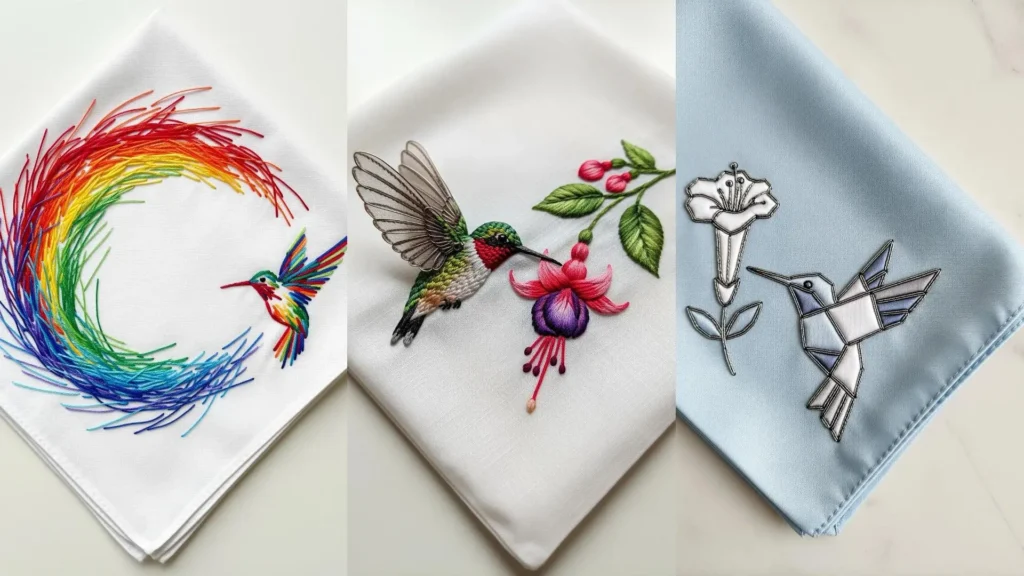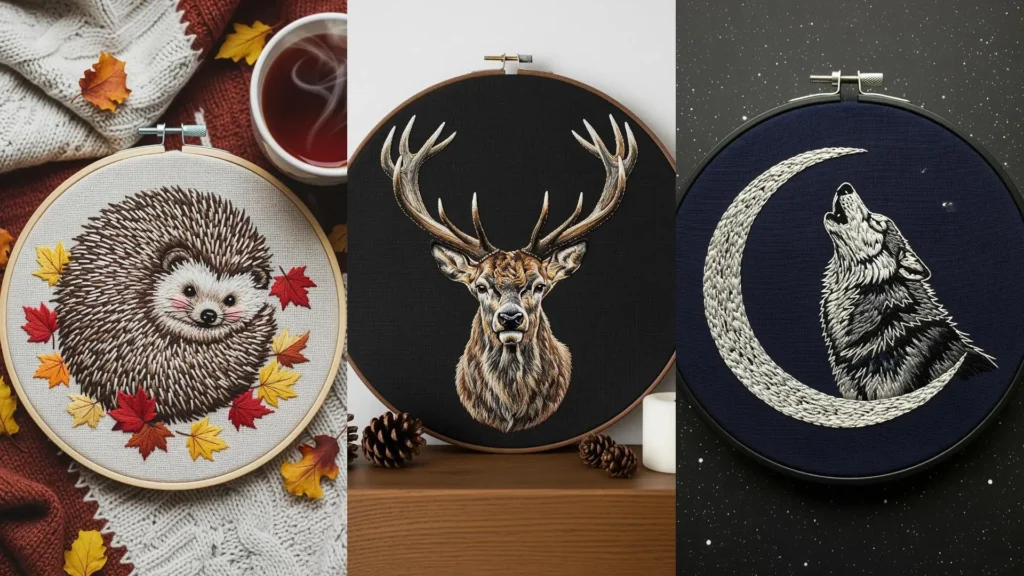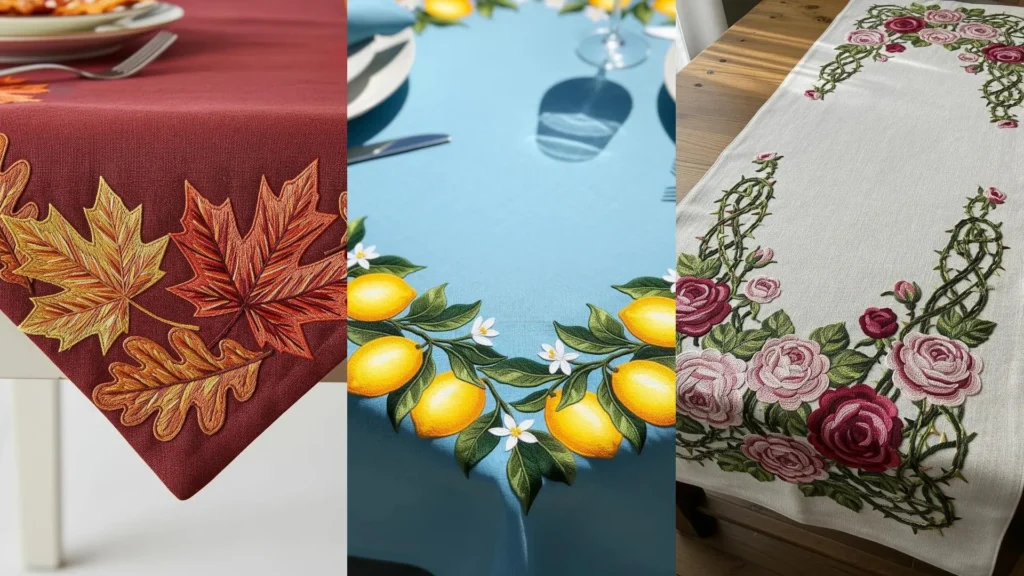
Embroidering your table linens is more than just adding decoration; it’s about transforming everyday objects into personal expressions of beauty. It’s a chance to frame your meals with intention, creating an atmosphere that feels both handcrafted and deeply elegant.
But perhaps you feel your stitches lack a certain polish, or your designs don’t quite capture the effortless grace you envision. The solution often lies not in complexity, but in subtlety—a slight change in stitch direction, a thoughtful color blend, or a new way of creating texture.
This collection is your guide to mastering those details. Here, you will find techniques that elevate simple stitches into lifelike botanicals and turn plain fabric into an heirloom. Let’s move beyond the pattern and begin stitching with the confidence of an artist, creating pieces that are not just beautiful, but truly yours.
1. Frame Your Table with an Olive Branch Border
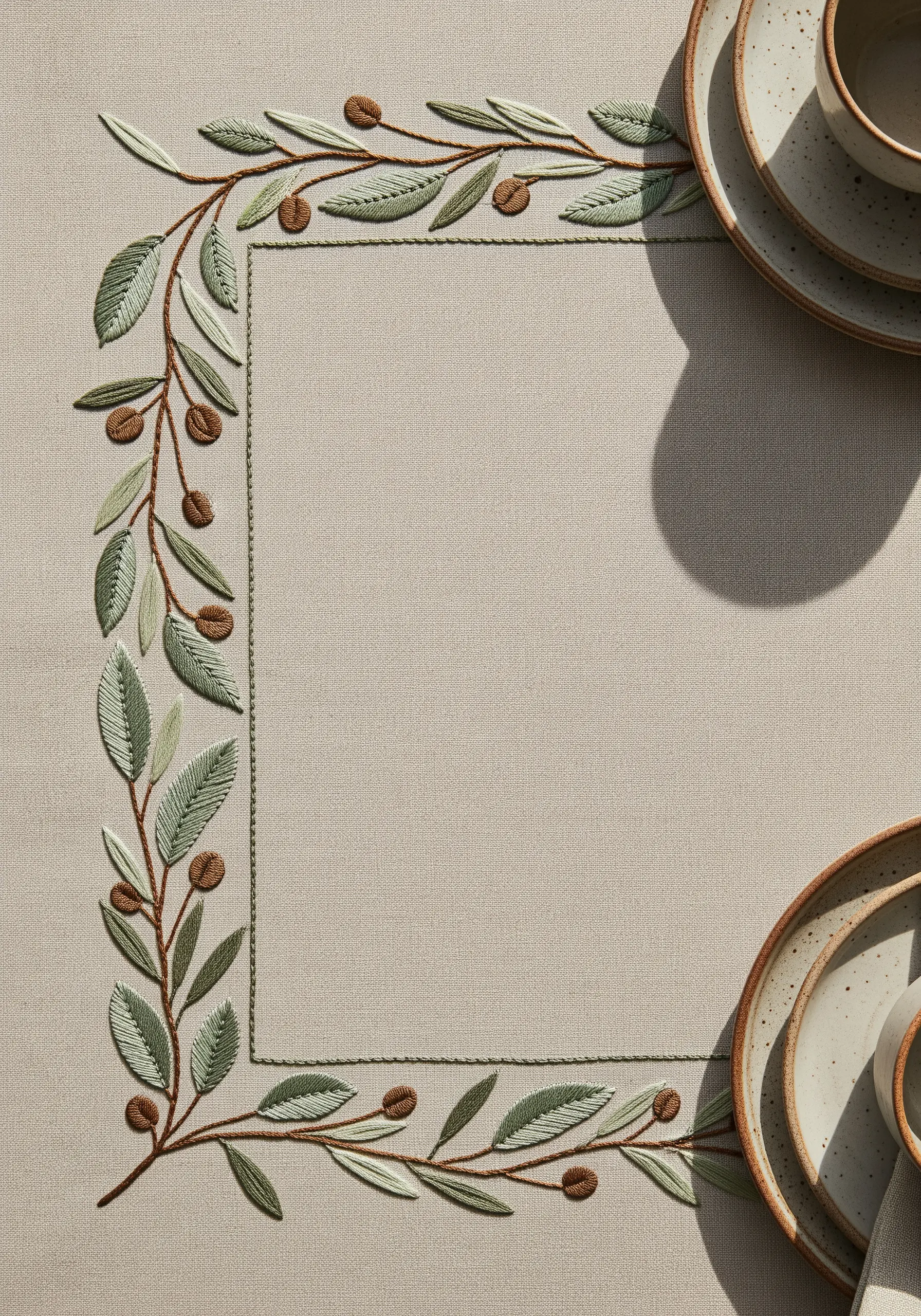
To achieve lifelike leaves, use a fishbone stitch, angling your stitches from the outer edge toward a central vein line.
Vary the shades of green—a muted sage for some leaves and a deeper olive for others—to create natural depth and avoid a flat, uniform appearance.
For the olives or berries, use a padded satin stitch. Create a small oval base with split stitches, then cover it with satin stitches to give each fruit a subtle, rounded dimension that catches the light.
The inner frame, stitched in a simple backstitch, provides a clean, tailored boundary that makes the organic foliage pop.
2. Stitch a Sweet Strawberry Vine Corner

Give your strawberries a plump, realistic texture by using a satin stitch that follows the fruit’s curve.
Before adding the red, place tiny yellow or off-white straight stitches to act as seeds. Stitching the red fill *around* them makes the seeds look embedded rather than sitting on top.
For the delicate white blossoms, use detached chain stitches (lazy daisies) for the petals and a cluster of three French knots in yellow for the center.
Let the green vines curve organically using a whipped backstitch, which creates a smooth, cord-like line perfect for trailing stems.
3. Create a Fern Foliage Gradient Runner

Transform a simple table runner by creating a color gradient with various shades of green, from pale chartreuse to deep teal.
Assign a specific fern species or stitch style to each color family to maintain visual organization within the gradient.
Utilize different fern foliage stitch variations; a fly stitch for broader fronds and a fishbone stitch for more delicate ones adds incredible texture.
This design works because the repetition of the shape is balanced by the dynamic shift in color, leading the eye down the length of the table.
4. Scatter Delicate Queen Anne’s Lace

Achieve the airy look of Queen Anne’s Lace by using clusters of small, tight French knots for the flower heads.
Use a single strand of floss for the delicate green stems (straight stitches) and three strands for the white knots to create a noticeable textural contrast.
To prevent the design from feeling static, vary the height of the stems and the density of the flower clusters, mimicking how they grow in a meadow.
This minimalist approach is perfect for placemats or coasters, adding a touch of elegance without overwhelming the piece.
5. Add Zest with a Symmetrical Lemon Border
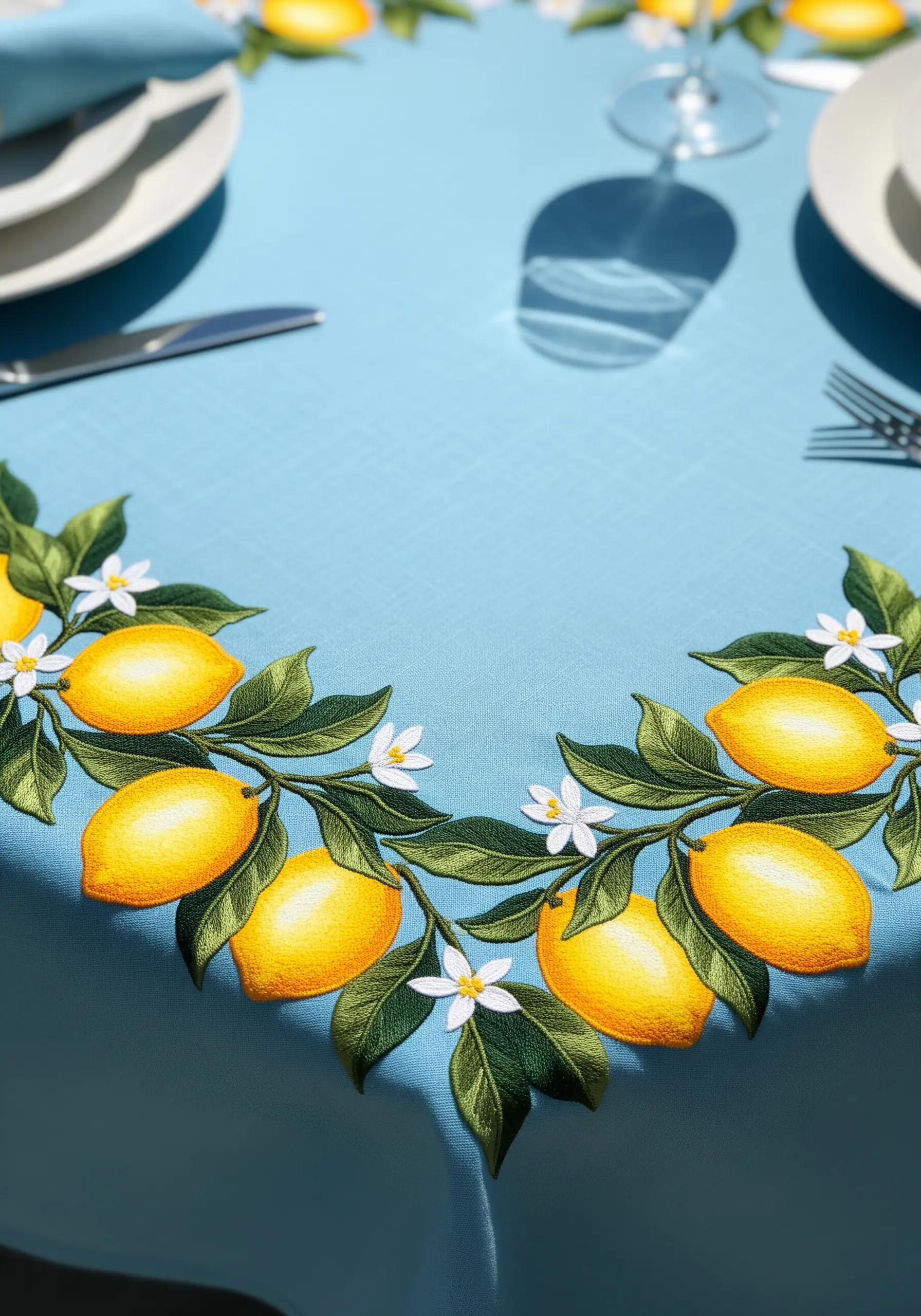
Create luminous, rounded lemons with a long-and-short stitch, blending three shades of yellow from light to deep gold.
Start with the lightest shade where the light would hit, and blend darker tones toward the bottom to create a realistic, three-dimensional effect.
A single white straight stitch on the surface of each lemon adds a subtle highlight that makes the fruit look glossy and fresh.
Pair the vibrant yellow with deep green leaves and crisp white blossoms to create a classic, high-contrast color palette that energizes the tablescape.
6. Capture Autumn’s Glow with Maple Leaves

Give autumn leaves a dynamic, variegated look by using a technique called thread painting, blending reds, oranges, and golds within a single leaf.
Instead of filling each section with a solid color, use long-and-short stitches to create a seamless transition between hues.
Outline the veins with a darker brown or red backstitch after the fill is complete; this defines the structure of the leaf and adds a final layer of detail.
This design is an excellent opportunity to use variegated thread for a simpler approach to color blending.
7. Weave a Forget-Me-Not Band
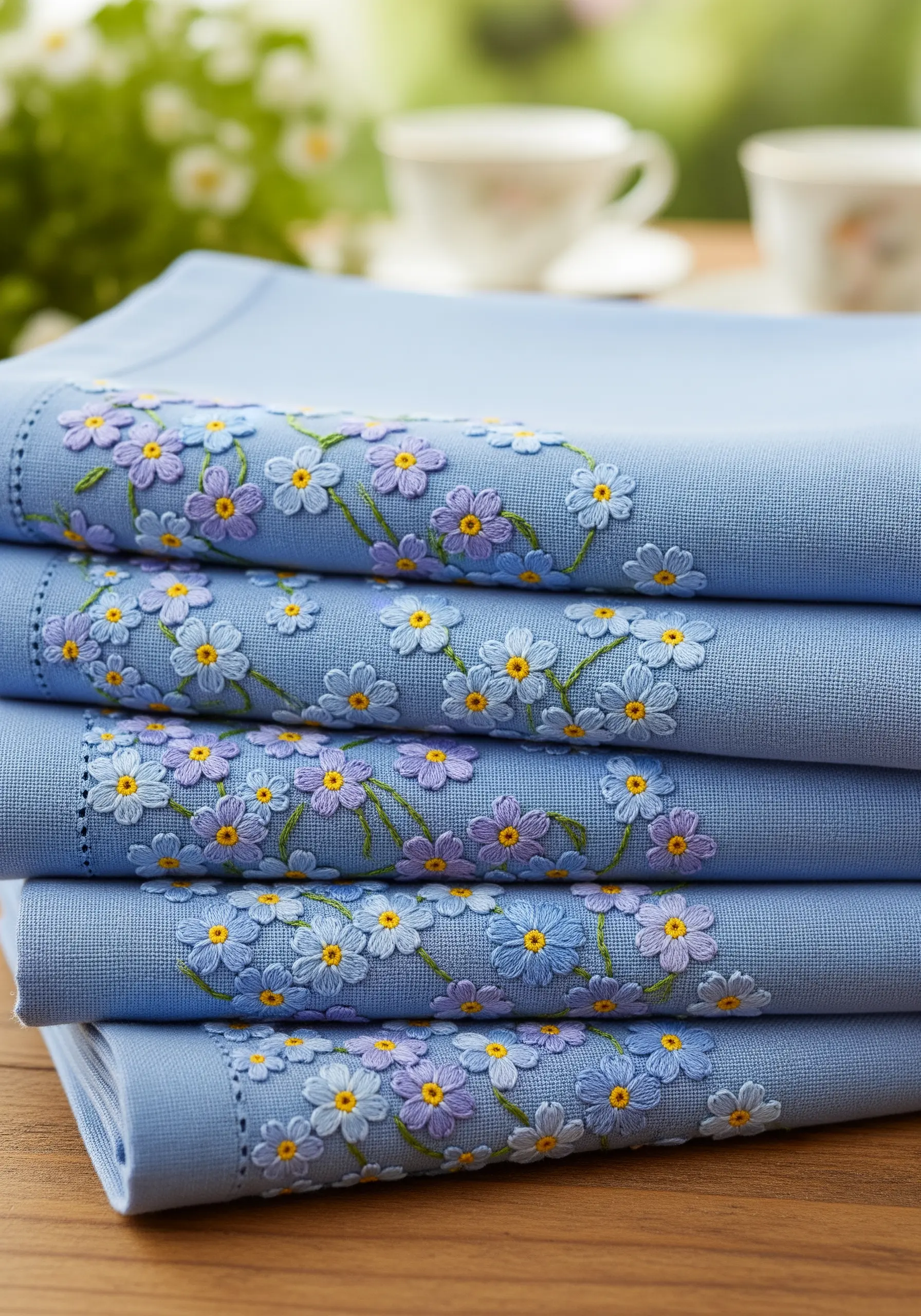
Create a dense, charming floral band by clustering small flowers together. Use five detached chain stitches (lazy daisies) for each blossom.
Introduce a soft color variation by mixing light blue, periwinkle, and lavender threads for the flowers, giving the border a gentle, painterly quality.
A single yellow French knot in the center of each flower provides a bright focal point and ties the entire design together.
This border is especially beautiful on napkins, as it adds a touch of intricate detail without being overly formal.
8. Master Monochromatic Ivy Elegance
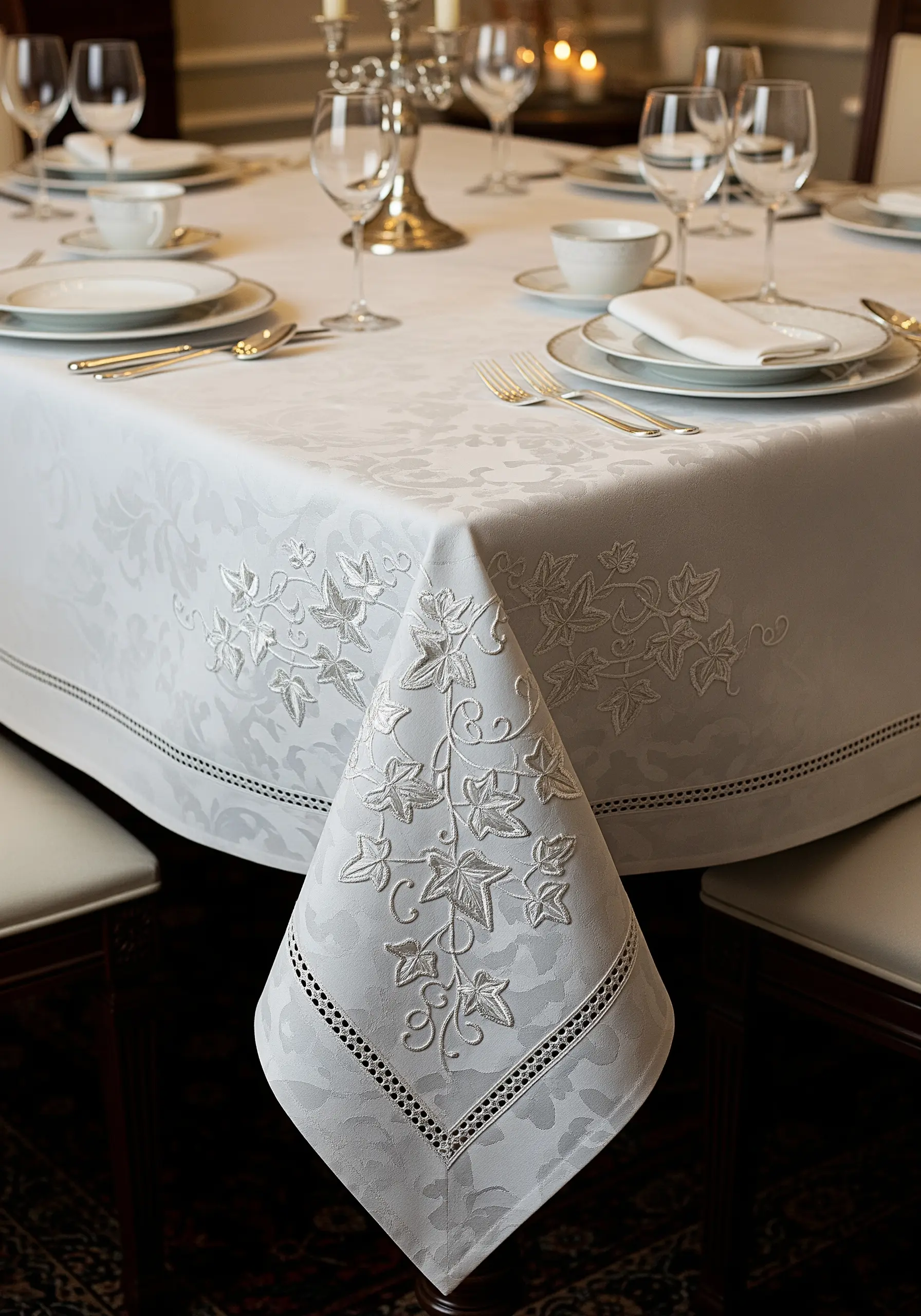
Elevate your embroidery with a tone-on-tone effect by using a thread color just a few shades lighter or darker than your fabric.
For this sophisticated look, focus on texture. Use a stem stitch for the twisting vines and a satin stitch for the ivy leaves to create a subtle contrast in light reflection.
Combine the embroidery with a drawn thread work border (hemstitching) to add a layer of classic, heirloom-quality detail.
This monochromatic approach ensures the design feels integrated and luxurious, perfect for formal dining settings.
9. Craft a Radiant Sunflower Placemat
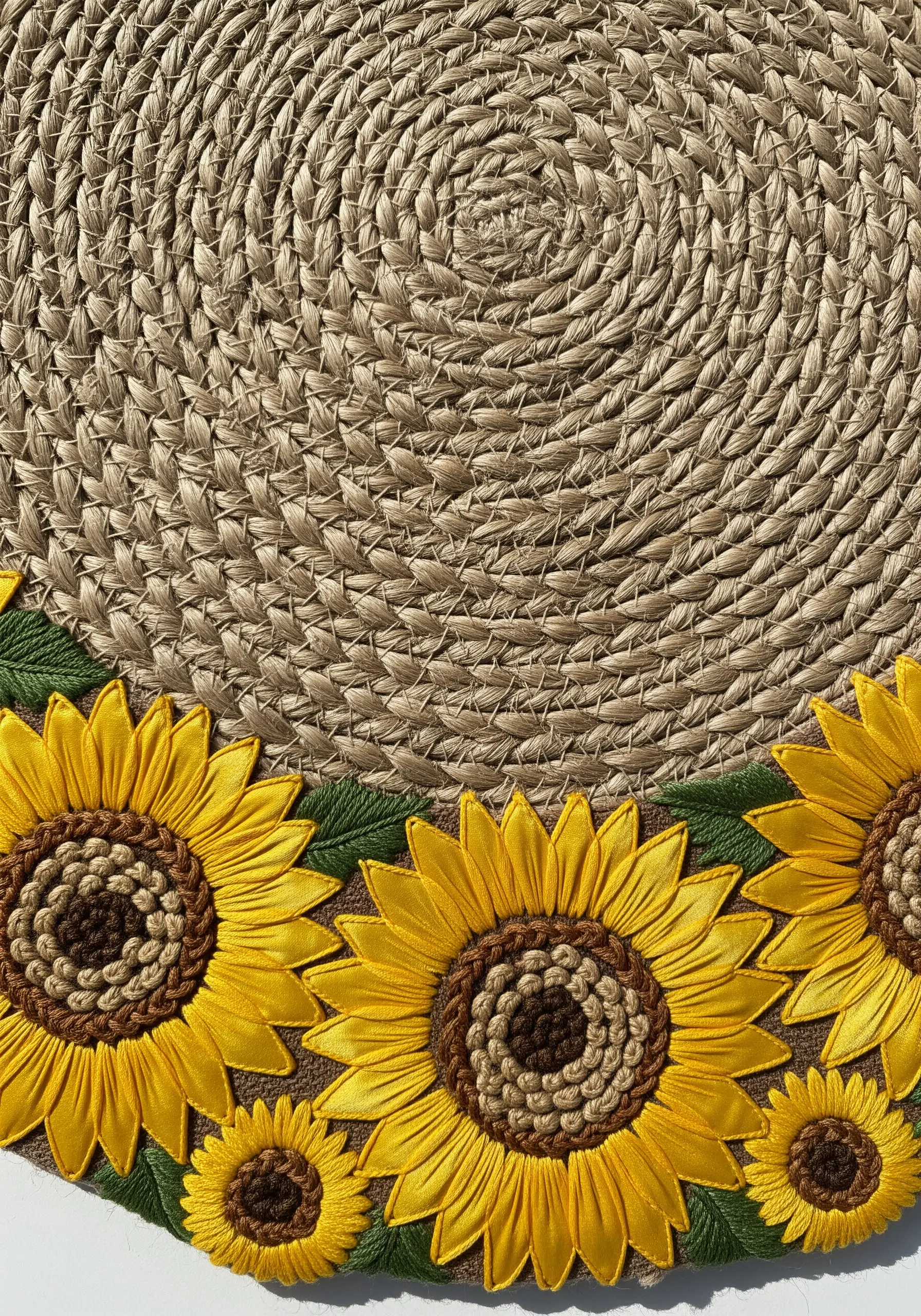
Use ribbon embroidery for the sunflower petals to achieve a bold, three-dimensional texture that standard floss cannot replicate.
Create straight stitches with silk ribbon, allowing the ribbon to twist slightly to mimic the natural curl of petals.
For the intricate seed head, fill the center with a spiral of French knots in dark and light brown, or try couching a textured yarn for a faster, equally effective result.
This technique turns a simple placemat into a vibrant piece of rustic charm.
10. Adorn Your Linens with a Classic Holly Border
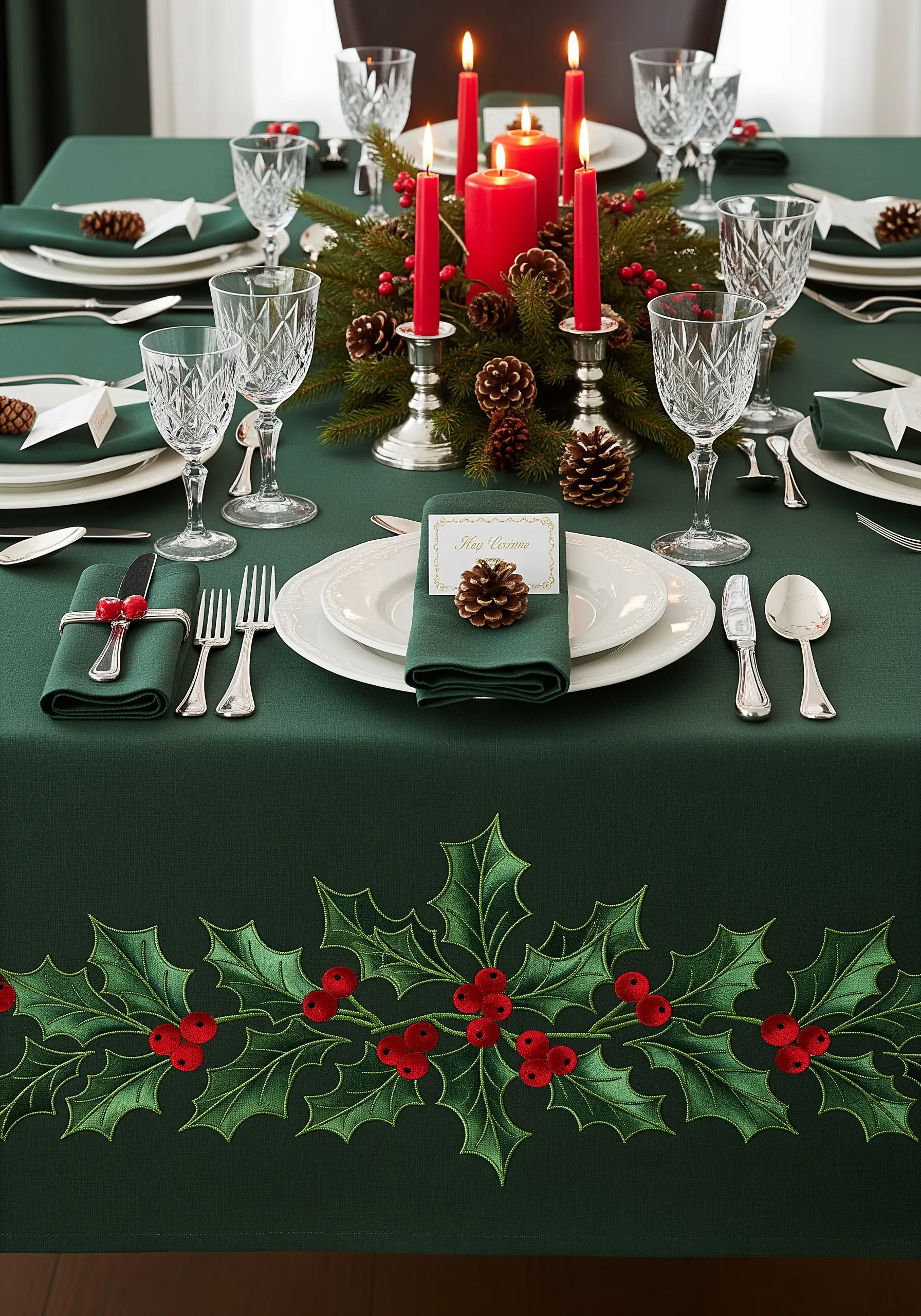
For crisp, sharp points on your holly leaves, use a satin stitch and ensure your final stitches at each point are tight and precise.
Give the berries a plump, glossy appearance with padded satin stitch or a cluster of three to four French knots worked closely together.
Use a high-sheen rayon or silk thread for the red berries to create a subtle glow that contrasts beautifully with the matte cotton floss of the leaves.
This festive design is perfect for creating a cohesive holiday tablescape across your tablecloth and napkins.
11. Drape Your Table with Cascading Wisteria
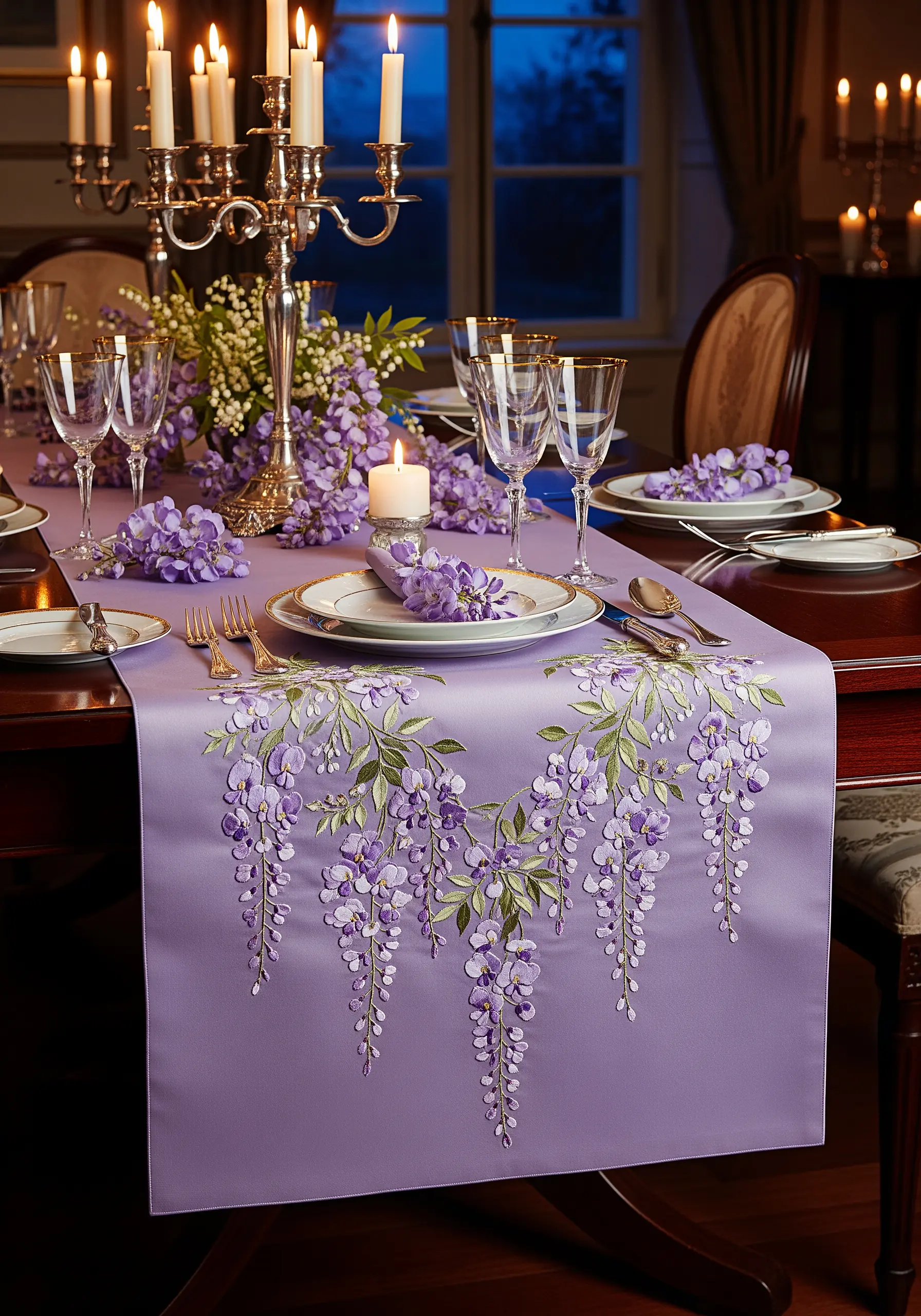
Capture the graceful drape of wisteria by using a combination of stitches: detached chain stitches and French knots in shades of purple and lavender.
Arrange the stitches in a dense cluster at the top of each flower raceme, becoming sparser toward the bottom to mimic its natural, tapering shape.
Use a twisted chain stitch for the woody vines to give them a gnarled, realistic texture that grounds the delicate blossoms.
This design is ideal for the ends of a table runner, allowing the flowers to cascade beautifully over the edge.
12. Frame with a Bold Poppy Border
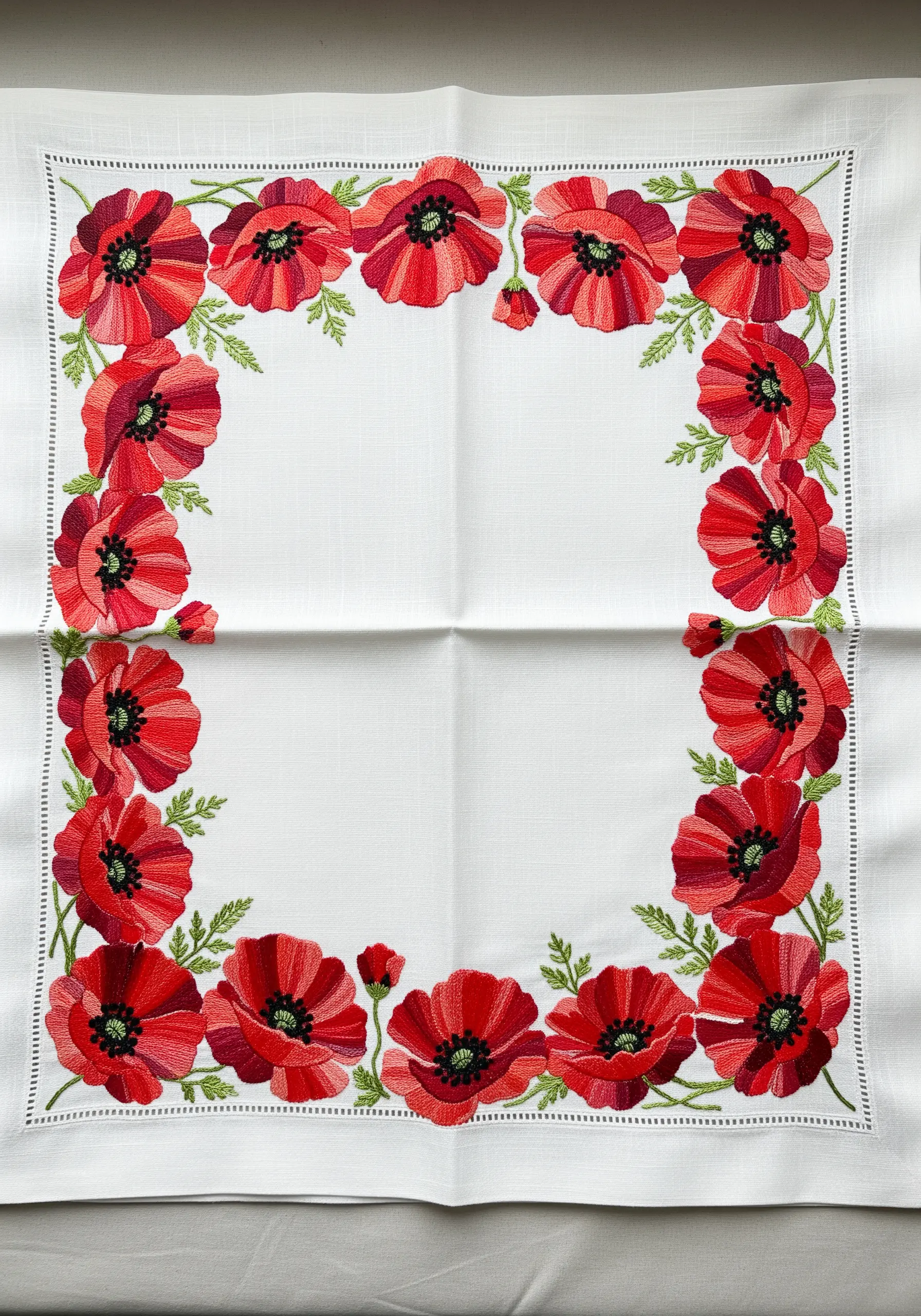
Create dynamic, textured poppy petals using long-and-short stitch, blending two or three shades of red to suggest depth and shadow.
The key to realistic poppies is the black center. Fill it with tightly packed French knots, then add a few straight stitches in a contrasting color (like pale green) to represent the stamen.
To prevent the bold red from overpowering the design, add small, airy sprigs of green using a fly stitch for the leaves.
A simple drawn thread border adds a delicate, traditional finish that contains the vibrant energy of the flowers.
13. Arrange a Scattered Herb Garden Placemat

Create a subtle, modern botanical look by scattering small sprigs of herbs across your placemats.
Focus on capturing the essence of each herb with a single stitch: use fishbone stitch for sage leaves, tiny detached chain stitches for thyme, and straight stitches for rosemary needles.
Mix in a few sprigs made with felt appliqué for a quick way to add dimension and textural variety to your home decor.
This scattered design feels organic and less formal than a traditional border, perfect for casual dining.
14. Go Modern with a Monstera Leaf Runner
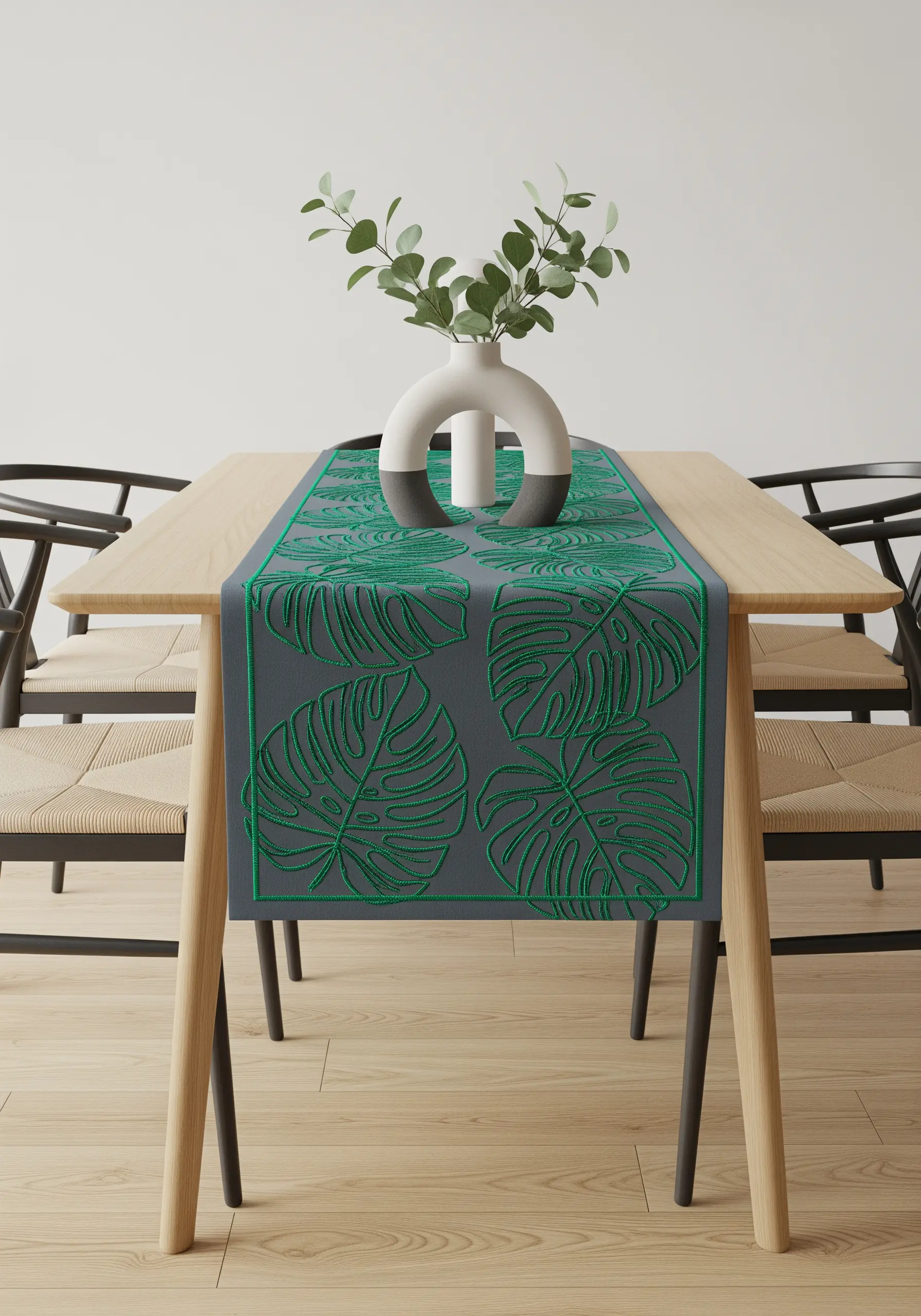
For a contemporary and graphic statement, trace and stitch bold Monstera leaves in a single, vibrant color.
Use a triple stitch (or stitch over your backstitch three times) to create a thick, defined outline that stands out against the fabric.
This design relies on the clean power of line art, so focus on smooth curves and sharp corners for a polished, professional finish.
Placing the leaves in a repeating, offset pattern creates a rhythm that feels both modern and sophisticated.
15. Cultivate a Cherry Blossom Corner
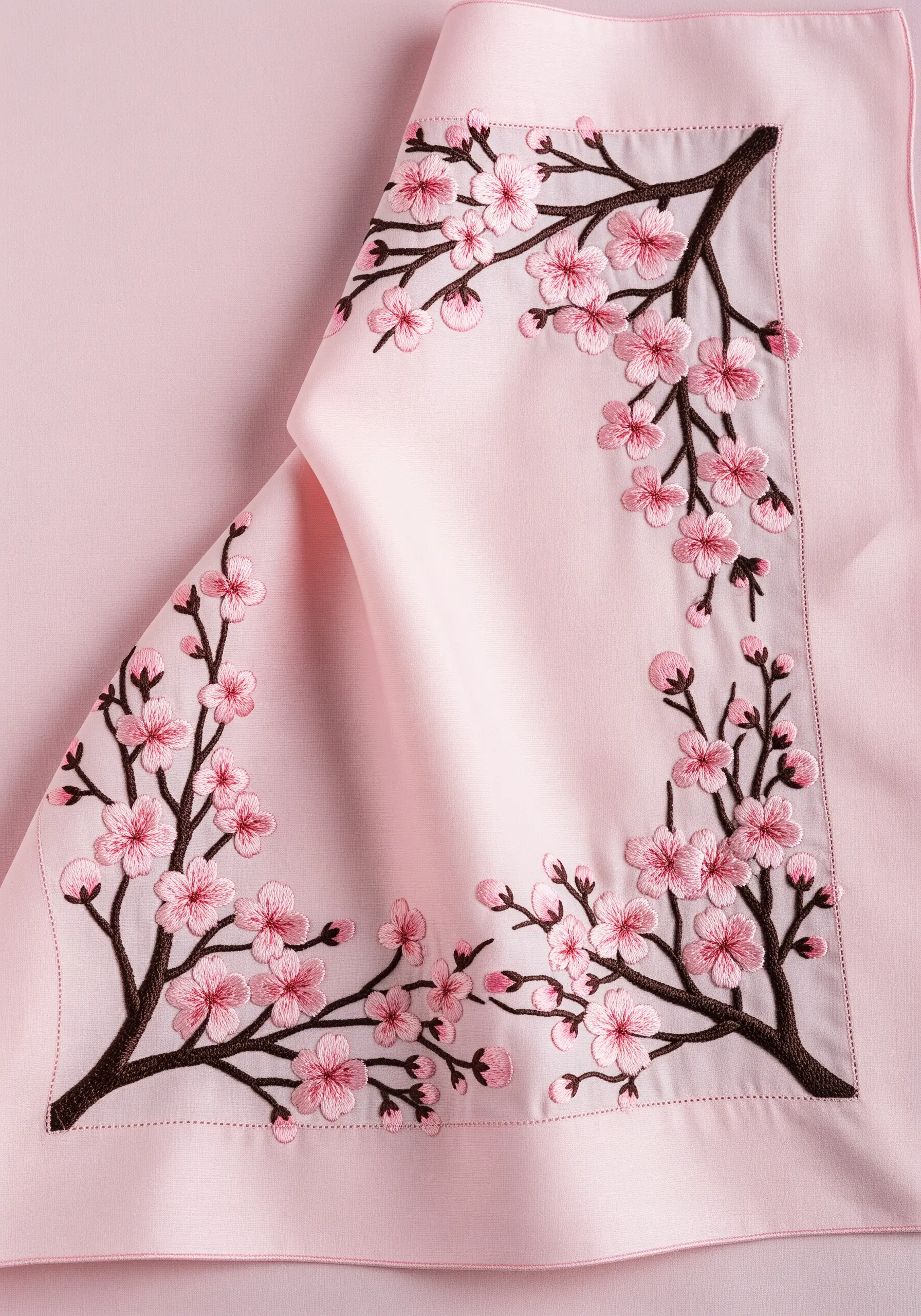
Achieve the delicate, layered look of cherry blossoms by using shades of pale and medium pink for the petals.
For each blossom, use five detached chain stitches, and fill the center with a single dark brown or deep red French knot.
Create the gnarled branches with a heavy stem stitch or couching, using a dark brown thread to ground the airy pink flowers.
The asymmetrical placement in the corner of a napkin draws the eye and feels more natural than a rigid, repeating border.
16. Stitch Golden Wheat Sheaves on Burlap

Let the texture of your fabric enhance the design by embroidering on a rustic material like burlap or linen.
Create the wheat grains with a satin stitch or a series of closely packed fishbone stitches for a braided, dimensional effect.
Use a high-sheen gold or brass-colored thread to create a beautiful contrast against the matte, natural texture of the burlap.
The long, elegant stems and awns can be rendered with simple straight stitches, adding a sense of movement to each sheaf.
17. Create a Bluebell and Grape Hyacinth Meadow
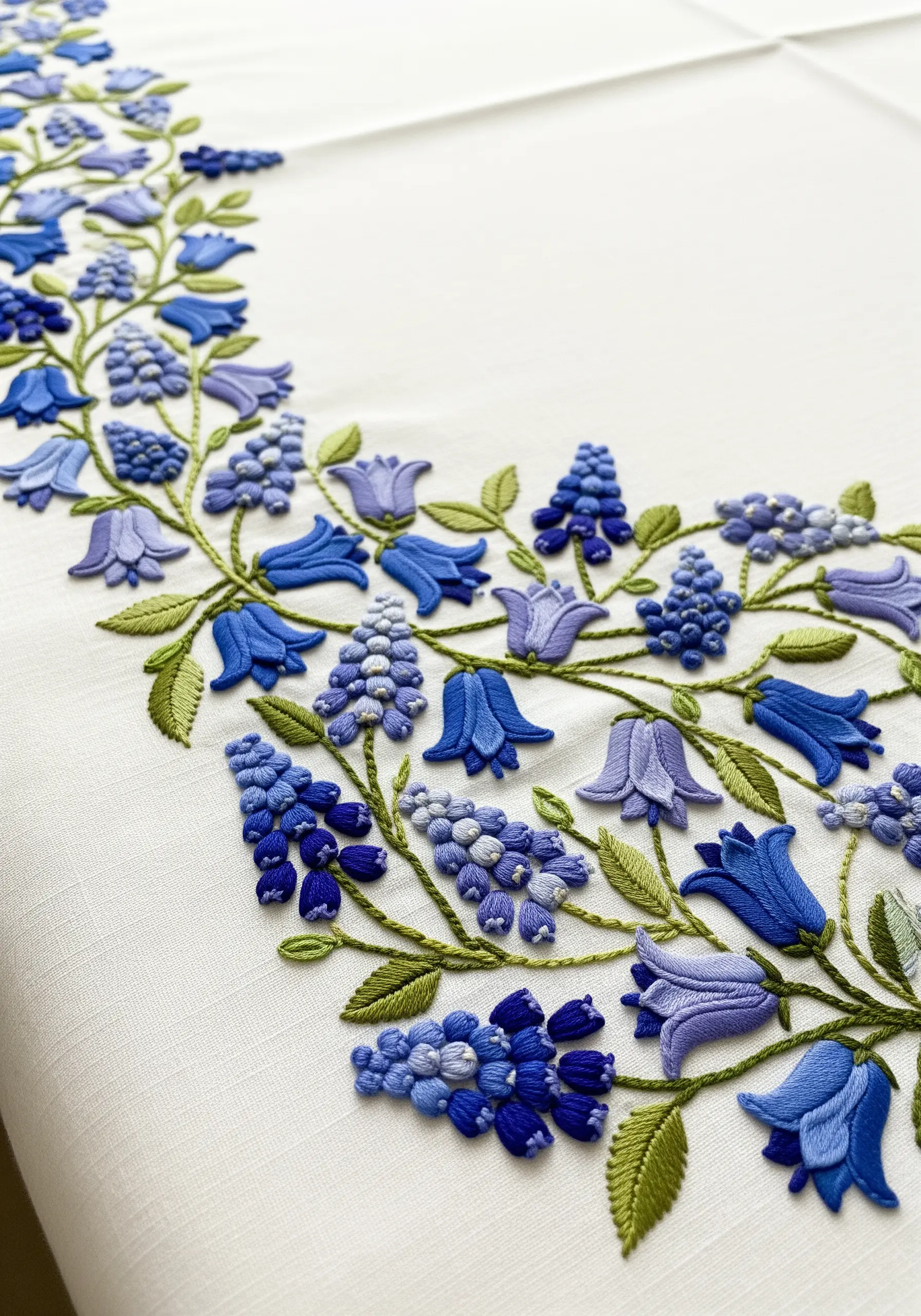
Build a lush, textural border by combining different floral shapes and three-dimensional stitches.
For the bell-shaped flowers, use a padded satin stitch over a few foundation stitches to make them pop. For the grape hyacinths, use dense clusters of French knots.
Vary the shades of blue and purple throughout the design to create a sense of depth and visual interest, as if looking into a real meadow.
This design is a masterclass in using texture-rich thread art ideas to create a stunning, tactile piece.
18. Weave a Thorny Rose Garland

Give your roses a classic, dimensional look by using a woven wheel stitch (or spider web rose stitch) for the main blooms.
Create contrast by stitching the wrapping, thorny vines in a darker, textured stitch like a twisted chain stitch or heavy stem stitch.
Intersperse fully bloomed roses with small, unopened buds made from a cluster of French knots and a satin-stitched calyx.
This romantic, slightly wild design works beautifully along the edges of a long table runner, creating an enchanting frame.
19. Line Your Linens with a Cheerful Daisy Chain

For a simple yet impactful border, stitch a continuous line of daisies. Create the petals with straight, uniform detached chain stitches.
Ensure your daisies look uniform by using a small circle template to mark the center and guide the placement of each petal.
A bright yellow French knot in the center of each flower provides a pop of contrasting color and classic daisy charm.
This design is perfect for beginners and adds a touch of sunny, retro-inspired style to yellow or white linens.
20. Paint with Thread: Watercolor Eucalyptus

Capture the soft, muted tones of eucalyptus by using a thread painting technique with just two or three shades of dusty green and grey.
Fill each leaf with long-and-short stitches, allowing the colors to blend softly into one another without harsh lines.
Keep the stems delicate and light with a single strand of floss in a simple backstitch, ensuring the focus remains on the painterly leaves.
This minimalist design is perfect for creating calm, elegant decor for modern tablescapes.
21. Cultivate a Rich Blackberry Bramble
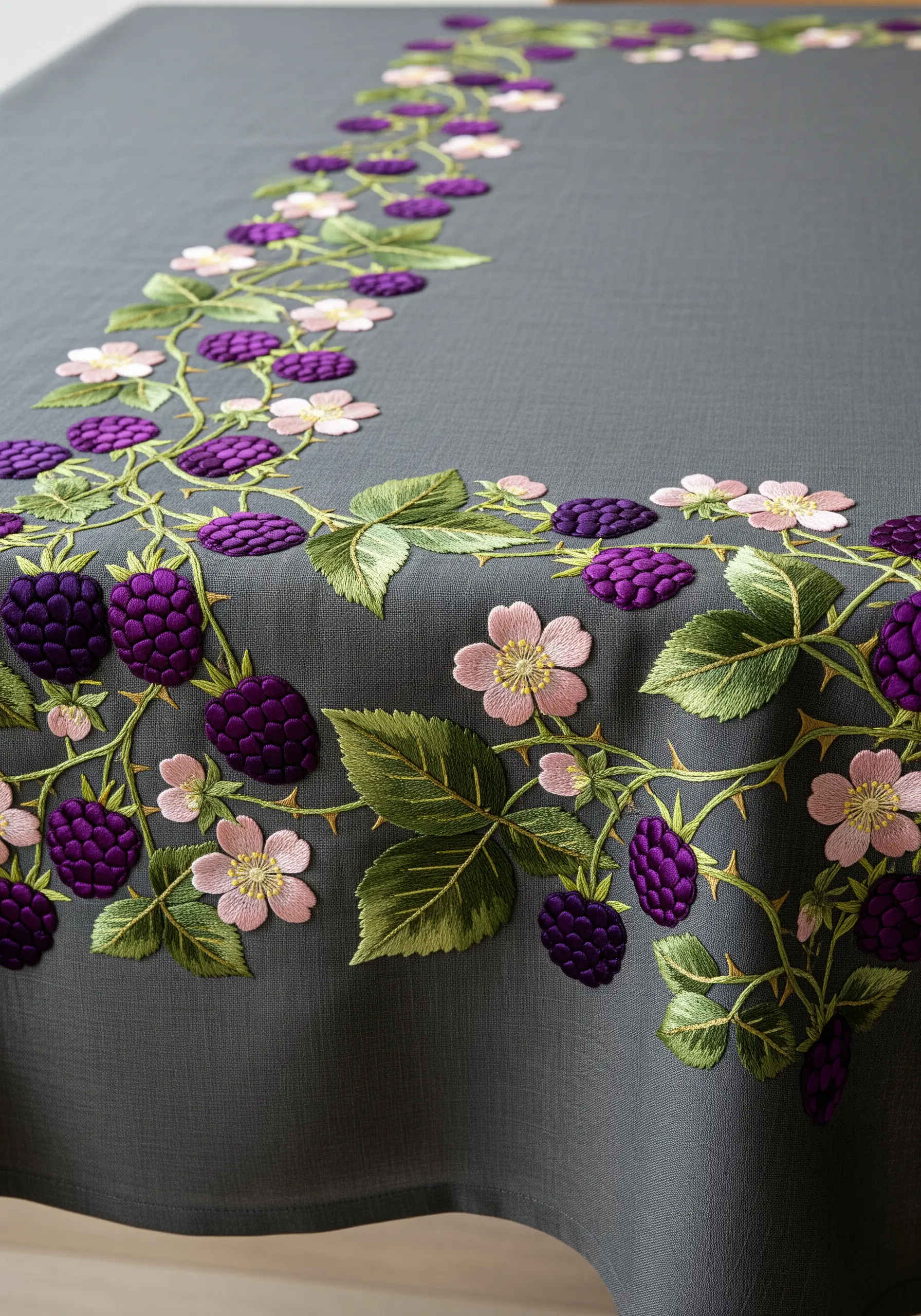
Create plump, juicy blackberries by embroidering a dense cluster of French knots with a high-sheen purple or deep blue thread.
For extra dimension, use a darker shade for the knots on the bottom of the berry and a slightly lighter shade for those on top.
Contrast the rich texture of the fruit with delicate pink blossoms made from detached chain stitches and soft, multi-toned green leaves.
The deep purple and charcoal gray fabric create a dramatic, moody palette that feels both sophisticated and lush.
22. Capture a Dandelion’s Wish

Recreate the delicate structure of a dandelion seed head using a combination of straight stitches and French knots.
Stitch long, thin straight stitches radiating from a central point, then add a tiny French knot or a seed stitch at the end of each one to represent the seed.
To create a sense of movement, stitch a few individual seeds floating away from the main flower head.
Combine the airy seed heads with vibrant yellow flower heads, using a dense satin stitch for a beautiful contrast in both color and texture.
23. Craft a Rustic Pinecone Arrangement
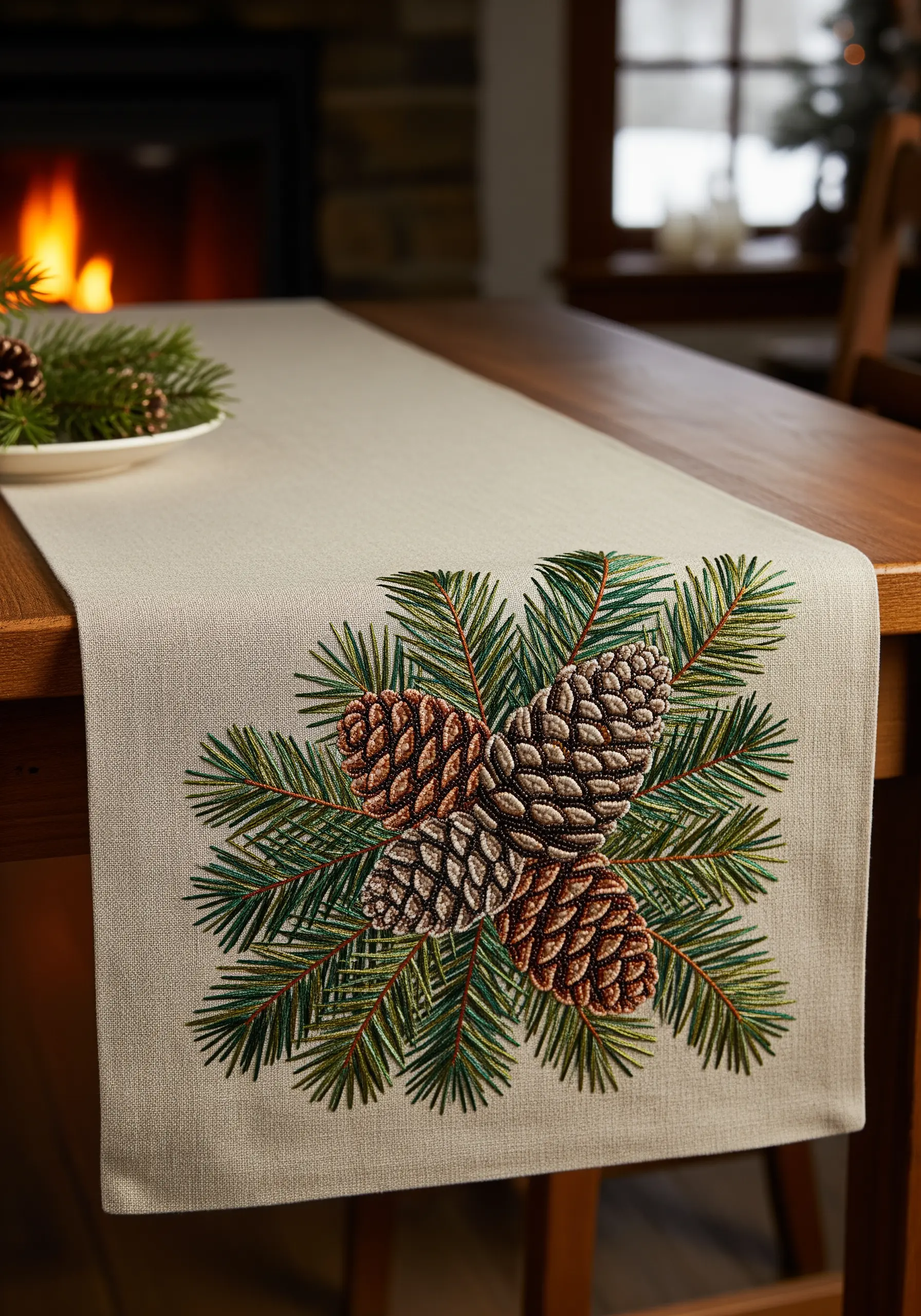
Build realistic, textured pinecones by layering stitches. Start with a base of light brown satin stitches, then add darker brown straight stitches on top to mimic the texture of the scales.
Use a fishbone stitch for the pine needles, clustering them together in small groups and varying their angles for a natural, bushy appearance.
Choose a rustic, heavy-weave fabric like linen or cotton canvas; its natural texture will complement the woodland theme perfectly.
This design makes a wonderful centerpiece for a table runner, especially for autumn or winter gatherings.
24. Design a Whimsical Mushroom Ring

Create a playful, fairytale-inspired border with a variety of colorful mushrooms.
Use a padded satin stitch for the mushroom caps to give them a rounded, cartoon-like volume. Experiment with different colors and add French knot or straight stitch spots.
Connect the mushroom border with an inner ring of swirling fern motifs, stitched in a simple backstitch or stem stitch.
This imaginative design is perfect for adding a touch of storybook charm to placemats or a tablecloth for a child’s party.
25. Etch Golden Ginkgo Leaves on Black Linen

For a dramatic and elegant statement, use a metallic gold thread on a dark fabric like black or navy linen.
Outline the fan shape of the ginkgo leaf with a split stitch to create a stable base, then fill it with a satin stitch, angling the stitches to follow the leaf’s natural veins.
Because metallic threads can be tricky, use a shorter length of thread than usual and a needle with a larger eye to prevent fraying.
The high contrast between the shimmering gold and the deep black creates a look of pure luxury and Art Deco-inspired style.
26. Stitch a Vibrant Marigold Fiesta Border
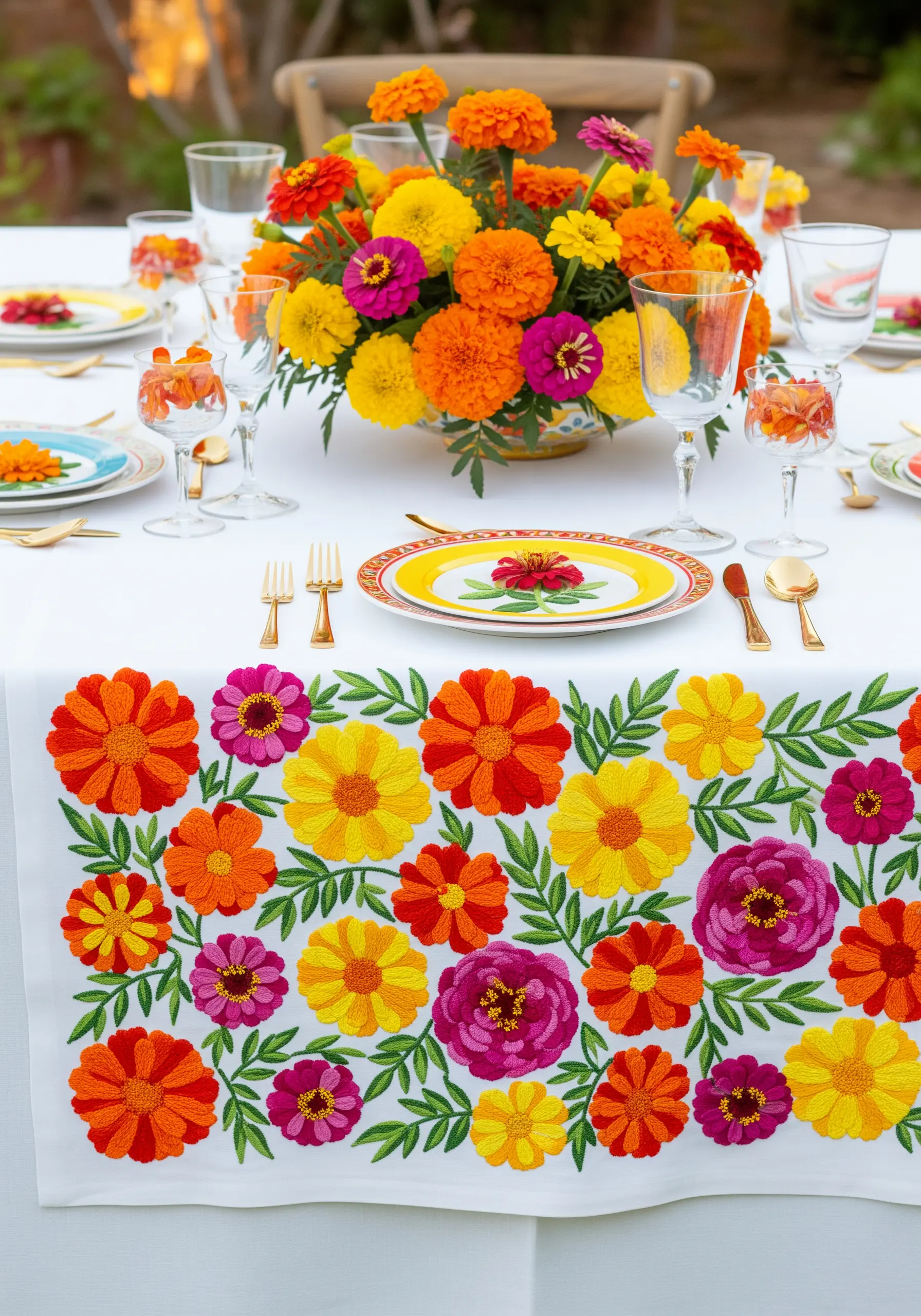
Embrace bold, joyful color with a dense border of marigolds and zinnias in hot pinks, oranges, and yellows.
Use a woven wheel stitch to create the round, fluffy texture of the flowers. For a fuller look, wrap the thread around the spokes multiple times.
Don’t be afraid to overlap the flowers and leaves to create a sense of abundance, just like a blooming summer garden.
This celebratory design transforms a plain white tablecloth into the centerpiece of a festive gathering.
27. Cultivate Exotic Passion Flowers
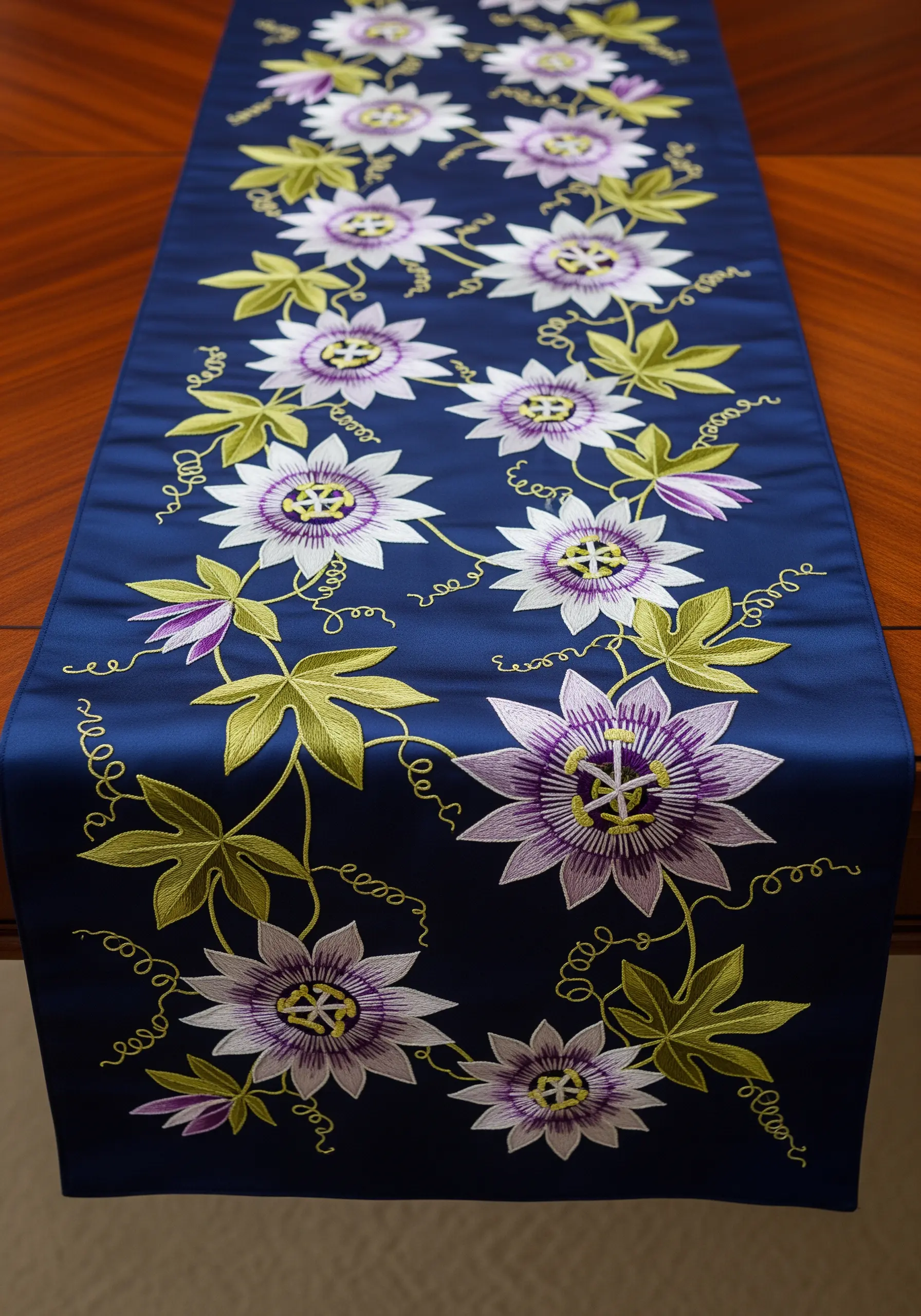
Capture the intricate detail of a passion flower by layering different stitches and colors.
Use a satin stitch for the main petals in white and lavender. For the thread-like corona filaments, use long, delicate straight stitches in a contrasting purple and white.
Build the complex central structure with French knots and straight stitches in green and yellow to create a realistic, three-dimensional center.
This advanced design is a stunning choice for a statement table runner on a dark, luxurious fabric like satin or silk.
28. Create a Dainty Lily of the Valley Frame

Achieve the delicate, bell-shaped flowers of Lily of the Valley with padded satin stitch or a well-placed cluster of French knots.
Use a very pale green or white thread for the flowers to give them their signature ethereal look, contrasting with the vibrant green of the leaves.
The arching stems look best when stitched with a delicate stem stitch, ensuring a smooth, graceful curve.
This design creates an elegant, symmetrical frame on a square napkin, enhanced by a classic hemstitch border.
29. Stitch a Scottish Thistle and Heather Border
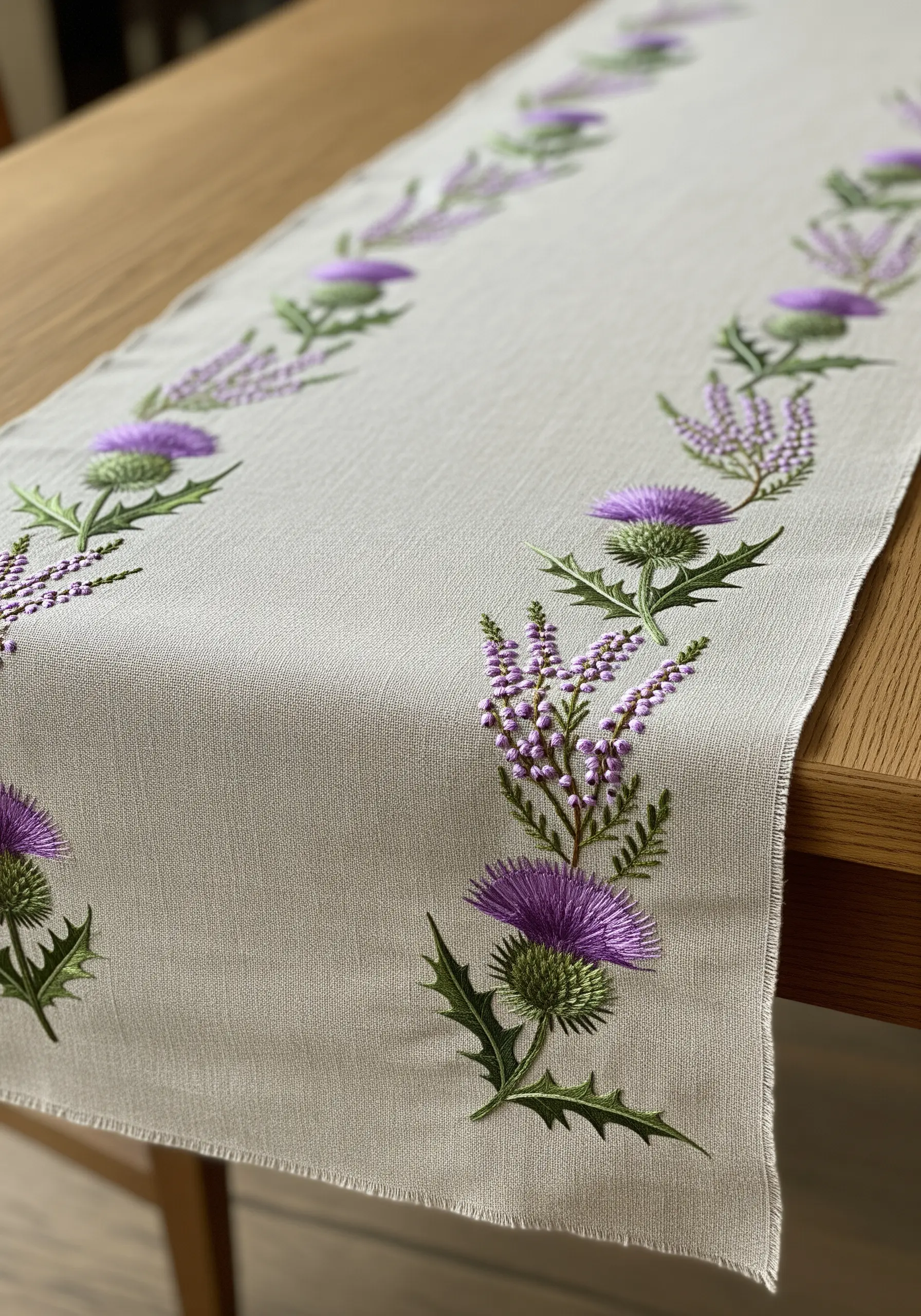
Combine textures to represent the rugged beauty of the Scottish highlands. Use a turkey stitch for the thistle’s fluffy purple top, which you can trim to your desired length.
For the spiky leaves and bracts, use a fishbone stitch with sharp, defined points in a silvery green.
Create the delicate heather sprigs with clusters of tiny French knots in shades of lavender and mauve, giving them a soft, heathery texture.
This design is particularly striking on natural, unbleached linen, which enhances its rustic, wild feel.
30. Craft an Artichoke and Thistle Motif

Focus on layering and shading to create the complex structure of an artichoke. Use a fishbone stitch for each individual bract, slightly overlapping them.
Introduce subtle color variation with dusty purples and muted greens to give the motif a sophisticated, almost painterly quality.
Use a whipped backstitch for the outlines to give the design a clean, defined edge that contains the intricate inner details.
This large, stately motif is perfect for the corner of a tablecloth or as a central design on a placemat, creating a unique and artistic focal point.
31. Line Your Placemat with a Cheerful Orange Grove
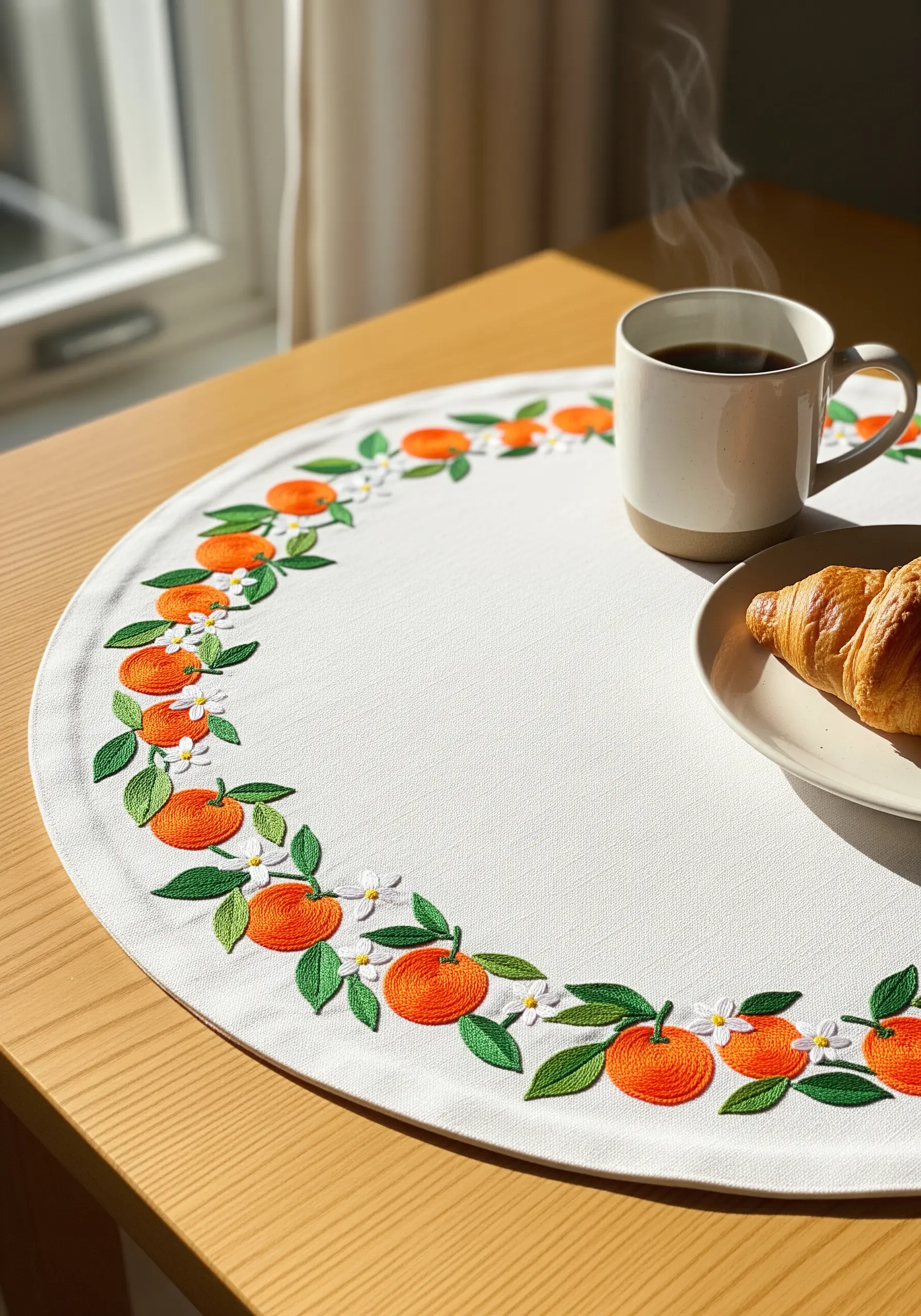
Create bright, plump oranges using a circular satin stitch, spiraling from the center outwards for a smooth, round finish.
Add a small white detached chain stitch and a yellow French knot to represent the orange blossoms, scattering them among the leaves and fruit.
Use two different shades of green for the leaves to add depth and prevent the design from looking flat.
This cheerful, continuous border brings a feeling of sunshine and warmth to your breakfast table.
32. Design a Silver and Grey Clematis Vine
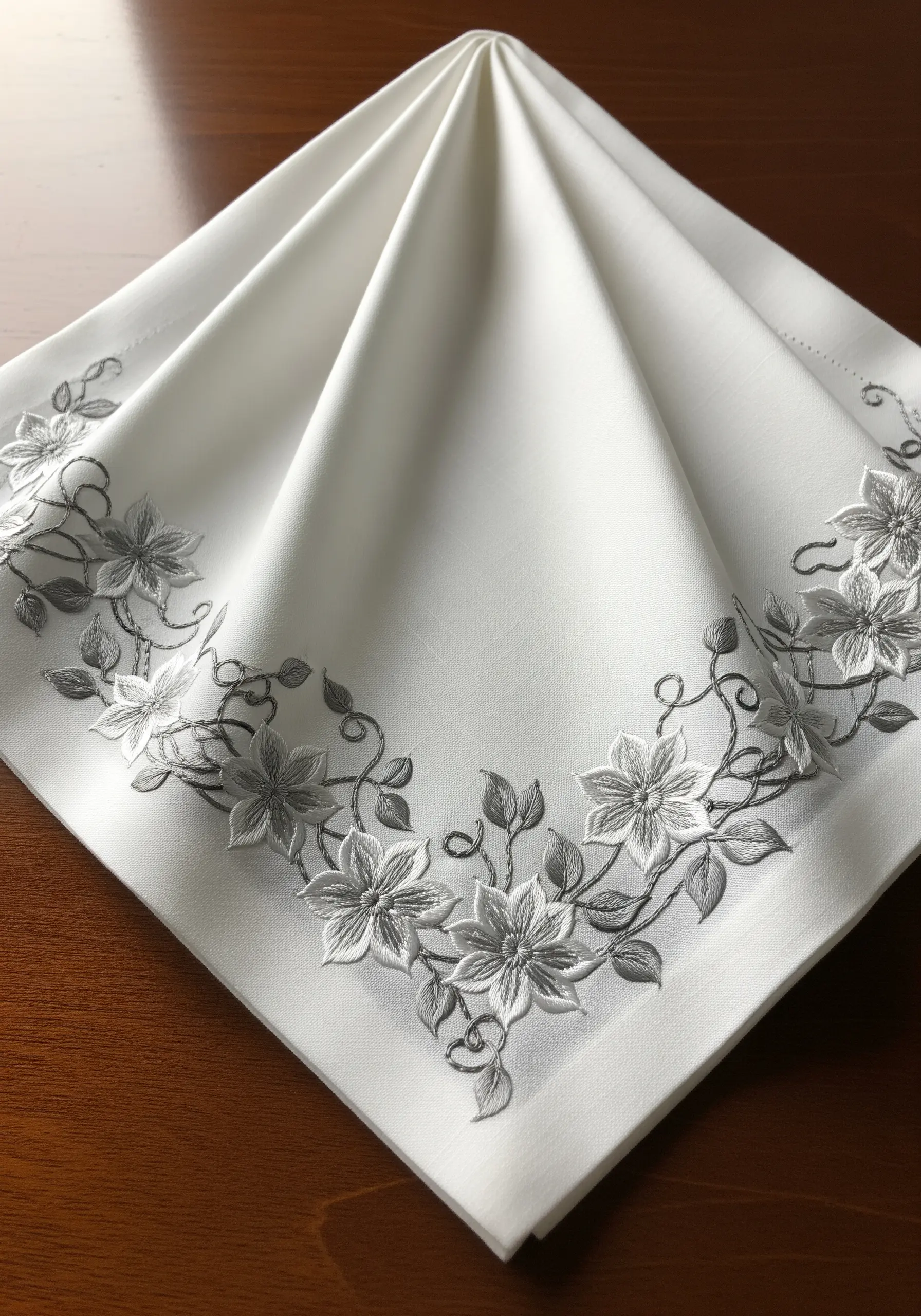
Explore the elegance of a limited color palette by using various shades of grey and silver thread on crisp white linen.
To prevent a monochromatic design from looking flat, focus on texture. Use a satin stitch for the petals, a stem stitch for the vines, and French knots for the flower centers.
Using a metallic silver thread for select highlights, like the center of the flowers or a few leaves, adds a touch of light-catching luxury.
This monochrome floral embroidery is the epitome of understated elegance, perfect for formal occasions or a minimalist aesthetic.