When you pick up a needle and thread, you’re doing more than just stitching. You’re giving yourself a quiet moment to create something real, something with texture and presence that can transform a corner of your home.
But perhaps you feel your work could have more impact, more of the polished, intentional quality you admire in the pieces you see. The secret isn’t in mastering hundreds of complex stitches; it’s in learning to see thread as a sculptural material and your fabric as a canvas for building dimension and depth.
These ideas are here to guide you toward that shift. Think of them not as strict patterns to be followed, but as invitations to explore texture, to play with scale, and to compose with color and form. You already have the skill. Now, it’s time to give your work the artistry it deserves.
1. The Architectural Appliqué
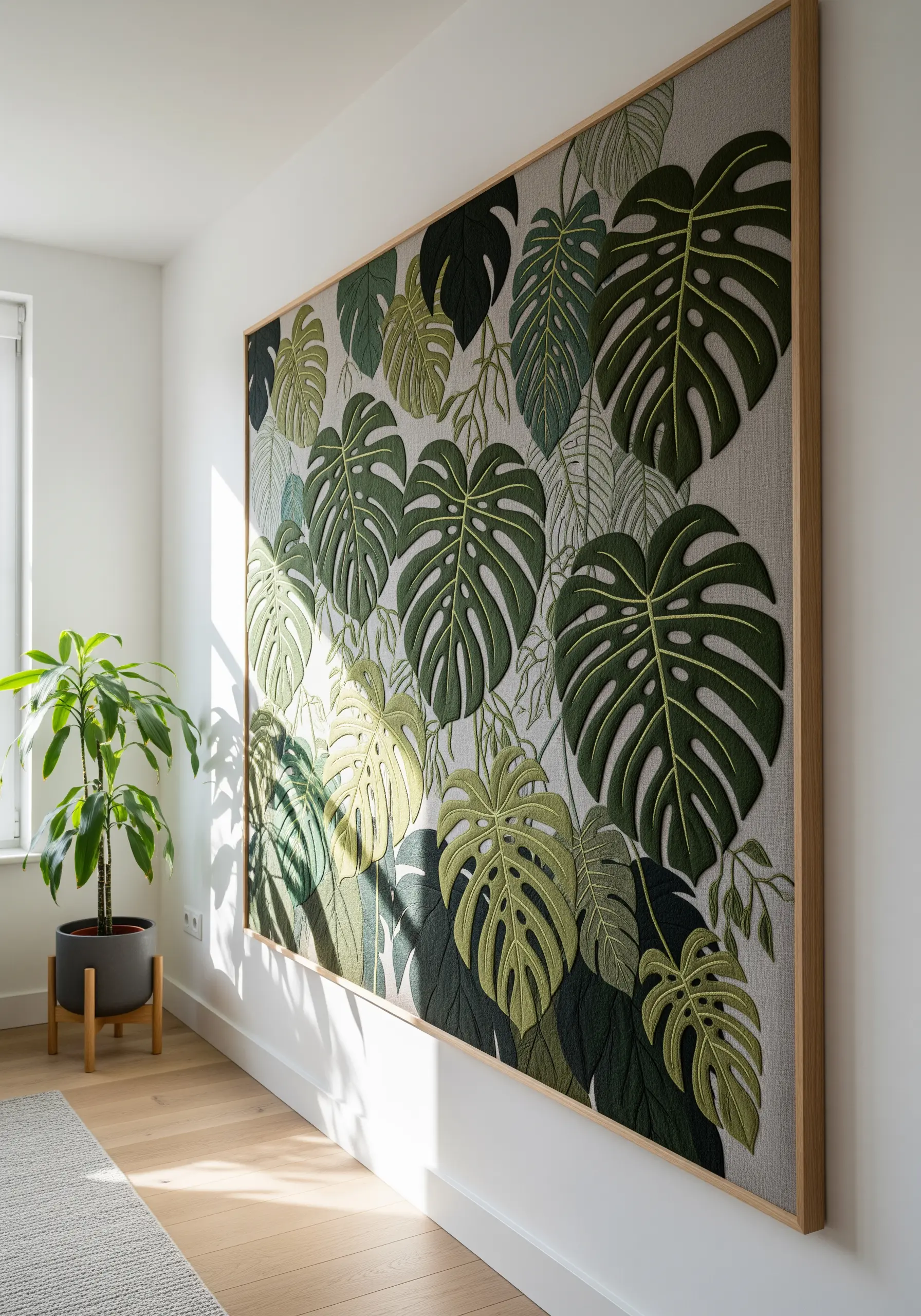
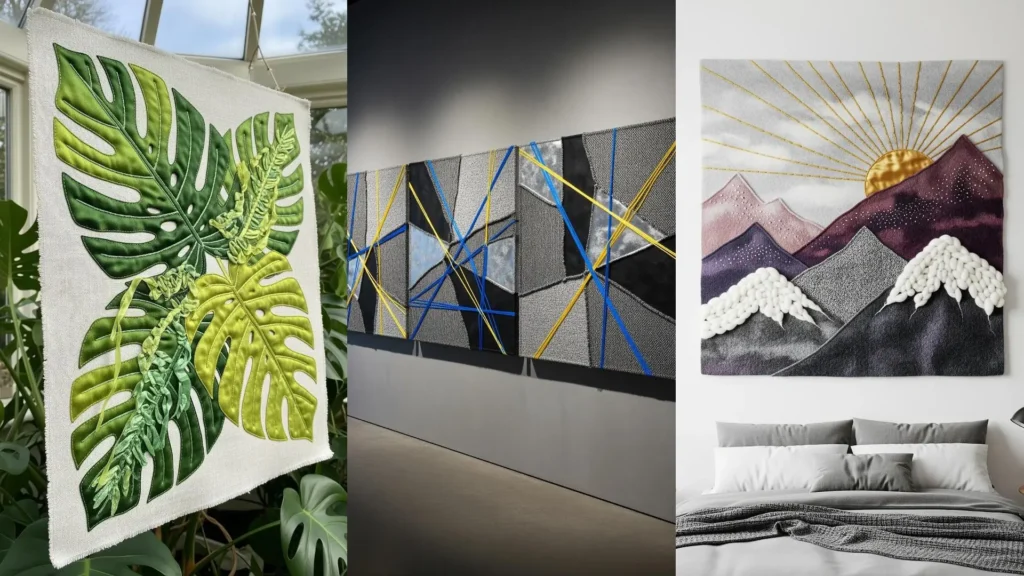
To create a large-scale botanical piece, think like an architect and build in layers.
Use wool felt or a non-fraying thick fabric for the monstera leaves, cutting out each shape precisely.
Arrange and layer the leaves on a neutral linen backing, pinning them in place to create a sense of depth and overlap.
Instead of filling with satin stitch, secure each leaf with a clean appliqué stitch, then use a contrasting, lighter green thread to add the veins with a bold chain stitch or couched yarn.
This technique allows you to create statement-size wall art without the time-intensive process of filling every inch with thread.
2. The Triptych Meadow
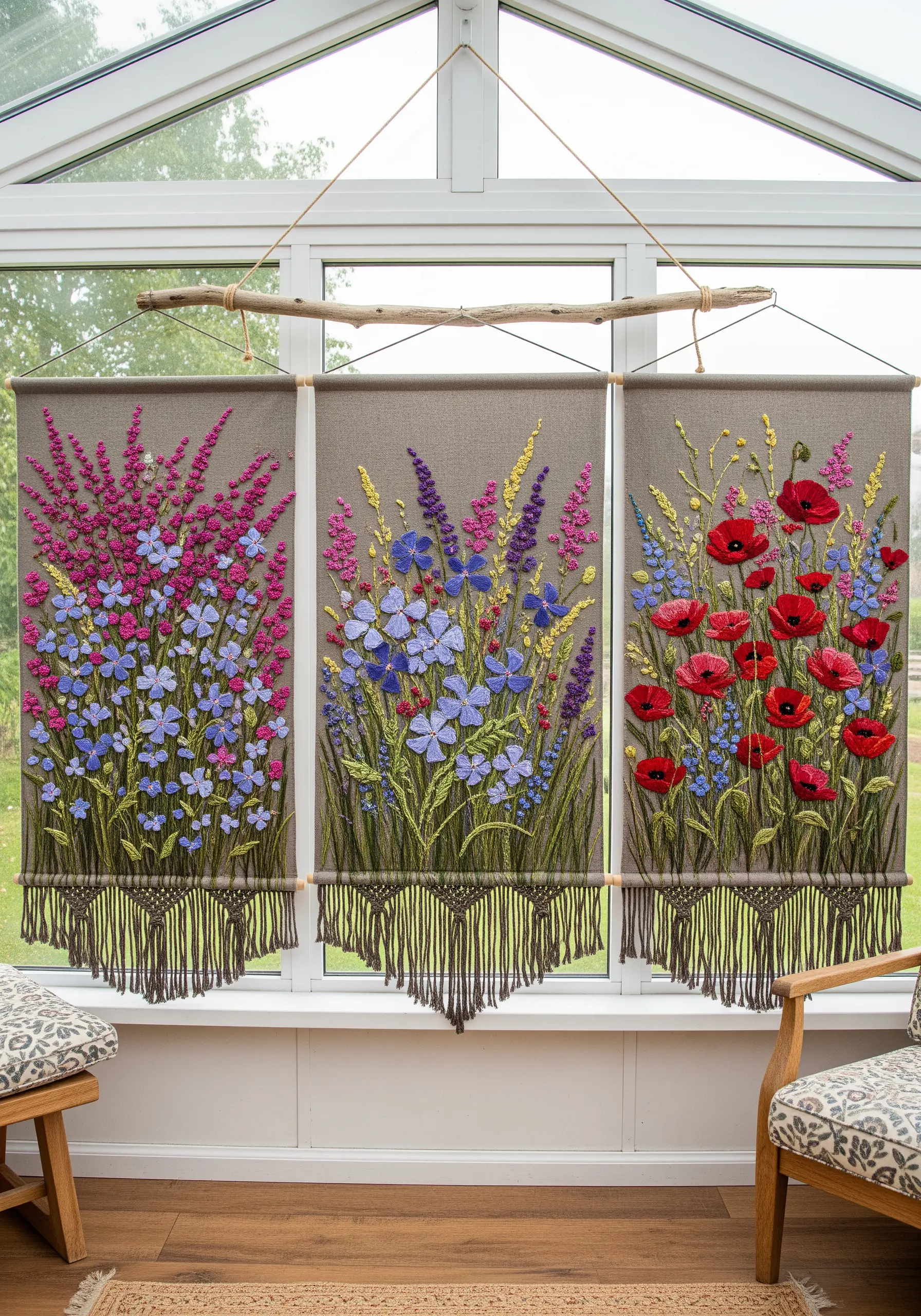
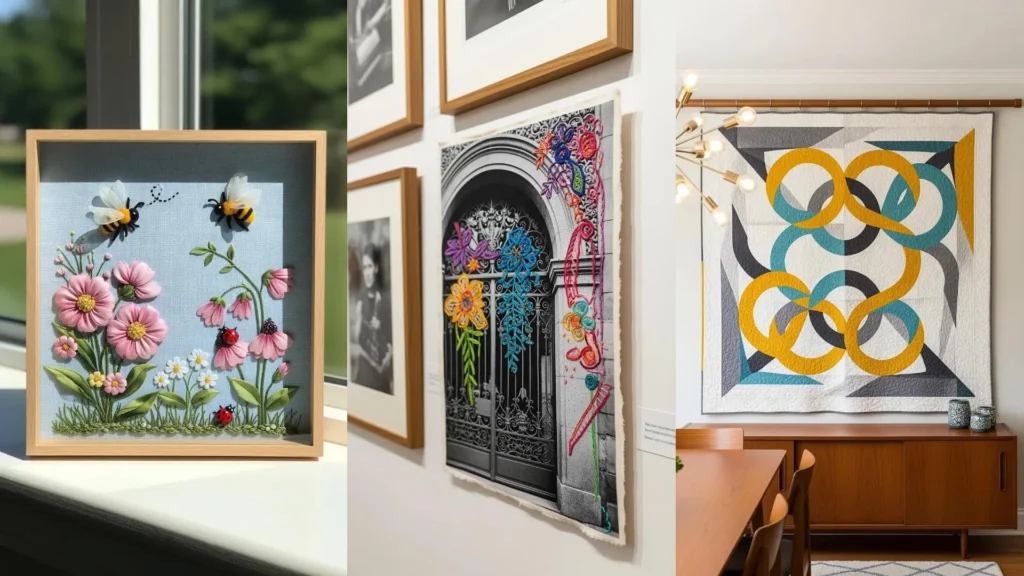
Transform a single window or wall into a cohesive panoramic view by working in a series.
Select one neutral background fabric, like a taupe linen blend, to unify all three panels.
For each panel, vary the dominant flower but keep the secondary botanicals consistent to create a visual link.
Use dimensional stitches like French knots, bullion knots, and woven wheels to give the blossoms a lush, heavy texture that contrasts beautifully with simple backstitched stems.
By using consistent wildflower thread palettes across the triptych, you ensure the entire piece feels like a single, immersive meadow.
3. The Sculptural Succulent Garden
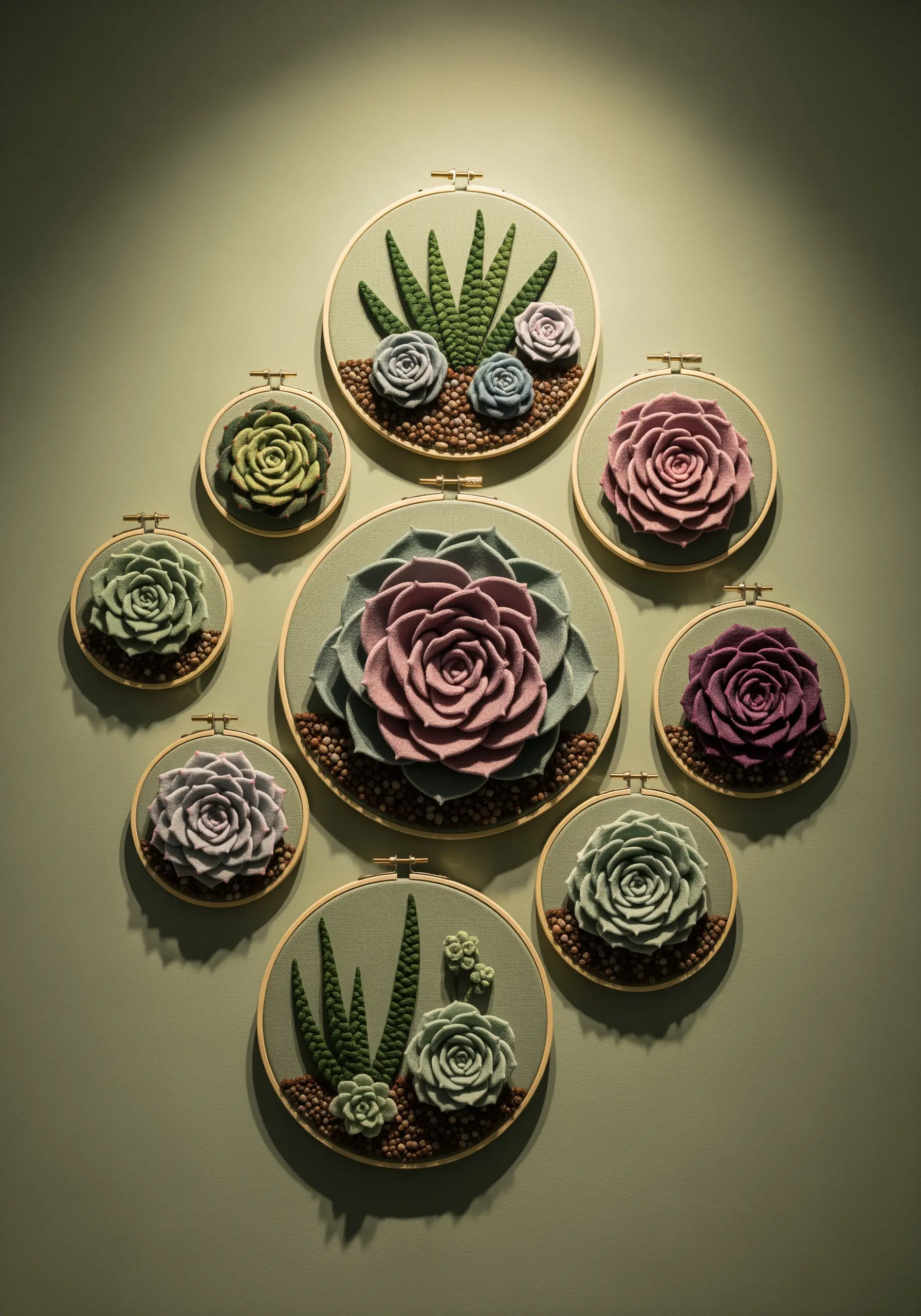
Move beyond flat stitching and build dimensional, sculptural succulents with felt.
Cut petal shapes from felt in muted tones of sage, mauve, and dusty blue, then layer them in a spiral, stitching through the base to build the rosette shape.
For the spiky aloe, use stiffened felt and secure the leaves at the base to make them stand upright.
Arrange your finished succulents in hoops of varying sizes, using French knots in brown tones to simulate soil.
This approach is perfect for creating tactile micro-hoop embroidery collections that invite touch and curiosity.
4. The Cascading Wisteria Installation
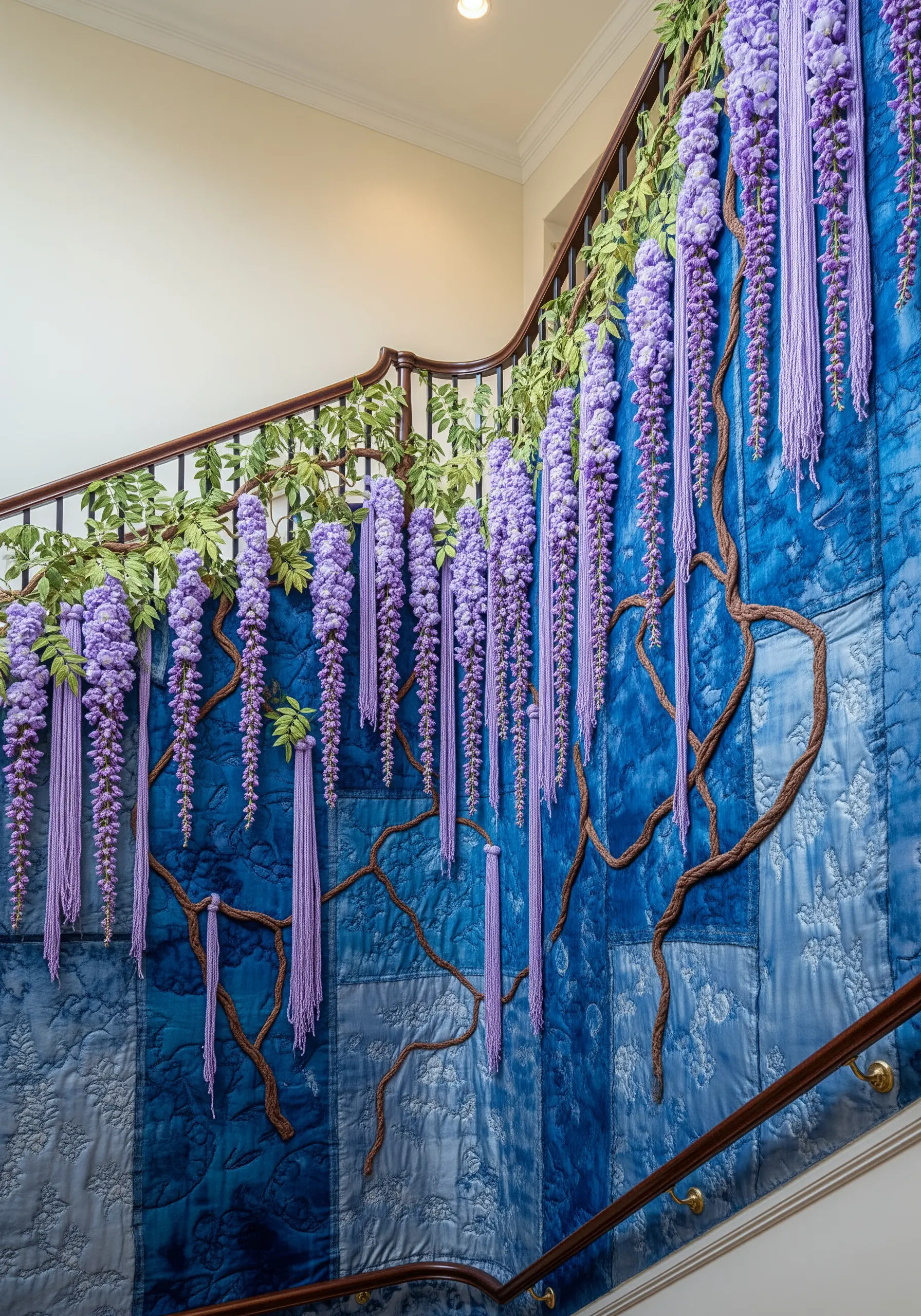
For a truly immersive botanical statement, take your embroidery off the wall and into the space itself.
Create the hanging wisteria blossoms by making long, thick tassels from lavender and purple yarn, varying the lengths for a natural, cascading effect.
For the vines, couch thick brown yarn or twine directly onto a quilted or painted fabric backdrop, guiding the lines organically around the architectural features of the space.
This project transforms a simple staircase into one of those fiber art installations that turn ordinary spaces into magical experiences.
5. The Minimalist Eucalyptus Triptych
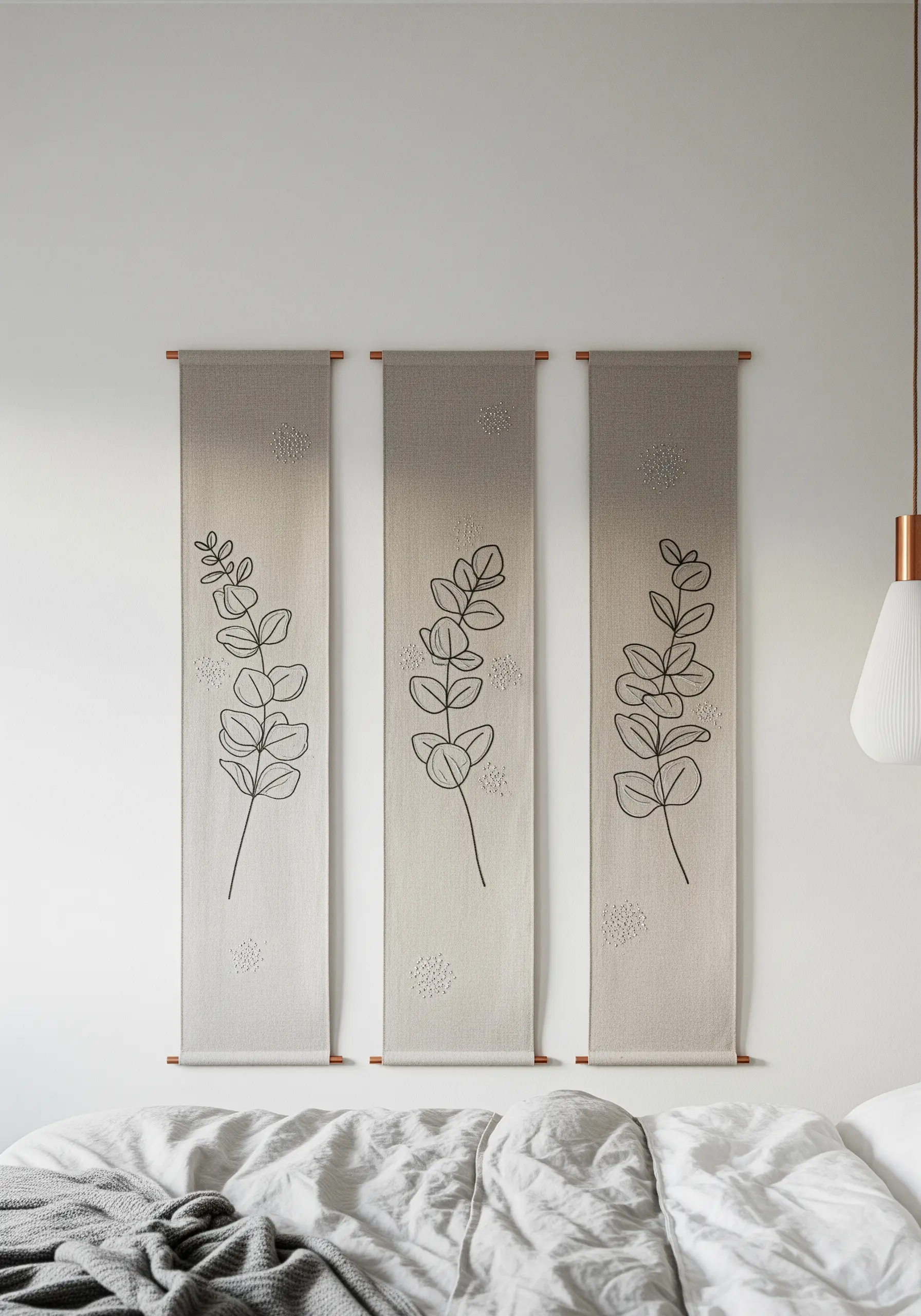
Sometimes, the most impactful art is about what you choose to leave out.
Select a lightweight, semi-sheer linen and use a single strand of dark thread to create a crisp, graphic outline of eucalyptus stems.
A simple backstitch or stem stitch provides all the definition you need, allowing the delicate form of the plant to take center stage.
To add a subtle touch of texture without overwhelming the design, scatter small clusters of seed stitches near the top and bottom of each banner.
This elegant restraint is the hallmark of beautiful minimalist embroidery designs inspired by nature.
6. The Forest Floor Tapestry
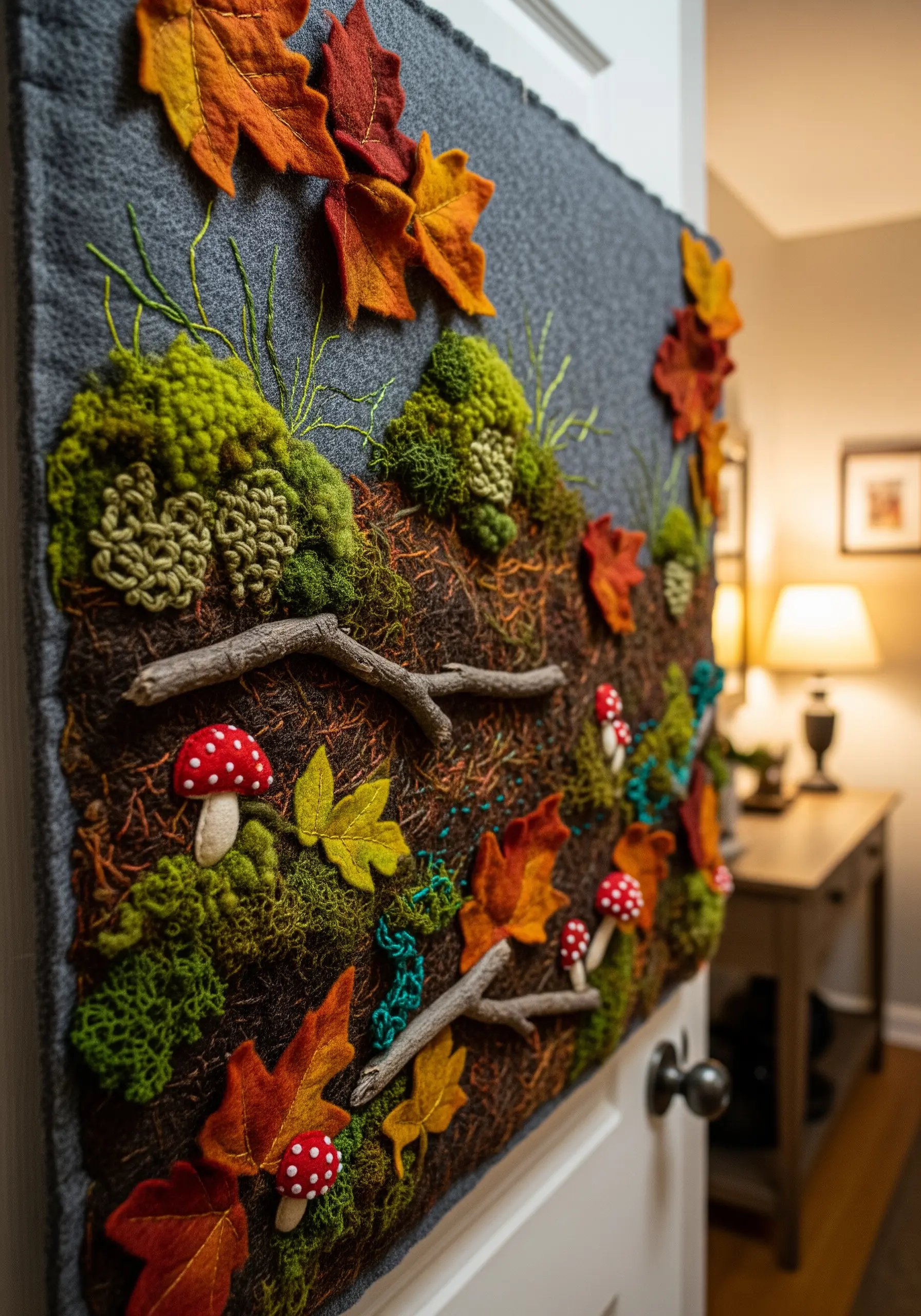
Recreate the rich, complex textures of a forest floor by combining different fiber techniques in one piece.
Use the loop stitch or turkey work with variegated green yarn to build up a dense, mossy ground cover.
Incorporate needle-felted elements, like the bright red toadstools and autumnal leaves, attaching them securely with a few anchoring stitches.
Finally, couch small, real twigs onto the surface to add an authentic structural element.
You are finding new ways to turn natural textures into stunning embroidery art, creating a piece that is as tactile as it is visual.
7. The Saturated Tropical Mural

To make colors feel electric and alive, you need two things: a dark background and masterful blending.
Choose a deep teal or black fabric to make your vibrant pinks, oranges, and yellows radiate with intensity.
Use the long-and-short stitch to blend your threads, creating smooth gradients on the hibiscus petals and bird-of-paradise flowers.
Pay close attention to the direction of your stitches—follow the natural curves of the leaves and petals to create a sense of realism and movement.
Mastering these floral thread painting techniques is what makes a piece feel less like a craft and more like a painting.
8. The Ethereal Terrarium Hoop
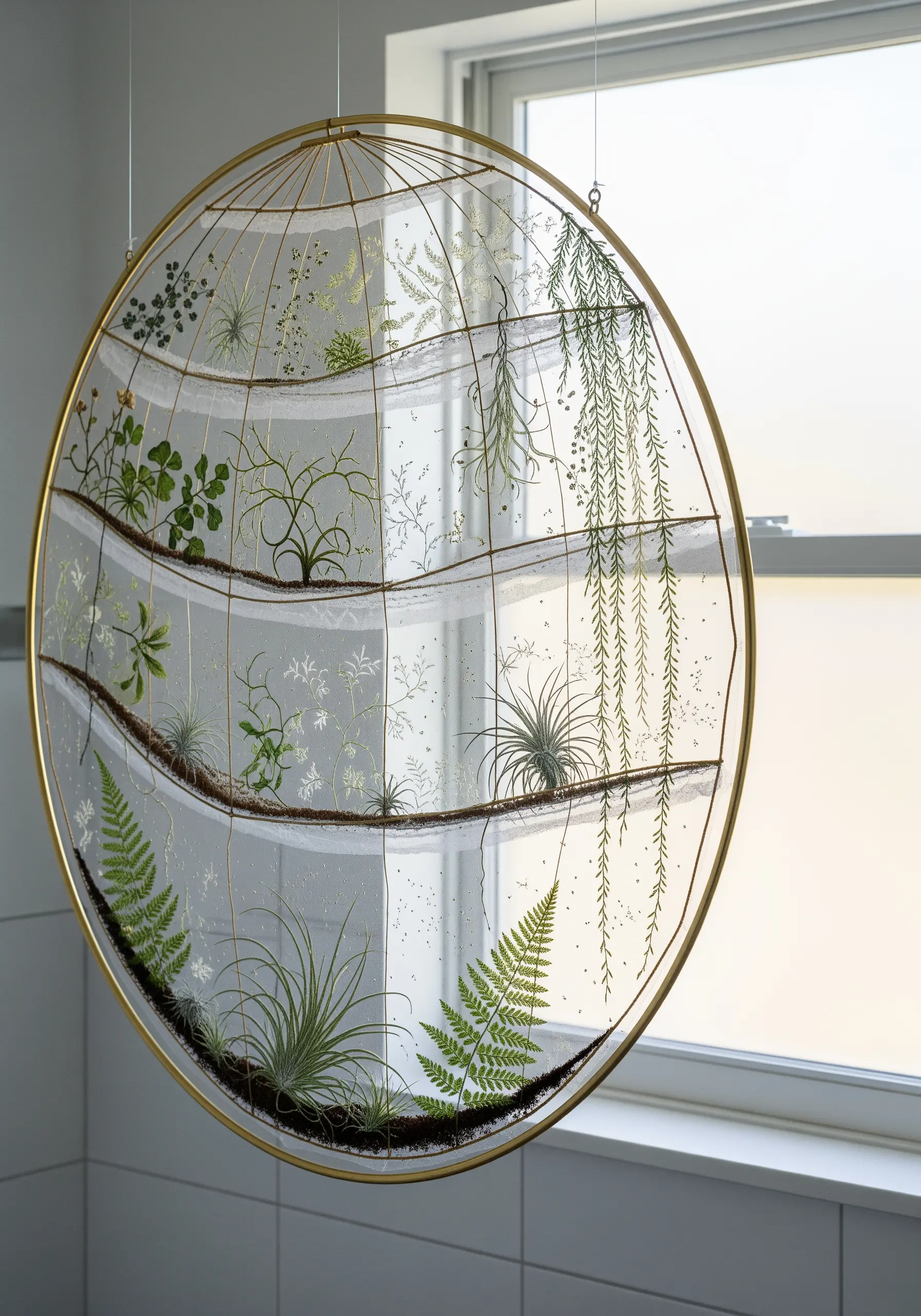
Create a magical, floating garden by stitching on a sheer fabric like organza or tulle.
To keep the delicate fabric from stretching or puckering, always use a stabilizer—a water-soluble one is perfect, as it will wash away completely, leaving only your stitches.
Use simple backstitches for the delicate stems and satin stitches or fishbone stitches for the leaves.
The transparency of the fabric creates a stunning illusion of plants suspended in mid-air, making for truly inspiring hoop art projects for a creative gallery wall.
9. The Culinary Herb Trio
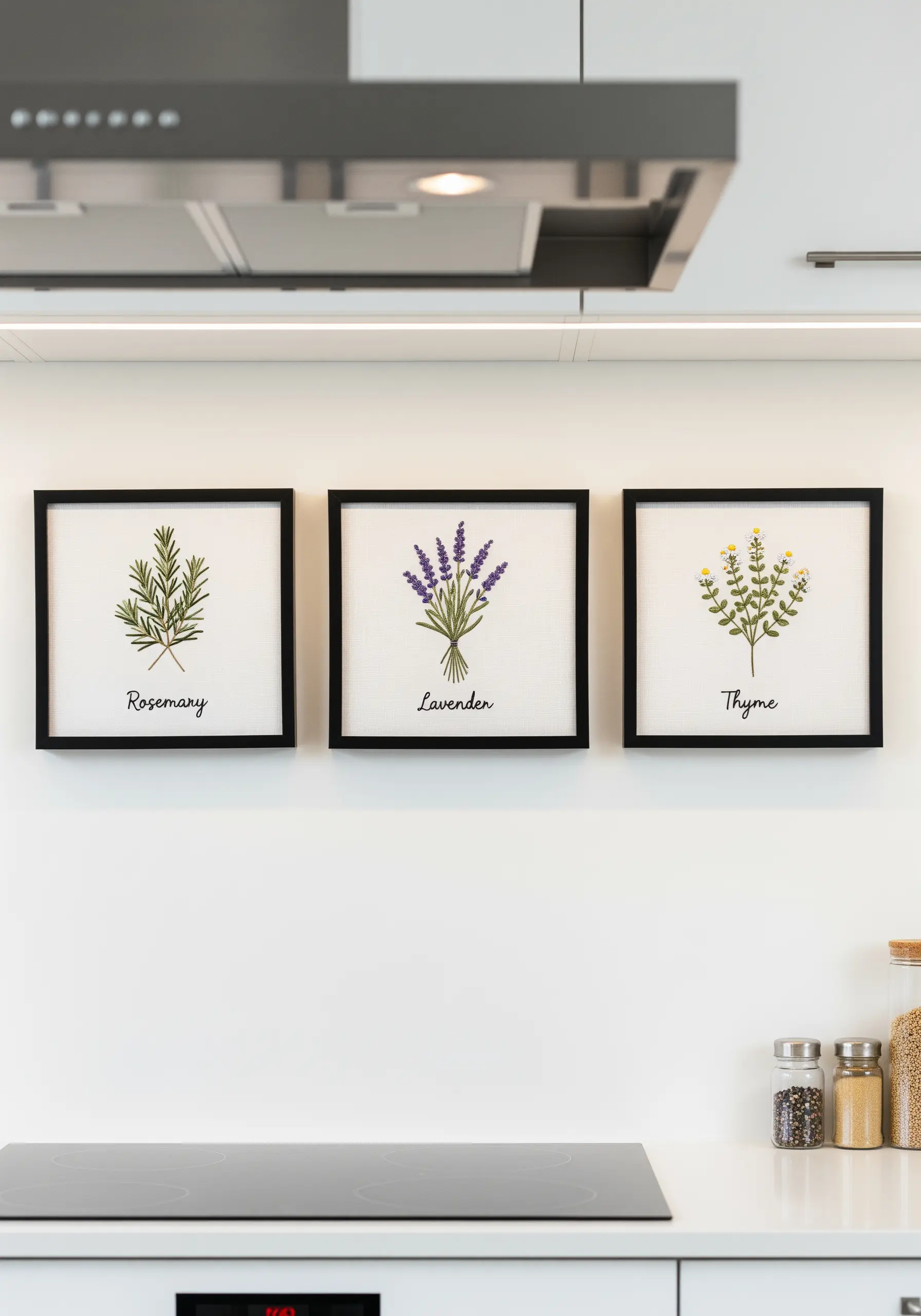
Celebrate the quiet beauty of kitchen herbs with clean, precise stitchwork.
Focus on choosing the right stitch for each texture: detached chain stitches perfectly mimic lavender buds, while fishbone stitch creates the central vein and angled needles of rosemary.
Add a simple, elegant label using a single strand of thread and a neat backstitch.
Displaying these as a trio in minimalist black frames elevates them from simple motifs to a sophisticated art piece, perfect for a kitchen wall.
These are classic medicinal herb embroidery designs with a modern, gallery-style presentation.
10. The Enchanted Forest Tapestry
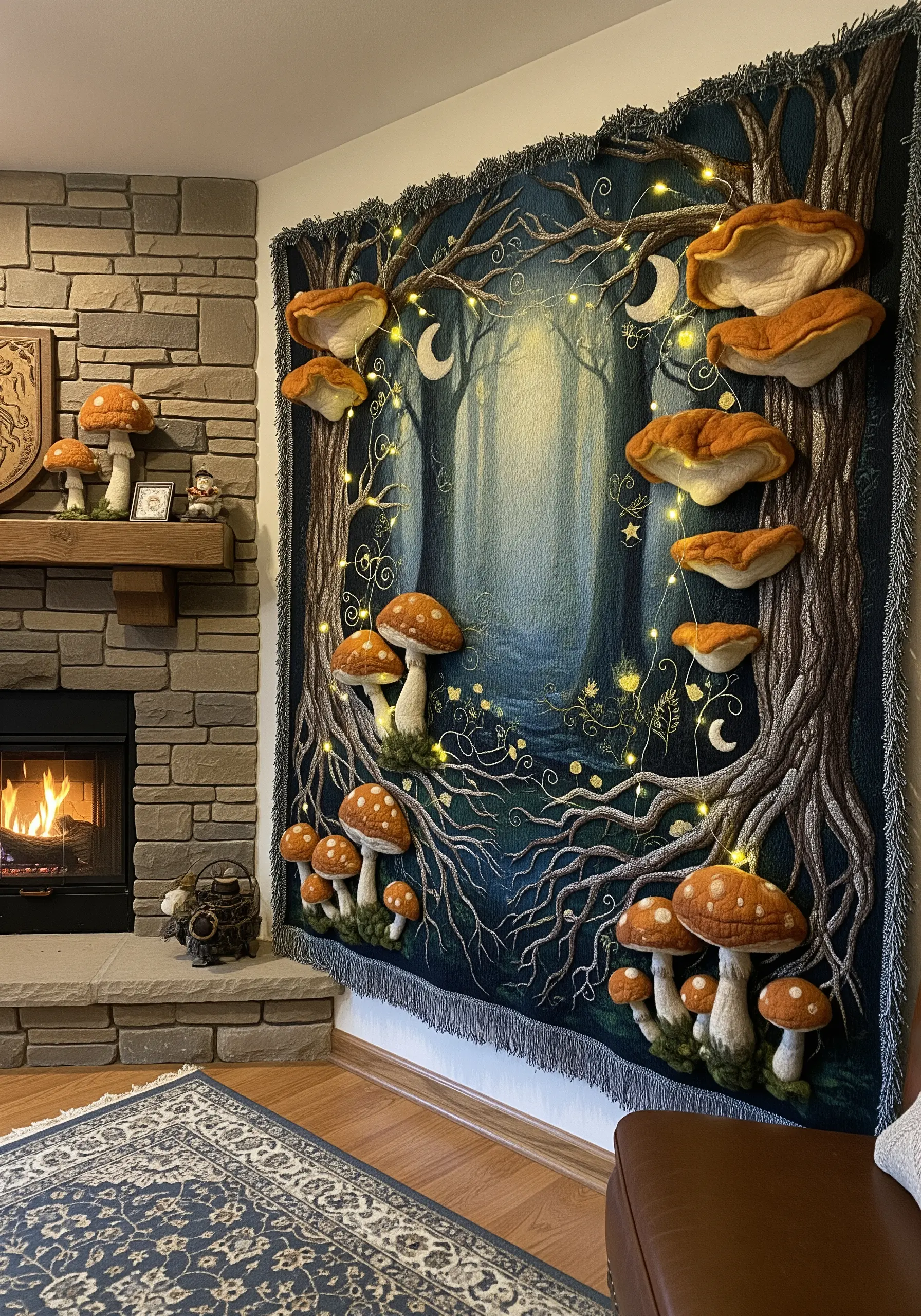
Enhance a printed fabric panel to create a piece with incredible depth and personality.
Start with a tapestry or fabric print that has a compelling background, like a moonlit forest.
Create sculptural, 3D mushrooms using needle felting techniques, then stitch them firmly onto the tapestry, allowing them to pop out from the surface.
Weave in tiny LED fairy lights and use metallic gold thread to add embroidered stars, transforming the piece into an illuminated, magical scene.
This is one of the most creative DIY projects merging embroidery threads with mixed-media textures.
11. The Abstract Botanical Rug Hooking
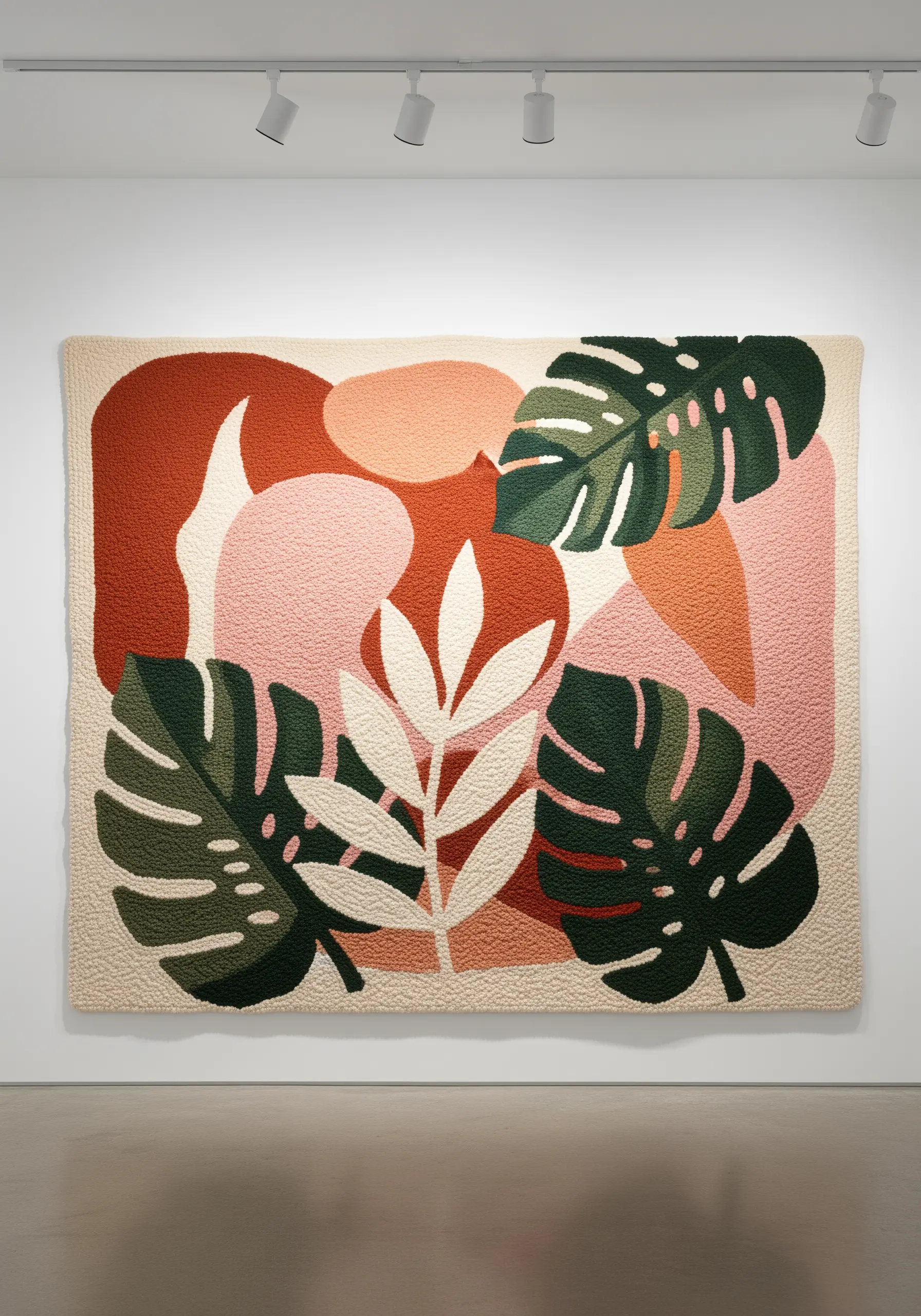
Explore the satisfying texture of punch needle or rug hooking to create bold, graphic botanical art.
Work with chunky yarn on monk’s cloth, using the loop side of the stitch for a plush, high-pile finish.
Sketch out large, abstract color blocks first, filling them in with a neutral palette of terracotta, blush, and cream.
Then, add the bold monstera leaf silhouettes on top, allowing the clean shapes to contrast with the soft, organic background forms.
This method lets you create large-scale abstract embroidery patterns that turn empty walls into luxury art with speed and textural impact.
12. The Everlasting Ivy Trellis
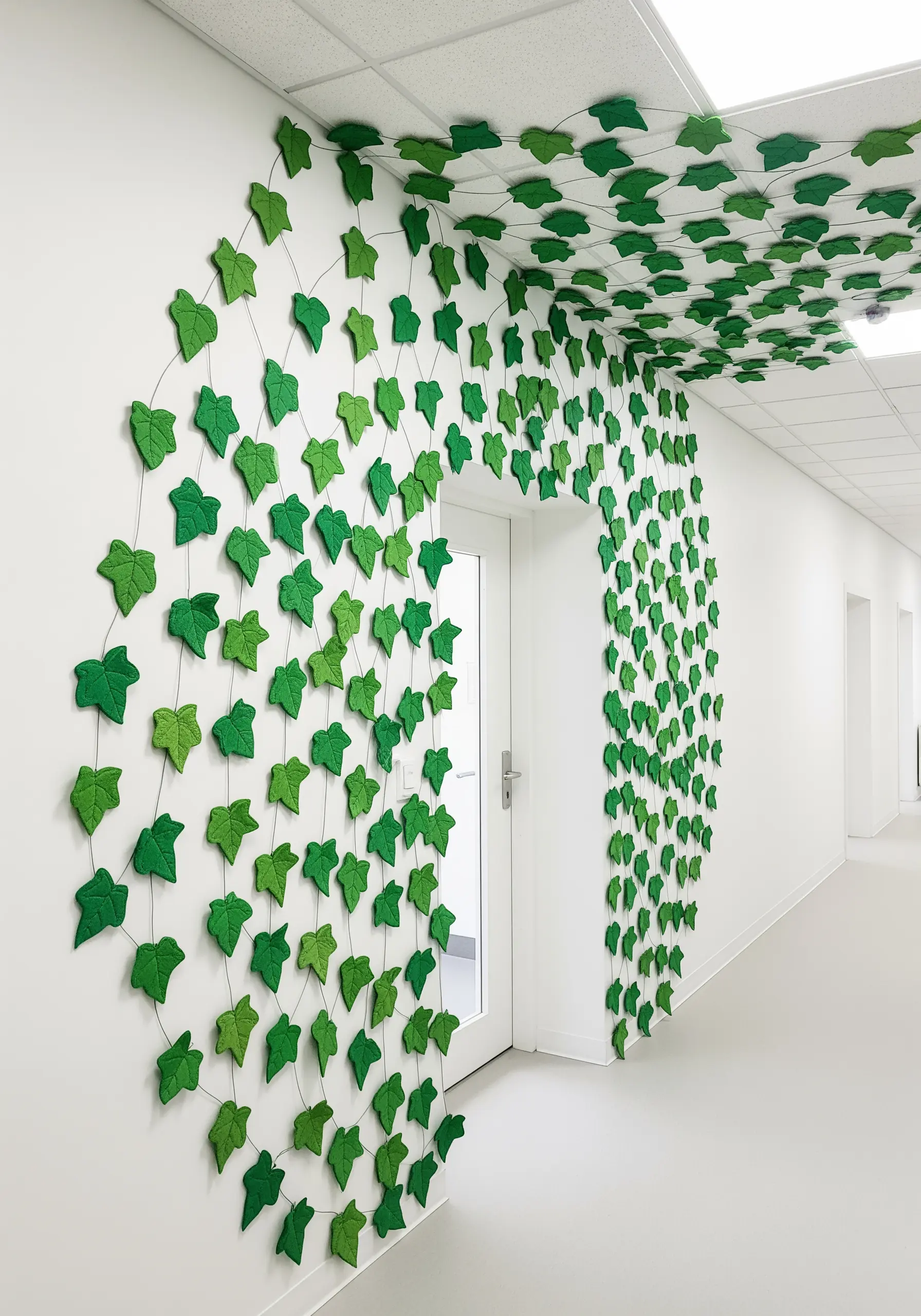
Take your botanicals off the fabric and onto the walls for an architectural statement.
Cut dozens of ivy leaves from various shades of green felt to give the installation natural-looking color variation.
String the leaves onto a fine but sturdy wire, which will allow you to bend and shape the vines realistically.
Use small, transparent wall hooks to guide the wire vines up a wall and around a doorway, creating the illusion of a living, climbing plant.
These are the kinds of fiber art installations that are perfect for small apartments because they add life without taking up floor space.
13. The Zen Water Garden
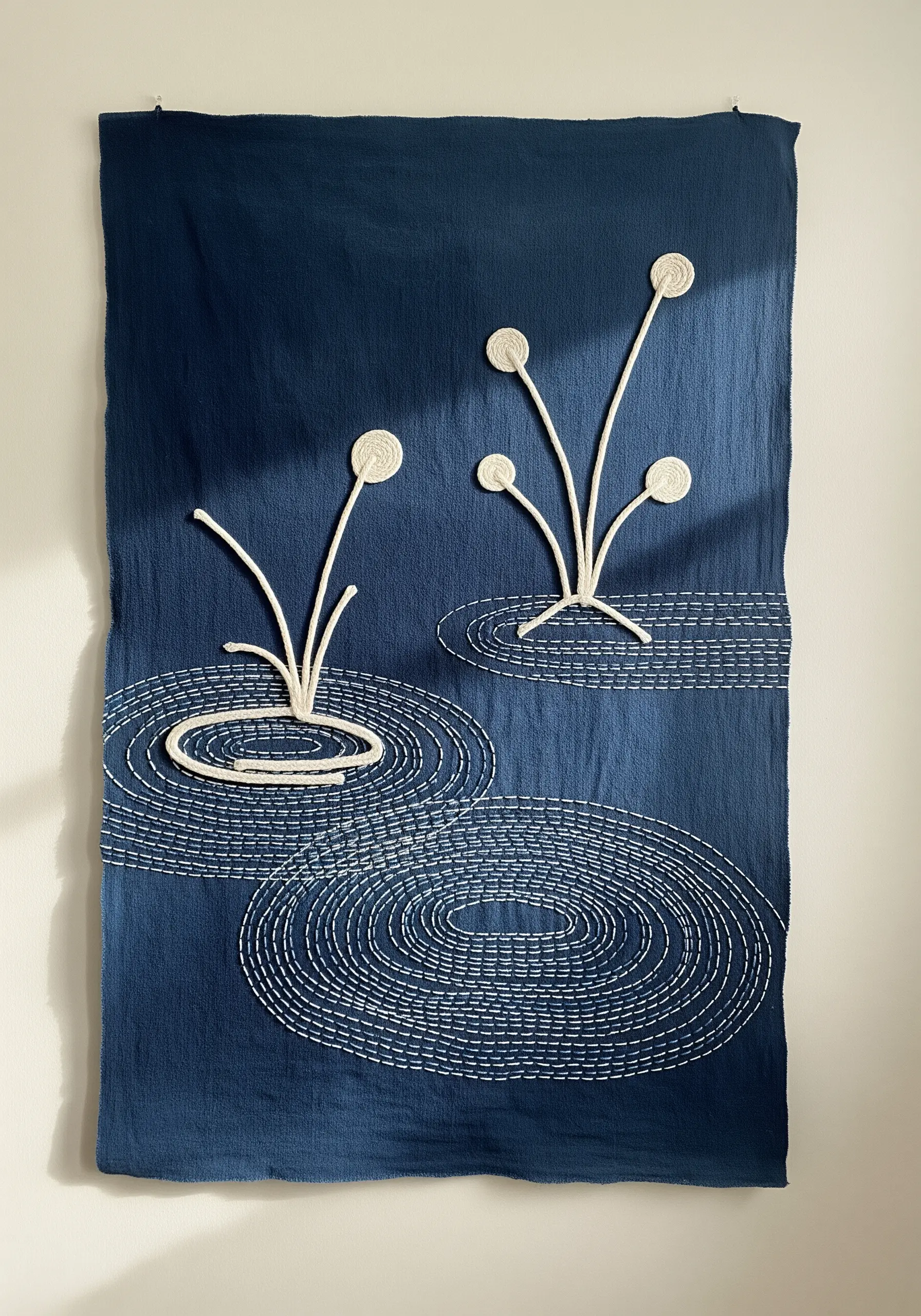
Capture the essence of tranquility by focusing on line, rhythm, and material contrast.
On a dark indigo or navy linen, use a simple running stitch with off-white thread to create concentric circles that evoke ripples on water.
For the plant stems, couch a thick, sculptural cotton cord onto the fabric, securing it with small, invisible stitches.
The tension between the delicate, repetitive lines of the water and the bold, smooth lines of the stems creates a balanced and meditative composition.
It’s a beautiful way to interpret abstract thread waves & swirls to capture motion and flow in your work.
14. The Desert Bloom Tapestry
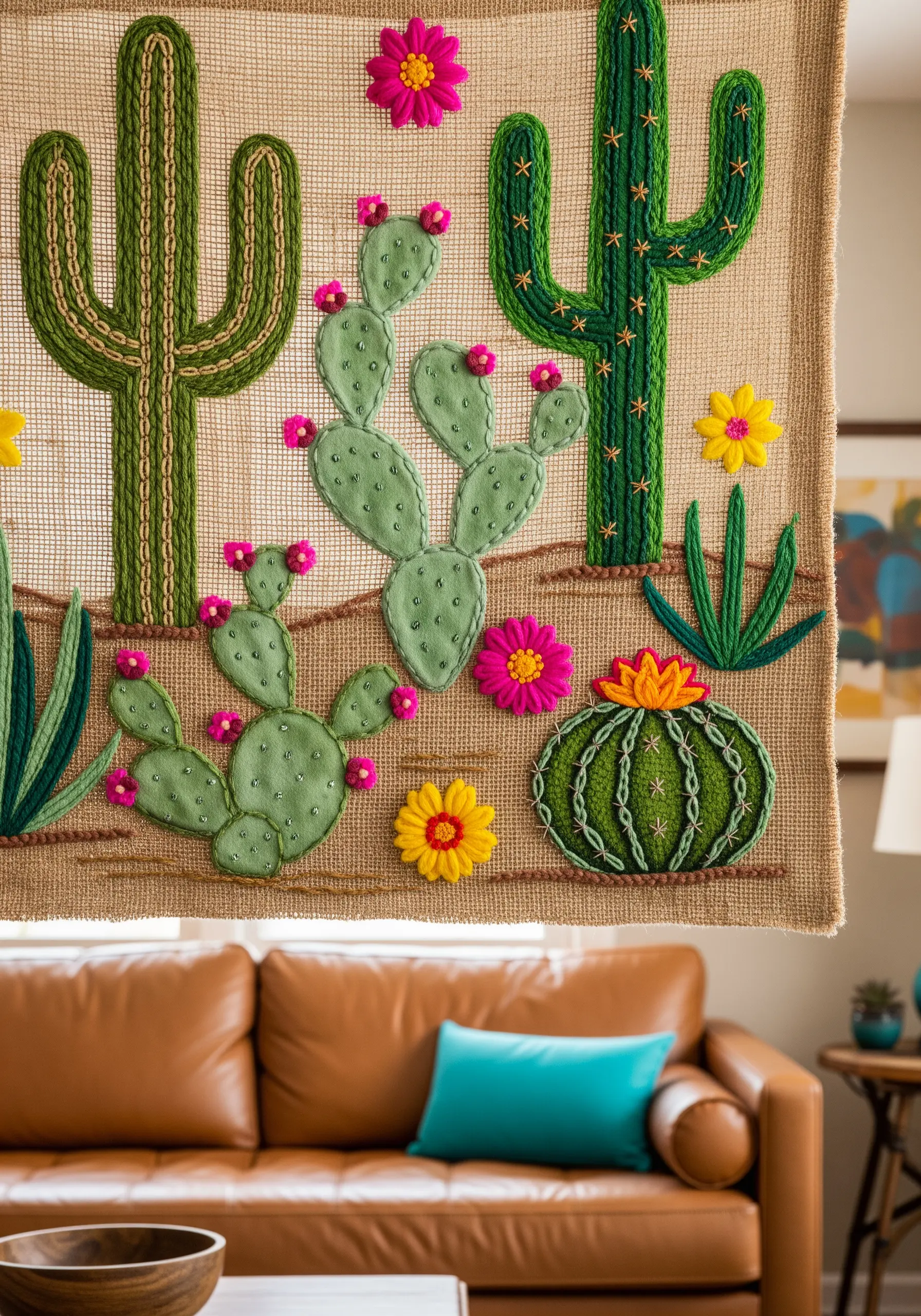
Build a vibrant desert landscape by combining flat appliqué with chunky, textural embroidery.
Use felt for the main cactus shapes, then bring them to life by couching thick green yarn around the edges and down the center for definition.
Create the bright desert flowers with woven wheel stitches using magenta and yellow yarn; their dense, raised texture makes them pop.
Working on a rustic, open-weave fabric like burlap enhances the earthy, handmade feel of these boho-inspired textile wall art patterns.
15. The Dandelion Wish Collection
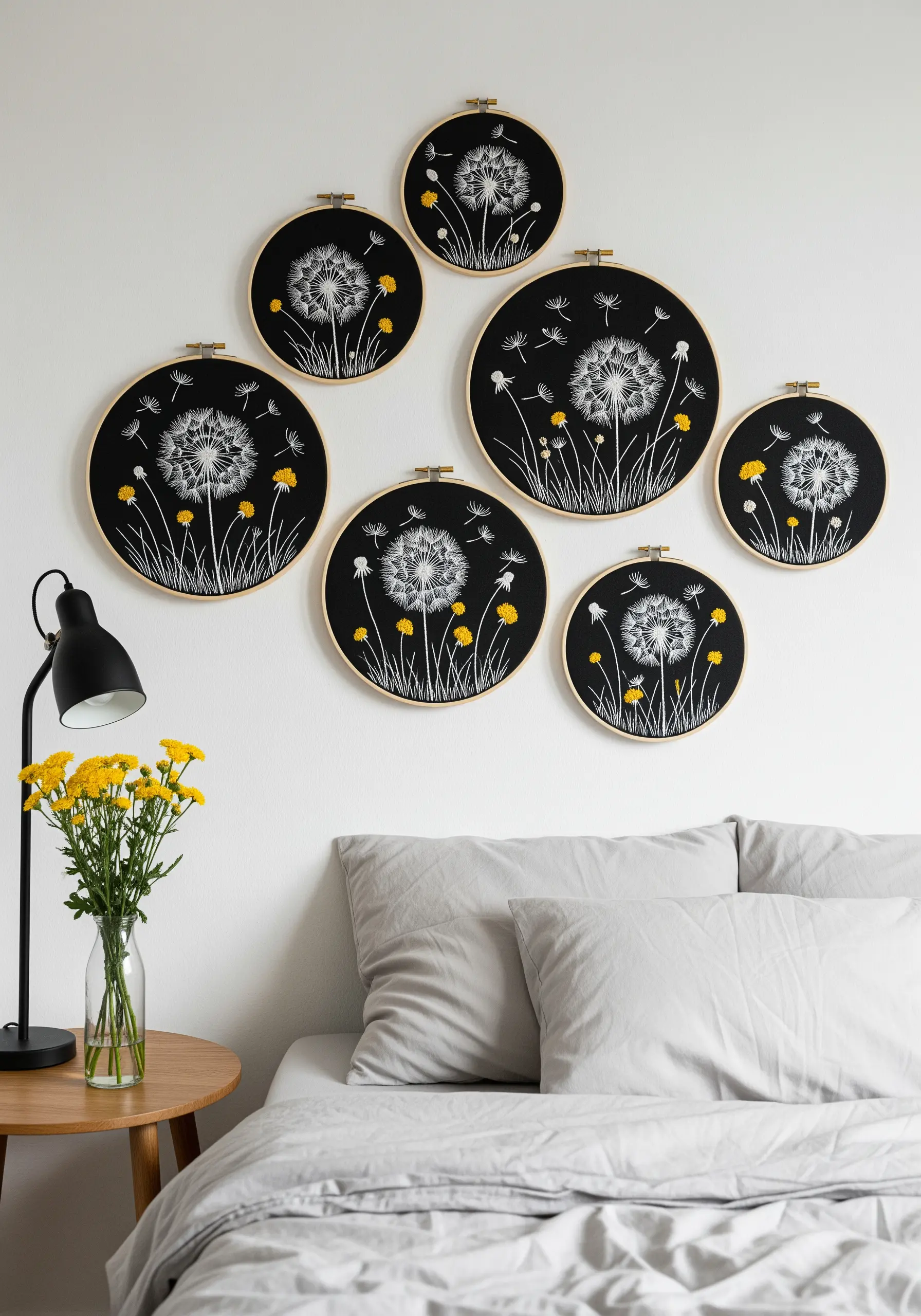
Tell a story of movement and change by extending a single motif across multiple hoops.
Stitch the dandelion heads on a dramatic black fabric using dense straight stitches radiating from a central point.
Then, create the illusion of seeds blowing in the wind by scattering individual seed stitches and French knots across the other hoops in the collection.
This arrangement transforms simple stitches into a dynamic narrative, making for compelling embroidered wall art ideas that turn any bedroom into a mind-refresh zone.
16. The Living Moss Wall Illusion

You can create the lush, textural effect of a preserved moss wall using only thread and yarn.
The key is the turkey work stitch—create dense clusters of loops in various shades of green, olive, and chartreuse yarn.
Trim the loops at different heights to mimic the texture of different moss species.
For the rounded, cushion moss shapes, incorporate tightly packed French knots or even small, needle-felted wool pom-poms.
These are ambitious nature texture embroidery projects that feel amazingly real to the eye and the touch.
17. The Botanical Banner Gallery

For a sophisticated and airy presentation, display your botanical studies on a series of hanging banners.
Choose a high-quality, natural fabric like cotton canvas or linen in a soft off-white.
Execute each botanical with the precision of an illustrator, using long-and-short stitch to create subtle color variations in the leaves and petals.
Hanging them from simple wooden dowels allows the artwork to breathe and creates a clean, contemporary gallery feel.
This is how you create elegant, framed embroidery artworks that will impress guests, with or without glass.
18. The Coral Garden Sculpture

Push your embroidery into the third dimension by building a sculptural coral reef.
Use highly textural stitches like bullion knots, cast-on stitches, and woven picots with chunky, vibrant yarn to form the coral structures.
You can also incorporate small crocheted elements for complex shapes like brain coral.
Build up these forms in dense layers on a sturdy fabric base attached to a canvas.
You are using modern texture layering embroidery techniques that add drama & depth to create a piece that is as much sculpture as it is embroidery.