You don’t need to learn a hundred new stitches to deepen the artistry of your work. Often, the most profound shift comes from how you see and use your materials—the fabric itself becomes your paintbrush, and thread becomes the final, defining stroke.
Fabric collage embroidery isn’t about perfectly replicating a scene; it’s about translating a feeling. It’s the texture of weathered tweed that evokes a cliff face, the shimmer of silk that captures the sun on water, the soft fray of linen that becomes sea foam on the shore.
Here, you’ll discover how to layer these elements with intention. You’ll learn not just what to stitch, but why—and how a simple adjustment in material or technique can transform a flat image into a world you can almost step into. Let this be your guide to creating coastal scenes that feel calm, tactile, and truly alive.
1. Render Realistic Shorelines with Layered Textiles
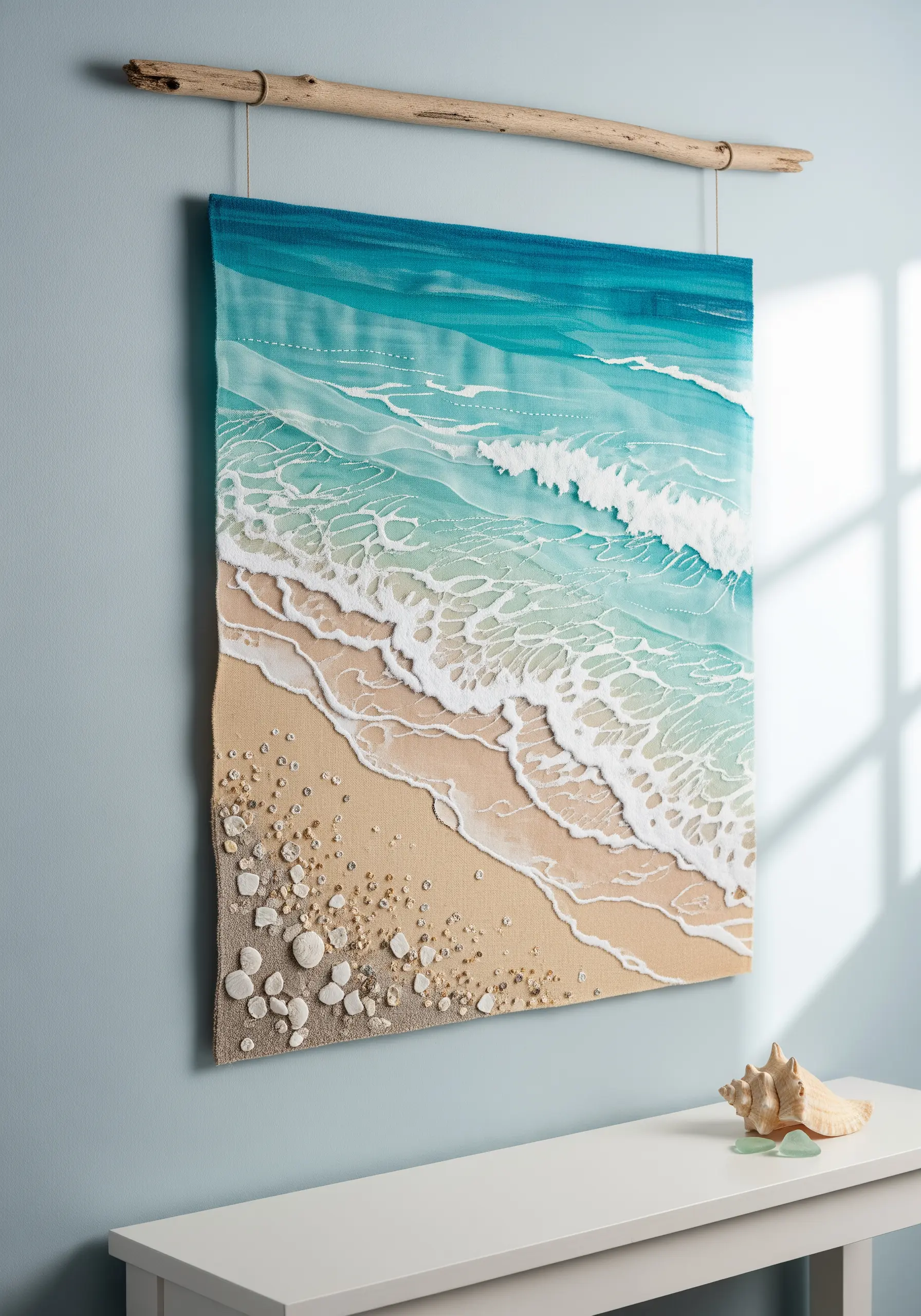
To capture the meeting of sand and sea, begin with a base fabric that has been painted or dyed in a soft oceanic gradient.
For the shoreline, use fine seed beads, French knots in sandy tones, and even real, flattened pebbles to build authentic, gritty texture.
Define the seafoam’s edge by couching a textured white yarn, like pearl cotton, in gentle wave patterns—this adds a raised, dimensional line that separates water from shore.
Finally, use single strands of white thread to stitch loose, horizontal straight stitches in the water, mimicking the light reflecting on the surface.
2. Build a Vibrant Reef with Felt and Organza
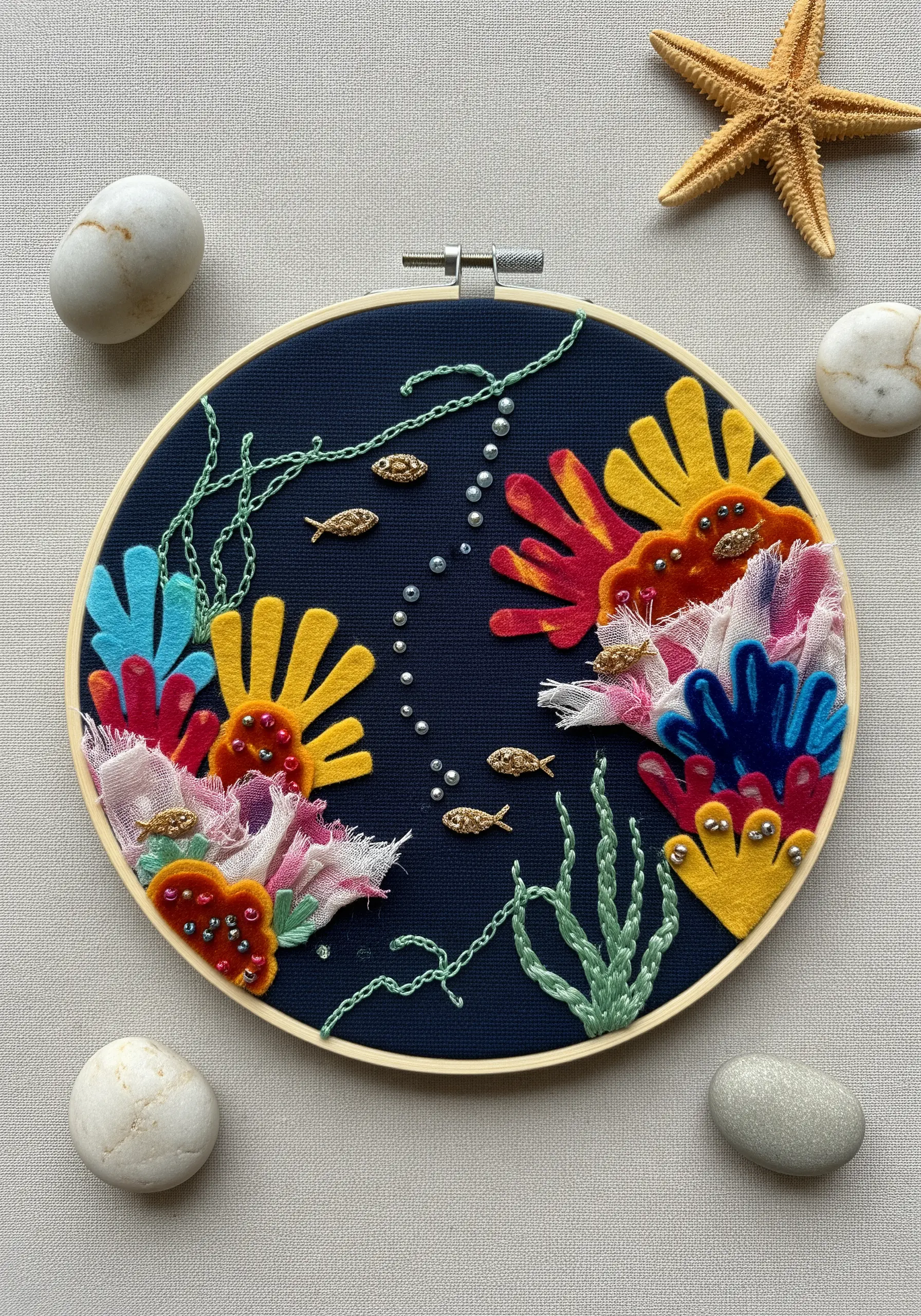
Create dynamic coral structures by cutting organic shapes from brightly colored felt and securing them to a dark navy linen background for dramatic contrast.
Layer small, ripped pieces of silk organza or chiffon over the felt and secure them with a few central stitches; this technique creates ruffled, underwater movement that feels alive.
For a touch of shimmer, stitch tiny fish using a single strand of metallic thread in a simple satin stitch, and add rising bubbles with strategically placed silver seed beads or French knots.
3. Sculpt Crashing Waves with Dimensional Stitches
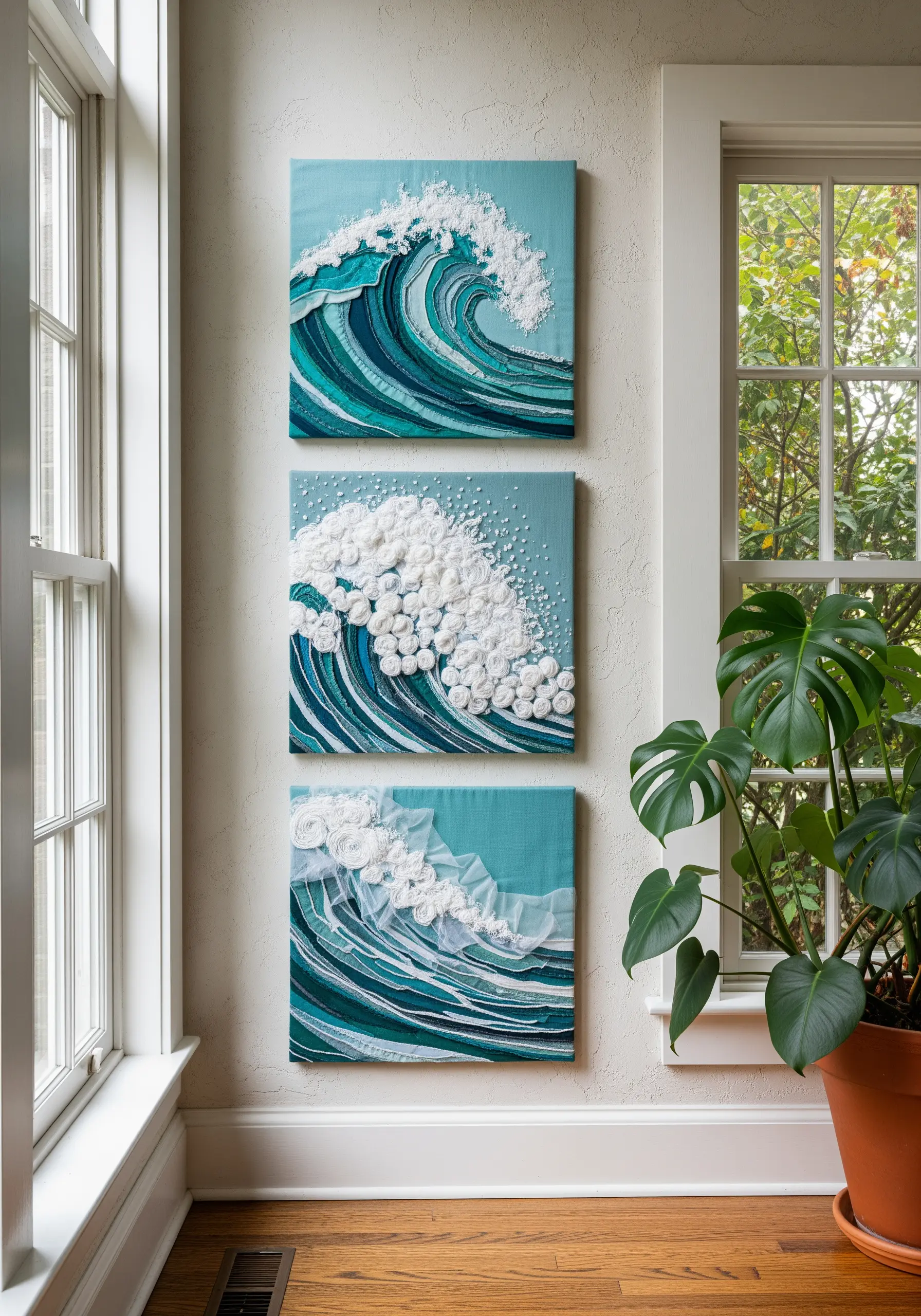
Move beyond flat stitching by using fabric collage as your base; layer strips of blue and teal cottons, denim, and silks to build the body of the wave.
To create the explosive texture of sea spray, cluster a mix of dimensional stitches like woven wheel stitches, bullion knots, and French knots using a thick, bright white thread.
Vary the size and density of your stitches—tighter and larger at the crest of the wave, looser and smaller as the foam dissipates.
This method of high-texture fabric collage embroidery turns a simple scene into a powerful, tactile statement.
4. Capture Ethereal Jellyfish with Sheer Appliqué
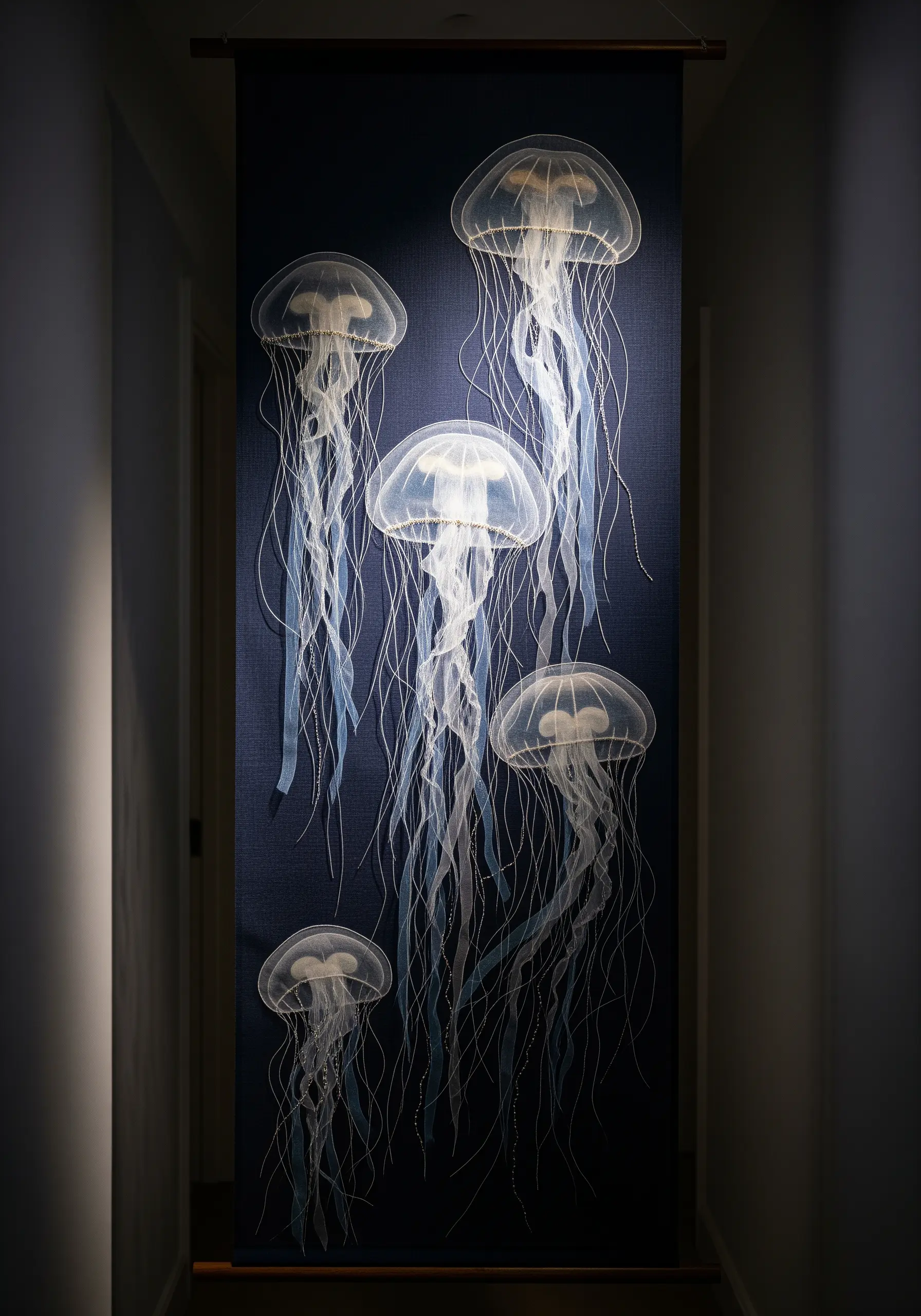
Select silk organza or fine tulle to replicate the translucent quality of jellyfish against a dark linen background.
For the bell, use a simple appliqué technique with a very fine, matching thread so the stitches nearly disappear.
Let the tentacles flow freely by cutting thin, uneven strips of the same sheer fabric and securing only the very top; this allows them to move and float, adding a lifelike quality.
Incorporate a few strands of iridescent or holographic thread among the fabric strips to mimic bioluminescence.
5. Layer Earthy Textiles for Coastal Dunes
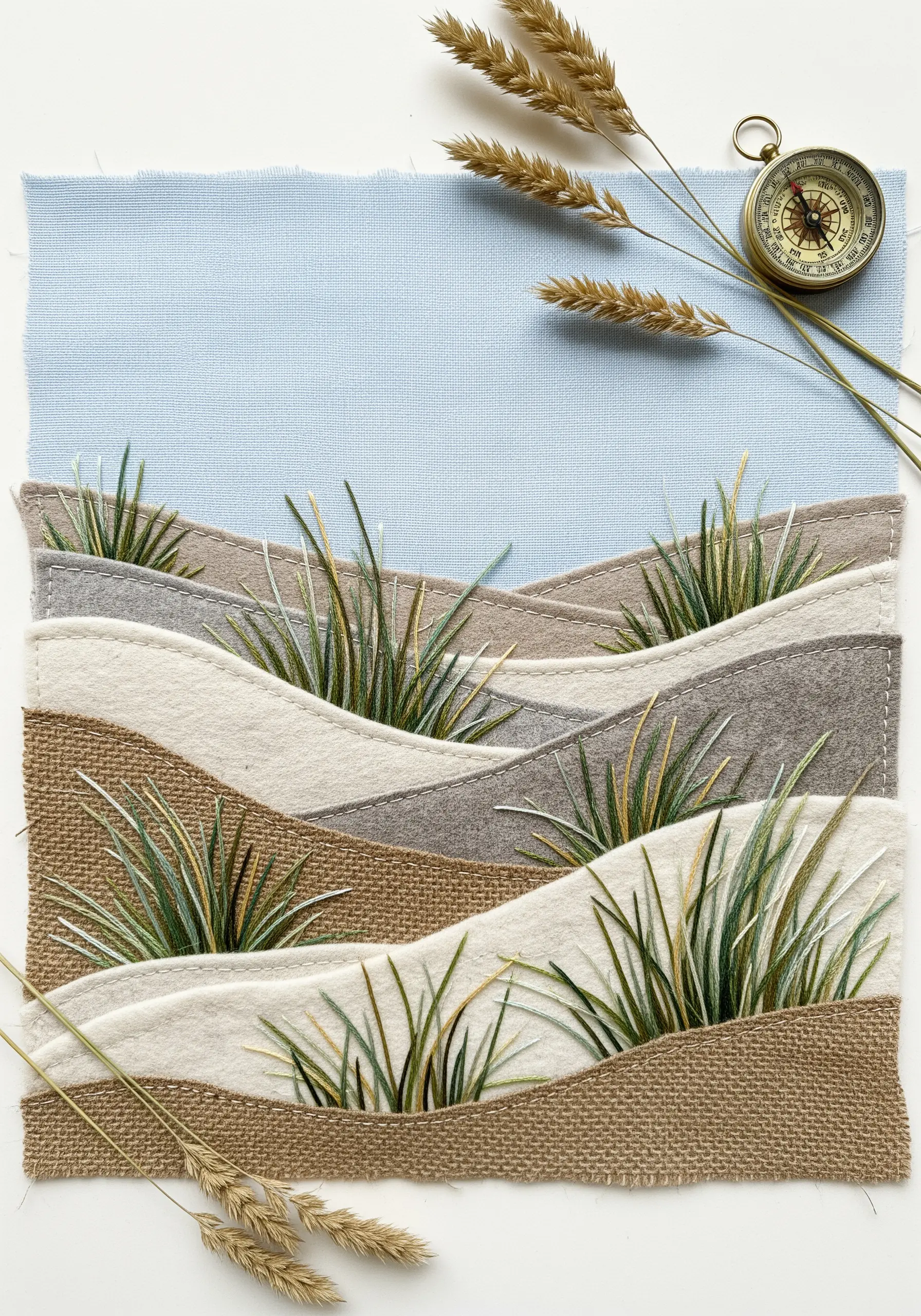
Convey the soft, rolling shapes of sand dunes by layering fabrics with natural textures like burlap, wool felt, and raw linen.
Cut each piece with a gentle curve and overlap them to build depth, securing the edges with a simple, visible running stitch that follows the contour of the hill.
For the dune grasses, use variegated green and gold thread to make long, fanned-out straight stitches, which adds realism without complex shading.
This approach to earth-tone patterns creates a scene that feels both composed and wild.
6. Integrate Stitching with a Painted Canvas
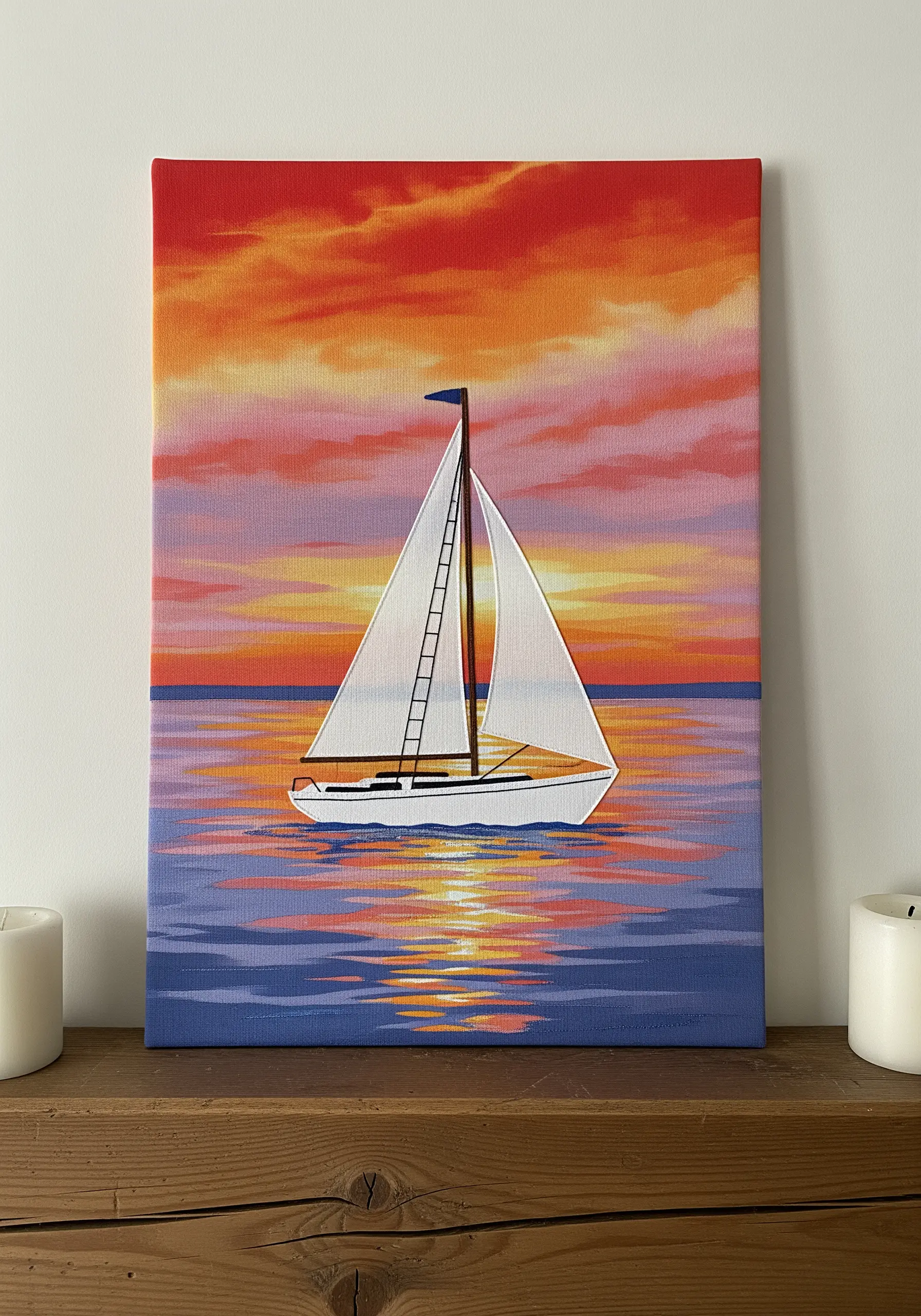
For a sharp, graphic look, begin by painting your background scene directly onto a stretched canvas.
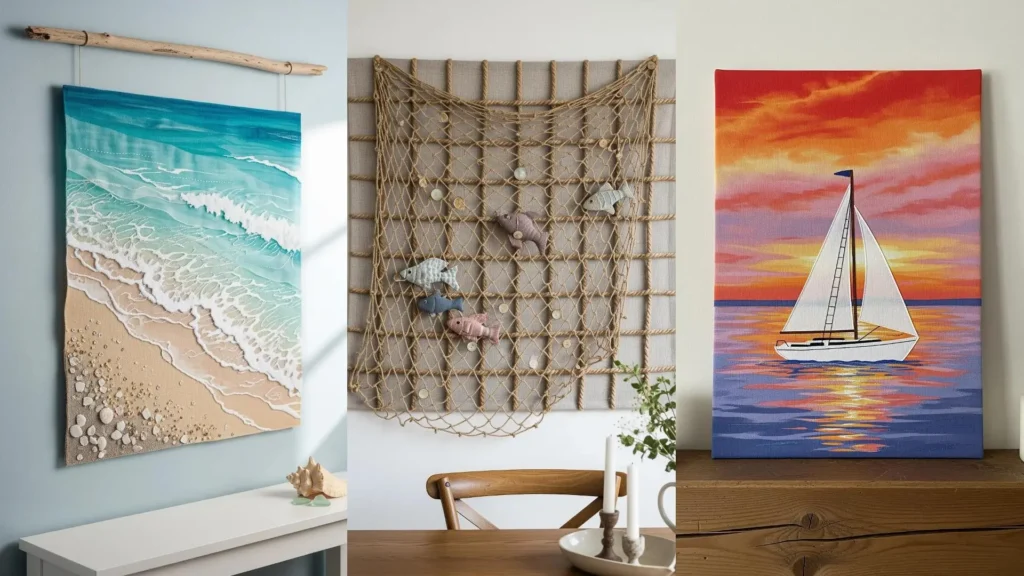
Once dry, add your primary subject—like this sailboat—as a crisp fabric appliqué element, which creates a clean separation between the soft background and the sharp foreground.
Use a fine backstitch with just two strands of black thread for precise details like rigging and ladders, making them look like ink lines.
Finally, add a few horizontal stitches with a single strand of metallic thread to suggest light reflecting on the water.
7. Create Oceanic Motion with Ruched Fabrics
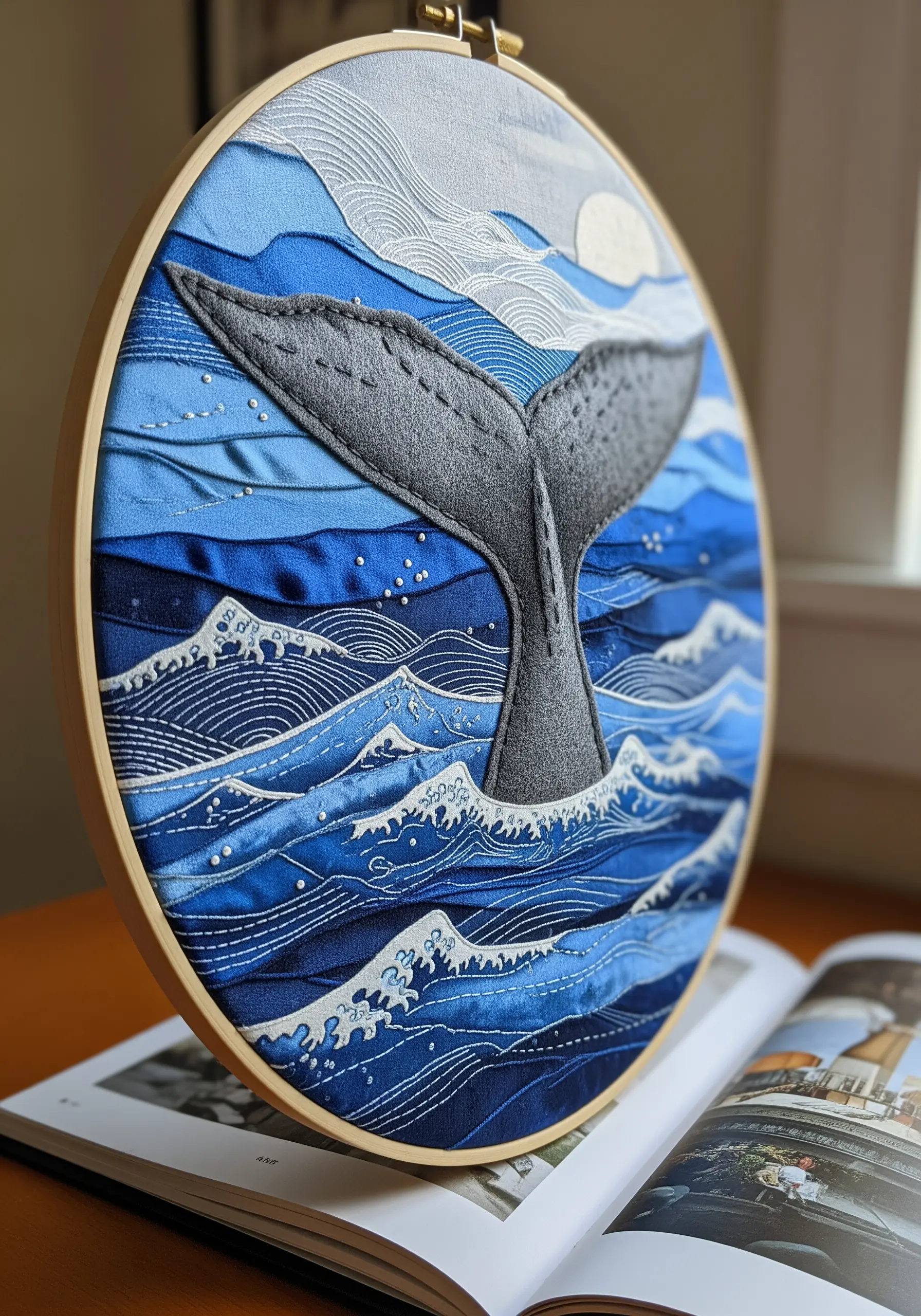
To give water a sense of deep, rolling motion, avoid flat appliqué.
Instead, cut strips of silk and satin slightly longer than the intended area and gently push them together as you stitch them down, creating soft ripples and folds.
For the whale’s tail, choose a matte fabric like felt or fine-wale corduroy to contrast with the sheen of the water.
A sparse scattering of seed stitch on the tail adds a subtle skin texture that elevates the realism of the piece.
8. Define Abstract Waves with Minimalist Stitching
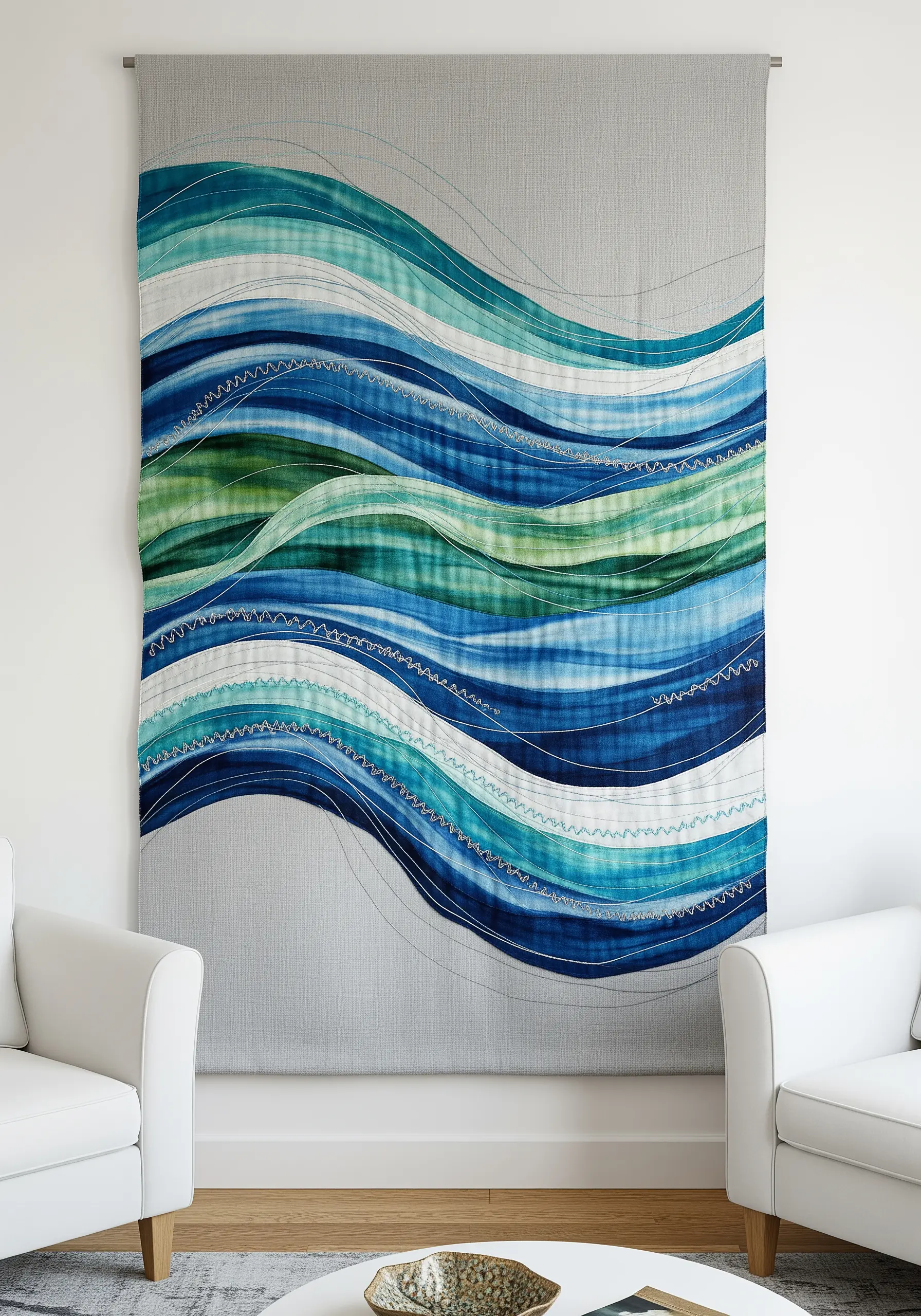
When working with beautifully patterned or hand-dyed fabrics, let the textile do most of the work.
Layer your chosen fabrics to create an abstract seascape, focusing on the flow of color and pattern.
Then, use a sewing machine or a simple, hand-stitched running stitch to add clean, curving lines that guide the eye and unify the composition.
A few small, contrasting stitches—like the white cross-stitches here—provide a point of interest without distracting from the overall design of your statement-size wall art.
9. Illustrate Seashells with Precision Appliqué
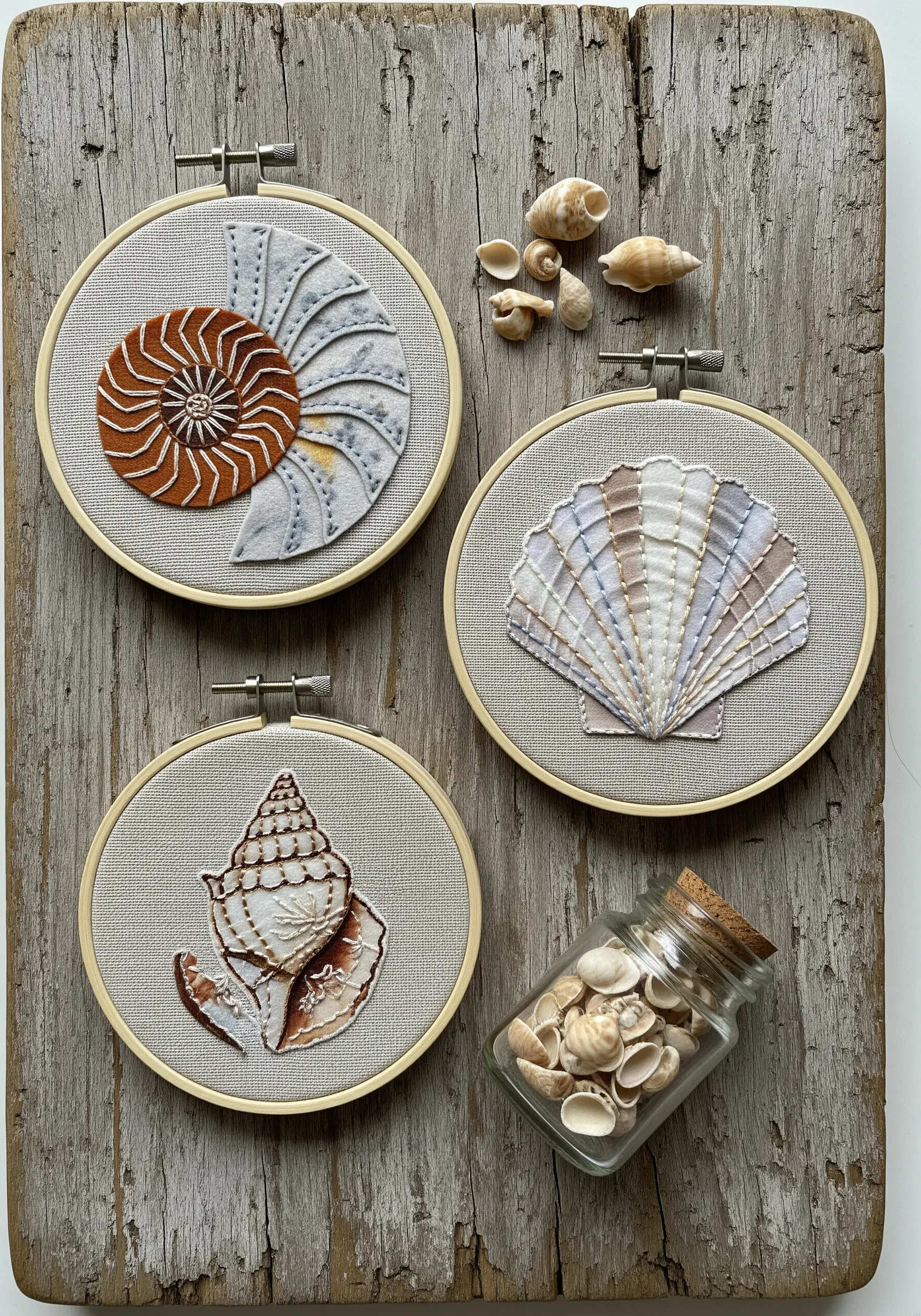
To achieve the clean, illustrative quality of these seashells, use a lightweight fusible web on the back of your fabric pieces before cutting.
This prevents fraying and allows for incredibly sharp, precise edges when you iron them onto your base fabric.
Outline the shapes and add internal details with a neat stem stitch or split stitch using a single strand of thread in a slightly darker shade.
This technique turns fabric scraps into detailed, scientific-style drawings.
10. Build a Complex Scene by Working in Layers
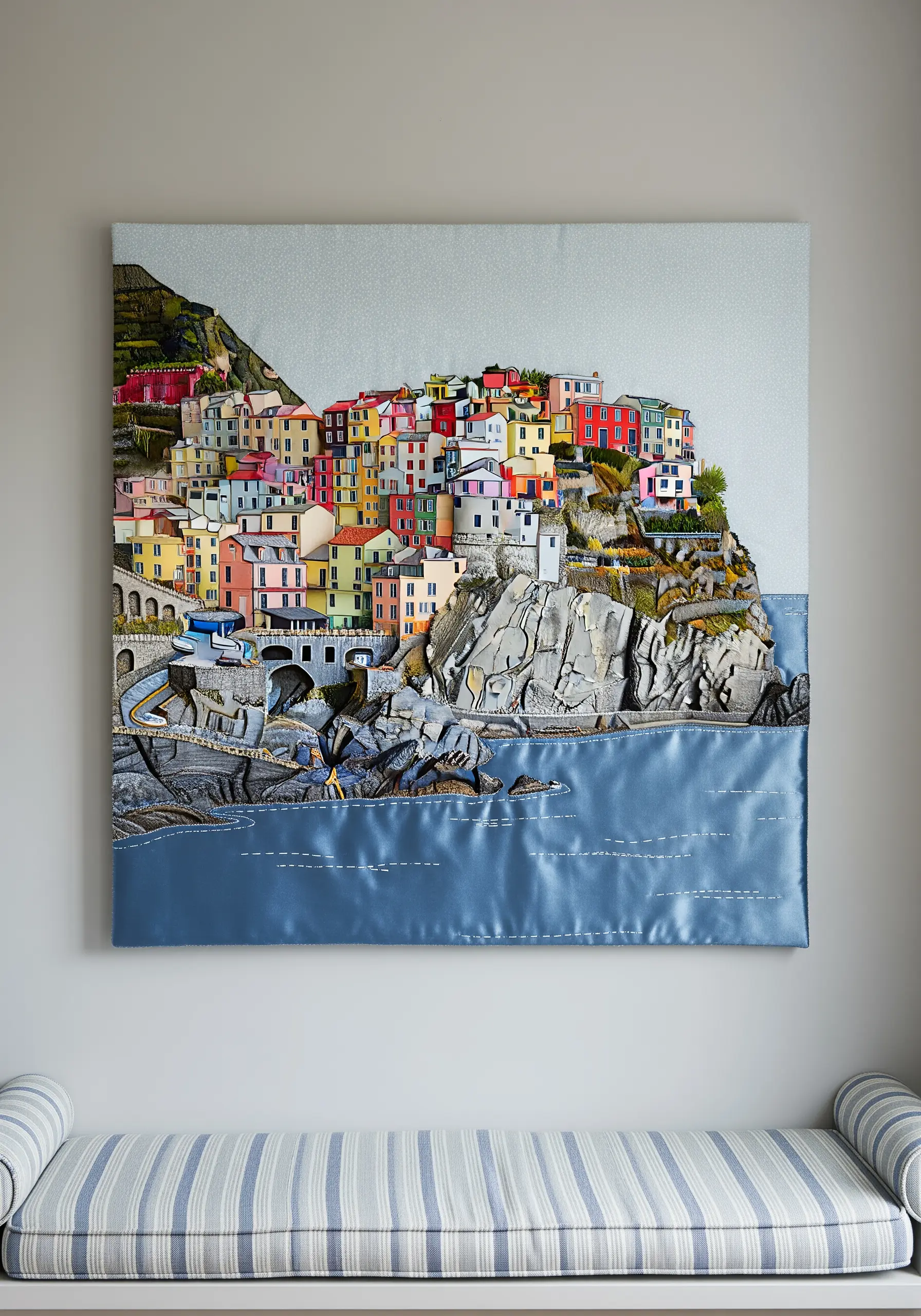
A detailed landscape like this feels manageable when you build it from back to front: first the sky, then the water, the cliffs, and finally the houses.
Use a luminous fabric like silk satin for the water to create a beautiful, light-reflecting surface that contrasts with the matte textures of the cliffs.
For the rocks, incorporate textured fabrics like tweed or raw silk to add ruggedness.
Don’t stitch every detail; suggest windows and doors with tiny, well-placed straight stitches in a dark thread.
11. Design a Mosaic Effect with Fussy-Cut Fabrics
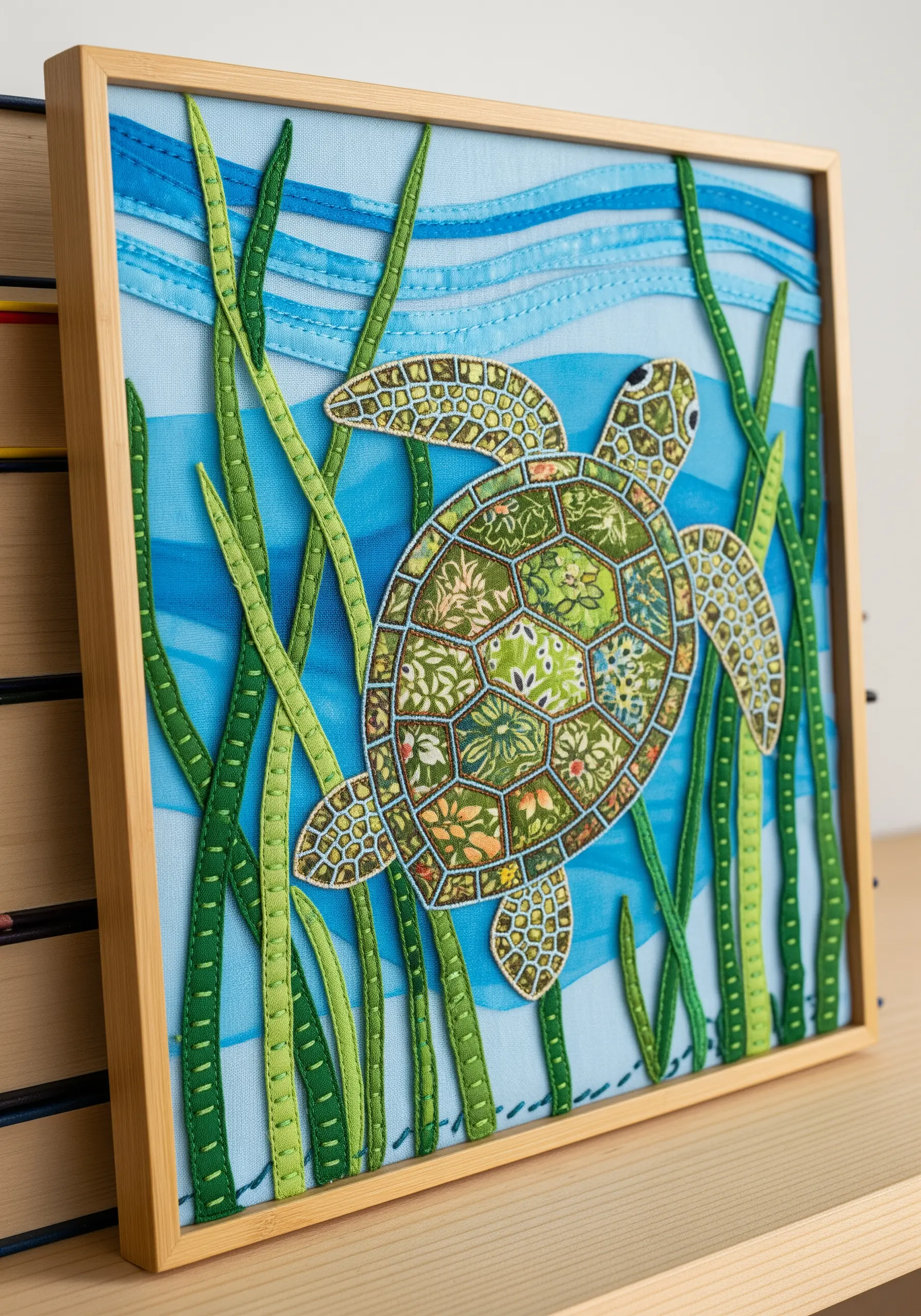
Elevate a simple appliqué shape by constructing it from smaller, carefully chosen fabric pieces.
For the turtle’s shell, use a technique called ‘fussy cutting’ to isolate specific colors and patterns from various printed fabrics, treating each piece like a mosaic tile.
Arrange the pieces on your design and secure them with a neat machine satin stitch or a hand-worked buttonhole stitch around the entire perimeter for a polished, cohesive look.
12. Master Minimalism with High-Contrast Textiles
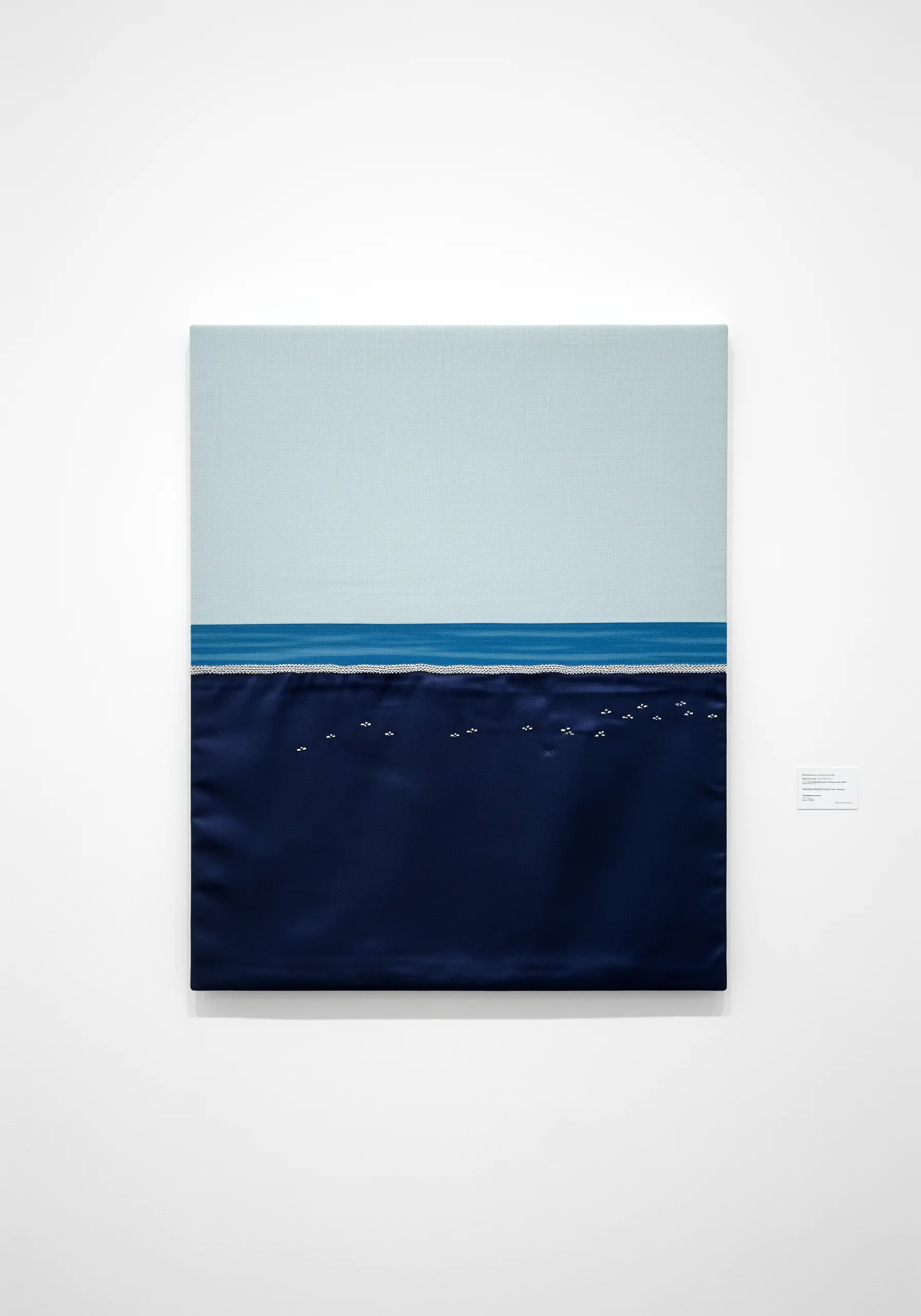
The power of this piece lies in its restraint and the deliberate choice of materials.
Create a sharp, clean horizon by pairing two fabrics with different finishes: a matte linen or cotton for the sky and a high-sheen silk or satin for the deep water.
The contrast in texture and light reflection does all the heavy lifting, creating a sense of vastness.
A few tiny, distant birds, stitched as simple V-shapes, are all that’s needed to complete this serene and minimalist embroidery wall art.
13. Frame a Tide Pool with Tactile Materials
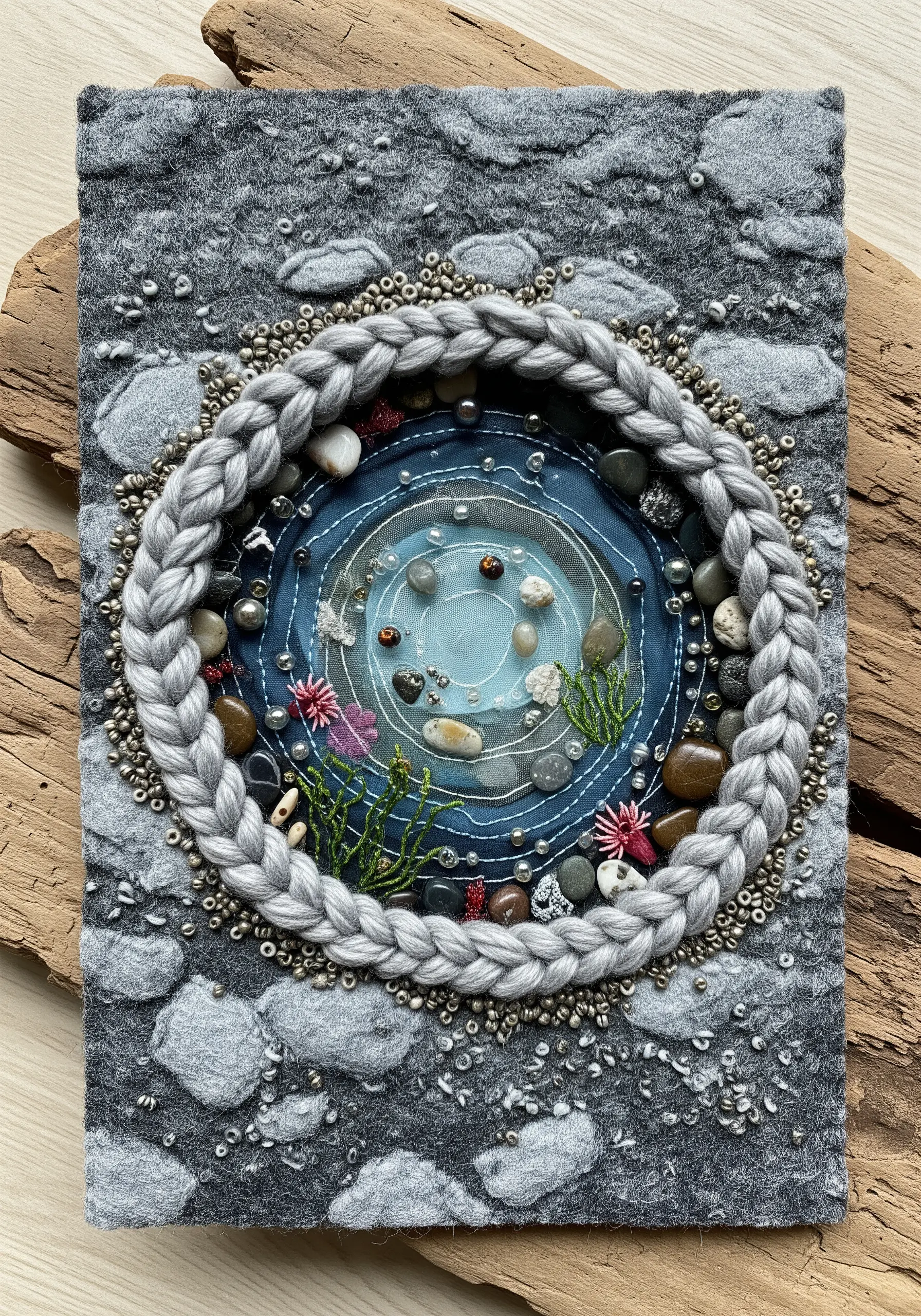
Create an engaging focal point by building a dimensional frame for your scene.
Here, a thick braid of gray yarn defines the edge of a tide pool, adding a soft, textural boundary that invites touch.
Inside the frame, create the illusion of water by layering sheer blue organza over a felt base, trapping small beads and polished stones underneath.
This method gives your work a fascinating, diorama-like quality.
14. Capture Golden Hour with Painted Fabric
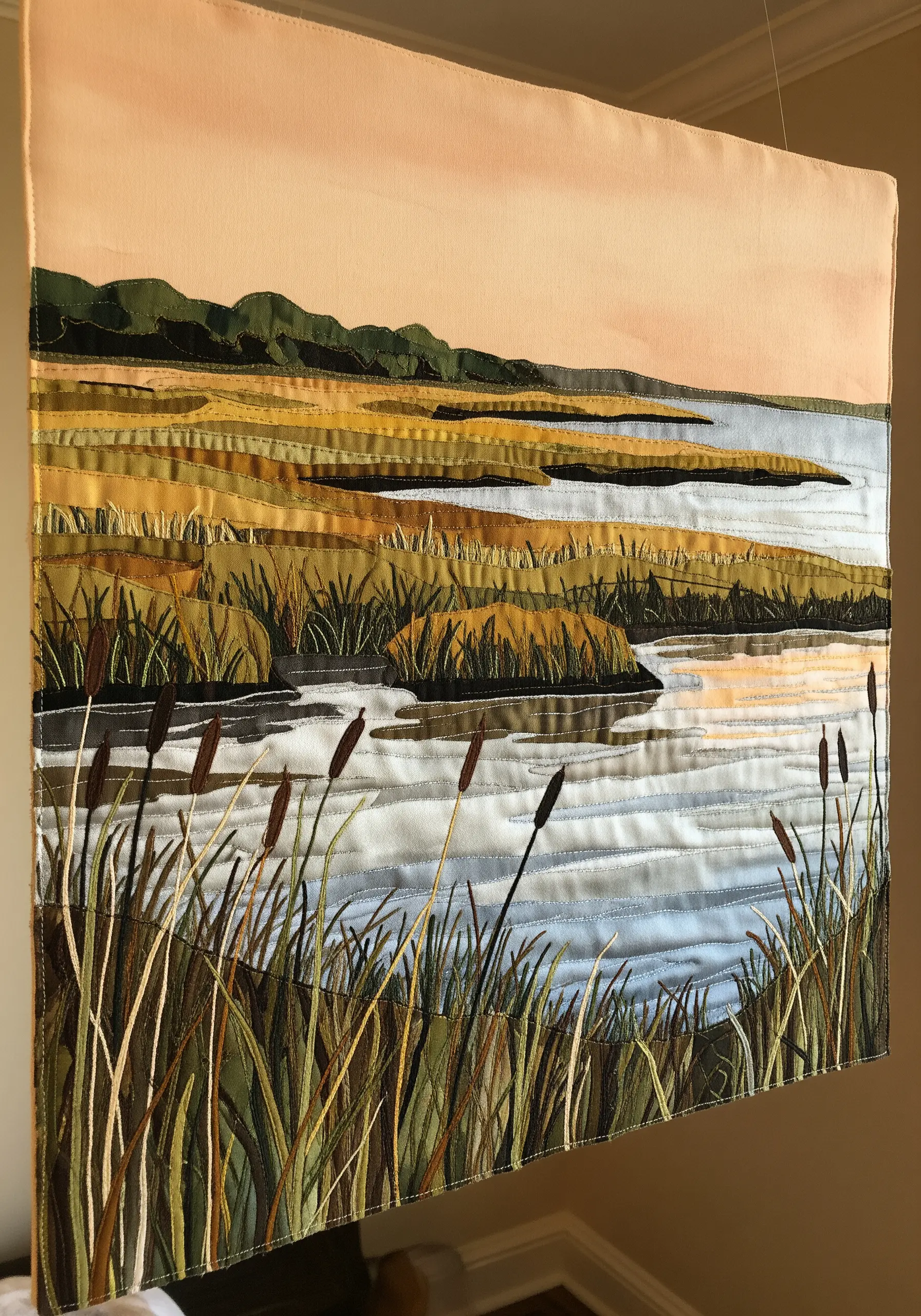
To achieve the soft, blended glow of a marsh at sunset, lightly paint your cotton base fabric with diluted acrylics or watercolors before you begin collaging.
Layer your appliqué pieces for the reeds and water over the painted background, allowing the warm tones to unify the entire composition.
For the cattails, use a single straight stitch for the stem and create the fluffy head with a dense cluster of French knots or a tightly wrapped thread technique.
15. Create a School of Fish with Padded Appliqué
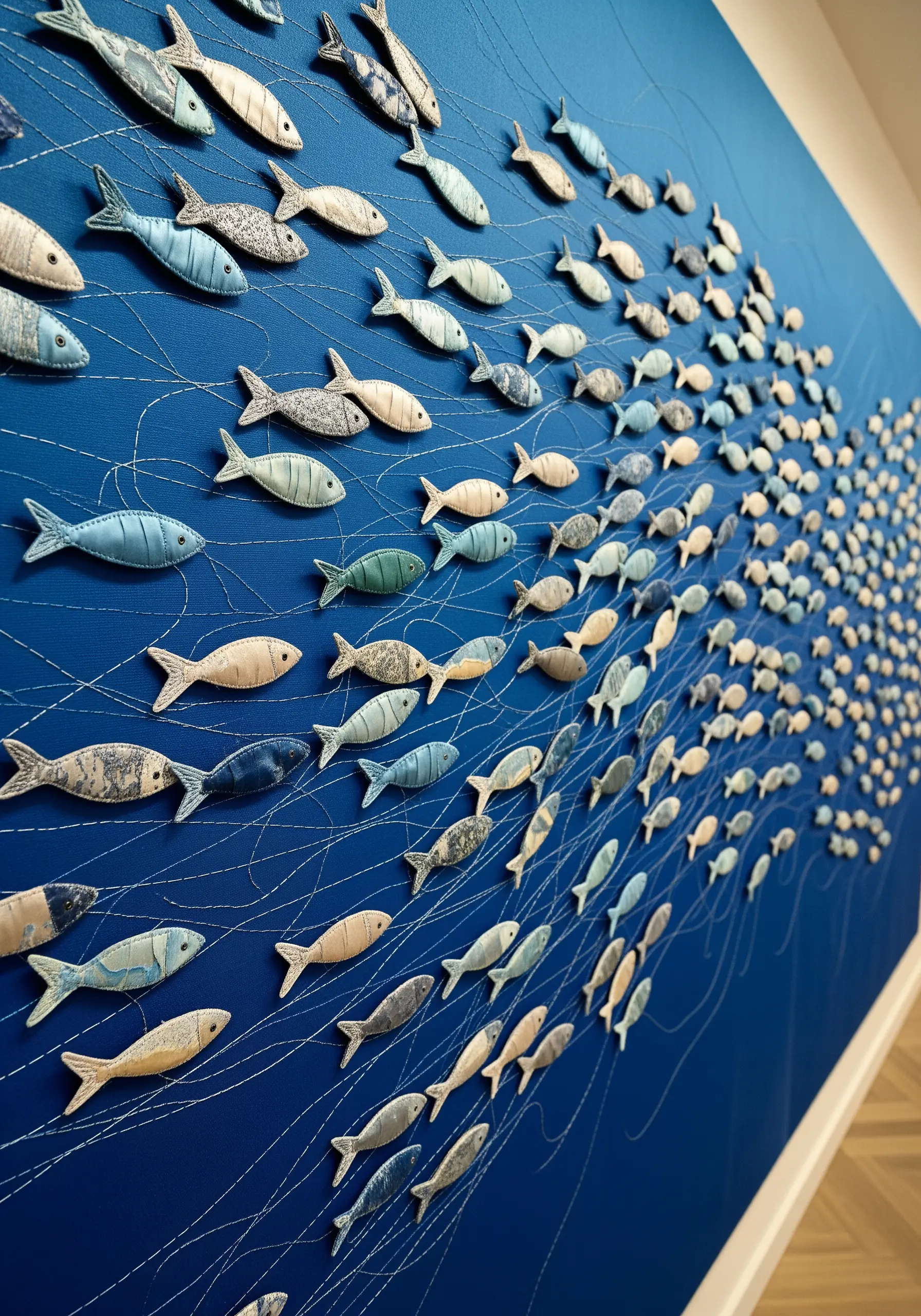
For a large-scale piece, achieve a stunning 3D effect by creating dozens of small, individual elements.
Cut simple fish shapes from various blue, gray, and cream fabrics, stitch them together with a small amount of batting inside, and then attach them to your canvas.
Arrange them in a flowing, dynamic curve to suggest movement, and add delicate, long running stitches in a fine thread to represent water currents.
This technique turns boring fabric scraps into an impressive installation.
16. Build a Shadow Box Seascape for Added Depth
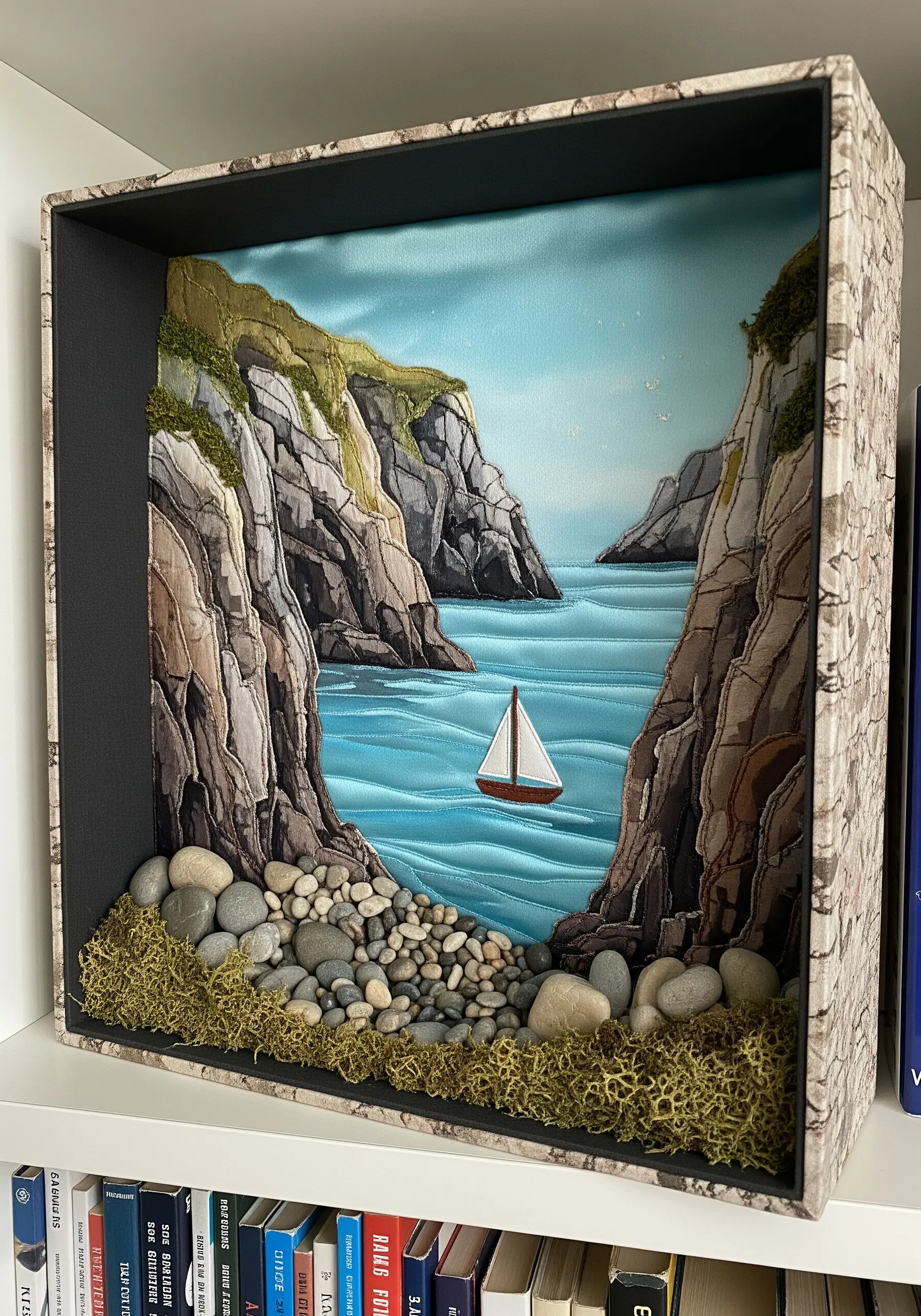
Take your fabric collage into the third dimension by building it inside a shadow box frame.
Create your background layers first—the water and distant cliffs—using appliqué and stitch on a piece of fabric mounted to the back of the box.
Then, build the foreground cliffs separately, using padded appliqué for a rounded effect, and mount them closer to the front.
Finish by adding real pebbles, moss, or sand in the immediate foreground to complete the illusion of depth.
17. Replicate Sea Foam with Repurposed Lace
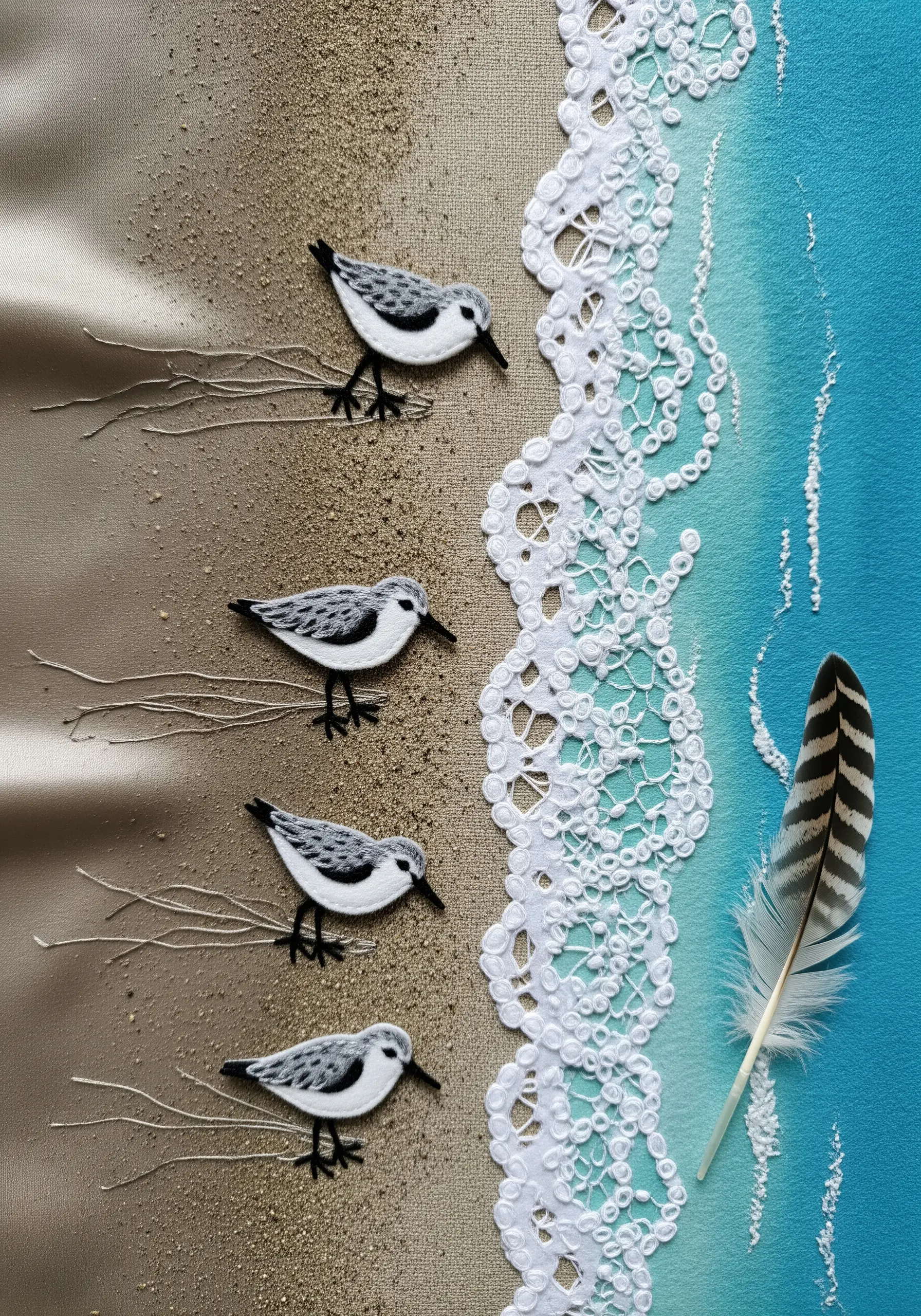
Instead of stitching every bubble, create intricate, delicate sea foam by cutting organic shapes from a piece of white machine-made lace.
Appliqué the lace onto your fabric background, allowing its natural pattern to mimic the frothy texture of a wave’s edge.
Contrast this delicate element with sharp, clean appliqué for the sandpipers, outlined with a dense satin stitch for definition.
A few wispy straight stitches trailing behind the birds suggest motion along the sand.
18. Create Atmosphere with Layers of Tulle
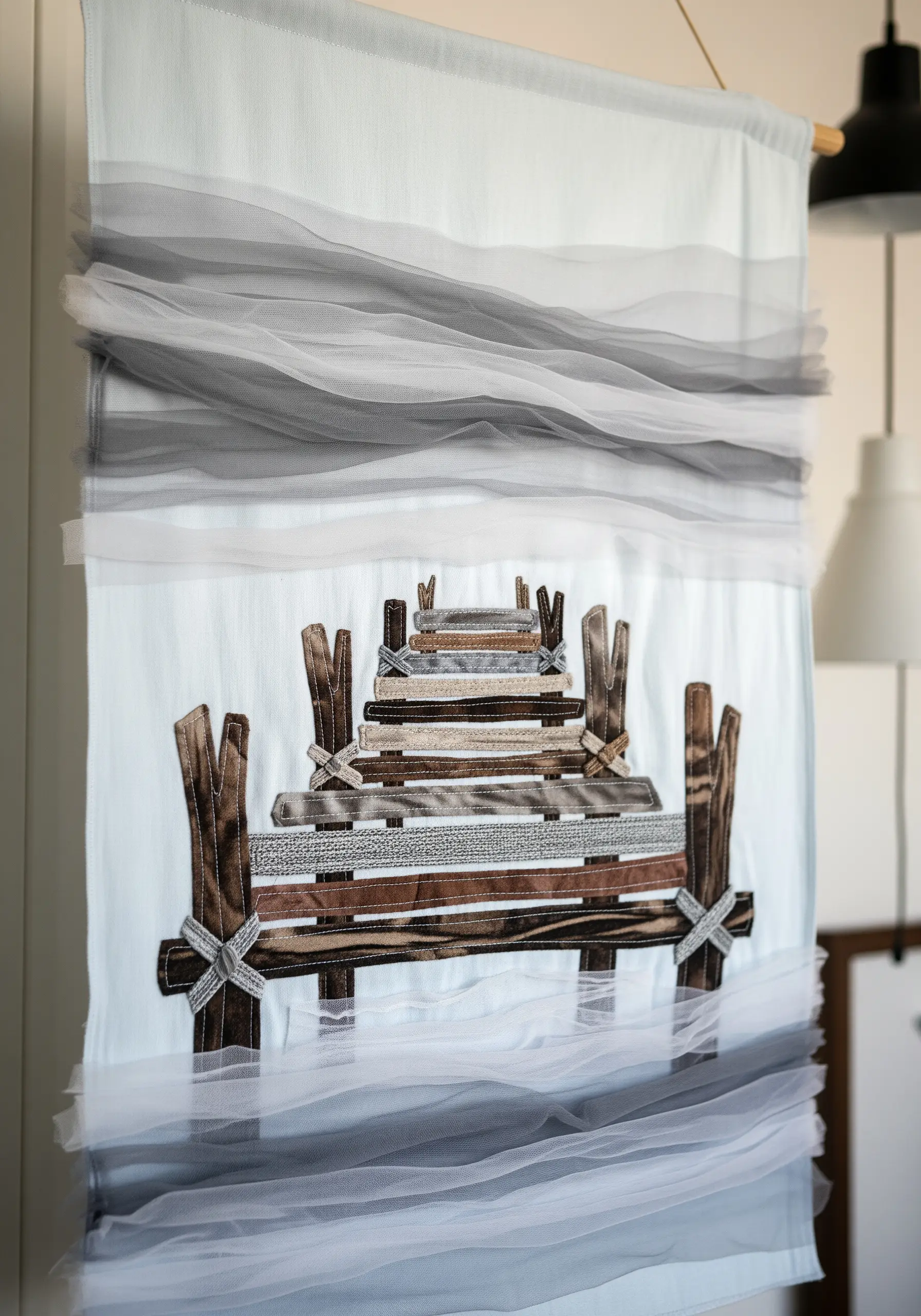
To evoke a sense of fog or mist, layer strips of gray, white, and charcoal tulle over your completed fabric collage.
Don’t stitch the tulle down flat; instead, gather and pleat it gently as you attach it, creating soft, undulating waves of transparent color.
This technique partially obscures the scene behind it, adding depth and a quiet, moody atmosphere that transforms a simple dock into something more mysterious.
19. Play with Texture Using Velvet and Couching
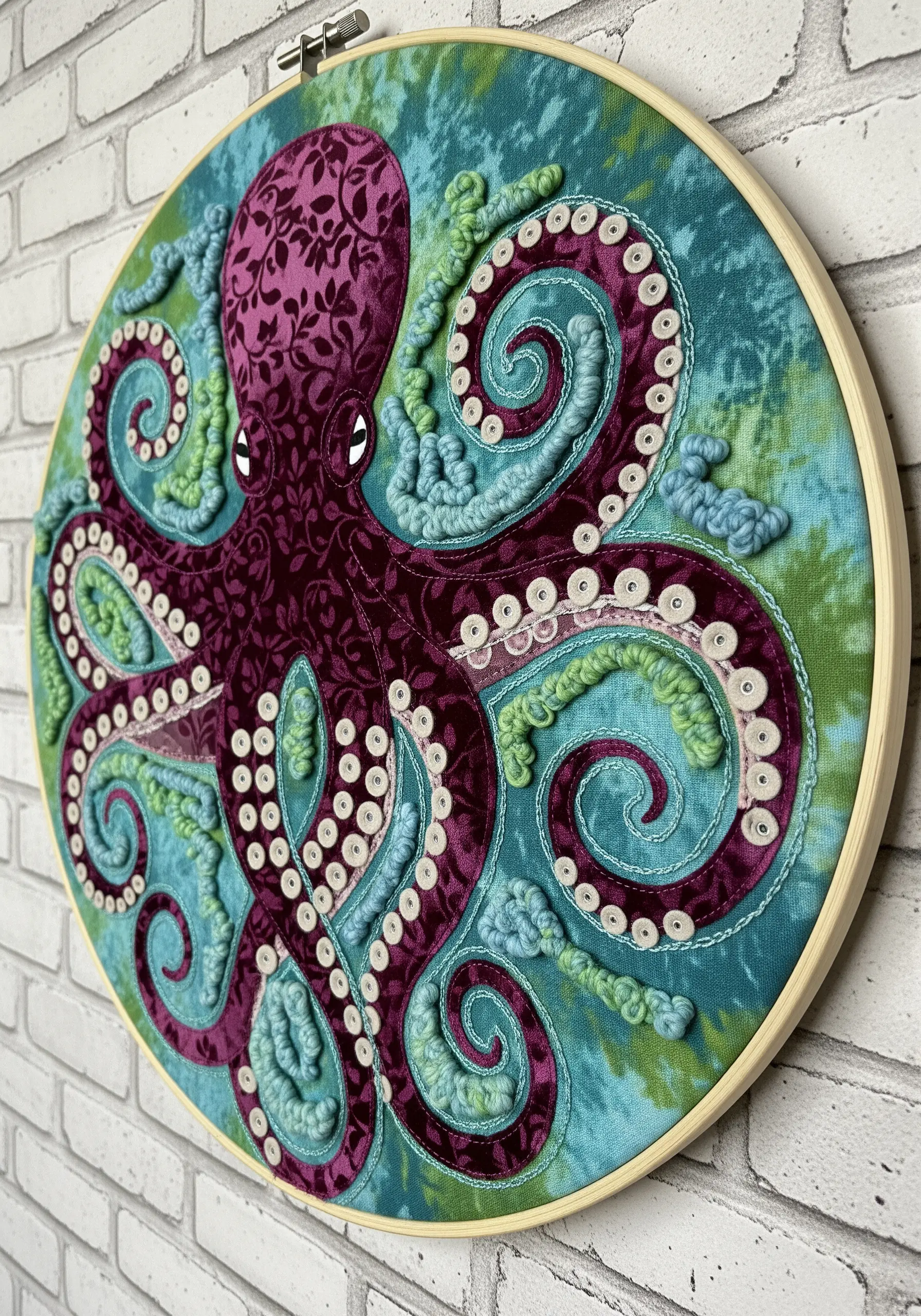
Choose fabrics that enhance your subject’s character. A rich, patterned velvet gives this octopus a sense of depth and luxury.
Create dynamic, tactile tentacles by couching thick, textural yarn alongside the appliqué shapes—this technique involves laying the yarn on the surface and securing it with small, separate stitches.
The suckers can be made with small, appliquéd fabric circles or raised French knots for a satisfyingly bumpy texture.
20. Illustrate a Kelp Forest with Fabric Ribbons
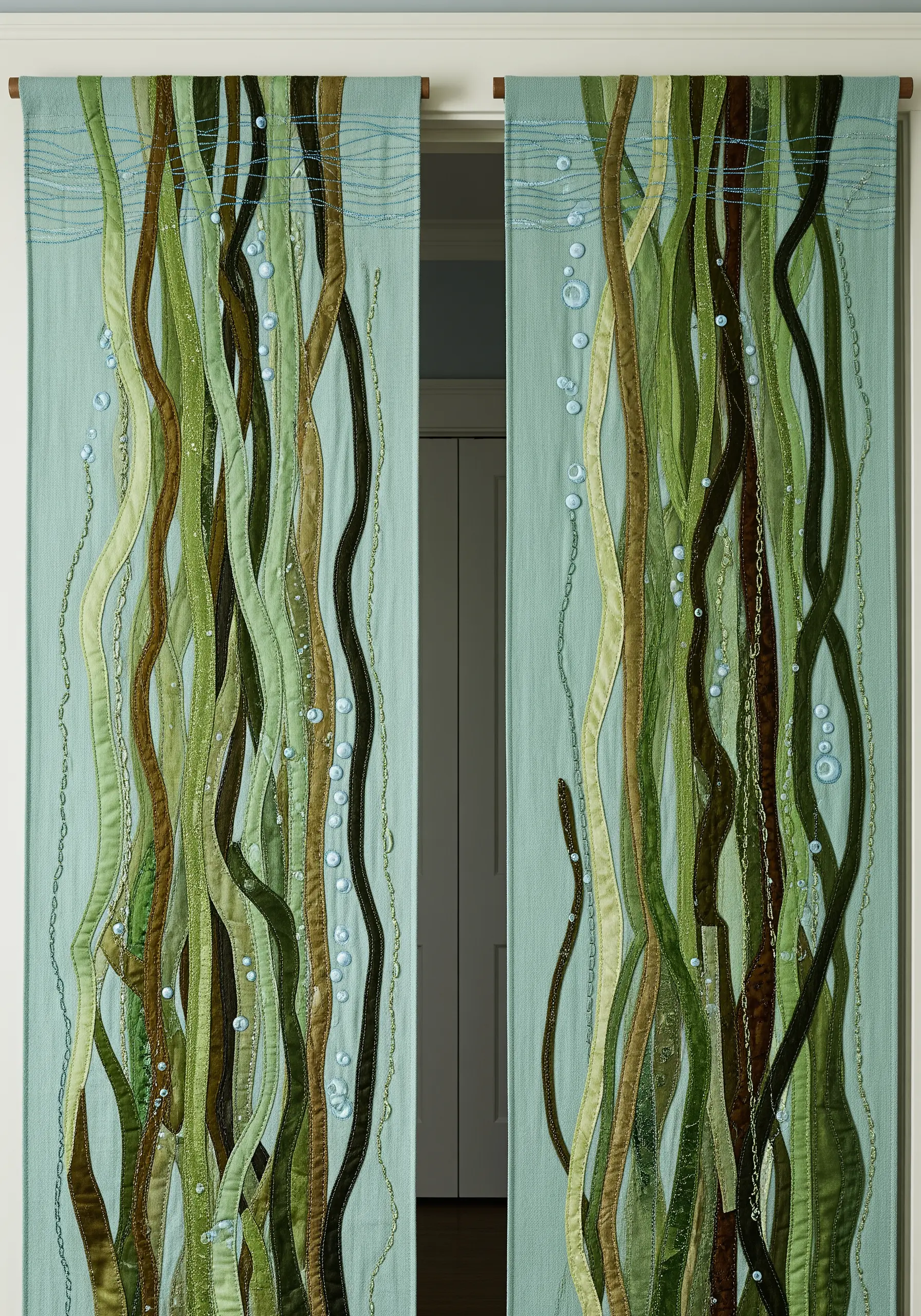
Capture the graceful, flowing movement of underwater plants by using long, thin strips of fabric and ribbon.
Cut strips of silk, satin, and cotton in various shades of green and brown on the bias, which allows them to drape and curve naturally without buckling.
Secure them only at the top and bottom of your piece, letting them weave and overlap in the middle.
Add clear glass beads or iridescent French knots to represent air bubbles rising to the surface.
21. Make Light Glow with Sheer Overlays
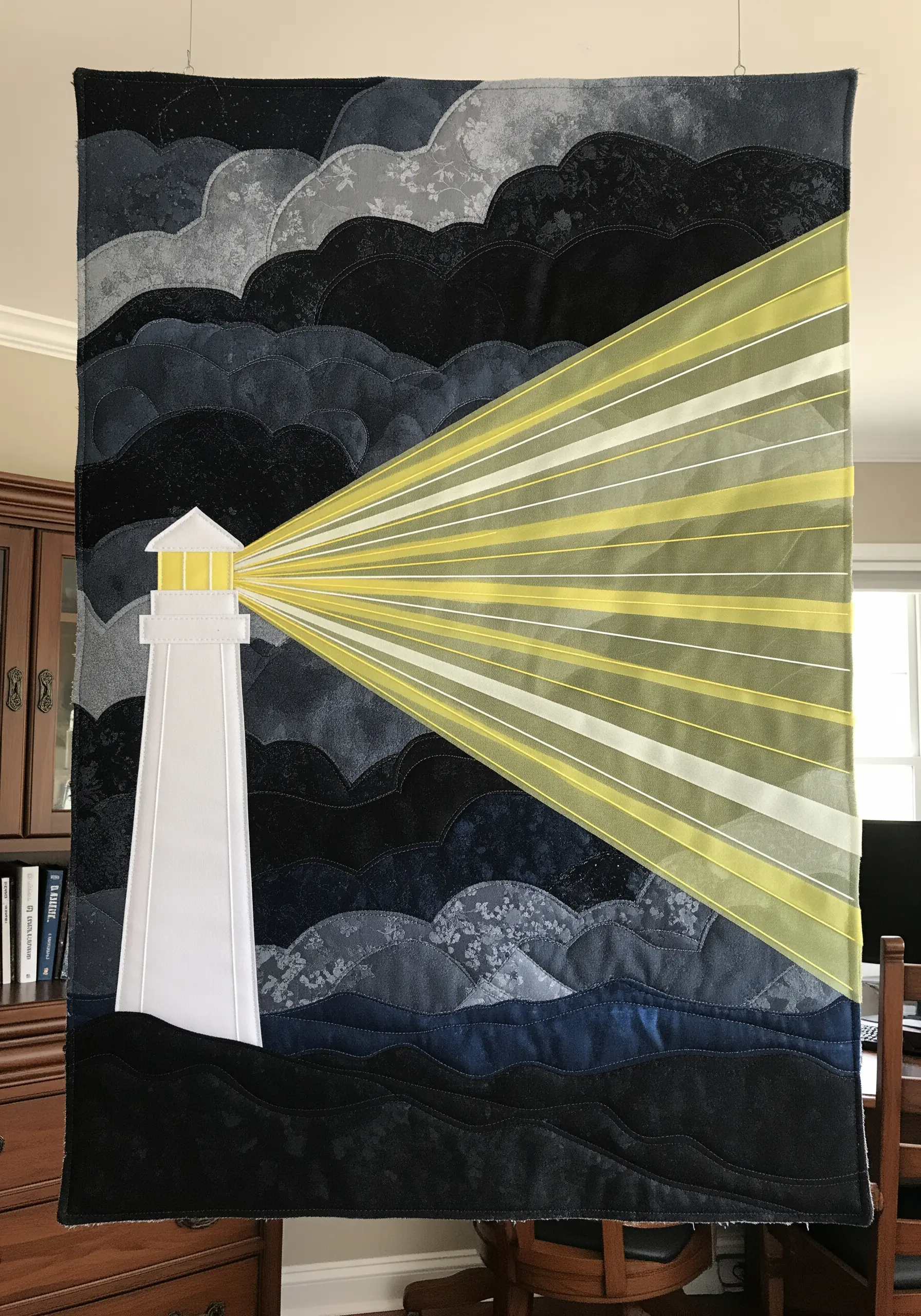
To create a convincing beam of light, layer different fabrics to play with opacity.
Start with a base of solid white or pale yellow fabric for the main shape of the beam.
Then, layer long, sharp strips of yellow and white organza or chiffon over the top. The slight transparency of the sheer fabric creates a soft, hazy edge and a realistic glowing effect that solid fabric alone cannot achieve.
This is a key technique in many fabric collage embroidery projects.
22. Map Your World with Topographical Stitches
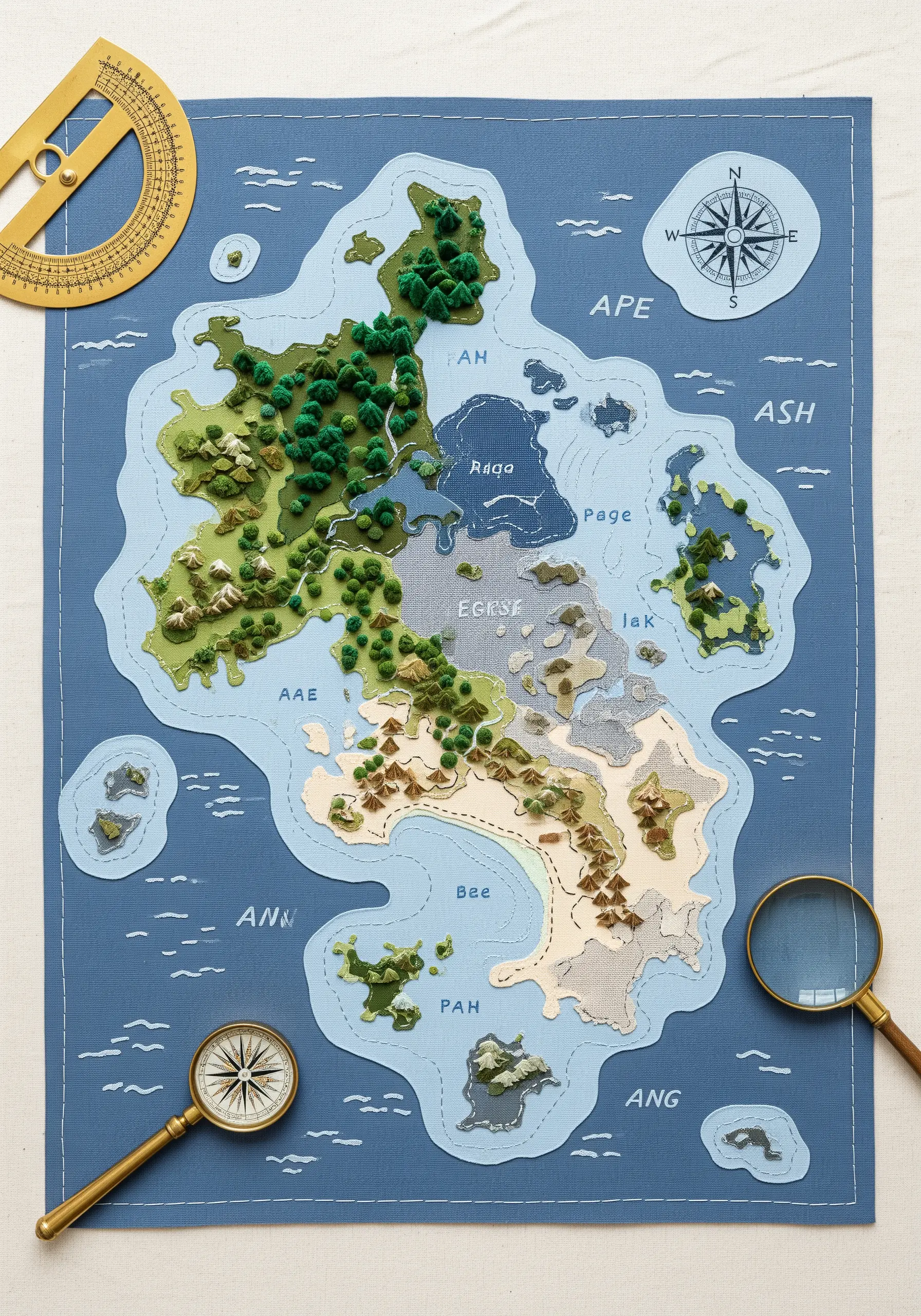
Transform a simple appliqué map into a textured, topographical landscape by assigning different stitches to different terrains.
Use dense clusters of French knots or turkey work (Ghiordes knots) to build up lush, 3D forests.
Render mountain ranges with directional satin stitch, angling your stitches to show the peaks and valleys.
Use a simple backstitch for coastlines and lettering, keeping the focus on the richly textured landmasses.
23. Frame Your Scene with a Porthole Perspective
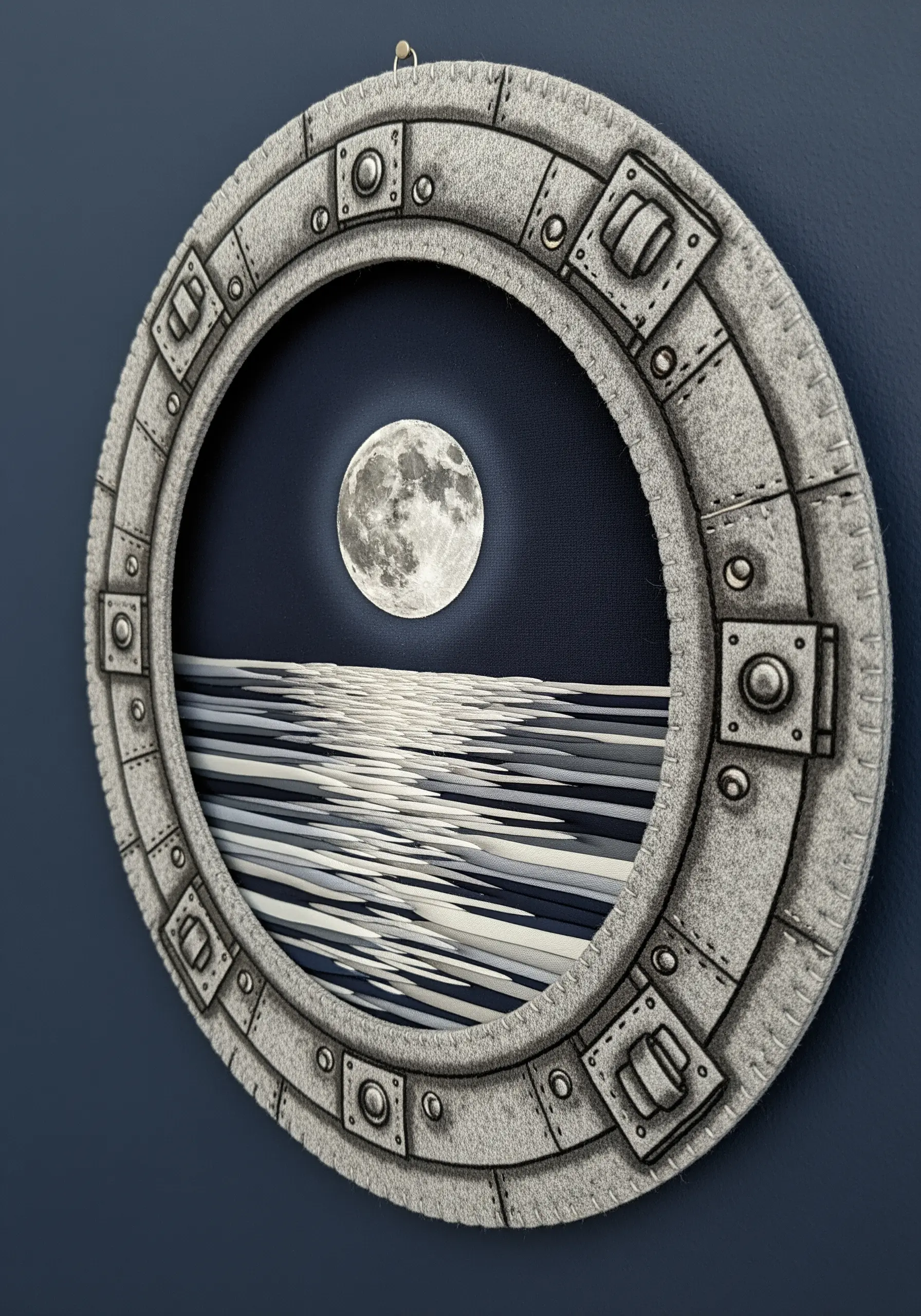
Create a strong narrative and focal point by building a frame directly into your artwork.
Construct a dimensional porthole from layered and stitched felt, adding padded details for rivets and hinges to give it a convincing metallic look.
The scene viewed through the porthole—a simple layered fabric seascape—is instantly elevated by this creative framing device, making the viewer feel like they are peering out from a ship.
24. Create a Gradient Shore with Beads or Knots
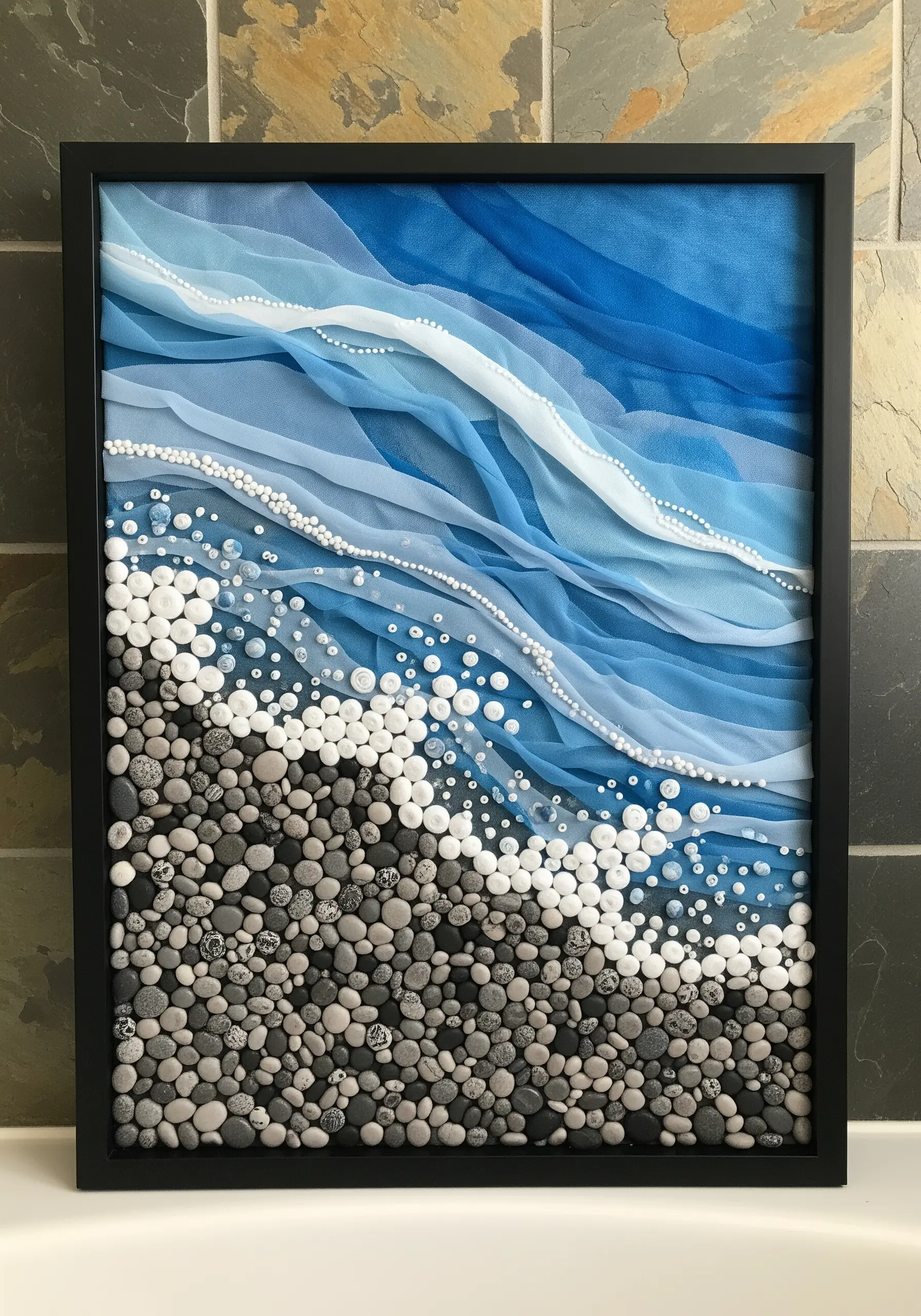
Mimic a rocky beach by using a dense arrangement of beads, buttons, or French knots.
Start with larger, darker elements at the bottom and gradually transition to smaller, lighter ones as you move up toward the water line.
This creates a natural-looking gradient in both size and color, adding immense depth and realism.
Contrast the hard, textured shore with soft, draped layers of blue and white tulle for the waves, creating a beautiful juxtaposition of materials.
25. Incorporate Sculptural Elements like Rope and Twine
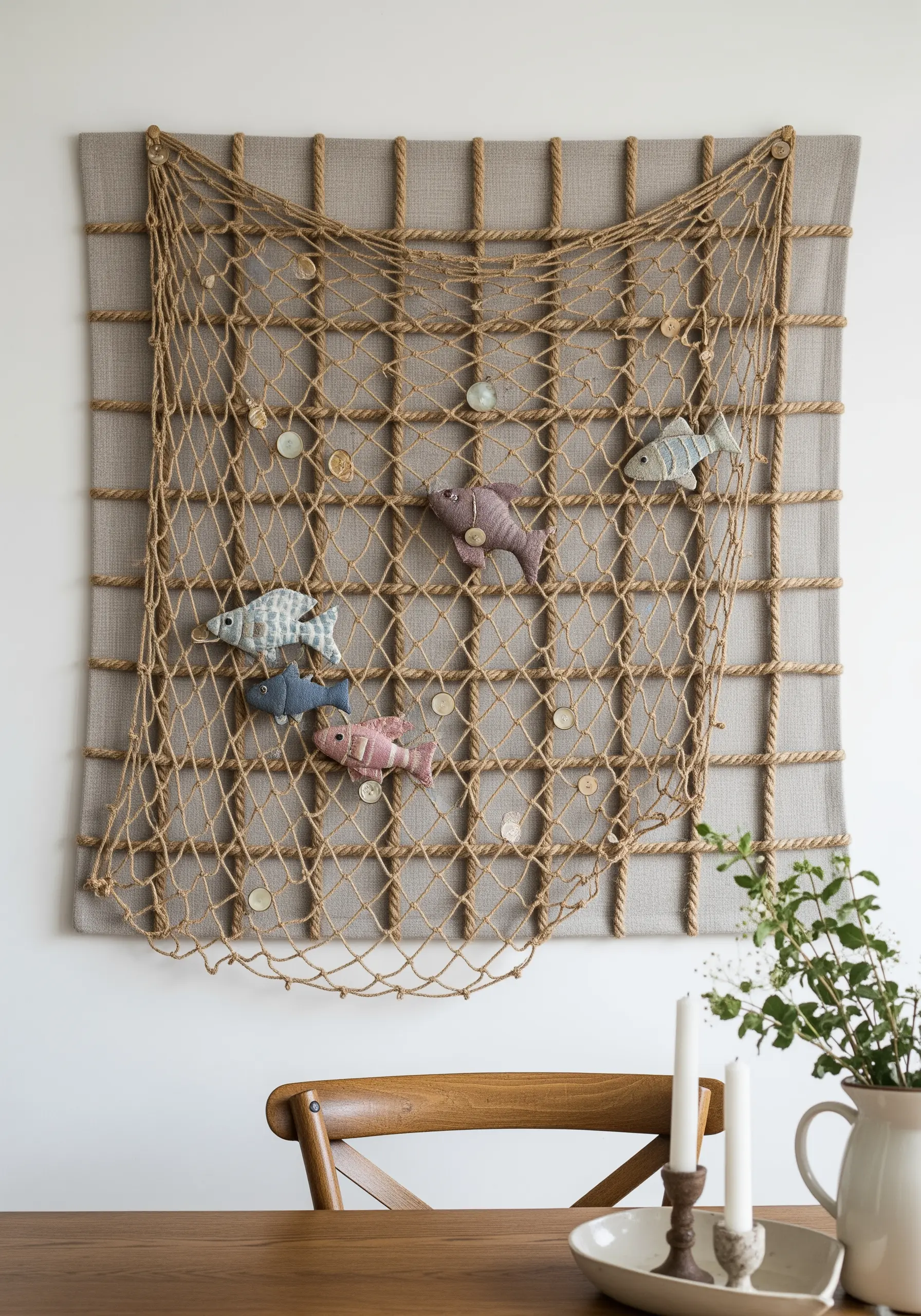
Introduce a rustic, nautical feel by incorporating non-fabric elements into your work.
Couch down thick jute rope onto a linen back panel to create a grid or, as seen here, a fishing net.
This adds a bold, sculptural quality and serves as a framework for other elements.
Attach small, lightly stuffed fabric fish and mother-of-pearl buttons to the net to complete the charming, coastal narrative.
26. Let Fabric Edges Create Natural Texture
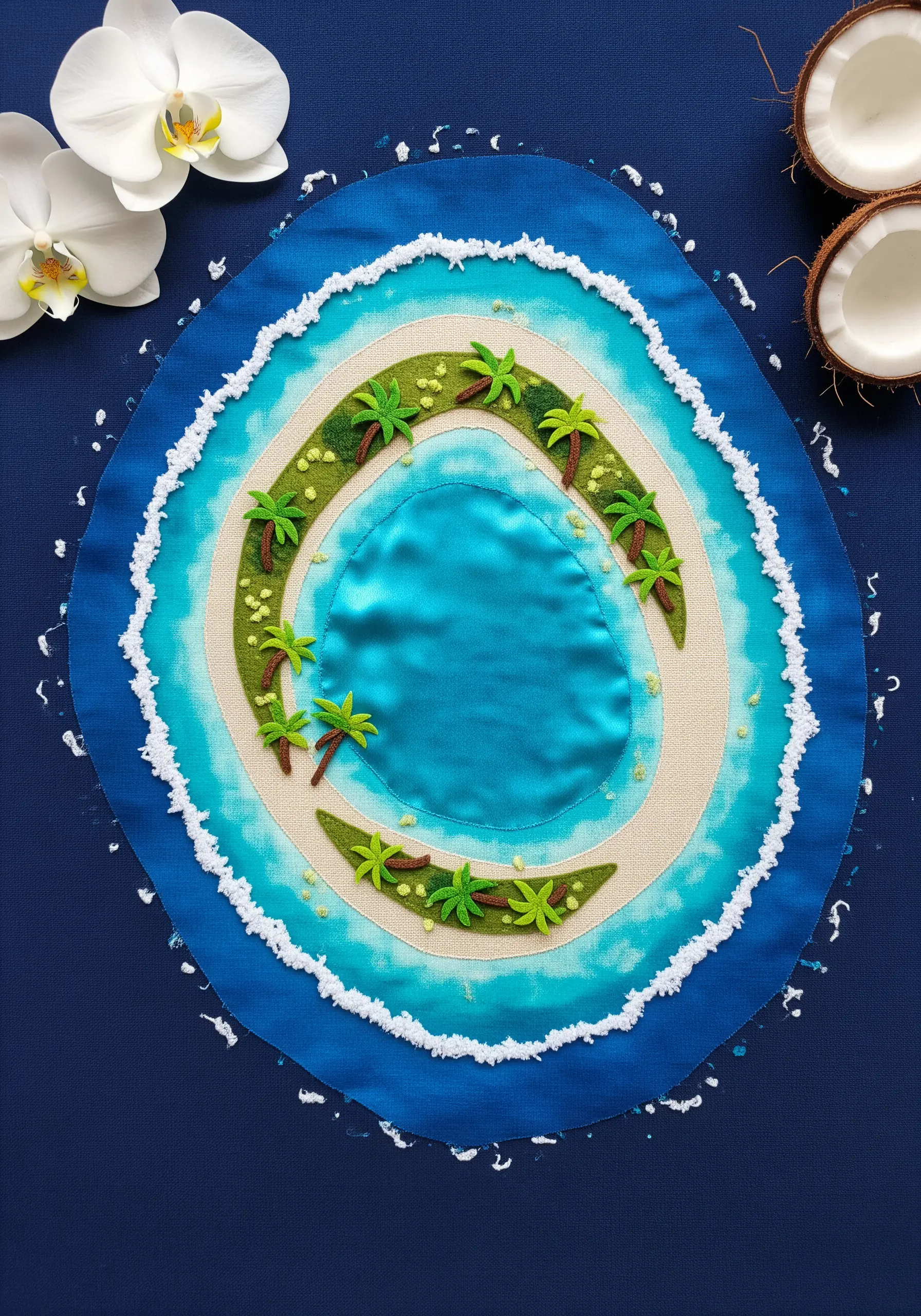
Instead of turning every edge under, use the raw, frayed edge of your fabric to your advantage.
To create the frothy surf around this tropical island, use a strip of cotton or linen and pull a few threads from the cut edge to create a soft, natural fray.
Stitch this frayed edge down along the shoreline. This simple technique is a fast and effective way to add organic texture that perfectly mimics sea foam.
27. Define Cliff Faces with Directional Stitching
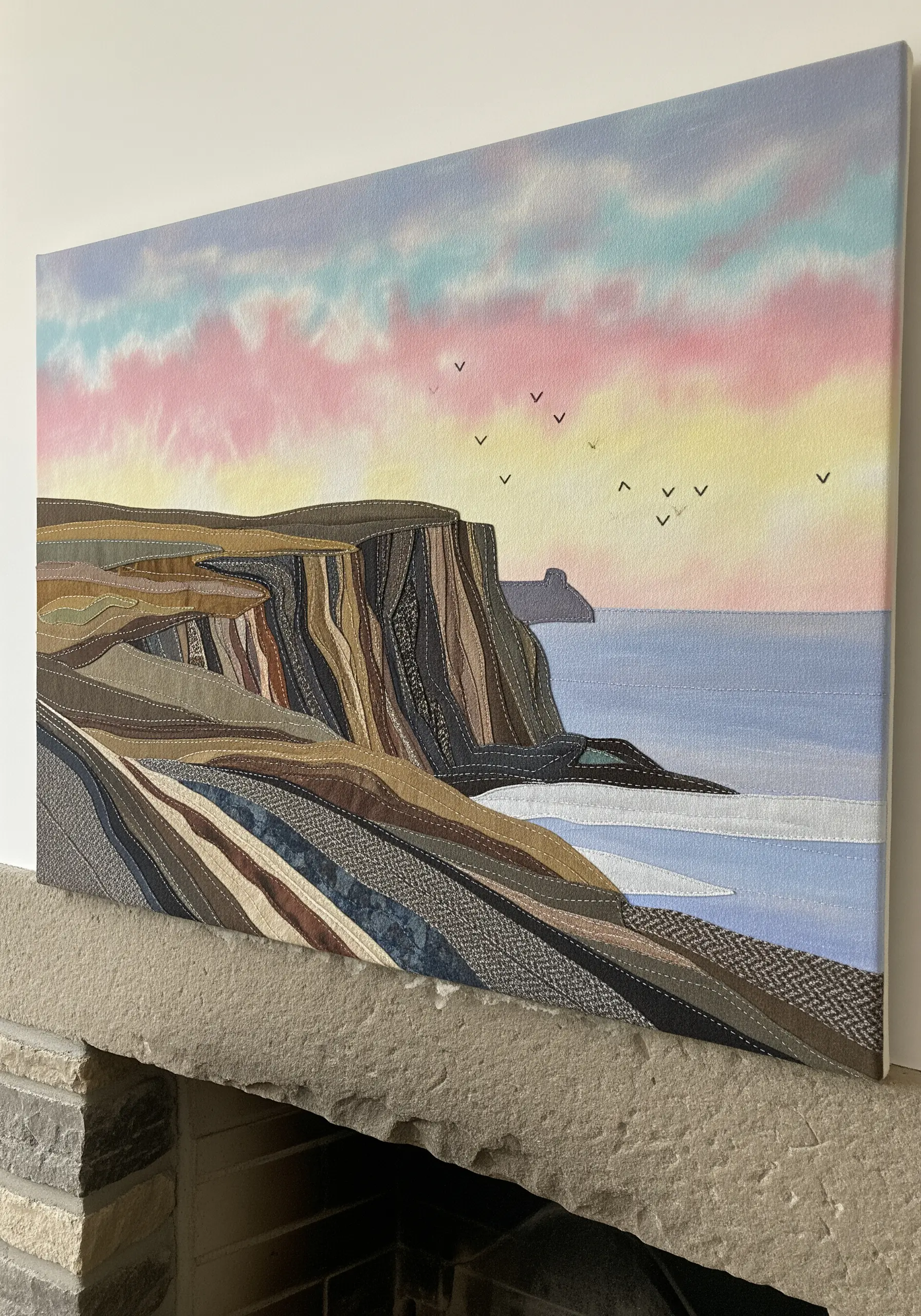
When collaging the complex shapes of a cliff face, use your stitches to do more than just secure the fabric.
Choose a contrasting thread color and use a simple running stitch or backstitch to follow the direction of the rock layers, or strata.
This approach not only holds your appliqué pieces in place but also adds crucial contour lines that define the form and geological texture of the cliffs, turning simple stitches into an essential part of the drawing.