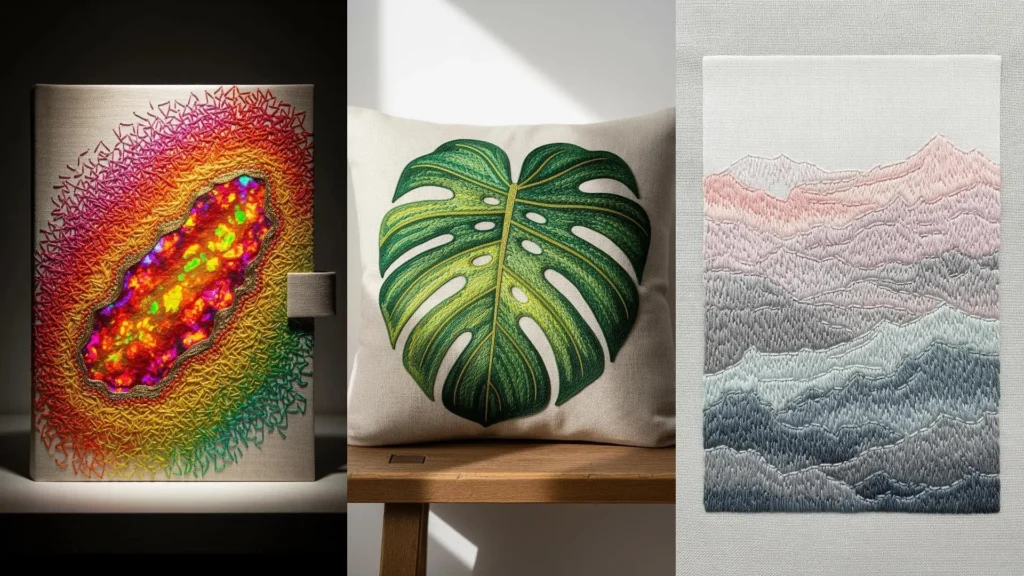
Sometimes, the desire to create something beautiful feels just out of reach. You have the threads, the fabric, and the quiet moments, but turning them into something that truly reflects the art in your mind can feel like a puzzle.
Let’s set aside the pressure to be perfect and instead focus on the language of thread itself. Think of color not just as a choice, but as an emotion. Consider texture not as an accident, but as a feeling. This is where your work transforms from a craft into a personal expression.
Here, you won’t find complicated rules. Instead, you’ll find invitations to play—to blend colors like a painter, to sculpt with thread, and to see your canvas as a space for quiet magic. It’s time to stitch with intention and discover the artist you already are.
1. Radiating Gradients for Galactic Depth
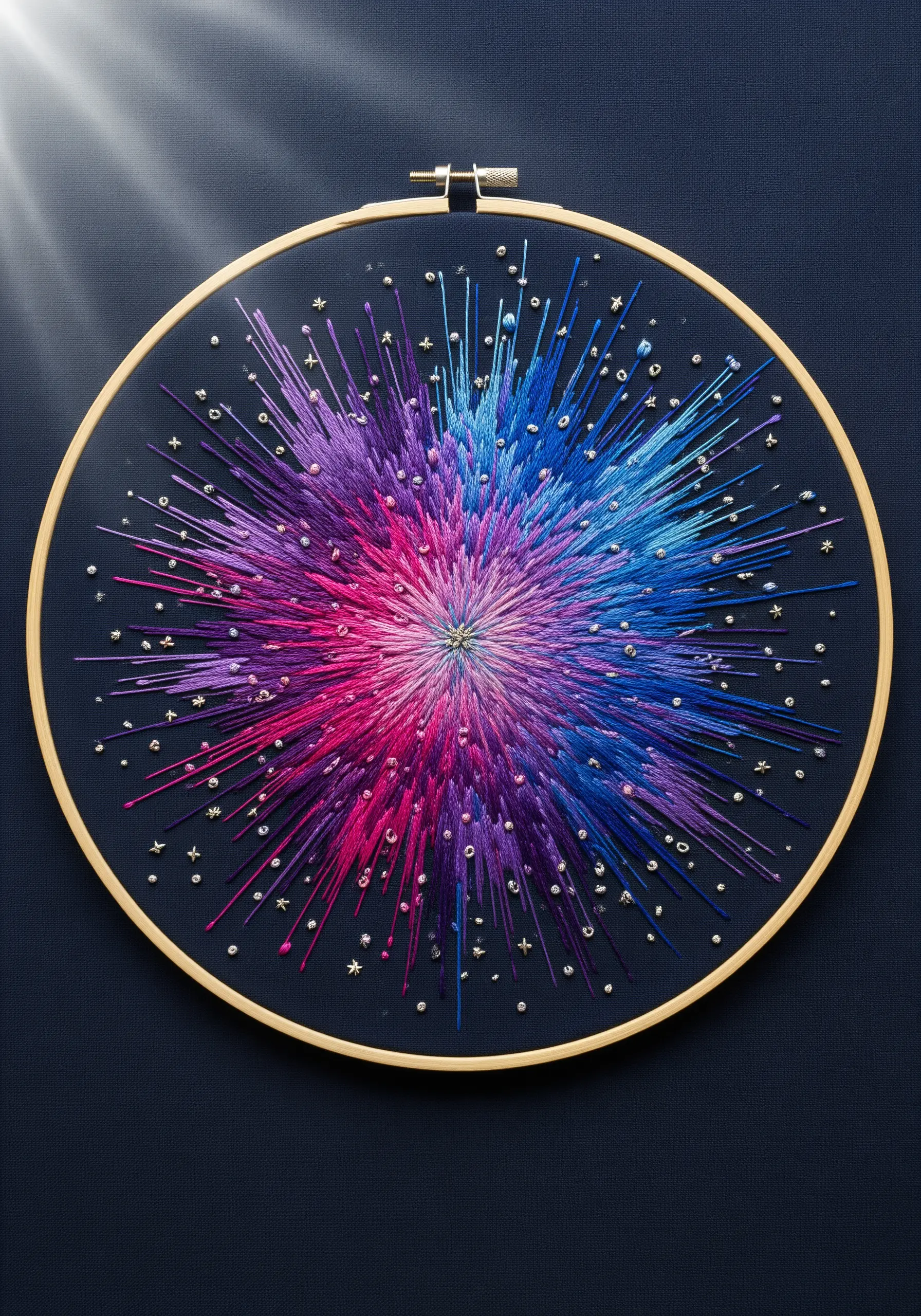
Create a sense of explosive energy by working straight stitches outward from a central point.
Use a dense satin stitch at the core, gradually shortening your stitches and increasing the space between them as you move toward the edge of the hoop.
Blend three to four analogous colors—like magenta, purple, and blue—to create a seamless transition that gives the piece a luminous, nebula-like quality.
For the final touch, scatter tiny seed beads or French knots across the dark fabric; this adds a layer of texture that catches the light like distant stars.
2. Thread Painting a Luminous Seascape
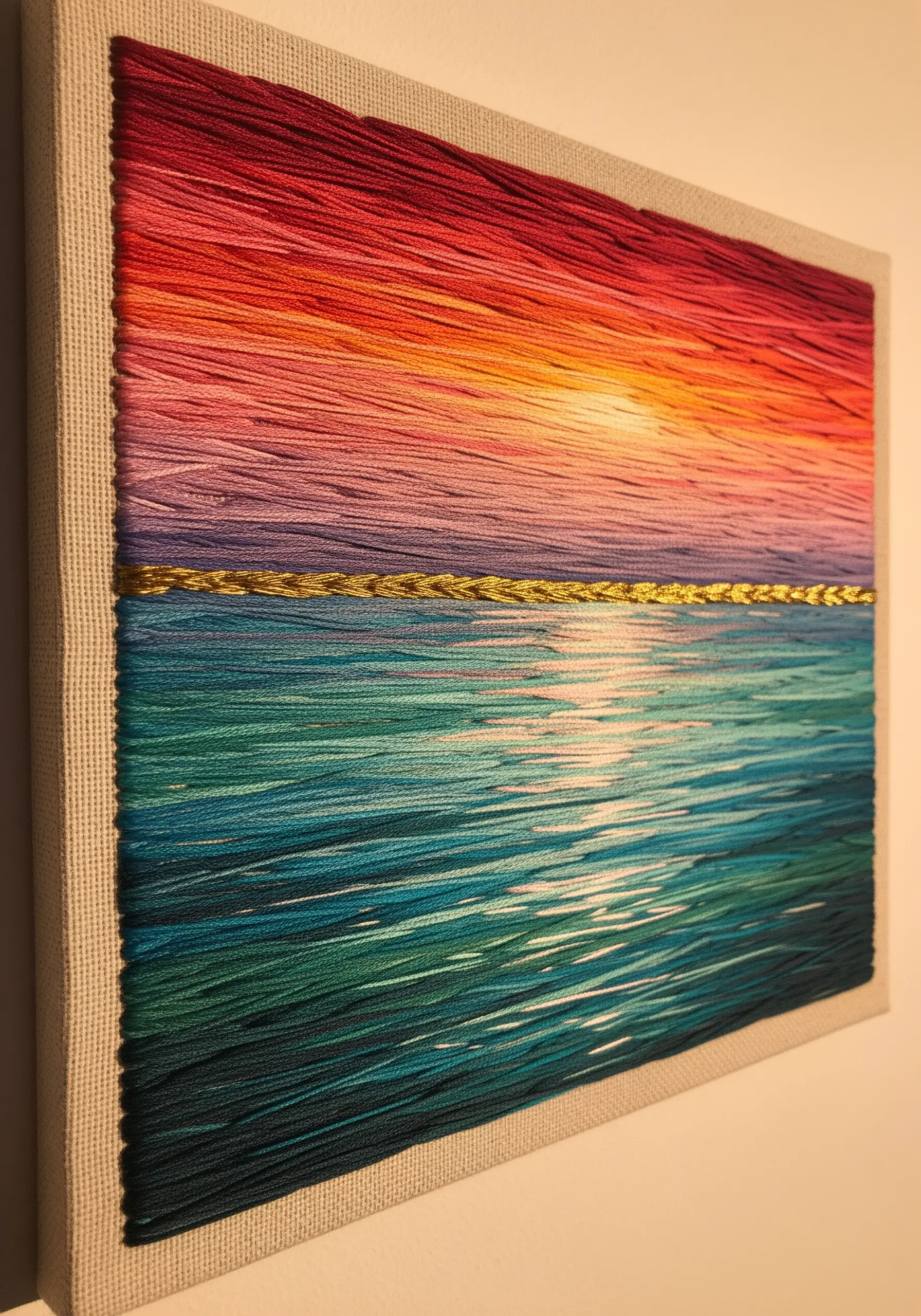
This is a masterclass in using horizontal satin stitches to build a vibrant, reflective landscape.
To achieve the smooth gradient of the sky, use a single strand of floss and slightly overlap each block of color, ensuring your stitches remain parallel and taut.
For the water, intentionally introduce single stitches of lighter colors—like cream and pale yellow—to mimic the shimmer of light on the surface.
Ground the composition with a bold, couched metallic thread for the horizon line; its texture and shine provide a perfect contrast to the soft floss.
3. Open Chain Stitches for Fluid Texture
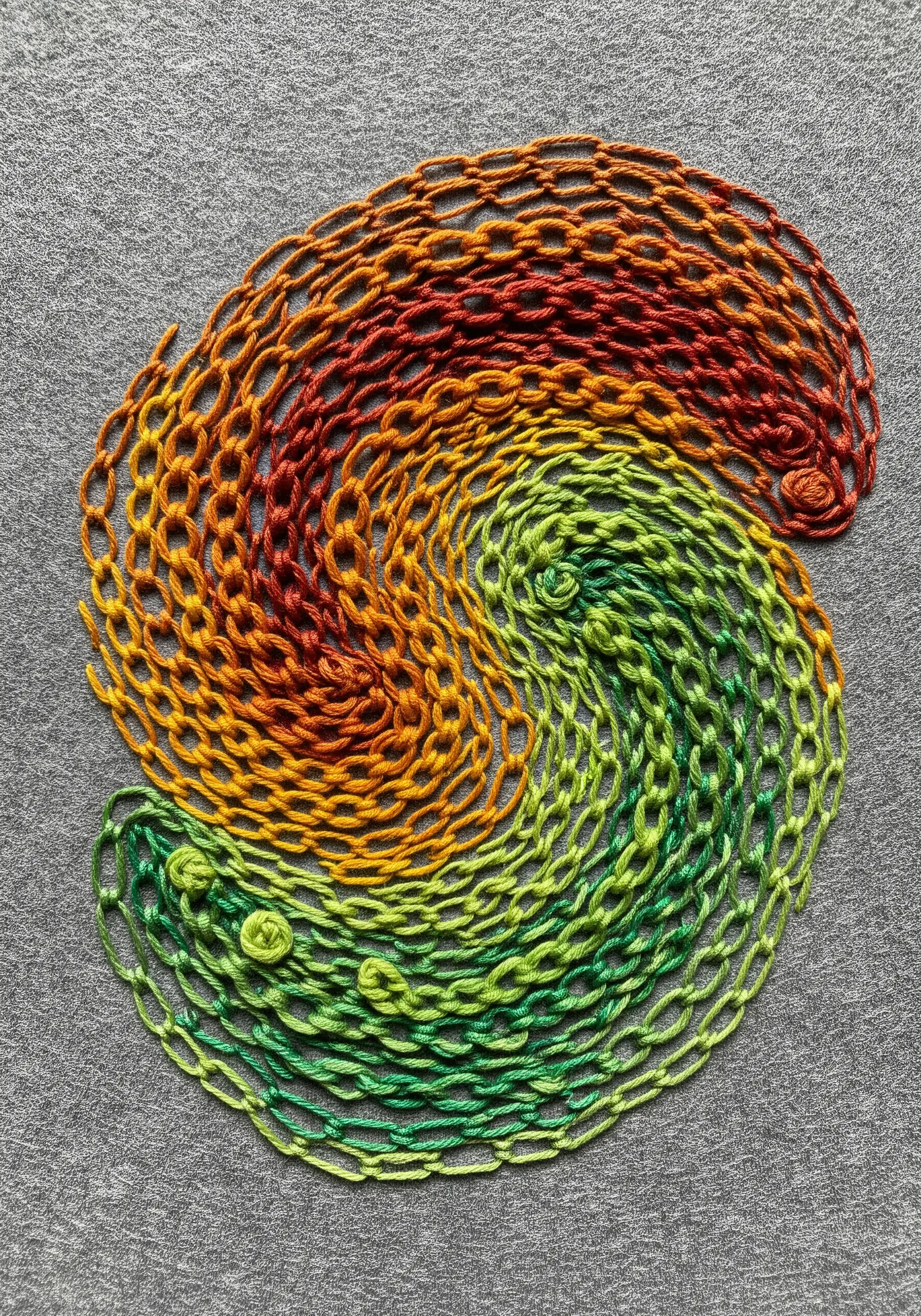
Move beyond solid fills by using an open chain stitch to create a design that feels both intricate and airy.
This technique relies on the beauty of negative space, allowing the background fabric to become part of the artwork.
To create the yin-yang effect, stitch two interlocking spirals, blending your thread from warm to cool tones as you work.
The occasional bullion knot adds a subtle, raised detail that interrupts the pattern and draws the eye, making the texture even more dynamic.
4. Abstracting Form with Seed Stitch Lines
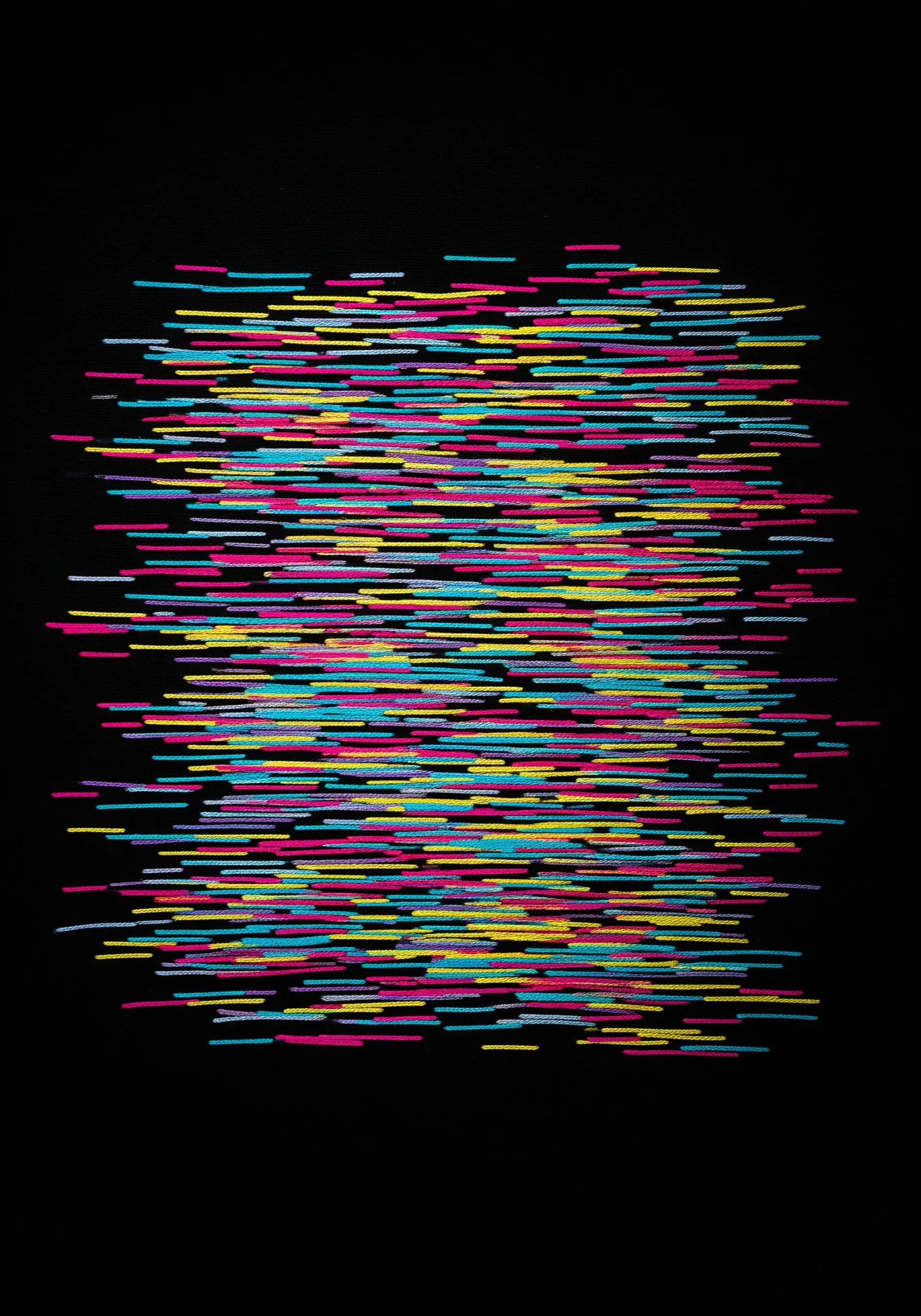
Transform simple straight stitches into a complex texture by varying their length, direction, and color.
Work in dense, horizontal rows, but allow the colors to mix randomly to create a vibrant, static-like effect against a dark background.
This technique is incredibly forgiving for beginners, as precision is not the goal; the power comes from the sheer volume and energetic placement of the stitches.
Use a high-contrast palette of neons and brights on black fabric to make the colors appear to vibrate.
5. Pointillism with French Knots on Tulle
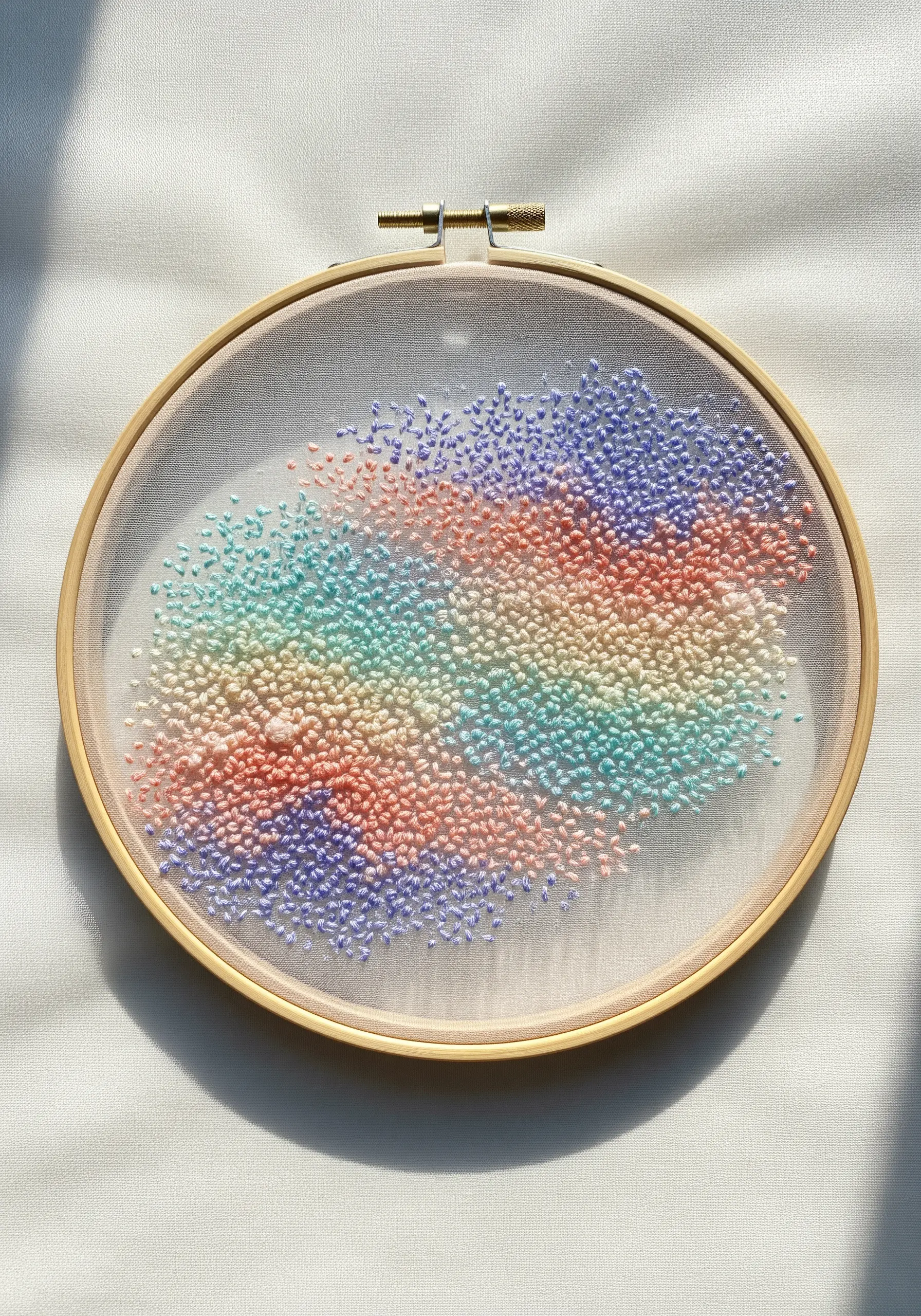
Achieve a soft, cloud-like texture by clustering French knots on a sheer fabric like tulle or organza.
The transparency of the fabric makes the knots appear to float, creating a dreamy, ethereal quality.
Group your colors into soft, blended patches rather than sharp lines for a more organic, painterly feel.
Vary the tightness and size of your French knots to add subtle depth and dimension to the overall composition.
6. Architectural Waves with Satin Stitch
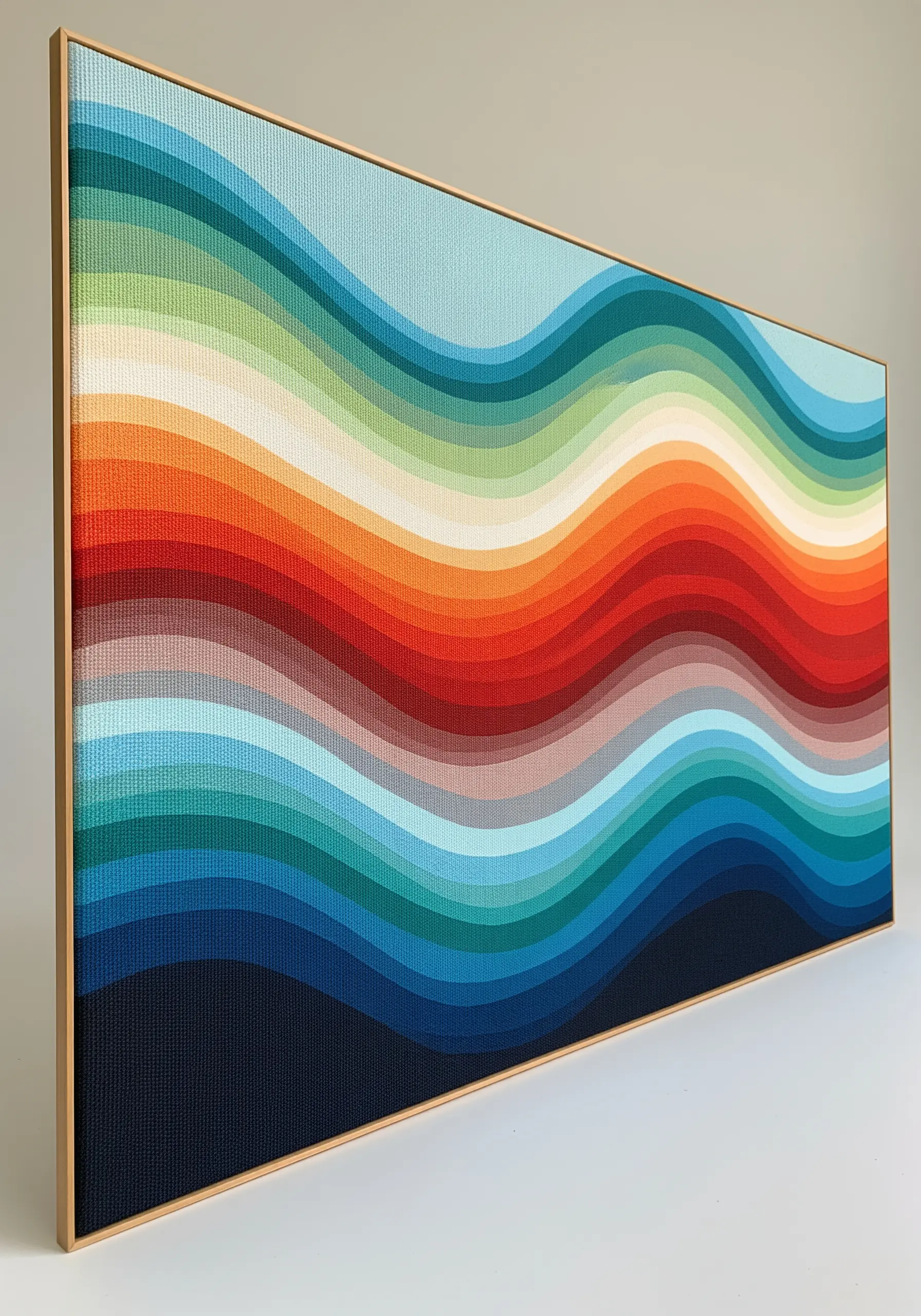
This design demonstrates how perfect satin stitches can create a clean, graphic, and almost architectural feel.
To ensure your waves have crisp edges, outline each color band with a split stitch before filling it in with satin stitch.
The success of this piece depends on flawless thread tension and stitch direction; every stitch must lie perfectly flat and parallel to its neighbors.
A carefully chosen color palette, moving from light to dark, creates a sense of depth and rhythmic movement.
7. Sculpting Landscapes with Thread Direction
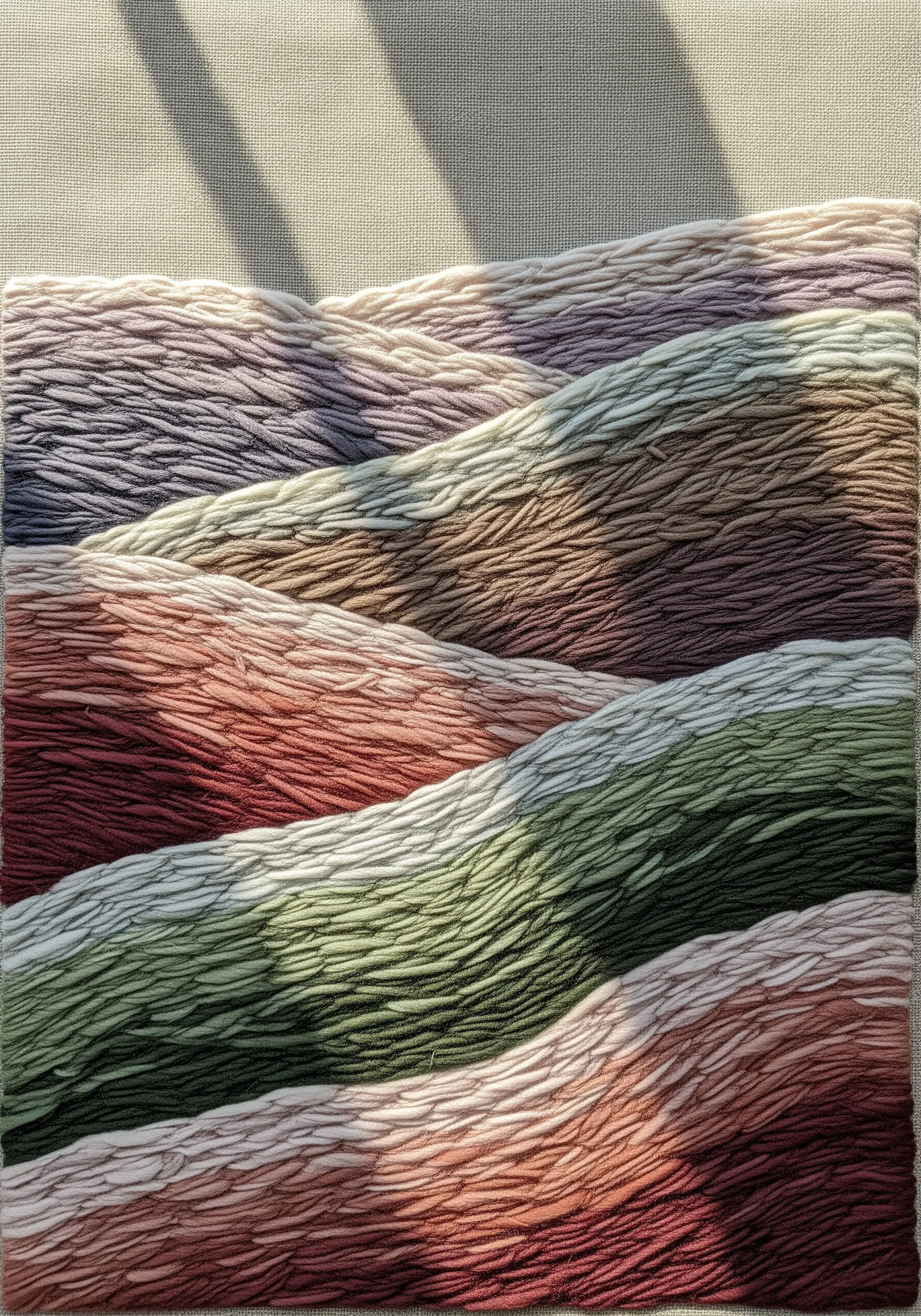
Create the illusion of rolling hills by changing the direction of your satin stitches within each color block.
Instead of uniform horizontal or vertical lines, angle your stitches to follow the imagined contours of the landscape. This simple shift creates a powerful sense of movement and topography.
Use variegated threads or blend two similar shades in your needle to achieve subtle color shifts that mimic natural light and shadow.
This technique makes earth-inspired embroidery designs feel dynamic and alive.
8. Dynamic Energy with Radiating Color Blocks
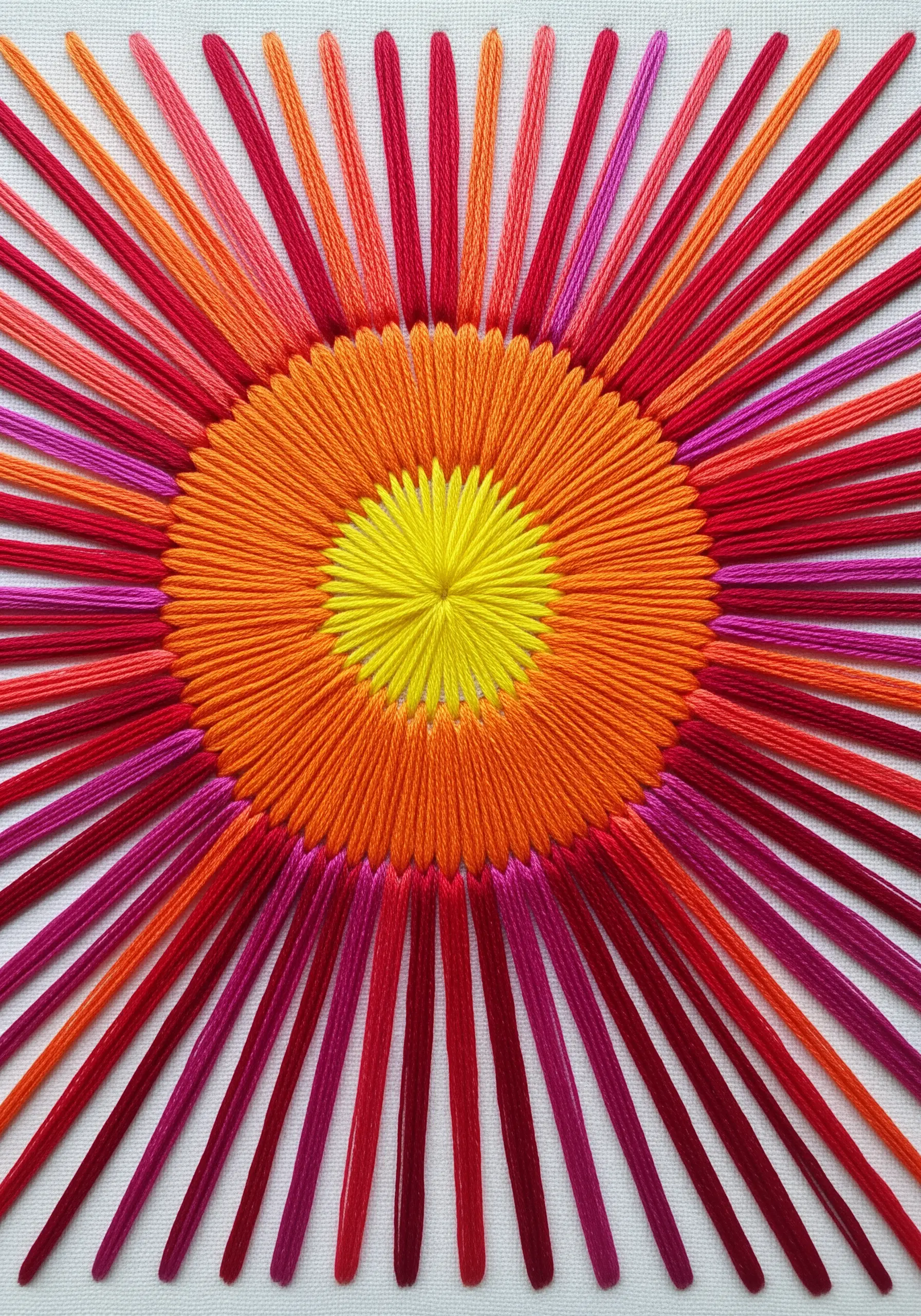
Create a bold, graphic sunburst by combining satin stitch with long, radiating straight stitches.
Work the center in a dense, circular satin stitch, then build outward with concentric rings of color.
For the outer rays, alternate between two or three bold colors and vary the length of each stitch to create a dynamic, explosive rhythm.
Using a full six strands of floss gives this design its chunky, high-impact appearance, making it perfect for statement wall art.
9. Stitching Agate Slices with Metallic Veins
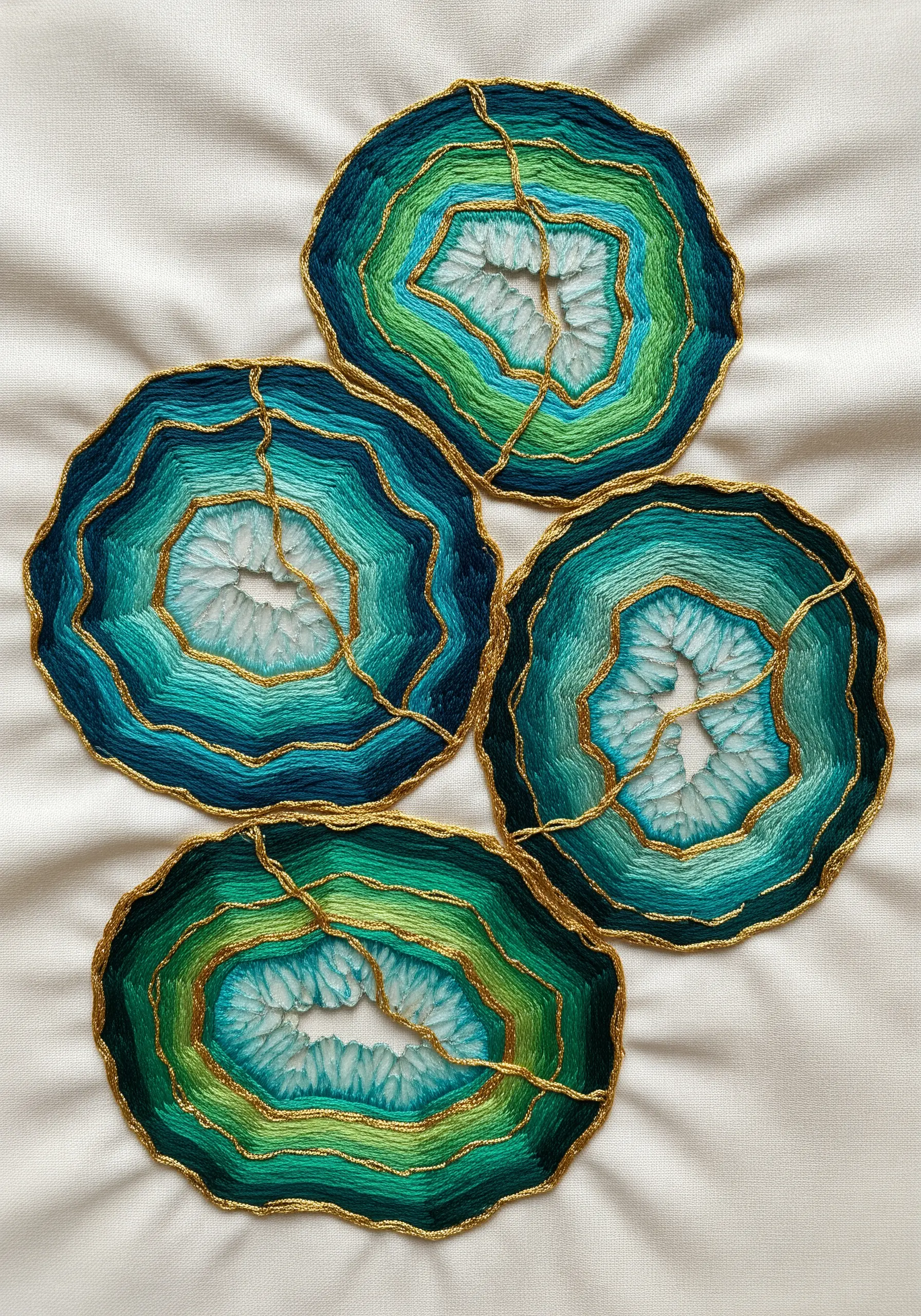
Mimic the natural beauty of agate stones by stitching concentric, irregular shapes with a satin stitch.
To create the organic color bands, use a smooth gradient of analogous colors, like deep teal, emerald, and mint green.
Leave a central void and use a lighter, slightly messier stitch—like a seed stitch—to replicate the crystalline texture found in the core of a geode.
Finally, couch a shimmering gold metallic thread in jagged lines across the surface to act as the mineral veins, adding a touch of luxury.
10. Creating Flow with Unraveled Threads

Achieve a fluid, flame-like effect by laying down long strands of floss and securing them only at the ends.
Choose a high-contrast palette, such as fiery reds and oranges against a black canvas, to maximize the visual impact.
Instead of stitching through the fabric, couch bundles of thread onto the surface, allowing them to twist and overlap organically to create a sense of wild movement.
This is one of the most effective abstract thread sculpting tricks for adding 3D texture and flow.
11. Abstract Color Studies with Raised Stitches
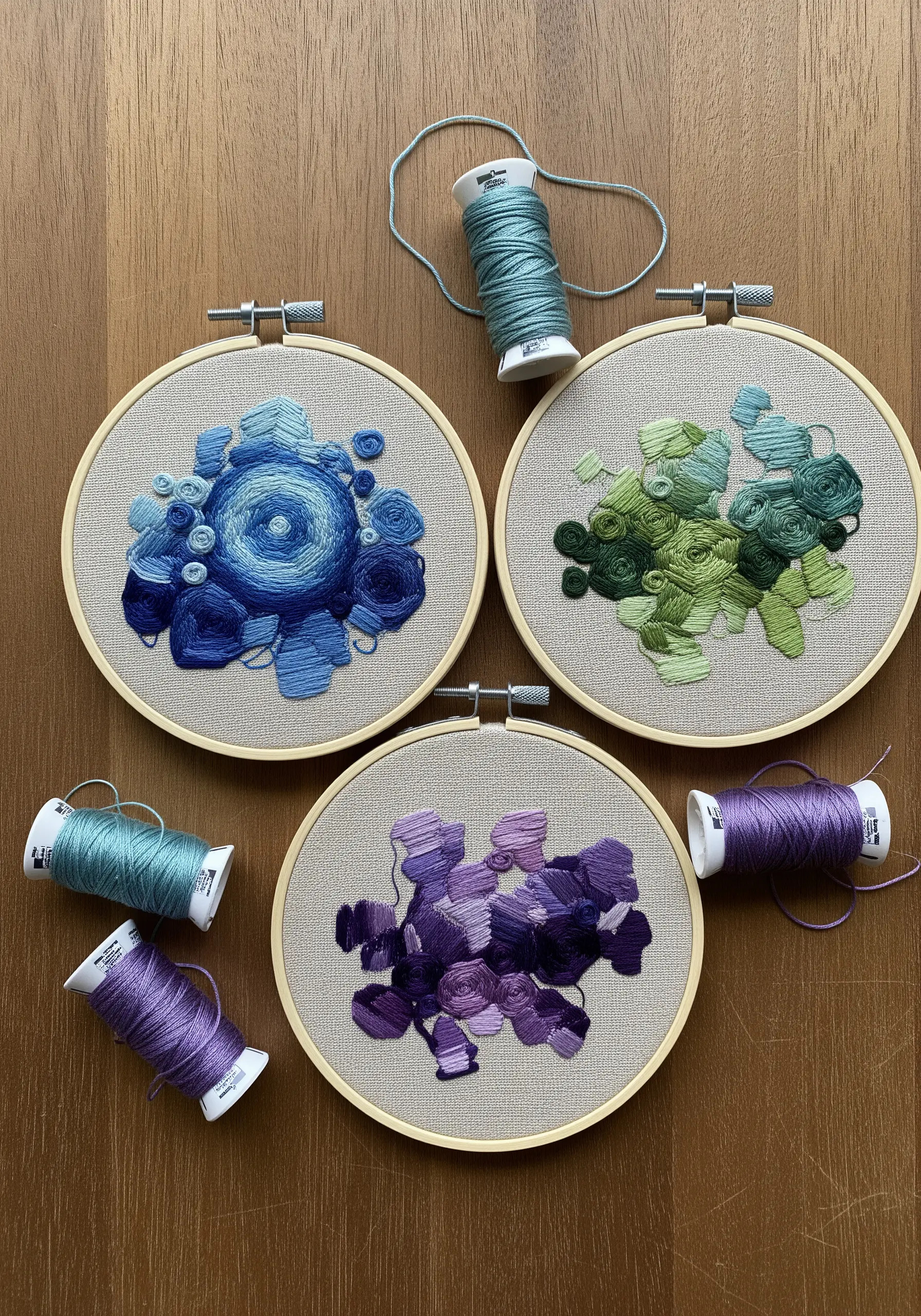
Explore color theory by creating small, focused studies using a variety of highly textured stitches.
Combine stitches like woven wheel roses, bullion knots, and French knots to build up sculptural, multi-dimensional color clusters.
Dedicate each hoop to a single color family—like blues, greens, or purples—using five or six different shades to explore its range.
These inspirational small hoop samplers are a perfect way to practice texture while creating beautiful, cohesive wall art.
12. Hypnotic Contours with Couching Stitches
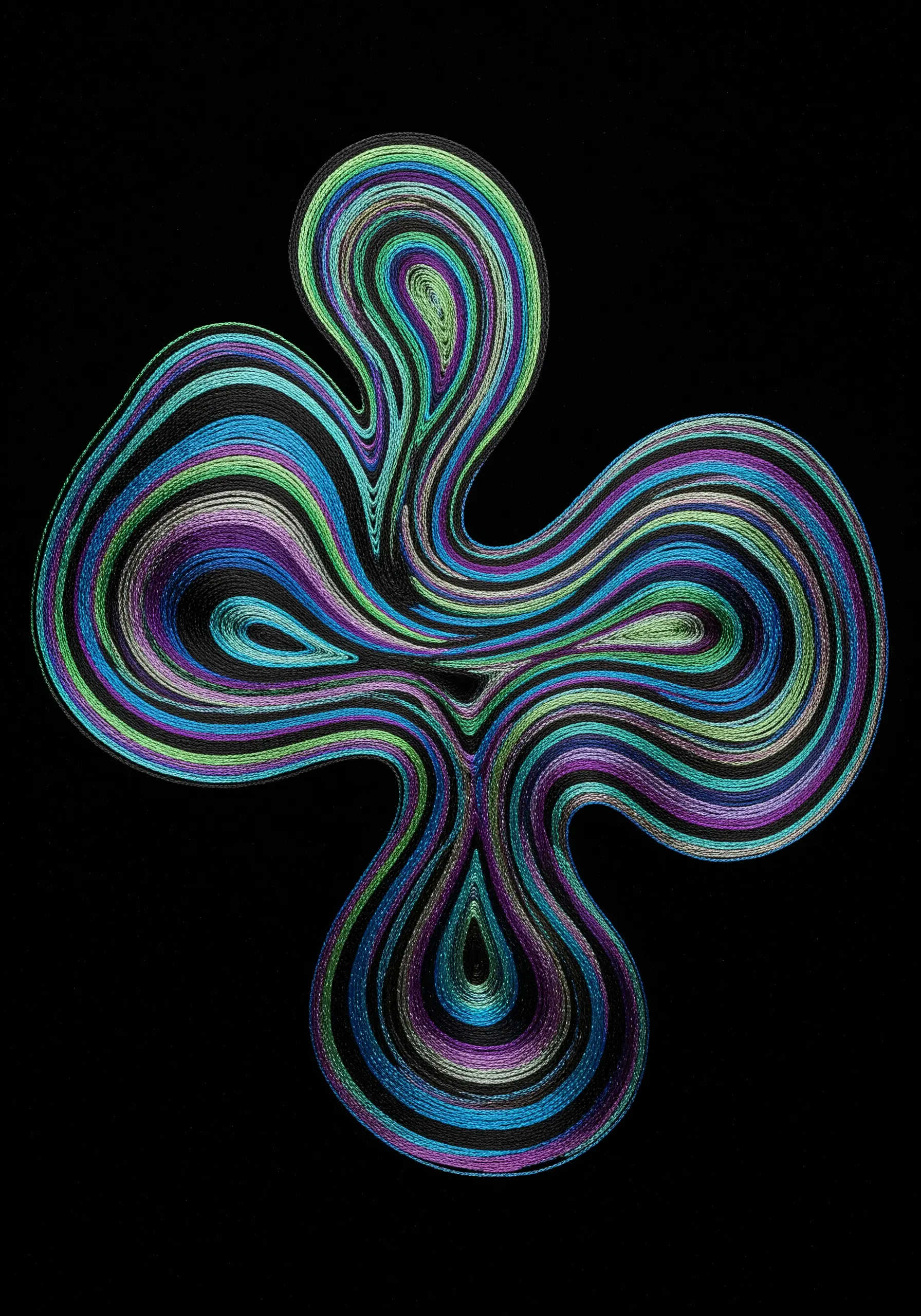
Build complex, organic shapes by outlining them with couching stitches, a technique where you lay down a thick thread and tack it in place with a thinner one.
This method allows you to create perfectly smooth curves and sharp points that are difficult to achieve with other stitches.
Create a mesmerizing visual effect by laying down rows of variegated or multi-colored thread side-by-side, letting the colors blend and shift hypnotically.
The stark black background makes the colors feel electric and enhances the clean, graphic lines of the design.
13. Layering Threads for a Woven Effect
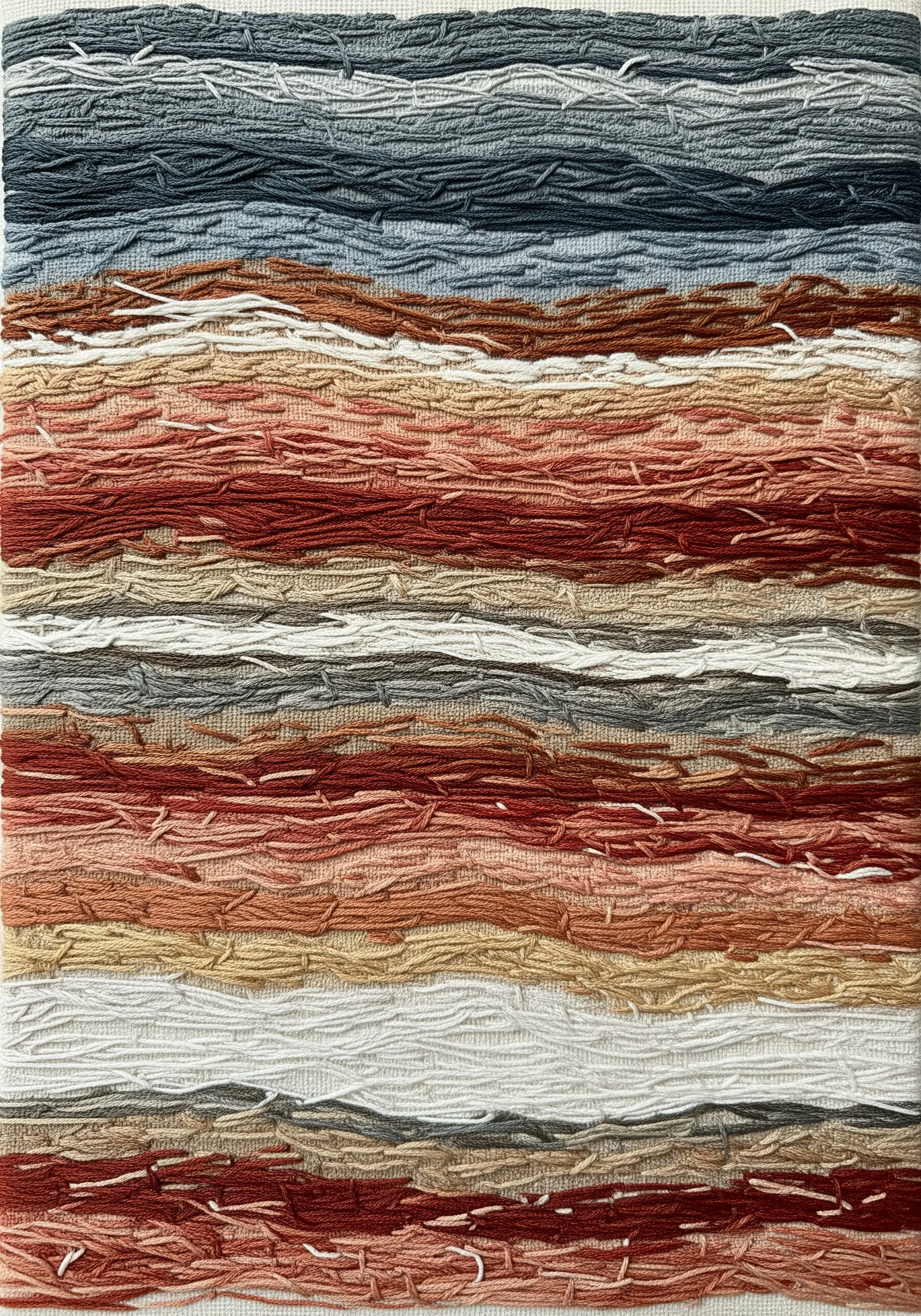
Create the illusion of a woven textile by layering horizontal bands of straight stitches in varying densities and colors.
Work in blocks of color, but allow some stitches to be sparse and others to be dense. This variation gives the piece a rustic, hand-spun feel.
Introduce threads of different weights—from single-strand floss to thicker pearl cotton—to enhance the textural contrast.
This approach transforms a simple stitch into a rich, complex surface that invites touch.
14. Meditative Gradients with Concentric Circles

Achieve a stunningly smooth gradient by stitching thousands of tiny straight stitches in concentric circles.
Start from the center with your lightest color and work outwards, slowly introducing darker shades one thread at a time.
The key to the flawless blend is the sheer density of the stitches; they are placed so closely together that the individual lines disappear, creating a soft, airbrushed effect.
This meditative technique is perfect for creating peaceful abstract embroidery patterns that feel both complex and serene.
15. Expressive Bursts with Detached Chain Stitch

Use detached chain stitches (lazy daisies) to create a playful and energetic starburst effect.
Anchor all your stitches in the center but vary their length and angle randomly as you work outwards.
A bright, candy-colored palette of pink, yellow, and turquoise gives the design a fun, celebratory feel.
This stitch is wonderfully expressive and quick to execute, making it ideal for projects where you want to convey spontaneous joy and movement.
16. Thread Painting a Spiral Galaxy
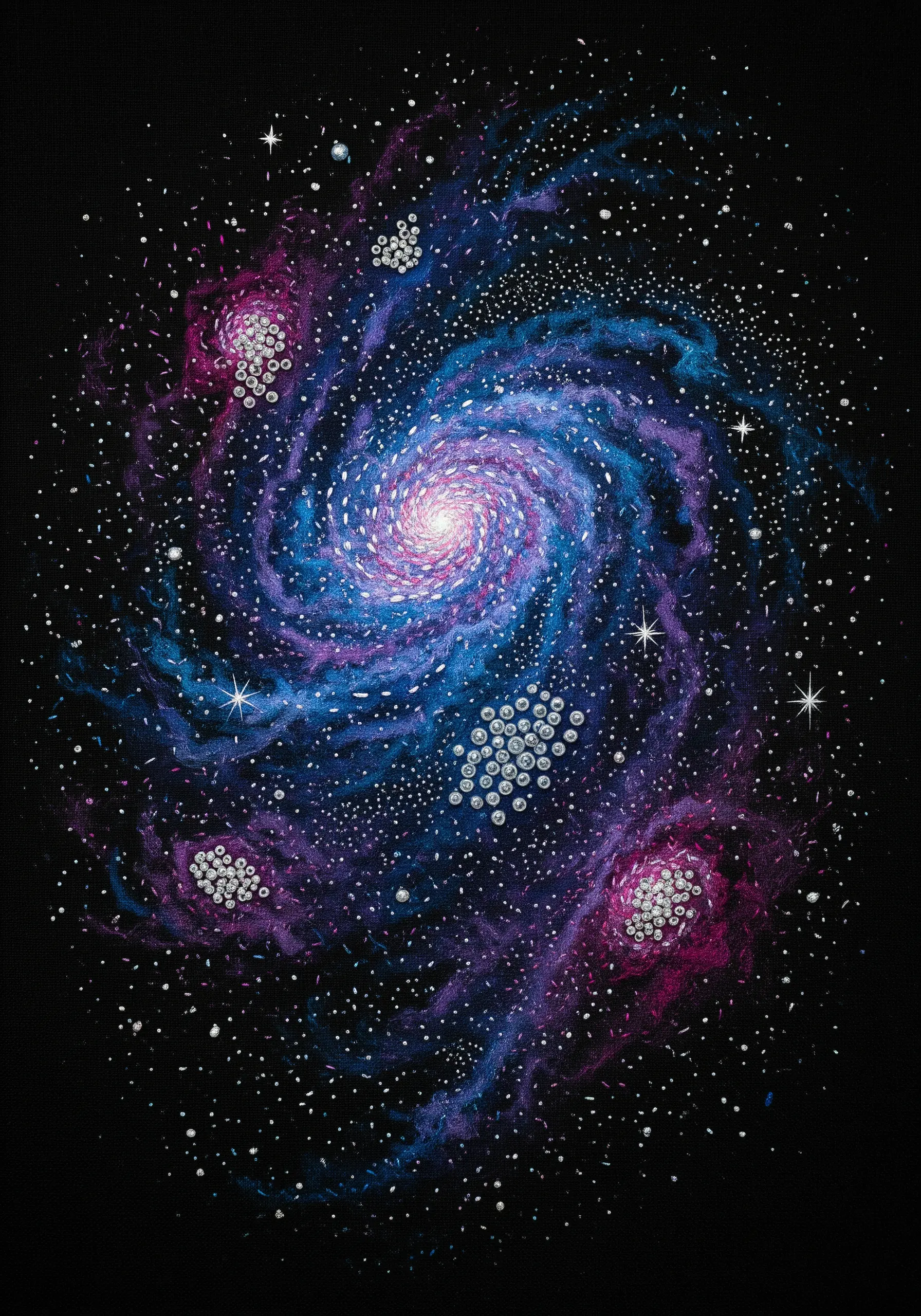
Capture the depth of the cosmos by using the long-and-short stitch to blend colors in swirling patterns.
Start with a bright, dense core and work your way out, using directional stitches to create the galaxy’s spiral arms. Blend purples, blues, and magentas to mimic cosmic dust clouds.
Use a single strand of white or silver metallic thread to add tiny, scattered French knots and star stitches for the stars.
Incorporate clusters of small beads or sequins to represent dense star clusters, adding a layer of rich, tactile sparkle.
17. Precise Vertical Gradients in Satin Stitch
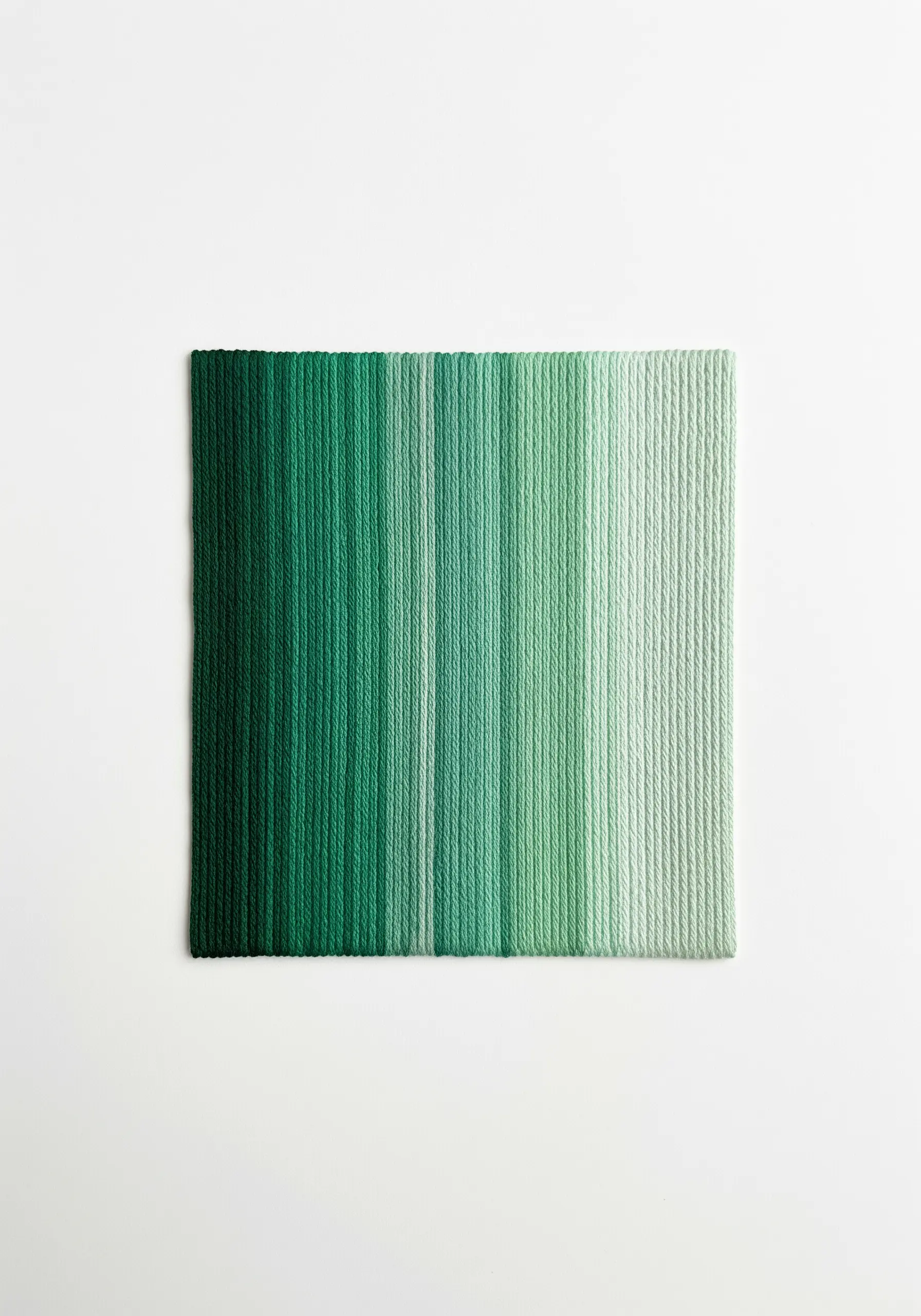
Explore the satisfying precision of a perfect color gradient by working vertical satin stitches across your fabric.
To achieve this seamless transition, you’ll need a wide range of shades within one color family—at least 10-12 different greens, for example.
Work in narrow vertical bands, with each band being just one or two shades different from its neighbor.
Maintaining perfect tension and keeping your stitches perfectly parallel is crucial for achieving that clean, polished, and almost digitally perfect finish.
18. Chunky Braids with Dimensional Yarn
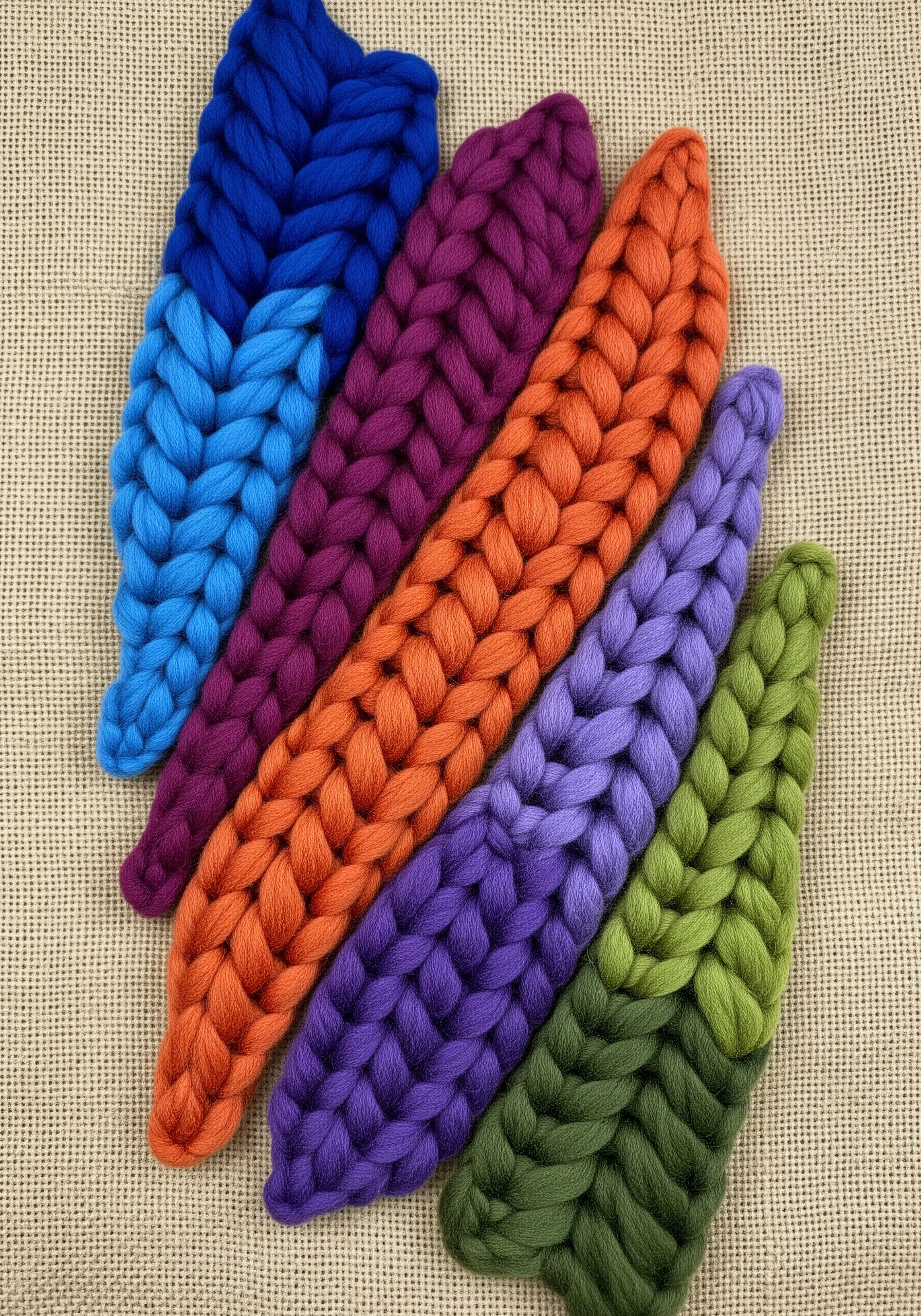
Move beyond floss to explore the bold, sculptural possibilities of chunky yarn on a sturdy canvas like burlap.
Create these oversized braids using a large tapestry needle and a very open chain stitch or a broad fishbone stitch.
The thick yarn creates a highly tactile, three-dimensional surface that has immediate visual impact.
Arrange your braided shapes in a vibrant, overlapping composition to create a piece of abstract yarn wall art that feels both rustic and modern.
19. Fusing Watercolor Washes with Seed Stitch
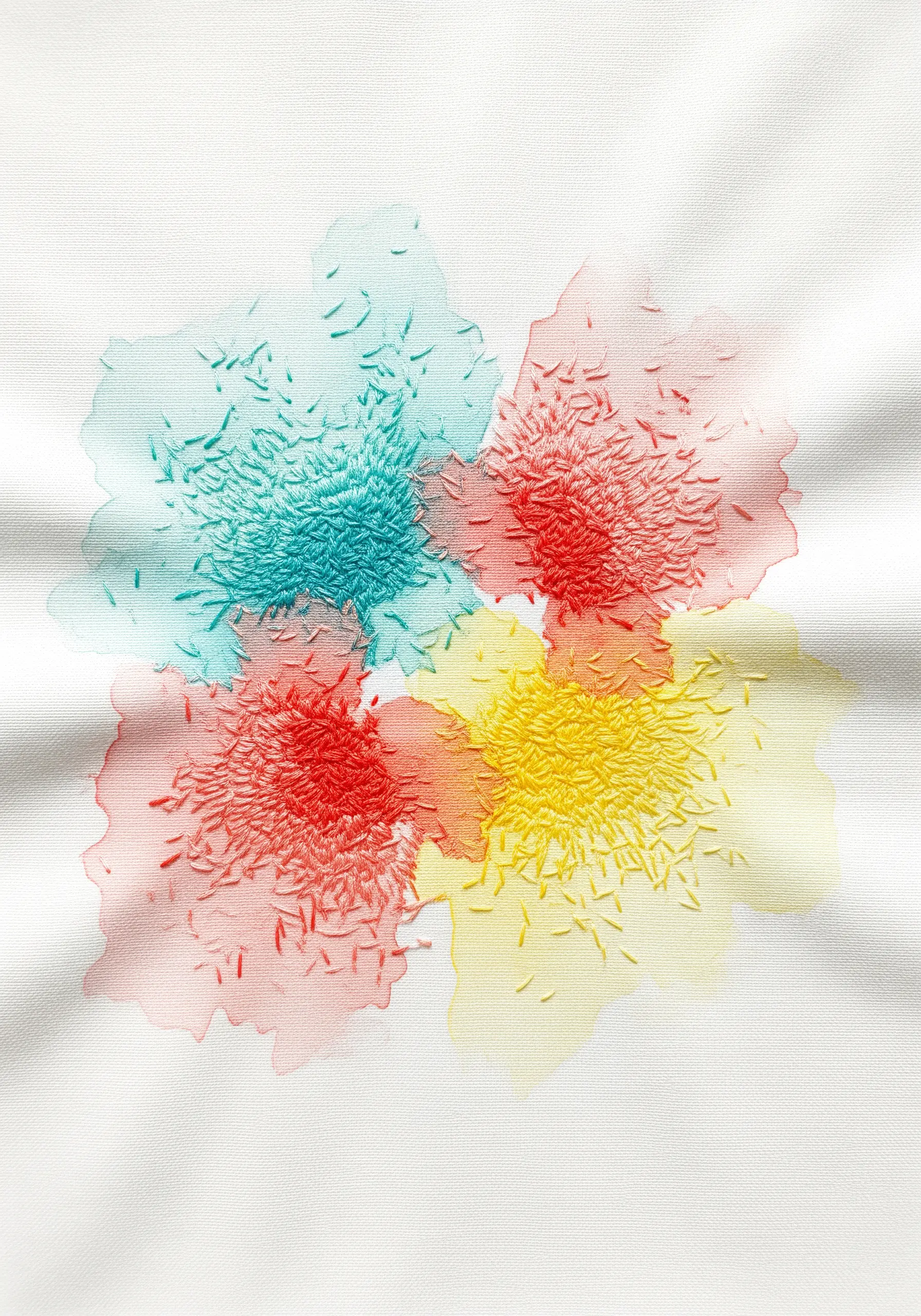
Combine the soft bleed of watercolor with the sharp texture of embroidery for a beautiful mixed-media effect.
Begin by painting abstract patches of color onto your fabric with watercolor or diluted fabric paint. Let it dry completely.
Then, use a matching thread color to fill each painted area with dense clusters of seed stitch or French knots.
The embroidery adds definition and a tactile quality that makes the soft, diffuse colors pop, creating a stunning interplay of textures.
20. Building Topography with French Knots
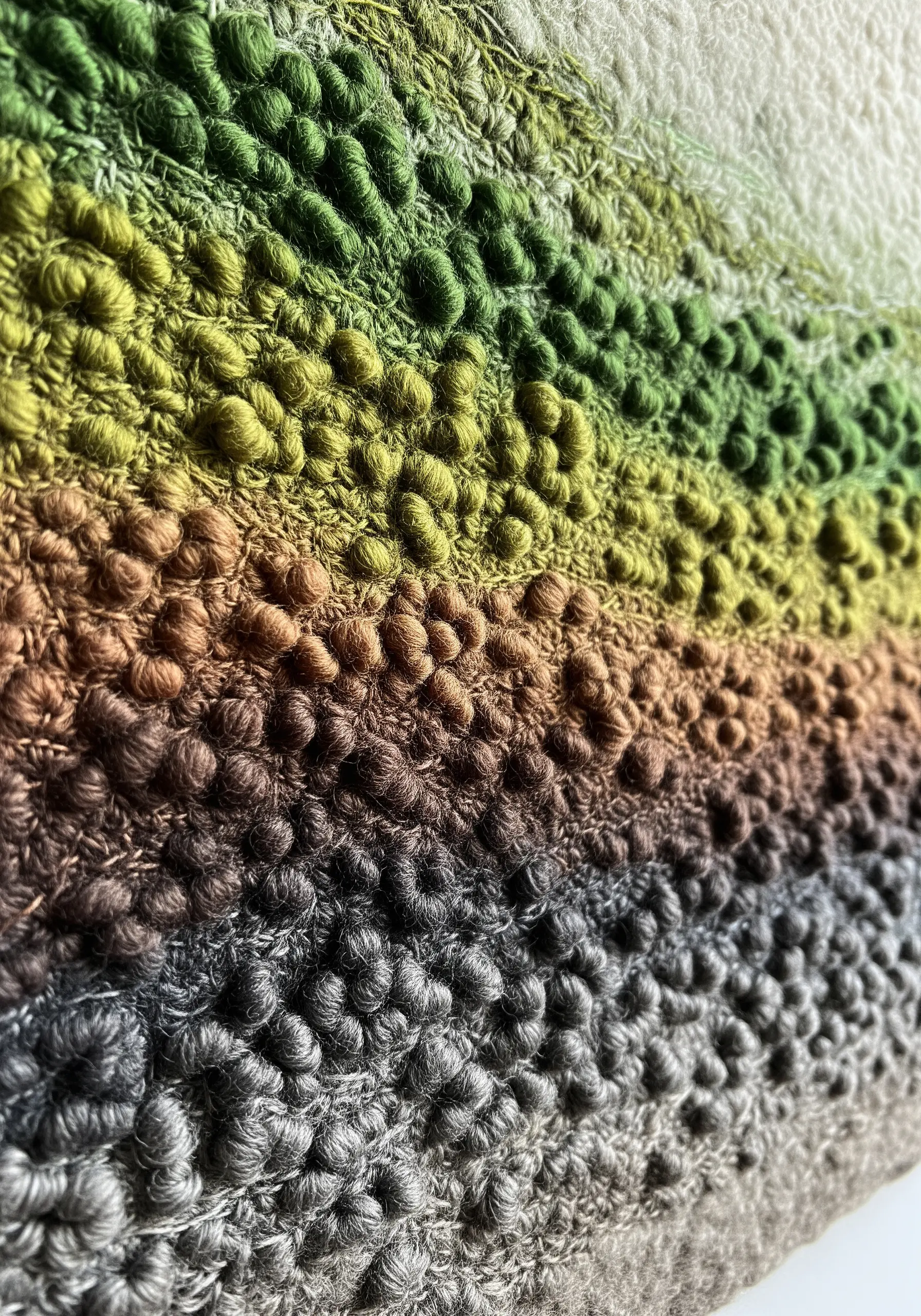
Create a dense, moss-like texture by packing French knots tightly together in horizontal bands of color.
This technique allows you to build up a highly sculptural surface that mimics natural textures like lichen, moss, or soil.
By arranging the colors in a gradient, from dark to light, you can create the illusion of a contoured, topographical map.
Use a wool-blend thread for a fuzzier, more organic finish that enhances the natural feel of the design. This is a great way to explore organic texture embroidery designs.
21. Fluid River Currents with Couching
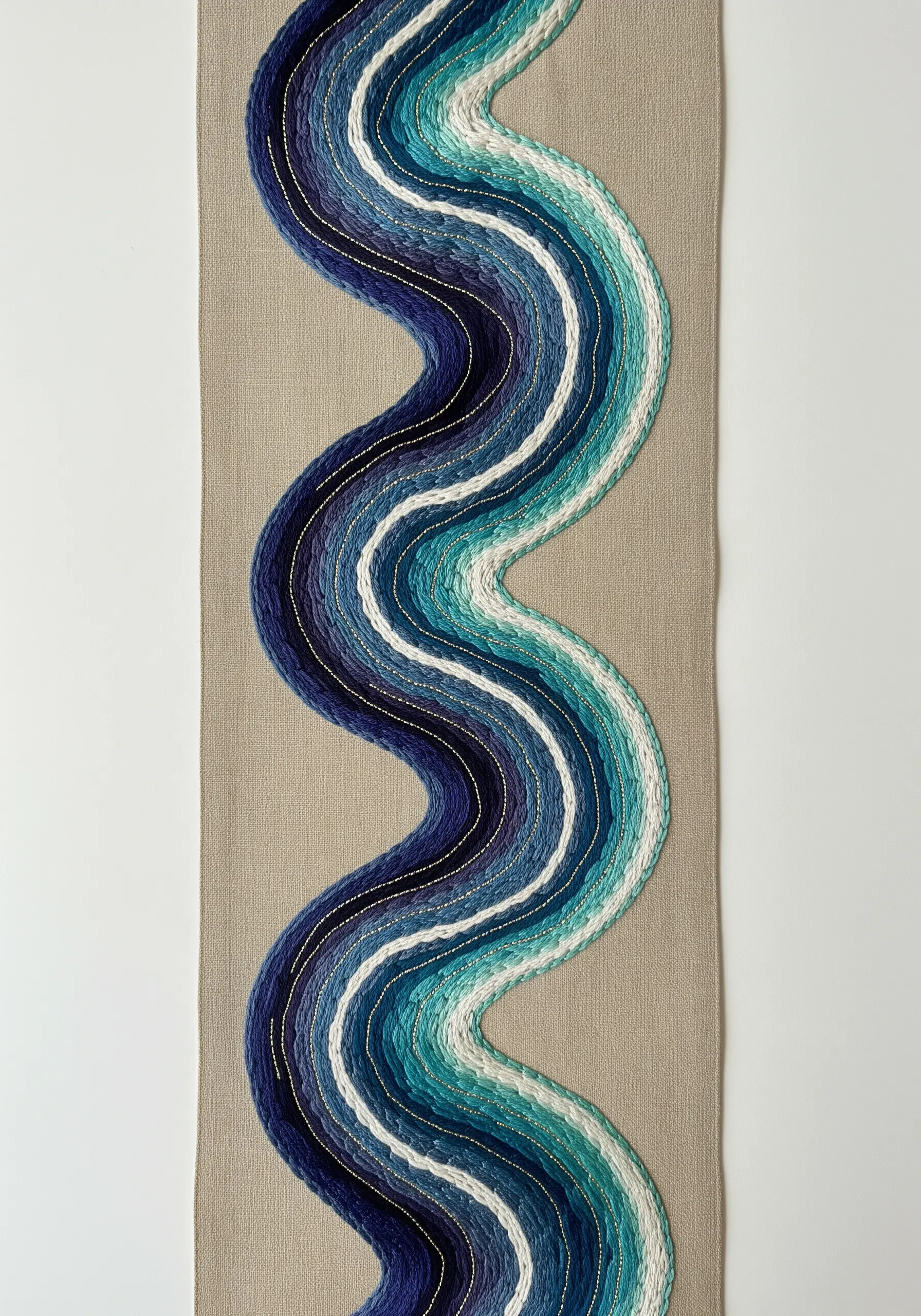
Capture the movement of water by couching multiple strands of floss in a winding, river-like pattern.
Lay down bundles of thread in analogous blue and turquoise shades, allowing them to flow and curve organically.
Introduce a single strand of white or silver thread to mimic the glint of light on the water’s surface.
Add a delicate, couched gold thread along the edges of some color bands to provide definition and a touch of elegance, elevating the design from simple to sophisticated.
22. Stained Glass Effects with Satin Stitch
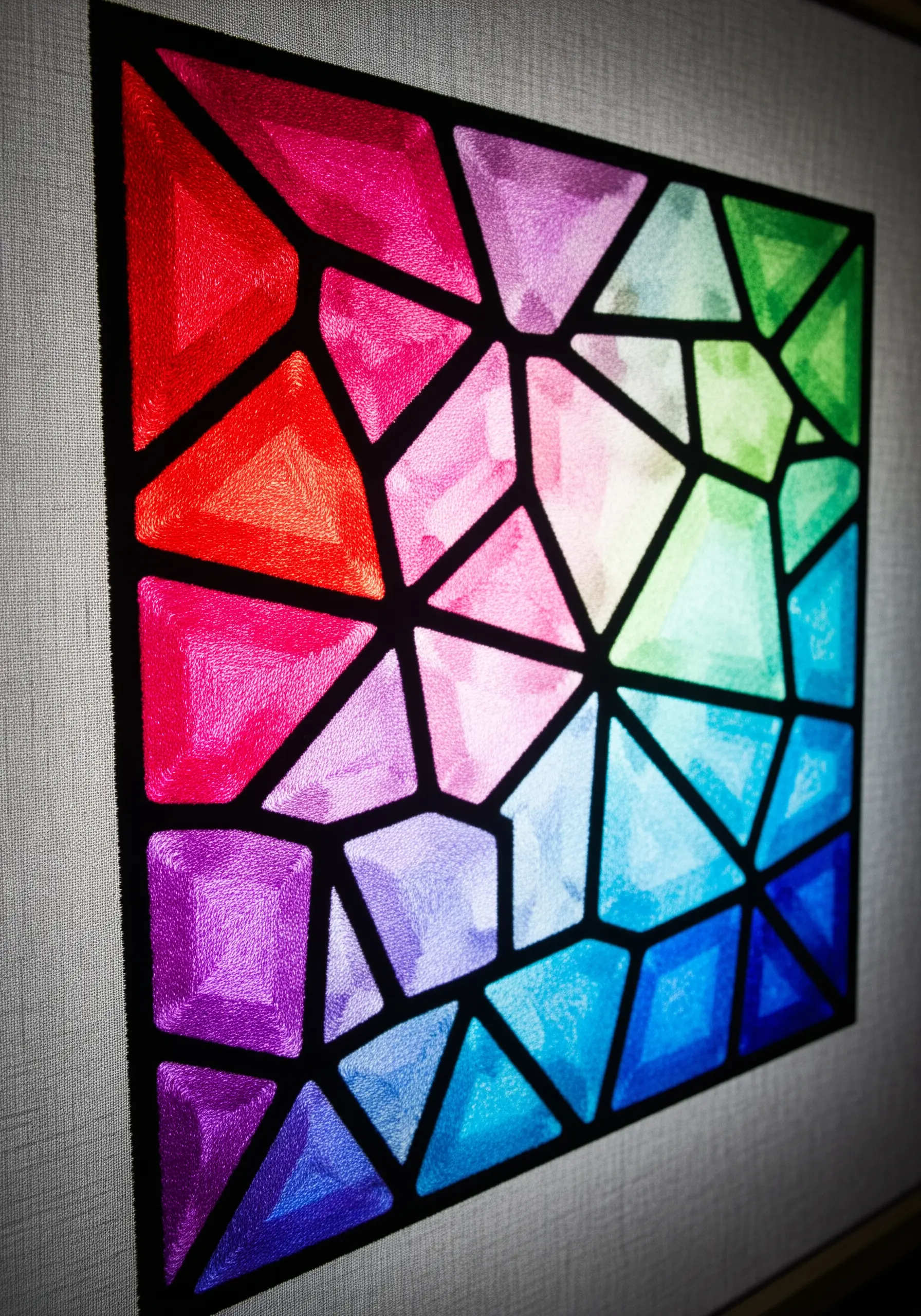
Recreate the luminosity of stained glass by filling geometric shapes with smooth, vibrant satin stitch.
First, create a bold black outline for your pattern using a thick backstitch or stem stitch. This will act as the ‘leading’ between your glass panes.
Fill each segment with a different shade, creating a beautiful gradient across the piece. To make the colors glow, stitch each segment so the thread direction catches the light differently.
This method transforms simple shapes into a radiant mosaic of color and light.
23. Layered Petals with Fishbone Stitch
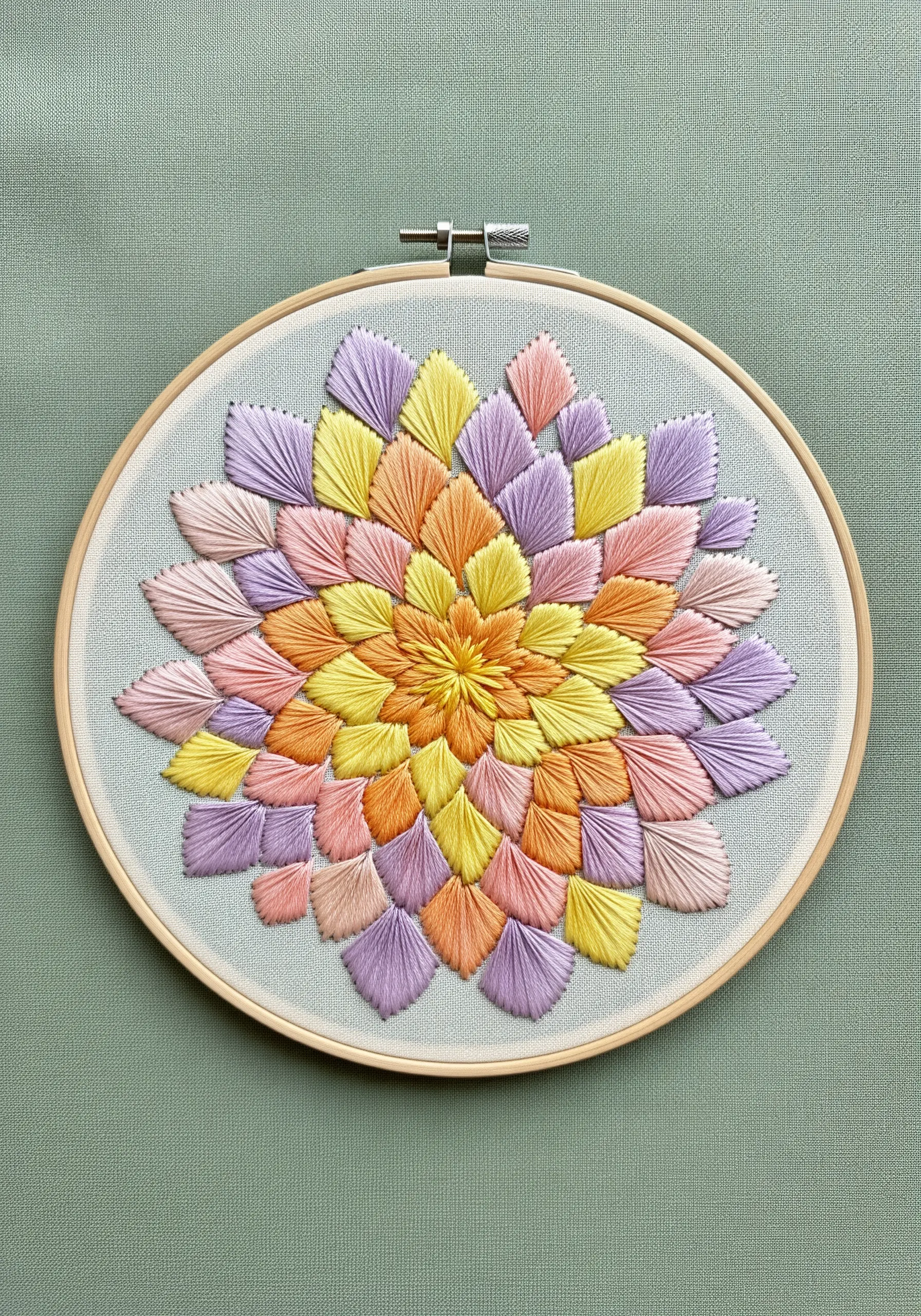
Build a dimensional, mandala-like flower by layering pointed petals made with the fishbone stitch.
This stitch is perfect for creating leaf and petal shapes, as its central spine gives each element a naturalistic, raised quality.
Work in concentric circles, starting from the center and overlapping each subsequent layer of petals.
A soft, pastel color palette enhances the design’s delicate, geometric beauty, making it a calming and meditative project to stitch.
24. Pixelated Landscapes with Cross Stitch
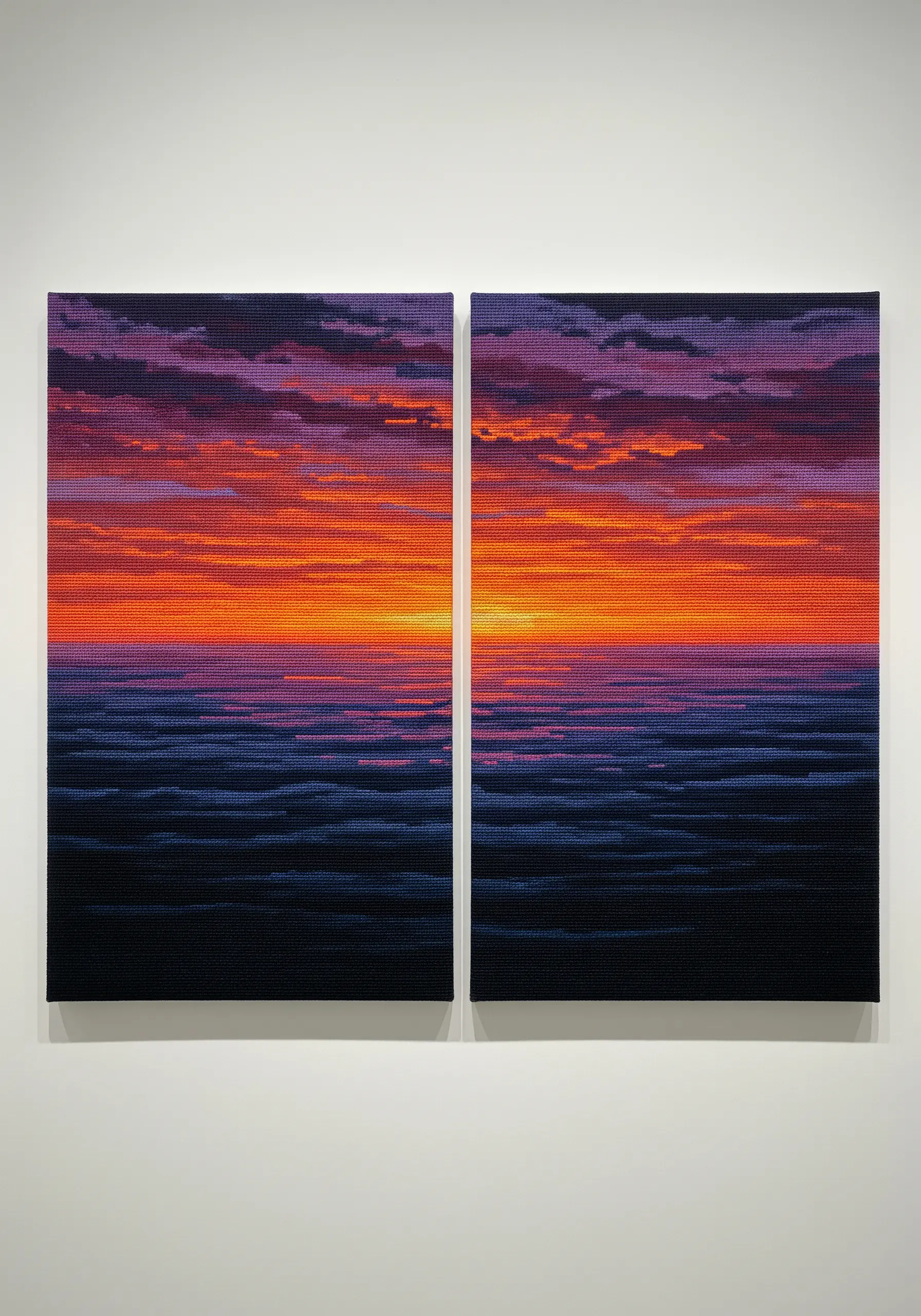
Embrace a modern, pixelated aesthetic by using simple cross stitches to build a dramatic landscape.
This technique breaks down a complex image, like a sunset, into its basic color blocks, making it feel both abstract and recognizable.
The beauty of this method lies in its precision; each stitch acts as a single pixel of color. The uniformity of the stitches creates a clean, graphic texture.
Mounting the finished pieces as a diptych (a pair of panels) enhances the wide, cinematic feel of the horizon.
25. Capturing Autumnal Chaos with Straight Stitch
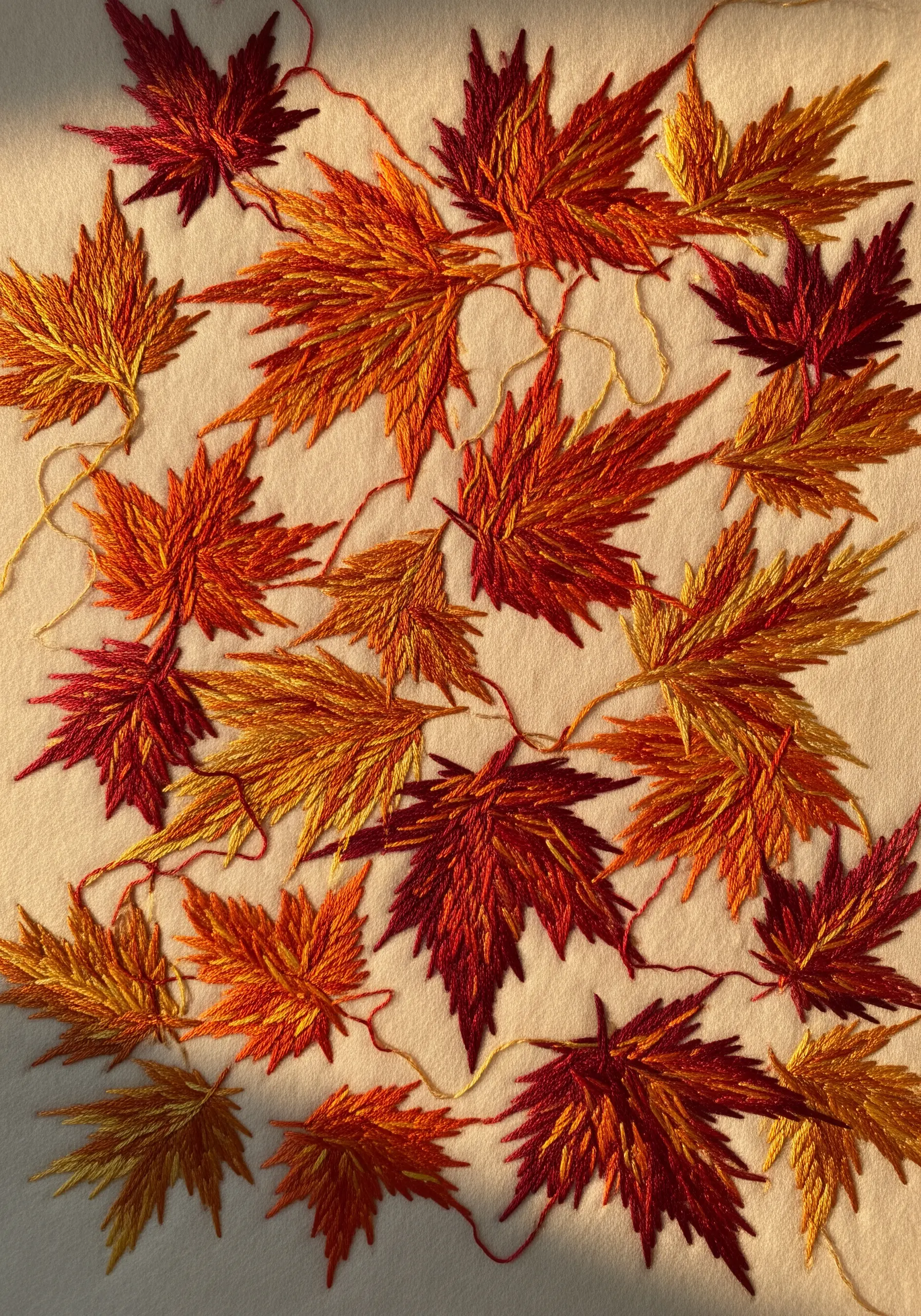
Evoke the feeling of scattered autumn leaves by using a chaotic arrangement of straight and fishbone stitches.
Use variegated threads in reds, oranges, and golds to give each leaf a natural, multi-toned appearance without constantly changing your thread.
Vary the size, orientation, and density of the leaves to create a sense of movement, as if they were swirling in the wind.
Allow a few stray threads to trail between the leaves, connecting them and adding to the organic, untamed feel of the composition.
26. Minimalist Gradients in Grayscale
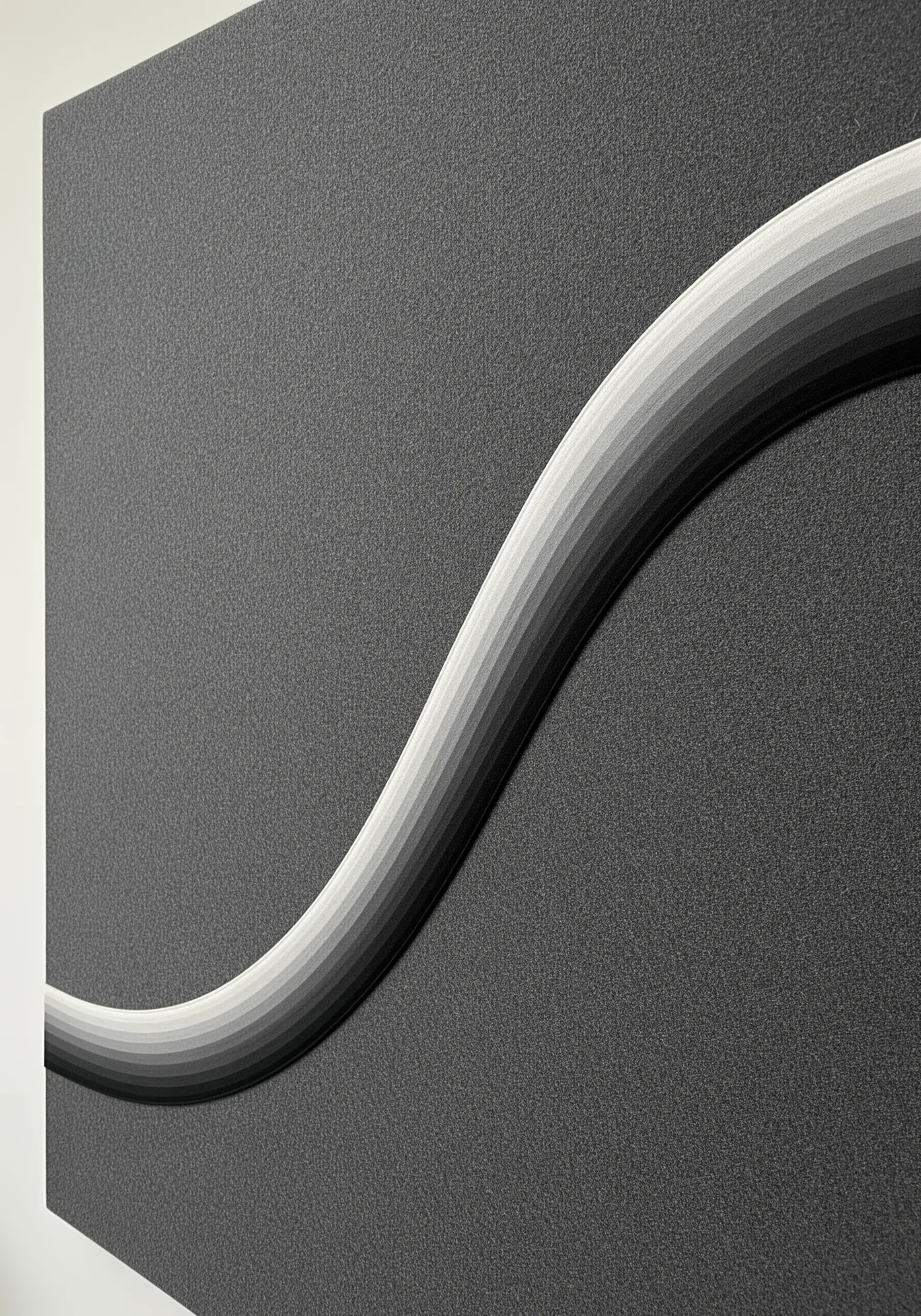
Explore the dramatic potential of a monochromatic palette with a perfectly executed grayscale gradient.
This technique requires extreme precision. Use a dense satin stitch to create a single, flowing shape, ensuring each stitch lies perfectly flat and tight against the next.
The key is to have a wide range of gray tones to make the transition from black to white feel seamless and fluid.
On a dark, textured fabric, this minimalist design becomes a sophisticated statement piece about line, form, and shadow.
27. Dimensional Roses with Woven Wheel Stitch
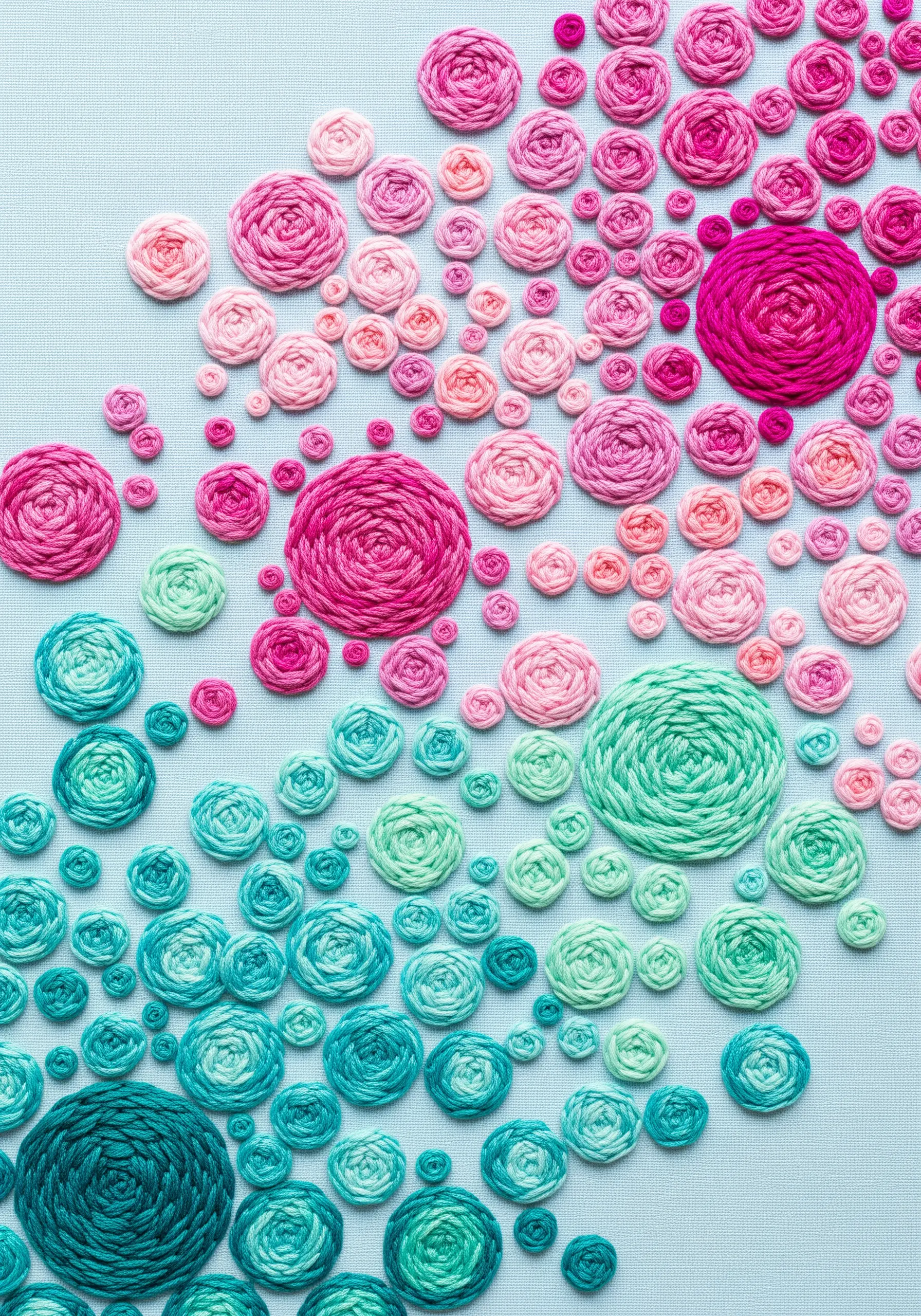
Fill your fabric with a garden of dimensional flowers using the woven wheel stitch, also known as the spider web rose.
This stitch is incredibly simple to learn but creates a stunning, raised spiral effect that looks complex and impressive.
Create a dynamic composition by varying the size and color of your roses, clustering smaller buds around larger, statement blooms.
By grouping your colors—pinks in one area, blues in another—you can create a beautiful color-blocked effect that feels modern and fresh.
28. Illuminating a Storm with Thread Painting
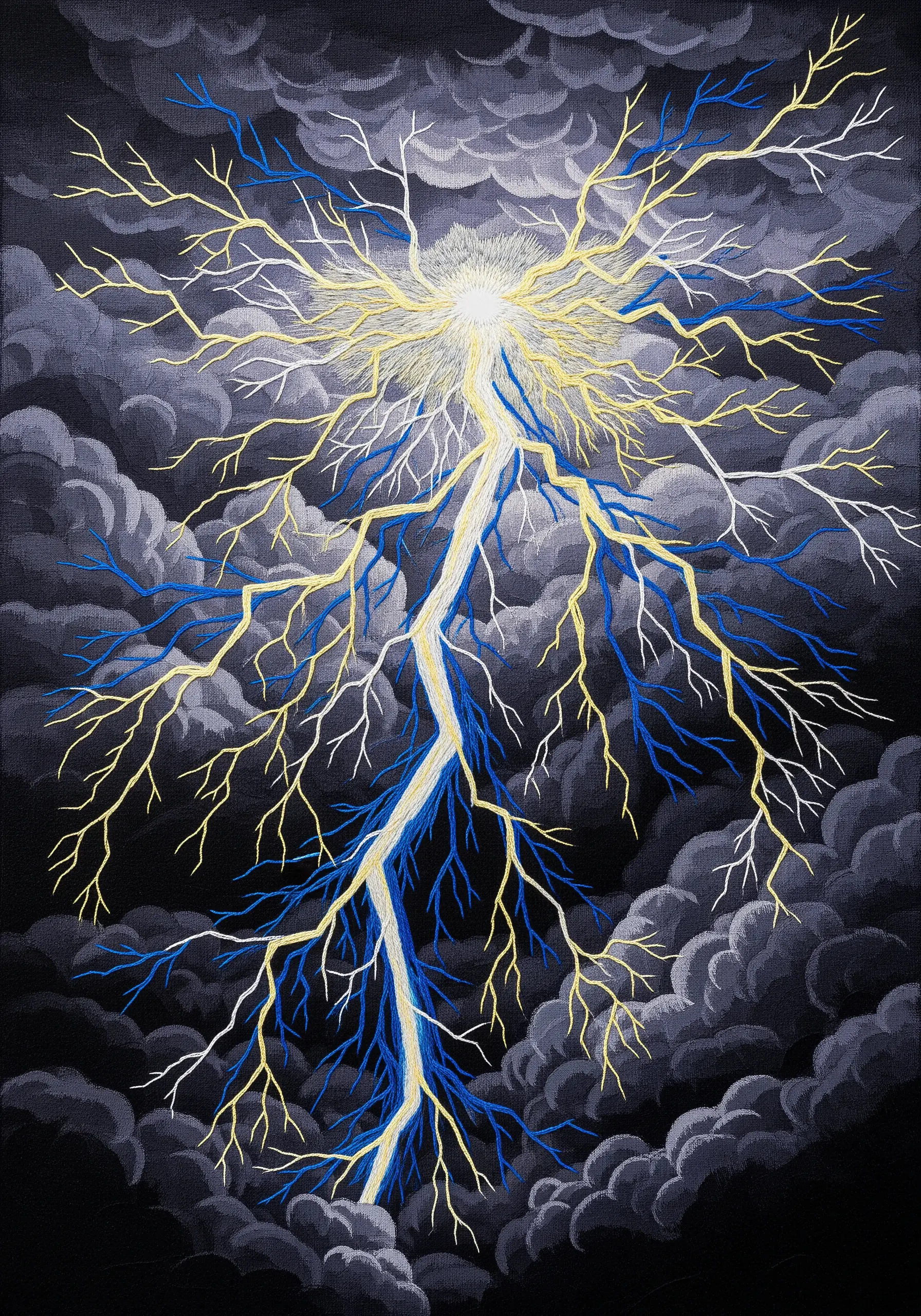
Capture the electric energy of a lightning storm using directional long-and-short stitches.
For the clouds, use shades of gray and charcoal, stitching in swirling patterns to create a sense of turbulent movement.
Make the lightning pop by using bright white, yellow, and blue threads, outlining the main bolts with a stark white backstitch to define their jagged edges.
The contrast between the soft, blended clouds and the sharp, bright lightning is what gives this piece its dramatic power.
29. Pointillism with Seed Beads
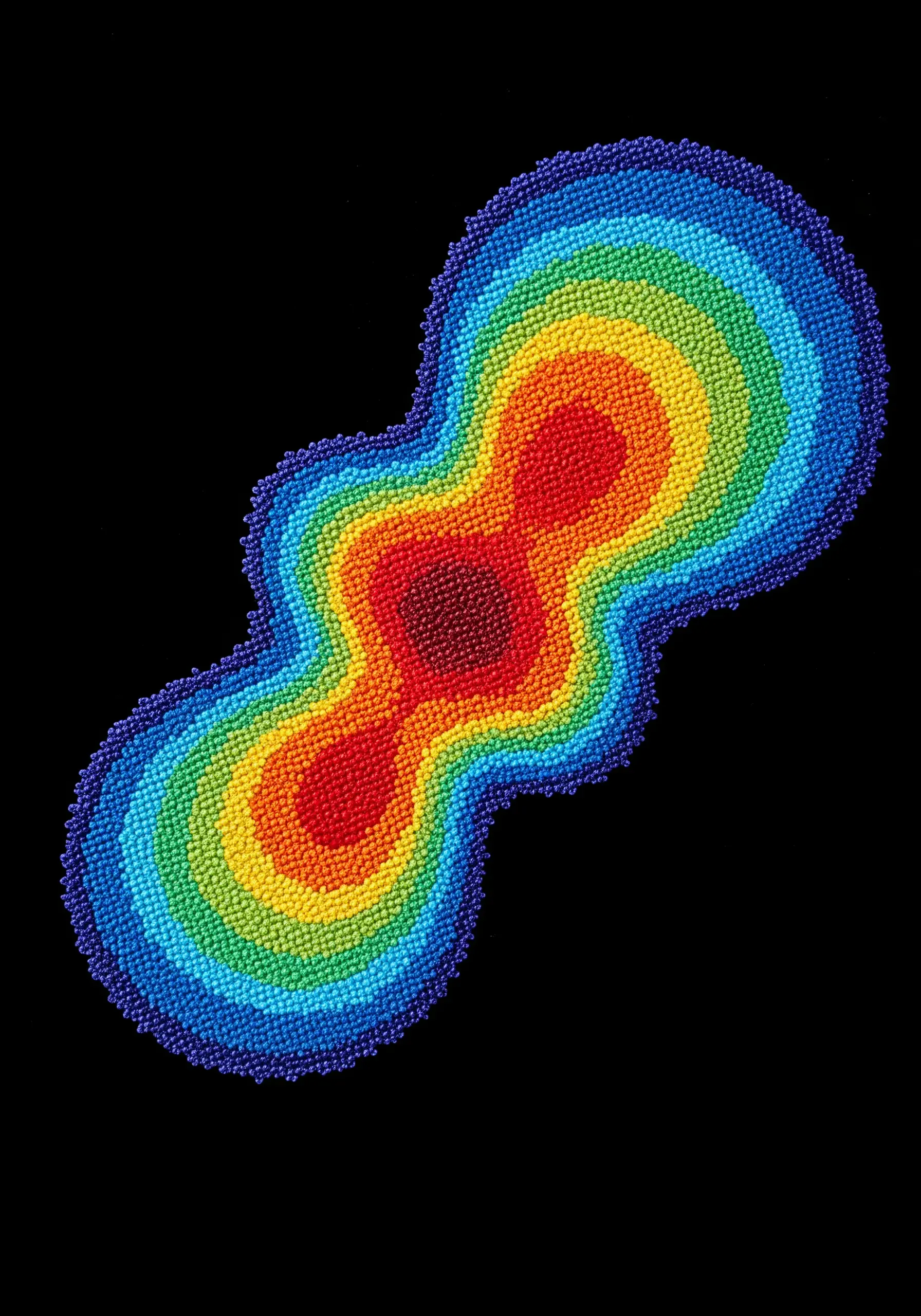
Translate the principles of pointillism into a tactile medium by using seed beads instead of thread.
Draw your abstract shape and fill it with concentric rings of color, sewing on each bead individually for maximum control and density.
The tiny glass beads catch and reflect light, giving the piece a unique luminosity that thread alone cannot achieve.
A black background provides the perfect canvas to make the rainbow of colors appear intensely vibrant and saturated.
30. Creating Woven Landscapes with Tapestry Techniques
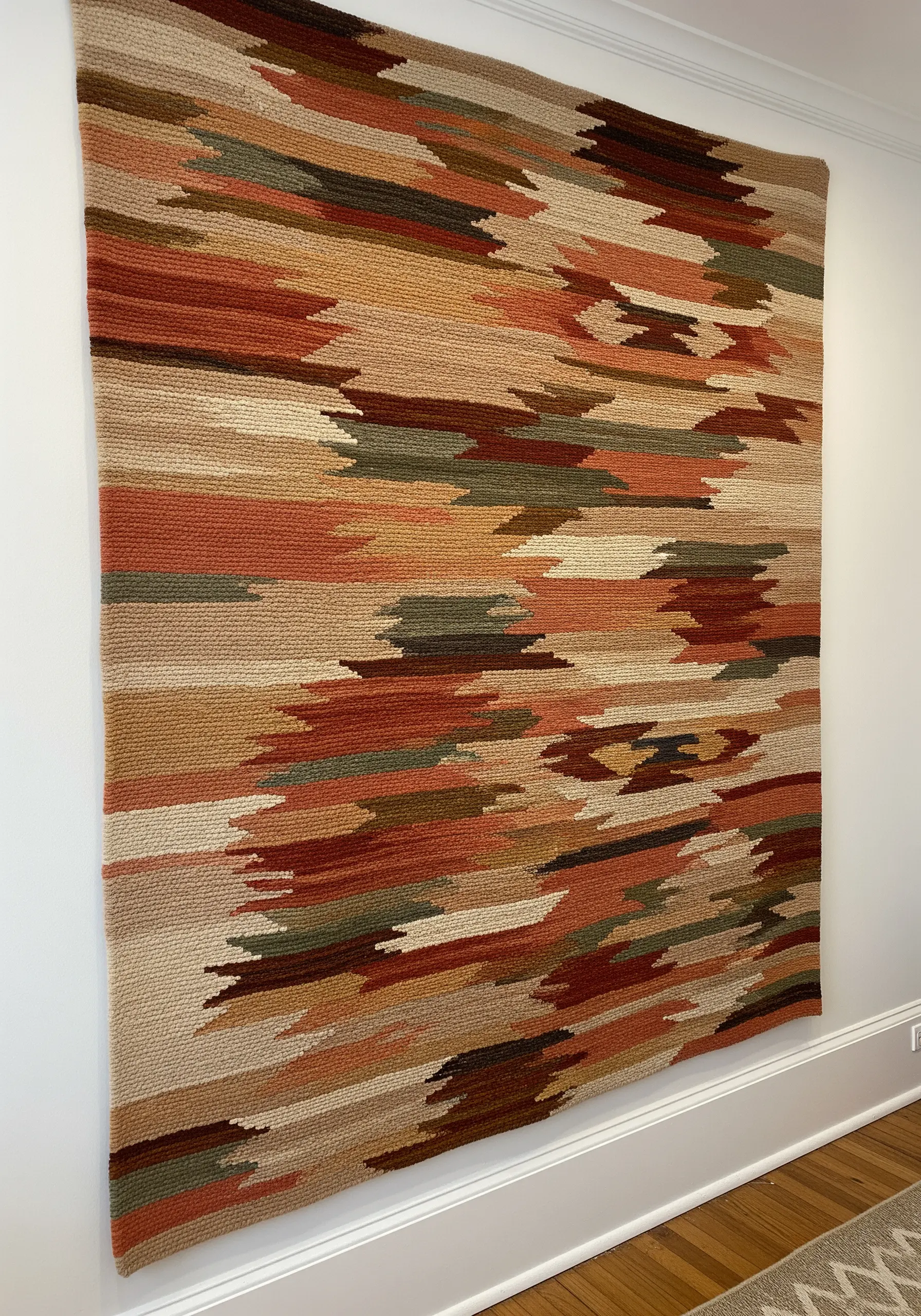
Go beyond the hoop and explore large-format textile art by adapting tapestry weaving techniques to a canvas.
Use thick wool or cotton yarn and a tapestry needle to work blocks of color in interlocking patterns, much like a traditional Kilim rug.
The irregular edges where the colors meet create a dynamic, rustic texture that is central to the design’s appeal.
This method allows you to create large, impactful embroidery wall tapestries with rich, earthy color palettes.
31. Optical Illusions with Thread Tension
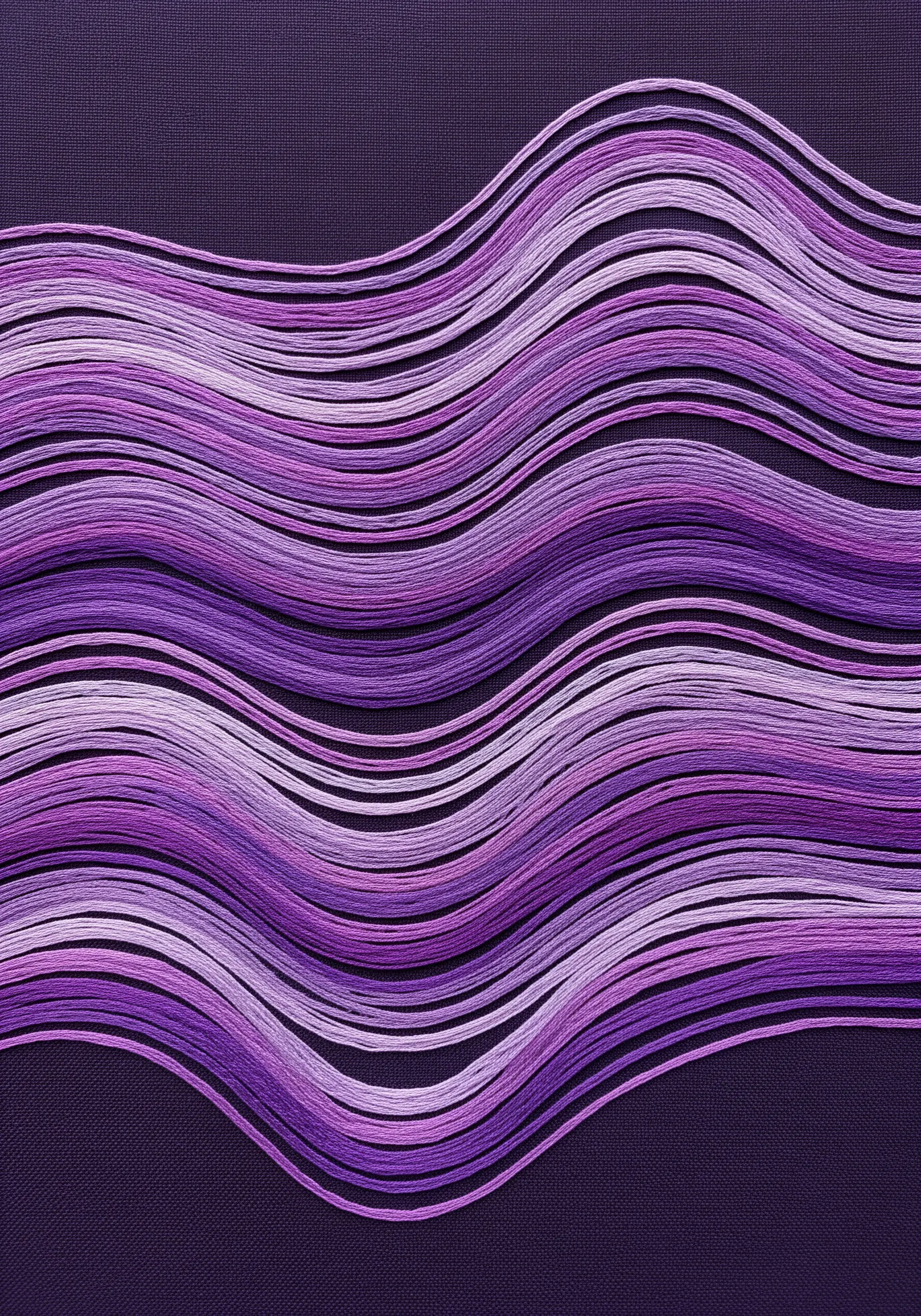
Create undulating, 3D-like waves by manipulating thread tension and color placement.
Lay down long, straight stitches from one side of your design to the other, securing them only at the top and bottom.
Arrange your colors in a smooth, repeating gradient of purples and lilacs.
The illusion of movement is created by slightly pulling some threads tighter than others and allowing them to curve and overlap, turning a flat surface into a mesmerizing optical field.
32. Fractured Geometry for Kaleidoscopic Effects
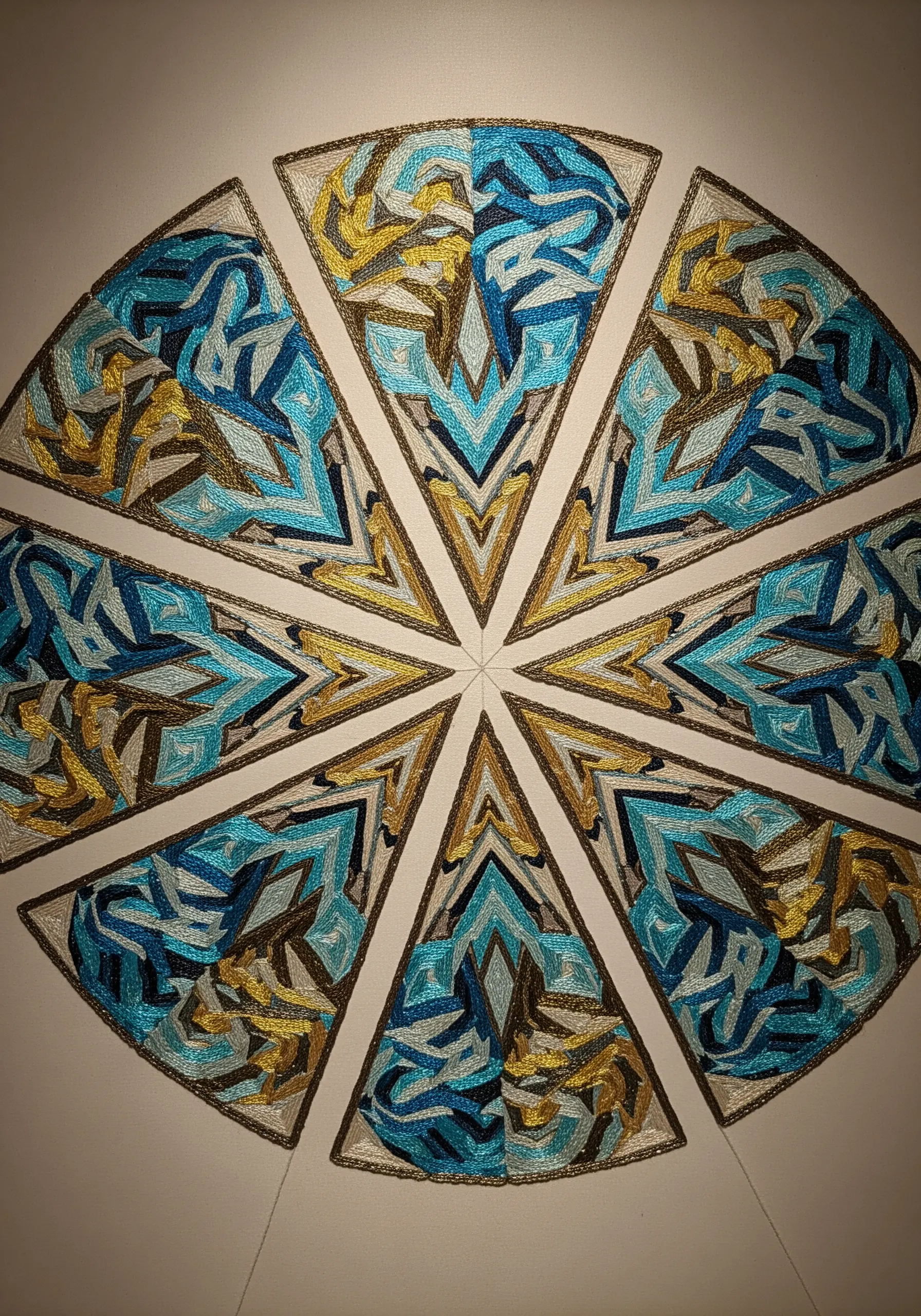
Build a complex, kaleidoscopic pattern by dividing a circle into segments and filling each with abstract stitches.
Define the segments with a bold, couched outline in a neutral color like taupe or gray.
Within each section, use a mix of satin stitch and long-and-short stitch in a limited palette of blues, golds, and browns, but vary the stitch direction to create internal movement.
The result is a design that feels both orderly and chaotic, drawing the eye inward like a mandala.
33. Subtle Texture with Tone-on-Tone Stitching

Explore the elegance of texture over color by using a tone-on-tone approach.
On a light gray or blue fabric, use white and pale lavender threads to create soft, cloud-like shapes. This is one of the most effective tone-on-tone embroidery techniques for a sophisticated result.
Use a mix of stitches—tiny French knots for misty rain, and small woven wheels for cloud definition—to build a subtle, tactile landscape.
The low contrast between the thread and fabric creates a quiet, serene piece where the beauty lies in the intricate play of light and shadow across the stitches.
34. Bold and Graphic Color Blocking
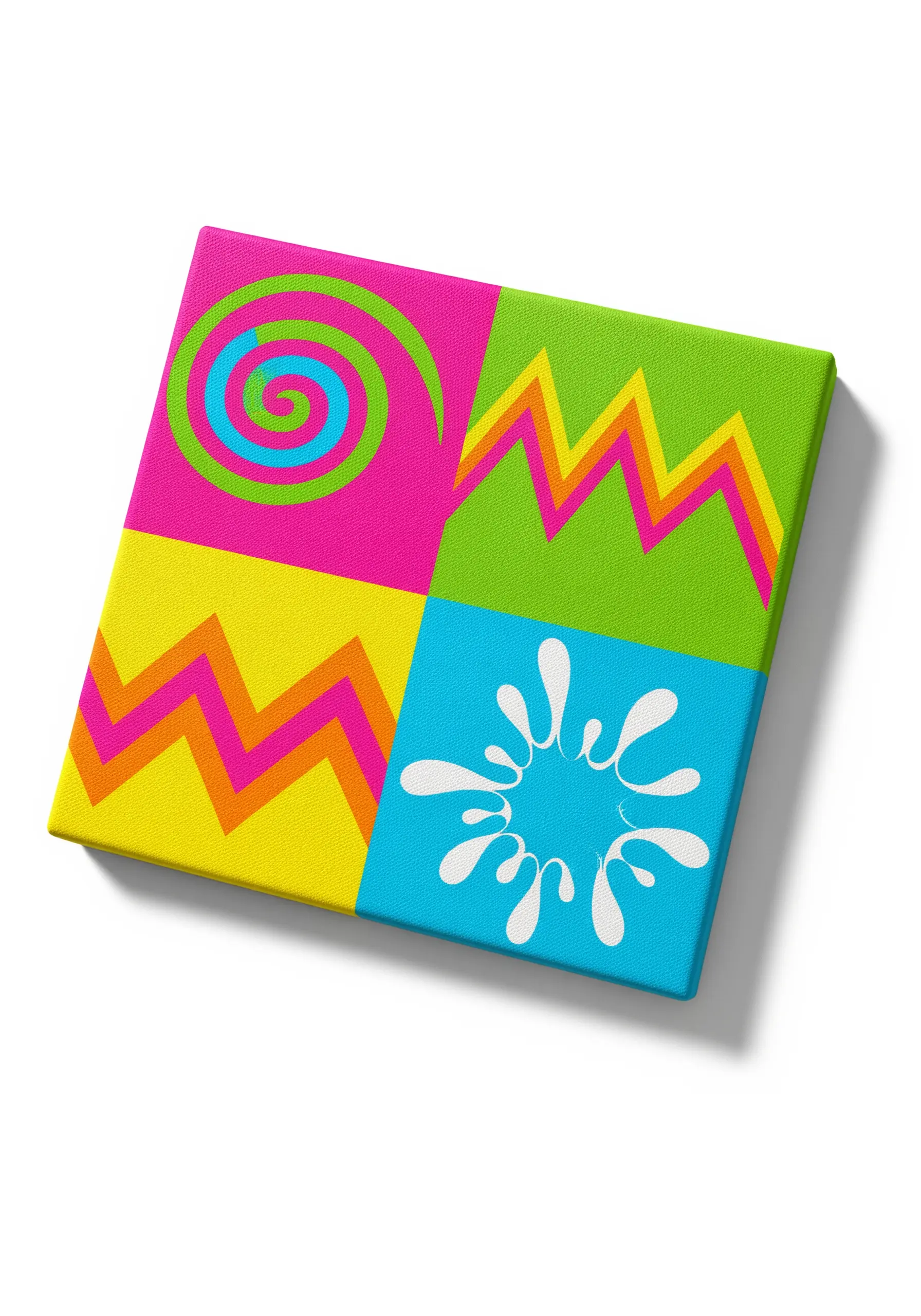
Embrace a playful, pop-art aesthetic with bold, graphic color blocking using dense satin stitch.
Divide your canvas into a simple grid and fill each quadrant with a high-contrast color and a distinct graphic element—a swirl, a zigzag, a splash.
To achieve the ultra-clean edges, outline each shape with a split stitch before filling it in.
This approach celebrates the pure joy of color and form, proving that abstract embroidery doesn’t have to be complex to be impactful.