Have you ever looked at your embroidery and felt that something was missing—some final touch that would transform it from a pleasant craft into a piece of true art? You have the skill and the passion, but perhaps you’re seeking the clarity to make more intentional, sophisticated choices.
This is where the power of monochrome comes in. By removing the complexity of color, you are free to focus on what gives textile art its soul: texture, line, form, and light. It’s not a limitation; it is a refined lens that sharpens your eye and elevates your technique.
Think of these examples not as projects to be copied, but as conversations about what thread and fabric can do. See how a simple running stitch can become architectural, how gathered fabric can feel sculptural, and how empty space can speak as loudly as a dense field of knots. Your next masterpiece is waiting in these quiet, elegant details.
1. Sculptural Landscapes with Couching & Knots

Create topographic, map-like textures by combining couching with dense clusters of French knots.
Use a heavy, neutral fabric like raw linen or cotton canvas as your base—its natural texture will complement the stitching.
Outline your primary shapes with thick cotton piping cord or yarn, securing it with the couching stitch using a matching color of embroidery floss.
Fill designated areas with tightly packed French knots to create raised, pebble-like surfaces that contrast with the smooth, linear couched lines.
This technique builds incredible dimension and tactile interest, turning a flat surface into a piece of organic texture embroidery.
2. Architectural Precision with Threaded Line Art
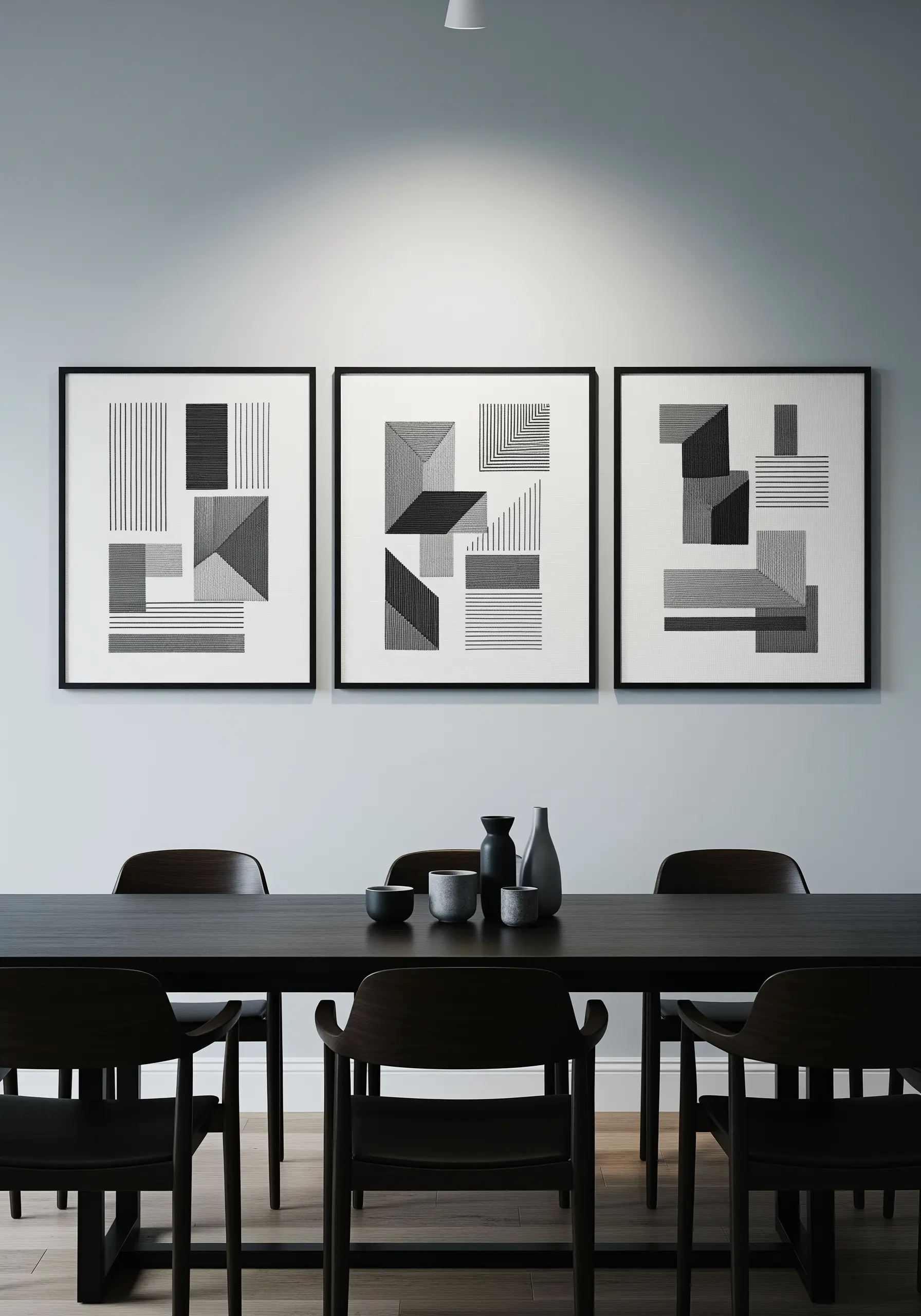
Translate the clean aesthetic of architectural drawings into thread by focusing on perfect, uniform stitches.
Use a taut, evenweave fabric stretched tightly in a frame to ensure your geometric lines don’t warp or pucker.
For the solid fill areas, use rows of satin stitch packed so densely that the fabric beneath is completely invisible.
Contrast these filled shapes with delicate, single-thread running stitches or backstitches for the linear elements.
This contrast between density and airiness is what gives these abstract line art embroidery styles their sophisticated, graphic impact.
3. Woven Illusions with Chunky Yarn

Mimic the deep textures of weaving by using unconventional, thick materials like merino wool roving or chunky yarn.
Instead of a loom, use a large, sturdy frame and a strong needle to work directly onto a heavy canvas backing.
Combine oversized French knots, long satin stitches, and couched braids to build up varied textural zones that flow into one another.
For a dynamic effect, allow the fibers to drape beyond the canvas at the bottom, breaking the traditional rectangular boundary.
This approach is perfect for creating statement-size embroidered textile hangings that feel both powerful and soft.
4. Quilted Radiance for Serene Spaces
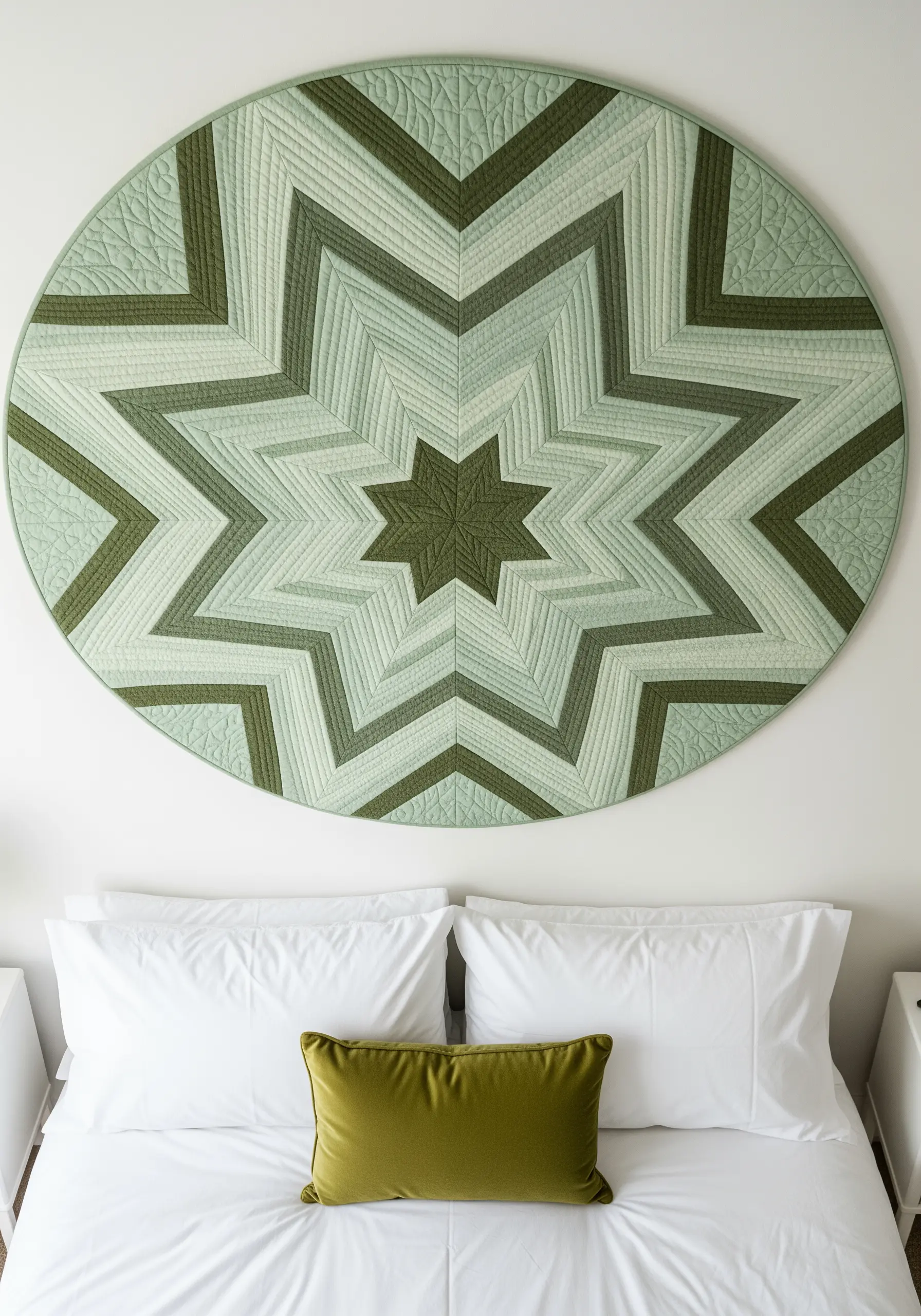
Achieve a modern quilted aesthetic using simple running stitches to create graphic, radiating lines.
This technique, inspired by Japanese Sashiko, relies on the rhythm and consistency of your stitch length for its calming effect.
Choose a few solid-colored cotton fabrics in a single color family—like shades of sage green—and piece them together to form your starburst pattern.
Once pieced, layer with batting and a backing fabric, then hand-quilt along the geometric lines with a contrasting or matching thread.
The result is a soft, sculptural piece that works beautifully as one of your new chic embroidery headboard hacks.
5. Modern Appliqué with Felt & Accent Stitching
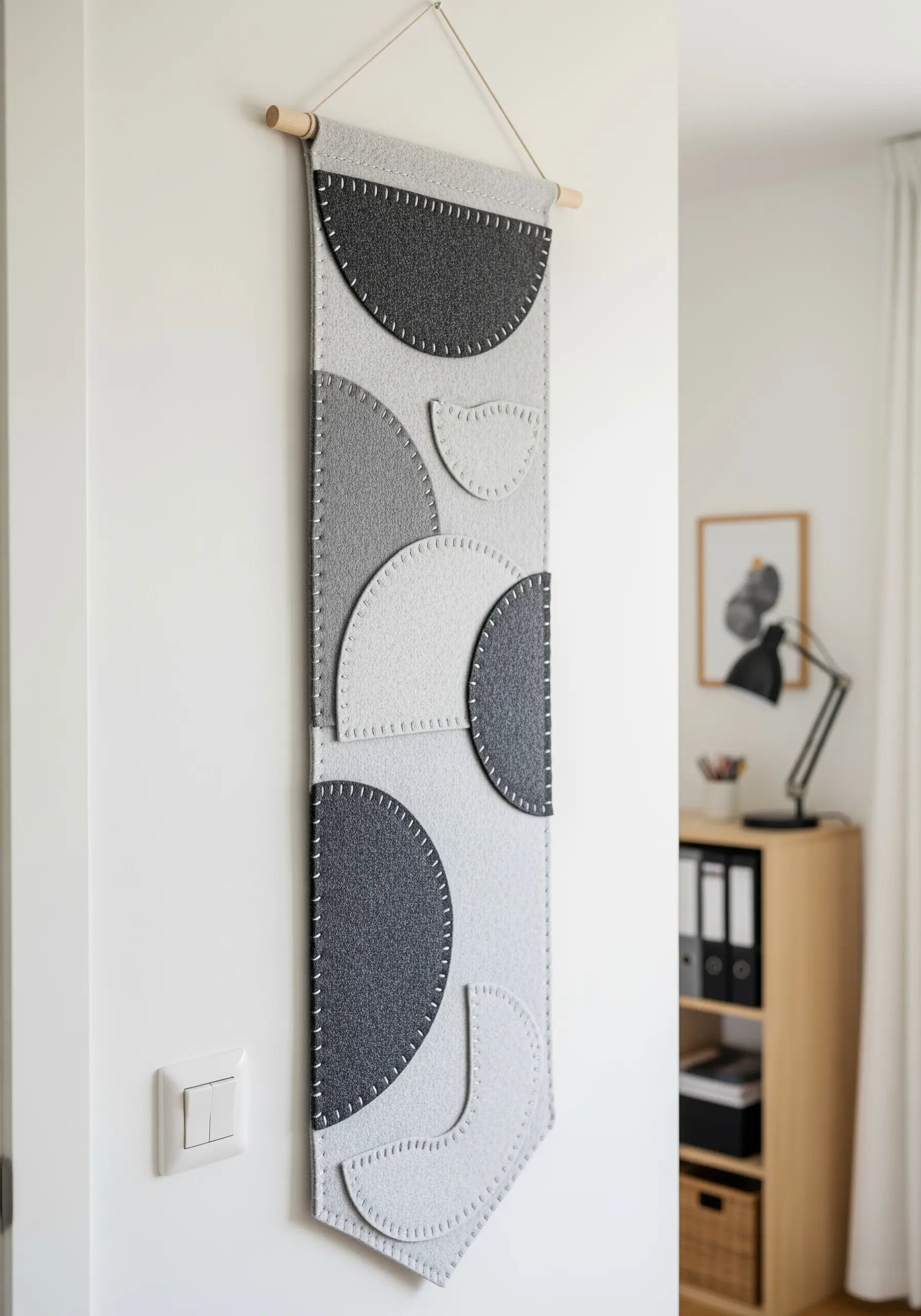
Build a graphic, mid-century inspired wall hanging by layering simple shapes cut from thick felt.
Select felt in a monochrome palette of greys, charcoal, and off-white to keep the focus on form and composition.
Arrange your curved and semi-circular shapes onto a rectangular felt base, pinning them in place to finalize the design before stitching.
Instead of hiding your stitches, make them a feature. Use a contrasting thread and a bold, visible running stitch or blanket stitch to secure the appliqué pieces.
This project is one of the best boho style embroidery decor ideas for adding handmade charm without complexity.
6. Understated Elegance with Negative Space

Create a piece that feels both delicate and profound by letting the unstitched fabric play a leading role.
Choose a lightweight, drapey fabric like a cotton voile or a soft linen blend that hangs beautifully.
Rather than a dense design, scatter small motifs—like tiny seed stitches or French knots—across the surface, creating a constellation-like effect.
Use a thread that is only a shade or two different from the fabric for an extremely subtle, tone-on-tone result.
This powerful way to combine thread and negative space makes the viewer lean in closer.
7. Macramé-Inspired Textures with Embroidery Knots
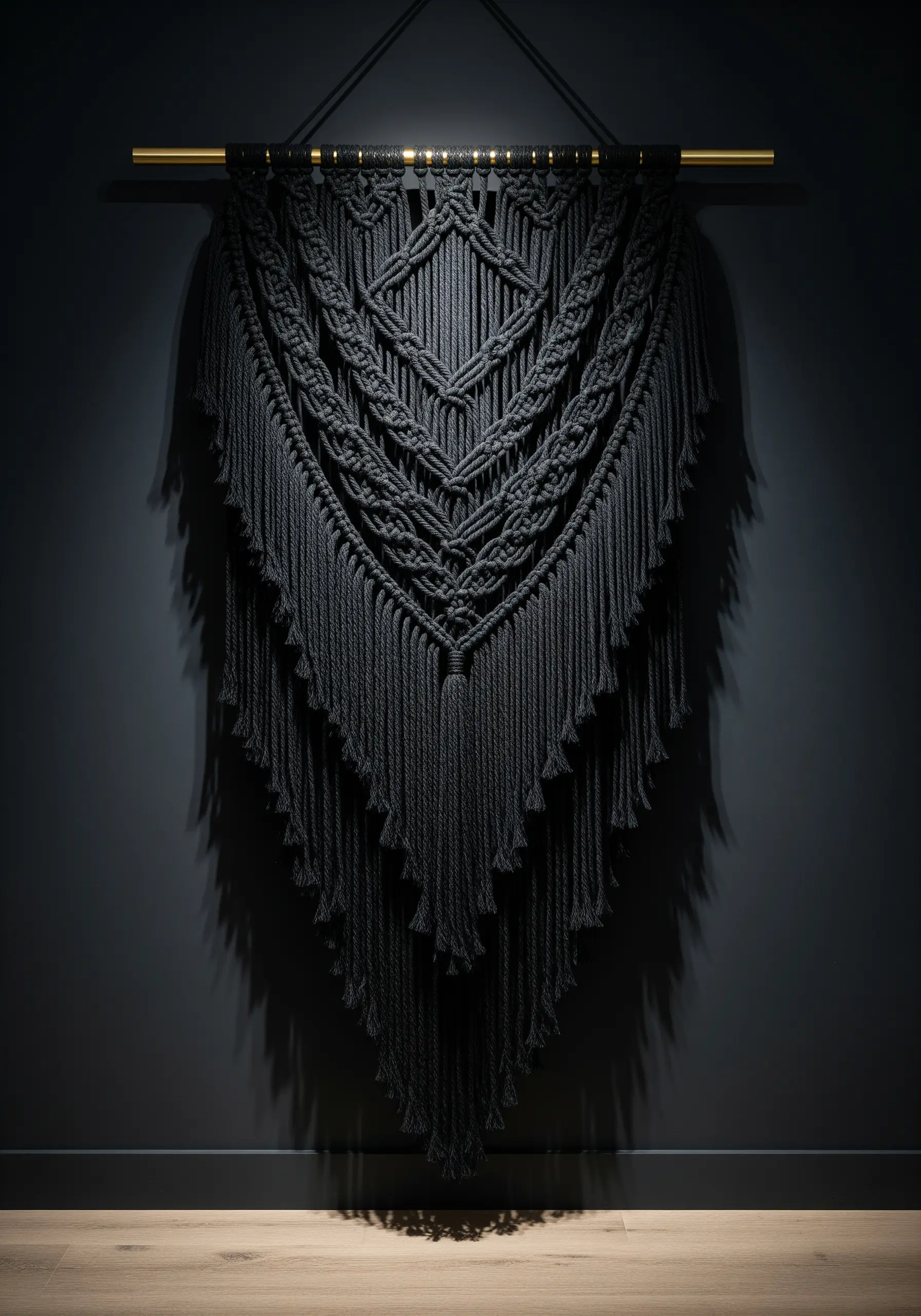
Capture the bold, graphic presence of macramé using only embroidery stitches on a flat surface.
On a black or very dark canvas, use a thick, high-contrast thread like a pearle cotton to lay down your foundational lines with a heavy chain stitch or couching.
Build up knot-like textures using clusters of bullion knots, Danish knots, and oversized French knots.
By layering these stitches, you create a dimensional, bas-relief effect that mimics the intricate knotting of traditional macramé.
Explore monochrome embroidery ideas like this to create drama through pure texture.
8. Botanical Transparencies for Light-Filled Spaces

Stitch directly onto a sheer fabric like organza or tulle to create ethereal botanical art that interacts with light.
The key is to keep the designs minimal—a single leaf or a delicate sprig allows the transparency of the fabric to shine.
Use a simple backstitch or stem stitch for the outlines and veins, as complex stitches can weigh down and warp the delicate fabric.
When finished, trim the fabric about an inch outside the hoop and let the edge remain raw for an organic feel.
These are some of the most beautiful minimalist botanical stitch designs, especially when hung in a window.
9. Atmospheric Landscapes with Thread Painting

Build depth and realism in a monochrome landscape by mastering the long-and-short stitch, also known as thread painting.
Work with several shades of a single color—from dark charcoal to pale silver—to create the illusion of light and shadow.
Use single strands of embroidery floss for the finest detail, especially for creating the misty effect in valleys or clouds.
Stitch the foreground elements with denser, darker stitches and let the background recede with lighter, sparser stitches.
These mountain landscape thread painting techniques turn simple thread into breathtakingly realistic art.
10. Soft Sculptural Clouds for a Nursery

Create a soft, padded wall hanging using the trapunto quilting technique to give your shapes a gentle, three-dimensional form.
Choose soft, plush fabrics like cotton jersey or minky in a warm, tonal palette for a soothing effect.
Stitch your cloud shapes onto a backing fabric, leaving a small opening. Gently push polyester filling through the gap, then stitch it closed.
Arrange and overlap the individual padded shapes to build a larger, cloud-like composition on the wall.
This is one of those cozy, creative embroidery gifts perfect for a new baby’s room.
11. Deconstructed Collage with Raw Textiles
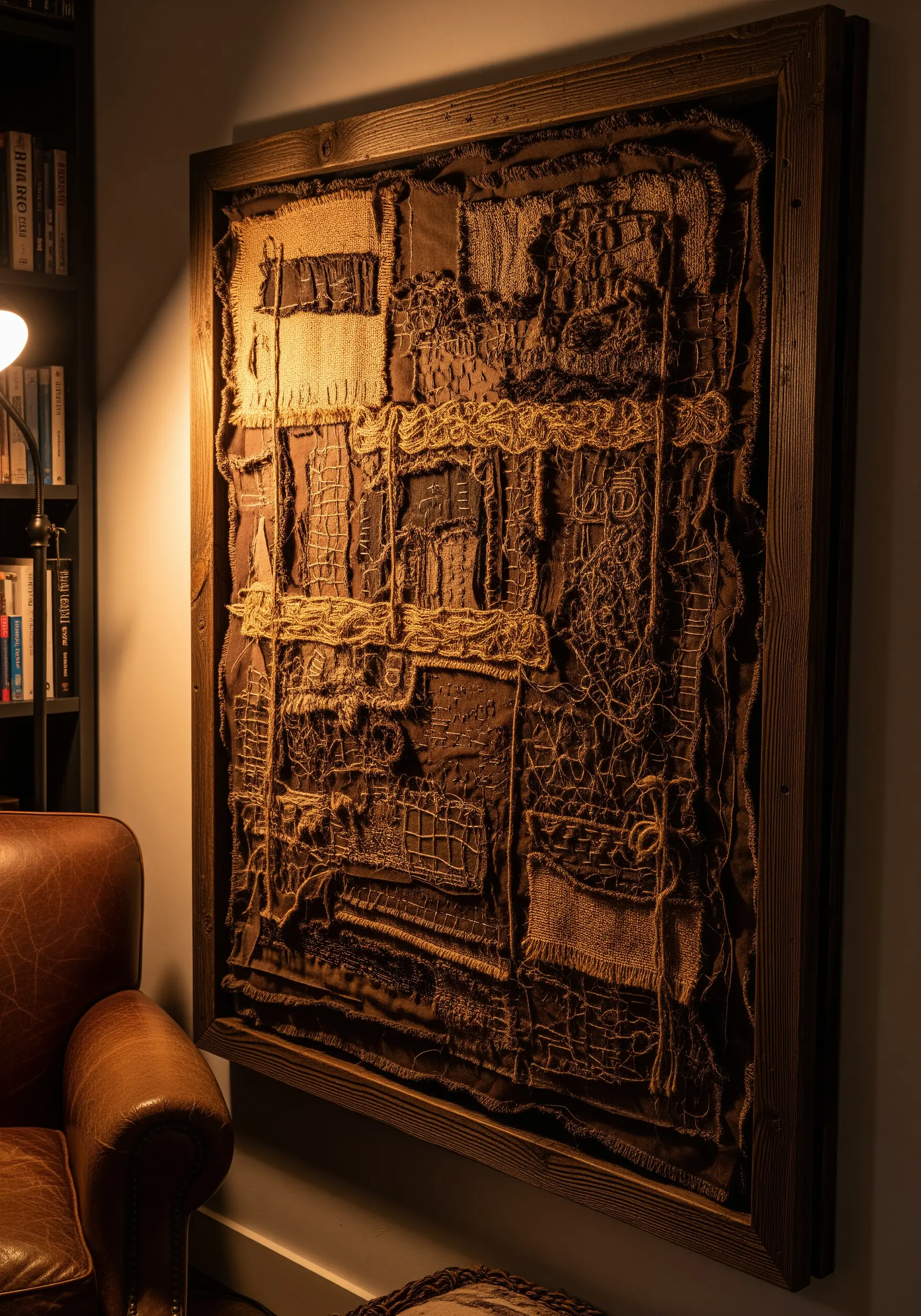
Embrace imperfection and raw beauty by creating a collage from fabric scraps, loose threads, and unfinished edges.
Use textiles with strong natural textures like burlap, raw silk, and coarse linen as your base materials.
Layer and tear pieces of fabric, allowing them to fray, and secure them with large, expressive running stitches or cross stitches.
Drape loose threads across the composition and couch them down in meandering lines to add another layer of chaotic, organic detail.
These multilayered textile wall art techniques create a piece with history and soul.
12. Continuous Line Drawings on Canvas
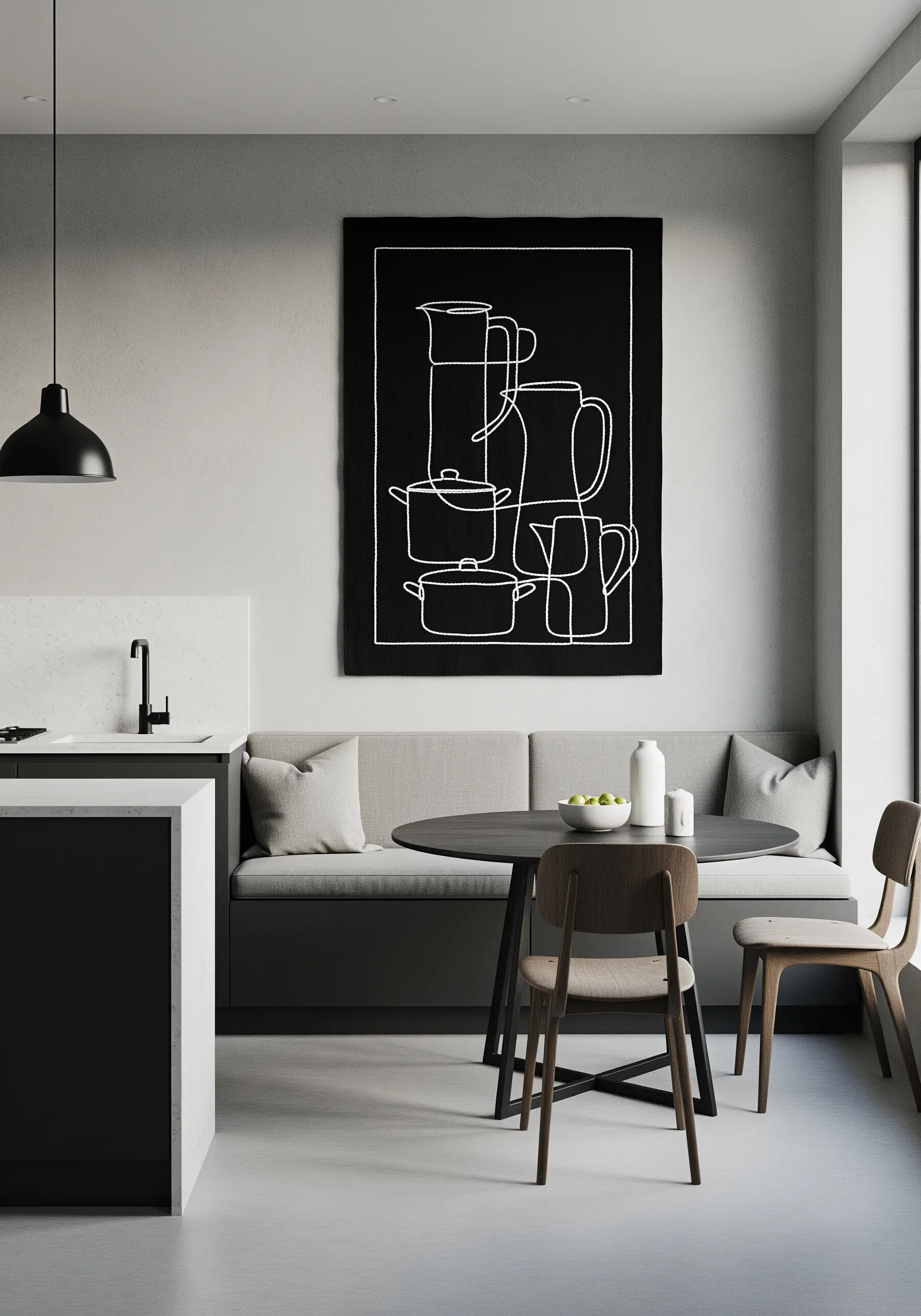
Capture the effortless charm of a single-line sketch using a simple, perfectly executed stitch.
Work on a dark, heavy canvas to give your white thread maximum visual impact.
Use a whipped backstitch or a stem stitch to create a smooth, solid line that has the weight and consistency of an ink drawing.
The trick is to maintain even tension and stitch length throughout the entire piece to ensure the line flows without interruption.
This technique is perfect for DIY embroidery ideas for a calm, minimalist kitchen space.
13. Luxe Tufted Panels in Velvet
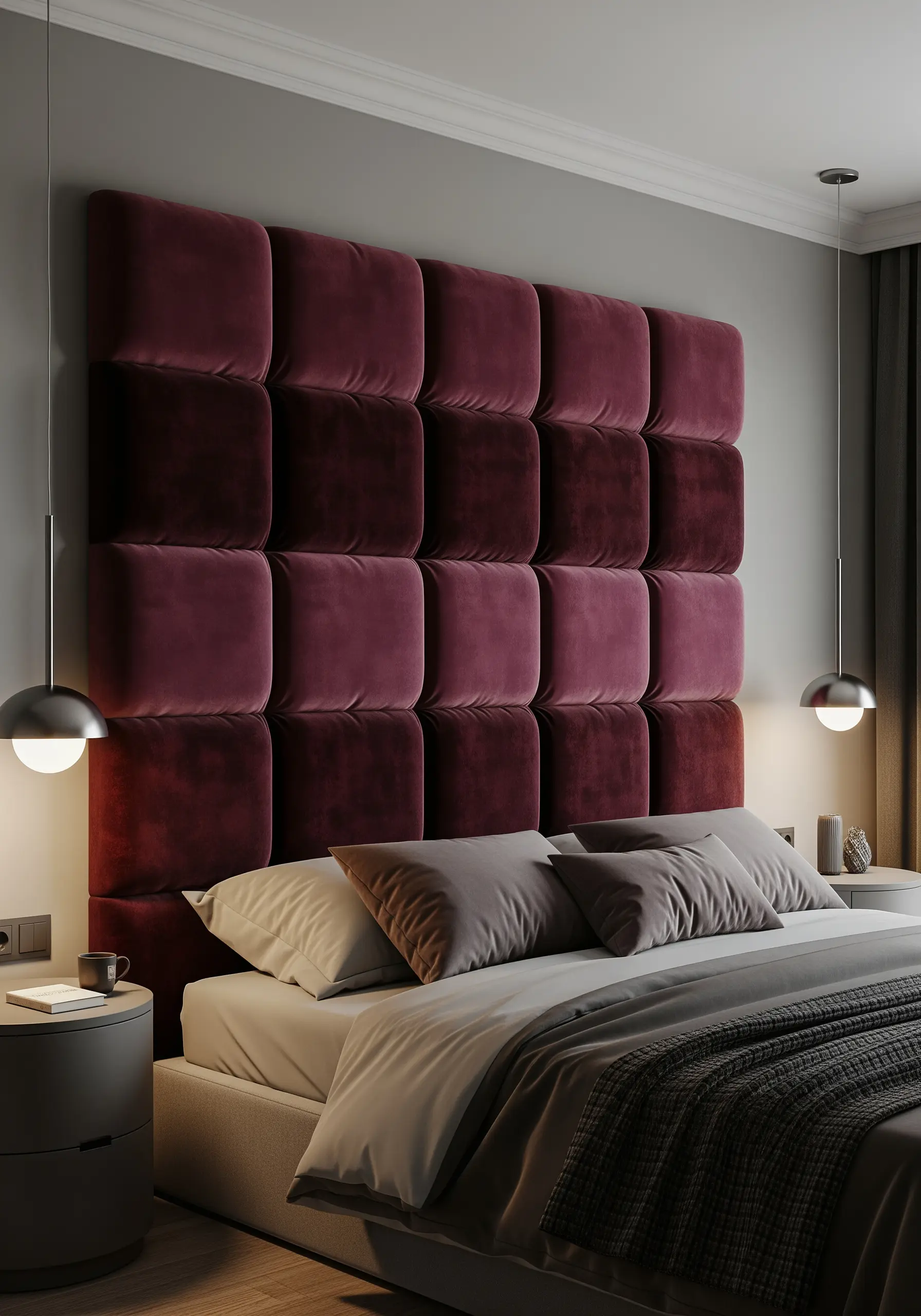
Channel the opulence of a boutique hotel headboard by creating your own tufted velvet panels.
This technique is more about fabric manipulation and upholstery than traditional stitching.
Wrap square pieces of thick foam or MDF board with a rich velvet fabric, pulling it taut and securing it on the back with a staple gun.
Arrange the individual panels in a grid pattern directly on the wall to create a custom, high-impact feature.
Choose velvets in a monochrome palette, like deep plums and burgundies, to create a subtle checkerboard effect through light and shadow.
14. Architectural Color Blocking with Satin Stitch

Translate the bold feel of a woven tapestry into embroidery by using large, clean blocks of satin stitch.
To keep your edges perfectly crisp, outline each shape with a split stitch before filling it in.
Work in a gradient of a single color family to achieve a modern, architectural look that emphasizes form over detail.
For a large piece, break the design into manageable sections to prevent stitches from becoming too long and loose.
Consider these large-scale projects as embroidered wall panels that add warmth and texture to a modern space.
15. The Meditative Rhythm of Sashiko Stitching

Explore the Japanese art of Sashiko, which uses a simple running stitch to create stunning geometric patterns.
This style is traditionally done with white cotton thread on indigo-dyed fabric, a combination that creates timeless graphic contrast.
For a more modern take, first dye your fabric using shibori techniques to create soft, organic patterns before you begin stitching.
The beauty of Sashiko lies in the consistency of the stitch and the small, even gaps between them.
It’s a perfect technique to apply to boho-chic table linen embroidery patterns or wall hangings.
16. Whitework: Where Texture Becomes the Design

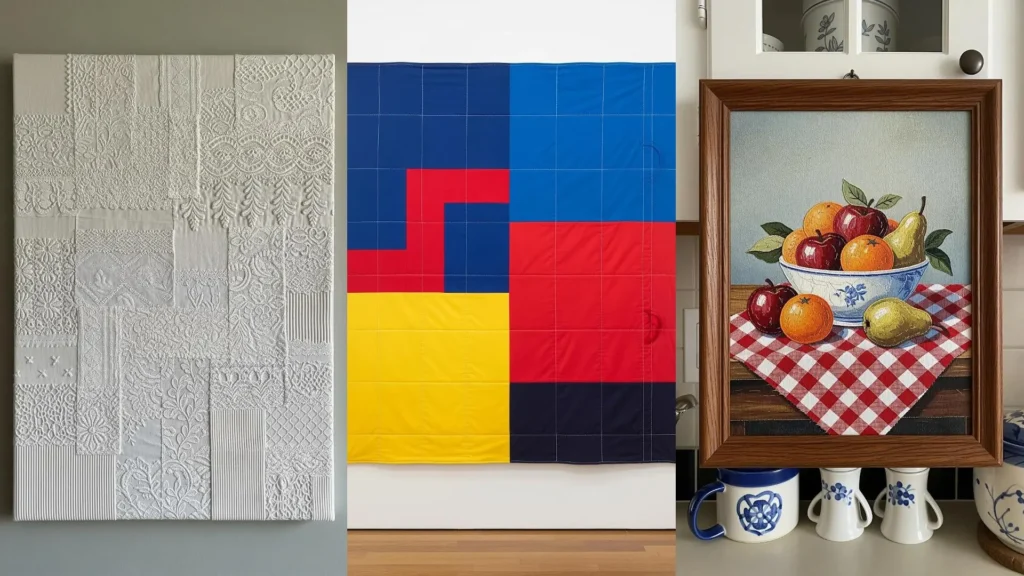
Create a breathtakingly intricate piece using only white thread on a white background, a technique known as whitework.
The goal is to build a design that emerges from the fabric through varying textures and heights.
Combine padded satin stitch for raised, smooth areas, French knots for pebbled texture, and delicate seed stitches for subtle fills.
This form of abstract texture play rewards close inspection, revealing more detail the longer you look.
Framing it in a contrasting metallic frame makes the subtle white details pop even more.
17. Mandalas Reimagined with Couching and Knots
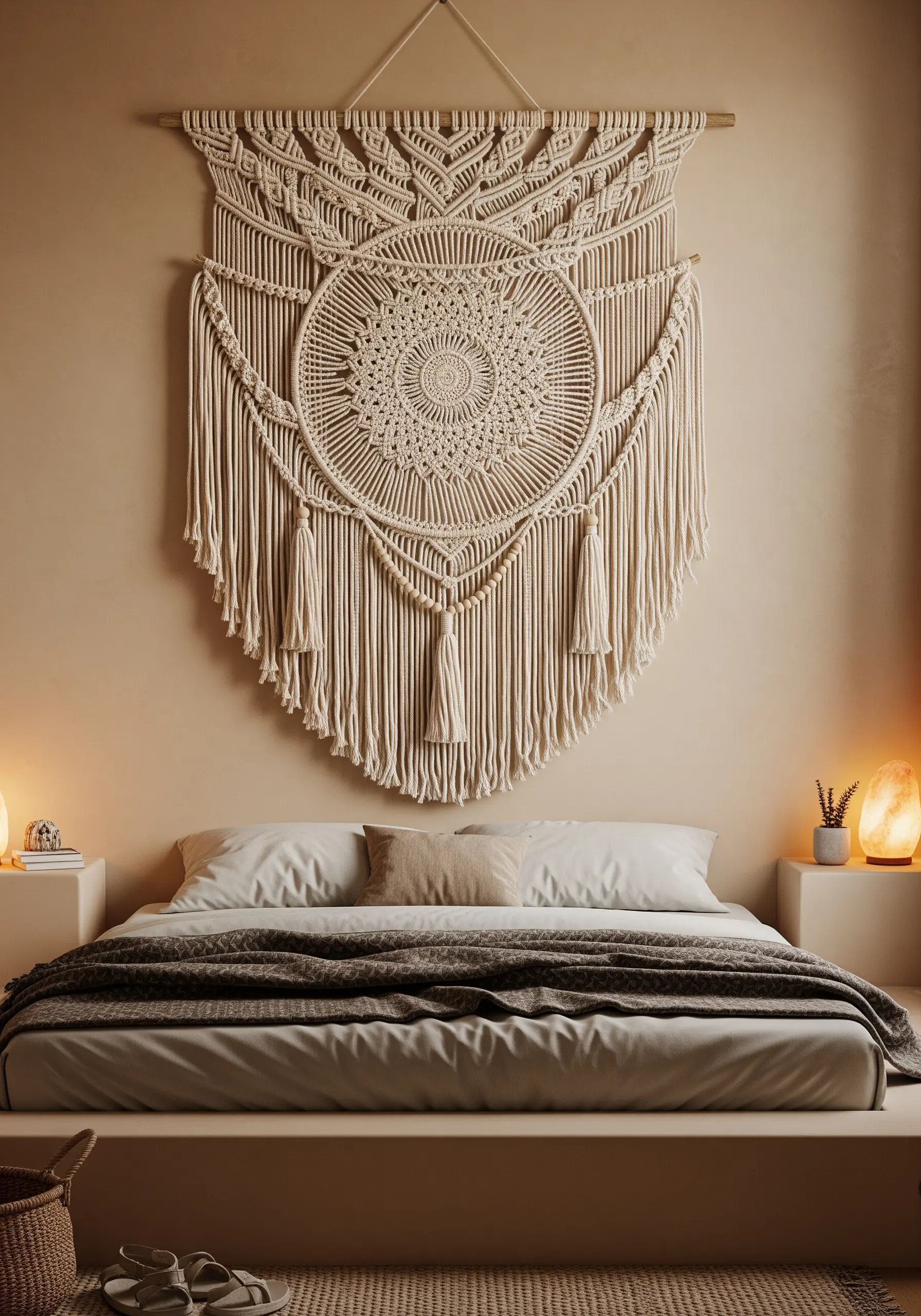
Construct a large-scale mandala using embroidery techniques that mimic the bold lines of macramé.
Use thick cotton rope or cord for the main radial and circular lines, tacking them down with a strong couching stitch.
Fill in the sections with textural stitches: concentric circles of chain stitch, densely packed French knots, or rows of seed stitch.
Working in a single neutral color, like cream or natural cotton, keeps the focus on the intricate texture and sacred geometry of the design.
These modern mandala stitch patterns create a serene and powerful focal point for a room.
18. Sculptural Fabric Manipulation with Smocking

Move beyond surface stitching and shape the fabric itself using the traditional technique of smocking.
Start with a lightweight fabric that has a good drape, like a cotton lawn or a linen blend, as stiff fabrics won’t gather as beautifully.
Create a grid of dots on the reverse side of your fabric and use a simple running stitch to gather the fabric into a honeycomb or diamond pattern.
By varying the tension and stitch pattern, you can create a deeply sculptural, organic surface that feels both ordered and chaotic.
This is one of the most effective abstract thread sculpting tricks for creating 3D art.
19. Watercolor Washes on Sheer Panels
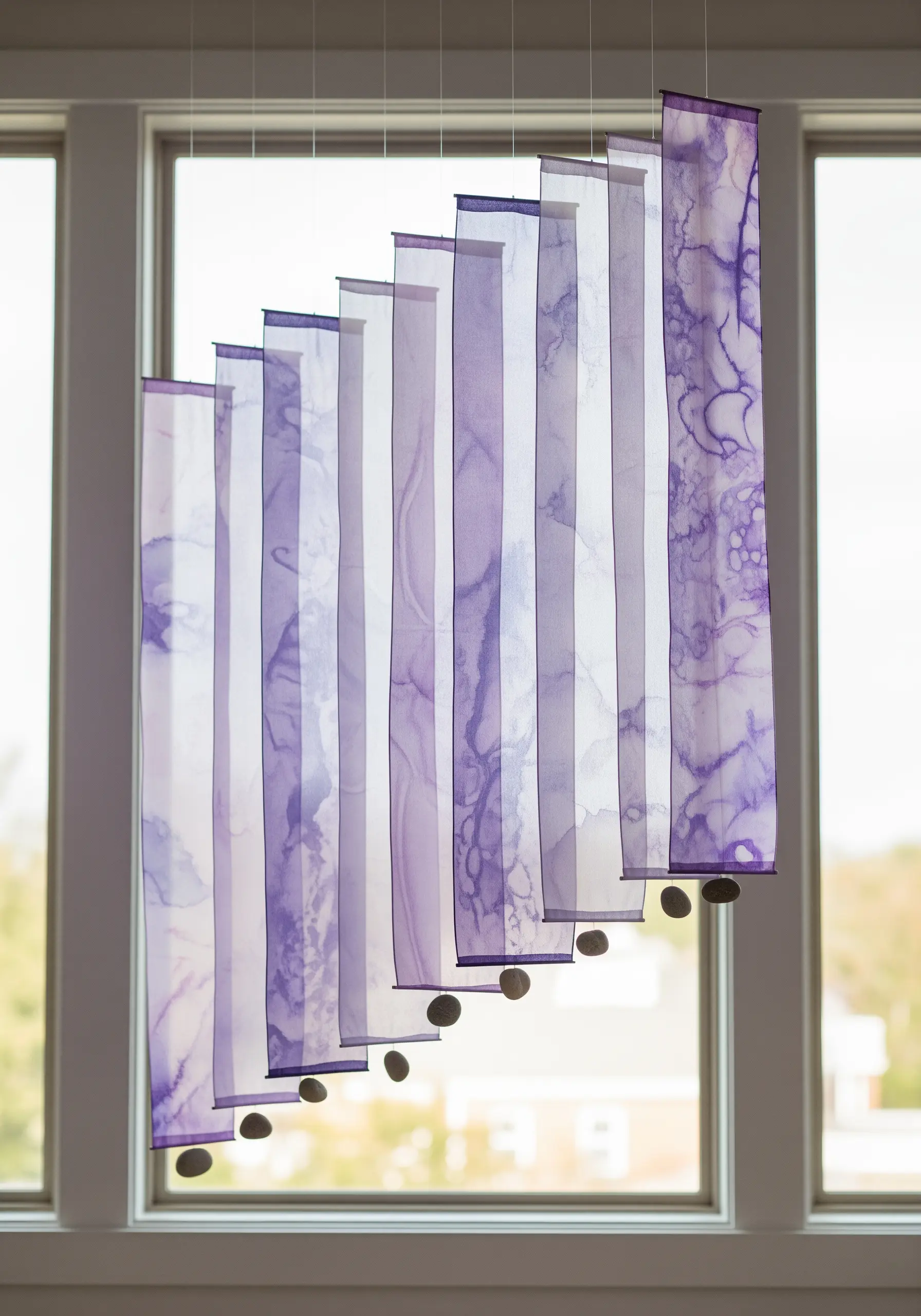
Combine the fluidity of paint with the delicacy of sheer fabric for a wall hanging that feels like a captured cloud.
Use fabric paints or watercolor inks on silk organza or another sheer material, allowing the colors to bleed and blend organically.
Once the paint is dry and heat-set, you can add minimal stitched details to enhance the design, but the paint should remain the star.
Hang these panels in layers in front of a window to create a beautiful interplay of light, color, and shadow.
Explore these mixed-media techniques to add a painterly quality to your textile art.
20. Geometric Mosaics with Thread
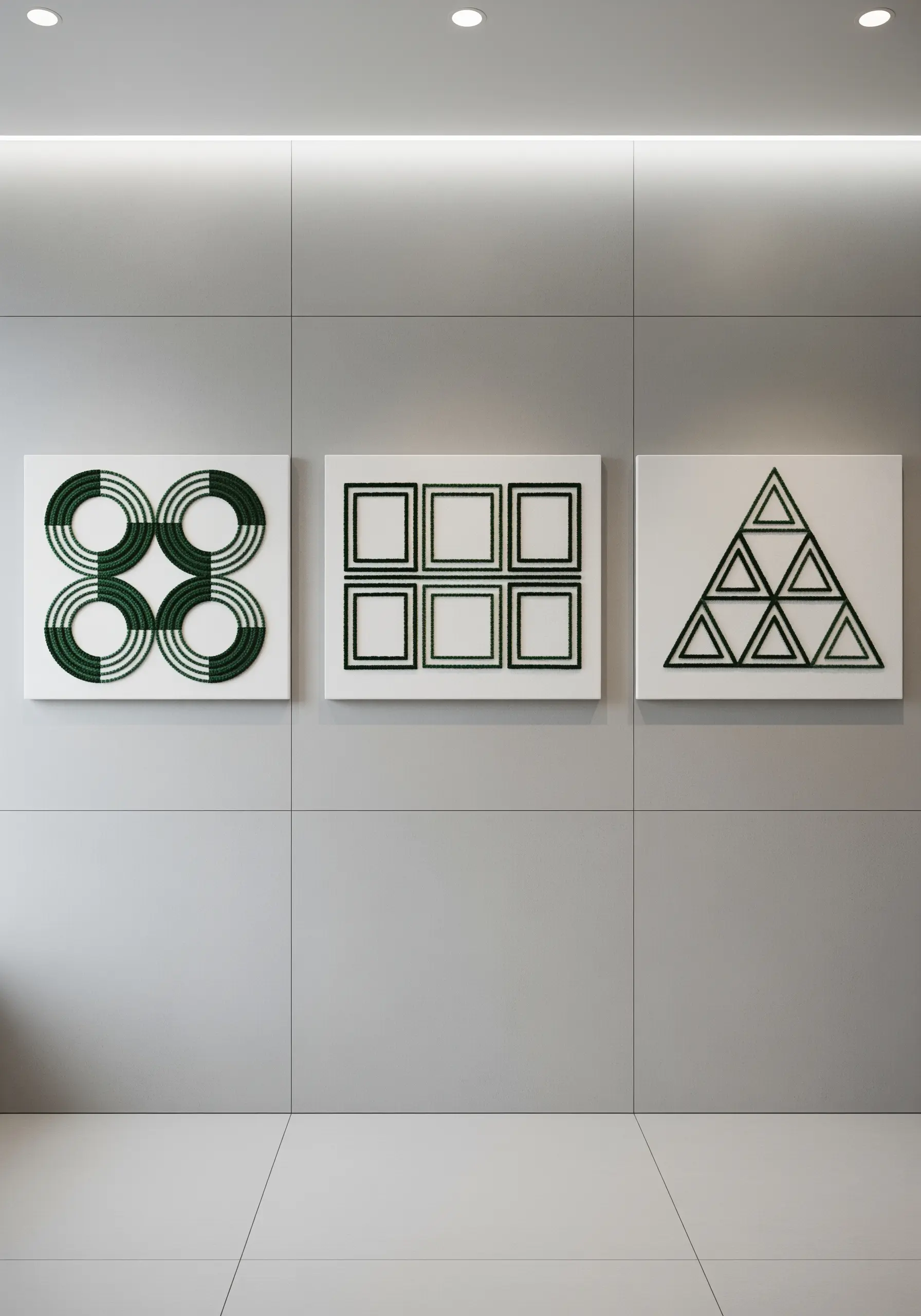
Create a clean, graphic triptych by filling geometric shapes with dense, uniform stitches that mimic the look of tiles or pixels.
Use aida cloth or another evenweave fabric to make counting your stitches and creating perfect geometric forms easier.
Fill your shapes with rows of tiny seed stitches, French knots, or even cross-stitches, ensuring each stitch is identical in size and tension.
The precision required for these minimal geometry stitch projects makes them a meditative and rewarding process.
Mounting the finished pieces on stark white canvases enhances their bold, graphic nature.
21. Modern Quilting with a Sun-Kissed Palette
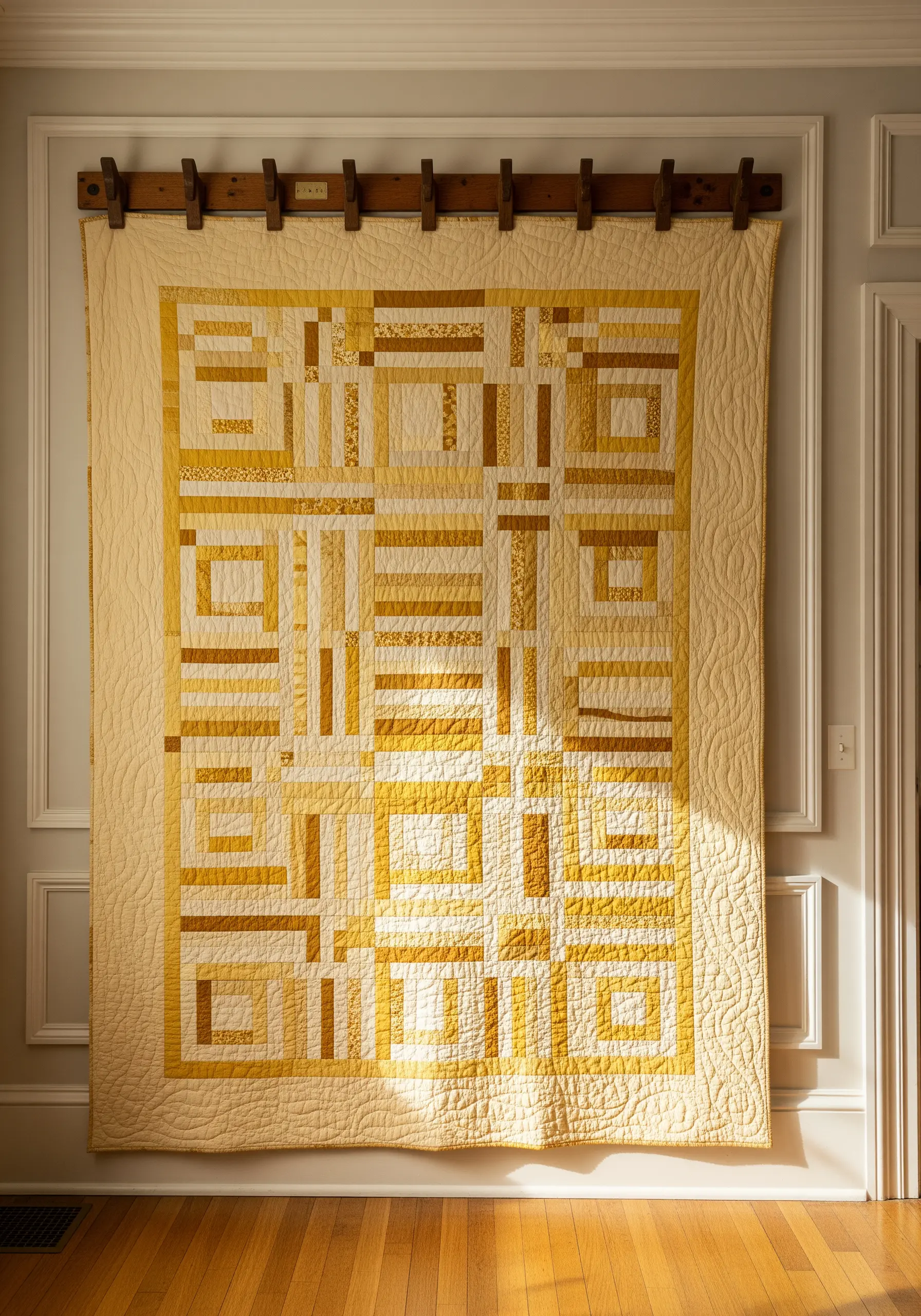
Piece together a modern quilt using a warm, monochrome palette of yellows, golds, and creams for a sophisticated yet cozy feel.
This design uses simple rectangles and squares in a log cabin-style arrangement, creating a complex look from basic shapes.
Use fabrics with subtle patterns—like small dots or tone-on-tone prints—within your color family to add depth and interest.
Finish with an all-over quilting pattern, like a gentle wave or stippling, to unify the pieced top and add a final layer of texture.
These are the kinds of soft and serene stitching projects that bring warmth to any room.
22. Open-Weave Thread Sculptures
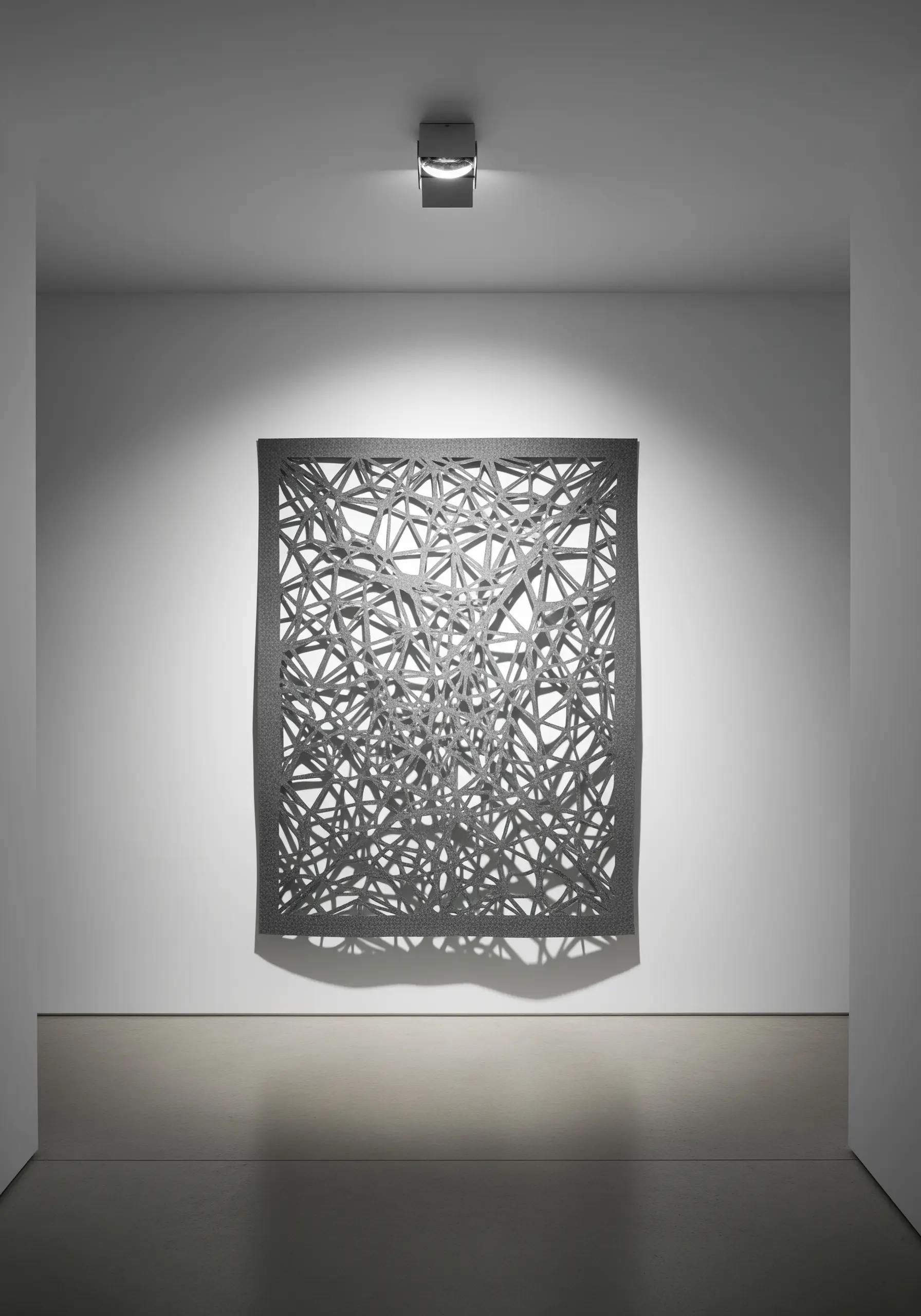
Create the illusion of a solid yet transparent sculpture using a technique that blends embroidery and string art.
Start with a sturdy wooden frame and stretch a dark, heavy thread back and forth across the opening in a random, intersecting pattern.
At each intersection, secure the threads with a tiny, tight knot to build a stable, web-like structure.
The interplay of the thread with the negative space behind it creates a compelling sense of depth and shadow.
These abstract thread embroidery ideas challenge the very definition of stitching on fabric.
23. Topographic Coils with Natural Rope

Build a deeply textural, organic piece by coiling and securing natural fiber rope onto a canvas backing.
Use a thick jute or sisal rope for a rustic, earthy feel, varying the thickness of the rope for different areas.
Plan your design by lightly sketching circles and organic shapes on the canvas, then apply a strong fabric glue to hold the rope as you work.
Coil the rope tightly, securing it with an invisible couching stitch every inch or so to ensure it stays permanently in place.
This creates organic texture embroidery designs that are as much sculpture as they are stitching.
24. Calligraphic Brushstrokes in Thread
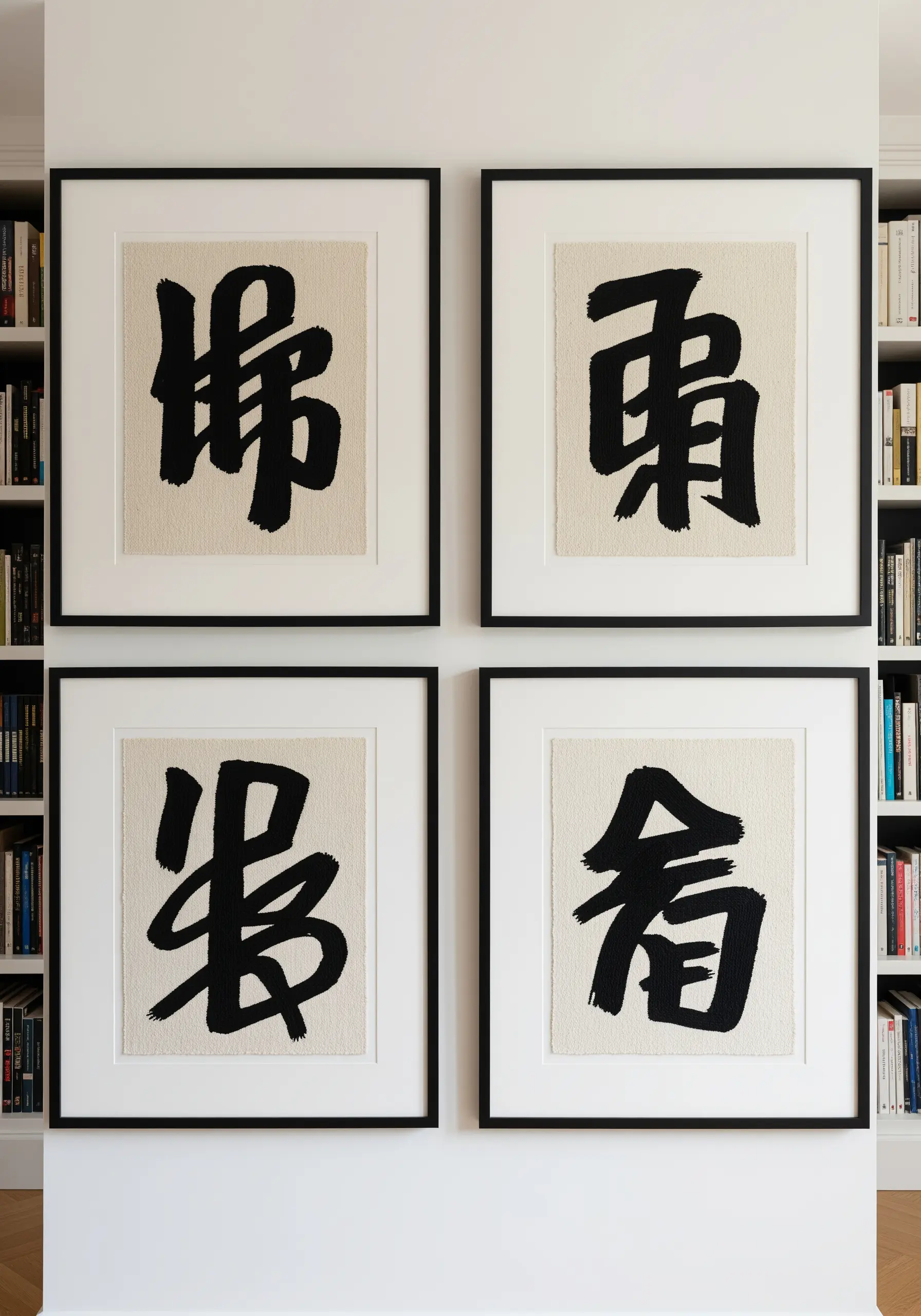
Emulate the bold, expressive nature of calligraphy by using thread to mimic the thick and thin strokes of a brush.
To create the wider parts of a character, use rows of satin stitch angled to follow the curve of the stroke.
For the thinner, delicate lines, switch to a simple backstitch or stem stitch using the same thread.
Stitching on a fabric with a visible weave, like Aida or linen, adds a pleasing textural contrast to the smooth, dense stitches.
These contemporary stitch designs transform an ancient art form into a modern textile statement.
25. Fields of Texture with Pom-Poms
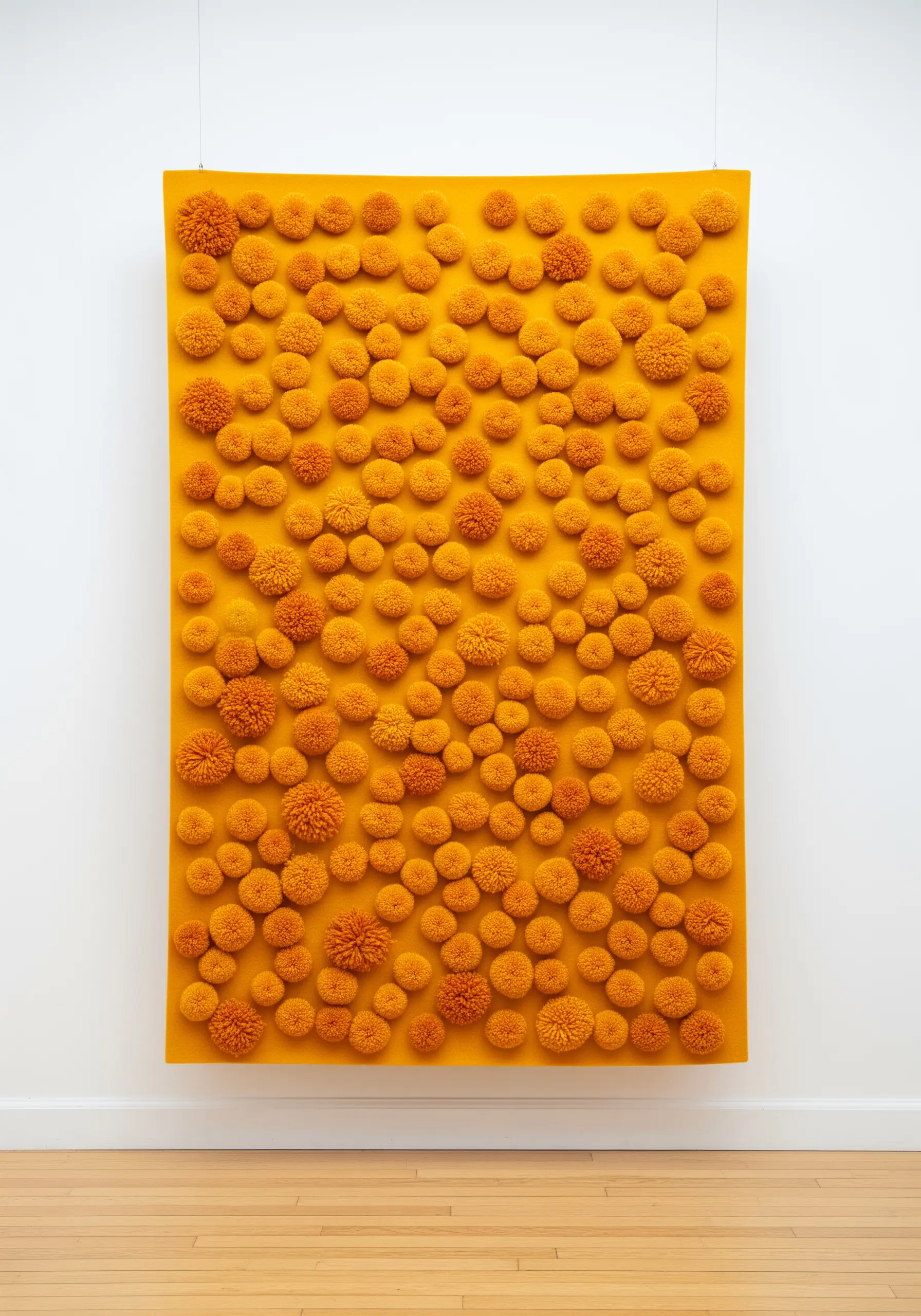
Create a joyful, irresistibly tactile wall hanging by covering a canvas entirely with handmade pom-poms.
Use a pom-pom maker for consistency and speed, creating dozens in varying sizes from the same color family of yarn.
Choose a background fabric that matches your yarn color, like a sturdy felt, and hot glue or stitch each pom-pom securely to the surface.
Cluster the pom-poms tightly together, allowing them to press against each other to create a dense, unified field of texture.
These dazzling fiber art installations are a playful way to make a big impact.
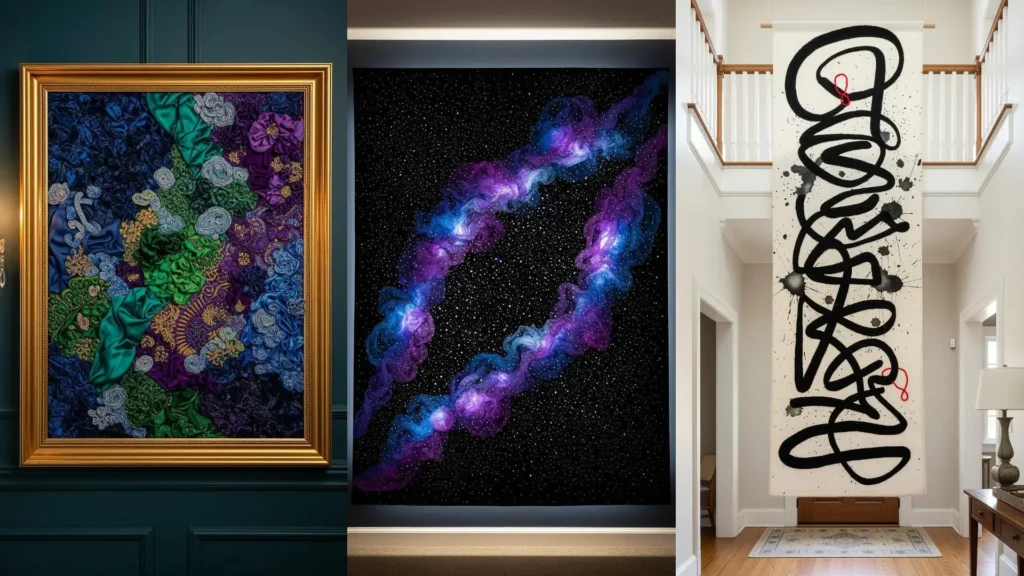
26. Monumental Drapery as Architecture
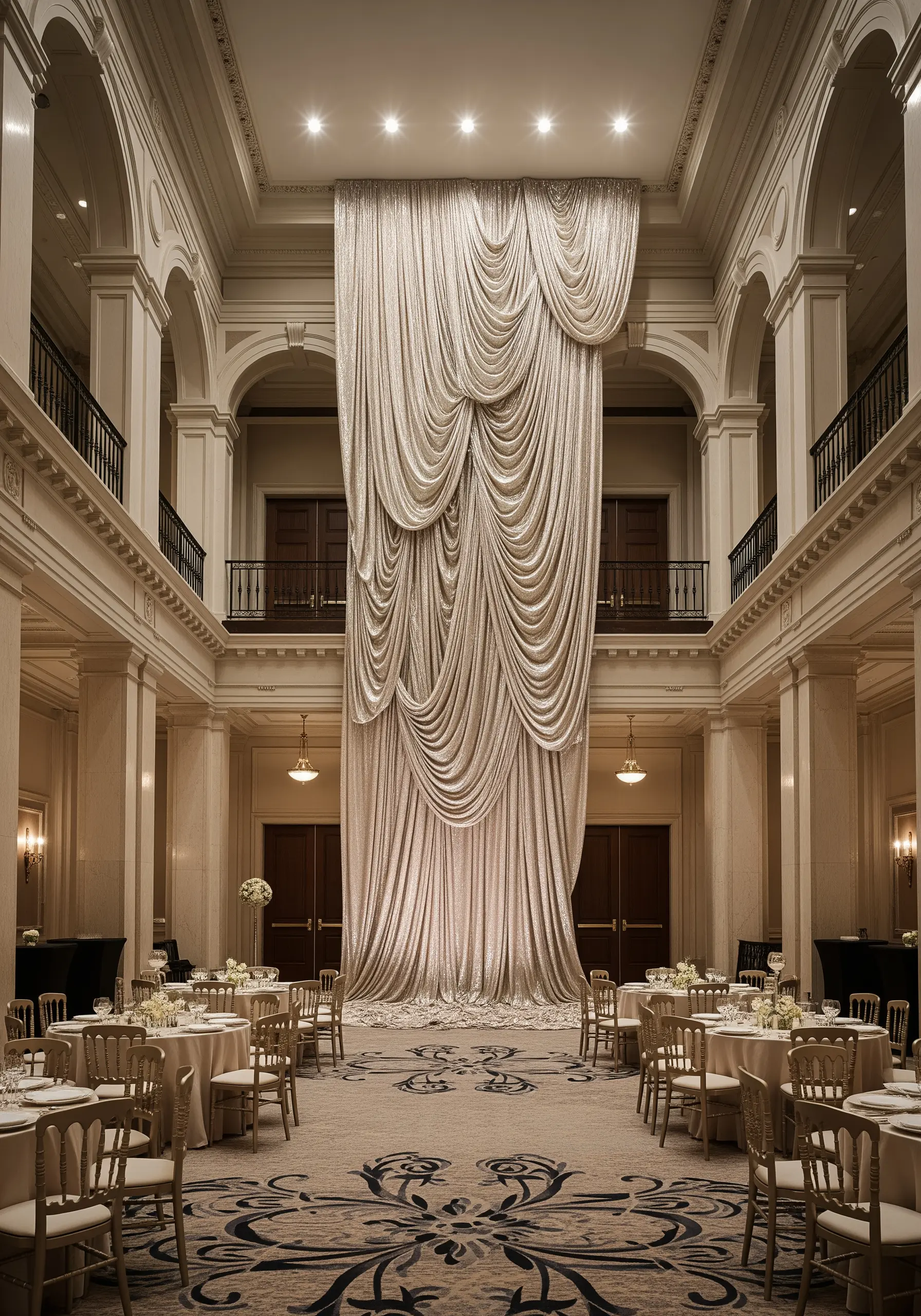
While a piece of this scale is for grand spaces, you can capture its essence by focusing on the art of the drape.
Choose a fabric with a beautiful weight and sheen, like a silk blend or a high-quality satin, that catches the light.
On a smaller scale, you can create a wall hanging by gathering and pinning fabric onto a canvas-covered board, creating deep, sculptural folds.
Secure the folds from behind with stitching or a strong adhesive. The art is in how the fabric falls and interacts with light.
These types of fiber art installations show that fabric itself can be the entire masterpiece.
27. Weaving Illusions on a Threaded Grid
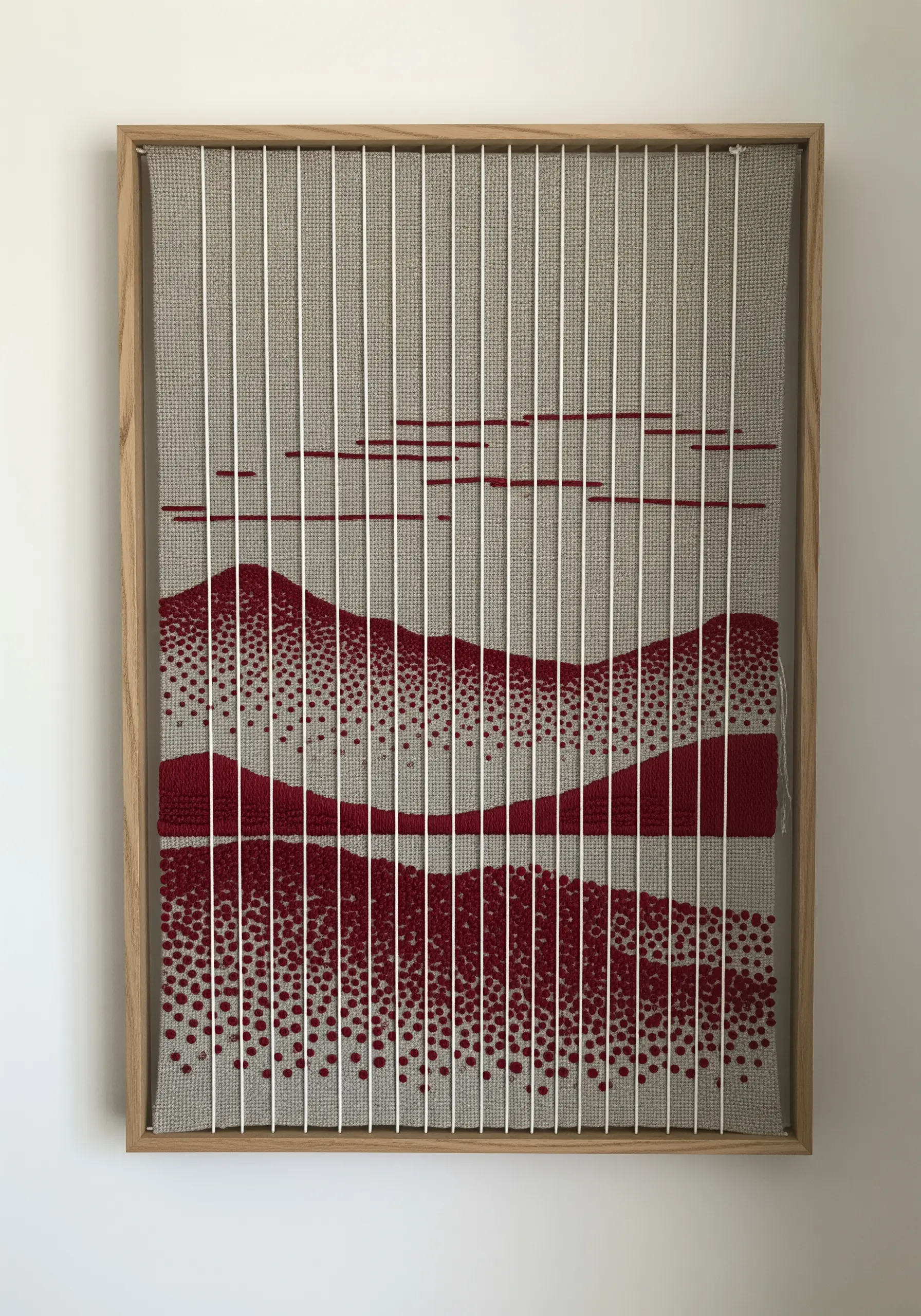
Create a unique mixed-media piece by combining a stitched background with a foreground of stretched vertical threads.
First, complete your embroidery design—like this dotted landscape—on a piece of linen or canvas and frame it.
Then, drill small, evenly spaced holes in the top and bottom of the frame and string a thin cord or wire vertically across the piece.
This creates a visual barrier or screen that adds depth and an intriguing optical effect, making the viewer look ‘through’ the grid to the art beneath.
This is a clever example of an abstract thread illusion technique.
28. Nautical Knots as Sculptural Forms

Use thick, nautical-style cotton rope to create a high-relief, sculptural wall piece with coastal charm.
Instead of traditional stitching, this technique involves arranging and securing complex knots and coils onto a sturdy backing board.
Practice tying different decorative knots—like the monkey’s fist or the figure-eight knot—before planning your composition.
Secure the heavy rope from behind using a combination of strong adhesive and discreetly placed wire or heavy-duty thread.
These nature texture wall hangings bring a bold, tactile energy to a room.
29. Anatomical Linework on Draped Fabric

Create a powerful, high-contrast piece by stitching a detailed scientific illustration onto a dark, unconventional base.
Choose a fabric with an interesting texture, like a raw-edged black denim or a heavy linen, to add to the moody atmosphere.
Use a fine, sharp needle and a single strand of white or off-white floss to execute the intricate lines with a precise backstitch or split stitch.
Mount the finished fabric loosely on a canvas, allowing it to drape and ripple slightly, which adds a sense of organic movement.
These dramatic, dark thread embroidery designs are both clinical and deeply emotional.
30. Whimsical Appliqué for Dreamy Nurseries

Craft a sweet and storybook-like wall hanging using simple appliqué shapes on a quilted background.
Choose soft, touchable fabrics like cotton muslin and plush flannel in a warm, gentle color palette.
Cut out your cloud, moon, and star shapes and secure them to the background fabric with a neat, almost invisible slip stitch or a charming blanket stitch.
Add small embroidered details, like sleepy eyes on the moon, with a few simple backstitches.
This is one of the sweetest playful hoop art ideas, easily adapted from a quilt to a smaller hanging.
31. The Poetics of a Single Stitched Line
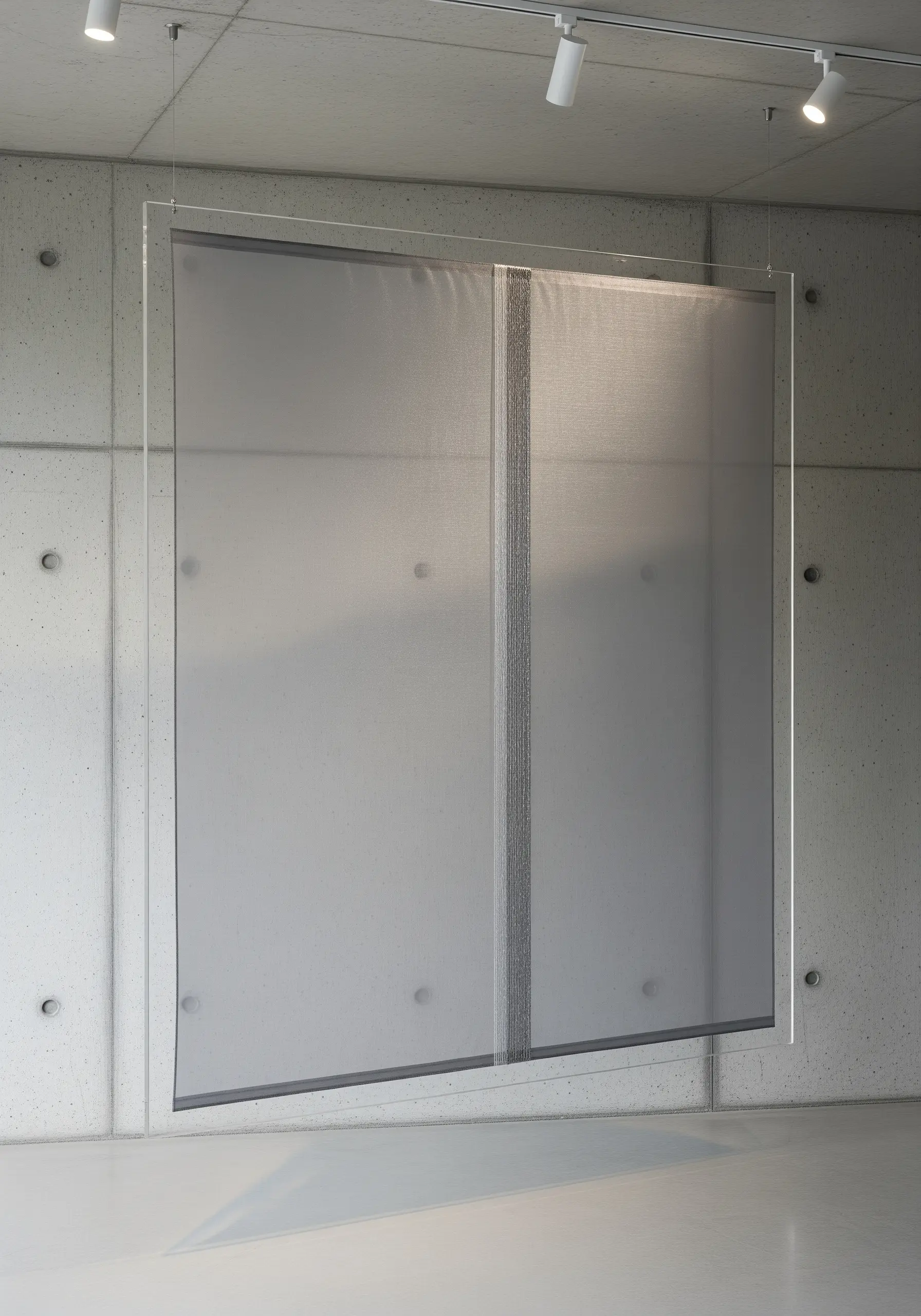
Explore the power of minimalism by creating a piece where a single, perfectly executed element is the entire focus.
Use a sheer or semi-sheer fabric like silk organza or linen voile, as its transparency emphasizes the substance of the stitched line against the void.
Create the central line using a dense, raised stitch like a padded satin stitch or a tightly packed row of knots for maximum visual weight.
The tension and precision must be flawless, as there are no other design elements to distract the eye.
These modern minimalist textile wall art designs are a testament to the idea that less is truly more.