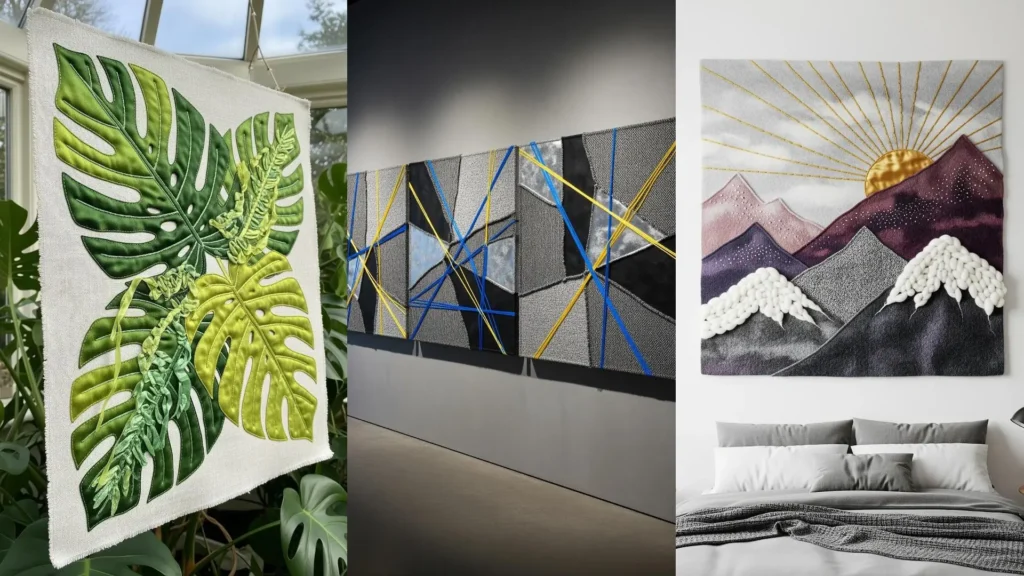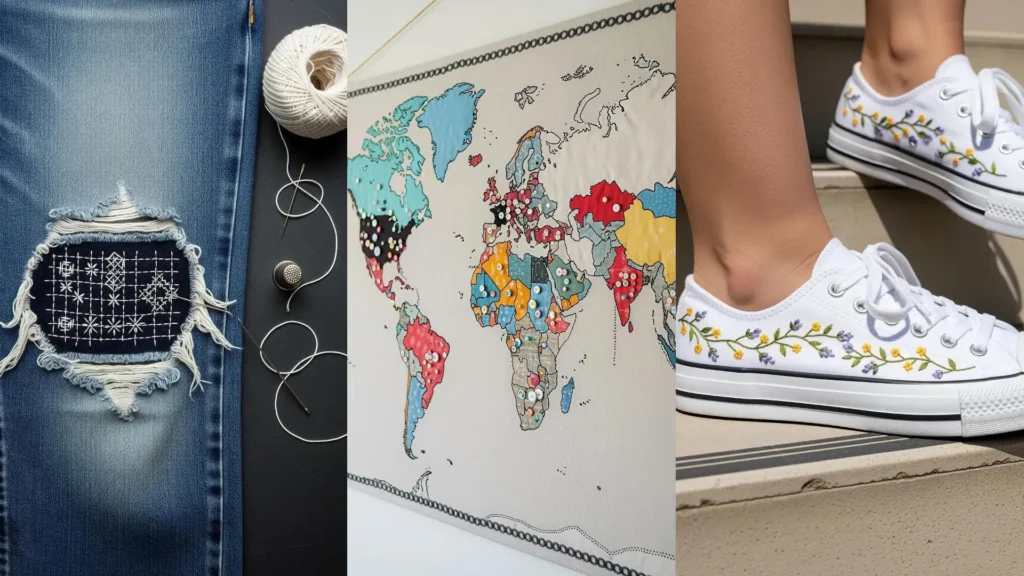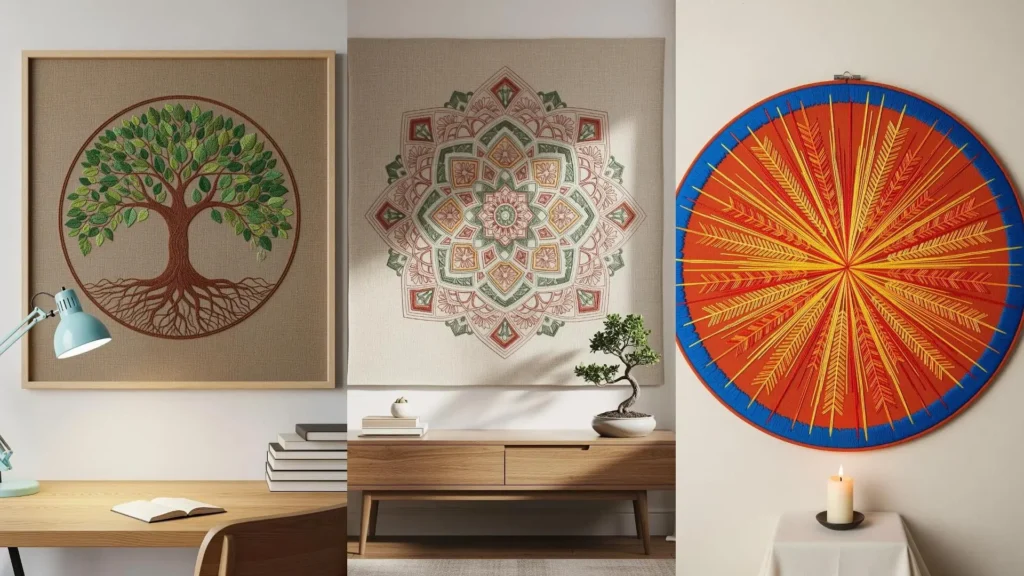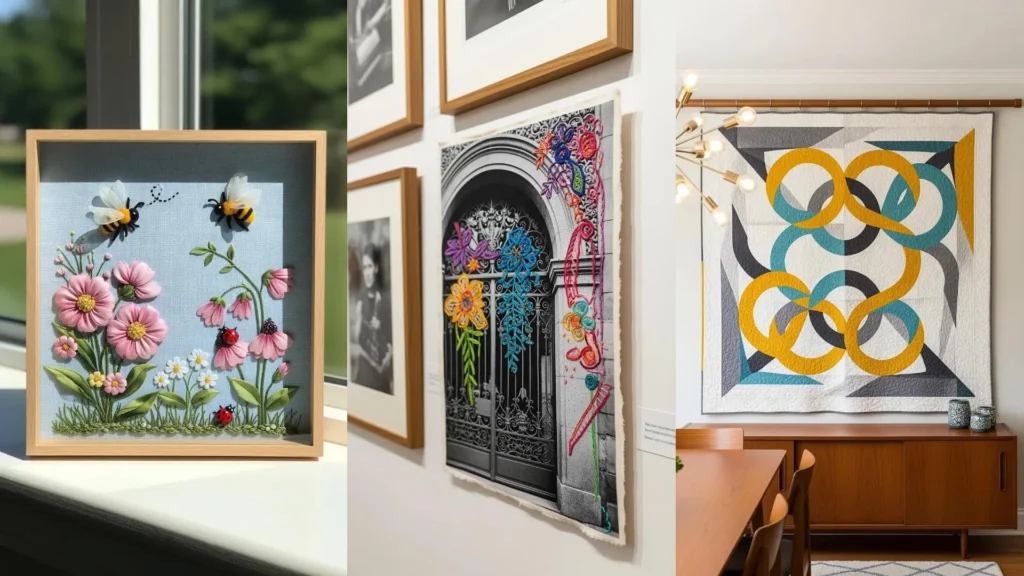
Before you look at that pile of old clothes as something to discard, I want you to see it differently. Think of it not as scraps, but as your personal library of textures, colors, and memories. That soft, worn-out t-shirt, the rich twill of old trousers, the patterned silk of a forgotten tie—these are your materials, waiting for a new story.
Transforming them isn’t about just being resourceful; it’s about infusing your art with a past. It’s about understanding that the fade on a pair of jeans holds more character than any brand-new bolt of fabric. Your needle and thread are the tools that will bridge that history with a new, intentional design.
Here, you won’t just find ideas for upcycling. You will find ways to manipulate, deconstruct, and reassemble these textiles into art that feels both personal and polished. Let’s begin to see the potential in every stitch and every well-loved fiber.
1. Weave a Landscape From Denim Memories
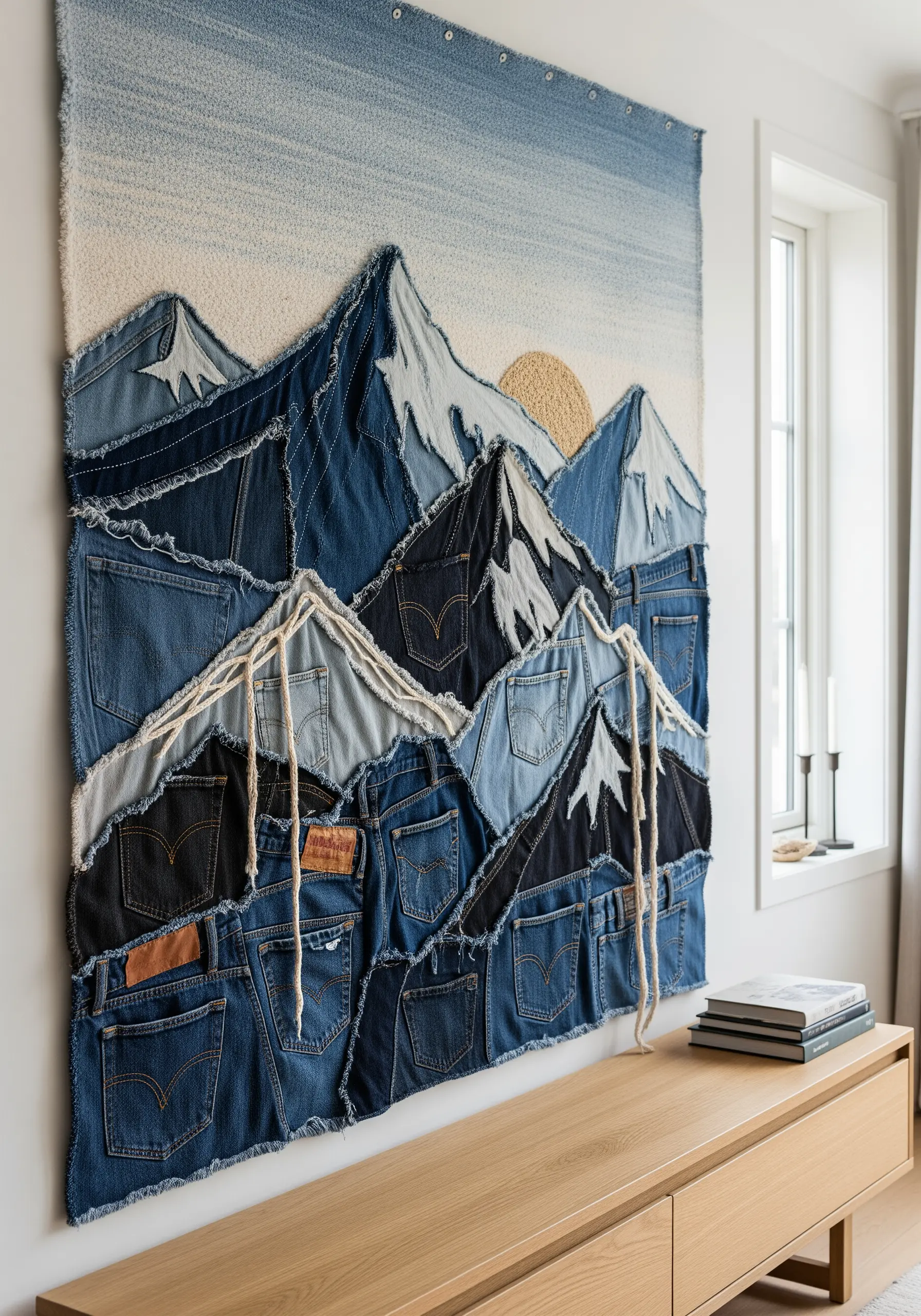
Transform worn-out jeans into a textured mountain tapestry by treating each pair as a unique color in your palette.
Deconstruct the jeans, sorting the pieces by wash—light, medium, dark, and even black denim will create natural shading for peaks and shadows.
Layer the pieces to build your composition, allowing the original seams, pockets, and leather patches to add character and focal points.
Instead of hiding the raw edges, let them fray slightly to mimic the rugged texture of rock faces.
Use a simple, strong running stitch with thick cotton sashiko thread to quilt the layers together, adding definition and securing the entire piece.
This technique turns textile waste into one of the most personal large-scale embroidery tapestries you can create.
2. Sculpt with Braided T-Shirt Yarn
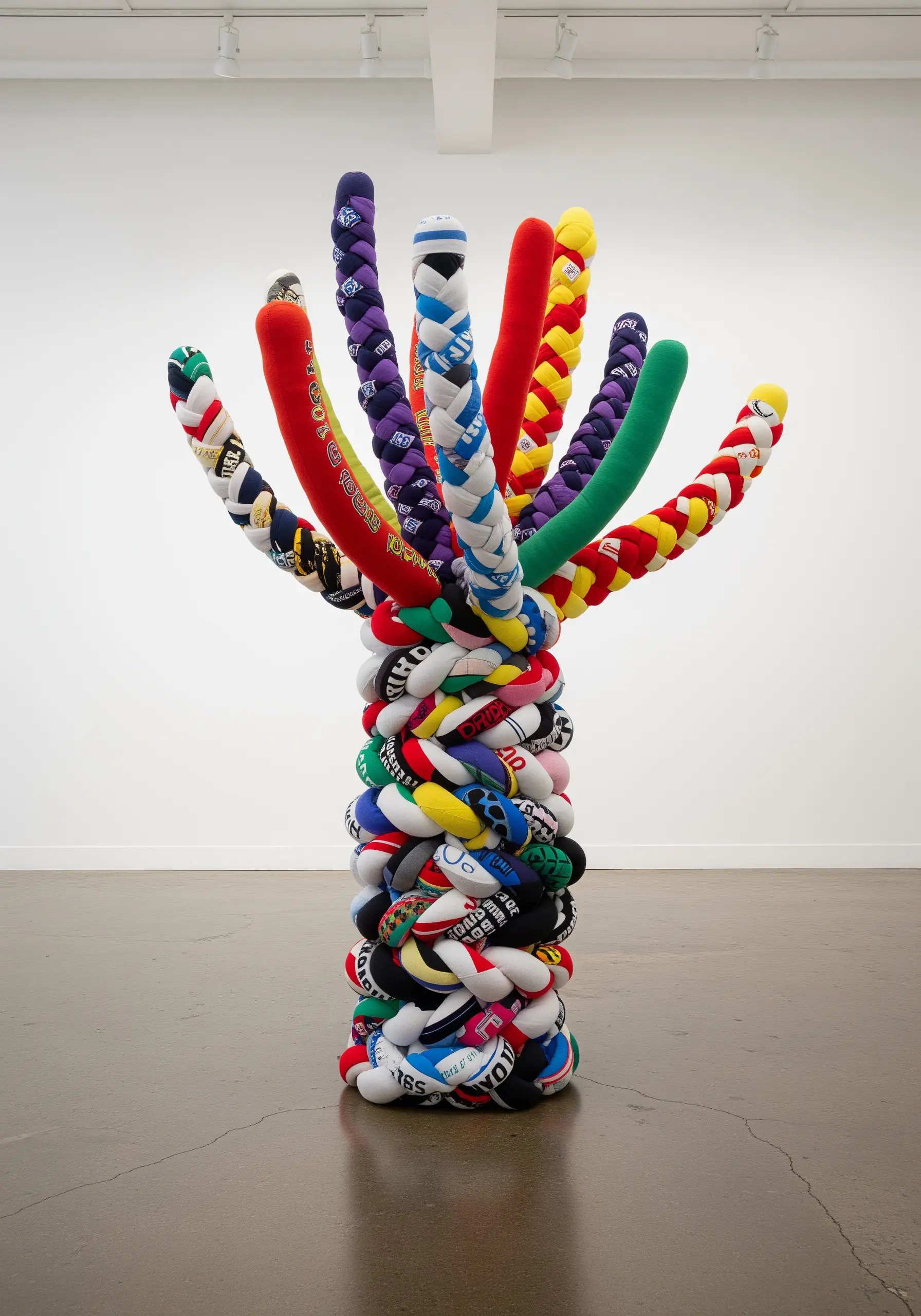
Give old t-shirts a new, three-dimensional life by transforming them into sculptural forms.
Start by cutting the shirts into continuous strips to create ‘t-shirt yarn,’ then stuff the resulting tubes with cotton batting or more fabric scraps for volume.
Braid several of these stuffed tubes together, focusing on color blocking and pattern interplay from the original shirt graphics.
Coil, twist, and stitch the braids together to build your structure, using a heavy-duty needle and thread to secure the form from the inside.
This method moves beyond the flat surface, creating fiber art installations that turn simple fibers into extraordinary art, driven entirely by shape and color.
3. Construct a Portrait with Fabric Collage
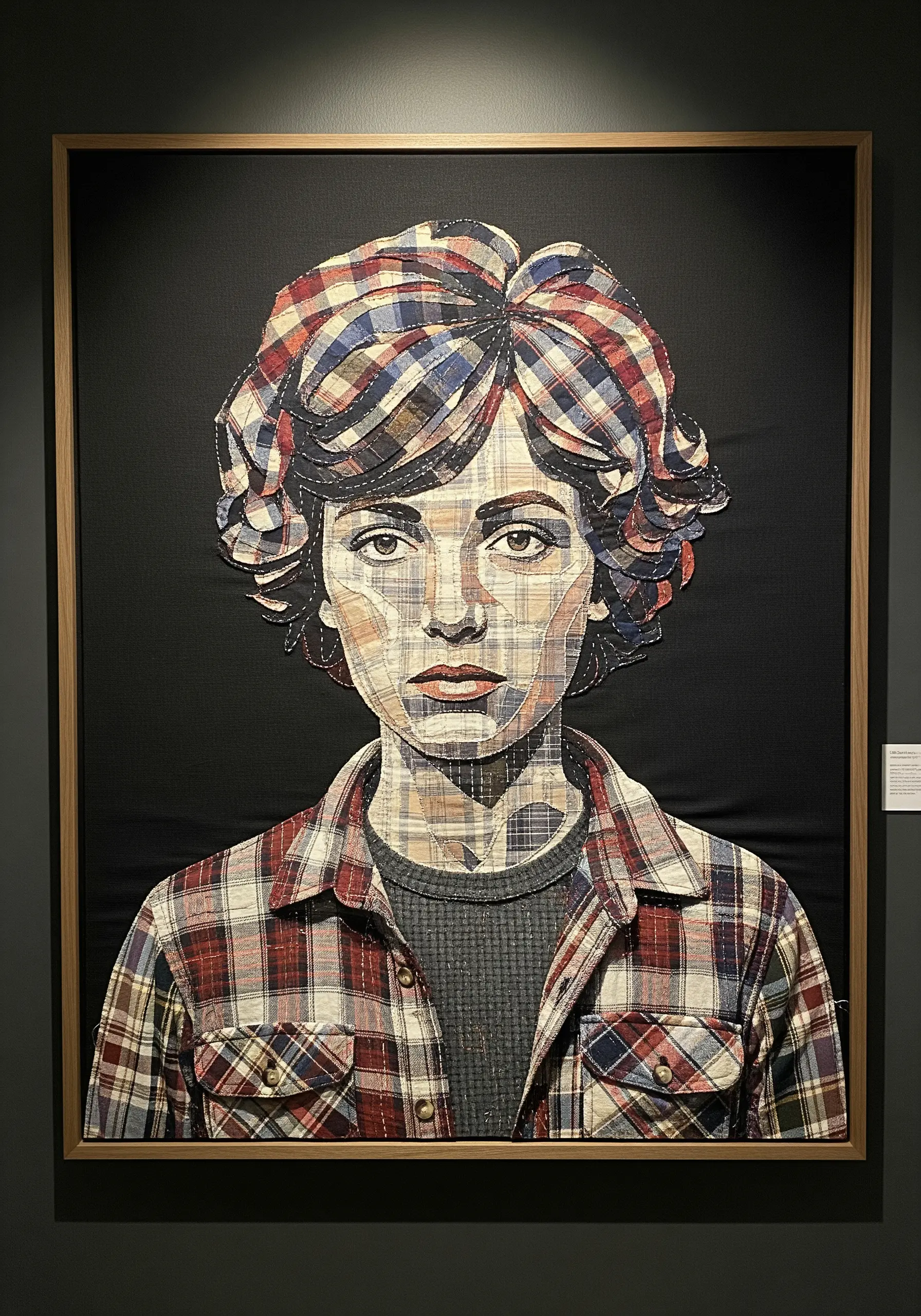
Create a stunning portrait not with paint, but with the patterns and tones of old plaid shirts.
Begin by simplifying a photograph into distinct shapes of light, shadow, and mid-tone, creating a map for your fabric pieces.
Cut the shirts into fragments, assigning different plaids to different values—the pattern’s density and color can create surprisingly nuanced shading.
Arrange the fabric pieces on a dark, solid background, and then use free-motion machine stitching or simple hand stitches to ‘draw’ the contours and details over the collage.
The thread lines unify the patchwork, turning disparate patterns into a cohesive and expressive image, much like hand-stitched portrait wall art ideas.
4. Cultivate a Botanical Blazer Panel
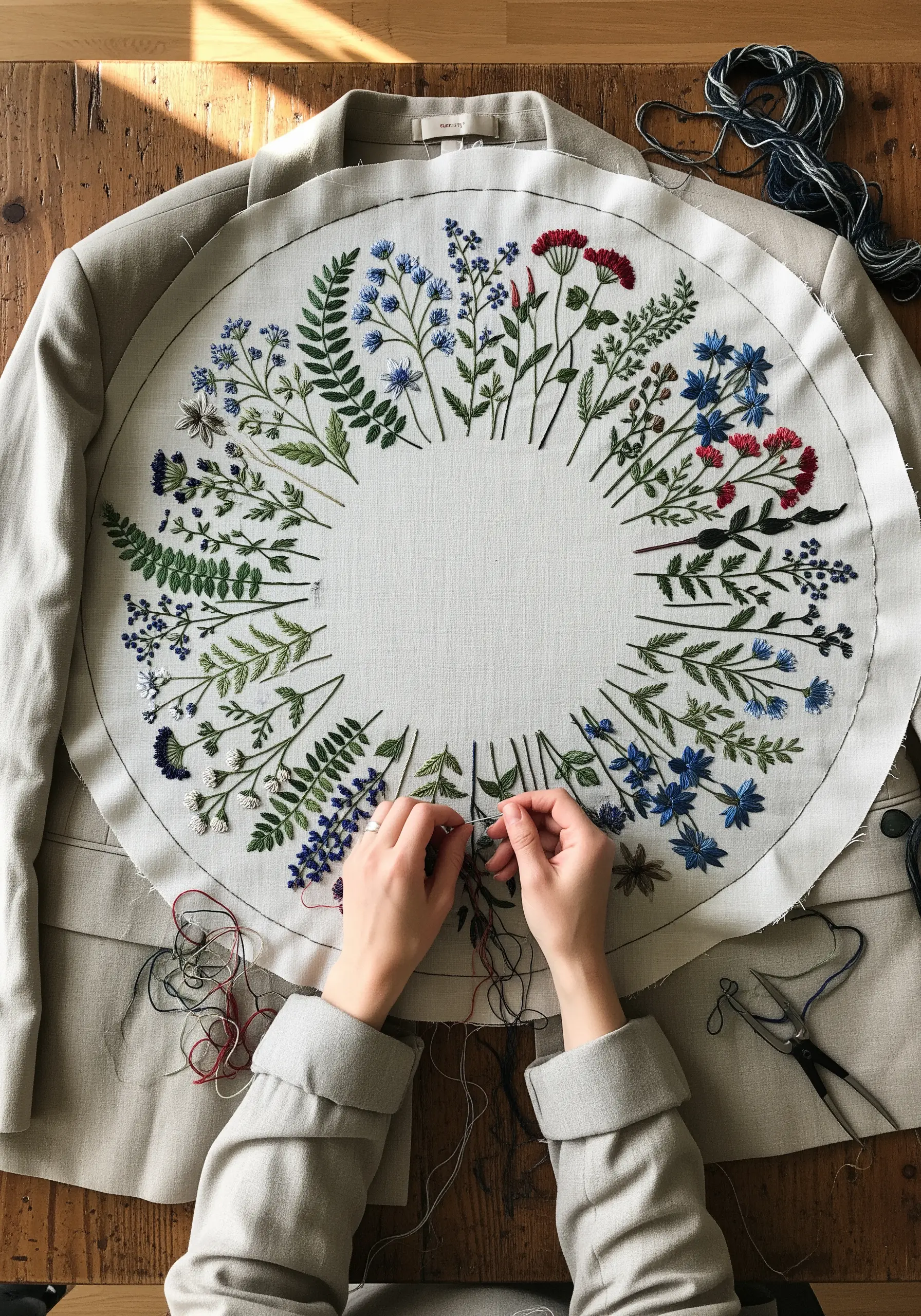
Elevate a plain blazer by adding a removable, richly embroidered botanical panel to the back.
Stitch your design onto a separate piece of high-quality linen or cotton canvas rather than directly onto the jacket lining. This prevents puckering and allows you to work comfortably in a hoop.
Vary your stitch techniques to give each plant dimension: use French knots for flower centers, satin stitch for petals, and whipped backstitch for clean, defined stems.
Once complete, you can either carefully stitch the panel onto the jacket’s back or add snaps for a removable piece of art.
This method transforms clothing into a canvas for your most delicate leaf embroidery stitches without compromising the garment’s structure.
5. Design a Gradient Leaf Mobile
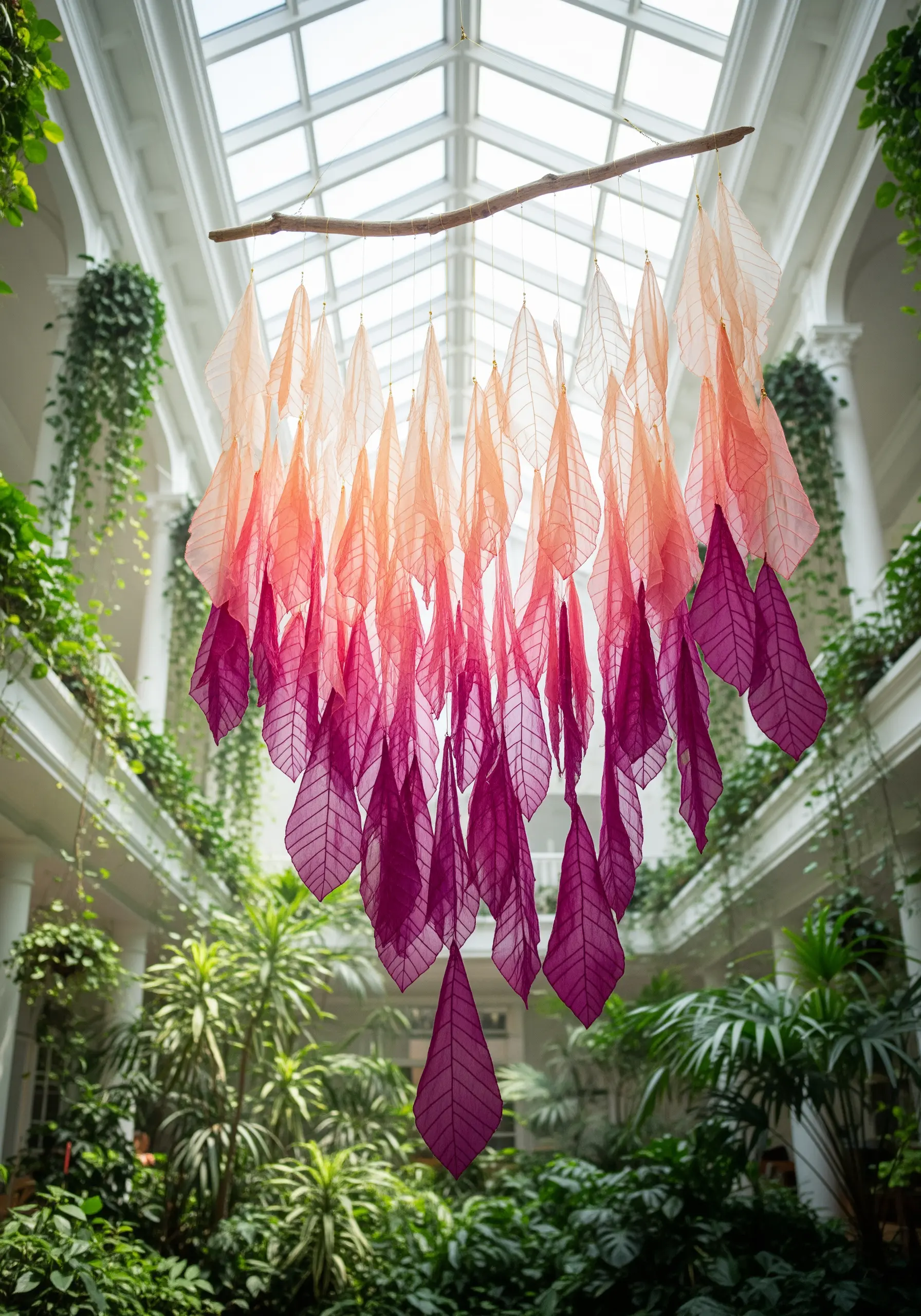
Craft an ethereal mobile using sheer fabrics reclaimed from scarves, curtains, or organza dresses.
Create a leaf template and cut multiple shapes from your fabric. If you have plain white or light-colored material, use fabric dyes to create a beautiful gradient effect before cutting.
Stiffen the fabric slightly with a spray starch to make it easier to handle, then carefully stitch a central ‘vein’ down each leaf shape with a single line of machine or hand stitching for structure.
Suspend each leaf from a natural branch using clear nylon thread at varying lengths to create a cascading effect.
This project celebrates translucency and light, resulting in one of those handmade art objects that will transform any room into a serene space.
6. Quilt a Modern Geometric Panel
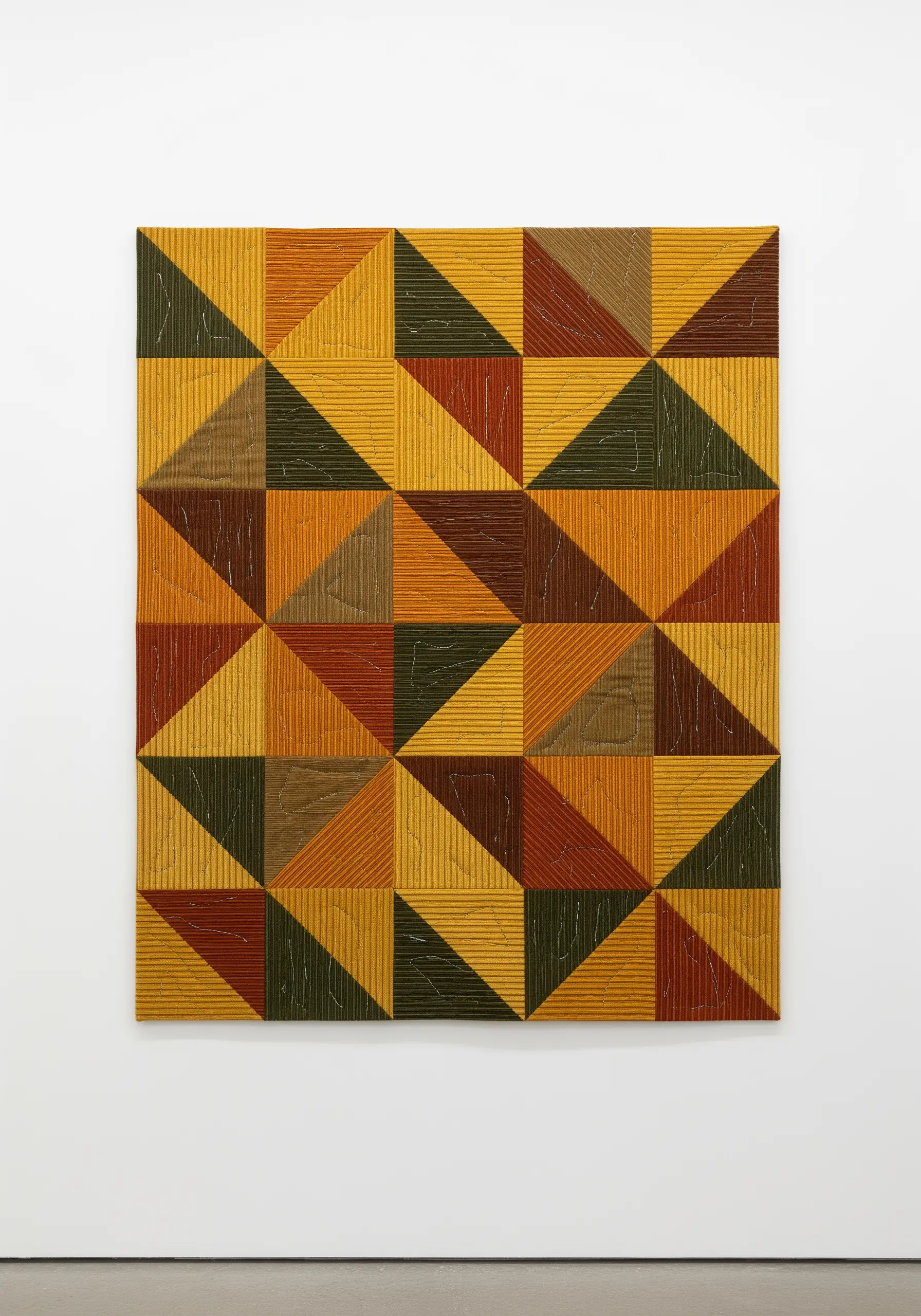
Use the rich textures of old corduroy trousers, wool skirts, and cotton twill to create a sophisticated geometric wall hanging.
Cut fabrics into precise triangles or squares, focusing on a cohesive, earthy color palette of ochre, olive, and terracotta.
Arrange and stitch the pieces together into a classic quilt block pattern, like flying geese or pinwheels.
The magic is in the quilting: use a contrasting thread color, like off-white or silver, to stitch straight, parallel lines across the entire piece.
This linear stitching adds a crisp, modern layer that unifies the different fabric textures, turning a traditional craft into one of your favorite modern geometric thread art ideas.
7. Sculpt a Vessel from a Felted Sweater
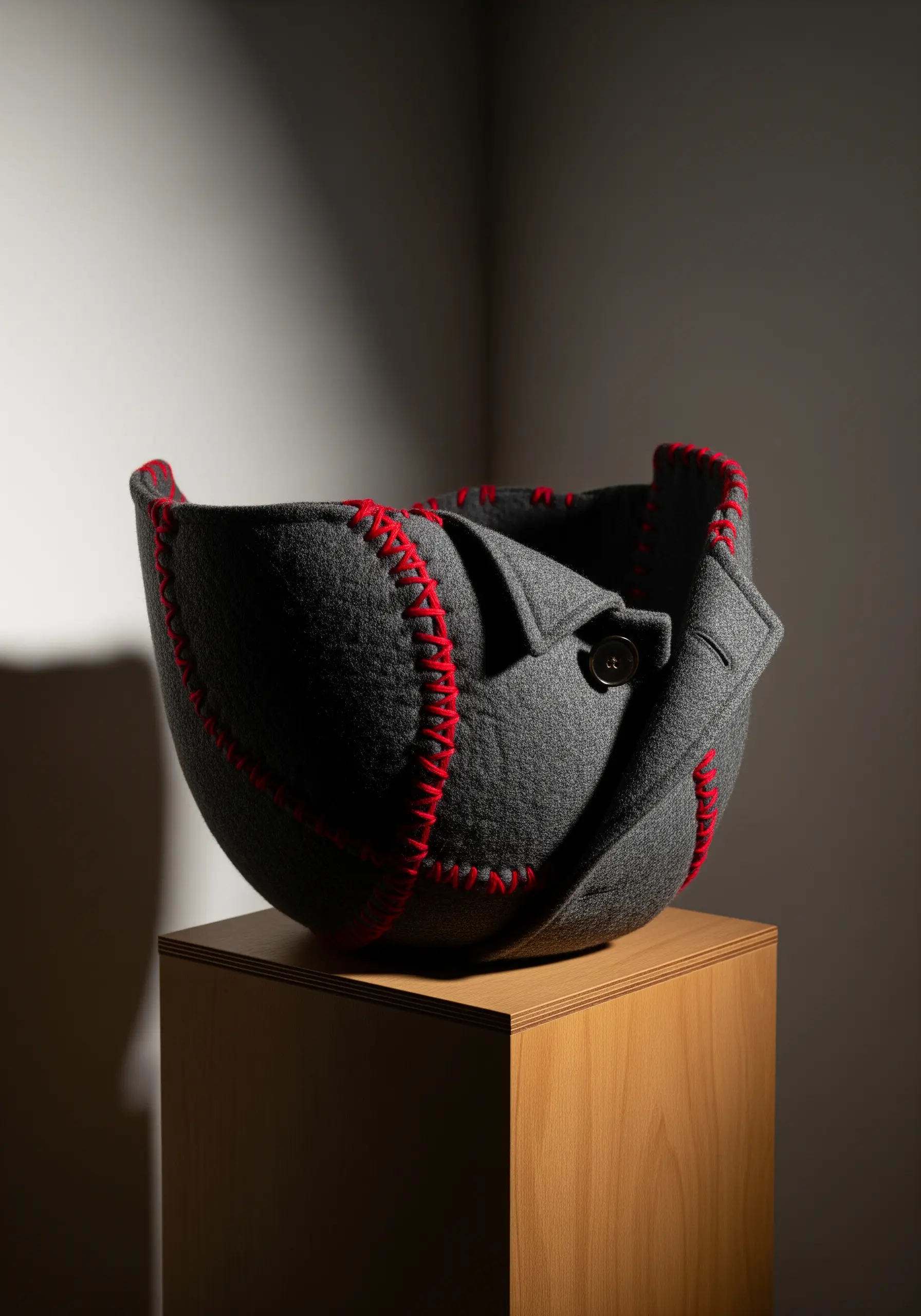
Give a worn-out wool sweater a second life as a sculptural vessel or bowl.
First, felt the sweater by washing it in hot water and drying it on high heat. This process shrinks and thickens the wool, creating a dense, non-fraying fabric that holds its shape.
Cut the felted wool into pattern pieces to form a bowl shape and stitch them together using a bold, decorative blanket stitch in a contrasting color like red or cream.
Incorporate original details like the sweater’s collar or button placket into the design for a clever nod to its past life.
This technique transforms a simple garment into one of your most charming DIY fabric crafts that double as unique handmade gifts.
8. Weave a Wall Hanging from Fabric Strips
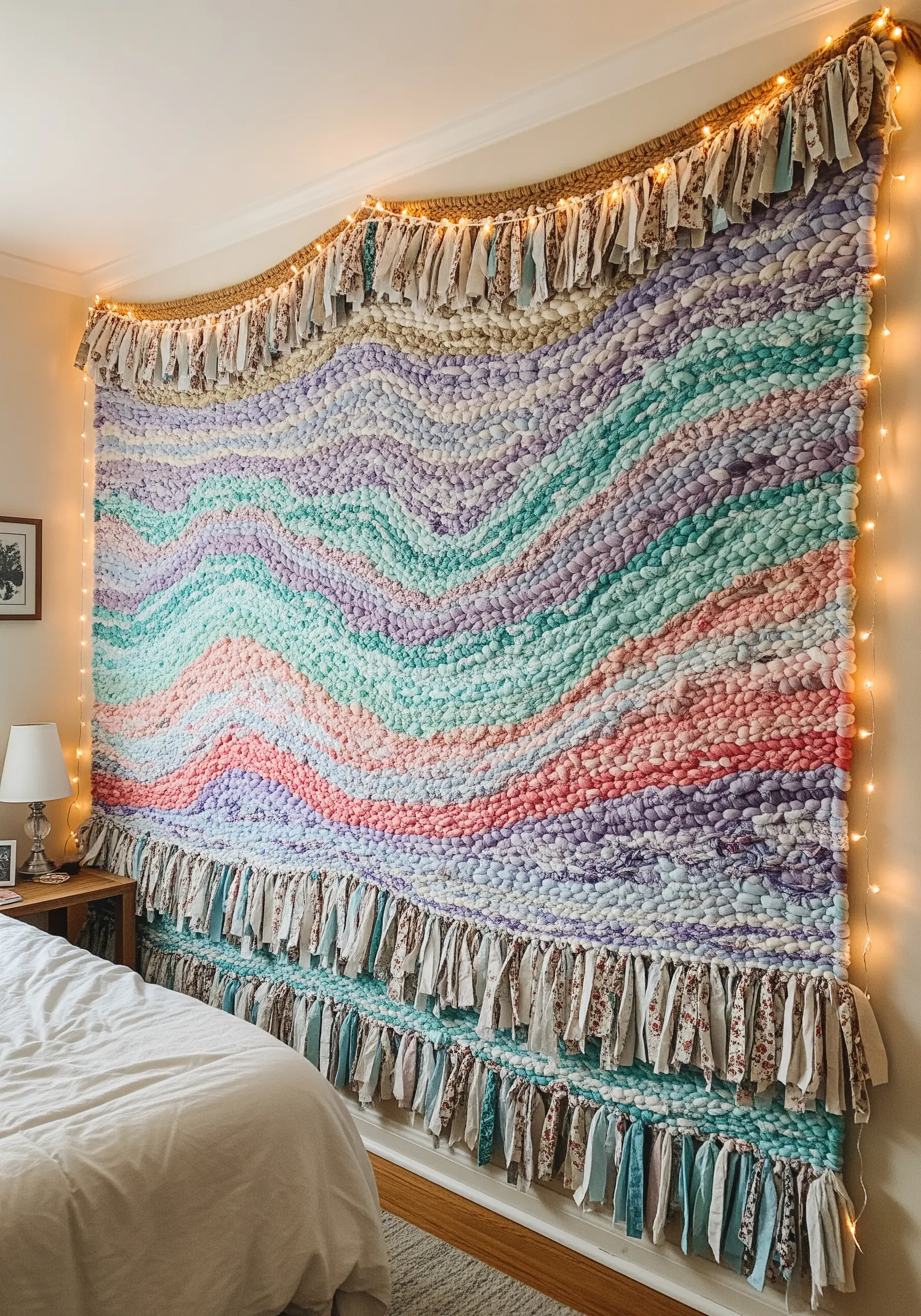
Create a stunning, large-scale woven tapestry using fabric yarn made from old t-shirts, bedsheets, and dresses.
Cut your fabric into one-inch strips and either knot or sew them together to create a continuous yarn.
Build a simple frame loom or use a large, sturdy picture frame to warp your vertical threads.
Weave the fabric strips through the warp, varying the colors to create soft, undulating waves. For added texture, alternate between a tight, plain weave and looser soumak knots.
This is one of the most effective upcycled fabric wall art projects using embroidery to reuse old clothes beautifully.
9. Create a Quilted Topographical Seascape
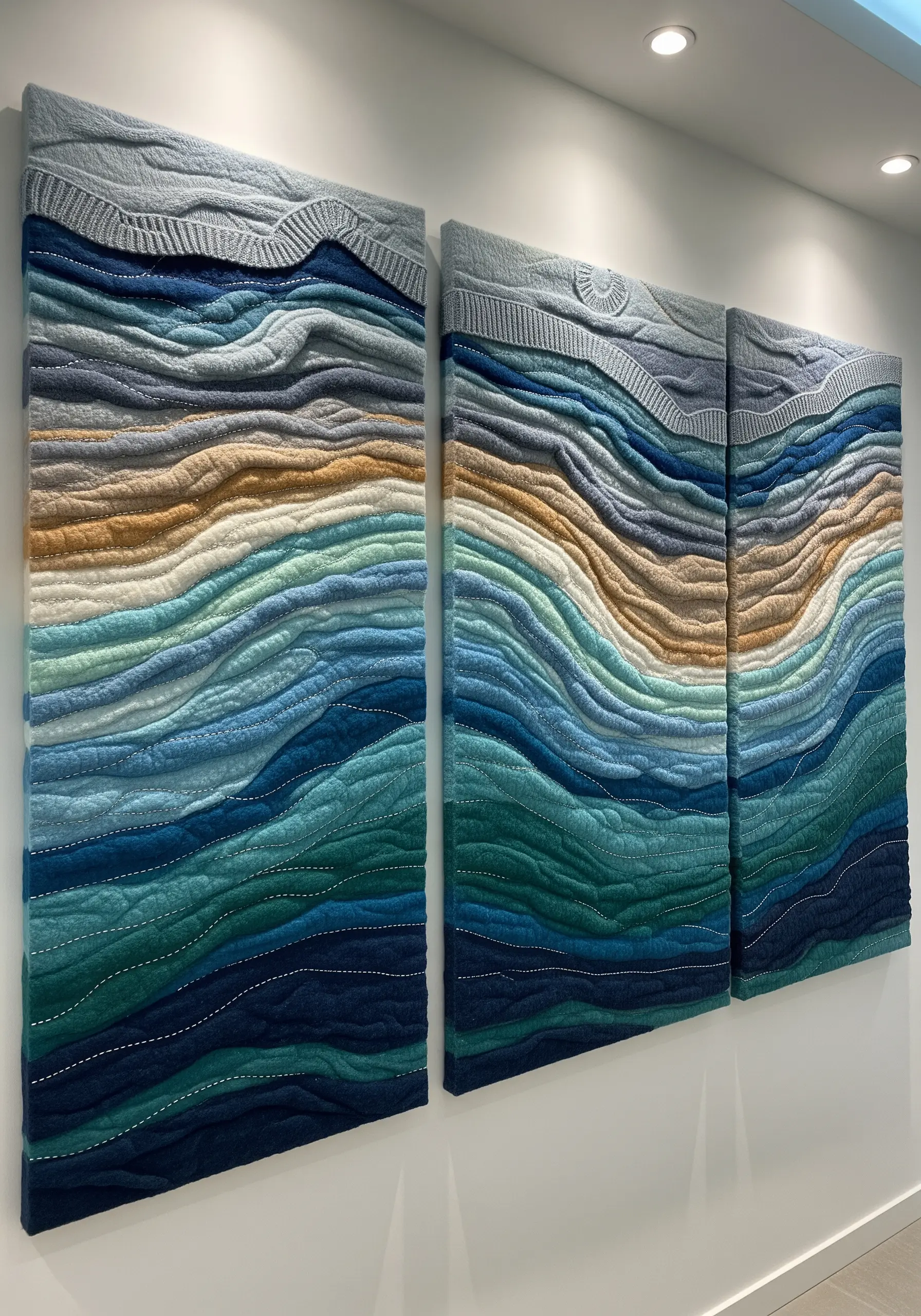
Mimic the rolling textures of the ocean by layering and quilting pieces of old sweaters and knitwear.
Select knits in a palette of blues, grays, greens, and sand tones to represent the sea and shore.
Cut the sweaters into wavy, organic shapes and layer them onto a backing fabric, placing thicker knits like cable-knit at the top to suggest foam.
Use a simple running stitch to quilt along the contours of each layer. This creates valleys and ridges, transforming the flat surface into a three-dimensional, topographical map.
This project is perfect for creating statement-size embroidered textile hangings that evoke a sense of calm and motion.
10. Craft a Graphic T-Shirt Collage
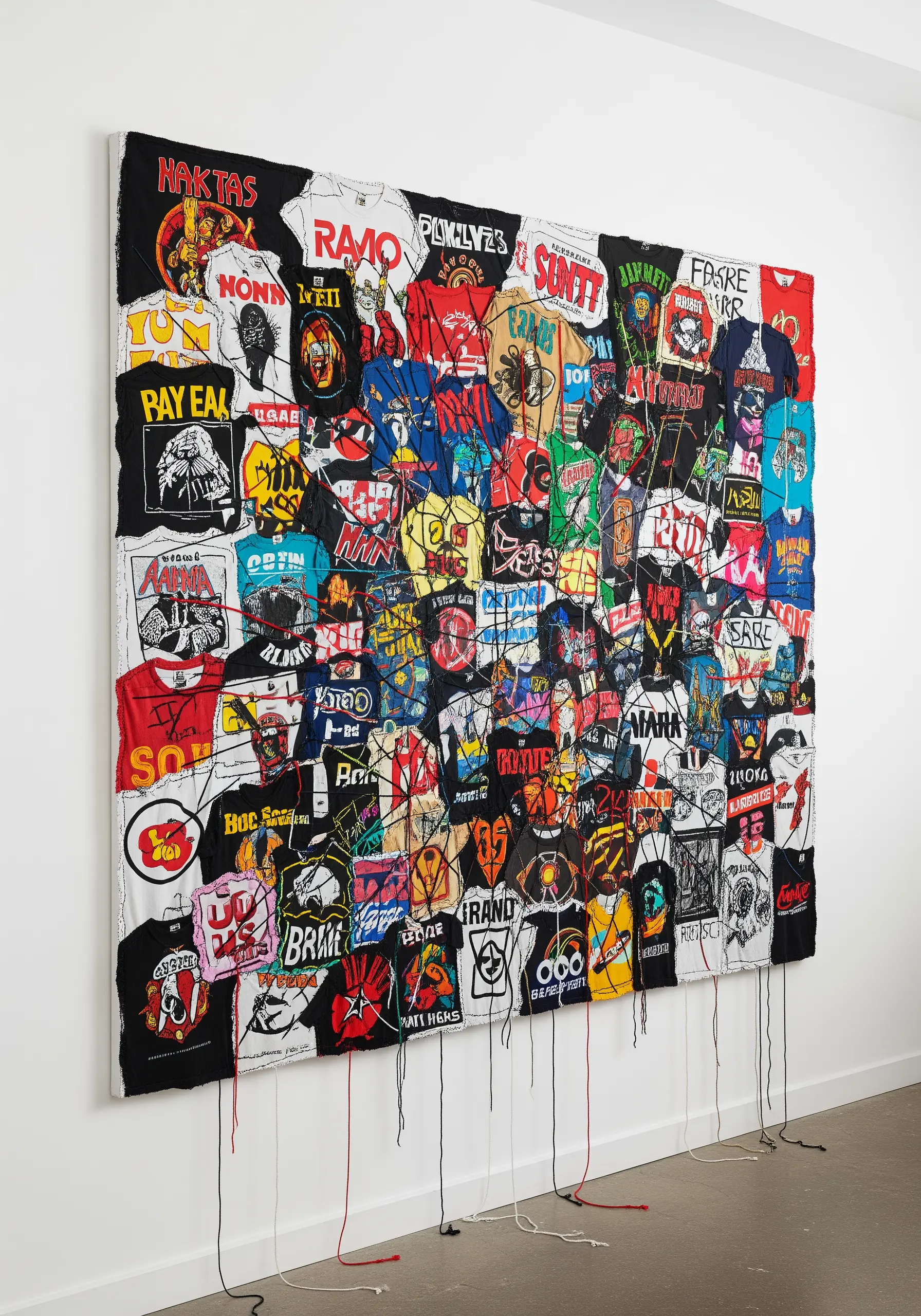
Preserve the memories held in old band t-shirts by composing them into a dynamic, modern quilt top.
Instead of cutting uniform squares, ‘fussy cut’ the most interesting graphic elements from each shirt, allowing their shapes to dictate the composition.
Arrange the pieces in an overlapping, high-energy collage on a dark backing fabric and pin them in place.
Use a bold, contrasting thread to stitch over the entire piece in a chaotic, web-like pattern. These expressive lines both secure the collage and add an artistic layer of energy, making it feel like one of your best abstract fabric collage embroidery ideas.
11. Design a Herringbone Mat from Silk Ties
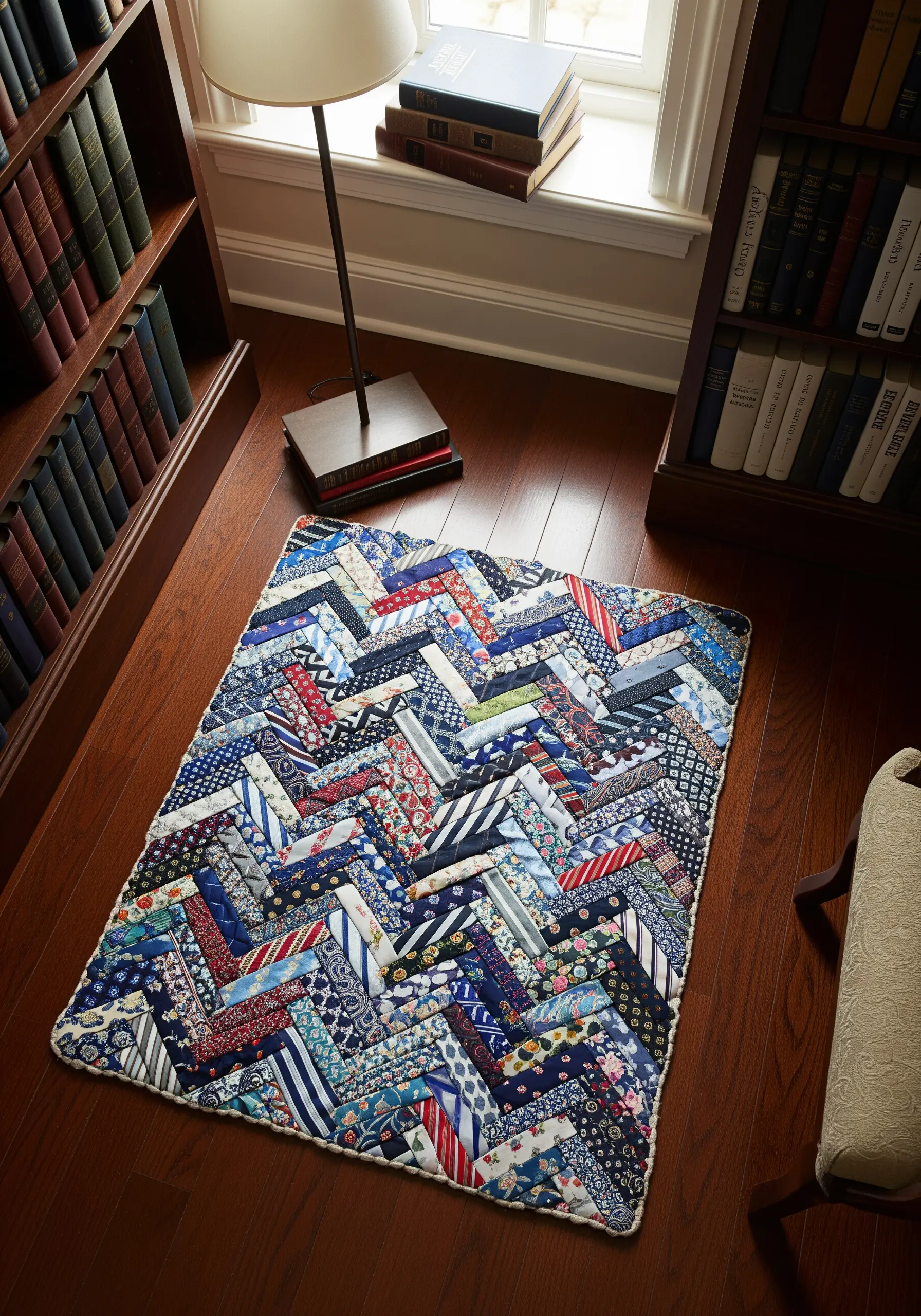
Transform a collection of old silk ties into an elegant and surprisingly durable herringbone mat or quilt.
Carefully deconstruct each tie by removing the stitching and lining, then press the silk flat with an iron on a low setting.
Cut the wide ends of the ties into uniform rectangles. The inherent angle of the tie’s construction is perfect for creating the diagonal lines needed for a herringbone pattern.
Arrange the pieces on a sturdy backing fabric, stitch them down, and finish the edges with a simple binding.
The rich mix of patterns and the subtle sheen of silk create a visually stunning piece from otherwise forgotten accessories, a perfect example of how you can find clever ways to combine fabric and thread for stunning art.
12. Construct a Dreamcatcher from Vintage Lace
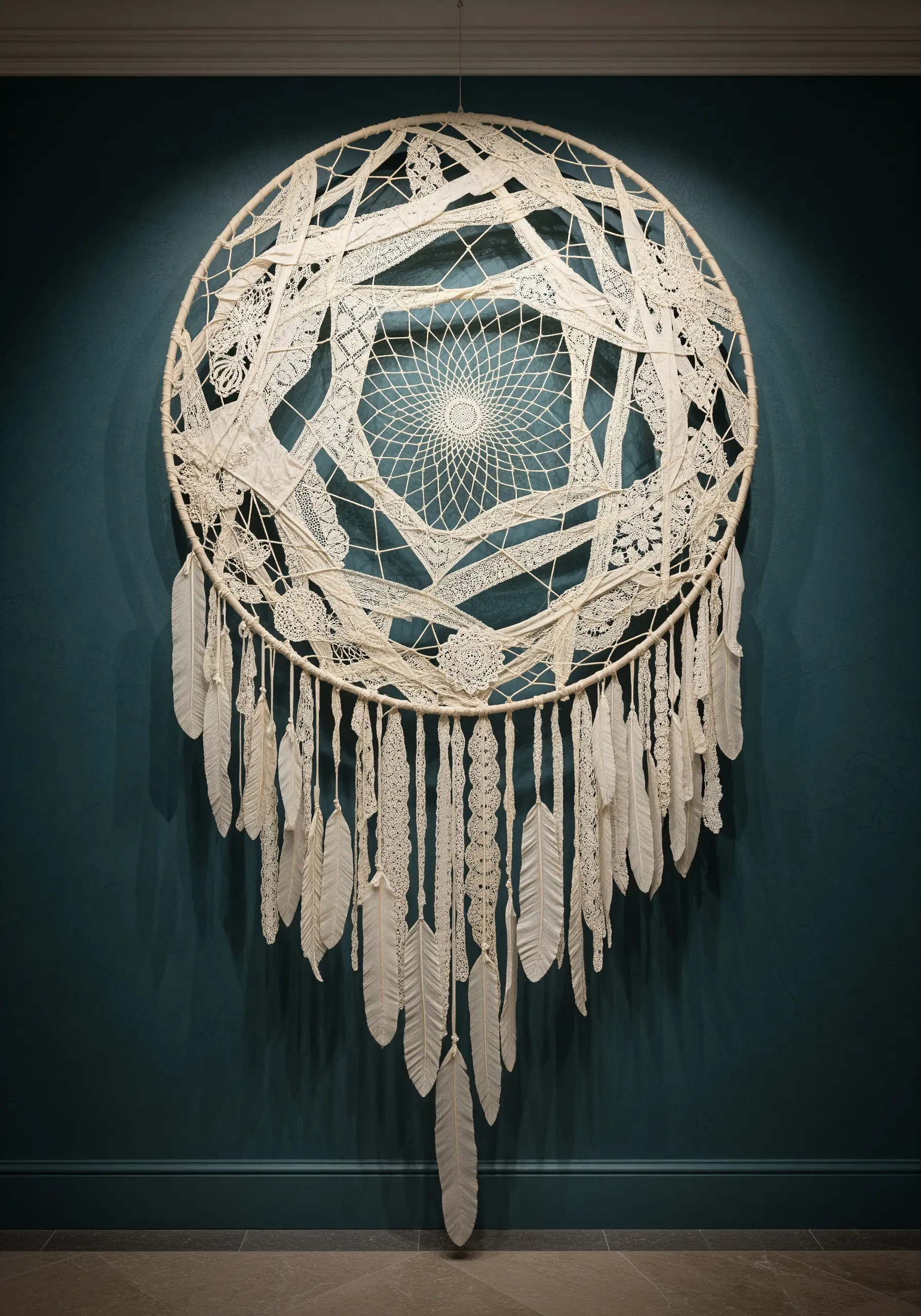
Breathe new life into stained or torn lace doilies, tablecloths, and garments by creating a large-scale, monochromatic dreamcatcher.
Use a large quilting hoop or a custom-made wooden ring as your frame. Stretch a central, intact doily across the middle as the focal point.
Cut the best parts from other lace items into ribbons and strips of varying lengths and textures.
Attach these lace ‘tails’ to the bottom of the hoop, allowing them to drape down. You can even cut feather shapes from stiffer lace or starched fabric to add to the tails.
This approach elevates found objects into a boho-inspired textile wall art pattern with elegance and history.
13. Build a Narrative Diorama with Fabric
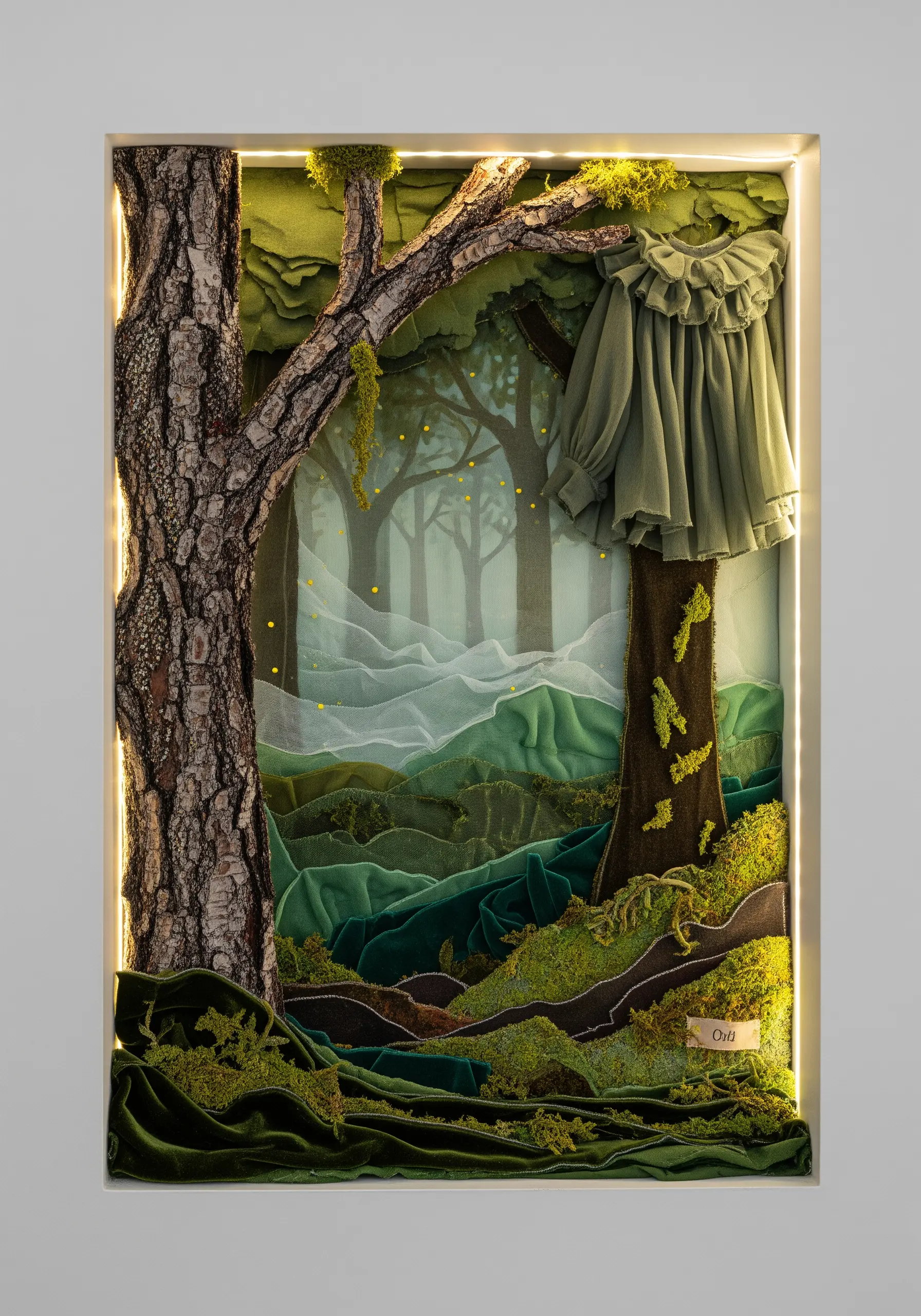
Tell a story by creating a three-dimensional scene within a shadow box, using fabrics of different weights and textures.
Use sheer fabrics like chiffon or tulle to create mist or distance in the background, and rich, opaque materials like velvet and corduroy for foreground elements like trees and moss.
Layer the fabric pieces, physically separating them to build actual depth. You can use small foam blocks or cardboard spacers hidden between the layers.
Incorporate a meaningful garment, like a child’s dress, as a central element in the story.
Subtle LED strip lighting around the inside edge of the box will illuminate the layers and bring your fabric world to life, making it one of those handmade art pieces that tell a story through texture.
14. Assemble a Modernist Fabric Screen
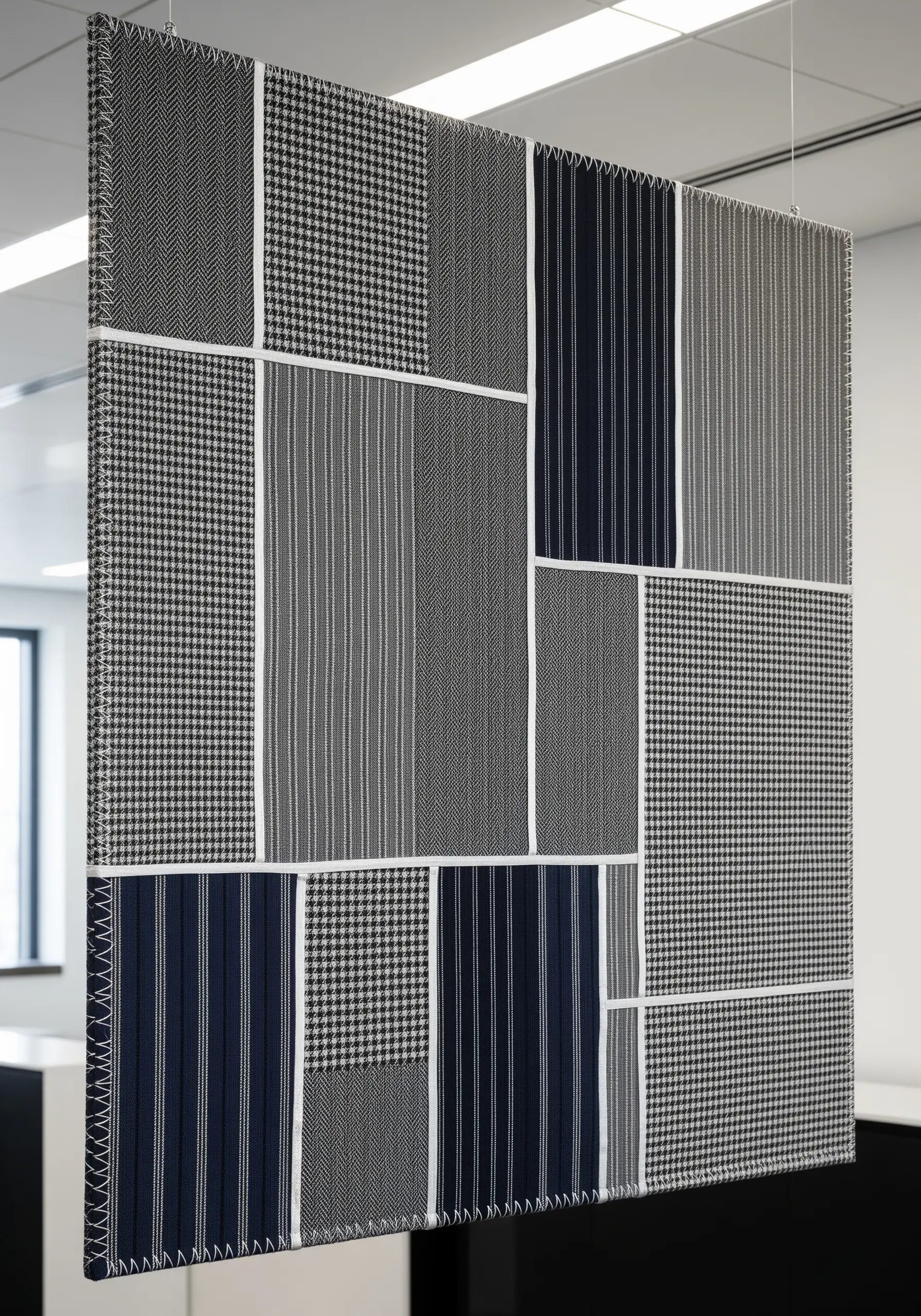
Create a functional piece of art, like a room divider or acoustic panel, from scraps of suiting material.
Gather fabrics with classic, graphic patterns like houndstooth, pinstripe, and herringbone in a restrained color palette of charcoal, navy, and grey.
Cut the fabrics into clean, geometric rectangles of varying sizes and arrange them in a balanced, Mondrian-inspired composition.
Instead of a traditional seam, join the pieces with a visible whipstitch or blanket stitch in a contrasting white or cream thread. This stitch becomes a key part of the design, defining the grid and adding a handmade touch to the modernist aesthetic.
This is a great way to explore monochrome embroidery wall art concepts in a functional form.
15. Sculpt with Knitted Fabric Loops
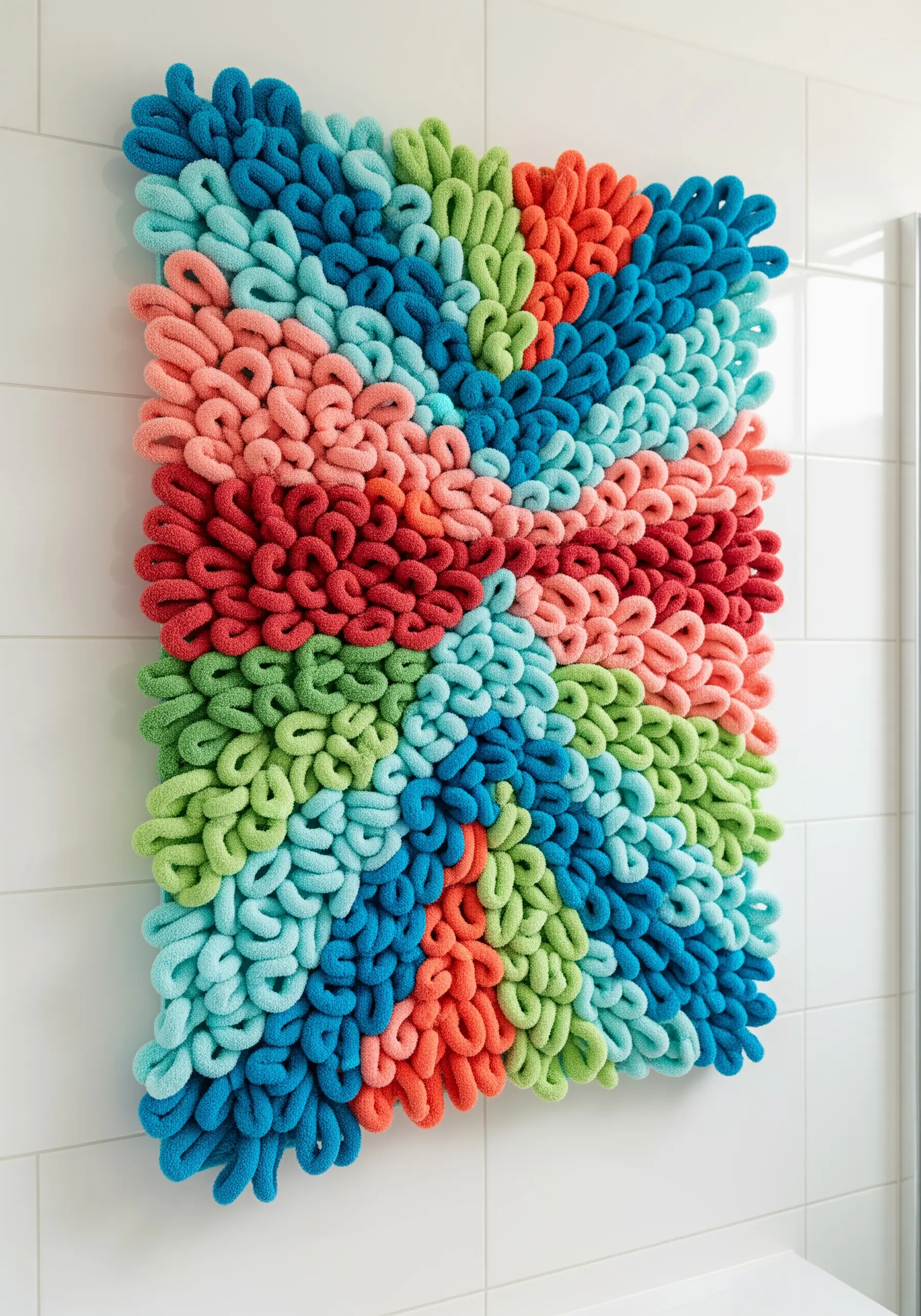
Create a vibrant, highly textural wall piece using the loops from old, chunky-knit sweaters or chenille blankets.
Deconstruct the garments to harvest the yarn. If using fabric, cut it into strips and sew it into tubes.
Work on a sturdy canvas or burlap backing. Using a rug-hooking tool or a large crochet hook, pull loops of your fabric yarn up from the back to the front.
Don’t cut the loops; instead, keep them connected to create a dense, coral-like texture. Plan your colors in blocks or flowing organic shapes for maximum visual impact.
This tactile technique turns simple materials into one of the most inviting yarn wall art pieces.
16. Paint a Translucent Folding Screen
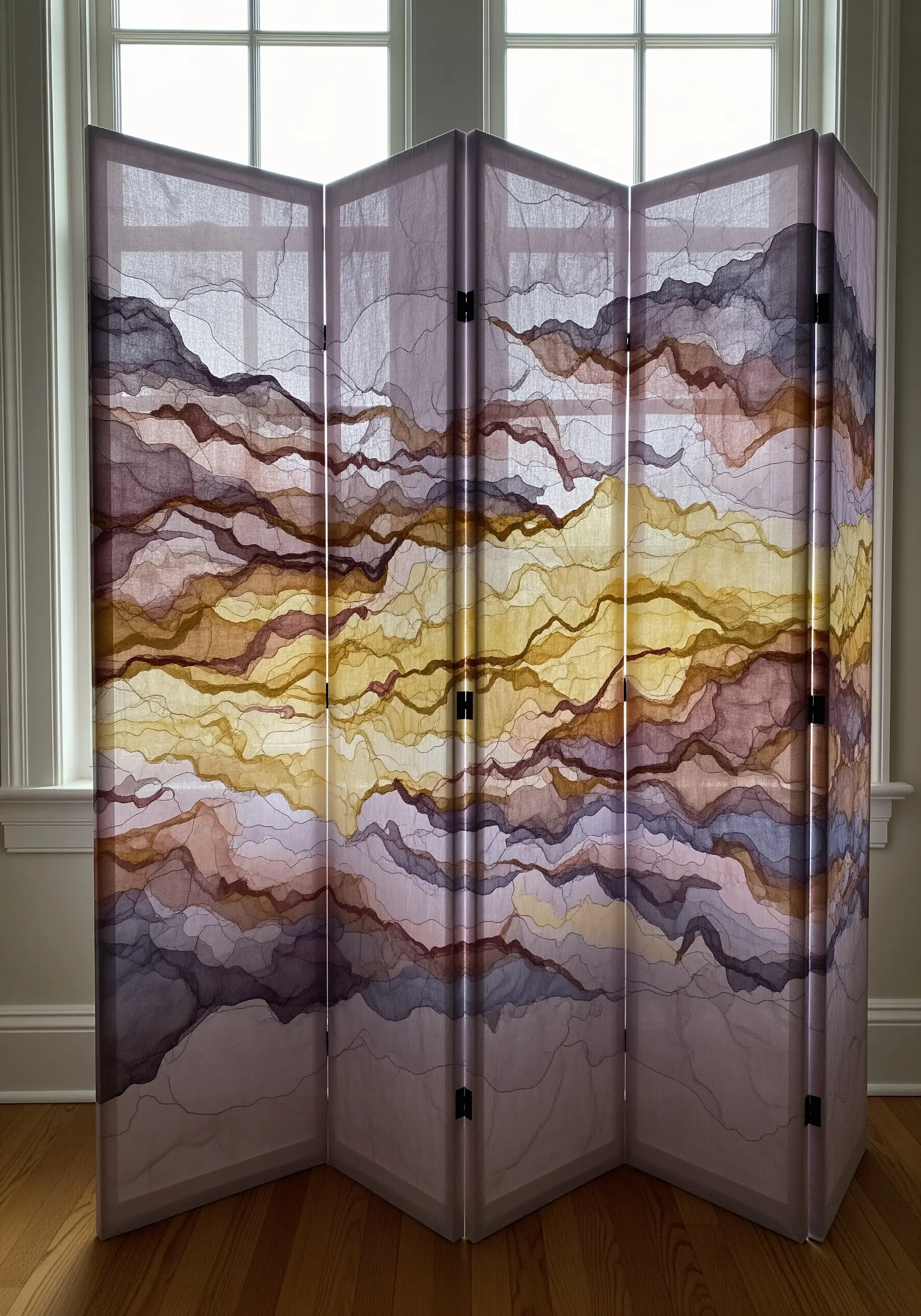
Transform a simple folding screen into a piece of fine art using old linen sheets or sheer cotton curtains as your canvas.
Stretch the fabric tightly over each panel of the screen. Prepare fabric dyes or inks in a palette of coordinating colors, watering them down to achieve a translucent, watercolor-like consistency.
Paint directly onto the stretched fabric, allowing the colors to bleed and blend into one another to create soft, atmospheric layers like an abstract landscape.
When light shines through the screen, the colors will glow, turning the entire piece into a functional light sculpture. This is a beautiful way to create watercolor-style embroidery patterns for bedrooms on a larger scale.
17. Deconstruct Denim into Abstract Art
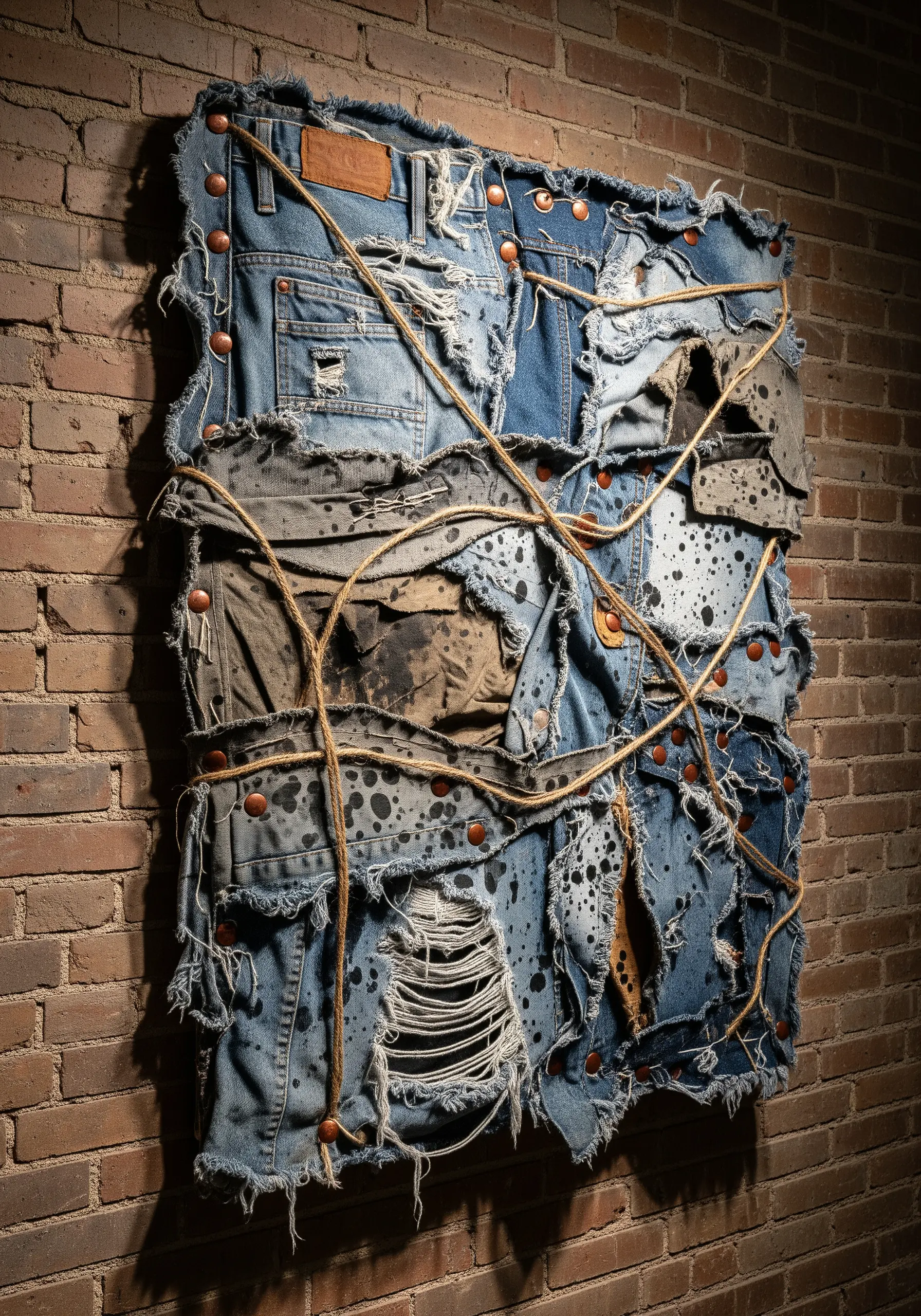
Create a raw, expressive piece of wall art by focusing on the deconstruction of denim rather than its assembly.
Start with several pairs of old jeans and subject them to distressing techniques: sanding, ripping, and bleaching. Introduce splatters of paint or ink for added texture.
Instead of a neat collage, layer the ravaged pieces in a chaotic yet balanced composition on a wooden frame.
Wrap the entire piece with coarse twine or rope, compressing the layers and adding a sculptural, constrained energy to the work.
This approach transforms denim from a simple textile into a medium for abstract thread embroidery ideas expressed through texture and tension.
18. Create Flow with Velvet and Metallic Thread
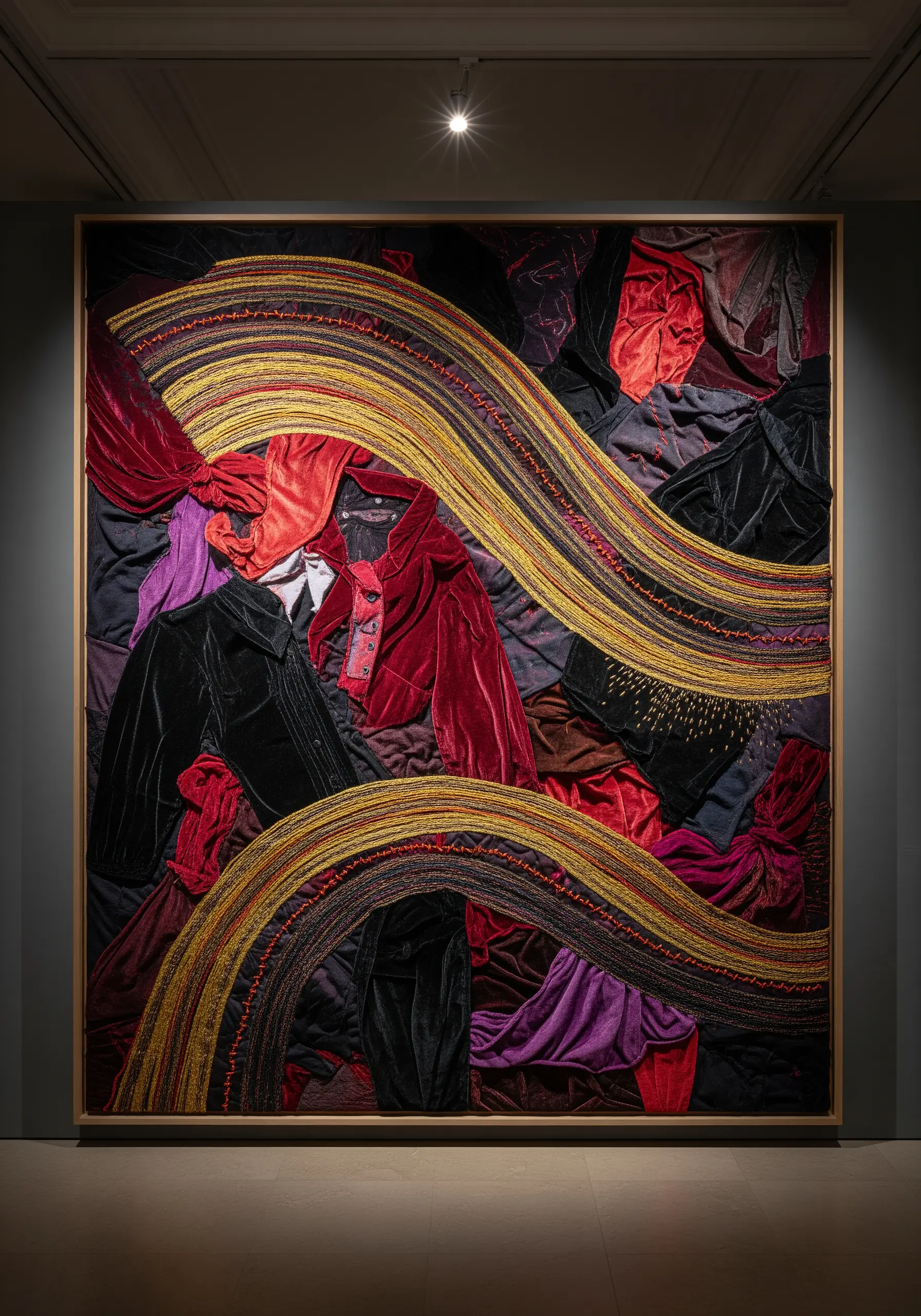
Combine the luxurious textures of old velvet garments with the shimmer of metallic thread to create a dynamic, large-scale abstract piece.
Drape and fold fabrics in rich jewel tones—burgundy, black, deep purple—onto a large canvas, creating soft shadows and a sense of movement.
Secure the draped fabric, then use a sewing machine with a free-motion foot to ‘draw’ sweeping, river-like lines across the composition with gold and copper metallic threads.
Vary the density of the stitching, creating solid bands of shimmer that flow into scattered ‘sprays’ of stitches.
This technique combines soft sculpture with thread painting, resulting in abstract embroidery patterns that turn empty walls into luxury art.
19. Design a Gradient Irish Chain Quilt
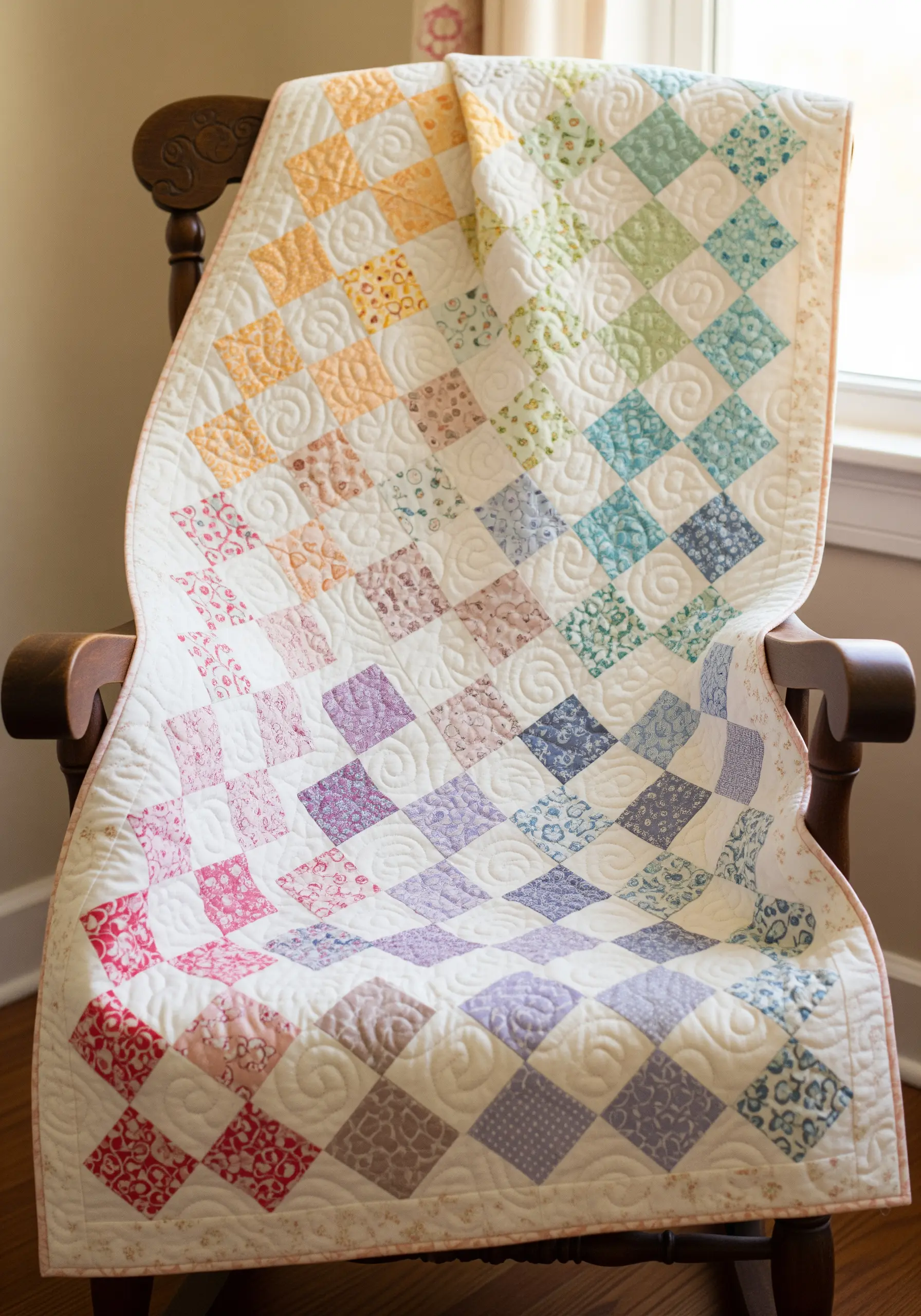
Give the traditional Irish Chain quilt pattern a modern update by using fabric scraps from old clothing to create a soft, rainbow gradient.
Gather cotton fabrics—from dresses, shirts, and pajamas—and sort them meticulously by color, from warm pinks and yellows to cool blues and purples.
Cut the fabrics into small, uniform squares and arrange them in a diagonal flow across the quilt top, blending one color into the next.
The quilting itself—the stitched pattern holding the layers together—can add a secondary design. A swirling, continuous line stitch softens the blocky grid of the patchwork.
This is a wonderful project for giving new life to sentimental fabrics, especially for creating dreamy baby clothing embroidery ideas on a larger scale.
20. Adorn Nature with Knitted Patchwork
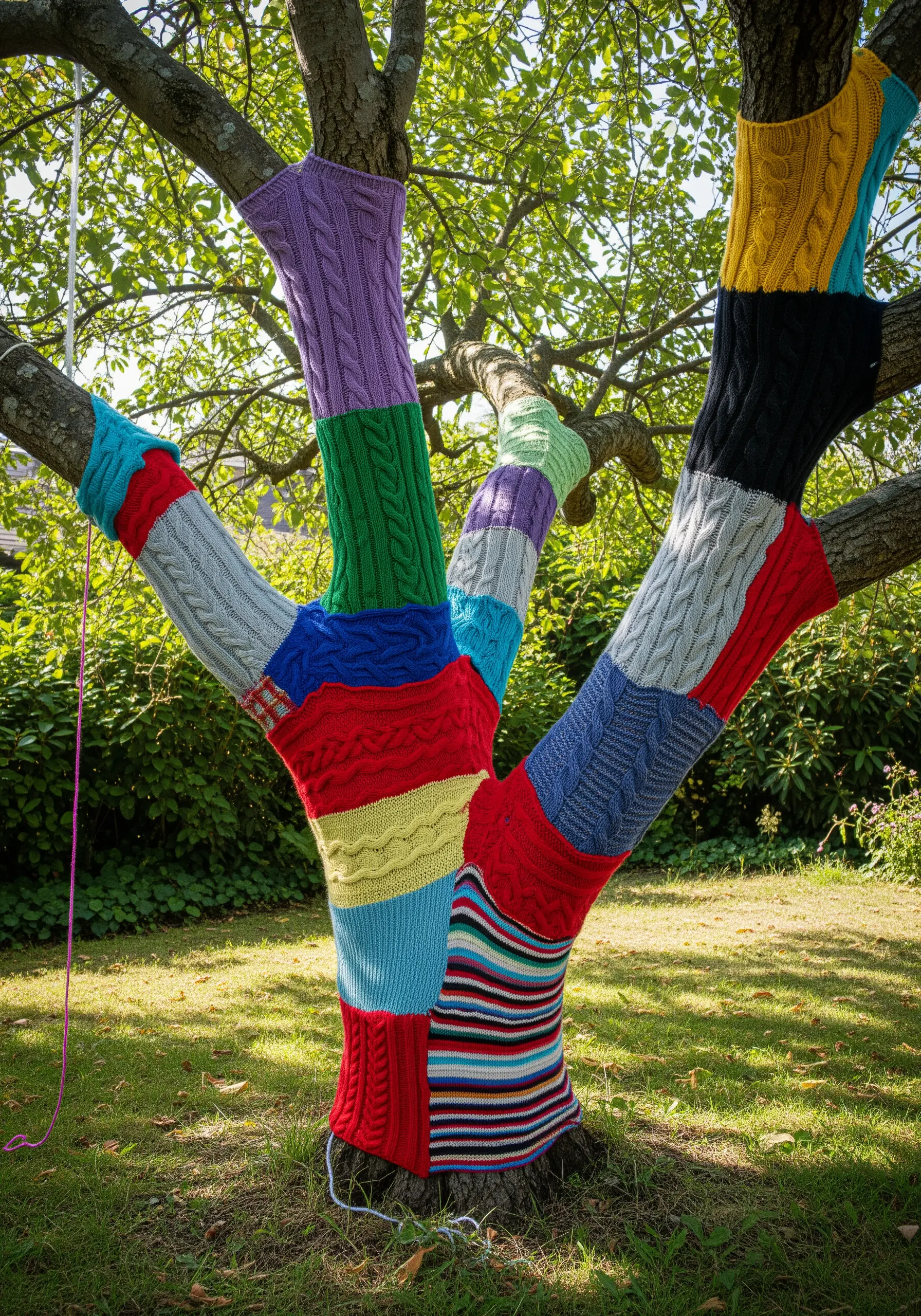
Take your fabric craft outdoors by creating ‘yarn bomb’ installations from old, unraveled sweaters and unfinished knitting projects.
Knit or crochet the salvaged yarn into colorful patchwork panels of varying textures and stitch patterns, like cable knit, ribbing, and garter stitch.
Instead of creating a single garment, you are creating a flexible textile ‘skin’ that can be wrapped around a tree trunk or branch.
Stitch the panels together directly on the tree for a custom fit. This joyful, temporary installation brings a touch of handmade warmth and unexpected color to the natural environment.
This is one of the most public-facing unexpected fabric crafts you can try.
21. Embellish Leather with Celestial Embroidery
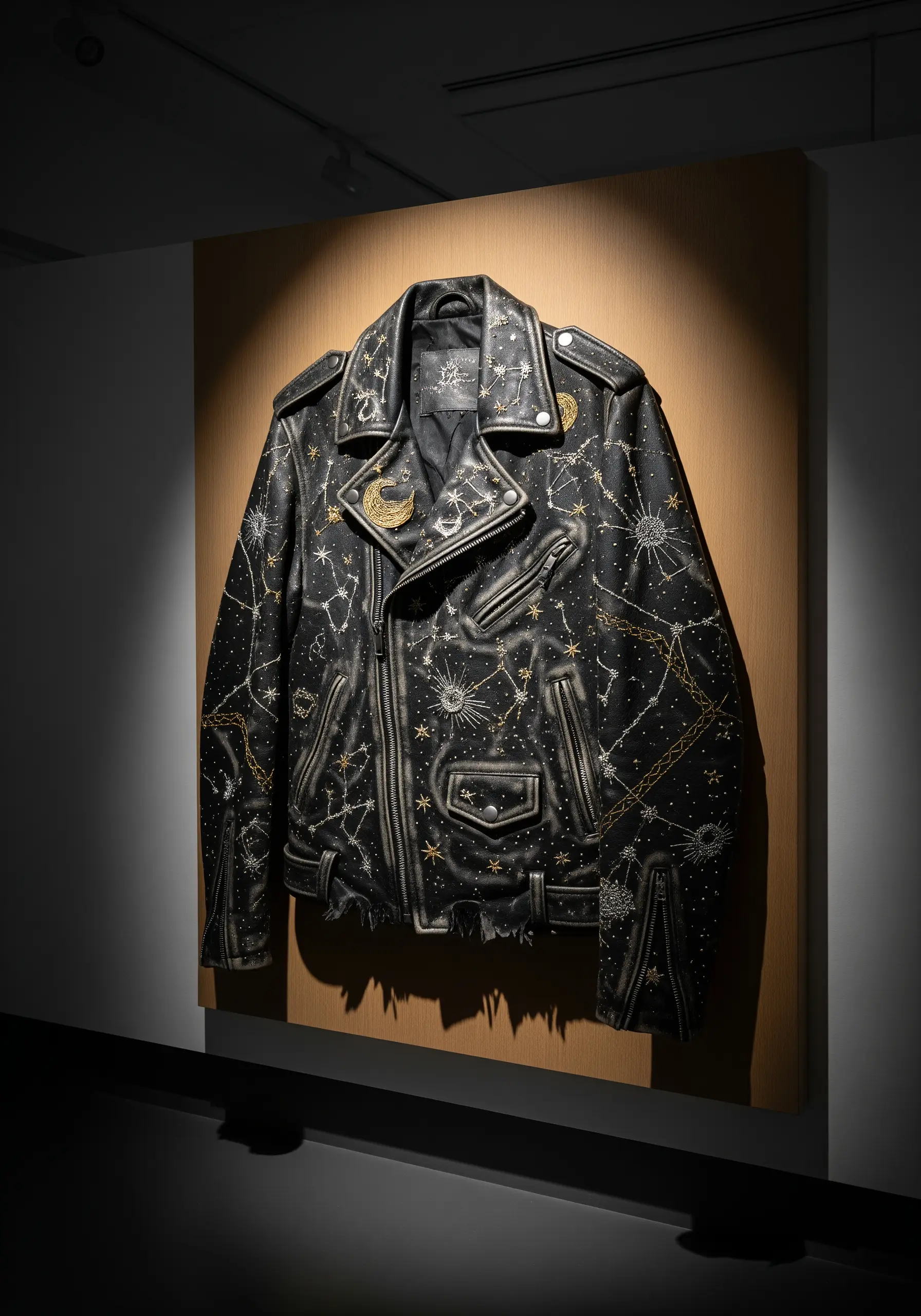
Transform a worn leather jacket into a piece of wearable cosmic art with hand embroidery.
You’ll need a special leather needle, which is designed to pierce the material cleanly, and a thimble to protect your fingers.
Use a high-contrast thread, like metallic gold and silver, to stitch constellations, stars, and moons across the jacket’s back and lapels.
Vary your stitches: use simple backstitches for constellation lines, scattered seed stitches for distant stars, and a dense satin stitch for a crescent moon.
Instead of knotting on the back, leave long tails and secure them with a dab of fabric glue on the inside lining. This creates a bold statement, turning a classic garment into one of your favorite vintage-inspired denim jacket embroidery motifs, but with an edgier feel.