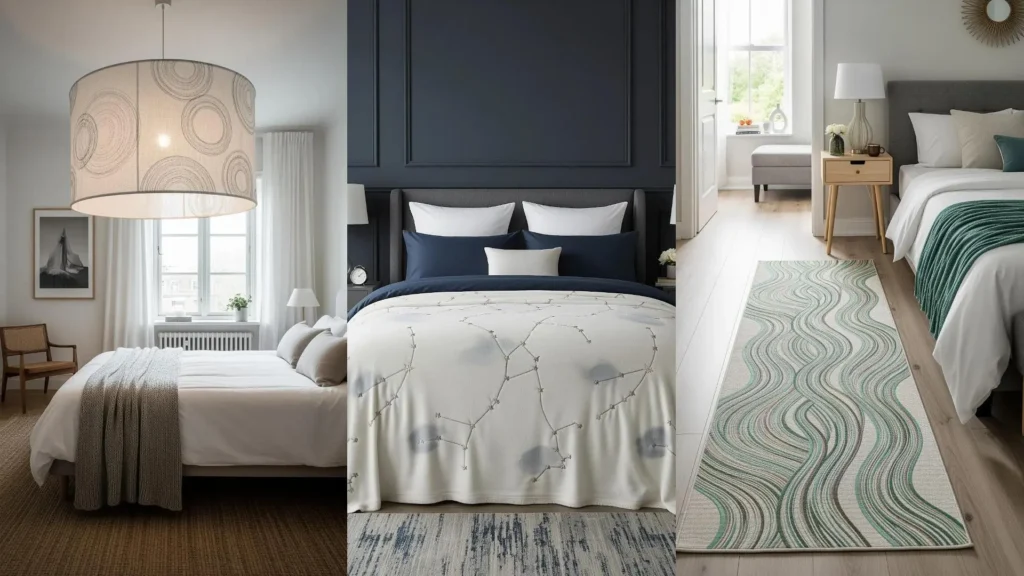
In a world that often feels loud, your bedroom should be a sanctuary of calm. And one of the most personal ways to create that serenity is through the quiet, intentional act of embroidery. But this isn’t about complex, colorful patterns; it’s about the profound beauty of a single, well-placed line.
Think of your thread as ink and your fabric as paper. Each idea here is an invitation to explore how a simple stitch—chosen with care and executed with focus—can transform a plain pillowcase, a linen throw, or a simple wall hanging into a piece of minimalist art. We will move beyond just following a pattern and into the *why*—why a certain stitch creates a smoother curve, why a specific thread weight adds presence, and why negative space can be your most powerful tool.
These techniques are designed to be accessible, helping you create a space that feels not just decorated, but deeply and authentically yours. Let your needle and thread become tools for mindfulness, crafting a bedroom that is a true reflection of peace and personal style.
1. The Continuous Line Portrait

To achieve the fluid, uninterrupted look of a single-line drawing, use a whipped backstitch or a stem stitch.
These stitches create exceptionally smooth curves that mimic the gesture of a pen on paper.
Work with three or four strands of six-strand cotton floss to give the line a confident presence without appearing bulky on a linen-blend cushion cover.
This technique elevates a simple sketch into a piece of tactile, gallery-style hoop art that feels both modern and personal.
2. Sculptural Lines with Couching

For a large-scale design on a heavy textile like a bedspread, a standard stitch can get lost.
Instead, create a bold, dimensional line using the couching technique.
Lay a thick yarn or cotton cord along your design line, then use a thinner, matching embroidery thread to tack it down with small, perpendicular stitches.
This method produces a raised, sculptural effect, making your simple outline a powerful focal point on embroidered throws and blankets.
3. A Botanical Study in Stem Stitch

Capture the delicate nature of wildflowers using just one or two foundational stitches.
Use a fine stem stitch for the stalks and single detached chain stitches for tiny leaves and petals.
The key to creating visual depth is varying your thread weight: use two strands for the main stems and a single strand for the most delicate details.
This subtle shift transforms flat botanical line art embroidery patterns into something with realistic dimension and grace.
4. The Art of the Minimal Gesture

For fine, illustrative lines on soft pillowcases, a split stitch provides unmatched definition.
It creates a clean, solid line that resembles an ink drawing but retains the softness of thread.
Choose a thread color that is just a few shades deeper than your fabric for a tonal, sophisticated effect.
This approach keeps the design calm and integrated, proving that even easy small embroidery patterns can have a significant impact.
5. Celestial Balance in Bold Outline

When your canvas is a large wall hanging, your lines need confidence and presence.
Use a chain stitch to build a thick, textured outline that won’t get lost from a distance.
This stitch works up more quickly than a stem stitch and creates a beautiful, rope-like texture that catches the light.
It gives your line art a graphic, substantial quality, turning simple textiles into powerful stitched details that make plain walls pop.
6. Radiating Lines with Strategic Stitches

To create the elegant, fanned structure of a ginkgo leaf, think of your stitches as drawn lines, not fill.
Use long, straight stitches that radiate from the base of the leaf to the outer edge.
This isn’t a traditional satin fill; it’s a series of deliberate, individual lines that define the shape and its internal veins simultaneously.
Maintaining even tension is critical to prevent puckering, especially when working on hand-embroidery leaf patterns.
7. Stitching the Night Sky

To map out constellations on dark fabric, combine linear stitches with textural knots.
Use a simple backstitch with two strands of white floss for the connecting lines to keep them delicate and sharp.
For the stars themselves, use tiny French knots or seed stitches, varying their size slightly by wrapping the thread once or twice around the needle.
This contrast between line and point creates a dynamic visual map, turning bedding into a celestial chart with tiny embroidered accents.
8. Dynamic Movement in a Single Line

Capture the feeling of flight by subtly varying your stitch length within a single motif.
Use longer backstitches on the smooth, sweeping curves of a bird’s wing and shorter, tighter stitches on sharp turns like the beak or tail.
This technical adjustment is almost unnoticeable, yet it enhances the sense of motion and makes the simple outline feel more alive.
It’s a perfect technique for coastal-theme tiny embroidery art.
9. Cursive Lettering with Padded Satin Stitch

Transform flat text into a plush, dimensional statement with padded satin stitch.
First, create a foundation by outlining your letters with split stitch, then fill the interior with straight seed stitches.
Finally, cover this padding with smooth satin stitches laid perpendicular to the foundation.
This technique physically raises the lettering from the fabric, creating soft shadows and a luxurious, tactile finish for inspirational quote string art designs.
10. Rhythmic Abstraction with Overlapping Lines

When creating an abstract design with intersecting forms, clarity is key.
Use a whipped backstitch for every line to ensure a consistent, smooth, and slightly raised quality.
By maintaining this uniform line texture, the overlapping shapes create a sense of depth and rhythm rather than chaos.
The eye is drawn through the composition, appreciating the interplay of forms in these energetic abstract mixed-media embroidery ideas.
11. The Repetitive Rhythm of a Border

Embroidering a border on bedding requires precision for a professional finish.
Use a water-soluble transfer pen to mark your pattern perfectly before you begin.
A stem stitch is ideal for flowing, curved designs like waves, as it moves gracefully without creating sharp points.
Count your stitches within each repeating element to ensure the entire border is uniform, resulting in elegant and simple embroidery designs.
12. Intricate Detail Through Negative Space

For a complex, branching design like a tree, the space you *don’t* stitch is as important as the space you do.
Use a very fine backstitch or split stitch with just one or two strands of floss.
This approach allows the fabric to show through, creating a delicate, airy illustration that feels intricate without being heavy.
This focus on negative space is a hallmark of sophisticated organic embroidery designs.
13. High-Contrast Botanicals on Sateen

To make simple line art truly stand out, stitch with bright white thread on a colored cotton sateen.
The fabric’s natural, subtle sheen reflects light, which amplifies the brightness of the white floss and creates a crisp, clean look.
A simple, well-executed backstitch is all that’s required; the visual power comes from the striking color contrast.
This approach is perfect for nature-calm stitching projects that feel both fresh and elegant.
14. A Sampler of Textural Motifs

Develop your personal stitch style by creating a collection of small embroidered studies on fabric scraps.
Choose simple motifs—a leaf, a shell, a geometric shape—and render each one with a different line stitch.
This exercise allows you to directly compare the textural effects of a stem stitch versus a chain stitch or a backstitch versus a split stitch.
Pinning them up creates a beautiful visual reference, much like nature-themed embroidery samplers.
15. The Refined Edge of a Vine Border

A delicate vine or laurel border can elevate a simple pillowcase into a piece of heirloom-quality linen.
For this effect, the fern stitch is your most efficient and elegant choice.
It creates a central stem and symmetrical leaves in a single, fluid motion, ensuring your pattern remains perfectly balanced.
This classic detail works beautifully for many botanical stitch ideas, adding timeless polish.
16. Whimsical Motifs in a Single Color

Bring a playful, personal touch to your bedding with simple, charming motifs.
The key to keeping it sophisticated is to use a single, unexpected thread color for the entire design, like this soft aubergine.
A monochromatic palette unifies the illustration and prevents it from feeling juvenile, resulting in a look that is both sweet and stylish.
This works well for all kinds of animal-themed pillow stitching ideas.
17. Architectural Precision in Thread

To translate the clean, sharp lines of an architectural drawing into embroidery, precision is paramount.
Use a single strand of black cotton floss and a tiny, consistent backstitch.
To prevent any fabric distortion and maintain perfectly straight lines, iron a lightweight stabilizer to the back of your fabric before you begin stitching.
This technical preparation is essential for creating crisp minimalist embroidery wall art ideas.
18. The Naive Charm of a Simple Sketch

Embrace the effortless beauty of a quick, hand-drawn line by letting go of perfection.
Don’t focus on perfect symmetry or flawless curves; instead, allow your stitching to reflect the free-flowing energy of a simple sketch.
A stem stitch is ideal for this, as it naturally follows gentle curves and captures that spontaneous, illustrative charm.
It’s a perfect way to explore modern thread art ideas without pressure.
19. Geometric Presence with Whipped Stitch

Give your geometric line art a bold, raised quality by using a whipped stitch.
First, lay down a foundation of backstitch or chain stitch, then take a second thread and wrap it around the foundation stitches without piercing the fabric.
This technique doubles the line’s thickness and creates a smooth, cord-like texture that makes the pattern pop.
It’s an ideal technique for graphic beige and blush embroidery pillow ideas.
20. Creating an Airy, Organic Outline

For delicate, branching forms like coral or seaweed, a solid line can feel too heavy.
Instead, use a threaded running stitch to create a graceful, broken line that feels lighter and more organic.
This stitch adds a decorative twist to a basic running stitch, giving it more presence while maintaining an airy feel.
Pair it with soft, tonal colors for beautiful greige & ivory embroidery art ideas.
21. Illustrating Depth with Line Weight

Create an illusion of three-dimensionality using only thread by varying your line weight.
Use a thicker thread (three or four strands) for the elements in the foreground of your design, like the cover and spine of this book.
Then, switch to a finer thread (one or two strands) for the details in the background, like the lines on the pages.
This simple shift instantly builds perspective in your handmade embroidery projects.
22. Botanical Labels with Integrated Text

Combine illustration and lettering to create a classic, functional design that feels both useful and beautiful.
Stitch the delicate herb motifs using a fine backstitch, and then use the exact same stitch and thread weight for the text below.
Using a simple, clean font and a consistent stitch ensures the entire design feels cohesive, integrated, and timelessly elegant.
It is an ideal technique for line art garden motifs on kitchen linens or towels.
23. A Meditative Line in Large Scale

Make an impactful statement with a single, flowing line on an oversized textile panel.
To achieve a line that is both bold and sculptural, use a chunky yarn and the couching technique.
This method allows you to affix a thick fiber to the fabric surface, creating a powerful graphic element that would be impossible with standard embroidery.
It transforms a simple concept into one of those striking fiber art installations for the home.
24. The Mindful Path of a Labyrinth

Stitching a continuous, winding labyrinth pattern is a deeply meditative process.
A whipped chain stitch is perfect for this type of design, as it creates a substantial, rounded line that is satisfying to create and pleasing to the touch.
The rhythmic act of stitching the path becomes as calming as tracing it with a finger, making it a wonderful project for mindful stitching.
It shares a similar calming effect to stitching floral mandala embroidery ideas.
25. Capturing Ephemeral Movement

Suggest the delicate, drifting motion of dandelion seeds with a combination of light, airy stitches.
Use tiny detached chain stitches (lazy daisies) and single straight stitches to represent the floating seeds.
The key is to vary the angle and spacing of each seed, creating a dynamic composition that seems to float across the fabric.
These personalized embroidery ideas add a touch of whimsy and nature to your bedding.
26. Translating Maps into Abstract Art

Transform a personally meaningful location—a coastline, a lake, a river—into a piece of large-scale abstract art.
Trace the contour onto a large piece of dark linen and stitch the outline using a textured stitch like the Pekinese stitch.
This decorative stitch adds a beautiful, interwoven layer to a simple backstitch line, making the final piece visually complex and deeply personal.
The result is one of those stunning framed embroidery pieces that tells a story.