Have you ever looked at a field of dried flowers and wished you could capture that quiet, lasting beauty in your embroidery? It’s a feeling I know well. It’s about moving beyond bright, bold florals and finding a more subtle, textural language in your stitching—one that speaks to rustic calm and timeless elegance.
This is where your work can truly deepen. It’s not about learning dozens of complex new stitches, but about refining the ones you already know. It’s in choosing a muted, earthy color palette that feels cohesive, or in noticing how the direction of a single stitch can change the way light hits the thread, giving a wheat stalk movement or a lavender bud its form.
These ideas are invitations to slow down and observe. You’ll learn how to blend threads to create a soft, painted look, how to build sculptural texture that begs to be touched, and how to combine thread with real, natural elements. You are about to create not just beautiful objects, but small, stitched stories that turn your home into a sanctuary of handmade warmth.
1. Render a Harvest Wreath with Directional Stitches
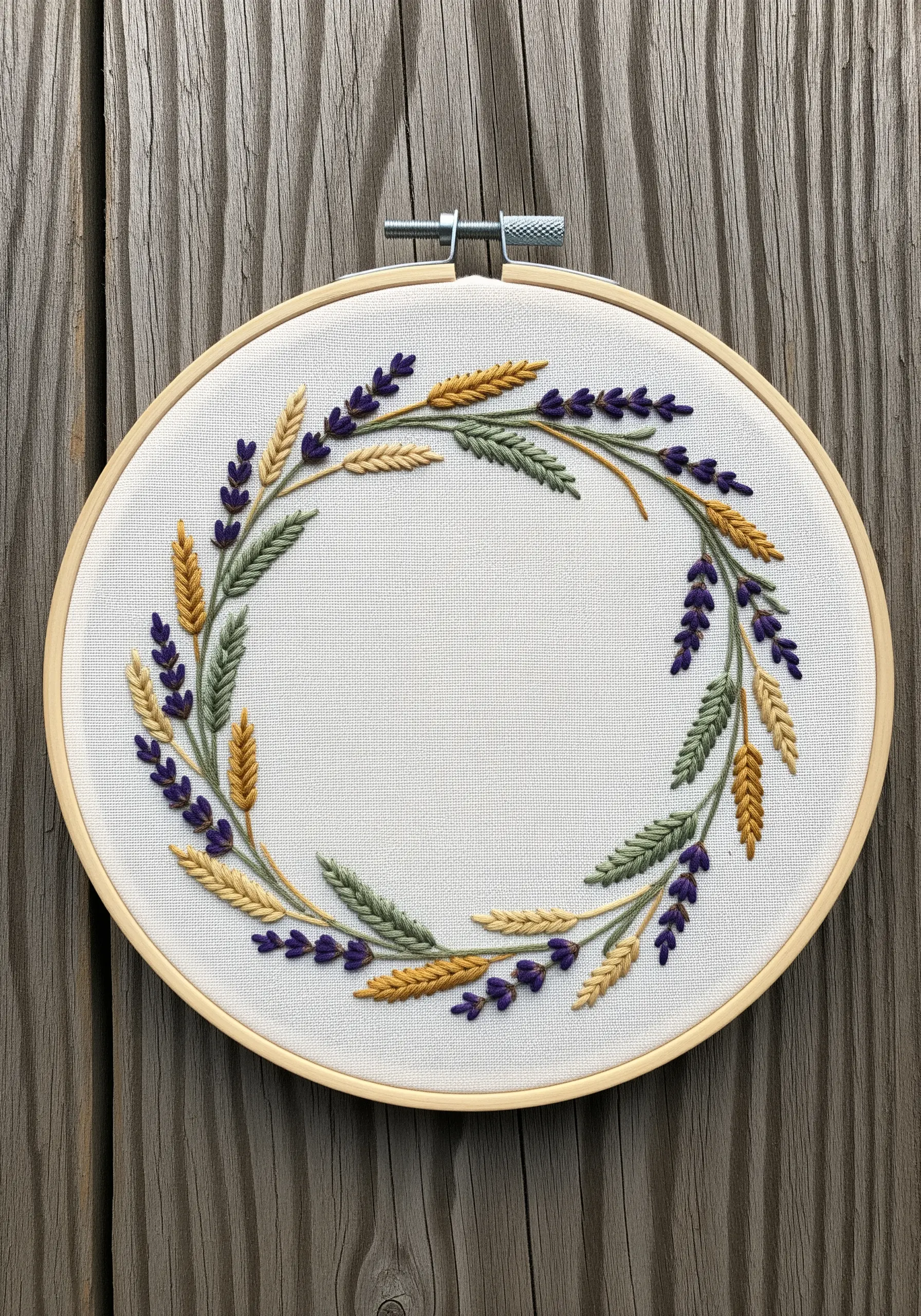
To create a natural, flowing wreath, pay close attention to the direction of your stitches.
For the wheat, use a fishbone stitch, angling your needle slightly outward with each stitch to mimic the curve of the stalk.
Use single detached chain stitches for the lavender buds, ensuring they cluster tightly at the tip and become sparser toward the stem.
This technique creates movement and prevents the wreath from looking flat or static, giving it an organic, hand-gathered feel perfect for framed embroidery ideas that pair perfectly with rustic interiors.
2. Combine Real Dried Grasses with Stitched Elements
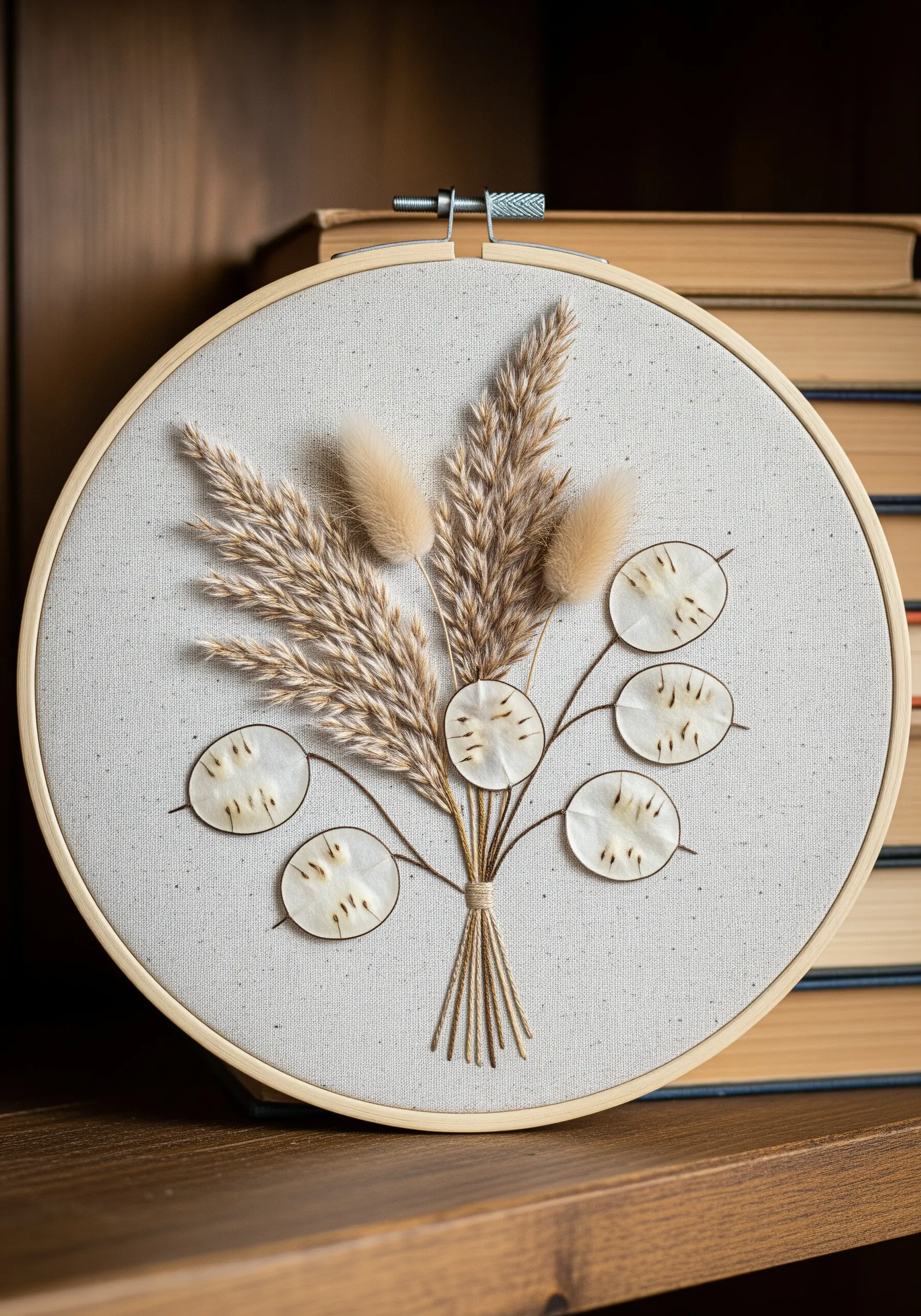
For an immediate touch of rustic authenticity, integrate actual dried botanicals into your work.
First, stitch your foundational elements, like the lunaria pods, using a whipped backstitch for the outlines and a few seed stitches for the centers.
Carefully arrange and couch down real bunny tails or pampas grass with a single, matching strand of thread, securing them at the base and a few discreet points along the stems.
This mixed-media approach offers unparalleled texture that thread alone cannot replicate, creating stunning handmade pieces that bring natural beauty into every corner.
3. Sculpt 3D Hydrangeas with Layered Stitches
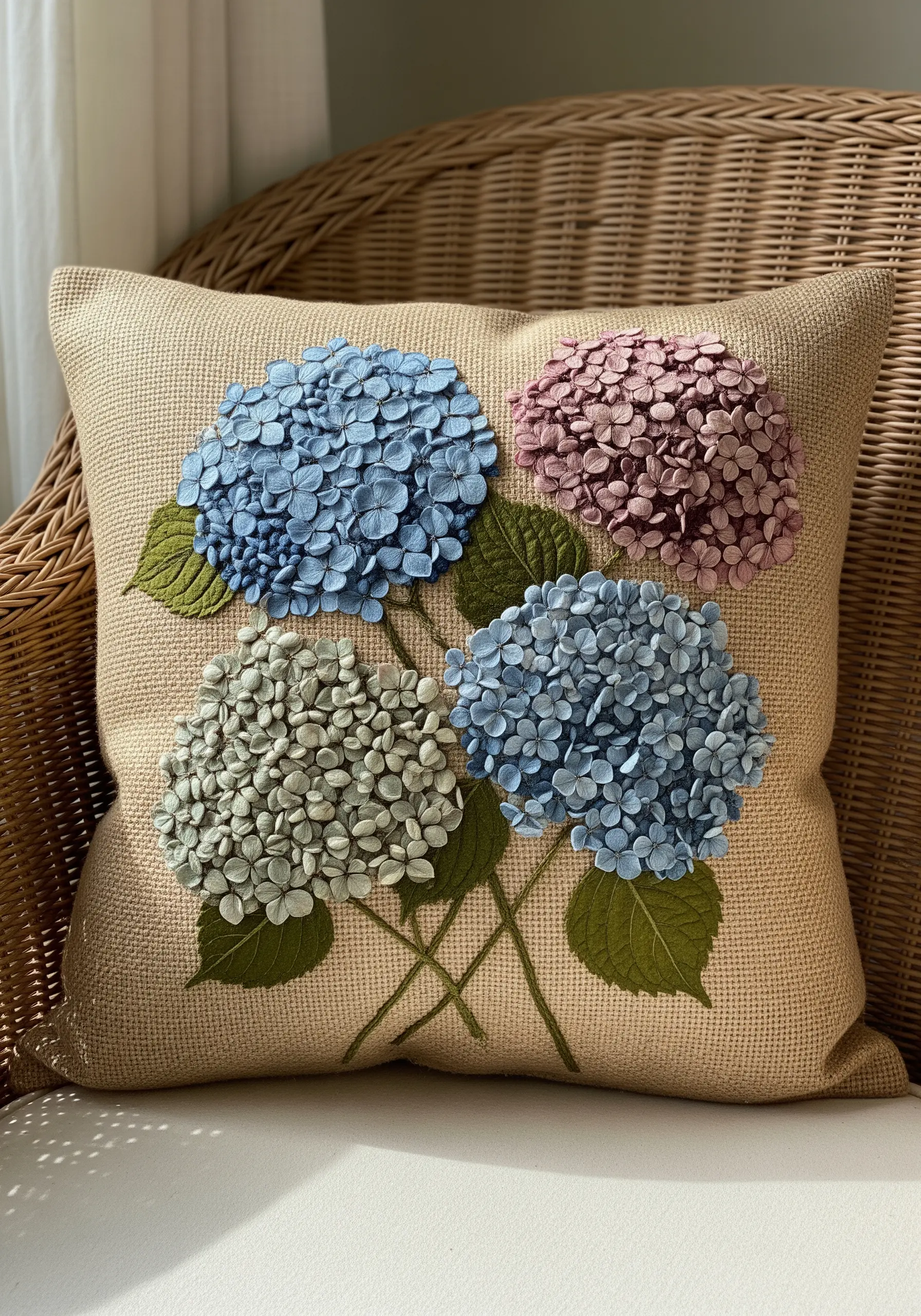
Move beyond flat florals by building dimensional hydrangea blossoms directly on your fabric.
Create each tiny petal using a single cast-on stitch or a small bullion knot, working in a tight cluster.
To build volume, work in layers: stitch the bottom layer of petals first, then add more on top, slightly overlapping them to create a dense, cushioned effect.
Vary the thread color slightly within each cluster—from dusty blue to pale lavender—to give the blossoms depth and realism, perfect for transforming cushion covers into cozy storybook pieces.
4. Create Depth in a Wildflower Meadow Scene
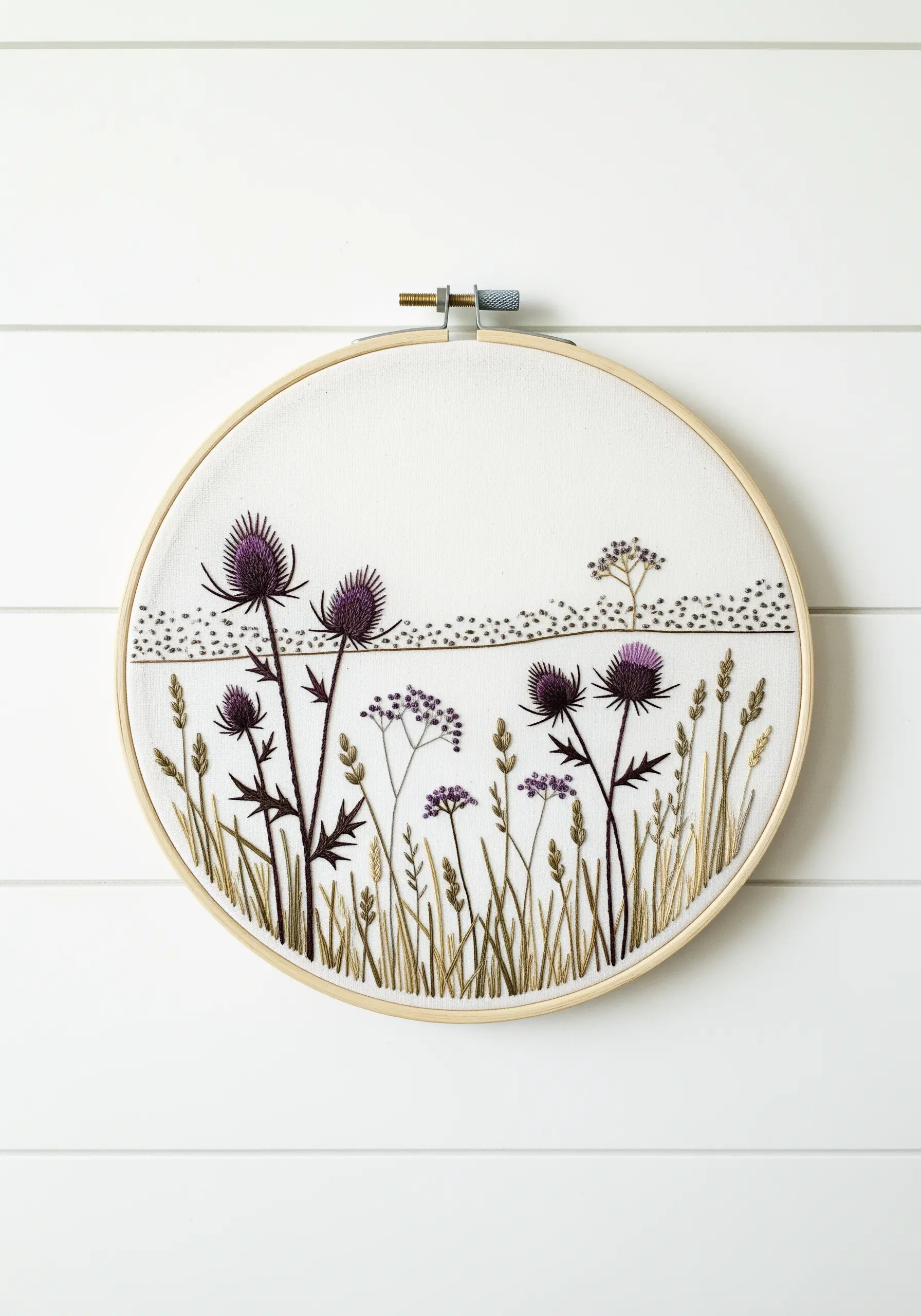
To give your embroidered landscape a sense of perspective, vary the texture and detail of your stitches.
Place larger, more detailed elements like thistles in the foreground, using satin stitch for stems and turkey work for the fuzzy tops.
For the mid-ground grasses, use simpler straight stitches and stem stitches in muted greens and ochres.
Render the distant horizon with tiny, scattered French knots or seed stitches, which suggest detail without drawing focus. This layering technique creates an illusion of distance and space.
5. Amplify Delicate Stitches with a Dark Fabric Base
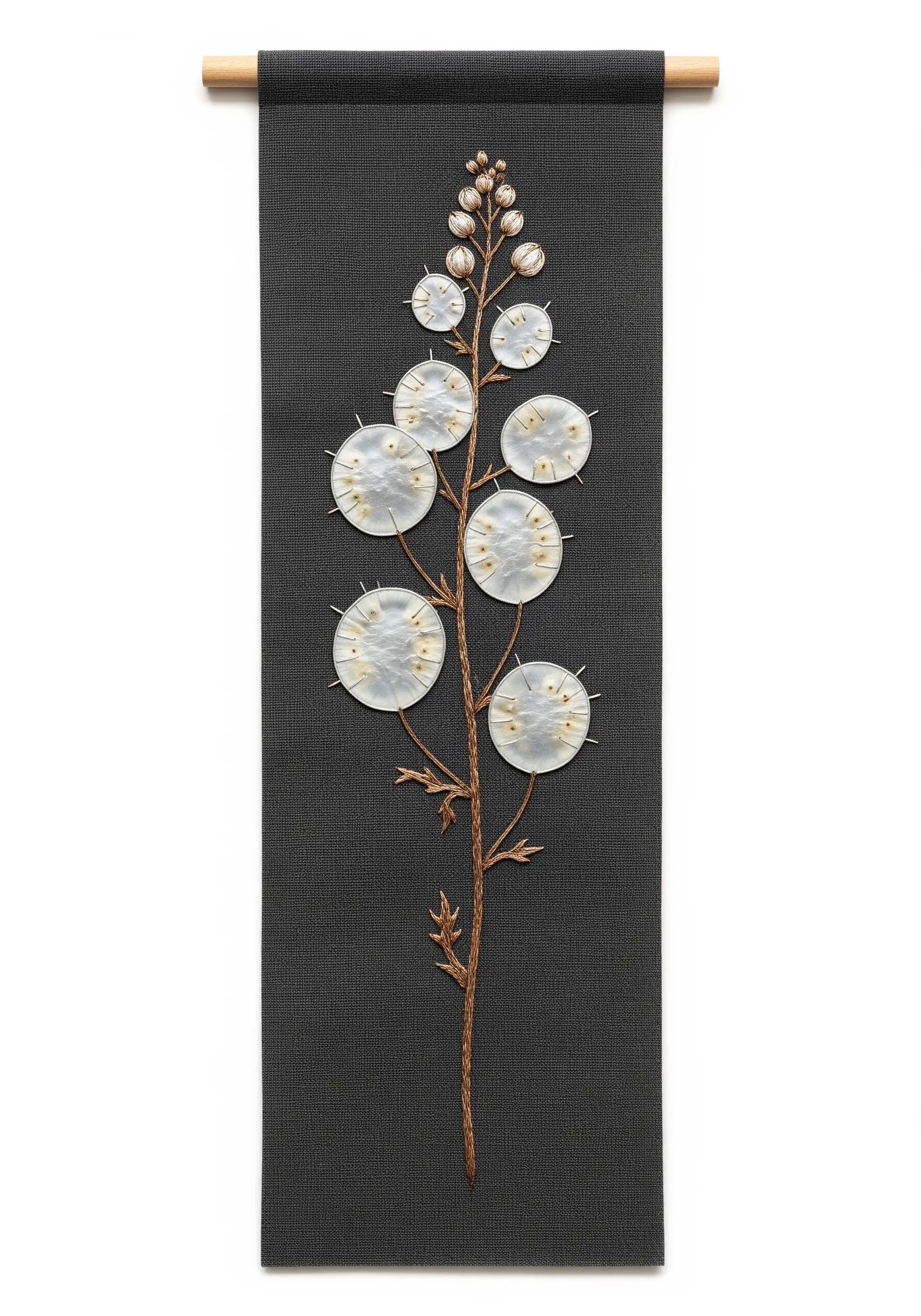
Choosing a dark, tightly woven fabric like charcoal or navy linen makes pale and metallic threads appear more luminous.
For the translucent quality of lunaria pods, outline them with a fine metallic thread using a split stitch for precision.
Fill the center with a sparse scattering of seed stitches in an off-white or pearlescent thread to mimic the delicate seeds inside.
The high contrast between the dark background and light stitching creates a dramatic effect, turning a simple botanical into a striking piece of DIY wall art.
6. Capture the Airiness of Baby’s Breath

The key to realistic baby’s breath is creating a clustered, cloud-like texture without making it look heavy.
Use a creamy, off-white thread and fill the floral heads with tightly packed French knots.
Vary the size of the knots by changing how many times you wrap the thread around the needle—once for smaller buds, twice for fuller blossoms.
Keep the stems thin and elegant with a single strand of green thread in a simple backstitch, allowing the delicate floral clouds to be the focus.
7. Achieve a Painted Look with Thread Blending
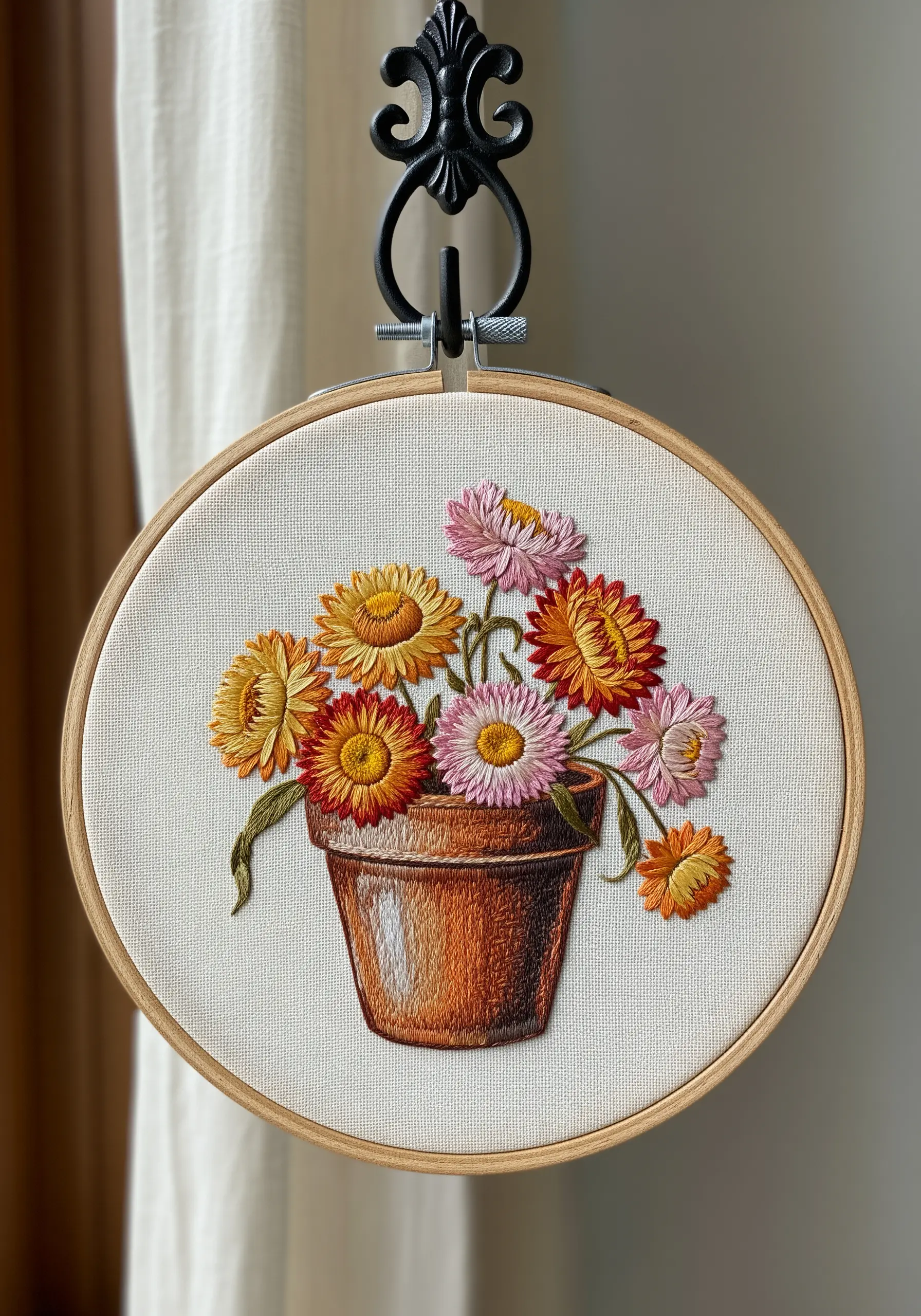
To give your strawflowers a realistic, sun-dried appearance, use the long-and-short stitch technique for seamless color transitions.
Work with two or three shades of a color—like gold, orange, and rust—in your needle at once, or switch colors frequently to create soft gradients on the petals.
For the terracotta pot, lay down satin stitches in different directions to suggest light and shadow, giving the surface a rounded, three-dimensional feel.
This is a foundational skill for anyone exploring floral thread painting techniques.
8. Emulate Vintage Botanical Illustrations

Capture the look of a classic botanical print by combining precise stitching with subtle fabric distressing.
Use a single strand of thread and a fine split stitch or backstitch to create crisp, clean outlines for each leaf.
Fill the shapes with a uniform fishbone stitch for the fern and a flat satin stitch for the other leaves, keeping the thread tension perfectly even for a smooth finish.
To create the aged paper effect, you can carefully use a heat tool or even watered-down coffee applied with a brush around the edges before stitching.
9. Add Plush Texture with Cotton Boll Appliqué
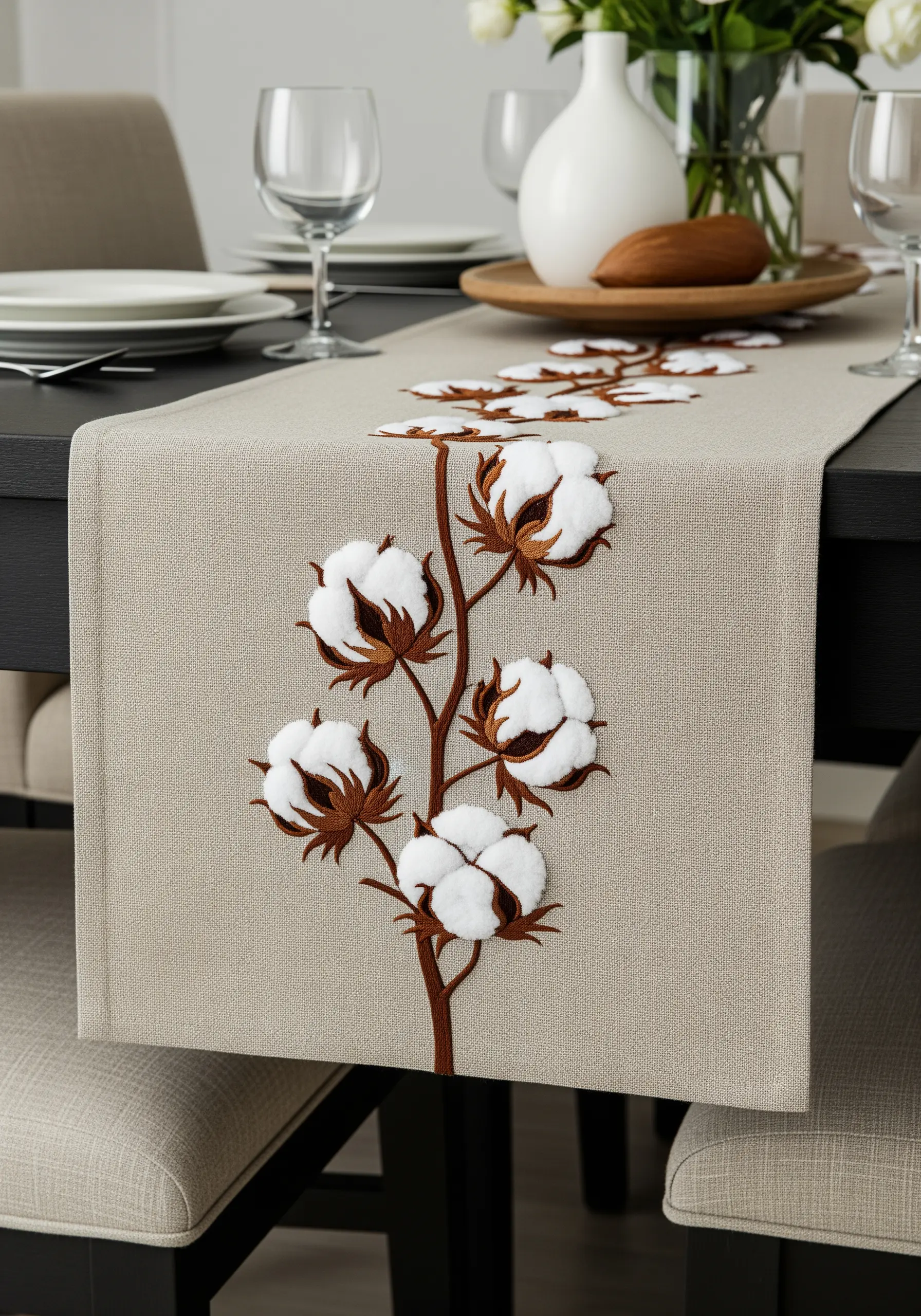
For home decor items that need to be durable, combining appliqué with embroidery is both beautiful and practical.
Create the fluffy cotton bolls by cutting small ovals from felt or fleece fabric and securing them with a simple whip stitch around the edges.
Add dimension by stitching a few straight stitches in a contrasting grey or beige thread across the felt to suggest texture.
Embroider the stems and sepals with a heavy satin stitch in a rich brown, creating a beautiful contrast between the soft appliqué and the sleek threadwork on your table linens.
10. Design a Celestial Dried Flower Assemblage
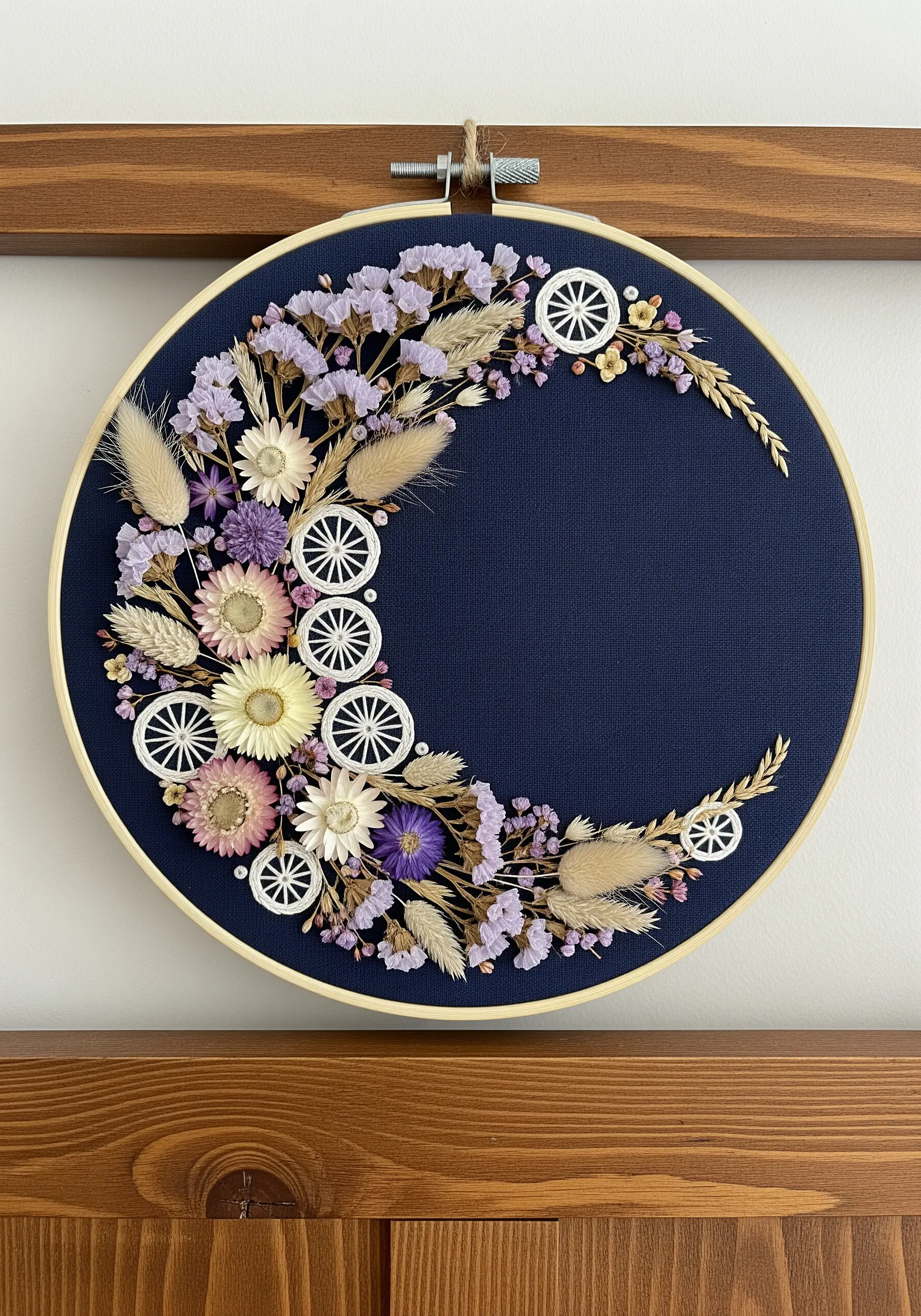
Elevate a classic floral crescent by integrating real dried flowers with symbolic stitched elements.
Start by couching down a curved branch or wheat stalk to form the main shape. Then, carefully glue or stitch small dried flowers like strawflowers and statice into the arrangement.
Intersperse these natural elements with embroidered cartwheels or stars using a bright white thread. This contrast between organic textures and graphic stitches creates a magical, celestial narrative against a dark fabric backdrop.
11. Create Pointillist Texture on a Poppy Seed Head
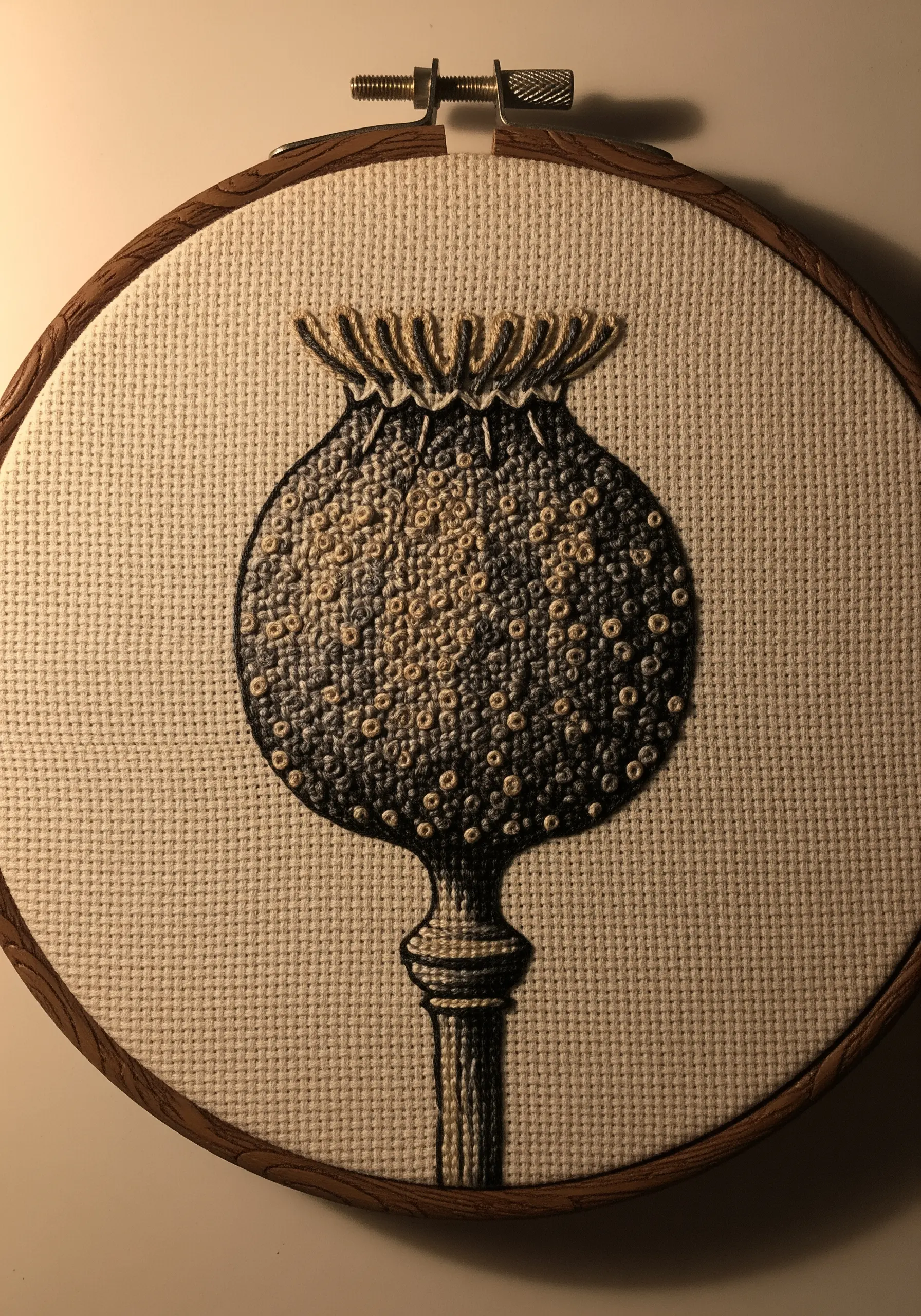
Mimic the dense, stippled texture of a dried poppy head by using hundreds of tiny French knots.
Work with several shades of grey, black, and beige to create subtle shifts in light and shadow across the curved surface.
Place the lighter-colored knots where the light would hit, and use darker ones for the shadowed areas. This meticulous technique creates incredible depth and a tactile quality that is visually arresting.
For the crown, use straight stitches fanning out from the center to contrast with the knotty texture below.
12. Frame Monograms with Soft Botanical Accents
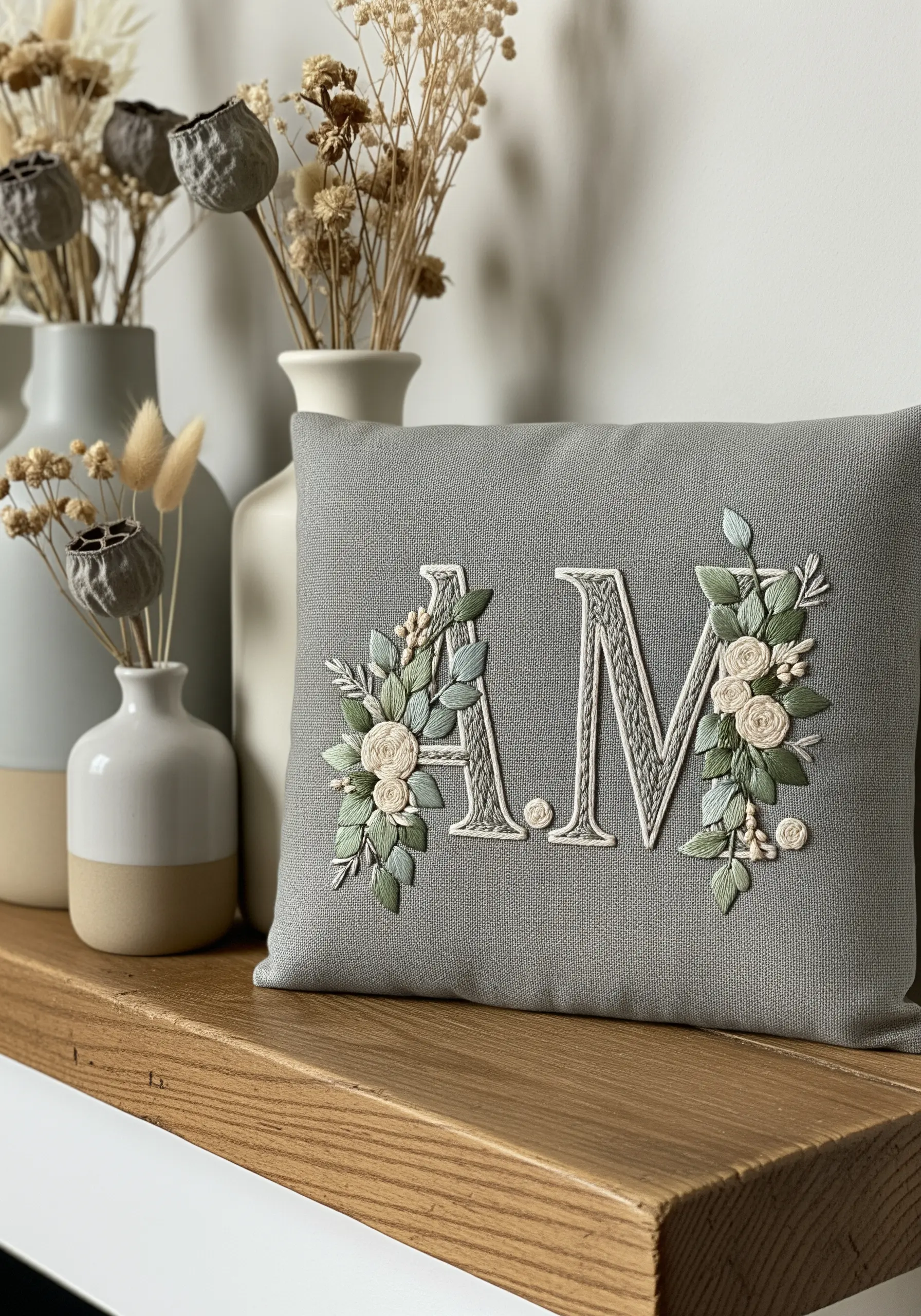
Personalize your decor by elegantly integrating letters with florals, creating a design that feels both custom and organic.
First, outline the monogram with a raised satin stitch or padded satin stitch to give it prominence.
Then, weave delicate botanicals around the letters. Use woven wheel stitches for small roses, lazy daisy stitches for leaves, and French knots for tiny buds.
Using a soft, muted color palette—like sage, cream, and dusty rose—ensures the florals complement the monogram rather than overwhelm it, resulting in beautiful minimal monogram styles.
13. Capture a Sunflower’s Bold Architecture
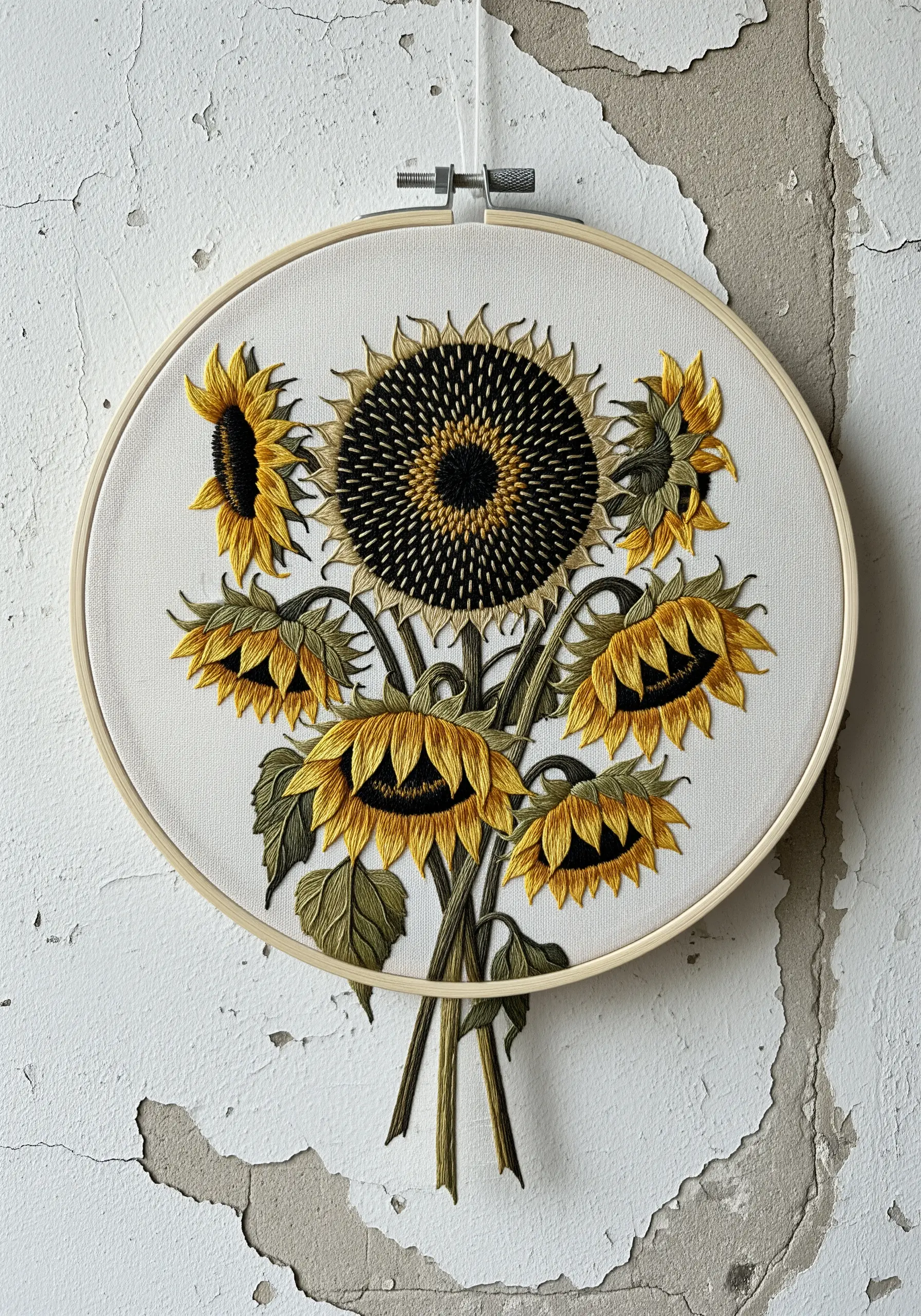
To embroider sunflowers that feel alive, focus on the contrast between the petals and the seed head.
Use long-and-short stitch for the petals, blending golden yellows with darker ochres at the base to create depth.
For the center, create a dense, textured effect by filling the area with concentric circles of French knots or bullion knots, moving from black at the center to brown and gold at the edges.
This high-contrast technique makes the entire composition pop, creating warm, rustic charm for your kitchen decor.
14. Define Form with Botanical Line Art
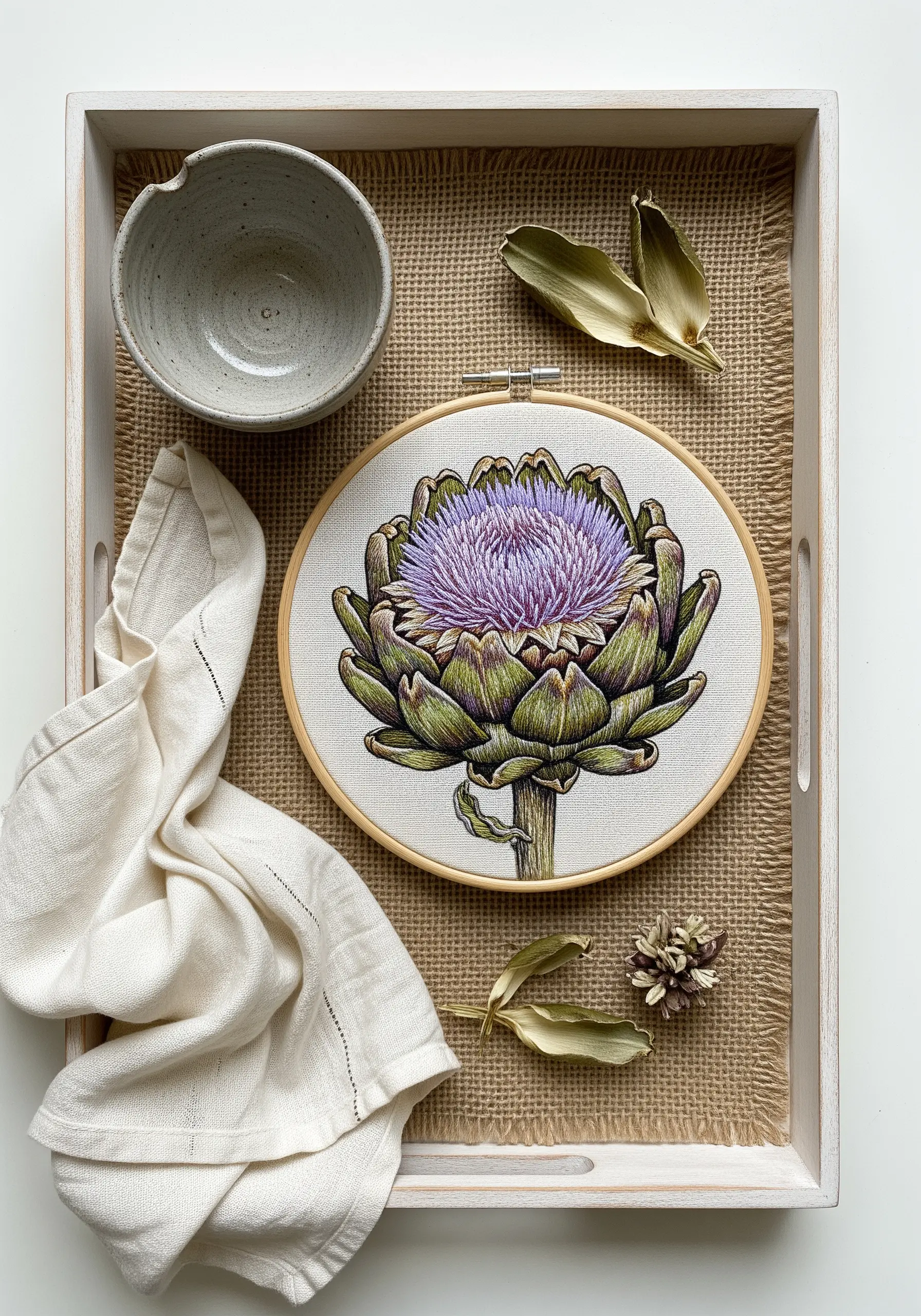
Achieve the clean, precise look of a botanical drawing by focusing on your linework.
Use a fine, single strand of dark thread and a meticulous backstitch or stem stitch to outline the artichoke leaves.
Instead of filling the shapes completely, use light hatching and cross-hatching—small, parallel straight stitches—to suggest shadow and form.
This technique is less thread-intensive than full satin stitch and results in a sophisticated, illustrative style that highlights the plant’s structure.
15. Showcase Pressed Botanicals with Minimal Stitching
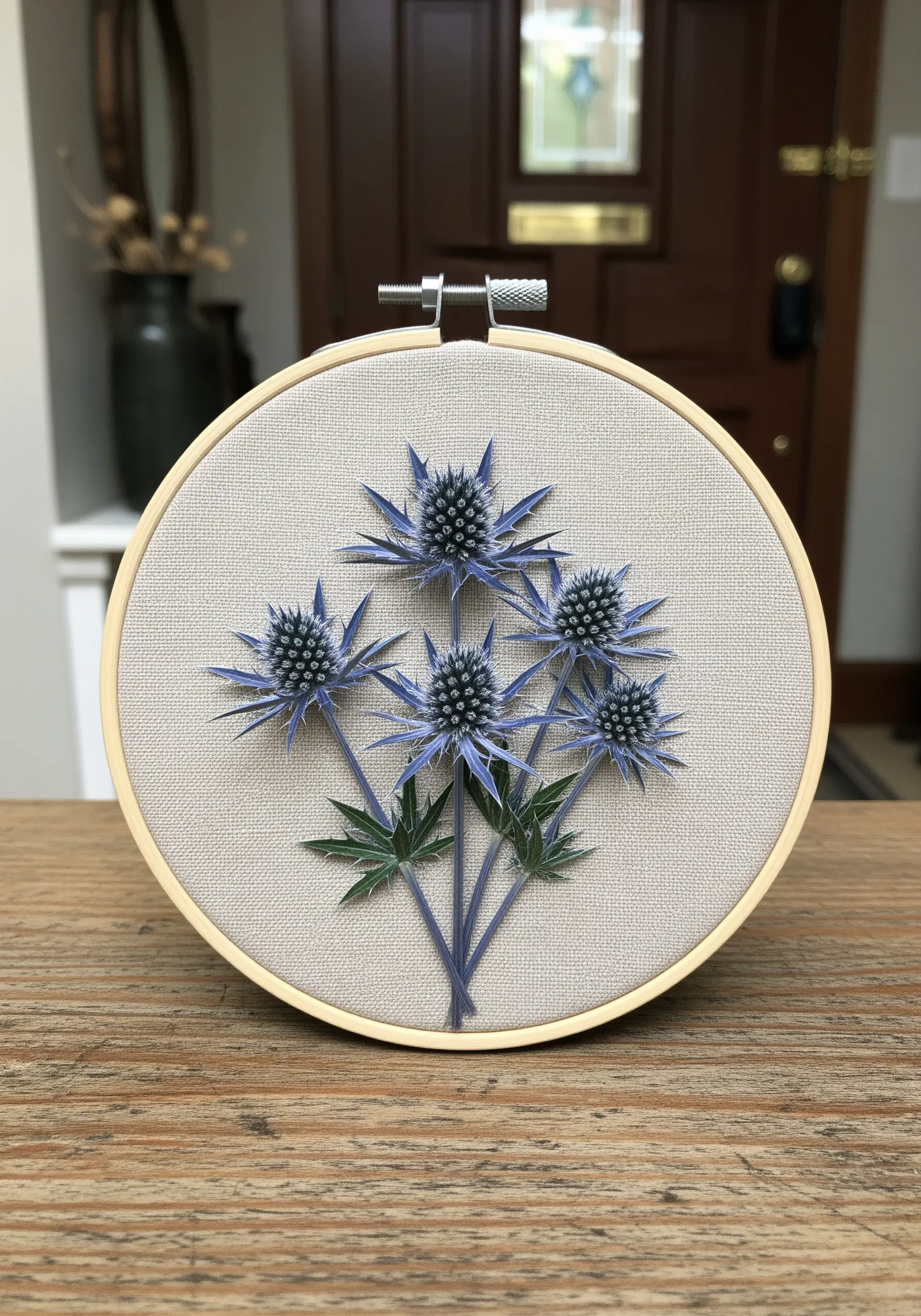
Sometimes, the most powerful technique is restraint. Let a real pressed flower be the star of your piece.
Carefully arrange and secure pressed sea holly (or any other textured botanical) onto your fabric using a tiny, discreet dab of fabric glue.
Then, anchor the composition by embroidering only the stems and a few leaves with a simple backstitch.
This minimalist approach celebrates the natural beauty of the plant itself and is a wonderfully quick way to create stunning pressed flower-inspired embroidery.
16. Curate a Cohesive Herb Trio Display
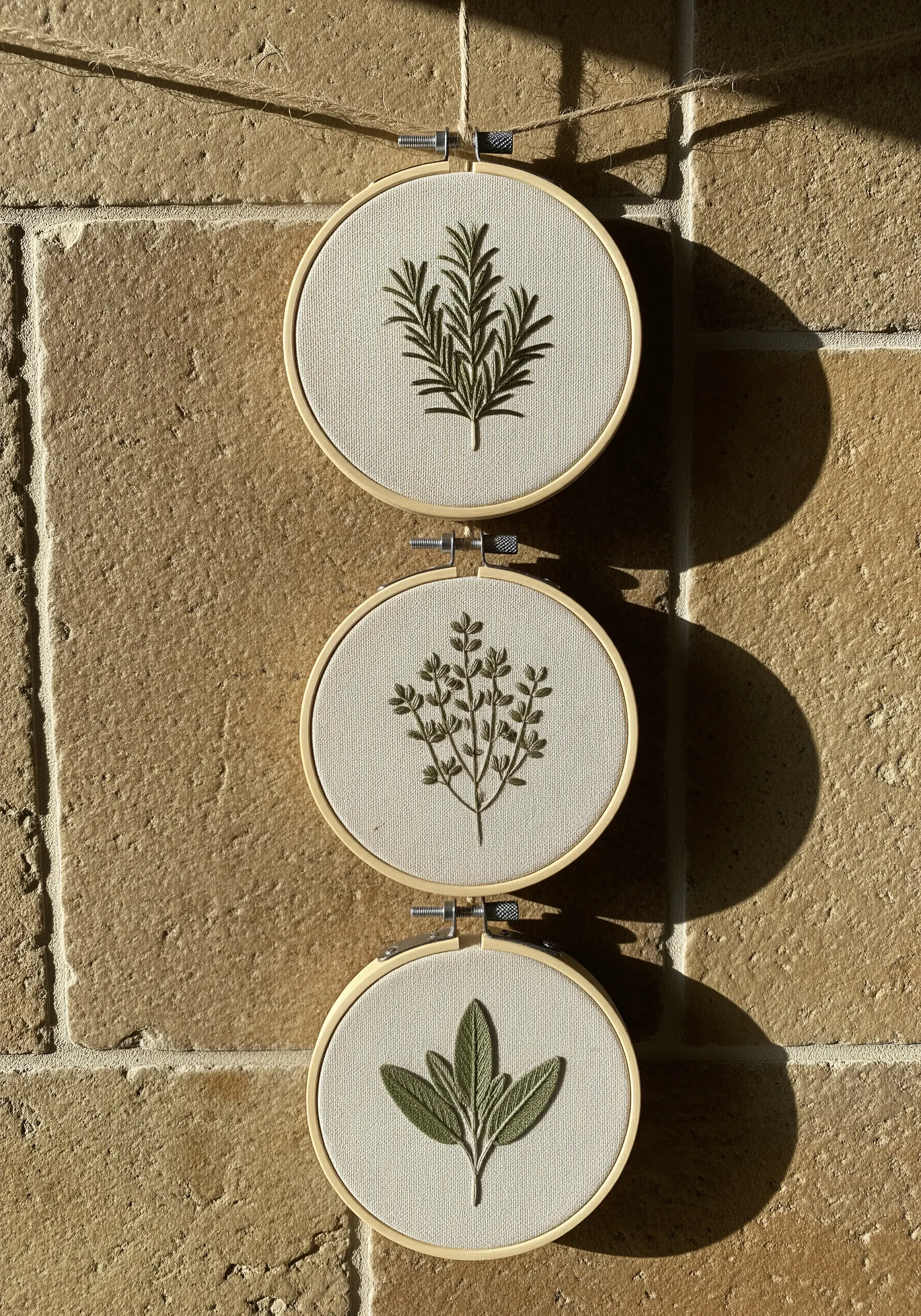
Create a sophisticated gallery wall effect by stitching a series of related motifs in matching hoops.
Choose simple herbs like rosemary, oregano, and sage, and render each one using just one or two basic stitches—like stem stitch for the branches and detached chain stitch for the leaves.
By using the same fabric and the same shade of green thread across all three pieces, you create a unified, calming collection.
This project is perfect for practicing consistency in your stitching and results in beautiful, minimalist embroidery decor.
17. Imply Movement with Golden Hour Sheaves

Capture the feeling of a late summer evening by carefully choosing your thread colors and stitch direction.
Use a palette of warm golds, pale yellows, and light browns to mimic the effect of sunlight on ripe wheat.
Stitch the stalks with long, slightly curved straight stitches that sweep across the fabric, suggesting a gentle breeze.
By layering the stalks and varying their angles, you create a composition that feels dynamic and full of natural movement, perfect for embroidered throws and blankets.
18. Compose a Moody Dried Botanical Landscape
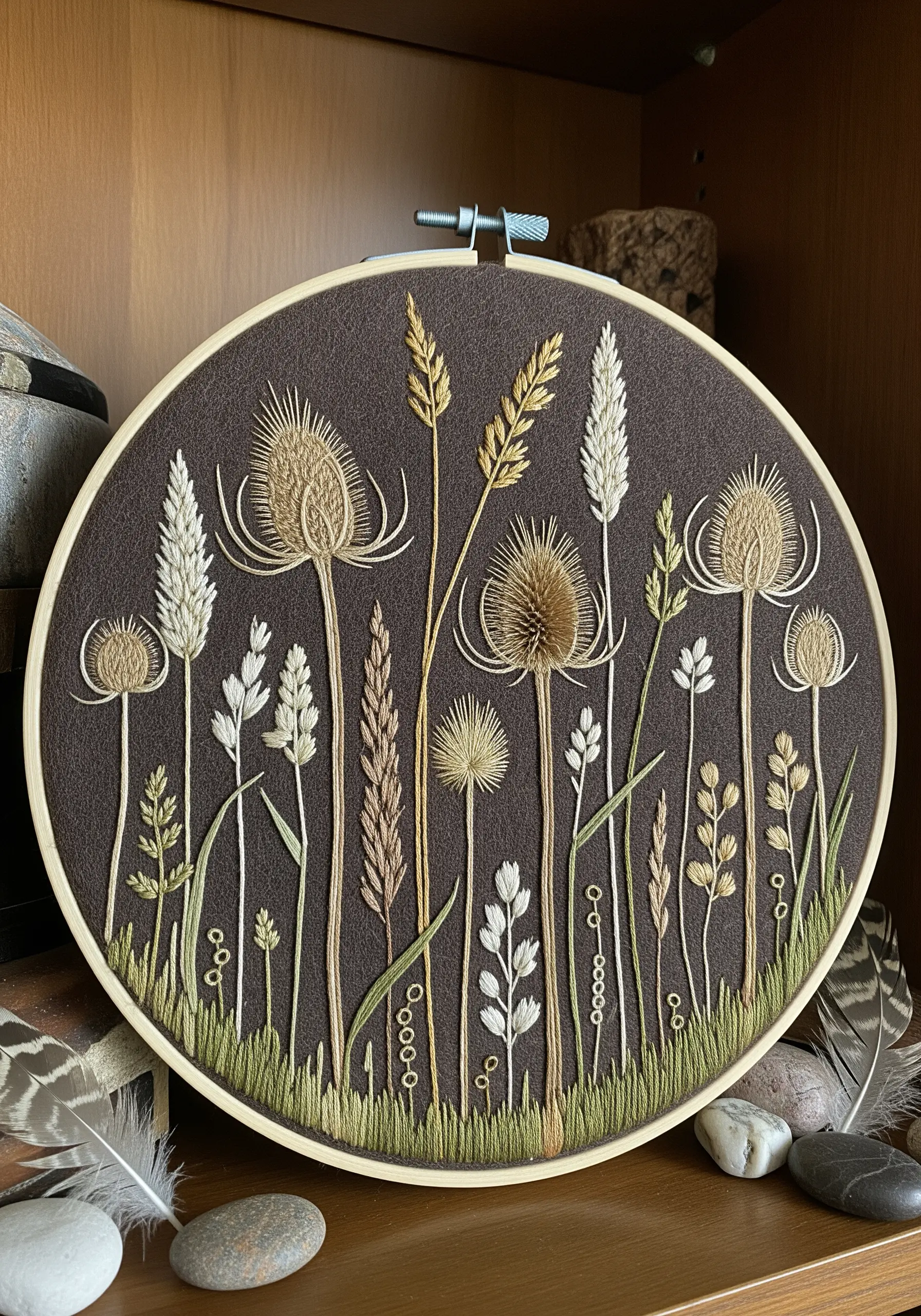
A dark, rich fabric background provides the perfect canvas for a sophisticated, textural study of dried plants.
Use a palette of creams, beiges, and muted greens to create a strong contrast. Employ a variety of stitches to differentiate the textures: turkey work for the fuzzy teasels, satin stitch for the grasses, and French knots for smaller seed heads.
The dark fabric recedes, allowing the intricate shapes and varied textures of the dried botanicals to stand out in sharp relief.
19. Build a Dense, Colorful Dried Bouquet

To create a bouquet that feels full and preserved, focus on layering colors and textures with dimensional stitches.
Use woven wheel stitches for the vibrant magenta strawflower centers and detached chain stitches for the purple statice florets.
Add tiny yellow French knots to represent craspedia, tucking them between the larger blooms to fill empty space.
Wrap the stems together with a couched thread, which neatly gathers the composition and adds a final rustic touch against the neutral grey fabric.
20. Replicate Delicate Queen Anne’s Lace

The beauty of Queen Anne’s Lace lies in its intricate, fractal-like structure, which you can replicate with a few simple stitches.
Start by creating the main stems with a split stitch. From these, branch out with single straight stitches to form the umbels.
At the end of each tiny branch, add a cluster of three or four lazy daisy stitches or a single French knot to form the delicate florets.
Using a fine, single strand of white or cream thread on a neutral linen fabric enhances the ethereal, lace-like quality of the flower.
21. Blend Colors for an Authentic Autumn Wreath

Capture the essence of fall by blending multiple shades within each leaf to mimic nature’s gradients.
Use a long-and-short stitch to fill each leaf, working with two or three autumnal colors in your needle at once—like deep burgundy, rust, and gold.
This creates a soft, variegated effect that feels much more organic than using a single solid color.
Alternate the leaf shapes and their color palettes around the wreath for a dynamic composition that celebrates the season on a muted green fabric base.
22. Stitch Transparency in a Glass Bottle
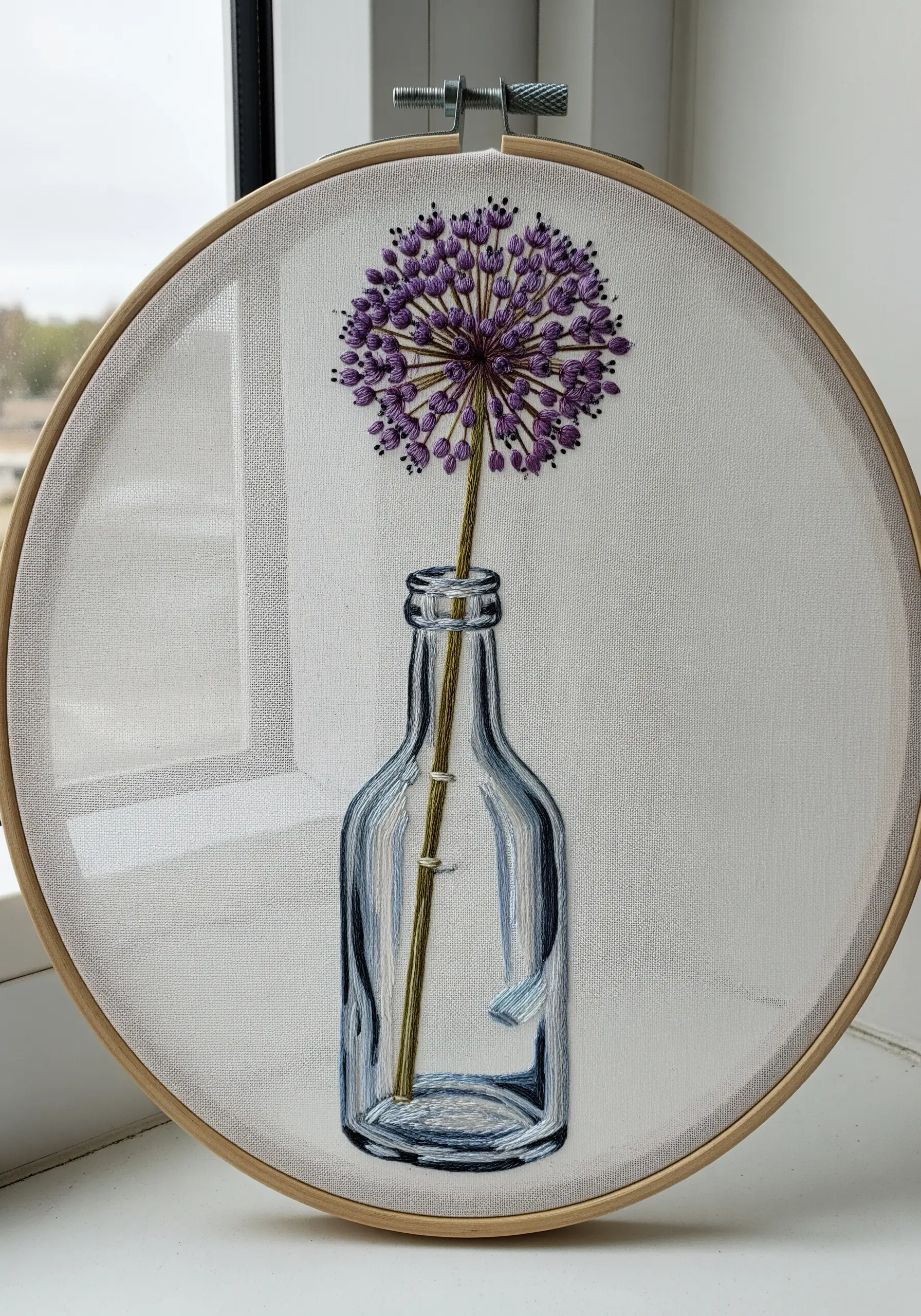
Creating the illusion of glass requires a thoughtful approach to light, reflection, and distortion.
Use shades of light blue, grey, and white to represent the glass. Lay down long, vertical satin stitches, leaving intentional gaps to suggest transparency.
Add sharp highlights with single stitches of bright white along the edges where light would catch. To show the flower stem inside, simply stitch it as you normally would, but use a slightly distorted angle where it passes behind the glass curves.
23. Weave a Tapestry of Moss and Lichen Textures

Move into sculptural embroidery by building a rich, tactile surface that mimics a forest floor.
Combine a dense variety of stitches: French knots in chartreuse and olive for moss, woven wheel stitches for rosette lichens, and bullion knots for tiny fungi.
Use different thread weights, from single strands to all six, to create variation in scale. This texture-rich embroidery on a dark background becomes a captivating, abstract landscape you can’t help but touch.
24. Elevate Functional Linens with Subtle Details

For items like coasters, subtlety is key. A single, elegant motif can transform a simple object.
Incorporate a real skeleton leaf by carefully securing it to the linen with a few tiny, almost invisible stitches in a matching thread.
Alternatively, trace its shape and embroider the delicate veins using a single strand of thread and a fine backstitch.
This minimalist approach adds a touch of bespoke craftsmanship without compromising the item’s function, perfect for modern minimalist table linen.
25. Construct a Bird’s Nest with Layered Stitches
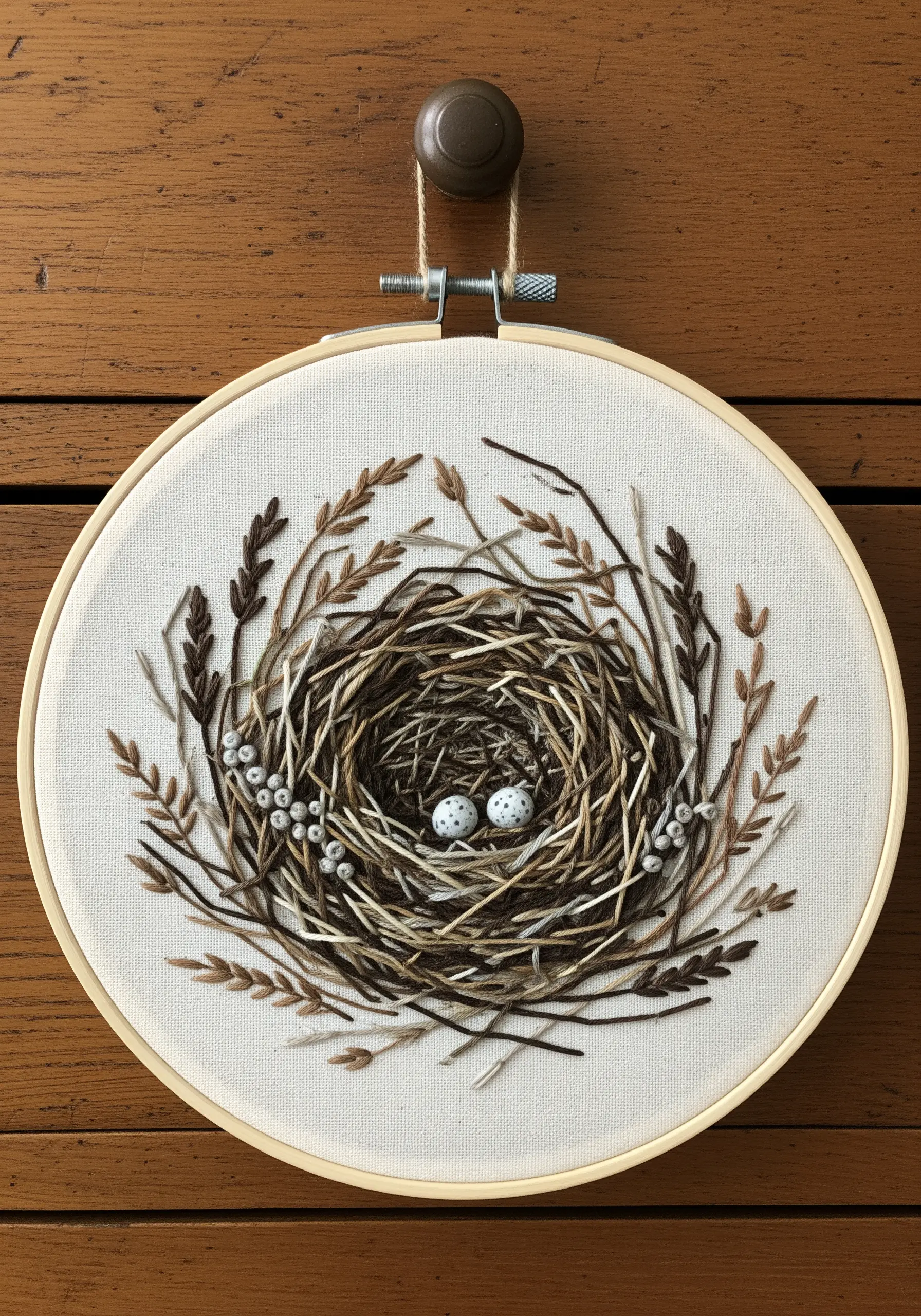
The beauty of a bird’s nest is in its chaotic, yet purposeful, construction. Replicate this with thread.
Use long, overlapping straight stitches in various shades of brown, beige, and grey. Don’t be too precise; the goal is to create a tangled, woven texture.
Incorporate different thread weights—some thick, some thin—to mimic twigs, grasses, and finer materials.
Finally, nestle a few French knots or small beads in the center to represent eggs, completing this charming, nature-inspired embroidery project.