Decorating a small nursery can feel like a puzzle. You want to create a space that feels magical and personal, but every choice is measured against the room’s footprint. How do you add warmth, character, and art without adding clutter?
This is where embroidery finds its true purpose. Think of your thread and needle not just as crafting tools, but as your most versatile design medium. With embroidery, you can transform a simple wall hanging into a focal point, a plain pillow into a piece of art, or a storage bin into a charming detail—all without taking up precious floor space.
These ideas are more than just inspiration; they are invitations to create something meaningful with your own hands. You’ll find techniques here that add texture, dimension, and a quiet sophistication to your nursery, turning it into a serene, spacious-feeling haven that is uniquely yours.
1. Command a Small Space with a Large-Scale Tapestry

Create a single, dramatic focal point to make a small room feel grander and more intentional.
When working on dark fabric, transfer your design using white carbon paper or a chalk pencil for clear visibility.
Use a simple but bold stitch like a three-strand backstitch or a delicate chain stitch in a high-contrast thread—like bright white or metallic silver—to make the linework pop against the deep background.
This technique draws the eye upward and defines the room’s theme without adding the visual clutter of multiple small items.
2. Craft a Cohesive Gallery with Appliqué Hoops

Combine felt appliqué with minimal embroidery to create textured portraits that are quick to complete yet full of personality.
Cut your main shapes from felt and secure them with a simple whipstitch or running stitch around the edge.
Add fine details like eyes and whiskers with a few carefully placed French knots and backstitches.
Grouping three or more small, coordinated hoops creates a charming gallery wall that fits perfectly on a narrow wall or above a changing table.
3. Achieve a Watercolor Effect with Botanical Stitches

Recreate a light, painterly aesthetic by using long-and-short stitch to blend multiple shades of floss within a single leaf.
Work with just one or two strands of thread at a time to achieve subtle, soft gradients that mimic brushstrokes.
By leaving significant negative space in the center of the tapestry, the design feels airy and expansive, preventing it from overwhelming a small room.
This balance between detailed stitching and open space is key to making large pieces work in compact interiors.
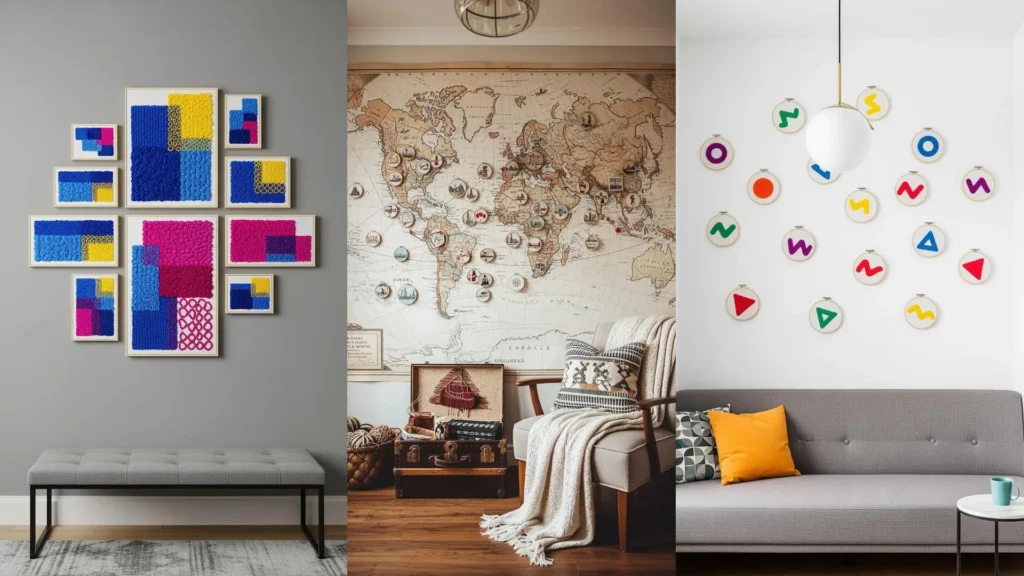
4. Explore Abstract Art with Woven Color Blocks

For a modern, textural piece, move beyond traditional stitches and incorporate weaving techniques.
First, create a grid or framework with long straight stitches using a strong base thread.
Then, use a tapestry needle to weave thicker yarn or multiple strands of floss over and under these anchor threads to build solid blocks of color.
This method fills large areas faster than satin stitch and introduces a sophisticated, tactile quality to your artwork.
5. Unify a Theme with Minimal Line Art Motifs

For a serene and cohesive nursery, translate simple illustrations into clean embroidered lines.
Use a two-strand backstitch or stem stitch to ensure your outlines are smooth, crisp, and consistent across every piece.
Repeating the same artistic style on both wall art and textiles like a quilt ties the entire room together elegantly.
This is an especially beautiful way to incorporate mother-child line art motifs for a deeply personal touch.
6. Add Vertical Interest with a Storytelling Banner

A tall, narrow banner is a powerful design tool for small spaces, as it draws the eye upward and creates an illusion of height.
Fill each motif with a variety of stitches to give it a unique texture and personality—try chain stitch fills, patterned running stitches, and scattered French knots.
This format is perfect for telling a visual story down the length of the fabric, turning a blank wall into a playful aquarium.
7. Create 3D Effects with Padded Appliqué

Transform a flat design into a soft, sculptural element using a technique called trapunto or padded appliqué.
Stitch your main shape onto your background fabric, but add a second layer of fabric behind it, leaving a small gap in the stitching.
Gently push a small amount of stuffing through the gap to plump up the shape, then stitch the opening closed.
This adds a tactile, three-dimensional magic that makes the artwork literally pop off the wall.
8. Integrate Embroidery into Functional Storage

Elevate everyday necessities by adding thoughtful, simple embroidered details.
A basic chain stitch or split stitch is all you need to add a rainbow arc to the front of a fabric storage pocket.
Using a consistent, simple motif on functional items like organizers and baskets creates a cohesive theme that is both charming and practical.
For a more advanced look, try using contemporary rainbow blend stitches to create a beautiful gradient effect.
9. Embrace Bold Color with Folk Art Florals

Do not shy away from vibrant color, even in a small apartment. The key to making it work is a neutral background.
Use dense, neat satin stitches to create solid blocks of joyful, saturated color.
Stitching onto a calm, neutral fabric like oatmeal linen or unbleached cotton allows the bright hues to shine without overwhelming the senses.
The inherent symmetry in folk art designs also provides a pleasing sense of order and balance.
10. Weave Texture into Minimalist Hoop Art

This design cleverly combines embroidery with weaving for a piece that is minimalist in form but rich in texture.
Create the sun’s rays with simple, radiating straight stitches.
For the sun itself, fill the semi-circle with a chunky woven texture by wrapping yarn over and under a few vertical guide threads.
This mixed-fiber approach adds a warm, tactile quality that elevates a simple design into a sophisticated piece of art.
11. Make a Statement with Felt Lettering Appliqué

For bold, graphic lettering, appliqué is your most effective technique.
Cut your letters from stiff felt and attach them to a wool or canvas background using a simple running stitch or a neat blanket stitch around the edges.
This method is significantly faster than satin-stitching large letters and delivers a clean, retro-inspired look perfect for pennants.
These are wonderful for creating inspirational quote string art designs that feel personal and uplifting.
12. Capture Character with Single-Line Illustrations

You don’t need complex fills or multiple colors to create expressive artwork.
A single, continuous line stitched with a clean backstitch or stem stitch can capture the essence of an animal with modern simplicity.
This minimalist approach feels light and uncluttered, making it ideal for a small gallery wall where you want personality without visual noise.
These minimal embroidery designs that use only three colors are a perfect match for this serene aesthetic.
13. Build a Lush Landscape with Textured Stitches

To create a scene with convincing depth and richness, vary your stitch choices to mimic natural textures.
Use raised stitches like French knots or bullion knots for mushroom spots and dense foliage.
Employ a smooth satin stitch for the moon and a sturdy stem stitch for tree trunks and fern stems.
Stitching on dark, matte fabric like wool felt makes the thread colors appear more luminous and enhances the enchanted, nighttime atmosphere.
14. Soften Decor with Tactile, Monochromatic Textures

Create a sophisticated sensory experience by focusing on texture over color.
Use chunky yarn and dimensional stitches like a raised chain stitch or couching to create tactile rainbow arches on a pillow cover.
Paired with other textured elements like macramé wall hangings, this monochromatic approach builds a layered, calming environment that feels both modern and cozy.
This technique is central to creating elevated boho embroidery patterns.
15. Define a Zone with an Embroidered Screen

In a small apartment or studio, an embroidered folding screen is an elegant way to create a dedicated nursery nook.
A delicate, climbing motif like these cherry blossoms adds artistry while maintaining a sense of lightness.
Use a fine stem stitch for the dark branches to give them structure, and use detached chain stitches and French knots for the blossoms to create a soft, airy texture.
The screen provides separation without fully enclosing the space, preserving an open feel.
16. Contrast Colors and Textures for a Dynamic Duo

When displaying two pieces as a pair, amplify their impact by creating deliberate contrast.
Here, the sun is made from warm, opaque felt appliqué, while the moon is stitched with cool, shimmering silver and gray threads.
Further the contrast with your stitch choices: fill the sun’s rays with bold straight stitches and add texture to the moon with a dense field of tiny seed stitches and French knots.
17. Carry a Single Motif Across Multiple Textiles

To build a cohesive theme that feels intentional and sweet, rather than overpowering, repeat one simple motif on different items throughout the room.
A small, simply stitched bee is easy to add to curtain tie-backs, storage bins, and a central quilt.
Use a three-strand satin stitch for the body and a single-strand backstitch for wings and the flight path to keep the design clean and graphic.
These are perfect examples of easy small embroidery patterns that unify a space.
18. Layer Felt Appliqué for Graphic Dimension

Build a bold, graphic illustration by layering different colors of felt.
Start by cutting out the largest shape—the rocket’s body—and then add progressively smaller pieces for the fins, window, and flames.
Secure each layer with a contrasting running stitch or backstitch to define the edges and add a charming, hand-stitched feel.
This technique is perfect for translating cartoon-style embroidery ideas into tactile wall art.
19. Curate a Storybook Corner with Framed Vignettes

Transform a small corner into a dedicated reading nook by creating a gallery of embroidered storybook scenes.
Keep the illustrations simple and use a limited palette of stitches—backstitch for outlines and satin stitch for small color fills.
Arranging the frames in a dense, salon-style cluster makes the collection feel like a single, immersive piece of art.
This approach turns stunning framed embroidery pieces into a narrative focal point.
20. Design a Sampler with High-Texture Neutral Stitches

Create a sophisticated, tactile wall hanging by focusing entirely on texture, using only neutral-colored yarns and threads.
Explore a vocabulary of dimensional stitches: chunky French knots, raised satin stitch blocks, woven bars, and plush Turkey work for fringe.
Arranging these varied textures in a geometric patchwork creates a modern art piece that is visually quiet but incredibly rich to the touch.
This is a great starting point for high-texture fabric collage embroidery projects.
21. Use Satin Stitch to Create Bold, Color-Blocked Motifs

For vibrant, graphic subjects like this toucan, directional satin stitch is your most powerful tool.
Instead of stitching straight across, angle your stitches to follow the natural curves of the form—like the sweep of the beak or the layers of feathers.
This technique creates a sense of movement and dimension, turning flat color blocks into dynamic shapes.
Use a high-sheen floss like rayon or silk to make the colors exceptionally bright against the neutral background.
22. Stitch Soft, Sculptural Elements for a Dreamy Mobile

Create a gentle, tactile mobile by constructing soft, plush forms with simple embroidered accents.
Cut two identical shapes from soft felt or fleece, then add sleepy eyes and rosy cheeks with a few simple backstitches and satin stitches.
Place the two pieces together, stitch around the edges leaving a small gap, stuff lightly with poly-fil, and then stitch the opening closed.
These three-dimensional elements have a comforting presence that flat cutouts lack.
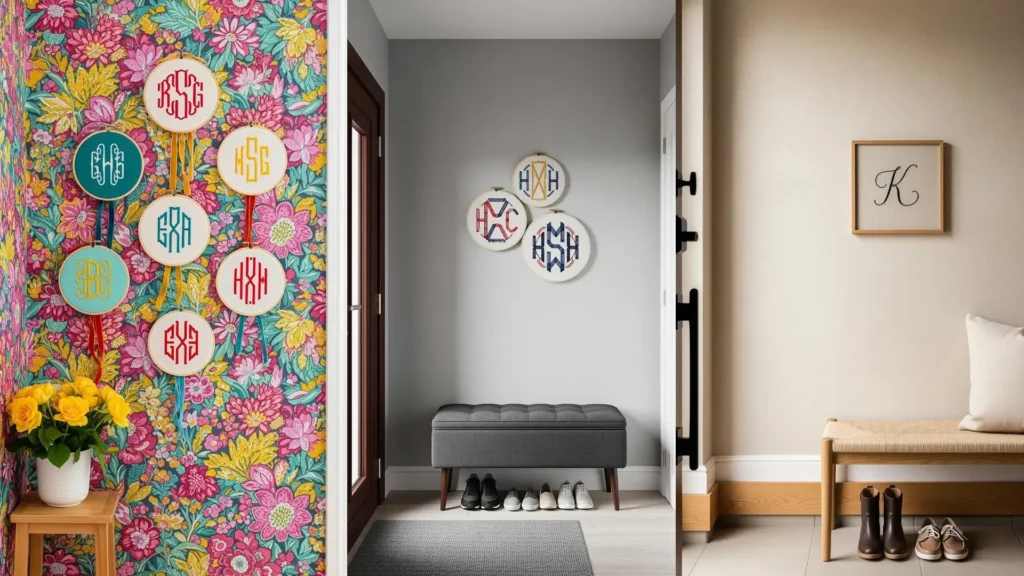
23. Personalize the Nursery with Delicate Monogram Wreaths

An embroidered monogram is a timeless, heirloom-quality addition to a nursery.
After stitching the central initial, frame it with a delicate floral wreath.
Use detached chain stitches (lazy daisies) for petals, French knots for tiny flower buds, and a flowing stem stitch for vines and leaves.
Using a soft, muted color palette and displaying the finished work in a classic oval hoop enhances its elegant, vintage charm.
24. Capture a Skyline with Line Art and Appliqué

You can render a striking cityscape with two simple techniques.
First, use a bright yellow or gold thread and a clean backstitch to outline the building silhouettes on dark navy fabric.
For the glowing windows, you can either use tiny, dense satin stitches or, for a faster and more graphic effect, cut tiny squares of yellow felt and appliqué them in place with a single stitch in the center of each.
25. Add an Airy Feel with Sheer Embroidered Curtains

Embroidering on sheer or semi-sheer fabric like voile or linen gauze adds a magical, ethereal quality to a room.
To prevent puckering the delicate fabric, use a lightweight thread and simple stitches, like backstitch for stems and detached chain stitches for dandelion seeds.
Always use a stabilizer that can be gently removed, like a wash-away or heat-away type.
The finished design will appear to float in the light, making the entire room feel brighter and more spacious.
26. Construct a Dynamic Mobile with Freestanding Embroidery

To create these stunning, sculptural birds, you’ll need to make freestanding embroidered elements.
This is often done with an embroidery machine, but you can achieve it by hand with dense stitching on two layers of water-soluble stabilizer.
Once you are finished stitching, the stabilizer is dissolved in water, leaving a sturdy, thread-only object.
Assembling these into a mobile creates incredible movement and intricate detail that captivates from every angle.
27. Create Playful Portraits with Fabric Collage

Add instant personality and charm to your hoop art by incorporating fabric scraps.
Appliqué small pieces of patterned or colored fabric to form the main shapes—like the cow’s spots or the pig’s snout.
Then, add defining outlines and details with a crisp backstitch in a contrasting dark thread.
This mixed-media technique adds depth, texture, and a playful, scrapbook-like quality to your work.
28. Extend Embroidery Beyond Fabric onto Furniture

Create a truly custom, high-end look by applying an embroidered motif directly to a piece of furniture.
Complete your design on a piece of stable fabric, then carefully trim away all excess material right up to the edge of your stitching.
Adhere this embroidered appliqué to the painted surface using a strong, clear-drying fabric glue.
This technique creates a surprising and unbelievably elegant detail that looks professionally integrated.
29. Unify a Room with Appliqué Lettering

Create a playful and educational theme by using consistent appliqué lettering across multiple items.
To get crisp edges, trace your letters onto fabric that has been backed with a fusible webbing product.
Iron the letters into place, then permanently secure the edges with a neat blanket stitch or a simple machine zig-zag stitch.
Using a variety of patterned and colored fabrics for the letters adds extra visual interest and charm.
30. Stitch a Celestial Canopy with Glow-in-the-Dark Thread

Create a truly magical nursery feature by embroidering constellations onto a dark fabric canopy using glow-in-the-dark thread.
Use a simple backstitch to connect the stars and small straight stitches or French knots for the stars themselves.
Before bedtime, ‘charge’ the thread by exposing it to a bright light for a few minutes.
It will emit a gentle, comforting glow that turns the crib into a private planetarium.
31. Elevate a Sampler into Framed Botanical Art

A sampler—a practice piece featuring different stitches or motifs—becomes sophisticated art when it’s focused on a single theme and framed well.
Stitch a collection of different leaf types on one large piece of neutral fabric, focusing on capturing the unique shape and texture of each specimen.
Use fishbone stitch for pointed leaves, satin stitch for smooth ones, and stem stitch for delicate veins to create a display that is both beautiful and educational.
You can find more inspiration with botanical line art embroidery patterns.
32. Build an Immersive Scene with Themed Hoop Art

Create a captivating underwater world by dedicating an entire gallery wall to a single, consistent theme.
To make the arrangement dynamic, mix framed pieces with standard embroidery hoops of varying sizes.
Use felt appliqué for the larger animal shapes to speed up the process, then add embroidered details: French knot bubbles, backstitched coral branches, and seed stitch for sandy textures.
This is a wonderful way to showcase coastal theme tiny embroidery art on a larger scale.
33. Use Negative Space to Create a Sense of Height

When designing a large tapestry for a small room, make the background fabric an active part of the composition.
By leaving plenty of open, unstitched space for the ‘sky,’ the embroidered balloons appear to be floating up and away.
This strategic use of negative space prevents the large piece from feeling heavy or dense, and it enhances the overall sense of airiness and height in the room.
34. Define a Cozy Nook with Character-Driven Embroidery

Make a reading corner in a small nursery extra inviting with pillows that feature beloved storybook characters.
Instead of stitching a complex scene, focus on a single, beautifully executed character to create a strong graphic statement.
Use a dense, smooth satin stitch for a cartoon-like fill and a crisp backstitch outline to make the illustration pop.
These pillows act as a soft, tactile invitation to curl up with a book.