You’ve mastered the basic stitches, and your work is neat, but you feel there’s a certain depth or softness missing. You’re ready to move beyond just filling shapes with thread and want to create pieces that feel more like paintings—ethereal, layered, and full of light.
The secret isn’t a complex new stitch; it’s a new material. Sheer fabrics like organza, tulle, and chiffon are your key to unlocking a world of subtle color blending, atmospheric depth, and delicate texture. By layering these transparent materials, you can create gradients and shadows that would take hours of painstaking thread painting, but with a unique, luminous quality.
Think of this as watercolor for embroiderers. Each layer of sheer fabric adds a whisper of color, allowing you to build up rich, complex tones that interact with light beautifully. This is your invitation to play with transparency, to sculpt with fabric, and to see how your needle and thread can bring these dreamy, translucent worlds to life.
1. Layer a Cosmic Nebula with Tulle and Thread
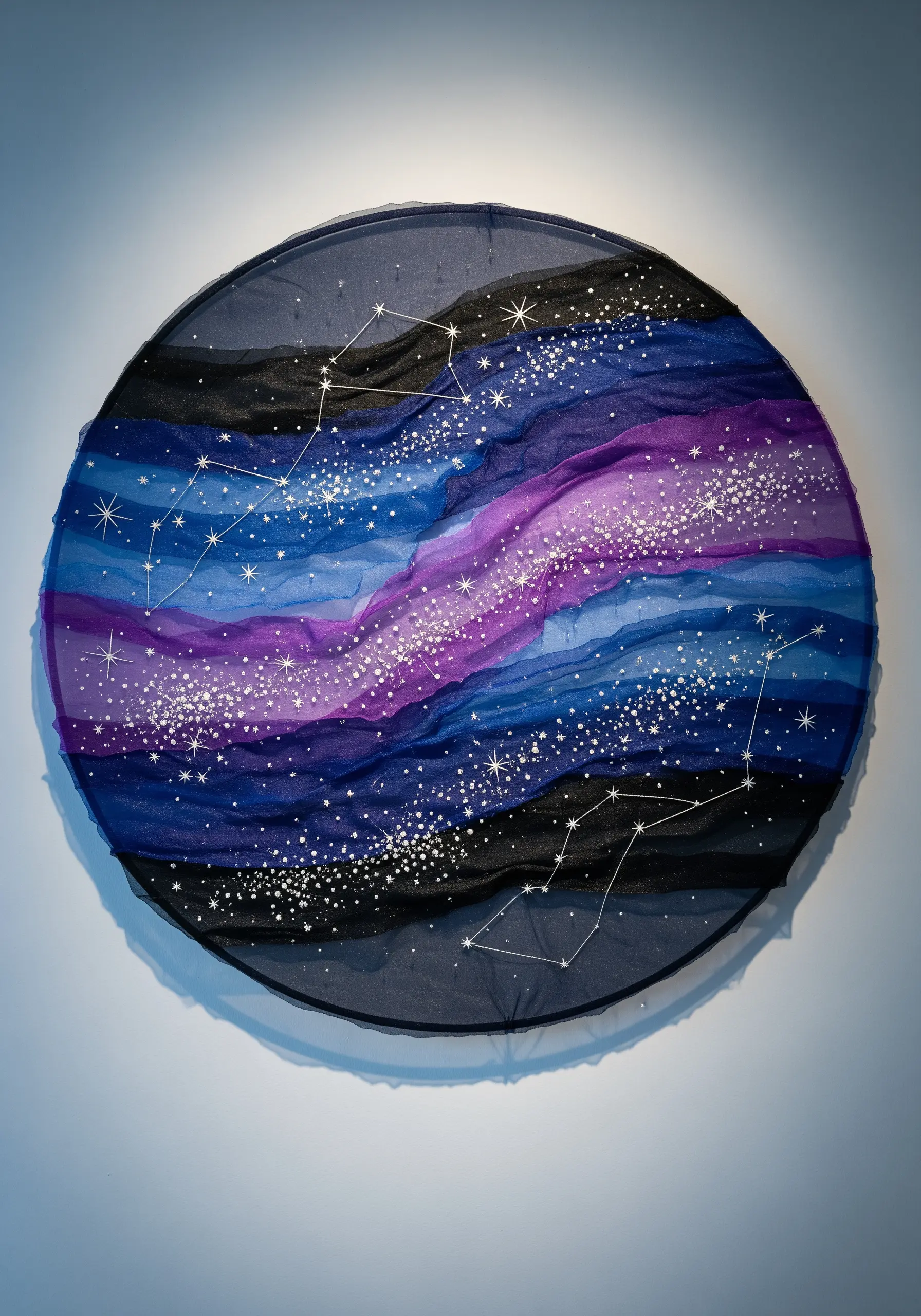
Create galactic depth by layering gathered strips of sheer fabric—like organza or tulle—in shades of deep blue, violet, and black over a dark base.
Vary the tension of your gathers; tighter ruching creates dense color, while looser folds allow light to pass through, mimicking cosmic dust.
For the finishing touch, scatter tiny seed stitches and French knots using white or metallic thread to represent stars and constellations.
This technique turns your hoop into a window to the night sky, where the fabric does the color blending for you.
2. Illustrate an Underwater World with Sheer Appliqué
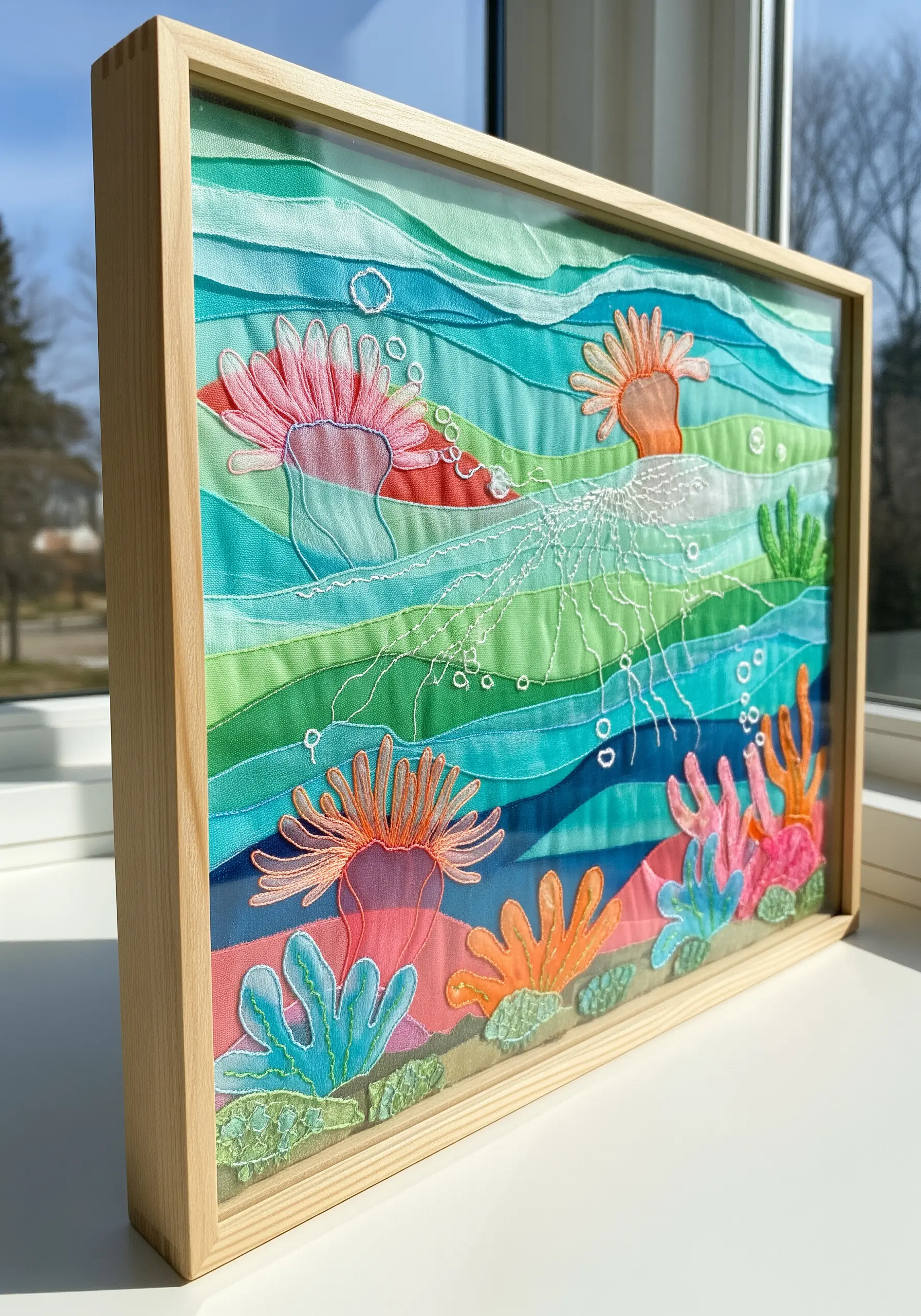
Capture the filtered light of an ocean scene by layering sheer, wavy strips of fabric in seafoam green, aqua, and turquoise.
Secure each layer with a simple, hidden running stitch to maintain the illusion of flowing water.
For delicate details like jellyfish tentacles, use a single strand of fine white thread in a meandering stitch; its fineness keeps the element feeling transparent and weightless.
This approach allows you to build a complex, multi-tonal scene where the background and foreground merge beautifully.
3. Craft Delicate Autumn Leaves on a Transparent Canvas
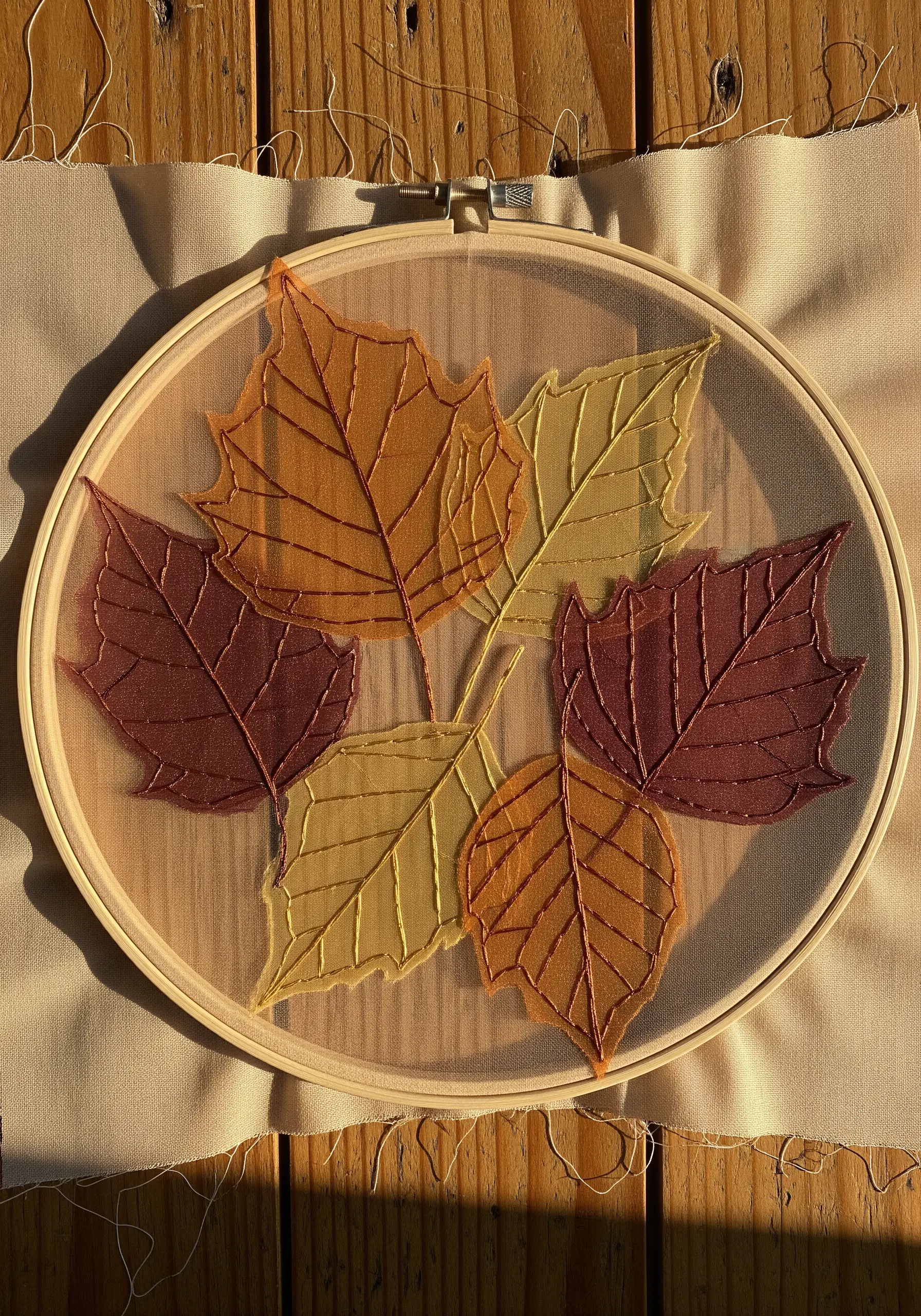
Instead of stitching on opaque fabric, stretch a layer of fine tulle in your hoop to serve as a transparent base.
Cut your leaf shapes from shades of organza—russet, gold, and ochre—and arrange them on the tulle.
Use a simple backstitch in a matching thread to outline the leaves and add the delicate veins, which simultaneously secures the appliqué pieces to the see-through base.
This method gives your botanicals a fragile, ethereal quality, as if they are floating in mid-air.
4. Depict Atmospheric Depth in Abstract Landscapes
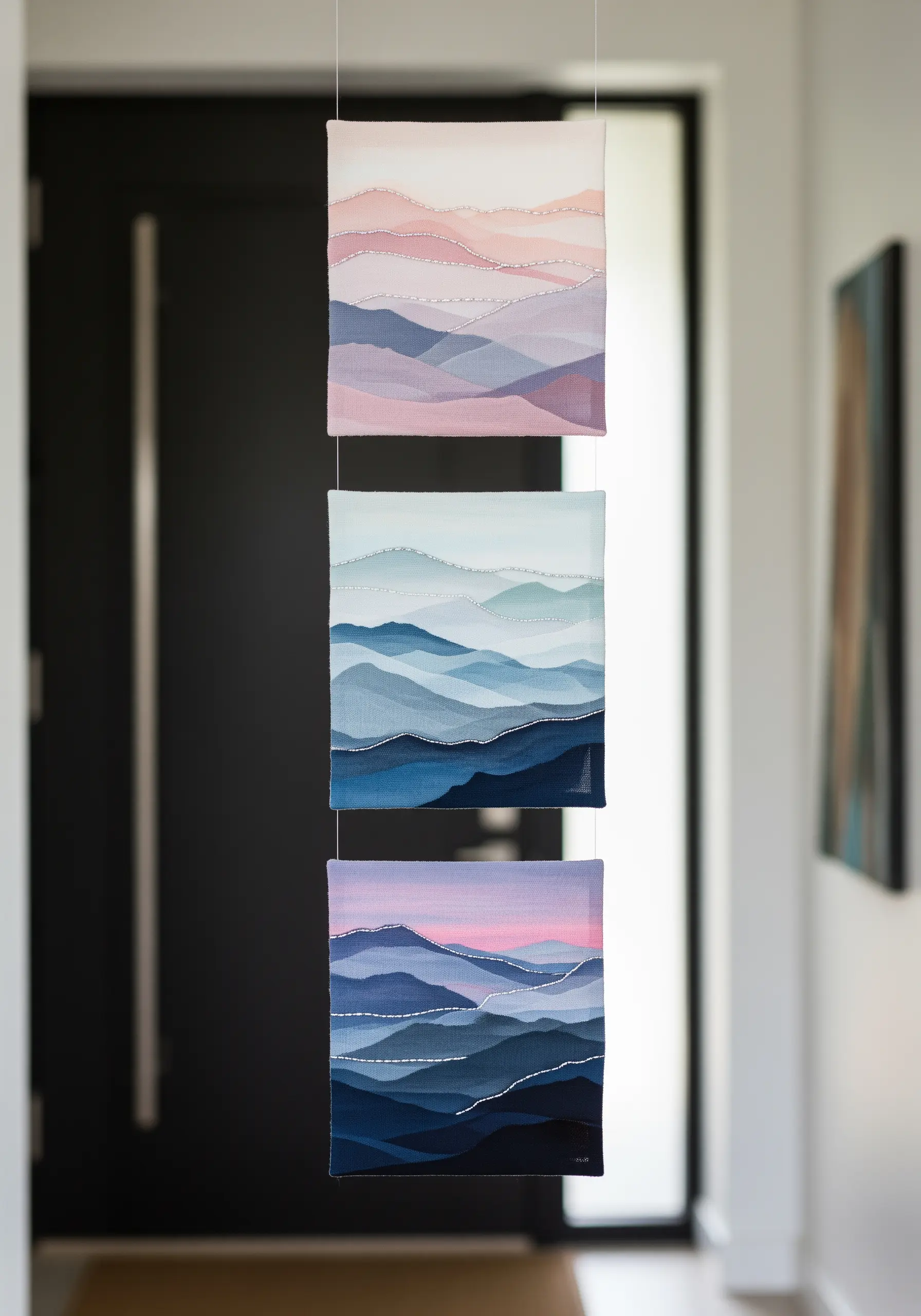
Create the illusion of distance by using sheer fabric to mimic atmospheric perspective in a mountain range.
Layer darker, more saturated pieces of organza for the foreground hills and transition to paler, muted shades for the mountains in the distance.
A simple, clean running stitch in a contrasting white thread adds a graphic contour line that defines the ridges without overpowering the soft colors.
This triptych arrangement turns a simple technique into a sophisticated piece of minimalist embroidery decor.
5. Build a Three-Dimensional Forest Floor
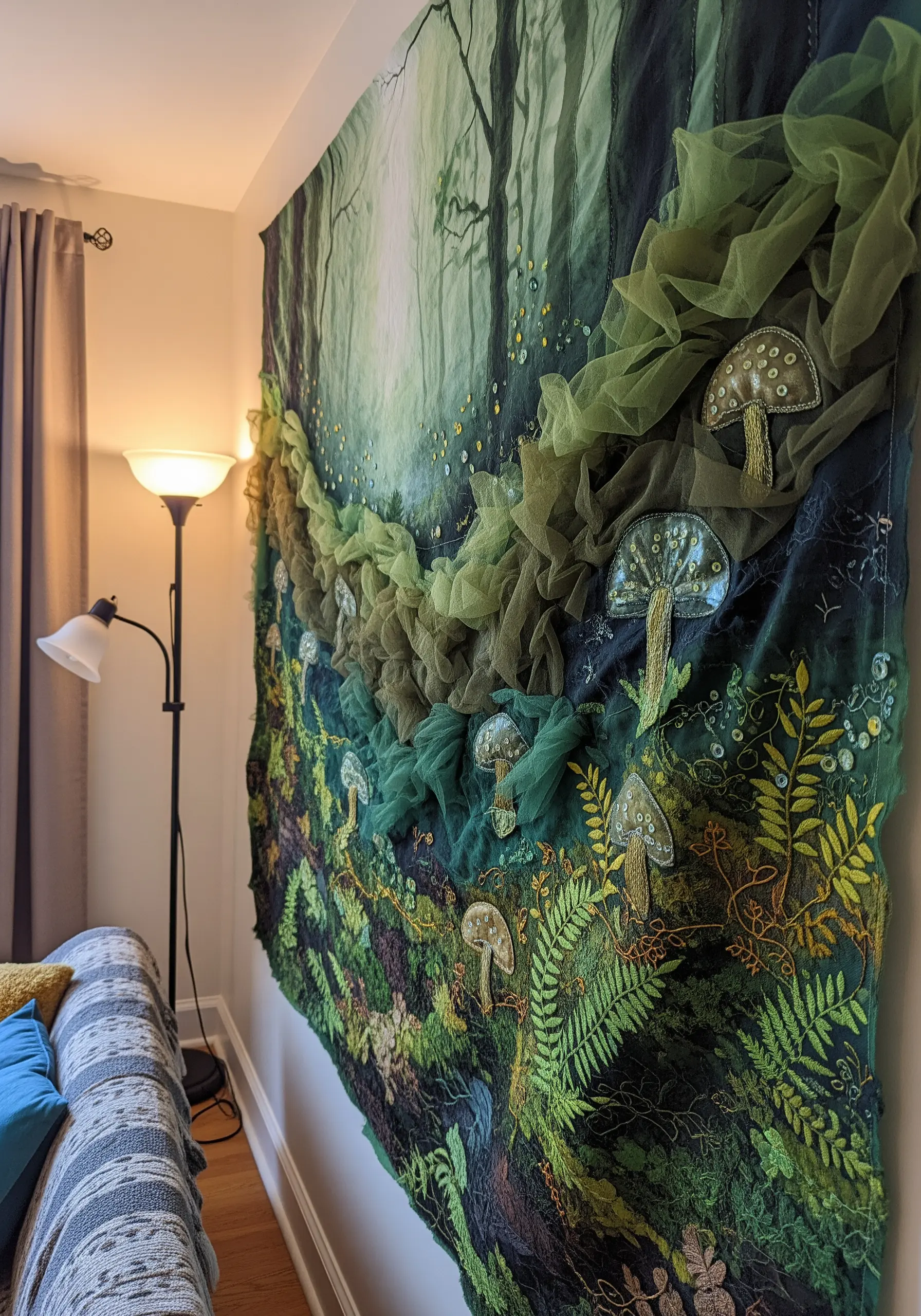
Transform a flat surface into a lush, tactile landscape by ruching and gathering soft tulle in various shades of green.
Pin and stitch these manipulated fabric pieces onto your base to build up a mossy, uneven texture that invites touch.
For focal points like mushrooms, create them as separate appliqué pieces with metallic thread details, then stitch them on top of the textured tulle.
This method of building up layers creates an immersive, statement-size wall art piece with incredible physical depth.
6. Sculpt a Portrait with Contoured Fabric Planes
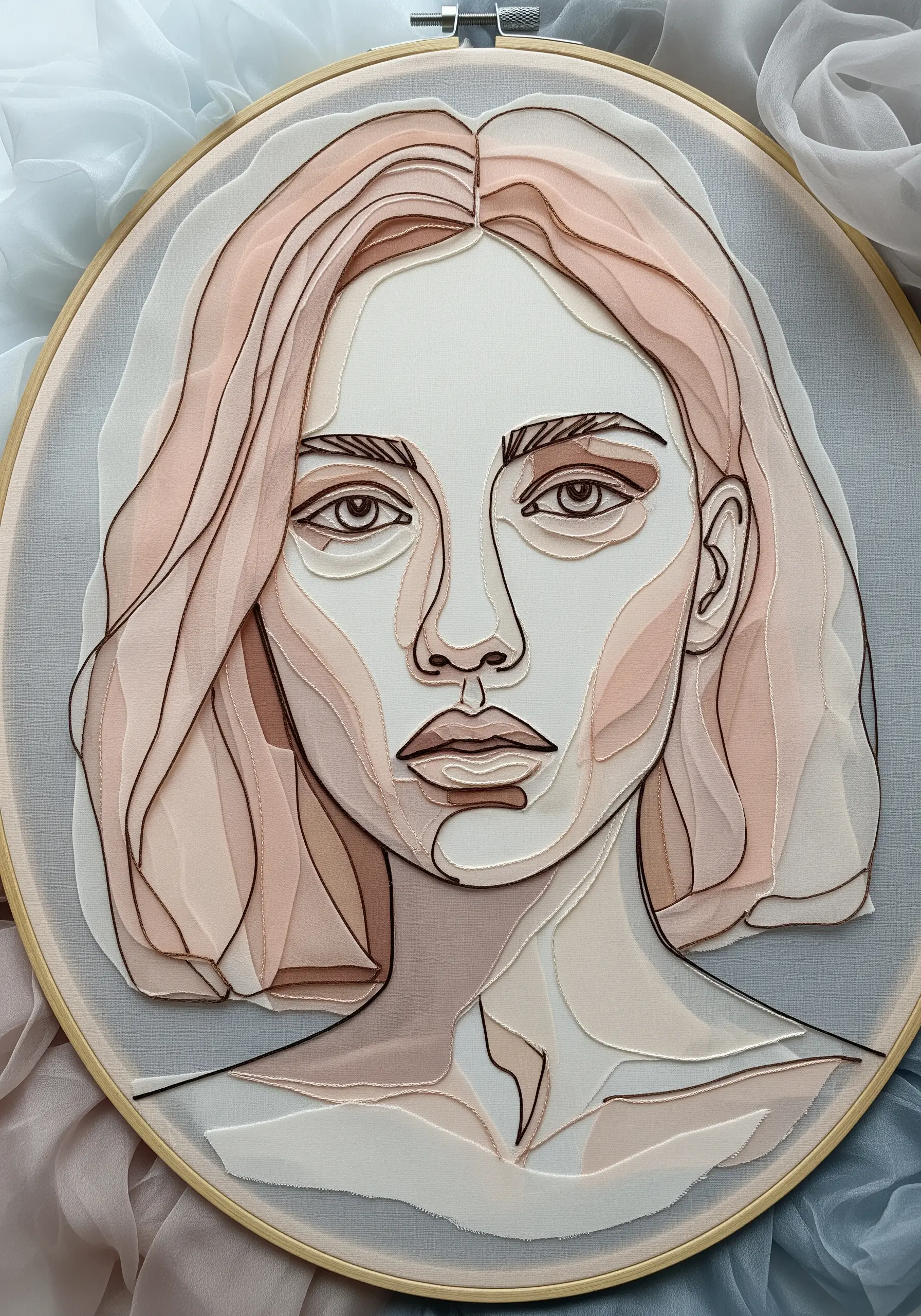
Instead of using thread for shading, cut precise shapes from sheer organza in neutral skin tones to represent the planes of the face.
Lighter shades act as highlights (cheekbones, brow bone), while darker ones create shadows (jawline, eye sockets).
Carefully layer these pieces and secure them with a fine, dark backstitch outline that defines the features and holds the collage together.
This technique turns a portrait into a piece of abstract face line embroidery, blending illustration with textile art.
7. Explore Color Theory with Overlapping Organza
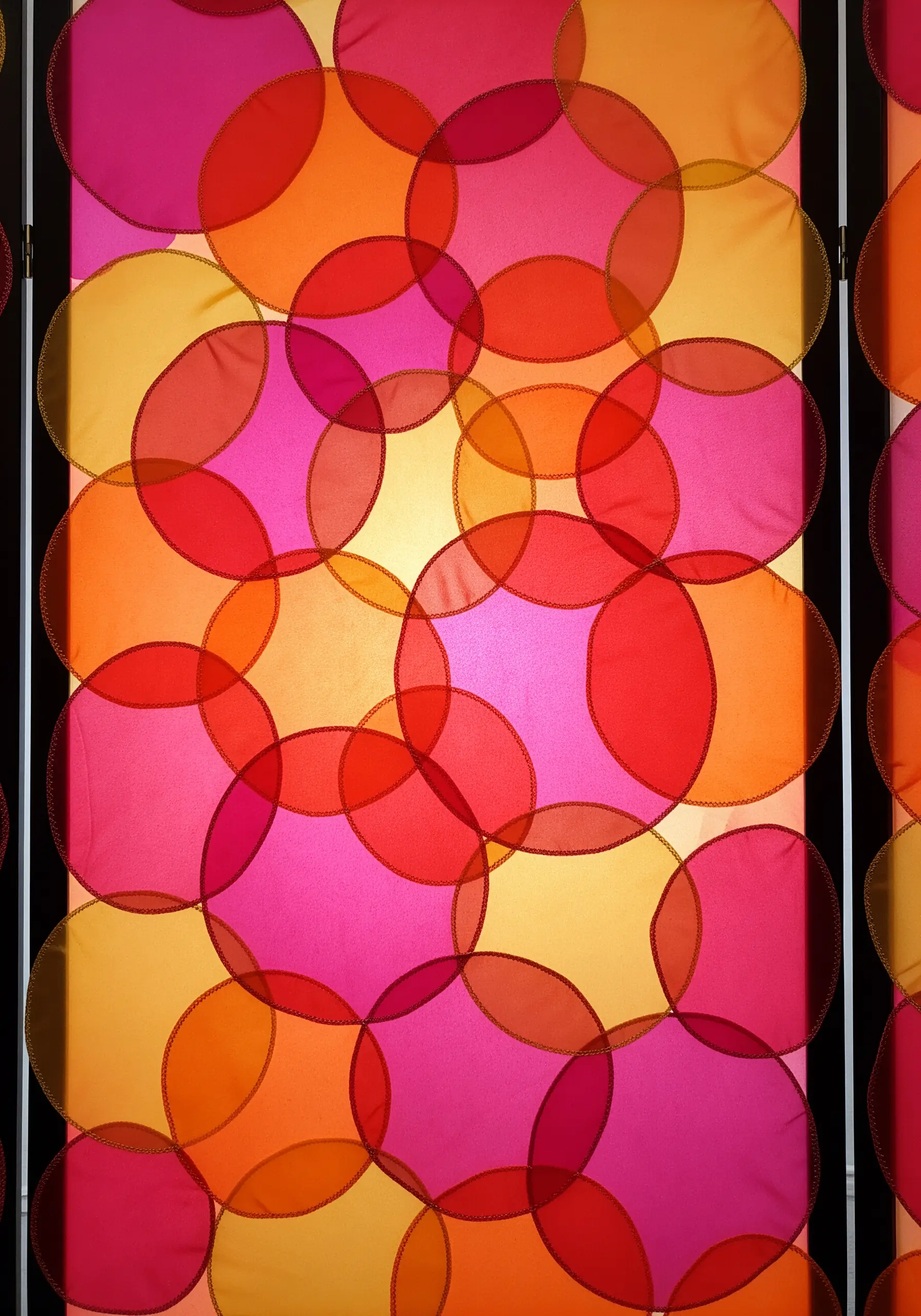
Use your fabric as a lesson in color mixing. Cut circles from sheer organza in primary and secondary colors like magenta, yellow, and orange.
When you overlap these pieces, their transparency creates new, blended shades where they intersect, just like watercolors.
Secure each circle with a simple running stitch in a matching thread color to keep the focus entirely on the vibrant interplay of light and color.
This is a perfect project for creating a stunning, modern room divider or a piece of vibrant wall art.
8. Create 3D Botanicals with Pinched Fabric Leaves

Give your botanical art a sculptural quality by adding dimensional leaves.
Cut simple leaf shapes from organza, then pinch the base of each one and secure it to the canvas with a few small stitches.
This simple action makes the leaves fan out from the surface, creating natural-looking volume and shadow.
Add a few scattered seed stitches or French knots as abstract accents to complement the bold fabric forms without competing with them.
9. Weave an Abstract Seascape with Ribbons and Floss
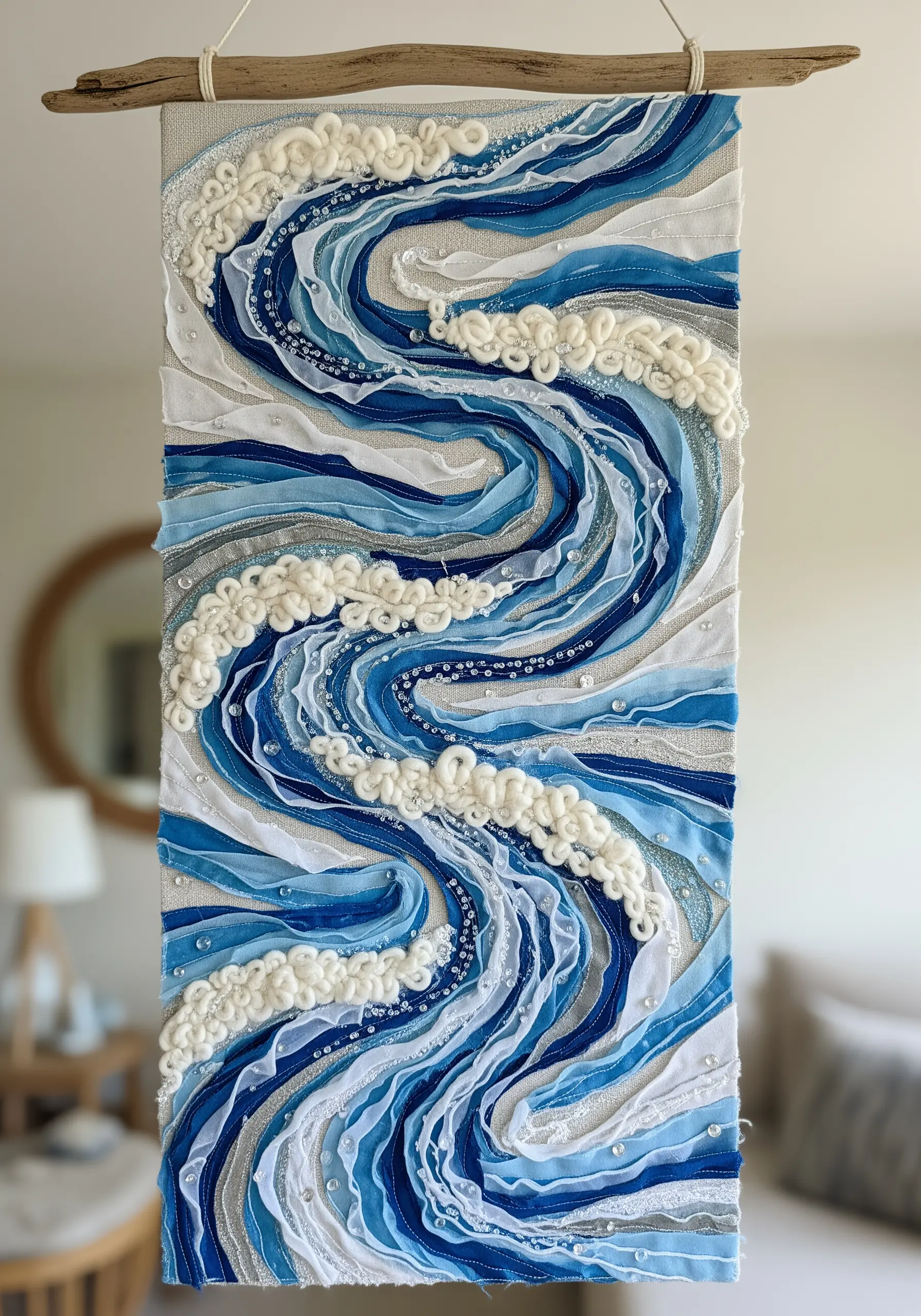
Capture the chaotic energy of ocean waves by layering and twisting sheer ribbons, strips of organza, and metallic fabrics.
Instead of flat appliqué, allow the materials to ripple and bunch, securing them with couching stitches or intermittent tacking stitches.
Incorporate high-texture elements like chunky French knots made with wool yarn to represent seafoam, adding a powerful tactile contrast to the smooth, sheer fabrics.
This project is one of many abstract thread embroidery ideas that prioritizes movement over realism.
10. Combine Sheer Color with Bold Graphic Outlines
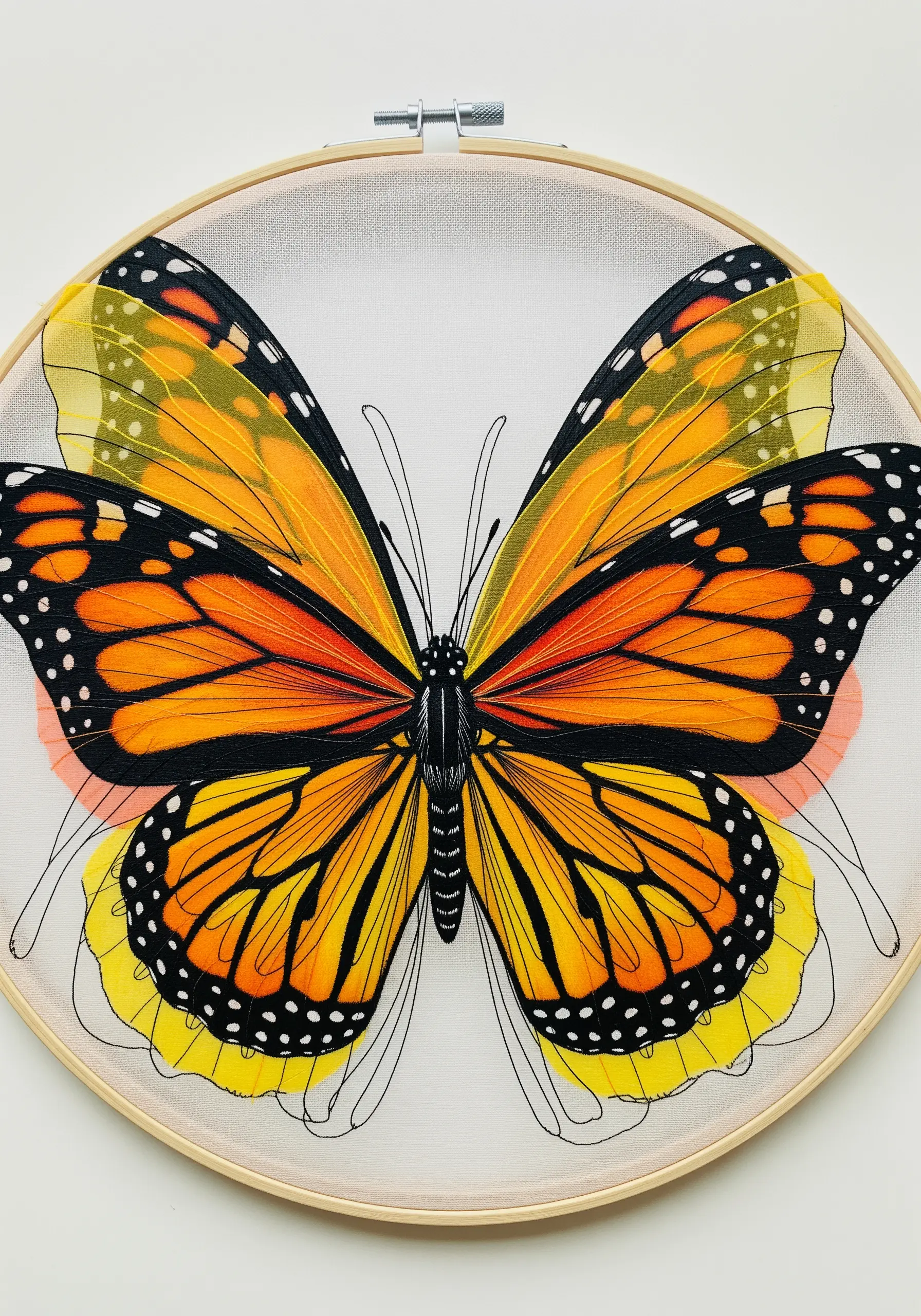
Achieve a stained-glass effect by first laying down sheer organza for the base colors of your motif, like the orange and yellow in a monarch’s wings.
Once the fabric appliqué is lightly tacked in place, stitch the bold, graphic details directly on top using a dense, dark satin stitch or a sharp backstitch.
This technique creates a stunning contrast between the soft, translucent color of the fabric and the hard, defining lines of the threadwork.
11. Construct Architectural Forms with Monochrome Sheers
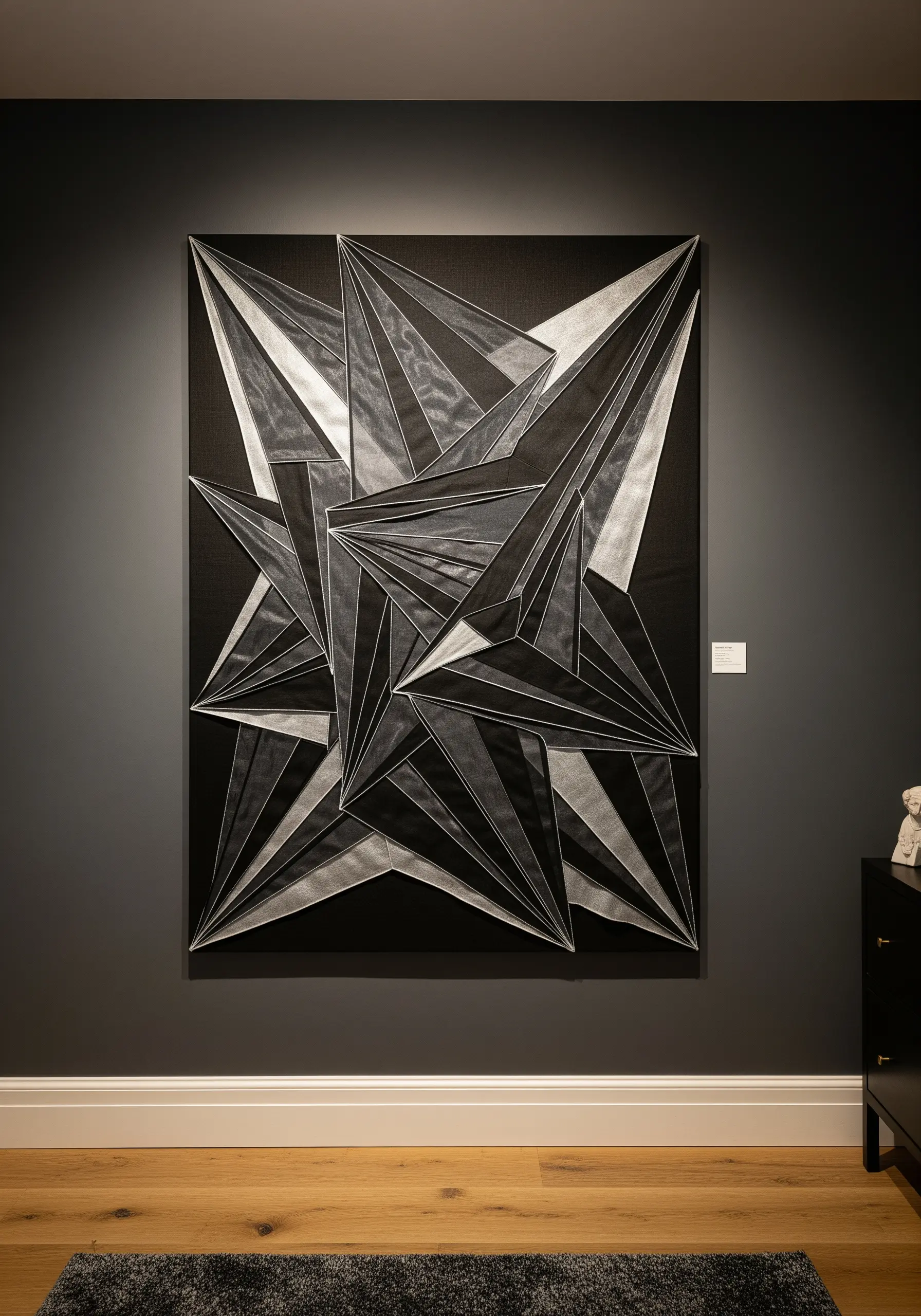
Explore shadow and form using a limited palette. On a solid black canvas, layer geometric shapes cut from white, grey, and silver sheer fabrics.
The transparency of the material allows the black background to show through, creating a range of tonal values from a few simple fabrics.
Use a single, clean line of white backstitch to define the edges, giving the abstract composition a sharp, architectural feel.
This is a powerful way to create monochrome black thread designs with immense depth and sophistication.
12. Mix Opaque Patterns with Sheer Overlays

Add subtlety and depth to your fabric collages by selectively layering sheer fabric over patterned cotton.
For a project like hot air balloons, use bold, printed fabrics for some panels and the same fabric with a white organza overlay for others.
This instantly mutes the pattern and shifts the color, creating a sophisticated variation that makes the composition feel more dynamic and less flat.
It’s a simple trick to add visual interest without introducing more patterns or colors.
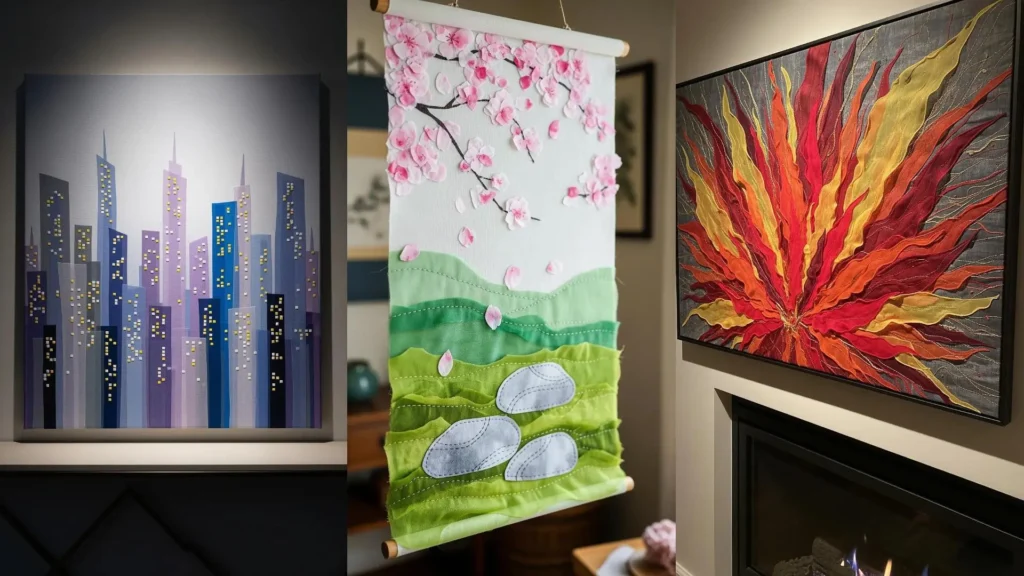
13. Build a Cityscape with Layered Perspective
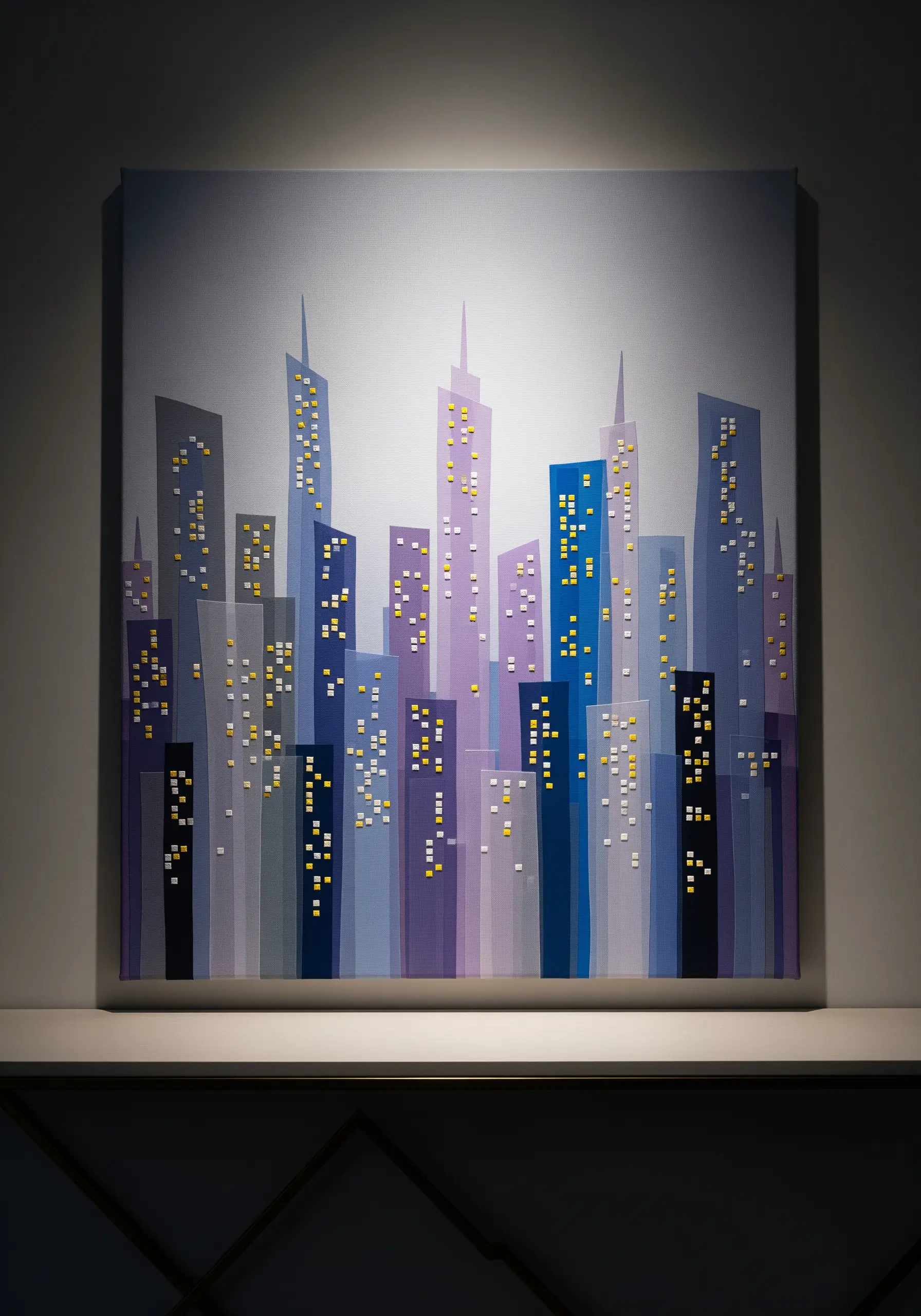
Create a sense of an endless city skyline by using the principles of atmospheric perspective with your fabric choices.
Use opaque, dark fabrics for the buildings in the immediate foreground, and transition to progressively sheerer and lighter-colored fabrics for the skyscrapers in the background.
The final touch—tiny satin-stitched squares for lit windows—adds a spark of life and enhances the illusion of a city at dusk.
This piece is a perfect example of embroided city skyline wall decor that feels both graphic and atmospheric.
14. Capture Ethereal Light with Iridescent Fabrics
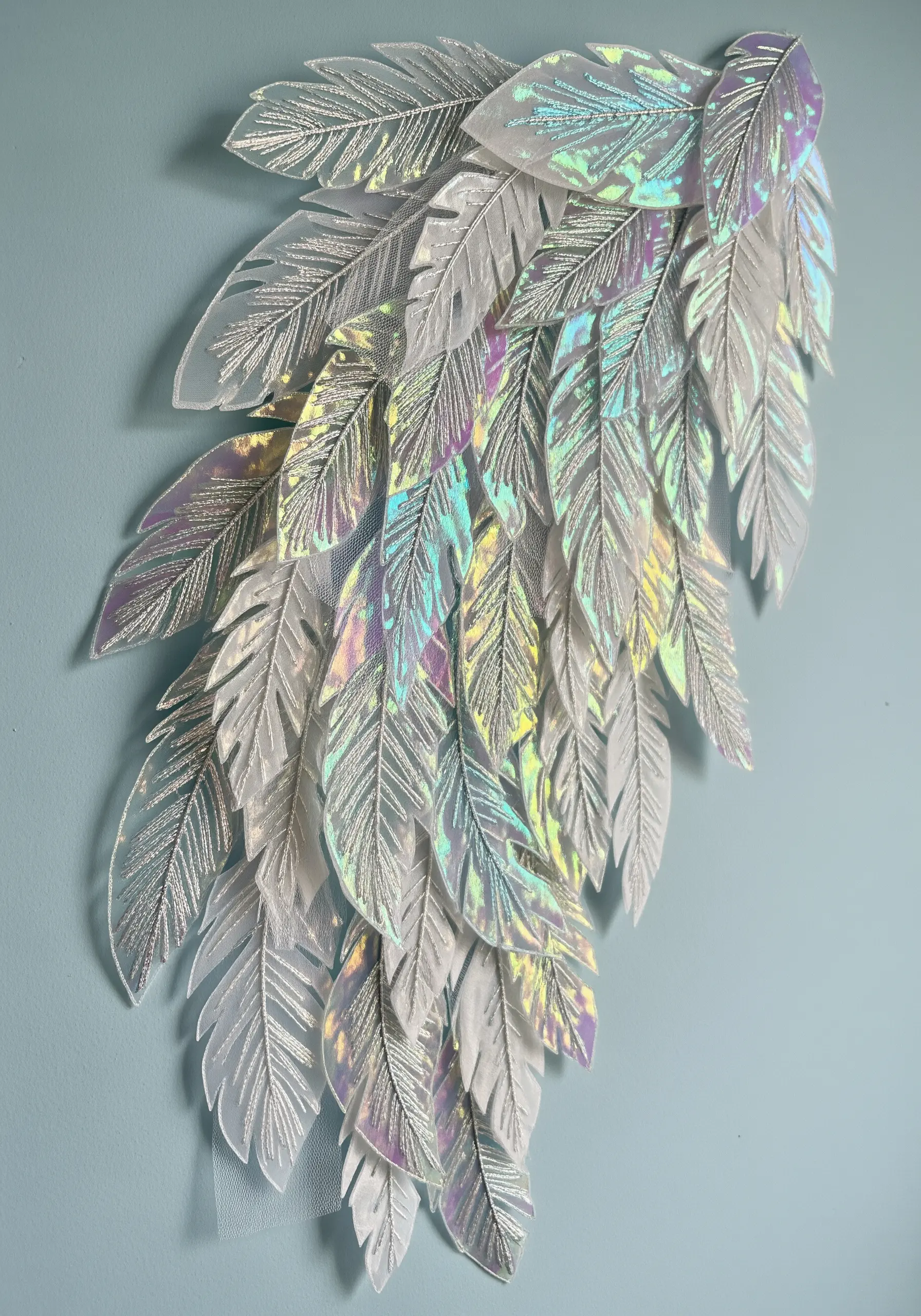
Incorporate a touch of magic by using iridescent organza or cellophane as one of your sheer layers.
When crafting something ethereal like angel wings, layer the iridescent material between pieces of sheer white or silver organza.
As the light hits the piece from different angles, the iridescent layer will flash with unexpected colors, creating a dynamic, otherworldly effect that thread alone cannot achieve.
The stitched veins provide structure, while the fabric provides the magic.
15. Create Delicate 3D Petals with Minimal Stitching
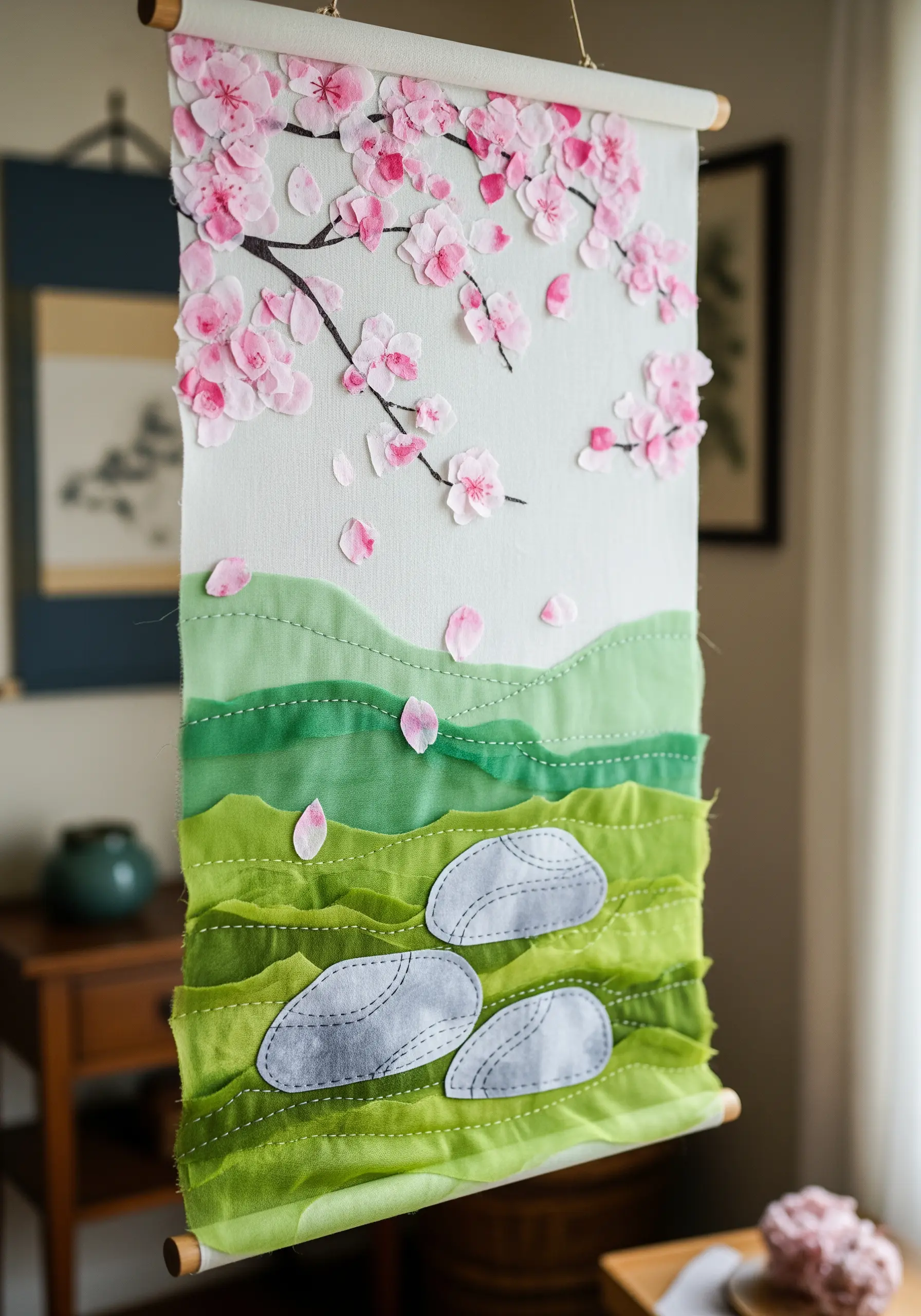
For hyper-realistic blossoms, focus on the fabric shapes rather than dense embroidery.
Cut individual petal shapes from pink organza and stitch them down with just a few small stitches at the base, allowing the edges to lift away from the fabric.
This creates natural dimension and shadow, making the flowers look like they are truly blooming on the canvas.
Layering ruffled green fabrics for the hills below adds textural contrast to the delicate, smooth petals.
16. Map the Cosmos with Graphic Appliqué
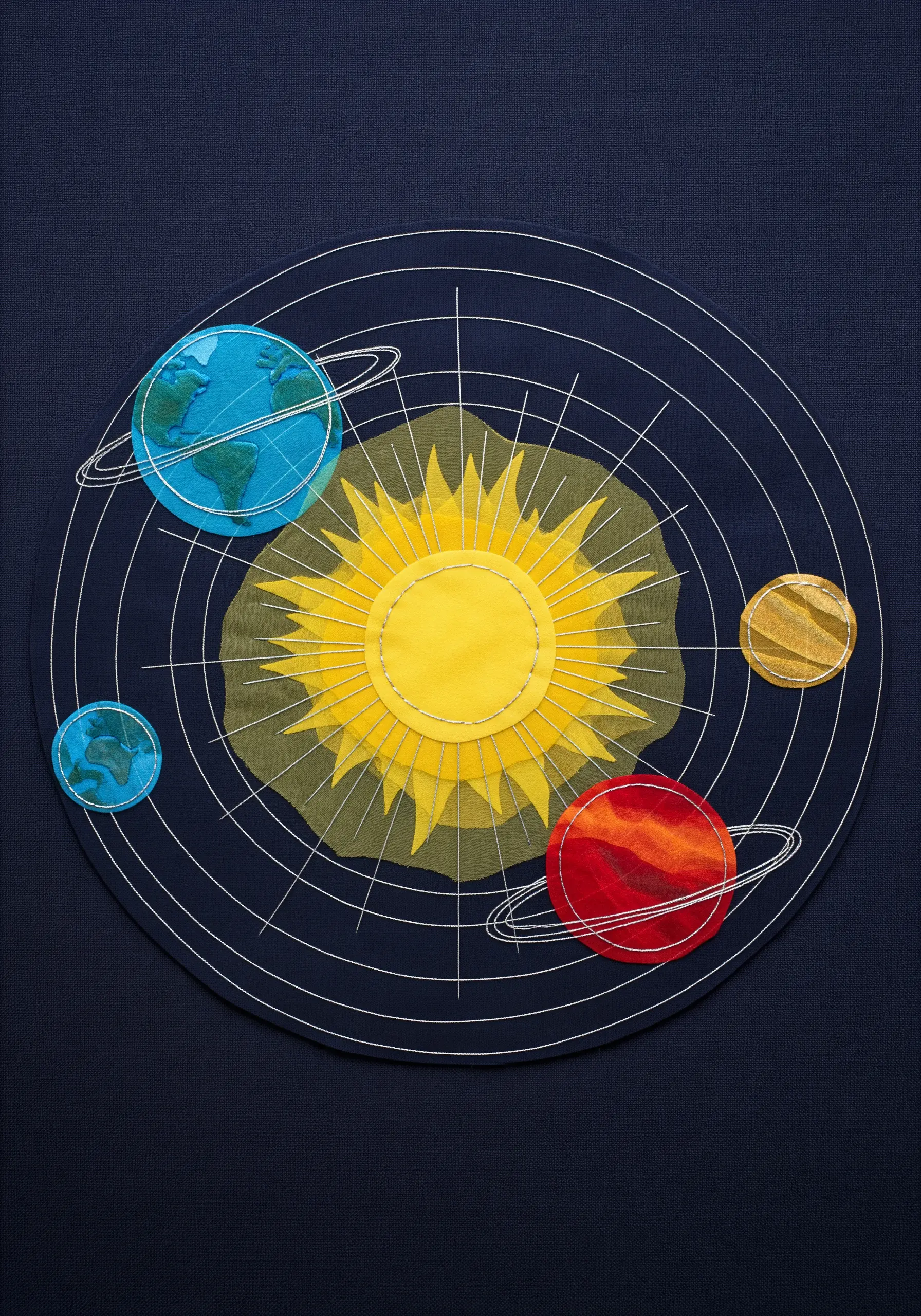
For a clean, graphic representation of a concept like the solar system, precision is key.
Use a double layer of organza for your planet appliqués; this deepens the color saturation and makes them more vivid against a dark background.
The defining feature is the orbital lines. Use a crisp, perfectly even backstitch or whipped backstitch with a bright white thread to create flawless, elegant pathways that guide the eye.
17. Paint a Landscape with Thread and Fabric Strips

Create a powerful sense of perspective in a landscape by combining fabric collage with dense stitching.
Lay down strips of sheer purple fabric for the lavender fields, then use vertical satin stitches for the lavender stalks in the foreground.
Make your foreground stitches dense, textured, and varied in color. As you move toward the horizon line, make the stitches smaller, sparser, and less detailed.
This gradient in stitch density fools the eye into seeing distance and depth.
18. Unleash Dynamic Energy with Freeform Fabric
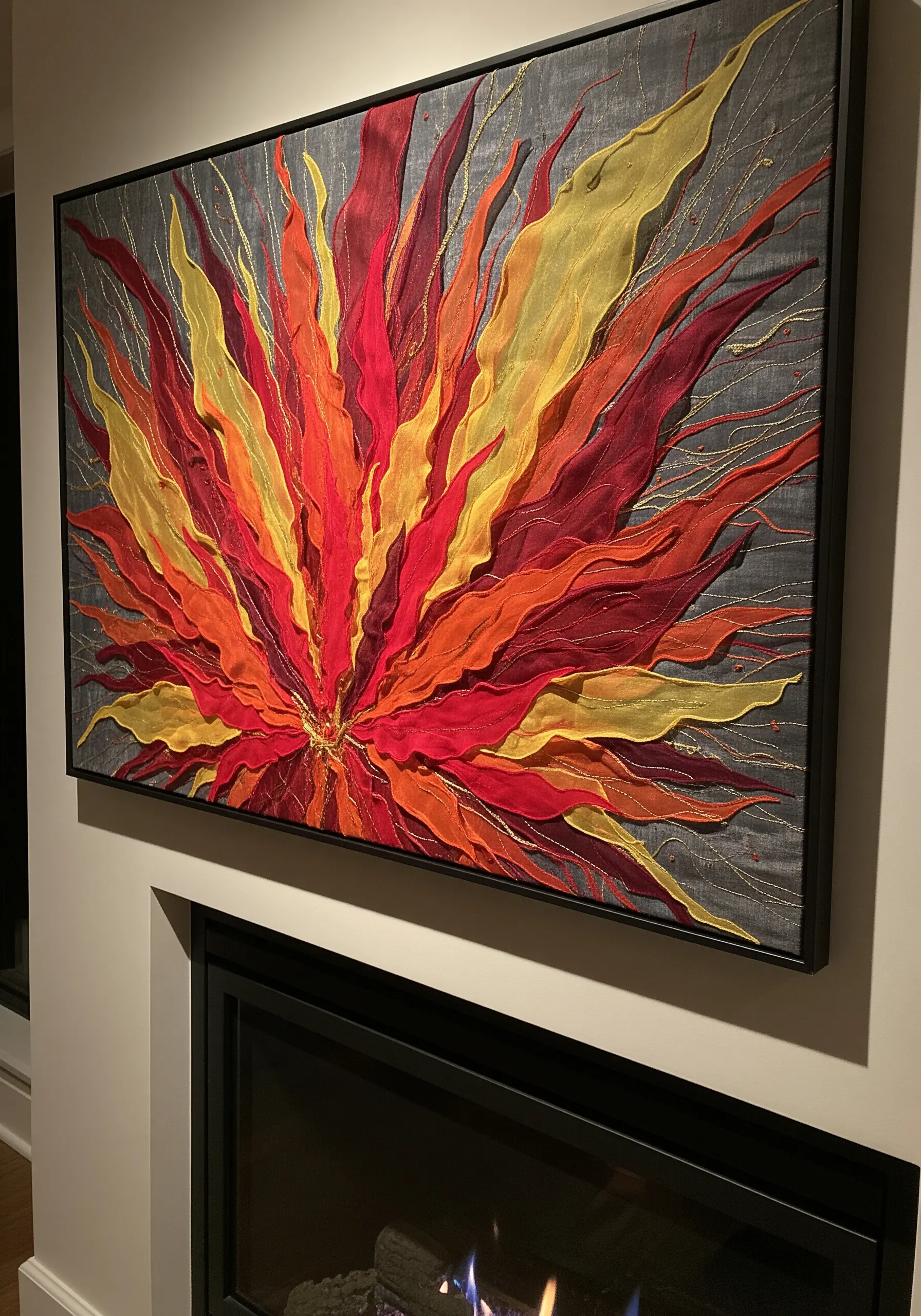
To capture abstract concepts like fire or energy, let your fabric remain loose and sculptural.
Cut long, flame-like shapes from sheer organza in a warm palette of red, orange, and yellow.
Secure each piece only at the central point of the ‘explosion,’ allowing the tapered ends to lift, curl, and move freely.
A few radiating lines of metallic thread stitched outward from the center will add a final spark and enhance the sense of dynamic motion.
19. Use Negative Space with Reverse Appliqué
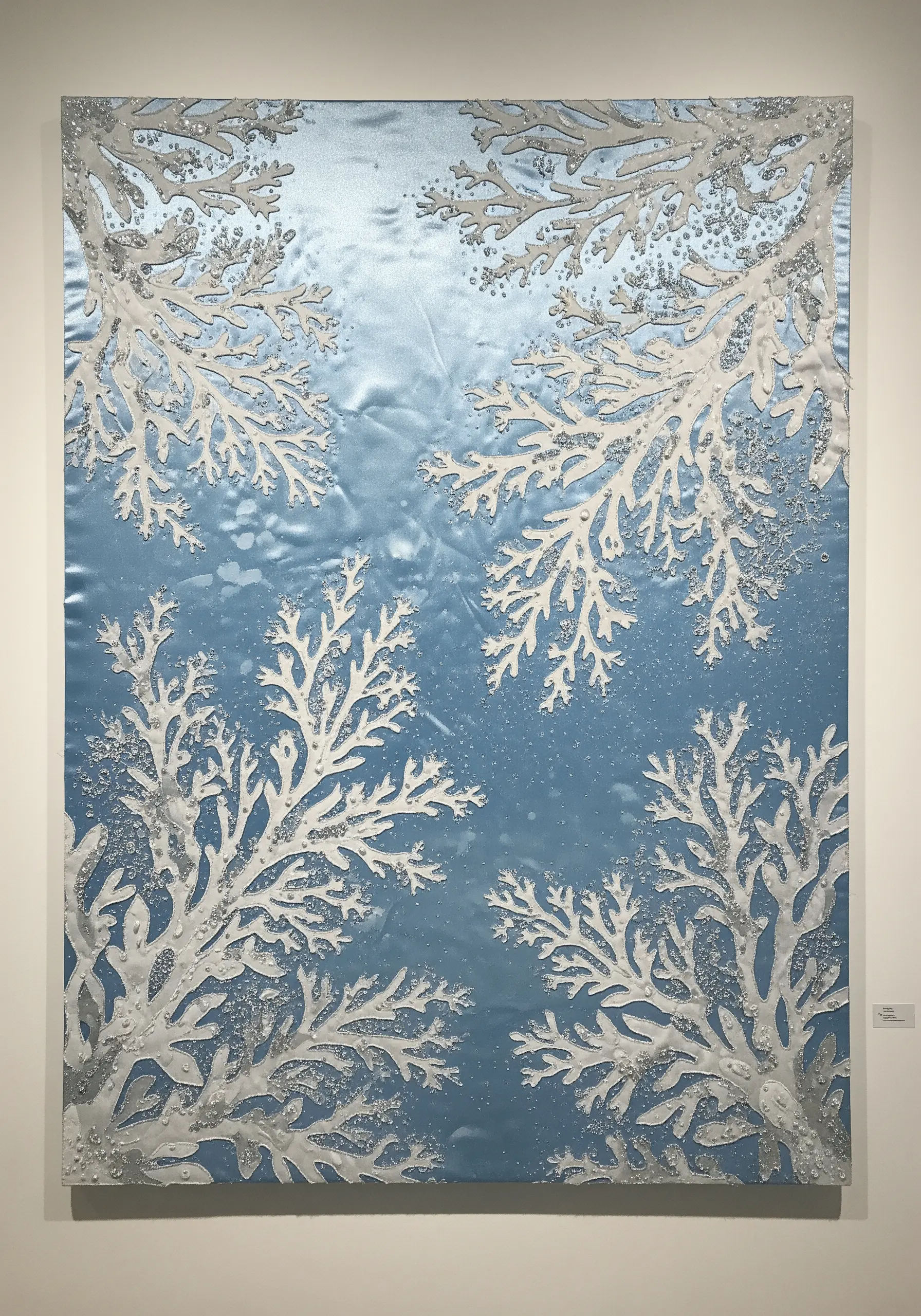
Create a striking design by focusing on the background. Use a lustrous, opaque fabric like satin as your base.
Carefully cut out your coral shapes from this top layer, revealing a sheer, textured, or beaded fabric underneath.
This reverse appliqué technique creates a beautiful frame for the delicate details below, turning the background into the star of the show.
Stitch around the cut edges with a fine thread to prevent fraying and define the elegant silhouettes.