If you’re looking to bring a sense of calm and intention to your workspace, the answer might already be in your hands. Embroidery, especially with a focus on clean lines and geometric forms, has a unique ability to transform a corner of your desk into a quiet, stylish sanctuary.
Forget the idea that impressive embroidery must be complex. The most impactful pieces often rely on precision, not difficulty. It’s about choosing the right stitch for a crisp line, selecting a color palette that soothes rather than shouts, and understanding how thread texture can create depth. This is a meditative art form where every stitch is a deliberate mark, bringing order and beauty to your day.
These ideas are designed to be both inspiring and achievable. They focus on techniques that elevate your work through smart choices—not endless hours of effort. You’ll learn to see how a simple backstitch can become a bold statement, how negative space can be your most powerful tool, and how a touch of metallic thread can change everything. You have everything you need to begin creating pieces that feel personal, polished, and profoundly calming.
1. The Art of Layered Satin Stitch Landscapes

Create a sense of depth by color-blocking simple triangular shapes with satin stitch.
You can achieve a harmonious, modern palette by selecting three to four shades from the same color family, arranging them from light to dark to suggest distance.
For a subtle, professional finish, vary the angle of your satin stitches slightly for each mountain—this small adjustment changes how the light reflects off the thread, adding texture without complexity.
A single, contrasting metallic thread for a sun or star introduces a point of focus and an unexpected touch of warmth to the cool tones.
2. Mastering the Single, Bold Outline
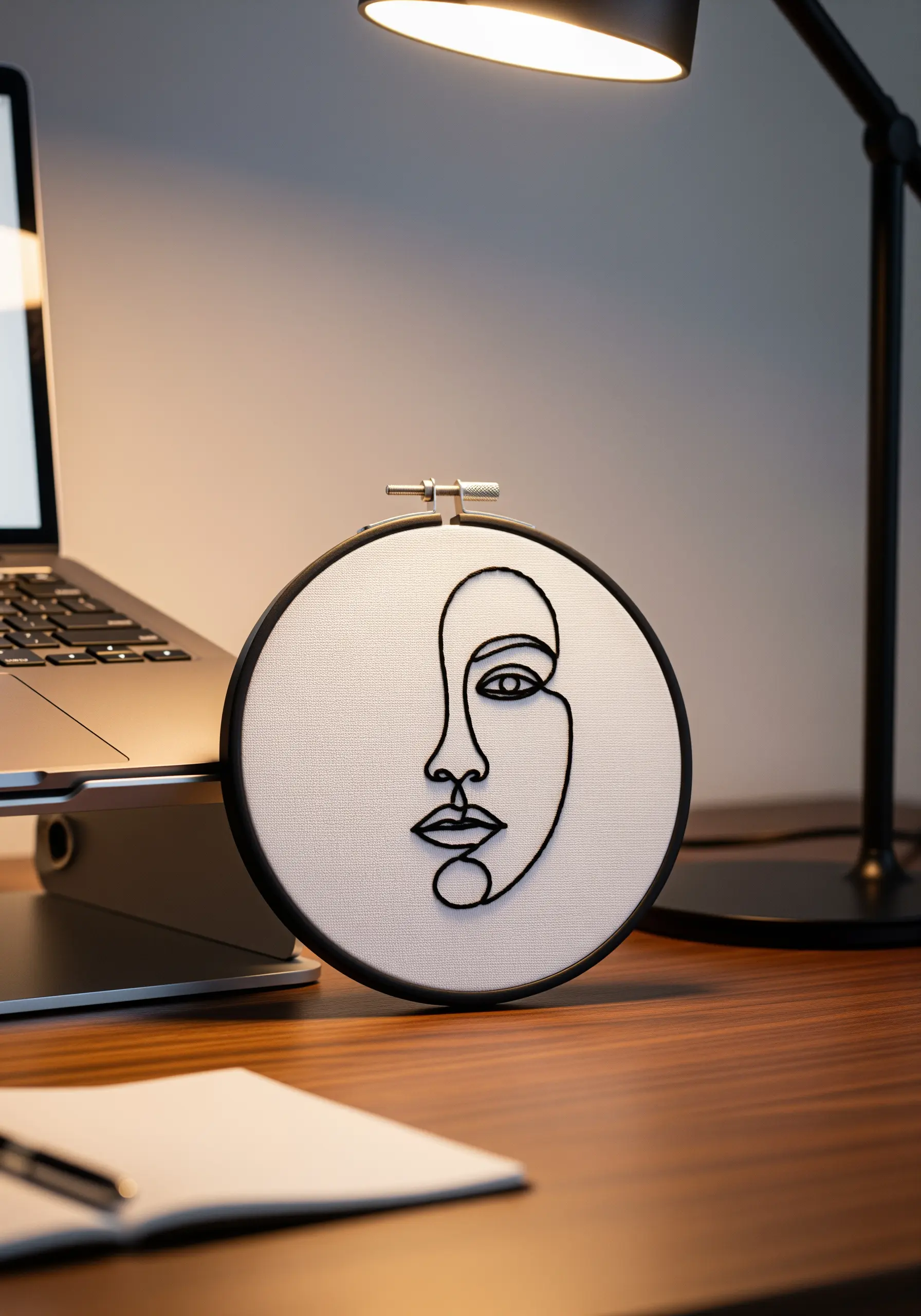
For a powerful graphic statement, commit to a single, unbroken line.
Instead of using a standard two or three strands of floss, use all six—or even a fine pearl cotton—to achieve a weight that feels substantial and sculptural.
A whipped backstitch or a heavy, tight chain stitch will give you that smooth, continuous line, eliminating the tiny gaps that can make outlines look hesitant.
This technique elevates simple line art from a mere drawing into a confident, three-dimensional piece that commands attention on your desk.
3. Precision Stitching for Celestial Charts
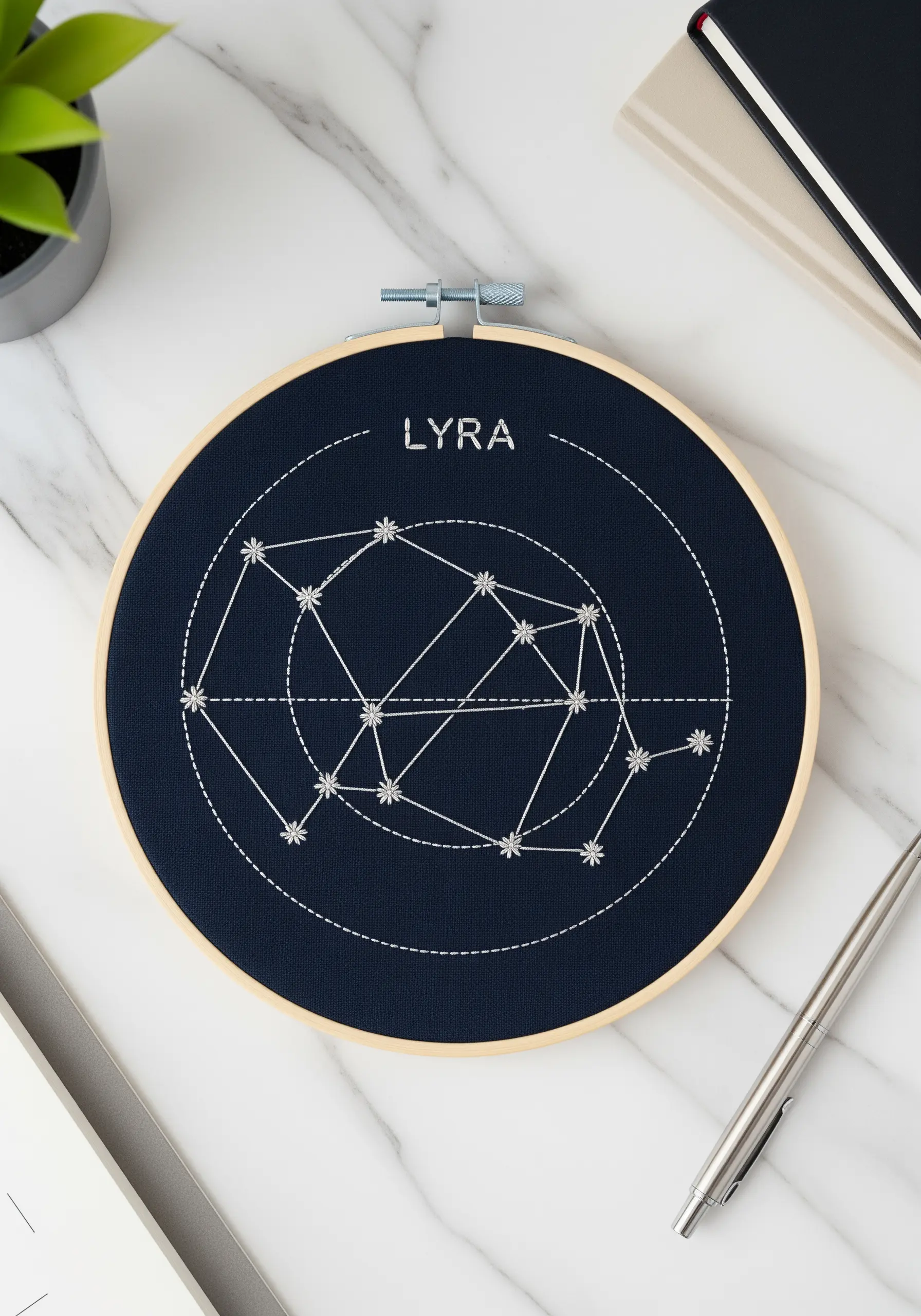
To capture the clean, academic feel of a star chart, your stitch work must be precise and deliberate.
Choose a high-contrast combination, like brilliant white thread on a deep navy fabric, to make every detail sharp and clear.
Use a simple backstitch for the connecting lines, focusing on maintaining consistent stitch length for a neat, technical appearance.
For the stars themselves, a tiny star stitch or a cluster of two or three seed stitches provides a delicate, shimmering point of light that completes the celestial map.
4. Dynamic Composition with Color Blocking
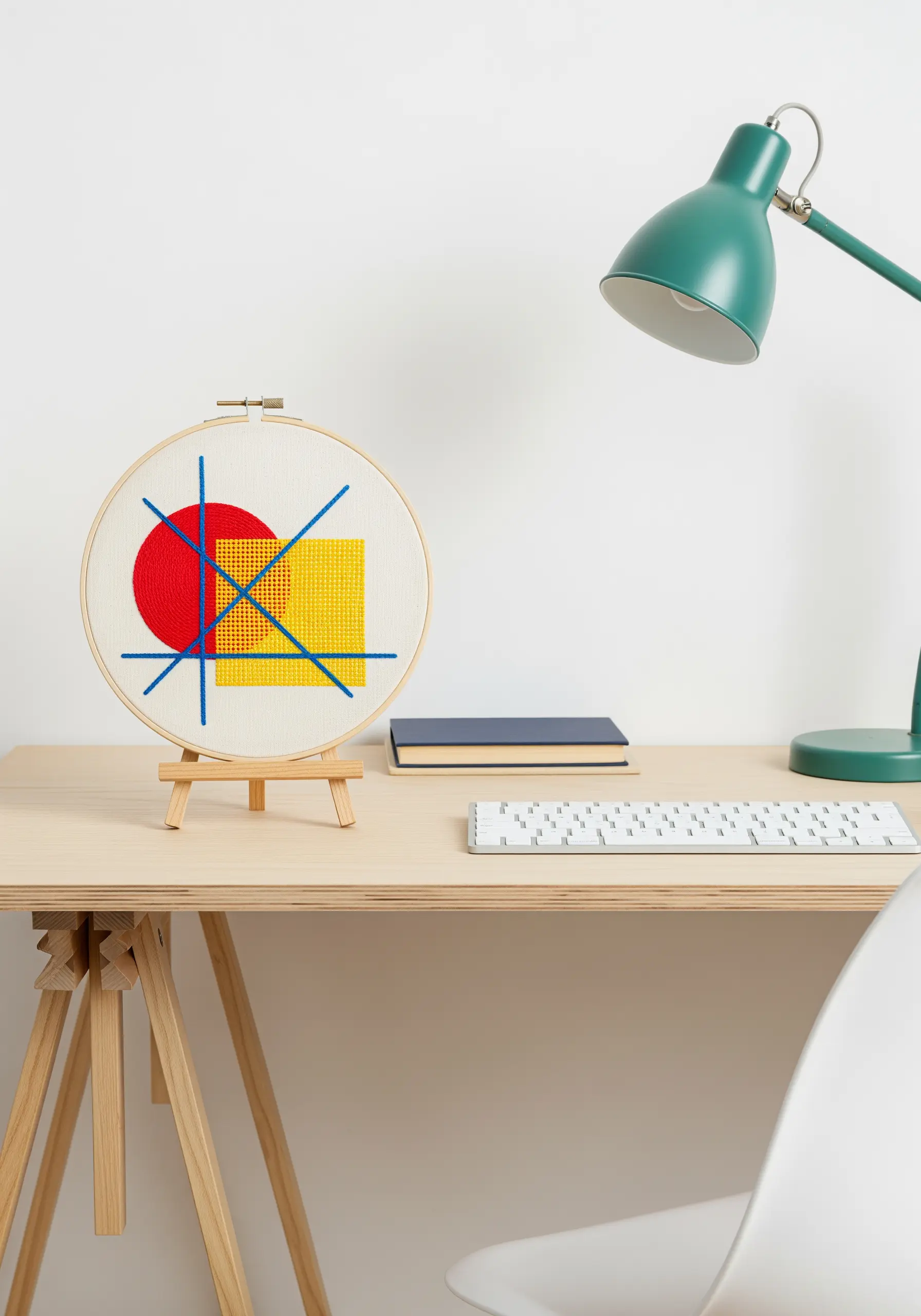
This design demonstrates how you can create high-impact art using just a few simple shapes and a bold palette.
Fill your geometric blocks with a dense seed stitch or short, neat satin stitches to achieve a solid field of color with crisp edges.
The overlapping lines, created with long straight stitches, add a layer of transparency and movement that makes the composition dynamic.
Sticking to primary colors gives the piece a confident, Bauhaus-inspired feel that energizes a modern workspace.
5. Translating Blueprints into Textured Stitches

Give a personal blueprint or floor plan an artistic, tactile quality by rendering it in thread.
A simple backstitch in a contrasting color works perfectly for the main walls, creating a clean and readable outline.
Introduce architectural nuance by varying your stitches: use a running stitch for internal partitions or small satin stitch blocks for structural columns.
Displaying the finished work on a stretched canvas rather than in a hoop offers a sharp, frameless presentation that feels like a piece of gallery art.
6. The Meditative Power of Gradient Rope Stitch
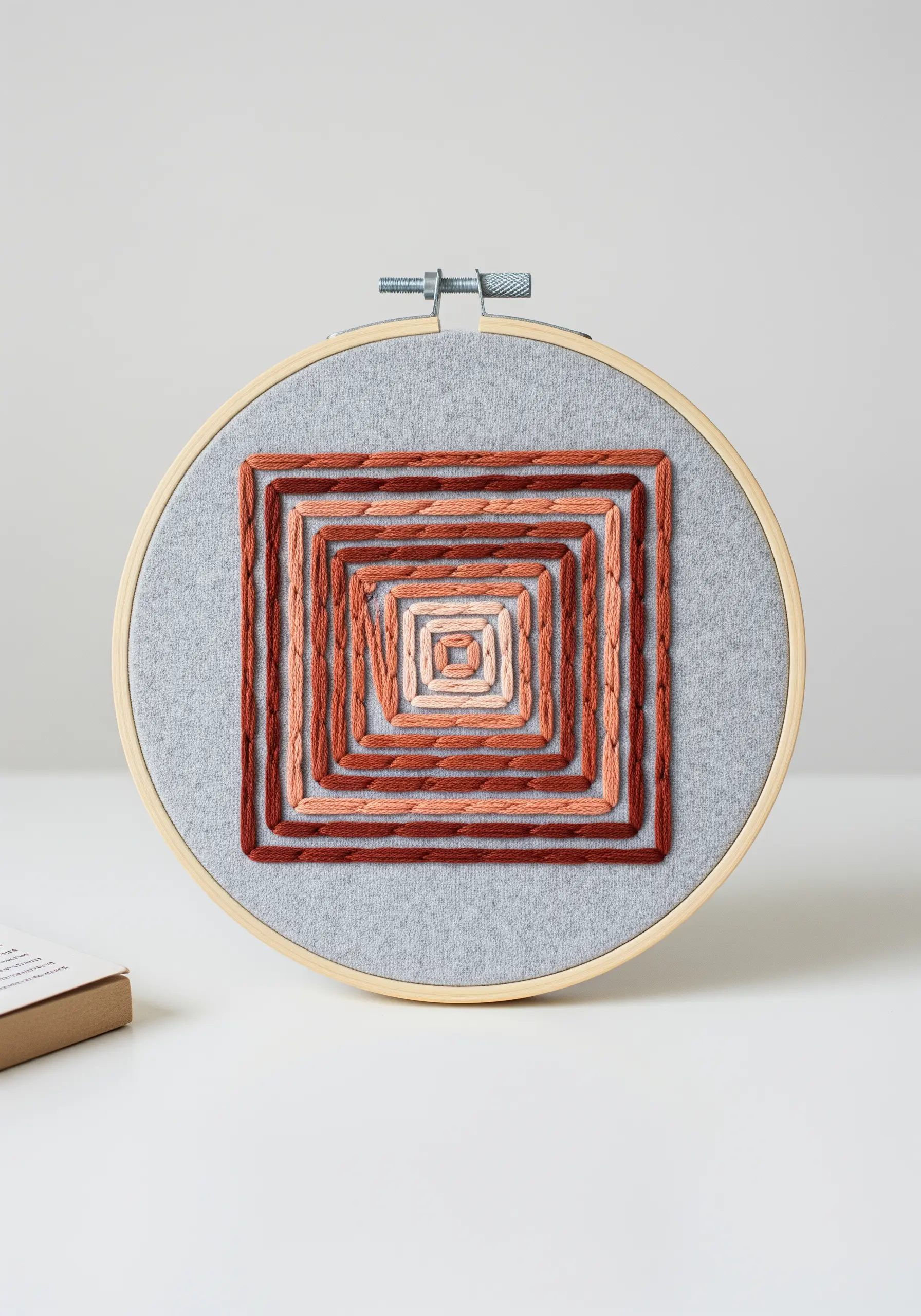
This piece draws the eye inward, creating a calming, hypnotic effect that’s perfect for a moment of focus during a busy day.
The key to its dimensionality is the rope stitch (or a thick, twisted chain stitch), which provides a beautiful braided texture.
By working through a monochromatic gradient—from a deep, earthy terracotta to a pale sand—you create a sense of depth and gentle movement.
The simple, repeating square shape becomes a canvas for color and texture, proving that complexity isn’t required for impact.
7. Weaving Light with Radial Stitches

Create a stunning sunburst effect with nothing more than carefully placed straight stitches.
Map out your radial pattern from a central point, ensuring your stitches are taut but don’t pull the fabric.
To elevate the design, alternate a standard cotton floss with a fine metallic thread.
This simple addition catches the light as you move around your workspace, adding a layer of dynamic, understated luxury.
8. Stitching Mathematical Beauty: The Golden Ratio
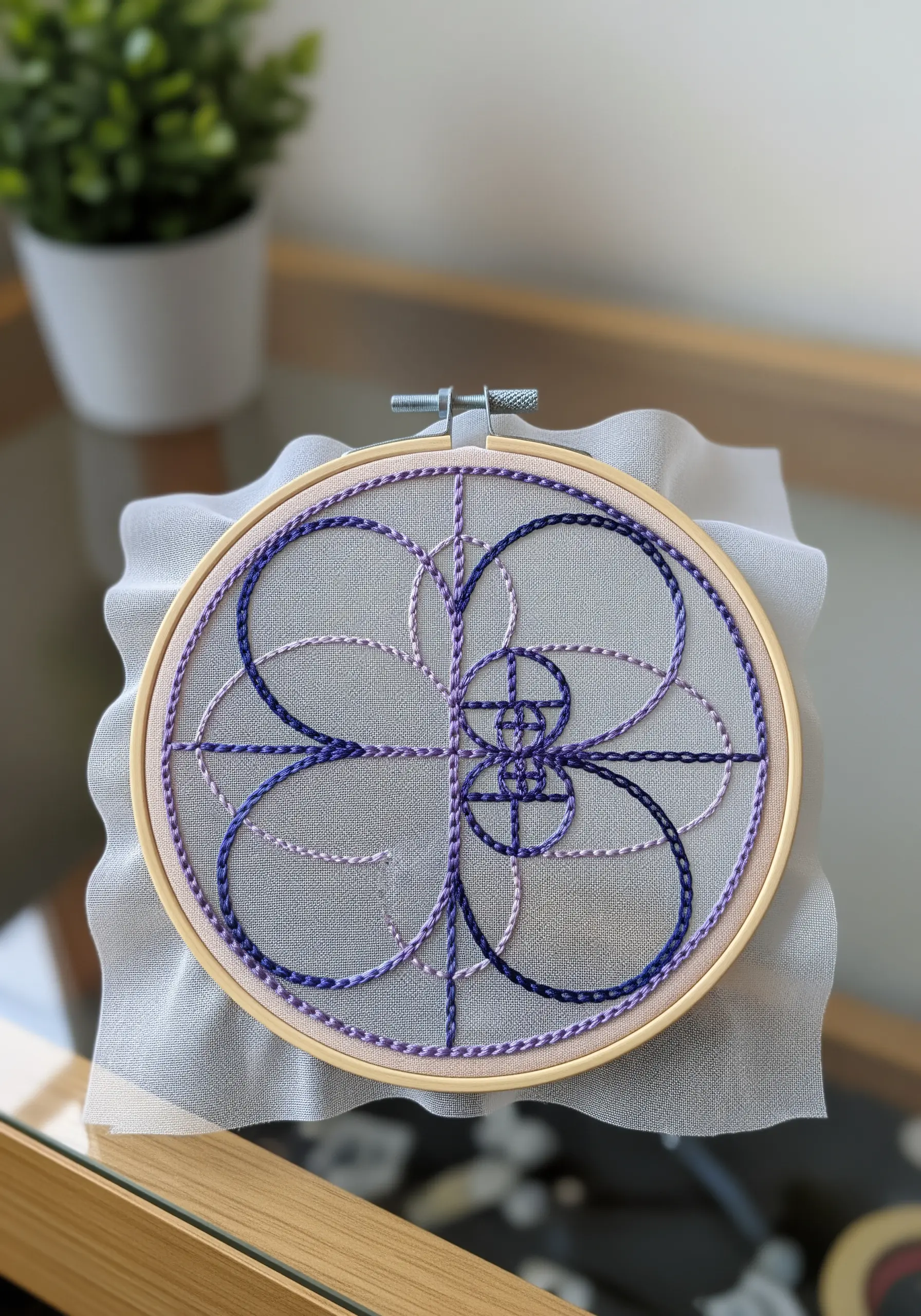
You can translate the perfect proportions of the Fibonacci spiral into a graceful, flowing piece of embroidery.
Use a whipped backstitch or a clean chain stitch to form the curved lines, giving them a solid, rope-like appearance.
Choosing two different variegated or ombré threads helps to visually separate the interlocking spirals, highlighting how geometry can create organic, flowing art.
Stitching on a sheer or semi-sheer fabric adds an extra layer of lightness and delicacy to the finished piece.
9. The Elegance of a Single Line Botanical
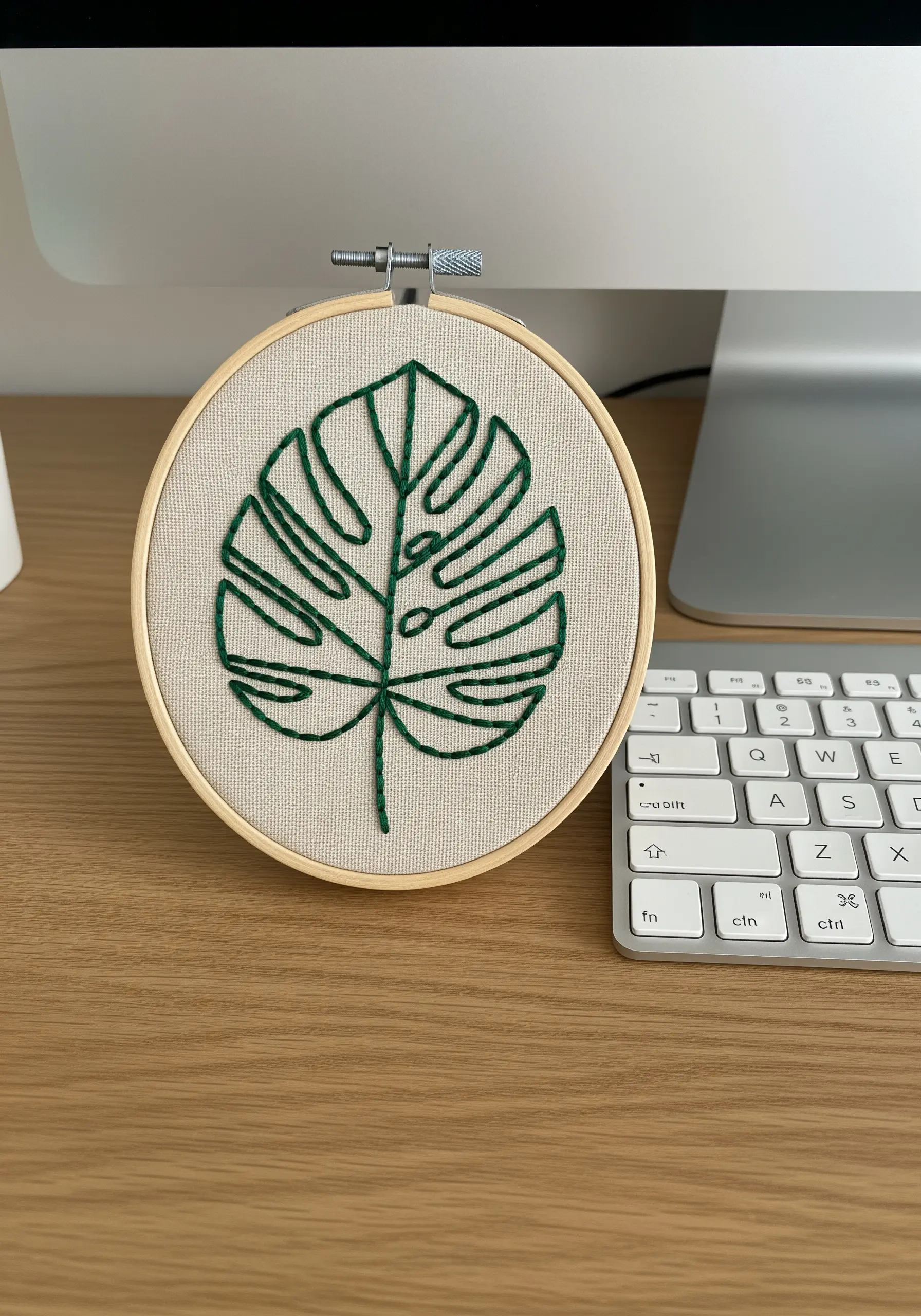
For clean, modern botanicals, shift your focus from intricate shading to the purity of the outline.
A stem stitch or split stitch provides a solid, slightly raised line that beautifully defines the iconic shape of a leaf.
This technique works best when you let the form be the hero—use a single, bold color on a high-quality neutral linen or cotton.
The result is a piece that feels both natural and highly designed, perfect for a contemporary desk space.
10. Visualizing Sound with Vertical Satin Stitch
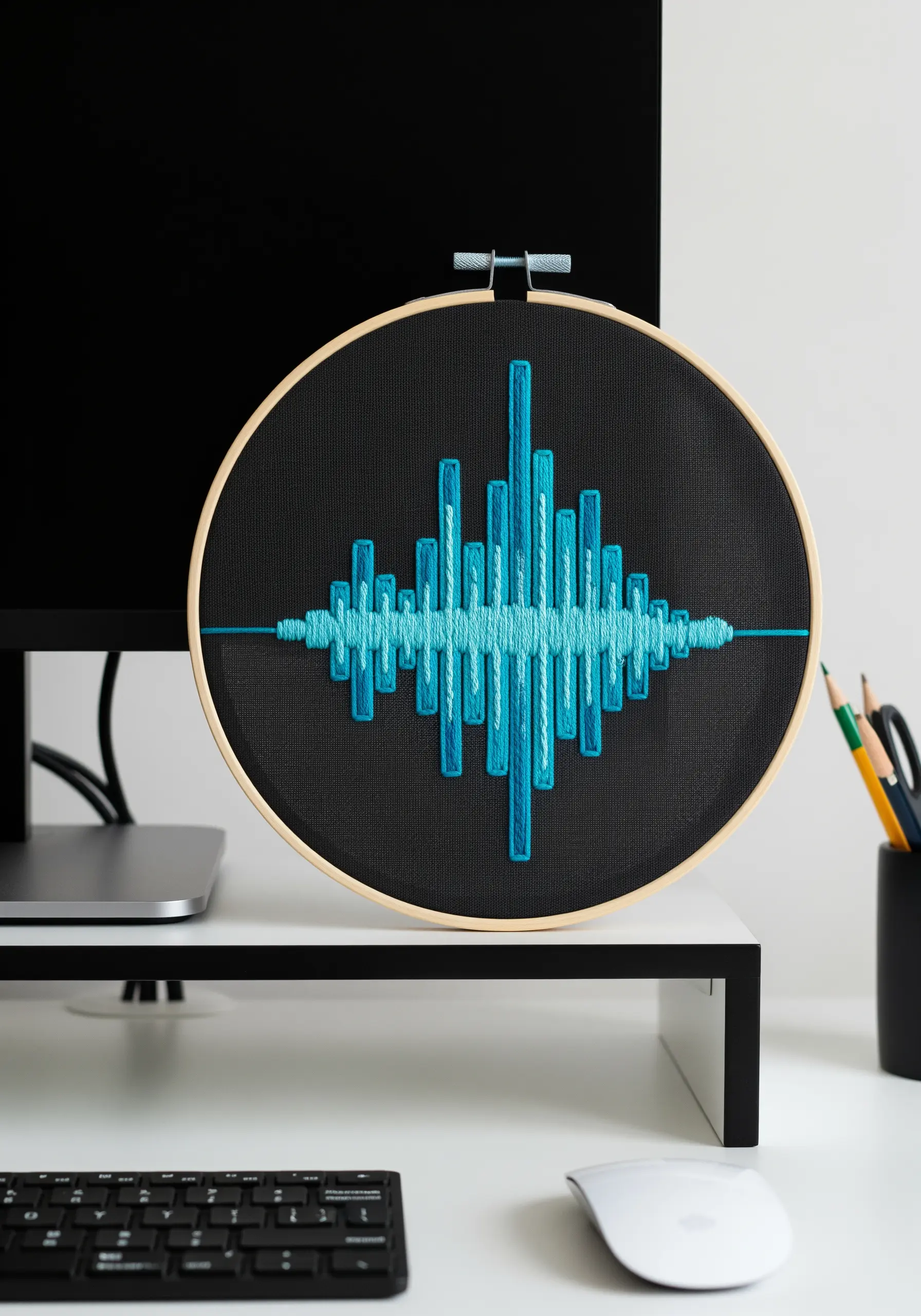
Stitch a soundwave that holds personal meaning—a line from a song, a child’s laughter, or a personal mantra.
Use vertical satin stitches, carefully varying their heights to match the peaks and valleys of the waveform.
Placing a tonal gradient of blues or greens on a stark black background gives the design a glowing, digital aesthetic.
This project is a beautiful way of transforming sound into a tangible piece of art you can keep in your workspace.
11. Connecting Hoops with Continuous Line Art
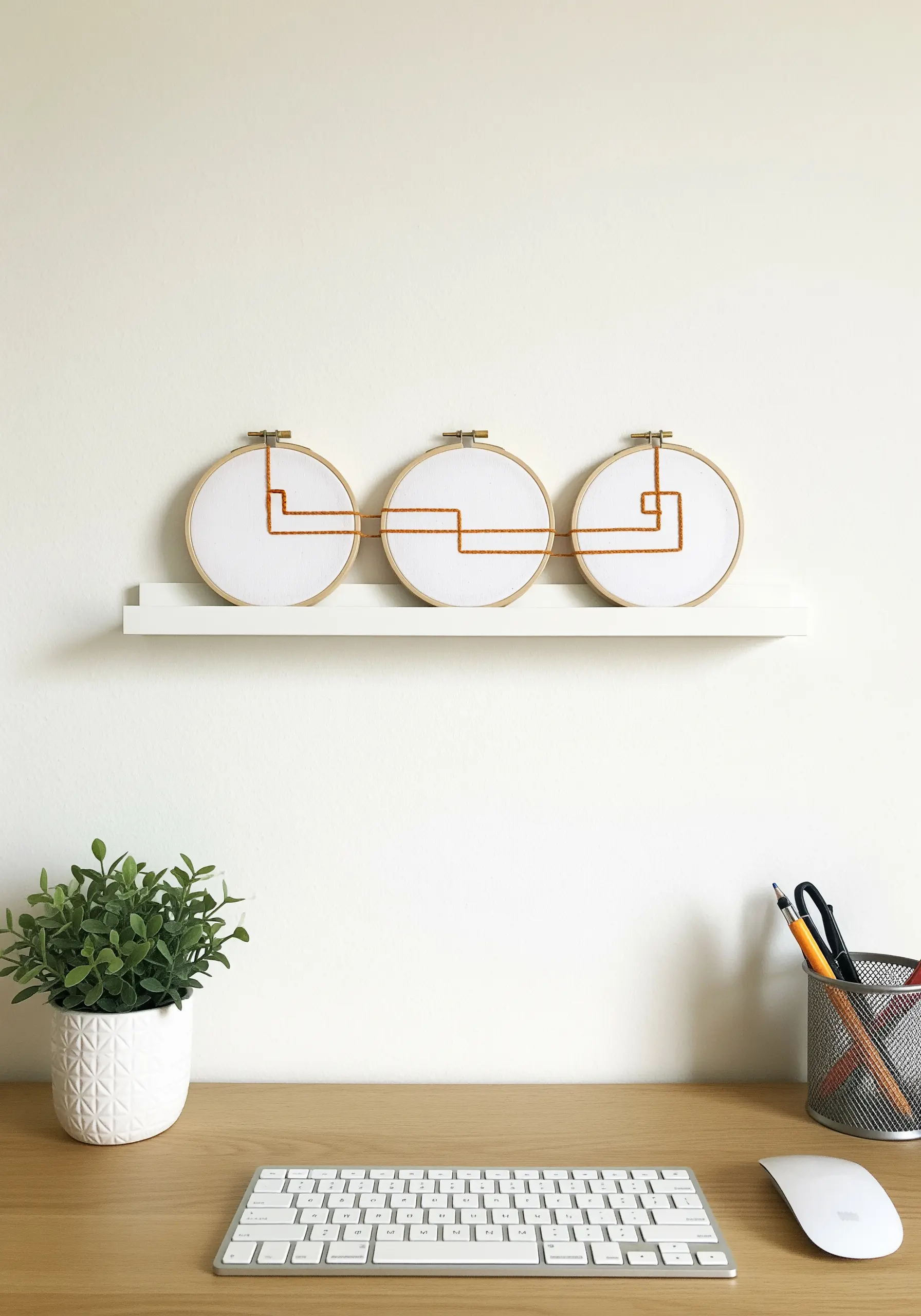
Break free from the single-hoop format by creating a design that flows across multiple frames.
Plan your composition so that a single, continuous line travels from one hoop to the next, forming a cohesive pattern like a stylized circuit board.
A simple backstitch in a high-contrast color provides the clarity needed for the design to read across the gaps.
This approach elevates a simple project and turns your embroidery into a larger installation piece for your wall.
12. Gradient Shading for 3D Geometric Illusions
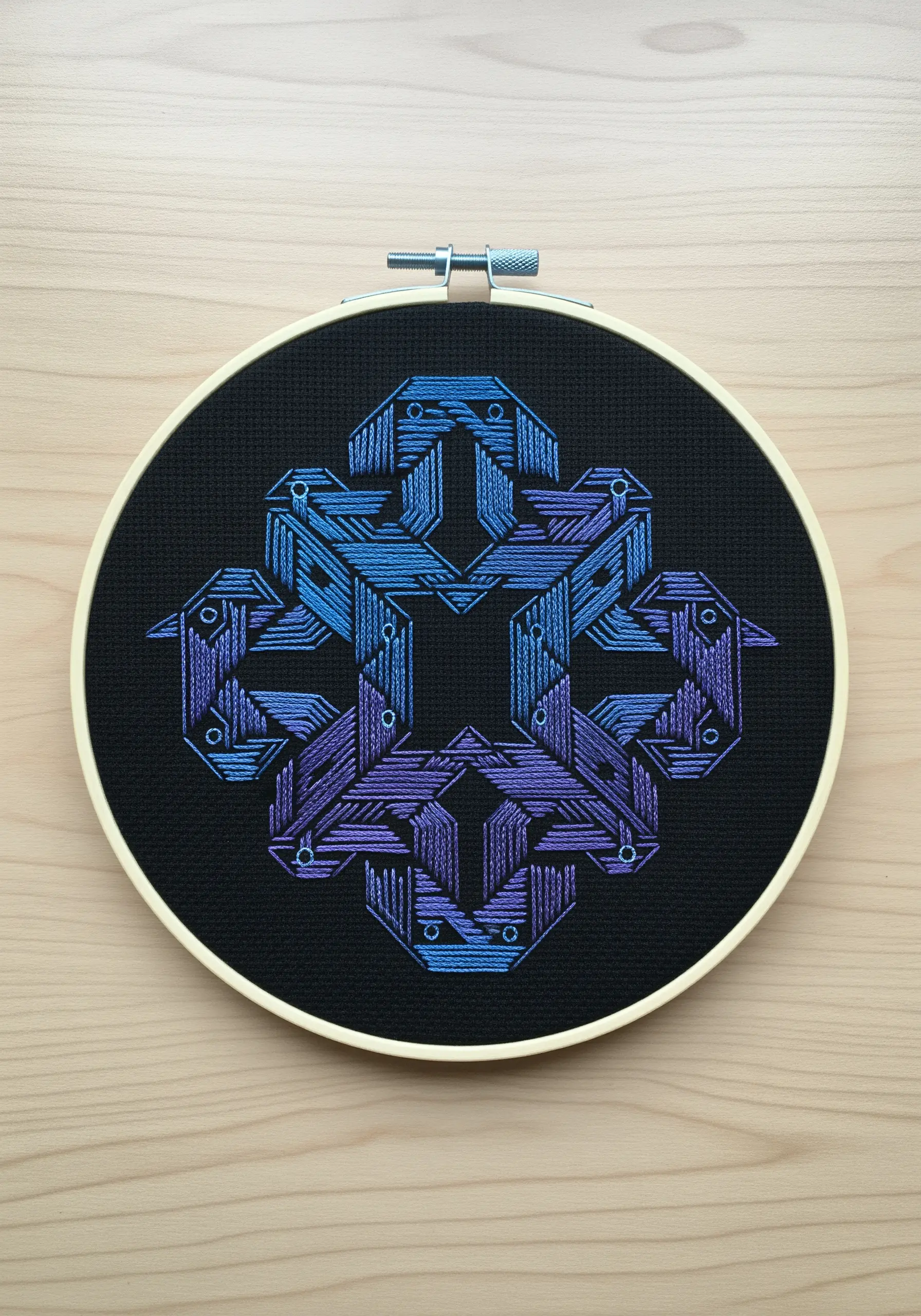
This advanced technique uses thread to create the illusion of light and shadow on a flat surface.
Divide your geometric shapes into distinct planes and fill each one with directional satin stitch.
The key is to use a seamless gradient of color, moving from light to dark across the pattern to mimic how light would hit a three-dimensional object.
This method allows you to make the flat surface appear three-dimensional, faceted, and almost metallic in its finish.
13. Combining Stitches for Delicate Textural Contrast
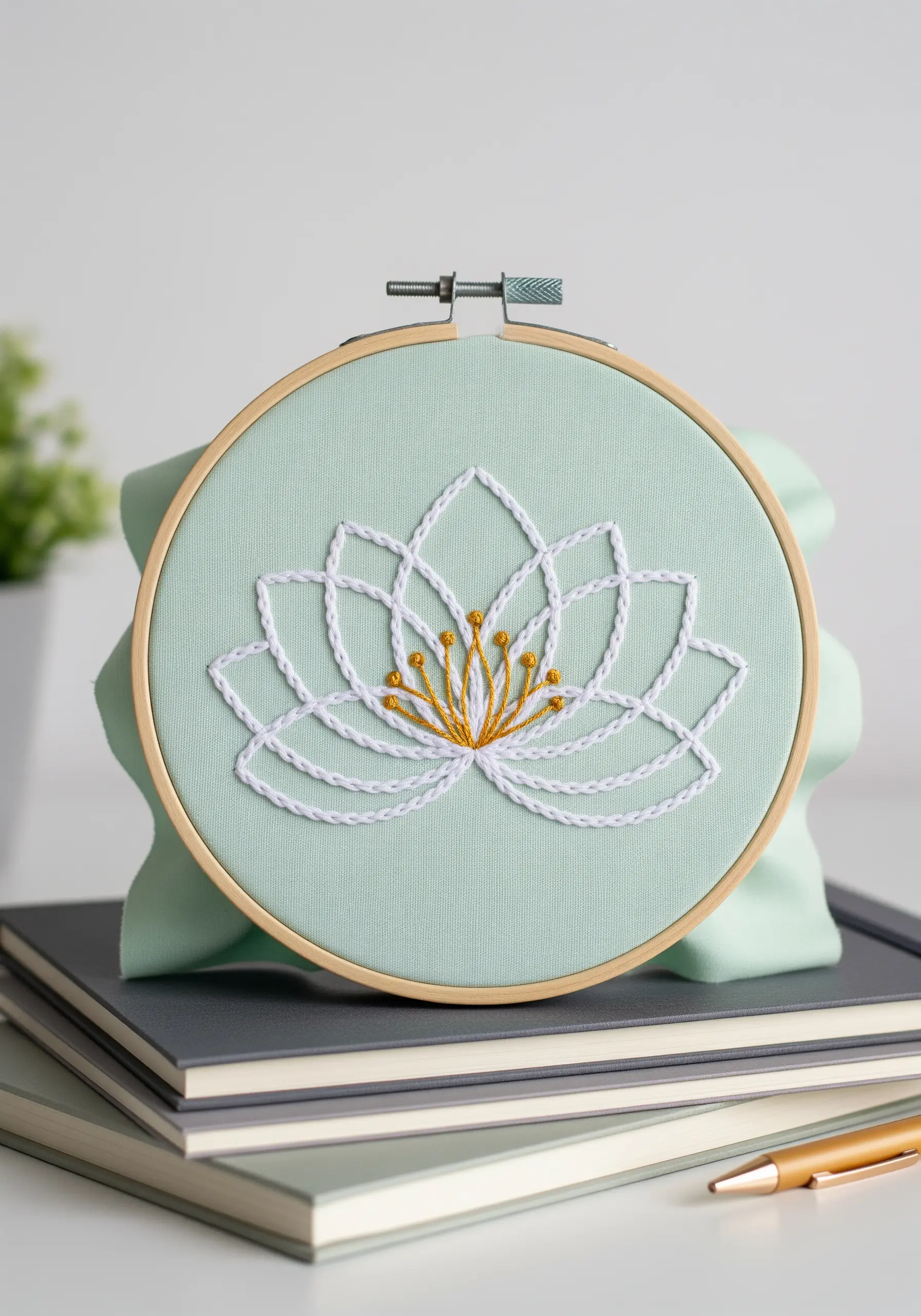
Elevate a minimal line-art design by introducing subtle shifts in texture.
Use a smooth, clean stitch like a whipped backstitch for the main outlines of the lotus petals.
Then, create a focal point with a different texture by filling the center with dense French knots or straight satin stitches.
The addition of a single metallic gold thread for the stamen adds a hint of warmth and luxury against the cool-toned fabric.
14. Exploring Negative Space and Pattern Fills
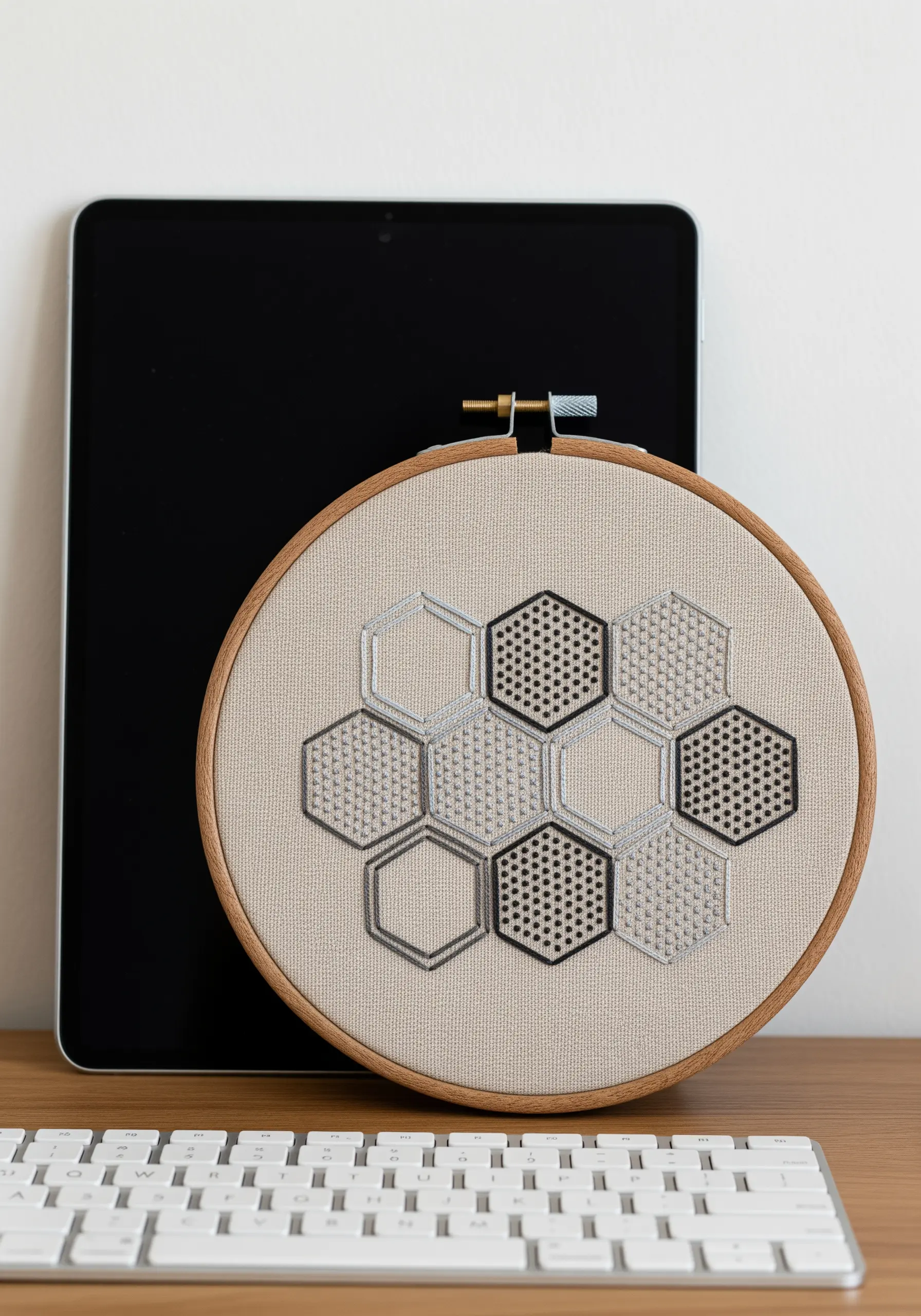
A successful geometric design is often about what you choose *not* to stitch.
Instead of filling every hexagon, leave several as clean outlines. This strategic use of negative space allows the composition to breathe.
For the filled shapes, experiment with different densities of seed stitch or simple blackwork patterns to create visual rhythm.
By limiting your color palette to monochrome tones, you place the emphasis entirely on pattern and form.
15. Creating Flow with Whipped Running Stitch
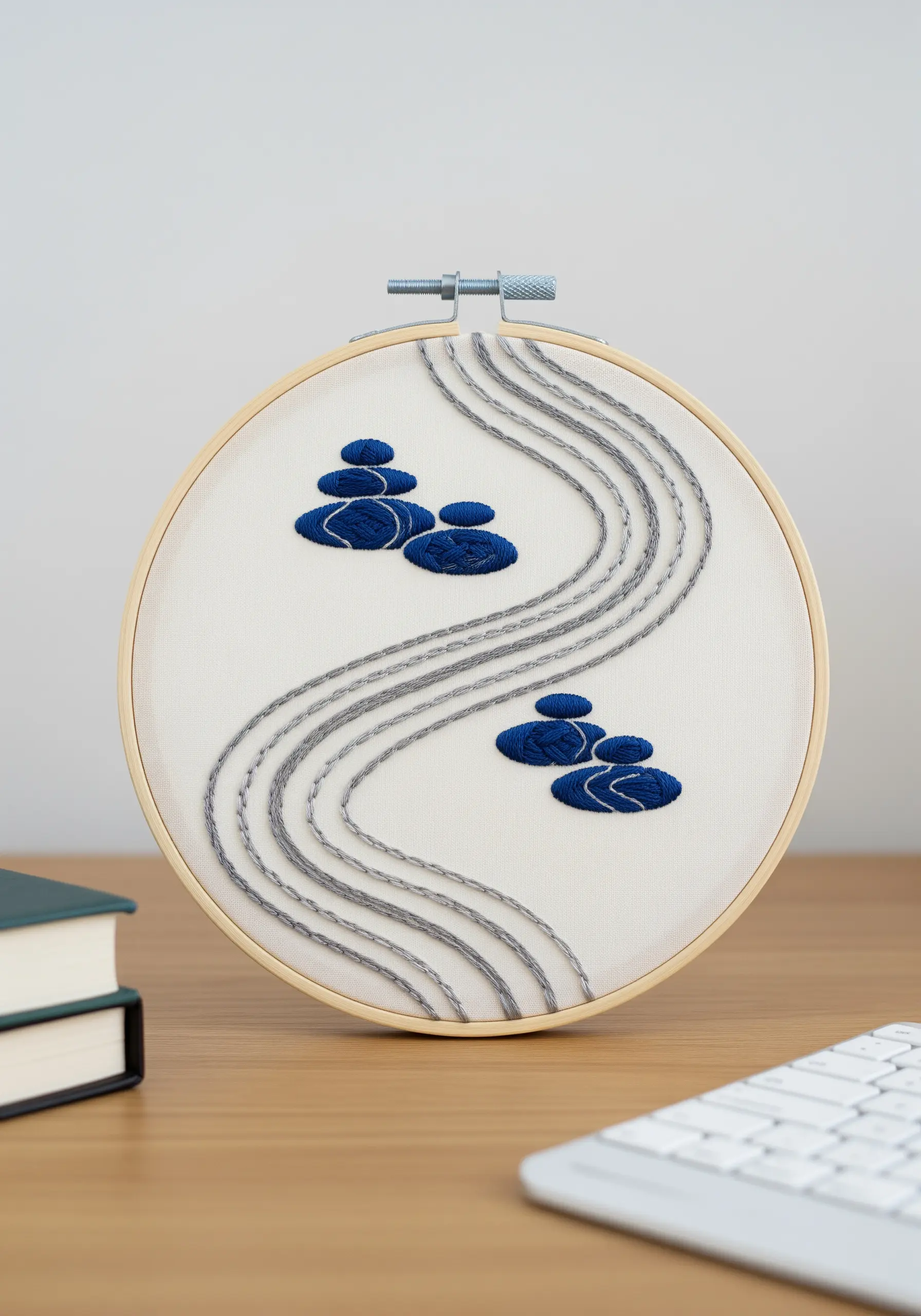
You can capture the serene, flowing lines of a Japanese zen garden by choosing the right stitch.
Use parallel lines of whipped running stitch to mimic the patterns raked into the sand; this technique creates a smooth, raised curve that feels both graphic and organic.
For the ‘stones,’ use a dense, perfectly executed satin stitch to create solid, grounding shapes that contrast with the flowing lines.
The result is a composition that feels balanced, calm, and deeply meditative.
16. Capturing Crisp Folds with Straight Stitches

To recreate the sharp, precise folds of an origami crane, you need to think like a technical illustrator.
Use only straight stitches, mapping out the design carefully to ensure every line is clean and every angle is correct.
A very fine thread—just one or two strands of floss—is essential for achieving this crisp, architectural look.
The high contrast of white thread on a deep burgundy fabric enhances the feeling of geometric precision and elegance.
17. Building Texture with Monochrome Sampler Fills
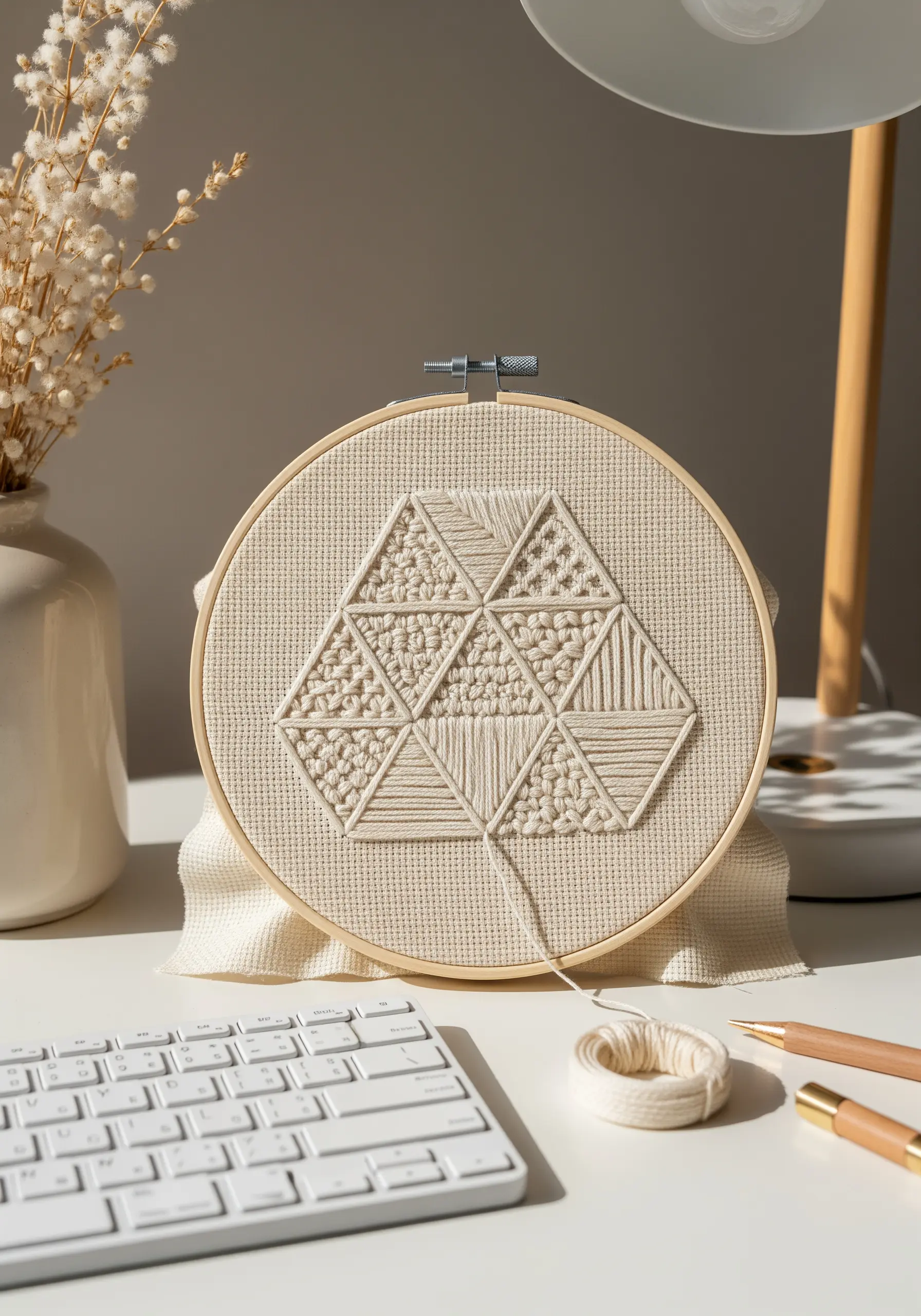
Transform a simple grid of triangles into a sophisticated sampler of textures.
Using just one color of thread, fill each section with a different textural stitch: French knots, seed stitch, cross stitch, woven wheels, or short satin stitches.
This tone-on-tone approach removes the distraction of color, allowing the unique character of each stitch to become the central focus.
It creates a tactile, woven-like piece that encourages closer inspection and appreciation of the craft.
18. The Power of Contrast: Structured Chaos
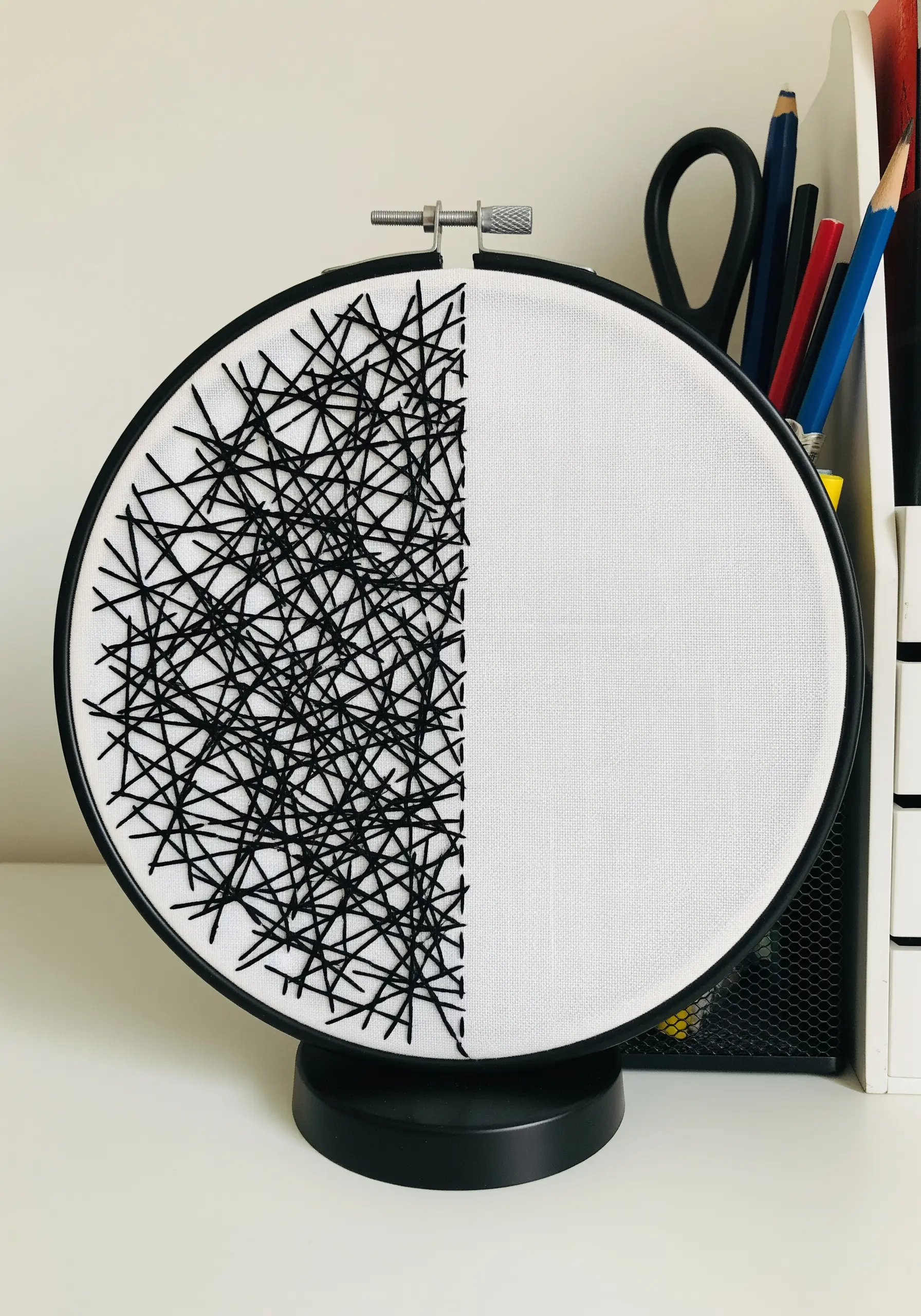
This design creates a compelling visual story through the stark contrast between chaos and order.
Fill one half of the hoop with a dense web of intersecting straight stitches, varying their length and angle to build a chaotic, almost frantic texture.
Leave the other half entirely blank. This dramatic use of negative space provides a quiet counterpoint to the stitched area.
The tension between the two halves makes for a modern, thought-provoking piece of art.
19. Low-Poly Geometry for Organic Shapes
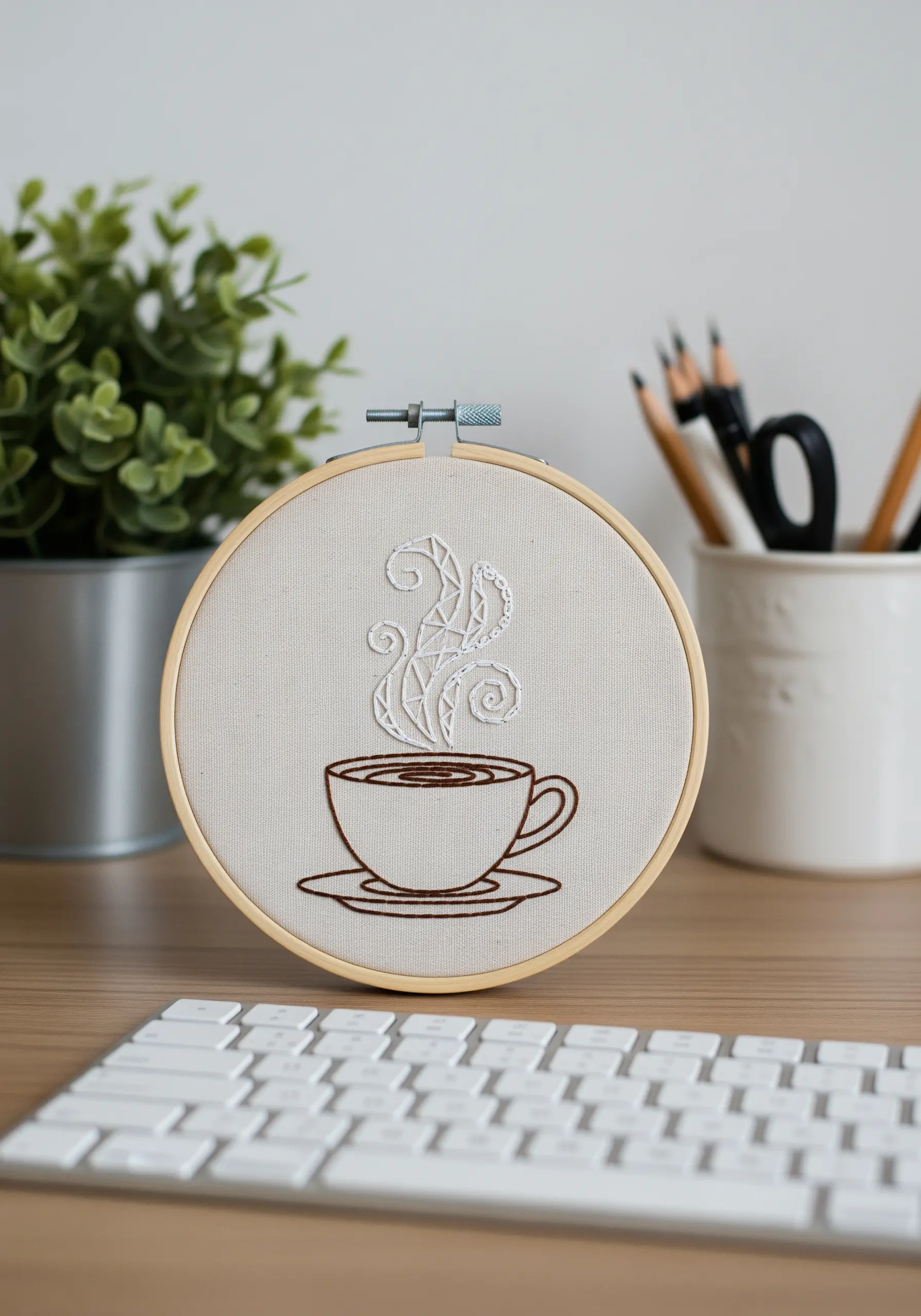
Capture the essence of an organic shape, like swirling steam, using a modern, low-poly geometric style.
Instead of stitching curves, break the form down into a series of straight lines and angular polygons.
Use a simple backstitch for the outlines to keep the look clean and graphic. This approach is perfect for people who love coffee or tea, adding a personalized touch to their space.
It’s a clever way to translate fluid movement into a structured, contemporary design.
20. Using Thread Direction to Create Facets
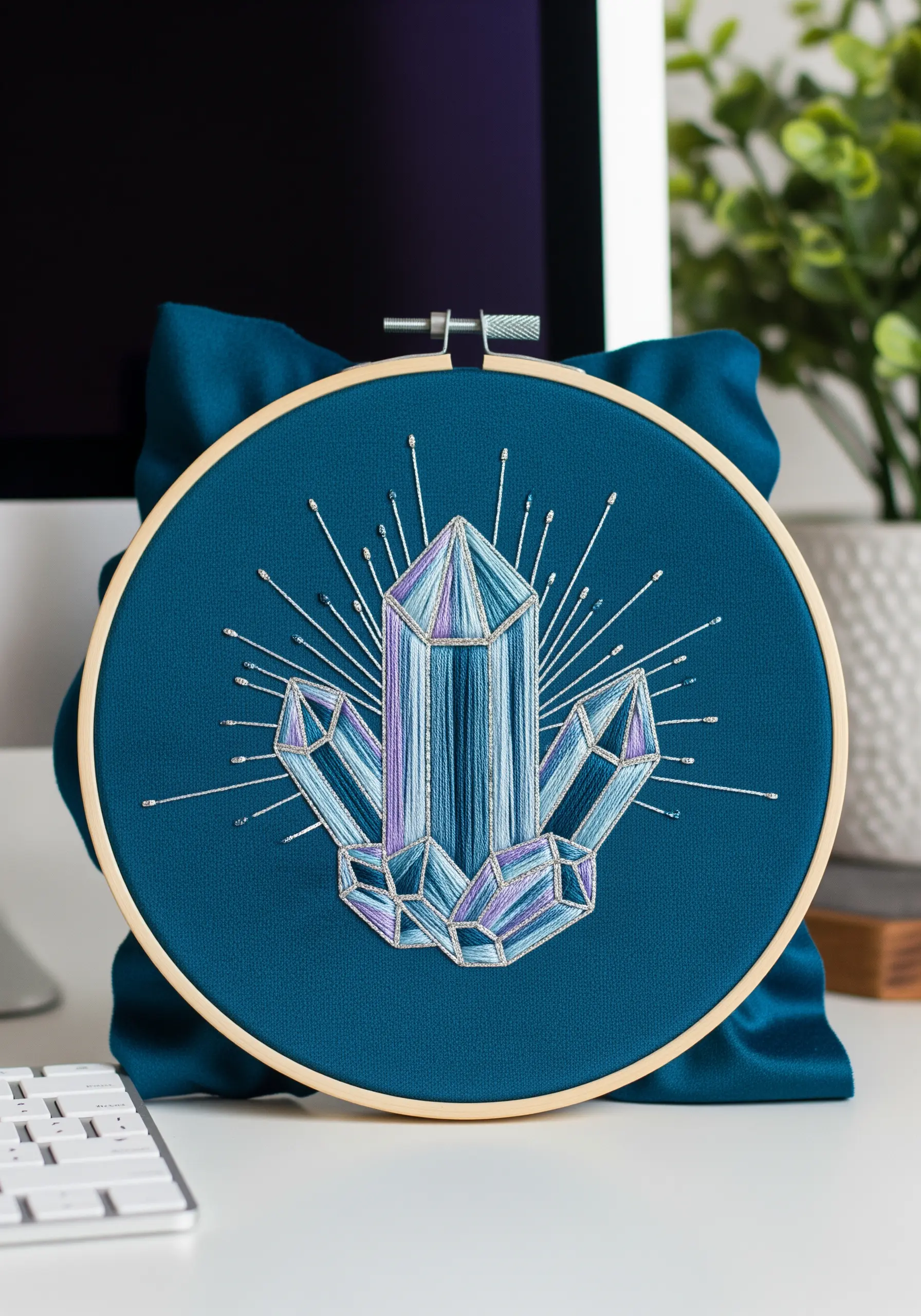
The secret to stitching realistic, shimmering crystals lies in the careful direction of your satin stitches.
For each facet of the crystal, angle your stitches differently from the adjacent ones. This simple shift is what creates the convincing illusion of depth and shine.
Using a thread with a natural sheen, like cotton floss or rayon, will enhance the effect as it catches the light from different angles.
The result is a design that appears to glow and shift, just like a real mineral formation.
21. Architectural Abstraction with Vertical Lines
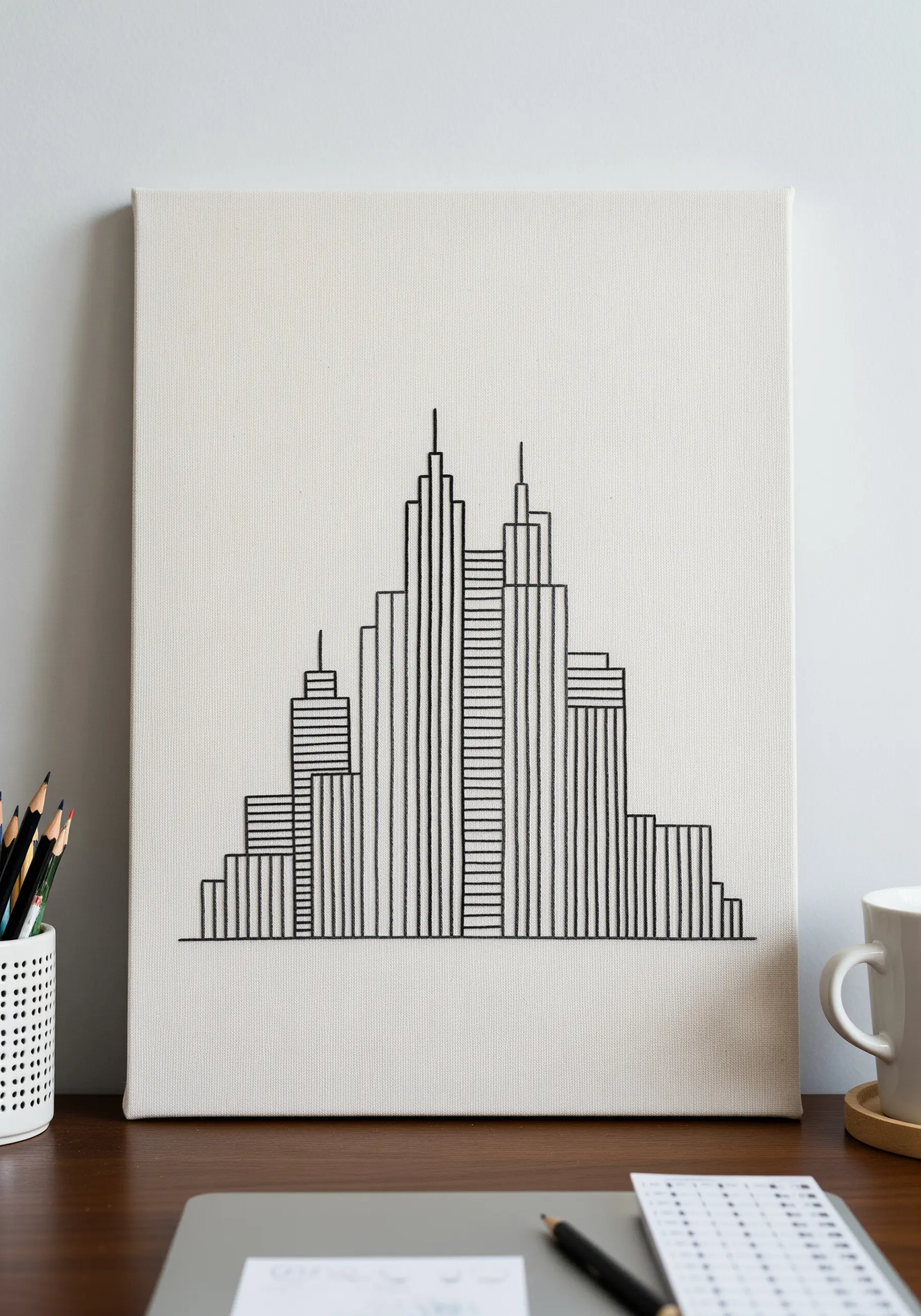
You can suggest the complexity of a cityscape with an elegantly simple execution.
Reduce the architectural forms to a series of vertical and horizontal lines, using a basic backstitch to maintain a clean, graphic quality.
The repetition of the parallel lines creates a strong sense of rhythm and structure, effectively evoking a skyline without any intricate detail.
This minimalist approach is perfect for modern, uncluttered spaces, adding a touch of urban sophistication.
22. Capturing Movement with Detached Stitches
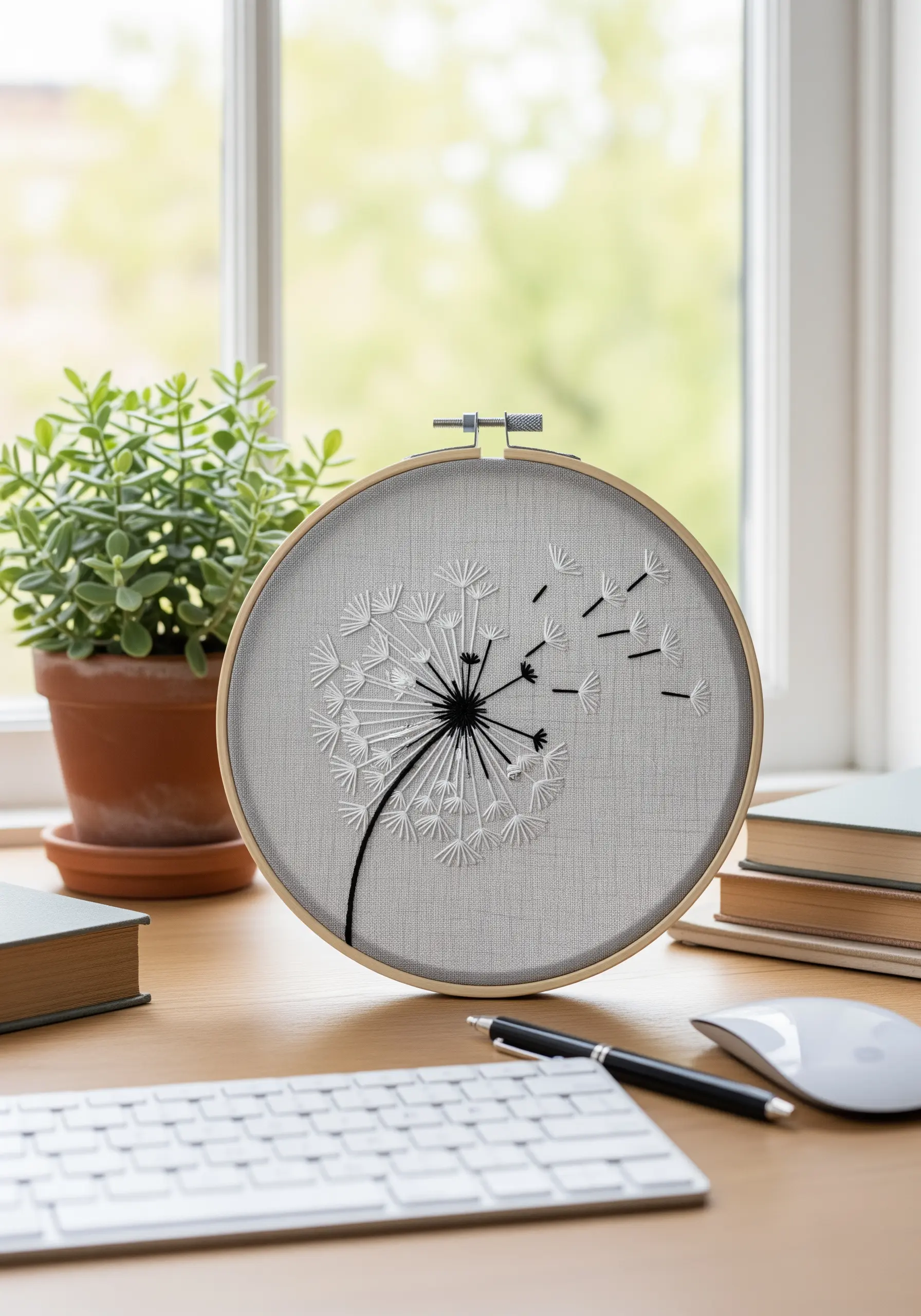
To give your dandelion a sense of life and movement, incorporate detached stitches into your design.
Use detached chain stitches (or lazy daisies) for the fluffy parachute tops of the seeds, which gives them a light, airy volume.
Stitch several seeds floating away from the main flower head to create the impression of a gentle breeze.
This technique turns a static image into a small story, capturing a fleeting moment in time on your fabric.