
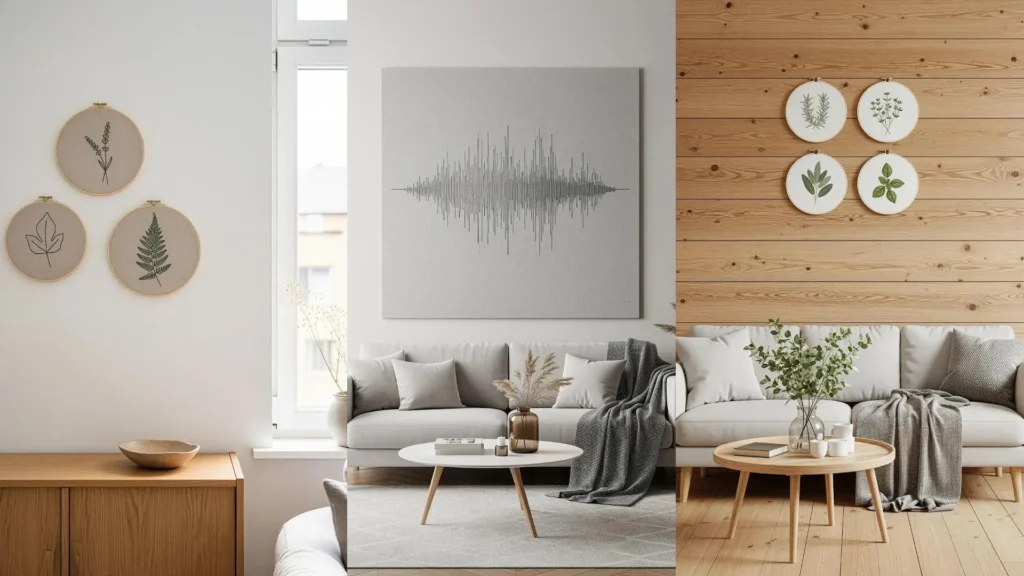
Have you ever finished an embroidery piece and felt it was missing… something? A certain polish or intention that separates simple craft from quiet art? Often, the solution isn’t a more complicated pattern or a dozen new thread colors.
The secret lies in refining your choices. It’s in the deliberate selection of fabric that complements your thread, the mastery of a single stitch to create a fluid line, and the confidence to embrace negative space. It’s about transforming what could be just a decorative object into a piece that brings a genuine sense of calm and personality to your walls.
Here, you’ll find techniques that offer precisely that—small adjustments that create significant impact. Think of this as a quiet conversation about making your stitches feel as good as they look, creating a cozy, thoughtful space, one thread at a time.
1. Curate a Trio of Botanical Line Art
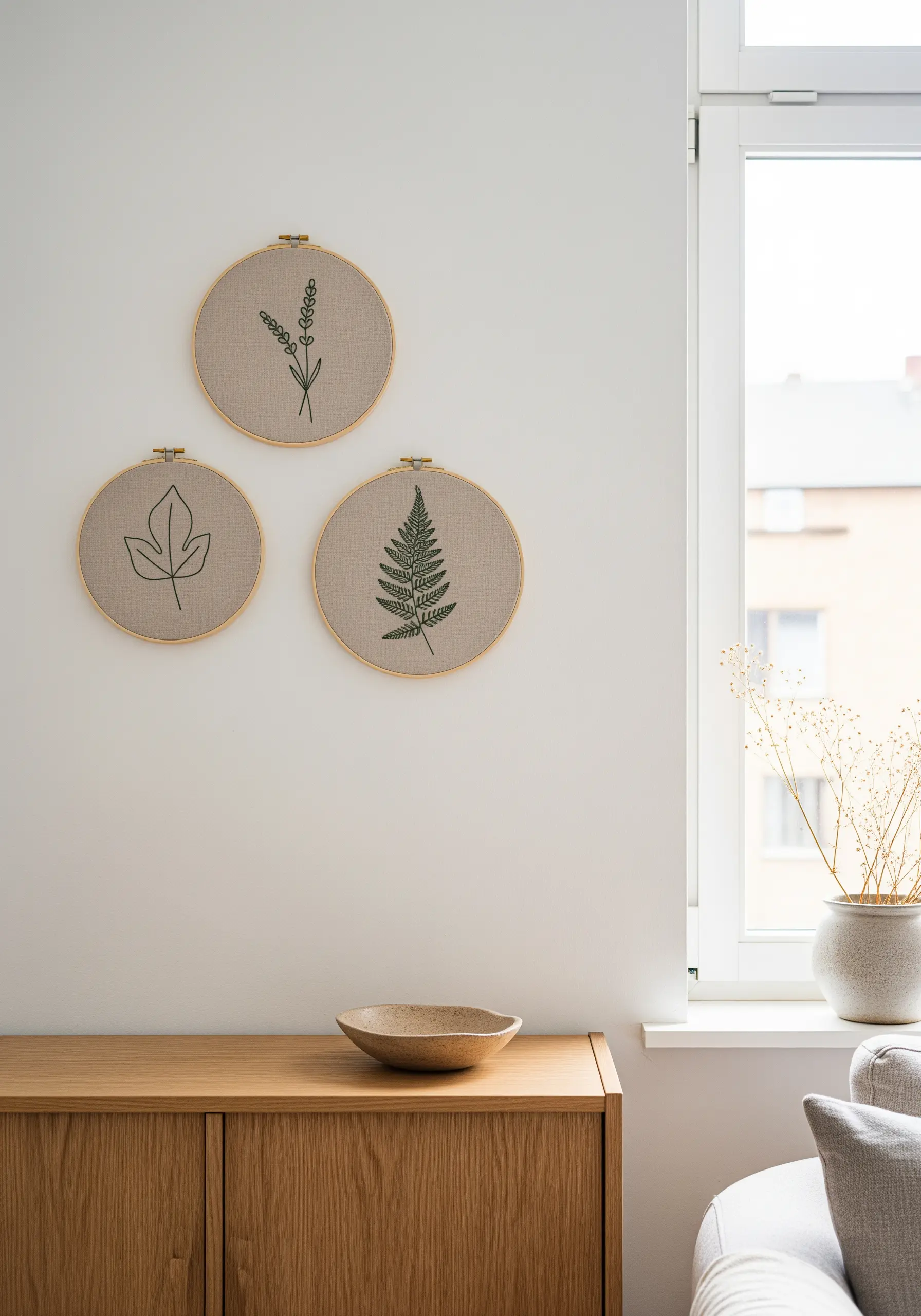
Group three hoops of varying sizes to create a cohesive focal point that feels curated, not cluttered.
Choose a neutral, textured fabric like linen or unbleached cotton to let the thread work breathe.
Use a single, dark thread color—like deep forest green or charcoal—to unify the collection and create a sophisticated, graphic look.
For delicate stems, a whipped backstitch provides a smoother, more solid line than a standard backstitch, giving your work a professional finish.
This arrangement of botanical embroidery wall pieces works because its simplicity draws attention to the subtle beauty of each plant form.
2. Embroider Directly onto Stretched Canvas
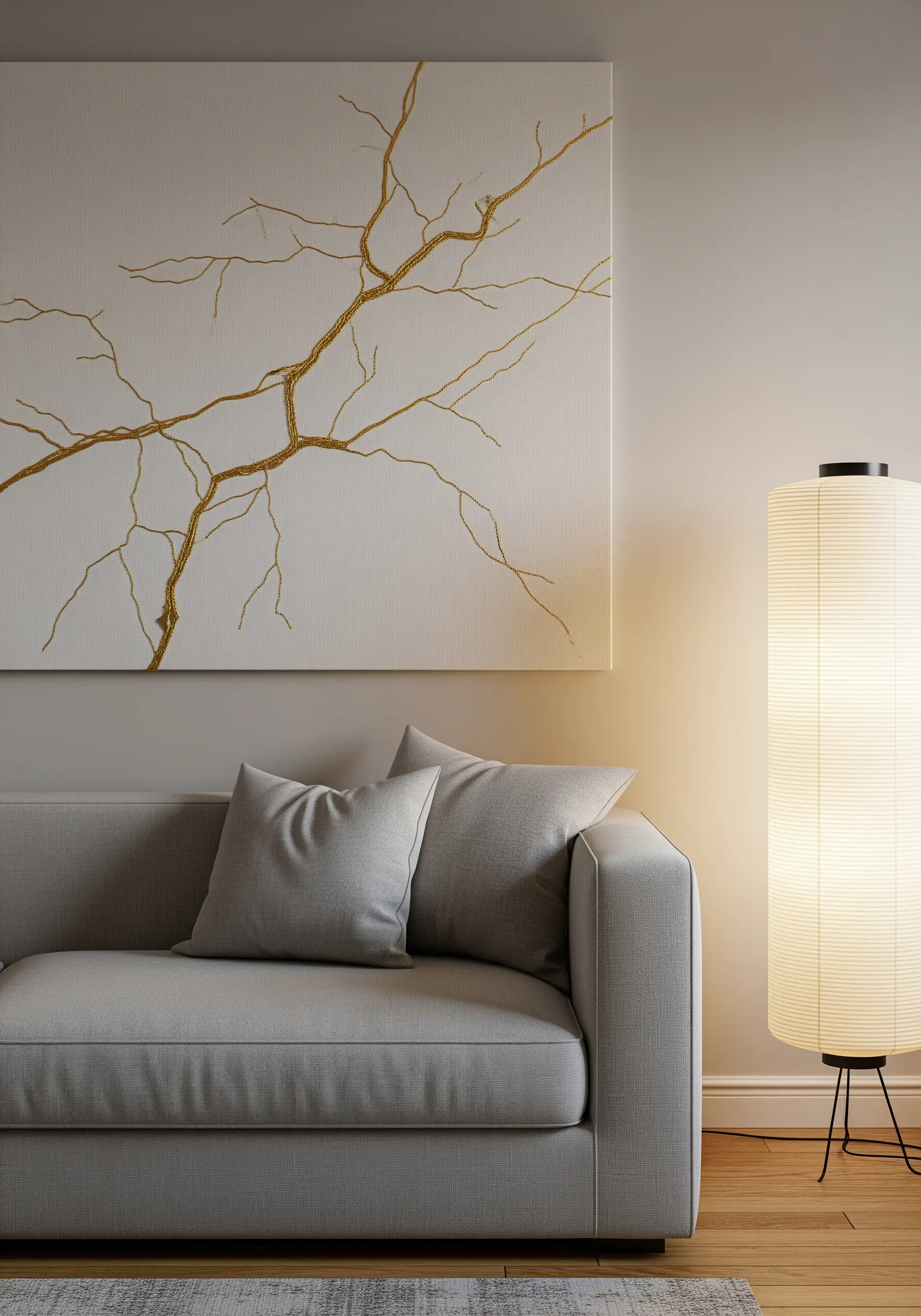
Elevate a simple line design by working on a large, stretched artist’s canvas instead of a hoop.
Use a fine awl to pre-punch holes along your design, which prevents the canvas from buckling and makes stitching with thicker threads much easier.
For a touch of luxury, try a gold metallic thread couched onto the surface—this technique involves laying the metallic thread down and tacking it with a finer, matching cotton thread, which preserves its shine.
This method transforms simple stitches into stunning embroidery on canvas wall pieces that mimic fine art.
3. Create Bold Shapes with Thick Fibers
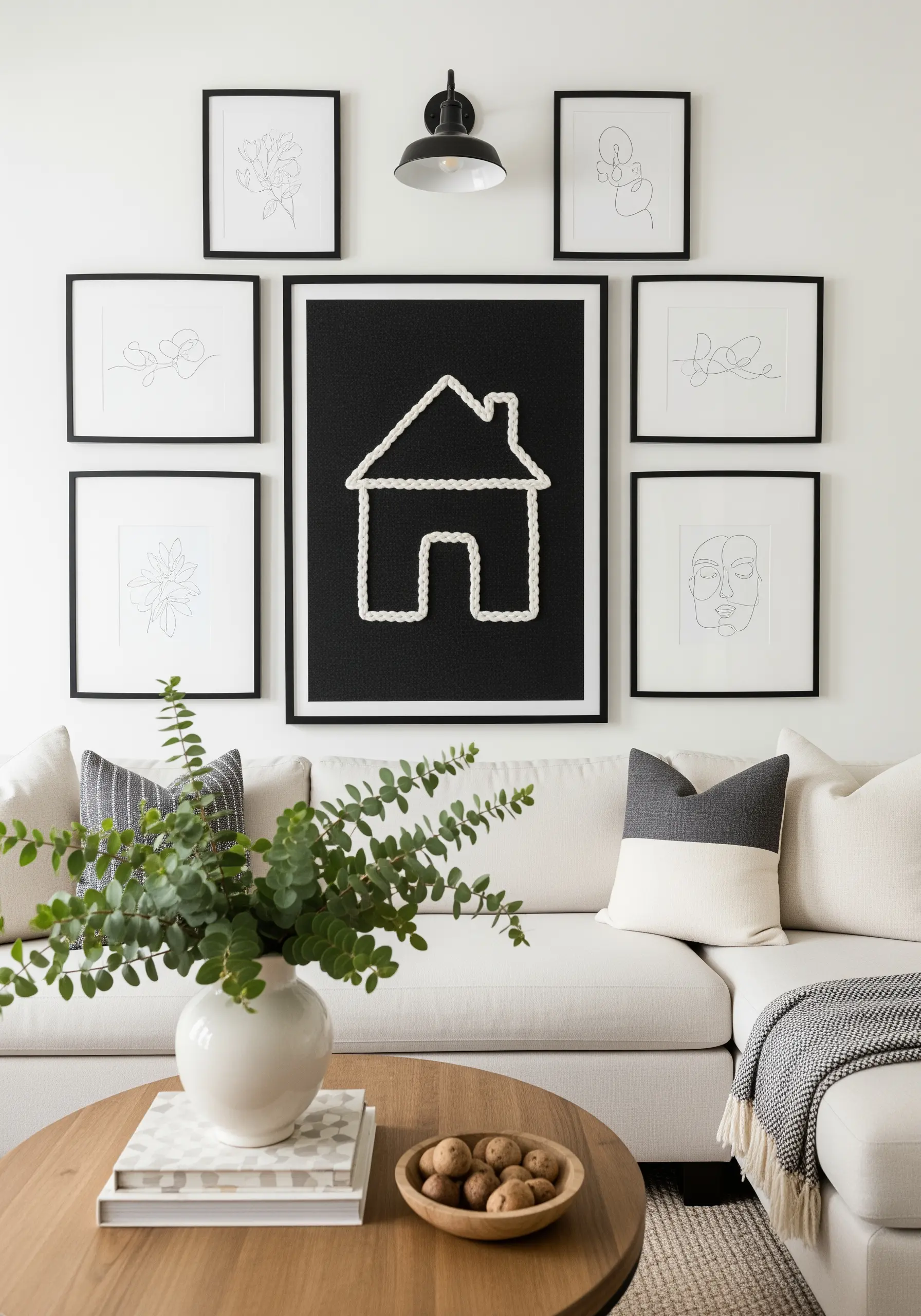
Move beyond standard floss and use chunky yarn, cotton rope, or macrame cord to create high-impact, dimensional art.
Instead of stitching *through* the fabric, use a couching stitch to attach the thick fiber to the surface of a dark, sturdy fabric like felt or canvas.
This creates a bold, sculptural outline that adds immediate texture and architectural interest to a gallery wall.
The high contrast between a thick, cream-colored cord and a black background makes the design pop, turning it into the undeniable centerpiece of the room.
4. Master the Elegance of a Single Contour Line
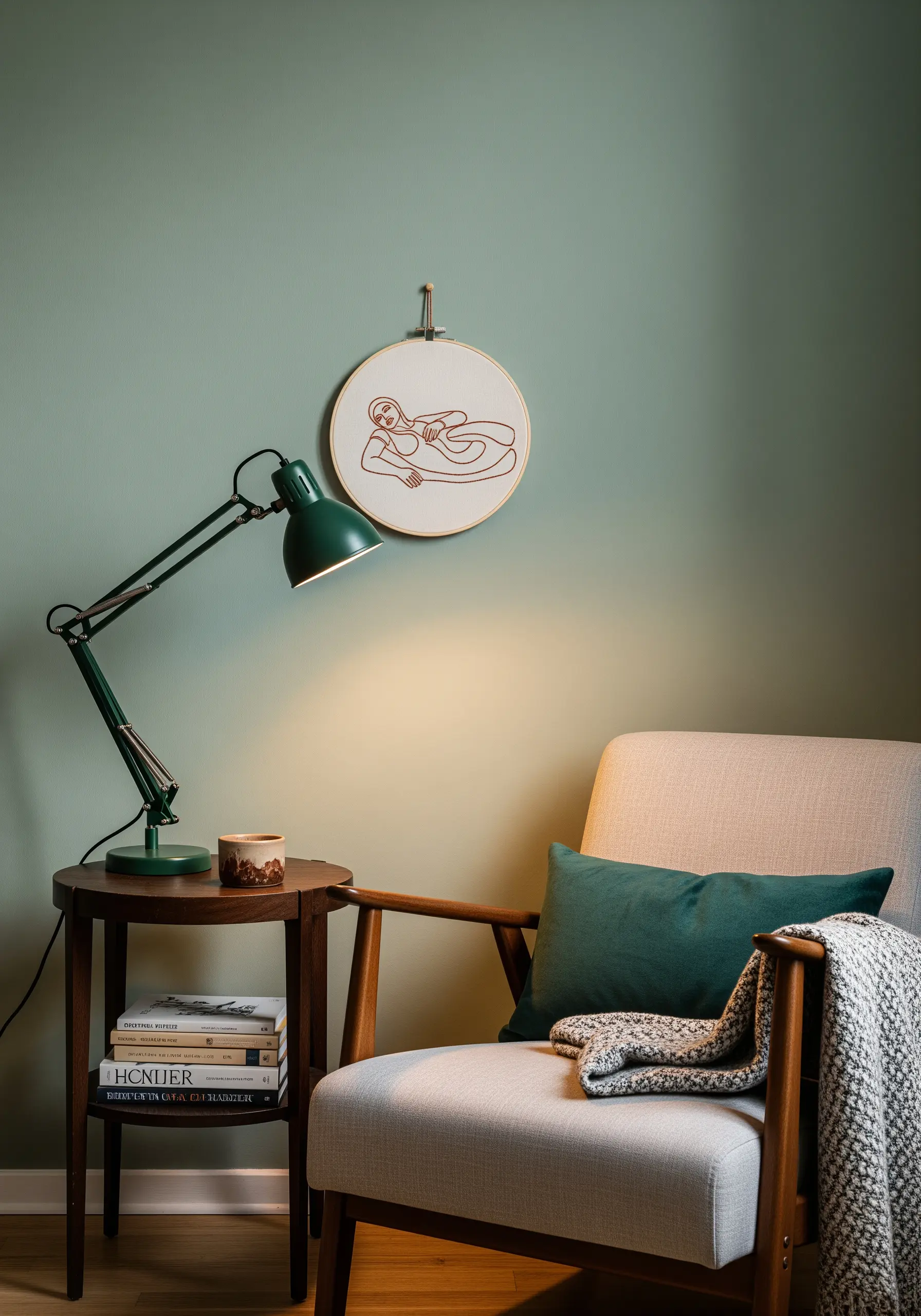
Capture the essence of a form with a single, unbroken line stitched in a contrasting color.
To achieve a fluid, hand-drawn quality, use a stem stitch, which creates a smooth, rope-like line that curves beautifully.
Vary the stitch length slightly on tight curves to prevent sharp angles and maintain a graceful flow.
This technique of creating single-line face profiles is pure minimalism; it relies on confident linework rather than color or texture to make an impact.
5. Design a Statement Wall Tapestry
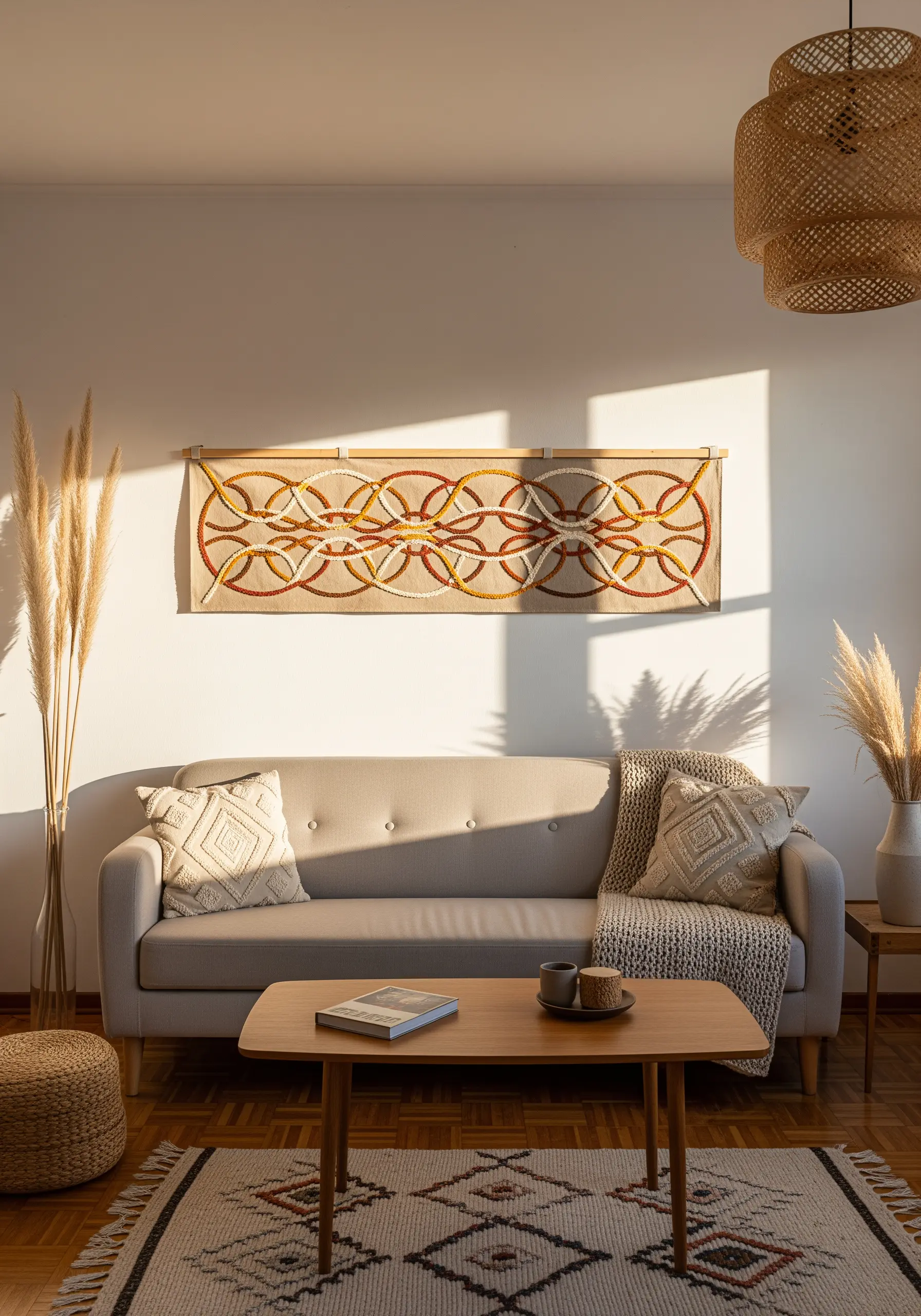
Go beyond the hoop and create a large-scale, statement wall hanging for a dramatic effect.
Use a heavy-duty fabric like cotton duck canvas and thick yarns in an earthy, warm palette to create a design with visual weight.
Incorporate couching stitches with thick cord to outline your geometric shapes, adding both definition and a satisfyingly tactile quality.
These rent-friendly embroidery wall tapestry ideas, mounted on a simple wooden dowel, bring softness and craft to a large wall without permanent changes.
6. Explore Abstract Color Blocking with Texture
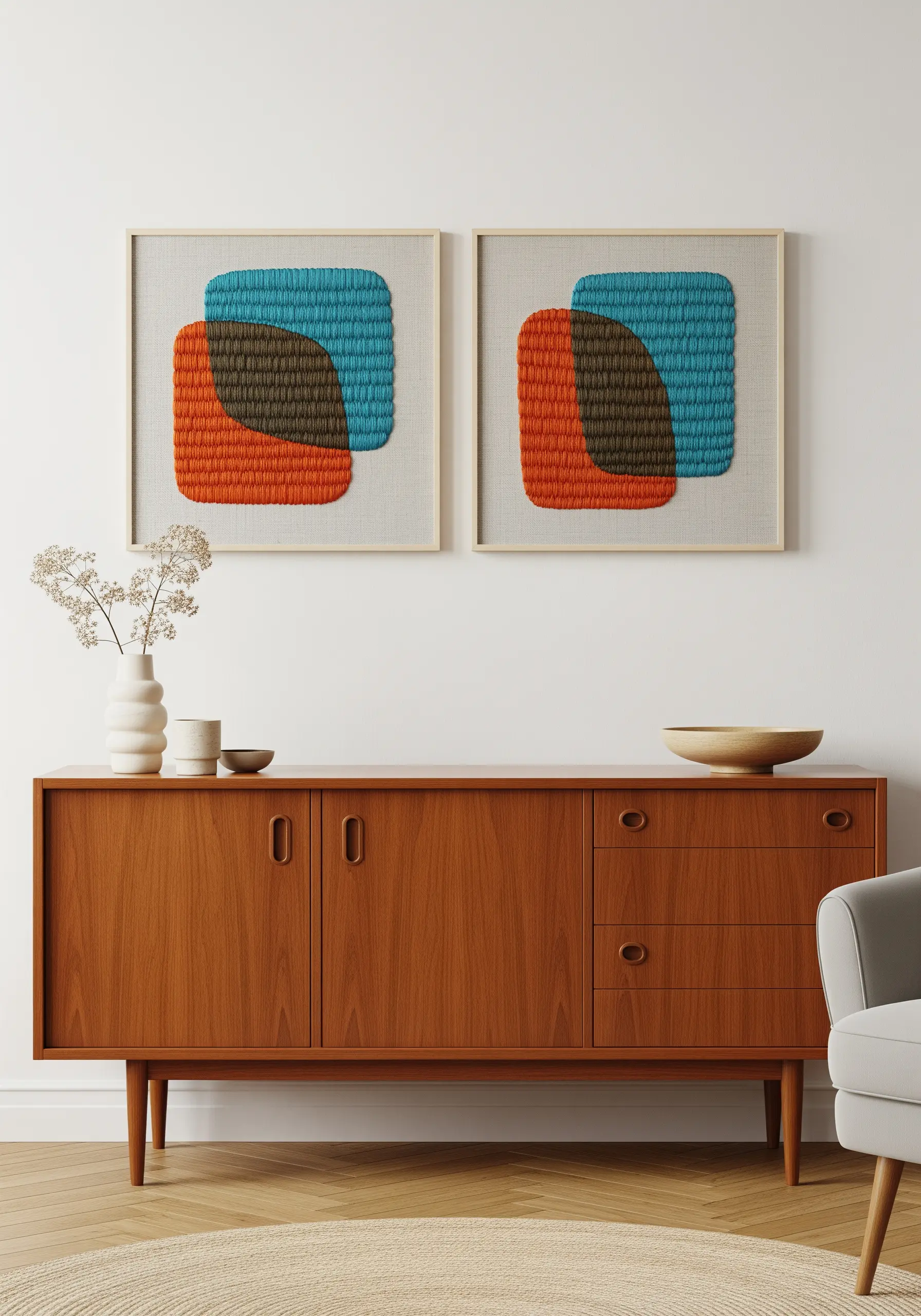
Use satin stitch to create solid blocks of color, but orient the stitches in different directions for each shape to catch the light differently.
This simple adjustment adds subtle dimension and movement to an otherwise flat design.
Choose a muted but contrasting color palette—like teal, rust, and charcoal—to achieve a sophisticated, mid-century modern aesthetic.
When framed as a diptych, these abstract fabric collage embroidery ideas feel intentional and complete, turning simple shapes into a thoughtful art installation.
7. Capture Serenity with Repetitive Running Stitches
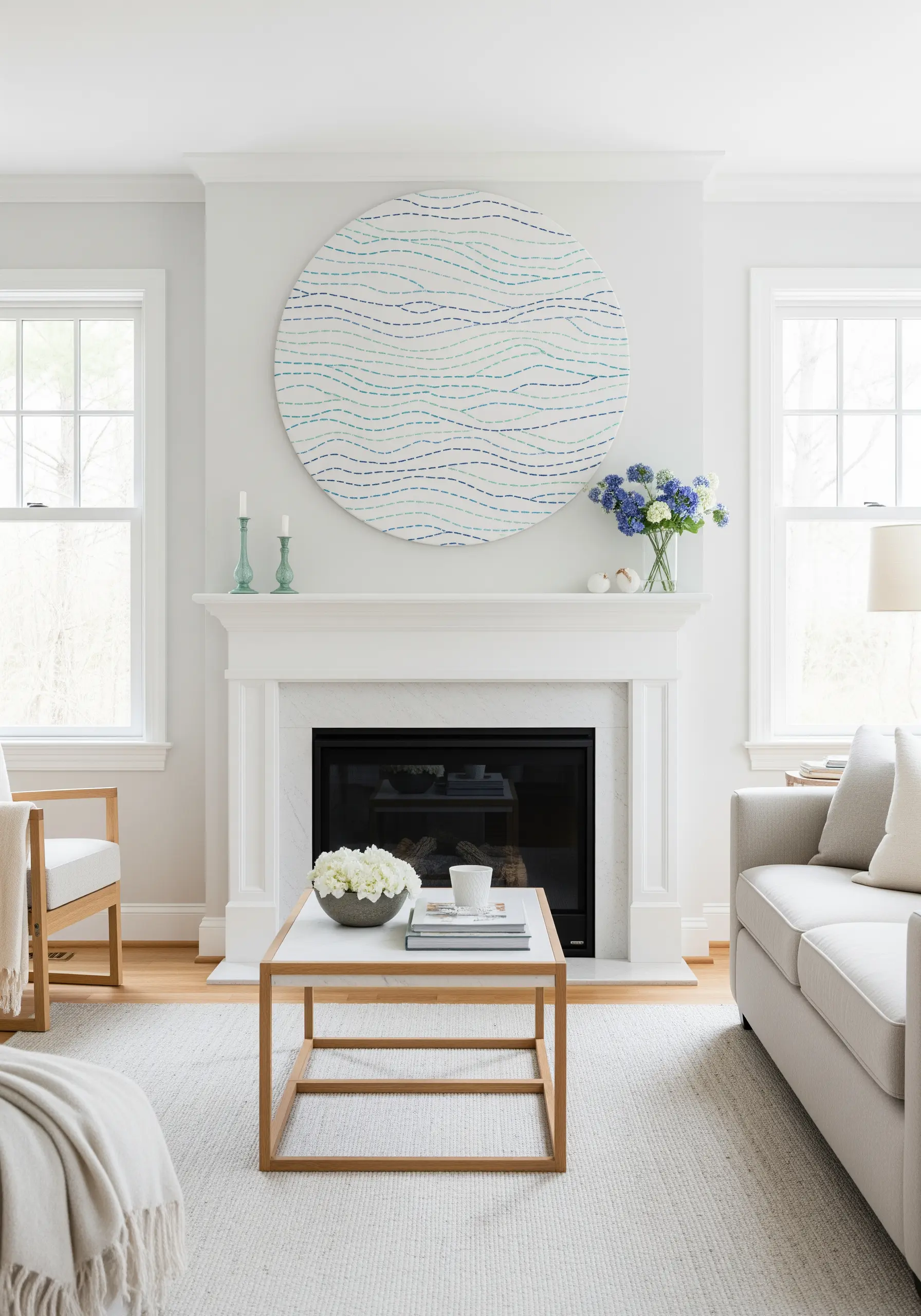
Create a sense of calm and movement with simple, parallel lines of running stitches in varying shades of a single color family.
Use a large, unconventional frame—like a circular canvas or an oversized hoop—to give the minimal design maximum impact.
Varying the length and spacing of the running stitches gives the piece a hand-drawn, organic feel, like gentle waves or wind-swept sand.
These abstract thread waves prove that the most basic stitch can become profoundly elegant when repeated with intention.
8. Stitch the Night Sky on Dark Fabric
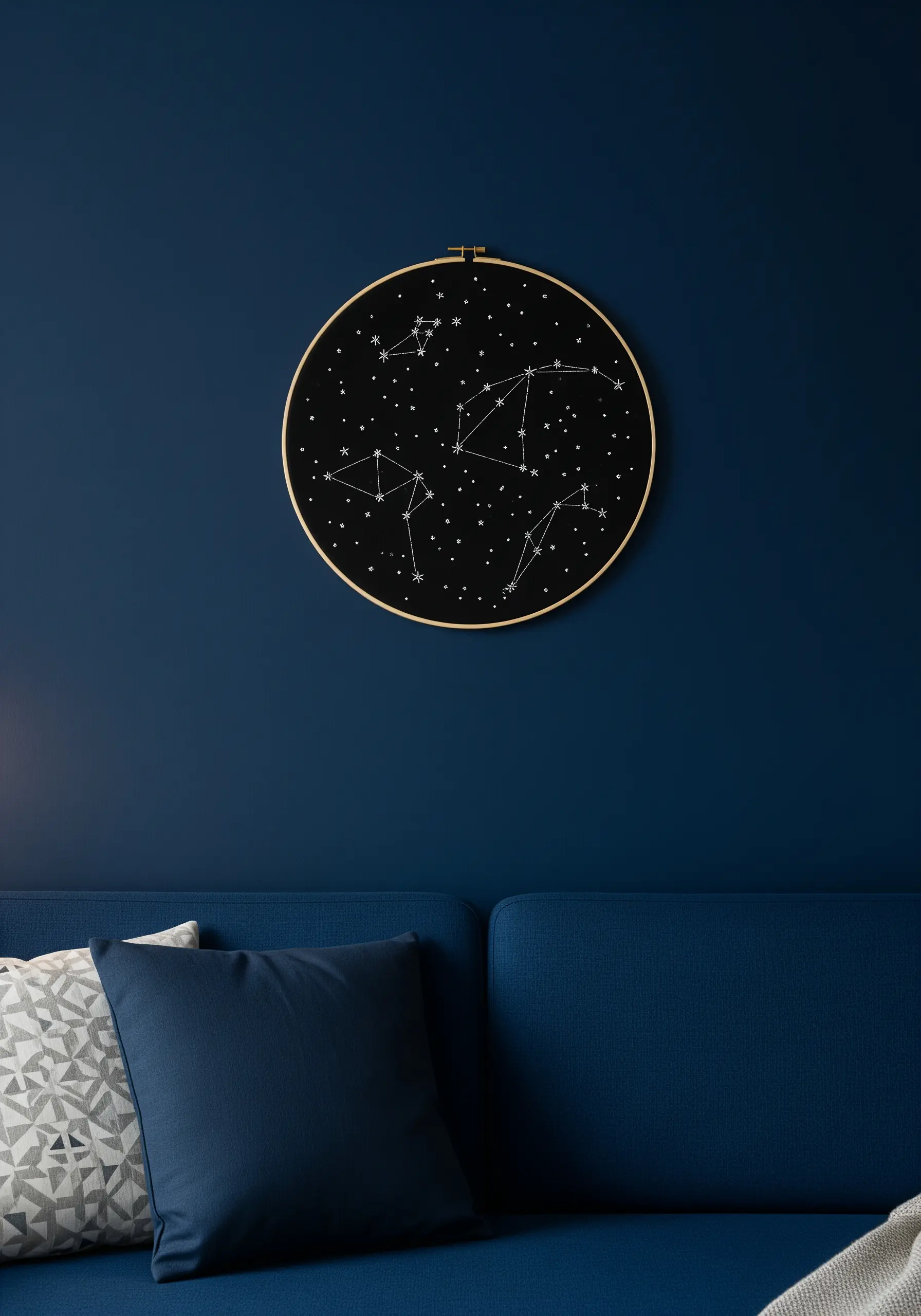
Create dramatic contrast by stitching celestial designs with fine white or silver thread on a deep navy or black fabric.
Use single straight stitches for connecting constellation lines and tiny French knots or seed stitches for stars of varying brightness.
A single strand of metallic thread can be used for the brightest stars, adding a subtle glimmer that catches the light.
These tiny night-sky embroidery designs are perfect for adding a touch of magic and wonder to a cozy corner.
9. Sculpt Words with Dimensional Rope Couching
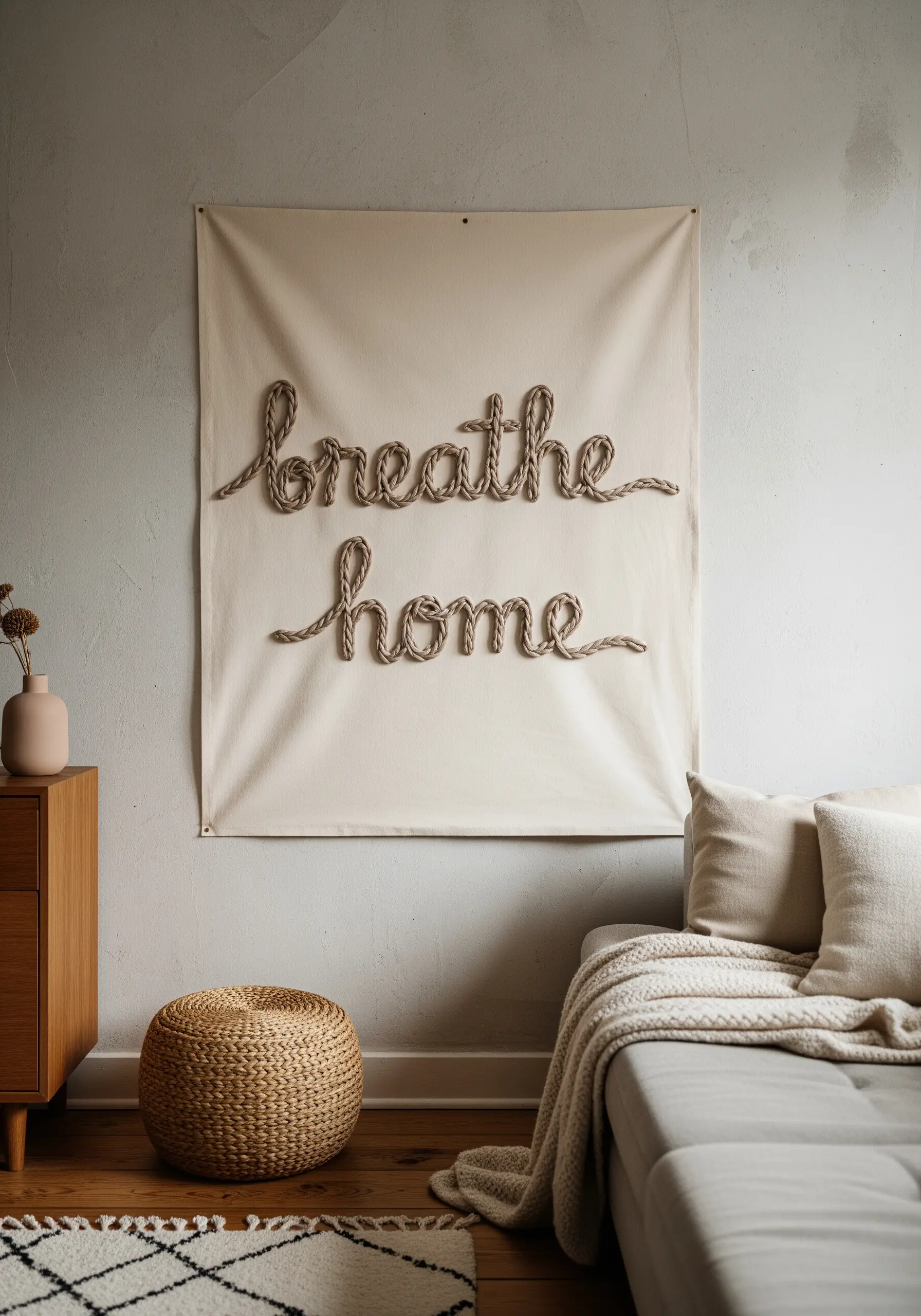
Transform a simple phrase into a tactile art piece by using thick, pliable rope instead of thread.
Lay the rope on your canvas in a flowing script and use a strong, matching utility thread to couch it down, hiding your tacking stitches on the underside of the rope’s twist.
This technique creates bold, 3D lettering that casts a soft shadow, adding depth and a sculptural quality to your wall.
It turns simple inspirational quote embroidery hoops into substantial, architectural statements.
10. Integrate Embroidery into a Gallery Wall
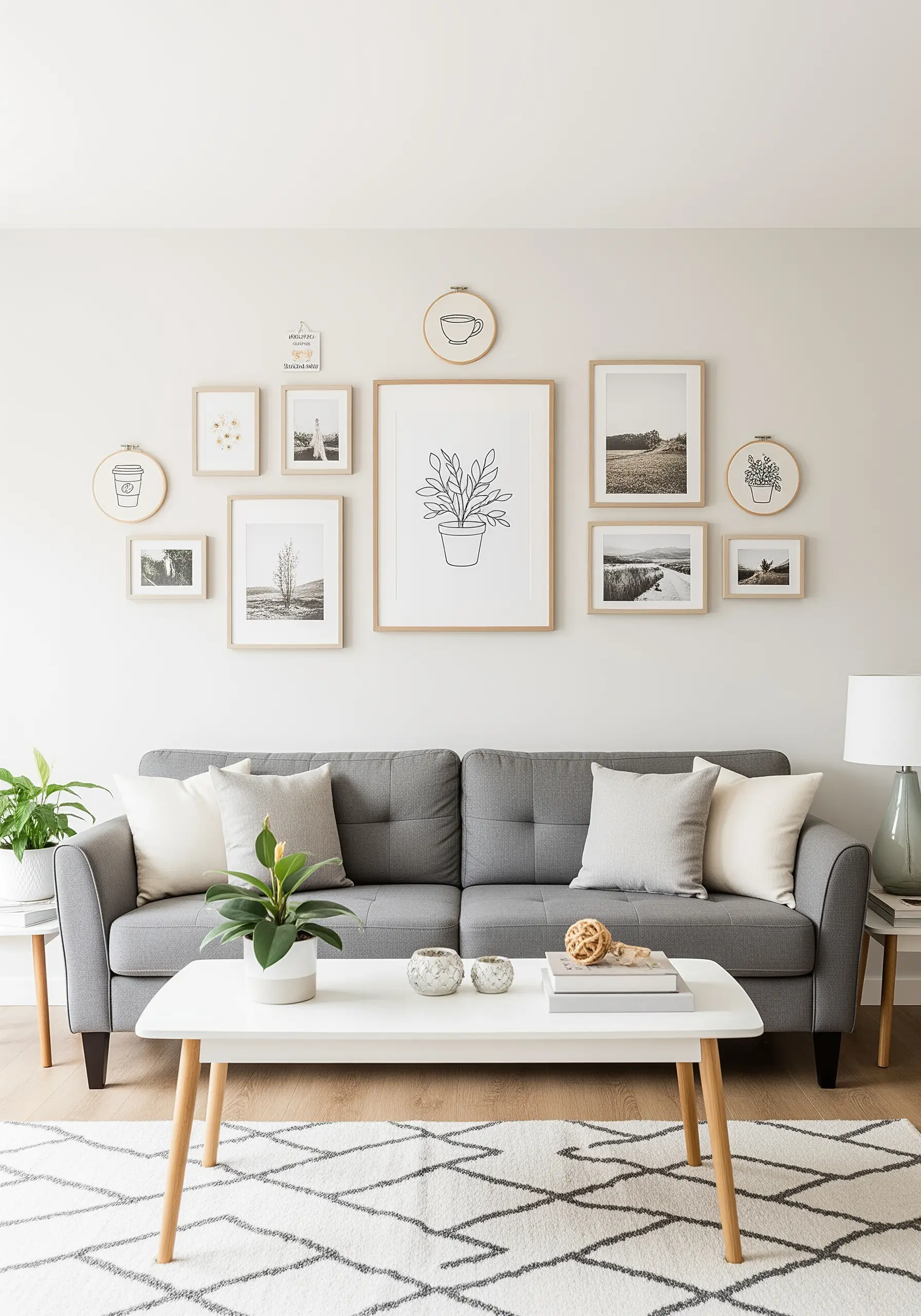
Incorporate your embroidery hoops into a larger gallery wall of framed prints and photographs for a delightful mix of textures.
To create harmony, choose embroidery motifs that echo the themes or line styles of the other artwork.
Stick to a limited color palette across all pieces—both stitched and printed—to ensure the collection feels cohesive rather than chaotic.
These minimal DIY embroidery projects add a handmade, personal touch that softens the sharp edges of traditional frames.
11. Tell a Story with Multi-Panel Landscapes
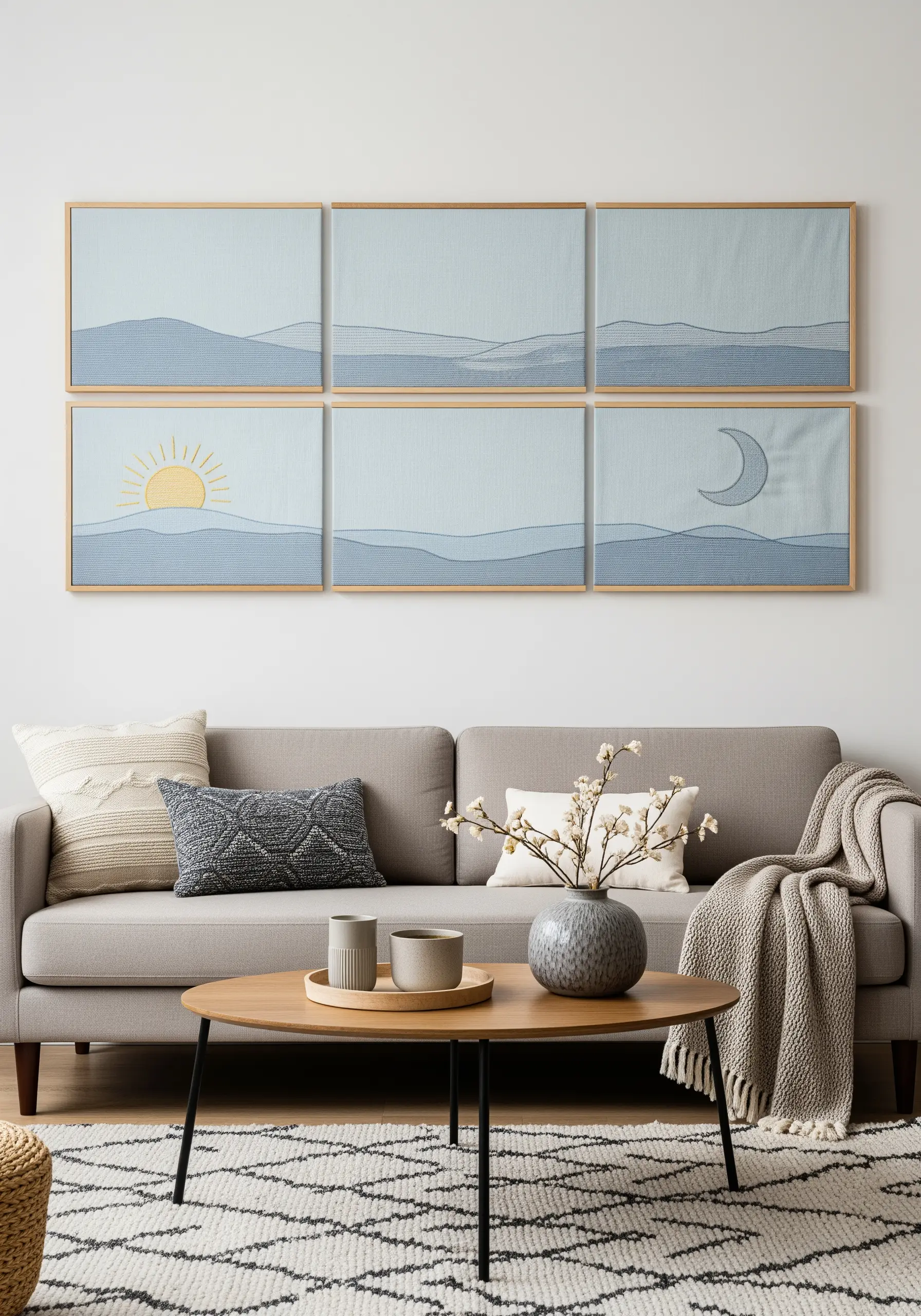
Break up a single landscape into multiple panels to create a modern, modular piece of art that feels expansive.
Use simple backstitch or running stitch in tonal shades to suggest rolling hills and distant horizons.
Stitching the same scene with subtle changes—like a rising sun on one end and a crescent moon on the other—adds a narrative element of passing time.
This approach turns simple outlines into evocative string art landscape scenes with quiet, storytelling power.
12. Create Architectural Grids with Raised Knots
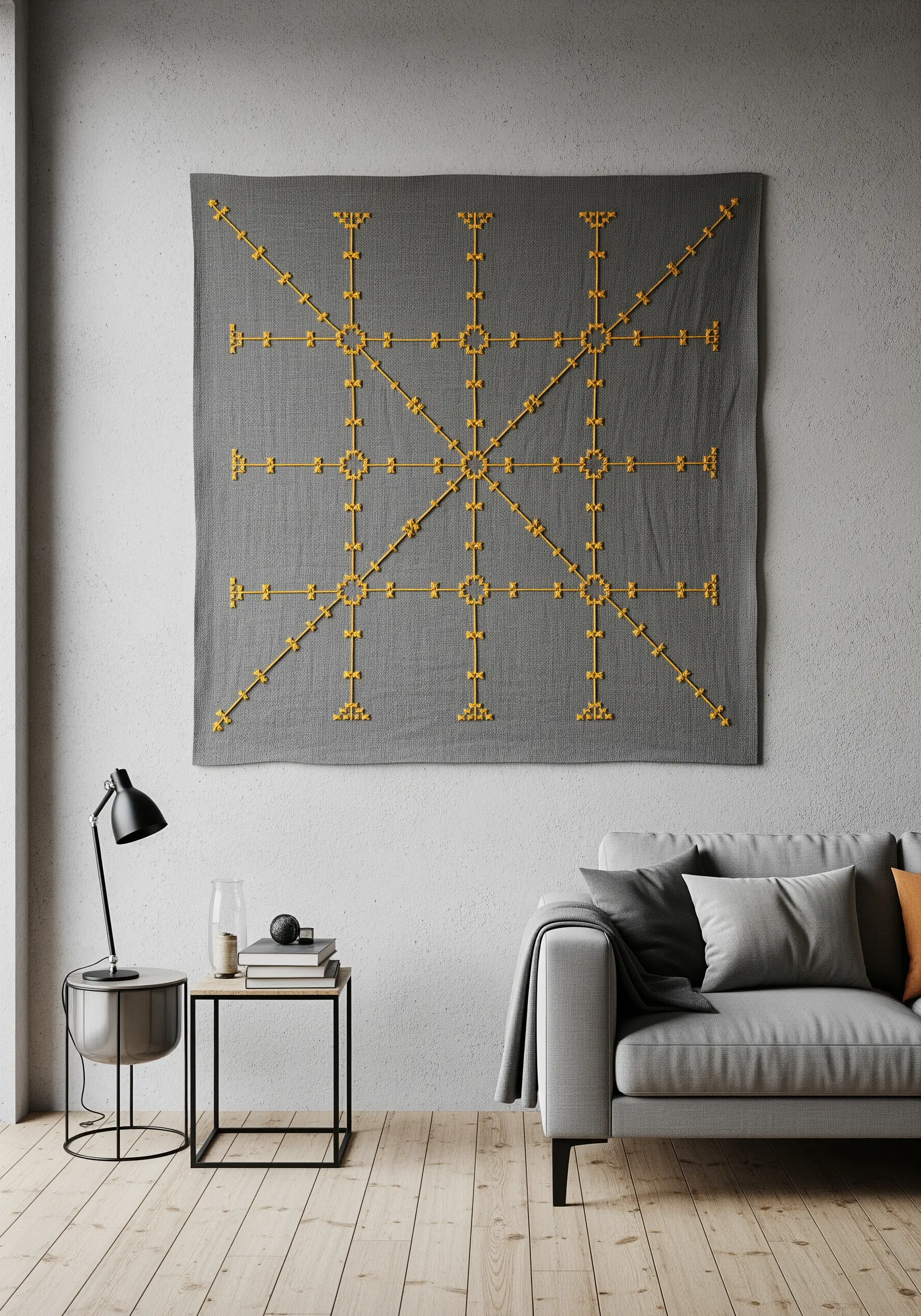
Build a structured, geometric design using straight lines punctuated by textural knots.
Use a thicker fiber, like pearl cotton or fine yarn, to give the lines and knots more substance against a dark linen background.
Place French knots or colonial knots at the intersection of grid lines to create a raised, dot-like texture that adds rhythm and a tactile quality.
These modern geometric thread art ideas feel both ancient and contemporary, blending traditional craft with clean, architectural precision.
13. Achieve an Ethereal Look with Sheer Fabric
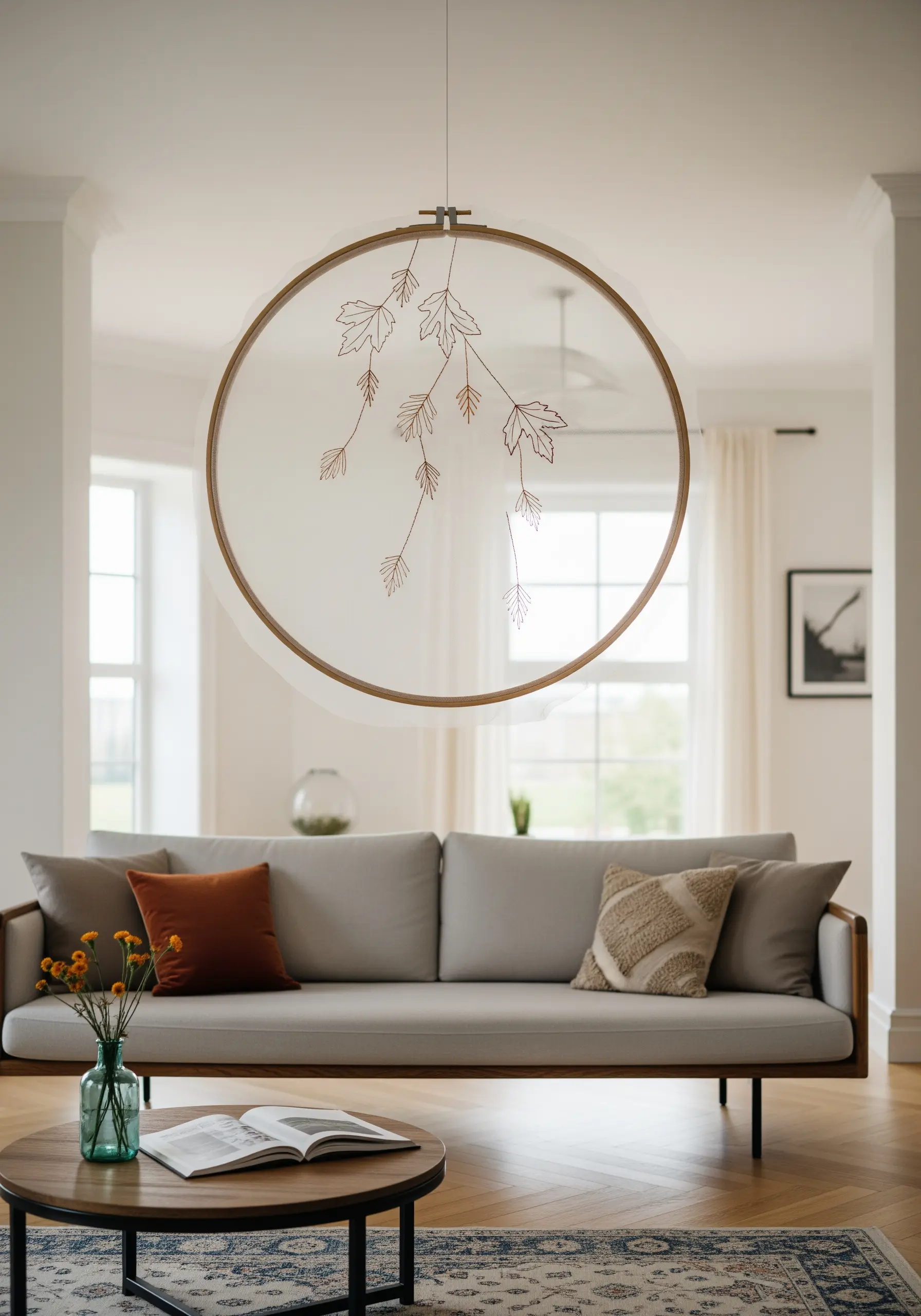
Create the illusion of floating botanicals by stitching on a sheer fabric like tulle or organza stretched in a hoop.
Use a stabilizer (either water-soluble or tear-away) behind the sheer fabric while stitching to prevent puckering and provide support.
A simple backstitch in a warm, earthy tone is all you need to create delicate, suspended line art.
These modern thread art techniques turn your embroidery into a light, airy sculpture that interacts beautifully with the space behind it.
14. Tuck a Tiny Motif into an Unexpected Nook
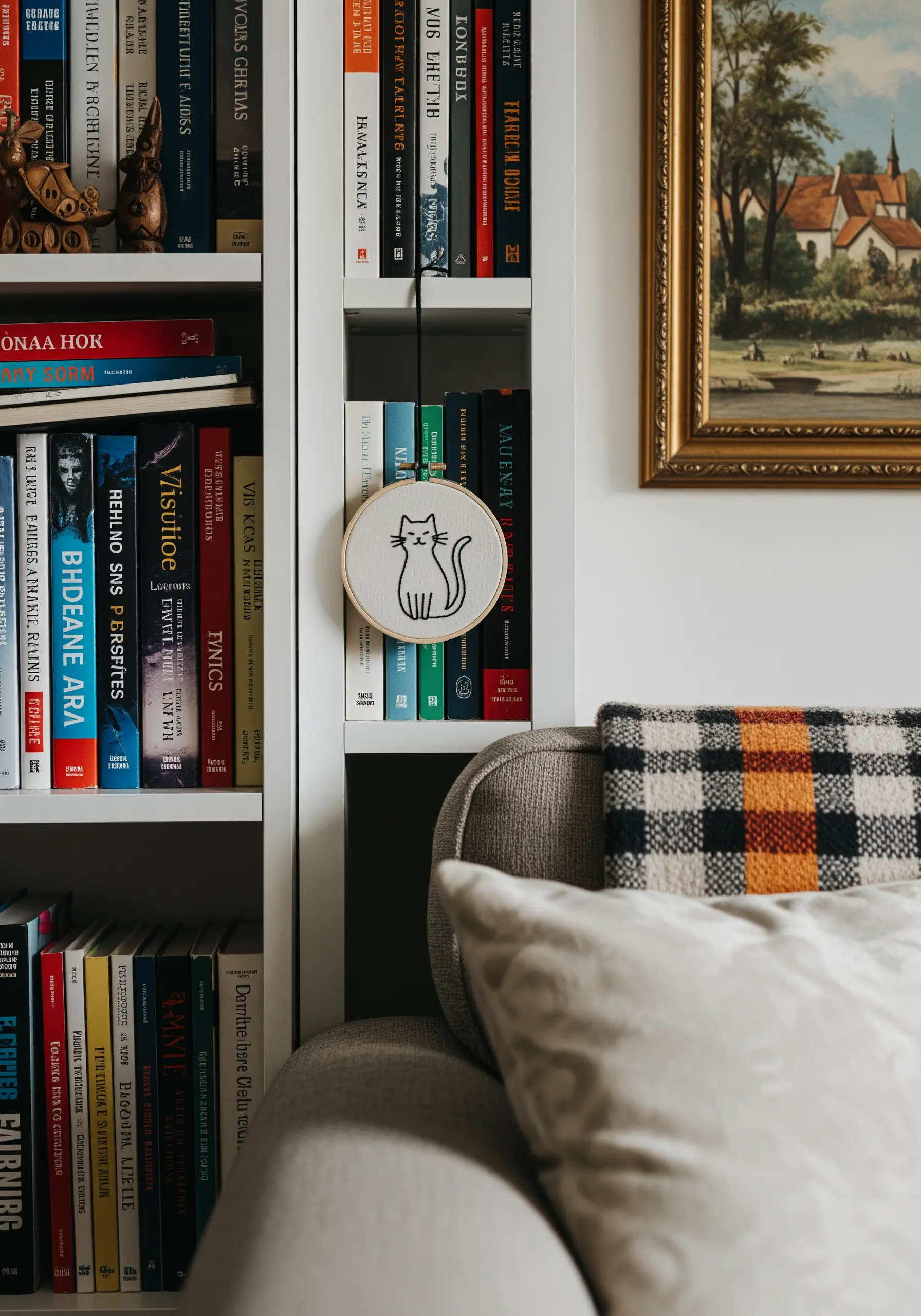
Sometimes the most charming decor is the most subtle. Stitch a small, simple motif and place it in an unexpected spot, like a bookshelf.
A simple design with clean outlines, like a stylized animal or a favorite object, works best for these tiny statements.
Use just two or three strands of floss for a delicate line that feels refined, not cartoonish.
These cute and tiny embroidery ideas act as delightful little discoveries, adding a secret layer of personality to your home.
15. Translate Abstract Data into Linear Art
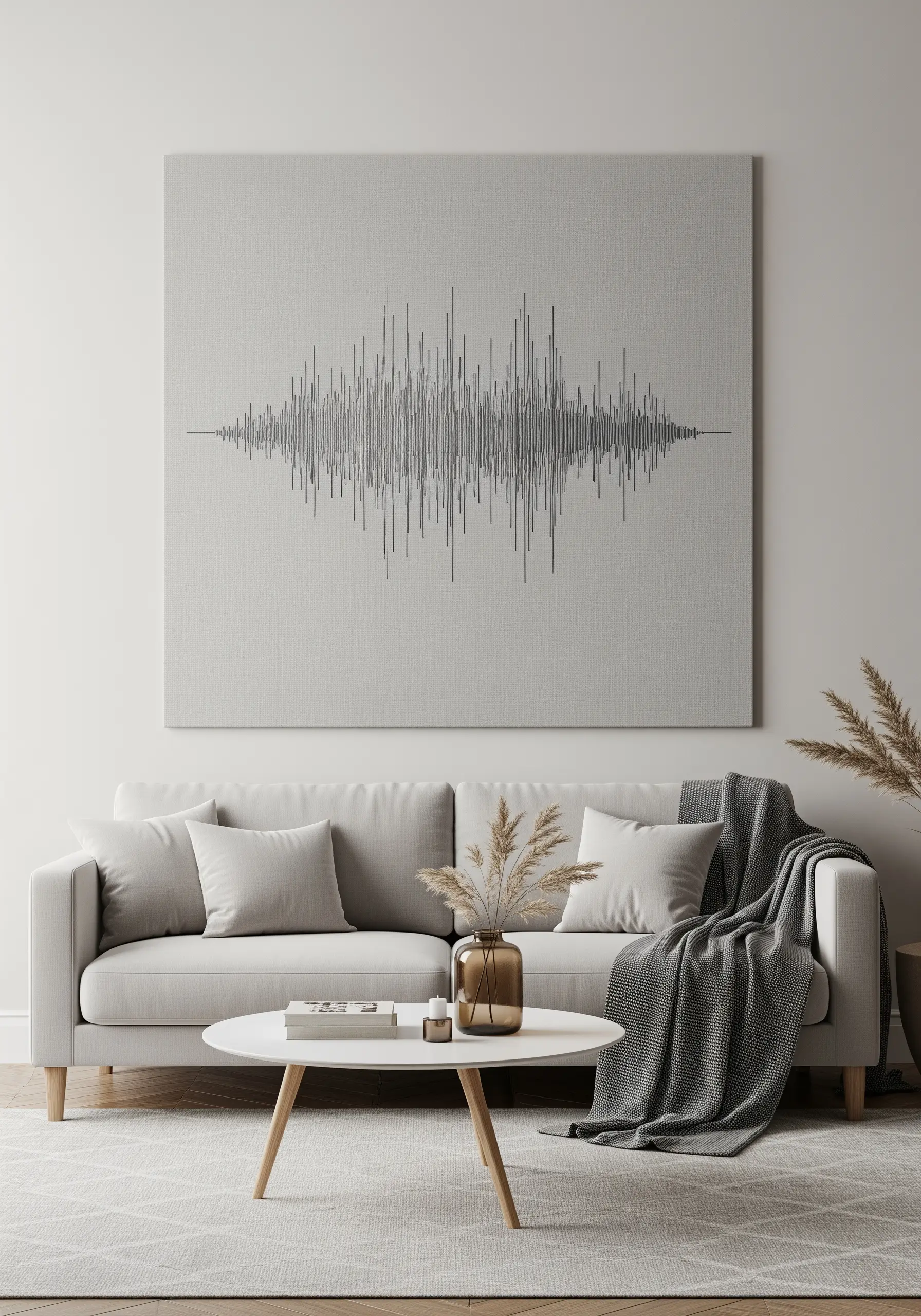
Turn a meaningful piece of data—like a soundwave of a loved one’s voice or a line from a favorite song—into a powerful abstract design.
Use a single color of thread and rely on dense, vertical straight stitches of varying lengths to create the visual representation.
Stitching on a large, tightly woven canvas gives the piece a clean, gallery-like presence.
These abstract concept art embroidery ideas are deeply personal yet universally beautiful, embedding hidden meaning into a minimalist aesthetic.
16. Cultivate a Collection of Embroidered Herbs
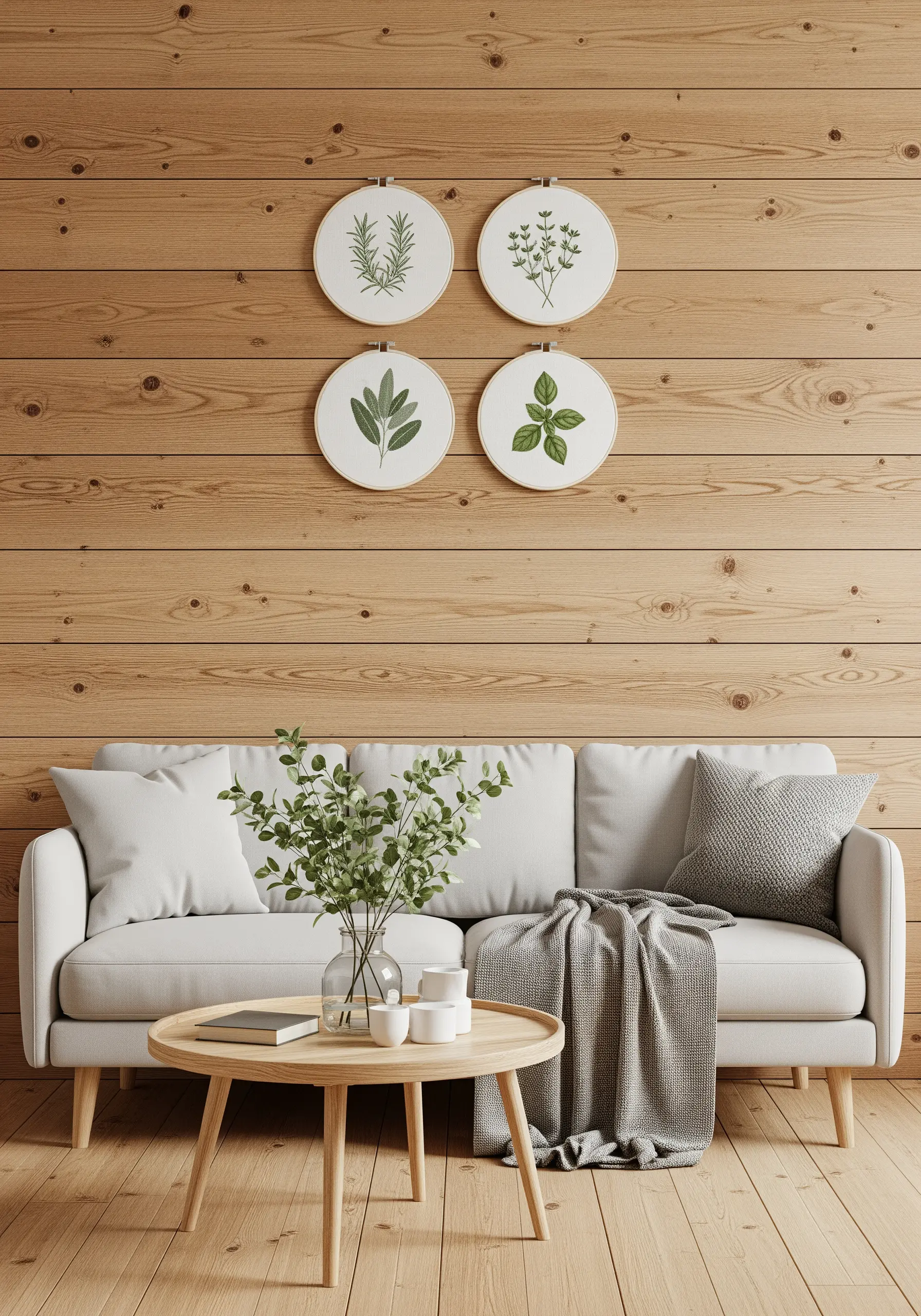
Create a fresh, culinary-themed gallery by stitching a collection of your favorite herbs, each in its own hoop.
For fuller leaves like sage or basil, use a fishbone stitch to create a central vein and fill the leaf with smooth, angled stitches.
For delicate herbs like rosemary or thyme, simple straight stitches and lazy daisies are perfect for suggesting fine needles and tiny leaves.
These medicinal herb embroidery designs, when grouped, bring a touch of the kitchen garden indoors.
17. Reinvent the Rainbow with Textured Stitches
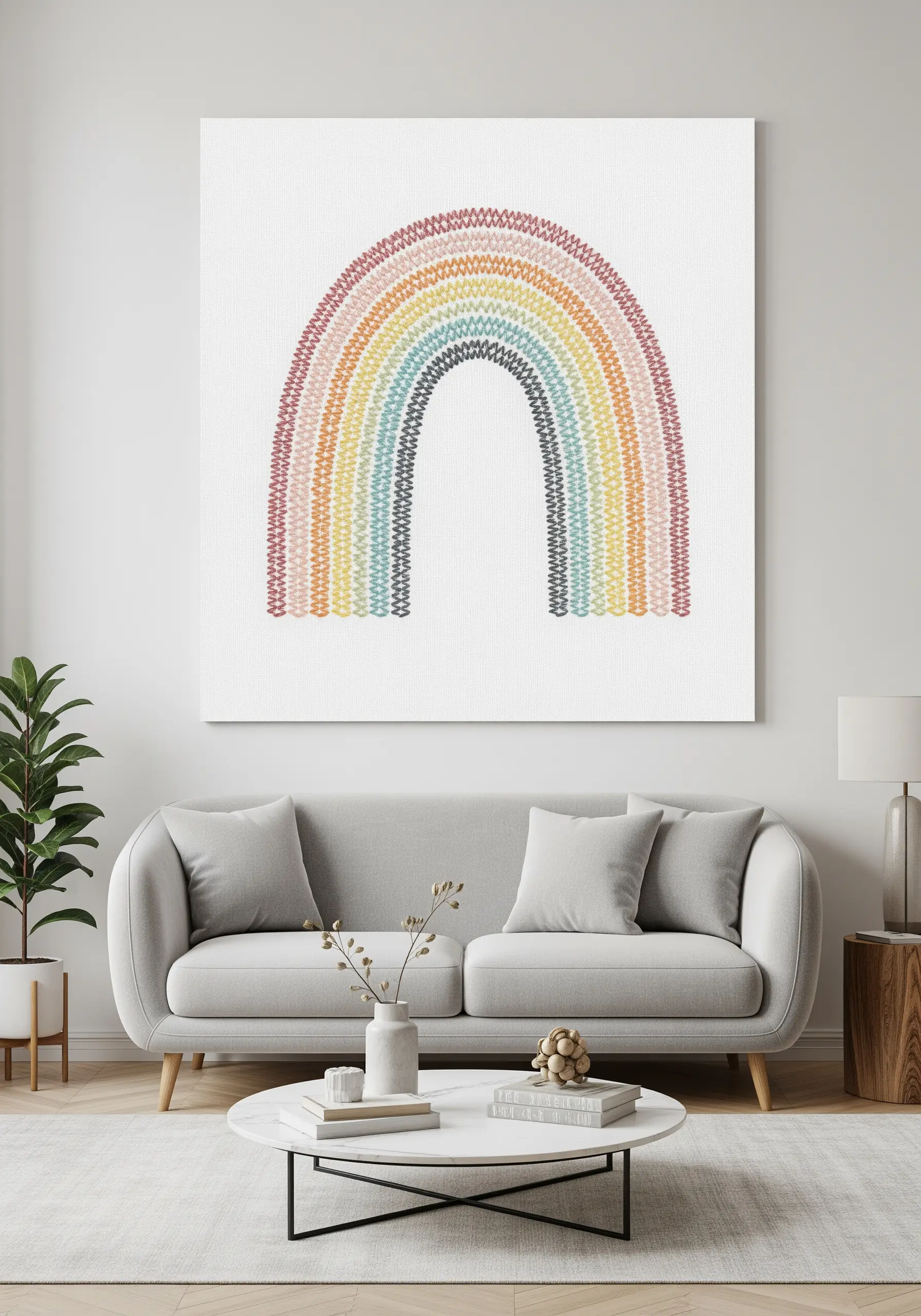
Give the classic rainbow motif a modern, tactile update by using a textured stitch instead of a simple satin fill.
A zigzag chain stitch or a heavy chevron stitch creates a braided, woven appearance that adds immense visual interest.
Choose a muted, contemporary color palette—think dusty rose, ochre, and slate blue—for a sophisticated take on a playful design.
These contemporary rainbow blend stitches transform a familiar shape into a piece of textured fiber art.
18. Embrace Monochrome with High-Pile Texture
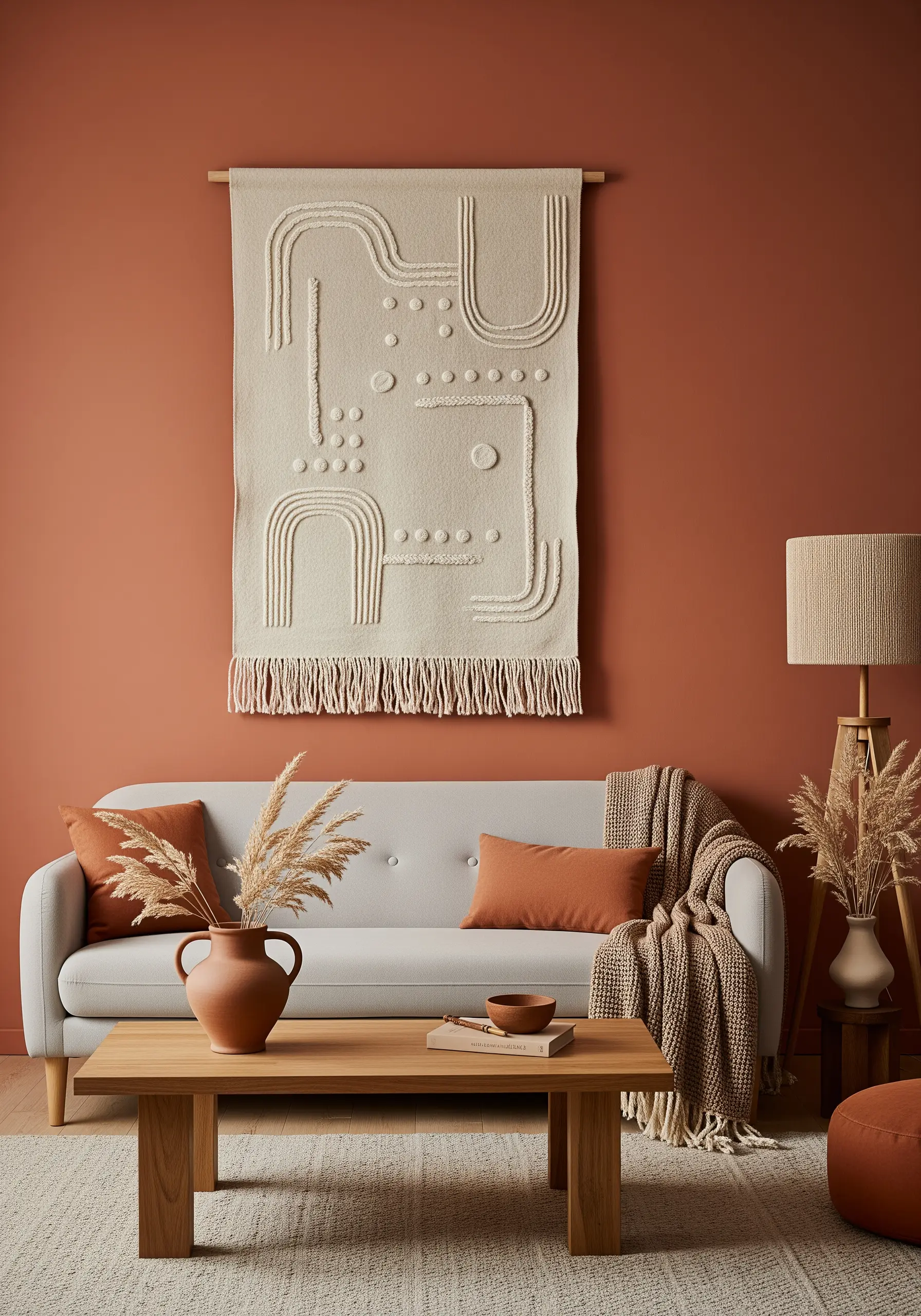
Create a stunning, minimalist wall hanging using a single color of yarn and focusing entirely on texture.
Techniques like punch needle or turkey work create dense, plush loops that result in a soft, sculptural surface.
Combine high-pile loops with flat stitches and even the exposed backing fabric to create contrast between different abstract shapes.
Focusing on a single neutral hue makes these neutral-toned embroidery projects incredibly calming and sophisticated, letting the texture do all the talking.
19. Fill a Shape with Geometric Patterns
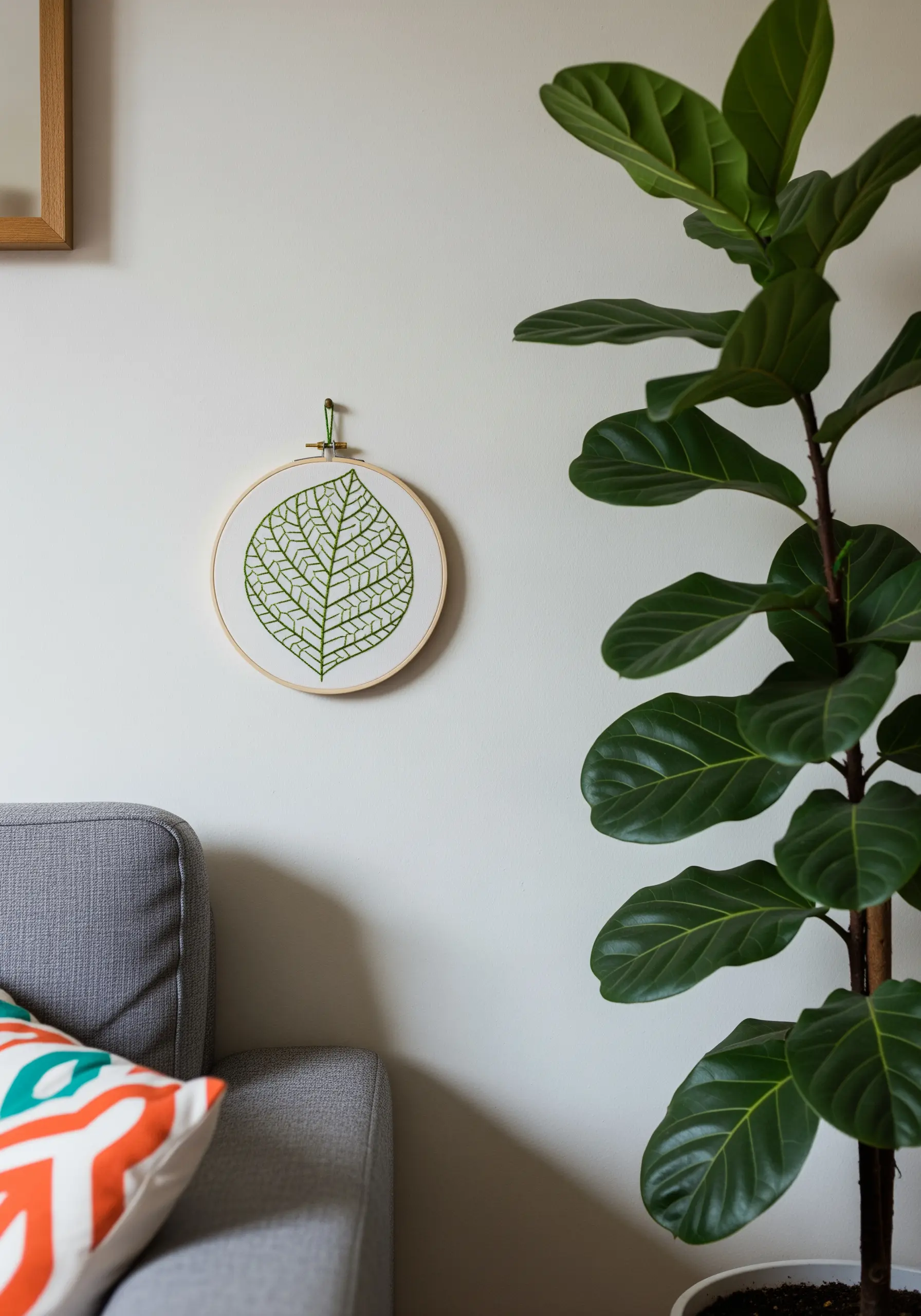
Instead of filling a leaf outline with a traditional satin stitch, use it as a container for a geometric pattern.
A simple grid of straight stitches or a pattern of repeating triangles adds an unexpected, modern twist to a natural motif.
Using a single color of thread keeps the design from becoming too busy, allowing the focus to remain on the interplay between the organic shape and the structured fill.
This is one of the most effective leaf embroidery stitches for blending natural and graphic aesthetics.
20. Mimic a Brushstroke with Dense Stitches
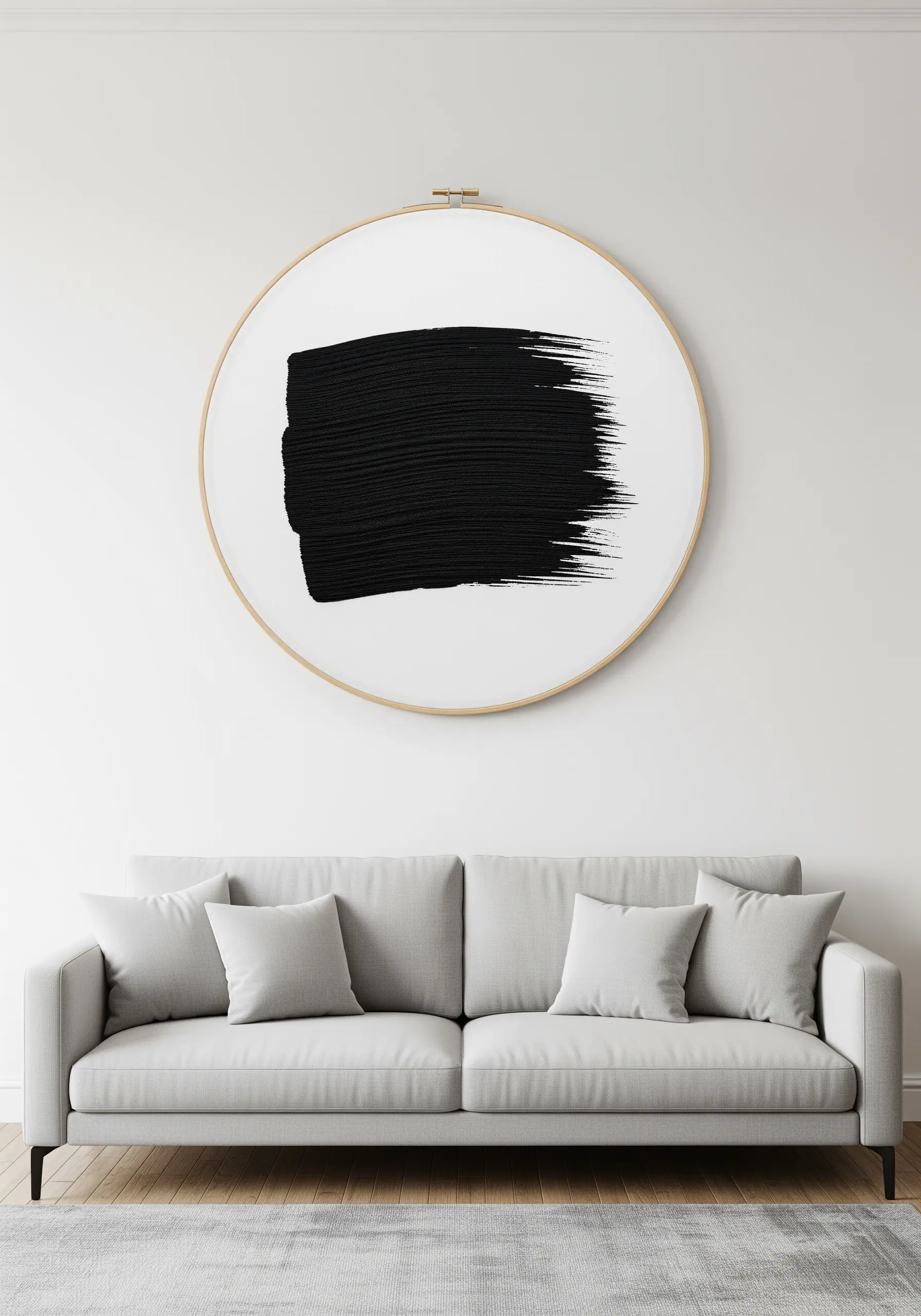
Recreate the energy and texture of an abstract paint stroke using thread.
Pack long-and-short stitches tightly together, slightly varying their length and angle to create a sense of movement and direction.
For a raw, expressive edge, let some stitches extend unevenly at the end of the shape, just as paint bristles would.
These bold monochrome black thread designs on a clean white background have a powerful, graphic impact that feels both handmade and high-art.
21. Chart the Phases of the Moon
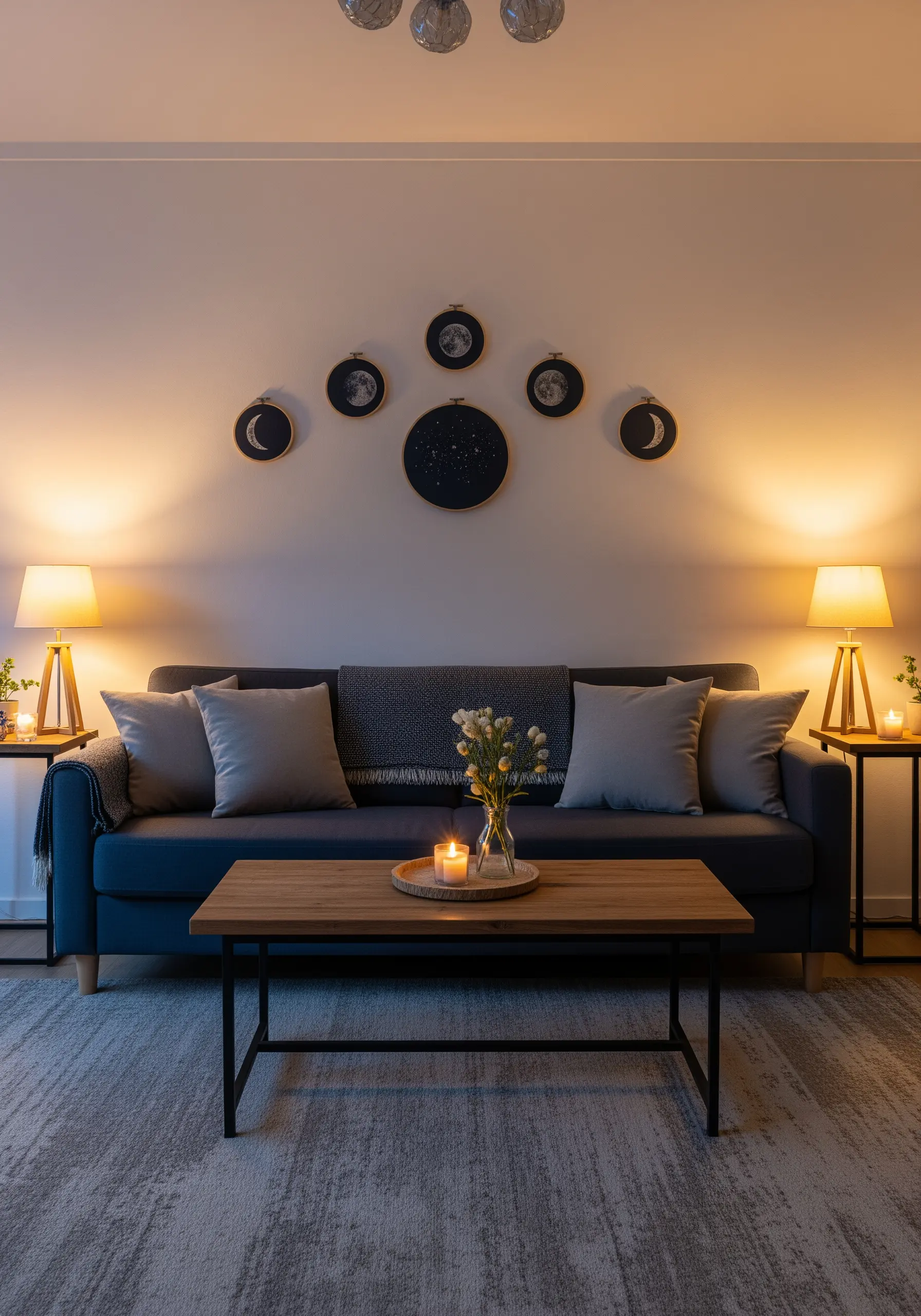
Create a celestial gallery by stitching the different phases of the moon, each in its own hoop.
On a dark fabric, use negative space for the shadowed part of the moon and fill the illuminated crescent with dense, white seed stitches or French knots for a cratered texture.
Arrange the hoops in a gentle arc on the wall to mimic the moon’s path across the sky.
These celestial micro-embroidery ideas offer a beautiful, serene way to track time and connect with natural cycles.
22. Draw on Your Walls with Yarn
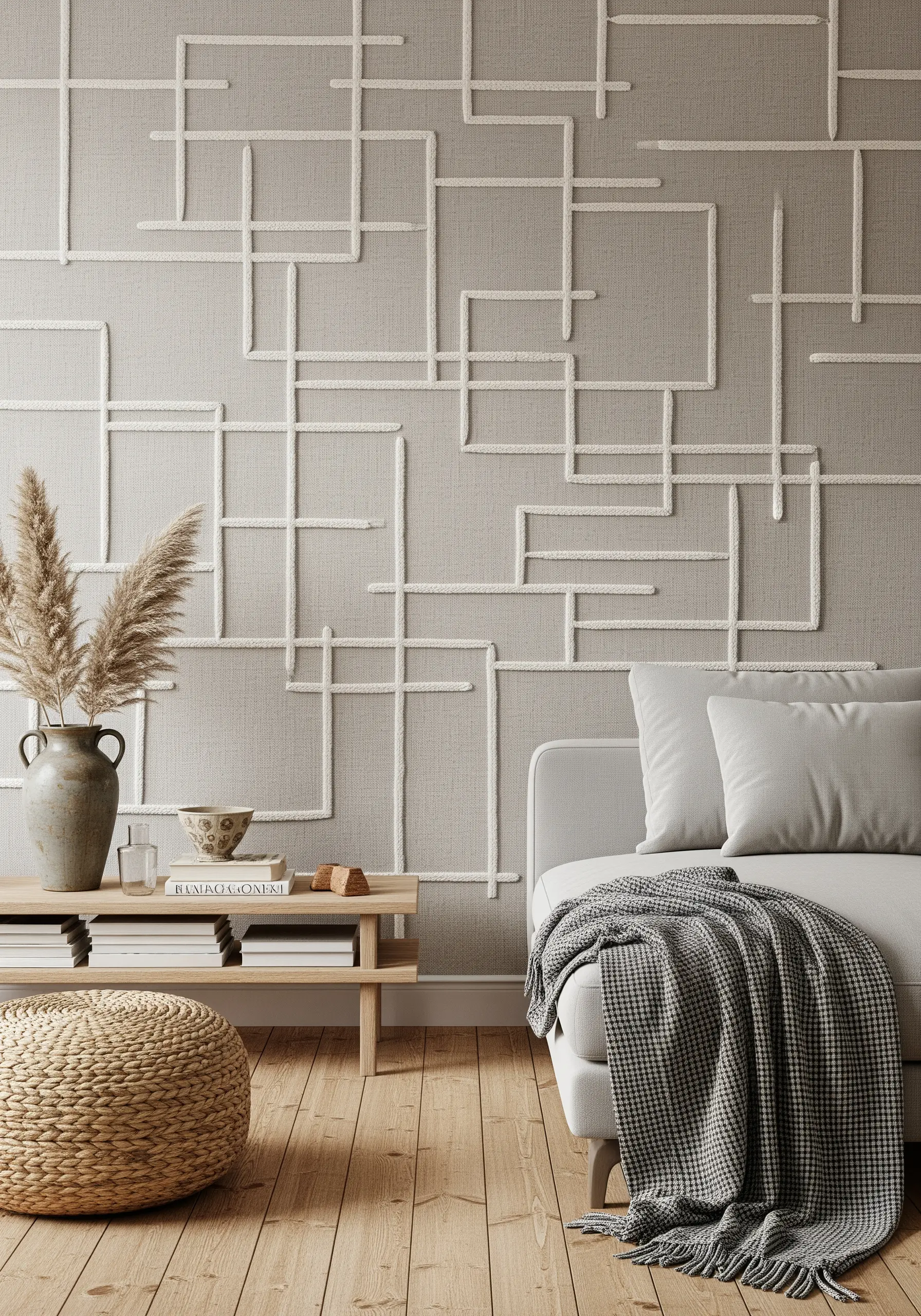
For a truly integrated piece of wall art, couch thick yarn directly onto a large fabric panel that matches your wall color.
This technique creates the illusion that the lines are stitched right onto the wall itself, resulting in a soft, architectural installation.
Use a simple geometric pattern of interlocking squares and lines for a clean, modern aesthetic that adds texture without overwhelming the space.
These layered yarn wall art projects are perfect for making a large, subtle statement in a minimalist interior.
23. Frame Floating Clusters of French Knots
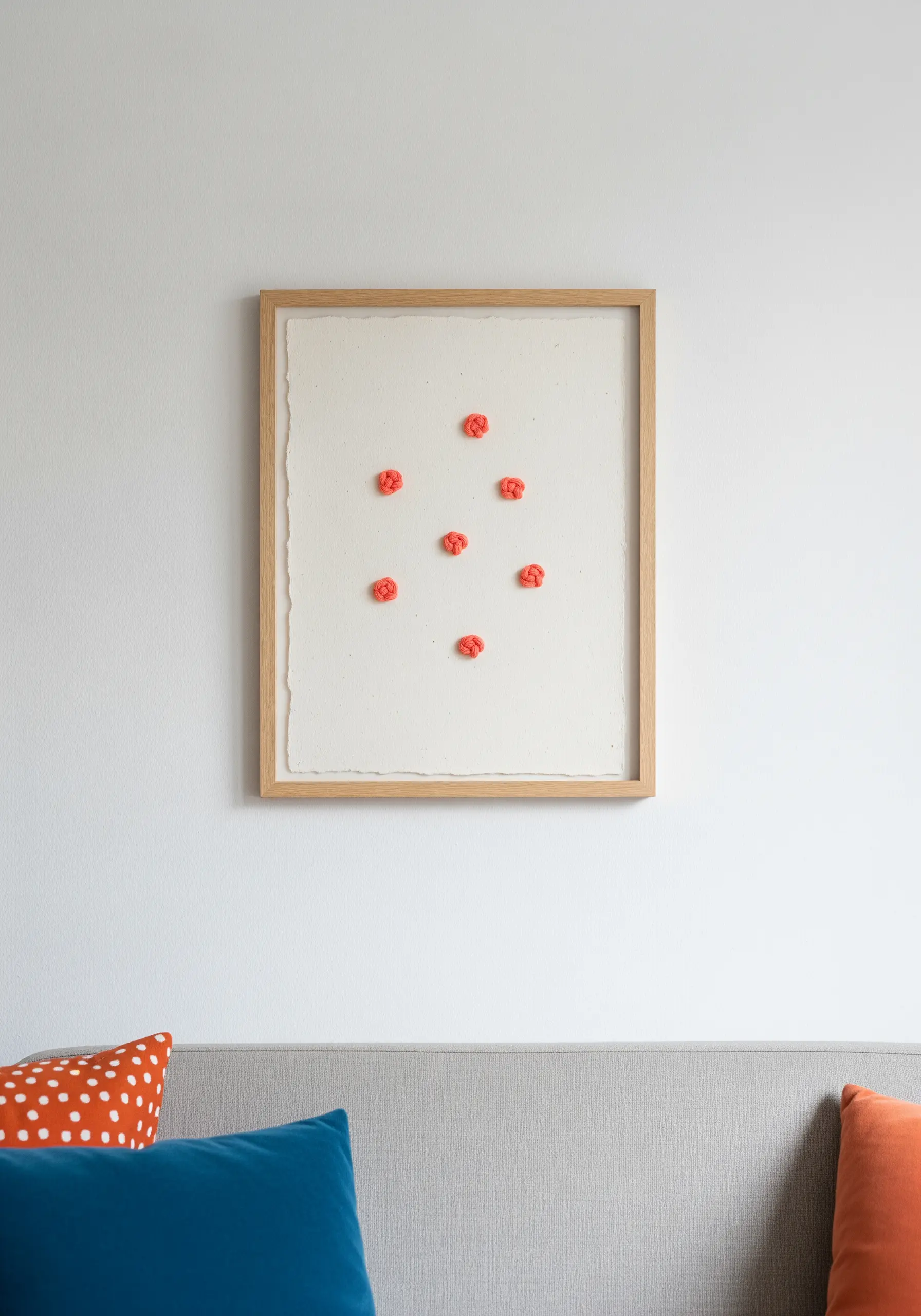
Isolate a single stitch and treat it as the art itself. Here, clusters of French knots become the focal point.
Stitch small groupings of brightly colored knots onto high-quality, textured paper or fabric with a deckled edge for an organic feel.
Use a float mount—where the artwork is raised from the backing—to cast a subtle shadow and emphasize the 3D quality of the knots.
These stunning framed embroidery pieces prove that even the smallest stitch, when given space and thoughtful presentation, can be powerful.


