

Before you pick up a needle, I want you to reconsider the fabric in your hoop. Think of it not just as a surface to be decorated, but as a silent partner in your design. Its color, texture, and weight are the foundation of the story you are about to tell with thread.
In a minimalist home, your embroidery doesn’t need to shout. Instead, it can whisper. This is where texture becomes your language. A single color of thread can create a universe of detail when you explore the interplay of light and shadow across French knots, the smooth sheen of a satin stitch, or the quiet rhythm of a seed stitch.
These ideas are not about complexity, but intention. They are about choosing one perfect stitch, one thoughtful color pairing, or one brave use of empty space to create a piece that feels both modern and timeless. Let’s create art that brings a quiet, confident beauty to your walls.
1. Create Motion with Rhythmic Line Art
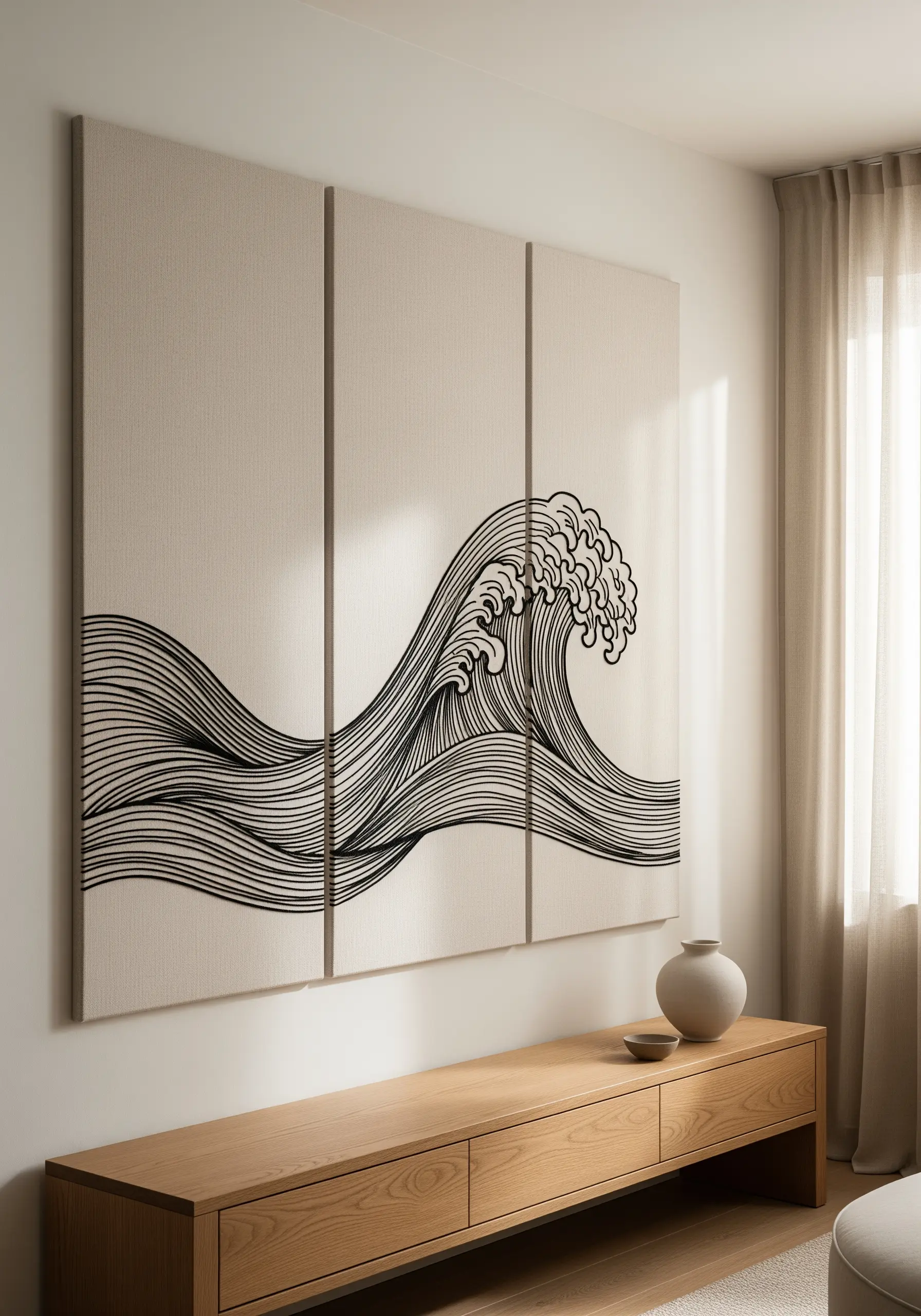
To capture the energy of this wave, use a simple backstitch or stem stitch, but focus entirely on varying the density of your lines.
Create movement by stitching parallel lines closer together in the crest of the wave and spacing them further apart in the troughs.
This manipulation of negative space is what gives the piece its dynamic, flowing quality, drawing the eye across the canvas.
For a triptych like this, stretch your fabric over three separate canvas frames before stitching to ensure the design aligns perfectly when hung.
2. Paint a Landscape with Textured Fills

Move beyond simple outlines and fill large areas with dense seed stitches to create a subtle, woven texture.
To build these rolling hills, work in distinct sections, slightly changing the direction of your seed stitches in each one to mimic natural contours and shadows.
Use a palette of closely related, muted tones—sage, stone, and mist—to achieve a serene, painterly effect.
A single, contrasting line of stem stitch in a rust or ochre thread can add a horizon line that grounds the entire composition.
3. Juxtapose Texture and Emptiness
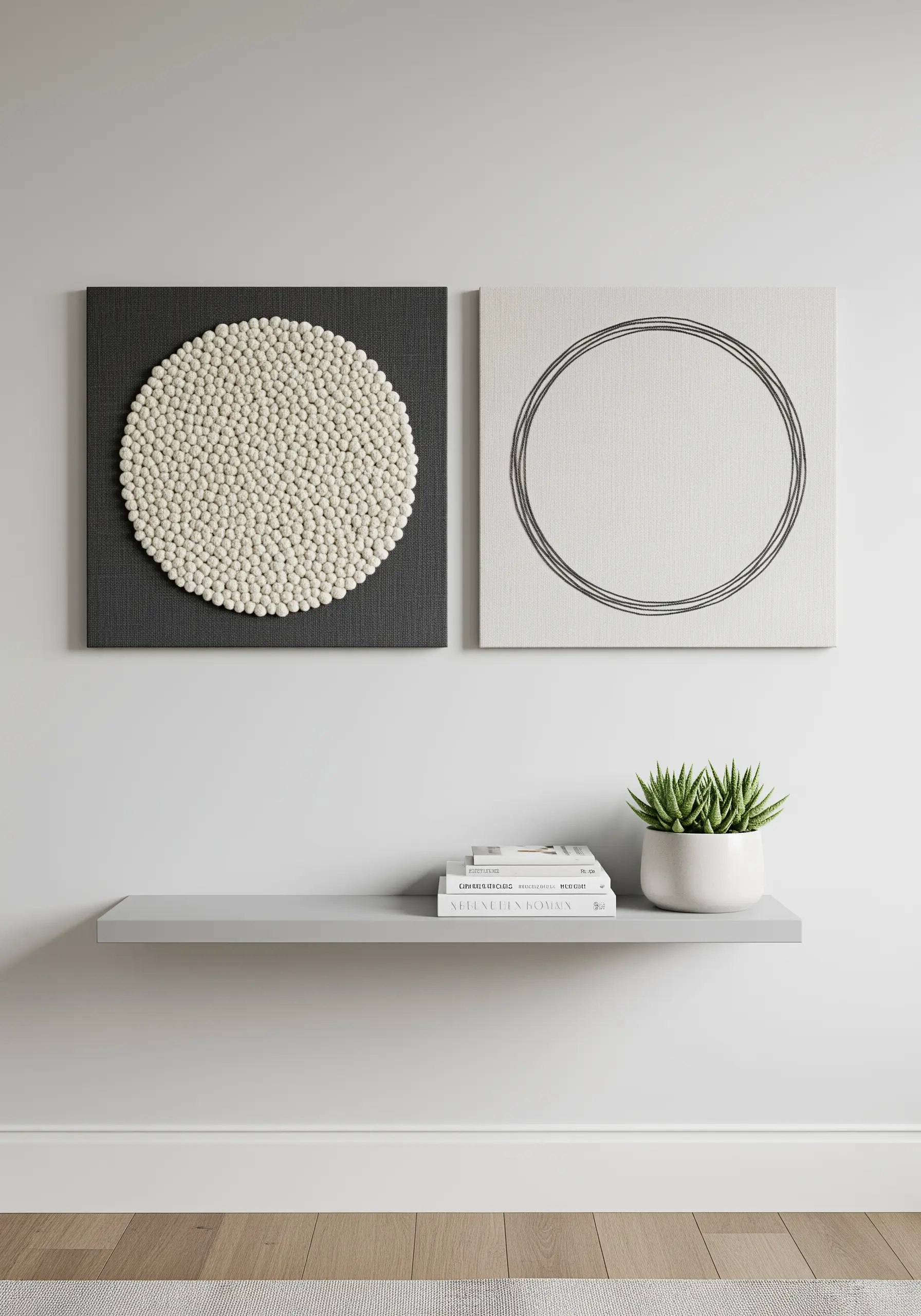
Create a powerful diptych by contrasting a densely filled shape with a simple outline.
For the filled circle, use hundreds of tightly packed French knots in an off-white or cream thread to build a rich, pebble-like surface that invites touch.
On the second panel, stitch only the outline of the same circle using a clean, deliberate backstitch.
This pairing celebrates both the complexity of texture and the elegance of minimalism, proving that what you *don’t* stitch is as important as what you do.
4. Sculpt with Padded Satin Stitch

Give your stitches a three-dimensional presence using padded satin stitch to create raised, sculptural forms.
First, create a foundation of small running stitches within your shape, layering them until you have a raised base.
Then, cover this padding with smooth, even satin stitches worked in the opposite direction.
This technique, often used in stumpwork, lifts the thread off the fabric, creating dramatic shadows and a compelling tactile quality on a rustic linen or canvas base.
5. Define Geometry with a Whipped Backstitch
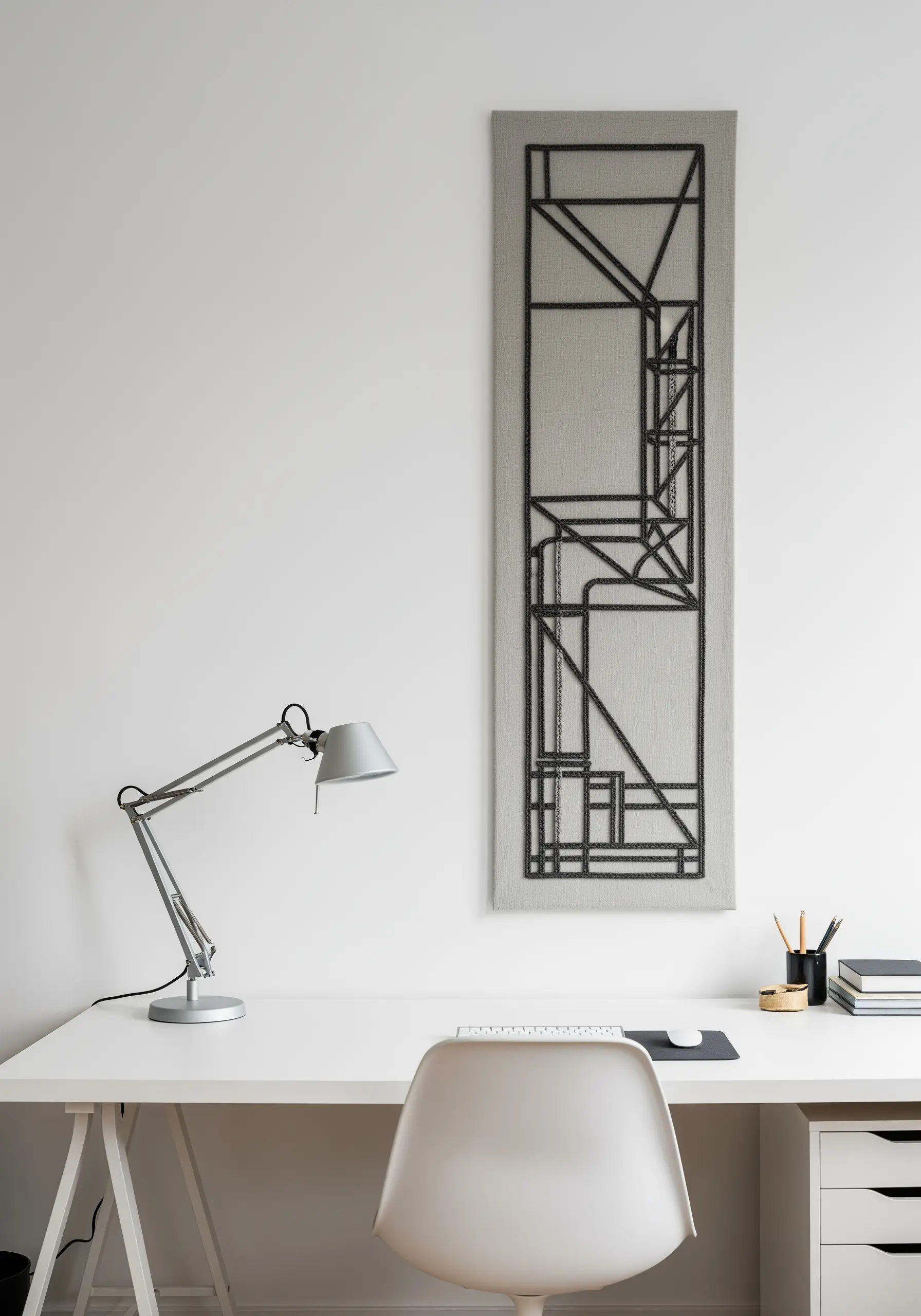
For crisp, architectural lines that need to stand out, a standard backstitch can sometimes look disjointed.
Elevate your line work by first laying down a foundation of backstitch, then whipping it with a second thread without piercing the fabric.
This technique conceals the gaps between stitches, resulting in a perfectly smooth, continuous, and slightly raised line that gives geometric designs a polished, graphic finish.
Use a high-contrast thread, like charcoal on grey linen, to emphasize the structure.
6. Explore Texture with a Monochromatic Palette
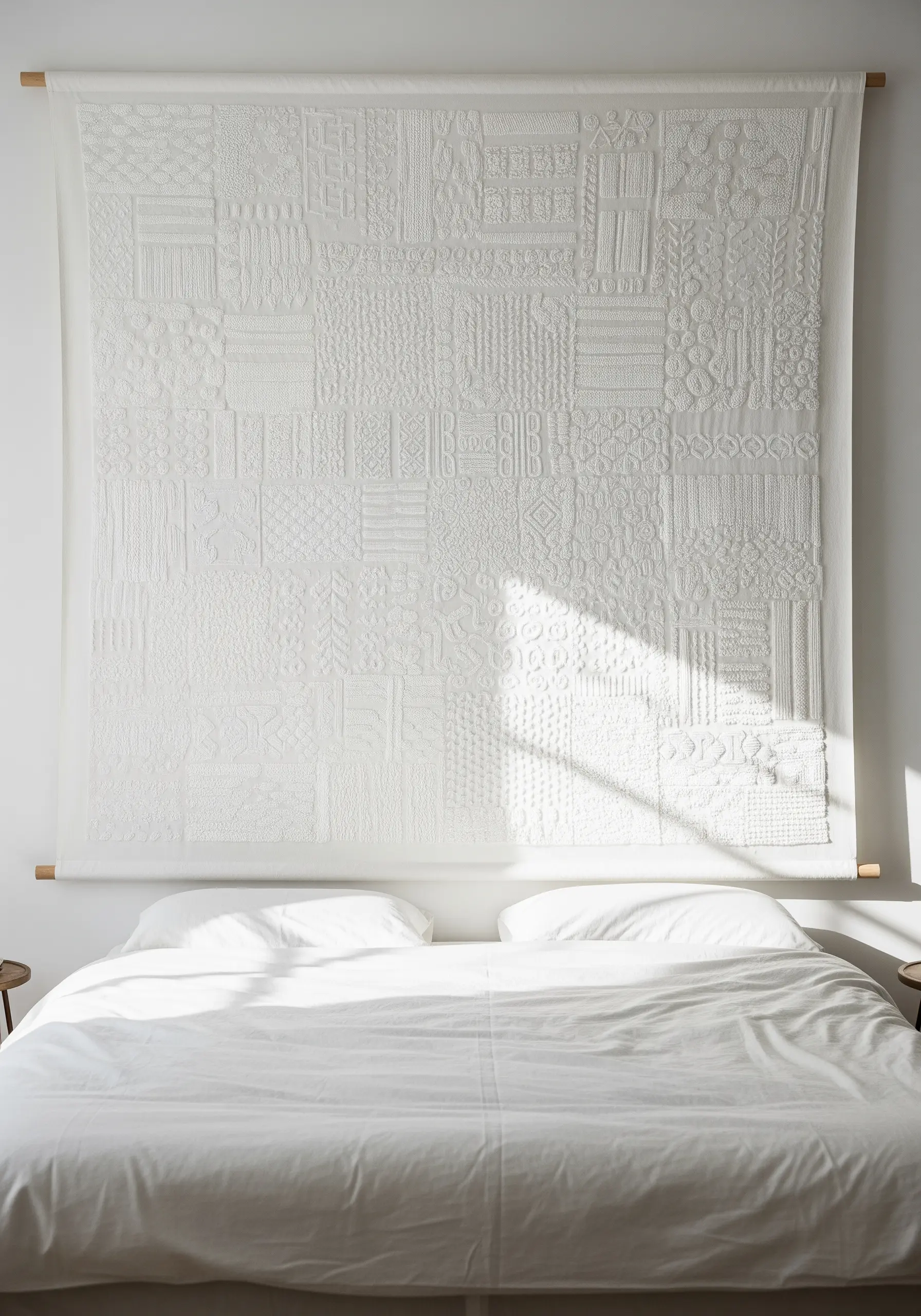
Challenge yourself to create a complex design using only one color of thread, forcing you to focus entirely on texture.
Divide your canvas into a grid and fill each square with a different stitch: French knots, satin stitch, woven wheels, seed stitch, and cross stitch.
Working white-on-white or cream-on-cream transforms the piece into a study of light and shadow.
The way light hits the varied surfaces reveals the pattern, offering a quiet, sophisticated statement perfect for a serene bedroom.
7. Create Depth with Concentric Outlines
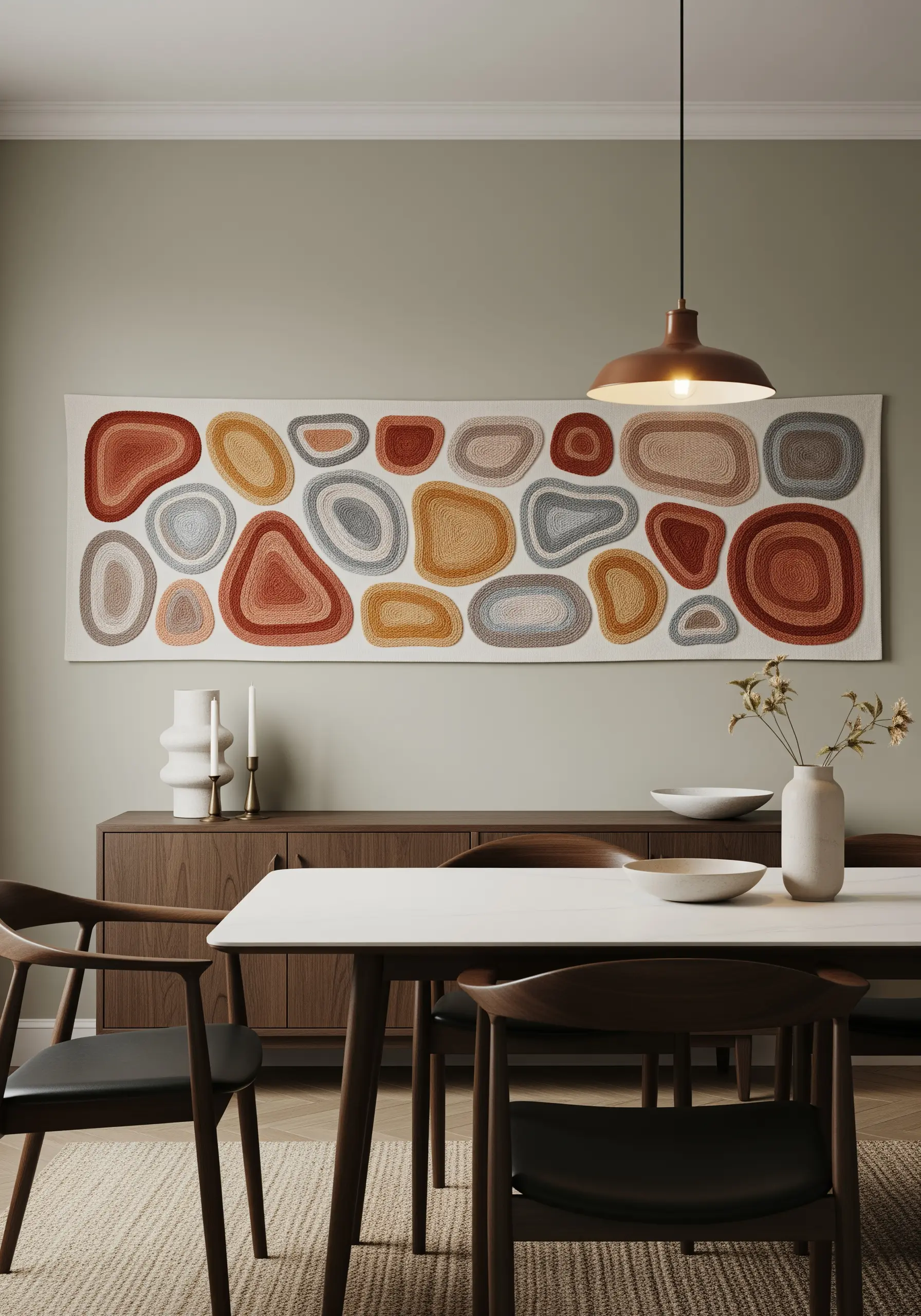
Instead of filling shapes completely, build depth and interest by stitching concentric echoes of an outline.
Use a smooth stem stitch or split stitch to ensure your curves are fluid and consistent.
Work with an analogous color palette—like rust, terracotta, and sand—to create a subtle gradient effect that feels organic and warm.
This method adds complexity and a sense of vibration without cluttering the design, making it perfect for earth-tone decor.
8. Master the Impact of a Single Metallic Line

On a dark, moody background, a single line of metallic thread can feel exceptionally luxurious.
To achieve a flawless, uninterrupted line for a botanical motif, try couching.
Lay down a strand of metallic cord or multiple strands of metallic floss and tack it onto the fabric with tiny, nearly invisible stitches in a matching thread.
This technique gives you complete control over curves and ensures the metallic thread lies perfectly flat, reflecting light beautifully without twisting or snagging.
9. Use Directional Stitching for Visual Interest
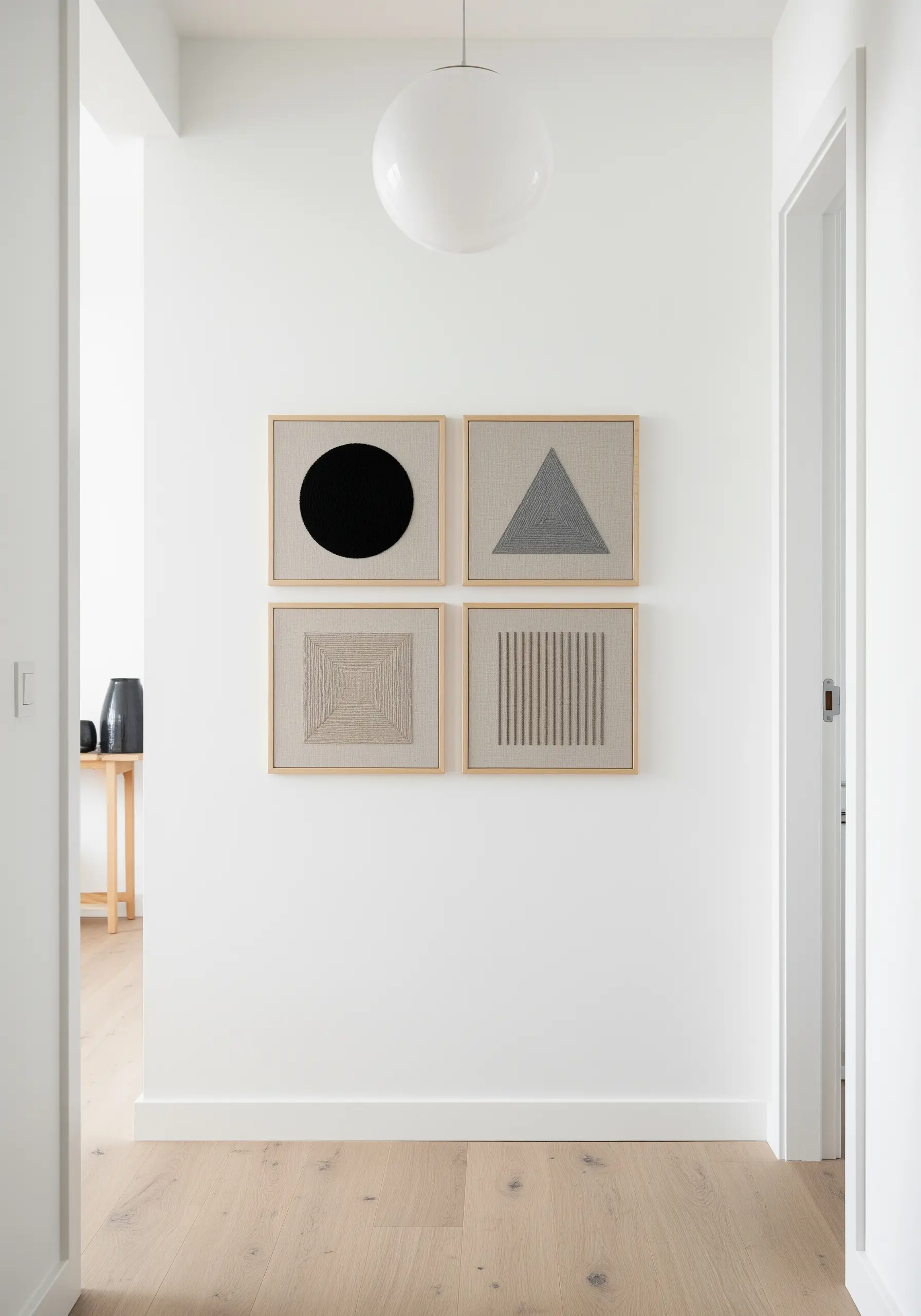
Elevate simple geometric shapes by treating their fills as a design element in itself.
Instead of a standard satin stitch, fill a square with perfectly parallel vertical straight stitches, and another with horizontal ones.
Explore checkerboard patterns or directional shifts to see how the reflection of light changes across the threads.
This approach turns basic forms into a sophisticated study of texture and line, proving minimalism is rich with detail.
10. Frame Emptiness with Dense Texture
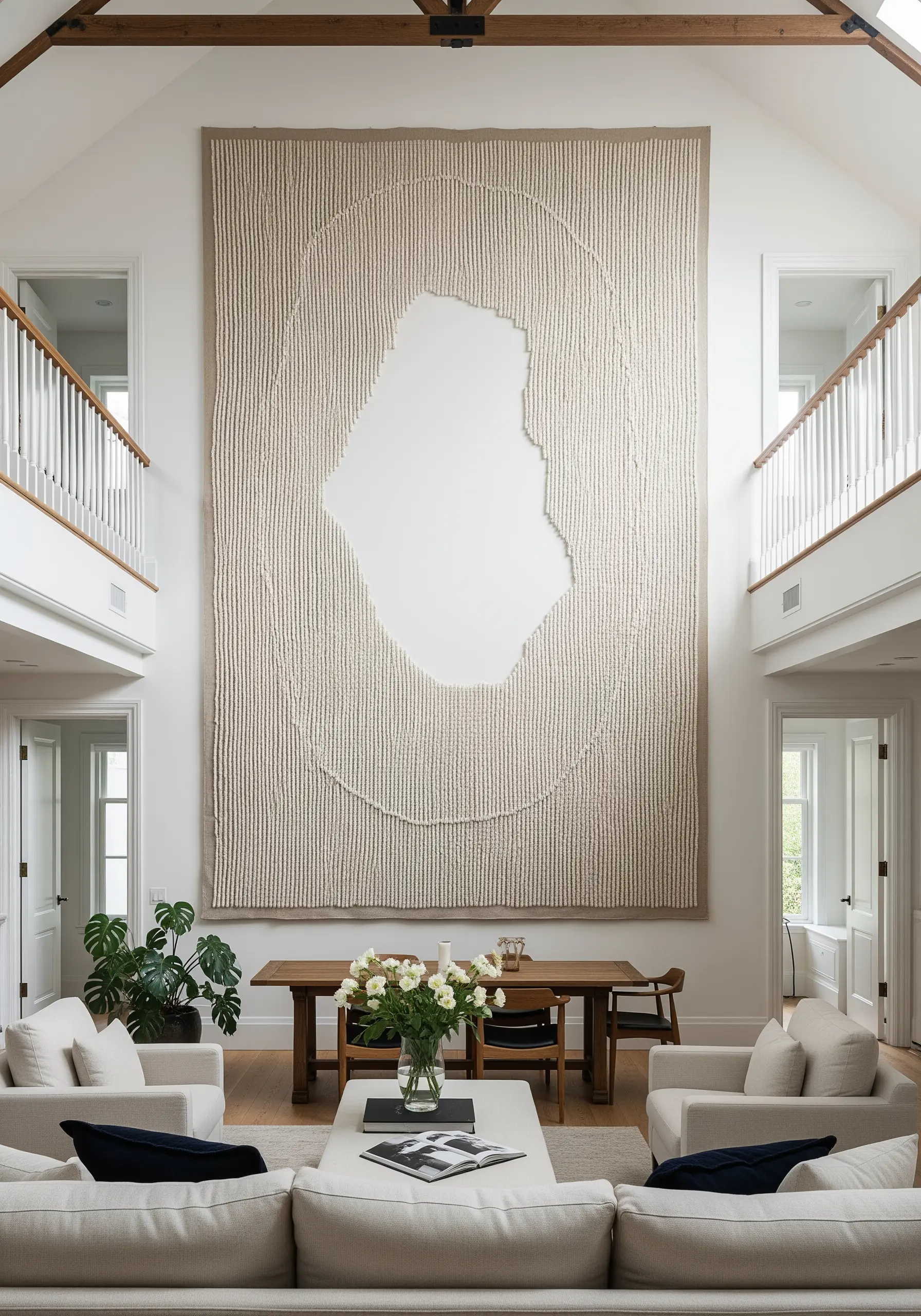
Make negative space the true subject of your work by surrounding it with a rich, uniform texture.
Use a thick, soft yarn like merino wool and fill the entire background with long, vertical running stitches or couching.
By leaving the central area of the fabric completely unstitched, its raw texture and color become the focal point.
The contrast between the soft, dense stitching and the empty space creates a powerful sense of presence and absence.
11. Weave an Abstract Seascape

Capture the texture of light on water by laying down rows of long, horizontal stitches in varying shades and thicknesses.
Combine matte cotton floss in blues and greys with a single strand of silver metallic or a shiny white rayon to represent glints of light.
Instead of perfect satin stitches, allow for slight overlaps and inconsistencies in length—this is what will give your piece an organic, shimmering quality reminiscent of a calm sea.
The simplicity of the stitch belies the complexity of the final effect.
12. Explore Brutalist Embroidery

Embrace raw, sculptural texture by combining traditional stitches with unconventional materials.
Use thick wool roving or chunky yarn to create oversized French knots and heavily padded satin stitches for a dramatic, high-relief effect.
To push the texture further, experiment with stitching over small, found objects or incorporating fabric manipulation techniques like ruching or pleating directly into your embroidery.
This approach moves your work from a flat plane into the realm of abstract textile sculpture.
13. Layer Arches with Controlled Color
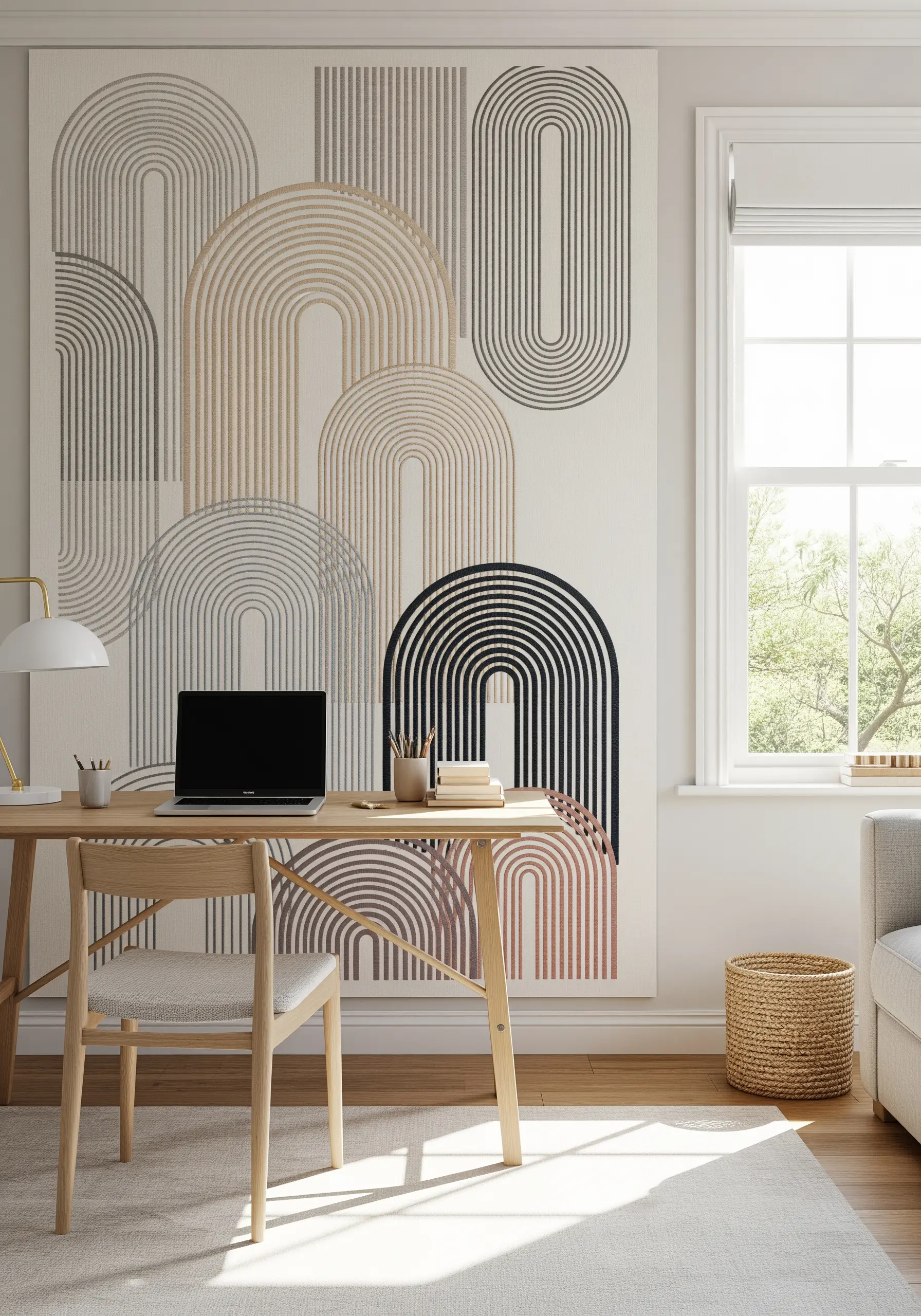
Achieve a sense of depth and transparency by layering simple shapes in a thoughtfully chosen color palette.
Use a clean backstitch or stem stitch to outline your arches, ensuring your lines are parallel and evenly spaced for a graphic, modern feel.
Select a palette of neutrals—like sand, taupe, and charcoal—and introduce one or two muted accent colors.
By stitching some arches behind others, you create an illusion of overlap and perspective that is both calming and visually complex.
14. Achieve Precision with Radiating Straight Stitches
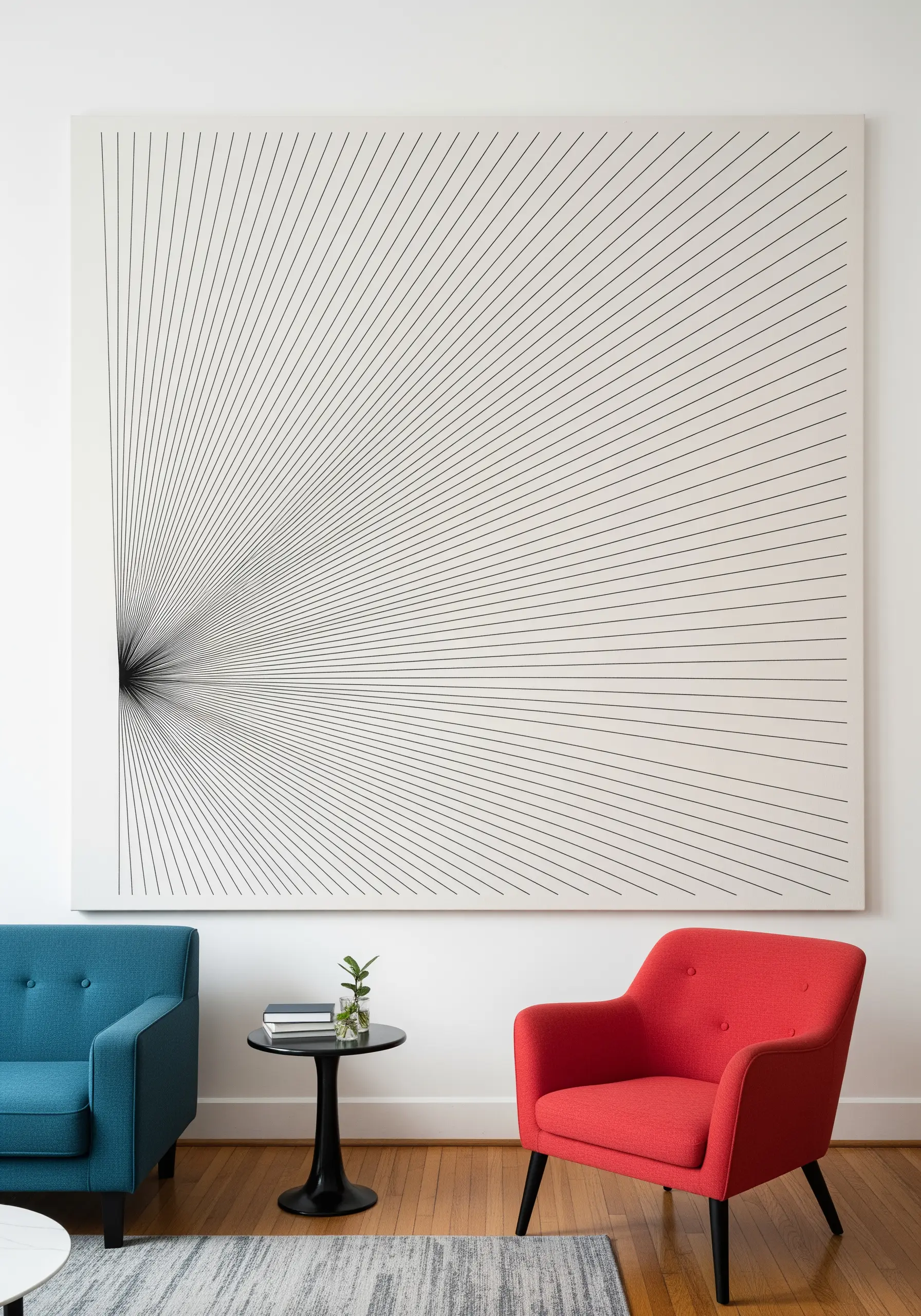
For designs that rely on geometric precision, your setup is everything.
Lightly draw your radiating lines onto the fabric using a water-soluble pen and a long ruler to ensure perfect accuracy from a single vanishing point.
Keep your thread tension absolutely consistent—too tight and the fabric will pucker, too loose and the lines will sag.
Working on fabric stretched taut in a frame is non-negotiable for this technique, as it provides the stability needed for dozens of long, perfect stitches.
15. Create Impact with Mirrored Forms

Design a dynamic diptych by splitting a single abstract shape across two panels, using a stark black-and-white reversal.
On one panel, fill the shape with dense, white couched yarn on a black background. On the other, do the opposite.
This technique explores the relationship between positive and negative space, turning a simple organic form into a bold, graphic statement.
The texture of the couched yarn adds a sculptural quality that enhances the high-contrast design.
16. Blend Tones with Long and Short Stitch

Create soft, painterly waves of color using the long and short stitch, a technique essential for thread painting.
Work in rows, staggering stitches of varying lengths and interlocking them with the row above.
By using several shades of a single color—from pale cream to warm sand—you can achieve a seamless gradient that feels soft and ethereal.
Introduce a few delicate, contrasting lines in a fine white thread to add definition and highlight the crests of your abstract waves.
17. Convey Strength with Minimalist Line Work
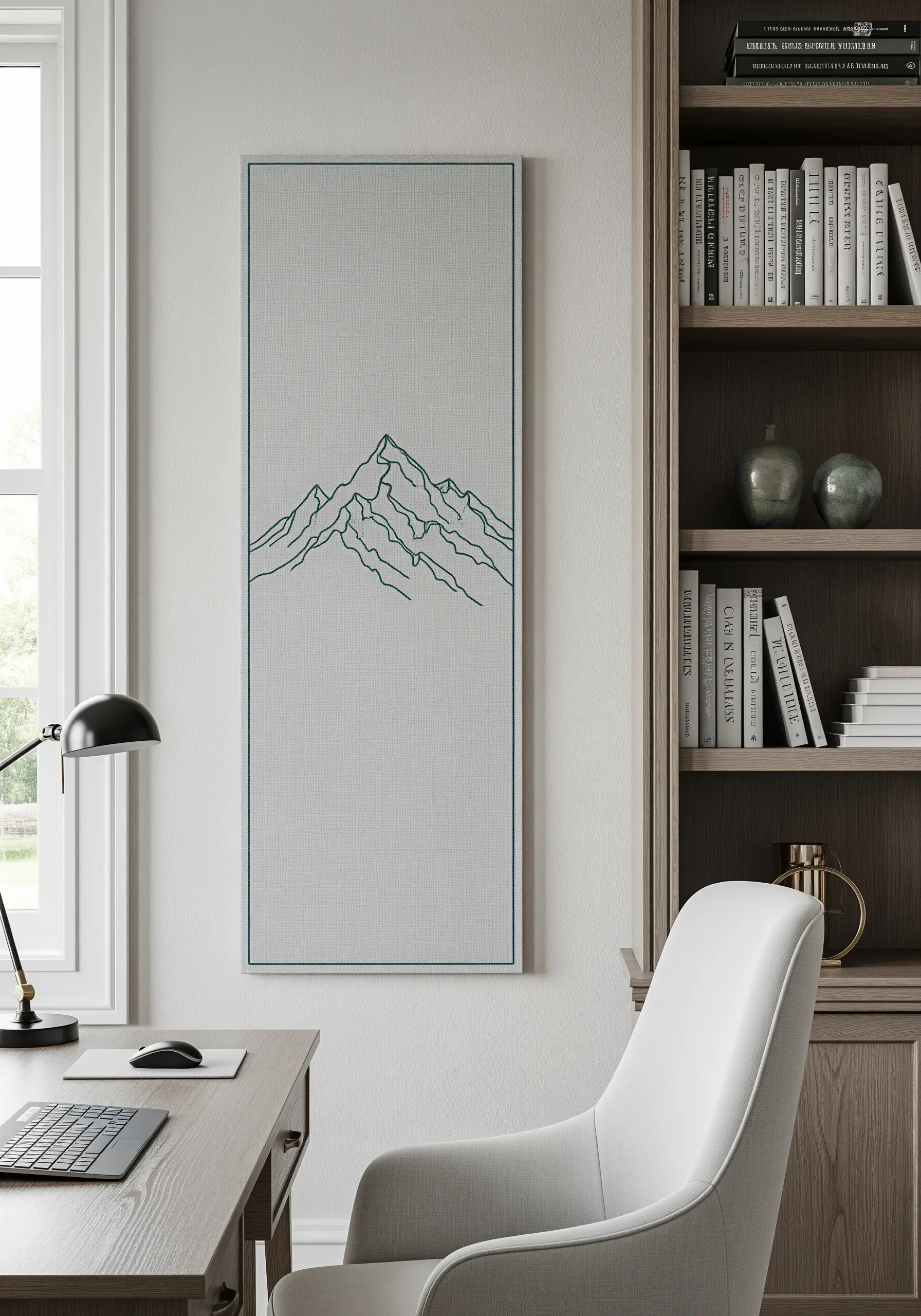
When your design is reduced to a few essential lines, the quality of each stitch is paramount.
To render this mountain range, use a bold, six-strand floss and a whipped backstitch to create a solid, rope-like line with no gaps.
The simplicity of the composition places all the emphasis on the clarity and confidence of your stitching.
Framing the motif with a simple stitched border contains the energy and gives the piece a finished, intentional look.
18. Scatter Stitches for an Organic Pattern
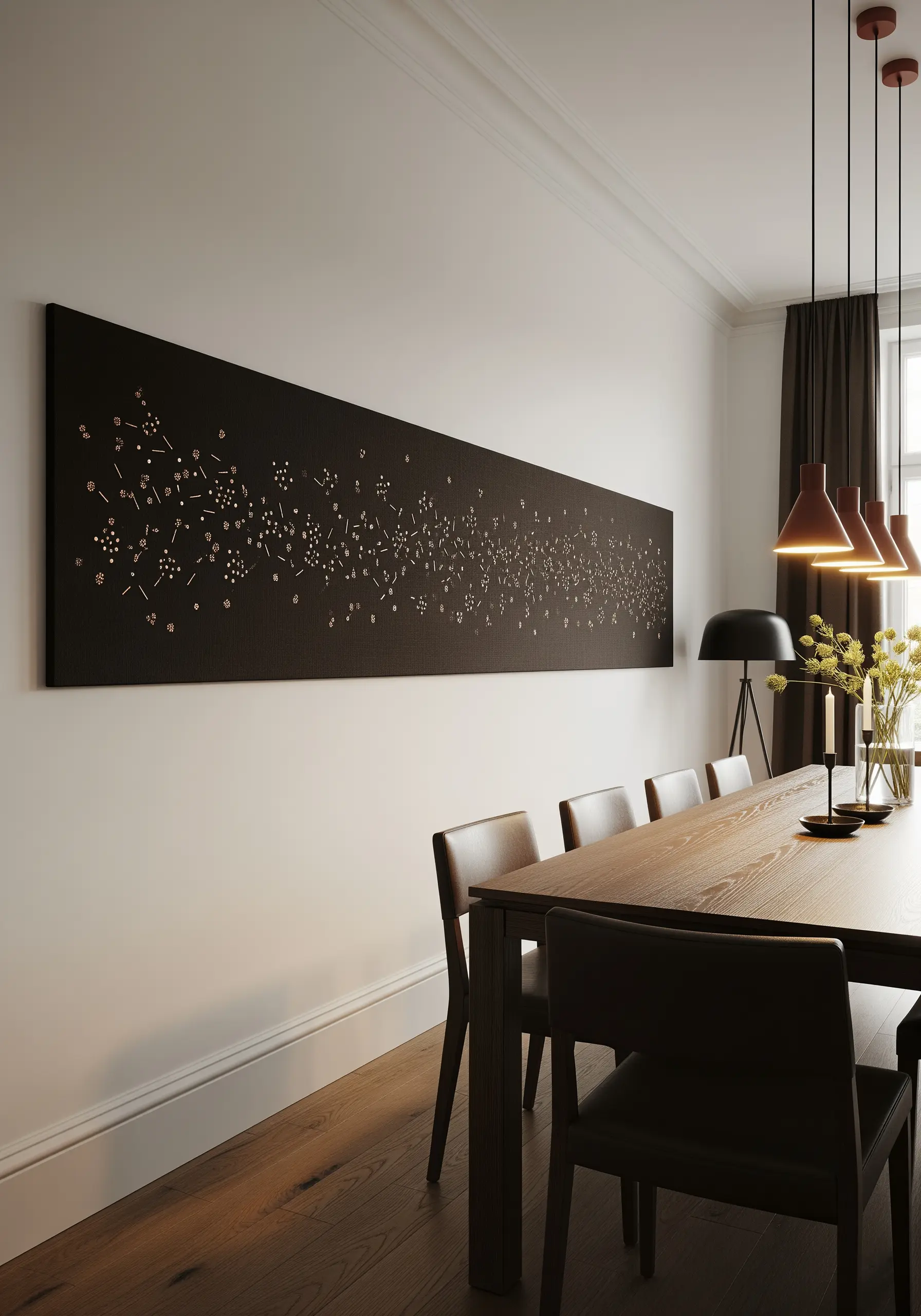
Create a design that feels both random and intentional, like a constellation or scattered blossoms.
Combine small straight stitches, seed stitches, and French knots of varying sizes across a dark canvas.
To add subtle depth, use several closely related thread colors, such as cream, antique gold, and pale beige.
The key is to avoid a uniform distribution; cluster your stitches more densely in some areas and let them drift apart in others to create a sense of natural, effortless composition.
19. Combine Padded Satin Stitch and Outlines

To make small elements pop, give them dimension with padding before covering them with satin stitch.
For the smooth, round ‘seeds’ in these abstract pods, create a small base of felt or layered stitches, then cover it with glossy satin stitches for a perfect dome.
Contrast this smooth, raised texture by outlining the surrounding shapes with a flat, clean stem stitch or couched yarn.
This interplay between 3D and flat elements adds a sophisticated, tactile dimension to your small hoop art.
20. Experiment with Soft Sculpture (Trapunto)
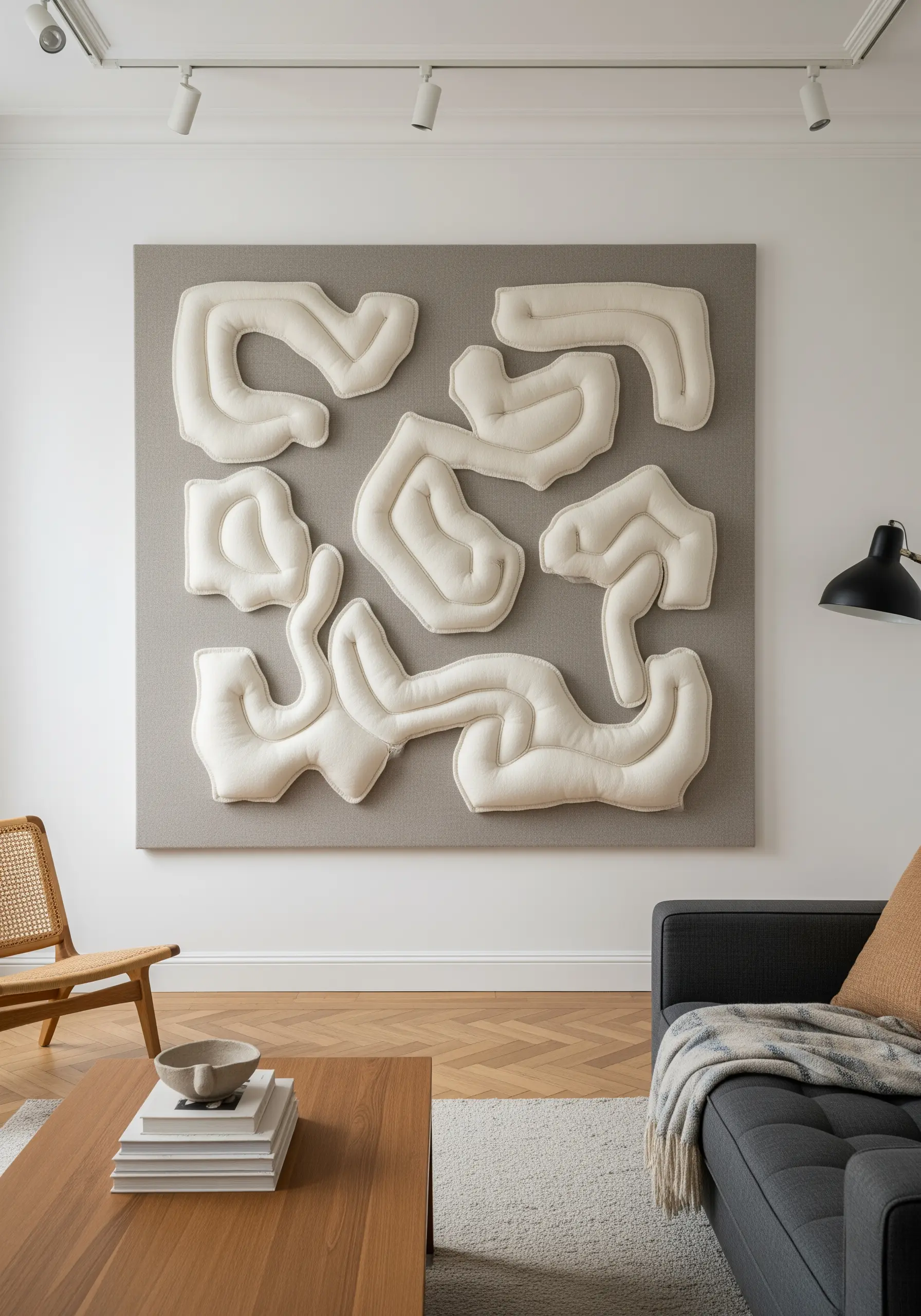
Move your embroidery into the third dimension by creating soft, sculptural forms on your canvas.
This technique, known as trapunto, involves stitching two layers of fabric together in channel-like patterns and then carefully stuffing them with batting or yarn from behind.
The result is a highly tactile, bas-relief artwork where abstract shapes emerge from the surface.
It transforms the fabric itself into a sculptural medium, defined by dramatic curves and soft shadows.
21. Capture Fluidity with a Continuous Line
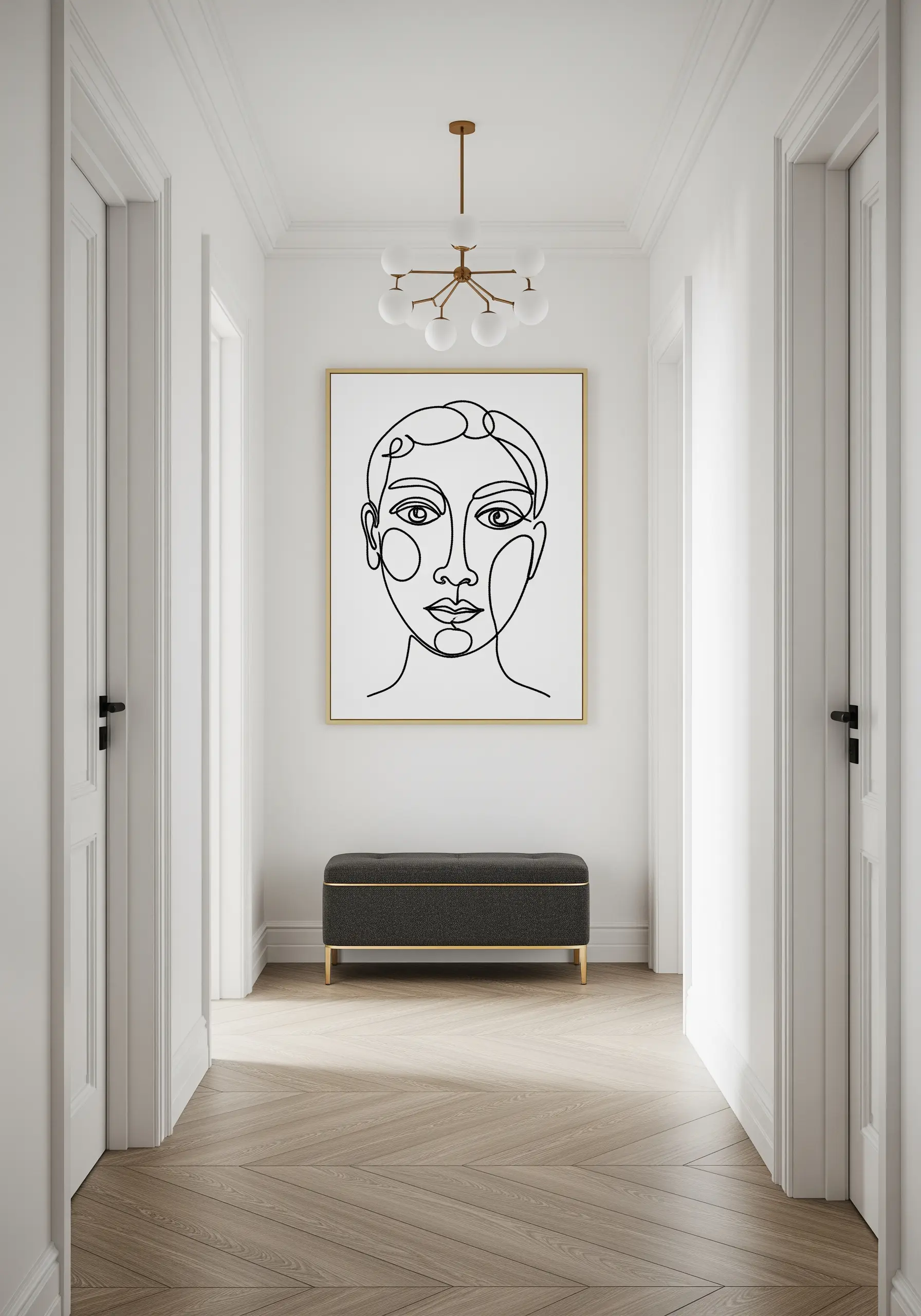
To achieve the effortless feel of a one-line drawing, your stitch choice and path are crucial.
Use a stem stitch, as it handles curves with unparalleled smoothness, creating a rope-like line that flows beautifully.
Before you start, trace your stitch path with a finger to plan how you can complete large sections without stopping or creating awkward joins.
The goal is to let your thread move like a pen that never lifts from the page, giving your line art a truly fluid, graceful quality.
22. Illustrate Transition with Stitch Density
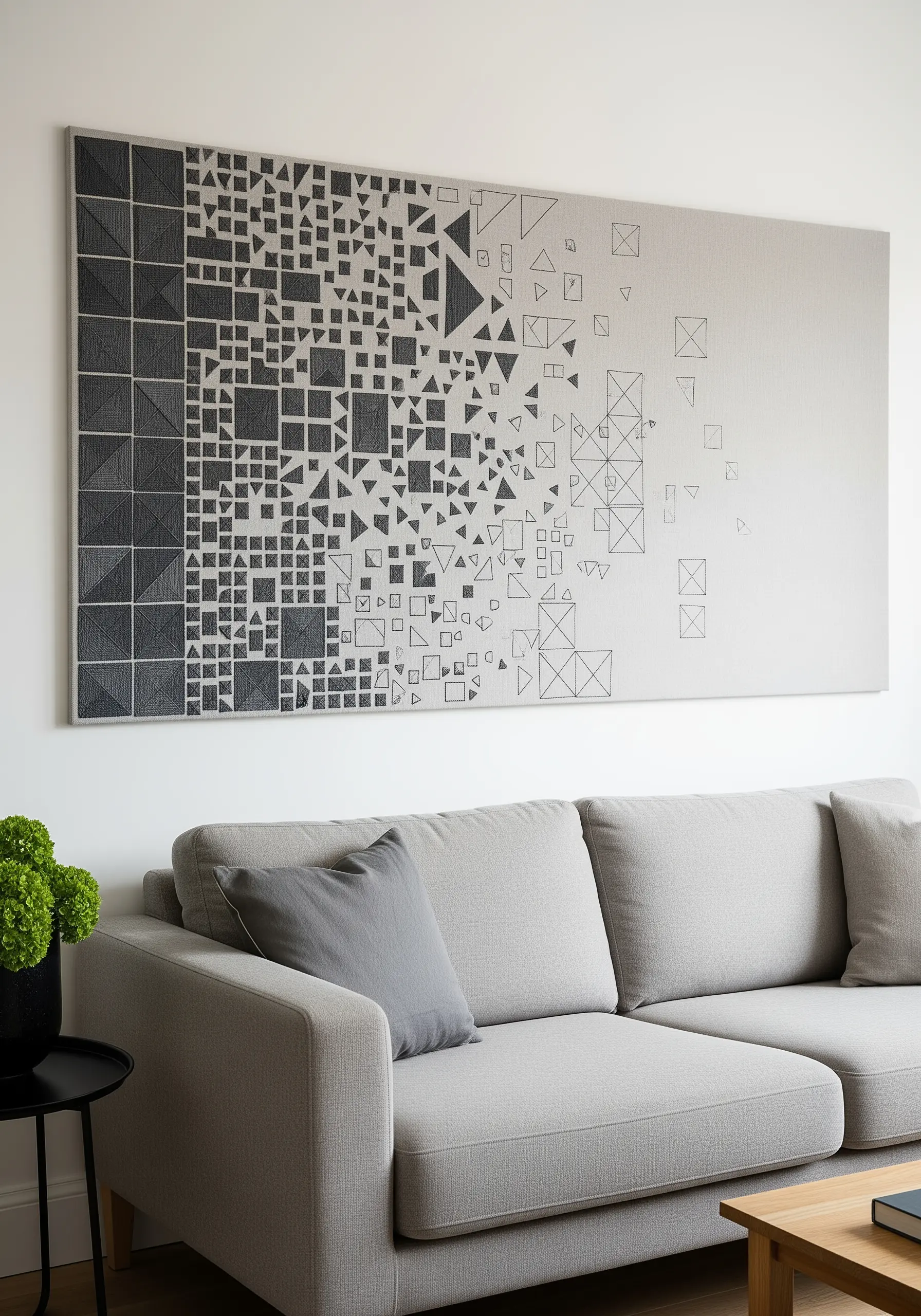
Tell a visual story by transitioning from solid, dense shapes to delicate, open outlines.
Start on one side of your panel by filling geometric shapes with a tight satin stitch in a dark thread.
As you move across the canvas, gradually open up your stitching—first by using fewer strands, then by switching to a simple backstitch outline, and finally to just a few suggestive lines.
This gradient of density creates a powerful sense of deconstruction and movement, showing the evolution of form.
23. Create the Illusion of Overlapping Forms

You can create a sense of depth and layering without complex stitches.
For these interlocking rings, use couching or wrap thick cord with thread and attach it to the canvas.
To create the illusion of one ring passing over another, simply stitch the ‘background’ ring as a complete circle first.
Then, when stitching the ‘foreground’ ring, create a clean break in the stitches where it would visually pass underneath. This simple trick fools the eye and adds dimension.
24. Emphasize Form with a Bold Outline
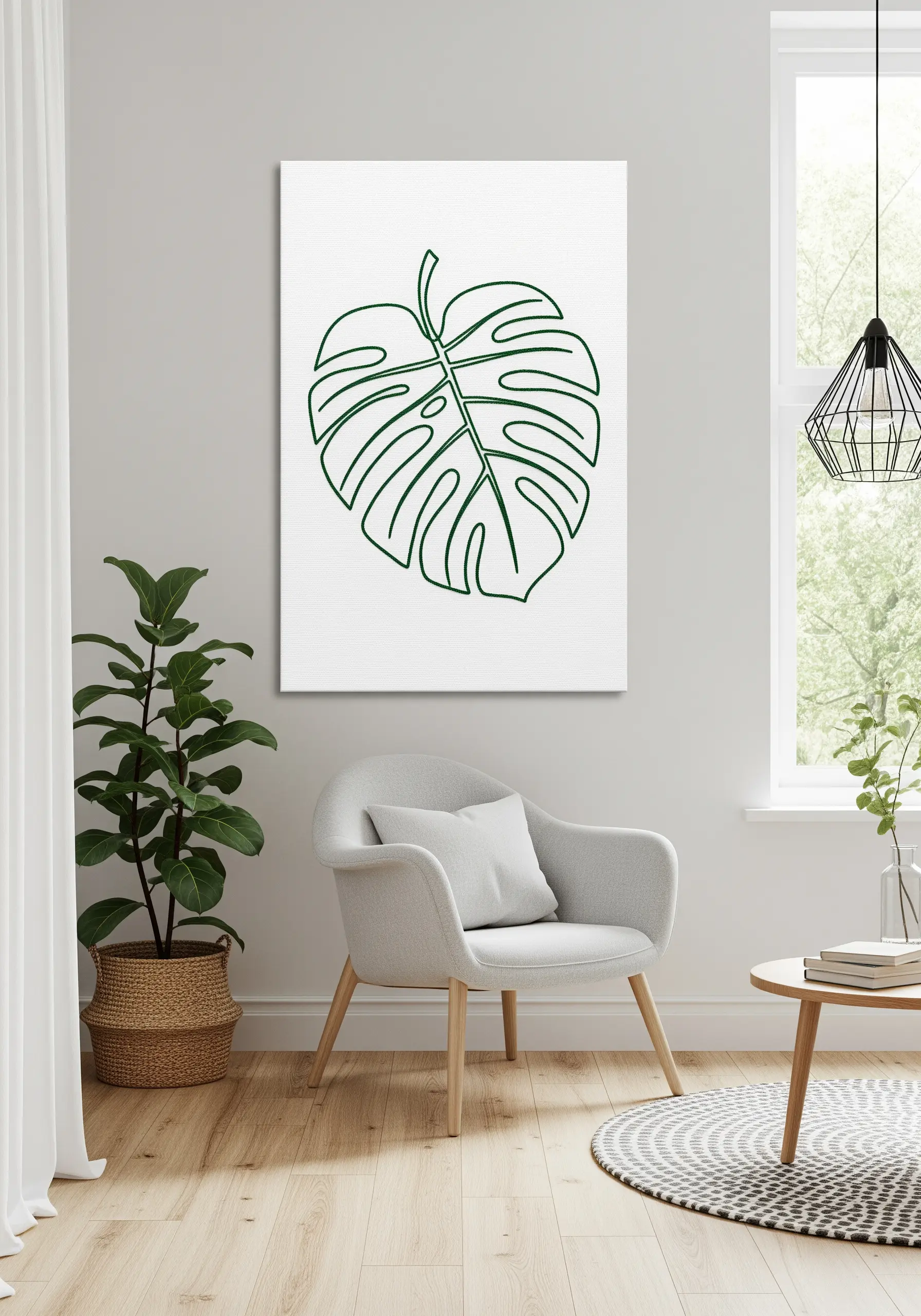
When a design features a single, iconic shape like a monstera leaf, let the outline do all the work.
Choose a thread color that provides a gentle contrast to your fabric—like a deep forest green on a soft white canvas.
Use a six-strand stem stitch or whipped backstitch to create a bold, substantial line that feels confident and graphic.
The negative space inside the leaf becomes just as important as the stitched line, creating a balanced and breathable composition perfect for a minimalist, nature-inspired space.
25. Integrate Cutwork for Modern Minimalism

Introduce negative space in its most literal form by carefully cutting away portions of your fabric.
To create these clean vertical slits, you must first secure the edges. Work a tight, precise buttonhole stitch along both sides of the line you intend to cut.
Once the stitching is complete, use a sharp pair of embroidery scissors or a craft knife to carefully slice the fabric between your stitch lines.
This technique adds architectural interest and a delicate, airy quality to your textile art.
26. Cultivate an Organic Texture Cluster

Build a composition that feels like it’s growing organically across your fabric.
Start in one corner and combine a dense variety of highly textural stitches: bullion knots, French knots, woven picot, and cast-on stitches.
Let the cluster expand asymmetrically, trailing off into smaller, sparser stitches as it moves toward the center.
Leaving a large portion of the linen background untouched creates a stunning contrast and makes the textured corner feel alive and dynamic.
27. Contrast Sheen and Matte for Celestial Motifs

Play with the way light interacts with your threads to give celestial designs their inherent character.
For the sun panel, use radiating straight stitches with a fine gold metallic or a lustrous silk thread to capture and reflect light, creating a vibrant glow.
For the moon, switch to a soft, matte cotton floss and fill the crescent shape with a dense seed stitch or satin stitch.
This matte texture absorbs light, giving the moon a quiet, serene presence that beautifully contrasts its luminous partner.
28. Embrace the Imperfect Line of a Sketch

Recreate the charm of a hand-drawn sketch by choosing a stitch that celebrates imperfection.
Use a simple, single-strand backstitch in black thread, but intentionally vary your stitch length and direction slightly.
Don’t aim for perfectly straight lines or smooth curves. Allow for small gaps and overlaps, just as a pen would create on paper.
This approach infuses your embroidery with a loose, artistic energy that feels personal and immediate, turning your needle into a drawing tool.


