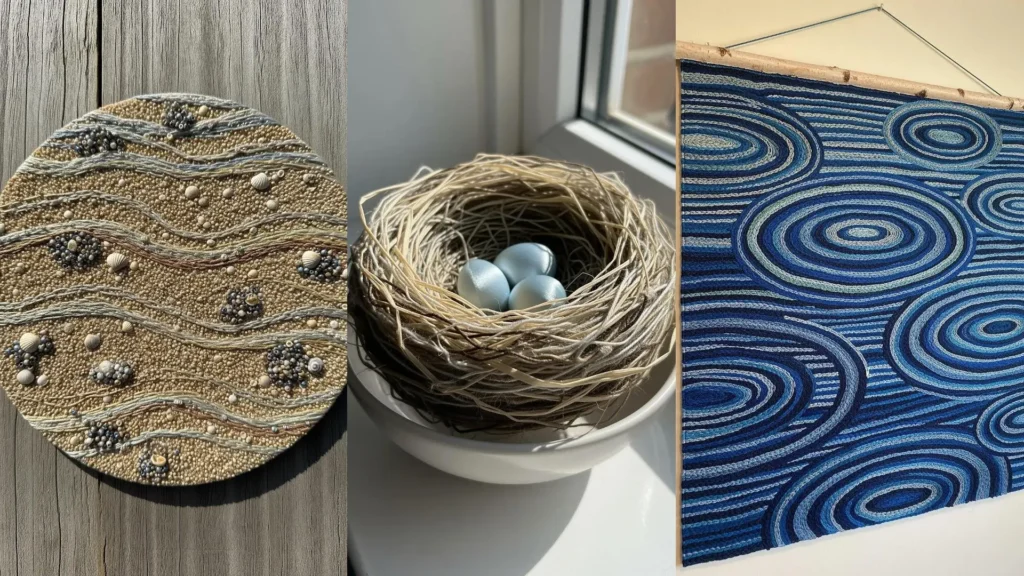
Before you pick up a needle for your next gift, I want you to think about texture. Not just as a byproduct of a stitch, but as the central, expressive element of your work. The right texture can transform a simple design into something deeply personal and memorable—a piece that invites touch and tells a story.
You don’t need dozens of complex stitches to achieve this. Often, the most profound effects come from simple adjustments: changing the number of thread strands, pairing a smooth stitch with a rough one, or incorporating a new fiber like wool or twine. It’s about making conscious choices that build dimension and character.
These ideas are here to guide you beyond the pattern. They are invitations to play with materials, to see how thread can mimic the grain of wood, the softness of moss, or the shimmer of a geode. Let’s create gifts that feel as good as they look, with organic-inspired embroidery textures that leave a lasting impression.
1. Sculpting with Thread: Wood Grain Contours

To achieve this organic, flowing texture, think of your stitches as lines drawn with thread, not just color fill.
Vary the number of strands you use—from a full six-strand floss down to a single thread—to create natural-looking ridges and grooves.
Instead of uniform satin stitches, use long, slightly irregular straight stitches that follow the direction of the grain.
Anchor the design with a dark, tightly stitched knot in the center, and let your surrounding stitches radiate outward, mimicking how a tree grows.
This technique works beautifully on a medium-weight linen, where the fabric’s own texture complements the stitched grain.
2. High-Contrast Texture: Padded Satin Stitch and French Knots

Create a compelling tactile contrast by pairing dense, plush French knots with smooth, raised satin stitch stones.
For the mossy green areas, use a tightly packed field of French knots, varying the shades of green to build depth and realism.
To give the stones a three-dimensional, rounded feel, first cut small ovals of felt and tack them onto your base fabric.
Then, cover the felt padding with a layer of perfect satin stitches using a metallic or high-sheen thread; the padding forces the stitches to curve, creating a smooth, pebble-like surface.
This contrast in texture—soft and nubby versus sleek and hard—is what gives the piece its incredible visual impact.
3. The Power of Line: Couching and Structural Stitches

Use couching to create the bold, graphic lines of the cracked earth pattern, a technique perfect for applying thicker yarns that won’t fit through a needle.
Simply lay your thick yarn along your design line and use a thinner, matching thread to tack it down with small, evenly spaced stitches.
For the leaf motifs, employ a fishbone stitch to create a defined central vein and elegantly angled sides, giving the leaves a structured, realistic appearance.
This method of combining bold, couched outlines with delicate fill stitches allows you to explore texture without overwhelming the design.
Try these leaf stitching techniques on functional items like tote bags or denim for a stylish upgrade.
4. Mineral Formations: Blending Beads and Thread

Evoke the crystalline structure of a geode by layering seed beads and French knots within concentric rings of color.
Begin by mapping out your color zones, then fill them with thread before adding beads; this creates a rich, textured base.
Use a single strand of thread to attach the beads, scattering them densely in some areas and sparsely in others to mimic natural mineral deposits.
Incorporate metallic threads alongside standard floss to catch the light and add a subtle shimmer, enhancing the geological effect.
These embroidery ideas inspired by stones, sand, and soil can be adapted for wall art or even jewelry.
5. Woven Dimensions: Birch Bark Illusion

Recreate the papery, layered texture of birch bark by combining vertical satin stitches with chunky, knotted accents.
First, lay down a foundation of long, vertical satin stitches in off-white and pale grey, allowing them to overlap slightly for a seamless look.
For the bark’s characteristic knots and imperfections, use a dark, bulky yarn and create dense clusters of French knots or colonial knots.
This technique relies on the contrast between the flat, smooth ‘bark’ and the rugged, raised knots to achieve its realism, a great example of contemporary texture techniques.
6. Sculptural Botanicals: High-Relief Stitches

Move beyond flat florals by using stitches that build height and dimension, transforming your hoop into a tactile garden.
Create the brain-like texture with tightly packed French knots in variegated pink and red threads, which gives a convoluted, organic surface.
For the radial green flowers, use the woven picot stitch or cast-on stitch worked in a circle to create petals that stand away from the fabric.
The large pink flowers are achieved with the detached buttonhole stitch, allowing you to build up layers of petals for a full, dimensional bloom.
7. Geometric Weaving: The Checkerboard Stitch

Achieve a woven, pixelated effect with the checkerboard stitch, which is perfect for creating geometric patterns with beautiful texture.
This stitch is worked over a grid of straight stitches, creating a foundation that you then weave your contrasting colors through.
The magic is in the tension—keep your weaving stitches firm enough to be secure but loose enough to let the underlying color peek through.
It’s an ideal choice for functional items like this small pillow, as the interlocking stitches are highly durable and resist snagging.
8. Thread Painting: Abstract Landscapes

Create an abstract, sedimentary landscape using dense lines of straight stitches, letting the thread itself form the texture and flow.
Instead of focusing on individual motifs, concentrate on creating bands of color that ebb and flow across the canvas.
Use a variety of thread thicknesses and textures—from matte cotton floss to shiny rayon—to differentiate the layers and add visual interest.
Allow your stitch lines to be imperfect and wavy; this mimics the natural, layered look of rock formations and adds movement to the piece.
This is a wonderfully forgiving technique that turns thread into paint, perfect for abstract thread landscapes.
9. Realistic Fungi: Layering for Depth

Give your embroidered mushrooms a lifelike quality by layering stitches to create shadow and form.
For the mushroom caps, use a long-and-short stitch in a radial pattern, blending shades of brown and white to create a rounded, dimensional effect.
Use tiny, scattered seed stitches or single French knots for the white spots, varying their size and placement for a natural look.
Create the mossy texture at the base of the log with a mix of French knots and straight stitches in various green tones.
The log itself is brought to life with directional split stitch, which expertly mimics the cracks and grain of weathered wood.
10. Wild Textures: Incorporating Raffia and Twine

Create an expressive, nest-like texture by incorporating unconventional materials like raffia and natural twine into your stitching.
Use a sturdy canvas tote bag as your base, which can handle the tension and weight of these heavier fibers.
Couch the raffia onto the surface in swirling patterns, using a strong thread to tack it down securely.
Weave different weights of twine and floss through the couched raffia to build up layers of chaotic, organic texture.
This project is a perfect example of how mixed-fiber embroidery techniques can turn a simple object into a piece of art.
11. Frosted Delicacy: Trellis Work with Metallics

Create an elegant, frosted windowpane effect by combining a simple trellis stitch with delicate botanical details.
Use a bright white or silver metallic thread to lay down your grid, ensuring your lines are evenly spaced for a clean, geometric look.
Within each square, add tiny, delicate motifs like fly-stitch leaves or single seed beads to mimic ice crystals.
The contrast between the rigid structure of the trellis and the organic softness of the stitched sprigs is what makes this design so refined.
This technique is perfect for creating handmade embroidered jewelry and other small, precious gifts.
12. Understated Elegance: Tone-on-Tone Wheat Sheaves

For a subtle and sophisticated gift, embroider natural linen napkins with a tone-on-tone design.
Choose thread colors that are only a few shades lighter or darker than your fabric—this creates texture that is felt as much as it is seen.
Use a fishbone stitch for the leaves to give them a central spine and a graceful shape.
Create the wheat grains with small, detached chain stitches or lazy daisies, clustered together at the top of the stalk.
This minimalist approach to texture adds a touch of bespoke luxury to everyday table linen.
13. The Fish Scale Technique: Layered Satin Stitch

Build a rich, dimensional surface that mimics pinecone scales or reptile skin with layered, fan-shaped satin stitches.
Start stitching from the bottom of your design and work your way up, allowing each new row of stitches to slightly overlap the one below it.
To achieve the blended color effect, use variegated thread or switch colors every few ‘scales’.
The key to this technique is keeping your stitches uniform in shape and tightly packed, creating a seamless, scalloped texture.
This method is highly meditative and results in a deeply satisfying, tactile finish.
14. Raised Lines: The Heavy Chain Stitch

When you want a bold, rope-like line with significant texture, the heavy chain stitch is your answer.
Unlike a standard chain stitch, the heavy chain stitch is worked over a foundation of straight stitches, which gives it its raised, corded appearance.
This stitch is perfect for creating strong outlines, geometric patterns, or even lettering that needs to stand out.
Use a thicker thread, like pearl cotton or multiple strands of floss, to maximize the stitch’s three-dimensional quality.
It provides a clean, graphic look that feels both modern and timeless.
15. Geometric Precision: Filling with Satin Stitch

Turn a simple honeycomb pattern into a work of art by focusing on the precision of your satin stitch.
To keep your hexagons crisp, outline each shape first with a split stitch or backstitch. This gives you a firm edge to stitch against.
Vary the direction of your satin stitches within each hexagon—some vertical, some horizontal, some diagonal—to catch the light differently and add subtle dimension.
Using a satin-finish thread, like rayon or silk, will enhance the play of light across the geometric forms, making the surface shimmer.
16. River Rocks: Padded Stitch Sculpting

Create the smooth, varied texture of river stones with a padded satin stitch technique that feels wonderfully tactile.
Cut small, irregular shapes from felt or craft foam and arrange them on your fabric base.
Completely cover each padded shape by wrapping it with thread, using long stitches that go from one side to the other.
Use variegated gray and neutral threads to give each ‘stone’ a unique, natural appearance, mimicking the subtle color variations in real pebbles.
This method transforms a flat surface into a three-dimensional, sculptural landscape.
17. Delicate Structure: The Feather Stitch Bookmark

Stitch a delicate feather that is both visually light and structurally sound, perfect for a thoughtful bookmark.
Use long-and-short stitch for the feather’s body, blending shades of white and grey to create soft, realistic shading.
The key is to keep your stitches angled outwards from the central shaft, just as they would grow on a real feather.
A fine, single-strand backstitch for the rachis (the central shaft) provides a clean, strong spine for the design.
Mount the finished embroidery on stiff felt or cardstock to give the bookmark durability and a professional finish.
18. Golden Hour Weaving: A Wheat Field Tapestry

Capture the warm glow of a wheat field at sunset by combining long vertical stitches with detailed, textural wheat heads.
Create the background stalks with single, long straight stitches pulled taut, varying the heights for a natural field-like appearance.
For the wheat heads, use a detached woven picot stitch or a series of carefully placed lazy daisy stitches to create a plaited, textured effect.
A gradient of gold and yellow threads will give the piece a sense of light moving across the field.
Stretching the final piece in a long, panoramic frame enhances the landscape feel.
19. Rustic Spirals: Couching with Jute Cord

Achieve a rustic, earthy texture by couching thick jute or twine onto natural fabric, mounted on wood slices for the perfect gift coaster set.
Start from the center and spiral outwards, laying the jute cord flat against the fabric.
Use a thinner, durable thread in a matching color to tack the cord down at regular intervals, ensuring the stitches are discreet.
The contrast between the rough, natural fiber of the jute and the softer cotton fabric creates a compelling tactile experience.
These make wonderful, handmade earth-tone pieces that are both beautiful and functional.
20. Botanical Pods: Exploring Negative Space

Create elegant lotus pods by using negative space as a key design element.
Instead of filling the entire pod, outline the shape and use satin stitch to create a border, leaving the center of the pod unstitched.
Place chunky French knots or colonial knots inside the pod to represent the seeds, drawing the eye and adding a pop of texture.
The delicate, crossed stems, stitched with a simple backstitch, provide a graceful structure that balances the weight of the pods.
This design is perfect for a tea cozy or other home goods, offering a modern take on botanical art.
21. Iridescent Wings: Thread Painting with Beads

Mimic the shimmering, delicate quality of butterfly wings by blending long-and-short stitch with a scattering of tiny seed beads.
Use a silk or rayon thread for the base stitching, as its natural sheen will contribute to the iridescent effect.
Blend your colors carefully, using the long-and-short stitch to create smooth, painterly transitions from one shade to the next.
Once the thread work is complete, sparsely sprinkle tiny, iridescent seed beads across the wings, stitching them down with a single strand of matching thread.
The beads catch the light and create a magical sparkle, elevating the entire piece.
22. Minimalist Waves: Couching on Canvas

Create a sophisticated piece of minimal embroidery wall pieces using just one material: corded rope or thick yarn.
The technique is couching, where you lay the rope on the canvas and secure it with a thinner, near-invisible thread.
The beauty of this design lies in the clean, flowing lines and the simple, honest texture of the rope itself.
Focus on creating graceful curves and maintaining even spacing between your lines for a calm, rhythmic composition.
This is a perfect project for a modern home, offering texture and movement without visual clutter.
23. Ephemeral Beauty: Stitching on Sheer Fabric

Capture the delicate, airy nature of a dandelion clock by stitching on a sheer fabric like organza or tulle.
You must use a stabilizer (like a water-soluble one) to prevent the fine fabric from puckering under the tension of the stitches.
Use a single strand of floss for the parachute-like pappus, employing simple straight stitches radiating from a central point.
A few tiny French knots or seed stitches can represent the seeds, adding just enough weight to anchor the design.
When lit from behind, the design seems to float, creating a truly magical effect.
24. Woven Zig-Zags: The Hungarian Stitch

For a dense, durable, and highly textured fabric, explore needlepoint techniques like the Hungarian stitch.
This stitch is worked in a diamond pattern, creating a beautiful, repeating zig-zag that is perfect for items that will see a lot of use, like this pouch.
Using a tapestry wool on canvas gives the finished piece a plush, satisfying hand-feel and ensures its longevity.
Plan your color changes to create gradients or bold stripes, as the geometric nature of the stitch lends itself beautifully to color play.
25. Celestial Chart: Mapping with Metallics and Knots

Embroider a celestial map that sparkles with cosmic texture by combining metallic threads, French knots, and satin stitch.
Use a dark navy or black fabric as your night sky, which makes the metallic and white threads pop.
Create the planets with small circles of satin stitch, and use a contrasting color to stitch the rings of Saturn.
Scatter tiny French knots and star stitches to represent distant stars and constellations, varying their size and brightness.
The delicate dotted lines, created with a simple running stitch in gold thread, connect the elements and give the piece a sense of cosmic order.