Embroidering a wolf on your favorite hoodie is more than just decoration—it’s about capturing a spirit of wildness, instinct, and adventure. But achieving a result that feels both realistic and artistic requires more than just following a pattern. It demands a thoughtful approach to texture, color, and composition.
In these examples, you’ll discover how to transform flat thread into dynamic fur, how to use color to build mood, and how simple layering can create breathtaking depth. We’ll move beyond basic stitches and explore techniques that give your work a professional, polished finish.
Forget generic motifs. This is your chance to stitch a piece that tells a story—your story. Whether you choose a serene sleeping wolf or a fierce pack in motion, you have the tools to create something deeply personal and beautifully crafted.
1. Master Fur Texture with Thread Painting
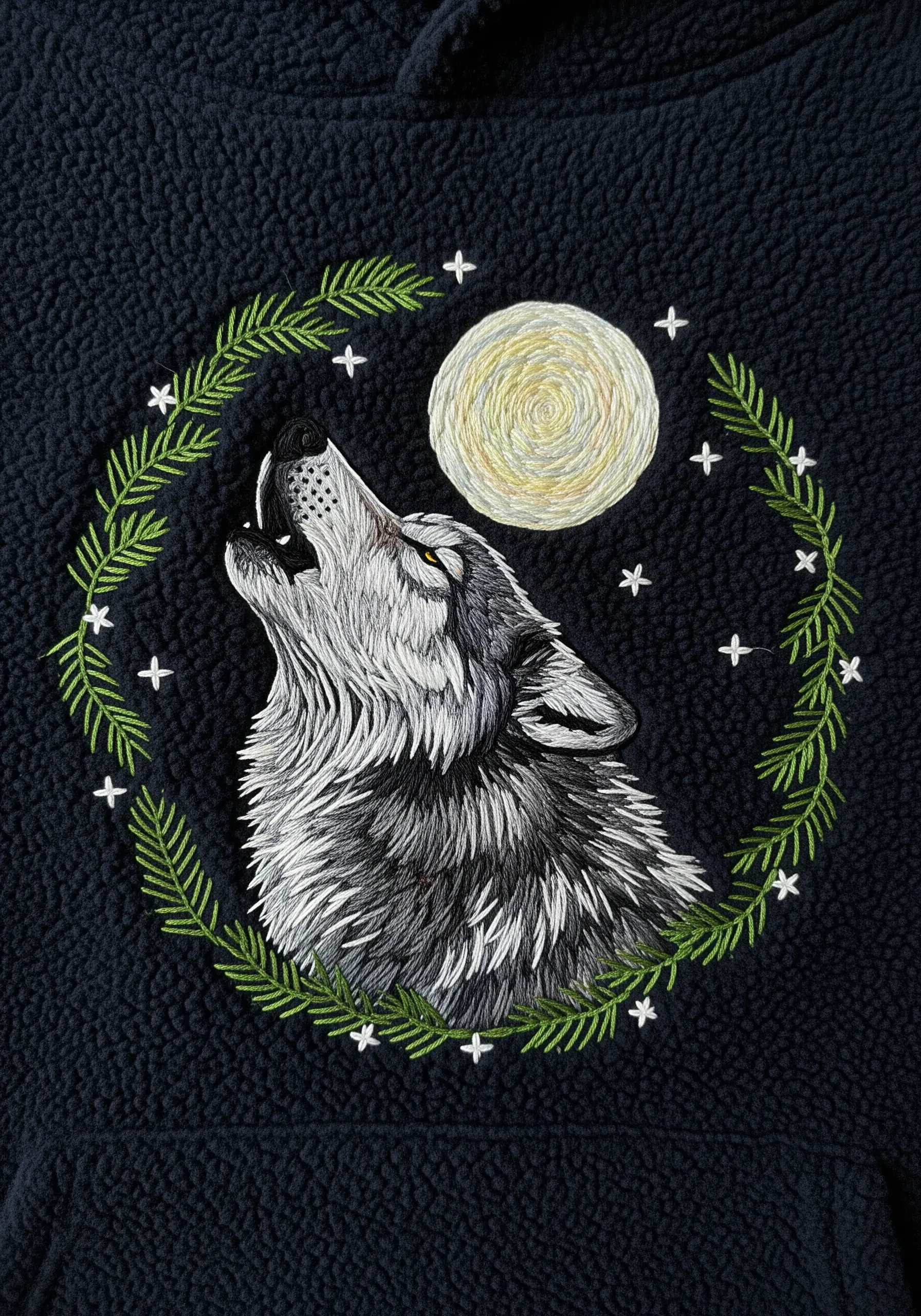
To embroider on a thick, textured fabric like fleece, always use a stick-and-stitch stabilizer to prevent your design from sinking into the pile.
Create realistic fur by using the long-and-short stitch technique, layering shades of grey, black, and white to build depth.
Use a single strand of thread for the finest details, especially around the eyes and snout, ensuring your stitches follow the natural direction of fur growth.
For the glowing moon, stitch a spiral with a pale yellow whipped backstitch, which creates a softer, more radiant texture than a flat satin stitch.
This method gives the wolf a dynamic, lifelike quality that stands out against the simple fern wreath.
2. Create a Serene Mood with a Cool Palette
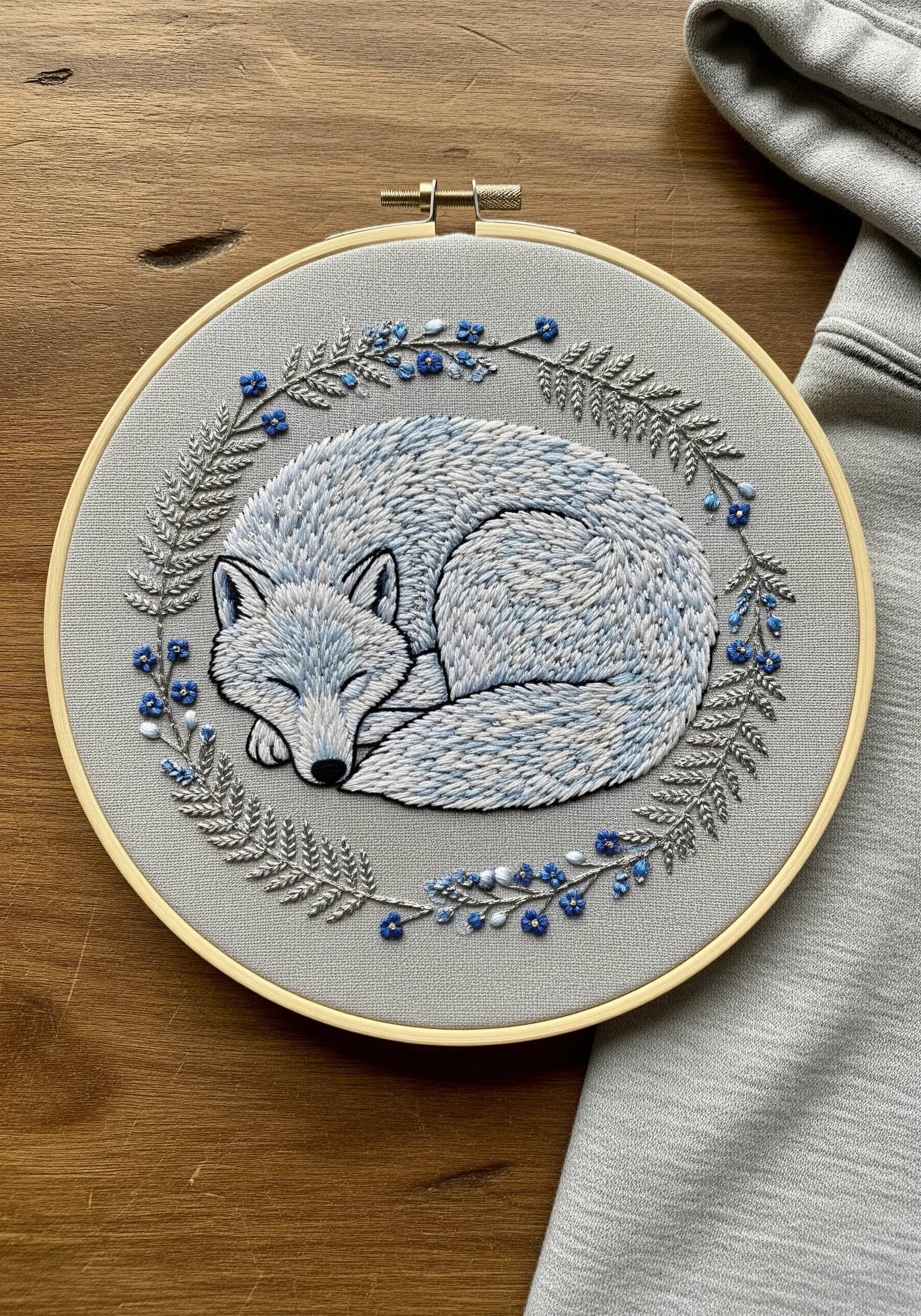
Capture a sense of tranquility by stitching a sleeping arctic wolf using a cool, monochromatic color palette of icy blues, whites, and silver-greys.
Fill the body with dense, slightly overlapping long-and-short stitches to mimic a soft, thick coat of fur, which adds a wonderful tactile quality to the piece.
For the tiny blue blossoms, use French knots with two or three wraps to give them a raised, clustered appearance that contrasts with the smooth fern leaves.
Stitching on a neutral grey fabric enhances the cool tones and makes the subtle color shifts in the fur more noticeable.
3. Capture an Intense Gaze with Precision
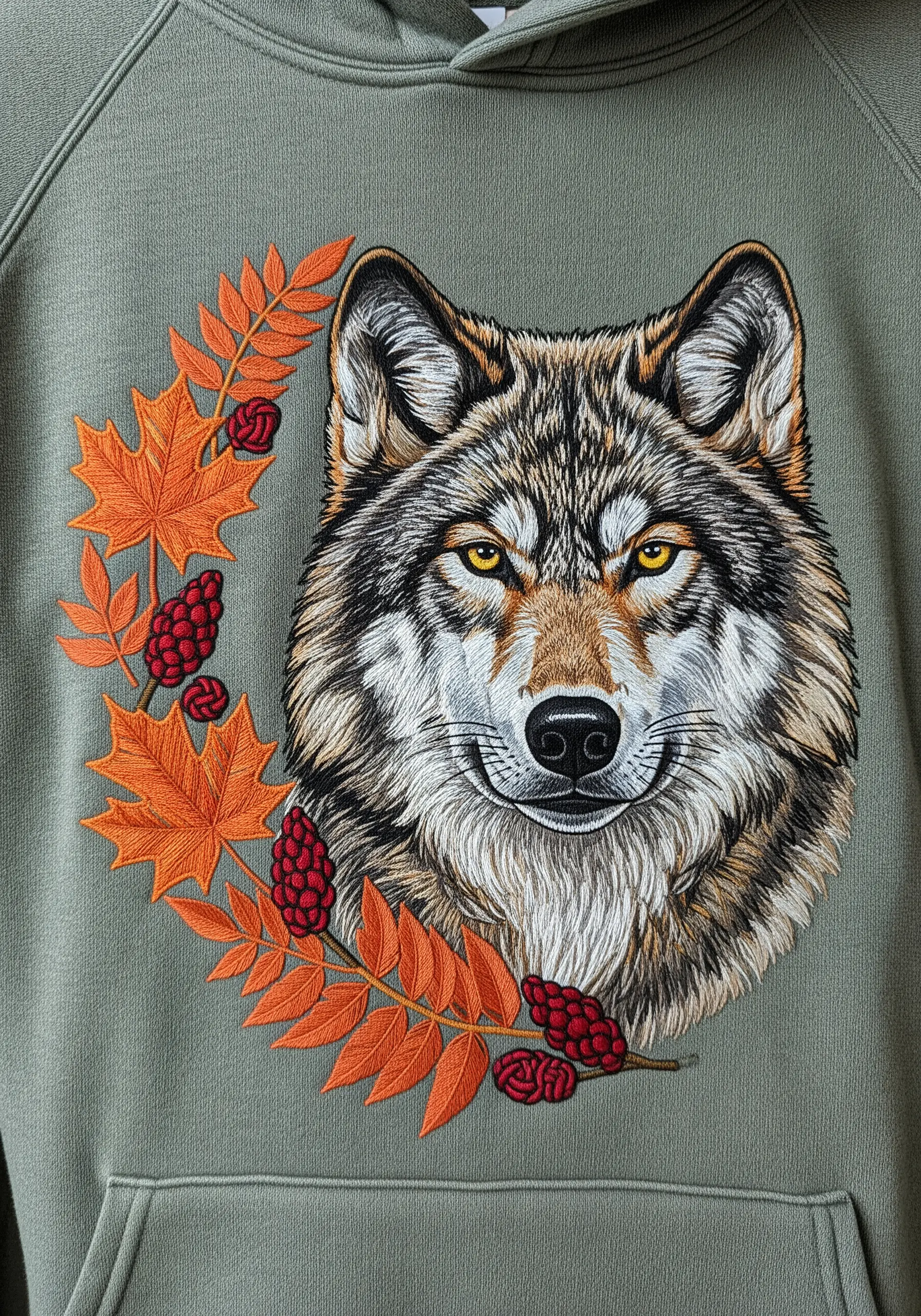
The key to a compelling animal portrait is the eyes.
Use a single strand of golden-yellow floss to create a sharp, reflective glint, adding a tiny white stitch to suggest a light source.
Build the fur around the face with meticulous thread painting, using short, directional stitches to blend shades of brown, black, and cream, which sculpts the wolf’s features.
Frame the portrait with a crescent of satin-stitched autumn leaves, outlining them with a darker split stitch to make their edges crisp and defined.
4. Block in a Dramatic Sunset Silhouette

Create a striking sunset backdrop using horizontal satin stitches in vibrant, blocked colors—no blending required.
This technique creates a graphic, modern look that makes the solid black wolf silhouette pop.
Ensure your satin stitches are dense and even by using a stabilizer, especially on stretchy hoodie fabric.
Contrast the bold, colorful sky with delicate, white line art botanicals below, using a simple backstitch for a clean, minimalist finish.
This design splits the visual weight, balancing a powerful top half with a light, airy bottom.
5. Stitch Fluffy Pups with Playful Textures

To convey the soft, fluffy fur of wolf cubs, use shorter, less uniform long-and-short stitches.
This creates a slightly tousled texture that looks more youthful and playful than sleek, adult fur.
Frame the pups with lush foliage, using a fishbone stitch for the fern leaves to give them a defined central vein and natural shape.
For the purple lupines, stack detached chain stitches (lazy daisies) to build the flower spikes, adding a touch of three-dimensional form.
6. Build a 3D Forest Floor with Layered Knots

Create a truly immersive scene by building a landscape with layers of textural stitches.
Use Turkey work and dense French knots in various shades of green to form a mossy, three-dimensional forest floor that invites touch.
Place the thread-painted wolf behind some of the mossy elements to create a realistic sense of depth and perspective.
This technique transforms a simple embroidery hoop into a miniature diorama, making the wolf appear to be walking through a tangible environment.
7. Illustrate Motion with Graphic Linework
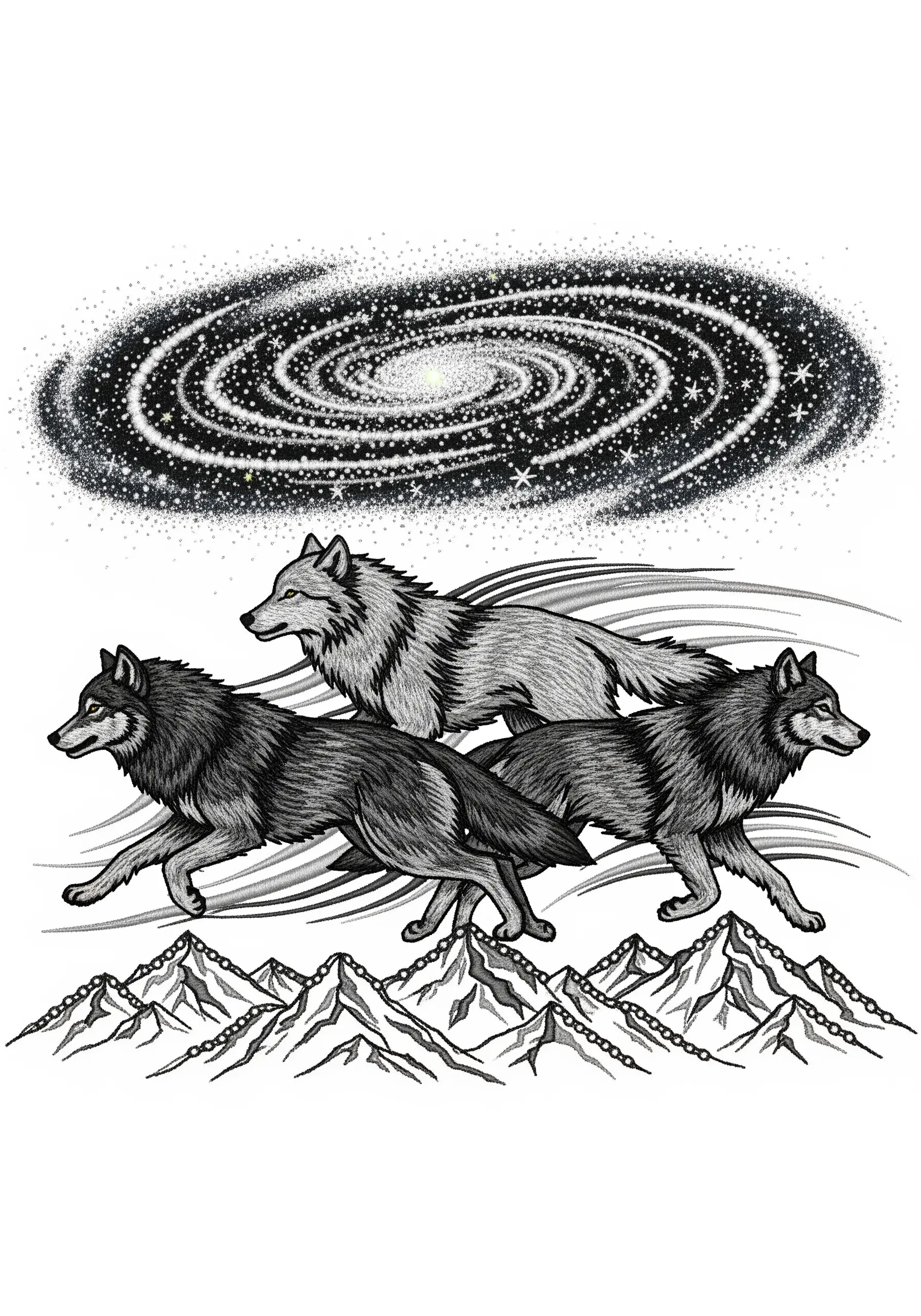
Capture the energy of a running wolf pack with a clean, illustrative style.
Use a whipped backstitch for the outlines to ensure smooth, bold lines that define the wolves’ forms without adding bulk.
Fill the bodies with parallel straight stitches or a light seed stitch fill to suggest shading and texture while maintaining a graphic feel.
For the galaxy, create a dense cluster of French knots and seed stitches using white, silver, and metallic threads on a dark background to simulate a swirling cosmos.
8. Add Dimension to Dark Fur with Color
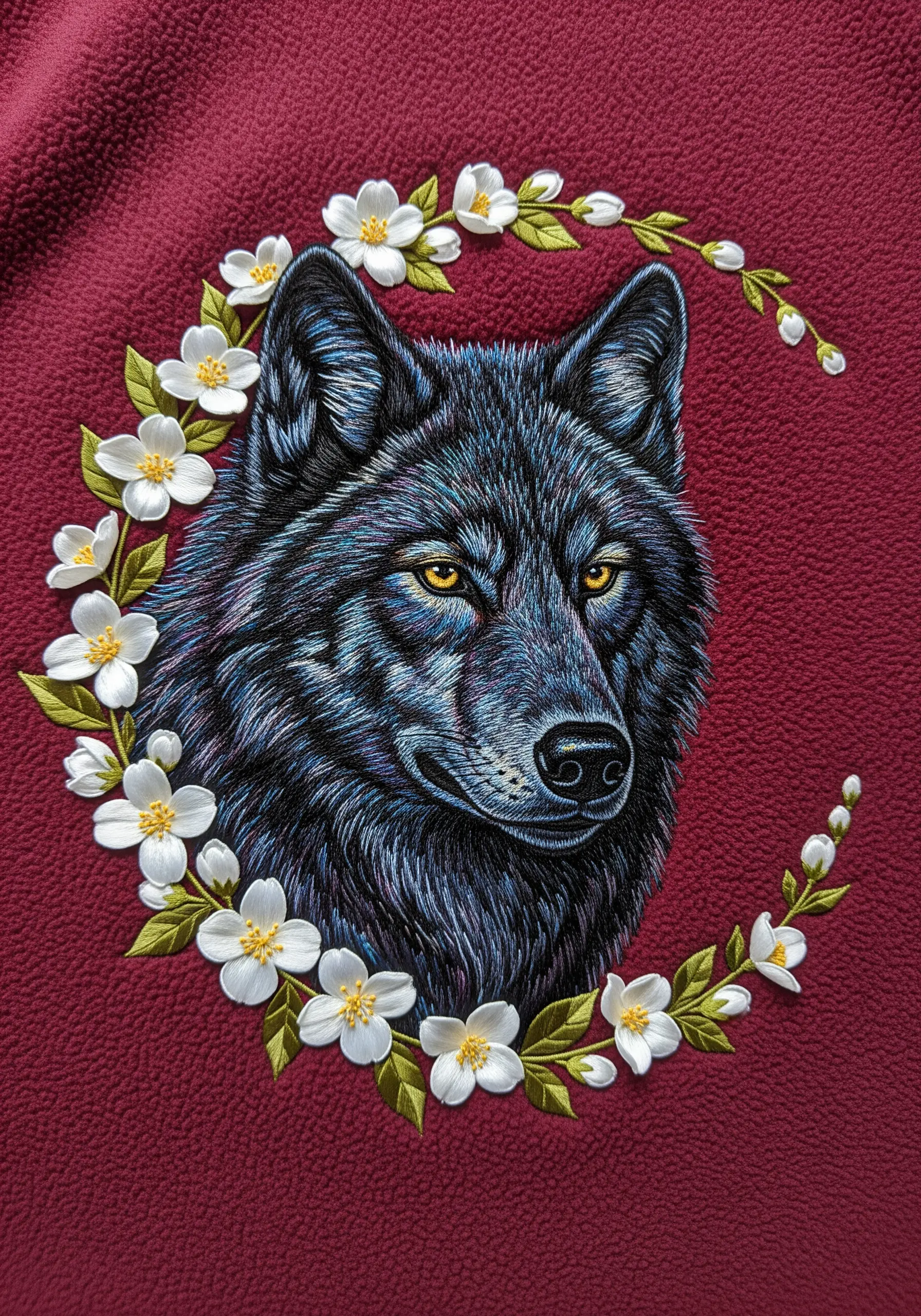
When stitching a black wolf, avoid using only black thread, which can appear flat.
Instead, weave in subtle highlights of dark blue, purple, and deep grey to create dimension, shine, and the illusion of light hitting the fur.
Contrast the dark, detailed fur with bright white flowers made using a raised satin stitch or ribbon embroidery to make them pop off the fabric.
A tiny yellow French knot in the center of each flower adds a final, delicate detail that draws the eye.
9. Create Rippling Water with Variegated Thread
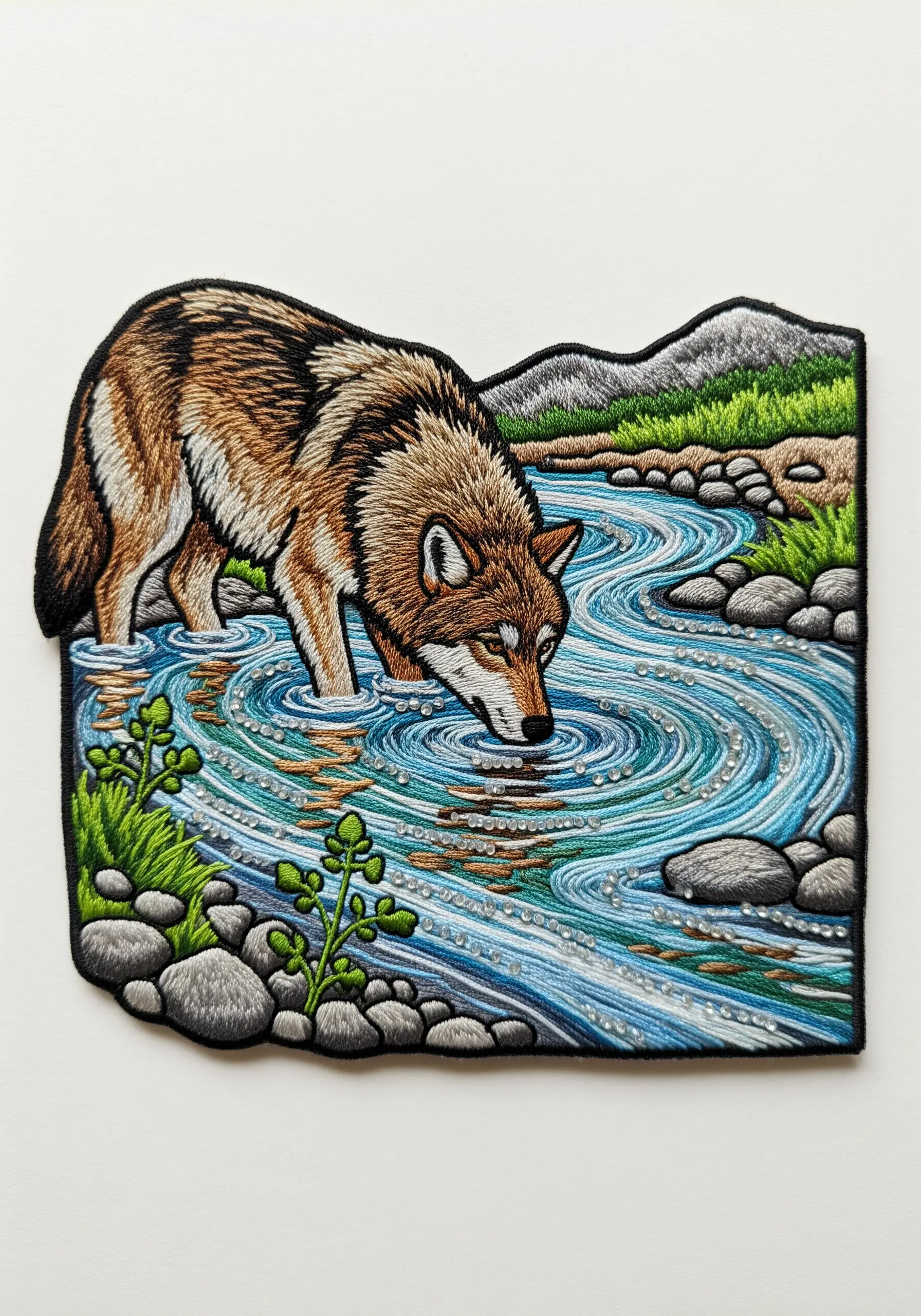
To capture the movement of water, use variegated blue and green threads with a split stitch, laid down in swirling, concentric lines.
This technique naturally creates color variation that mimics light and reflection without needing constant color changes.
Incorporate a single strand of silver metallic thread within the water stitches to add a subtle sparkle that looks like sunlight on the surface.
Finish the design as a patch by adding a tight, clean satin stitch border, which provides a professional edge perfect for sewing onto a jacket or backpack.
10. Combine Geometric Lines with Organic Forms
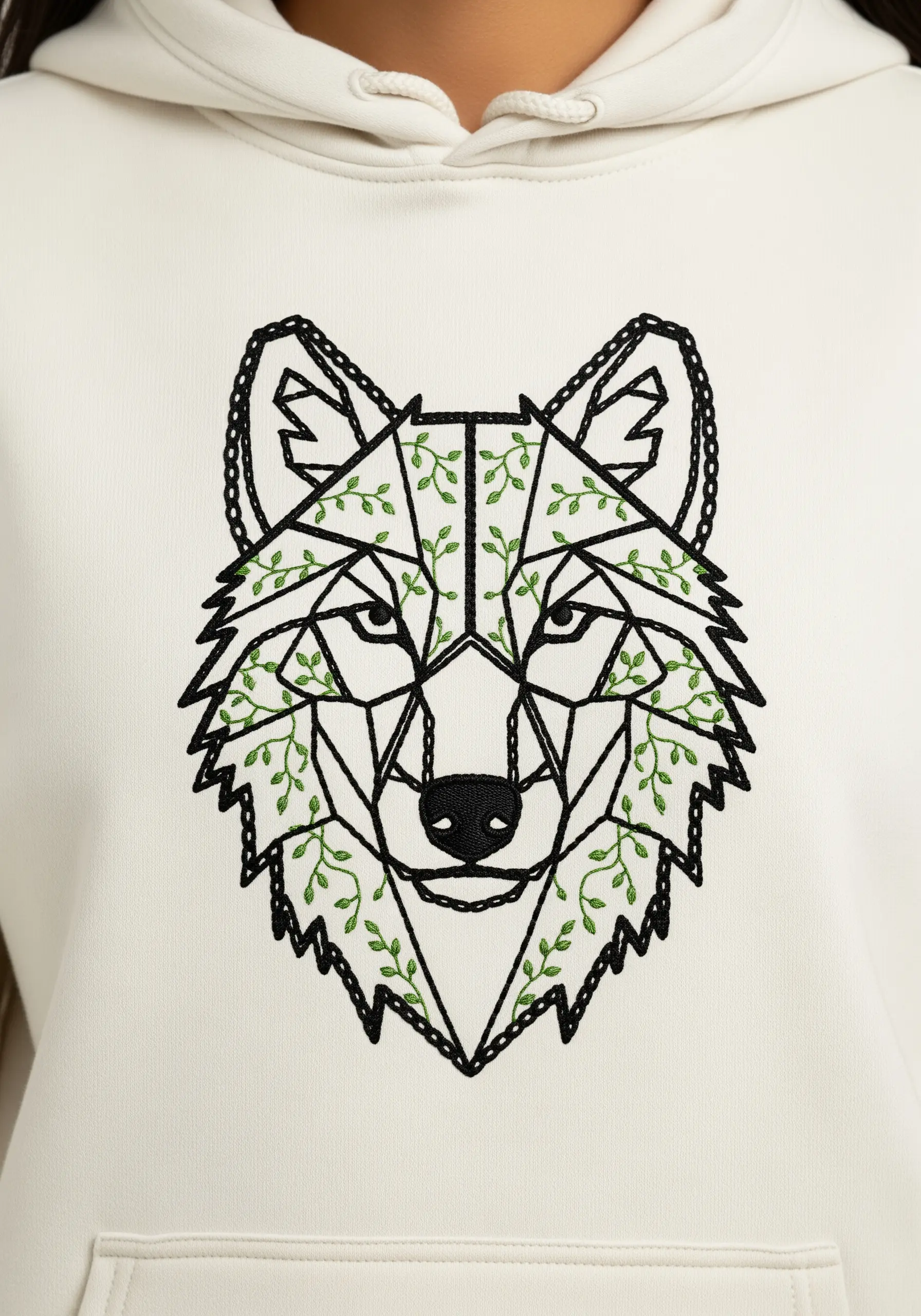
Create a modern, stylized portrait by contrasting a sharp geometric outline with soft, organic details.
Use a crisp backstitch for the geometric framework of the wolf’s head, ensuring your lines are straight and your corners are sharp.
Fill select panels with delicate, sprawling vines stitched with a simple stem stitch and tiny lazy daisy leaves.
This juxtaposition of rigid structure and natural growth creates a visually compelling design that feels both contemporary and connected to nature.
11. Stitch Atmospheric Depth in a Landscape

Create the illusion of a vast landscape by using thread weight and stitch density to suggest distance.
Use three or four strands of floss and dense, textural stitches for the foreground elements like the wolf and wildflowers to make them feel closer.
For the distant mountains, switch to a single strand of floss and use simpler, flatter stitches like a split stitch in muted, hazy colors.
This technique, known as atmospheric perspective, draws the viewer into the scene and makes the world feel expansive.
12. Frame a Micro-Scene Within a Shape
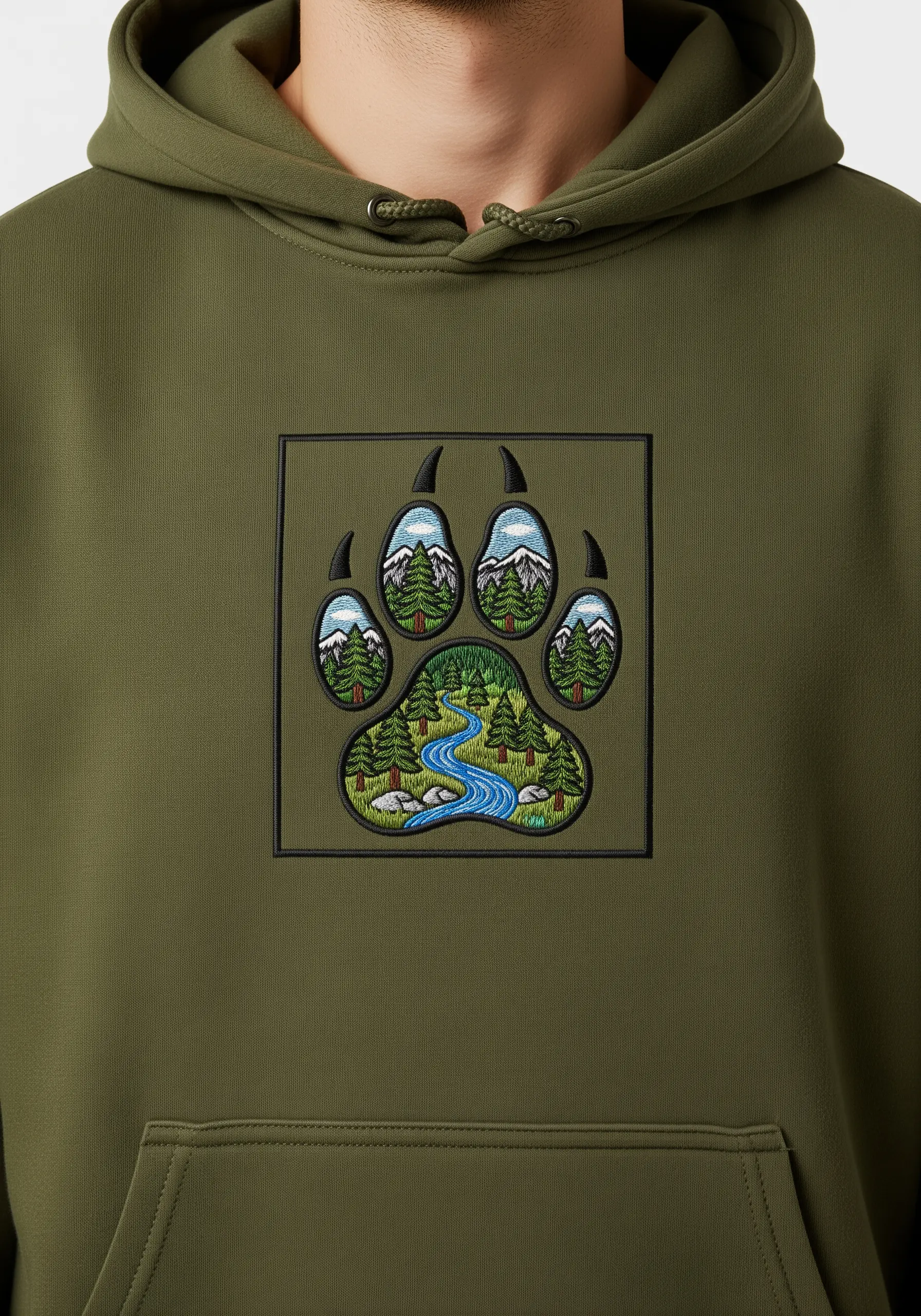
Turn a simple shape into a window to another world by filling it with a detailed miniature landscape.
First, establish the outer boundary of the paw print with a bold, clean outline using a satin stitch or a thick chain stitch.
Next, fill each section with a tiny scene, using long-and-short stitch for the sky and trees, and a satin stitch for the river.
This design method is a creative way to combine a bold symbol with intricate detail, telling a story within a story.
13. Play with Texture in a Winter Scene

Evoke a quiet winter forest by creating strong textural contrast between the elements.
Stitch the wolf’s coat with soft, dense long-and-short stitches to give it a realistic, thick appearance.
For the birch trees, use a flat white satin stitch for the trunks and add stark, horizontal black stitches to represent the iconic bark texture.
This makes the trees feel graphic and smooth, causing the wolf’s soft fur to stand out as the scene’s focal point.
Scatter a few simple star stitches to represent falling snow and complete the serene atmosphere.
14. Weave a Story with Folk Art Florals

Transform a simple wolf silhouette into a vibrant tapestry using a folk art-inspired floral fill.
Divide the wolf’s profile into sections and fill each one with different botanical motifs, using a variety of stitches to create a rich texture map.
Combine bold satin-stitched roses, lazy daisy flowers, and fishbone stitch leaves.
Use French knots and straight stitches to add dots and decorative details, embracing a bright, high-contrast color palette for a joyful and celebratory feel.
15. Create Depth with clever Layering

Give your design a playful sense of dimension by stitching foreground elements directly over your main subject.
Embroider the wolf’s face first, establishing its features with thread painting.
Then, stitch the stalks of wheat over parts of its face using a stem stitch for the stalks and a fishbone stitch for the textured heads.
This simple layering trick makes it look as though the wolf is genuinely peeking out from behind the wheat, adding an interactive and clever quality to the composition.
16. Convey Emotion Through Fine Detail
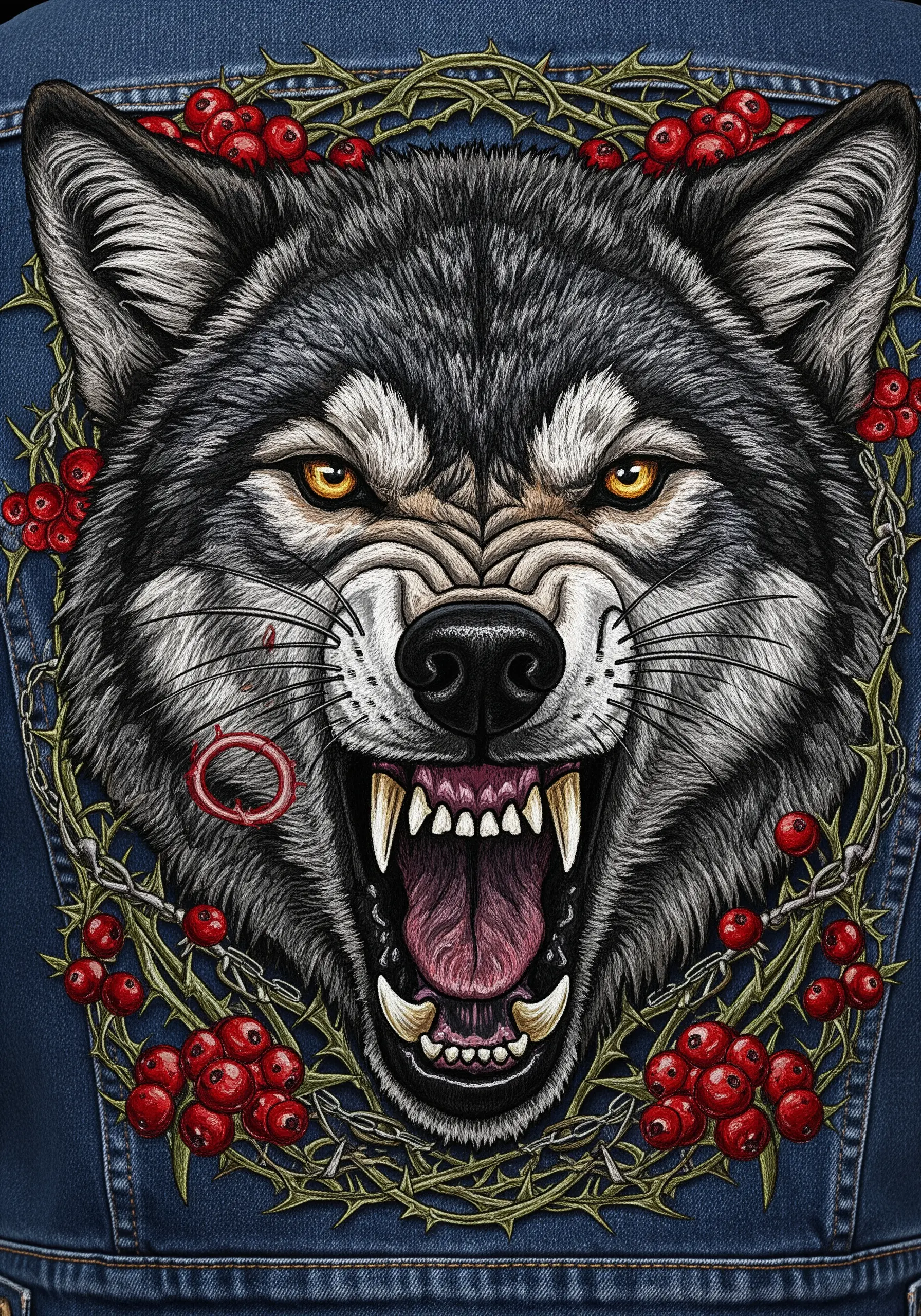
Capture a powerful expression like a snarl by focusing on the small, crucial details.
Use a single strand of white thread and tiny, precise straight stitches to define each tooth, making them look sharp and clean.
Stitch the wrinkled nose and curled lips with directional lines that follow the tension in the muscles.
Frame the entire portrait with a thorny wreath to amplify the fierce, protective energy of the design. It’s the meticulous detail that turns a portrait into a story.
17. Stitch Tenderness with Soft Contours

Evoke a sense of gentle connection between a mother wolf and her cub by using soft, flowing stitches.
Use long-and-short stitches that follow the curves of their bodies, emphasizing the way the mother curls protectively around the cub.
Choose a warm, natural color palette of browns, tans, and creams to enhance the scene’s warmth.
Placing them in a field of simple lazy daisy and French knot flowers adds to the feeling of a safe, peaceful sanctuary.
18. Master the Double Exposure Silhouette
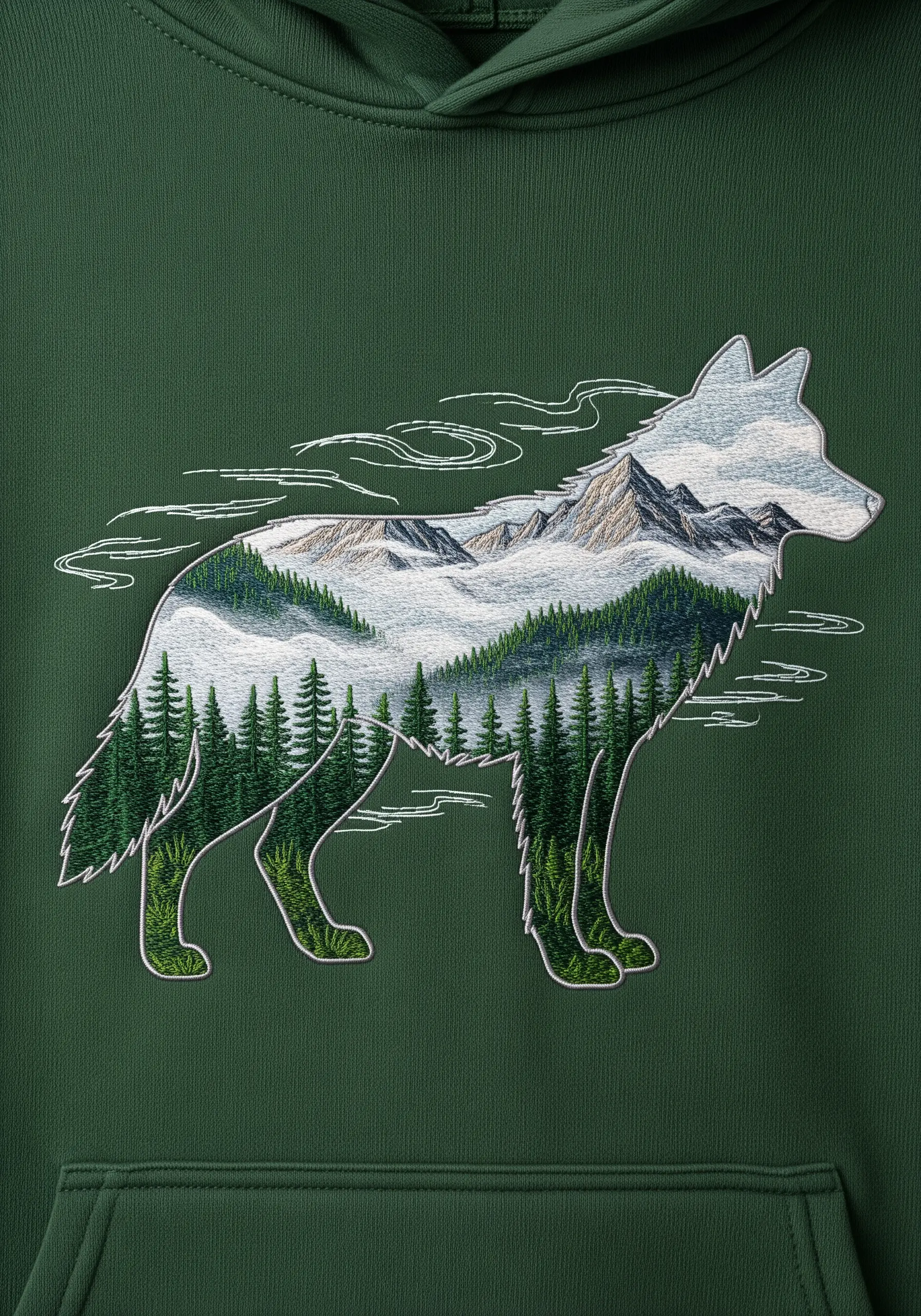
Create a stunning double exposure effect by filling a wolf’s silhouette with a landscape.
Begin by outlining the wolf’s shape with a clean backstitch or split stitch.
Then, stitch a mountain and forest scene inside the outline, ignoring the wolf’s internal anatomy and letting the landscape’s forms dictate the stitches.
Use long-and-short stitches to blend the colors of the misty forest, allowing the scene to flow seamlessly within the animal’s form. This creates a powerful metaphor for the wolf’s connection to its habitat.
19. Unify Your Design with a Warm Palette

Create a cohesive and vibrant desert scene by committing to a warm, analogous color scheme.
Use shades of rust, red, and orange for the wolf’s fur, blending them with long-and-short stitches to create a rich, fiery coat.
Surround it with desert plants stitched in complementary greens and yellows, using bullion knots for the barrel cactus flowers and detached chain stitches for prickly pear pads.
This harmonious color choice makes the entire composition feel warm, intentional, and bathed in desert light.
20. Design for Dynamic Sleeve Placement
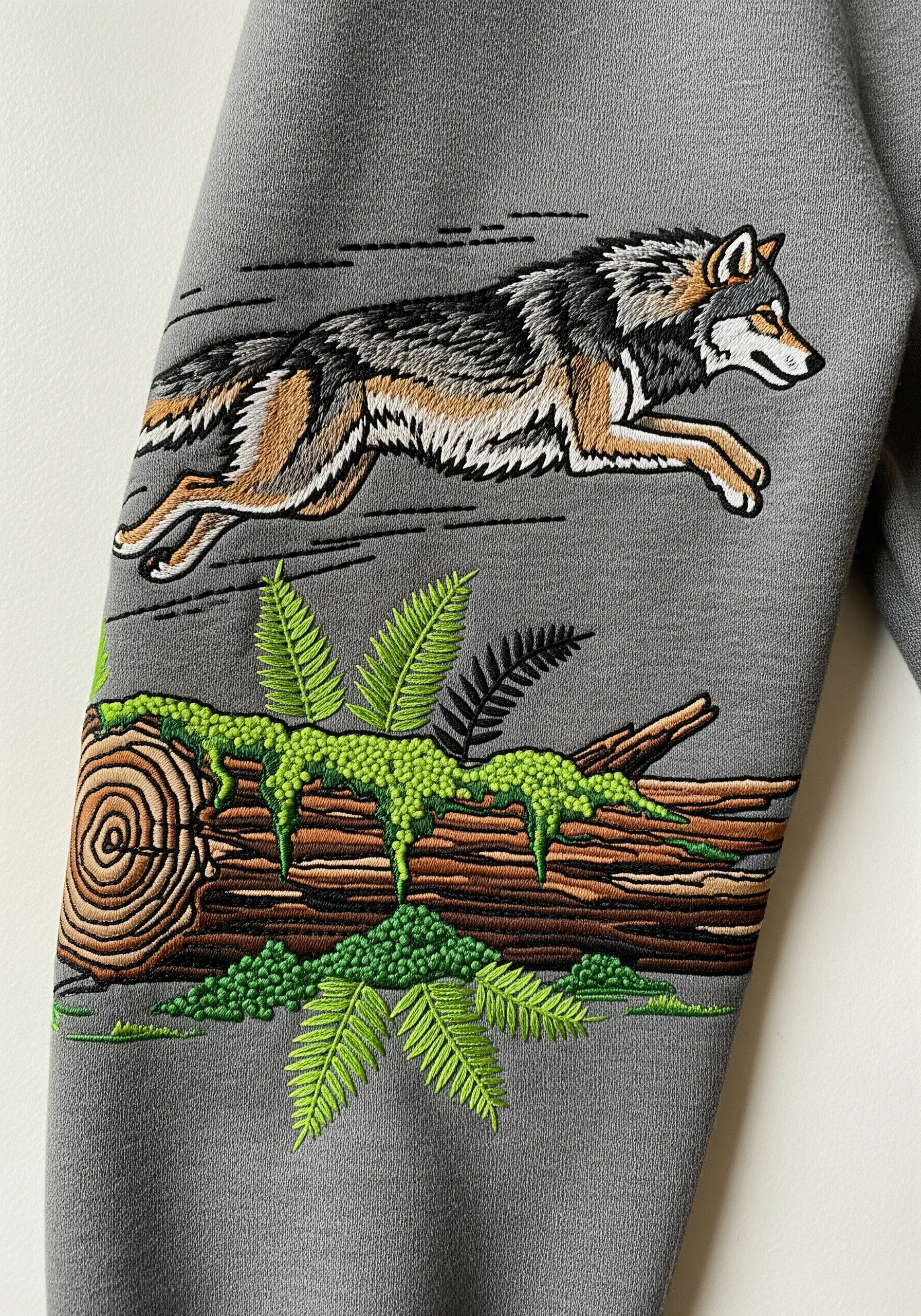
Use the long, narrow canvas of a hoodie sleeve to create a scene that tells a story in motion.
Position a leaping wolf at the top, near the shoulder, so its movement flows down the arm.
Place the log and foliage below it, grounding the scene and giving the wolf something to leap over.
Use high-texture stitches like French knots or Turkey work for the moss on the log to add a touch of 3D realism that will catch the eye as the arm moves.
21. Stitch a Realistic Water Reflection
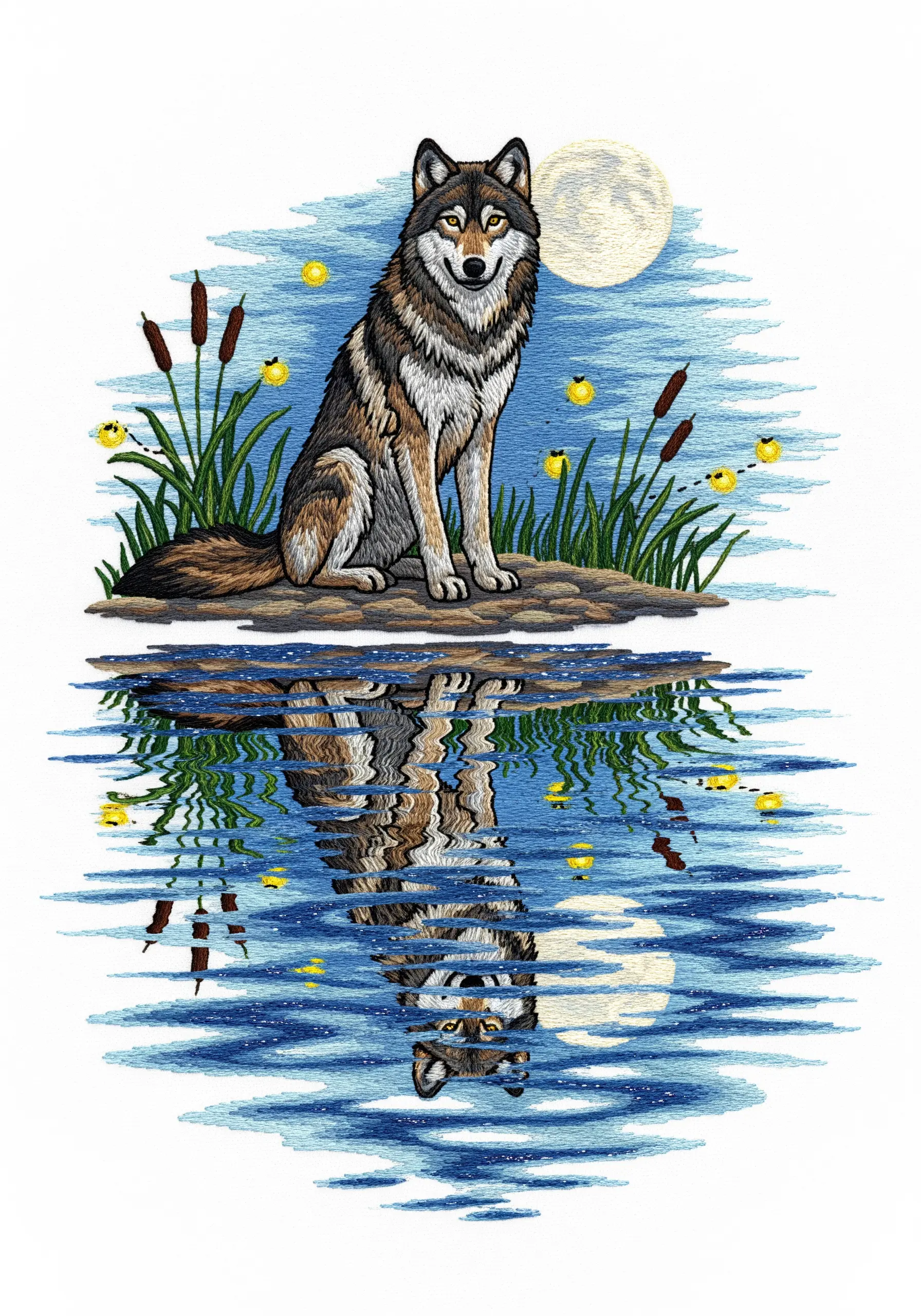
To create a convincing water reflection, stitch the reflected image using the same color palette as the subject above, but alter your stitch technique.
Use horizontal long-and-short stitches with a slightly wavy direction to break up the image and mimic the water’s surface.
Intersperse thin, horizontal lines of dark blue to represent ripples and add depth.
Finally, scatter tiny white seed stitches across the water to suggest shimmering light, completing the illusion of a reflective, moonlit pond.