In a small apartment, every object needs to earn its place. But creating a space that feels personal, calm, and beautiful doesn’t require a large budget or a complete overhaul. Sometimes, all you need is a needle and thread.
Think of embroidery not just as a craft, but as a quiet, powerful design tool. It’s a way to add texture to a plain cushion, introduce a touch of nature to a sheer curtain, or turn a blank wall into a personal statement. It allows you to transform everyday items into something uniquely yours, infused with intention and care.
These Scandinavian-inspired ideas are rooted in that philosophy: simplicity, functionality, and a deep appreciation for handmade texture. Here, you won’t find overly complex patterns, but rather clean lines, soothing colors, and clever applications that make a real visual impact. Let’s explore how a few simple stitches can bring warmth, character, and a sense of calm to your home.
1. Create a Geometric Triptych for Entryway Clarity
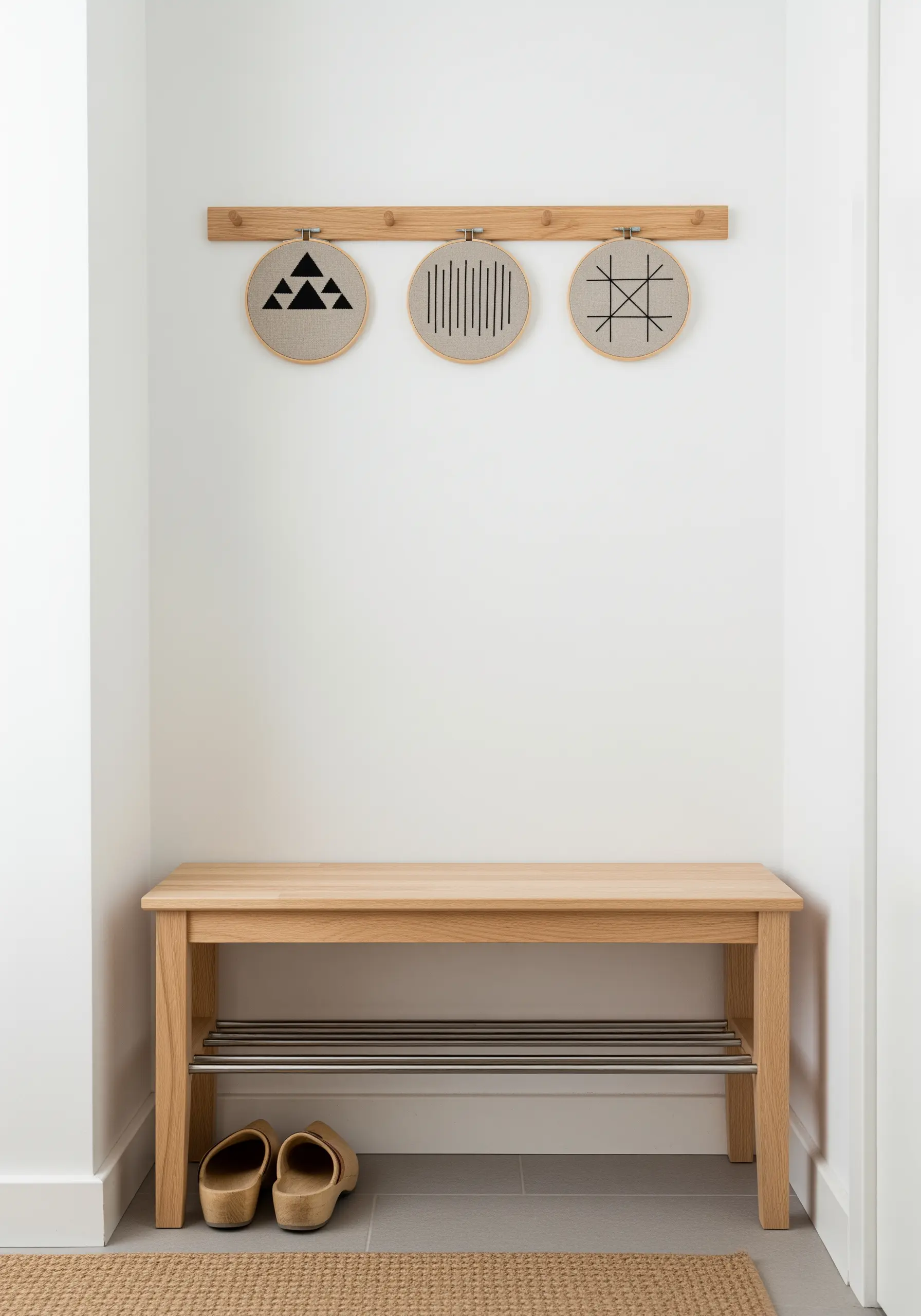
Transform a narrow entryway or blank wall with a set of three coordinated hoops.
Use a single, high-contrast color like black against a neutral linen or cotton fabric to achieve that classic Scandinavian crispness.
For perfectly sharp lines and angles, rely on a simple backstitch or a slightly thicker stem stitch.
The power of this idea comes from the grouping; the repetition of shape, color, and material creates a cohesive art piece that feels intentional, not cluttered.
This is one of the easiest ways to create minimal embroidery wall pieces that instantly make small apartments feel bigger and brighter.
2. Add Painterly Depth to Botanical Cushions
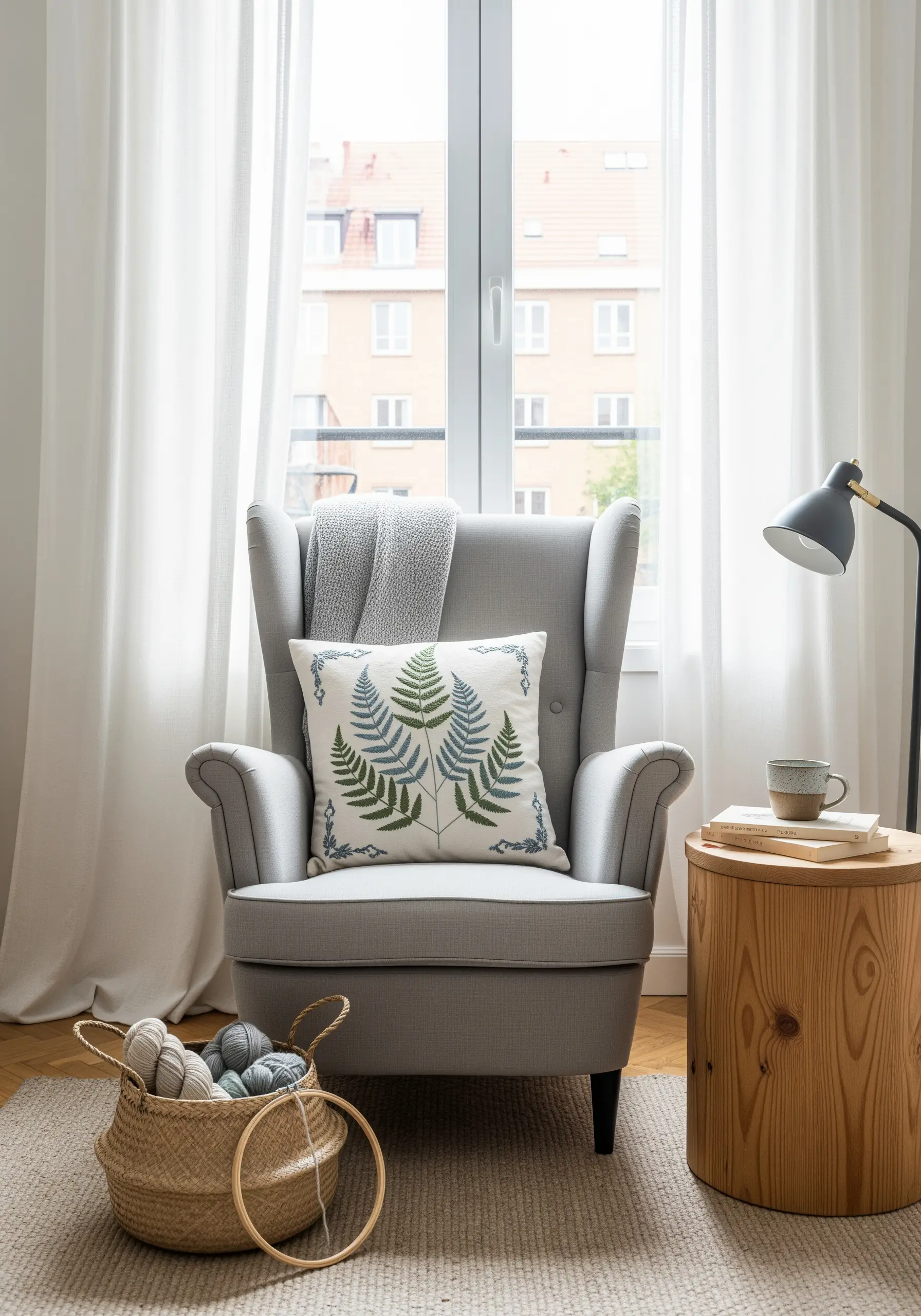
Give botanical motifs a realistic, three-dimensional quality by using a gradient of thread colors.
Instead of one solid green for a fern, select three to four shades, from a deep forest green to a lighter, silvery sage, and even a touch of blue.
Use a long-and-short stitch to seamlessly blend these colors where the fronds meet, mimicking how light naturally hits a leaf.
For the individual leaves, a fishbone stitch creates a beautiful central vein, adding both texture and realism to your design.
These fern and foliage stitch variations bring a touch of nature indoors, elegantly.
3. Craft a Textural Mountainscape Headboard

Create a dramatic, touchable focal point above your bed with a large-scale fiber art piece.
While this look is often achieved with punch needle, you can replicate its high-low texture using traditional embroidery stitches.
Work on a heavy canvas and fill in your mountain shapes with dense clusters of French knots, colonial knots, or tightly packed bullion stitches.
Use chunky wool yarn or multiple strands of six-strand floss to build up the volume quickly.
A monochromatic palette of blues, greys, and creams keeps the final piece feeling serene and sophisticated, turning it into a true stunning embroidered wall hanging to personalize your bedroom.
4. Stitch a Single-Line Café Motif for Kitchen Nooks
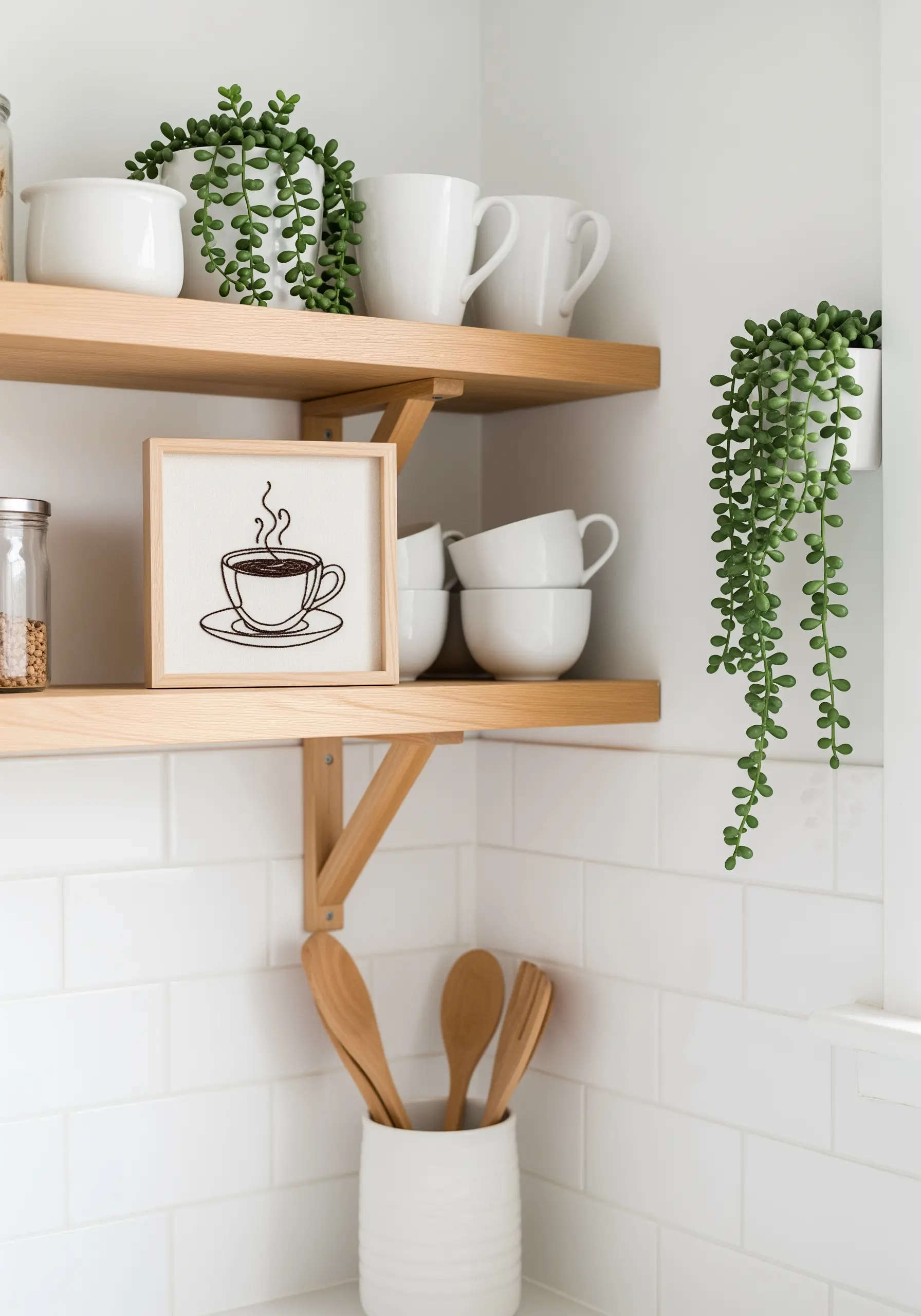
Capture the effortless charm of a line drawing with a simple, continuous-line embroidery design.
Use a single strand of black or dark brown floss on a light-colored linen to create a delicate, ink-like effect.
A whipped backstitch is the perfect choice here, as it smooths out the segmented look of a standard backstitch, creating one fluid, unbroken line.
Framed and placed on a kitchen shelf, this minimal DIY embroidery piece adds a touch of handmade warmth without adding visual clutter.
5. Use Embroidered Lettering for Functional Decor
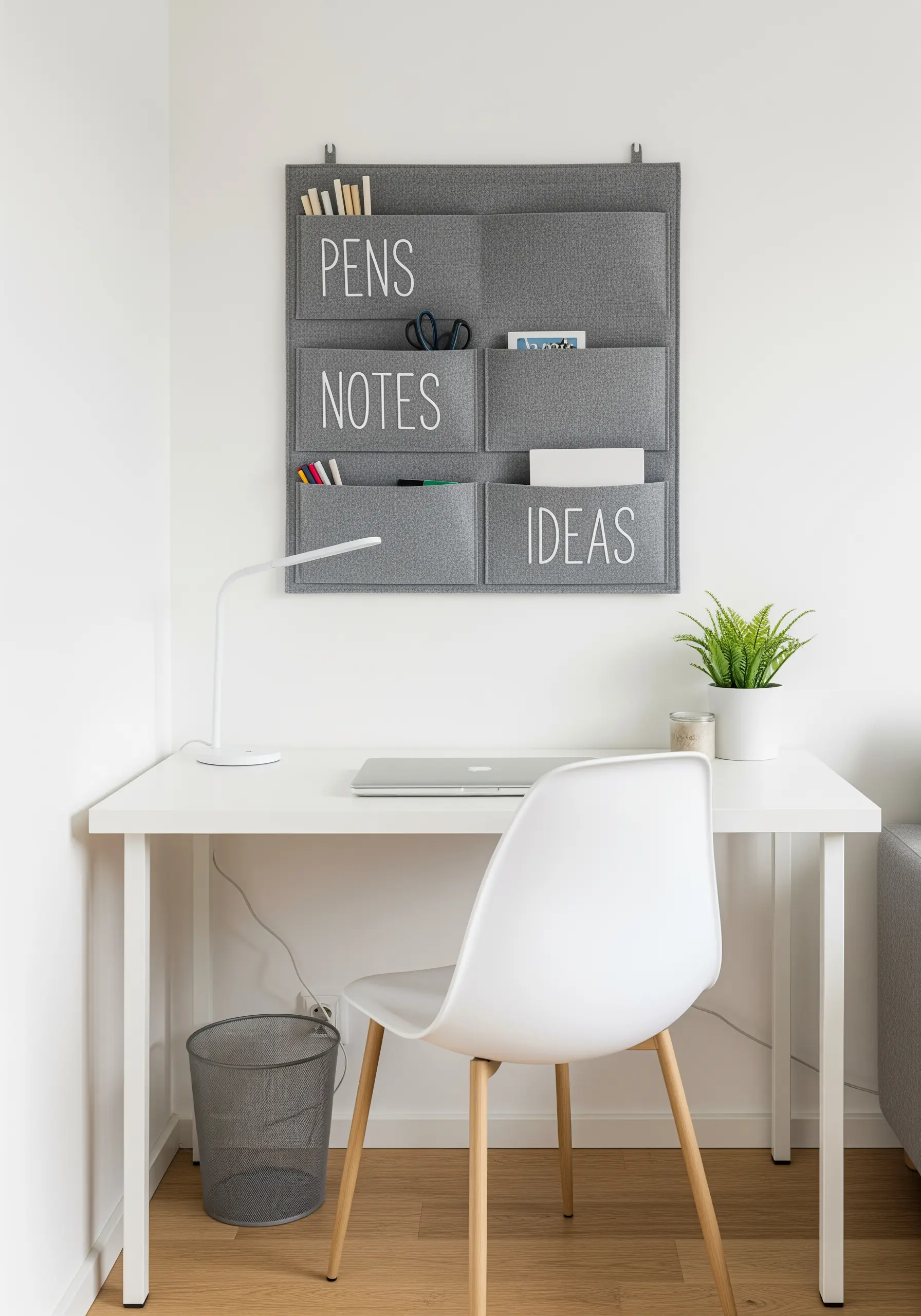
Elevate a simple felt wall organizer by adding clean, crisp embroidered labels.
Choose a bold, sans-serif font for maximum readability and a modern aesthetic.
Use a two or three-strand backstitch in a high-contrast color, like white on charcoal grey, to make the words pop.
To ensure your letters are perfectly aligned and spaced, draw your guidelines with a water-soluble fabric pen before you start stitching—it’s a simple preparatory step that guarantees a professional finish.
This is one of those tiny lettering embroidery ideas that add personality to anything.
6. Mix Folk Art Motifs with Modern Geometry
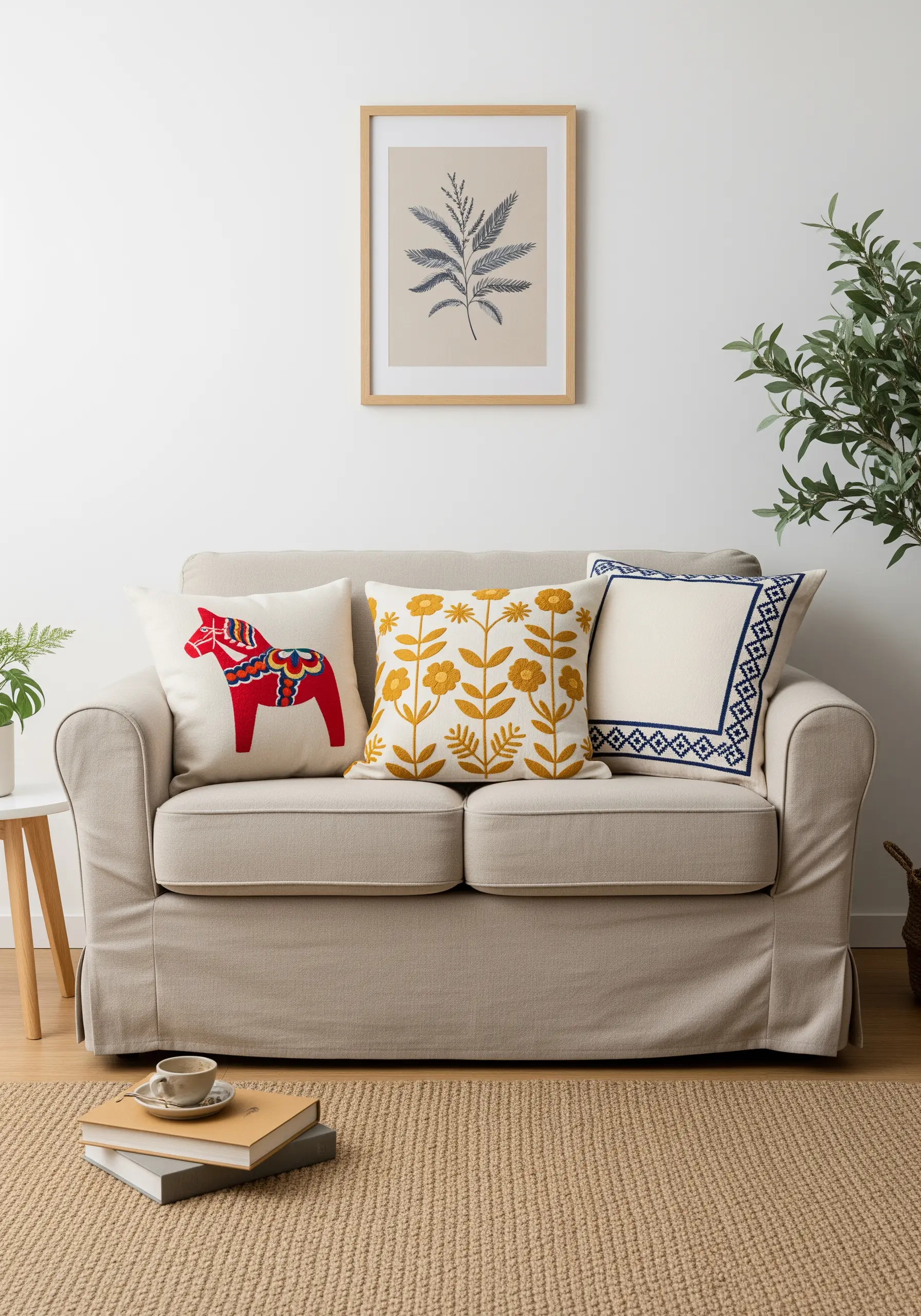
Incorporate traditional Scandinavian folk art in a way that feels fresh and contemporary.
The key is balance: pair one vibrant, illustrative cushion—like a Dala horse—with another featuring a simpler geometric pattern.
Use a dense satin stitch to create bold, flat blocks of color for the folk-art motifs; this gives them a graphic, almost printed quality.
For the geometric cushion, a simple backstitch or running stitch in a coordinating color provides a quiet, structured counterpoint that ties the collection together.
7. Add a Subtle Vine Border to Sheer Curtains
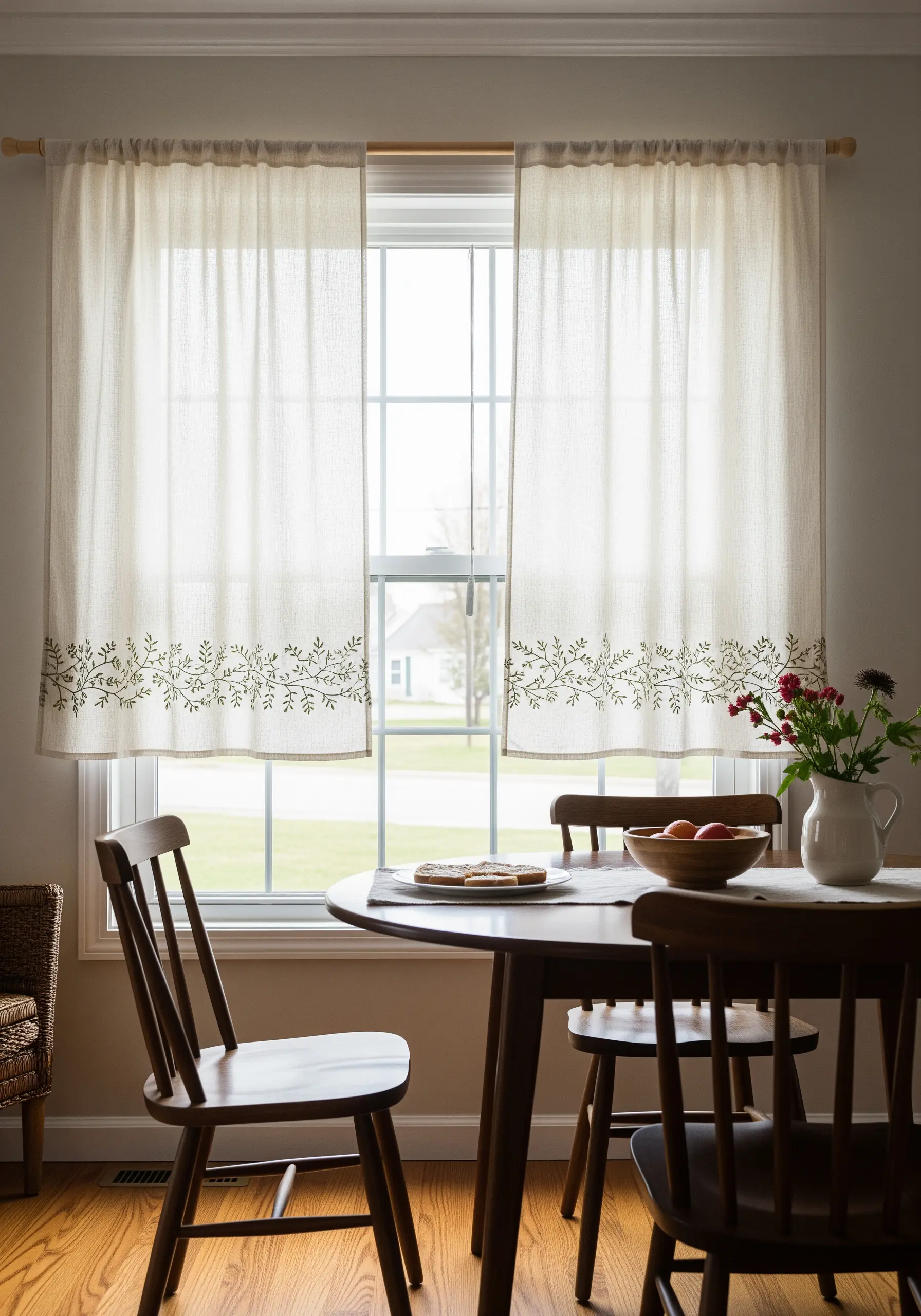
Enhance sheer linen curtains with a delicate embroidered border that adds detail without sacrificing light.
A simple, meandering design using stem stitch for the vines and detached chain stitches (lazy daisies) for leaves is all you need.
The secret to an elegant finish is choosing a thread color just a few shades darker than your fabric, such as a muted olive on natural linen.
This tone-on-tone approach creates a subtle texture that catches the eye and makes your window treatments feel custom-made.
8. Curate a Gallery Wall of Textural Stitches
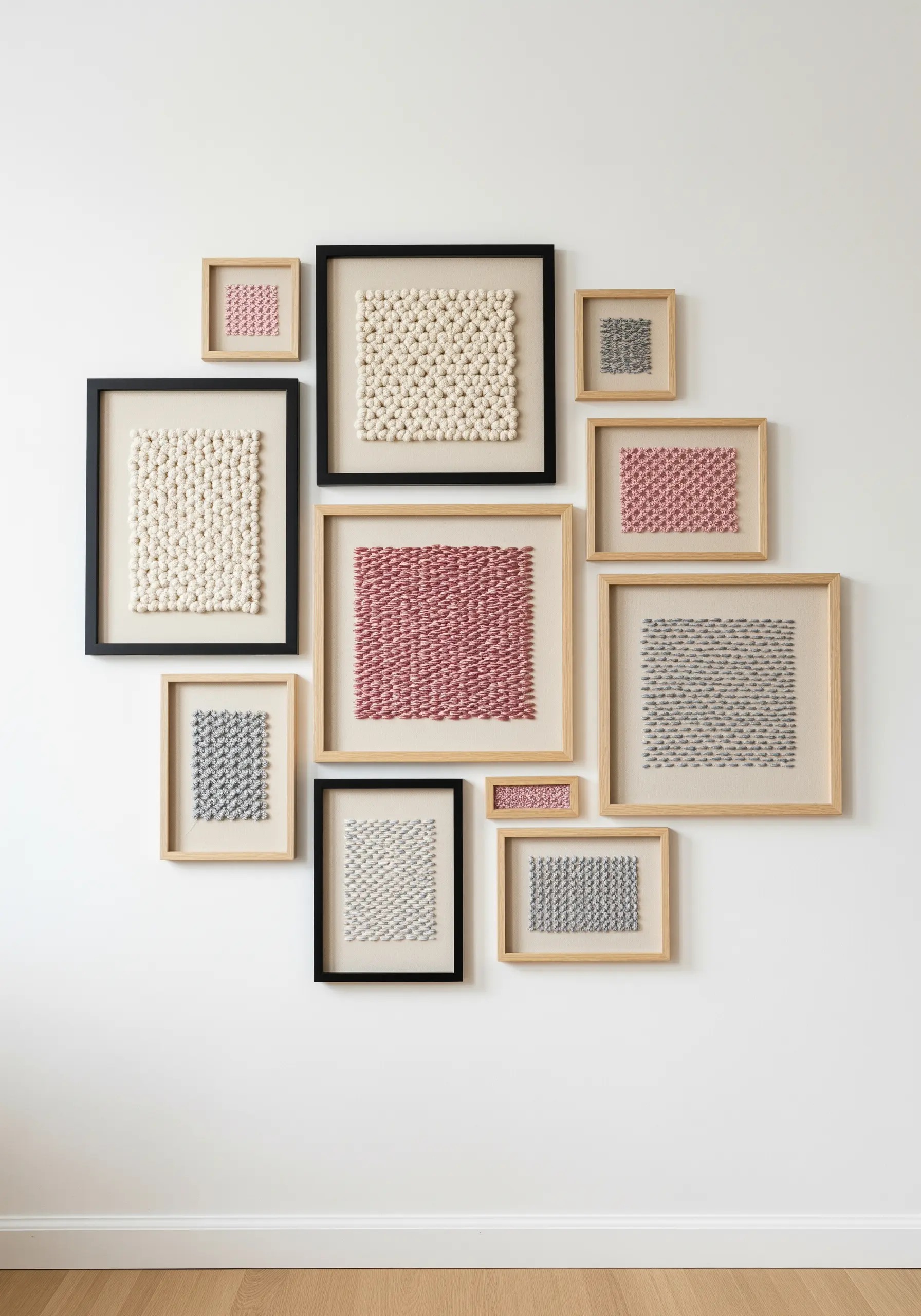
Create a sophisticated gallery wall by focusing on texture rather than complex imagery.
Fill several small frames with fabric swatches, each one densely covered in a single type of stitch—think French knots, bullion stitches, or seed stitches.
By varying the thread weight, stitch density, and color within a muted palette (creams, greys, dusty rose), each piece becomes a unique tactile study.
Grouped together, these framed embroidery ideas transform simple stitches into a stunning, abstract installation.
9. Weave Embroidered Accents into Macrame

Combine two beloved fiber arts by adding targeted pops of color to your macrame plant hangers.
On the tightly woven basket portion, use a tapestry needle and a thick cotton floss to add simple geometric details.
Straight vertical satin stitches or bands of wrapped stitches in a bright, contrasting color—like teal on natural cord—create a modern, graphic update.
This small detail connects the piece to your broader decor scheme and makes a standard macrame hanger feel unique and personalized.
10. Design a Graphic Interlocking Table Runner
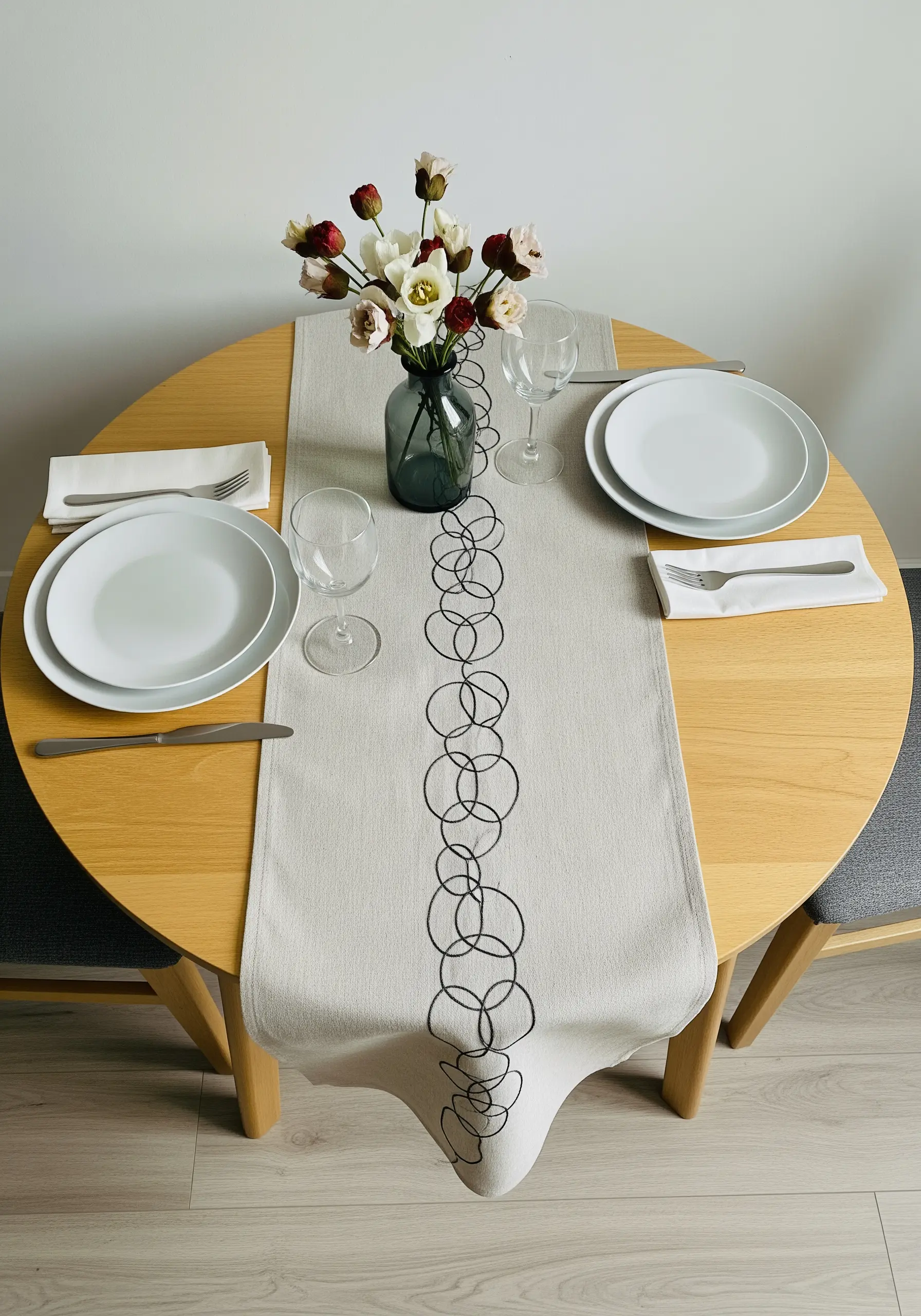
Make a bold statement on your dining table with a minimalist, continuous-line pattern.
For a clean, substantial line like these interlocking circles, use a six-strand floss and a whipped backstitch or a heavy chain stitch.
Choosing a dark thread, such as charcoal grey, on a light, natural-colored linen maximizes the graphic contrast and creates a clear focal point.
This hand-stitched table runner design is beautifully simple yet visually dynamic, elevating your entire tablescape.
11. Personalize Linens with Geometric Monograms

Move beyond traditional initials and personalize your bath towels with subtle, modern geometric motifs.
Stitch a simple shape—a circle, square, or triangle—on the dobby border of each towel using a neat, three-strand satin stitch.
Choose a soft, calming color like a dusty blue or pale sage green for a spa-like feel.
This minimalist approach to personalization adds a touch of bespoke luxury that feels both intentional and understated.
12. Sculpt an Abstract Lumbar Pillow

Create a highly tactile statement pillow by combining punch needle techniques with negative space.
Use thick rug yarn in a warm, earthy palette to fill abstract shapes with raised loops of varying heights, creating a sculptural, 3D effect.
By leaving areas of the natural linen base fabric exposed, you allow the textured forms to stand out even more.
This project transforms a simple cushion into a piece of functional fiber art that invites touch and adds depth to your space.
13. Define Your Space with a Line-Art Divider
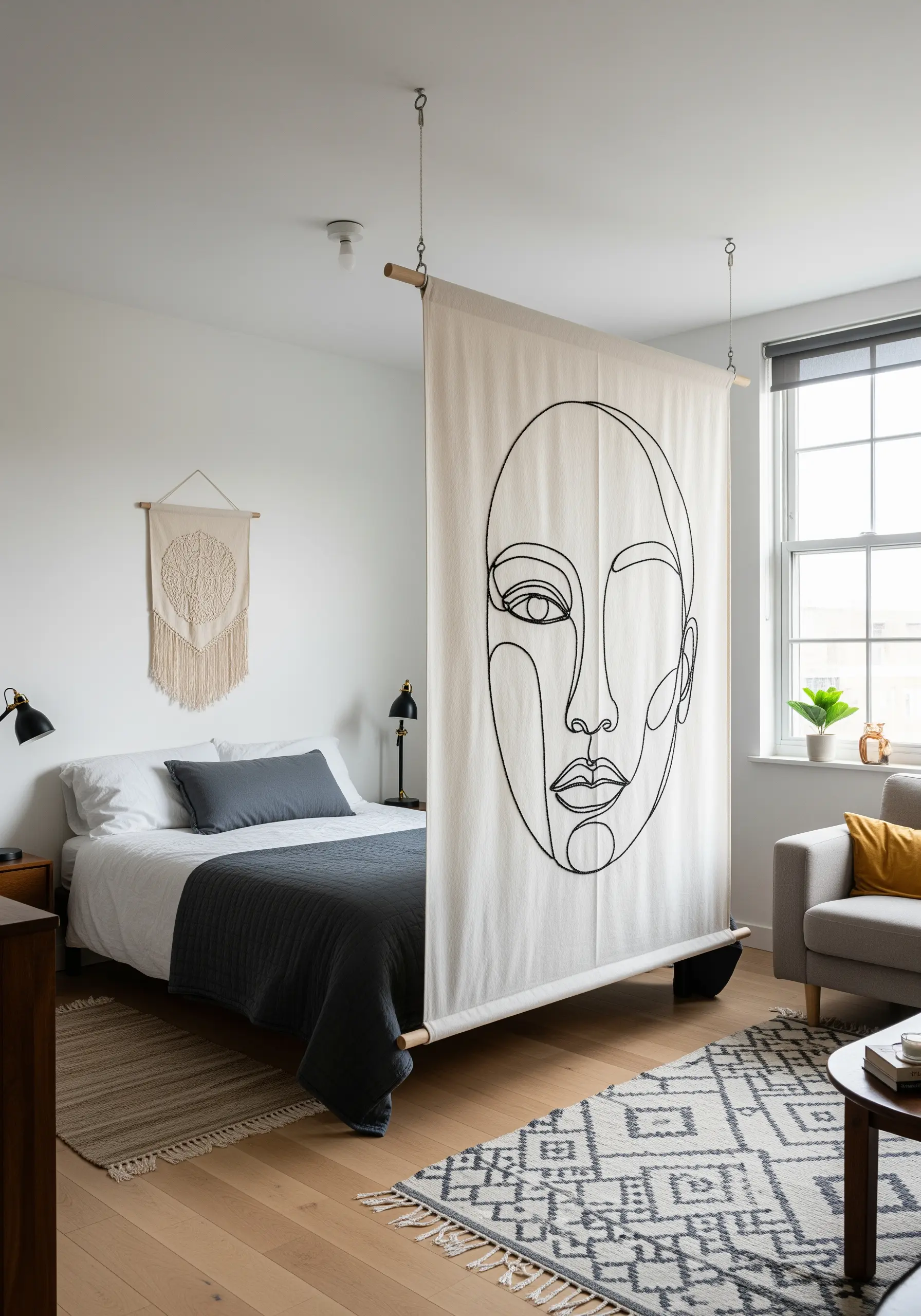
Use embroidery on a larger scale to create a functional and artistic room divider, perfect for studio apartments.
Transfer a simple, single-line face or abstract design onto a large panel of heavy canvas.
Instead of stitching through the fabric, use a couching technique: lay a thick black yarn along your design lines and tack it down with a finer, matching thread.
This method allows you to create bold, graphic lines quickly and effectively, turning a simple piece of fabric into a rent-friendly architectural element.
14. Turn a Favorite Quote into Shelf Art

Add a personal, textural layer to your bookshelf with a beautifully stitched quote.
Select a clean, simple font and use a basic backstitch for perfect legibility.
The key to a modern look is generous spacing between letters and words, which allows the phrase to breathe and feel like a deliberate design element.
Stitching with a single, sophisticated color on neutral fabric transforms a meaningful phrase into a piece of art that seamlessly integrates with your books and decor. These are wonderful inspirational quote embroidery hoops.
15. Craft Geometric Floor Cushions with Running Stitch

Transform simple floor cushions into stylish, functional seating with bold geometric patterns.
On a durable fabric like canvas or heavy cotton, use a thick thread like cotton perle or sashiko thread to make your stitches stand out.
A simple, evenly spaced running stitch is all that is required to create these dynamic, repeating designs.
To keep your lines straight, use a disappearing ink fabric marker and a quilting ruler to draw your grid before you start stitching—a crucial step for a crisp, professional result.
16. Illuminate Your Handiwork with a Stitched Lampshade
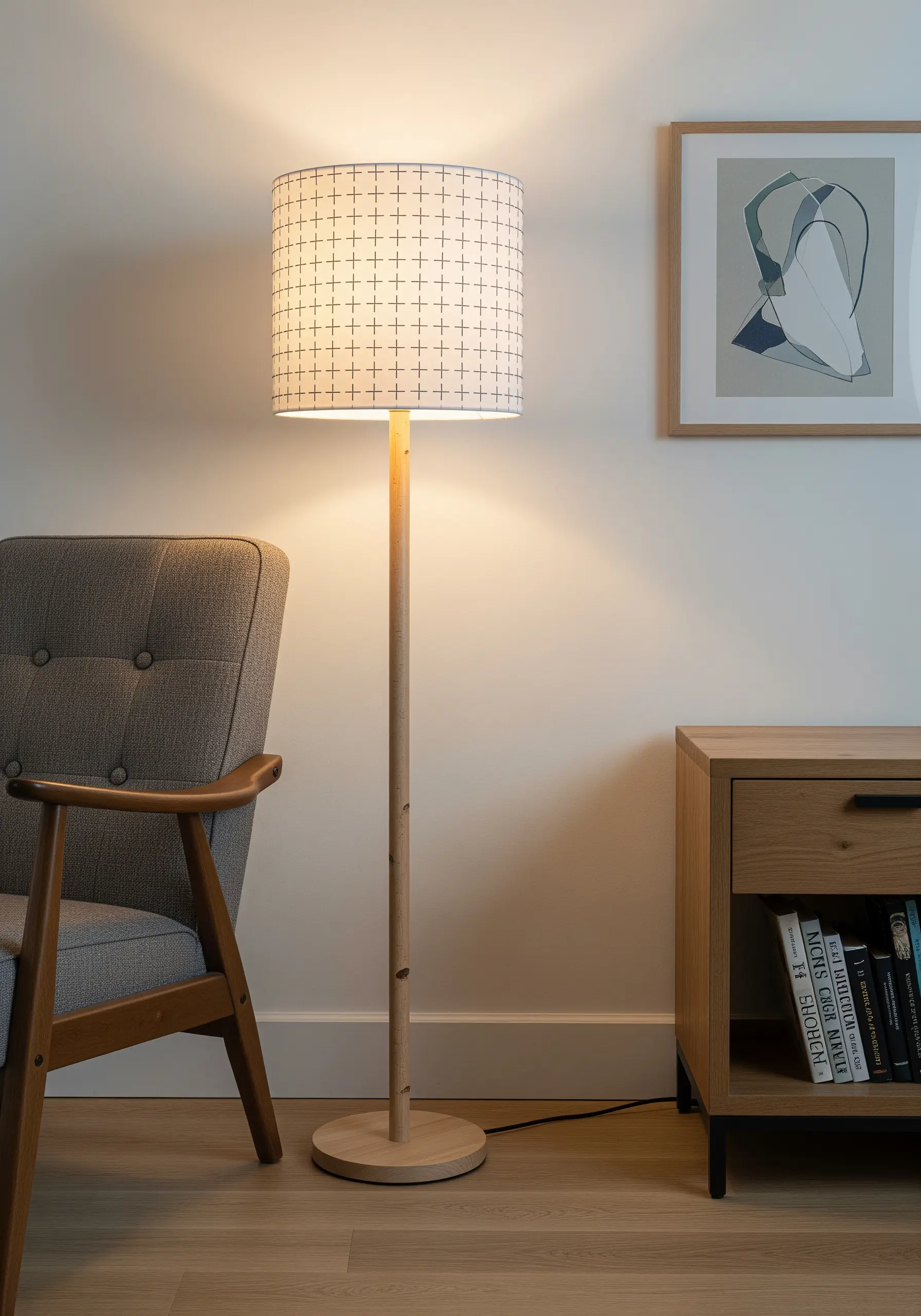
Customize a plain fabric lampshade by adding a subtle, hand-stitched pattern.
A simple grid of crosses or plus signs, stitched in a contrasting color like black on an off-white shade, introduces a graphic element without being overwhelming.
When the lamp is turned on, the light will gently filter through and around the threads, highlighting the texture of your stitches.
This project is a fast and effective way to turn a generic, budget-friendly lamp into a unique piece of atmospheric lighting.
17. Conceal a Closet with a Mandala Curtain

Replace a boring closet door with a beautiful and functional embroidered curtain.
A large, central snowflake or mandala design creates a stunning focal point that distracts from the storage behind it.
Incorporate a variety of stitches to build rich texture: satin stitch for solid areas, backstitch for delicate outlines, and French knots for dotted details.
Sticking to a calm, limited color palette—such as white, silver, and pale blue on natural linen—ensures the piece feels like a serene work of art, perfect for a peaceful bedroom.