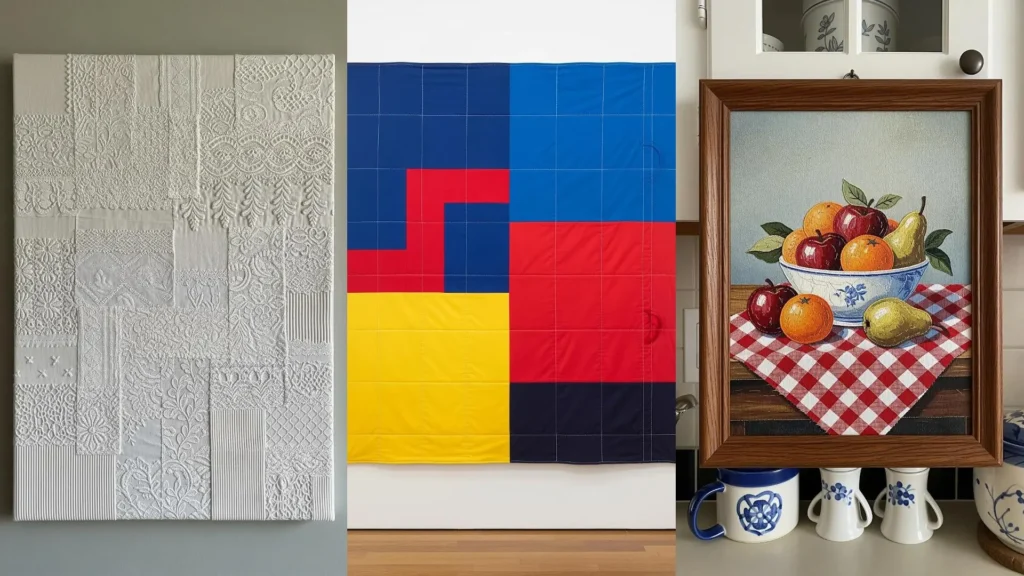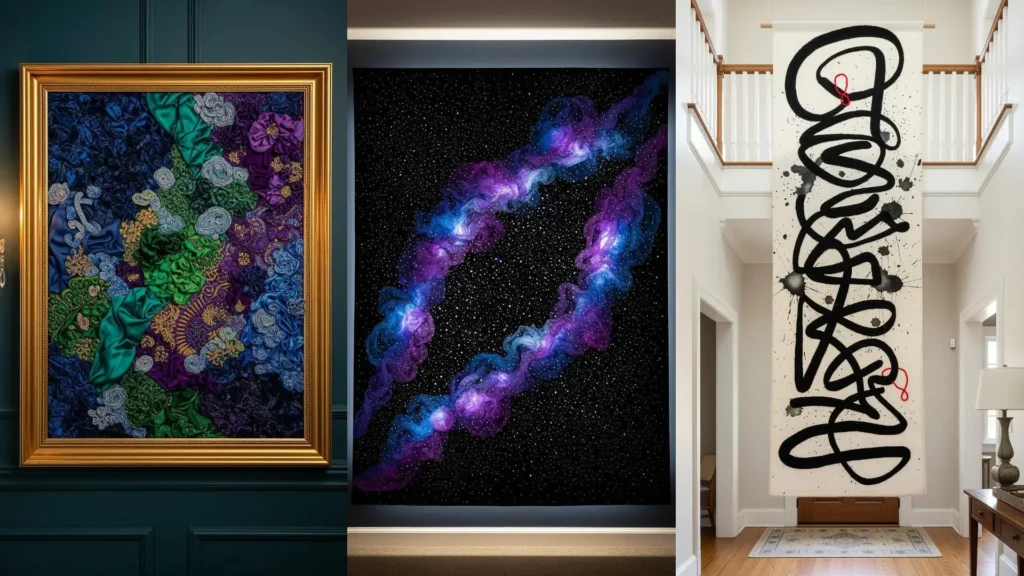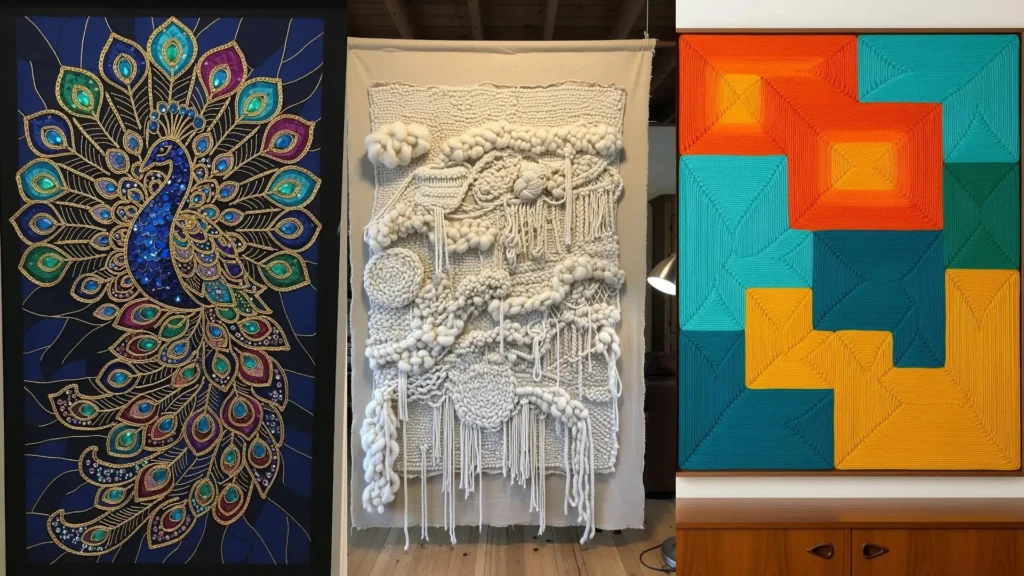
Before you even thread your needle, I want you to reconsider the scale of your ambition. You’ve mastered the small hoop and the delicate motif, but a part of you knows your stitches are capable of something more—something that can hold a room and command attention.
Large-scale embroidery isn’t about stitching more; it’s about stitching with more intention. It’s about understanding how thread, fabric, and texture can transform a blank wall into a focal point, a story, a feeling. It requires a shift in perspective, from decorating a surface to creating an environment.
In these ideas, we move beyond the hoop. We’ll explore techniques like yarn couching, punch needle, and fabric appliqué that allow you to work big without getting lost in microscopic detail. You will learn to think like an artist, using fiber as your paint and the wall as your canvas. This is your moment to create something truly monumental.
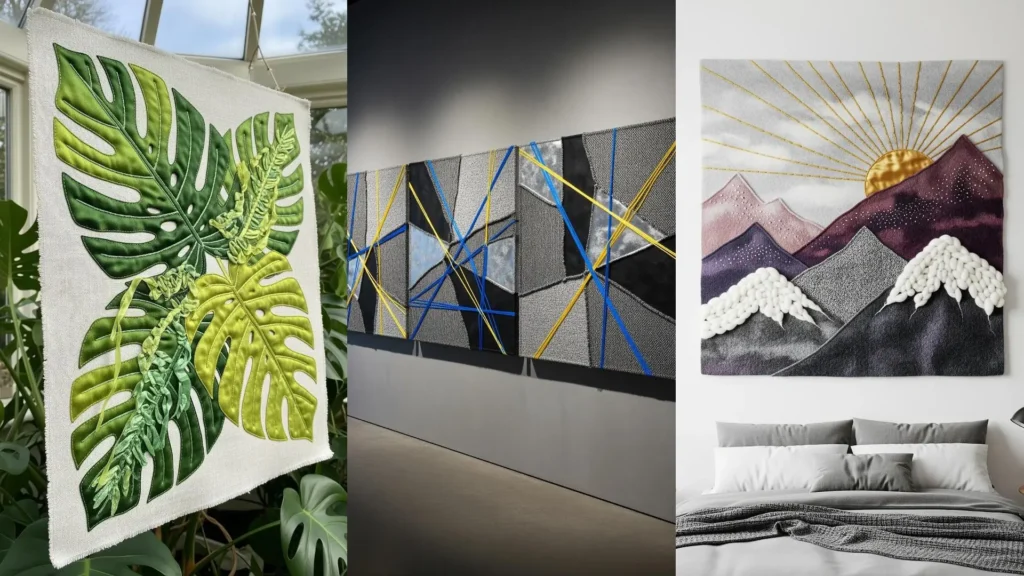
1. Architectural Scale with Yarn Couching

To achieve these bold, graphic lines without the piece buckling, use a heavy-duty fabric like upholstery linen or canvas as your foundation.
Instead of trying to satin stitch such large areas, lay down thick yarn or wool roving and secure it with a thinner, matching thread—a technique called couching.
This method allows you to create massive, clean shapes and radiating lines with perfect tension, turning your thread into a powerful drawing tool.
Plan your color blocking carefully; a limited palette of three or four complementary earth tones creates a sophisticated, cohesive statement.
2. The Triptych: Creating Narrative Flow
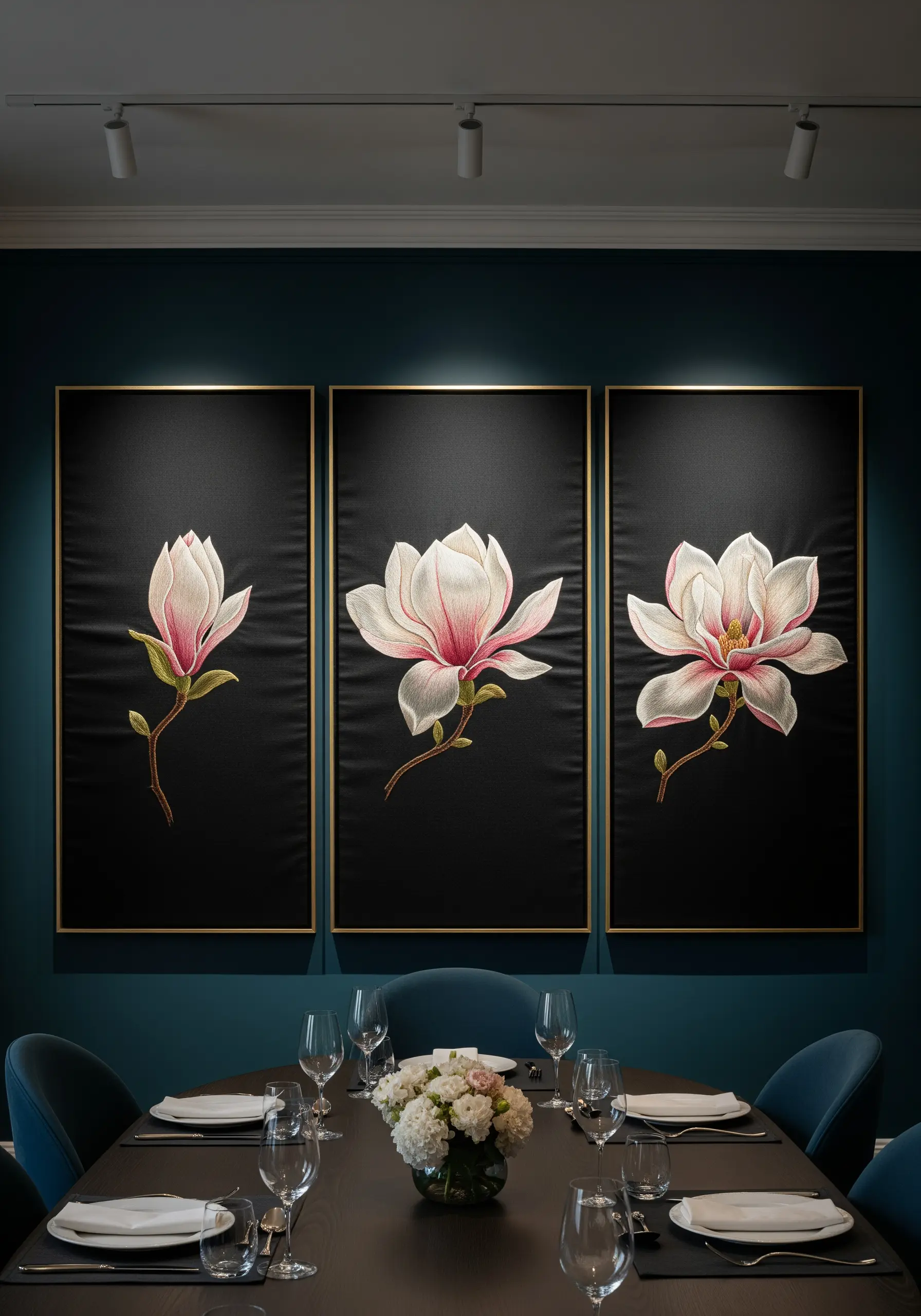
Elevate a single motif by splitting it across three vertical panels, creating a triptych that encourages the eye to travel and linger.
Use a high-contrast background like black velvet or silk; it absorbs light and makes your thread painting pop with dramatic intensity.
For the petals, master the long-and-short stitch to achieve seamless color blending that mimics the delicacy of a real flower.
Frame each panel identically in a thin, metallic frame to unify the series, transforming your embroidery into elegant framed artworks.
3. Sculptural Dimension with Layered Stumpwork
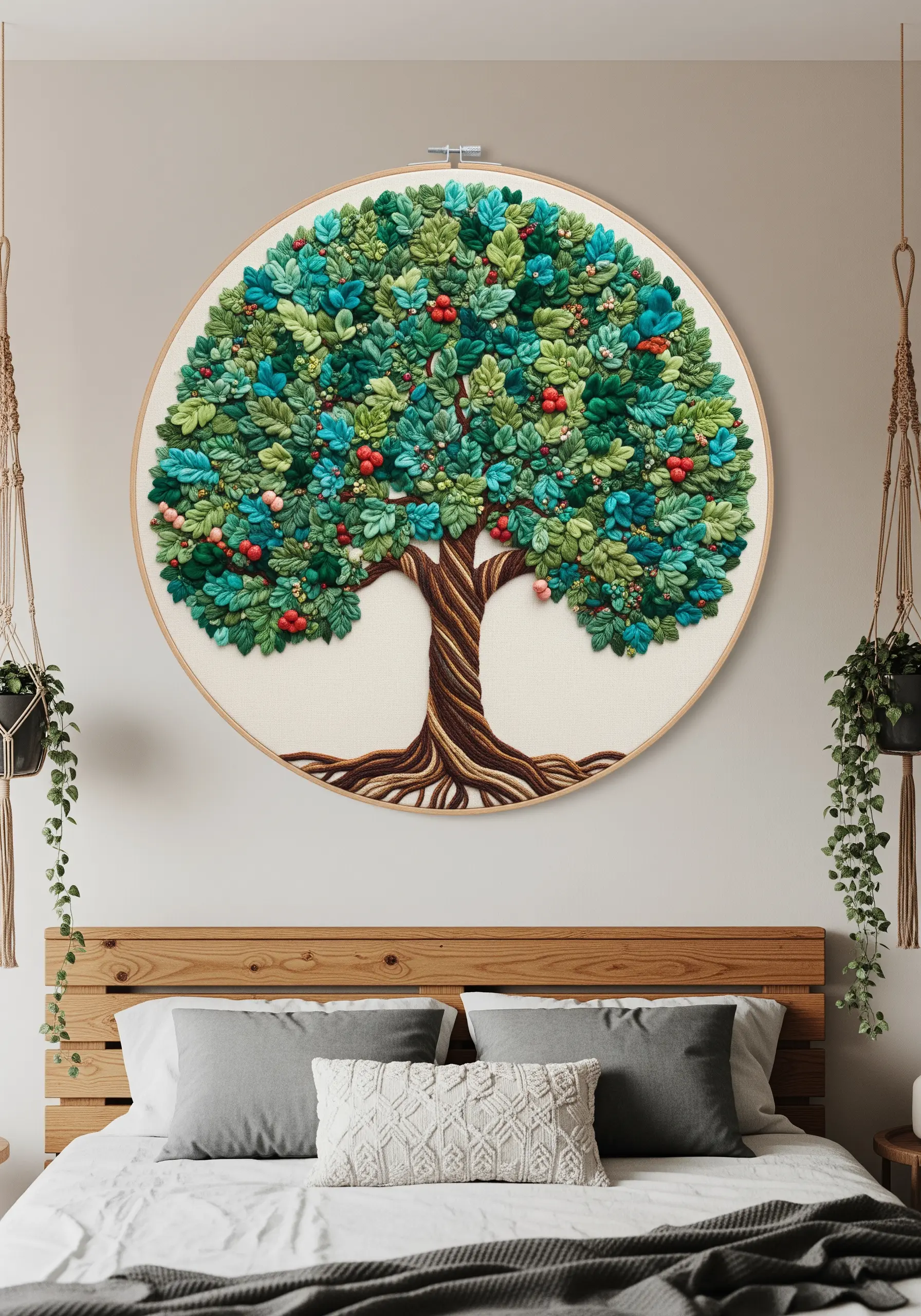
Build a deeply textural surface by creating individual leaves and petals separately on a spare piece of fabric with a wire outline.
Cut them out and stitch them onto your main design to create a dense, 3D canopy—this is the essence of stumpwork.
Vary the shades of green and blue thread to give the foliage depth, and use chunky French knots or colonial knots for the berries, adding pops of color and texture.
For the trunk, wrap thick twine or cord with brown thread before couching it down to create a realistic, gnarled bark effect.
4. Dynamic Abstraction with Yarn Installation
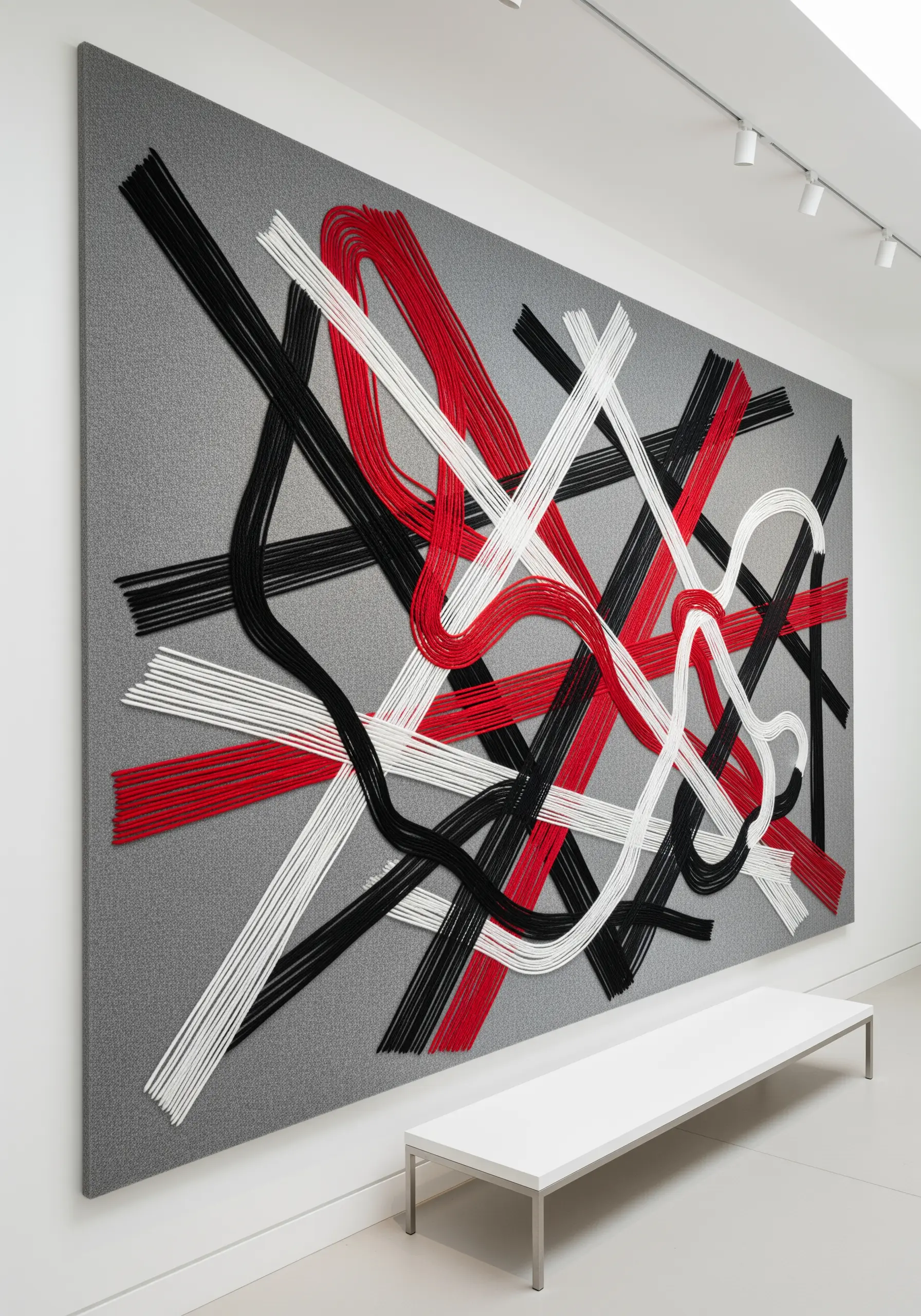
Work directly on a large, stretched canvas or a fabric-covered acoustic panel to create a piece with both visual and sound-dampening qualities.
Use thick, multi-ply yarn and secure it at anchor points with strategically placed stitches or by feeding it through the back of the panel.
Let the yarn drape, curve, and cross over itself to create a sense of movement and energy.
This technique is less about traditional stitching and more about drawing with fiber, allowing for a spontaneous and expressive composition that feels like a stunning fiber art installation.
5. Immersive Landscapes with Punch Needle
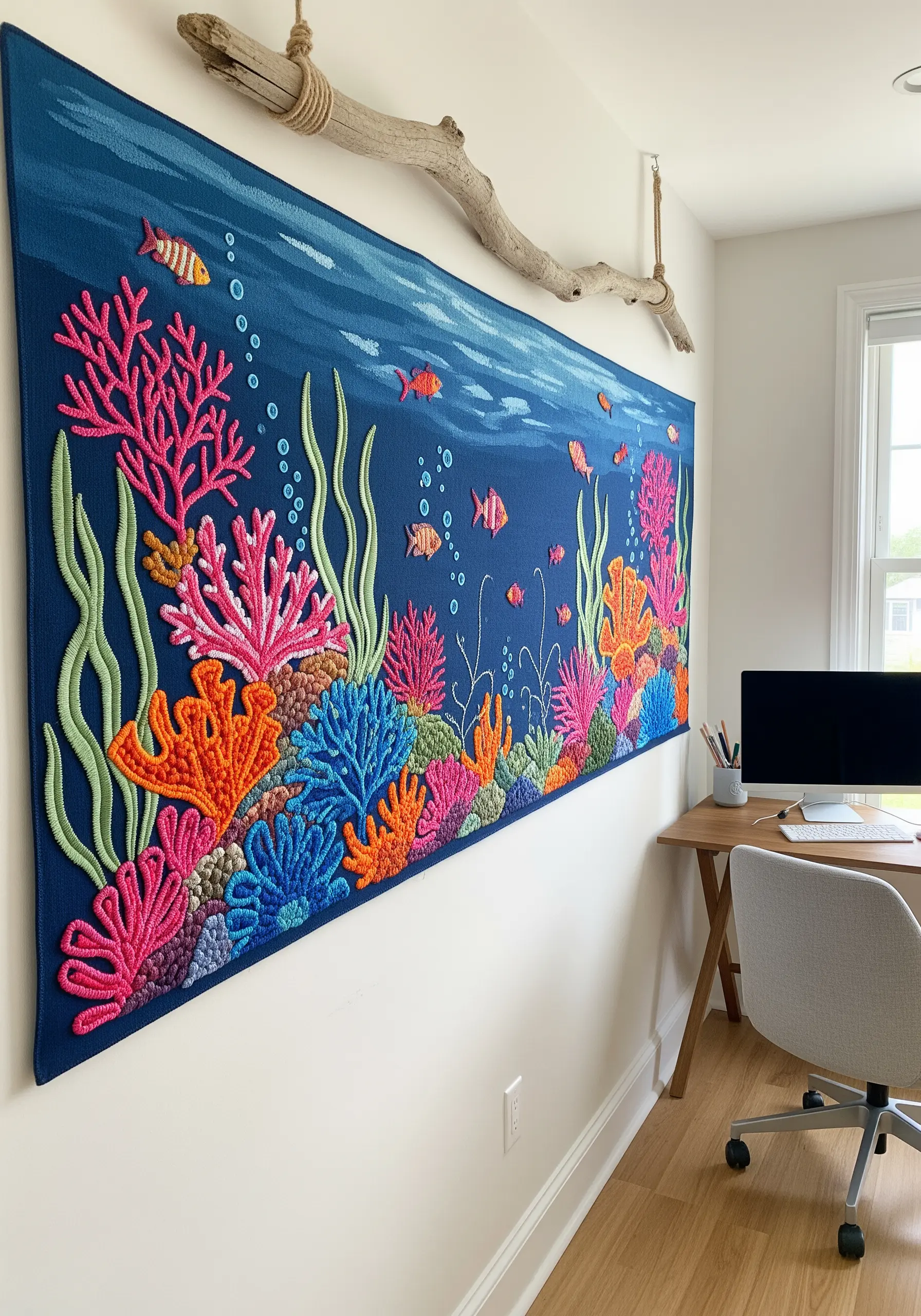
Use a punch needle to quickly fill large areas with plush, textural loops, creating a tactile underwater world.
Vary the loop height by adjusting your needle setting; use shorter loops for distant elements and taller, shaggier loops for foreground coral to create a sense of depth.
Don’t be afraid to mix yarn weights and textures—combine smooth cottons with fuzzy chenilles to mimic the diverse surfaces of a coral reef.
This method is painterly and fast, allowing you to build a vibrant, large-scale scene with satisfying speed.
6. Minimalist Storytelling with a Single Line

Transform a personal memory, like a soundwave or a simple sketch, into a piece of high-impact minimalist art.
Choose a high-quality, neutral linen fabric to let the simplicity of the line shine through.
Use a whipped backstitch or a couched thick thread to achieve a perfectly smooth, uninterrupted line that carries the eye effortlessly across the canvas.
The power of this piece lies in its negative space; resist the urge to add more, as the quietness is what tells the story.
7. Art Deco Glamour with Metallic Threads
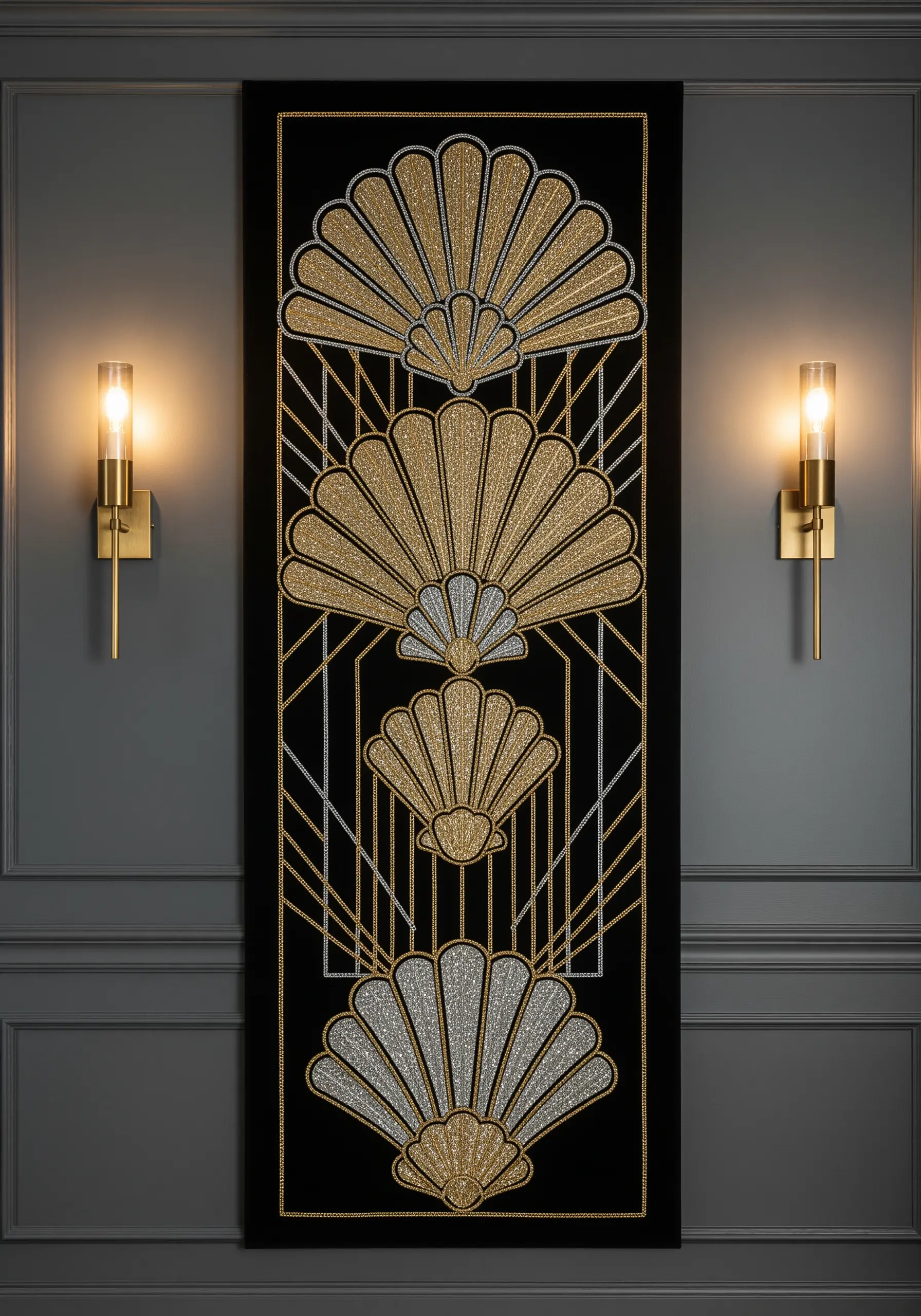
Recreate the opulence of the Art Deco era by using high-sheen metallic threads on a dark, luxurious fabric like black silk or velvet.
To prevent metallic threads from snagging and breaking, use a shorter length of thread and a needle with a larger eye.
Incorporate dense satin stitch for the fan shapes and delicate bugle beads or seed beads along the geometric lines to add sparkle and structure.
This is one of the best metallic thread wall art projects for adding sophisticated glamour to a formal space.
8. Monochrome Texture Study
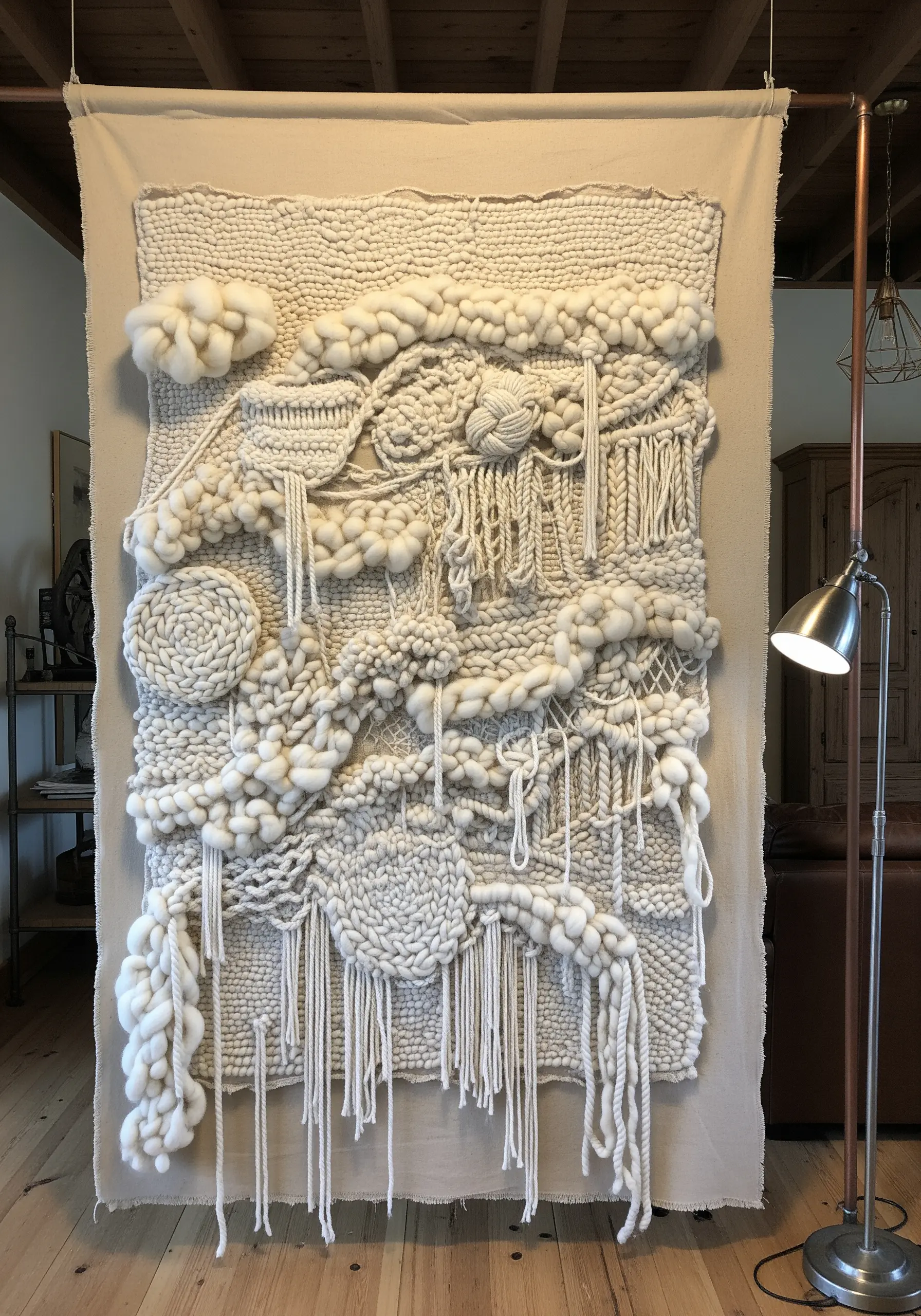
Create a sophisticated, tactile masterpiece by limiting your palette to a single color, like ivory or cream, and focusing entirely on texture.
Combine different fiber art techniques on one canvas: mix chunky wool roving, woven sections, large French knots, and oversized braided stitches.
This approach transforms your piece into a sculptural landscape where light and shadow play across the varying surfaces.
The result is a calm, contemplative artwork that invites touch and draws the viewer in for a closer look.
9. Celestial Maps with Beaded Stippling
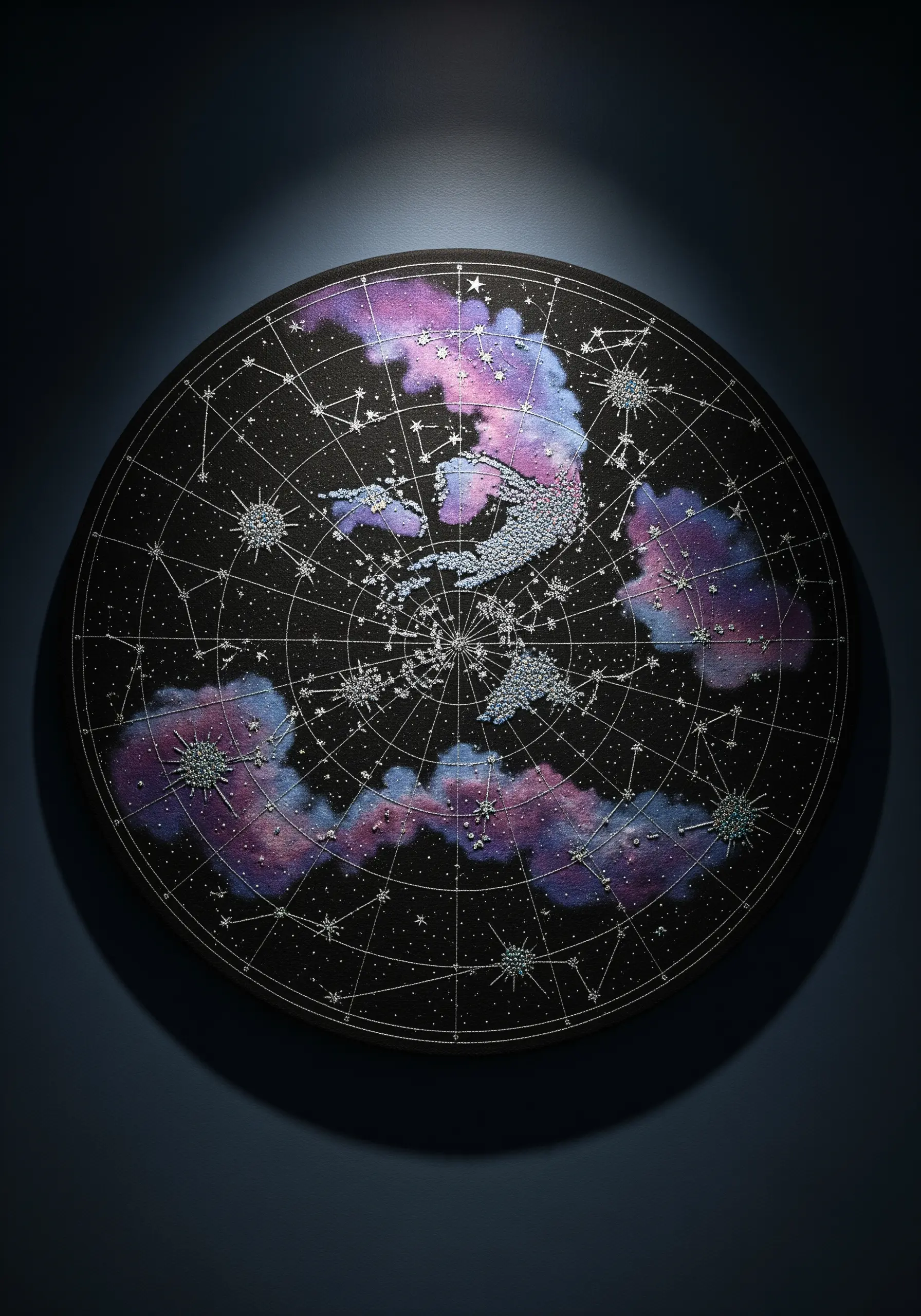
Create a breathtaking galaxy by using tiny silver beads or French knots to represent stars against a dark navy or black background.
For the nebulae, use a watercolor painting technique directly on the fabric before you begin stitching, blending soft purples, pinks, and blues to create a dreamy base.
Then, lightly stitch over the painted areas with a single strand of variegated thread to add shimmer and texture.
Mount the finished piece on a round canvas or frame to enhance the celestial, planetary theme.
10. Bold Botanicals with Graphic Satin Stitch

Make a statement with an oversized botanical pattern by simplifying leaf shapes into graphic, color-blocked elements.
Use a thick, 6-strand cotton floss and a perfectly executed satin stitch to achieve a smooth, lustrous fill that feels both modern and clean.
To keep your stitch direction consistent and your edges crisp on such a large scale, draw faint guide lines with a removable fabric marker within each shape.
A playful but limited color palette of greens, pinks, and yellows keeps the busy pattern feeling fresh and intentional.
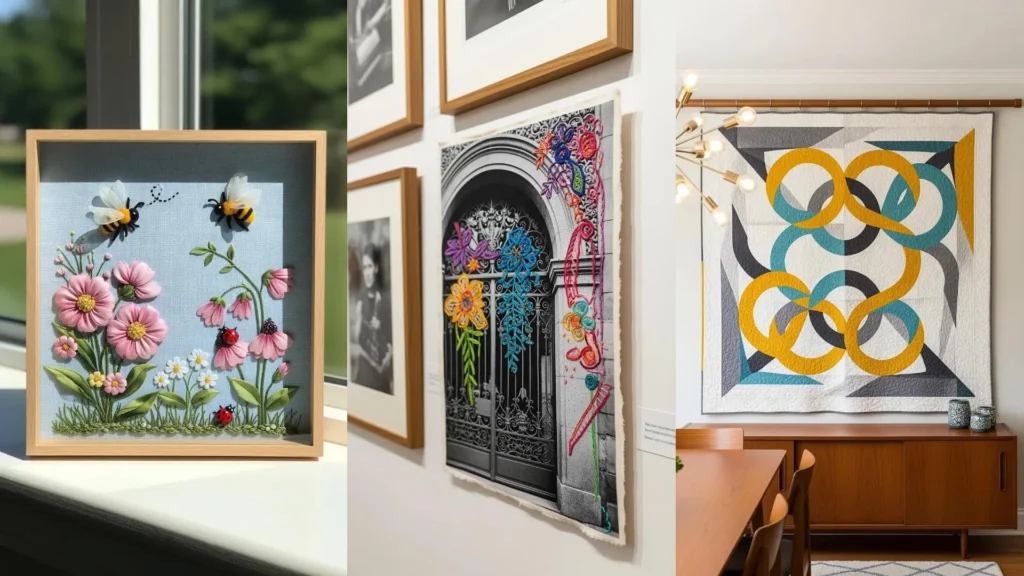
11. Deconstructed Florals with Mixed Media
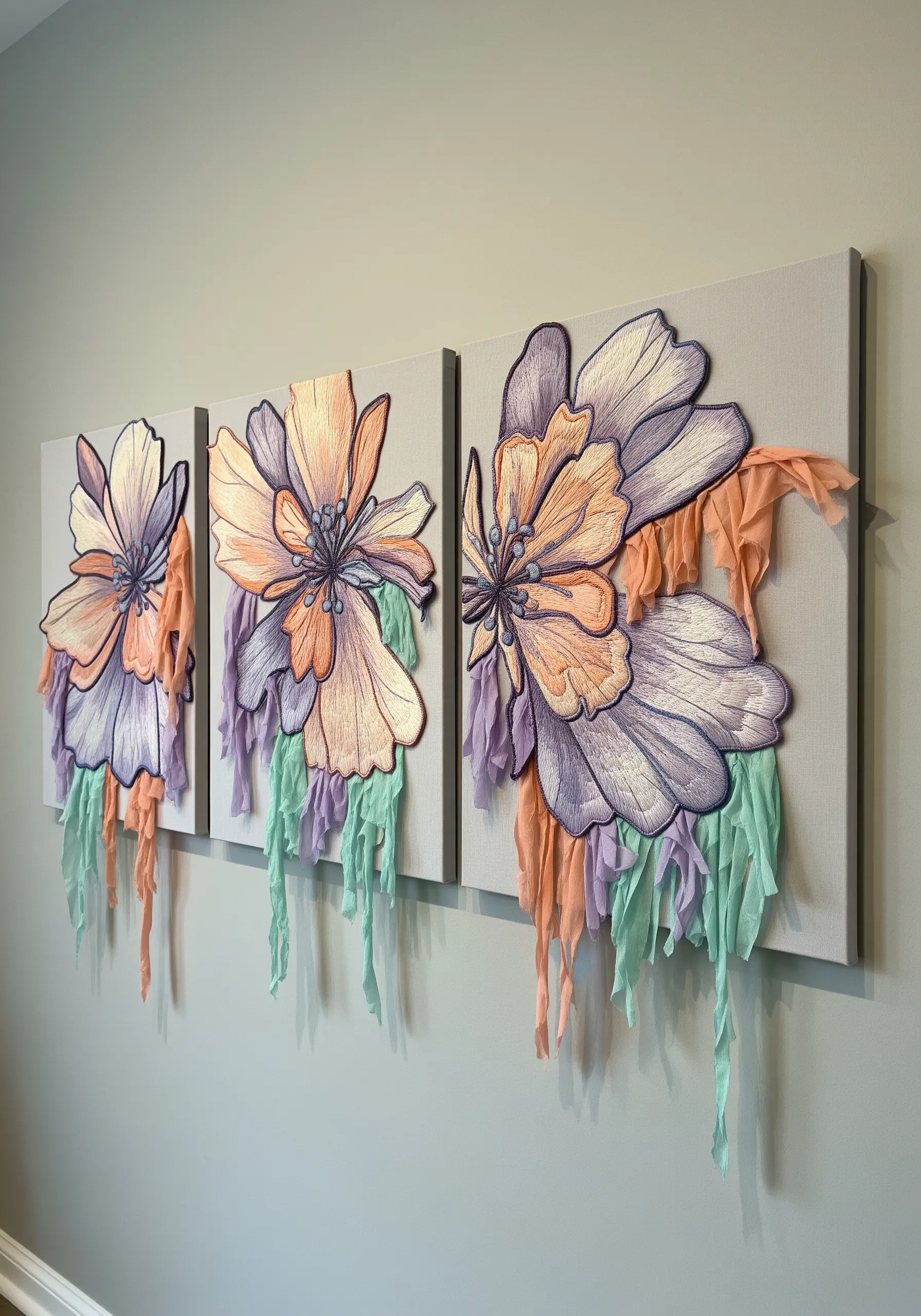
Break free from the flat surface by combining detailed thread painting with three-dimensional fabric elements.
First, complete your floral embroidery on a separate piece of sturdy fabric, then cut it out, leaving a small border.
Mount this embroidered appliqué onto your main canvas, allowing parts of it to lift off the surface.
Tuck and stitch torn strips of chiffon or silk organza behind the petals to create a soft, cascading effect that adds movement and a touch of raw beauty.
12. Meditative Patchwork with Sashiko
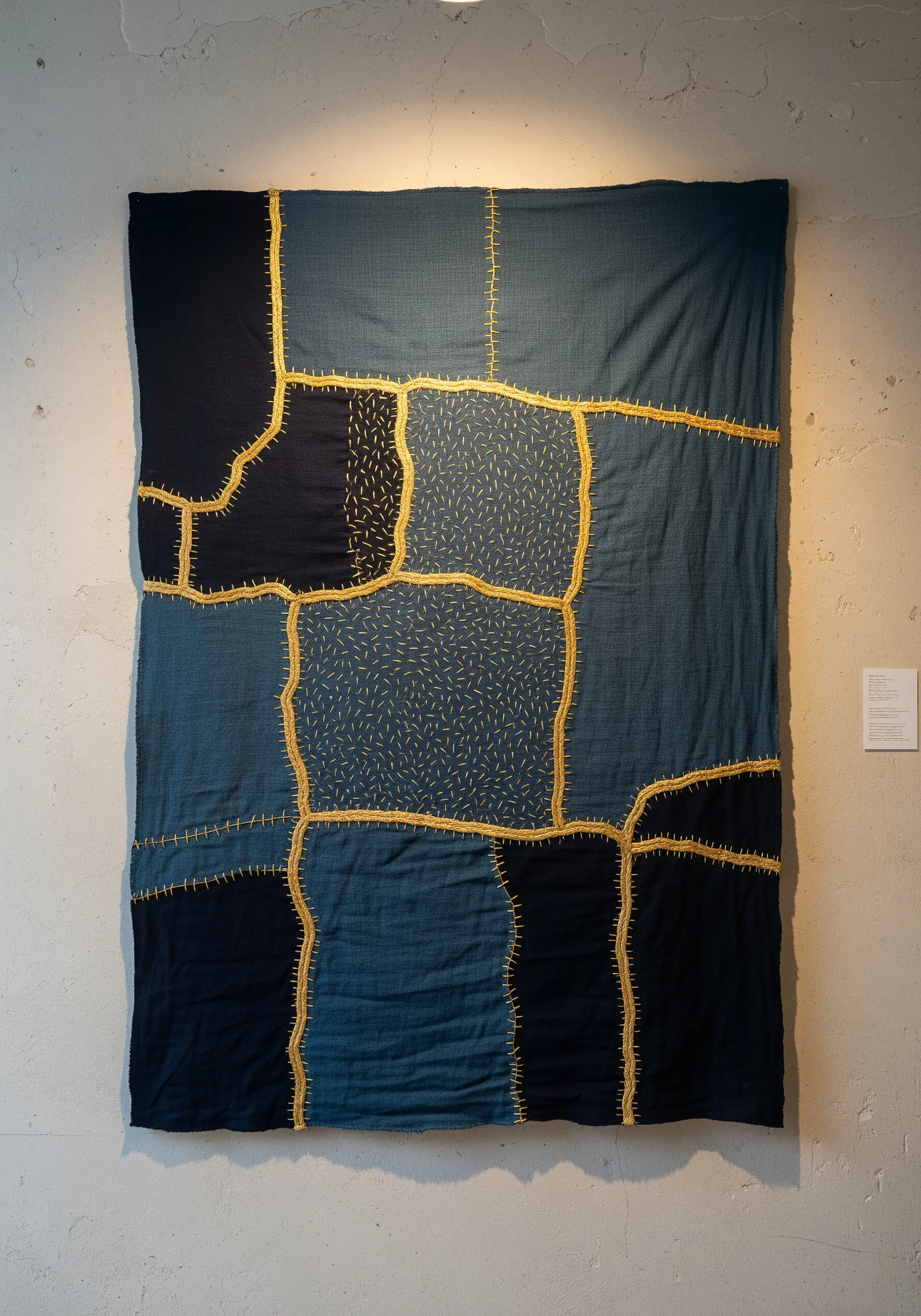
Embrace the beauty of imperfection by creating a large-scale textile from pieced-together scraps of denim, linen, or cotton in coordinating shades.
Instead of hiding your seams, celebrate them with a contrasting, thick thread like sashiko cotton, using a simple running stitch to join the patches.
Fill in select patches with repetitive seed stitches to create areas of texture and visual interest.
This wabi-sabi approach results in art pieces that capture the magic of imperfection and thoughtful craftsmanship.
13. Architectural Thread Painting

Tackle a complex cityscape by breaking it down into simple shapes and focusing on light and shadow.
Use single strands of thread and vertical satin stitches to “draw” the buildings, allowing slight variations in stitch length to create texture.
Create a glowing sunset effect in the sky by blending dozens of shades from orange to purple in a dense field of seed stitches or French knots.
The tiny, illuminated windows are the final touch—a few simple stitches of bright yellow or white thread bring the entire city to life.
14. Topographical Textures with Tufting
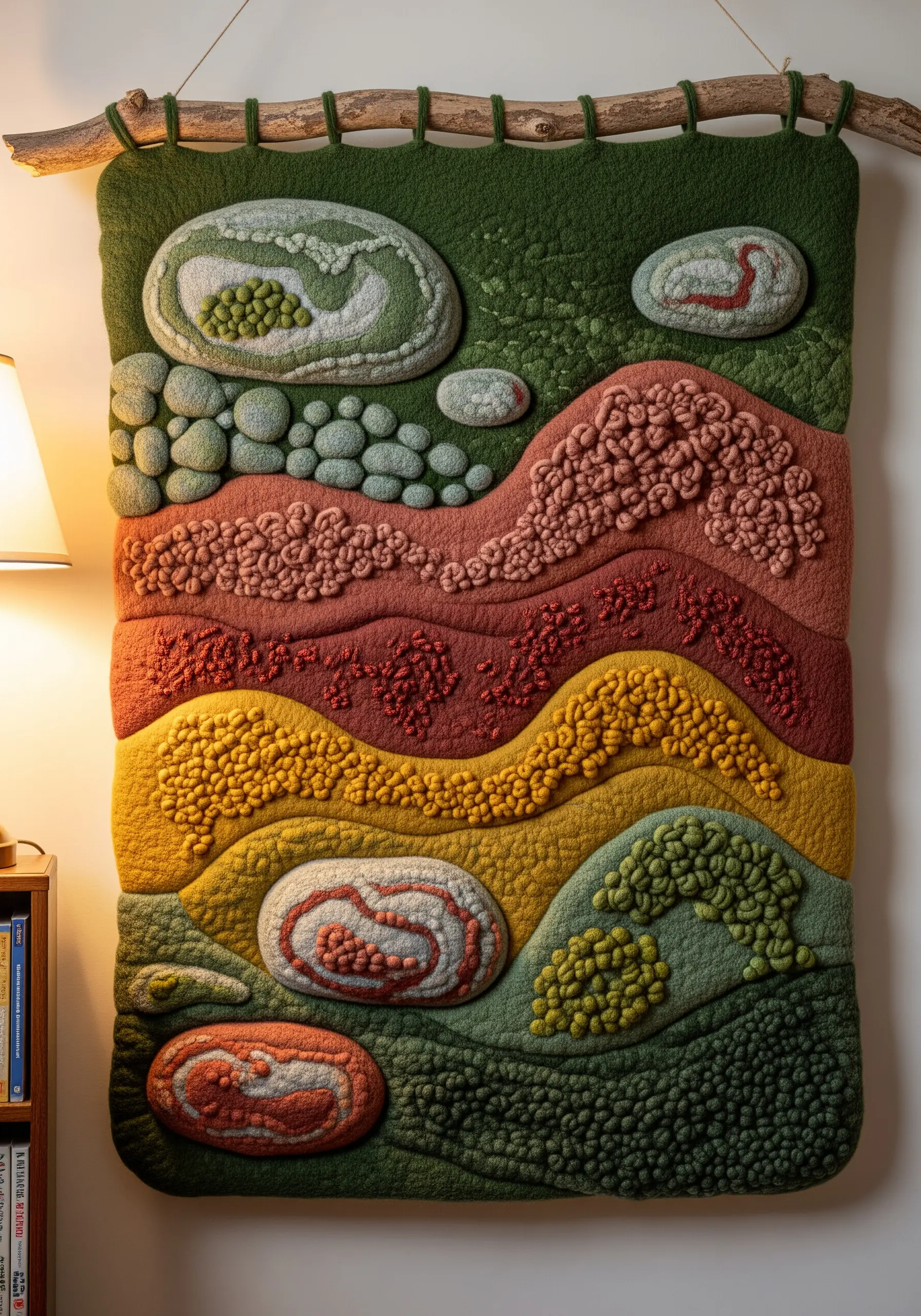
Create an abstract, earthy landscape by using a tufting gun or punch needle to build highly textural, contoured shapes.
Use a variety of yarn types—from chunky wool to fine cotton—to represent different natural elements, like moss, rock, and soil.
Play with loop density and height to create topographical effects; dense, short loops can form smooth, pebble-like shapes, while looser, taller loops create a shaggier texture.
This technique turns your wall hanging into a tactile map of an imagined world, full of rich, natural texture embroidery patterns.
15. The Modular Gallery Wall

Create a large-scale impact without handling a massive piece of fabric by working on a series of smaller, identical canvases.
Choose a single subject, like a peony, and reinterpret it in different colorways across the series to create rhythm and variety.
This modular approach is manageable and allows you to build your feature wall over time.
Arrange the finished pieces in a tight grid for a clean, contemporary look that feels like a professional gallery installation.
16. Optical Illusions with String Art

This technique relies on the precision of straight lines to create a mesmerizing sense of depth and movement.
Instead of traditional stitching, this is more akin to string art; wrap thread or fine yarn tightly around pins or nails hammered into a frame, or stitch between precisely plotted points on a canvas.
The high contrast of black and white enhances the optical effect, tricking the eye into seeing curves and tunnels where there are only straight lines.
The key is perfect tension and geometric accuracy, resulting in a hypnotic, modern masterpiece.
17. Panoramic Landscapes with Layered Textures
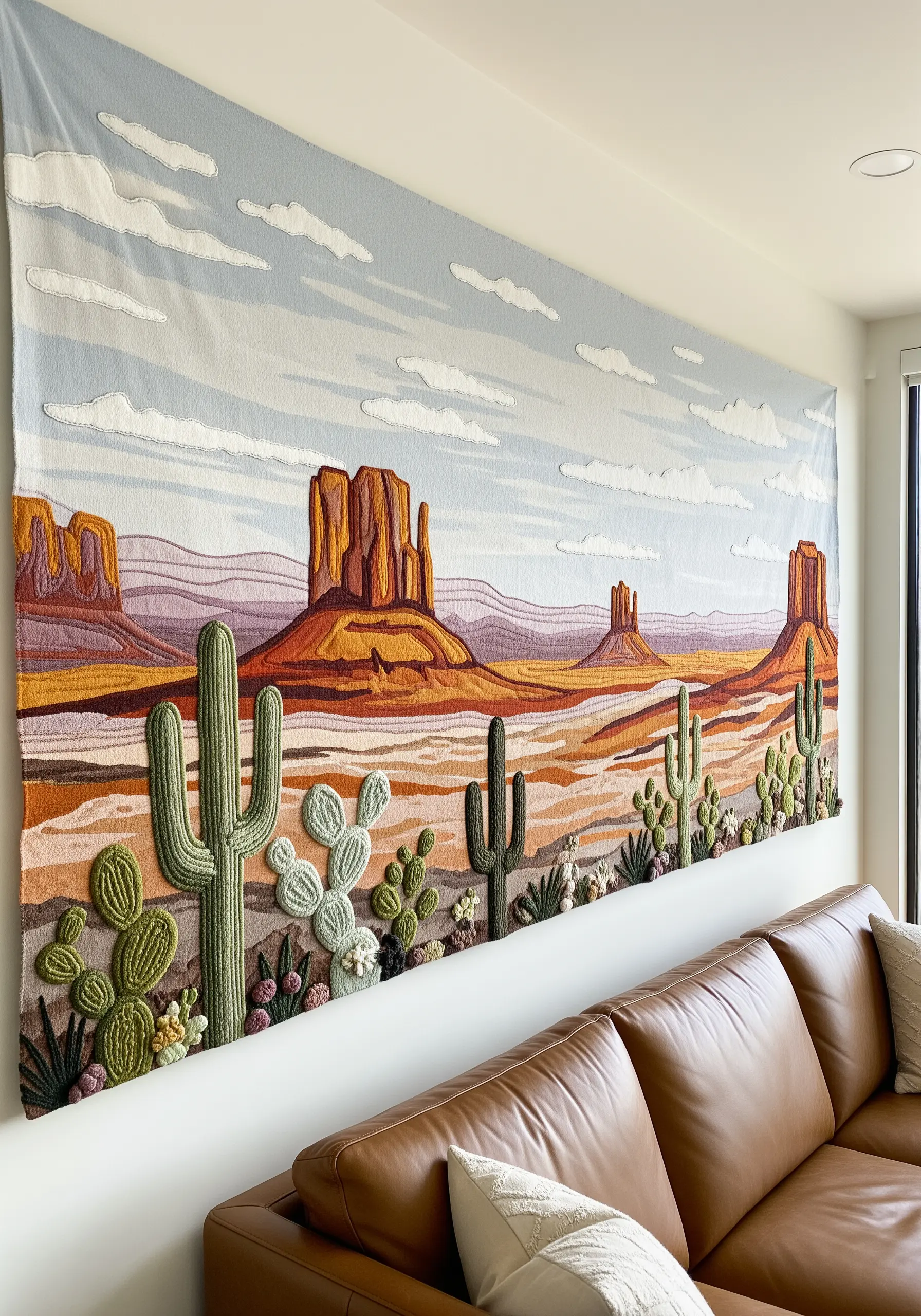
Capture the vastness of a desert landscape by combining different embroidery techniques to represent different natural textures.
Use flat satin stitch for the distant mesas and sky, then switch to chunkier textures like French knots and bullion stitches for the foreground cacti and shrubs.
This contrast in texture creates an incredible sense of atmospheric perspective, drawing the viewer into the scene.
Working on a panoramic scale allows you to build a narrative and a sense of place that a smaller piece cannot achieve.
18. The Collective Composition
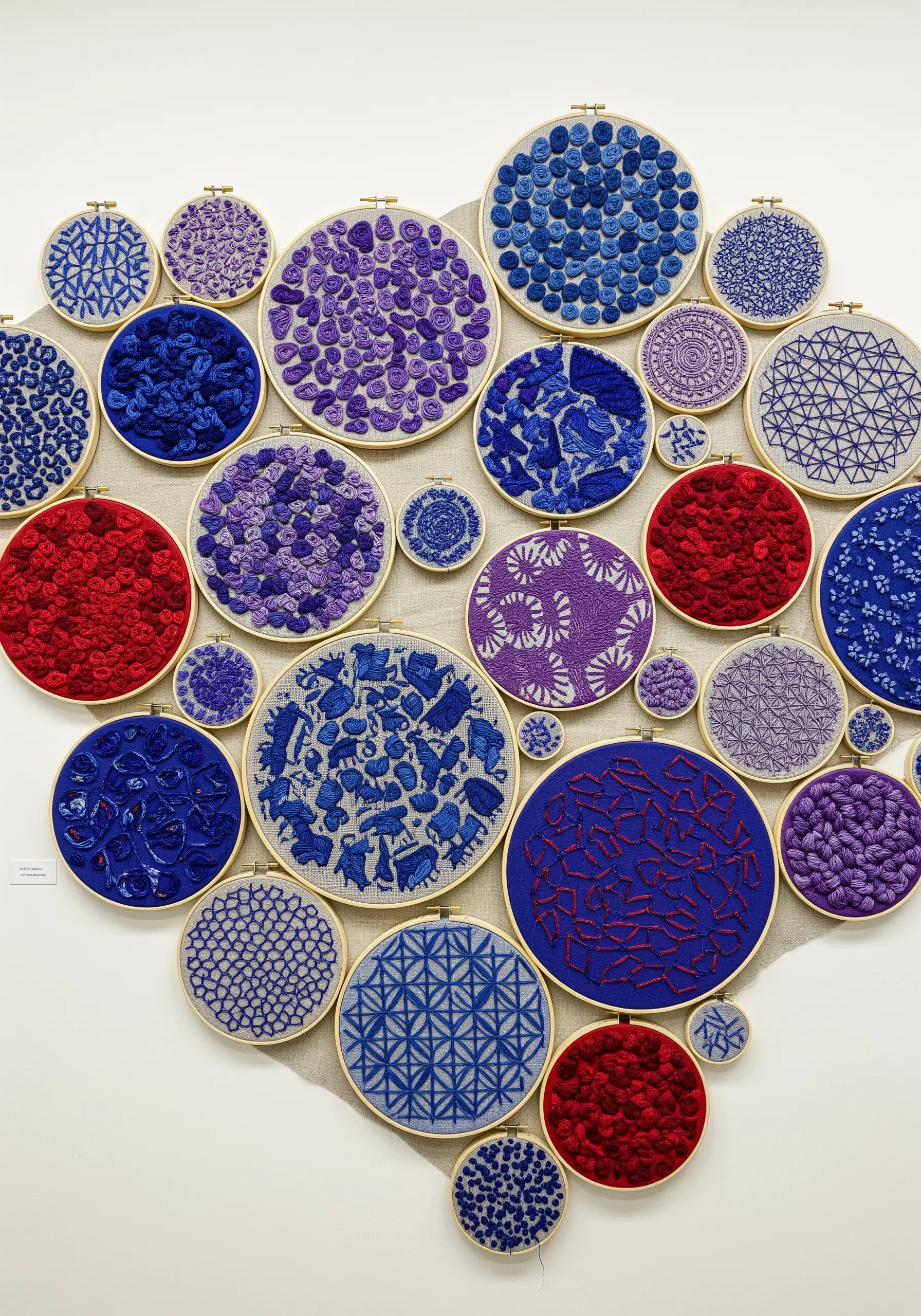
Assemble a large, meaningful shape—like a heart—from a collection of smaller, individual embroidery hoops.
This is a perfect way to create a large-scale piece without a large-scale canvas, and each hoop can become a mini-study in texture, pattern, or color.
Experiment with different fill stitches: woven wheels, dense French knots, geometric patterns, and abstract satin stitches.
Arrange the finished hoops on a wall or a large backing fabric to create a stunning collage that celebrates the diversity of stitch.
19. Dynamic Motion with Unfinished Threads
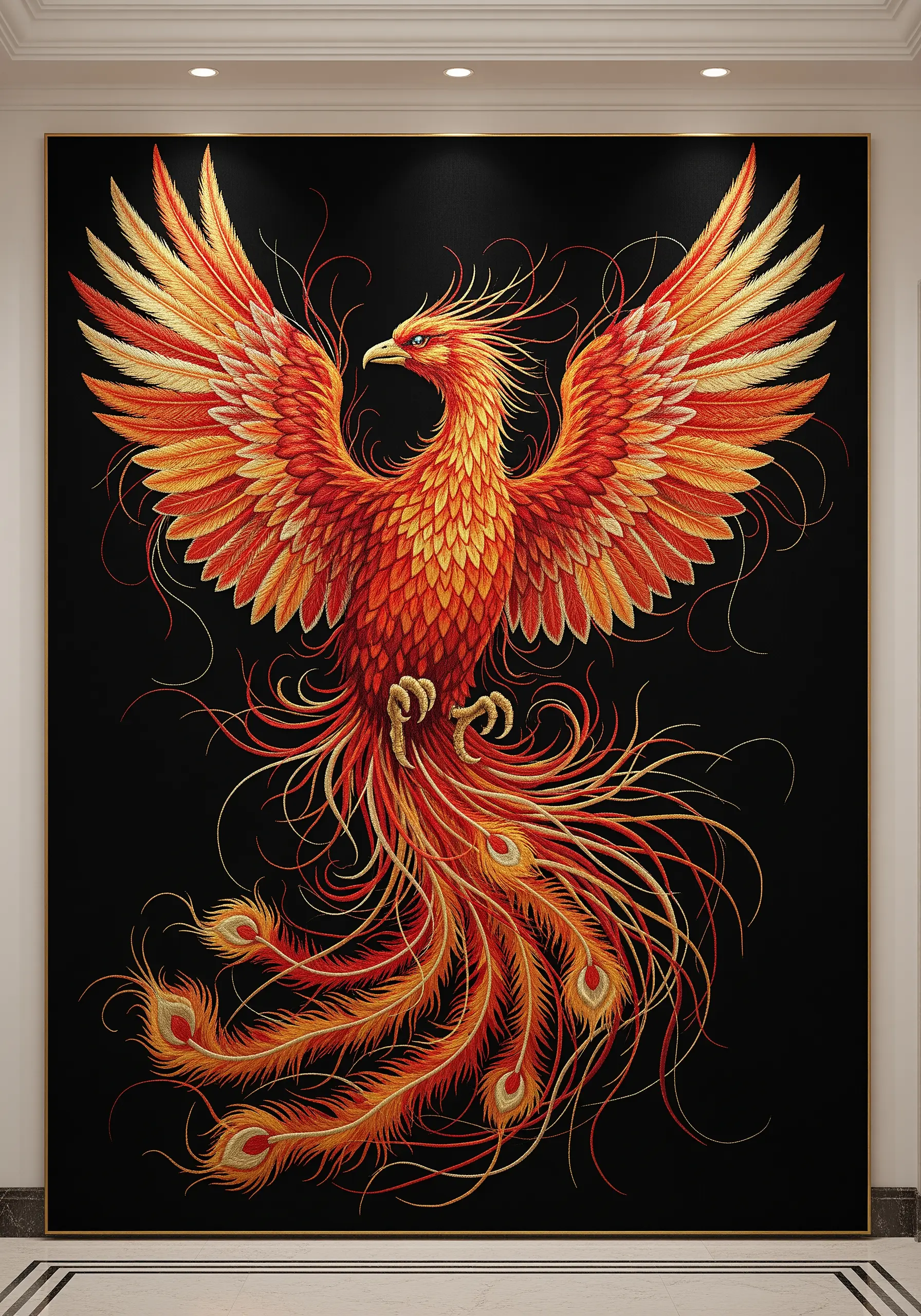
Infuse your thread painting with energy and life by intentionally leaving long, loose thread tails at the end of your stitches.
After completing the main body with dense long-and-short stitches, add final accent stitches, but instead of trimming the thread on the back, pull it through to the front and let it hang.
This technique works best for dynamic subjects like feathers, fire, or water, creating a sense of untamed movement that breaks the boundaries of the canvas.
The contrast between the tightly controlled stitching and the wild, free threads is visually electrifying.
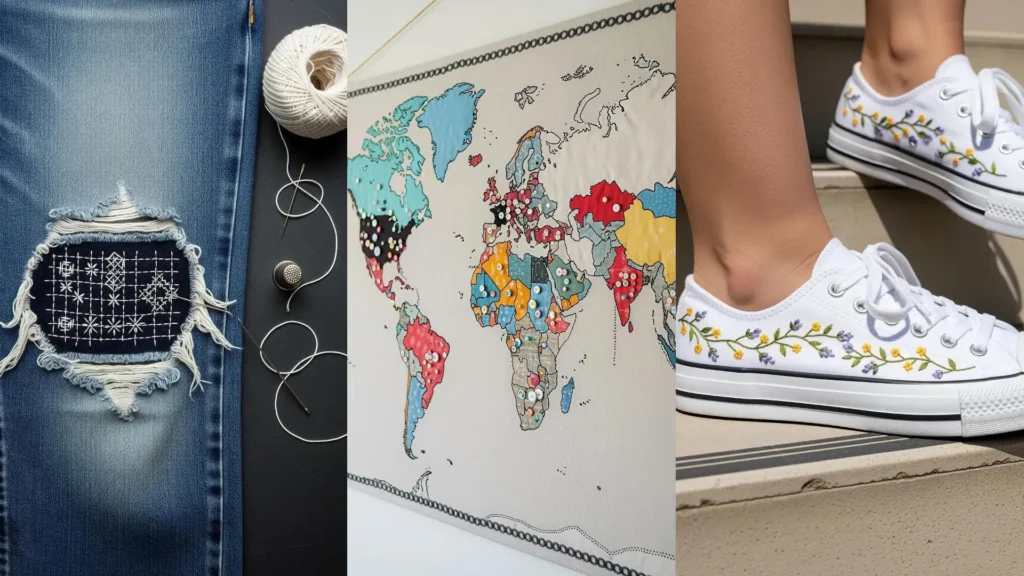
20. The Appliqué World Map
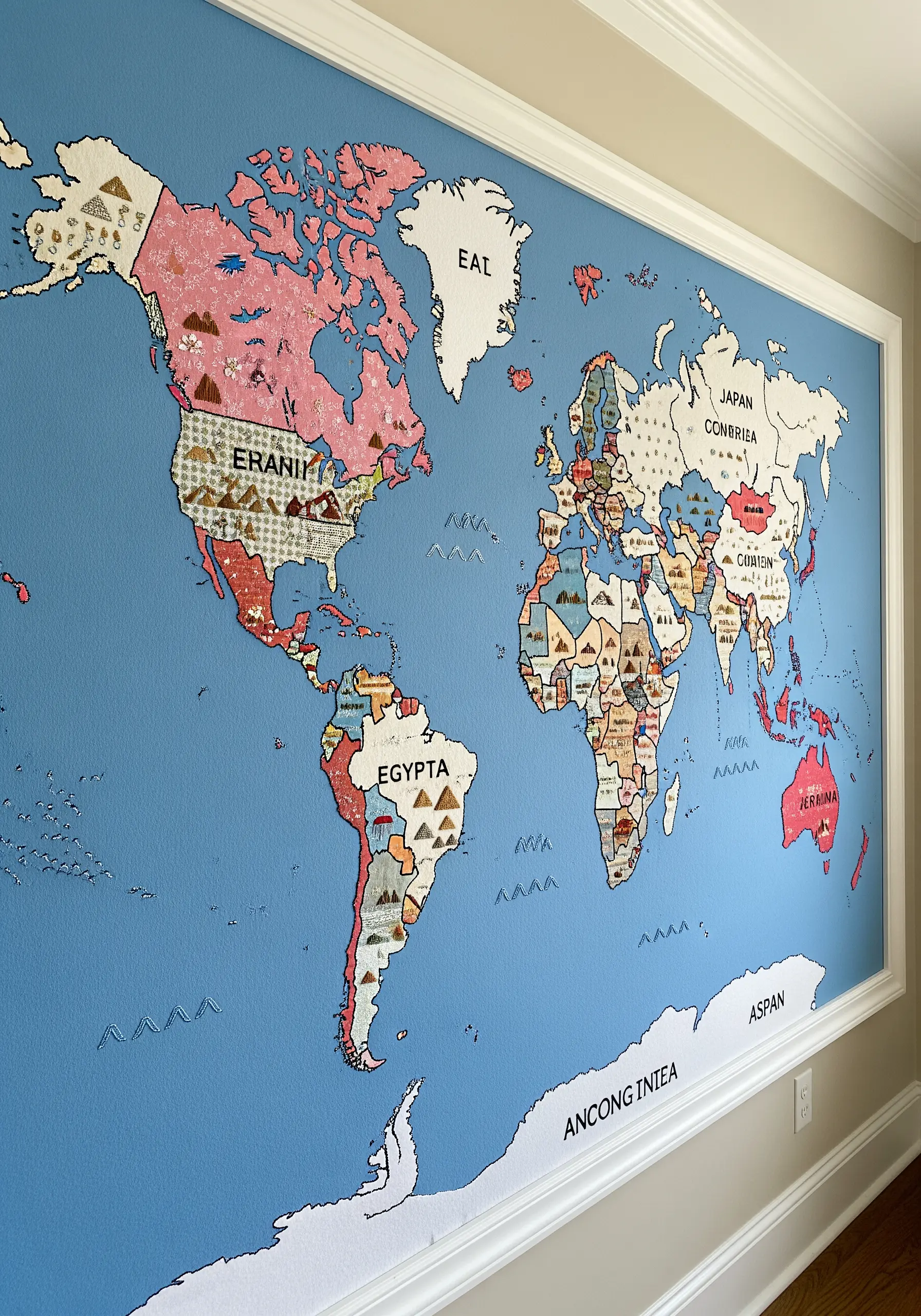
Create a deeply personal and textural world map using fabric appliqué combined with embroidery.
Cut continent and country shapes from various fabrics—perhaps using textiles collected from travels or scraps that hold personal meaning.
Secure the fabric pieces to your base with a simple running stitch or a decorative blanket stitch around the edges.
Add tiny embroidered details within each region to represent landmarks, native animals, or cultural patterns, turning the map into a tapestry of stories.
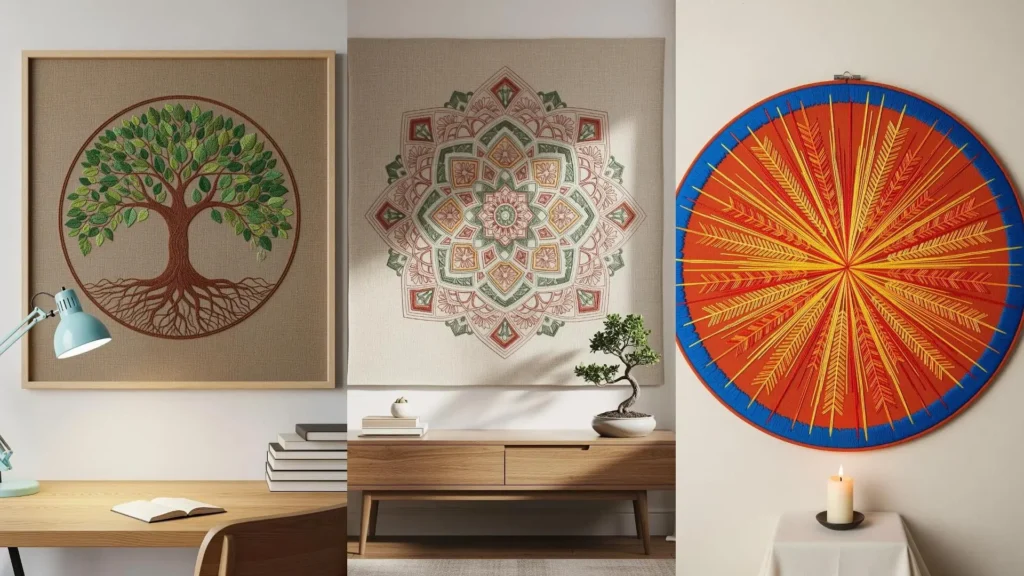
21. Meditative Mandalas with Raised Stitches

Transform a simple circle into a sanctuary of stitch by building a large-scale mandala.
Use a compass and fabric marker to draw a precise geometric grid as your foundation—this is crucial for achieving perfect symmetry.
Incorporate raised stitches like the padded satin stitch (using layers of felt or stitches underneath) and bullion knots to give the design a tactile, three-dimensional quality.
Working on an embroidered mandala wall art design of this scale is a meditative practice in precision and patience.
22. The Hybrid Weave-and-Stitch

Combine two distinct fiber arts into one cohesive wall hanging for a piece rich in texture and technique.
Start by creating a woven panel on a frame loom for the top section, playing with stripes and textures.
For the bottom section, stretch a piece of linen or canvas and embroider a clean, graphic design that complements the weaving.
Join the two pieces and finish with braided tassels or a simple fringe to unify the artwork, creating a modern heirloom with layers of craft.
23. Luminous Stained Glass Embroidery

Recreate the radiant beauty of stained glass by using translucent fabrics and strategic lighting.
Use black felt or a thick, couched black yarn to create the ‘leading’ lines of your design on a sheer organza base.
Fill the sections with pieces of colorful, transparent fabrics like silk organza, securing them with subtle stitches.
Frame the finished piece in a shadow box with LED strip lighting around the inner edge to illuminate it from behind, making the colors glow.
24. The Narrative Kitchen Runner

Tell a story in a long, horizontal format perfectly suited for a space like a kitchen backsplash or above a sideboard.
Create a composition that flows from one end to the other, like a lineup of garden vegetables or a seasonal progression.
Use a variety of fill stitches to give each element its own unique texture—satin stitch for smooth carrots, French knots for beet greens, and stem stitch for delicate herb sprigs.
This format turns a simple collection of motifs into a charming, narrative piece of art.
25. High-Tech Art with Conductive Thread
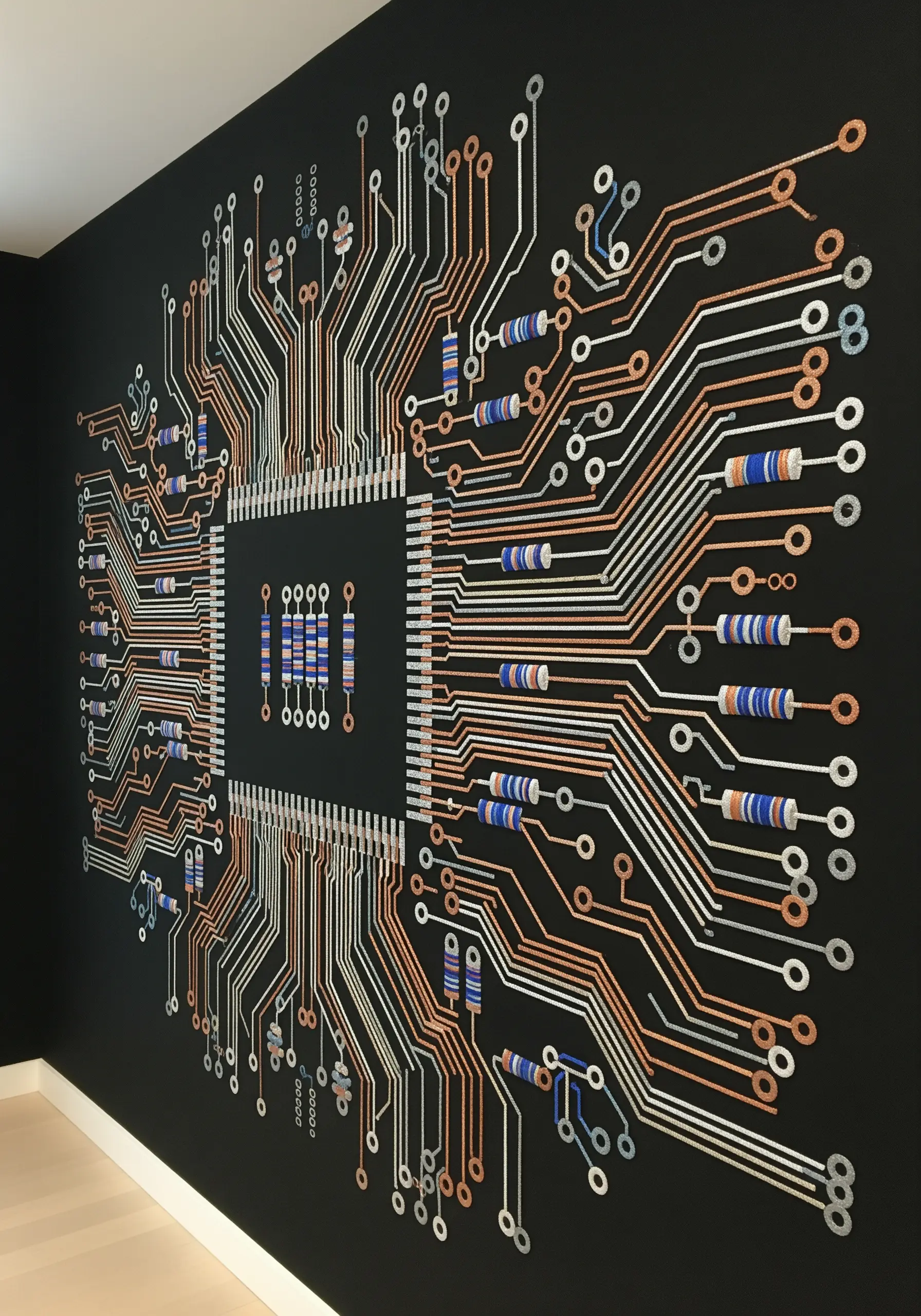
Create a striking, modern design by replicating the intricate pathways of a circuit board.
Use metallic and conductive threads in copper, silver, and gold to stitch the fine lines on a dark, matte background for maximum contrast.
Incorporate small beads or sequins to represent resistors and other electronic components, adding pops of color and texture.
This project merges a technical aesthetic with the handmade, creating a conversation piece that is both graphic and meticulously crafted.
26. Sculptural Seascapes with Fabric Manipulation
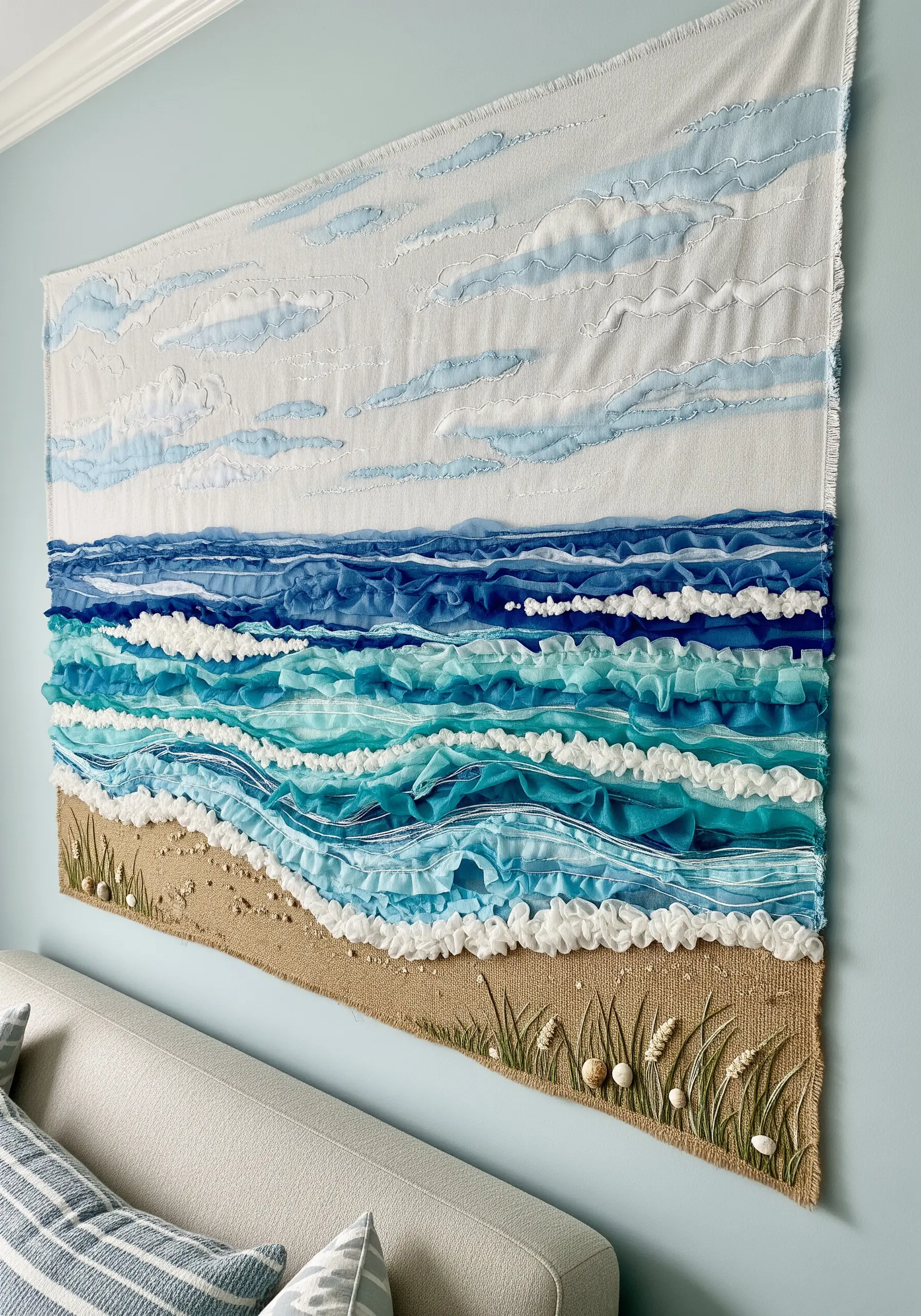
Move beyond thread to sculpt a dynamic ocean scene using fabric itself.
Create waves by gathering and stitching down strips of various blue, teal, and white fabrics—chiffon and organza work beautifully for their translucency and movement.
Use a coarse fabric like burlap for the sandy shore and add real shells or French knots for detail.
This highly tactile art project turns your wall into a three-dimensional slice of the coastline.
27. Geometric Fields with Wrapped Yarn

Achieve perfectly saturated blocks of color and hypnotic geometric patterns by wrapping yarn around a canvas or board.
This isn’t traditional embroidery, but a technique where yarn is tightly wound in specific directions to create texture and shape.
Plan your composition as a grid of interlocking shapes, and wrap each section with different colors to create a bold, graphic effect reminiscent of abstract paintings.
The tension of the yarn and the precision of the lines are key to creating a clean, modern finish.
28. Impressionistic Forests with Appliqué and Knots
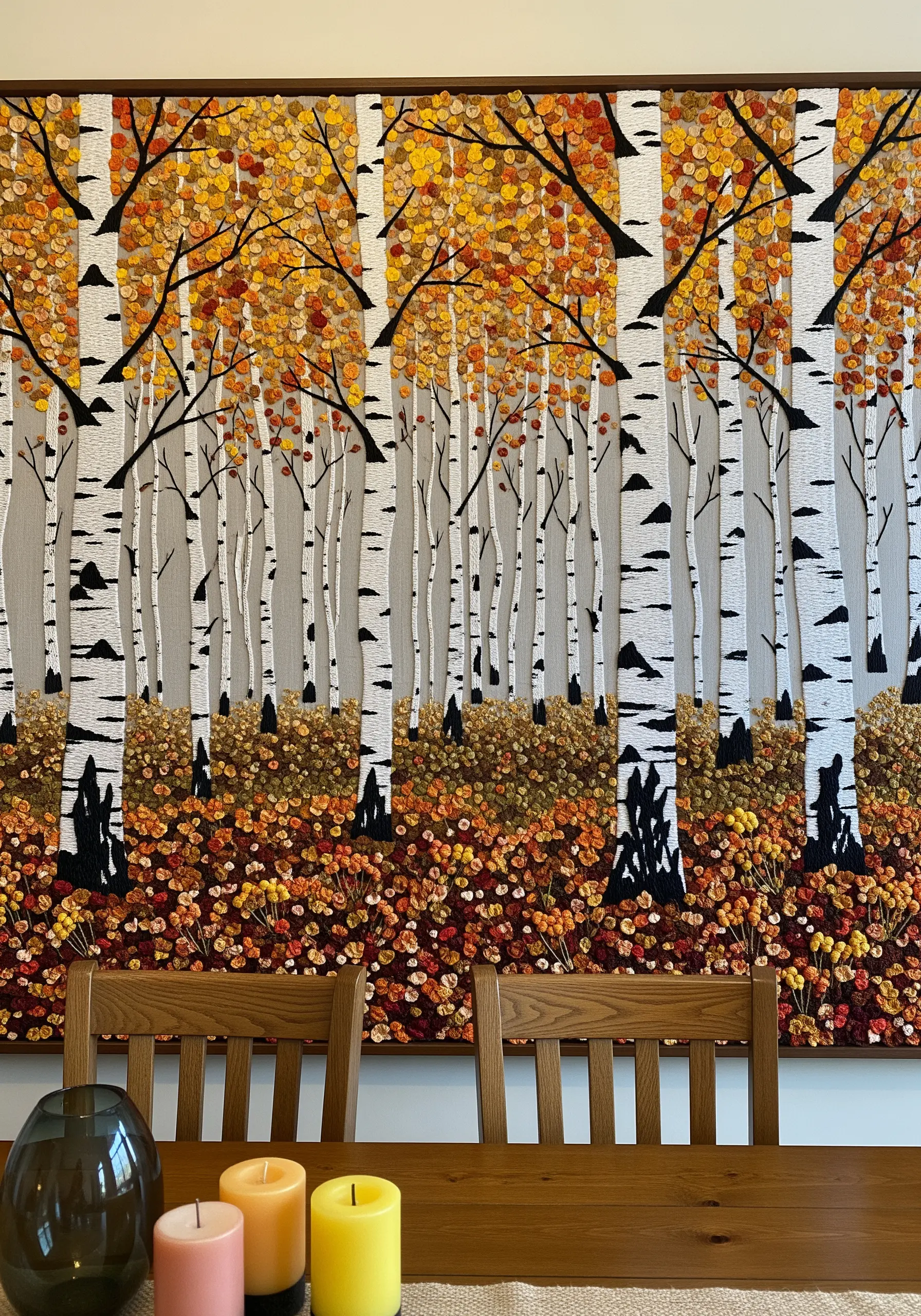
Create a dense, layered forest scene by combining fabric appliqué with thousands of tiny stitches.
Use strips of white and grey fabric for the birch trunks, adding black stitched details for the bark.
For the foliage and fallen leaves, use a confetti-like technique: cut tiny scraps of colored fabric and secure them with a single French knot or seed stitch in the center.
This impressionistic method builds incredible texture and color variation, capturing the dappled light of an autumn forest.
29. Maximalist Glamour with Bead Embroidery

Create an opulent masterpiece by combining traditional stitching with heavy embellishment.
Use a rich, dark fabric as your canvas to make the jewels and metallic threads stand out.
Outline your main shapes with a couched gold cord for a defined, luxurious edge.
Fill the sections with a mosaic of sequins, crystals, and beads, using different shapes and sizes to catch the light and create dazzling texture. This is textile art as jewelry.
30. The Power of a Single, Confident Line

For a truly monumental statement, scale up a simple line drawing to fill an entire canvas.
The success of this piece hinges on the quality of the line. Use a thick black yarn or cord and couch it down with an invisible thread for a clean, graphic look.
Alternatively, for a more integrated appearance, use multiple strands of black floss and a perfectly executed whipped backstitch to create a smooth, raised line.
On a large, neutral canvas, this single-line face profile becomes a powerful piece of minimalist art.
31. Primitive Storytelling with Rustic Yarns

Evoke the ancient art of cave paintings by using earthy, rustic materials and simple, powerful shapes.
Choose a coarse, unbleached linen or burlap that mimics the texture of a stone wall.
Use thick, hand-spun, or slub yarns in a limited palette of ochre, terracotta, and charcoal.
Fill the animal silhouettes with a dense running stitch or a long-and-short stitch that follows the contours of the body, giving them a sense of form and life.
32. Explosive Color with Unspun Roving

Create a burst of energy and texture by working with unspun wool roving instead of traditional yarn.
Use a technique called needle felting to attach the roving directly to a sturdy fabric base, or carefully couch it down with a strong, matching thread.
Arrange the colorful roving in a radial pattern, blending the colors slightly where they meet to create a soft transition.
The untamed texture of the fiber gives the piece a wild, organic energy that is impossible to achieve with spun yarn.
33. Geometric Fauna with Fabric Inlay

Combine the clean lines of geometric art with the softness of textiles to create a modern, faceted animal portrait.
Stitch the geometric outline of your design onto the base fabric using a bold backstitch or stem stitch.
Instead of filling the shapes with thread, use them as a template to cut pieces of fabric in various shades and textures.
Carefully tuck and appliqué these fabric shards into the stitched cells, creating a stained-glass effect with a soft, tactile quality.