
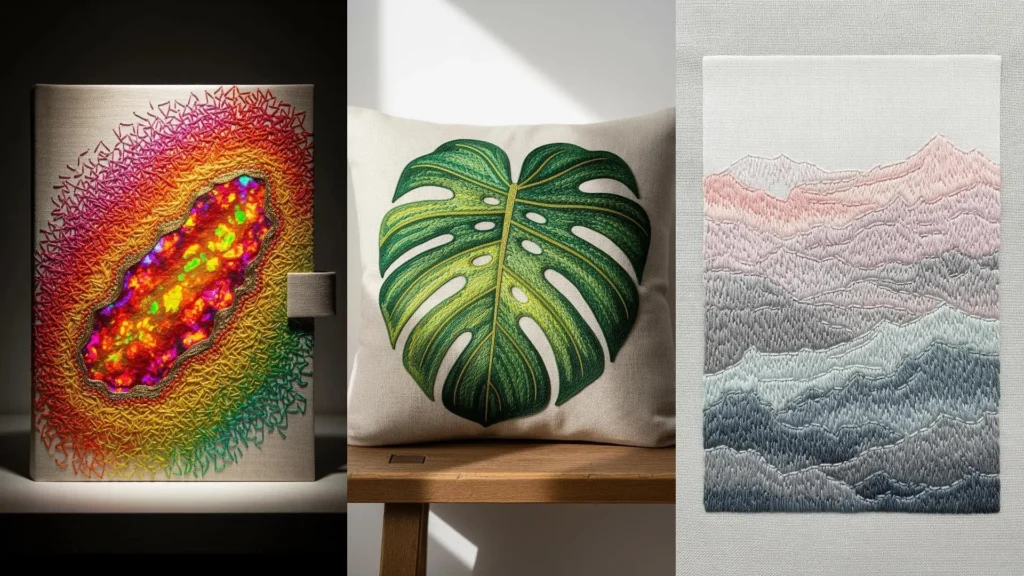
You sit with a needle in hand, ready to create, but you feel a familiar hesitation. You want your work to feel more than just proficient—you want it to feel intentional, alive, and uniquely yours. You’re ready to move beyond just following a pattern and start making design choices that have real impact.
This is where variegated thread changes everything. It’s not a shortcut or a novelty; it’s a strategic partner in your creative process. Each strand holds a pre-blended palette, offering you the chance to create painterly gradients, organic textures, and subtle shifts in light without ever changing your thread.
The secret is learning to control it. By understanding how stitch direction, length, and density can influence the color flow, you unlock its true potential. Think of it as painting with thread—and you’re about to discover how to wield that brush with confidence and artistry.
1. Paint a Landscape with a Single Thread
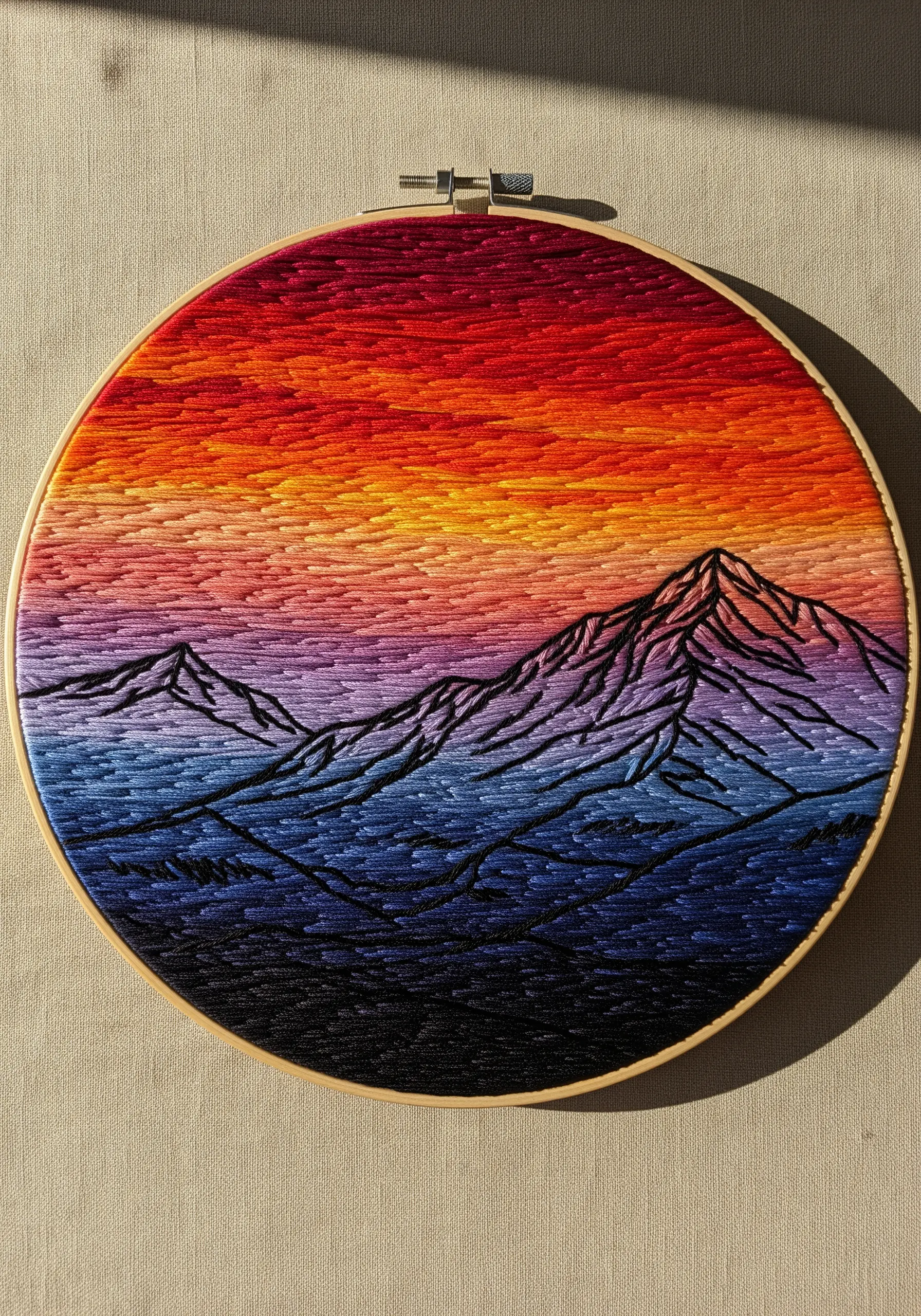
Create a painterly sky by filling the background with dense, slightly varied satin stitches.
Let a single variegated thread do all the color-blending work, allowing the sunset tones to emerge organically as you stitch across the hoop.
Keep your stitches mostly horizontal to create a serene horizon line, but slightly alter their length and angle to build a subtle, cloud-like texture.
The sharp, black backstitched mountains provide a grounding contrast that makes the colorful sky feel even more vibrant and dynamic.
2. Sculpt an Organic Coral Reef with Knots

Build extraordinary dimension by grouping French knots and colonial knots together to form coral clusters.
Using variegated thread for these knots is key; the automatic color shifts within each knot mimic the mottled, organic appearance of living coral.
For a richer, more realistic texture, vary the number of thread strands and wraps for each knot—some larger and looser, others small and tight.
Stitching on a dark, high-contrast fabric like navy or black canvas makes these fluorescent colors appear to glow, just like a reef under water.
3. Achieve Architectural Depth with Thread Wrapping
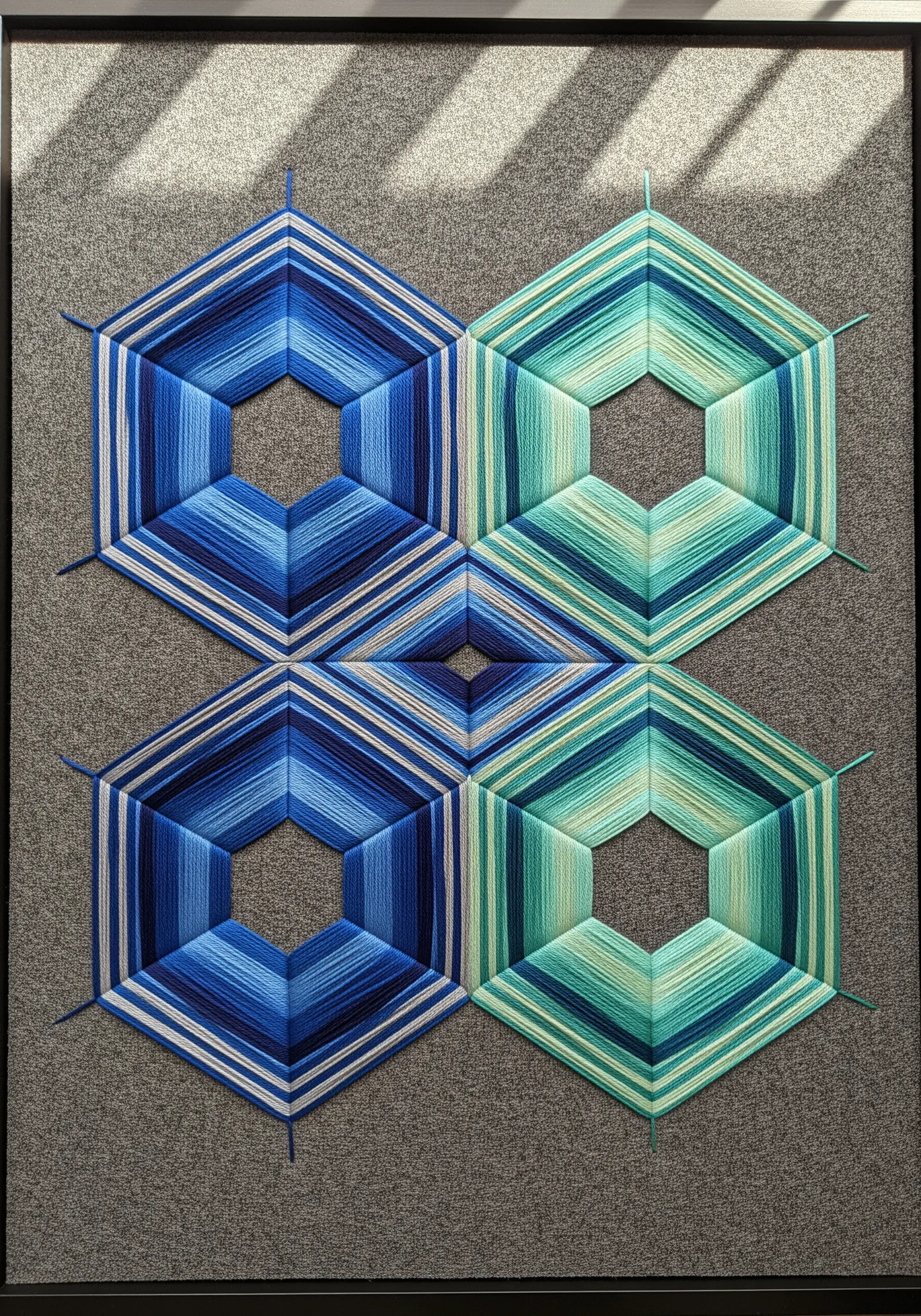
Explore string art by wrapping variegated thread or yarn around strategically placed pins to create geometric forms.
This technique showcases the long, gradual color changes in variegated thread beautifully, as each wrapped line contributes to a larger, mesmerizing gradient.
The tension and precision of the wrapped thread create an illusion of three-dimensional planes and shadows, turning a flat surface into a piece of architectural art.
Mount your finished work on a textured fabric like felt to add softness and absorb sound, making it a sophisticated piece of wall decor.
4. Stitch Botanical Realism into Home Décor

To embroider a realistic leaf, use the long-and-short stitch, always angling your stitches to follow the natural direction of the plant’s veins.
A green variegated thread eliminates the need for constant color switching, automatically creating subtle highlights and shadows that mimic how light hits a real leaf.
Adding the central vein in a contrasting solid color, like a sharp yellow, provides a graphic element that defines the form and makes the green gradients pop.
This technique translates beautifully to functional items, making it perfect for custom embroidery pillow ideas.
5. Capture Iridescence with Variegated Thread Painting

The shimmer of a peacock feather is the perfect subject for variegated thread.
Use long, fanning satin stitches for the feather’s barbs, allowing the thread’s natural blue-to-green shifts to create an iridescent effect with zero effort.
For the central ‘eye,’ stitch concentric satin stitch ovals with different variegated threads—a blue/purple and a green/gold—to build that iconic, layered jewel tone.
The key is to embrace the randomness of the color changes; it’s what makes the final piece look so natural and dynamic.
6. Embroider a Cosmic Swirl on Denim
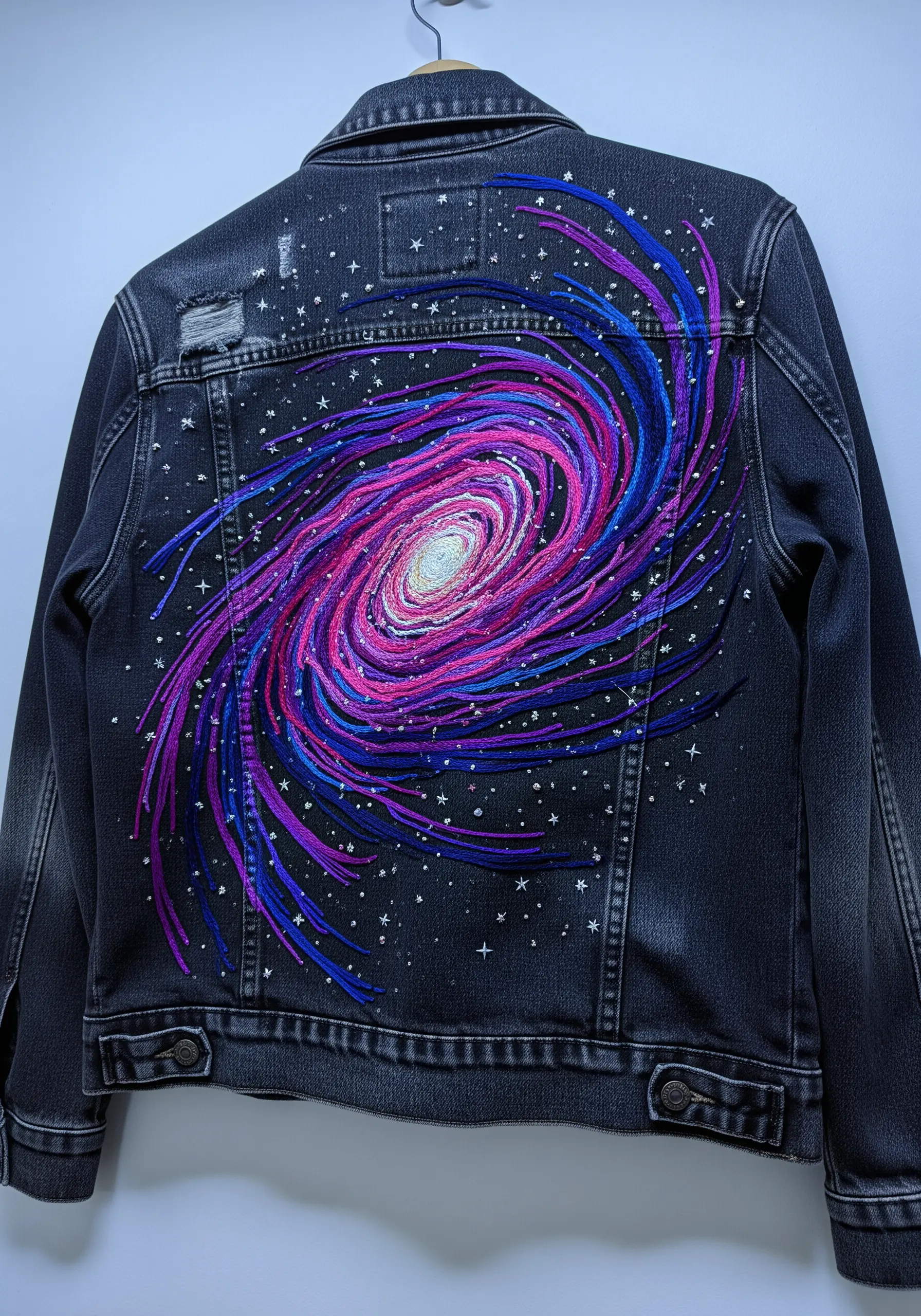
Transform a simple denim jacket into a piece of wearable art by stitching a swirling galaxy on the back.
Use a simple backstitch or chain stitch in a bright, cosmic-colored variegated thread, following a spiral pattern to create the arms of the galaxy.
The thread’s automatic color shifts from pink to purple to blue will create the illusion of a vibrant, churning nebula without changing floss.
Finish the look by scattering tiny white straight stitches or French knots to represent distant stars. This is one of my favorite aesthetic embroidery ideas to turn your old clothes into art.
7. Replicate Natural Agate with Couched Yarn

Mimic the organic, concentric rings of a geode or agate slice with couching, a technique perfect for thick, textural fibers.
Lay down a variegated yarn or wool roving in irregular, looping shapes, then use a thinner, coordinating thread to tack it securely to the fabric.
The chunky texture combined with the slow, earthy color changes of the variegated yarn results in a piece of tactile, organic wall art.
This method is a fast and impactful way to create large-scale fiber art.
8. Map Color Flow with a Stitch Sampler

Before starting a large project, create a sampler to understand how your variegated thread behaves with different stitches.
Work small squares of basketweave, chain stitch, cross-stitch, and satin stitch to see how stitch length and direction influence the color pattern.
A satin stitch will create clear stripes, while a seed stitch will produce a confetti-like mix of colors.
This exercise builds your intuition, allowing you to choose the perfect stitch to achieve the effect you want in future projects, like in nature-themed embroidery samplers.
9. Add Effortless Depth to Simple Florals

When stitching lavender, use detached chain stitches with a purple variegated thread for the individual buds.
The subtle shifts from light to dark purple within the thread will give each tiny bud its own dimension, creating a much more realistic and less flat appearance than a solid color would.
This small adjustment elevates a simple floral motif, making it look more detailed and professional with no extra work.
The high contrast on a black canvas tote bag makes the delicate color variations even more noticeable and turns plain tote bags into mini nature gardens.
10. Build a High-Texture Forest Floor

Create a lush, dimensional landscape by combining embroidery with a printed fabric background.
Use several different green and brown variegated threads to fill the foreground with dense clusters of French knots, colonial knots, and turkey work.
This technique builds a rich, touchable texture that mimics a mossy forest floor, with the threads blending together to create a complex, organic palette.
The combination of flat print and dimensional stitching creates an incredible sense of depth, turning your hoop into a window to another world of high-texture fabric collage embroidery.
11. Achieving Feather-Like Iridescence

This is where variegated thread truly shines—capturing the impossible colors of nature.
To create the shimmering throat of a hummingbird, use tiny, angled long-and-short stitches, laying them down like microscopic feathers.
Let the variegated thread’s color changes do the work of creating that magical, iridescent shift from magenta to gold to turquoise.
The success of these tiny hummingbird embroidery ideas lies in keeping your stitches tight and uniform in their direction within each section.
12. Radiate Energy with Abstract Straight Stitches

You can create a surprisingly dynamic piece using only the simplest stitch: the straight stitch.
Start from a central point and radiate stitches outward, varying their length as you go.
Using a variegated thread with a quick color change—like this red, orange, and yellow—causes the colors to place themselves randomly, resulting in a vibrant, explosive sunburst effect.
This technique is a fast, meditative way to create impactful modern thread art.
13. Create Shimmering Patterns with Satin Stitch
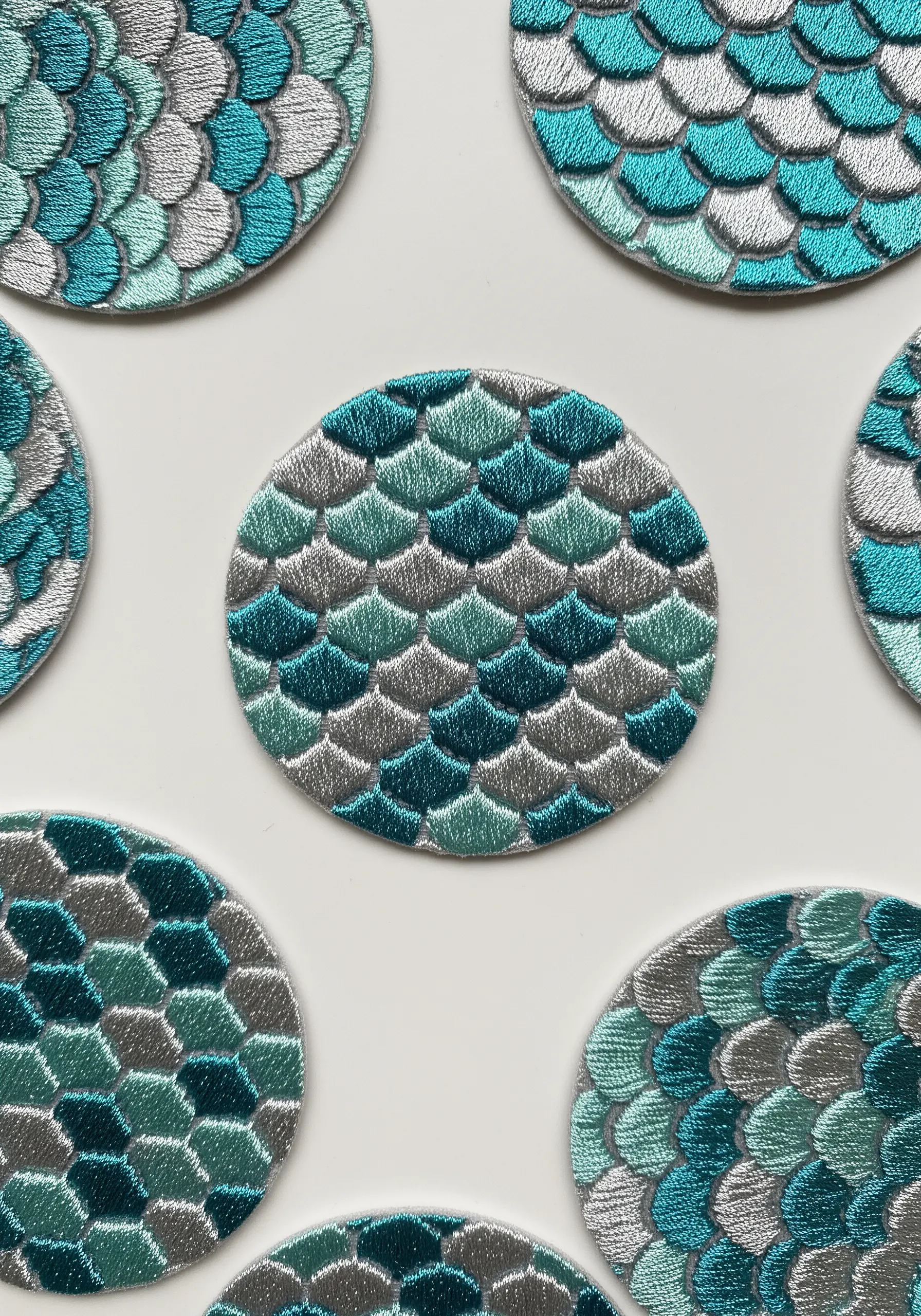
For a repeating motif like fish scales, filling each shape with satin stitch is perfect for showcasing a variegated thread.
The secret to a natural, shimmering look is to intentionally vary the starting point of your thread for each scale.
This prevents the colors from lining up in unnatural-looking stripes and instead creates a beautiful, random distribution of color across the entire surface.
This approach works beautifully for coasters, patches, or any project with a repeating geometric element.
14. Stitch the Ethereal Glow of the Northern Lights

Capture the fluid, dancing movement of the aurora borealis with long, vertical straight stitches.
Use a variegated thread with greens, blues, and purples, and vary the length and density of your stitches to create a translucent, glowing effect against a black canvas.
To create the reflection in the water, switch to long, slightly wavy horizontal stitches with the same thread, mirroring the colors of the sky.
A few scattered white French knots for stars will complete this magical night scene.
15. Blend an Autumnal Gradient in a Single Leaf

To achieve a seamless gradient from one color to another, divide your shape into sections and use a different variegated thread for each.
Here, the leaf is split into three zones, using a red, an orange, and a yellow variegated floss.
By filling each section with a long-and-short stitch, the colors within each thread blend softly, and the transitions between the sections appear natural and painterly.
You can adapt this technique to all kinds of hand embroidery leaf patterns for a realistic look.
16. Make a Graphic Impact with Variegated Outlines

You don’t always need to fill a shape to make a statement. Sometimes, a bold outline is more powerful.
Use a simple backstitch or stem stitch to create graphic patterns like chevrons, spirals, or waves.
When you use a brightly colored variegated thread, the focus shifts to the dynamic play of color along the line itself.
This is a quick and modern embroidery style that works exceptionally well on non-traditional materials like felt or cork.
17. Discover Meditative Gradients in Mandala Art

The repetitive, symmetrical nature of a mandala provides the perfect canvas for a variegated thread.
As you stitch the repeating petals and lines, the thread’s colors will shift and arrange themselves into a beautifully balanced, harmonious pattern.
Using a single variegated floss throughout the design ensures a cohesive and calming aesthetic, making it an ideal project for mindful stitching.
The magic is in letting go and watching the colors unfold on their own.
18. Engineer Delicate, Three-Dimensional Wings
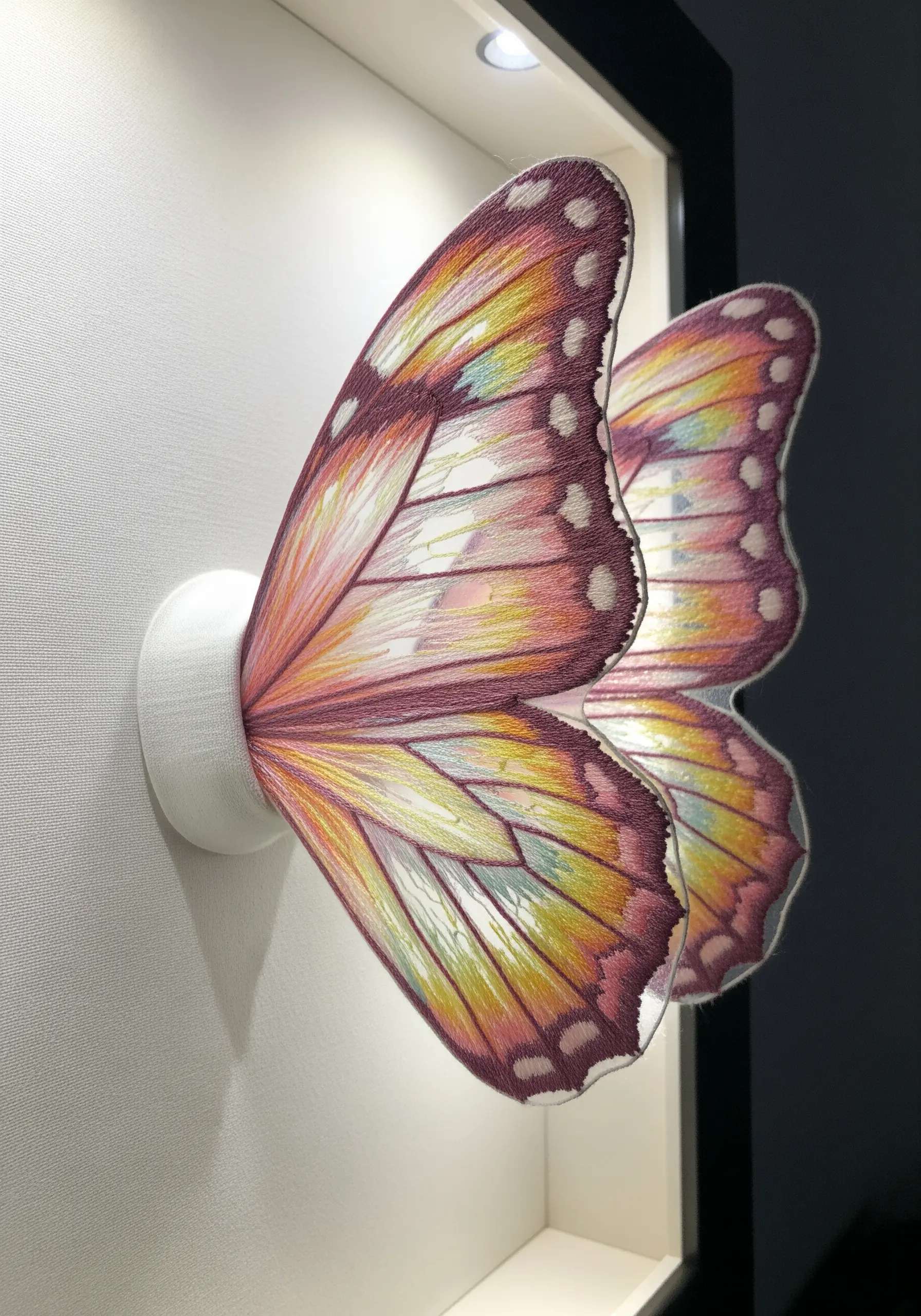
To create freestanding embroidered elements like these butterfly wings, you’ll need to work on a sheer or dissolvable stabilizer.
Use a single strand of variegated floss and tiny, precise long-and-short stitches to create the delicate, painterly gradients of a real butterfly wing.
Once the embroidery is complete and the stabilizer is removed, you can gently shape the wings and mount them to create a stunning 3D art piece.
The key is patience and precision with each stitch.
19. Capture the Energy of a Wave with Directional Stitching

To make your embroidery feel alive with movement, always align your stitches with the direction of the object you’re depicting.
For this crashing wave, use long, curved satin stitches that follow the swell and curl of the water.
A blue-green variegated thread will automatically create highlights and shadows, enhancing the sense of motion and depth.
Contrast the smooth, flowing stitches of the wave with chaotic clusters of white French knots for the turbulent sea foam.
20. Create Abstract Texture with Variegated Seed Stitch

Fill a large area with a dense field of seed stitch—tiny, randomly placed straight stitches—using a rainbow variegated thread.
This technique creates a stunning, pointillist effect where the individual colors blend visually from a distance, resulting in a highly textured surface.
Use this as a background fill and frame a central appliqué element, like a piece of iridescent fabric, to create a focal point.
It’s a beautiful way of combining paper layers with subtle embroidery on a journal cover or canvas.
21. Layer Atmosphere in a Mountain Landscape

Create a sense of atmospheric perspective—the way things look hazier in the distance—using a clever selection of variegated threads.
For the farthest mountain range, choose a muted, low-contrast variegated thread, like a soft pink and gray.
For each subsequent layer moving closer to the viewer, use a thread with slightly more contrast and saturation.
This subtle progression of color intensity tricks the eye into seeing depth and distance in a flat piece.
22. Weave Color Blocks with Variegated Yarn

Explore the intersection of weaving and embroidery by creating small, woven patches on your fabric.
Using a chunky variegated yarn or wool roving for a simple plain weave creates a beautiful checkerboard pattern of color.
You’ll notice that the colors pool and shift in a completely different way than they do in stitching, offering a new way to play with texture and gradient in your fiber art.
23. Compose a Sampler of Earth-Toned Textures

Move beyond flat stitches and dedicate a sampler to exploring texture with variegated thread.
Experiment with woven wheel stitches, whipped backstitch, knotted chain stitches, and couching to see how each technique interacts with the thread’s color changes.
Some stitches will blend the colors smoothly, while others will create distinct blocks of texture.
This is a wonderful way to develop a personal library of stitches for future organic embroidery designs.
24. Illustrate the Four Seasons in a Single Tree

Use variegated thread to tell a visual story within one cohesive design.
Divide a motif like the Tree of Life into four distinct sections, and assign each one a different variegated thread that represents a season: a bright green for spring, a golden yellow for summer, a fiery red-orange for autumn, and a stark brown-white for winter.
The result is a powerful and elegant piece of narrative art where the color does all the talking.
25. Add a Minimalist Gradient Patch to Apparel

Sometimes the simplest application is the most effective.
Create a small, circular patch by filling it entirely with clean, horizontal satin stitches.
Using a variegated thread with a beautiful gradient, like this sunset-inspired floss, allows the color to be the star of the show.
Appliquéing the finished patch onto a denim pocket is an easy way to create tiny embroidery patterns that make your clothes look custom-made.
26. Visualize a Personal Soundwave in Thread

Transform a meaningful sound—a loved one’s laugh, a line from a song—into a unique piece of abstract art.
Stitch the soundwave pattern using vertical straight stitches with a single, continuous strand of rainbow variegated thread.
As you stitch from left to right, the colors will flow across the waveform, creating a visual representation of the sound’s frequency and tone.
It’s a deeply personal and modern way to use embroidery to capture a memory.
27. Recreate Stained Glass with Luminous Fabric

While not embroidery in the traditional sense, this piece uses the same principle of variegated color to create a stunning effect.
Cut shapes from different colors of variegated or ombré satin fabric, which has a natural luminosity.
Appliqué these pieces onto a background and then couch thick black yarn over the seams to mimic the lead lines in a stained-glass window.
When hung in a window, the light will filter through, making the colors glow.
28. Mimic a Reptilian Sheen with Metallic Thread

To capture the unique, shimmering quality of snakeskin, you need a thread that plays with light.
Use a metallic variegated thread in a copper or bronze tone and fill each individual scale with a padded satin stitch.
The padding gives each scale a subtle, three-dimensional lift, while the metallic thread’s sheen and slight color variations will catch the light from different angles, creating a surprisingly realistic effect.
29. Create an Illusion of Transparency on Sheer Fabric

Stitch a delicate botanical like this fern on a semi-sheer fabric such as linen or organza.
Use a green variegated thread, but strategically vary the number of strands you use—or the density of your stitches.
In areas where you want the leaf to appear lighter and more translucent, use fewer strands. For darker, more opaque areas, use more.
When you hold the finished piece up to the light, this technique creates a breathtakingly realistic illusion of light filtering through the plant.
30. Blend a Pixel-Perfect Gradient with Cross-Stitch

If you want to achieve an incredibly smooth, airbrushed-style color transition, turn to cross-stitch.
By filling a large area on Aida cloth with tiny, uniform cross-stitches using a variegated thread, you break the color down into individual pixels.
The structured, grid-like nature of the stitches forces the colors to blend visually, resulting in a soft, flawless gradient that is difficult to achieve with other techniques.
31. Design Interactive Art for a Lampshade

When embroidering functional home décor, always consider how it will be used.
For this lampshade, the fireflies are stitched with a yellow and white variegated thread, while the background vines are a muted green.
When the lamp is off, it’s a lovely botanical scene. But when the light is switched on, the yellow bodies of the fireflies appear to glow, transforming the piece into an interactive and magical element in the room.
32. Add Dimension with a Touch of Beadwork

Elevate your variegated embroidery by incorporating a second texture, like beads.
First, fill your abstract shape with flowing satin stitches, letting the thread’s colors create a soft, organic gradient.
Then, go back in and strategically add a scattering of complementary beads. The hard, reflective surface of the beads provides a beautiful contrast to the soft sheen of the thread and adds a tactile element to your abstract mixed-media embroidery.
33. Elevate Table Linens with an Elegant Motif

For everyday items like cloth napkins, a single, beautifully executed motif is all you need to add a touch of luxury.
The fan-like shape of a ginkgo leaf is perfect for showing off the subtle color transitions of a variegated thread.
Fill the shape with clean, radiating satin stitches, allowing the yellow-to-gold gradient to create a sense of light and dimension.
It’s a simple, sophisticated way to make your old linen look brand new.
34. Build Perspective in a Floral Field

To create the illusion of depth in a landscape, you can manipulate the viewer’s perception of color.
For the tulips in the foreground, use a variegated thread with a high contrast between its lightest and darkest tones.
For the rows of tulips farther in the distance, switch to a variegated thread with a much more subtle, lower-contrast color shift.
This mimics atmospheric perspective, making the background recede and the foreground pop, which is a key element in many gradient color floral embroidery ideas.


