

Have you ever picked up a leaf, admiring its perfect shape, and wished you could transfer that exact authenticity into your embroidery? Moving beyond generic patterns to work with real, traced shapes is the secret to creating botanical art that feels personal and alive.
This isn’t just about tracing an outline. It’s about learning to see the way a leaf’s veins create direction, how its colors blend, and how its form can be translated through thread and stitch. Whether you’re aiming for hyperrealism or a modern, graphic interpretation, the foundation is always an authentic shape.
Here, you’ll find techniques to transform those simple tracings into sophisticated embroidery. We’ll explore how to choose the right stitch for a delicate fern versus a bold Monstera, how to use color to tell a seasonal story, and how to adapt your designs for any surface—from a denim jacket to a sheer curtain. Let’s begin.
1. Create a Dense Autumnal Tapestry
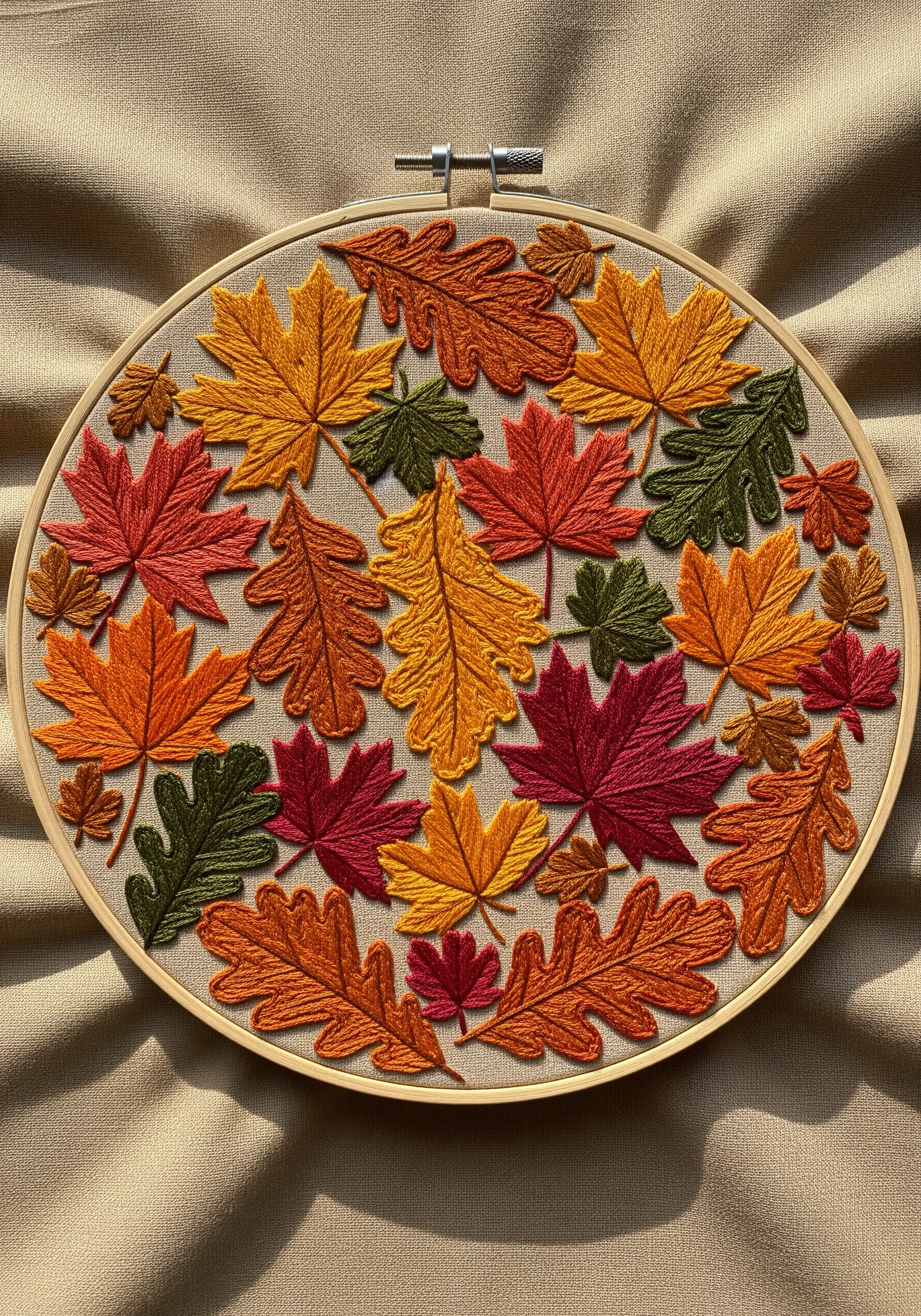
When composing a full hoop with multiple leaves, overlap their edges slightly to create a sense of depth and abundance.
Use a fishbone stitch or a satin stitch with a central vein to give each leaf a subtle three-dimensional quality.
Limit your palette to warm, analogous colors—rusts, golds, deep reds, and mossy greens—to ensure the composition feels cohesive rather than chaotic.
This technique transforms a simple collection of traced leaves into rich embroidery designs that turn everyday nature into stunning art.
2. Suggest Delicacy with Open Fill Stitches

For fine, feathery leaves like ferns, avoid a dense satin stitch which can appear heavy and stiff on home decor fabrics.
Instead, trace the leaf and use an open fill—like spaced straight stitches or fly stitches—following the natural direction of the fronds.
This approach allows the fabric’s color to show through, creating an airy, light, and modern aesthetic that feels integrated with the textile.
It’s an elegant way to make embroidered pillow covers that promote softness and visual calm.
3. Achieve Graphic Impact with Metallic Thread
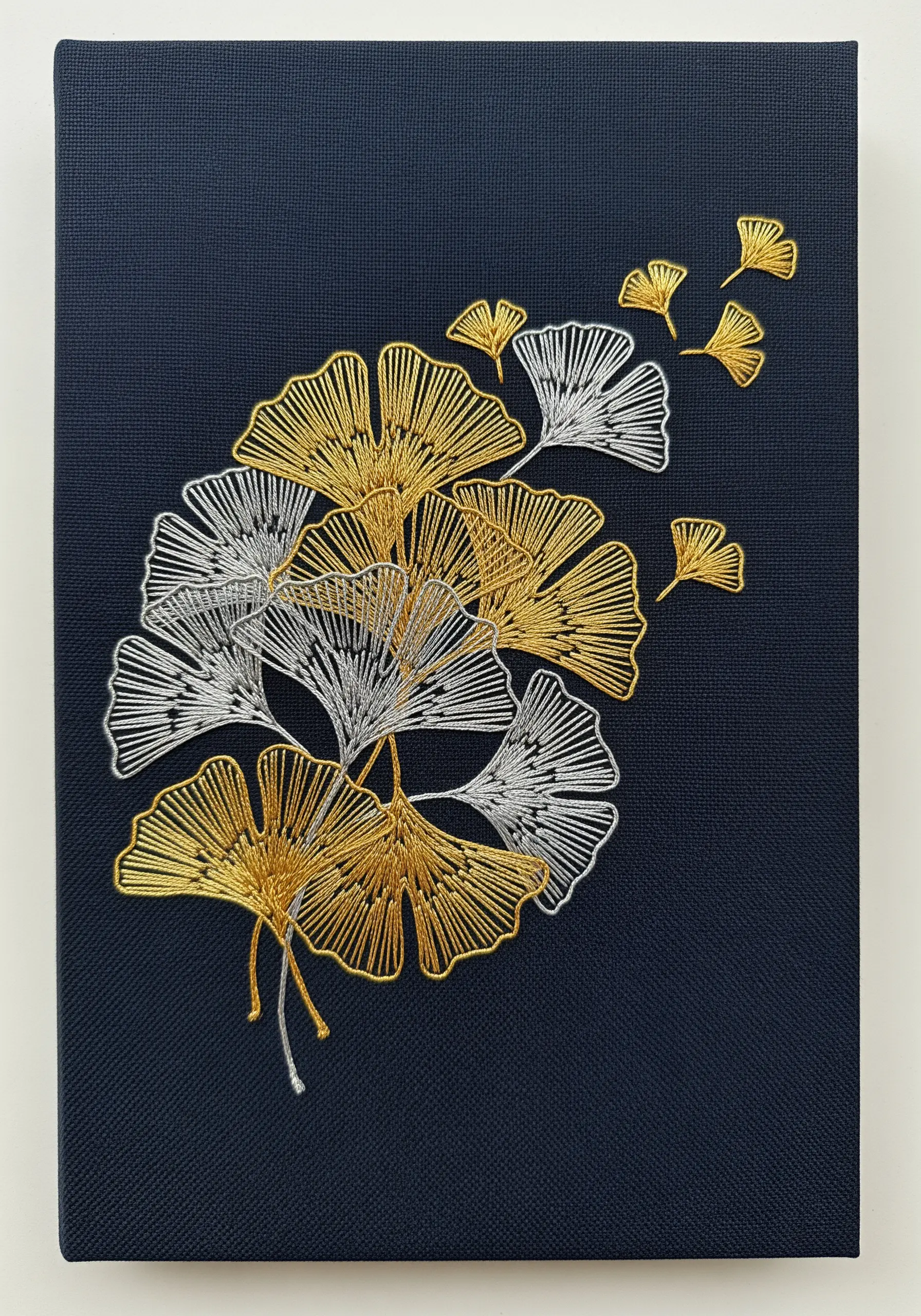
Combine the organic shape of a ginkgo leaf with the rigid precision of straight stitches for a stunning modern contrast.
On a dark, tightly woven canvas, metallic threads in gold and silver create a striking graphic effect that highlights the leaf’s iconic fan shape.
Work your stitches from the base of the leaf outwards, keeping them perfectly parallel to define the veins with sharp, clean lines.
This is one of the most effective metallic thread wall art projects for adding sophisticated, light-catching detail to your decor.
4. Adapt Leaf Outlines for Textured Fabrics

When embroidering on a textured surface like a waffle-weave towel, simplify your traced leaf designs to their essential outlines.
Use a stable, clear stitch like a backstitch or stem stitch with three strands of floss to ensure the lines don’t sink into the fabric’s grid.
This technique keeps the herb shapes recognizable and clean, making them perfect for functional textiles where intricate details might get lost.
It’s an ideal method for creating simple line art fruit & food motifs with a professional finish.
5. Translate Leaf Veins into Illustrative Line Art
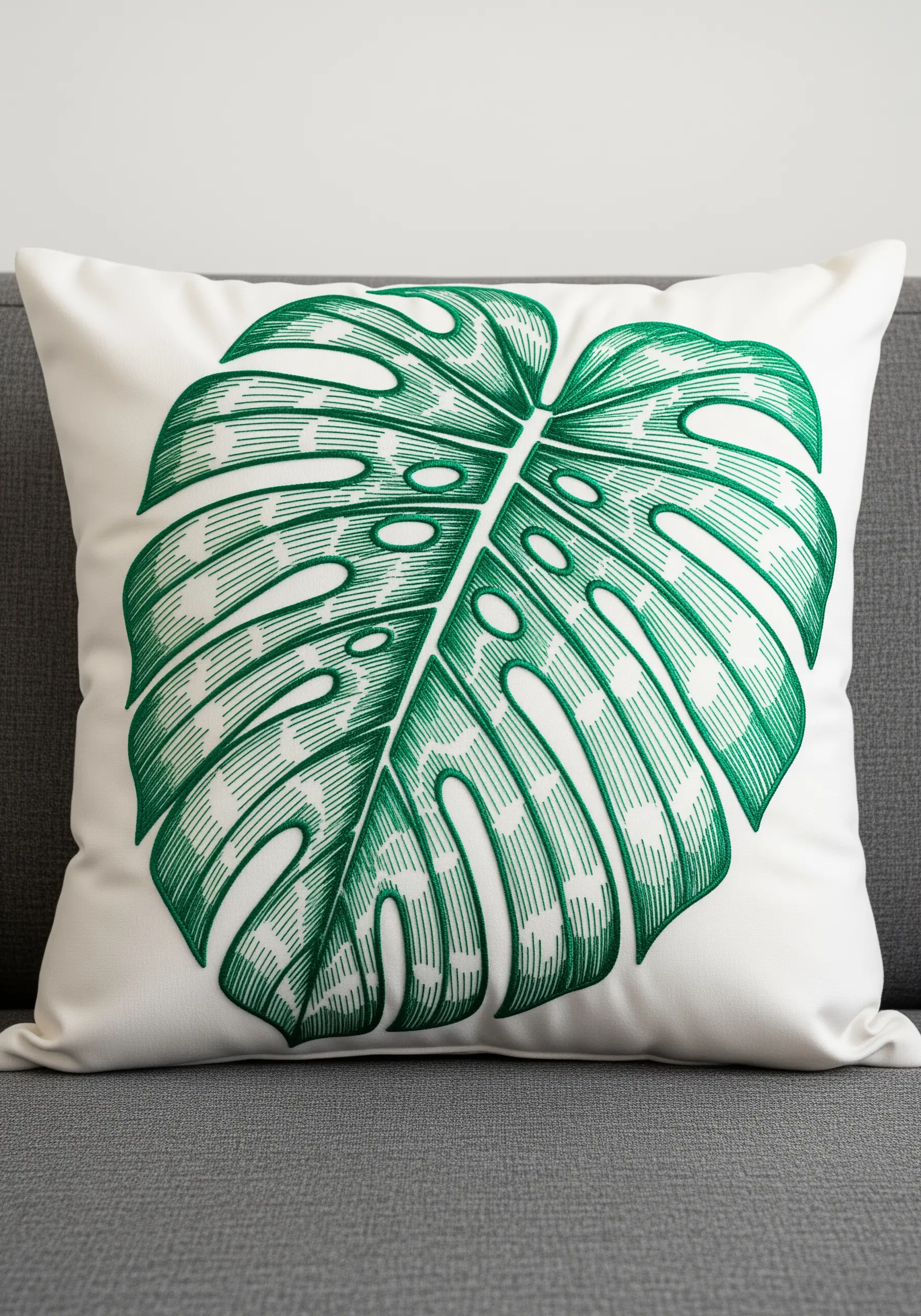
Turn a bold leaf like a Monstera into a piece of illustrative art by focusing entirely on its veins and fenestrations (the natural holes).
Instead of filling the entire leaf shape, use a split stitch or backstitch to trace every line, leaving the fabric underneath as part of the design.
This creates a stunning, graphic look that feels like a botanical drawing rendered in thread.
These bold, graphic tropical leaf embroidery designs make a powerful statement on pillows and tote bags.
6. Create Movement with Directional Satin Stitch
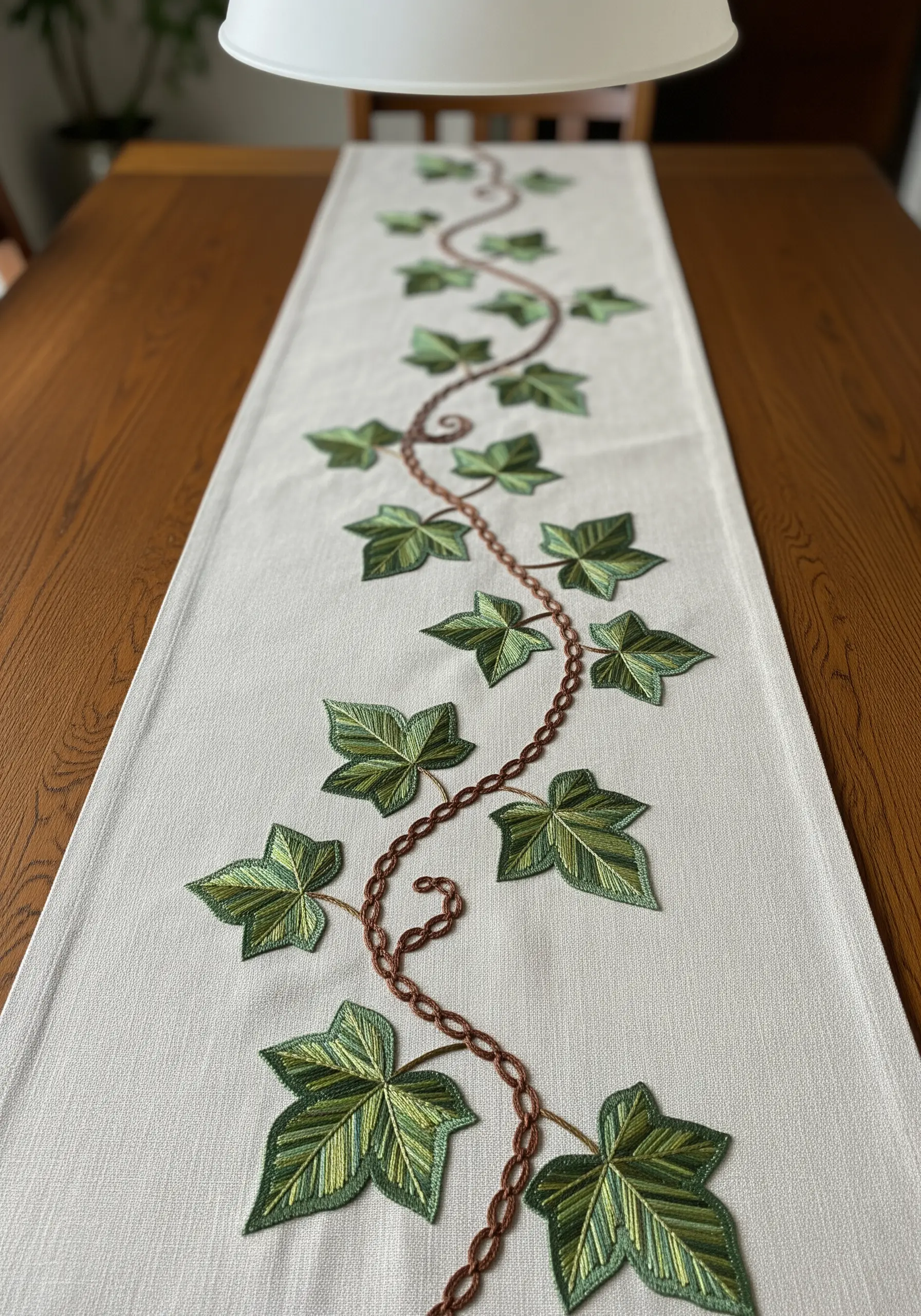
For multi-lobed leaves like ivy, use satin stitch in distinct sections to add dimension and realism.
Divide each leaf into segments based on its veins and stitch each section in a slightly different direction, following the natural flow of growth.
Blending two or three shades of green within each leaf enhances this effect, making the flat surface appear sculpted and dynamic.
This method is perfect for elegant, hand-stitched table runner embroidery designs that guide the eye down the length of the table.
7. Document Nature in a Botanical Sampler
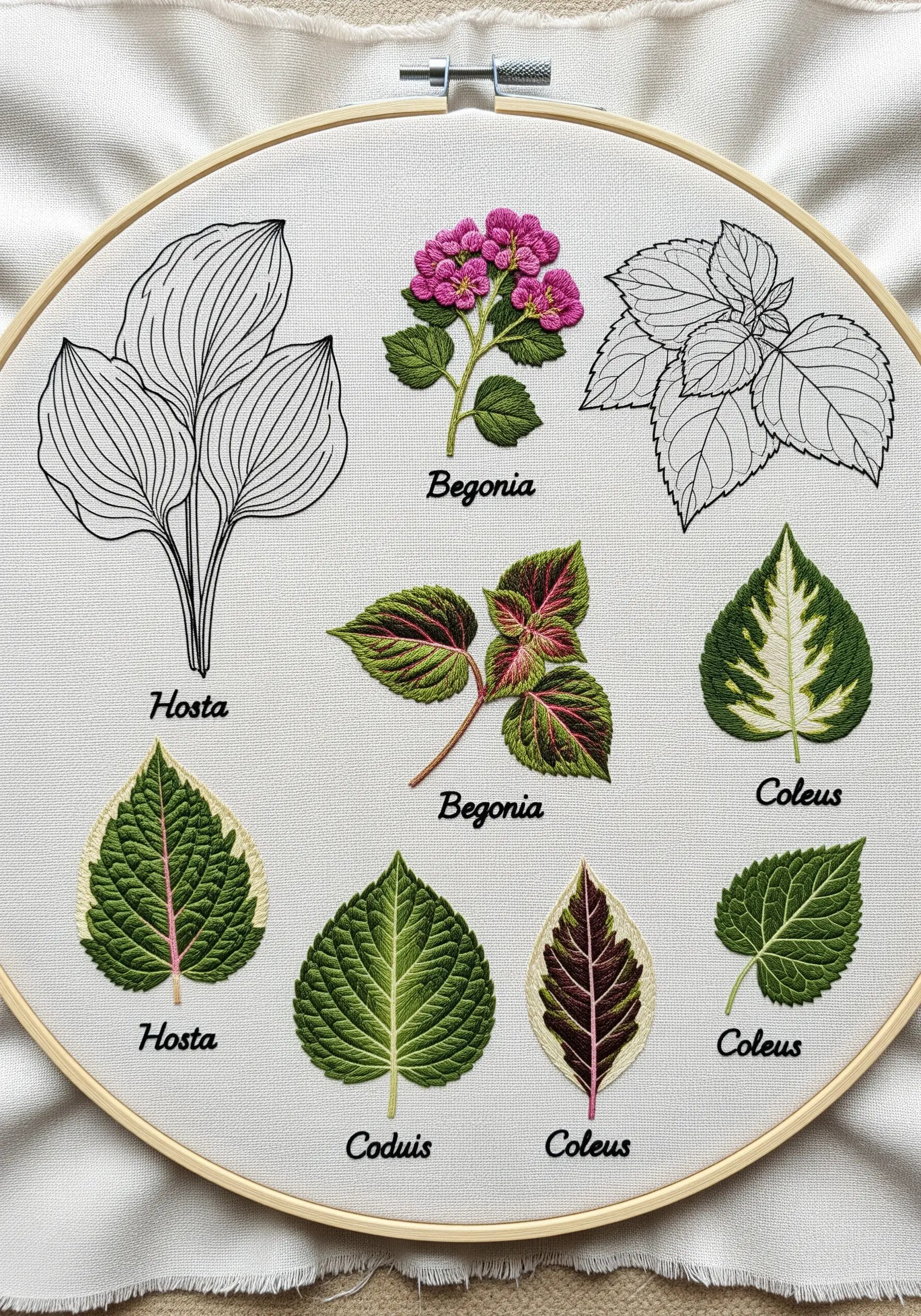
Elevate your leaf tracings by creating a botanical study hoop, combining line work with fully stitched examples.
For each plant species, render one version as a clean backstitch outline to show its structure, and another in full thread painting to explore its color and texture.
This side-by-side comparison not only looks visually compelling but also deepens your understanding of the plant’s form.
It’s one of the best ways to capture nature’s textures and forms in a single, educational piece.
8. Soften Denim with Muted Botanical Hues
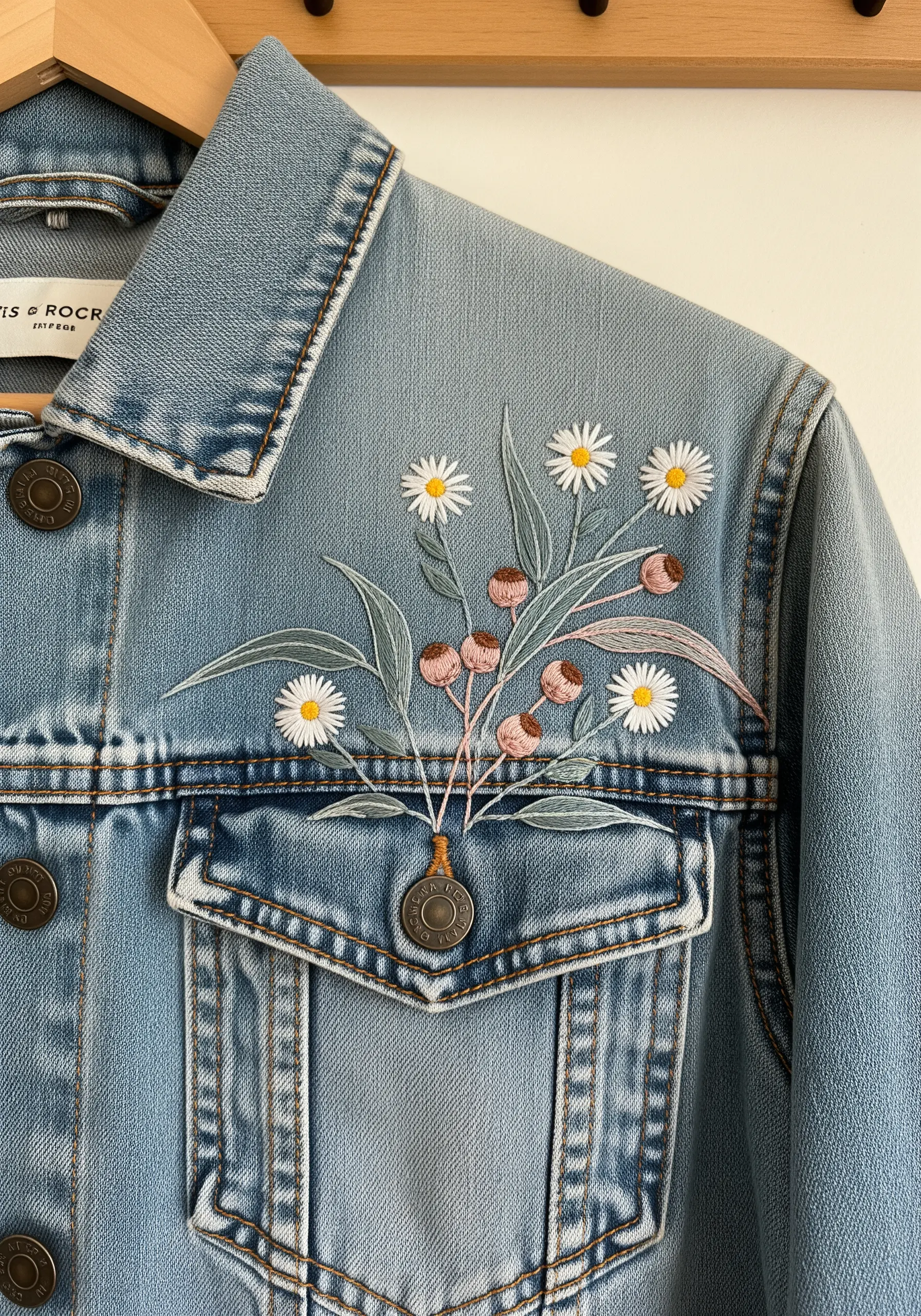
When stitching on a rugged fabric like denim, choose a soft, muted color palette to create an elegant contrast.
Dusty greens, pale pinks, and creams stand out beautifully against blue denim without looking harsh.
Use a stabilizer on the back of the fabric to prevent puckering, and opt for three strands of floss to give your stitches enough weight to sit proudly on the thick weave.
These are the kind of tiny embroidery ideas to personalize your denim jacket with an artistic, bespoke touch.
9. Emphasize Form with a Monochrome Palette
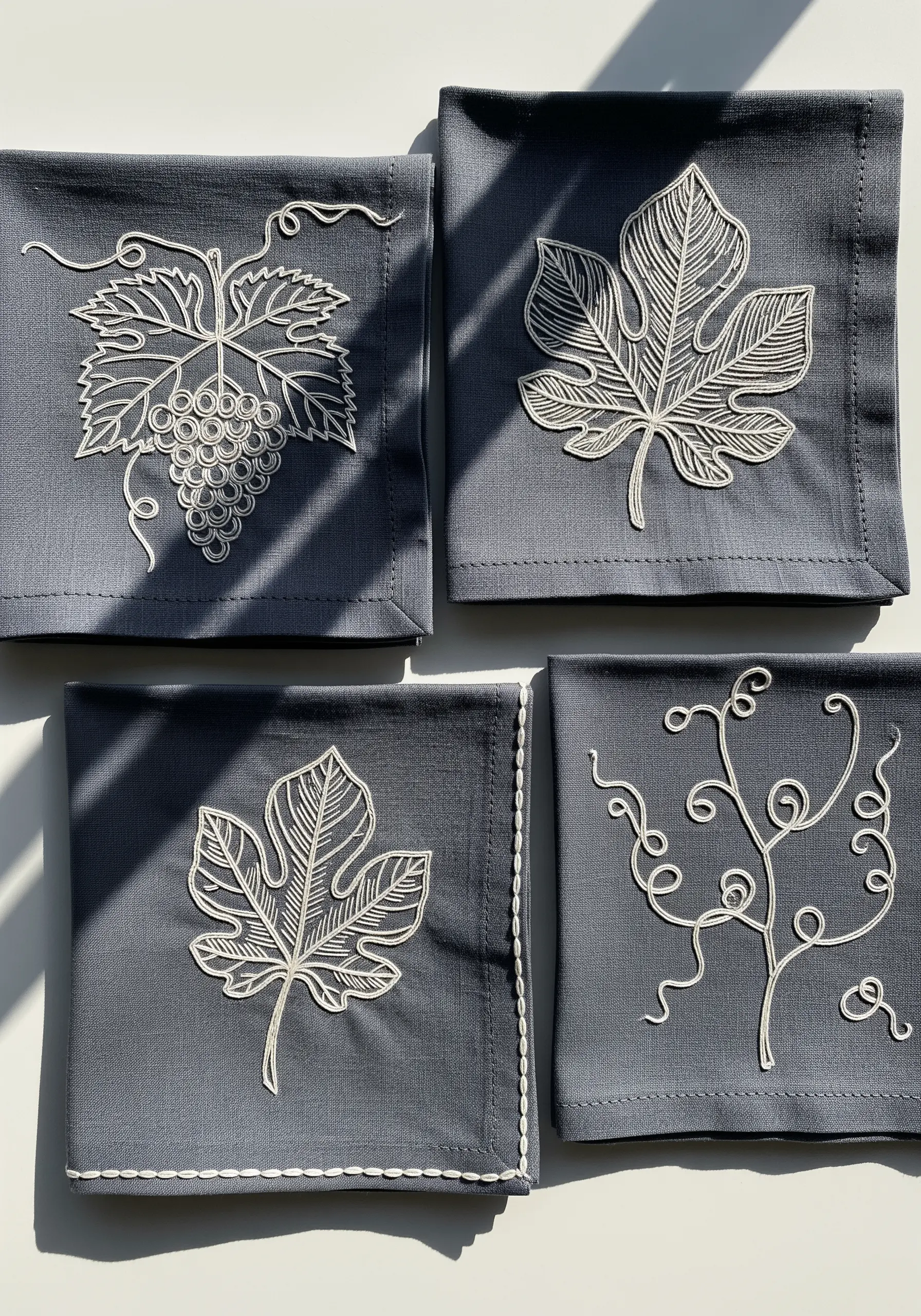
To highlight the pure, graphic beauty of a traced leaf, stitch it in a single color on a contrasting fabric.
Using white or off-white thread on a dark grey or black linen forces the eye to focus on the silhouette, the vein structure, and the texture of your stitches.
A whipped backstitch or stem stitch is perfect for creating raised, cord-like outlines that give the design a subtle sculptural quality.
Try these monochrome floral embroidery ideas for a chic, modern, and timeless aesthetic on table linens.
10. Translate Leaf Outlines into Large-Scale Fiber Art
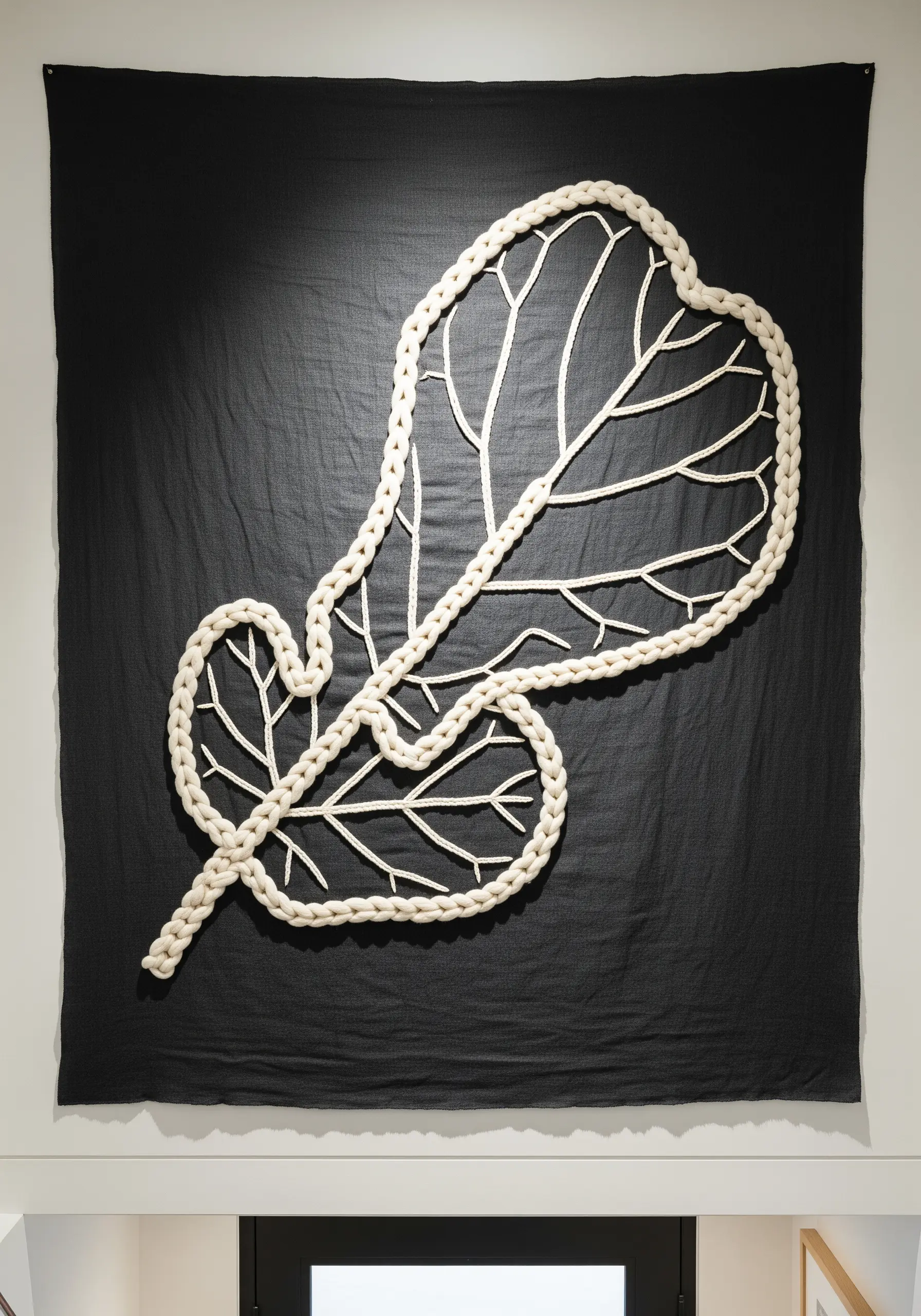
Take a simple traced leaf shape and amplify its impact by recreating it on a massive scale with thick materials like cotton rope or chunky yarn.
Instead of stitching through the fabric, couch the thick fiber onto the surface of a large canvas using a matching, thinner thread.
This technique transforms a delicate botanical sketch into a bold, textural wall hanging with dramatic presence.
Explore statement-size wall art ideas to turn your favorite leaf into the focal point of a room.
11. Tell a Seasonal Story with Color Blending

Use a single traced leaf, like a maple, to depict the passage of time through color.
Stitch a series of the same leaf, transitioning the palette from the fresh green of spring to the fiery reds of autumn, and finally to a stark white or silver outline for winter.
Employ long-and-short stitch to blend the colors within each leaf, creating a smooth, painterly gradient that looks incredibly realistic.
This method uses watercolor-style leaf embroidery blends to tell a beautiful, seasonal story.
12. Capture Leaf Variegation with Thread Painting
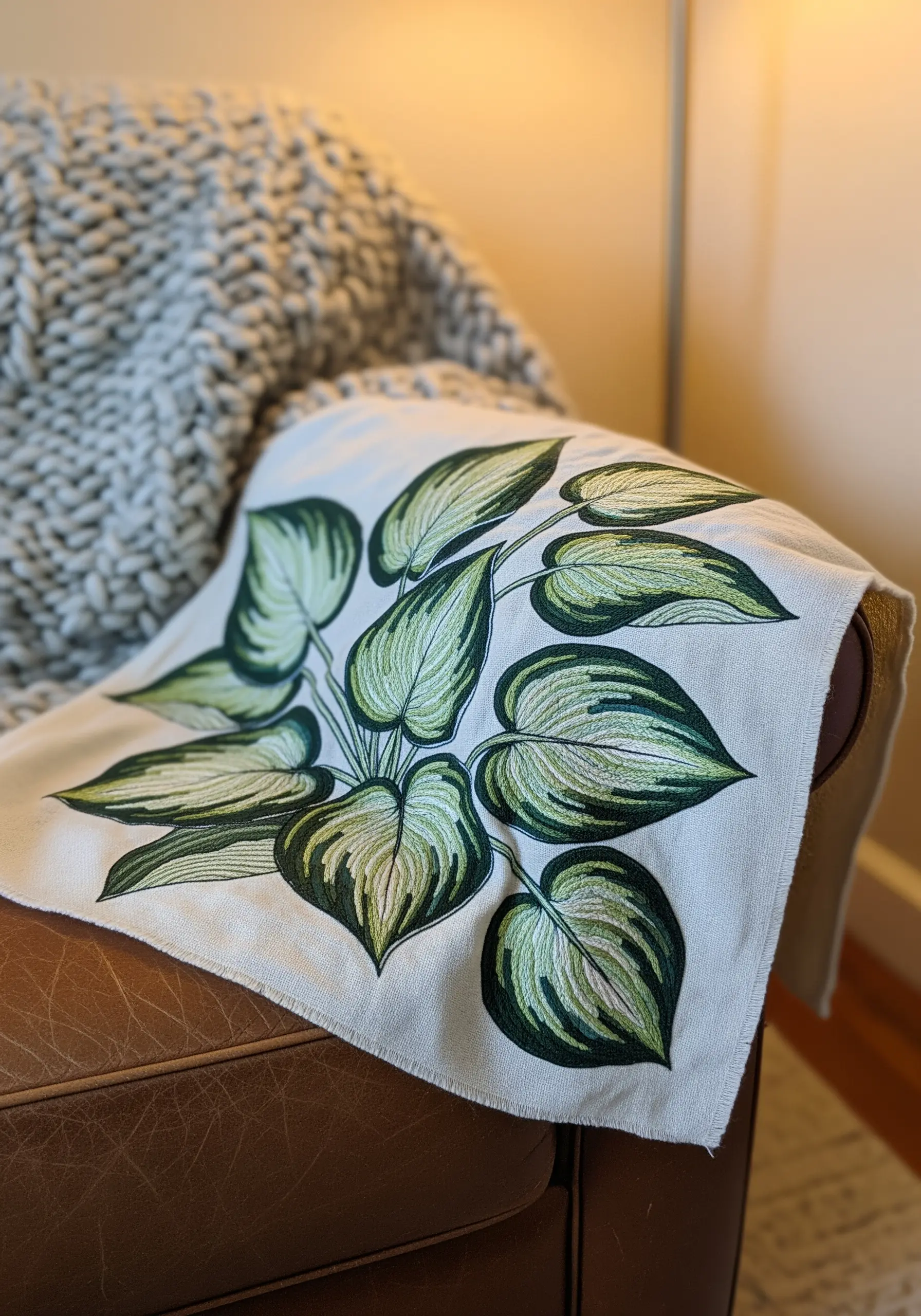
For leaves with natural color variations like Hostas, tracing the outline is only the first step. The magic is in the color placement.
Lightly sketch the variegated patterns within your traced outline, then use long-and-short stitch to fill each section, carefully blending the greens and creams together.
Finish with a dark backstitch for the veins to define the structure and make the color transitions pop.
Mastering these fern & foliage stitch variations adds a whole new level of realism to your work.
13. Recreate Delicate Details with Precision Stitches

When your traced design includes complex botanicals like Queen Anne’s Lace, the key is choosing the right stitch for each element.
Use a single strand of floss in a fern stitch for the delicate, lacy leaves. For the clustered flower heads, hundreds of tiny, closely packed French knots in off-white create the perfect fluffy texture.
This combination of stitches provides the realism and delicacy that a simple satin stitch could never achieve.
Practice these fine hand-embroidered flower stitches to bring your intricate tracings to life.
14. Integrate Embroidery with Your Living Space

Create a playful dialogue between your embroidery and your home by stitching a design that interacts with its surroundings.
Embroider a trailing vine, like this Pothos, onto a sheer curtain next to the actual plant. The light shining through the fabric will illuminate the stitches, connecting your art directly to the living source of its inspiration.
Use a variegated thread in your satin stitch to mimic the natural color variations in the real leaves.
This is a beautiful way to create botanical embroidery wall pieces that feel truly alive.
15. Build a Cohesive Botanical Patch Collection
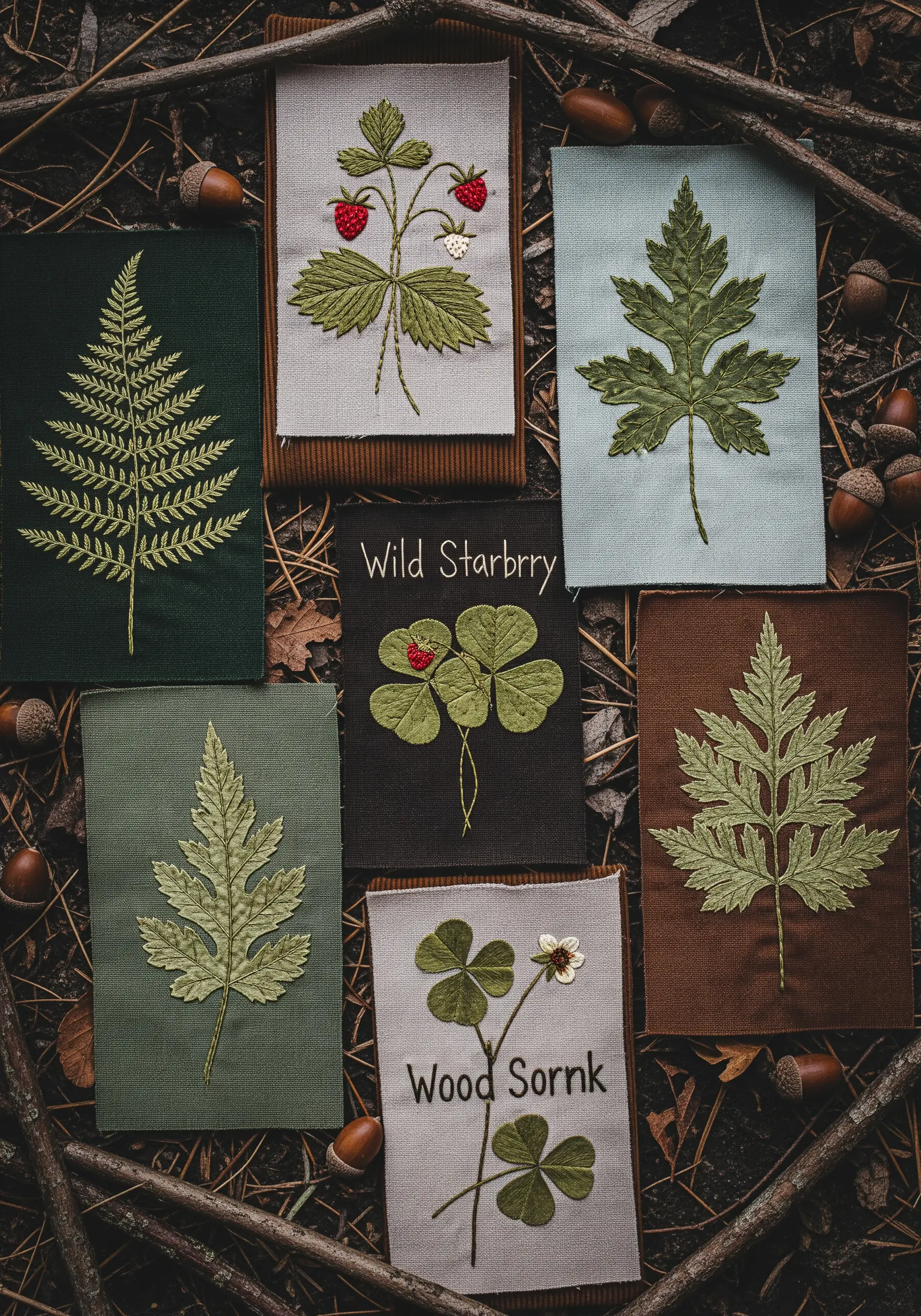
Turn your favorite garden leaf tracings into a set of collectible embroidered patches.
To ensure they look like a deliberate collection, stitch them on fabrics from a coordinated color family—like muted greens, blues, and browns.
Use a consistent stitch style, such as a detailed fishbone stitch, across all the patches to create a unifying visual language.
This approach elevates simple nature-inspired embroidery projects using leaves as real templates into a beautiful, curated set.
16. Stitch Ethereal Skeletons on Sheer Fabric
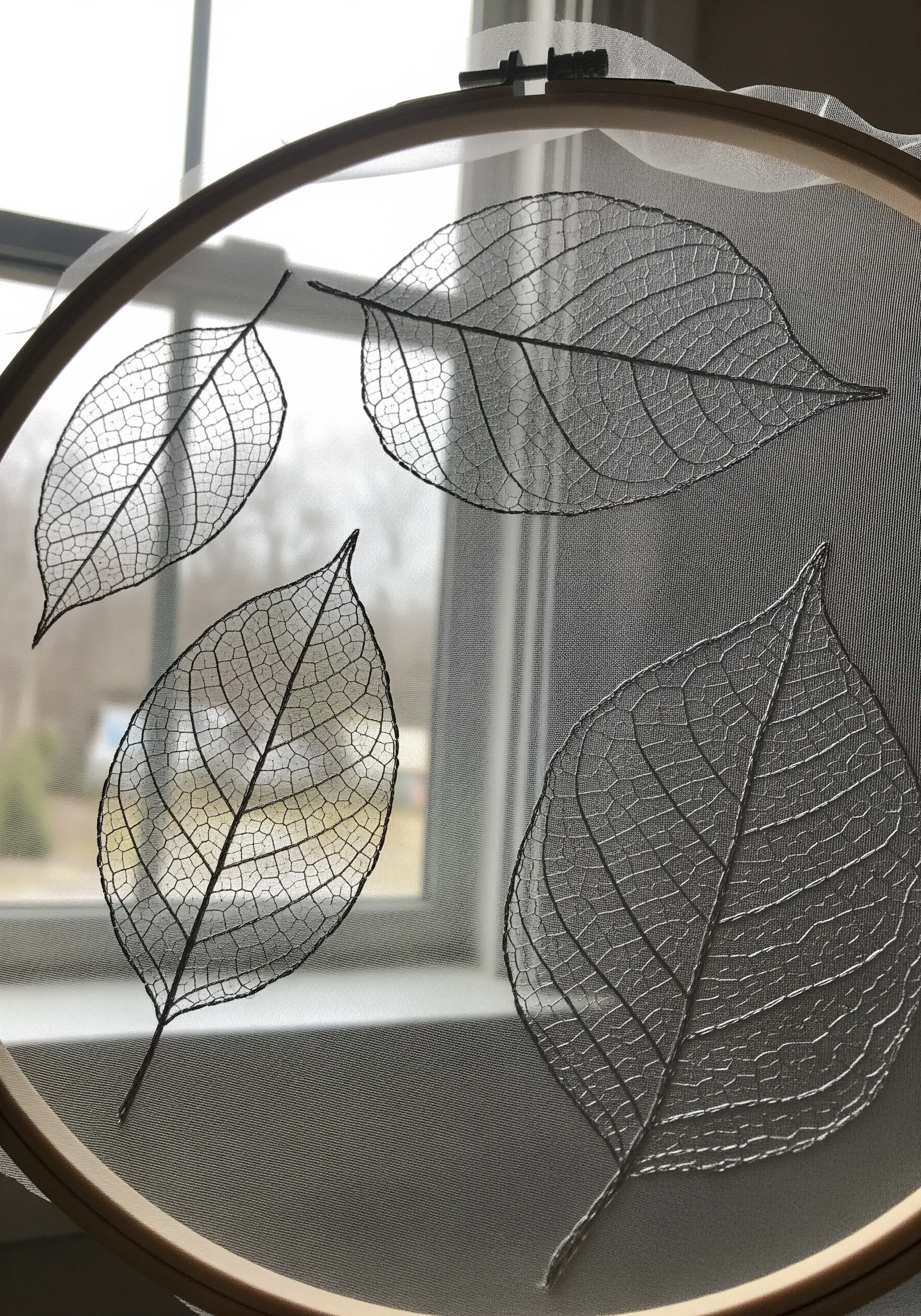
Capture the delicate structure of a skeleton leaf by stitching its veins onto a transparent fabric like tulle or organza.
Secure the sheer fabric tightly in your hoop, as it has more give than cotton or linen. Use a single strand of thread and a fine backstitch to trace only the veins, ignoring the leaf’s outer shape.
The result is a ghostly, floating image that celebrates the intricate, hidden architecture of nature.
Mastering these abstract thread illusion techniques creates breathtaking, museum-quality art.
17. Combine Couching and Satin Stitch for Bold Texture

For a high-impact, graphic leaf design, create a bold outline by couching thick yarn or multiple strands of floss onto your fabric.
Lay the thick thread along your traced outline and use a thinner, matching thread to tack it down every few millimeters.
Fill the interior sections with long, directional satin stitches in contrasting colors to create a design that has both a strong profile and rich internal texture.
Explore these creative embroidery ideas inspired by tree bark and leaves for more textural inspiration.


