
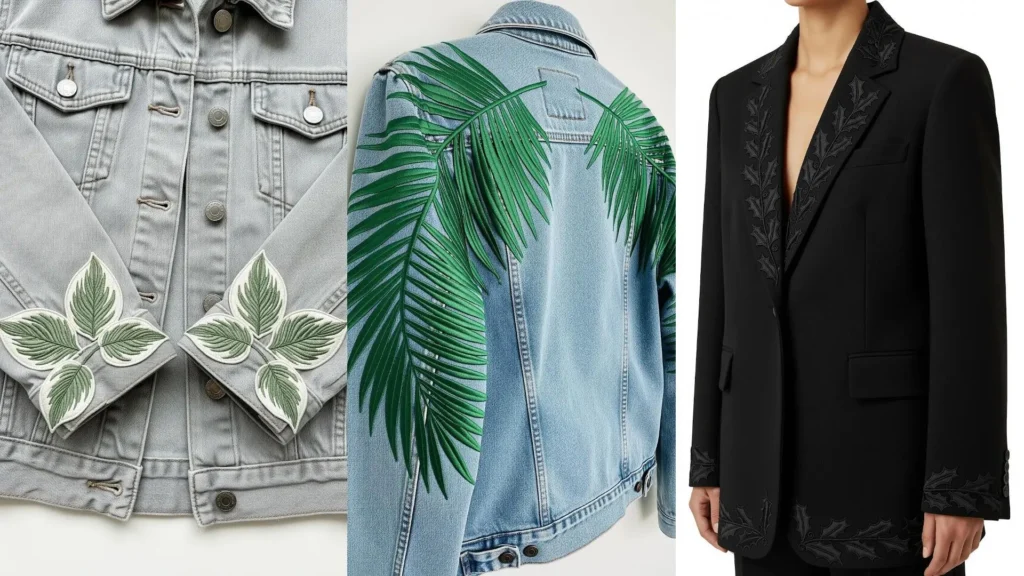
Embroidering on a jacket can feel like a big commitment, but it’s also one of the most rewarding ways to make a piece of clothing truly yours. The secret to a design that looks intentional and beautifully integrated—rather than just added on—often lies in the foliage you choose.
Leaves provide structure, flow, and texture. Whether it’s a single, bold monstera on the back, a delicate fern climbing up a sleeve, or a subtle tone-on-tone detail on a lapel, the right leaf shape can completely transform your garment. It’s not about complexity; it’s about making smart choices in placement, scale, and stitch.
Here, we’ll move beyond basic patterns and explore how different leaf shapes can work with the architecture of your jacket. You’ll learn how to use color, texture, and composition to create foliage that doesn’t just decorate your jacket, but becomes a part of its story.
1. Cascading Ginkgo in Metallic Thread
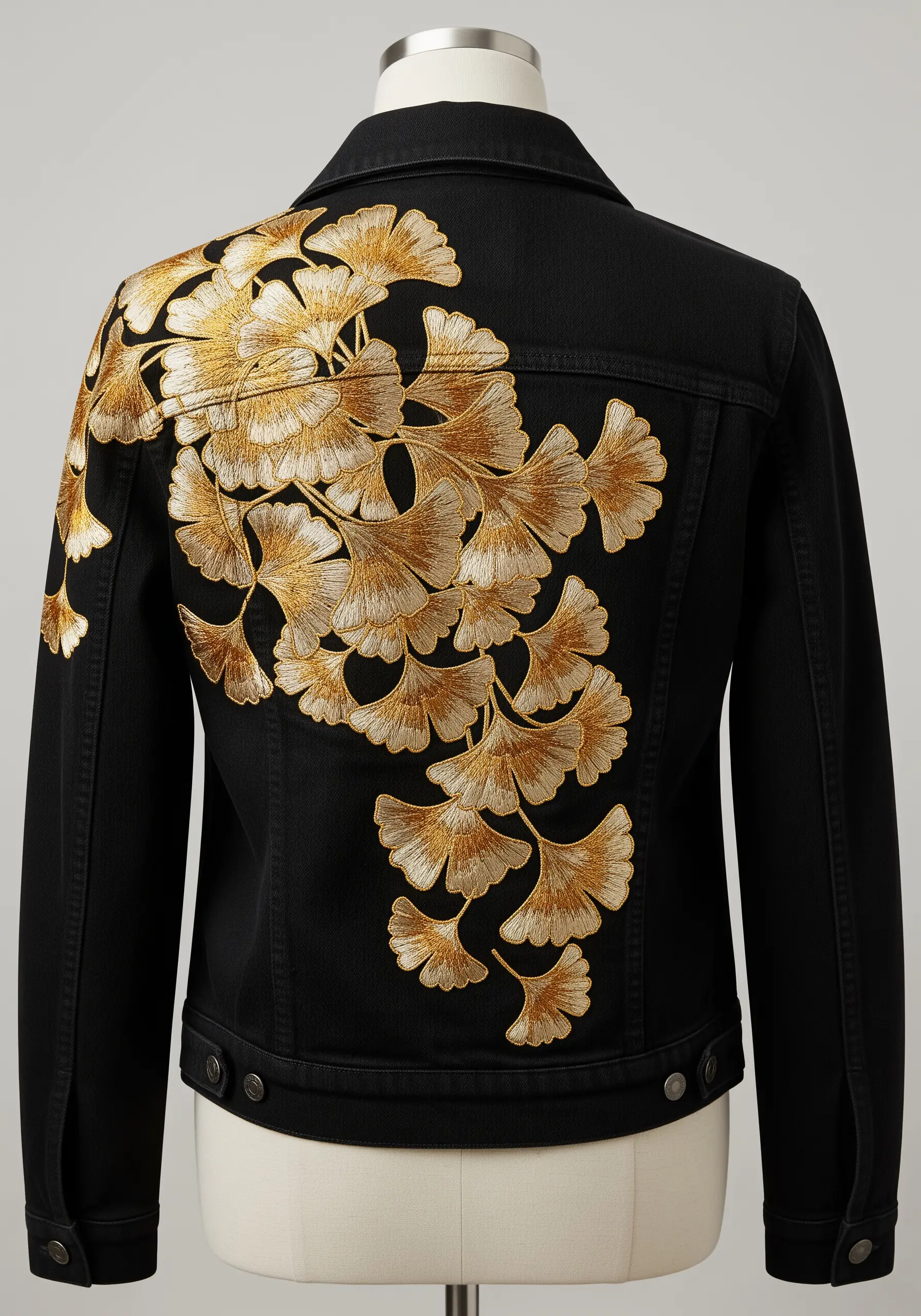
Create dramatic contrast by embroidering with gold metallic thread on a black denim jacket.
To prevent fraying, work with shorter lengths of metallic floss and use a thread conditioner—it makes stitching smoother and reduces tangles.
Vary the angle of your satin stitches within each leaf to follow its natural fan shape; this allows the metallic thread to catch the light from different directions, enhancing its shimmer.
An asymmetrical composition that drapes over one shoulder feels more organic and artistic than a centered design.
2. The Statement Monstera Back Piece
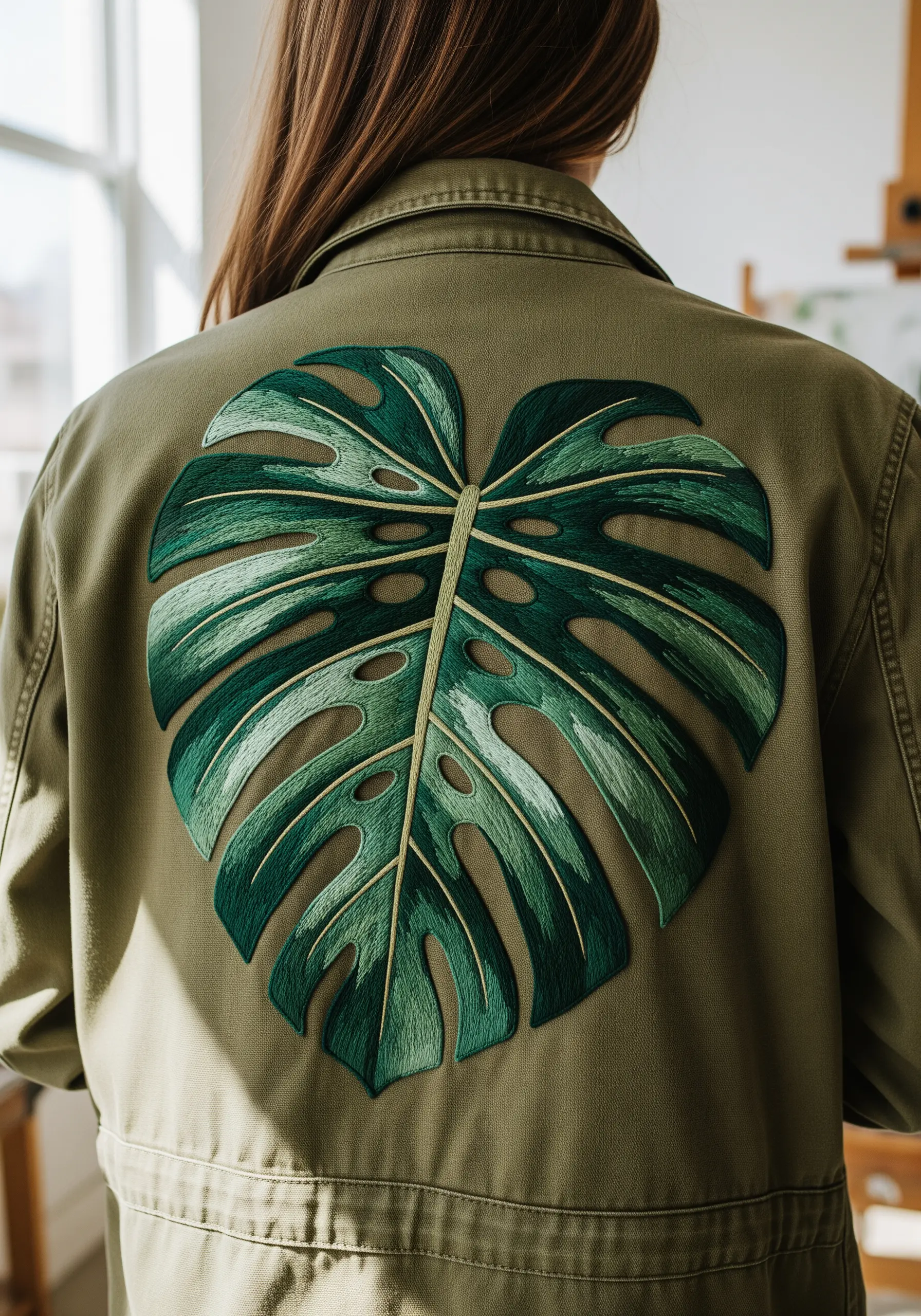
To fill a large area like this without puckering, use a high-quality, tear-away stabilizer on the back of your fabric.
Employ a long-and-short stitch instead of a classic satin stitch for a smooth, matte finish that resembles thread painting.
Incorporate at least three shades of green—a light, medium, and dark—to create highlights and shadows, which give the leaf realistic depth and form.
Define the entire silhouette with a crisp split stitch outline; this simple step gives your work a clean, professional, and store-bought finish.
3. A Minimalist Fern Sleeve Accent
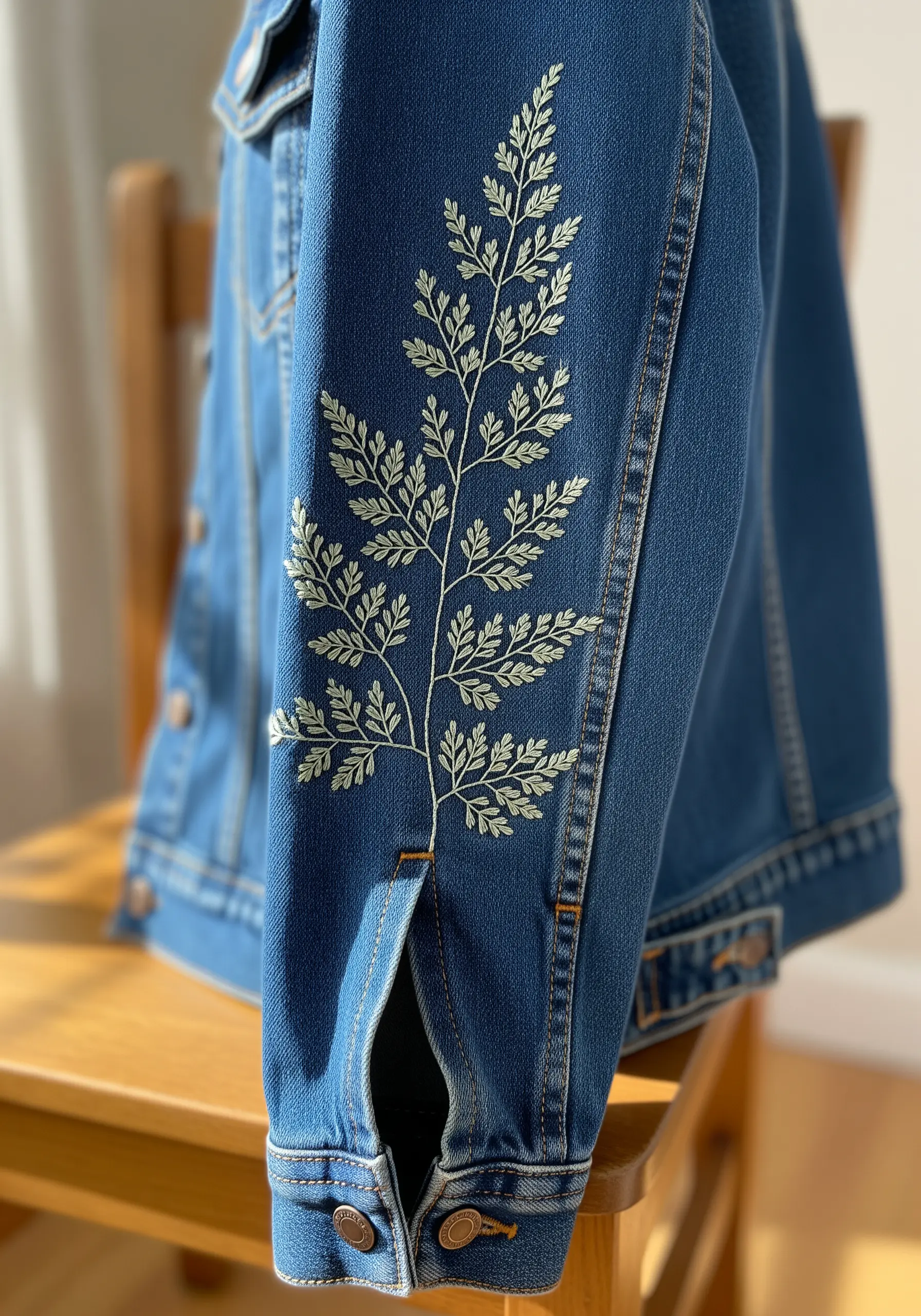
For exceptionally fine details like these fern leaflets, switch to a single strand of embroidery floss.
Use a whipped backstitch for the central stem; this technique creates a slightly raised, solid line that gives the delicate design structure.
The choice of a single, soft color against the classic blue denim creates a modern, understated look.
Placing the design vertically along the sleeve seam elongates the arm and adds an element of surprise when seen from the side. It’s a perfect example of how minimal embroidery can make a powerful impact.
4. Sculptural Eucalyptus Lapels
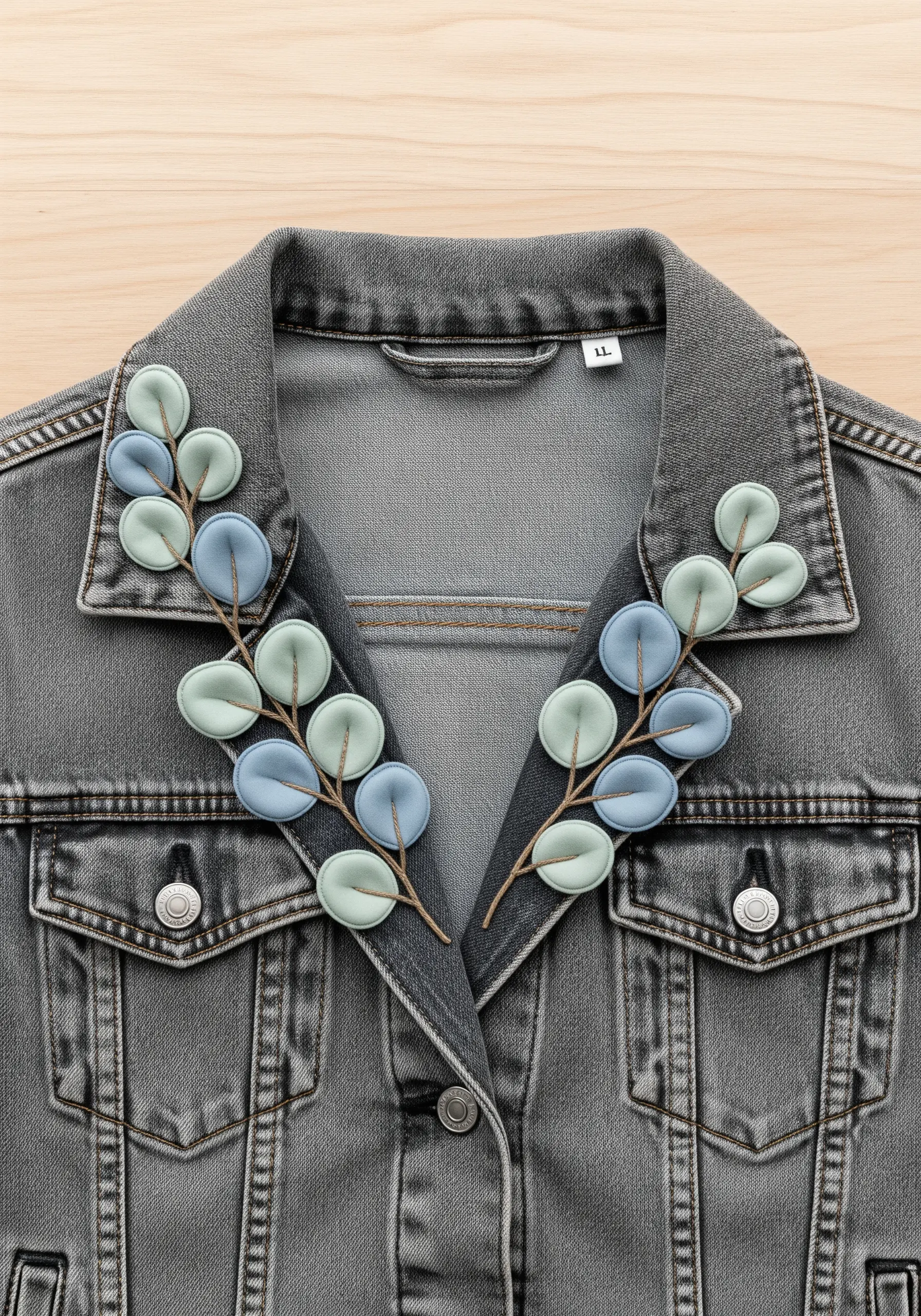
This tactile design uses a stumpwork technique to create three-dimensional leaves.
First, cut your leaf shapes from a piece of felt or batting, then place them on your jacket.
Carefully cover the padding with a smooth satin stitch, wrapping the thread around the edges to create a soft, rounded form.
The cool-toned palette of sage green and dusty blue on gray denim creates a serene, harmonious look that emphasizes the unique texture.
5. Warm Oak Cluster on Corduroy
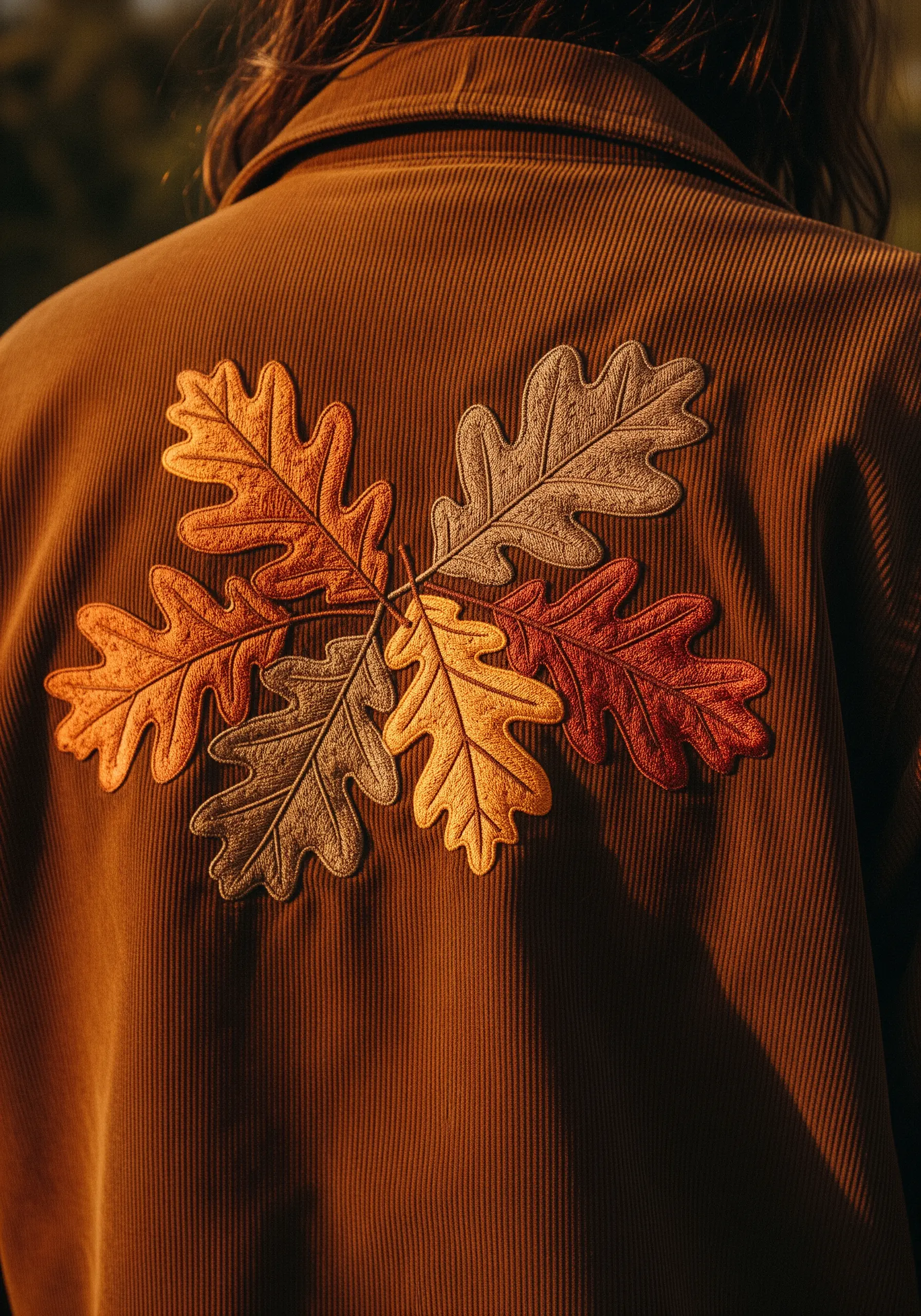
When stitching on a textured fabric like corduroy, increase your thread count (e.g., use all six strands) to ensure your design stands out from the fabric’s ridges.
Blend autumnal shades of ochre, rust, and taupe using a long-and-short stitch to mimic the natural color variations found in fallen leaves.
A thin backstitch outline in a dark brown or black thread will sharply define the lobed shape of the oak leaf, preventing it from getting lost in the corduroy’s texture.
6. Scattered Maple Leaves in Fiery Tones
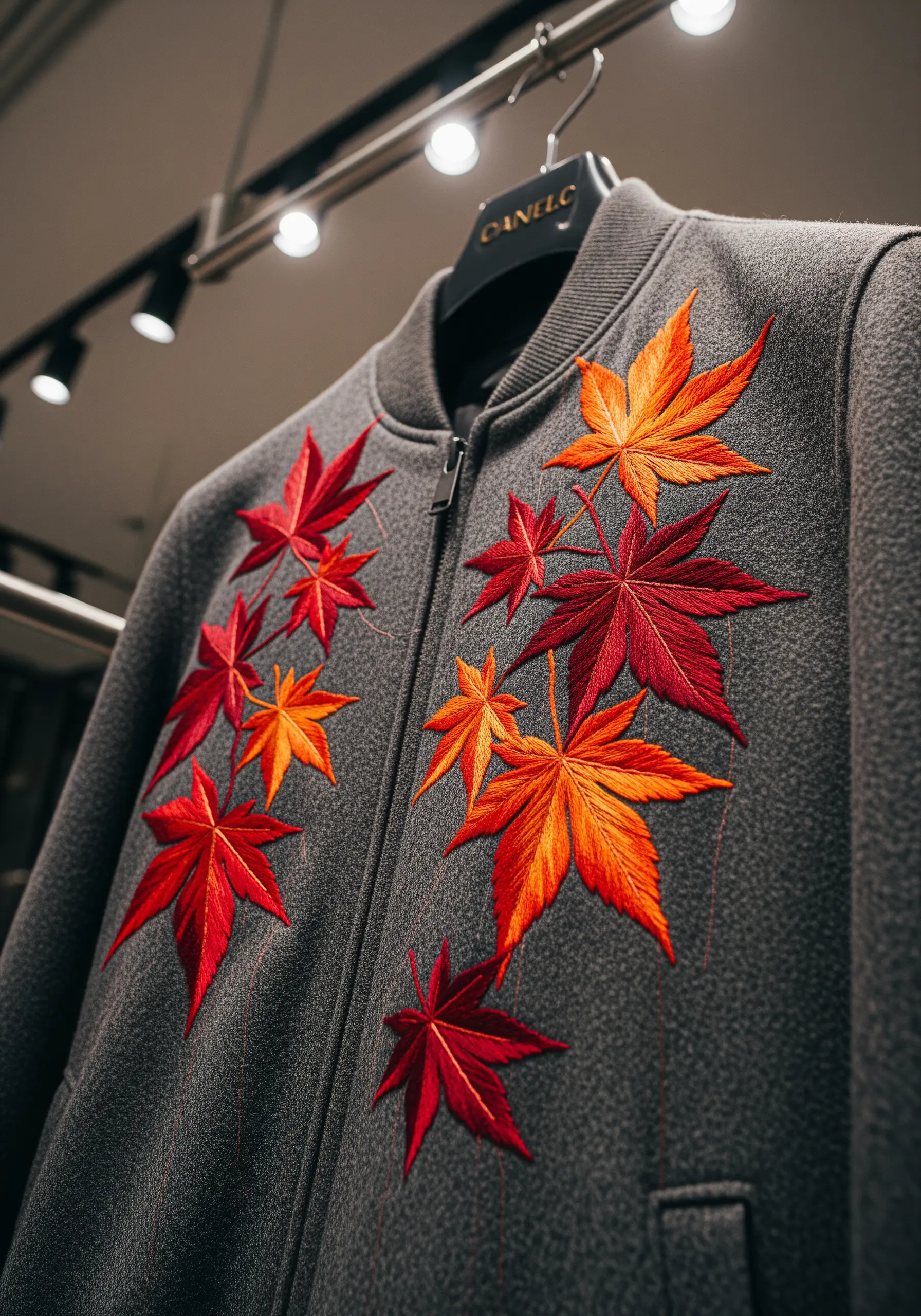
Create a sense of natural movement by scattering the leaves asymmetrically across the front panels of your jacket, as if they were caught in the wind.
For the vibrant color blending, use two needles at once, each with a different color (like red and orange), and alternate your long-and-short stitches to create a seamless gradient.
The sharp points of a maple leaf require precise, short stitches at the tips to maintain their definition.
7. An All-Over Birch Grove Pattern
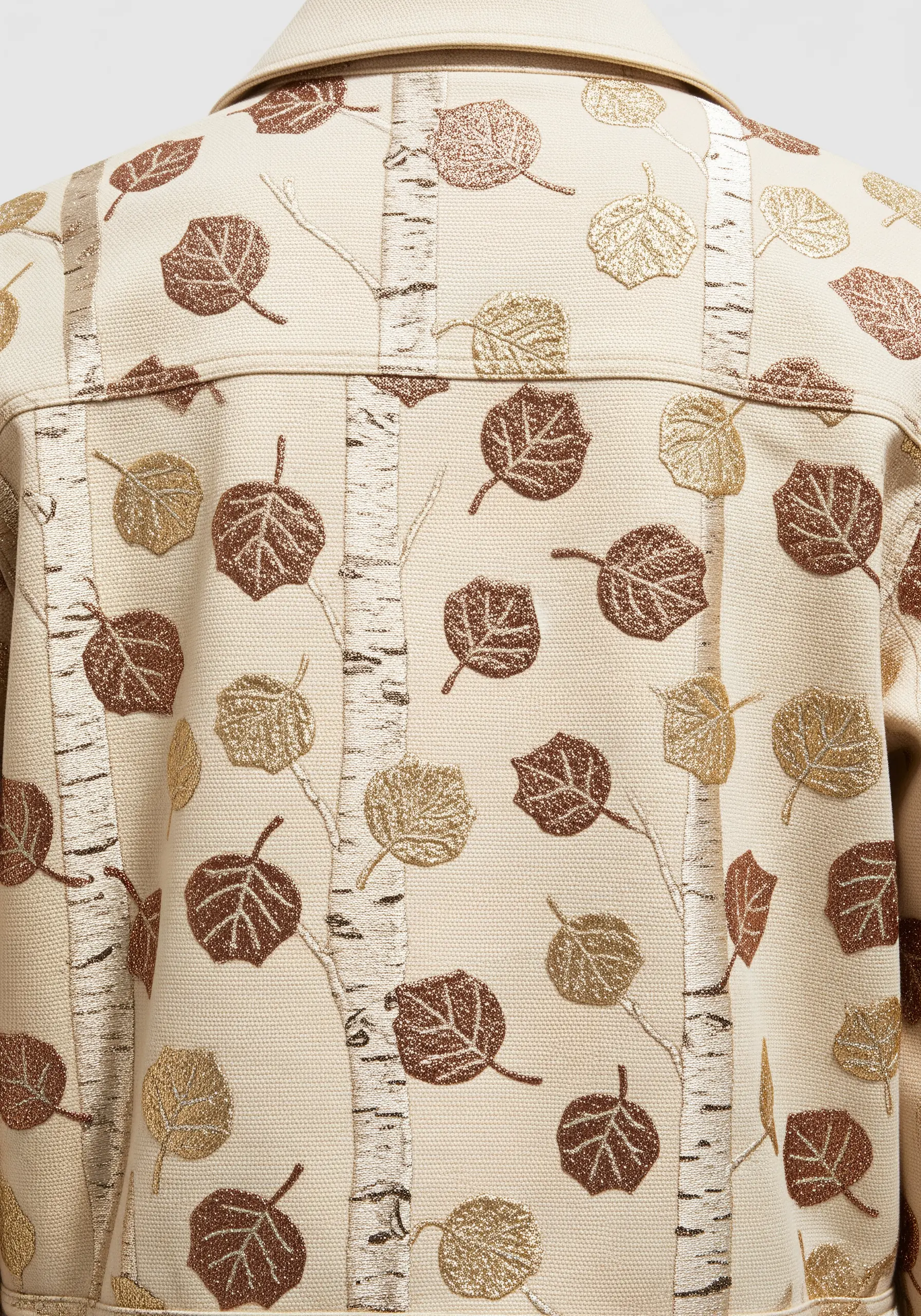
Transform the entire back of your jacket into a custom textile by creating a repeating pattern.
For the birch tree bark, use short, horizontal satin stitches in white, with occasional single stitches in gray or black to suggest texture.
Fill the leaves with seed stitch using a mix of brown and metallic gold threads; this adds a subtle sparkle and a different texture that contrasts beautifully with the smooth bark.
This is a wonderful way to play with nature-inspired texture across a large surface.
8. Architectural Palm Fronds
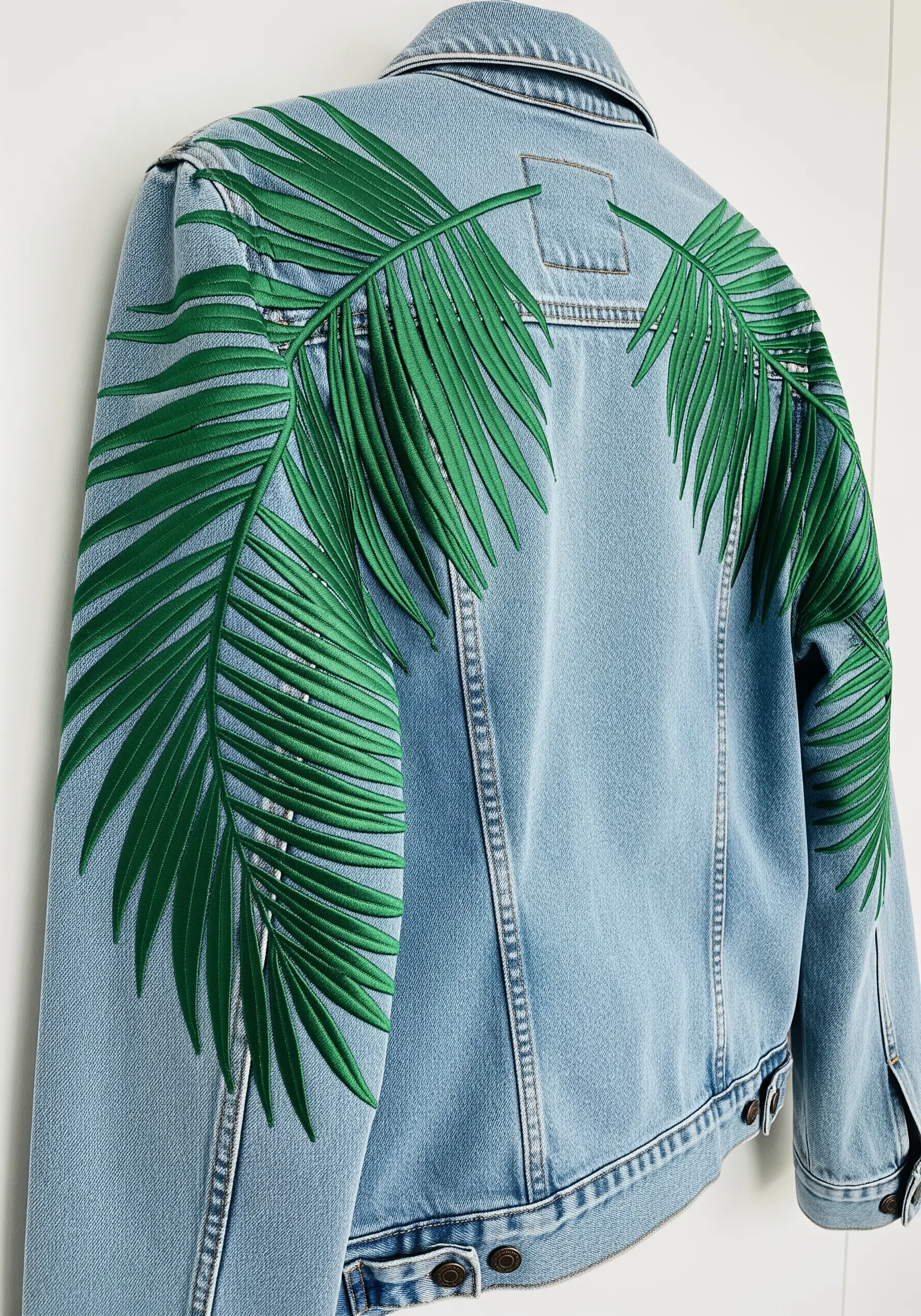
This design’s power comes from its bold placement, which flows seamlessly from the back panel across the shoulder seams and onto the sleeves.
To achieve such a solid, graphic look, use a dense, uniform satin stitch with all six strands of floss.
Before you begin, trace your design onto a water-soluble stabilizer to ensure the symmetrical fronds are perfectly mirrored on both sides.
The clean lines and unbroken color make a modern, high-impact statement.
9. Elegant Olive Branch on Leather
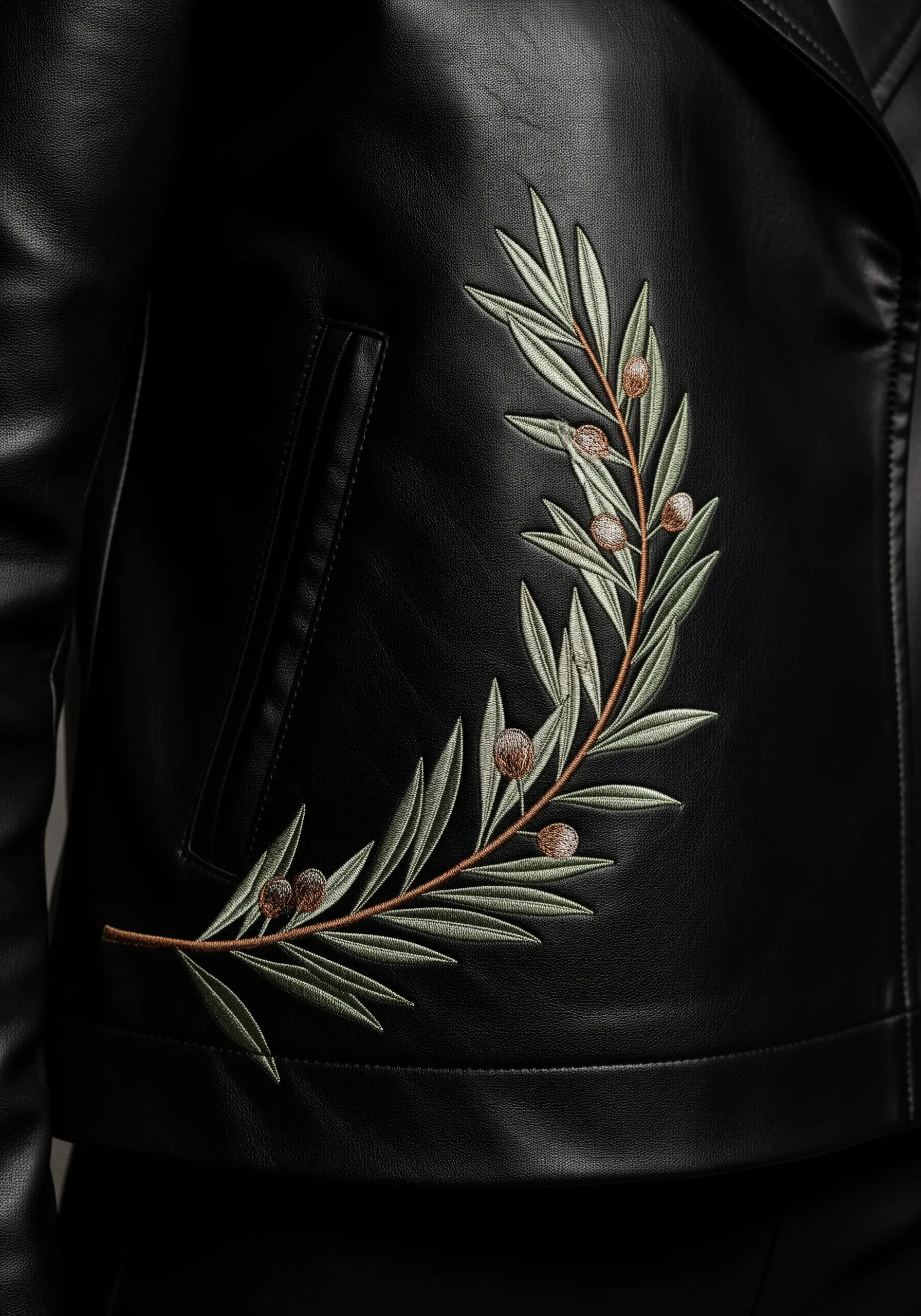
When embroidering on faux leather, use a new, sharp needle (a leather needle works best) to cleanly pierce the material without tearing it.
Plan your stitches carefully, as each hole is permanent.
Use a fine split stitch for the outlines and a delicate long-and-short stitch for the leaf fill to avoid perforating the material too densely.
The sophisticated combination of muted sage green and black creates a timeless, luxurious feel.
10. The Bold Fig Leaf Motif
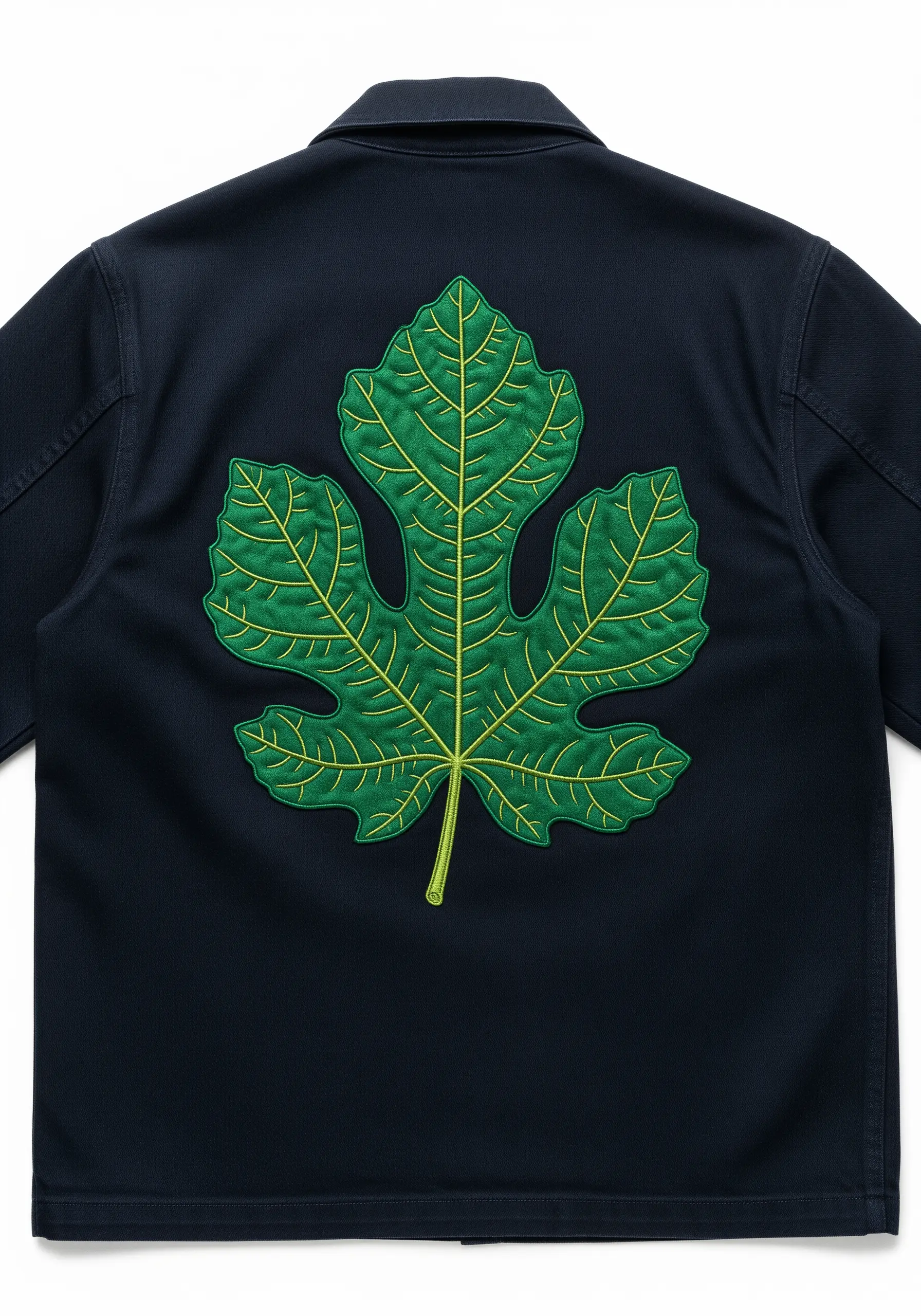
For an ultra-clean, appliqué look, create this leaf as a patch on a separate piece of felt or canvas and then sew it onto your jacket.
This method guarantees perfectly crisp edges that are difficult to achieve when stitching directly onto thick jacket fabric.
Use a vibrant yellow thread for the veins, stitched with a simple backstitch over the green satin stitch fill. The high contrast is what gives this design its graphic, pop-art energy.
11. A Climbing Philodendron Sleeve
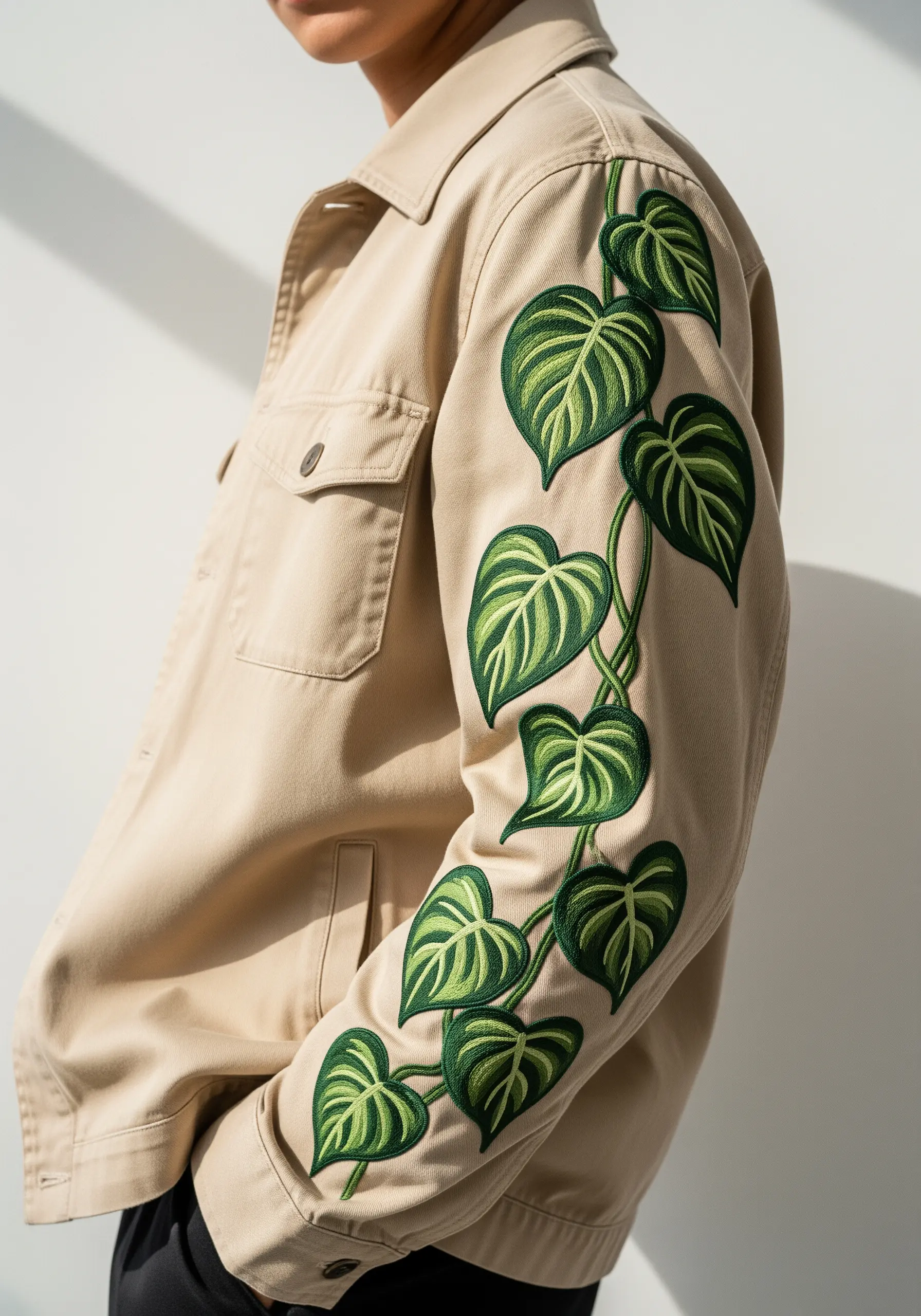
A vine that wraps around the arm creates a beautiful sense of movement and life.
Achieve the realistic, variegated look by using two shades of green within each section of the leaf, blending them with a long-and-short stitch.
Use a thicker stitch, like a stem stitch or a whipped backstitch, for the main vine to give it presence and connect all the leaves into one cohesive, flowing element.
This is a classic from any collection of houseplant embroidery motifs.
12. Symmetrical Ivy on Denim Back Panel
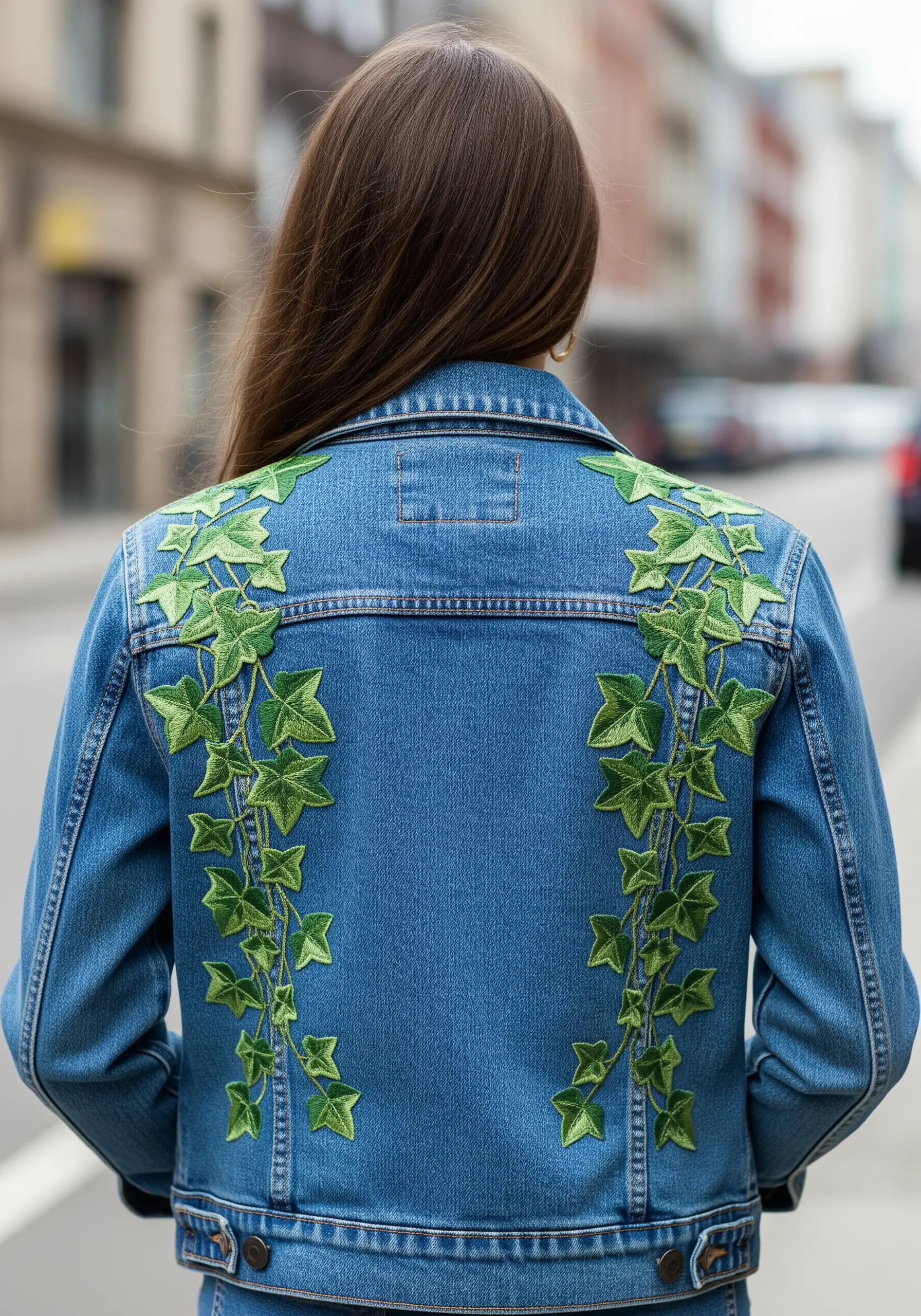
Use the vertical seams on the back of a denim jacket as natural guidelines for two perfectly symmetrical ivy vines.
This balanced composition feels intentional, structured, and elegant.
To add subtle color variation without constantly changing threads, try using a variegated floss. It will give the leaves a dappled, natural look with minimal effort.
A simple stem stitch for the vines and lazy daisy stitches for the leaves keep this design clean and classic.
13. Calathea Leaves on a Pink Blazer
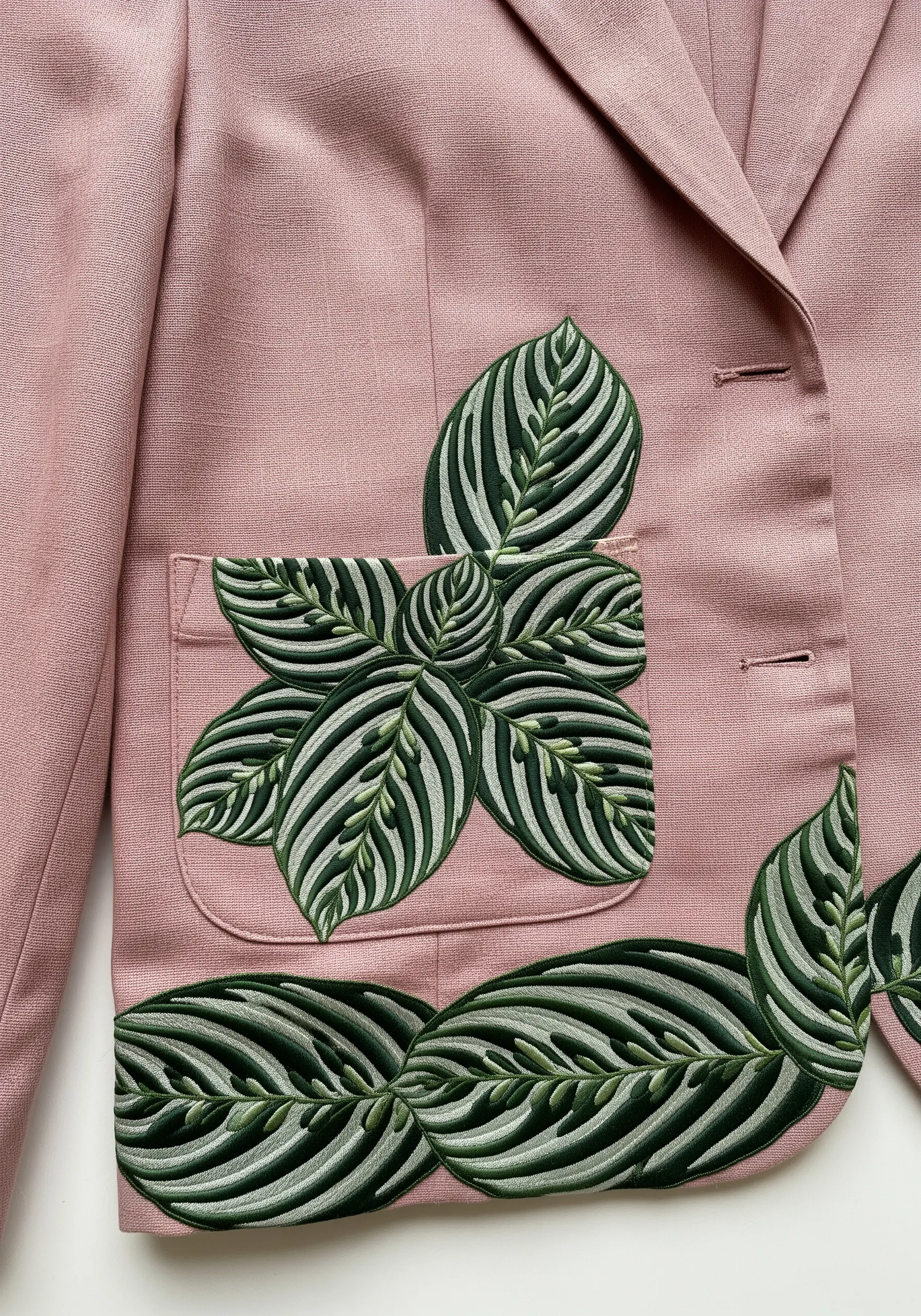
Integrate your embroidery with the garment’s construction for a playful, couture feel.
Having leaves emerge from a pocket or grow along the hemline makes the design feel like a part of the jacket itself.
To create the pinstripes of the Calathea, alternate rows of satin stitch in dark green and a silvery-white or pale green. This precision work pays off with a stunningly realistic result.
14. The Iconic Fiddle Leaf Fig
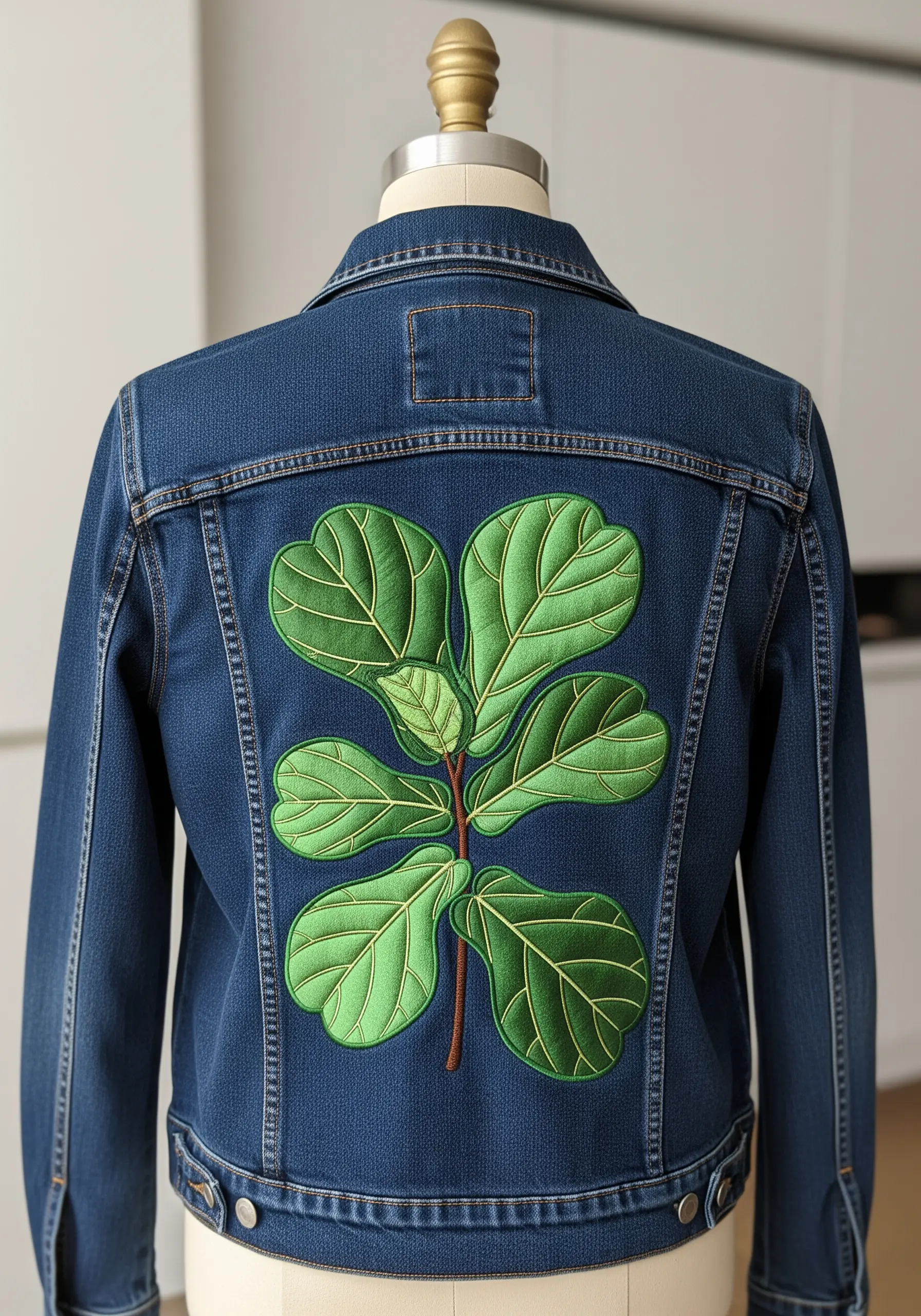
To capture the glossy sheen of fiddle leaf fig leaves, opt for a rayon or silk floss, which has a higher luster than standard cotton.
Pay careful attention to your stitch direction. Your satin stitches should radiate outwards from the central vein, following the natural curve and growth pattern of the leaf.
Use a lighter shade of green and a simple backstitch to define the veins, making them stand out against the darker leaf body.
15. A Scatter of Golden Hour Leaves
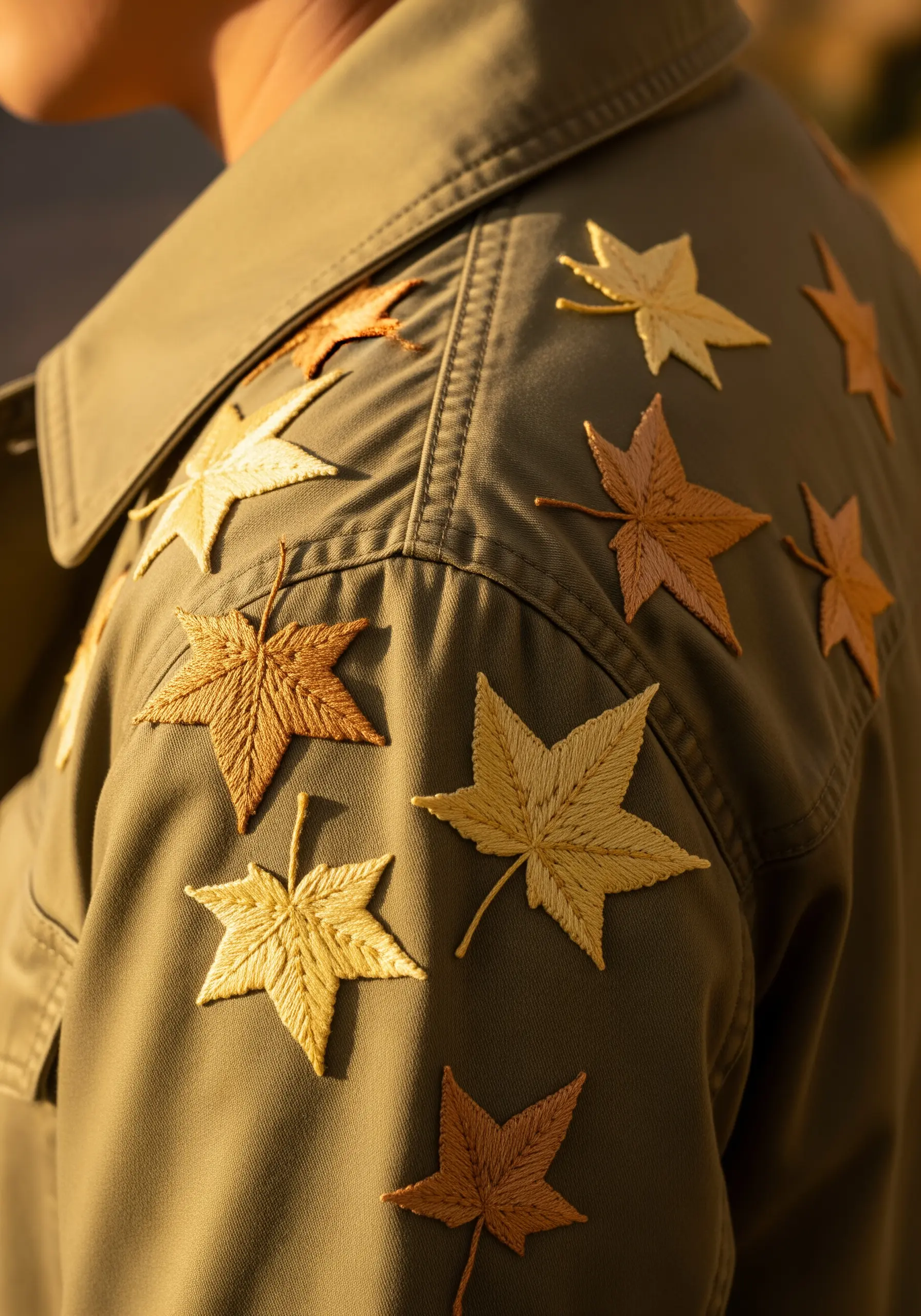
An asymmetrical scattering of leaves across the shoulder and collar feels more natural and effortless than a rigid, centered design.
Work within a limited, warm palette (golds, ambers, browns) to create a cohesive, autumnal glow.
Vary the direction of your satin stitch slightly in each leaf. This subtle shift will cause them to catch the light differently, adding texture and a sense of gentle movement.
16. Luxurious Grapevine on Velvet
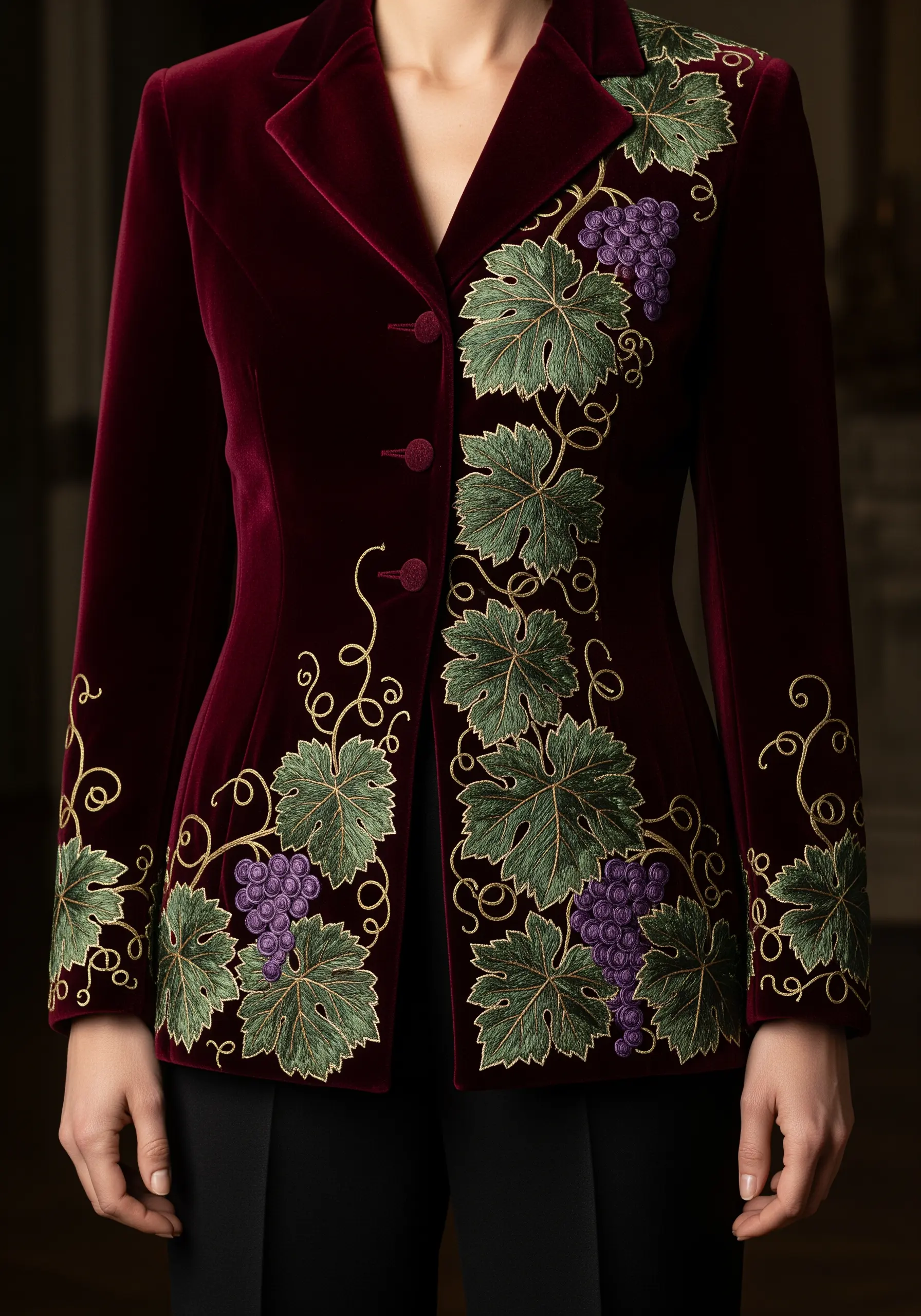
Stitching on velvet requires a stabilizer to prevent the soft pile from distorting your work. A tear-away version is perfect for this.
Create a rich, three-dimensional botanical texture by mixing stitches: use satin stitch for the leaves, clusters of French knots for the grapes, and a shimmering metallic chain stitch for the curling tendrils.
The combination of textures against the plush velvet creates a truly opulent and sensory piece.
17. Variegated Leaves on Cuffs
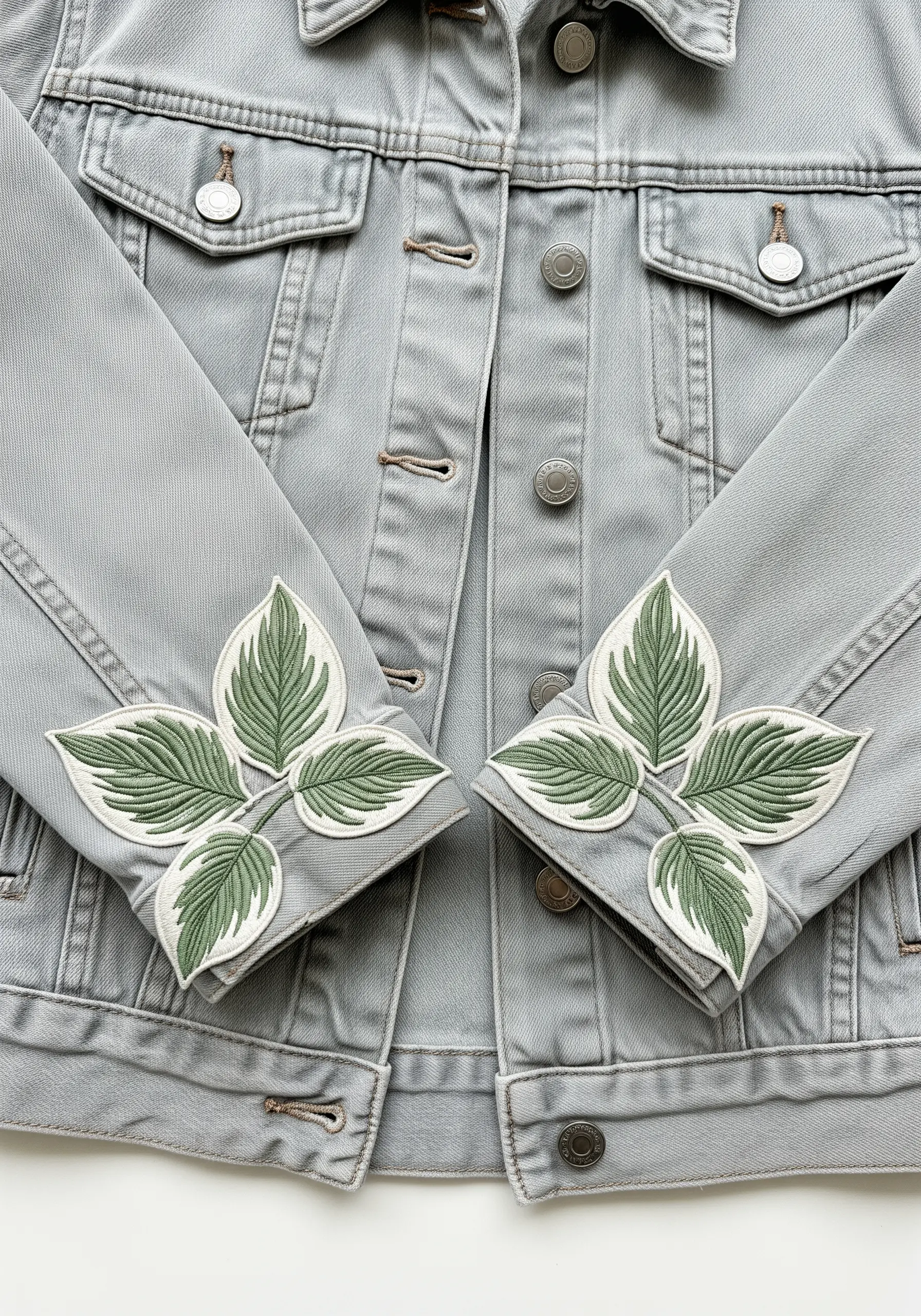
Cuffs offer a perfect canvas for a small, polished detail that elevates the entire garment.
To achieve the crisp white edge on these variegated leaves, first outline the entire leaf shape using a split stitch in white.
Then, carefully fill the center with your green satin stitch, bringing your needle up just inside the white outline. This creates a clean, sharp separation between the two colors.
18. A Pocket Full of Clovers
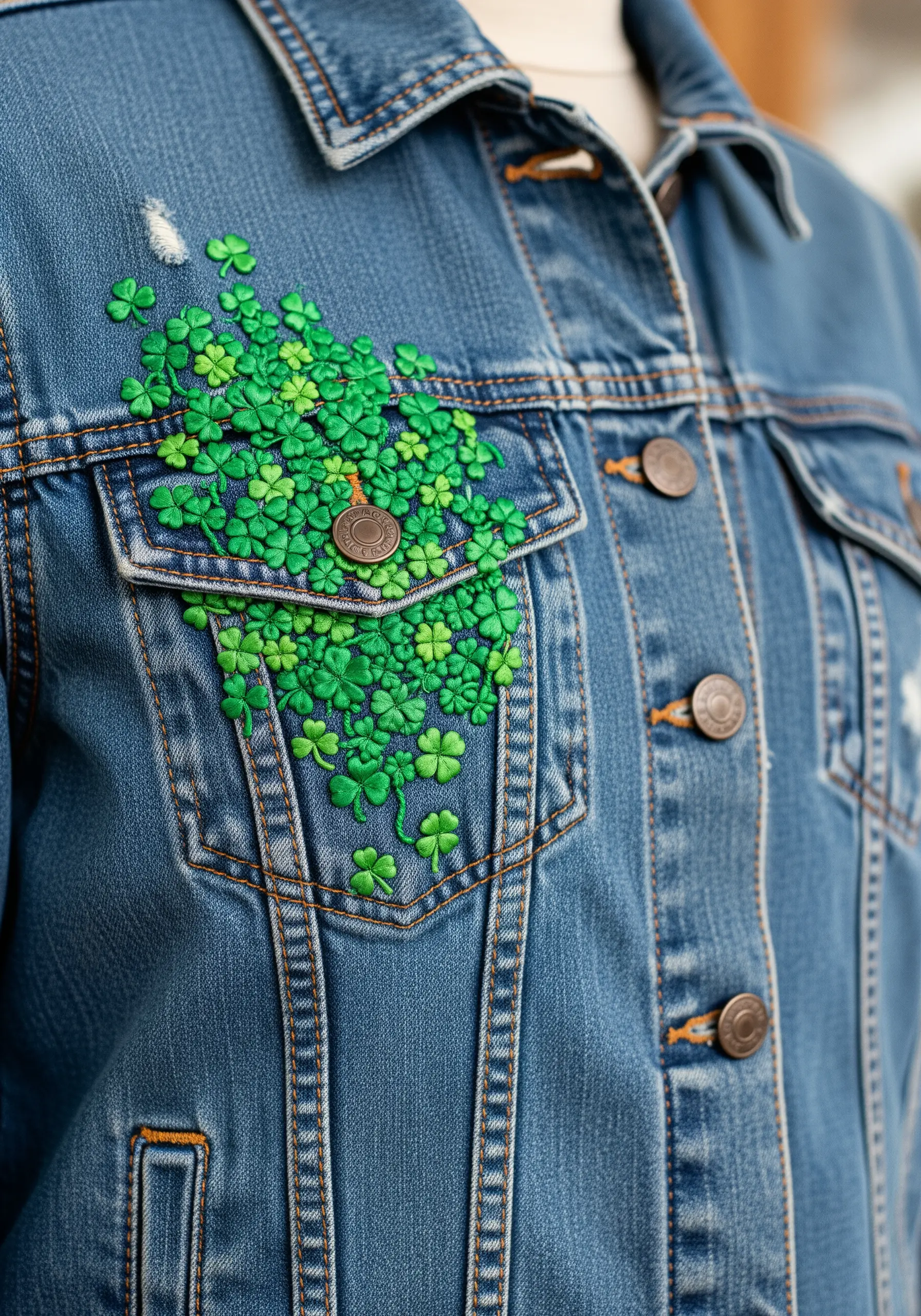
The incredible texture here is built through repetition and density.
Each tiny clover can be made with three simple detached chain stitches (lazy daisies) for the leaves and a tiny straight stitch for the stem.
Create depth by layering the clovers on top of one another and using several different shades of green throughout the cluster. This makes the design feel lush and abundant.
19. Tactile Sage Leaves on a Lapel
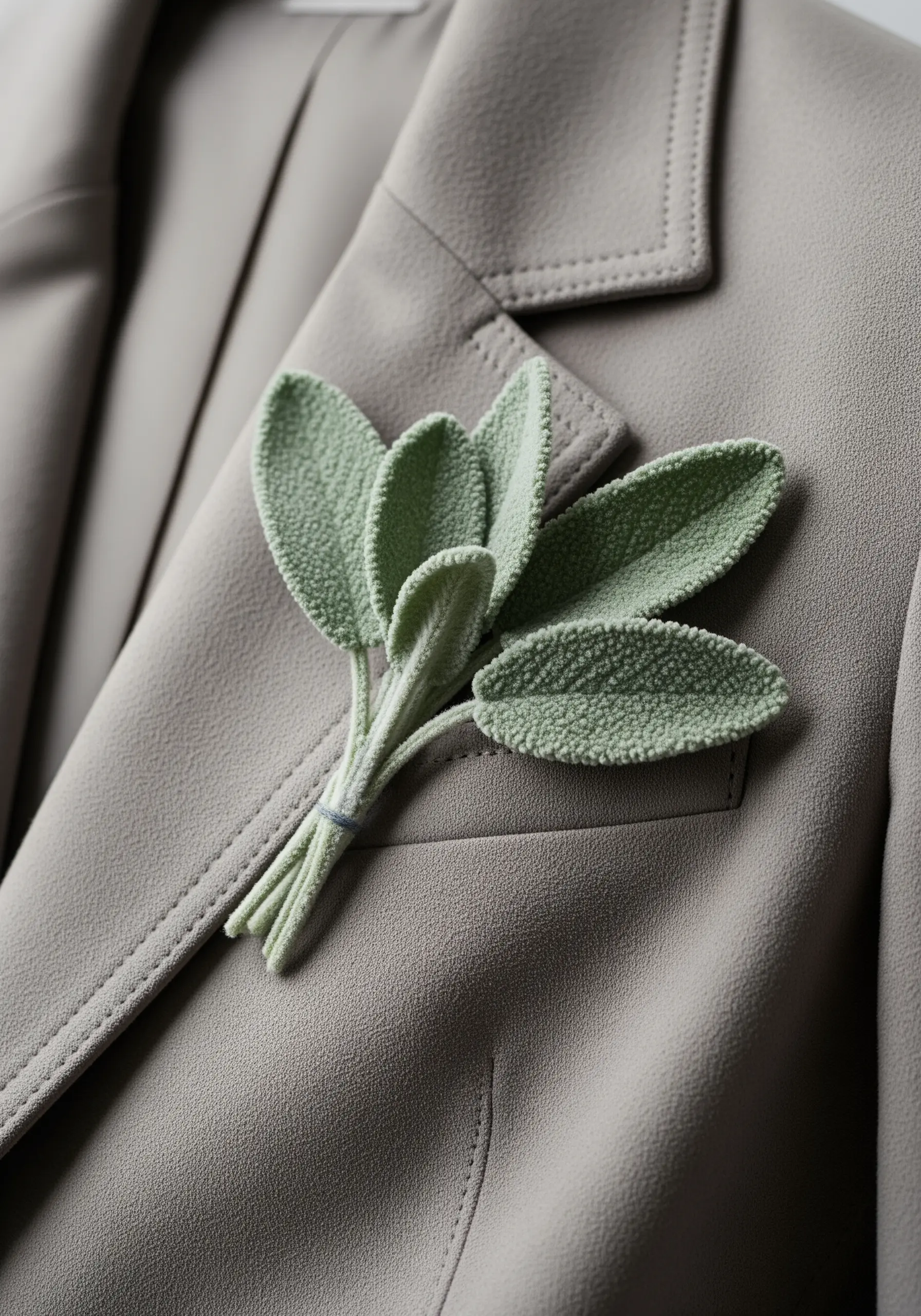
To replicate the soft, fuzzy texture of a real sage leaf, use the Turkey work stitch.
Work your loops with a wool-blend thread, which has a natural fuzziness, then carefully trim the loops to create a dense, velvety pile.
This advanced technique adds a surprising and delightful tactile element to your work, turning it into a small sculpture.
Practicing this stitch first for earth-tone home decor can help you master it.
20. Sprigs of Rosemary
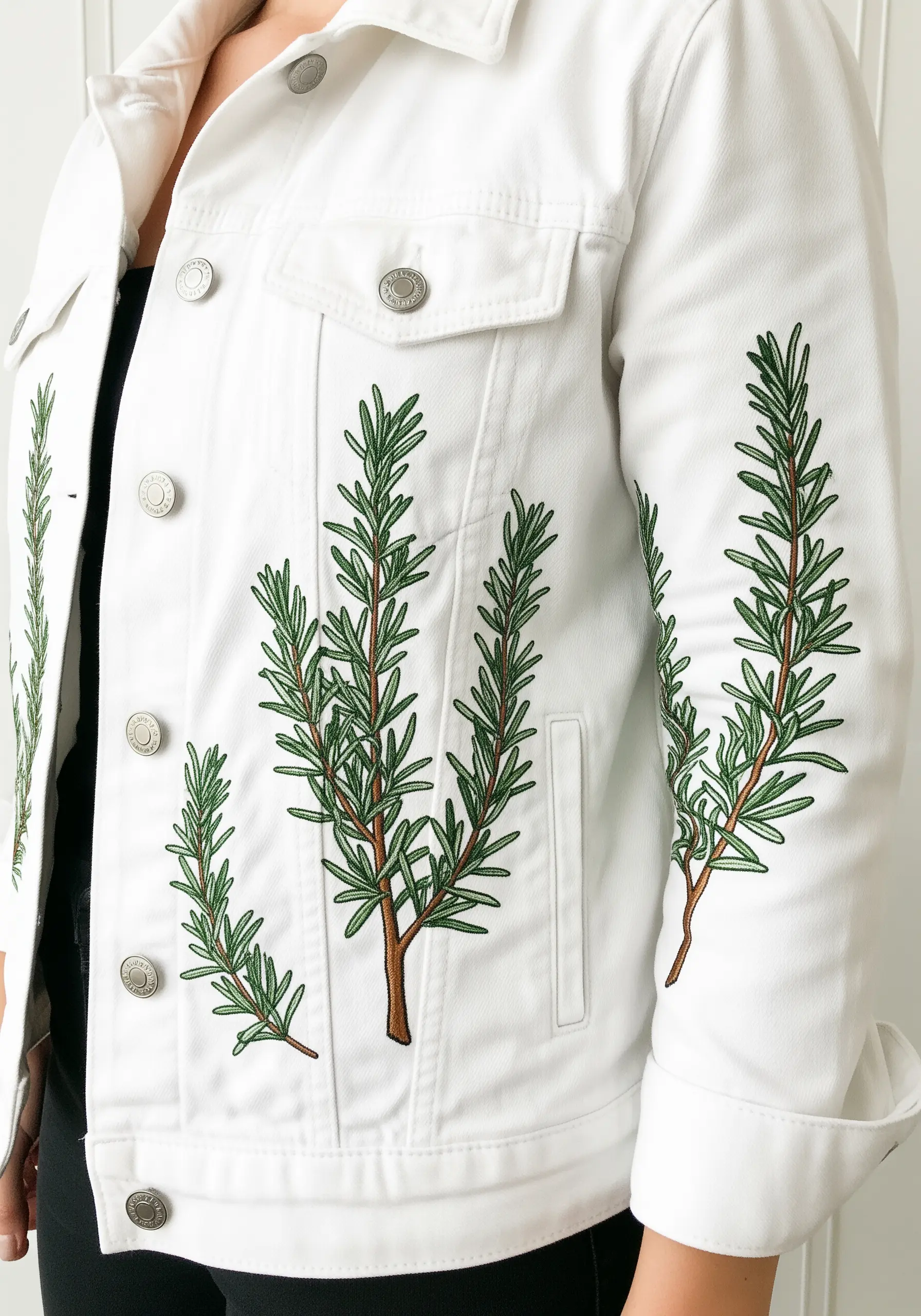
To capture the airy, delicate structure of rosemary, use sparse, short straight stitches for the needles.
Angle them outwards from a central stem made with a simple backstitch. The key is leaving negative space; don’t overcrowd the needles.
The vertical placement of the sprigs on the jacket’s front panel creates elegant lines that draw the eye upward and have a slimming effect.
21. A Sprinkle of Two-Tone Leaves
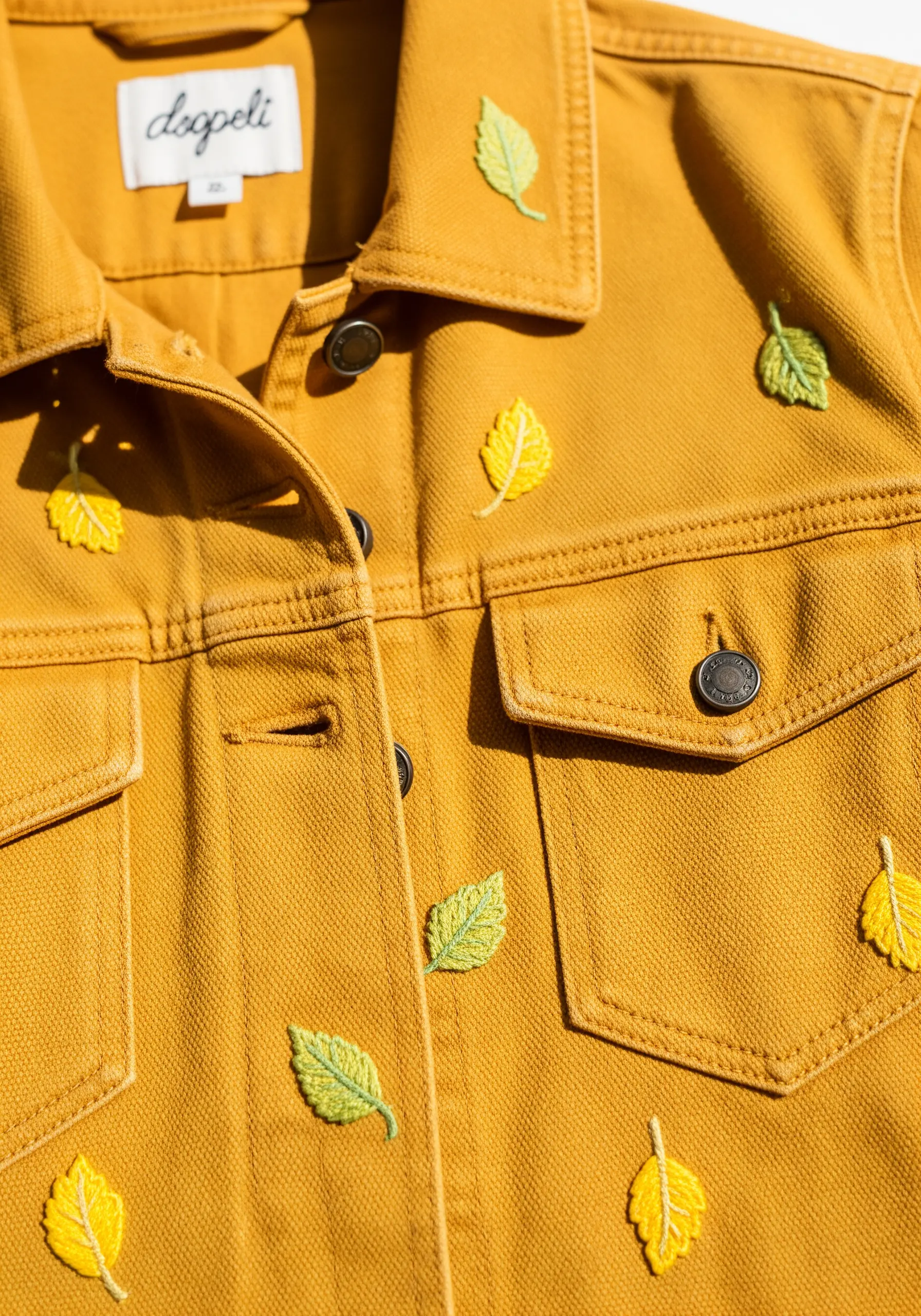
This charming effect is surprisingly simple to achieve and proves that small details can have a big impact.
Each tiny leaf is filled with satin stitch, split directly down the middle—one half in yellow, the other in green.
This simple color-blocking technique adds instant visual interest and a graphic quality.
Scatter them randomly across the yoke and pockets for a playful, confetti-like feel.
22. Stylized Lotus Pads on a Bomber
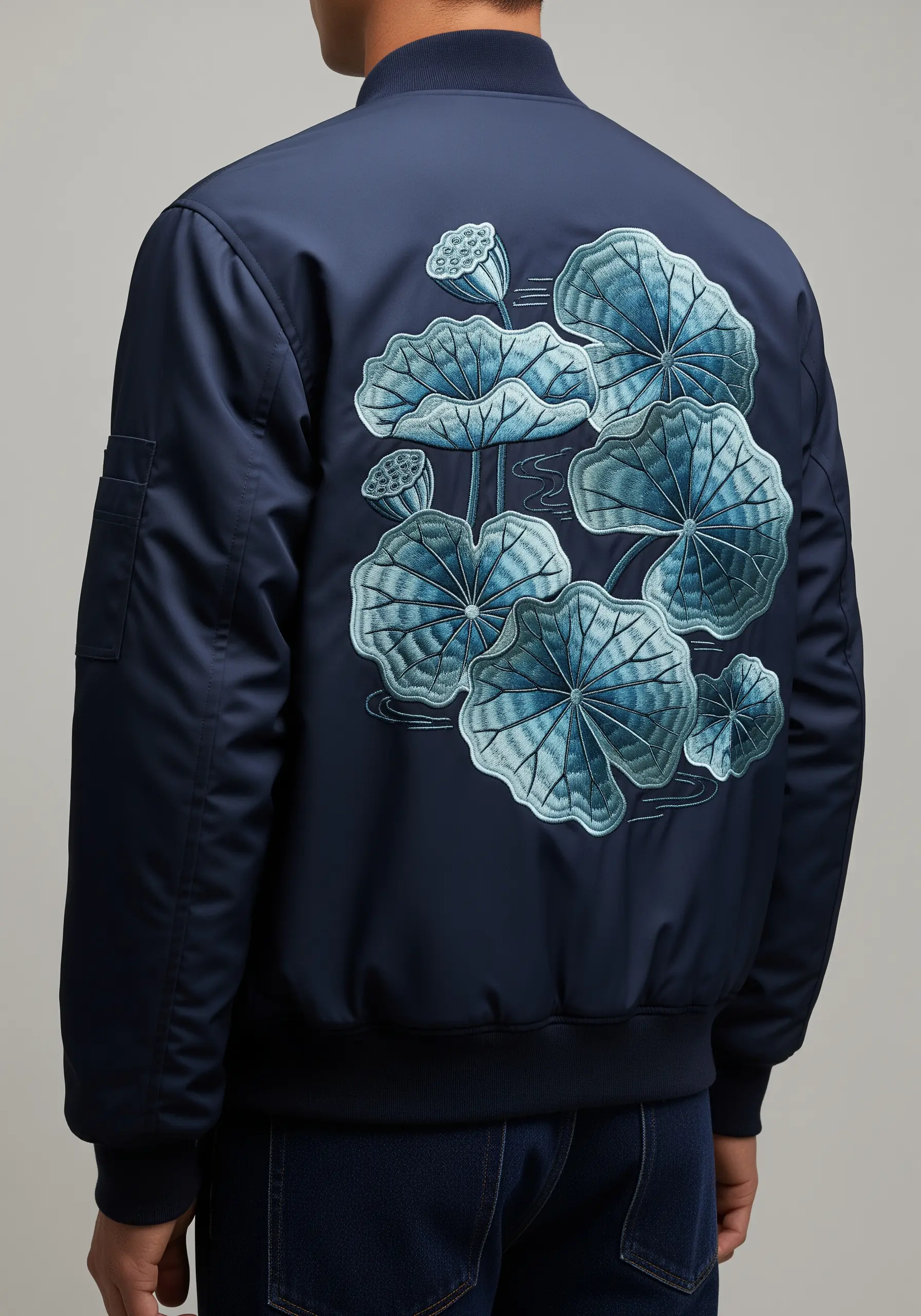
On a fabric with a natural sheen like satin, you can create texture with thread direction alone.
Fill the different segments of each lotus pad with satin stitches angled in opposing directions (e.g., horizontal vs. vertical).
This will cause the segments to catch and reflect light differently, creating a subtle, shimmering pattern and adding depth to an otherwise monochromatic design.
23. Variegated Tea Leaves on a Collar
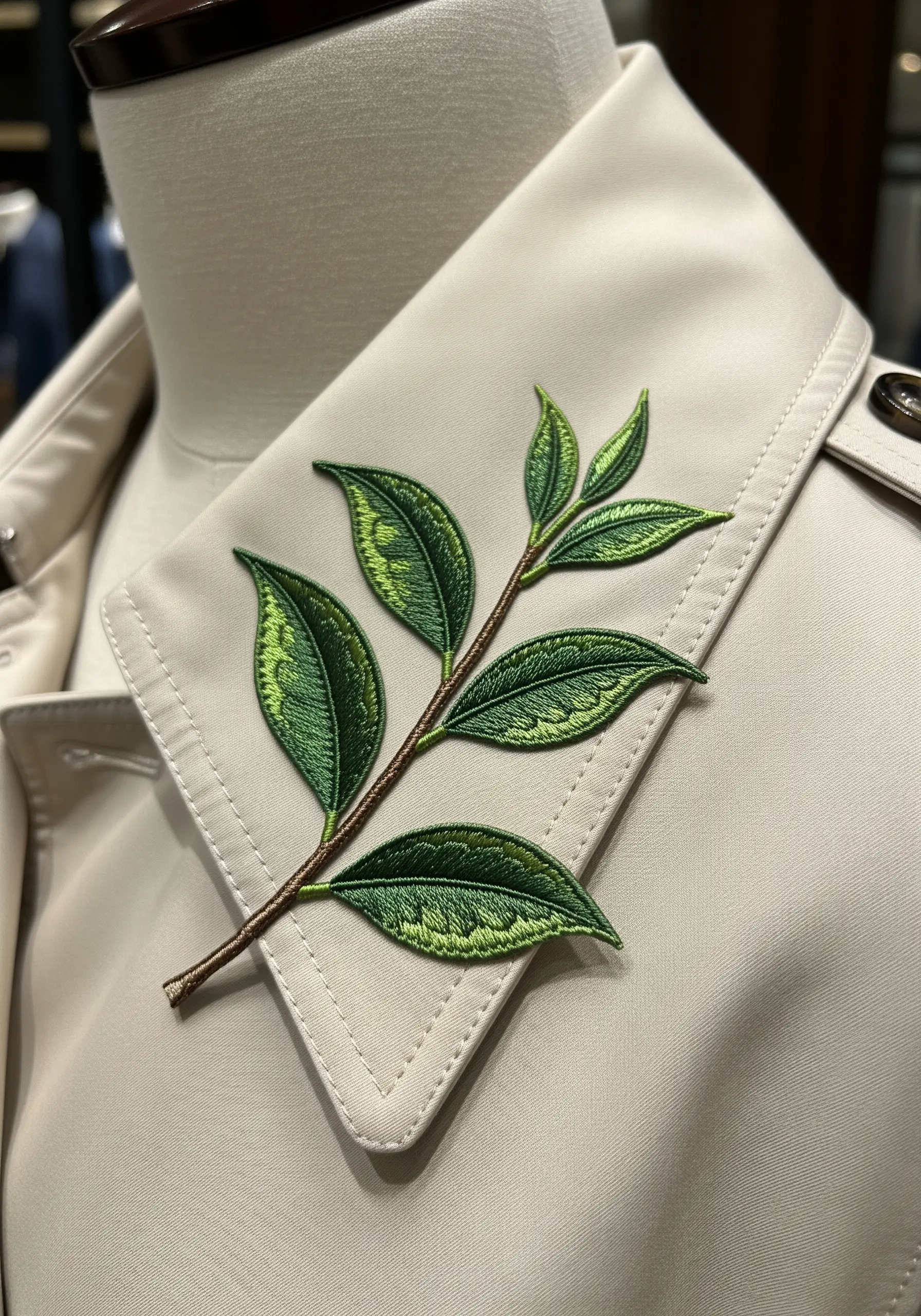
A small, beautifully executed detail on a collar can redefine a classic garment like a trench coat.
For this level of precision, work with a single strand of floss and a fine, sharp needle.
Create the soft, variegated effect by blending light and dark green threads using the long-and-short stitch.
Finally, frame each leaf with a razor-thin split stitch outline to make it stand out crisply against the neutral fabric.
24. Copper and Teal Magnolia Leaves
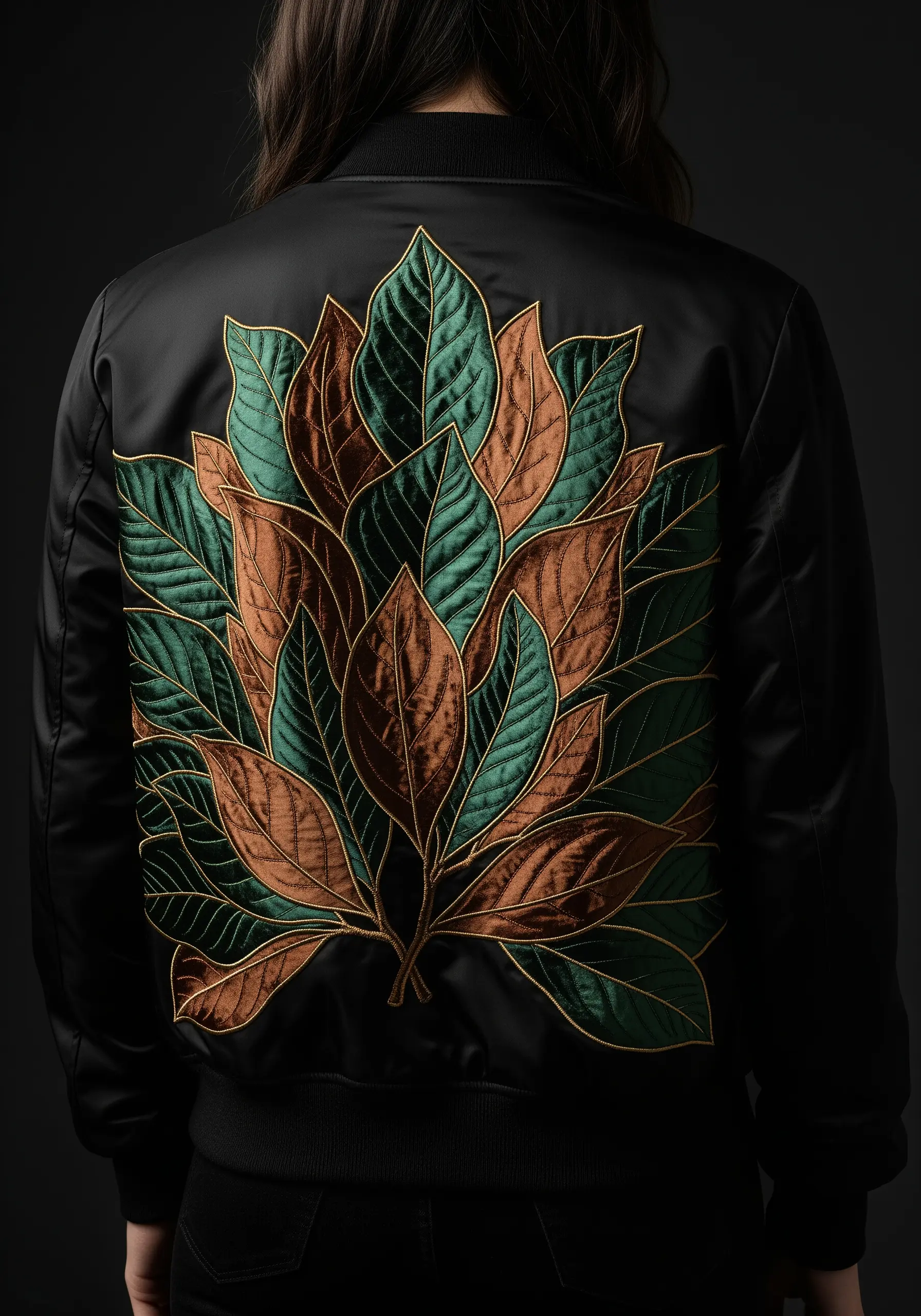
Don’t be afraid to step away from realistic colors. This sophisticated palette combines metallic copper thread with a deep matte teal for a modern, artistic look.
Fill each leaf with a dense satin stitch, ensuring your stitches lie flat and smooth.
A very fine outline in a third color, like gold, can help to unify the different elements and add a final touch of luxury that makes the entire back piece feel cohesive.
25. Vibrant Begonia Leaves on Color
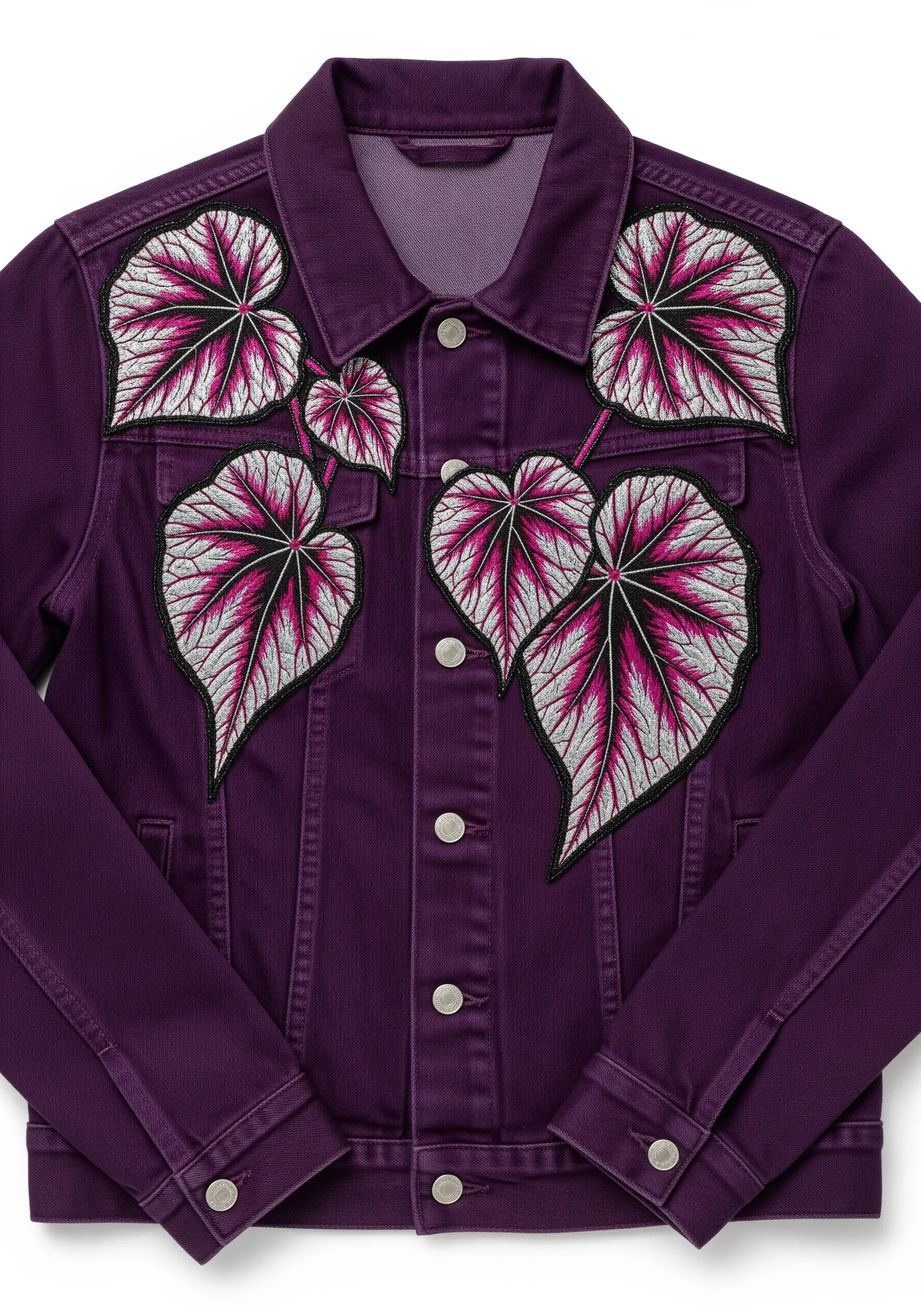
Pairing a brightly colored garment with equally vibrant threads creates a fearless, high-fashion statement.
The key to making this work is using a strong, neutral outline—in this case, black—to contain the bright colors and give the design sharp, graphic definition.
Use black backstitch for the veins and a thin satin stitch for the outer edge to ground the fuchsia and silver and make them pop even more against the purple denim.
26. A Hawthorn Branch Elbow Patch
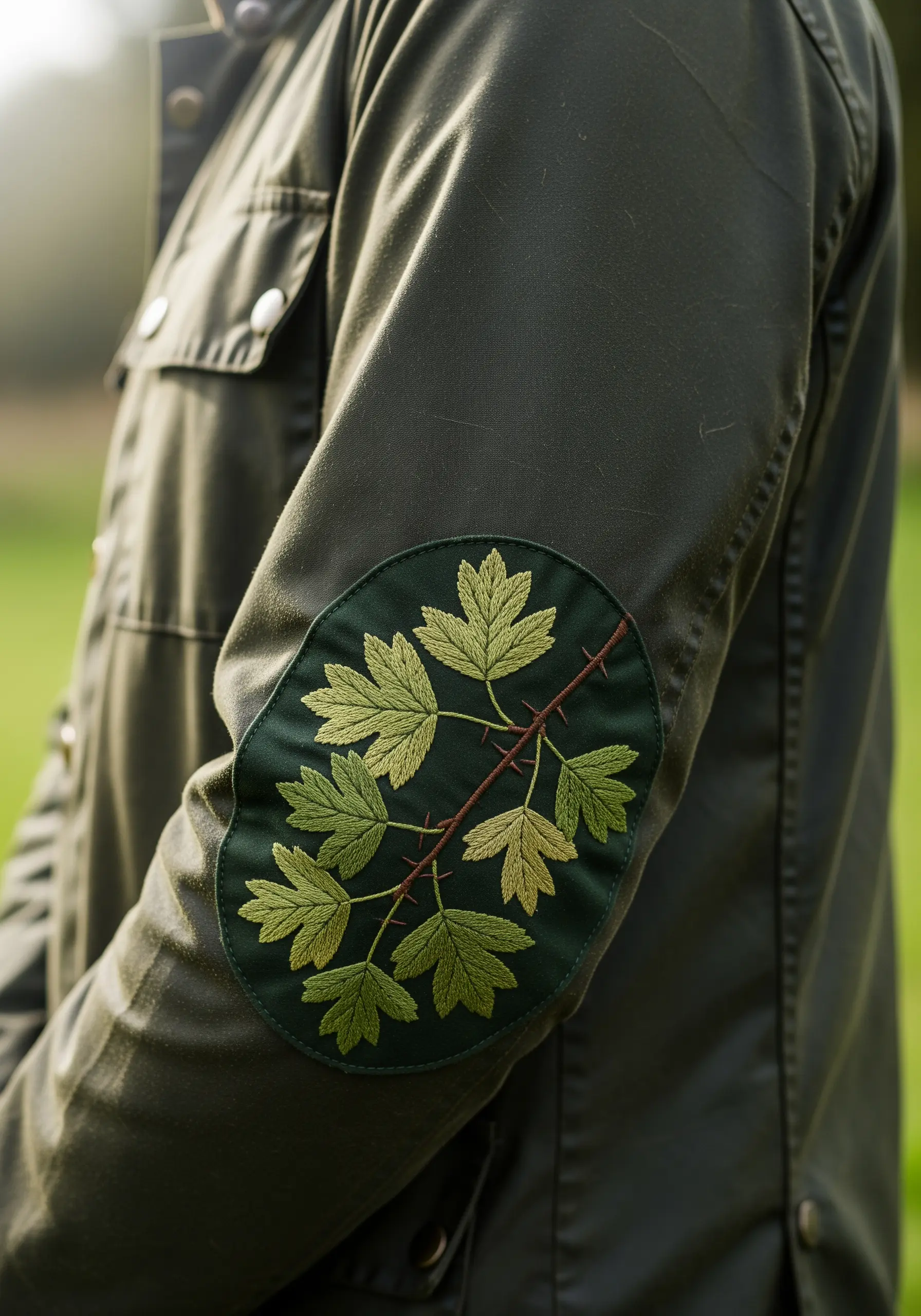
This technique elevates a practical element—the elbow patch—into a piece of narrative art.
Work your design on a separate piece of sturdy fabric like canvas or felt first. This makes it easier to handle than a bulky jacket sleeve.
Once complete, neatly sew the patch onto the elbow. These botanical patch ideas are perfect for mending or simply adding a unique, thoughtful detail to your outerwear.
27. An Asymmetrical Passion Flower Vine
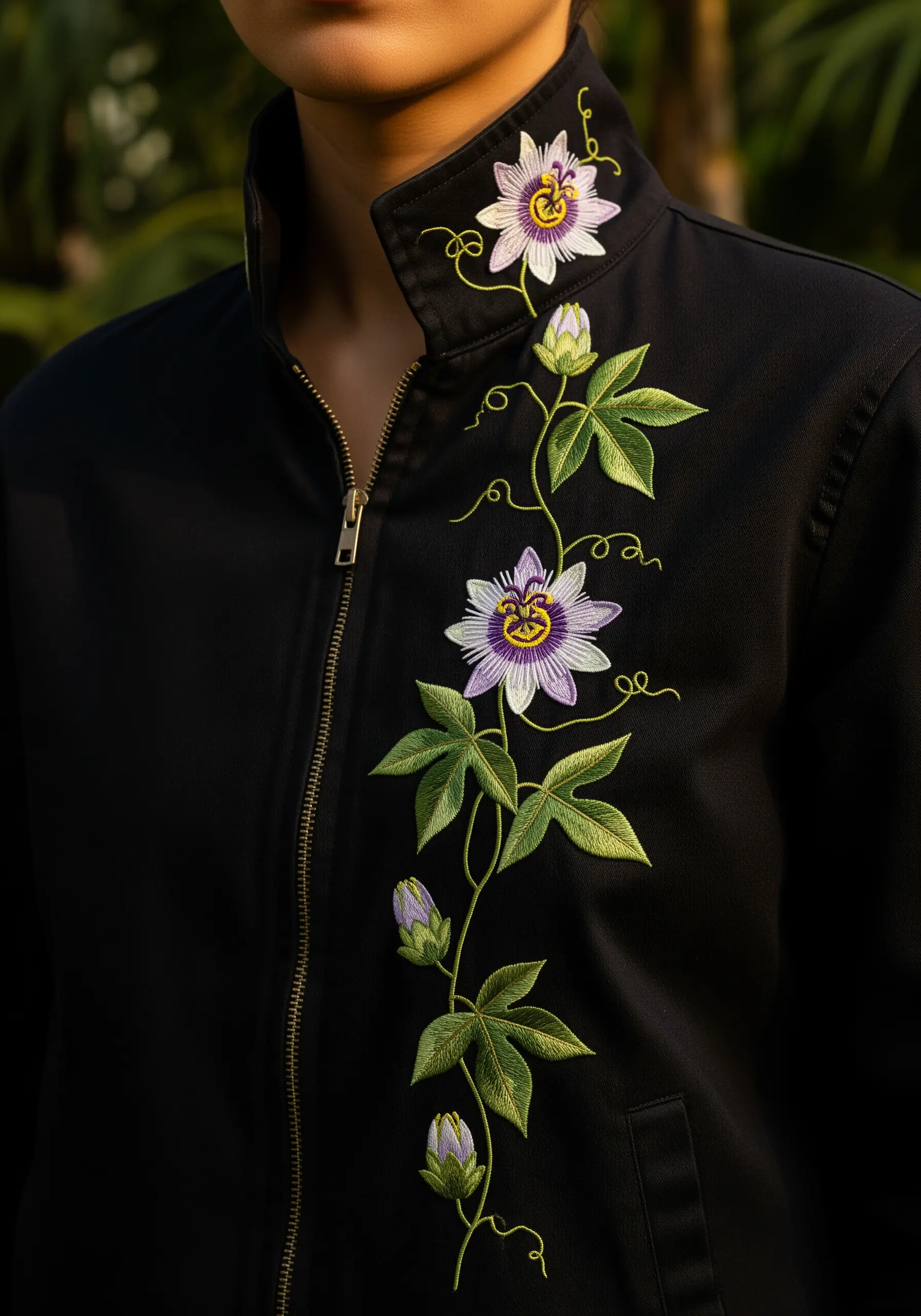
An asymmetrical vine that follows an existing seam, like the line of a zipper, creates a beautiful organic flow and draws the eye across the garment.
By including leaves, buds, and full-blown flowers, you create more visual interest and a more realistic depiction of the plant’s life cycle.
Use long-and-short stitch to softly blend the colors in both the leaves and the intricate petals, giving the entire design a delicate, almost painted quality.
28. A Collage of 3D Autumn Leaves
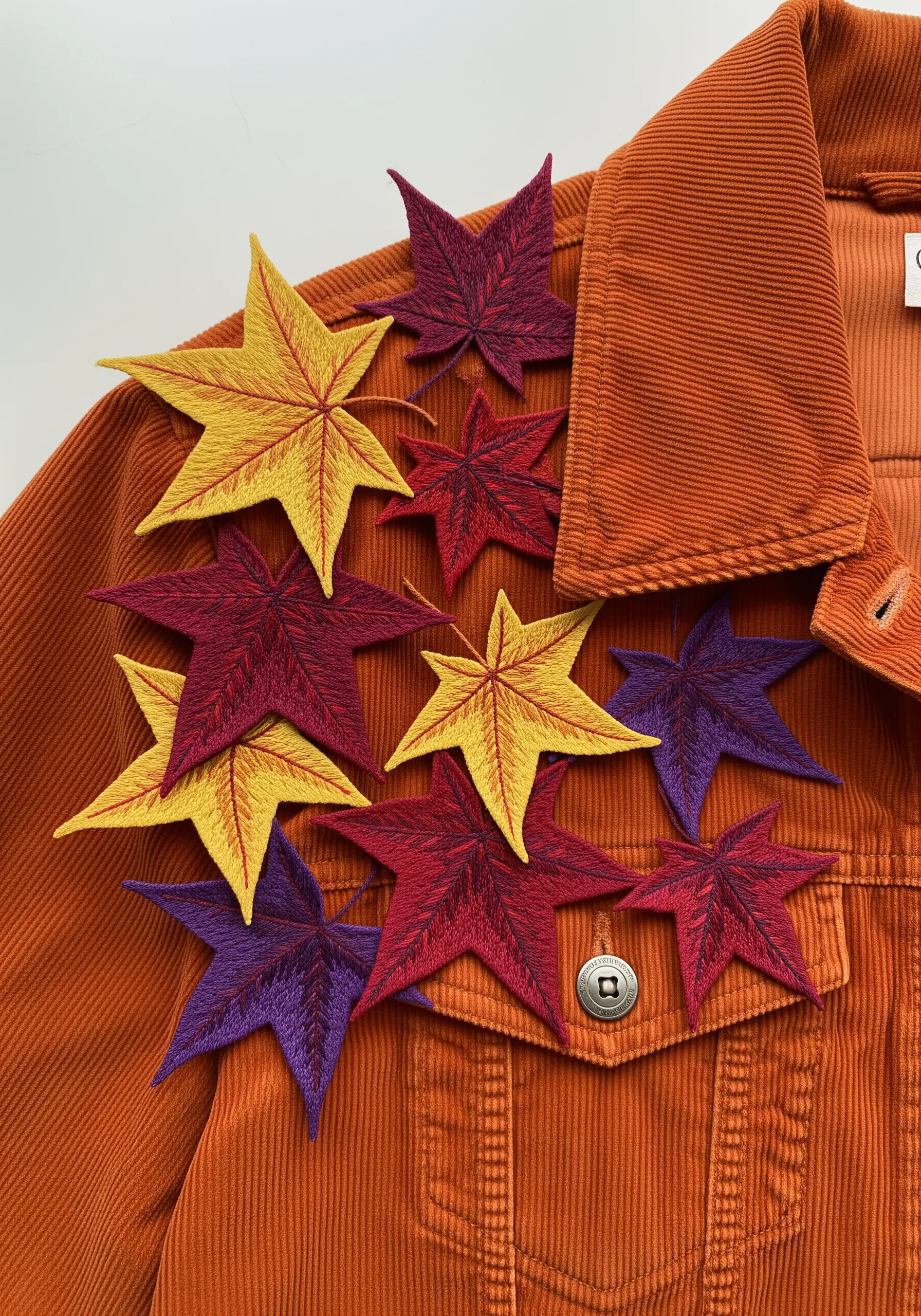
This dimensional effect is achieved with stumpwork, a technique where elements are stitched separately and then applied to the main fabric.
Embroider each leaf on a piece of fabric, incorporating a thin, flexible wire into the satin stitch outline.
Carefully cut out each leaf and then arrange them in a dense, overlapping cluster on your jacket, bending the wires to create naturalistic curls and folds. The result is a stunning, tactile collage.
29. A Single Golden Vine Down the Spine
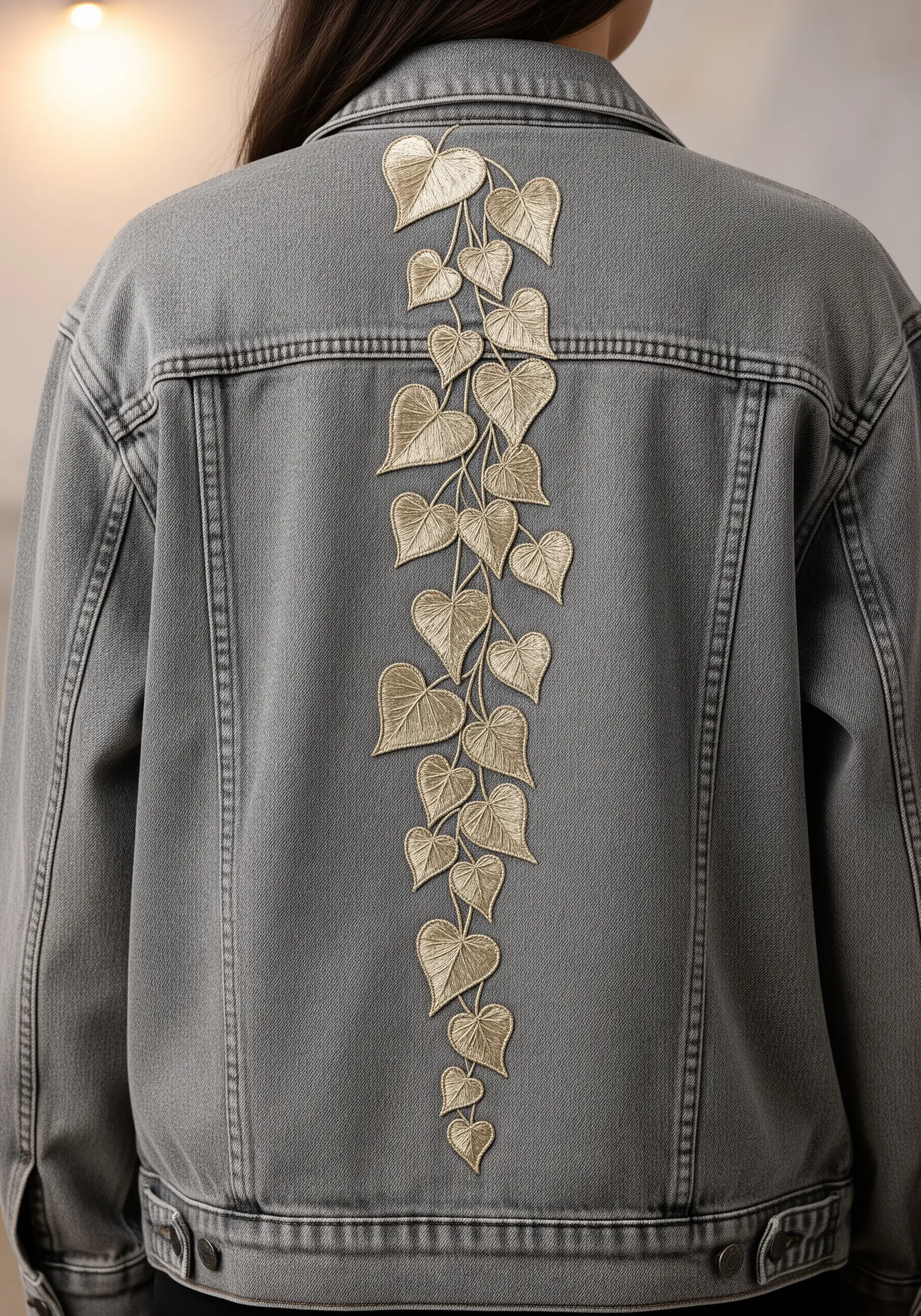
Placing a single, delicate design element along the spine of a jacket is a powerful and elegant choice.
It creates a clean, strong vertical line that is both minimalist and impactful.
Using a single color, like a soft metallic gold or champagne, keeps the focus on the form and the subtle play of light on the thread. These kinds of monochrome embroidery ideas feel incredibly chic and high-end.
30. Abstract Fan Palm Hems and Cuffs
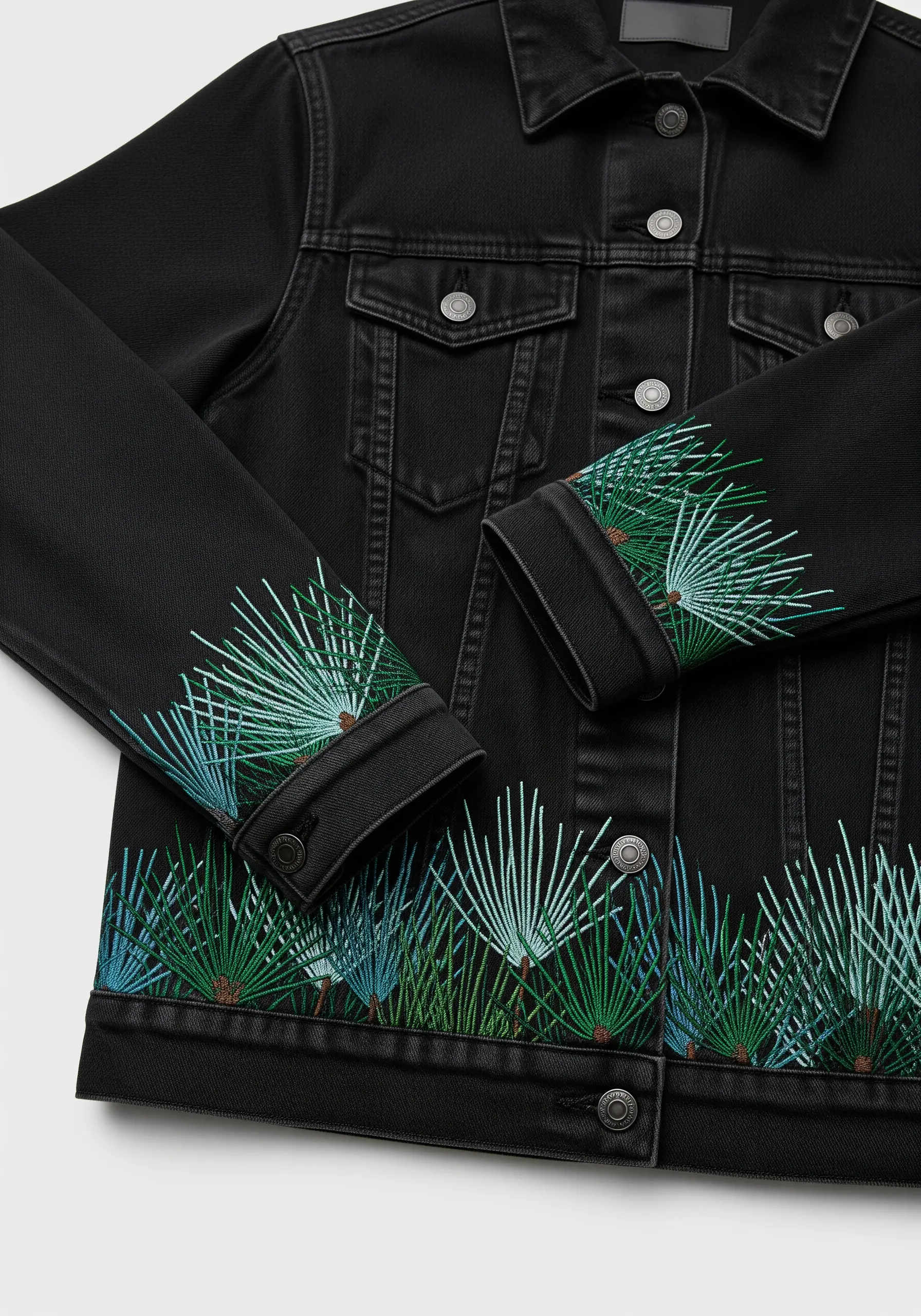
Deconstruct a familiar leaf shape into its most basic elements—in this case, radiating lines—for a modern, artistic interpretation.
Use a gradient of related colors, like blues and greens, to create an ombré effect that adds depth and visual interest.
By containing this abstract texture within the cuffs and hemline, you create a sophisticated border that frames the jacket without overwhelming it.
31. Intricate Alocasia Leaf
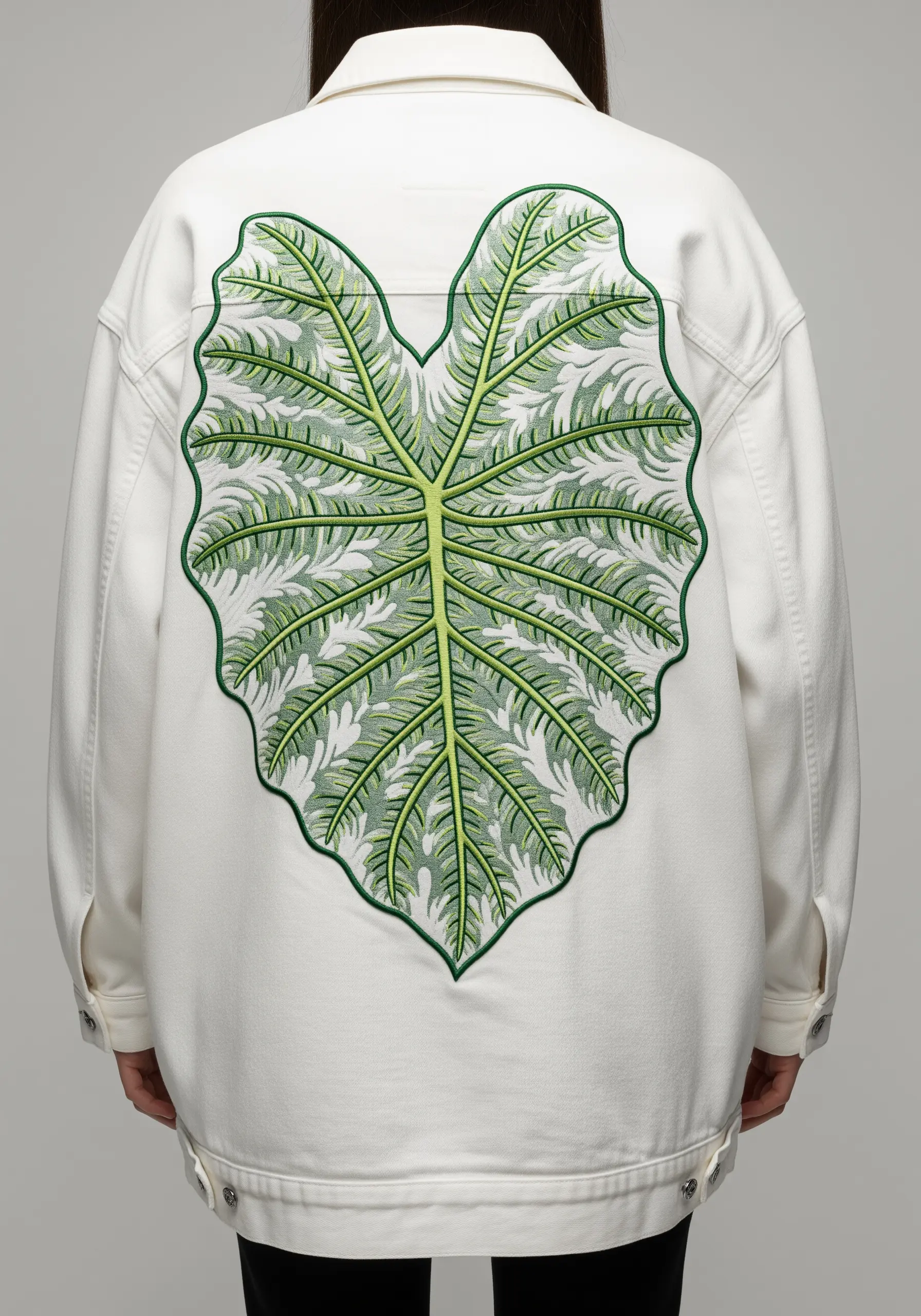
The key to recreating complex vein patterns is to work in layers.
First, fill the entire leaf shape with your base color using a smooth satin stitch.
Once the base is complete, go back over it to add the veins. Use a contrasting color and a simple backstitch for the main veins, and a finer split stitch with fewer strands for the delicate secondary veins.
This layering technique is what brings the intricate pattern to life.
32. Symmetrical Banana Leaves on Sleeves
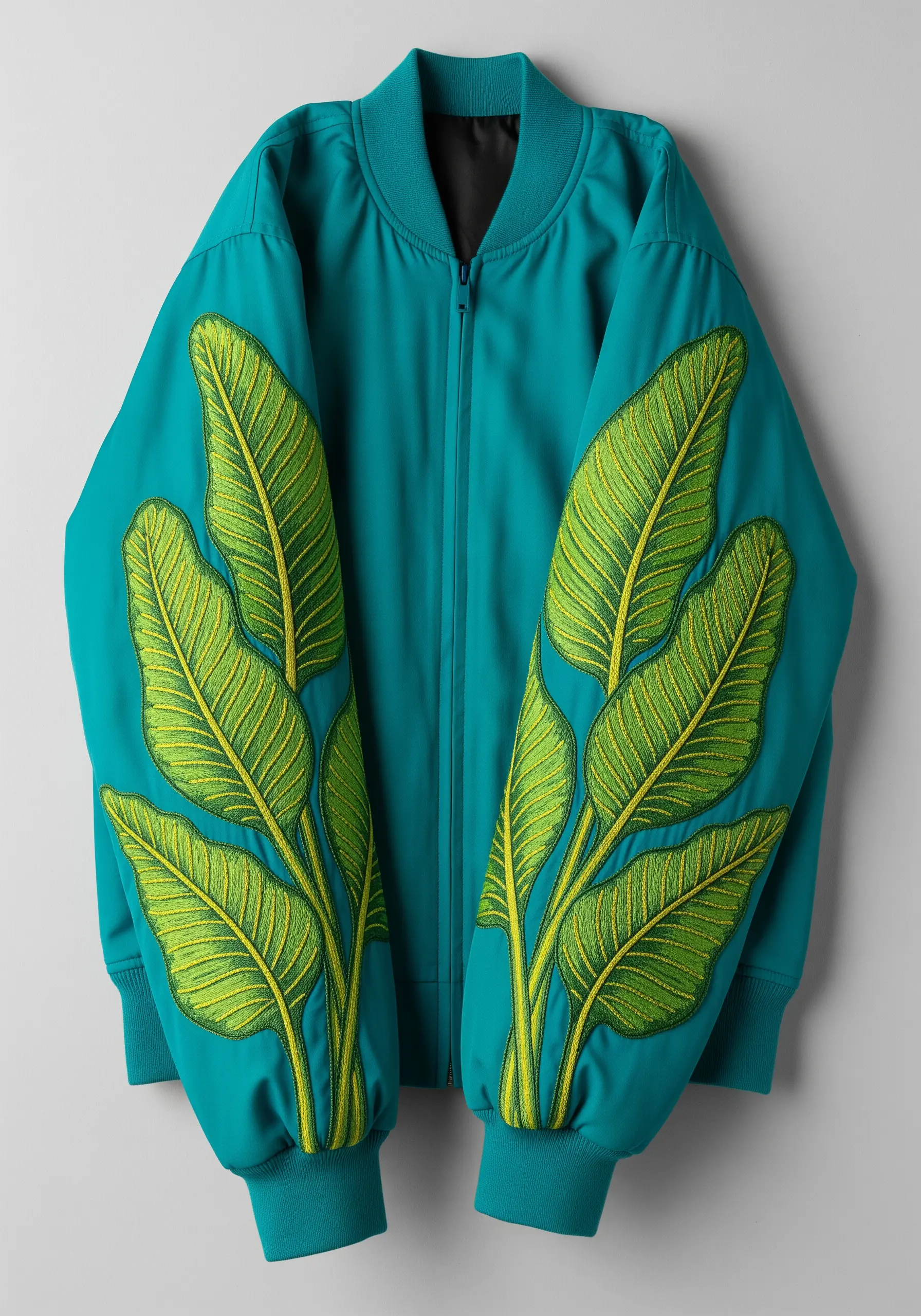
Turn your sleeves into statement pieces by using the entire surface as a canvas for a large-scale design.
The bright yellow central vein, created with a wide satin stitch, provides a high-contrast anchor for the design.
Angle your green satin stitches outwards from this central vein to mimic the natural growth pattern of the leaf. These are quintessential tropical leaf embroidery designs that feel bold and confident.
33. The Weeping Willow Cascade
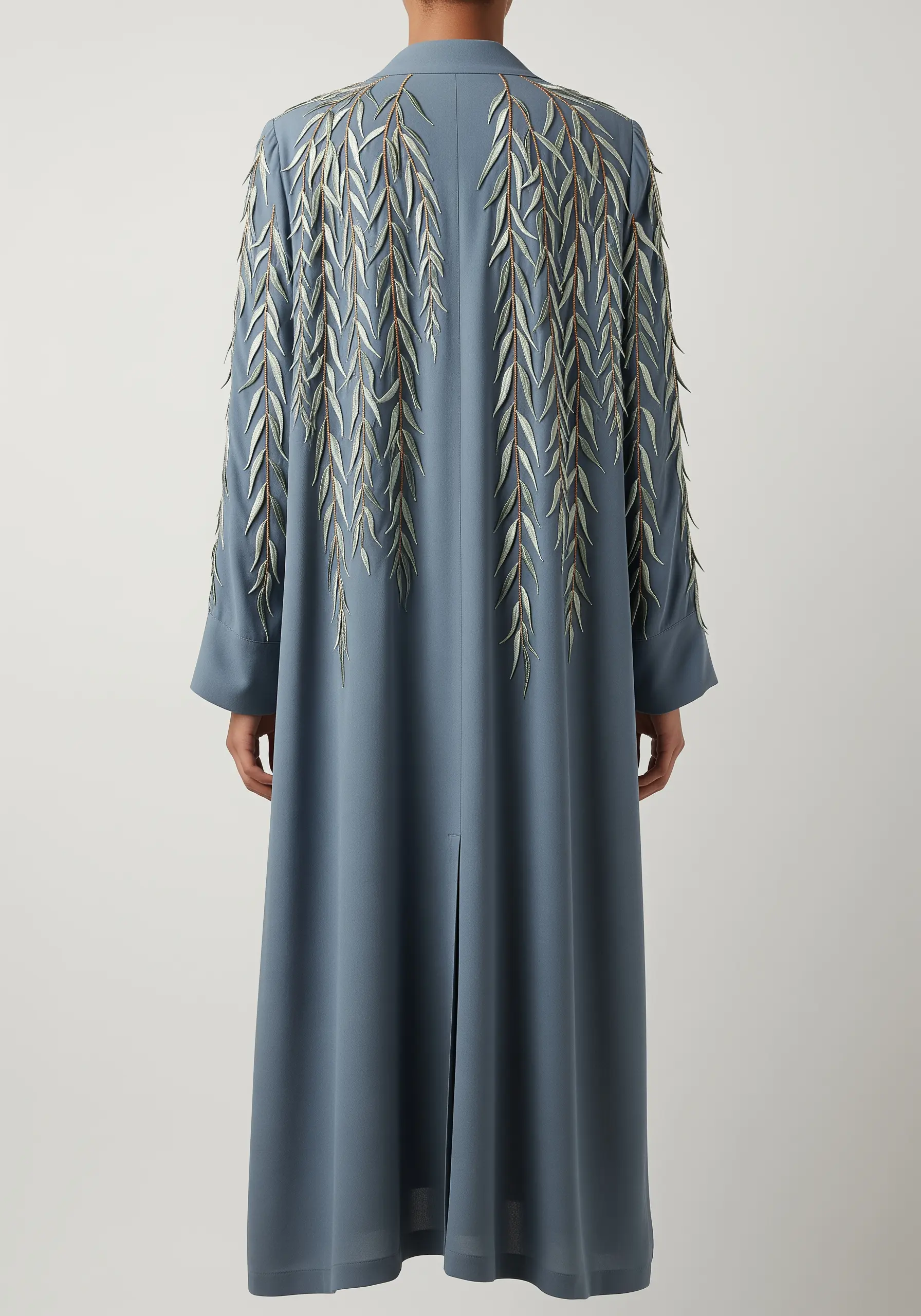
This incredible sense of movement comes from a modified detached chain stitch.
Instead of tacking down the end of the loop to create a petal shape, leave it as a long, free-hanging thread.
Stitch these in dense, overlapping vertical rows from the jacket’s shoulders downwards. As you move, the threads will sway and shift, beautifully mimicking the gentle movement of a weeping willow tree.
34. Tone-on-Tone Holly Lapels
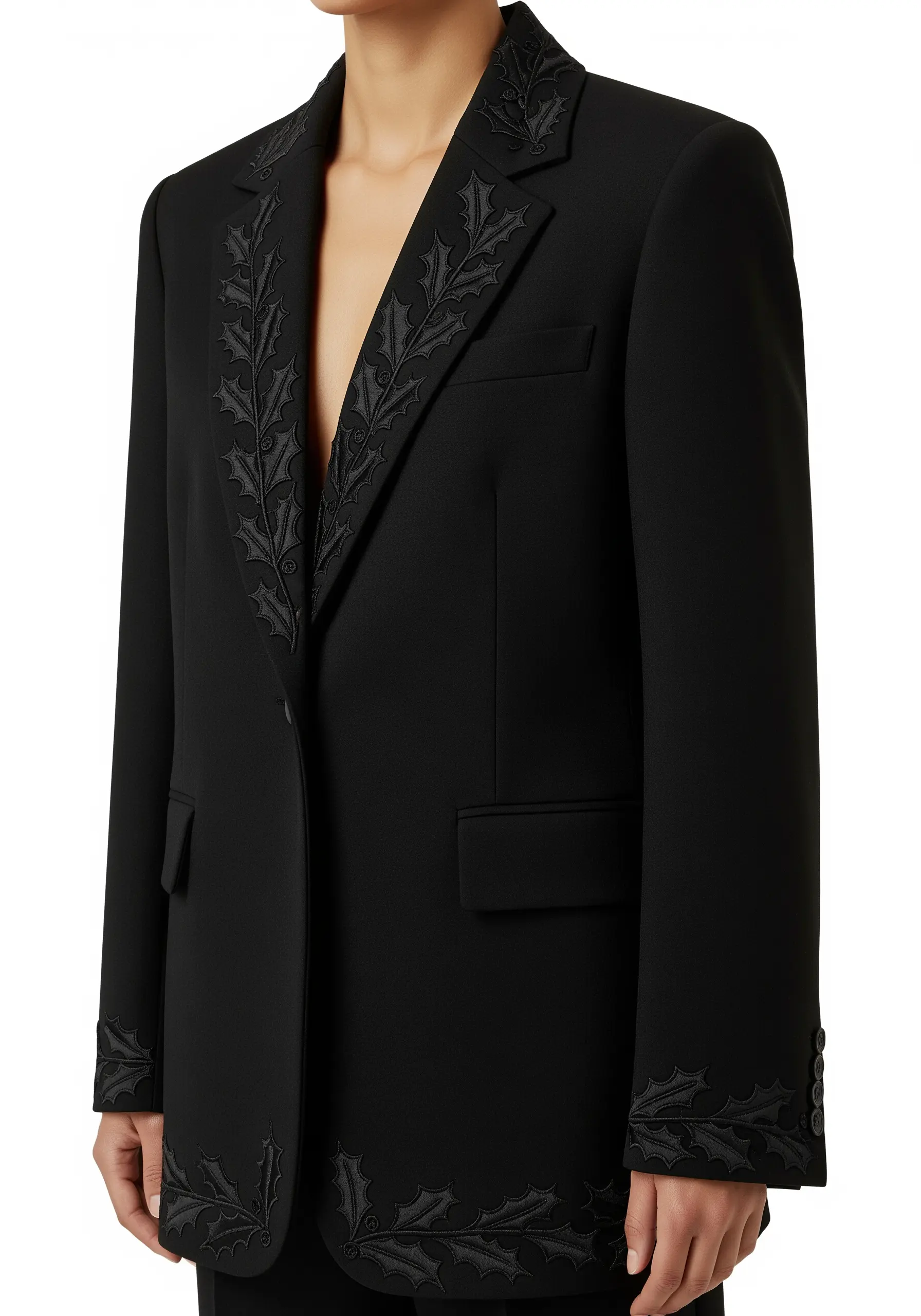
For the ultimate in understated elegance, explore tone-on-tone embroidery.
Using black thread on a black blazer means the design is revealed through texture and the subtle sheen of the floss, not color.
To enhance this effect, use a raised satin stitch or a padded appliqué technique. This creates more surface area to catch the light, making your subtle design more visible and adding a luxurious, tactile quality.


