You have the stitches down. Your lines are clean, your satin stitch is smooth. But you feel that something is missing—that spark that elevates a piece from a well-executed pattern to a work of art.
Often, that missing element is the thoughtful rendering of light and motion. Water, in all its forms, is the ultimate subject for mastering this skill. It challenges you to think beyond simple fill stitches and consider how a surface reflects, ripples, and flows.
This collection is designed to help you do just that. By focusing on two key elements—blue color gradients and metallic threads—you will learn to use color and texture not just as decoration, but as essential tools for capturing the life and soul of lakes and rivers. These are not just ideas; they are techniques to transform your work.
1. Capturing Moonlight with Directional Satin Stitch
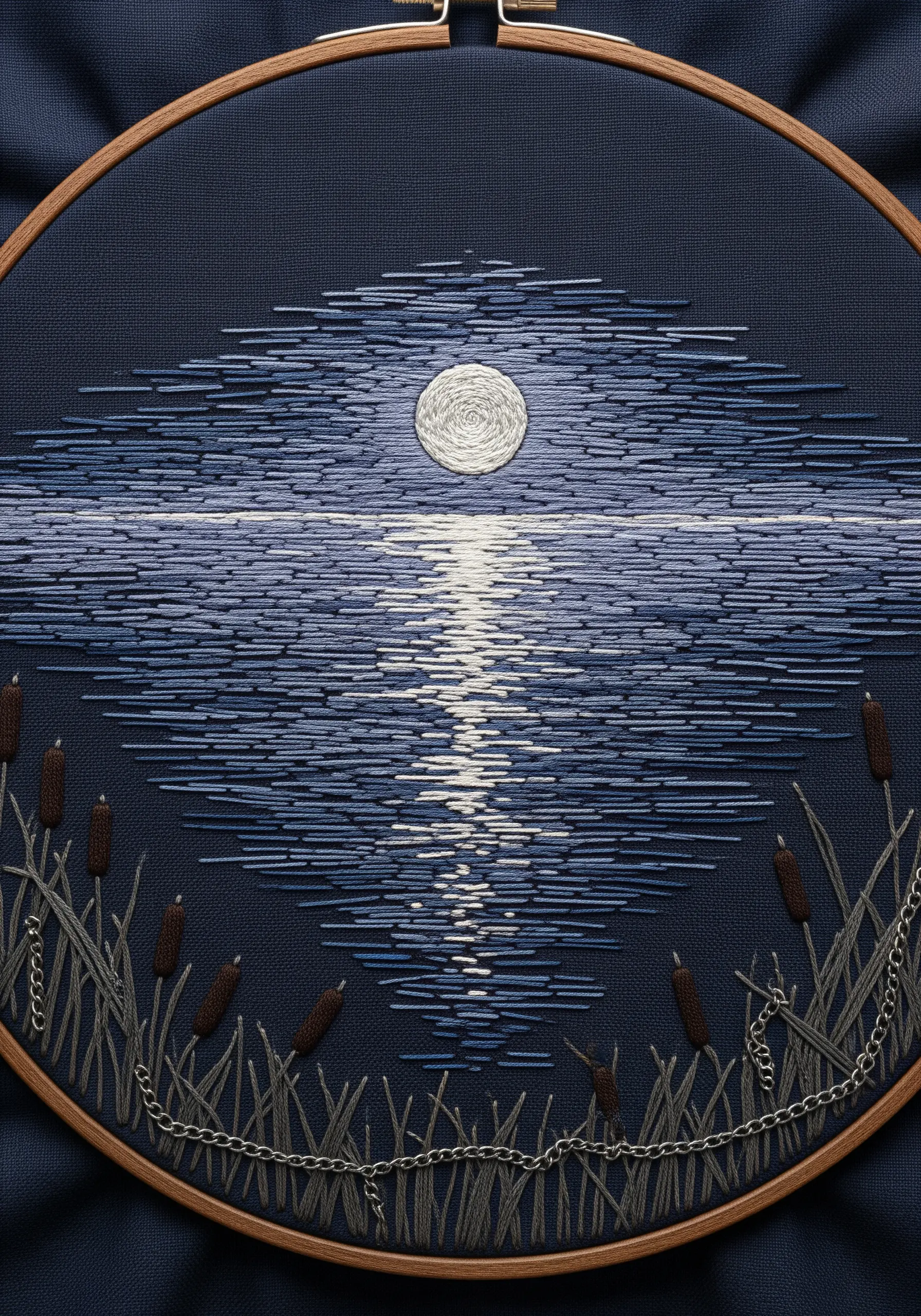
Create the illusion of shimmering water by using exclusively horizontal satin stitches.
Vary the length of each stitch and stagger their placement to avoid rigid blocks of color, allowing your blue and lavender gradients to blend seamlessly.
For the moon’s reflection, integrate a single strand of fine silver metallic thread with your lightest floss, placing these stitches where the light would hit most intensely.
This selective use of metallic thread adds a realistic flicker of light without overpowering the serene, moody atmosphere of the piece.
For an unexpected textural contrast, add a fine metallic chain along the reeds in the foreground.
2. Flowing River Currents on Home Décor

To achieve the bold, textural flow of this river, couch thick yarn or multiple strands of embroidery floss onto your fabric.
Create a natural gradient by twisting several shades of blue and turquoise thread together before you stitch them down with a thinner, matching thread.
Define the riverbanks with a sparkling metallic cord, using a couching stitch to secure it smoothly along the curves.
Contrast the river’s heavy texture with delicate florals—simple detached chain stitches for petals and French knots for centers will provide a light, airy balance.
3. Creating Mirrored Landscapes with Negative Space
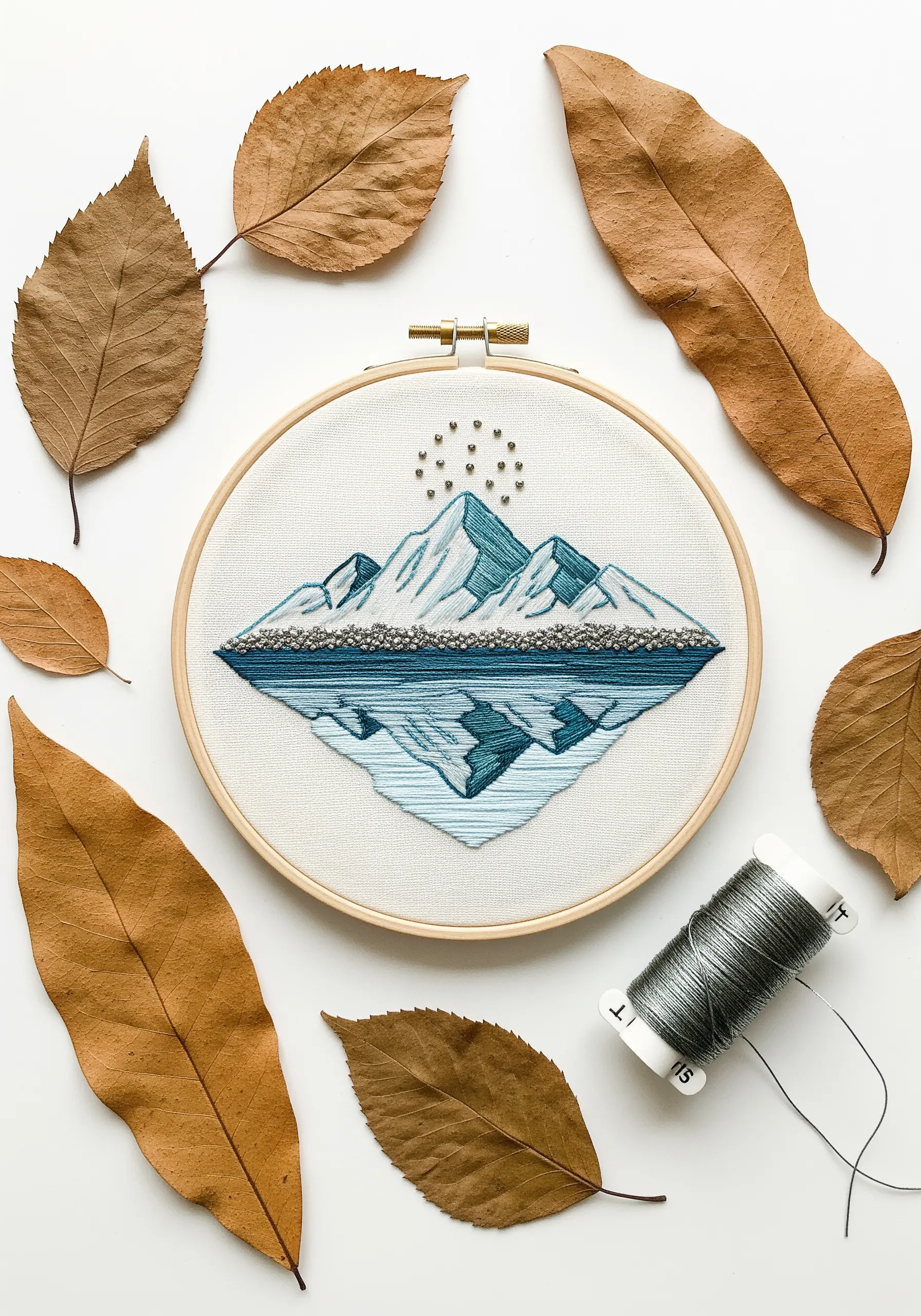
The elegance of this design lies in its precision and the intentional use of negative space.
Fill the mountainside with long and short stitch, blending cool blues to create shadows while leaving areas of the white fabric exposed for snow-capped peaks.
For the water reflection, use horizontal satin stitch in the same blue tones, ensuring the shape is a perfect mirror image.
Weave a single strand of silver metallic thread sparsely through the water to add a subtle, reflective quality.
A cluster of French knots at the mountain’s base adds a rocky texture that grounds the composition.
4. Thread Painting Feathers and Ripples
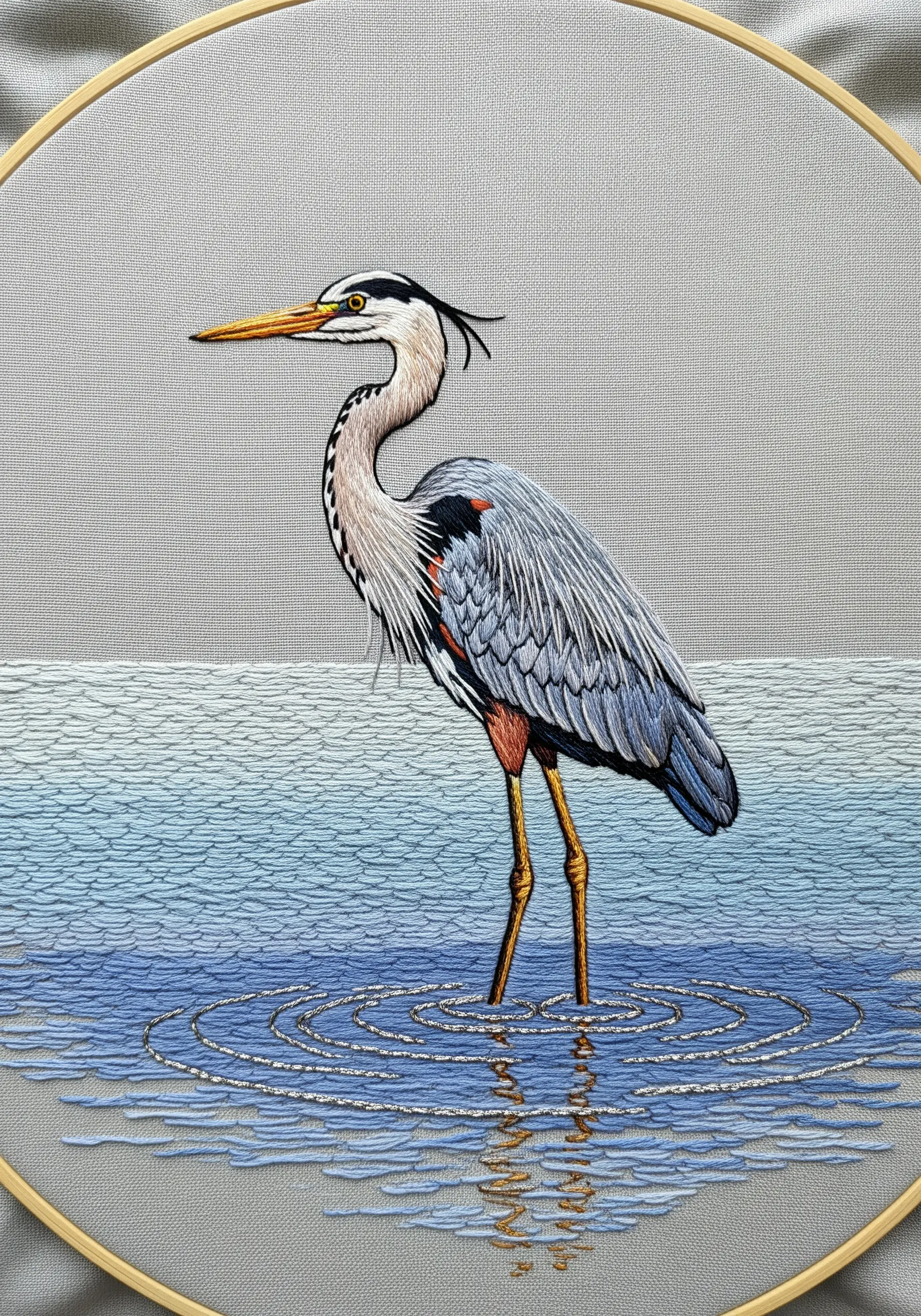
To achieve the hyper-realism of plumage, work with a single strand of floss using the long and short stitch technique.
Direct your stitches to follow the natural growth pattern of the feathers, which creates authentic movement and texture.
For the water ripples, a fine silver metallic thread is all you need.
Use a simple backstitch or stem stitch to create clean, concentric circles that emanate from the bird, suggesting gentle disturbance on a calm surface.
The reflection is merely suggested with loose, horizontal stitches in muted tones, creating a subtle, distorted mirror image.
5. Dynamic Water Splashes with Bullion Knots

Capture the kinetic energy of a splash by filling the main shape with satin stitch and adding scattered French knots in vibrant blues.
For the airborne droplets, create elongated bullion knots using a high-shine silver metallic thread.
By varying the number of wraps around your needle, you can control the size of each drop, giving them a three-dimensional quality that seems to leap off the fabric.
The bird’s wings are an excellent canvas for abstract metallic thread projects, perfectly highlighting the iridescent shimmer of its feathers.
6. Designing a Cohesive Multi-Hoop Landscape
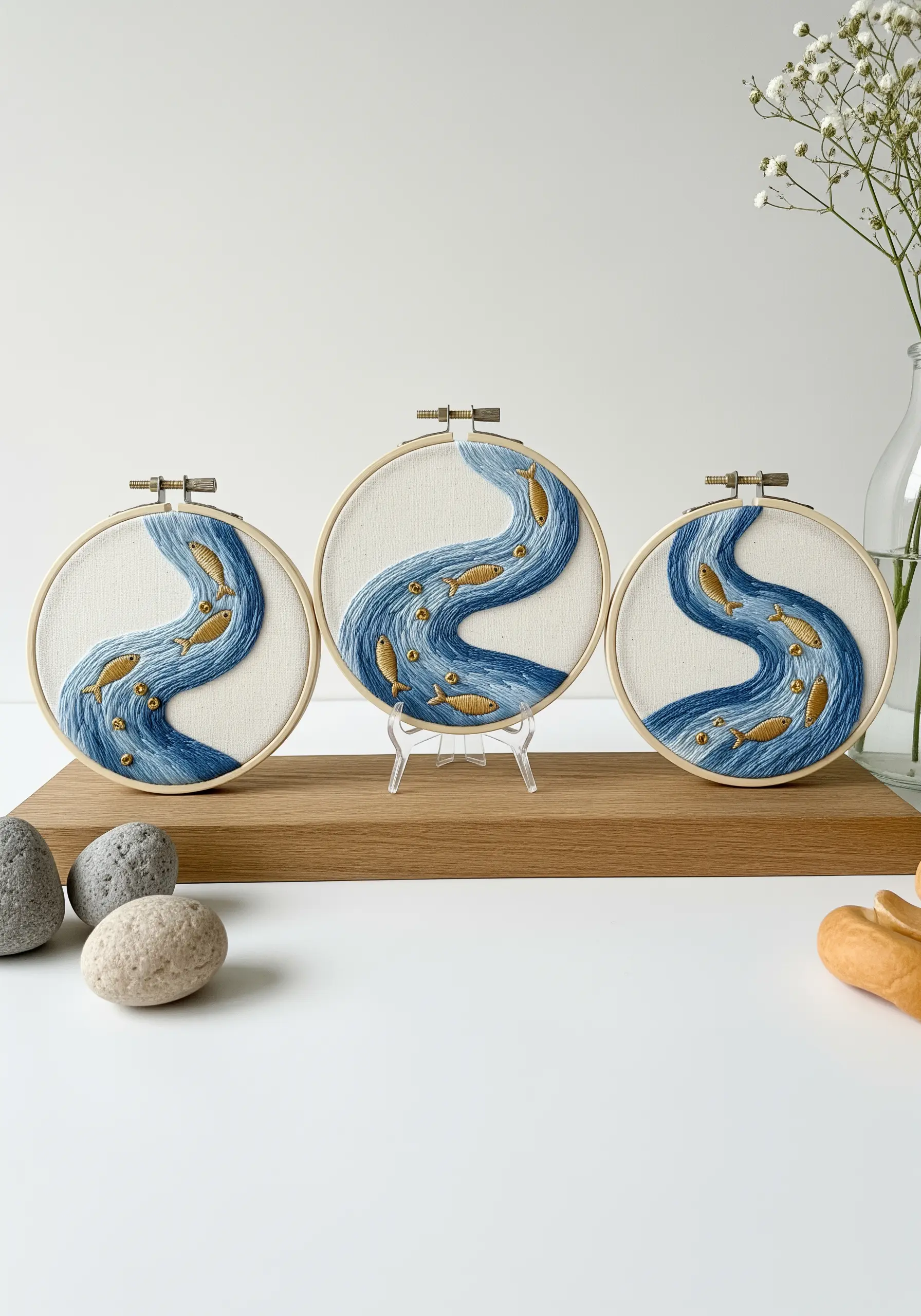
To create a flowing triptych, begin by tracing your complete design onto fabric before separating it into three hoops.
This ensures the river’s path connects seamlessly across the visual breaks.
Use a consistent color palette of blues and vary the stitch direction within the river to suggest current and depth.
The fish, stitched in a metallic gold satin stitch, provide a warm, eye-catching element that guides the viewer through the composition.
Tiny gold seed beads can be added for bubbles, enhancing the metallic shine.
7. Weaving Texture into an Abstract River
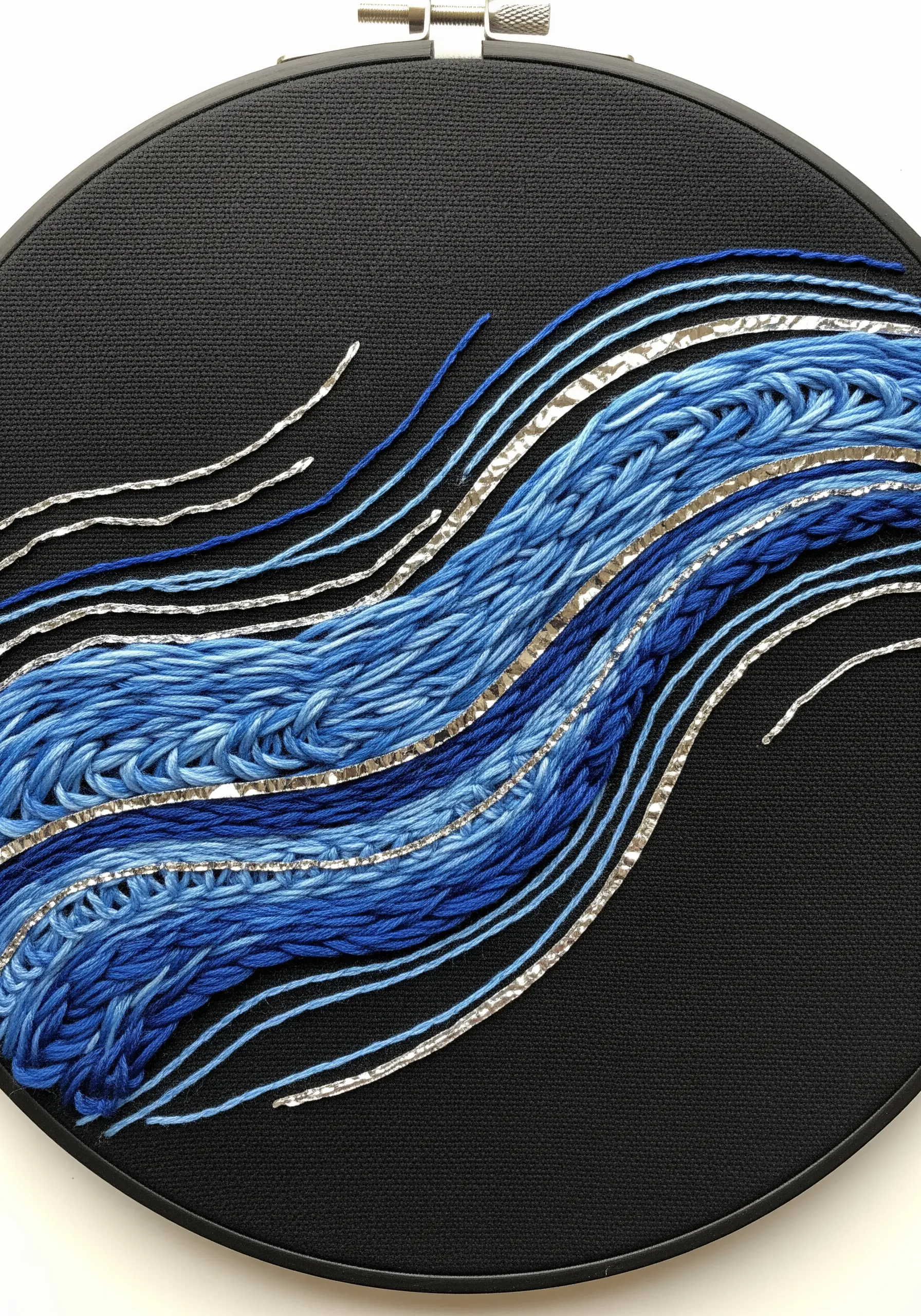
Move beyond flat stitches to build a composition rich in texture and dimension.
Create braids using multiple strands of floss and couch them down, juxtaposing them against smooth satin stitch sections and loose straight stitches.
Interspersing flat metallic ribbon adds unexpected flashes of light that mimic sun on water.
This technique turns a simple design into one of those abstract thread landscapes that feels both modern and expressive, allowing you to use a wide variety of threads from your collection.
8. Serene Lily Pads and Minimalist Ripples
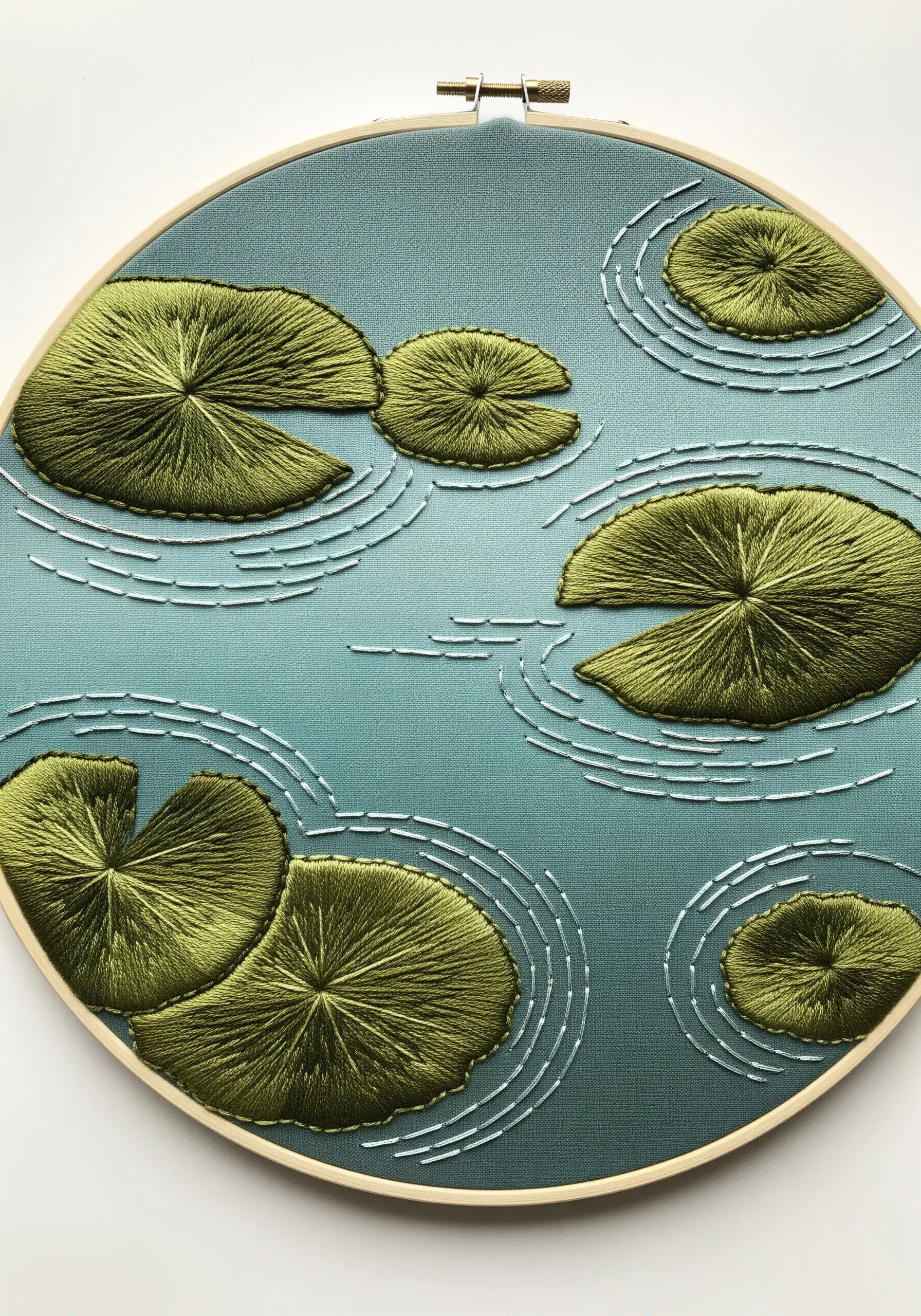
Suggest the gentle movement of calm water without stitching the entire surface.
Use a single strand of white or silver floss to create subtle ripples with scattered seed stitches arranged in gentle, concentric curves.
This minimalist approach keeps the focus on the lily pads, which are filled with directional satin stitch radiating from the center to mimic natural veins.
Adding a slightly darker green to the underside of a folded leaf introduces a simple touch of realism.
9. Sculpting Ice and Snow with 3D Stitches
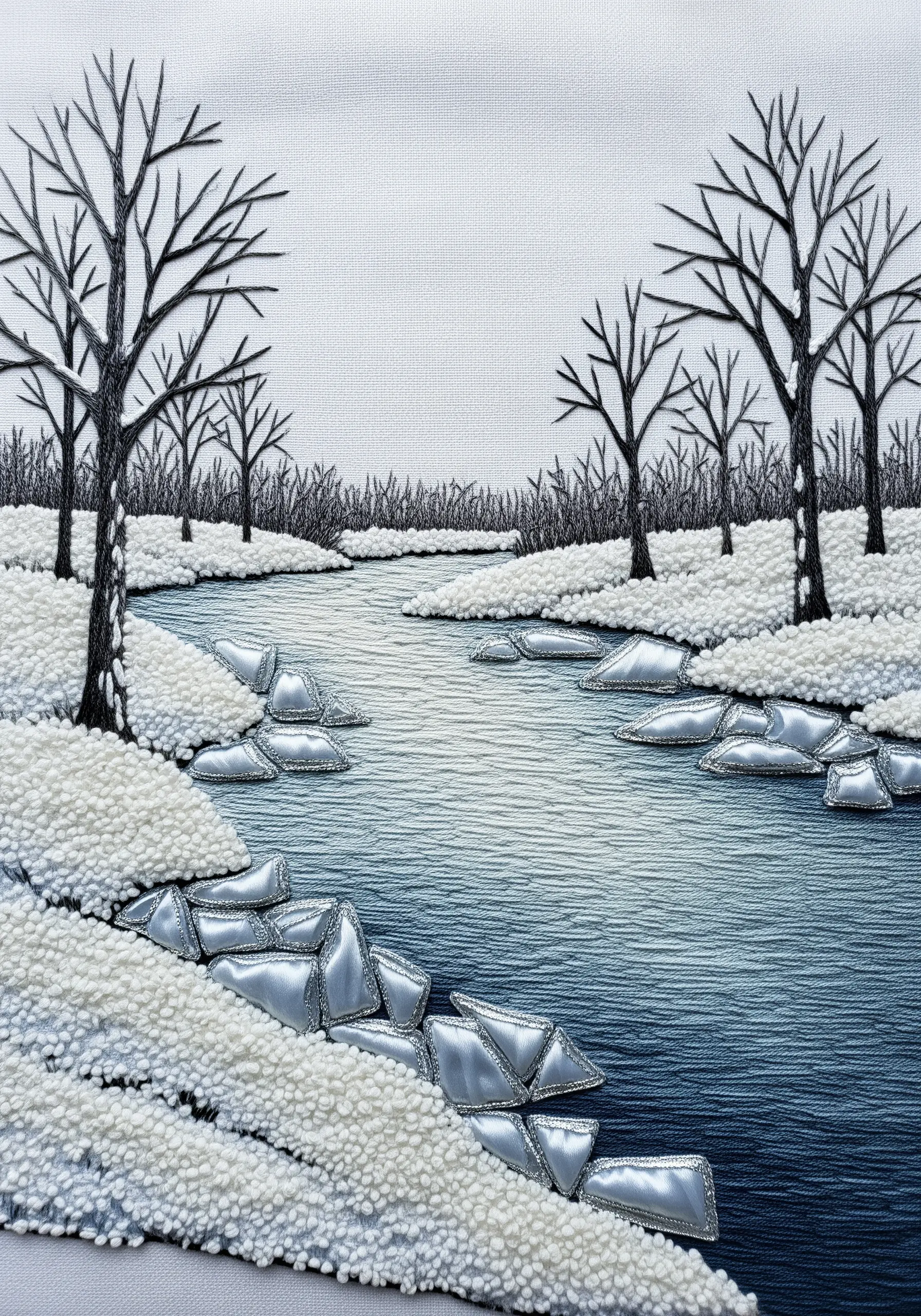
Render a tactile winter scene by using different stitches for each texture.
Create fluffy, mounded snow with dense French knots or turkey work, using a soft white cotton or wool thread for extra volume.
For the ice chunks, apply pieces of silver metallic fabric to your base and secure them with padded satin stitch in a light grey or off-white thread.
This technique gives the ice a raised, reflective quality that contrasts beautifully with the soft snow and the smooth, satin-stitched river.
10. Stitching a Vibrant Sunset Reflection
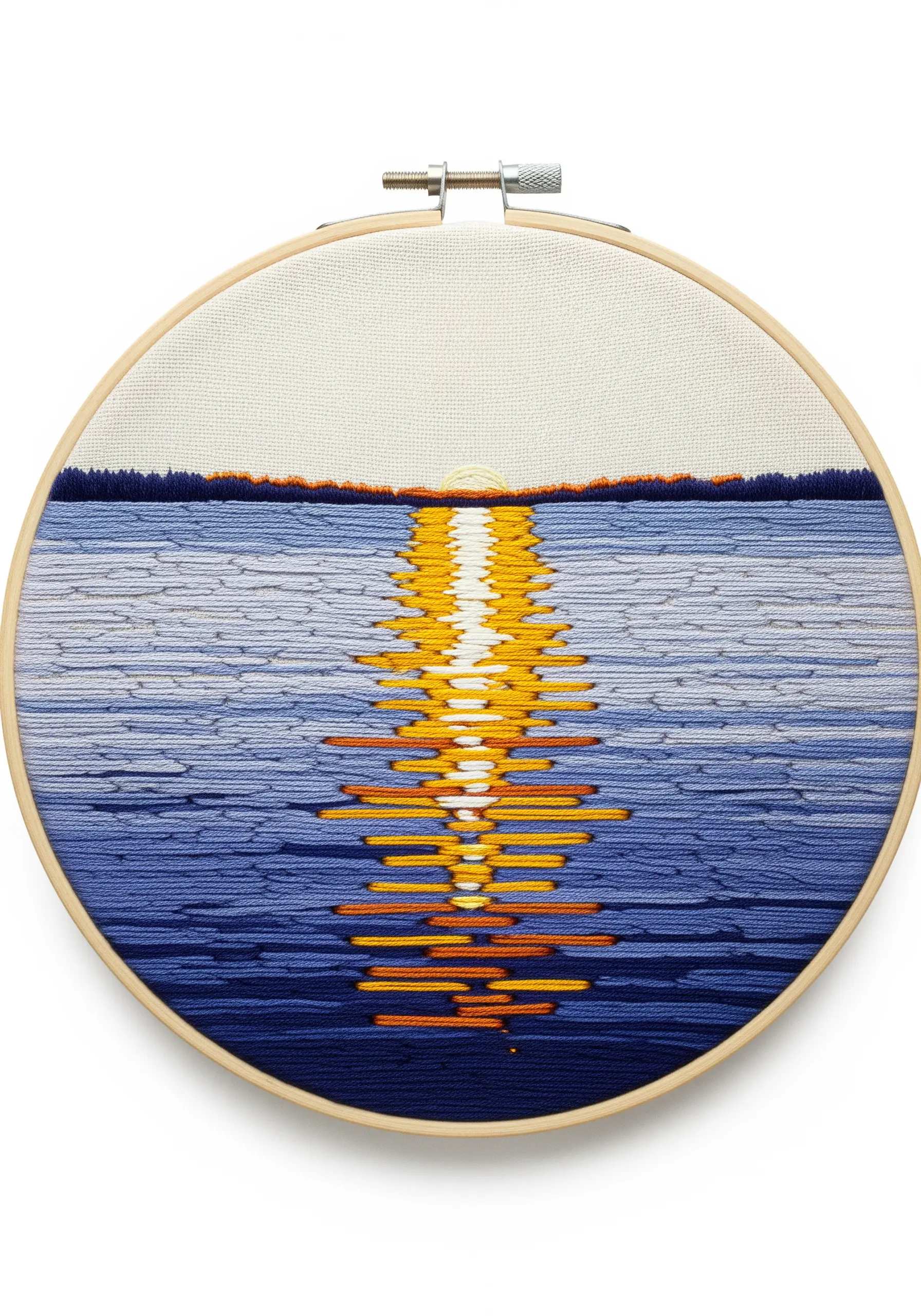
To capture the intense color of a sunset on water, blend your threads boldly using horizontal satin stitches.
Place bright yellows and oranges directly against deep blues, keeping the stitches uniform in direction but varied in length to create a broken, shimmering effect.
Weave a single strand of gold metallic thread through the brightest parts of the reflection—the white, yellow, and orange sections—to mimic the dazzling glow of the setting sun.
This targeted use of metallic thread makes the light feel authentic and powerful.
11. Creating Playful Motion with Whipped Backstitch
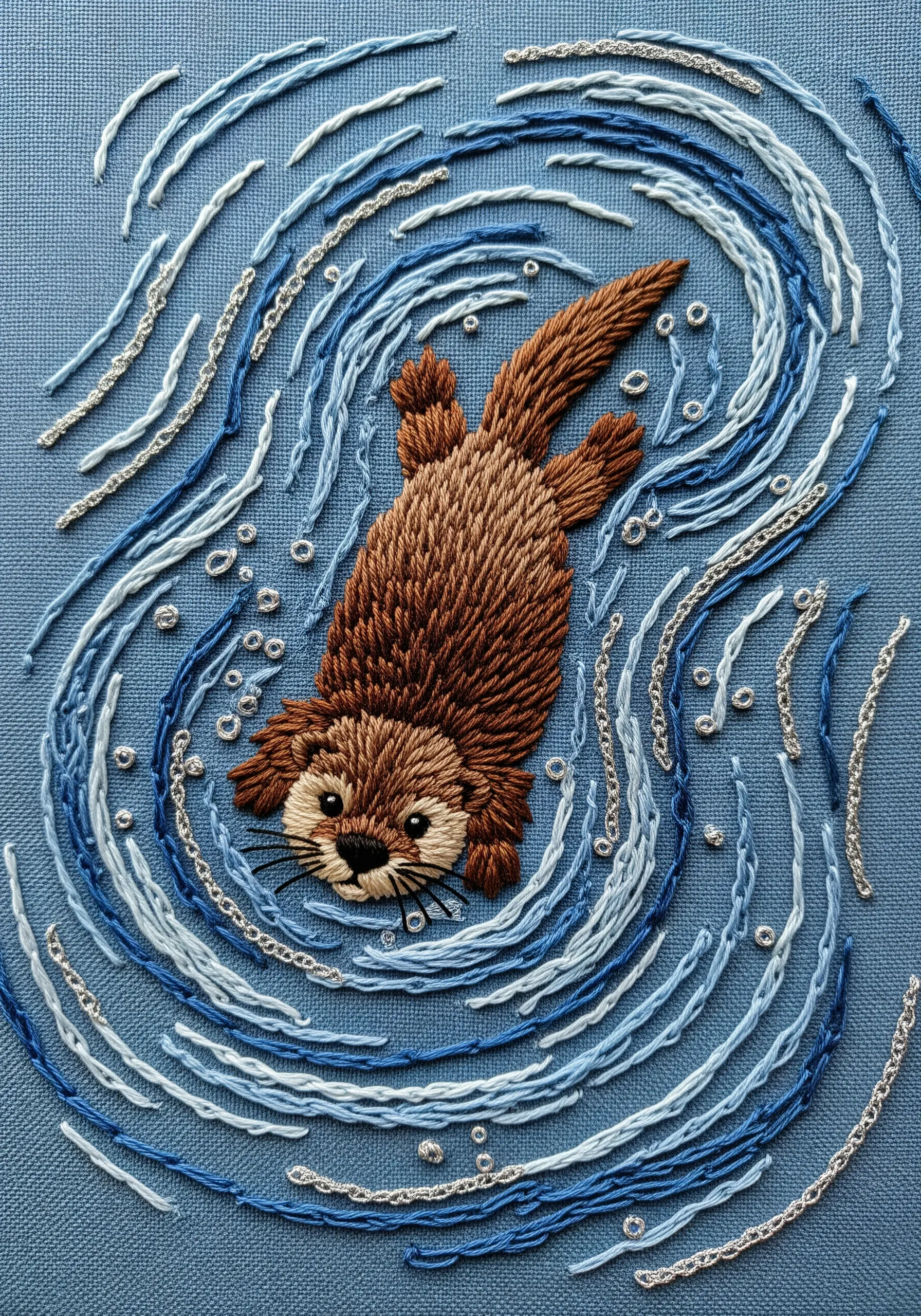
Give water a sense of energetic, swirling motion by using whipped backstitch or stem stitch in concentric lines.
Using a variegated blue thread or alternating between two or three complementary shades will enhance the feeling of movement.
Incorporate a fine silver chain stitched directly into the design or couch a thin metallic braid alongside your floss to add sparkle and texture.
It is one of those adorable forest animal embroidery ideas where the environment is just as lively as the subject.
12. Sheer Dragonfly Wings with Open Fill
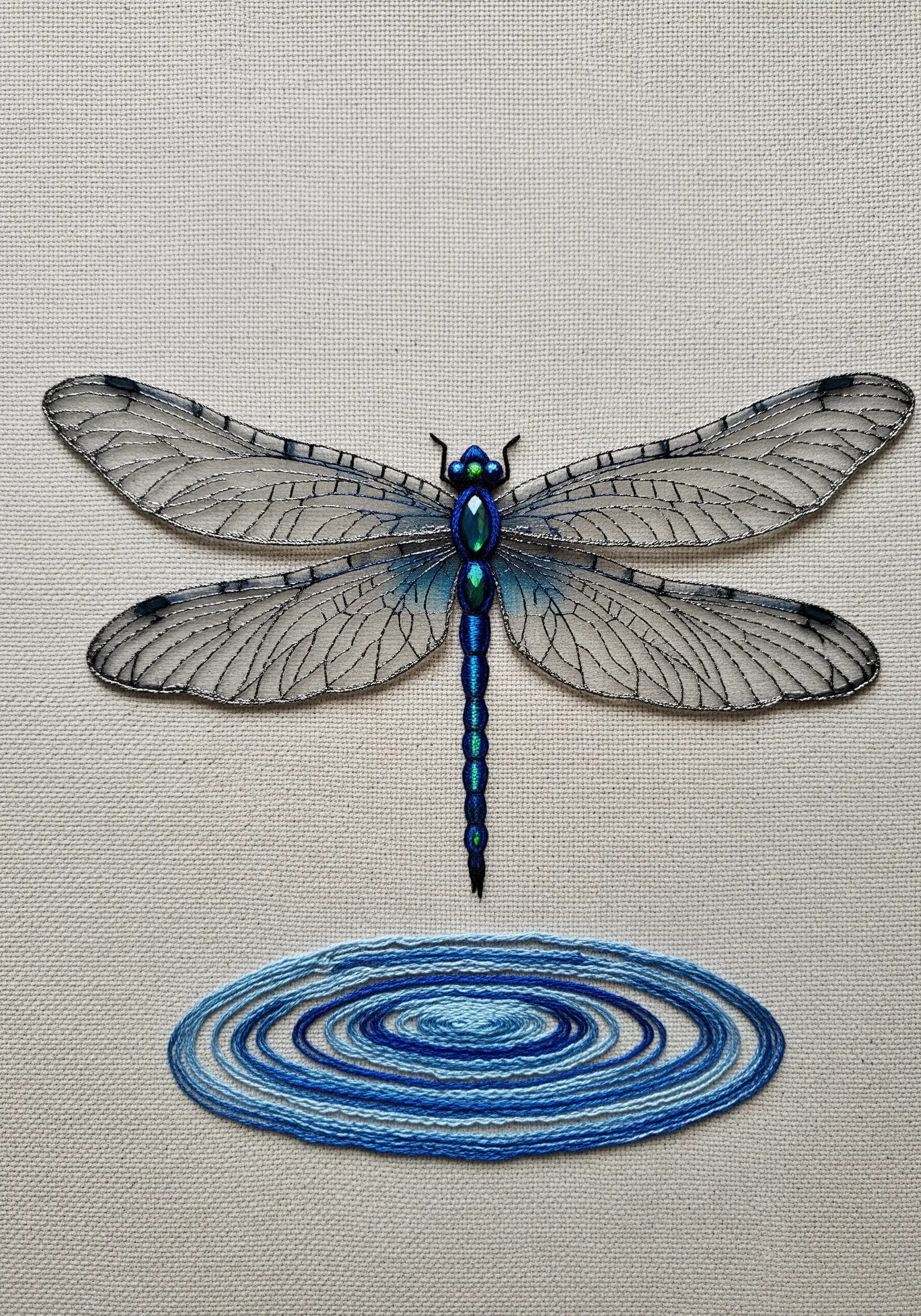
To create the illusion of translucent wings, let your fabric do the work.
Use a fine silver metallic thread and a precise split stitch to outline the main structure of the wings.
Then, add the delicate interior veins using single straight stitches.
The key is to leave the sections unfilled, allowing the background fabric to show through and create a sense of lightness and transparency that a dense fill stitch could never achieve.
This technique works best on a high-quality, evenweave linen.
13. Dynamic Waterfalls with Vertical Stitches

Capture the vertical rush of a waterfall by using long, straight stitches as your primary technique.
Allow the stitches to be slightly loose and vary their lengths to mimic the natural, chaotic flow of falling water.
Use a blend of blues, whites, and a single strand of shimmering metallic thread throughout.
At the base, add tiny white French knots or clear seed beads to represent foam and spray, creating a rich nature-inspired texture pattern that is both visual and tactile.
14. Crisp Reflections with Precision Stitching
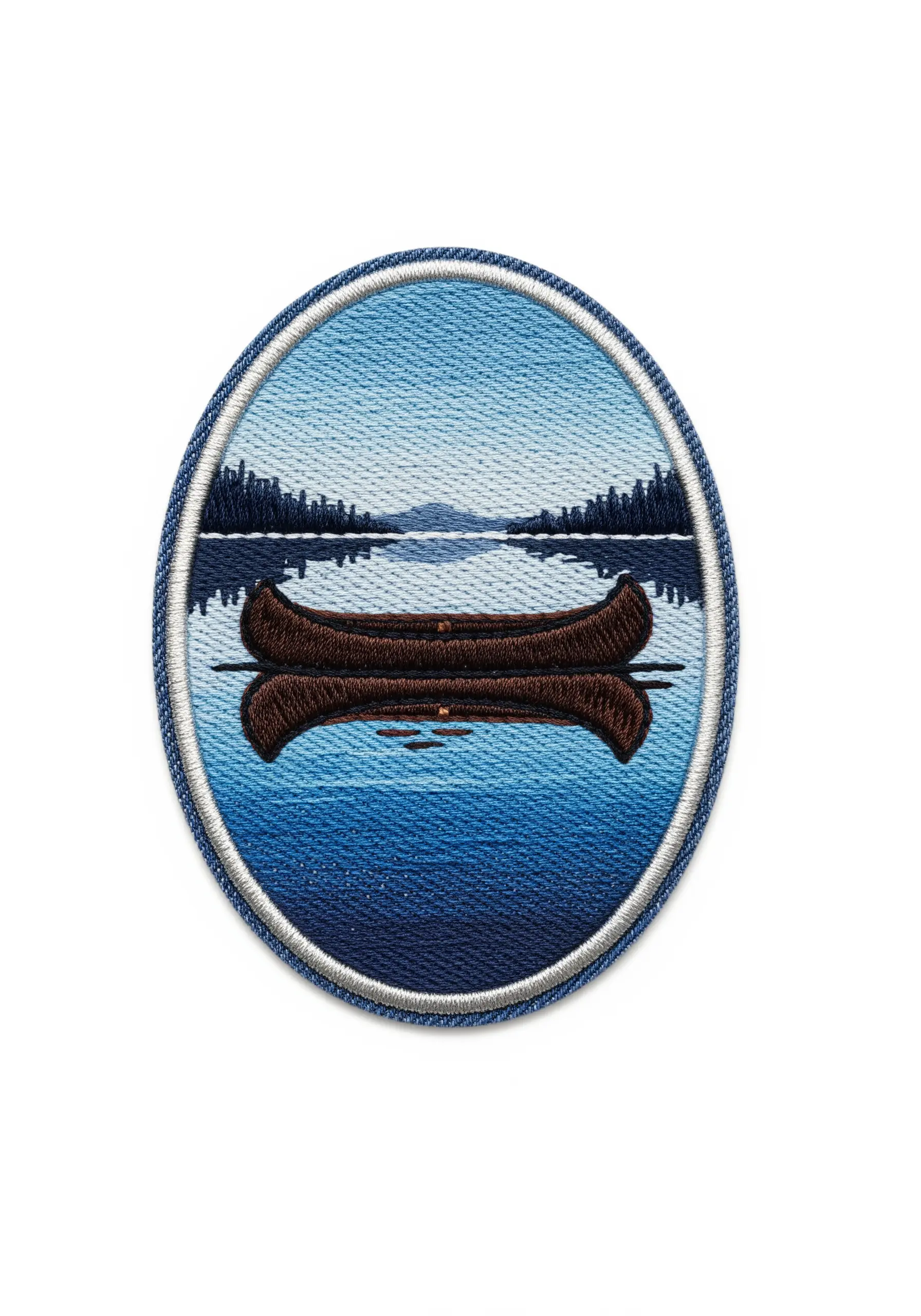
While this patch was likely made by machine, you can achieve a similar crispness by hand.
Use a single strand of floss and a dense long-and-short stitch to create the smooth gradient in the sky and water.
The key to a believable reflection is perfect mirroring—trace your canoe and treeline elements precisely to create their upside-down counterparts.
Finish with a sharp satin stitch border, perhaps incorporating a silver metallic thread, to give your patch a clean, professional edge.
15. Personalizing Maps with Stem Stitch Tributaries
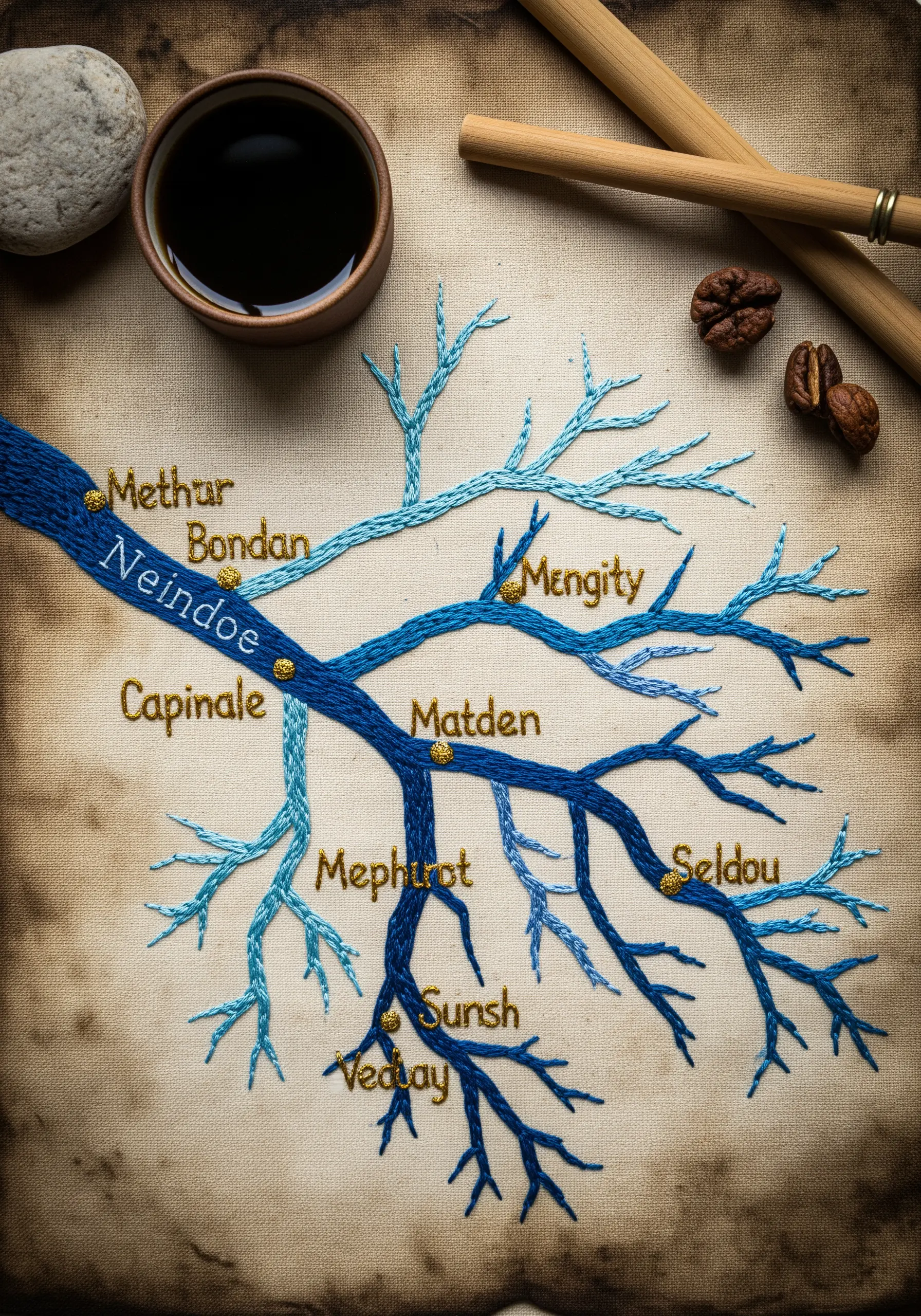
Transform a meaningful location into a unique piece of art by embroidering its river system.
Use stem stitch for its clean, rope-like line, which is perfect for defining the paths of rivers and streams.
Create a visual hierarchy by using a darker or thicker thread for the main river and lighter shades for its tributaries.
Add names with a tiny backstitch and mark significant locations with gold French knots.
This approach turns a simple map into one of the most thoughtful creative embroidery gifts inspired by nature.
16. Embroidering on a Functional Lampshade
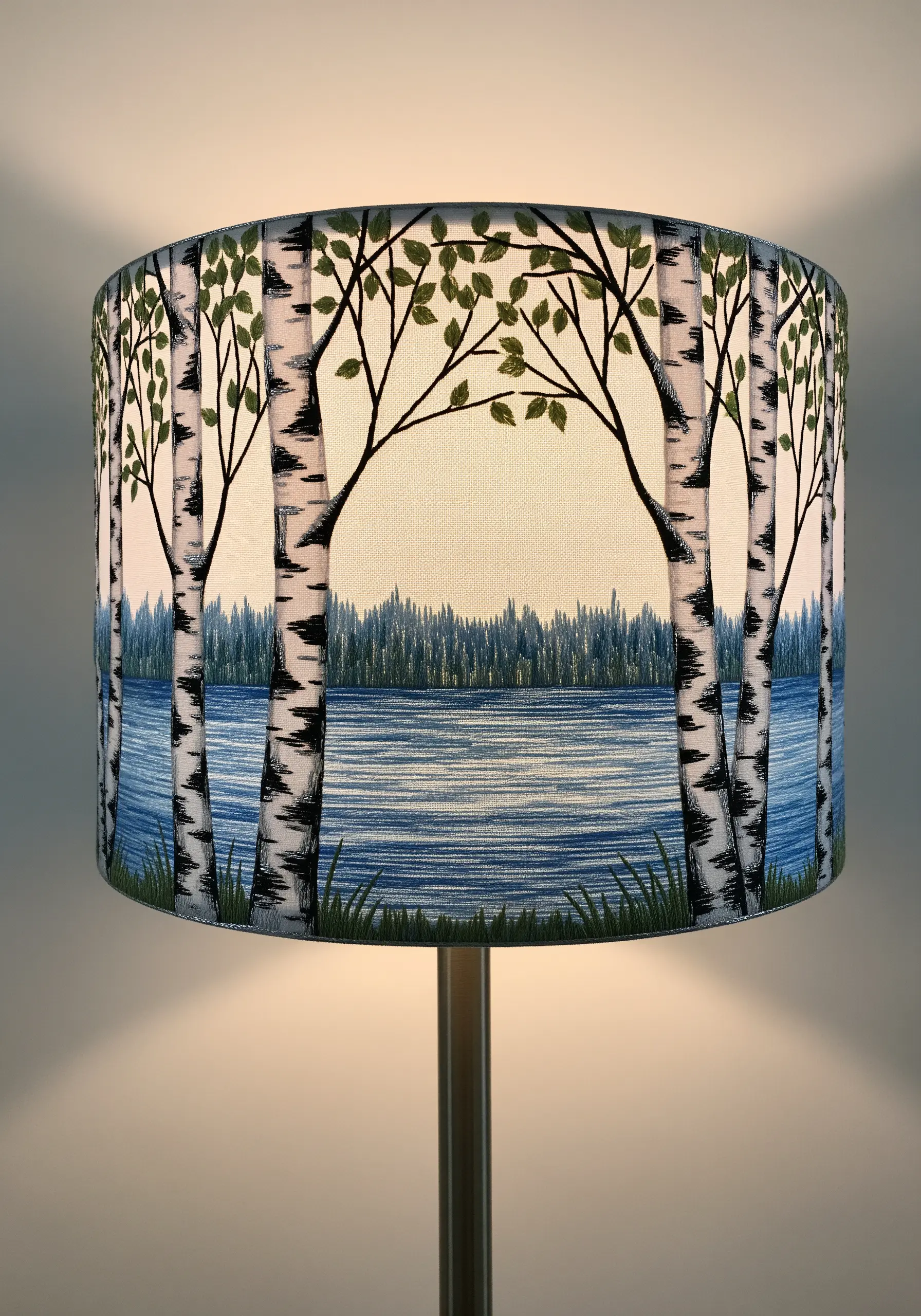
When stitching on a lampshade, your design must work with and without backlight.
Stick to simple, bold stitches like backstitch for outlines and satin stitch for filled areas, as the light passing through will highlight their texture.
For the lake, a gradient of horizontal satin stitches creates a serene backdrop that will diffuse the light beautifully, casting a soft glow.
Always ensure your chosen thread is heat-resistant and the lampshade material is sturdy enough to hold stitches without puckering.
17. A Mixed-Media Shoreline with Natural Pebbles

Combine the soft texture of thread with the hard, smooth surface of real stones for a powerful effect.
Create your water’s edge with long, horizontal stitches on a painted or dyed fabric background.
Add a few lines of couched silver thread where the water meets the shore to suggest glistening seafoam.
Then, use a strong, clear-drying adhesive to permanently attach small, flat pebbles, transforming your hoop into a stunning piece of mixed-media collage.
18. Celestial River with Cross-Stitch Gradients

For a stylized, graphic interpretation of a river, use cross-stitch on dark Aida or evenweave fabric.
Create a “pixelated” gradient by blending several shades of blue, purple, and white floss, which suggests both depth and movement.
The stars, stitched as Algerian eyelets or simple star stitches with gold metallic thread, will pop brilliantly against the dark canvas.
This is a wonderful way to explore dramatic night garden embroidery ideas with a clean, structured technique.
19. Layering Lupines for a Sense of Depth
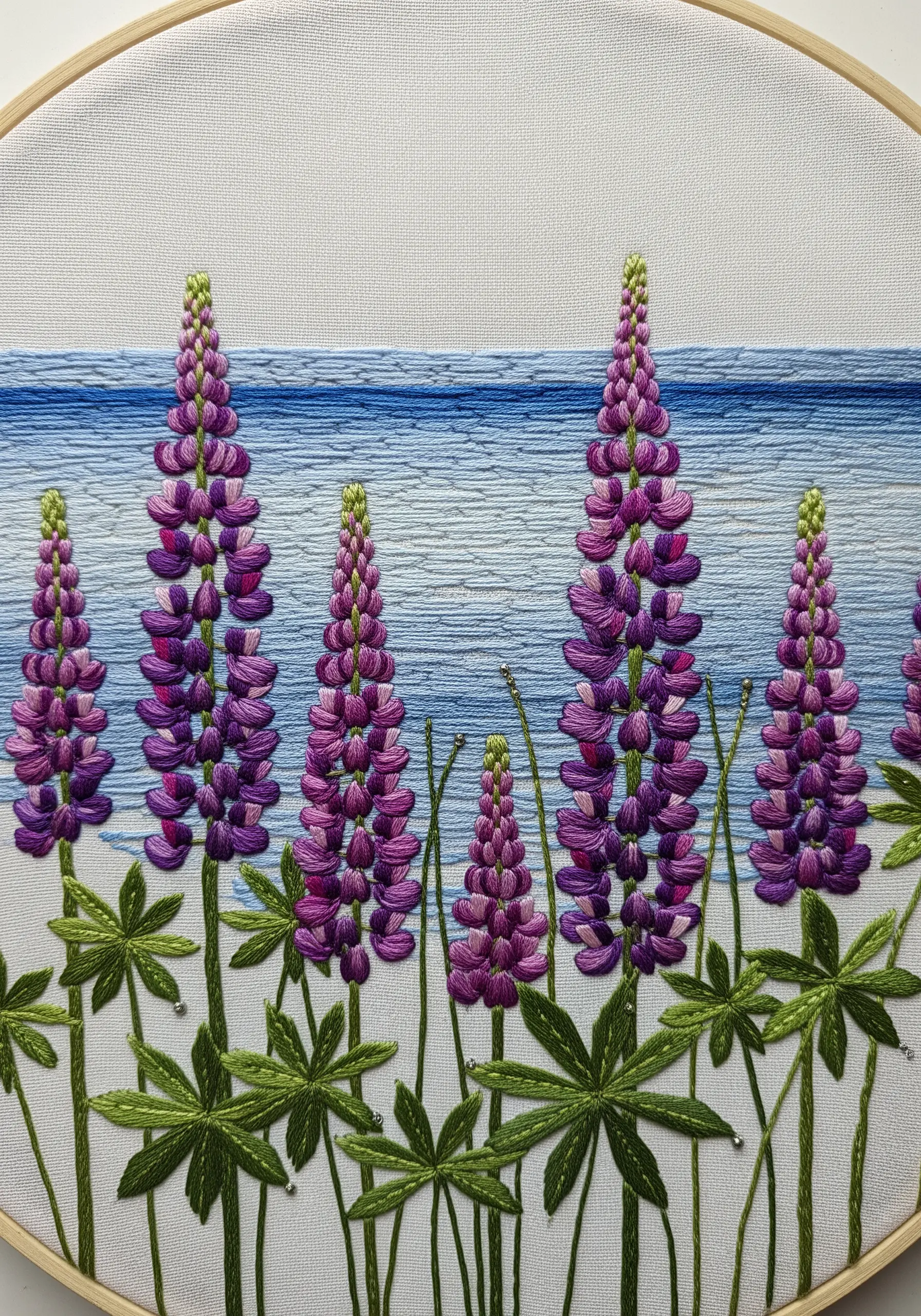
To create a convincing sense of distance, always stitch your background elements first.
Embroider the lake using simple, horizontal satin stitches in a soft blue gradient, keeping the texture flat and uniform.
Next, stitch the lupines in the foreground using more textural stitches like bullion knots or clustered detached chain stitches for the individual blossoms.
This textural contrast makes the flowers pop forward, creating a clear visual separation that gives the entire scene a realistic depth.
20. Fluid Currents with Unstitched Silk Thread
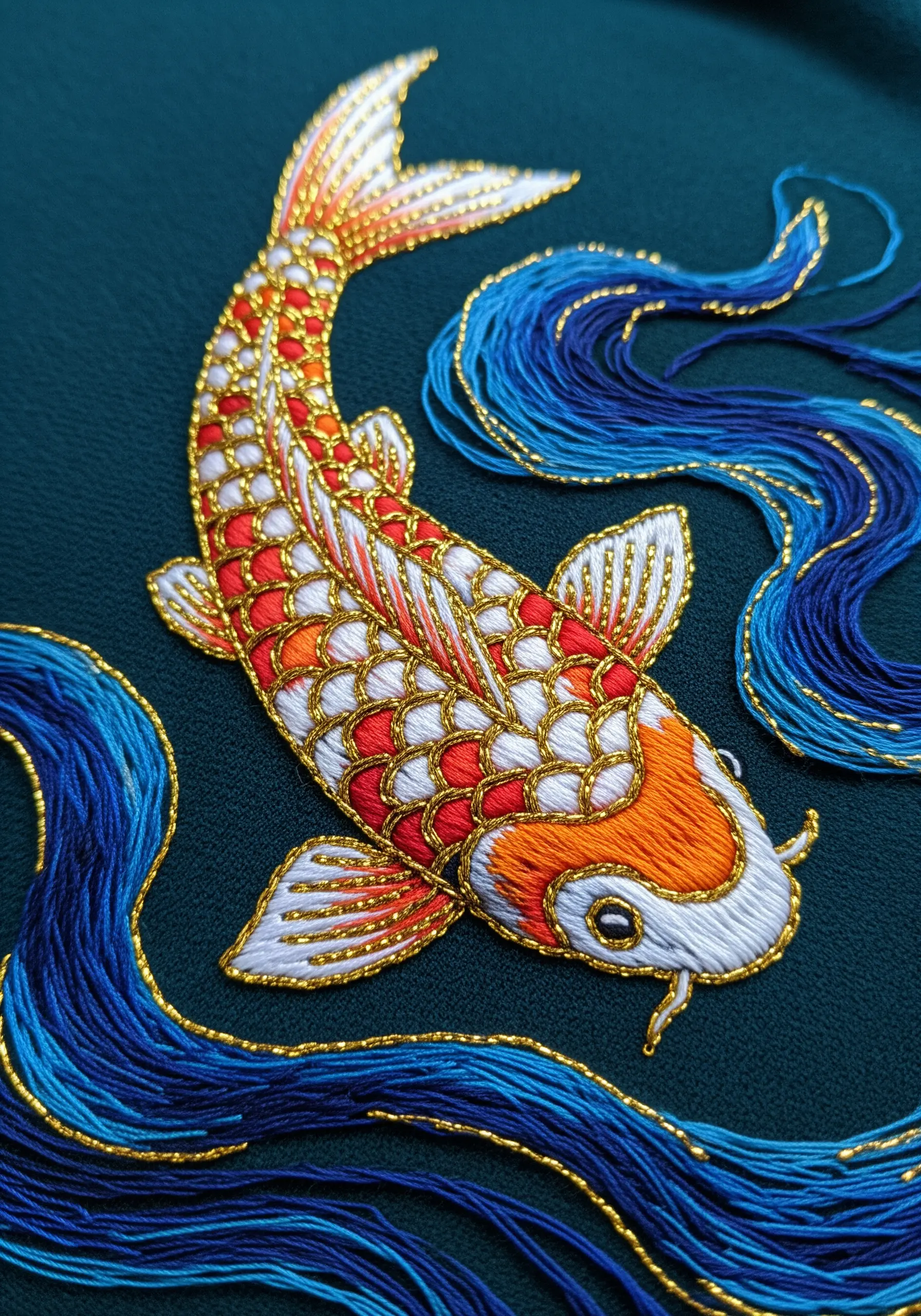
Mimic the fluid, reflective quality of water by couching down loose bundles of silk floss.
Unlike cotton, the high sheen of silk catches the light in a way that truly resembles a liquid surface.
Allow the threads to twist and turn naturally as you secure them with tiny, invisible tacking stitches.
Couching a fine gold metallic thread alongside the silk bundles adds definition and a touch of refined luxury to the entire piece.
21. Soft, Painterly Skies with Needle Felting
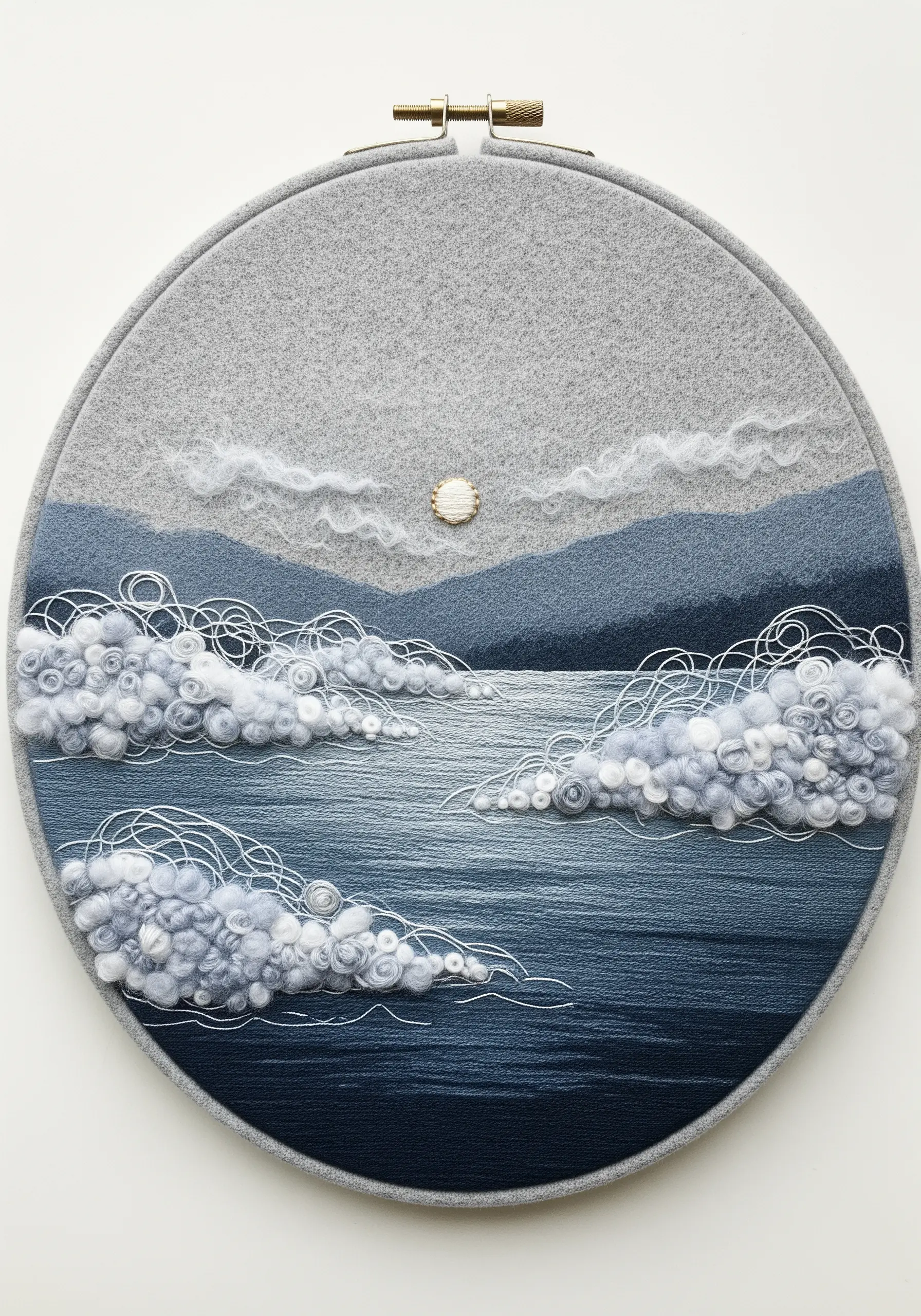
For a soft-focus, atmospheric background, try needle felting instead of stitching.
Lay down wisps of wool roving in shades of grey and blue directly onto your base fabric, then use a felting needle to blend and secure them.
Once your painterly background is complete, you can add fine embroidered details on top, like the delicate white thread defining the fog or a metallic-wrapped bead for the sun.
This method creates a beautiful, ethereal texture that is impossible to achieve with thread alone.
22. Thread Painting a Delicate Water Lily

To achieve the soft, blended look of this water lily, rely on the long and short stitch technique using only a single strand of floss.
This allows you to blend pinks and whites seamlessly for photorealistic petals, while a crisp gold metallic outline adds definition.
For the water, use concentric circles of split stitch, transitioning from dark to light blue to suggest depth and ripples.
This design is a perfect exercise for mastering floral thread painting techniques on a small scale.
23. Capturing the Texture of an Ocean Swell
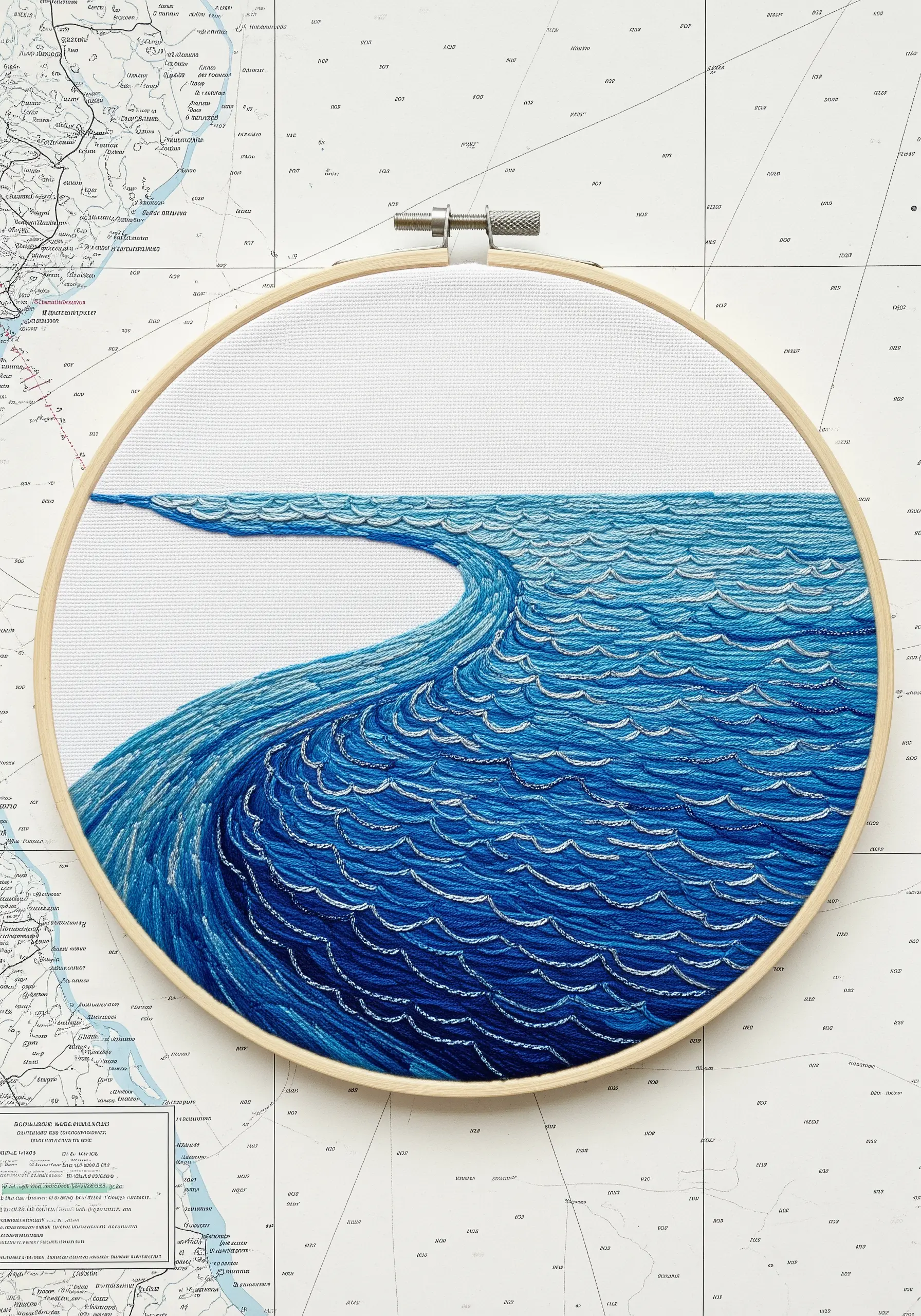
To convey the powerful texture of open water, fill the space with a dense variety of overlapping stitches.
Combine short satin stitches, French knots, and long, curving split stitches to build a chaotic yet cohesive surface.
Work with a broad palette of five to seven blues, from deep navy to bright turquoise, allowing them to mix organically throughout the piece.
A scattering of white seed stitches represents sea foam, breaking up the expanse of blue and adding to the sense of scale and movement.