Your box of fabric scraps is not a collection of leftovers; it’s a library of possibilities. Each piece holds the memory of another project, a unique texture, and a color waiting to find its new home. With fabric collage, you move beyond simple stitches on a blank canvas and become a painter, composing with pattern, texture, and shape.
This is where you can let go of perfection. A raw, frayed edge isn’t a mistake—it’s texture. A slightly uneven shape isn’t a flaw—it’s character. You can create entire worlds, from serene landscapes to vibrant abstracts, just by cutting, layering, and stitching pieces together.
Let these ideas guide you, not as strict rules, but as starting points. See how a simple change in fabric—from velvet to linen, from solid to patterned—can completely transform the mood of a piece. Your needle and thread are the tools that will bind these disparate pieces into a single, beautiful, and shockingly cohesive story.
1. Weave an Abstract Seascape Tapestry
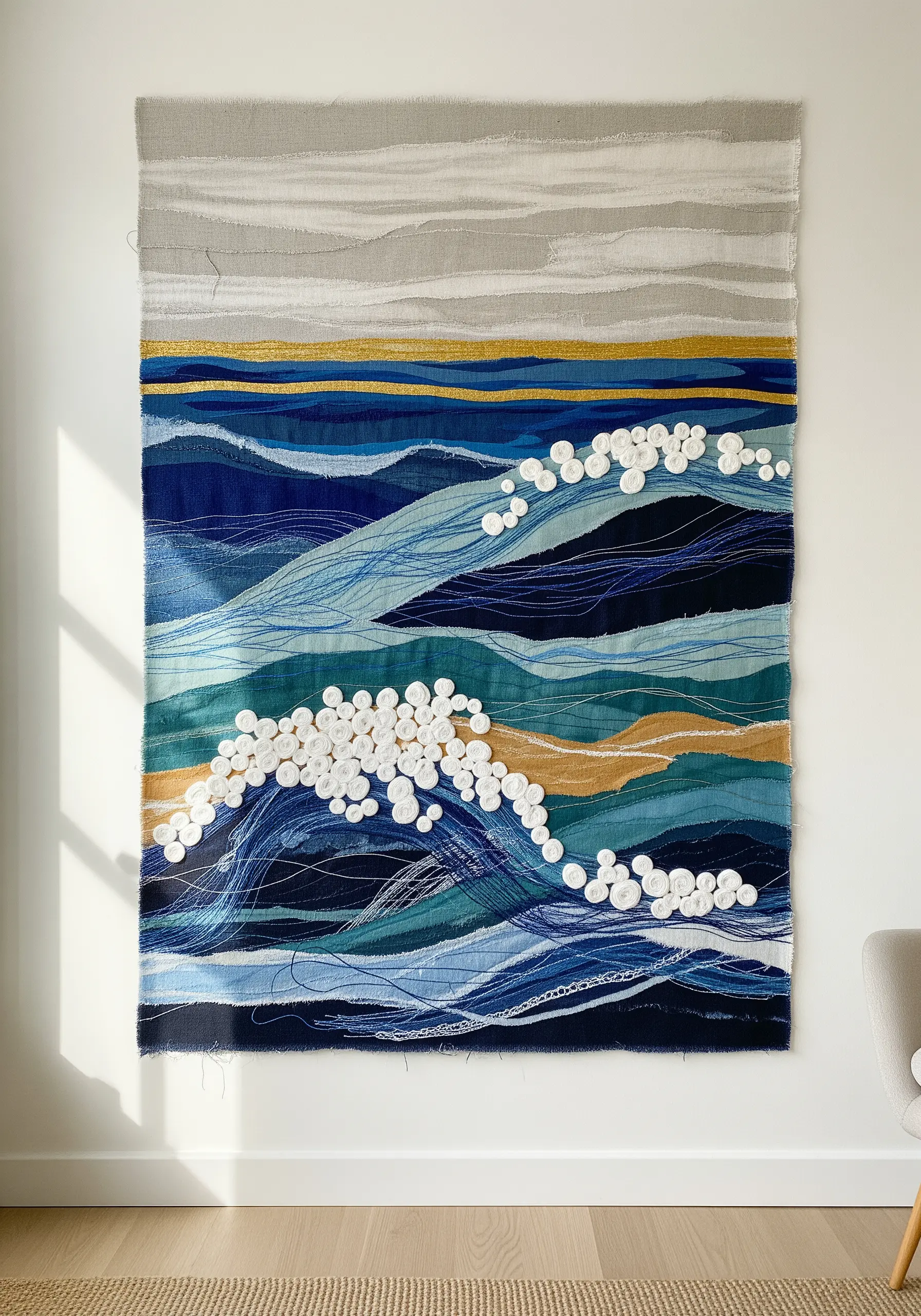
Create a sense of movement in your collage by layering strips of fabric with raw, unfinished edges.
Use a sewing machine with a free-motion foot to draw swirling lines across the piece, mimicking the flow of water and unifying the different fabric layers.
Incorporate bands of metallic or silk fabric to catch the light, suggesting a horizon line or reflections on the water’s surface.
For a final textural flourish, add three-dimensional elements like fabric-covered buttons or knotted yarn to represent sea foam, giving the piece a sculptural quality.
2. Cultivate a Textured Woodland Scene
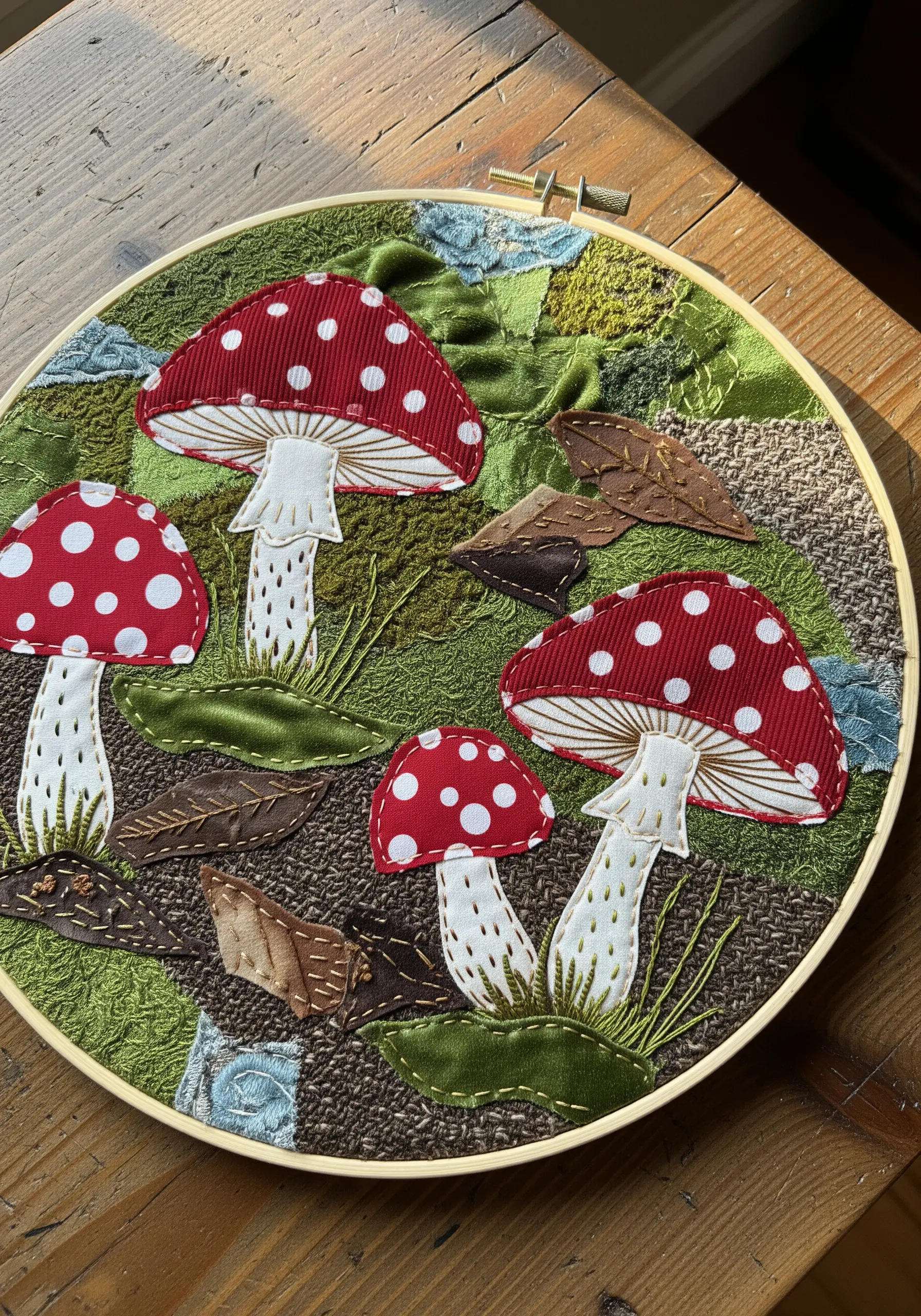
Combine fabrics with distinct textures—like velvet, corduroy, and tweed—to build a tactile forest floor that invites touch.
Appliqué your mushroom caps using a bright, patterned cotton scrap, then secure them with a simple running stitch just inside the edge for a soft, illustrative look.
For the mushroom gills, use a dense satin stitch with a lighter-colored thread to create contrast and the illusion of depth.
Scatter small, randomly stitched leaf shapes using scraps of silk or satin to add a delicate, fallen-leaf effect that completes the woodland aesthetic.
3. Construct a Geometric Cityscape
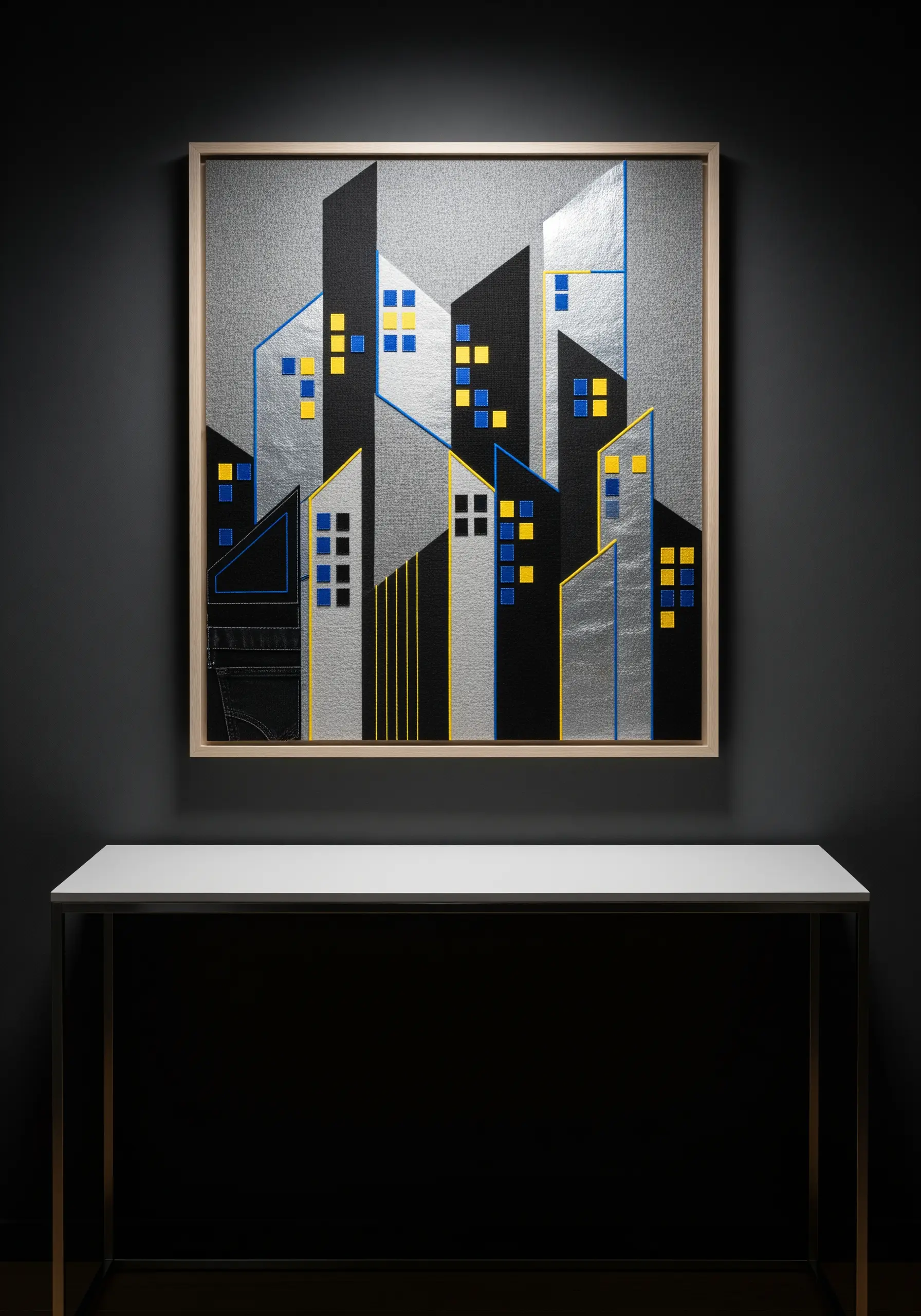
Build a modern cityscape by cutting scrap fabrics into sharp, geometric shapes with clean, crisp edges.
Create a sense of perspective by overlapping darker fabric pieces in the foreground and lighter or metallic pieces in the background to mimic atmospheric distance.
Use tiny squares of bright yellow or blue fabric for windows, adding pops of color that suggest life within the buildings.
Add fine detail and structure with straight machine stitching or hand-stitched backstitch lines, which define architectural elements and create a polished, graphic finish.
4. Design a Warm, Bohemian Sunrise
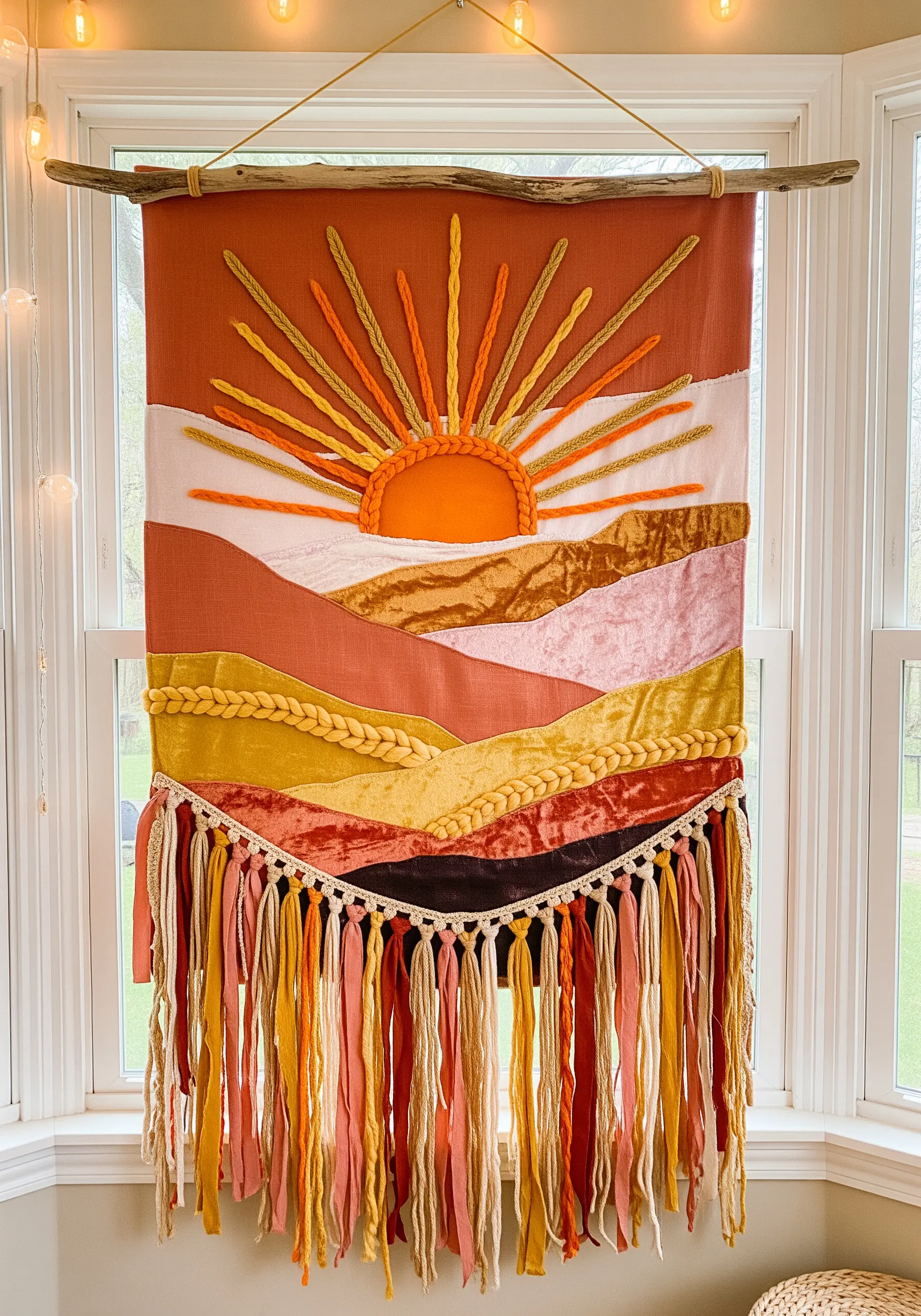
Layer soft, warm-toned fabrics like velvet, chenille, and brushed cotton to create a landscape that feels as warm as it looks.
Instead of thread, use chunky yarn or strips of fabric to stitch the sun’s rays, adding bold, textural lines that radiate from the center.
Create depth in the foreground by adding braided or twisted fabric ropes along the horizon lines of your hills.
Finish your wall hanging with a fringe made from leftover fabric strips, tying the entire color palette together for a cohesive, boho-inspired textile wall art piece.
5. Curate a Modern Botanical Triptych
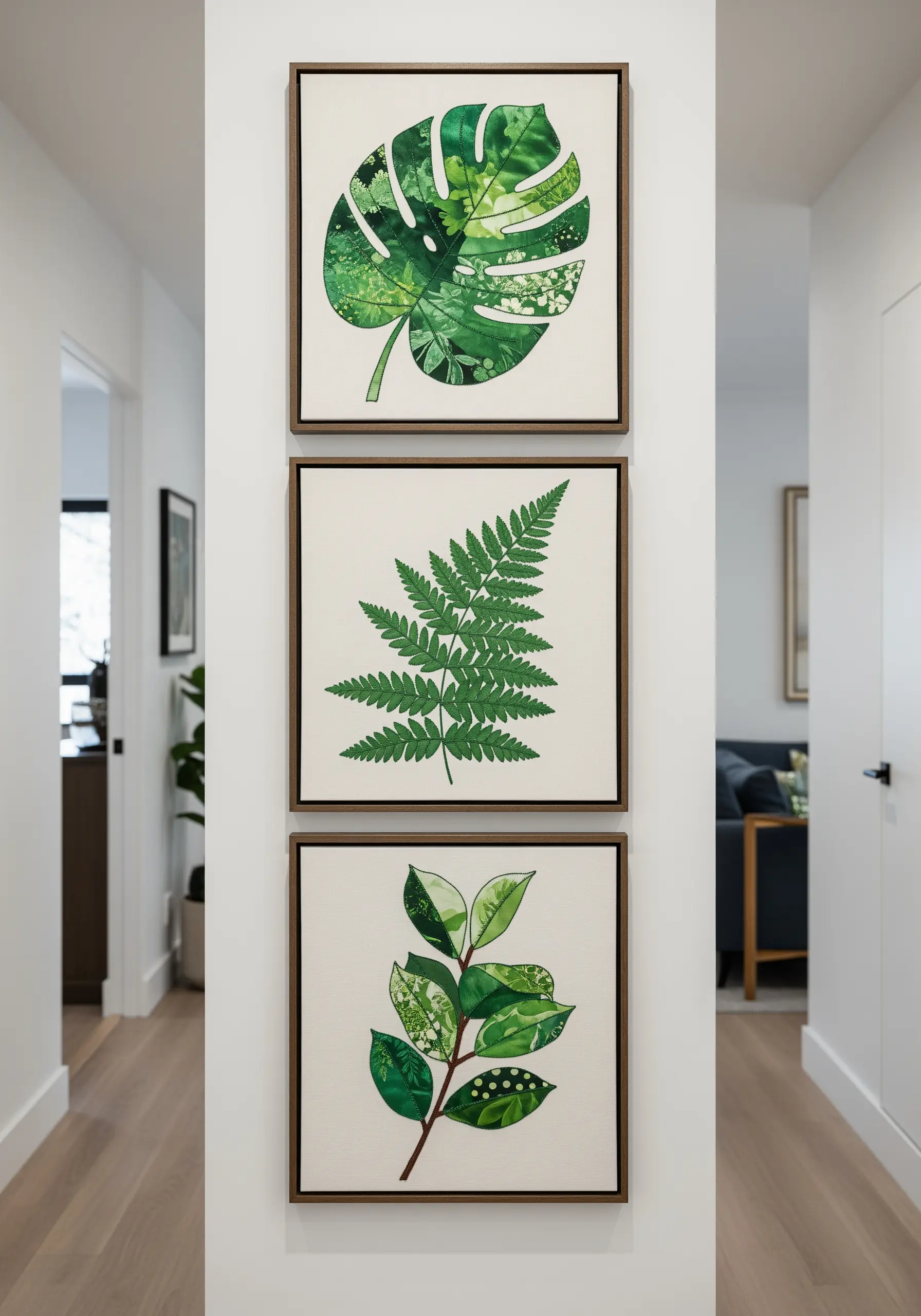
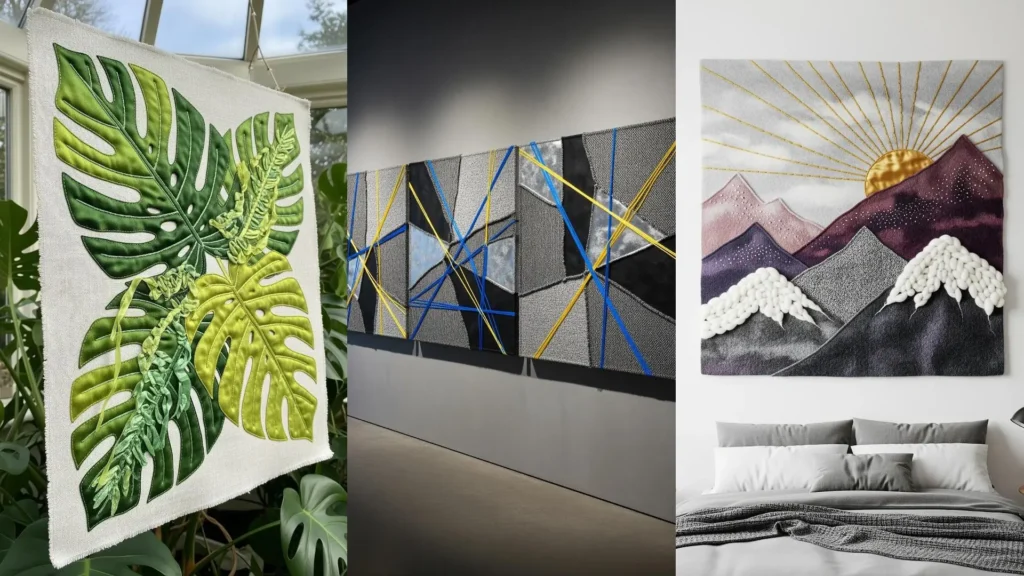
Isolate single botanical elements—a monstera leaf, a fern frond—to create a clean, modern gallery wall effect.
Instead of using solid colors, cut your leaf shapes from scraps of patterned green fabric, allowing the different patterns to create shading and variegation.
Secure the fabric pieces with a nearly invisible slip stitch or a fine, matching-colored running stitch to keep the focus on the leaf shapes themselves.
Framing each piece identically against a neutral linen background transforms simple fabric scraps into a sophisticated, cohesive art installation.
6. Sculpt an Abstract Neutral-Tone Canvas
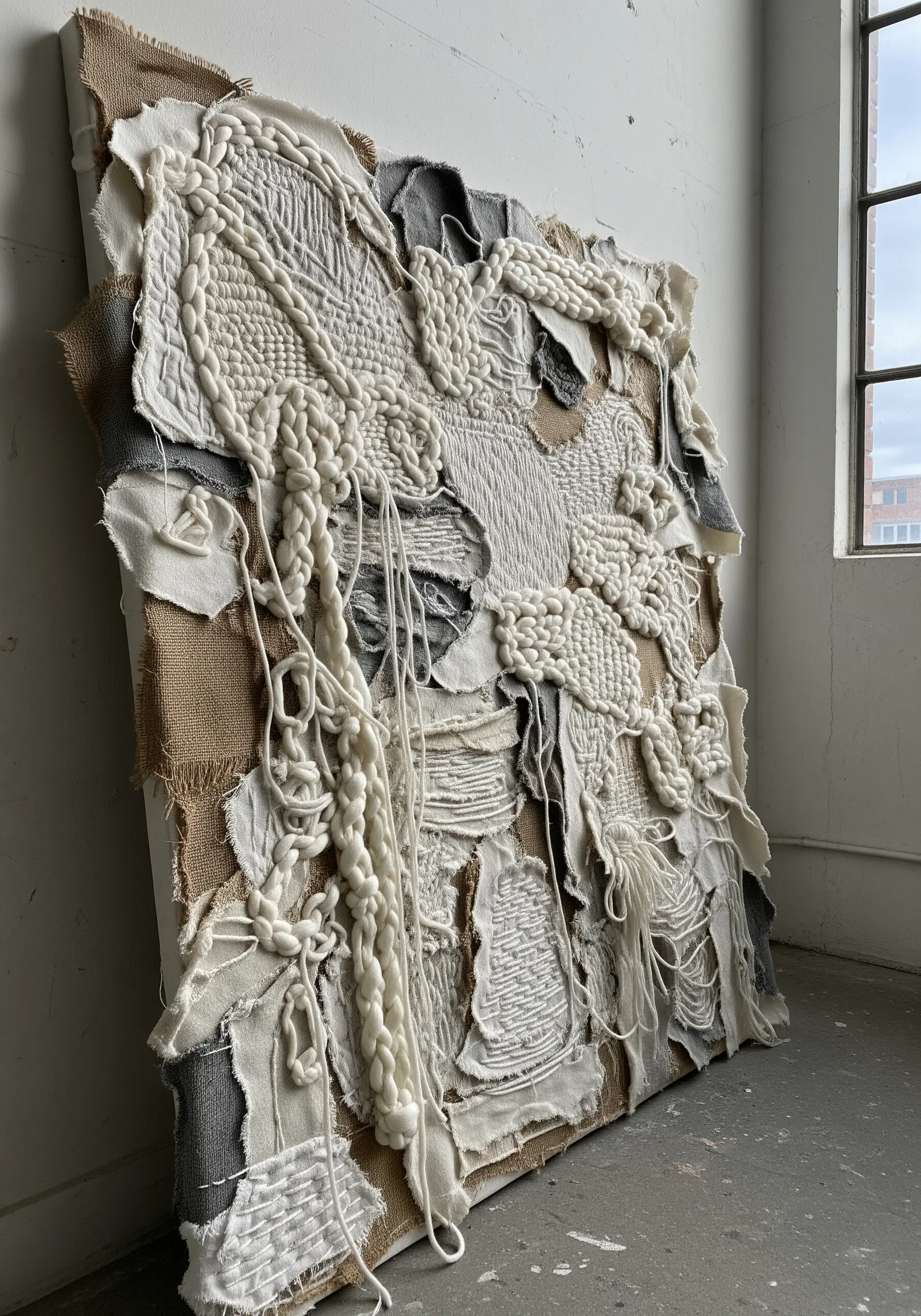
Explore texture by limiting your palette to neutral shades of white, cream, and grey, forcing the focus onto the materials themselves.
Build up the surface by layering torn canvas, burlap, and unraveled yarn, allowing raw edges and loose threads to become part of the design.
Introduce chunky, hand-braided yarn and dense French knots to create highly sculptural areas that rise off the canvas, adding dramatic shadows and depth.
This technique is less about stitching and more about composing with fibers, creating organic texture embroidery designs that feel both raw and refined.
7. Piece Together a Celestial Dreamscape
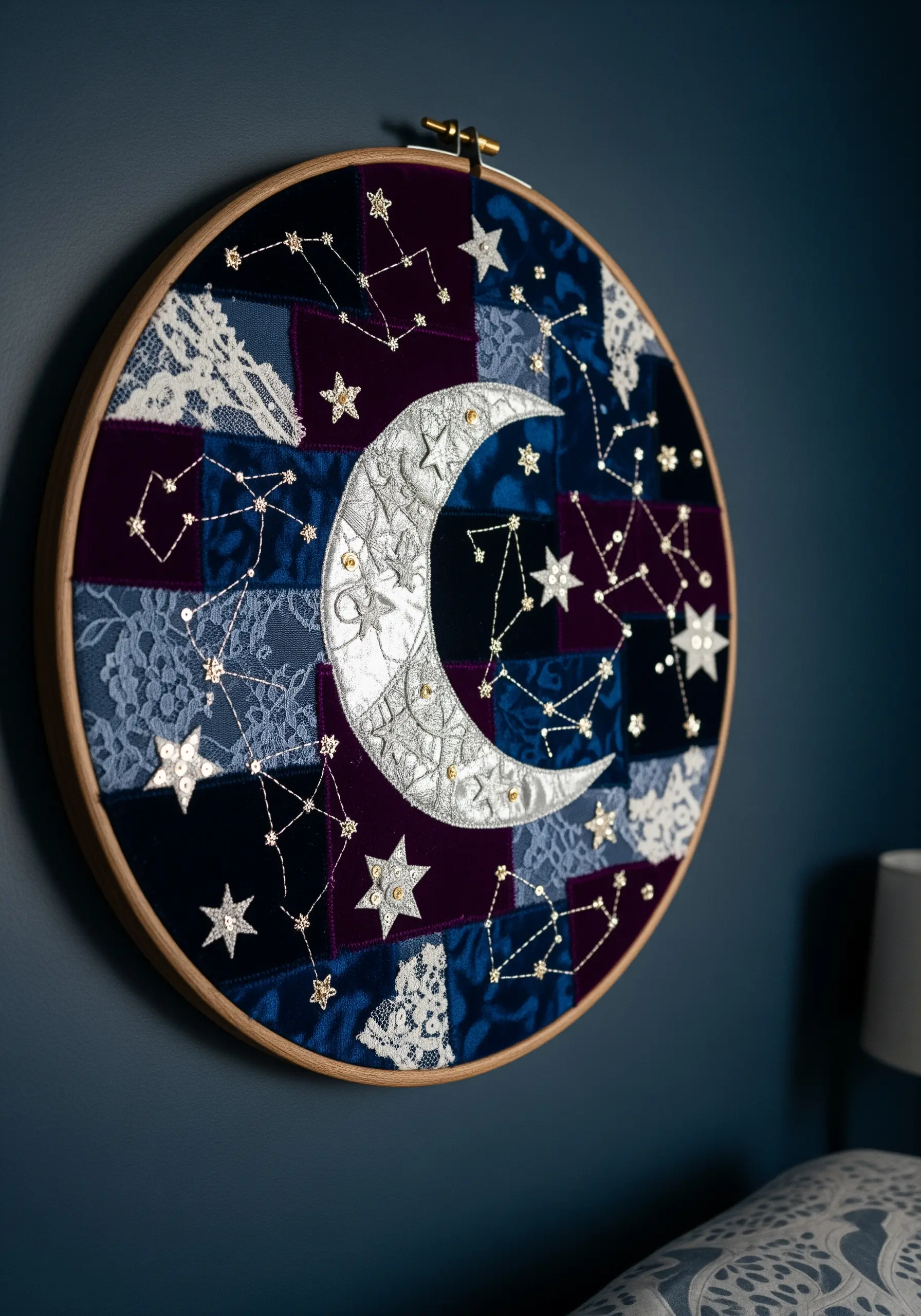
Create a patchwork night sky using scraps of deep blue, purple, and black velvet, satin, and lace to evoke a sense of cosmic luxury.
Use a silver lamé or shimmering white fabric for the moon appliqué, stitching it down with a delicate, decorative stitch for extra detail.
Map out constellations using single strands of metallic thread and straight stitches, connecting small seed beads or French knots that represent stars.
The combination of plush and delicate materials makes these tiny night sky embroidery designs feel both magical and sophisticated, perfect for a bedroom.
8. Compose a Vibrant Patchwork Grid
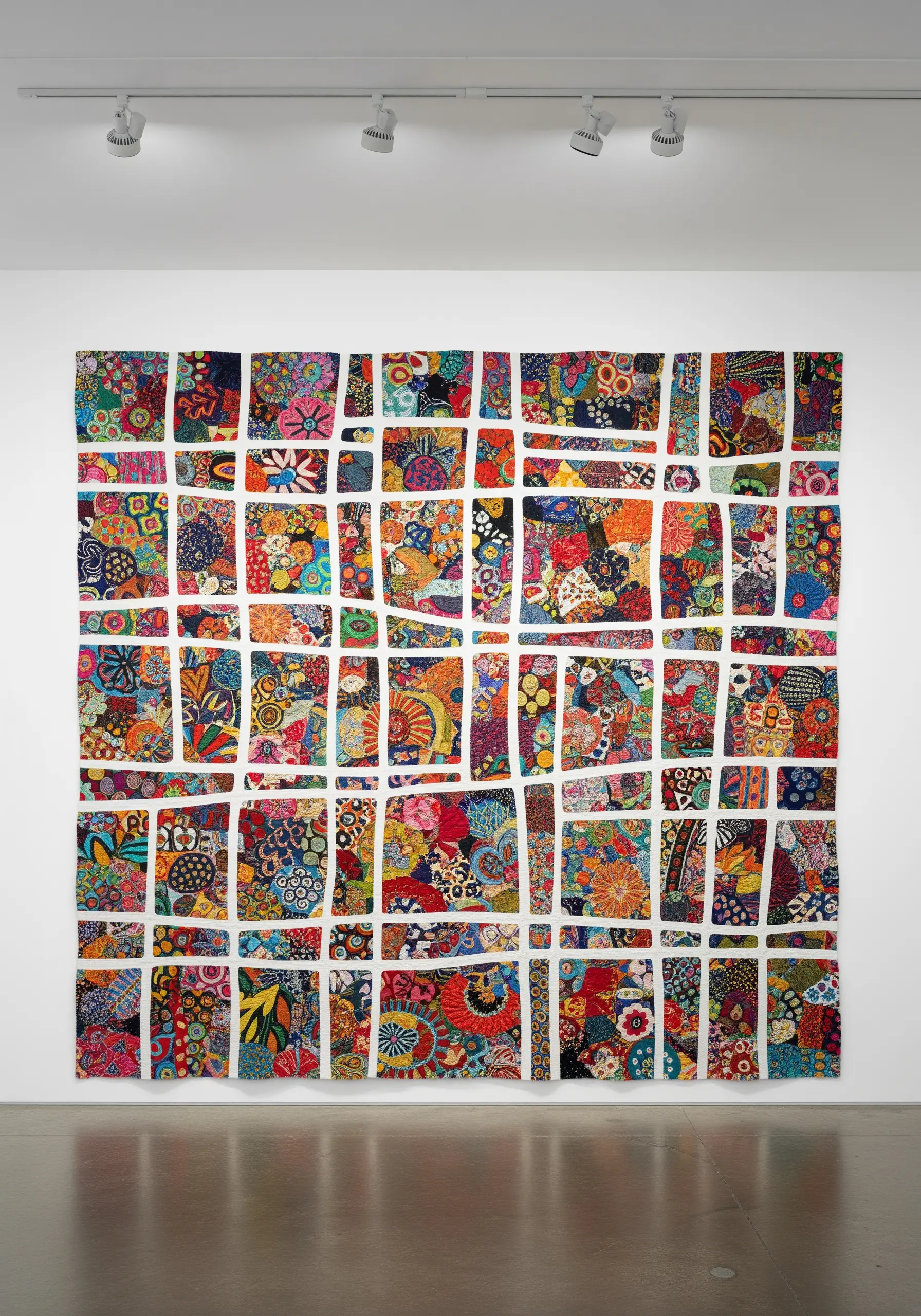
Bring order to a collection of wildly different patterned scraps by arranging them within a structured grid.
Cut your fabric pieces into slightly irregular rectangles and squares to maintain a handmade, organic feel despite the grid layout.
Use negative space as a design element by leaving consistent white or neutral channels between each fabric piece, which helps the eye rest and prevents the patterns from overwhelming each other.
This approach allows you to celebrate bold, clashing fabrics in a way that feels intentional and artistic rather than chaotic.
9. Illustrate a Portrait with Fabric Strips
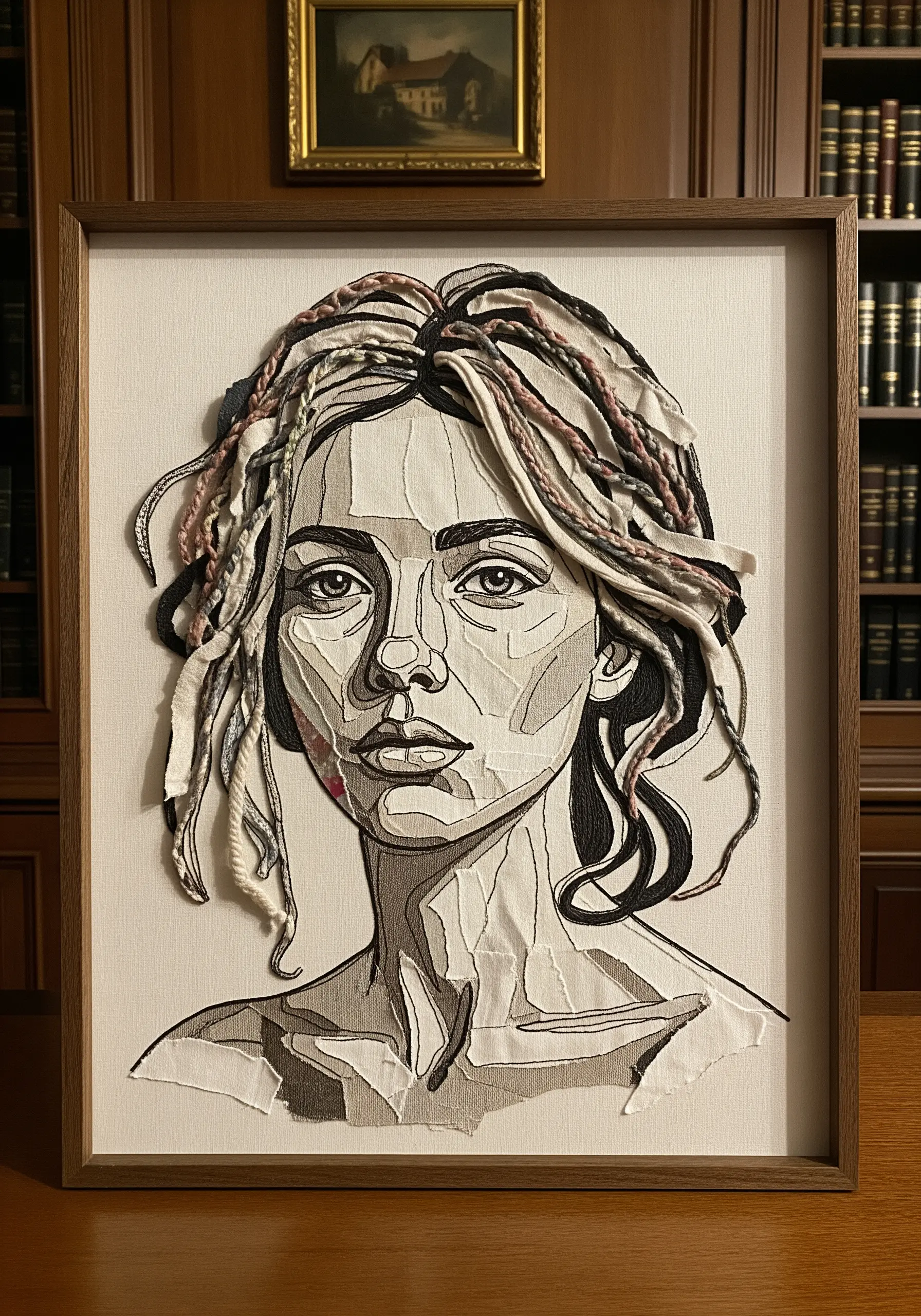
Recreate the effect of a line drawing by using thin strips of fabric to outline facial features and create shadows.
Focus on value—the lightness or darkness of your fabrics—rather than color to achieve a realistic sense of form and dimension.
Use raw-edged, slightly frayed fabric strips for the hair, allowing them to hang freely to create a sense of movement and texture.
Anchor the composition with precise black thread outlines around key features like the eyes and jawline, which provides the structure needed to hold the portrait together.
10. Assemble a Farmer’s Market Display
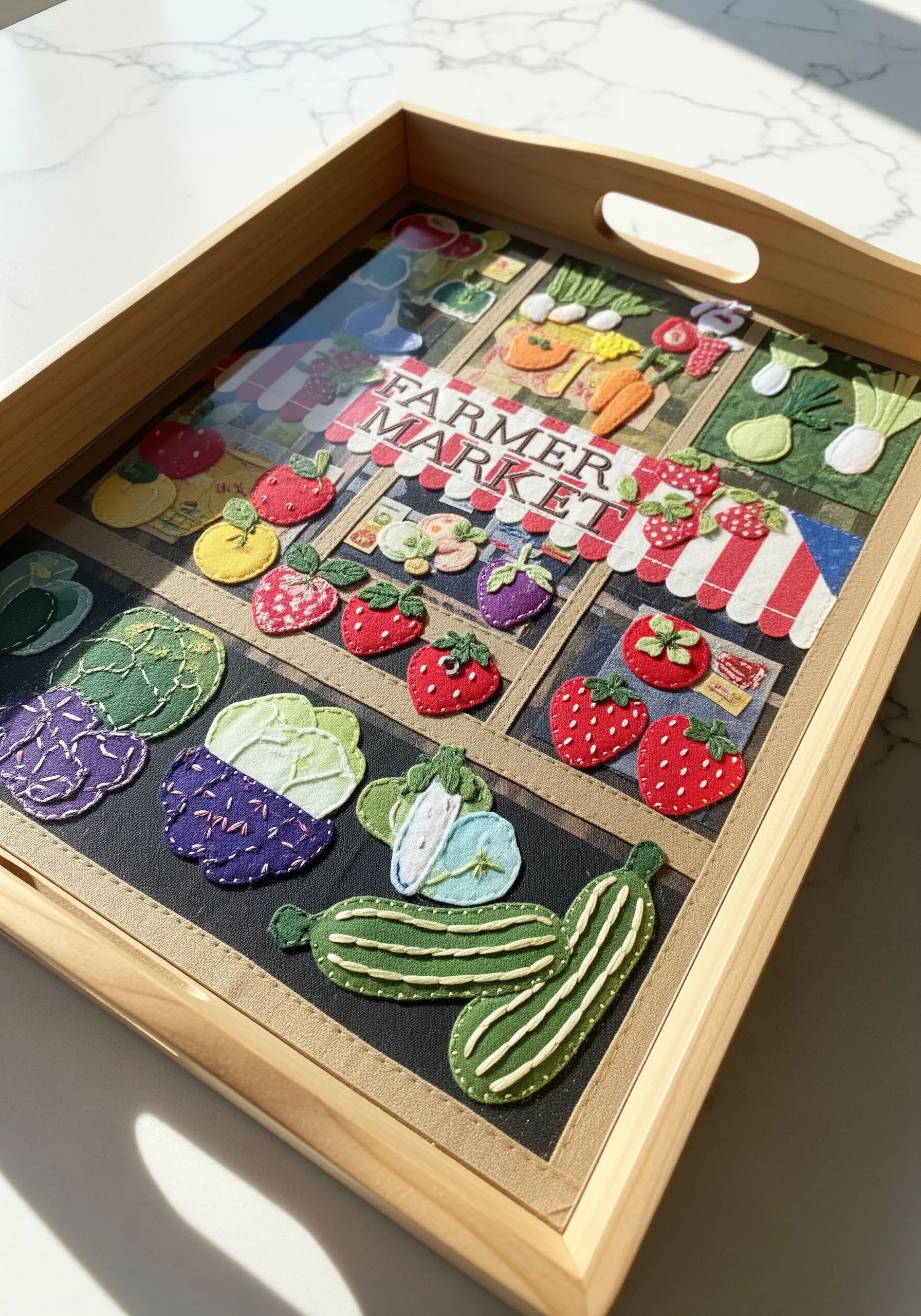
Create charming, miniature food items by cutting shapes from felt, which won’t fray and is easy to handle in small sizes.
Add personality and detail with simple embroidery: backstitched lines for cucumber stripes, French knots for strawberry seeds, and satin stitch for lettuce leaves.
Arrange your finished pieces in a divided tray or shadow box to create a delightful, contained scene that tells a story.
This project is perfect for using up the tiniest, brightest scraps that might otherwise be discarded.
11. Paint a Mountainscape with Torn Fabric
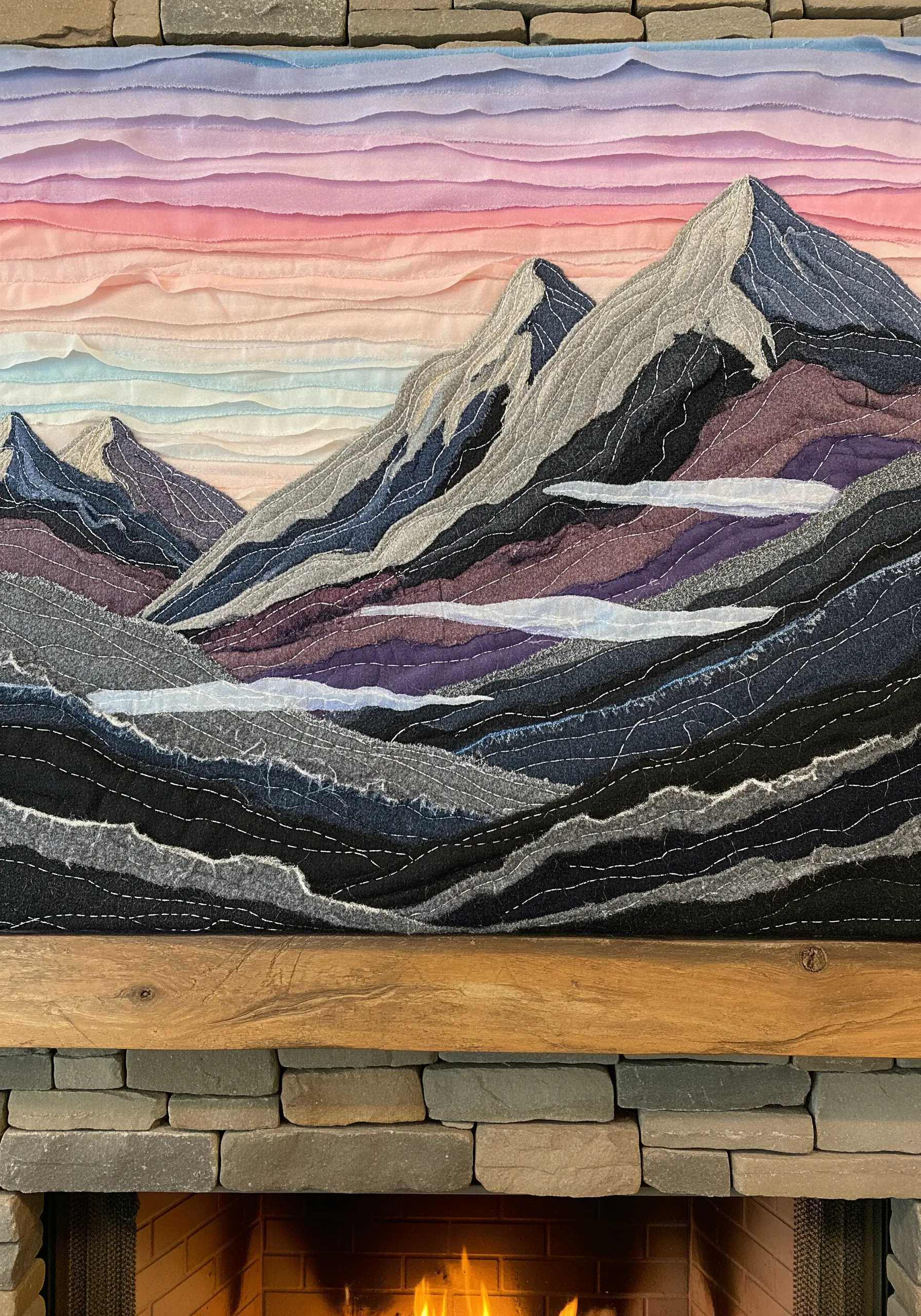
Create a painterly effect by tearing, not cutting, your fabric strips, which results in soft, organic edges that blend beautifully.
Layer these torn strips to build up your mountain ranges, using darker fabrics for the foreground and lighter, softer colors for the distant peaks and sky.
Use free-motion machine stitching across the entire piece to add texture, define the contours of the landscape, and secure all the layers together.
This technique transforms fabric scraps into mountain landscape thread painting, where fabric provides the color and thread provides the detail.
12. Design a Serene Koi Pond Screen
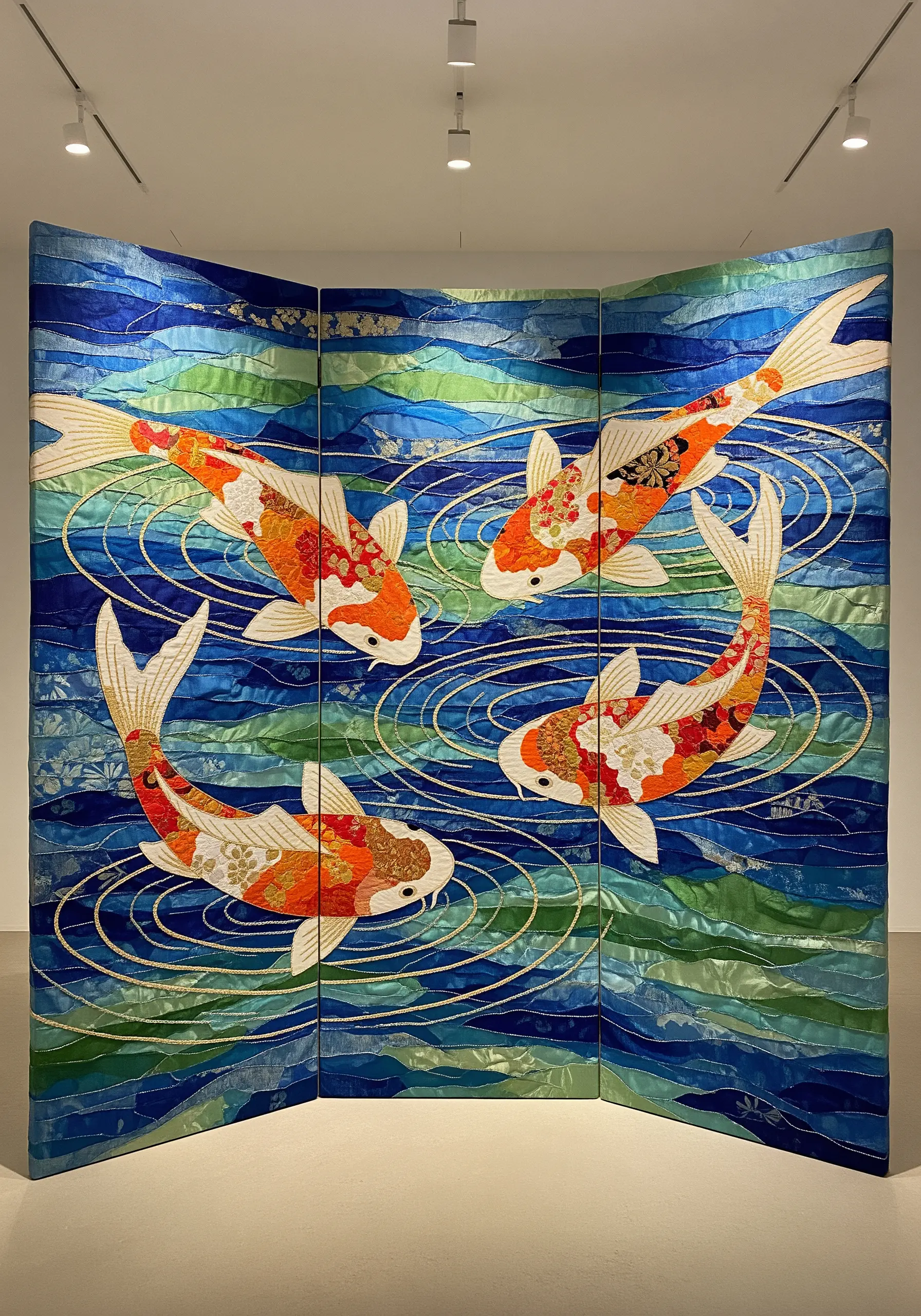
Evoke the feeling of water by layering translucent and patterned blue and green fabrics like organza, silk, and batik prints.
Appliqué intricately patterned koi fish on top of the water layers, using scraps of brocade or other decorative fabrics to make them the vibrant focal point.
Create ripples in the water using concentric circles of silver or light blue metallic thread, stitched with a simple running stitch or backstitch.
Displaying the final piece on a folding screen adds to the elegance and allows light to filter through the sheer fabrics, enhancing the aquatic effect.
13. Craft a Whimsical, Patchwork Bird
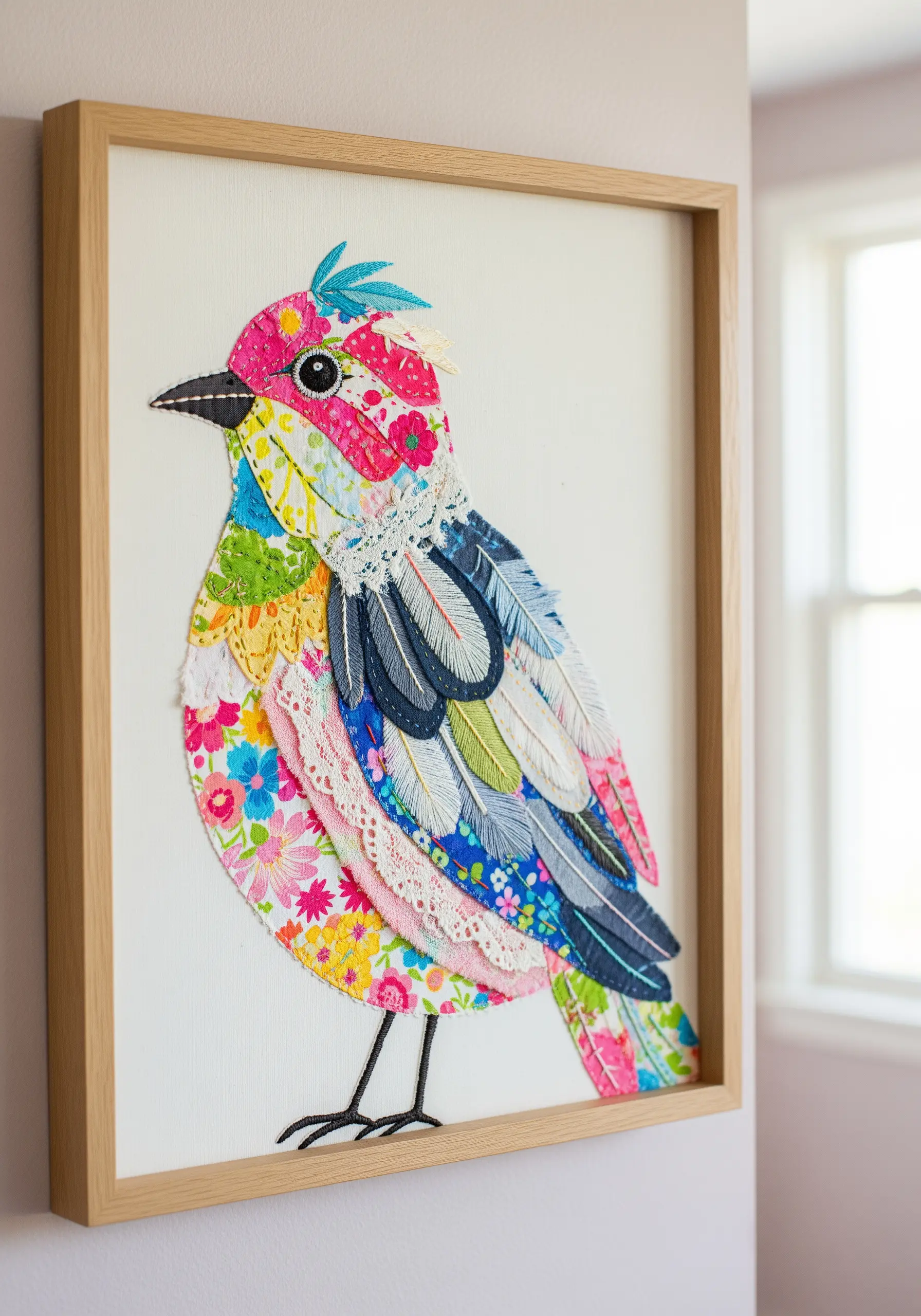
Build the body of your bird by collaging small, vibrant floral and geometric fabric scraps, letting the patterns do the coloring for you.
Create dynamic, textured wings by layering individual ‘feather’ shapes cut from different fabrics, including scraps of lace or eyelet for a delicate touch.
Use a dense, black satin stitch for the eye and beak to create a strong focal point that grounds the entire composition.
The contrast between the busy patterns and the simple outline makes the final piece feel both playful and polished.
14. Stitch a Trio of Minimalist Cacti
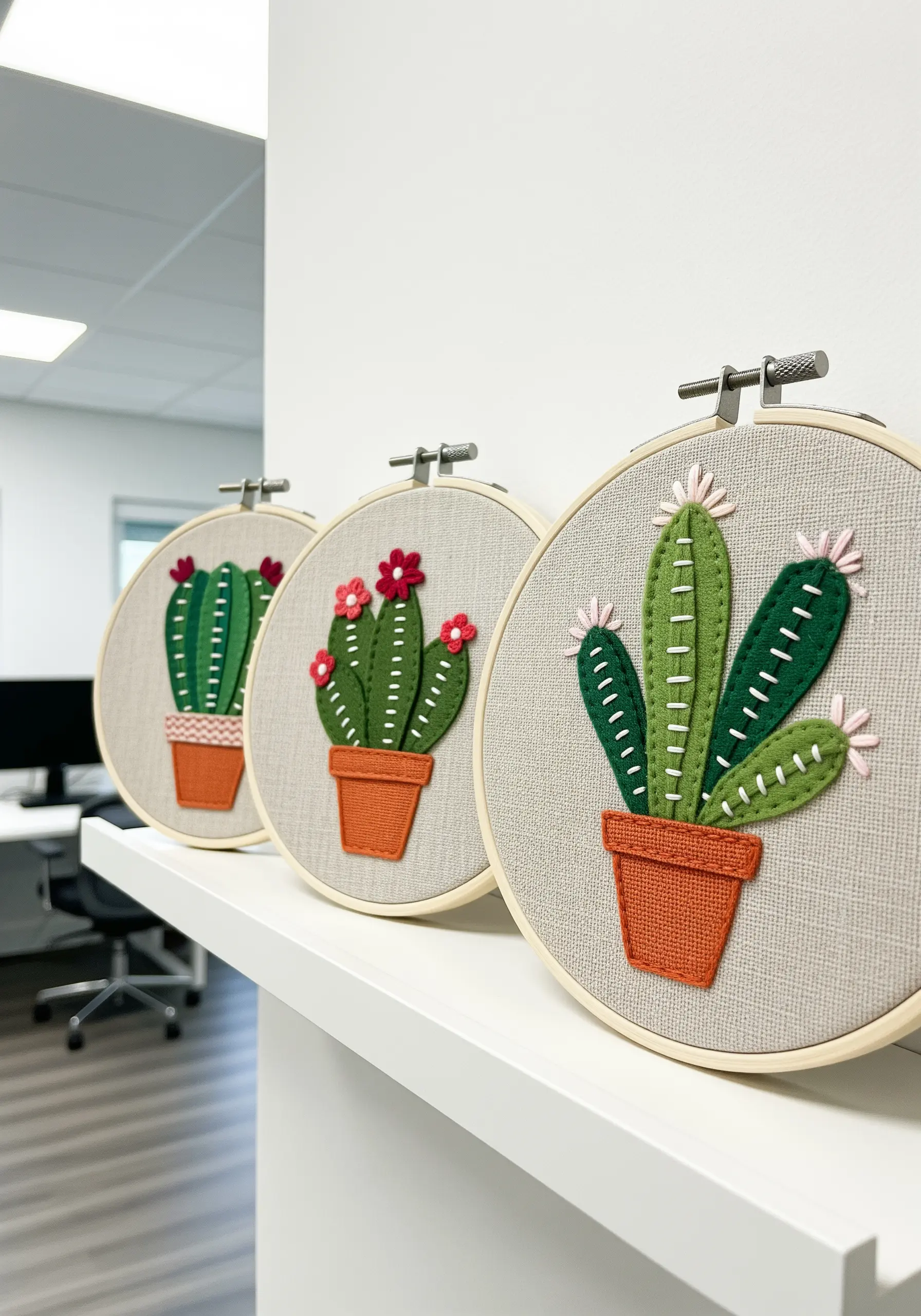
For clean, simple shapes, use felt scraps for your cacti and pots, as the non-fraying edges are perfect for appliqué.
Add texture and detail with basic stitches: use straight stitches for the cactus spines and French knots or detached chain stitches for the flowers.
To create the terra cotta pot, choose a textured fabric like corduroy or use a dense seed stitch to give it a rough, earthy feel.
Grouping three similar but distinct designs in matching hoops creates a cohesive and charming display for a shelf or desk.
15. Cultivate an Expressive Wildflower Garden
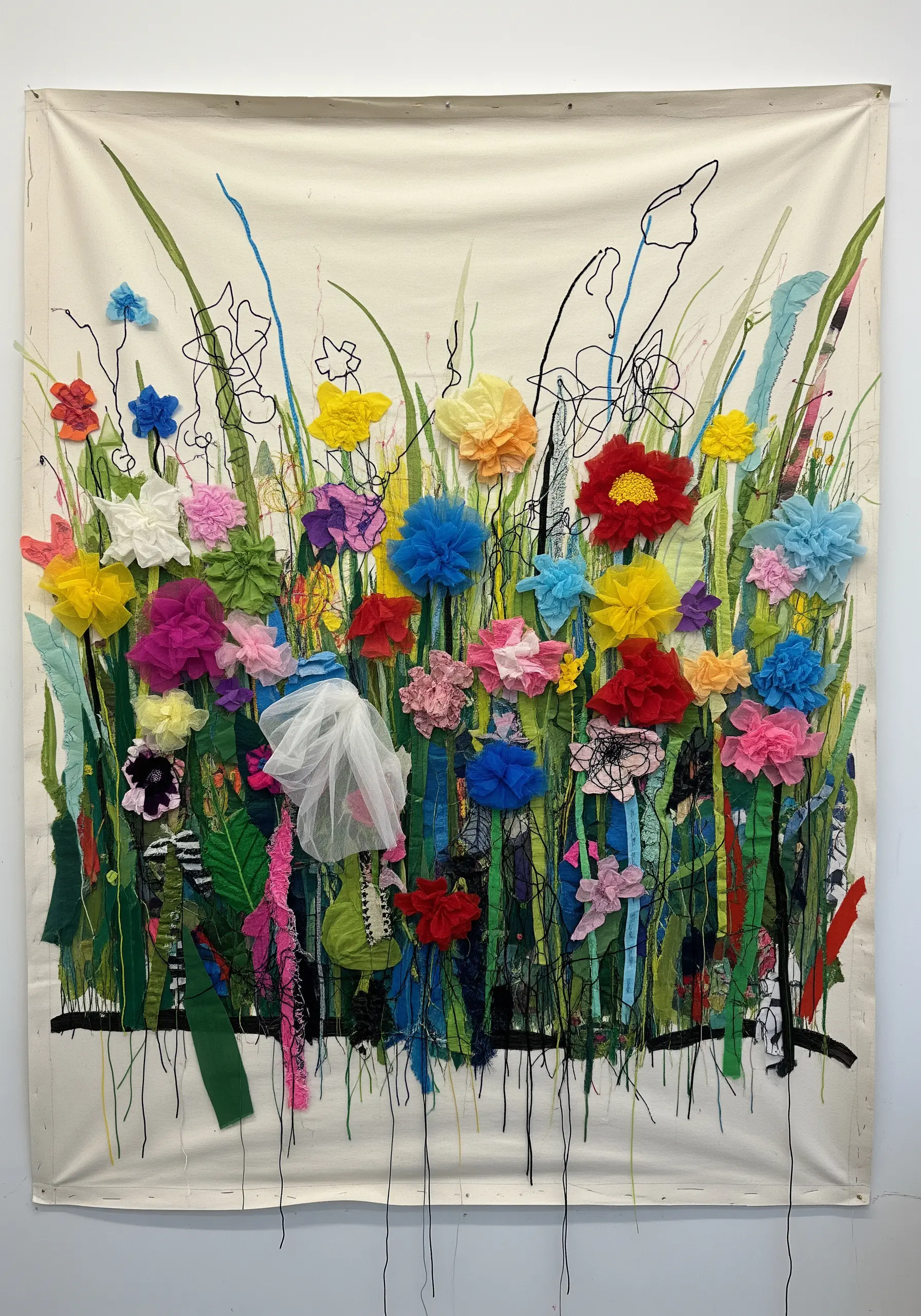
Embrace a chaotic, ‘un-gardened’ look by using a mix of fabric scraps, tulle, ribbon, and even plastic mesh to create your flowers.
Allow threads to hang loose and fabric edges to remain raw, adding to the untamed, organic energy of a wild meadow.
Add a layer of structure by incorporating free-form black thread ‘drawings’ of stems and leaves with your sewing machine, which helps define shapes amidst the color.
This project is about letting go of perfection and celebrating the textures and forms found in nature’s beautiful mess.
16. Fabricate a Luminous Galaxy Tapestry
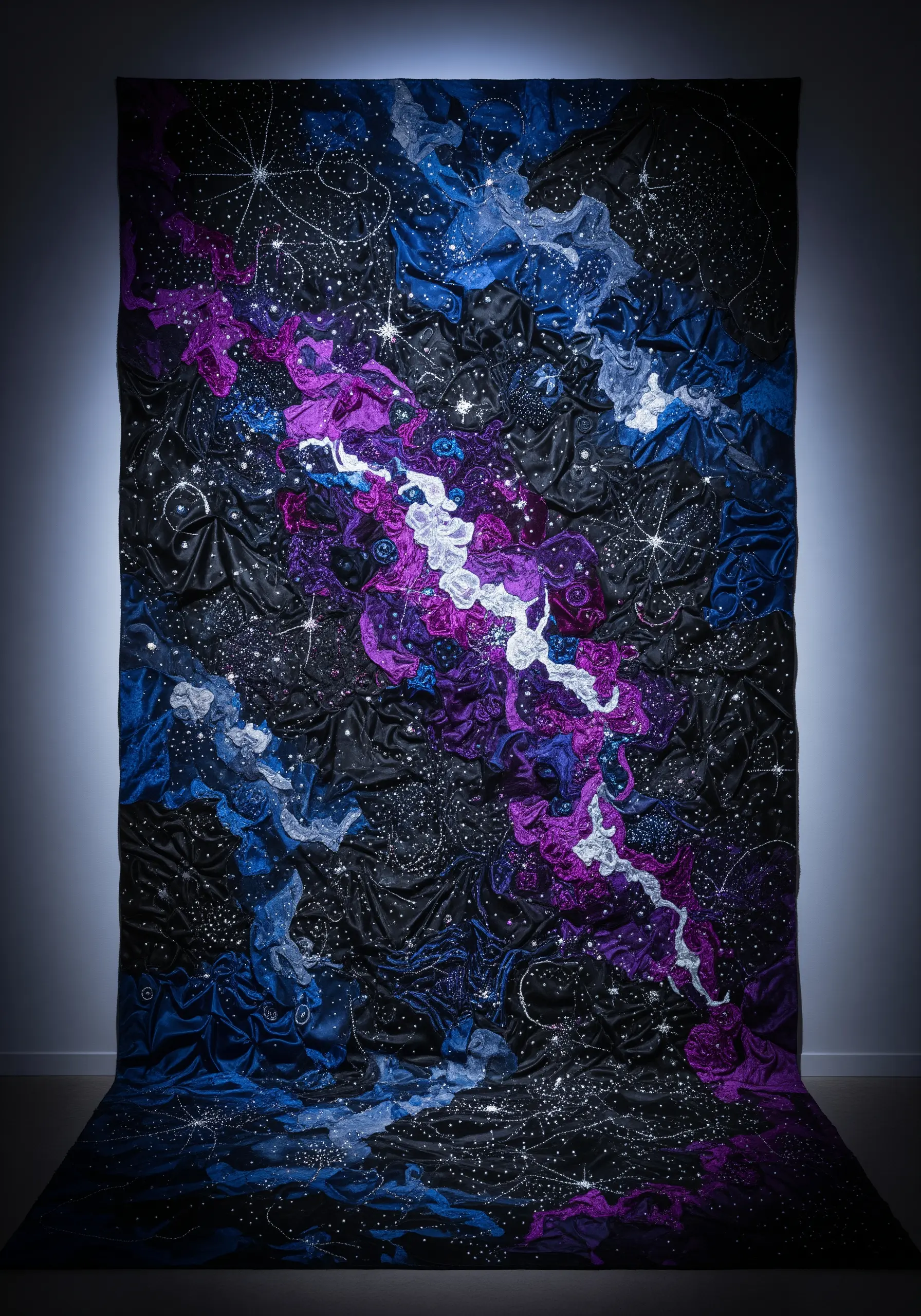
Create cosmic depth by ruching and pleating large pieces of dark satin and silk, which catch the light and form shadowy nebula clouds.
Layer different shades of blue, purple, and black to build a multi-dimensional universe that feels vast and mysterious.
Scatter thousands of tiny French knots, seed beads, or sequins across the surface to represent stars and distant galaxies, adding points of shimmering light.
For a central focal point, appliqué ethereal figures or swirling nebulae using a contrasting, light-colored fabric like silver lamé or white velvet.
17. Map the World with Storytelling Textiles
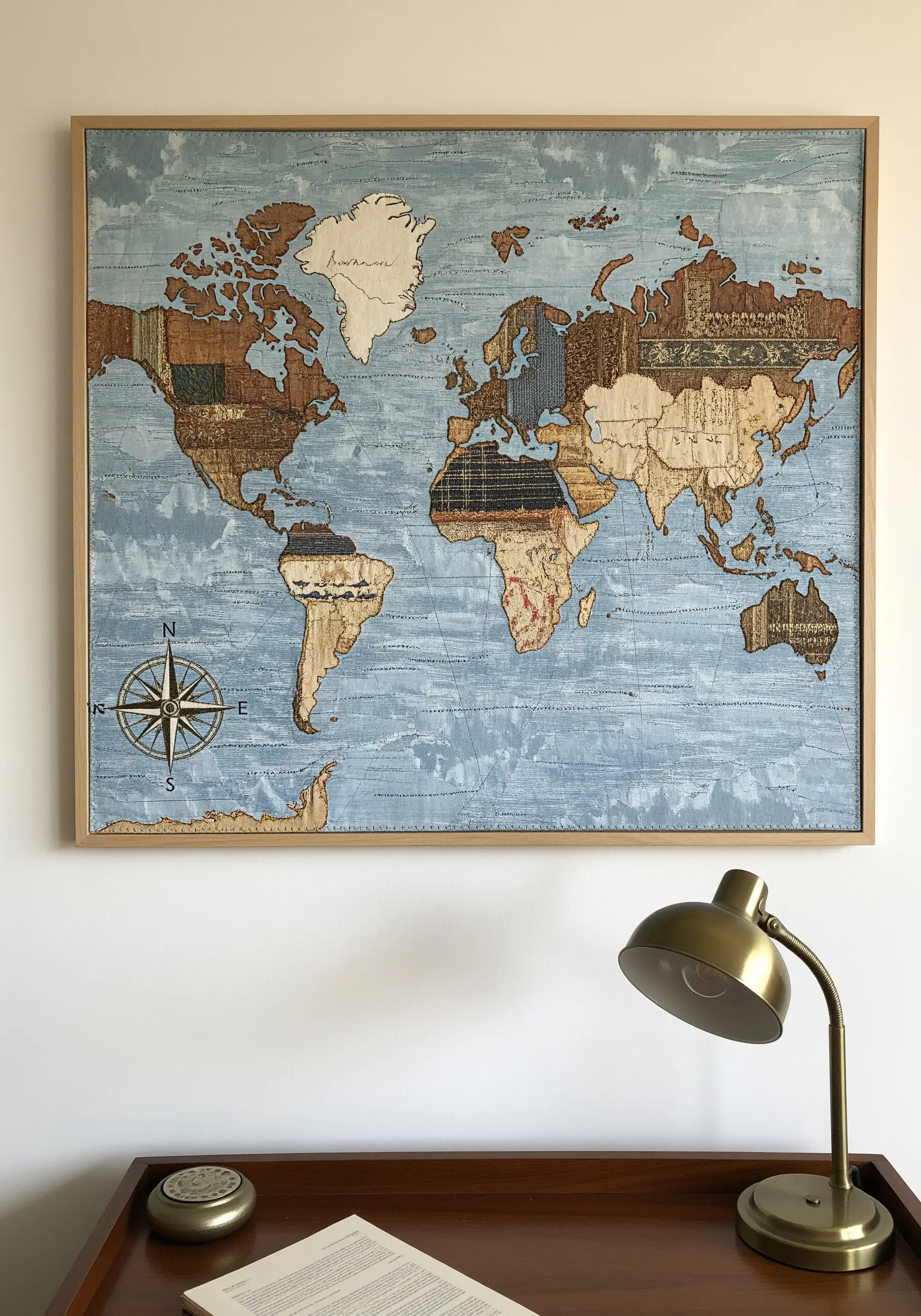
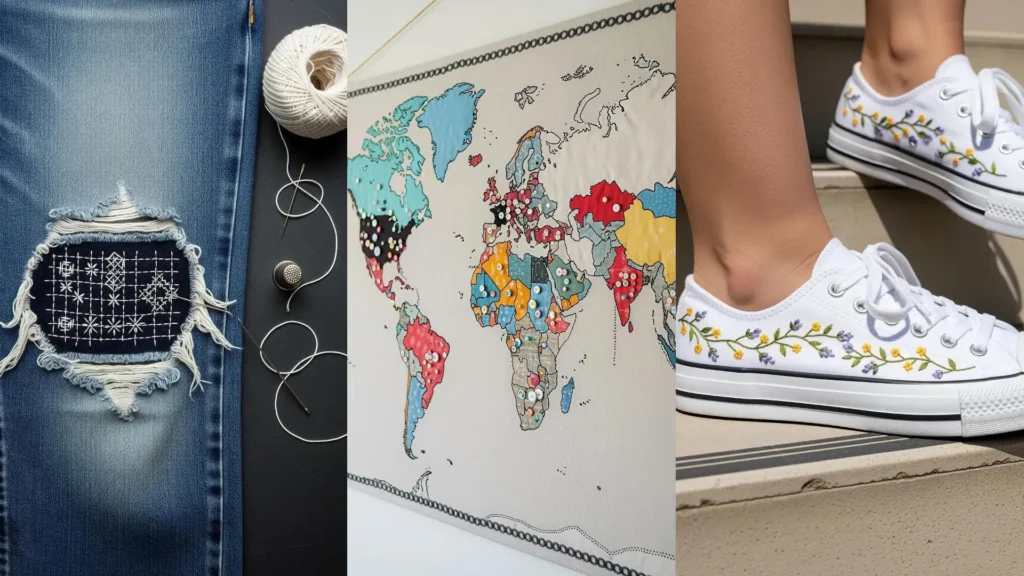
Assign different textured and patterned fabrics to represent various continents and countries, turning a map into a tactile story.
Use a muted, subtly patterned blue fabric for the oceans, adding horizontal running stitches to suggest waves and currents.
Outline the continents with a fine, dark backstitch to ensure the shapes are clear and recognizable against the ocean background.
This method allows you to embed personal meaning, using fabrics from your travels or scraps that remind you of specific places.
18. Build a Cozy, Textural Home Scene
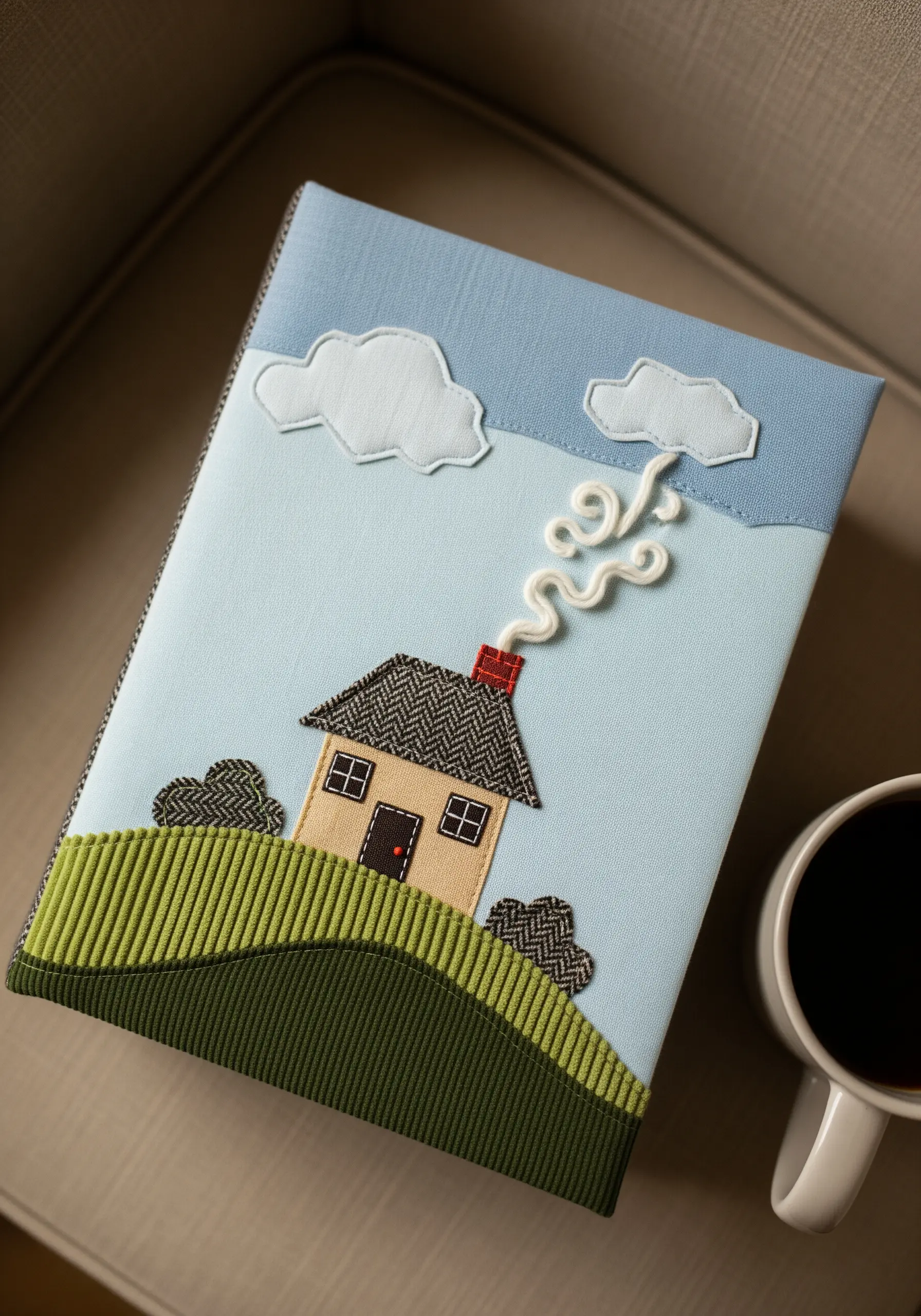
Add a layer of tactile charm to a simple appliqué by choosing fabrics with inherent texture, like corduroy for rolling hills and tweed for the house.
Create playful, swirling smoke coming from the chimney by couching a piece of thick, soft yarn in a spiral pattern.
Use a clean blanket stitch or a tight satin stitch around your appliqué pieces to give them a crisp, finished edge that stands out.
This project is a perfect way to transform small, leftover scraps from other sewing projects into a heartwarming piece of art.
19. Create a Pop Art Fabric Portrait
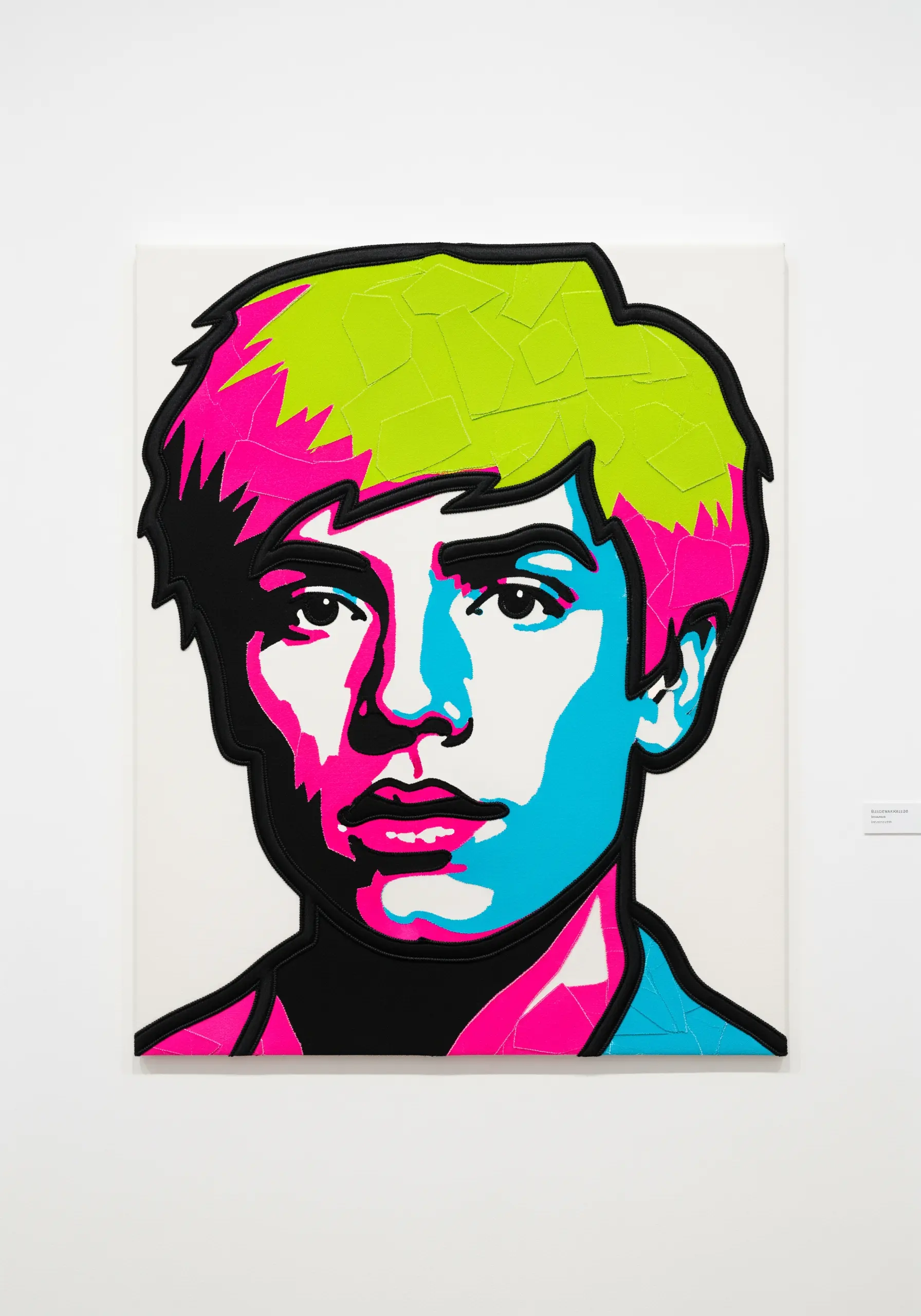
Mimic the style of Andy Warhol by using flat blocks of vibrant, high-contrast color for your portrait’s different sections.
Define the shapes and create a bold, graphic look by outlining each color block with thick, black fabric strips or a dense, wide satin stitch.
For a subtle textural effect, cut the fabric pieces for the hair or background into smaller, mosaic-like shapes and piece them together within the larger color block.
The key to this style is simplification—reducing a complex image to its essential shapes and colors for maximum impact.
20. Scatter an Abundance of Autumn Leaves
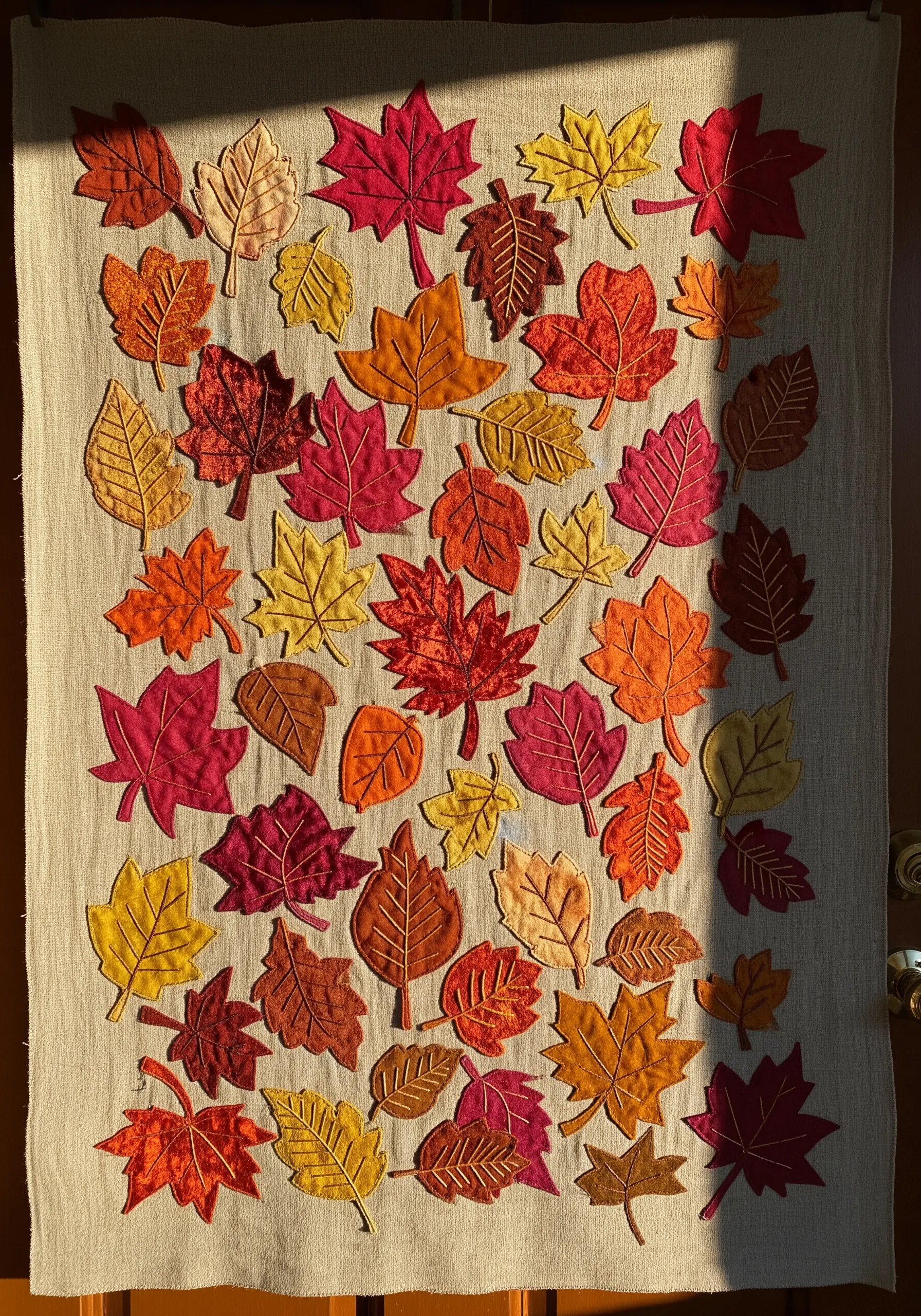
Gather all your scraps in autumnal shades—red, orange, yellow, and brown—and cut out a variety of leaf shapes.
For added richness, use fabrics with different finishes, such as velvet, satin, and textured cottons, to mimic the diversity of fall foliage.
Attach the leaves to a neutral linen or burlap background using a sewing machine, stitching the central veins of each leaf to secure it while allowing the edges to lift slightly for a 3D effect.
Arrange the leaves in a dense, cascading pattern to create a feeling of natural abundance and movement.
21. Engineer a 3D Solar System
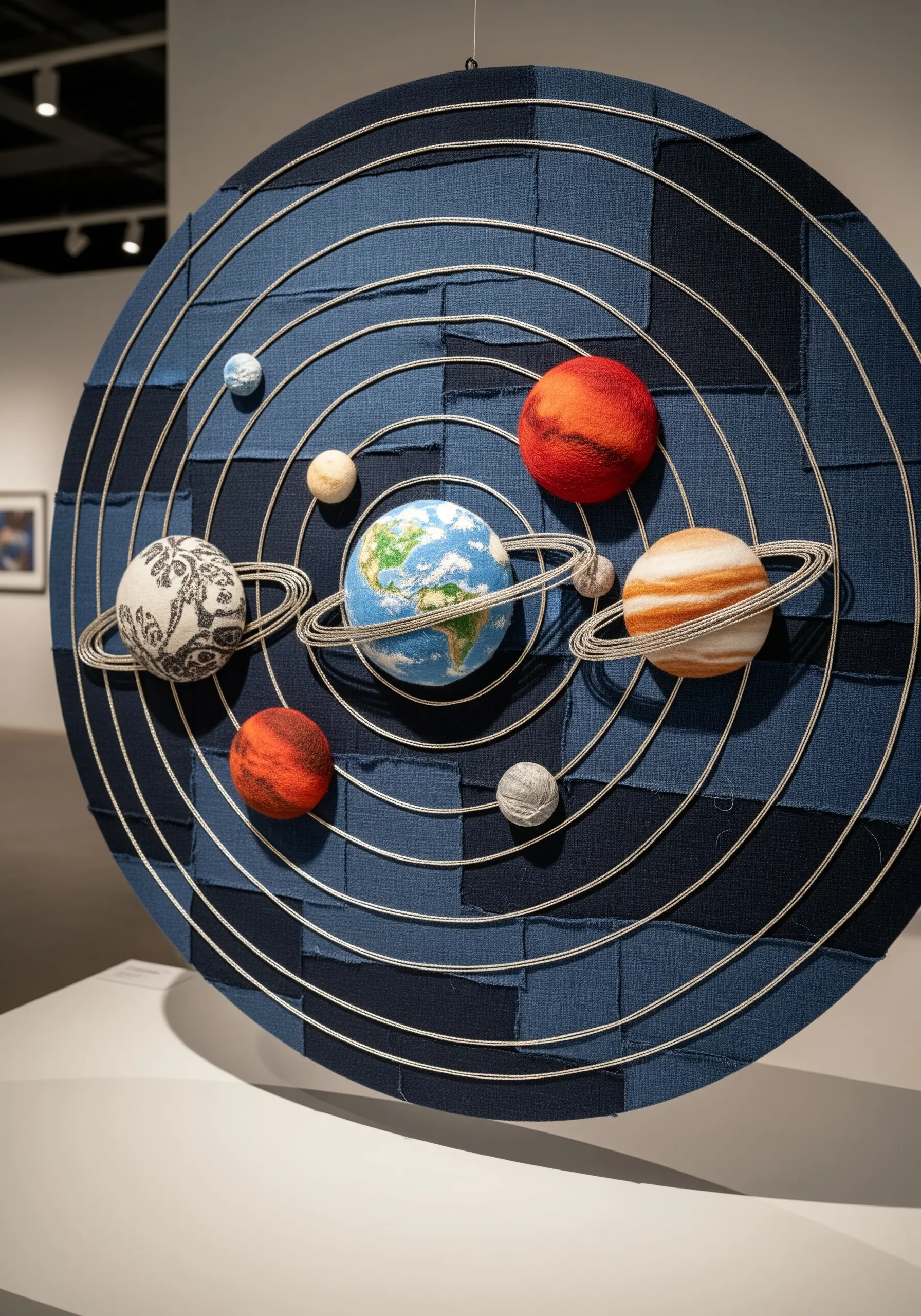
Move beyond the flat surface by creating three-dimensional planets using fabric-wrapped spheres or densely needle-felted wool.
Use variegated threads or fabric scraps with marbled patterns to replicate the swirling gases of Jupiter or the continents of Earth.
Construct the planetary orbits with sturdy wire or metallic cording, couching it onto a dark, gridded fabric background to create a sense of cosmic structure.
This mixed-media contemporary embroidery project combines fabric collage, sculpture, and stitch for a truly stellar result.
22. Embellish a Regal Peacock Cushion
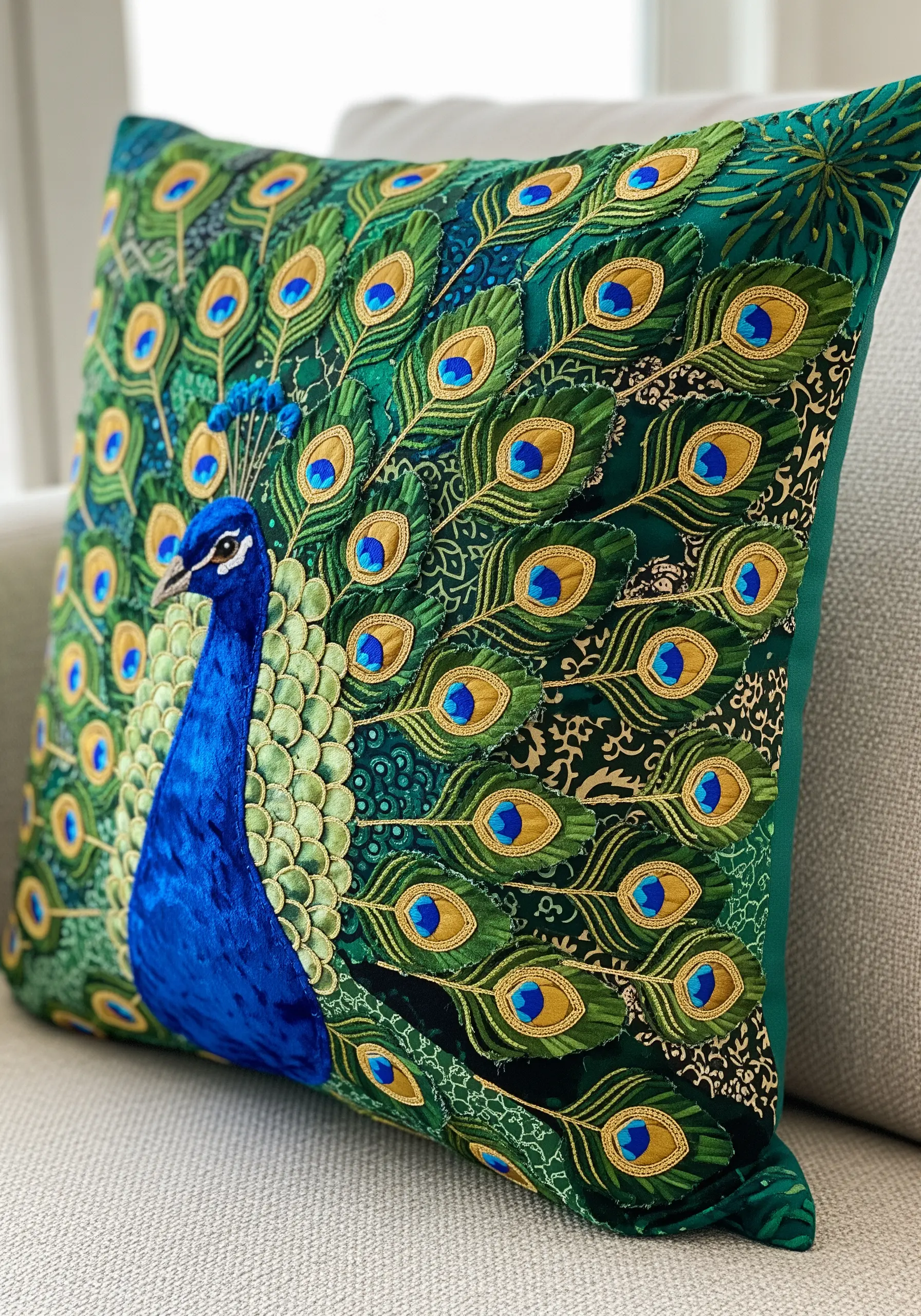
Construct the peacock’s body and feathers by layering precisely cut pieces of jewel-toned fabrics like velvet, silk, and satin.
Use gold metallic thread to outline each feather segment, adding a touch of luxury and defining the intricate patterns.
Make the ‘eyes’ of the feathers pop by using a small circle of bright blue appliqué, surrounded by a ring of gold satin stitch.
This detailed appliqué work transforms a simple cushion cover into a statement piece of functional art.
23. Layer Translucent Petals for a Watercolor Effect
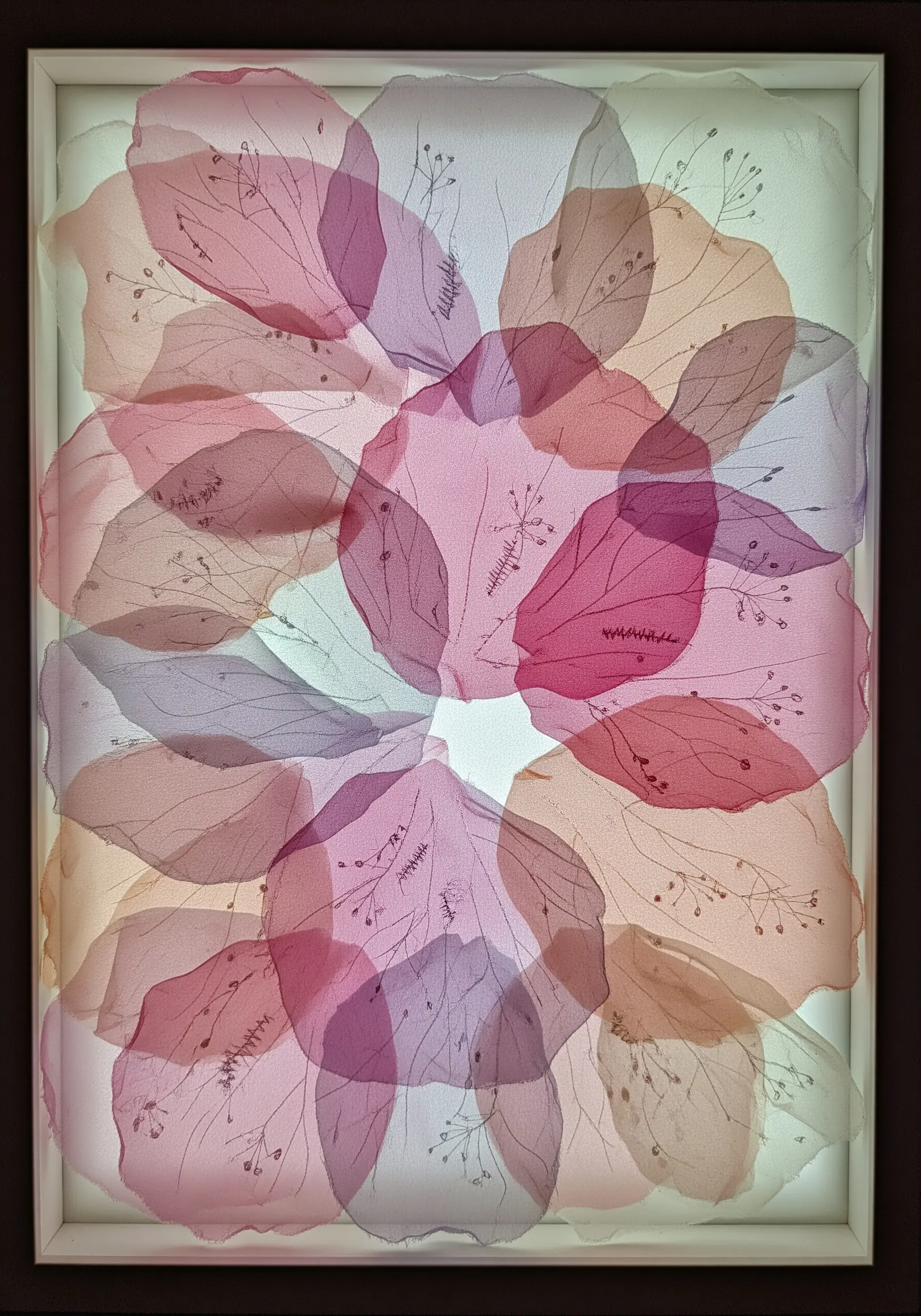
Create a soft, ethereal floral design by layering pieces of sheer organza or chiffon in various shades.
Where the fabrics overlap, new, blended colors will emerge, mimicking the delicate transparency of watercolor paint.
Keep the stitching minimal—use a few tiny, discreet stitches to tack the petals in place, preserving the light and airy quality of the design.
Frame the finished piece in a shadow box with backlighting to enhance the translucency and create a beautiful, glowing effect.
24. Design a Folk Art Table Runner
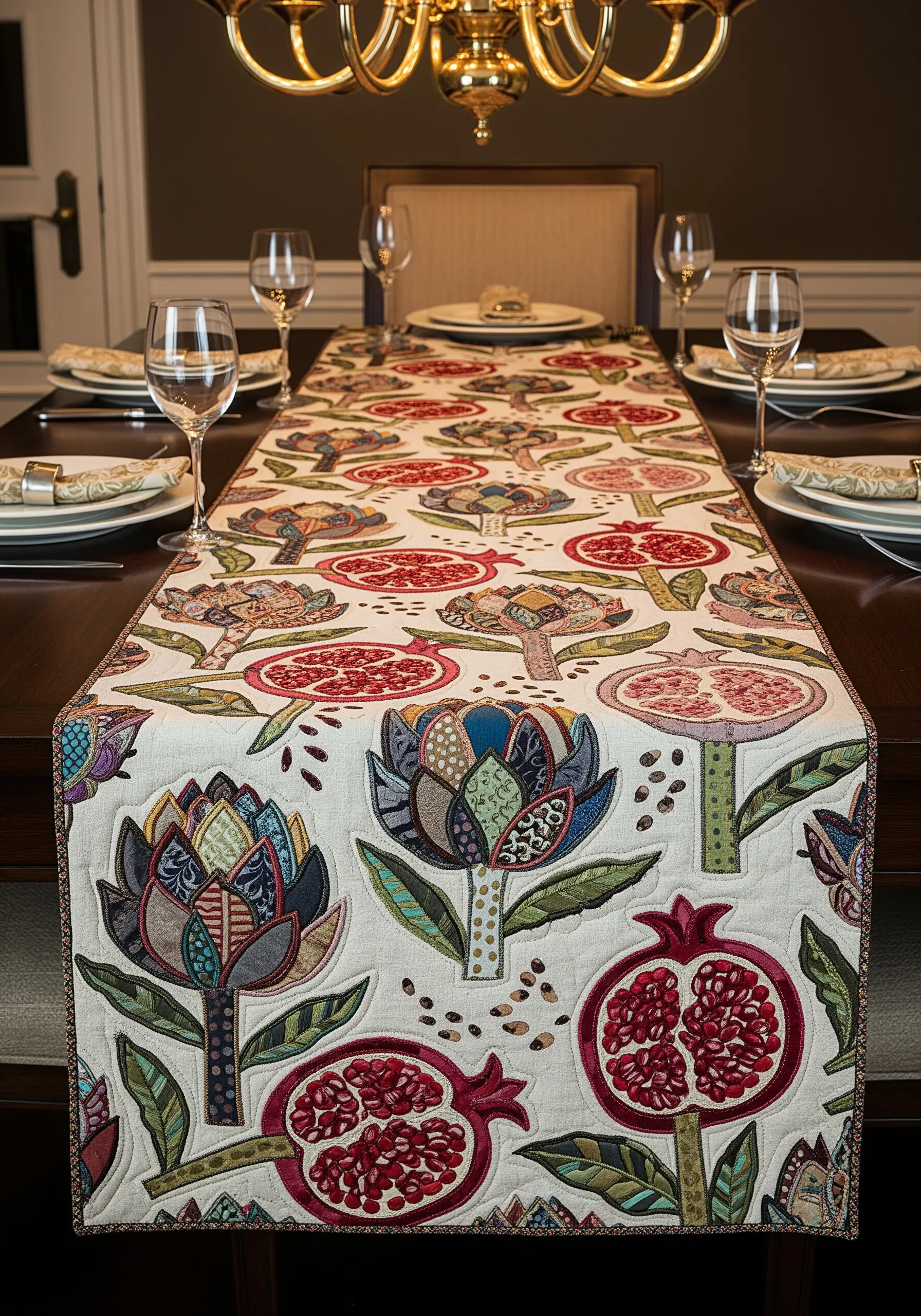
Create a charming, stylized pattern using motifs like pomegranates and artichokes, inspired by traditional folk art.
Within each motif, use a patchwork of different small-patterned fabrics to add visual interest and a handcrafted feel.
Define the shapes and add detail with a consistent outline stitch, like a black backstitch or a tight machine zigzag stitch, which unifies the varied patterns.
This technique turns a simple table runner into an heirloom piece, perfect for adding a touch of artistic flair to your dining table.
25. Juxtapose Order and Chaos in Abstract Art
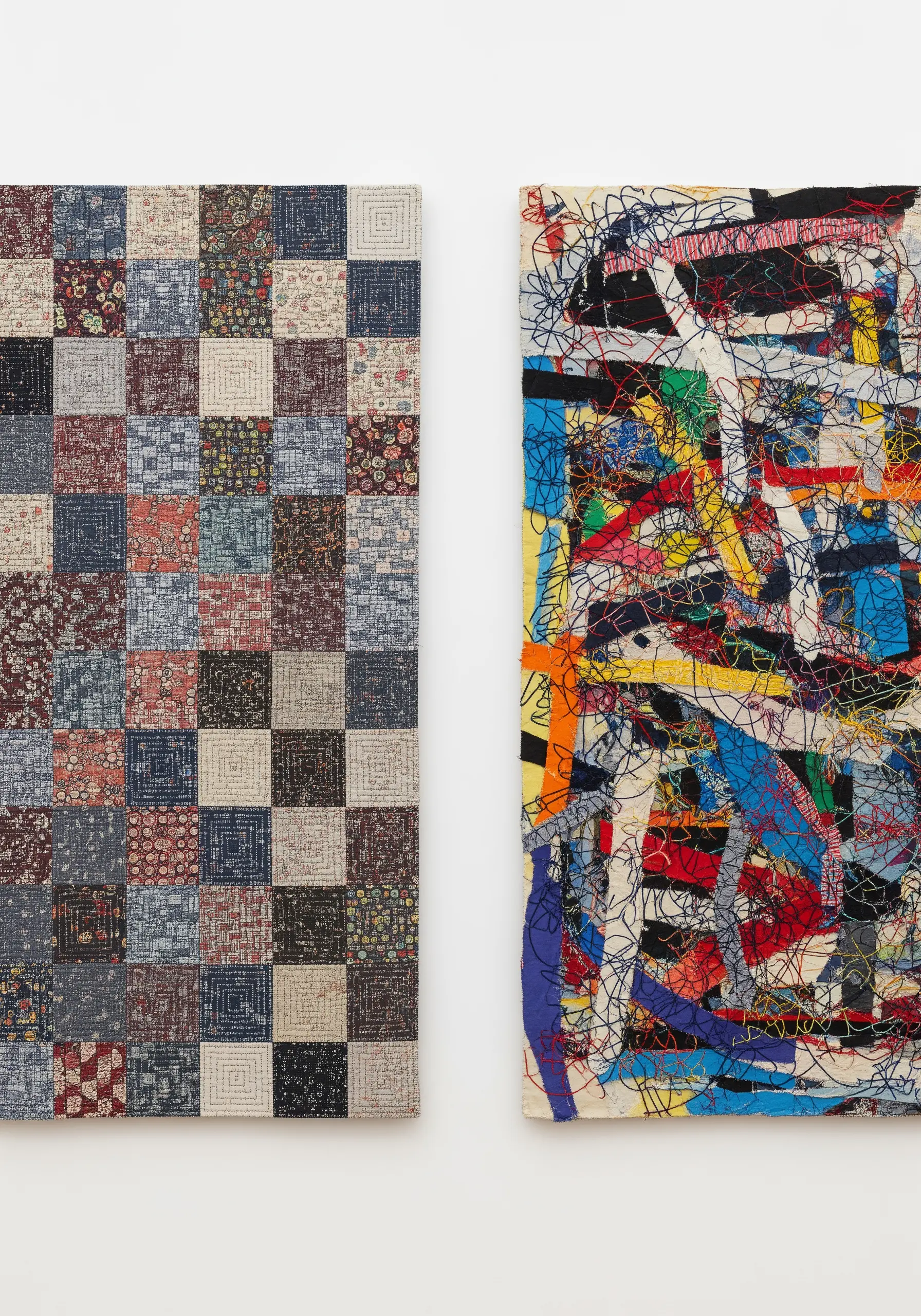
Explore the power of composition by creating two contrasting pieces from similar scraps: one highly structured, the other completely freeform.
For the ordered piece, cut scraps into precise squares and arrange them in a classic checkerboard or quilt pattern, adding quilting lines for more geometry.
For the chaotic piece, layer scraps randomly and cover the surface with dense, scribbled free-motion stitching in contrasting thread colors.
Displaying them together highlights how the same raw materials can be transformed into entirely different artistic expressions through technique and intention.
26. Craft a Miniature Hummingbird Treasure
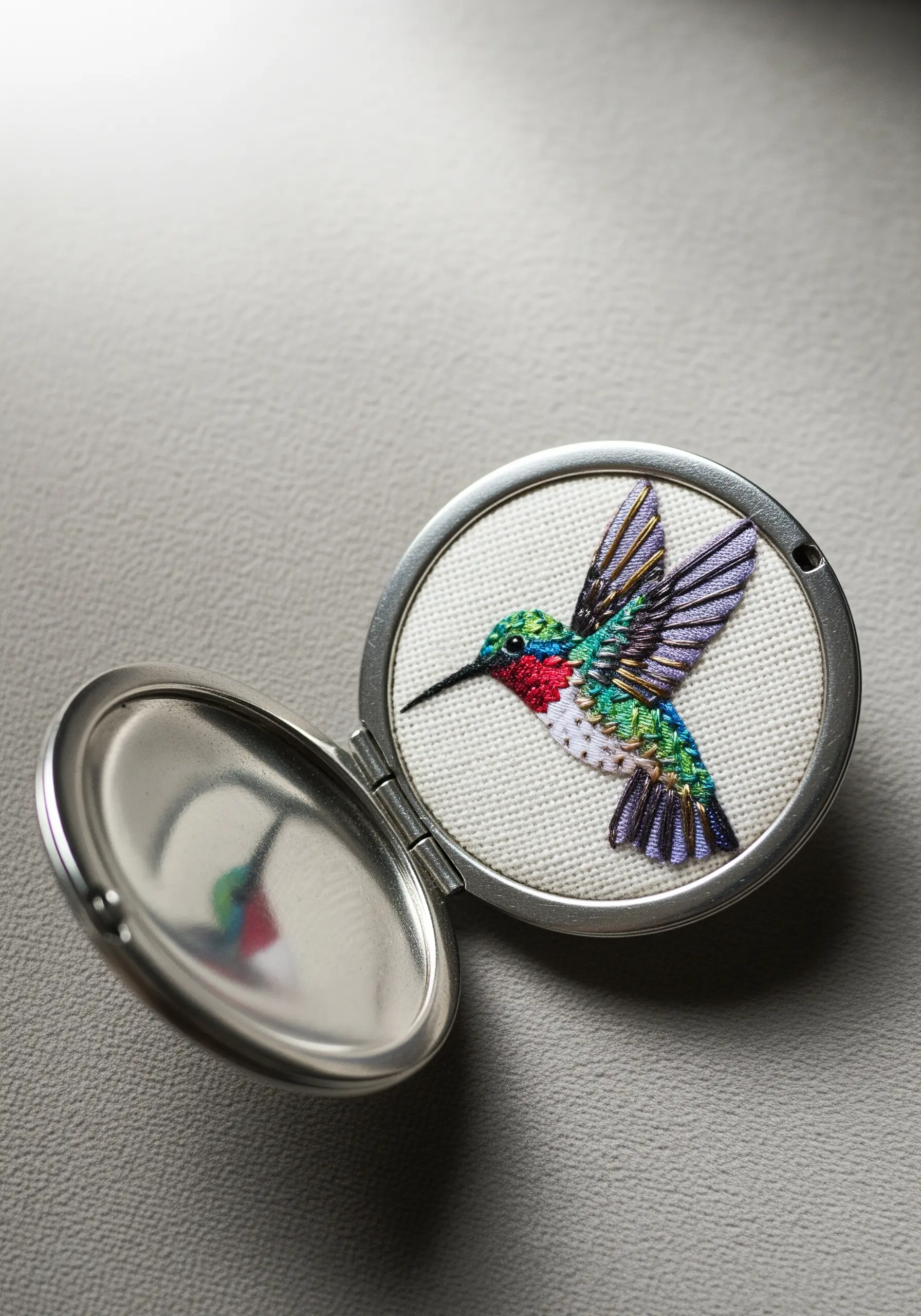
Work on a miniature scale by using the tiniest fabric scraps to piece together a detailed hummingbird.
Use a single strand of embroidery floss for the finest details, like the feathers and the glint in the bird’s eye.
Incorporate iridescent or metallic threads to capture the shimmering quality of the hummingbird’s plumage when it catches the light.
Mounting the finished micro-embroidery in a locket or compact mirror transforms it into a precious, wearable piece of art.
27. Layer a Geologic Abstract Tapestry
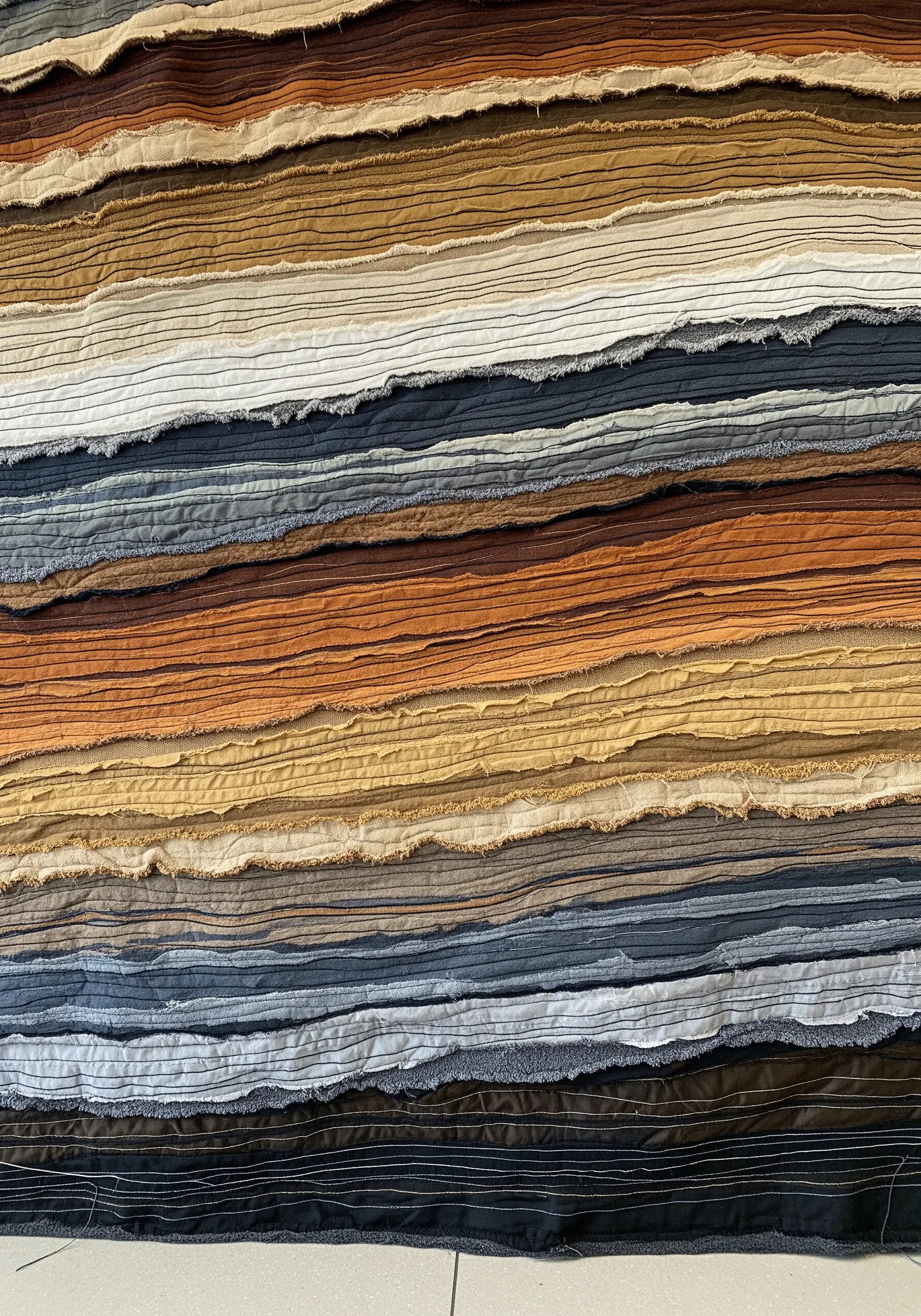
Evoke the stratified layers of earth by stacking horizontal strips of fabric in rich, earthy tones like ochre, sienna, and slate grey.
Tear the fabric strips instead of cutting them to create soft, raw edges that mimic natural sediment lines.
Stitch across the entire piece with horizontal lines of running stitch or machine stitching, which not only secures the layers but also adds another level of linear texture.
This is a wonderfully meditative process that turns a pile of neutral scraps into a powerful, earthy texture embroidery piece.
28. Upcycle Denim into a Playful Ocean Scene
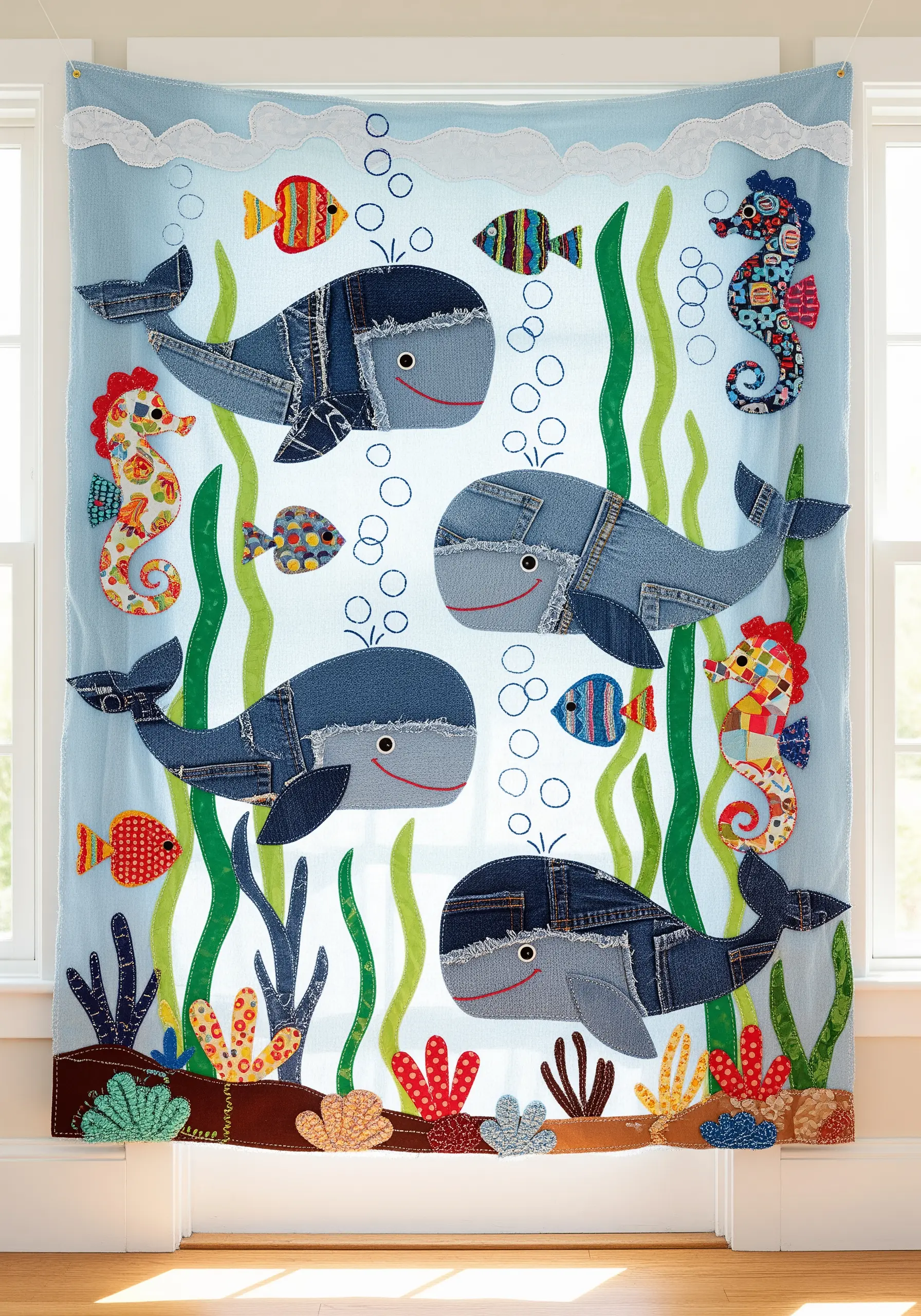
Give old jeans a new life by using the different washes of denim to create the bodies of appliquéd whales.
Incorporate existing features like pockets, seams, and belt loops into your designs for a clever, whimsical touch.
Surround your denim sea creatures with colorful, patterned scraps for the coral, seaweed, and smaller fish to create a vibrant underwater world.
Use a simple running stitch in white thread to create bubbles, adding a final, playful detail to your upcycled fabric wall art.
29. Illustrate High Fashion with Fabric and Sparkle
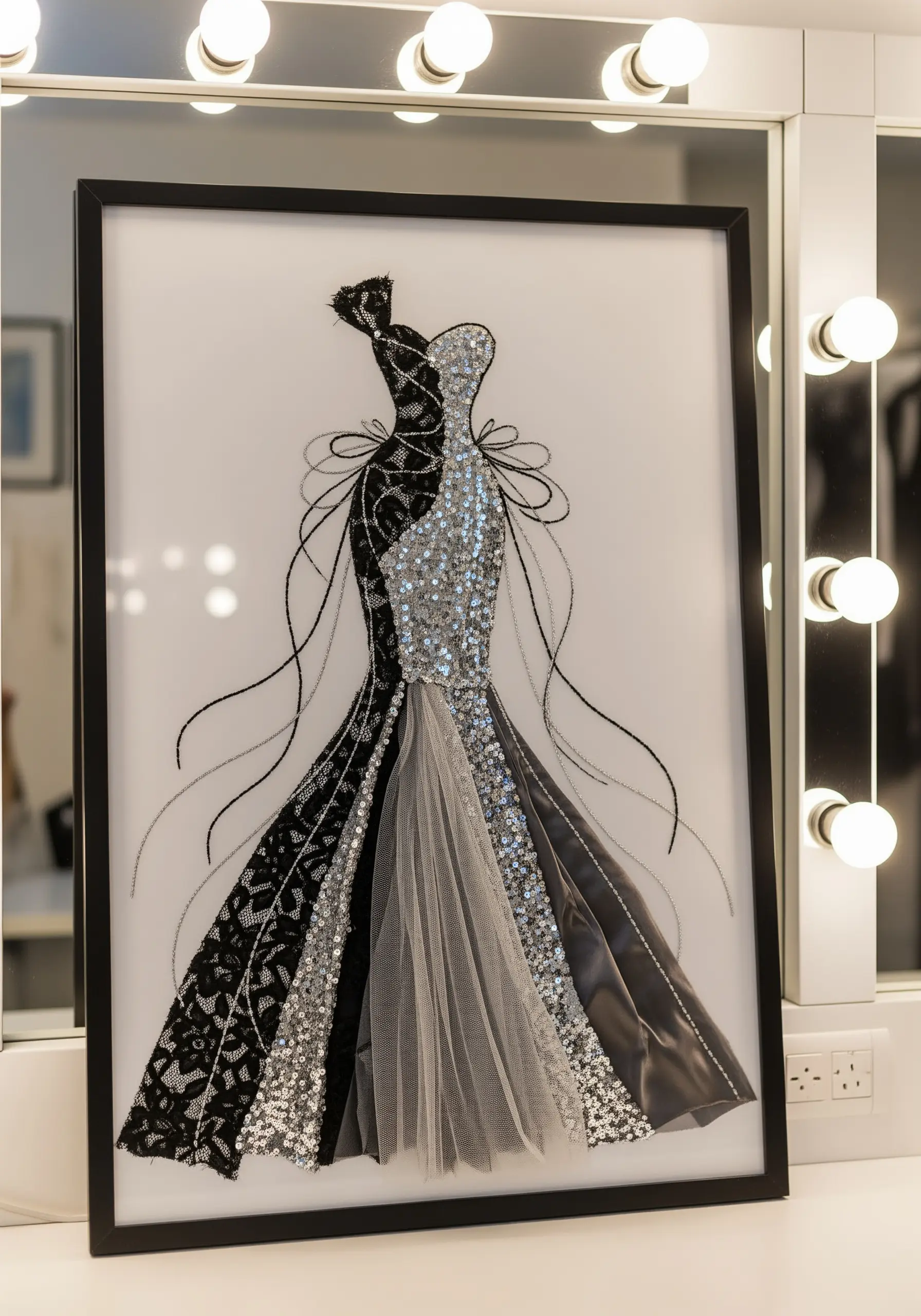
Create a stunning fashion illustration by using luxurious fabric scraps like lace, satin, and tulle to form the gown.
Embellish the bodice with a dense layer of sequins or beads to mimic the sparkle of haute couture.
Use long, loose strands of black thread for outlines and ribbons, allowing them to trail off the page to create a sense of movement and effortless elegance.
This mixed-media approach blends drawing, collage, and embroidery to capture the glamour and artistry of fashion design.
30. Stitch a Quilt of Woven Memories
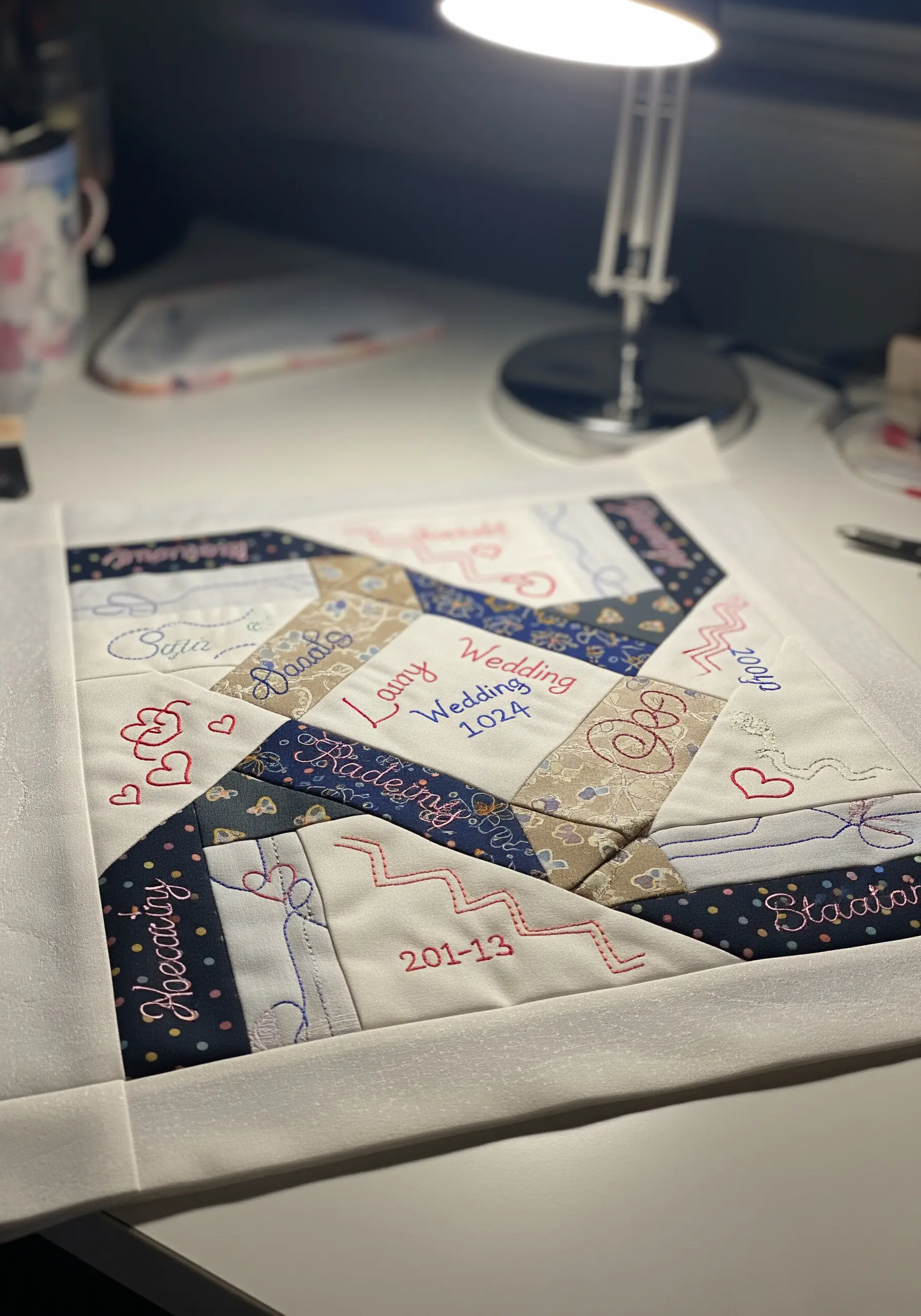
Design a quilt block that tells a personal story by combining scraps from meaningful garments, like baby clothes or a wedding tie.
Embroider names, dates, or significant words directly onto the fabric pieces before you assemble the block.
Incorporate decorative machine stitches in contrasting colors to add another layer of visual interest and symbolize the threads that connect memories.
This thoughtful approach transforms a simple quilt block into a deeply personal heirloom to be treasured.
31. Construct a Stained-Glass Window with Fabric
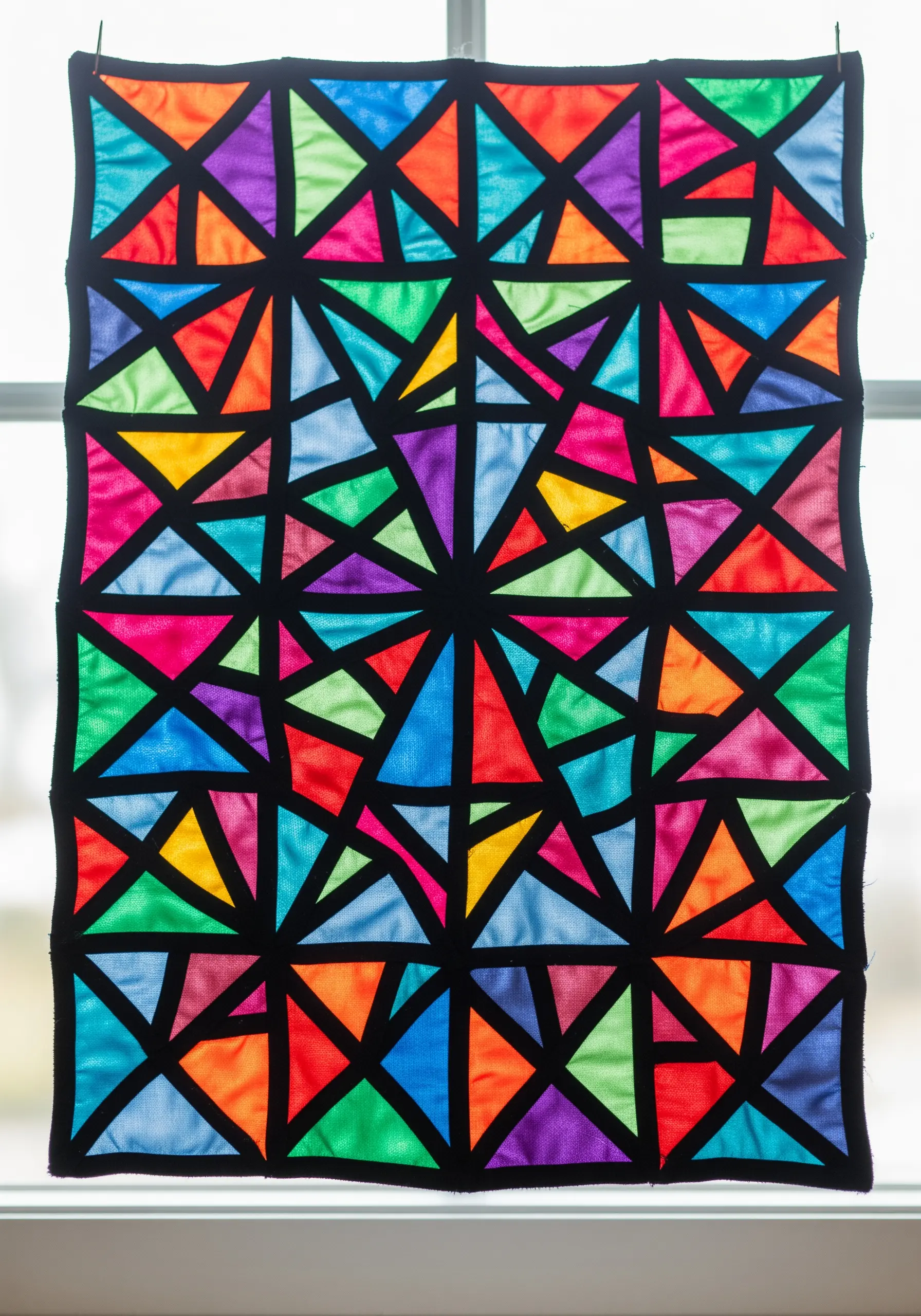
Recreate the look of stained glass by piecing together scraps of vibrant, jewel-toned satin or cotton.
Use thin strips of black fabric or black bias tape to create the ‘leading’ between your colored fabric ‘panes’.
Topstitch along the edges of the black strips to secure all the pieces and create a clean, graphic outline that makes the colors pop.
Hang the finished piece in a window to let the light shine through, enhancing the brilliant colors and the stained-glass effect.
32. Assemble a Floating Constellation of Hoops
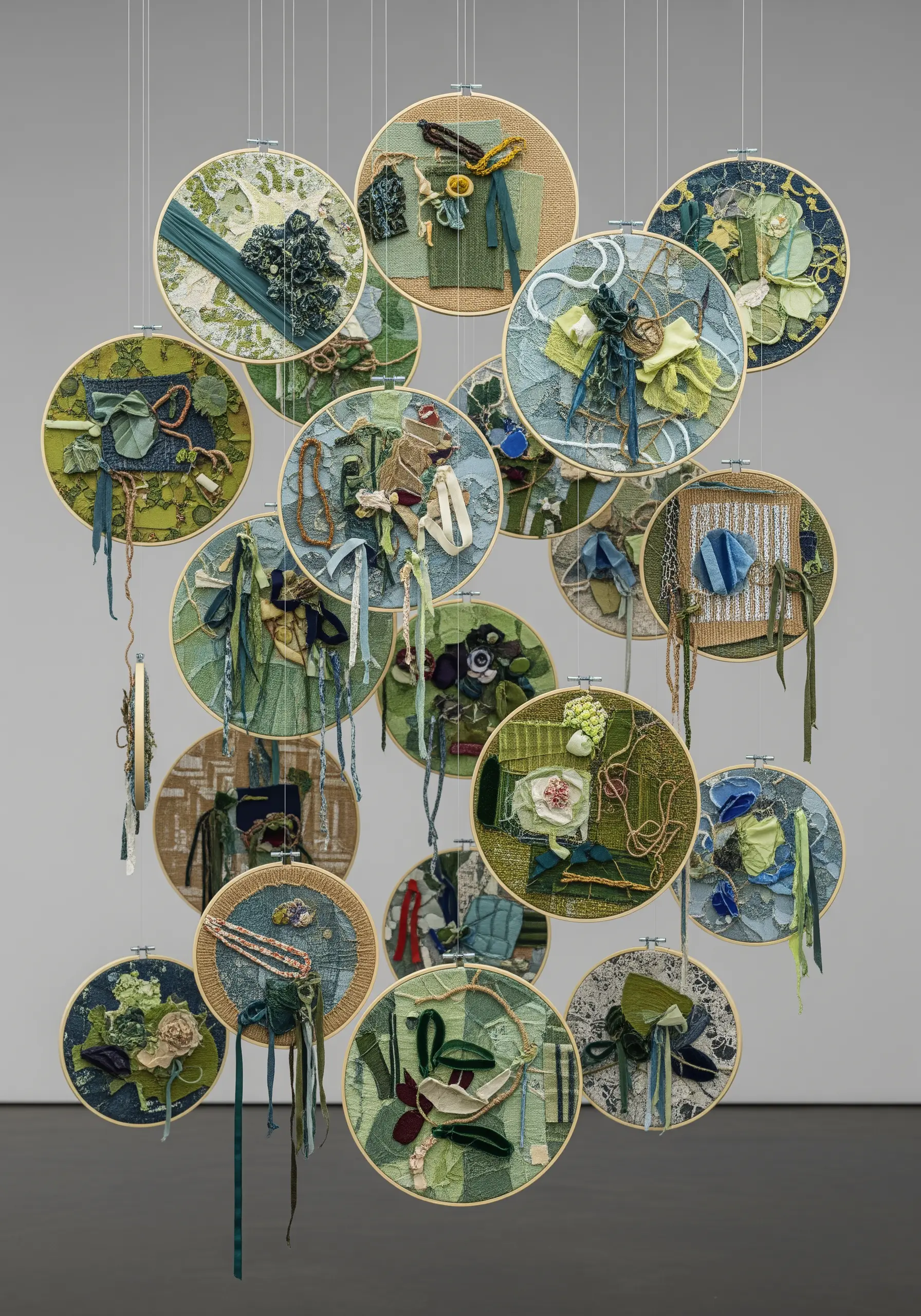
Create a large-scale installation by working on multiple small hoops instead of one large canvas.
Develop a cohesive color palette—like these greens and blues—but allow each hoop to be a unique abstract composition of fabric, ribbon, and yarn.
Incorporate a variety of textures in each hoop, from smooth satin to rough burlap and delicate lace, to make each one a small world of its own.
Suspend the finished hoops at varying heights to create a dynamic, floating mobile that encourages viewers to explore it from all angles.
33. Paint a Venetian Canal with Fabric Collage
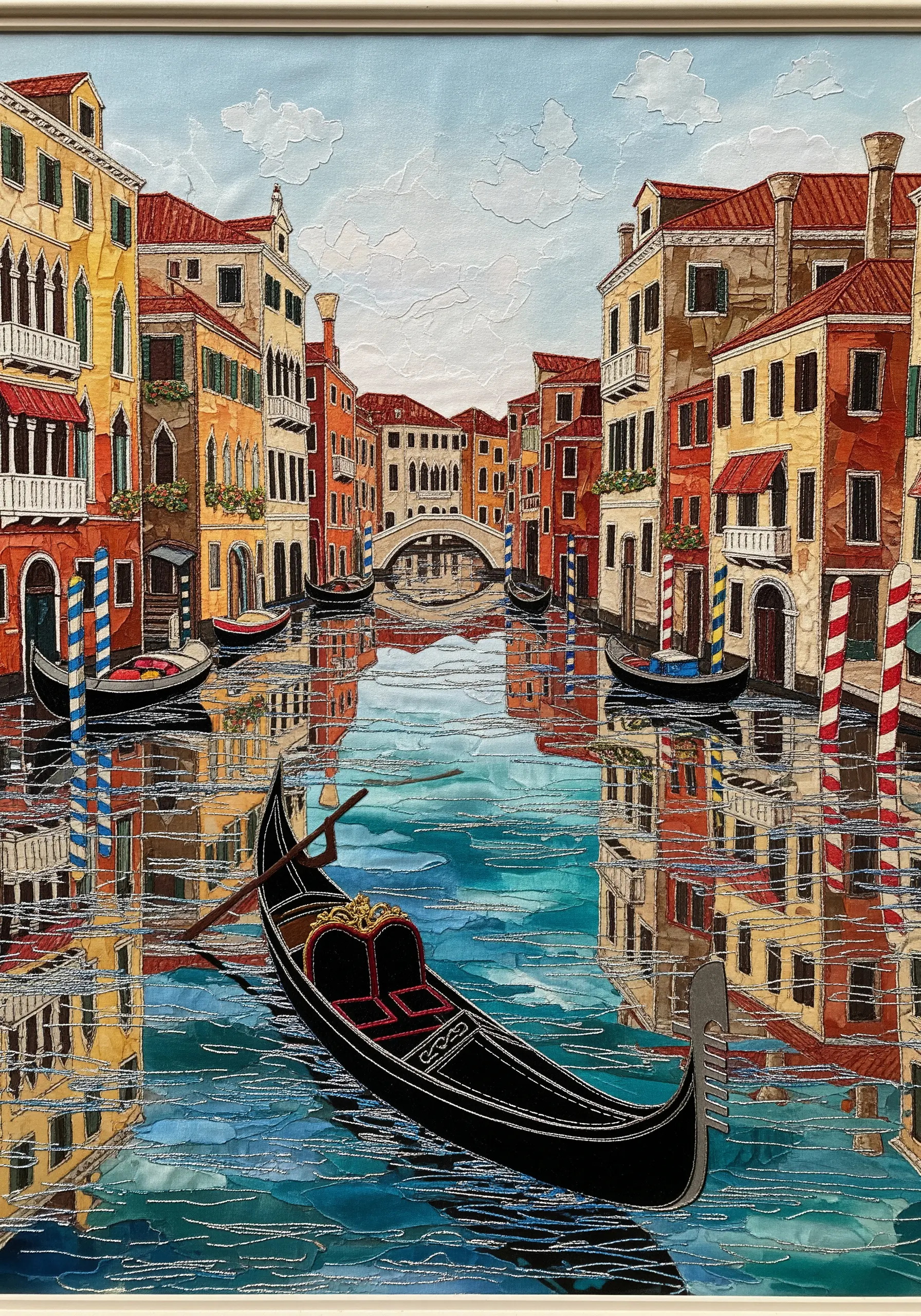
Capture the complexity of an architectural scene by using printed and textured fabrics to represent different building facades and roof tiles.
Create the illusion of water reflections by using fabrics with a shimmer or sheen, and by mirroring the colors of the buildings in the canal.
Use free-motion machine stitching with metallic thread to add fine details like window panes and architectural ornamentation, which also helps to define the shapes.
This advanced technique is true ‘fabric painting,’ where you build a detailed, realistic scene piece by piece with carefully chosen scraps.
34. Appliqué a Charming Floral Teacup
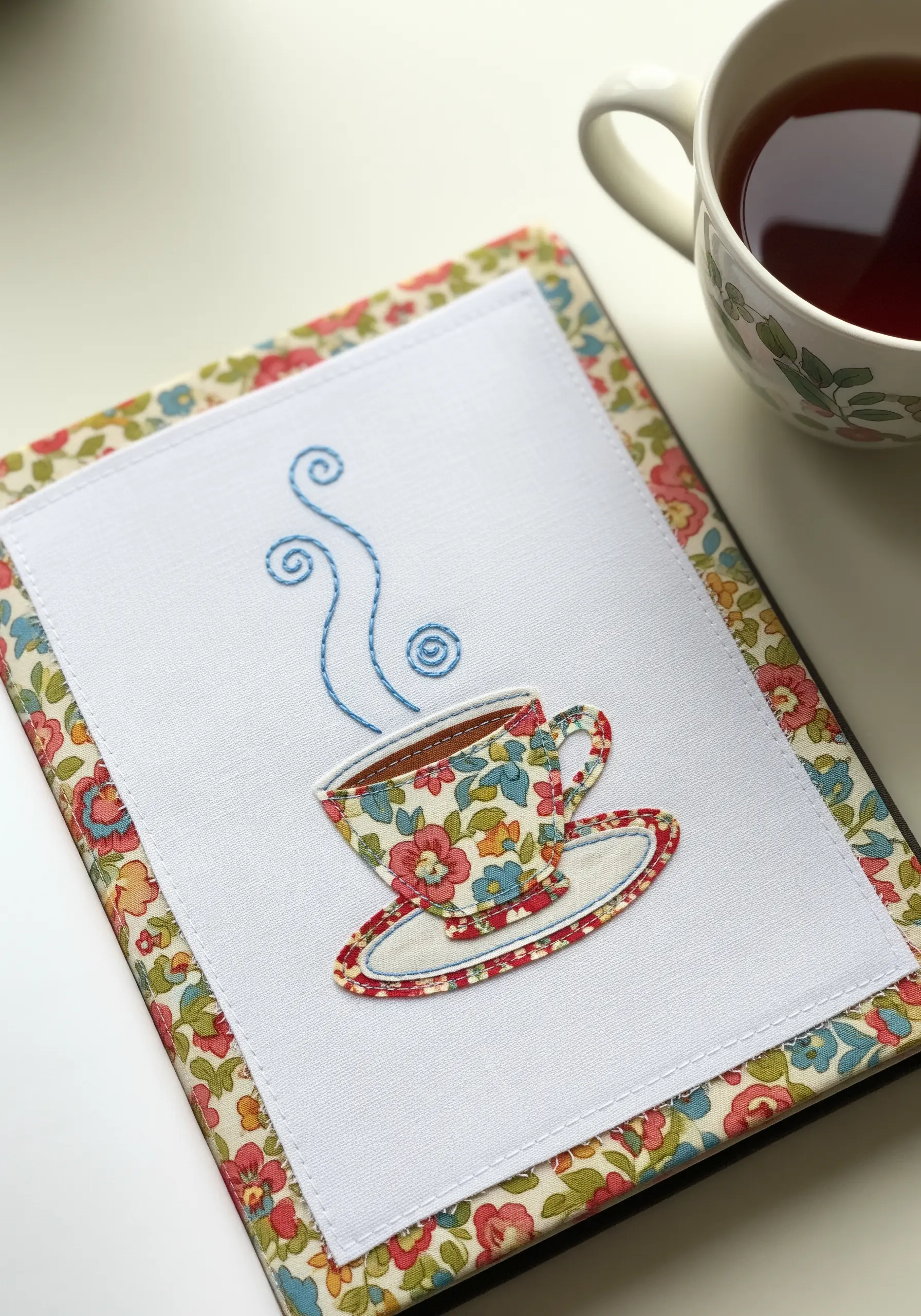
Give a simple object personality by using a patterned scrap fabric for the main appliqué piece, like this floral teacup.
Secure the appliqué with a neat, even blanket stitch around the edge using a contrasting color of thread to make it stand out.
Add whimsical details with simple embroidery, such as the swirling backstitched steam rising from the cup.
This technique is perfect for embellishing notebook covers, tea towels, or café curtains, adding a touch of handmade charm to everyday items.
35. Embrace the Art of Minimalist Mending
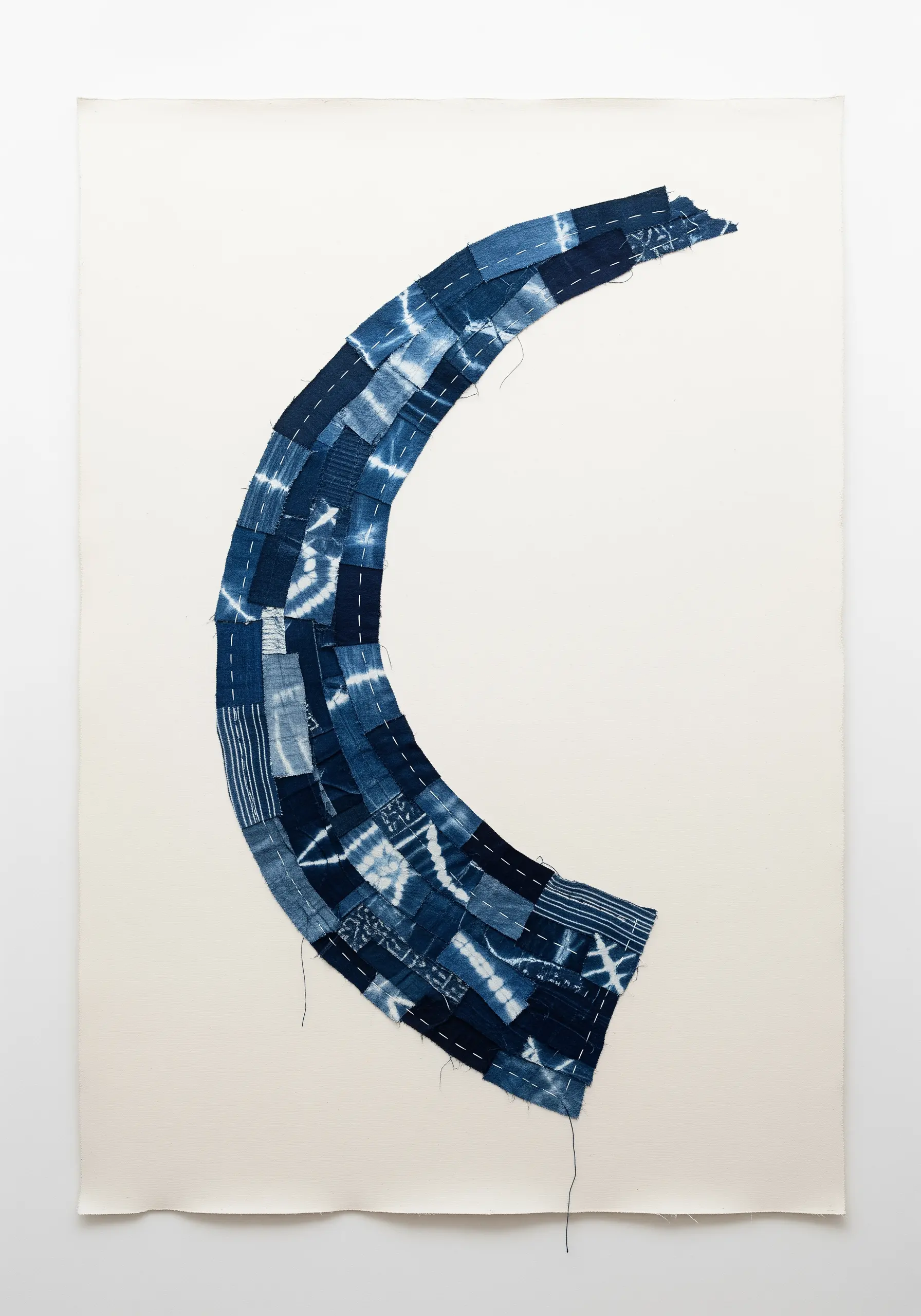
Practice the principles of Japanese Boro by patching together scraps of indigo-dyed or denim fabric into a simple, elegant shape.
Use a contrasting white thread to stitch the patches together with straight, functional running stitches, known as Sashiko stitching.
Let the stitches be visible and slightly uneven; their purpose is both to mend and to add a layer of quiet, graphic beauty.
Mounting the finished piece on a clean white background highlights the form and celebrates the philosophy of finding beauty in imperfection and reuse.