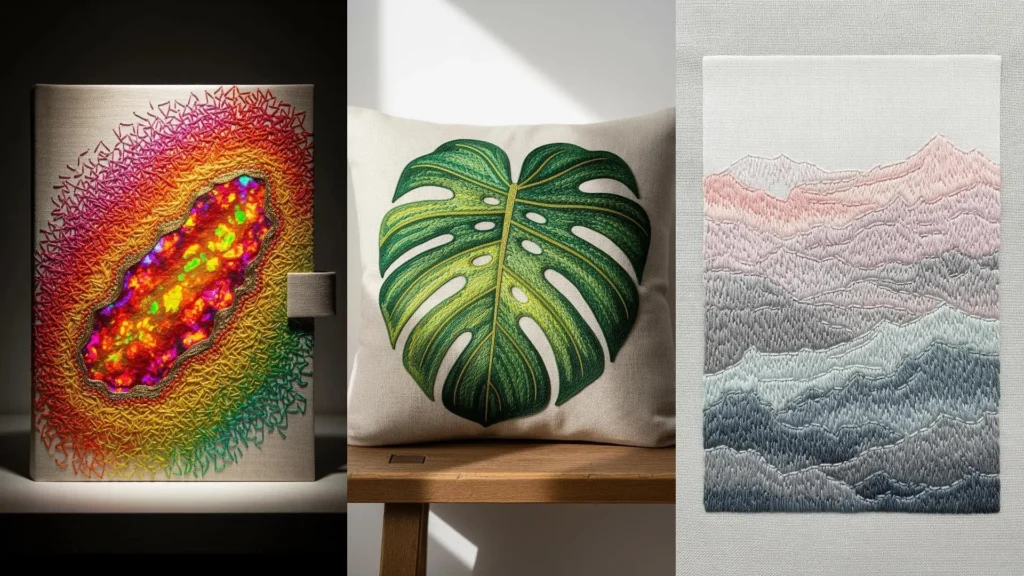
Have you ever finished a piece and felt that something was missing? You followed the pattern, your stitches are neat, but the result feels… flat. It lacks the depth and life you see in the work you admire.
The secret to transforming your embroidery isn’t about learning hundreds of complex stitches. It’s about understanding how to create illusions—of depth, of light, of texture—with the thread you already have. It’s about making small, intentional choices that trick the eye and invite the hand.
In the ideas that follow, you will discover how to manipulate thread, fabric, and even light to make your work stand off the canvas. These are not just patterns; they are modern techniques designed to give your embroidery a sculptural, dimensional quality that feels both sophisticated and alive.
1. The Hypnotic Satin Stitch Gradient
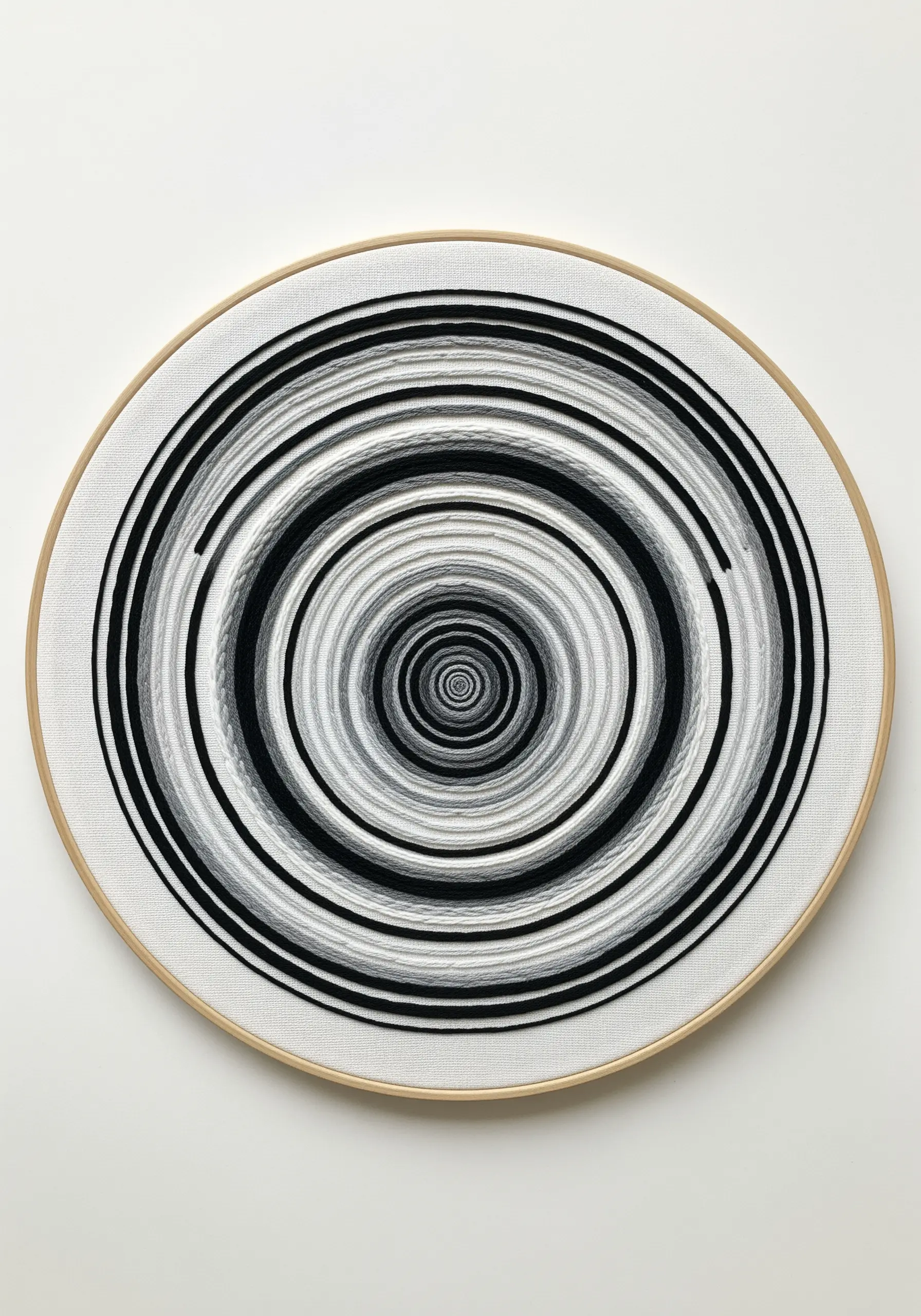
Create a mesmerizing depth illusion by stitching concentric bands of satin stitch, moving through a precise monochrome gradient.
The key is flawless thread tension and methodical color sequencing, which pulls the eye toward the center.
Using a single strand of cotton floss on a tightly stretched linen will give you the sharpest, most graphic result, turning simple stitches into powerful abstract thread illusion techniques.
Each band should sit perfectly flush against the next, creating a smooth, continuous surface that feels impossibly deep.
2. Sculptural Dimension with Chunky Yarn
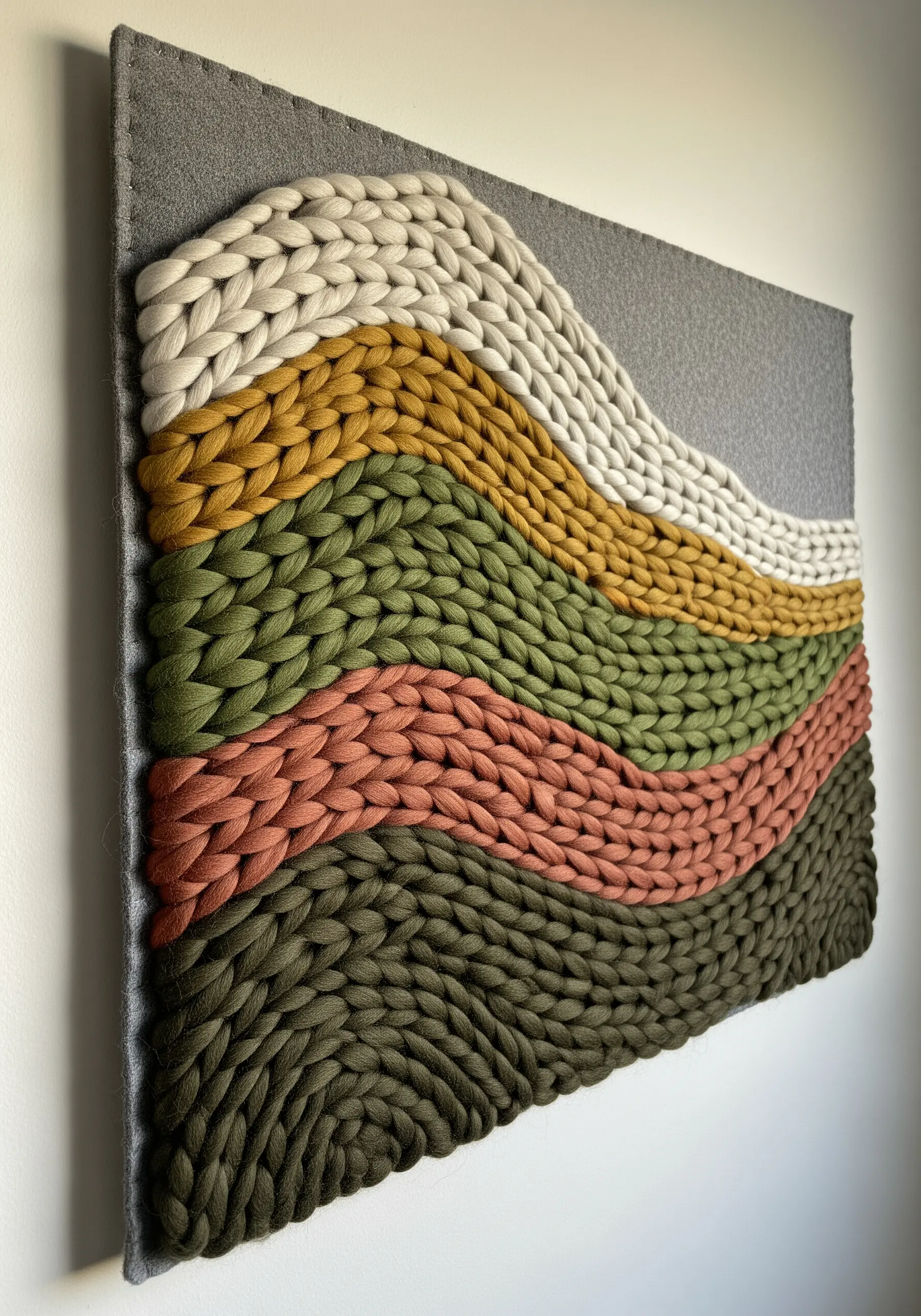
Move beyond standard floss to build dramatic, high-relief textures with chunky yarn or roving.
Secure the yarn to a sturdy fabric base, like felt or heavy canvas, using a couching stitch with a matching, thinner thread.
The illusion of depth comes from the yarn’s physical thickness and the deep shadows it casts, instantly adding a sculptural quality to your work.
This is one of the most direct statement textured embroidery techniques for creating touchable art.
3. The Faux Torn Fabric Reveal
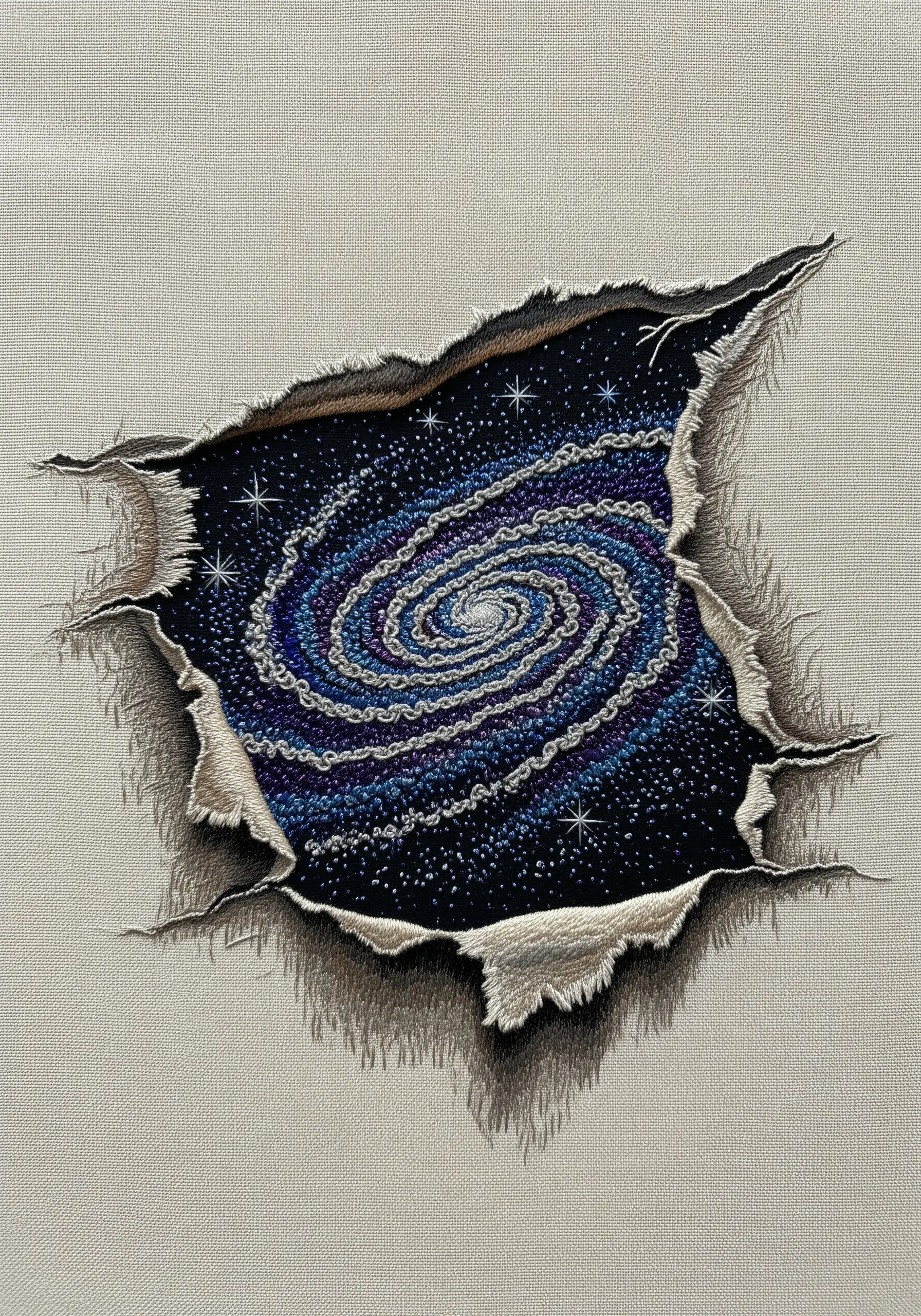
Stitch the illusion of a tear in your fabric that reveals a hidden dimension beneath it.
Create the torn edges with carefully placed satin stitches and physically frayed threads, then add shadows with single-strand stitches in darker tones to create depth.
Fill the revealed space with a dense field of French knots, seed stitches, and metallic thread to mimic a sparkling galaxy or abstract texture.
This method is similar to DIY collage projects, where layers suggest a story.
4. Geometric Depth Through Tensioned Lines

Adapt string art principles to a framed canvas to build compelling geometric forms.
This illusion relies on wrapping thread around precisely placed pins or nails, layering straight lines to form curves and create a sense of perspective.
The perceived depth is a result of the layered threads and the natural shadows they cast against the dark background fabric.
This approach turns simple thread into striking abstract geometric hoops perfect for modern interiors.
5. Organic Contours with Couched Cord
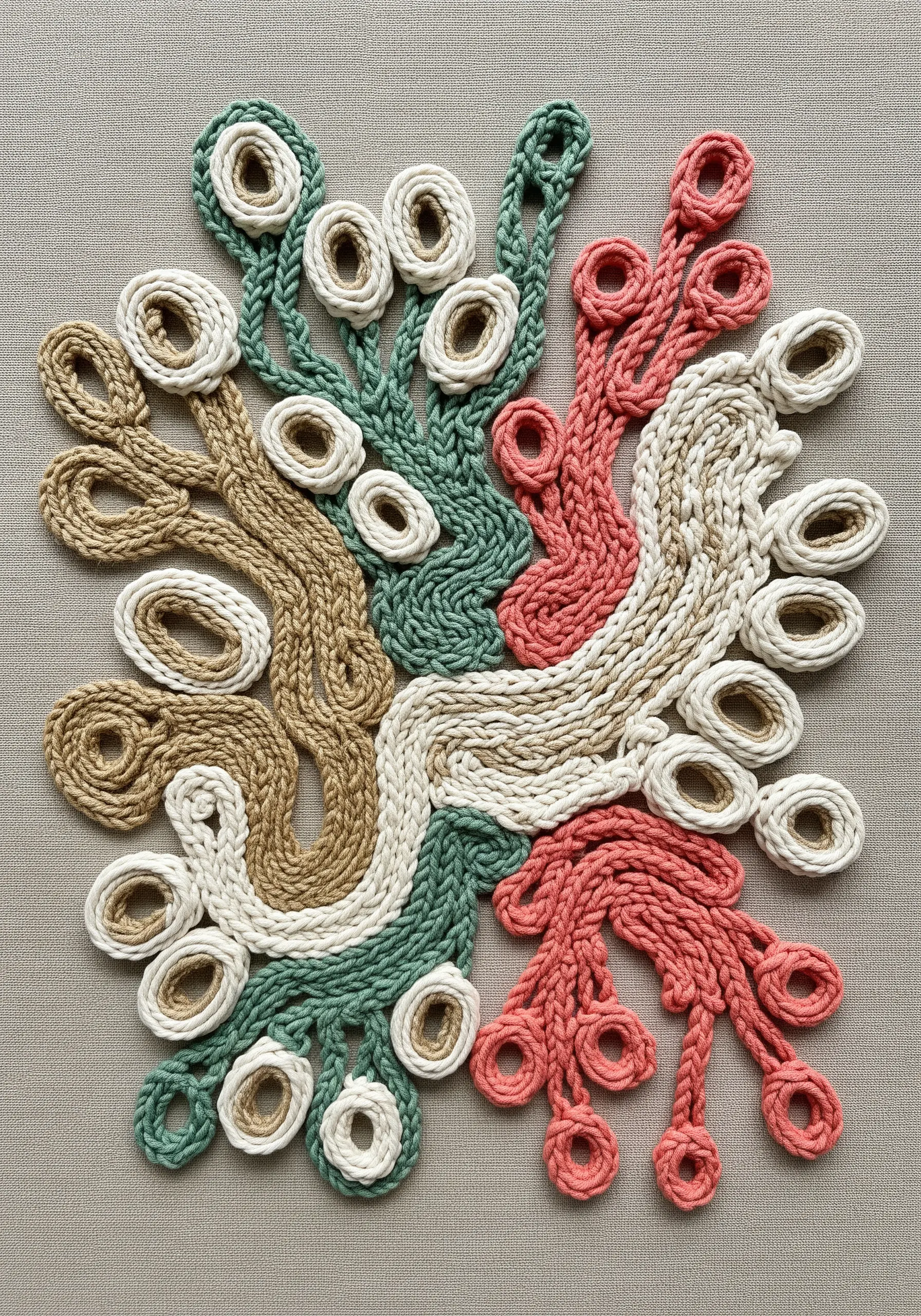
Instead of filling shapes with stitches, define their forms using thick, braided cotton cord for a bold, graphic effect.
Lay the cord on your fabric and secure it with a nearly invisible couching stitch, bending and looping it to create flowing, organic shapes.
The high relief of the cord generates natural shadows, giving the piece an immediate sculptural quality and turning it into one of your favorite organic texture embroidery designs.
6. Radiant Bursts of Tensioned Thread
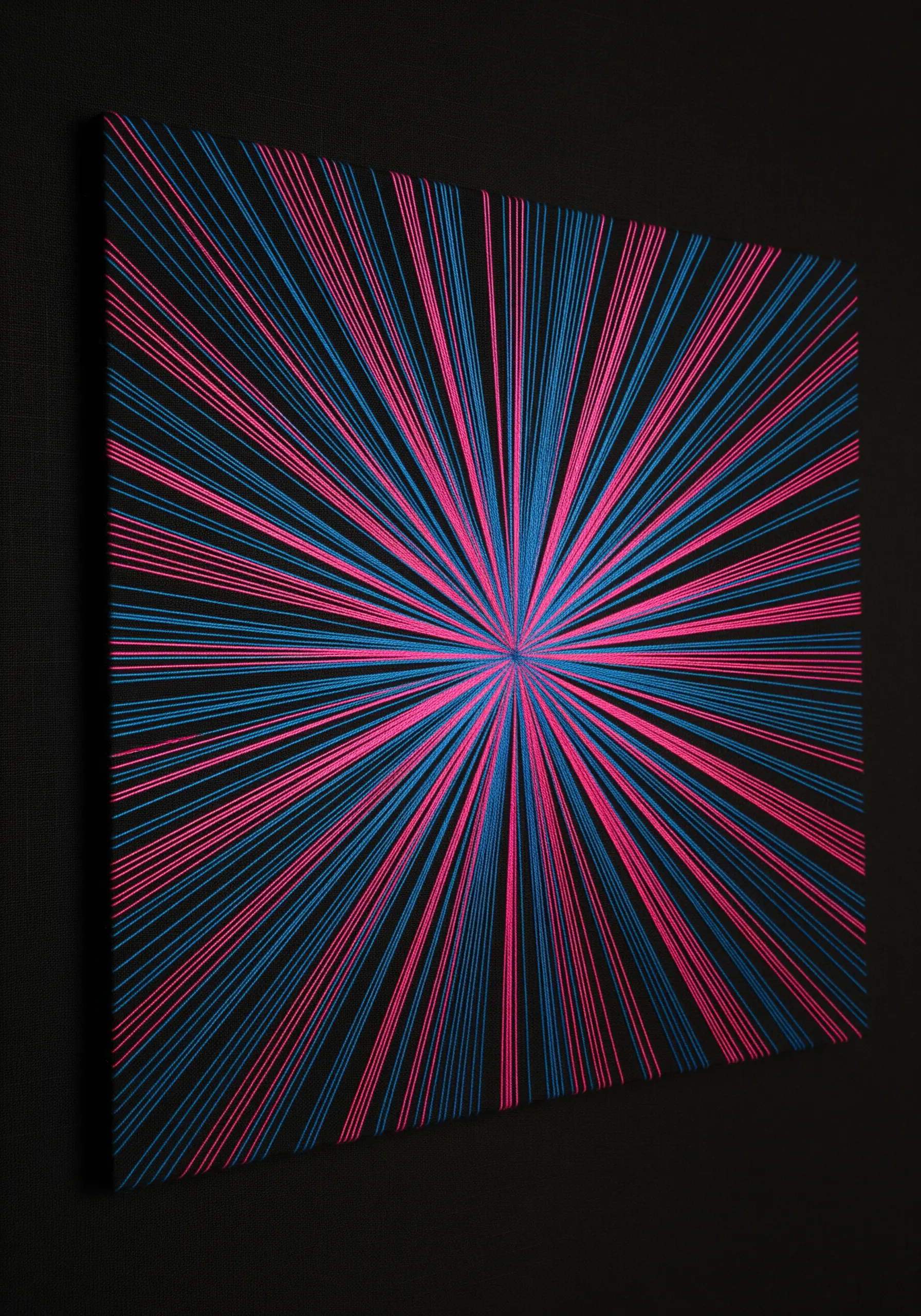
Create a dynamic explosion of color by stretching threads from a central point to the edges of a stretched canvas or frame.
The illusion of vibrating movement is created by overlapping contrasting colors and maintaining the precise geometric tension of each strand.
Using vibrant, high-contrast colors on a dark background produces the most dramatic effect, turning simple lines into mesmerizing wall art.
7. Architectural Depth with Cutwork
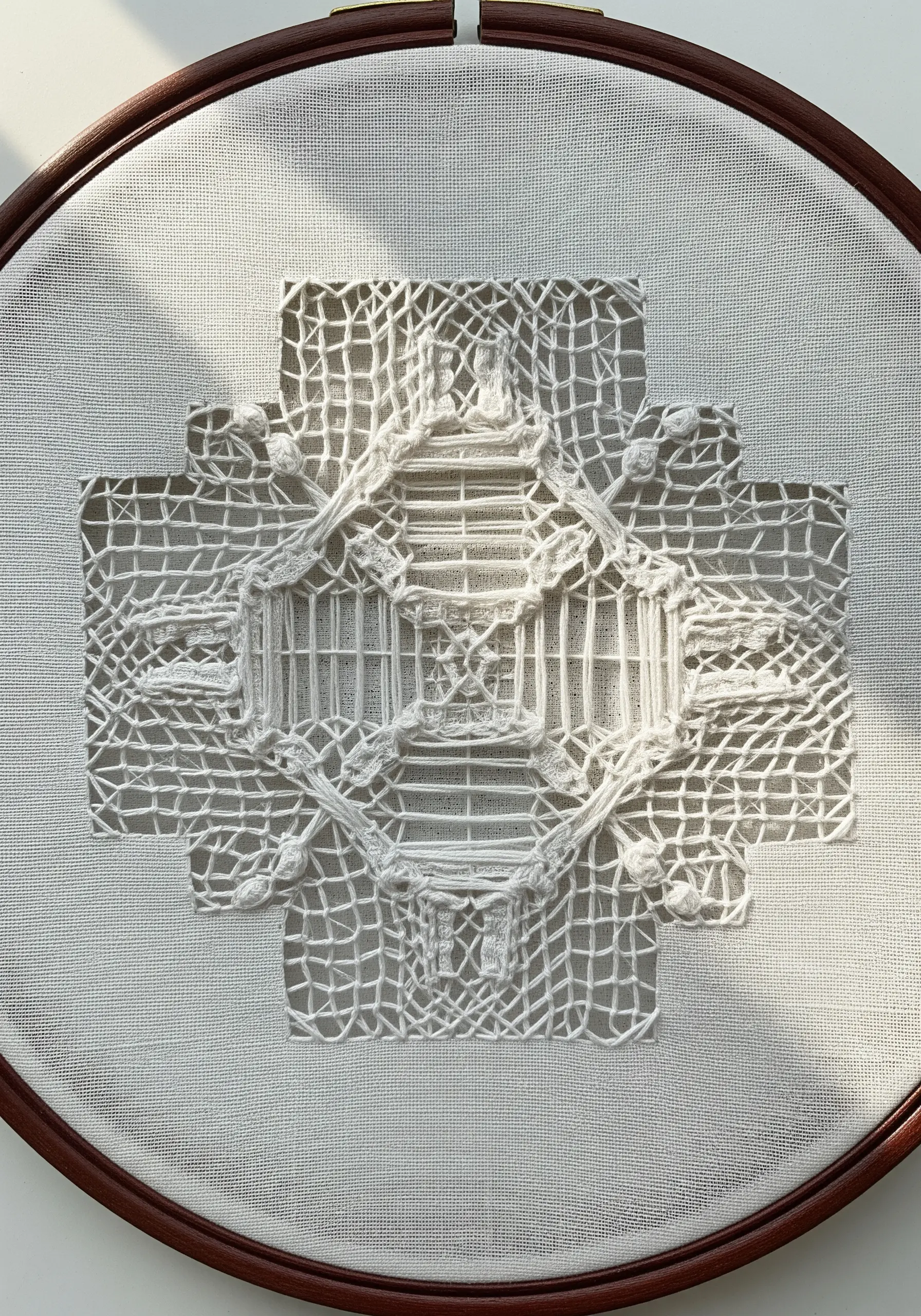
Master the art of whitework, or cutwork, where texture and depth are created through absence.
You’ll carefully cut away sections of the fabric, reinforcing the new edges with tight buttonhole stitches.
The deep illusion comes from the interplay between the solid fabric, the open spaces, and the delicate thread bars that form a net-like background.
This is one of the most elegant tone-on-tone embroidery techniques for a sophisticated finish.
8. Sculptural Wrapping on a 3D Form

Take your embroidery off the flat hoop and onto a three-dimensional object for a truly sculptural piece.
This technique, used in Japanese Temari, involves meticulously wrapping a base sphere with thread until its surface is completely covered.
The texture comes from the perfect, uniform alignment of the threads, which reflect light to create a seamless, glowing surface.
It’s one of many contemporary texture techniques that push boundaries.
9. Fabric Pleating with Resist Stitching
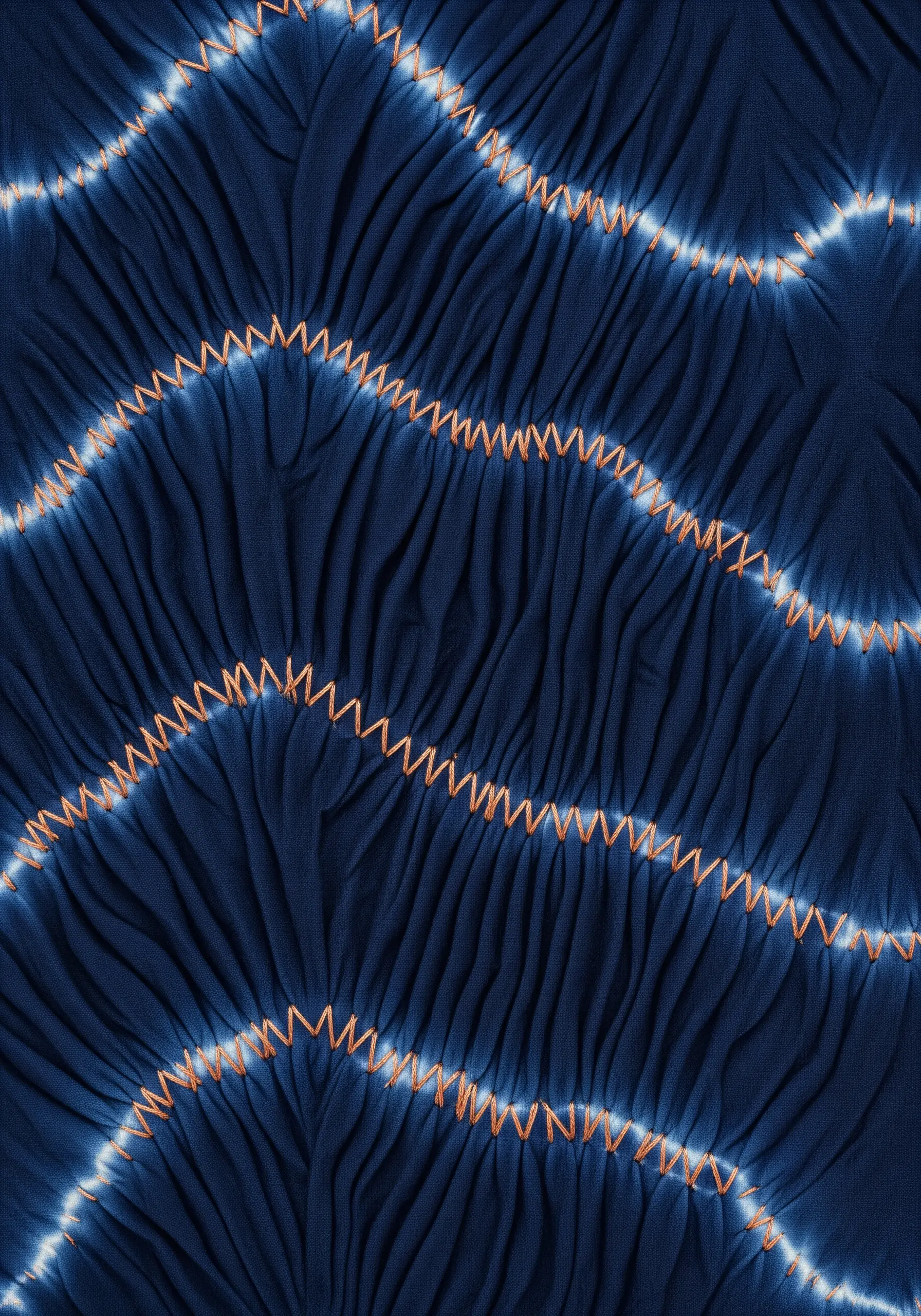
Manipulate the fabric itself using a technique inspired by Shibori dyeing to create permanent texture.
Use a strong thread to make rows of running stitches, then pull them tight to gather the fabric into deep, sculptural pleats.
A contrasting zigzag stitch can then be used to hold the pleats in place and add a decorative element.
It’s one of many creative ways to stitch natural textures that transform the entire surface.
10. Anamorphic Perspective with Thread Painting

Create a startlingly realistic illusion of depth by applying the artistic rules of one-point perspective to your stitching.
Use long-and-short stitch to “paint” the scene, ensuring your stitch direction always follows the perspective lines toward the central vanishing point.
Enhancing the effect with a careful gradient from light to dark will make the hallway feel truly deep, proving you don’t need paint for shockingly realistic results.
11. Pixelated Texture with Layered Blocks
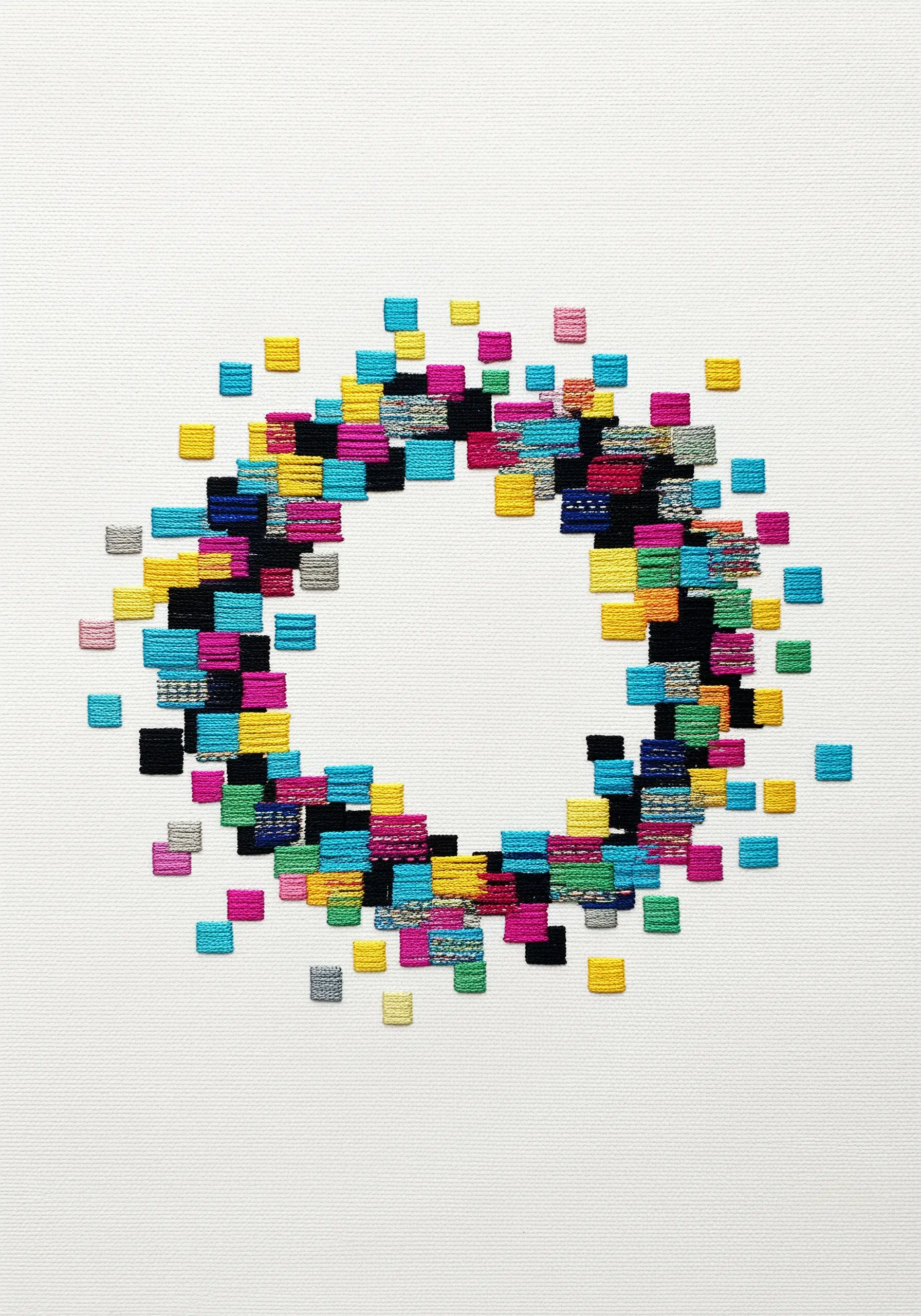
Build a modern, textural surface by creating small, rectangular satin stitch blocks that mimic pixels.
To create a 3D effect, stitch some blocks with more strands of floss (e.g., six strands) and others with fewer (e.g., two strands).
This simple variation in thread thickness makes some “pixels” physically stand out from the fabric, an easy way to achieve 3D textured embroidery.
12. Folded Planes with Gradient Shading
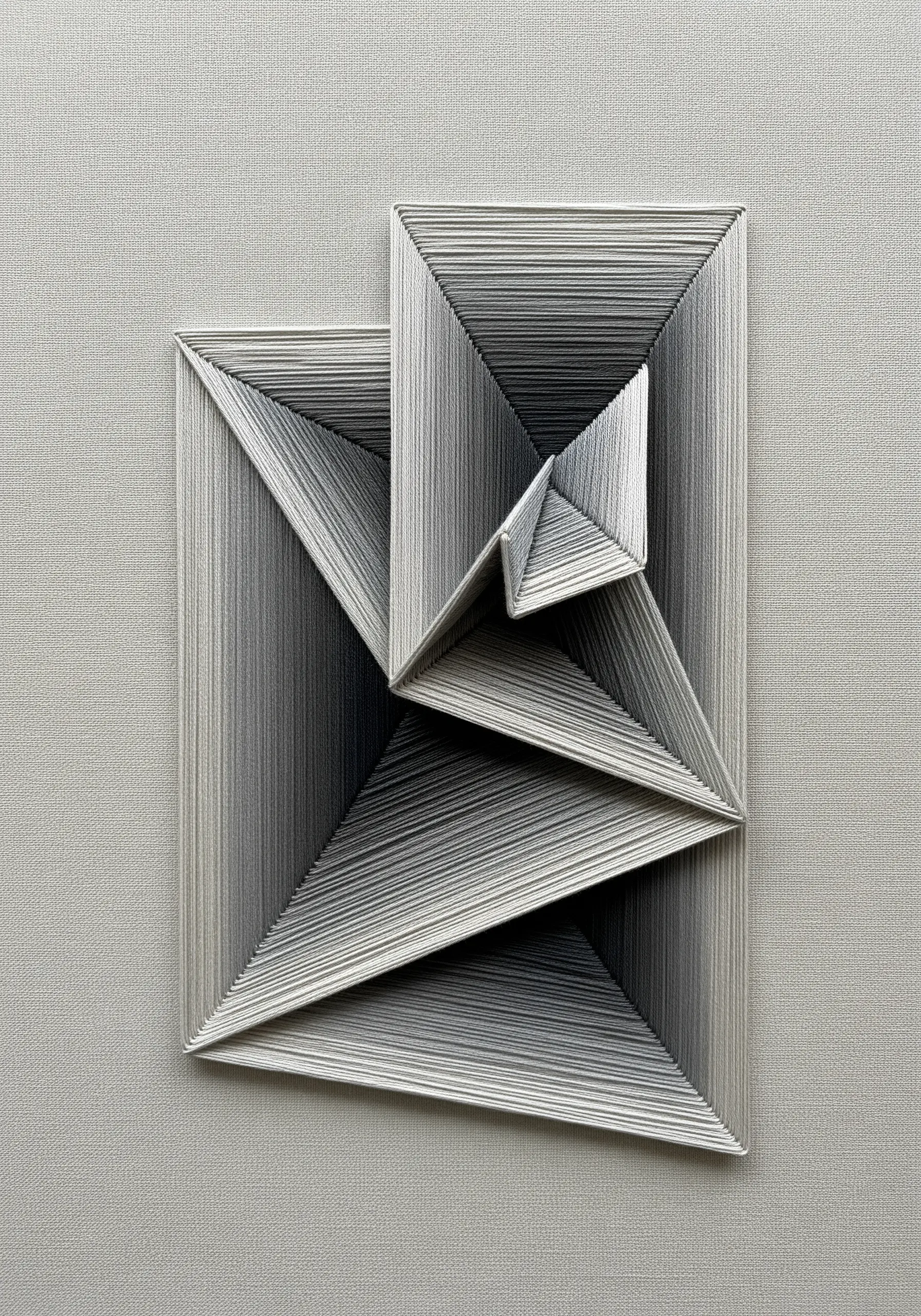
Mimic the crisp look of folded paper or metal using precise satin stitches and carefully planned color gradients.
The key is to map out each geometric plane and assign a gradient, from darkest in the perceived shadows to lightest on the highlights.
Stitch direction is critical—it must follow the angle of each plane to sell the illusion, mastering the use of thread and negative space.
13. Hyper-realistic Sheen with Thread Painting
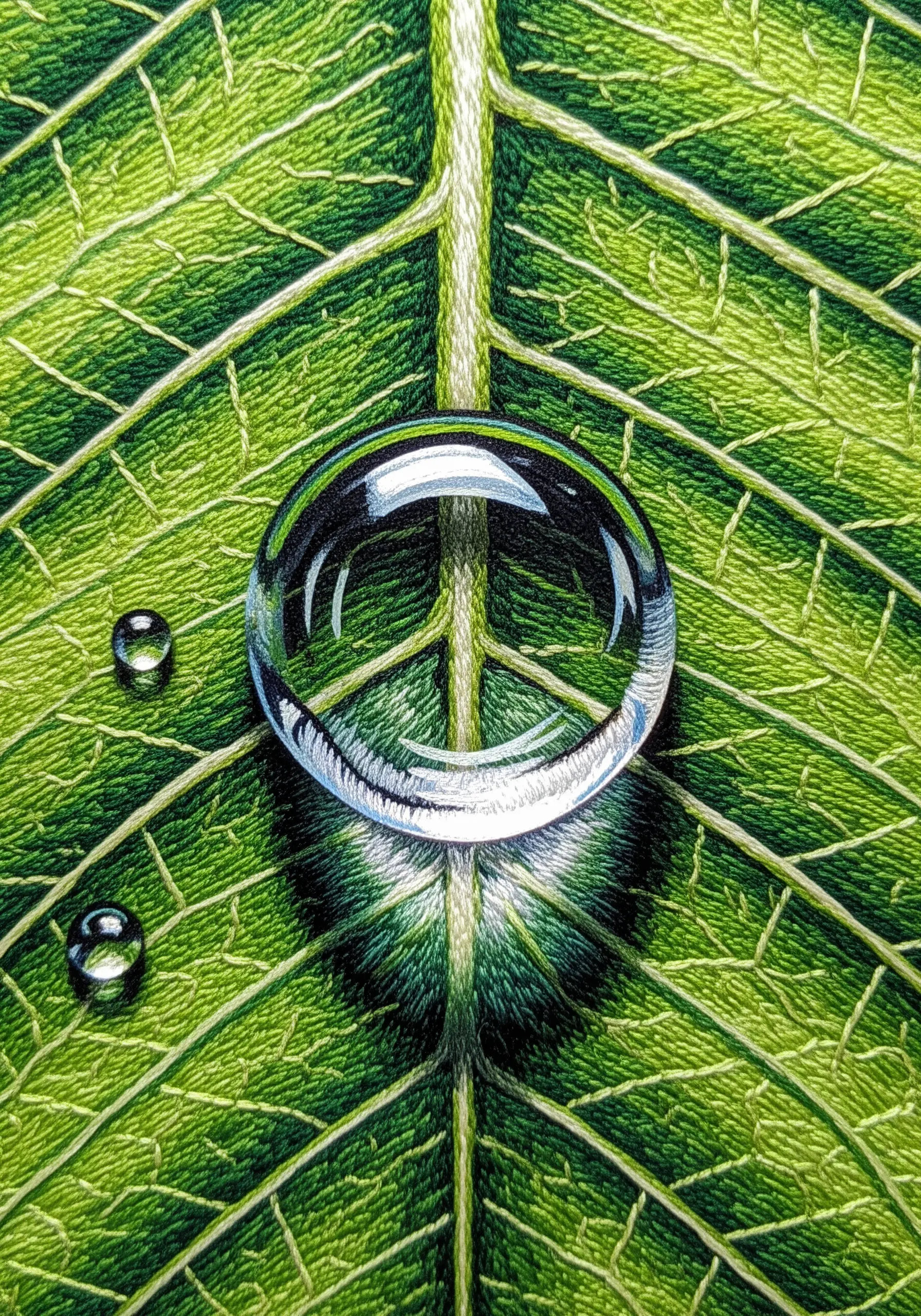
This stunning realism is achieved through meticulous thread painting, often using just a single strand of floss at a time.
To create the water drop, use shades of white, grey, and soft blue to build reflections and transparency, with curved stitches that follow the drop’s contour.
Placing a dark shadow directly underneath the drop makes it appear to lift off the leaf, adding incredible depth.
Focusing on tiny leaf vein details completes the effect.
14. Diffused Color on Sheer Fabric

Use a sheer fabric like organza as your canvas to create a glowing, stained-glass effect.
Fill your shapes with a light satin stitch; the colors will appear soft and subtly blended.
The magic happens when you backlight the finished piece. Light diffuses through the sheer weave, making the colors glow from within and creating an ethereal sense of depth.
This is one of the most beautiful projects using sheer fabrics.
15. Massed Knots for Organic Texture
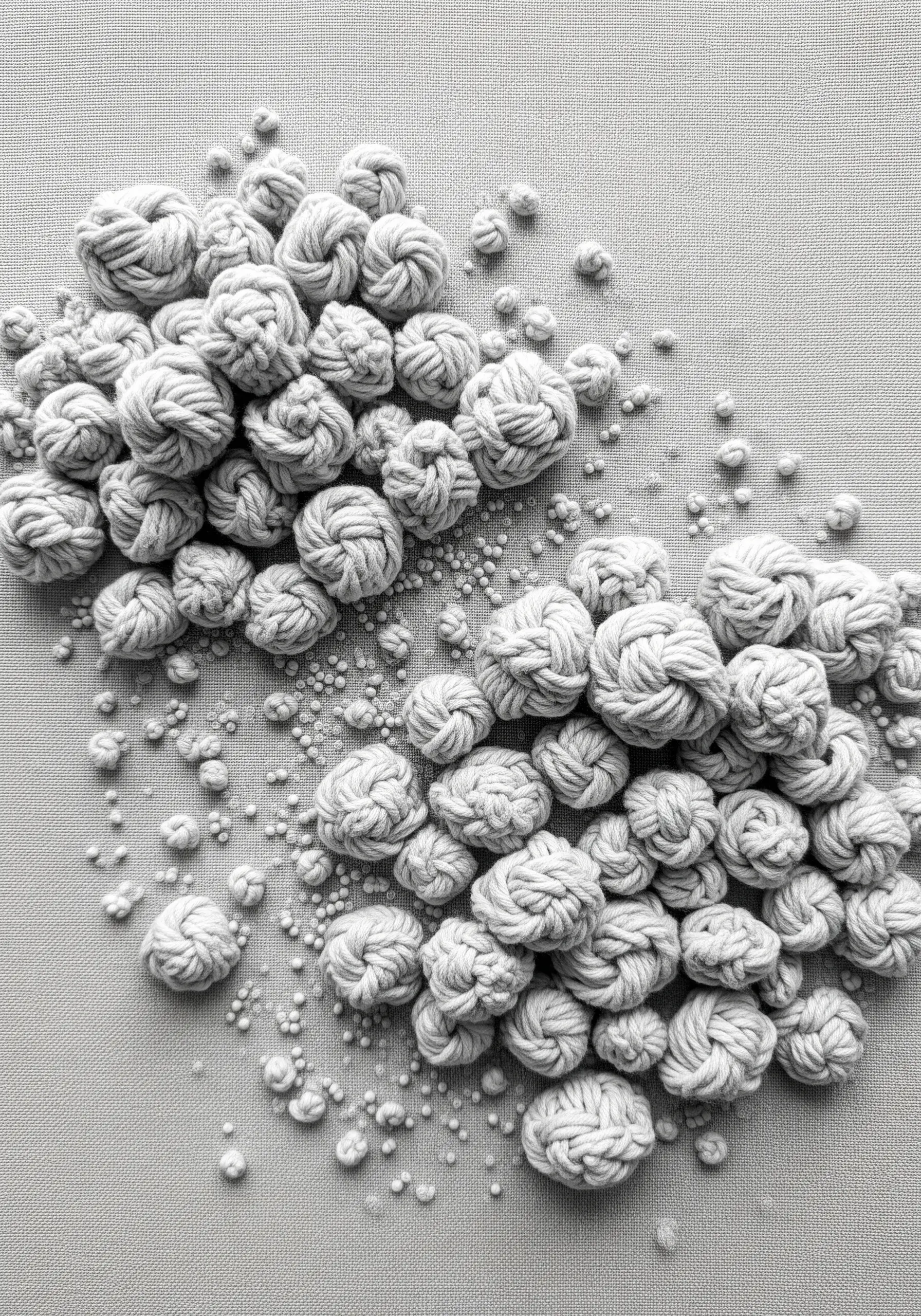
Create a highly tactile, pebbly surface by clustering different types and sizes of knots together.
Combine large bullion knots, medium French knots, and tiny colonial knots in dense groupings.
Varying their size and density creates an organic, coral-like texture that invites touch.
Sticking to a single color palette places all the focus on the textural differences, making it one of the most compelling natural texture embroidery ideas.
16. Architectural Lines and Negative Space
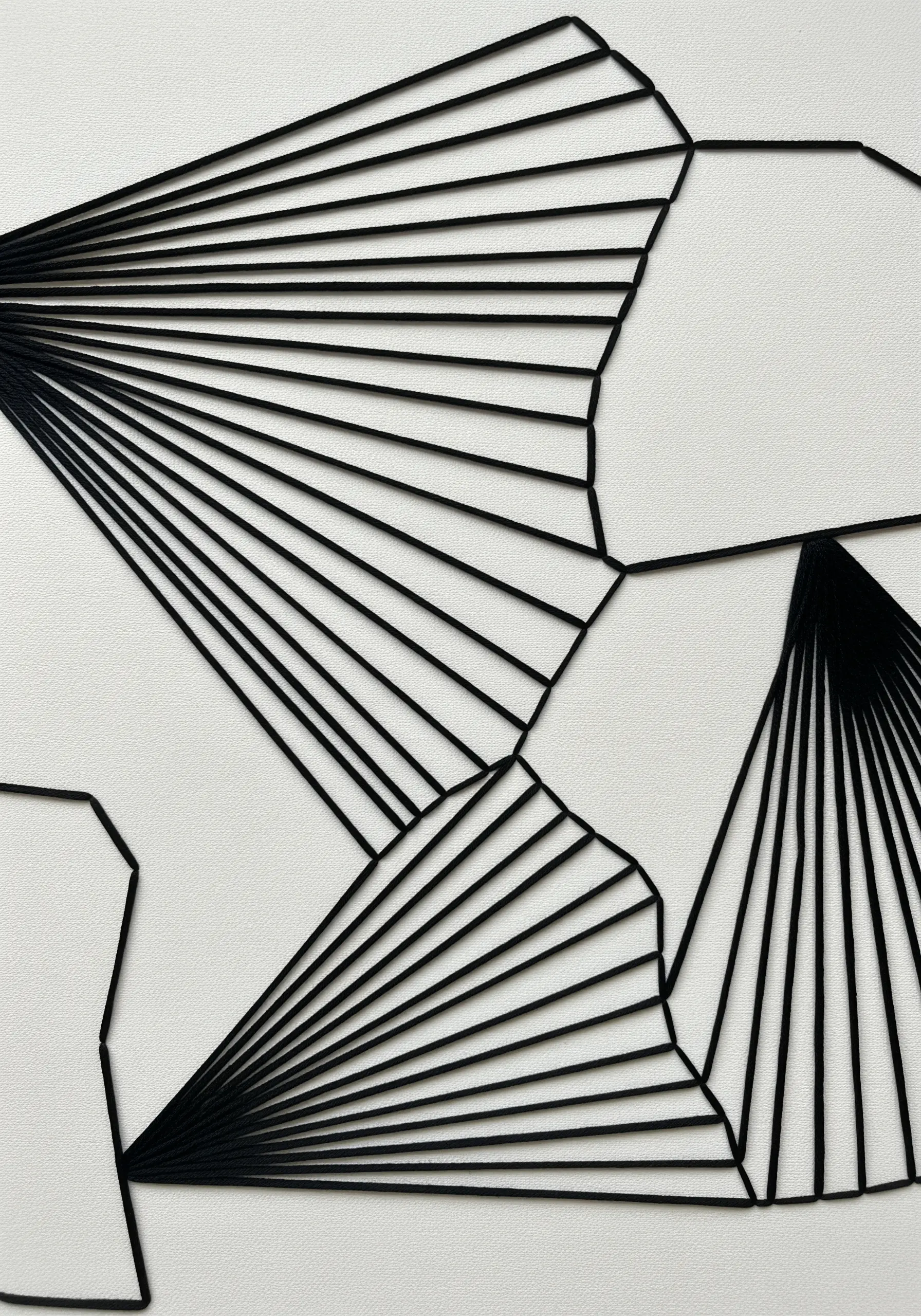
This minimalist style uses the unstitched fabric—the negative space—as a primary component of the design.
Create clean, abstract architectural forms using precise straight stitches and taut thread.
The illusion of overlapping planes and structures is achieved by how the lines intersect and frame the blank canvas.
It proves that what you *don’t* stitch can be just as important as what you do.
17. Prismatic Light with Holographic Thread
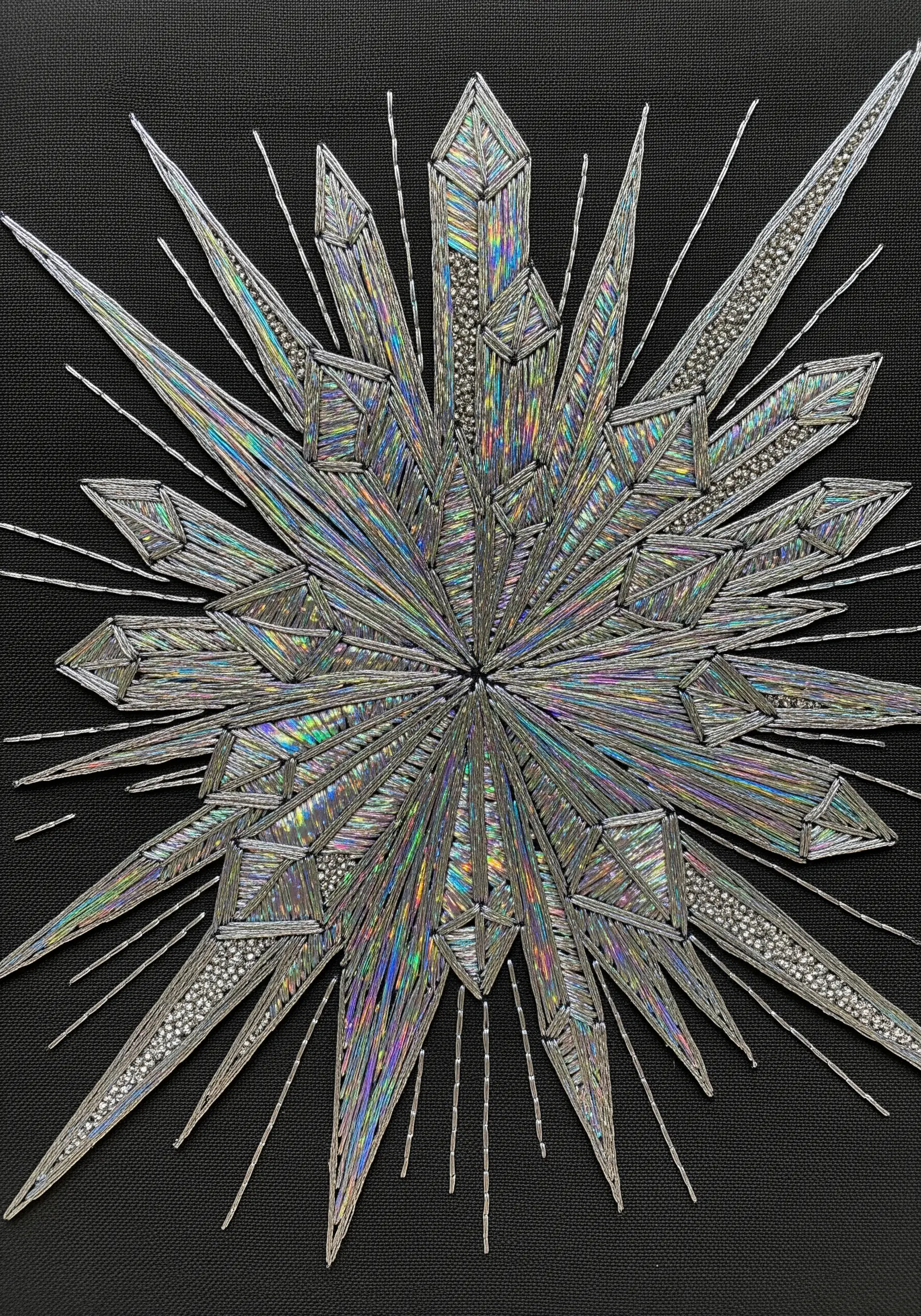
Mimic the multi-faceted shimmer of crystals by using specialty holographic or iridescent threads.
The illusion of depth and light isn’t just in the thread’s color, but in its ability to reflect light differently from every angle.
Use long satin stitches laid in opposing directions to maximize this light-catching effect, creating a dynamic surface that seems to constantly change and sparkle.
It’s one of the most unexpected ways to use metallic thread.
18. The Tone-on-Tone Textural Void
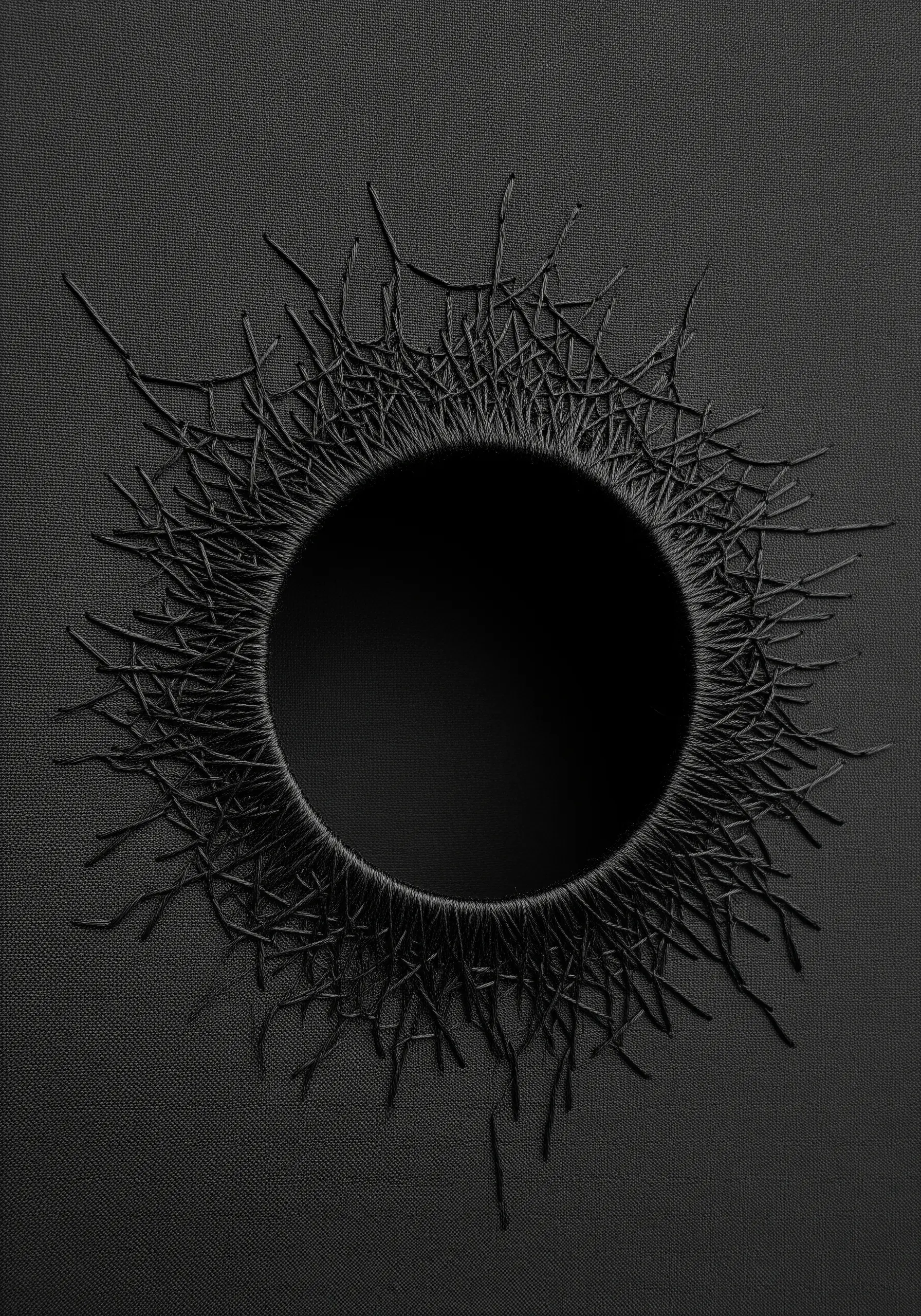
Create the unnerving illusion of a deep void using a subtle, tone-on-tone approach.
The center is pure, unstitched black fabric, representing absolute nothingness.
The corona is built from chaotic, overlapping straight stitches using a matte black thread, which absorbs light differently than the woven background.
This textural difference alone creates a sophisticated, minimalist look with a powerful effect.
19. Organic Ripples with Whipped Stitch
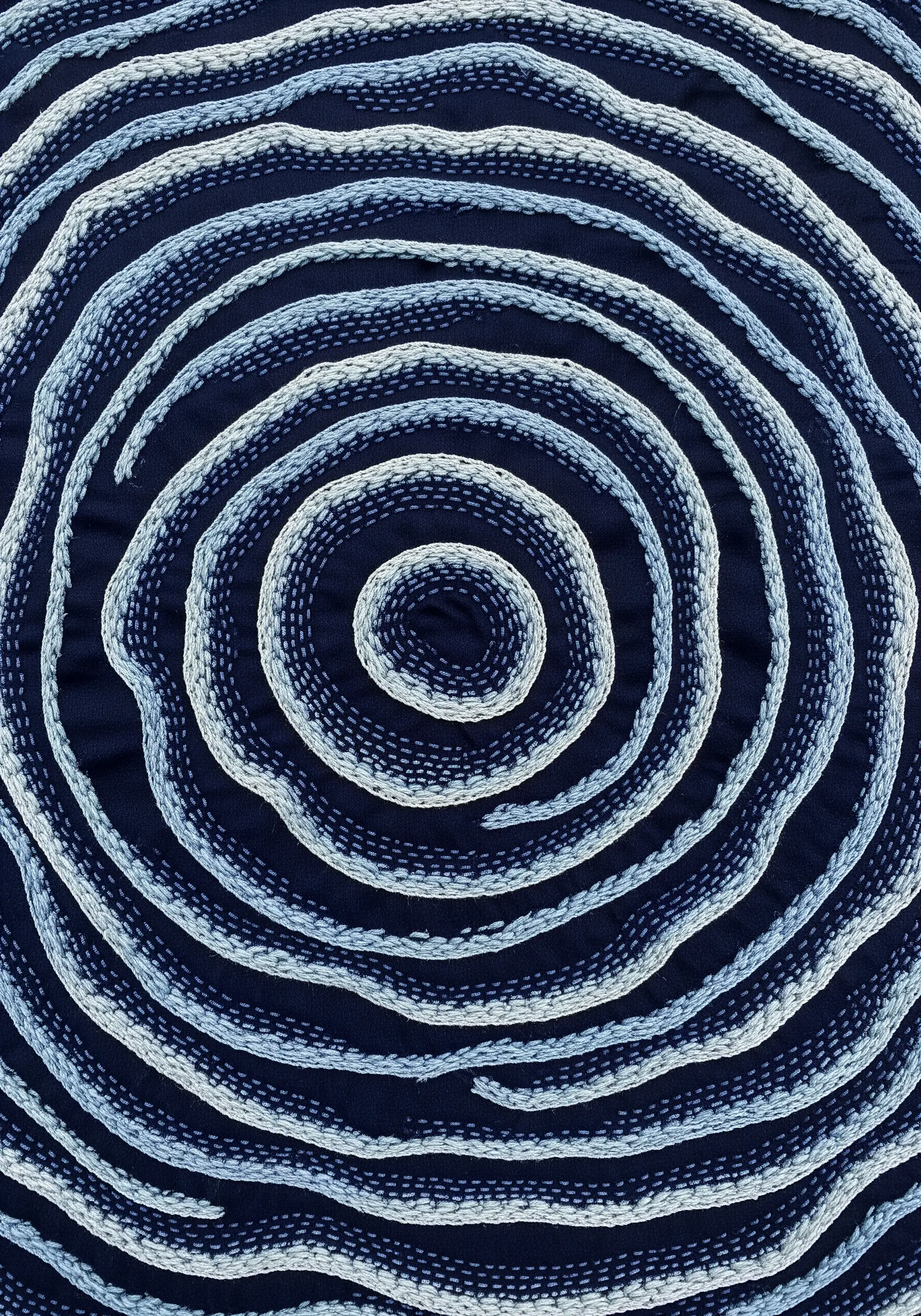
Achieve the organic effect of water ripples or tree rings with a simple whipped running stitch.
First, lay down a foundation of concentric circles using a basic running stitch.
Then, take a contrasting or lighter colored thread and whip it around those stitches without piercing the fabric.
The raised texture and slightly irregular lines give the design a charming, organic, hand-drawn feel.
20. Realistic Fur with the Turkey Stitch

Create a luxuriously soft and fluffy texture that truly stands off the fabric using the turkey stitch, also known as the Ghiordes knot.
This stitch creates loops on the surface, which you then cut and trim to your desired length.
For a realistic effect, use a fine-toothed comb to gently brush out the fibers, blending them together into a soft pelt, one of the most satisfying natural texture embroidery patterns to create.
21. Cracked Earth with Knots and Couching

Replicate the complex texture of dry, cracked earth by combining two different techniques.
Fill irregular sections with dense French knots in a variety of earth tones to create a bumpy, soil-like surface.
Then, use a thicker, darker yarn for the “cracks,” securing it with a couching stitch to create raised, defined borders.
The contrast between the knot-filled patches and the smooth, raised lines makes for convincing earth-inspired embroidery designs.
22. Op-Art Illusions with Layered Thread
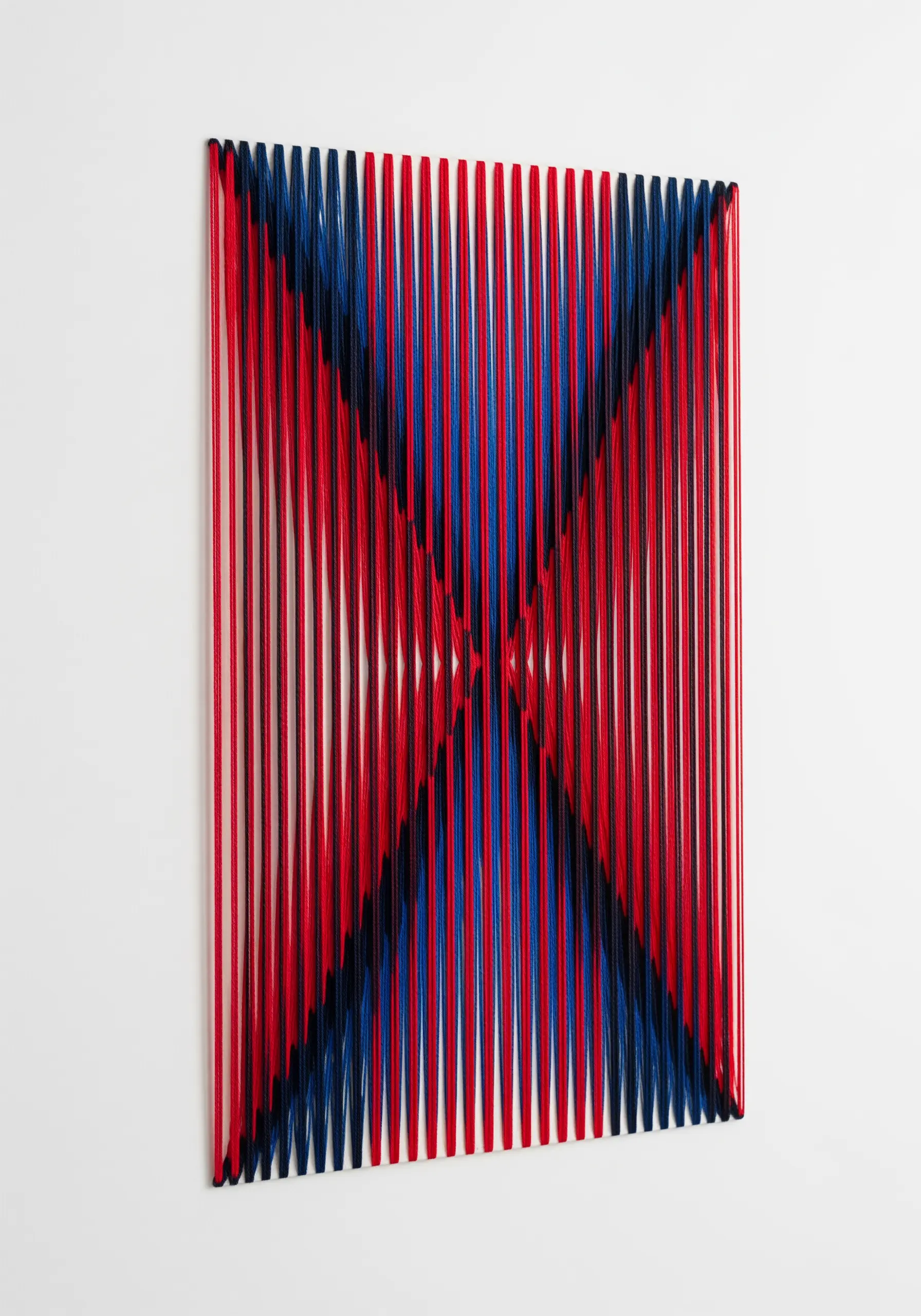
This is a pure optical illusion created with layered, tensioned string or thread on a framed canvas.
By wrapping thread over and under different anchor points in a specific sequence, you can make flat layers appear to curve, intersect, and even move.
Where different colors overlap, the viewer’s eye blends them, creating a third color and a sense of kinetic energy.
This is one of the best fiber art installations that use optical illusions.
23. The Woven Illusion of Celtic Knots

Create the convincing look of interwoven strands using nothing more than carefully planned satin stitches.
The trick is to change the direction of your stitches for each distinct “strand” of the knot, which makes light reflect differently off each surface.
Where one strand passes “under” another, ensure your stitches end precisely at the border, creating a clean, crisp edge that sells the over-under illusion.
It’s a perfect example of mixed-fiber creations that blend tradition and modern style.
24. Atmospheric Depth in Thread Landscapes
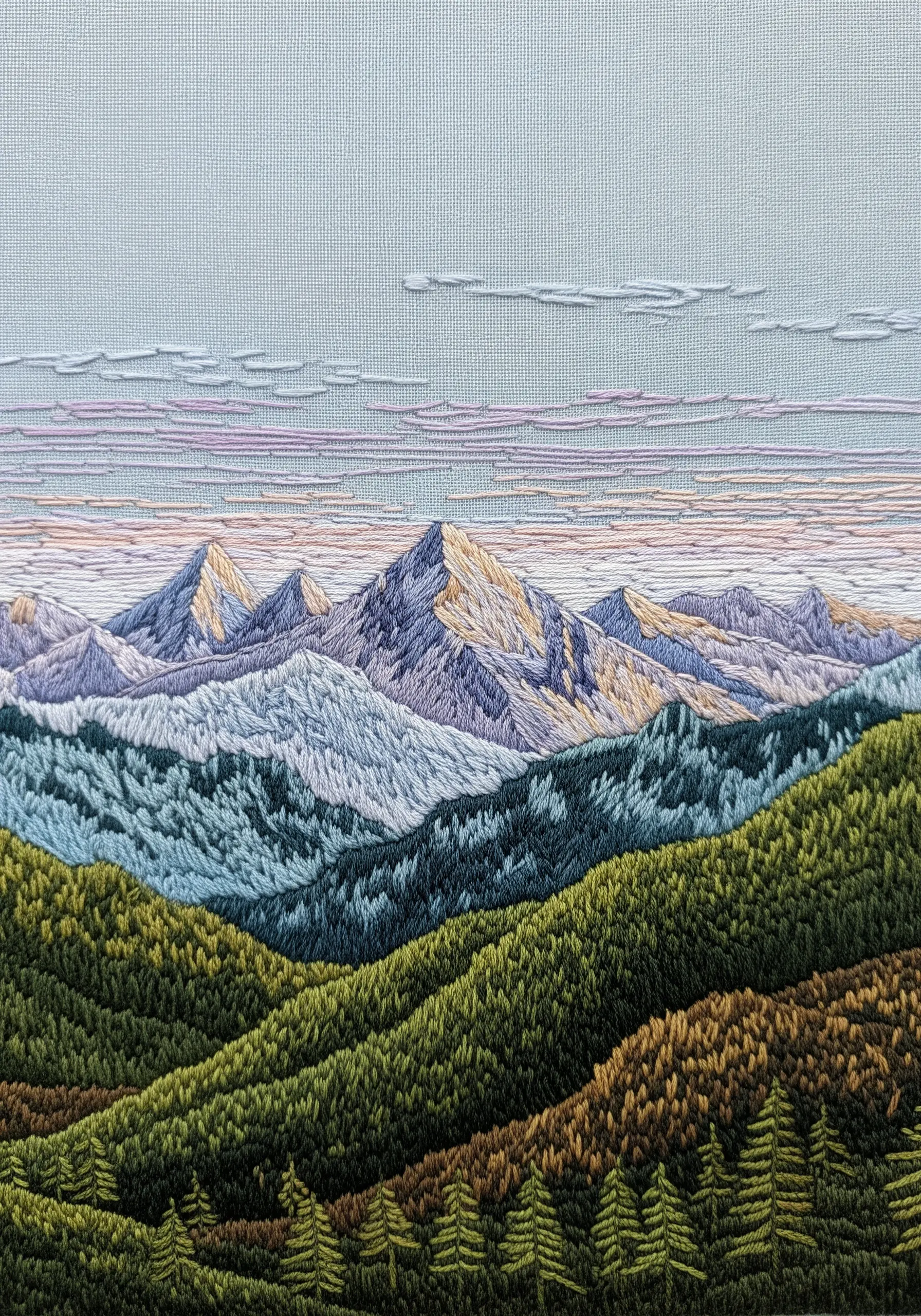
Create the illusion of a vast, receding landscape by using the principles of atmospheric perspective.
Stitch the foreground elements, like the closest hills, with darker, more saturated colors and greater textural detail.
As the mountains recede into the distance, use progressively lighter, cooler, and less detailed stitches.
This technique mimics how our eyes perceive distance in nature, allowing you to turn photos into threaded landscapes.
25. Blueprint Precision with Straight Stitch
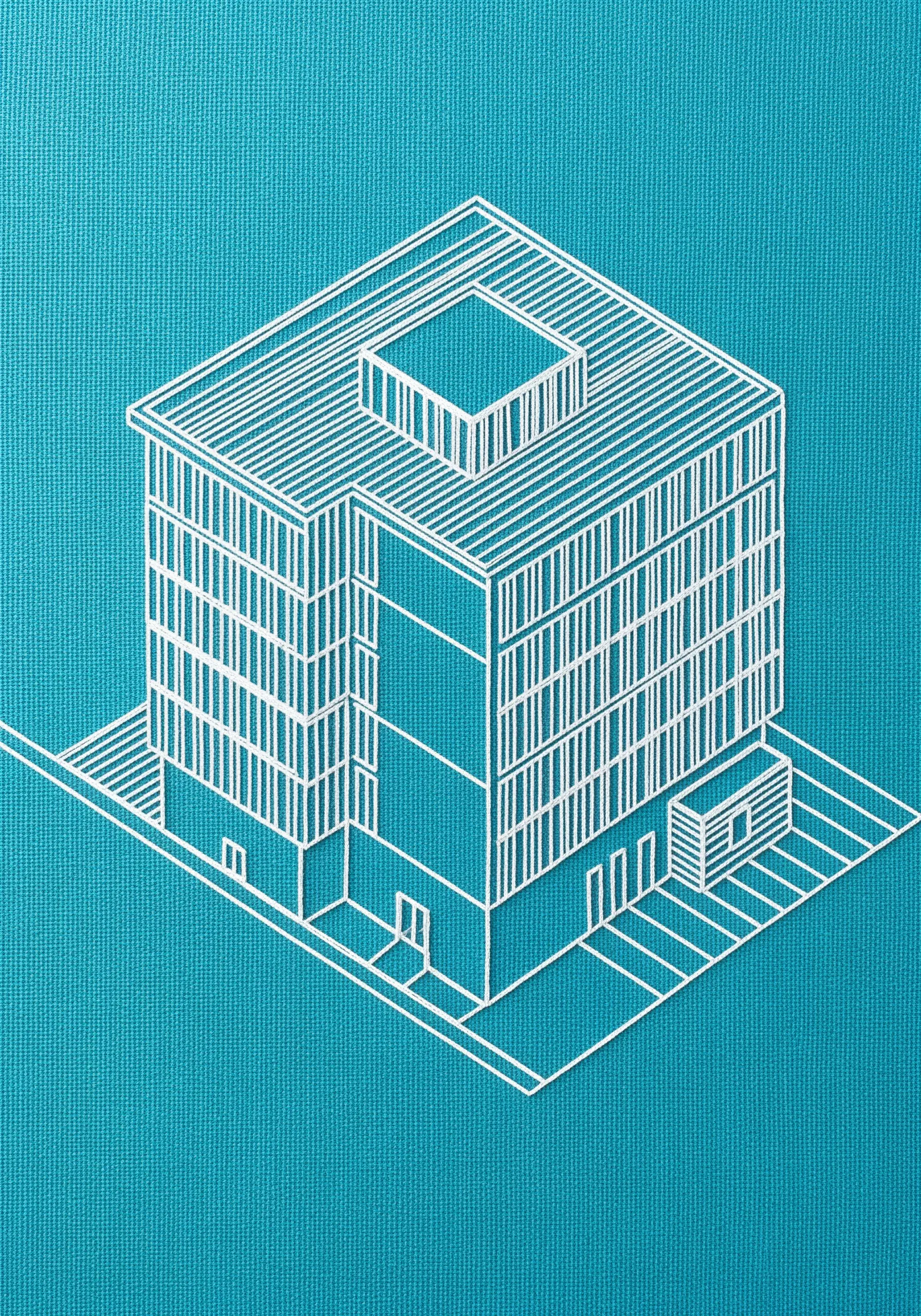
Turn your hoop into a piece of architectural art by using isometric perspective to create a 3D building on a 2D surface.
This entire effect is achieved with the simple straight stitch.
Use a single, fine thread for a crisp, technical drawing feel, ensuring every line is perfectly taut and straight.
A high-contrast color scheme, like white on blue, enhances the graphic, blueprint-like quality, perfect for inspiring zen workspaces.
26. Translucent Effects with Thread and Beads
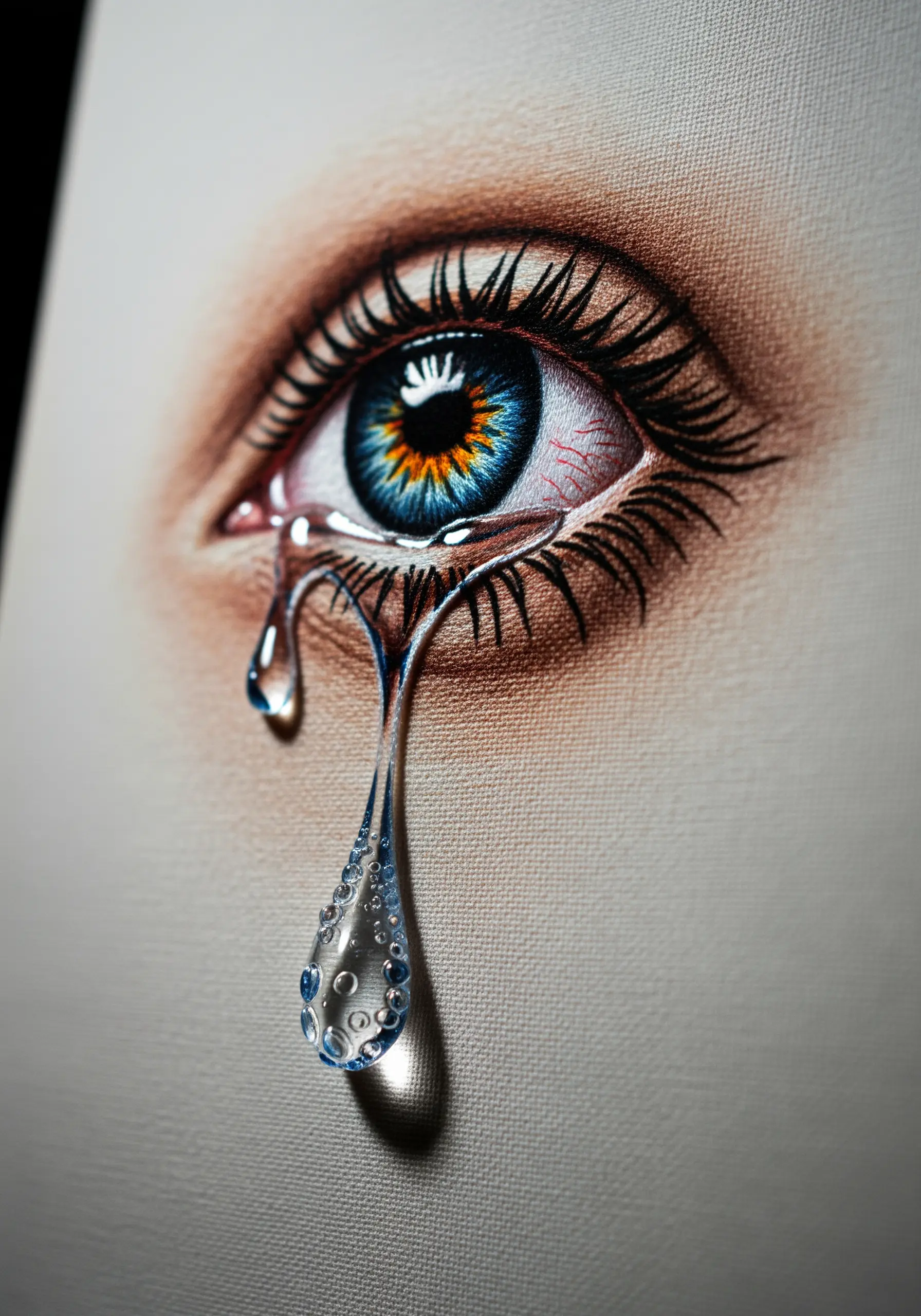
To create the difficult illusion of a wet, translucent teardrop, combine delicate thread painting with thoughtful embellishments.
The eye itself is rendered with single-thread blending for realism.
For the tear, use a sheer, light blue thread for the base color, then carefully add clear seed beads and a touch of white thread for highlights.
The beads catch the light, mimicking the sparkle of water in these mixed-media embroidery techniques.
27. Sculptural Waves with Padded Stitches

Give your satin stitches dramatic height and a sculptural quality by padding them first.
Create a foundation of running stitches or cut-felt shapes within your design outline.
Then, work your satin stitches completely over this padding.
The underlying layer pushes the final stitches up from the fabric, creating a beautiful bas-relief effect with deep shadows, a perfect way to make designs that stand off the canvas.
28. Deconstructed Cross-Stitch on Paper
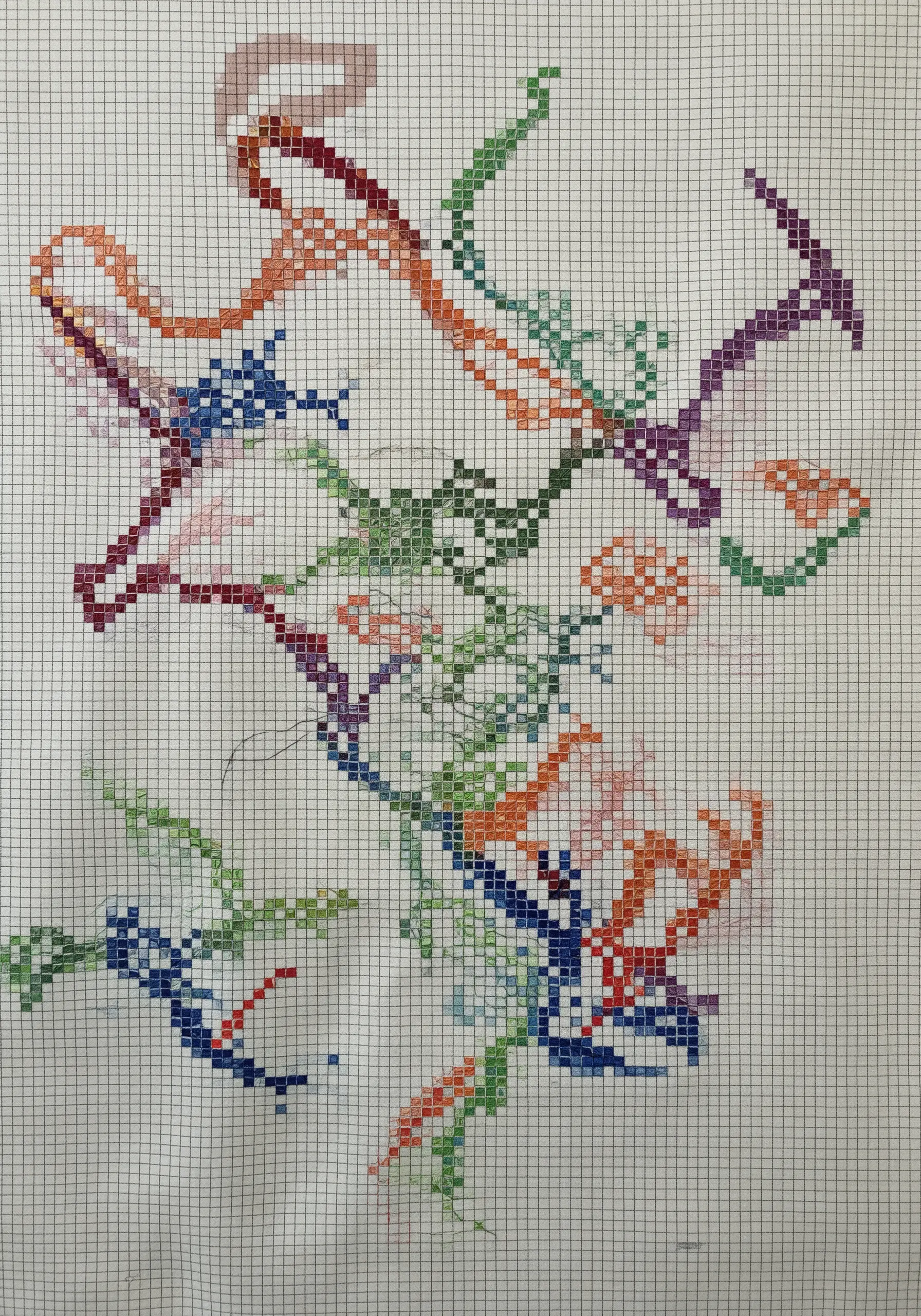
Take your stitching from fabric to paper to create a unique, highly graphic texture and look.
Using graph paper as your canvas provides a perfect, built-in grid for your stitches.
A deconstructed, abstract pattern breaks the traditional rules of cross-stitch, creating a sense of chaotic movement and modern energy.
The texture comes from the thread sitting proud of the flat paper surface, making your embroidery truly Instagram-worthy.
29. Geometric Planes with Directional Stitching
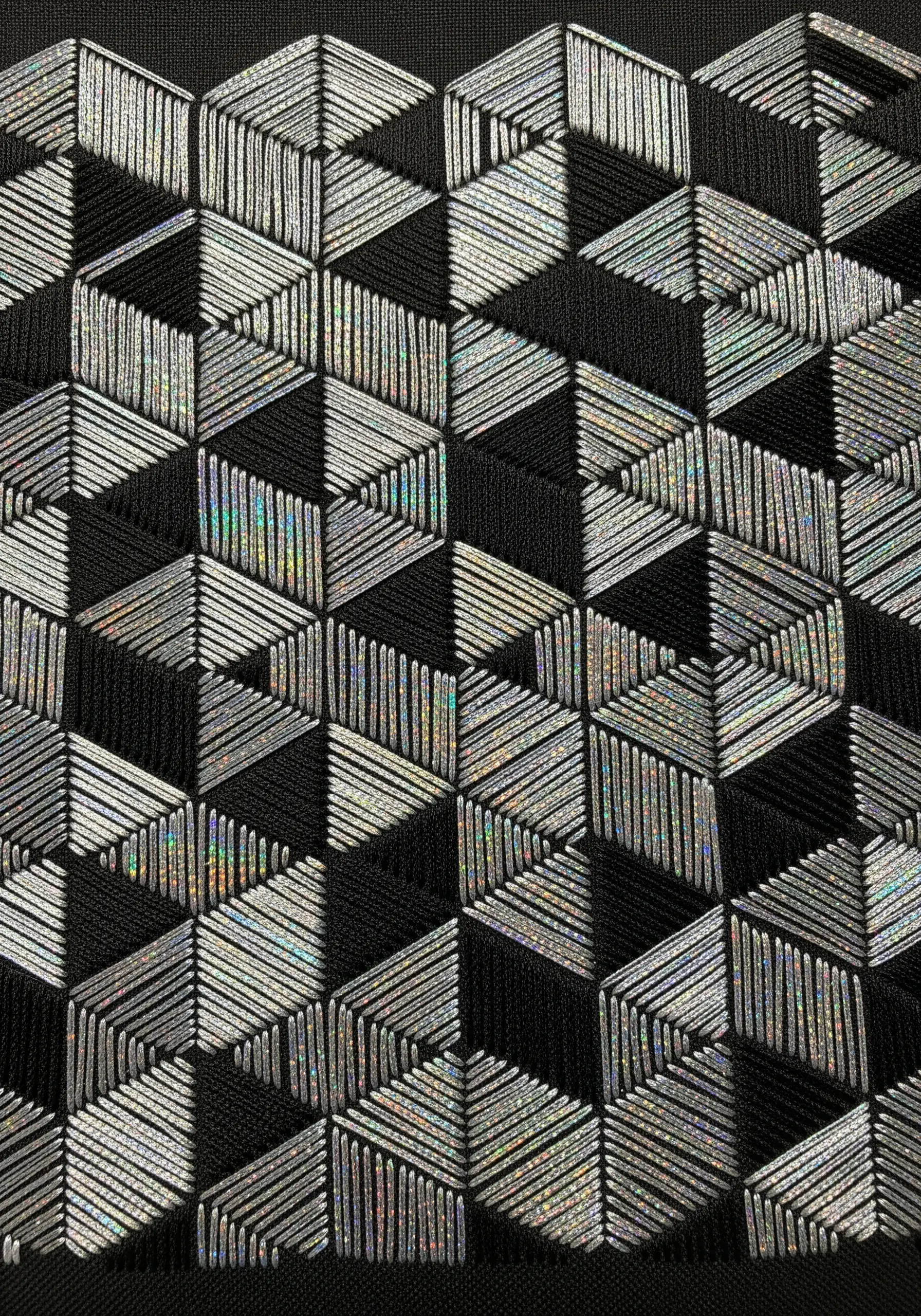
The classic tumbling blocks pattern is a masterclass in creating 3D illusion on a 2D surface.
The effect is created by stitching each of the three visible faces of the cube in a different direction (e.g., vertical, diagonal left, diagonal right).
This simple change causes light to hit each plane differently, defining its shape and creating a powerful geometric texture.
Using holographic thread enhances the effect by adding a modern, shimmering dimension to these geometric stitch patterns.
30. Layered Appliqué for Soft Dimension
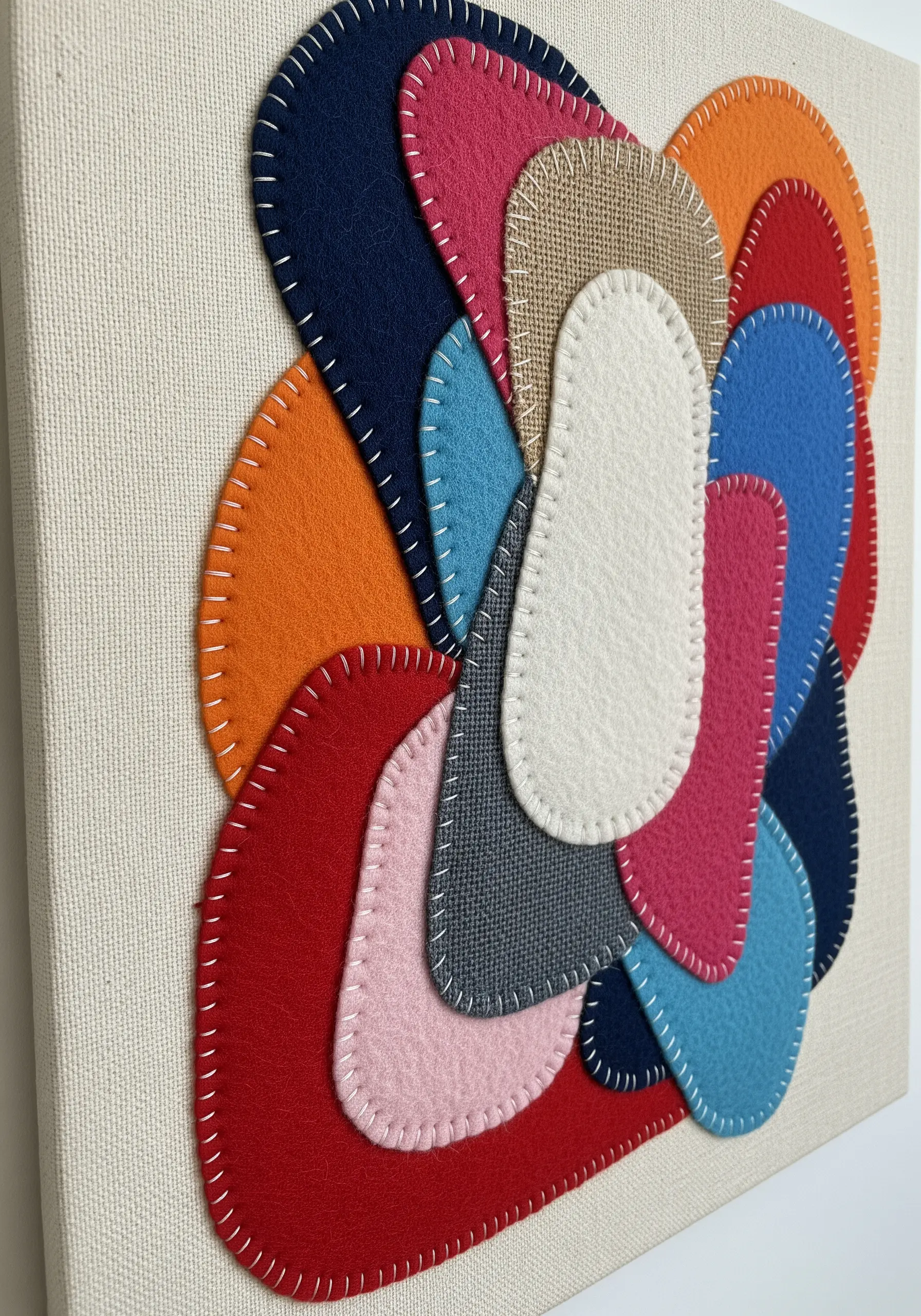
Create depth and a playful, graphic dimension by layering shapes of felt or other non-fraying fabrics.
This is a form of appliqué where you cut organic shapes and arrange them in overlapping layers to build up the design.
Secure them with a simple, visible whipstitch or blanket stitch around the edges.
The physical thickness of the felt layers creates soft shadows and a wonderful, tactile quality, resulting in shockingly beautiful scrap fabric collage art.