

You have the skill, the threads, and the desire to create something beautiful, but perhaps your finished pieces don’t always capture the elegant, intentional look you envision. The secret isn’t necessarily more stitches or more complex patterns—it’s about harnessing the power of what you leave out.
Think of the fabric not just as a background, but as an active element in your design. Negative space—the unstitched canvas—is your most powerful tool for creating balance, sophistication, and visual impact. It allows your chosen motifs to breathe, giving each line and texture the importance it deserves.
In these 20 techniques, you’ll discover how to use negative space to your advantage. You’ll learn to create minimalist art that feels both luxurious and deeply personal, turning simple stitches into compelling statements. It’s time to stitch with more confidence and intention, and let the quiet power of empty space elevate your work from craft to art.
1. Architectural Line Art on Raw Canvas
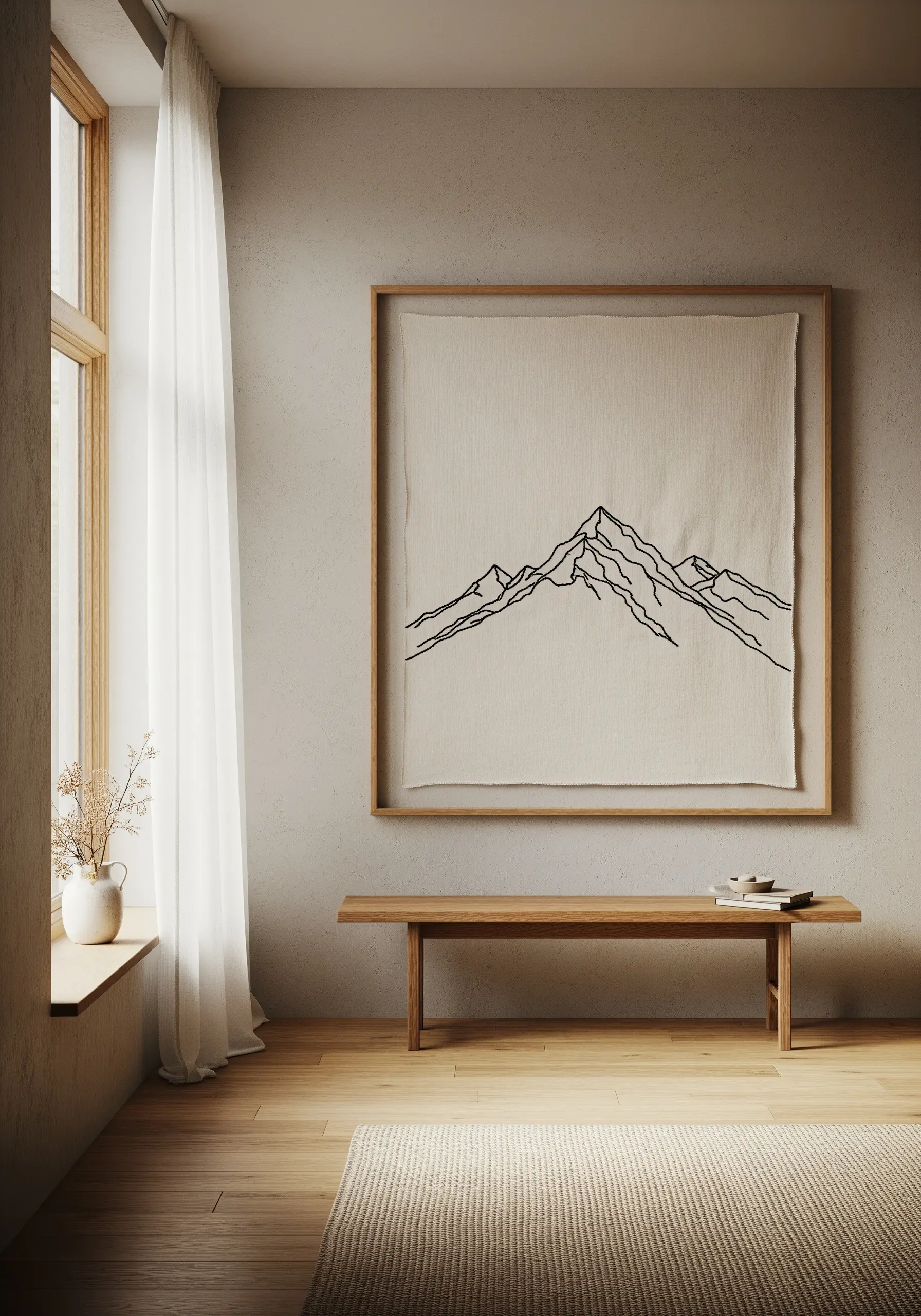
Embrace the texture of your fabric by making it the star of your artwork.
Choose a loosely woven, neutral material like raw linen or cotton canvas, which provides its own visual interest.
Use a simple, clean backstitch with three strands of black floss to create a crisp, graphic outline of a mountain landscape or architectural form.
The magic is in the contrast between the precise, controlled line of your stitching and the organic, imperfect texture of the background.
Finish by mounting the fabric in a floating frame to enhance the sense of scale and transform your embroidery into a true statement piece.
2. The Gilded Curve Triptych
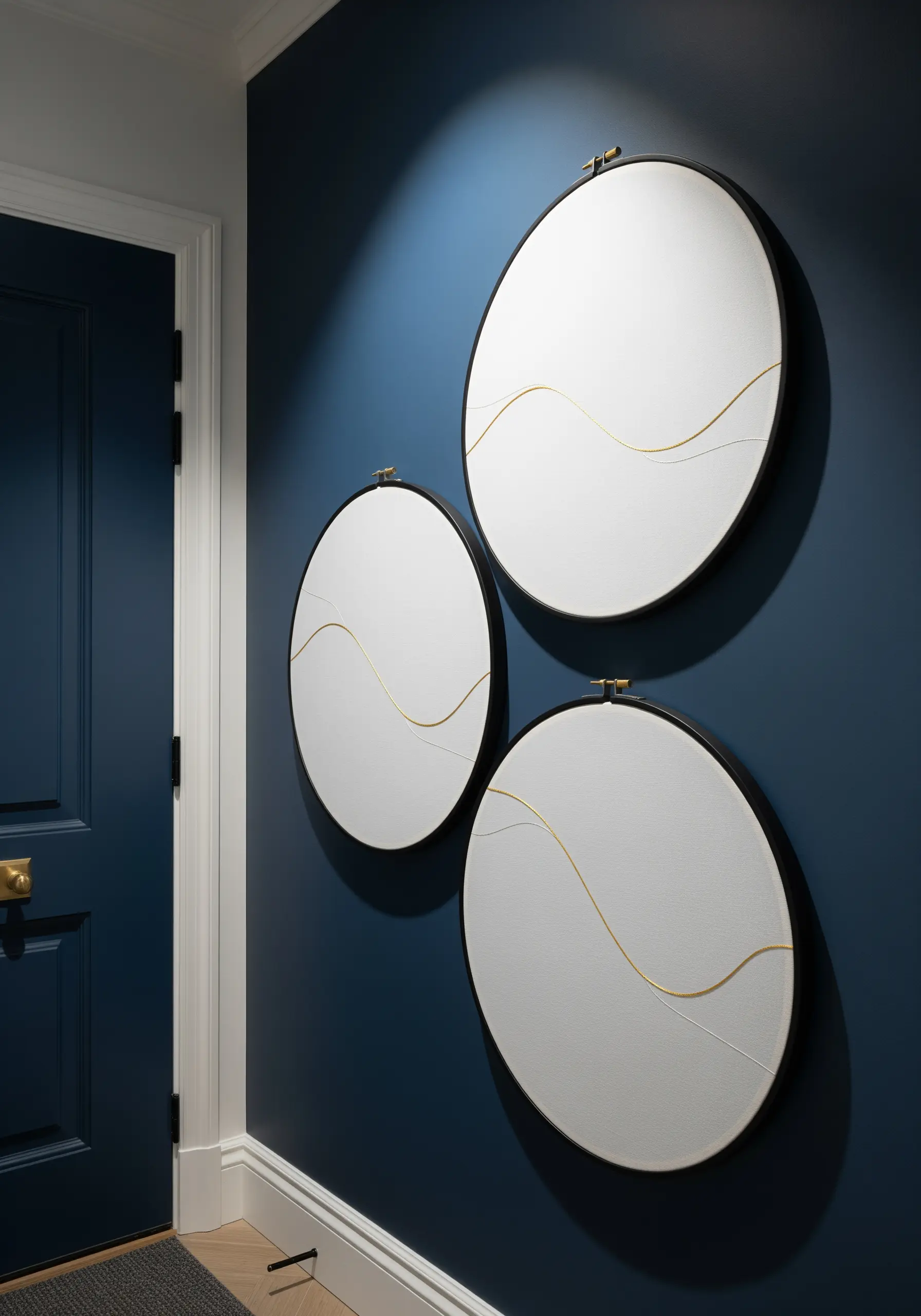
Create a sophisticated gallery wall effect by arranging multiple hoops into a single, cohesive statement.
Stretch crisp white linen tightly in three black or dark-wood hoops of varying sizes for dynamic composition.
Instead of a complex motif, stitch a single, elegant curve across each hoop using a fine metallic thread.
Use a whipped backstitch or a stem stitch to ensure the metallic line is perfectly smooth and catches the light beautifully.
This technique turns empty space into an active element, with the golden line drawing the eye across the clean, white canvas.
3. Balanced Geometry with Color Blocking
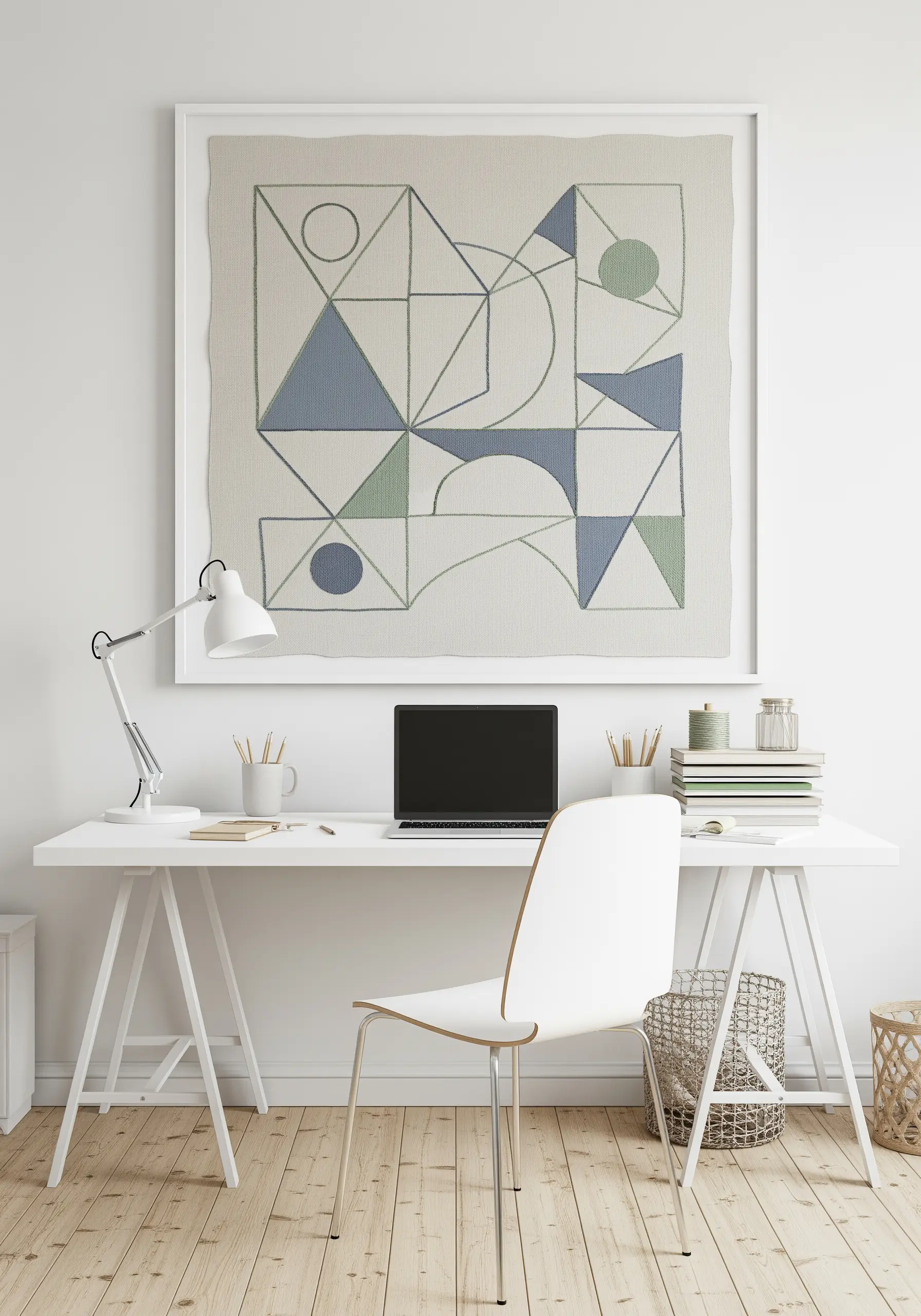
Use filled shapes to define the empty space around them, creating a balanced and intentional abstract design.
Sketch a grid of overlapping geometric forms—triangles, circles, and rectangles—and selectively fill some with solid satin stitch.
Choose a muted, complementary color palette, like sage green and dusty blue, to maintain a serene and modern aesthetic.
Work with only two strands of floss for your satin stitch; this creates a flatter, smoother fill that looks more like a print than bulky embroidery.
The unstitched shapes become just as important as the stitched ones, resulting in a composition that feels complete and visually harmonious.
4. Cascading Botanicals on Linen
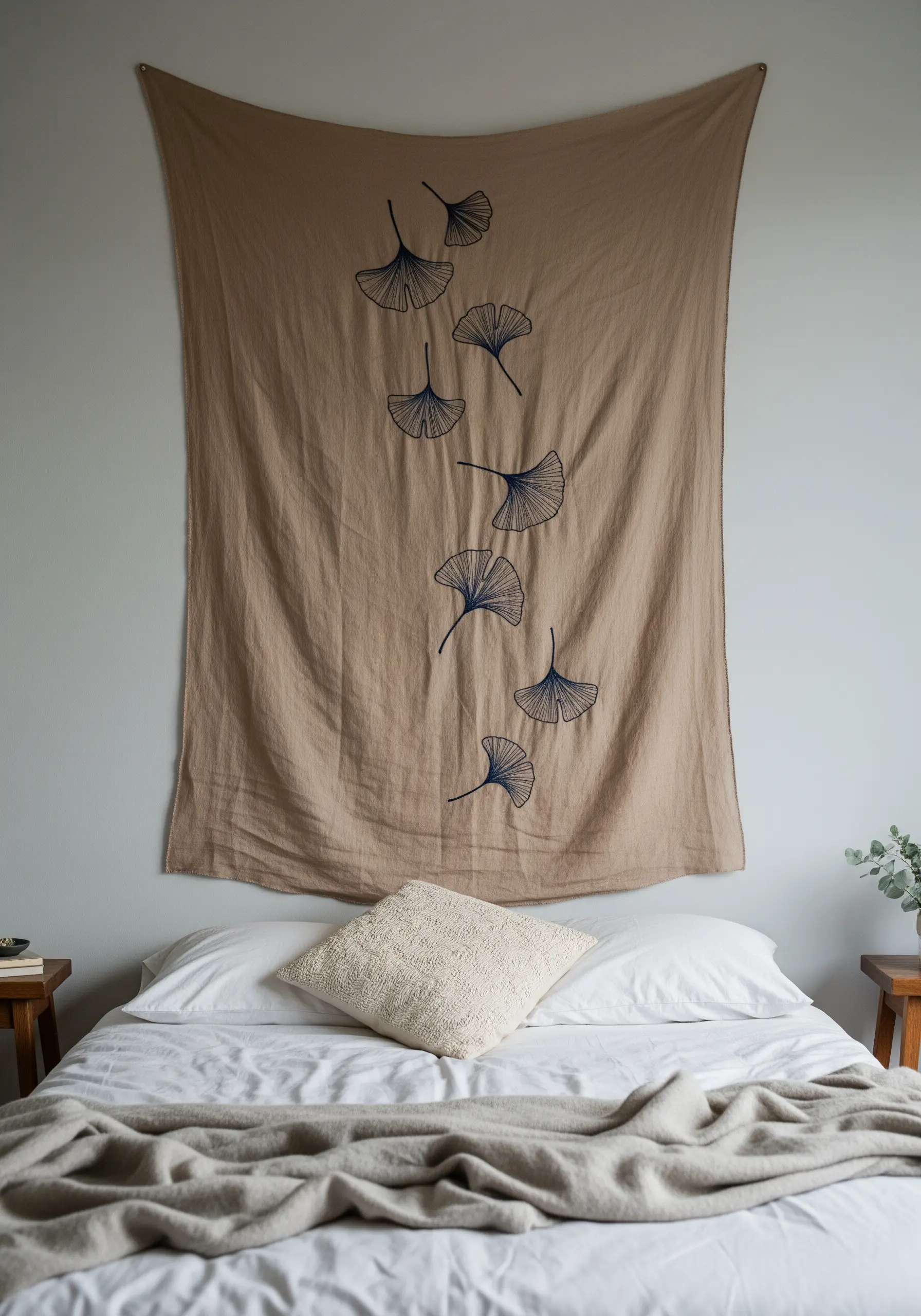
Create a sense of gentle movement by arranging your motifs in a vertical, falling pattern.
Choose a simple, recognizable botanical like ginkgo leaves and stitch them as if they are floating down the fabric.
Use a dark, contrasting thread on a warm, earth-toned linen to make the outlines pop.
For perfectly smooth curves and sharp points on the leaves, use a whipped backstitch—it covers the small gaps of a standard backstitch, creating a single, fluid line.
This composition draws the eye downward, making it a perfect design for a large, unframed wall hanging above a bed or sofa.
5. Sculptural Celestial Forms with Couching
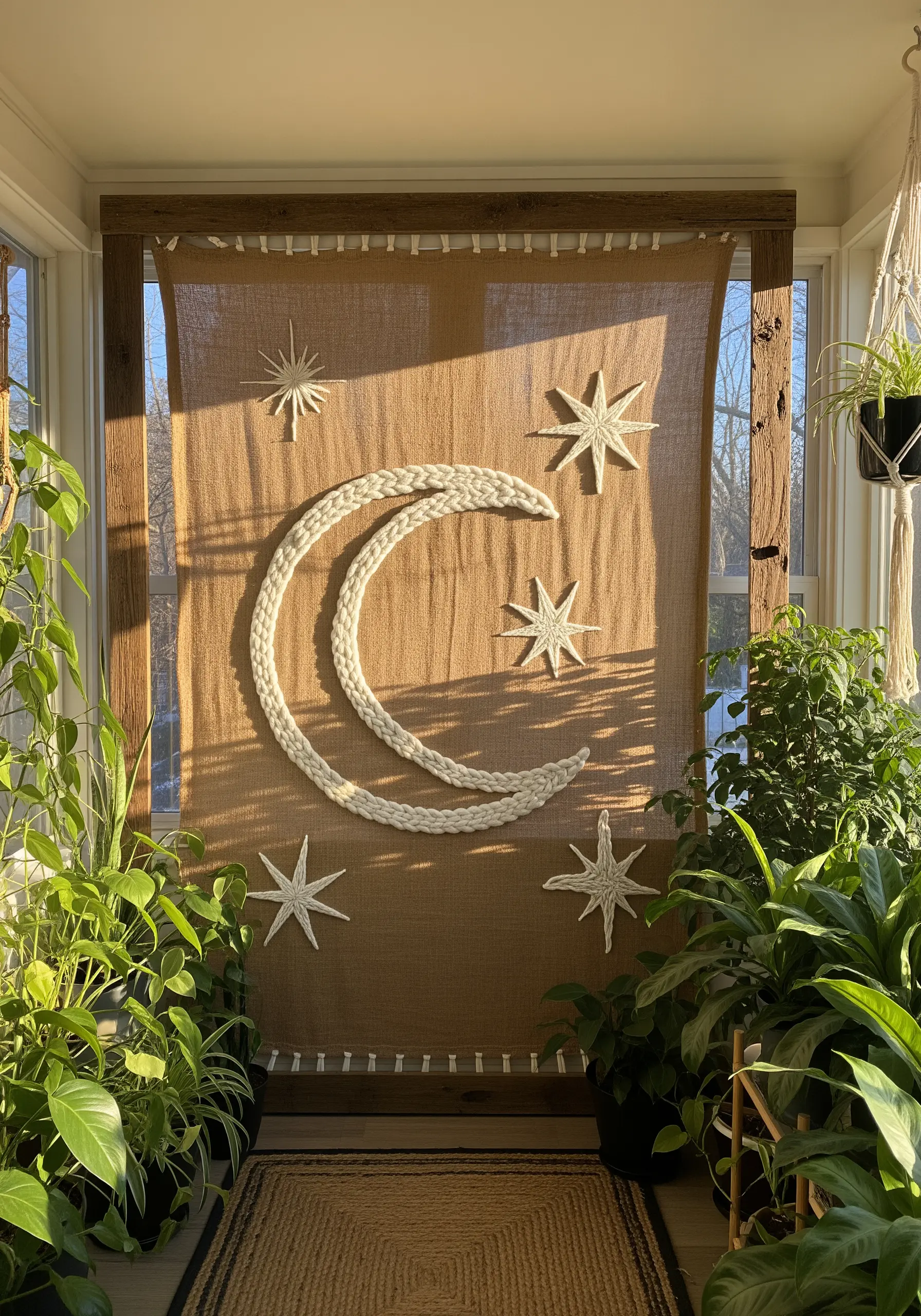
For lines that are too bold for thread, use couching to attach thick yarn or cord to your fabric.
Lay down your main fiber—like a thick, braided cotton cord—to form a crescent moon and stars.
Then, using a standard sewing needle and matching thread, make small, anchoring stitches over the cord to secure it to the burlap or canvas background.
Yarn wall art techniques like this allow you to create dramatic, high-texture designs that stand off the fabric, adding a sculptural quality to your work.
The rustic burlap provides a tactile contrast to the soft, raised celestial shapes.
6. Monochromatic Architectural Skylines
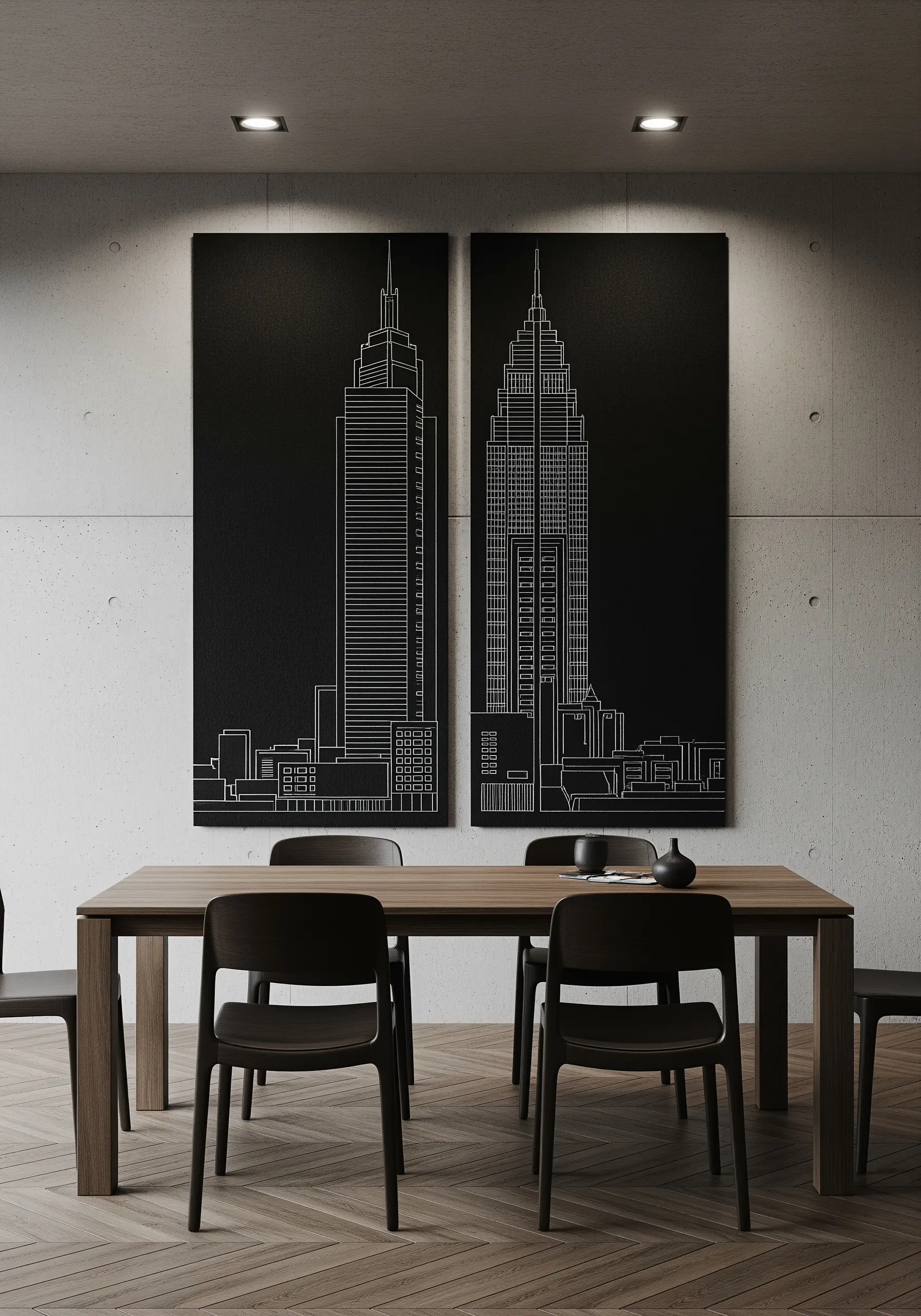
Achieve a sharp, high-contrast look by stitching with bright white thread on jet-black fabric.
This technique is perfect for architectural subjects, where clean lines and precision are essential.
Use a single strand of white floss and a meticulous backstitch to render the fine details of a cityscape.
Consider splitting a larger image across two vertical panels (a diptych) to create a more expansive and dramatic piece of wall art.
The stark negative space of the black fabric makes every stitch feel intentional and impactful.
7. Interwoven Lines for Ethereal Volume
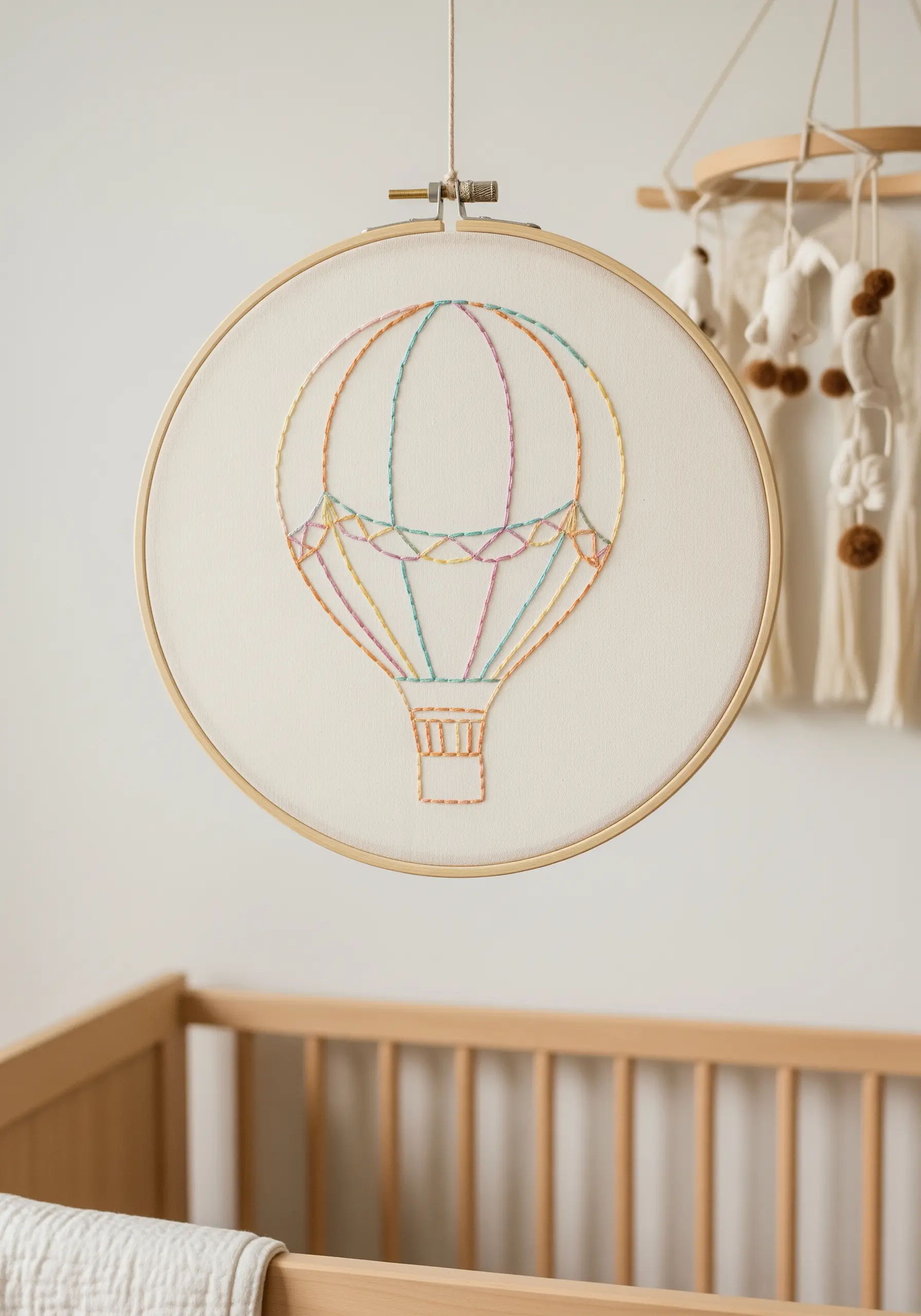
Suggest a three-dimensional form without filling it in by using intersecting lines.
Outline a shape, like a hot air balloon, and then add internal contour lines that overlap and crisscross.
Use a variegated or soft pastel gradient stitch patterns to give the design a light, airy feel, as if the object is transparent.
A simple backstitch is all you need; the placement of the lines does all the work of creating volume and form.
The empty space between the lines becomes part of the structure, giving it a delicate, skeletal quality.
8. The Continuous Line Portrait
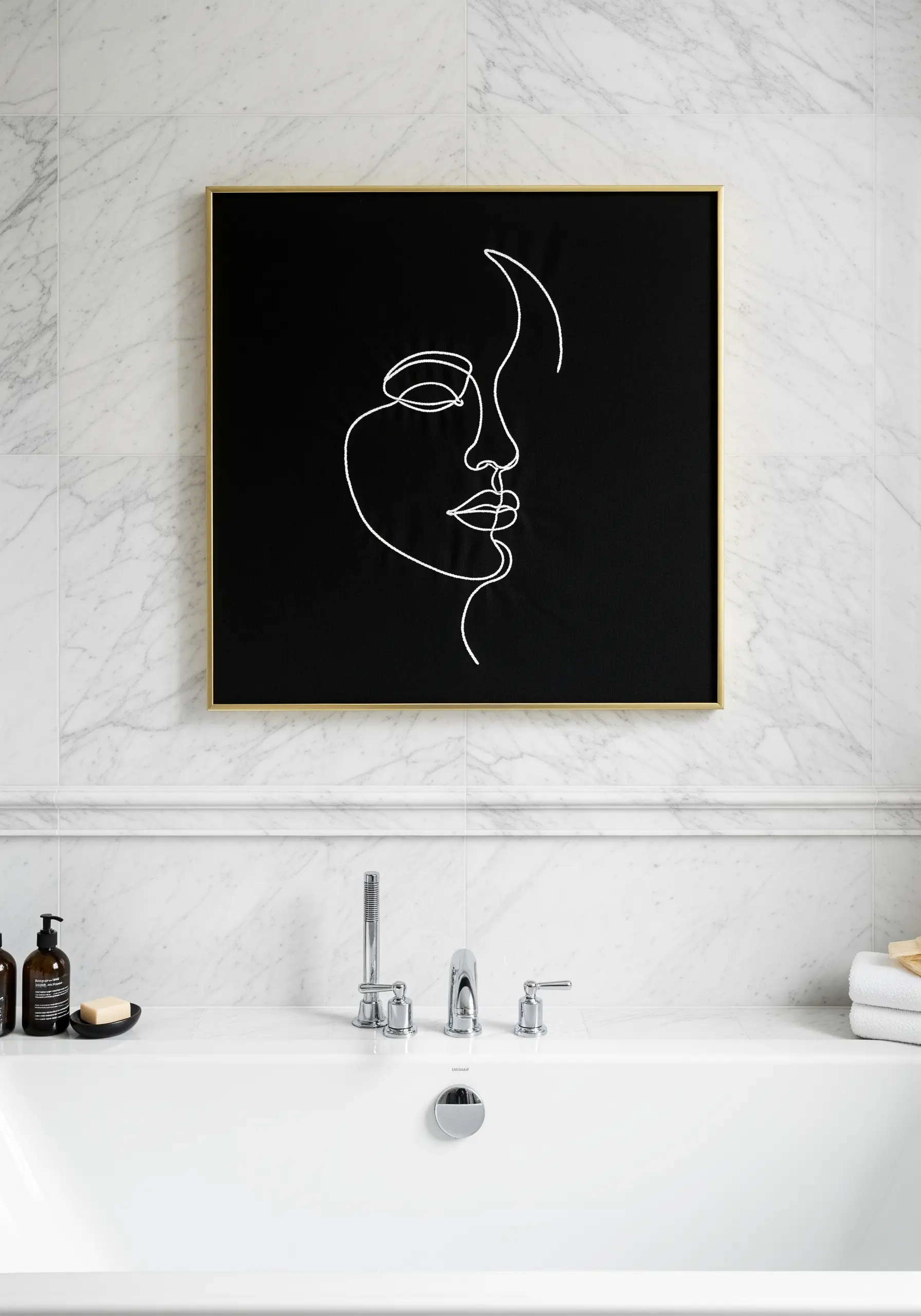
Capture the essence of a subject with the ultimate minimalist technique: a single, unbroken line.
Choose a fluid stitch like a stem stitch or whipped backstitch, which creates a smooth, ink-like quality perfect for portraits or figures.
Before you stitch, practice drawing your design on paper with a pen, lifting it as infrequently as possible to master the flow.
This technique is one of the most effective one-line embroidery wall arts you can create, forcing you to focus on the most essential contours.
The high-contrast of white on black fabric makes the solitary line incredibly powerful and expressive.
9. Perspective in Thread: The Open Book
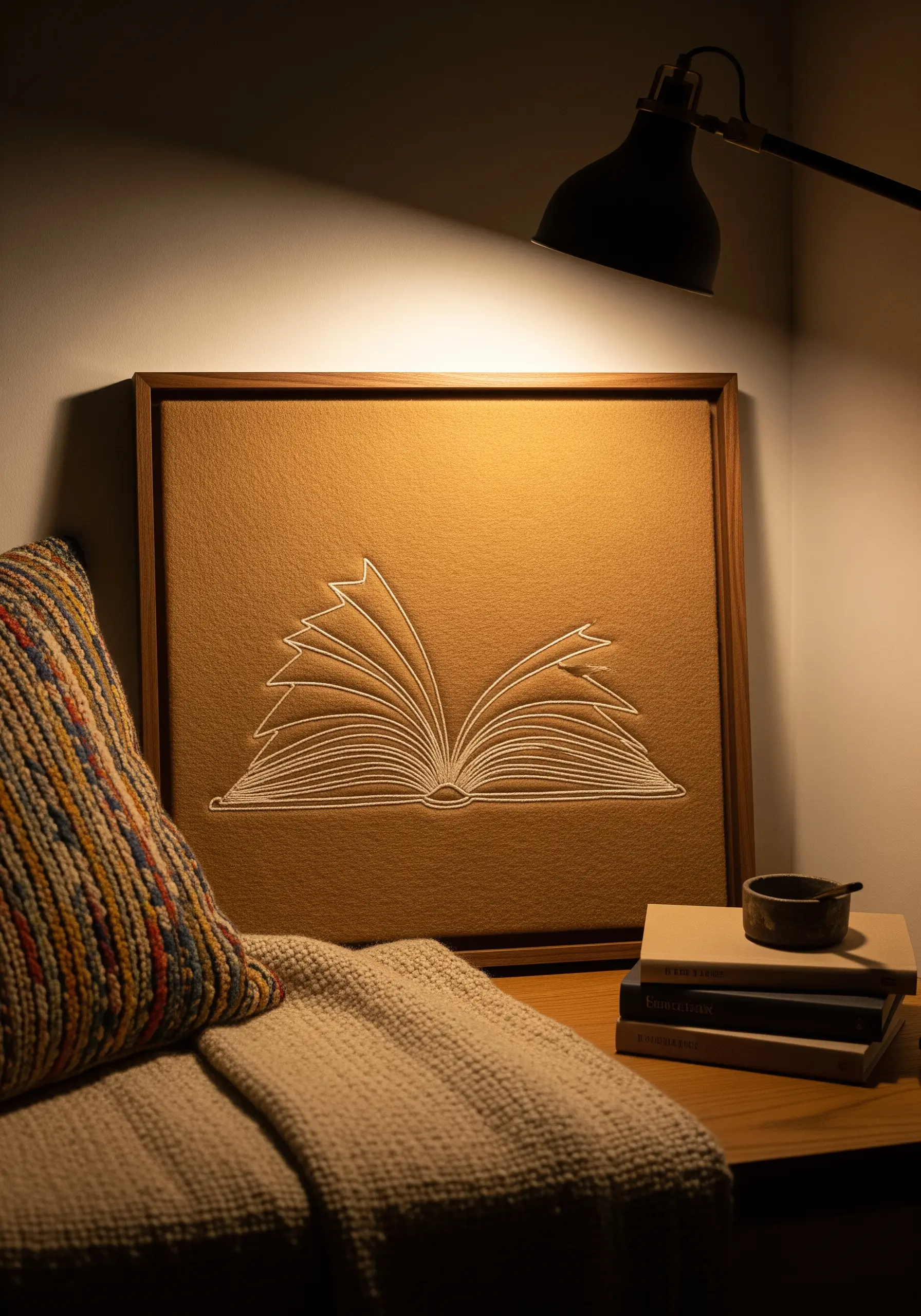
Create a subtle illusion of depth by strategically varying your thread weight.
For a design like an open book, use a heavier thread (4-6 strands) for the lines in the foreground, like the cover and spine.
As the pages recede, switch to a finer thread (2 strands) to make them appear further away.
This simple adjustment tricks the eye into seeing perspective, adding a sophisticated, three-dimensional quality to a simple line drawing.
The negative space around the object makes the subtle shift in line weight even more noticeable and effective.
10. Graphic Pop Art Outlines
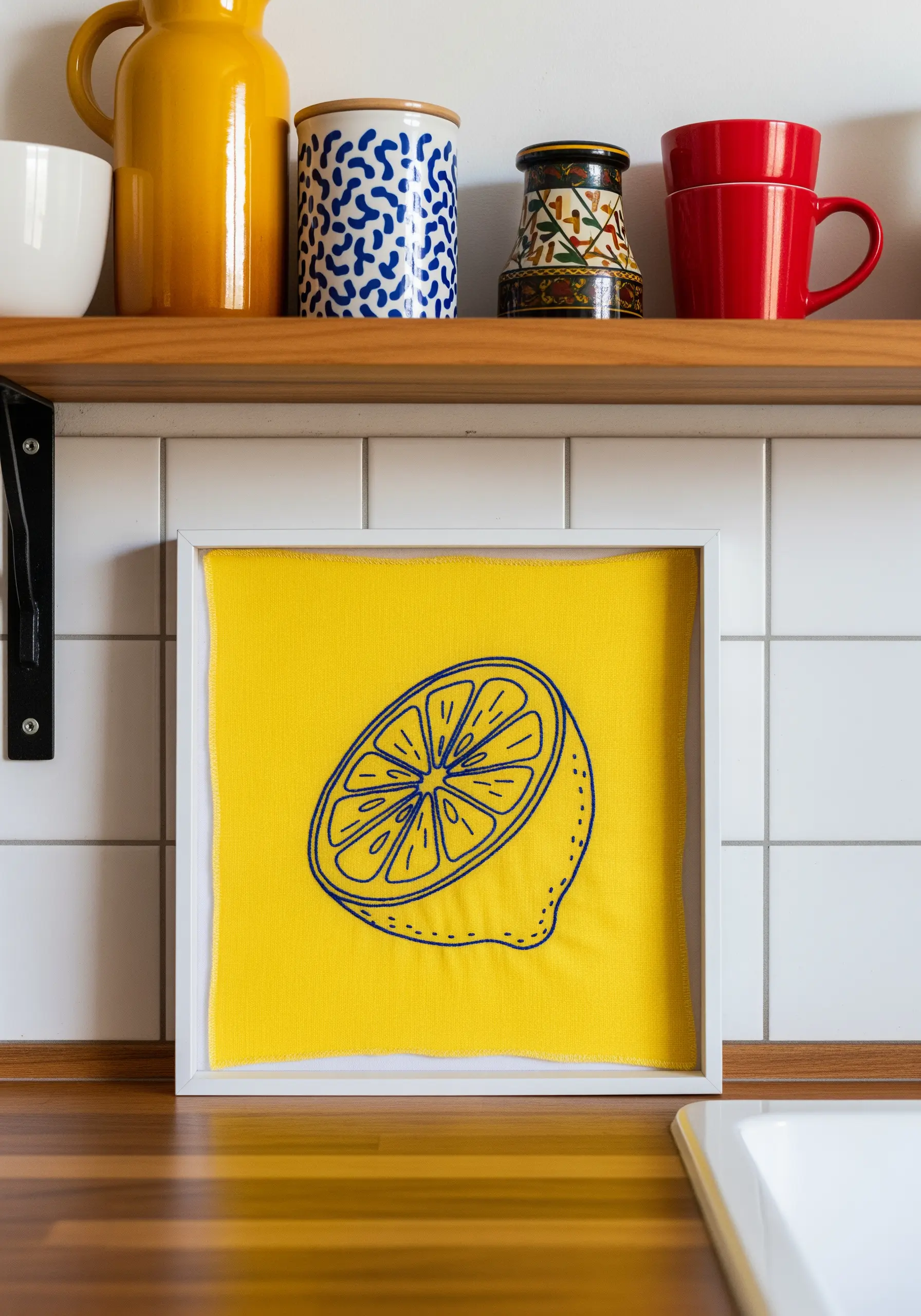
Make a bold statement by pairing a vibrant, solid-colored fabric with a dark, heavy outline.
Choose a fabric in a cheerful, saturated hue like lemon yellow or cobalt blue to serve as your canvas.
Instead of a delicate backstitch, use a thick chain stitch or a 6-strand whipped backstitch to create a heavy, graphic line.
This technique gives simple motifs, like a fruit slice, a bold, illustrative feel that pops with energy.
The solid color of the fabric acts as a powerful field of negative space, making the outline the undisputed focal point.
11. Intricate Branching with Single-Thread Work
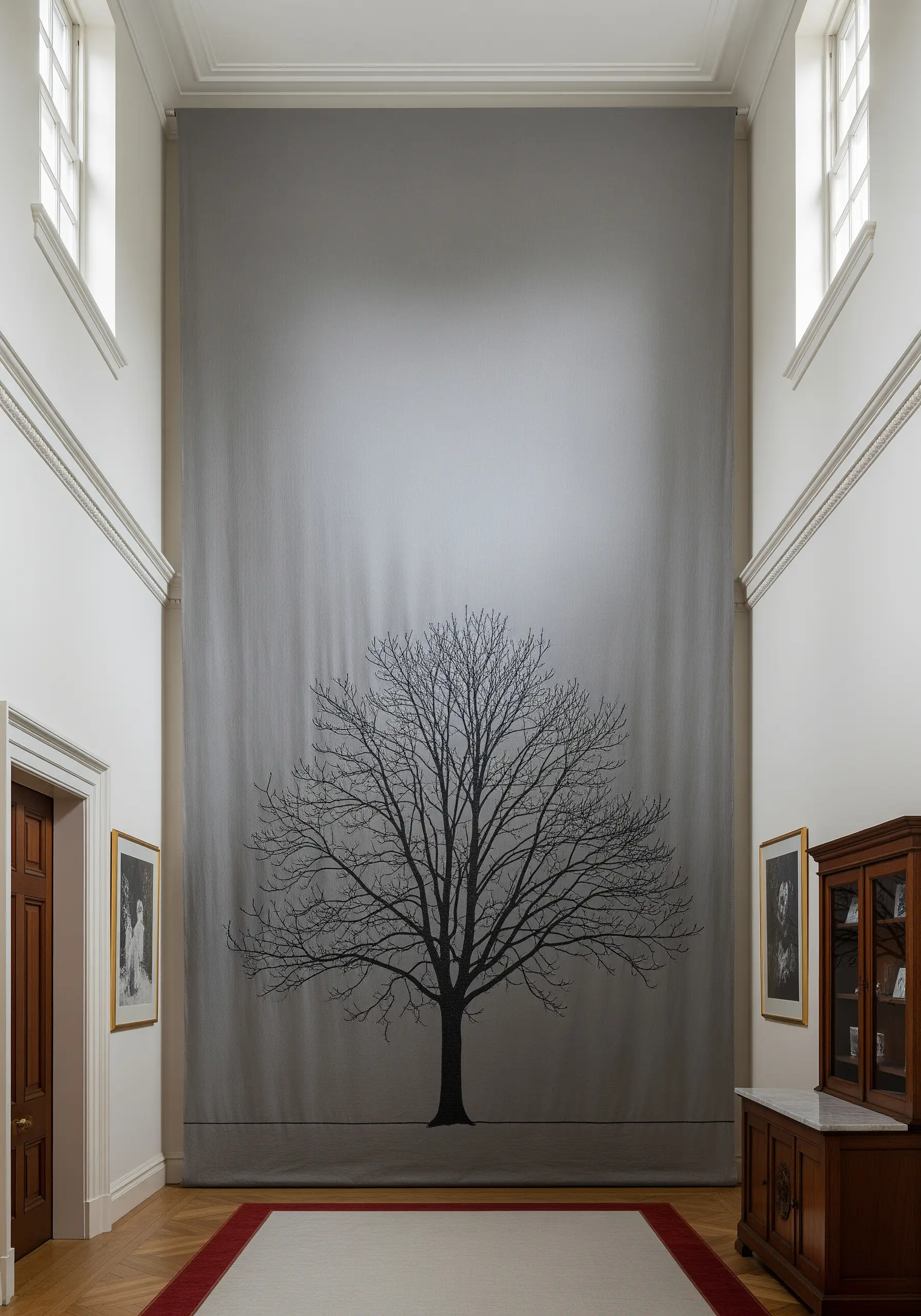
When your design requires extreme detail, reduce your thread to a single strand.
For complex subjects like a bare winter tree, a single ply of floss allows you to stitch impossibly fine twigs and branches.
Use a tiny backstitch, keeping each stitch just a few millimeters long for maximum control and precision.
While it requires patience, this method allows you to build incredible complexity and texture that feels more like a fine pencil drawing than embroidery.
The vast negative space of the background emphasizes the delicate intricacy of your work, making the final piece feel both grand and exquisitely detailed.
12. Urban Outlines on Textured Denim
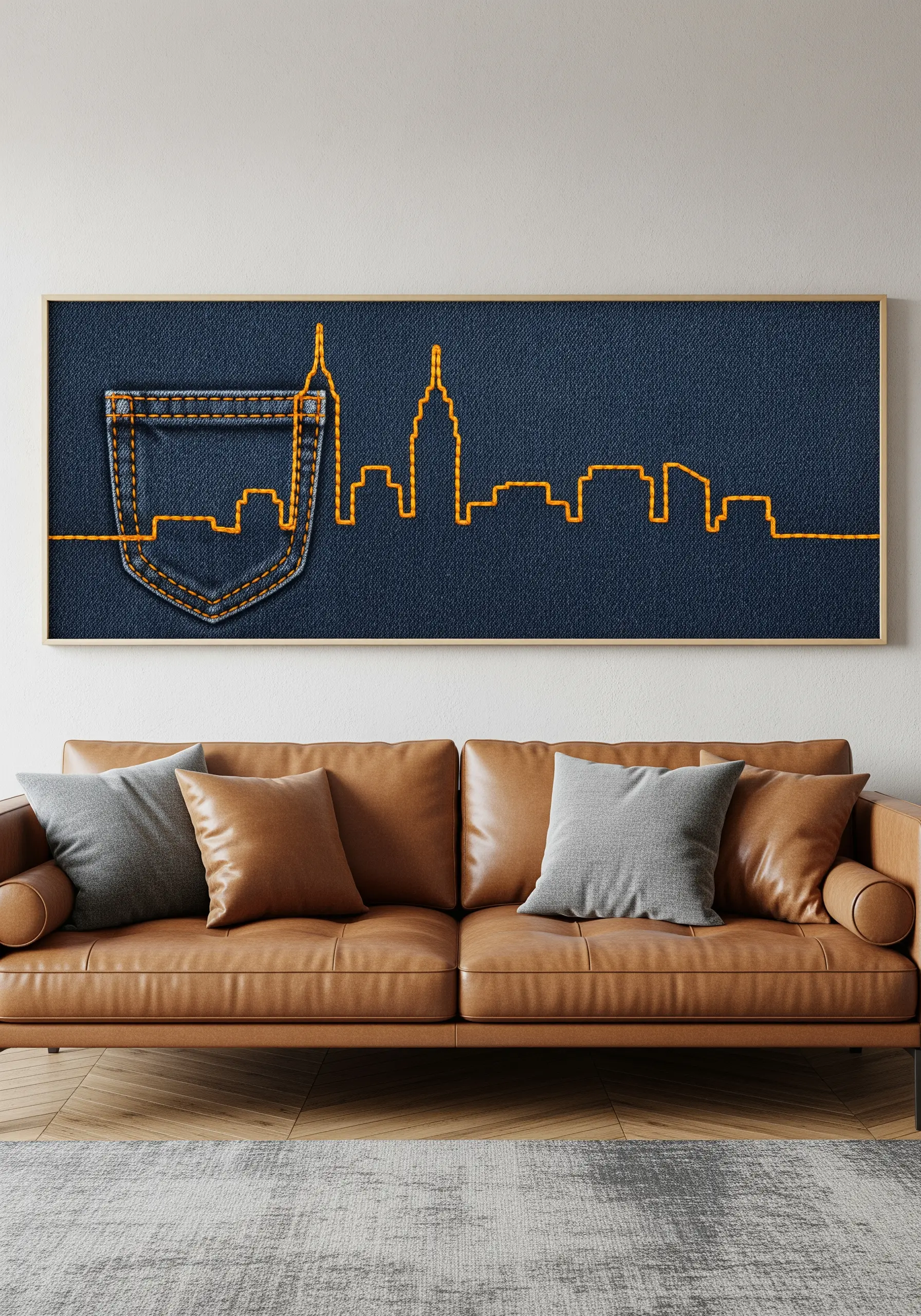
Use a familiar texture, like denim, as an unexpected and modern background for your wall art.
The woven texture and indigo color of the denim add instant character and depth.
Choose a contrasting thread color, like a warm gold or bright orange, to create a playful and eye-catching skyline or cityscape.
A simple running stitch or backstitch is perfect for this, as it creates a dashed-line effect that complements the casual feel of the fabric.
This approach blends craft with an urban aesthetic, turning a simple outline into a clever piece of art.
13. A Curated Coastal Collection
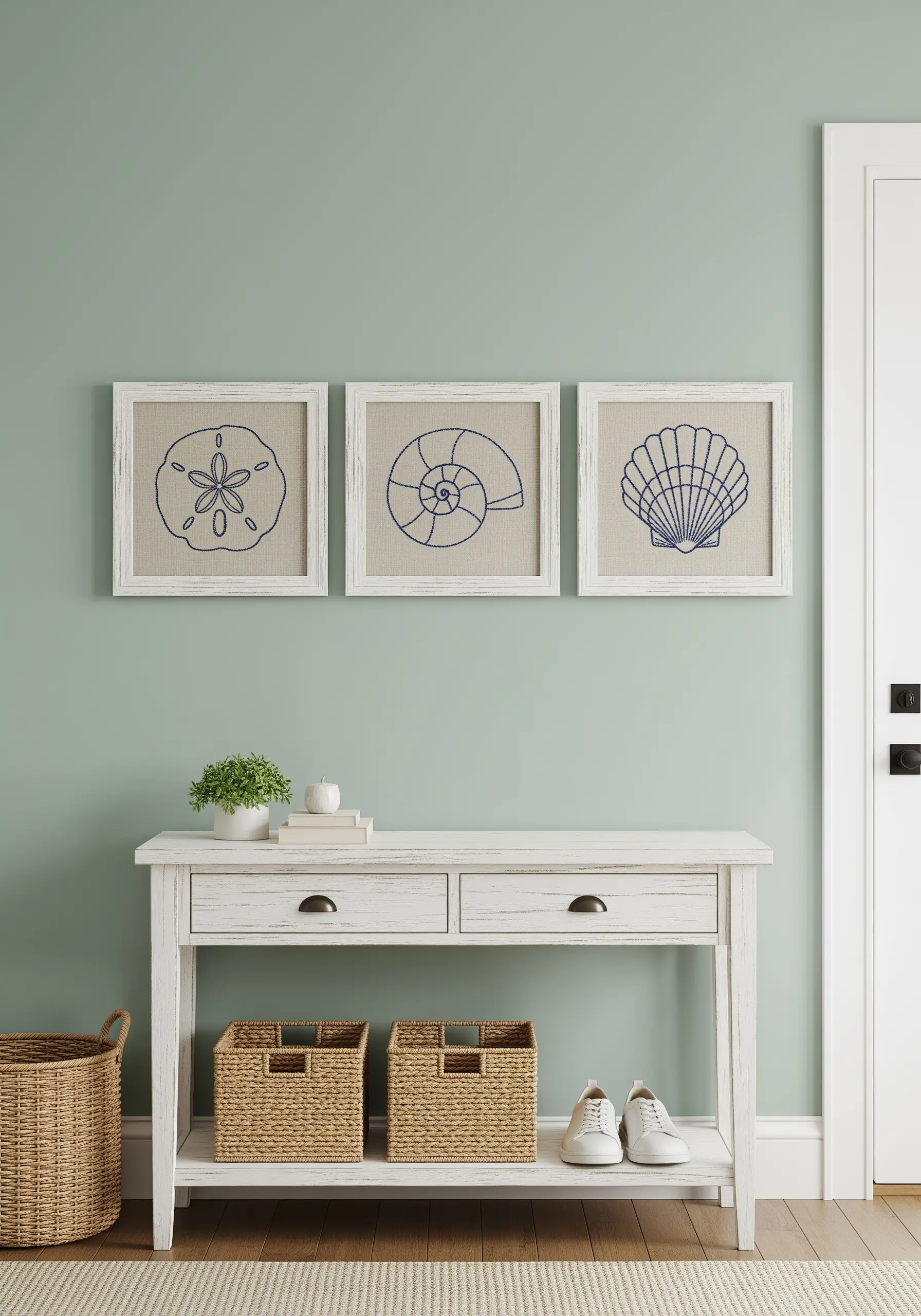
Design a series of small, related pieces to create a larger, more impactful installation.
Select a theme, such as seashells, and stitch each motif on a separate, identically sized piece of fabric.
To ensure the collection feels cohesive, use the same fabric, thread color, and frame style for every piece.
This repetition creates a strong visual rhythm, while the negative space within each frame gives every individual object room to be appreciated.
Grouping them together transforms simple coastal-inspired embroidery into a sophisticated, curated display.
14. Refined Glassware Illusions
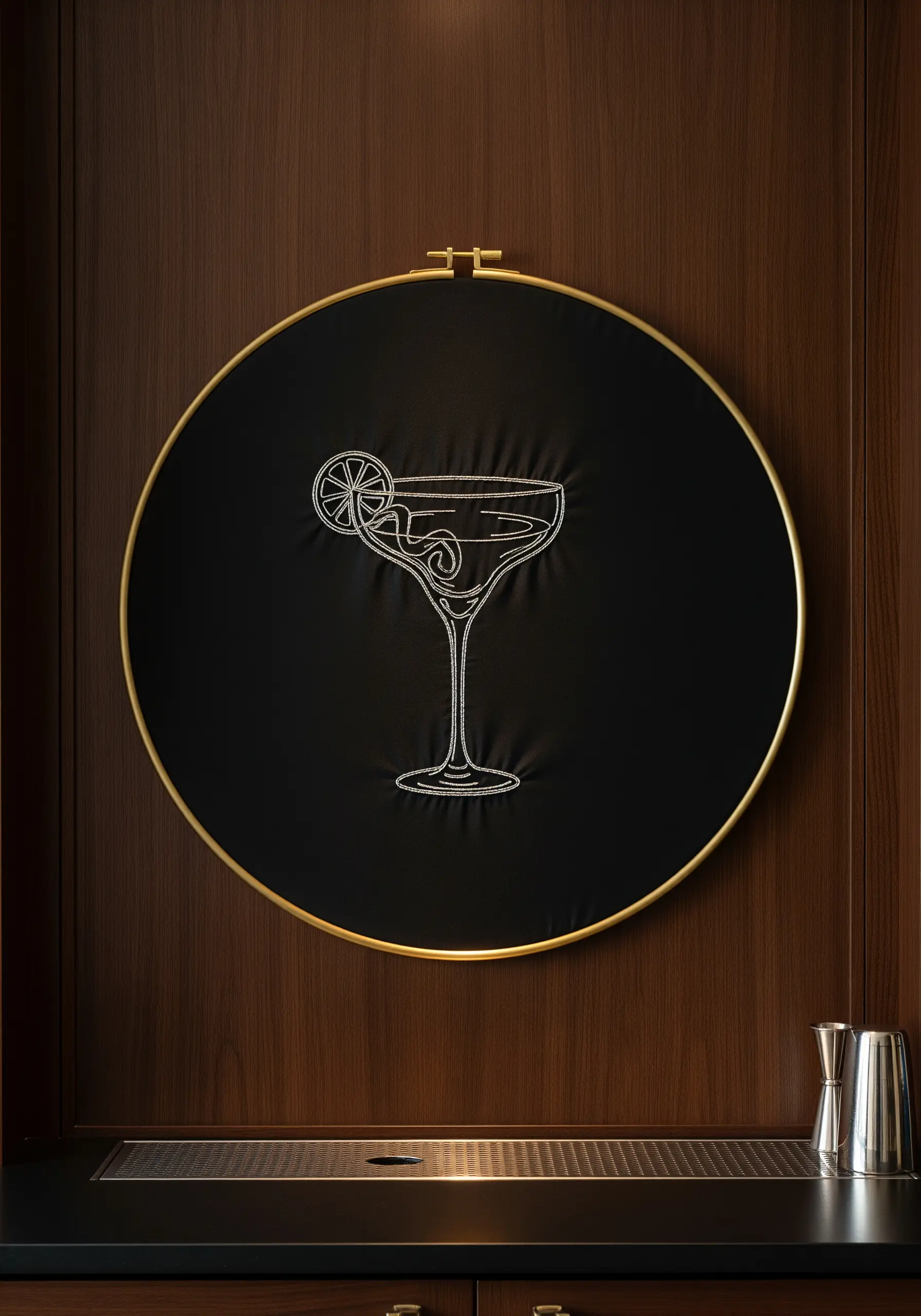
Capture the delicate and reflective nature of glass by using a fine, bright thread on a dark, luxurious fabric.
Choose a black satin or velvet to provide a deep, rich background that absorbs light.
Use a single strand of bright white or fine silver metallic floss to outline a cocktail glass or bottle.
For the smoothest possible curves, a split stitch is essential—it eliminates the segmented look of a backstitch and creates a continuous, clean line.
This high-contrast combination creates a sophisticated, almost luminous effect that mimics the way light hits polished glass.
15. Atmospheric Sketches on Felted Wool
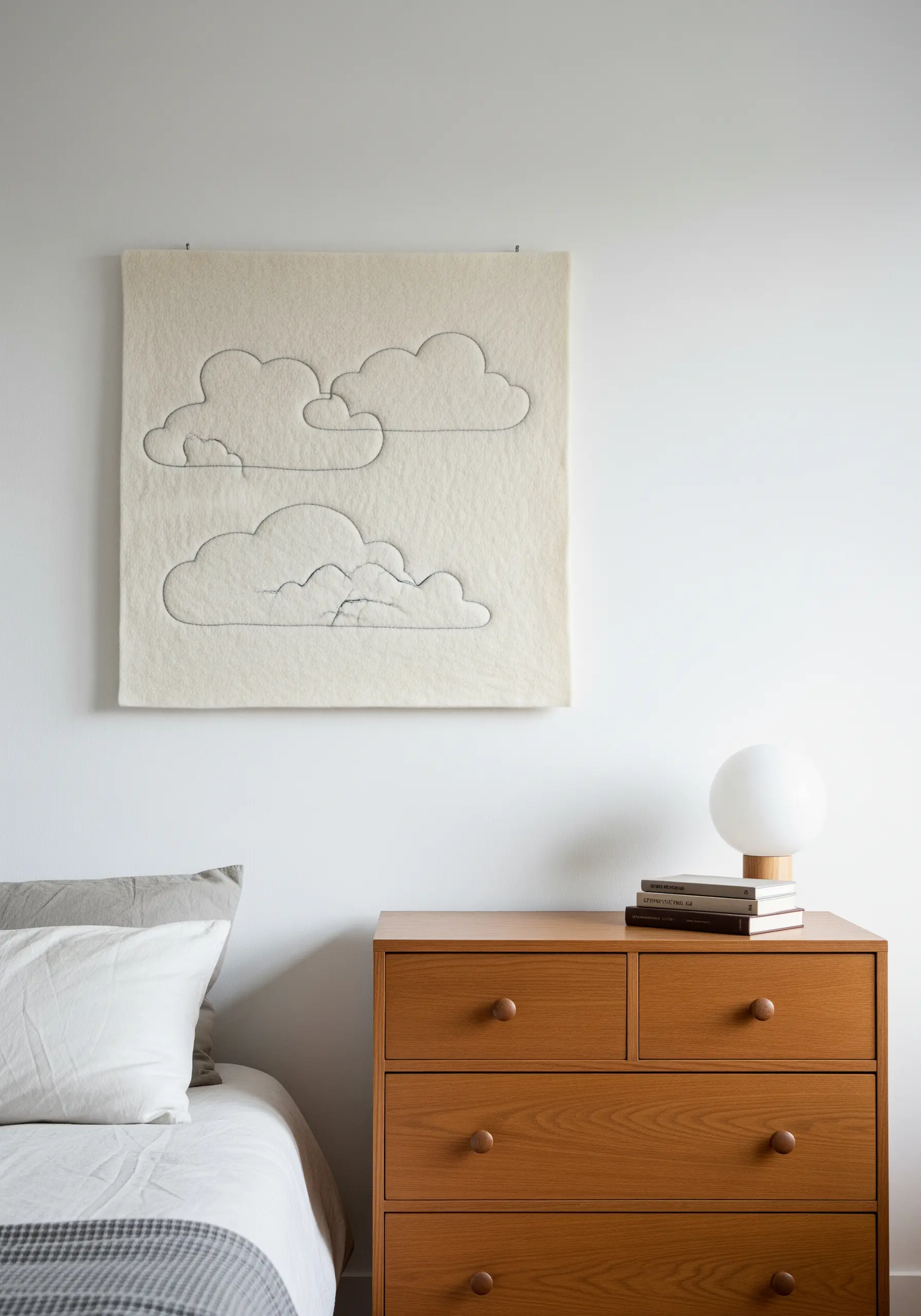
Let a soft, textured fabric do most of the aesthetic work for you.
Choose a thick, non-woven material like wool felt as your base; its matte, slightly fuzzy surface adds immediate warmth and softness.
Use a simple running stitch or backstitch with a slightly darker thread to create a gentle, sketch-like outline of clouds or other soft forms.
You don’t need complex stitches here—the texture of the wool itself provides the depth, making your minimal stitching feel integrated and organic.
This technique creates a piece that feels incredibly cozy and tactile.
16. Dynamic Poses in Neon Thread
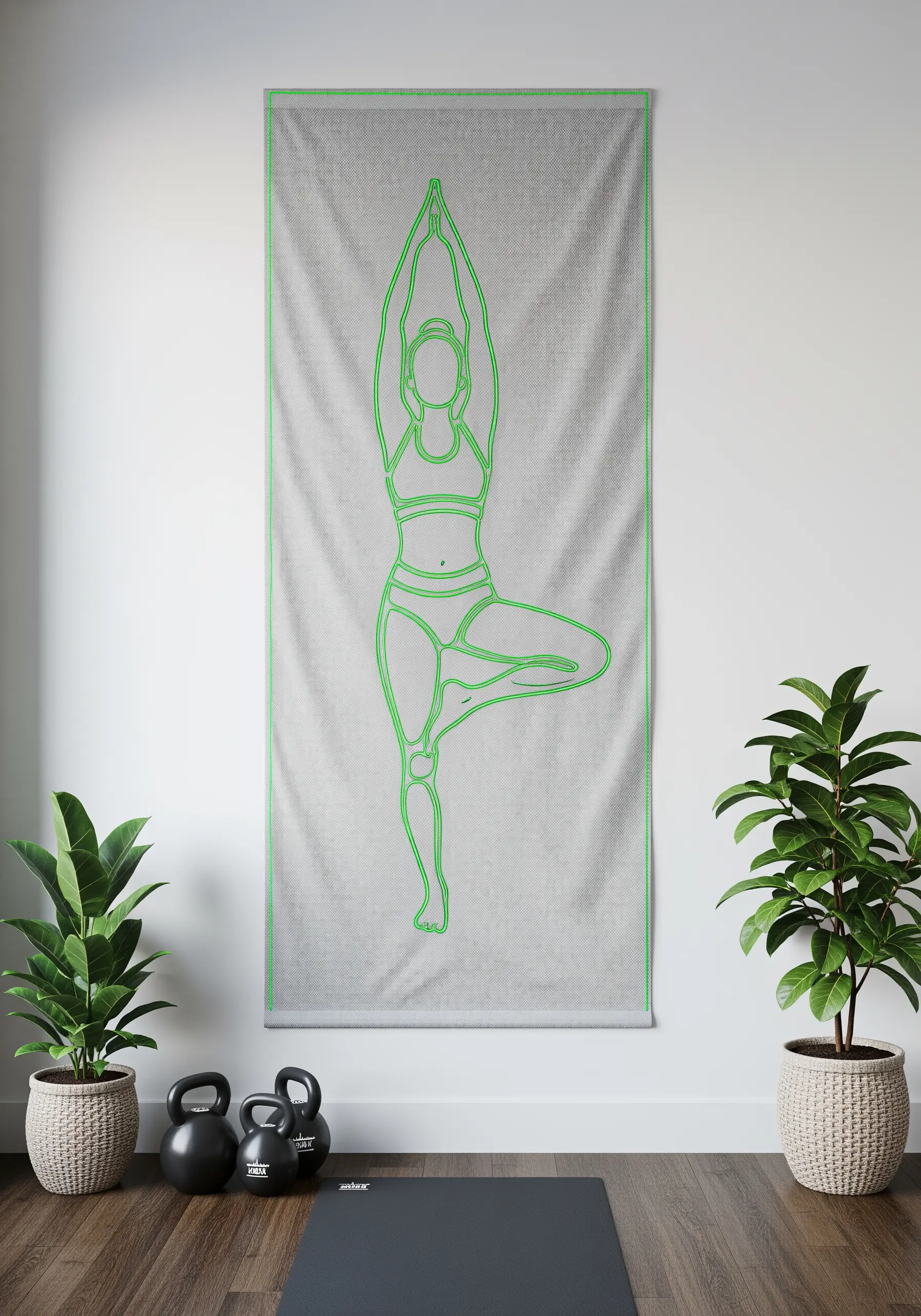
Inject energy and modernity into your work by pairing a neutral background with a vibrant, neon thread.
Choose a light grey or beige linen that won’t compete with the intensity of the color.
Use a thick stitch, like a chain stitch or a 6-strand backstitch, to create a bold, solid line that defines a dynamic human figure or yoga pose.
The neon thread provides a jolt of energy, making the outline feel active and alive.
This is a powerful way to make a simple line drawing the undeniable focal point of a room.
17. Harvest Motifs on Rustic Burlap
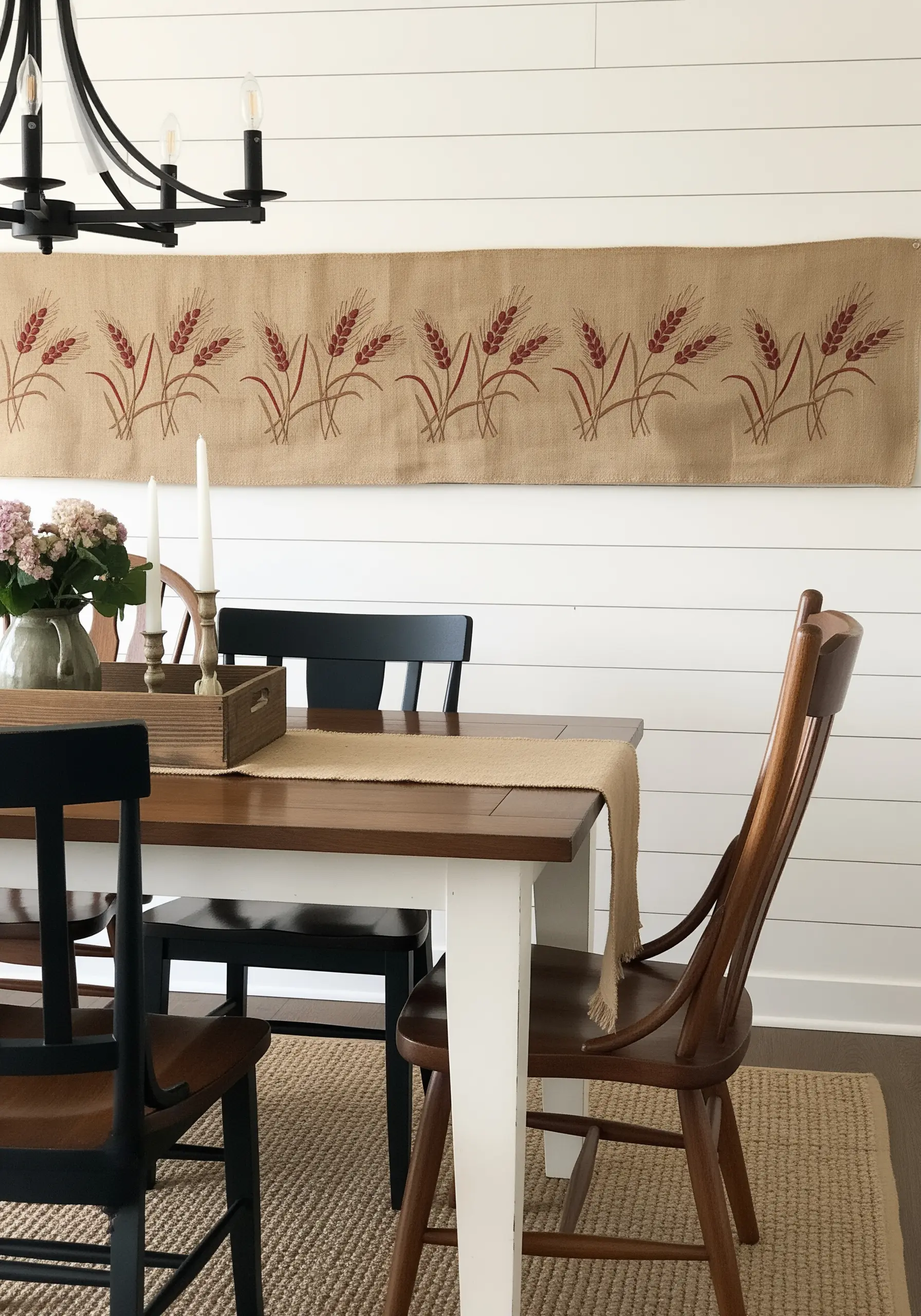
Create a beautiful play of textures by combining smooth stitches with a coarse, rustic fabric.
Use burlap or jute as your background, letting its open weave and earthy color set a natural tone.
Stitch simple motifs like wheat stalks, using a smooth, dense satin stitch for the grains and a simple stem stitch for the stalks.
The contrast between the tight, lustrous satin stitch and the rough, matte burlap is visually and tactilely satisfying.
This technique is perfect for creating farmhouse embroidery wall projects that feel both refined and grounded.
18. Illustrative Still Life with Varied Stitches
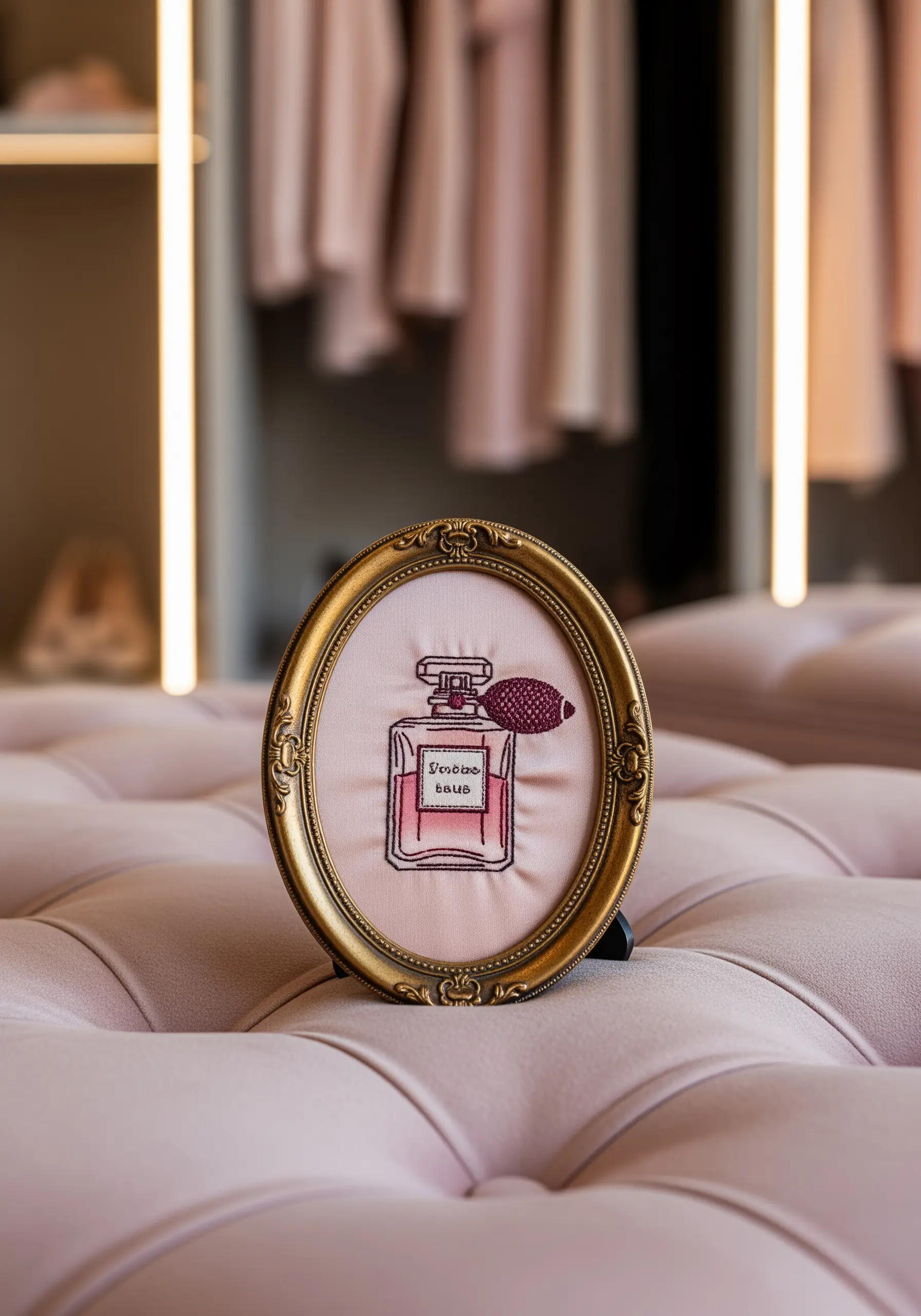
Elevate a single object by treating it as a detailed illustration, even on a small scale.
For a motif like a perfume bottle, combine several stitches to create different effects within one design.
Use backstitch for the main outlines, a light satin stitch for subtle color fills, and French knots for textural details like the atomizer bulb.
Mounting the finished piece in an ornate, vintage-style frame enhances the feeling that this is a precious, miniature work of art.
The surrounding negative space and luxurious framing turn a simple object into an elegant focal point.
19. Bold Abstract Composition with Couched Cord
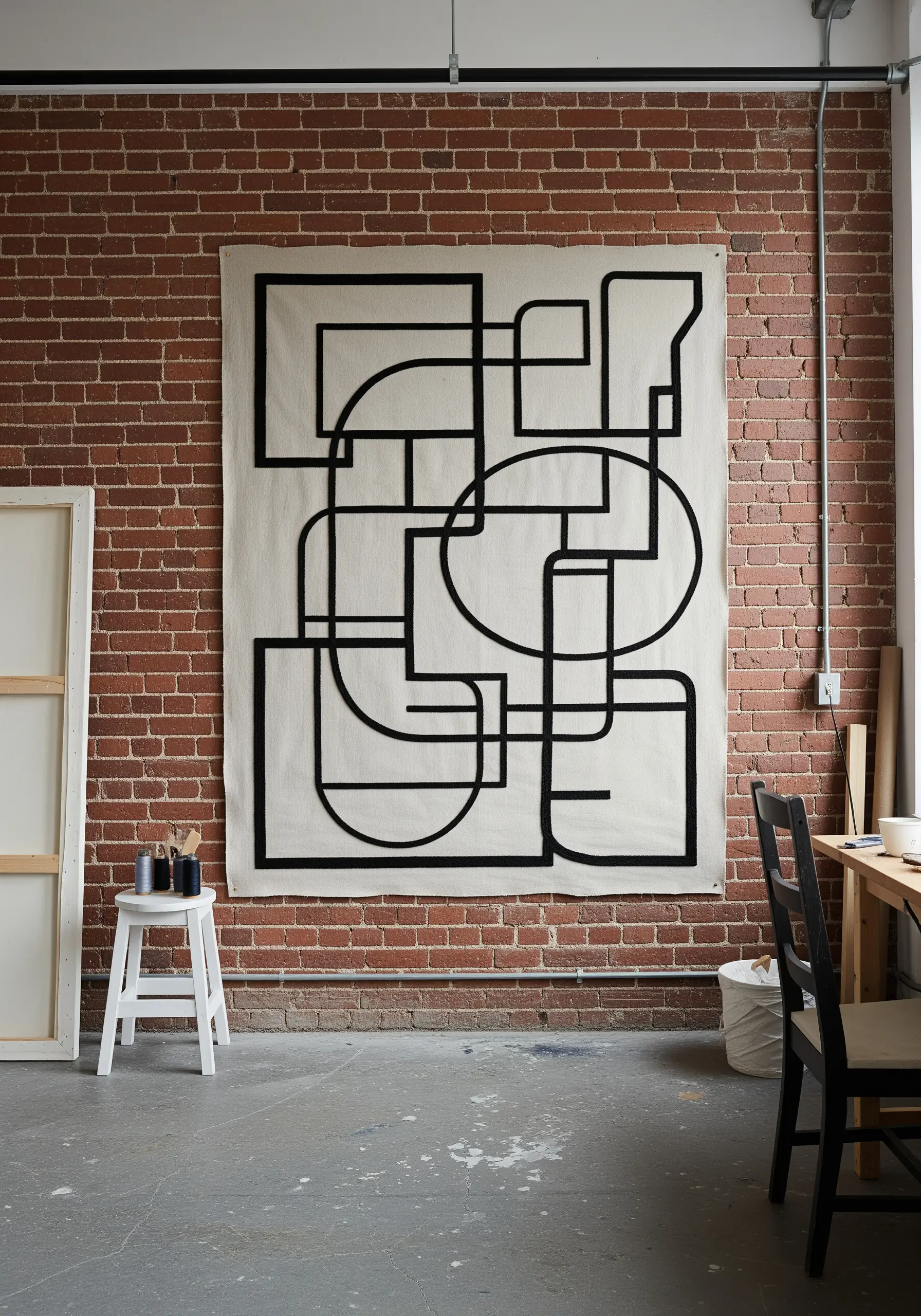
When you want to make a large-scale impact, switch from thread to something much heavier, like a thick black cord.
Plan a bold, interlocking abstract design that fills a large canvas.
Lay the cord along your design lines and use a matching black sewing thread to couch it down with small, almost invisible stitches.
This method allows you to create thick, continuous lines that have a powerful graphic and textural presence.
The negative space of the raw canvas is essential for balancing the visual weight of the heavy black lines, creating a piece that feels both massive and minimalist.
20. The Meditative Stitch: An Organic Circle
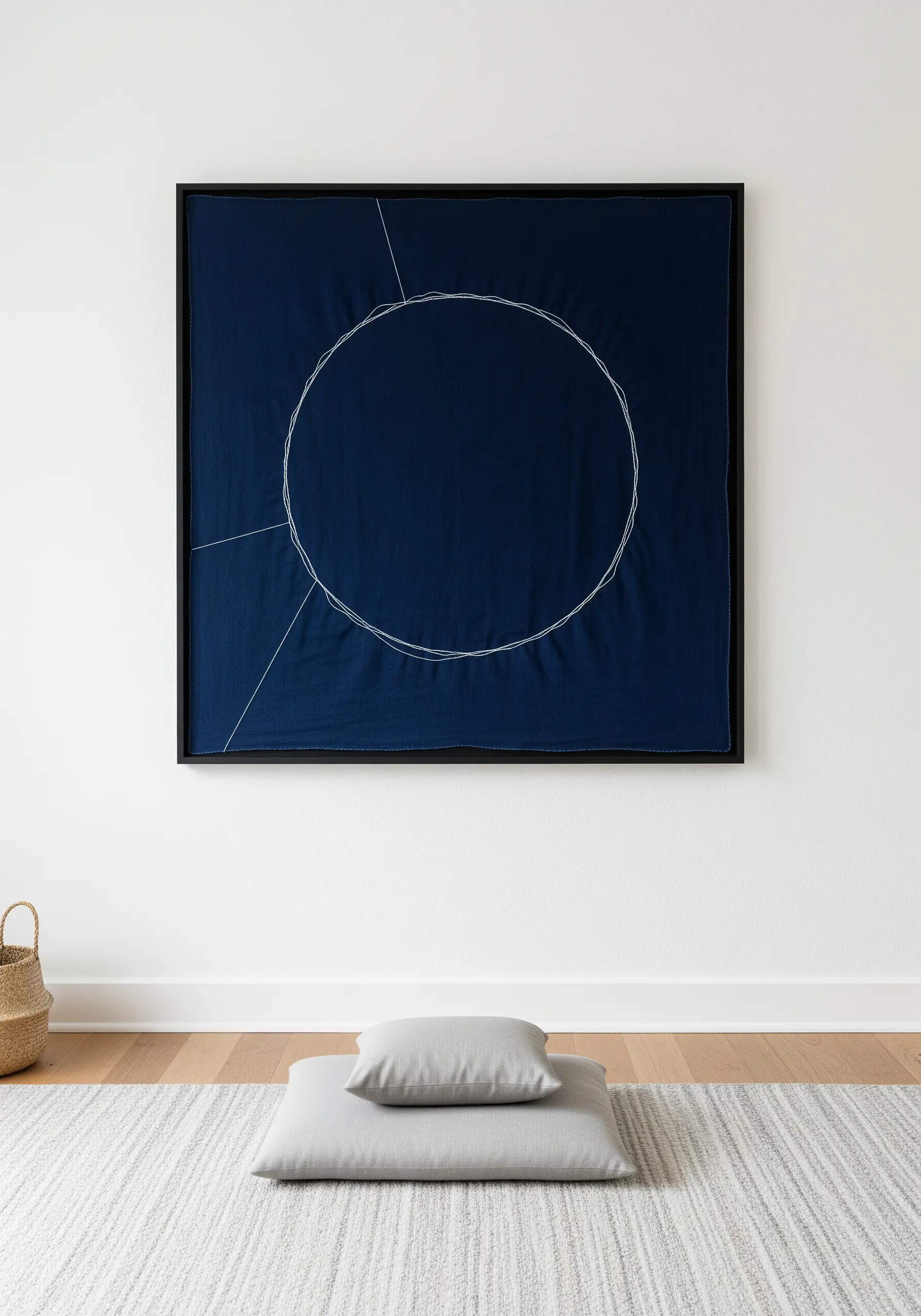
Embrace imperfection by stitching a simple, organic shape that feels handmade and contemplative.
On a deep indigo or black fabric, use a simple running stitch with a contrasting white thread to create a large circle.
Don’t strive for geometric perfection; allow the line to be slightly uneven, like an Enso circle in Zen calligraphy, which represents wholeness and acceptance of imperfection.
The stark contrast and simple form make this one of the most calming minimal embroidery wall designs, perfect for a quiet, reflective space.
The radiating corner lines add a subtle tension that balances the piece.


