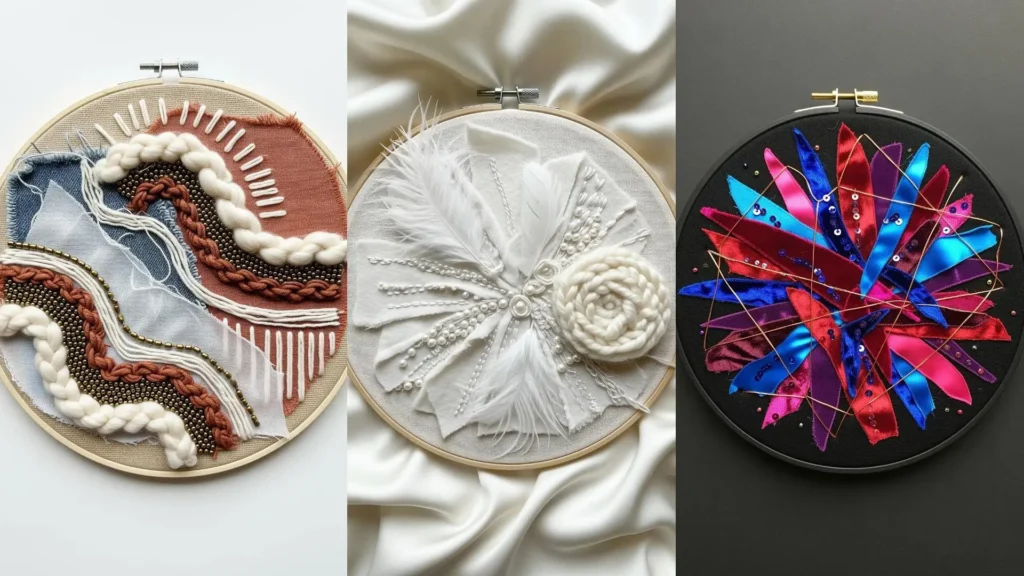
Have you ever finished a piece of embroidery and felt that a spark was missing? That invisible gap between the image in your mind and the threads in your hoop isn’t about skill—it’s about learning to guide your needle with intention.
Think of your thread less as a simple strand and more as a brush for painting with texture and flow. The way you layer a satin stitch can mimic the powerful crash of a wave; the precise direction of a single straight stitch can evoke the explosive energy of fire.
This collection is not about mastering dozens of complex knots. It’s an invitation to look closer at the fundamental stitches you already know and see how a slight shift in color, density, or direction can transform them into dynamic expressions of nature’s most elemental forces. Let’s begin.
1. Capturing Oceanic Motion with Layered Satin Stitch

To build the powerful body of a wave, use long, flowing satin stitches that follow its natural curve.
Vary the number of floss strands—from six down to two—to create subtle shifts in color and texture that suggest depth and shadow.
For the sea spray, use tightly packed French knots in shades of white, cream, and pale aqua. This creates a bubbly, dimensional texture that contrasts beautifully with the sleekness of the wave.
Stitching on a dark navy or black fabric provides a dramatic backdrop that makes the vibrant blues and crisp whites of your wave truly stand out.
2. Building Fiery Intensity with Directional Stitches
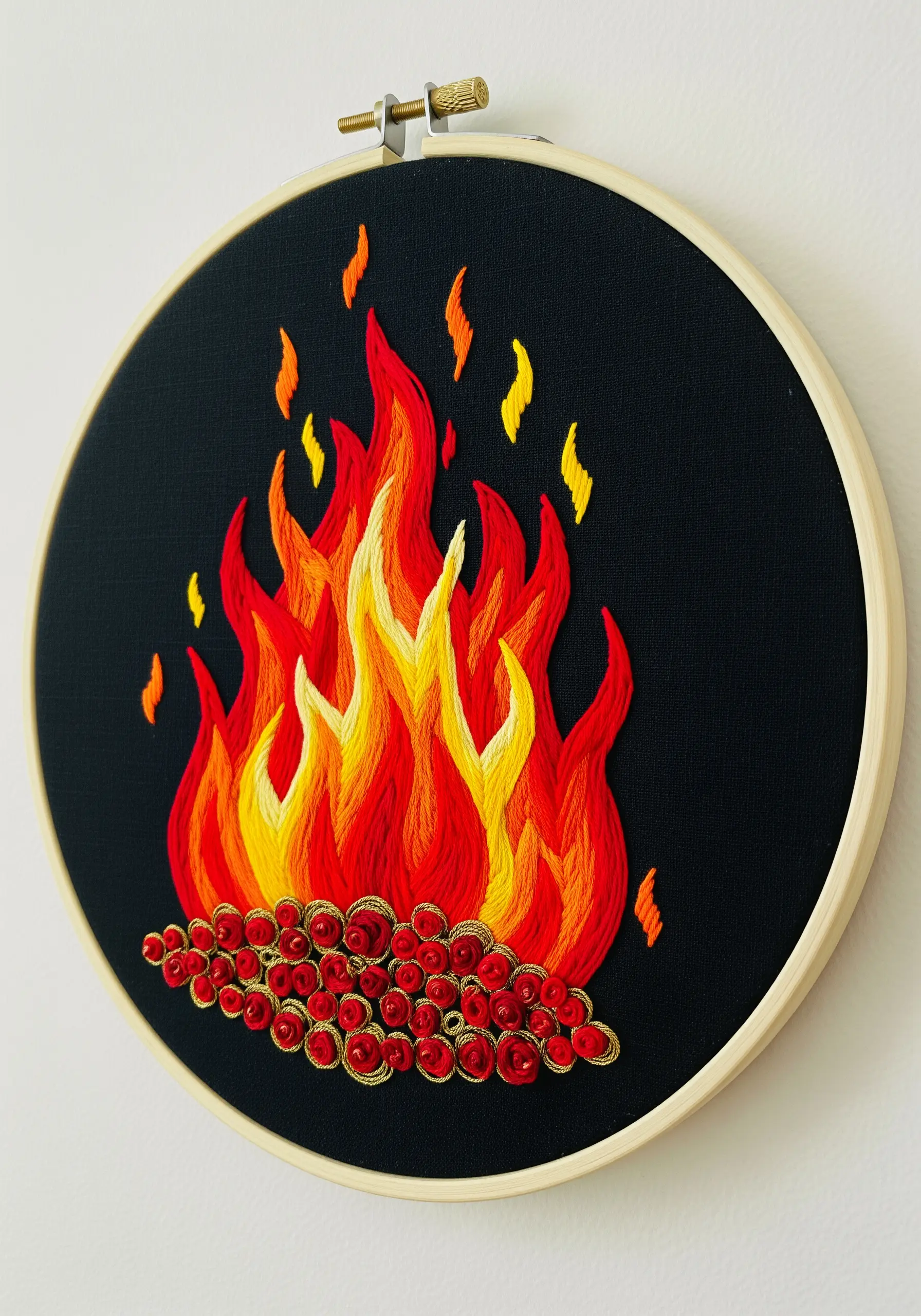
Mimic licking flames by layering long-and-short stitch in a gradient, moving from deep red through orange to a bright, hot yellow at the core.
Ensure your stitches are angled upward and slightly curved. This directional work is key to creating a sense of natural, flickering movement.
For the embers at the base, use bullion knots or woven wheel stitches in rich reds, incorporating a single strand of gold metallic thread to give them a subtle, inner glow.
The contrast between the sleek satin-stitched flames and the coiled, textured embers creates a powerful and dynamic composition.
3. Stitching Ethereal Gusts on Transparent Tulle

Select a fine, sheer fabric like tulle or organza as your canvas to give your stitches a weightless, floating appearance.
Combine delicate split stitches for the main swirls with scattered seed stitches and tiny French knots to represent particles carried on the wind.
Weave a single strand of iridescent or light-reflecting metallic thread alongside your standard cotton floss. This will catch the light beautifully, adding a subtle, magical shimmer.
Use a water-soluble stabilizer to support your work; when it’s washed away, only the seemingly unsupported stitches will remain, creating a truly ethereal effect.
4. Creating Molten Flow with Braids and Couching

To achieve a thick, high-relief river of texture, first braid multiple strands of embroidery floss or fine yarn together.
Lay this braid onto your fabric and secure it using couching—tacking it down with a thinner, contrasting thread. This technique adds immediate dimension and focus.
Surround this central element with areas of padded satin stitch or chunky chain stitch to build up softer, more organic shapes that complement the bold central line.
The interplay between the tightly bound braid and the softer surrounding stitches creates a compelling, tactile surface.
5. Weaving a Coastal Landscape with Varied Line Work

To represent flowing water, avoid using just one type of stitch. Instead, layer different line stitches—like whipped backstitch, chain stitch, and stem stitch—in varying weights and colors.
This mixture of textures prevents the design from looking flat and successfully gives the impression of moving currents and ripples.
For the stones, use concentric circles of split stitch or short satin stitches, blending greys, blues, and browns to suggest smooth, water-worn rocks.
Working on a neutral, woven fabric like linen canvas enhances the organic, earthy feel of this abstract landscape.
6. Depicting Frost Patterns with Metallic and Matte Threads
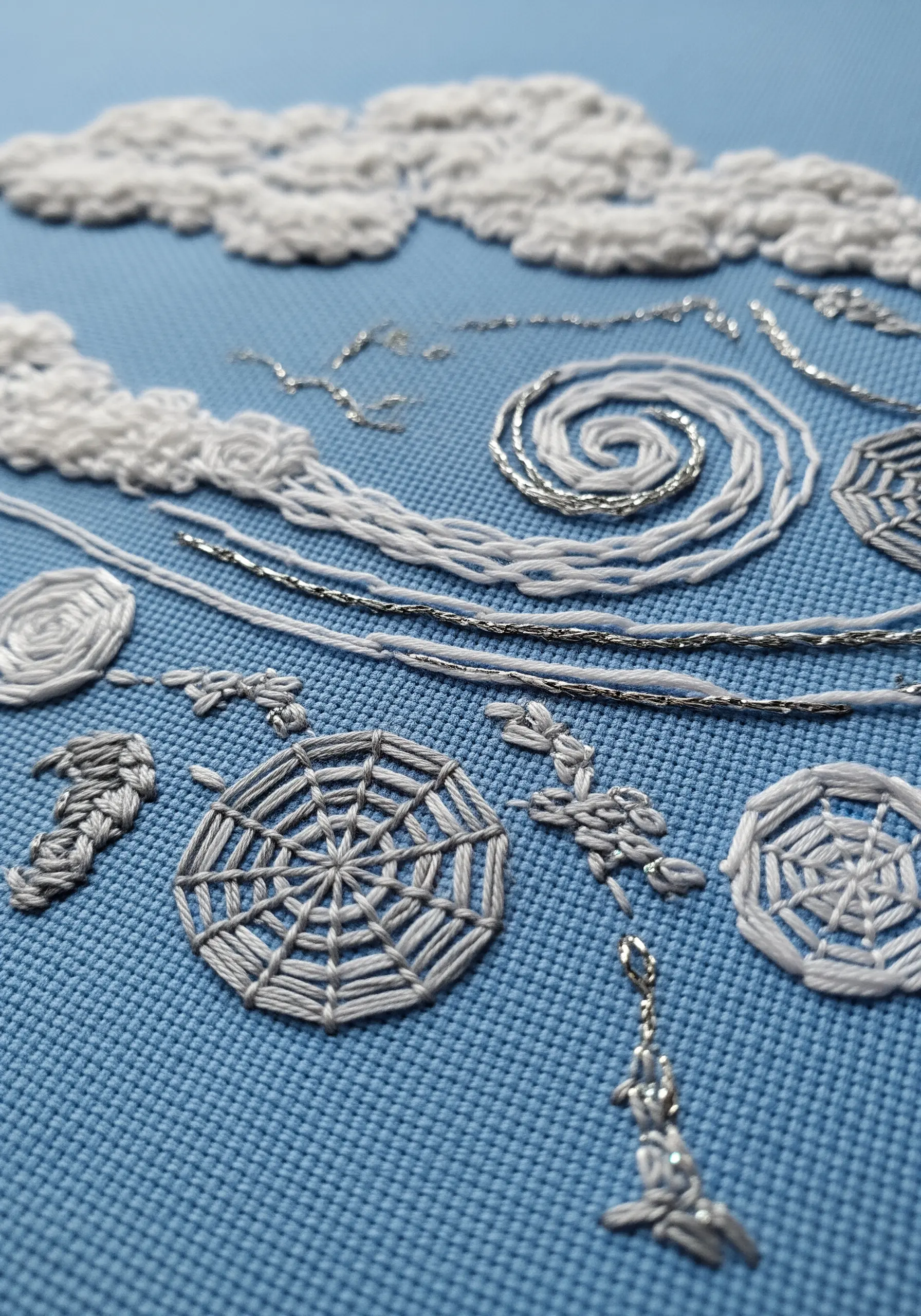
You can capture the delicate shimmer of frost by combining matte white cotton floss with a shiny silver metallic thread.
Use spiderweb stitches to form crisp, geometric ice crystals, and add detached chain stitches (lazy daisies) for softer, snowflake-like shapes.
To create a sharp, defined line that mimics the glint of ice, couch a single strand of silver thread in swirling patterns.
Stitching on a cool-toned fabric, like this light blue, enhances the wintry theme and provides the perfect backdrop for your white and silver elements to pop.
7. Applying Graceful Tendrils to a Luxe Fabric
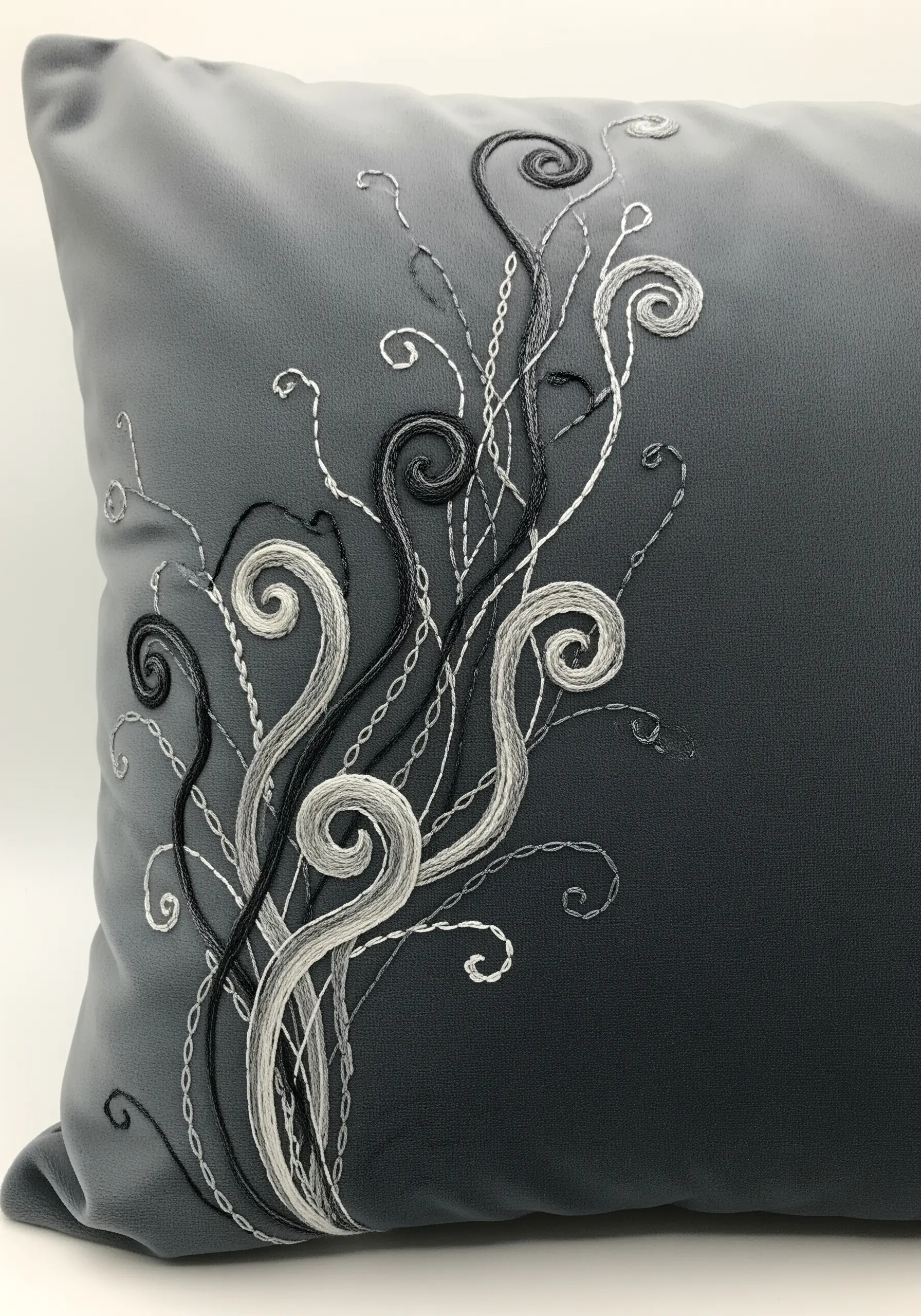
Transform a simple cushion cover by adding an elegant, flowing motif that seems to grow across the fabric.
Create smooth, dynamic curves using whipped backstitch or stem stitch. You can vary the line thickness simply by changing the number of strands in your needle.
A monochrome palette of black, white, and grey adds a layer of sophistication, allowing the texture of the stitches and the fabric to become the main focus.
This approach adds a bespoke, artistic touch to home decor, making an everyday object feel like a piece of art.
8. Radiating Fiery Energy with Straight Stitches

You can create a powerful sense of explosive movement using only the most basic stitch: the straight stitch.
Begin with a dense center of pale yellow, then work outwards, radiating stitches in progressively darker shades of orange and red.
Vary the length and angle of your stitches randomly to create a dynamic, uncontrolled effect that mimics a natural explosion.
Intersperse a few strands of gold metallic thread among the outer rays to add a spark of light and visual intensity.
9. Meditative Water Rings

Evoke the calming effect of ripples on water by stitching concentric circles of whipped backstitch.
This stitch creates a smooth, rope-like texture that is more defined and substantial than a simple backstitch or running stitch.
Plan your color gradient before you begin, moving from a light center to darker outer rings to create a sense of depth, as if you’re looking down into water.
Embrace the slightly imperfect, handmade nature of the circles. It’s this organic quality that gives the final piece its gentle, calming energy.
10. Embellishing a Tote with an Autumnal Breeze

Transform a plain canvas tote bag by stitching flowing lines that suggest a gentle autumn wind.
Combine different linear stitches, such as chain stitch and Roumanian stitch, to give the currents of wind a pleasing textural variety.
Use satin stitch or detached chain stitches to create scattered leaf motifs that appear to be carried along by the breeze.
An earth-toned color palette of rich browns, warm oranges, and deep reds gives the design a cozy, seasonal atmosphere perfect for daily use.
11. Charting Elemental Transformation Through Texture

Tell the story of fire’s life cycle by creating an abstract sampler that transitions through different textures.
Begin with thick, flowing whipped backstitch or chain stitch to represent smoke, then move into layered satin stitch for the licking flames.
Use dense French knots or small bullion stitches in yellows and oranges to represent the glowing, concentrated heat of embers.
Finally, for the ash, use chunky, loosely packed satin stitches in greys, black, and white. This stark textural contrast completes the elemental narrative.
12. Mimicking Cosmic Currents with Paint and Thread

To create a sense of otherworldly depth and shimmer, apply a light wash of iridescent fabric paint to your dark fabric before you begin stitching.
Once dry, use long, flowing satin stitches in deep blues and greens to form the main shape of your galactic river.
Scatter French knots in a lighter, contrasting color—like mint green or pale lavender—along the edges to suggest starlight or distant nebulae.
The dark fabric background is crucial here, as it makes both the paint and the thread appear more luminous and vibrant.
13. Capturing a Rainy Day with Variegated Threads
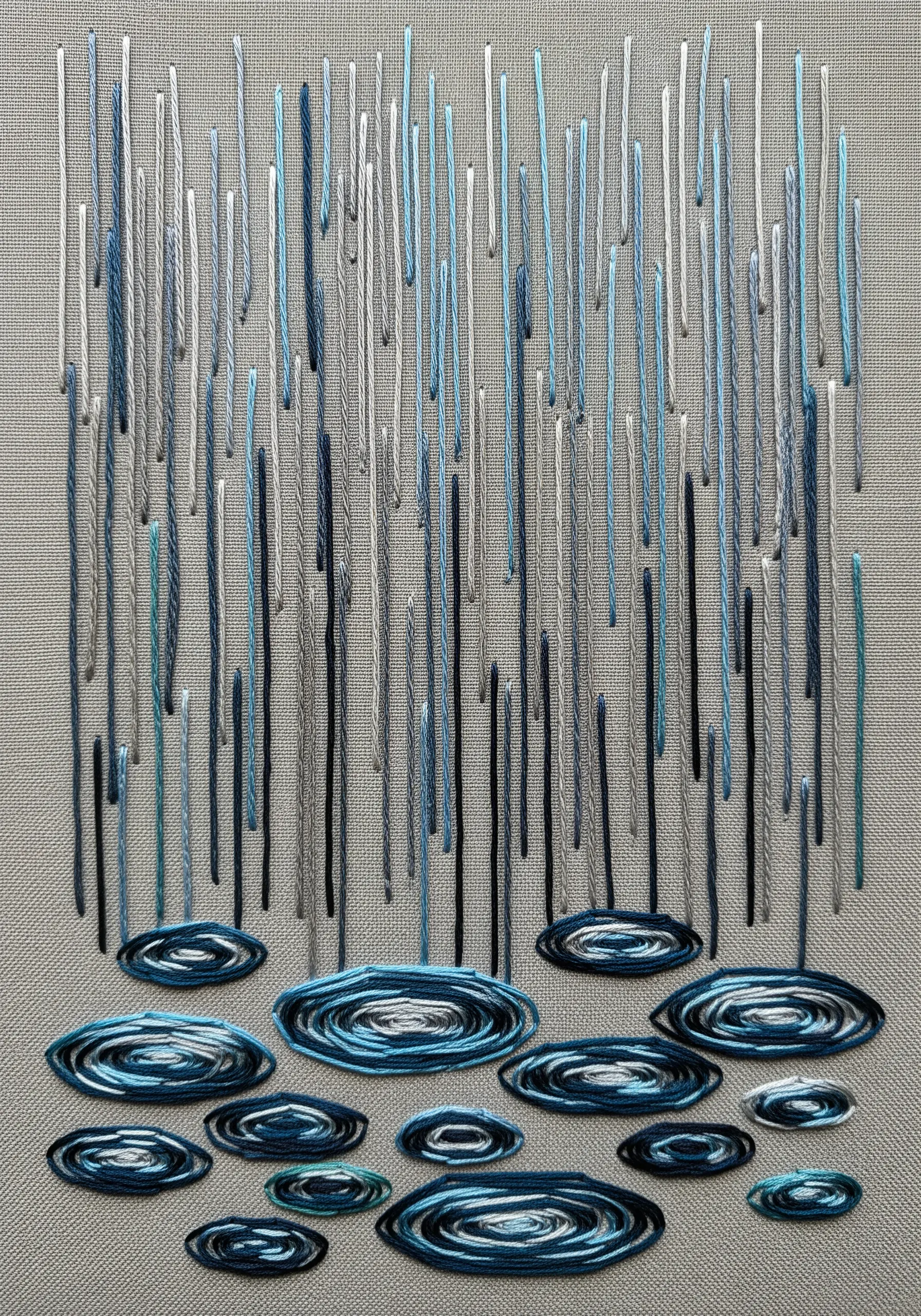
Use long, vertical straight stitches to represent falling rain. Varying their length and density will give the composition a more natural, less rigid feel.
Employ variegated thread—a single strand that contains multiple colors—to introduce subtle color shifts into your work without constantly changing your floss.
For the puddle ripples, stitch concentric ovals of split stitch or backstitch. Using variegated thread here is especially effective for mimicking light reflecting on water.
The visual tension between the sharp, linear rain and the soft, circular puddles creates a perfectly balanced and evocative scene.
14. Creating Crystalline Shapes with Satin Stitch Blocks
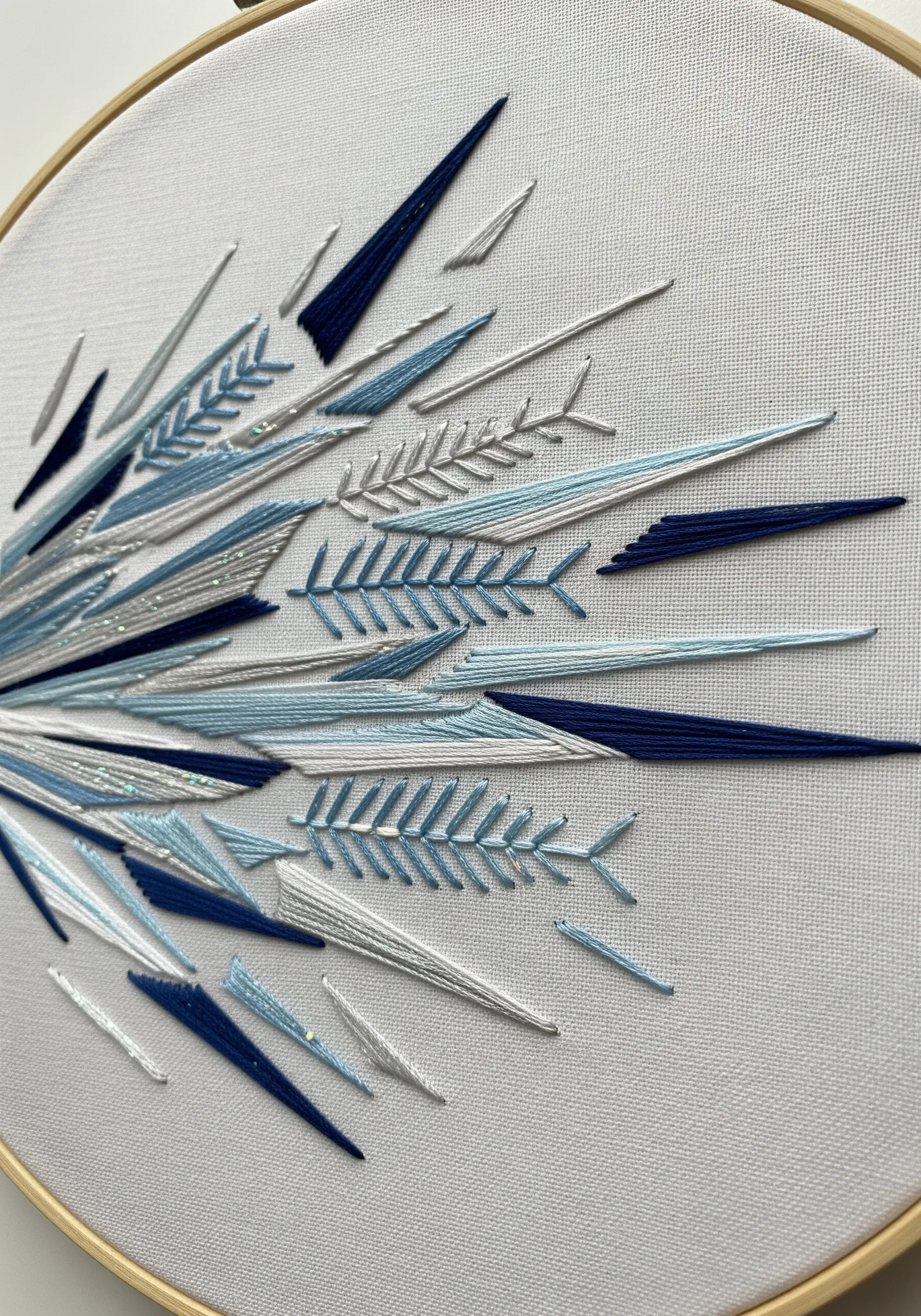
Build a dynamic, abstract ice formation using sharp, angular blocks of satin stitch.
For each block, change the direction of your stitches. This simple trick will make the different facets reflect light differently, enhancing the crystalline effect.
Intersperse delicate fly stitches or fern stitches between the larger shards to represent more intricate, feathery frost patterns.
Weaving in a few strands of silver or iridescent thread will elevate the piece, giving it a realistic frosty shimmer.
15. Achieving a Glowing Effect with Thread Painting
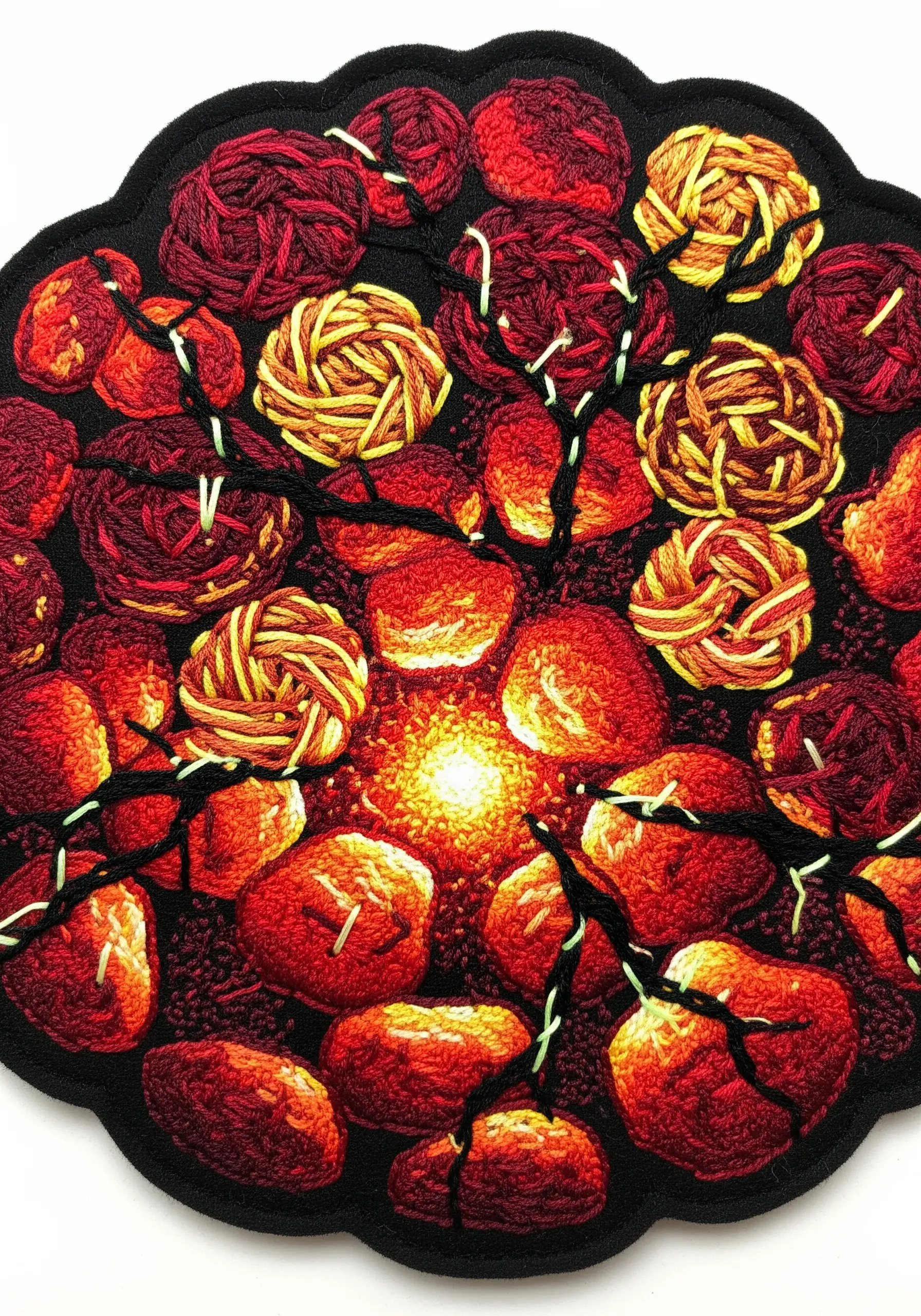
To create the illusion of glowing embers, you need to blend your colors seamlessly from light to dark.
Start with a bright yellow or white center and work outwards using the long-and-short stitch technique. This allows you to blend from yellow to orange, then red, and finally to a deep maroon at the cool edges.
This method, often called thread painting, creates the smooth gradient necessary to mimic a light source.
Add a final touch of realism by couching black thread over the top to represent cracks in the cooling embers.
16. Symbolizing Elements in a Minimalist Triptych

You can represent powerful elements like wind, earth, and water using pared-down, symbolic motifs for a modern aesthetic.
Use a simple whipped backstitch or stem stitch to create clean, flowing lines that suggest the movement of air and water currents.
For an earth or leaf element, a light scattering of French knots or seed stitches provides just the right amount of texture.
Displaying these small designs in a set of three matching hoops creates a cohesive triptych that looks clean and intentional on any wall.
17. Carving a Path with Couching and French Knots

To create a prominent, textured river that stands out from the fabric, twist several strands of thread together to form a single, thick cord.
Lay this cord down in a winding path and couch it in place with a thinner thread. This creates a raised, rope-like effect with significant dimension.
Cluster French knots and bullion knots in earthy greens and browns along the banks of your river to represent foliage, moss, and stones.
Using a gridded fabric like Aida cloth as your base can help you plan the meandering path of your river with greater precision.
18. Building a Whirlwind with Yarn and Unconventional Fibers

Move beyond standard embroidery floss and incorporate chunky wool yarn, boucle, or even soft roving to create dramatic, high-impact texture.
Lay down these thicker fibers in a swirling, vortex-like pattern and couch them onto your fabric with a thinner, matching thread to hold them securely.
Fill in any gaps between the chunky yarns with smaller stitches, like seed stitch or French knots, to add another layer of depth and fine detail.
This mixed-fiber approach results in a highly tactile piece that feels as incredible as it looks.
19. Blending Fire and Water with Interlocking Stitches

Explore the theme of elemental duality by dividing your hoop into two opposing but connected forces.
Use curved long-and-short stitches to create a swirling, interlocking pattern where the two sides meet, suggesting a harmonious blend rather than a harsh division.
Commit to a strict color palette for each side: cool blues, teals, and whites for the water; warm reds, oranges, and yellows for the fire.
Add a simple running stitch in a high-contrast color, like white, to define the edges of the currents and provide a final layer of graphic detail.