There is a quiet power in a simple line. While complex shading and vibrant colors have their place, the elegance of a single-color silhouette can transform a room faster than a complete renovation. You don’t need to fill every inch of fabric to make a statement; you just need the right curve, the right thread weight, and a moment of intention.
If you have been looking at your plain cushion covers and wondering how to make them feel like *you*, this is where you start. These nature-inspired motifs are not just patterns; they are exercises in restraint and texture. I want you to look at how a change in stitch density or a switch to a matte thread can turn a basic outline into something that feels designer-made.
Grab your hoop and let’s strip back the noise. We are going to focus on clear lines, organic shapes, and the tactile beauty of thread meeting fabric. It is time to stitch something that brings a breath of fresh air into your sanctuary.
1. Minimalist monstera leaf contour

To achieve this fluid, continuous look, avoid the standard backstitch, which can look choppy on curves.
Instead, use a whipped backstitch or a stem stitch working with a size 5 pearl cotton thread.
This adds a slight elevation to the line, ensuring the minimalist leaf line embroidery patterns stand out against the canvas texture without needing complex fill work.
2. Linear mountain landscape on terracotta

When stitching long, horizontal horizons on textured fabrics like linen, thread tension is your biggest challenge.
Keep your fabric drum-tight in the hoop to prevent puckering, and consider using a running stitch specifically designed for sashiko to embrace the gaps.
The white thread on rust fabric creates a high-contrast look that warms up earth tone embroidery projects instantly.
3. Delicate wildflower botanical sketch

For stems this slender, using a full six-strand floss will look bulky and clumsy.
Strip your floss down to a single strand or two strands maximum to mimic the precision of an ink drawing.
This refinement allows you to layer intersecting stems without creating unsightly knots, a technique essential for wildflower embroidery patterns that feel airy and modern.
4. Geometric art deco sunburst

Geometric precision requires more than a steady hand; it requires stabilizing the fabric.
Use a ruler to mark your rays with a heat-erasable pen before stitching, and employ a couching stitch for the long straight lines.
Couching prevents the metallic or gold thread from snagging and keeps the lines perfectly straight, which is crucial for minimal gold accent embroidery designs.
5. High-contrast negative space pine trees

Creating a silhouette effect on dark fabric usually implies filling the shape, but you can achieve this texture with a dense chain stitch.
Use a white matte cotton thread against a charcoal background to make the motif pop.
This inversion technique is powerful for dramatic dark thread embroidery designs, turning simple shapes into bold focal points.
6. Fluid motion heron outline

Capturing the grace of a bird in flight relies on line weight variation.
Double your thread thickness for the wing’s outer edge and switch to a single strand for the inner feather details.
This subtle shift creates depth and movement, transforming static lines into minimalist embroidery art pieces that look expensive but aren’t difficult to execute.
7. Illustrative desert cactus scene

To prevent a line-art landscape from looking flat, play with the direction of your stitches.
For the cactus spines, use short straight stitches that angle outward, breaking the uniformity of the outline.
This textural difference separates the foreground from the background, adding a professional finish to earth tone embroidery wall art ideas adapted for cushions.
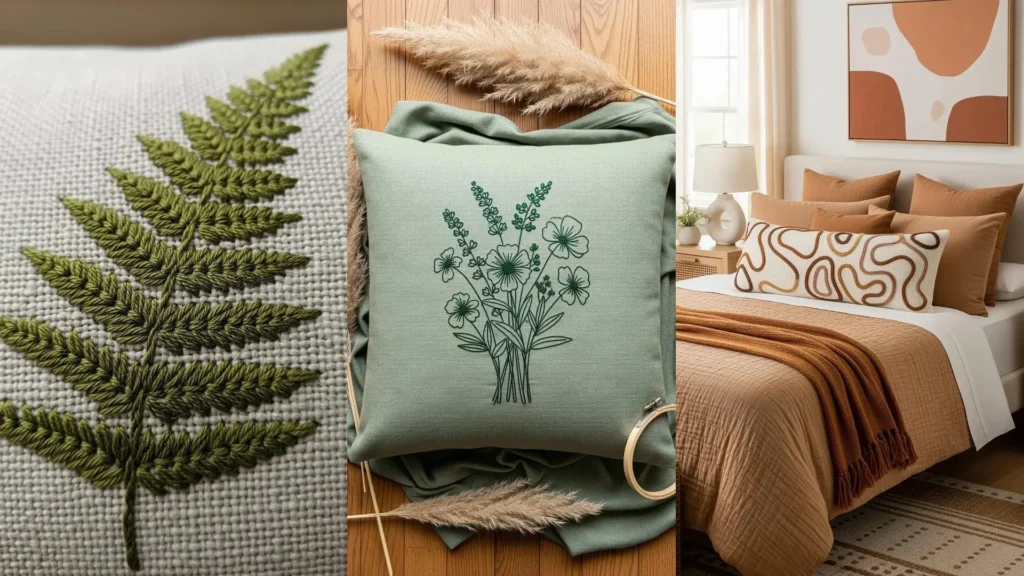
8. Textured fern leaf study

Instead of a simple backstitch outline, use the fly stitch to build the leaf structure itself.
The fly stitch naturally mimics the V-shape of fern fronds and allows you to cover more surface area with an organic texture.
It is a faster way to stitch foliage while adding a tactile quality that standard outlines lack.
9. Celestial moon and wave patterns

When embroidering on satin or smooth velvet, your needle can leave permanent holes if you aren’t careful.
Use a sharp, fine needle (size 9 or 10) and a stabilizer on the back to prevent puckering.
The silver thread on deep blue creates a luxurious contrast, perfect for moon and stars embroidery ideas that elevate a bedroom’s atmosphere.
10. Abstract one-line face portrait

The challenge with continuous line portraits is maintaining a smooth curve without sharp, angular stops.
Shorten your stitch length significantly as you navigate tighter curves like the lips or nose.
This ensures the line remains fluid and expressive, which is the signature of modern line art faces you can stitch in under 2 hours.
11. Golden wheat stalks on velvet

Embroidering on velvet requires a water-soluble topping stabilizer to keep your stitches from sinking into the pile.
Choose a lustrous rayon thread to match the sheen of the fabric, making the wheat stalks catch the light.
This combination of texture and shine is ideal for elegant nature inspired embroidery for picnic blankets or luxury indoor throws.
12. Bold palm tree silhouette

To get this thick, rope-like texture for the trunk and leaves, use a heavy chain stitch or a stem stitch with six strands.
The density is key here; a thin line would get lost on the bright white background.
Prioritize bold, dark thread to create a graphic impact, a staple technique for plant silhouette embroidery ideas for beginners.
13. Geometric polygon deer head

Sharp corners are the priority in low-poly designs; if they round off, the effect is ruined.
End your thread or take a distinct anchor stitch at every vertex to ensure a crisp point.
Using a lighter thread on a textured rust fabric emphasizes the architecture of the design, a great approach for animal silhouette string art designs adapted to thread.
14. Stylized Japanese wave pattern
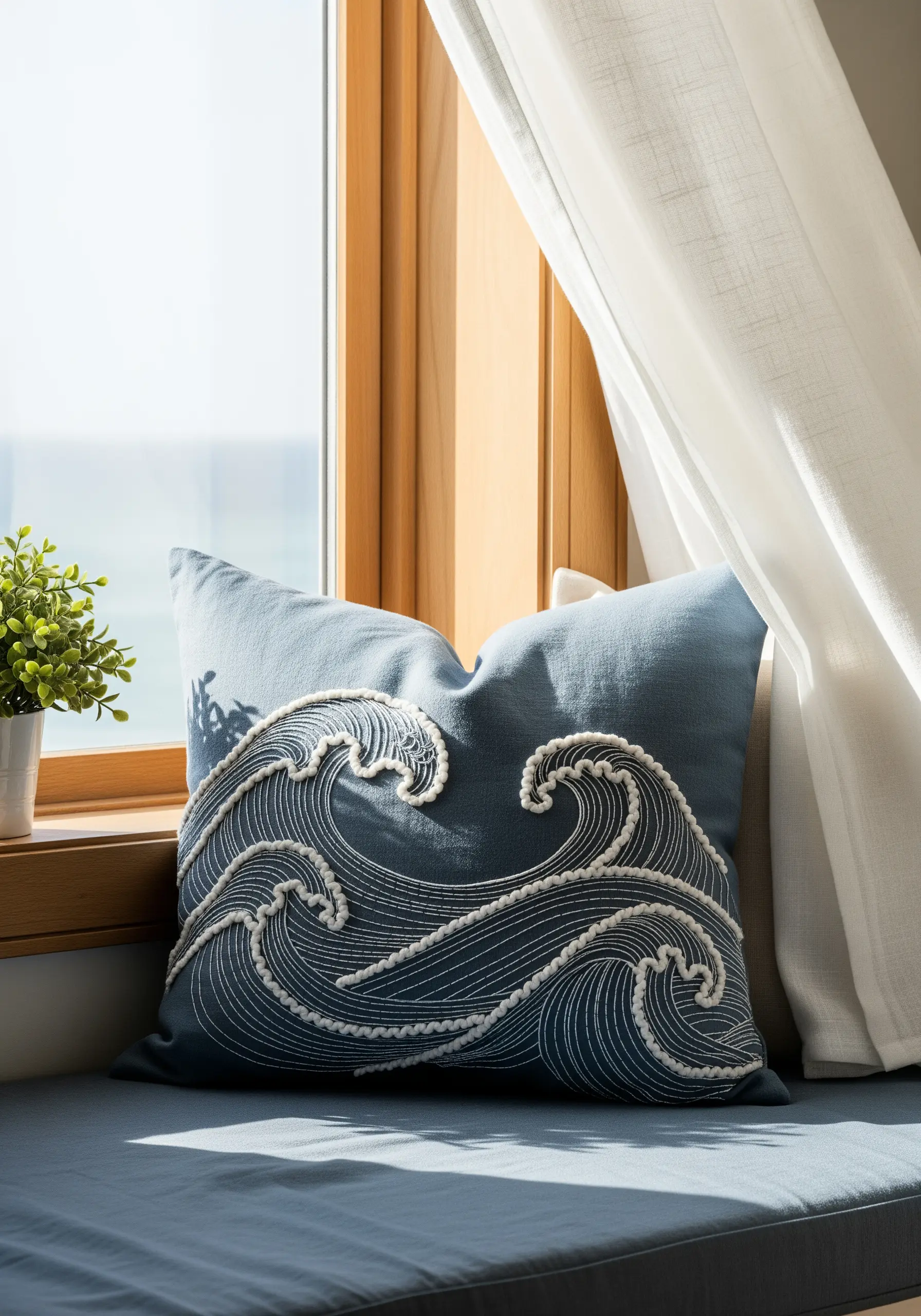
To mimic the rolling foam of waves, combine a split stitch for the lines with French knots for the spray.
This mixed-stitch approach adds dimension that a simple line drawing cannot achieve.
The texture creates a tactile experience suitable for ocean marine embroidery wall themes brought onto soft furnishings.
15. Dandelion seed dispersion
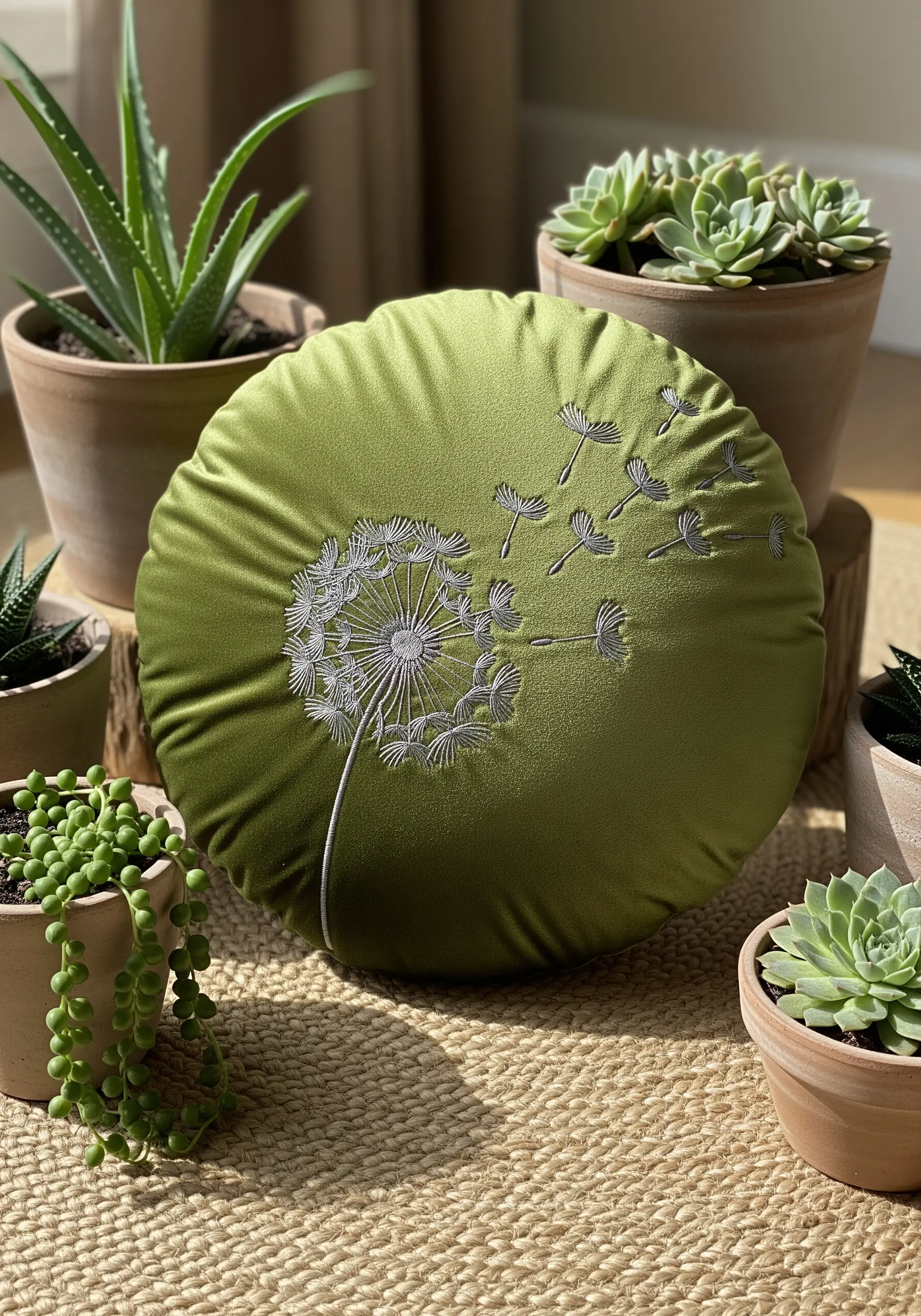
The floating seeds need to look weightless, so use a single strand of light grey or silver thread.
Use long straight stitches for the stems and tiny detached fly stitches for the seed heads.
This lightness creates movement and prevents the design from looking heavy, perfect for dandelion and wildgrass stitch projects.
16. Botanical mushroom trio on leather
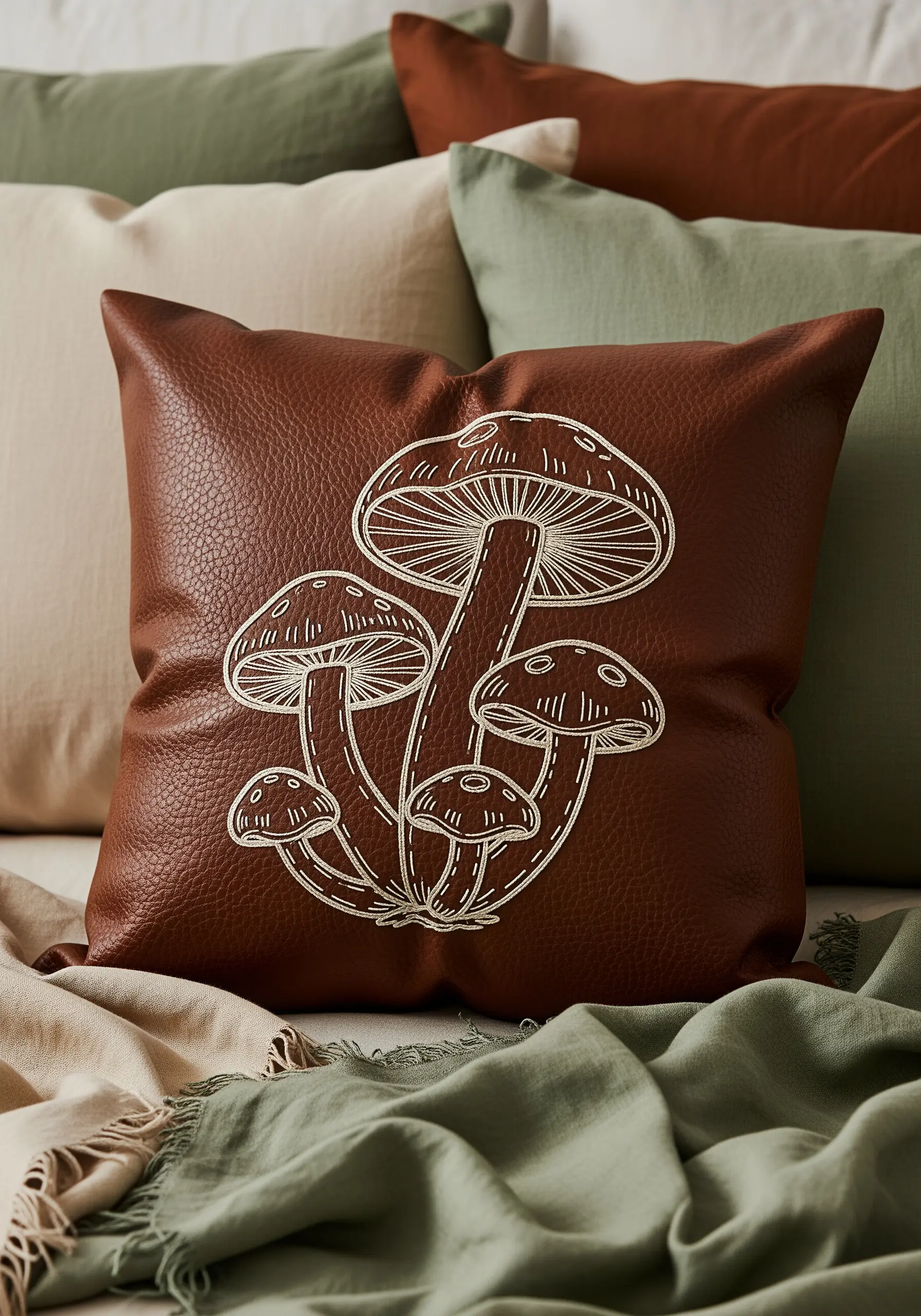
When stitching on faux leather or vinyl, remember that every needle hole is permanent.
Pre-poke your holes with an awl or use a specialized leather needle to glide through without tearing.
Space your stitches slightly further apart than usual to maintain the structural integrity of these embroidered cushion covers.
17. Symmetrical ginkgo leaf pattern

Symmetry demands consistency; if one leaf is slightly off, the whole mandala effect feels unbalanced.
Trace your pattern using a stencil rather than freehand drawing to guarantee uniformity.
A warm copper thread on cool grey felt creates a sophisticated palette often seen in botanical hoop embroidery projects.
18. Simple bird on a branch
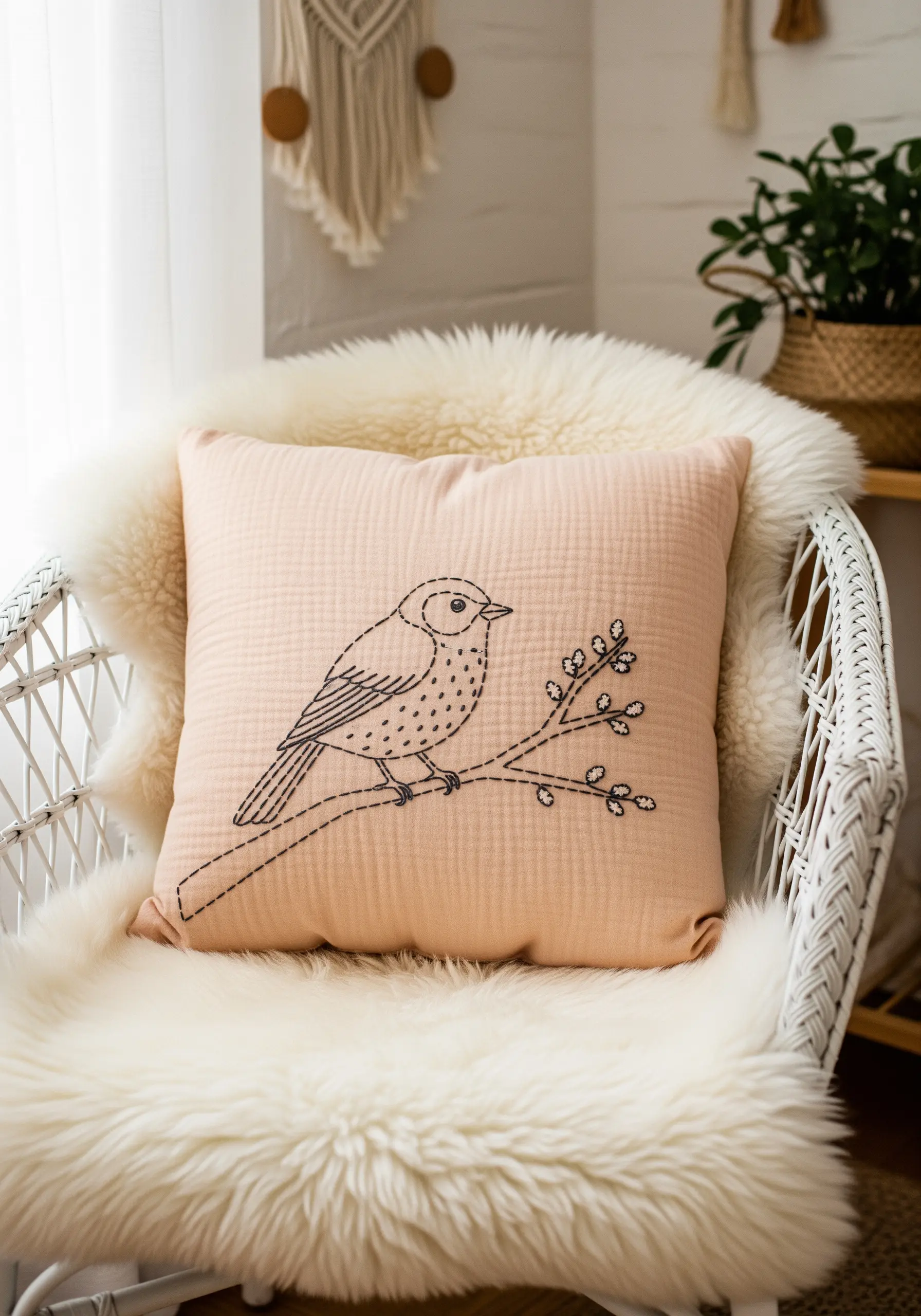
For this rustic, hand-drawn look, a running stitch (or sashiko stitch) works better than a solid backstitch.
The small gaps between stitches give the bird a vintage, folk-art character.
It is a forgiving technique that adds charm to beginner friendly embroidery patterns.
19. textured floral silhouette on burlap
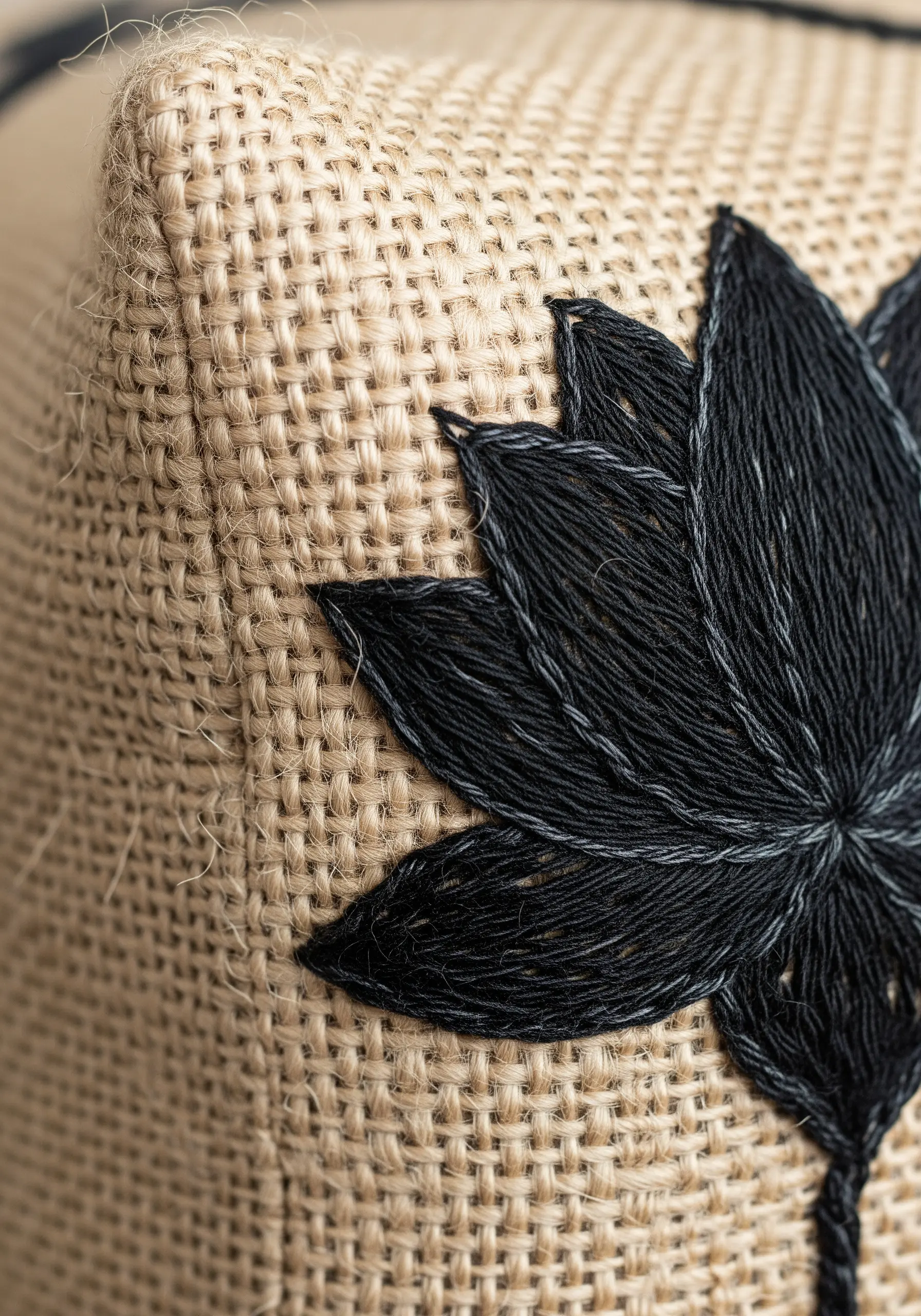
Burlap has a loose weave that swallows fine threads, so you must scale up your materials.
Use yarn or a tapestry wool instead of standard embroidery floss to ensure visibility.
This bold choice turns simple motifs into rustic stitch art projects with significant visual weight.
20. Abstract organic shapes
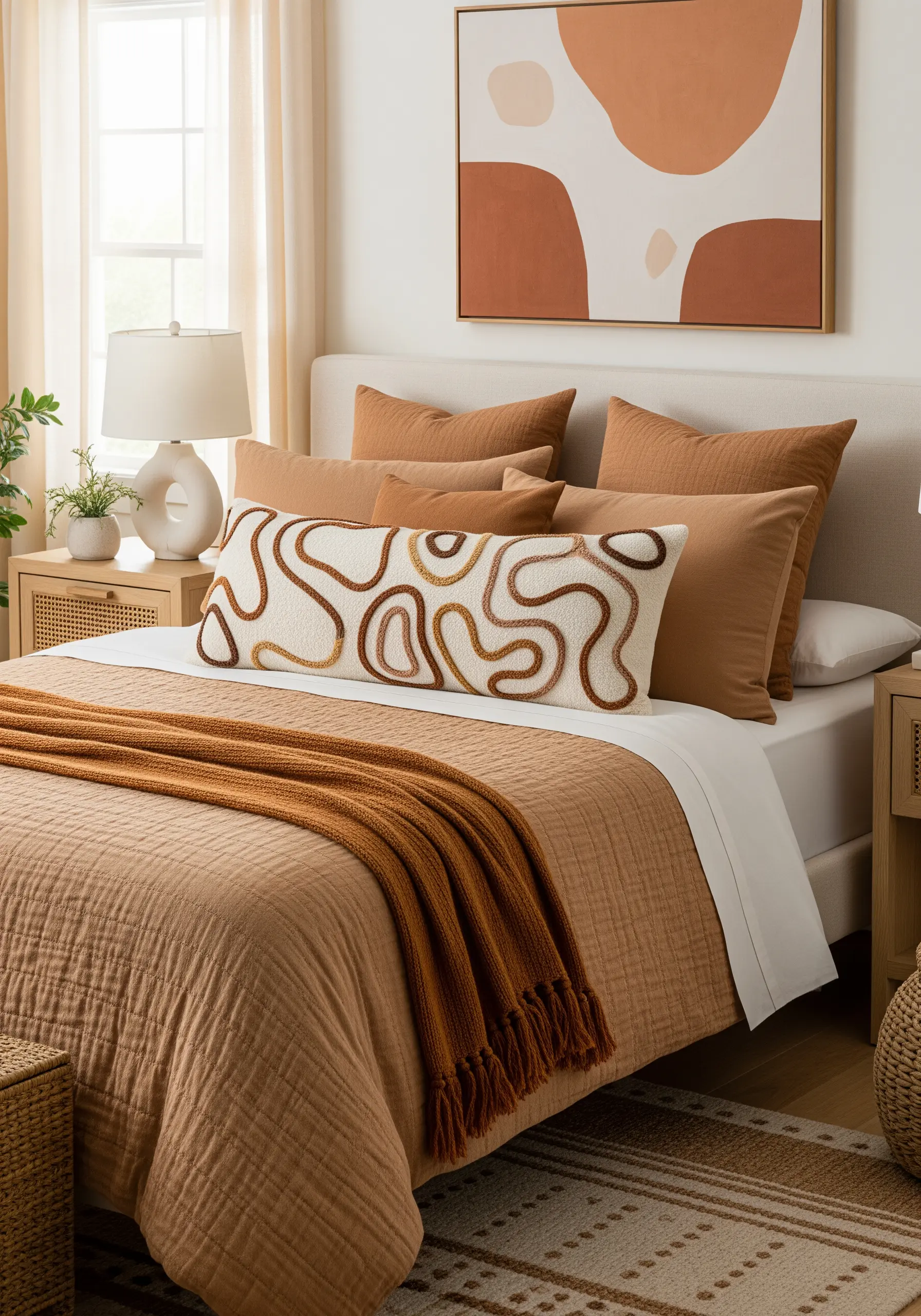
To achieve this raised, carpet-like texture, use a punch needle or a very dense couching technique.
The loop pile creates a soft, tactile surface that contrasts beautifully with flat linen.
Mixing textures like this is the secret to making abstract shapes for pillow covers feel curated rather than chaotic.