Have you ever looked at a simple shirt cuff, a pocket corner, or the collar of a jacket and felt it was waiting for something more? A small, embroidered detail has the power to transform an everyday object into something deeply personal and quietly beautiful.
These tiny floral ideas are not about grand gestures. Instead, they are about the art of placement and the impact of a few, well-chosen stitches. Think of them as secret messages or hidden gardens—a sprig of lavender peeking from a pocket, a trail of blossoms framing a neckline, or a single bud on a sock that only you know is there.
Here, you’ll find the techniques to make these small additions look intentional and polished. We will explore how texture, color, and stitch choice can turn a simple motif into a tiny work of art. Forget perfection; focus on the pleasure of adding a touch of handmade elegance to the small corners of your life.
1. Lavender Sprig with Dimensional Knots

To give your lavender a realistic, budding texture, use French knots and vary the number of times you wrap the thread around the needle—once for smaller buds, twice for fuller ones.
Work with three strands of floss for the purple flowers to give them volume, but switch to a finer two-strand thread for the green stem to keep it delicate.
Stitching on denim is satisfyingly sturdy, but a sharp needle is essential for piercing the thick fabric without snagging.
This textural contrast makes the tiny motif pop against the rugged twill of vintage-inspired denim.
2. Asymmetrical Forget-Me-Nots on a Collar

For perfectly uniform petals, use a lazy daisy stitch and mark five tiny, evenly spaced dots around a central point with a water-soluble pen before you start.
This simple guide ensures your flowers look intentional and polished, not accidental.
Use a single strand of yellow for the central French knot to keep the scale delicate and prevent it from overpowering the blue petals.
Placing the motif asymmetrically on the collar point feels more organic and modern than a perfectly centered design.
3. Woodland Mushrooms on a Ribbed Sock
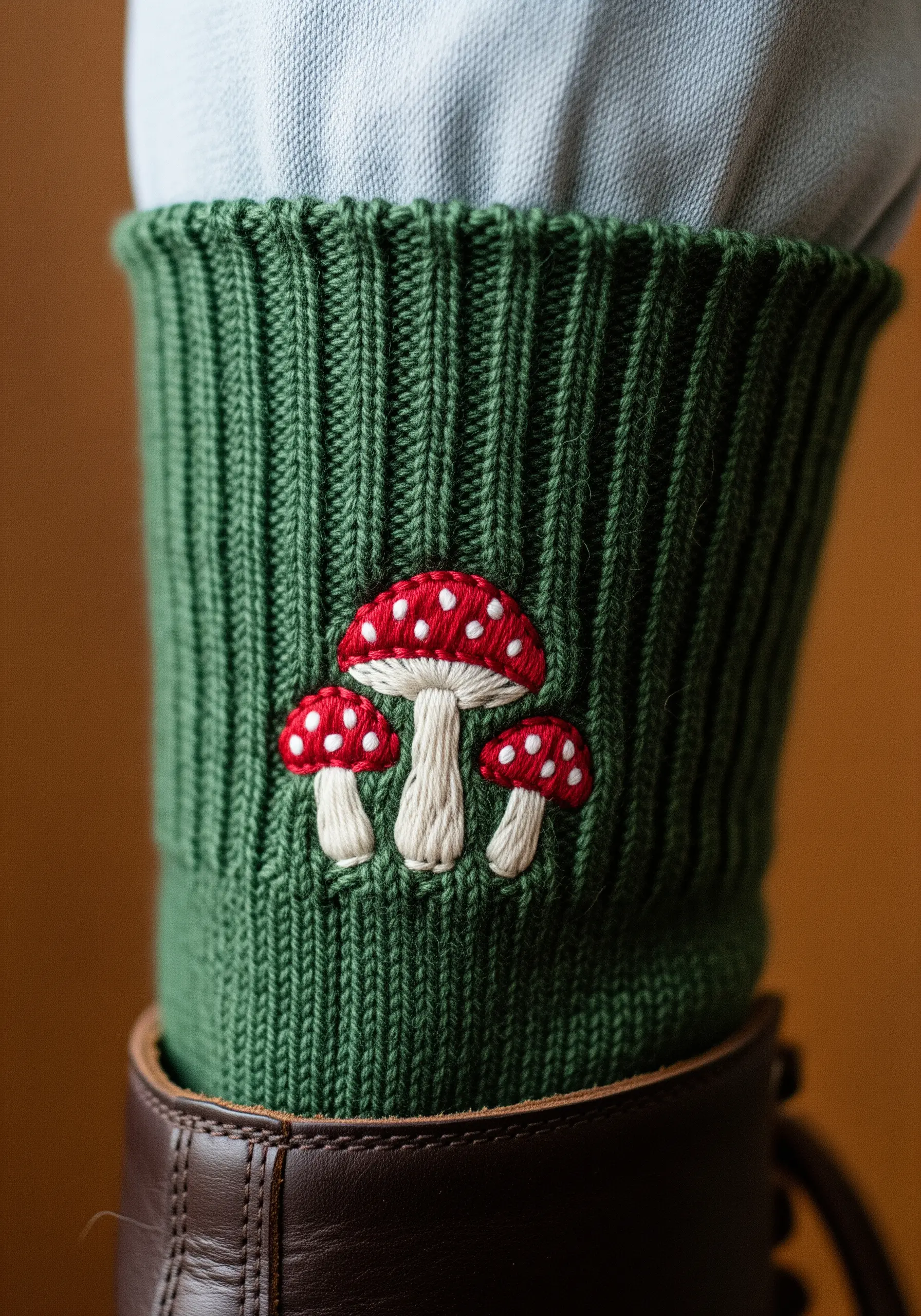
When embroidering on a stretchy, ribbed fabric, always use a stick-on, water-soluble stabilizer on top of your work area.
It provides a smooth, stable surface that prevents your stitches from sinking into the ribbing and becoming distorted.
Fill the mushroom caps with satin stitch, directing your stitches perpendicular to the knit’s grain to minimize warping.
The scattered French knots not only add detail but also help anchor your stitches, making the design more durable for one of these small handmade projects.
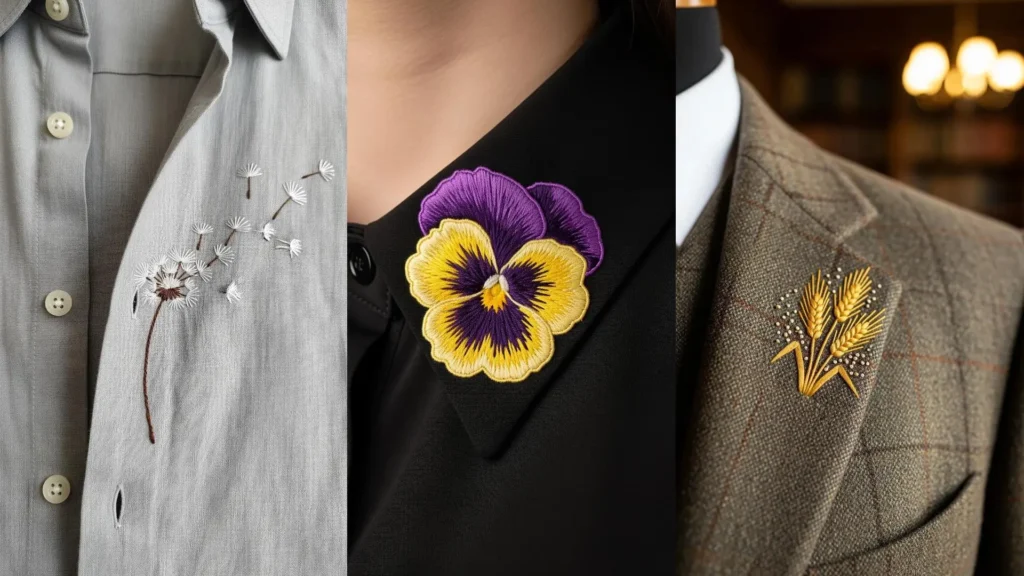
4. Dispersing Dandelion Seed Head

To capture the feeling of weightless movement, use only a single strand of floss for the drifting seeds.
Vary the length and angle of each straight stitch to create a natural, windswept effect, as if they are truly floating away.
For the central puff, use a dense cluster of tiny seed stitches or a tightly worked satin stitch to contrast with the airy, dispersed seeds.
This design beautifully illustrates how quick stitch inspirations can tell a small, poetic story on fabric.
5. Bold Pansy with Thread Painting

Achieve a velvety, realistic pansy by using long and short stitch, the cornerstone of floral thread painting.
Work from the outer edge of each petal inward, angling your stitches to follow their natural curve and growth direction.
On a dark fabric like black, high-contrast colors like yellow and purple appear exceptionally vibrant, so don’t be afraid of bold choices.
Finally, outline the petals with a single strand of split stitch in a slightly darker shade to give them a crisp, defined edge.
6. Lily of the Valley Collar Garland
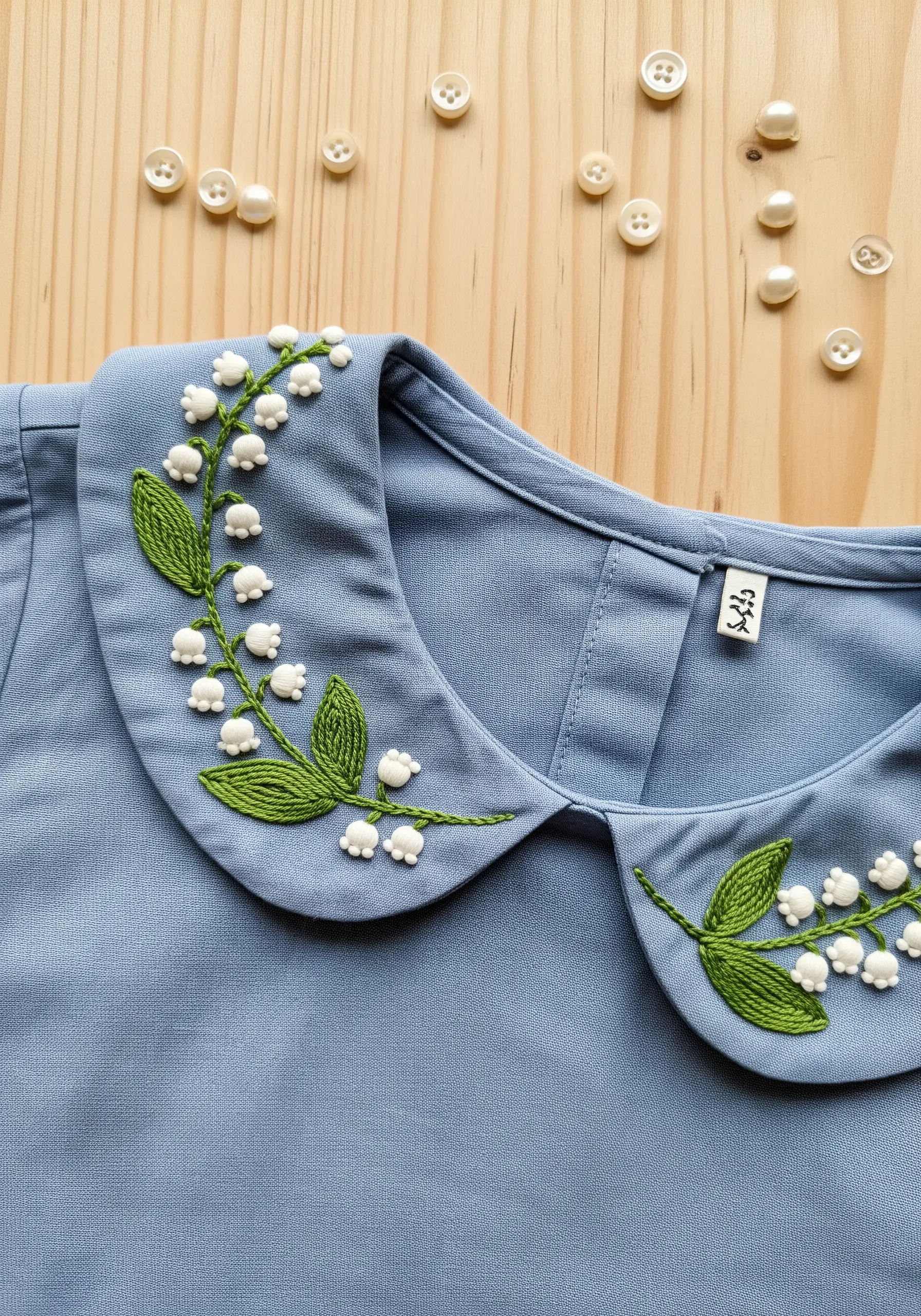
Create the bell-shaped flowers using a padded satin stitch for a subtle 3D effect.
First, place a few small straight stitches as a foundation, then cover them completely with satin stitch; this elevates each blossom from the fabric surface.
Connect the flowers with a gracefully curved stem stitch to form a delicate garland.
This technique is perfect for creating elegant botanical border designs on collars, cuffs, and hemlines.
7. A Fresh Strawberry Pocket Motif

For a smooth, rounded strawberry, use a brick stitch fill instead of a standard satin stitch; the staggered stitches conform better to curves and minimize gaps.
Add tiny yellow seed stitches on top for the seeds, scattering them unevenly for a more natural look.
For the leaves, vary the direction of your satin stitches to mimic the texture of natural veins.
This combination of textures makes these minimal fruit & plant motifs feel dynamic and lifelike.
8. Delicate Heather on a Fine-Knit Sock

Use clusters of tiny French knots in graduating shades of purple and pink to build the heather blossoms realistically.
Stagger their placement along the stem to avoid a uniform, unnatural appearance.
A fine-gauge knit requires a ballpoint needle to slide between the fabric’s loops instead of piercing and breaking them.
Always add a small piece of tear-away stabilizer on the inside for support, ensuring the stitches don’t pull or distort the delicate knit.
9. Cherry Blossom Branch on a Sleeve

Create soft, elegant petals with a five-point lazy daisy stitch or small, angled satin stitches that radiate from the center.
Use a darker, contrasting color for the central stamens—a few simple straight stitches are all you need to make the flower pop.
The contrast between the smooth pink petals and the textured brown branch (achieved with a stem stitch or whipped backstitch) creates a balanced and classic composition.
This is one of the most classic aesthetic embroidery ideas for transforming a plain garment.
10. Hyper-Realistic Cuff Bee
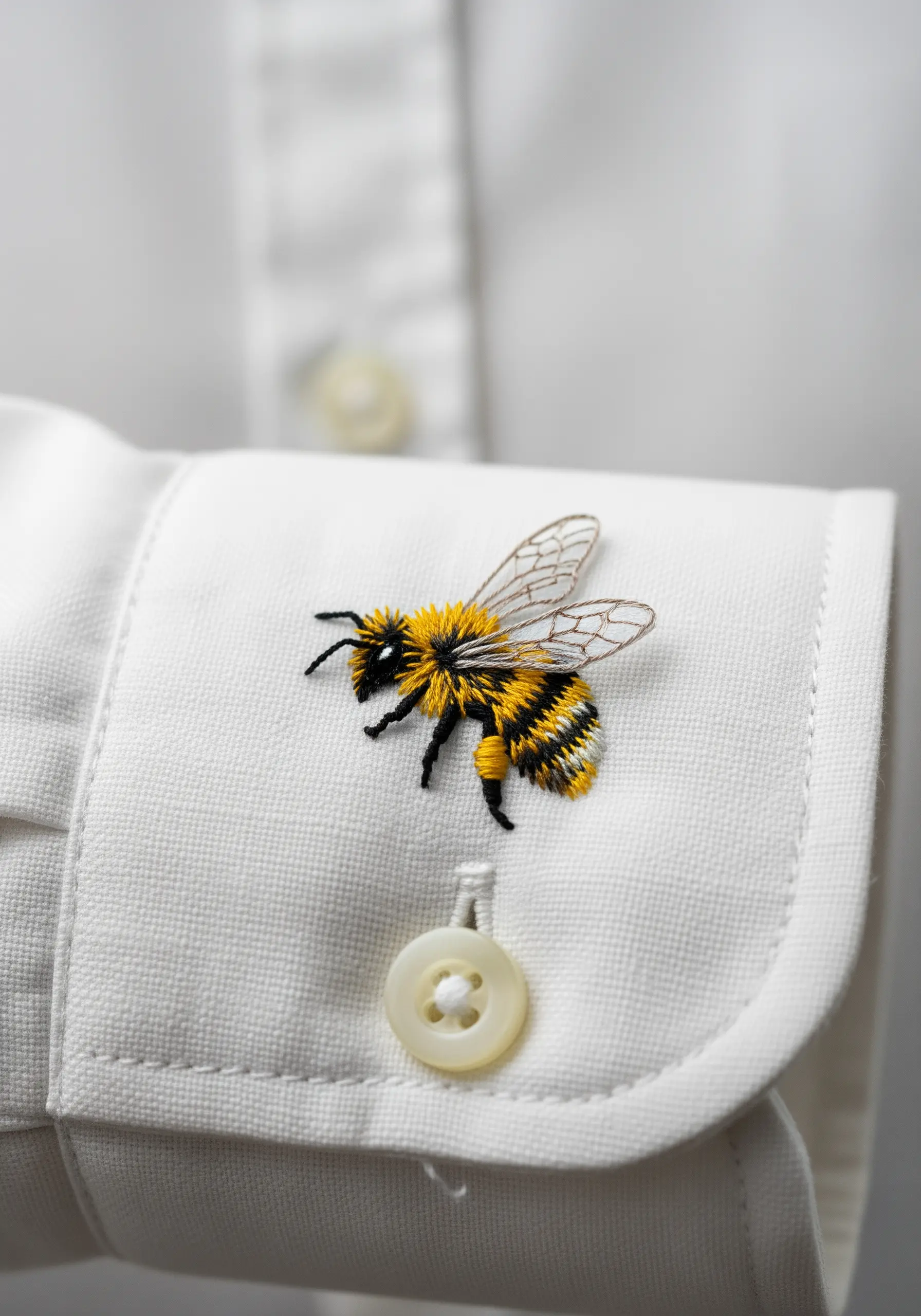
To create the fuzzy texture of the bee’s body, use long and short stitch with single strands of black and yellow thread, slightly overlapping the colors where they meet.
For the translucent wings, stitch the vein details onto a small piece of organza fabric stretched in your hoop.
Then, carefully cut out the wing shape and appliqué it onto the cuff with tiny, almost invisible stitches for a stunning, realistic effect.
This is one of those mixed-media crafts with embroidery that truly elevates your work.
11. Cheerful Daisy Bouquet for Canvas

Use a padded satin stitch for the white petals to make them appear plump and three-dimensional against the flat canvas of a tote bag.
A dense cluster of yellow French knots creates a convincing, highly textured flower center that invites touch.
To create the tiny bow, simply wrap the green stems several times with a contrasting light green thread and secure it with a knot at the back.
The sturdy canvas is ideal for these kinds of botanical stitch ideas, as it can handle dense stitching without puckering.
12. Climbing Ivy on a Trench Coat

For an instant, natural-looking color blend in the leaves, thread your needle with two different shades of green floss at the same time.
As you fill the shape with satin stitch or fishbone stitch, the colors will mix randomly, creating effortless variegation.
Use a whipped backstitch for the connecting vine; this technique creates a smooth, rounded line that looks much cleaner than a standard backstitch.
It’s an ideal way to capture nature’s textures on outerwear.
13. Celestial Lapel Constellation
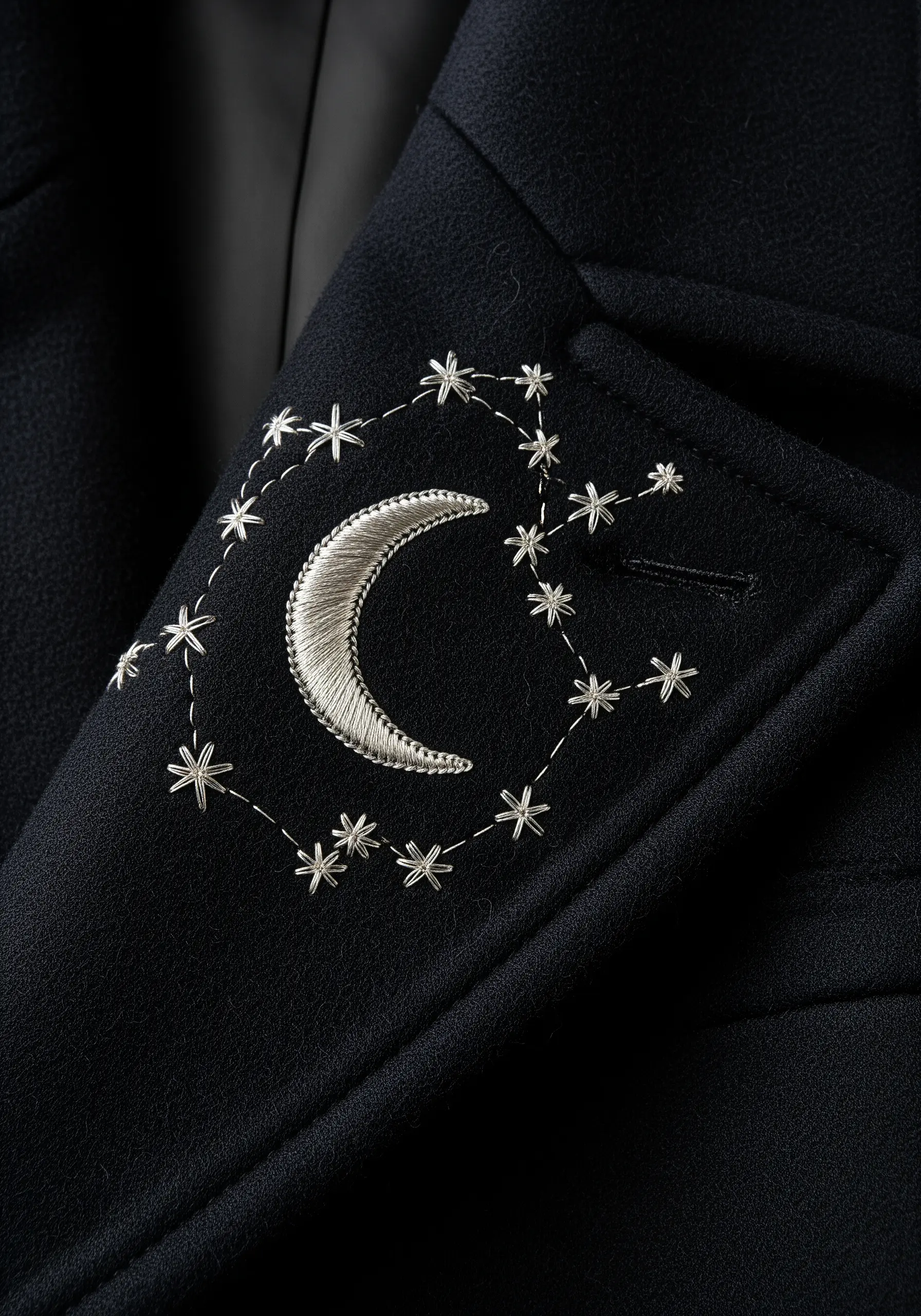
For a luminous crescent moon, use a high-sheen metallic or satin thread and fill it with dense, parallel satin stitches.
Keep your stitches perfectly aligned to create a smooth, light-reflecting surface.
The surrounding starbursts are simply straight stitches, but using a finer, sparkling metallic thread makes them twinkle against the dark fabric.
This high-contrast effect is especially powerful for celestial micro-embroidery ideas.
14. Delicate Baby’s Breath Neckline
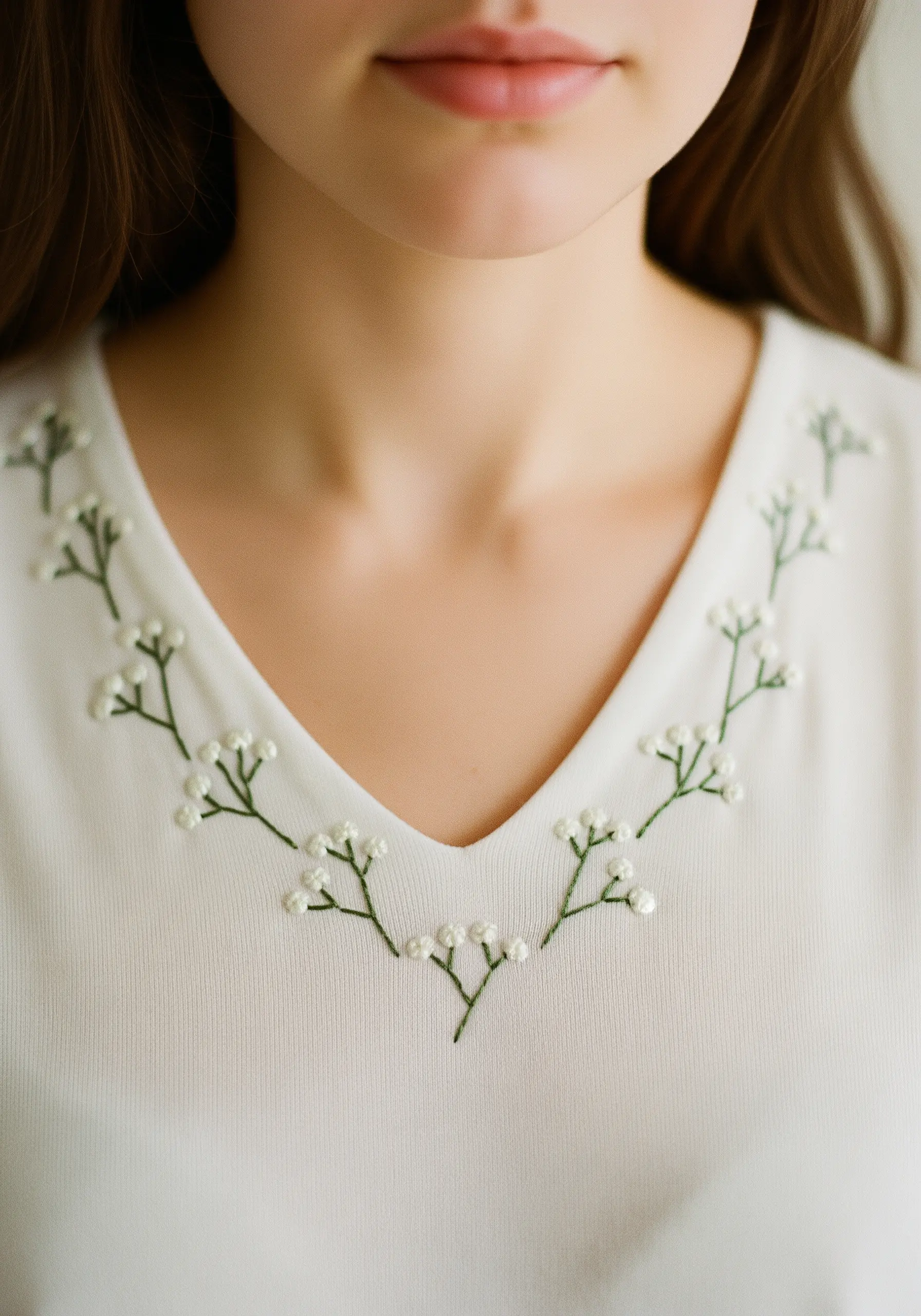
The key to this airy design is using a very fine thread—a single strand of floss is perfect for achieving that barely-there feel.
Use a simple split stitch for the branching stems, ensuring your lines remain thin and graceful.
For the blossoms, place tiny, loose French knots or colonial knots at the very tips of the branches.
This creates a subtle, necklace-like effect and results in DIY hand-stitched projects that feel luxurious and personal.
15. A Solitary Snowdrop on a Cuff

Give the snowdrop petal a three-dimensional quality by using a detached buttonhole stitch.
This sculptural stitch creates a raised, looping petal that sits slightly above the fabric, casting its own tiny shadow.
For the delicate green marking inside, use a tiny V-shaped satin stitch with a single strand of floss.
This advanced touch is perfect for turning old sweaters into spring outfits.
16. Graphic Amanita on a Navy Sock

To achieve this clean, pixelated look on a stretchy sock, use a water-soluble canvas.
This gridded material sticks to your fabric, providing perfect squares for even stitches that mimic cross-stitch or knitting patterns.
Once you are finished stitching, the canvas dissolves completely in water, leaving a crisp, graphic design that looks woven right in.
It’s a fantastic technique for adding cartoon-style embroidery ideas to tricky fabrics.
17. Botanical Rosemary on Linen

Capture the spiky texture of rosemary leaves with angled straight stitches worked along a central stem.
To give the sprig depth and realism, blend several shades of green floss—from deep forest to light sage—within the same design.
This approach adds complexity without complicating the stitches.
This kind of detail is what makes modern minimalist table linen feel truly special.
18. Gradient Feather on a Cuff
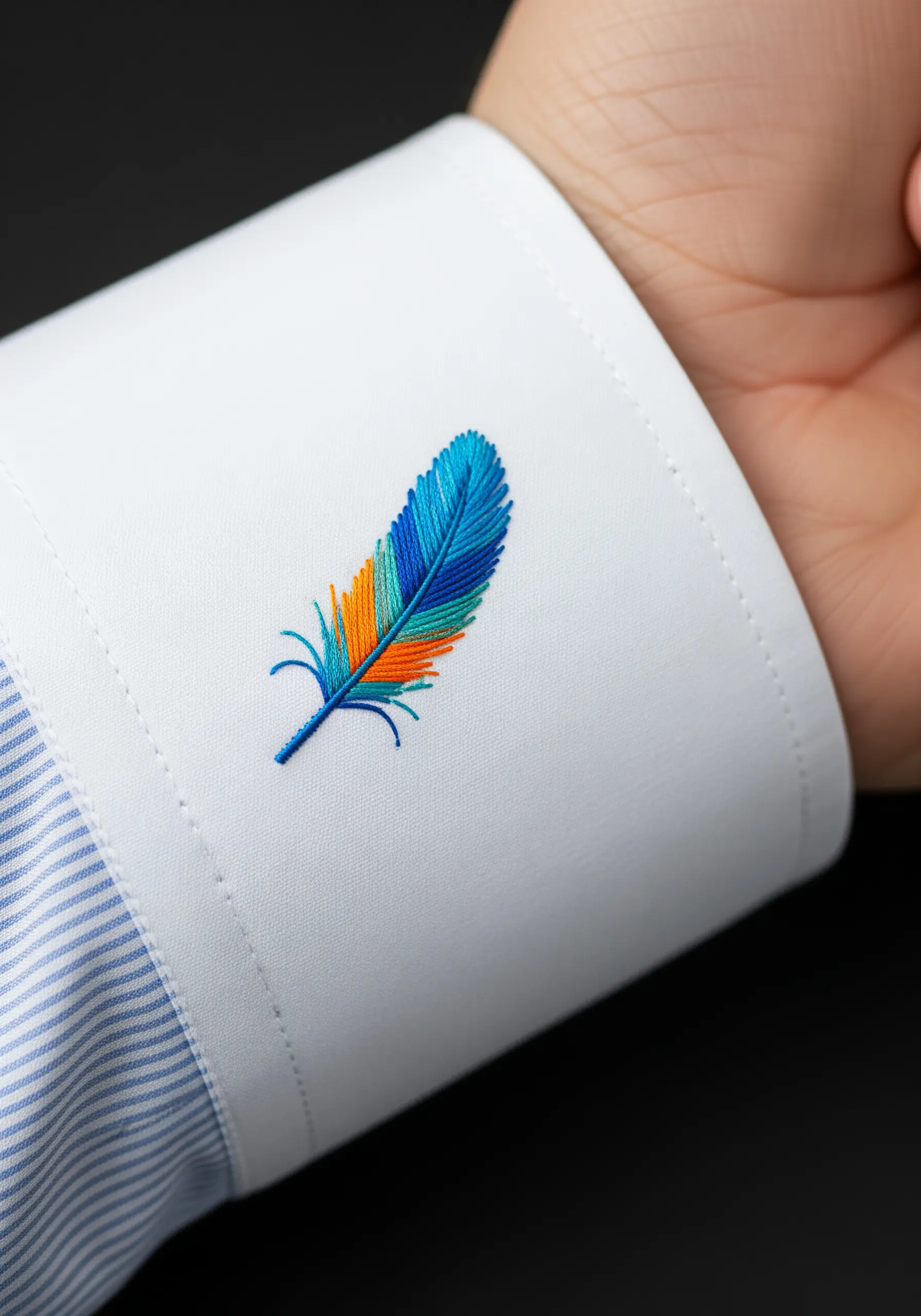
The seamless color blending in this feather is achieved with long and short stitch.
Begin with one color, then introduce the next by bringing your needle up through the middle of the previous stitches, interlocking the shades invisibly.
Keep all your stitches angled slightly outward from the central spine (a simple split stitch) to create the feather’s natural, textured flow.
This technique turns thread into mixed-fiber projects that look like gallery art.
19. Minimalist Mountainscape on the Yoke

The power of this design lies in its clean lines, which you can achieve with a simple backstitch or stem stitch.
Maintaining a consistent stitch length is key for a polished, graphic look. Use two or three strands of black floss for a bold, clear outline.
The small pop of yellow, filled with satin stitch, acts as a focal point, drawing the eye and adding warmth to the cool, linear landscape.
It’s a perfect example of delicate line art embroidery.
20. Golden Ginkgo on Corduroy Collar
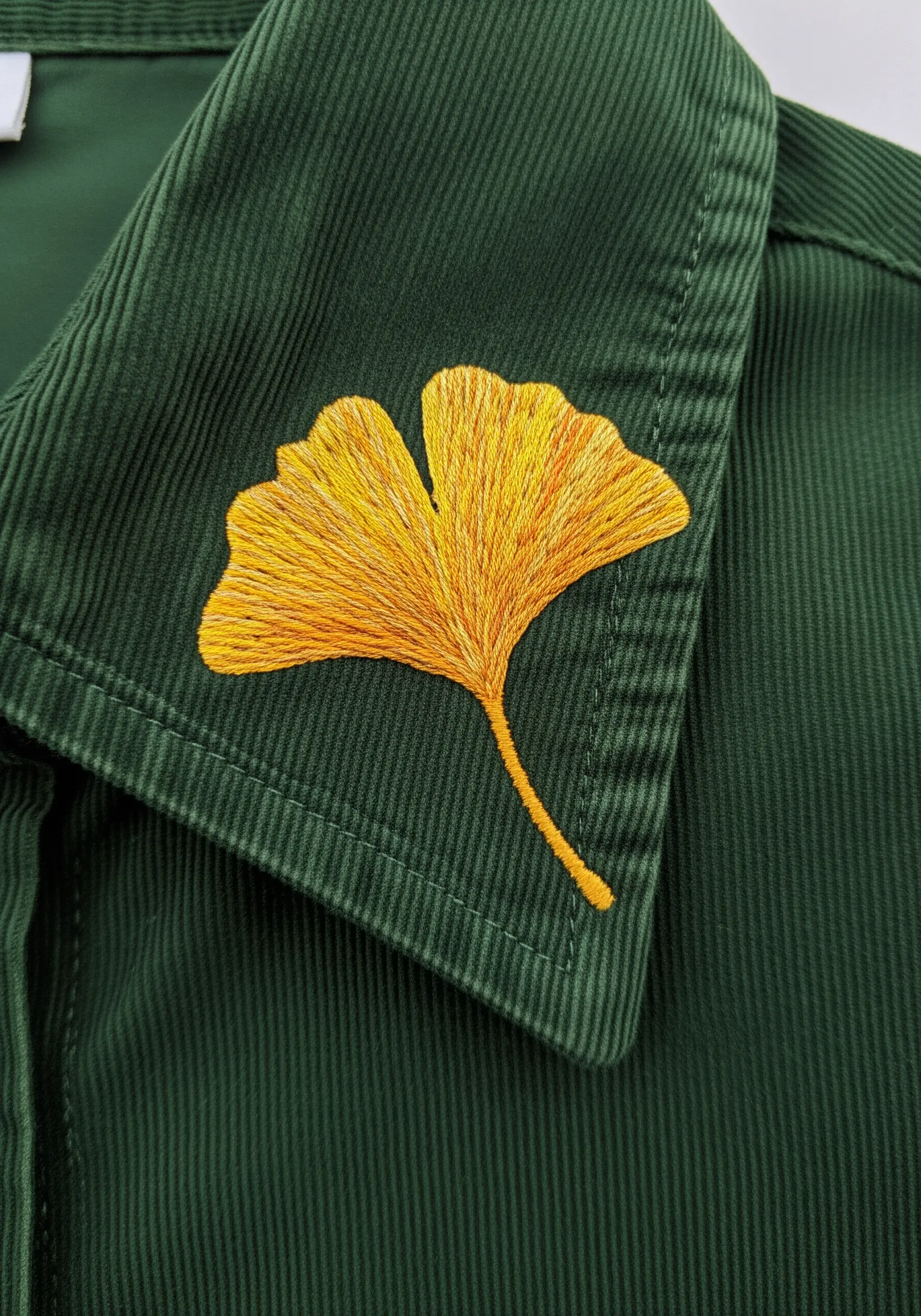
The key to a beautiful ginkgo leaf is capturing the delicate, radiating veins.
Use a fishbone stitch or a fan-shaped arrangement of long and short stitches, all originating from the base of the leaf.
By blending two shades of yellow or gold floss, you can create a natural, autumnal glow that looks stunning against the rich texture of corduroy.
This is one of the best nature-calm stitching projects to try.
21. Scattered Lemon Slices on Socks

To make these tiny motifs crisp and readable, outline each lemon slice with a single strand of backstitch before you fill it in.
Use a slightly darker yellow for the outline to create definition and depth.
When stitching on ribbed socks, use a ballpoint needle and a light tension to avoid pulling or distorting the stretchy fabric.
These minimal food & coffee motifs add a playful, zesty touch.
22. Heirloom Violets on Vintage Linen

When working on delicate antique fabric, always use a fine, sharp needle (a crewel size 9 or 10) and limit your floss to one or two strands.
This prevents creating large holes or stressing the fragile threads of the heirloom linen.
Use a gentle long and short stitch for the petals to blend shades of purple smoothly, honoring the delicate nature of the textile.
It’s a beautiful way of repurposing thrifted linens into vintage-chic decor.
23. A Patient Snail on the Knee

Create the mesmerizing spiral of the shell with a whipped backstitch worked in a continuous circle. This gives a smooth, raised line that looks more refined than a simple backstitch.
Using a variegated brown thread will add instant color dimension without the effort of changing floss.
For the snail’s silvery trail, use a metallic thread with a simple running stitch or a line of tiny seed stitches for a touch of unexpected sparkle.
These tiny embroidery designs inspired by everyday life add charm to unexpected places.
24. A Secret Glow-in-the-Dark Collar
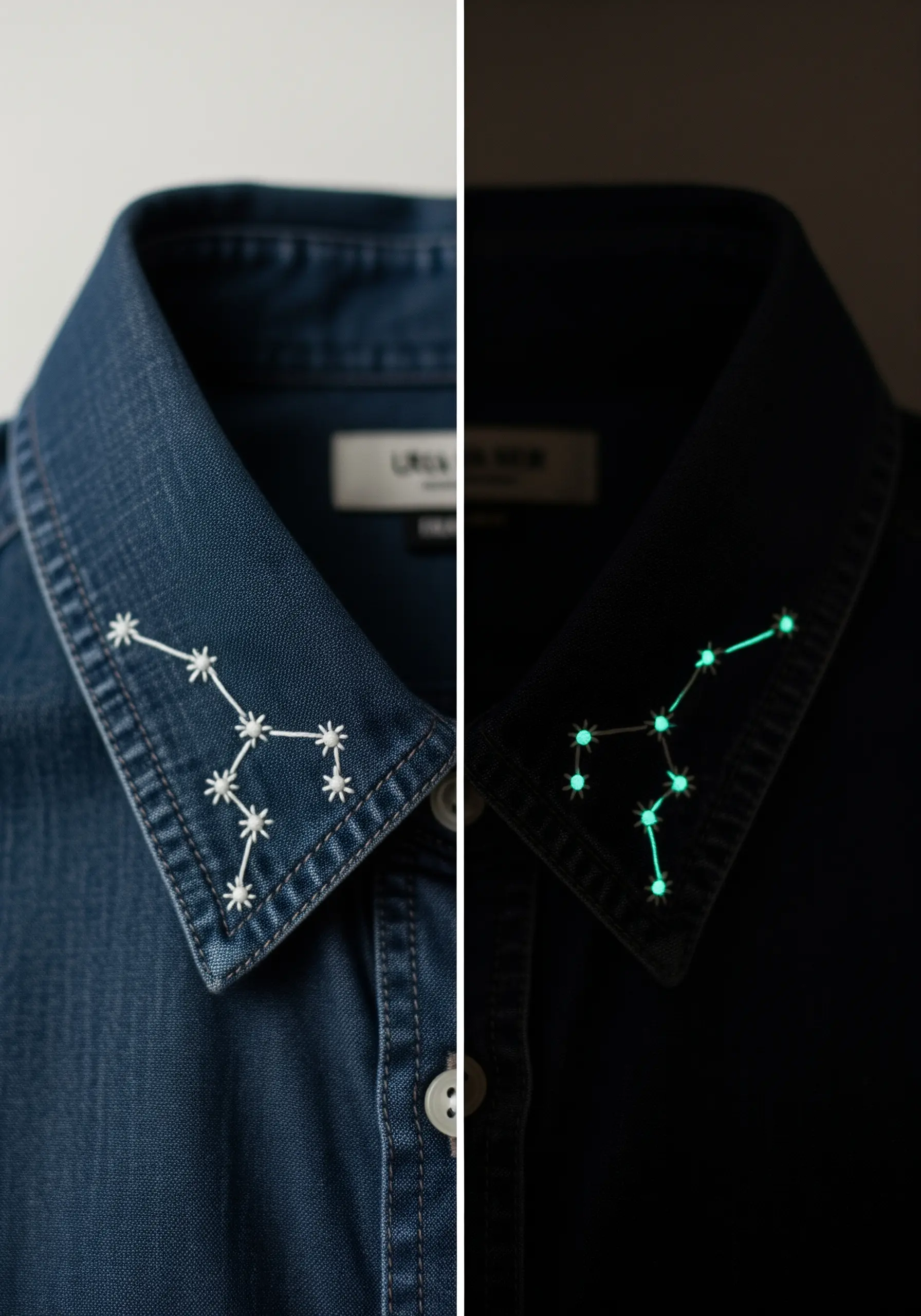
This clever design reveals a secret after dark. First, stitch your constellation with standard white floss using a simple backstitch.
Then, trace over the main lines and stars with a single strand of glow-in-the-dark thread.
It’s nearly invisible in daylight but creates a magical effect when the lights go out.
Charge it under a bright lamp for the most intense glow, perfect for minimal sky & moon designs.
25. Climbing Berry Vine Placket

These plump, dimensional berries are made with bullion knots or heavily wrapped French knots.
To create the mottled, two-tone color effect, thread your needle with one strand of dark pink and one strand of light pink floss at the same time.
The contrast between the highly textured berries and the simple satin-stitched leaves creates a rich, tactile design that beautifully frames the shirt opening.
It’s a great example of high-texture fabric collage embroidery.
26. Playful Caterpillars on a Leaf

Give the caterpillars a realistic, segmented body using padded satin stitch. First, lay down short straight stitches perpendicular to the body’s length.
Then, cover these stitches with satin stitches that run parallel to the body’s length. This creates a plump, 3D effect.
The large leaf acts as a perfect canvas; use a fishbone stitch to create a prominent central vein, adding natural texture to the scene.
This is a fun way to practice creating realistic animal & insect embroidery patterns.
27. Peacock Feather on a Velvet Bow

Stitching on plush velvet requires a tear-away stabilizer on the back to prevent the pile from shifting and to support the stitches.
Use long, single straight stitches for the feather’s delicate barbs, radiating from a satin-stitched center eye.
The high sheen of rayon or silk thread against the deep, matte texture of the velvet creates a luxurious, eye-catching contrast.
This idea is inspired by the elegance found in peacock & lotus inspired table linen embroidery.
28. Gilded Wheat on a Tweed Lapel

To make the wheat heads gleam, use a real metallic gold thread. The fishbone stitch is perfect for creating the classic herringbone pattern of the kernels.
For the scattered ‘sparkles’ surrounding the wheat, add tiny, strategically placed seed beads or French knots with a fine metallic thread.
For versatility, stitch this motif onto a separate piece of stiff felt, trim it, and attach a pin backing to create a removable brooch.
This design adds an elegant touch, much like minimal festive motifs on holiday gifts.