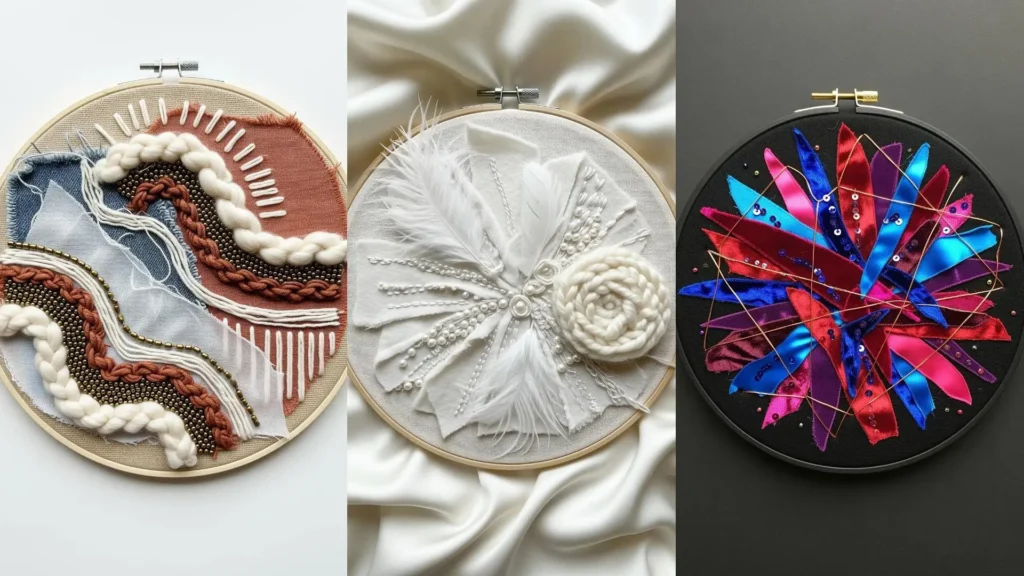
Perhaps you’re looking at your embroidery and feel something is missing—a certain polish, a quiet confidence. You have the skills, but you want your work to feel less like a hobby and more like art. The answer isn’t in more complex stitches or more colors, but in the thoughtful choices you make before the first stitch is even sewn.
Minimalist embroidery is a meditation on the essentials: the tension of a single line, the texture of a filled shape, the harmony between thread and fabric. It’s about subtracting until only the most impactful elements remain. Each design in this collection is a lesson in composition, balance, and the power of restraint.
Here, you’ll learn to see thread not just as a colorful medium, but as a sculptural tool. You’ll explore how changing the direction of a stitch can create dimension, how negative space can be more powerful than a filled one, and how a limited palette can unlock endless creative possibilities. Let’s begin.
1. Master the Art of Thread Wrapping

Move beyond stitching through fabric and explore wrapping threads directly around the hoop for a sculptural, architectural effect.
Create tension by anchoring threads to the back of the hoop or by weaving them over and under each other at intersections.
Vary the thread weight—use a thicker floss for bold lines and a single strand for delicate, web-like details.
This technique turns the entire hoop into a dynamic loom, perfect for creating dramatic focal points with minimal effort.
2. Juxtapose Texture for Visual Depth

Create a sophisticated composition by contrasting three distinct textures: smooth, granular, and linear.
Fill a circle with dense, perfectly aligned satin stitches for a solid, matte finish.
For the second circle, use randomly placed seed stitches or French knots in a metallic or variegated thread to create a shimmering, uneven surface that catches the light.
Finally, couch a high-shine metallic cord to define the overlapping circles, adding a clean, graphic outline that ties the piece together.
3. Create Bold Dimension with Chunky Fibers

Achieve a high-impact, three-dimensional look by couching thick yarn or cotton cord onto your fabric.
Use a single strand of matching embroidery floss to secure the cord to the fabric with tiny, almost invisible tacking stitches placed on the underside of the curve.
This method adds incredible depth and softness, turning simple arches into a statement piece of statement textured embroidery.
Choose a high-contrast background fabric, like this deep teal, to make the neutral cord pop visually.
4. Design a Cohesive Triptych

Elevate your wall decor by creating a series of hoops that tell a single visual story.
To connect the pieces, extend a single, continuous line of thread from one hoop to the next, creating a sense of movement and unity.
Use a combination of satin stitch blocks and simple backstitched lines to balance solid shapes with delicate paths.
This approach transforms individual hoops into a larger, intentional art installation, perfect for displaying above a console or bed.
5. Build Texture with Knotted Gradients

Instead of filling shapes with smooth satin stitches, create a grid of knots for a highly tactile, woven effect.
Use the Double Knot Stitch (or Palestrina Knot) for a raised, uniform texture that feels both rustic and refined.
Create a subtle ombré effect by transitioning through three or four shades of the same color family, working from light to dark.
This technique is meditative to execute and results in handmade organic pieces that add instant texture to any room.
6. Block Shapes with Vertical Satin Stitch

Define bold, geometric forms using disciplined vertical satin stitches, also known as long-and-short stitches when used for filling.
Keep your stitches perfectly parallel and tightly packed for a smooth, woven appearance that mimics solid blocks of color.
For crisp edges, outline each shape first with a single line of split stitch; this creates a raised boundary for your satin stitches to rest against, ensuring a sharp, professional finish.
The contrast between the primary colors and the natural canvas creates a classic, mid-century modern aesthetic.
7. Scale Up for a Statement Wall Piece

Take your geometric embroidery beyond the hoop by working on a large, framed piece of fabric.
Use a dark, solid background like black linen or canvas to make metallic and neutral threads stand out dramatically.
Combine delicate backstitched lines with densely filled seed-stitch triangles to create a dynamic interplay between structure and texture.
This approach turns your stitching into sophisticated modern thread art projects suitable for a living room or entryway.
8. Embrace the Power of a Single Line

Explore the elegance of minimalism by creating a design with a single, unbroken line.
Use a thick, multi-stranded thread like pearl cotton or all six strands of embroidery floss for a bold, graphic presence.
To achieve a perfectly smooth and continuous curve, lay the thread on your fabric and couch it down with a single, matching strand, hiding your tacking stitches on the back.
This technique emphasizes form and flow, proving that simplicity can be incredibly impactful.
9. Compose a Monochromatic Stitch Sampler

Elevate a simple shape, like a chevron, by filling it with a variety of stitches in a single color family.
Combine linear stitches (running stitch, backstitch), knotted stitches (French knots, colonial knots), and woven stitches (whipped spider web, woven bars) to create a rich tapestry of textures.
Working with a tonal palette of whites, creams, and grays keeps the focus on the tactile quality of the stitching.
This project is an excellent way to practice new techniques while creating beautiful, minimal embroidery ideas using texture instead of color.
10. Craft a Radiant Sunburst Effect

Create this striking radial design by wrapping thread from a central point to the hoop’s edge, a technique similar to string art.
For a subtle gradient, use two similar shades of floss, like coral and rust, holding one strand of each together in the needle.
Anchor your threads by passing them through the fabric at the center and wrapping them around the wooden hoop at the perimeter.
The tension of the threads against the fabric backdrop creates a stunning illusion of depth and light.
11. Create Illusion with Appliqué and Outline

Achieve a clean, graphic look by combining fabric appliqué with stitched outlines for a layered effect.
First, cut your square shapes from a crisp white linen or cotton and secure them to the black background fabric with an iron-on adhesive.
Next, use a satin stitch to create a thick, raised border around the inner square, giving it a framed appearance.
Finally, outline the outer square with a simple whipped backstitch to add definition without bulk, creating a clever optical illusion.
12. Stitch Crystalline Structures with Satin Stitch

Capture the faceted beauty of crystals by using directional satin stitches to define each plane.
Change the angle of your stitches for each facet of the crystal. This simple shift in direction will catch the light differently, creating the illusion of depth and dimension without changing thread color.
Use a light gray or silver thread on a muted background to enhance the cool, mineral-like quality of the design.
Outline each crystal cluster with a single line of backstitch to ensure every facet is sharply defined.
13. Play with Overlapping Shapes and Textures

Build a dynamic composition by layering simple geometric shapes with contrasting stitch directions and textures.
Use a long vertical satin stitch to fill the circle and rectangle, creating a solid, matte foundation.
For the overlapping arch, switch to a radial satin stitch, where each stitch radiates from a central point. This creates a subtle fan-like texture that contrasts beautifully with the straight lines.
Leave the ends of the arch’s threads loose to create a soft, fringed edge, adding another layer of tactile interest.
14. Define a Grid with Minimalist Knots

Create a simple, elegant grid using a foundation of straight stitches in a dark, contrasting color.
Add a touch of softness and dimension by securing each intersection with a small, decorative knot, like a Colonial Knot or a French Knot, using a thicker, lighter-colored thread.
The contrast in both color and thread weight turns a basic grid into a thoughtful, balanced design.
This technique is perfect for creating minimal embroidery patterns that transform plain linen into sophisticated art.
15. Animate Your Hoop with a Dynamic Burst

Inject energy into your design with a burst of radiating straight stitches.
Create a sense of movement by varying the length and angle of each stitch, starting from a single, off-center point.
Use a bold, high-contrast color like this vibrant coral against a neutral linen background to maximize the visual impact.
This is a quick yet incredibly effective technique for creating abstract thread embroidery ideas that turn simple lines into mesmerizing art.
16. Create a Pattern with Scattered Triangles

Design a playful, modern pattern by filling tiny triangles with satin stitch and scattering them across the fabric.
To keep the triangles sharp and uniform, draw them onto the fabric with a water-soluble pen before you begin stitching.
Work with a limited, sophisticated palette—like black, white, and gray on a soft yellow—to maintain a minimalist feel.
This is a perfect project for using up small scraps of floss while creating a cheerful piece of kitchen wall decor that looks boutique-made.
17. Conduct a Study in Abstract Textures

Dedicate a hoop to exploring how different stitches fill the same shape, creating a sampler of textures.
Fill the first rectangle with a smooth, flat satin stitch using a silk or metallic thread for a high-sheen finish.
Pack the second rectangle with dense French knots using a matte cotton or wool thread for a nubby, plush texture.
Outline the third rectangle with a whipped backstitch or chain stitch in a contrasting color to emphasize negative space and the beauty of a simple line.
18. Form a Hypnotic Spiral with a Single Stitch

Create this mesmerizing spiral using a single, continuous line of a textured stitch, like the whipped backstitch or chain stitch.
Start in the center and work your way outward, carefully following a pre-drawn spiral guideline for a perfectly even result.
Introduce a subtle gradient by switching thread colors every few rows, moving from light to dark or through a spectrum of related shades.
This meditative process results in a design that draws the eye inward, perfect for creating a calm focal point.
19. Design with Bold Lines and Negative Space

Master the art of Op Art-inspired embroidery by using precise lines and solid shapes to create visual tension.
Use a simple backstitch for all the thin lines, ensuring your stitch length is consistent for a clean, uniform appearance.
Fill the solid circles with a dense satin stitch, working in a single direction to create a smooth, light-absorbing surface that contrasts with the white fabric.
Grouping these hooped wall collage layouts together amplifies their graphic impact.
20. Stitch a Delicate Honeycomb Motif

Create a light and airy geometric pattern using a simple backstitch to form a honeycomb grid.
Use a fine thread, like a single strand of white floss on a muted lilac fabric, to maintain a delicate, almost ethereal quality.
This design is an exercise in precision; use a ruler and a fabric marker to draw your grid beforehand to ensure all your hexagons are perfectly symmetrical.
A small ribbon bow added to the hoop’s hardware is a simple way to complete the soft, gentle aesthetic.
21. Achieve a Bold Look with Open Chain Stitch

For a graphic, dimensional line that mimics a real chain, use the Open Chain Stitch, also known as the Square Chain Stitch.
This stitch creates linked rectangular shapes, perfect for bold curves and outlines in modern designs.
Use a thicker thread, like pearl cotton or multiple strands of floss, to give the stitch structure and presence.
Placing two parallel lines of this stitch on a high-contrast fabric, like this rust-orange, creates a powerful sense of movement and rhythm.
22. Create a Dynamic Intersecting Grid

Design a composition that feels both chaotic and orderly by layering straight stitches to form an abstract grid.
Work with a limited color palette—here, dark gray, white, and a pop of orange—to keep the design cohesive and modern.
Lay down one color of threads first, then weave the subsequent colors over and under to create texture and the illusion of depth.
This technique is a fast way to create complex-looking geometric framed embroidery patterns that are perfect for a home office.
23. Paint with Thread Using Long-and-Short Stitch

Achieve a soft, blended effect that mimics a watercolor wash by using the long-and-short stitch to fill your geometric shapes.
Fill each small square with a single color, varying the direction of your stitches to create subtle texture and light reflection.
For the blended squares, introduce a second color midway through the shape, staggering your stitch lengths to create a seamless transition.
This technique turns simple blocks into a sophisticated study of color and tone.
24. Combine Natural Textures for an Earthy Feel

Create a piece with rich, organic warmth by combining different natural fibers in one hoop.
Use a panel of burlap or jute as a textural base on one side of your design.
For the color-blocked stripes, wrap thick yarn directly onto the fabric, securing it only at the top and bottom. This technique is faster than satin stitching and provides a chunkier, more rustic finish.
This mixed-fiber embroidery idea is perfect for creating decor that feels both modern and grounded.
25. Form a Gradient with Tiny Cross Stitches

Build a mesmerizing, pixelated starburst by using density and placement of a single stitch.
Use a simple cross stitch in a high-contrast color, like white on black, for maximum graphic impact.
Create the gradient effect by placing the stitches very close together in the center and gradually increasing the space between them as you move toward the edge.
This meticulous technique creates an incredible sense of depth and light, making it a true statement piece of minimalist thread art.
26. Explore Variations of the Woven Wheel Stitch

Turn a simple stitch into a collection of abstract medallions by playing with size, color, and density.
The Woven Wheel (or Woven Picot) stitch is created by making a star of straight stitches and then weaving your thread around them to form a raised circle.
Create a tonal study by using several shades of the same color, from light to dark.
Varying the number of spokes and how tightly you weave will change the final texture, allowing you to create a whole composition from a single technique.
27. Harness the Power of Negative Space

Define a central shape not by stitching it, but by filling the area around it.
Use vertical satin stitches in a dark, uniform color to create the background, leaving the central diamond shape completely unstitched.
Vary the length of your satin stitches to create an irregular, textured edge around the negative space, which adds visual interest and a handcrafted feel.
This technique inverts expectations and turns the blank fabric into the true focal point of the artwork.
28. Stitch a Serene, Flowing Wave

Capture the gentle movement of water with long, horizontal satin stitches arranged in a flowing wave pattern.
Choose three or four analogous colors—colors that are next to each other on the color wheel, like these shades of teal and mint—to create a harmonious and calming effect.
Keep your stitches parallel to each other, allowing the curved edges of each color block to define the sense of motion.
This peaceful abstract embroidery pattern is perfect for adding a touch of tranquility to a bathroom or bedroom.
29. Create a Playful Primary Color Pattern

Evoke a sense of fun and nostalgia by scattering simple shapes in a primary color palette across your fabric.
Combine chunky French knots for dots, satin stitches for rectangles and triangles, and stem stitches for simple lines.
The slightly raised, three-dimensional quality of these stitches gives the piece a delightful, tactile appeal.
Finish the hoop by tying the excess fabric in a bow at the back for a charming, informal display style.
30. Achieve Precision with Metallic Thread

Create a sharp, architectural design using the clean lines of a high-quality metallic thread.
To prevent fraying and tangling, use shorter lengths of metallic floss and consider using a thread conditioner like beeswax.
A simple backstitch is all you need. Focus on maintaining consistent stitch length and sharp corners for a flawless, graphic result.
The shimmer of the gold thread against a dark navy or black fabric creates a look of understated luxury, perfect for contemporary metallic thread designs.
31. Explore Texture Within a Single Form

Divide a simple shape, like a half-circle, into quadrants to explore different textures and stitch directions.
Fill one section with traditional satin stitch and another with a contrasting radial satin stitch for a subtle shift in light reflection.
Introduce negative space by using simple running stitches to create lines, allowing the fabric to become part of the design.
Using a monochrome or tonal color palette ensures that the focus remains on the interplay of textures, creating a sophisticated and neutral-tone embroidery idea.
32. Stitch on Translucent Vellum

Experiment with unconventional materials by stitching your geometric design directly onto a sheet of vellum or another sturdy, translucent paper.
Since every stitch will be visible from the back, this technique requires neat, intentional stitch work. Use simple backstitches or running stitches for the cleanest look.
Layering the stitched vellum over a light box or another background creates a beautiful, ethereal effect with shadows and depth.
This mixed-media embroidery technique turns simple paper into art, pushing the boundaries of traditional needlework.