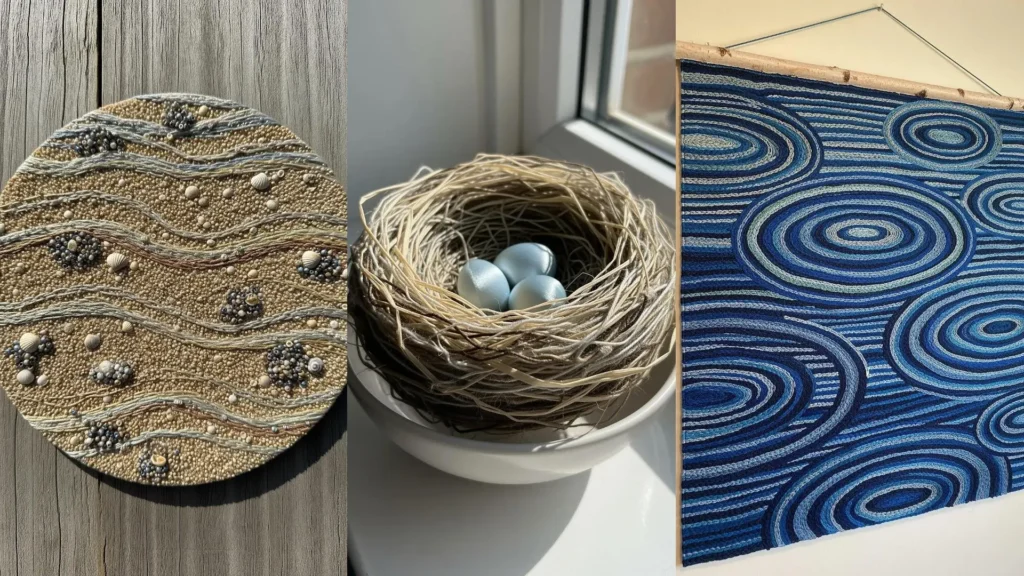
You have the threads, the fabric, and the desire to create something beautiful. But perhaps you find your work, while lovely, is missing that final touch of depth or polish. The secret isn’t in mastering dozens of complex stitches—it’s in learning to see texture as a language.
Think of your needle as a sculptor’s tool. With a few intentional choices, you can make moss feel plush, bark feel rough, and water feel like it’s shimmering right on the fabric. It’s about understanding how a French knot can become a seed, how layered fabric can form a mountain range, or how a simple line can gain rhythm and flow.
This collection is designed to help you do just that. Here, you won’t find overly complex patterns, but rather a shift in perspective. You’ll discover how to combine stitches, play with thread weights, and introduce new materials to create embroidery that is not only seen, but truly felt. Let’s begin.
1. Build a Forest Floor with Dimensional Stitches
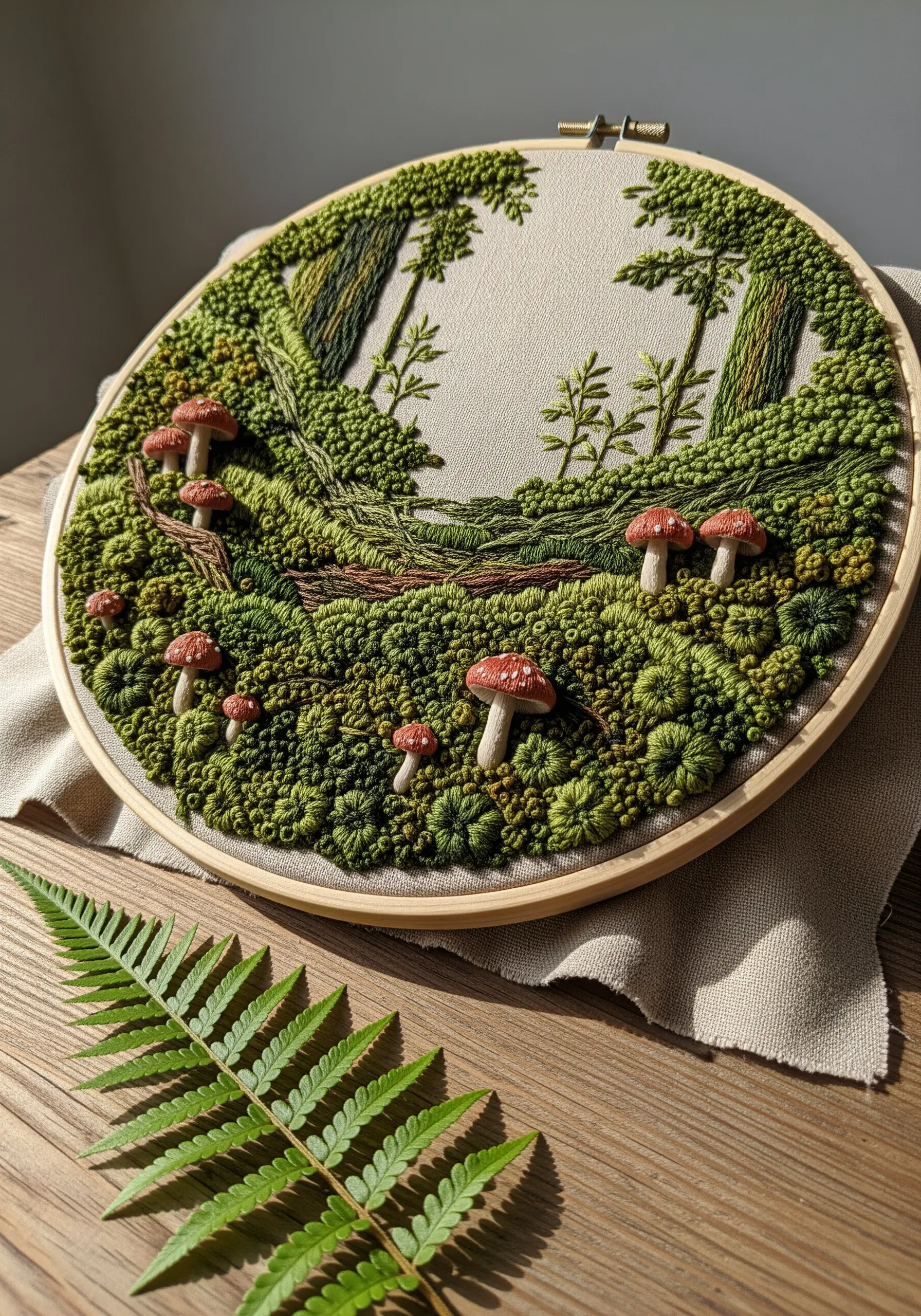
Create a lush, mossy texture by layering French knots and colonial knots in varying shades of green, olive, and chartreuse.
Vary the density of your knots—tighter clusters create highlights, while sparser stitches suggest shadow, adding realistic depth to your landscape.
For the fallen log, couch a thick, rustic yarn to achieve a convincing, bark-like feel, and use a tight satin stitch for the smooth, distant tree trunks.
This technique turns your hoop into a tactile, miniature world that invites touch.
2. Sculptural Gradients with Coiled Stitches

To create these organic, stone-like forms, couch down threads in a tight spiral, starting from the center and working your way out.
For a natural, subtle gradient, thread your needle with multiple strands of floss in closely related shades—like charcoal, dove grey, and cream—all at once.
Define the shape by outlining it with a heavier material, like a plied yarn, using a couching stitch. This technique transforms simple circles into tactile, modern art.
3. Recreate Birch Bark with Fabric Appliqué
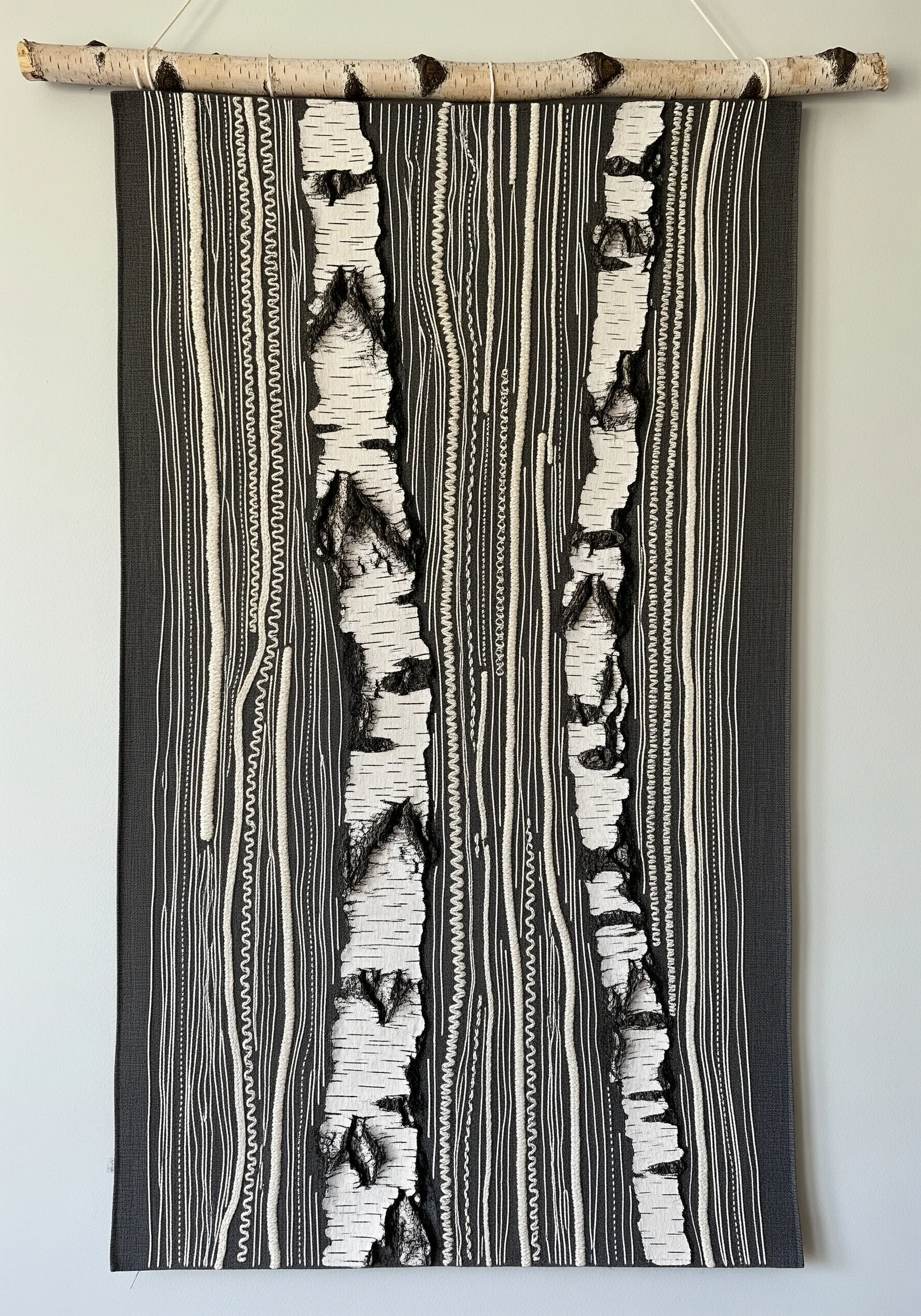
Instead of stitching the entire tree, use appliqué with a textured white fabric like raw linen to form the tree trunks.
Secure the fabric pieces with vertical satin stitches, then add short, horizontal stitches in black to mimic the distinctive markings on birch bark.
The contrast between the fabric’s natural weave and the thread’s smooth sheen creates a dynamic, lifelike effect against the dark, stitched background.
4. Sculptural Stumpwork for Lifelike Fungi
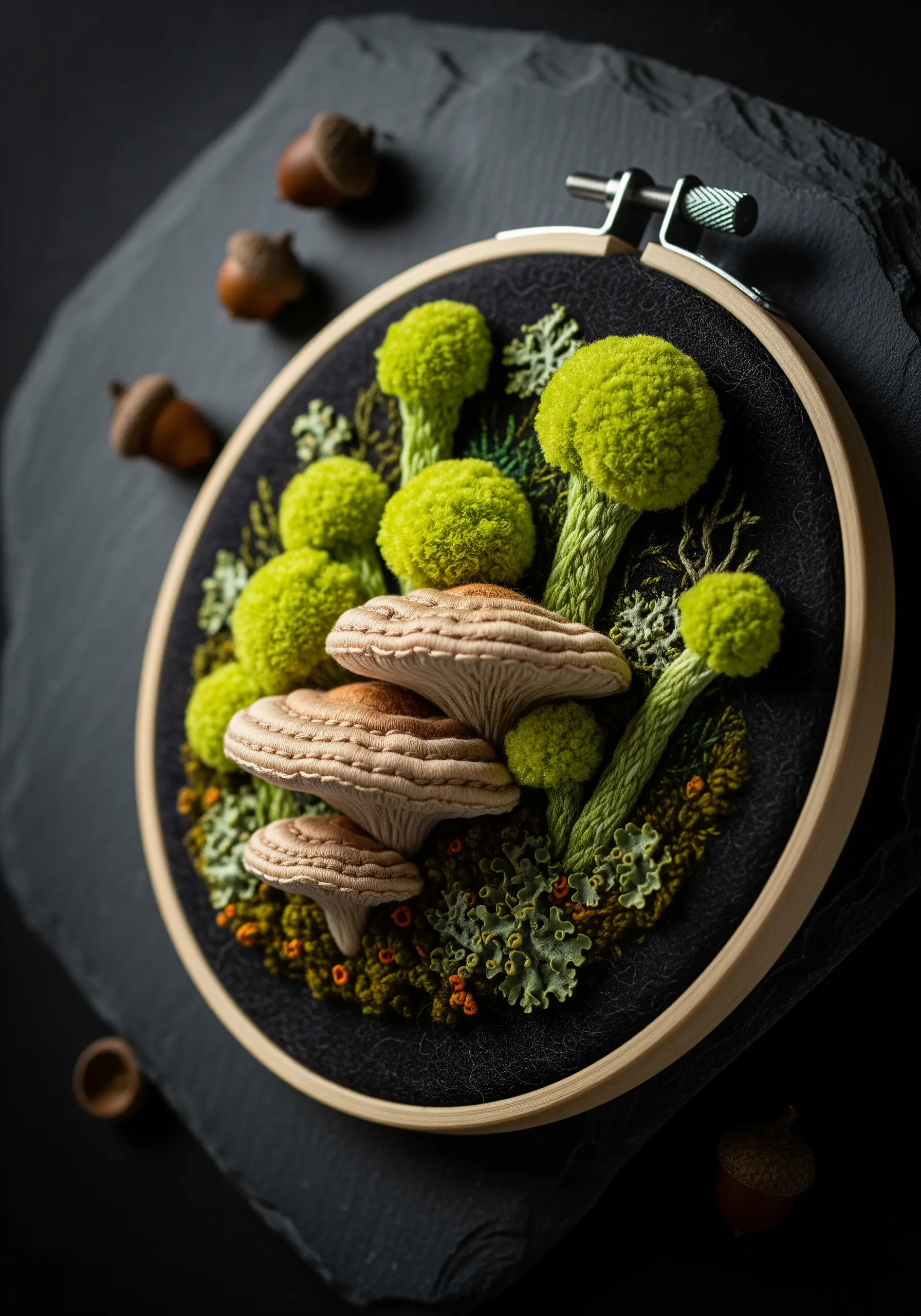
Achieve this stunning 3D effect by using stumpwork techniques for the shelf mushrooms.
Create the mushroom caps separately on a piece of scrap fabric, stitching padded satin stitch over a flexible wire frame.
Cut them out and attach them to your main piece, bending them into a natural shape.
For the fuzzy moss, use turkey work (Ghiordes knot) and trim the loops to different heights to create a varied, organic carpet.
5. Weave Calm with Undulating Lines
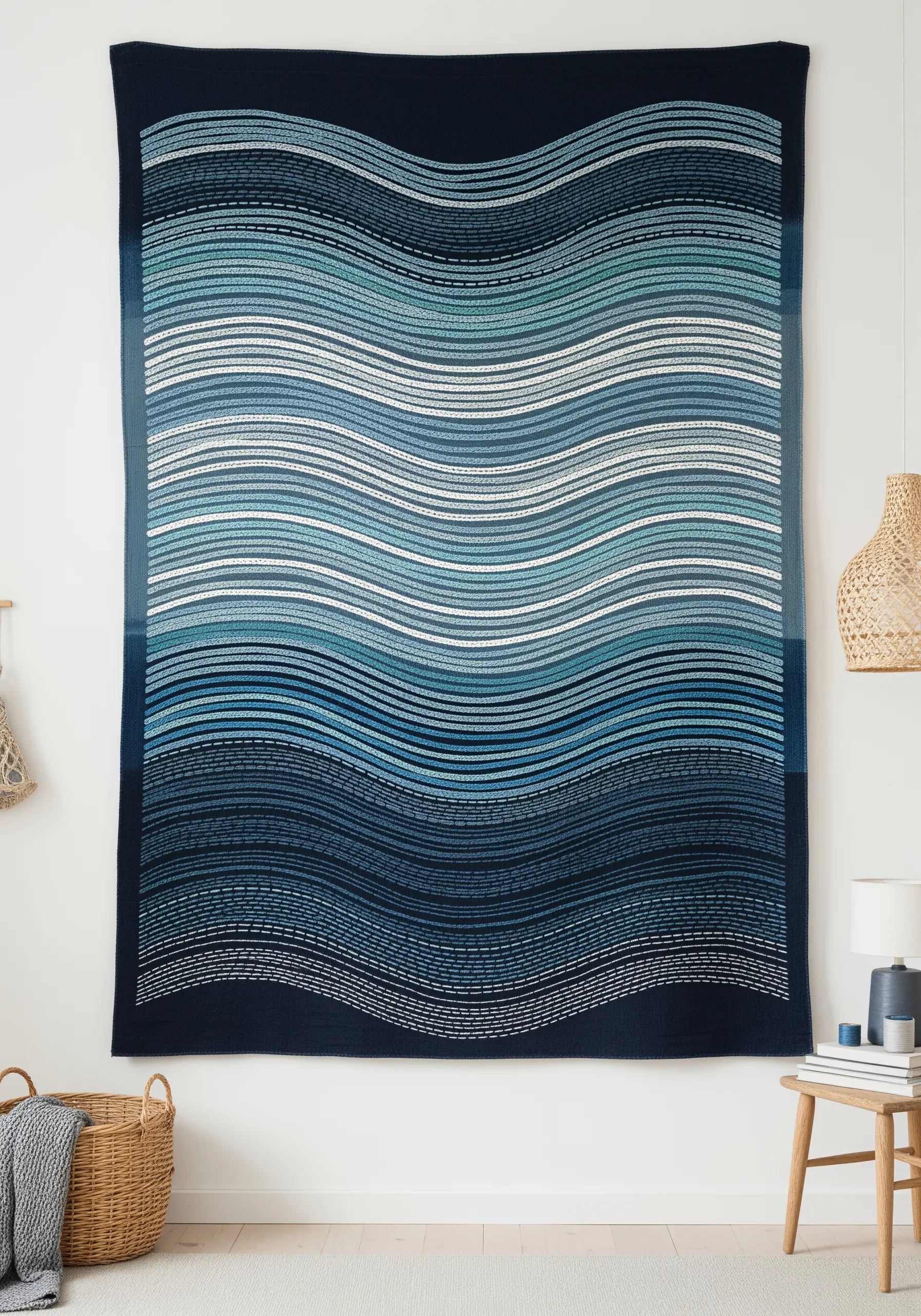
To create a large-scale oceanic texture, couch down thick, soft yarn with a finer, contrasting thread.
First, mark your wavy guidelines with a water-soluble pen to ensure a consistent flow across the fabric.
Varying the main yarn color in a gradient—from deep navy to pale sky blue—creates a powerful sense of movement and depth.
The small, rhythmic couching stitches add a subtle detail that keeps the eye engaged.
6. Blend Chunky Roving with Fine-Line Stitching
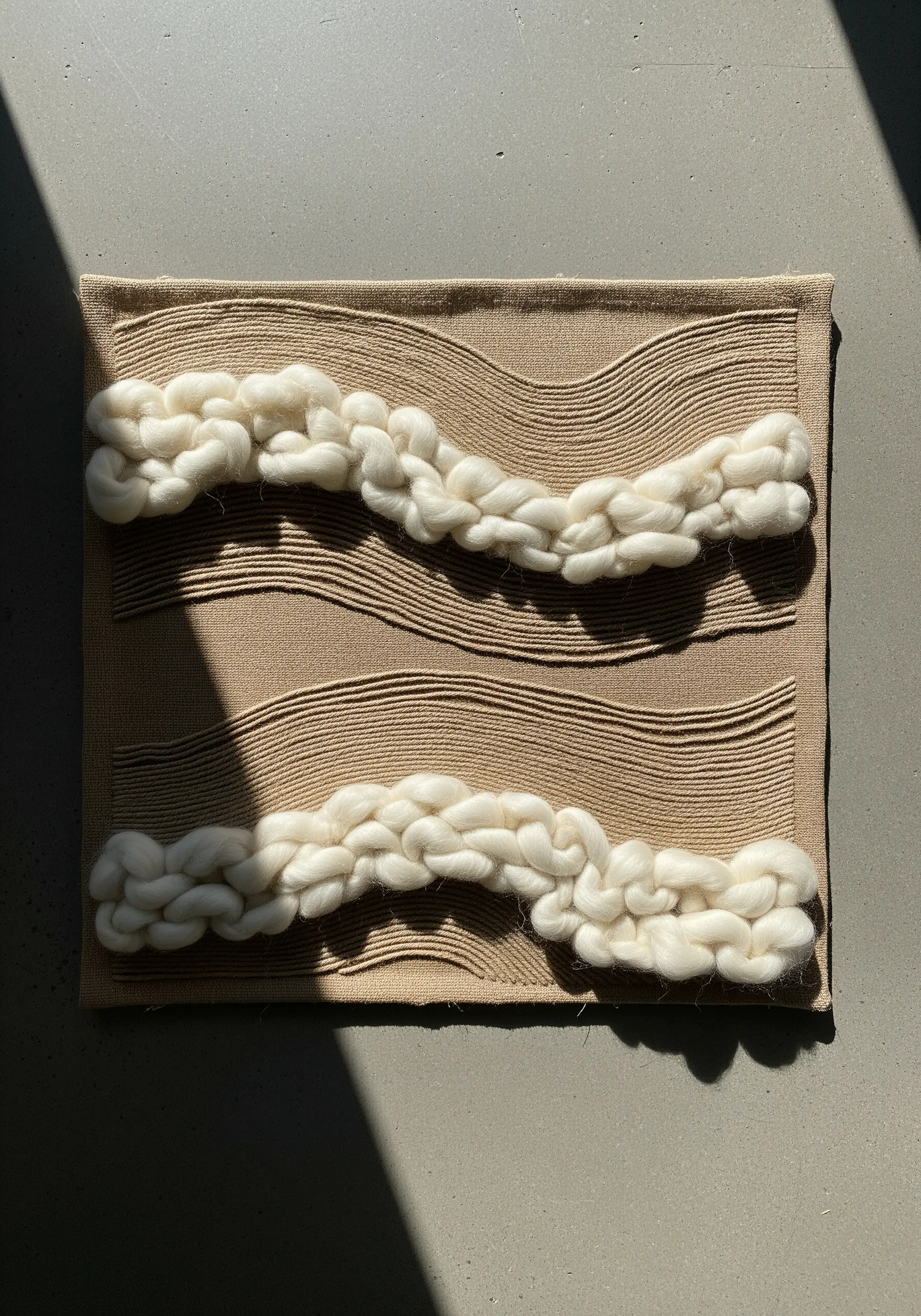
Create a powerful, modern textile piece through a dramatic juxtaposition of scale.
Couch down thick, unspun wool roving with a strong, matching thread to form the bold, cloud-like waves.
In the negative space, use a simple running stitch with standard embroidery floss to echo the shapes, creating a delicate counterpoint to the chunky fiber.
This contrast between thick and thin, soft and sharp, is what gives the composition its contemporary edge.
7. Ornate Mandalas with Mixed Media Embellishments
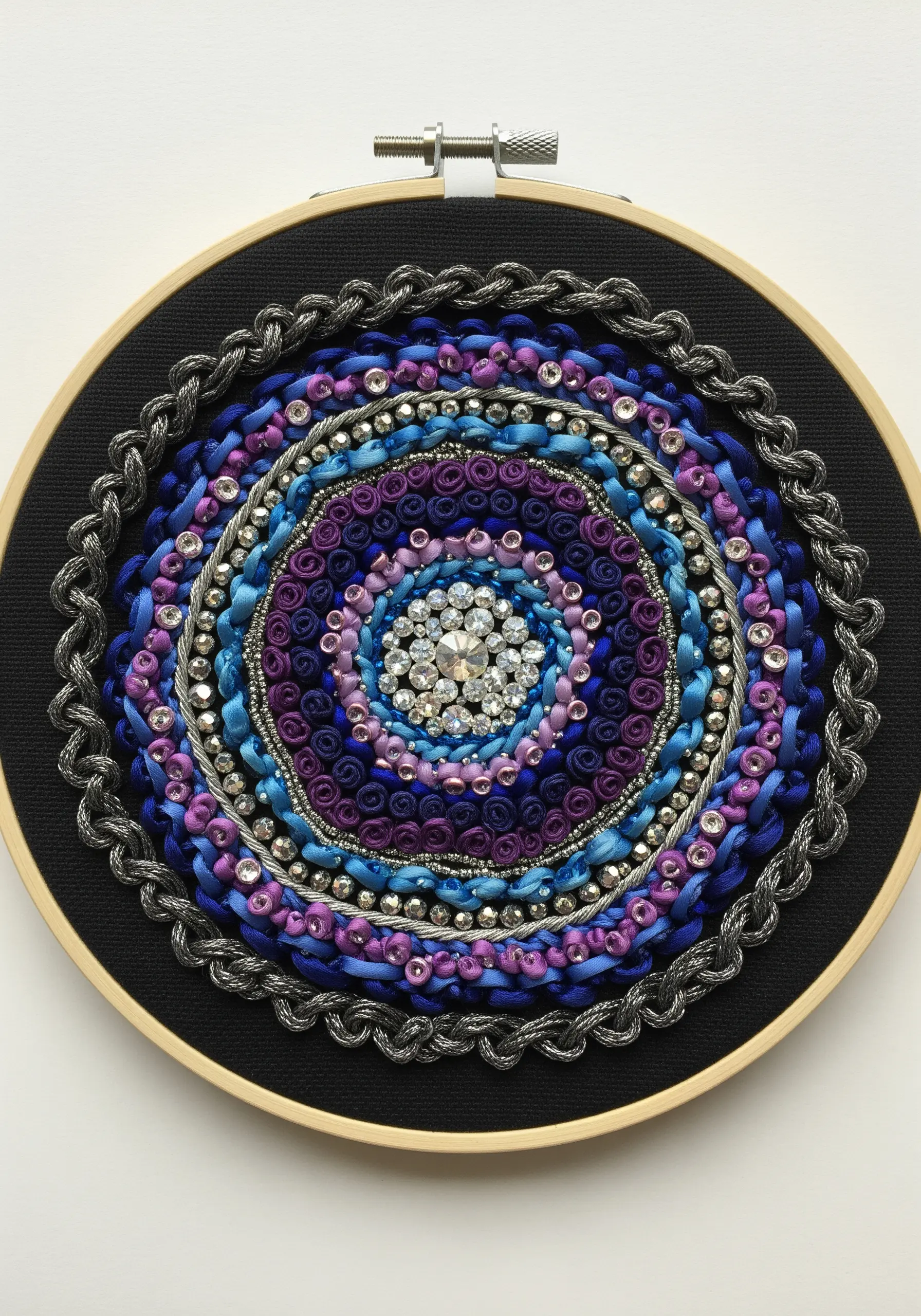
Elevate a circular design by moving beyond thread and incorporating beads, ribbons, and metallic cords.
Use woven wheel stitches for the matte, floral elements, then introduce lustrous silk ribbon for a raised, shiny texture.
Finally, add metallic seed beads and thicker braided cords to catch the light and create a defined structure.
This layering of different materials transforms a flat design into a rich, tactile medallion.
8. Capturing Seed Pods with Textured Fill Stitches

Instead of filling your botanical shapes with a simple satin stitch, choose stitches that mimic their natural textures.
Use densely packed French knots to create a granular, seed-like surface that begs to be touched.
For the outer casings, a long-and-short stitch using variegated brown thread suggests woody fibers and natural color variation.
This contrast between smooth outlines and bumpy fills makes the design feel authentic and alive.
9. Create Layered Landscapes with Raw-Edge Fabric
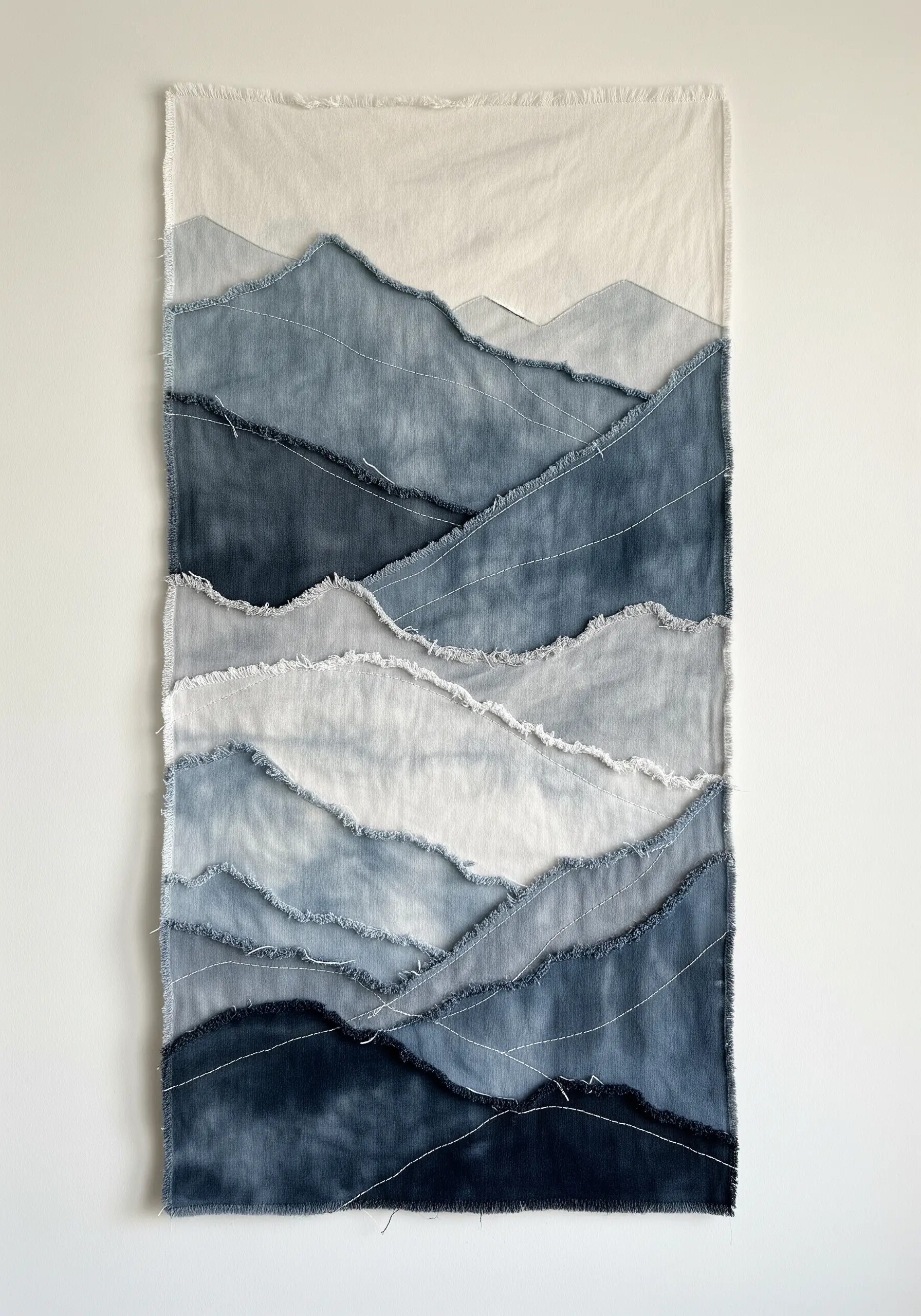
Use scraps of fabric, like denim in various washes, to build a minimalist mountain range.
Layer the pieces with their raw, frayed edges exposed to create soft, textural horizons that suggest atmospheric depth.
Secure each layer with a simple, visible running stitch in a contrasting thread, like white on blue.
This technique celebrates the inherent texture of the fabric itself, making the material the star of the show.
10. Geometric Precision Meets Organic Texture
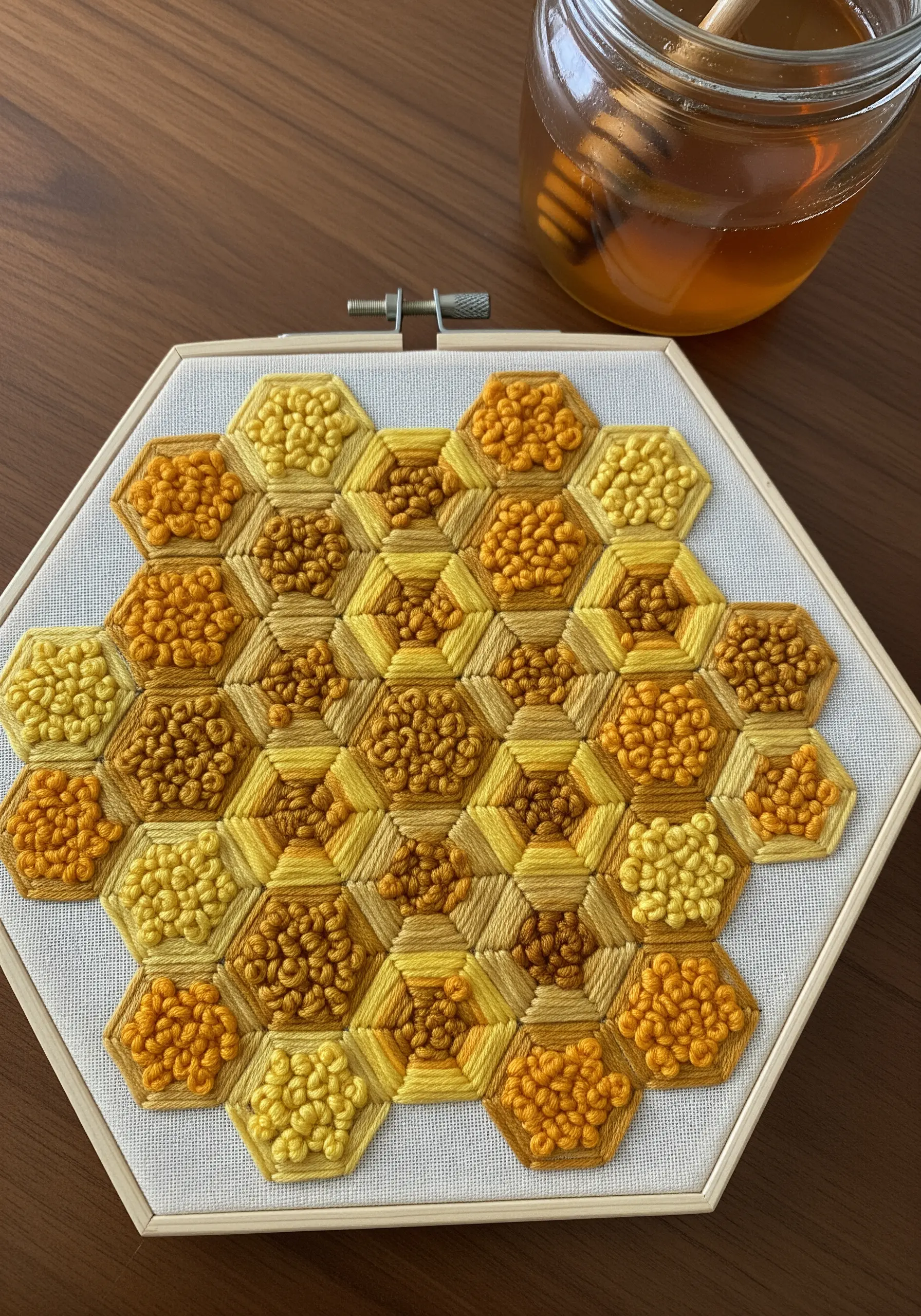
Bring a honeycomb pattern to life by varying the fill stitch in each hexagon.
First, establish your grid with a clean backstitch outline.
Then, alternate between different textures: use clusters of French knots for a pollen-like feel, and smooth satin stitches to represent glistening honey.
Arranging your colors in natural, organic clusters prevents the geometric pattern from feeling too rigid and adds visual interest.
11. Hyperrealistic Feathers with Thread Painting
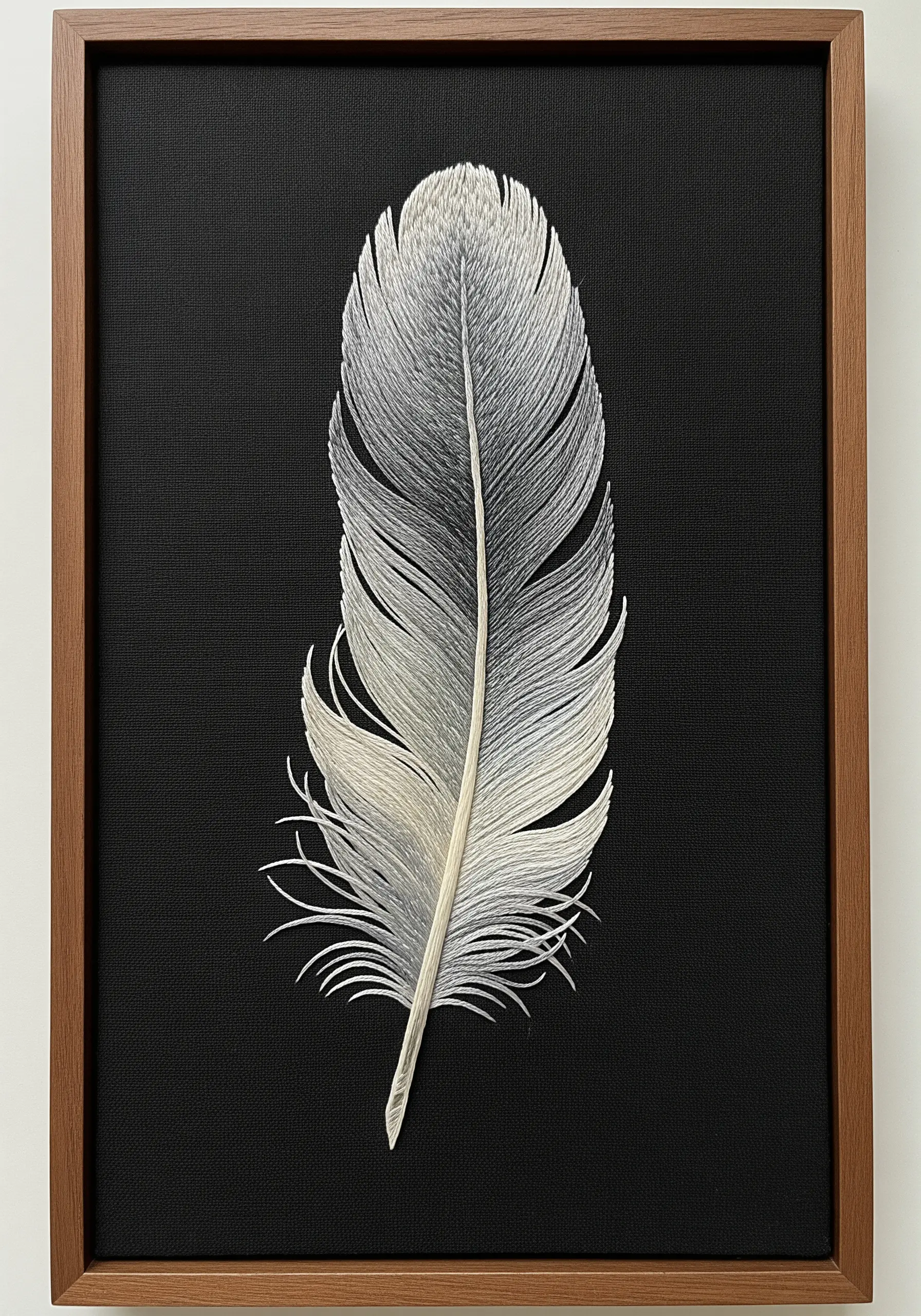
Achieve this delicate, lifelike effect by mastering the long-and-short stitch.
Work with a single strand of floss, using several closely related shades of grey, cream, and white to create seamless blends.
Angle your stitches to follow the natural direction of the feather’s barbs, working from the outside edge toward the central shaft.
The key is precision and patience; the result is a feather that looks soft enough to lift off the fabric.
12. Elegant Coral Forms with Knotted Stitches
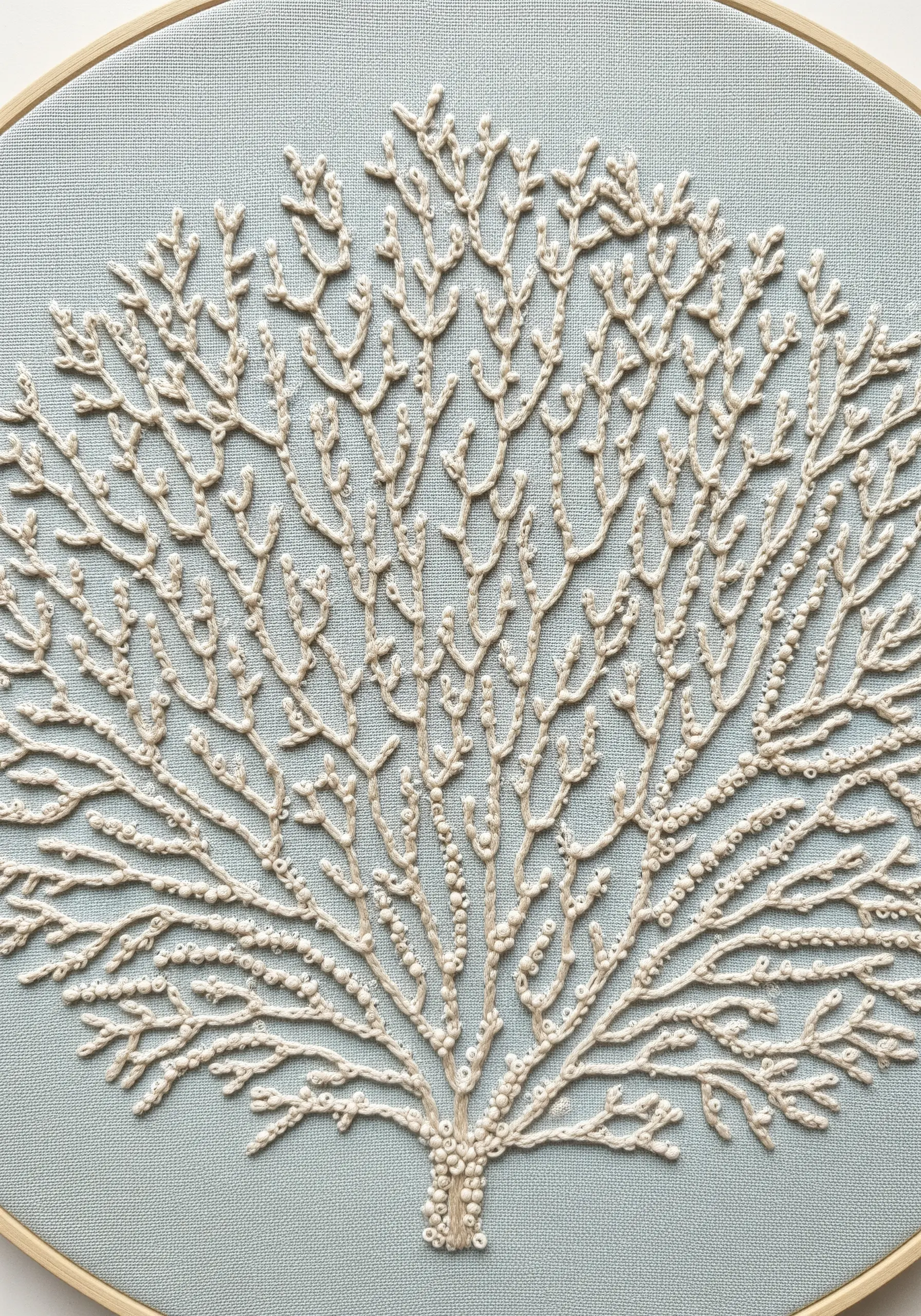
Recreate the intricate structure of a sea fan coral using a simple but effective stitch combination.
Use a whipped backstitch or stem stitch for the main branches to create smooth, defined lines that give the piece its structure.
Then, add tiny, delicate French knots or seed stitches at the tips and junctions to add textural detail and complexity.
Stitching tonally—cream thread on a soft blue fabric—lends the final piece a sophisticated, ethereal quality.
13. Integrate Weaving into Your Hoop Art

Create extraordinary depth by combining embroidery and weaving within a single hoop.
First, stitch your vertical warp threads directly onto the fabric with a strong pearl cotton.
Weave chunky wool roving through these threads to build the dimensional landscape in the foreground.
Finally, add delicate embroidered details, like the trees and clouds, directly onto the canvas above.
This mixed-fiber approach creates a stunning contrast between flat and sculptural elements.
14. Sculpt a 3D Bird’s Nest with Natural Fibers
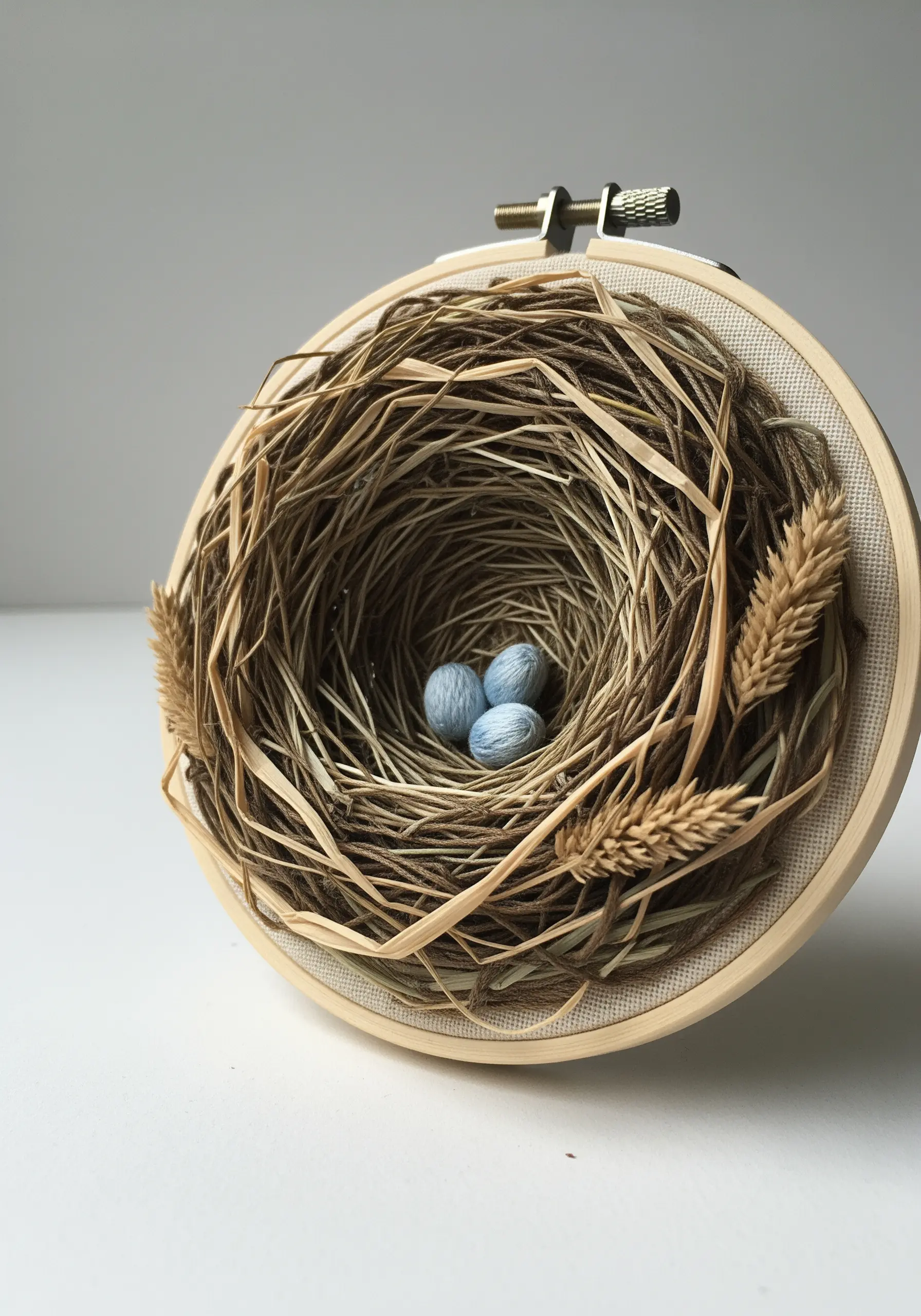
Build an incredibly realistic nest by working with unconventional materials like raffia, jute, and even dried grasses from your garden.
Couch these fibers onto your fabric in a circular, overlapping pattern, allowing some ends to remain loose for a rustic, chaotic effect.
For the eggs, use a padded satin stitch in a soft, matte blue thread. The smoothness of the eggs provides a perfect contrast to the nest’s rough, organic texture.
15. Gradient Shading for Autumnal Foliage
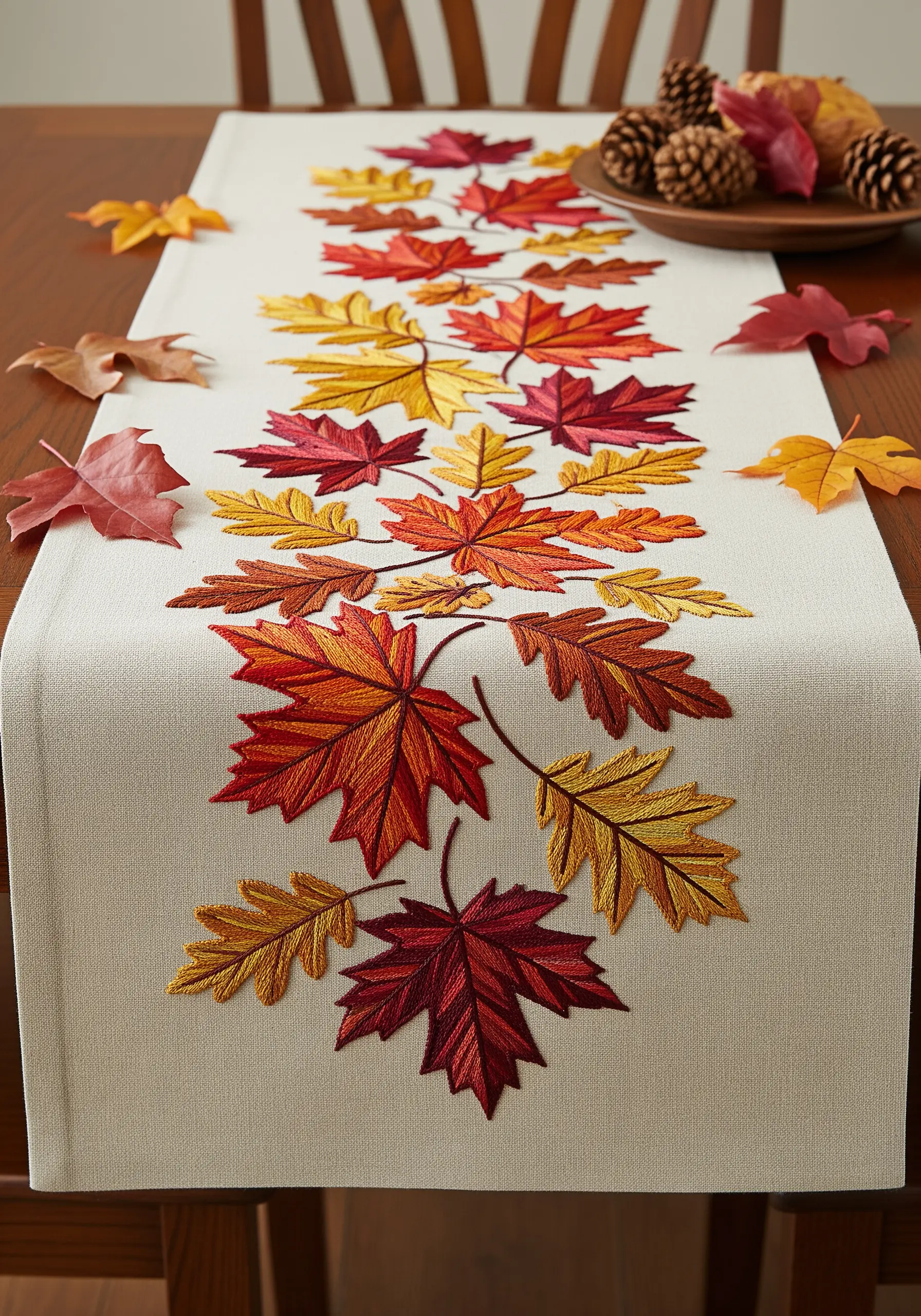
Bring autumn leaves to life with thoughtful color blending instead of solid fills.
Work with three or four harmonious shades per leaf—from golden yellow to deep crimson—and use a long-and-short stitch to create smooth gradients.
This technique mimics the way leaves change color naturally.
Always angle your stitches to follow the direction of the leaf’s veins for a more realistic flow and light-reflecting sheen.
16. Ethereal Snowflakes on Sheer Tulle
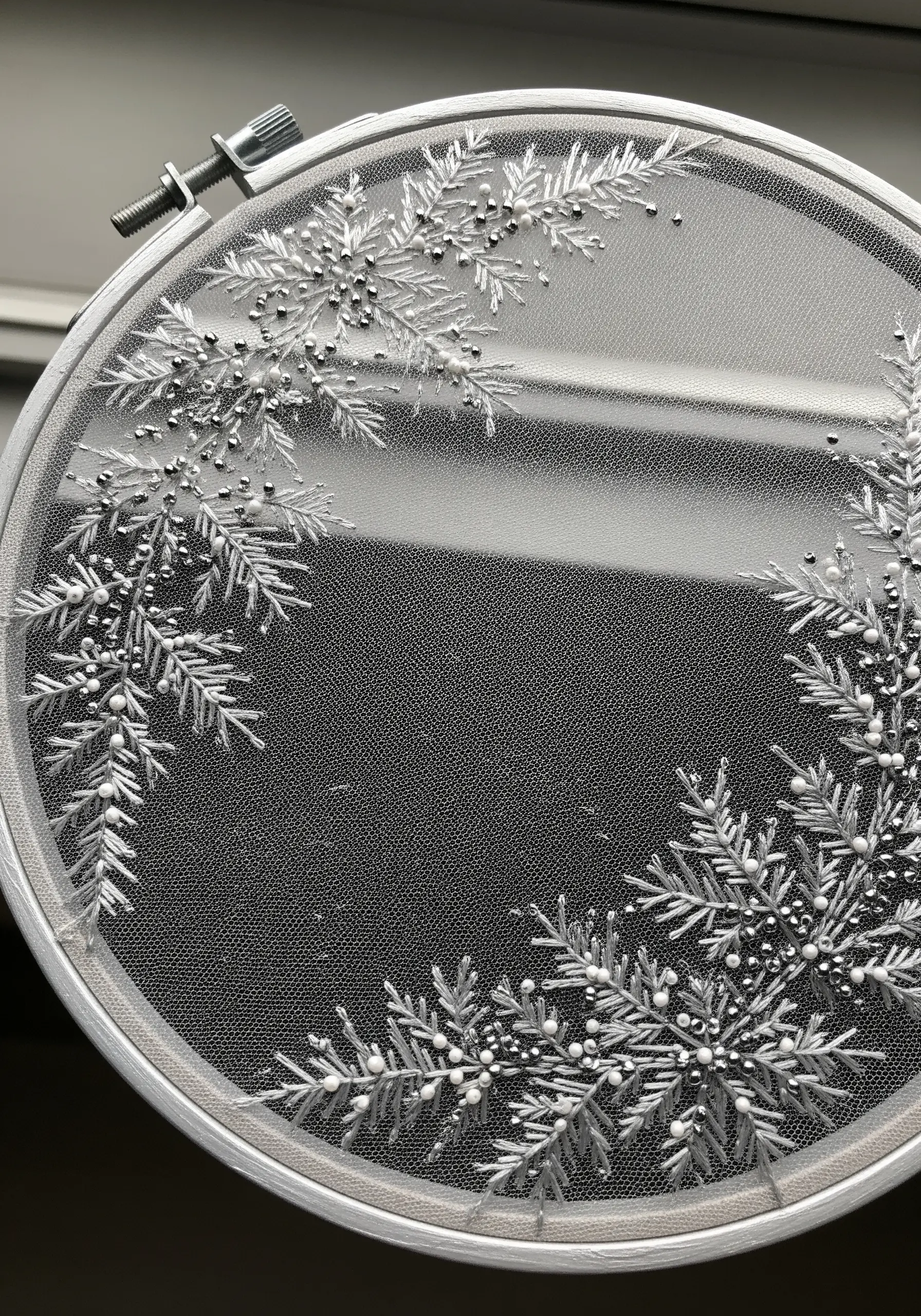
Stitching on a sheer base like tulle or organza makes your designs appear to float weightlessly.
Use a crisp white or silver metallic thread for your snowflakes, combining straight stitches for the main arms and lazy daisy stitches for finer details.
Amplify the magic by adding tiny silver or iridescent beads to the tips to simulate glistening ice crystals.
Use a wash-away or tear-away stabilizer for a perfectly clean finish.
17. Composing with Layered, Raw-Edge Fabric

Create a rich, geological texture by layering strips of fabric with their raw edges exposed.
Choose fabrics of a similar weight but in a cohesive color palette, such as these warm earth tones.
Arrange the strips in an organic, overlapping way, then secure each layer with a simple, decorative running stitch.
This method celebrates imperfection and allows the texture of the cloth itself to become the focal point.
18. Depicting Earth’s Strata with Varied Stitches
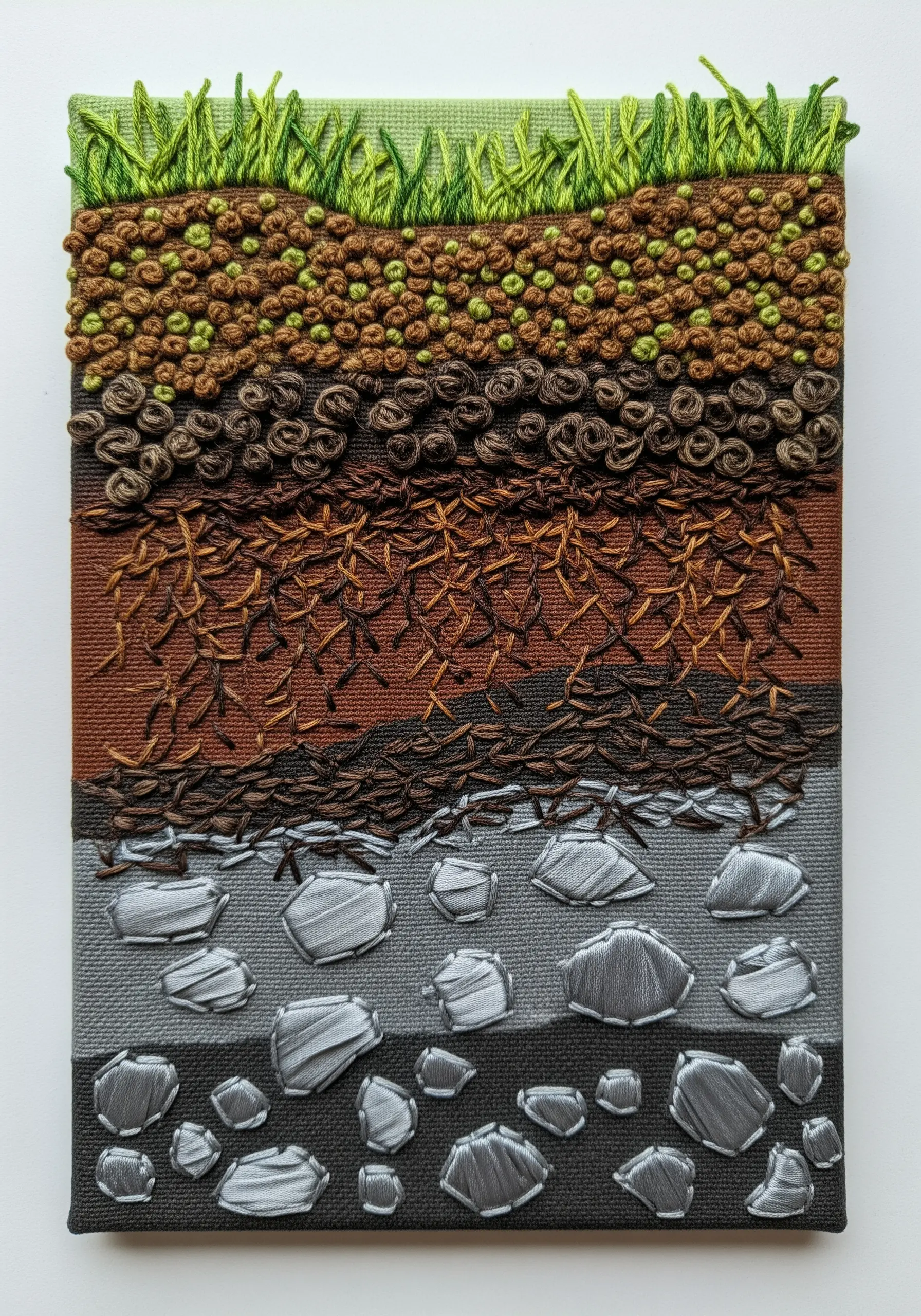
Translate a geological cross-section into a textural stitch sampler.
Assign a different stitch to each layer to represent its unique composition: straight stitches for grass, French knots for topsoil, bullion knots for humus, seed stitches for subsoil, and padded satin stitch for rocks.
This creative approach turns a scientific diagram into a highly engaging and earthy texture embroidery piece that tells a story through touch.
19. Floating Lilies with Felt Appliqué and Knots

Combine felt appliqué with embroidery for a clean, graphic look with beautiful depth.
Cut the lily pads from green felt and secure them with a simple backstitch outline or running stitch down the center.
For the water, fill the background with dense clusters of French knots in various shades of blue and green to create a shimmering, pointillist effect.
The solid felt provides a calm resting place for the eye amidst the textured water.
20. Stitching the Cosmos with Beaded Textures

Create a celestial scene by stitching a dense concentration of beads and French knots along a sweeping curve on a dark fabric background.
Use a mix of white, silver, and iridescent seed beads, varying their density—packed tightly in the center and scattering outwards.
Intersperse the beads with tiny French knots to add a softer texture and add dimension.
For extra sparkle, stitch small starbursts with metallic thread or add tiny star-shaped sequins.
21. River Stones with Appliqué and Chain Stitch
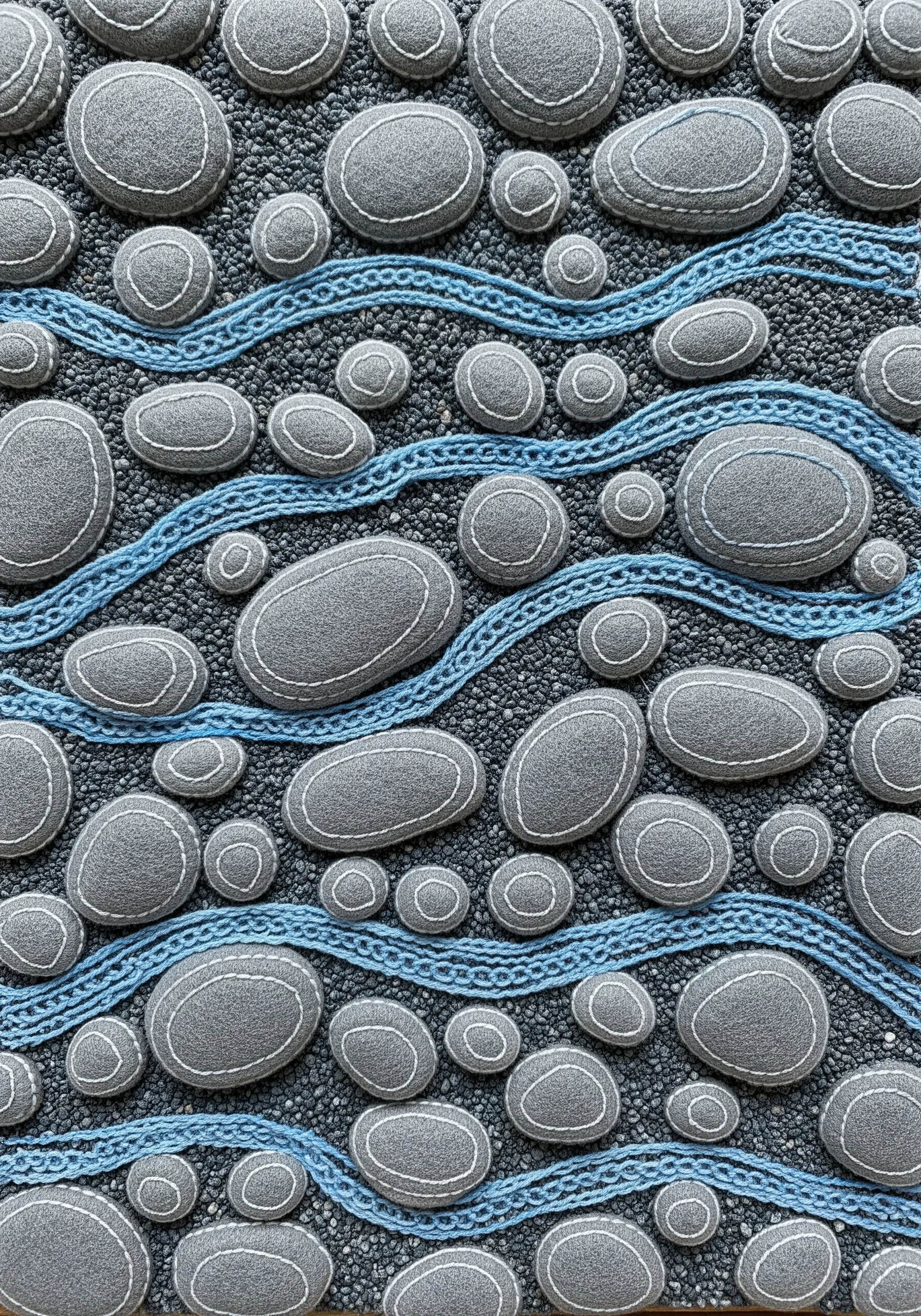
To create the effect of smooth river stones, use felt appliqué for the primary shapes.
Cut ovals of various sizes from grey felt and secure them with a clean, contrasting backstitch outline in white.
For the flowing water, work parallel rows of chain stitch in a contrasting color like blue.
The linked texture of the chain stitch perfectly mimics the ripple of water and contrasts beautifully with the solid, smooth felt.
22. Delicate Wildflowers Suspended on Tulle

Let your stitches appear to float in mid-air by working on a sheer fabric base like tulle.
This technique is perfect for delicate botanical illustrations, as the transparent background focuses all attention on the thread work.
Use simple, classic stitches like stem stitch for the stems, lazy daisy for petals, and French knots for flower centers.
The negative space becomes an integral part of the art, creating a weightless composition that interacts beautifully with light.
23. Fan-Shaped Satin Stitch for Ginkgo Leaves

Capture the unique form of a ginkgo leaf by strategically angling your satin stitches.
Instead of stitching straight across, anchor all your stitches at the base of the leaf and fan them out towards the wavy top edge.
This technique perfectly mimics the leaf’s natural vein structure and gives the surface a beautiful, light-reflecting sheen.
Using a single, vibrant color like gold on a dark, matte background makes the elegant design truly stand out.
24. Create Rhythmic Texture with Flowing Lines
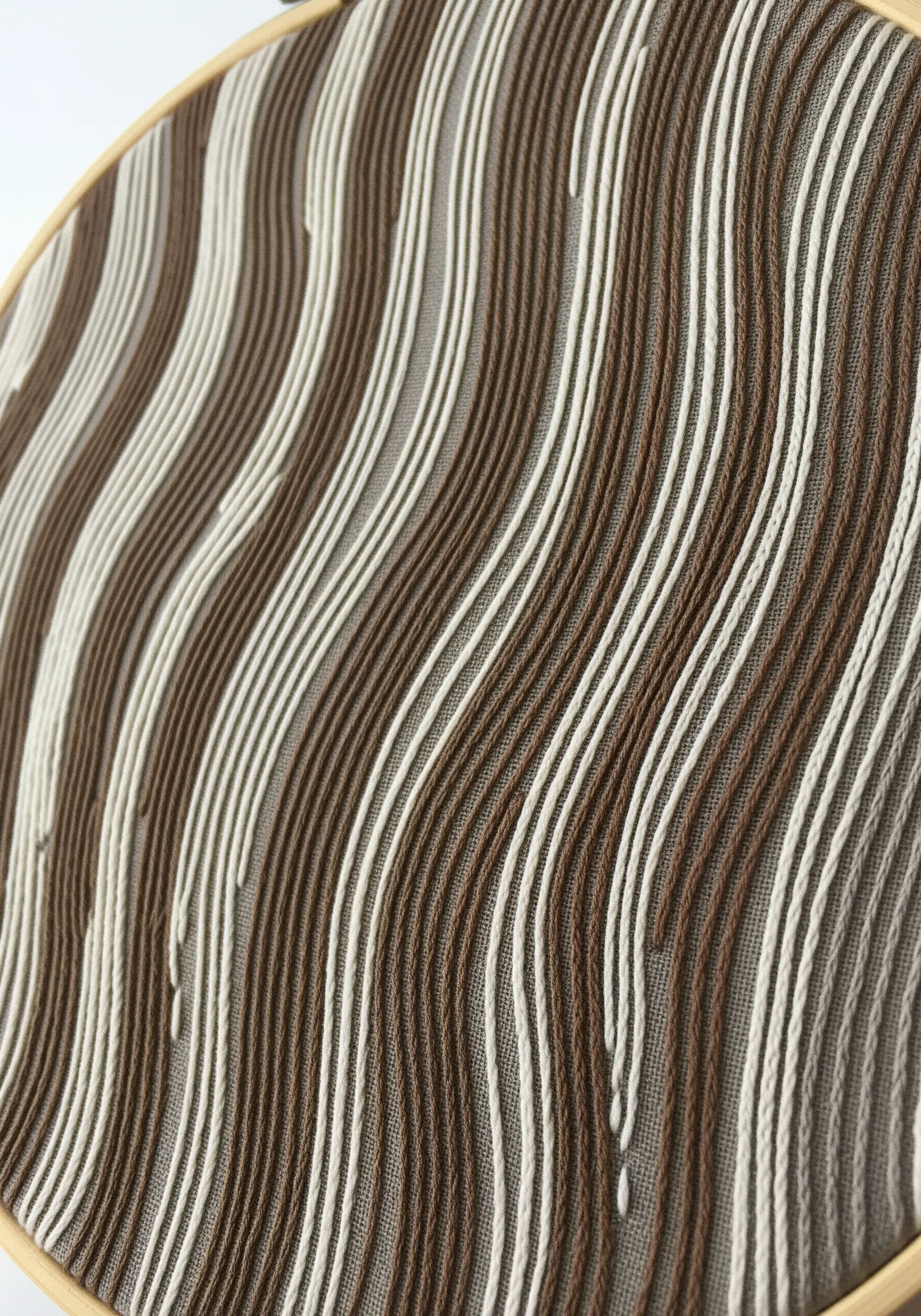
This design achieves its calming, organic effect through repetition and precision.
First, draw your wavy parallel lines onto the fabric with a removable marker to act as your guide.
Use a simple backstitch or stem stitch with a medium-weight thread, like pearl cotton, to create clean, defined lines.
The natural, subtle variations in hand-stitching give the piece a gentle energy and a sense of movement.
25. Topographical Contours with Earth-Toned Threads

Evoke the look of a topographical map or wood grain by couching down bundles of thread.
Group several strands of embroidery floss in various earth tones and lay them on your fabric in organic, swirling patterns.
Then, use a single, contrasting strand to tack the bundles down at regular intervals.
This technique allows the threads to retain their volume and soft texture, creating raised lines with beautiful, subtle color shifts.
26. Abstract Coastal Scenes with Mixed Fibers
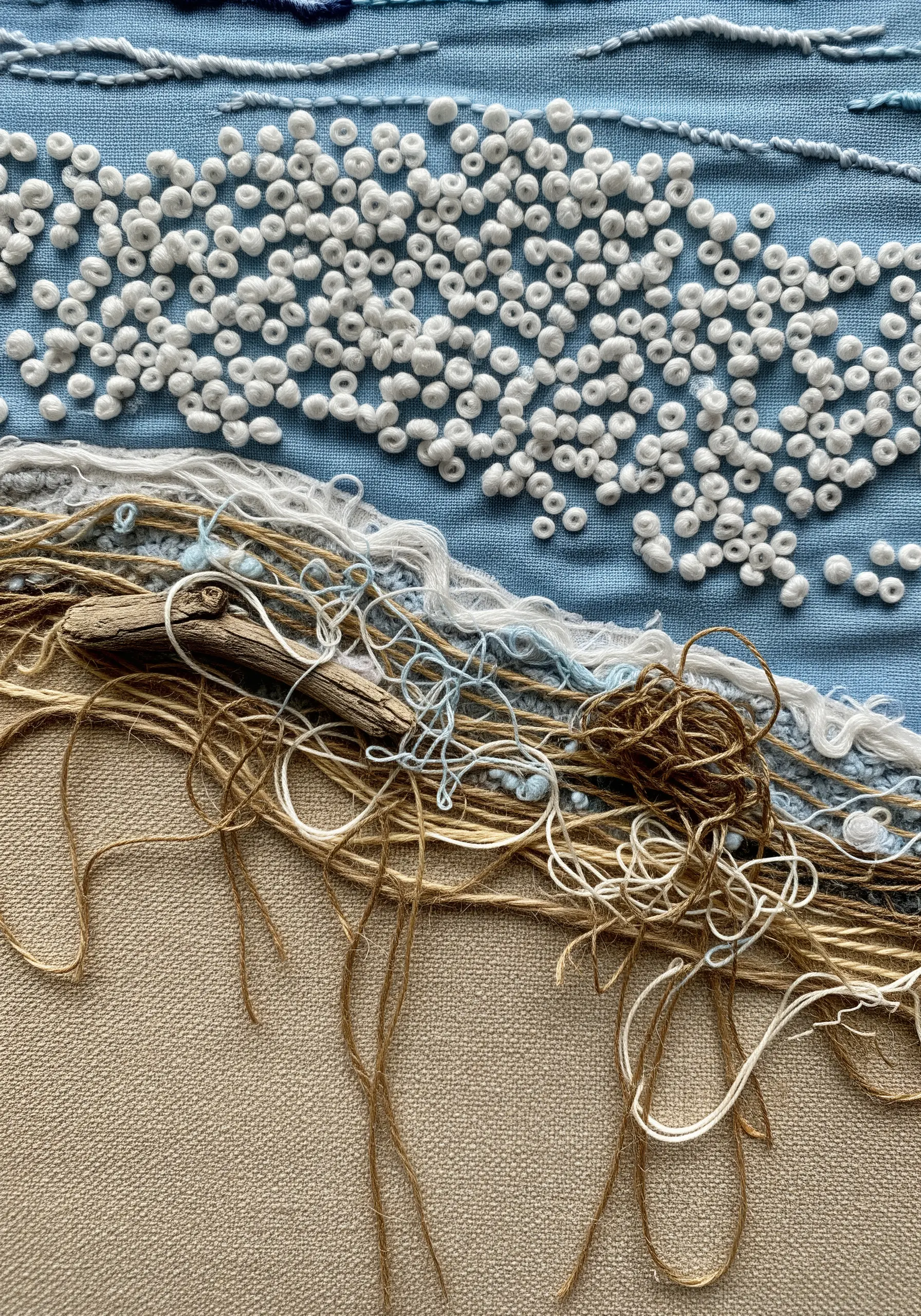
Build a tactile seascape by combining different threads, yarns, and even found objects from a beach walk.
Use chunky, unraveled yarn for seafoam, rough jute or twine for sand, and tight clusters of French knots for sea spray.
Incorporating a small piece of driftwood, secured with discreet couching stitches, adds an authentic, sculptural element.
This mixed-fiber approach is wonderfully expressive, capturing the raw, multi-sensory texture of the coast.