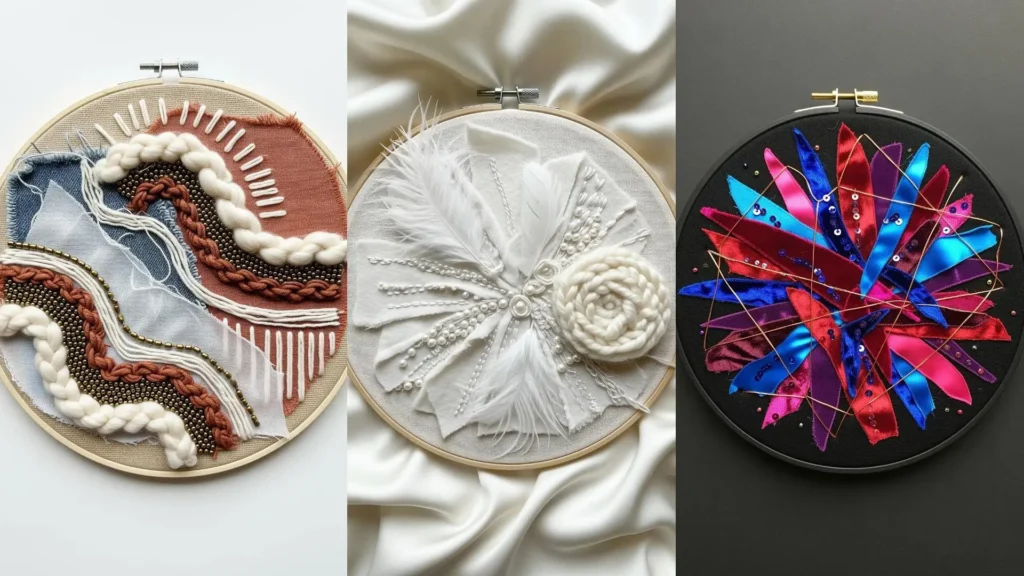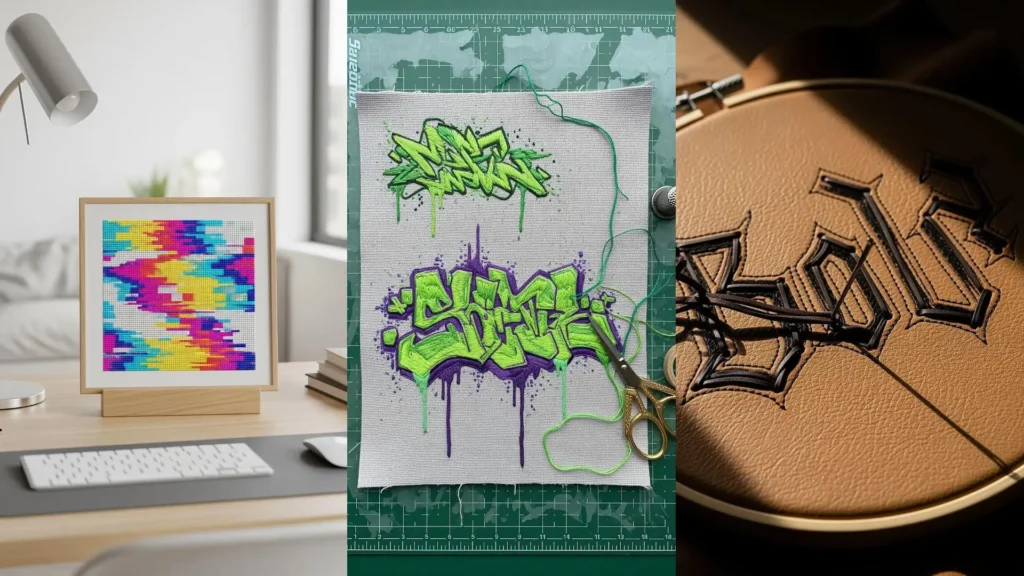
You have likely stared at a blank hoop, feeling that gap between the art you want to make and the stitches you know. We often treat embroidery as a coloring book—filling in outlines—when it should be treated like painting. The texture, the weight of the thread, and the direction of the needle are your brushstrokes.
These ideas are not just patterns; they are permissions to break the rules. You will see how using a strand of tapestry wool can replace an hour of satin stitching, or how leaving negative space is often more powerful than filling it. It is about working smarter with your materials to create pieces that feel curated and modern.
Scroll through these techniques with an open mind. Pick one that scares you slightly—perhaps the heavy wool relief or the abstract negative space—and try it on a scrap piece of fabric today. You will find that elevating your work isn’t about buying a better machine; it’s about seeing your thread differently.
1. Sculptural yarn labyrinth paths
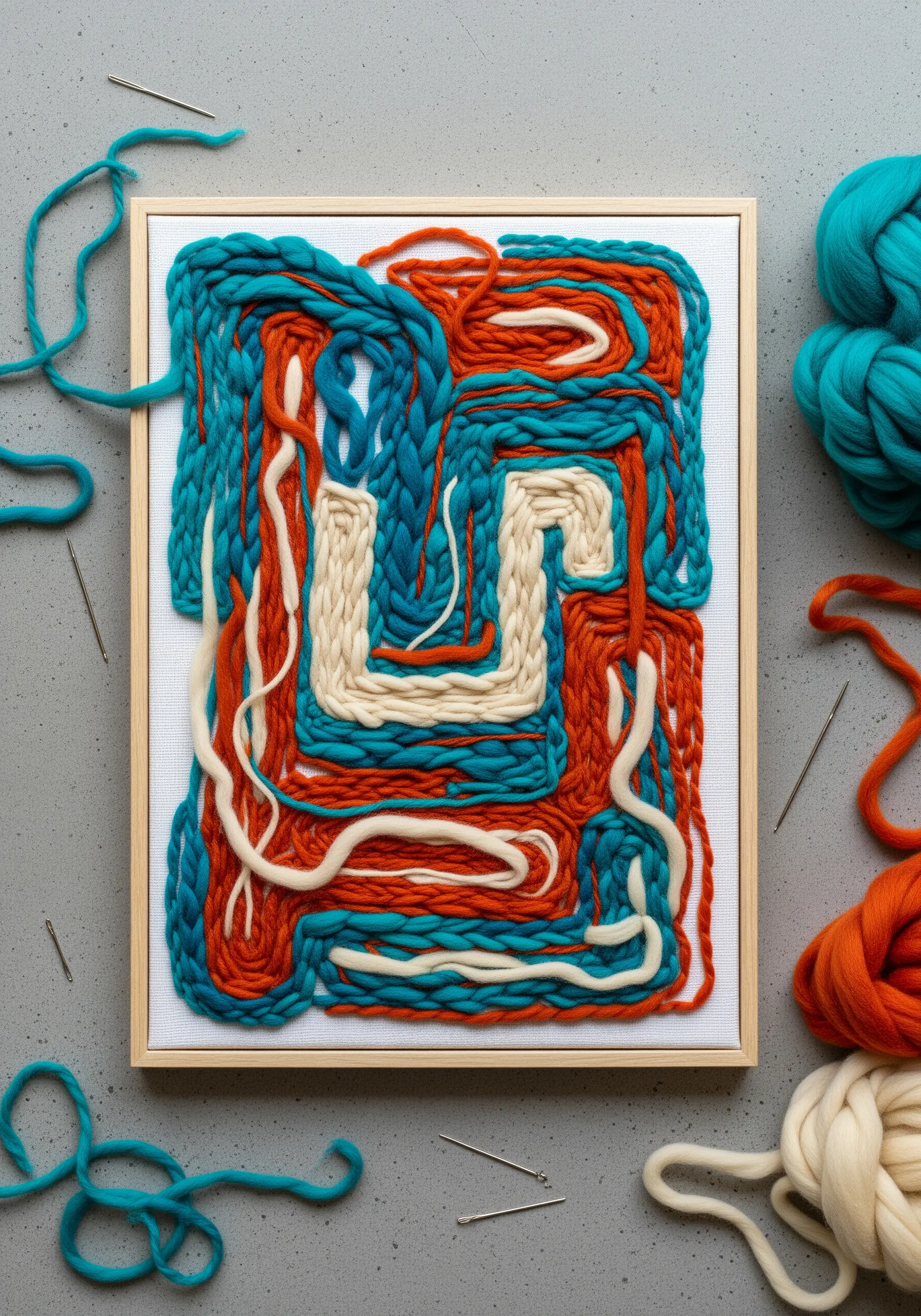
Abandon the limitations of standard embroidery floss for a moment and reach for tapestry wool or chunky yarn.
By couching thick yarn into winding, labyrinthine paths, you create immediate architectural volume that lifts off the canvas.
This technique turns flat line work into a tactile experience, perfect for yarn wall art patterns that double as gorgeous gifts.
2. Atmospheric pointillism gradients

Achieve true atmospheric depth by varying your stitch density rather than just switching thread colors.
Transition from tightly packed vertical stitches at the top to airy, scattered spacing at the bottom to mimic a fading sky.
This creates a seamless ombré effect that feels like a digital gradient brought to life by hand.
3. Sketching with kinetic straight stitches
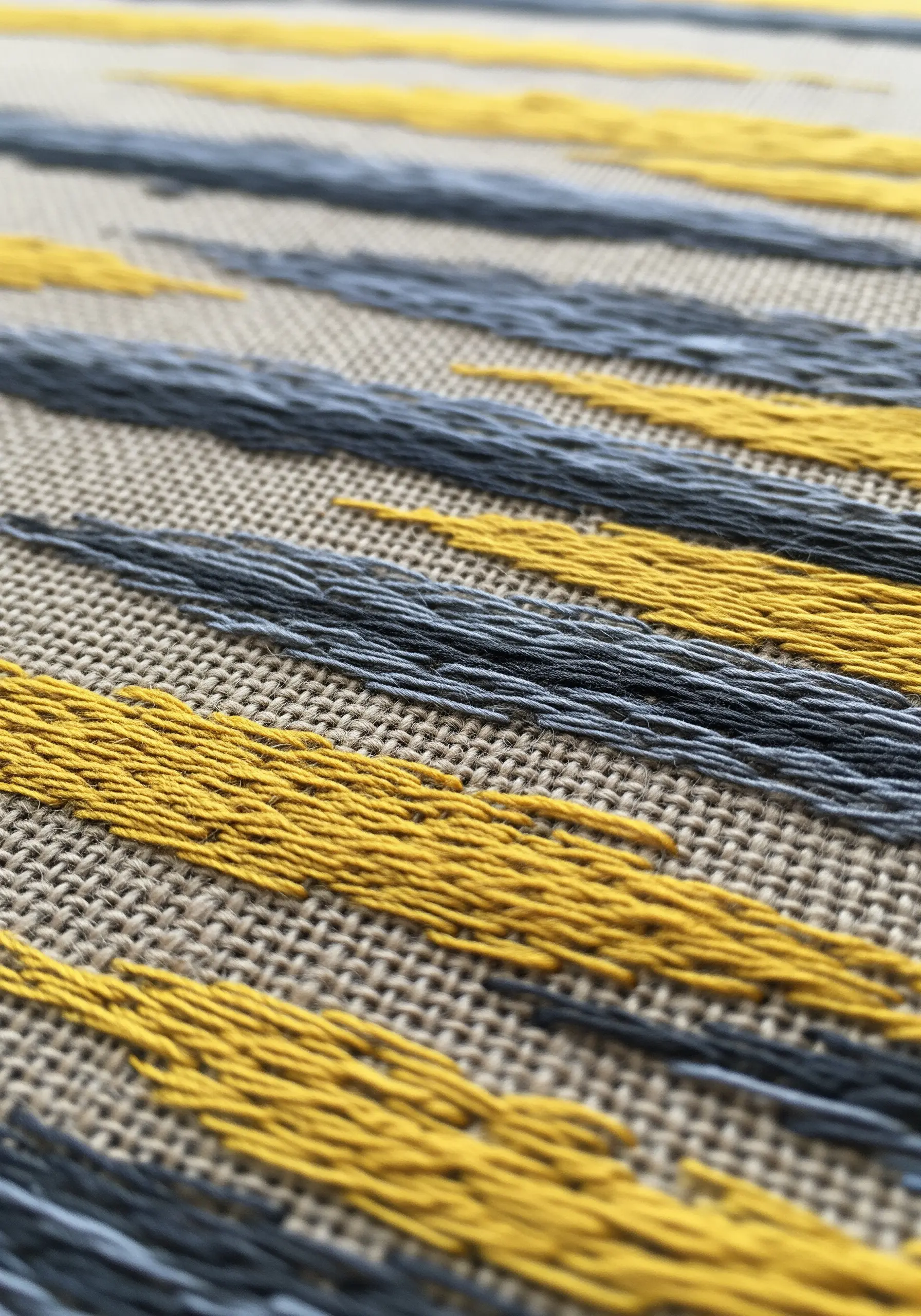
Mimic the speed and spontaneity of a paintbrush by lengthening your straight stitches across the fabric.
Use varying strand counts—mixing two threads with four—to create uneven, organic textures that feel energetic rather than rigid.
This approach captures the essence of a charcoal sketch, perfect for abstract expressionism.
4. The multi-canvas fluid motion
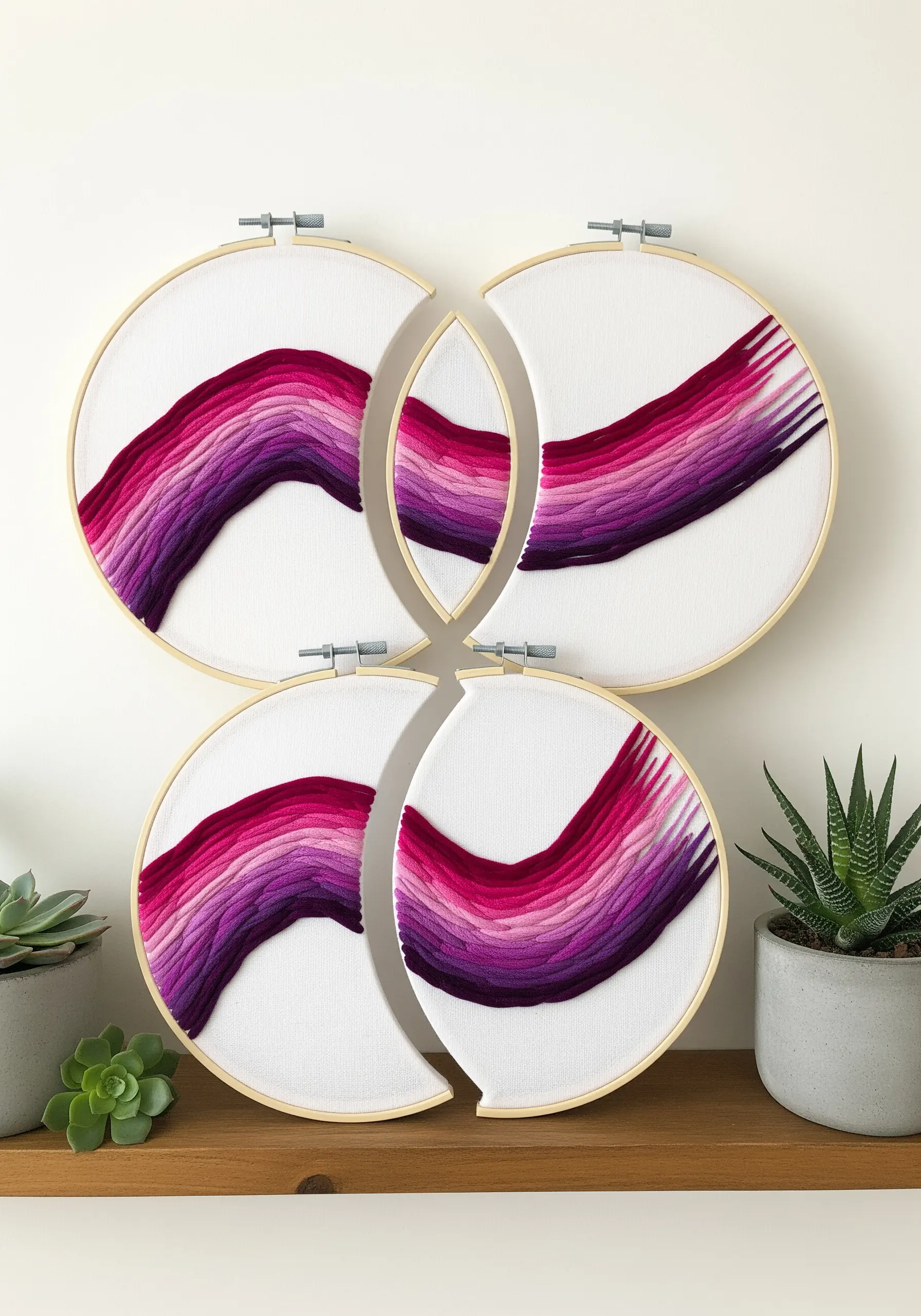
Break the frame by carrying a single fluid motion across multiple hoops, creating a diptych or quadriptych.
Aligning the satin stitch flow perfectly between frames creates a large-scale installation that feels dynamic and modern.
These are fiber art installations that will make your walls come alive with movement.
5. Faceted geometric jewel tones
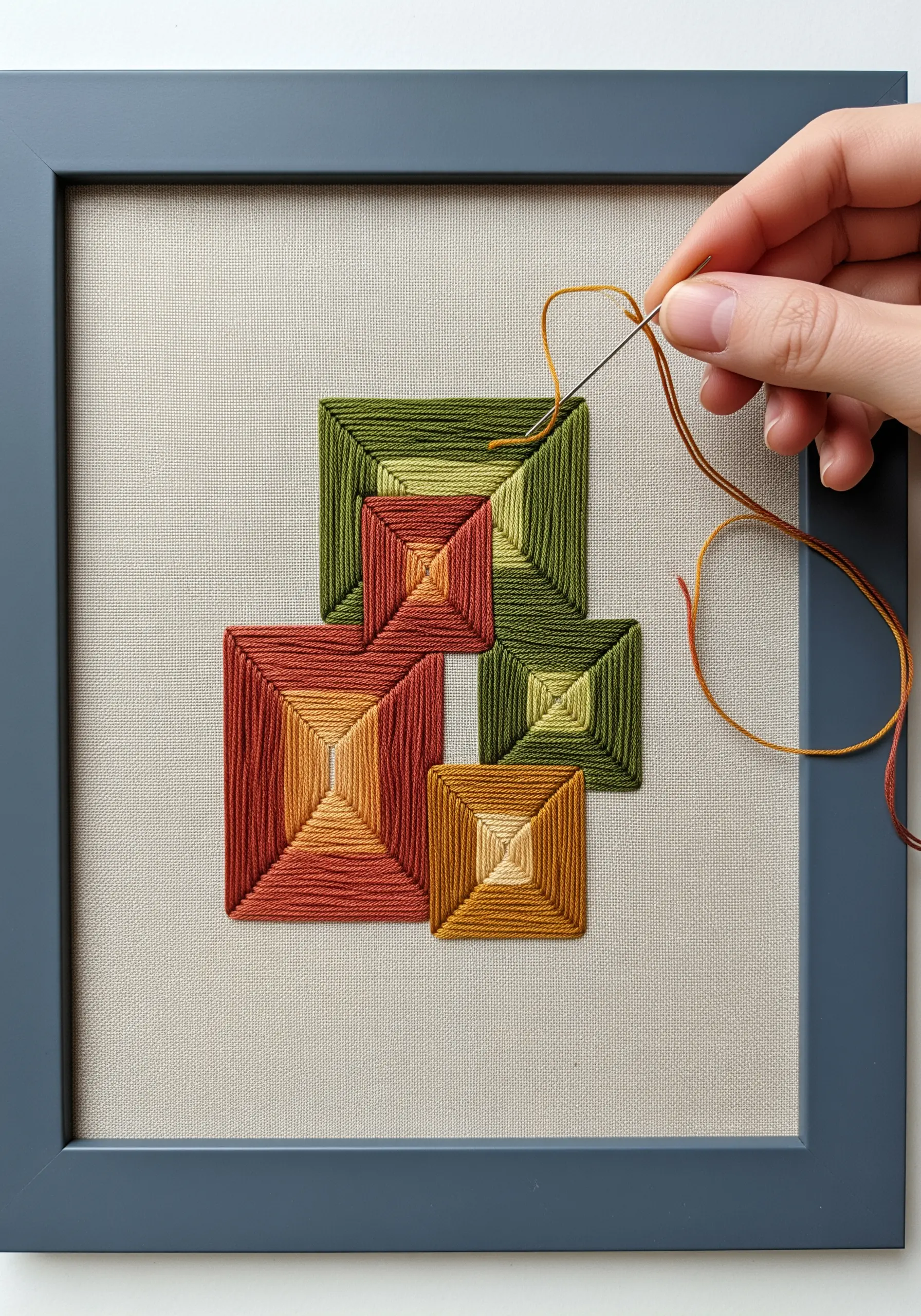
Precision is your best tool here; rotate your hoop to maintain consistent tension on these geometric fills.
By stacking concentric squares of satin stitch, you create a jewel-like, faceted effect that catches the light from different angles.
Choose a high-sheen cotton or silk thread to maximize the architectural shadow play.
6. High-contrast neon splashes
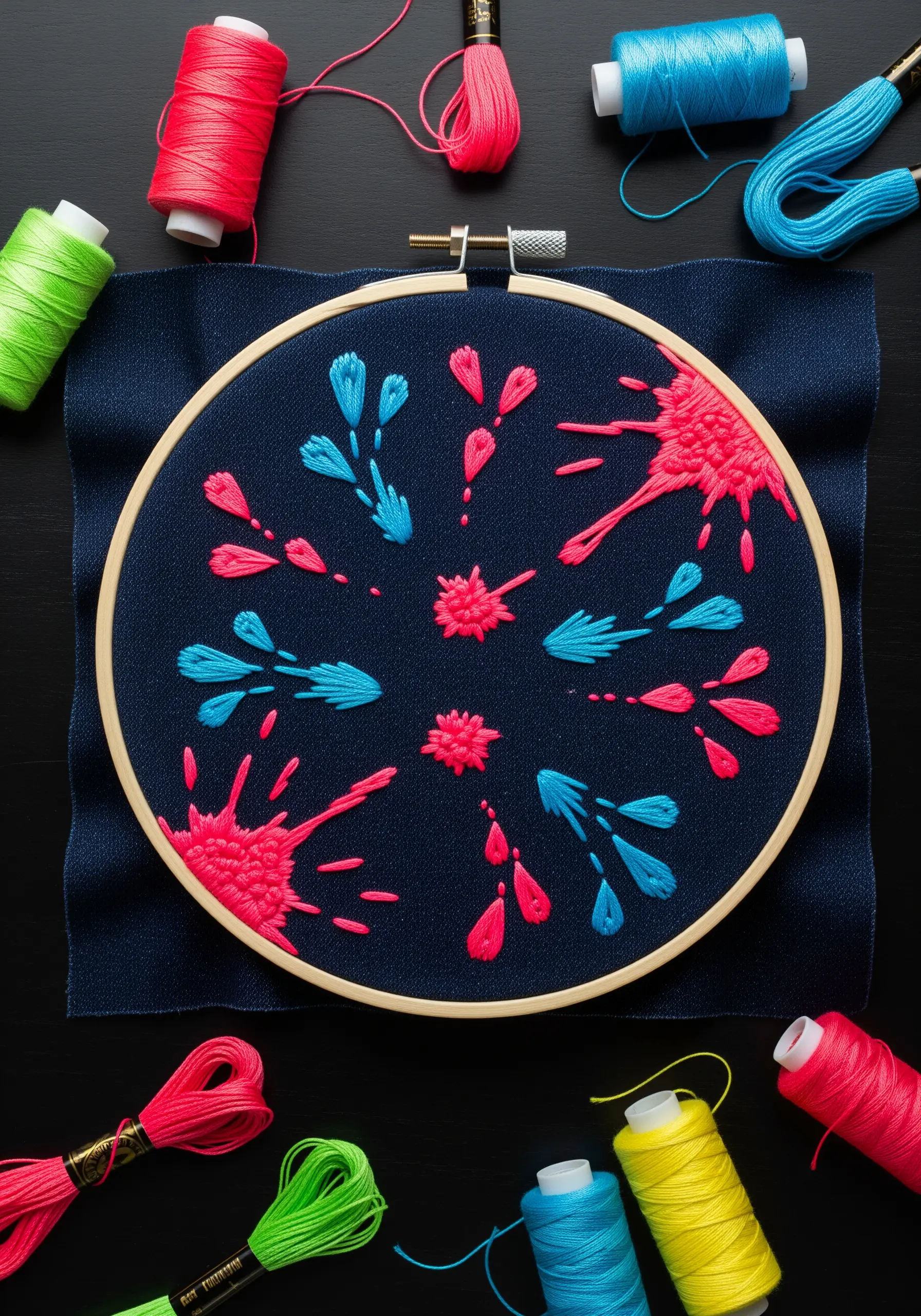
Capture kinetic energy by stitching outward from a central point to mimic the physics of a liquid splash.
Use high-contrast neon threads against dark denim or navy fabric to make the movement pop intensely.
This style fits perfectly with modern neon on black thread art ideas that glow under uv lights.
7. Gravity-fed metallic rain
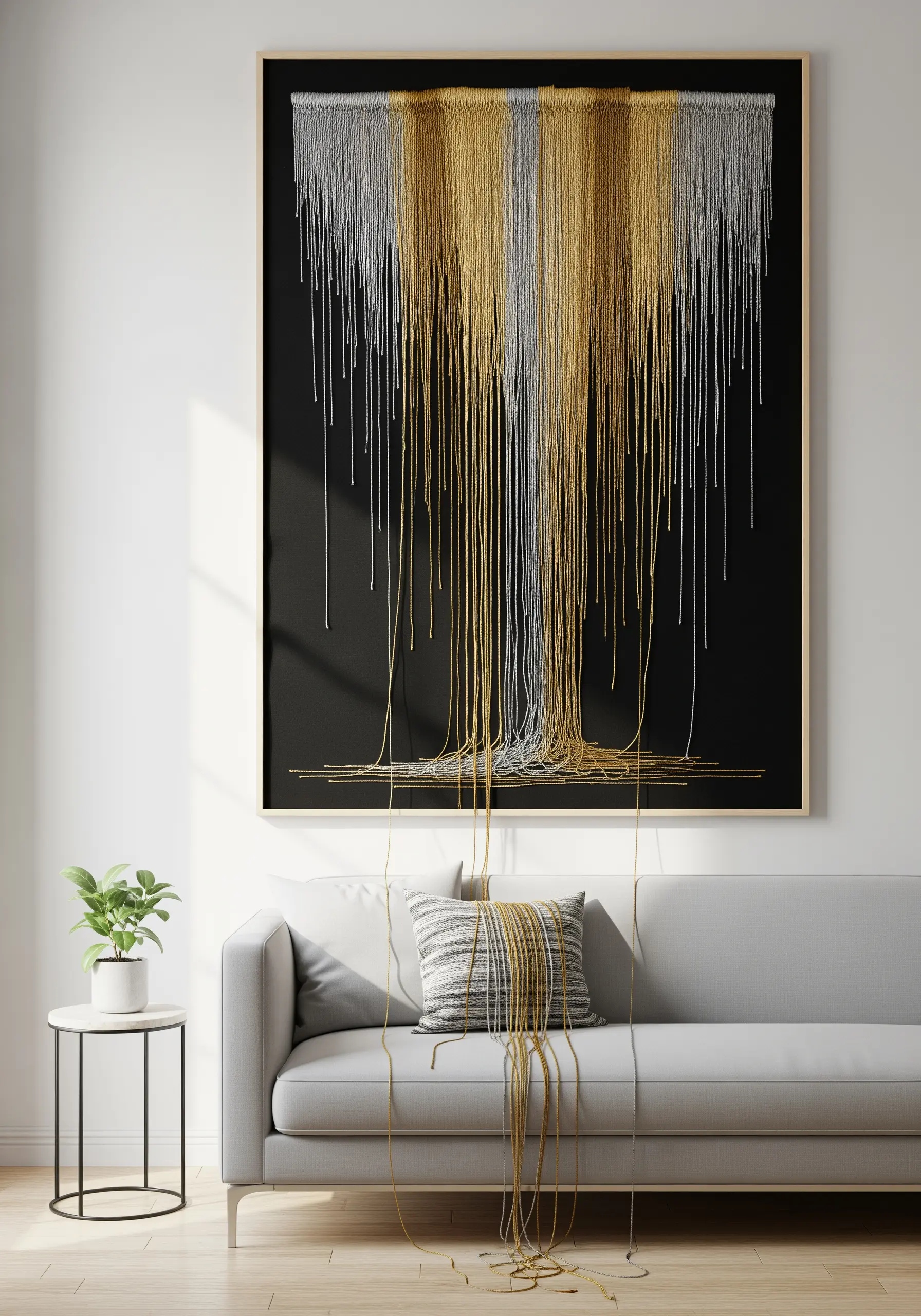
Let gravity do the work for you by utilizing long, unsupported vertical threads that hang freely.
Anchoring metallic threads only at the top creates a rain-like kinetic sculpture that moves with the air in the room.
This technique introduces a delicate, living element to otherwise static wall decor.
8. Sculpting wool topography
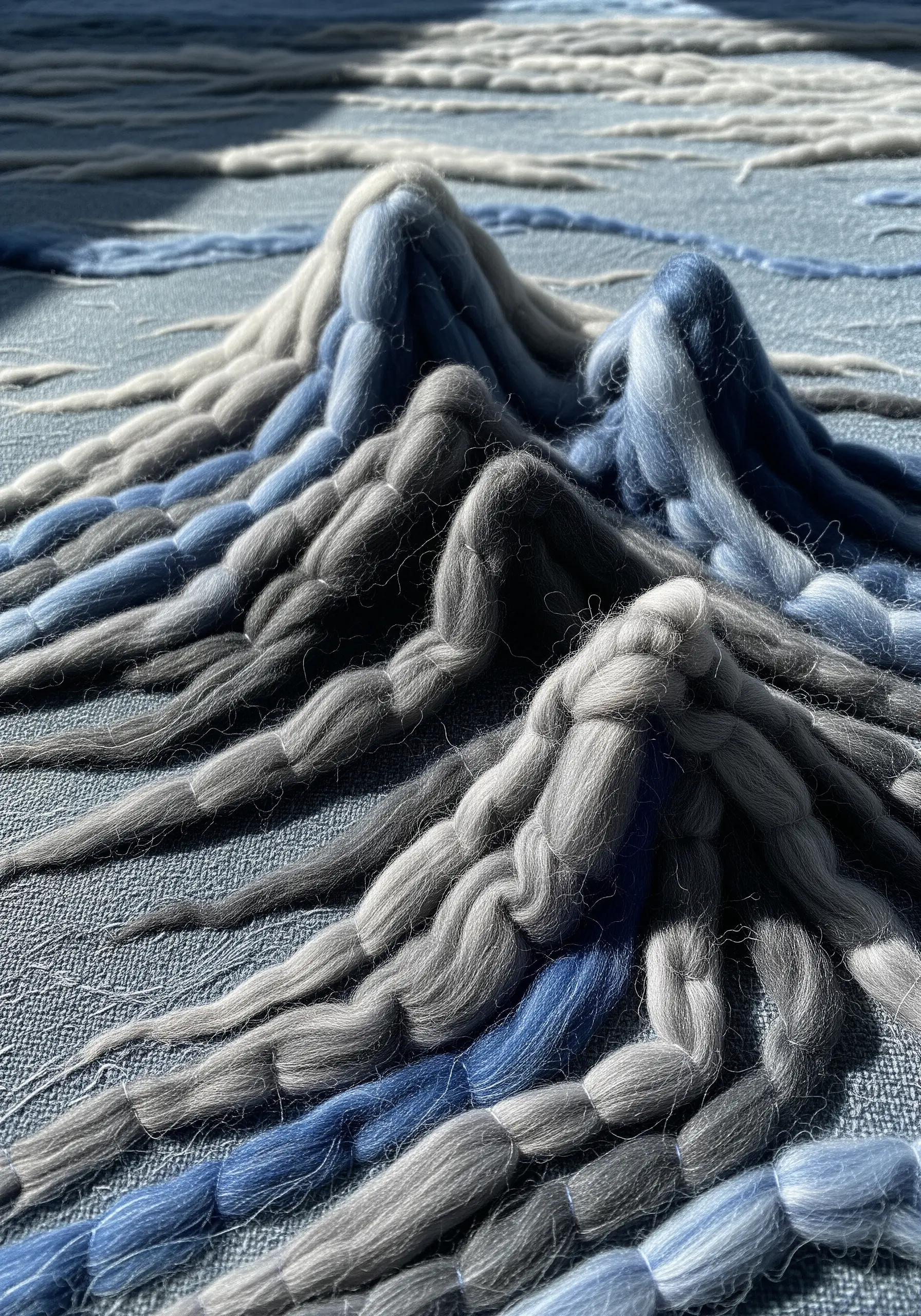
Build actual relief by layering roving or heavy wool to create physical topography on your canvas.
Instead of just stitching a mountain, you construct it, transforming a flat hoop into a sculptural landscape.
The contrast between the raised wool and flat background fabric creates dramatic shadows.
9. Brushed wool cloud textures
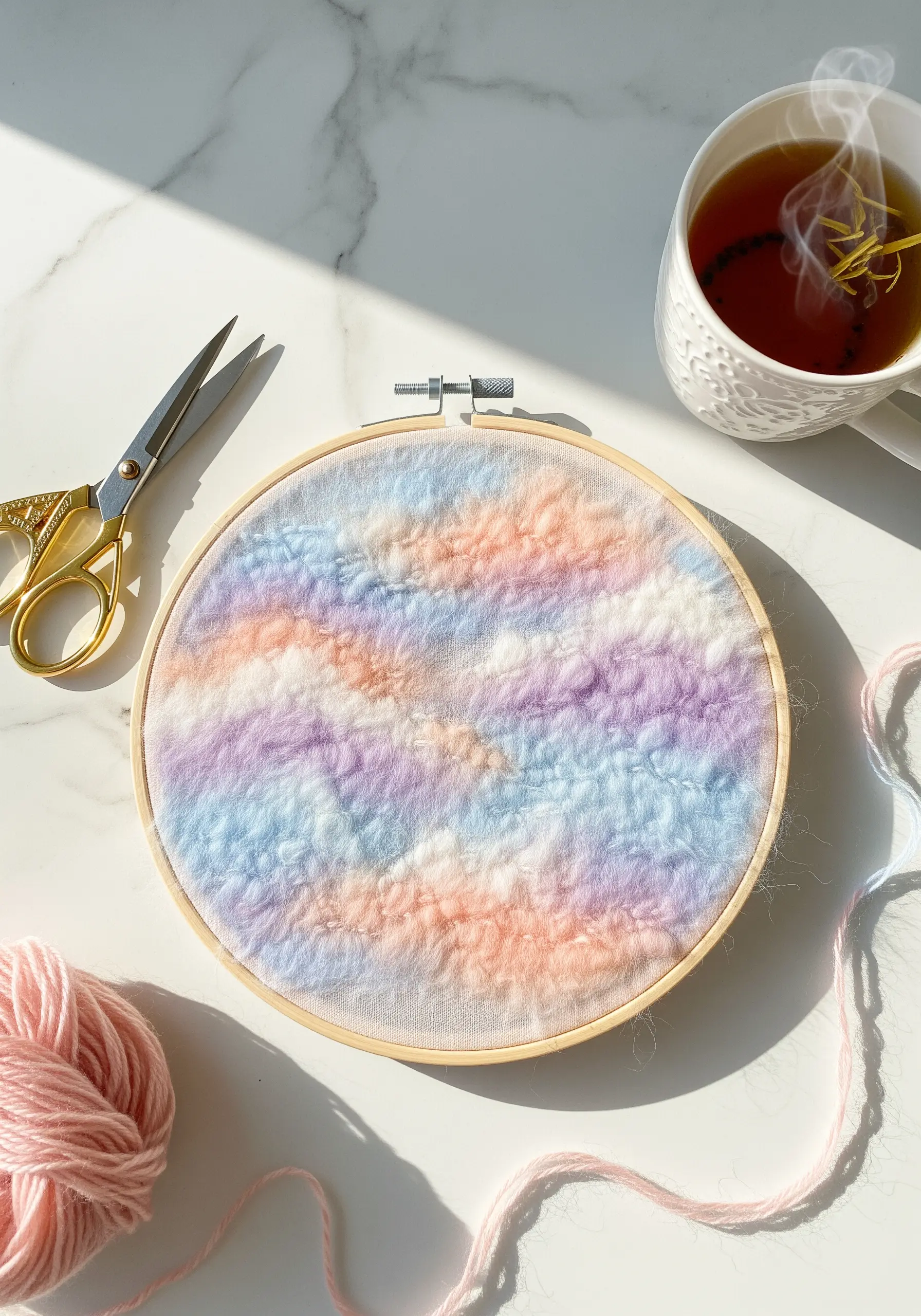
Soften your edges by using a teasing brush on wool thread after stitching to blur the lines.
This technique creates a watercolor-like haze, perfect for ethereal skies or abstract softness.
It is one of those soft and serene stitching projects to brighten your winter days.
10. Raw edge fringe blocking
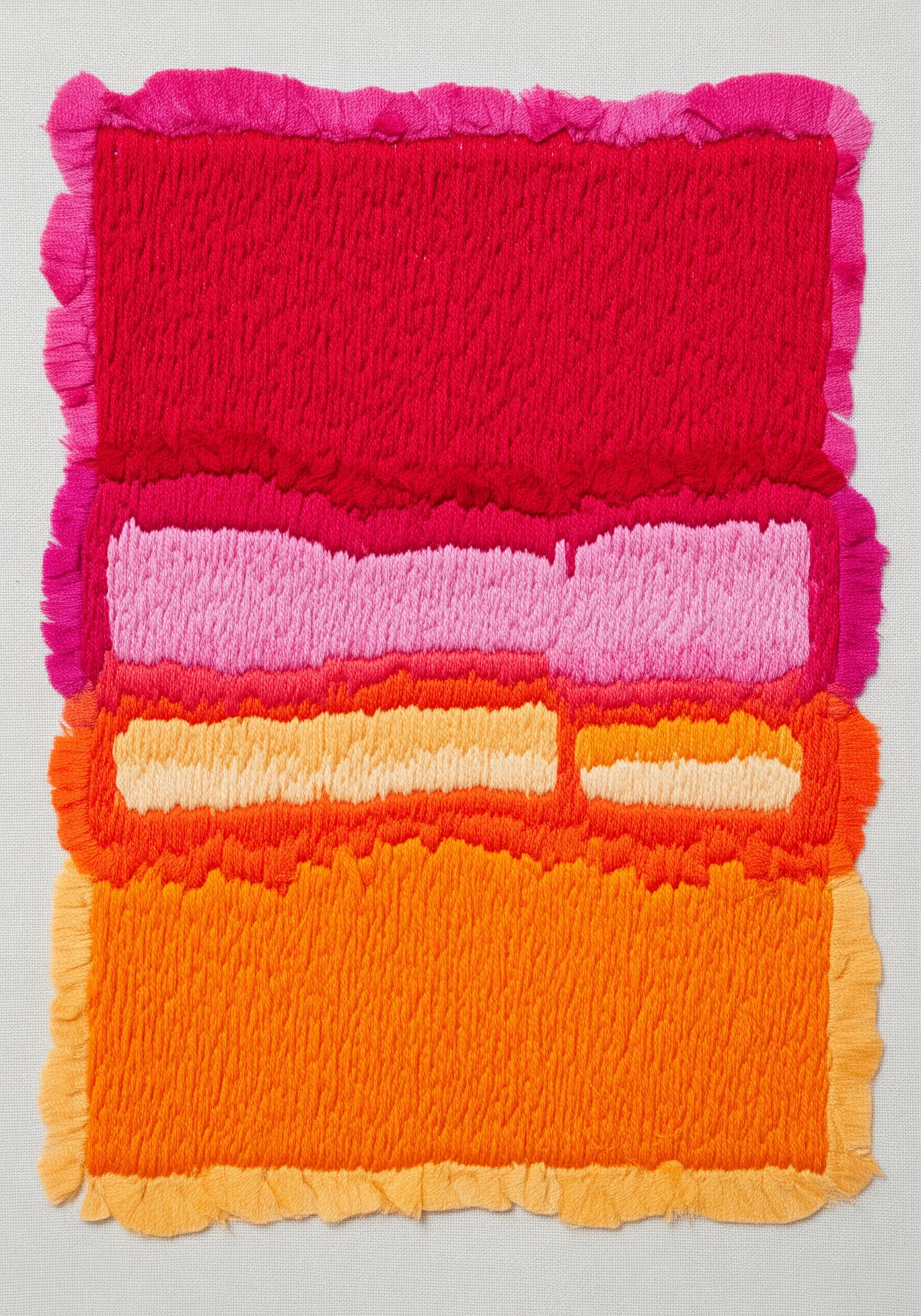
Contrast smooth satin stitch blocks with raw, fringed edges to add sophisticated tactile variation.
By leaving loops uncut or trimming them intentionally, you create a rug-like texture that demands to be touched.
This interplay of smooth and shaggy textures elevates simple color blocking into art.
11. Organic bullion moss clusters

Abandon the grid and cluster French knots or bullion knots of varying sizes to mimic organic growth.
Mixing varying shades of green creates the chaotic, lush appearance of moss or lichen on a forest floor.
These are organic texture embroidery designs that look harder than they are.
12. The tapered calligraphy stroke

Emulate the pressure of a brush by carefully tapering your satin stitch at the start and end of the form.
This attention to the silhouette captures the elegance of ink on paper, even when using heavy thread.
It is an ideal technique for tote bag embroidery ideas that turn your daily work bag into custom couture.
13. Mixed media watercolor outlines
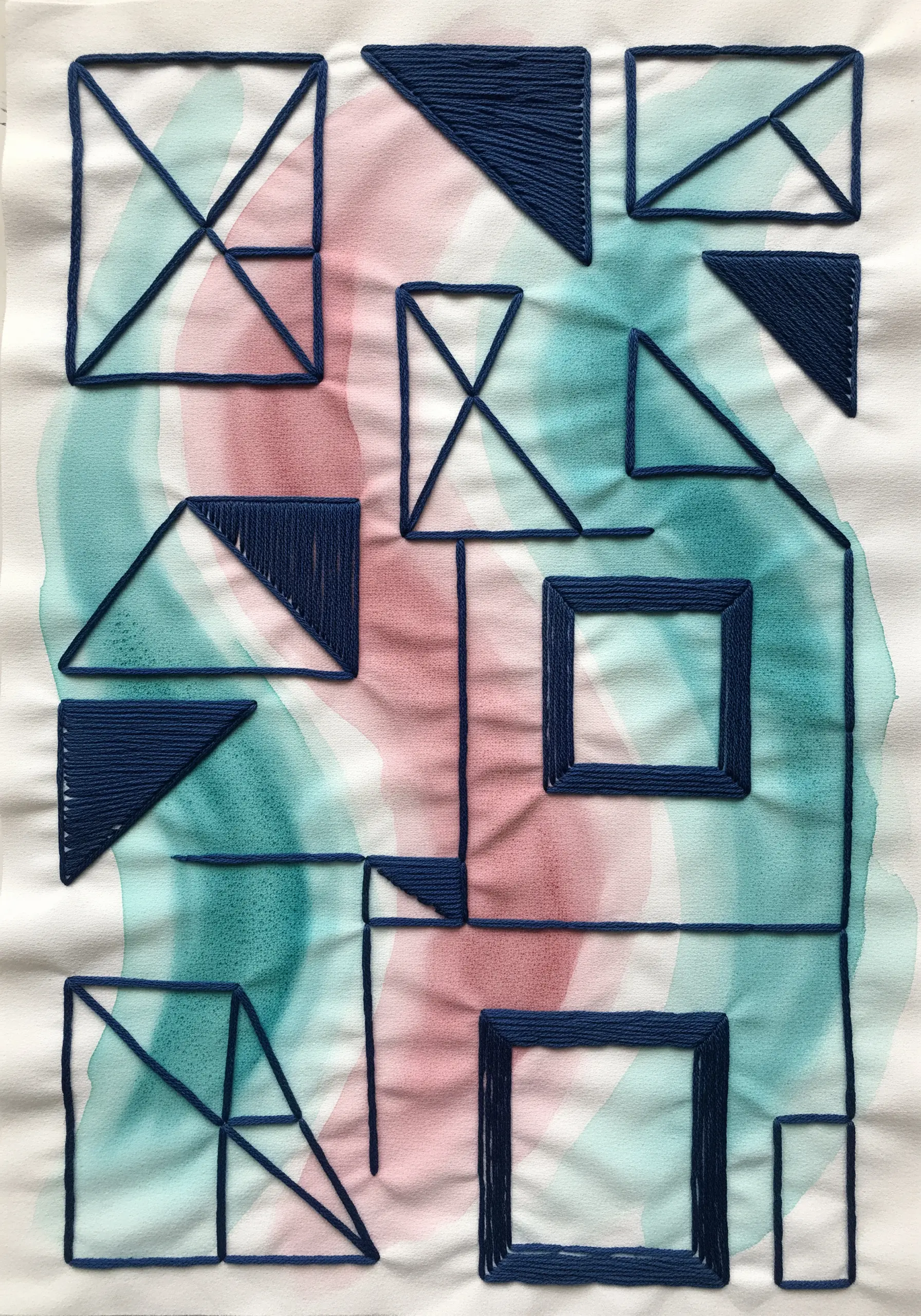
Marry paint and thread by using strict, dark backstitches to contain fluid watercolor washes.
The sharp definition of the thread contrasts beautifully with the unpredictable bleed of the paint.
This creates a modern, architectural look that feels structured yet artistic.
14. Transparent layering on organza
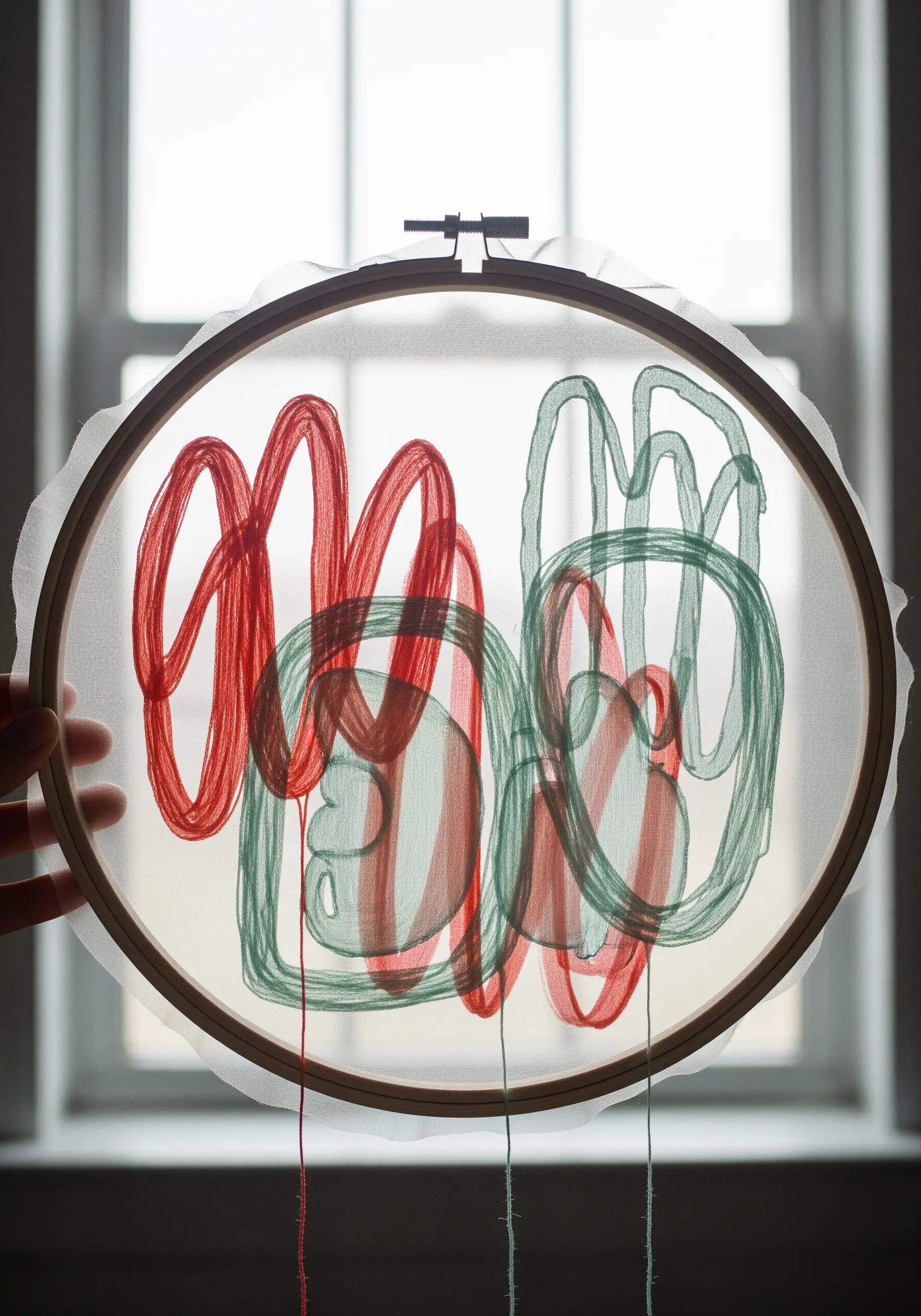
Play with light by stitching abstract forms on sheer organza fabric.
This allows the shadows behind the hoop to become a secondary layer of the artwork, adding a third dimension.
Use abstract negative space techniques that make minimalism feel dramatic.
15. Digital glitch cross-stitch

Modernize the grid by using cross-stitch to create a digital ‘glitch’ aesthetic.
Intentionally misaligning colors and disrupting patterns blends traditional craft with contemporary digital visual language.
This transforms a grandmotherly technique into something edgy and current.
16. Monochromatic knit-style chains
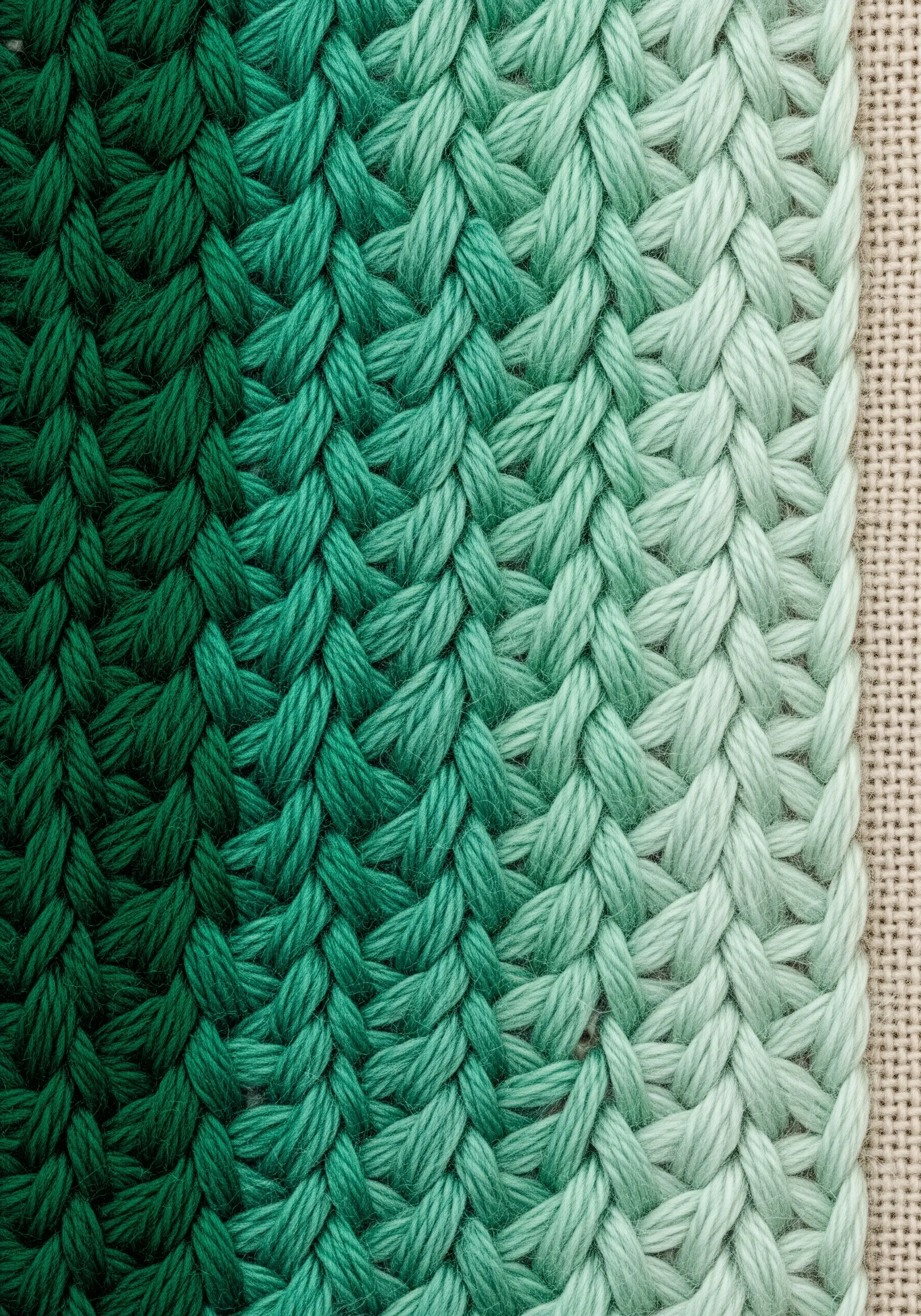
Treat your embroidery thread like knitting yarn by using heavy chain stitches in a gradient.
Packing these chains closely together turns the surface into a knit-like textile structure full of warmth.
Apply this to ombre gradient thread embroidery ideas for trendy throw cushions.
17. Impressionist thread strokes
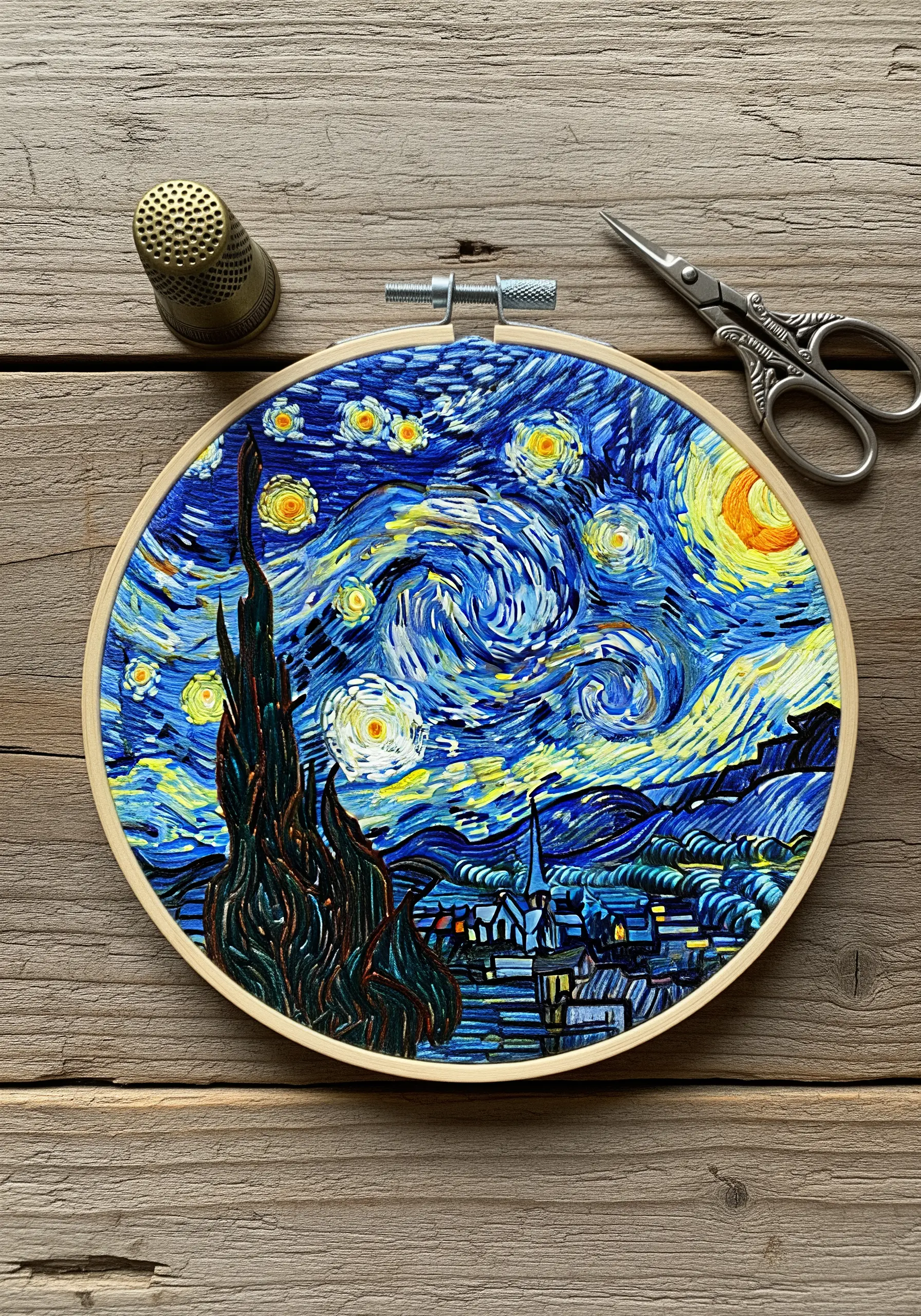
Paint with short, directional dashes of thread, layering colors to create optical mixing.
By ignoring outlines and focusing on the direction of light, you achieve the vibrating energy of Van Gogh’s brushwork.
This technique turns the needle into a paintbrush.
18. The panoramic split landscape
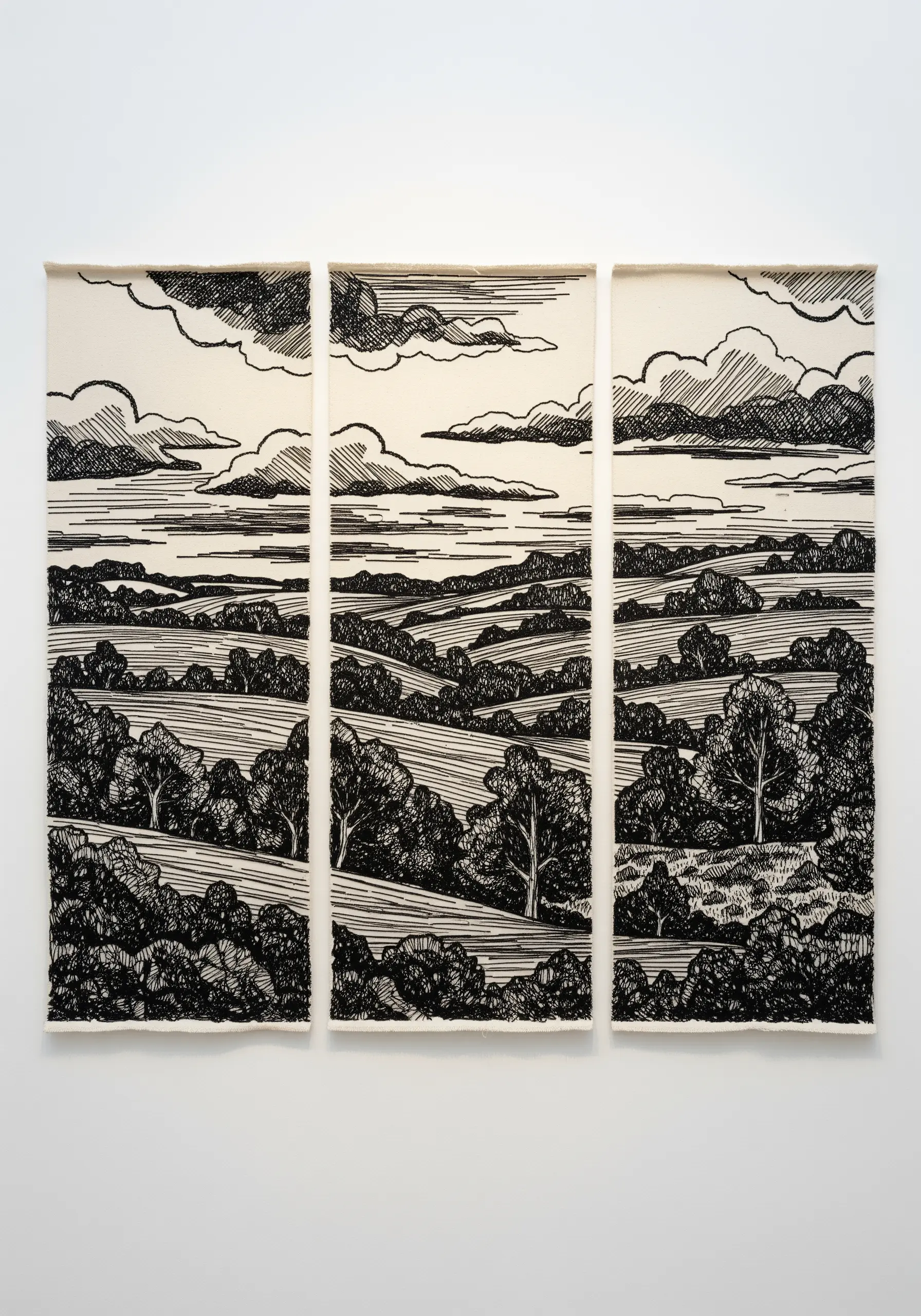
Expand the horizon by splitting a detailed landscape design across three separate panels.
This triptych effect acts like a window, opening up small rooms and adding grandeur to the artwork.
These are landscape embroidery wall pieces that turn fabric into painted scenery.
19. Isolated confetti motifs
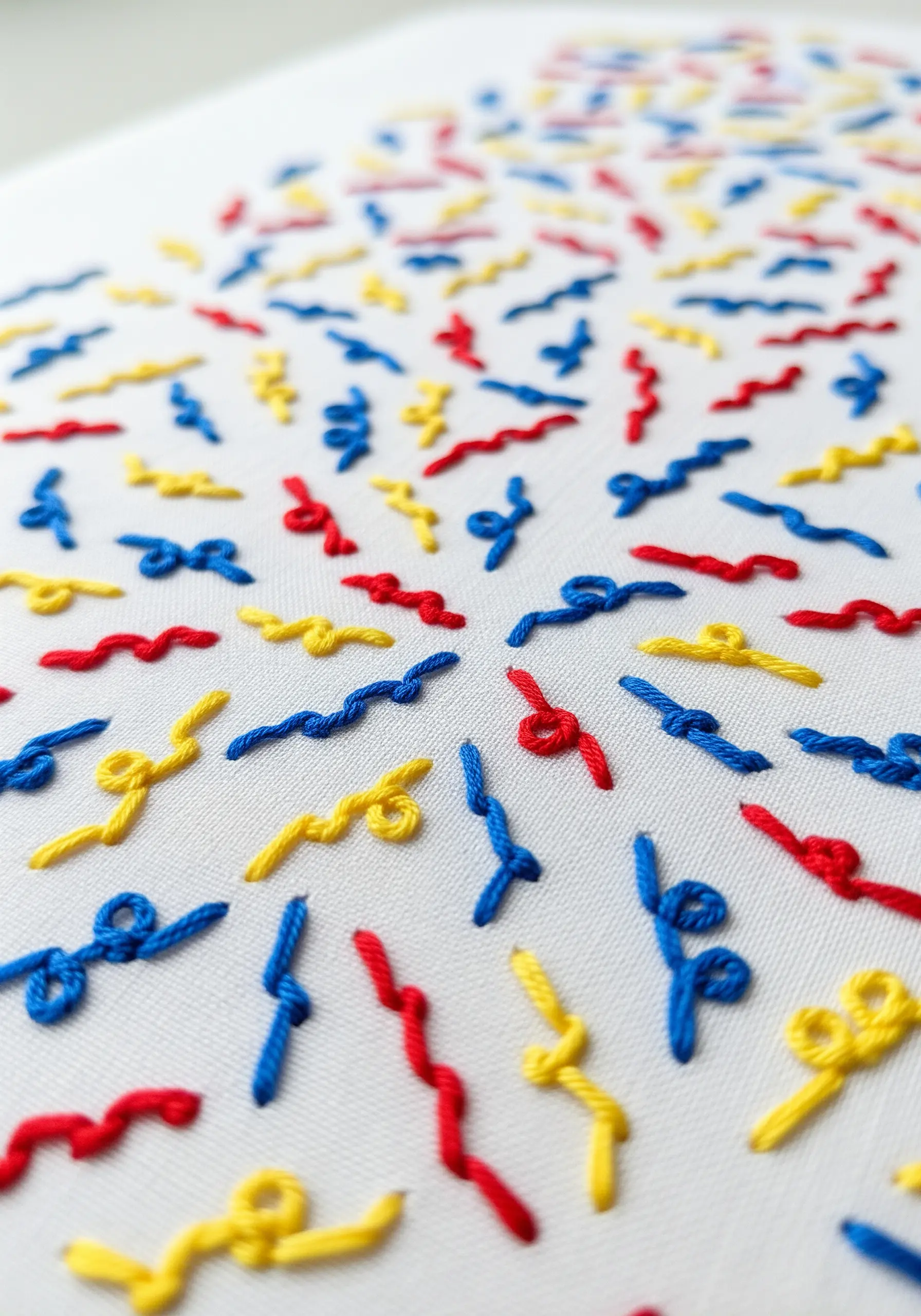
Celebrate negative space by scattering small, vibrant motifs across a pristine white background.
Small bullion knots or seed stitches that float independently make the fabric breathe and feel modern.
This restraint prevents the design from feeling heavy or cluttered.
20. Silk ribbon sculptural florals
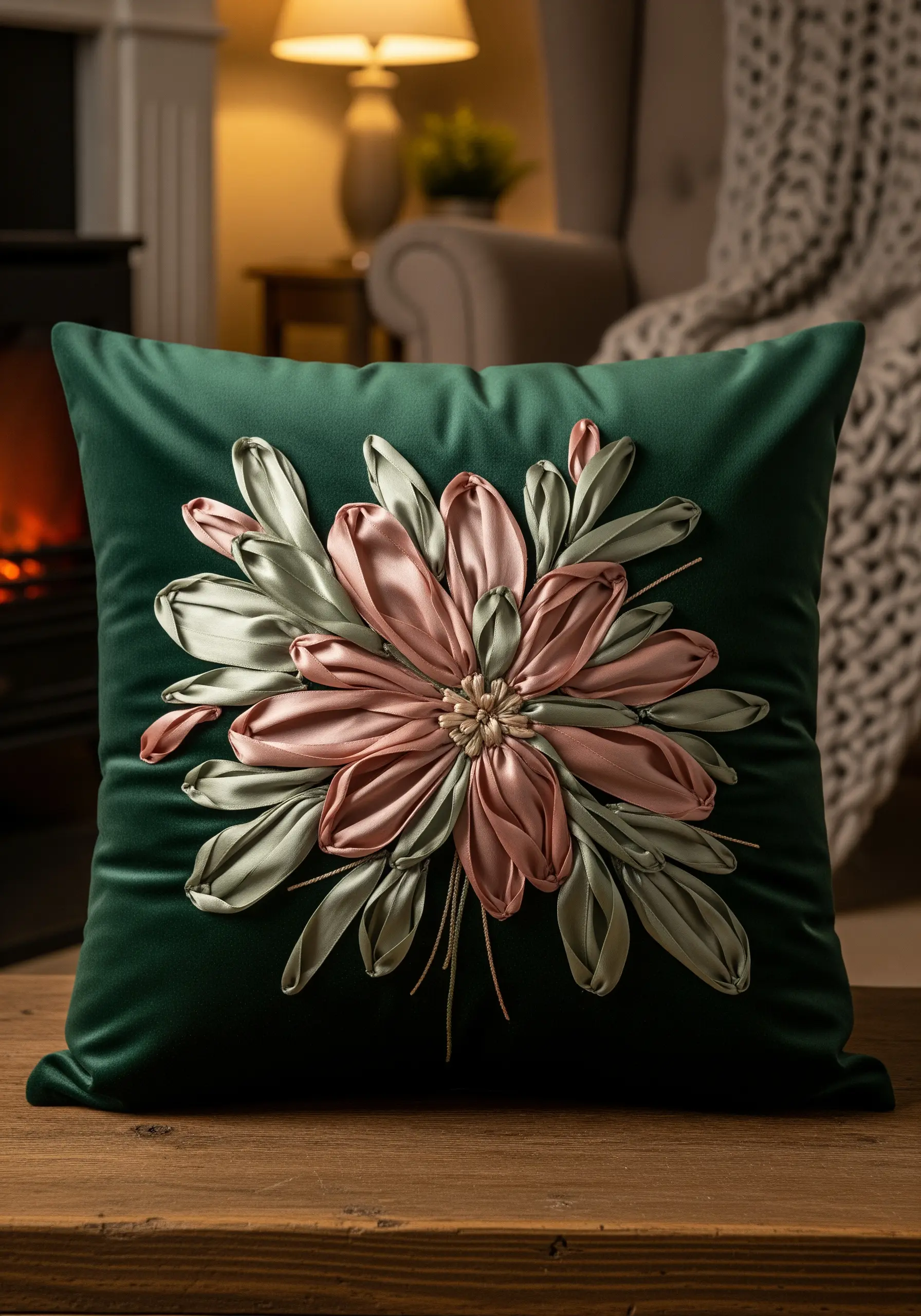
Switch to silk ribbon for instant volume and a distinct reflective quality.
The wide surface area of the ribbon catches light differently than thread, giving florals a luxurious, sculpted finish.
Try floral inspired ribbon embroidery ideas for textured petals and 3d statement pieces.
21. Radiating negative space
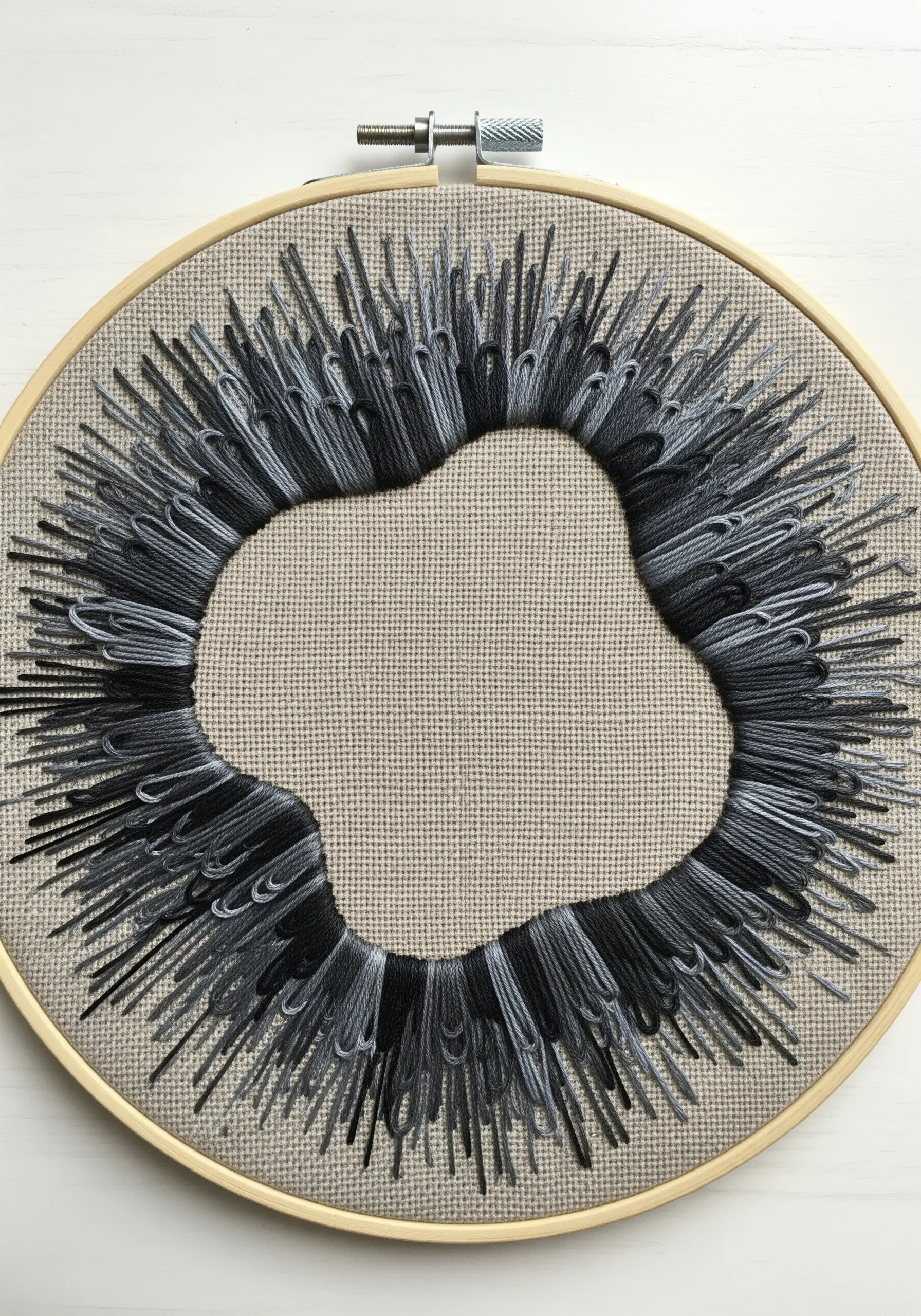
Define a form by what isn’t there; stitch radiating lines outward from a blank center.
This creates a focal point through pure texture and direction, drawing the eye into the void.
It’s a powerful way to suggest shape without outlining it.
22. Controlled chaos scribbling

Embrace the aesthetic of a sketchpad by using dense, overlapping scribbles in black thread.
This chaotic texture creates a sharp, edgy contrast against crisp white collars or cuffs.
Use this for sneaky small embroidery ideas on clothing that make people look twice.
23. Monochromatic texture sampling
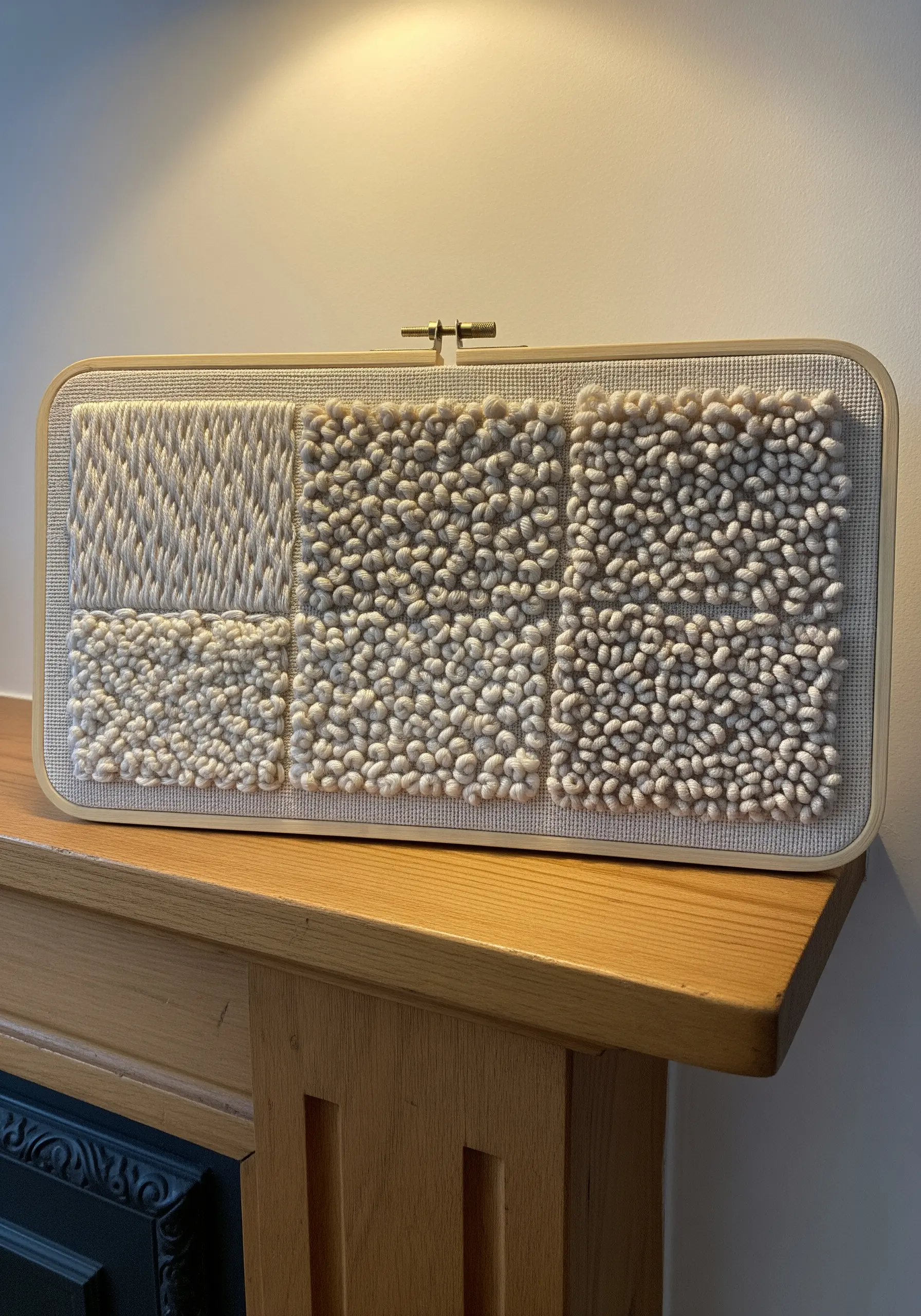
Master the monochrome; when you remove color, texture becomes the only player.
Alternate between smooth satin blocks and nubby French knots to keep the eye engaged without overwhelming the palette.
Explore textured neutral embroidery samplers that look like hand woven art pieces.
24. Diffused organic gradients

Blend without lines using a pointillism technique with French knots.
A gradient created by dots rather than solid fills creates a soft, biological transition that feels grown rather than stitched.
This adds a microscopic, cellular beauty to abstract forms.
25. Fractured light geometry
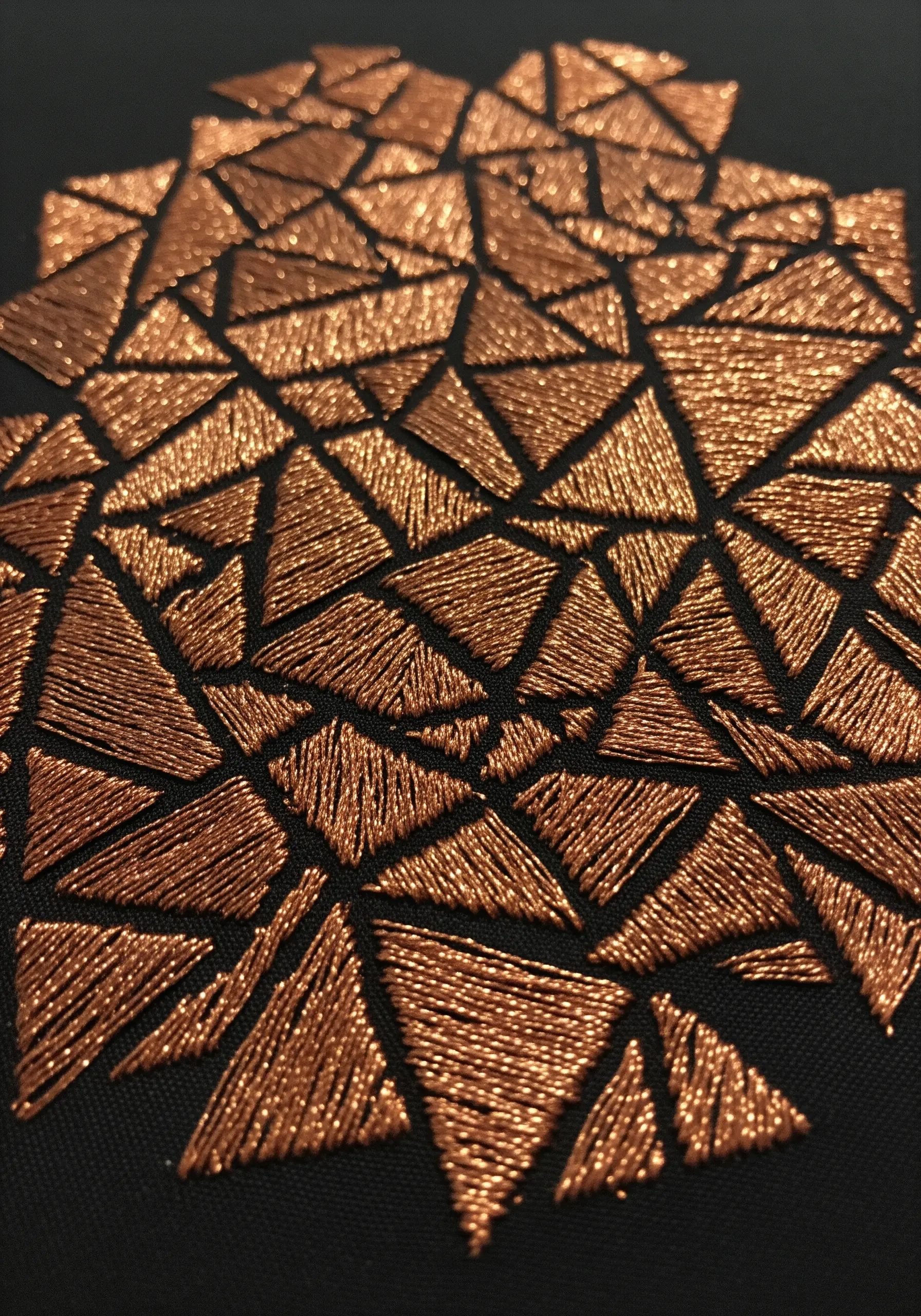
Fracture the light by stitching adjacent geometric shapes at dramatically different angles.
Even with a single color, the changing direction of the thread causes the light to hit differently, creating dynamic shine.
This technique mimics the shattering of glass or metal.
26. Street art satin stitch
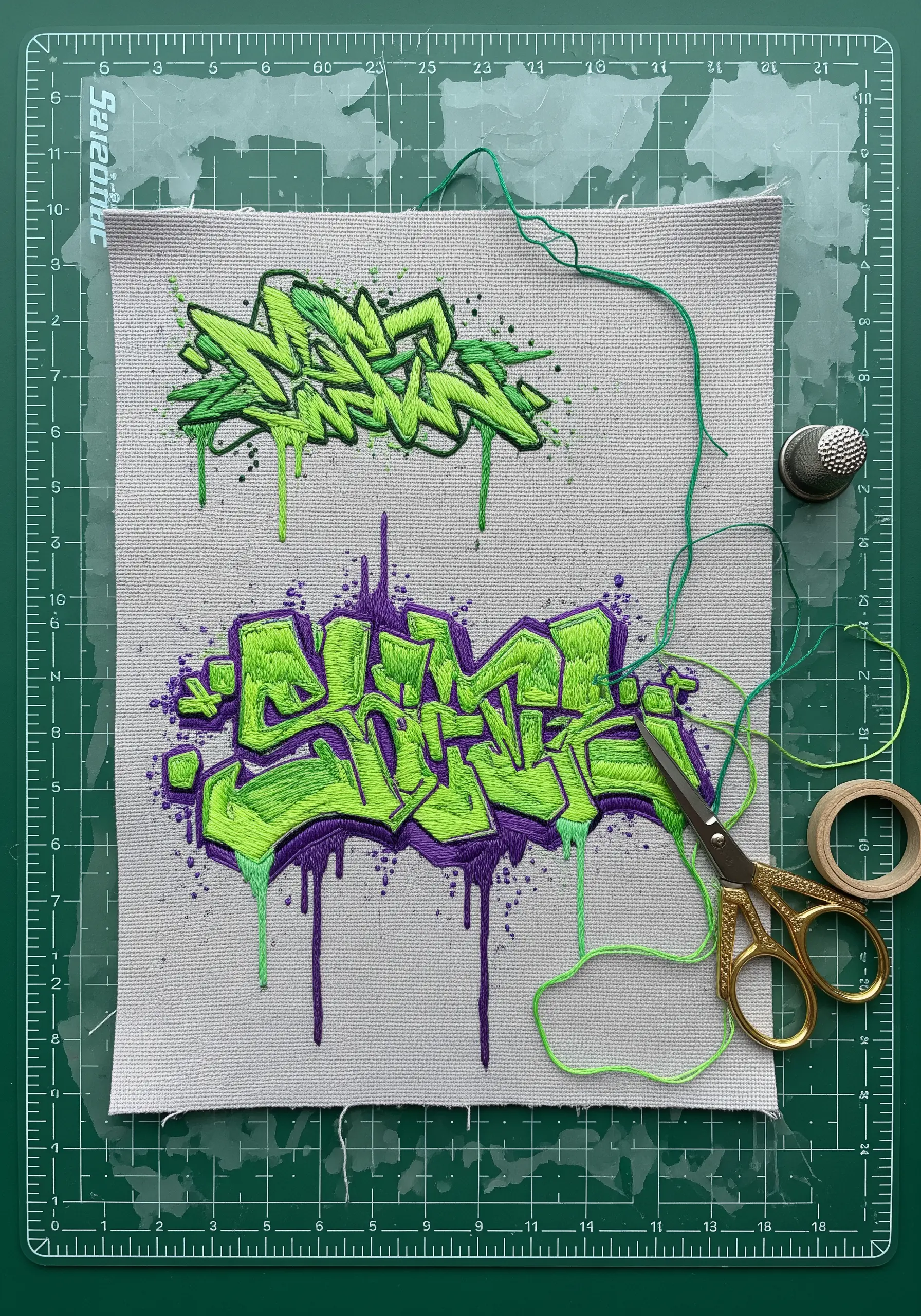
Bring the boldness of street art to the hoop with heavy outlines and vibrant fills.
Use a split stitch for the outline to stabilize the shape before filling it with a dense satin stitch.
This style fits modern neon thread designs for electrifying streetwear night glow embroidery.
27. Elongated vertical stems
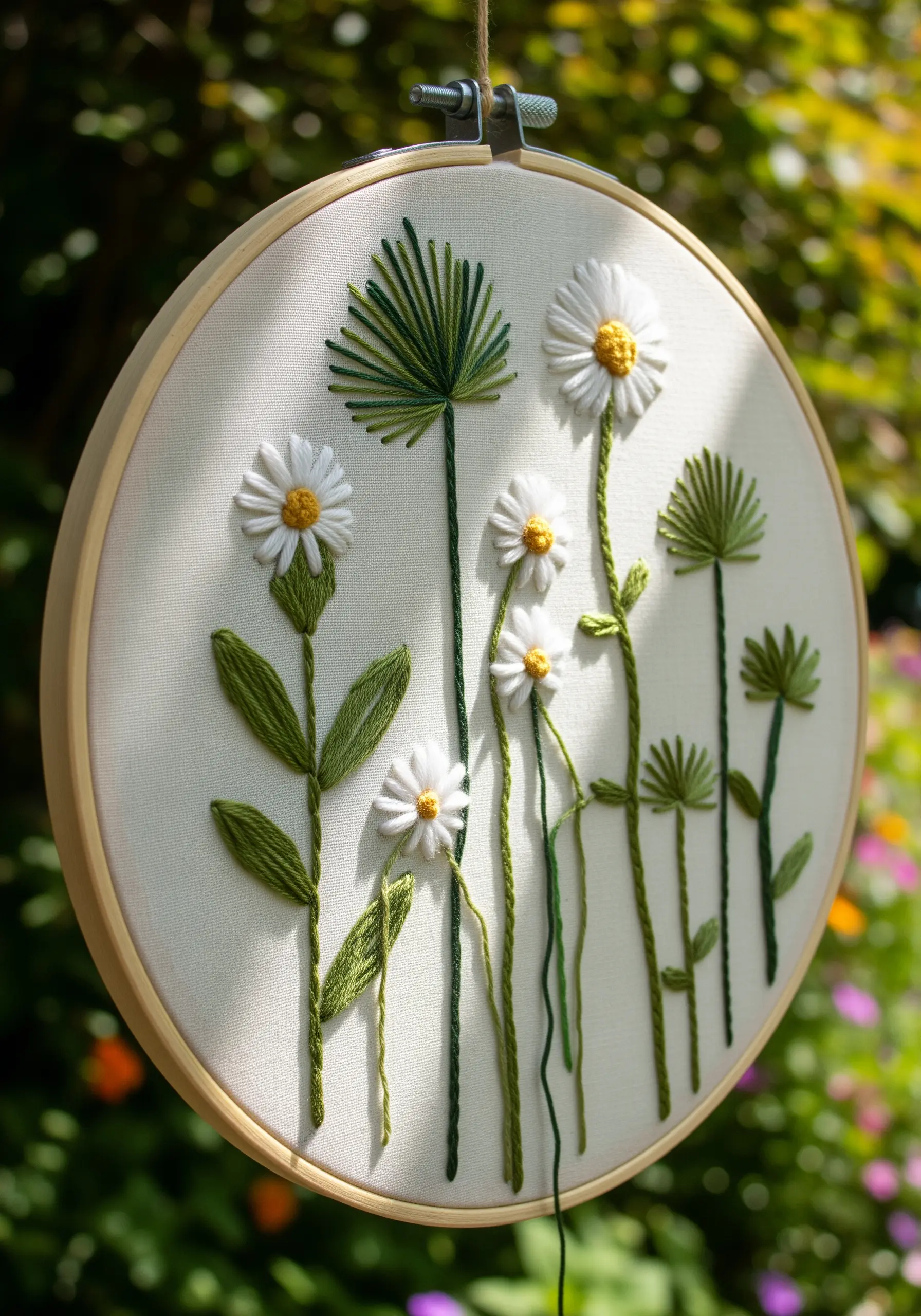
Exaggerate your vertical lines to create elegance and draw the eye upward.
By stretching the stems of botanical motifs far beyond their natural proportions, the composition feels lighter and more contemporary.
It turns a simple flower into a design statement.
28. Hand-woven fabric simulation
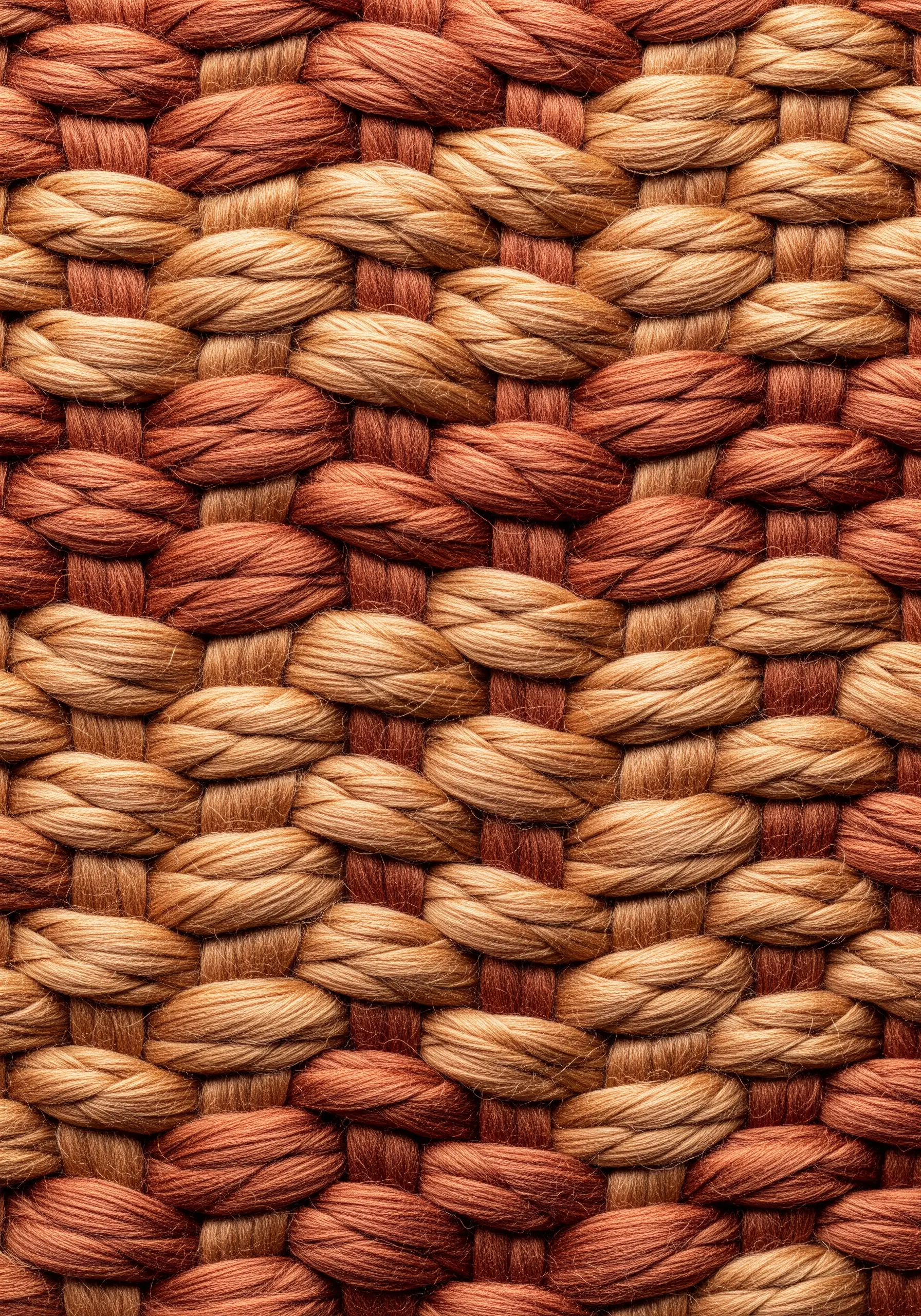
Build your own textile surface with a tight basket weave stitch.
This creates a thick, durable surface that completely obscures the ground fabric, essentially weaving a new cloth on top.
The result is a rich, tactile structure that feels substantial.
29. The confident single braid

Confidence is quiet; try a single, perfectly executed horizontal braid on a large canvas.
Using a thick, rope-like stitch in a deep color speaks volumes about restraint and texture.
These are minimalist embroidery art pieces that look expensive but aren’t.
30. Contoured psychedelic flow
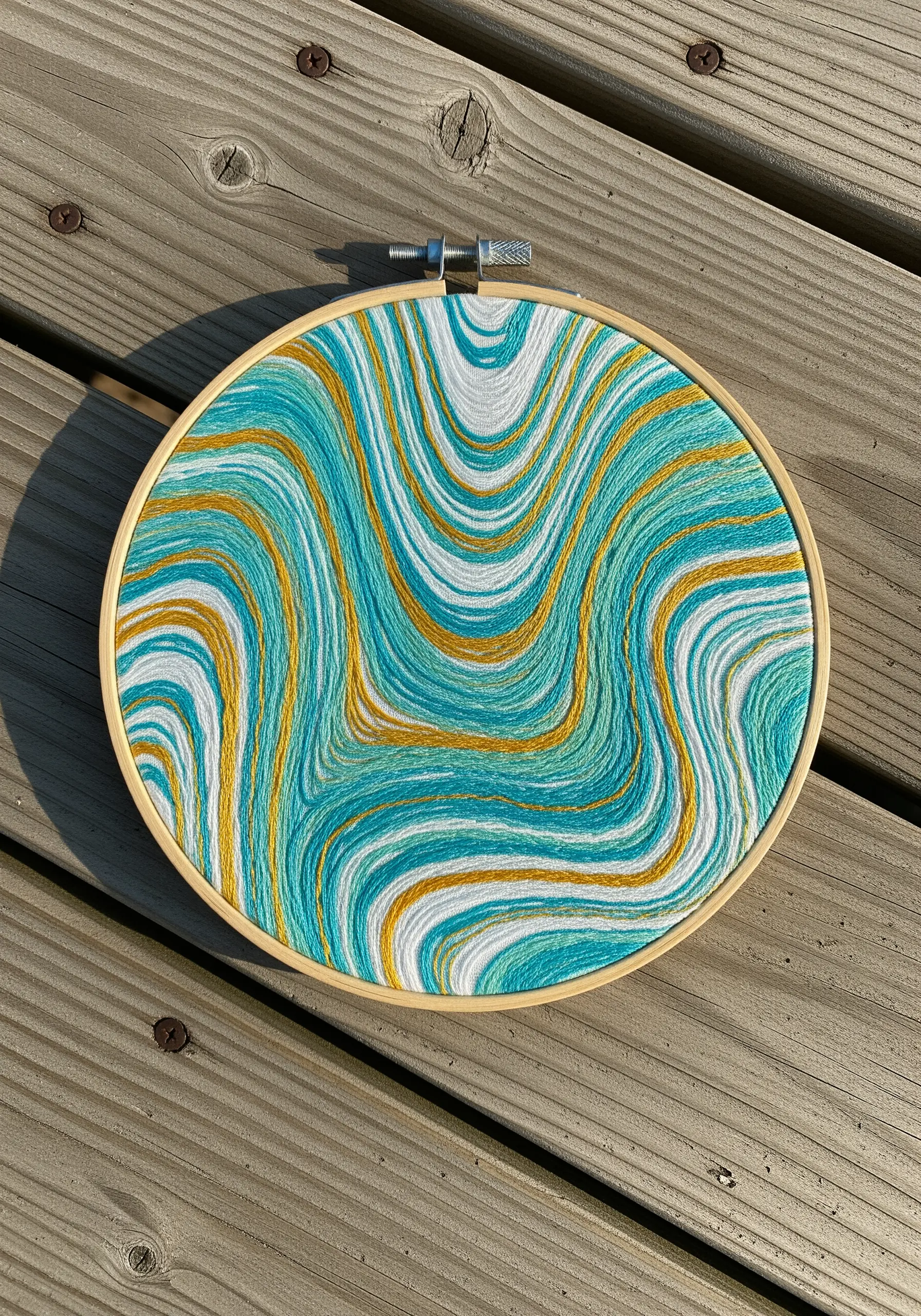
Follow the flow of the design rather than filling it with straight lines.
Contour stitching adds movement and rhythm, reinforcing the curvature of psychedelic or abstract patterns.
It makes the design feel like it is rippling or vibrating.
31. Hand-stitched fringe trim

Don’t just finish the edge; celebrate it by adding hand-stitched woven picot or fringe.
This raw, tactile element softens strict geometric patterns and adds a bohemian touch.
It bridges the gap between embroidery and weaving.
32. Tooled leather typography

Respect the material when working with leather; pre-punch your holes for clean execution.
Heavy thread on leather creates a raised, embossed effect that looks professionally tooled.
It adds a masculine, durable aesthetic to typography.
33. The color study grid

Create a library of color by stitching a grid of solid satin stitch blocks.
This helps you understand how different thread colors vibrate and interact next to each other.
Use this for color blending thread patterns that transform blank canvas into abstract magic.
34. Illusion curves with straight lines

Create the curve through tension and geometry using Spirelli or string art techniques.
By layering straight lines at precise angles, you form perfect arcs without ever stitching a curved line.
Perfect for minimal geometry stitch projects to turn office walls into inspiring zen workspaces.
35. Hypnotic concentric Zen circles
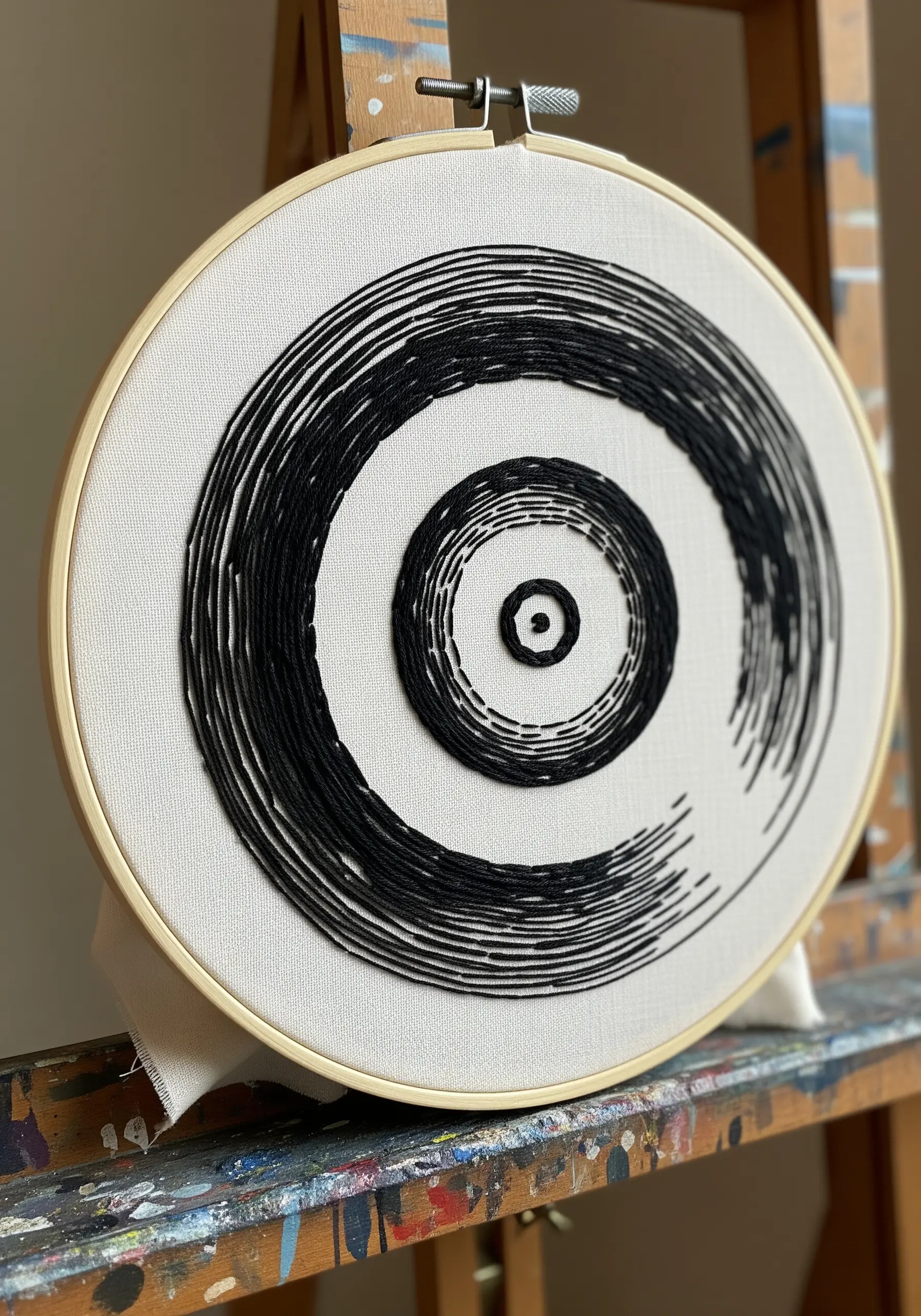
Find the center and spiral outward with high-contrast concentric running stitches.
The slight imperfections in the hand-stitching create a vibrating, optical effect that is meditative to view.
This fits well with Japanese Zen inspired embroidery designs to balance bedroom energy.