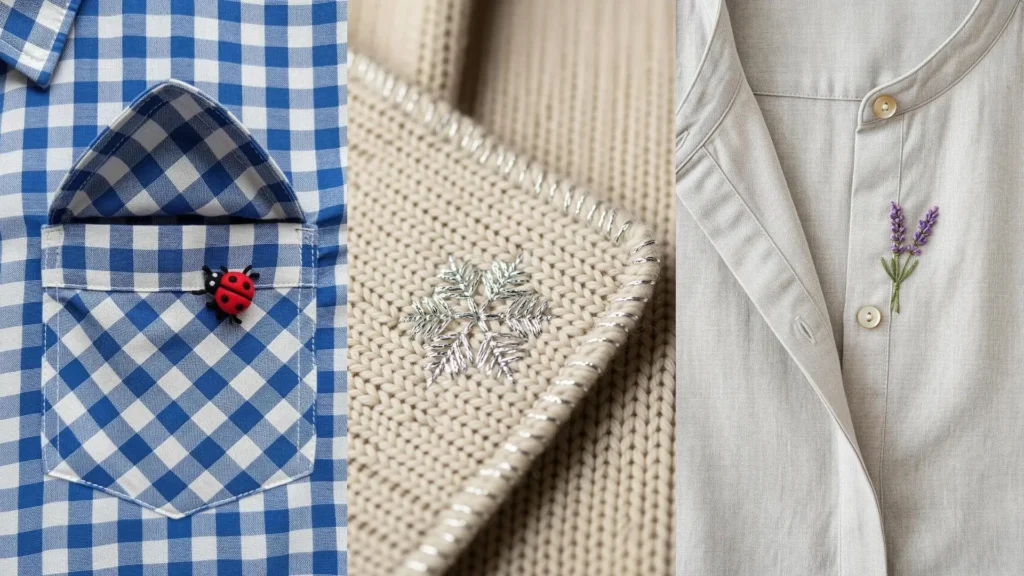
Your tote bag is more than just a carryall; it’s a canvas waiting for a story. It’s easy to feel stuck with the same few stitches, but I want to help you see the incredible potential in your hands. A simple shift in technique—from a flat fill to a textured one, or from a single line to a beaded one—is all it takes to transform your work from handmade to couture.
Think of your thread not just as color, but as texture, light, and dimension. Consider how a raised stitch can catch the light, how a blend of tones can create depth, or how adding a non-thread element like a bead or a piece of metal can completely change the narrative of your piece.
In these ideas, I’ll guide you through the small adjustments that make a significant impact. We’re moving beyond just decorating a surface and stepping into the world of intentional, thoughtful embellishment. This is where your daily bag becomes a personal work of art.
1. The Elegance of a Single, Continuous Line
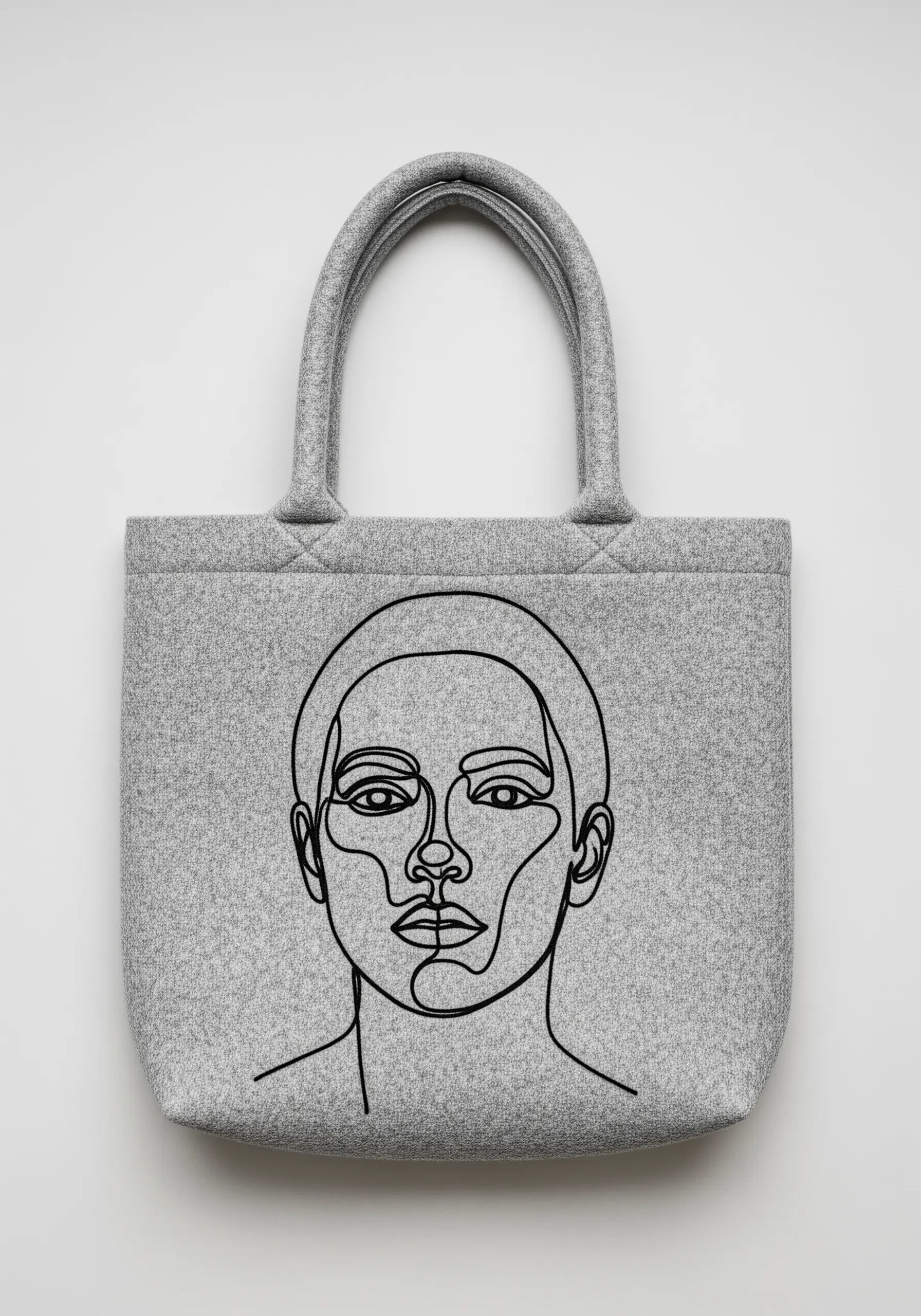
Create the illusion of a single-stroke drawing by using a whipped backstitch or a very tight stem stitch.
This technique hides the individual stitches, resulting in a fluid line that feels both modern and hand-drawn.
Choose a high-contrast thread, like black on grey felt, to make the minimalist design impactful.
For the sharpest results, use a heavier weight thread like a #8 perle cotton, which adds substance and presence to the line without making it bulky.
This transforms simple line art into a tactile statement piece.
2. Gilded Kintsugi-Inspired Details

Evoke the Japanese art of Kintsugi by creating meandering golden lines that suggest beautiful repair.
Use a couching stitch to lay down a thick, metallic braid, which gives your lines a raised, luxurious texture that simple stitches can’t achieve.
For the sparkling dust effect, scatter tiny seed stitches and French knots using a single strand of metallic floss.
This creates a delicate shimmer that contrasts beautifully with the bold, couched lines and the dark fabric of your tote.
3. Architectural Precision with Fine-Line Stitches
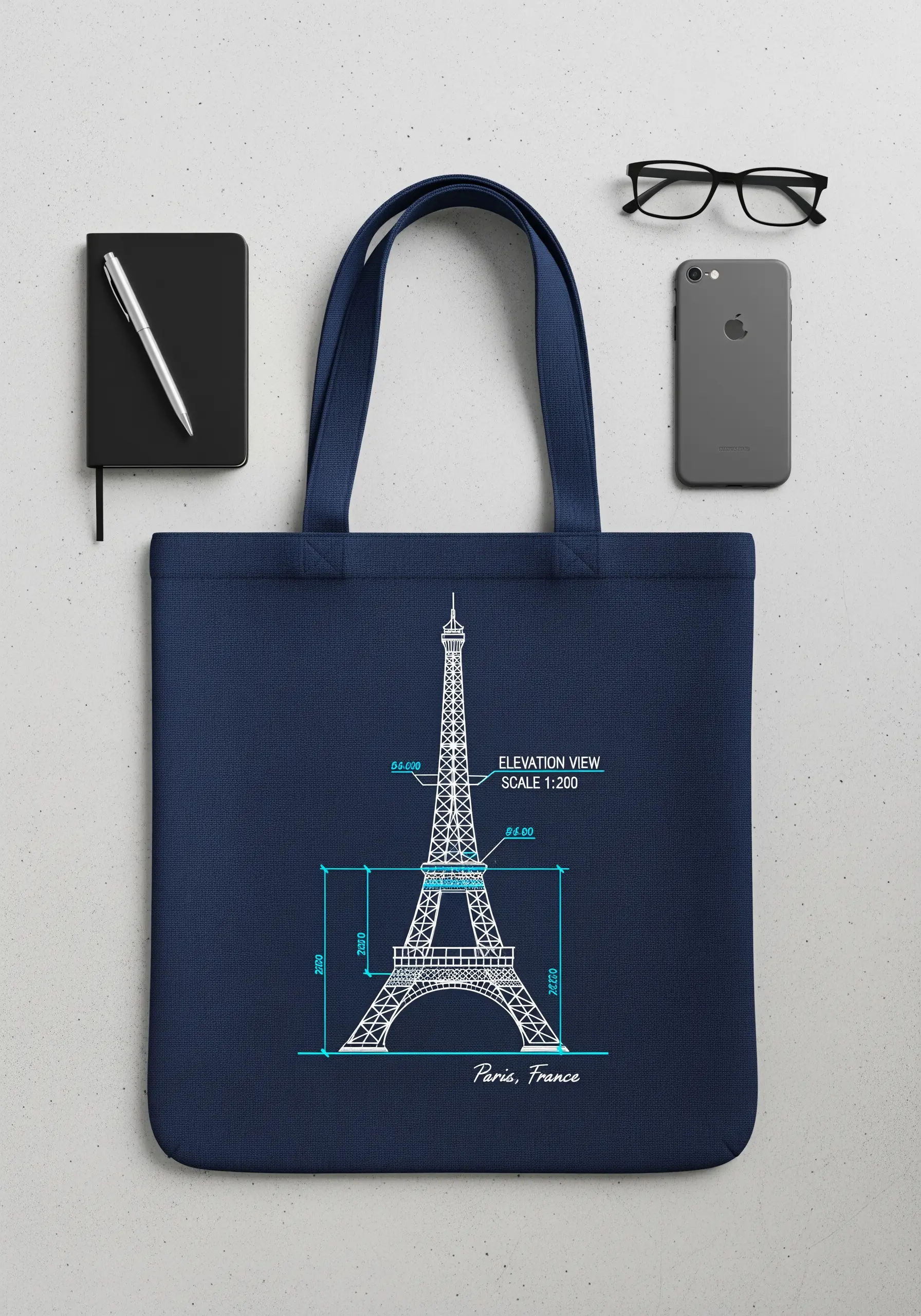
Recreate the clarity of a blueprint with ultra-fine line work.
Use a single strand of white floss and a meticulous backstitch on a dark canvas tote for maximum contrast and readability.
To ensure every line is perfectly straight and every measurement is precise, transfer your design using a water-soluble stabilizer.
This method allows you to draw or print your design perfectly, stitch over it, and then simply dissolve the paper away, leaving only crisp, flawless stitches.
4. Art Deco Glamour with Mixed-Media Embellishment
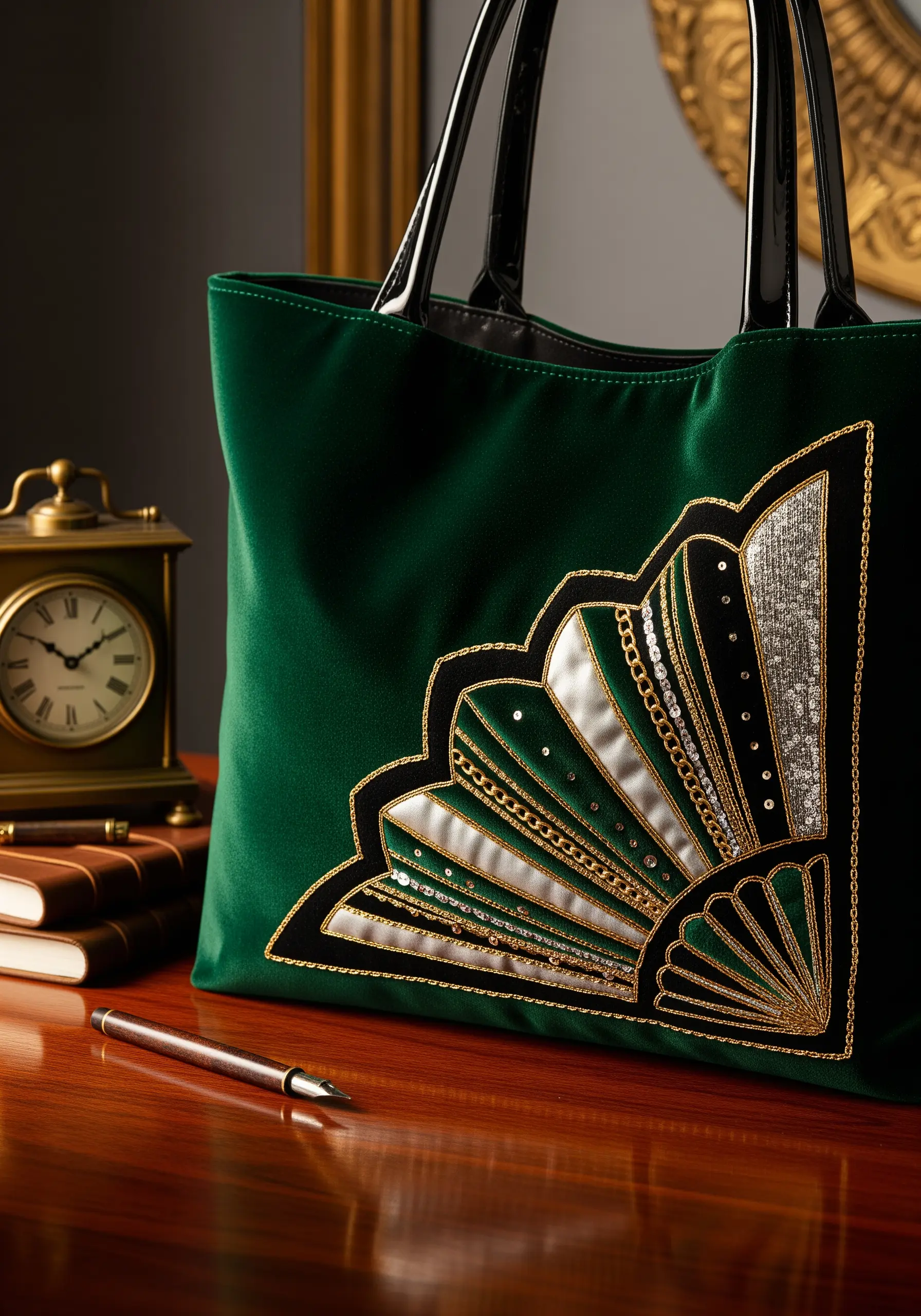
Combine thread with hardware to create a design that radiates 1920s opulence.
On a plush fabric like velvet, appliqué sections of silver lamé or sequins to mimic light-catching panels.
Use couching to secure fine gold chains alongside satin-stitched borders, adding both texture and an authentic metallic gleam.
This mixed-media embroidery technique creates a dynamic interplay between soft textiles and hard, reflective surfaces, resulting in a truly couture finish.
5. Botanical Realism Through Thread Painting
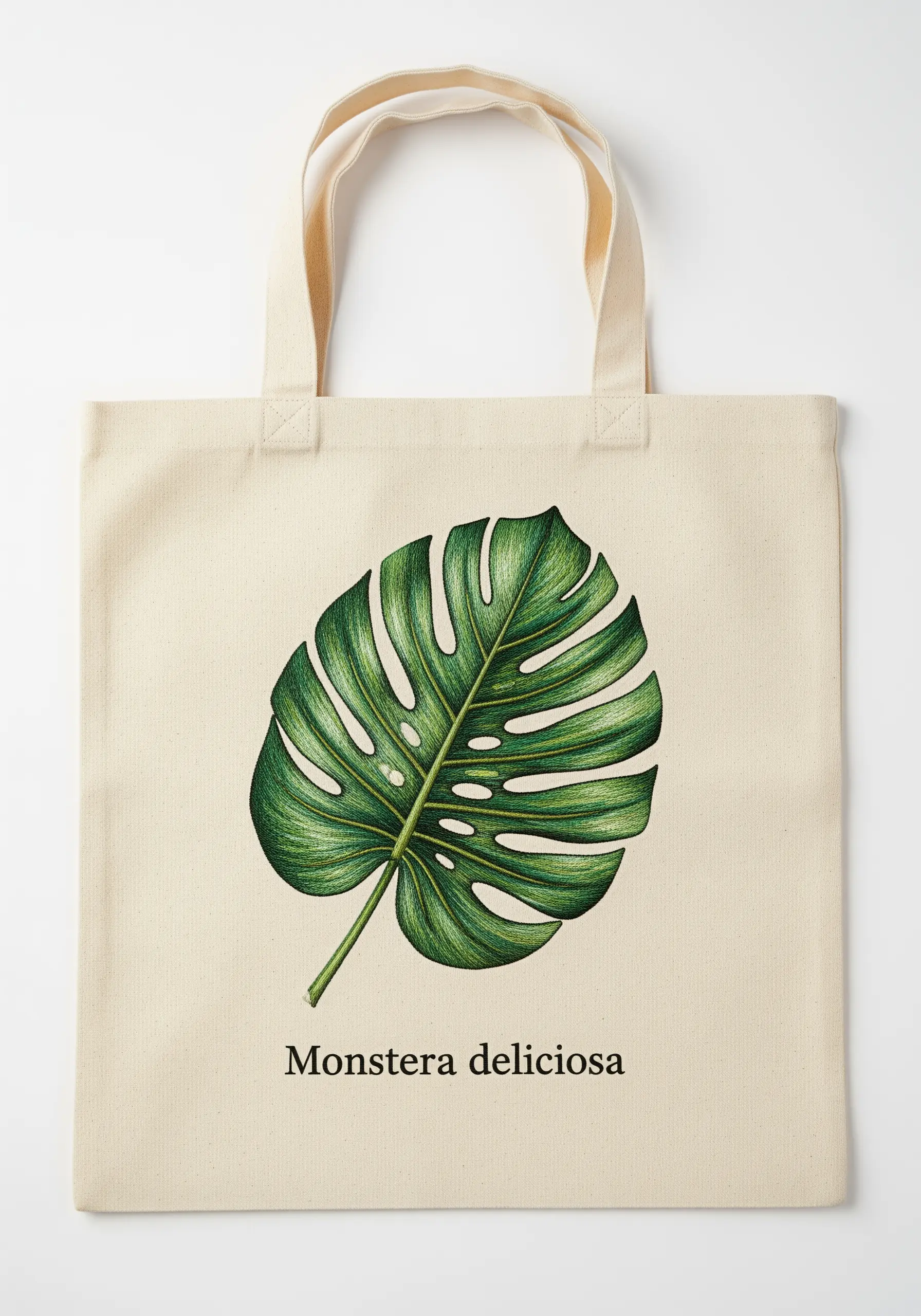
Achieve a photorealistic effect by using the long-and-short stitch to blend colors seamlessly, just like paint.
Select at least three or four shades of green, from a deep shadow tone to a bright highlight, to give the leaf realistic depth and dimension.
Focus the lighter shades along the central veins where light would naturally hit, creating a subtle, 3D illusion.
This botanical stitch art technique turns a simple motif into a detailed, lifelike study of nature.
6. Celestial Maps with Beaded Accents
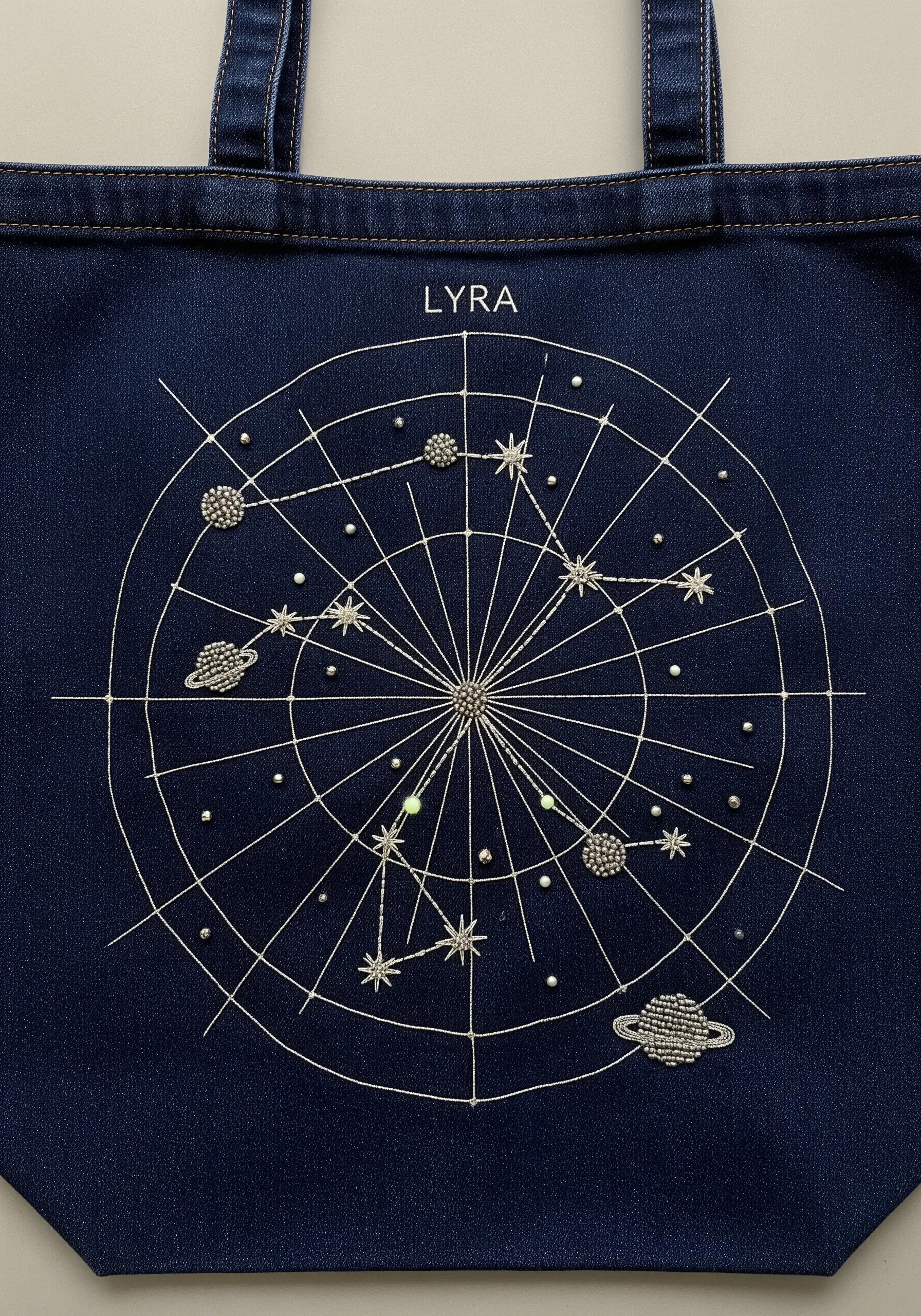
Elevate a simple line design into a celestial map by incorporating beads and metallic threads.
Use a fine, silvery metallic thread for the constellation lines, stitched with a simple backstitch on a dark denim base.
Instead of stitching the stars, use silver beads, seed pearls, or tiny French knots to represent planets and stars of varying brightness.
This adds a subtle, three-dimensional texture that catches the light and brings the cosmic design to life.
7. Expressive Landscapes with Punch Needle
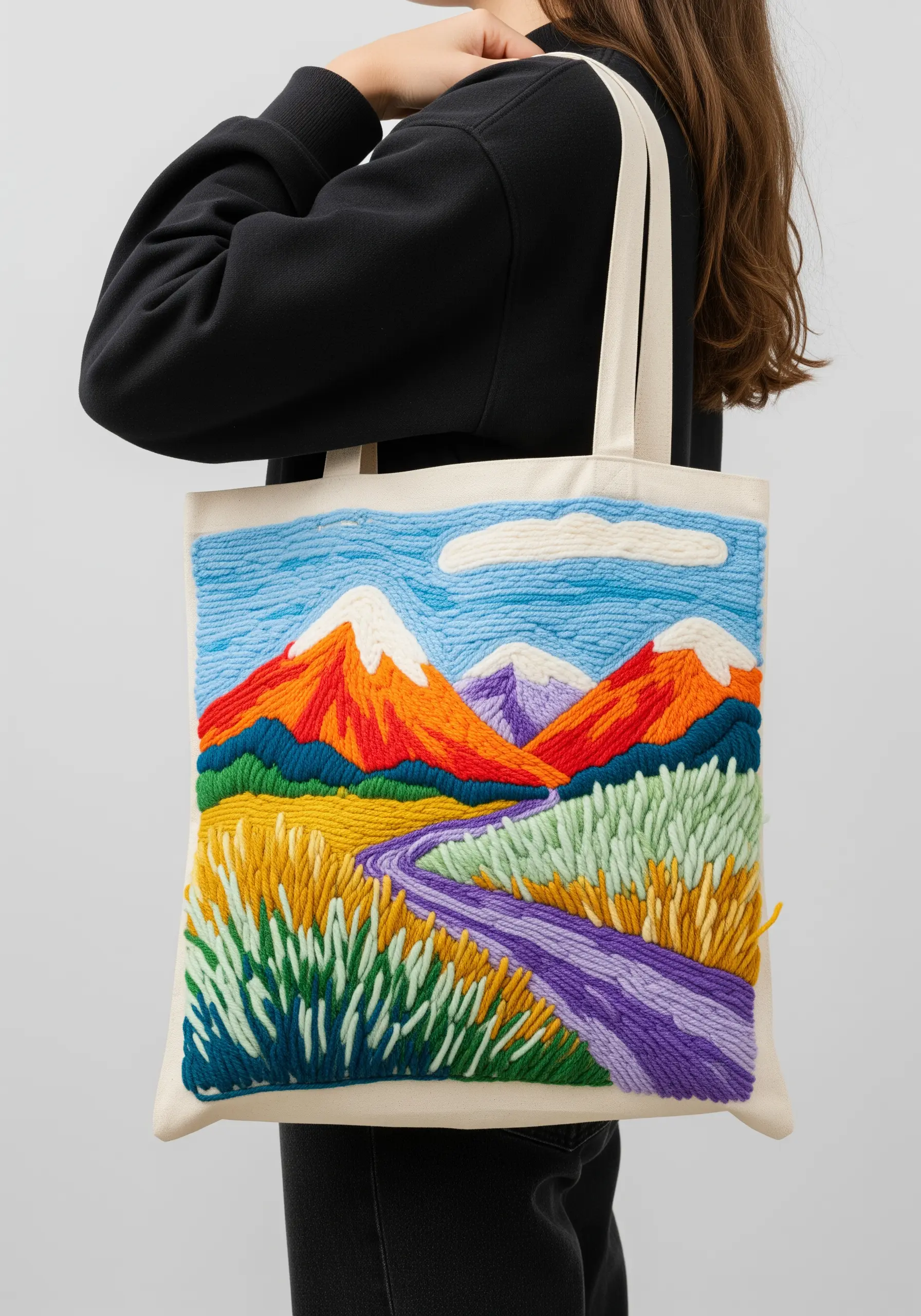
Move beyond flat stitches and create a vibrant, highly textured landscape using punch needle embroidery.
This technique works quickly and allows you to fill large areas with plush, looped texture that stands off the fabric.
Vary the yarn weights and loop heights to create a sense of perspective—shorter, tighter loops for distant mountains and longer, looser loops for grasses in the foreground.
The result is a tactile piece of art that invites touch and makes a bold, colorful statement.
8. Graphic Impact with Geometric Fills
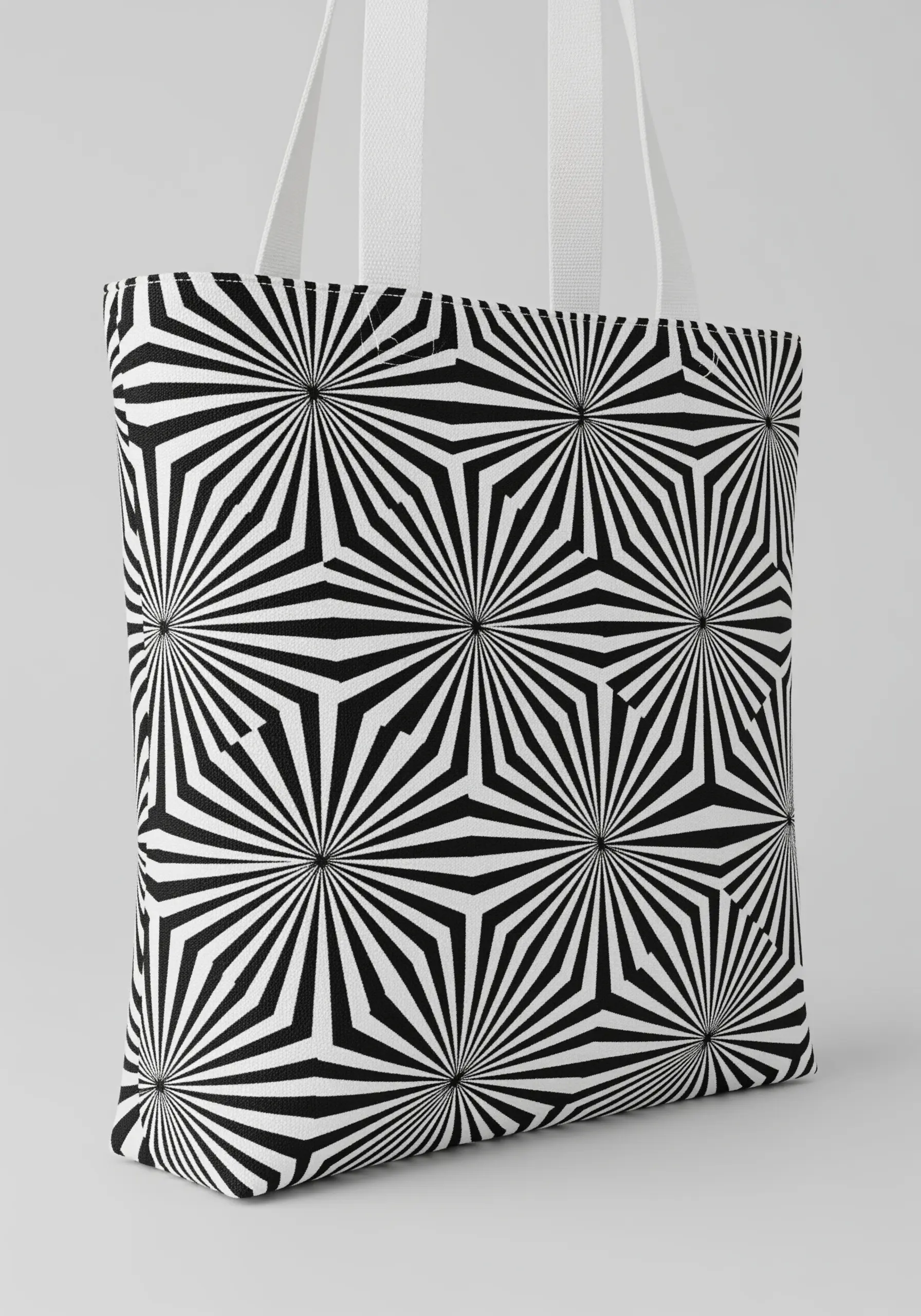
For a bold, op-art effect, focus on achieving perfectly clean edges and dense, uniform fill stitches.
Before filling each shape with satin stitch, outline it with a split stitch using the same color thread.
This simple preparation step creates a slightly raised edge that your fill stitches can tuck into, ensuring your geometric lines remain crisp and sharp.
The high contrast between black and white in a repeating pattern creates a mesmerizing visual rhythm that feels both modern and meticulously crafted.
9. An Underwater Garden with 3D Stitches

Build a vibrant coral reef by layering a variety of dimensional stitches to mimic organic textures.
Use dense clusters of French knots for coral, bullion knots for sea worms, and woven picot stitches to create delicate, free-standing anemone petals.
Incorporate ribbon embroidery for wider, flowing textures and scatter seed beads to represent air bubbles rising through the water.
This approach turns your tote bag into a rich, tactile seascape that is full of depth and movement.
10. The Illuminated Floral Monogram
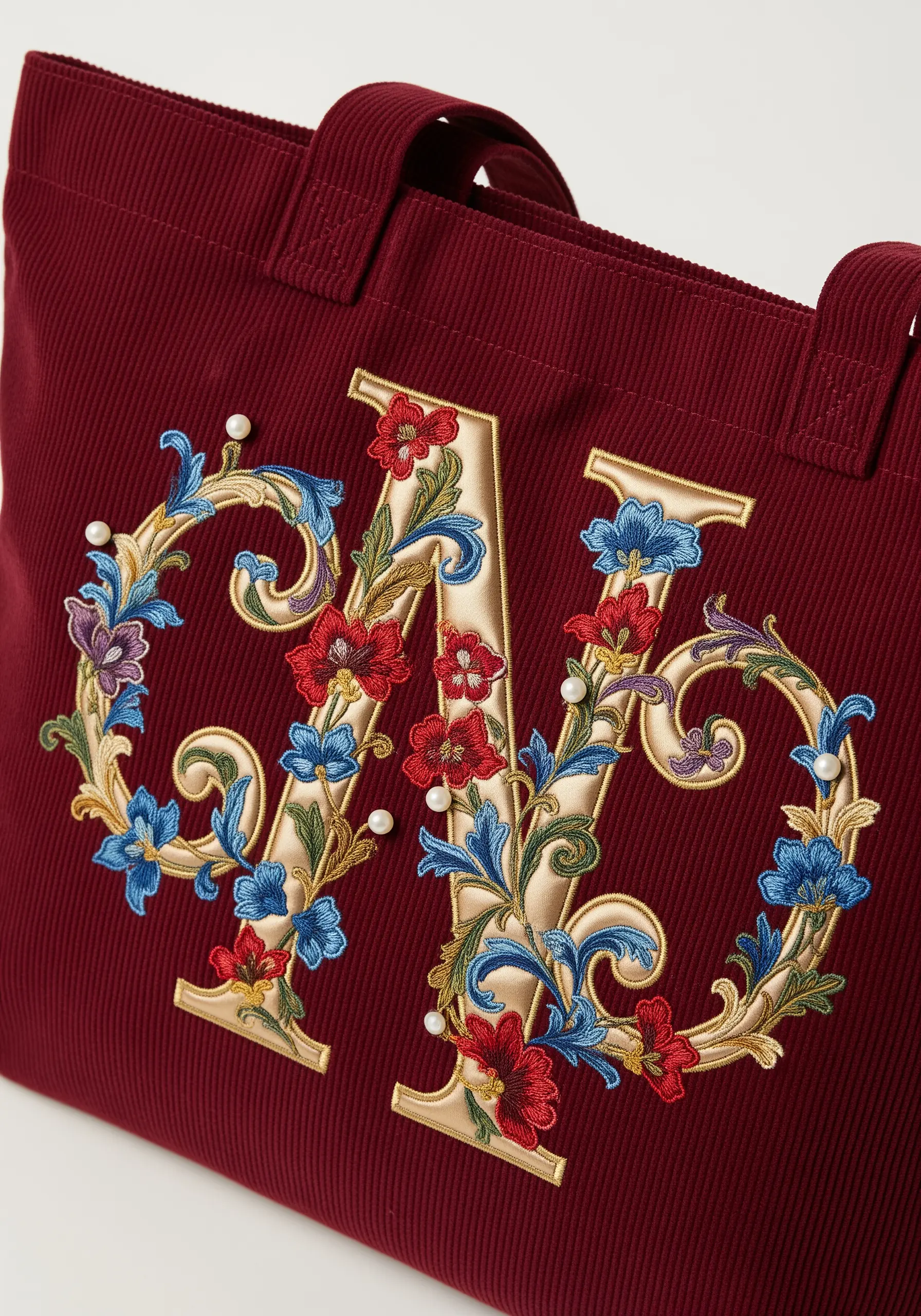
Combine classic lettering with delicate botanicals for a monogram that feels personal and timeless.
First, establish the structure of the letters with a clean, raised satin stitch outline.
Then, weave vines and flowers through the letters, using stem stitch for the vines and a soft long-and-short stitch for the petals to give them a painterly quality.
A few strategically placed seed pearls or French knots act like dewdrops, adding a final touch of elegance to your personalized embroidery.
11. Meditative Rhythm with Sashiko Stitching
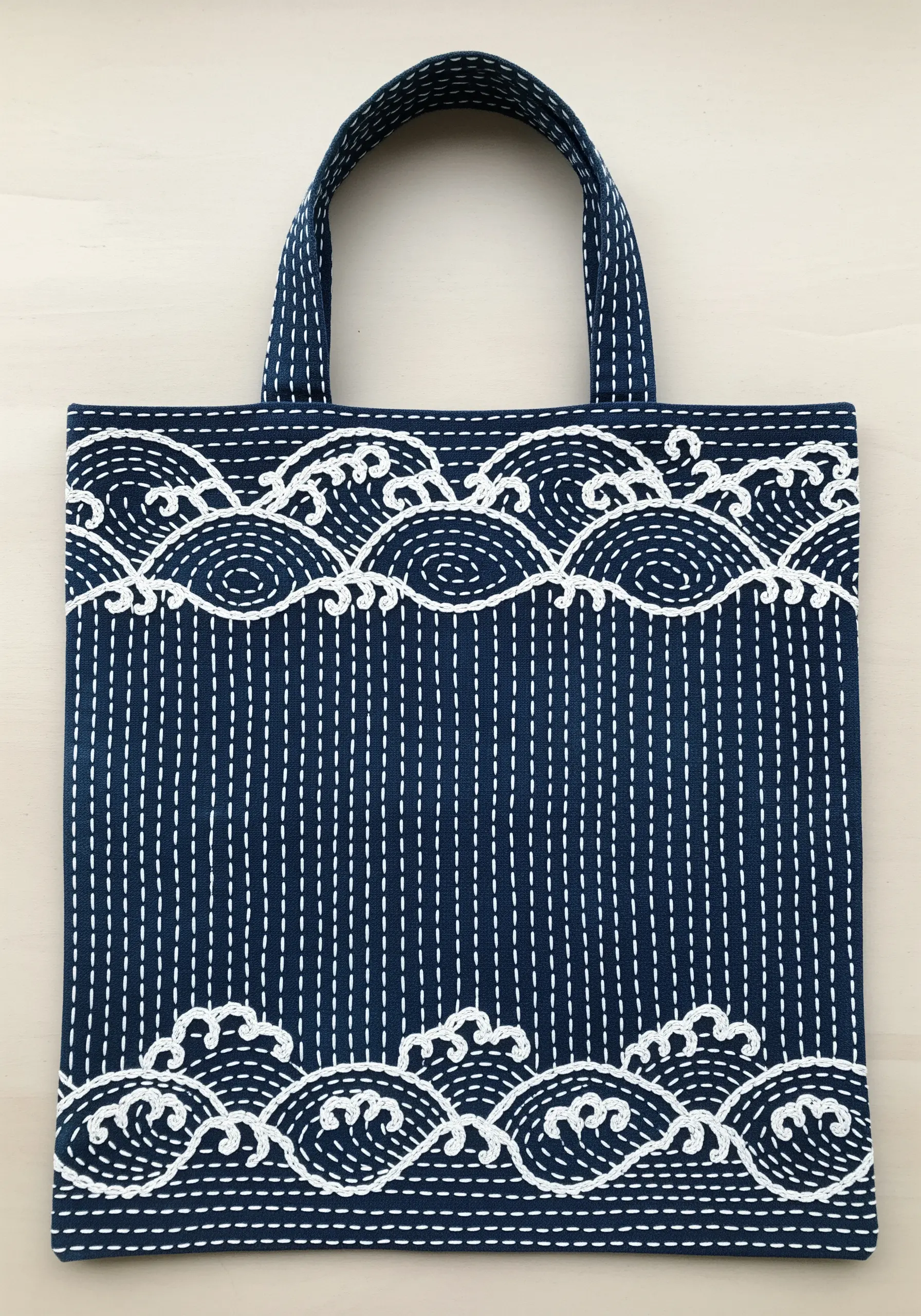
Embrace the Japanese art of Sashiko for a design that is both graphically striking and deeply mindful to create.
The technique relies solely on the running stitch, but its power comes from precision: aim for perfectly consistent stitch and gap lengths.
Use a heavy, high-contrast Sashiko thread on a dark indigo fabric to make the geometric patterns pop.
The rhythmic, repetitive motion of the stitch makes this a calming project that yields a stunningly intricate result.
12. Pop Art Punch with Textural Halftones
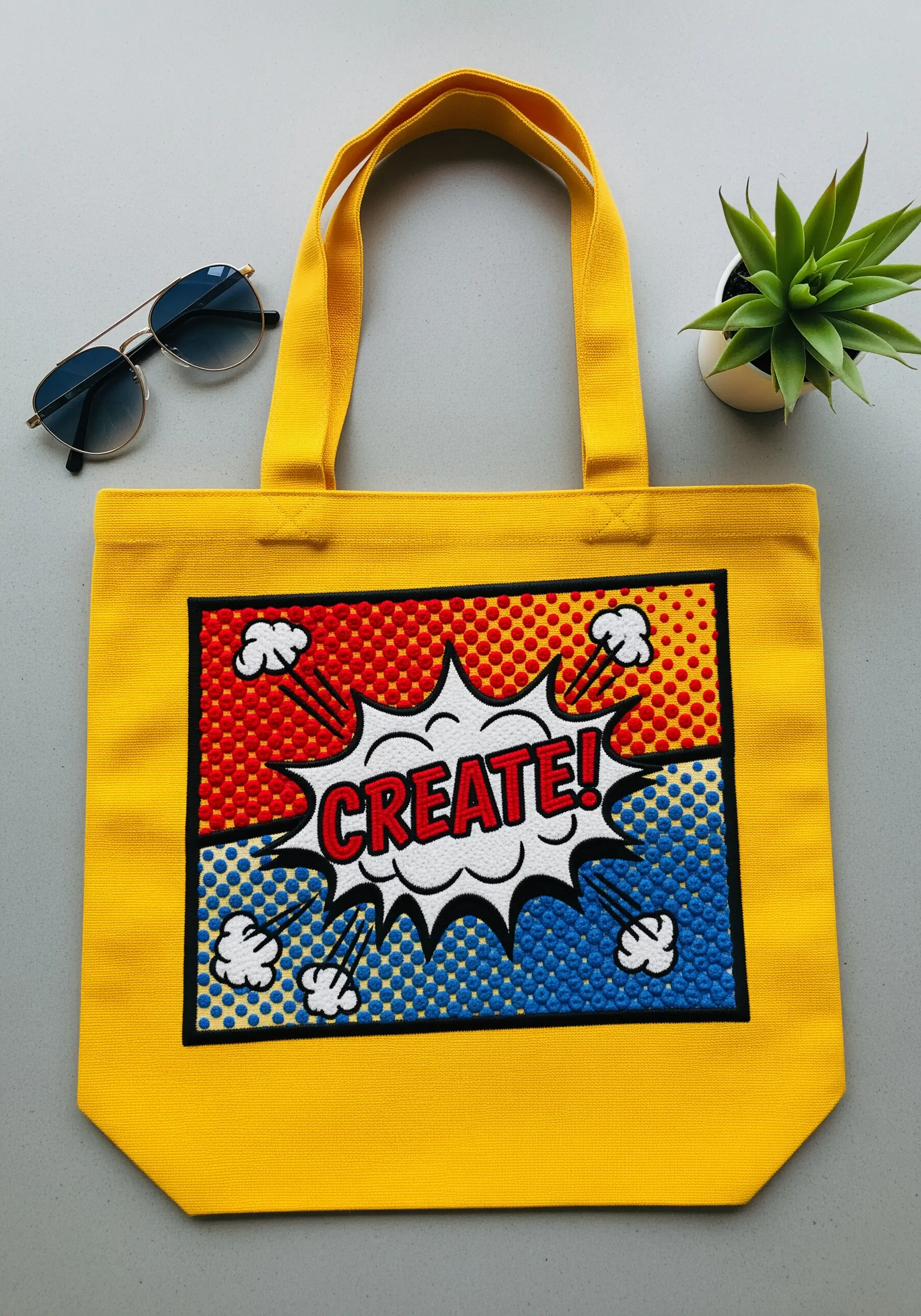
Capture a bold, comic-book aesthetic by translating halftone dots into textural stitches.
Instead of a flat satin stitch for color fields, fill the areas with hundreds of tiny, tightly packed French knots.
This mimics the dot-printing process of old comics and gives the design a unique, raised texture.
Use a thick, couched black yarn or a heavy satin stitch for the outlines to achieve that iconic, graphic-novel definition.
13. Topographic Contours on Rugged Canvas
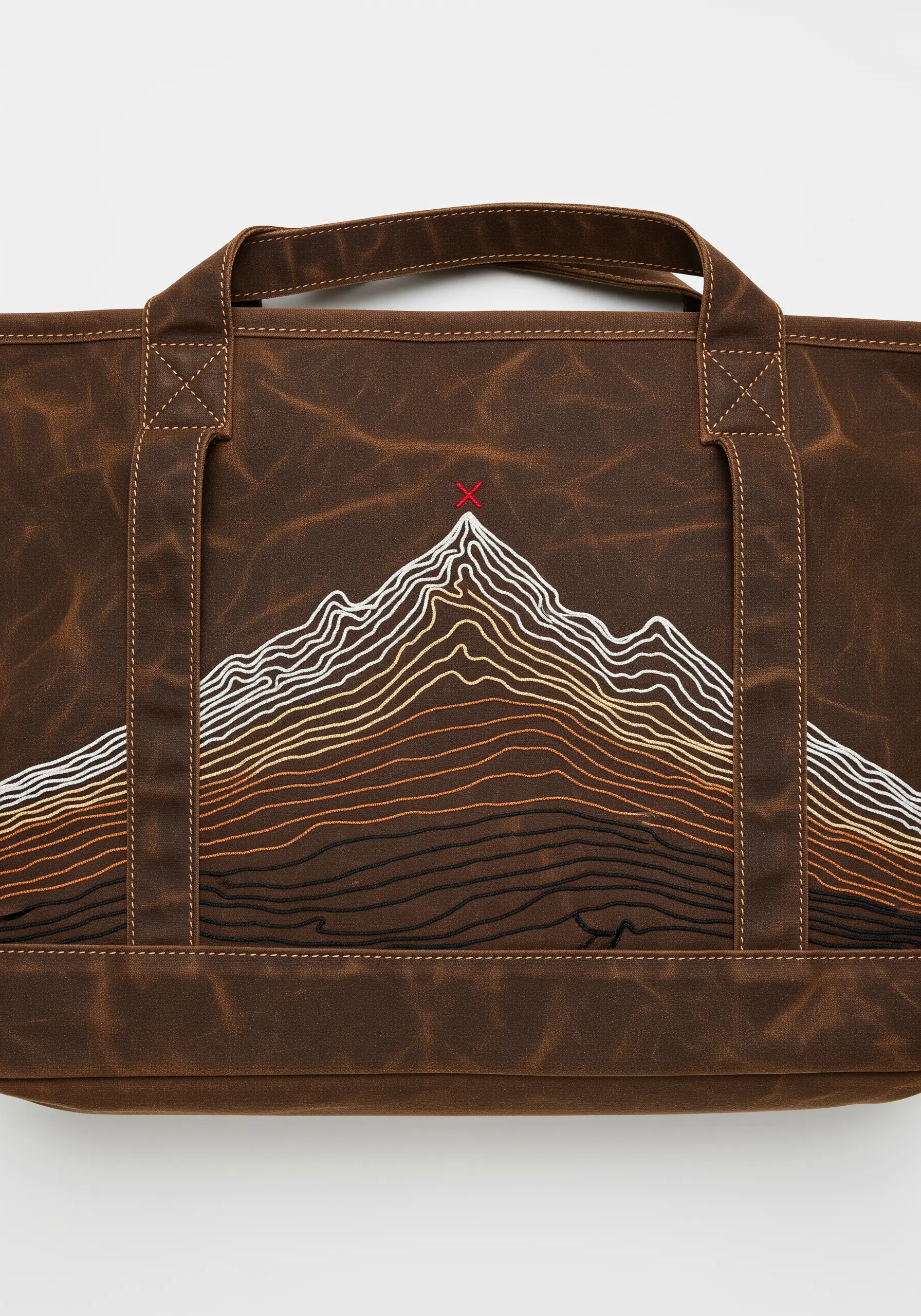
Stitch a modern, minimalist mountain range using the clean lines of a topographic map.
Use a simple backstitch and an ombré color palette, transitioning from dark thread at the base to light thread at the peak to suggest elevation.
Working on a durable, waxed canvas tote not only enhances the rugged, outdoor aesthetic but also provides a sturdy base for your stitches.
Add a single red French knot or ‘X’ at the summit to serve as a tiny, powerful focal point.
14. Stained Glass Effect with Appliqué
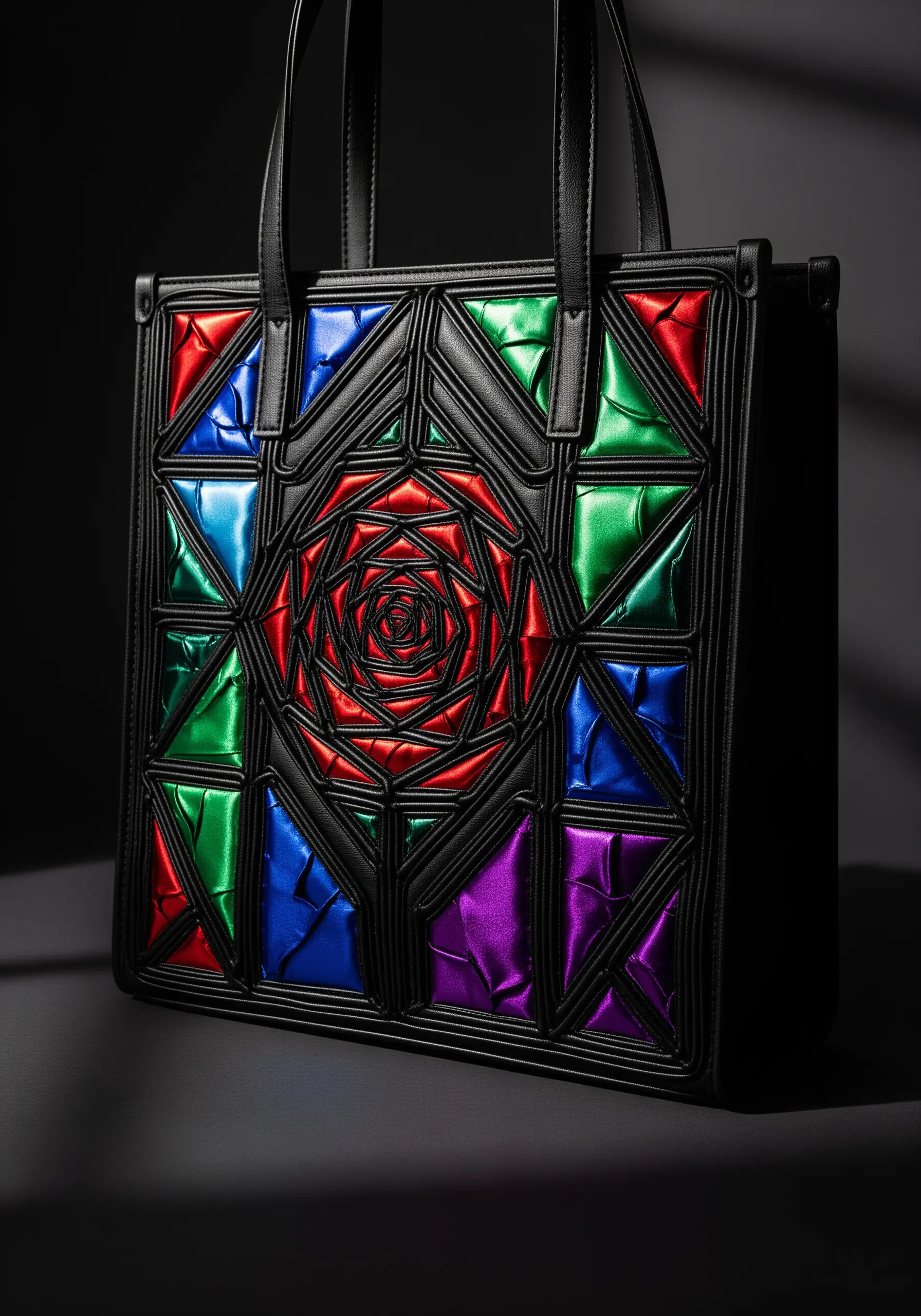
Mimic the vibrant luminosity of stained glass by combining fabric appliqué with bold embroidery.
Cut small pieces of colorful, shiny fabric—like satin or silk—for the glass panels and secure them to your tote.
Then, use a thick, black satin stitch to outline each fabric piece, creating the heavy lead lines that define stained glass designs.
This technique creates a jewel-toned, light-catching effect that is impossible to achieve with thread alone.
15. Abstract Washes of Thread
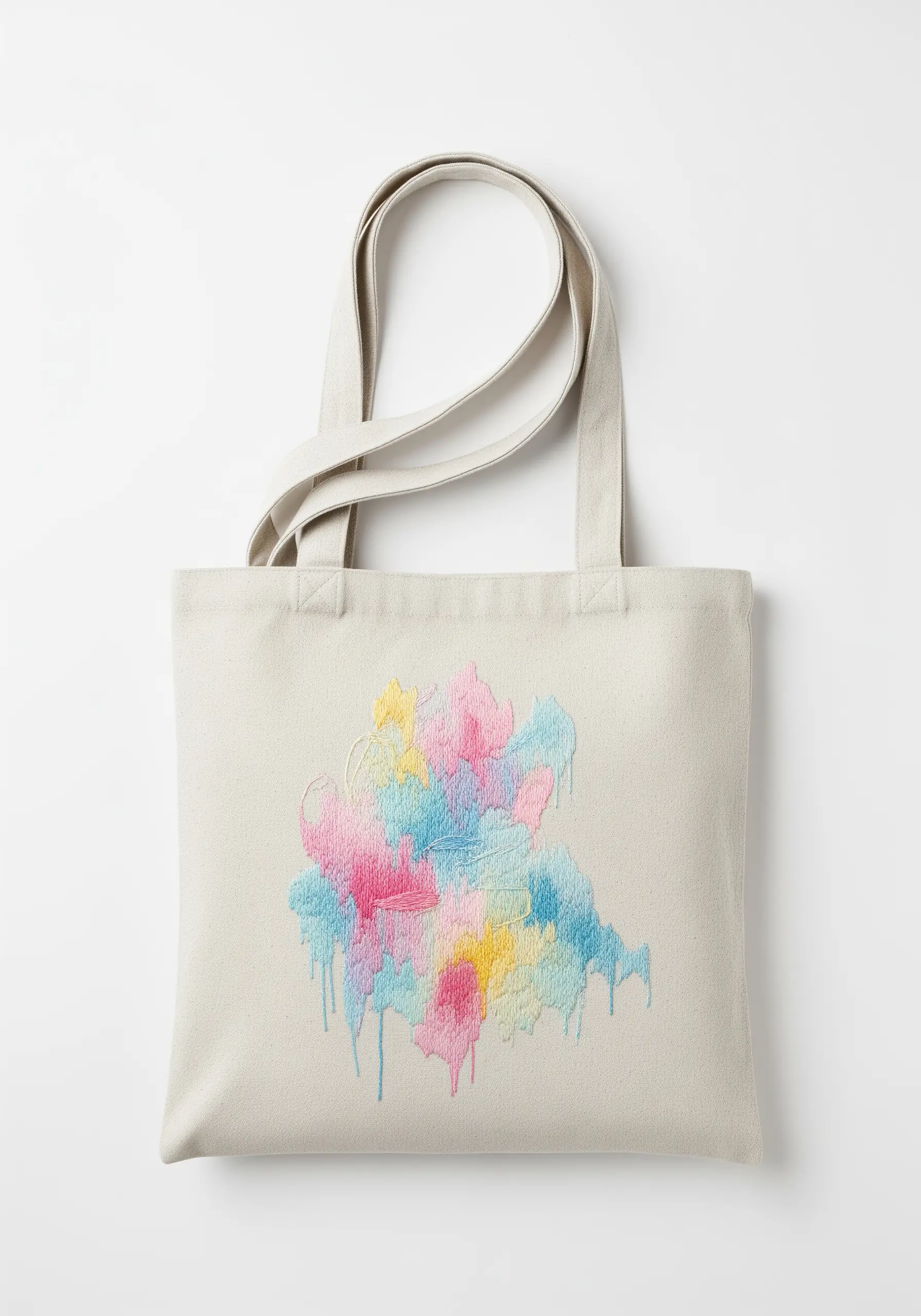
Recreate the soft, bleeding effect of watercolor paint with a freeform stitching technique.
Use single strands of floss in a dreamy pastel palette, filling abstract shapes with a mix of short seed stitches and longer straight stitches.
Allow the colors to overlap and blend organically, and add downward straight stitches to mimic dripping paint.
The key is to abandon perfectionism and embrace a loose, expressive approach for an ethereal, painted look.
16. Three-Dimensional Stumpwork Embellishments
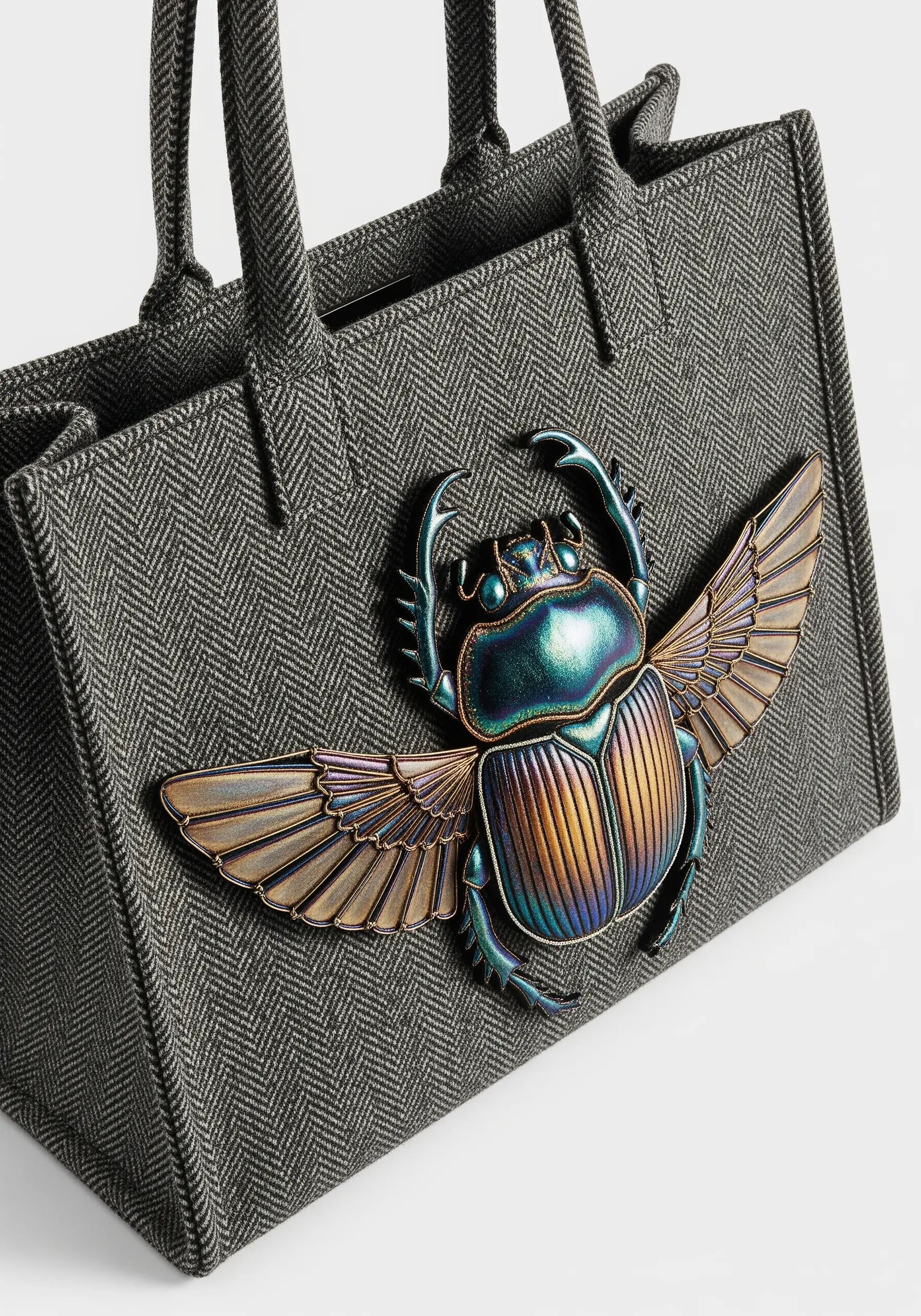
Bring your embroidery into the third dimension with stumpwork, a technique that creates raised, padded elements.
To create the beetle’s body, build up a base of felt padding before covering it with iridescent threads using satin stitch.
For the wings, embroider them separately on a piece of fabric with a wire outline, cut them out, and then attach them to the tote so they stand away from the surface.
This method transforms your tote into a piece of sculptural art.
17. High-Tech Precision with Metallic Thread

Stitch a circuit board for a design that is both intricate and strikingly modern.
Use a combination of silver and blue metallic threads to create the conductive pathways, employing a neat backstitch for the lines.
Create the board’s components with small, dense satin stitch rectangles and add tiny silver beads as solder points for a touch of realism.
Working on a sleek, silver tote enhances the futuristic aesthetic and makes the metallic threads pop.
18. The Story of Boro-Inspired Patchwork
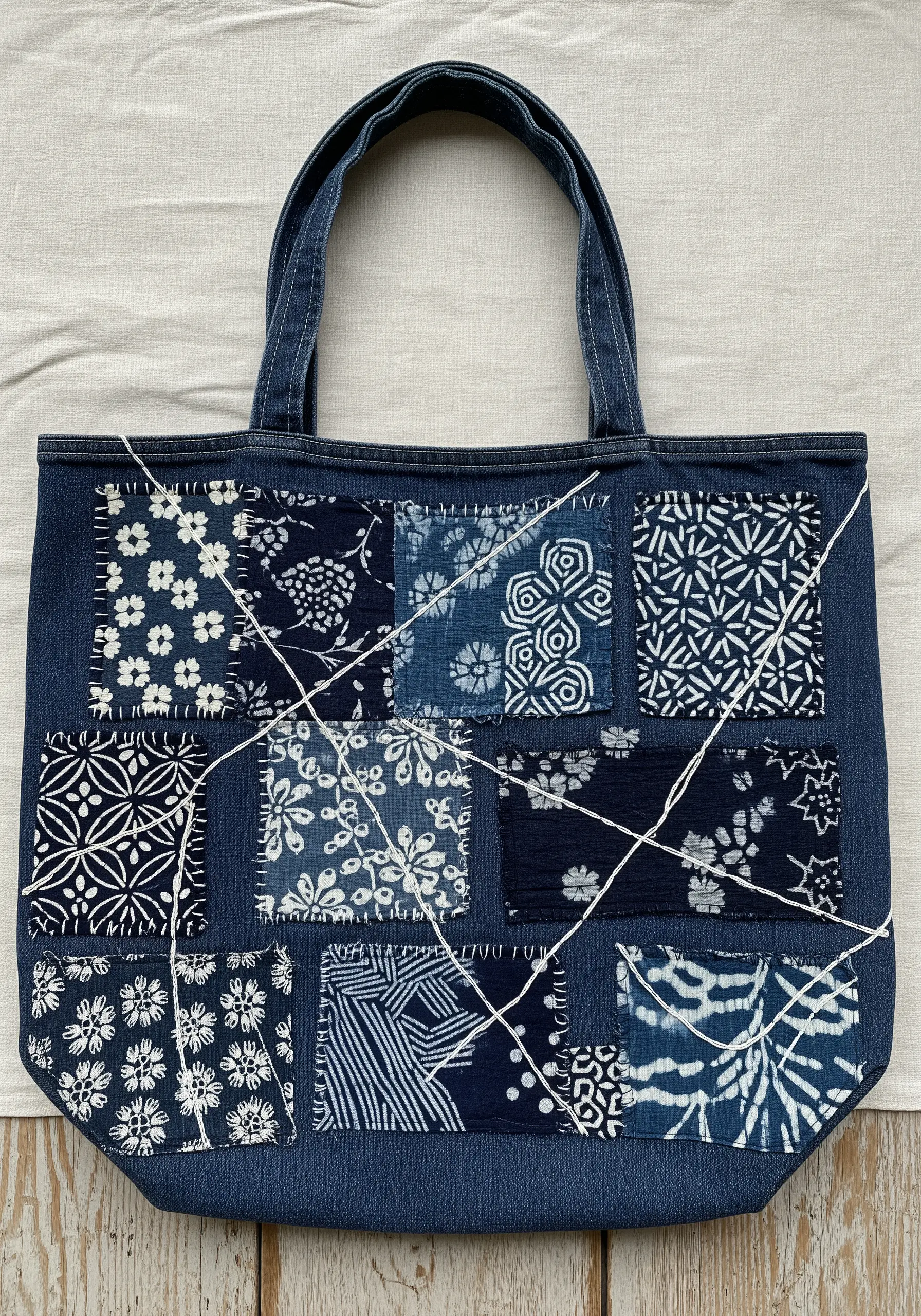
Channel the Japanese philosophy of Boro by creating a beautiful patchwork from fabric scraps.
Layer small squares of different indigo-dyed cottons onto a sturdy denim tote, letting the raw edges show for character.
Secure each patch with simple, utilitarian running stitches in a contrasting white thread, embracing visible mending as a design element.
This sustainable embroidery technique tells a story of resourcefulness and creates a piece that is entirely unique.
19. Delicate Botanicals with a Rustic Touch
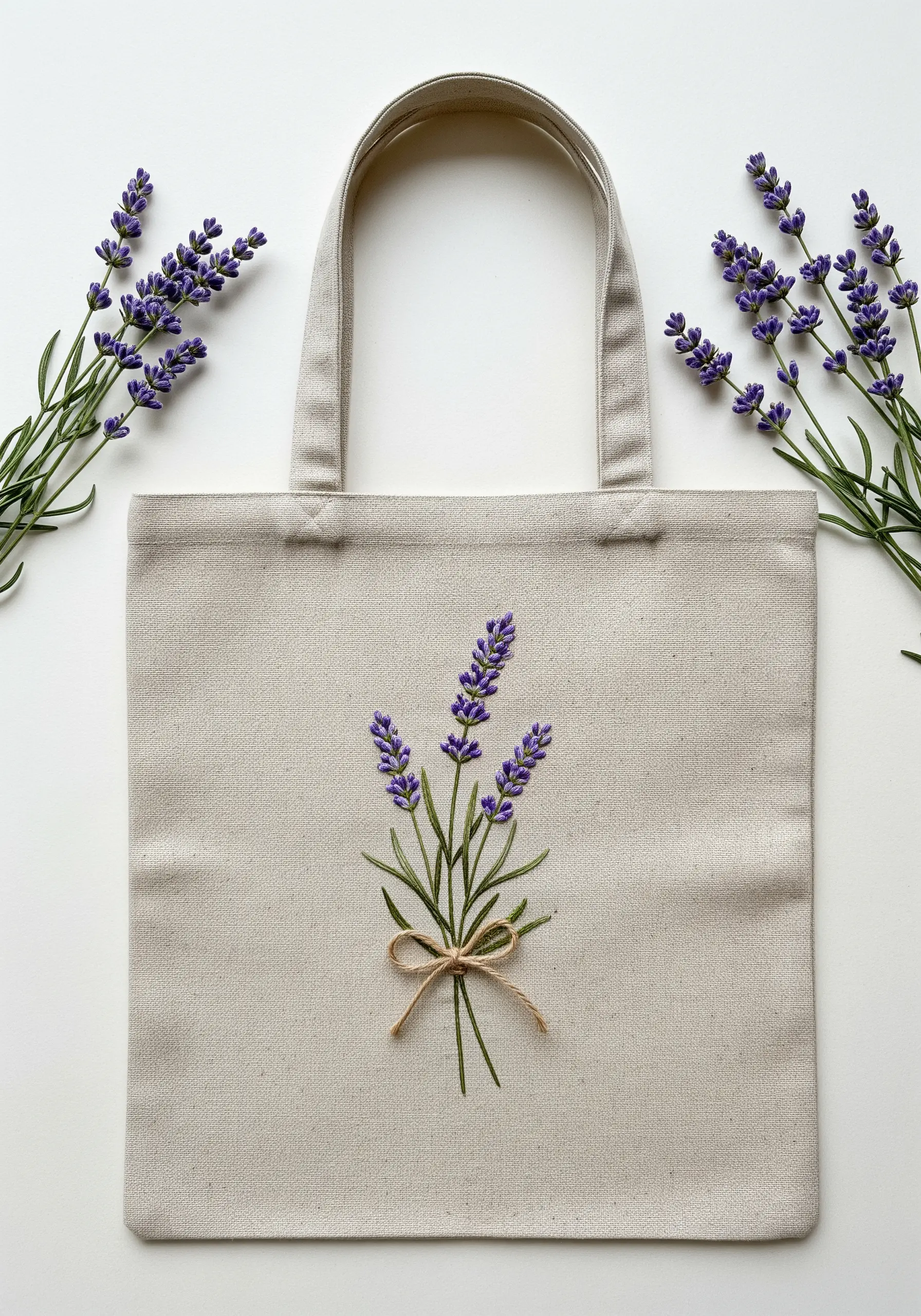
For a gentle, natural look, focus on simple stitches and subtle details.
Use a fine stem stitch for the lavender stalks to give them a delicate curve, and form the blossoms with small lazy daisy stitches or French knots.
Using two or three slightly different shades of purple will give your blossoms more visual depth and realism.
Finish the bouquet by tying a small bow with real twine and stitching it directly onto the tote, adding a charming, textural element.
20. The Luminous Sheen of a Peacock Feather
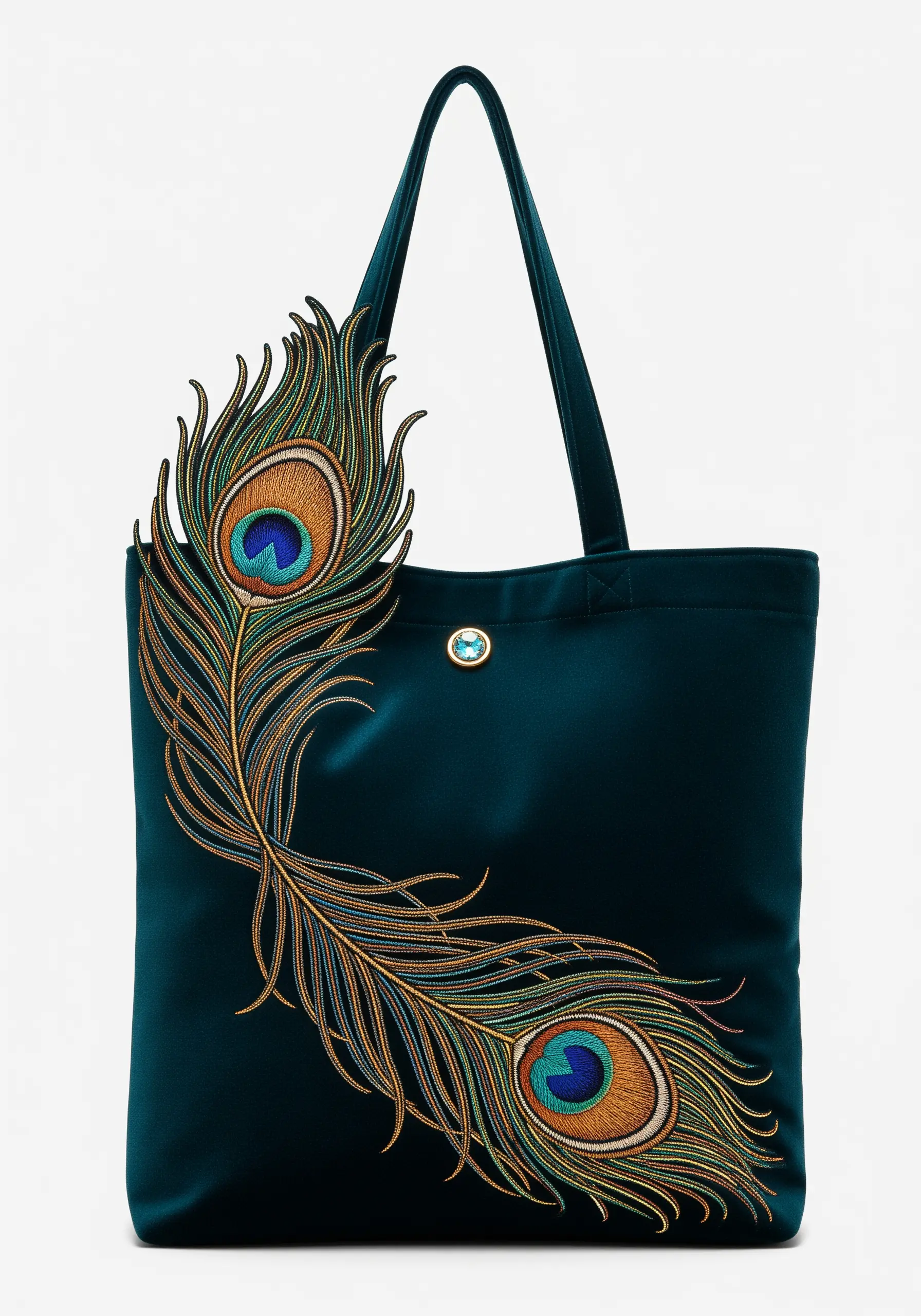
Capture the iridescent magic of a peacock feather by choosing threads with a high sheen, like silk or rayon.
Use long-and-short stitch to meticulously blend the metallic blues, greens, and golds of the feather’s eye—this is the focal point of the entire piece.
For the delicate, wispy barbs, use a single strand of thread and a light stem stitch, allowing the stitches to flow outwards from the central shaft.
Stitching on a satin or silk tote enhances the overall feeling of luxury and allows the lustrous threads to truly shine.
21. Pixel-Perfect Art with Cross-Stitch
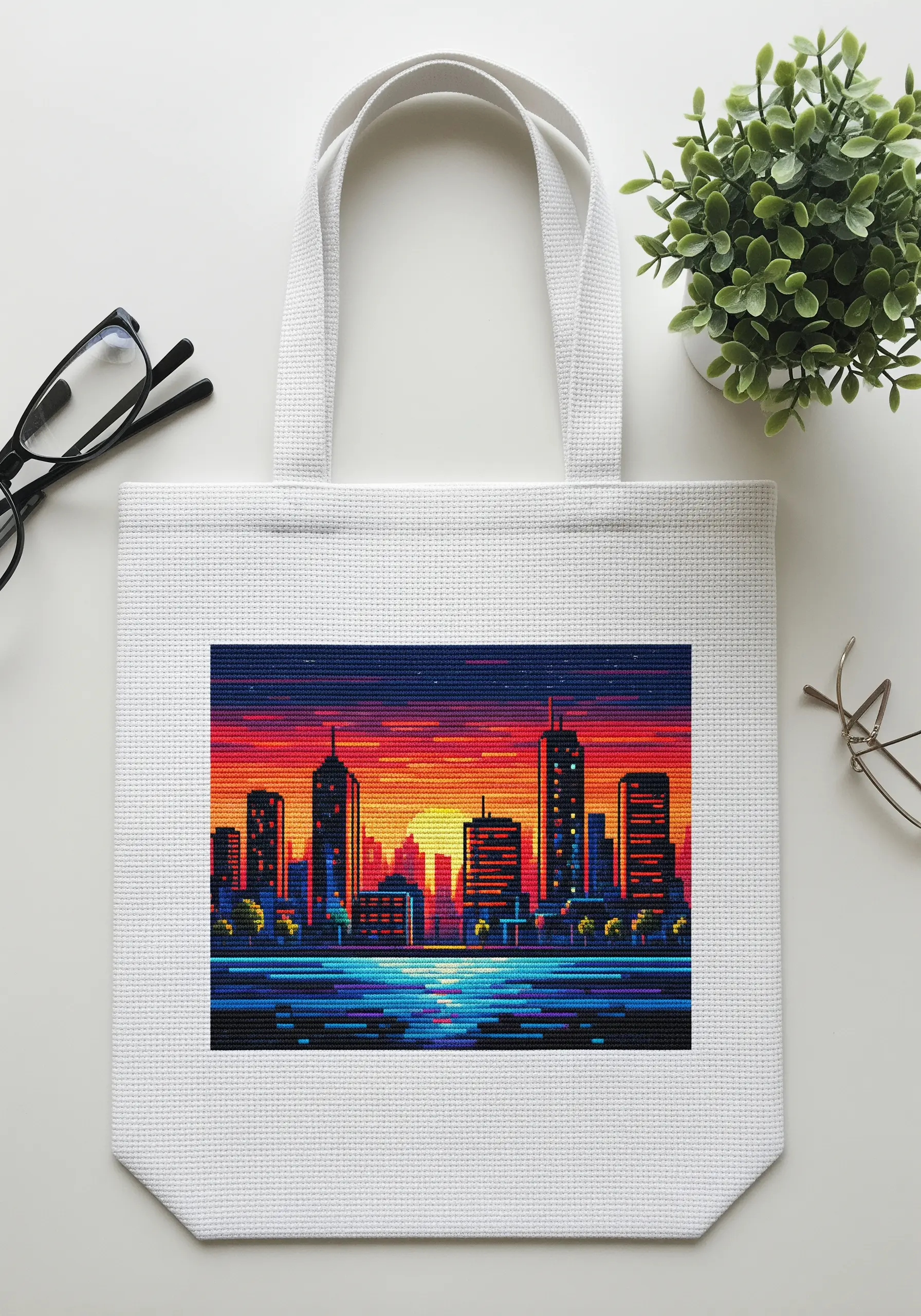
Create a retro, 8-bit-inspired scene by using cross-stitch on a grid-based fabric.
While you can use Aida cloth for the entire tote, a more practical approach is to stitch your design on a piece of waste canvas.
You simply baste the waste canvas to your tote, stitch your design, and then carefully pull out the canvas threads one by one, leaving the pixelated image behind.
The beauty of this method is in the precise color blocking, especially for creating vibrant sunset gradients.
22. The Cheerful Symmetry of Folk Art Florals

Embrace the charm of traditional folk art with a design that relies on bold colors and simple, satisfying stitches.
Use satin stitch for solid color fills, chain stitch for decorative outlines, and French knots for textural centers.
The design’s power comes from its symmetrical layout and a limited but vibrant color palette of primary red, blue, and yellow.
This style is joyful and graphic, turning your tote into a wearable piece of celebratory art.
23. Surreal Glamour with Crystal Embellishments
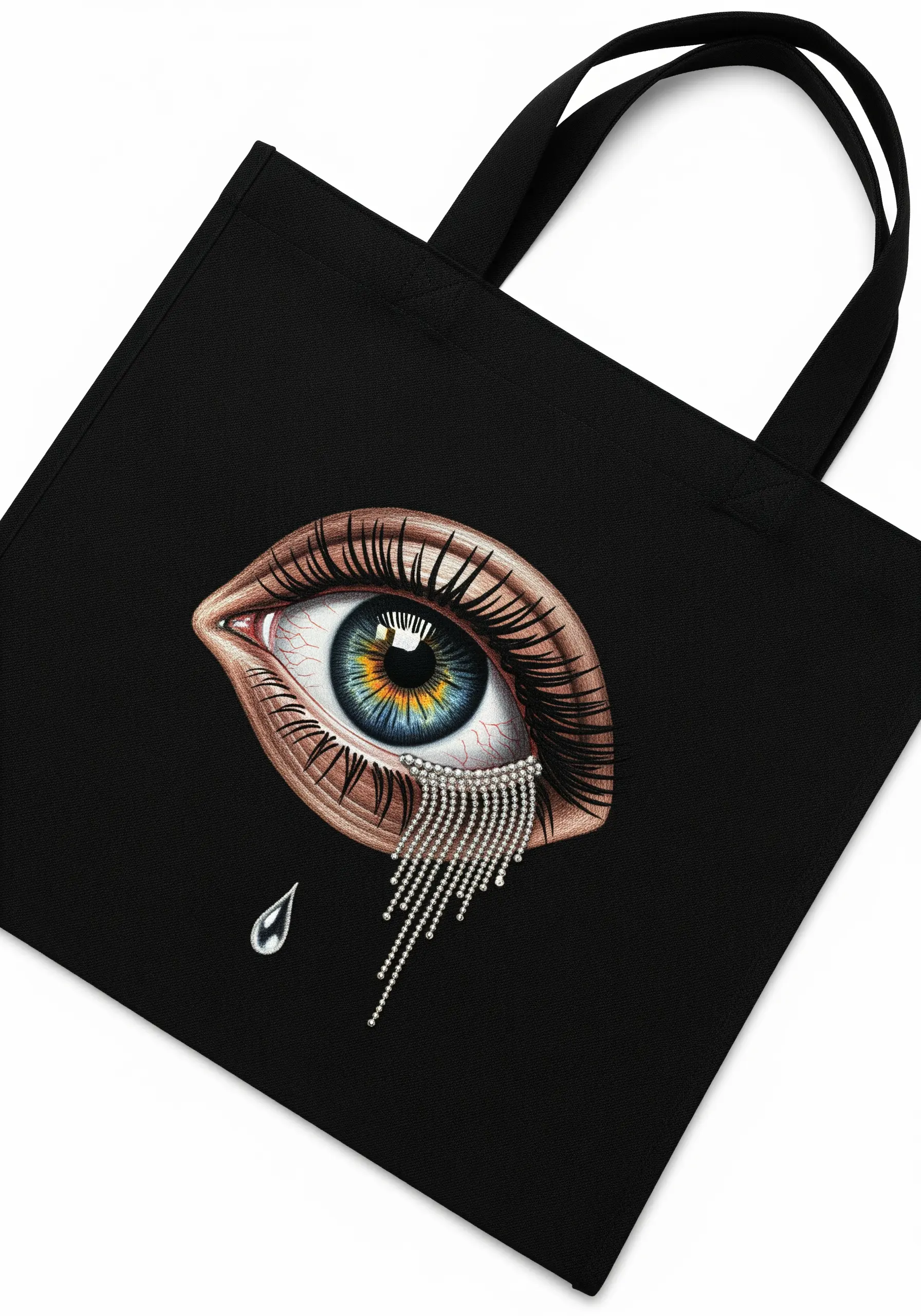
Combine hyperrealistic thread painting with the sparkle of crystal for a high-fashion, surrealist statement.
Render the eye with meticulous long-and-short stitches, blending dozens of colors to achieve depth in the iris and fleshy tones in the skin.
For the dramatic crying effect, stitch on delicate strands of rhinestones or small crystals that drape down from the lower lash line.
This juxtaposition of soft, painterly thread and hard, faceted gems creates a stunning and unforgettable piece.
24. Minimalist Color Blocking with Texture
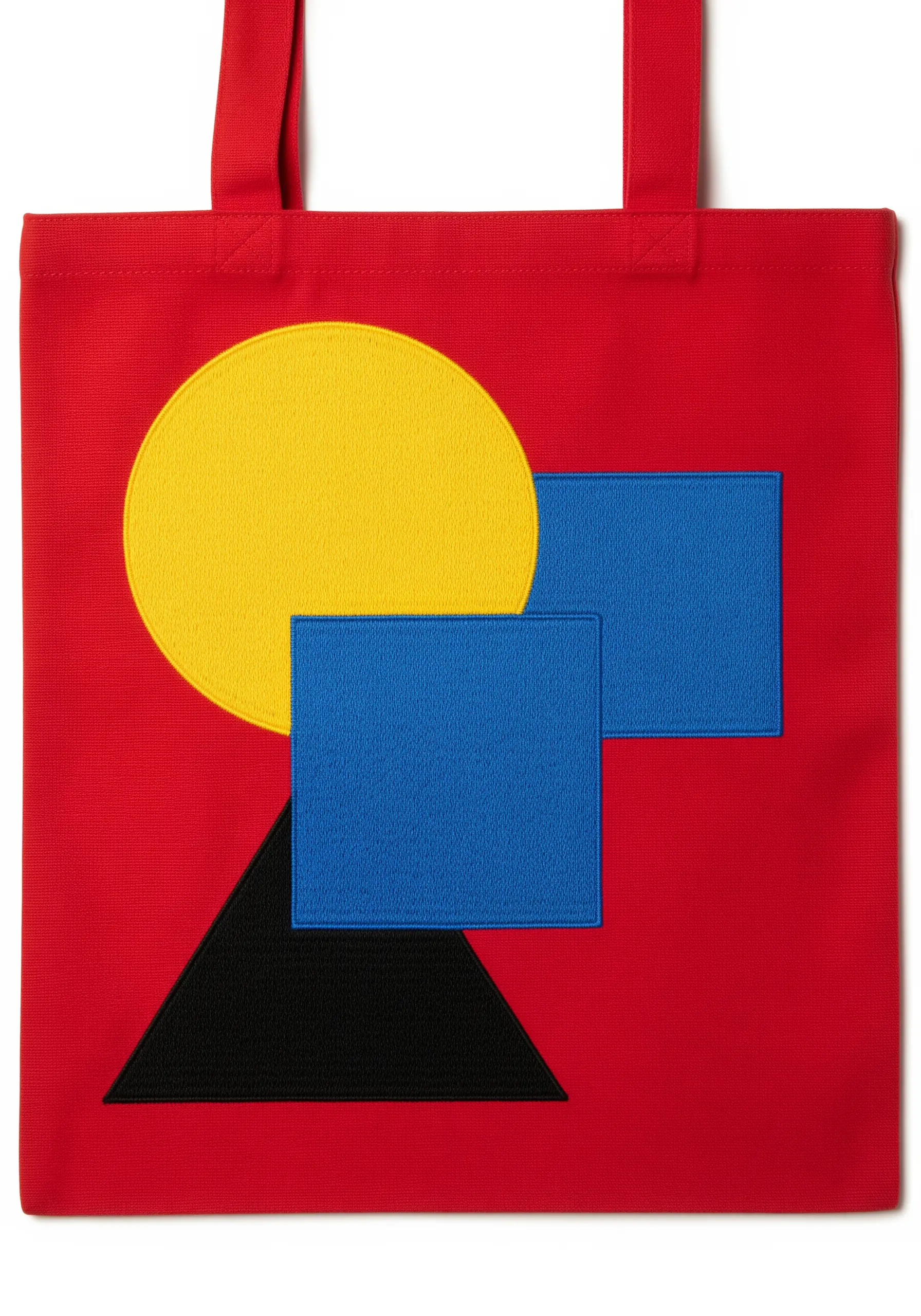
Make a powerful statement with simple geometric shapes by focusing on flawless execution and texture.
Use a dense, directional fill stitch like brick stitch to give each shape a subtle, woven-like texture.
To ensure the edges are perfectly crisp, create a clean split-stitch outline before beginning your fill.
On a bold, primary-colored tote, the stark contrast of the solid shapes creates a modern, abstract composition that feels intentional and clean.
25. A Landscape of Monochromatic Texture

Explore the power of texture by creating a complex, abstract design using only white thread on a white or neutral canvas.
This technique, known as whitework, draws its beauty from the way light and shadow play across different surfaces.
Build up your design by combining a variety of highly textural stitches: chunky bullion knots, dense French knot clusters, raised padded satin stitch, and loopy Turkey work.
The result is a sophisticated, tactile masterpiece where stitch variety, not color, tells the story.