A monogram is more than just an initial; it’s a personal mark, a quiet statement of identity. But what if you could transform that mark into a tiny, thriving garden? What if you could stitch a letter that feels like it’s been wrapped in ivy, blooming with wildflowers, or dappled with sunlight through leaves?
The secret isn’t in learning dozens of complex new stitches. It’s in the small, intentional choices you make along the way—choosing a slightly thicker thread to make a blossom feel plush, angling a stitch to mimic the way a leaf catches the light, or leaving just enough empty space to let the composition breathe. These are the details that elevate a simple design into a piece of personal art.
Consider these ideas not just as patterns to follow, but as invitations. They are starting points for you to explore texture, blend colors, and see how a single vine or a cluster of French knots can bring a letter to life. Here, you’ll find the techniques to make your next project feel polished, expressive, and deeply, beautifully yours.
1. Soft-Focus Eucalyptus & Textured Blossoms
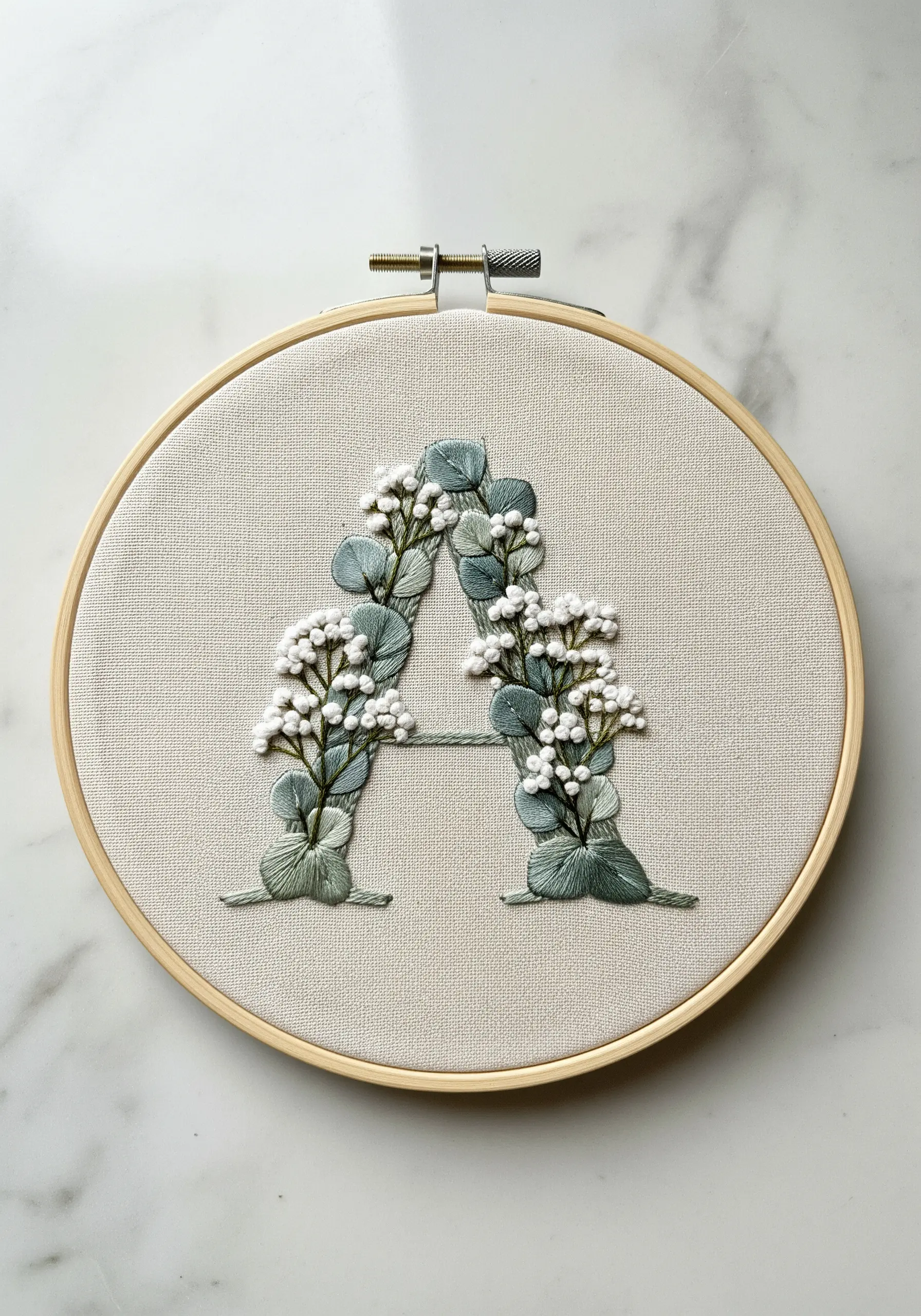
To achieve this soft, painterly effect, use only one or two strands of floss for the eucalyptus leaves, filling them with a gentle satin stitch.
For the tiny white blossoms, switch to a thicker thread—four or even six strands—and create dense clusters of French knots.
This contrast in thread weight is what gives the design its delicate depth, making the flowers feel plush and forward while the leaves recede softly.
Choose aida or linen fabric in a natural, off-white tone to enhance the calm, organic aesthetic.
2. Intertwined Ferns & Braided Vines
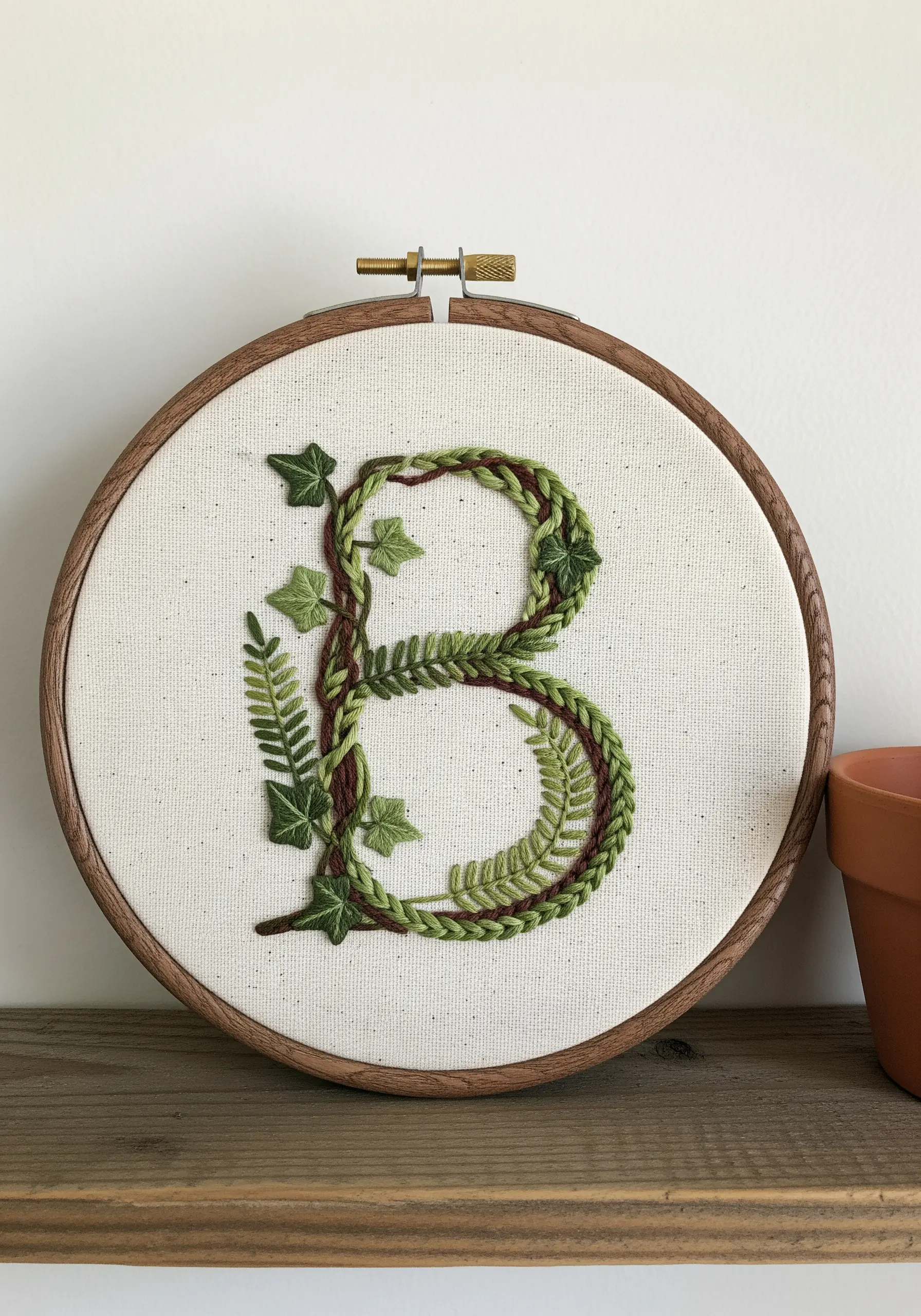
Build the foundation of your letter with a raised chain stitch or braid stitch to give it a solid, rope-like texture.
Then, weave a darker, contrasting vine around it using a simple whipped backstitch, which adds definition and a sense of movement.
Incorporate different leaf stitches for variety; use the classic fern stitch for the ferns and detached chain stitches (lazy daisies) for the smaller ivy leaves.
This technique of layering leaf stitching transforms a flat initial into a living, interwoven botanical sculpture.
3. Wildflower Crescent & Balanced Composition
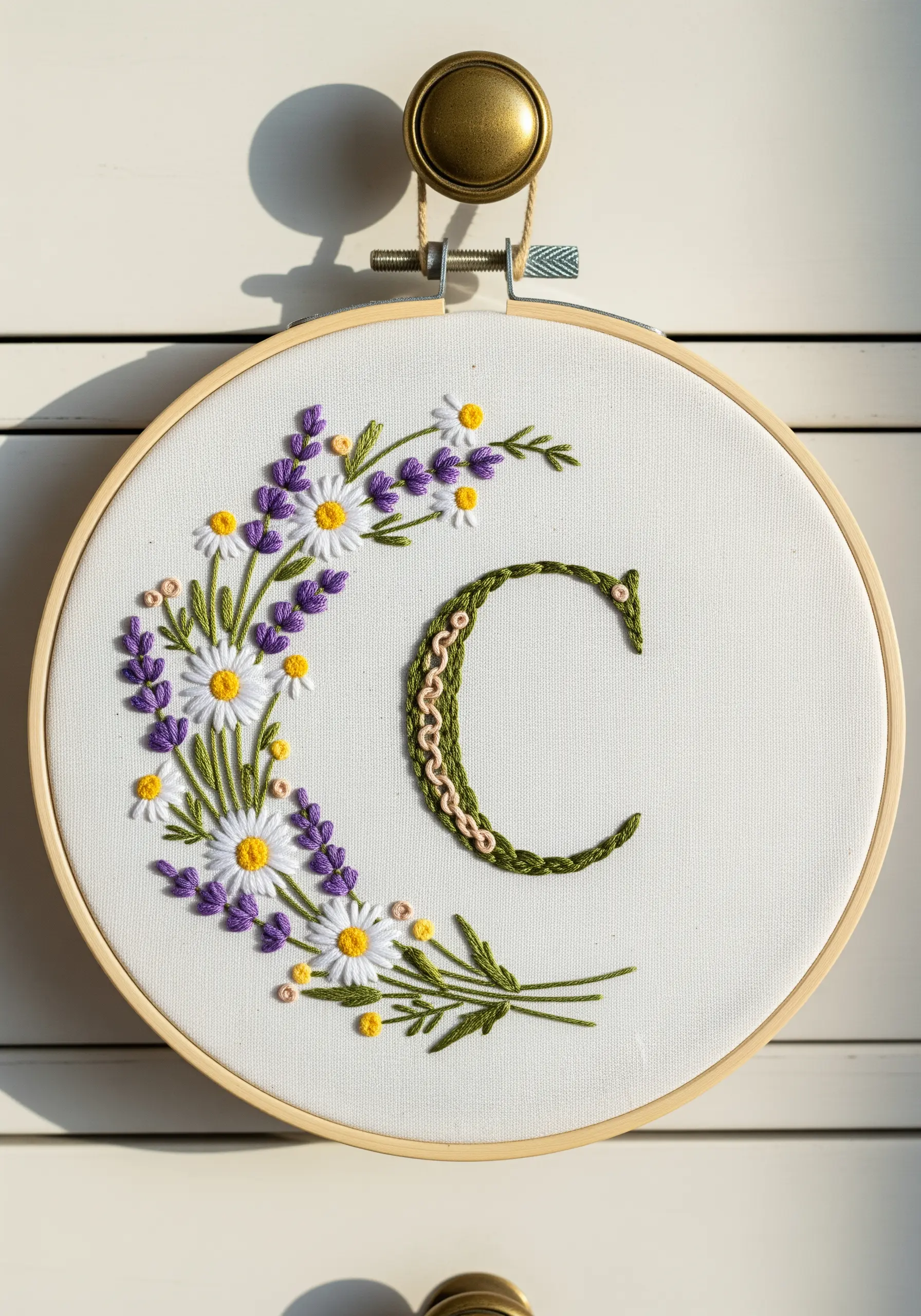
Create a dynamic composition by leaving one side of the monogram open, allowing a crescent of wildflowers to bloom naturally around it.
Anchor the design with classic lazy daisy stitches for the daisy petals and use bullion knots or small straight stitches for the lavender sprigs.
The key to making this feel balanced is to keep the monogram itself simple—a clean outline or a subtle fill stitch—so it complements the florals rather than competing with them.
This creates a beautiful interplay between structured lettering and organic, free-flowing stitches.
4. High-Contrast Tropical Foliage
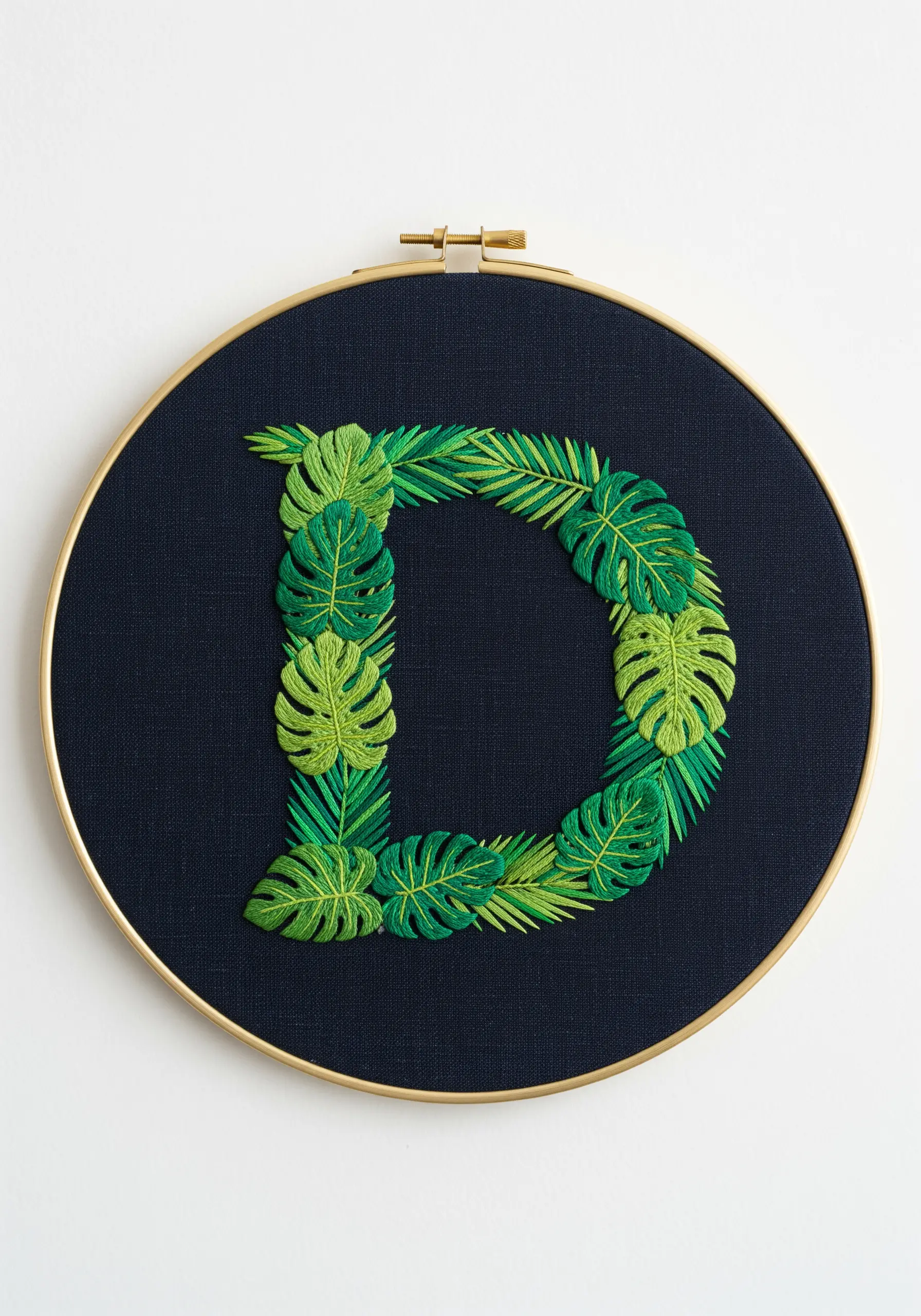
Make your monogram pop by stitching vibrant, lush leaves against a dark, dramatic background like navy blue or black linen.
To give the leaves a realistic sheen, use a directional satin stitch, angling your stitches to follow the natural growth of the veins.
Before filling, outline each leaf with a single line of split stitch in a matching color; this creates a sharp, contained edge and prevents the satin stitch from looking fuzzy.
Use at least three or four shades of green to create depth and distinguish between the overlapping tropical leaf forms.
5. Autumnal Leaf Gradient with Long-and-Short Stitch

Capture the warmth of autumn by using long-and-short stitch to blend colors within each leaf, creating a smooth transition from gold to orange or red to brown.
Work with two or three needles threaded with different colors at once to make the blending process feel more intuitive and painterly.
For the berries, use tightly packed French knots with a slightly glossy thread to give them a plump, realistic look that contrasts with the matte leaves.
The choice of a rust-colored fabric amplifies the cozy, seasonal mood and harmonizes the entire color palette.
6. Three-Dimensional Stumpwork Greenery
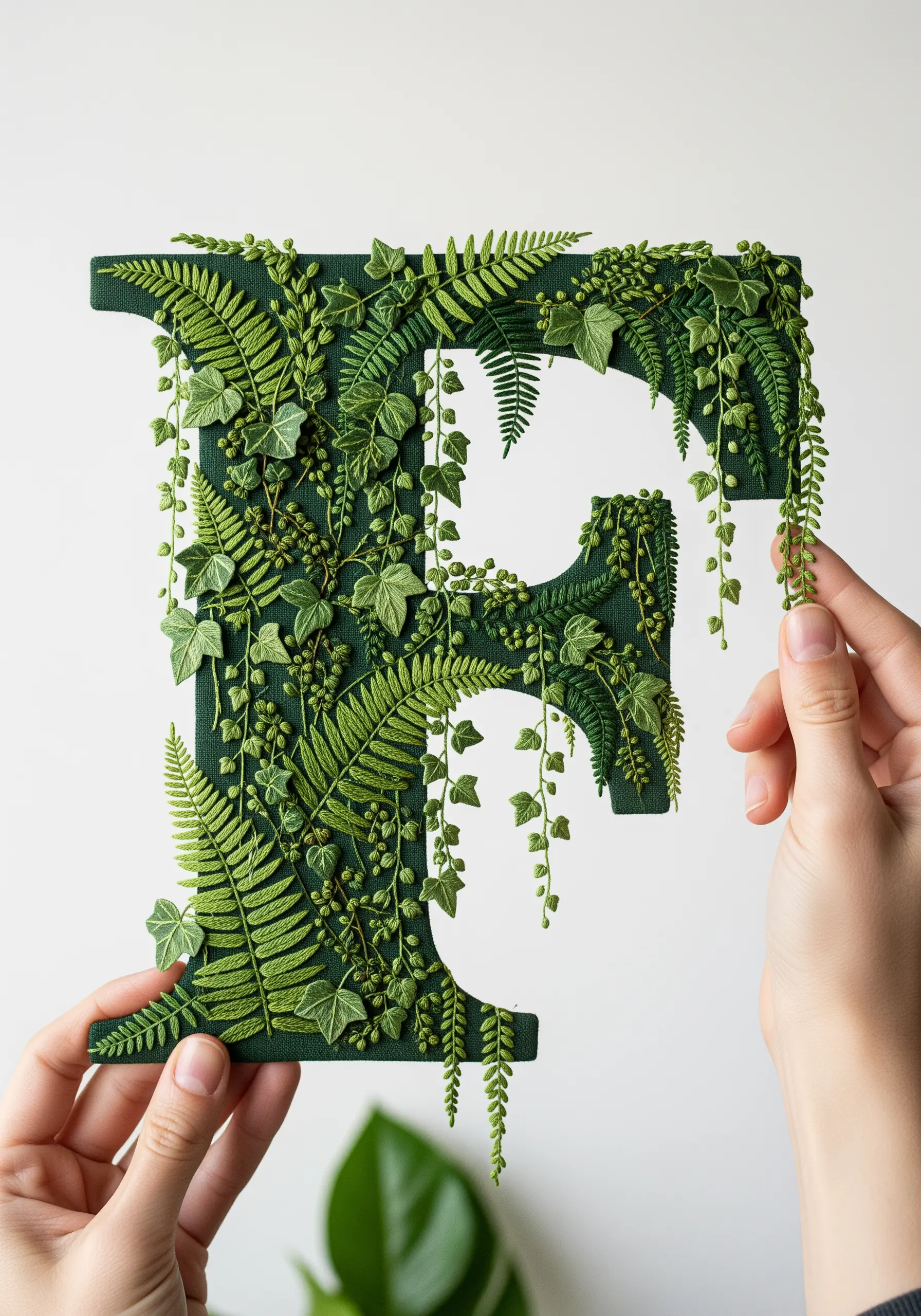
Elevate your embroidery by incorporating stumpwork, a technique that allows elements to lift off the fabric for a stunning 3D effect.
Stitch individual leaves and vines on a separate piece of fabric with a wire outline, then cut them out and apply them to your base letter.
For a simpler approach that still adds dimension, use cast-on stitches or bullion knots to create raised, textured leaves directly on your fabric.
This method turns a simple monogram into a sculptural piece, with greenery that appears to be actively growing from the surface.
7. Delicate Realism with Silk Ribbon
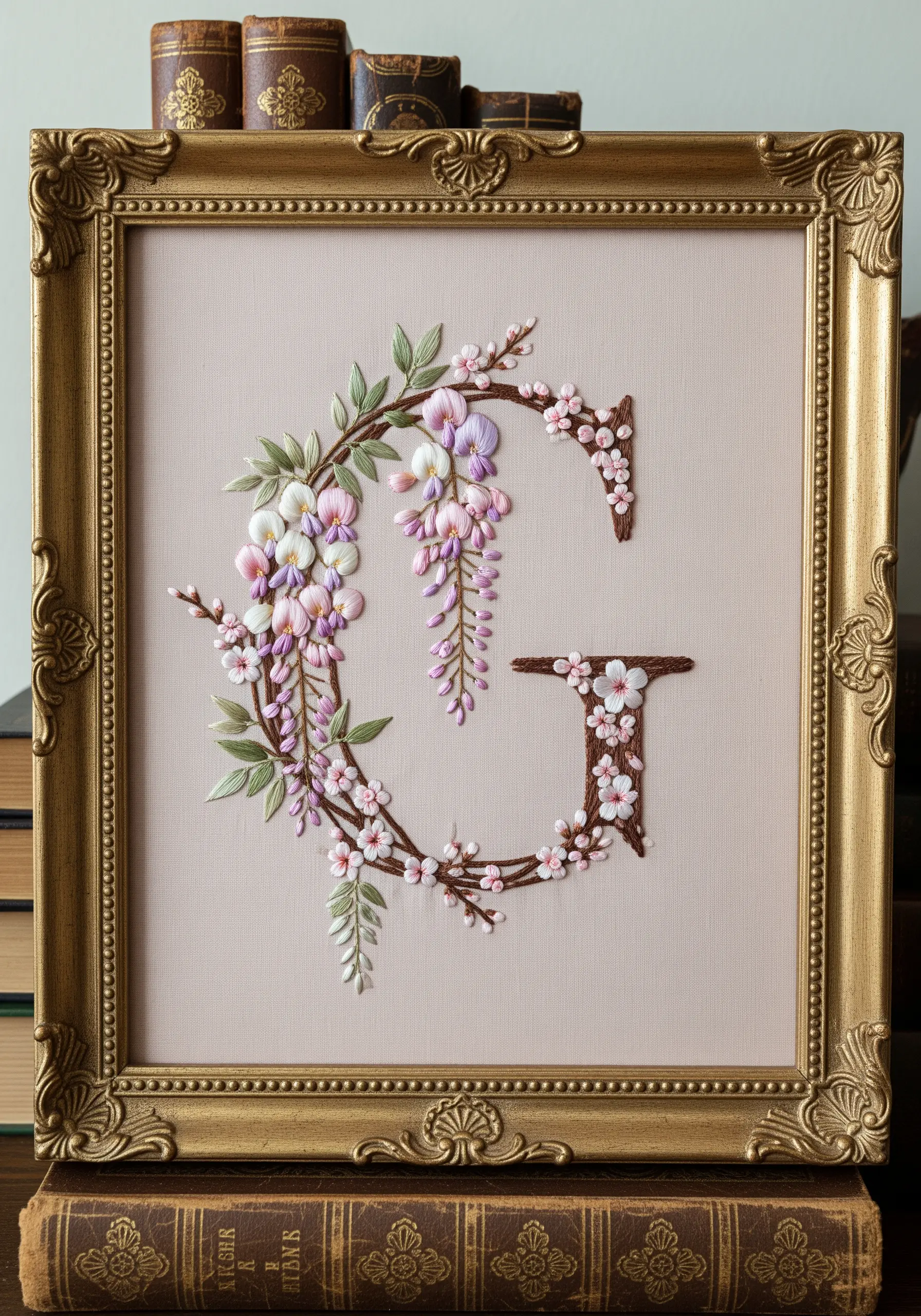
For exceptionally soft and realistic petals, switch from cotton floss to silk ribbon.
Use a simple ribbon stitch for the wisteria blossoms, allowing the ribbon to twist naturally as you pull it through the fabric—this creates unique folds and highlights in every petal.
Smaller blossoms can be made with French knots using the same ribbon, which results in plush, rose-like buds.
This technique requires a light hand and a chenille needle, but it produces a luxurious, dimensional effect that mimics floral thread painting with less effort.
8. Graphic Olive Branch Elegance
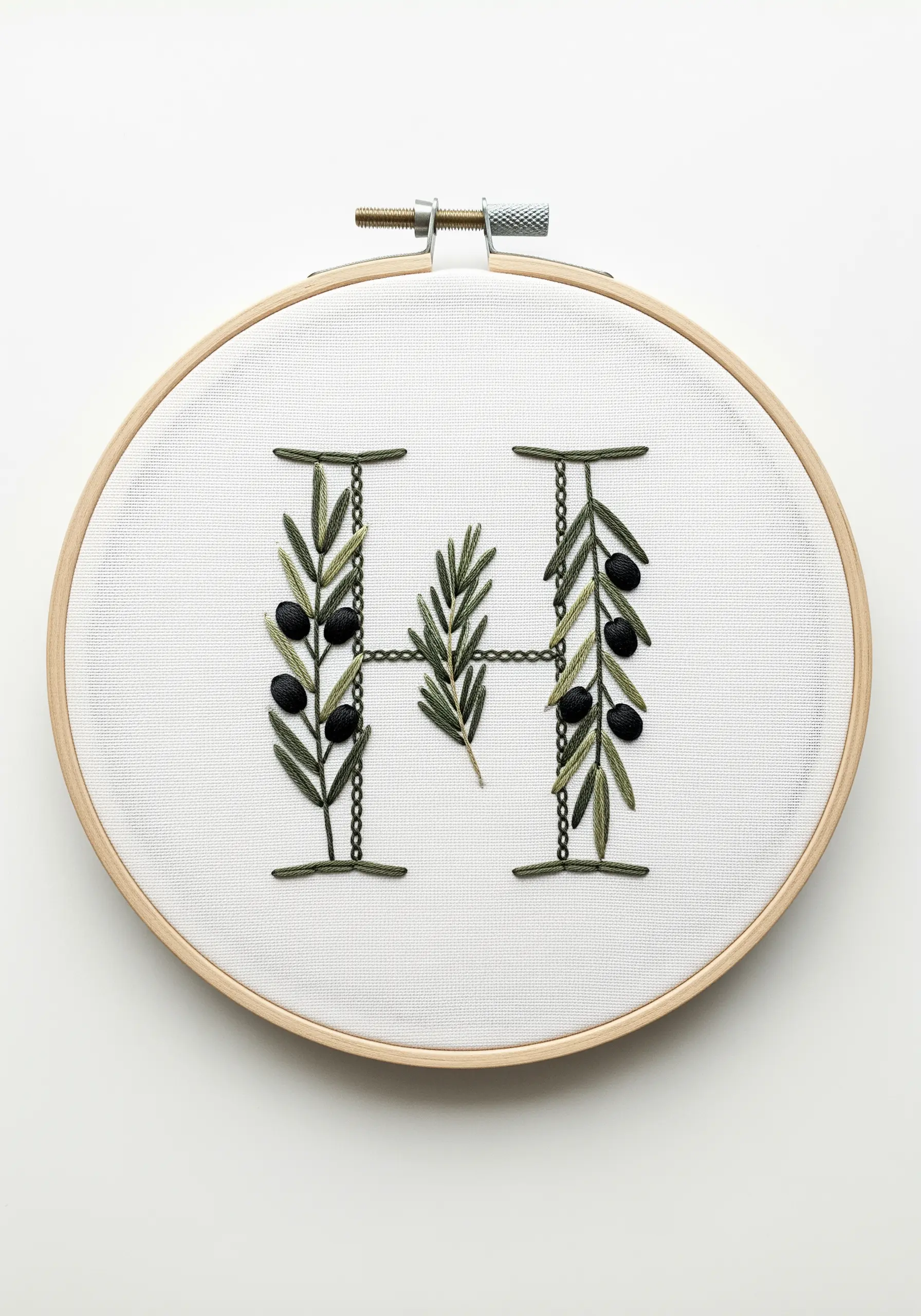
Embrace a clean, modern aesthetic by focusing on precise linework and minimalist details.
Use a sharp split stitch or backstitch for the branches to ensure every line is crisp and defined.
To give the olives a subtle, plump shape, create a small padded base with a few straight stitches before covering them with a smooth satin stitch.
This design’s power comes from its restraint; the negative space is just as important as the stitched elements, resulting in a sophisticated and timeless look.
9. Open-Weave Florals on Apparel
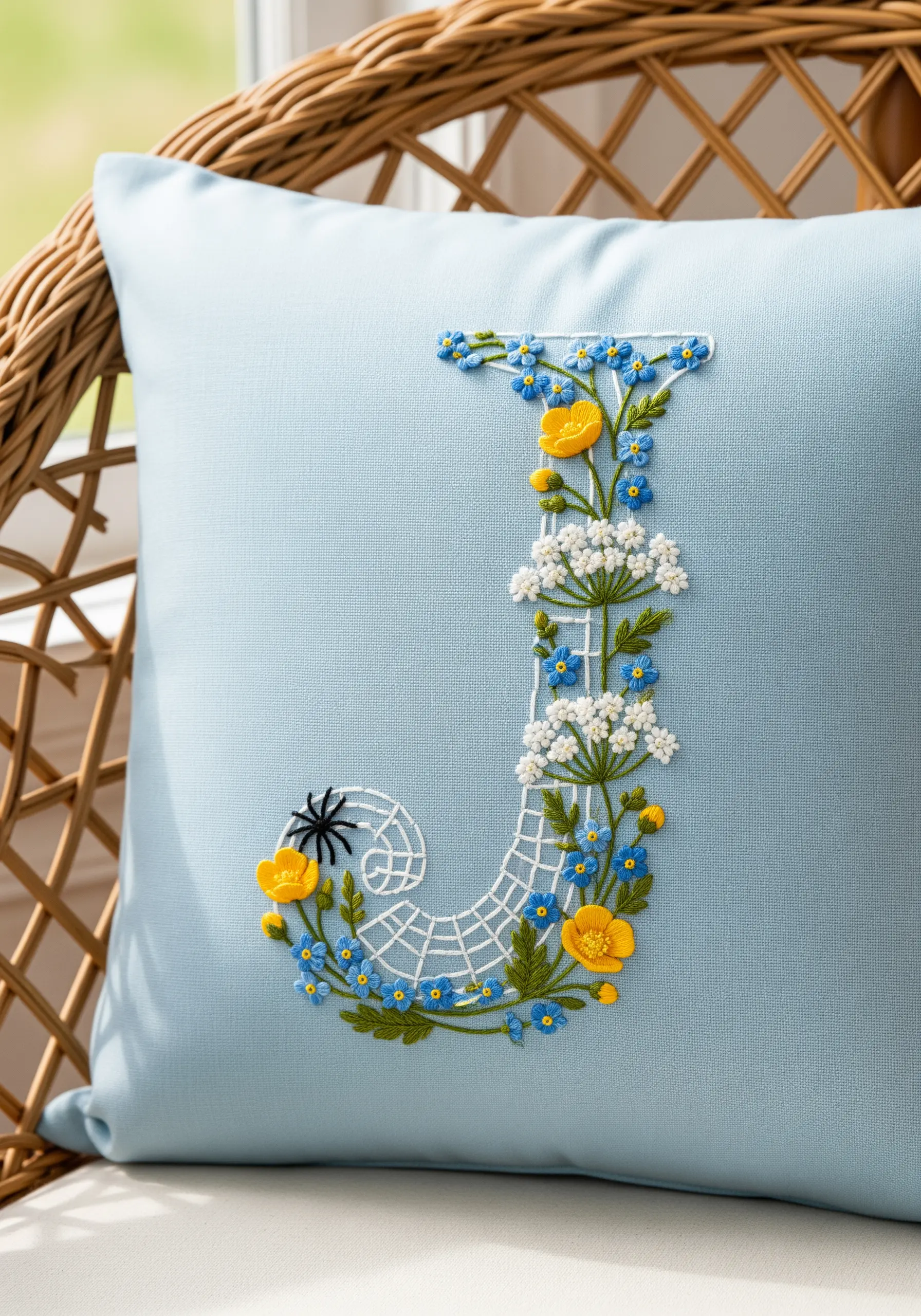
Create a light, airy effect by using open stitches, like the woven wheel for the yellow flowers and detached chain stitches for the blue forget-me-nots.
The white grid-like section is achieved with couching—laying down threads and tacking them in place with tiny stitches—which creates a delicate, web-like structure without heavy stitching.
This approach works beautifully on textiles like pillow covers or clothing because it remains flexible and doesn’t stiffen the fabric.
The tiny spider detail adds a touch of playful, unexpected charm.
10. Sculptural Monochrome Texture
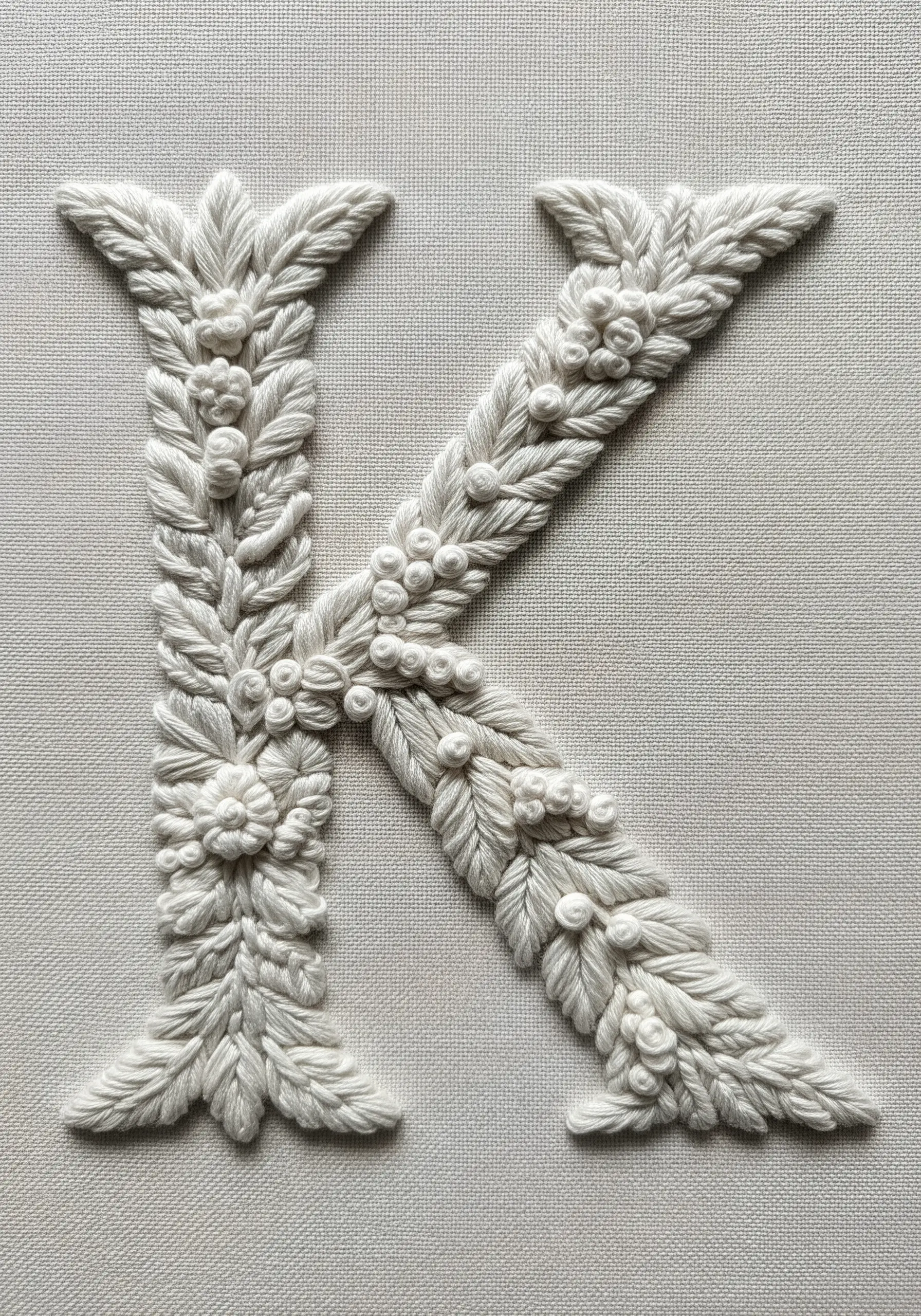
Explore the beauty of monochrome by using a single thread color and relying entirely on different stitches to create interest and dimension.
Combine fishbone stitch for the leaves, bullion knots for the flower centers, and padded satin stitch for the round berries to build a rich, tactile surface.
Using a thicker thread, like cotton perle or all six strands of floss, will exaggerate the sculptural quality of each stitch.
This tone-on-tone embroidery technique proves that texture can be just as impactful as color, resulting in a piece that feels both classic and modern.
11. Coastal Grasses & Subtle Beading
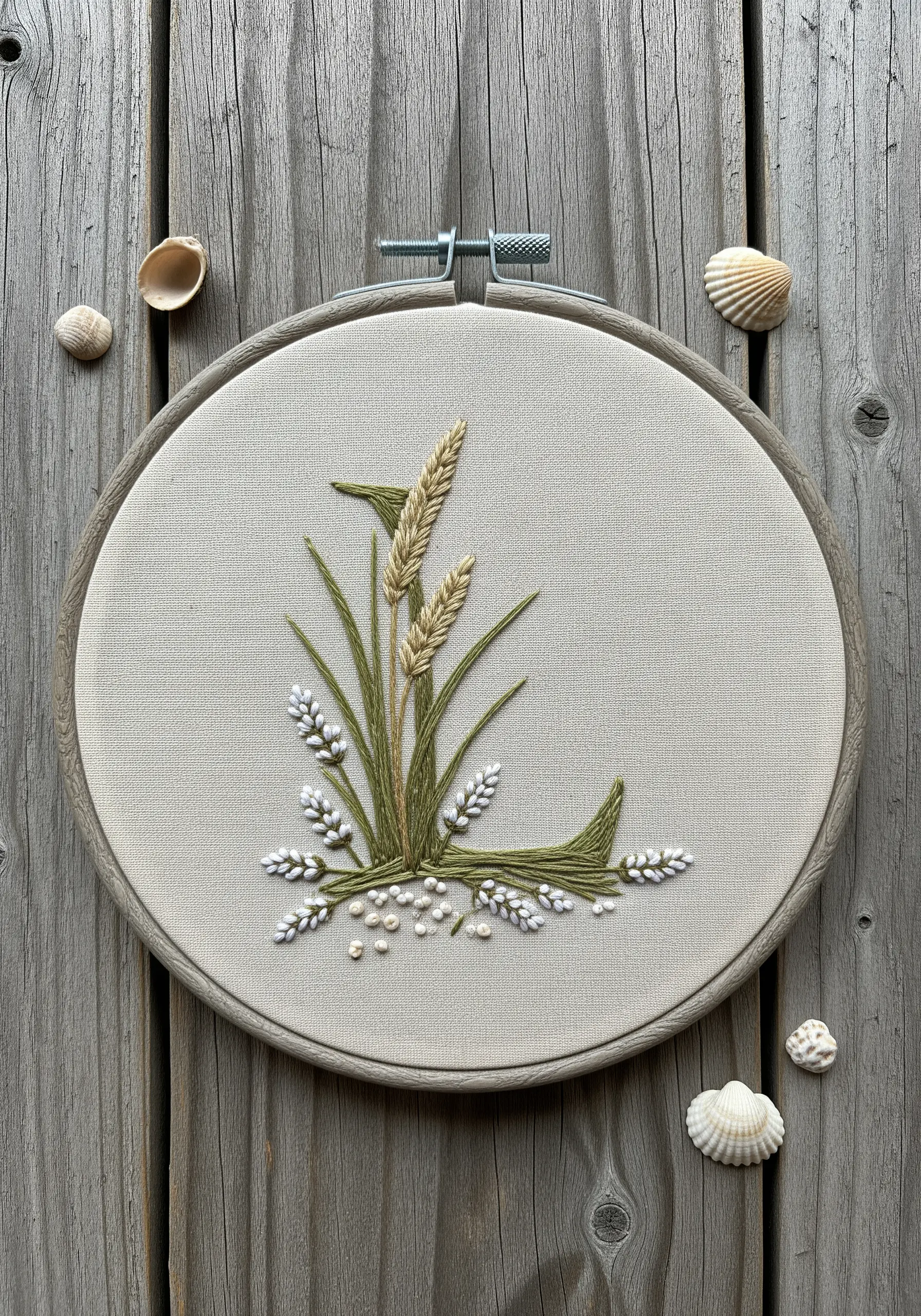
Evoke a serene coastal scene by using a muted, natural color palette of sage green, sandy beige, and soft white.
Create the wheat stalks with a fly stitch or fishbone stitch, varying the angle and length to give them a wind-swept, organic feel.
For the small white blossoms, use bullion knots or French knots, and then scatter a few tiny seed beads at the base.
The beads add a subtle shimmer that mimics morning dew or sea spray, elevating the design with an unexpected touch of texture.
12. Mossy Woodland & Symmetrical Florals
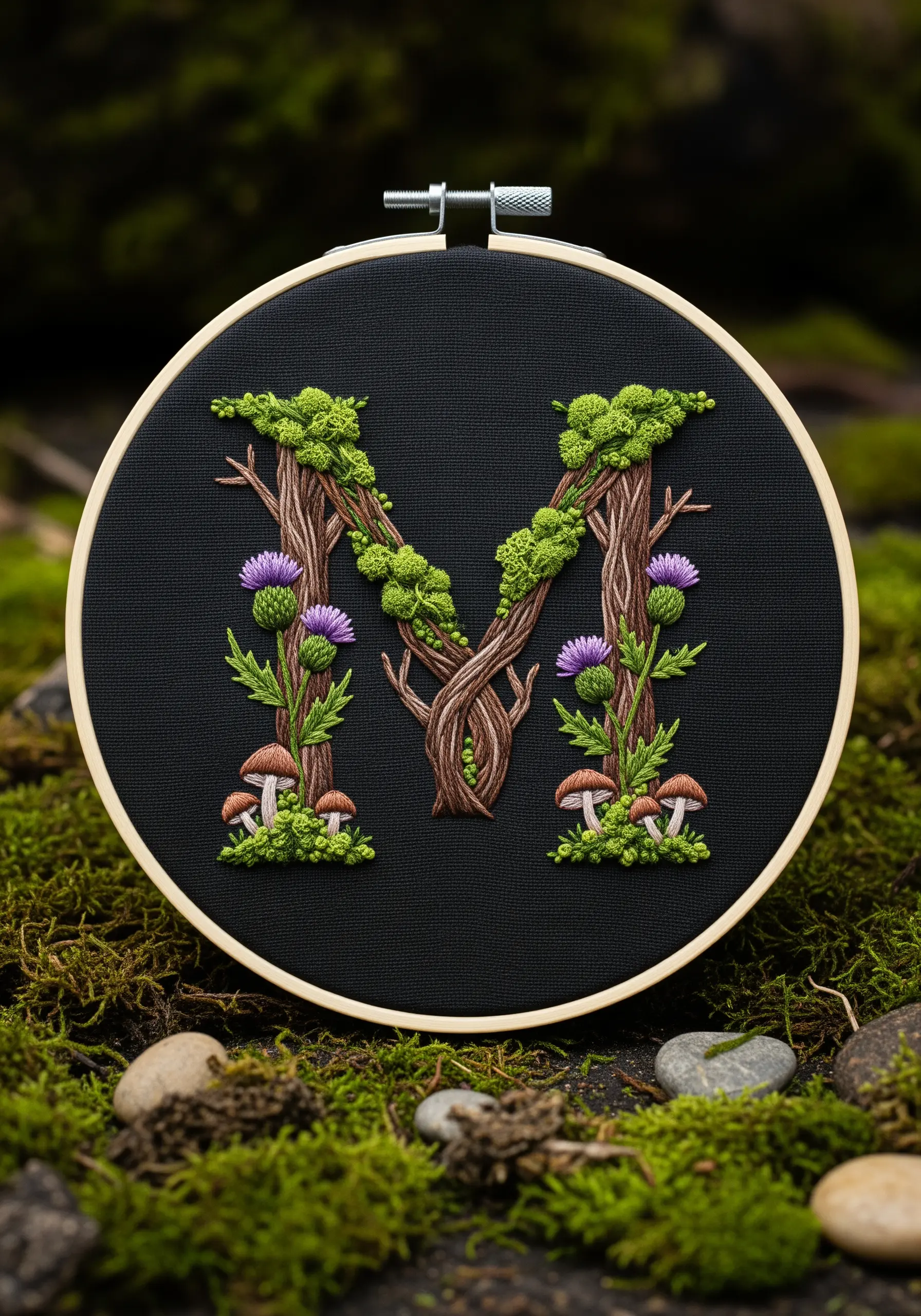
Build a woodland-themed initial by first creating a structure of twisted branches using a whipped backstitch in shades of brown.
To create the dense moss texture, fill areas with hundreds of tiny French knots in variegated green thread; this gives it a lumpy, realistic appearance.
Frame the letter with symmetrically placed elements like thistles and mushrooms to give the composition a sense of deliberate, storybook-like design.
Stitching on black fabric makes the earthy colors appear richer and more saturated.
13. Zesty Citrus Branch Composition
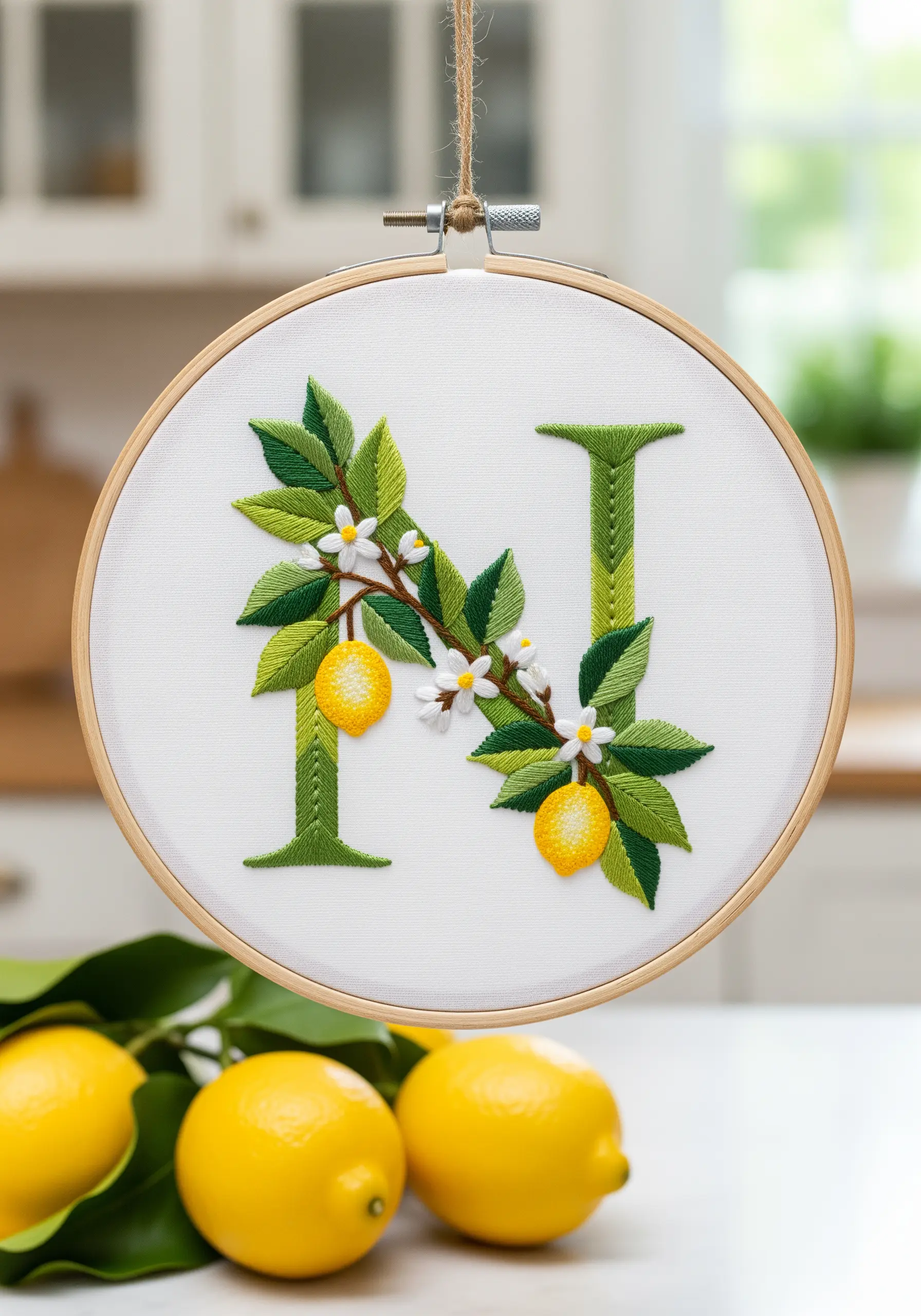
Create a fresh, vibrant design by weaving a fruit-bearing branch through the structure of your letter.
Use a padded satin stitch for the lemons to give them a perfectly round, three-dimensional shape that stands out from the flat leaves.
Add delicate white blossoms using detached chain stitches for petals and a single yellow French knot for the center.
The key is to let the branch flow organically across the letter, partially obscuring it to create a more integrated and natural-looking minimal fruit botanical composition.
14. Sweet Pea Wreath in Pastel Tones
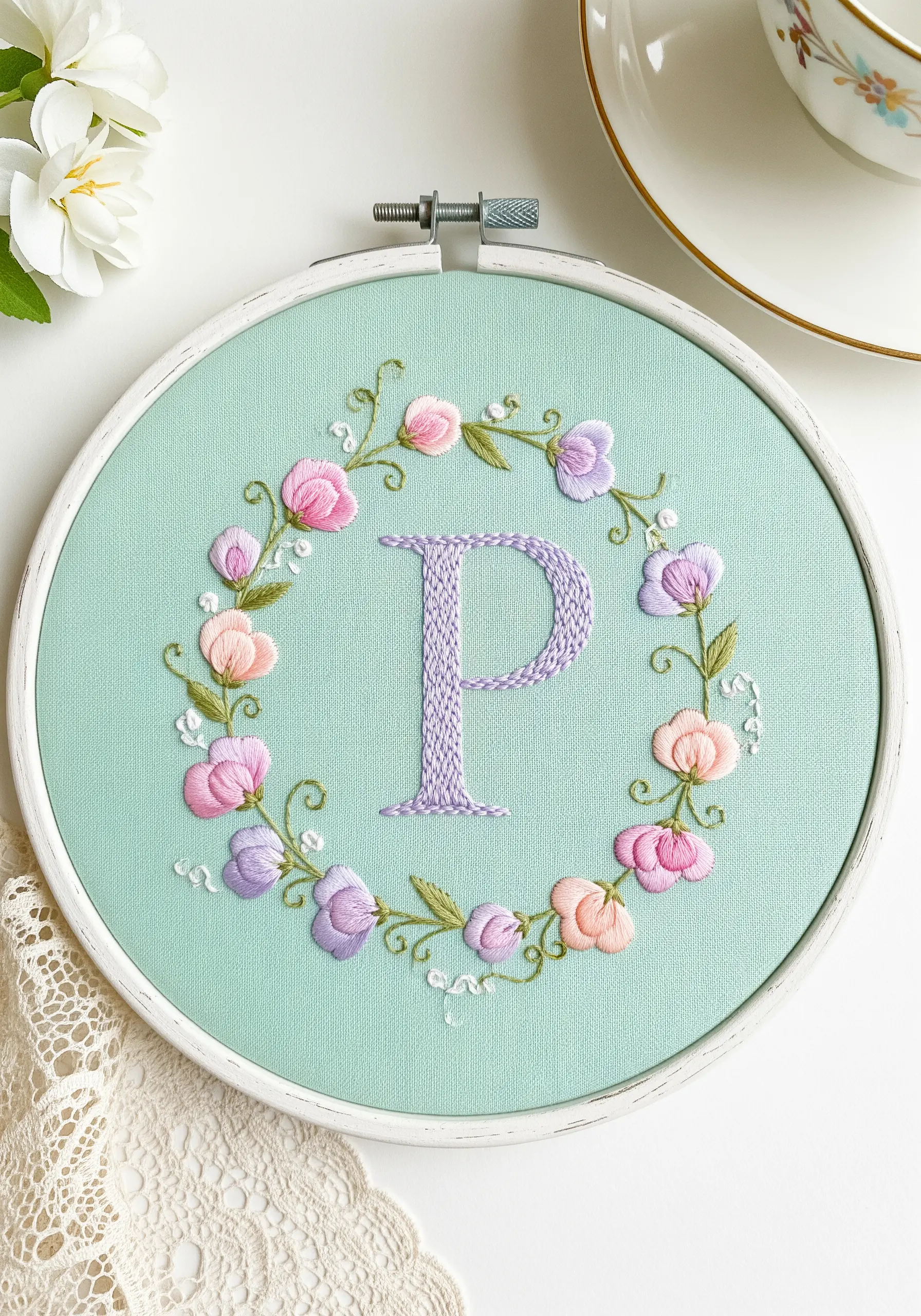
For flowers with delicate, ruffled petals like sweet peas, use a fishbone stitch but keep your stitches loose and slightly curved.
Work with a pastel palette of soft pinks, peaches, and lavenders, using only two strands of thread to maintain a light, airy feel.
Arrange the blossoms in a circular wreath and fill the center with your monogram, stitched in a single, contrasting color for clarity.
This design feels timeless and gentle, perfect for personalized name monogram gifts or nursery decor.
15. Luxe Roses on Black Velvet

Create a truly luxurious piece by combining classic floral embroidery with a touch of metallic thread on a rich fabric like velvet.
Stitch the roses using a woven wheel stitch (or spider web rose stitch) to create dense, layered petals, and use bullion knots for the unopened buds.
Instead of a stitched outline for the letter, use a couched metallic thread—tack down a strand of gold thread with tiny, almost invisible stitches for a clean, gilded edge.
The deep pile of the velvet absorbs light, making the red and gold elements appear exceptionally vibrant and opulent.
16. Graceful Clematis Vines
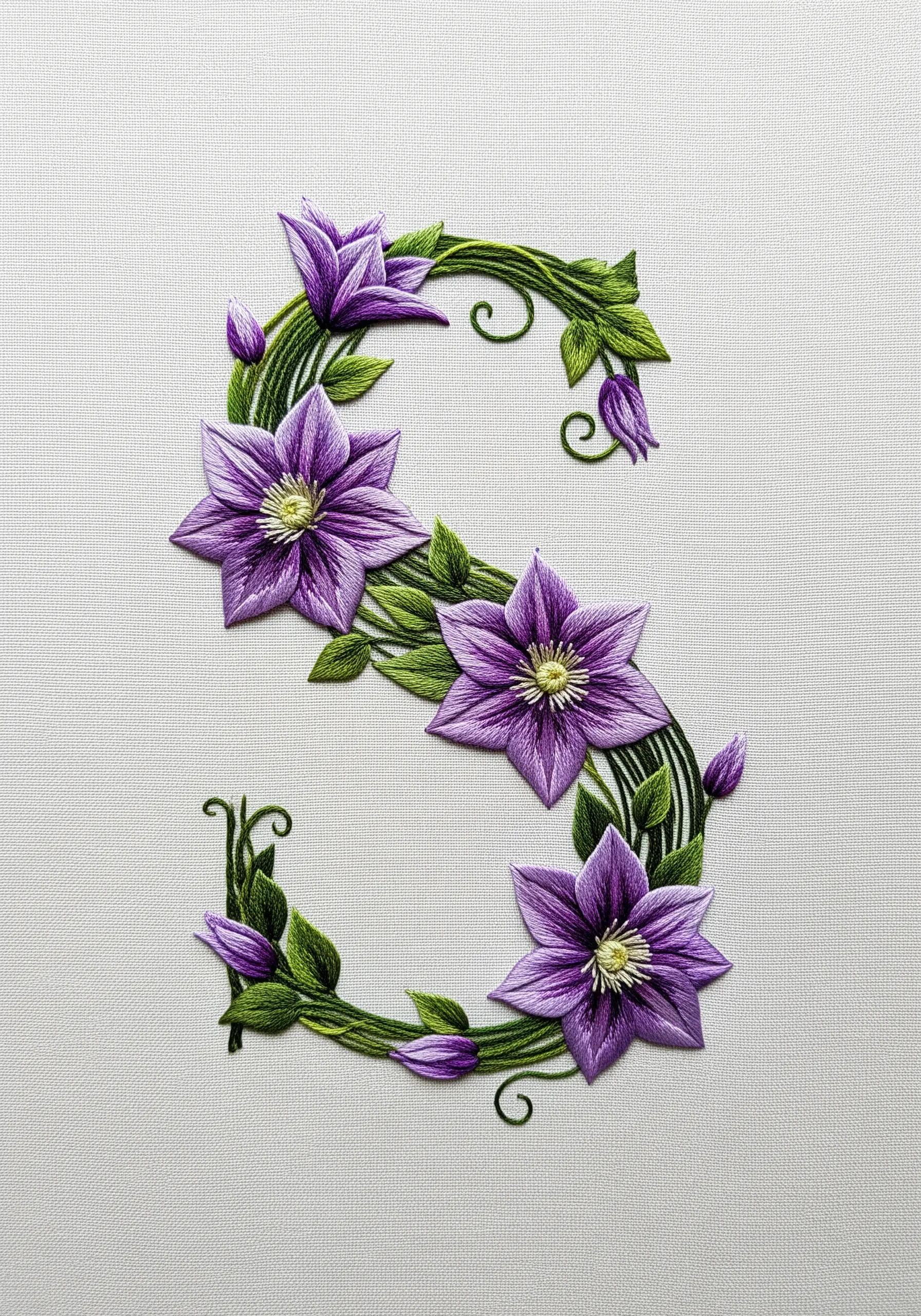
To achieve the sharp, distinct points of clematis petals, use a fishbone stitch, starting with a single straight stitch down the center and angling your subsequent stitches sharply towards the tip.
Blend two shades of purple within each petal using the long-and-short stitch technique for a subtle, realistic gradient.
Create movement by stitching curving, tendril-like stems with a whipped backstitch, allowing them to curl and twist around the letterform.
This composition feels elegant and alive, as if the vine is actively climbing across the fabric.
17. Rustic Birch & Pine Simplicity
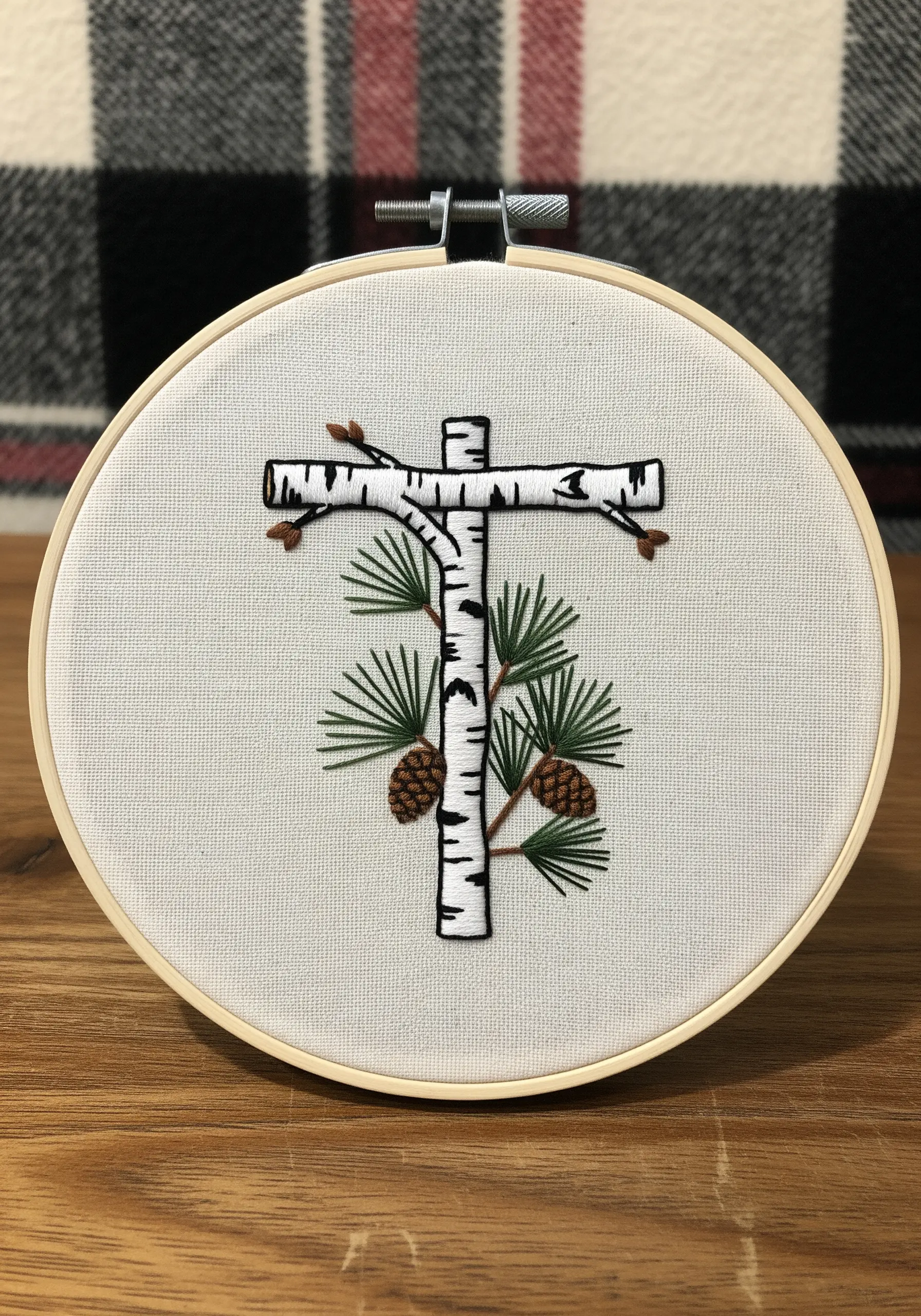
Capture the graphic beauty of birch bark by filling the letter shape with a white satin stitch and then adding small, horizontal black stitches (seed stitches) to mimic the bark’s texture.
Use a needle painting technique with long, straight stitches for the pine needles, layering different shades of green to add depth.
For the pinecones, a series of overlapping satin stitches or fly stitches in brown can create the look of scales.
This nature-inspired embroidery design relies on simple stitches and bold outlines for a charming, rustic cabin feel.
18. Lily of the Valley & Fern Tapestry

Create a dense, tapestry-like effect by completely filling the letter’s shape with layered foliage.
Stitch the delicate bell-shaped Lily of the Valley flowers using detached chain stitches or small, padded satin stitches in bright white to make them stand out against the greens.
Fill the remaining space with detailed fern and foliage stitches, overlapping them slightly to eliminate any gaps in the fabric.
Stretching the final piece over a canvas frame instead of a hoop provides a clean, modern finish perfect for wall art.