Let’s take a step back from the bright, uniform colors of synthetic threads and reconnect our craft to the world outside our window. Eco-friendly embroidery isn’t about limitation; it’s about depth, intention, and a different kind of beauty—one that is softer, more personal, and alive with the subtle imperfections of nature.
Working with natural dyes and organic fibers invites you to slow down. It’s a process of collaboration with plants, minerals, and the seasons. The color from an avocado pit or an onion skin has a story, a softness that can’t be replicated by a machine. It will transform your work, giving it a quiet harmony and a sense of place.
Here, you won’t find complex rules, but gentle guidance. These are ideas to help you infuse your stitching with a more mindful, sustainable spirit. You’ll learn to see your kitchen scraps as a dye pot, your garden as a color palette, and your embroidery as a small, beautiful testament to the natural world.
1. Infuse Your Threads with Natural Color
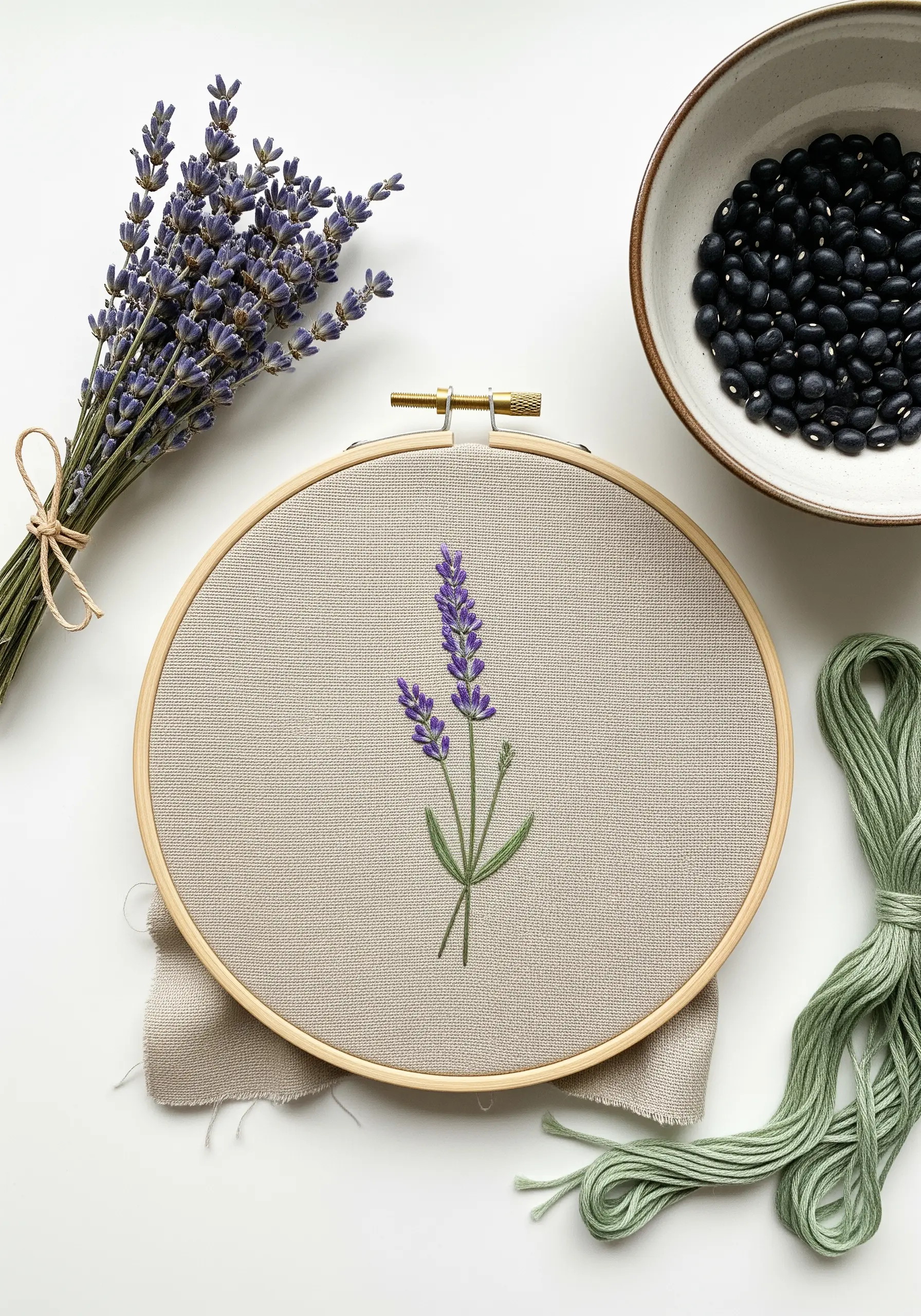
Begin by dyeing your own organic cotton threads using simple kitchen ingredients.
Simmering thread with black beans creates a beautiful range of purples and greys, perfect for stitching delicate botanicals like lavender.
This process gives your work a soft, harmonious palette that feels deeply connected to the natural world.
Pair these threads with an unbleached linen or hemp fabric to create a completely cohesive and earthy piece of art.
Explore delicate lavender stitch ideas that highlight the gentle tones of naturally dyed floss.
2. Use the Flower to Dye the Flower

For a truly harmonious project, use the subject of your embroidery as the dye source.
Marigolds, for example, produce a brilliant spectrum of yellows and oranges that are perfect for capturing their own likeness in thread.
Use a long-and-short stitch to blend the subtle variations that naturally occur in plant-dyed threads, giving your petals a realistic, sun-kissed depth.
This technique creates a piece that is not just a representation of nature, but a direct collaboration with it.
3. Embrace High-Contrast Minimalism

Eco-friendly embroidery doesn’t always mean muted earth tones.
Achieve a striking, modern look by pairing undyed, natural white organic cotton thread with a dark fabric base.
You can create a deep, rich black linen by dyeing it with iron and tannins from oak galls, providing a dramatic canvas for crisp white stitches.
Focus on clean lines and negative space to let the natural texture of the thread and fabric become the central focus of your art.
This approach proves that monochrome floral embroidery ideas can be both sustainable and powerfully expressive.
4. Create Natural Gradients by Over-Dyeing
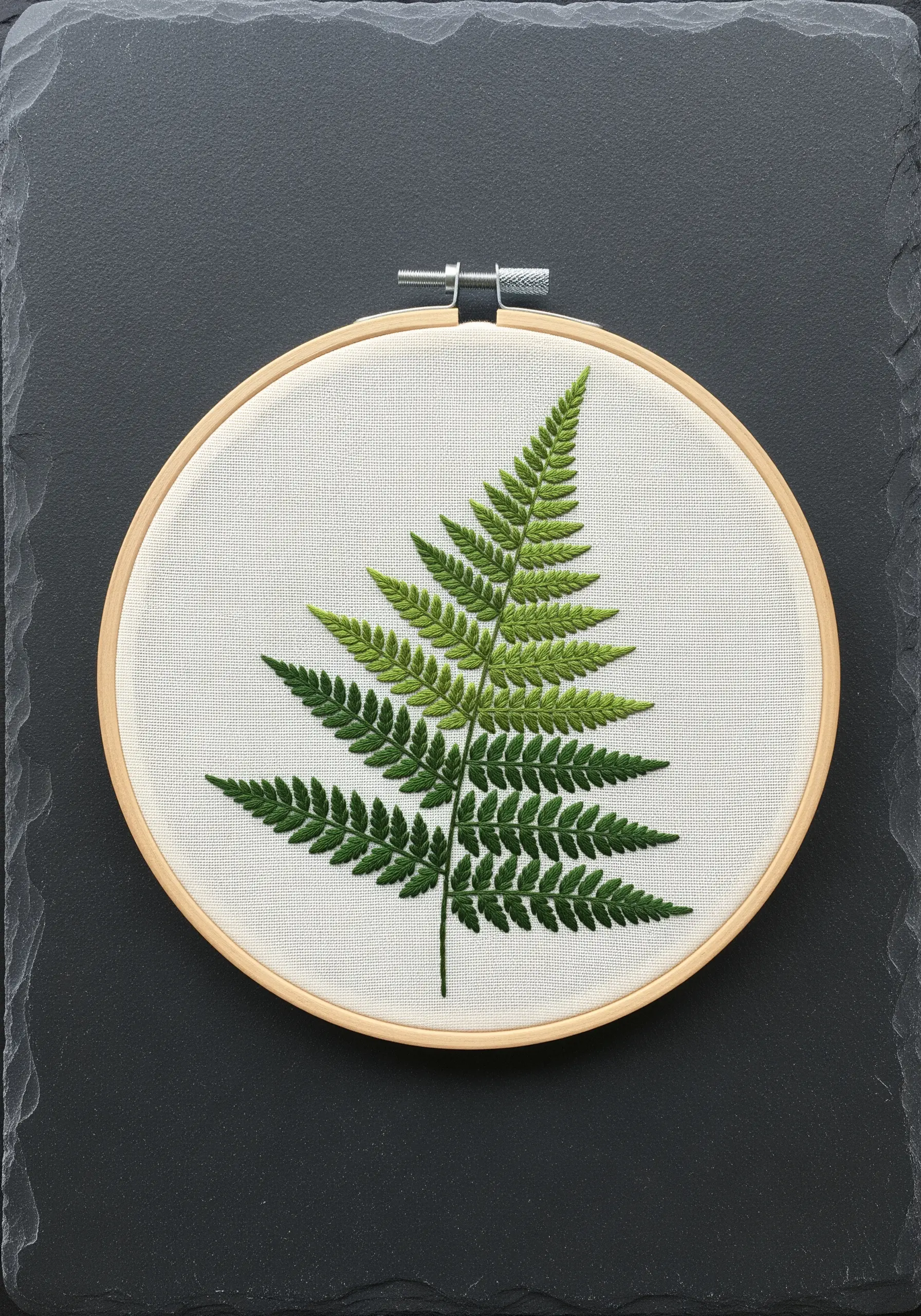
Achieve beautiful, realistic color transitions by dyeing your thread in successive baths.
Start with a light dye bath—using avocado skins for a soft green, for example—and dye a small batch of thread.
Then, strengthen the dye bath and repeat the process to create medium and dark shades from the same source.
Using these tones together in your stitching, as seen in these fern foliage stitch variations, ensures a perfectly coordinated and organic-looking gradient.
5. Build Texture with Organic Wool
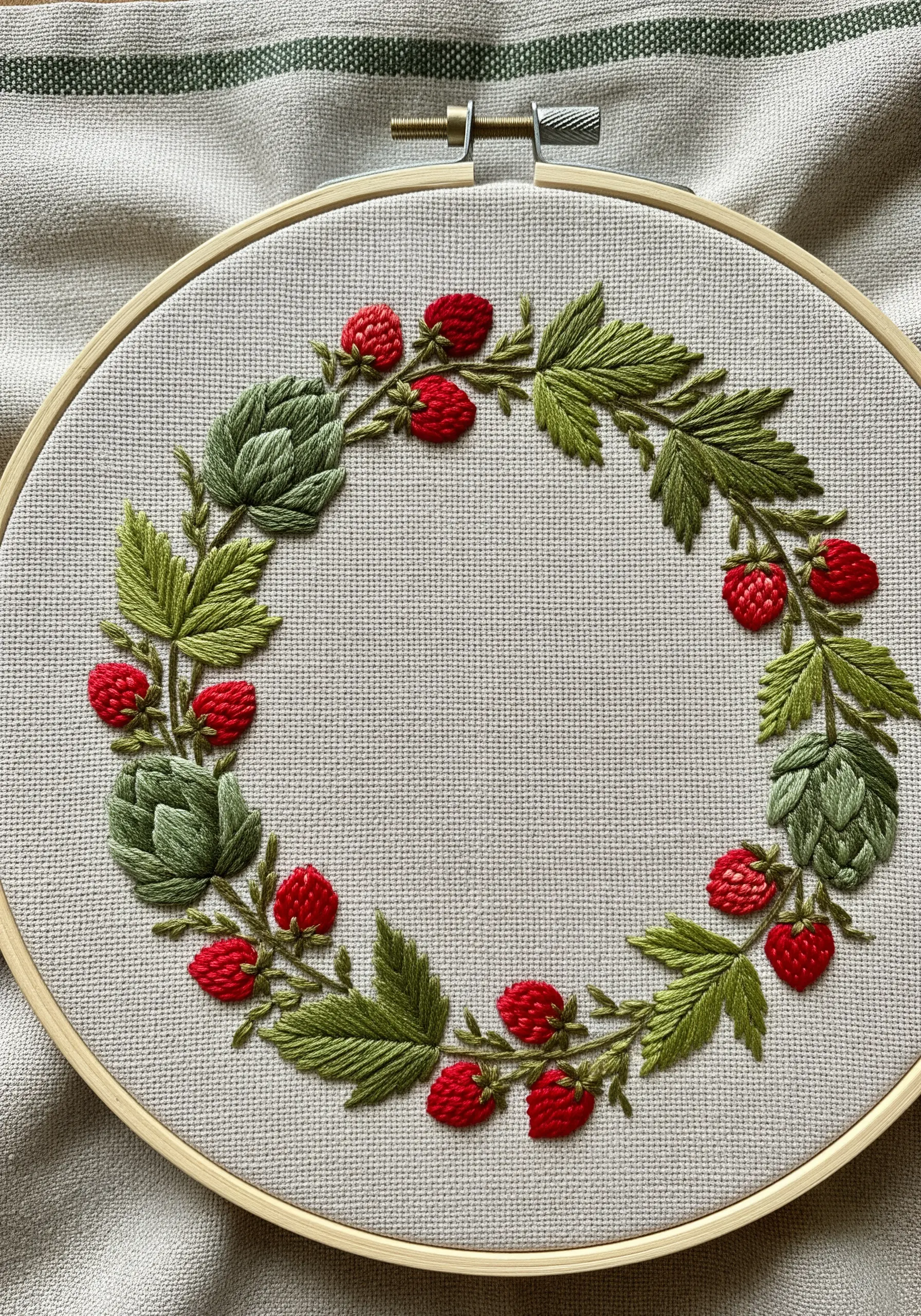
Incorporate thicker, organic wool threads to add dimension and a tactile quality to your work.
Use chunky French knots for berries and a padded satin stitch for leaves to make elements of your design physically stand out from the fabric.
Wool takes natural dyes like madder root (for reds) and weld (for greens) beautifully, resulting in rich, rustic colors that enhance the cozy feel of the texture.
This technique is perfect for creating wild botanical wreath patterns that are as inviting to touch as they are to see.
6. Choose Durable Eco-Fabrics for Home Decor

When embroidering functional items like pillows, choose a fabric that is both beautiful and sustainable.
Organic hemp or a linen-cotton blend offers the durability needed for home goods while providing a wonderful, textured canvas for your stitching.
For a conceptually complete piece, stitch eucalyptus leaves with thread dyed from eucalyptus bark onto a fabric eco-printed with the leaves themselves.
This thoughtful layering of natural materials elevates simple decor into a meaningful work of art, perfect for embroidered throws and blankets.
7. Let Negative Space Enhance Natural Forms

Instead of filling every shape, use negative space to create a sense of lightness and delicacy.
For a dandelion, use a single strand of naturally dyed silk for the floating seeds to give them a fragile, airy quality.
The contrast between the detailed, textured seed head and the open space around it draws the eye and makes the composition breathe.
Working on unbleached organic calico allows the fabric’s natural texture to become part of the design, complementing your organic shape embroidery patterns.
8. Paint with Naturally Derived Pigments

You can achieve surprisingly vibrant colors from natural sources to create detailed, realistic subjects.
Turmeric produces a brilliant yellow for the bee’s body, while an iron mordant can create a deep, permanent black for its stripes.
Use the thread painting technique with single strands of organic cotton to blend these colors seamlessly, just as you would with paint.
This method allows you to create realistic animal insect embroidery patterns with a palette sourced directly from the earth.
9. Incorporate Found Objects from Nature

Take your eco-friendly practice a step further by incorporating found natural elements directly into your art.
Use twigs for tree branches, secure pressed leaves with delicate stitches, or use walnut shells as dimensional elements.
This turns your hoop into a miniature, preserved landscape and reduces the need for thread.
It’s one of the most rewarding stunning mixed fiber projects, creating a piece that is truly one-of-a-kind and rooted in place.
10. Stitch on Sustainable, Reusable Items
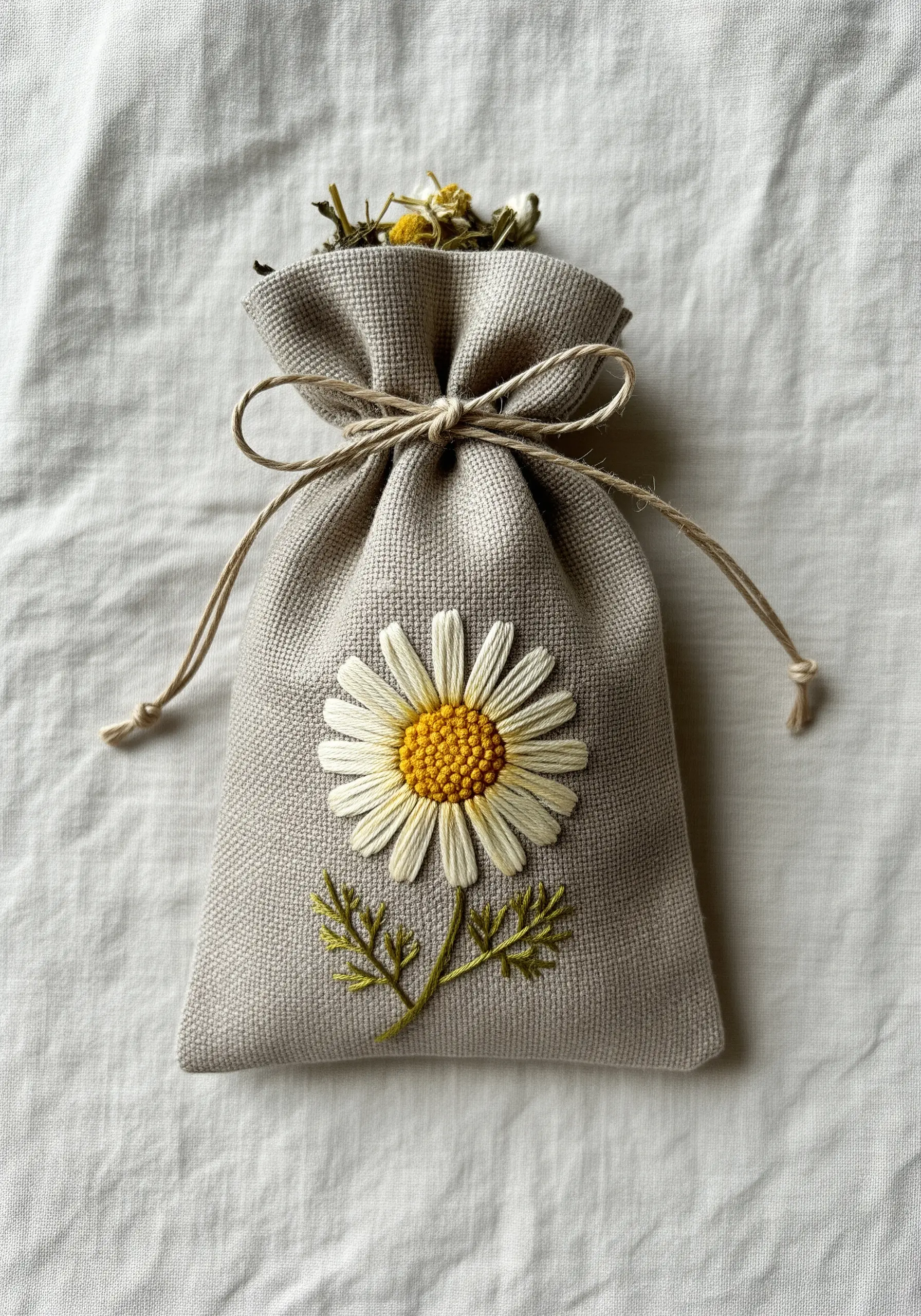
Extend your eco-friendly practice beyond materials by stitching on reusable items like linen drawstring bags.
Embellish a simple bag with a chamomile design using threads dyed with the flowers themselves, creating a thoughtful, zero-waste gift pouch.
Ensure your dyes are properly mordanted to be colorfast, so the item can be gently washed and reused for years to come.
This makes your craft both beautiful and practical, turning small handmade projects that double as thoughtful gifts into treasured keepsakes.
11. Create Texture Without Any Dyes
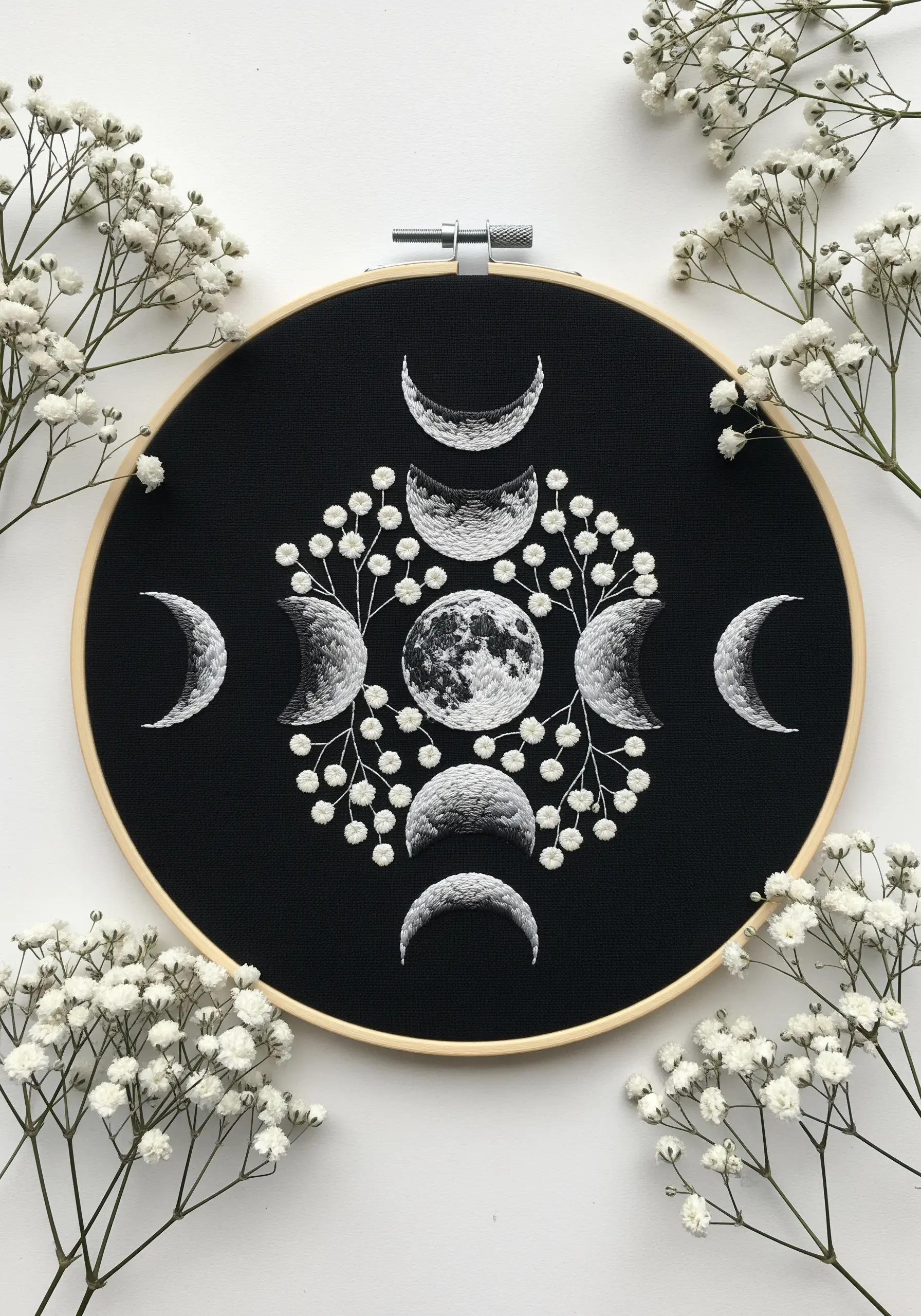
Explore the beauty of natural, undyed fibers by creating patterns through texture alone.
Using unbleached organic cotton thread on a dark, iron-dyed fabric, you can build up entire compositions with French knots and seed stitches.
Vary the density of your knots to create shading and highlights, mimicking the cratered surface of the moon.
This technique celebrates the raw beauty of the fiber itself and is perfect for creating minimal sky moon designs with surprising depth.
12. Highlight the Beauty of Imperfect Color

The subtle variations and imperfections in naturally dyed thread are a feature, not a flaw.
When stitching simple line art, like these ginkgo leaves, let the gentle shifts in a thread dyed with onion skins add depth and movement to the design.
A perfectly uniform, synthetic color can look flat, while the organic nature of plant-dyed floss makes each stitch unique and alive.
Embrace these nuances in your hand-embroidery leaf patterns for a more dynamic and authentic result.
13. Achieve Painterly Realism with Natural Hues

Soft, dusty pinks from avocado stones or cochineal are perfect for realistic floral embroidery.
Using a single strand of organic cotton or silk, apply the long-and-short stitch technique to blend these gentle shades seamlessly.
This method, often called thread painting, allows you to create smooth gradients that capture the delicate, velvety texture of magnolia petals.
These natural tones give your work a soft, romantic quality that synthetic colors often lack, elevating your floral thread painting techniques.
14. Create Impact with a Naturally Sourced Palette
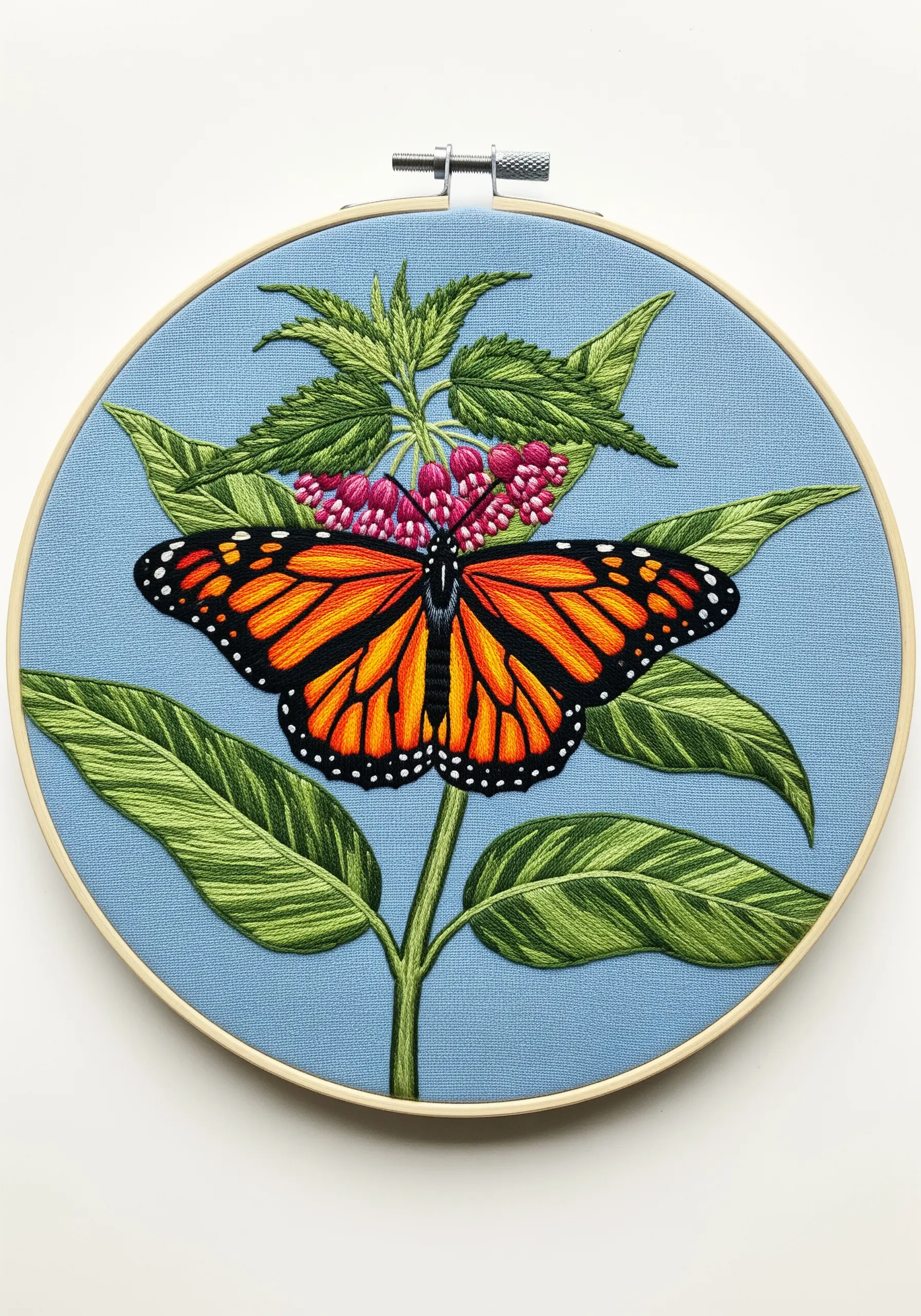
You can create bold, high-impact designs using an entirely natural color palette.
Achieve a vibrant orange for monarch wings with madder root, a deep black with an iron mordant, and a rich green for leaves with pomegranate rinds.
When you place these strong, earthy colors against a fabric dyed a contrasting shade, like a soft blue from woad, the entire composition feels balanced and alive.
It’s a beautiful way to create butterfly garden embroidery ideas that are both striking and sustainable.
15. Dye Variegated Threads for Abstract Art
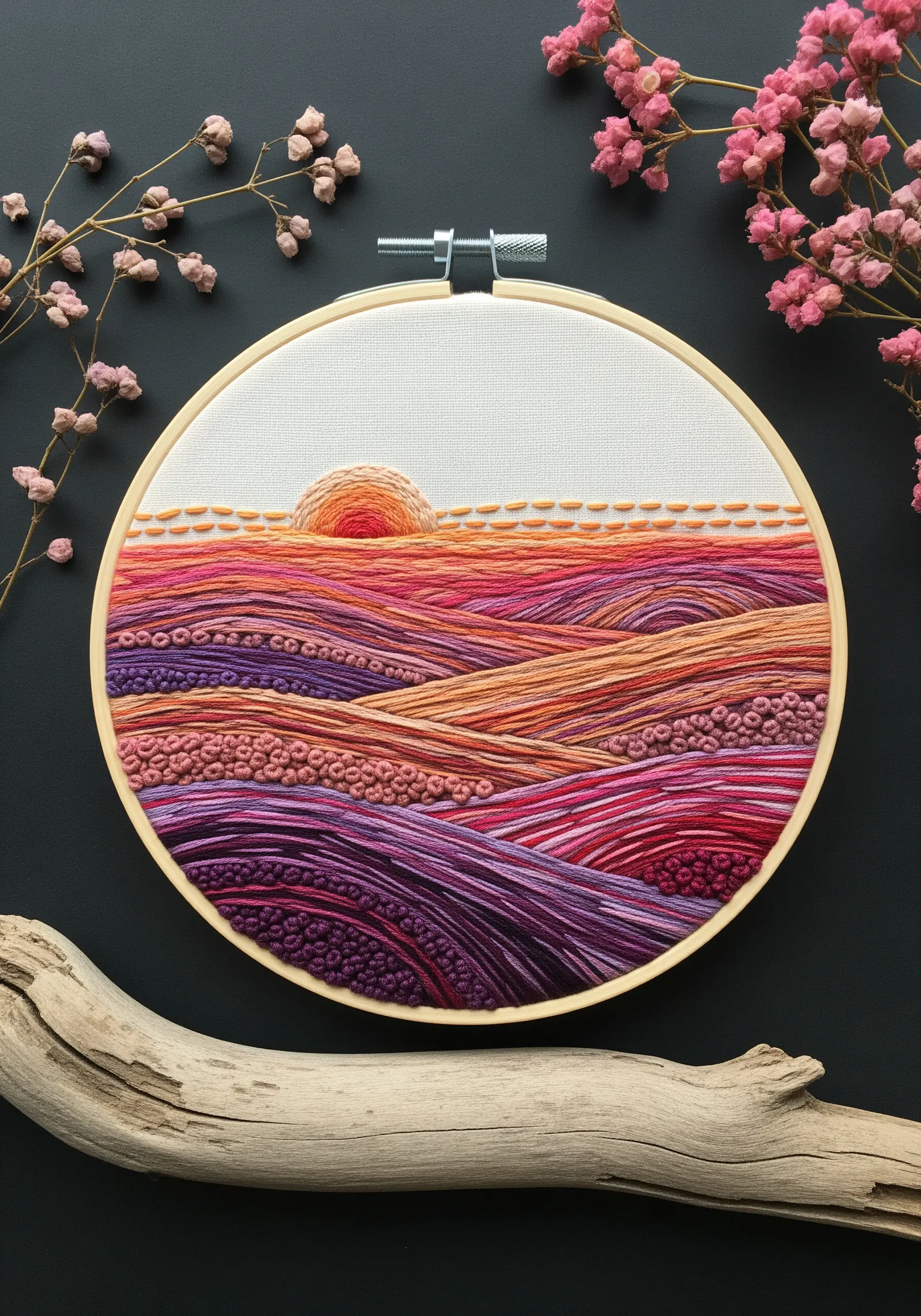
Create your own unique, variegated floss by dip-dyeing skeins of organic thread into multiple natural dye baths.
A single skein can hold the colors of cochineal, indigo, and onion skin, creating a beautiful, flowing palette within one strand.
Use this thread with a mix of textural stitches—like satin stitch, French knots, and running stitch—to build abstract thread embroidery ideas inspired by nature.
The result is a piece that feels like a watercolor painting, full of soft transitions and organic movement.
16. Scale Up with Naturally Dyed Yarns

For large-scale projects like wall hangings, switch from floss to thicker organic wool or cotton yarn.
Yarn covers more surface area and creates a bold, textural statement that is perfect for statement decor.
Dye your yarn with accessible materials like black tea or coffee to achieve rich, earthy browns and muted greens.
This approach allows you to create large-scale embroidery tapestries that are both sustainable and visually impactful.
17. Use Pressed Flowers as Your Pattern
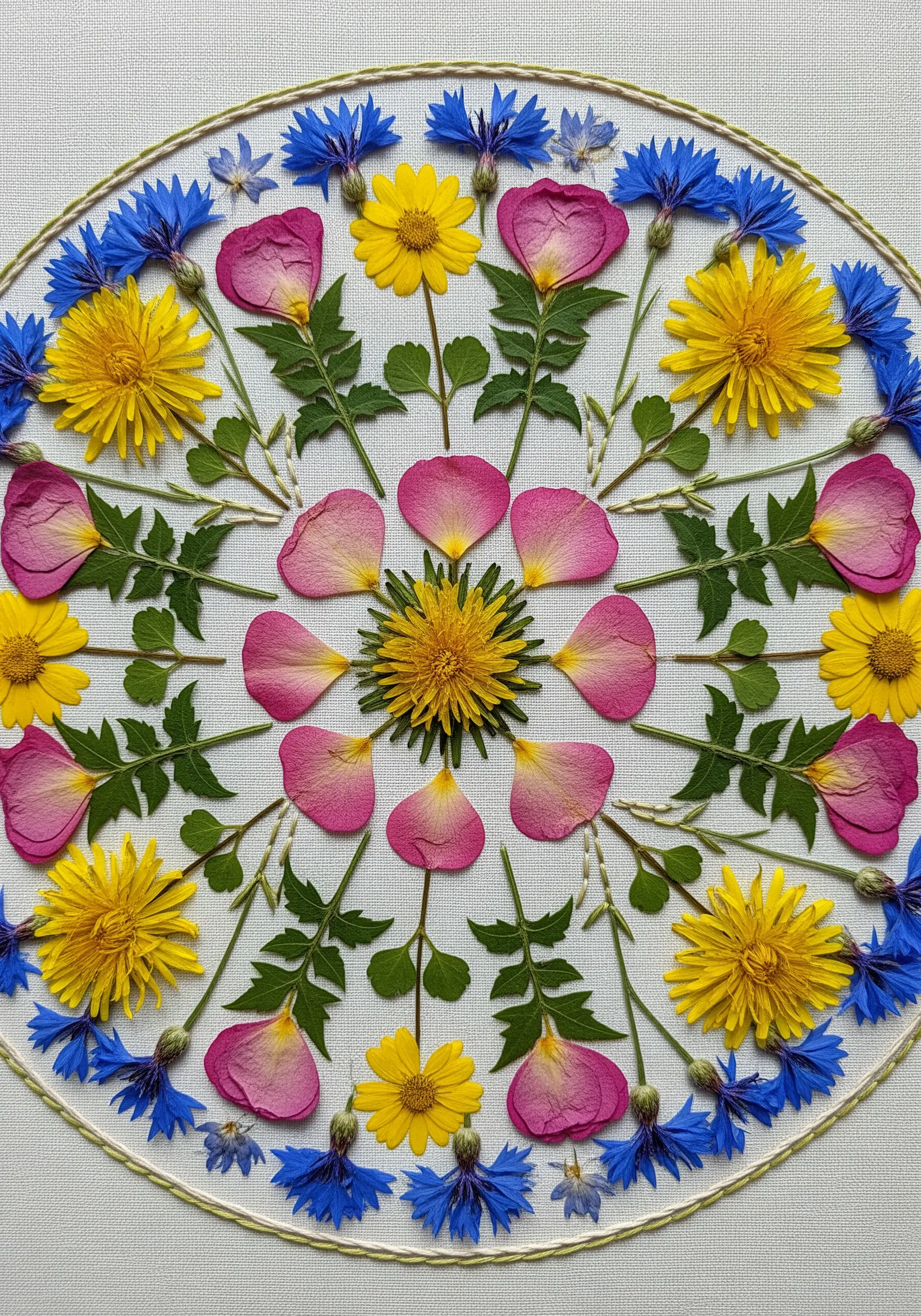
Instead of transferring a printed pattern, arrange pressed flowers and leaves from your garden directly onto your fabric.
You can either use this composition as a visual guide for your stitching or place a layer of sheer tulle over the botanicals and stitch them directly into the piece.
This method creates a deeply personal connection to your subject matter and ensures a truly organic design.
It is the most direct way to create pressed flower embroidery designs that capture the fleeting beauty of nature.
18. Connect Your Subject to its Source
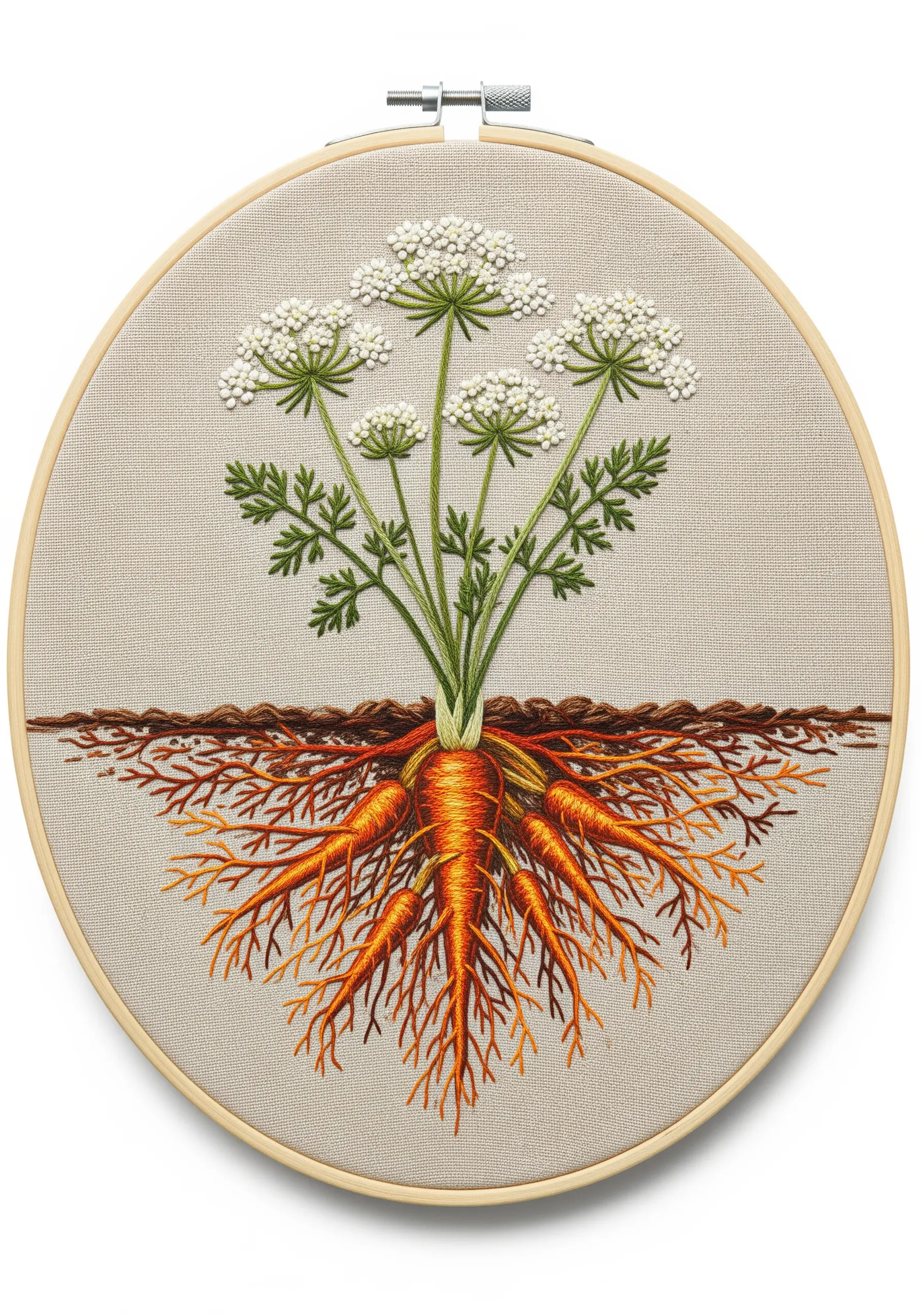
Deepen the story of your embroidery by using dyes derived from the plant you are stitching.
Stitch a carrot using threads dyed with annatto seeds for the orange and the carrot tops themselves for the feathery greens.
This conceptual link between the stitched image and the materials used adds a layer of intention and integrity to your work.
It transforms simple nature-themed embroidery samplers into thoughtful studies of the natural world.
19. Elevate Everyday Linens with Simple Stitches

Transform simple, everyday items into objects of beauty with minimalist embroidery.
A few strategically placed stitches on an organic linen napkin can make a meal feel special.
Use a single color of thread, perhaps dyed with rosemary, to stitch a simple rosemary sprig.
The understated elegance of this approach celebrates the beauty of the natural fiber and adds a personal, handmade touch to your home, perfect for modern minimalist table linen embroidery ideas.
20. Paint Your Fabric with Natural Pigments

Create a dynamic background for your embroidery by painting your fabric with natural dyes before you stitch.
Use a soft brush to apply a wash of diluted indigo or woad dye to your fabric, creating a soft, sky-like gradient.
Once dry, this painted canvas provides a beautiful, atmospheric base for bold floral subjects, making colors like cochineal-dyed red pop.
This mixed-media approach turns simple hoops into abstract floral embroidery hoops that look like fine art.
21. Practice Mindful Mending with Fabric Scraps
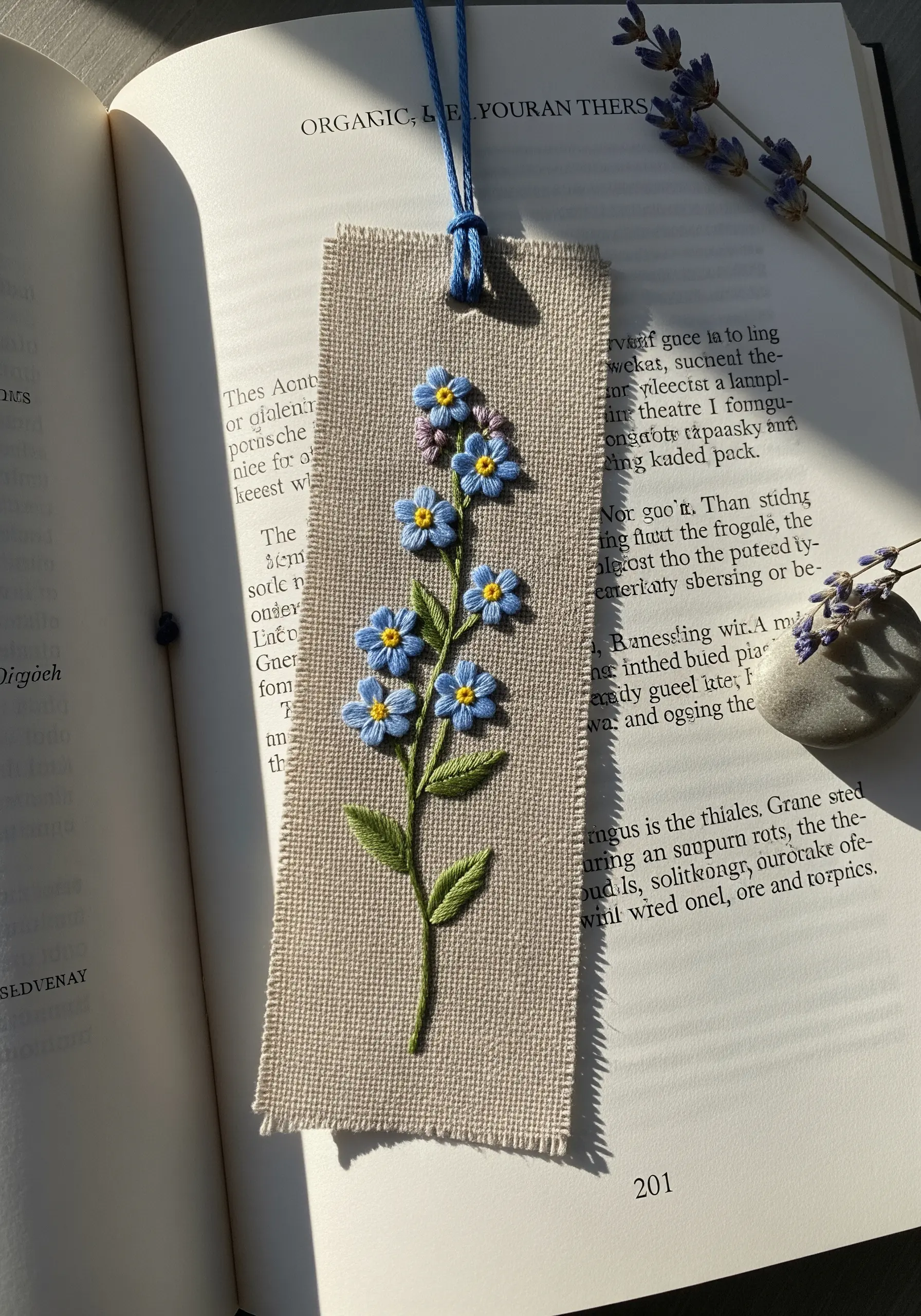
Embrace a zero-waste mindset by saving every scrap of your organic linen and naturally dyed threads.
Even the smallest pieces can be transformed into beautiful and functional objects like bookmarks or tiny patches.
This practice encourages resourcefulness and mindfulness, ensuring that the energy and natural materials invested in your craft are fully honored.
It’s a perfect way to create tiny embroidery designs inspired by everyday life while minimizing your environmental footprint.
22. Explore Geometric Patterns with a Natural Palette
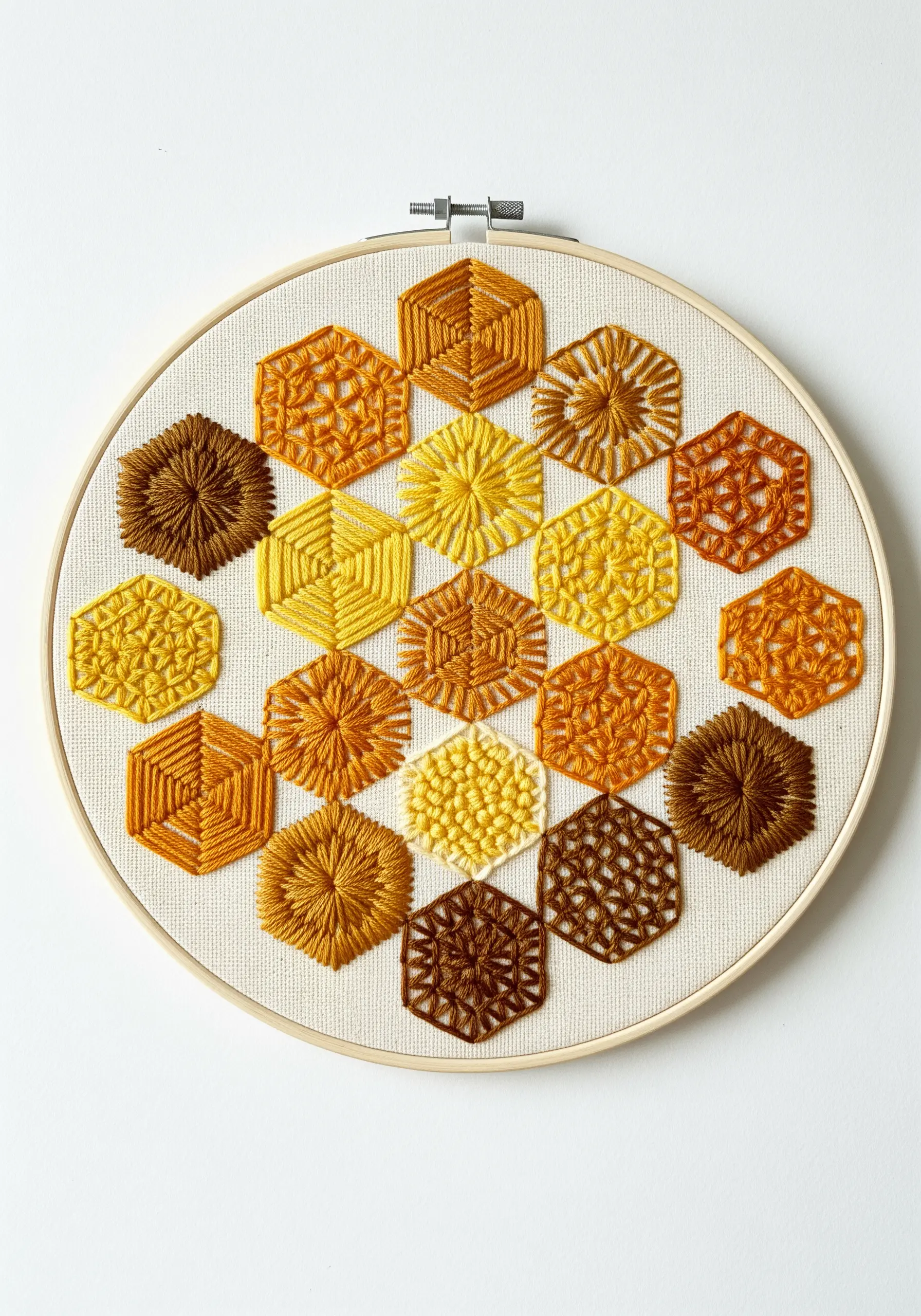
Combine the precision of geometric patterns with the softness of a natural color palette.
Create a harmonious gradient by dyeing several batches of thread with turmeric, varying the concentration to get a spectrum from pale yellow to deep gold.
Use these shades to fill a honeycomb pattern with various filled stitches, allowing the subtle color shifts to create a sense of rhythm and flow.
This is a wonderful way to use earth-tone patterns every handmade decor enthusiast needs to try for a modern yet organic look.
23. Replicate Nature’s Textures with Varied Stitches

Look closely at a leaf or an acorn and notice the different textures; then, choose your stitches to replicate them.
Use long, straight satin stitches for the veins of an oak leaf, a textured woven wheel stitch for the acorn cap, and a padded satin stitch for the smooth nut.
Pairing these varied textures with threads dyed from the tree itself—using oak galls and bark—creates a multi-sensory piece.
This approach to leaf embroidery stitches brings your subject to life in a deeply tactile way.
24. Appreciate the Inherent Beauty of Your Materials

Before you even begin stitching, take a moment to appreciate the materials themselves.
The subtle, complex colors derived from avocado pits, onion skins, and eucalyptus are beautiful in their own right.
Unlike the flat uniformity of synthetic dyes, naturally dyed threads have a living quality that will translate into your finished work.
Understanding where your colors come from will infuse your practice with greater intention and connection, revealing gorgeous mixed fiber textures before the first stitch is made.
25. Capture Natural Movement with Fiber Variation

To depict dynamic natural elements like water, use a variety of thread types and thicknesses.
Combine chunky, indigo-dyed wool yarn with fine, single-strand cotton floss to create contrast and movement.
Use dense French knots and swirls for the churning sea foam, and long, flowing straight stitches for the deeper water.
This technique allows you to use abstract thread waves swirls to capture motion and flow in your work, making it feel energetic and alive.
26. Build 3D Worlds with Natural Elements

Create a miniature living world within your hoop by building dimensional textures.
For a terrarium scene, use non-toxic glue to affix a base of real sand or tiny pebbles from your garden.
Stitch succulents with padded satin stitch to make them plump and three-dimensional, and create a mossy ground with dense French knots or turkey work using wool dyed with spinach or nettles.
These nature texture embroidery projects blur the line between embroidery and sculpture for a stunning effect.
27. Give Clothing a Second Life with a Mended Patch
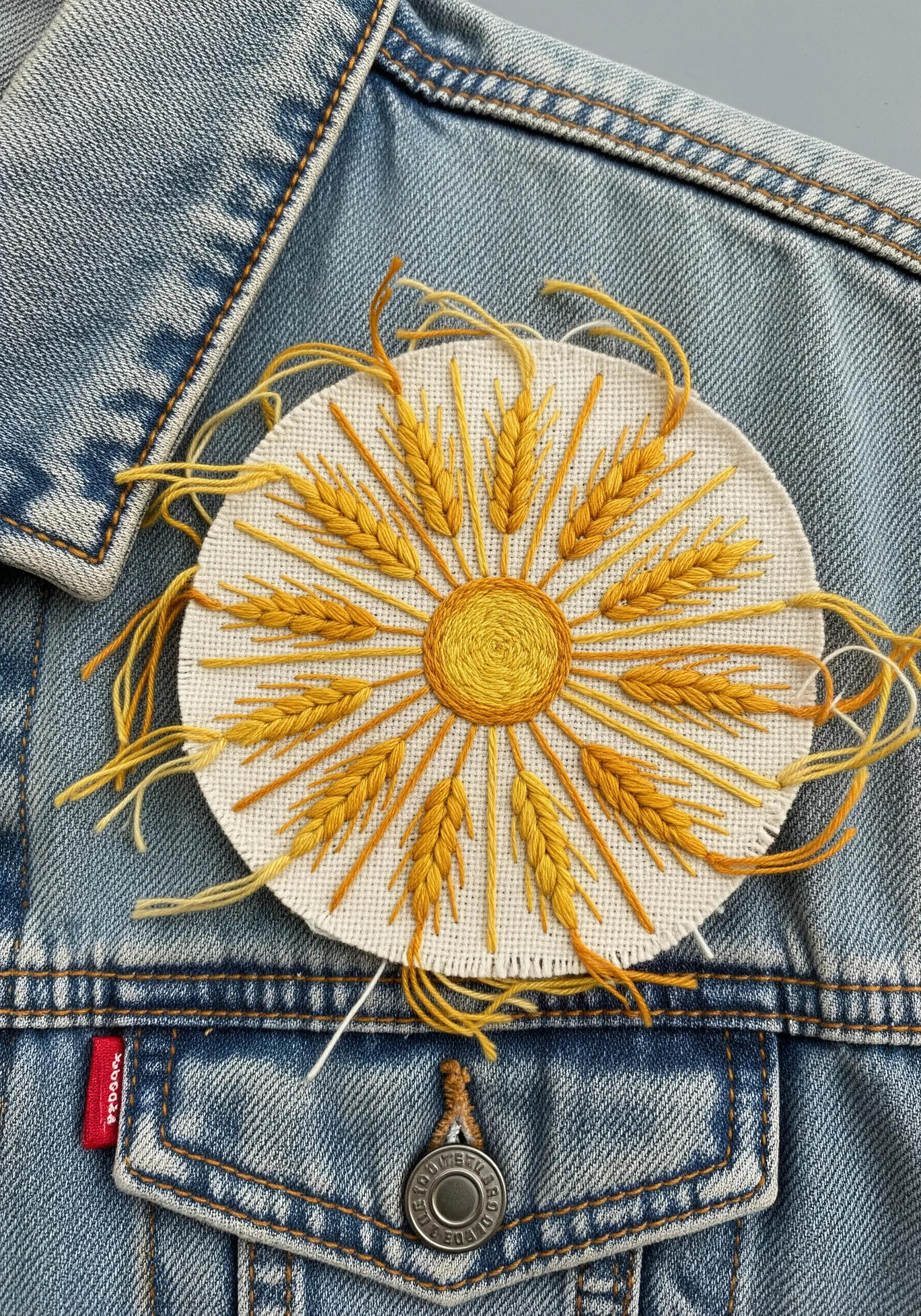
Embrace visible mending as a form of sustainable art by covering holes or stains on clothing with an embroidered patch.
Stitch your design onto a piece of organic canvas or linen, leaving the edges raw or finishing them with a simple stitch.
Use threads dyed with kitchen staples like wheat or turmeric for a golden sun motif that brings new life to an old denim jacket.
This is one of the most practical and stylish aesthetic embroidery ideas to turn your old clothes into art, making sustainability a fashion statement.