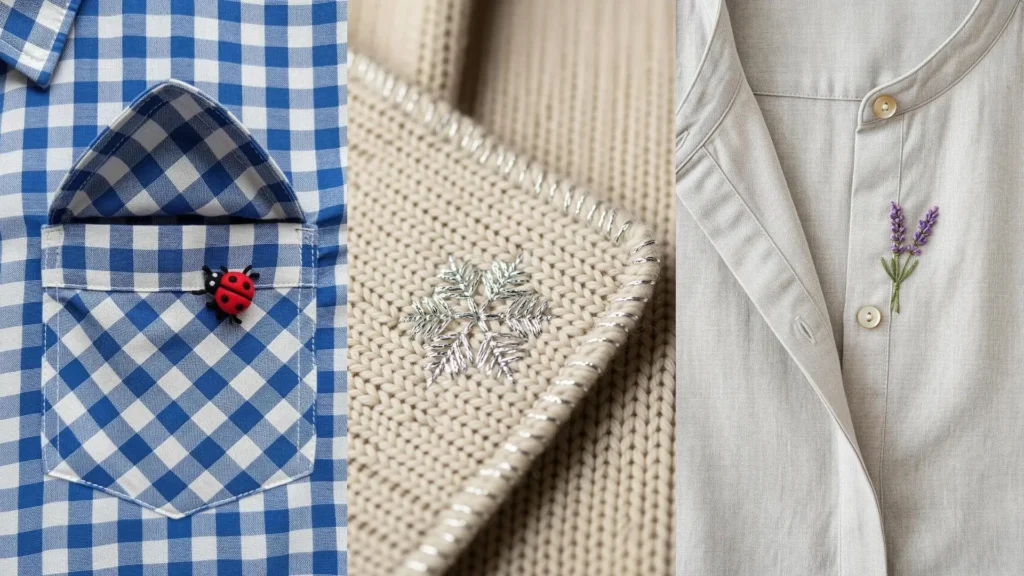
Sometimes the most meaningful way to refresh your wardrobe isn’t by adding something new, but by adding yourself to what you already own. Traditional ethnic embroidery offers a rich language of motifs, textures, and colors that you can use to tell your own story on fabric.
These designs are more than just patterns; they are a connection to generations of artistry. By exploring these techniques, you’re not just learning a new stitch, but a new way of seeing composition, color, and detail. You’re learning how to turn a simple sleeve into a focal point, or a plain neckline into a piece of jewelry.
Let these ideas inspire you to look at your clothes as a canvas. Whether you choose the bold geometry of cross-stitch or the delicate shading of thread painting, you have the power to infuse your garments with intention, personality, and a beauty that is truly timeless.
1. Master Bold Outlines on a Denim Canvas
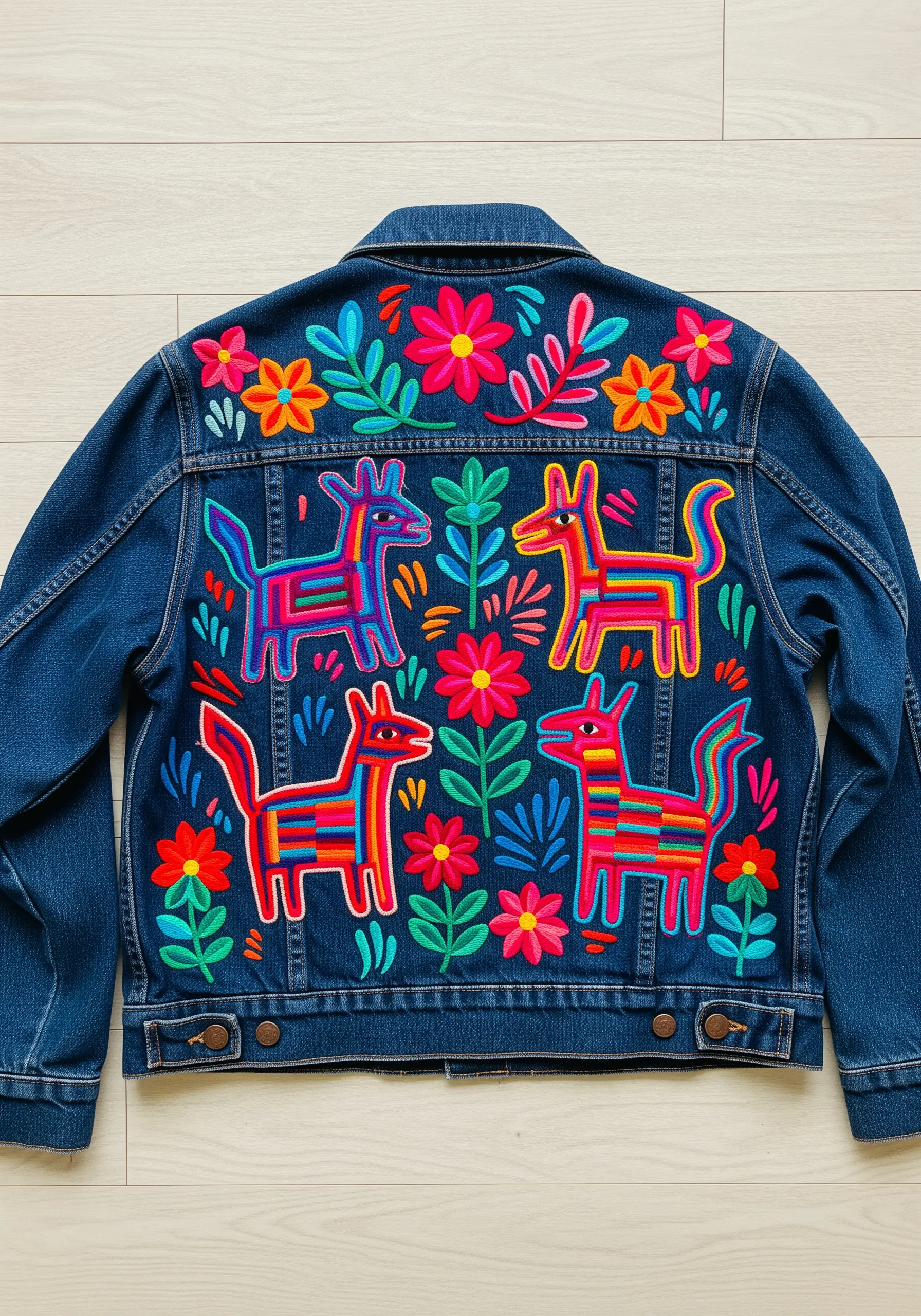
Transform a simple denim jacket with high-impact, graphic motifs inspired by Otomi textiles.
Use a non-divisible thread like #5 perle cotton for the outlines to create a bold, clean line that stands out against the heavy fabric.
Fill the shapes with a dense satin stitch, working in horizontal bars for a textured, woven appearance rather than following the curve of the shape.
Choose a palette of highly saturated, contrasting colors—like magenta, turquoise, and citrus yellow—to ensure your design pops and feels joyfully vibrant.
This technique elevates simple shapes into a powerful statement piece, making the entire back of the jacket your canvas for wearable art.
2. Achieve Perfect Symmetry in Folk Florals
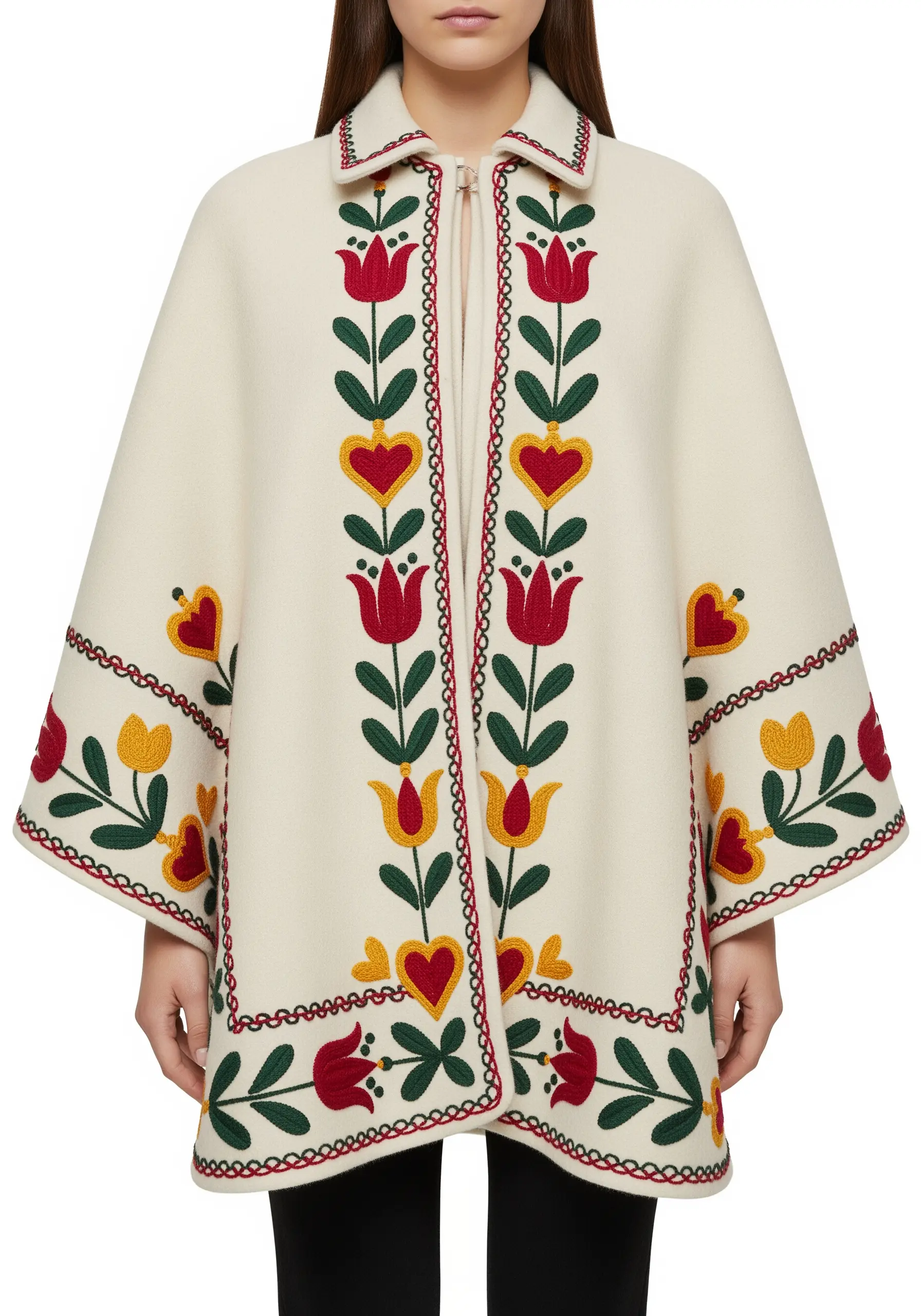
Create a balanced, elegant look on a cape or coat with perfectly mirrored folk-art motifs.
To guarantee symmetry, trace your design onto paper, fold it in half, and transfer it to both sides of the garment opening using a water-soluble stabilizer.
Use a classic satin stitch for the tulips and hearts, ensuring every stitch lies parallel for a smooth, almost machine-made finish.
Define the edges with a delicate looped border created using chain stitch—it adds a traditional, handcrafted frame to the entire piece.
A strictly limited color palette of red, yellow, and green on a neutral background creates a timeless, cohesive aesthetic that feels both authentic and modern.
3. Embrace Minimalist Japanese-Inspired Motifs
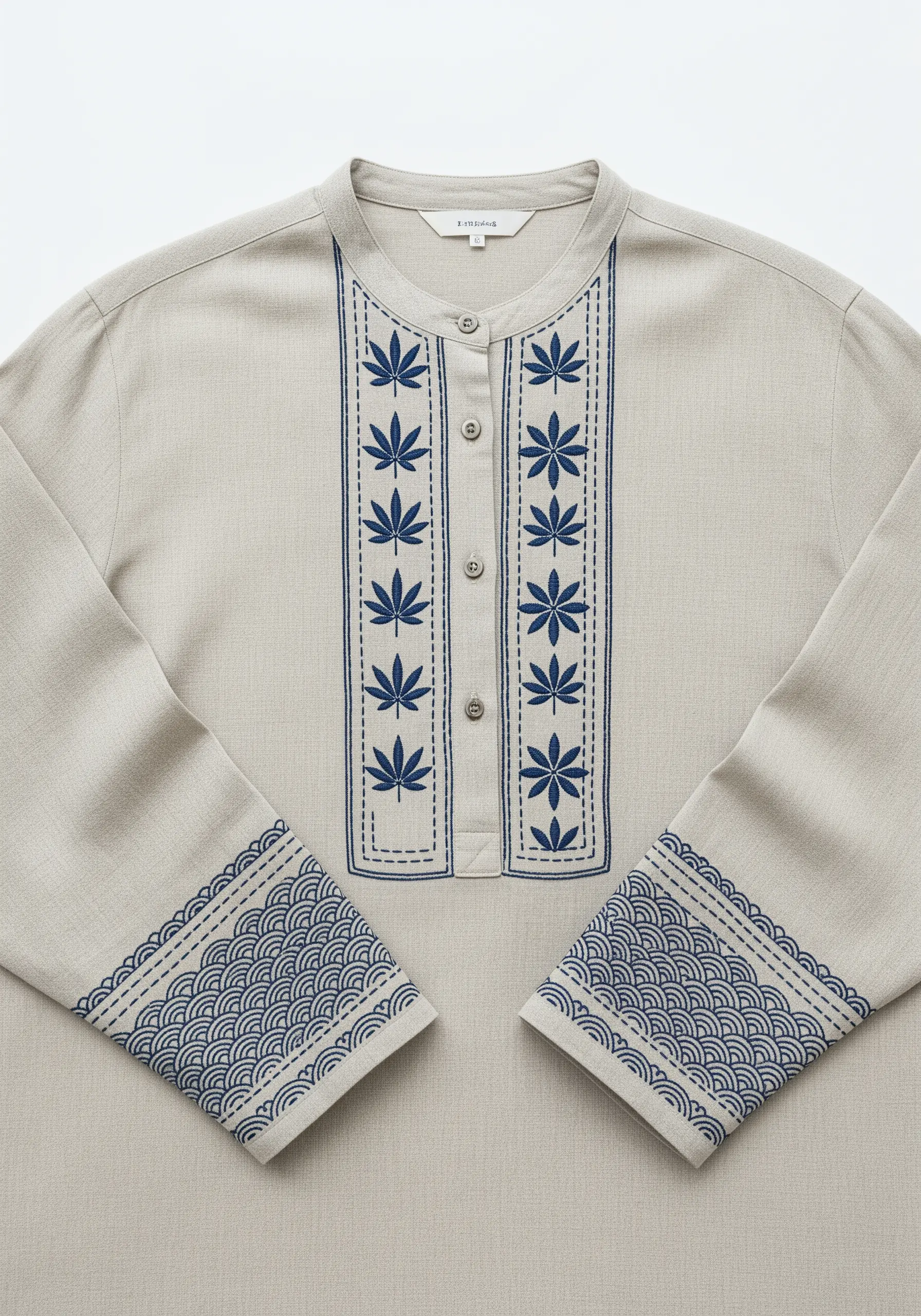
Add a touch of refined, modern geometry to a linen shirt with clean lines and controlled patterns.
For the Japanese *Seigaiha* wave pattern on the cuffs, use a simple backstitch with three strands of floss to maintain precision and clarity in the repeating arcs.
Stitch the botanical motifs on the placket with a vertical satin stitch; this elongates the design and creates a pleasing visual contrast with the curved cuffs.
A single, strong color like indigo or navy on a neutral fabric like beige linen creates a sophisticated, high-contrast look that feels intentional and uncluttered.
This is a perfect example of how minimal embroidery patterns can create maximum impact through careful placement and stitch choice.
4. Create Depth with High-Contrast Floral Gradients
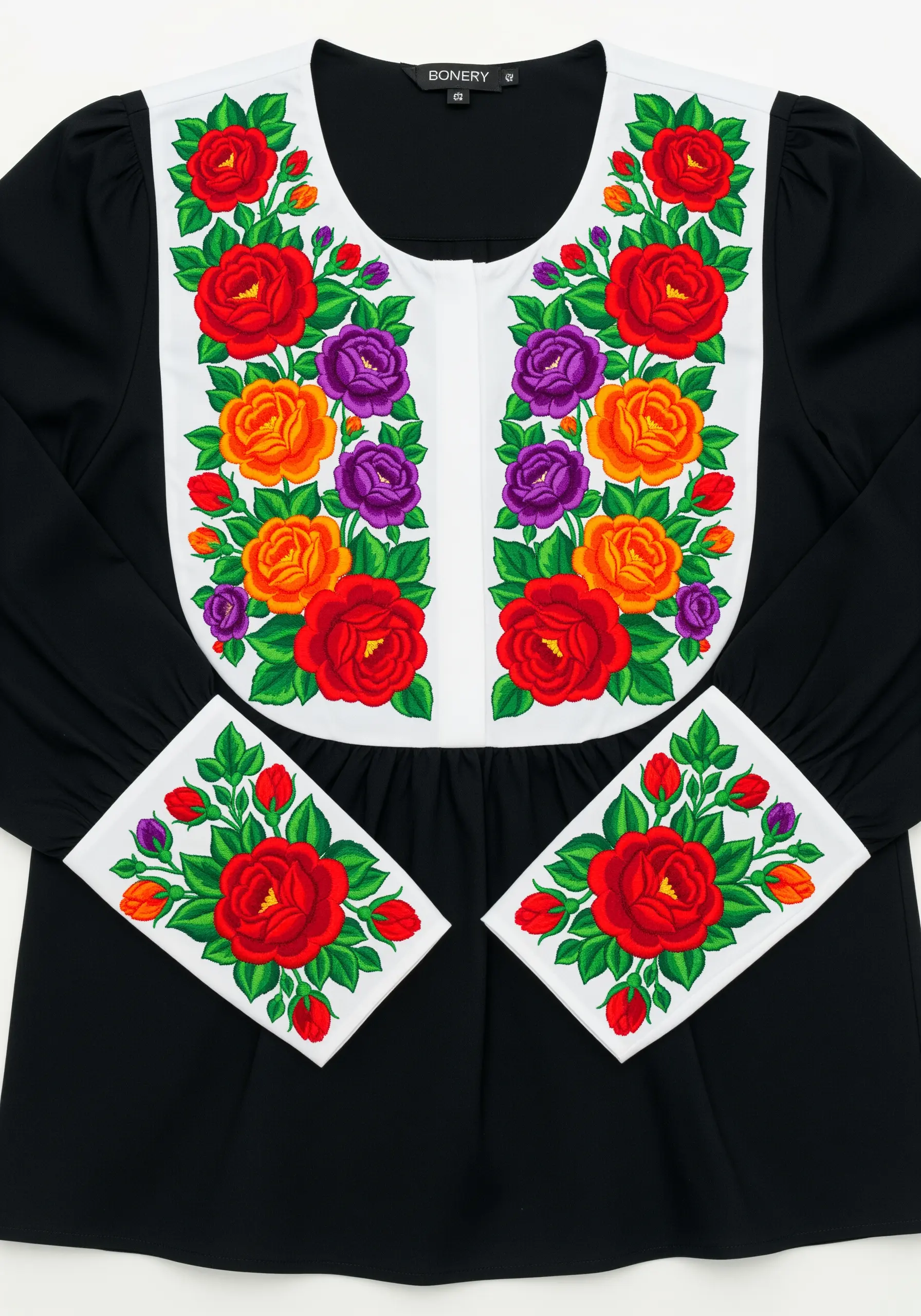
Make floral designs look three-dimensional by stitching them on a high-contrast background like black or white fabric.
Instead of flat satin stitch, use the long-and-short stitch to blend three or four shades of the same color within each petal.
Start with the darkest shade at the base, transition to a mid-tone, and finish with the lightest shade at the tip to mimic how light naturally hits a flower.
This technique gives your roses a realistic, painted quality and prevents the bold colors from looking flat or cartoonish.
The contrast between the vibrant, shaded florals and the stark background ensures your work commands attention.
5. Explore Geometric Precision with Cross-Stitch
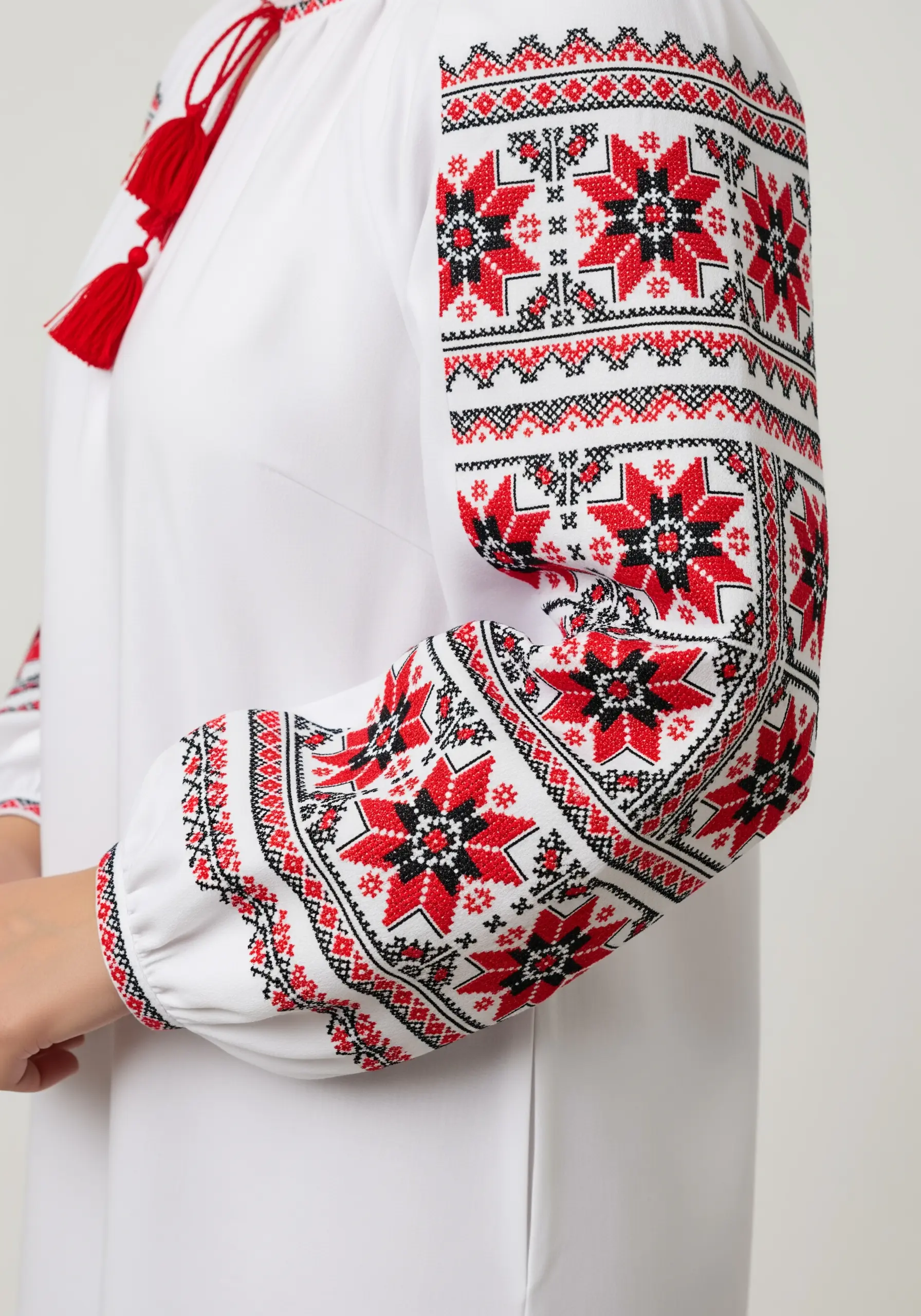
Embrace the meditative rhythm of cross-stitch to create powerful, geometric patterns inspired by Slavic Vyshyvanka shirts.
Always work on an even-weave fabric, such as Aida or linen, where you can count the threads to ensure every ‘X’ is perfectly uniform in size and tension.
Start stitching from the center of your design and work outwards to maintain symmetry and prevent the pattern from drifting.
The traditional two-color palette of red and black on white is visually striking because it allows the intricate geometric shapes to take center stage.
This method transforms simple stitches into a complex, interlocking design that feels both ancient and contemporary.
6. Combine Thread and Beads for Textural Richness
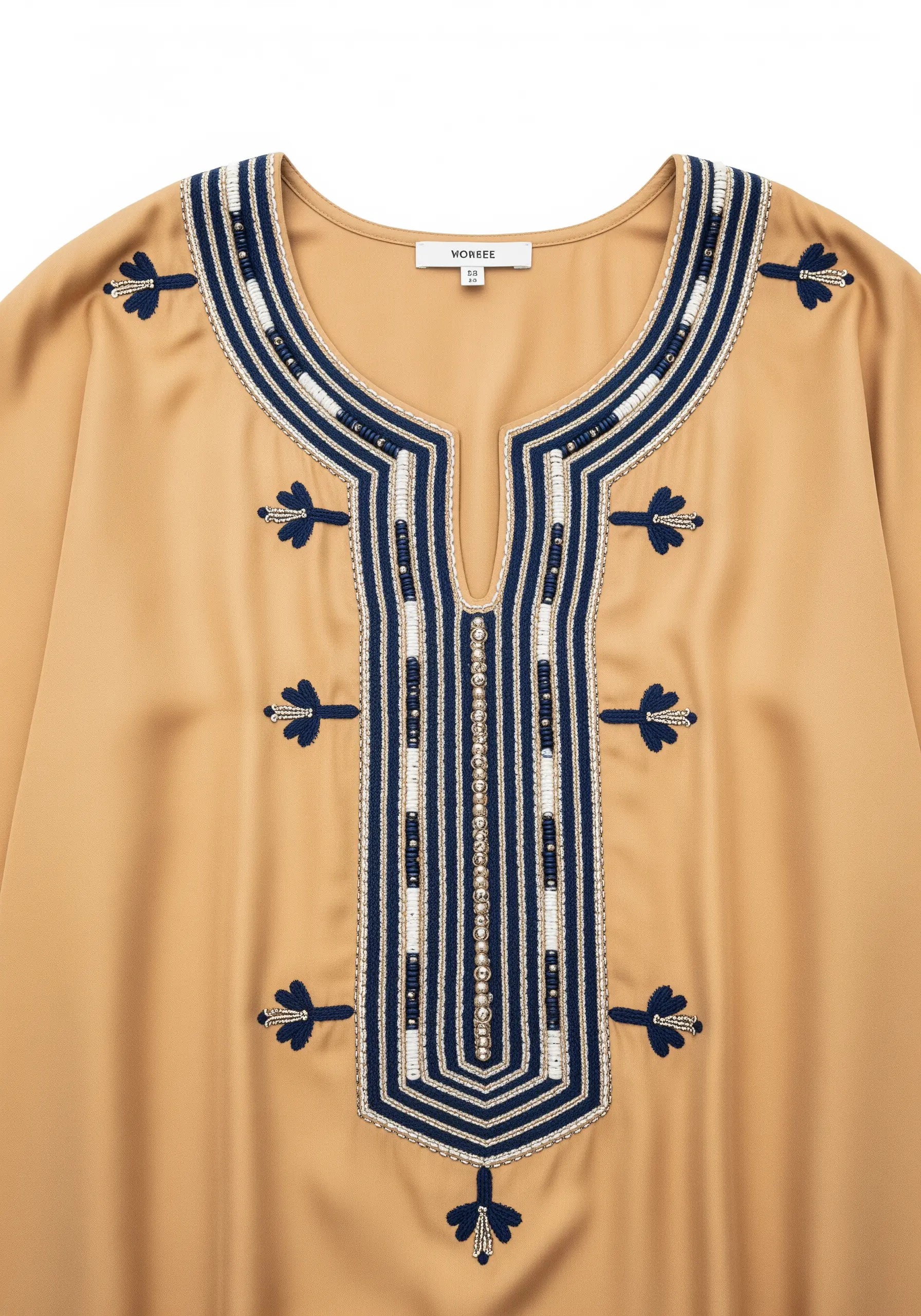
Elevate a simple neckline by integrating beads and metallic elements for a touch of quiet luxury.
Create the foundational lines using a whipped backstitch or stem stitch with navy blue floss to build a solid, raised base.
Introduce texture by sewing rows of silver or pearl seed beads alongside the stitched lines, using a single strand of matching thread for invisibility.
For the horizontal bars, couch a thicker metallic braid or cord onto the fabric by tacking it down with small, perpendicular stitches.
This mixed-media approach adds dimension and light-catching detail that simple threadwork alone cannot achieve.
7. Embellish with Opulent Metallic Couching
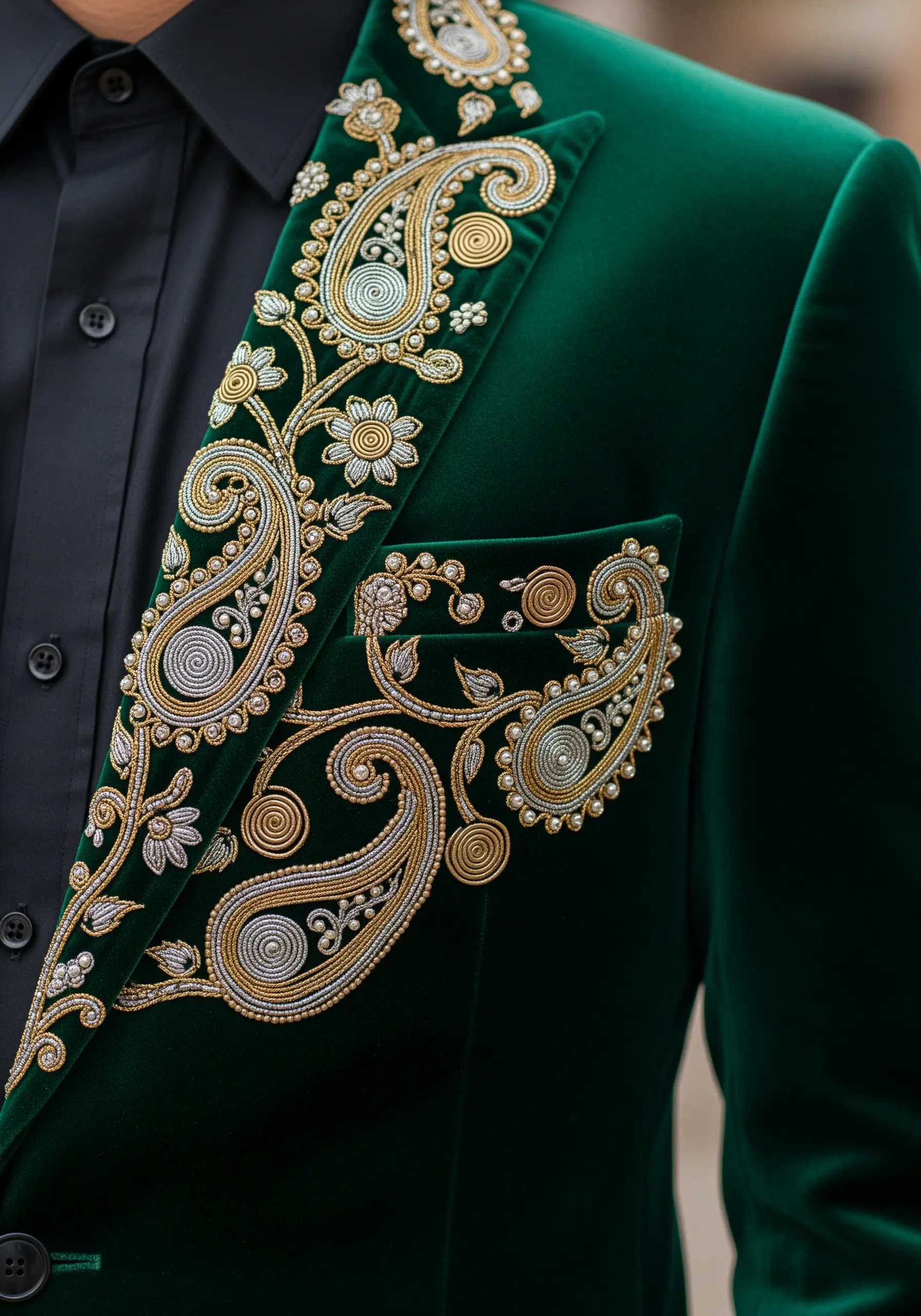
Add regal flair to a velvet jacket using Zardozi-inspired couching techniques with metallic threads.
Instead of pulling the thick metallic cord through the fabric, lay it on the surface and use a finer, matching thread to stitch over it at regular intervals, anchoring it in place.
Create the spiral motifs by coiling a metallic wire, placing it on the fabric, and stitching it down through its center.
The combination of gold and silver threads adds dynamic shine, while tiny pearl beads provide a soft, contrasting texture.
This technique is perfect for luxurious fabrics like velvet, as it adds heavy embellishment without puckering the delicate pile.
8. Paint with Thread for Delicate Nature Scenes
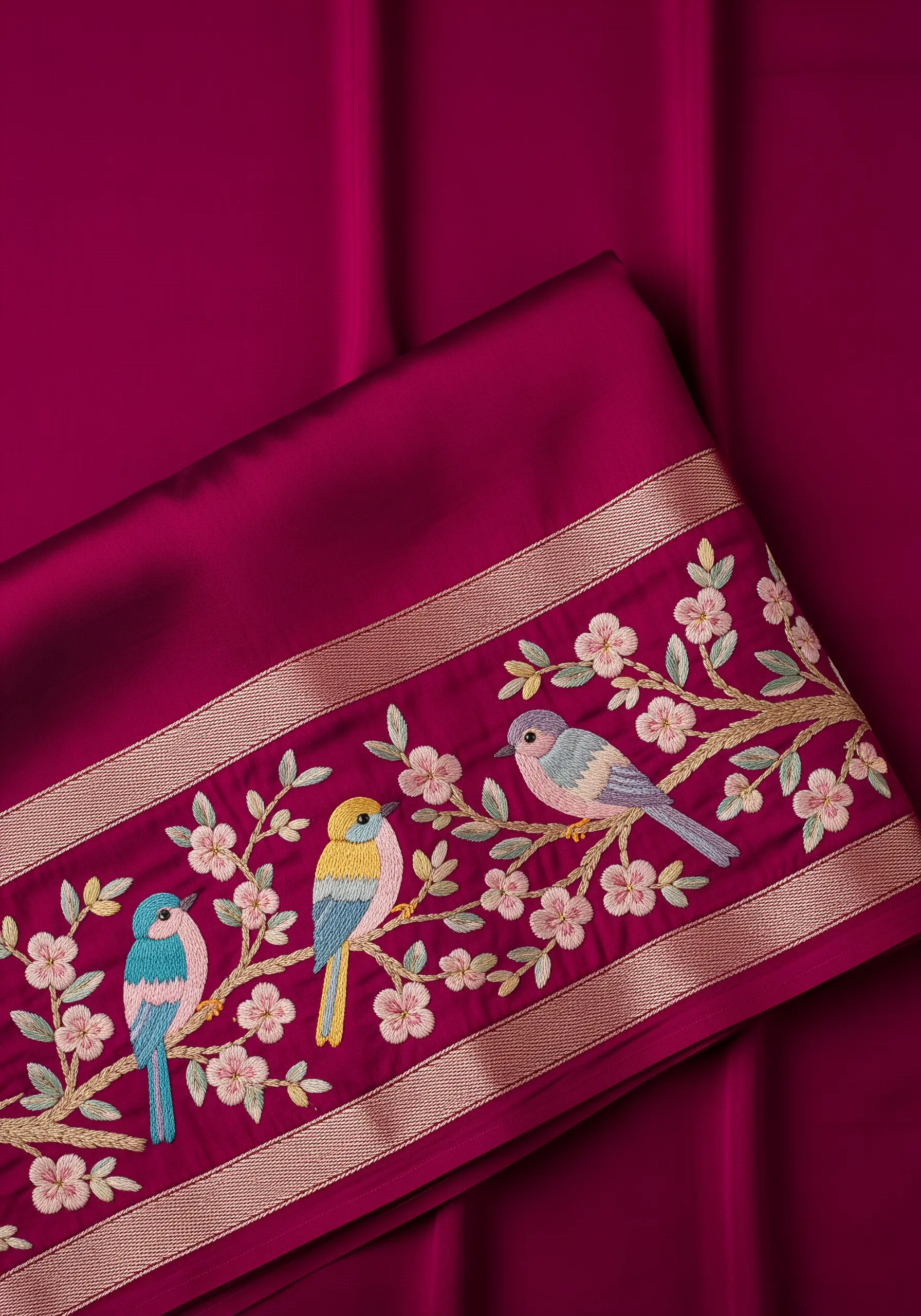
Bring a fabric border to life by using thread painting techniques to create soft, realistic birds and blossoms.
Use a single strand of six-strand floss and the long-and-short stitch to blend colors seamlessly on the birds’ feathers, creating subtle gradients that mimic nature.
Stitch the branches with a slightly thicker thread (two strands) in a stem stitch to give them structure and a bit of dimension.
Add tiny lazy daisy stitches for the flower petals and French knots for the centers to create a delicate, varied texture.
This detailed approach works beautifully for border designs on shawls or sarees, transforming a simple edge into a narrative scene.
9. Mimic Woven Textiles with Darning Stitch
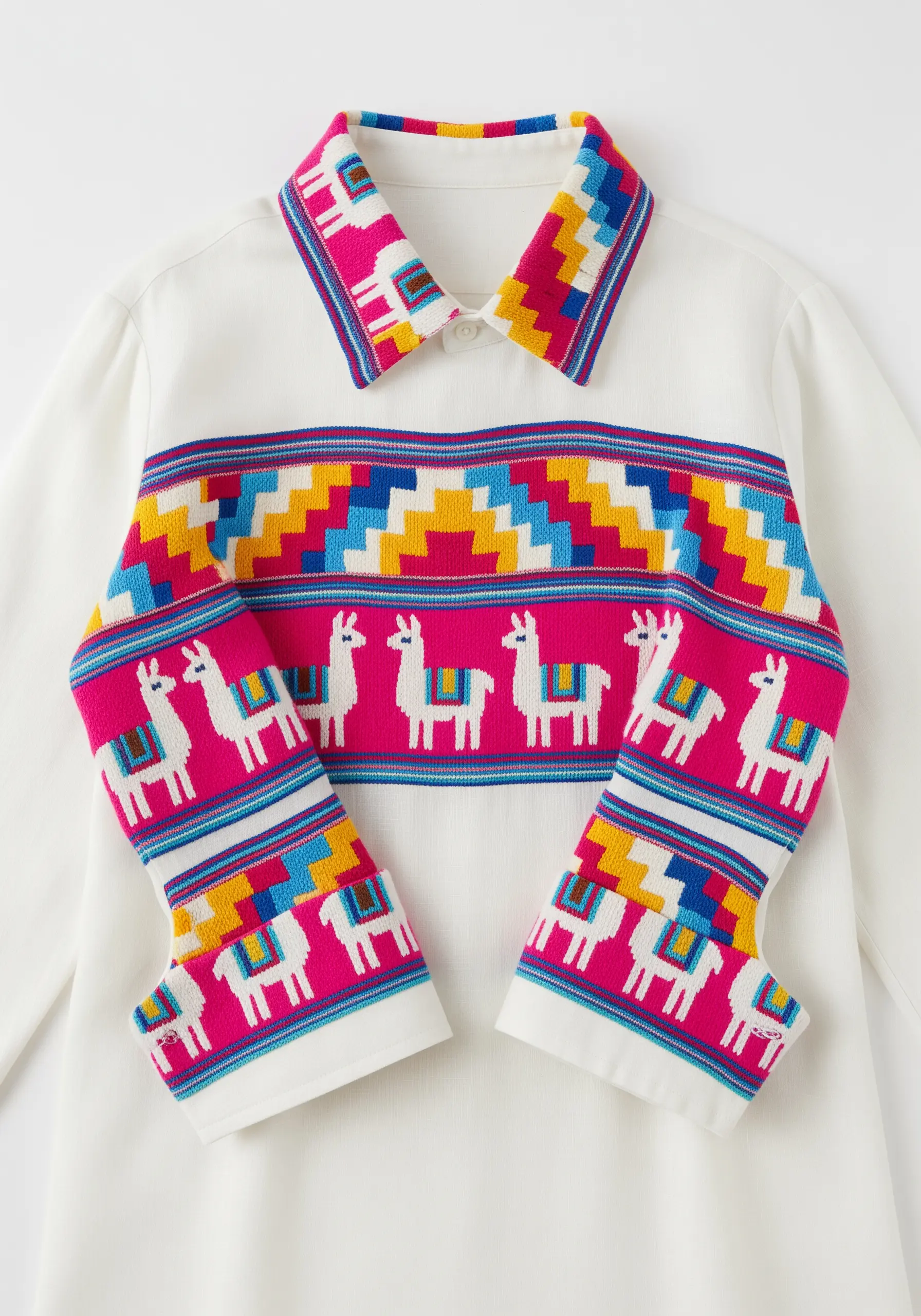
Recreate the look of traditional Peruvian textiles by filling blocks of color with stitches that resemble weaving.
Instead of a smooth satin stitch, use a darning stitch—long, parallel running stitches—to fill in the geometric shapes and llama motifs.
By packing these stitches tightly together, you create a dense, textured fill that has the appearance of a woven fabric rather than embroidery.
This technique is particularly effective for geometric and pictorial designs, giving them an authentic, folk-art feel.
The bright, playful color palette enhances the connection to Andean weaving traditions.
10. Frame a Bodice with Intricate Geometry
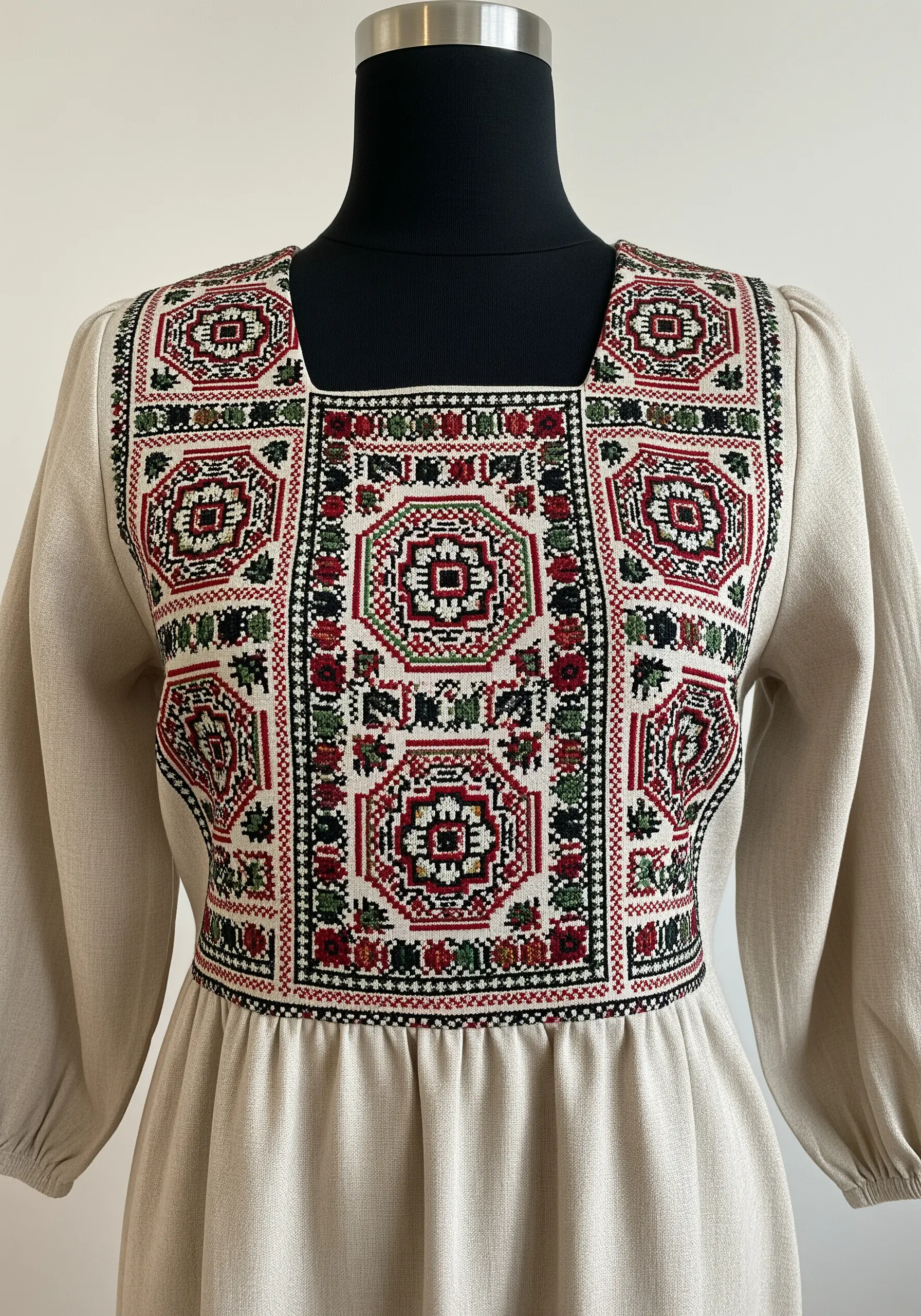
Use a structured, geometric pattern to create a bib-like bodice that becomes the focal point of a simple dress.
Plan your design on graph paper first to ensure the repeating motifs are perfectly symmetrical and spaced correctly.
Work the pattern in cross-stitch on an even-weave linen, allowing the fabric’s natural grid to guide your stitches for ultimate precision.
Use a traditional color palette of deep red, forest green, and black to give the piece a grounded, earthy feel that honors its folk origins.
Frame the entire panel with a simple blackwork border, like a running stitch or backstitch pattern, to give it a clean, finished edge.
11. Tell a Story on Satin with Japanese Motifs
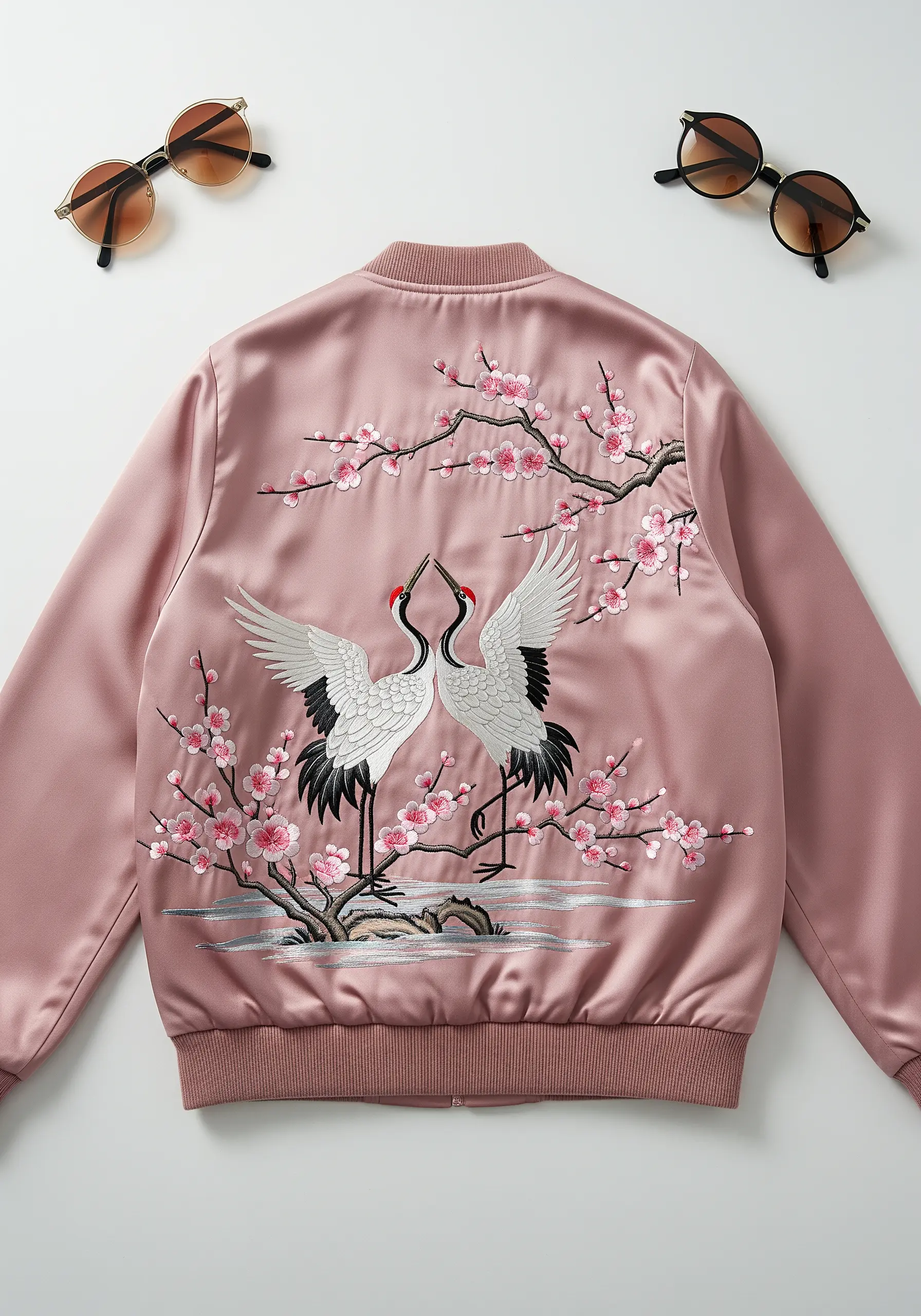
Turn the back of a bomber jacket into a piece of narrative art with iconic Japanese imagery.
The smooth, reflective surface of satin is the perfect canvas for elegant motifs like cranes and cherry blossoms, allowing the thread’s sheen to stand out.
Use thread painting (long-and-short stitch) for the cranes’ wings to create a sense of texture and movement.
For the water, use a variegated blue or silver thread in a simple split stitch to create the illusion of light reflecting on ripples.
This composition demonstrates how thoughtful placement can transform a garment into a wearable, symbolic landscape.
12. Incorporate Light-Catching Shisha Mirrors
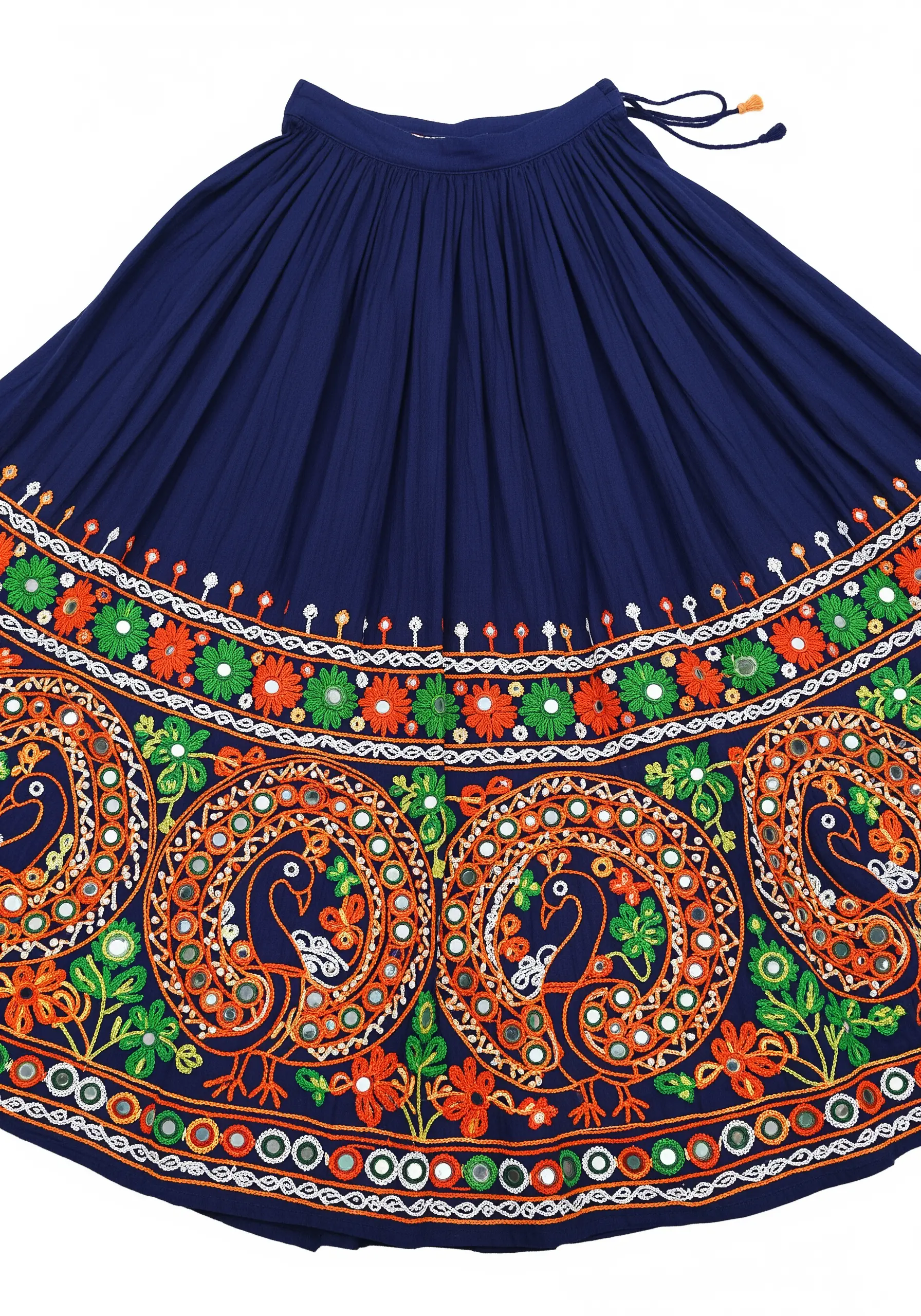
Add sparkle and dimension to a skirt with traditional Indian Shisha mirror work.
To secure a mirror, first create a grid of foundation threads over it, then use a buttonhole stitch to work around the edge, catching the foundation threads to lock it in place.
Surround the mirrors with vibrant chain stitches to create bold outlines for the peacock and floral motifs.
The combination of reflective mirrors and brightly colored thread creates a dynamic, joyful effect that moves and shimmers as you walk.
Use a variety of bright colors like orange, green, and red to enhance the festive, celebratory feel of this technique.
13. Stitch a Landscape on a Garment Yoke
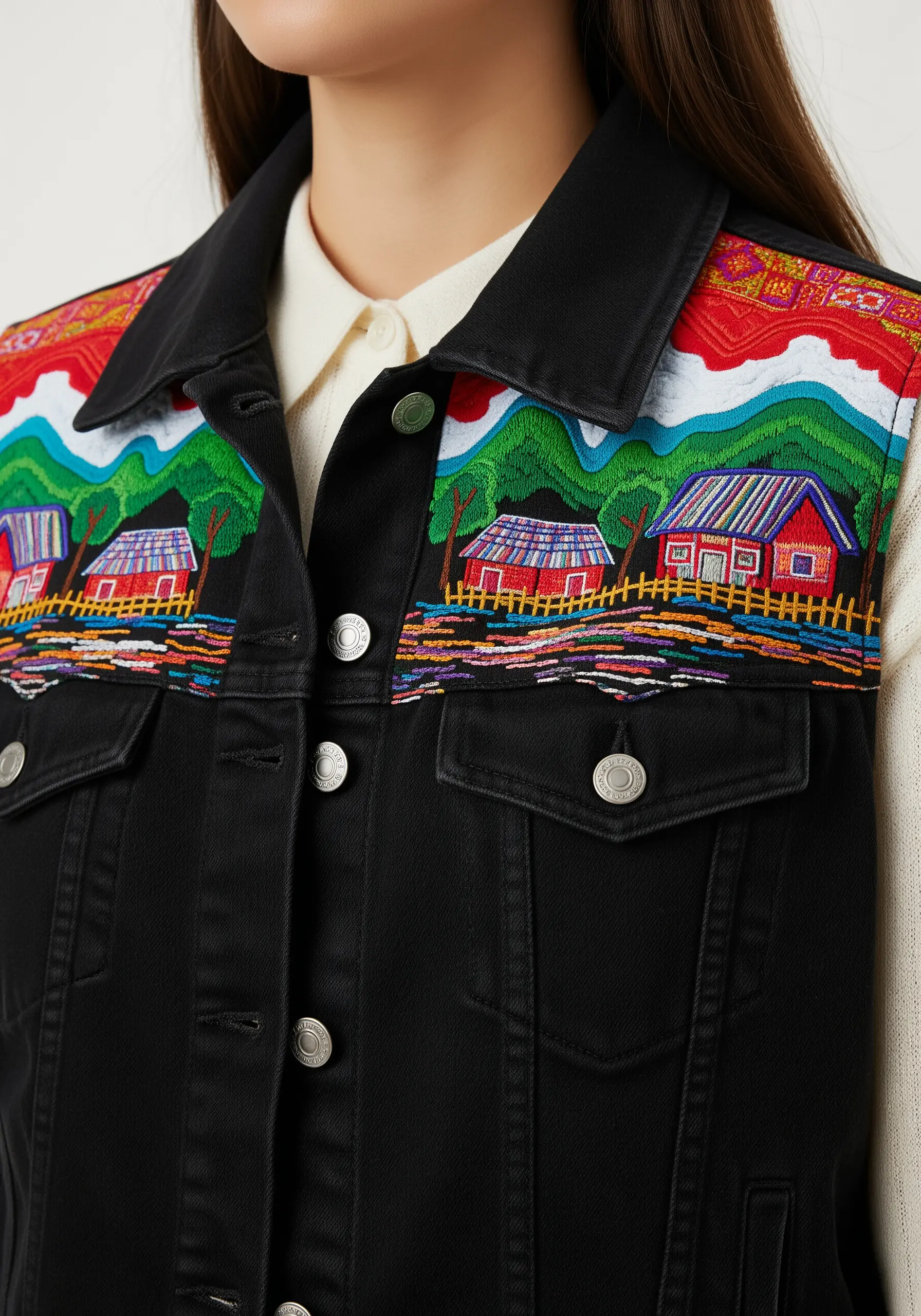
Use the yoke of a vest or jacket as a panoramic canvas for a stitched landscape scene.
Fill the larger areas, like hills and fields, with directional long-and-short stitch to create texture and the illusion of rolling terrain.
Define the houses and fences with a simple backstitch or stem stitch to keep the lines crisp and clear.
By limiting the design to the yoke, you create a focused, high-impact piece of art that doesn’t overwhelm the entire garment.
This approach allows you to experiment with abstract thread landscapes on a smaller, more manageable scale.
14. Create Sculptural Lines with Cord Couching
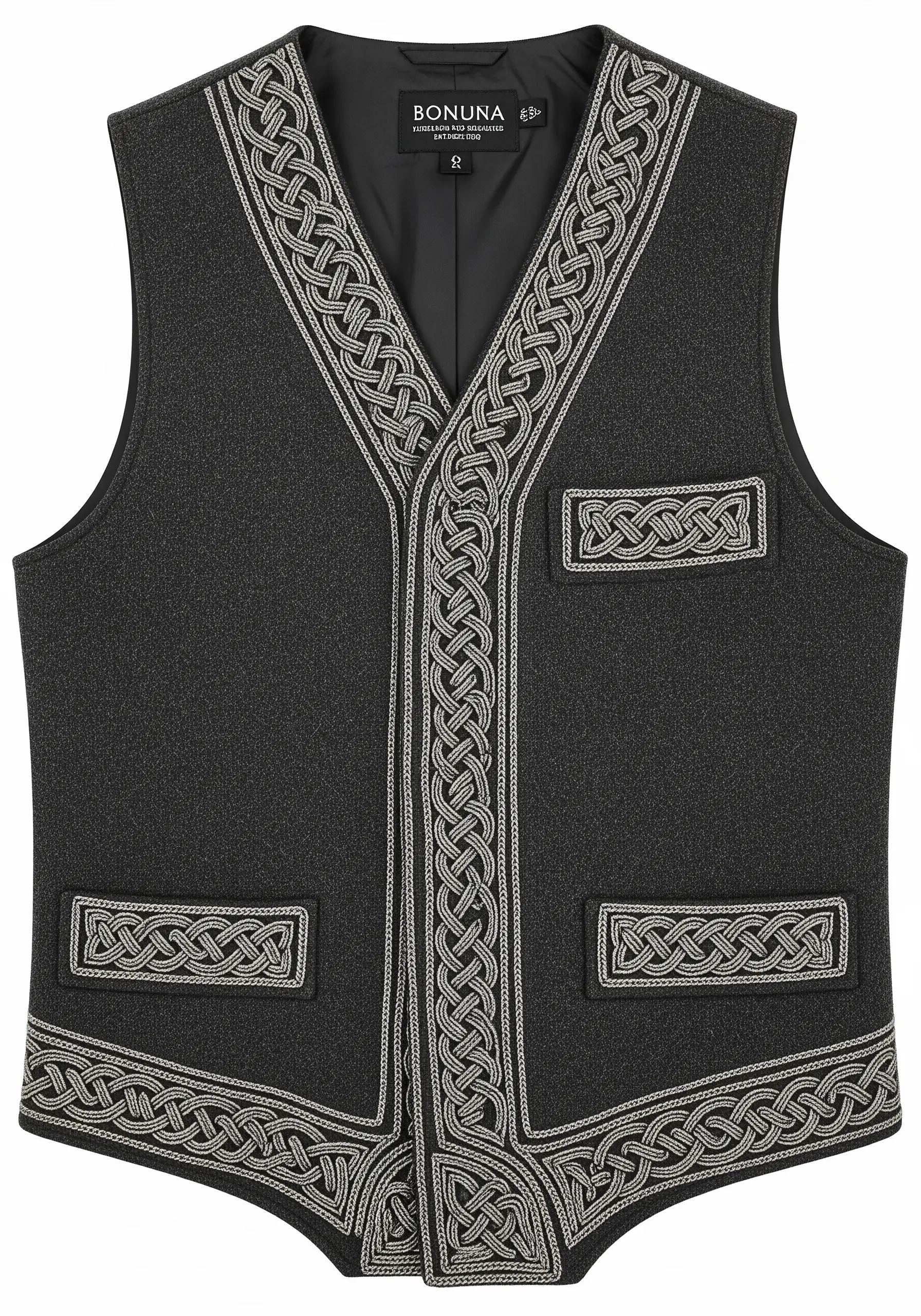
Achieve the intricate look of Celtic knotwork by stitching down decorative cords instead of creating the lines with thread.
Select a metallic or silky cord and lay it along your design lines on the fabric. Use a fine, matching sewing thread to make tiny, almost invisible tacking stitches to hold it in place.
This technique, known as couching, creates a highly dimensional, sculptural effect that stands out beautifully on textured fabrics like wool.
For perfect knots, carefully plan the path of the cord, ensuring it weaves over and under correctly before you begin stitching it down.
This method adds a touch of historic, armor-like elegance to modern vests and jackets.
15. Evoke Ceramic Art with Monochromatic Blues
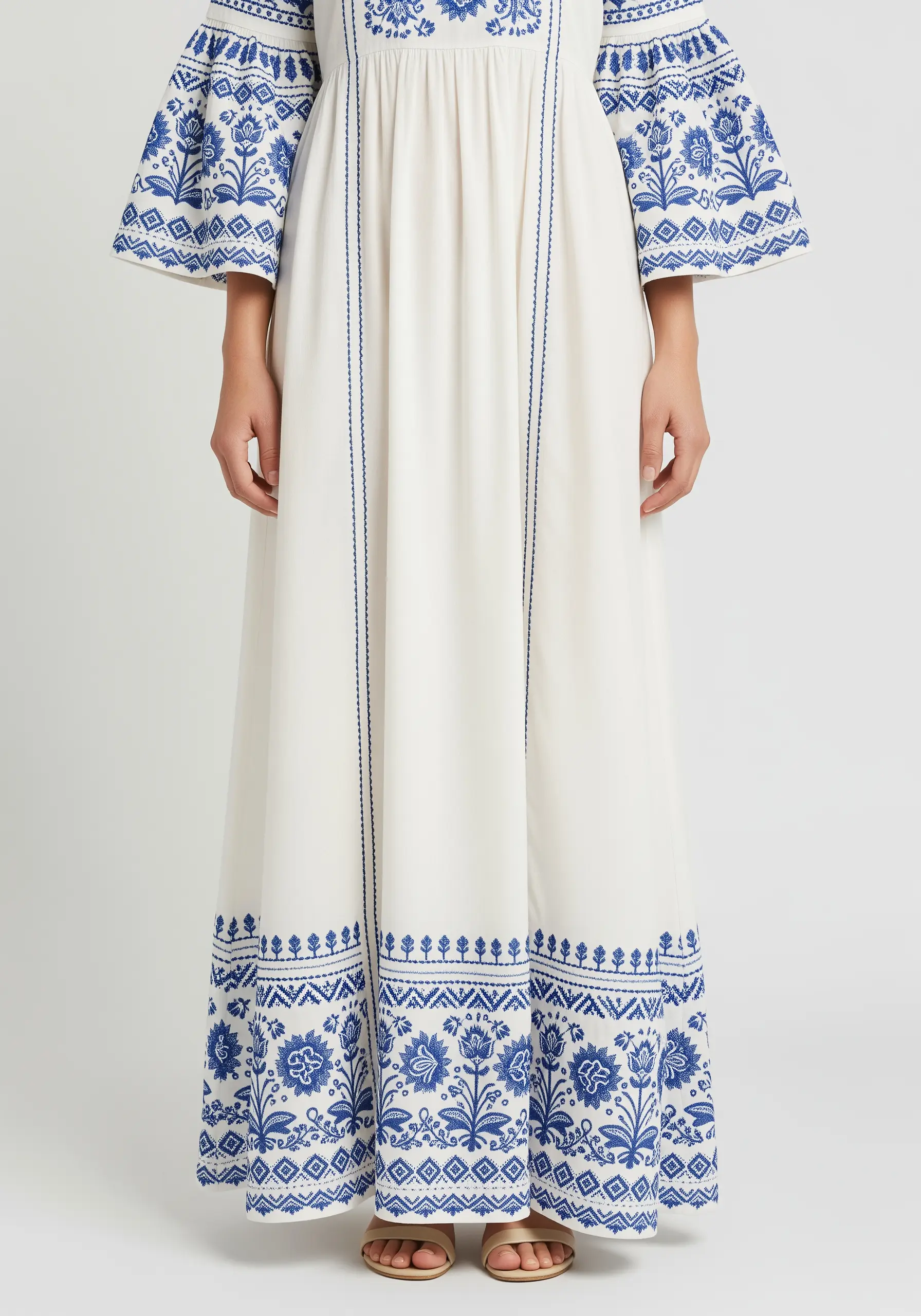
Channel the timeless elegance of Delftware or Azulejo tiles by using a single shade of blue on a crisp white fabric.
This monochromatic approach allows the intricate details of the floral and geometric patterns to shine without being overshadowed by color.
Use a consistent stem stitch for all outlines to create a uniform, illustrative quality, as if the design were drawn with ink.
Strategic placement on the hem and flared sleeves emphasizes the garment’s silhouette, making the embroidery a structural, as well as decorative, element.
The beauty of this style lies in its simplicity and the classic harmony between blue and white.
16. Mimic Traditional Knots with Raised Stitches
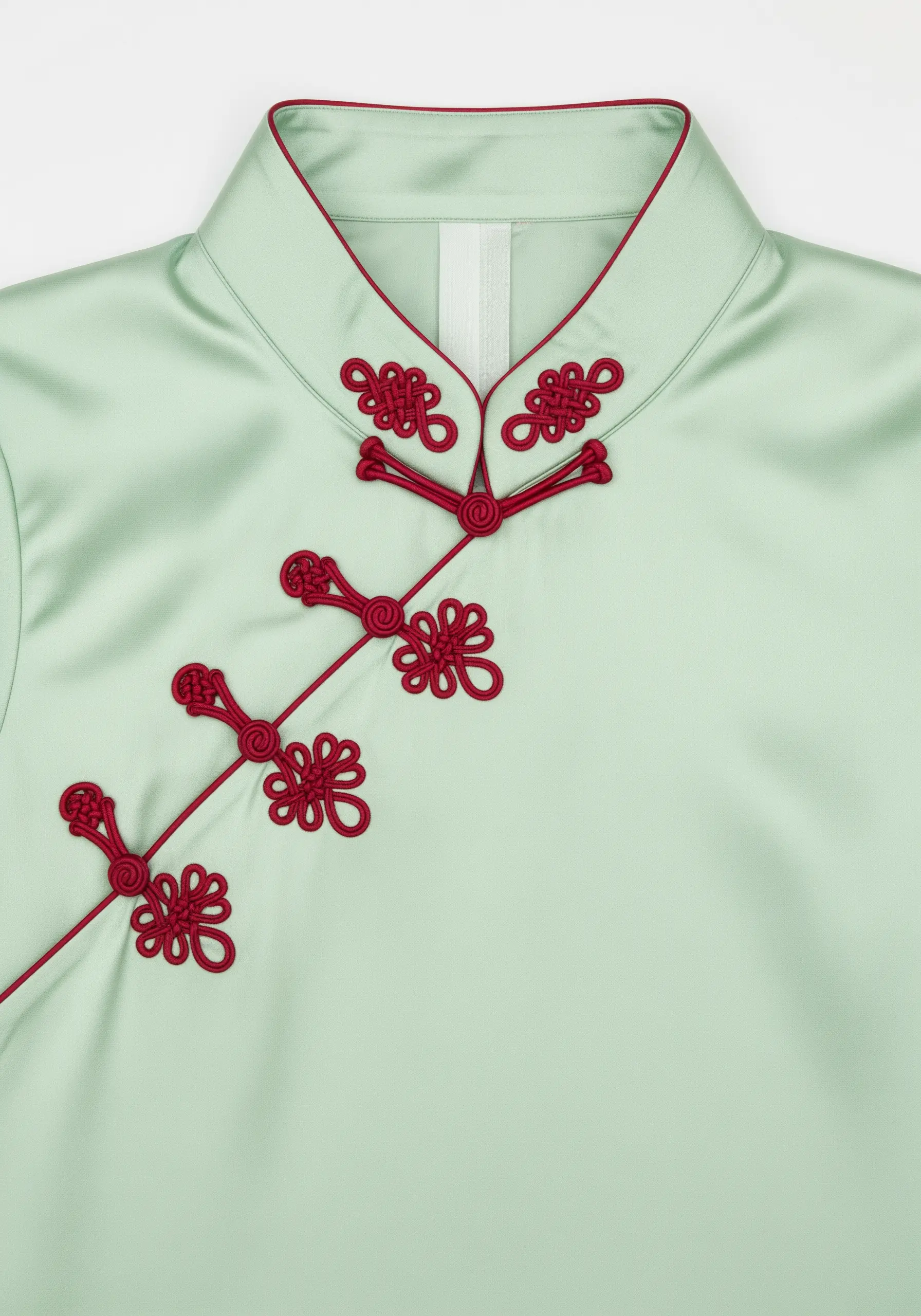
Recreate the sculptural look of traditional Pankou knots or frog closures using only needle and thread.
Use a thick thread, like #3 perle cotton, and work the design in a raised stem stitch or a padded satin stitch to build up dimension.
To create the padded effect, first lay down a foundation of straight stitches within the shape, then cover them with satin stitches worked in the opposite direction.
This technique gives you the intricate, three-dimensional appearance of a decorative closure while being purely embellishment.
Place these motifs diagonally along a shirt opening to draw the eye and add a unique structural detail.
17. Build Lush Bouquets on Wool Felt
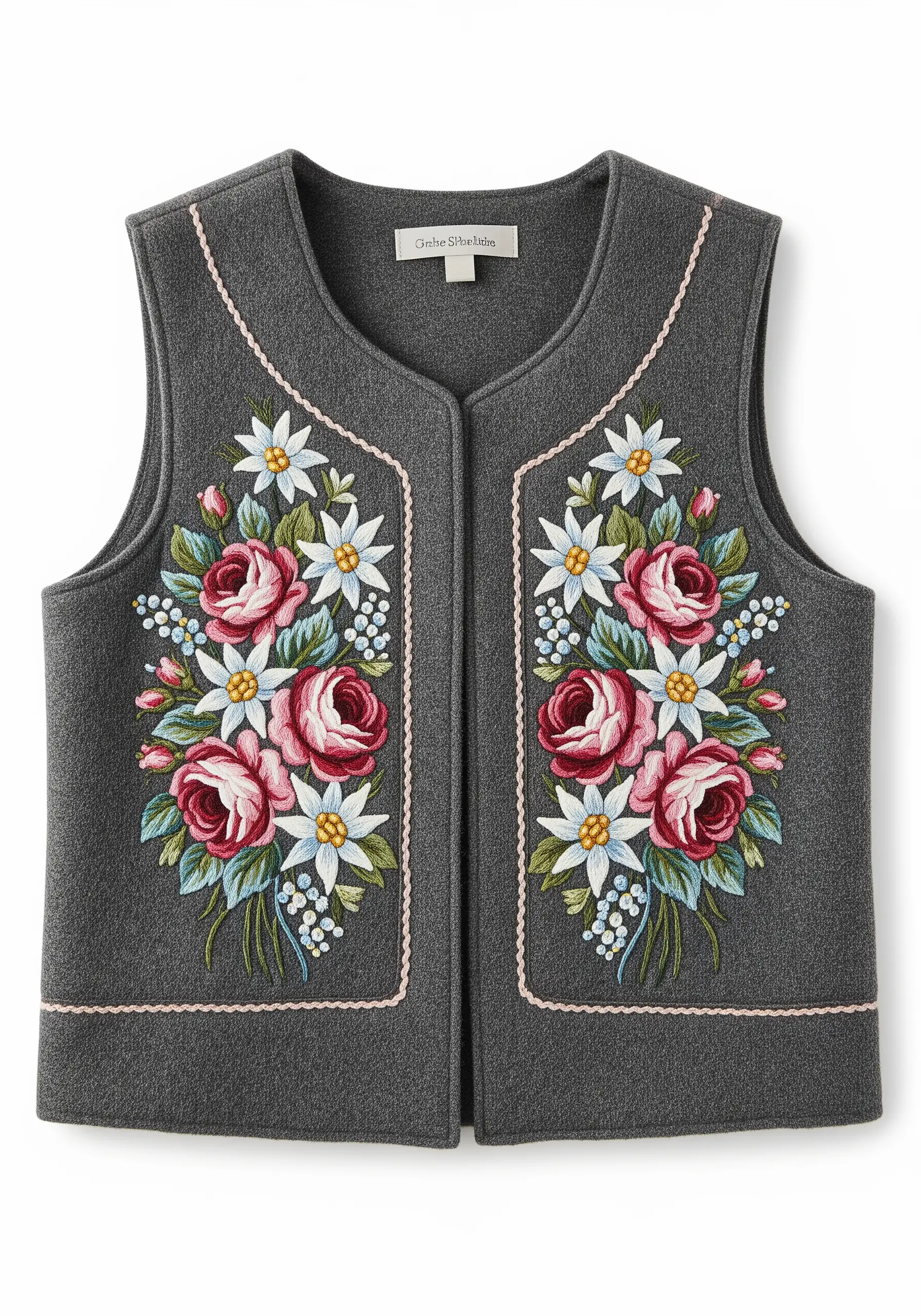
Stitch dense floral bouquets that feel rich and dimensional, perfect for embellishing a thick fabric like a wool vest.
Use long-and-short stitch to shade the rose petals, blending pinks and reds to create a soft, realistic gradient that gives them shape and volume.
Incorporate French knots and satin-stitched daisies to add a variety of textures, making the bouquet more visually interesting.
The matte finish of wool provides the perfect background, allowing the sheen of the embroidery floss to stand out.
Symmetrical placement of the bouquets creates a balanced, classic look that feels both charming and sophisticated.
18. Adorn Cuffs with Vibrant Mirror Work
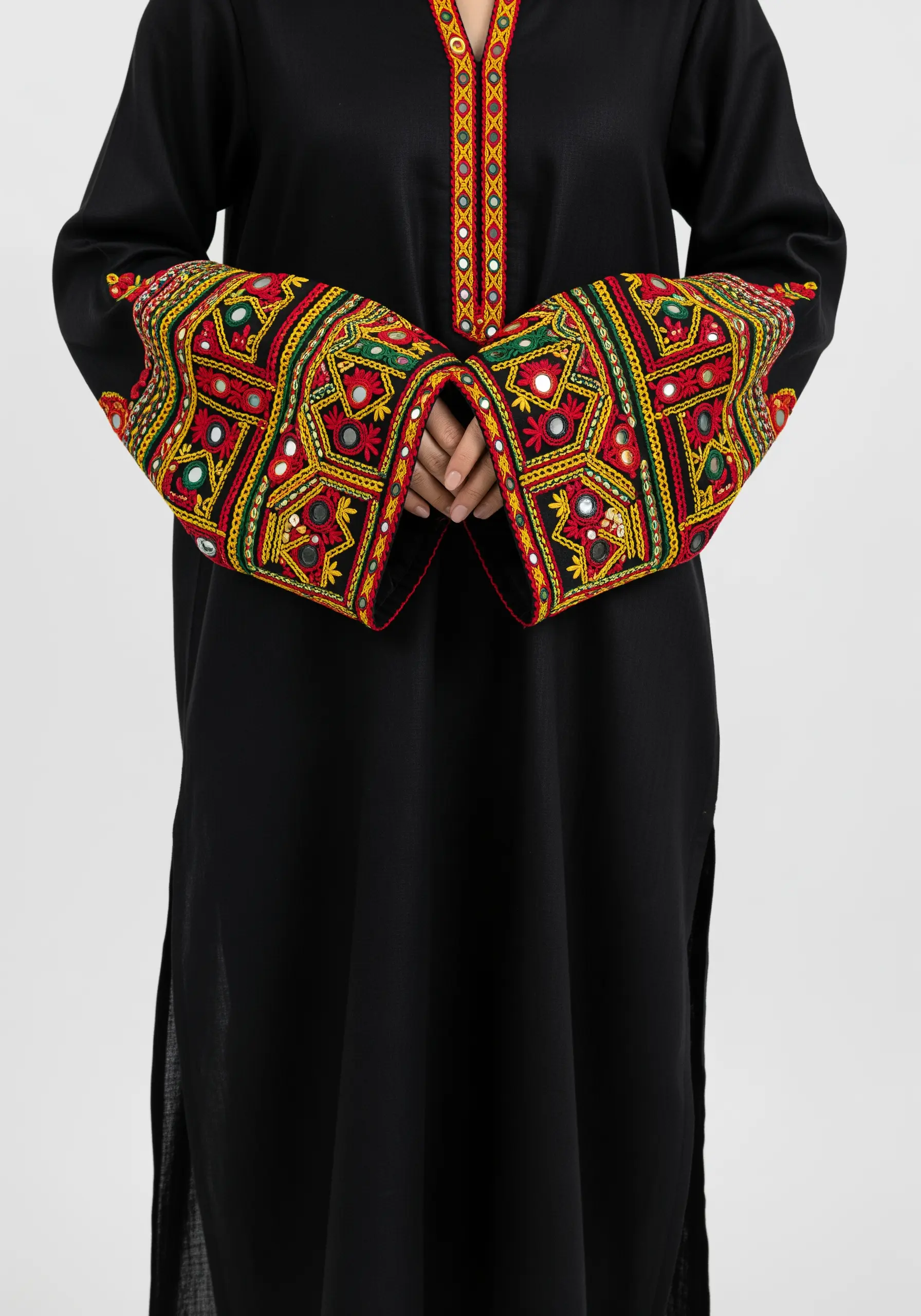
Transform simple cuffs into dazzling statement pieces with the dense, colorful embroidery of Indian Shisha work.
The key to this style is the dense stitching that surrounds the mirrors. Use a vibrant herringbone stitch or interlaced stitch in multiple colors to build up the intricate frames.
Contrast is essential: pair bright threads like yellow, red, and green against a black fabric to make the colors and mirrors truly pop.
The geometric patterns filling the space between the mirrors add to the richness and create a cohesive, mosaic-like effect.
This technique turns a functional part of a garment into its most expressive feature.
19. Achieve Elegance with Tone-on-Tone Lattice
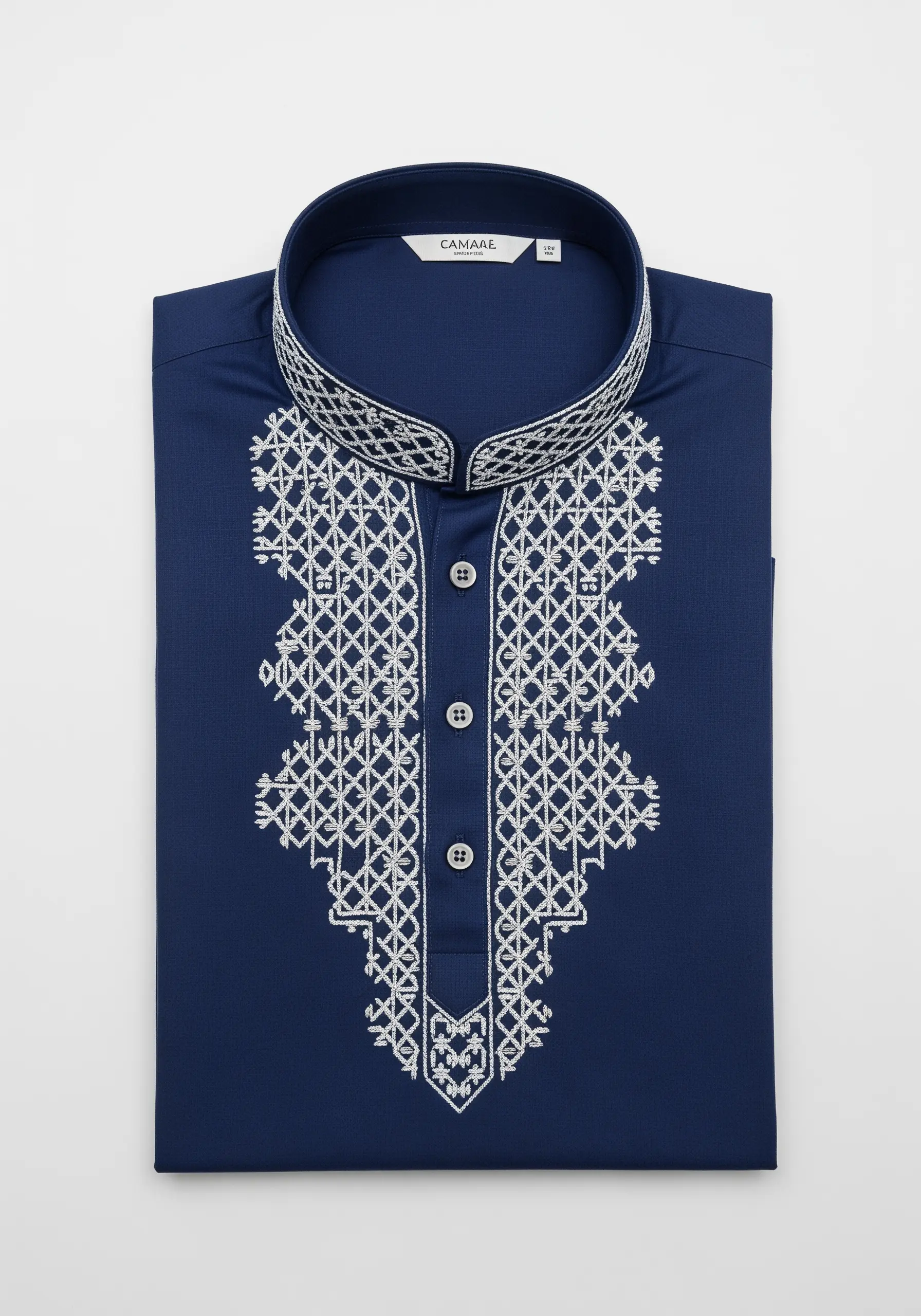
Create a sophisticated, textured look by stitching with a thread that is only a few shades lighter or darker than your fabric.
Replicate the delicate effect of Chikankari work by outlining a geometric lattice with a simple backstitch or a Holbein (double running) stitch.
Fill in select shapes within the lattice using tiny seed stitches or a light crosshatch pattern to add subtle texture without overwhelming the design.
Using a white or silver thread on a deep blue fabric provides a crisp, elegant contrast that feels both traditional and modern.
This understated approach is perfect for adding detail to menswear or any garment where you want texture to be the main focus.
20. Paint with Color in Concentric Satin Stitch
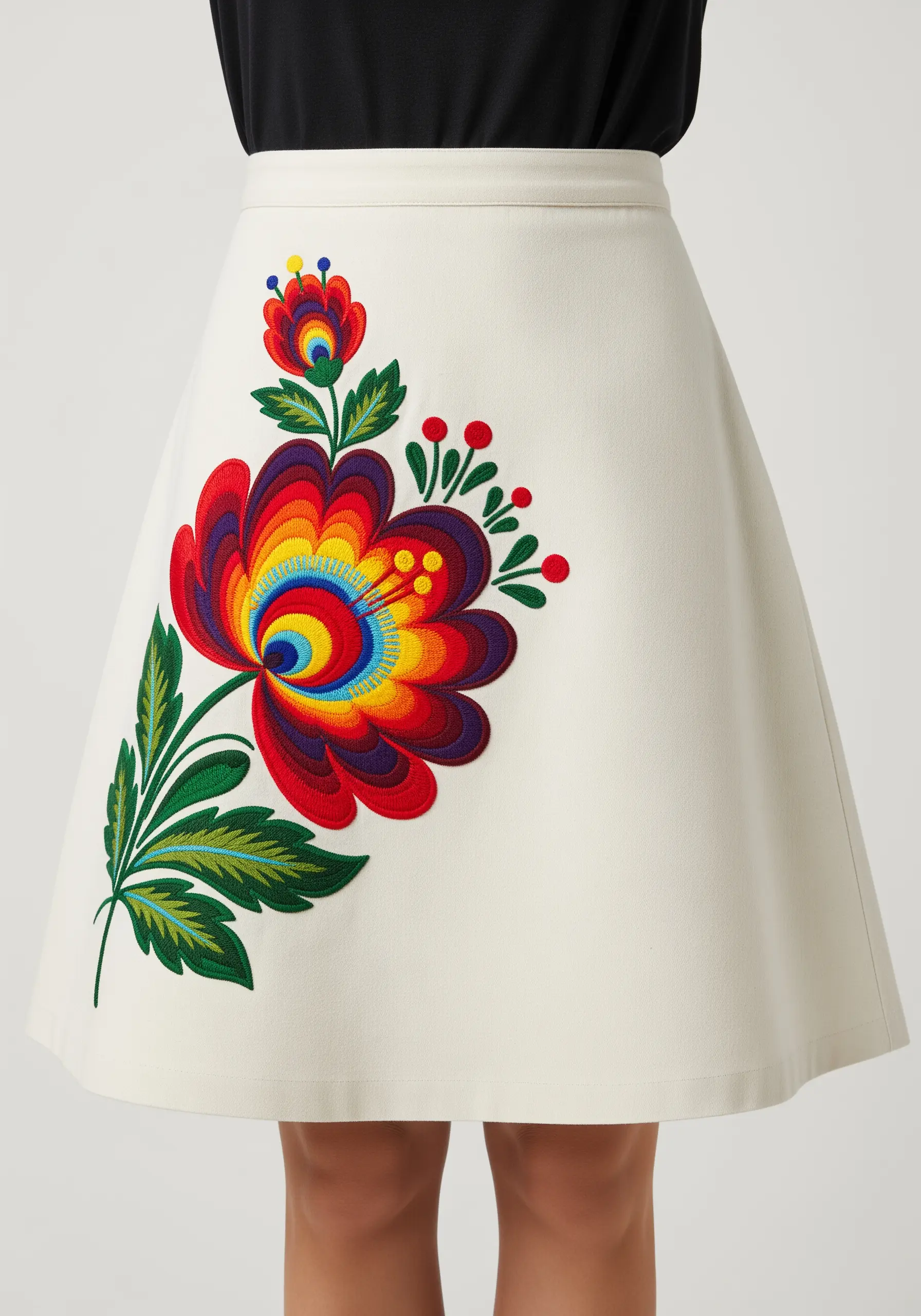
Capture the joyful spirit of Polish folk art by building a flower with concentric rings of vibrant, flat color.
Work the design in satin stitch, completing one full ring of color before moving to the next. This creates crisp, clean lines between each hue.
The magic of this style comes from the unexpected color combinations—don’t be afraid to place bold blues next to bright yellows and reds.
Keep your satin stitches perfectly parallel and tightly packed to achieve a smooth, almost painted surface.
Placing a single, large motif asymmetrically on a skirt creates a modern, artistic statement.
21. Add Flowing Detail with Chain Stitch Vines
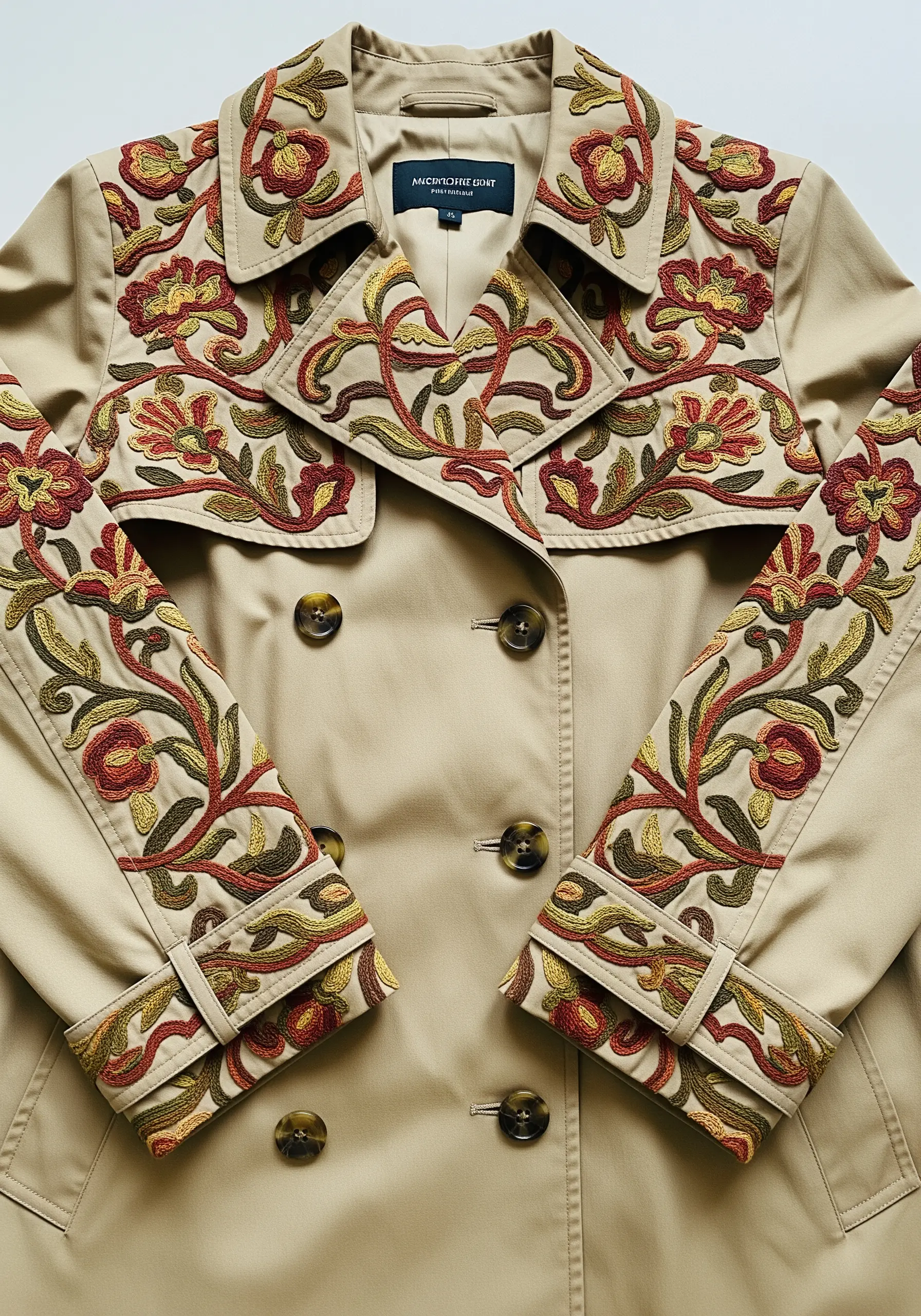
Embellish a trench coat with elegant, flowing vines using a stitch that is both beautiful and efficient: the chain stitch.
Chain stitch creates a textured, rope-like line that works up more quickly than stem or backstitch, making it ideal for covering larger areas like collars and cuffs.
Use a variegated thread in autumnal tones of gold, rust, and green to achieve subtle color shifts throughout the design without changing your thread.
The continuous, scrolling pattern draws the eye around the garment, beautifully framing the lapels and sleeves.
This technique adds a layer of soft, organic artistry to a structured, classic coat.
22. Embellish Accessories with Tiny Florals
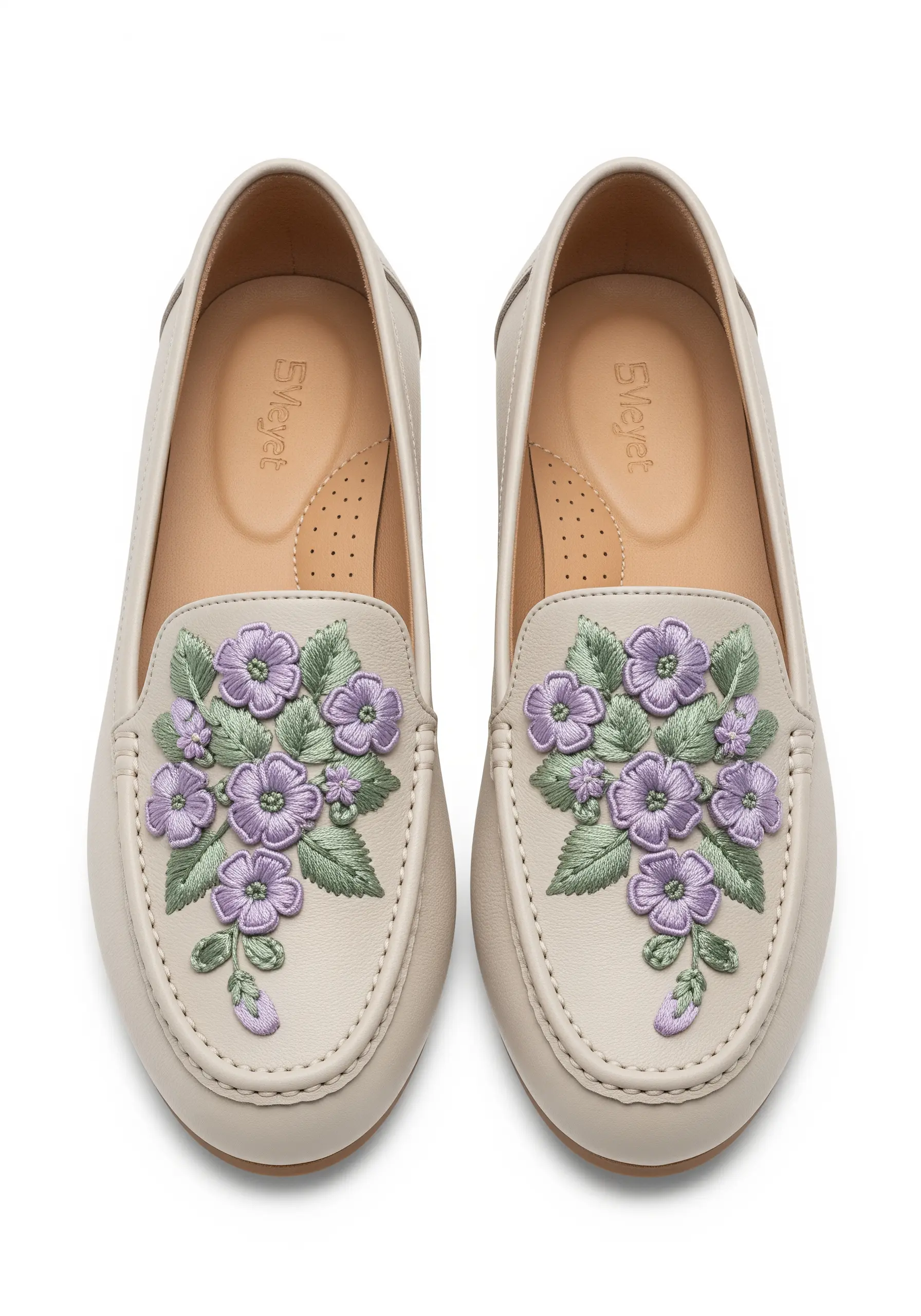
Add a delicate, personal touch to leather goods like loafers or bags with a small, carefully placed floral motif.
Before stitching on leather, use a sharp, strong needle (a leather needle is ideal) and a thimble to protect your fingers.
Create the bouquet with simple, classic stitches: satin stitch for the flower petals, stem stitch for the leaves and stems, and a few French knots for texture.
A soft, muted color palette like lavender and sage green looks incredibly sophisticated against a neutral cream or tan leather.
This small detail is an excellent way to practice precision and elevate an everyday accessory into a bespoke piece.