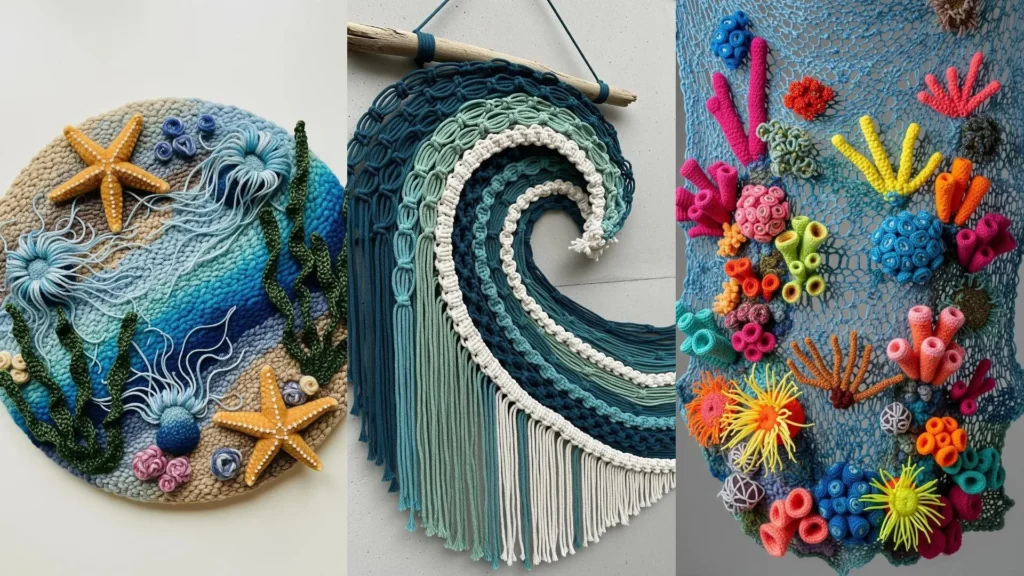
You already know the joy of working with fiber—the calm rhythm of a needle, the satisfaction of a finished knot. But perhaps you’re ready to move beyond the hoop and create pieces that don’t just decorate a wall, but define it.
This is where mixed-fiber art comes in. It’s about texture, dimension, and the confident interplay of materials. It’s the difference between a simple stitched motif and a sculptural statement piece that commands attention. It’s about seeing yarn, rope, fabric, and even felt not just as supplies, but as a language.
Here, you won’t find complicated instructions. Instead, you’ll find invitations—to blend techniques, to embrace imperfection, and to build art that is as tactile as it is beautiful. Let’s transform the way you think about fiber, one eye-catching piece at a time.
1. The Art of a Layered Fiber Foundation

Create a stable header for your piece with a simple, structured macrame top section.
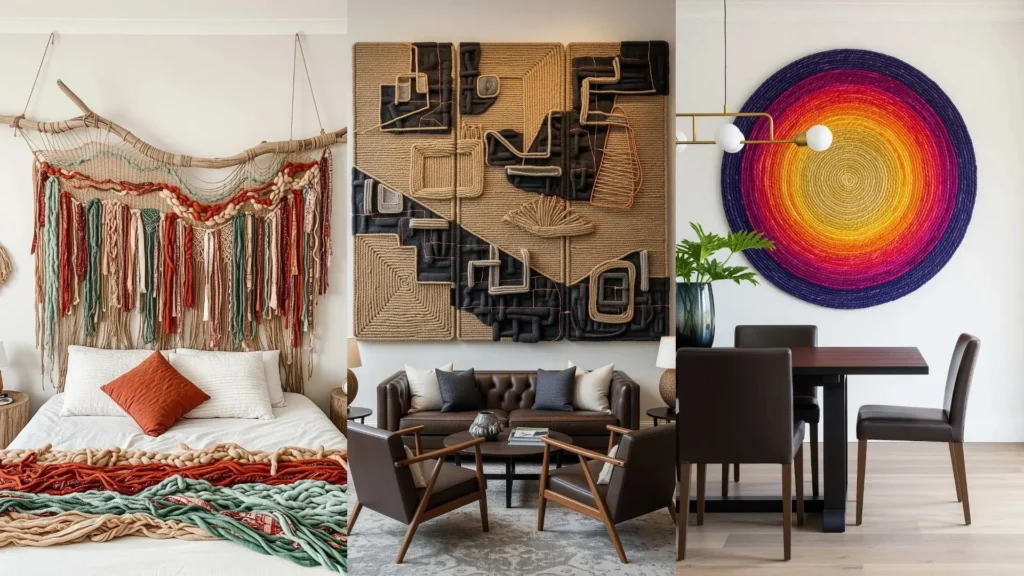
Instead of relying only on yarn, introduce thick, unspun wool roving and weave it through the warp threads to create soft, sculptural waves.
For a dynamic fringe, use torn strips of patterned fabric alongside your yarn, choosing a color palette that complements the woven section.
This strategic mix of textures—smooth macrame knots, plush roving, and printed fabric—is what builds immediate visual depth and a rich, bohemian feel.
2. Geometric Tension with Minimalist Weaving

Begin by wrapping three artist canvases or framed panels with a textured, dark fabric like a heavy linen weave or dyed burlap.
Use a fine metallic cord or gold thread to create sharp, intersecting lines, pulling it taut and securing it on the back of each panel.
Introduce a single, horizontal band of soft, chunky woven yarn to disrupt the rigid geometry and add a focal point of organic texture.
This powerful contrast between hard lines and soft fiber is what gives the triptych its sophisticated, modern edge, turning simple materials into striking abstract monochrome thread designs.
3. Weaving Waves with Dimensional Stitches

To capture the movement of water, you need to think in layers of texture, not just gradients of color.
Use a large embroidery hoop as your loom and create the background with a flat tabby weave, blending shades of blue and green yarn.
For the cresting waves, switch to chunkier wool roving and use soumak knots or densely packed French knots to build raised, bubbly textures that stand out from the surface.
A braided section of thick white yarn perfectly defines the foam line, adding a sculptural quality that makes the scene feel dynamic and alive.
4. Sculptural Color Fields with Latch Hooking

Move beyond rectangular formats and use latch hooking to create organic, artful shapes for your wall.
Draw your abstract color-blocked design onto a piece of rug canvas first to serve as a map for your yarn.
Instead of filling the canvas uniformly, vary the length of your yarn pile in different sections; a slightly longer pile adds plushness and shadow, making the colors feel deeper.
Once finished, carefully trim the excess canvas close to the edge of your design to create a freeform, sculptural piece that hangs directly on the wall.
5. Composing with Rustic Textures and Found Objects

Elevate a simple fabric collage by focusing on bold, sculptural elements rather than delicate stitches.
Use a sturdy base like burlap or canvas and layer it with contrasting fabrics like plaid flannel to create a patchwork background.
Instead of embroidery thread, use thick jute rope for your main motifs; coil it tightly and stitch it down with a heavy-duty needle and thread to create powerful spirals.
This technique introduces a strong, graphic element that balances the softer fabric patterns, resulting in a piece with a confident, rustic character.
6. Mastering the Art of the Yarn Gradient

For a seamless color transition, you don’t need to dye your own yarn; the secret is in the blending.
Select several shades of the same fiber, moving sequentially from light to dark or through a color family.
Instead of creating hard stops between colors, blend the transition zones by weaving with two different colored threads together for several rows where the colors meet.
This technique, known as “hatching,” creates a soft, painterly effect that transforms a simple striped design into a sophisticated statement piece.
7. Layered Felt Contours for Topographical Art

Create the illusion of a topographical map by layering felt and adding simple stitched details.
Cut organic shapes from different shades of wool felt, making each successive layer slightly smaller than the last to mimic contour lines.
Secure them to a neutral linen background with a simple running stitch around the edges for a clean finish.
Introduce a meandering line of thick cotton rope, stitching it down to represent a path or river, turning a simple craft material into a sophisticated piece of earth-inspired embroidery.
8. The Power of Texture in a Monochrome Palette

When you limit your color palette to a single hue, texture becomes the undisputed star of your work.
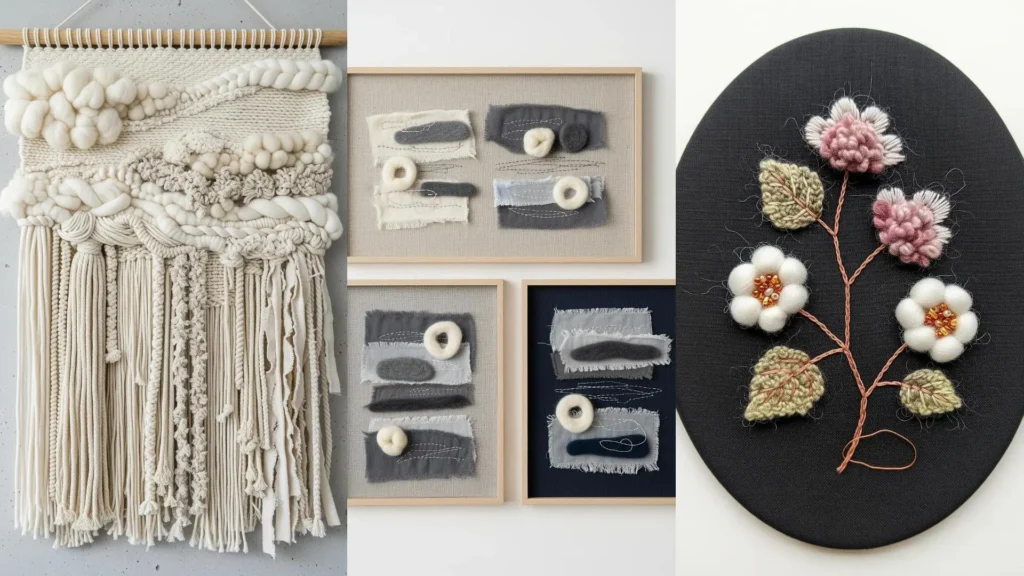
To create a piece with this much depth, you need to vary your materials dramatically: combine thick wool roving, fine cotton yarn, and medium-weight merino wool.
Alternate between different weaving techniques—a flat tabby weave, chunky soumak braids, raised pile loops (rya knots), and tightly packed French knots.
This dedicated exploration of texture creates a rich, sculptural surface that makes a monochrome textile wall art piece feel incredibly dynamic and luxurious.
9. Celestial Weaving with Ethereal Fibers

To create a sense of cosmic depth, start with a tightly woven dark blue background using a circular loom or a large embroidery hoop.
For the moon, use a contrasting stitch like densely packed French knots in light grey to give it a cratered texture.
The magic comes from the ethereal elements: use a very fine, wispy fiber like silk or angora roving for nebula clouds, gently needle-felting it onto the surface.
For the constellations, stitch with a fine metallic gold thread and add tiny beads to catch the light like distant stars.
10. Introducing Velvet for Luxe Color Blocking

Instantly elevate a simple macrame or woven piece by introducing an unexpected and luxurious material: velvet ribbon.
Frame your work with a solid border of macrame knots to create a strong, defined edge.
In the center, weave thick velvet ribbon horizontally, allowing its plush, light-absorbing quality to create a stunning contrast against the matte texture of the macrame cord.
It’s a simple substitution that adds a touch of opulence and deep, saturated color with minimal effort.
11. Pictorial Weaving for Graphic Landscapes

When weaving a scene, think in solid shapes of color rather than fine, painterly details.
Sketch your design directly onto your warp threads to use as a guide for your color blocks.
To create those clean, graphic shapes, use the slit tapestry technique, where you weave each color block separately and turn the weft around the last warp of its section.
For the clouds, use a fluffier yarn and a loop stitch (rya knot) to make them pop with a soft, three-dimensional texture against the flat-woven sky.
12. Large-Scale Graphics with Punch Needle

Don’t be afraid to go big with your fiber art; a punch needle or latch hook is the perfect tool for covering large areas quickly and creating a dense, satisfying texture.
The key to a cohesive abstract design is to overlap your geometric shapes, which creates new secondary shapes and interesting color interactions where they intersect.
Use a limited but bold color palette to keep the composition from feeling chaotic, allowing you to create playful mixed-fiber art projects with the visual impact of a large-scale painting.
13. Dynamic Movement with Wrapped Fiber Art

This technique creates stunning results with minimal materials—all you need is a metal hoop and a selection of interesting yarns.
Start by wrapping a base layer of fine, strong thread across the hoop to create a stable web.
Next, introduce thicker, variegated, or slightly fluffy yarns, wrapping them in organic, flowing patterns around the base threads.
Avoid pulling too tightly; let the fibers drape and curve naturally to create a delicate, web-like structure that plays with light and shadow.
14. Integrating Hardware for Industrial Structure

Give your macrame a modern, industrial-chic update by incorporating metal hardware as a core part of the design.
Use copper pipes and rings not just as decoration, but as structural elements that dictate the piece’s form.
Tie your macrame knots directly around the pipes to create distinct sections and clean, horizontal breaks in the vertical flow of the cords.
This fusion of soft fiber and hard metal is one of those mixed-fiber art techniques that push creative boundaries, resulting in a sophisticated, architectural piece.
15. Building a 3D Forest Floor with Mixed Media

Create a truly immersive piece by building it up in three dimensions on a sturdy canvas base.
Add layers of chunky green wool roving and preserved moss for the ground cover, securing them with a hot glue gun or heavy-duty thread.
Incorporate handmade elements that blend with the natural textures, such as coiled jute discs, crocheted circles, or felted mushrooms.
This multi-material approach transforms the piece from a flat hanging into a tactile, sculptural diorama that celebrates the beauty of nature’s textures.
16. Art Deco Elegance with Metallic Thread

Capture the glamour of the Art Deco era by combining bold, geometric patterns with the shimmer of metallic thread.
Choose a high-contrast palette like black, gold, and silver to make the design pop.
When working with metallic thread, which can be slippery and prone to tangling, use a shorter length than you normally would.
A simple satin stitch is perfect for filling in the sharp, fanned-out shapes characteristic of the style, allowing the light-reflecting quality of the thread to bring the pattern to life.
17. Weaving with Recycled Denim for Textural Stripes

Introduce an element of sustainable style into your work by incorporating recycled materials into your weaving projects.
Cut old jeans into thin, continuous strips to create a unique “denim yarn.”
Intersperse stripes of this denim with soft white cotton rope and traditional blue yarns to create a varied, textural surface.
The slightly frayed, rugged quality of the denim provides a beautiful contrast to the smoother fibers, adding history and character to your work, much like other earthy embroidery ideas.
18. Achieving Sharp Lines in Geometric Tapestry

The key to crisp geometric patterns in tapestry weaving is mastering your tension and using the interlocking technique.
Where two colors meet along a vertical line, instead of leaving a slit, loop the weft threads of the adjacent colors around each other between the warp threads on the back of the work.
This creates a clean, strong join without any gaps, ensuring your shapes have sharp, defined edges.
Using a high-contrast color palette with bold shapes, like diamonds and zig-zags, makes this traditional technique feel powerful and modern.
19. Sculptural Knotting with Upholstery Piping

Move your fiber art off the wall and into three-dimensional space by using a more substantial core material.
Instead of yarn, work with cotton upholstery piping or filler cord, which can be found at most fabric stores.
Wrap the cord tightly with wool felt strips to add color and texture, securing it with stitches or glue.
The cord’s thickness and rigidity allow you to tie large, expressive knots that hold their shape, creating stunning handmade sculptures that play with shadow and form.
20. Embracing Intuitive Weaving with Neon Brights

Let go of precise patterns and embrace an intuitive, expressive approach to weaving.
The success of a “chaotic” piece like this lies in a fearless mix of textures and a bold, unapologetic color story.
Combine super-chunky wool roving, fine neon yarn, eyelash yarn, and even metallic tinsel, allowing threads to hang loose and create uneven, organic shapes.
This method is less about technical perfection and more about capturing raw energy and joy, resulting in the kind of colorful fiber art installations that bring a room to life.
21. Adorning Macrame with Soft-Sculpted Florals

Soften the geometric structure of a macrame piece by adding handmade, three-dimensional embellishments.
Create simple, elegant flowers by cutting and rolling strips of wool felt, securing the final shapes with a few discreet stitches.
For the leaves, use a thick, soft yarn or silk ribbon to create a series of detached chain stitches or lazy daisy stitches.
Attach these botanical elements asymmetrically to your finished macrame, transforming a standard hanger into a unique piece of romantic, textural art.