Have you ever felt that your embroidery, no matter how neat, is missing a certain depth or story? You’ve mastered the stitches, but now you’re ready for your work to say more—to feel less like a pattern and more like a piece of art.
This is where fabric collage comes in. Think of it not as a complex new skill to learn, but as a way of thinking differently about the materials you already have. It’s about letting fabric scraps, with their inherent textures and histories, become the foundation of your narrative. It’s about painting with cloth.
Here, you won’t just be filling in shapes with thread. You will learn to build worlds—layering velvet for a midnight sky, using raw-edged linen for a rugged coastline, or letting sheer organza suggest a morning mist. Your needle and thread become the final details that unite these textures into a cohesive, expressive story.
1. Build a Narrative with Layered Velvet and Quilting
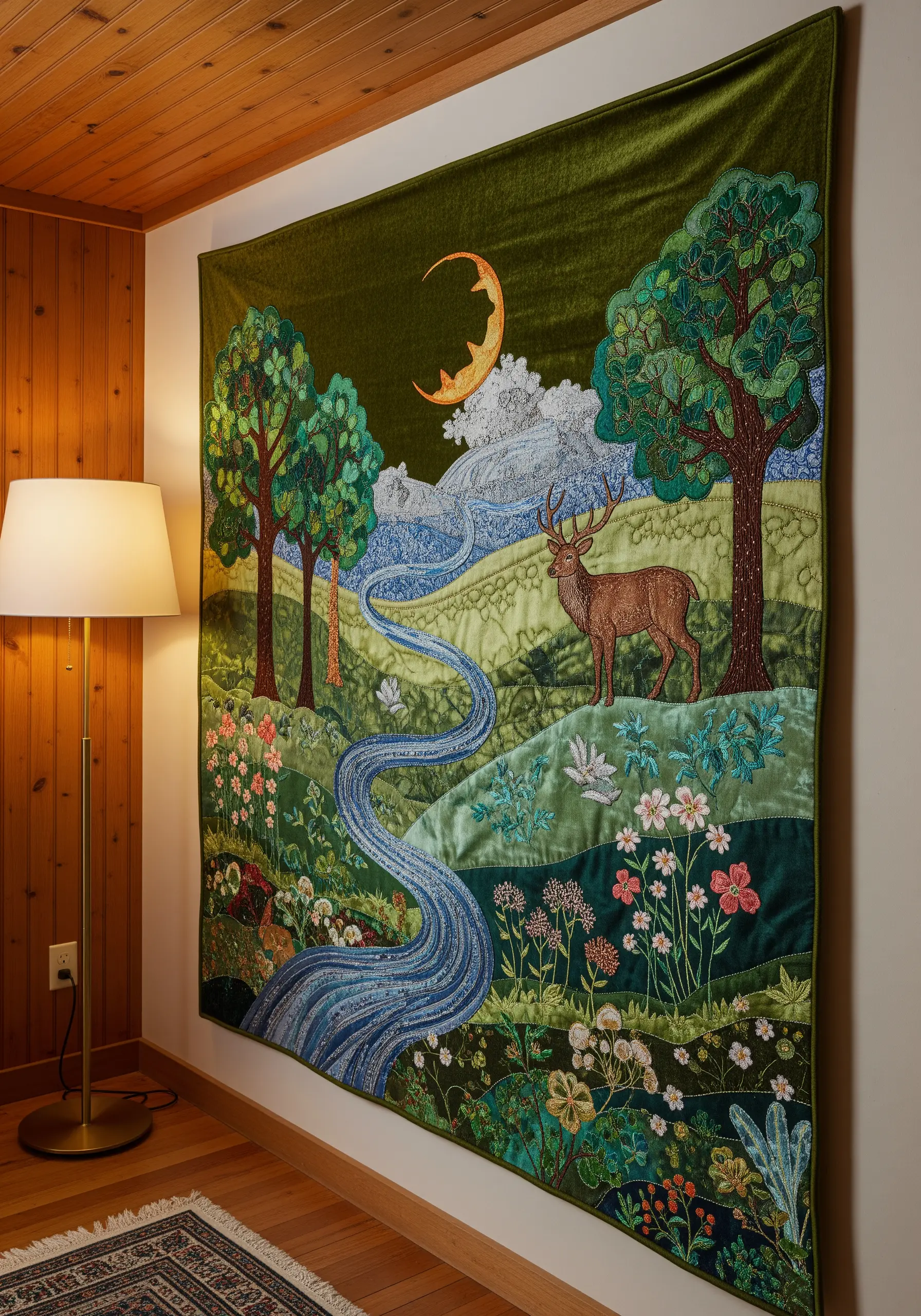
Create immersive depth by assigning different fabric textures to elements in your landscape.
Use plush velvet for a deep, light-absorbing sky and smooth cottons for rolling hills to create a dynamic tactile contrast.
Define the flow of a river or the grain of a tree trunk not with outlines, but with directional quilting stitches that add structure and guide the eye.
Finally, introduce tiny seed beads or French knots as subtle highlights, suggesting dappled light or night stars without overpowering the fabric’s natural texture.
2. Create Luminous Florals with Organza and Seed Pearls
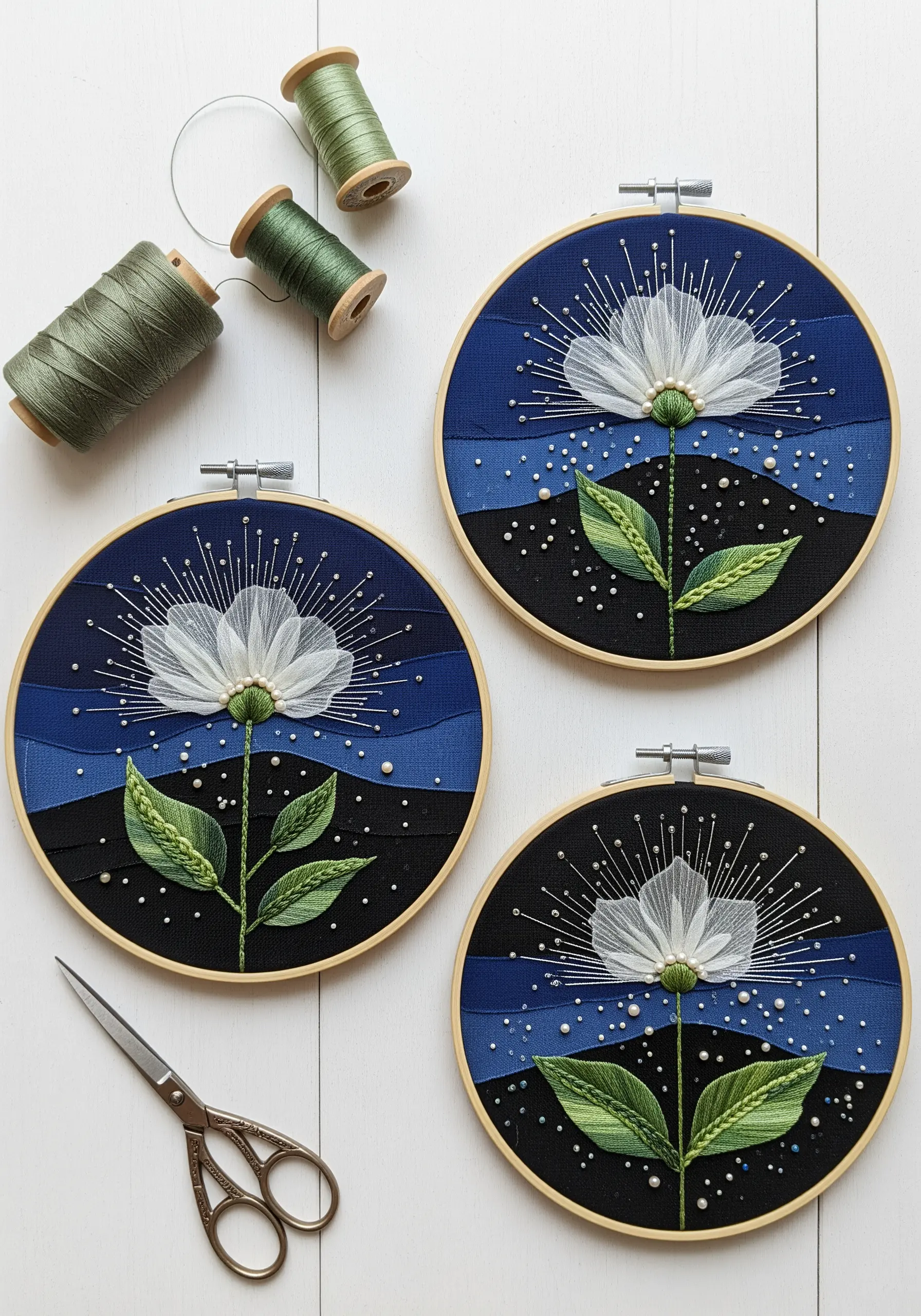
To achieve an ethereal, glowing effect, layer pieces of sheer organza or tulle to form your petals.
This transparency allows the background color to show through, giving the flower a delicate, weightless quality.
Anchor the petals with a single pearl or bead at the center, which provides a focal point and structural support.
Radiate simple straight stitches from the center outward to suggest light rays, enhancing the illusion of luminosity against a dark, contrasting fabric base.
3. Unify Disparate Elements with Bold, Graphic Lines
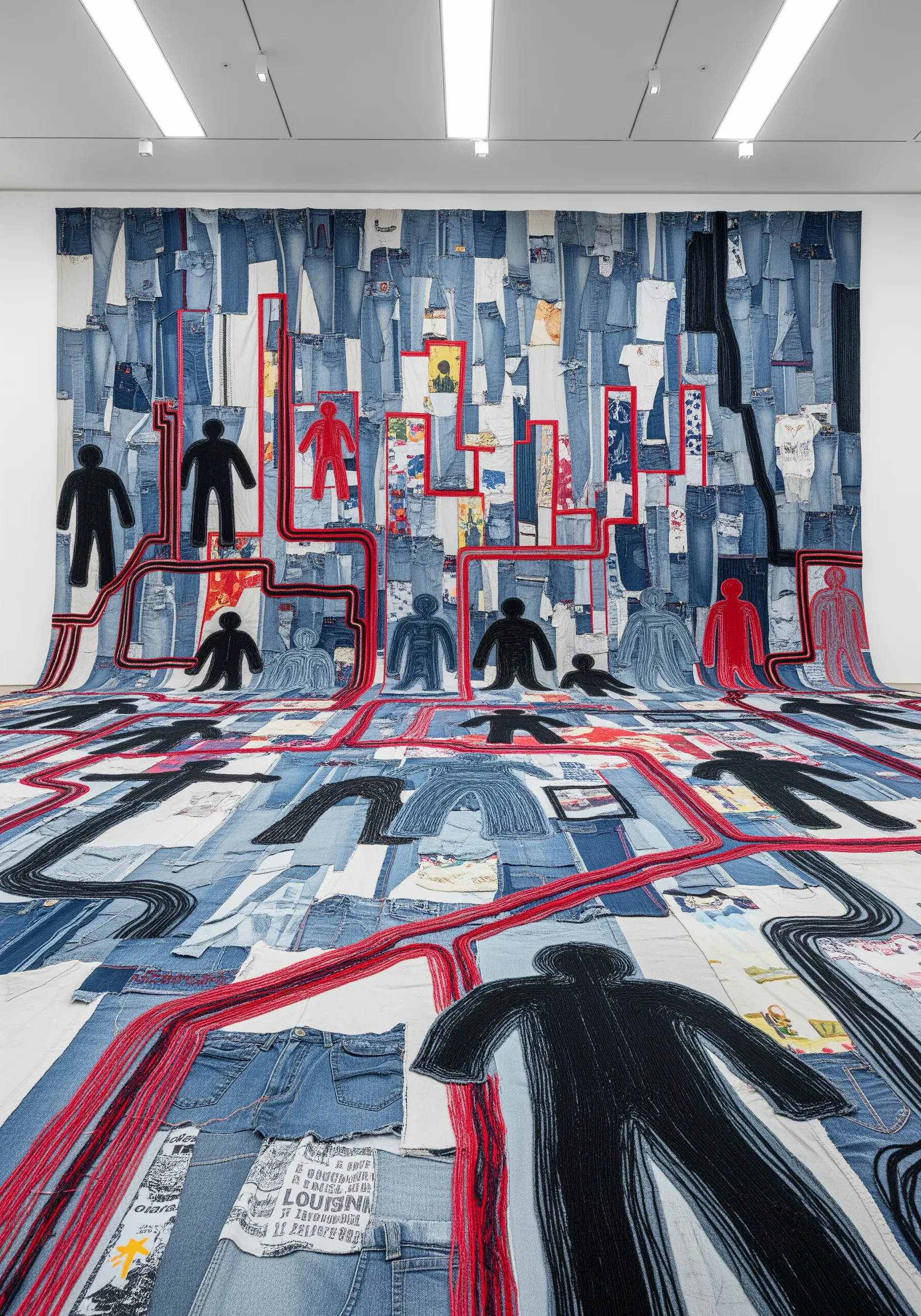
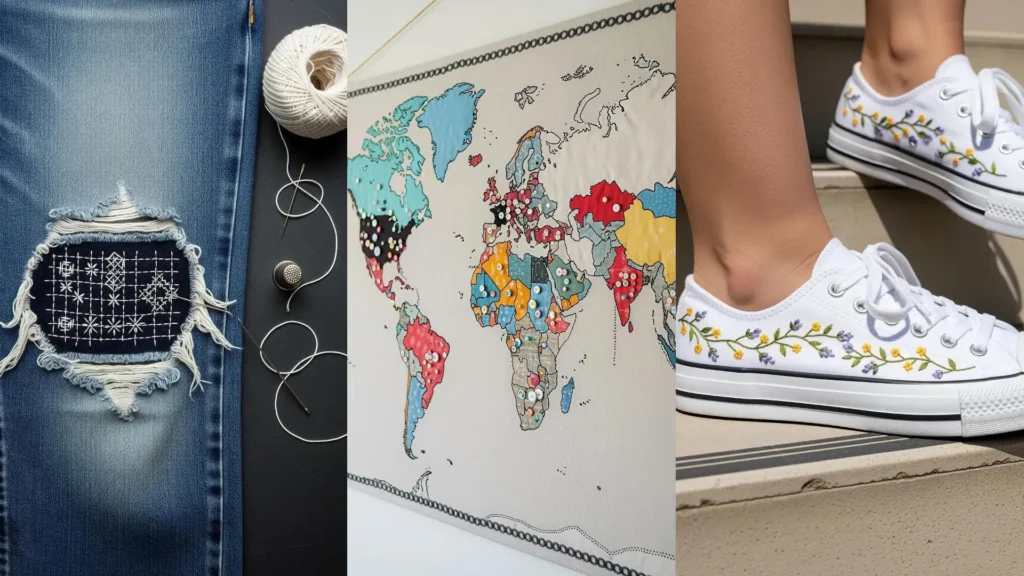
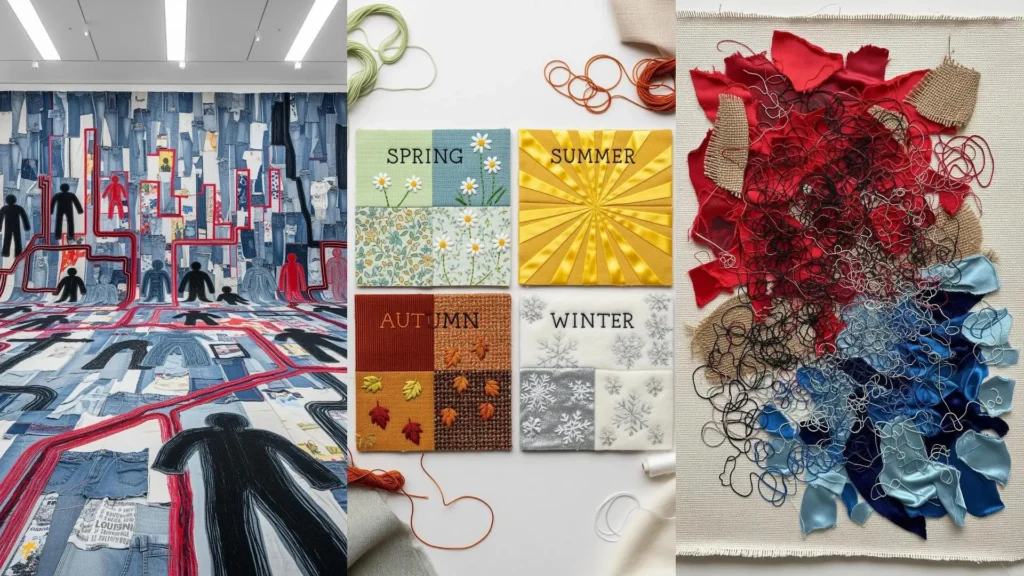
When working with a busy or chaotic background like a patchwork of denim, introduce a strong, unifying graphic element.
Use bold, couched cords or wide satin-stitched lines to create a visual pathway that guides the viewer’s eye through the composition.
This technique imposes order and narrative onto an otherwise fragmented surface, proving that a single, decisive line can connect even the most varied textures.
It’s a powerful way to make fabric collage embroidery ideas that reuse old clothes feel intentional and cohesive.
4. Construct Portraits with Fabric “Brushstrokes”
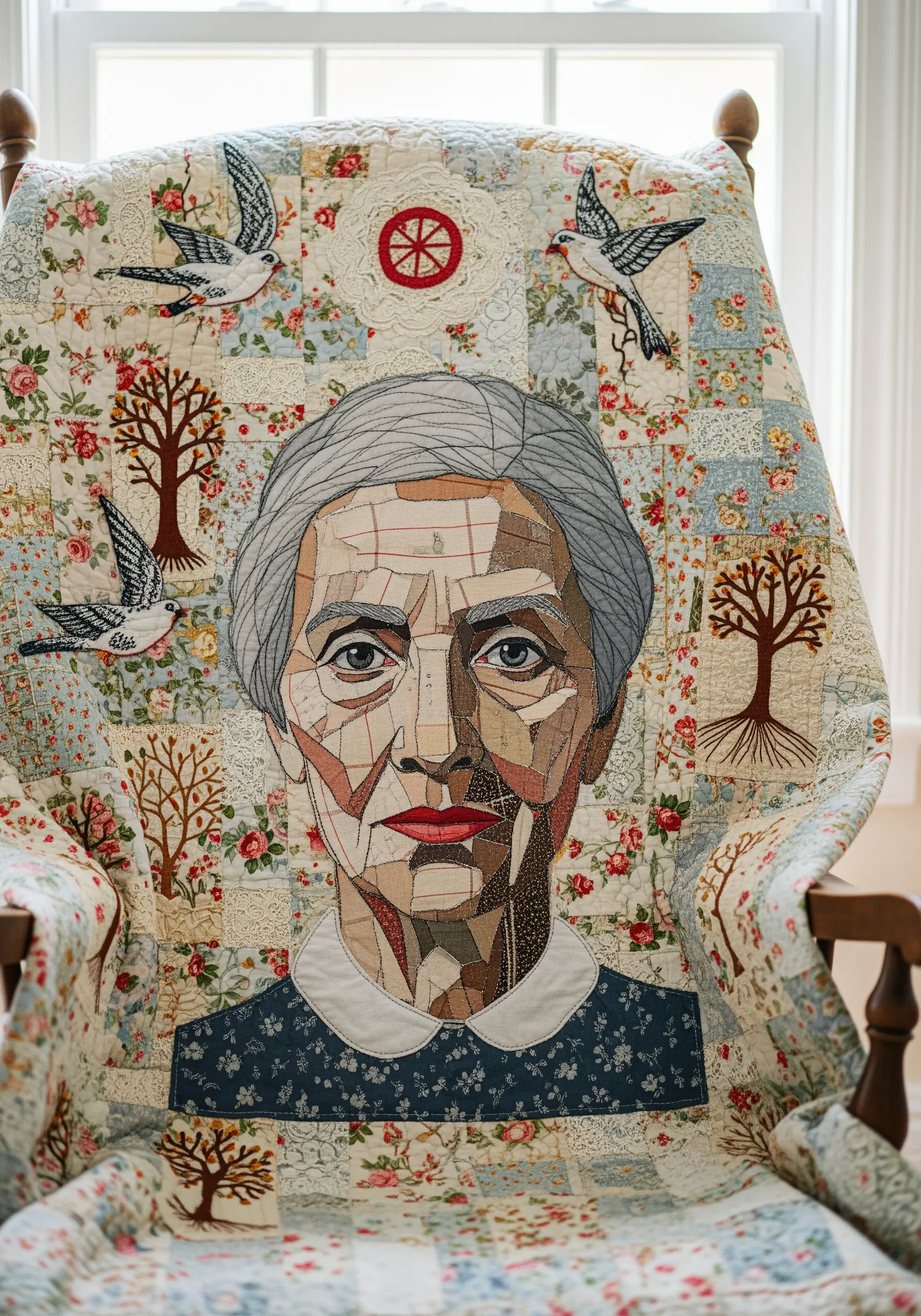
Approach portraiture by treating tiny fabric scraps like dabs of paint.
Cut small, angular pieces from various fabrics to represent the planes of the face, using different tones and patterns to build shadows and highlights.
Secure each piece with a simple, almost invisible running stitch, allowing the raw edges to create texture and depth.
This fabric mosaic method results in a portrait that is rich with character, history, and a unique textural dimension that thread alone cannot achieve.
5. Stitch a Tactile Story Directly onto Paper
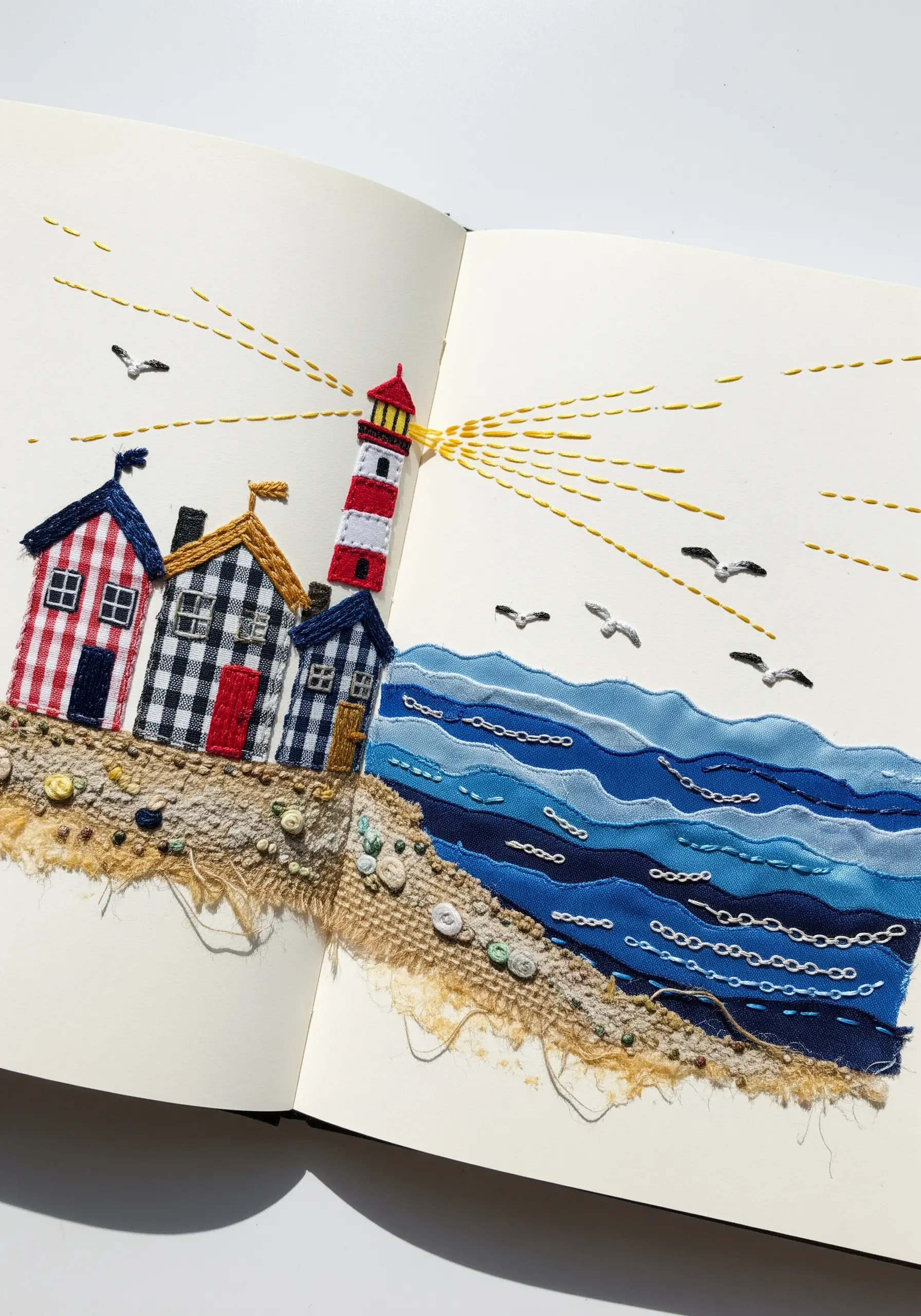
Take your collage work off the hoop and into a sketchbook for a surprising mixed-media effect.
Lightly glue down your fabric elements—like burlap for a sandy shore and folded ribbons for waves—to position them on the paper.
Then, use simple stitches like running stitch and backstitch to permanently anchor the fabrics and add fine details.
This technique allows you to blend the textures of textiles with the clean, crisp surface of paper. You can find more inspiration in collage art tutorials that show you how to stitch over paper.
6. Sculpt an Underwater World with High-Relief Stitches
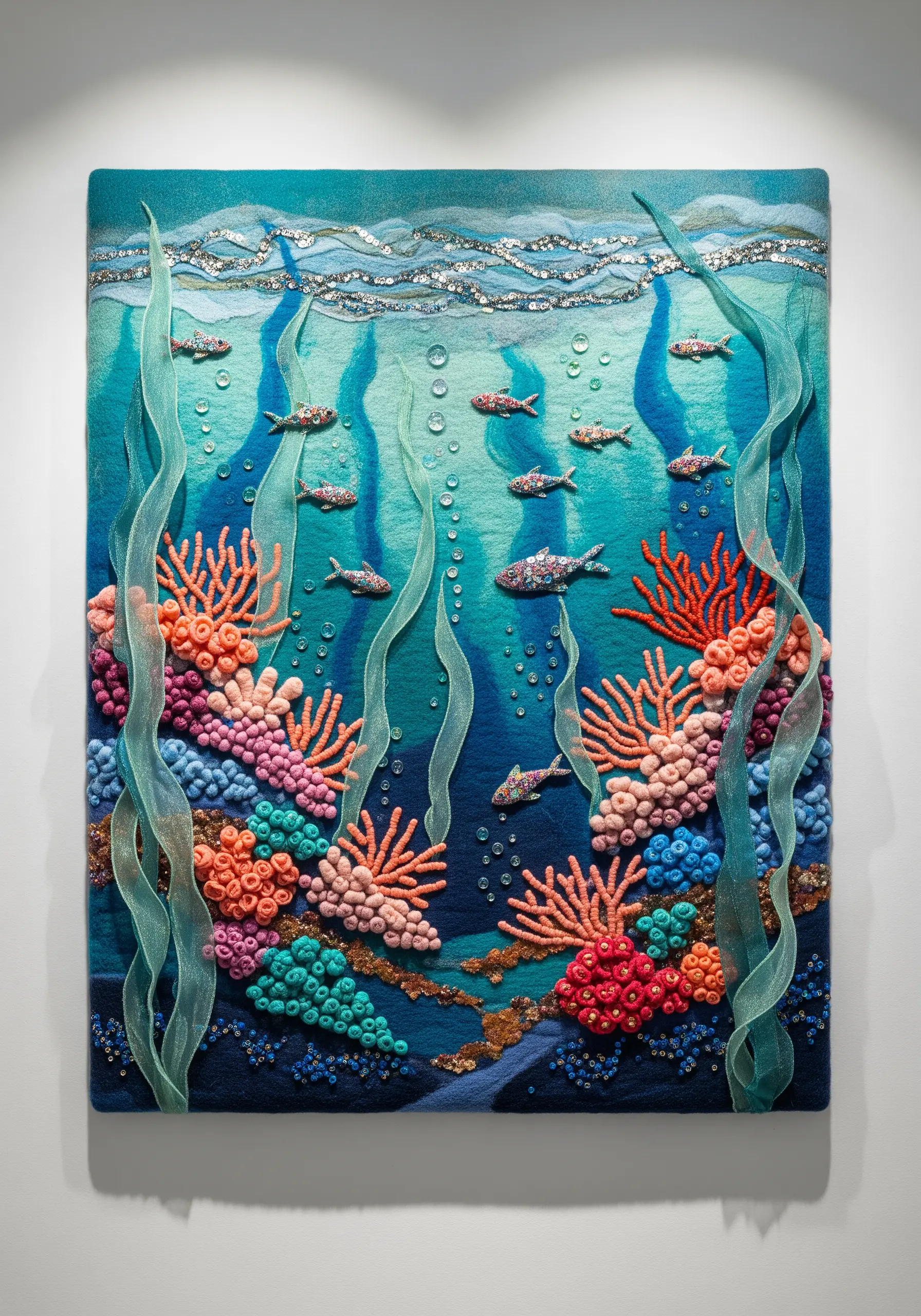
Move beyond flat appliqué to build a truly dimensional seascape.
Use dense clusters of French knots and bullion knots in variegated threads to form textured coral structures that pop from the surface.
Incorporate iridescent beads and sequins sparingly to catch the light, mimicking the glint of sun on water or the shimmer of fish scales.
Finally, couch down sheer, flowing organza ribbons to create the illusion of translucent seaweed swaying in the current, adding a layer of graceful movement.
7. Transform Furniture with Architectural Appliqué

Turn a functional object, like a headboard, into a stunning piece of art by thinking in architectural terms.
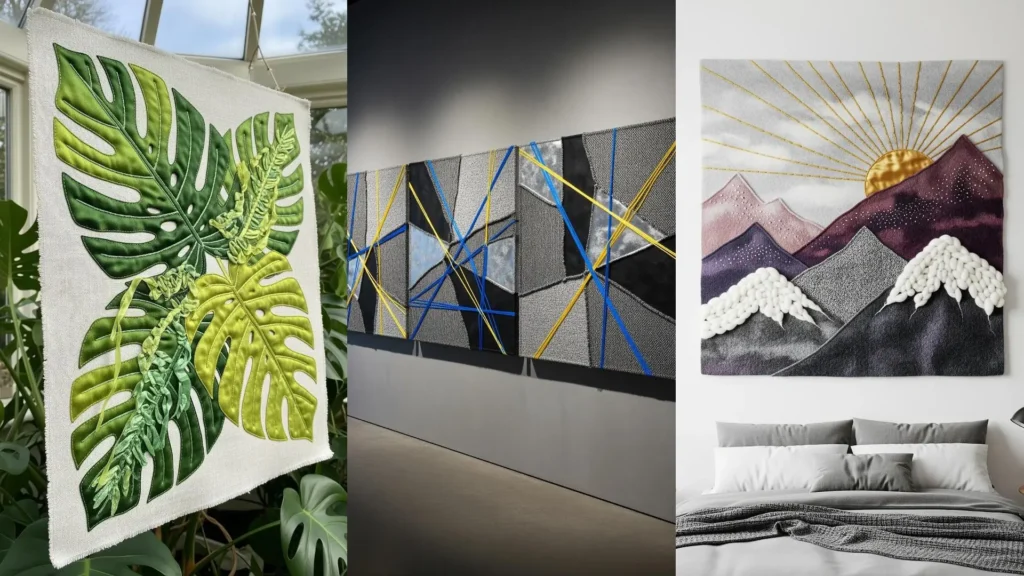
Use thick, textural fabrics like wool felt to create bold, layered shapes that suggest a mountain range, giving the piece both visual and physical weight.
For dramatic sunrays, couch down thick metallic yarn or wrap thin wooden dowels in gold thread, creating a sculptural element that extends beyond the fabric base.
This application of embroidery accent furniture ideas makes a powerful statement in any room.
8. Add Playful Dimension with Layered Felt Appliqué

Create charming, storybook-style illustrations using the simple technique of layering felt.
Cut your shapes cleanly and arrange them to build depth—tucking vegetables inside baskets or placing figures in front of stalls.
Secure each piece with a neat blanket stitch or a simple running stitch around the edge in a matching thread for a clean, handcrafted finish.
Felt’s non-fraying edge and soft texture make it perfect for creating durable, dimensional designs on items that get a lot of use, like tote bags.
9. Capture the Seasons with a Textural Fabric Sampler
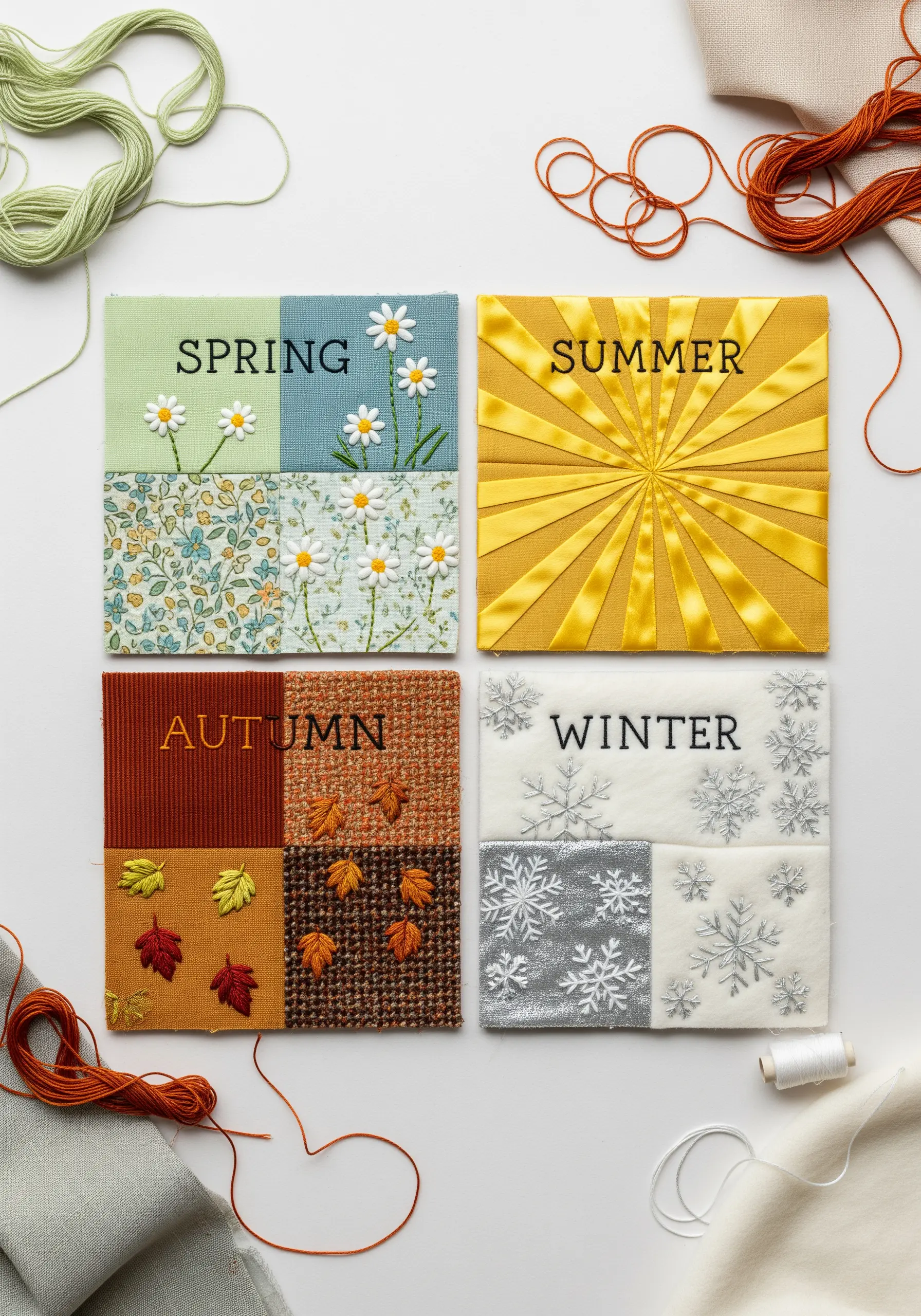
Tell the story of a year by letting fabric choice do most of the talking.
Assign a distinct texture to each season: soft floral cotton for spring, shimmering satin for a summer sunburst, warm tweed for autumn, and glittery flannel for winter snow.
This approach transforms a simple four-patch design into a sensory experience.
Minimal embroidery is then needed to add the final details, as the fabrics themselves establish the mood and narrative, making it one of the best nature-themed embroidery samplers you can try.
10. Fuse Fabric Paint and Stitching for Cosmic Depth
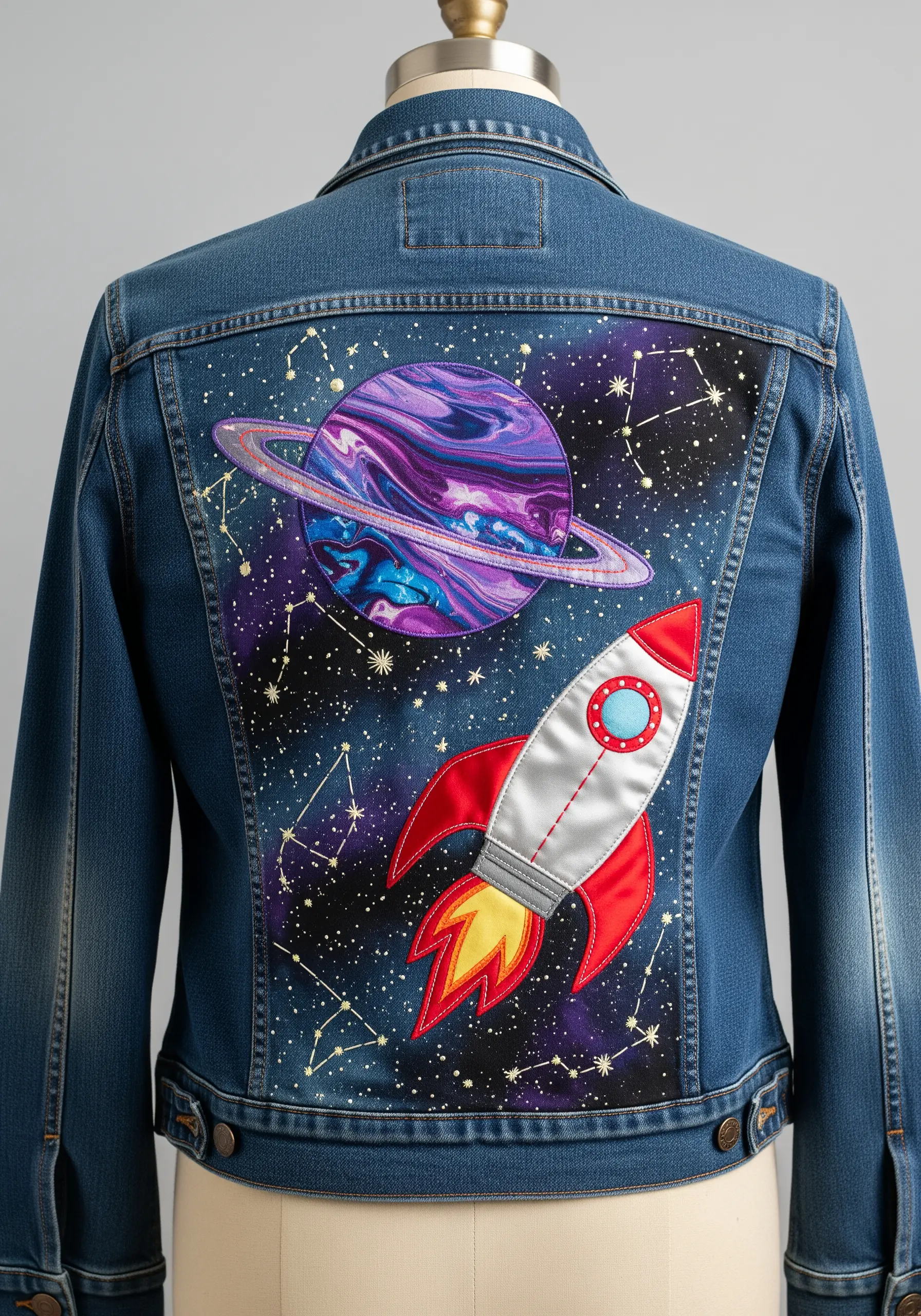
For complex, swirling designs like a galaxy or planet, start by painting your motif onto a separate piece of fabric.
Once the paint is dry and heat-set, cut out the shape and appliqué it onto your main garment, like a denim jacket.
Then, use embroidery to seamlessly blend the painted element into its new background.
Scatter star stitches and French knots across both the appliqué and the surrounding denim to create a unified, dynamic composition that feels fully integrated.
11. Tell a Story Across Panels for a Grand Statement
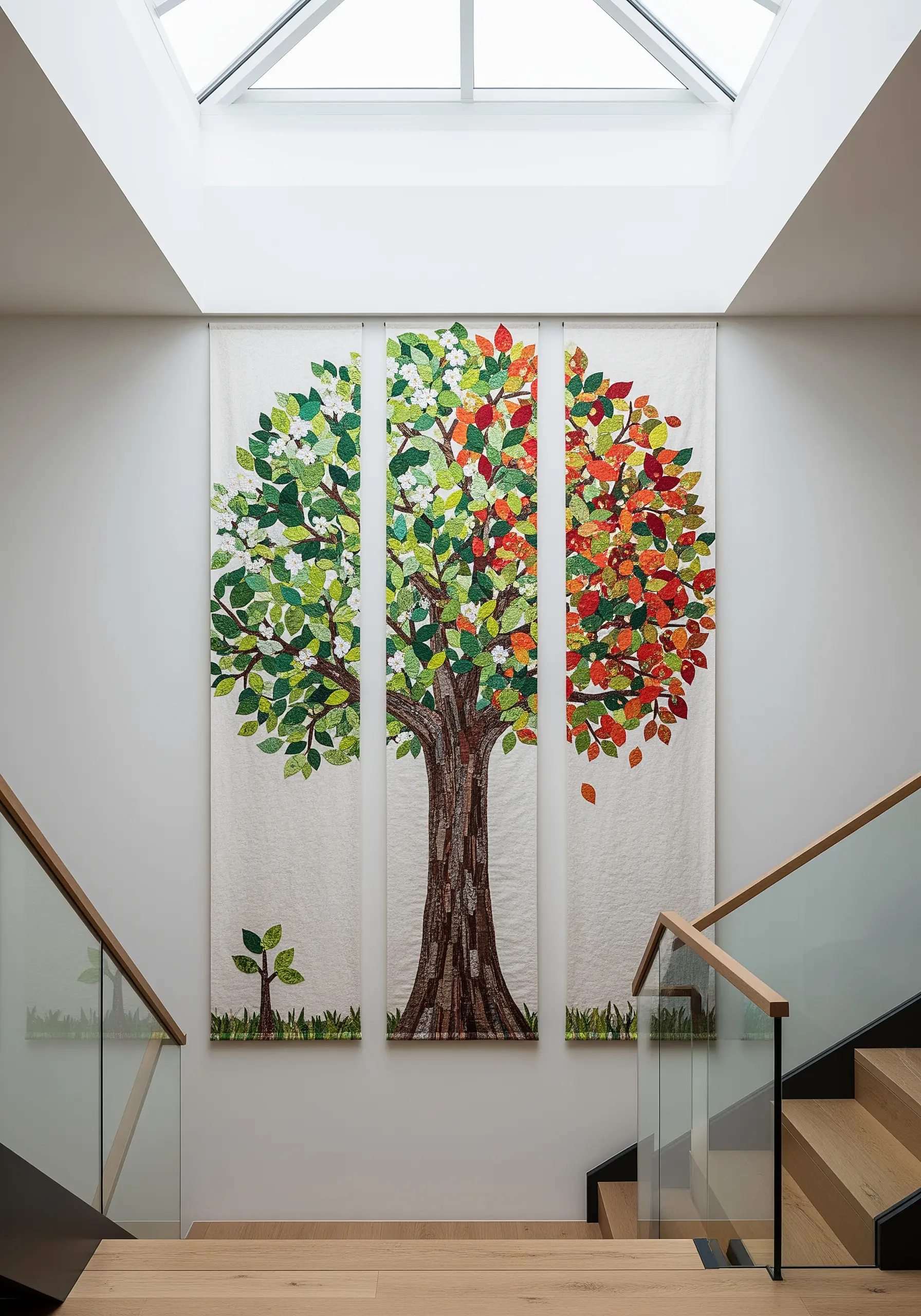
To tackle a large or epic narrative, break your composition into a triptych of separate panels.
This modern, gallery-style presentation makes the project more manageable to create and adds architectural interest to your wall.
Use a consistent background fabric to unite the three pieces, while allowing the central motif—like a tree changing through the seasons—to evolve across them.
This technique is perfect for creating large-scale embroidery tapestries that command attention.
12. Create an Interactive Scene with 3D Embellishments

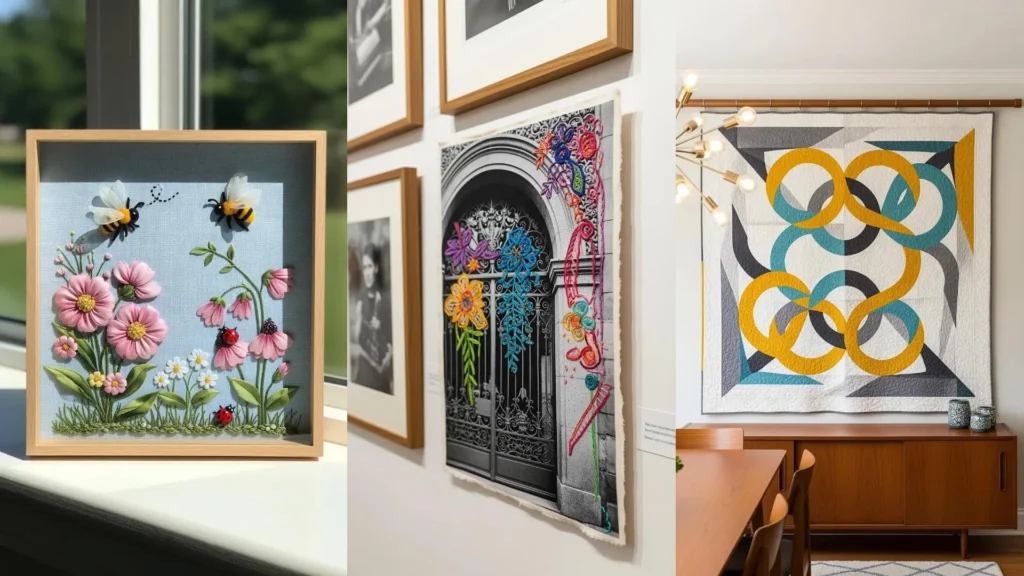
Bring your embroidered scenes to life by incorporating stitches that rise from the fabric surface.
Use dimensional techniques like woven picot stitch or padded satin stitch to create plump, textural flowers that invite touch.
For foliage, use detached chain stitches (lazy daisies) to form leaves that aren’t fully tacked down, giving them a sense of movement and realism.
These small, three-dimensional details can transform a flat image into an enchanting, interactive world.
13. Personalize Heirlooms with Meaningful Fabric Scraps
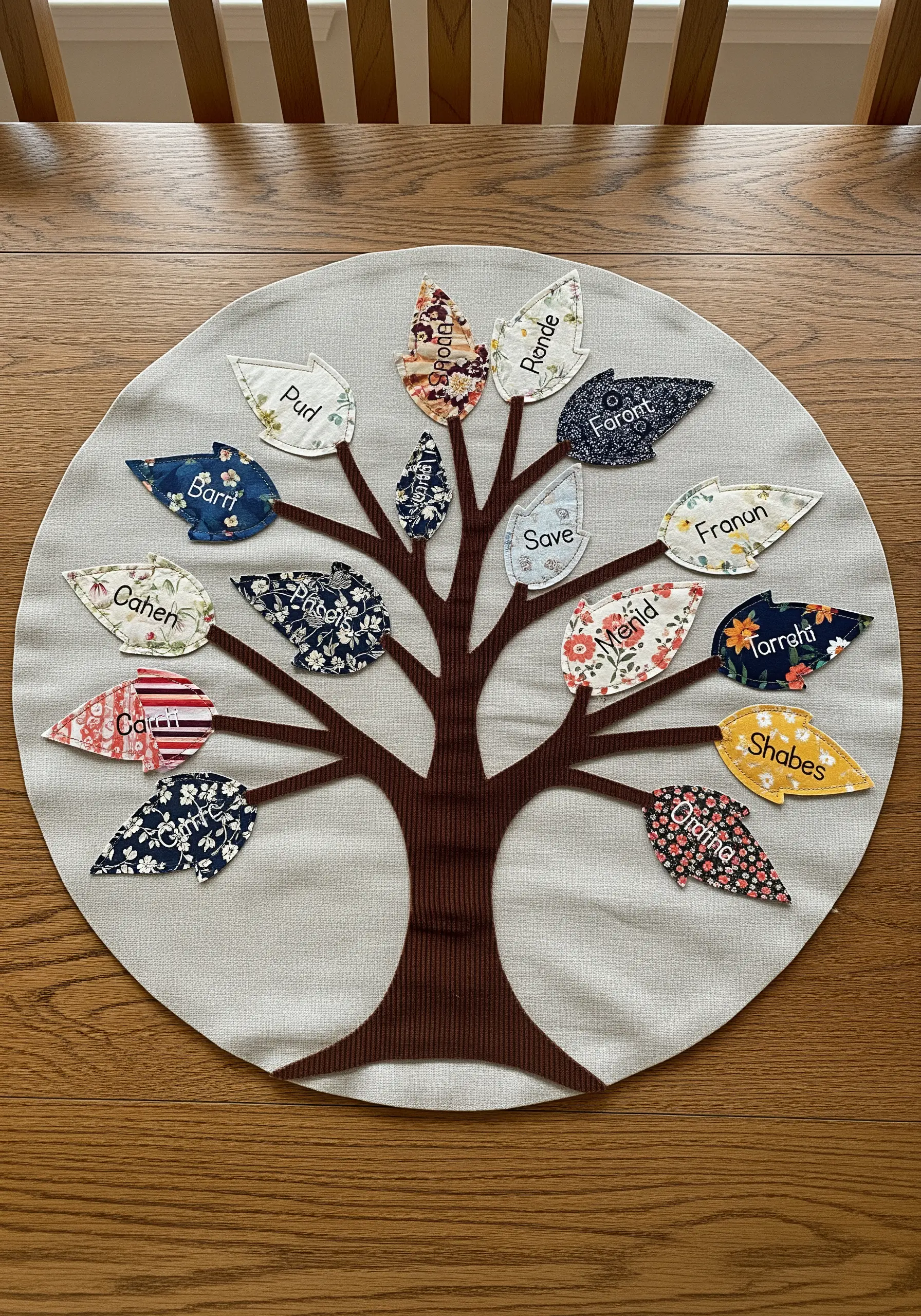
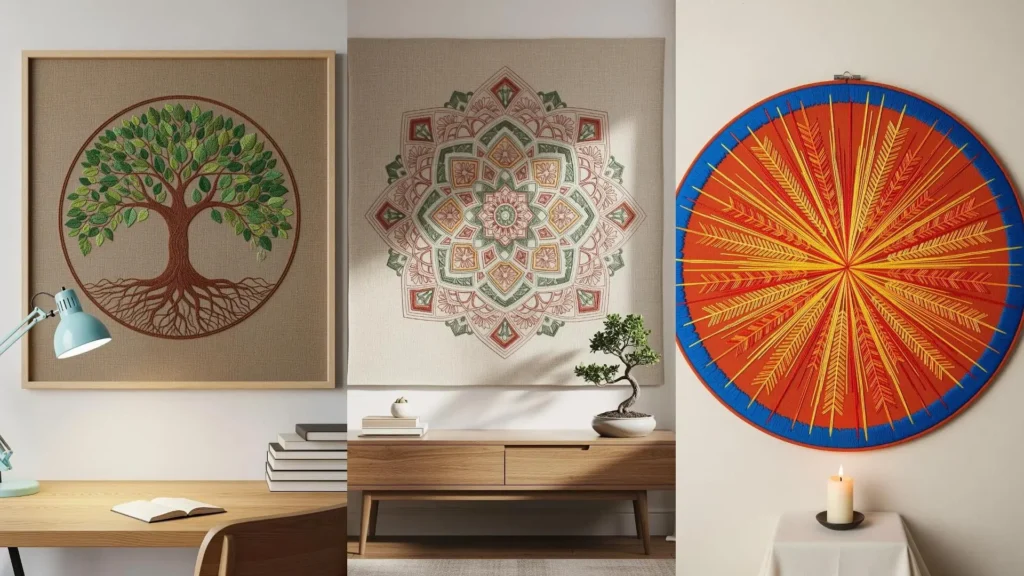
Elevate a traditional design like a family tree by using fabrics that hold personal significance.
Instead of using generic patterned cottons, source scraps from meaningful items: a piece of a child’s first blanket, a strip from a grandparent’s favorite shirt, or a swatch from a wedding dress.
Appliqué these fabric leaves to your tree and add names with a simple backstitch.
This method infuses every element with personal history, transforming a craft project into a priceless family heirloom.
14. Design a Scene That Comes Alive with Light

When creating for a translucent surface like a lampshade, your design has two lives: one in daylight and one when illuminated.
Focus on strong silhouettes by appliquéing dark, detailed shapes onto a lighter patchwork background.
When the light is off, the piece appears as a charming, rustic collage.
When you turn it on, the light passes through the background fabrics and is blocked by the dark appliqué, transforming your characters into dramatic, glowing silhouettes.
15. Create Playful “Stained Glass” with Fabric Collage
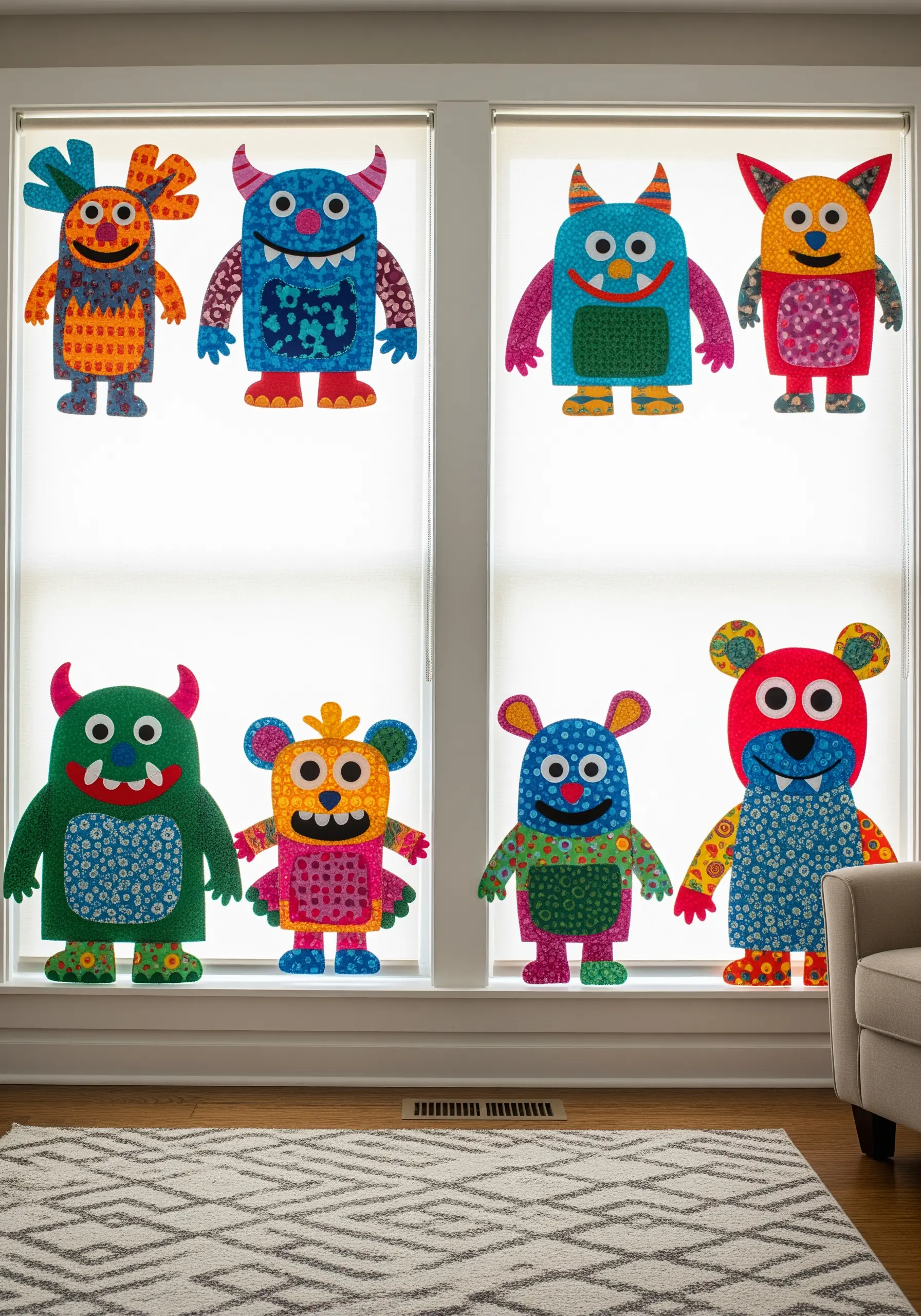
Craft vibrant, light-filtering art for windows that is both beautiful and non-permanent.
To give your fabric collage characters structure, iron a heavy-duty fusible interfacing to the back of your completed design.
Trim the edges neatly, and your creation can be temporarily affixed to a windowpane, catching the sunlight like stained glass.
This is a wonderfully playful way to add color and personality to a room, especially for kids’ spaces or seasonal decor.
16. Express Abstract Emotion with Thread Couching

Use thread not just for neat stitches, but as a raw, expressive material.
Create tangled nests of thread and yarn in different weights and colors, laying them onto your fabric collage base.
Then, use small, discreet couching stitches in a fine, matching thread to tack down the chaotic mass, sculpting its shape and securing it in place.
This technique creates incredible texture and emotional energy, perfect for high-texture fabric collage embroidery projects that explore abstract concepts.
17. Map a Memory with Felt Layers and a Stitched Path

Turn a landscape into a personal narrative by adding a single, symbolic element.
Use layered felt in muted, natural tones to build a mountain scene, with each layer representing a different elevation.
Then, add a simple, meandering line of running stitch in a contrasting color, like red, to represent a path.
This stitched line transforms the piece from a generic landscape into a map of a specific journey, memory, or aspiration, making it a perfect example of hand-embroidery leaf patterns to personalize journals and covers.