You already know the joy of pulling a thread through fabric. But what if that thread could leap off the hoop and transform an entire room? The world of fiber art is vast, and the techniques used to create large-scale installations are often surprisingly accessible, built upon the same principles of color, texture, and tension you already understand.
Think of yarn not just as a line, but as a building block for sculpture, architecture, and immersive experiences. Whether you’re wrapping, weaving, tufting, or simply hanging strands in a curtain of color, you can create pieces with dramatic visual impact using the simplest of materials.
This collection is an invitation to think bigger. Let these ideas inspire you to take your skills off the canvas and into three-dimensional space. You have the creativity; now it’s time to give it scale.
1. Create a Cascading Yarn Gradient Wall
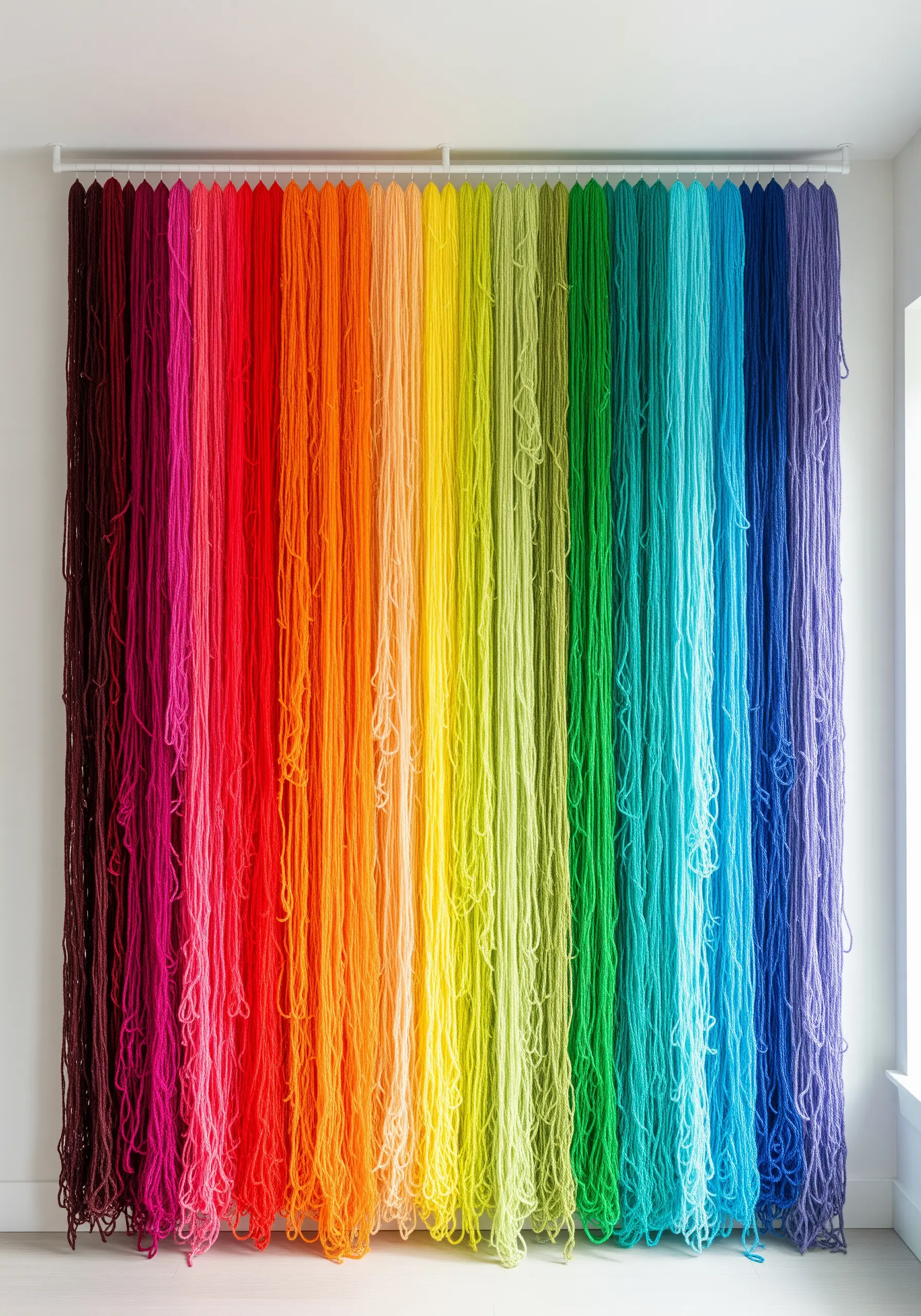
Transform a simple curtain rod or wooden dowel into a base for a dramatic fiber installation.
Cut various shades of yarn to your desired length—floor-to-ceiling works best for impact—and drape them over the rod using a lark’s head knot.
Arrange the strands by color to create a seamless rainbow gradient, allowing the slight variations in length and texture to add organic movement.
This technique relies on the visual weight of color, turning simple yarn into an architectural statement without complex stitches.
2. Construct Geometric String and Fiber Art
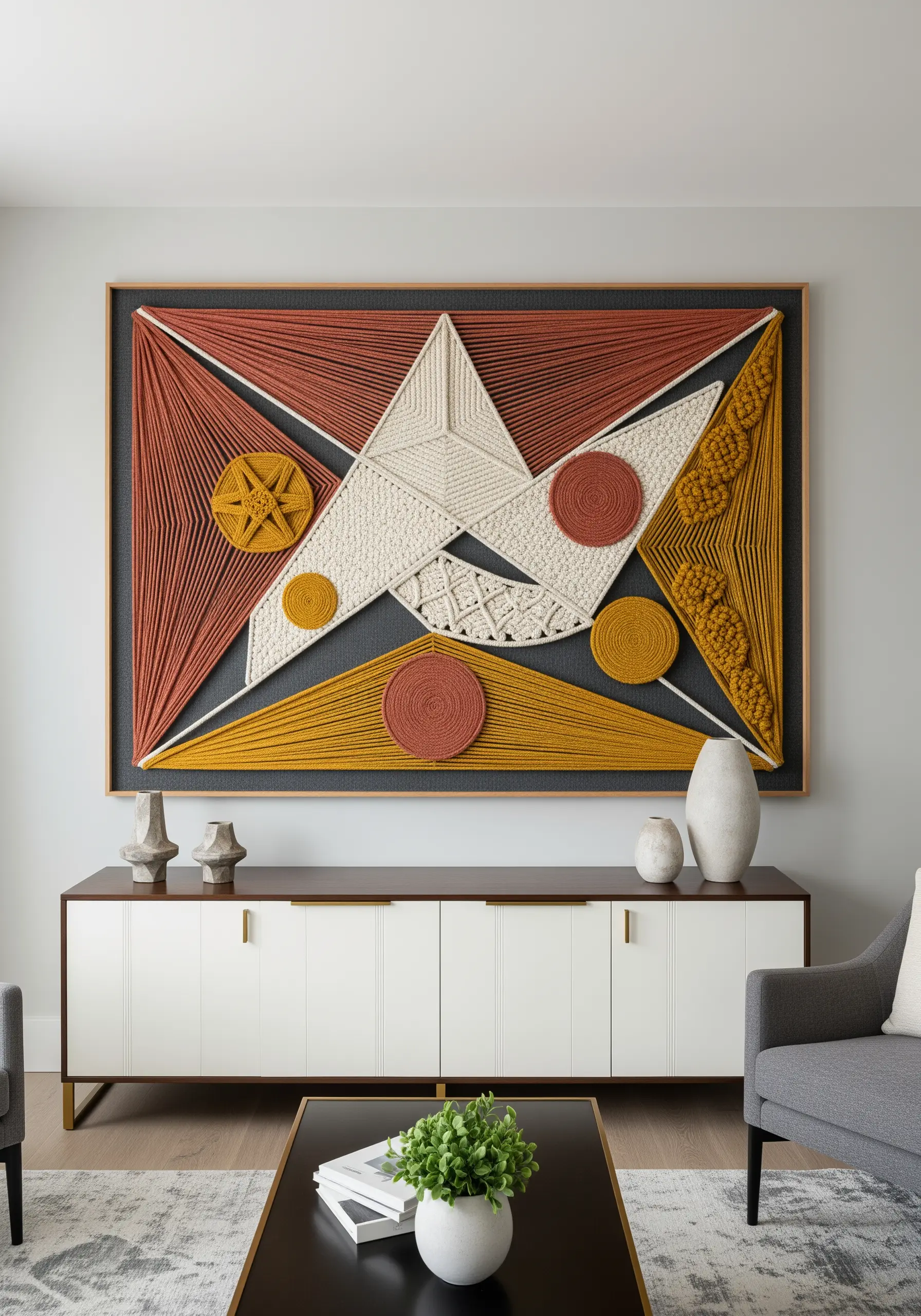
Build a custom frame or use a large canvas as your base, hammering in small nails along the perimeter and key internal lines of your design.
Stretch yarn tightly between the nails to create sharp, geometric shapes, layering colors to build depth and perspective.
Fill in sections by wrapping yarn around specific nail clusters or incorporating small woven elements, like macrame knots or French knots, for texture.
This method combines the precision of string art with the softness of weaving, resulting in a structured yet tactile masterpiece.
3. Scale Up Knitting for Architectural Forms
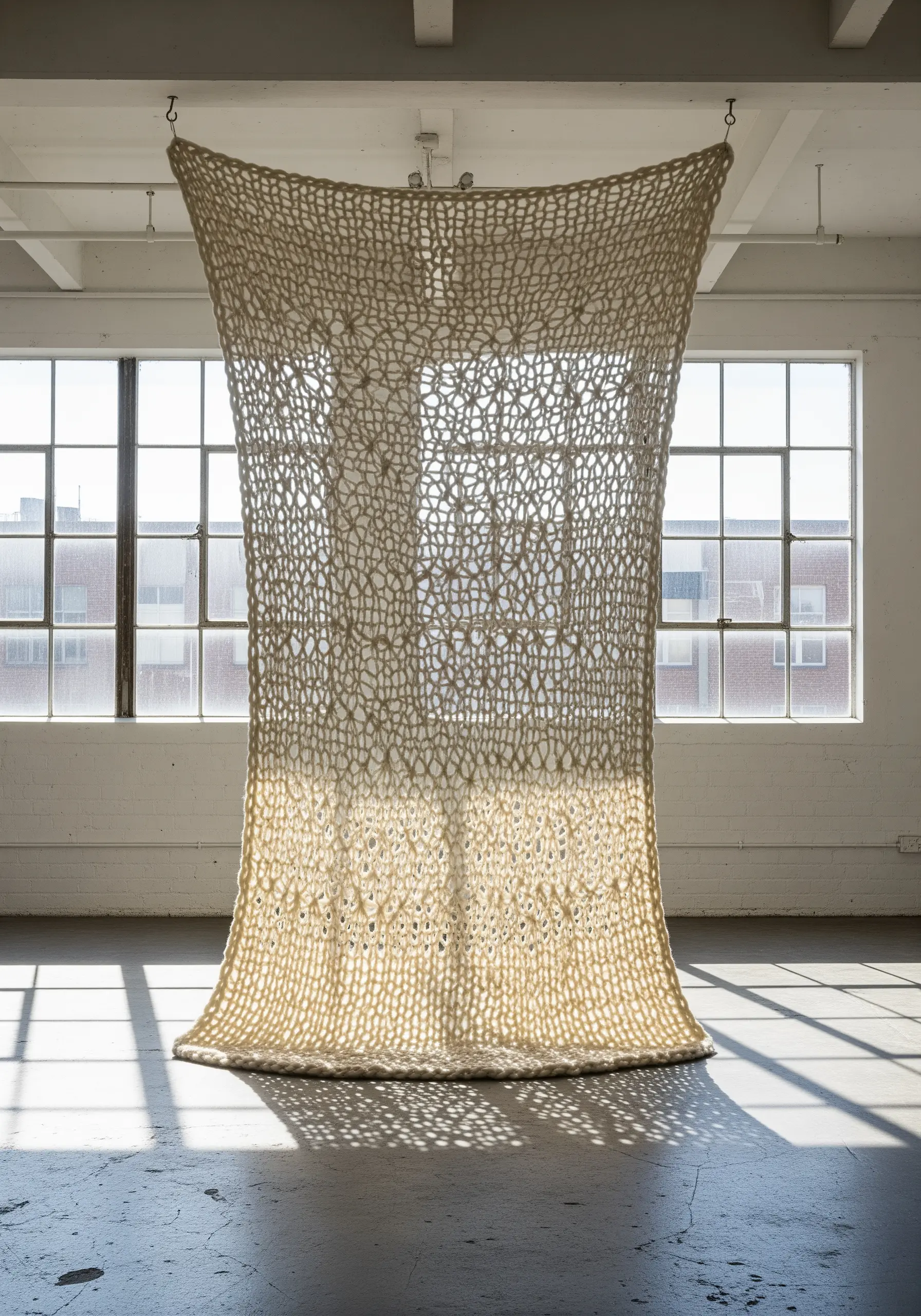
Rethink knitting not as a garment craft but as a sculptural medium by using oversized materials.
Source giant knitting needles—or even use PVC pipes—and pair them with thick, chunky wool roving or multiple strands of yarn held together.
Create a simple lace or openwork pattern; when scaled up, the negative space becomes as important as the stitches themselves, interacting with light and shadow.
This approach turns a familiar technique into a method for creating dramatic, semi-transparent textile screens or installations.
4. Assemble a Floating Pom-Pom Cloud
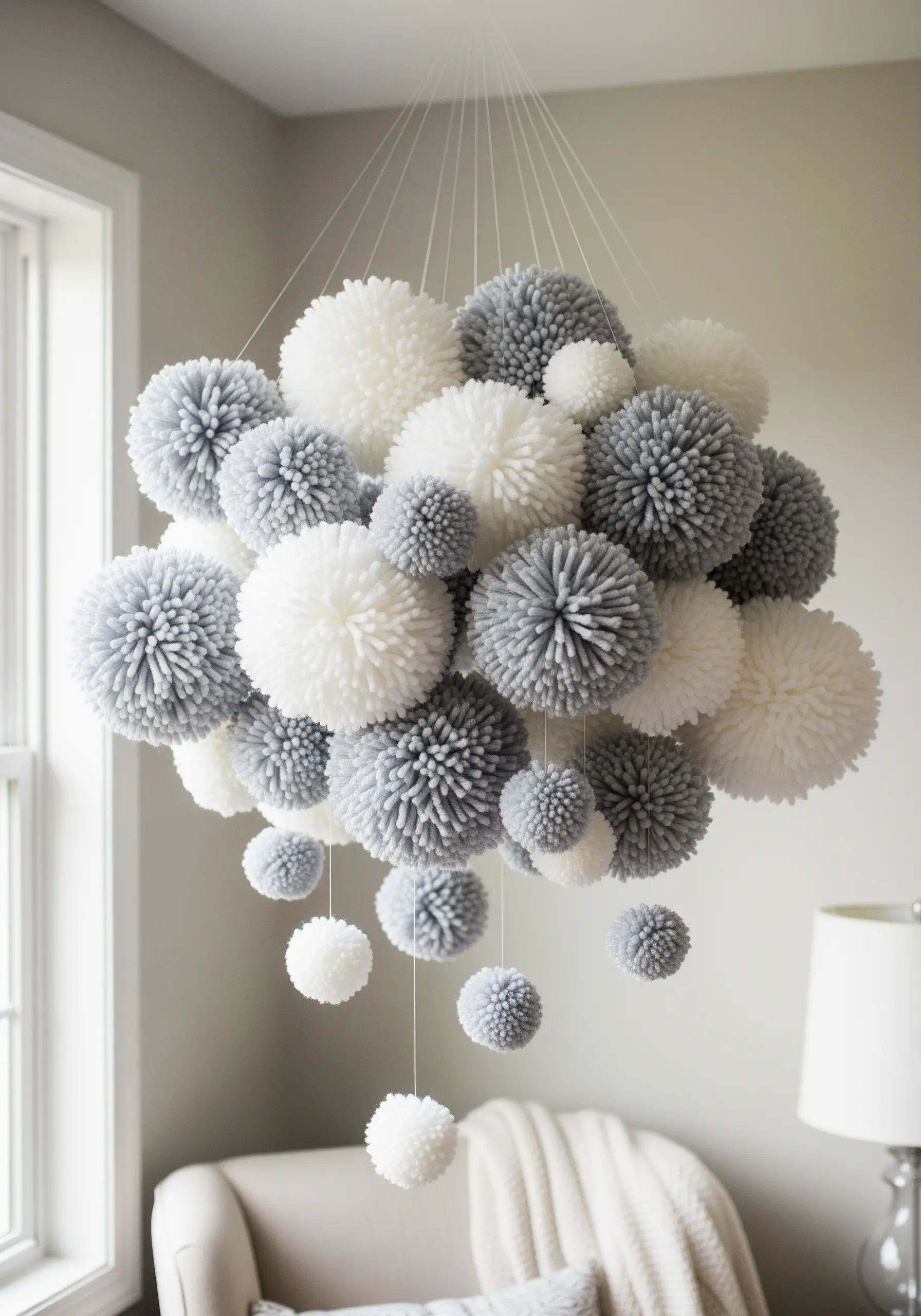
Create a stunning mobile by focusing on texture and density contrast.
Make dozens of pom-poms in varying sizes and colors using pom-pom makers for consistency.
To achieve a fluffy, cloud-like appearance, use a wire brush to gently tease out the fibers after trimming.
Suspend them from a hoop or ceiling grid at different heights using clear fishing line, clustering them tightly in the center and letting them thin out at the edges for a natural, airy composition.
5. Build a Textural Tree with Yarn Wrapping and Weaving
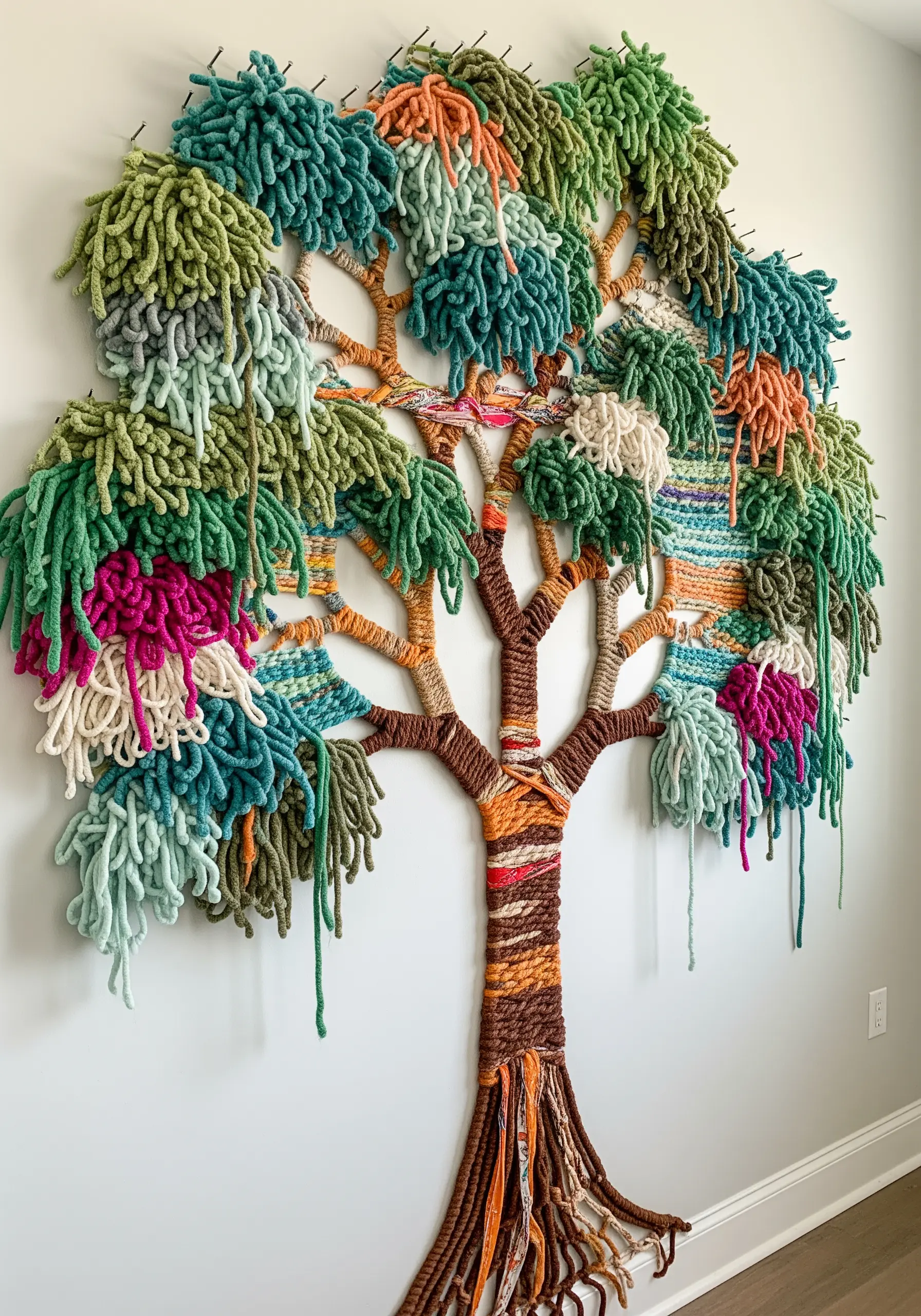
Start with a sturdy wire armature shaped like a tree and mount it to your wall.
Wrap the trunk and branches tightly with brown and tan yarns, varying the colors and textures to mimic bark.
For the leaves, create dense clusters of Rya knots or latch-hooked tassels in various greens and accent colors.
Incorporate small woven sections between branches to add another layer of texture, turning the entire piece into a rich, tactile mural that invites touch.
6. Upholster Furniture with Crocheted Granny Squares
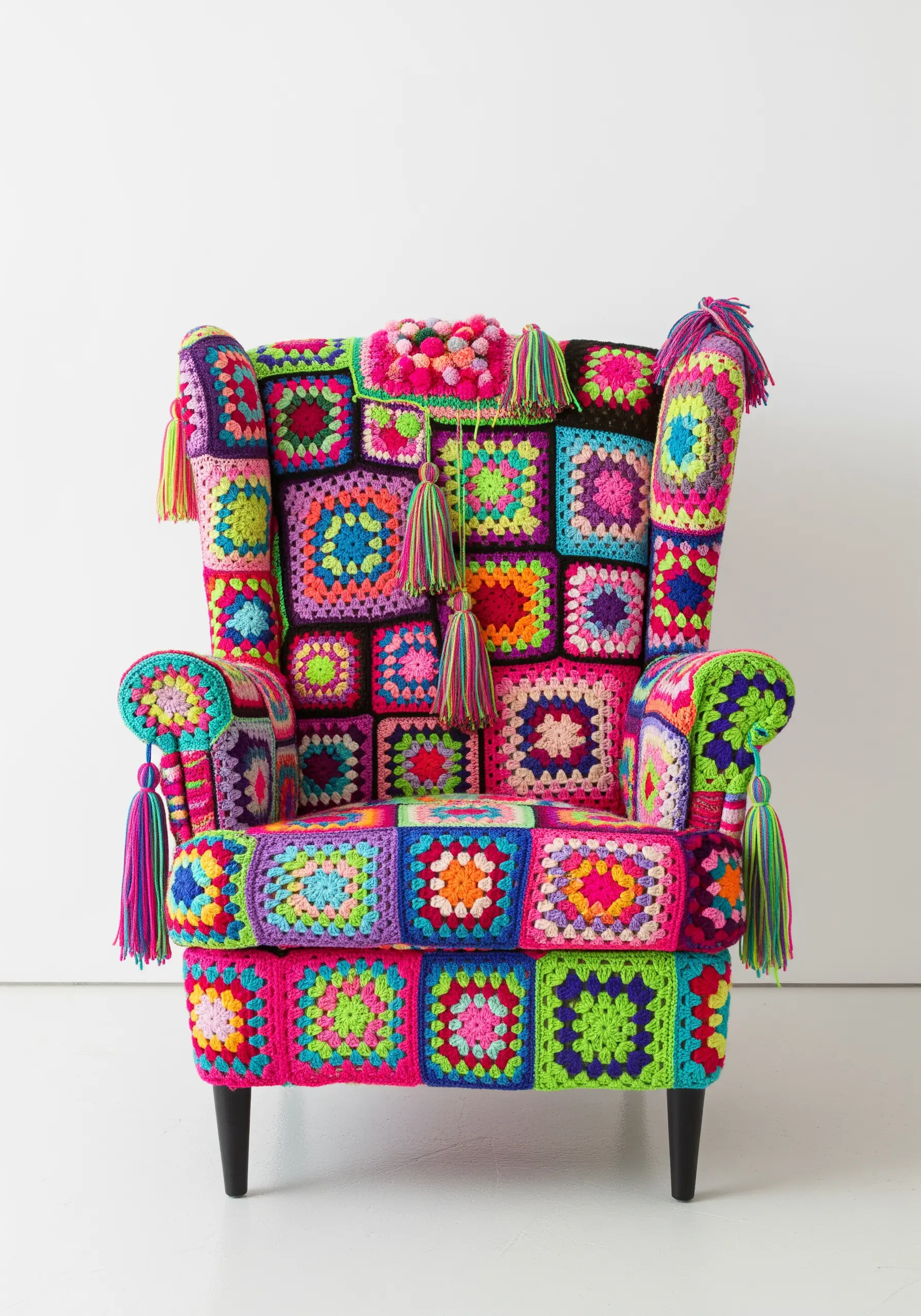
Give a tired piece of furniture a vibrant new life with a ‘yarn bomb’ treatment.
Measure each surface of the chair and crochet granny squares to fit, treating them like fabric tiles.
Join the squares together with a simple whip stitch or single crochet seam to create a custom-fit slipcover.
This is a brilliant way to use up scrap yarn, transforming an everyday object into a maximalist statement piece that radiates color and comfort.
7. Design a Geometric String Mandala
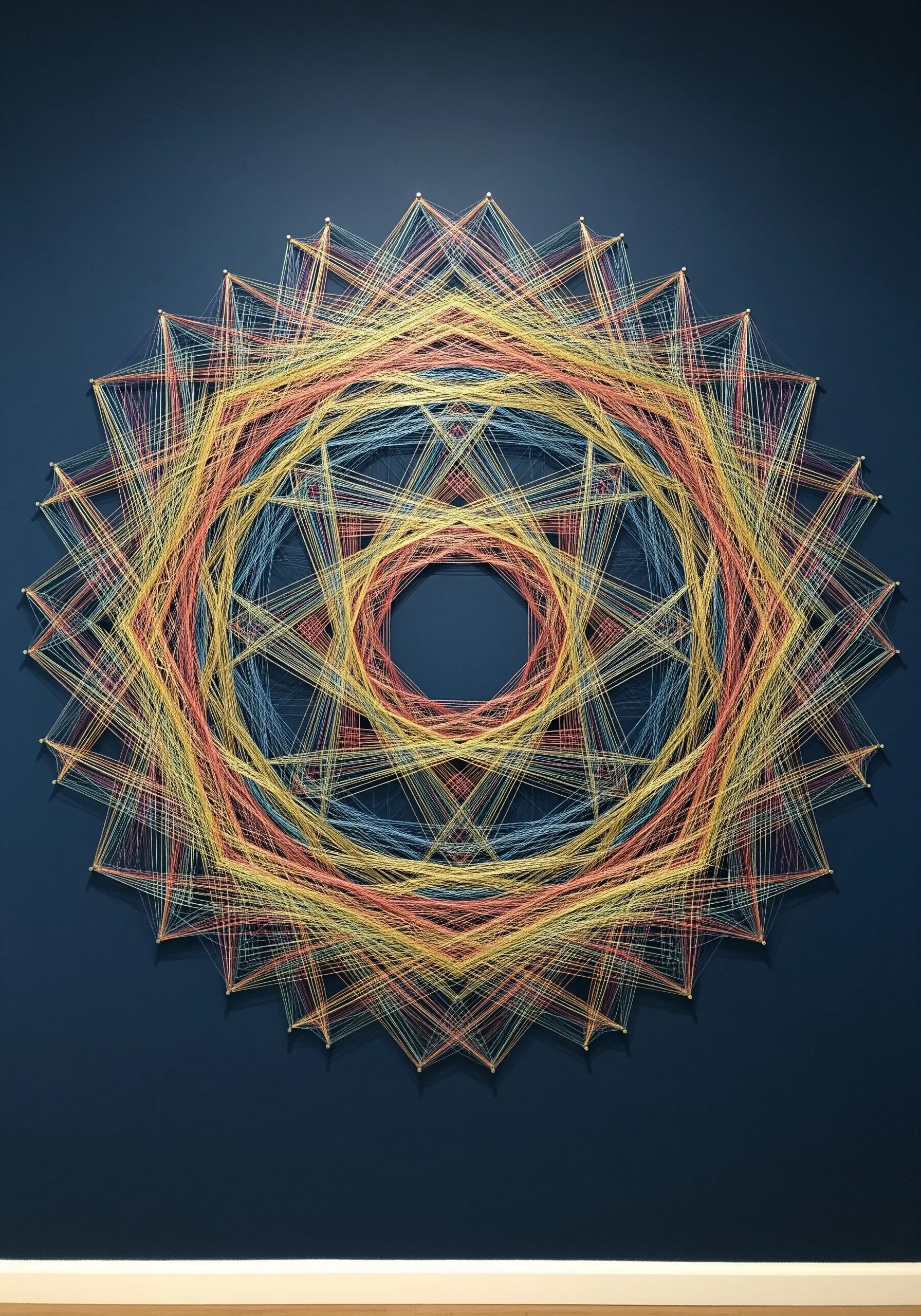
Create a mesmerizing focal point using only a board, nails, and string.
Start by drawing a geometric guide on your painted board—a circle with evenly spaced points is a great start.
Hammer nails at each point, ensuring they are at a consistent height.
Then, systematically wrap yarn or embroidery floss from nail to nail, following a pattern that layers lines over one another.
The magic happens as the straight lines create the illusion of curves, forming a complex, meditative design.
8. Craft a Yarn-Wrapped Solar System
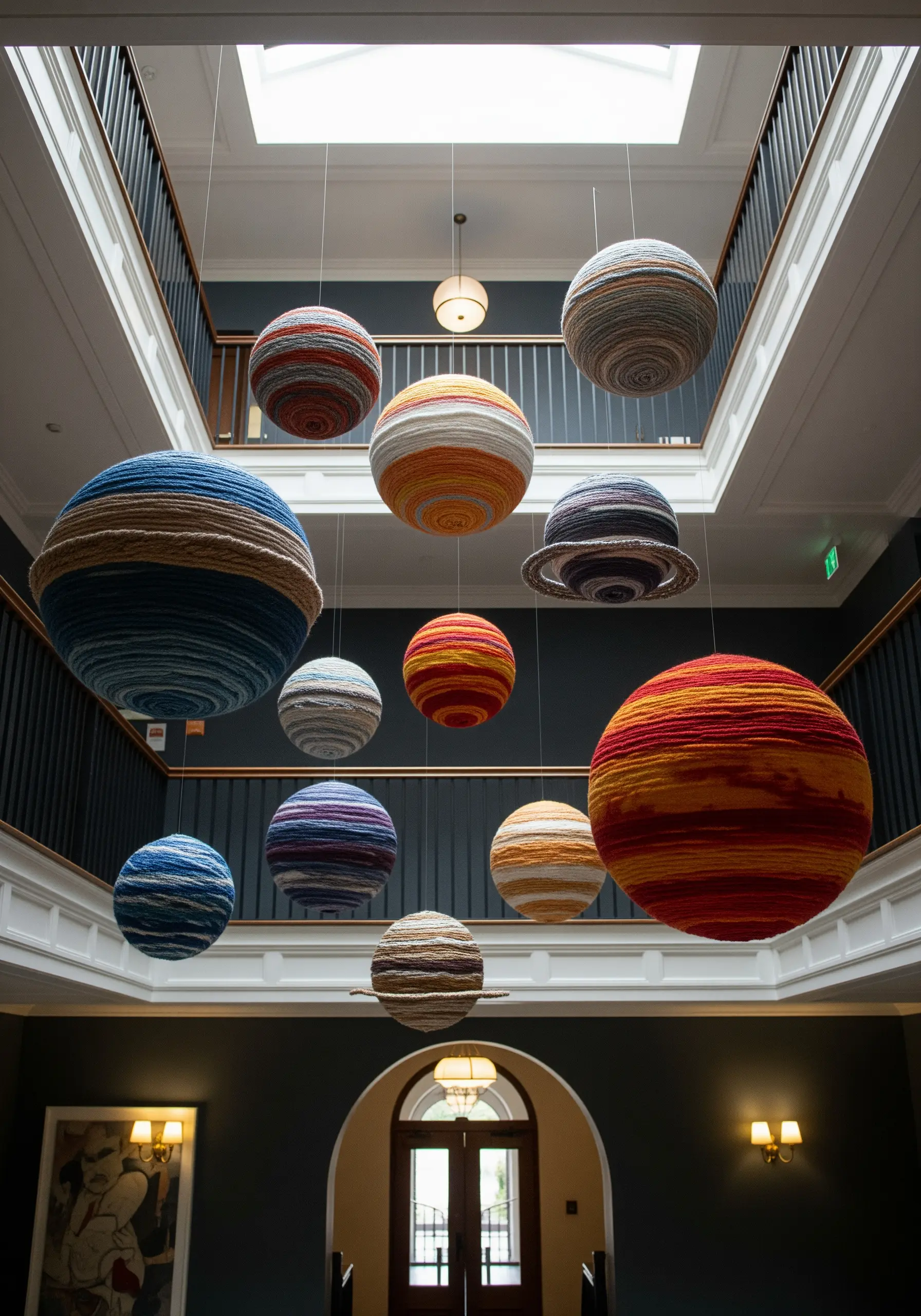
This installation combines simple wrapping techniques with a sense of cosmic wonder.
Use foam spheres of various sizes as the base for your planets.
Tightly and neatly wrap each sphere with different colored yarns, creating stripes and color blocks to represent planetary surfaces.
For Saturn, craft the rings by wrapping yarn around a flat cardboard or wire cutout before attaching it.
Suspend the finished planets from the ceiling with fishing line for a floating, otherworldly effect.
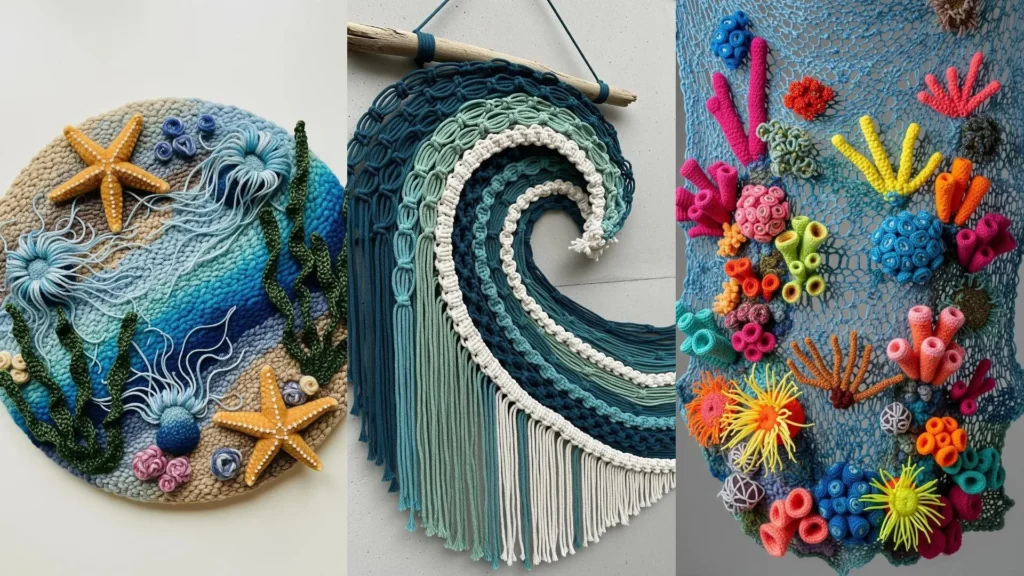
9. Weave a Fluorescent Underwater World
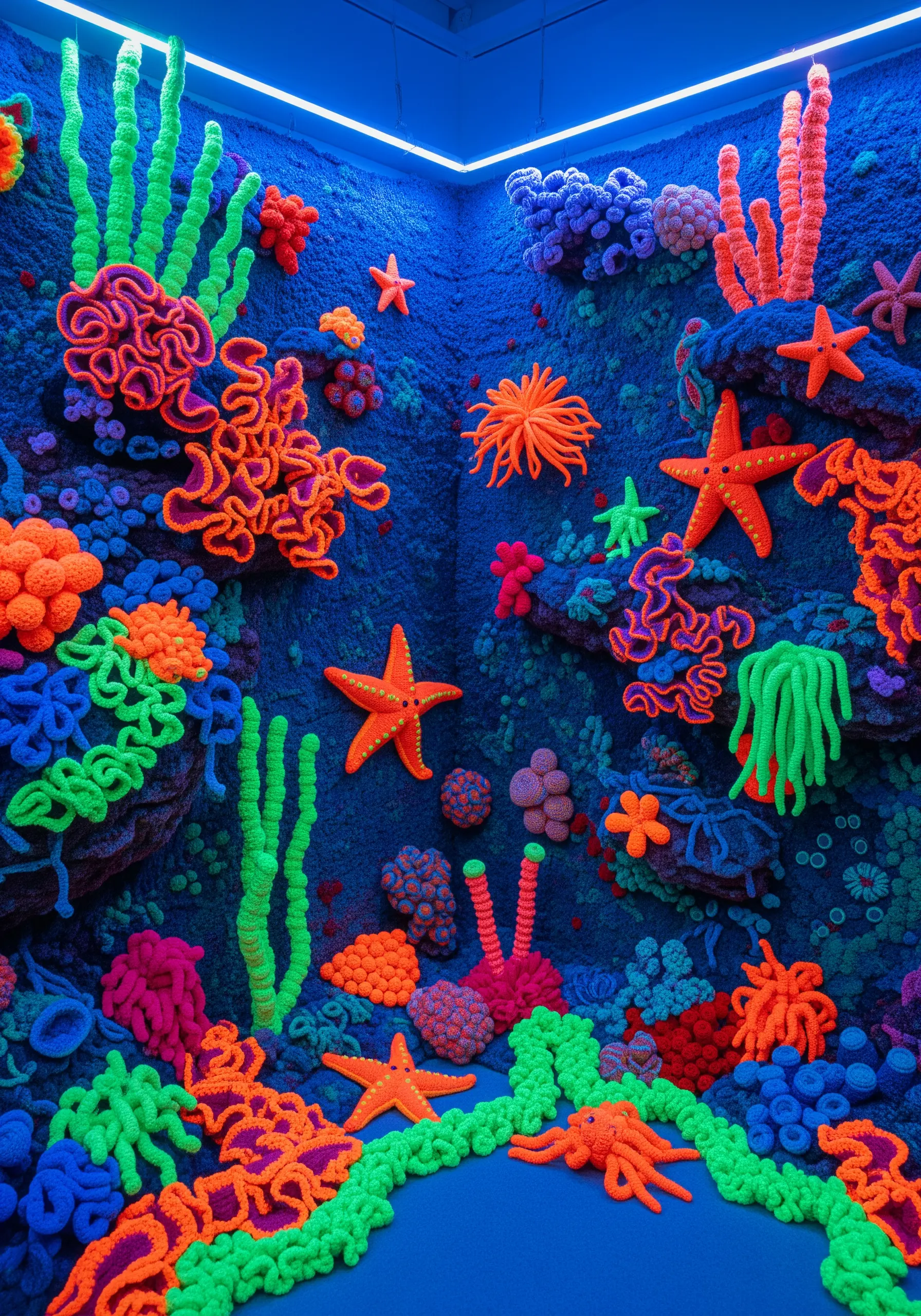
Recreate the magic of a coral reef with crochet, knitting, and fluorescent yarn.
Use freeform crochet techniques—like hyperbolic crochet (repeatedly increasing stitches in each row)—to create the undulating, organic shapes of coral and sea anemones.
Experiment with different stitches like bobbles, picots, and French knots to mimic the varied textures of marine life.
Install the pieces on a dark background and light them with a blacklight to make the neon colors truly glow.
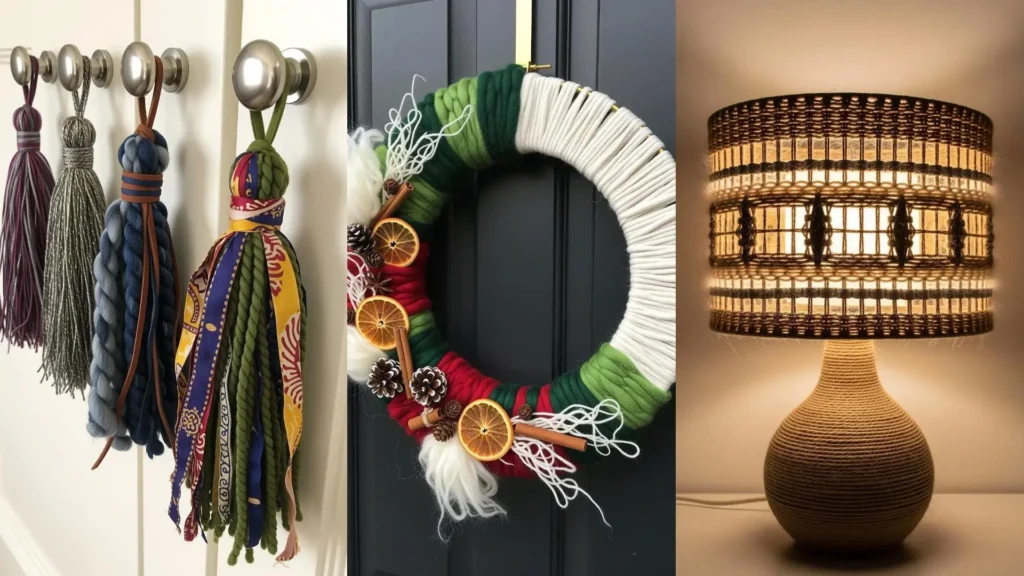
10. Construct a Tiered Tassel Chandelier
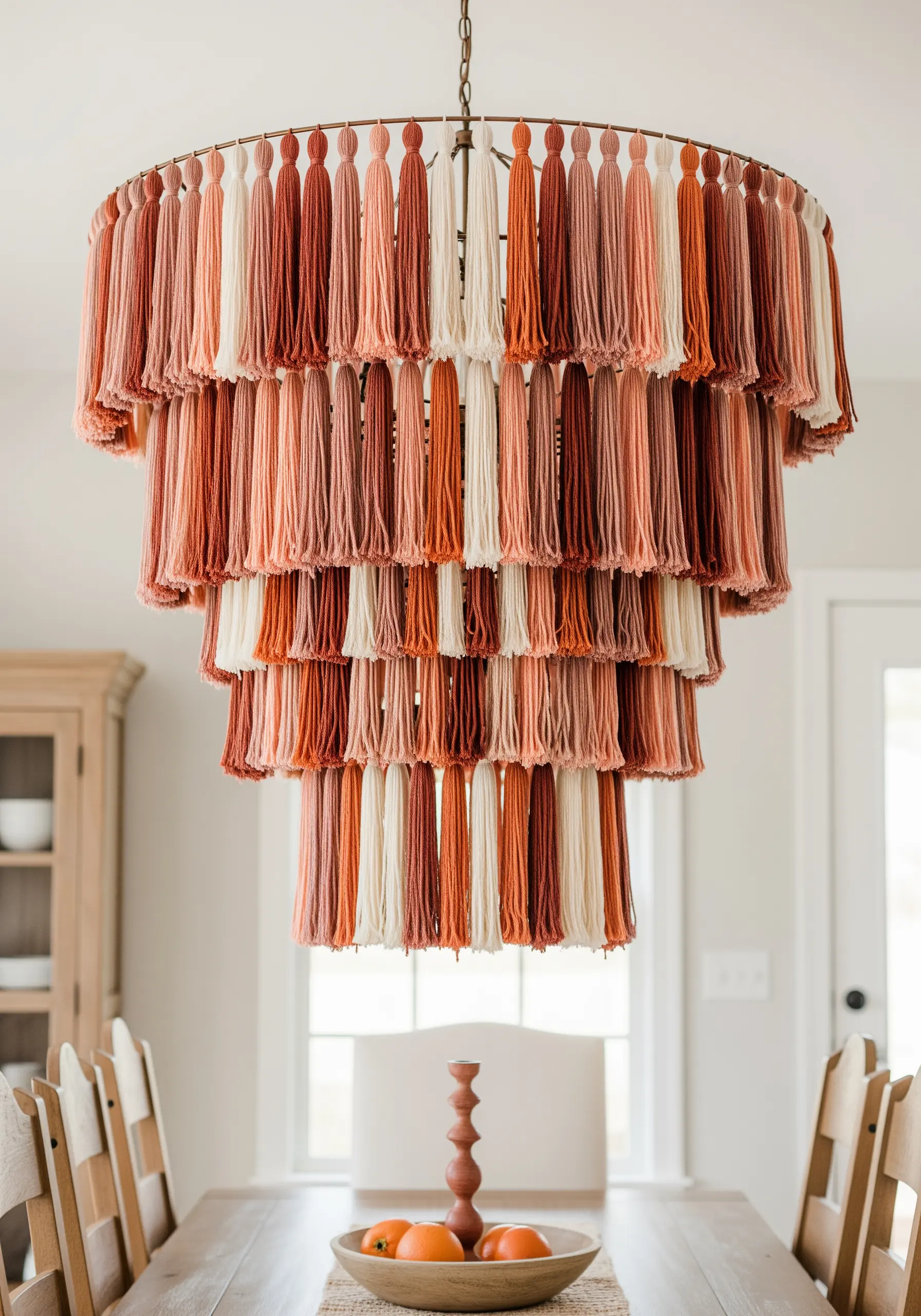
Elevate the humble tassel into a sophisticated lighting feature.
You’ll need a multi-tiered metal frame, like concentric wreath hoops or a repurposed lampshade frame.
Create dozens of uniform tassels from cotton or silk yarn for a sleek finish.
Attach the tassels evenly around each tier, either in a monochromatic scheme or a subtle ombré gradient, to create a cascade of texture and color that softens the light beautifully.
11. Engineer a Precision Gradient Yarn Wall

This minimalist installation is all about tension, precision, and the subtle power of color.
Install two parallel mounting bars, one at the ceiling and one at the floor.
Tie individual strands of fine yarn or thread to the top bar, letting them hang straight down before securing them to the bottom bar.
Arrange thousands of strands side-by-side in a meticulous color gradient.
The effect is a solid wall of color that seems to shift and shimmer as you move past it, transforming thread into an atmospheric experience.
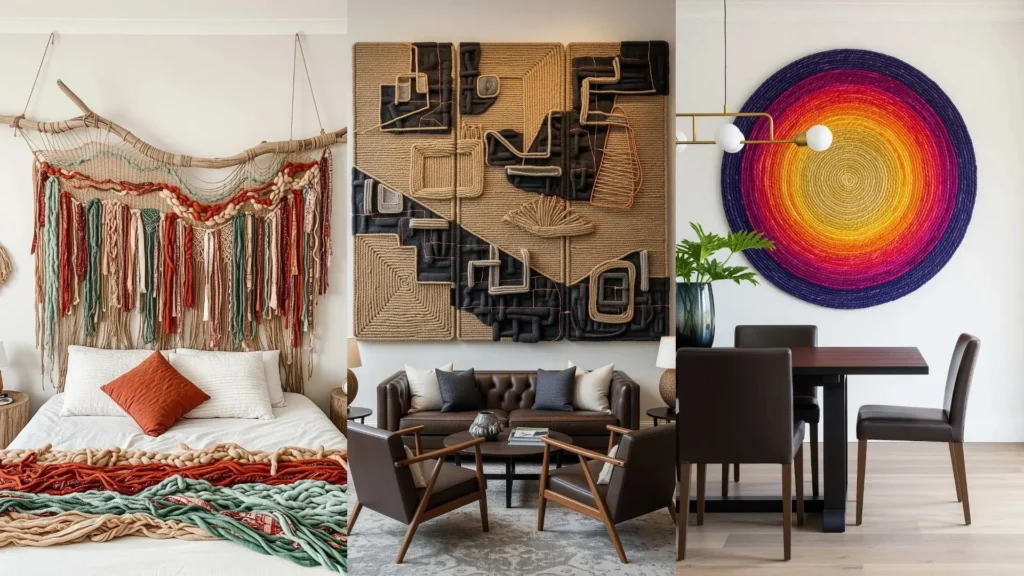
12. Weave a Chunky, Cloud-Like Headboard
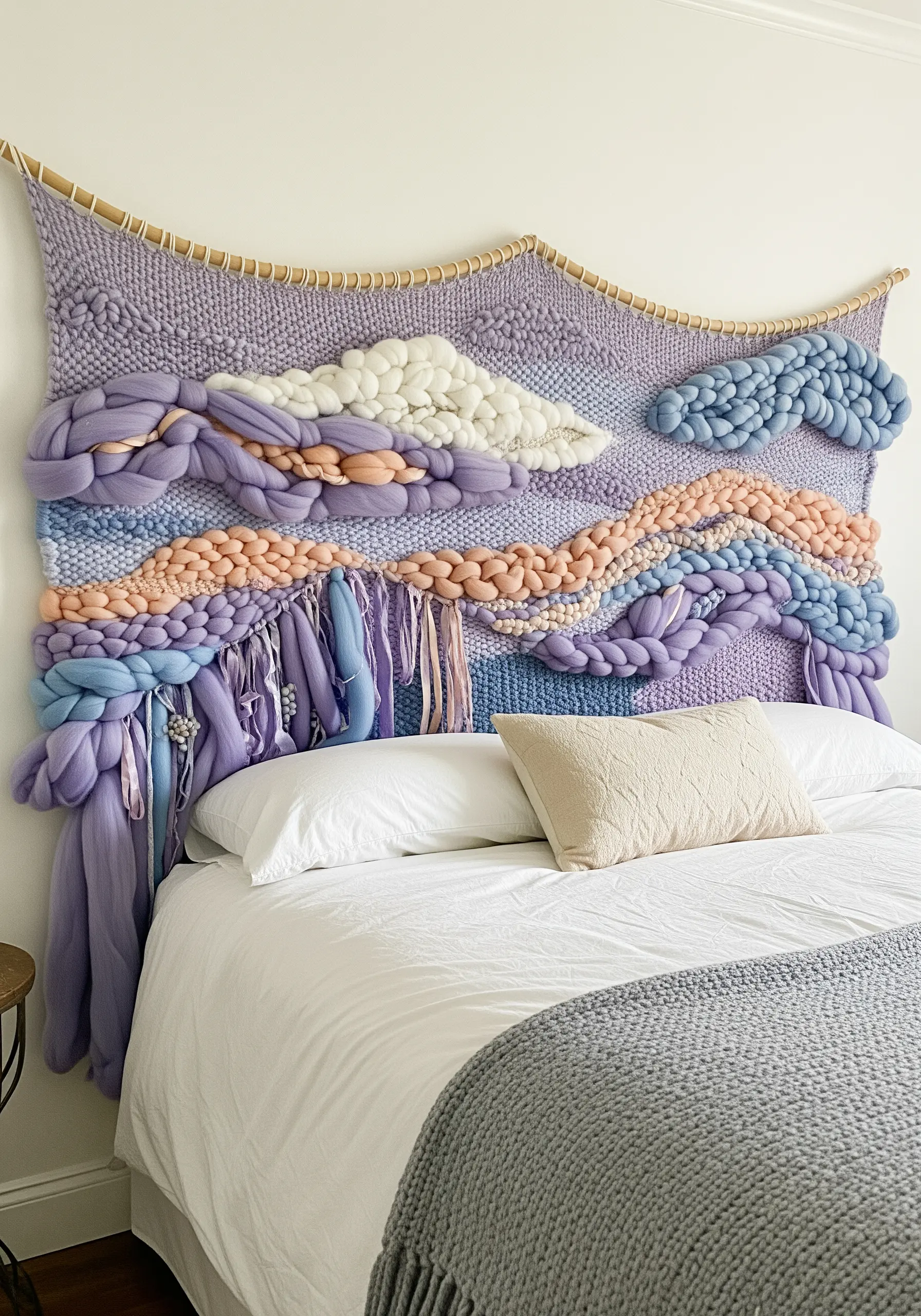
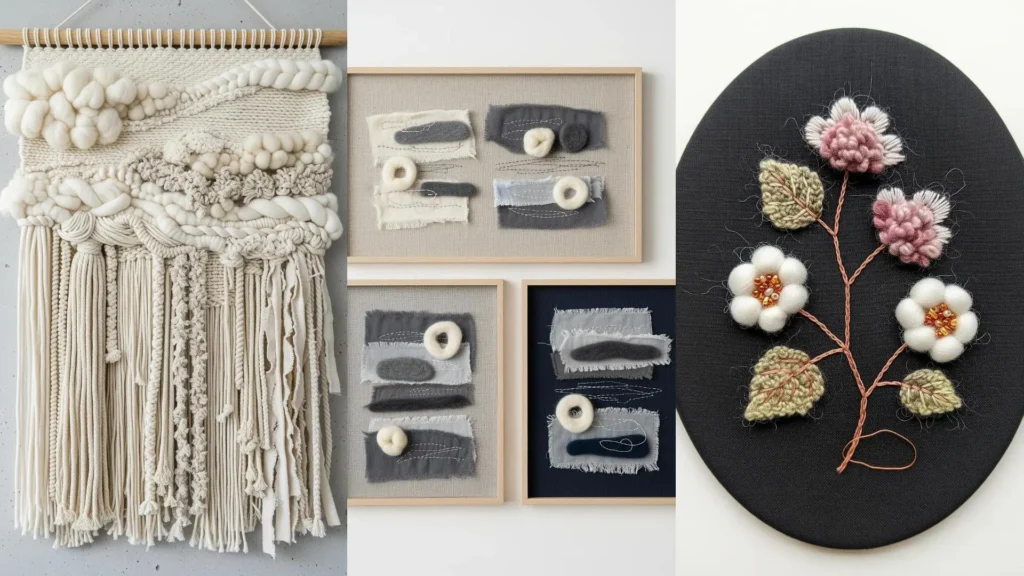
Create a soft, sculptural headboard using a large-scale weaving frame or by attaching warp threads directly to a wooden dowel.
Use super chunky wool roving and thick yarns to weave organic, undulating shapes.
Incorporate different weaving techniques to build statement textured embroidery techniques: thick soumak braids for raised lines, voluminous roving for cloud-like puffs, and tightly packed plain weave for solid areas.
This turns a functional object into a cozy, touchable work of art.
13. Cultivate a Knitted Cactus Garden

Create a charming, maintenance-free garden by knitting your own succulents.
Use basic knitting stitches—stockinette for smooth surfaces, ribbing for texture—to create simple tubes and spheres.
Stuff the knitted forms with batting and use shaping techniques, like sewing seams or pulling threads tight, to create iconic cactus silhouettes.
Add details like French knots for spines or small crocheted flowers, then ‘plant’ them in real terracotta pots for a whimsical display.
14. Activate an Architectural Space with Thread
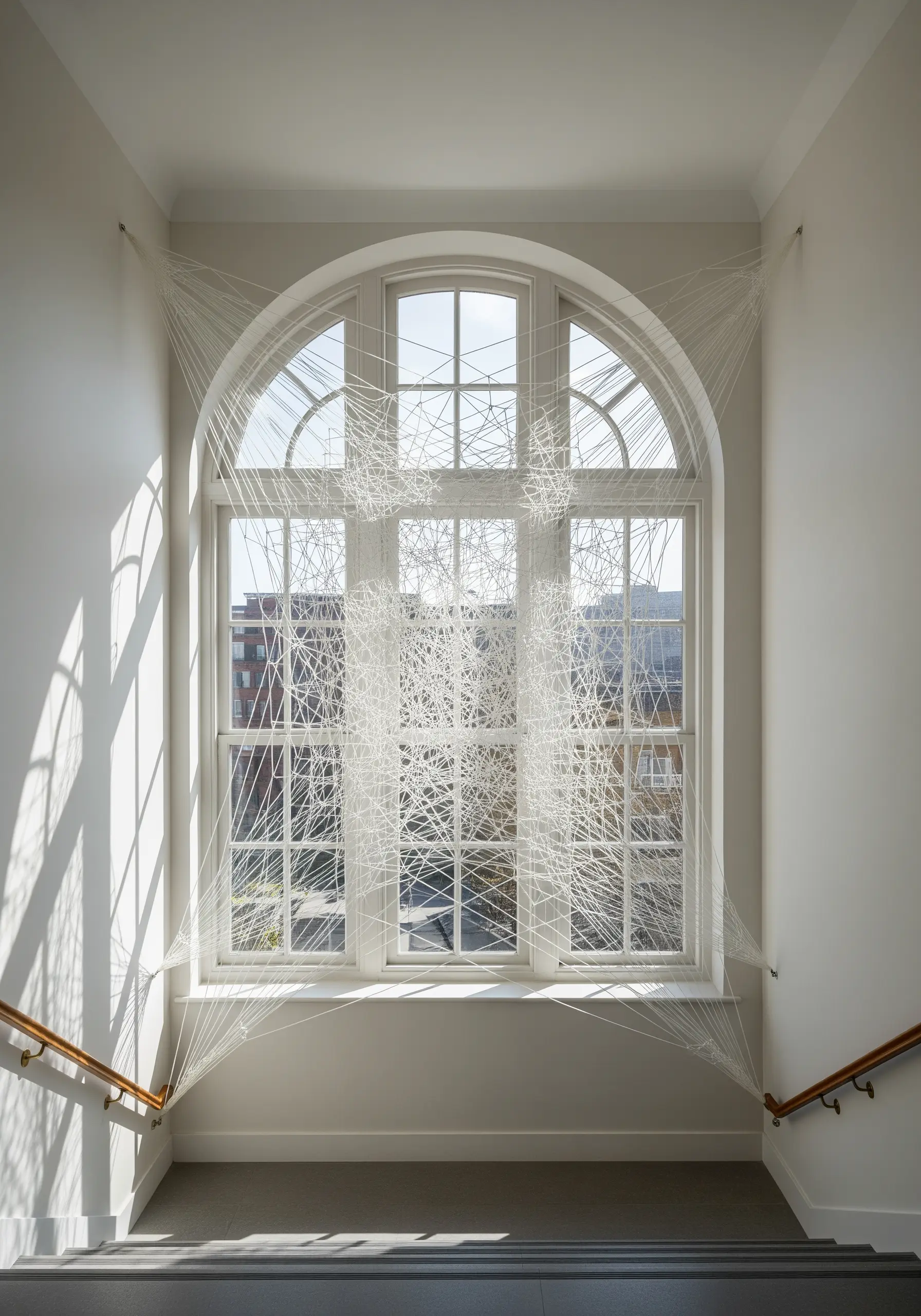
Use an existing architectural feature, like a window or alcove, as the canvas for a site-specific installation.
Install small hooks or nails around the frame of the feature.
Stretch a single, continuous strand of white or neutral yarn between the points in an irregular, almost chaotic pattern.
The resulting web of threads catches the light and creates a delicate, ghostly drawing in space that transforms how you perceive the room.
15. Sculpt a River of Felted Stones
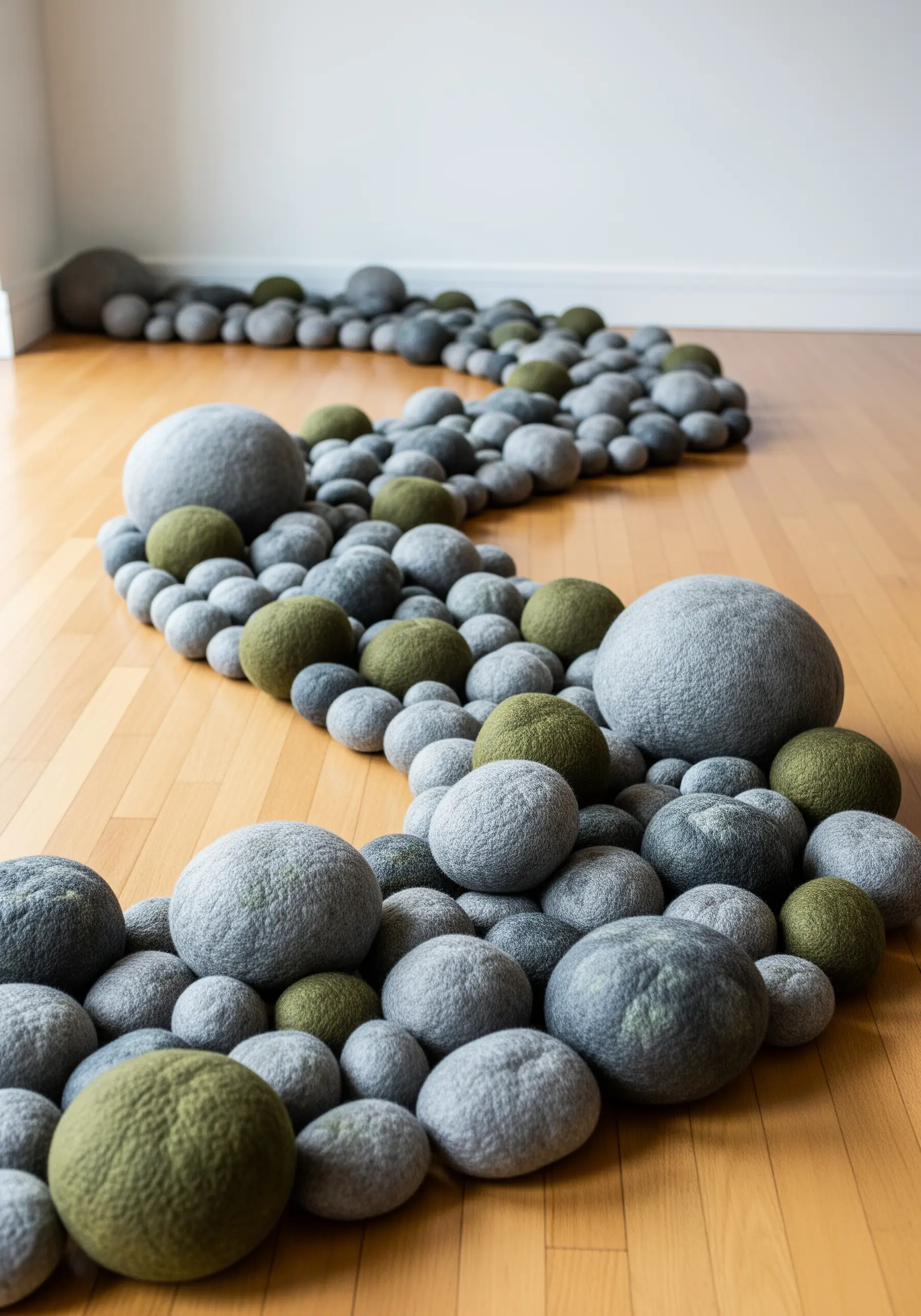
Explore the tactile art of felting to create soft, organic sculptures.
Using wool roving in shades of gray, green, and other natural tones, create stone shapes through wet felting (using soap, hot water, and agitation) or needle felting.
Vary the sizes and shapes dramatically, from small pebbles to large boulders.
Arrange your finished felted stones on the floor in a meandering, river-like path that invites interaction and brings a soft, natural element indoors.
16. Create an Ombré Dip-Dyed Wall Hanging
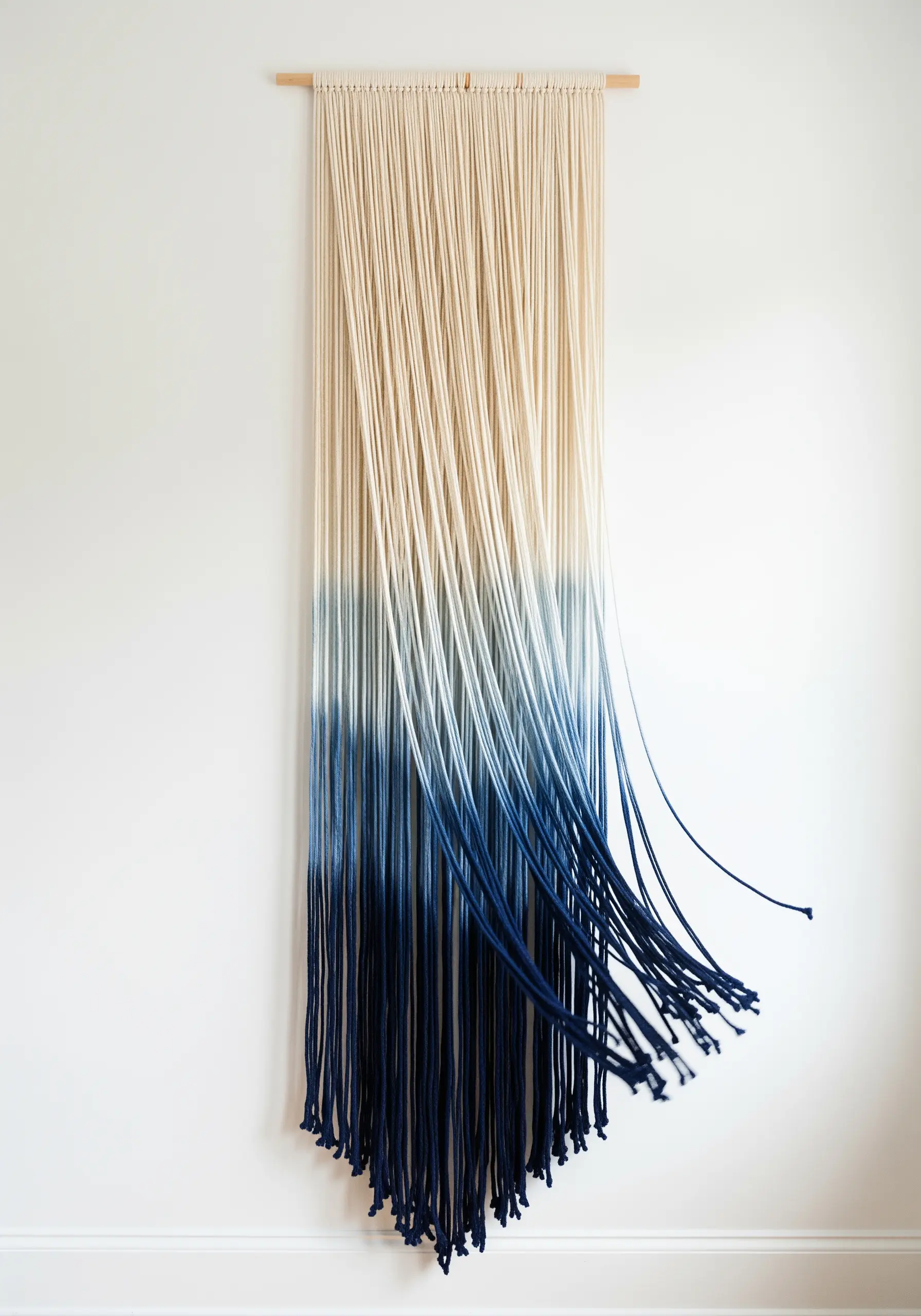
Combine the structure of macrame with the fluidity of dyeing for a stunning effect.
Create a simple wall hanging using natural cotton rope or thick yarn, focusing on long, straight-hanging strands rather than intricate knots.
Prepare a dye bath with your chosen color and carefully dip the bottom portion of your hanging into the liquid.
Allow the dye to travel up the fibers via capillary action to create a soft, organic gradient from dark to light.
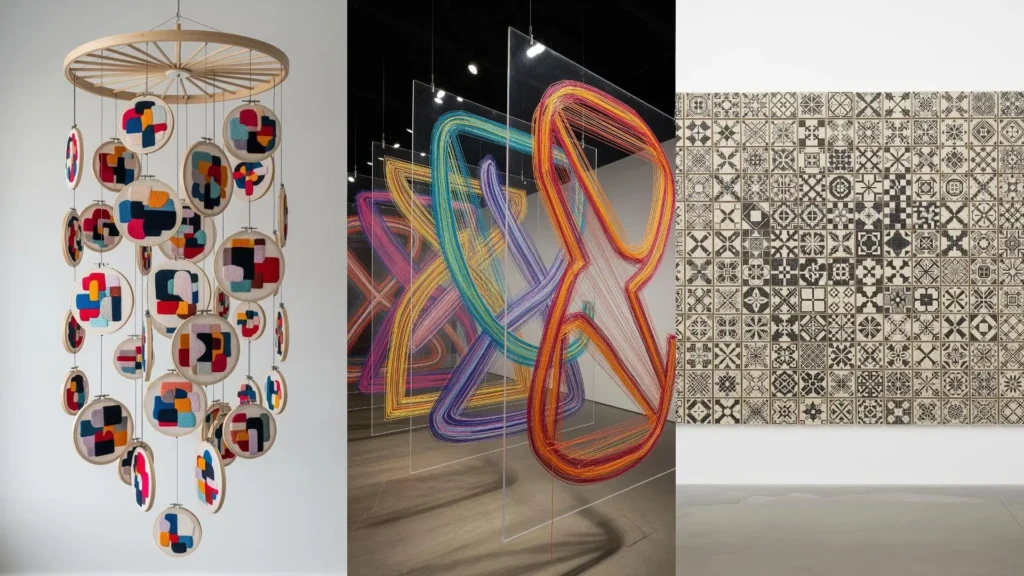
17. Construct a God’s Eye Mobile
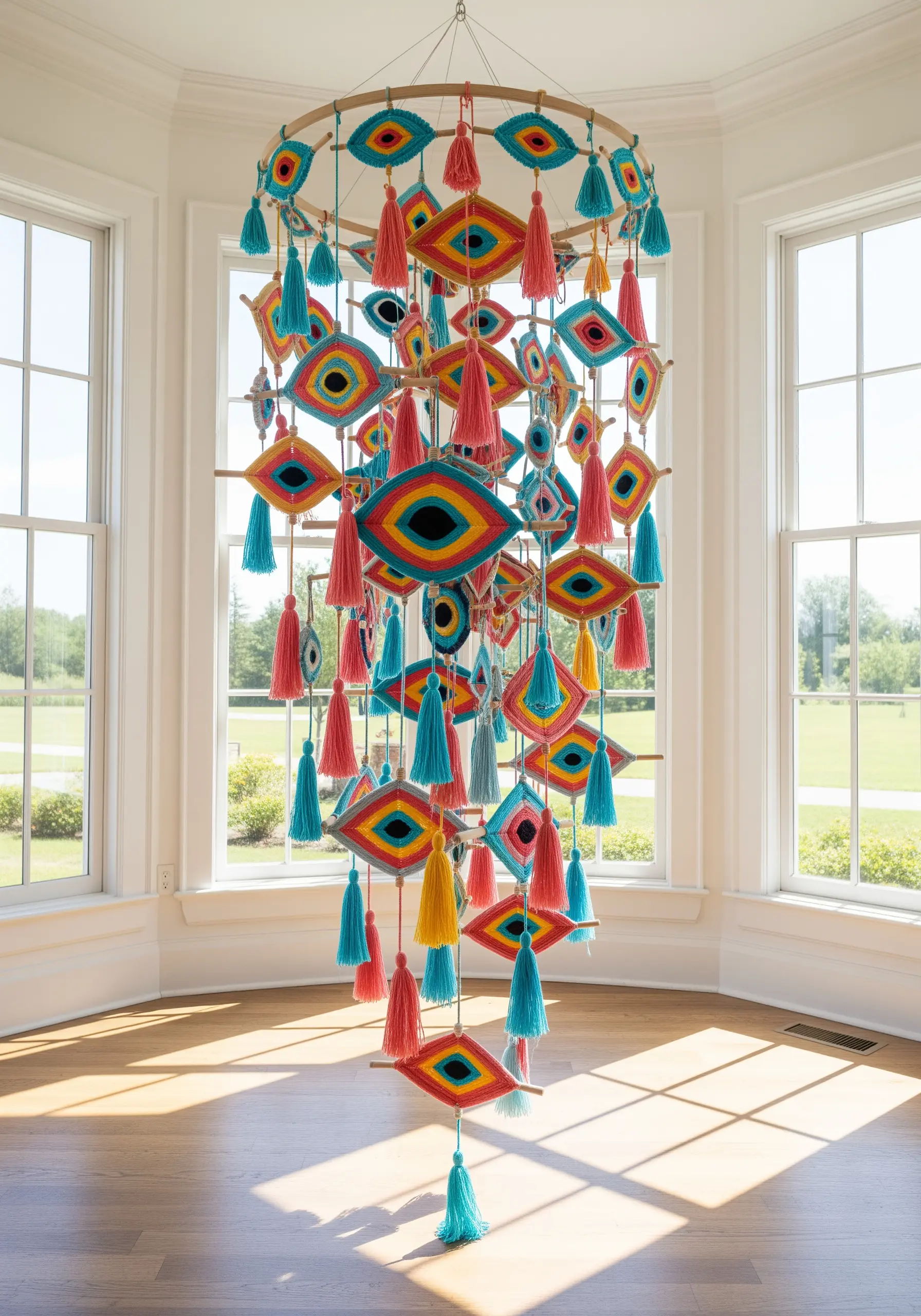
Reimagine the traditional Ojo de Dios (God’s Eye) craft as a large-scale kinetic sculpture.
Create individual God’s Eyes by weaving colorful yarn around two or more crossed sticks.
Experiment with different shapes by using more than two sticks or by varying the tension of your wrapping.
Connect the finished woven pieces with thread and hang them from a circular frame at varying lengths to create a vibrant, multi-layered mobile that spins gently in the air.
18. Define Space with Architectural Thread Lines
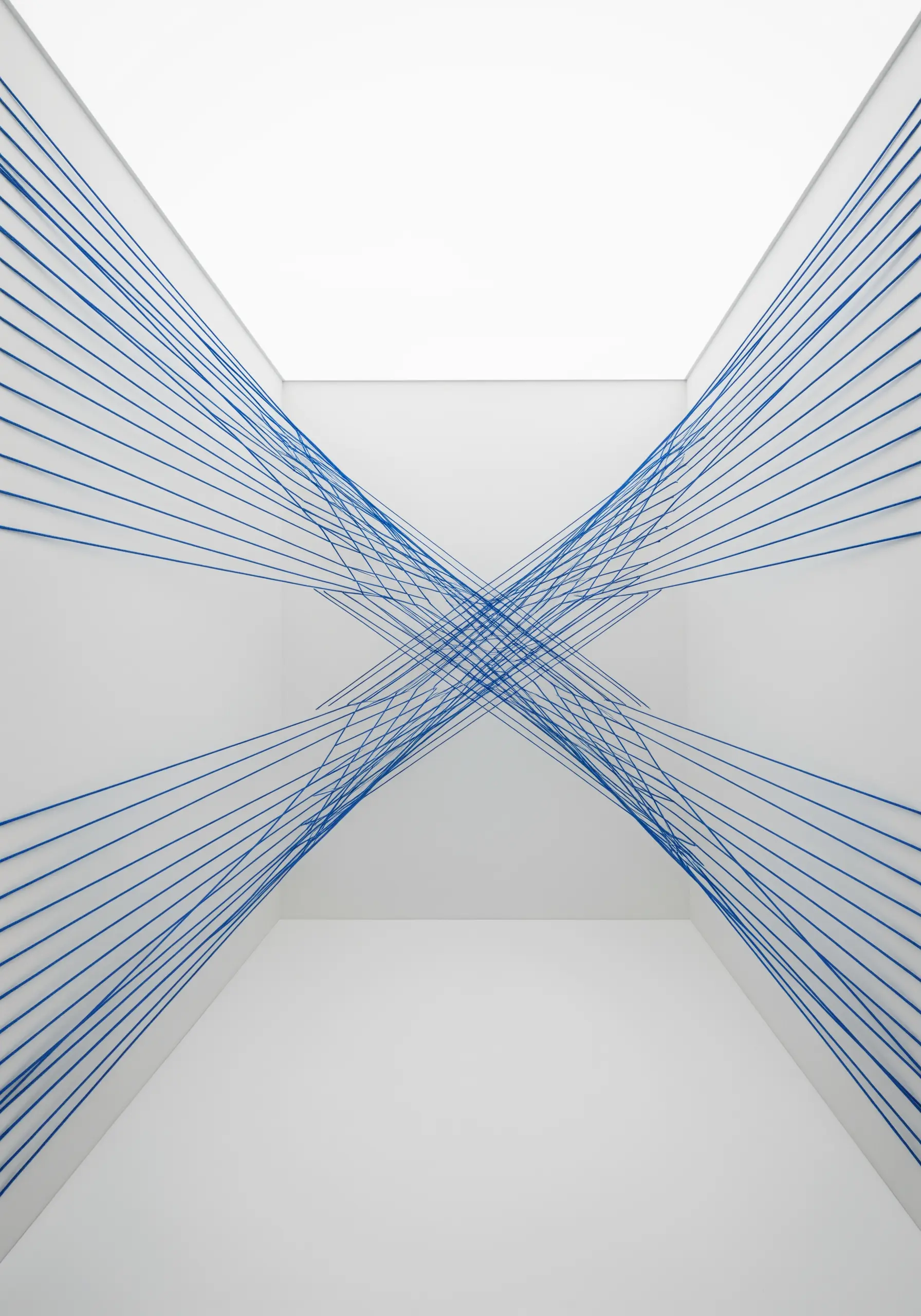
Use taut lines of string or yarn to create a minimalist yet powerful architectural intervention.
Choose two opposing surfaces in a room, such as parallel walls or the floor and ceiling.
Install anchor points (like eye hooks) on each surface and stretch single strands of colored yarn between them.
By crossing the lines and creating geometric patterns, you can craft an illusion of new planes and volumes, essentially drawing new architecture with thread.
19. Tuft a Plush, Graphic Wall Tapestry

Move beyond the floor and use rug-making techniques to create a highly textural piece of wall art.
Use a punch needle or a tufting gun to fill a stretched monk’s cloth canvas with densely packed loops of yarn.
Design a bold, graphic pattern with undulating lines and vibrant color blocks for a retro-modern feel.
The resulting high-pile texture absorbs sound and adds a unique, plush dimension to your walls, blurring the line between textile and sculpture.