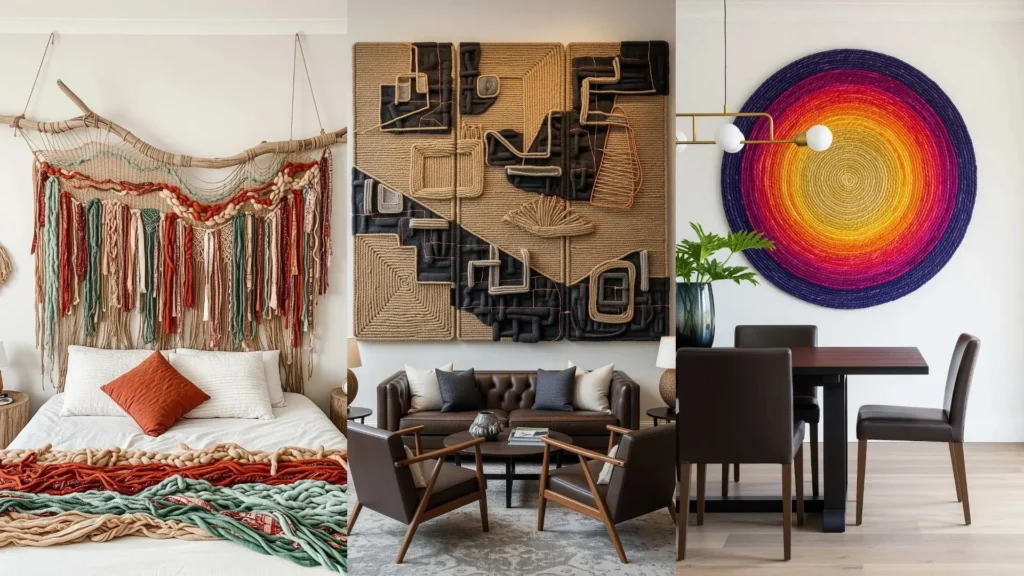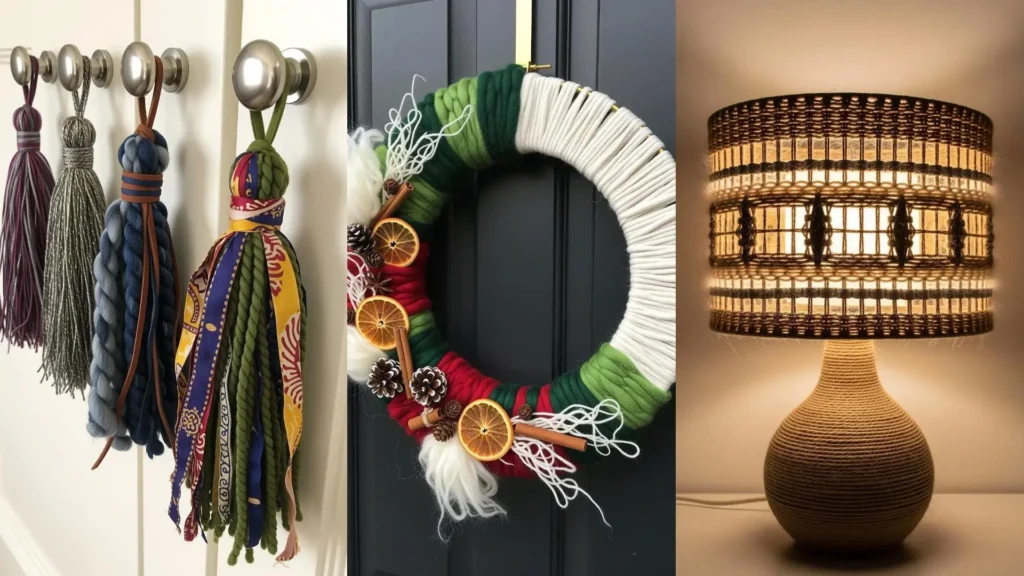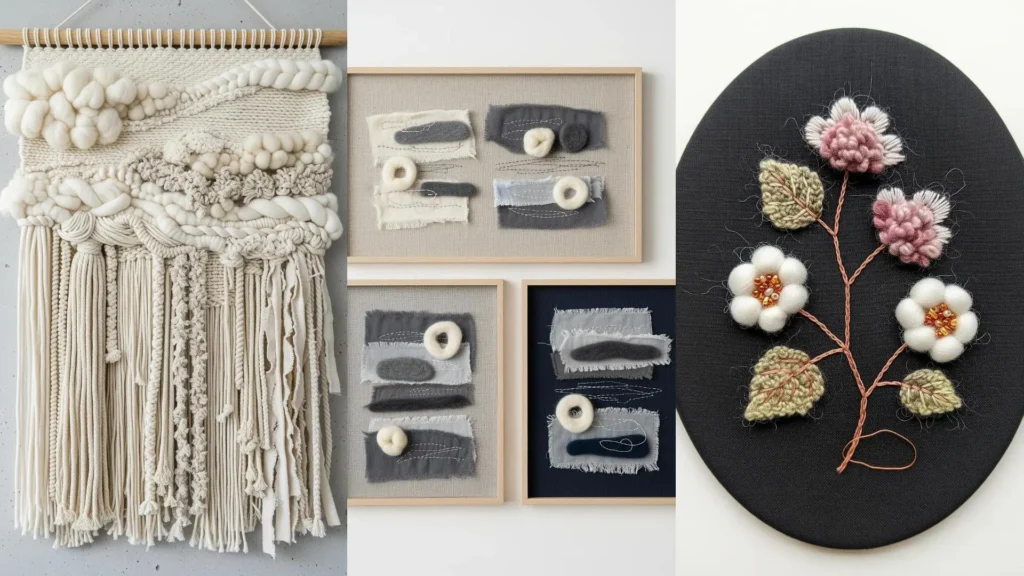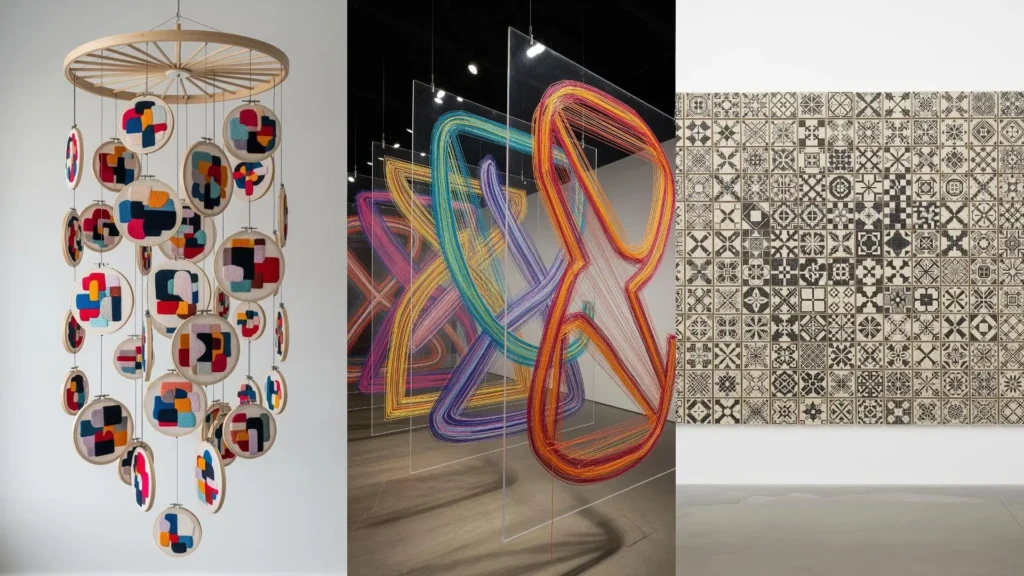
You don’t need a professional studio to create textile art that feels intentional and refined. Often, the simplest materials—yarn, wood, and a bit of structure—can be transformed into pieces that look perfectly at home on your gallery wall.
The secret lies in looking past the “craft” label and focusing on the fundamentals of fiber art: tension, color theory, and texture. By teaching your kids to wrap tighter, select colors with purpose, and finish edges cleanly, you are instilling an appreciation for quality craftsmanship.
These projects are designed to be accessible but scalable. Whether you are wrapping a simple letter or weaving a landscape, treat every strand as a brushstroke. Let’s elevate your family crafting time into a creative studio session.
1. Architectural balance in mobile design

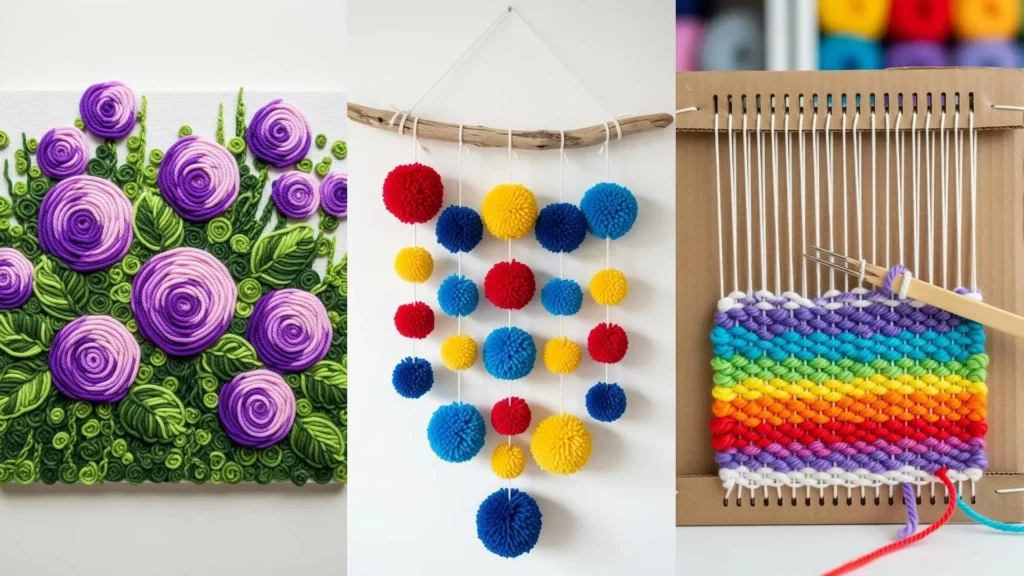
Creating a mobile isn’t just about stringing pom-poms; it is an exercise in weight and color distribution.
Use a sturdy piece of driftwood as your anchor to introduce an organic, grounded element to the bright yarn.
Vary the length of your suspension strings to create a cascading effect that draws the eye downward.
When selecting your palette, consider yarn wall art ideas to transform your bedroom into a cozy haven by using primary colors for a playful look or neutrals for a modern finish.
2. Precision wrapping for fiber rainbows

The difference between a messy craft and a piece of decor lies in the tension of your wrapping technique.
As you wrap the yarn around the rope core, keep the strands parallel and tight to prevent the white base from showing through.
Secure the ends with a hidden dab of glue or a tapestry needle tuck to maintain a seamless finish.
This technique mimics the structural beauty found in yarn wall art designs that blend modern and boho aesthetics perfectly.
3. Geometric tension studies with Ojo de Dios
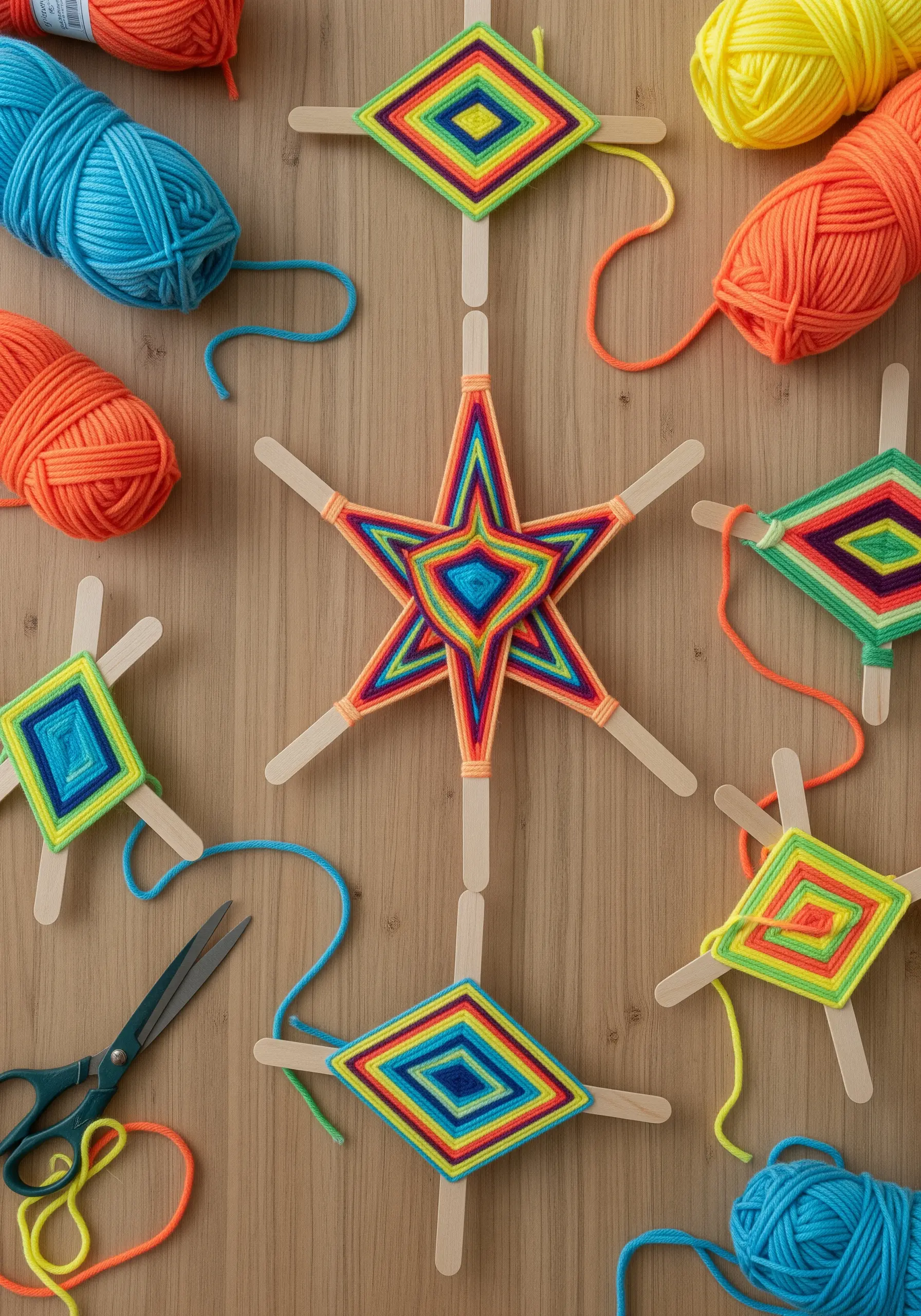
Treat these traditional structures as a study in radial geometry and tension control.
Ensure your crossing sticks are perpendicular before you begin to guarantee a symmetrical final shape.
Rotate your wrist consistently as you weave to keep the yarn lines sharp and the pattern distinct.
Experimenting with variegated yarn here can create geometric stitch patterns to transform tote bags into trendy street style fashion aesthetics later on.
4. Directional texture on typography
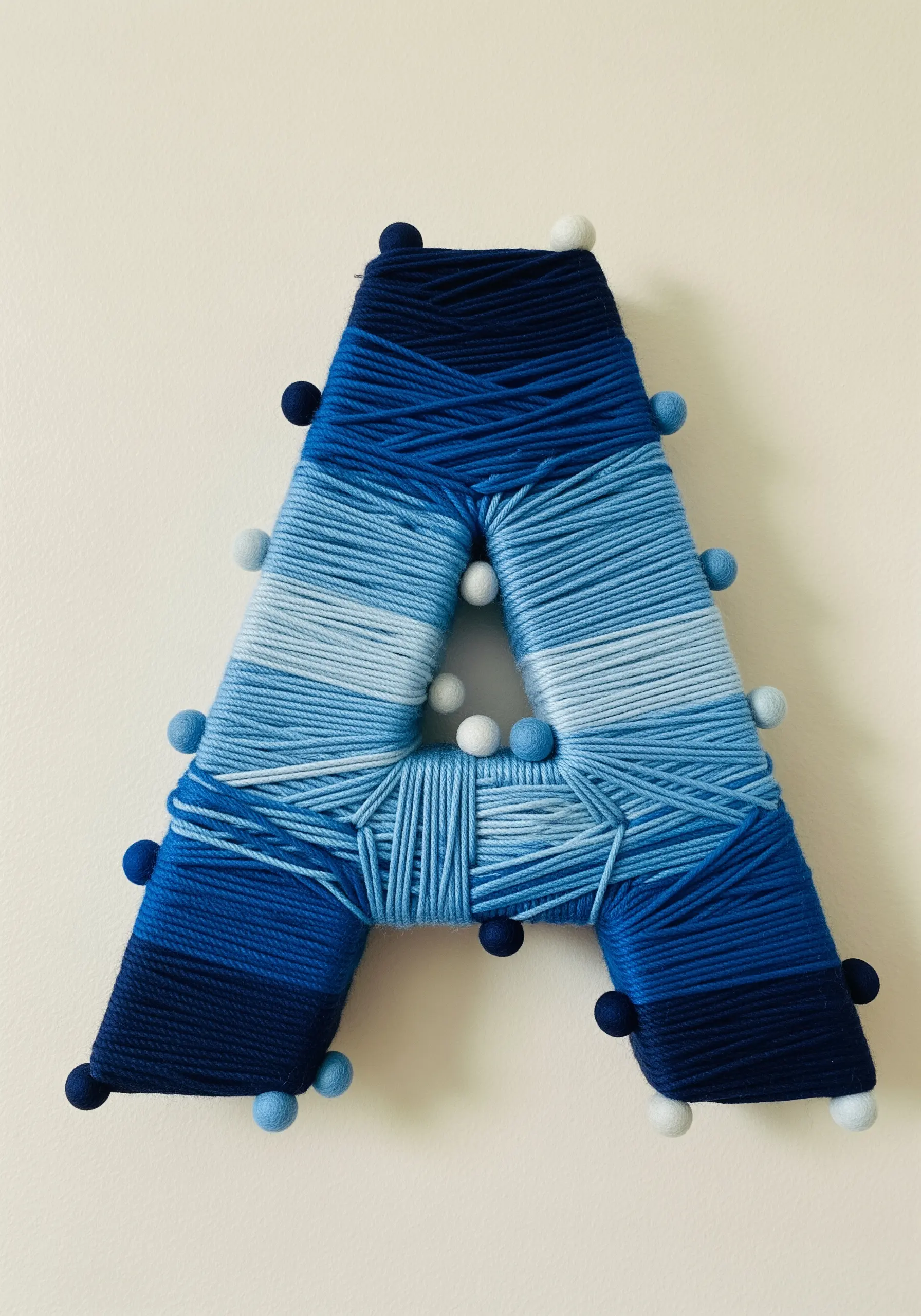
Wrapping letters requires a strategic approach to corners and curves to avoid gaps.
Switch the direction of your wrap at the joints of the letter to accentuate its architectural form.
Layering shades of blue creates a gradient effect that adds depth, preventing the piece from looking flat.
Mastering this wrapping method is the first step toward small hoop lettering ideas that make personalized wall art pop.
5. Organic weaving on natural frames

Abandon the rigid loom and use a forked branch to dictate the shape of your weaving.
Warp the threads tightly across the wood, allowing the natural curvature to create an interesting negative space.
Mix thick roving with standard yarn to introduce tactile contrast and visual weight.
Projects like this are excellent nature-inspired embroidery hoop art ideas to gift eco-lovers who appreciate raw materials.
6. Radial symmetry on a circular loom

Use a simple paper plate as a loom to teach the fundamentals of radial weaving.
The key here is not to pull the warp threads too tight, or the plate will buckle and distort the circle.
Alternating colors in concentric rings creates a hypnotic, mandala-like effect that is visually satisfying.
This accessible technique leads directly to creative small DIY decor ideas for your cozy nook.
7. Volume and drape in tassel construction

A tassel garland relies on the density of the yarn bundles to look luxe rather than sparse.
Cut your strips generously and ensure the head of the tassel is wrapped tightly for a defined silhouette.
Incorporate braided strands among the loose ones to add unexpected texture variety.
These elements are staples in bohemian tassel fringe pillow embroidery ideas for free-spirited decor lovers.
8. Controlled chaos in velvet texture

Using velvet or chenille yarn transforms a simple wrapping project into a tactile sensory experience.
Wrap in random directions to create a dense, multidirectional texture that catches the light differently.
This technique is about coverage; ensure the wire or cardboard base is completely obscured.
Such tactile pieces make for handmade embroidery gifts that will make anyone cry happy tears.
9. Mastering the plain weave gradient

The plain weave—over one, under one—is the foundation of all textile art.
To keep the edges straight, avoid pulling the weft thread too tight as you turn back; leave a small arc of yarn before beating it down.
Transition colors gradually to create a cohesive spectrum rather than disjointed stripes.
Learn these textured yarn wall art techniques that will elevate your space effortlessly.
10. Spiraled texture as fiber painting

treat yarn as a pigment by coiling it to create dense, impasto-like floral motifs.
Apply glue in sections and press the yarn firmly on its side to maximize surface texture.
Varying the size and tightness of the coils adds organic realism to the composition.
This approach mirrors yarn wall art ideas that look like gallery pieces at home.
11. Negative space in web design
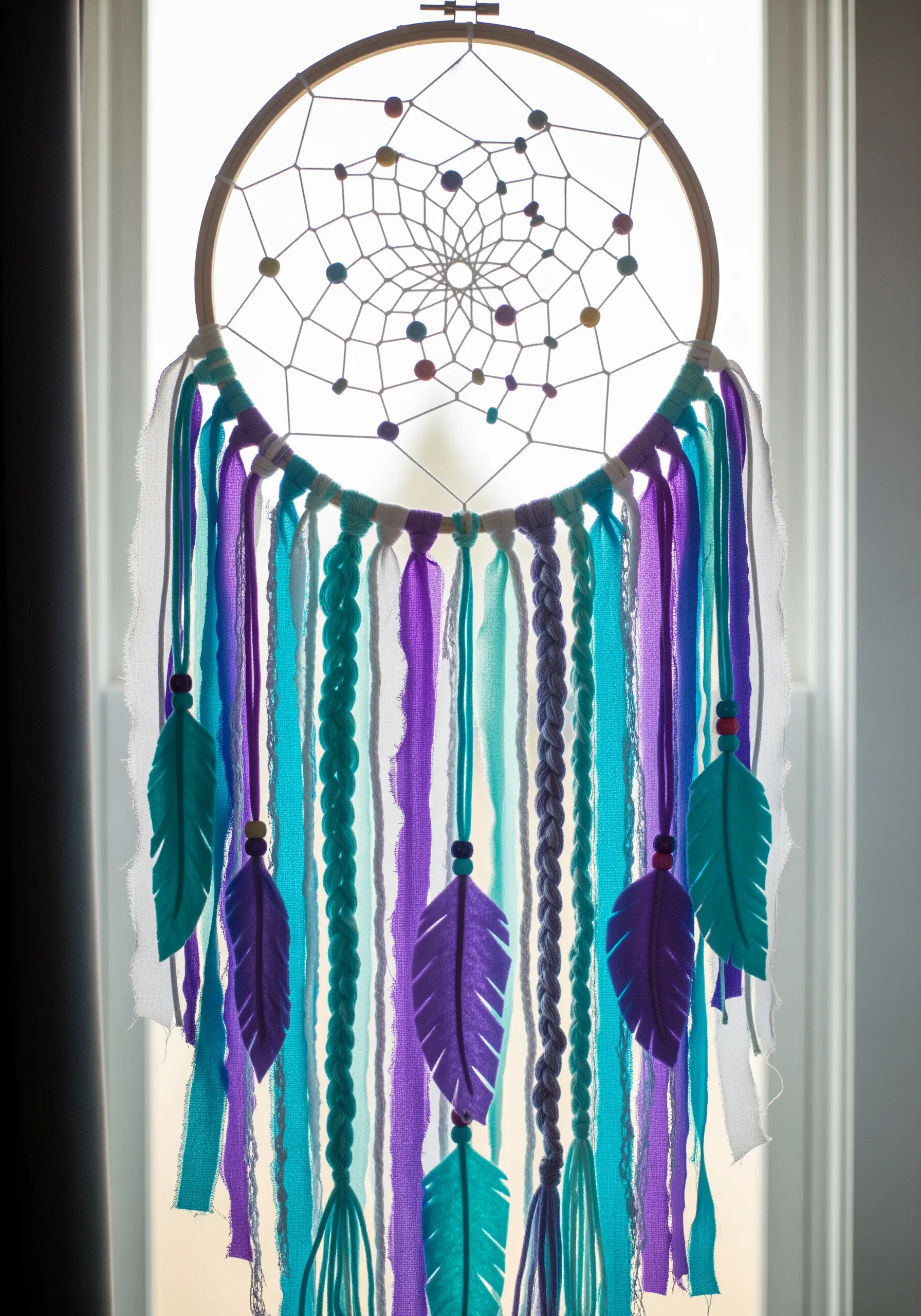
A dreamcatcher is a study in radial tension and the balance of negative space.
Keep your spacing consistent as you knot the web to ensure the center remains taut and centered.
When attaching the fringe, mix different textures—lace, yarn, and braid—for a rich, layered look.
12. Loop density in punch needle art

Punch needle embroidery creates a rug-like texture that depends entirely on loop consistency.
Keep your needle perpendicular to the fabric and do not lift it too high between stitches to maintain even loops.
Pack your rows of stitches close together so no fabric shows through, creating a solid block of color.
This technique creates fiber thread wall sculptures for artists who want 3D texture shadows.
13. Gradient flow in mobile art
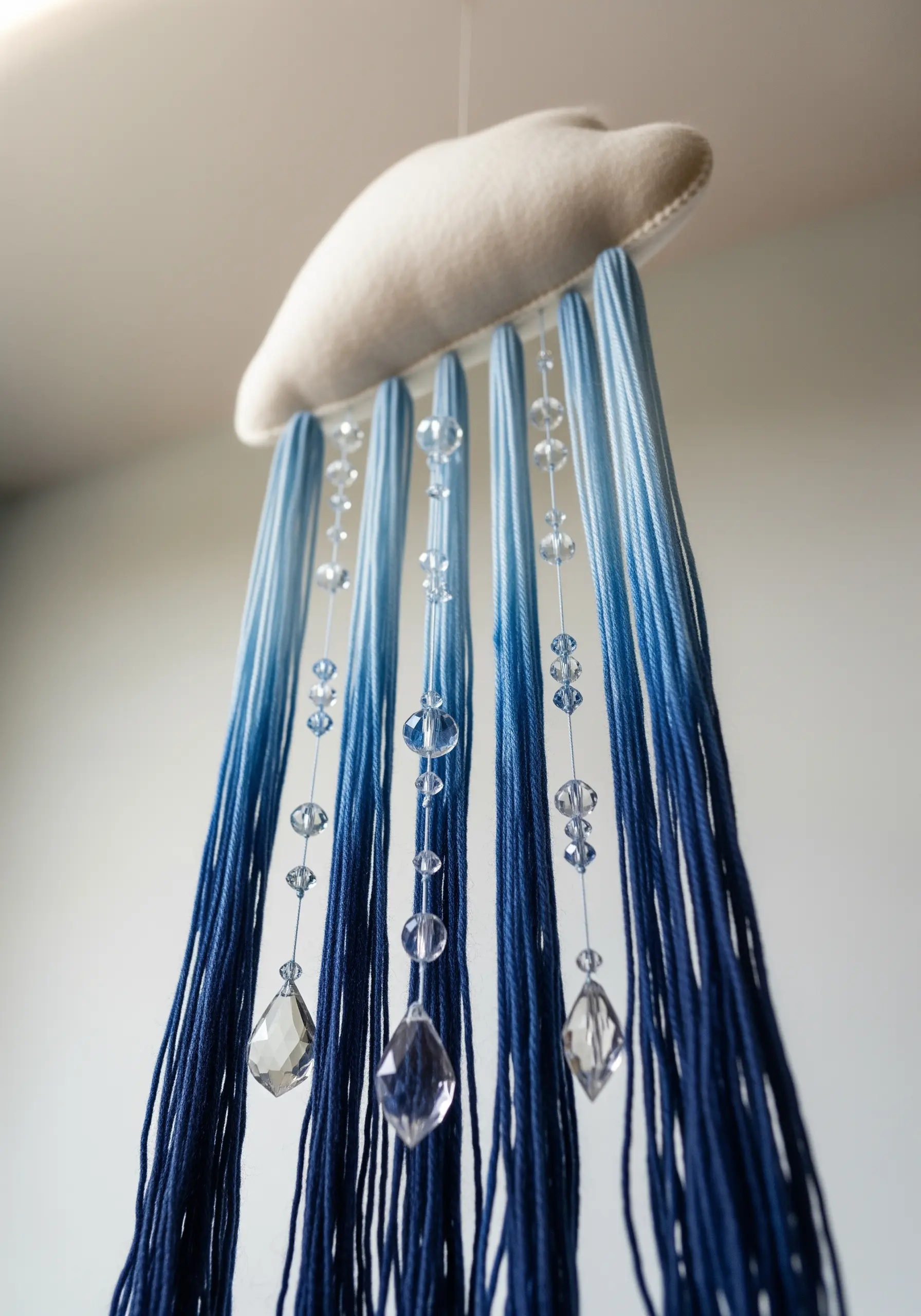
Use an ombre yarn palette to simulate the visual effect of rain falling from a cloud.
Incorporate clear beads at varying intervals to catch the light and add weight to the hanging strands.
The felt cloud acts as a soft anchor, contrasting with the vertical linearity of the yarn.
Designs like this utilize abstract thread motions based on wind, water, and gravity effects.
14. Geometric modular weaving

Stick weaving allows you to create modular geometric shapes that can be assembled into larger art pieces.
Focus on the corners; ensure the yarn wraps securely to maintain the sharp triangular silhouette.
Using high-contrast black and white yarn against mustard yellow creates a sophisticated modern aesthetic.
These are perfect minimalist stitched ideas inspired by geometry and nature.
15. Sculptural typography with French knitting

French knitting produces a hollow tube that can be filled with wire for structural possibilities.
Insert a sturdy aluminum wire into the knitted tube to allow you to bend and shape words or motifs.
Pin the shape in place before stitching or mounting to ensure the lettering remains legible.
This method transforms yarn into thread-based typography ideas for bold modern quotes that pop on canvas.
16. Functional macrame knotting
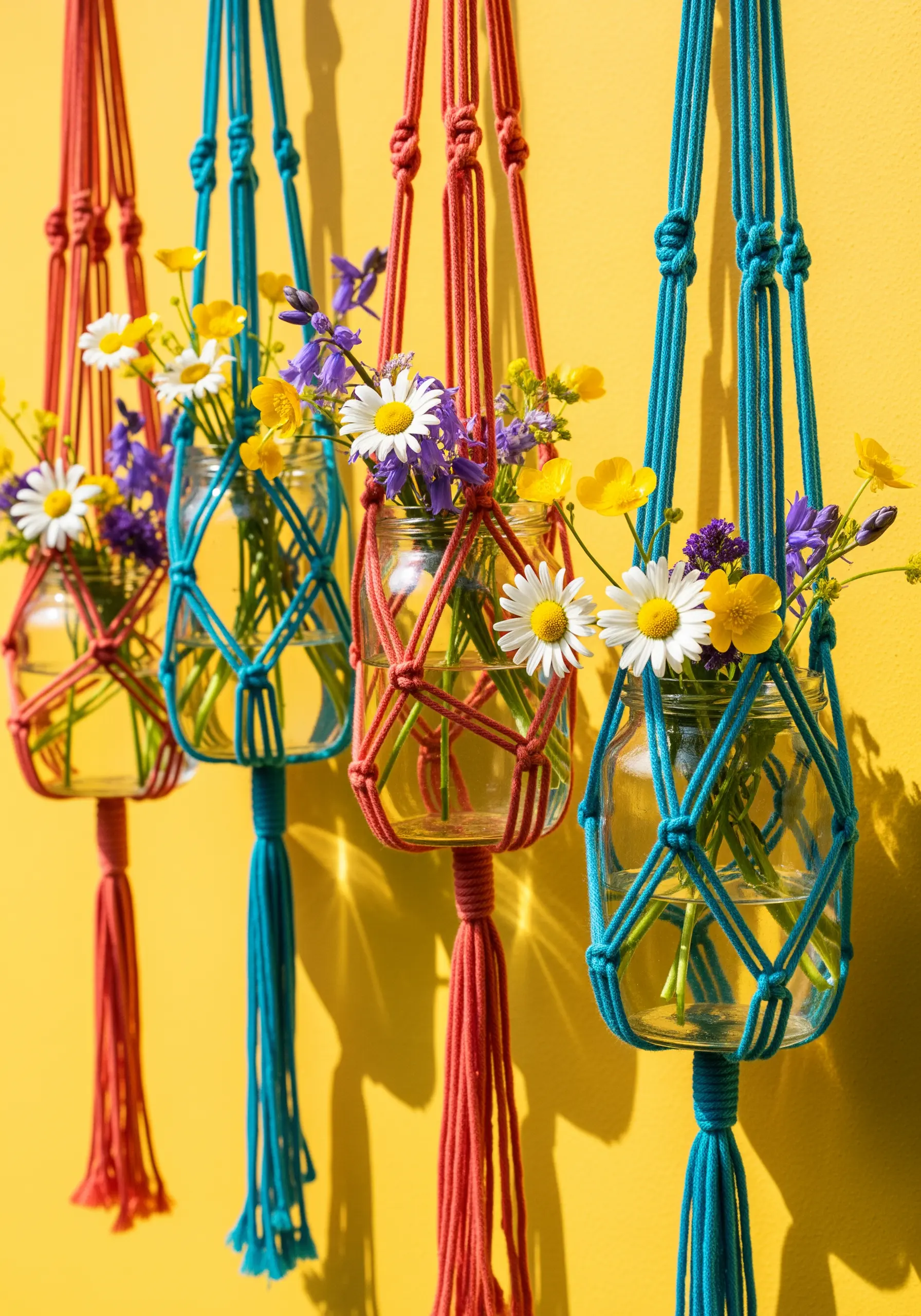
Macrame transforms yarn into a load-bearing structure through a series of square knots.
Ensure your knots are level on all sides so the glass jar hangs straight and secure.
Use a synthetic blend or cotton cord for durability, especially if the jar will hold water and flowers.
These are brilliant fiber art installations inspired by nature that will inspire your next project.
17. Composition in mixed-media fiber art
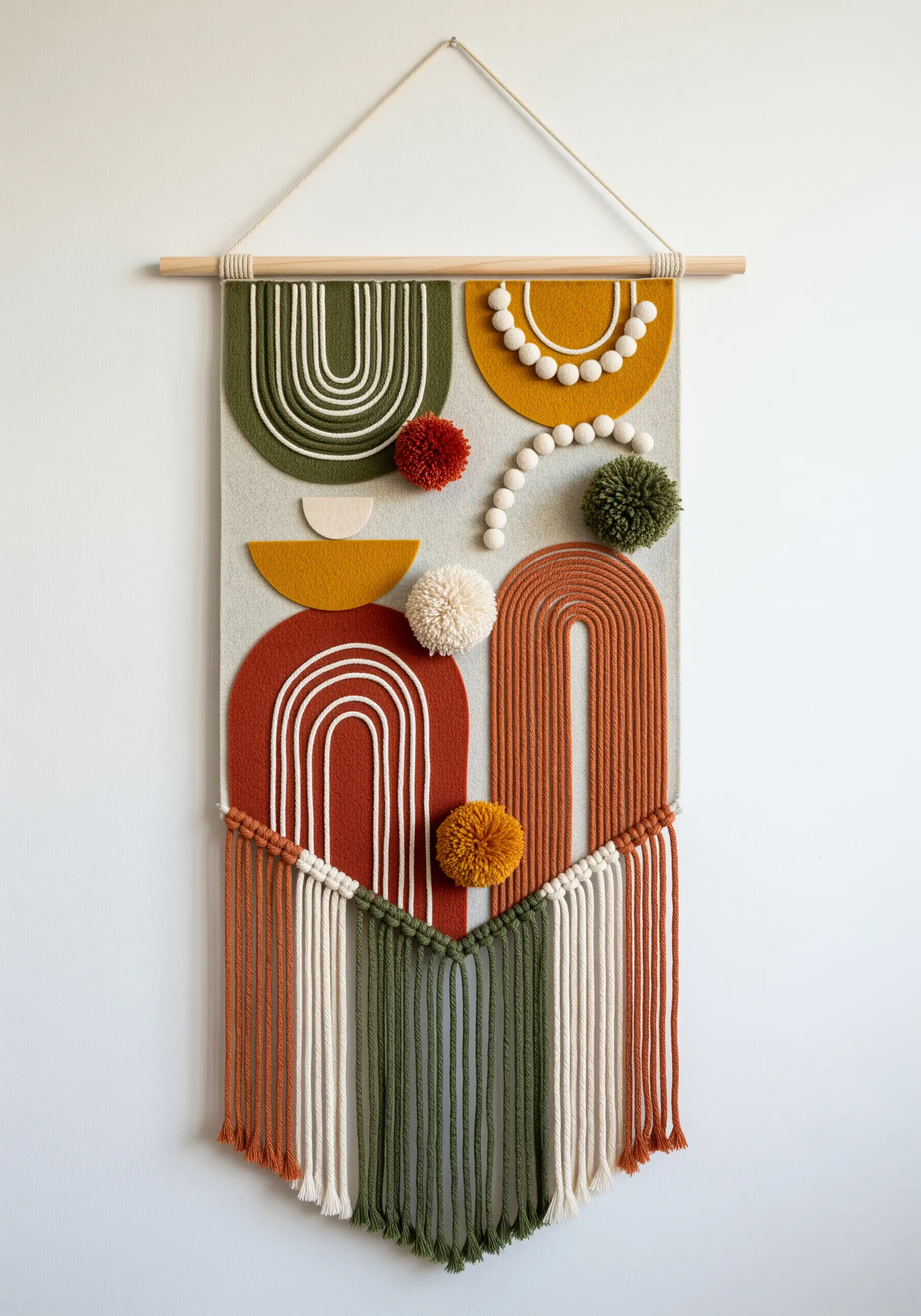
Combine flat felt shapes with three-dimensional yarn textures for a sophisticated wall hanging.
Use the ‘lark’s head knot’ to attach the bottom fringe, ensuring a uniform and clean starting point.
Balance the visual weight of the heavy yarn arches with the negative space of the background felt.
Create bold yarn wall art patterns that turn blank walls into statements using this layered approach.