You’ve mastered the stitches, and your hoops are beautiful, but you feel a pull toward something more. You want your work to move beyond the frame, to occupy space with texture, depth, and a presence that flat embroidery can’t quite capture.
This is where your artistry evolves. It’s time to think not just about the threads, but about the shadows they cast, the forms they can build, and the way they can transform a wall into a canvas for sculpture. You don’t need a new craft; you need a new perspective on the one you already love.
Here, you’ll discover how to use familiar materials in unfamiliar ways—coiling yarn into solid forms, letting gravity shape your compositions, and building textures that invite touch. These are not just ideas to admire; they are invitations to create art that has weight, dimension, and a life of its own.
1. Sculptural Coiling with Gradient Yarn
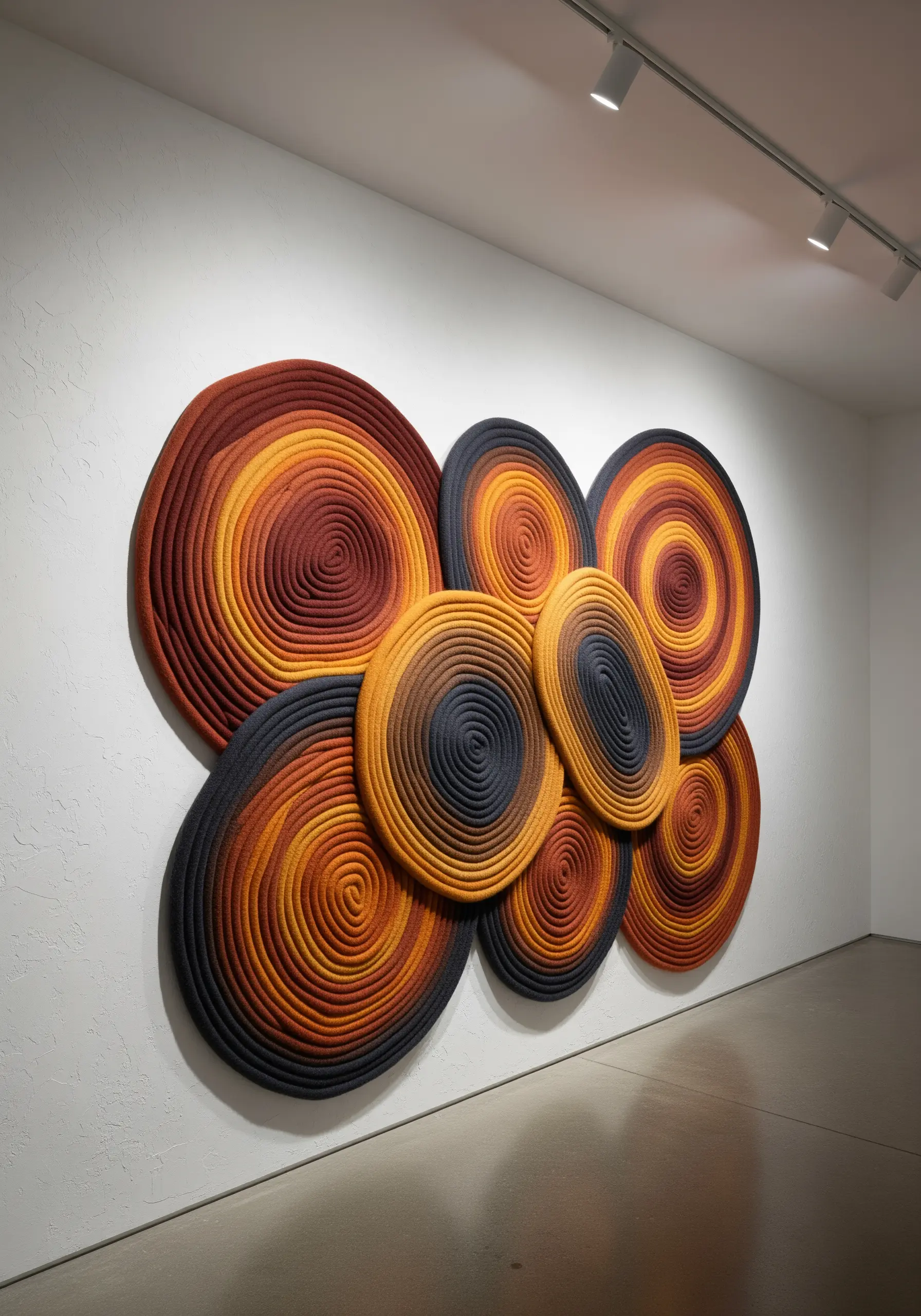
Create powerful, dimensional forms by coiling thick rope or piping and wrapping it tightly with yarn.
To achieve a seamless color flow, splice new yarn colors into the old by overlapping the ends for a few wraps—this avoids bulky knots.
The density of the wrap is key; a tight, consistent tension transforms flexible rope into a solid, sculptural element that commands attention on a gallery wall.
Arrange multiple coils in an overlapping cluster to create dynamic shadows and a sense of organic growth.
2. The Art of the Weighted Drape
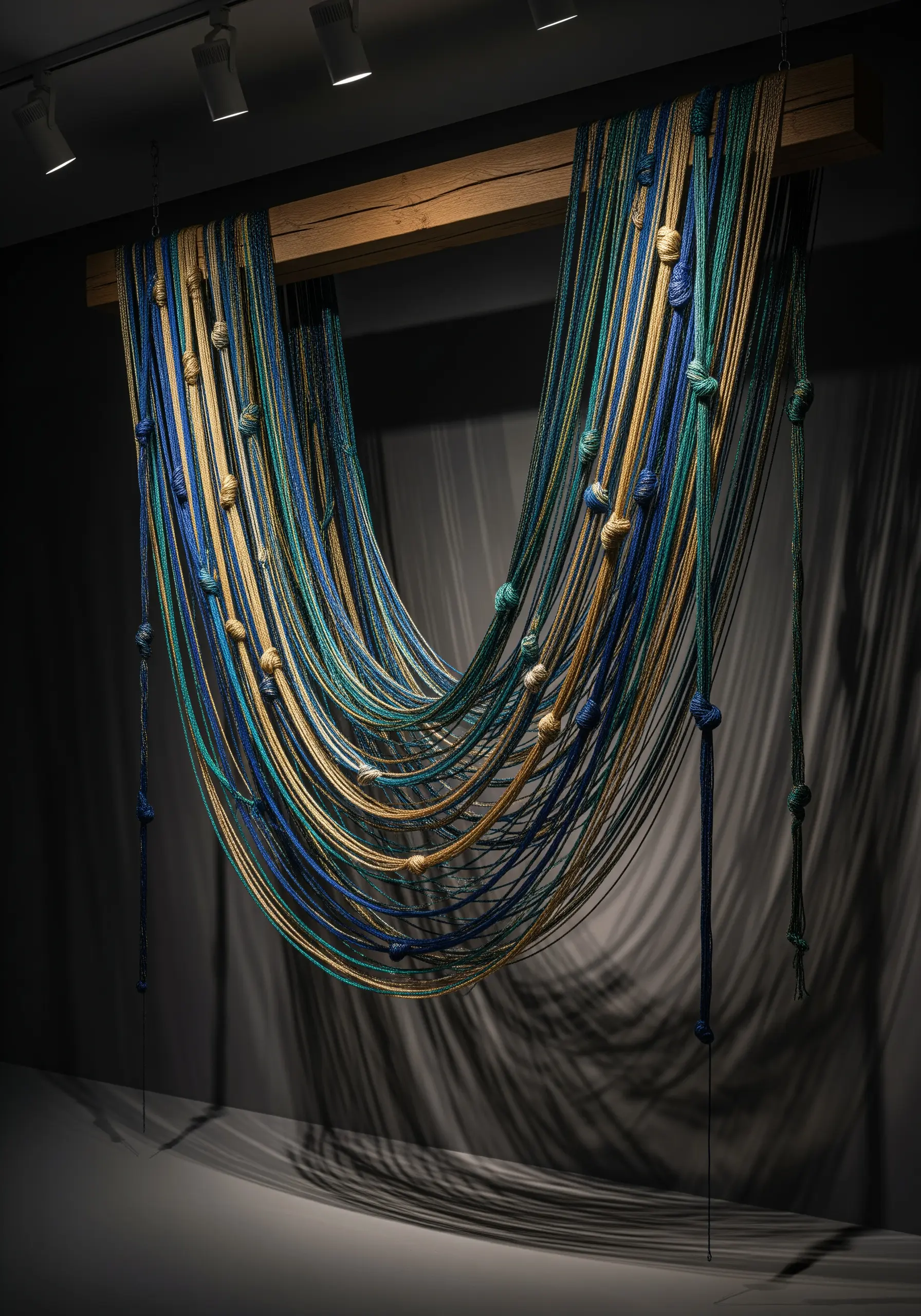
Move beyond flat textiles and let gravity become your primary design tool.
Suspend dozens of cords or thick yarns from a single point, like a reclaimed wood beam, allowing them to hang naturally.
Introduce visual rhythm by tying simple, bulky knots at varying intervals; these add weight, altering the drape and creating focal points.
Select a palette of analogous colors—like deep blues, teals, and golds—to create a composition that feels harmonious and fluid, even in its complexity.
3. Geometric Forms with Tufted Textures
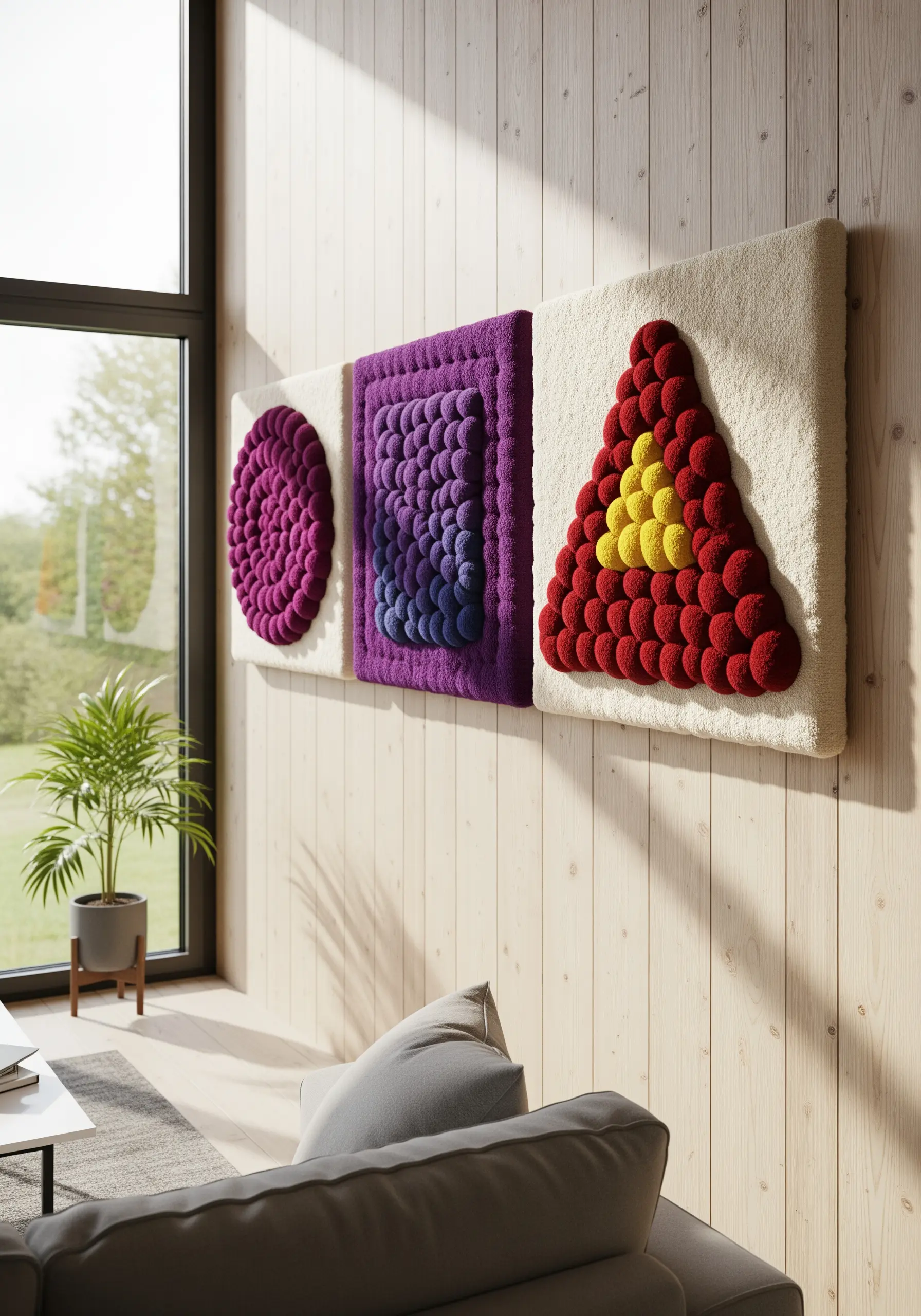
Combine hard geometry with soft texture for a stunning modernist statement.
On separate stretched canvases, create raised, spherical shapes using a dense turkey work stitch or by attaching handmade pom-poms.
Arrange these plush dots in precise patterns—a circle, a grid, a pyramid—to create a satisfying contrast between the playful texture and the rigid composition.
This technique elevates simple shapes into a tactile triptych that invites both sight and touch.
4. Macramé with Architectural Intention
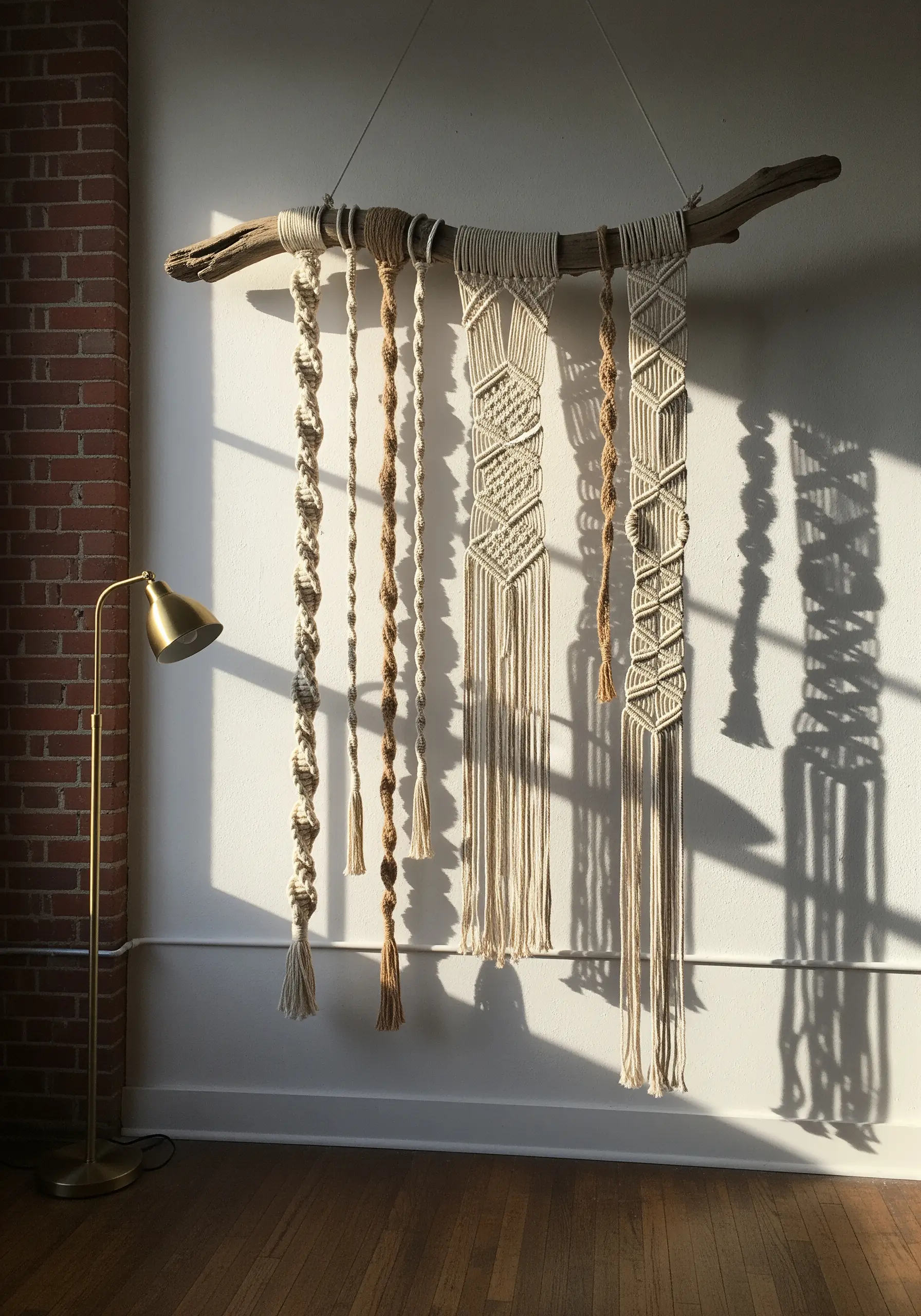
Elevate your macramé by thinking like an architect, using knots to build structure rather than just pattern.
On a natural branch, alternate sections of dense, repeating square knots with open, airy spaces where the cords hang straight.
This variation in density creates a dynamic play of light and shadow, turning the wall behind the piece into a secondary canvas.
Introduce a single contrasting thread color, like a warm jute against creamy cotton, to guide the eye and add subtle warmth.
5. Building Off-Canvas Coral Gardens
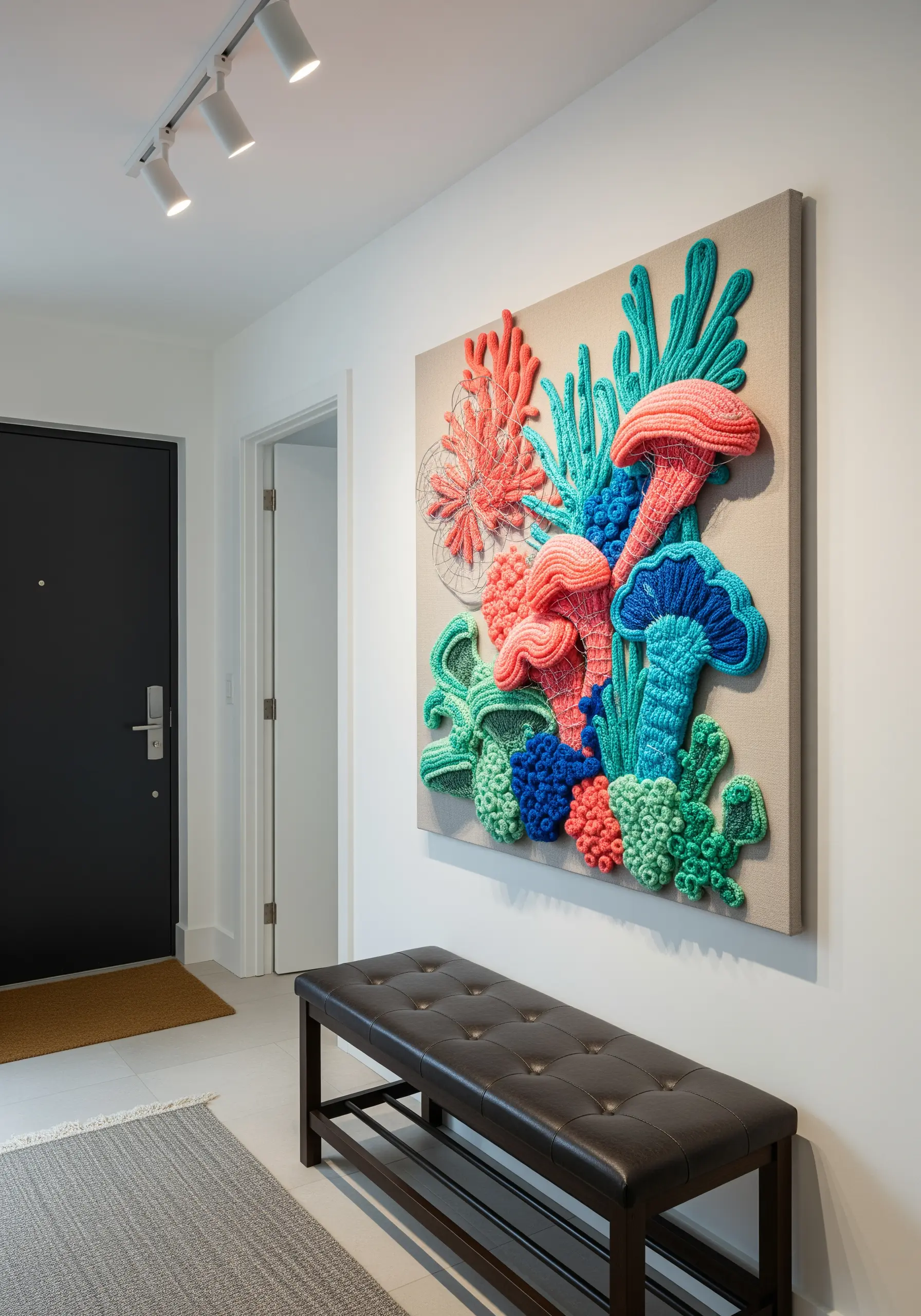
Bring your embroidery into the third dimension with sculptural crochet and stumpwork techniques that grow directly off the fabric.
Use hyperbolic crochet (repeatedly increasing stitches in each round) to create the organic, ruffled edges of fantastical coral and mushrooms.
For smoother, rounded forms, use padded satin stitch over felt or cotton batting to give your shapes tangible volume.
This mixed-technique approach results in a vibrant, tactile ecosystem that feels alive.
6. Weaving with Light and Shadow
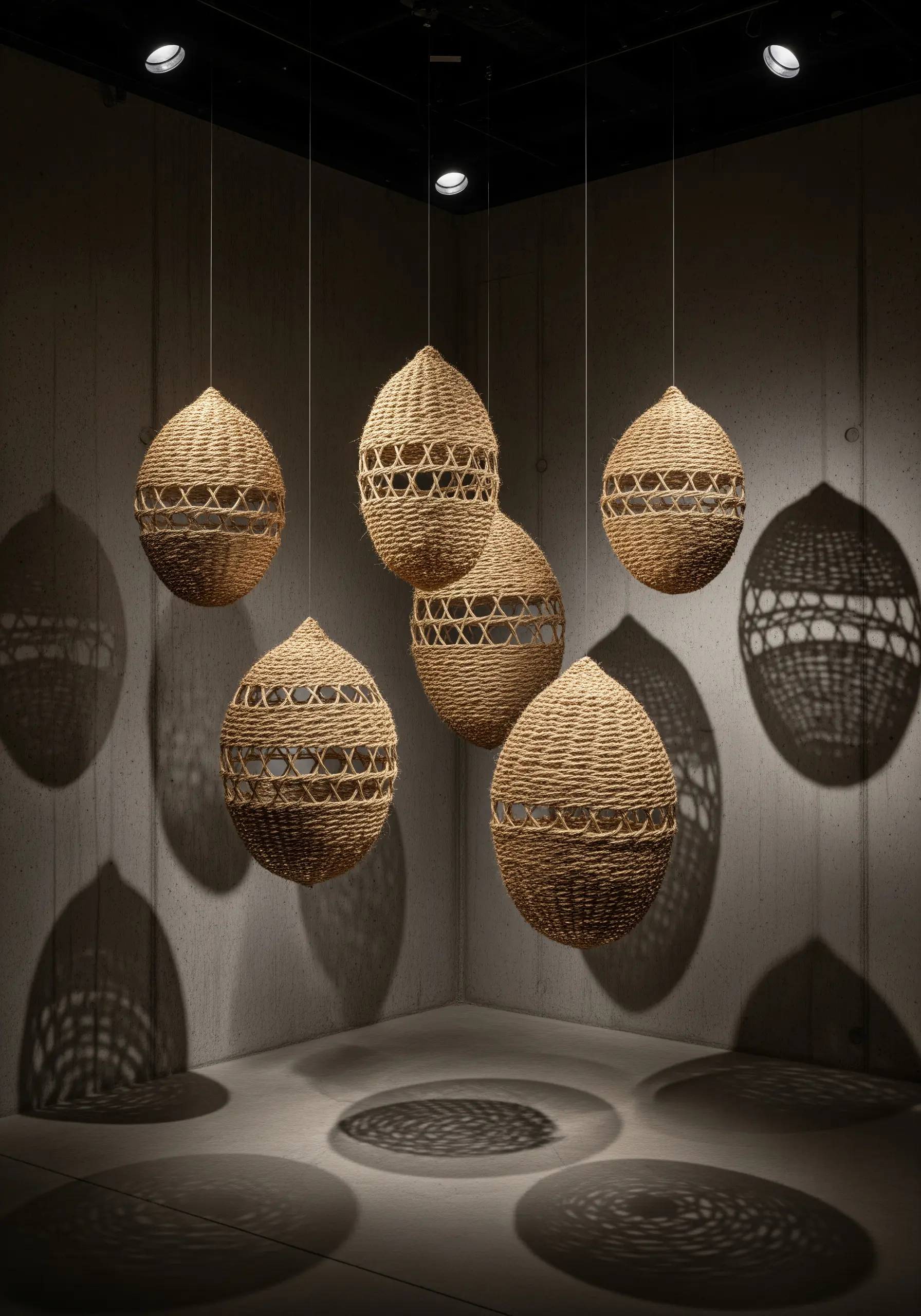
When creating sculptural vessels, consider the empty spaces as much as the solid ones.
Use traditional basket-weaving techniques with natural jute or seagrass rope to build your forms.
Incorporate sections of openwork, or negative space, by strategically skipping wraps or creating a lattice pattern.
When lit, these openings project intricate, graphic shadows, transforming your physical object into an immersive light installation.
7. Architectural Folds in Industrial Felt
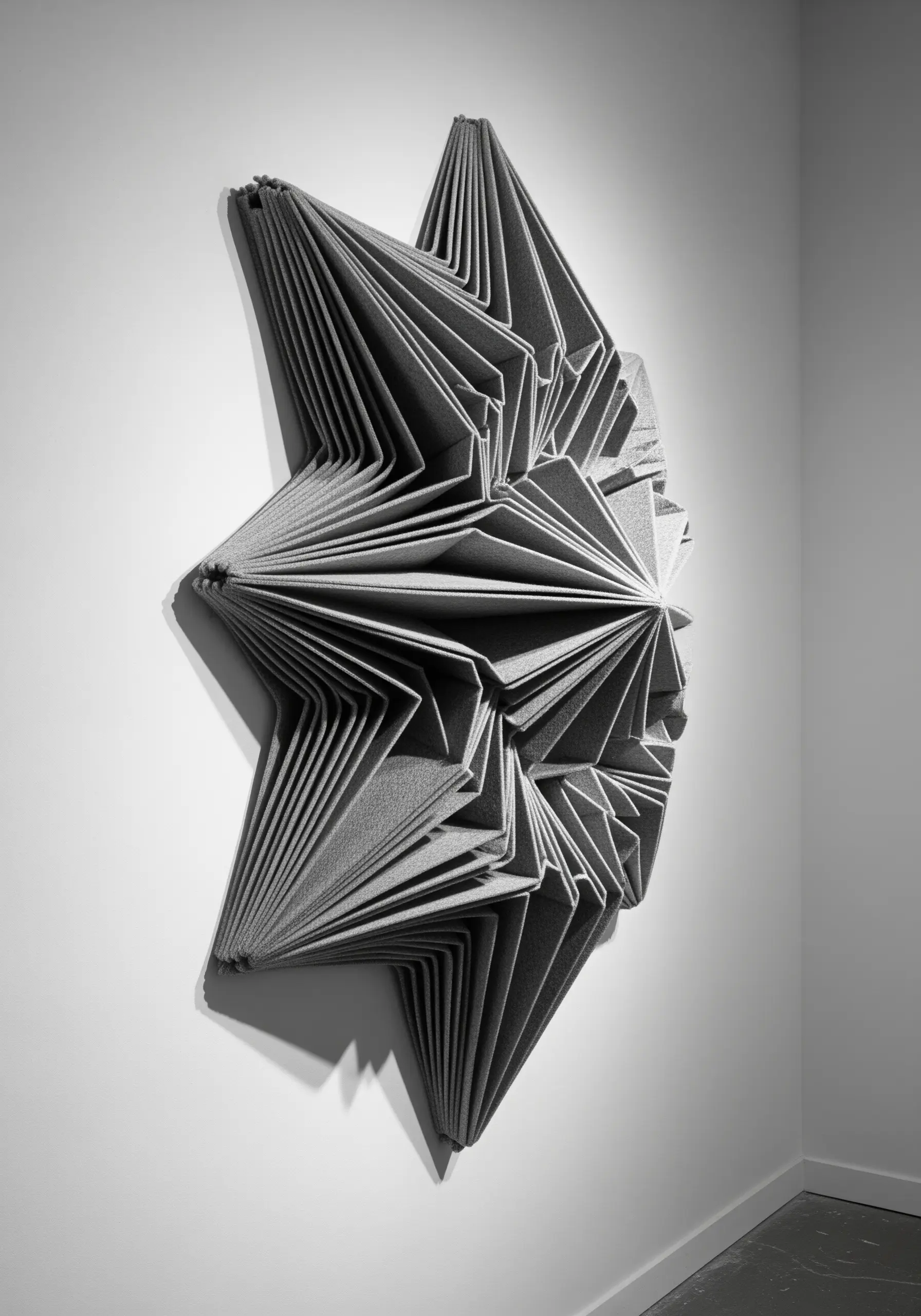
Explore the sculptural possibilities of fiber by treating it like paper or metal.
Use thick, industrial-grade felt, which holds a crisp edge and allows for sharp, precise folds without fraying.
Create a complex, crystalline structure through a series of accordion folds, scoring the felt lightly to guide your creases.
The resulting monochrome form is all about how its geometric planes catch the light, creating a dramatic, high-contrast piece defined by its own shadows.
8. Radial Weaving for Meditative Focus
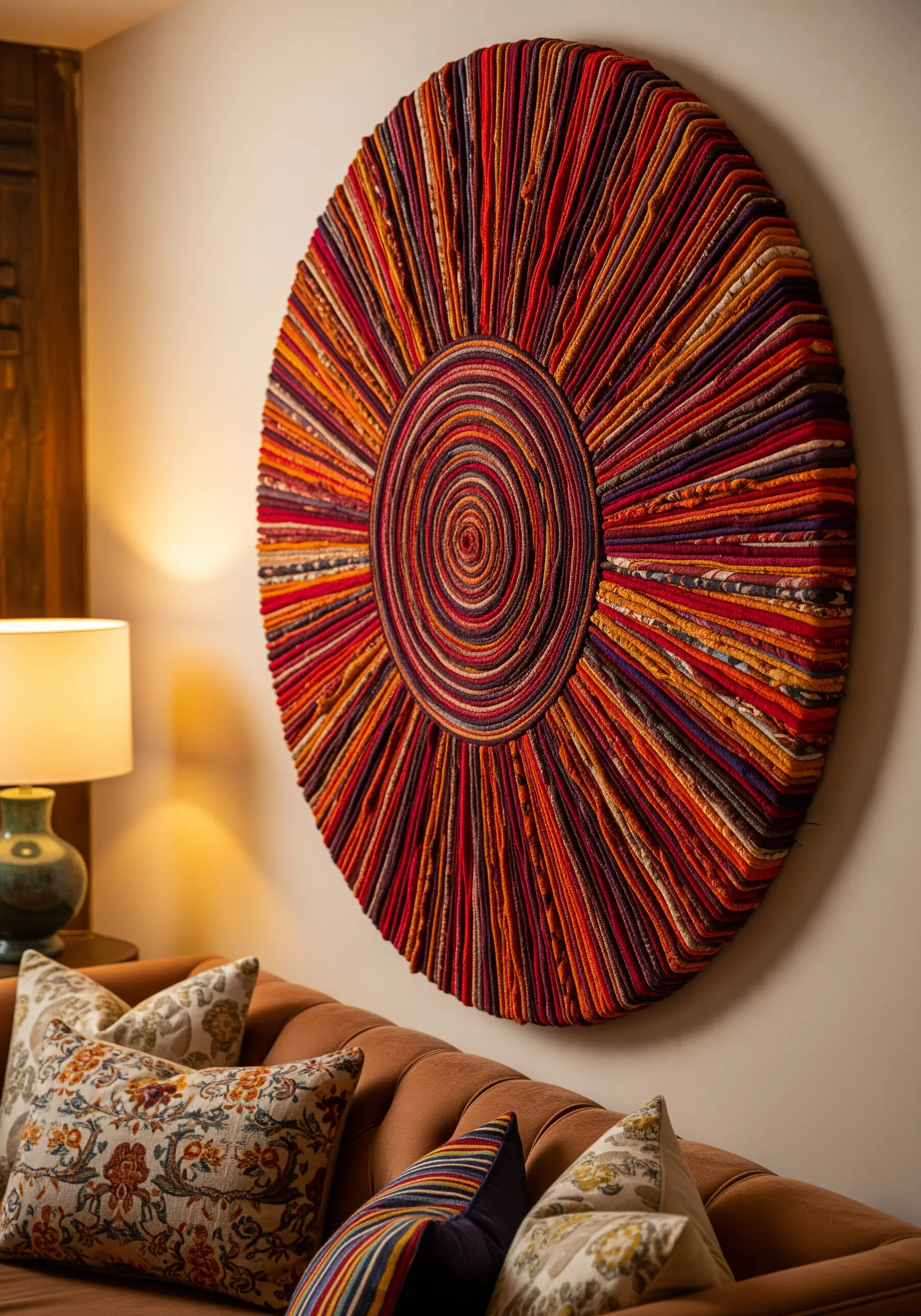
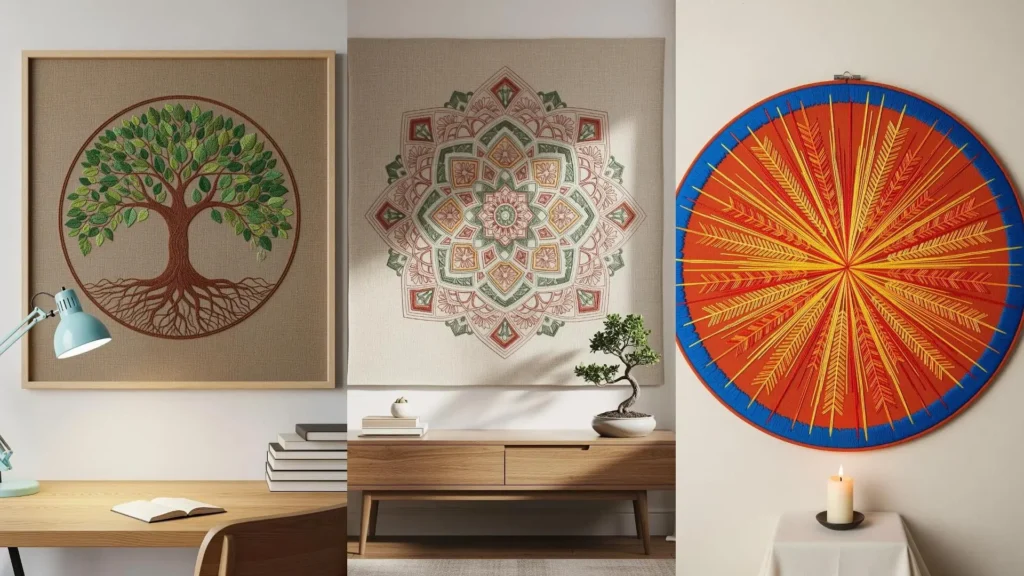
Create a bold, hypnotic focal point by weaving on a large circular frame.
Instead of a traditional over-under weave, wrap your yarn from a central point out to the edge and back again, creating clean, radiating lines.
Introduce depth and interest by using a mix of textures—smooth cotton, bumpy bouclé, and thin, shimmering metallics.
The repetition and vibrant color palette of these yarn wall art patterns draw the viewer in, making the piece feel both energetic and centering.
9. Activating String Art with Light
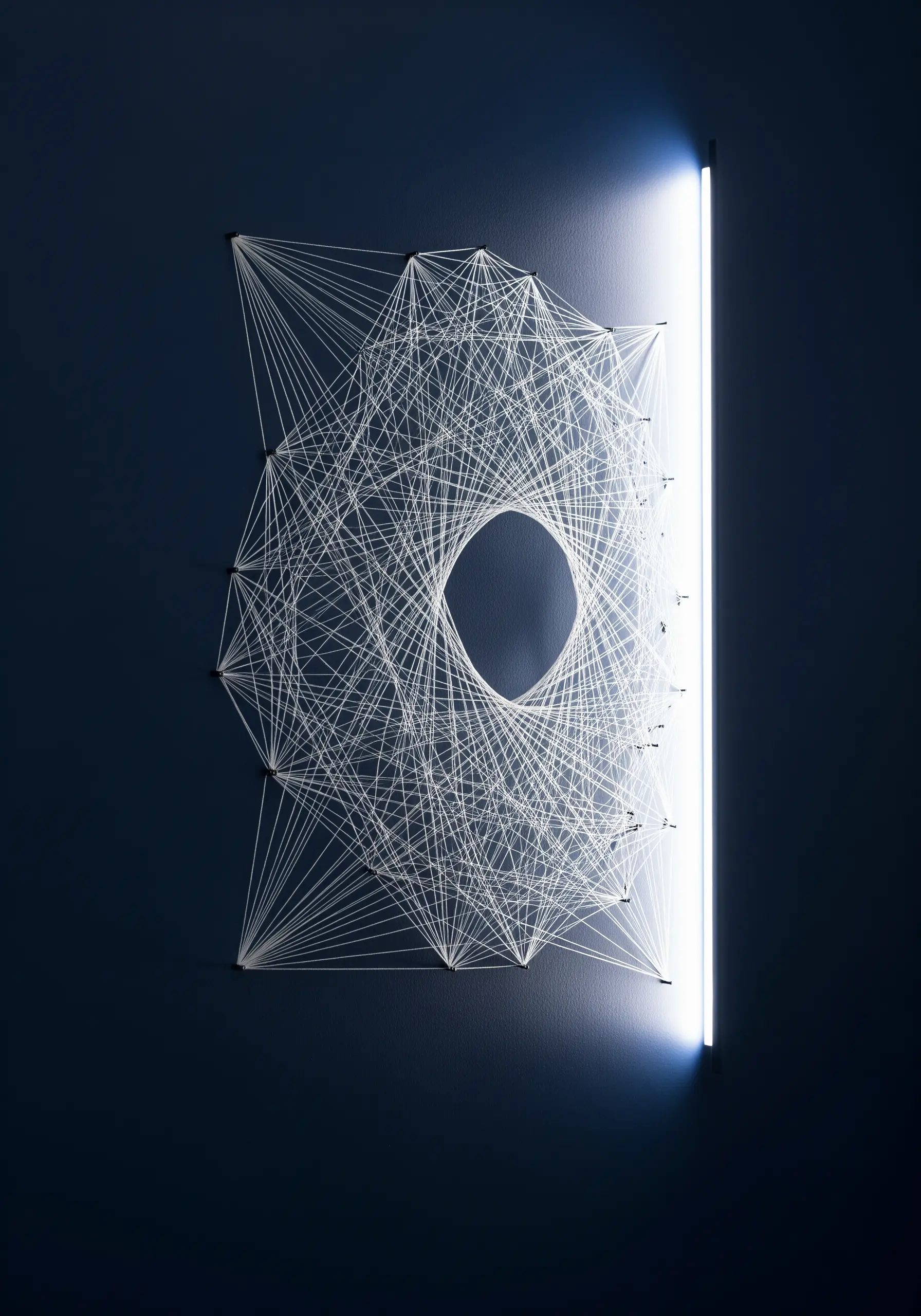
Transform traditional string art into a dynamic installation by integrating a dedicated light source.
Create your geometric design on a dark-painted board to maximize contrast.
Instead of centering the work, place it adjacent to a vertical fluorescent tube or LED strip.
This deliberate lighting strategy makes the crisp white threads glow and casts a complex web of shadows, doubling the artwork’s presence and creating an ethereal, high-tech aesthetic.
10. Topographical Weaving with Soft Roving
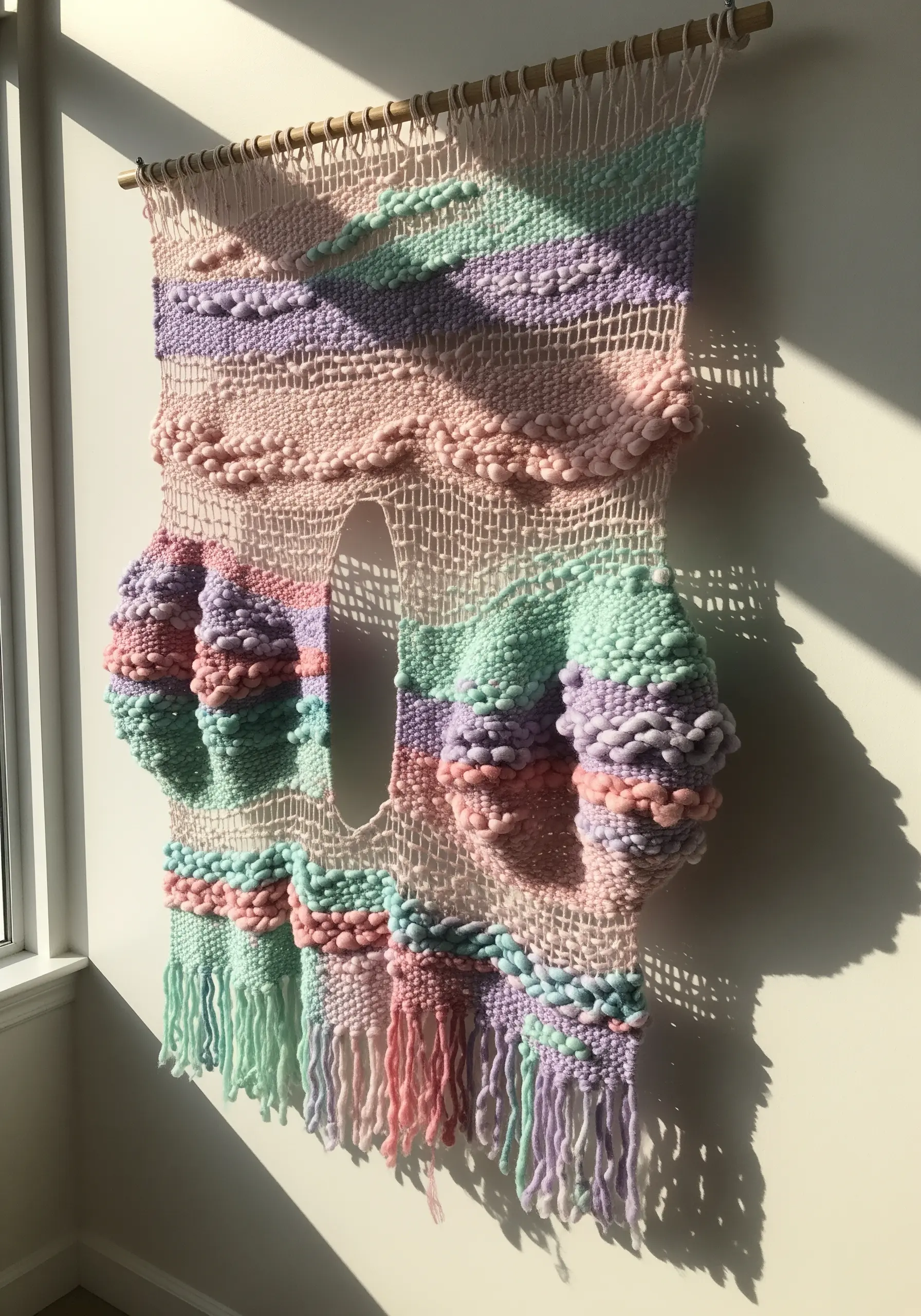
Introduce dramatic, 3D texture into your weaving by varying your yarn weight and technique.
Use a thin cotton for the flat base weave, creating a stable foundation.
To build the raised, cloud-like sections, switch to a thick, unspun wool roving and use a soumak weave or pile loop technique, packing the fibers densely.
Deliberately leaving gaps in the warp adds a delicate, deconstructed feel, balancing the weight of the sculptural elements.
11. Thread-Laced Skeletons and Their Ghosts
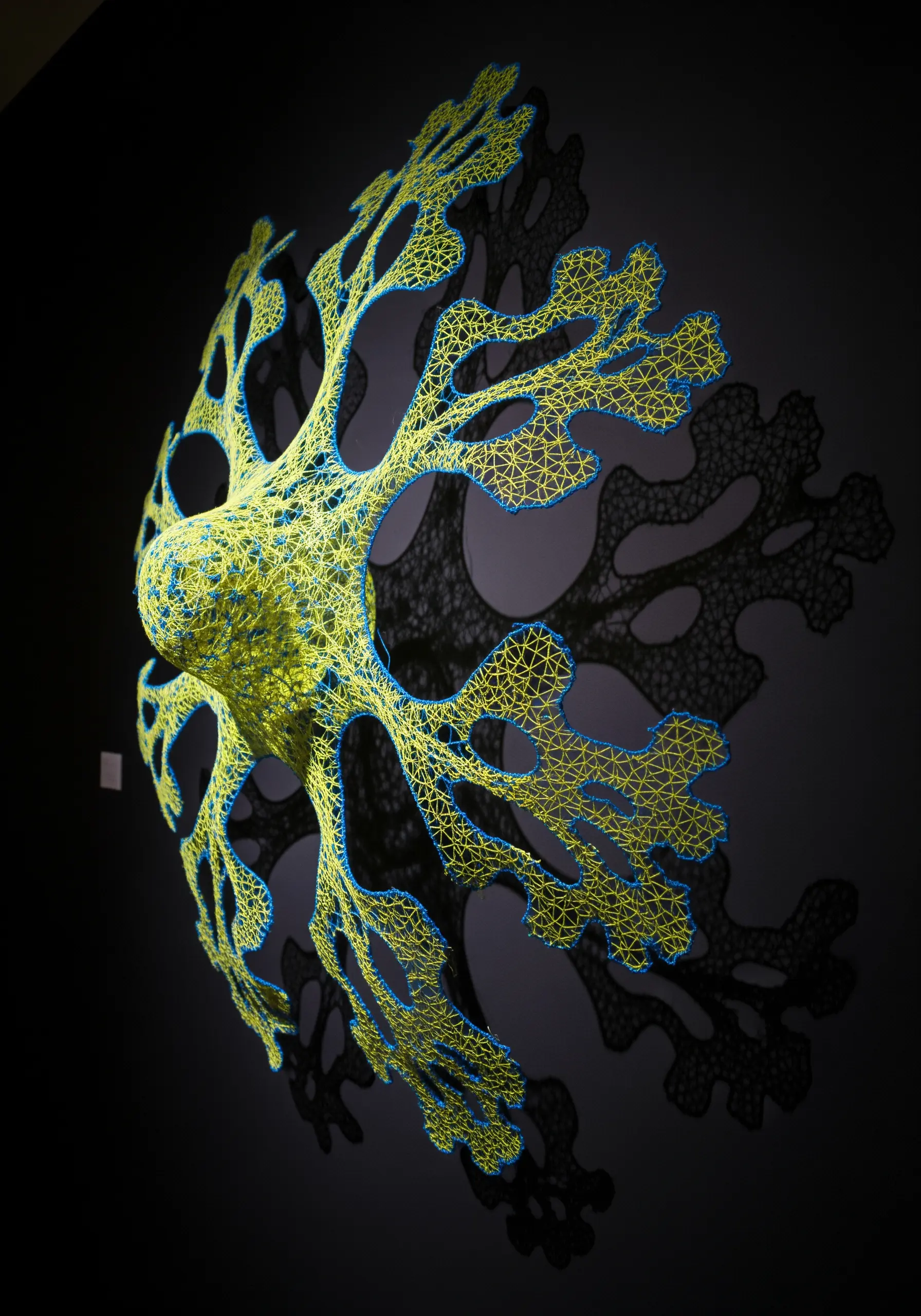
Create sculptures that are both present and absent by wrapping thread around a delicate, open armature.
Construct a light framework from wire or use a 3D-printed form as your base.
Lace colorful thread across the structure, creating a translucent ‘skin’ of geometric patterns.
The magic happens when you light the piece; the sculpture casts a solid, intricate shadow that reveals a ‘ghost’ version of itself, adding a new layer of complexity.
12. Creating Contours with Padded Quilting
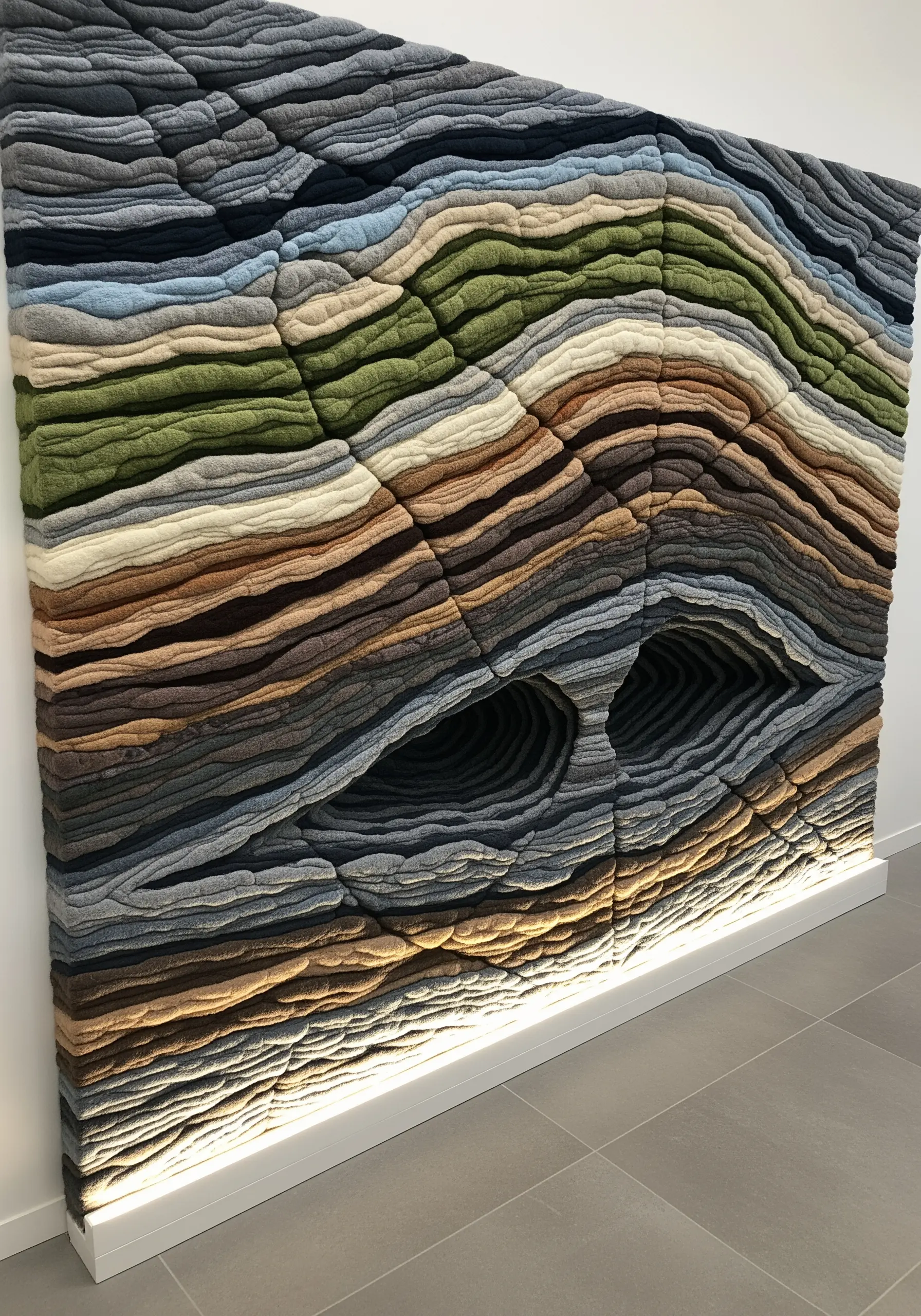
Mimic the undulating layers of geological strata by sculpting with fabric and stitch.
Layer different colored felt or wool fabrics and stitch them down with dense, organic lines using a sewing machine.
To create the deep recesses and raised contours, use trapunto quilting—adding extra batting from behind in specific areas before quilting to make them puff out.
This technique creates real topographical depth that plays dramatically with overhead lighting.
13. Dynamic Installations with Yarn Pom-Poms
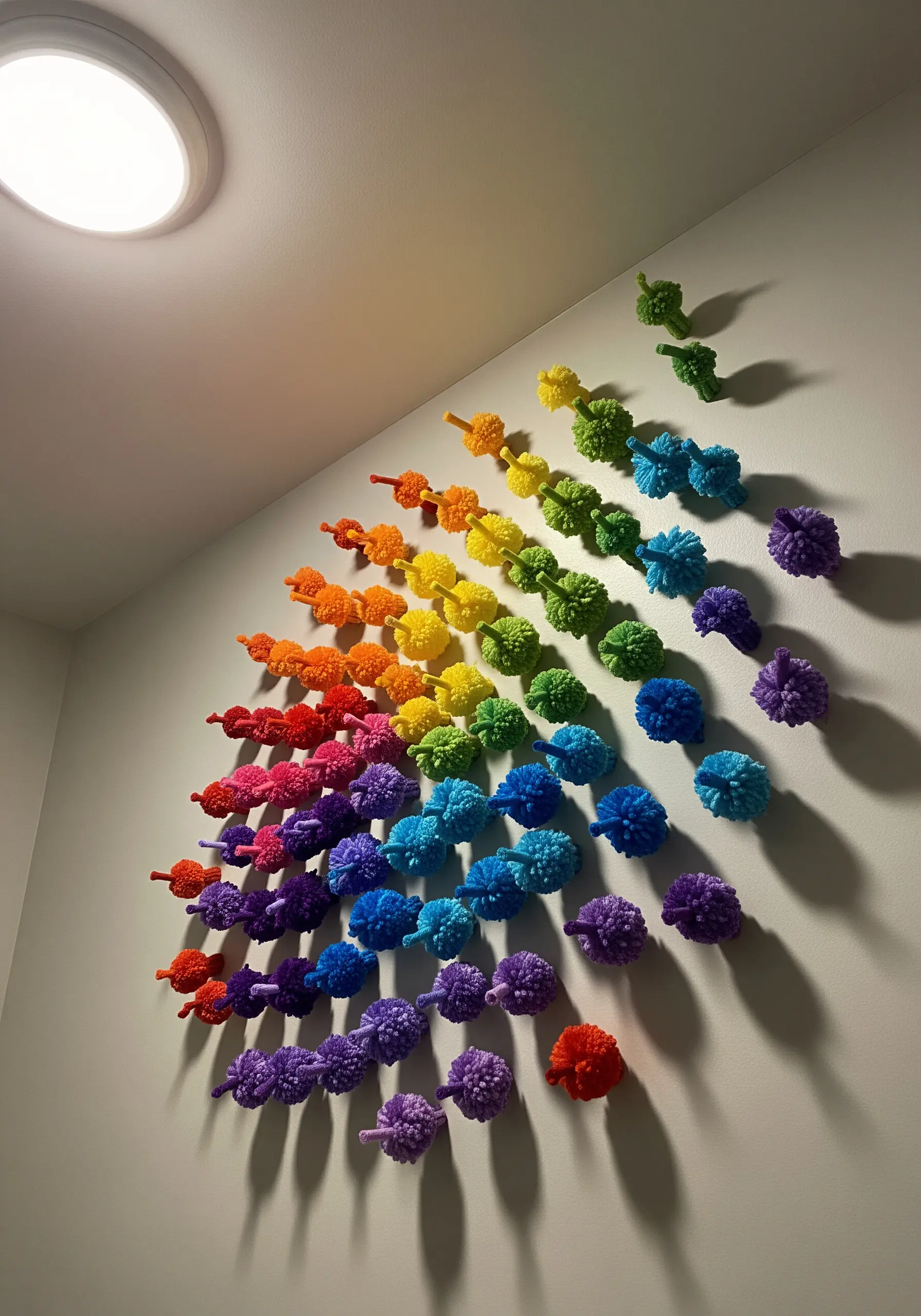
Use the humble pom-pom as a building block for a large-scale, vibrant installation.
Create dozens of pom-poms in a spectrum of colors, leaving one long tail on each for mounting.
Arrange them directly on the wall in a flowing, organic shape, like a cloud or a cascade, using small pins or nails.
By varying the size and projection of each pom-pom from the wall, you create a field of soft texture and shifting shadows.
14. Industrial Weaving on a Metal Grid
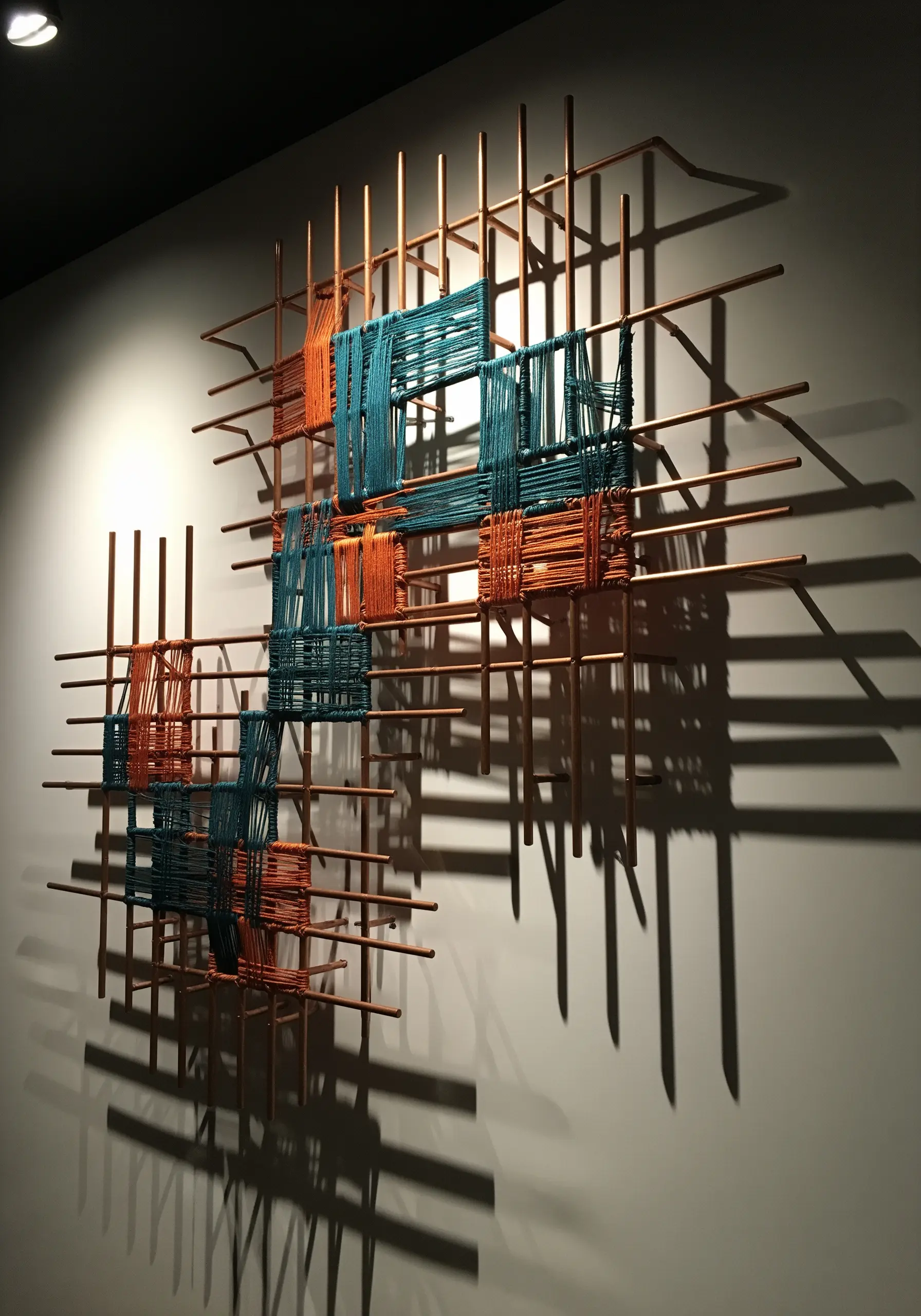
Challenge the idea of a traditional loom by using an industrial or architectural base.
Construct a grid from copper pipes or a metal mesh panel to serve as your warp.
Weave your weft—thick, colorful yarn—through the rigid structure in abstract blocks of color.
The contrast between the warm, soft fiber and the cool, hard metal creates a compelling visual dialogue, and the grid itself casts a strong, linear shadow that becomes integral to the artwork.
15. Circular Weaving with Upcycled Textures
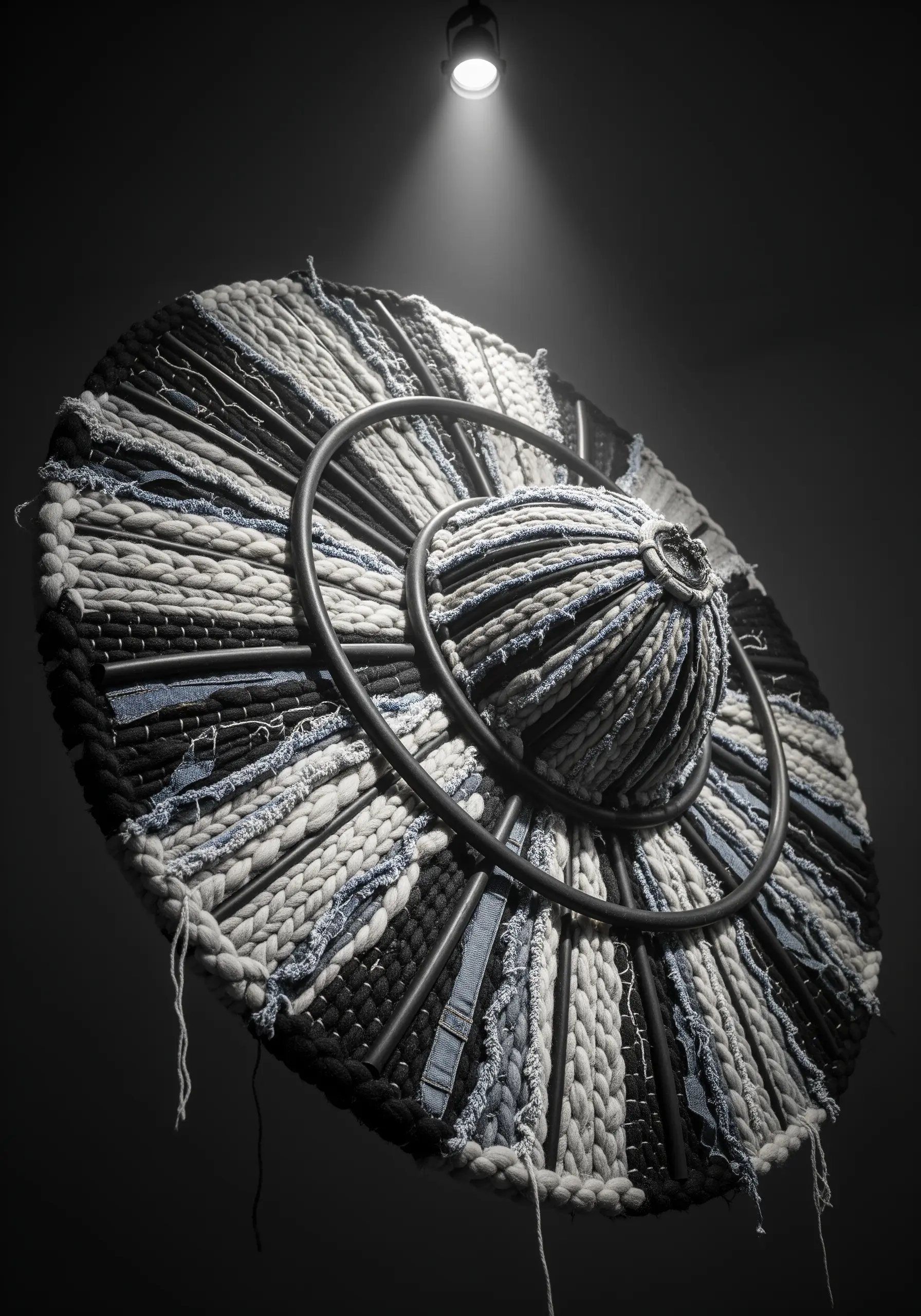
Breathe new life into old materials by incorporating them into your weaving.
On a circular loom, use traditional yarns alongside unconventional ‘threads’ like strips of old denim, frayed linen, and thick wool roving.
This blend of textures—smooth and rough, soft and sturdy—creates a rich, tactile surface that tells a story.
The act of turning old fabrics into fun projects adds a layer of sustainable artistry to your work.
16. Drawing in Space with a Single Cord
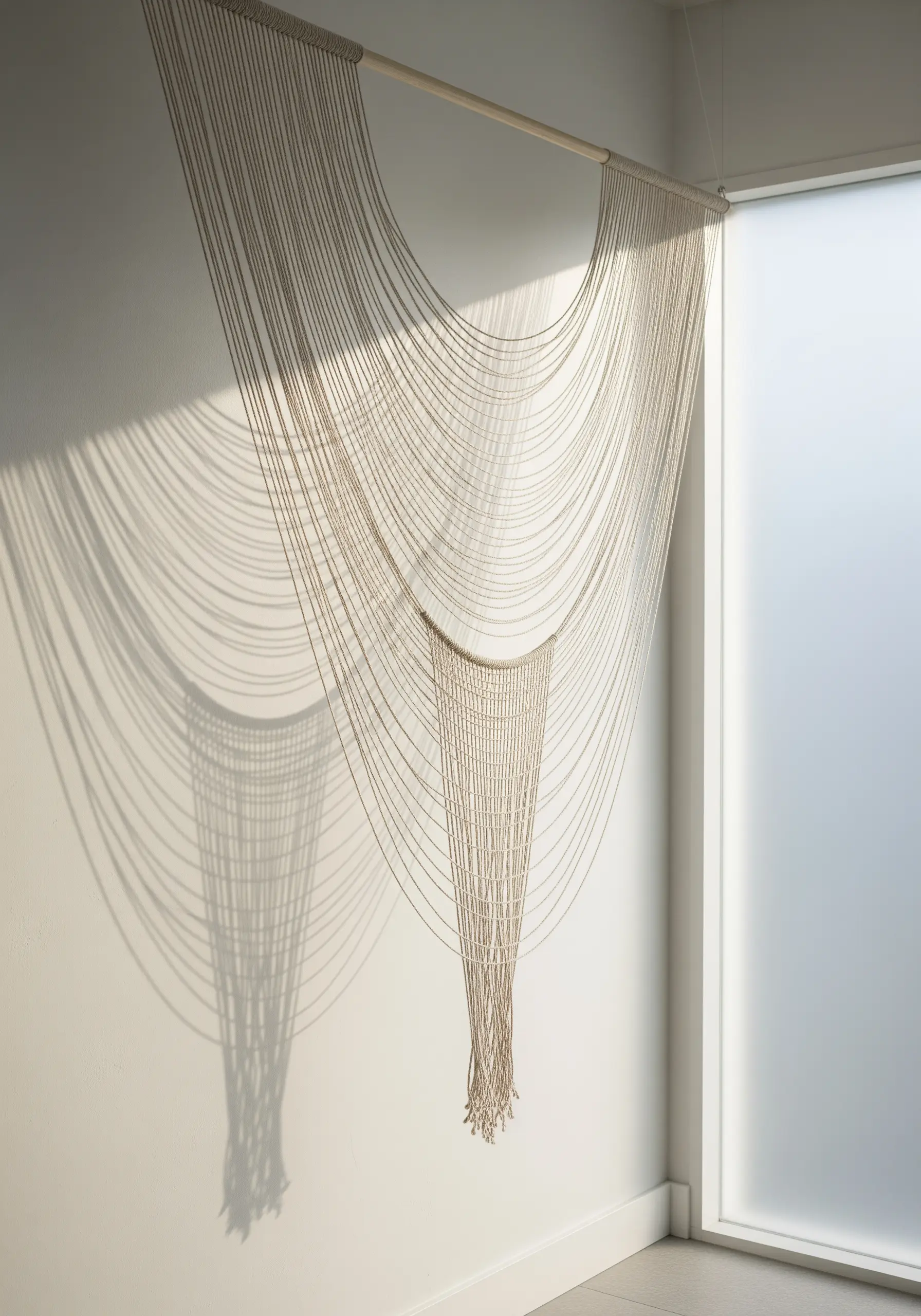
Embrace minimalism by creating a large-scale wall sculpture from a single, continuous element.
Drape a long, neutral-colored cord from a simple dowel, allowing it to hang in sweeping, graceful arcs.
The elegance of this technique lies in its simplicity; the clean lines of the cord and the delicate, duplicate lines of its shadow are the entire composition.
It’s a quiet, powerful statement that activates the wall with minimal material.
17. Sculpting with Amigurumi Techniques
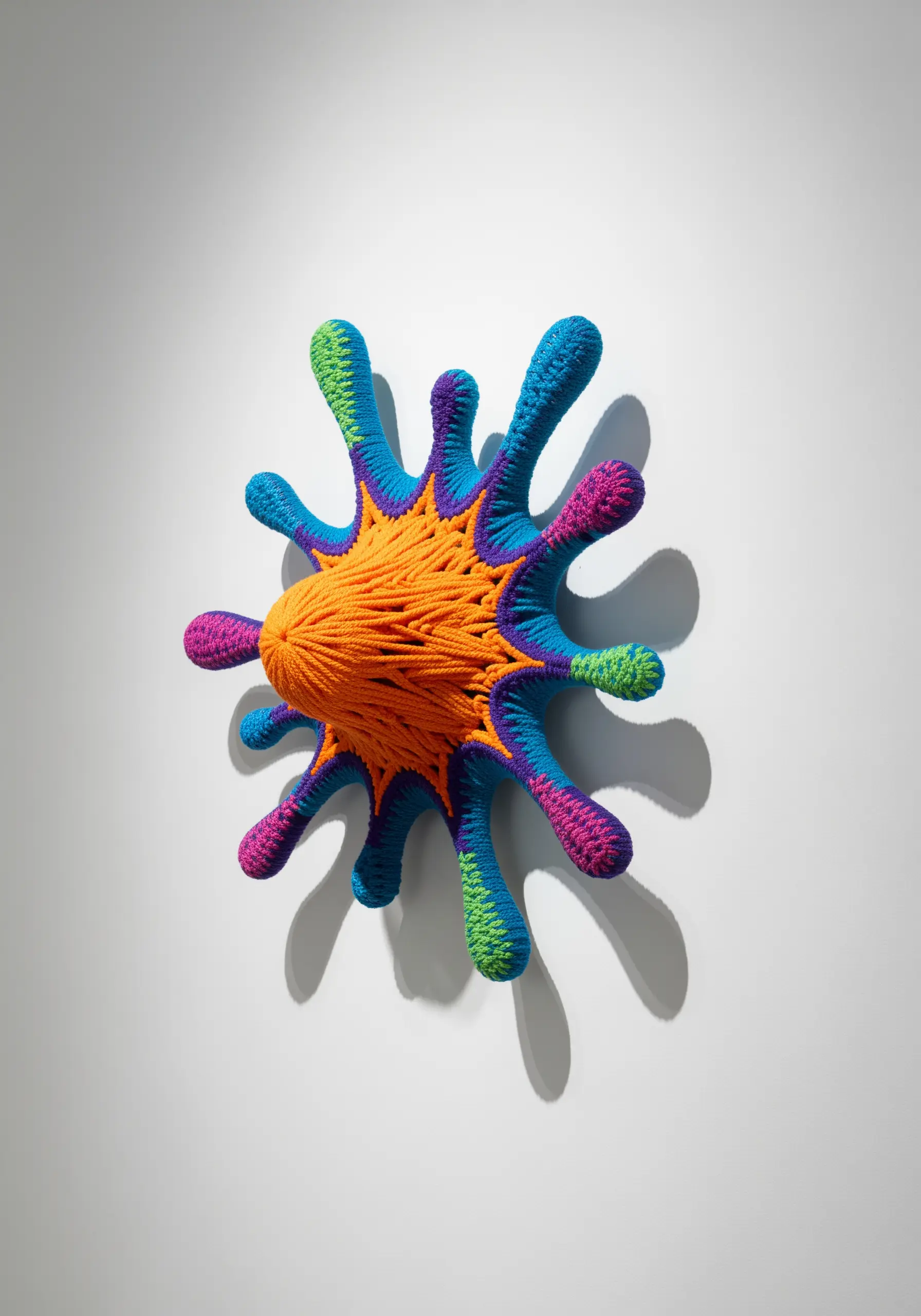
Apply the principles of amigurumi—the Japanese art of crocheting small, stuffed creatures—to create abstract wall sculptures.
Use basic crochet stitches with strategic increases and decreases to build organic, three-dimensional shapes that can be stuffed and mounted.
Employ bold color-blocking with vibrant, contrasting yarns to accentuate the unique form and make it pop visually.
This approach turns a playful craft into sophisticated, biomorphic art.
18. Sculpting Drapery for Dramatic Effect
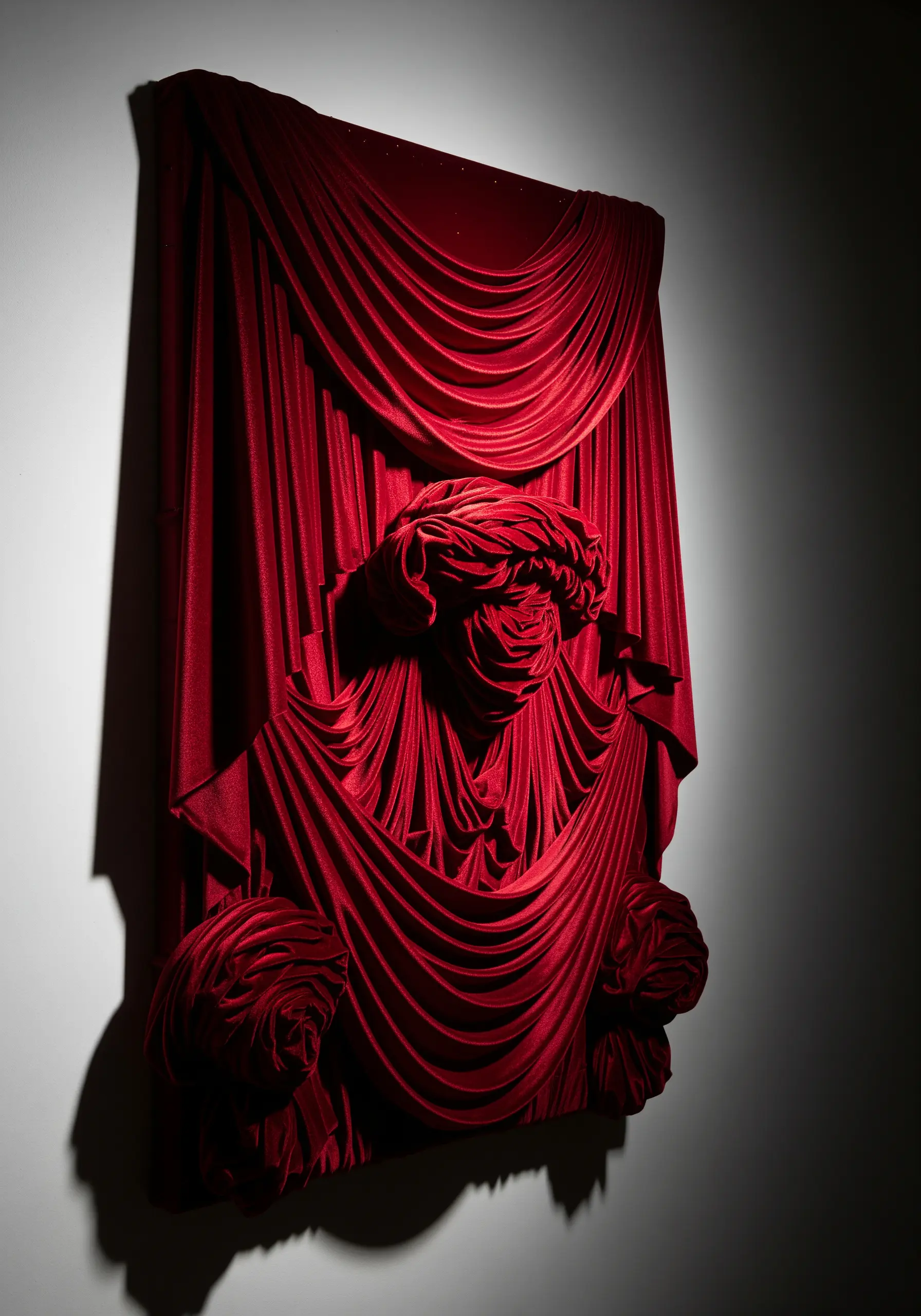
Create the illusion of classical drapery and form using fabric manipulation.
Choose a material with a luxurious weight and sheen, like deep red velvet, to catch the light beautifully.
Drape and fold the fabric over a hidden armature or shaped foam base, securing it with pins and stitches from behind.
Skillful lighting is crucial; a single, dramatic spotlight will accentuate the deep folds and create cavernous shadows, giving the piece a powerful, theatrical presence.
19. Dimensional Succulents with Stumpwork
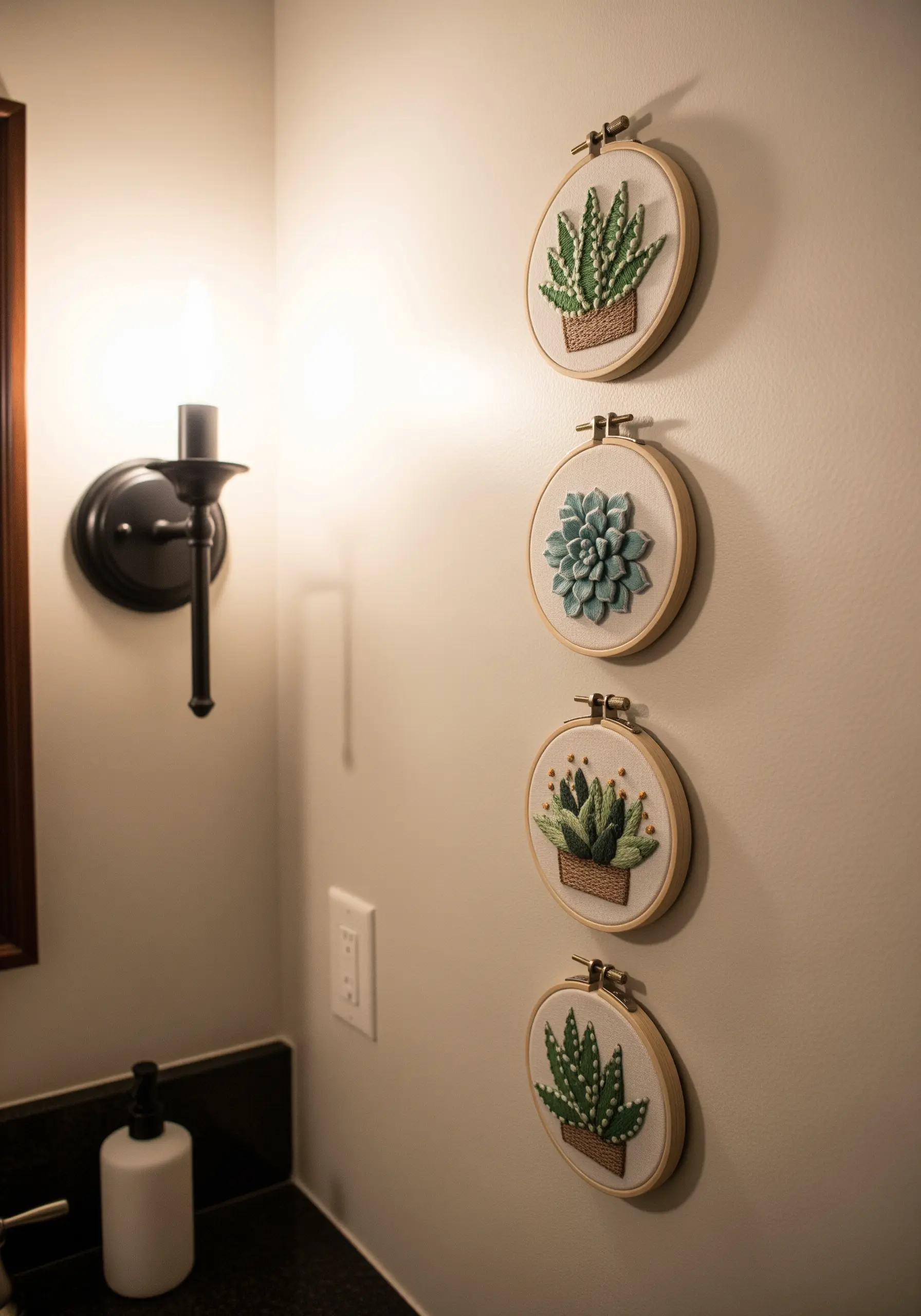
Give your embroidered botanicals a realistic, 3D form using stumpwork techniques.
For fleshy leaves, create detached elements by embroidering onto a separate piece of fabric with a wire outline, then cutting it out and attaching it to your main piece.
Build up plump, dense shapes with layers of felt padding beneath your satin stitches.
Grouping these tiny embroidery details creates a charming, miniature wall garden that truly comes to life.
20. Monumental Coiling with Fabric Strips
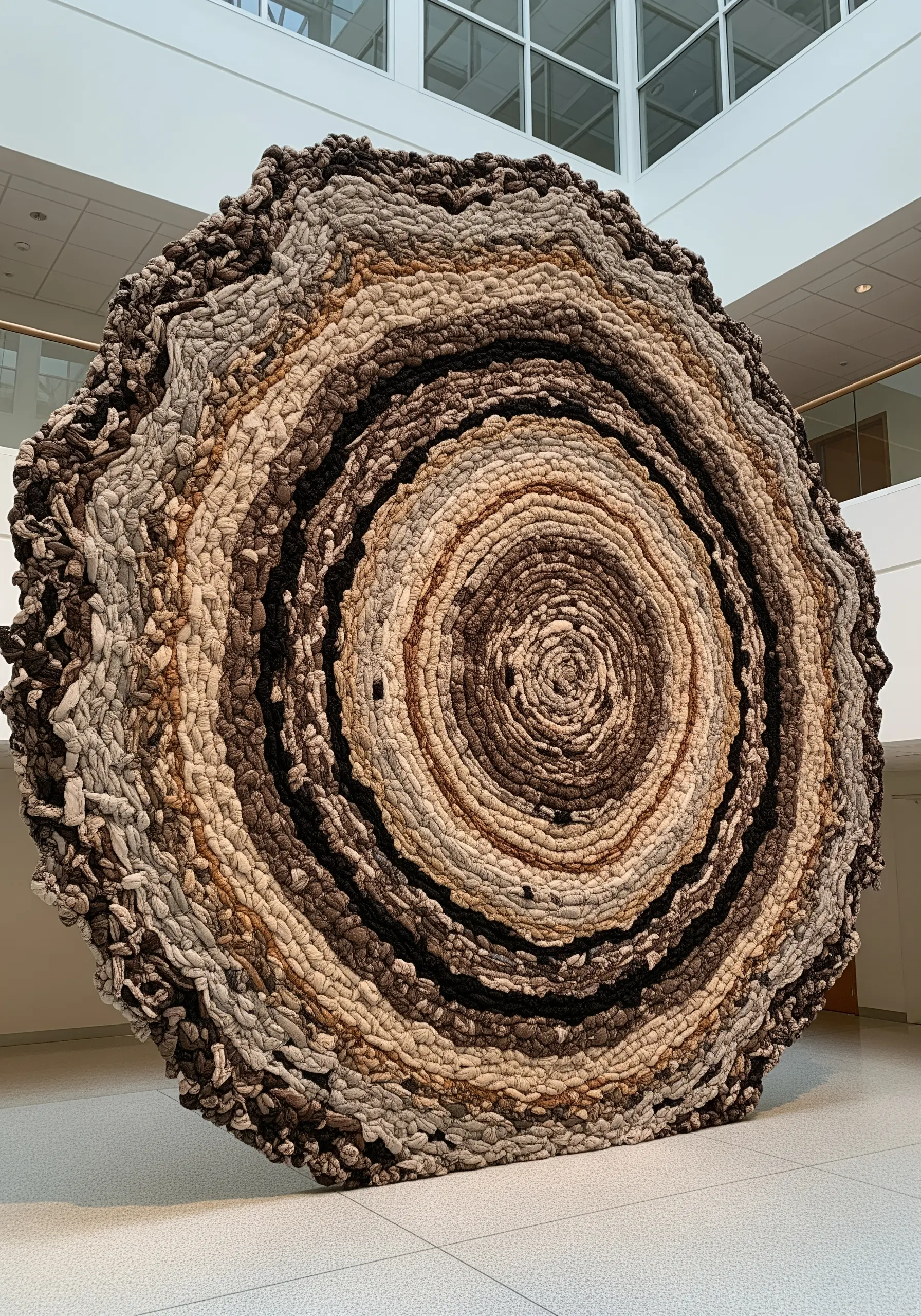
Scale up the coiled rope technique to monumental proportions by using fabric scraps instead of yarn.
Tear or cut old textiles—t-shirts, wool blankets, linens—into long strips to wrap around a thick rope or tubing core.
The varied textures and frayed edges of the different fabrics create an incredibly rich, organic surface that mimics natural formations like tree rings or sediment layers.
This is a powerful way to create giant fiber art installations with sustainable materials.
21. Ethereal Light Forms with Thread and Acrylic
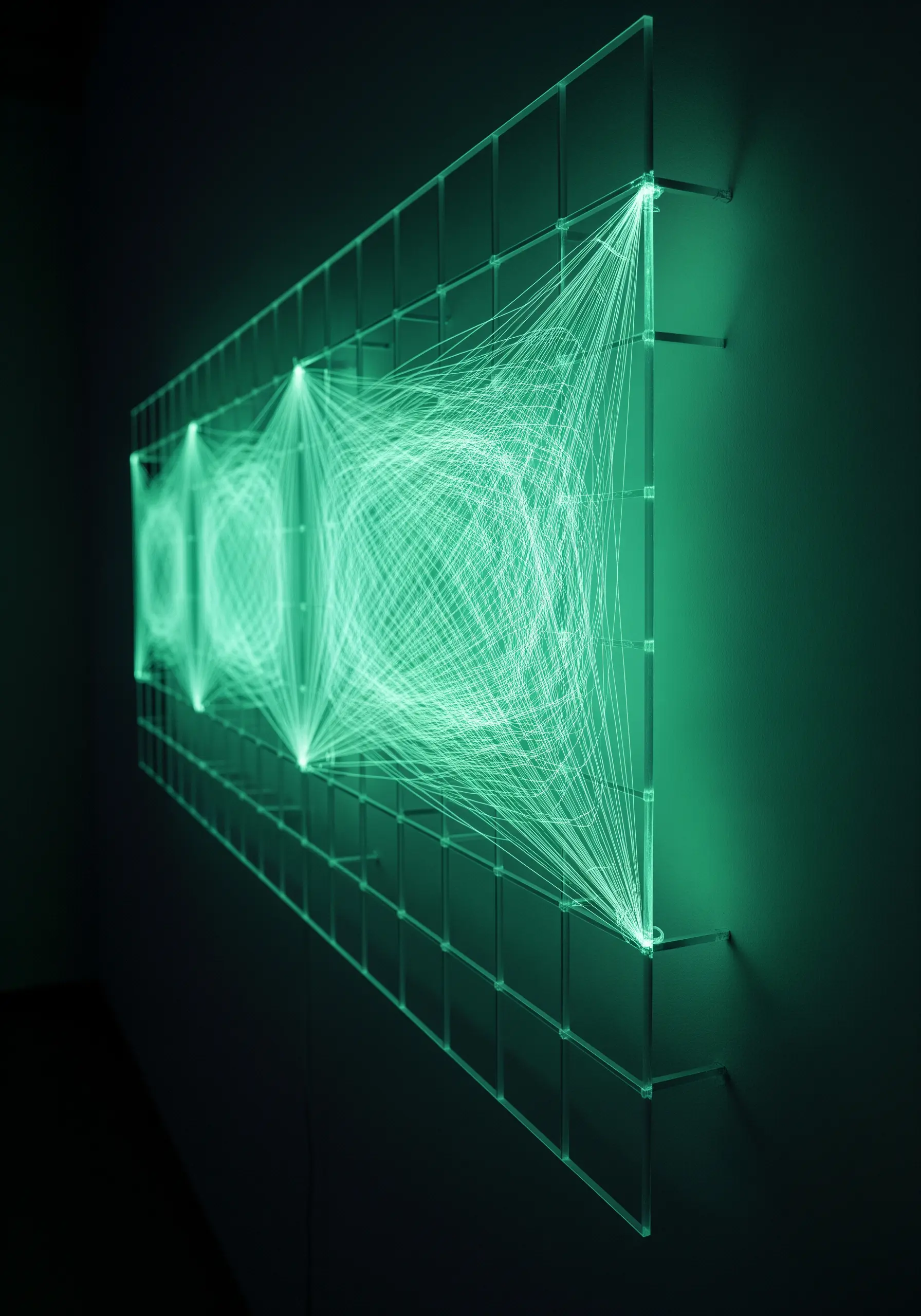
Explore the intersection of fiber and light by using transparent materials as your canvas.
Instead of a traditional board, stretch your threads across a clear acrylic frame or between two sheets of plexiglass.
Illuminate the piece from the edge or from behind with colored LEDs to make the threads themselves appear to glow.
This technique transforms simple string art into a mesmerizing, futuristic light sculpture that seems to float in space.
22. Soft Sculptural Chains with Arm Knitting
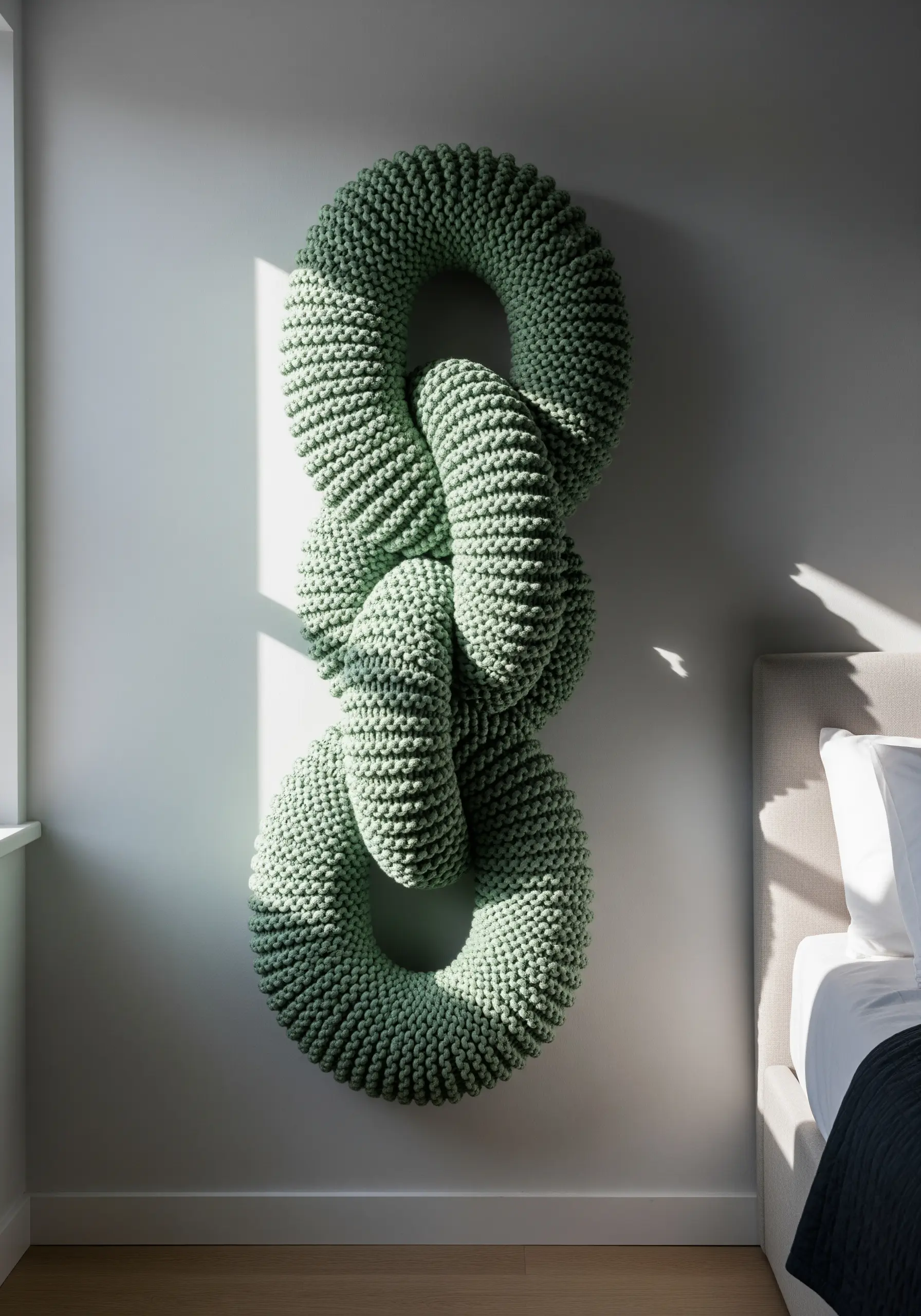
Create oversized, soft-yet-structural art using large-scale knitting techniques.
Use arm knitting or giant needles with thick, felted wool tubing or roving to create a massive knitted chain.
The exaggerated stitch definition is the star of the show, turning a simple link shape into a bold, textural statement.
Mount it vertically on a wall for a piece that has both immense presence and a surprising softness.
23. Dynamic Bursts with Wire-Based Crochet
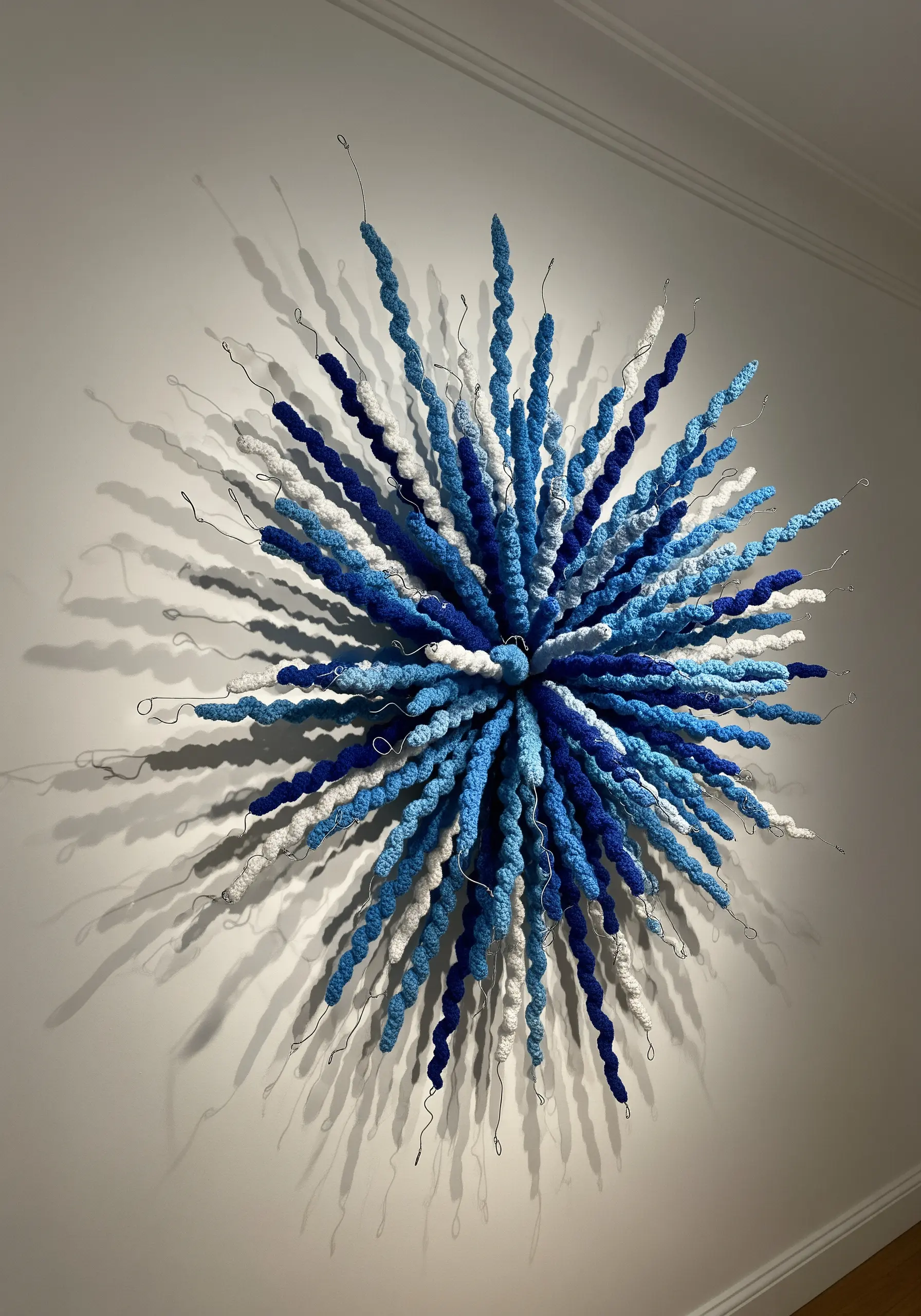
Give your fiber sculptures a sense of explosive energy by incorporating a hidden wire skeleton.
Crochet or wrap yarn tightly around lengths of flexible yet sturdy craft wire.
Gather these individual tendrils at a central point and then bend and twist each one into a dynamic, outward-reaching shape.
The wire provides the structure needed to freeze the form in a state of energetic motion, while the yarn provides color and softness.
24. Weaving a 3D Desert Landscape
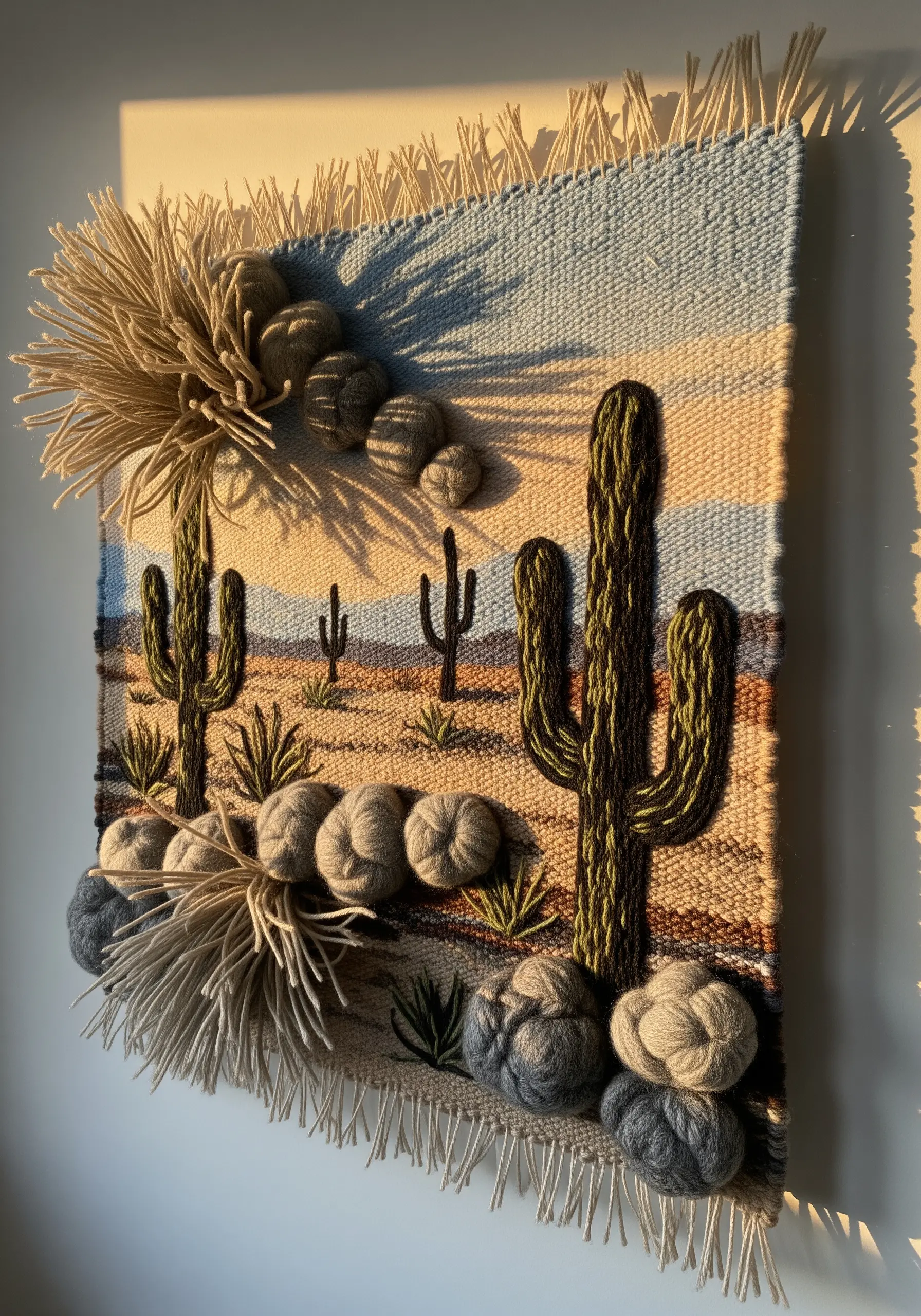
Move beyond flat tapestry by building dimensional elements directly into your woven scenes.
Use traditional tapestry weaving for the flat background of sand and sky.
To make the cacti and flora pop, switch to high-pile techniques like rya knots or Ghiordes knots, trimming them to shape.
For rounded bushes, use a soumak weave with bulky yarn, allowing it to bubble up from the surface, creating a piece you can visually wander through.
25. Interlocking Geometries with 3D String Art
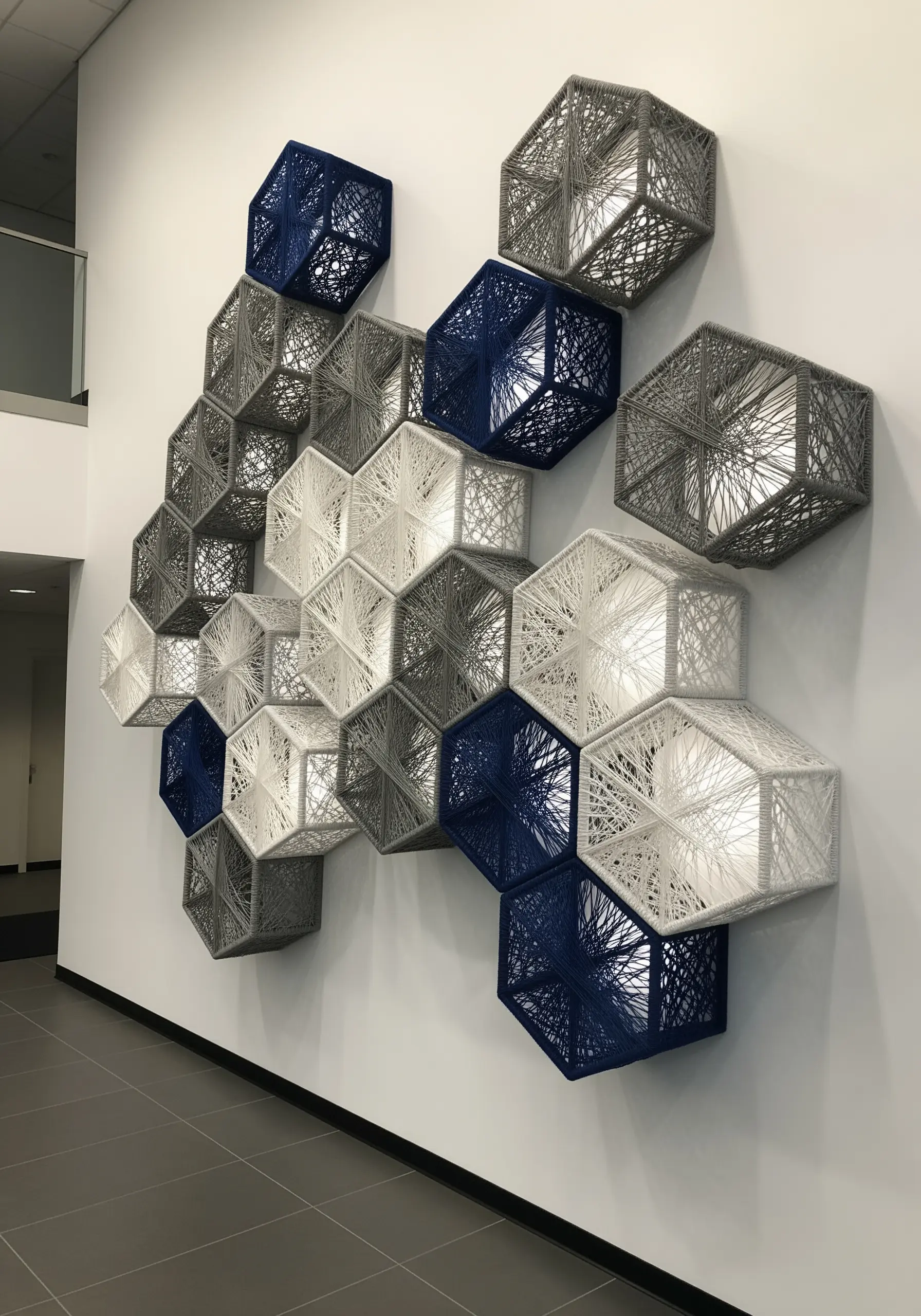
Take string art into a new dimension by working across multiple planes.
Construct or procure a series of 3D frames, like hexagonal boxes, and arrange them in a modular, honeycomb-like pattern on the wall.
Wrap your thread not just across the face of each box, but between them, connecting the different units.
This creates complex, overlapping geometric webs that shift and change as you move around the piece.
26. Light and Shadow Play with Pleated Forms
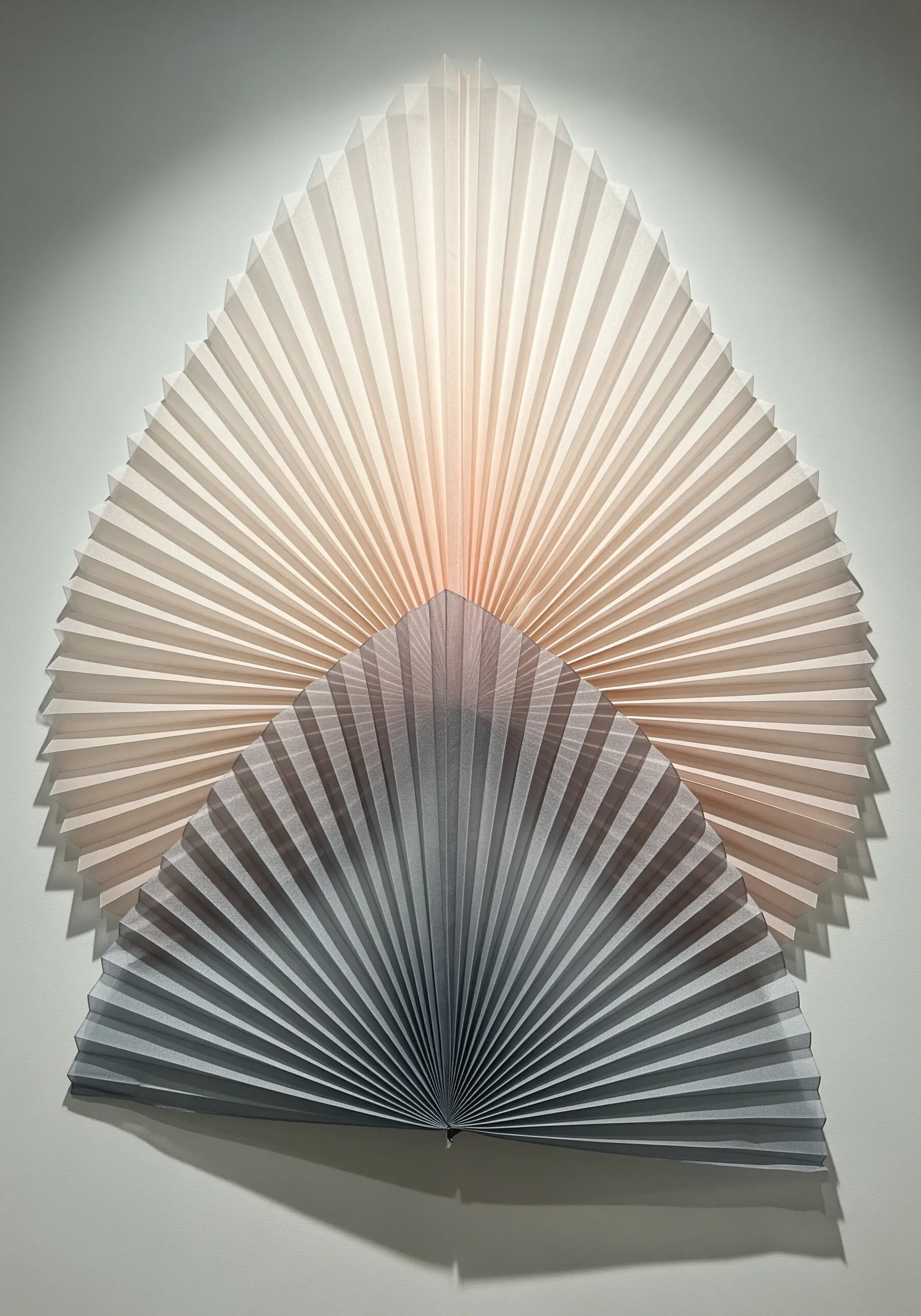
Create a sculpture of pure rhythm and gradient using the simple technique of precise folding.
Use a heavy, high-quality paper or a fabric treated with stiffener to ensure crisp, sharp pleats.
The magic is revealed with lighting; when lit from above, each fold catches a sliver of light on its peak and casts a deep shadow in its valley.
This transforms a flat sheet into a three-dimensional field of soft, repeating gradients.
27. Rustic Topography with Coiled Rope

Harness the raw, tactile power of natural fiber rope to create a sculpture with primal texture.
Instead of wrapping the rope, let its own texture be the focus.
Coil and secure thick jute or sisal rope onto a sturdy backing, creating dense, overlapping knots and whorls that mimic ancient knots or natural formations.
In low, dramatic light, the deep crevices between the rope strands will trap shadows, enhancing the piece’s rugged, powerful presence.
28. Creating Undulating Surfaces with Felt Pebbles
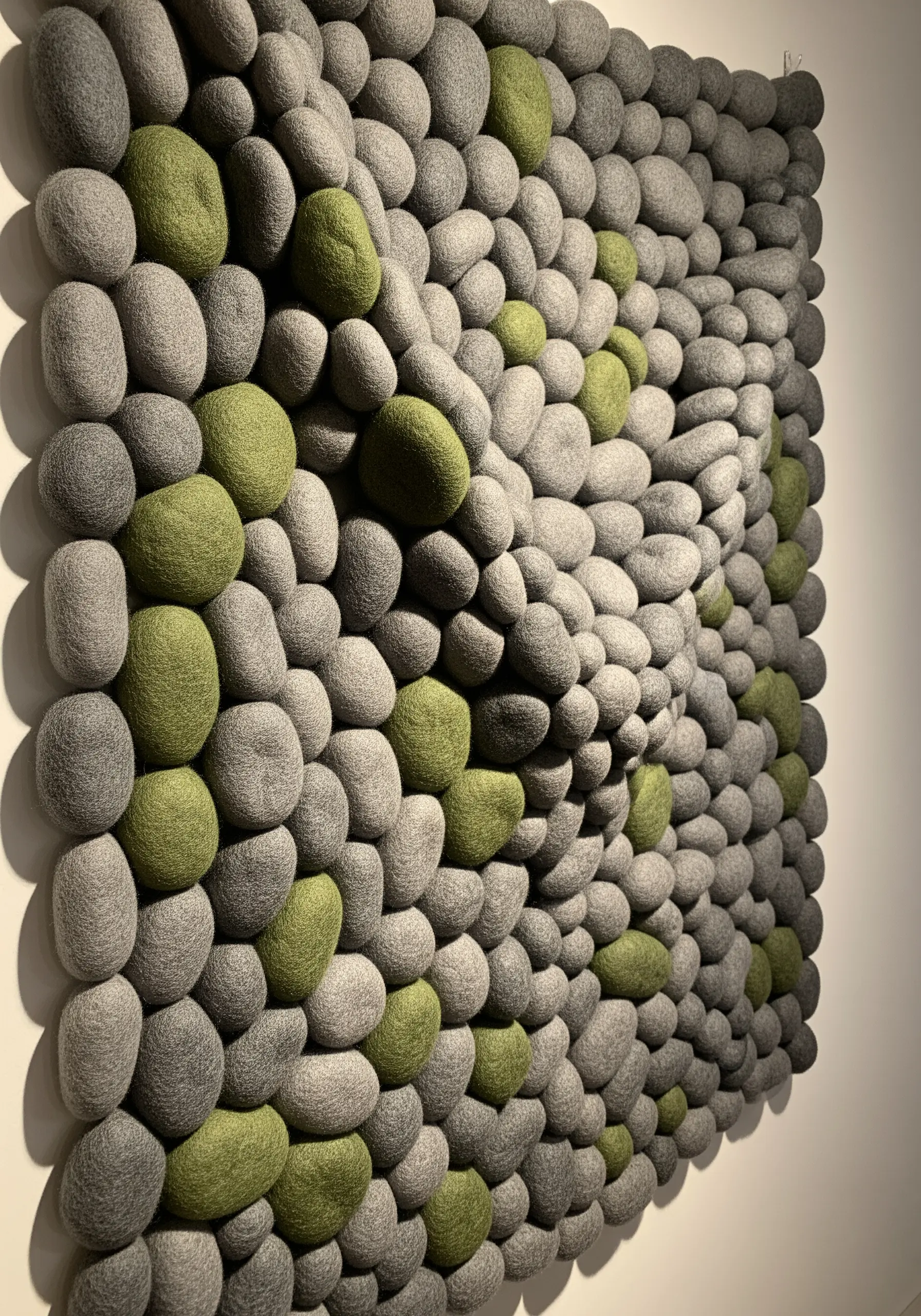
Build a unique, sound-dampening wall texture by assembling individual felted forms.
Create dozens of ‘pebbles’ in various sizes using needle felting or wet felting with wool roving.
Attach them to a backing board, packing them tightly together so they press against one another, creating an undulating, organic surface.
Introducing an accent color adds visual flow and prevents the texture from feeling monotonous.
29. Airy Scribbles with Hardened Thread
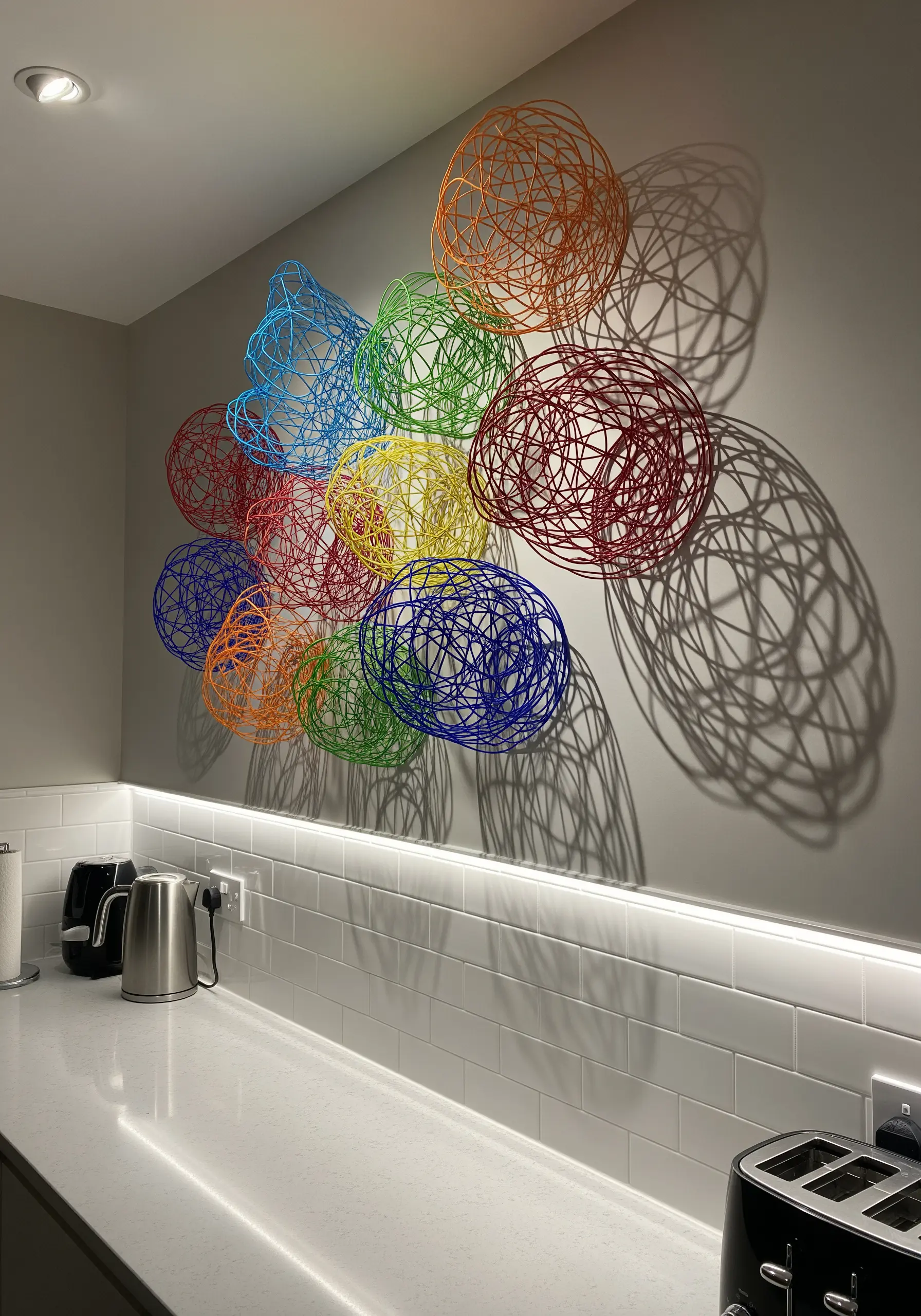
Construct sculptures that seem to defy gravity by giving thread a rigid structure.
Thoroughly soak colorful yarn or string in a fabric stiffener or a water-and-glue mixture.
Drape and wrap the wet thread around an inflated balloon in a chaotic, scribble-like pattern and let it dry completely.
Once hard, pop and remove the balloon, leaving a hollow, lightweight sphere of color. Cluster them together for an ethereal, bubble-like installation.
30. The Elegance of the Unfinished Warp
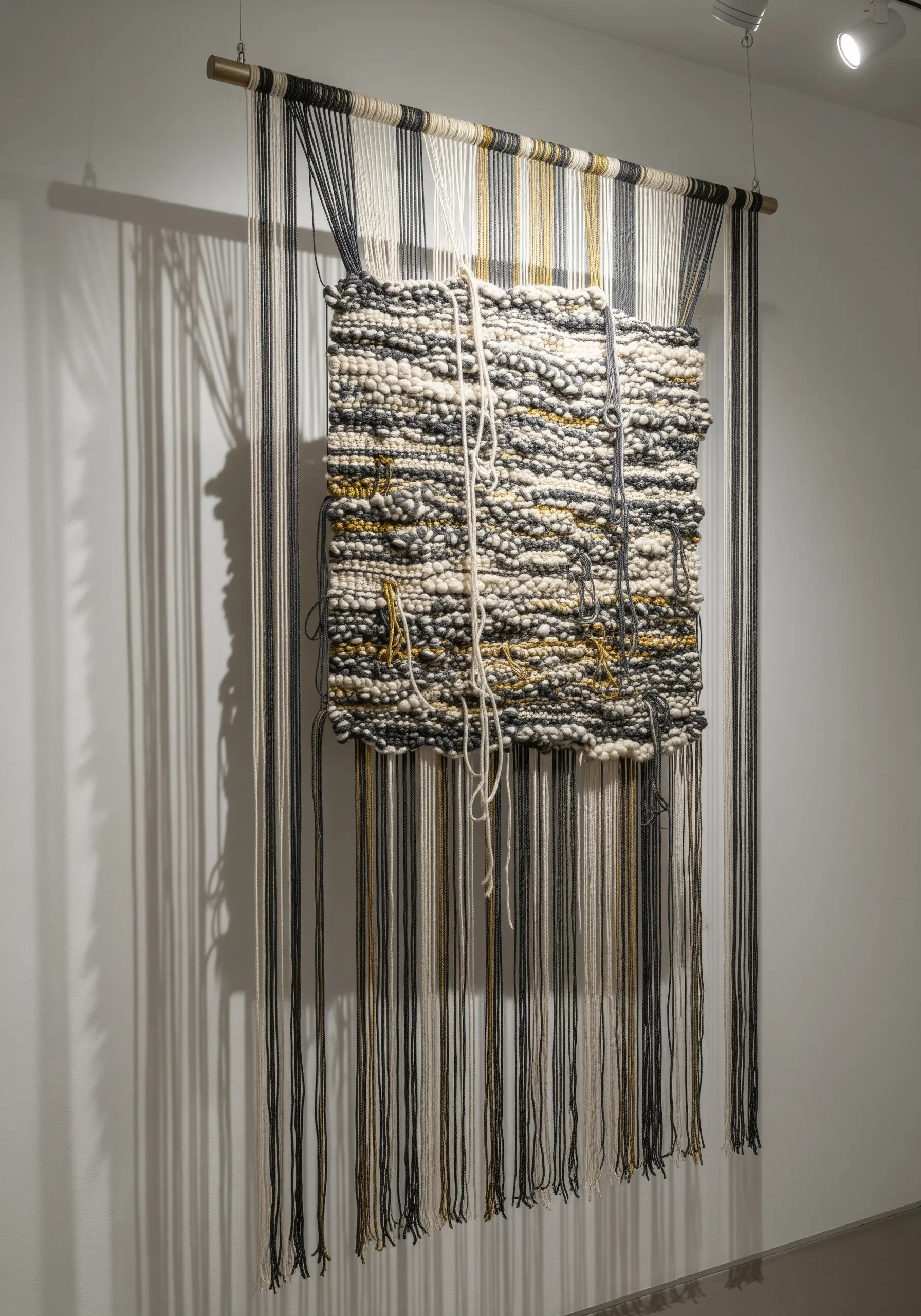
Incorporate the fundamental structure of weaving into your final design by celebrating the warp threads.
Create a central panel of dense, textural weaving using thick, neutral-toned yarns.
Instead of finishing the edges, leave the warp threads at the top and bottom exceptionally long, allowing them to drape down the wall.
This contrast between the solid woven center and the delicate, free-hanging threads creates a piece that is both grounded and ethereal.
31. Sunburst Sculptures with Dried Botanicals
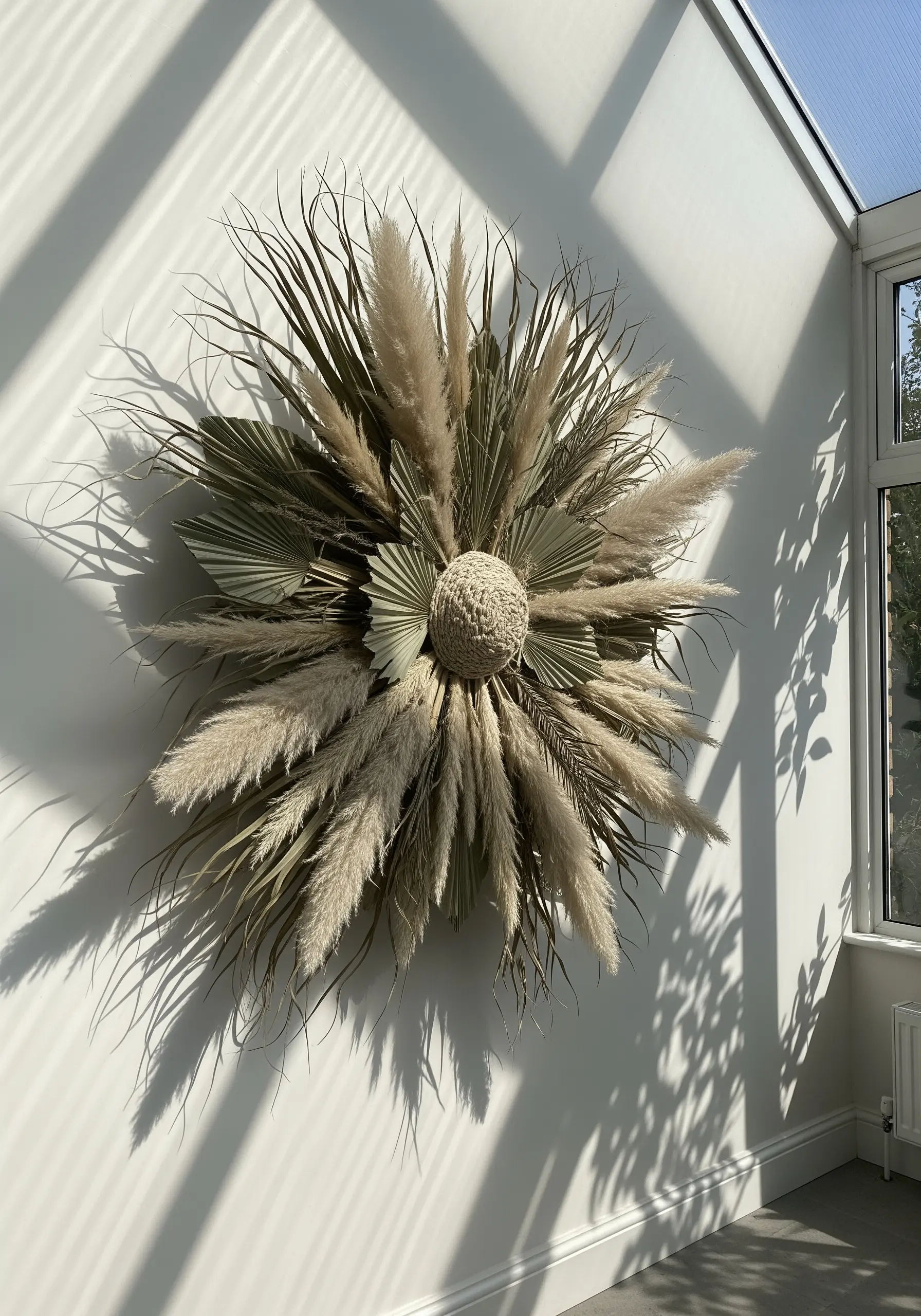
Combine the softness of fiber with the sharp, architectural quality of dried botanicals for a high-impact, natural sculpture.
Create a dense, woven or knotted central medallion from a neutral fiber like jute or raffia.
Carefully insert dried elements like palm leaves, pampas grass, and reeds into the center, radiating outwards to form a dramatic sunburst.
The different textures catch the light in unique ways, creating a piece that feels both wild and thoughtfully composed.
32. Pillowy Clouds of Quilted Fabric
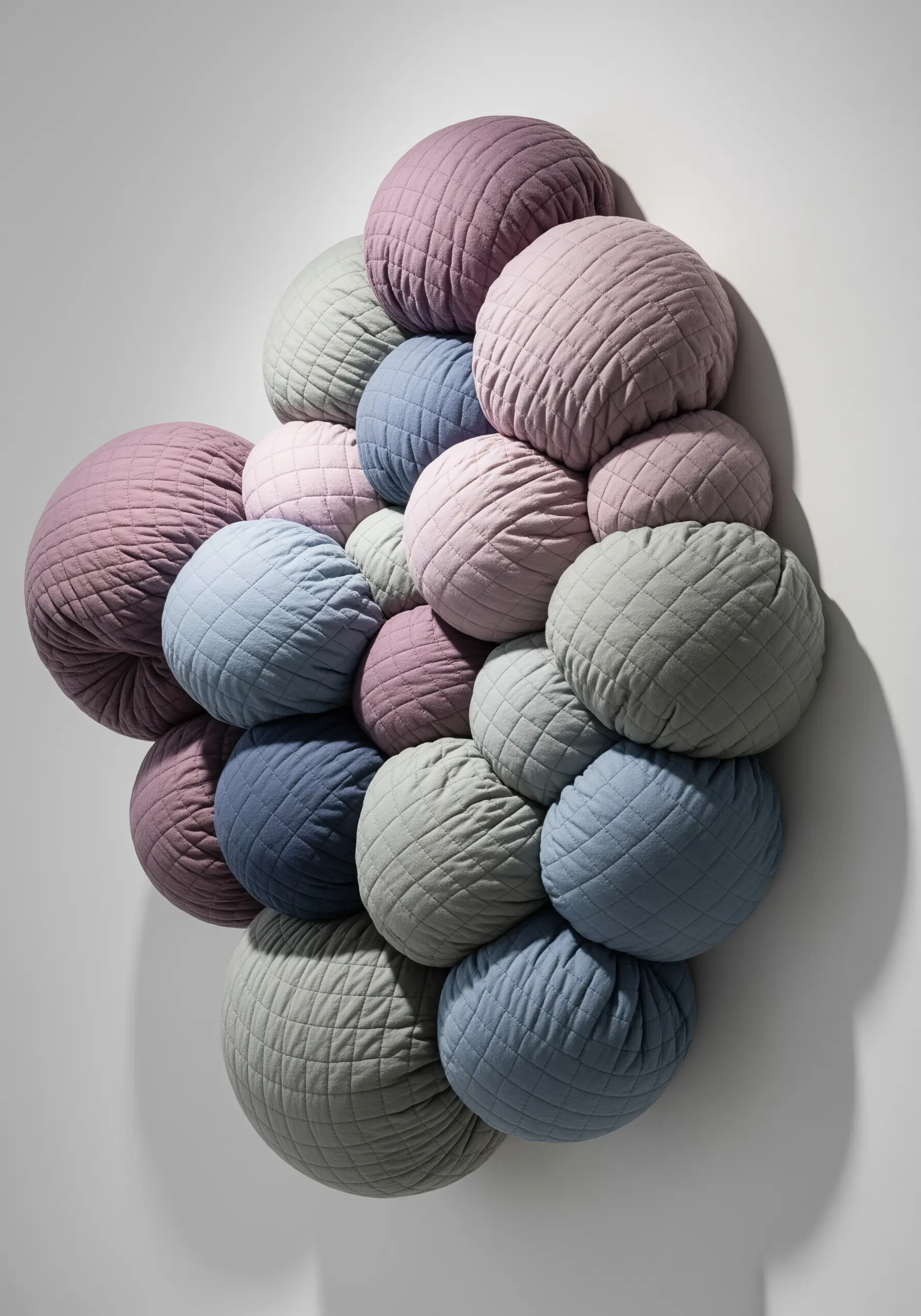
Explore softness as a sculptural medium by creating cloud-like compositions from quilted forms.
Sew and stuff individual ‘bubbles’ from soft, pastel-colored fabric that has been quilted with a simple grid pattern.
The machine stitching adds a subtle geometric texture that keeps the forms from looking formless.
Cluster these soft, pillowy shapes together on a hidden backing to create a dreamy, gentle wall sculpture that invites you to lean in.
33. Graphic Compositions with Blocked Macramé
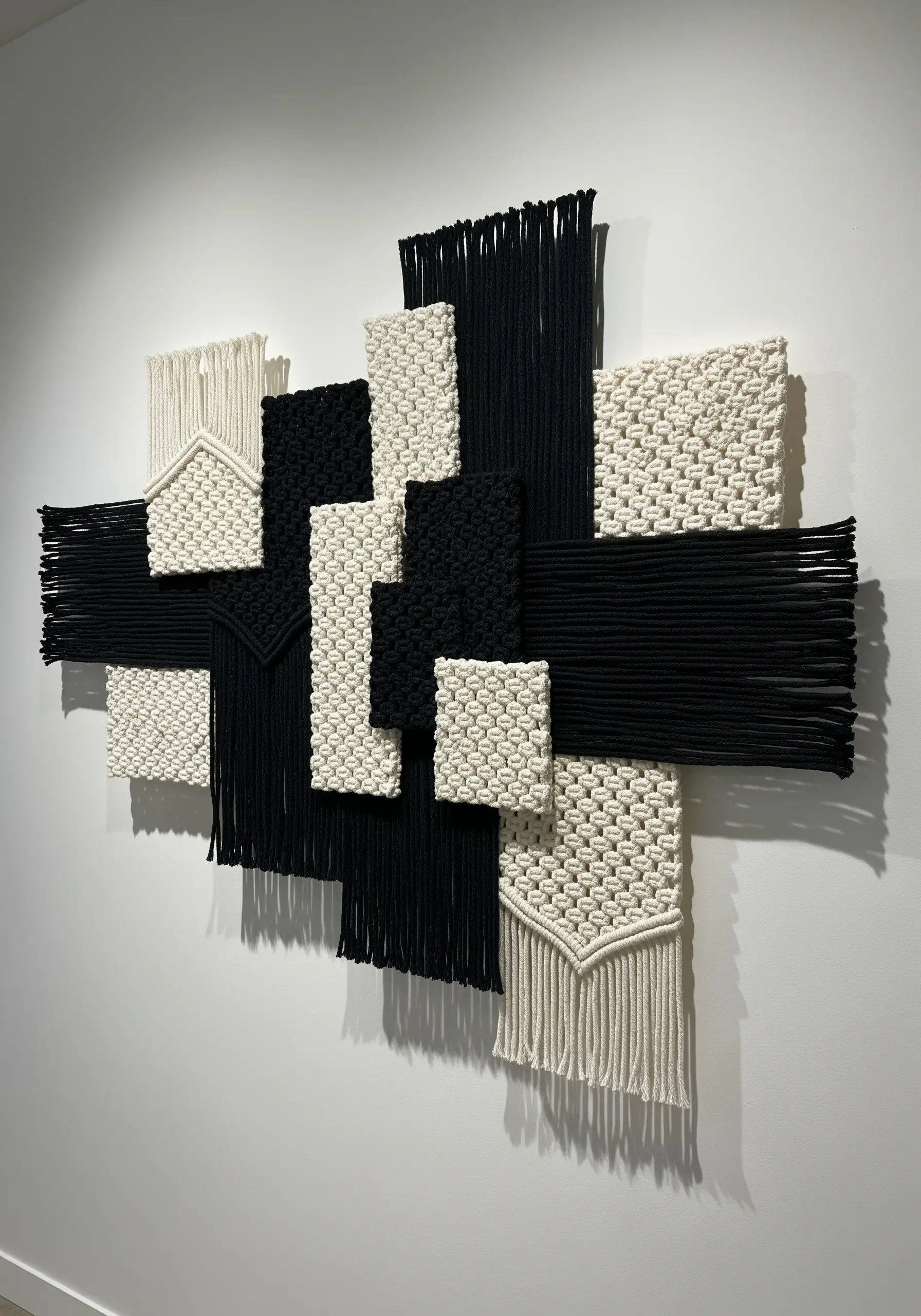
Use macramé to create a bold, graphic composition that reads like a minimalist painting.
Work on a series of separate backings or frames, creating panels of high-contrast black and white.
Juxtapose densely knotted sections with areas of straight, unworked cords that are stretched taut.
Arranging these blocks in an interlocking, asymmetrical pattern results in a powerful piece that uses classic fiber techniques for a modern, architectural effect.
34. Transforming Hard Forms with Soft Textures
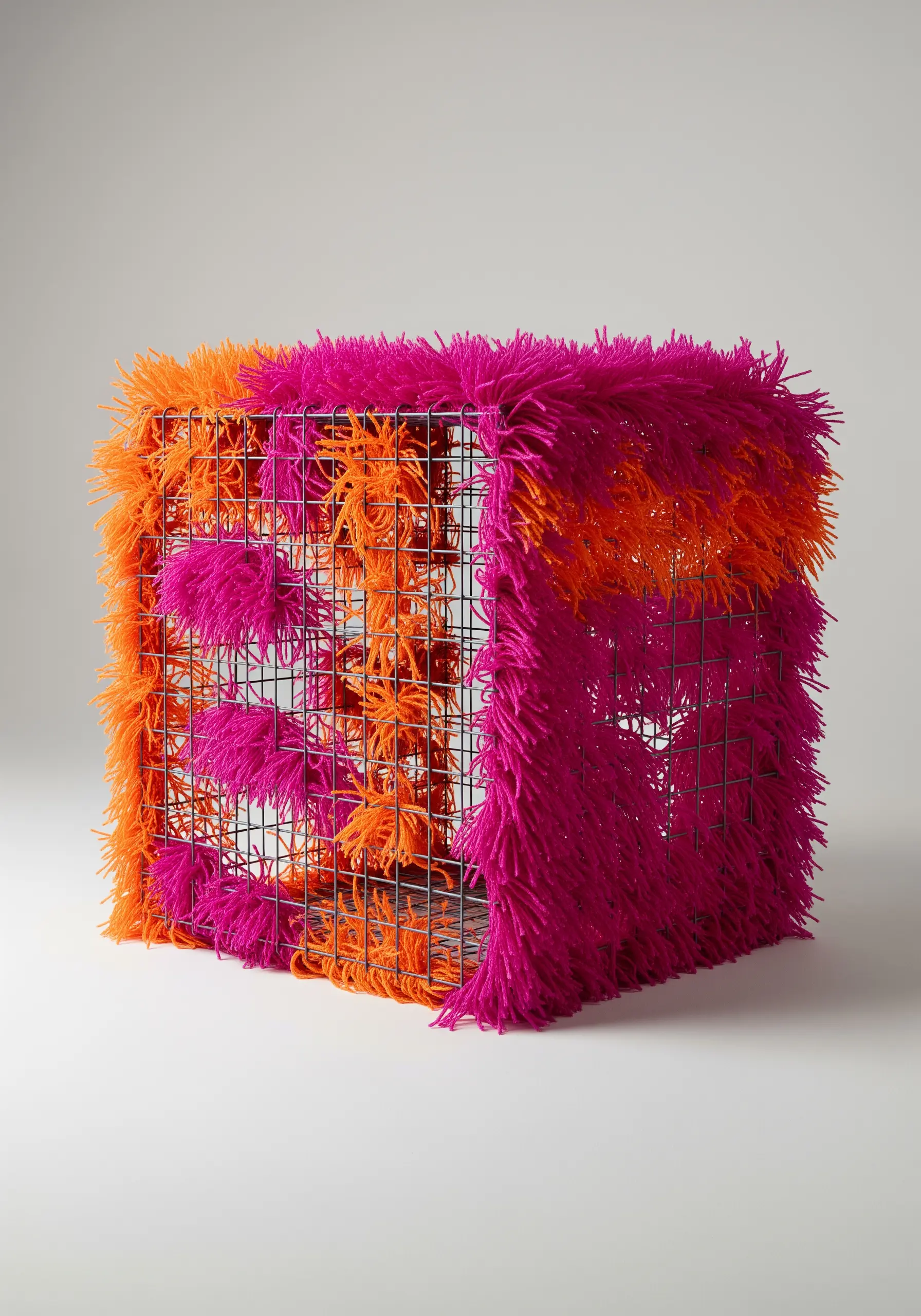
Challenge perceptions by applying a soft, plush texture to a rigid, geometric frame.
Use a simple wire cube or mesh box as your canvas.
Cover the surfaces with a dense layer of shaggy yarn using latch-hooking or by tying on countless short lengths of fiber (rya knots).
The technique completely obscures the hard lines of the underlying structure, turning a cold, industrial object into a vibrant, furry, and playful sculpture.
35. A Shimmering Field of Woven Discs
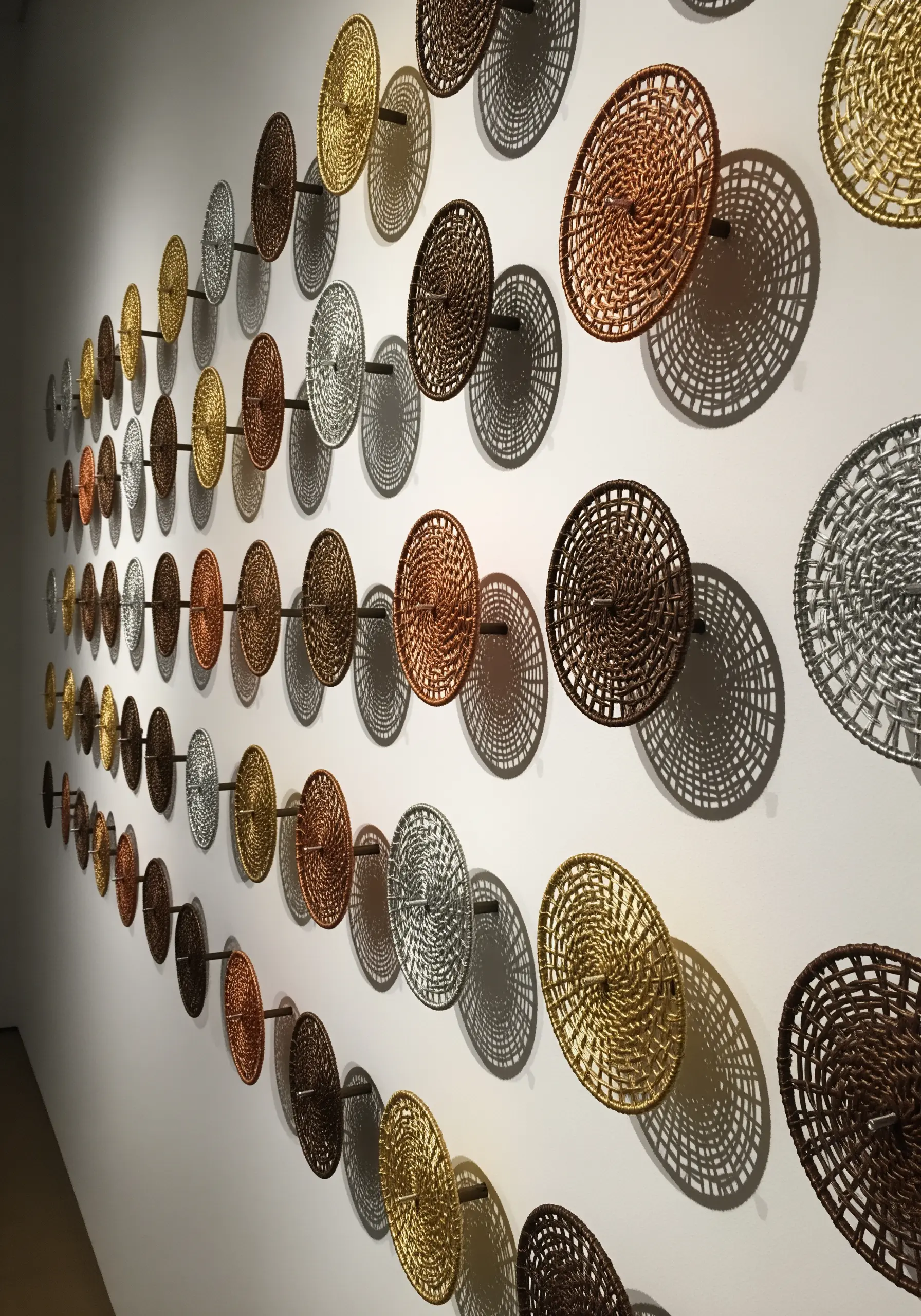
Create a large-scale installation from small, repeating elements that interact with light.
Weave dozens of small, flat discs on miniature looms using metallic threads or very fine, colored wire.
Mount each disc on a short post, projecting it slightly from the wall.
This arrangement allows each element to cast its own distinct shadow, while the metallic surfaces catch and reflect light as you move through the space, creating a dynamic, shimmering effect.
36. Sculpting with Hardened Burlap
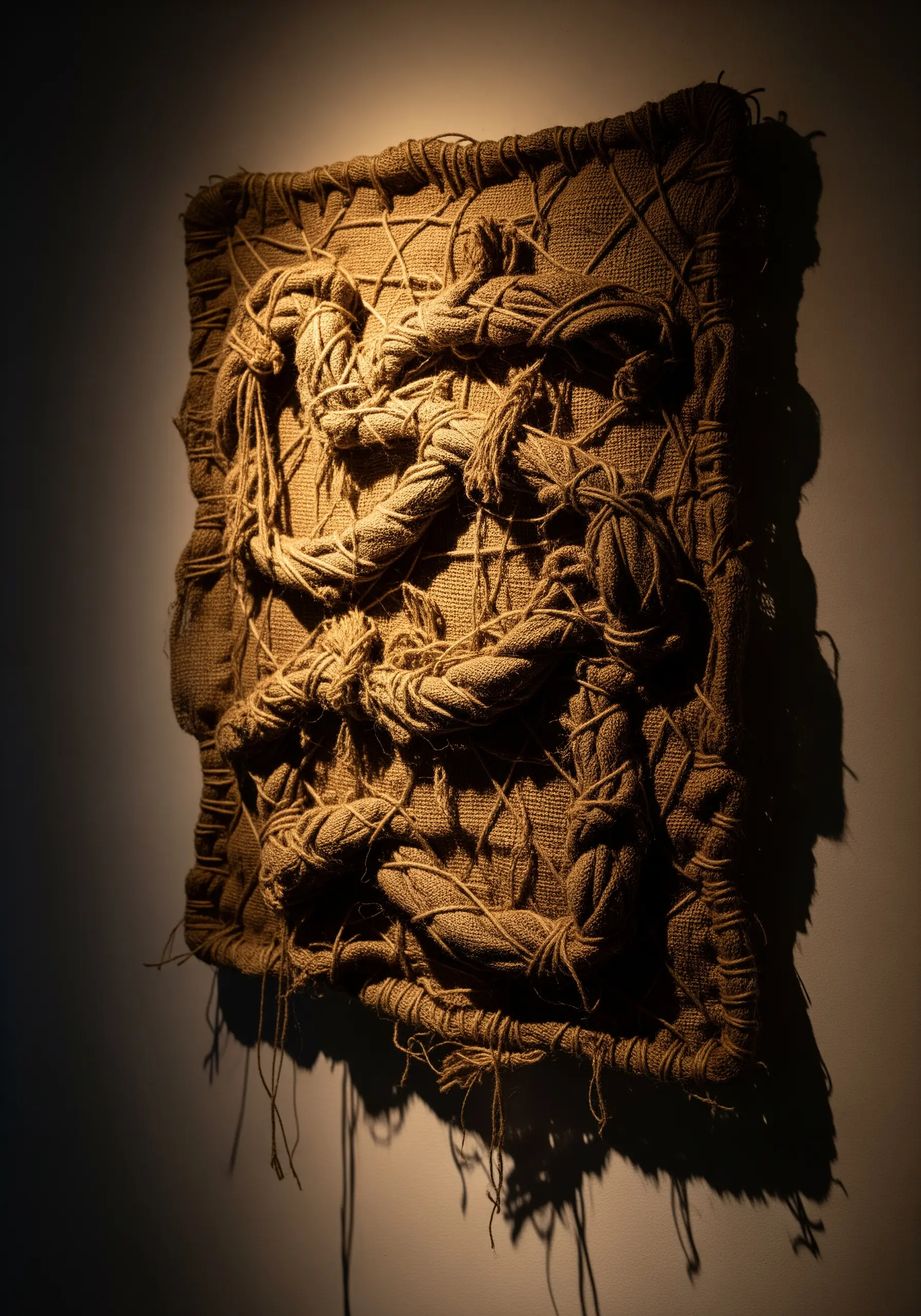
Preserve the raw, rustic texture of natural fibers in a permanent, sculptural form.
Soak rough materials like burlap or jute in a potent fabric stiffener, then drape, twist, and knot them around a form or armature.
As it dries, the fabric will become rock-hard, freezing the dynamic twists and folds in place.
This method captures a sense of raw energy and motion while celebrating the humble beauty of the material itself.