Have you ever finished a piece and felt that something was missing, that it didn’t quite capture the vision in your mind? You’ve mastered the stitches, but now you want to create work that feels less like a craft project and more like art—something with presence, that can hold its own in a room.
The shift happens when you begin to think not just about the stitches, but about form, texture, light, and scale. It’s about understanding how a dense field of French knots can feel like moss, how stitching on a transparent fabric can feel like a memory, or how a single, precise line can convey more emotion than a thousand satin stitches.
Here, we move beyond the hoop. I’ll show you how to build sculptural forms, paint with thread, and use your needle to create objects that don’t just decorate a space, but transform it. This is your invitation to see your materials differently and create handmade art that truly feels like you.
1. Build Sculptural Landscapes with High-Pile Stitching

To create a piece with this much physical presence, think beyond flat stitches and build upward.
Use a punch needle or a series of dense Turkey stitches with chunky wool yarn to create a high-pile, rug-like texture that invites touch.
Map out your design in broad color blocks, like a topographical map, and fill each section with a distinct textural field.
The raw, unfinished edge of the linen base fabric provides a rustic frame, reminding the viewer of the material’s humble origins and contrasting beautifully with the plush, sculpted surface.
These large-scale embroidery tapestries can define an entire room’s atmosphere.
2. Embrace Three-Dimensional Form with Mixed Fibers

Move your embroidery off the wall and into sculptural space by working on three-dimensional forms.
Cover styrofoam spheres with fabric and use them as a canvas for beading, seed stitches, or tightly wrapped yarn.
Combine different textures in a single piece: the smooth gloss of beads, the matte finish of wrapped thread, and the soft fuzz of wool roving create a rich tactile dialogue.
Stacking these embellished forms introduces an element of composition and balance, turning individual exercises in texture into a cohesive sculpture.
These are the kinds of mixed-fiber creations that blur the line between craft and fine art.
3. Master the Art of Embroidery on Sheer Fabric

Working on organza or voile allows you to play with light and transparency, making your motifs appear to float in mid-air.
To prevent puckering, use a sharp, fine needle (like a size 10) and maintain even, gentle tension.
Use a water-soluble stabilizer on the back during stitching; it provides the support the delicate fabric needs and rinses away completely, leaving no trace.
A simple split stitch or stem stitch for outlines, paired with strategic satin stitch for wings, creates a clean, graphic effect that lets the fabric’s airiness shine through.
This is one of the most elegant modern thread art techniques for creating a sense of weightlessness.
4. Create Botanical Dimension with Stumpwork Techniques
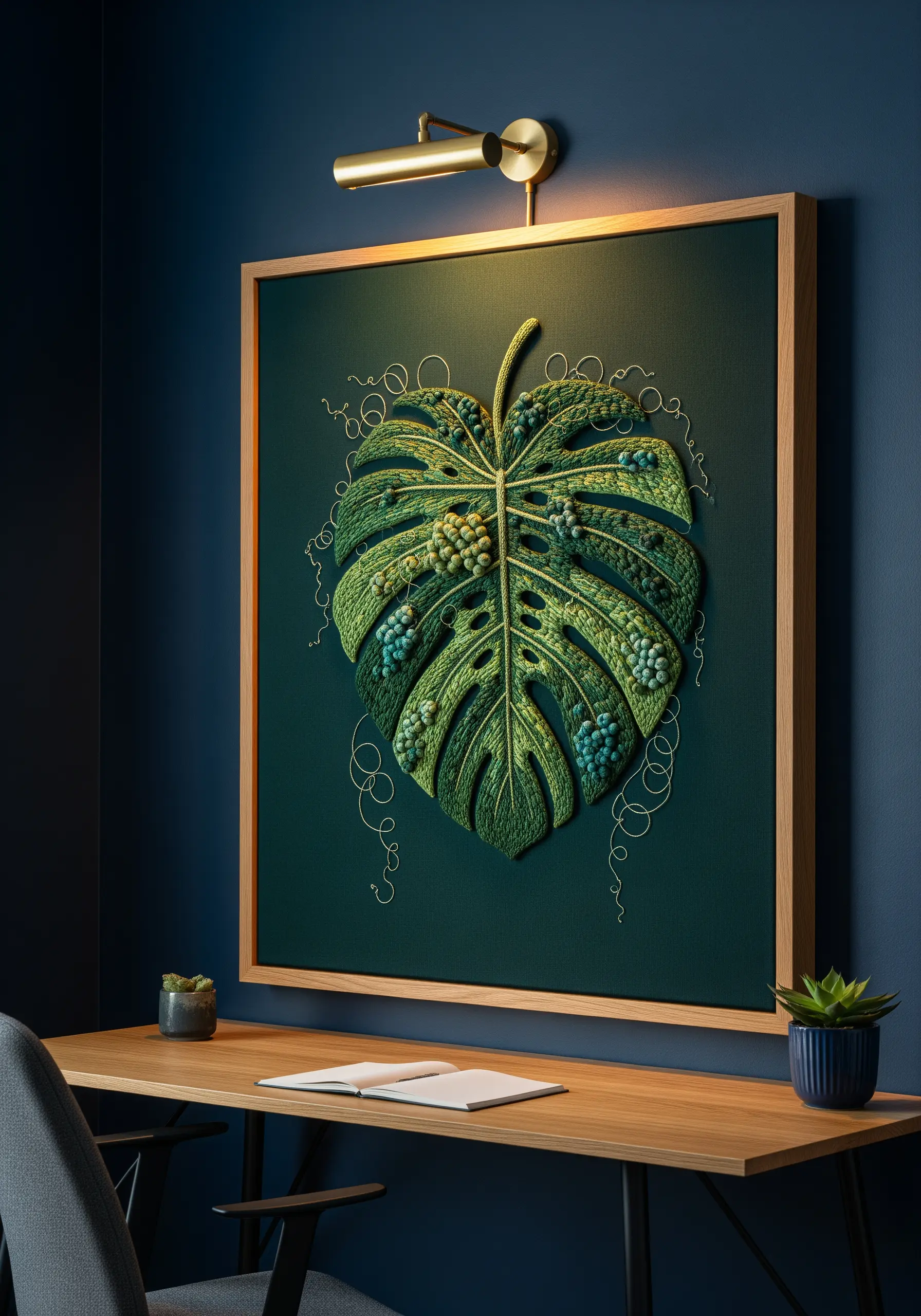
Give your botanicals realistic dimension by moving into stumpwork, a form of raised embroidery.
Create the leaf sections separately on a spare piece of fabric with wire stitched along the edges, then cut them out and applique them to the background for a true 3D effect.
Use padded satin stitch—placing layers of felt or stitches underneath—to build up areas like the leaf veins, making them physically pop from the surface.
The loose, trailing threads add a touch of deconstructed artistry, reminding the viewer of the process and materials involved.
You can even master ways to embroider realistic shadows for even more depth.
5. Weave Textural Wall Plates for a Cohesive Display
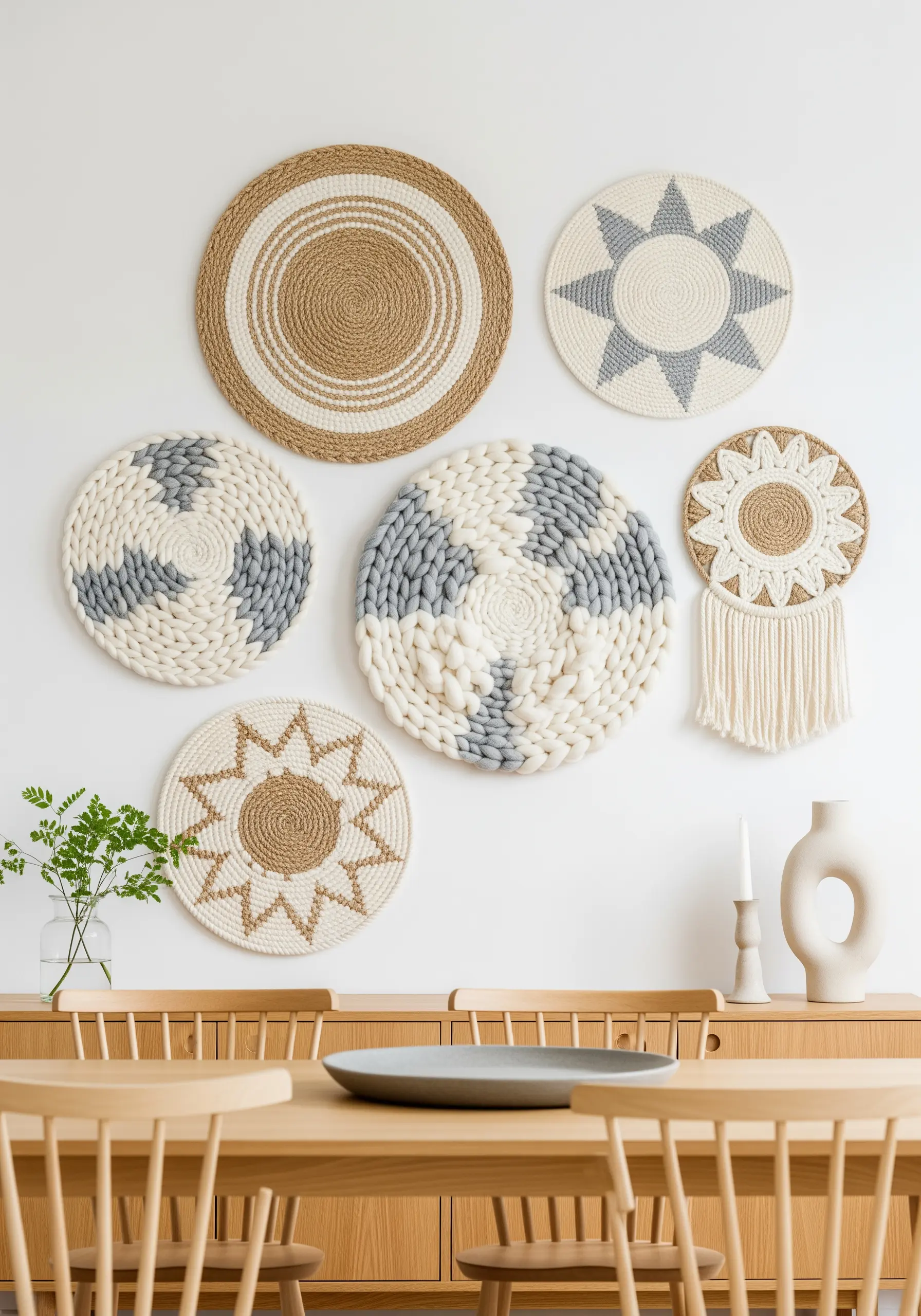
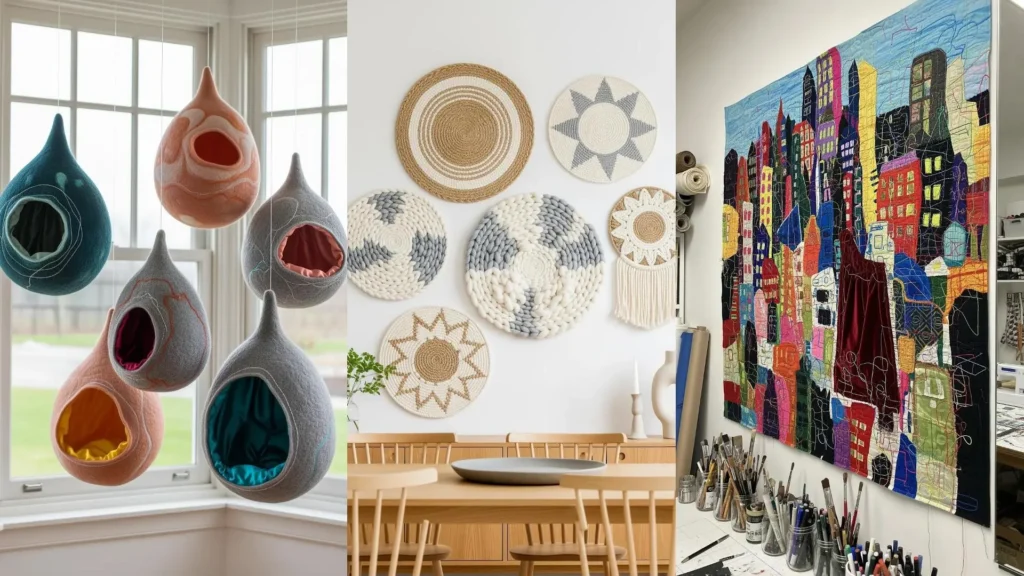
Arrange your fiber art into a gallery wall by working with a consistent shape, like these circular plates.
You can achieve this coiled effect by wrapping thick rope or cord with yarn and then stitching the coils together from behind.
For the woven sections, wrap a sturdy metal hoop with warp threads and use a tapestry needle to weave chunky yarn in and out.
Limiting your palette to two or three complementary colors—like cream, jute, and slate grey—ensures the collection feels curated and harmonious, allowing the textures to take center stage.
These pieces work beautifully with boho embroidery patterns.
6. Incorporate Natural Elements into Fiber Art

Elevate a macrame or fiber project from simple decor to a unique art object by incorporating unexpected, natural materials.
Instead of beads, integrate polished agate slices, seashells, or unique pieces of sea glass into your knotted designs.
Choose a central mounting point, like a piece of driftwood, that adds its own organic character and story to the piece.
This technique challenges you to think about how different materials speak to each other—the soft, pliable cord against the hard, smooth stone creates a compelling visual and tactile contrast.
These are the kinds of stunning mixed-fiber projects that feel personal and collected.
7. Convey Atmosphere with Minimalist Line Work

You don’t need complex stitches to create a powerful mood; precise line work can be just as evocative.
Use a simple backstitch or running stitch and focus on varying the density and direction of your lines to suggest form and shadow.
A triptych format—three panels telling one story—gives a simple design a more significant, gallery-like presence.
Working with a monochromatic or limited color palette on a neutral background forces the viewer to focus on the texture and rhythm of the stitching itself.
These minimalist embroidery wall art ideas add sophistication without overwhelming a room.
8. Draw with Your Sewing Machine for Expressive Collages
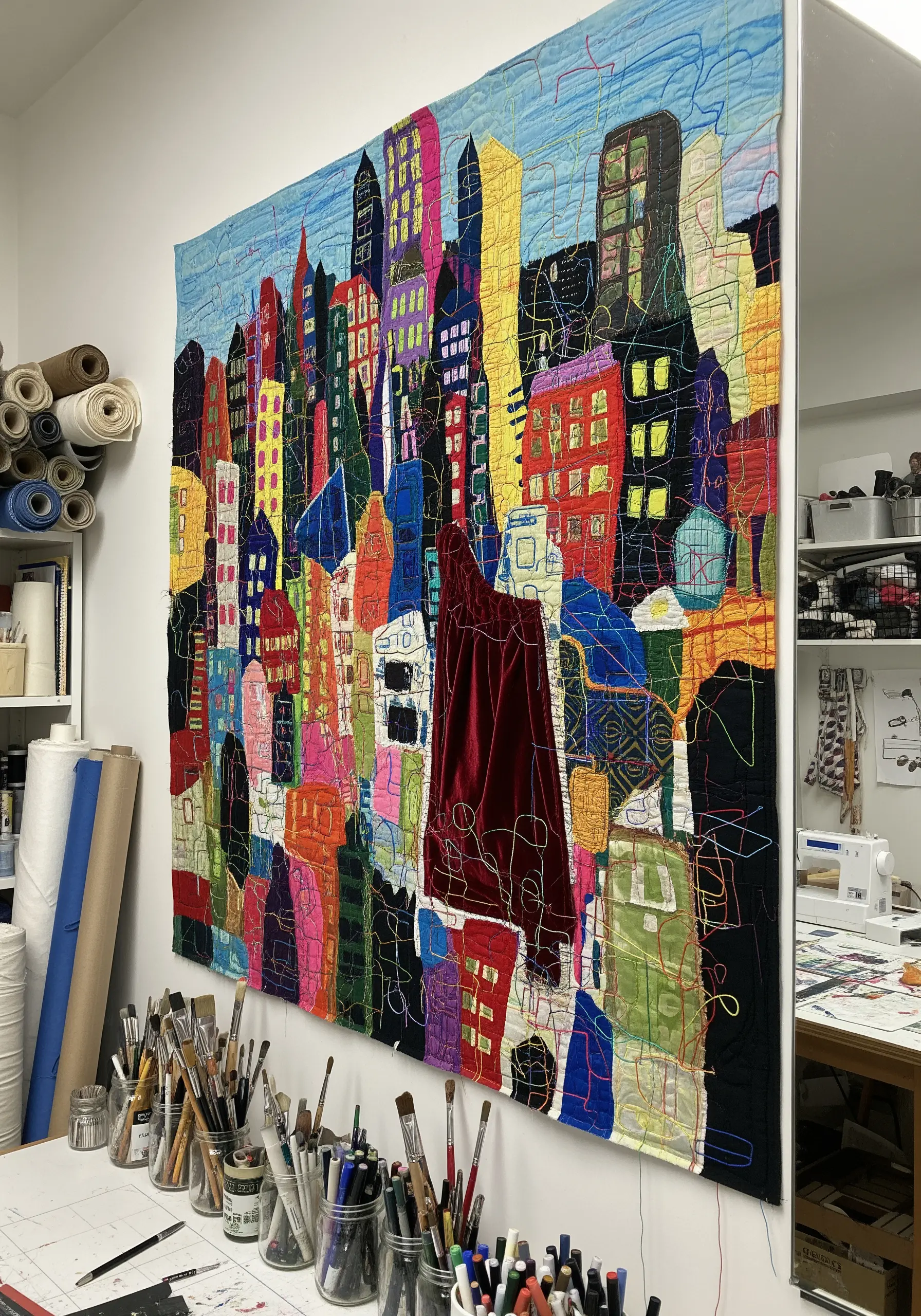
Treat your sewing machine as a drawing tool to create large-scale, expressive textile art.
Start by piecing together a collage of fabric scraps to block out the basic shapes of your cityscape.
Then, using a darning foot for free-motion stitching, outline the buildings and add details like windows and architectural lines with a contrasting thread color.
The slightly wobbly, hand-drawn quality of the stitches adds energy and personality, turning what could be a rigid scene into something vibrant and alive.
These fabric collage embroidery compositions are perfect for telling a dynamic story.
9. Build an Embroidered Diorama for Immersive Worlds

Create an entire world in a shadow box by combining various dimensional embroidery and fiber techniques.
Use tightly packed French knots in variegated threads to form coral textures, and try cast-on or bullion stitches for tubular anemone shapes.
Incorporate beads and pearls as bubbles or tiny sea creatures to add a different kind of texture and catch the light.
Layering is key: place taller, more complex elements in the foreground and simpler, flatter stitches in the back to create a convincing sense of depth.
This technique is perfect for stitching detailed, realistic animal patterns.
10. Create Hypnotic Patterns with Precision Stitching
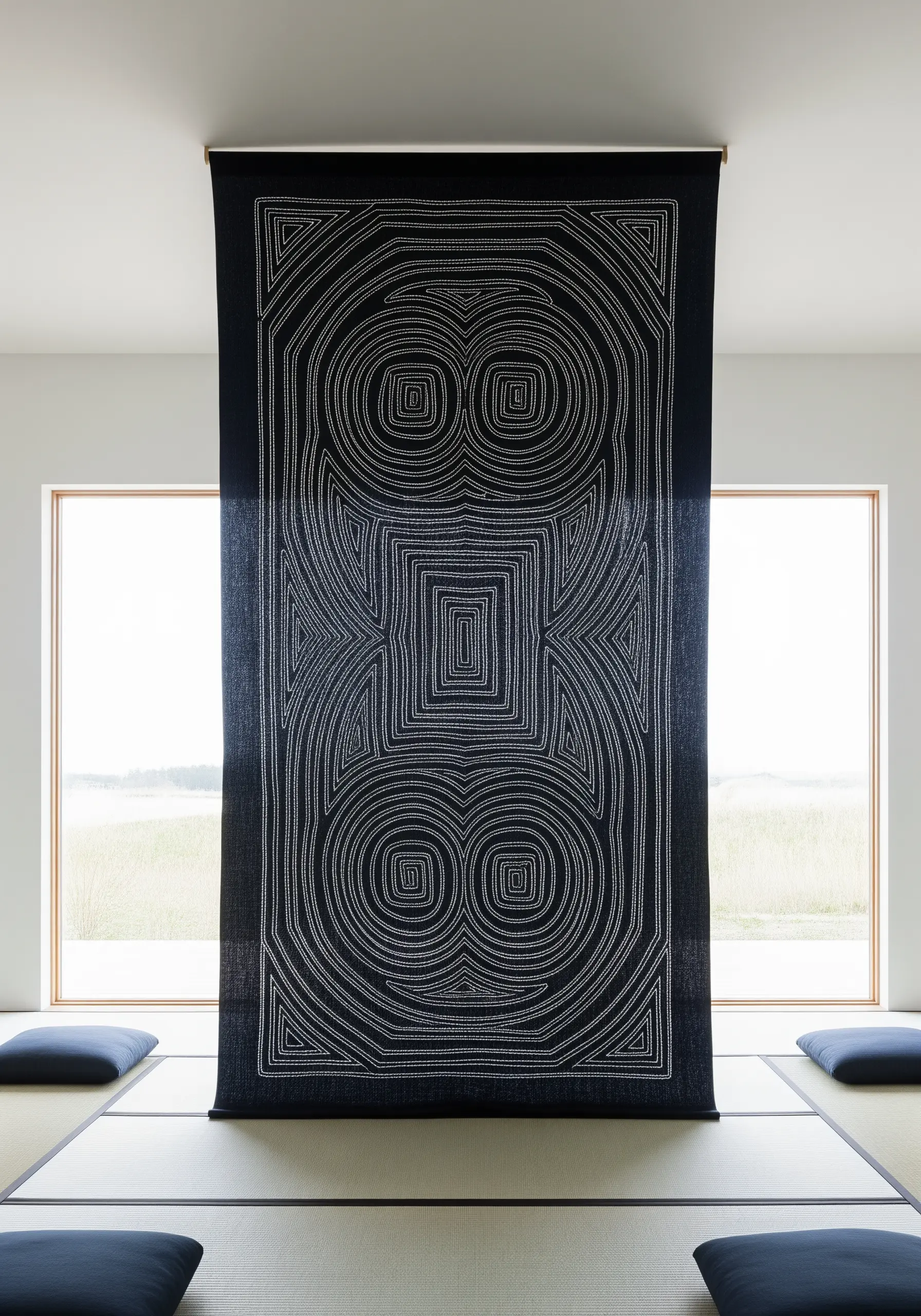
Transform a simple piece of fabric into a mesmerizing art object through the power of repetition and precision.
Use a removable marking pen and a ruler to draw your geometric pattern directly onto the fabric before you begin stitching.
A simple backstitch or stem stitch in a high-contrast color, like white on black, is all you need for the pattern to have a powerful graphic impact.
The key to this style is consistency in stitch length and tension, which creates a clean, optical effect that draws the eye inward.
Even simple embroidery patterns can be incredibly impactful when executed at a large scale.
11. Upholster Furniture with Punch Needle Art

Take your fiber art off the wall and apply it to functional objects like furniture for a truly unique statement piece.
Punch needle is ideal for upholstery due to the dense, durable fabric it creates.
Work in sections on monk’s cloth, drawing your abstract color-blocked pattern first, then use a punch needle and rug yarn to fill it in.
Once your panels are complete, you can have them professionally applied by an upholsterer, turning a plain armchair into a work of retro-inspired art.
The technique is similar to creating yarn wall art projects, but applied to a functional form.
12. Use Stitching to Define Sculptural Form

When creating soft sculptures, use embroidery not just as decoration, but as a way to define and emphasize the object’s form.
Create a bold, patterned fabric, or find one you love, and construct your three-dimensional shape.
Then, use a heavy-weight thread or yarn to hand-stitch along the seams and contours of the sculpture.
This technique, similar to piping in upholstery, draws a clean, graphic line that highlights the piece’s curves and dimensions, turning it into a living drawing in space.
This approach works well for abstract fabric collage ideas translated into 3D.
13. Paint Nebulae and Starlight with Thread
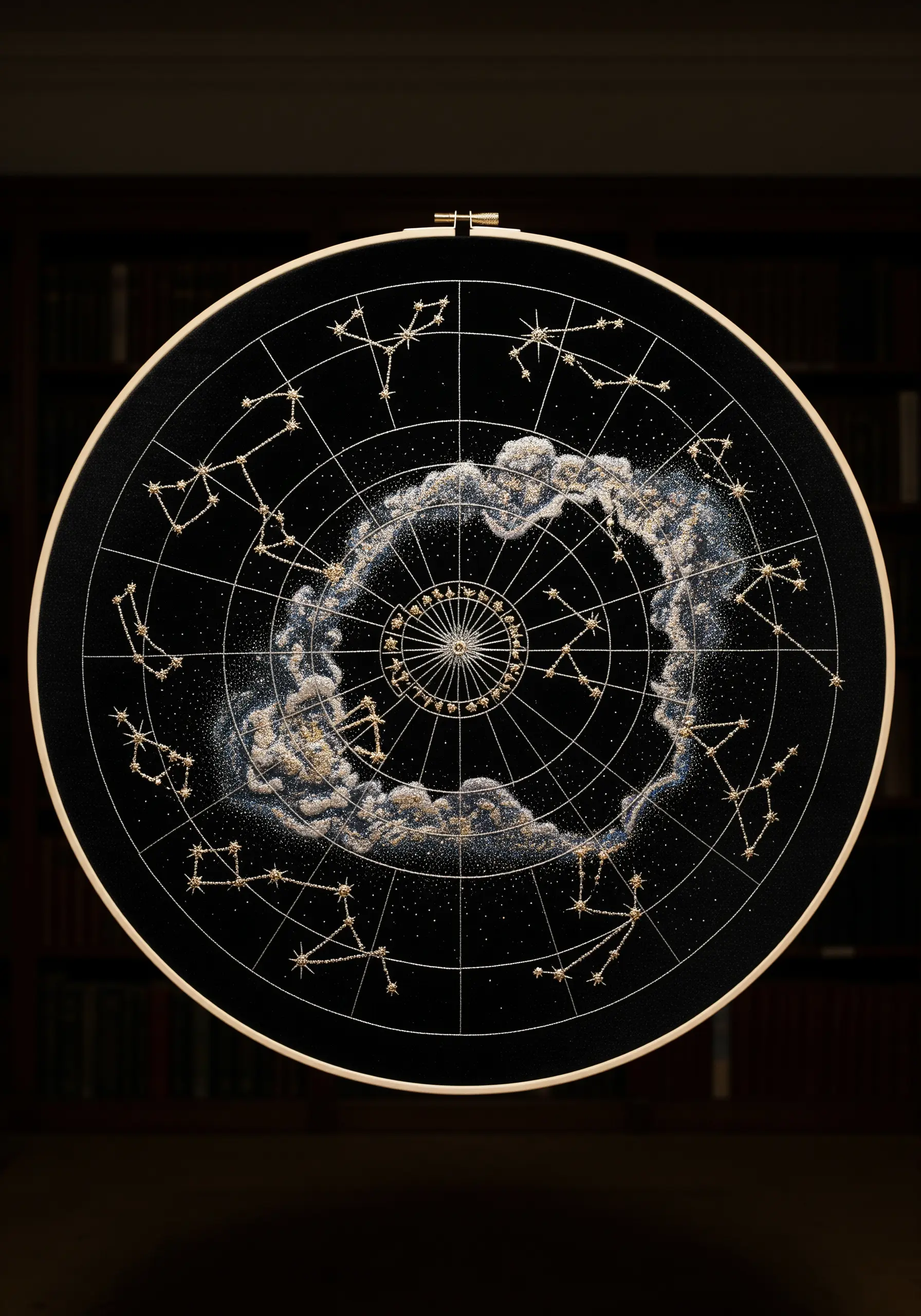
Create the ethereal haze of a galaxy by using thousands of tiny seed stitches or French knots in varying shades of white, grey, and pale blue.
Cluster your stitches more densely in the center and feather them out at the edges to create a soft, cloud-like gradient.
For the stars and constellations, switch to a crisp metallic gold thread and use a simple star stitch or a single, sharp straight stitch to make them sparkle against the dark fabric.
The contrast between the soft, diffuse texture of the nebula and the sharp glimmer of the stars is what gives the piece its magic.
You can use these techniques for other minimal sky designs as well.
14. Add Topographic Texture with Quilting
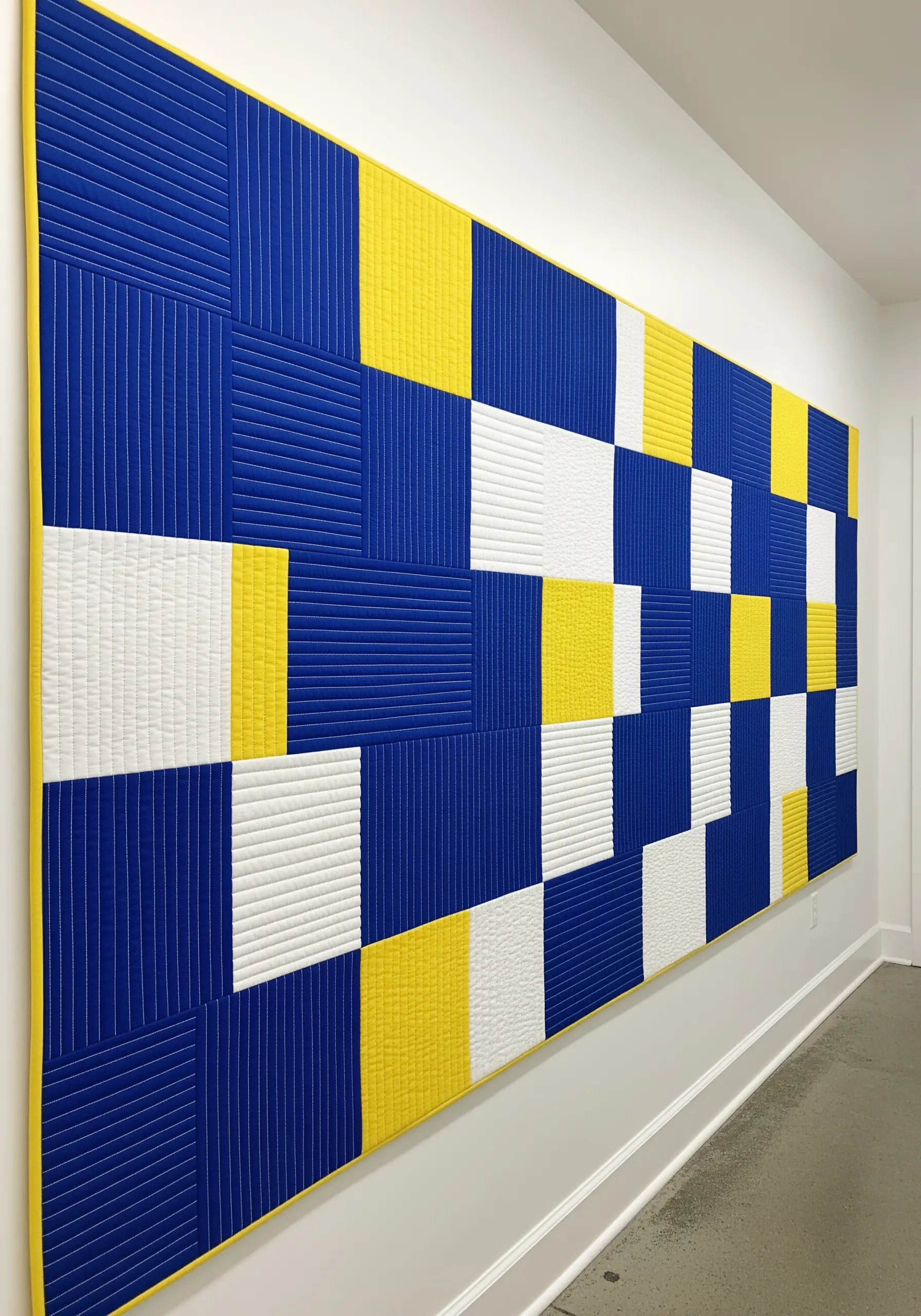
Even if you’re not a quilter, you can use the principles of quilting to add incredible texture to your textile art.
Start with a simple, color-blocked fabric panel, either by piecing fabrics together or painting them.
Then, using a walking foot on your sewing machine, stitch straight, parallel lines across the surface. This is called quilting.
By changing the direction and density of your stitched lines in different color blocks, you create a subtle, topographic texture that catches the light and adds a layer of sophisticated detail.
It’s one of the most effective modern grid stitch concepts for adding structure.
15. Add Character with Minimal Embroidered Accents

Sometimes the most impactful embroidery is the most restrained.
Create or acquire simple, sculptural felted objects and use them as a three-dimensional canvas.
Instead of covering the surface, add just a few delicate, meandering lines of embroidery with a contrasting thread.
This minimal approach doesn’t overwhelm the object’s form but instead adds a layer of personality and quiet narrative.
The simple lines can suggest geological strata, flowing water, or abstract energy, turning a simple shape into a piece of art that sparks curiosity.
These organic shape embroidery patterns enhance, rather than dominate, the form.
16. Build Abstract Art by Couching Thick Fibers

Create intensely textured, high-relief artwork by mastering the technique of couching.
Couching is the process of laying a thick yarn, cord, or braid onto your base fabric and then tacking it down with a thinner, separate thread.
Experiment with creating your own unique cords by braiding multiple strands of colorful yarn together before you couch them down.
Arrange your couched fibers in dynamic swirls and chains, allowing them to overlap and interact to build a surface that is complex, energetic, and deeply tactile.
This method is perfect for creating abstract layered thread collages with incredible dimension.
17. Weave with Unconventional and Found Materials
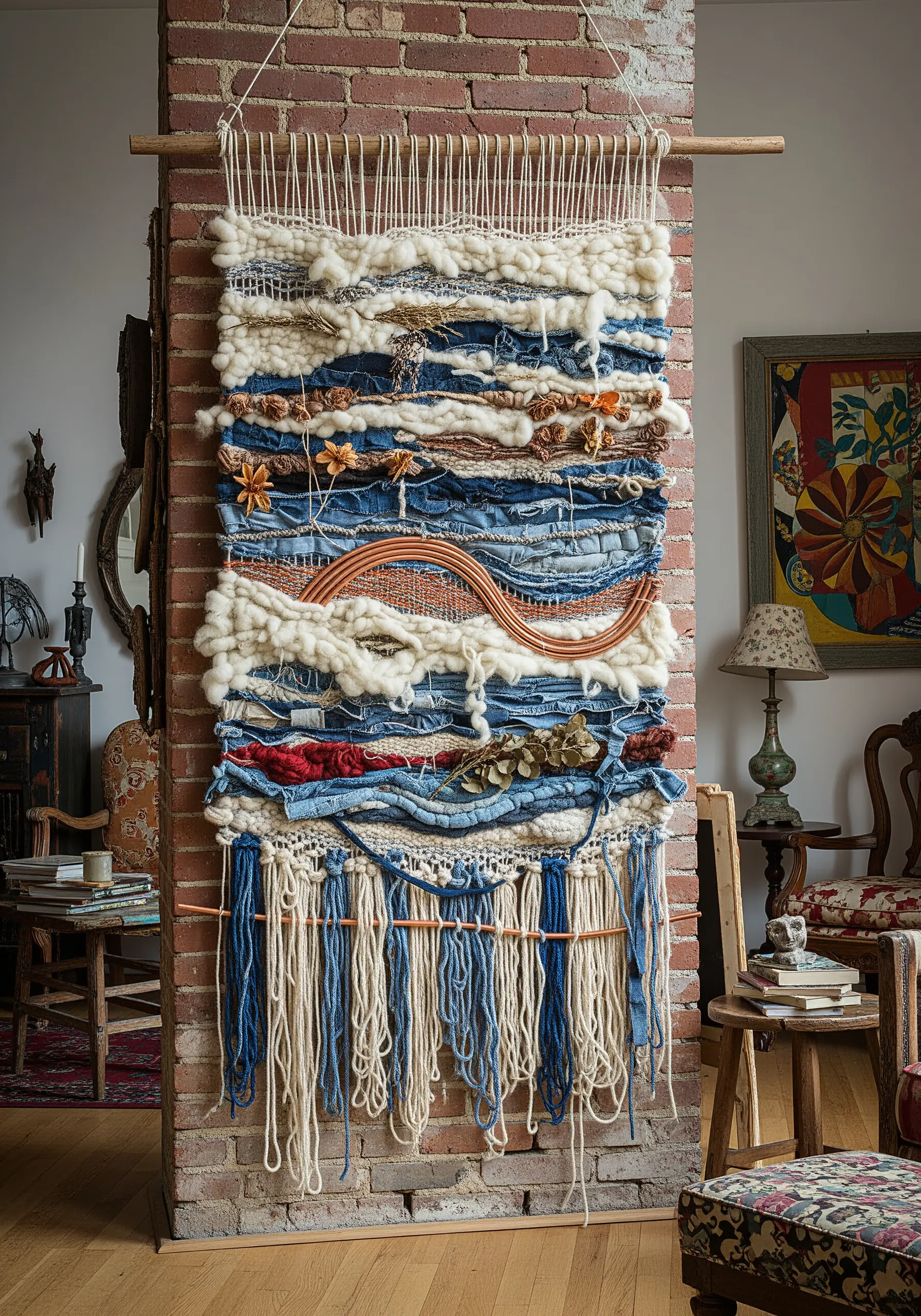
Push the boundaries of traditional weaving by incorporating unexpected materials into your work.
Introduce strips of recycled denim, leather, or other meaningful fabrics alongside traditional wool roving and yarn.
You can even weave in non-fiber elements like dried flowers, copper tubing, or twigs to create a piece that is both a landscape and a collection of memories.
This practice turns your art into a form of storytelling, where each material brings its own history and texture to the whole composition.
These nature texture embroidery projects feel grounded and authentic.
18. Sketch Expressive Portraits with Thread
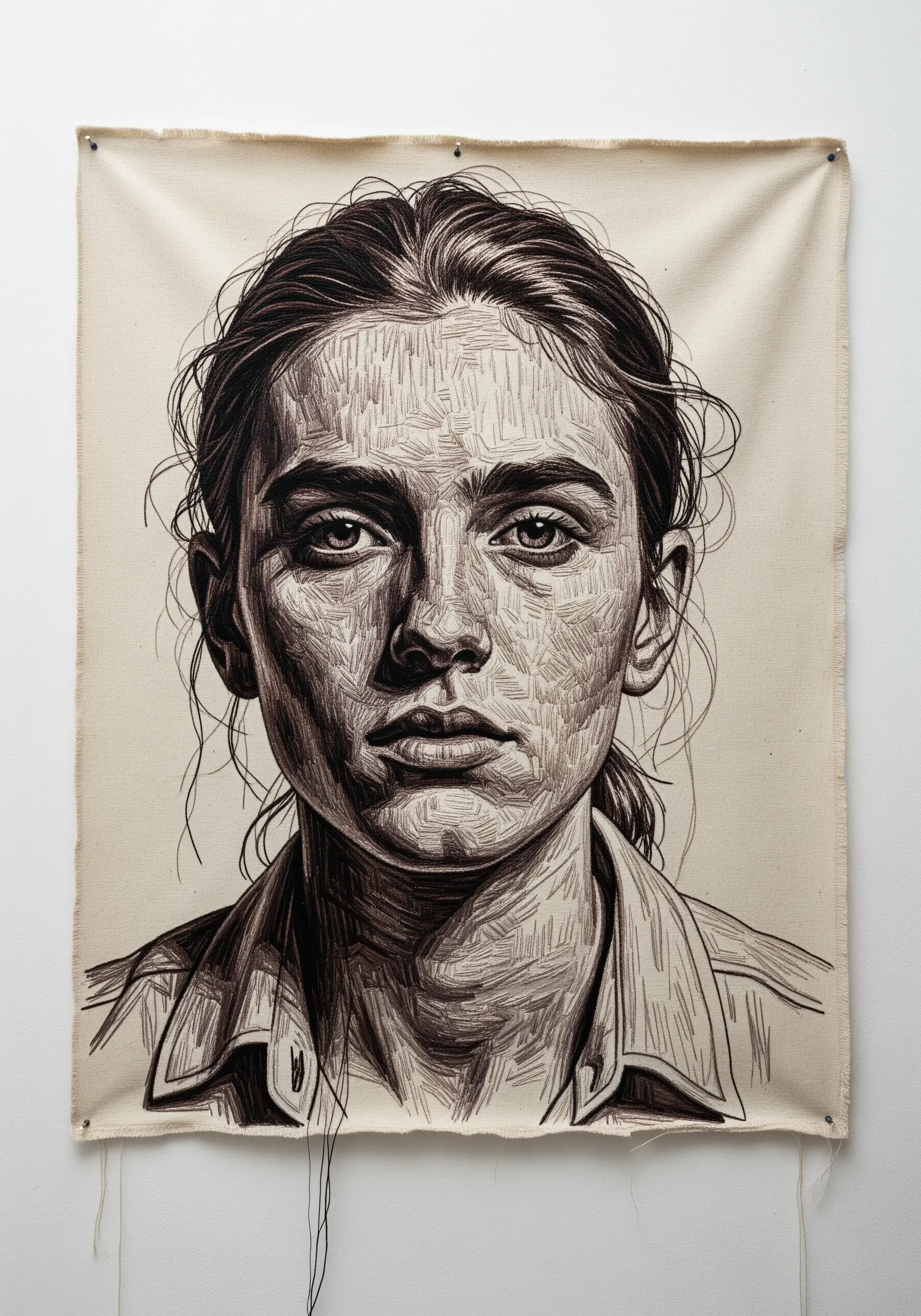
Use a single strand of thread to create portraits with the same expressive quality as a pen-and-ink drawing.
Instead of filling shapes with color, use directional straight stitches to indicate shadow and form, a technique known as thread painting or blackwork.
Think like an illustrator using cross-hatching: layer your stitches in different directions to build up darker areas, and use sparse, single lines for highlights.
Working on raw, unprimed canvas adds to the sketch-like aesthetic, and leaving the threads long at the end emphasizes the work’s handmade nature.
This method is an advanced take on single-line face profiles, adding depth and shadow.
19. Map the World with Directional Stitches
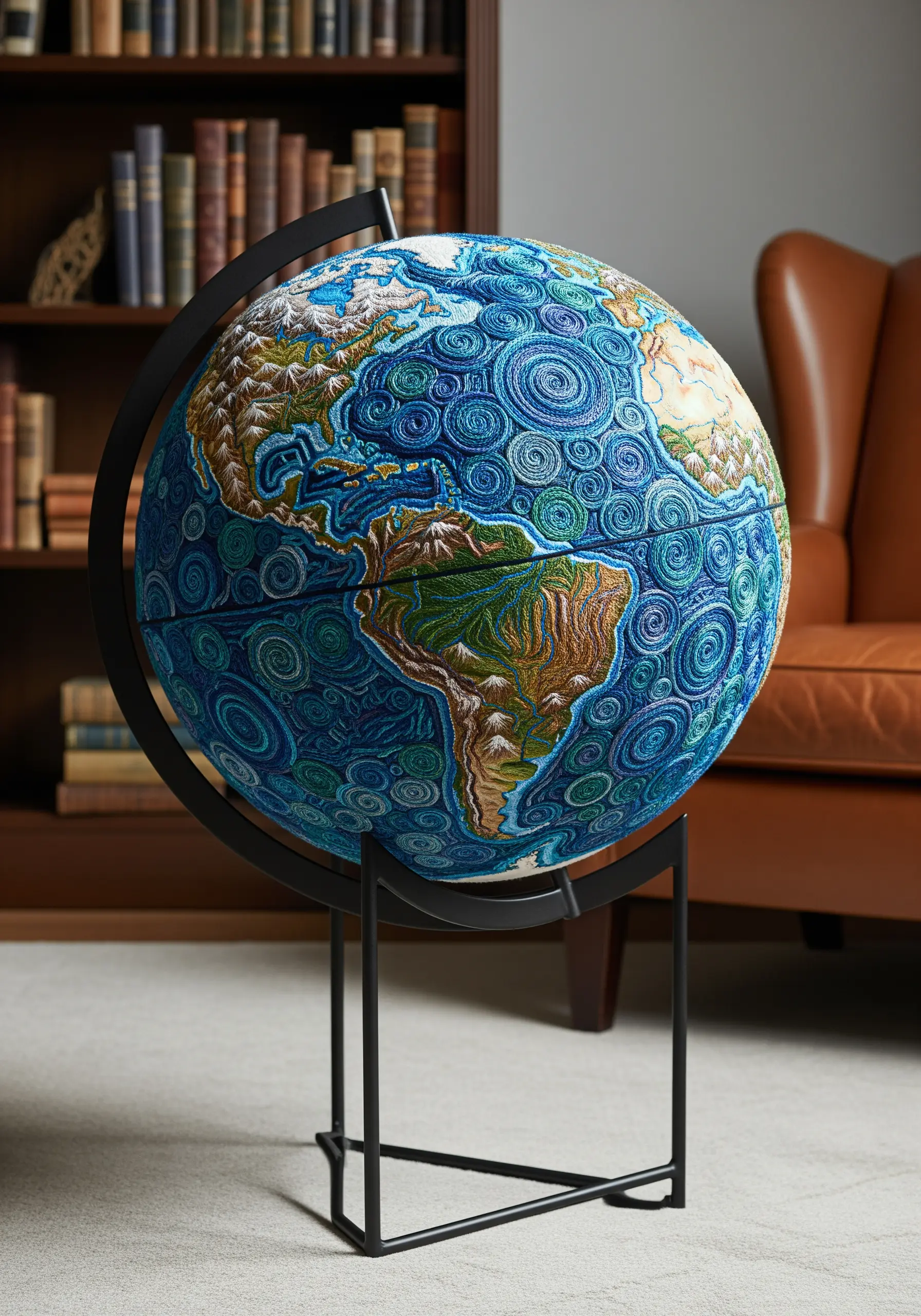
When embroidering a complex object like a globe, let your stitch direction do the work of conveying form and energy.
Instead of simply filling in the landmasses, use swirling patterns of backstitch or stem stitch to represent ocean currents and weather patterns.
On the continents, orient your stitches to follow mountain ranges or the flow of rivers to create a sense of topography.
This thoughtful application of stitch direction transforms a flat map into a dynamic, living world.
This is a beautiful way to create travel-inspired string art with a sophisticated finish.
20. Achieve Intricate Detail with Macrame Knots

Create a stunning, large-scale mandala using the principles of macrame, which is essentially knotting with intention.
Build your design radially from a central point, using a vocabulary of simple knots—like the square knot and half-hitch—to create complex, repeating patterns.
The key to a successful large-scale piece is maintaining consistent tension in your knots, which ensures the geometric pattern remains crisp and even.
Finishing the piece with a dramatic fringe and tassels adds weight and a sense of ceremony, turning it into a powerful focal point for a calm space.
You can create similar patterns with embroidered mandala wall art designs.
21. Personalize Objects with Unexpected Embroidery
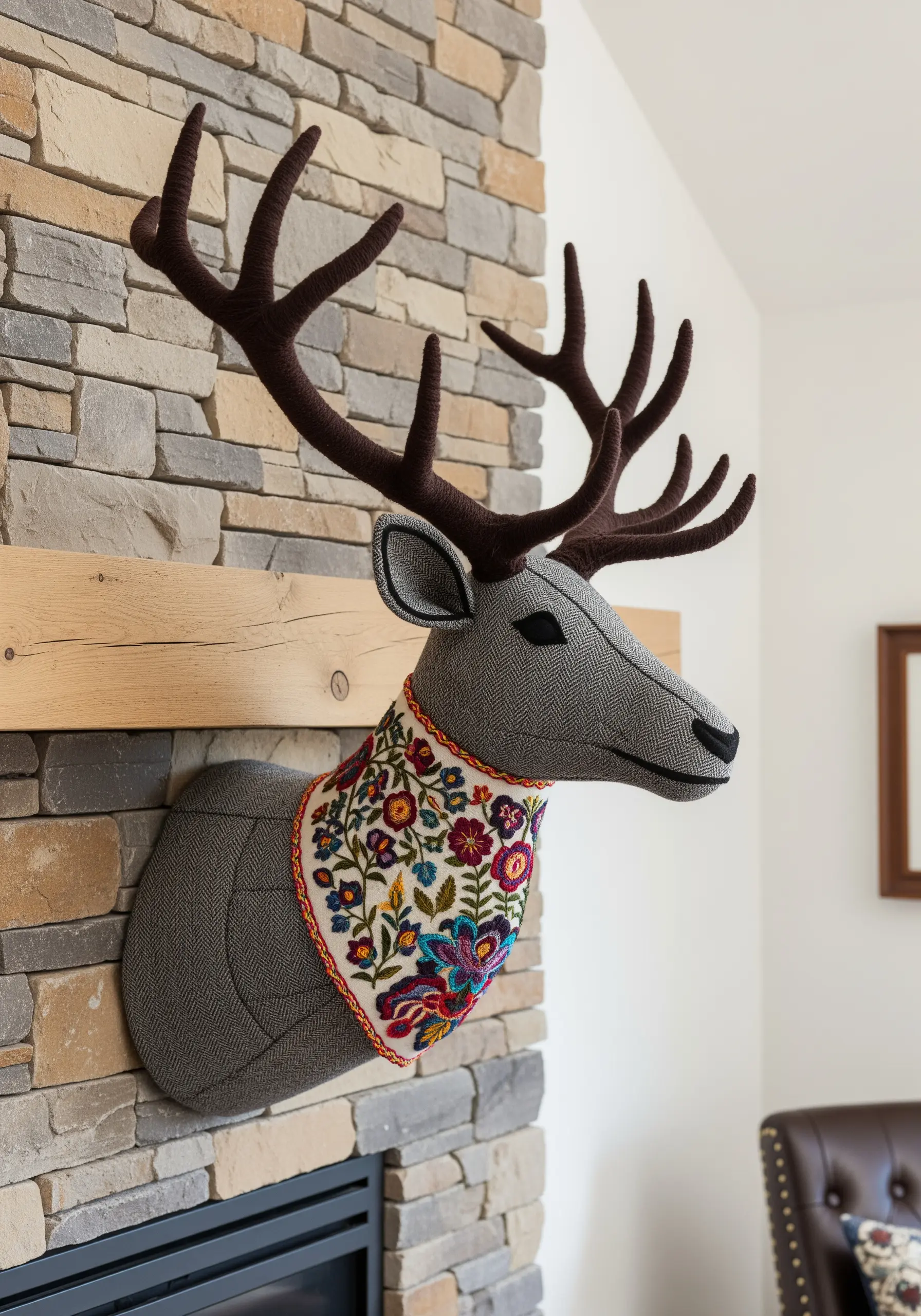
Elevate any decorative object by adding a surprising and meticulously crafted embroidered element.
Create a custom-fit embroidered panel, like this colorful folk-art bandana, and apply it to an otherwise monochrome object.
The contrast between the modern, minimalist form of the deer head and the traditional, vibrant floral embroidery creates a playful and compelling artistic statement.
This approach encourages you to see everything as a potential canvas, blending different styles and crafts to create something entirely new.
It’s a modern way to approach fox and deer embroidery patterns.
22. Design with Light in Mind

Create art that transforms from day to night by working with translucent fabrics and a backlight.
Layer sheer fabrics like silk organza or thin cotton voile, stitching each one with parts of an abstract landscape.
When unlit, the piece appears as a cohesive whole; when backlit, the individual layers and the spaces between them become visible, creating a beautiful sense of depth and atmosphere.
Vary the density of your stitching—dense satin stitches will appear opaque, while sparse seed stitches will glow softly.
These embroidered textile wall hangings offer a completely different experience when illuminated.