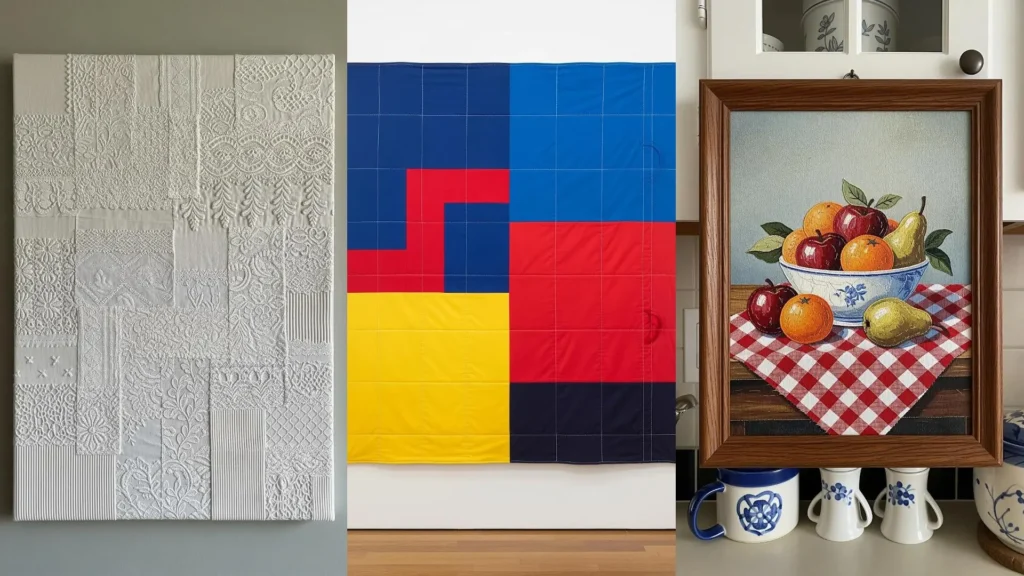
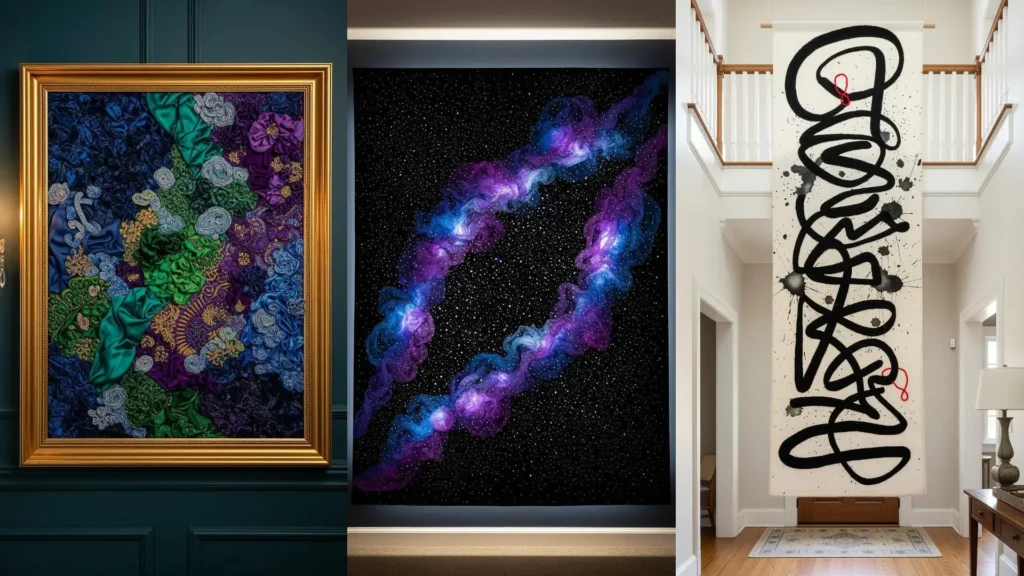
Before you pick up a needle, I want you to look at your fabric scraps differently. See them not as leftovers, but as your palette. The real magic in creating embroidery that feels like gallery art isn’t about mastering hundreds of complex stitches; it’s about learning to see and combine textures with intention.
Fabric collage is your path to creating rich, layered worlds without needing to draw perfectly. It allows you to build landscapes, abstract forms, and vibrant scenes with pieces of color and texture. Your stitches then become the final, defining touch—the line that adds detail, the knot that adds focus, the texture that brings it all to life.
In these pieces, you’ll discover how to let fabric do the heavy lifting. You’ll learn to think about composition, color harmony, and material choice in a way that feels intuitive and deeply personal. This isn’t just crafting; it’s composing. And you have everything you need to begin right now.
1. Blend Sculptural Yarn with Layered Fabric
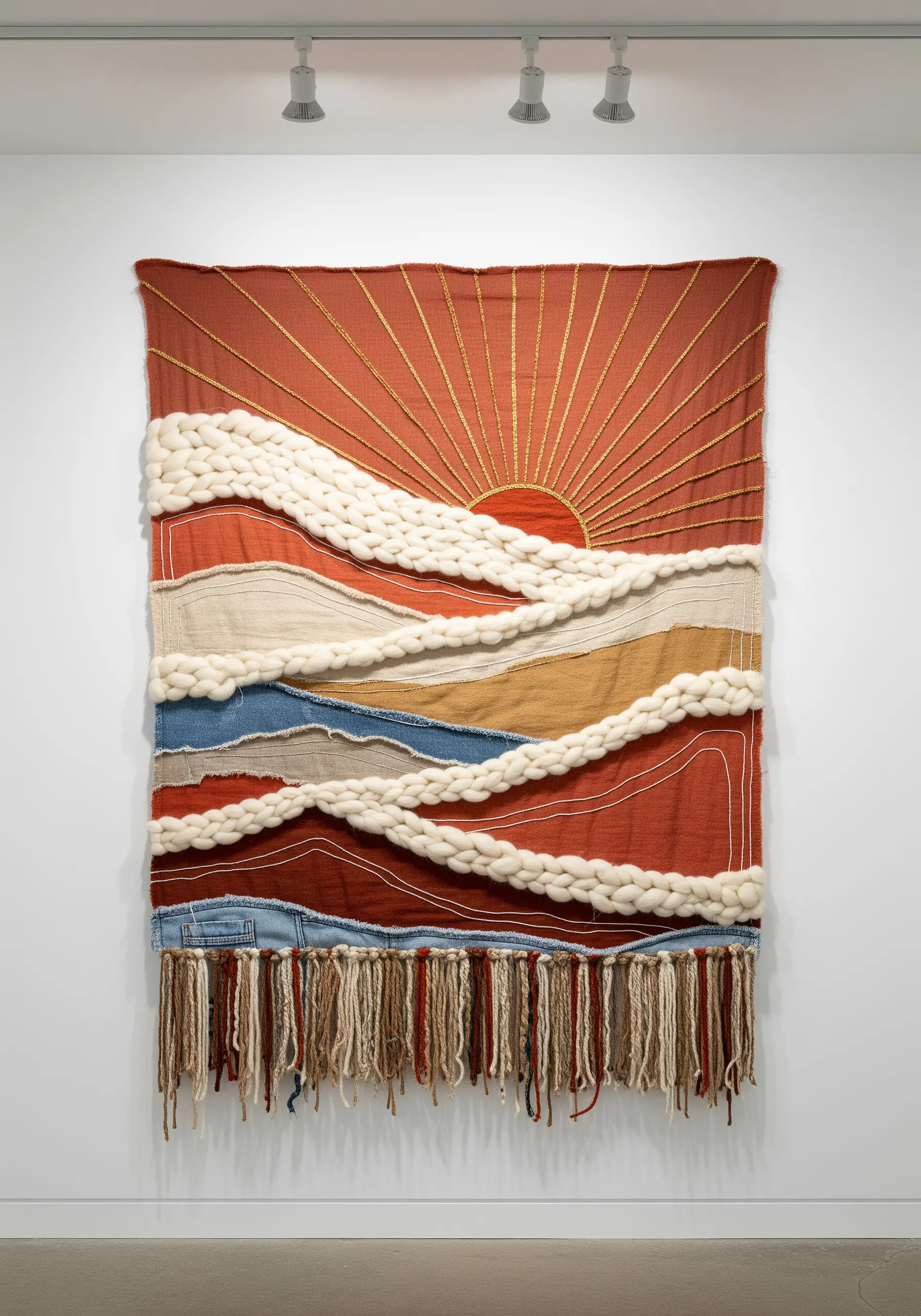
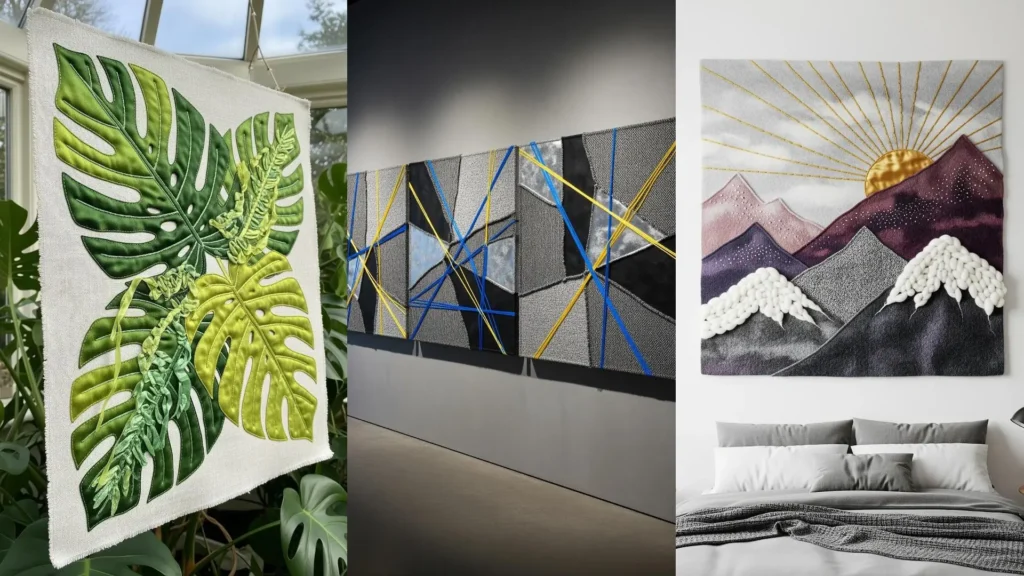
Integrate thick, unspun wool roving directly into your fabric collage to create dramatic, high-relief textures.
First, arrange your layered fabric background, letting raw edges add character.
Then, lay down the roving in wave-like patterns and secure it with a couching stitch, using a matching or contrasting embroidery floss that loops over the wool at intervals.
This technique adds immediate sculptural depth, contrasting the flat fabric with the soft, voluminous yarn, making your piece one of the hand-embroidered wall hangings that feel straight out of Pinterest.
Use radiating straight stitches in a metallic thread for the sunrays to introduce a sharp, geometric element that contrasts beautifully with the organic flow of the landscape.
2. Use Tie-Dye as Your Canvas
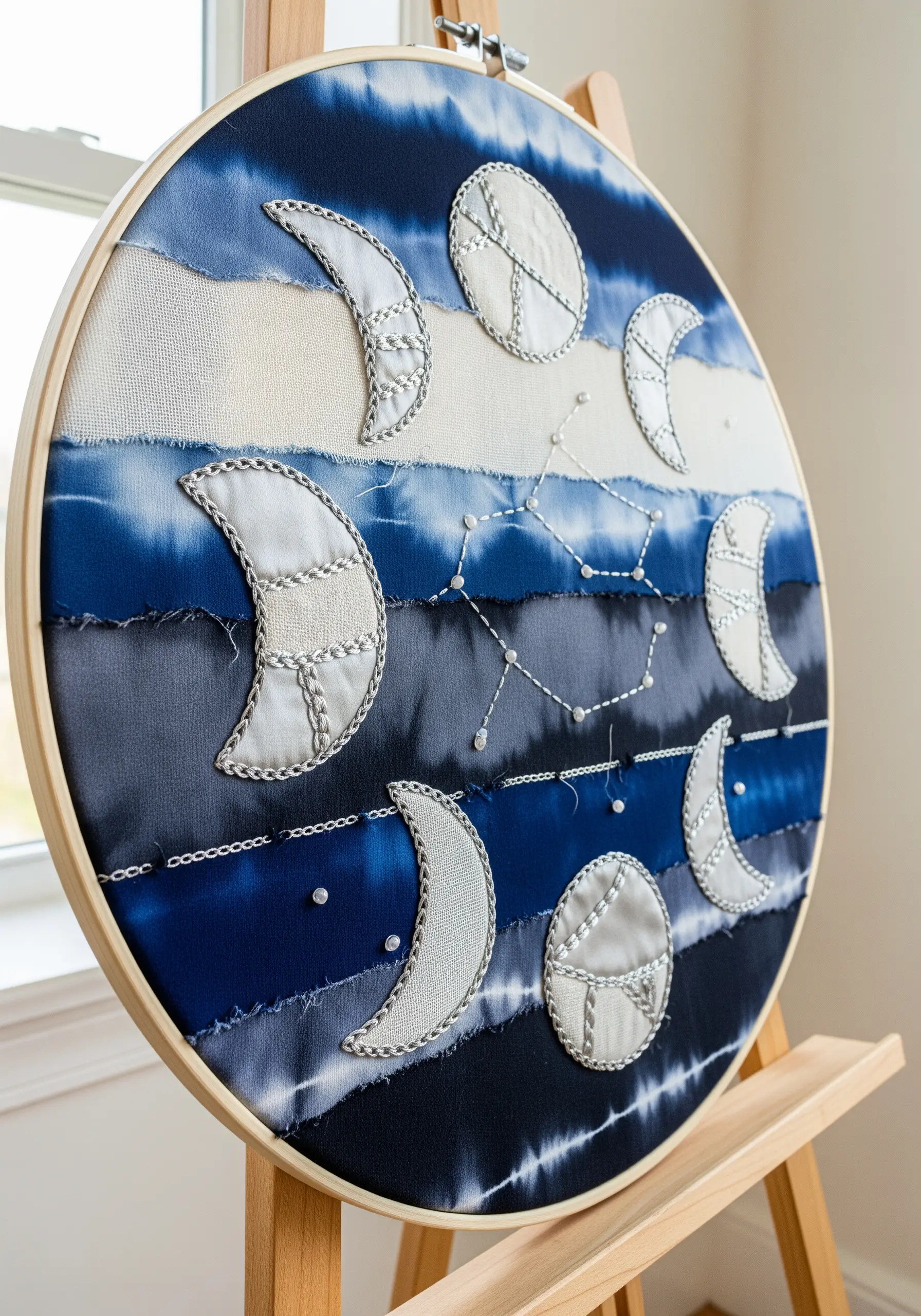
Start with a dynamic background by using shibori or tie-dyed fabric instead of a solid color.
The existing patterns and color variations will provide depth and movement, giving you a foundation that already feels complete.
Create your moon phase appliqués from a contrasting, solid-colored fabric like a white or silver linen.
Secure the appliqués with a simple blanket stitch around the edge, then add a grid of running stitches for subtle texture.
This approach allows the background to inform the composition, turning a simple celestial design into a piece with atmospheric depth.
3. Create Graphic Florals with Fabric Blocking
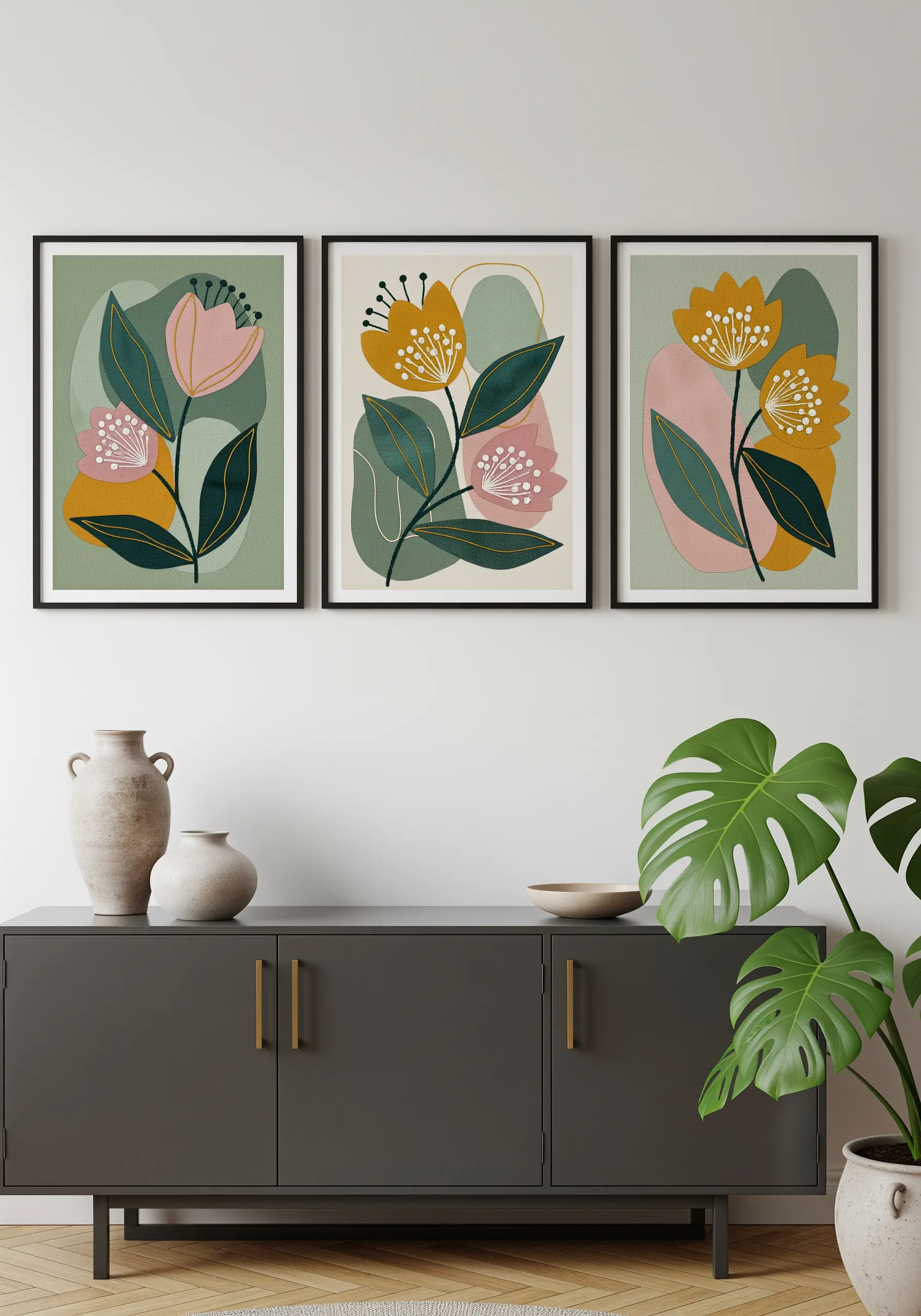
Embrace a modern, illustrative style by cutting solid-colored fabric scraps into bold, organic shapes to form petals, leaves, and abstract backgrounds.
Think like a graphic designer, layering shapes to create depth and visual interest without relying on complex shading.
Use a simple backstitch in a contrasting color to outline each shape, providing clean definition and a hand-drawn quality.
A few French knots can add textural detail for flower centers, but keep the stitching minimal to let the fabric shapes remain the focus of your modern framed embroidery designs.
4. Stitch a Seascape with Fabric Strips
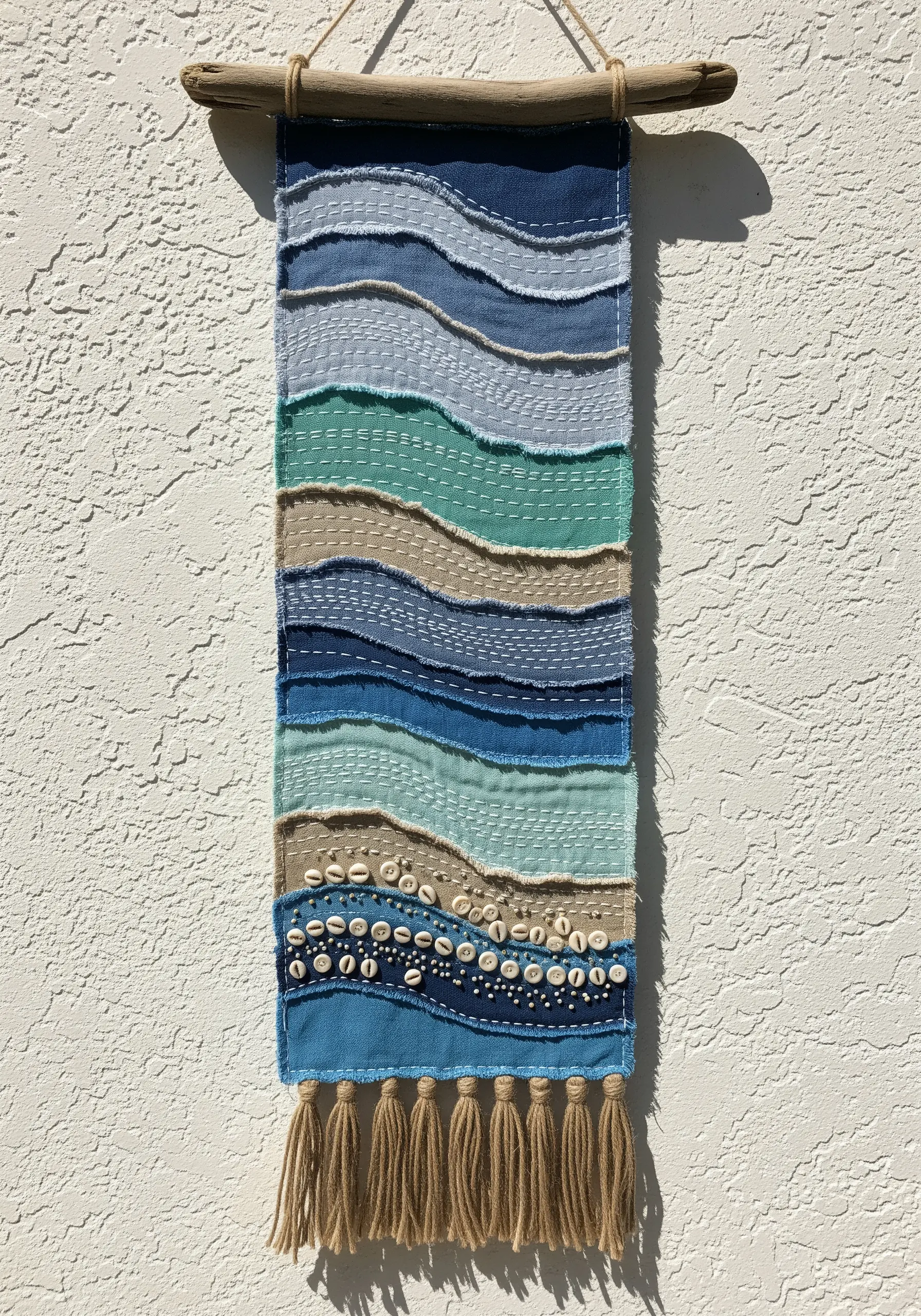
Capture the movement of the ocean by layering horizontal strips of fabric in various shades of blue, aqua, and sand.
Don’t worry about perfect edges; a frayed, raw finish enhances the natural, organic feel.
Once your fabric strips are arranged, secure them with rows of simple running stitches (sashiko style) using white or ecru thread.
Vary the length and density of your stitches to mimic the rhythm of waves and seafoam.
For a final touch, incorporate small shells or beads along one of the fabric lines to create authentic, ocean-inspired hoop embroidery ideas.
5. Build Dimension with Varied Textile Grounds
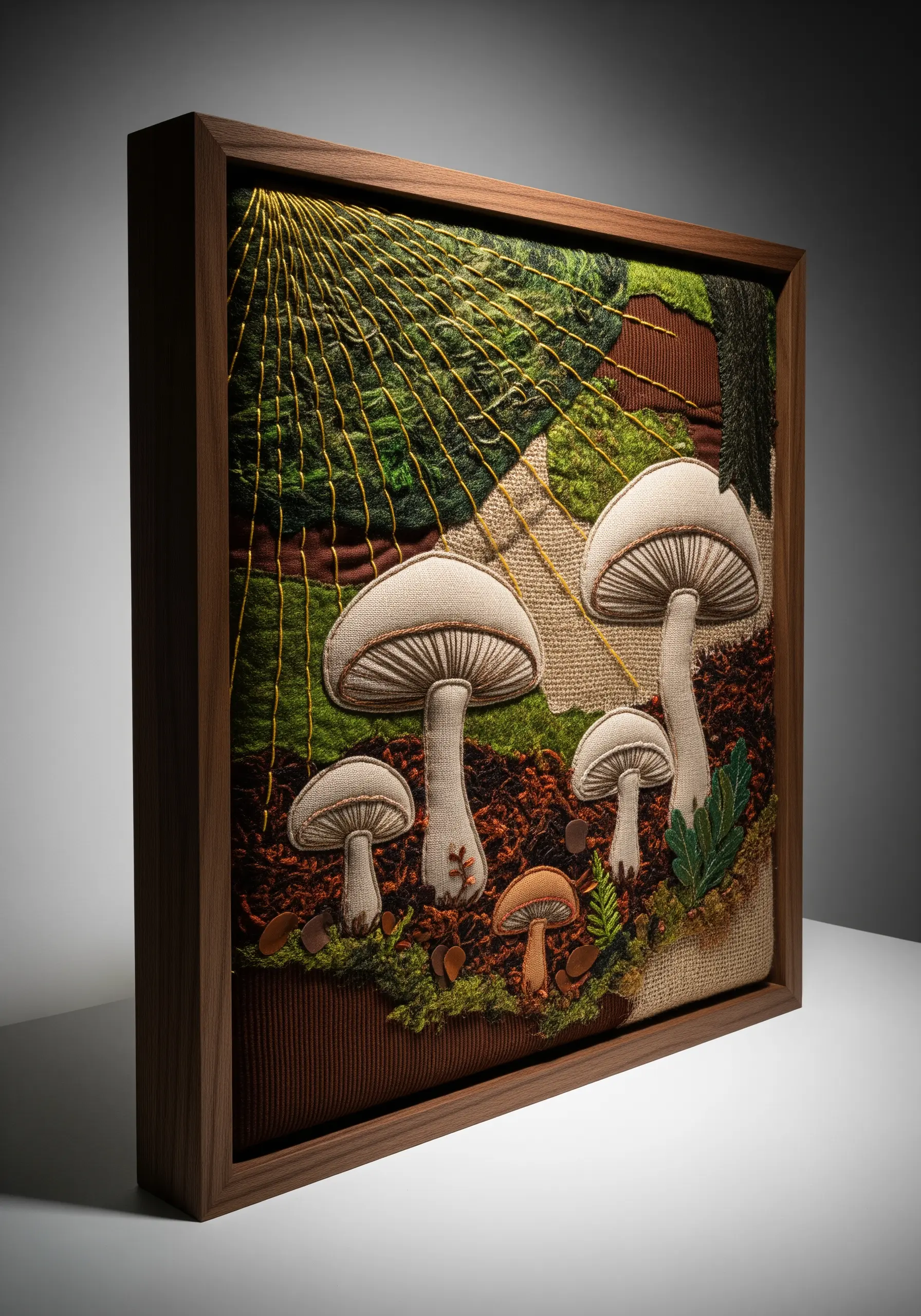
Create a sense of foreground and background by using fabrics with distinctly different textures for each element of your scene.
Use rough burlap or loose-weave linen for the forest floor, a smoother cotton for the mushroom caps, and a ribbed corduroy for tree bark or earthy textures.
This material contrast does much of the work for you, instantly signaling depth before you’ve even added a stitch.
Embroider fine details, like the gills of the mushrooms, with single-strand floss to juxtapose the coarse fabrics with delicate linework, perfect for forest floor botanical stitch ideas.
6. Go Big with Pieced Fabric Landscapes
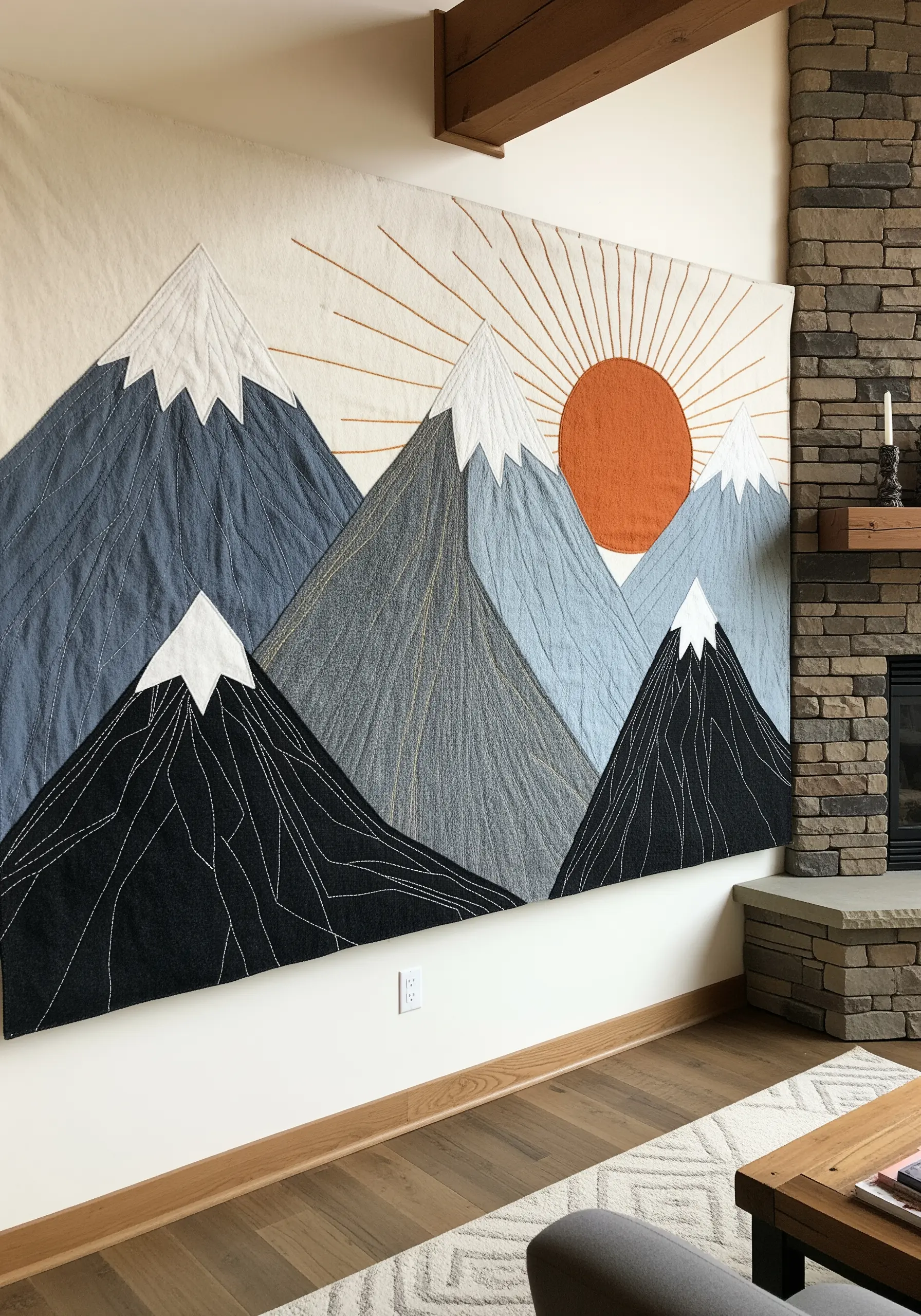
For large-scale pieces, treat fabric like large blocks of color in a painting.
Cut large, geometric shapes from different fabrics—like chambray, denim, and canvas—to represent mountains or fields.
Piece them together on a large backing fabric and secure with a simple seam or a decorative running stitch.
Use long, straight stitches in contrasting colors to add details like mountain ridges or sunrays, turning your wall into a canvas for statement-size embroidered textile hangings.
This method allows you to cover a large area with impactful color and form without dense, time-consuming stitching.
7. Compose with Abstract Geometric Shapes
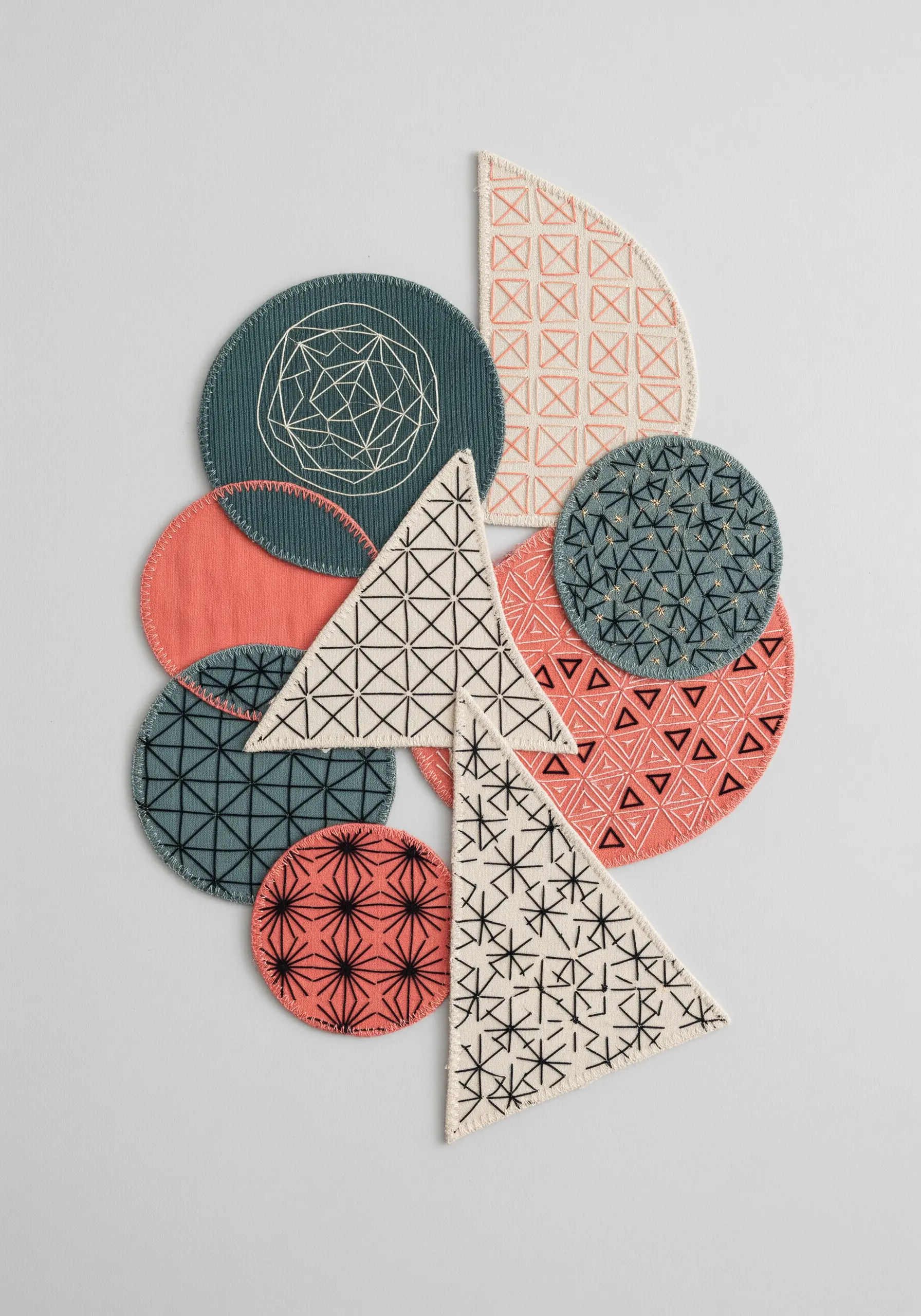
Move beyond traditional motifs by creating a collage from precisely cut geometric fabric pieces—circles, triangles, and semi-circles.
Arrange these shapes in an overlapping, dynamic composition on a neutral background.
Finish the raw edges with a tight zigzag stitch on your machine or a meticulous blanket stitch by hand for a clean, graphic look.
Embroider simple, repeating patterns within each shape to add another layer of visual interest, turning basic forms into bold statement wall hoop installations.
8. Define Motifs with Thick Couching
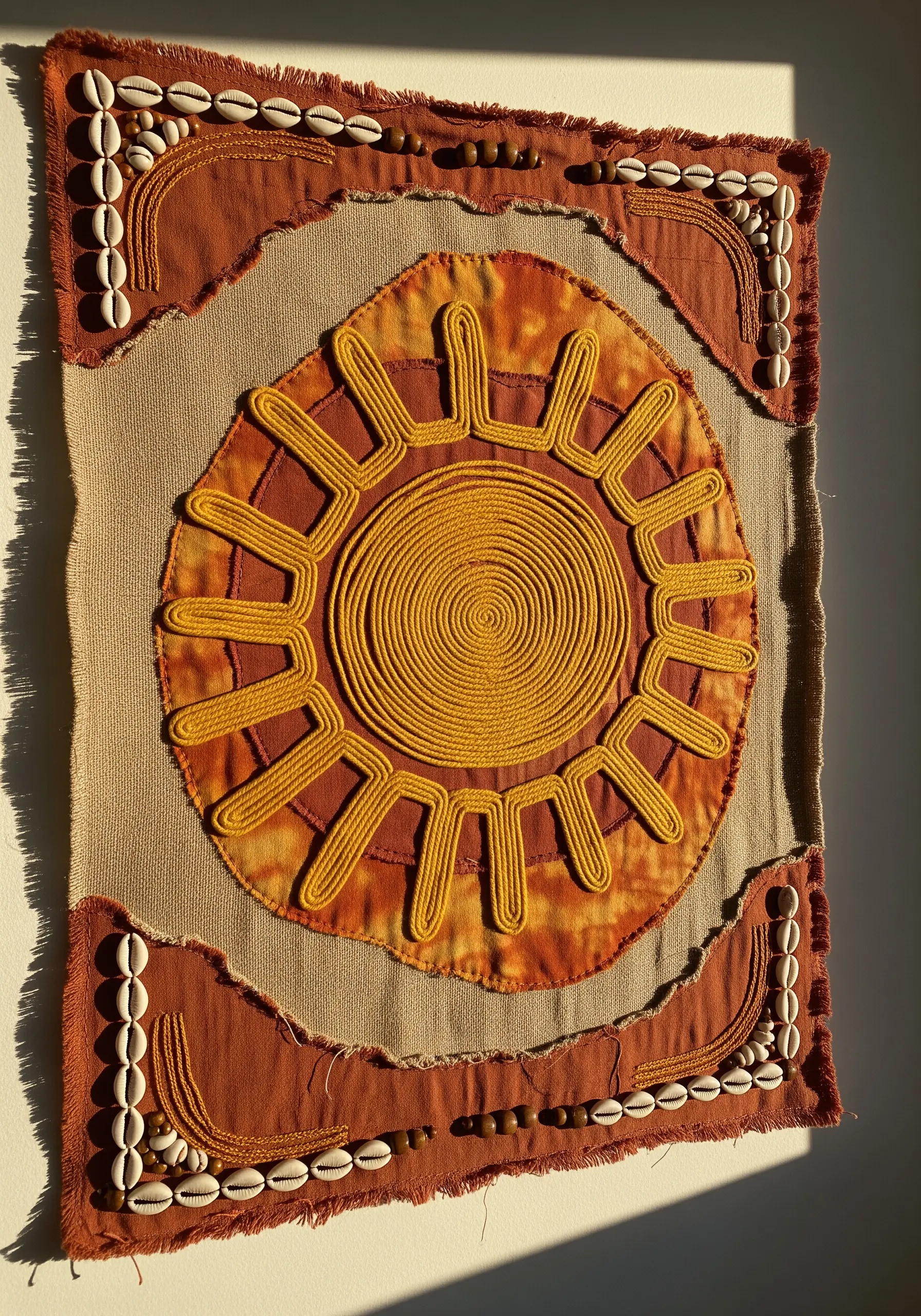
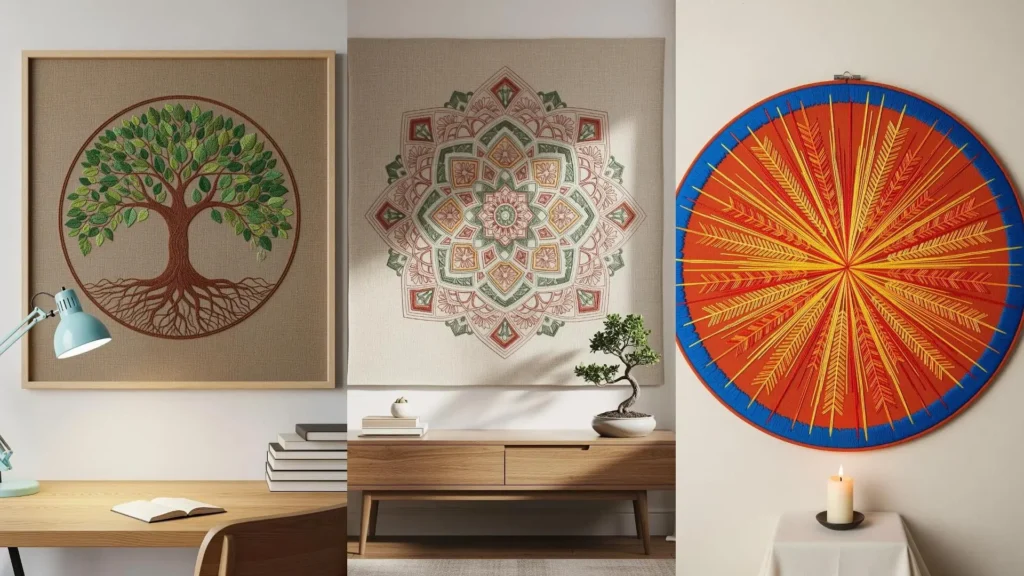
Make your central motifs pop by outlining and filling them with thick cord, yarn, or even rope using the couching technique.
Lay the thick fiber along your design line and use a thinner, durable thread to tack it down with small, evenly spaced stitches.
This creates a bold, sculptural line that stands out from the flat fabric background.
It works especially well for suns, mandalas, and other symbolic shapes, giving them weight and presence.
Incorporate beads or shells along the borders to add another layer of texture and embellishment.
9. Explore a Monochrome Patchwork Palette
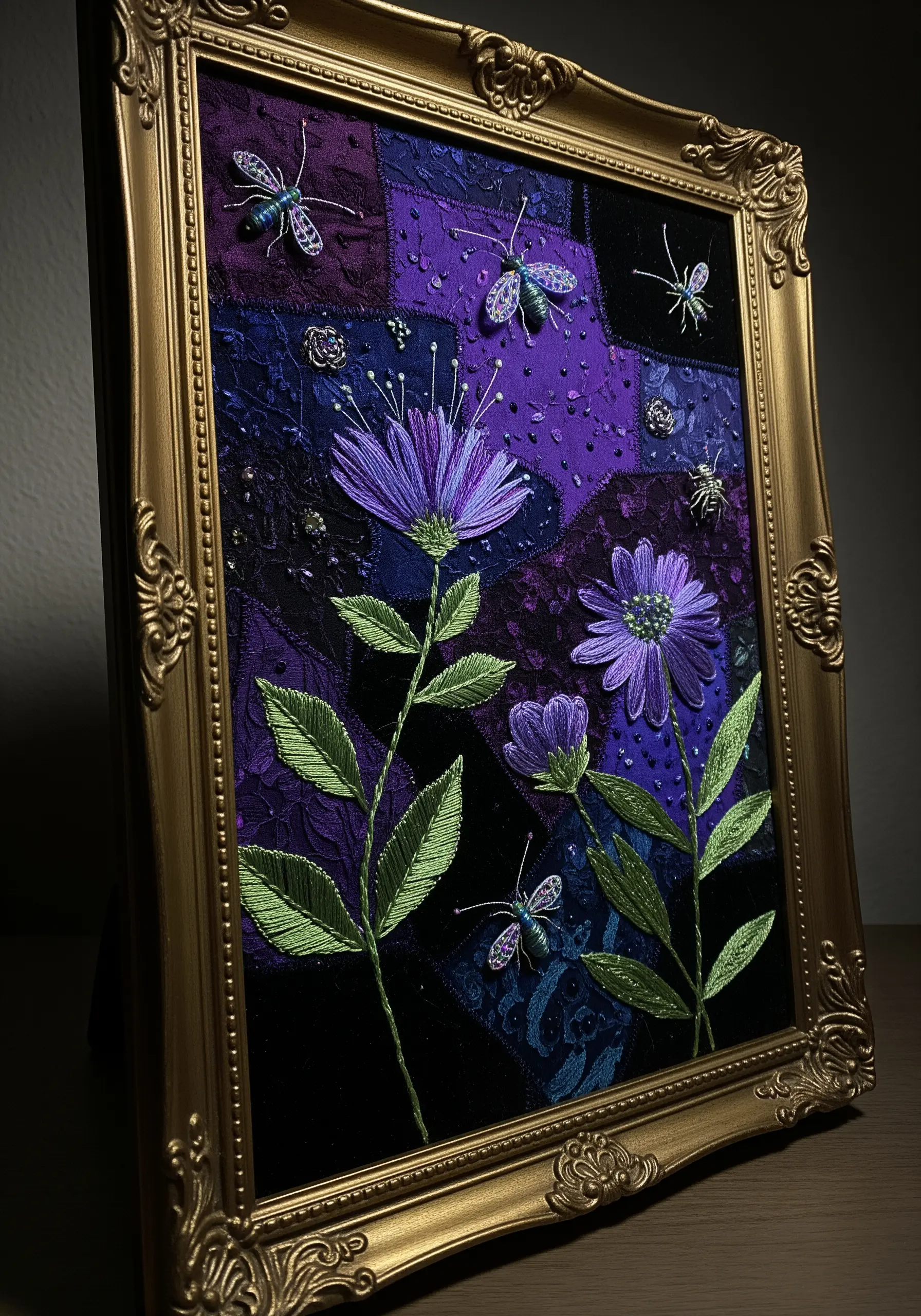
Create depth and sophistication by building your collage from fabric scraps all within the same color family, like shades of purple, blue, or grey.
Combine different materials—velvet, satin, brocade, cotton—to introduce textural variety that keeps the monochrome palette from feeling flat.
Arrange the patches in a quilt-like grid or an organic layout, then embroider your motifs over the top.
The subtle shifts in fabric texture and shade will make your stitched elements appear even more vibrant, turning them into stunning framed embroidery art pieces.
10. Layer Stitches for a Wildflower Meadow
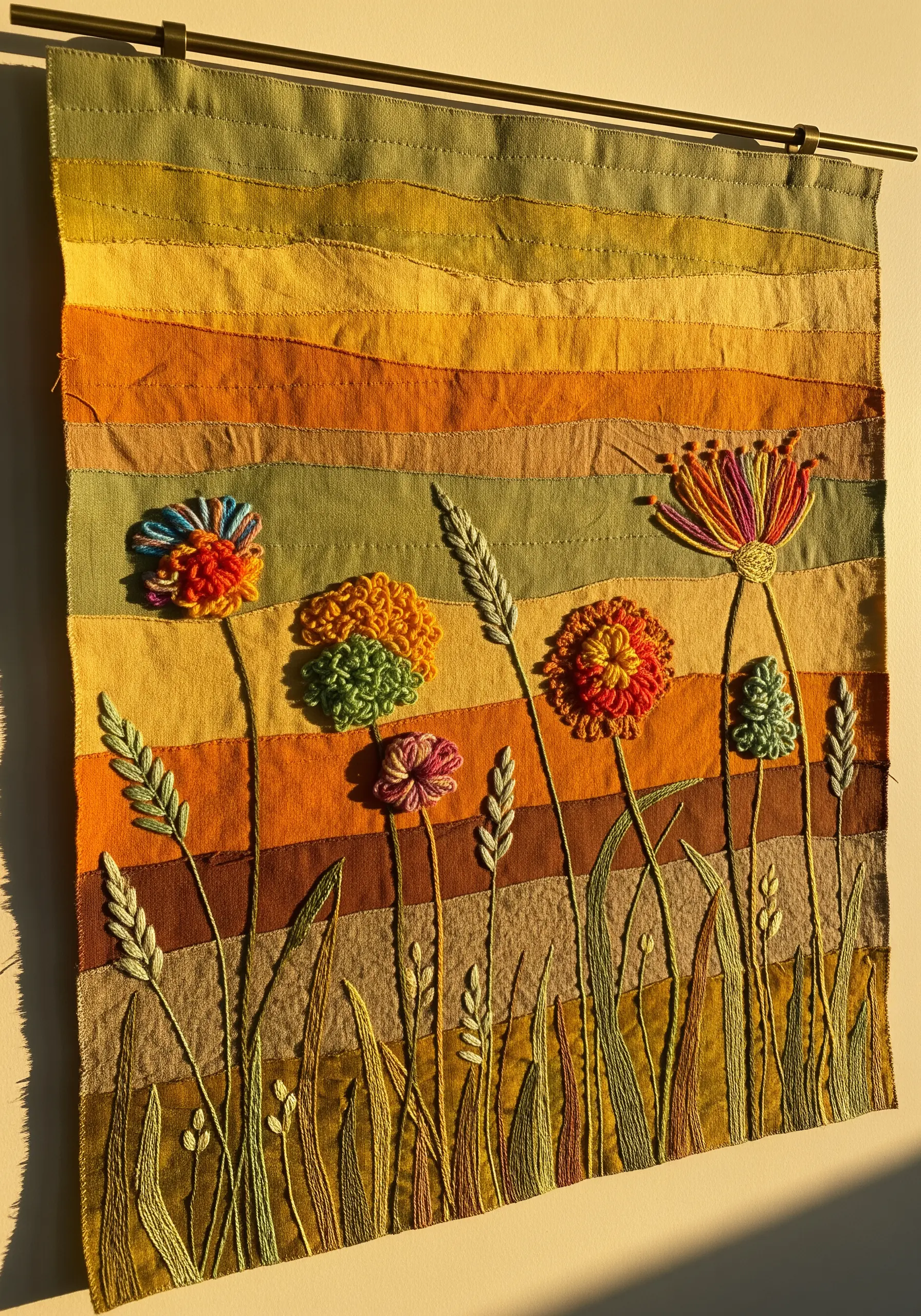
Create a vibrant field of flowers by first piecing together a background of horizontal fabric strips in earthy, sunset tones.
Once your landscape is set, embroider wildflower stems directly onto the collage using a simple stem stitch.
For the blossoms, use highly textural stitches: create fluffy, pom-pom-like flowers with Turkey work, dense clusters with French knots, and radiating petals with detached chain stitches.
This layering of flat fabric and dimensional stitches gives your piece a lush, meadow-like feel, and you can use wildflower thread palettes that make your hoop look like an actual meadow for inspiration.
11. Create Meditative Mandalas with Fabric and Cord
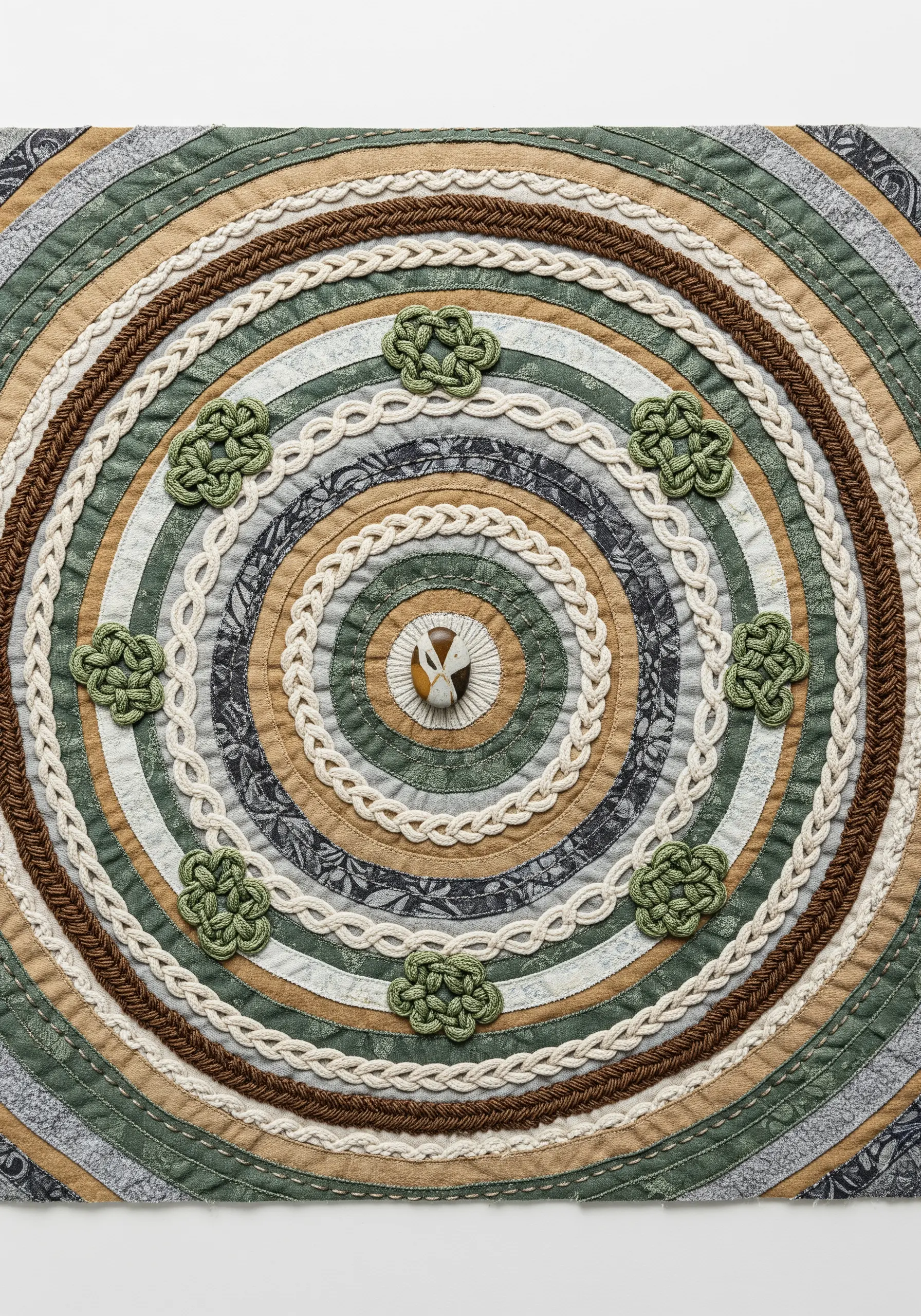
Build a serene, circular composition by layering concentric rings of patterned and solid fabrics.
Cut each ring precisely and appliqué them onto a backing fabric, working from the outermost circle inward.
Define the edges of each fabric ring with decorative elements like braided cord, couched yarn, or rows of chain stitch.
This methodical process of layering and embellishing creates intricate, balanced modern thread mandala ideas for people obsessed with calming, meditative embroidery.
Incorporate small, repeating motifs like knotted stitches to add rhythm and detail.
12. Layer Appliqué over Printed Fabric
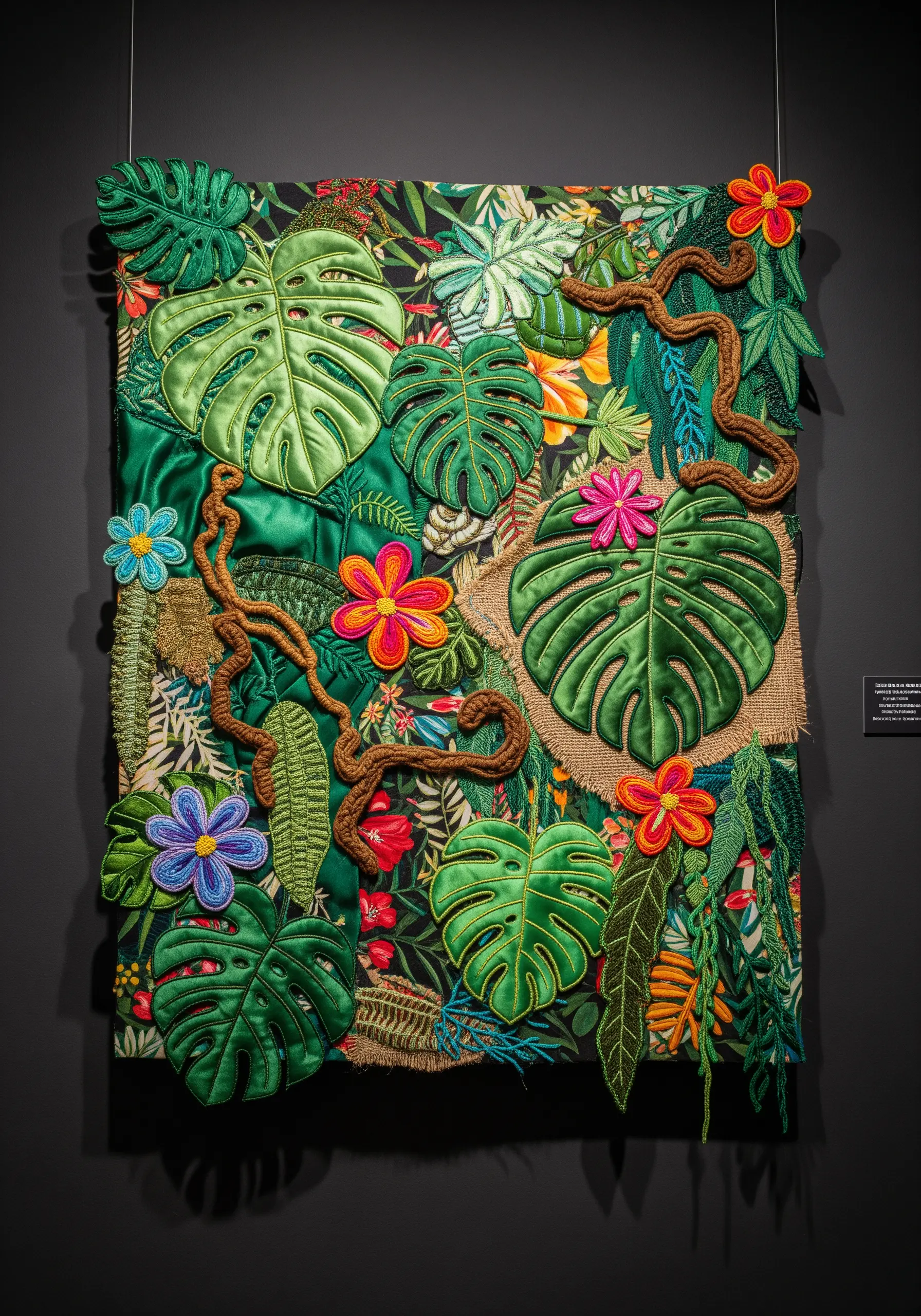
Use a busy, tropical-print fabric as your base layer to instantly create a lush, dense background.
Then, select a few key leaves or flowers from the pattern and create raised, appliquéd versions of them to layer on top.
Pad your appliqué shapes with a layer of felt or batting before stitching them down with satin stitch—this gives them a three-dimensional, sculptural quality that makes them pop from the busy background.
This technique creates an immersive, jungle-like effect, perfect for tropical botanical embroidery patterns.
13. Add Depth with Translucent Overlays
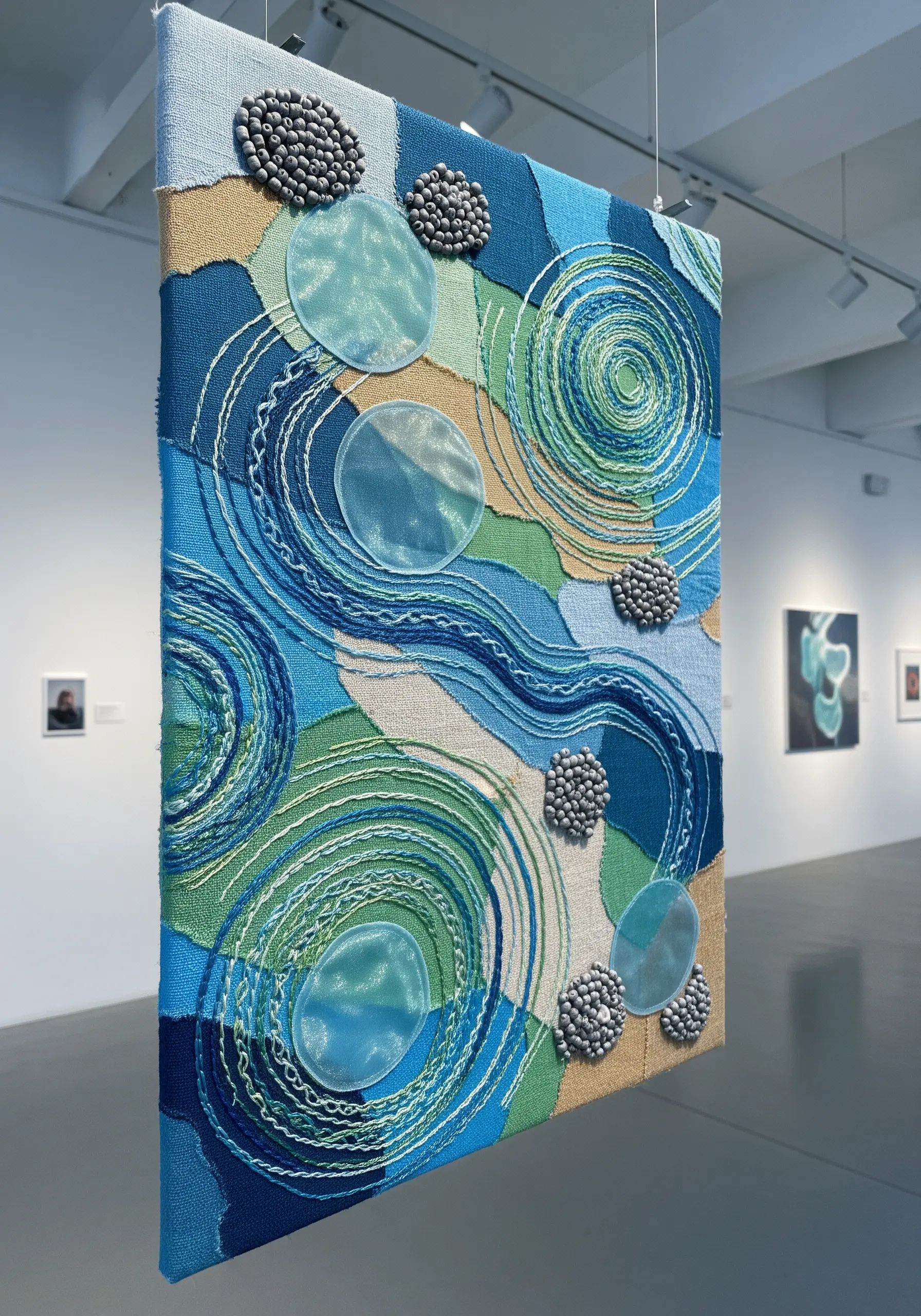
Incorporate sheer fabrics like organza, chiffon, or fine mesh into your collage to create a sense of ethereal depth and layered color.
Cut the sheer fabric into circles or organic shapes and place them over your opaque fabric base.
When you stitch through both layers, the color of the base fabric will show through, creating subtle new tones and a watery, dream-like effect.
This is an excellent technique for depicting water, mist, or abstract light effects, adding a sophisticated, painterly quality to your work.
14. Embrace the Beauty of Boro Patchwork
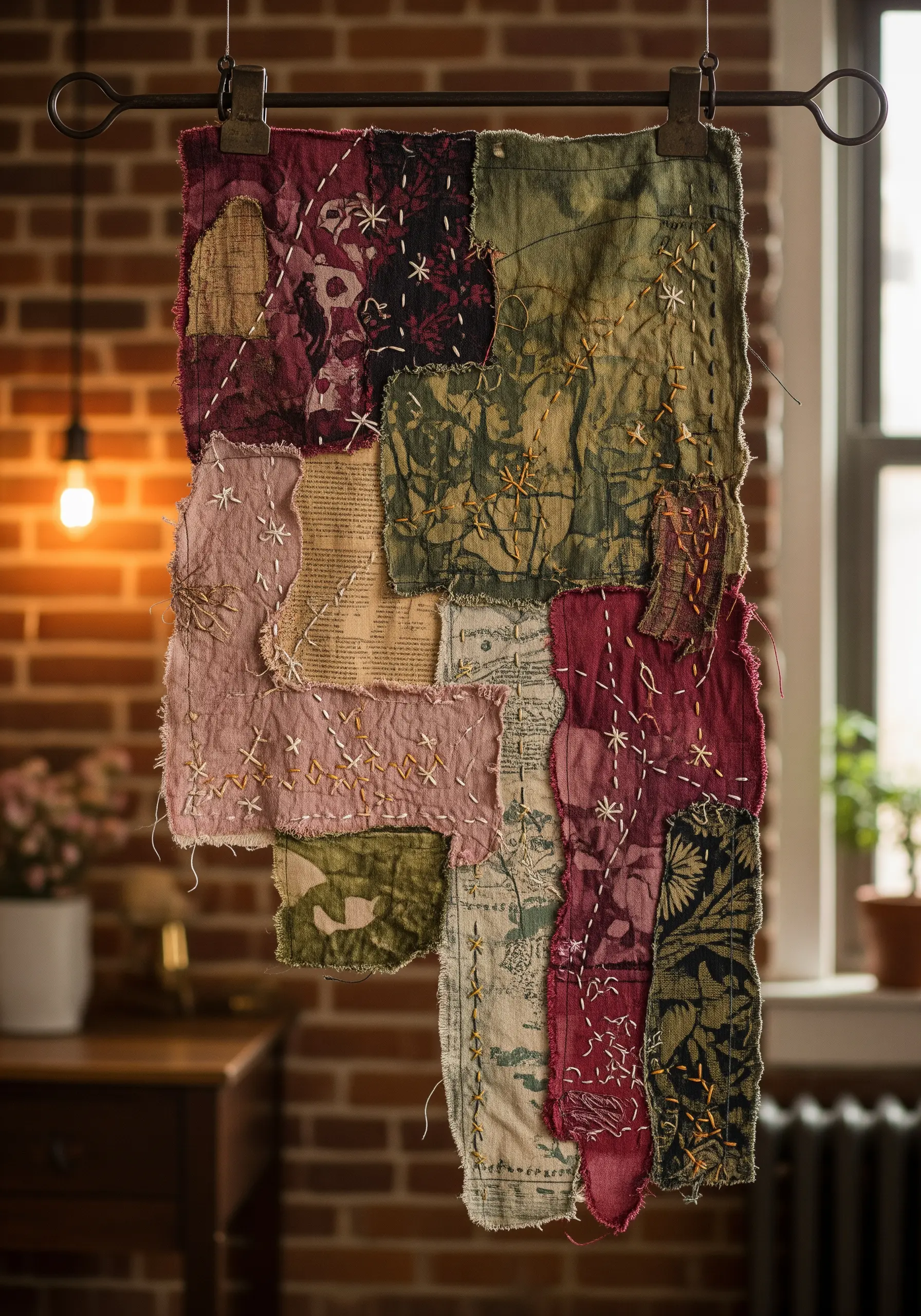
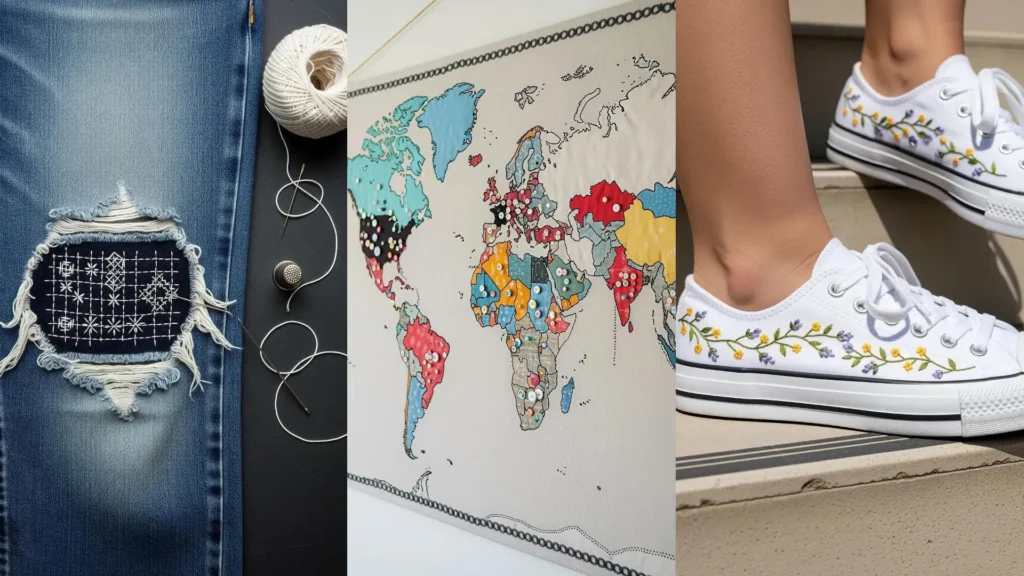
Channel the spirit of Japanese boro by layering and mending small, worn fabric scraps into a single, cohesive textile.
Overlap pieces of vintage cloth, old garments, and mismatched remnants, embracing their imperfections, fades, and textures.
Use a simple running stitch (sashiko) in a visible, contrasting thread like ecru or red to connect the patches.
The beauty of this method lies in its history and mindfulness, turning scrap fabric collage embroidery ideas into a story of renewal and care.
15. Sculpt with Felt and Minimal Stitching
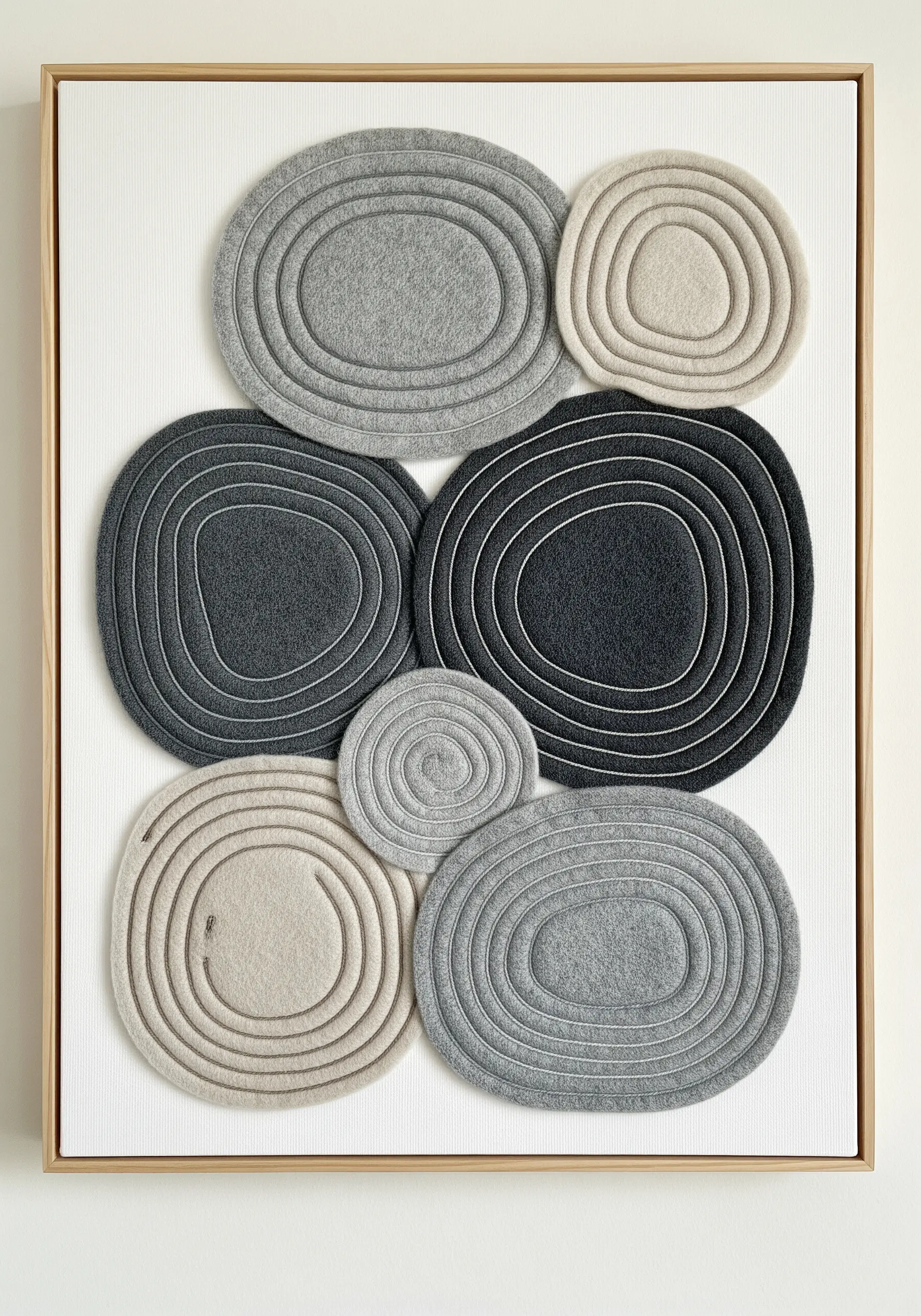
Explore form and shadow by using thick, high-quality wool felt as your primary collage material.
Cut smooth, organic, stone-like shapes from felt in a neutral palette of grays, creams, and charcoals.
Layer these shapes on a simple canvas background, then use a single, continuous line of running stitch to create concentric, topographical patterns inside each shape.
The thickness of the felt creates a natural bevel and shadow, making these minimalist stitched art pieces that feel both soft and sculptural.
16. Paint a Scene with Fabric Snippets
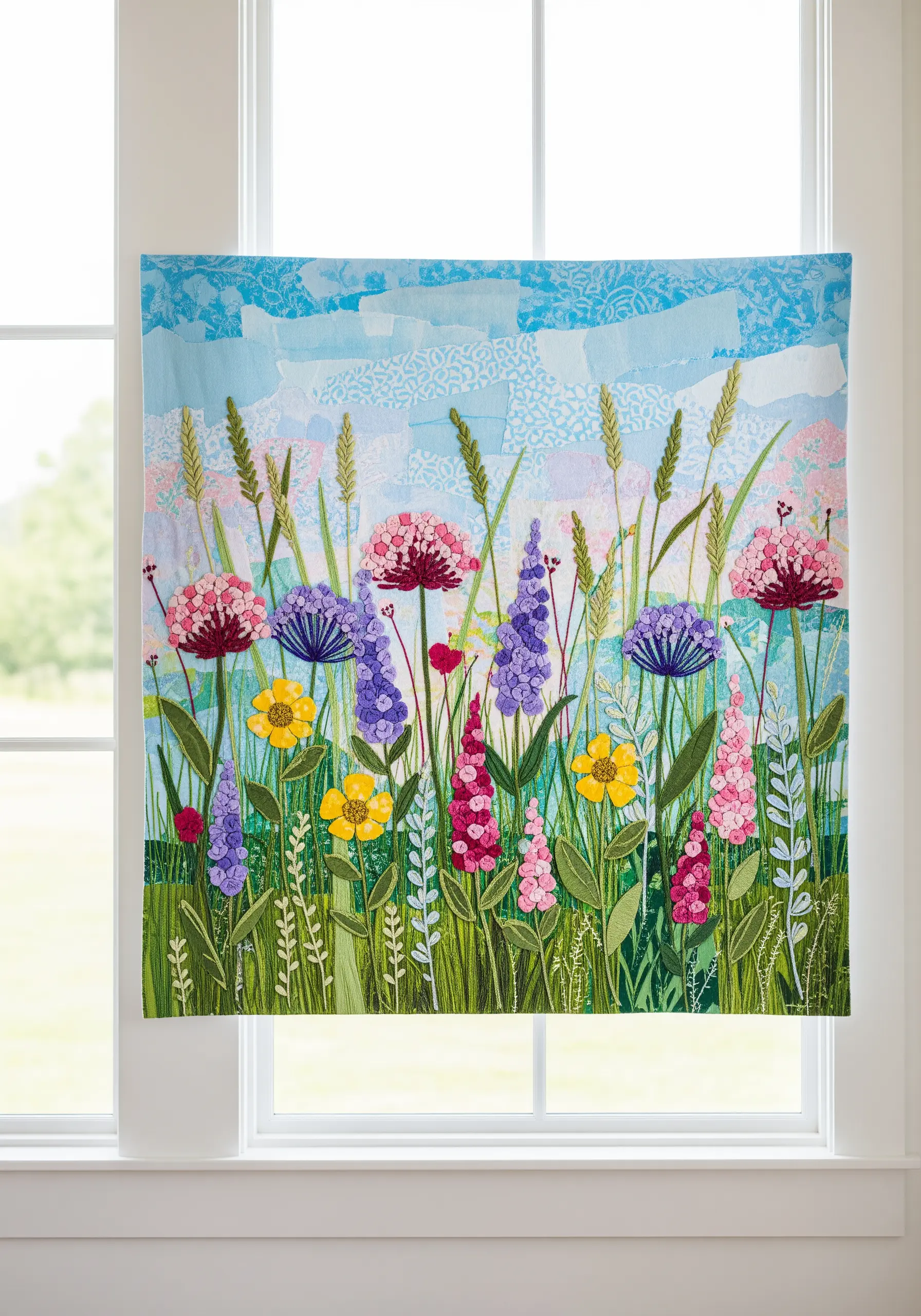
Create a painterly, impressionistic landscape by using tiny snippets of fabric instead of large, solid pieces.
Cut small, irregular shapes from various patterned and colored fabrics to build your sky, field, and flowers.
Arrange these tiny pieces onto a backing fabric, overlapping them to blend colors and create texture, almost like dabbing a paintbrush.
Secure the snippets with small, scattered seed stitches or by embroidering larger elements like stems and leaves directly over them.
This technique turns fabric into a vibrant, textured mosaic.
17. Build an Architectural Cityscape
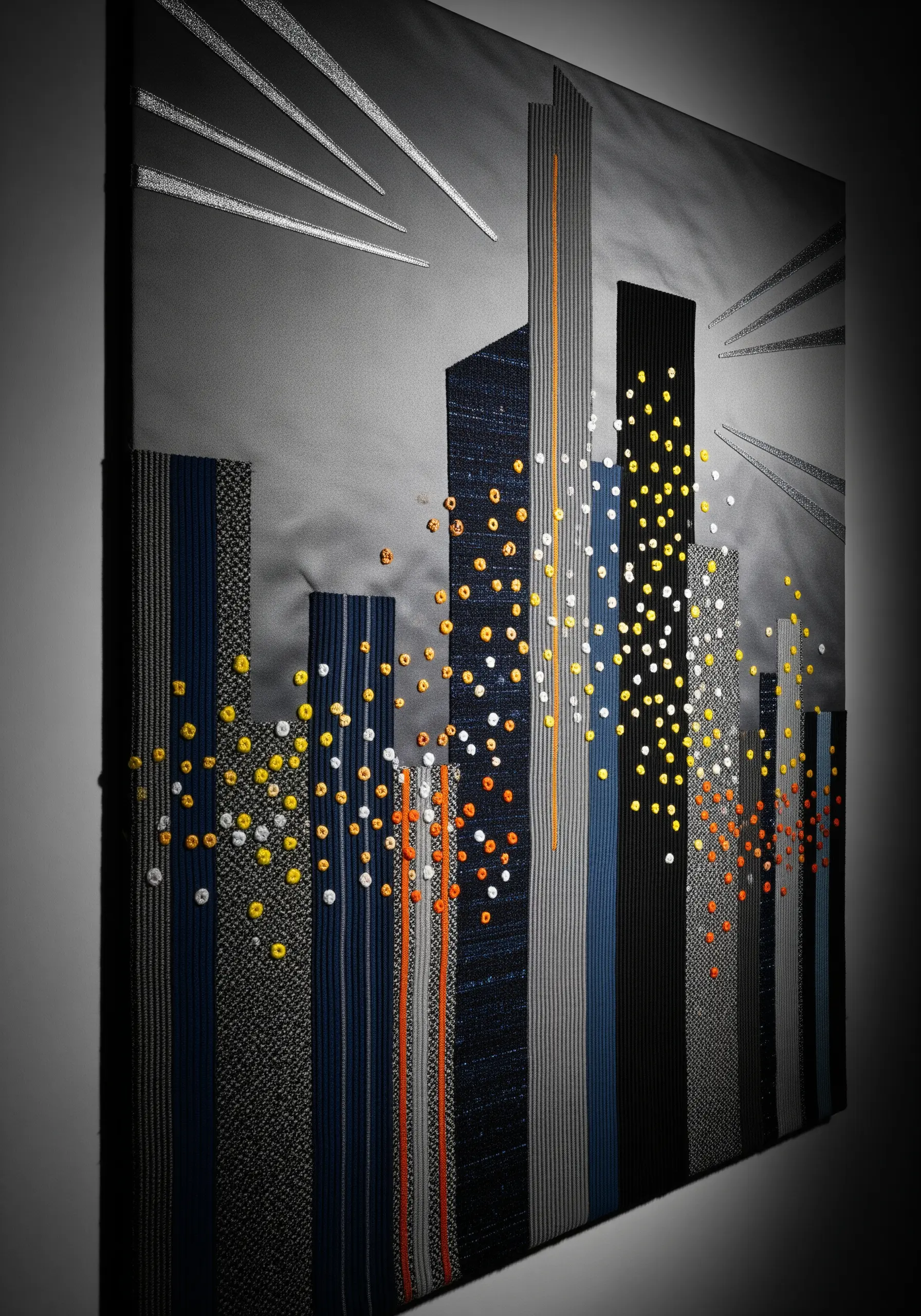
Construct a modern cityscape by collaging vertical strips of fabric with different weaves and patterns, such as pinstripes, tweeds, and herringbone, to represent skyscrapers.
Vary the heights and widths of the fabric strips to create a dynamic skyline against a simple gray or black background.
Use brightly colored French knots scattered across the buildings to represent illuminated windows, adding a pop of color and a sense of life.
Long, straight stitches in metallic thread can suggest shooting stars or light trails, completing the urban scene.
18. Carve Canyons with Fabric and Yarn
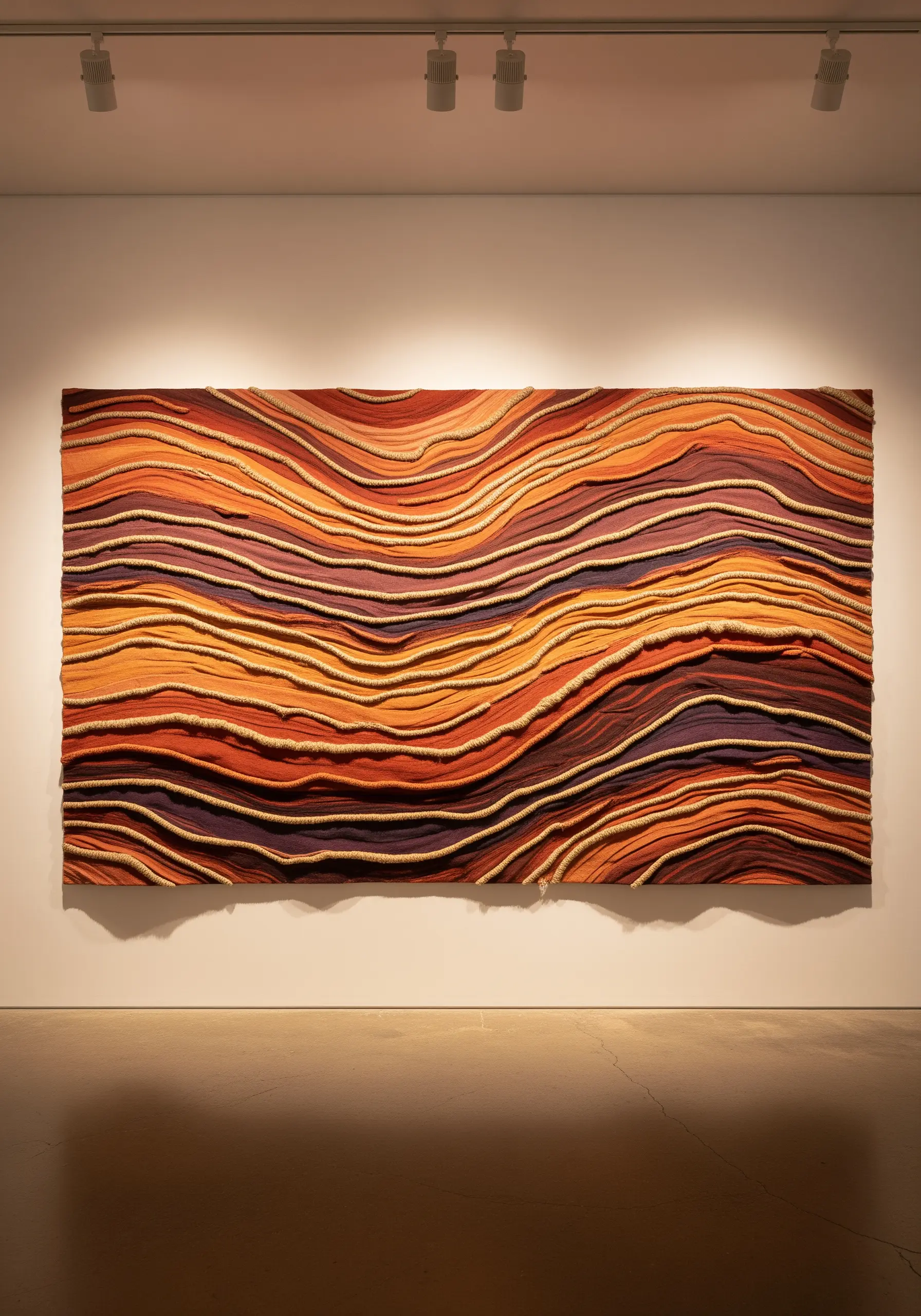
Evoke the grandeur of geological formations by layering wavy, horizontal strips of fabric in rich, earthy tones.
Once your fabric base is pieced together, accentuate the flowing lines by couching thick, textured yarn along the seams.
Choose a yarn that has a slight sheen or a contrasting texture to make the lines pop, defining the contours of the landscape.
This combination of flat color planes and raised, linear texture creates a powerful sense of depth and movement, perfect for earth-inspired embroidery designs.
19. Paint with Thread for Luminous Effects
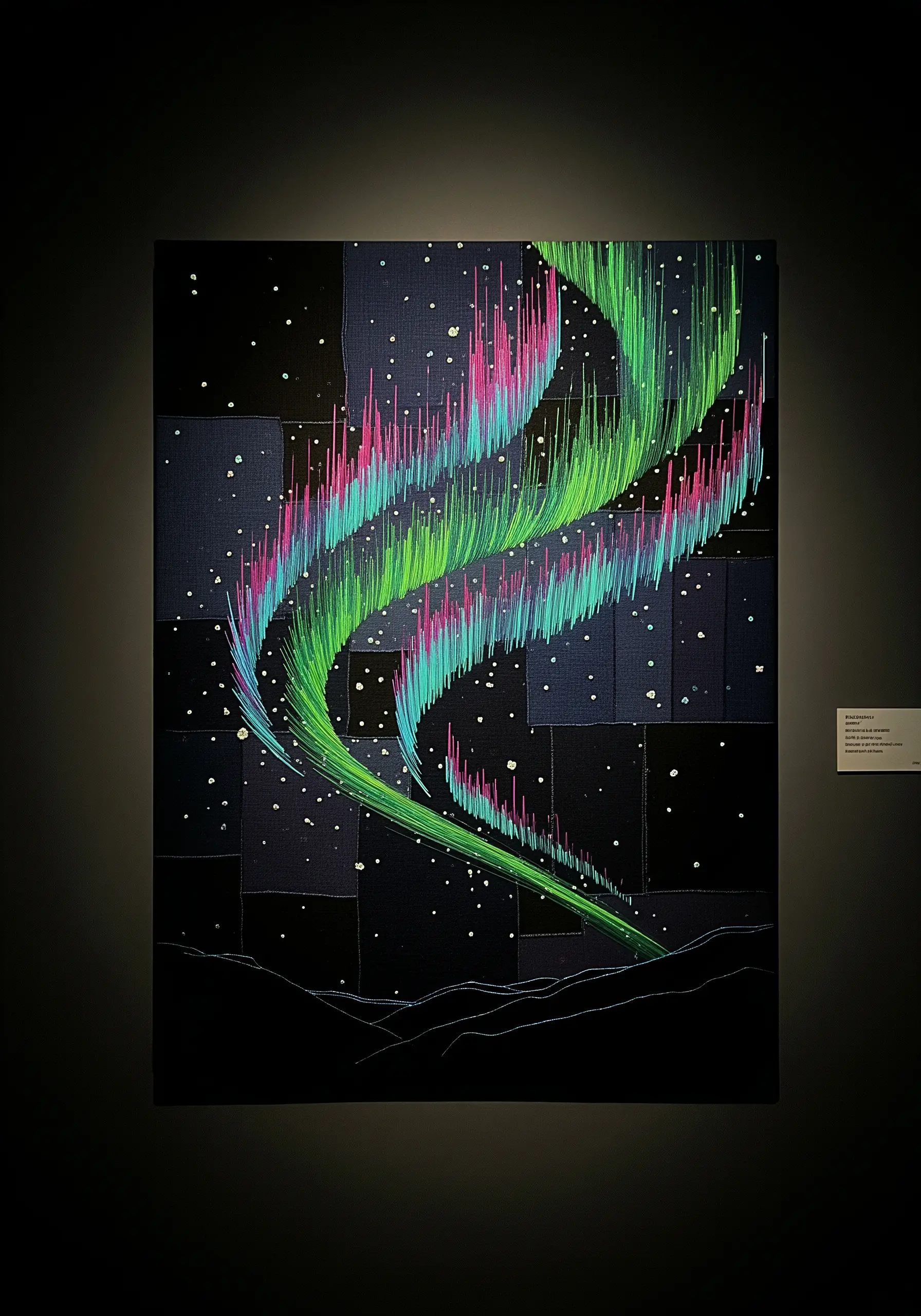
Recreate the ethereal glow of the aurora borealis by using thread painting techniques on a dark, patchwork background.
Create your night sky by piecing together scraps of black and dark navy fabrics.
Then, using long, vertical satin stitches with vibrant neon and pastel threads, build up curtains of light.
Blend colors by placing your stitches close together and varying their lengths to create a sense of fluid movement.
A scattering of tiny seed stitches or French knots in white or silver can represent stars, completing the magical effect.
20. Create Topography with Fabric Yo-Yos
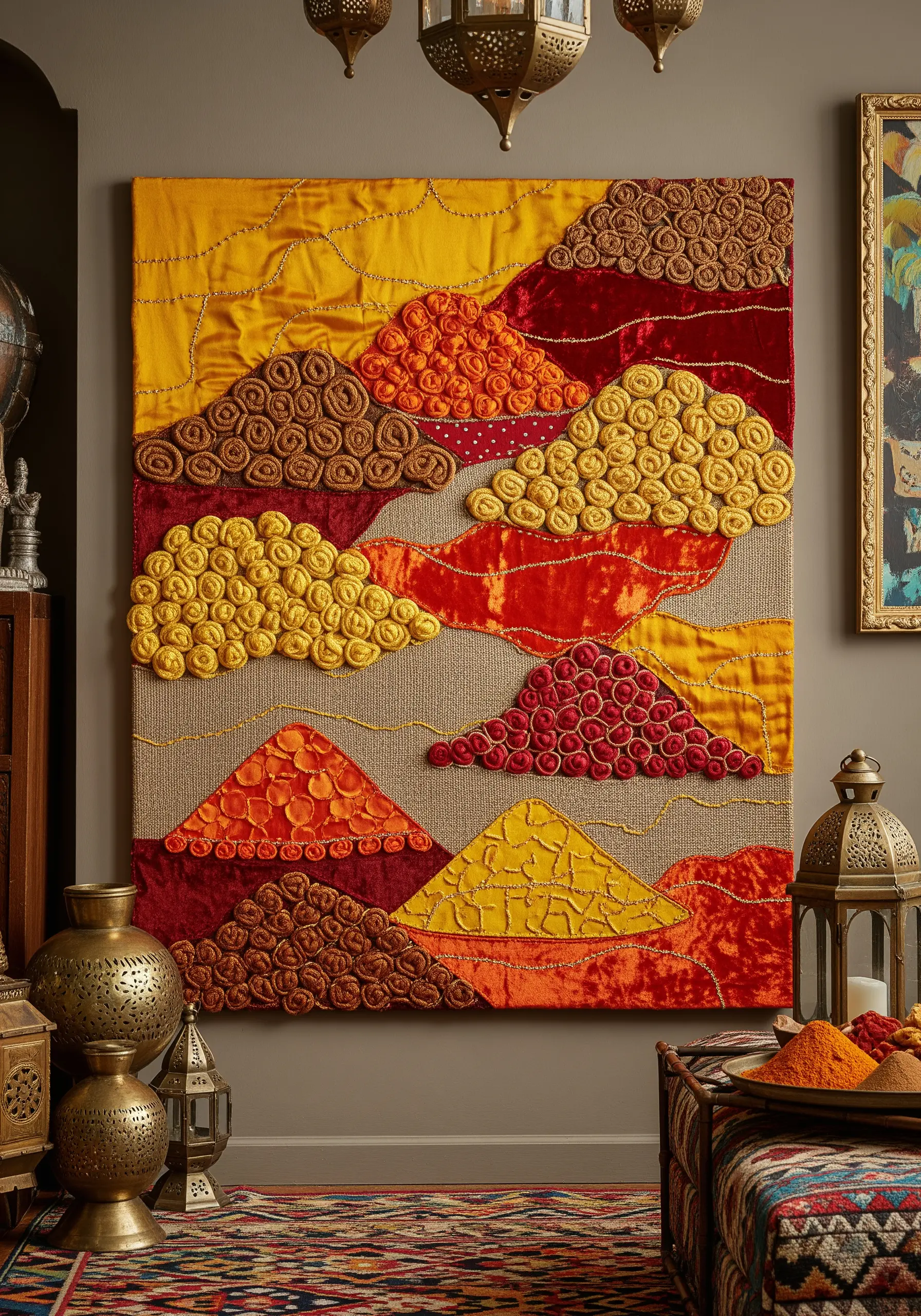
Add incredible dimension and texture to your collages by incorporating fabric yo-yos (also known as suffolk puffs).
To make one, cut a circle of fabric, sew a running stitch around the edge, pull the thread to gather it into a small puff, and knot it.
Create dozens of these in rich, warm colors and arrange them in dense clusters to form hills or clouds.
Stitch them onto a base of velvet, linen, or silk fabrics, and embellish with delicate beadwork to add a touch of sparkle and refinement.
21. Achieve Serenity with Zen-Inspired Textures
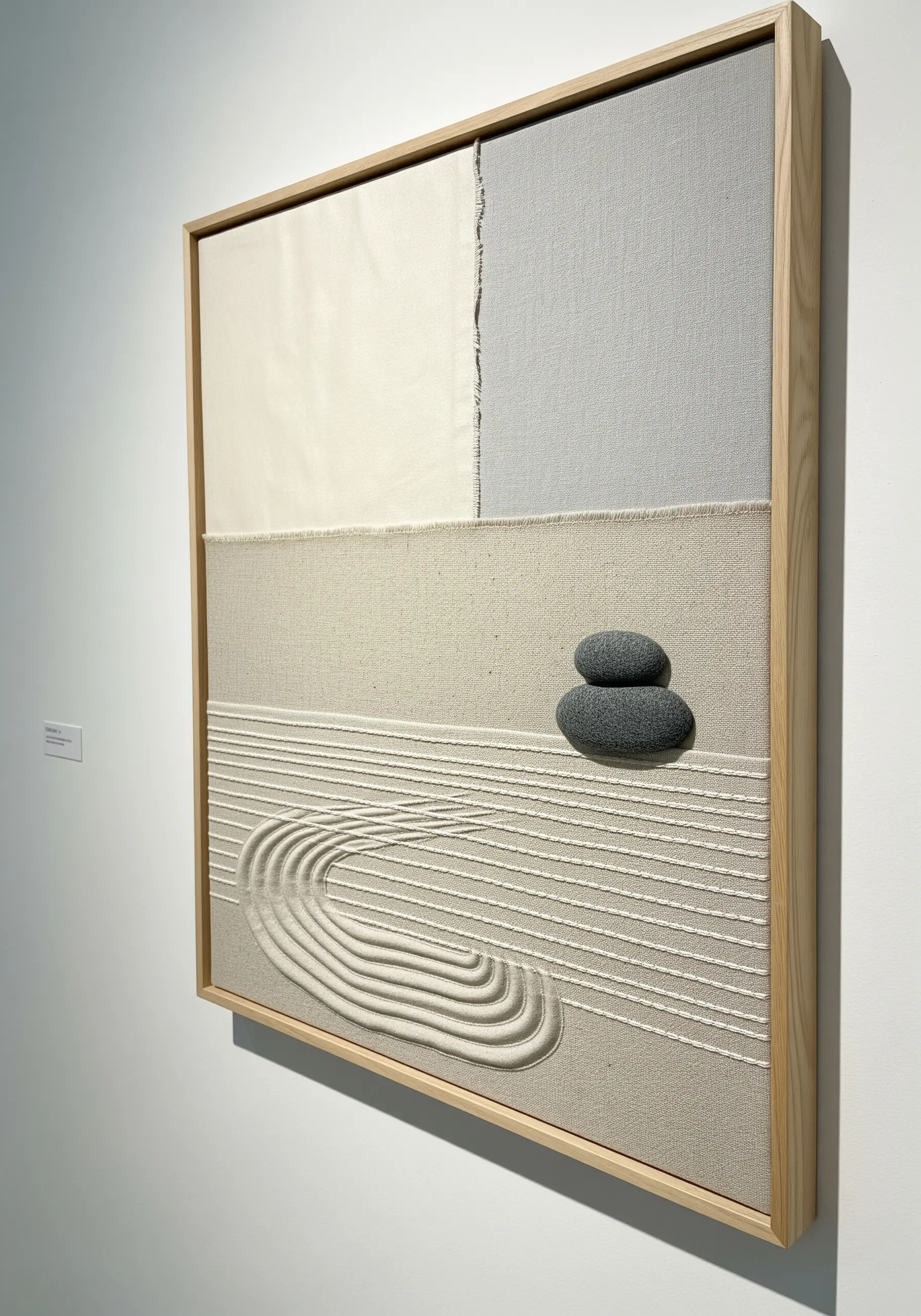
Capture the essence of a Japanese rock garden by combining minimalist fabric blocking with precise, linear stitching.
Use raw, natural textiles like linen and unbleached cotton in a simple, color-blocked composition.
Create the iconic raked-sand pattern by couching multiple strands of fine white thread in parallel, curving lines.
This technique requires patience but results in a beautifully clean and meditative effect.
Incorporate actual smooth stones or create them from padded felt to complete your Japanese zen-inspired embroidery design.
22. Sculpt Mossy Textures with French Knots
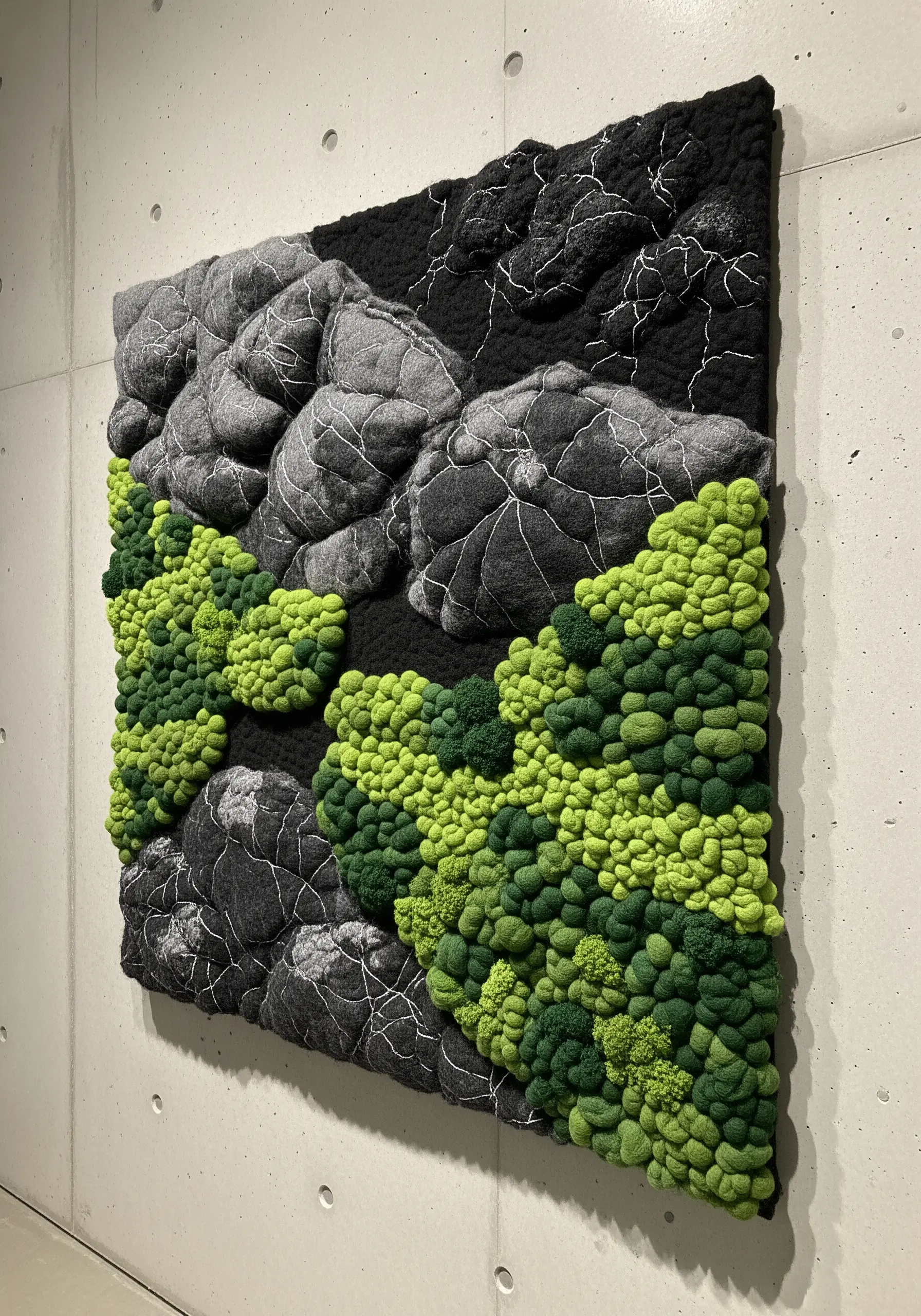
Simulate the lush, dense texture of moss or lichen by filling areas of your design with tightly packed French knots.
To create a natural, varied look, use several shades of green and yellow thread, and slightly alter the size of your knots by changing the number of times you wrap the thread around the needle.
For the rock forms, use a stumpwork technique: place batting or felt underneath your gray fabric to create raised, three-dimensional shapes before stitching them down and adding crackle-like backstitches.
This makes for incredibly tactile organic texture embroidery designs that add life to any room.
23. Craft a Stained-Glass Effect with Fabric
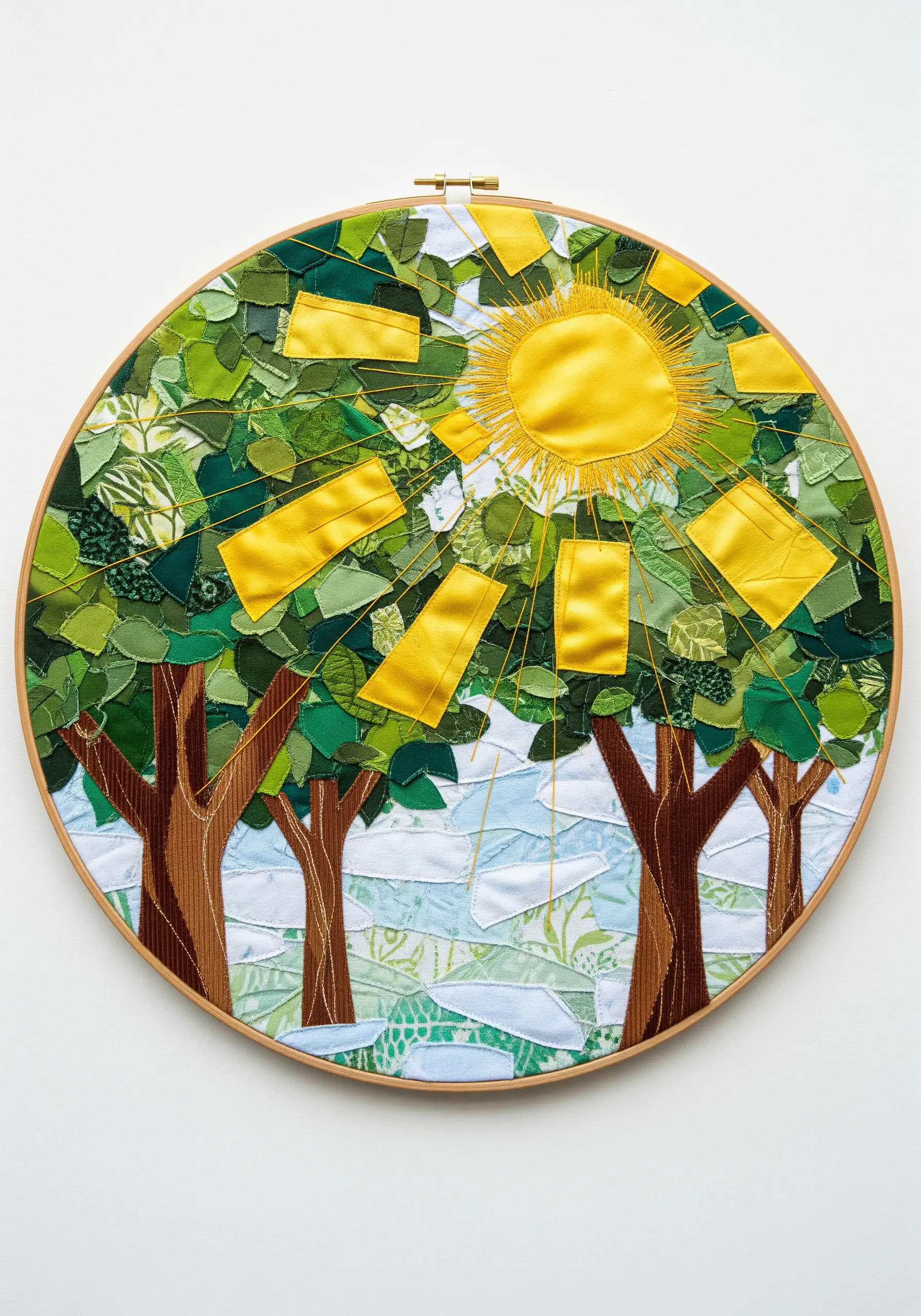
Achieve a luminous, stained-glass look by creating a mosaic from small, distinct pieces of fabric.
Use bright, solid-colored fabrics like satin or polished cotton for the sun and its rays to give them a reflective quality.
For the leaves and background, use a variety of green and blue patterned fabrics, cutting them into small, irregular shapes and arranging them closely together.
This technique turns your hoop into a vibrant, light-filled scene, making it one of the easiest fabric collage embroidery layouts beginners can master in one weekend.
24. Build a Coral Reef with Hyper-Textural Stitches
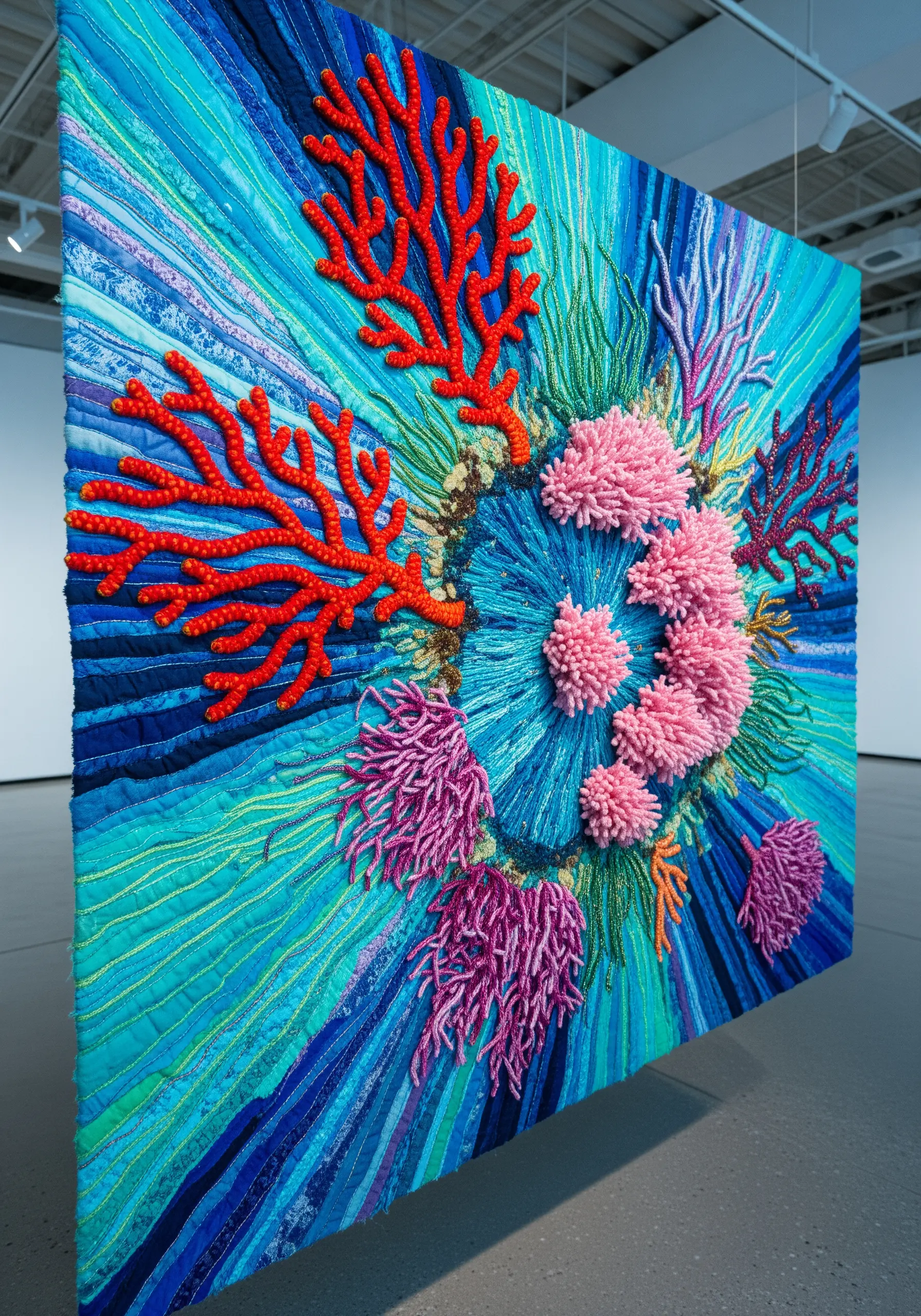
Go beyond flat embroidery to create a vibrant, three-dimensional underwater world.
Use dense Turkey work, snipped to different lengths, to form soft, anemone-like textures.
Create branching hard corals with padded satin stitch over a core of felt or yarn to give them volume.
Incorporate bullion knots and French knots in dense clusters for smaller, intricate details.
This maximalist approach to texture turns your fabric canvas into a thriving reef, perfect for a coastal ocean-inspired piece.
25. Tell a Story with Distressed Fabrics
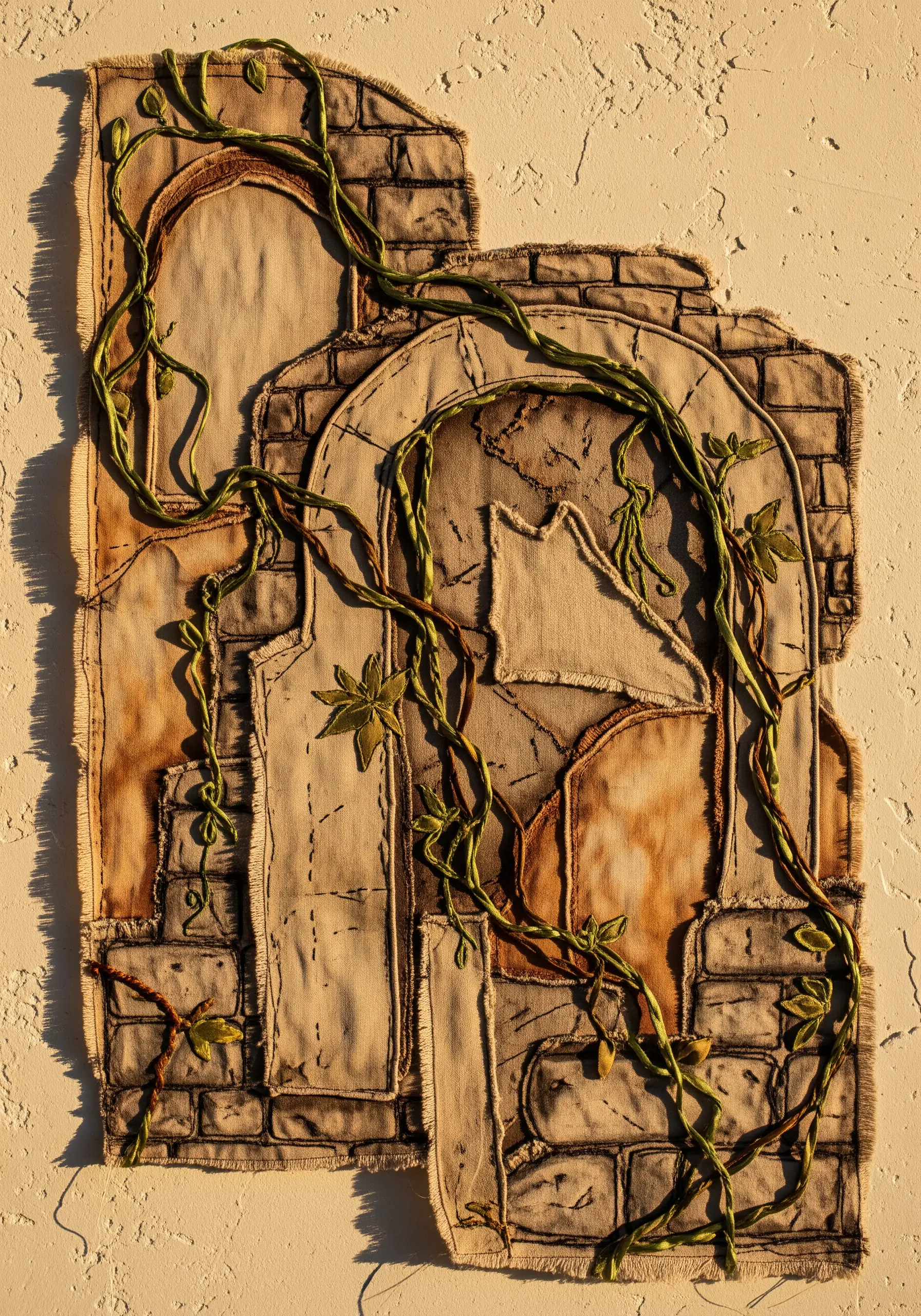
Create atmosphere and a sense of history by intentionally distressing your fabrics before you begin stitching.
Use natural canvas or linen and apply a wash of diluted coffee, tea, or watercolor paint to create an aged, time-worn effect.
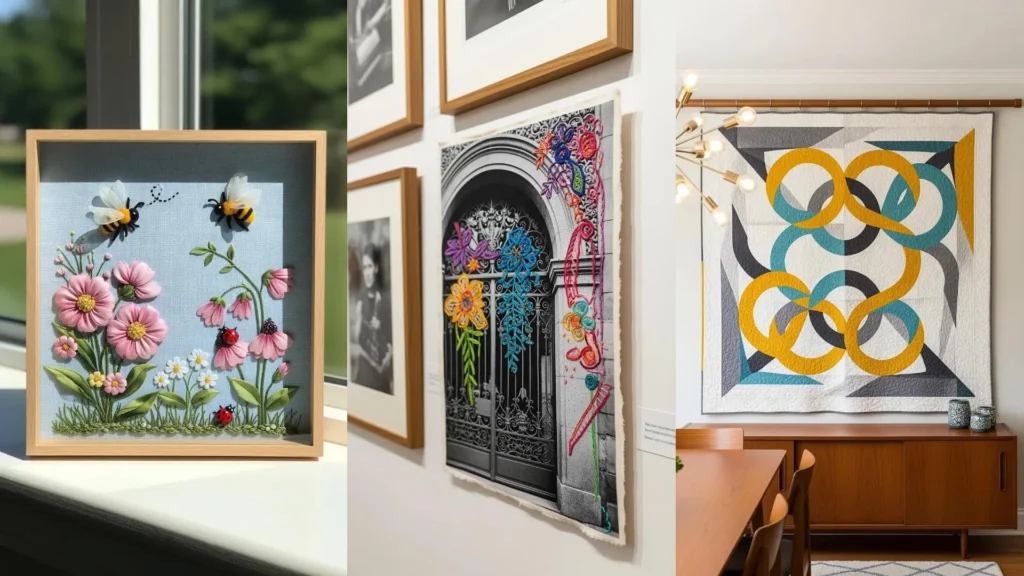
Let the fabric dry, then cut and layer your architectural shapes, leaving the edges raw and frayed.
Add sculptural vines by twisting strips of green fabric or yarn and couching them down, then stitch a few simple leaves with detached chain stitch.
This technique is perfect for creating moody, evocative scenes with a strong narrative quality.
26. Weave Movement with Subtle, Wavy Lines
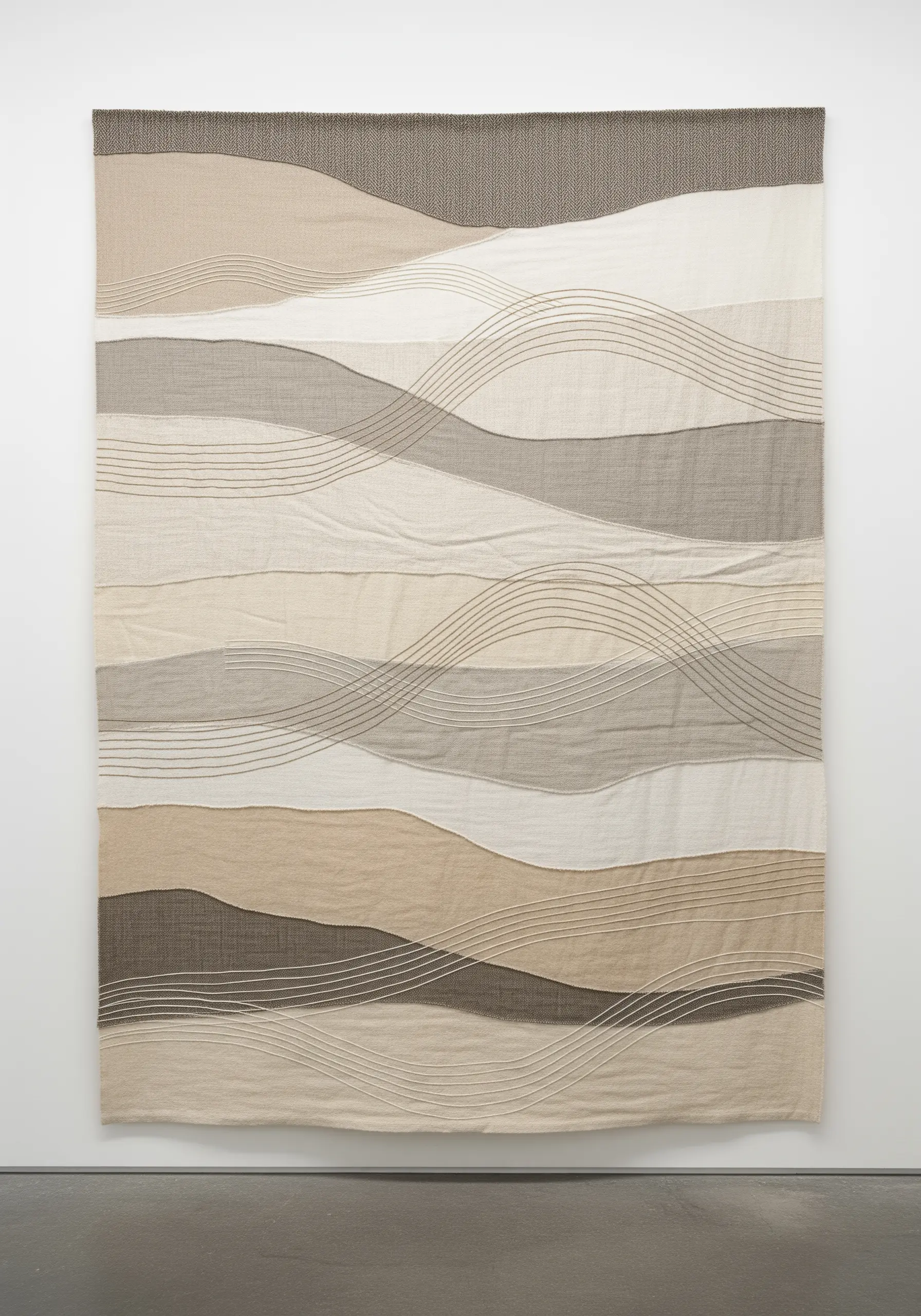
For a serene and sophisticated piece, focus on the interplay between layered fabric and delicate, unifying linework.
Create a gently undulating landscape by piecing together fabrics in a soft, neutral palette, like sand, ecru, and stone grey.
Then, using either a sewing machine with a free-motion foot or a simple hand-stitched running stitch, add continuous wavy lines that flow across the entire piece.
These lines tie the different fabric blocks together, creating a harmonious sense of rhythm and calm, an ideal approach for tone-on-tone embroidery techniques.