

You don’t need complex stitches or a thousand colors to create embroidery that feels like art. The quiet power of a single, intentional line can transform your bedroom into a space of serene, personal luxury.
Think of your thread as a pen, and the fabric as your paper. Each piece in this collection is a lesson in simplicity—how a clean curve can define a face, how negative space can shape a form, and how a thoughtful color choice can tie an entire room together.
Let these ideas guide you. Move beyond just stitching a pattern and start composing with thread. You have the ability to create art that is not only beautiful but also deeply, quietly, and authentically you. Let’s begin.
1. Master the Single-Line Portrait for Serene Wall Art
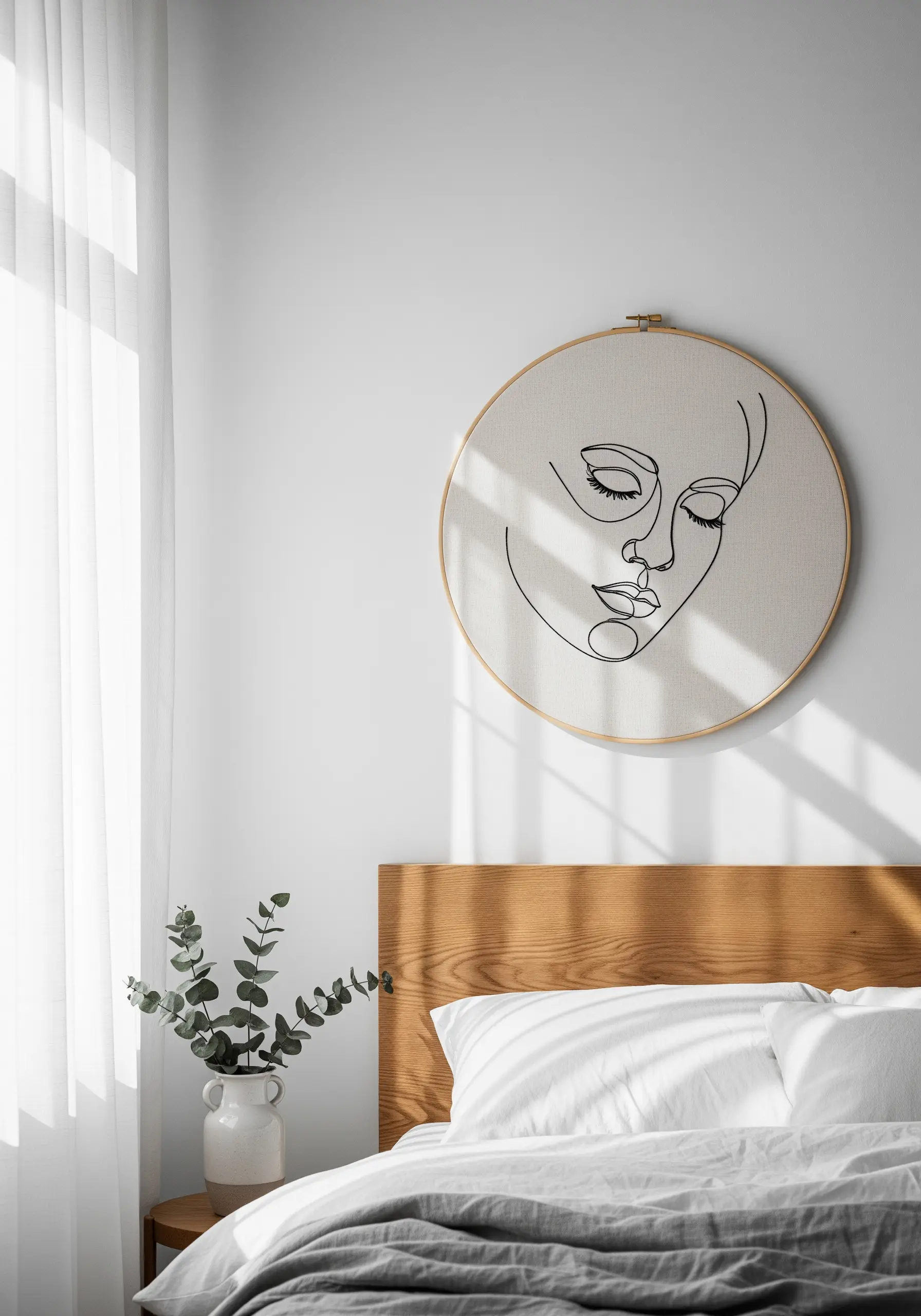
To achieve this fluid, continuous look, trace your design onto the fabric without lifting your pencil, just as you would stitch it.
Use a stem stitch or a whipped backstitch instead of a standard backstitch for smoother, more elegant curves on facial features.
Vary the weight of your line by using two strands of floss for softer features like lips and a single strand for delicate areas like eyelashes.
This subtle shift in thread thickness adds depth and prevents the portrait from looking flat.
Stitching on a neutral, open-weave linen allows the texture of the fabric to become part of the artwork, enhancing its organic feel.
2. Create a Botanical Story with a Triptych
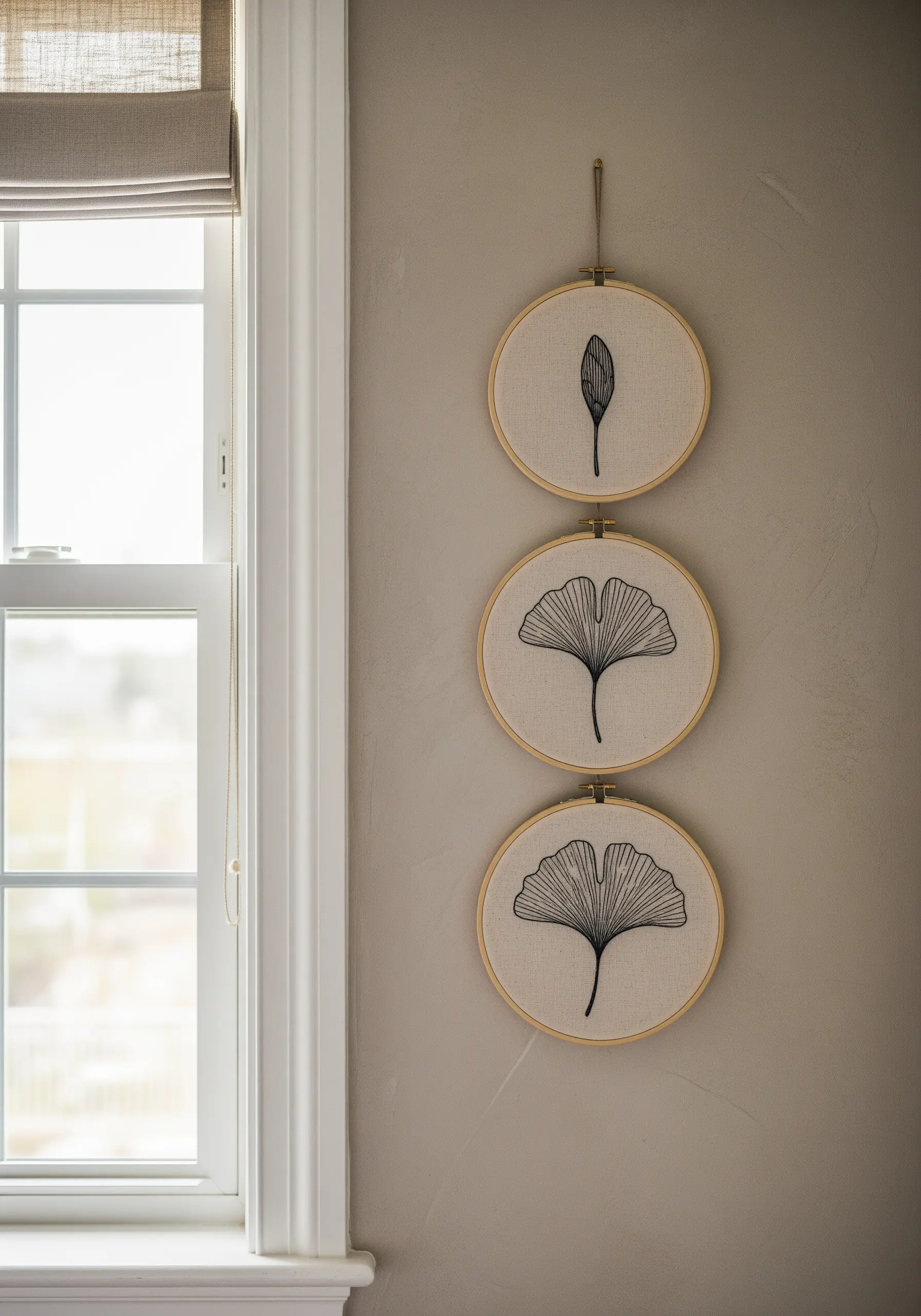
Tell a visual story of growth or evolution by displaying sequential designs, like the unfurling of a ginkgo leaf, in a vertical series.
To ensure consistency, use the same fabric, hoop size, and thread color for all three pieces.
For the delicate veins, switch from a backstitch to tiny, straight seed stitches; this technique mimics natural texture without overpowering the clean outline.
This approach transforms simple botanical motifs into a cohesive, thoughtful art installation.
3. Use Metallic Thread on Dark Fabric for a Luxe Finish
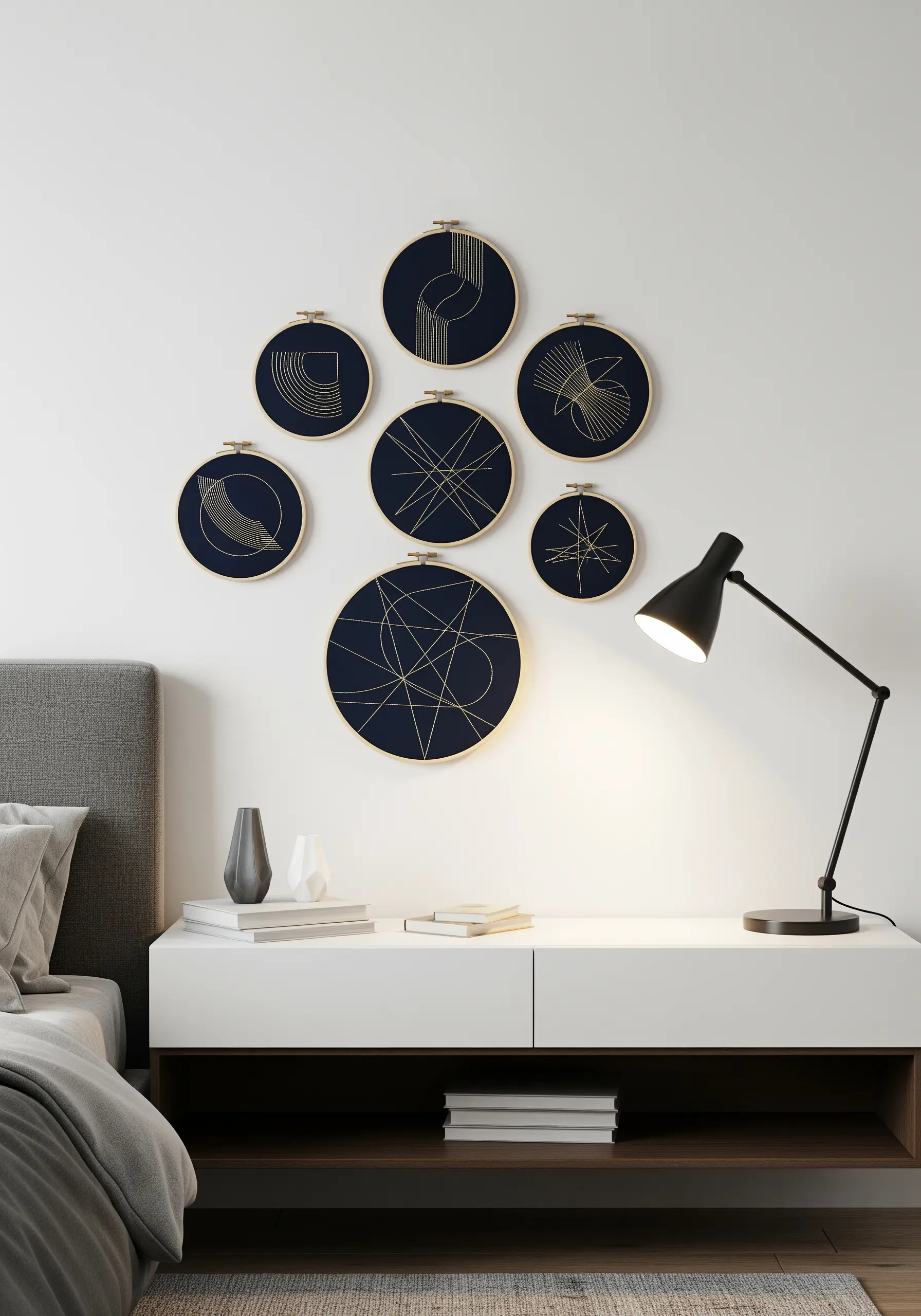
Elevate abstract geometric designs by stitching them with a high-quality metallic thread on a dark, matte fabric like navy or black cotton canvas.
To prevent metallic thread from snagging and fraying, use a needle with a larger eye and work with shorter lengths of thread—no more than 12 inches.
A simple backstitch or stem stitch works beautifully here, as the thread itself provides the drama.
Arrange multiple hoops of varying sizes in an organic cluster to create a dynamic gallery wall that feels both modern and luxurious.
4. Achieve Harmony with Mirrored Diptych Designs
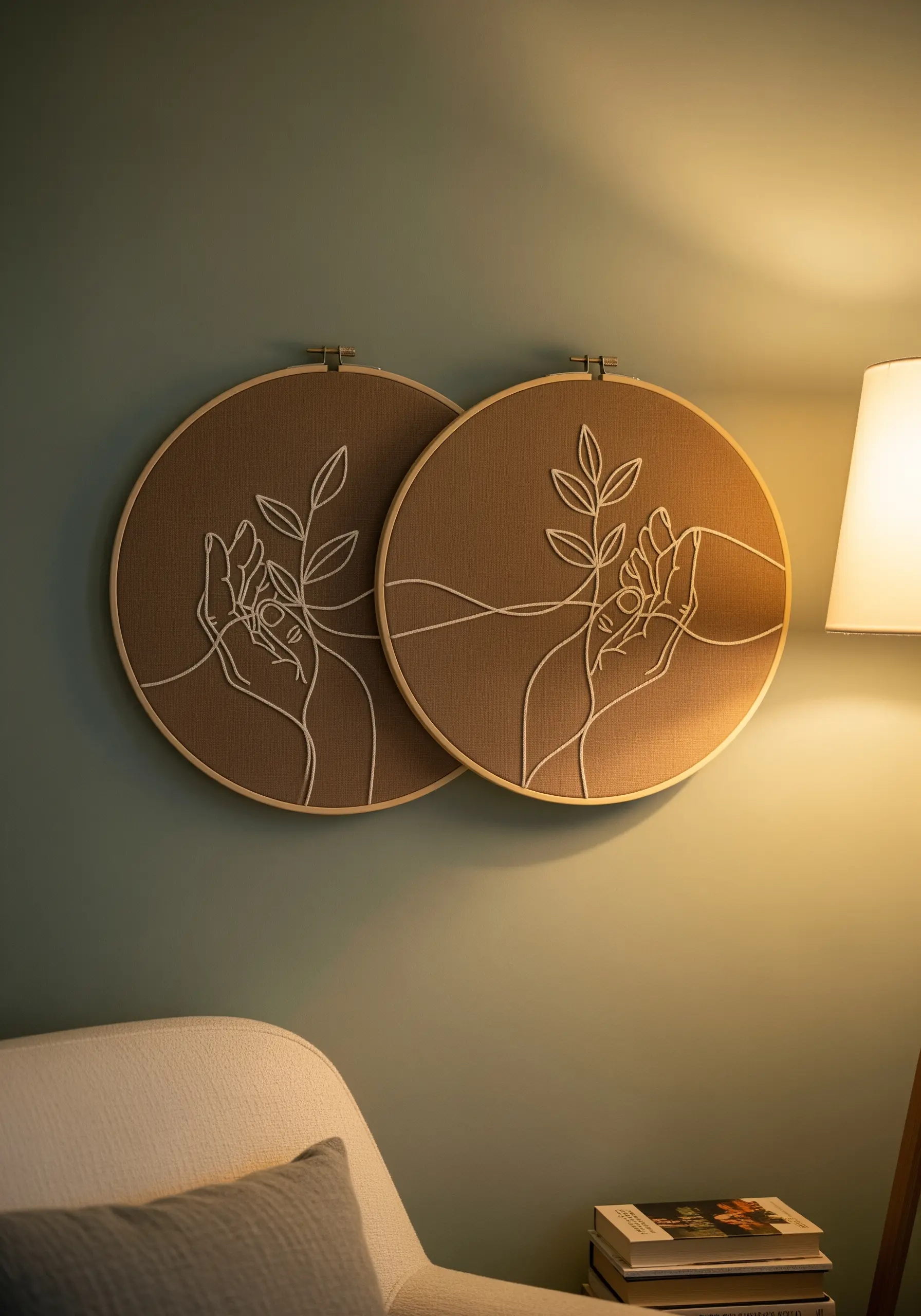
Create a sense of balance and connection by stitching two complementary designs that mirror each other, like these hands cradling a single plant.
Choose an earthy, textured fabric like a warm brown linen to make a single white line pop with gentle contrast.
Use a split stitch for your outlines; it creates a slightly raised, chain-like texture that gives the line art a subtle, tactile dimension.
This technique is perfect for creating peaceful, symmetrical compositions that bring quiet luxury to your space.
5. Add Depth to Monochrome Designs with Varied Line Weight
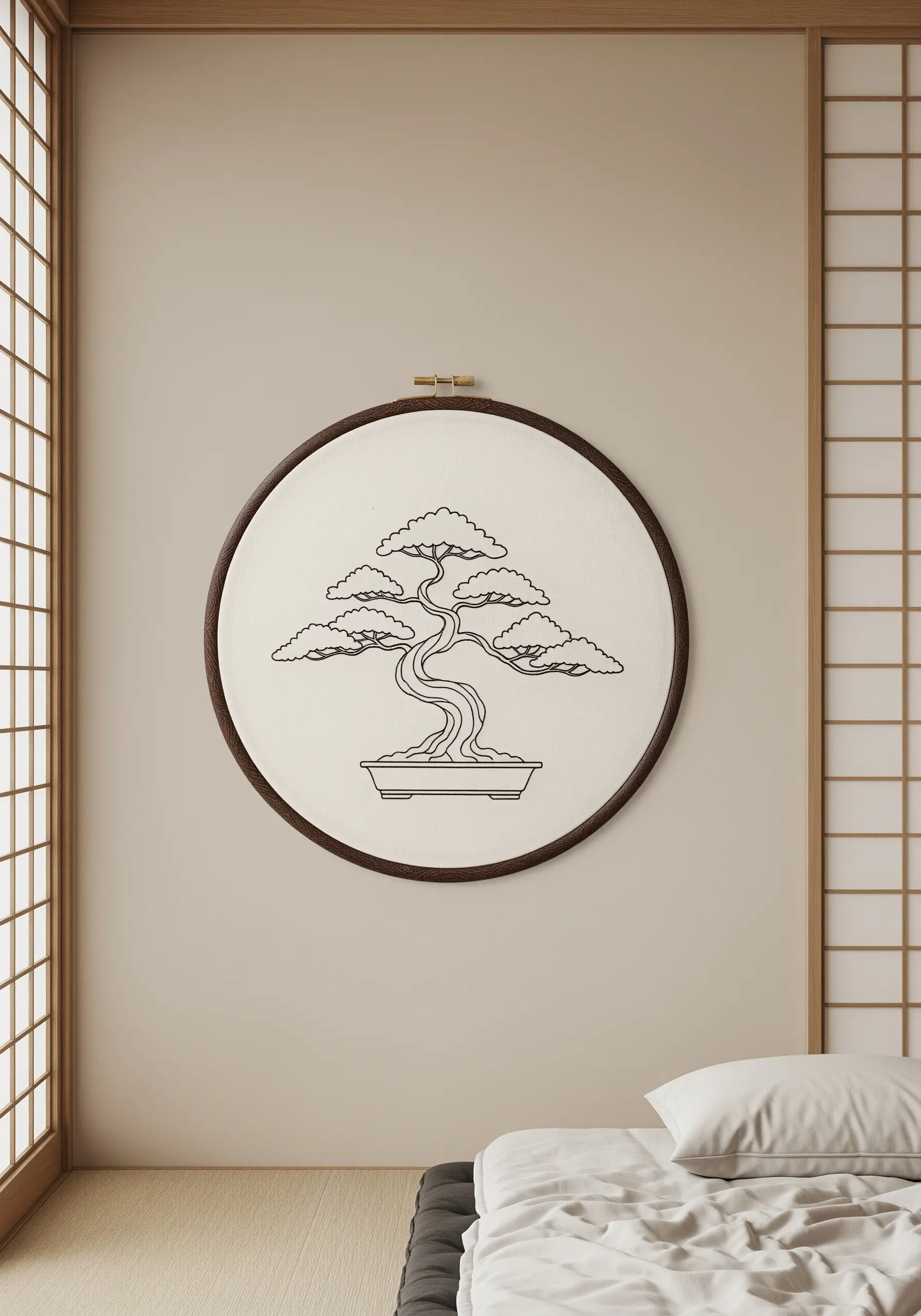
To give a single-color design, like this bonsai tree, a sense of dimension, vary the number of thread strands you use.
Use three or four strands for the main trunk and branches to give them weight and presence.
Switch to a single, delicate strand for the finer details like the leaves and the pot’s edges. This contrast mimics the way an ink artist uses pressure.
This simple adjustment elevates a flat outline into a piece with perceived depth and focus.
6. Make Simple Icons Pop with a Bold Background Color
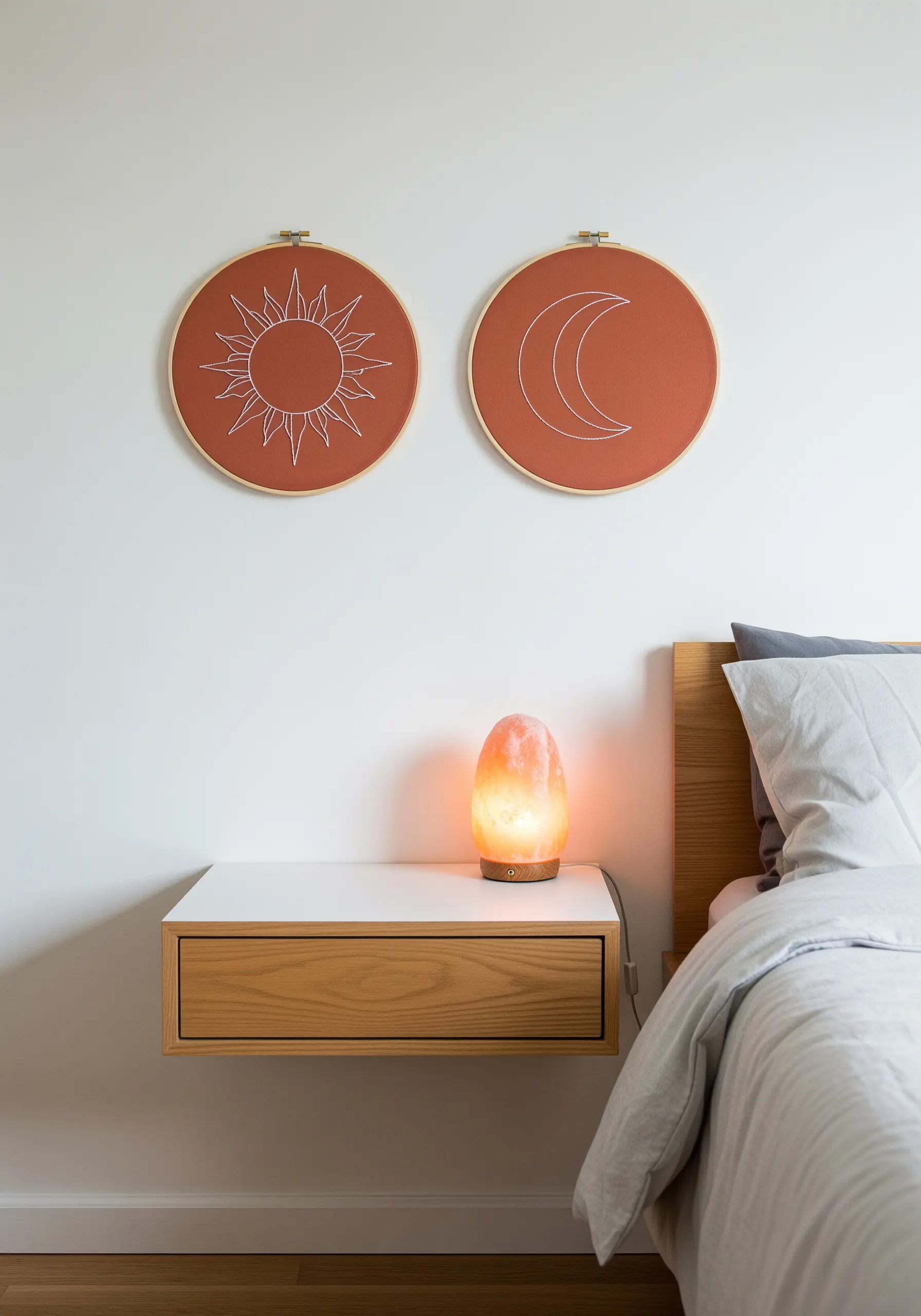
Let your background fabric do the heavy lifting. A warm, terracotta-colored cotton makes simple white line art of a sun and moon feel intentional and vibrant.
When stitching white on a darker color, ensure your lines are crisp by using a stabilizer behind the fabric to prevent puckering.
A simple backstitch is all you need here, as the power of the piece comes from the confident color contrast, not complex stitches.
Displaying them as a pair enhances their symbolic relationship and creates a balanced focal point above a bedside table.
7. Unify a Collection with a Custom Display Panel
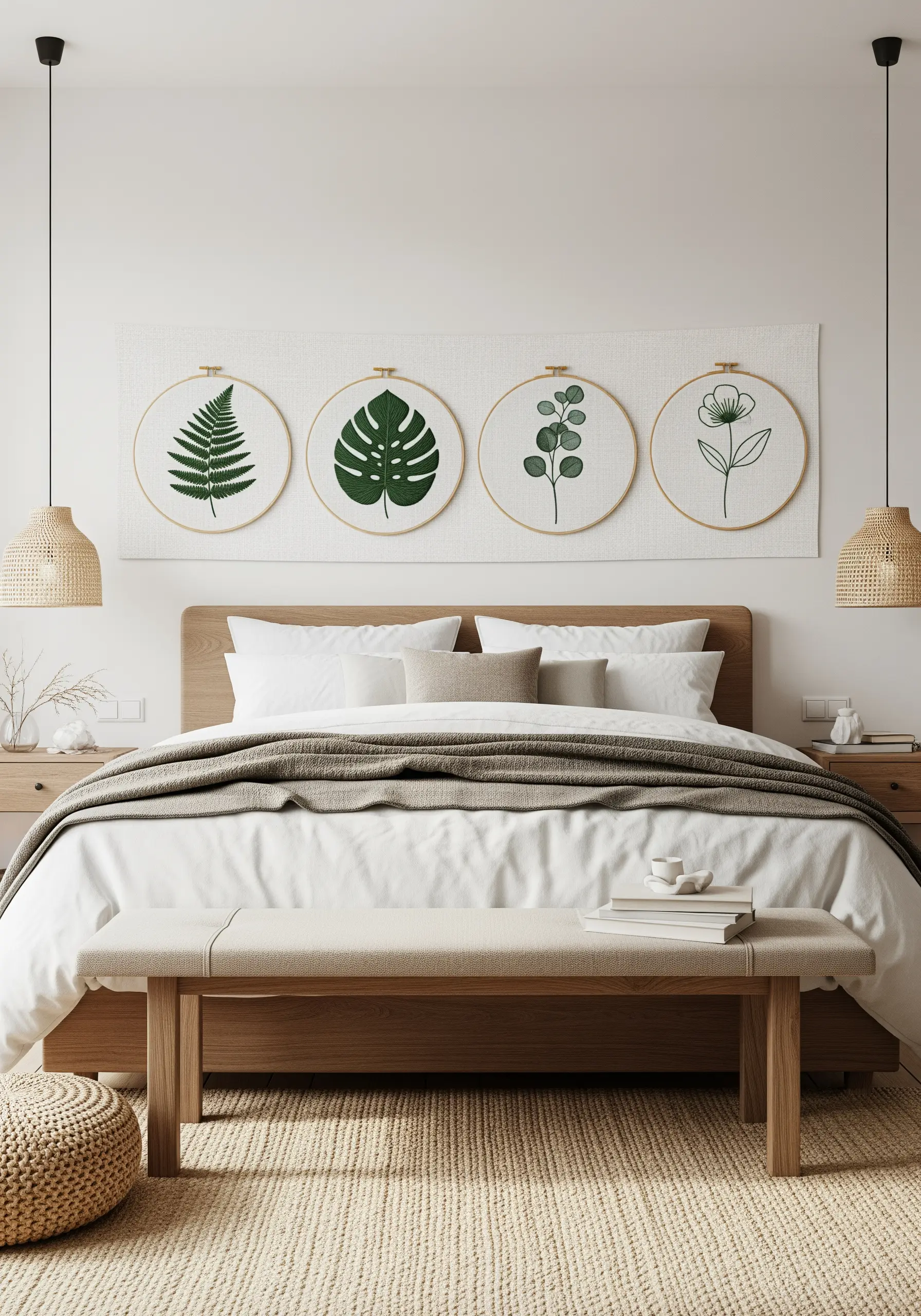
For a polished, gallery-like presentation, mount a series of hoops onto a single, fabric-wrapped canvas or wooden board.
This technique unites individual botanical pieces into one large, cohesive artwork, perfect for hanging above a headboard.
To create visual interest, vary the density of your stitching: use outlines for some leaves and a light fill of seed stitches for others.
This transforms individual botanical embroidery hoops into an intentional, large-scale statement piece.
8. Embrace Sculptural Lines with Thicker Threads
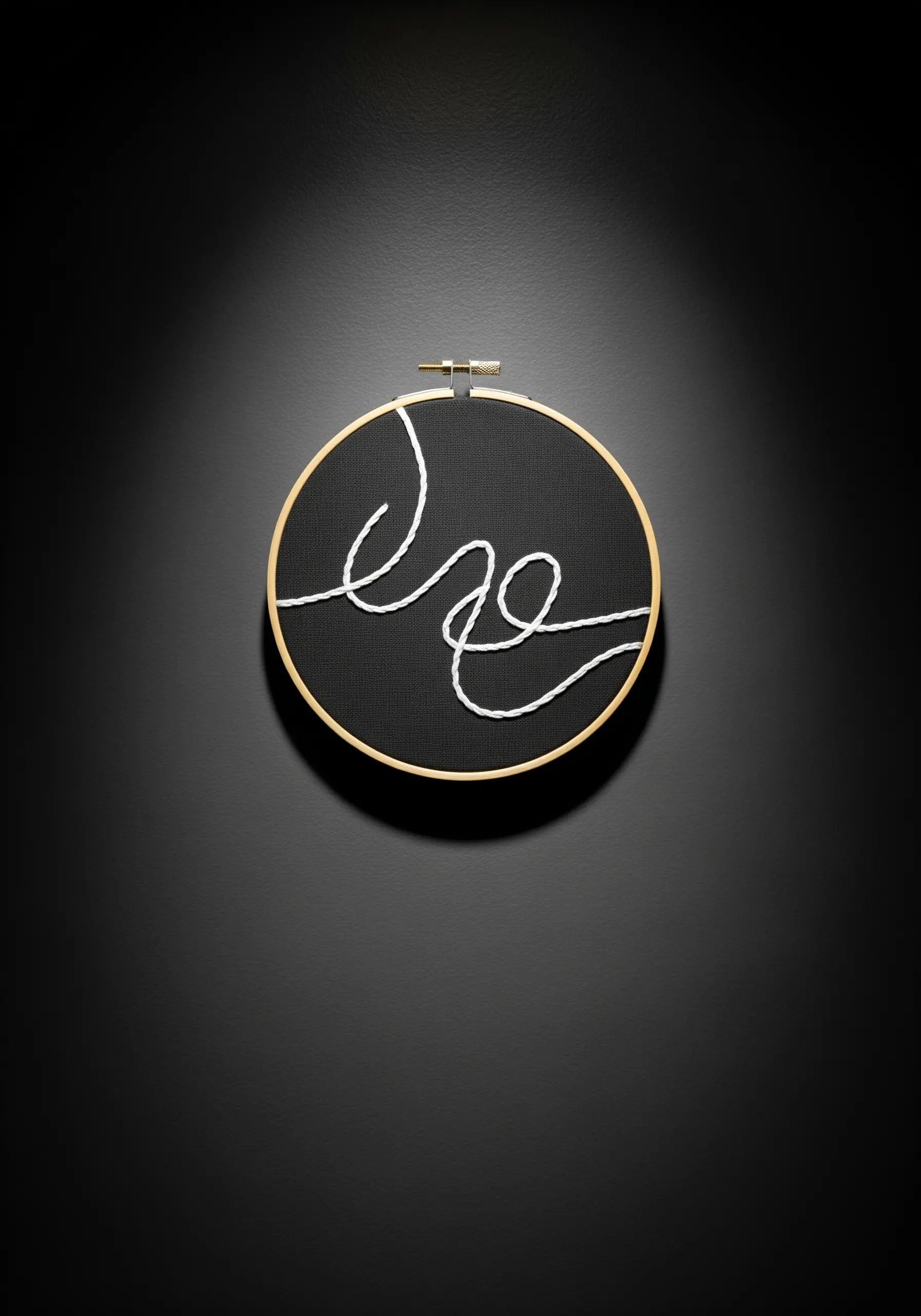
Create a dramatic, three-dimensional effect by swapping standard embroidery floss for a thicker material like pearl cotton, fine yarn, or even cotton cord.
Use a couching stitch—where you lay the thick cord on the fabric and tack it down with smaller, discreet stitches—to guide the line smoothly.
The stark contrast of a thick white line on black fabric emphasizes the form and movement of the abstract design, turning thread into a sculptural element.
9. Curate a Mini Gallery with a Thematic Cluster
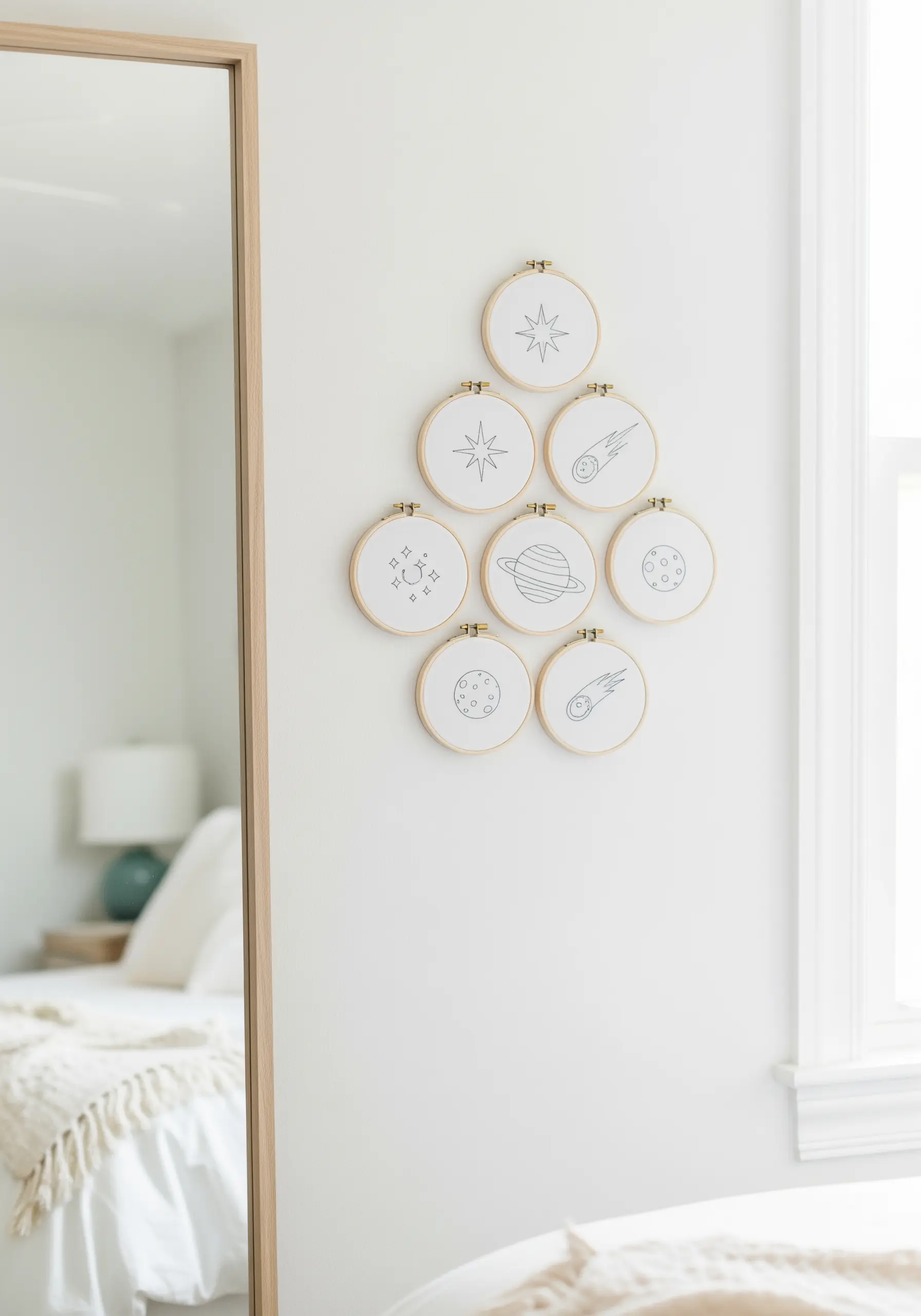
Turn a collection of small embroidery hoops into a cohesive display by choosing a single theme, like celestial bodies.
Arrange them in a playful, asymmetrical cluster to create a sense of movement and discovery on the wall.
Keep the style consistent—using the same simple line art technique and single thread color—to ensure the collection feels curated, not chaotic.
This is an excellent way to fill a small wall space with personality and charm.
10. Translate Iconic Designs into Minimalist Stitches
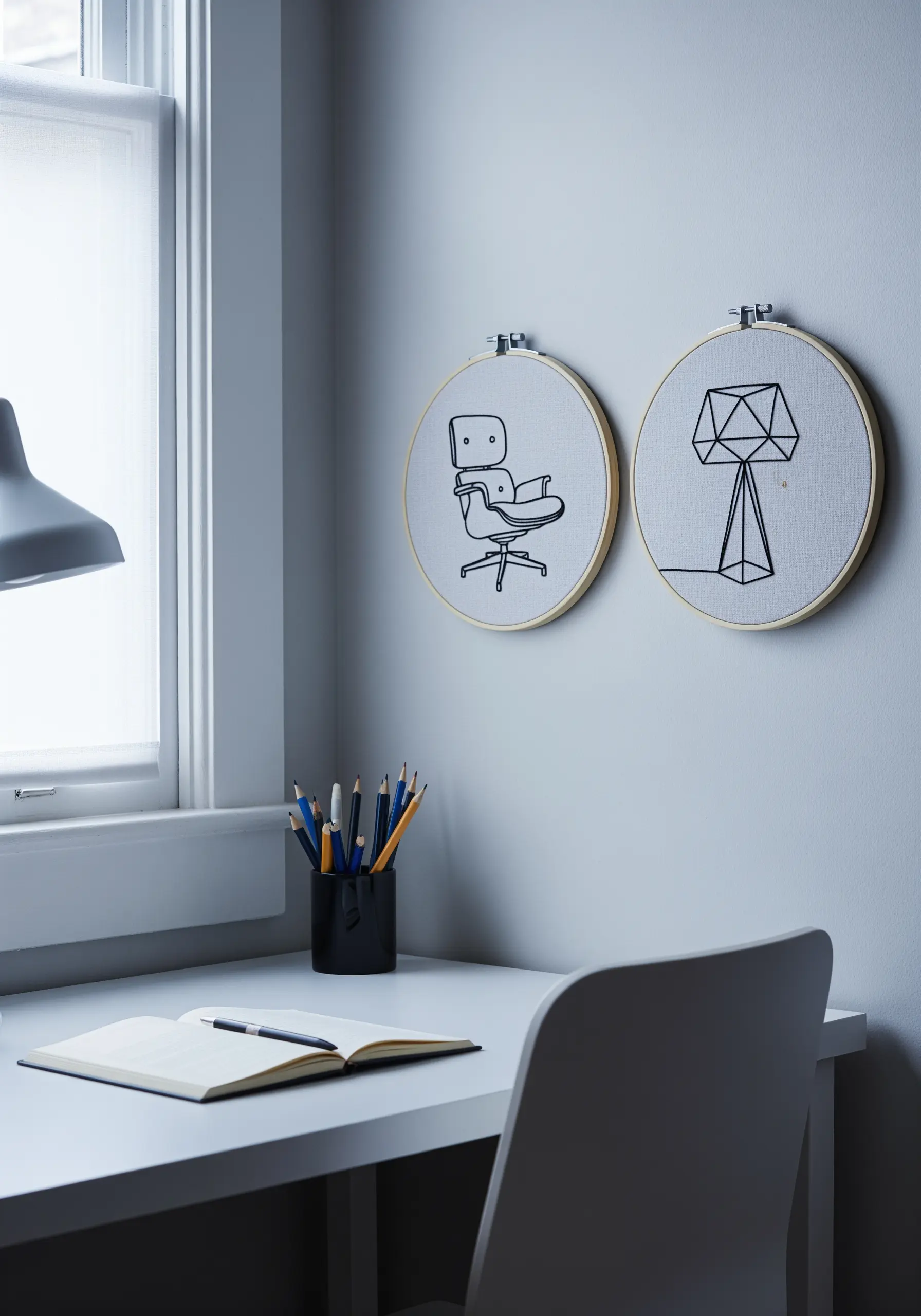
Pay homage to your favorite objects—like iconic mid-century modern furniture—by translating their essential shapes into clean line art.
Use a very fine, single strand of thread and a sharp needle to capture precise angles and clean curves.
A simple backstitch or split stitch will provide the definition needed for these architectural forms.
This approach allows you to personalize your decor with subjects that reflect your unique taste and interests.
11. Break the Hoop’s Boundary for Dynamic Wall Art
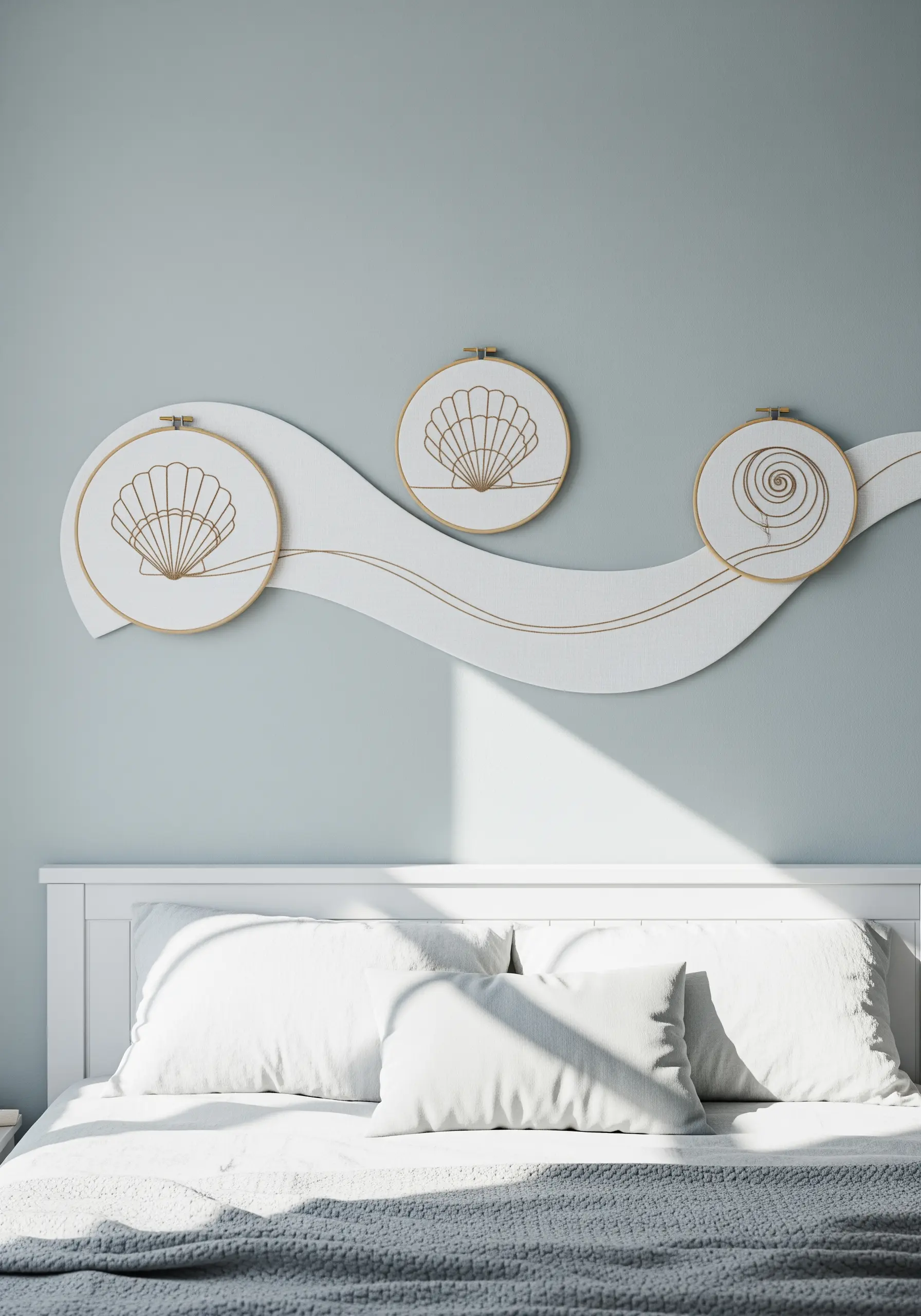
Create a stunning, large-scale installation by connecting multiple hoops with a single, flowing element stitched onto a custom-cut panel or fabric shape.
The thread appears to travel from one hoop to the next, unifying the separate pieces into one continuous work of art.
This clever display method adds a sense of movement and narrative, turning a simple wall into a dynamic feature.
It’s a perfect way to make a statement in a minimalist space, particularly above a headboard.
12. Stitch a Personal Landscape with Topographical Lines
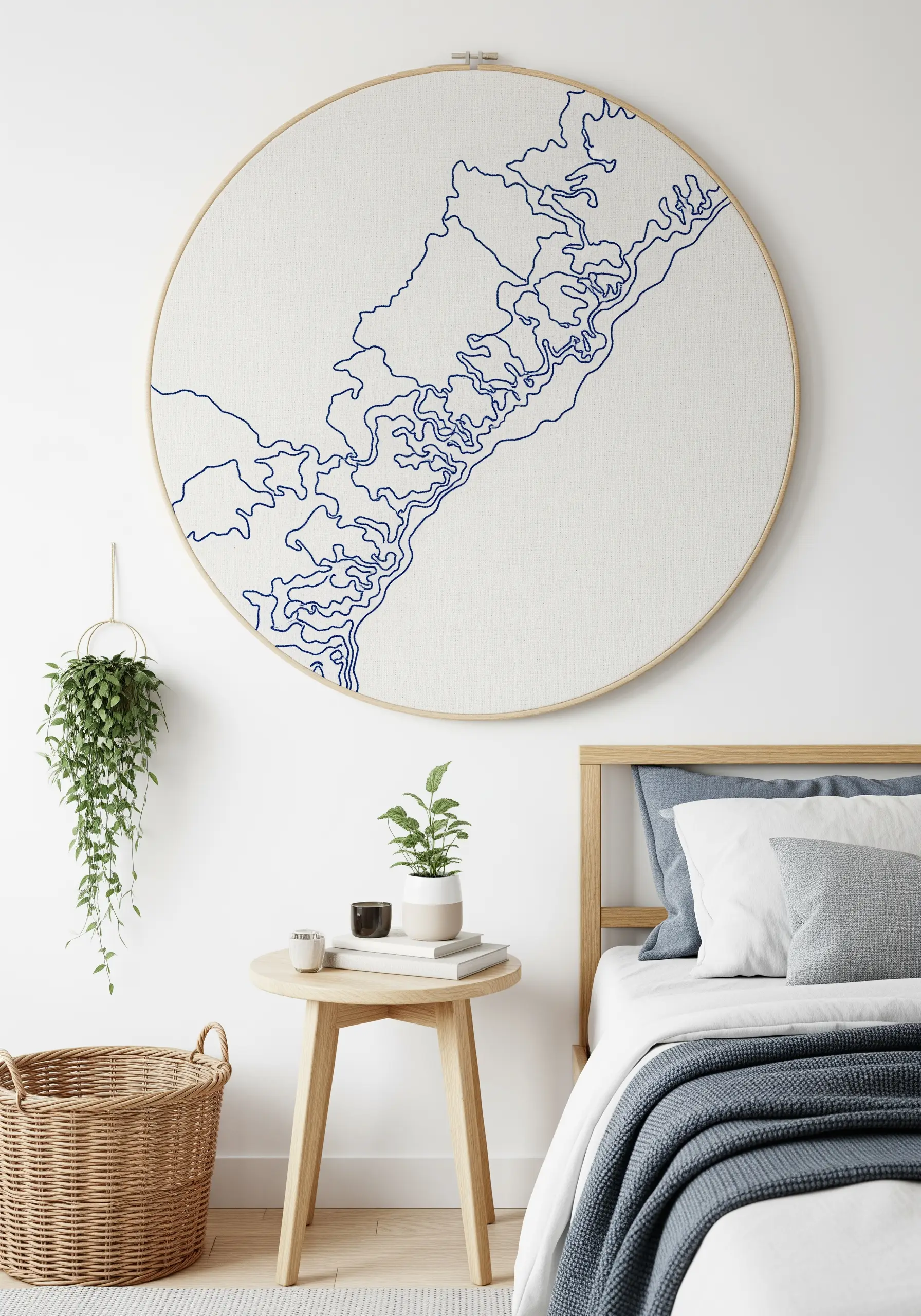
Transform a meaningful location—like a favorite coastline, mountain range, or river—into abstract art by stitching its topographical map.
Use a single, contrasting thread color and a consistent backstitch to let the complexity of the natural lines take center stage.
For a project this large, ensure your fabric is tightly hooped and consider using a water-soluble stabilizer for transferring the intricate pattern accurately.
This creates a deeply personal and sophisticated piece of modern thread art.
13. Add Subtle Texture with Seed Stitch Filling
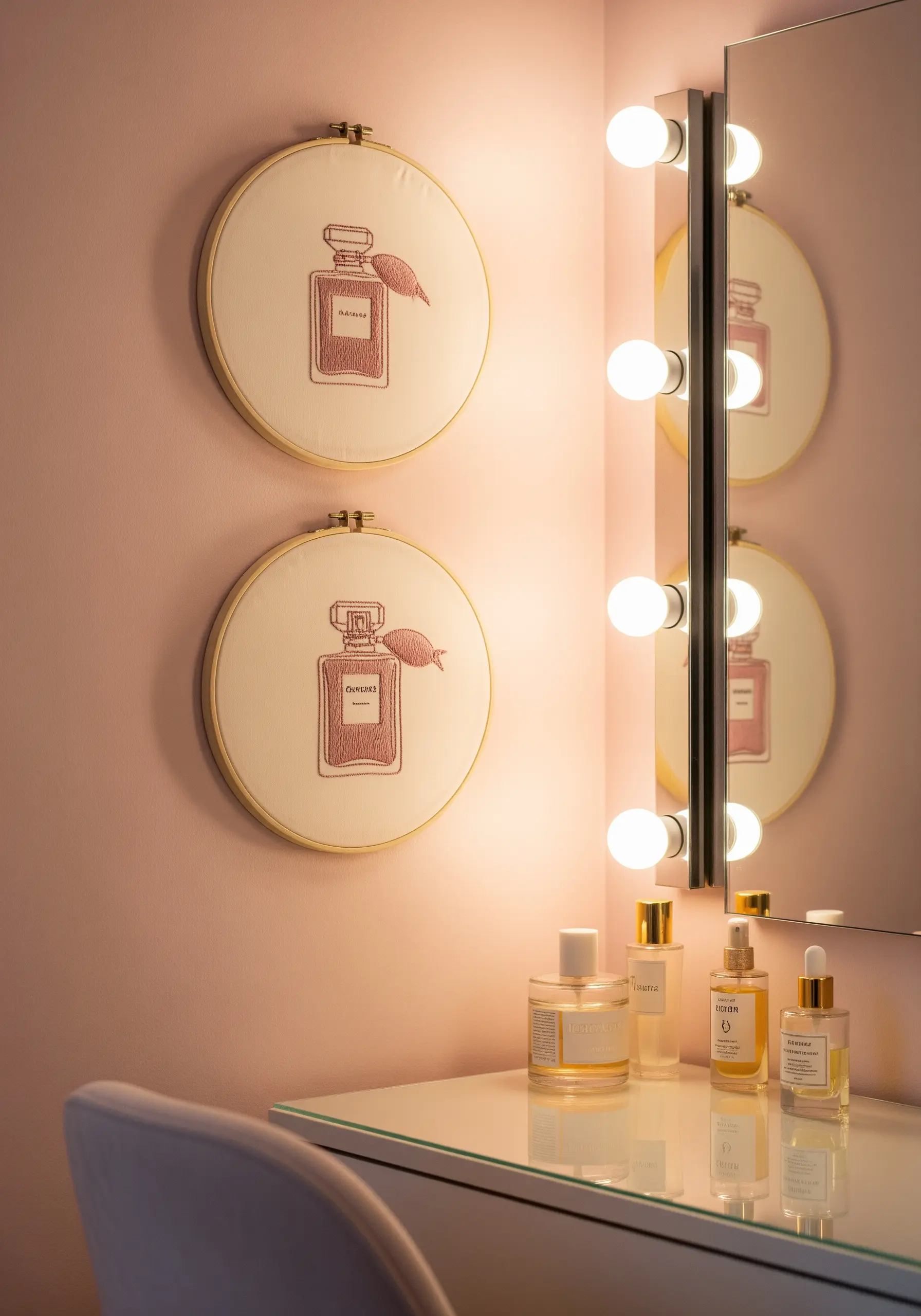
Instead of a solid satin stitch, fill outlined shapes with tiny, randomly placed straight stitches, known as seed stitches.
This technique creates a delicate, stippled texture that adds richness and a shimmering quality without appearing heavy or dense.
It’s an ideal way to add a touch of color and interest to line art, making the objects feel more substantial while retaining a minimalist aesthetic.
This method works especially well for evoking the texture of glass or finely detailed patterns.
14. Capture the Essence of Form with a Single Line
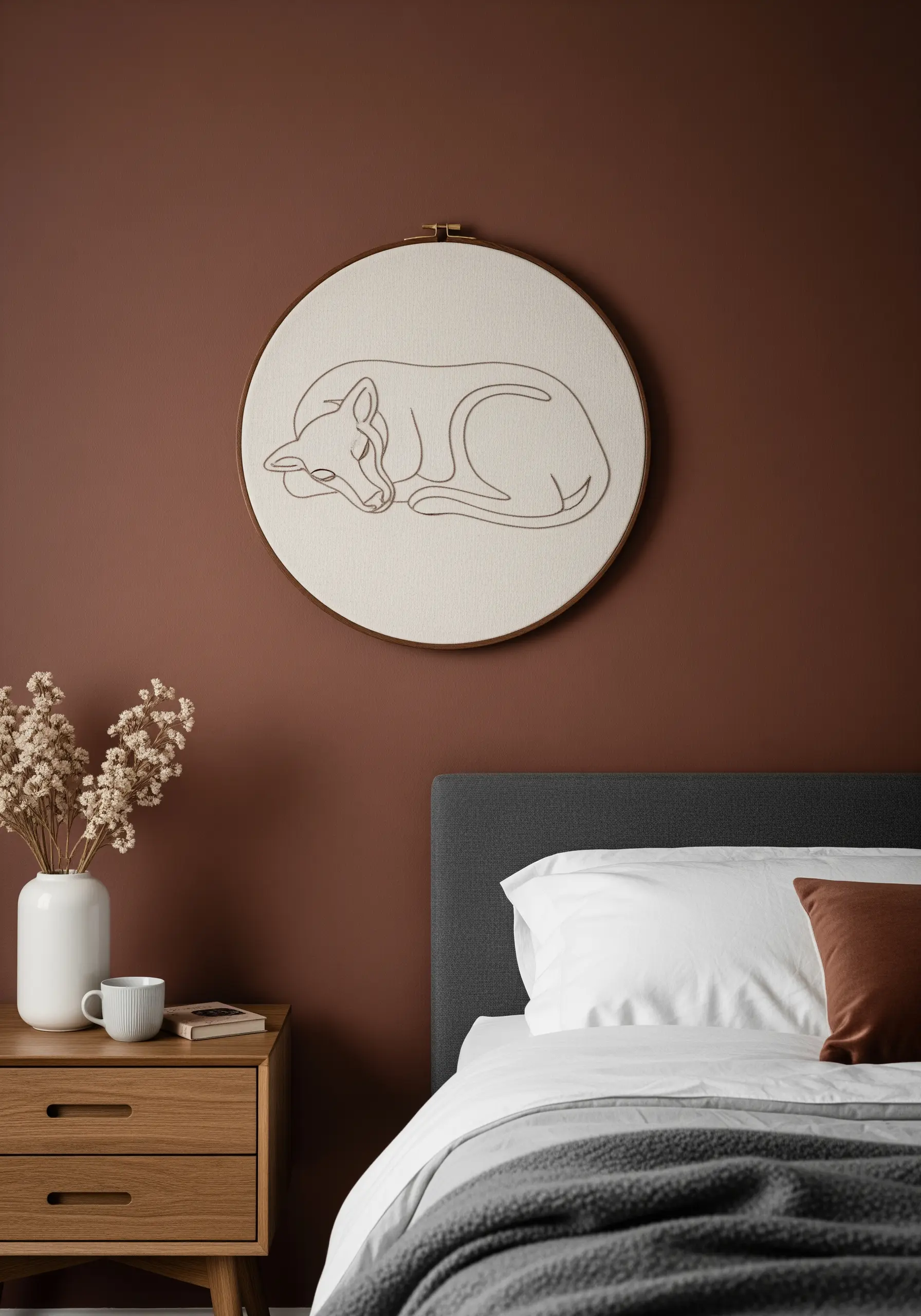
To create elegant animal line art, focus on the single, continuous contour that defines the subject’s shape and posture.
Stitch a sleeping cat or stretching dog using a smooth stem stitch, which excels at creating fluid, uninterrupted curves.
Choose a thread color that offers a soft contrast against your wall color for a tone-on-tone effect that feels calm and integrated.
This technique is all about suggestion, allowing the viewer’s eye to complete the form.
15. Integrate Hoops into a Mixed-Media Gallery Wall
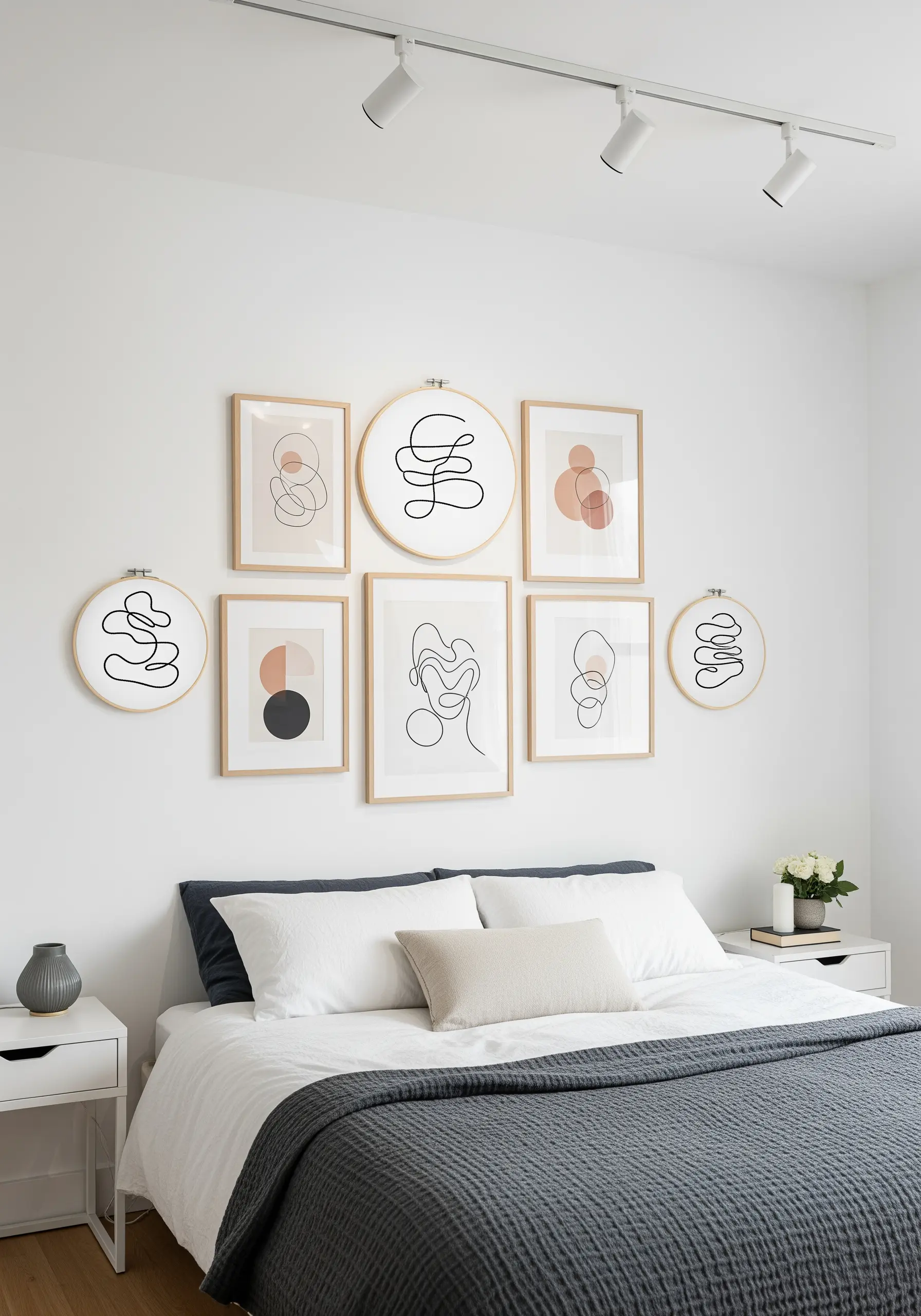
Create a sophisticated, layered look by mixing your embroidery hoops with framed prints and photographs.
The key to a successful integration is a consistent color palette and thematic link. The simple black lines in the hoops echo the frames and abstract prints.
The round shape of the hoop breaks up the grid of rectangular frames, adding softness and textural variety to the composition.
This approach makes your handcrafted work feel like a curated piece within a larger art collection.
16. Achieve High-Contrast Drama with Gold on Black
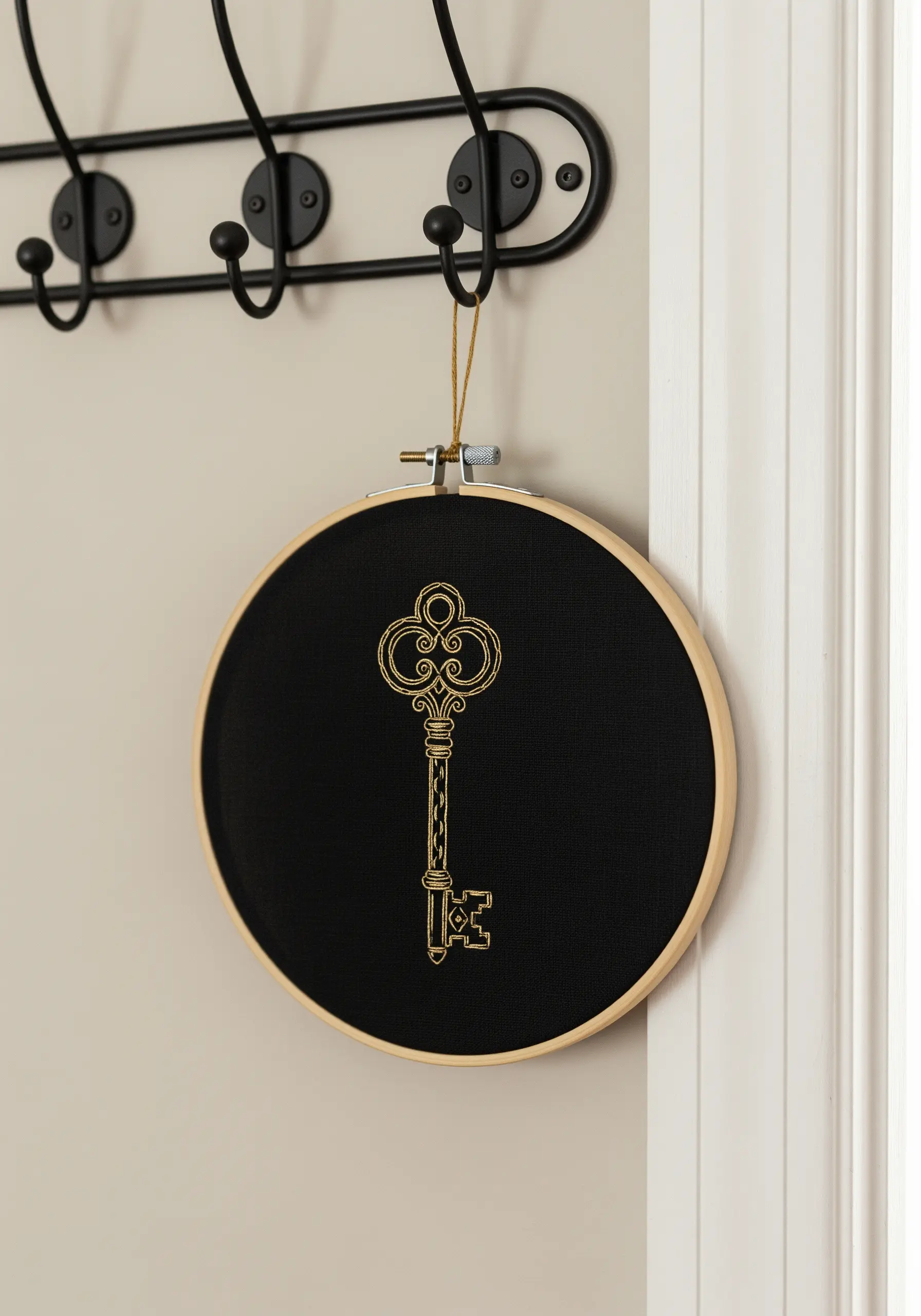
For an object that feels both vintage and luxurious, stitch a detailed design like an ornate key using gold metallic thread on stark black fabric.
To capture the fine details, use a single strand of metallic floss and a fine, sharp needle.
Use short, deliberate backstitches for the intricate parts of the key, which gives you more control and cleaner lines.
This dramatic color combination instantly creates a focal point that feels both elegant and mysterious.
17. Create an Expansive View with a Landscape Diptych
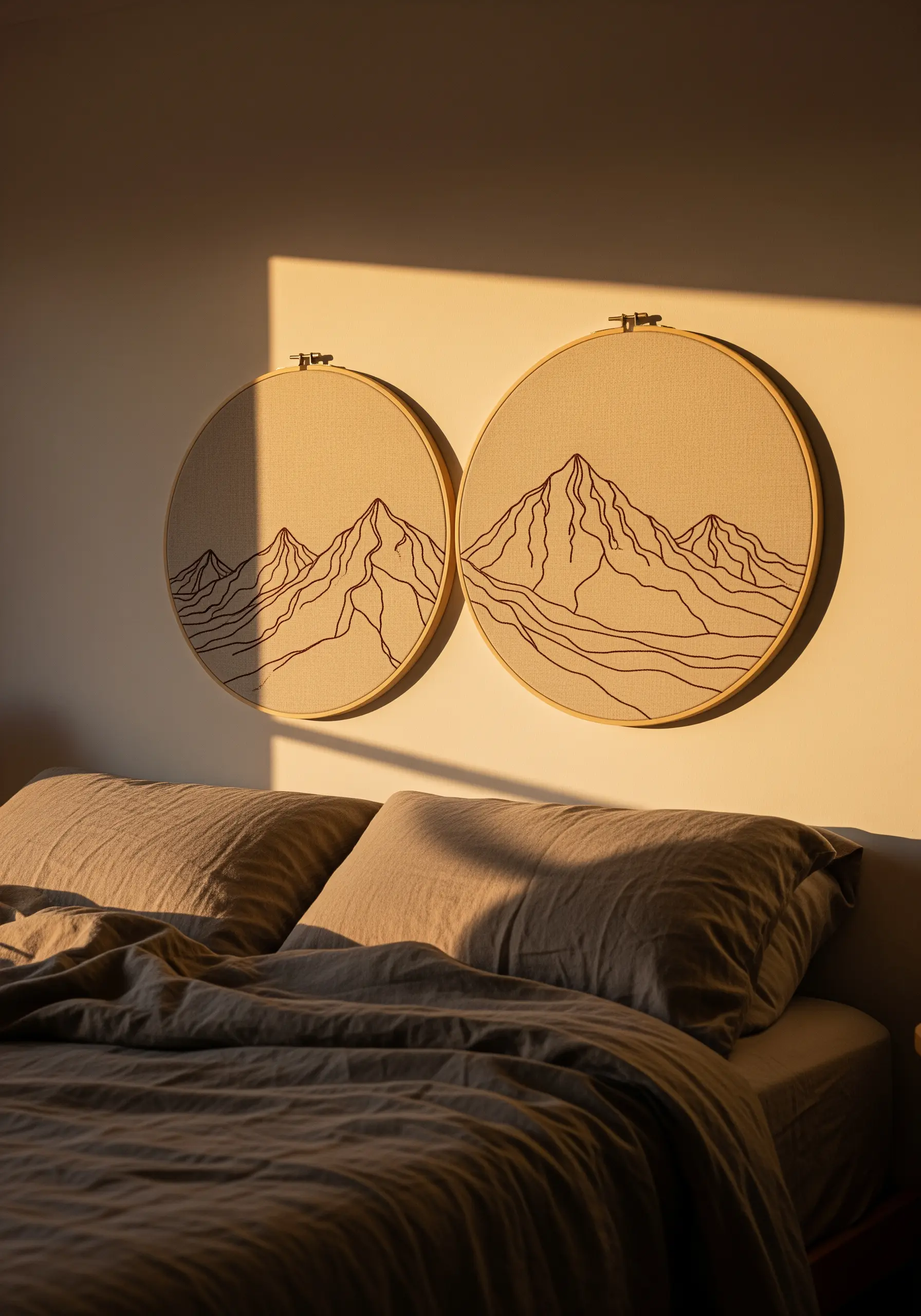
Split a single, wide landscape across two or more hoops to create a panoramic effect that makes your wall feel larger.
When planning your design, carefully mark where the image will be divided to ensure the lines connect seamlessly when the hoops are hung side-by-side.
Use a simple backstitch or stem stitch to keep the focus on the majestic form of the mountains.
The warm, golden light in this room enhances the earthy tones of the thread and fabric, creating a serene and cohesive atmosphere.
18. Tell a Story Through Symbolic Line Art
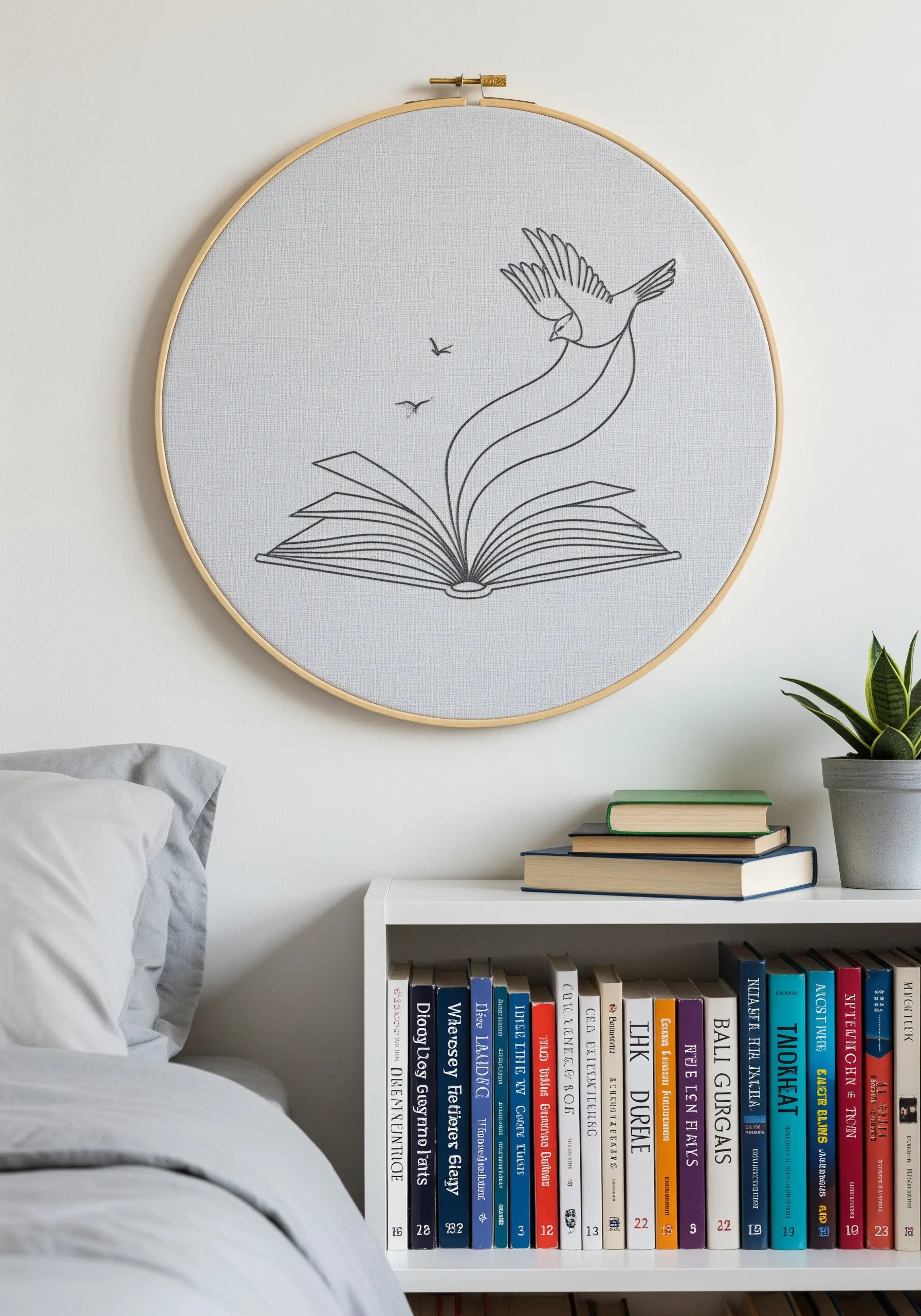
Go beyond simple objects and create a design that tells a story or evokes a feeling, like this image of birds emerging from an open book.
Combine clean, architectural lines for the book with more organic, flowing lines for the birds to create a dynamic contrast.
Use a single color of thread to unify the different elements into one cohesive and poetic image.
This approach elevates your embroidery from pure decoration to a piece of meaningful, narrative art.
19. Make a Statement with an Oversized Hoop
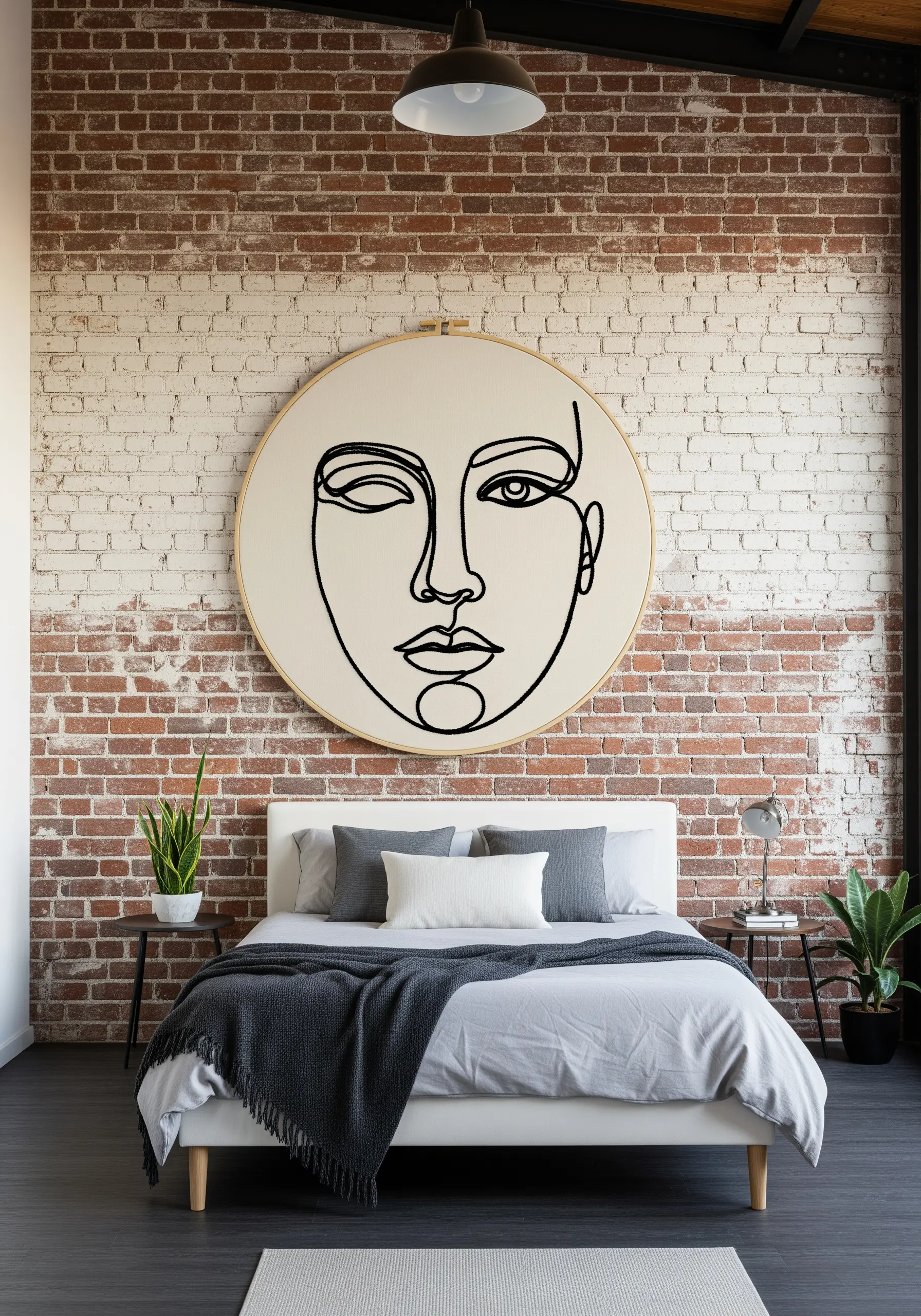
For a high-impact piece that can anchor an entire room, work with an oversized hoop—18 inches or larger.
To ensure your lines are bold enough to be seen from a distance, use all six strands of embroidery floss or even a thicker #5 pearl cotton.
A simple, graphic design like this abstract face works best at a large scale, as intricate details can get lost.
This is a fantastic way to create a large piece of statement wall art without the cost of a traditional painting.
20. Group Small Hoops for a Delicate Botanical Display
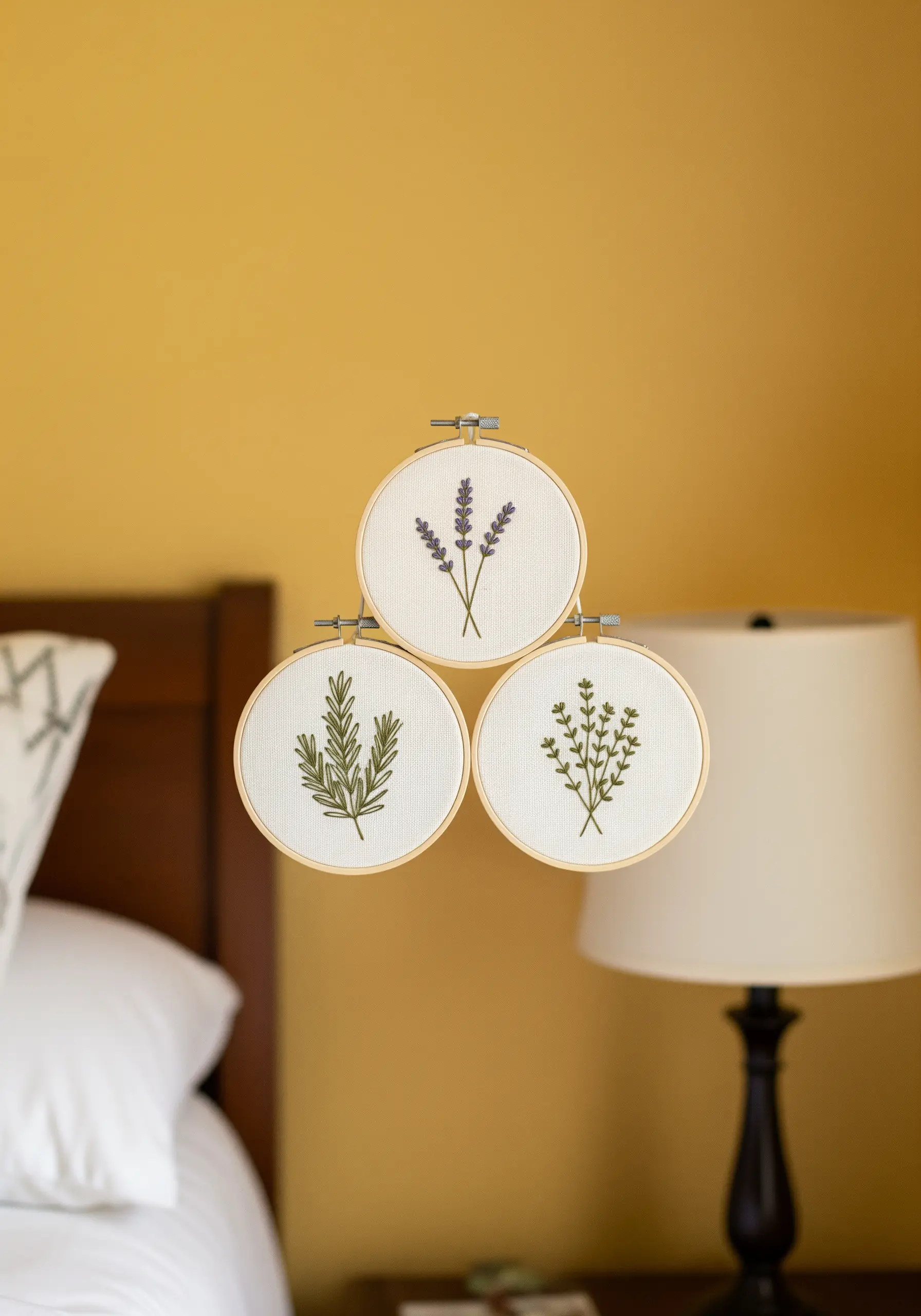
Instead of one large piece, create a charming cluster of small hoops, each featuring a different herb or flower.
This allows you to play with subtle color variations—like different shades of green and purple—while maintaining a cohesive theme.
For the lavender, use French knots for the blossoms to add a touch of realistic texture. For the rosemary, a simple backstitch for the stem and detached chain stitches for the leaves works perfectly.
This trio adds a touch of natural, calming energy to a bedside table.
21. Design Soft, Dreamy Art for a Nursery
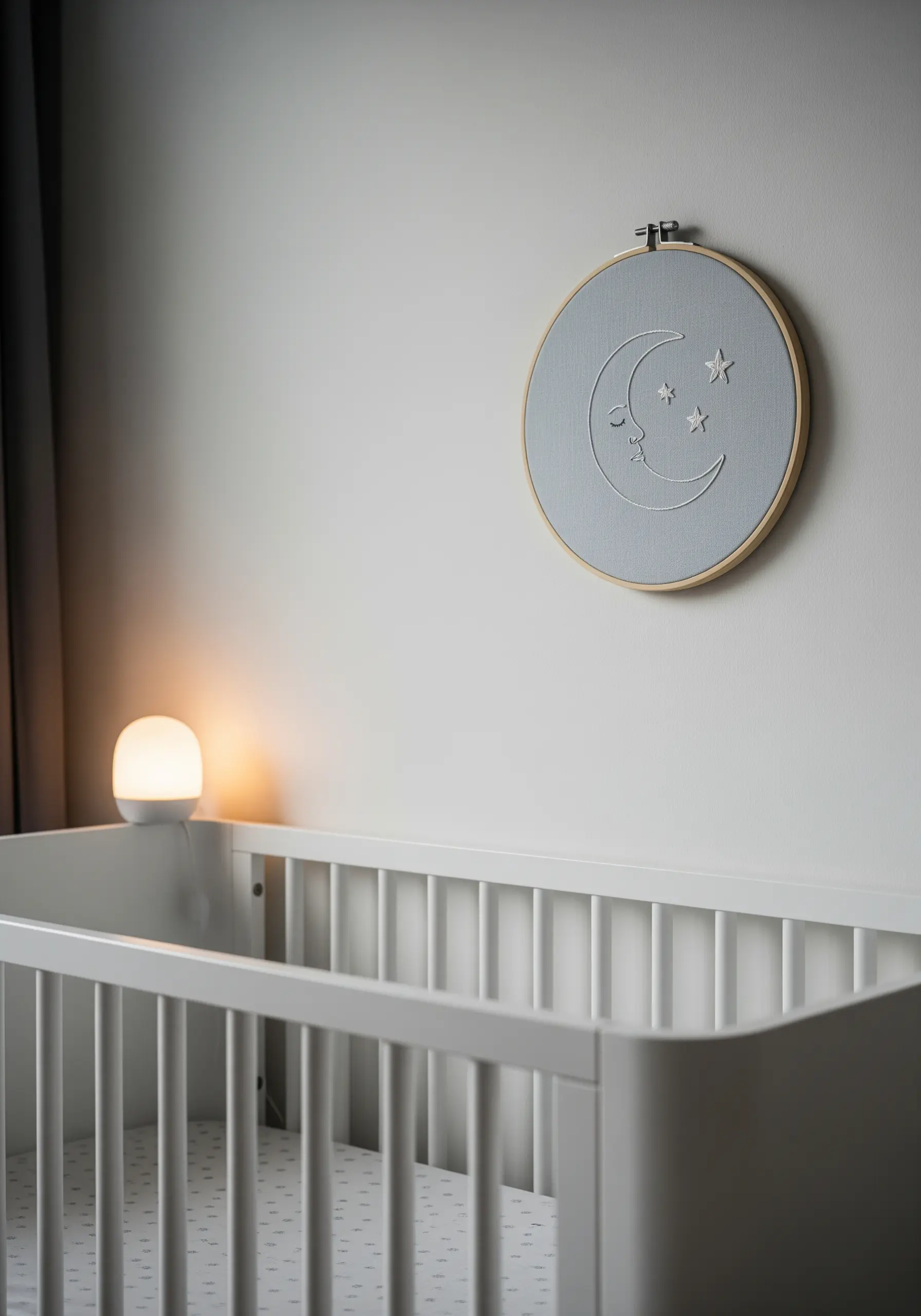
For a child’s room or nursery, choose a soft, soothing color palette like this dusty blue fabric with off-white thread.
The gentle contrast is calming and sophisticated, perfect for a peaceful environment.
Use a simple backstitch for the outlines and satin stitch for the small star shapes to create a clean, storybook feel.
This moon-and-stars motif is timeless and creates a serene atmosphere for sleep.
22. Embrace an Artistic, Deconstructed Finish
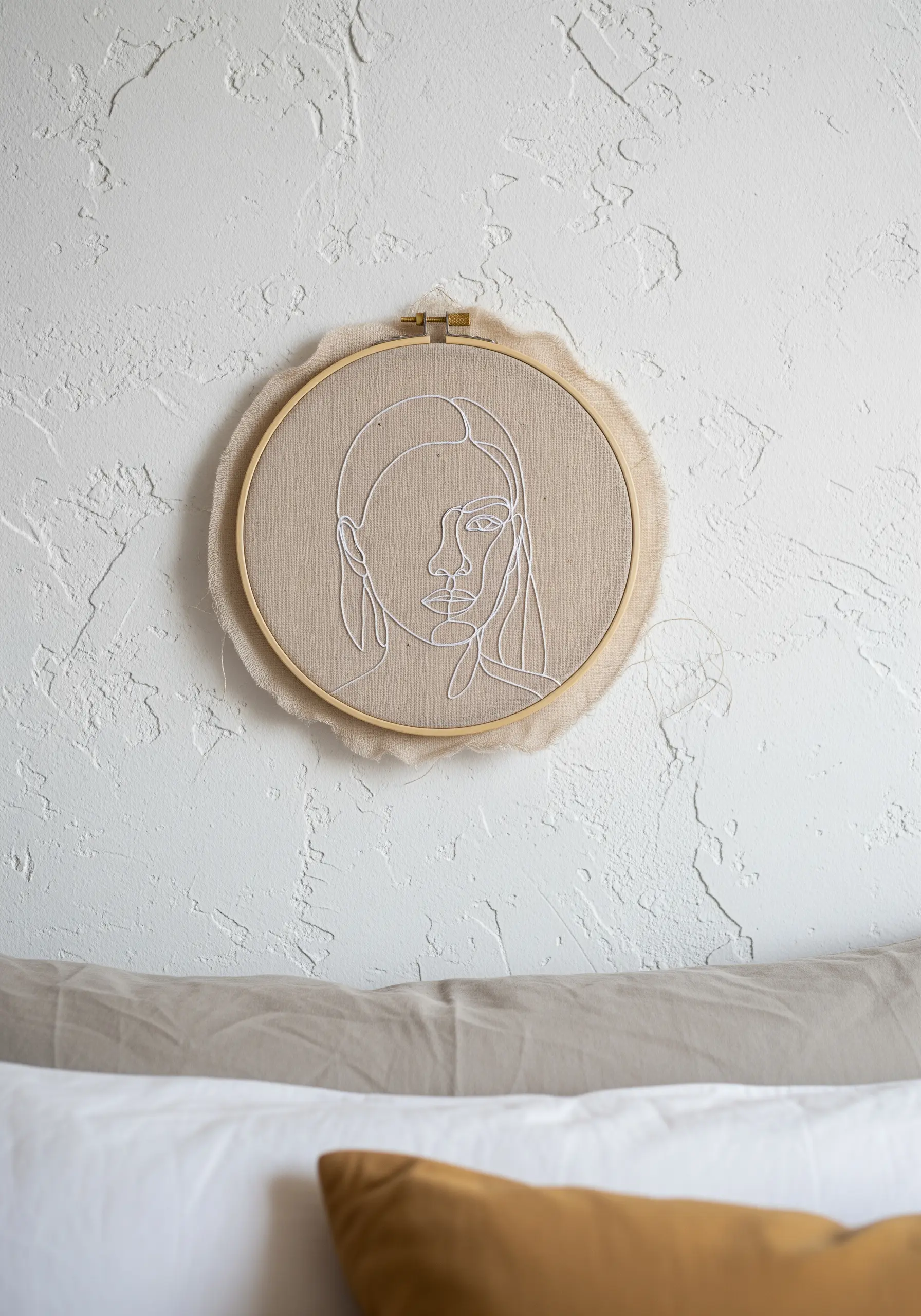
For a more organic, process-oriented look, leave the edges of your fabric raw and untrimmed around the hoop.
This deconstructed finish adds texture and an artistic flair, highlighting the handcrafted nature of the piece.
It works best with natural fabrics like linen or unbleached cotton, which fray beautifully.
Pair this raw finish with a clean, single-line design in a contrasting thread to create a beautiful balance between polish and imperfection.
23. Create a Moody ‘Dark Academia’ Vignette
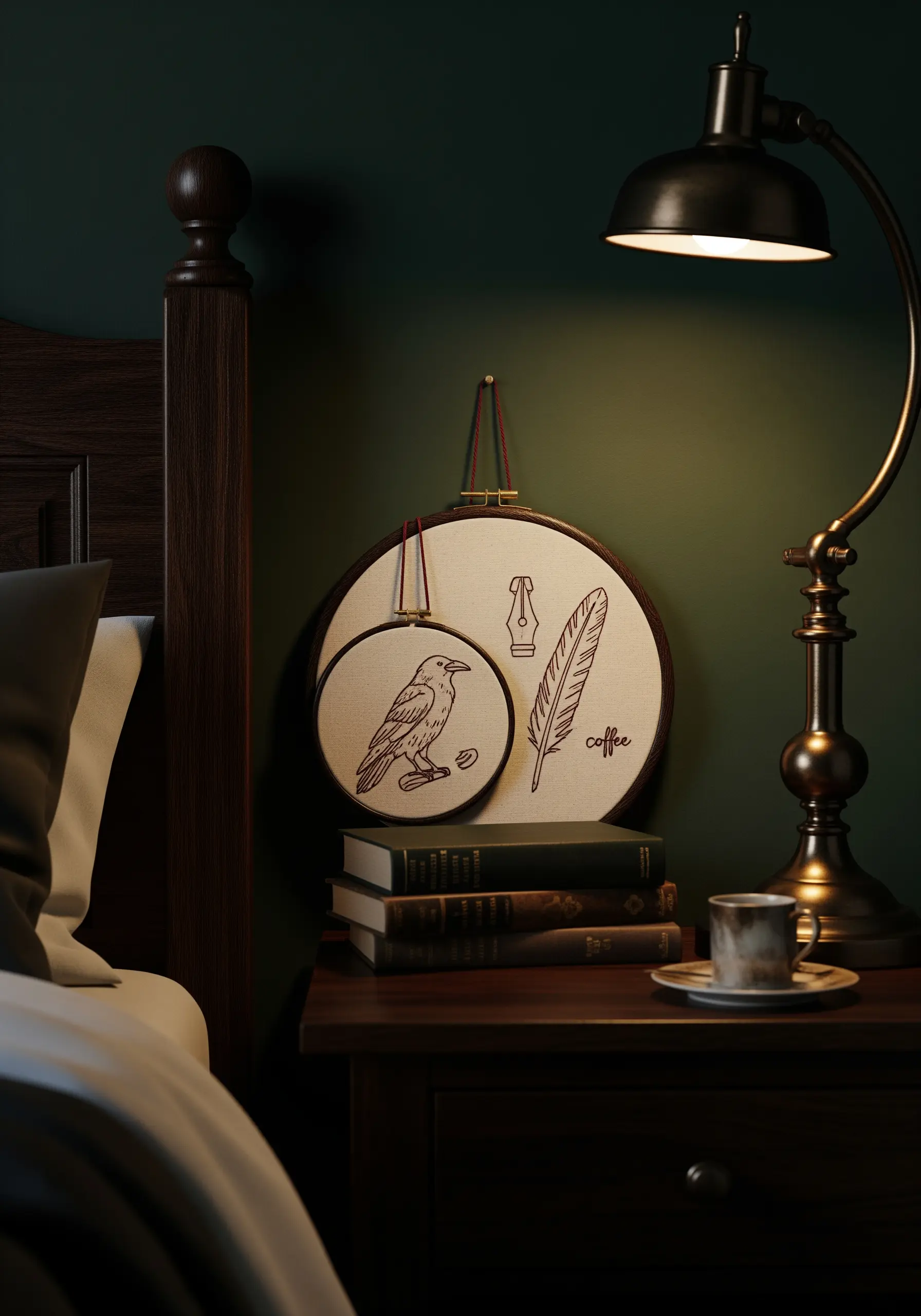
Evoke a specific aesthetic, like ‘dark academia,’ by grouping symbolic motifs together. A raven, a fountain pen, and a feather create a thoughtful, literary mood.
You can layer smaller hoops over larger ones or stitch multiple related icons within a single hoop.
Using a dark, consistent thread color on a neutral background keeps the look cohesive and sophisticated.
This is a wonderful way to create a themed arrangement that reflects your personal interests and style.
24. Move Beyond the Hoop with a Rectangular Frame
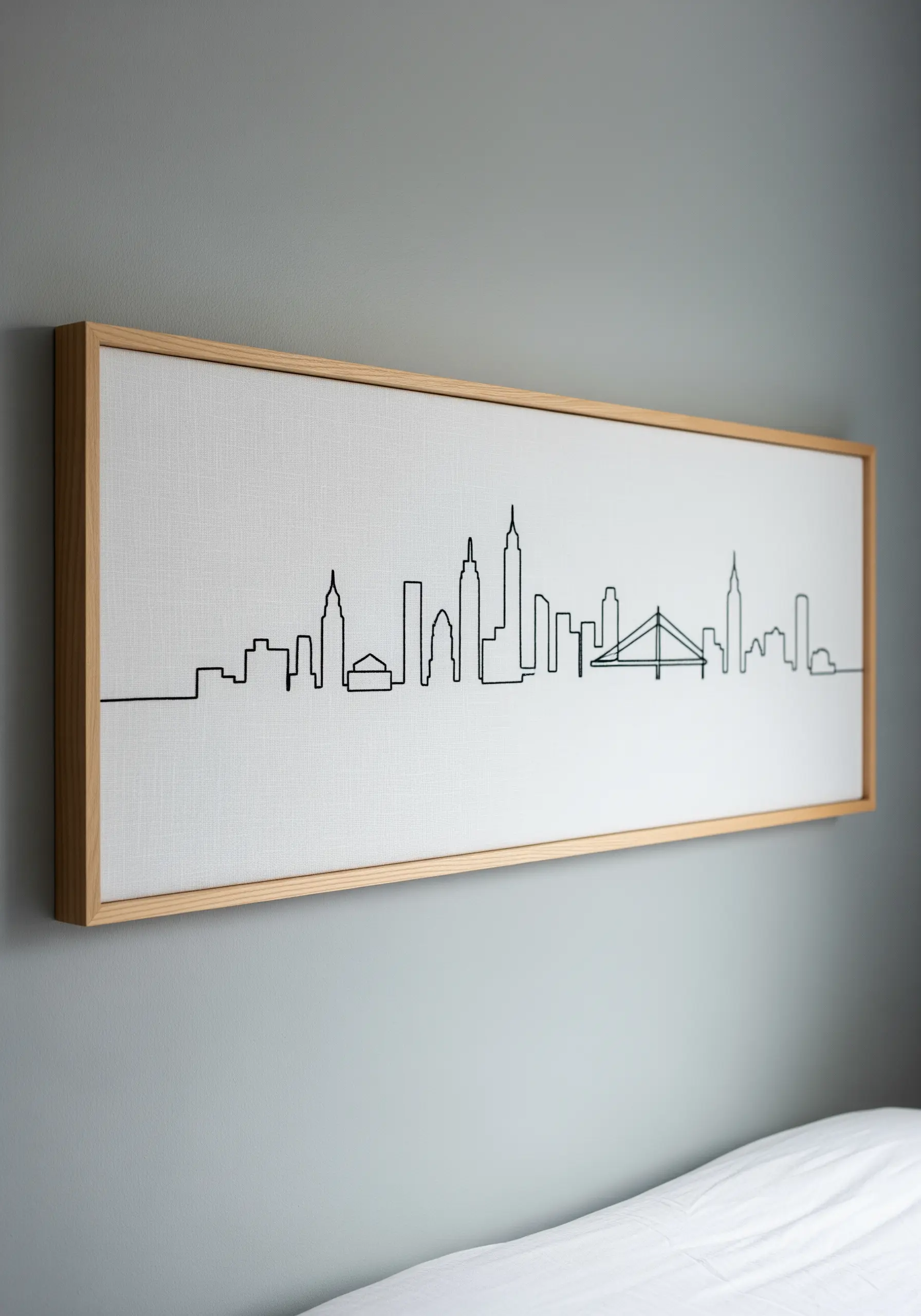
For a more formal, gallery-style presentation, stretch your finished embroidery over a rectangular artist’s canvas or have it professionally framed.
This technique elevates your stitchwork, presenting it as a piece of fine art rather than a craft project.
A simple, continuous line design like a city skyline is perfect for this format, creating a clean, panoramic piece.
Choose a frame in a natural wood tone to complement the minimalist aesthetic without distraction.
25. Explore Expressive Texture in Abstract Shapes
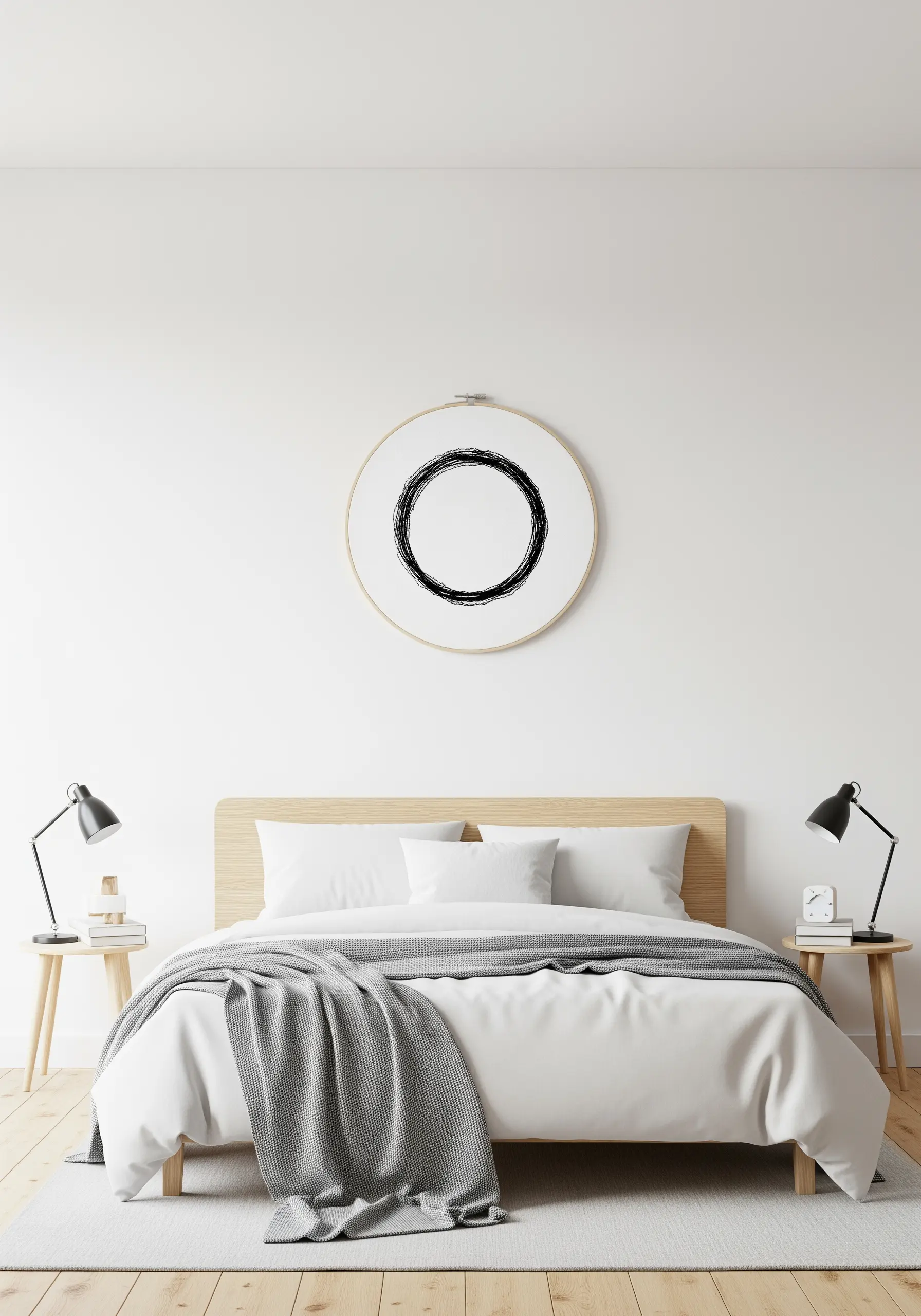
Instead of a perfect, clean line, create an expressive, textured circle using dense, layered stitches.
Work back and forth with a simple straight stitch or backstitch, layering the thread to build up a sketchy, hand-drawn quality.
This technique turns a simple geometric shape into a dynamic, energetic mark.
The raw, imperfect texture makes a powerful statement in a minimalist room, adding a touch of organic energy to clean surroundings.
26. Use Repetition for a Rhythmic, Calming Effect
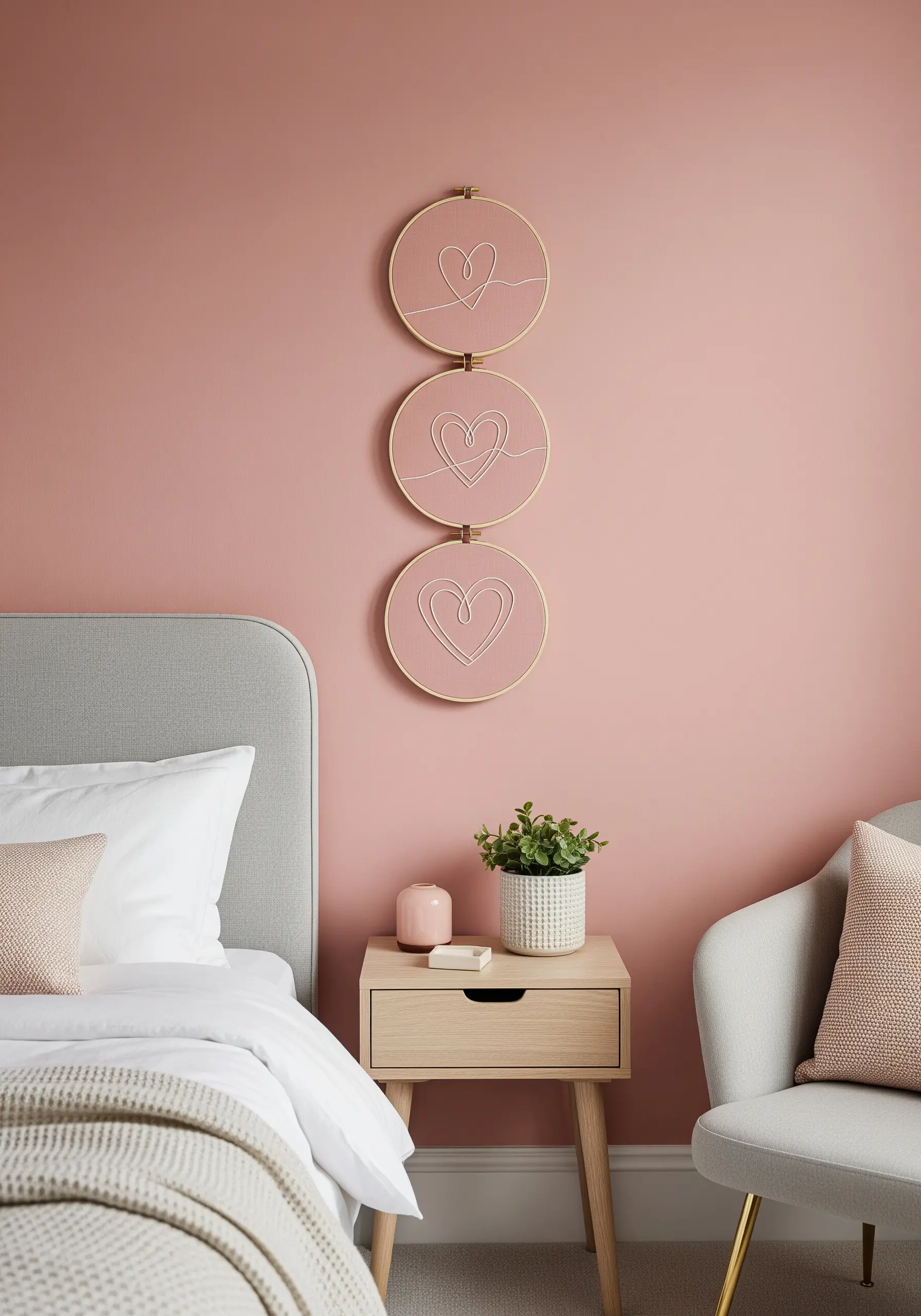
Create a sense of rhythm and calm by stitching the same simple motif, like these intertwined hearts, in a vertical series.
Using a consistent fabric and thread color ties the pieces together, while slight, natural variations in the hand-stitched lines add warmth and character.
Stitching white thread on a soft pink fabric creates a gentle, romantic feel that is perfect for a bedroom.
This is a simple yet highly effective way to create a cohesive art piece that fills vertical space with grace.
27. Connect Your Art to the Room with Color
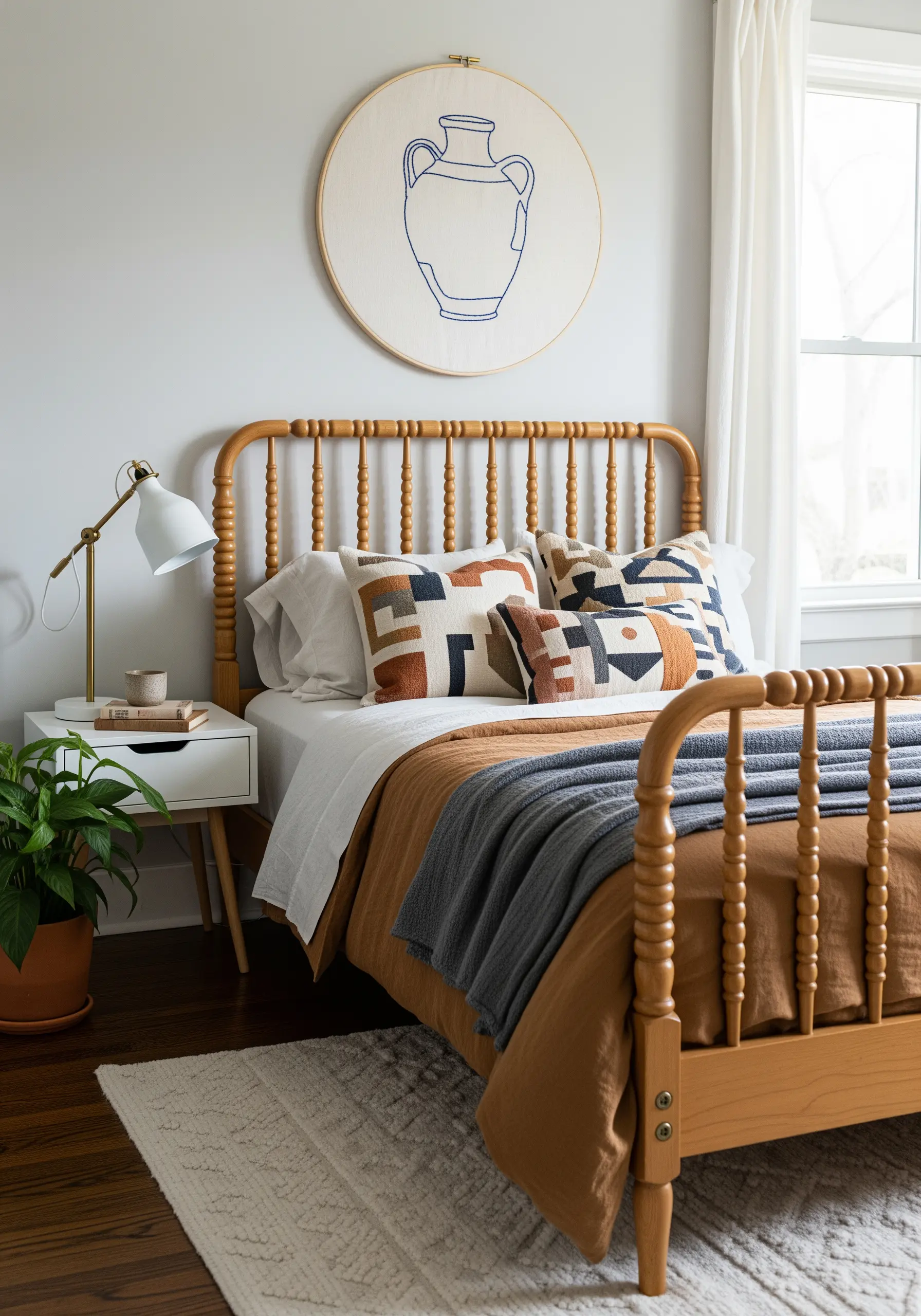
Create a truly cohesive interior by pulling a thread color directly from another element in your room, like the pattern on your throw pillows.
This simple act of color-matching instantly makes your handmade art feel integrated and intentional.
The bold blue outline of the vase pops against the neutral wall while harmonizing perfectly with the bedding.
It’s a professional design trick that ensures your decor feels curated and thoughtfully composed.
28. Define Form with Negative Space
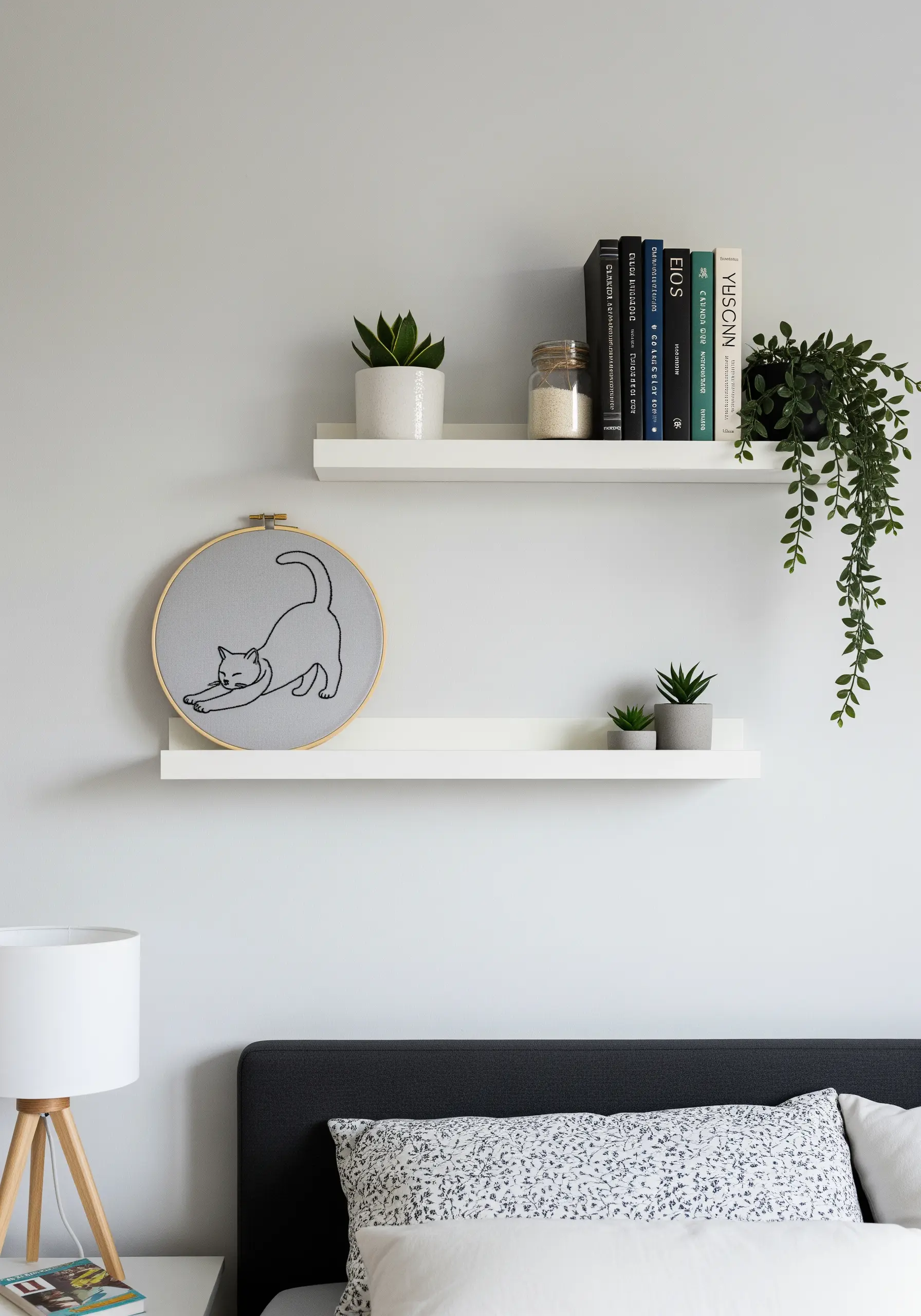
In minimalist line art, the empty space within and around your stitched lines is just as important as the thread itself.
When stitching a figure like this stretching cat, focus on how the unstitched fabric defines the animal’s back and limbs.
This conscious use of negative space creates a light, airy design that feels balanced and elegant.
It proves that you don’t need dense stitching to create a powerful and recognizable image.
29. Convey Emotion with Intertwined Abstract Figures
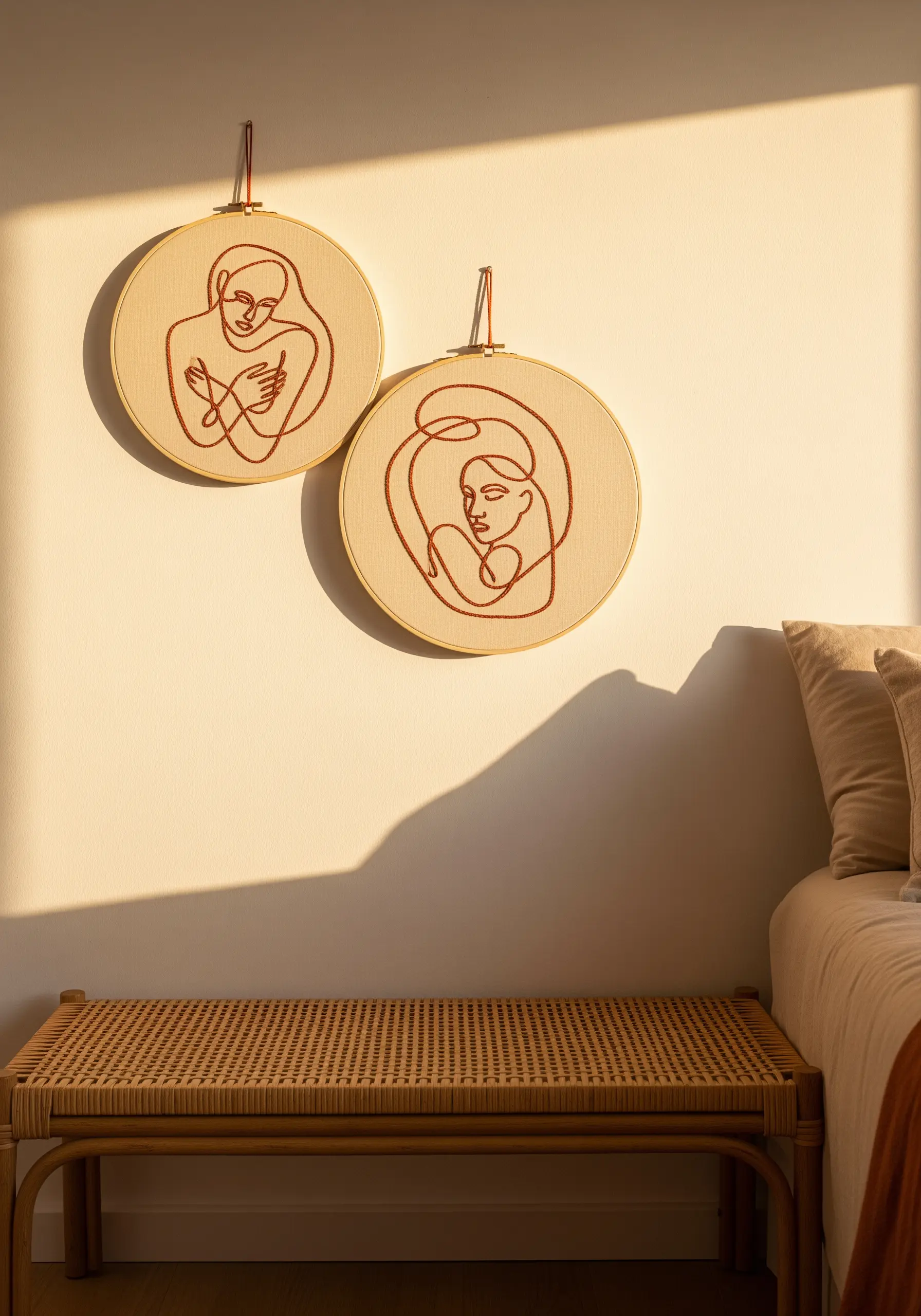
Use a single, flowing line to create abstract figures that suggest connection, intimacy, or self-reflection.
A warm, earthy thread color like terracotta or rust adds a layer of organic warmth and humanity to the piece.
The continuous line technique forces you to simplify forms down to their emotional essence, resulting in a design that is both minimal and deeply resonant.
These pieces are perfect for creating a personal and contemplative atmosphere in a bedroom.


