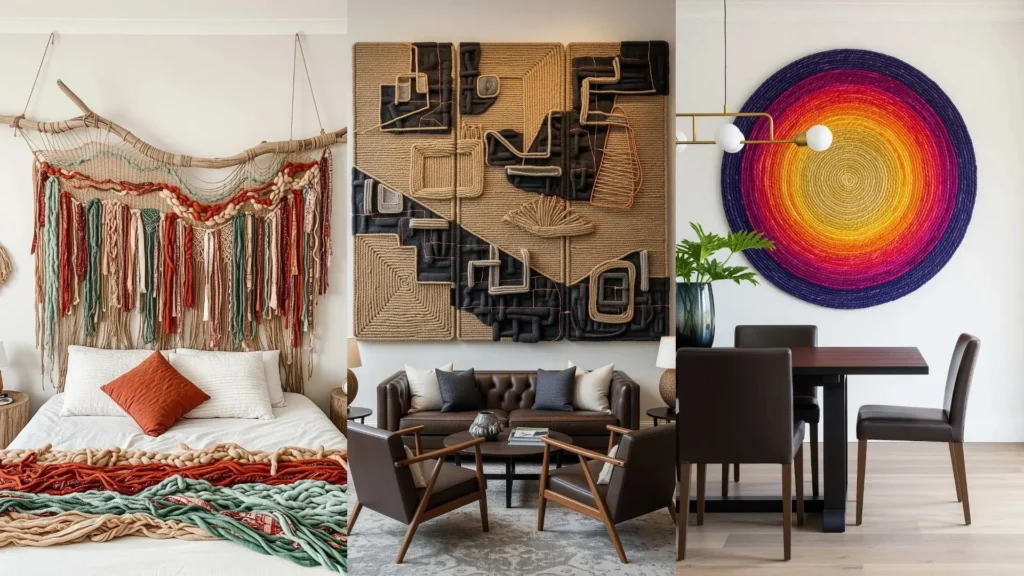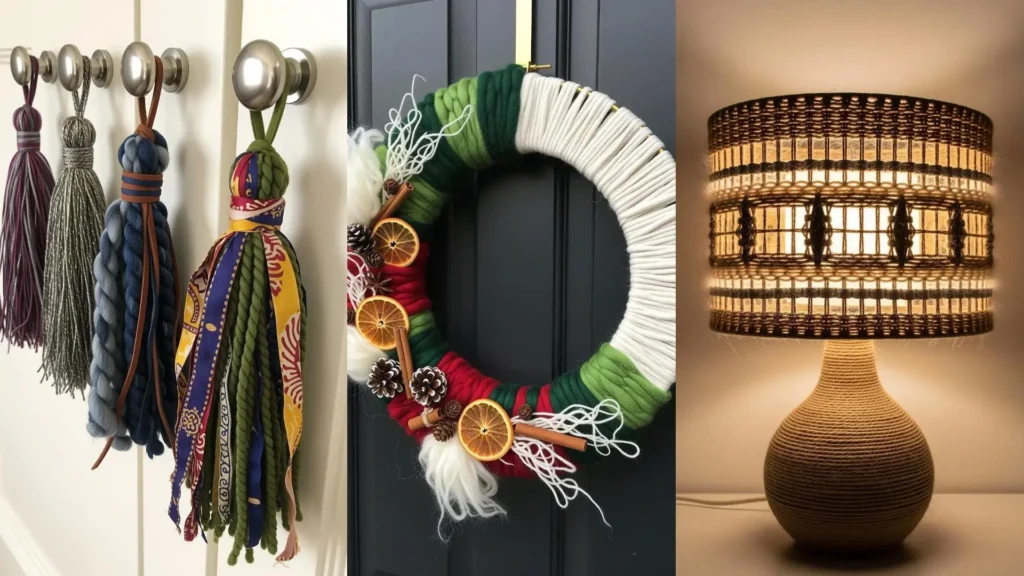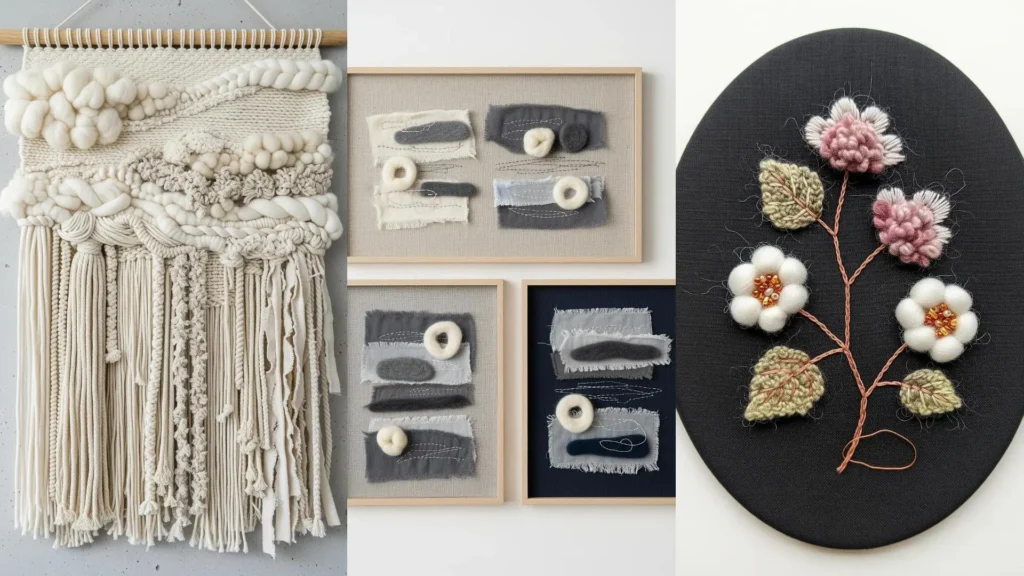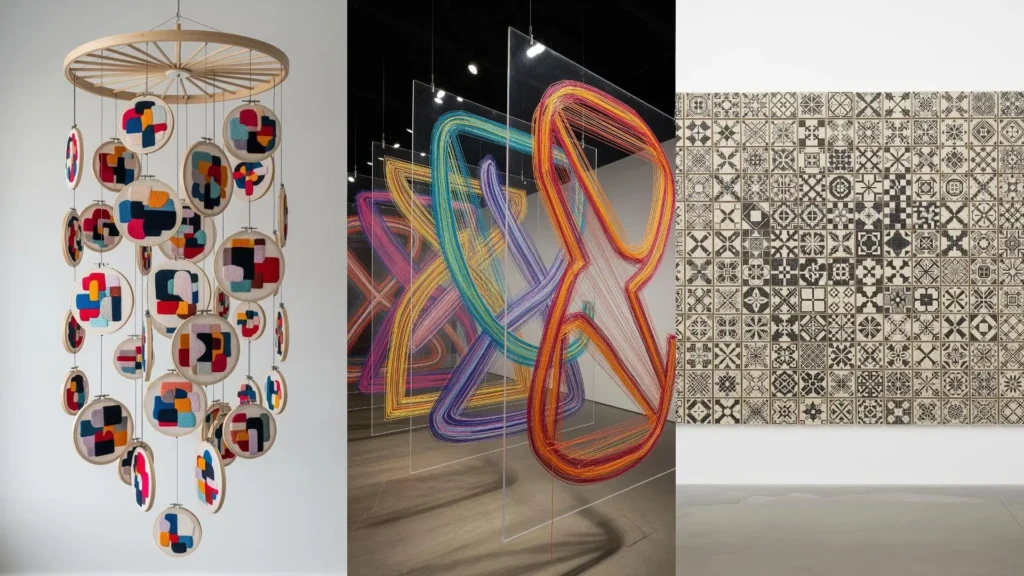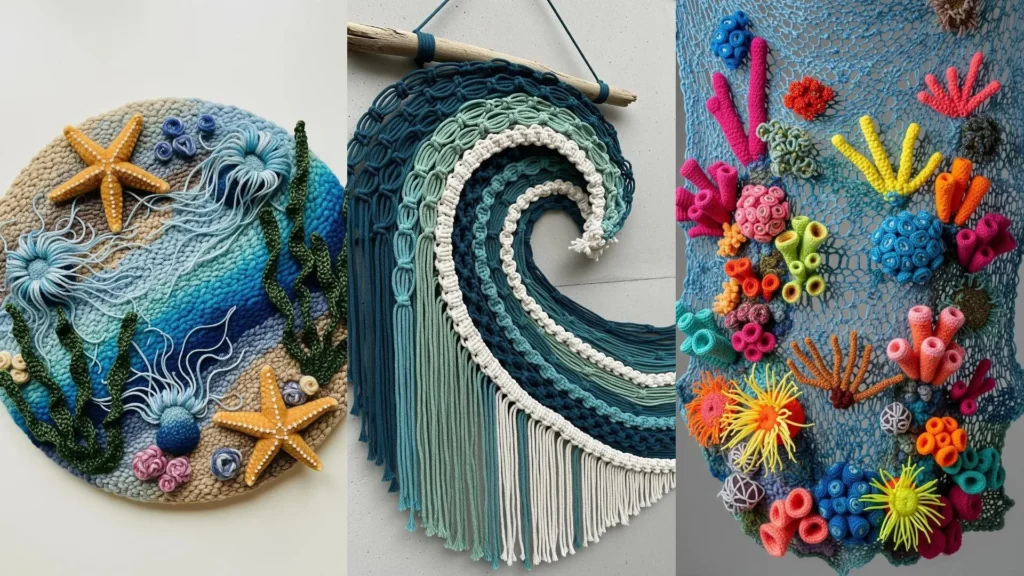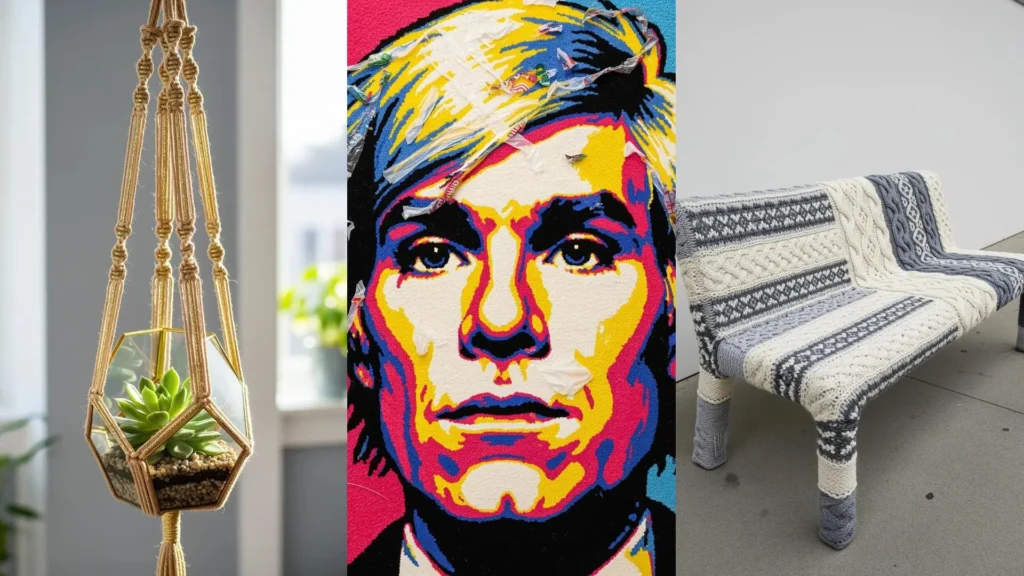
Have you ever felt that your stitches, beautiful as they are, could say more? That they could move beyond pattern and into pure expression? The world of fiber art is vast, and the line between traditional craft and contemporary art is wonderfully blurry.
This is where you can play. It’s about asking new questions: What happens when delicate lace meets industrial steel? Or when a QR code is rendered in cross-stitch? What story does a purposefully unraveled weaving tell?
Here, you won’t find rules, but permissions. Permission to mix materials, to deconstruct traditions, and to use your needle and thread not just to decorate a surface, but to build a new world upon it. Let’s explore how to blend these styles and give your work a voice that is uniquely yours.
1. Create Rhythm with Contrasting Textures
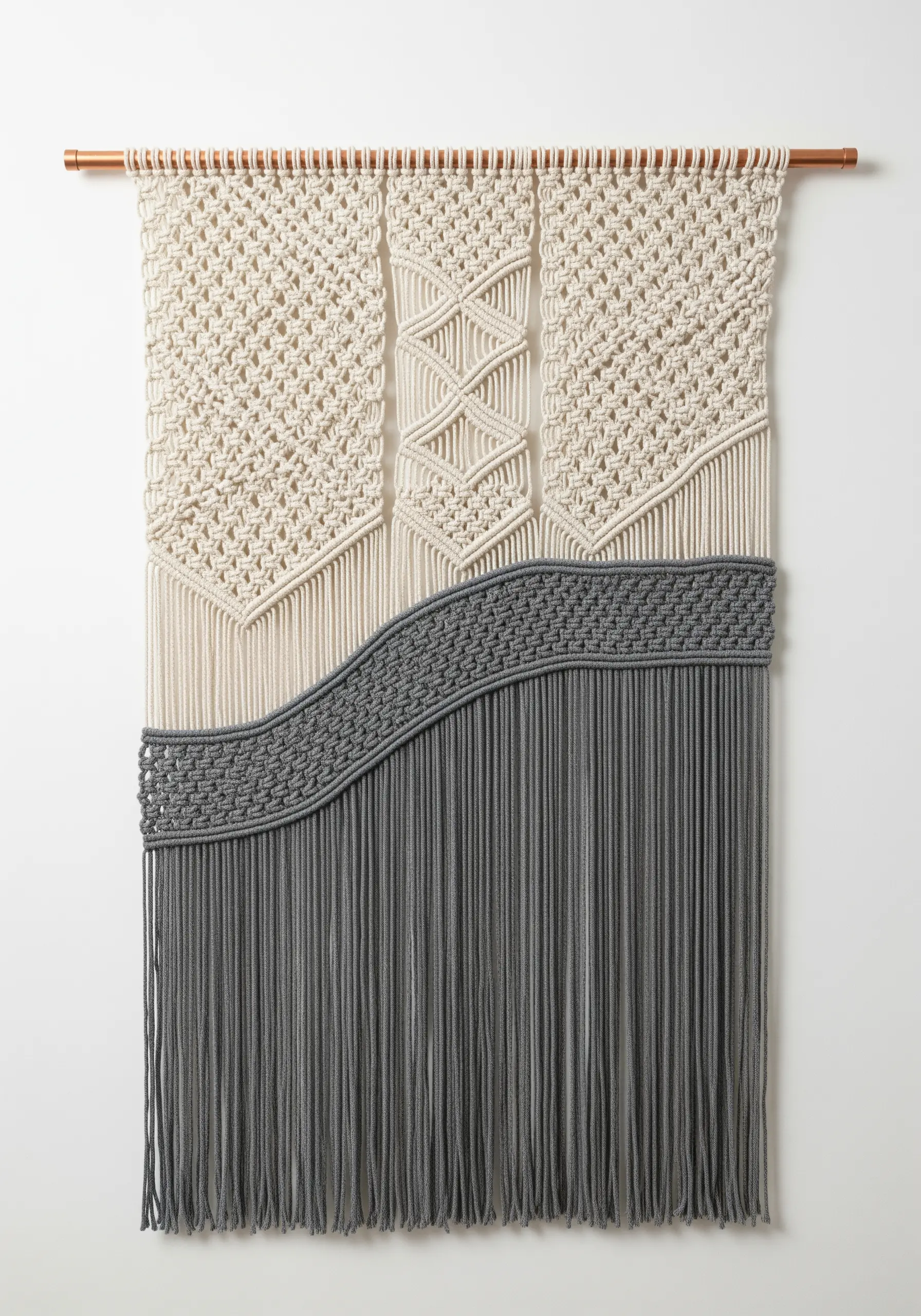
When designing a large macrame piece, think like an architect by dividing your surface into distinct visual zones.
Combine dense, tightly woven knot patterns with looser, more open diamond knots to create a sense of movement and balance.
Use a thick, uniform band of knots in a contrasting color to introduce a strong horizontal line, grounding the composition and guiding the eye.
This technique prevents large-scale pieces from feeling monotonous and adds a sophisticated, graphic quality.
2. Stitch a Hypnotic Gradient Spiral
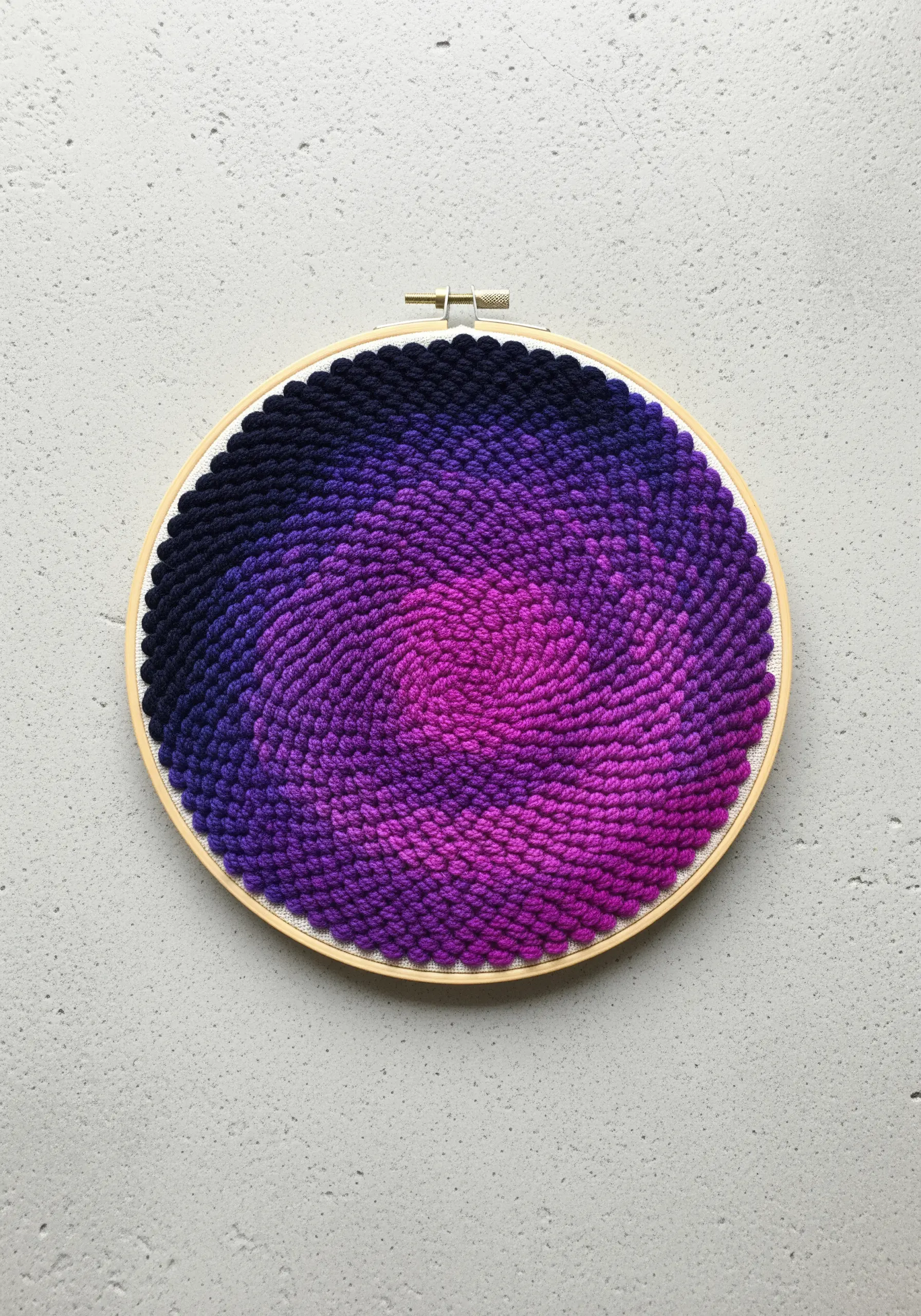
Achieve a seamless color blend by working with multiple shades of the same hue, from dark to light.
Using a punch needle or dense French knots, work in a continuous spiral from the outside in, gradually transitioning your thread color every few rows.
This method creates a mesmerizing, vortex-like effect that feels both organic and controlled.
For a truly meditative experience, try creating modern thread mandala ideas that draw the viewer’s focus to the center.
3. Embrace Intentional Deconstruction
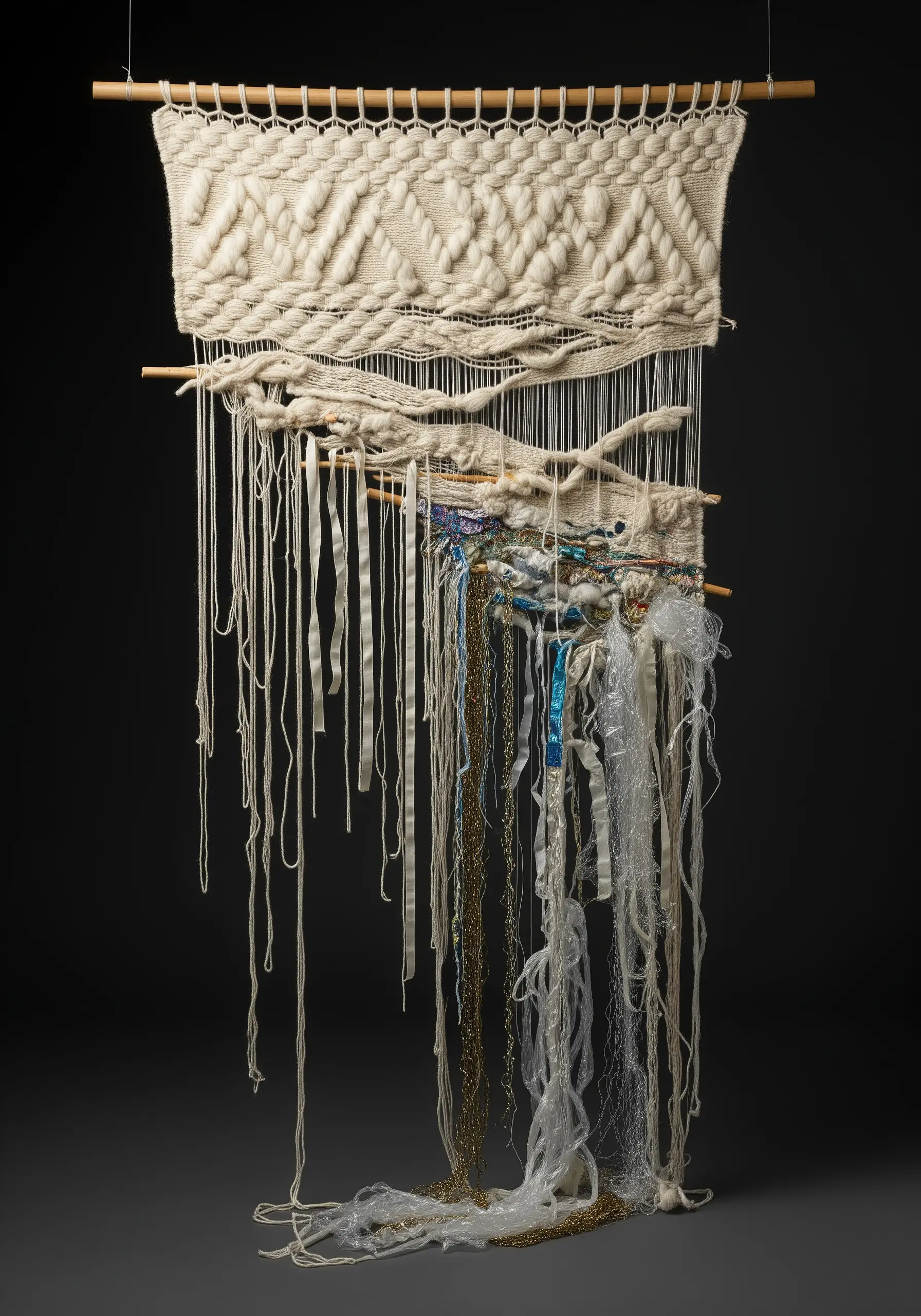
Tell a story with your weaving by intentionally leaving it unfinished or allowing it to unravel.
Start with a structured, traditional woven pattern at the top, then gradually introduce chaos by incorporating unconventional materials like metallic chains, plastic strips, and varied thread weights.
Letting the warp threads hang loose and tangled creates a powerful contrast between order and decay.
This approach transforms a simple weaving into a piece of conceptual fiber art that explores themes of time and transformation.
4. Use Quilting Lines as a Design Element

Elevate simple color-blocked fabric by using quilting stitches to create secondary patterns and textures.
Instead of uniform stitching, vary the direction and density of your lines to complement the shape of each color block—use radiating curves, straight grids, or contoured waves.
This adds a subtle layer of complexity and sophistication, turning a flat surface into a tactile landscape.
This technique is perfect for geometric embroidered wall decor ideas where texture is as important as color.
5. Build Sculptural Forms with Modular Crochet
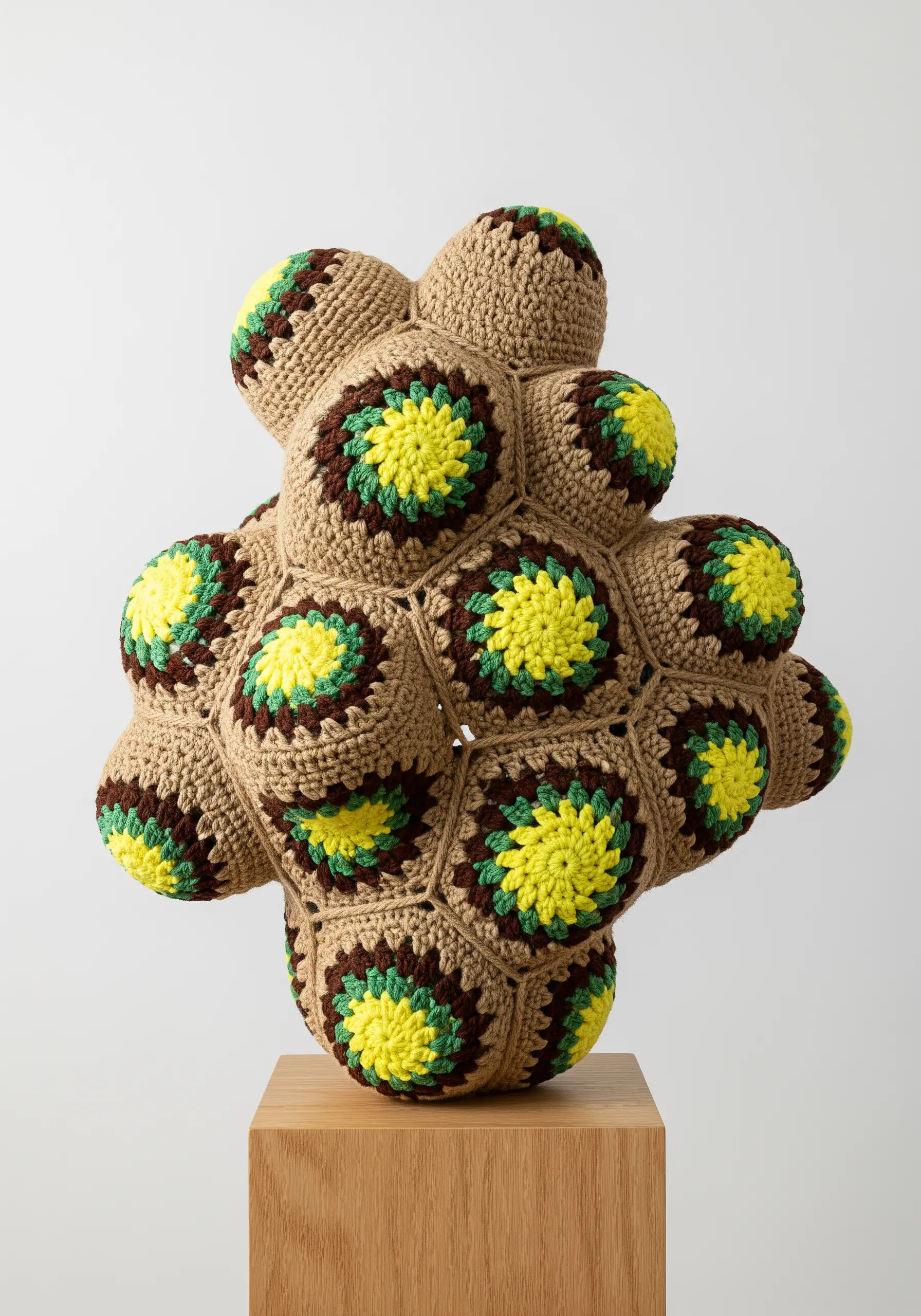
Move beyond flat shapes by thinking of crochet motifs, like granny squares, as building blocks for three-dimensional art.
Create a series of identical units and then stitch them together to form organic, cellular structures.
By varying the size and placement of these modules, you can create complex, biomorphic sculptures that challenge the traditional perception of crochet.
This method allows for infinite creativity, as the final form emerges from the way you connect the individual pieces.
6. Frame Botanical Art in Unexpected Materials
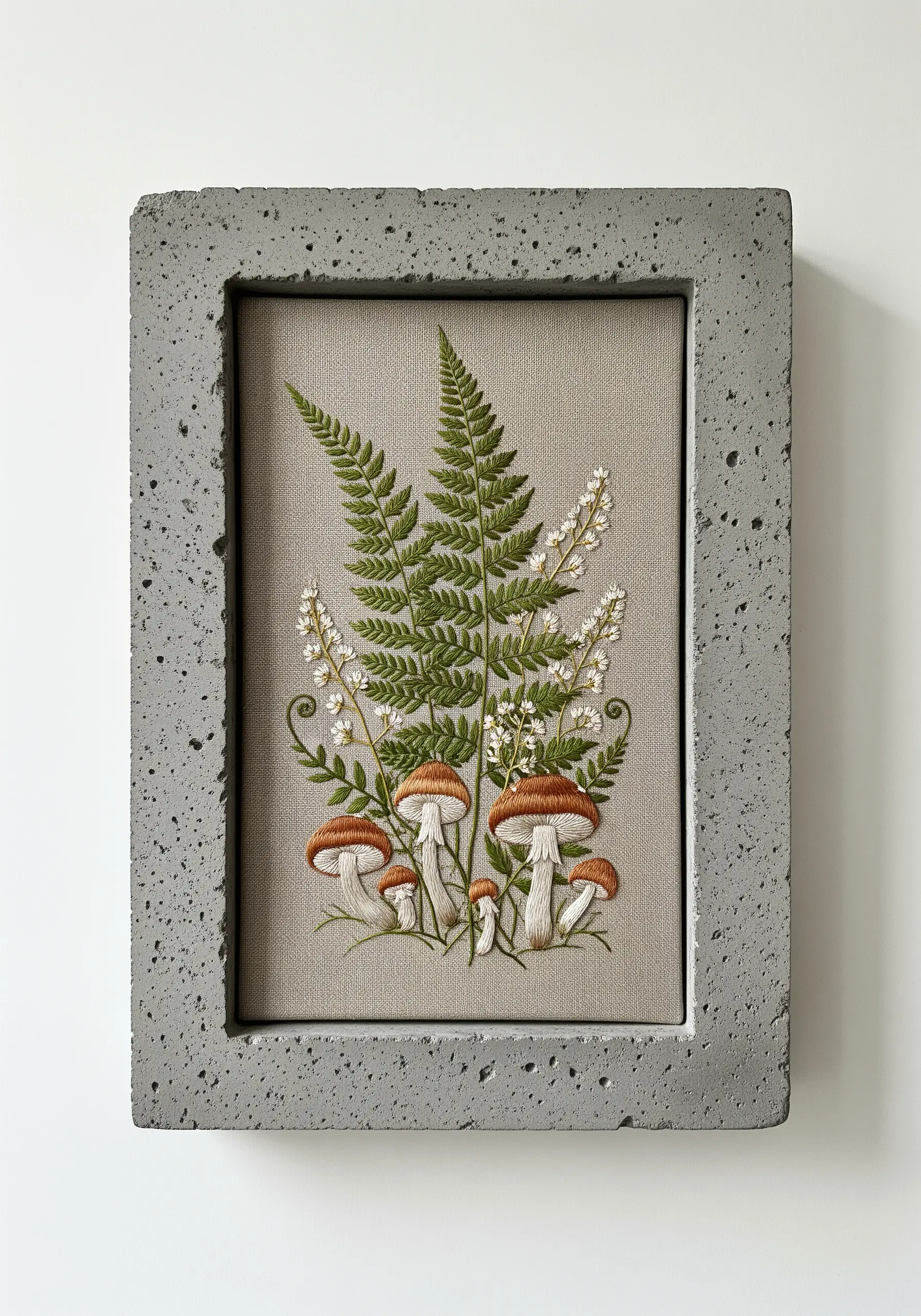
Juxtapose the delicate softness of realistic thread painting with a raw, industrial frame made of concrete or stone.
This contrast highlights the incredible detail and lifelike quality of your stitching, making the organic forms feel even more vibrant and alive.
When stitching, use single strands of floss to achieve the finest details in your botanicals. Mastering leaf vein stitch methods for hyper-realistic botanical embroidery will give your work stunning depth.
The unexpected pairing of soft fiber and hard material creates a piece that feels both rustic and contemporary.
7. Adapt Traditional Knitting to 3D Surfaces
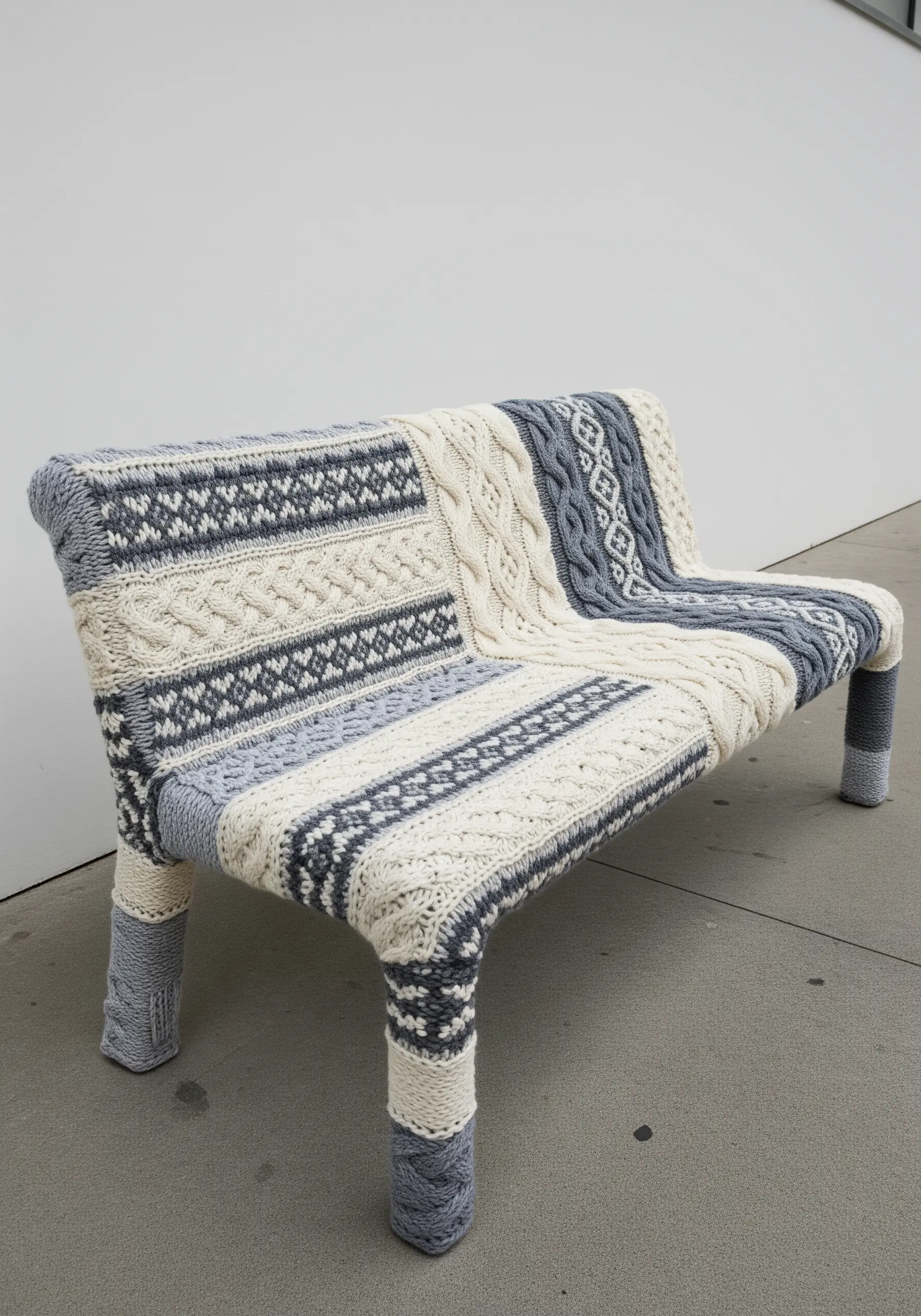
Take knitting off the needles and onto unconventional objects to create surprising public art or home decor.
To yarn-bomb a piece of furniture, create knitted panels that follow the object’s contours, using classic patterns like Aran cables or Fair Isle colorwork.
Treat the object like a dress form, measuring and shaping each section to ensure a snug fit.
This transforms a functional item into one of the cute cozy hoop art patterns to warm up your home, but on a much larger scale.
8. Master High-Contrast Embroidery on Denim
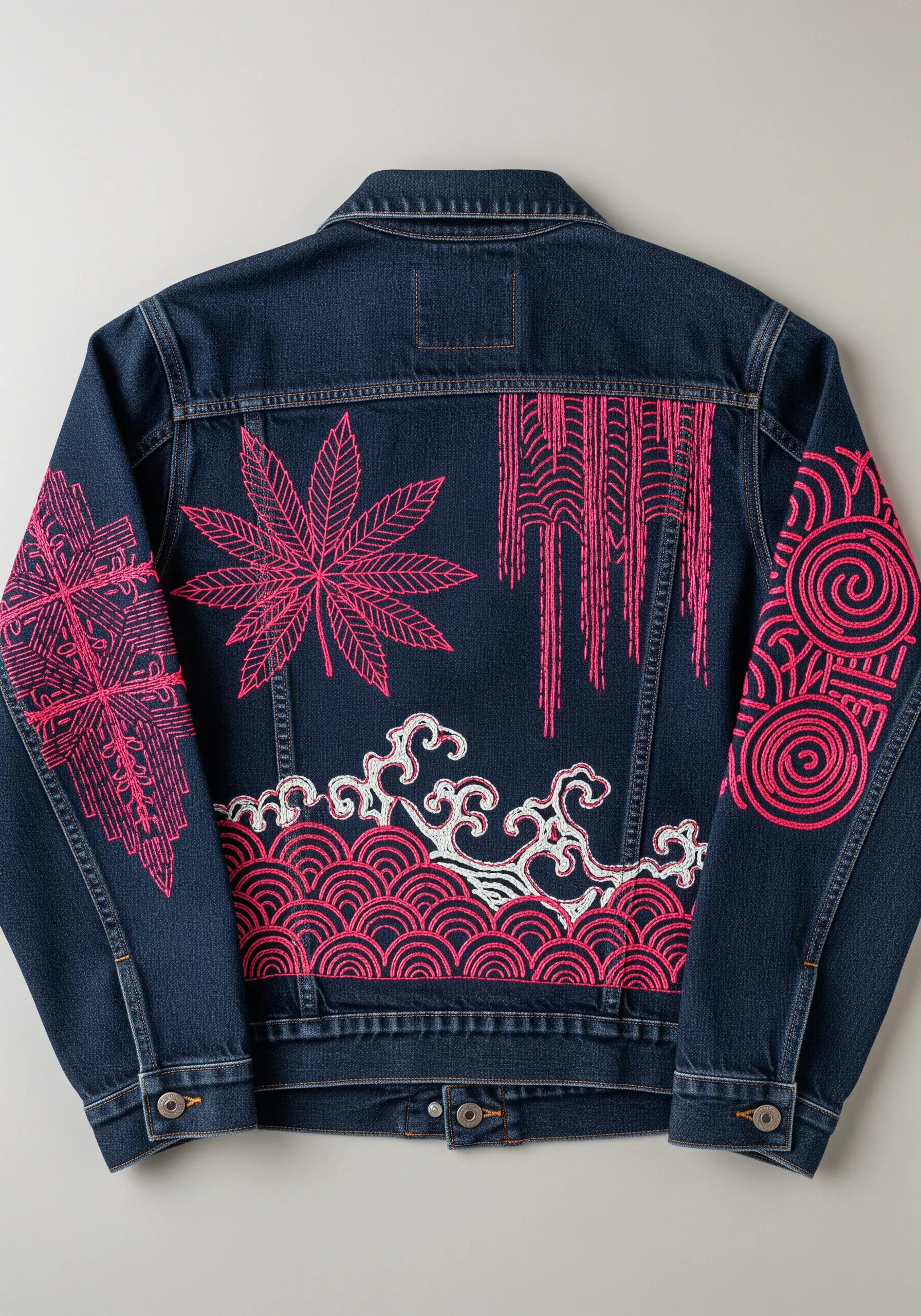
Make your designs command attention on dark denim by using a single, vibrant color like hot pink or electric yellow.
For sharp, graphic lines, use a thicker thread weight (like a full 6 strands of floss or pearl cotton) and stick to outline stitches like the stem stitch or backstitch.
To fill larger areas, use parallel lines of chain stitch instead of satin stitch, which creates a braided texture that complements the twill of the denim.
This approach ensures your design is bold, durable, and visually striking.
9. Weave Data into Visual Art
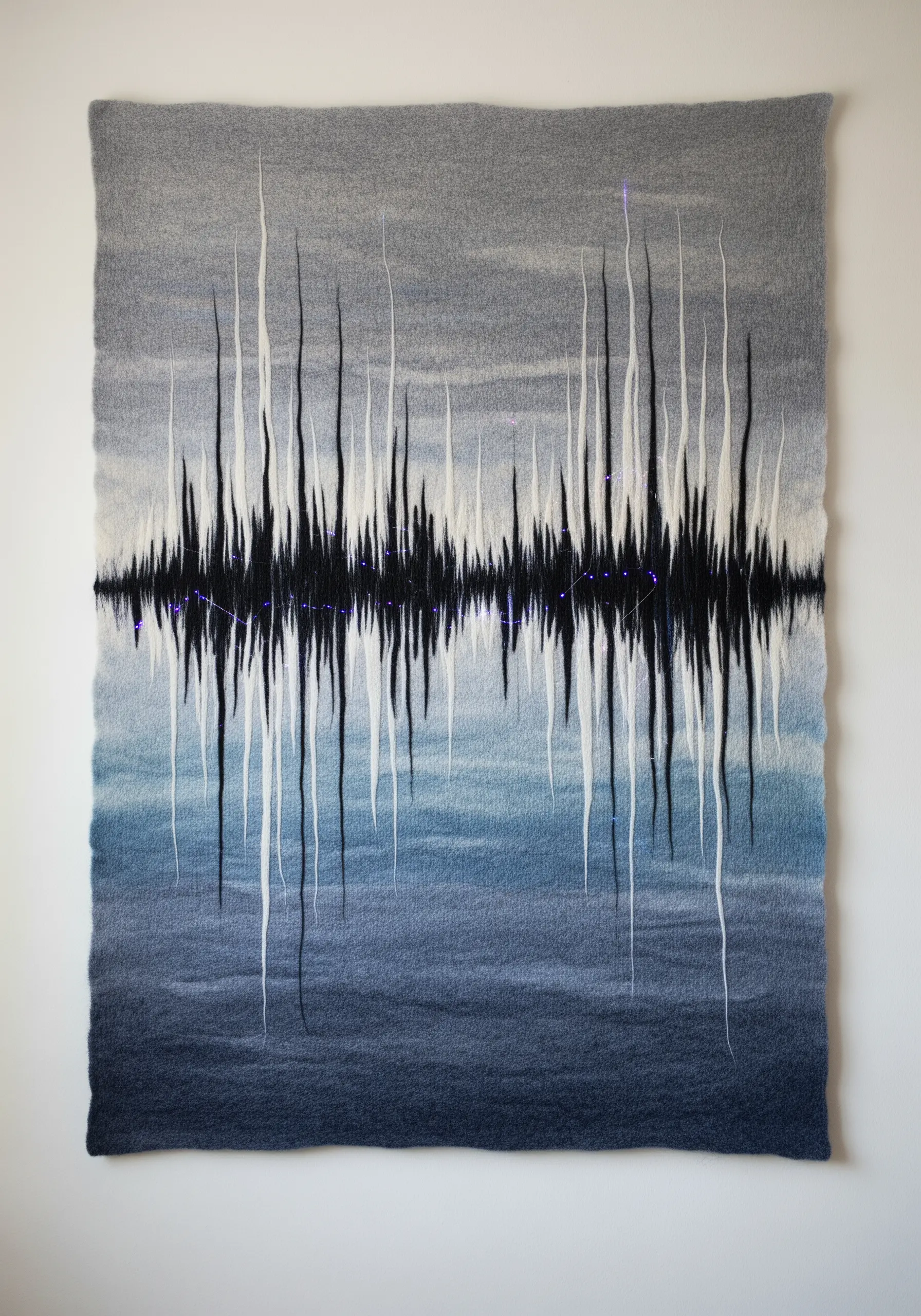
Translate a digital pattern, like a soundwave or a line of code, into a tangible woven tapestry.
Use a color gradient to represent changes in value, such as moving from a deep blue for low frequencies to a light gray for high ones.
Incorporate different fiber textures—like smooth merino for quiet moments and coarse wool for loud peaks—to add another layer of sensory information.
You can even weave in tiny LED lights to represent specific data points, merging traditional craft with modern technology.
10. Contrast Delicate Lace with Industrial Materials
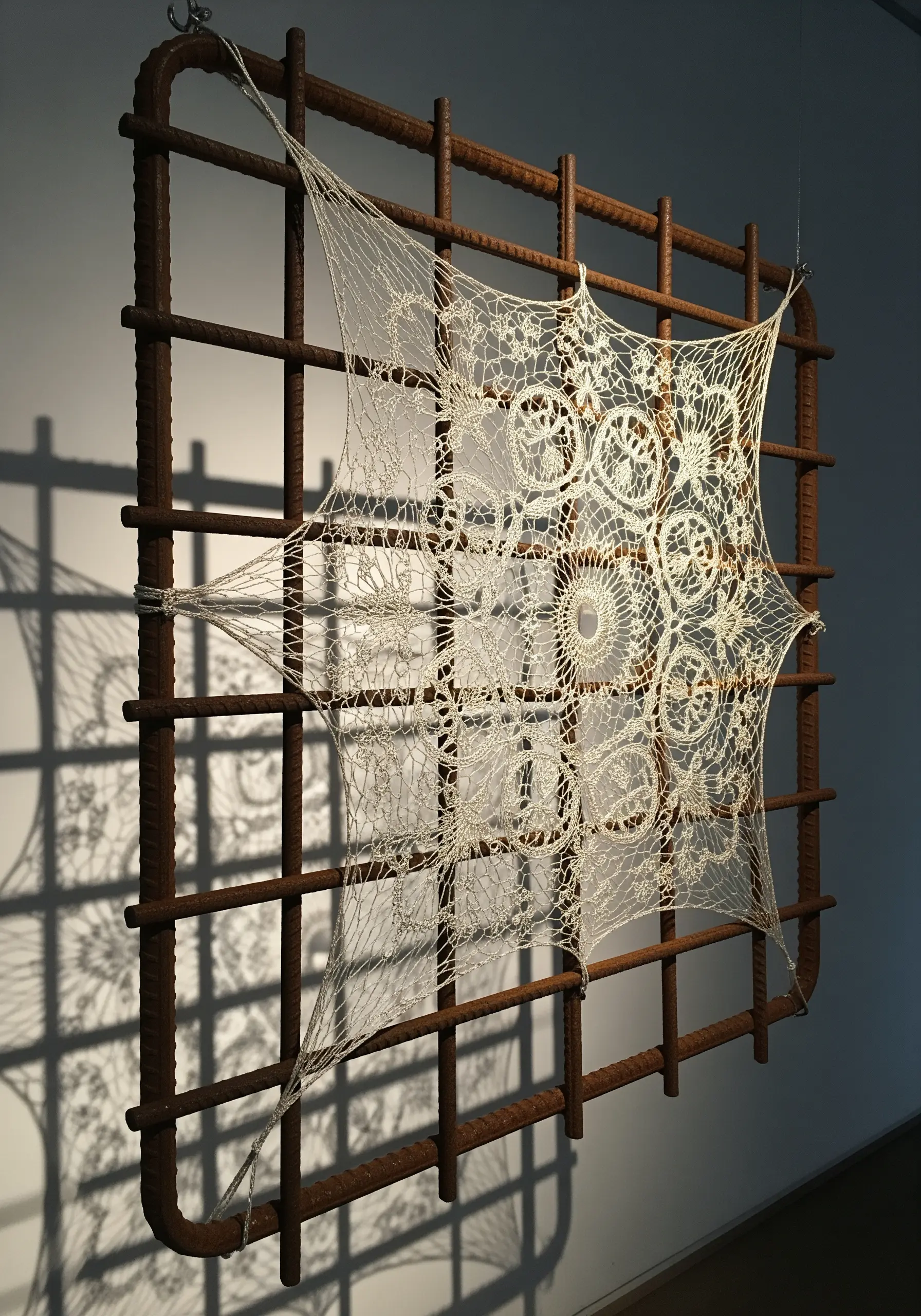
Create a powerful visual dialogue by stretching a delicate, handmade lace doily across a rigid, industrial frame like a rebar grid.
The tension between the soft, intricate threadwork and the hard, rusted metal highlights the resilience and fragility of traditional craft.
This method transforms lace from a decorative accent into a piece of conceptual sculpture, inviting viewers to think about strength, structure, and tradition.
These are the kinds of creative handmade art objects that double as home decor and conversation starters.
11. Embed Digital Content with Cross-Stitch
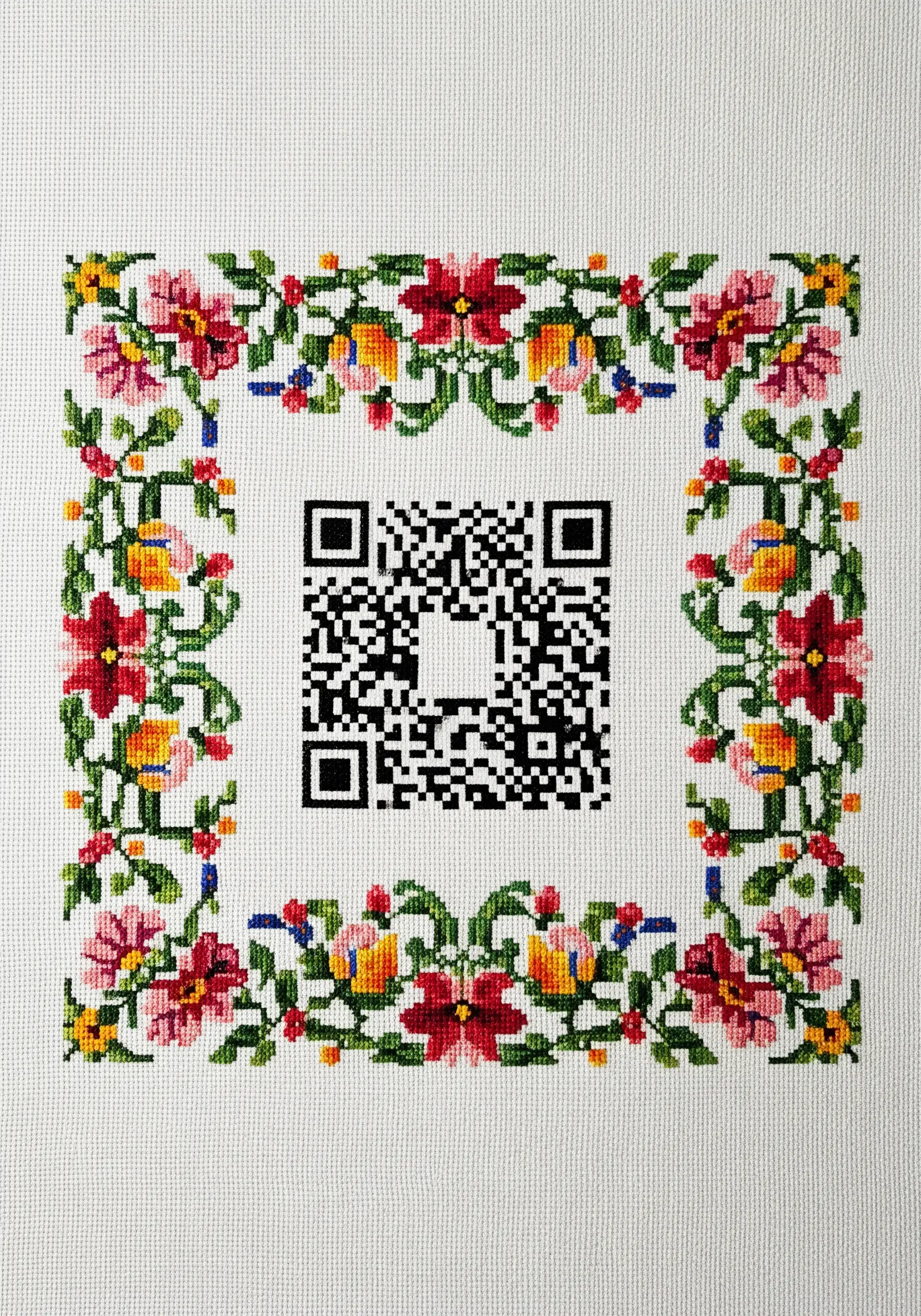
Merge the oldest form of pixel art—cross-stitch—with modern technology by stitching a functional QR code.
To ensure the code is scannable, you must be meticulously precise with your stitch count and use high-contrast threads on an even-weave fabric like Aida cloth.
Frame the modern code with a traditional floral border to create a beautiful and humorous blend of old and new.
This interactive art piece allows you to hide a secret message, a website link, or a personal video within a timeless craft.
12. Inject Pop Art with Unconventional Texture
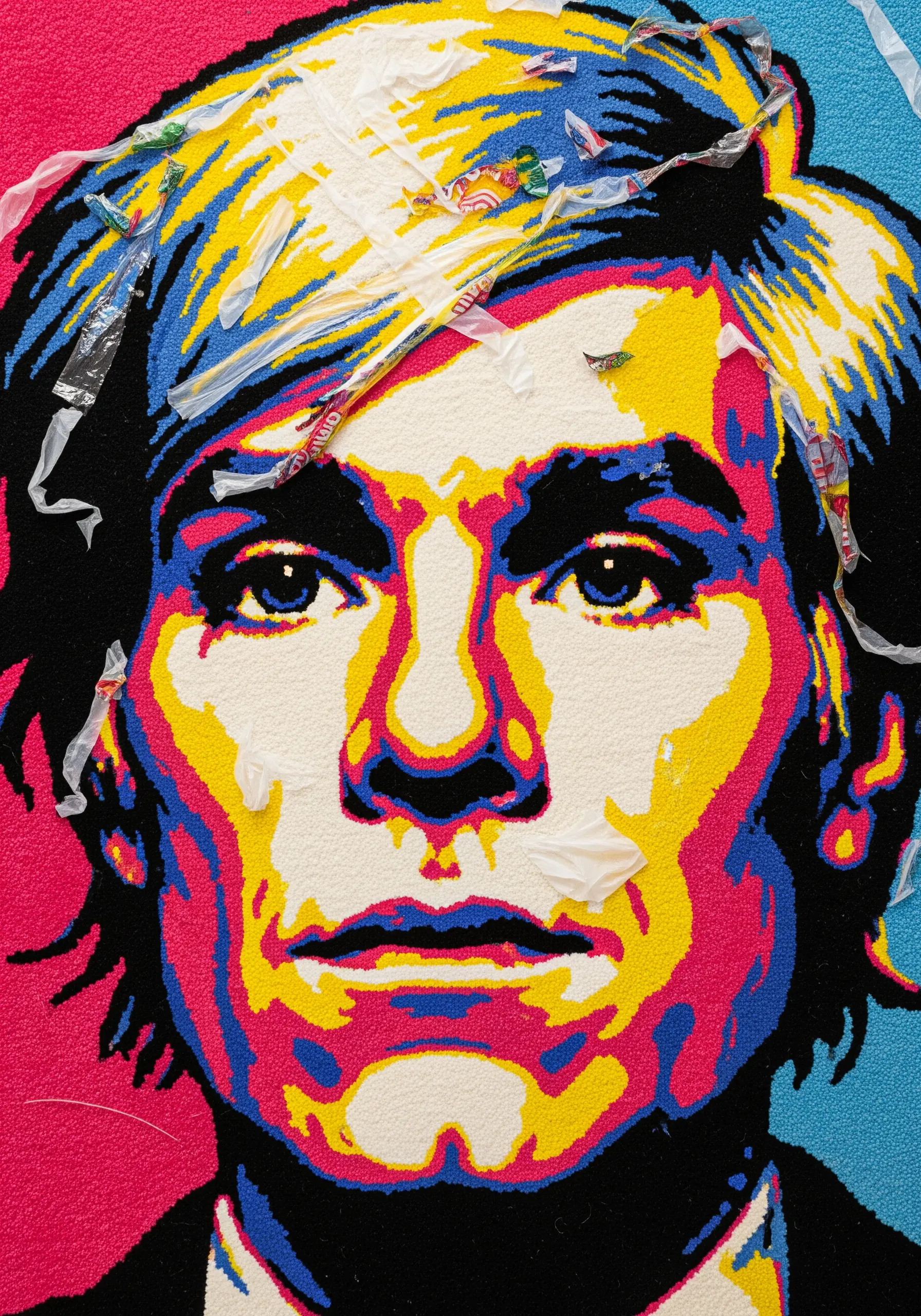
Recreate the bold, graphic style of Pop Art using fiber techniques like rug hooking or tufting.
Use flat, high-contrast color blocking to define the portrait’s features, mimicking the look of screen printing.
To add a layer of commentary or texture, incorporate unconventional materials directly into the fiber.
Adding elements like crumpled candy wrappers or plastic strips introduces a tactile dimension that plays with themes of consumerism and disposability, central to the Pop Art movement.
13. Unify a Collage with Stitched Elements
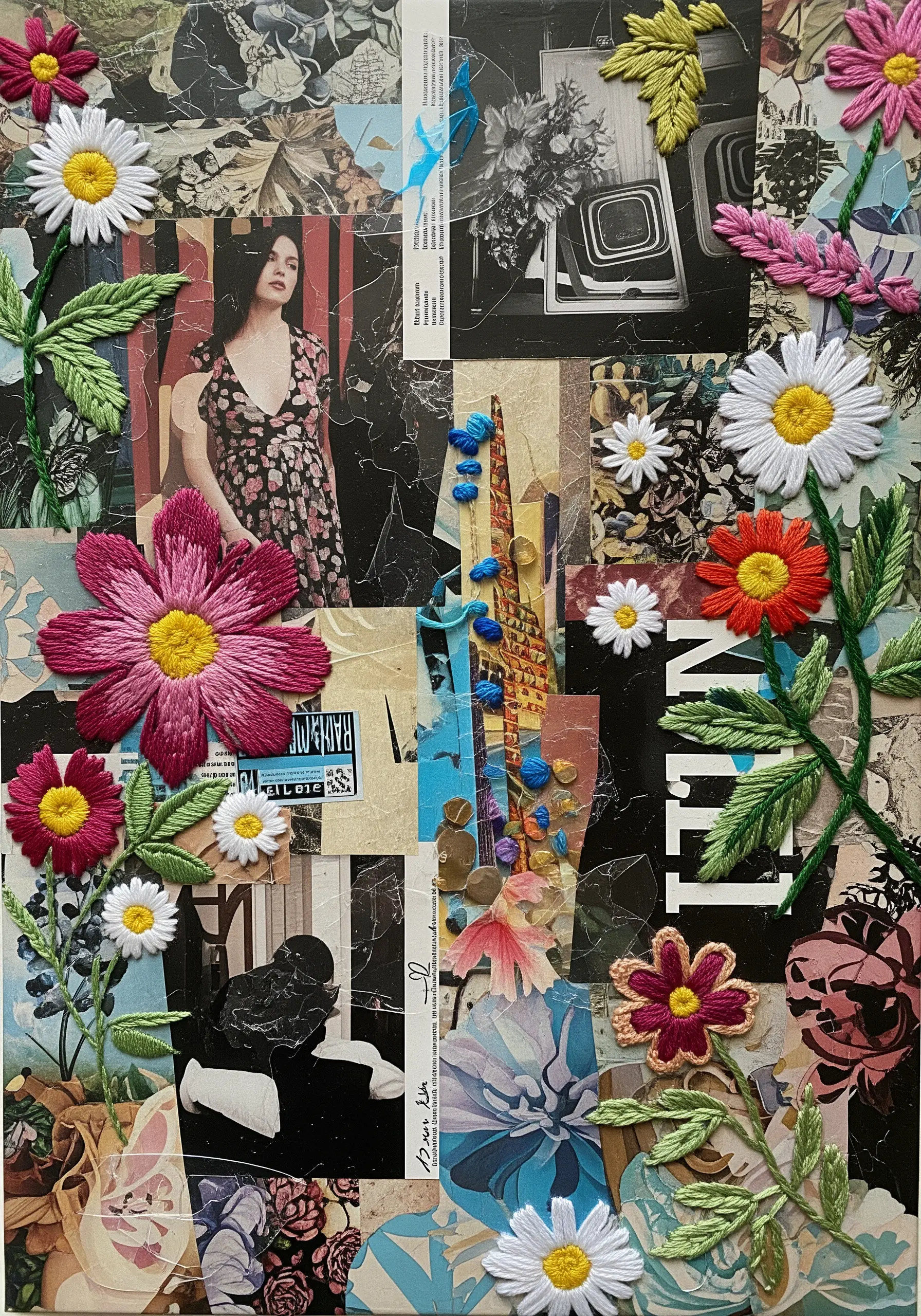
Use embroidery to connect and harmonize the disparate elements of a paper or fabric collage.
Stitch directly onto the paper and photographs to add texture, outline shapes, or create new forms that bridge the gaps between images.
Embroidered flowers and leaves can grow over photos and text, visually weaving the different pieces together into a cohesive whole.
This is one of the most effective mixed-media collage projects to combine paper and embroidery for home galleries and personal journals.
14. Construct Architectural Screens from Lace
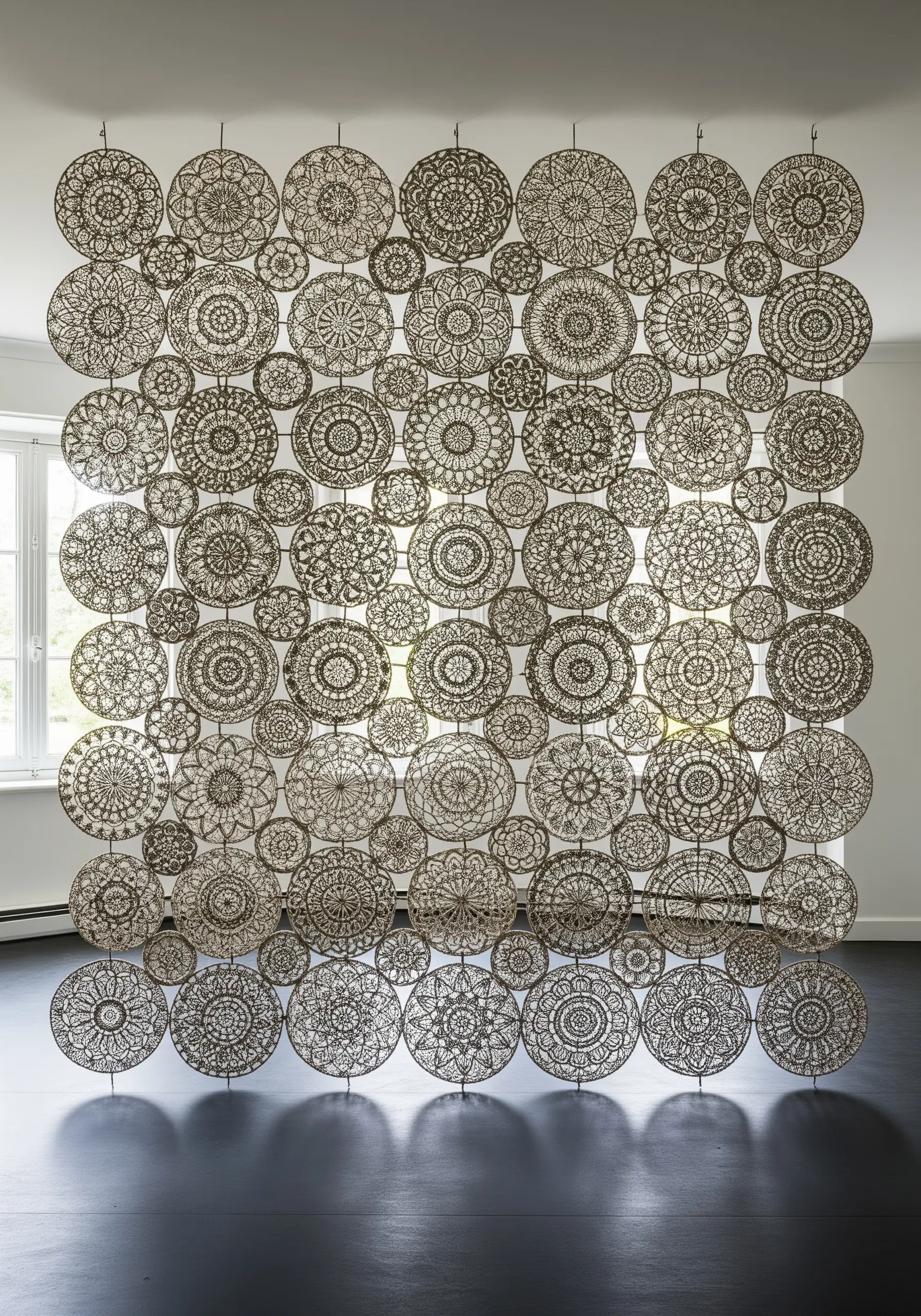
Scale up delicate lace-making by creating numerous small, circular motifs and joining them to form a large, semi-transparent screen.
Work with a sturdy thread, like linen or a fine wire, to give the structure integrity while maintaining its airy appearance.
When hung, the screen will cast intricate shadows that shift with the light, turning the entire room into part of the artwork.
This transforms a traditionally small-scale craft into an immersive architectural installation.
15. Elevate Macrame with Metallic Accents
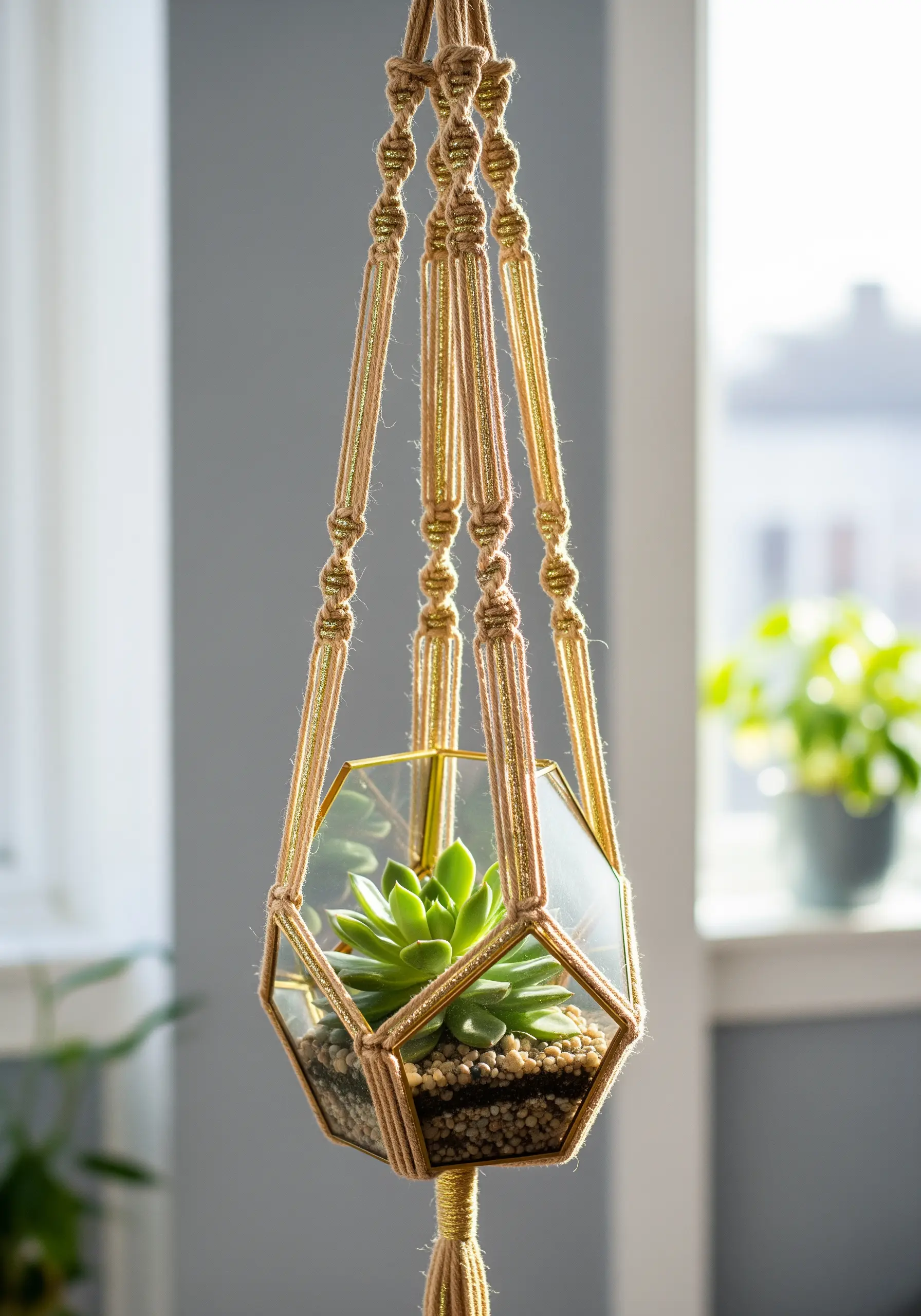
Give a traditional macrame project a touch of modern glamour by incorporating metallic thread.
Instead of using solid metallic cord, which can be stiff and expensive, wrap sections of your primary cotton cord with a fine, shimmering embroidery floss.
This technique, known as whipping, adds a sleek, polished finish and a subtle sparkle that catches the light.
It’s a simple way to make a handmade piece feel luxurious and professionally finished.
16. Sculpt Landscapes with Topographical Stitches
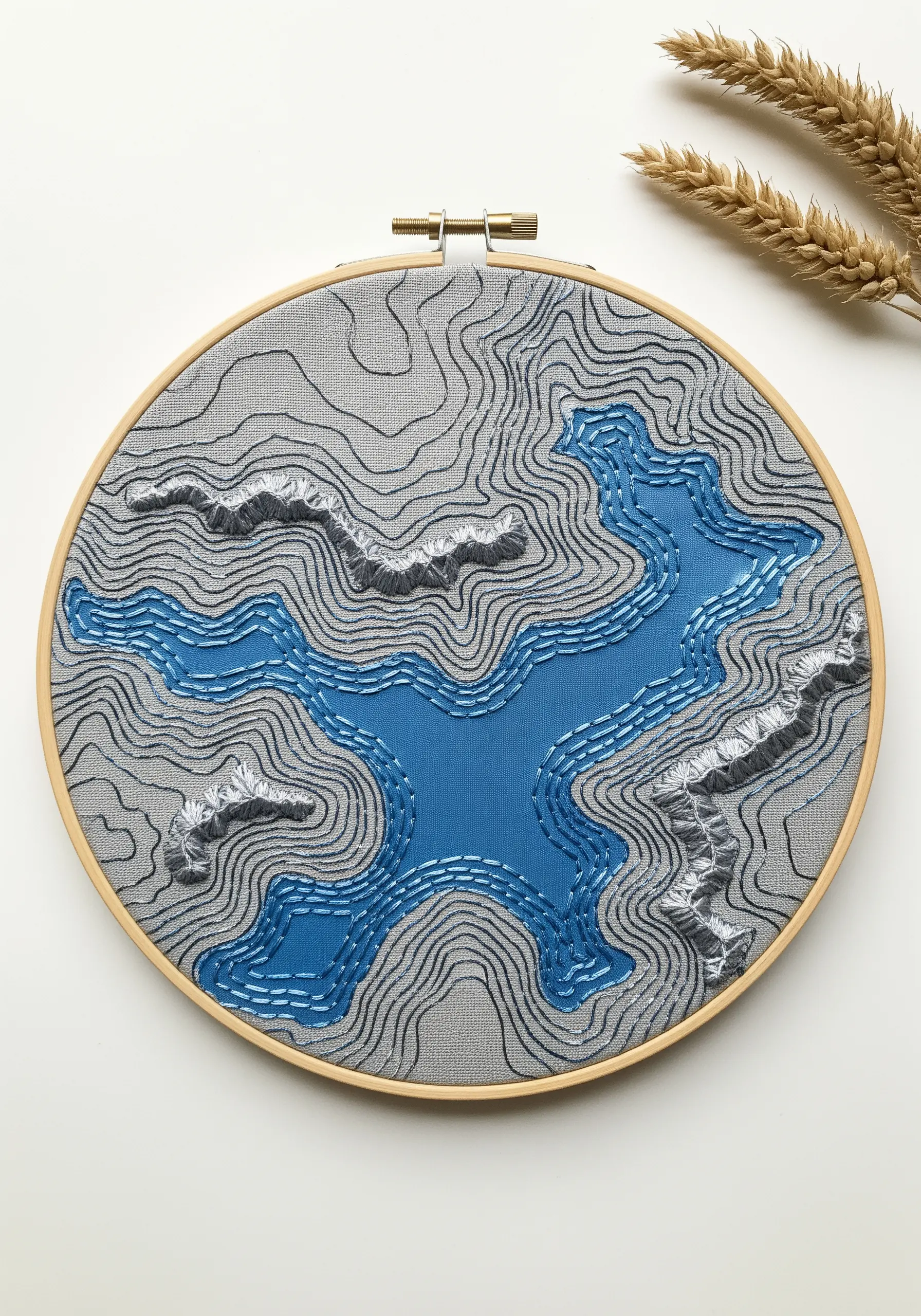
Recreate the contours of a map by using different stitches to represent elevation and terrain.
Use simple backstitch or running stitch for the flat contour lines, keeping them subtle and graphic.
For mountains and ridges, build up texture with dense French knots, raised satin stitch, or couched bundles of thick yarn.
These contemporary texture techniques to create raised sculptural embroidery effects will make your landscape pop off the fabric, turning a flat map into a tactile experience.
17. Sculpt Realistic Figures with Needle Felting
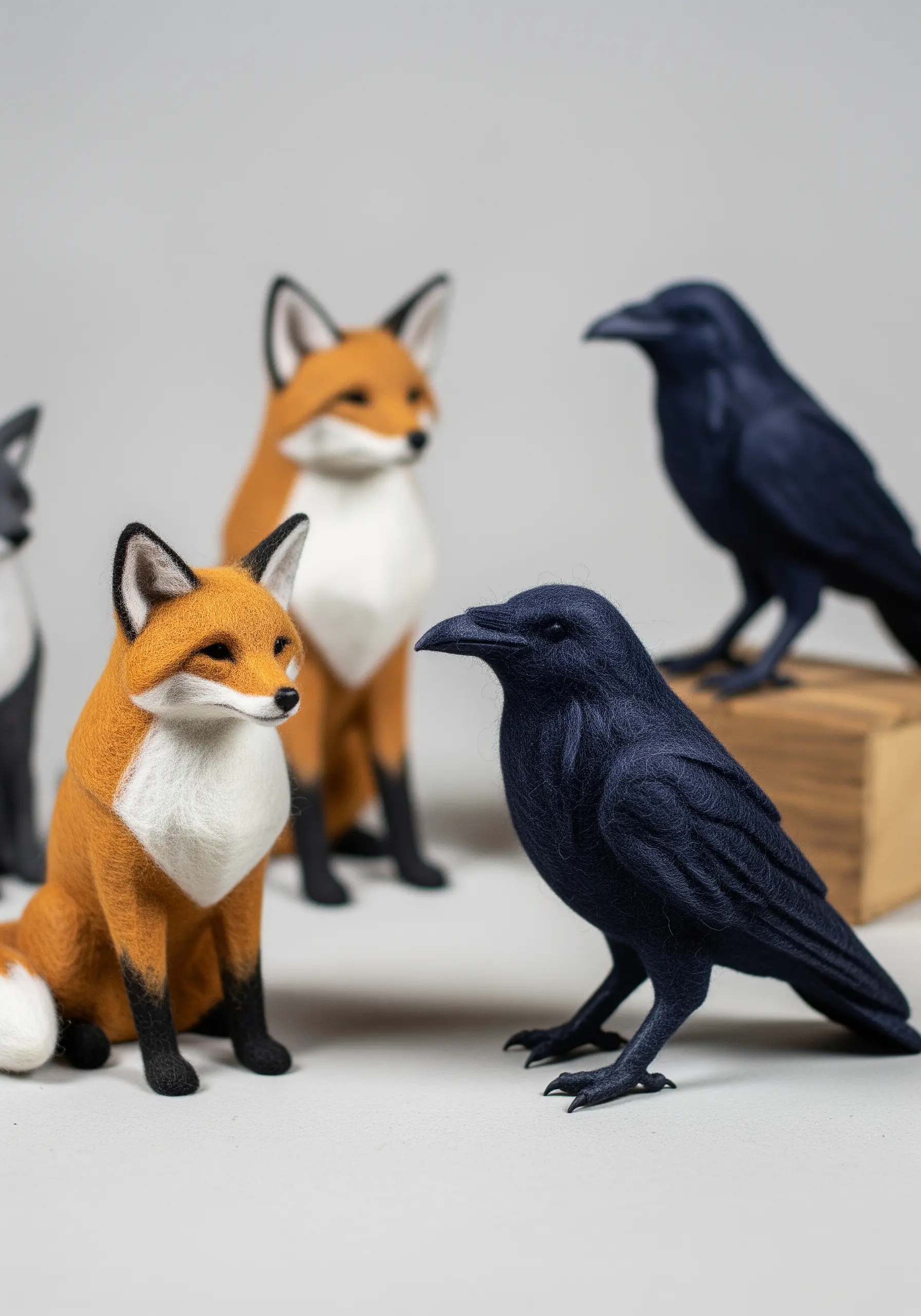
Use needle felting to create detailed, three-dimensional sculptures that have the soft texture of fiber and the sharp detail of carving.
To achieve realistic color gradients, like the shading on an animal’s fur, card small amounts of different colored wool roving together before felting.
Build the sculpture around a wire armature for stability and poseability, allowing you to create delicate legs and expressive postures.
This technique allows you to essentially paint and sculpt with wool fiber simultaneously.
18. Weave with Light and Reflection
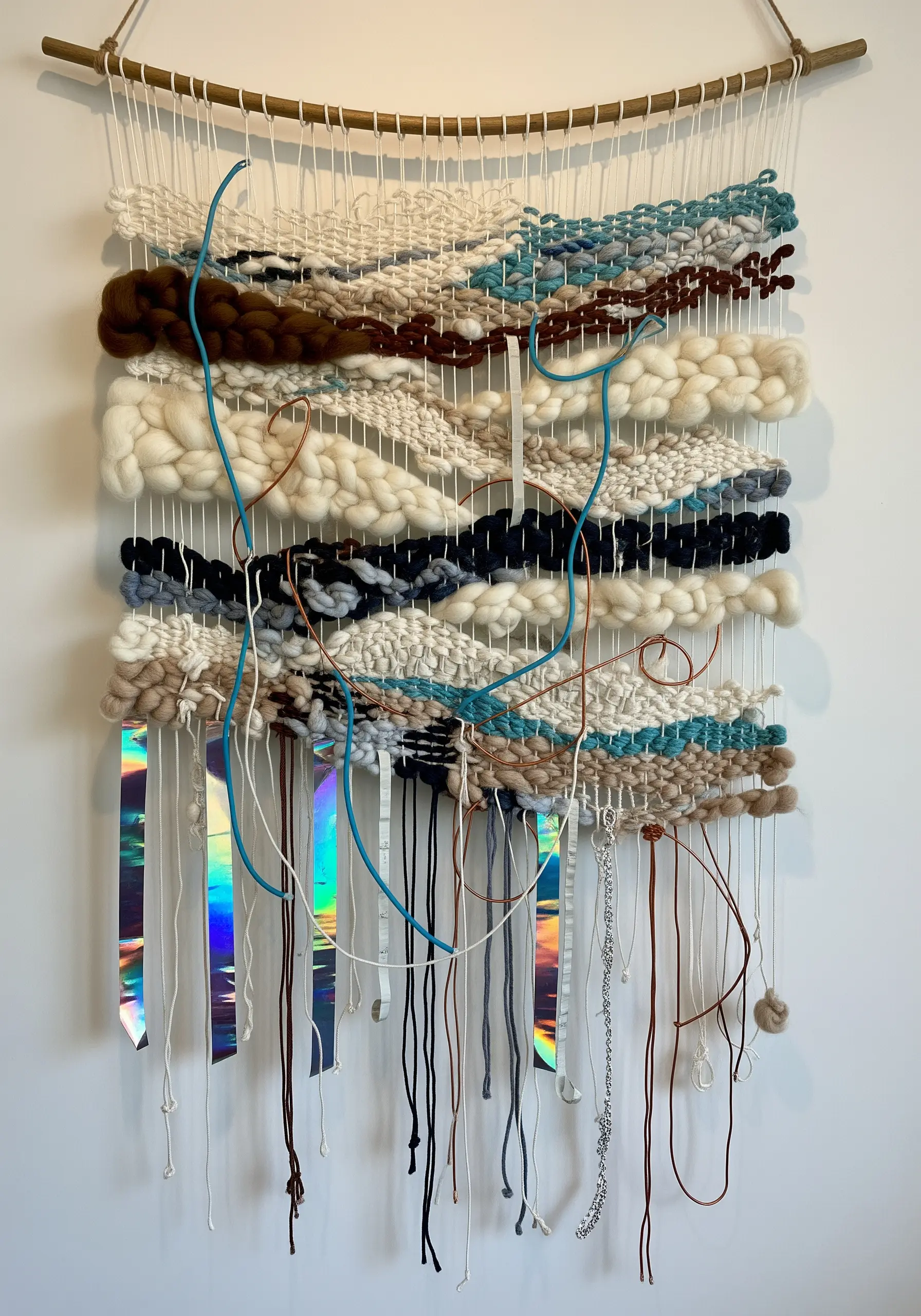
Introduce unexpected elements into your weaving to play with light and create a dynamic surface.
Incorporate strips of holographic vinyl, metallic leather cord, or small chains alongside traditional wool roving and yarn.
These non-traditional materials will catch and reflect light in surprising ways, adding movement and a futuristic quality to your piece.
This is a core concept in creating mixed-fiber wall hangings that will totally transform your room from static decor to interactive art.
19. Design with a Day-to-Night Reveal
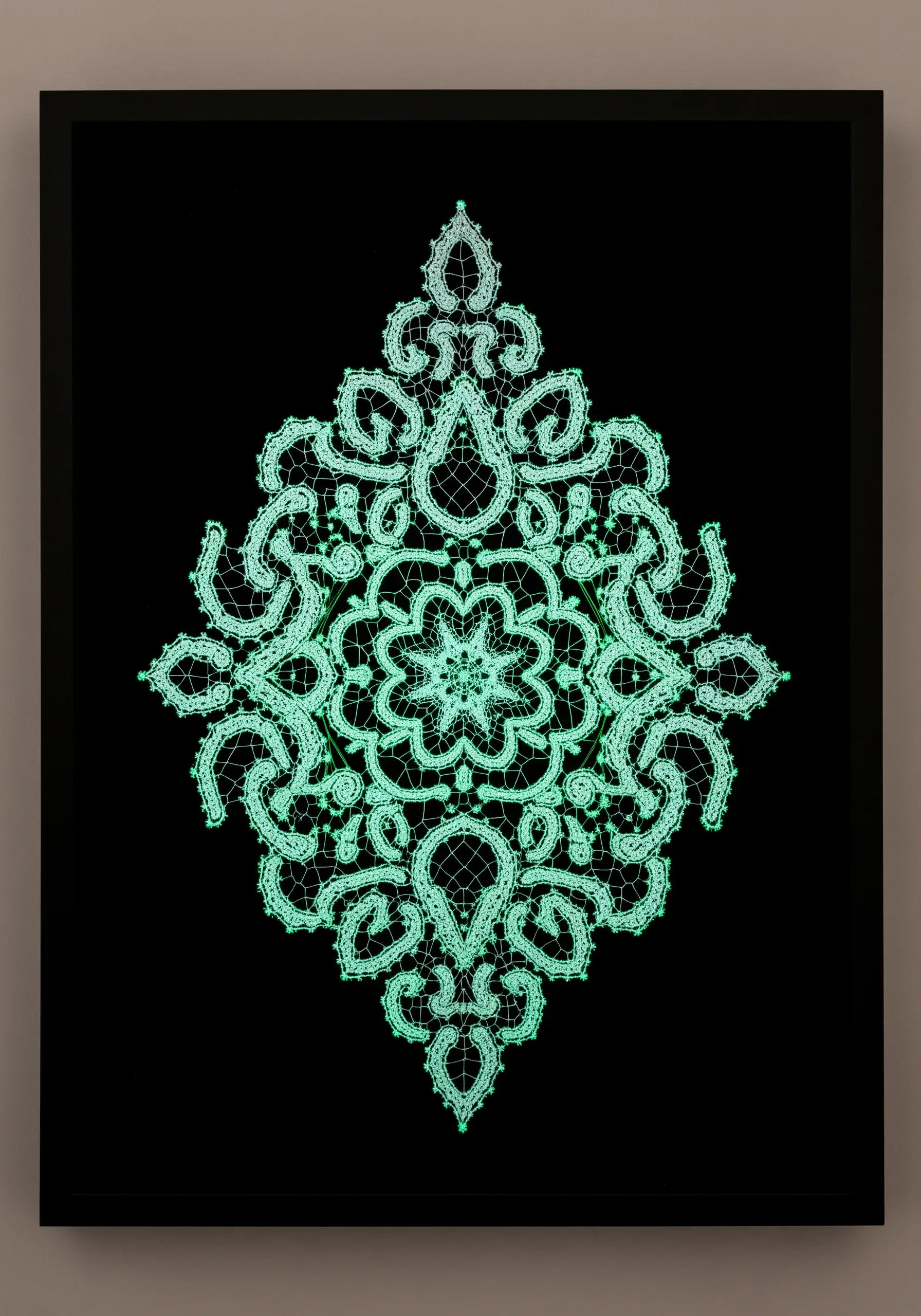
Give a traditional lace pattern a hidden, modern identity by creating it with glow-in-the-dark thread.
During the day, the piece appears as a delicate, classic white or off-white design. At night, it transforms into a glowing, ethereal light source.
To maximize the effect, mount the finished piece on a dark background and charge it under a bright light before viewing in the dark.
This simple material swap adds an element of surprise and magic to any intricate pattern.
20. Create Optical Illusions with Precision Piecing
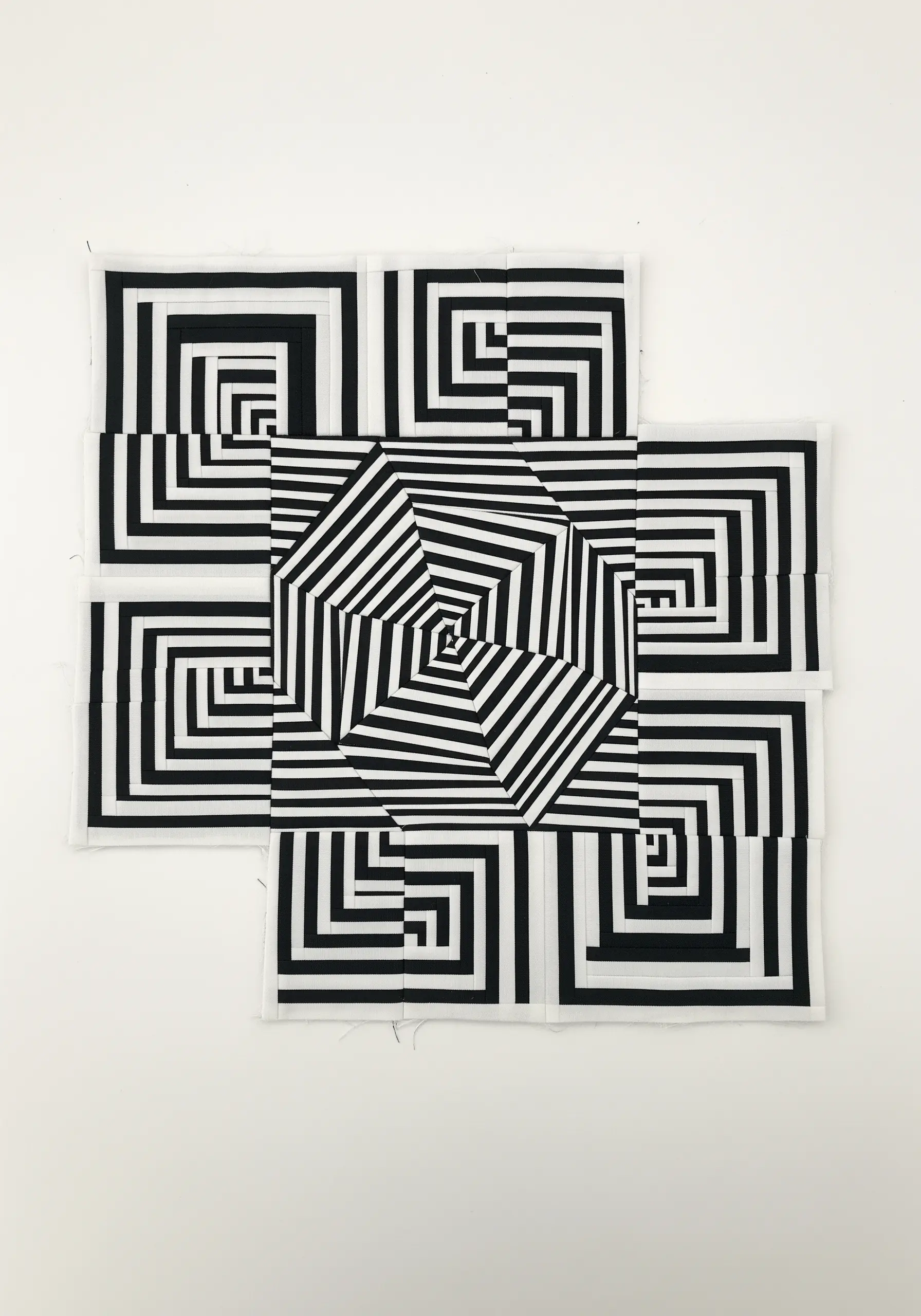
Design quilt blocks that trick the eye by using high-contrast fabrics and precise geometric shapes.
To create a convincing op-art effect, your cutting and seam allowances must be impeccably accurate. Even a tiny error can disrupt the illusion of movement or depth.
Arrange your blocks in a non-linear or overlapping way to enhance the sense of disorientation and complexity.
This transforms quilting from a comforting craft into a mind-bending artistic practice.
21. Explore Negative Space in Traditional Knits
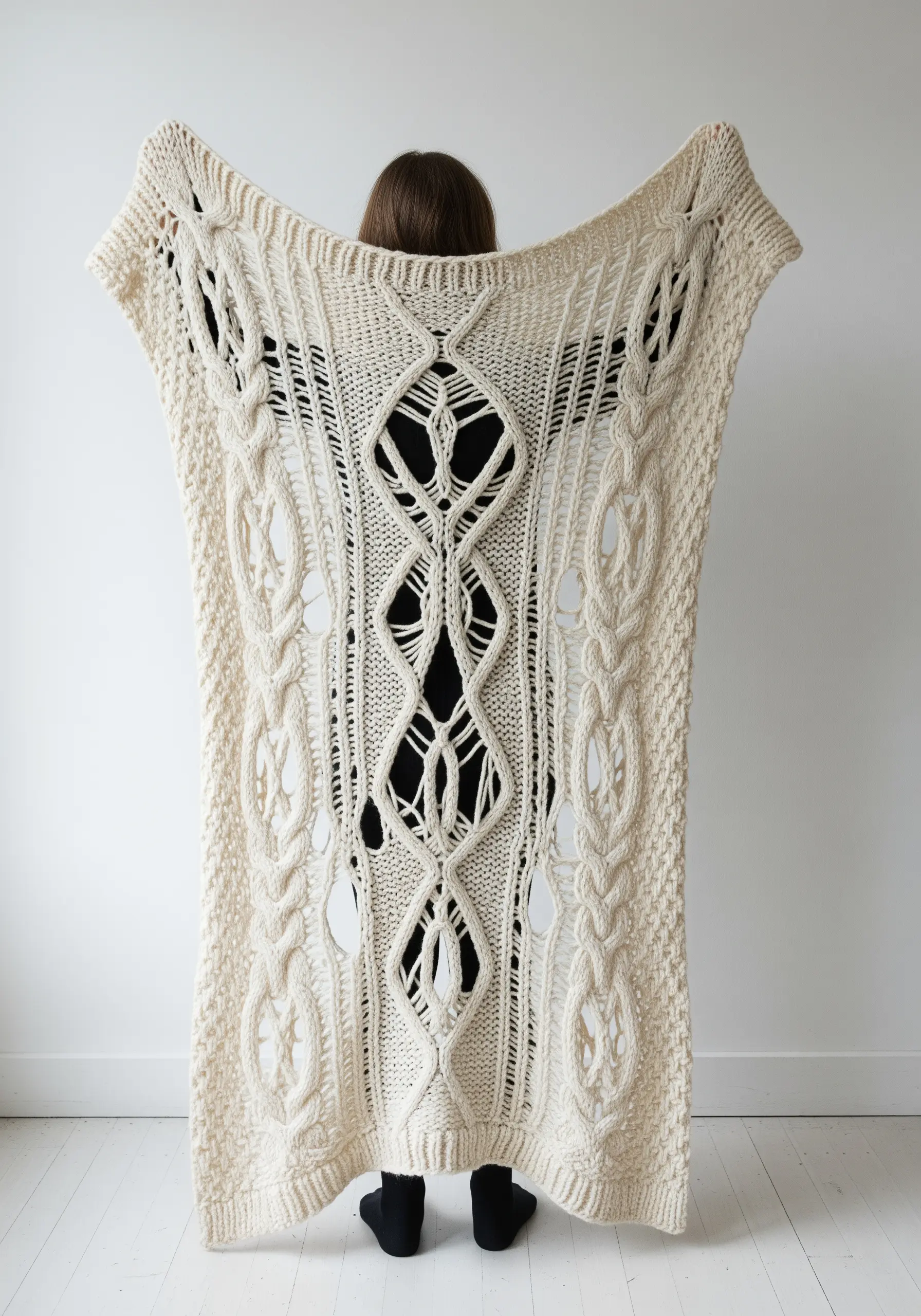
Deconstruct a familiar pattern, like an Aran cable knit, by strategically incorporating negative space.
Instead of a solid fabric, design sections where the stitches are intentionally dropped or stretched open to reveal what lies beneath.
This transforms a dense, cozy textile into a delicate, lace-like structure that plays with transparency and form.
It’s a conceptual approach that challenges our expectations of what a knitted garment or blanket should be.
22. Translate Minimalist Line Art to Large-Scale Textiles
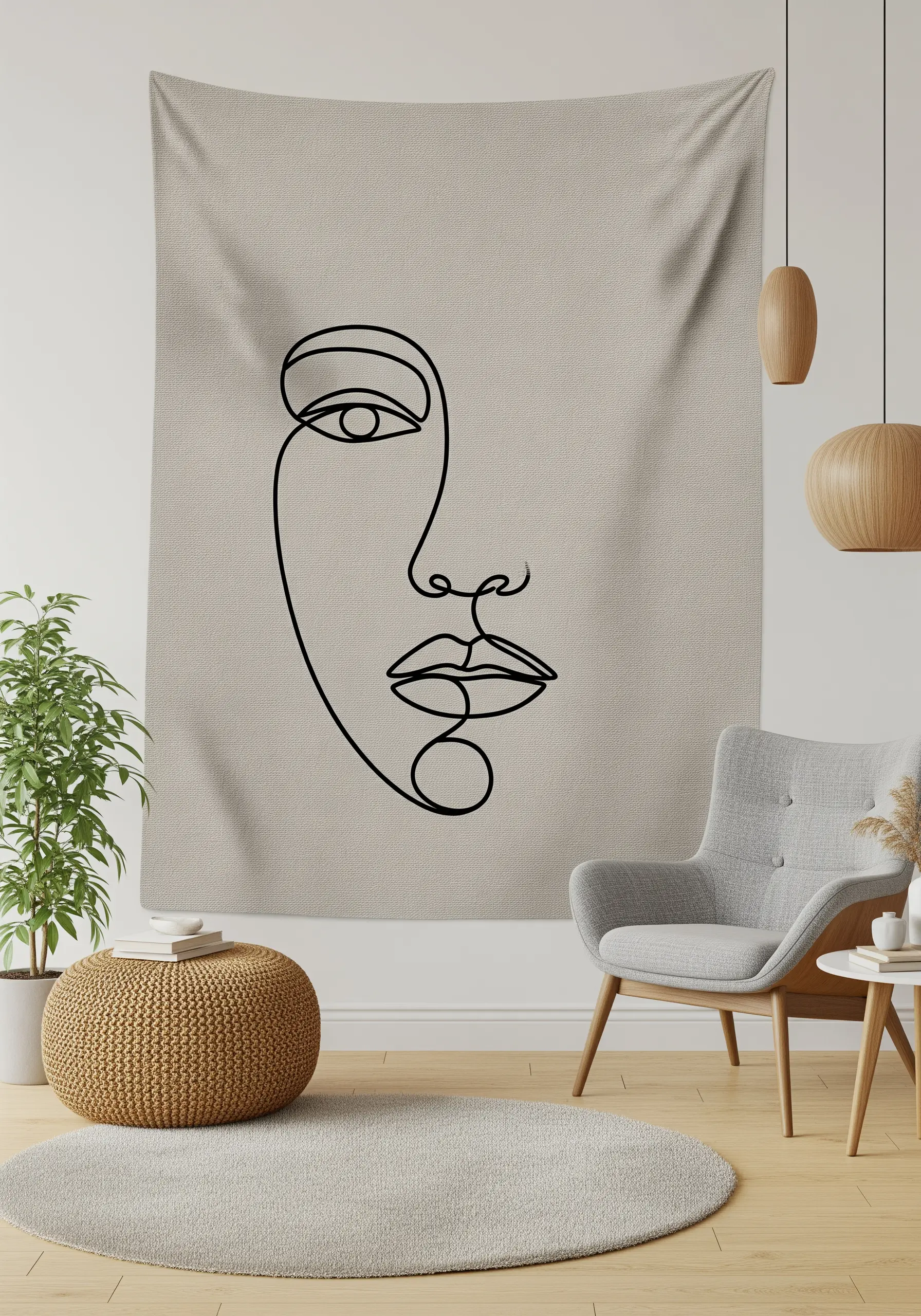
Amplify the impact of a simple line drawing by rendering it on a large fabric tapestry.
The texture of the base fabric, whether it’s a rustic linen or a smooth cotton canvas, becomes an integral part of the final piece, adding warmth and tactile appeal.
When transferring the design, focus on maintaining the fluid, continuous quality of the original line.
This method works beautifully for abstract line art silhouettes that bring classy minimalism to black thread embroidery on a grand scale.
23. Achieve a Clean Graffiti Look with Appliqué
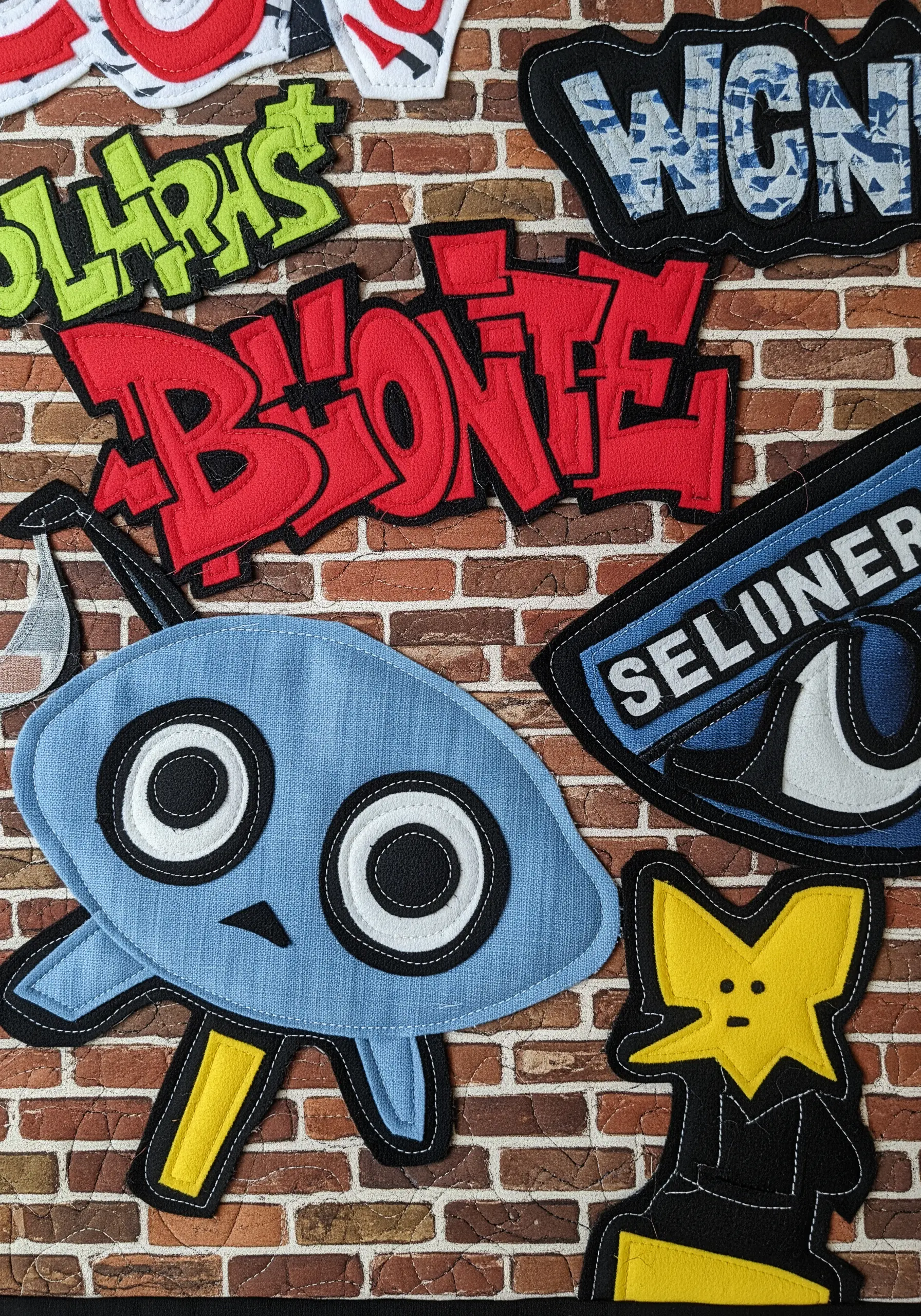
Capture the bold, graphic energy of street art by using appliqué with a sharp, clean finish.
Cut your letters and shapes from solid-colored fabrics and arrange them on a textured background, like a quilted brick pattern, to evoke an urban wall.
Outline every appliqué piece with a dense, wide satin stitch in a contrasting color, typically black.
This technique mimics the crisp outlines of graffiti art and ensures your fabric shapes are securely attached with a professional, polished edge.
24. Paint with Thread on Coiled Rope
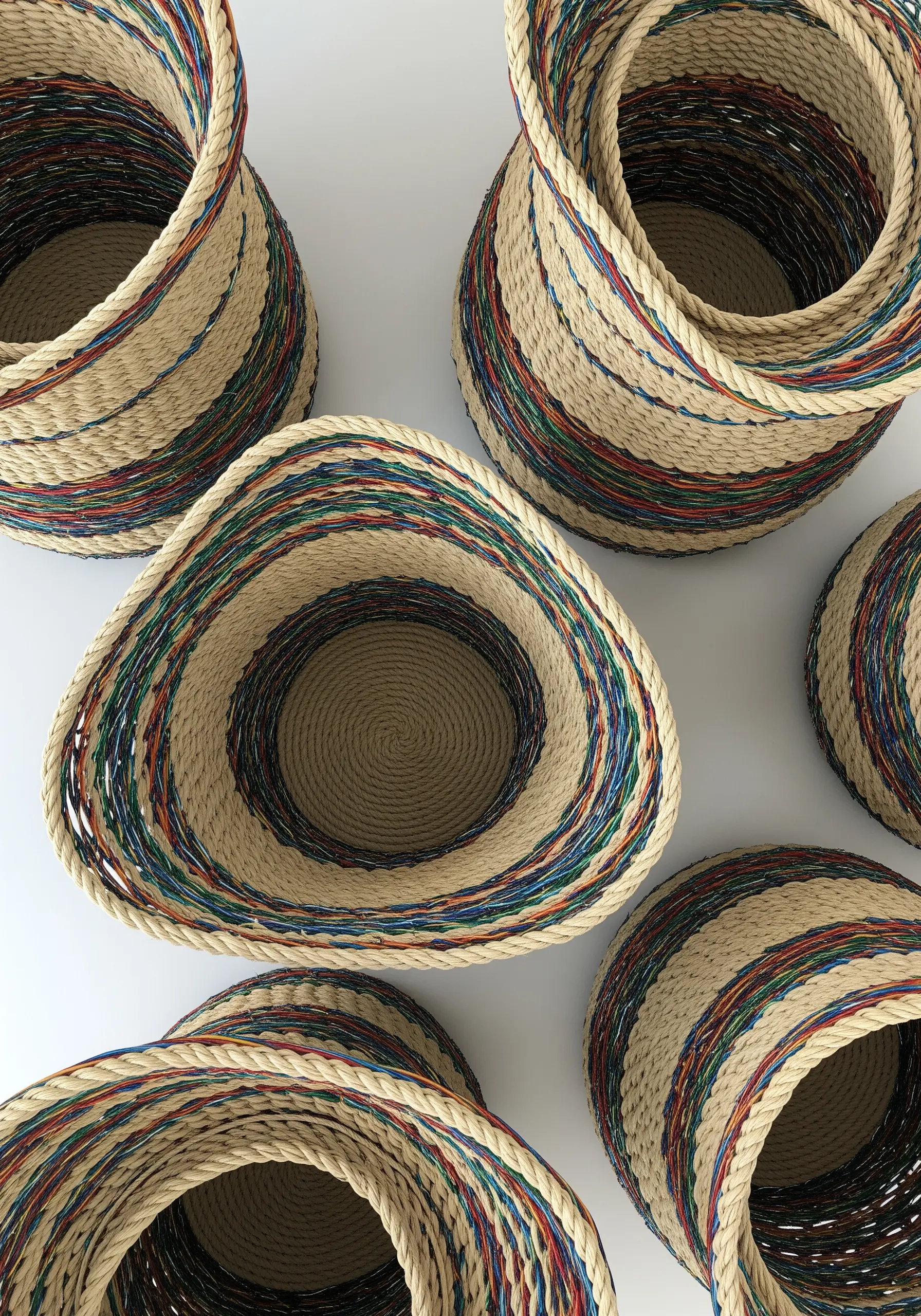
Create sculptural baskets by coiling thick rope and using colorful thread to both bind it and add pattern.
Instead of just securing the coils, treat the thread like paint, wrapping sections of the rope in different colors to create stripes, blocks, and gradients.
To control the vessel’s shape, adjust the angle and tension as you stitch the coils together—pull tighter to curve inward, or keep it loose to flare out.
You can create beautiful DIY art objects inspired by nature you can create in a day using this versatile technique.
25. Fuse Fiber Techniques with Jewelry Making
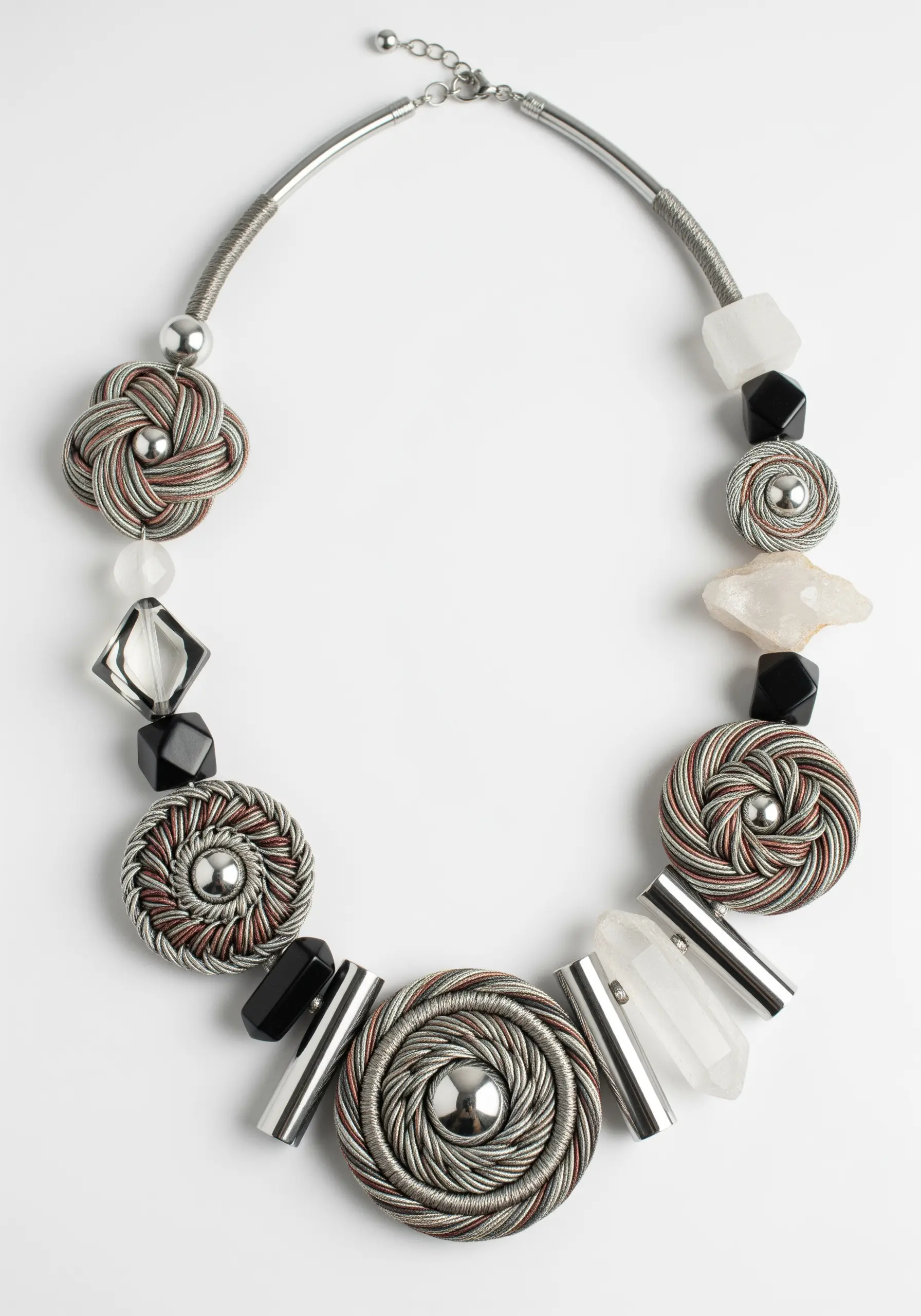
Create one-of-a-kind wearable art by combining textile skills with traditional jewelry components.
Use fine, colorful wires or threads to create intricate knots, spirals, and woven medallions around metal beads or findings.
Integrate these fiber elements with hard materials like raw quartz crystals, polished stones, and metal tubing for a striking textural contrast.
This mixed-media approach results in a statement piece that is both a necklace and a miniature fiber sculpture.
26. Paint with Chaotic, Multi-Layered Stitches
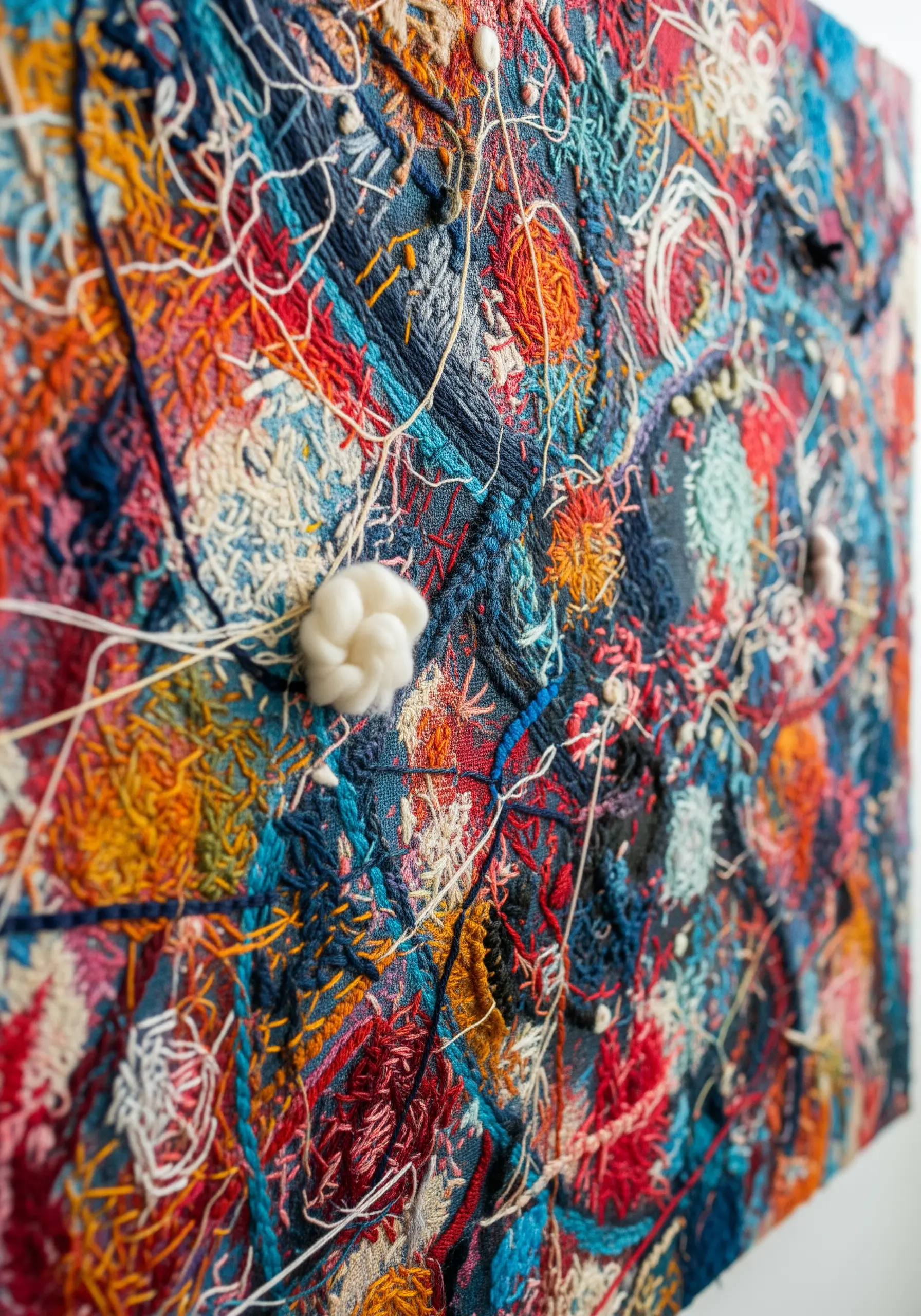
Build an abstract masterpiece by layering dense, expressive stitches instead of paint.
Work intuitively across the canvas, using a chaotic mix of French knots, seed stitches, and straight stitches in various colors and thread weights.
Don’t be afraid to let threads tangle or create bulky, three-dimensional clusters. The goal is to create a rich, chaotic texture that draws the viewer in.
This is one of the most freeing abstract thread layering techniques to create mind-bending 3D textured embroidery, focusing on emotion over precision.
27. Weave Light Directly into Your Fabric
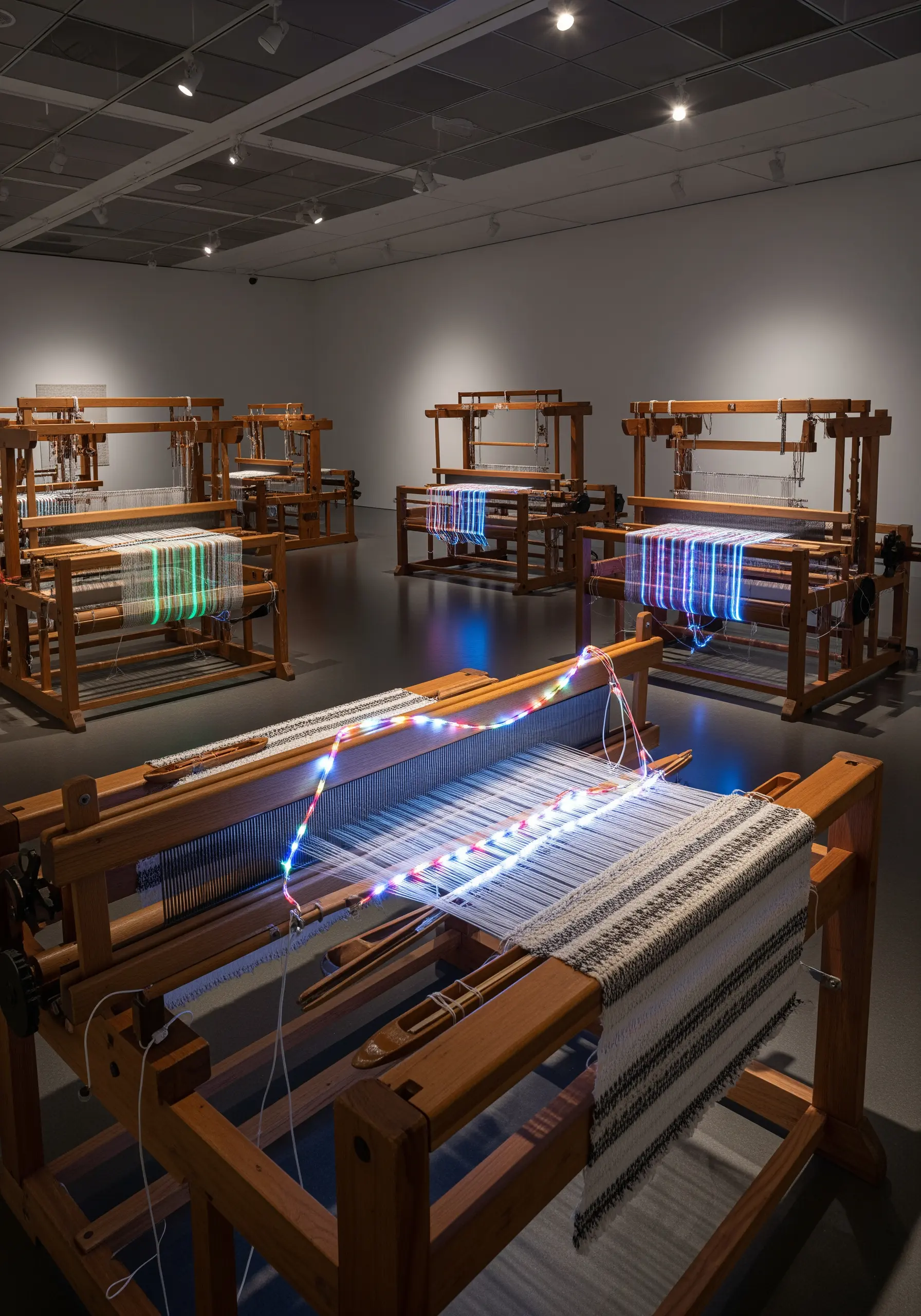
Integrate flexible LED light strips into your weaving process to create a textile that is also a light source.
Plan your design around the light, using translucent fibers like silk or mohair in areas where you want a soft glow, and opaque wool where you want to block the light.
Weave the LED strips directly into the warp and weft as if they were a thick yarn.
This innovative approach merges ancient craft with modern technology, creating a dynamic, interactive piece of art.