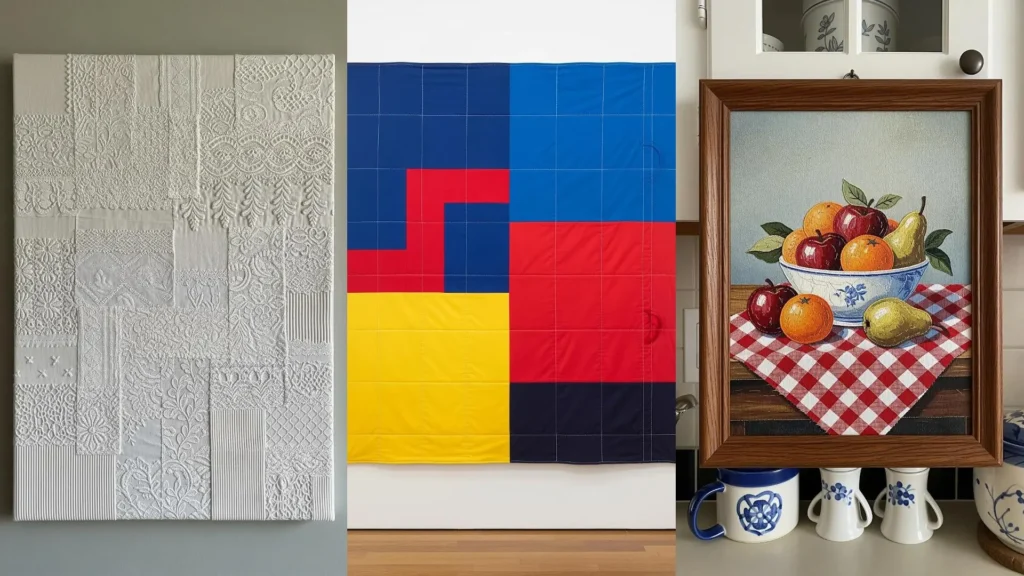
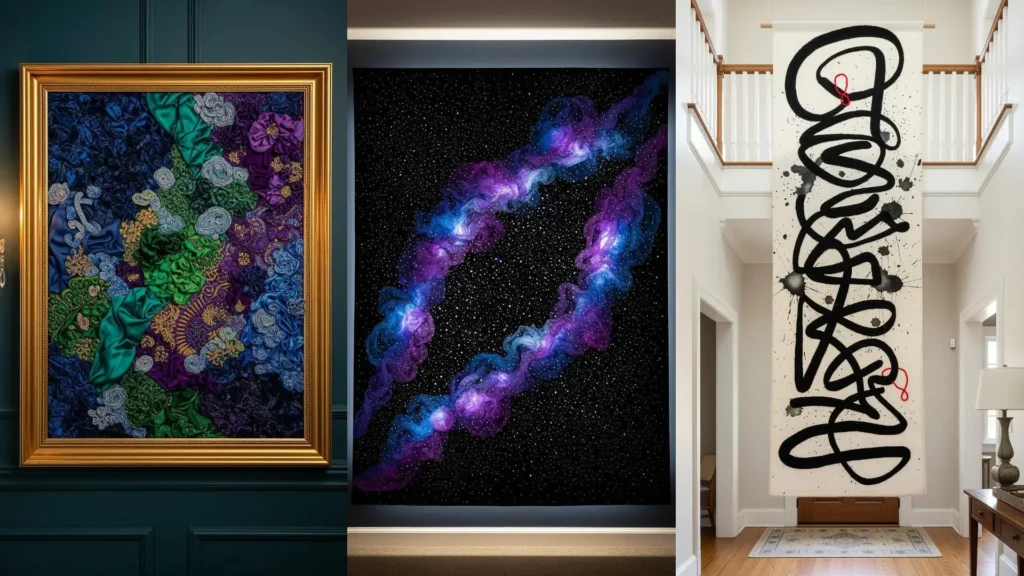
Look at your collection of fabric scraps—the leftover pieces from past projects, the remnants of a favorite dress, the tiny swatches too precious to discard. You might see a pile of memories, but I want you to see a palette. This isn’t clutter; it’s the beginning of your next piece of art.
Fabric collage embroidery isn’t about perfect, tiny stitches. It’s about storytelling with texture, color, and form. It’s about letting the weave of a corduroy scrap become a ploughed field, or the shimmer of a silk ribbon become a river. Your needle and thread are not just for embellishment; they are the tools that will bind these disparate pieces into a cohesive, expressive scene.
In the ideas that follow, I’ll guide you through techniques that transform simple scraps into layered, meaningful art. You don’t need new supplies. You just need to grant yourself the freedom to cut, layer, and stitch with intention. Let’s begin.
1. Layer Sheer Fabric for Ethereal Light
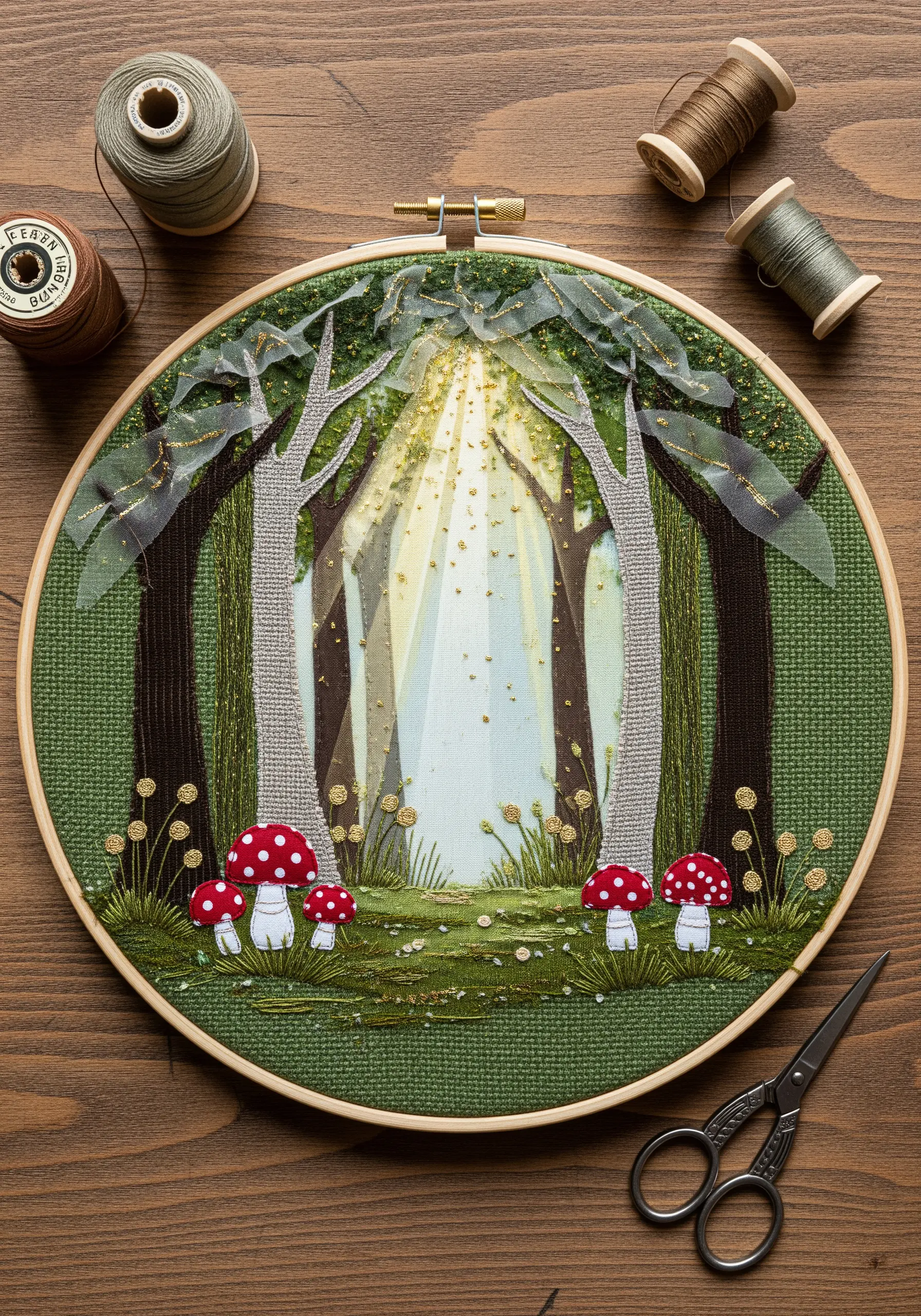
Create a sense of magical light filtering through a forest canopy by layering snippets of sheer organza or tulle over your background.
Stitch them down with a few discreet straight stitches, allowing them to remain slightly loose to catch the light.
For the falling light particles, use single gold metallic threads to make scattered French knots or tiny seed stitches.
This technique adds depth and a focal point to your scene without overcrowding it with heavy stitching.
2. Combine Patchwork with 3D Fiber Accents
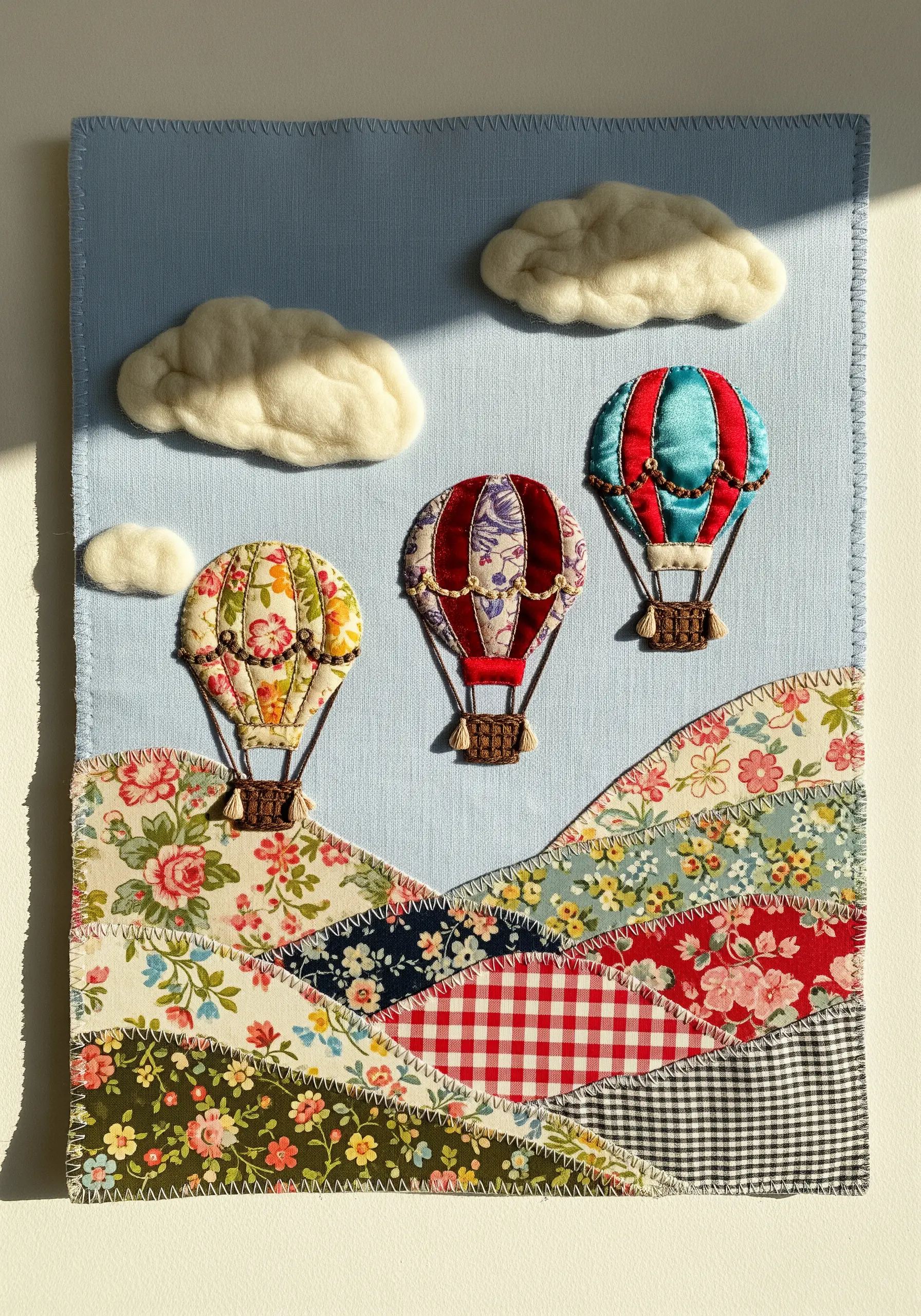
Transform a simple landscape by building hills from a patchwork of your favorite floral and gingham scraps.
To ensure clean edges, use a fusible webbing on the back of each piece before cutting and ironing them into place, then secure the edges with a simple running stitch.
Contrast the flat patchwork with dimensional clouds made from needle-felted wool roving; simply tack the wool into place with a few stitches in a matching thread.
This juxtaposition of flat pattern and soft sculpture gives your work immediate tactile appeal.
3. Elevate Printed Motifs with Lace and Metallics

Isolate a charming motif from a printed fabric—like a teacup—by carefully cutting it out and appliquéing it onto a neutral background.
To add a touch of whimsy, use delicate scraps of old lace for the steam, tacking down the edges with tiny, invisible stitches.
Finally, trace the original outlines of the cup and saucer with a single strand of gold or silver metallic thread using a simple backstitch.
This adds a refined sparkle that makes the printed fabric feel intentionally embellished.
4. Build an Underwater World with Ruched Ribbons

Create the illusion of moving water by layering different shades of blue and green organza ribbon horizontally across your canvas.
Instead of laying them flat, create a gentle gather or ruche in the ribbon as you stitch it down to mimic the ocean’s current.
For the seabed, use a sturdy, textured scrap like the pocket section of old jeans.
This contrast between the heavy denim and the ethereal ribbon creates a rich, mixed media fabric collage embroidery that tells a story of depth and movement.
5. Use Velvet and Beads for Cosmic Depth
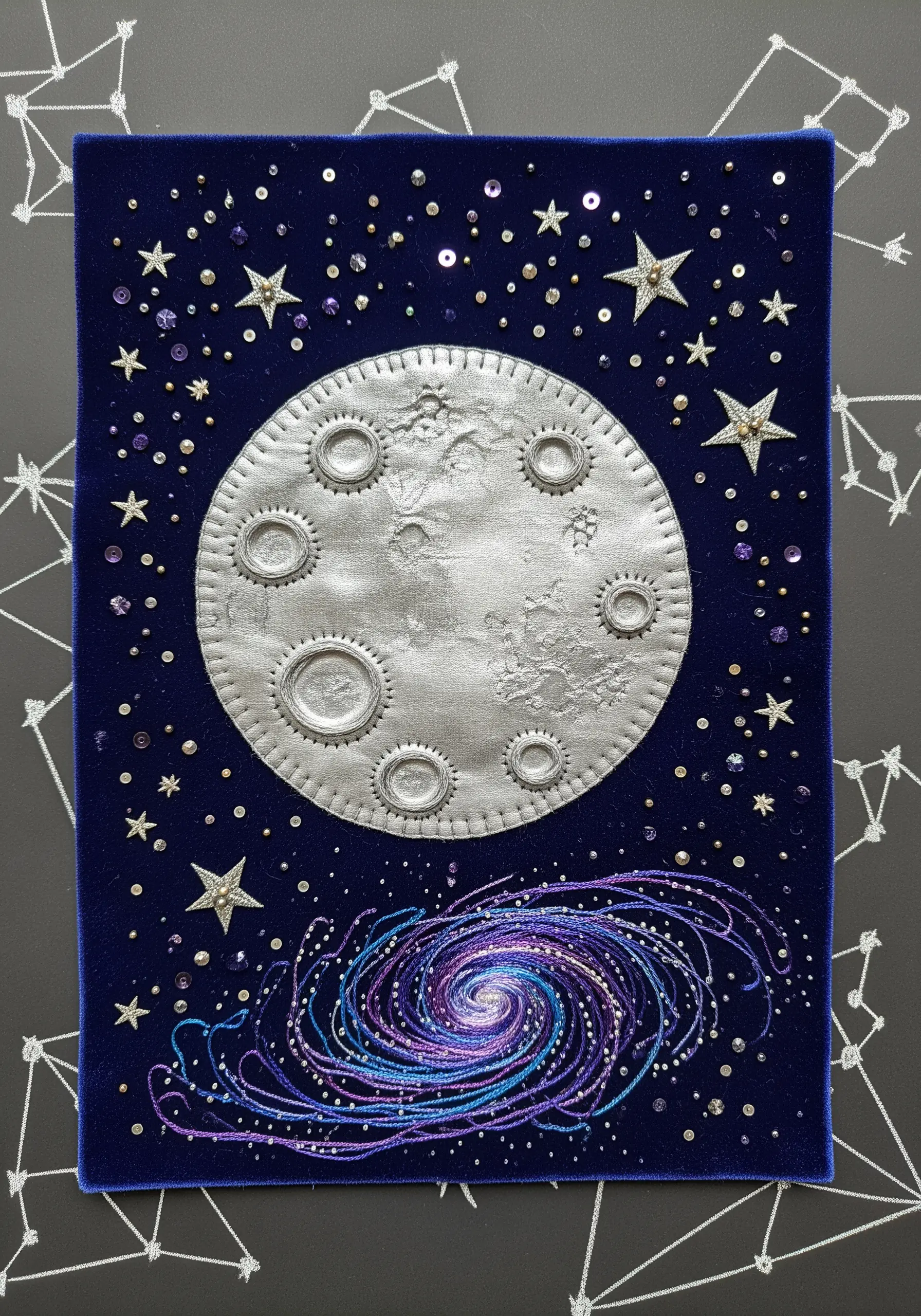
Select a deep navy or black velvet scrap for your background to instantly create a sense of the vastness of space.
Appliqué the moon using a piece of silver lamé or silk, adding craters with small circles of satin stitch or couched silver cord.
For the swirling galaxy, couch down variegated purple and blue embroidery floss in a spiral pattern, then scatter tiny seed beads and sequins along the threads to represent distant stars.
The plush velvet absorbs light, making the metallic and beaded elements appear even brighter.
6. Create Perspective with Textured Fabrics

Suggest rolling hills by using fabrics with inherent texture, like corduroy, twill, or herringbone weave.
Cut the hill shapes with curved edges and layer them, placing the more textured or darker fabrics in the foreground to create a sense of depth.
Keep the houses simple—small scraps of printed cotton with a few straight stitches for windows and doors are all you need.
The focus remains on the landscape’s rich texture, giving the piece a cozy, illustrative quality.
7. Tell a Story with Felt and Faux Fur

Leverage the clean, non-fraying edges of felt to create crisp, graphic shapes for animals and trees.
Layer different colors—like the white and black details on the fox—to build your characters without needing complex stitches.
For an unexpected and delightful textural element, incorporate a small faux fur pom-pom or scrap to represent a fluffy tail or a bushy plant.
This simple addition transforms a flat appliqué into a charming, multi-sensory piece.
8. Construct 3D Flowers from Fabric Layers
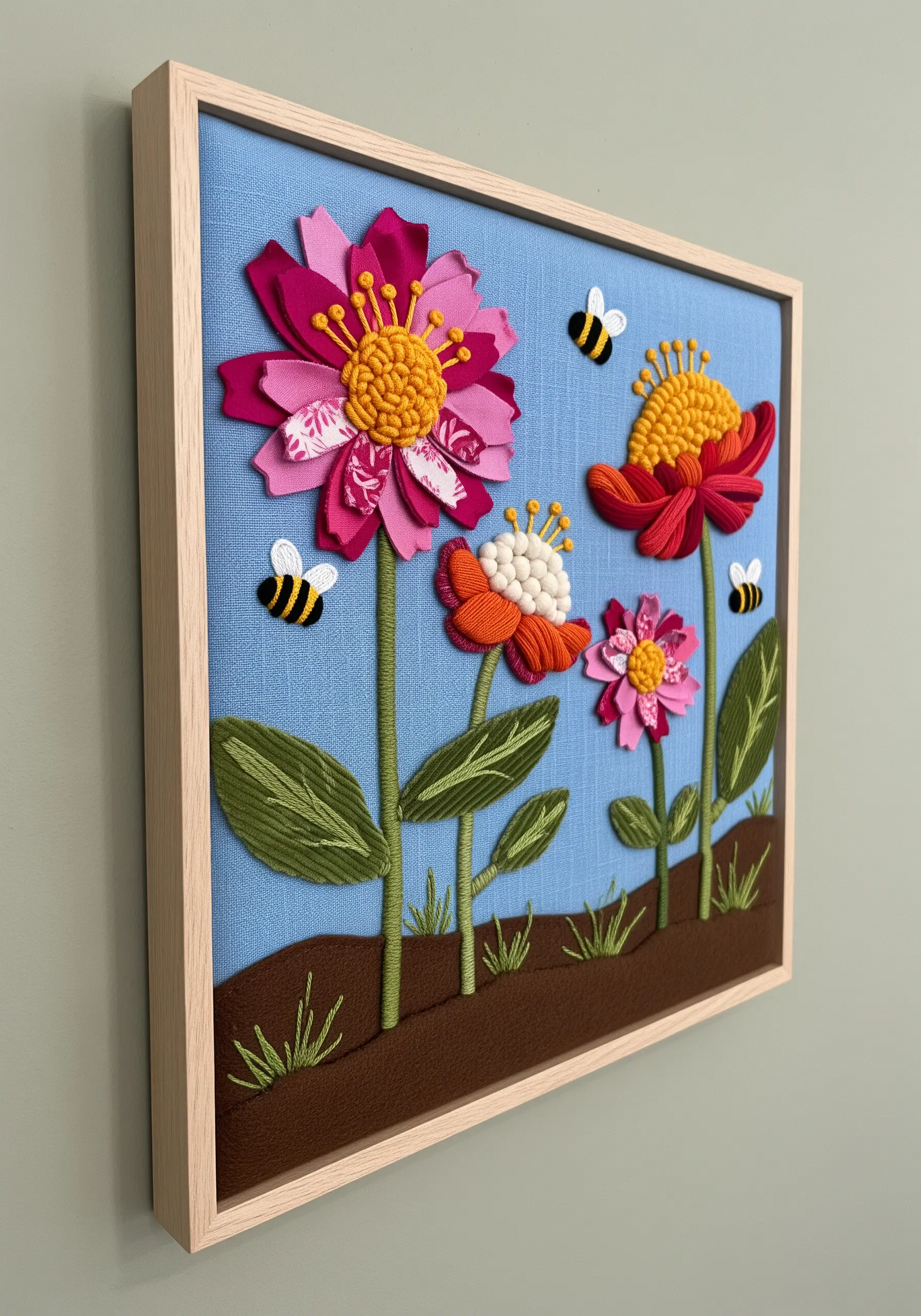
Give your floral scenes sculptural dimension by building flowers from stacked layers of fabric petals instead of relying solely on stitch work.
Cut simple petal shapes from various fabric scraps—mixing solids with patterns adds visual interest.
Layer them in a circle and secure them at the center with a dense cluster of French knots, which also serves as the flower’s textured center.
This technique allows your flowers to literally pop off the canvas, creating beautiful shadows and depth.
9. Repurpose Denim for Dynamic Seascapes
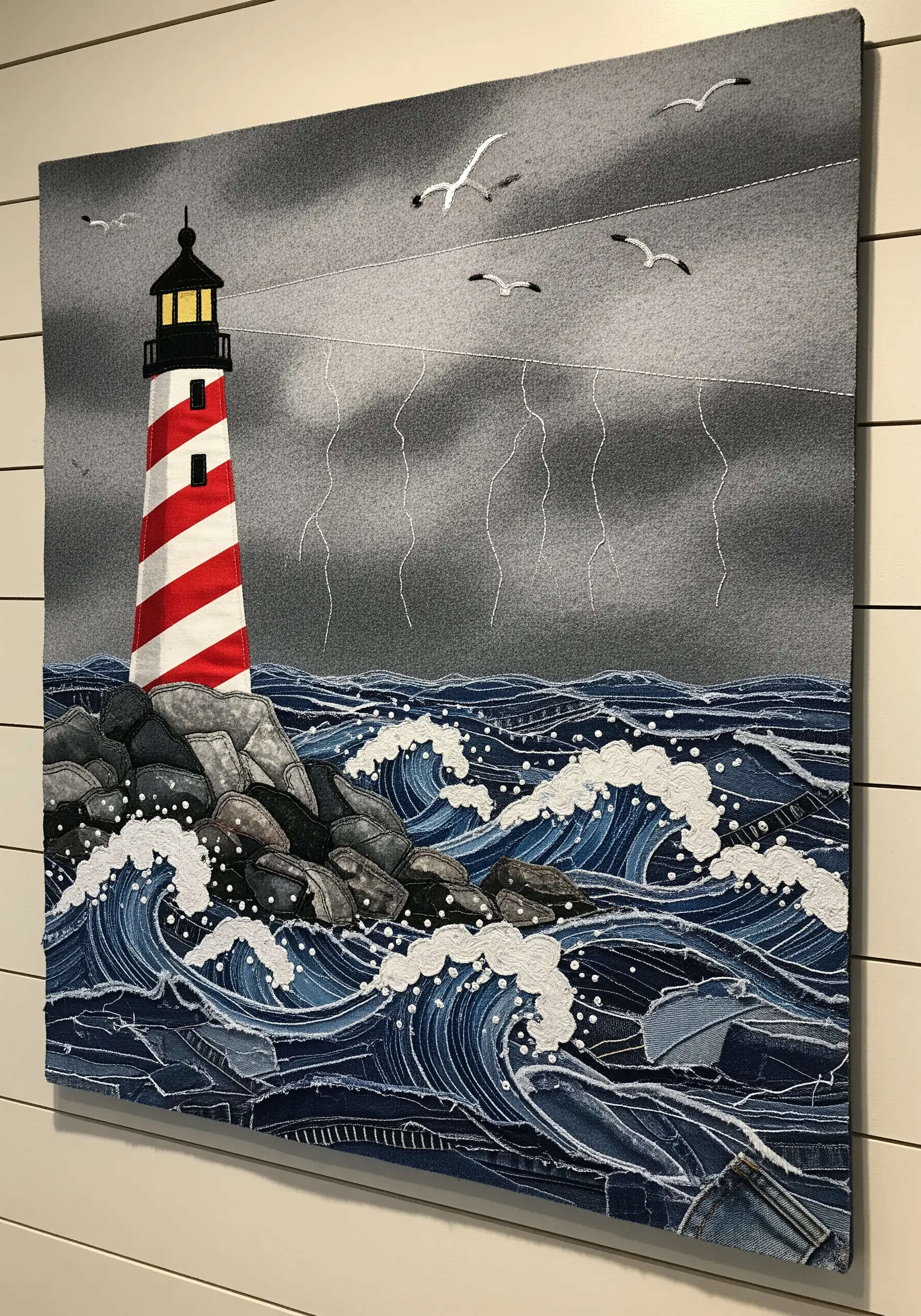
Utilize the variety of washes and textures in old denim to create a dramatic, churning sea.
Cut wave-like shapes from different parts of the jeans—waistbands, seams, and faded areas—and arrange them to build a sense of movement.
Use a white thread and a wide zig-zag stitch along the top edges of your denim waves to create the effect of sea foam.
The ruggedness of the denim perfectly captures the wild energy of the ocean.
10. Curate a Library with Patterned Scraps
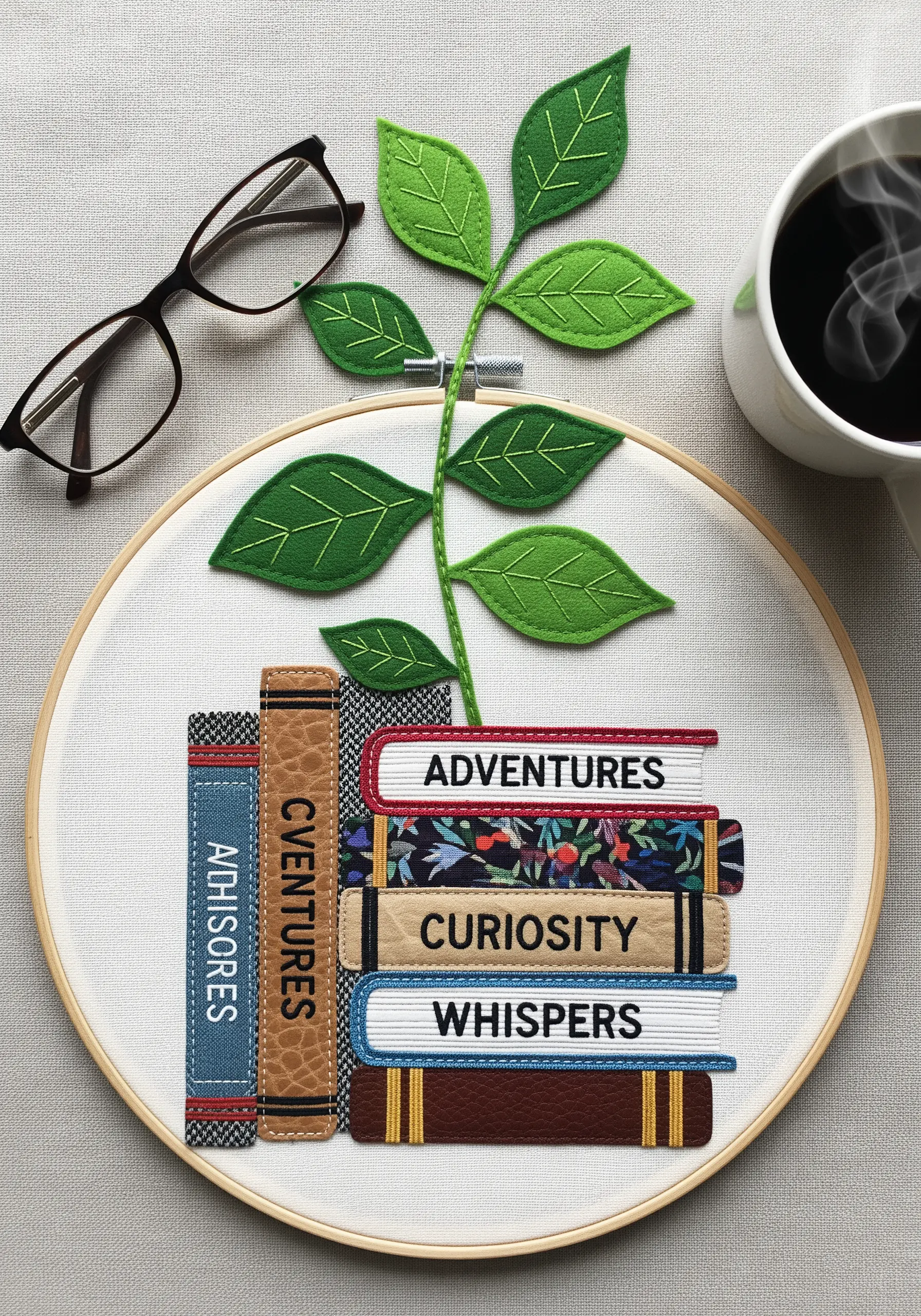
Turn your tiniest, most precious fabric scraps into a charming stack of books.
Assign each scrap to be a different book cover, choosing patterns and textures that suggest different genres—a floral for poetry, a faux leather for a classic.
Use a single strand of thread and a neat backstitch to add titles, keeping the text simple and clean.
These embroidery ideas for your journal covers or hoop art create a deeply personal and narrative piece from materials you already own.
11. Build a Dense Canopy with Fabric Leaves
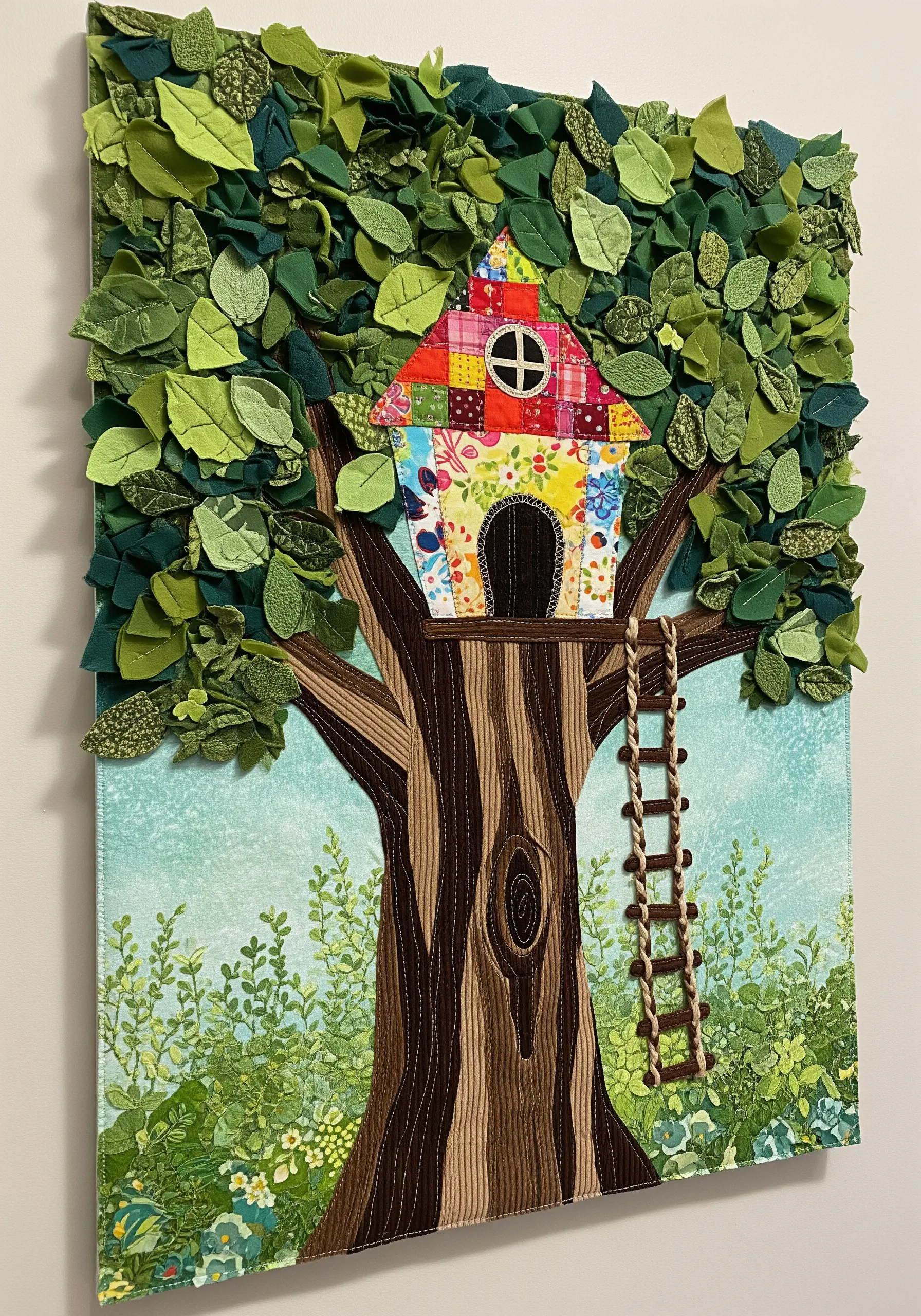
Create a lush, dimensional tree canopy by appliquéing dozens of individual fabric leaves.
Cut small leaf shapes from various green scraps—cottons, felts, and linens—to mimic the diversity of a real tree.
Secure each leaf with just a few stitches at its base, allowing the tip to lift slightly from the background fabric.
By overlapping the leaves generously, you build a rich texture that invites touch and creates realistic depth and shadow.
12. Create a ‘Glass’ Window with Tulle
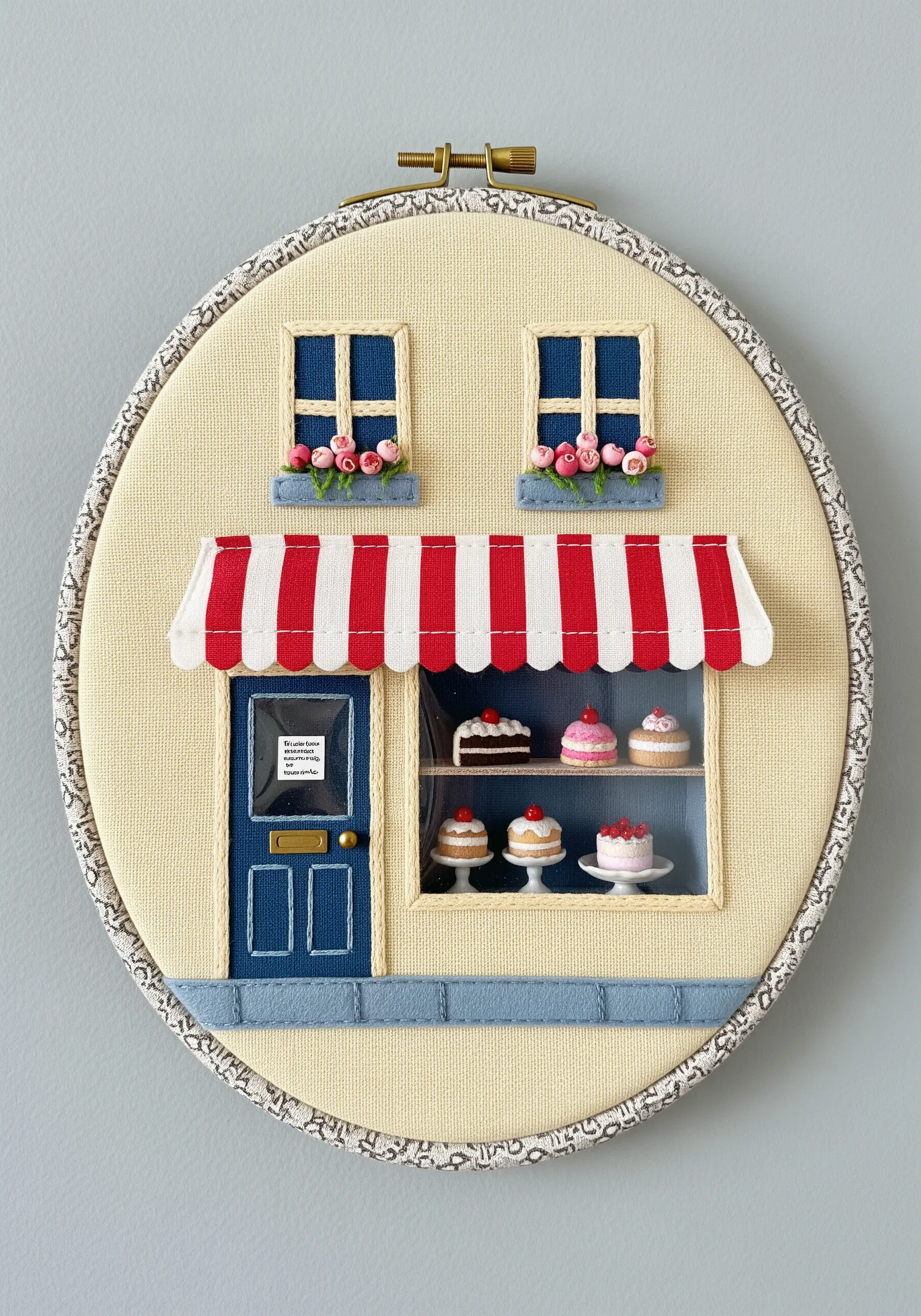
Suggest a window pane in a building or scene by using a small piece of sheer tulle or organza.
First, stitch the interior scene (like the tiny cakes on shelves), then lay the sheer fabric over it.
Finally, appliqué the window frame using strips of felt or cotton directly on top of the tulle, securing all the layers.
This simple trick adds a surprising layer of realism and sophistication to your architectural collages.
13. Paint a Sunset Sky with Fabric Strips

Capture the beauty of a gradient sunset without blending threads by piecing together strips of fabric.
Gather scraps in sunset tones—pinks, oranges, yellows, and purples—and arrange them horizontally, slightly overlapping each strip over the one below it.
Secure them with a simple running stitch, and don’t worry about perfectly straight lines; a little unevenness adds to the organic feel.
Once the background is complete, add a sharp silhouette, like birds on a wire cut from black felt, for a dramatic focal point.
14. Suggest Abundance with Stitched Miniatures
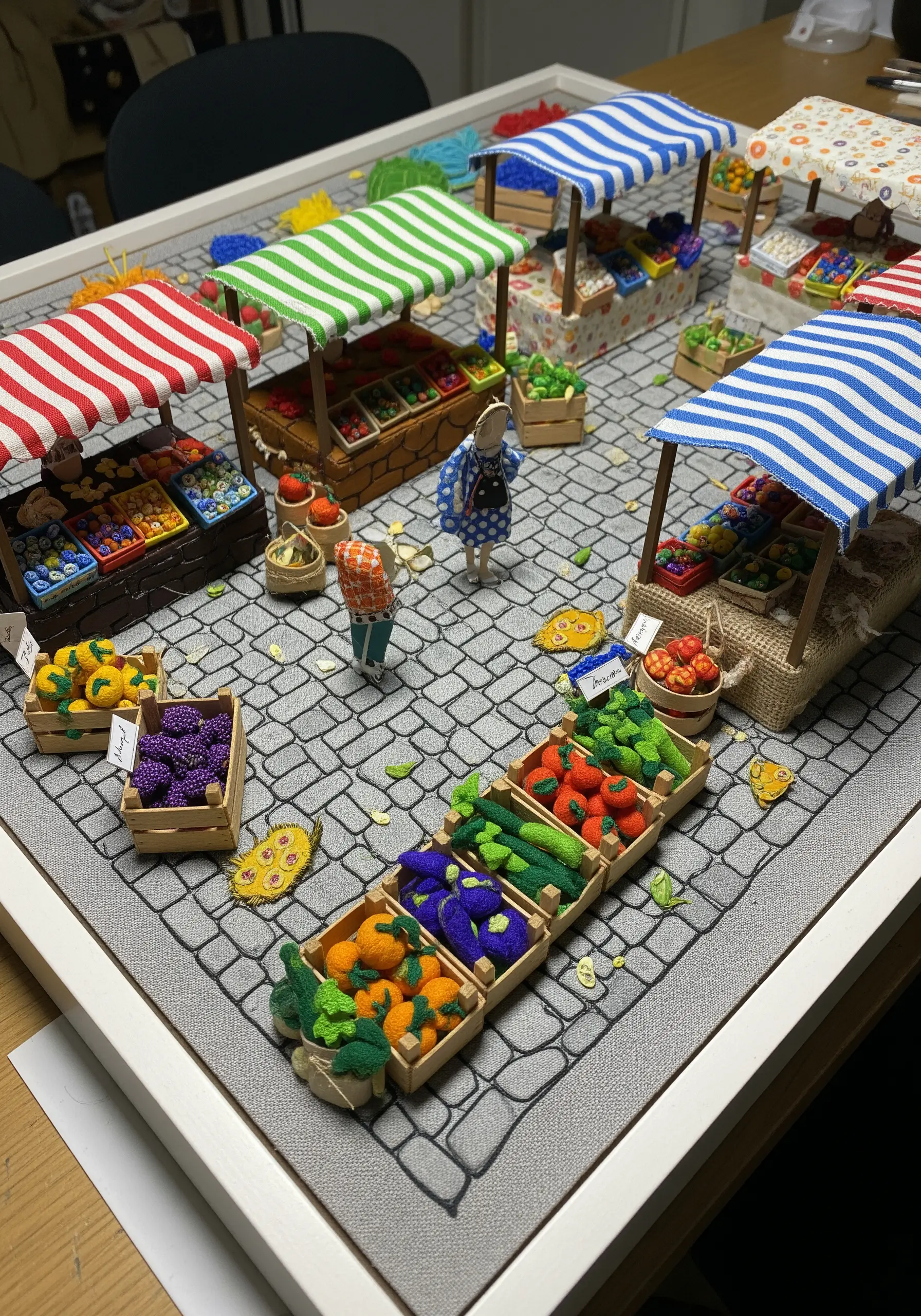
For a complex scene like a market, focus on creating the impression of detail rather than rendering every single item perfectly.
Use appliqué for the larger shapes like stalls and crates.
Then, fill the crates with dense clusters of French knots, bullion knots, and seed beads in appropriate colors to represent tiny fruits and vegetables.
This technique tricks the eye into seeing intricate detail, adding a sense of life and abundance to your work.
15. Let the Fabric Pattern Do the Work
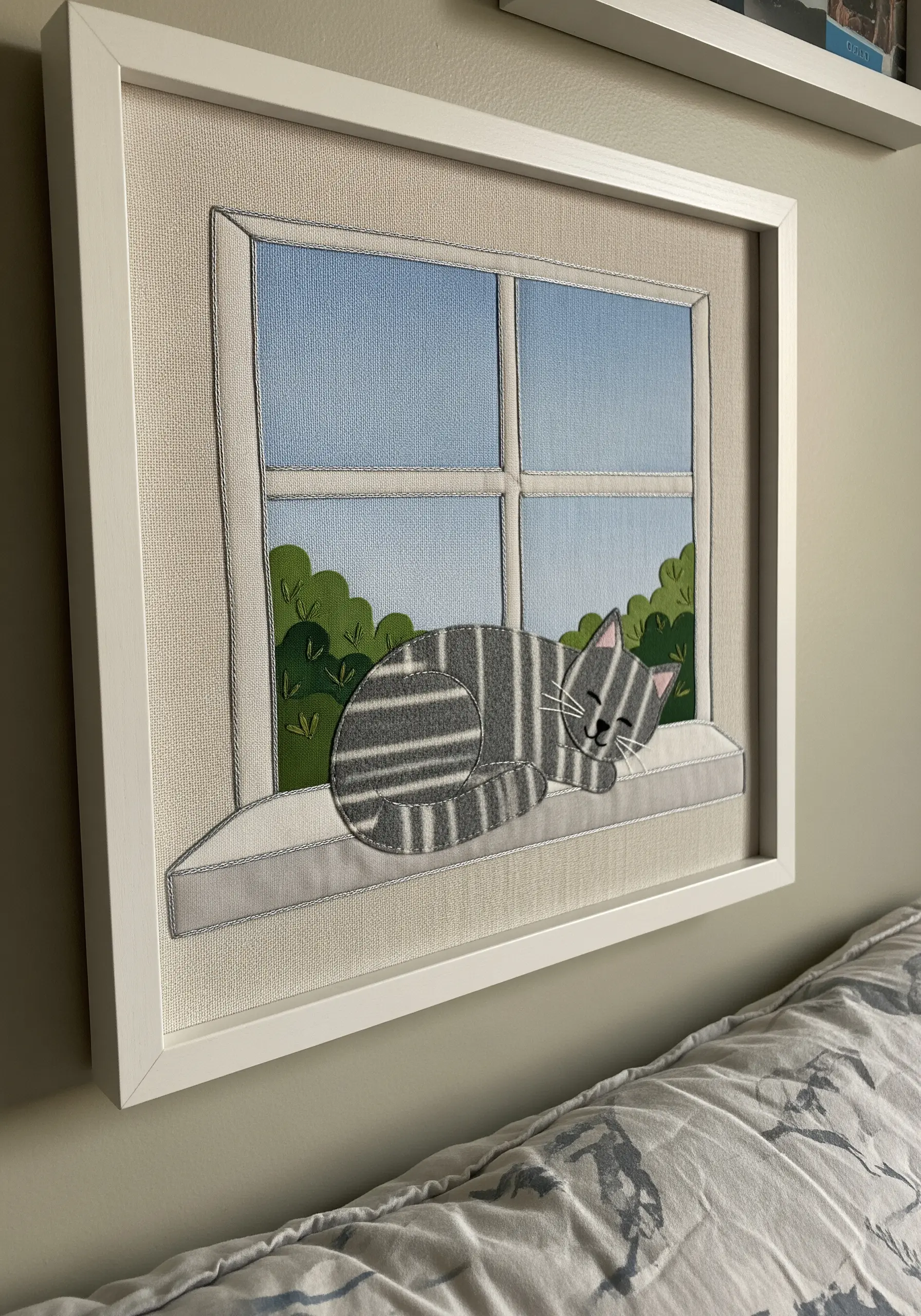
Before you begin stitching, audit your fabric scraps for patterns that can represent a texture you need.
A striped gray cotton, for instance, is the perfect choice for a tabby cat, instantly creating its coat pattern without a single stitch.
Simply cut the shape you need, appliqué it down, and add a clean backstitch outline to define the form.
This thoughtful use of materials saves time and results in a clean, graphic, and clever design.
16. Add Shimmer and Motion with Sequins
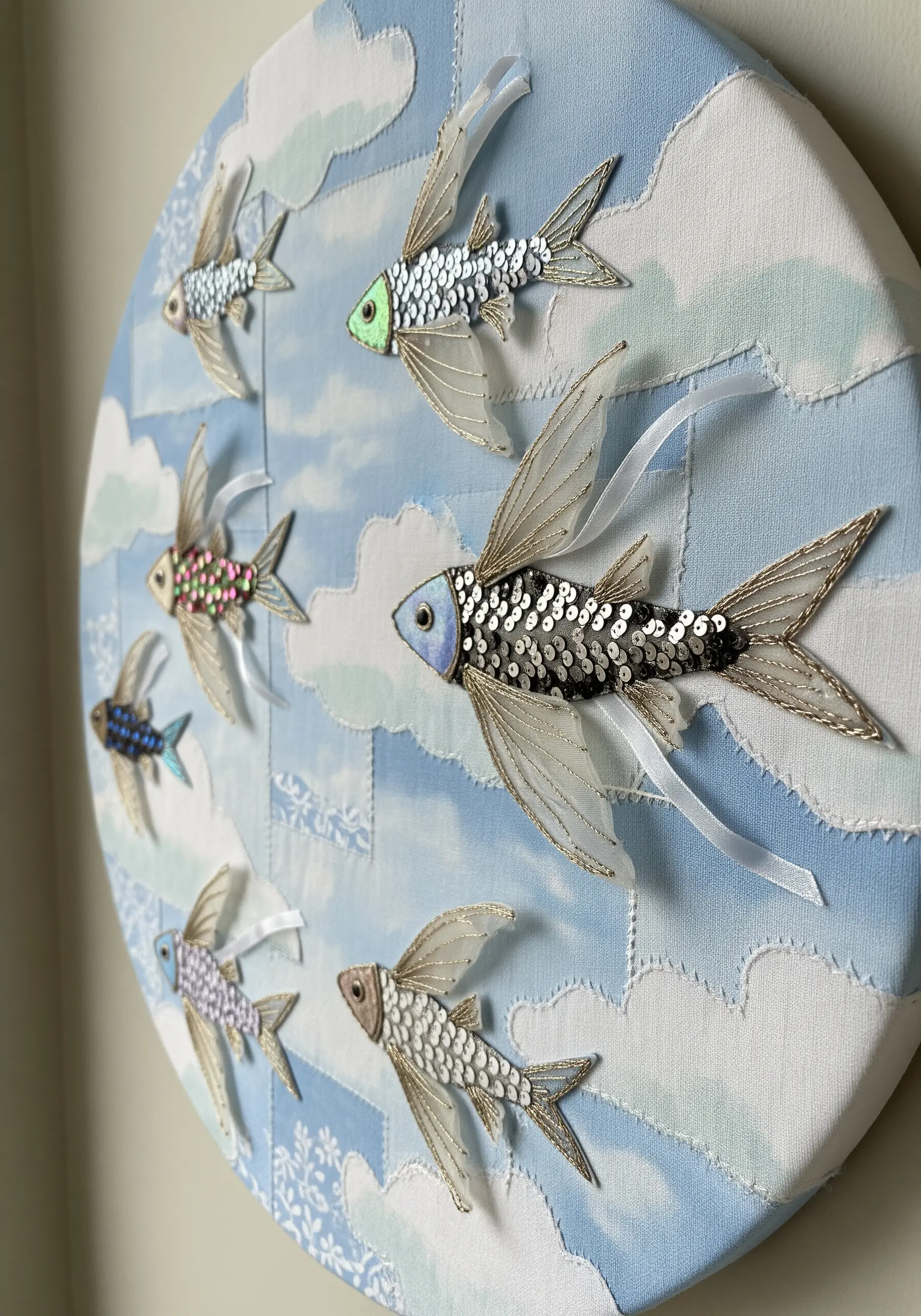
Capture the iridescent quality of fish scales by using a scrap of sequined fabric for the body of the fish.
Cut the shape carefully and tack it down around the edges with a matching thread.
For the fins and tail, switch to a contrasting texture like fine organza or tulle, outlined with metallic thread, to create a sense of delicate, transparent movement.
This combination of textures creates a dynamic piece that feels both whimsical and alive.
17. Recreate Nostalgia with Gingham and Twine
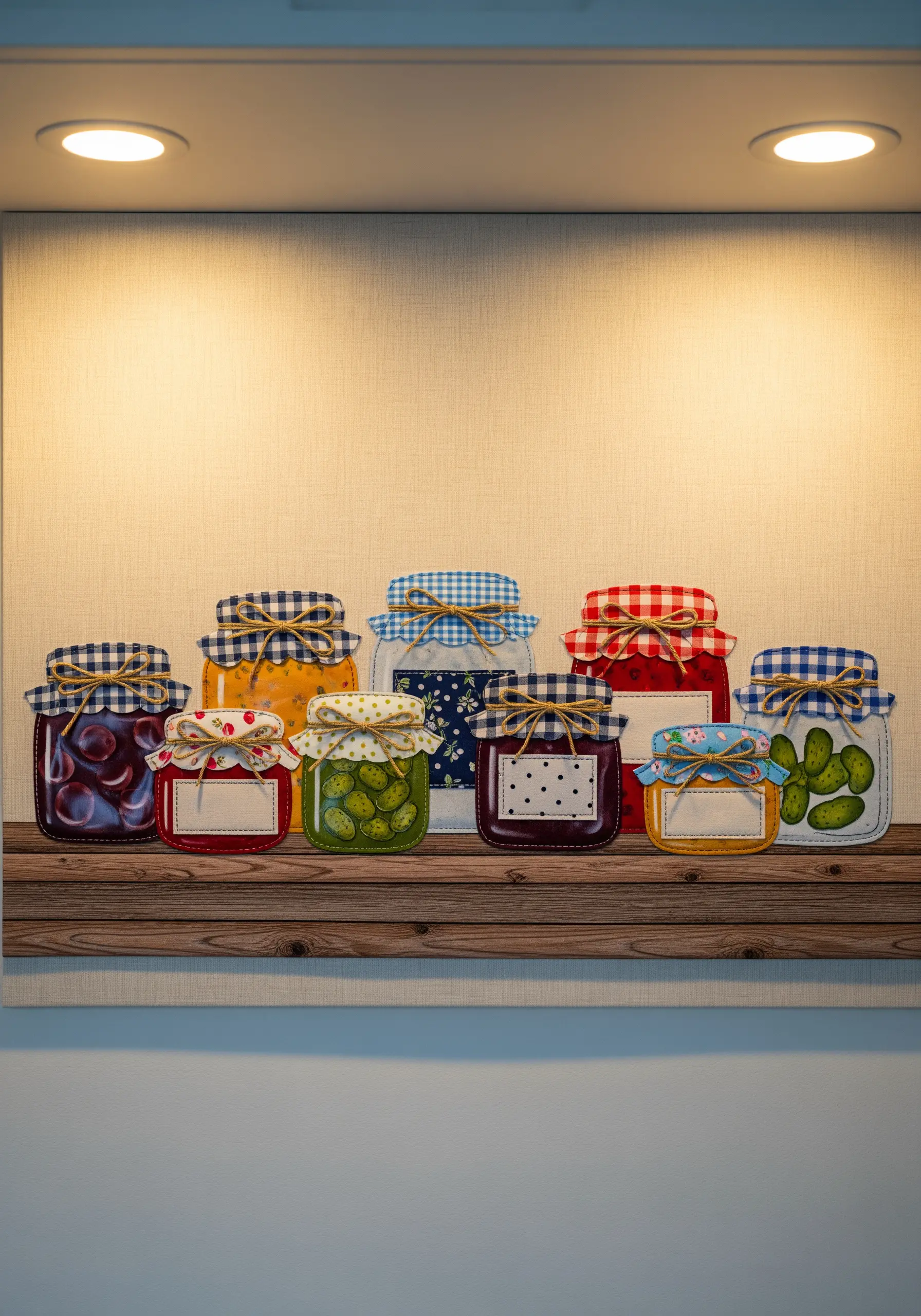
Evoke a cozy, rustic feeling by using classic patterns like gingham or small florals for details like jam jar covers.
Appliqué your jar shapes, then add the small fabric ‘lids,’ securing them with a simple running stitch.
For the final touch of authenticity, tie a small piece of actual twine or jute cord around the neck of each fabric jar.
These small, true-to-life details are what make a simple collage feel heartfelt and complete.
18. Marry Appliqué with Thread Painting
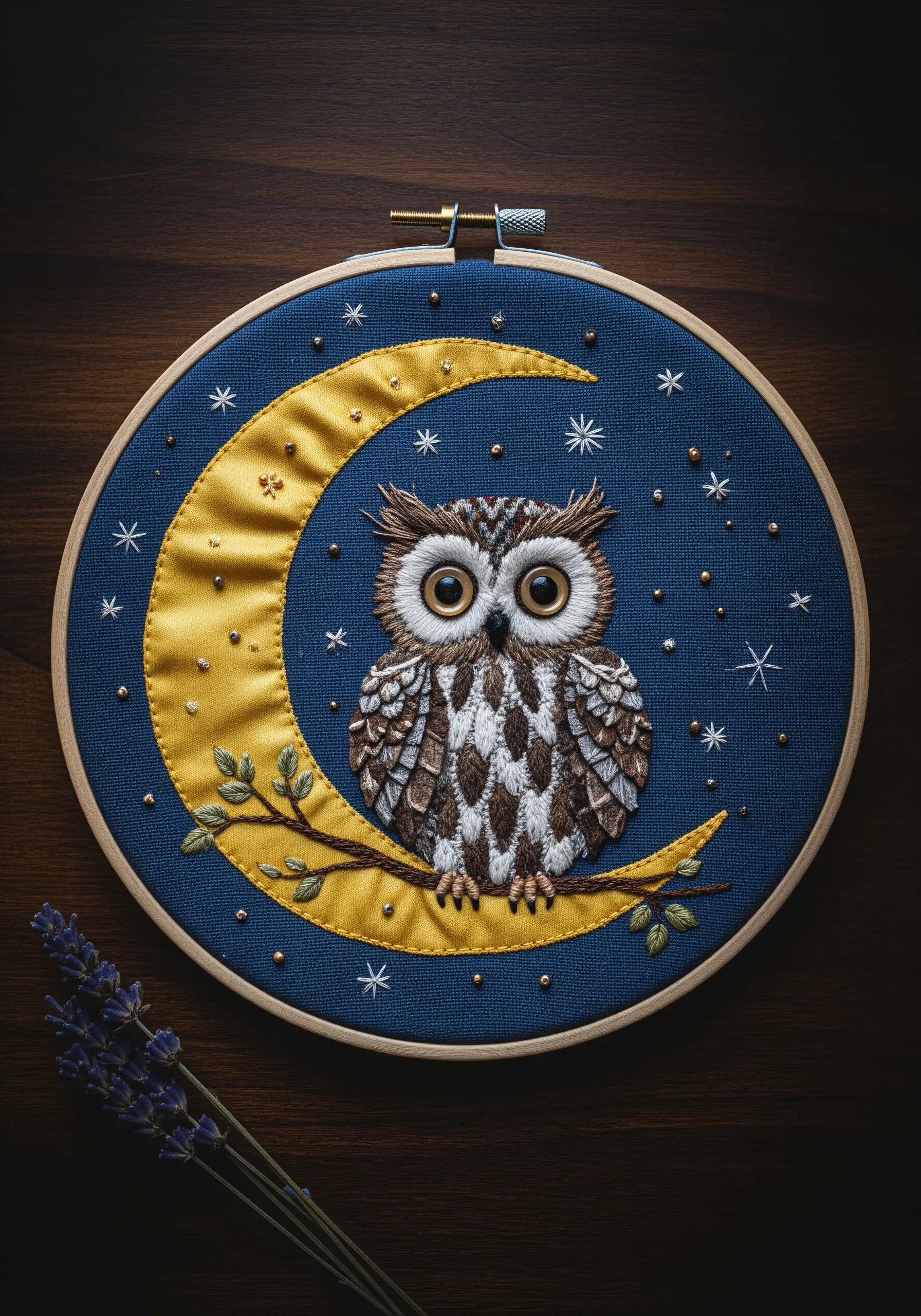
Combine the strengths of two techniques for a highly detailed result. Use a bold fabric appliqué for large, smooth shapes, like the satin crescent moon.
Then, switch to thread painting—using dense long-and-short stitches—for areas that require intricate texture, like the owl’s feathers.
By working within the appliquéd fabric shape, you create a contained area for your detailed stitching, resulting in a clean yet complex look.
Explore more stunning owl embroidery patterns to perfect this blended technique.
19. Capture Reflections on Satin Fabric
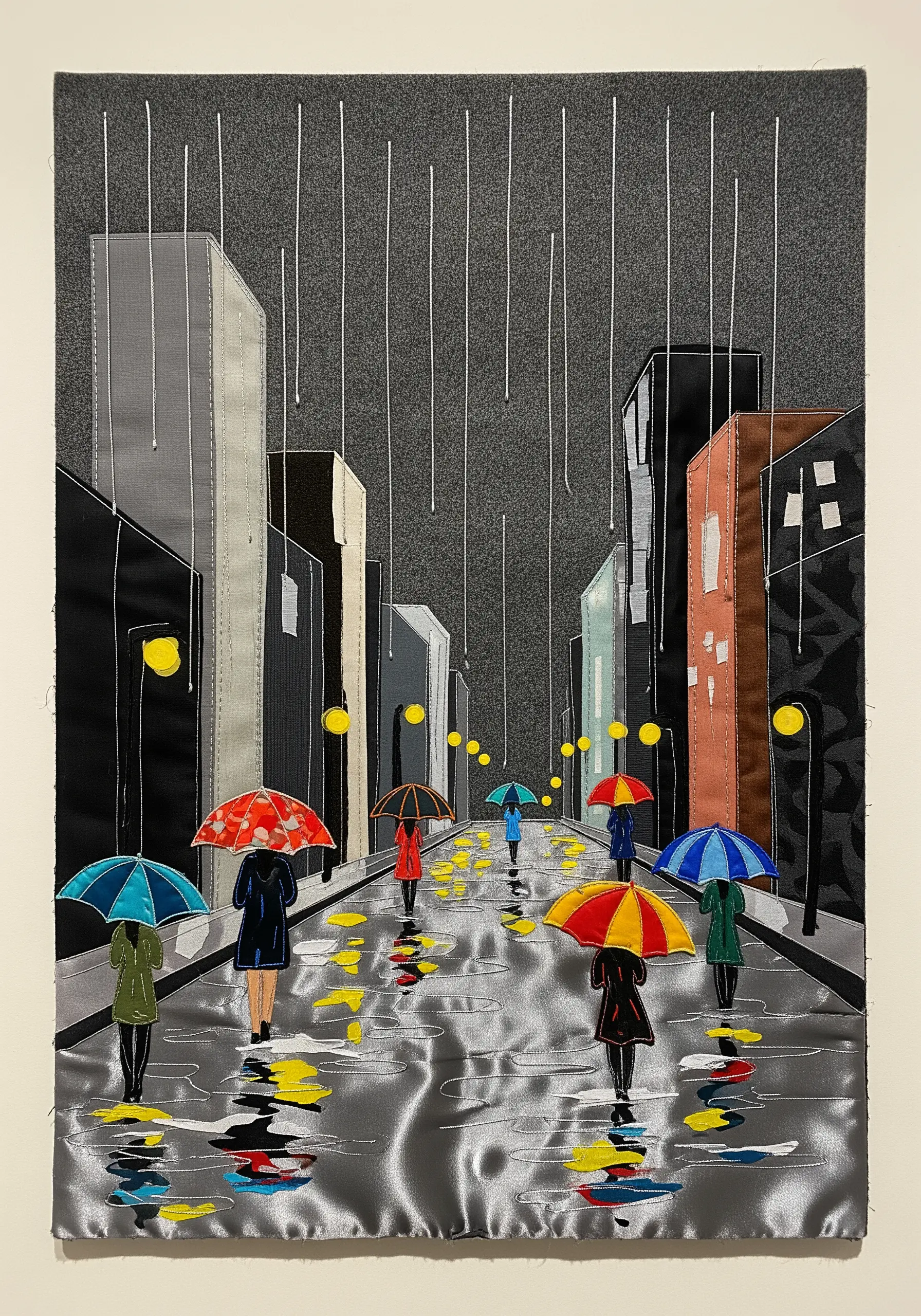
Use a silvery-gray satin or silk fabric as the base for a rainy street scene to mimic the reflective quality of wet pavement.
The natural sheen of the fabric will catch the light beautifully.
To create the reflections of streetlights and umbrellas, appliqué small, abstract slivers of bright yellow, red, and blue fabrics directly onto the gray satin.
The contrast between the slick background and the matte cotton scraps creates a convincing and atmospheric effect.
20. Weave Ribbon Flowers for a 3D Garden
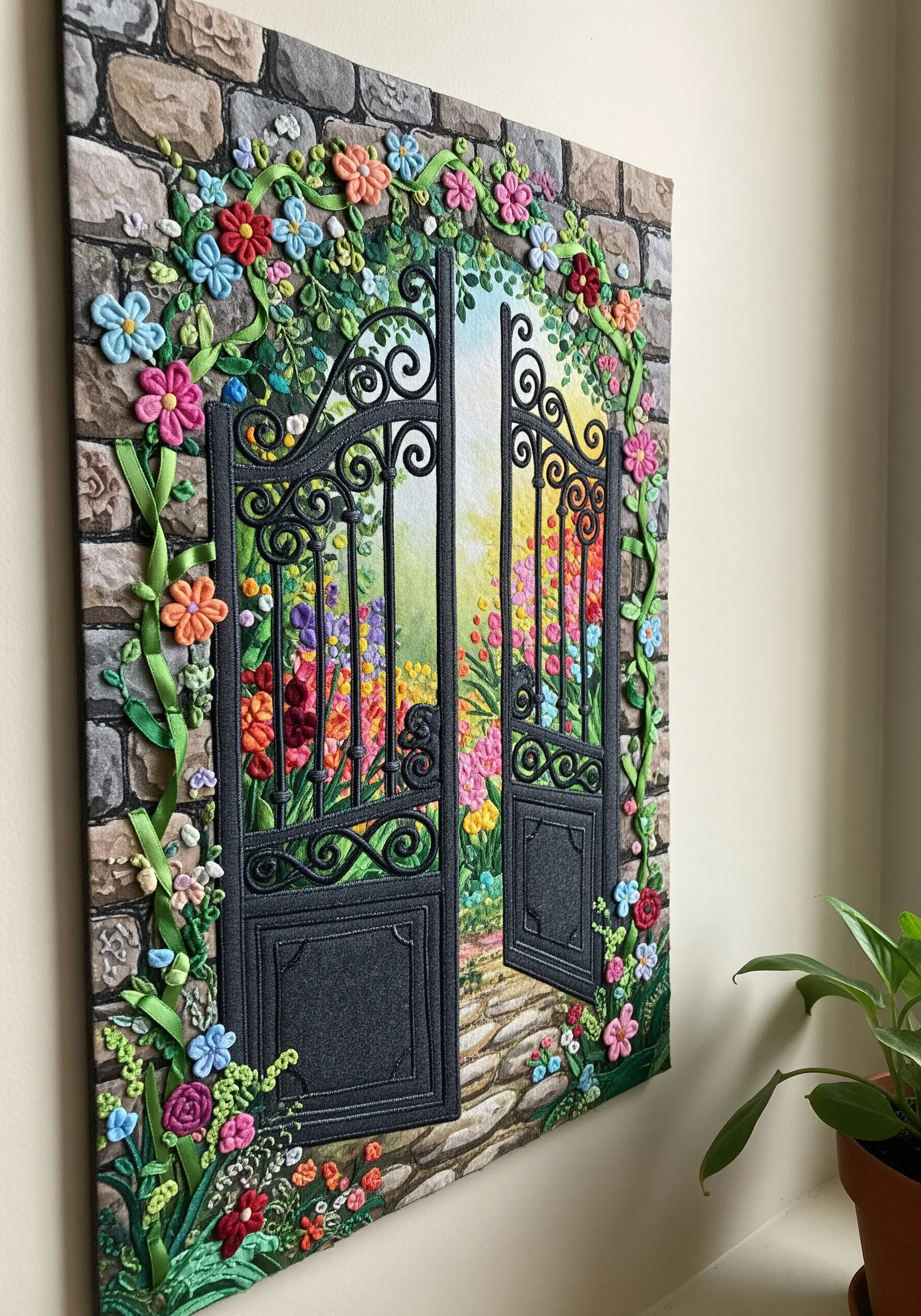
For a garden that feels like it’s growing out of the canvas, incorporate silk ribbon embroidery.
Create lush roses with woven wheel stitches, cheerful daisies with lazy daisy stitches, and textural foliage with straight stitches using wide green ribbon.
These dimensional flowers can be stitched directly onto your background fabric or over appliquéd elements like a stone wall or gate.
The varied textures and soft sheen of the ribbon add a romantic, luxurious feel to your collage.
21. Assign Textures to Tell a Story
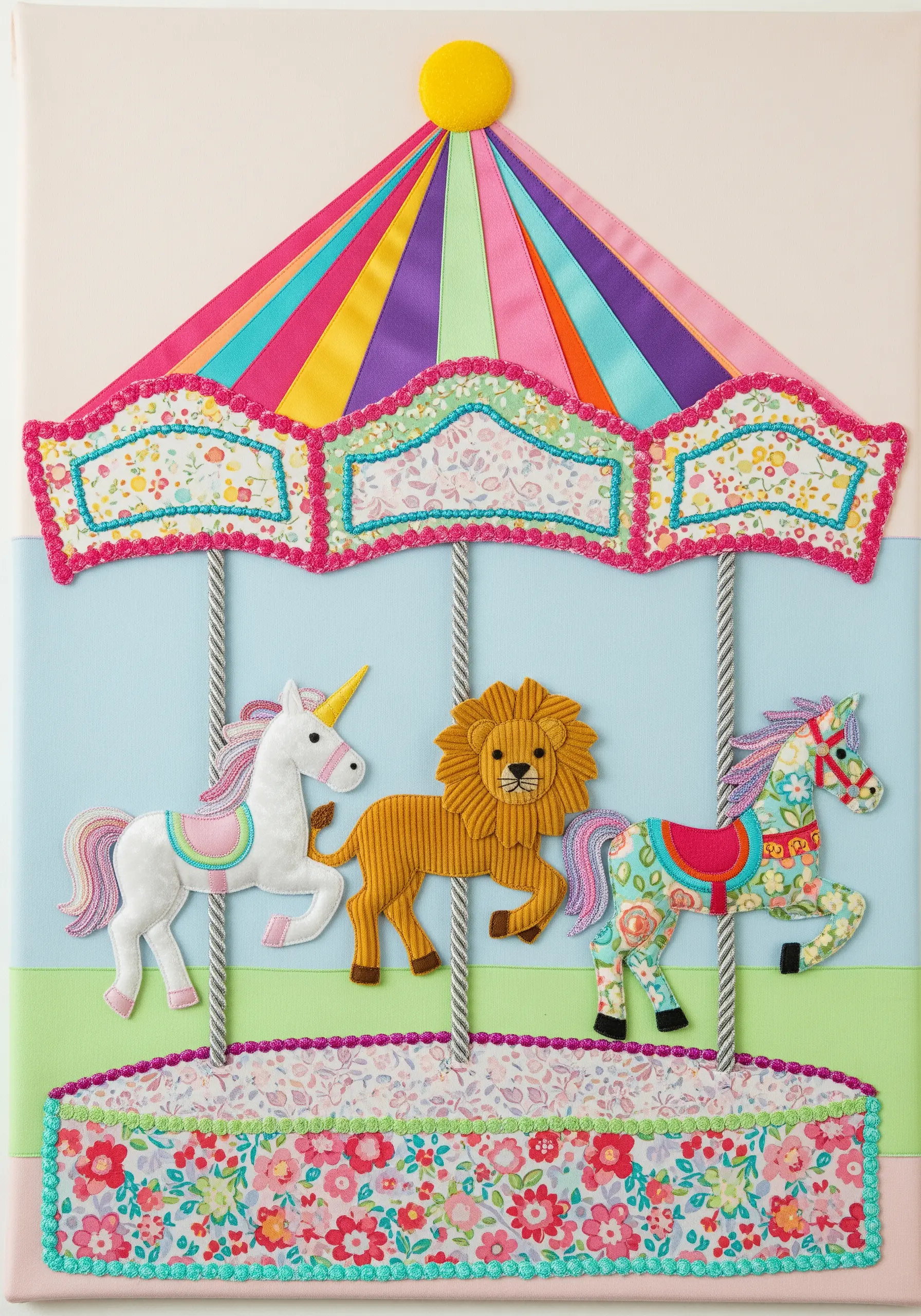
When creating a scene with multiple characters or animals, use fabric texture to help define their personality.
A soft, ridged corduroy is perfect for a strong lion, while a whimsical floral print suits a magical horse.
A simple, solid-colored felt gives a unicorn a clean, ethereal quality.
This intentional choice of materials adds a subtle layer of characterization to your work, making it more engaging and thoughtful.
22. Layer Landscapes for Natural Depth
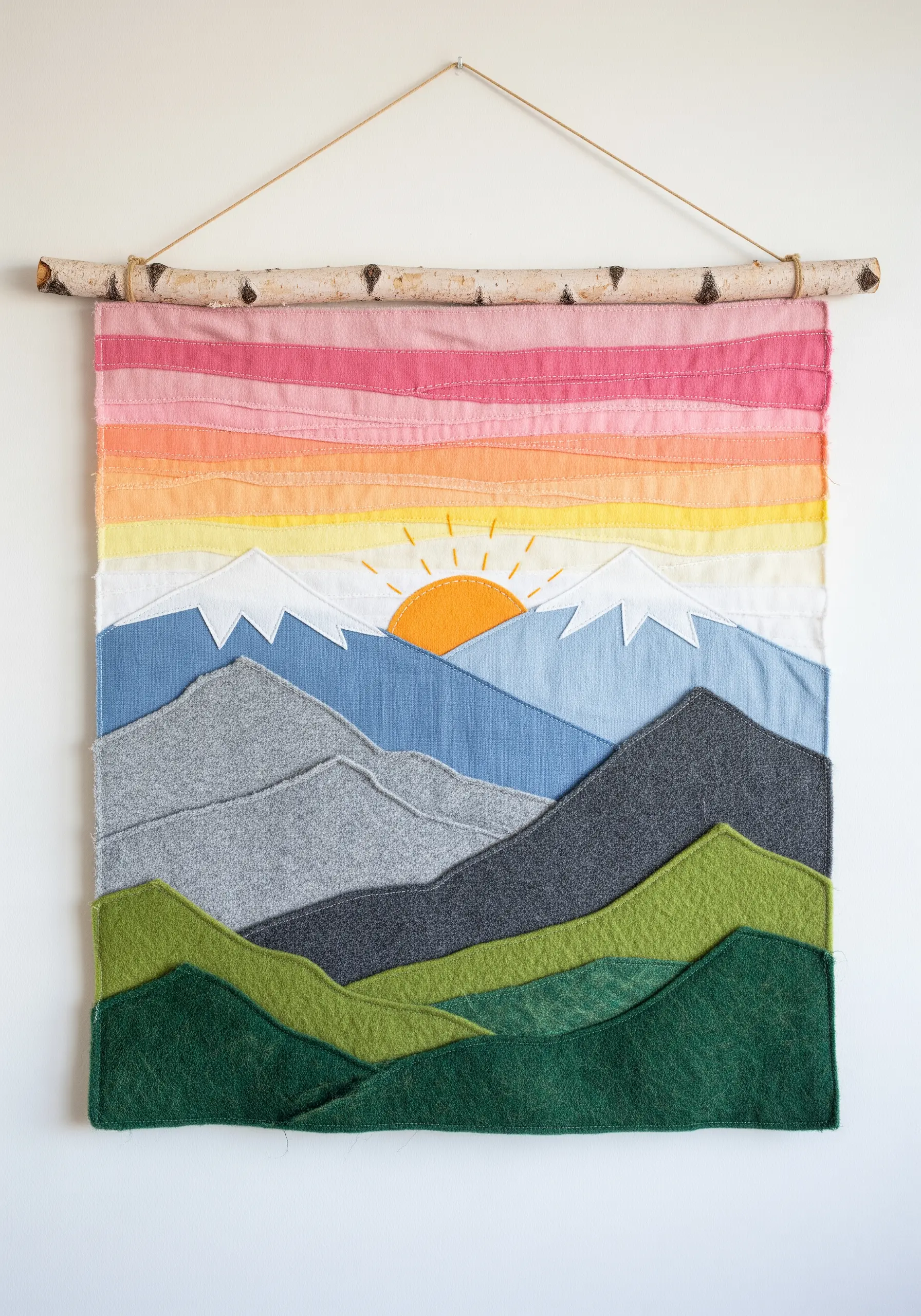
Create a convincing sense of distance in a landscape by physically layering your fabric pieces from back to front.
Start with the sky, then add the farthest mountains, and continue layering closer ranges on top, finishing with the foreground hills.
Vary the fabrics you use for each layer—denim, felt, linen, cotton—to add textural interest that mimics the complexity of a natural view.
Leave the top edges of the fabric unstitched or raw for a more organic, modern aesthetic.
23. Use Ribbon to Create Crisp Architectural Lines

For structures that require clean, straight lines like a greenhouse frame, use satin ribbon instead of cutting thin strips of fabric.
Ribbon has a finished edge, preventing fraying and ensuring a precise line.
Simply lay the ribbon in place and secure it with a neat running stitch down the center or along both edges.
This technique is faster than traditional appliqué and gives your architectural pieces a sharp, polished finish.
24. Create Dimension with Padded Appliqué
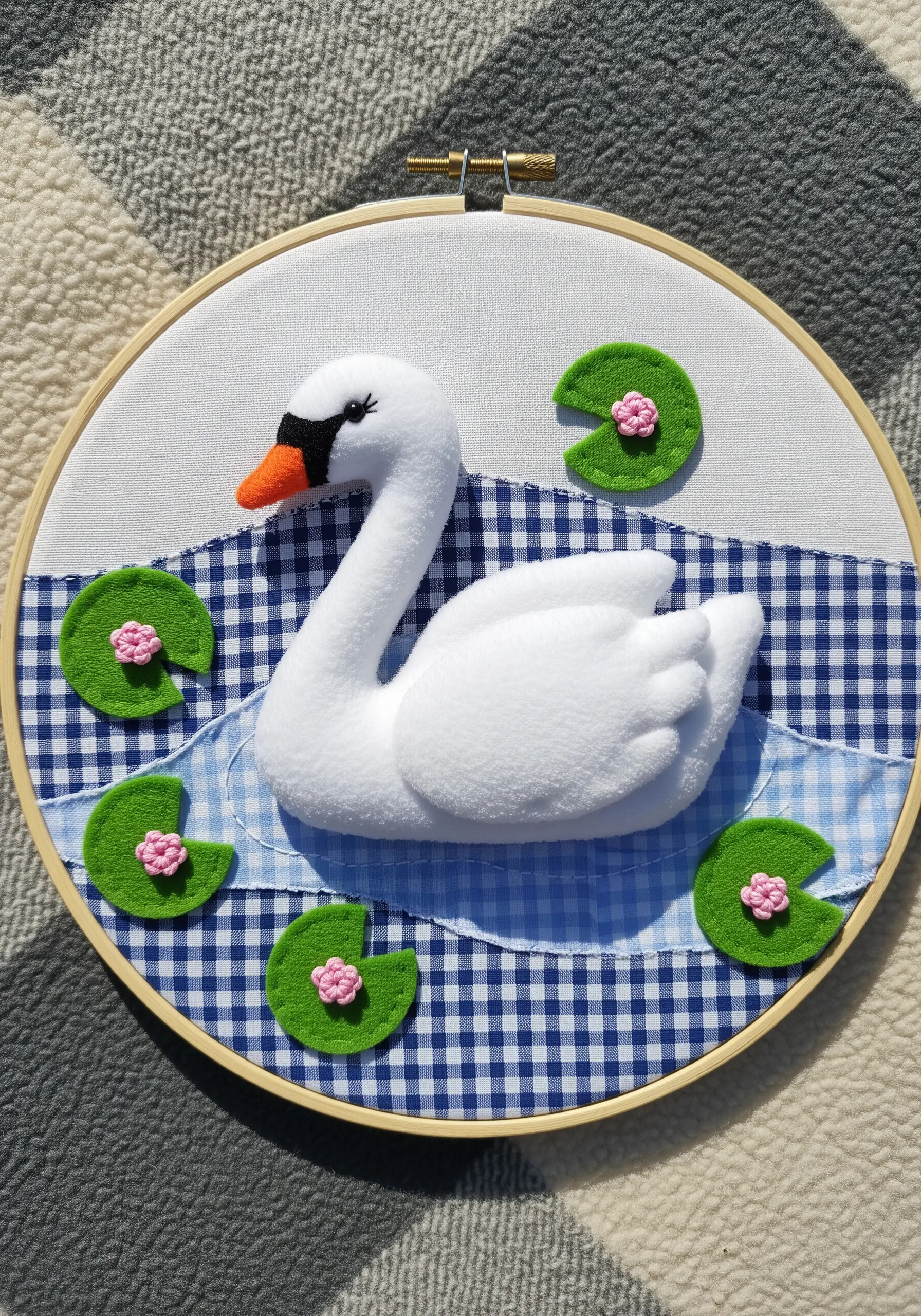
Make a central element, like a swan, stand out by giving it a soft, 3D form.
Cut two identical shapes from your chosen fabric (white fleece or felt works beautifully for this).
Stitch them together around the edges, leaving a small opening. Turn the shape right side out, stuff it lightly with polyester fiberfill, and then stitch the opening closed.
Finally, appliqué this padded form onto your background scene for an instant sculptural effect.
25. Imply Texture with Printed Fabrics
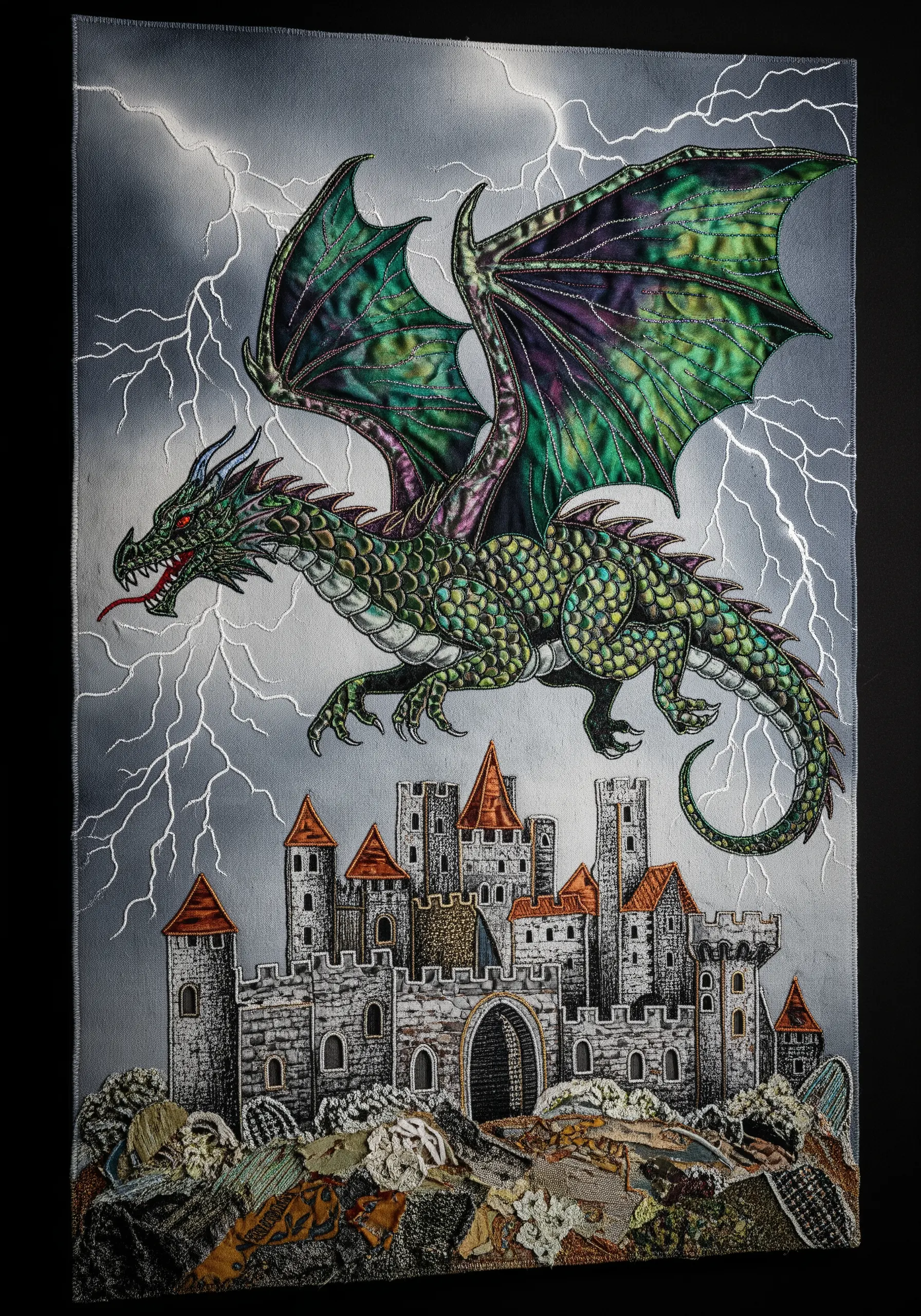
For highly complex textures like dragon scales or castle stones, let a printed fabric do the heavy lifting.
Find a fabric with a small, repeating pattern that suggests the texture you need—a green batik for scales, or a gray marbled print for stone.
Cut your main shapes from this fabric, and then add just a few defining stitches or appliqué smaller details on top.
This approach gives an impression of immense detail without requiring hours of intricate stitching.
26. Incorporate Light for a Magical Glow

Add an element of surprise and magic by backlighting a part of your scene.
When creating a tent or a window, use a semi-sheer fabric like linen or thin cotton.
Before mounting your piece, attach a small battery-powered LED fairy light behind this area.
The soft glow from within creates a cozy, captivating effect that brings your nighttime scene to life in a truly unique way.
27. Distress Your Fabric for an Authentic Look
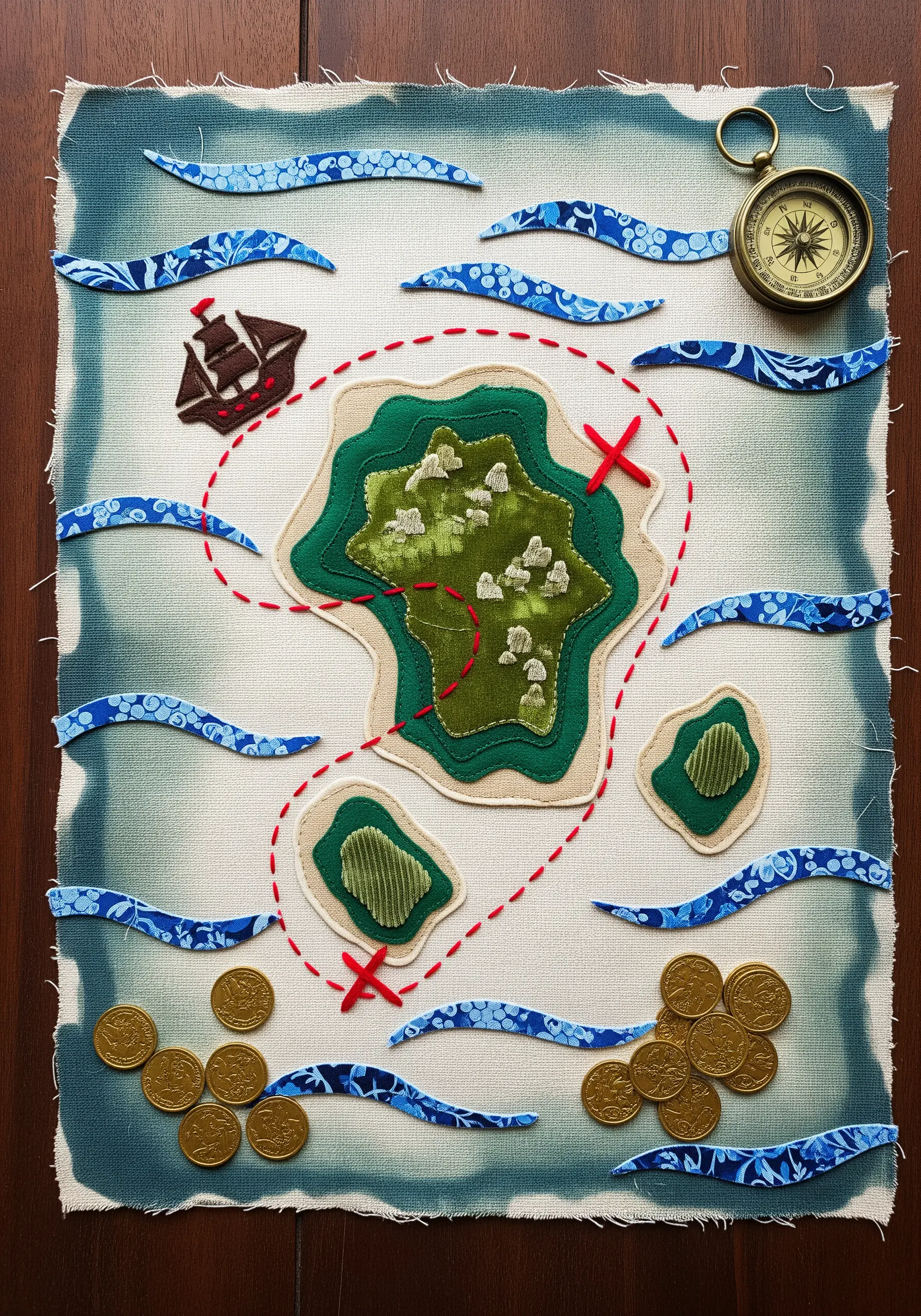
To create a piece that feels like a treasured artifact, like a treasure map, distress your fabrics before you begin.
Soak your background linen or cotton in cooled tea or coffee to give it an aged patina.
Leave the edges of your appliquéd land masses and waves raw and slightly frayed to enhance the weathered, well-traveled aesthetic.
These simple aging techniques add a layer of history and storytelling to your work.
28. Repurpose Found Objects Like Lace Doilies
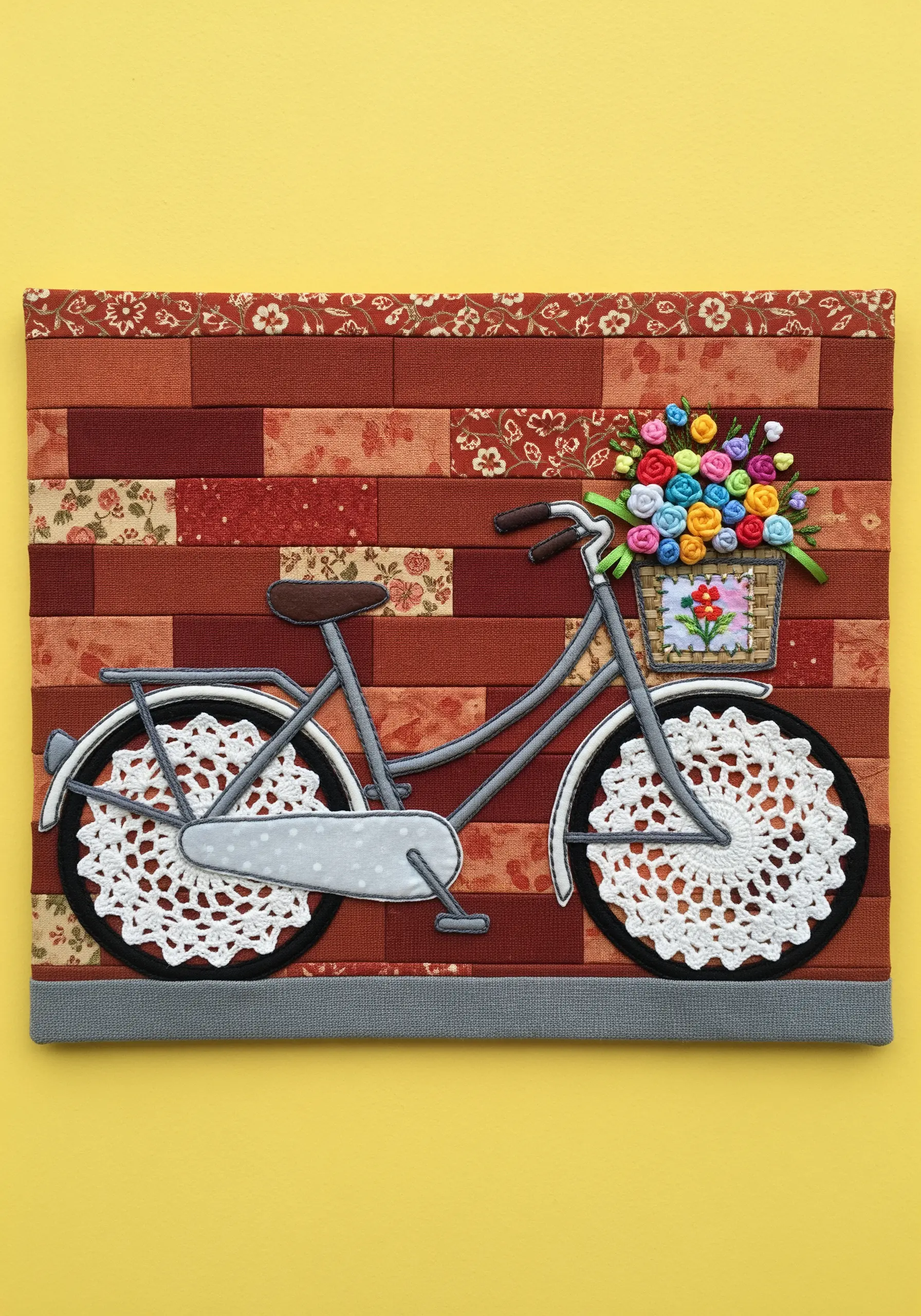
Look beyond your fabric scraps and consider other textile objects you can incorporate.
A small lace doily, for example, makes a perfect and unexpected bicycle wheel, adding intricate detail instantly.
You can also use scraps of ribbon, bits of twine, or even single earrings as unique embellishments.
This practice of incorporating found objects adds a layer of clever ingenuity to your collage work.
29. Build a Thatched Roof with Fringed Fabric

Create a realistic thatched roof effect by layering strips of fringed fabric.
Choose textured, loosely woven fabrics like burlap, linen, or tweed. Cut them into strips and pull away the weft threads along one edge to create a fringe.
Layer these strips from the bottom up, overlapping them so only the fringed edges are visible.
This technique creates a wonderfully rustic and earthy texture embroidery that is perfect for cottages and fairytale homes.