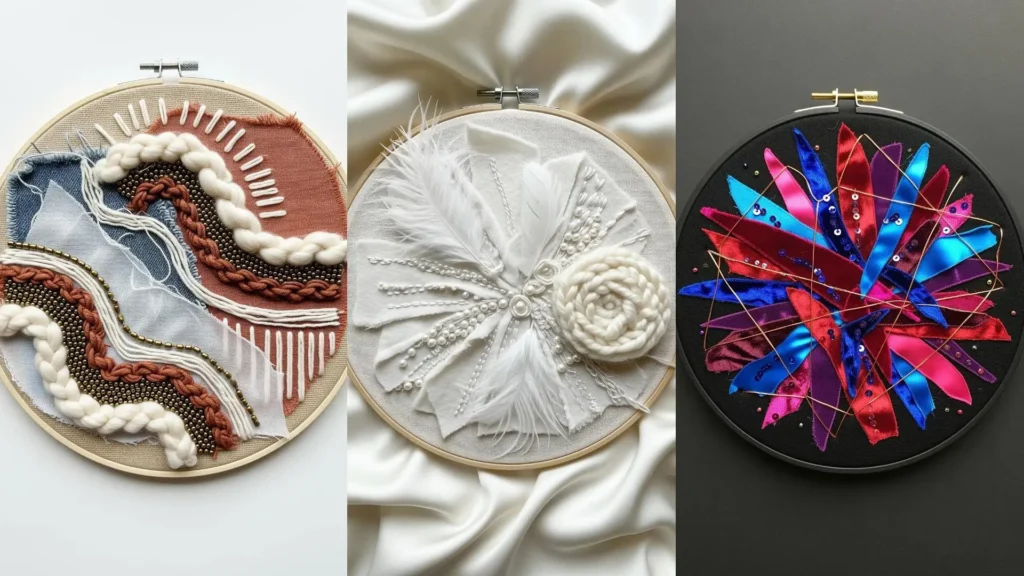
Have you ever noticed that the most compelling art isn’t always about what’s there, but what’s left out? In embroidery, that quiet, unstitched canvas is your most powerful tool. It’s called negative space, and learning to use it with intention will fundamentally change the way you stitch.
Forget filling every inch of fabric. Instead, I want you to think like a sculptor, carving shapes out of the background. Negative space isn’t an absence; it’s a presence. It’s the breath in a composition, the silence in a story. It gives your stitches room to speak, adding clarity, sophistication, and a distinctly modern edge to your work.
Here, you’ll discover twenty ways to make that empty space the hero of your piece. These aren’t just patterns; they are techniques for seeing your canvas differently—as a thoughtful, active part of your design. Let’s begin.
1. Frame an Organic Shape with Geometric Fills
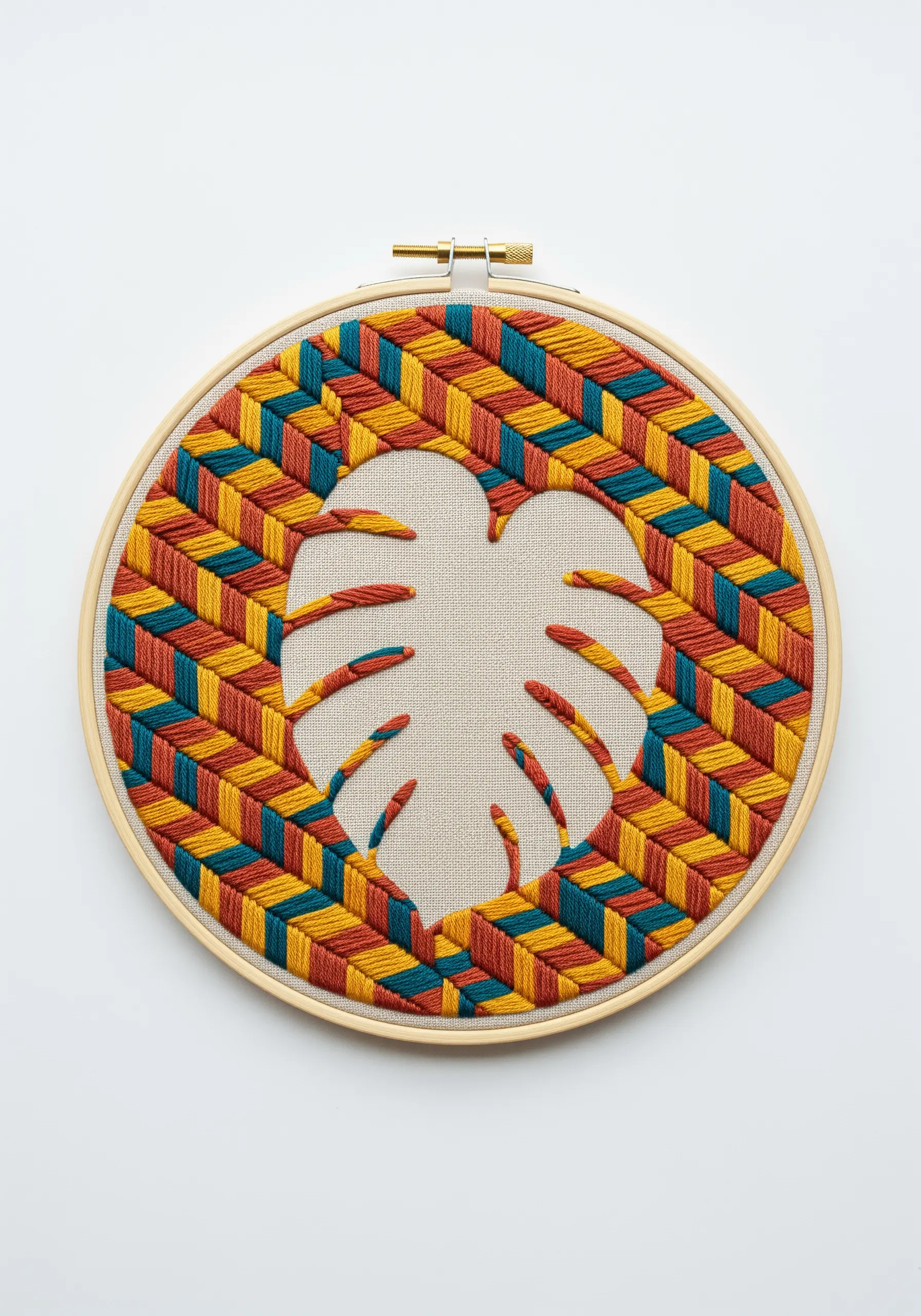
Create a powerful visual contrast by outlining a natural shape, like a monstera leaf, and filling the entire background with a structured, geometric pattern.
Use a long satin stitch in a repeating diagonal or herringbone pattern to build a dense, woven texture.
This technique forces the eye to focus on the unstitched silhouette, making the negative space the true subject of your piece.
For sharp edges, trace your design with a water-soluble pen and use a single strand of floss for a final backstitch outline after the fill is complete.
This approach transforms a simple botanical into a bold piece of minimalist home decor.
2. Sculpt a Void with Textural Clusters
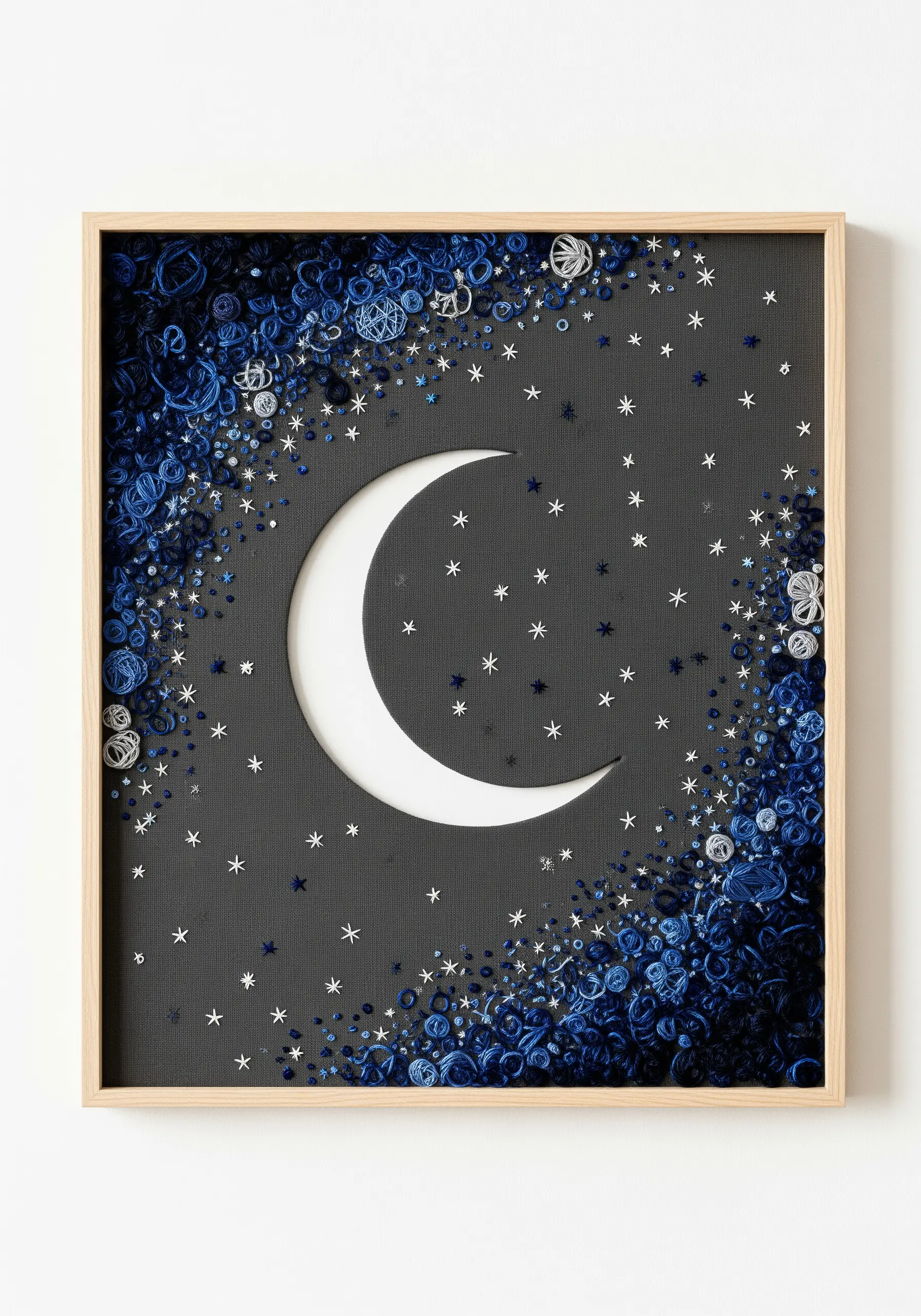
Define your negative space not with lines, but with an explosion of surrounding texture.
Outline a simple shape—like a crescent moon—and fill the background with a dynamic mix of French knots, bullion knots, and colonial knots in varying sizes and shades.
Intersperse tiny seed beads or metallic sequins to catch the light, creating a galaxy effect that makes the clean, empty moon feel serene and deliberate.
The key is density variation: cluster your stitches tightly near the shape’s edge and let them disperse as you move outward.
This creates a sense of depth and makes the negative space feel like a calm center in a storm of detail, perfect for peaceful bedtime vibes.
3. Radiate Energy with High-Contrast Lines

Turn your negative space into a powerful graphic statement by framing it with bold, radiating lines.
First, fill the area immediately surrounding your subject with dense, black satin stitch to create a solid halo.
Then, extend long, straight stitches outward from that halo, like rays of light. This technique draws the eye directly to the unstitched center.
Working in monochrome (black thread on white fabric) amplifies the drama and precision, giving your piece an illustrative, almost woodcut-like quality.
Ensure your radial lines are perfectly taut to avoid sagging and maintain that sharp, graphic tension.
4. Define a Landscape with Layered Textures

Instead of stitching the mountains, stitch the world around them to bring them into existence.
Use a simple backstitch or whipped backstitch to outline the peaks, leaving them as clean negative space against the fabric.
Create a dense forest at the base with a sea of French knots in variegated green tones. For the sky, use vertical satin stitches or long-and-short stitches in lighter shades to suggest atmosphere.
This play on textures makes the smooth, unstitched mountains feel solid and majestic, proving that what you *don’t* stitch can define the entire scene.
5. Carve a Silhouette with Directional Stitches
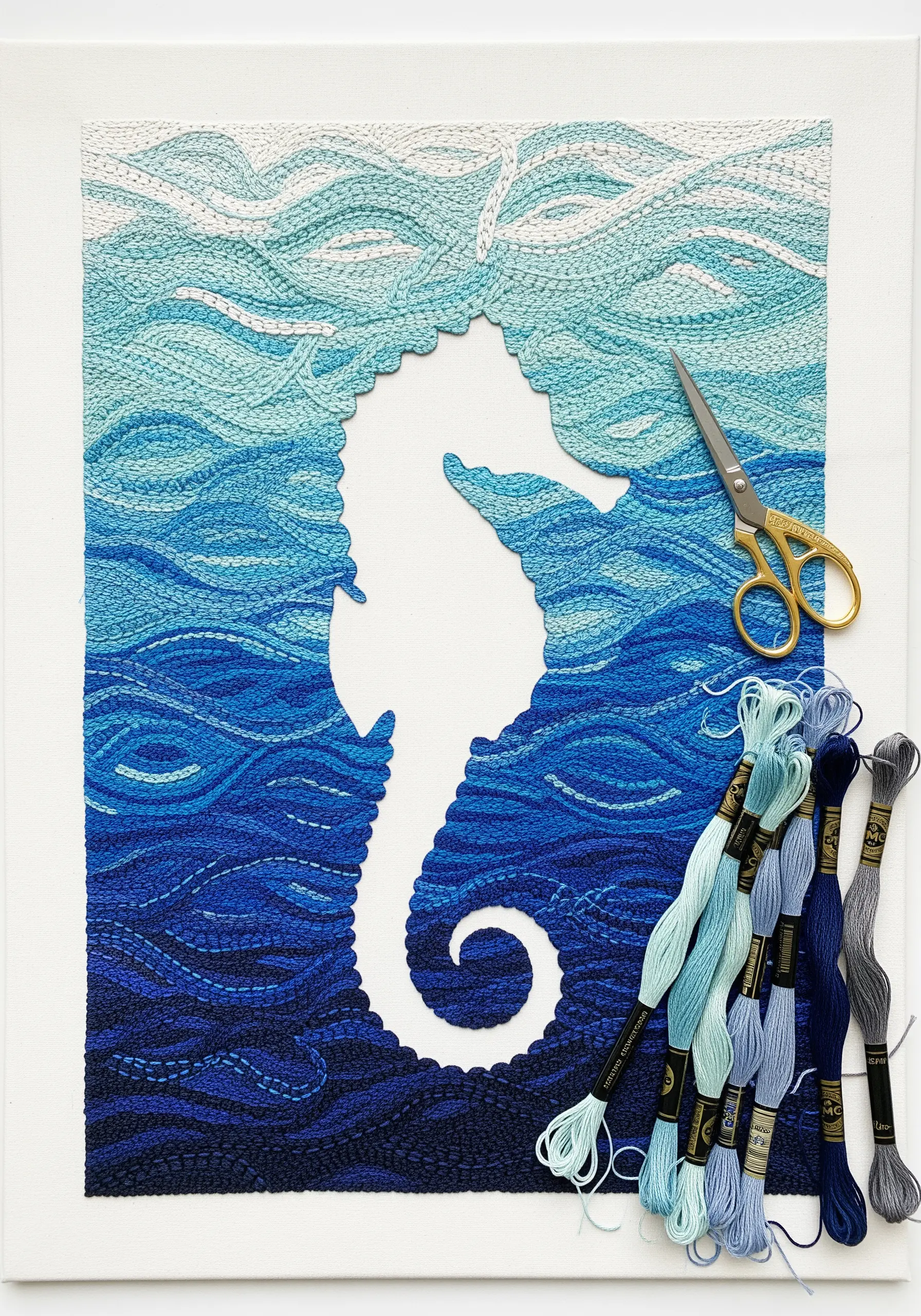
Let the direction of your stitches tell a story and define your negative space simultaneously.
To create this seahorse, the background is filled with wavy lines of running stitch, split stitch, or stem stitch, mimicking the movement of water.
By varying the shades of blue and the density of the stitches, you can create an oceanic gradient that appears to flow around the unstitched silhouette.
This method doesn’t just fill space; it activates it, making the empty shape feel as though it’s truly suspended in a current. It’s an excellent way to create organic thread art.
6. Construct an Open Geometric Grid

In this technique, the negative space is an integral part of the pattern itself, not just a void to be filled around.
Use a thick thread, like pearl cotton or all six strands of floss, to create a honeycomb grid with wrapped or couched stitches.
The stitched lines form the structure, but the empty hexagonal spaces are what complete the design. This creates a light, airy feel that’s both modern and visually complex.
This method works beautifully for any repeating geometric pattern—think lattices, triangles, or interlocking squares—where the unstitched canvas becomes a key design element.
7. Isolate a Form with Minimalist Lines
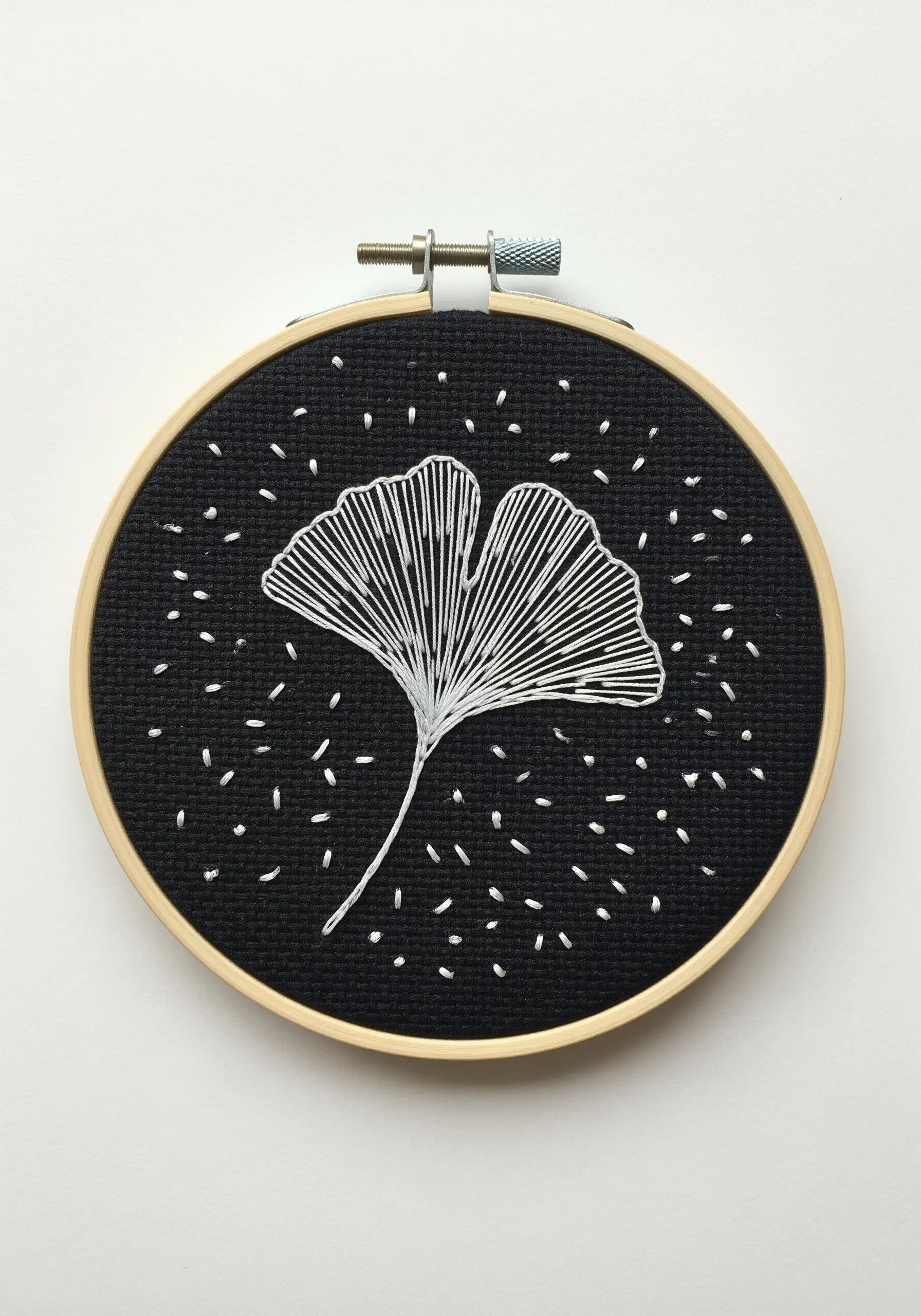
Sometimes, the most powerful use of negative space is to simply let it breathe.
Choose a high-contrast combination, like white thread on black Aida or linen fabric, to maximize visual impact.
Stitch a delicate subject, like this ginkgo leaf, using only radiating straight stitches. The simplicity of the stitching draws attention to its form.
Then, scatter a few tiny seed stitches or French knots across the vast, empty background. These small details accentuate the emptiness, making the space feel intentional and composed rather than unfinished.
8. Suggest Form with Outlines and Fragments

You don’t need to fill an entire background to define a negative space; you only need to suggest its boundaries.
Create a line art portrait using a simple backstitch or stem stitch for the profile and hair.
Instead of a solid fill, scatter small, dash-like straight stitches around the silhouette. These fragments create a sense of energy and movement.
They provide just enough visual information for the brain to fill in the rest, making the unstitched face the clear focal point.
The effect is modern, expressive, and relies entirely on the viewer’s perception to complete the image.
9. Frame Simplicity with Concentric Color
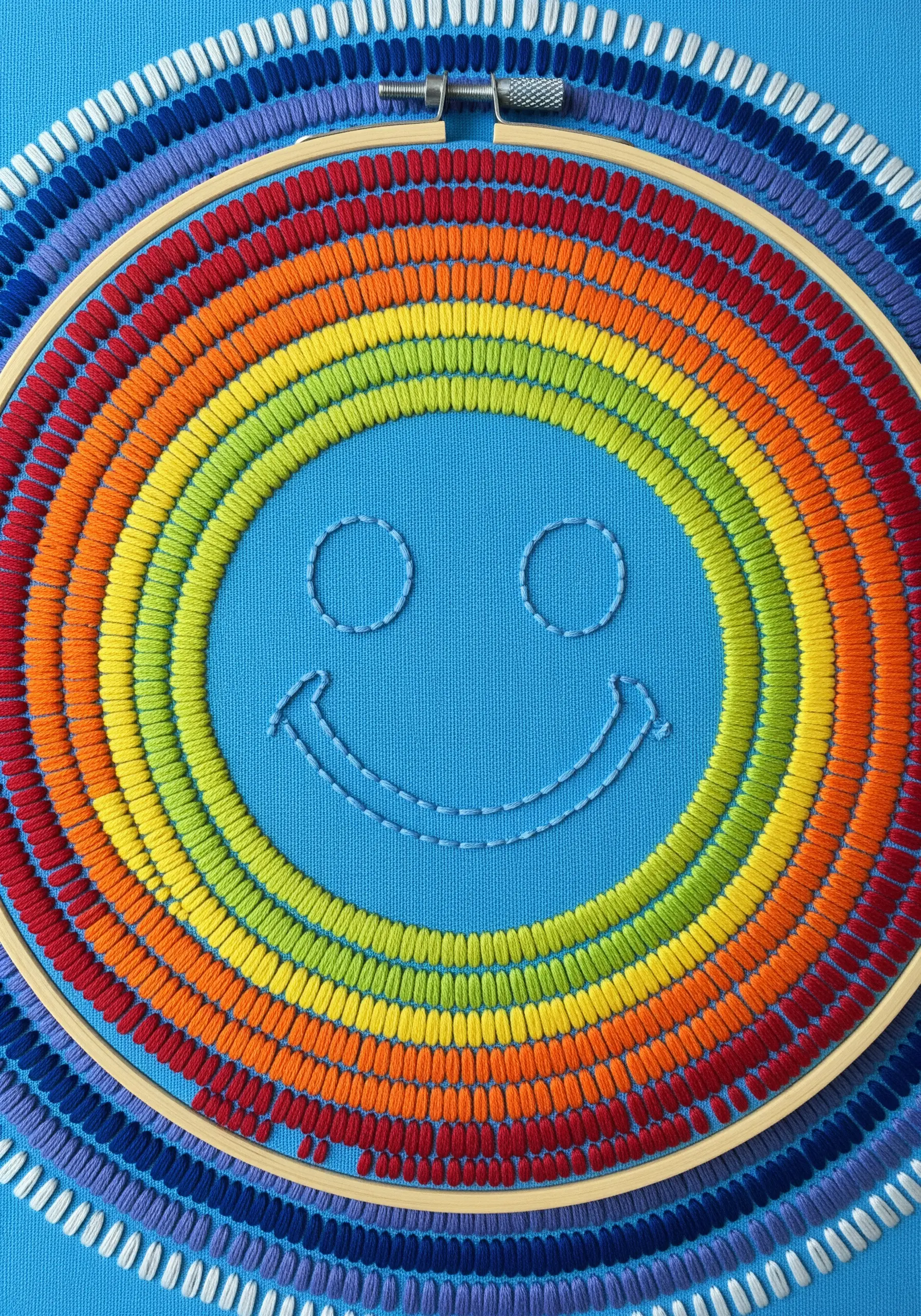
Use a vibrant, dense frame to draw the eye inward and elevate a very simple unstitched shape.
Outline your central motif—here, a simple smiley face—with a single backstitch line. This creates a crisp edge for your fill stitches to meet.
Work your way outward with concentric rings of satin stitch, creating a bold rainbow effect.
The sheer density and color of the surrounding embroidery give the minimalist negative space a playful importance. It’s a joyful design that proves even the simplest shapes can become powerful focal points.
10. Paint a Sky to Reveal a Silhouette
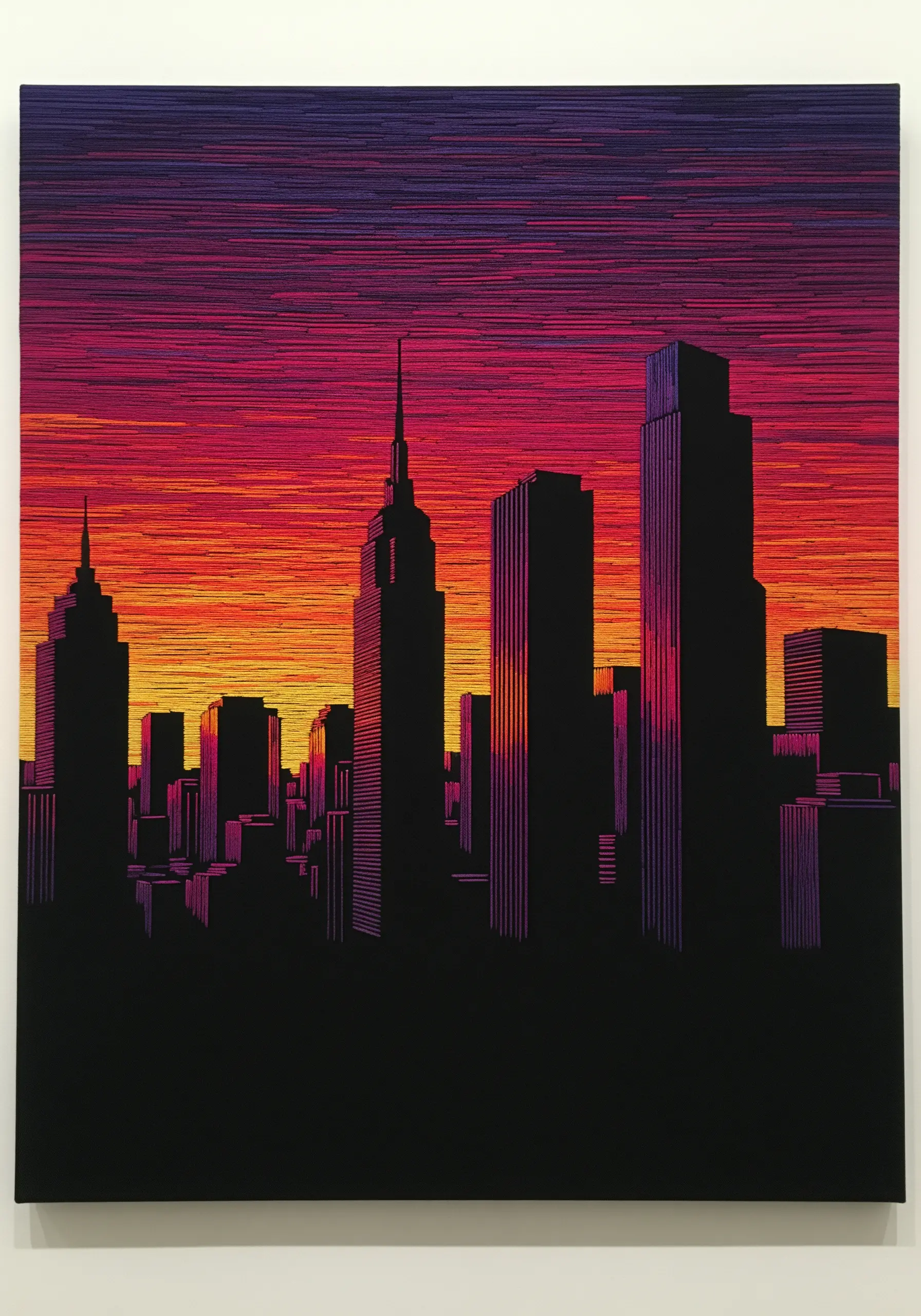
Create a dramatic cityscape by stitching the sunset, not the buildings.
Use long, horizontal straight stitches across a black or dark navy canvas, blending colors from yellow to orange, pink, and deep purple to create a smooth gradient.
The unstitched black canvas becomes the city skyline, its sharp architectural forms carved out by the vibrant threads of the sky.
This technique completely inverts the traditional approach to landscape embroidery and results in a piece with incredible depth and atmosphere, perfect for modern thread landscape projects.
11. Give Words Weight with Textured Waves
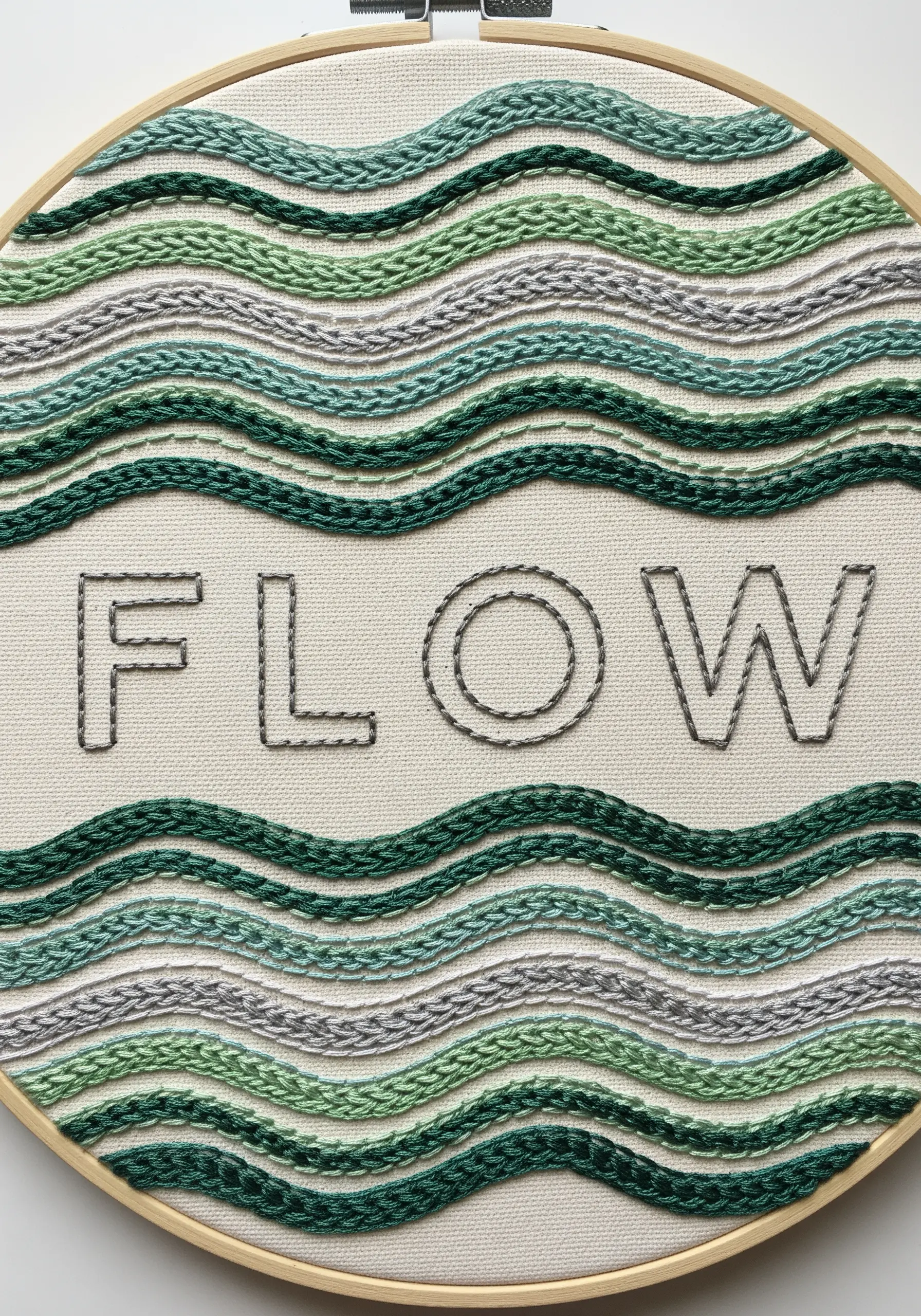
Let your message emerge from a sea of texture by leaving the letters unstuffed.
Outline your word using a neat backstitch. Then, fill the surrounding space with a tactile stitch like a whipped chain stitch, stem stitch, or even rows of French knots.
Arrange the fill stitches in gentle, undulating waves and use a calming, analogous color palette to create a sense of movement.
The rich texture of the background provides a stark contrast to the clean, open letters, making them feel grounded and impactful.
12. Create Optical Depth with Linear Perspective

Use the principles of linear perspective to turn a simple negative shape into a compelling optical illusion.
Trace a central shape, like this keyhole, onto your fabric. Then, fill the background with straight stitches that radiate from an imaginary vanishing point, stopping precisely at the shape’s outline.
The converging lines create a powerful sense of depth, making the flat, unstitched keyhole appear as if it’s receding into the distance or opening into another space.
This is a perfect example of how negative space embroidery techniques can create sophisticated, gallery-worthy art.
13. Integrate Negative Space as a Pattern Element

Negative space doesn’t have to be the main subject; it can be a deliberate design element within a larger, textured form.
Here, a band of unstitched fabric breaks up the dense clusters of French and bullion knots that form a hot air balloon.
This empty stripe provides visual relief from the heavy texture, adding definition and structure to the overall shape.
Think of using negative space for stripes, polka dots, or other patterns within a filled area to add a layer of sophistication and lightness to your design.
14. Define a Path with Dimensional Outlines
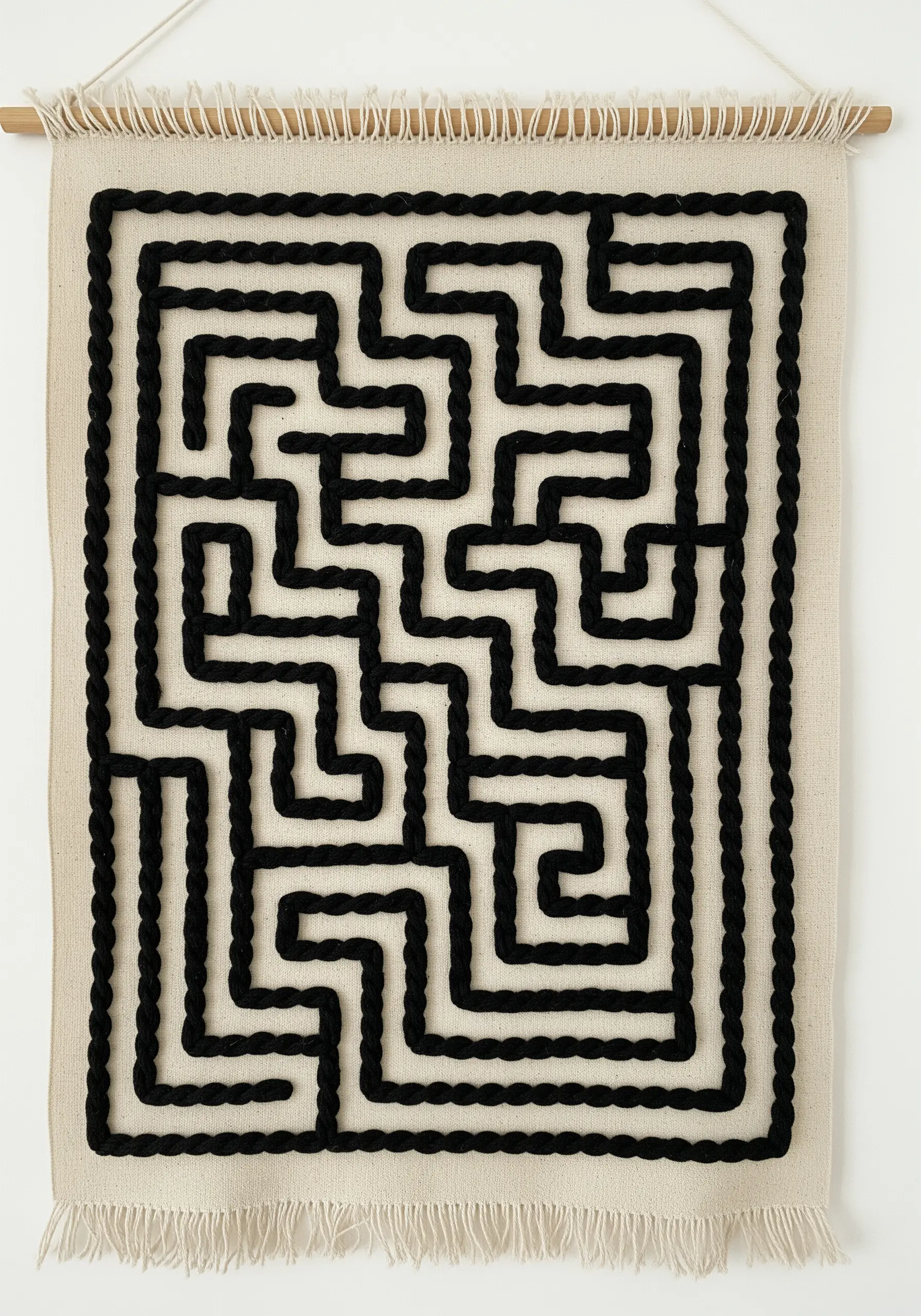
Transform your embroidery into a tactile piece by using a thick, dimensional material to create the design, leaving the path as negative space.
Instead of stitching lines, lay down a thick cord, yarn, or twisted rope on your fabric, securing it with small, discreet couching stitches in a matching thread.
The high relief of the couched material makes the unstitched canvas path of the maze the clear focus.
This technique creates a bold, graphic wall hanging with a sculptural quality that invites touch.
15. Utilize Patterned Fabric as an Intentional Fill
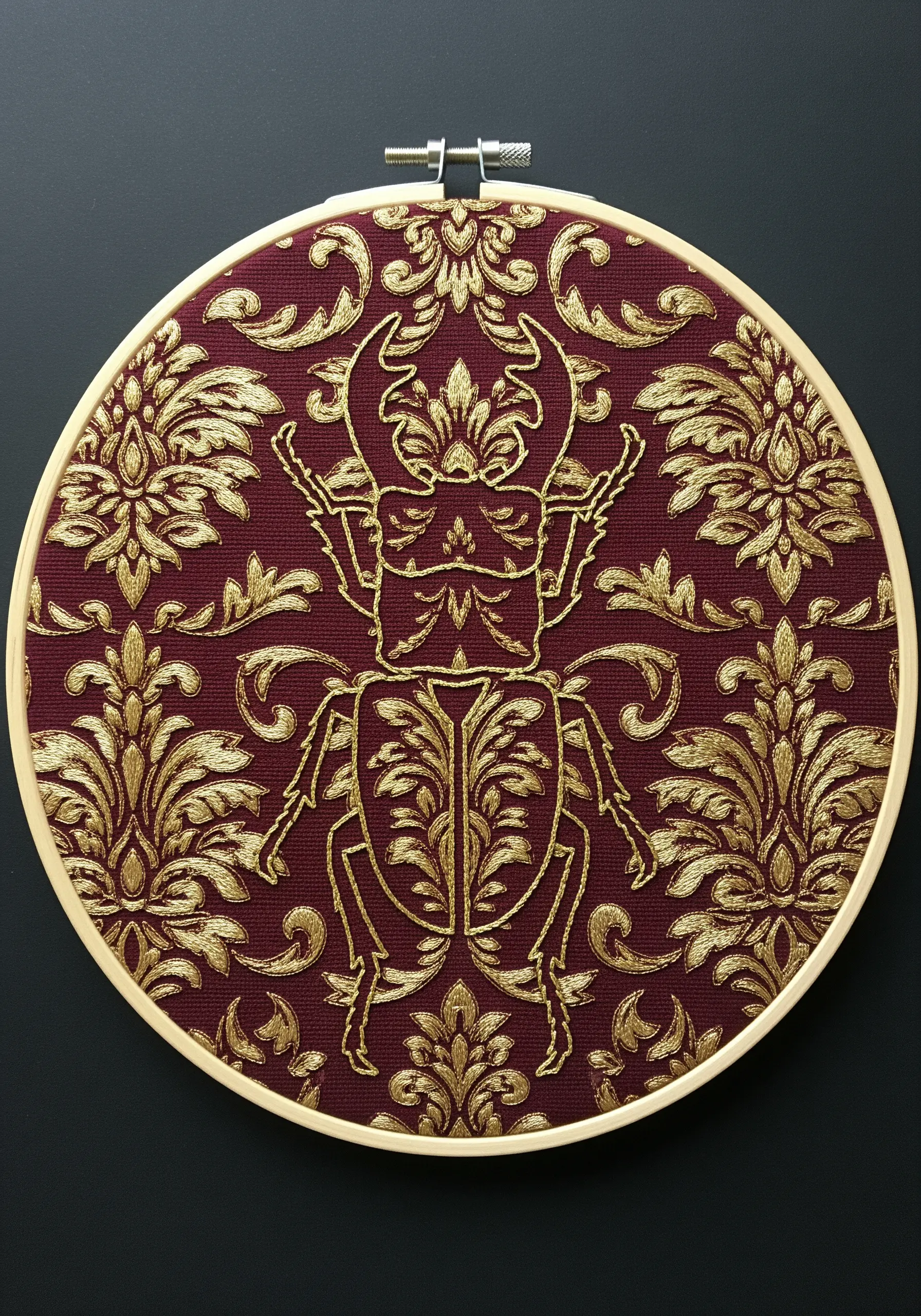
Let your fabric do the work for you by choosing a material with a beautiful pattern, like damask, brocade, or a printed cotton.
Use a metallic or high-contrast thread to simply outline your subject—in this case, a beetle.
The negative space inside the outline is automatically filled by the fabric’s intricate design, seamlessly integrating your embroidery with the canvas.
This technique is incredibly efficient and results in a piece that feels layered, luxurious, and completely cohesive. It’s an ideal approach for creating vintage-inspired embroidery wall decor.
16. Shape a Void with Energetic, Abstract Stitches

Define your negative space with a burst of chaotic, colorful energy.
Lightly trace your desired shape—like this leaf—onto the fabric. Instead of filling around it, use a free-form, abstract approach to suggest its edges.
Use a variety of stitches—single straight stitches, tiny French knots, woven wheels, and detached chain stitches—in a riot of bright, neon colors.
Concentrate the stitches most densely along the invisible edge of your shape, letting them scatter outward. This creates a vibrant, deconstructed effect where the clean negative space feels like a deliberate cutout from a painted canvas.
17. Weave a Background to Frame a Clean Shape
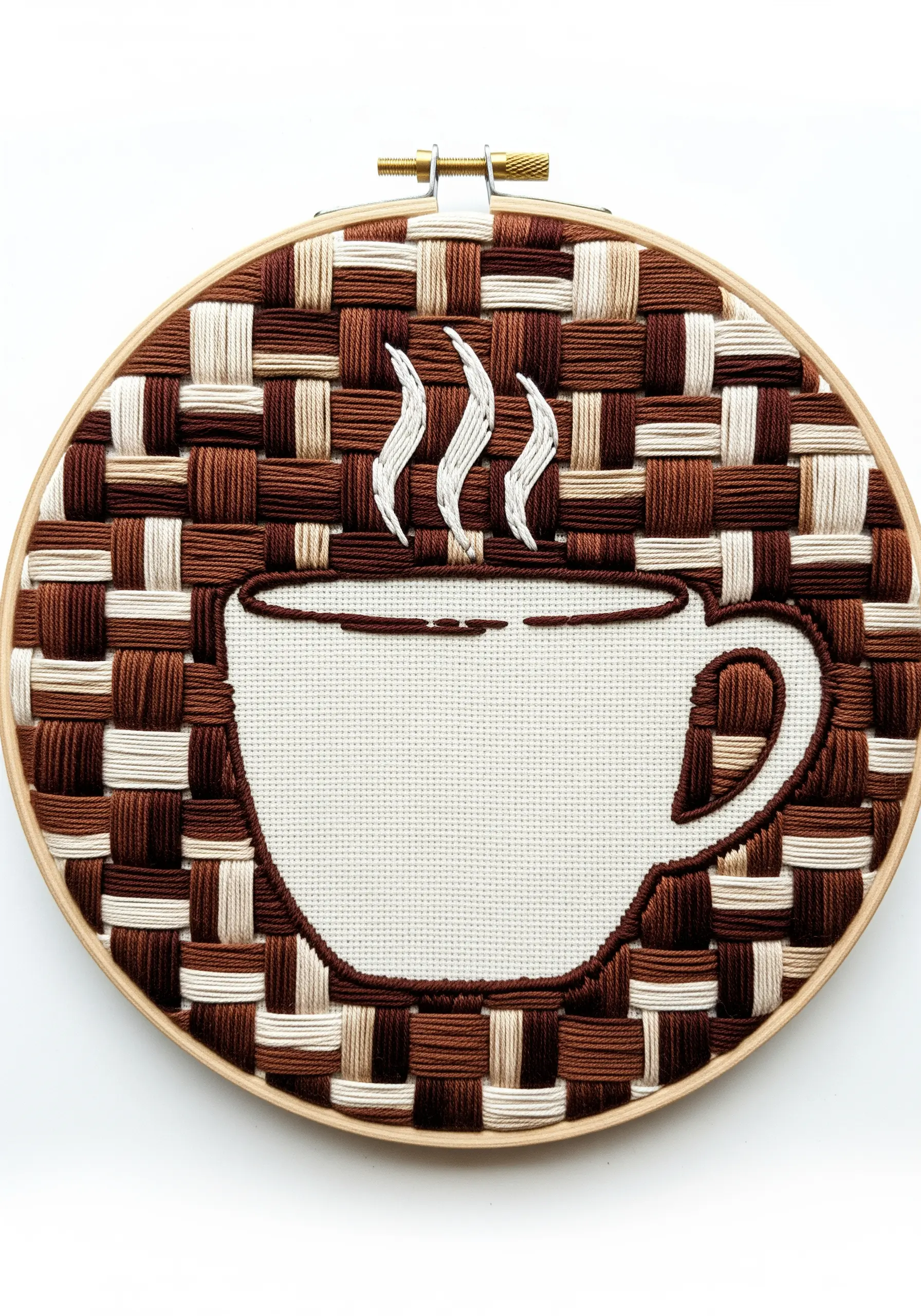
Create a stunningly textured background by weaving threads directly onto your canvas, letting the unstitched area stand out in sharp relief.
This technique is perfect for Aida cloth or even-weave linen. First, lay down your vertical warp threads across the entire area, then use a blunt tapestry needle to weave your horizontal weft threads over and under.
Alternate colors to create a checkerboard or striped effect. Once the background is woven, use a simple backstitch to outline your negative space subject.
The contrast between the flat, smooth canvas and the thick, woven background is both visually and texturally compelling.
18. Imply Transparency with Partial Fills

Use negative space to suggest light, transparency, and dimension in your subjects.
When stitching something multifaceted like crystals or gemstones, don’t fill every section. Instead, strategically fill some facets with smooth satin stitch while leaving others as empty outlines.
This technique tricks the eye into seeing the unstitched areas as transparent or reflective surfaces, adding a layer of realism and complexity to the design.
Mixing filled, outlined, and beaded sections creates a rich tapestry of textures that makes the entire piece dynamic.
19. Reveal a Form with Reverse Appliqué or Cutwork

For a truly dramatic effect, create negative space by physically removing the fabric.
This can be achieved through reverse appliqué, where you layer two pieces of fabric and cut away the top layer to reveal the color underneath.
Alternatively, in cutwork embroidery, you cut away sections of a single piece of fabric and secure the edges with dense satin stitch or buttonhole stitch.
The surrounding seed stitches add a delicate texture that emphasizes the stark, clean void of the tree shape, creating a piece with incredible depth and precision.
20. Define Elegance with Architectural Line Work
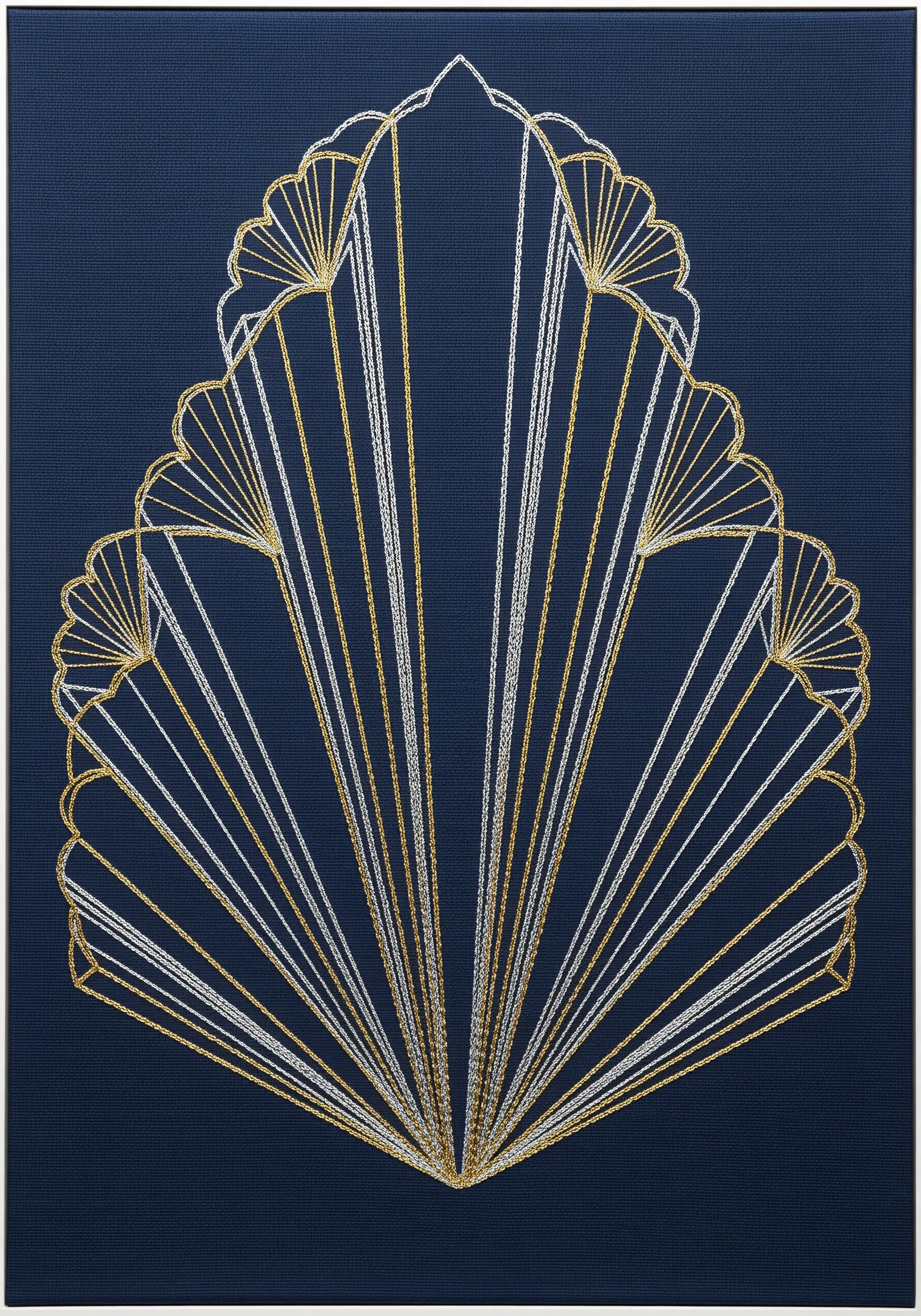
Evoke the glamour of Art Deco by using precise, radiating lines to create a design where the empty space is as important as the thread itself.
Use a metallic or silk thread for a luxurious sheen. Plot your anchor points carefully and use long, taut straight stitches to form a symmetrical fan shape.
The beauty of this technique lies in the rhythm and repetition of the lines and the elegant voids they create.
The negative space isn’t just a background; it’s an active component of the geometric pattern, creating a sense of balance, grace, and sophistication.