
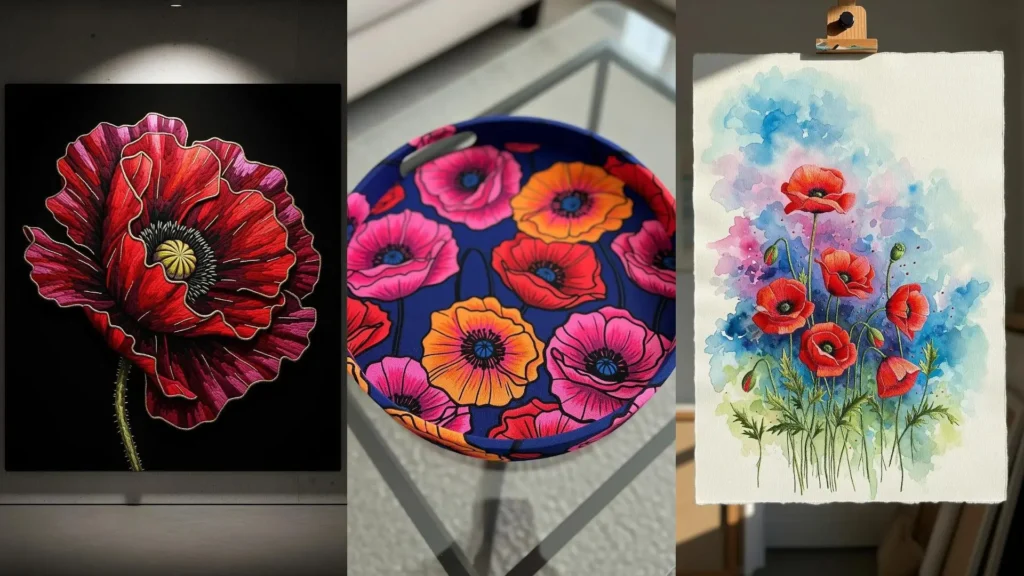
There comes a moment in every stitcher’s journey when you want your work to feel like more than just a collection of stitches. You want it to convey a feeling, to look intentional, and to hold a quiet beauty that reflects the care you put into it. But the path from proficient to expressive can feel unclear.
The poppy is the perfect companion for this next step. Its form is simple enough to be approachable, yet it offers endless possibilities for interpretation. It can be bold and dramatic, soft and painterly, or minimalist and graphic. It’s a canvas for exploring the techniques that will truly elevate your art.
In these examples, you won’t find overly complex patterns. Instead, you’ll discover how small, deliberate choices—in thread texture, color blending, composition, and presentation—are what create polished, emotionally resonant embroidery. This is where your work transforms into art.
1. The Art of the Statement Piece: Scaling Up Your Poppy Motif
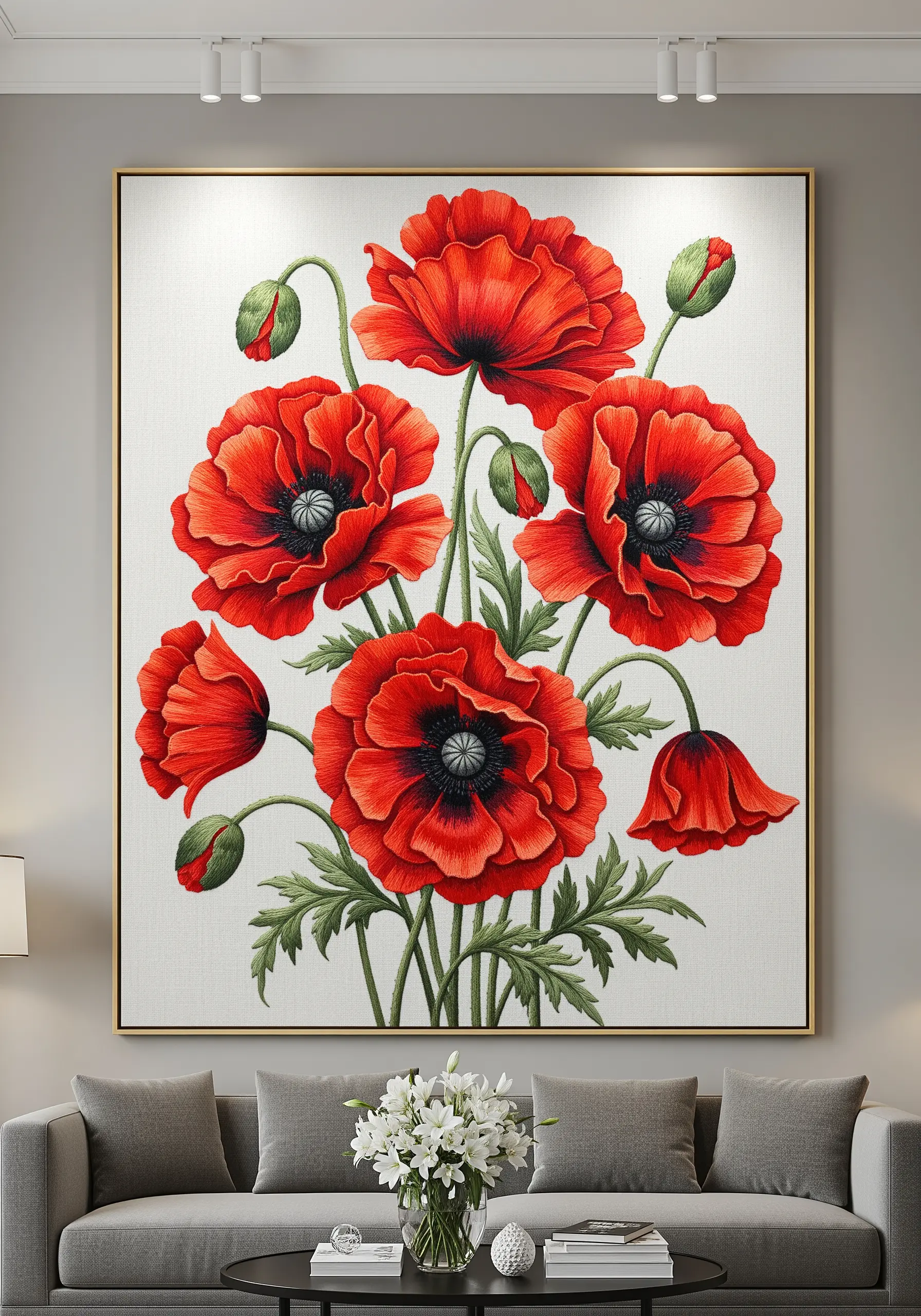
To create a large, gallery-worthy piece, you must think beyond the hoop.
Choose a sturdy, even-weave fabric like linen canvas or Aida cloth, as it provides the necessary support for dense stitching without warping.
Work your design in sections, treating each poppy as its own small project to maintain focus and consistent tension.
Instead of standard six-strand floss, use pearl cotton or tapestry wool to fill larger areas more efficiently; this adds beautiful, bold texture that gives the piece presence from across the room.
This approach transforms a simple floral into a dramatic focal point, proving that scale is a powerful design tool.
2. Achieve Painterly Petals with Thread Blending
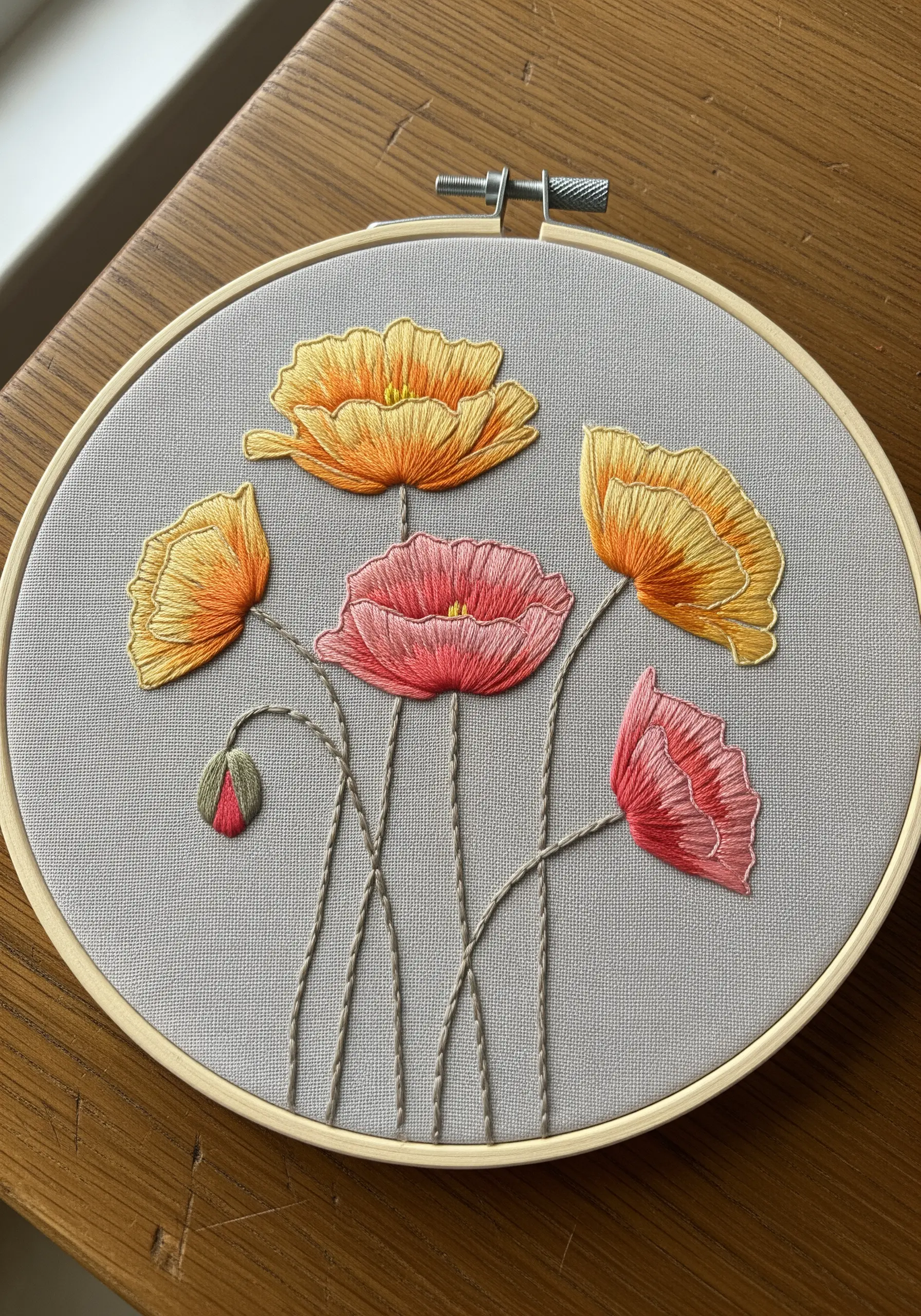
To give your poppy petals a soft, realistic gradient, move beyond solid satin stitch and embrace thread blending.
Use the long-and-short stitch, working with two or three closely related shades in your needle at once—for example, a pale yellow, a gold, and a soft orange.
This technique eliminates harsh lines and creates a gentle, painterly transition that mimics how light hits a real flower.
For the most subtle and refined effect, use only a single strand of each color; the result is a delicate shimmer that solid fills can’t replicate.
3. Introduce Metallic Accents for Dramatic Contrast
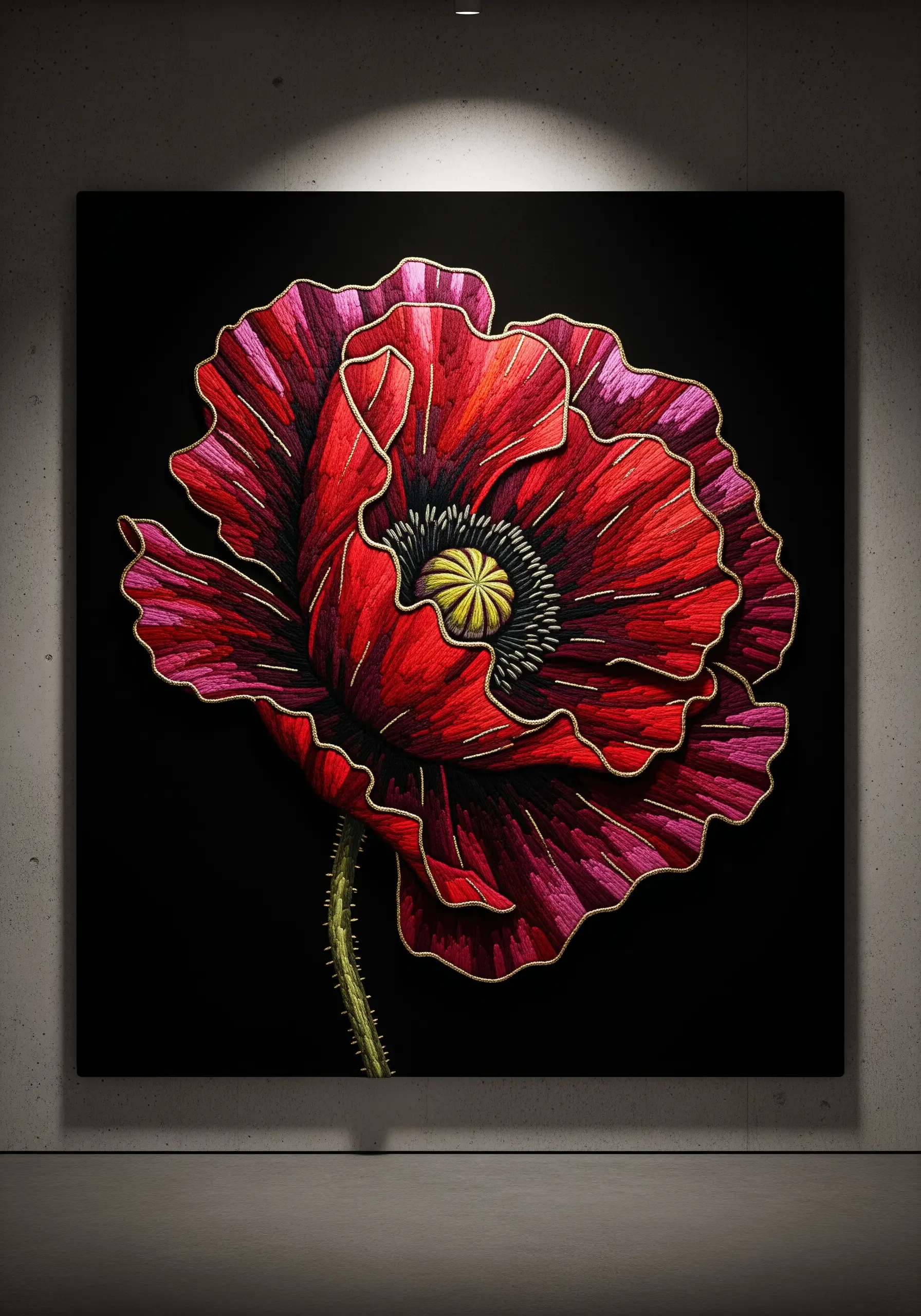
Stitching on black fabric instantly creates drama, but adding a metallic outline introduces a layer of sophisticated luxury.
To prevent fraying and tangling, run your metallic floss through a thread conditioner or beeswax before you begin stitching.
Use a single, delicate strand of gold or copper thread to trace the edges of your poppy petals with a simple backstitch or stem stitch.
This technique not only defines the flower’s shape against the dark background but also catches the light, adding a dynamic shimmer that draws the eye.
4. Tell a Story with a Botanical Triptych
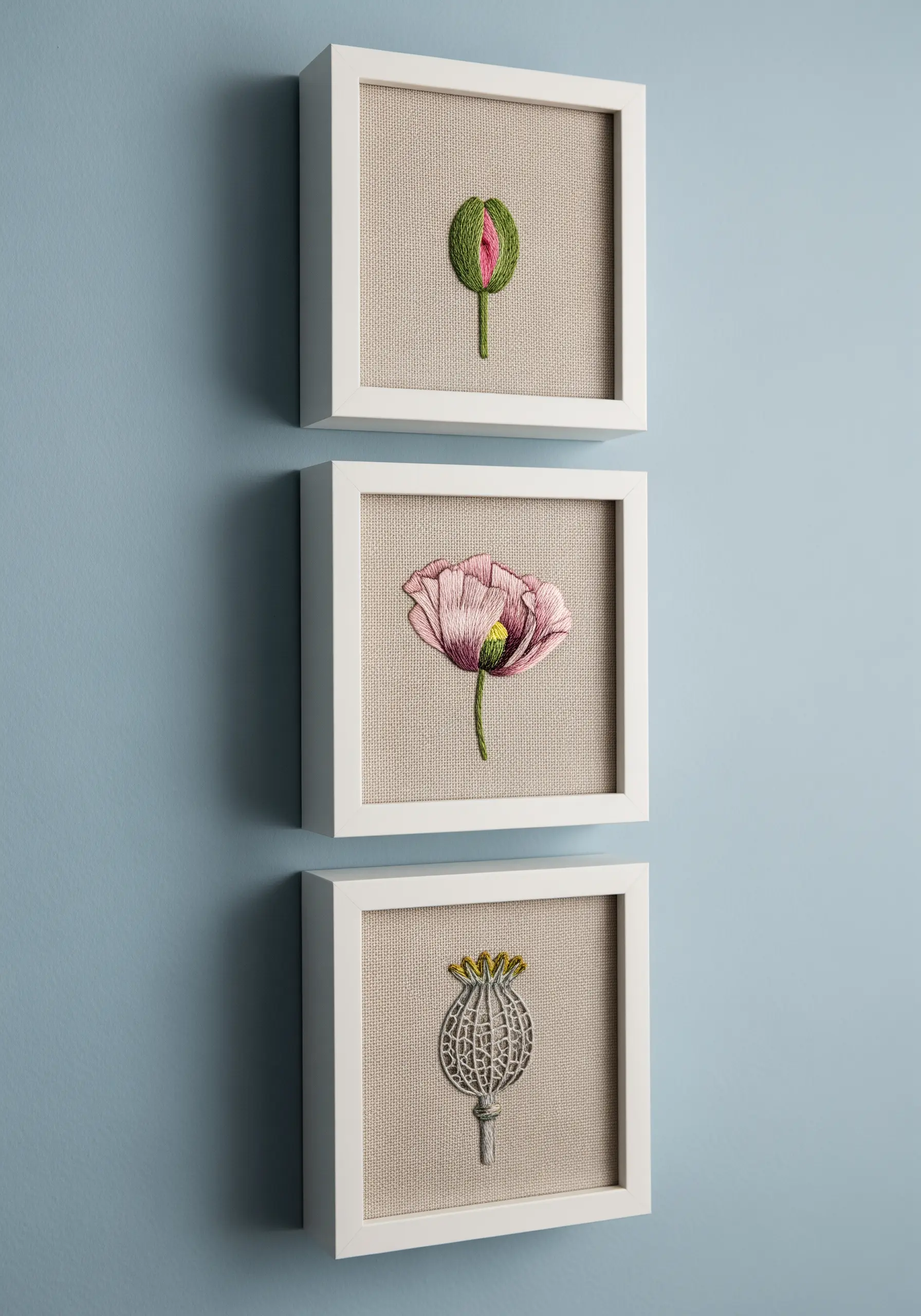
Instead of confining your idea to a single hoop, explore a narrative by creating a series of smaller, focused works.
Isolate each stage of the poppy’s life—the tight bud, the open bloom, and the textured seed pod—in its own frame.
This approach allows you to master different textures: the smooth satin stitch of the bud, the gentle gradients of the petals, and the dense French knots of the pod’s crown.
When displayed together, these individual studies form a cohesive and elegant botanical art display that tells a complete story.
5. Master Satin Stitch on Slippery Fabrics
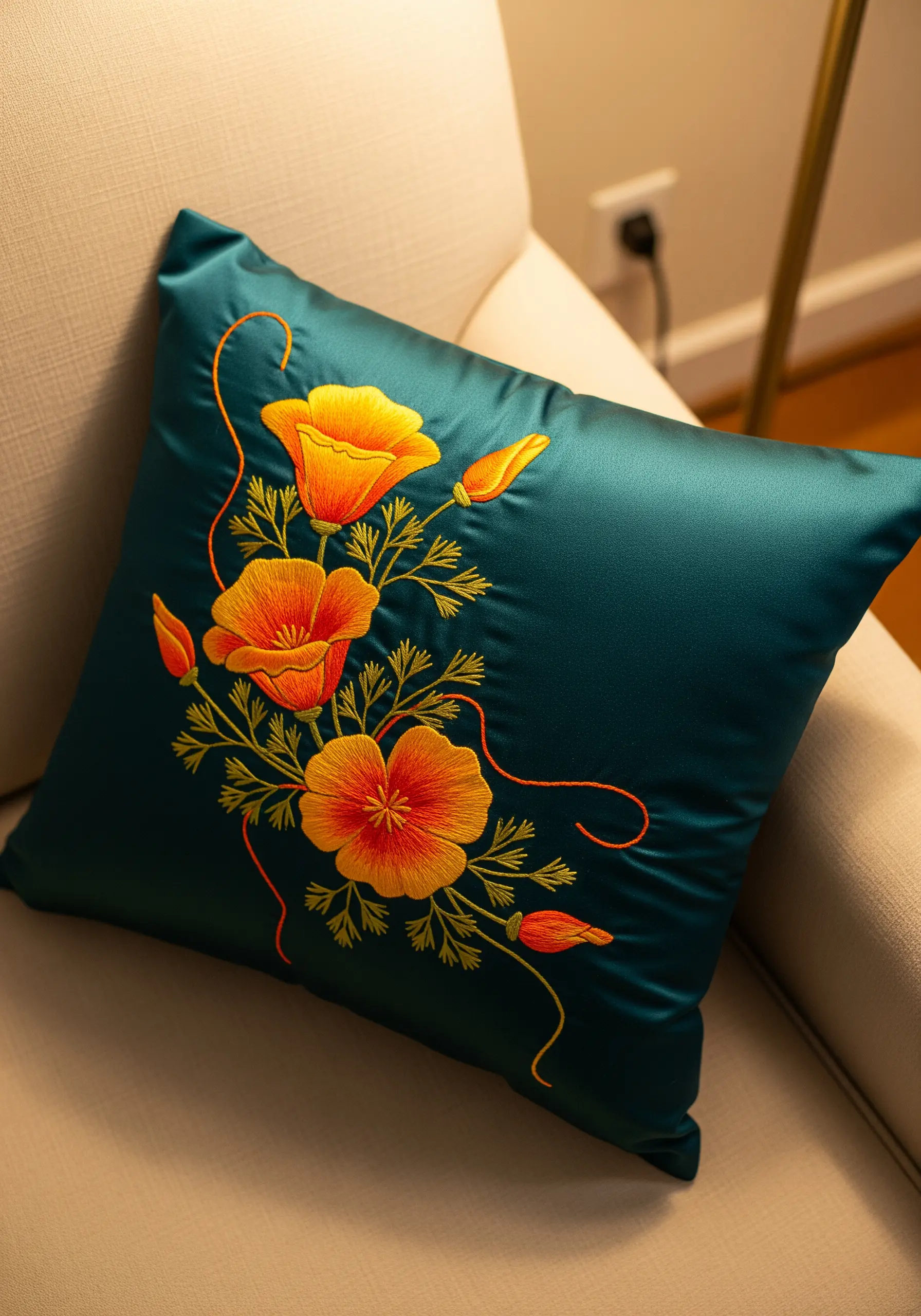
Embroidering on high-sheen fabrics like satin or silk demands careful preparation to achieve a flawless finish.
Before you begin, apply a lightweight, iron-on stabilizer to the back of your fabric; this prevents the material from puckering and provides a stable foundation for your stitches.
Keep your satin stitches short and consistently angled to create that iconic smooth, lustrous surface.
The aesthetic reward is the beautiful interplay between the matte texture of the thread and the reflective sheen of the fabric.
6. Create Depth with Layering and Perspective
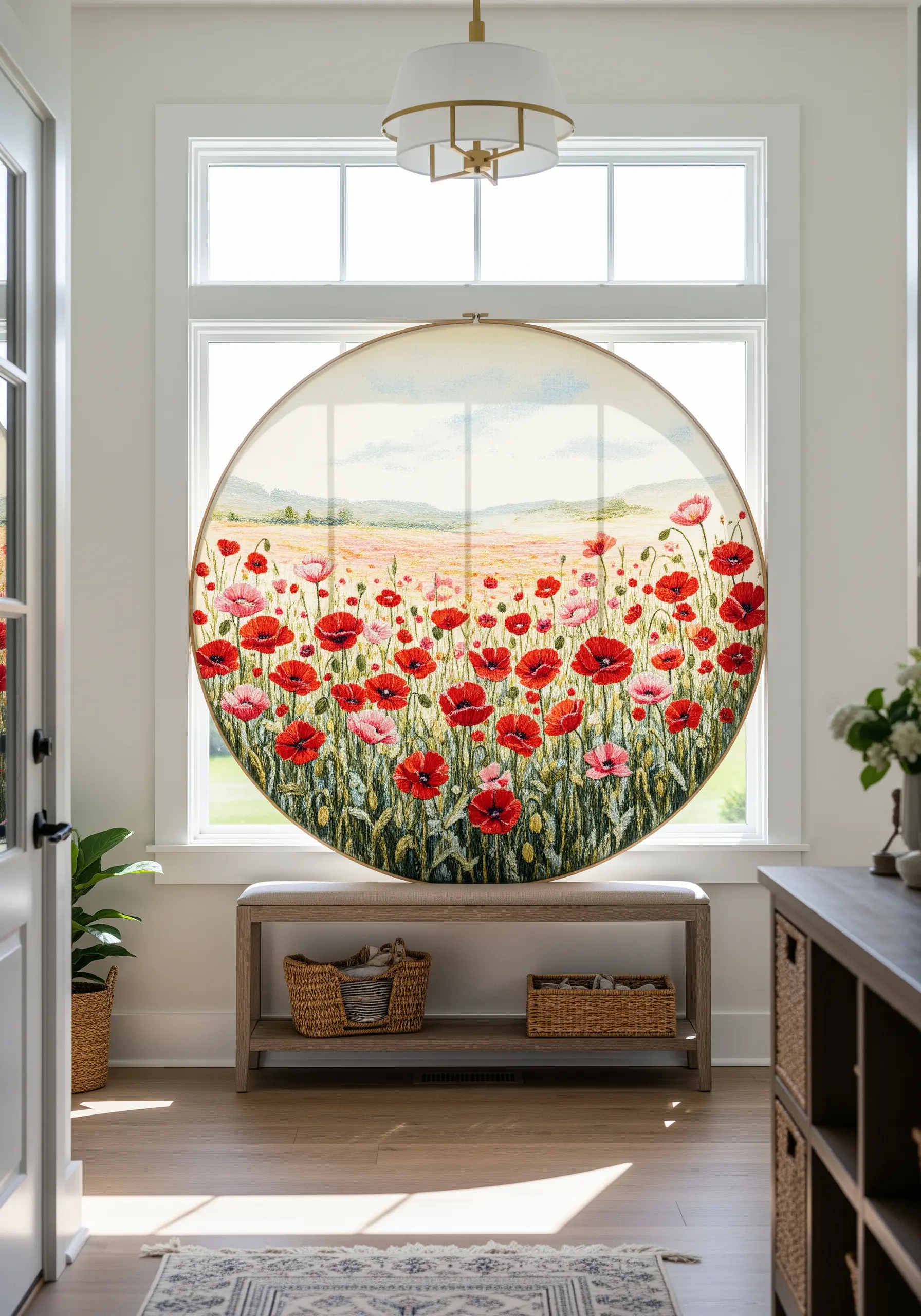
To transform a flat composition into a landscape with depth, you need to stitch with an artist’s eye for perspective.
Embroider the poppies in the foreground using thicker thread (more strands) and greater detail to make them feel closer.
For flowers in the mid-ground and background, use fewer strands of floss, less detail, and slightly cooler or more muted tones.
This technique, known as atmospheric perspective, tricks the eye into seeing distance, turning your fabric into a window onto a field. This is a great way to create fun hoop art projects that feel expansive.
7. Explore Sculptural Embroidery with Mixed Media
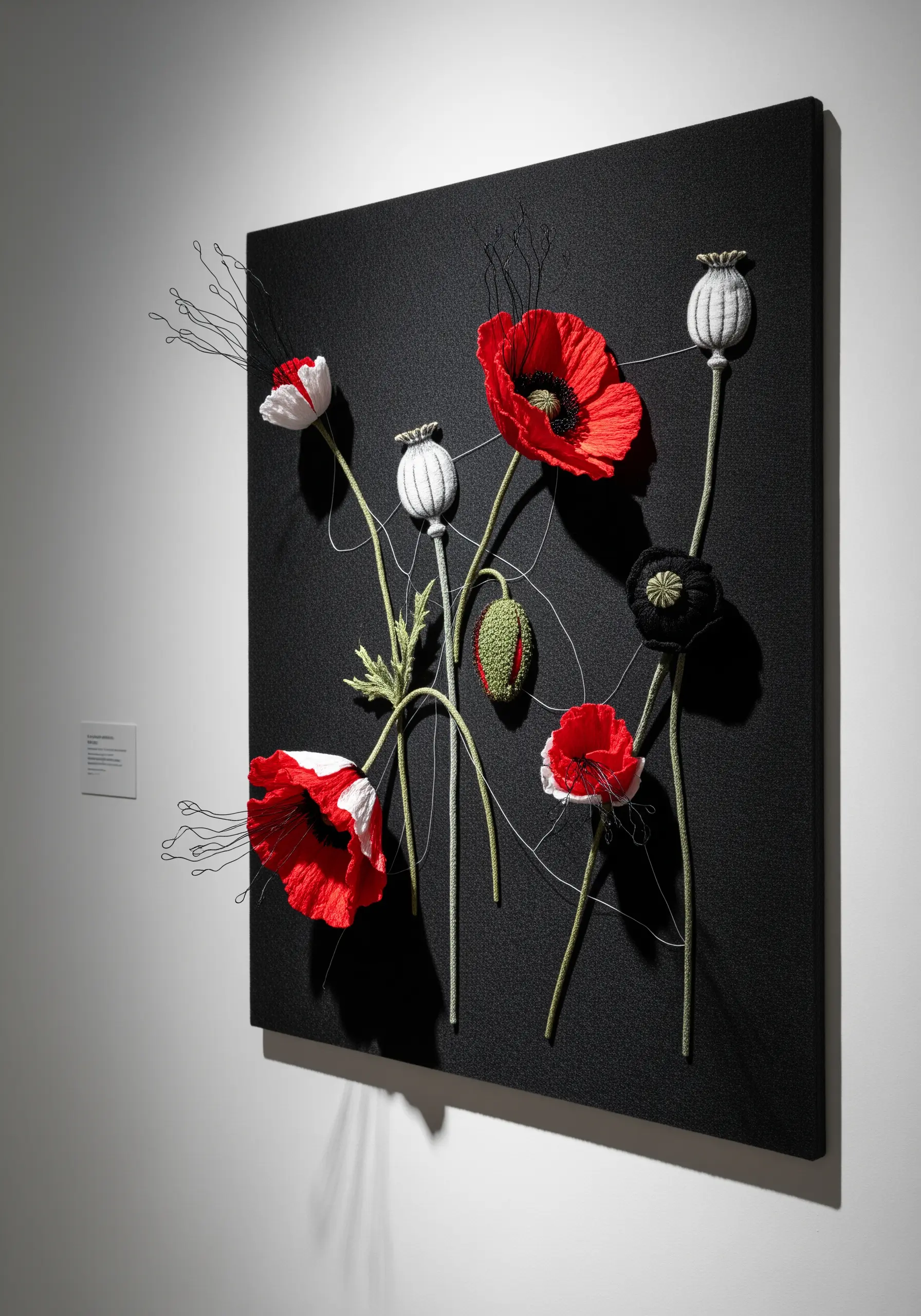
Move your embroidery beyond the second dimension by incorporating sculptural, 3D techniques.
Create raised petals using stumpwork, where you wrap thread around a fine wire frame and then attach the shape to your base fabric.
For rounded elements like poppy pods, use padded satin stitch: create a base of small stitches or place a piece of felt underneath, then cover it with satin stitch to create a raised, tactile form.
These gorgeous mixed-fiber textures add a surprising and engaging physical dimension to your work.
8. Personalize Functional Objects with Delicate Stitches
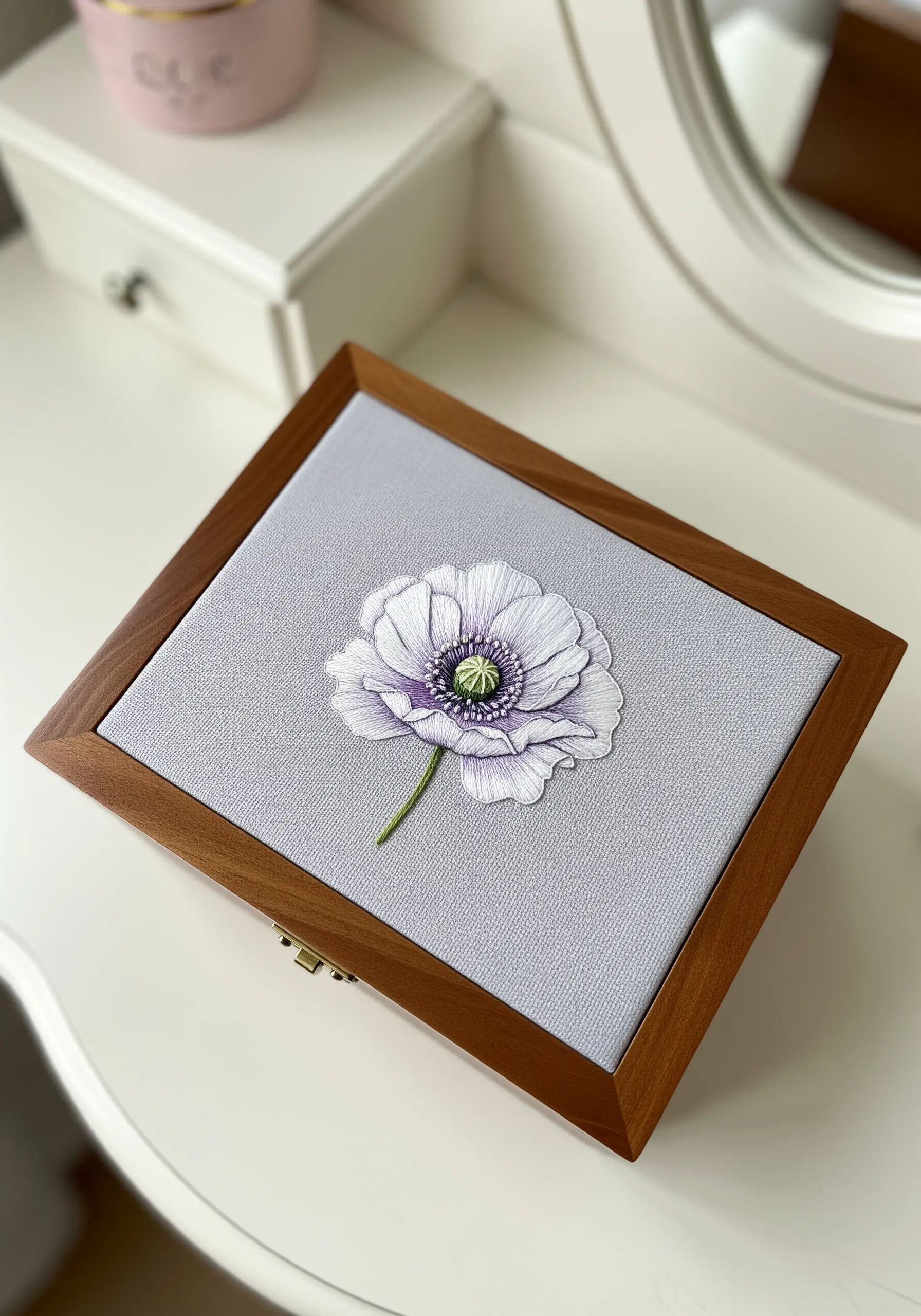
Transform a simple, functional item like a wooden box into a cherished heirloom.
To apply embroidery to a hard surface, first complete your design on a separate piece of even-weave fabric.
Use a single strand of floss and the thread painting technique (long-and-short stitch) to capture the poppy’s delicate color variations with precision.
Once finished, carefully trim and mount the embroidered panel onto the box lid using a strong fabric adhesive for a seamless, integrated finish.
9. Play with Light Using Sheer Fabrics
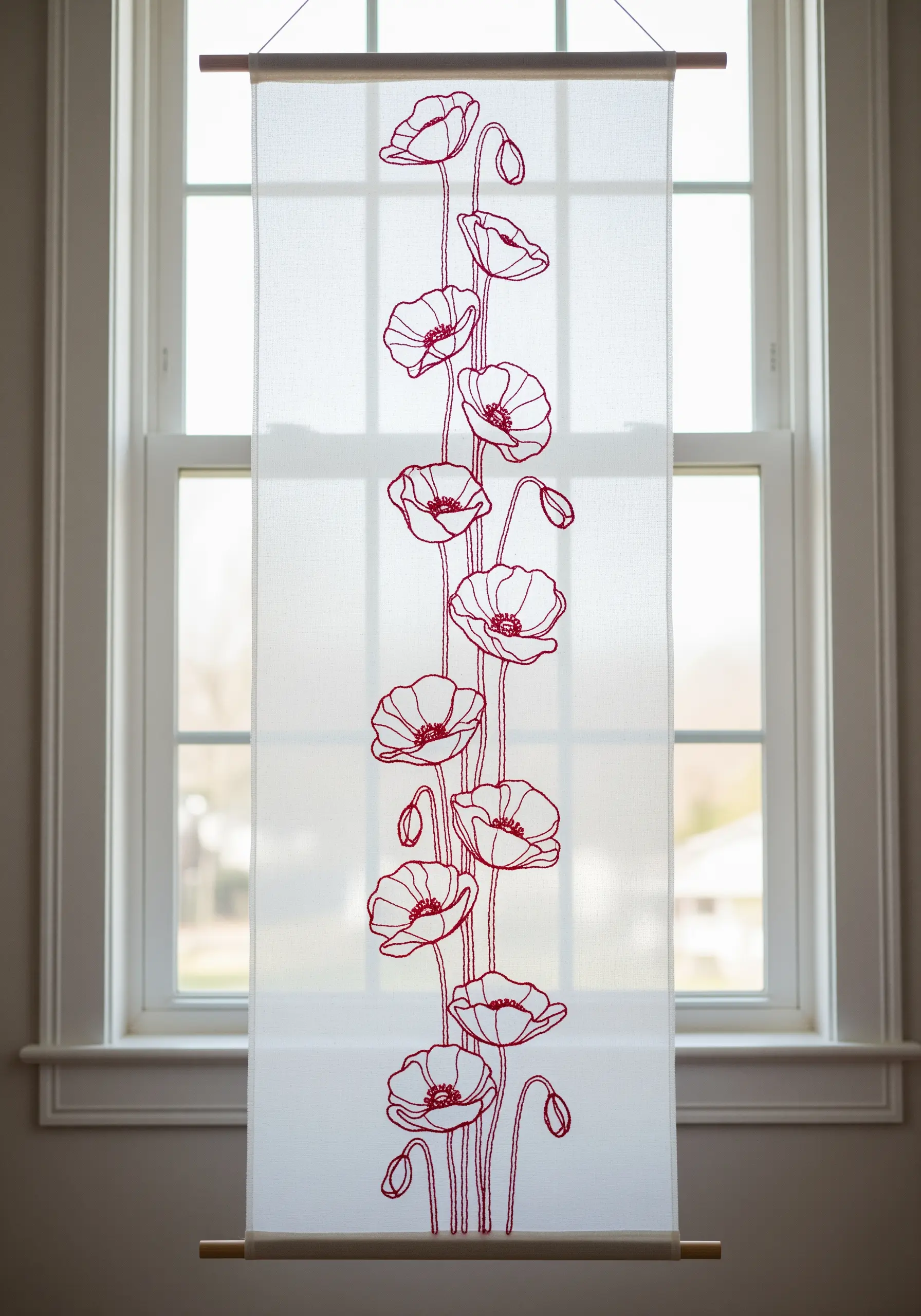
Stitching on a sheer fabric like organza or voile creates a magical, ethereal effect, especially when the piece is hung in a window.
The key is to use a water-soluble stabilizer; it provides the necessary support during stitching and then washes away completely, leaving your design to float weightlessly.
Define your poppy outlines with a clean, confident stem stitch or backstitch.
When light passes through, it illuminates the threadwork, making the stitches themselves the star of the show.
10. Focus on Texture with a Neutral Palette
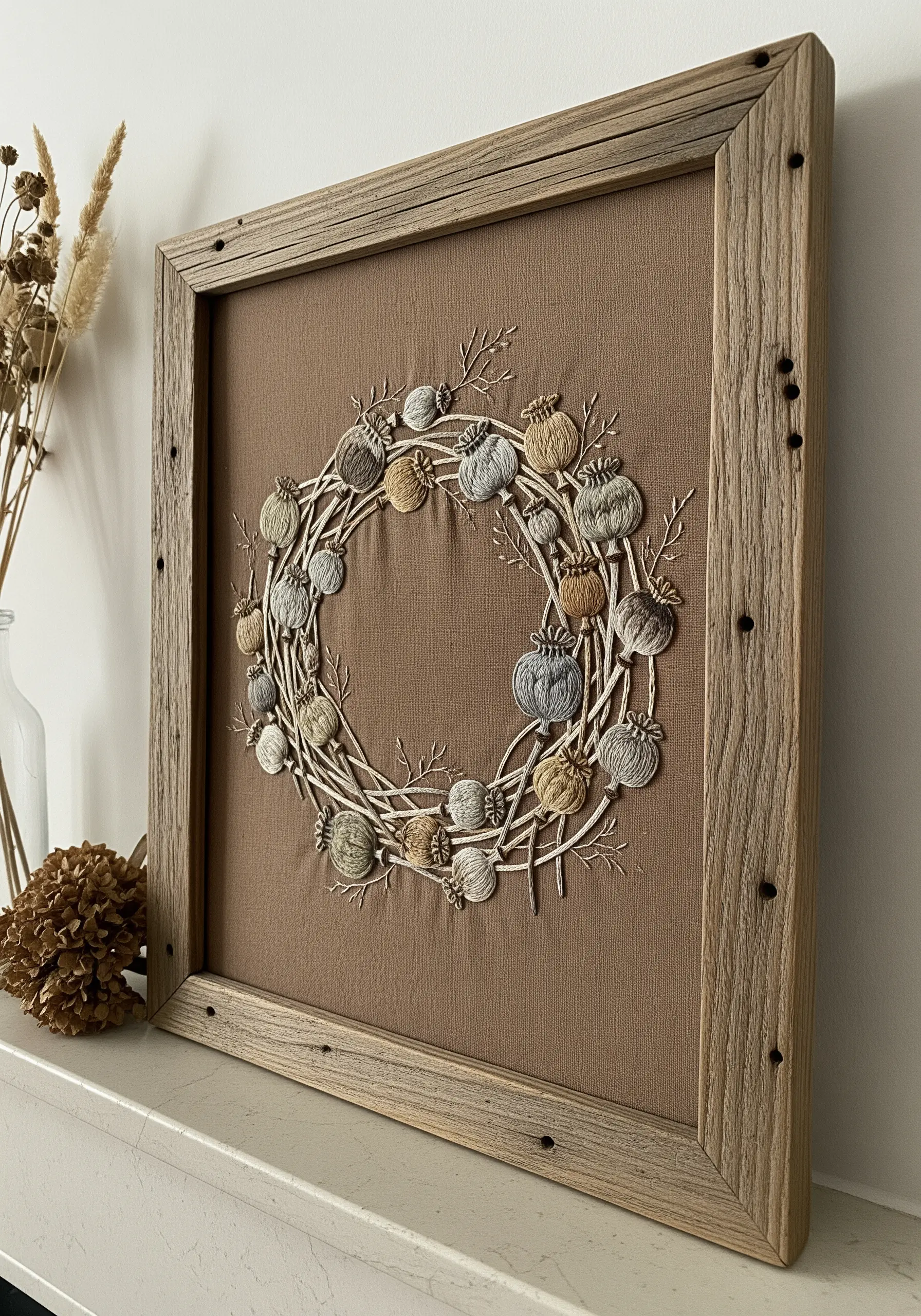
When you limit your color palette, you invite the viewer to appreciate the subtleties of texture and form.
This poppy seed pod wreath uses only shades of cream, beige, and grey, drawing all attention to the stitchwork.
Create contrast by combining different stitches: dense French knots for the pod crowns, smooth satin stitch for the bodies, and delicate straight stitches for the connecting branches.
The result is a sophisticated, nature-inspired piece with a quiet, tactile elegance.
11. Translate Embroidery Designs into Other Mediums
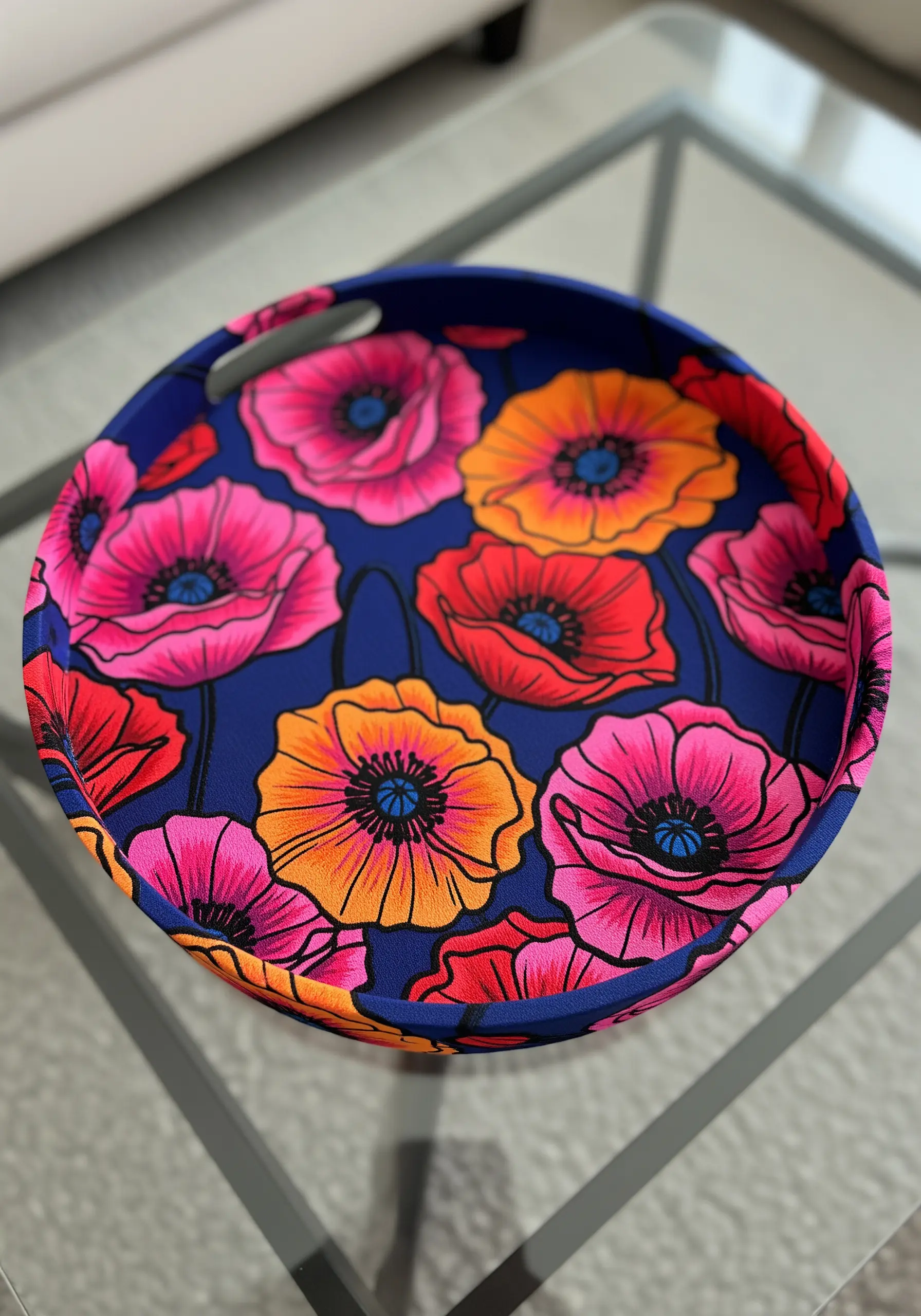
Don’t limit your best designs to a single hoop.
Once you’ve created a poppy motif you love, you can translate it into other forms of home decor.
Scan your finished embroidery at a high resolution (at least 300 DPI) to capture the texture and detail of the stitches.
You can then use this digital file to have your design professionally printed on functional items like trays, fabric, or stationery, creating a beautifully cohesive theme throughout your space.
12. Embrace Heritage with a Cross-Stitch Sampler
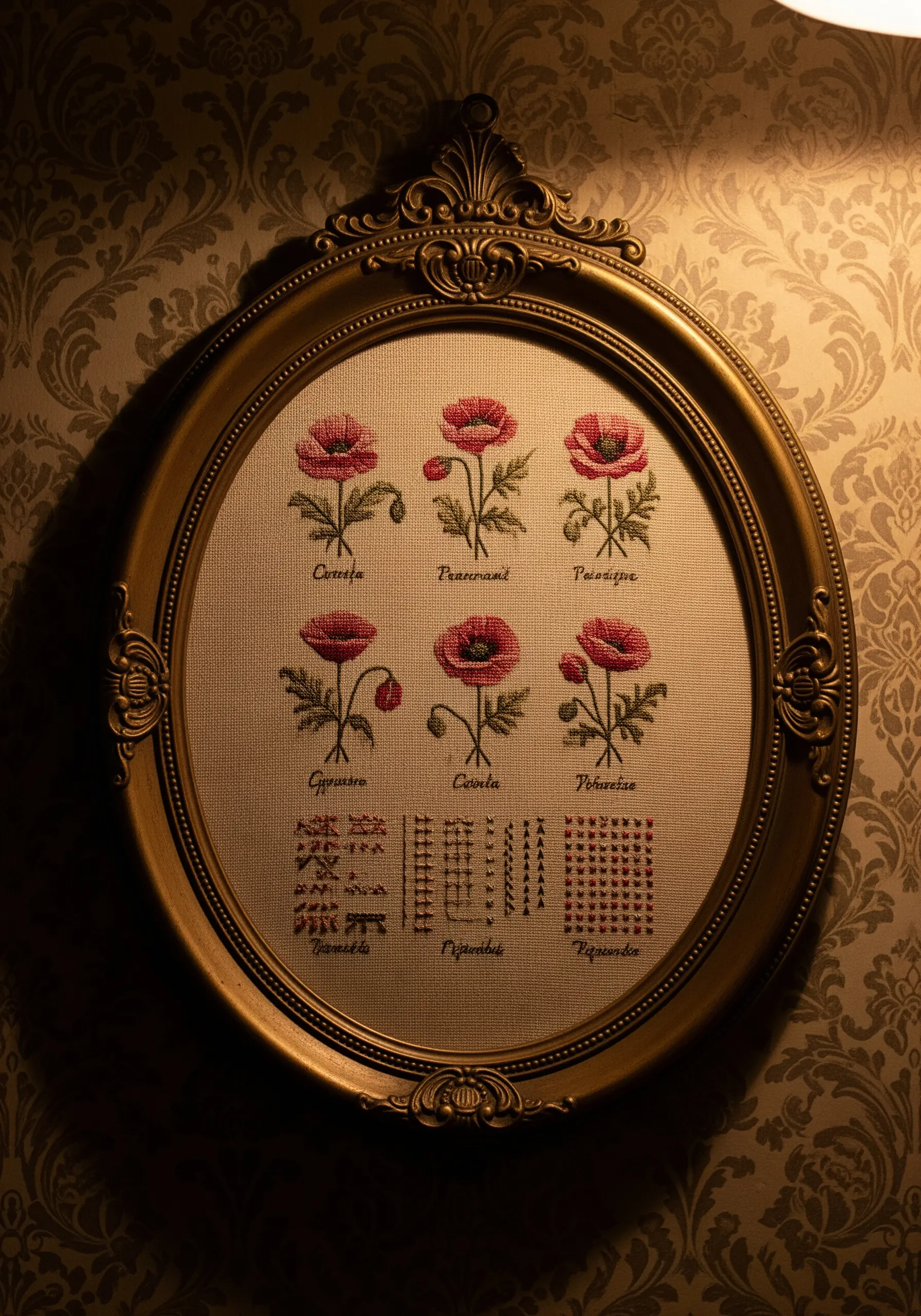
For a more graphic and traditional interpretation of the poppy, explore the structured beauty of cross-stitch.
Working on Aida cloth, each ‘X’ stitch acts as a single pixel, allowing you to build the image with a distinct, gridded texture.
A sampler format is perfect for this, letting you showcase different poppy variations and decorative border patterns all within one piece.
This classic approach results in a charming, heirloom-quality artwork with timeless appeal.
13. Capture Elegance with Minimalist Line Art
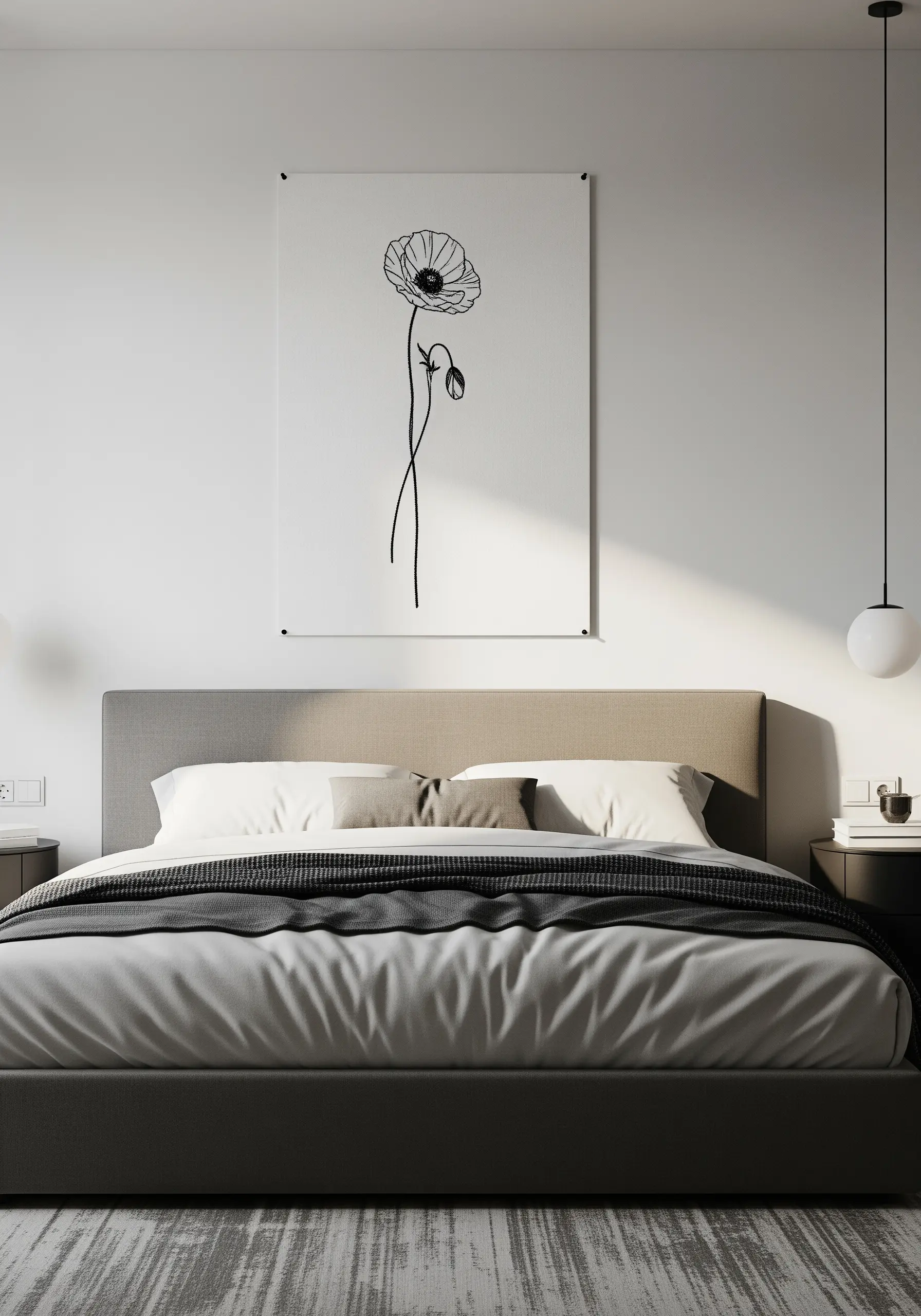
The most profound statements often come from the simplest forms.
Use a single strand of black thread on a light, textured fabric like linen to create a clean poppy silhouette.
A precise stem stitch or backstitch will give you a continuous, elegant line that feels like an ink drawing.
The power of this technique lies in its use of negative space—by leaving the surrounding fabric empty, you allow the pure form of the flower to command attention, creating serene and modern thread art.
14. Use Felt as a Stable and Forgiving Base
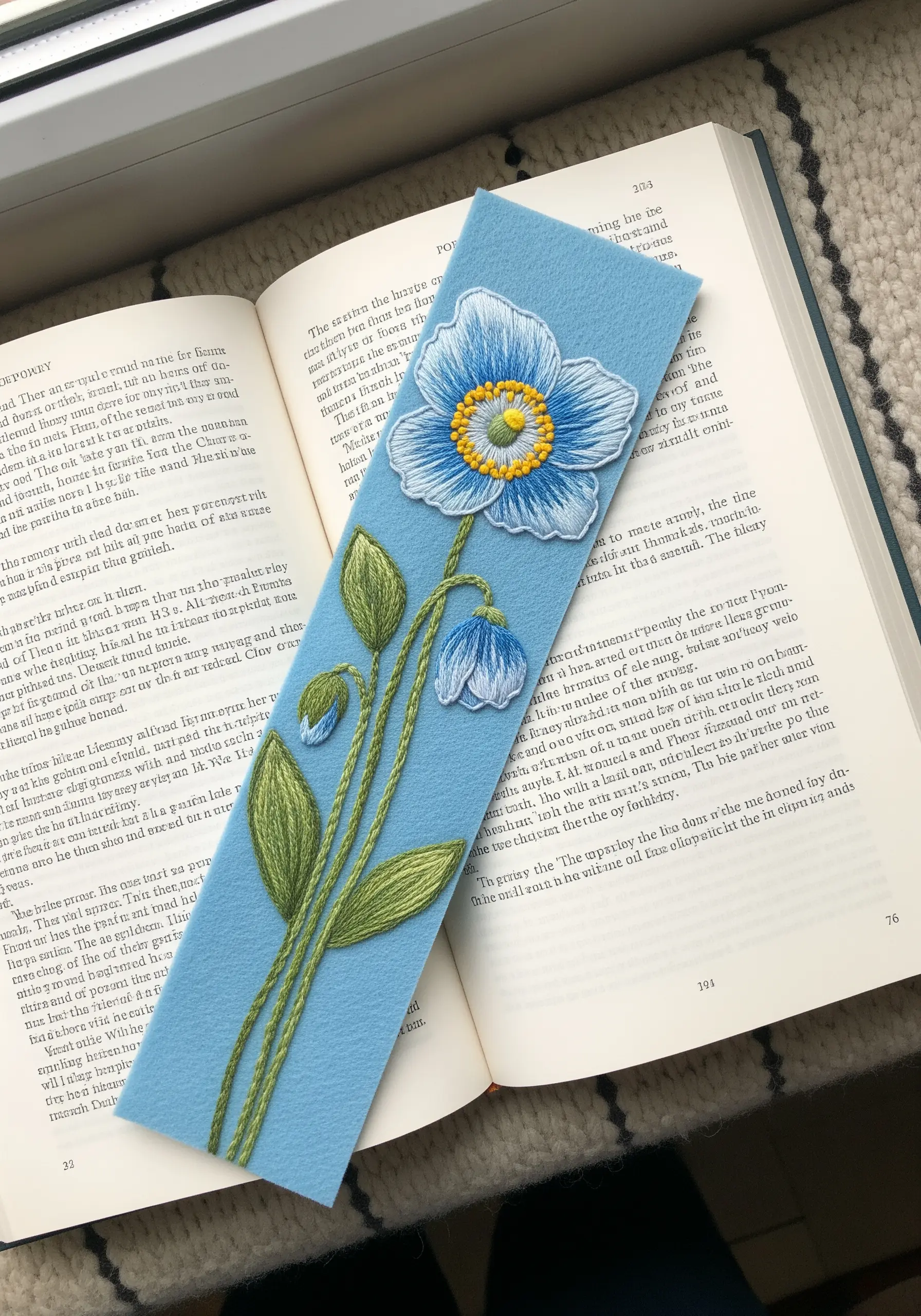
Felt is a fantastic choice for small, functional projects or for anyone new to embroidery.
Its pressed-fiber structure means it won’t fray, so you can cut intricate shapes without needing to hem the edges.
The fabric is naturally stable and slightly stiff, providing excellent support for dense stitchwork like satin stitch or French knots.
This makes it an ideal base for items that will be handled, like bookmarks, patches, or ornaments.
15. Create a Cohesive Set with Color Variation
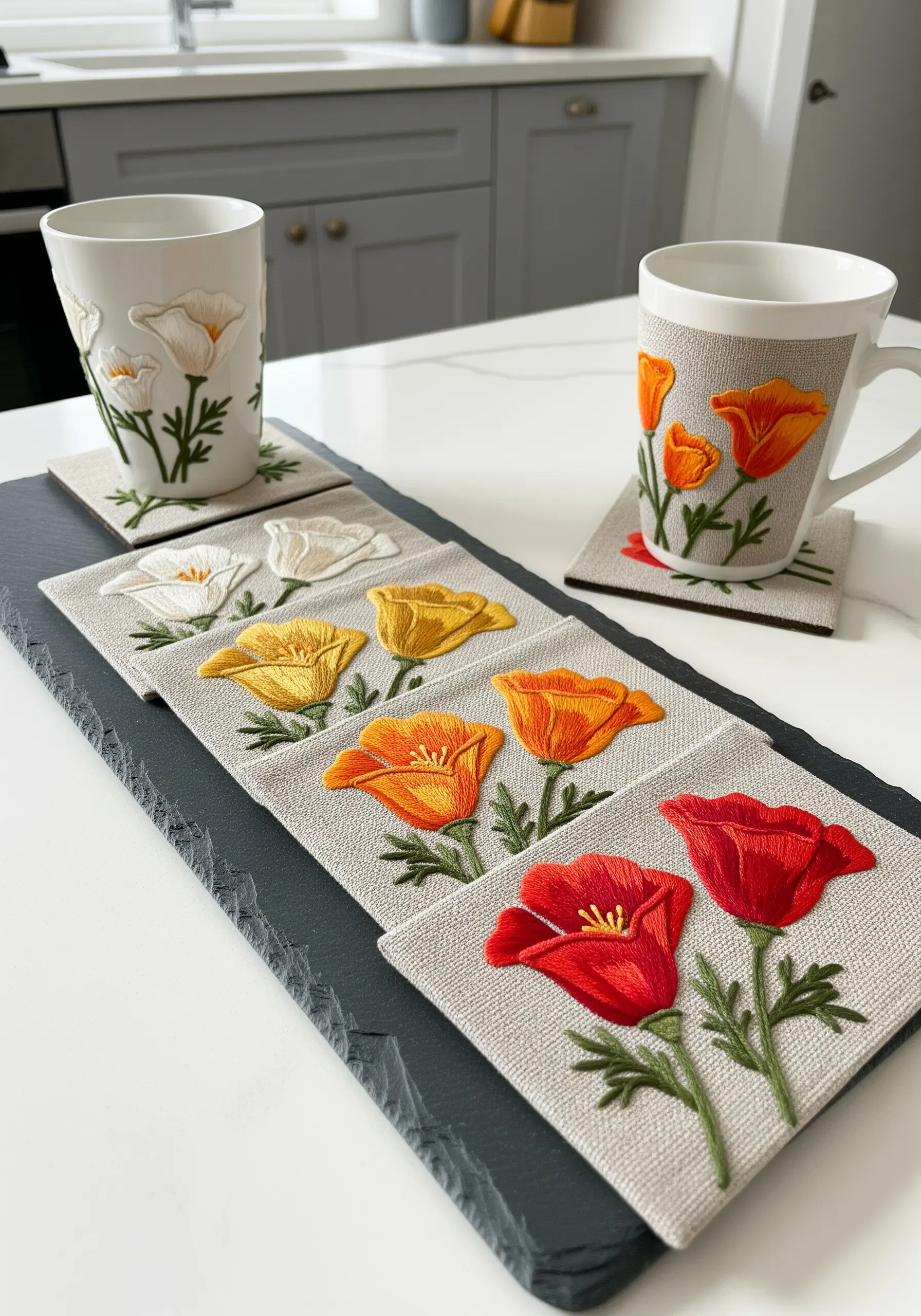
Elevate a simple project by turning it into a coordinated set.
Choose one poppy design and stitch it multiple times on items like coasters or small art hoops, but assign a different color palette to each one.
This approach creates a collection that is visually connected by form but differentiated by color, resulting in a dynamic and interesting display.
To make coasters durable, stitch on linen and back them with a layer of cork or thick felt.
16. Express Emotion with Deconstructed Stitches
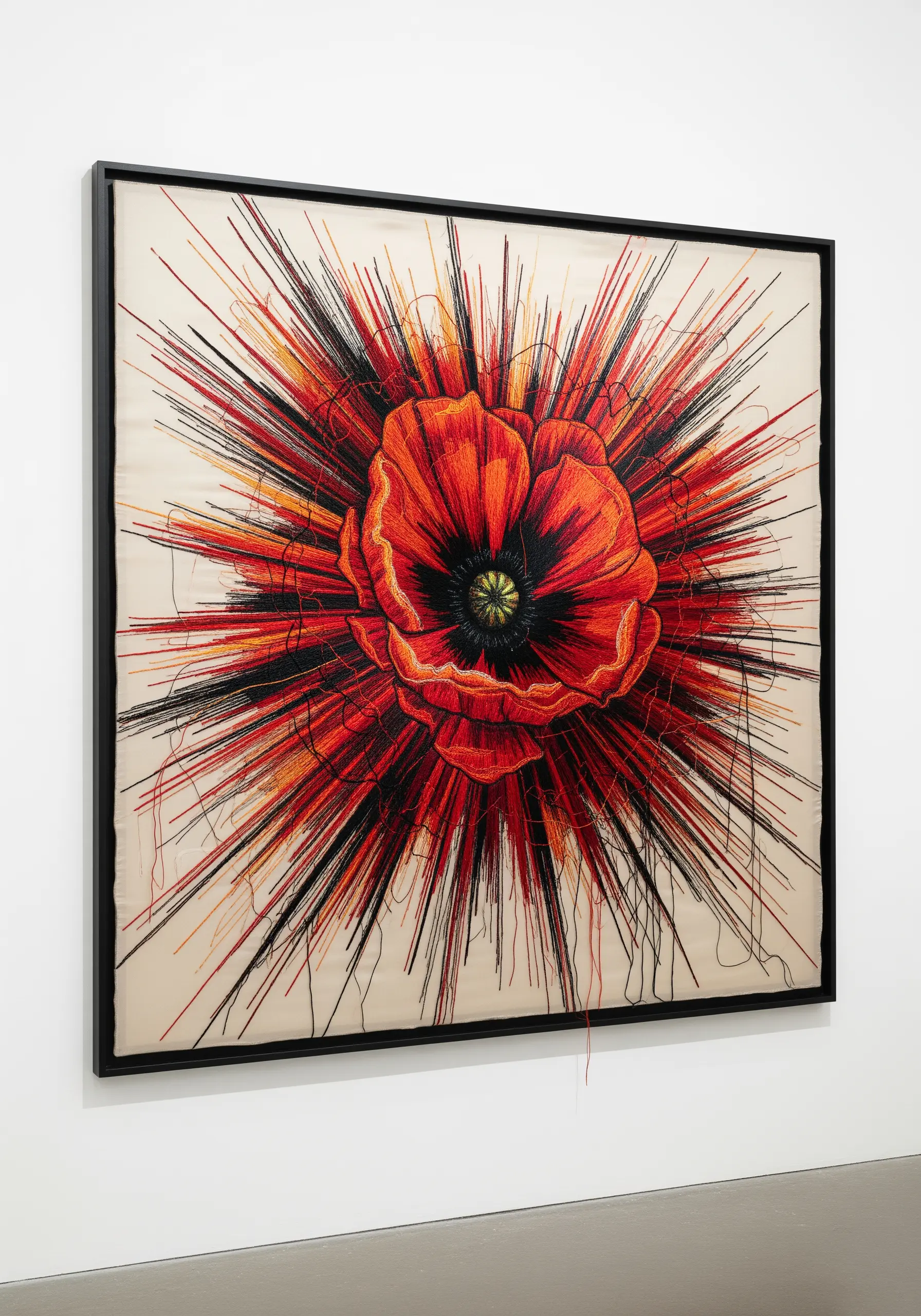
Break free from pristine stitchwork to create something raw and expressive.
Start with a recognizable poppy at the center, then extend long, chaotic straight stitches outward, like an explosion of energy.
Don’t be afraid to let some threads hang loose or create intentional tangles.
This deconstructed approach transforms the floral motif into a piece of powerful abstract embroidery, conveying movement and emotion in a way that perfect stitches cannot.
17. Add a Tactile Dimension to Stationery
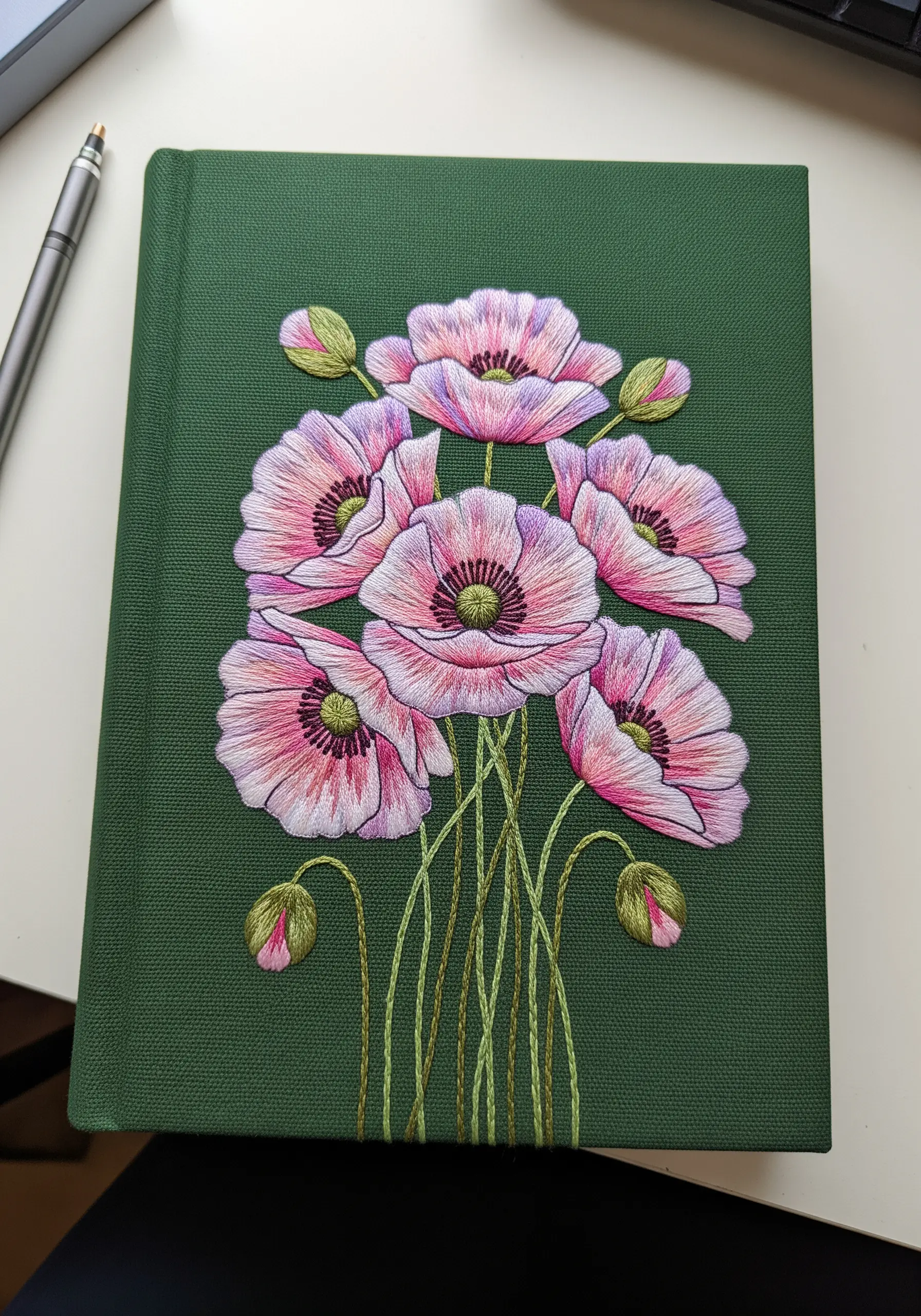
Transform a simple cloth-bound journal into a deeply personal object by adding the texture of embroidery.
A bouquet of poppies allows you to play with different stitches on a small scale.
Use long-and-short stitch to create soft color gradients on the petals and tightly packed French knots for the flower centers.
The result is not just visual but also tactile, making the act of picking up your journal a more sensory and thoughtful experience.
18. Create Playful Textures for Children’s Decor
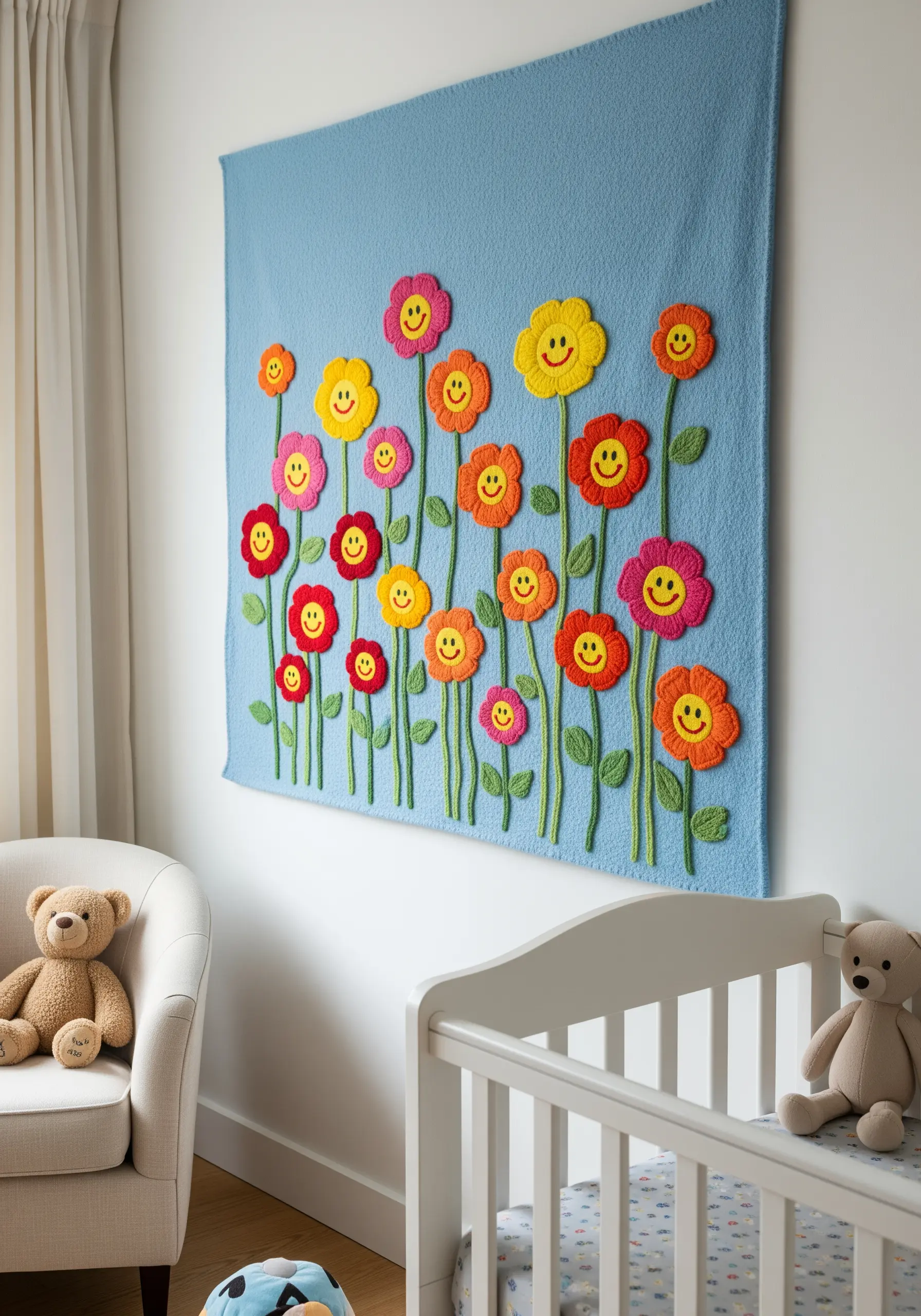
Adapt the poppy form for a nursery or playroom by focusing on soft, touchable textures.
Instead of fine floss, use chunky yarn to create bold, friendly shapes.
Stitches like the Turkey stitch (which creates loops you can snip for a plush pile) or a looped blanket stitch are perfect for making soft, sensory petals.
Adding simple, cheerful faces turns the flowers into characters, making the art both decorative and engaging for little ones.
19. Adopt a Botanical Illustration Style
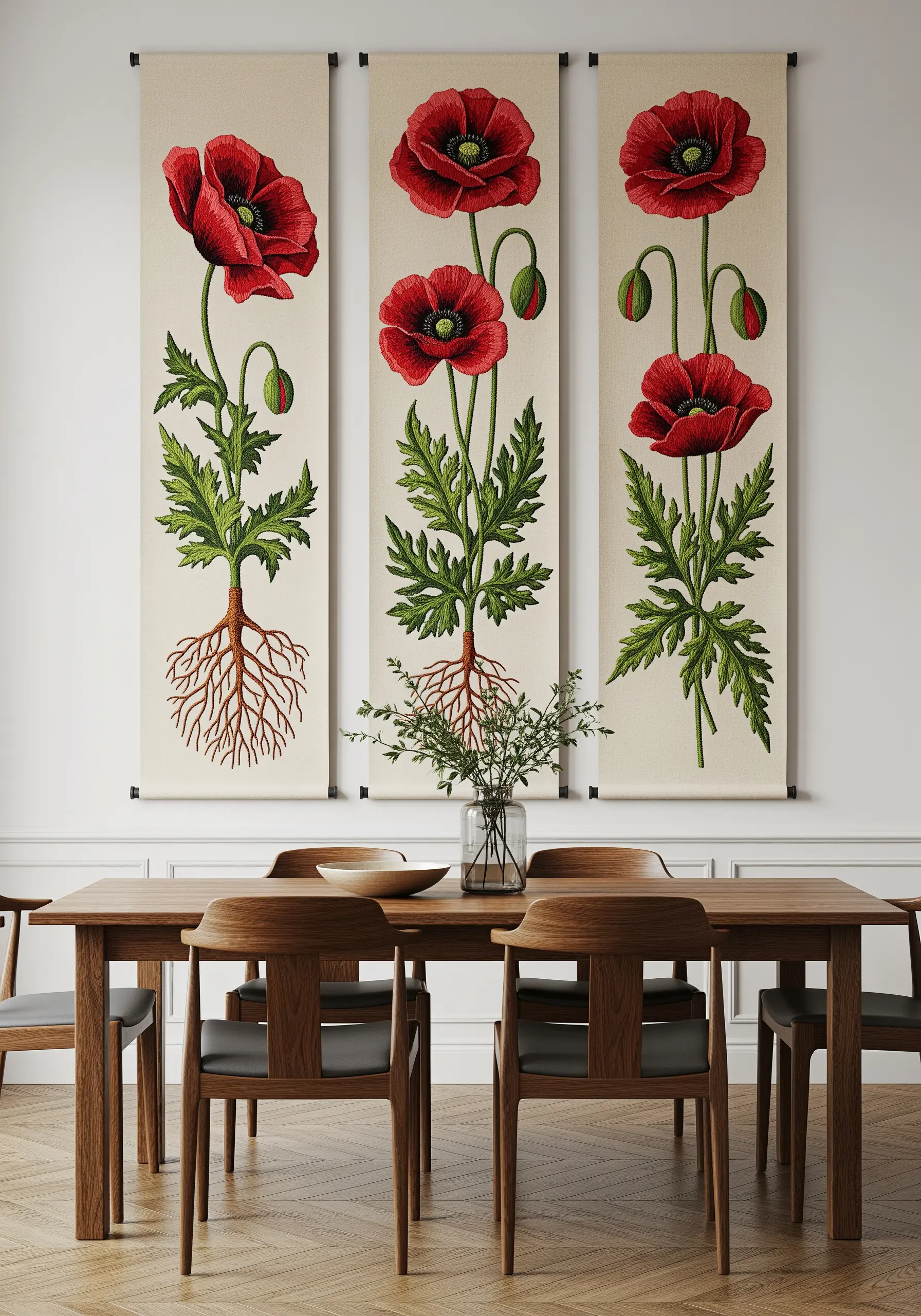
Channel the elegance of vintage scientific drawings by stitching your poppies with anatomical accuracy.
Include the often-overlooked details like the intricate root system and the veining on the leaves.
Use a fine backstitch or split stitch to create crisp outlines, as if drawn with a fine-tipped pen.
Displaying the finished pieces as a series of vertical banners enhances the educational, museum-quality feel, turning your wall into a sophisticated botanical exhibit.
20. Use White Thread for Crisp Highlights
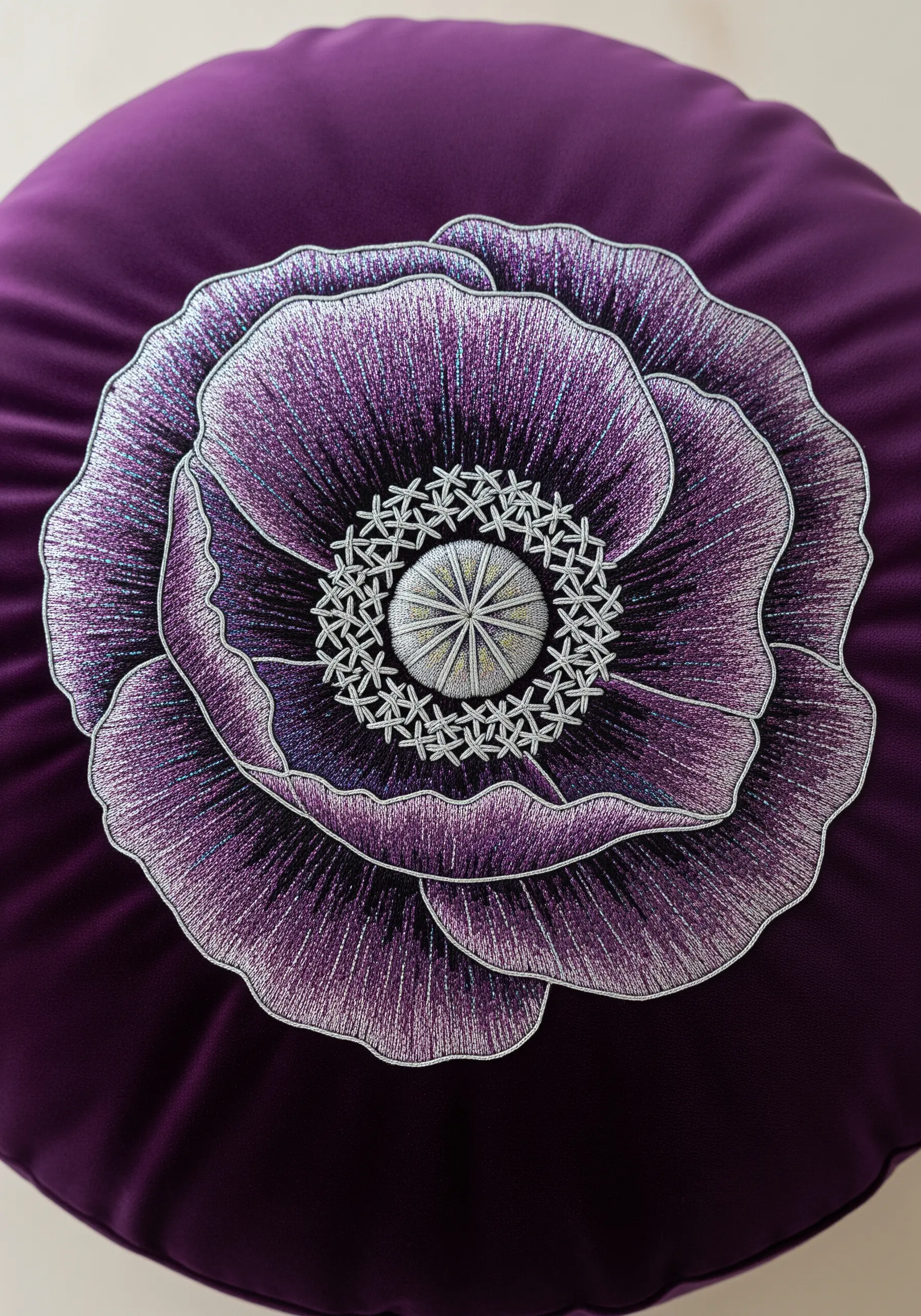
When working with deep, saturated colors on a dark or plush fabric like velvet, details can easily get lost.
Introduce a single strand of bright white or silver thread to create definition and dimension.
Use it to add fine highlights along the edges of petals or to create a crisp pattern in the flower’s center.
This simple technique acts like a digital ‘sharpen’ tool, making your design pop and preventing the darker hues from looking flat.
21. Combine Watercolor and Thread for Mixed-Media Depth
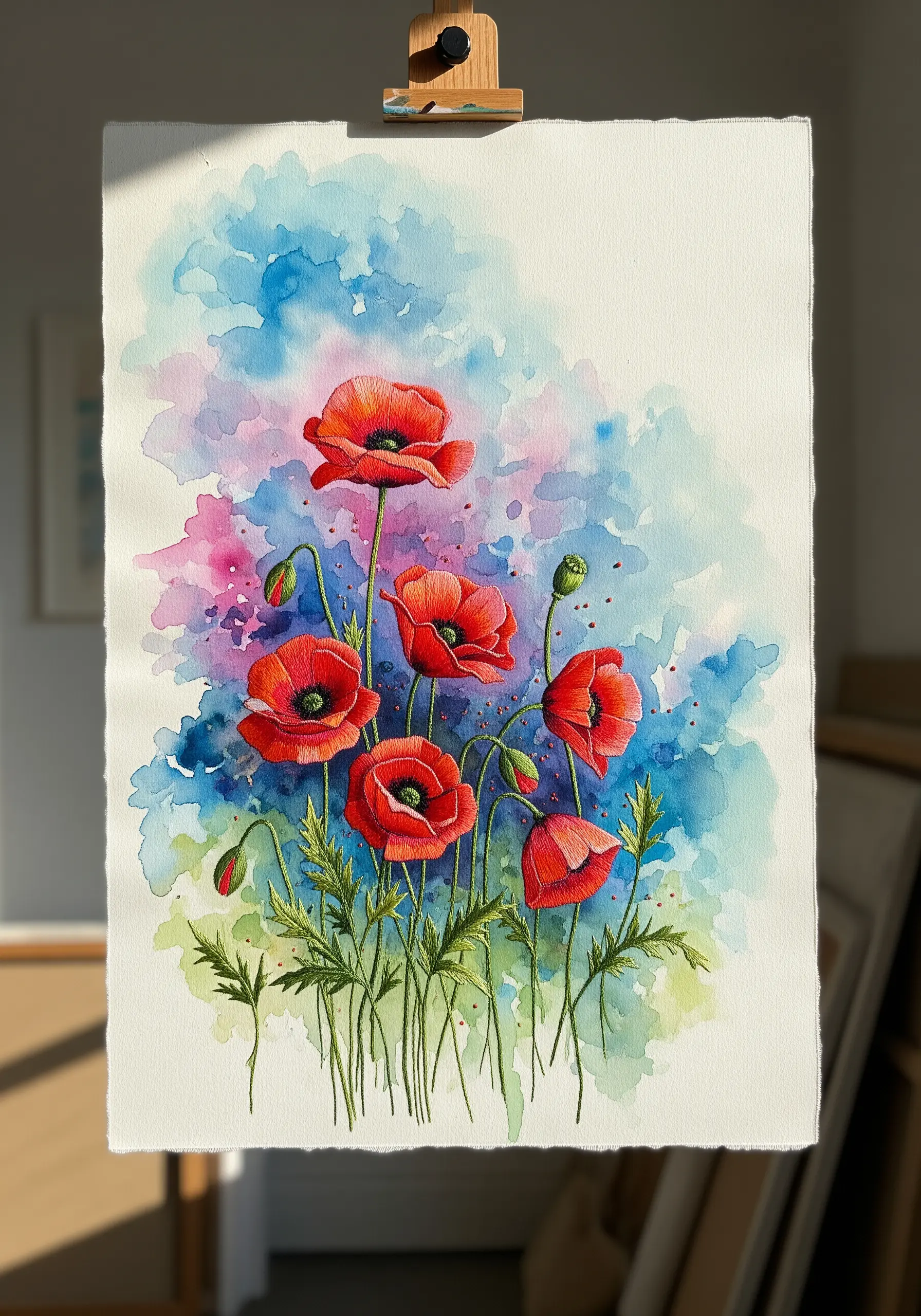
Create a stunning interplay of textures by blending painting and embroidery.
Start by applying a loose, soft-focus watercolor wash to your fabric to establish the general colors and background mood.
Once the paint is completely dry, go back in with thread to add sharp details, crisp outlines, and tactile elements like French knots.
The embroidery provides the structure and focus, while the watercolor provides a dreamy, atmospheric base, resulting in unique mixed-media masterpieces.
22. Isolate a Single Element for a Minimalist Study
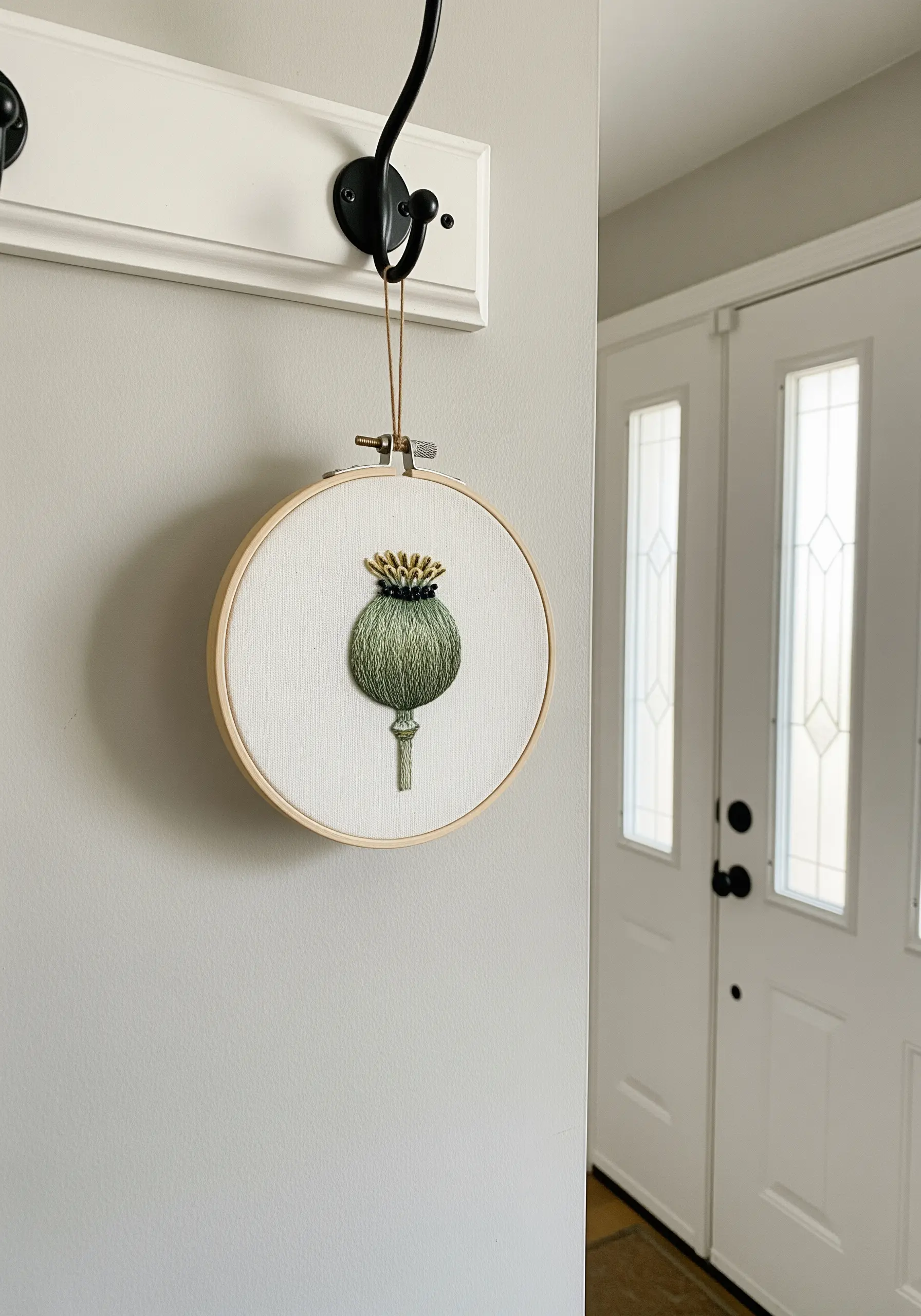
True elegance often lies in restraint.
Instead of stitching a full bouquet, choose one component—like a single, sculptural seed pod—and make it your entire focus.
This minimalist approach encourages you to perfect its unique form and texture.
Use padded satin stitch to give the pod a convincing three-dimensional curve, and vary your stitch direction to mimic its organic contours.
Displayed alone in a hoop, this becomes a powerful and sophisticated piece of minimalist embroidery.
23. Paint a Luminous Landscape with Thread
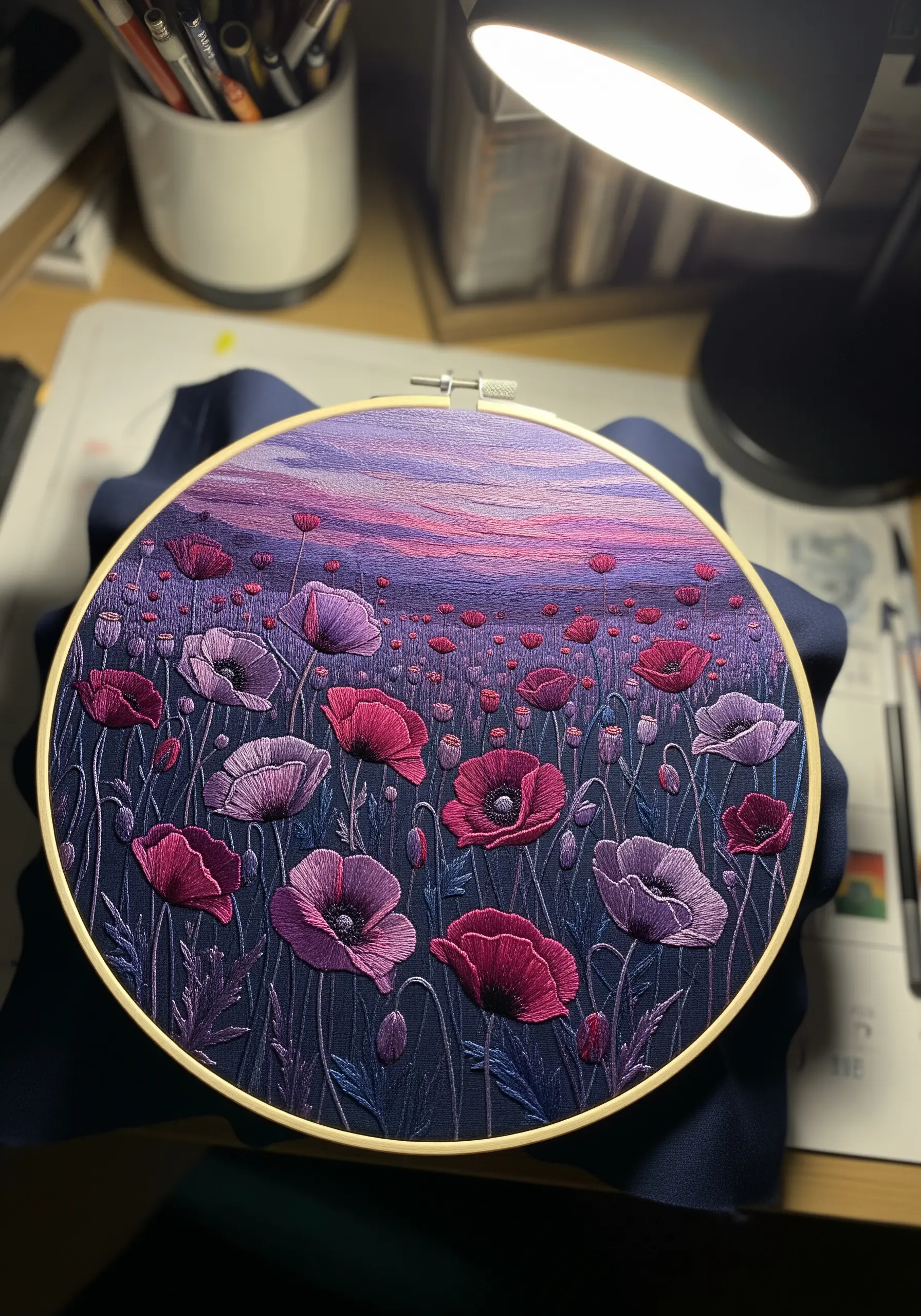
Use your needle and floss like a paintbrush to capture the specific mood and light of a landscape.
Employ the long-and-short stitch to seamlessly blend colors in the sky, moving from deep twilight blues to soft sunset pinks.
For the poppies in the field, keep your stitches slightly impressionistic rather than perfectly neat, suggesting form and color rather than defining it rigidly.
This thread painting technique allows you to create an emotive, dreamy landscape with incredible depth and atmosphere.
24. Integrate Embroidery into Functional Decor
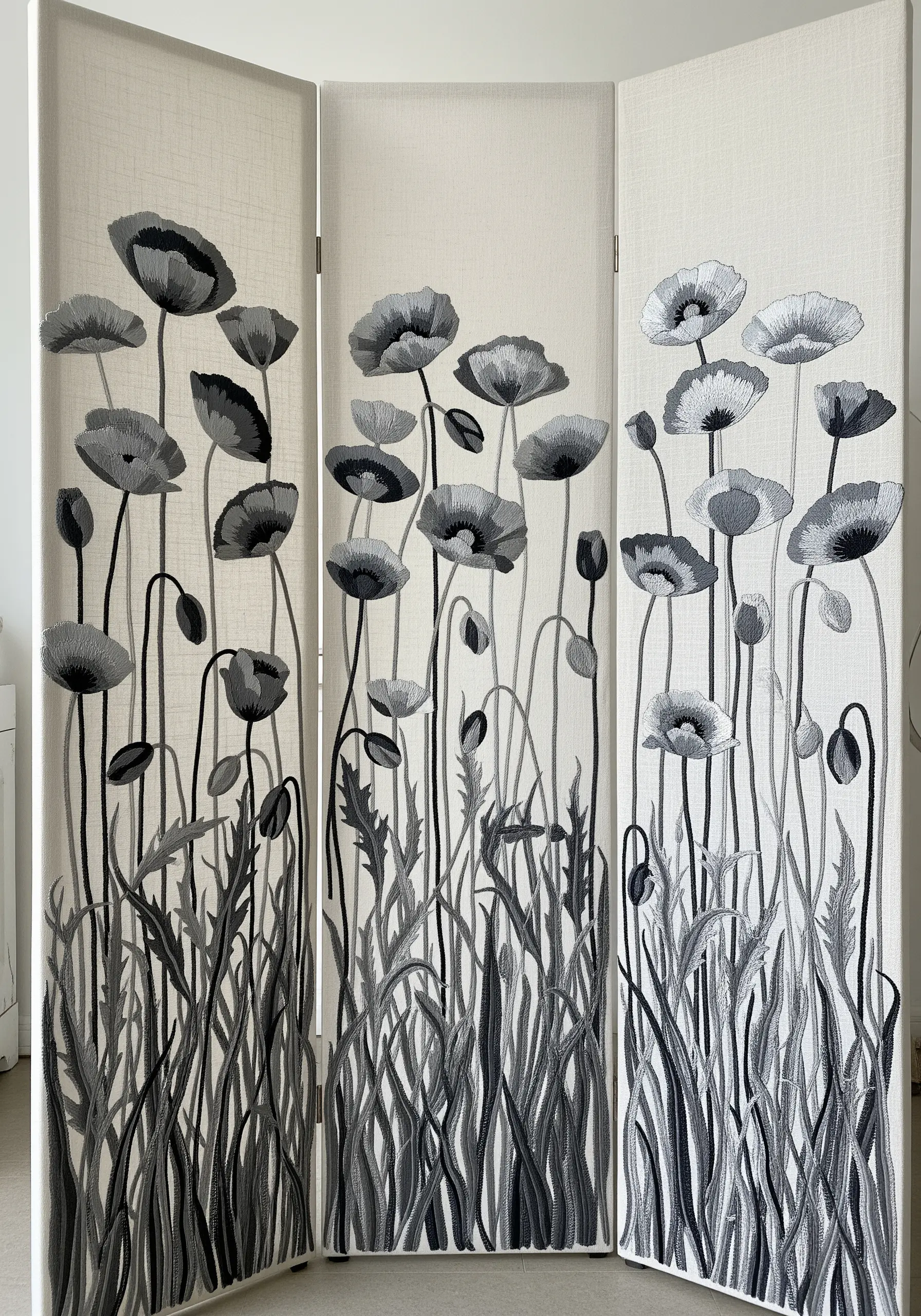
Elevate your craft by taking it off the wall and making it a functional part of your home.
A folding screen or room divider offers a large, impressive canvas for a continuous design.
Working in a monochrome palette (shades of black, white, and grey) ensures the piece feels like sophisticated furniture rather than just a craft project.
The key to success is ensuring your fabric is stretched perfectly taut on each panel to create a professional, sag-free finish that will last for years.


