You have the threads, the fabric, the desire to create something beautiful. But when you finish a piece, does it truly capture the calm, personal feeling you envisioned for your space? It’s easy to get lost in complex patterns, but the most romantic and serene pieces often come from refining simple techniques.
This isn’t about learning dozens of new stitches. It’s about understanding how a single change—choosing a heavier thread, shifting the direction of your satin stitch, or embracing negative space—can transform your work from a craft project into a piece of art that genuinely soothes the soul.
Let’s explore how you can create wall hangings that don’t just decorate your bedroom but turn it into a true retreat. These ideas are designed to give you clarity and confidence, helping you stitch with intention and create a space that feels entirely yours.
1. Create a Heart of Dimensional Florals
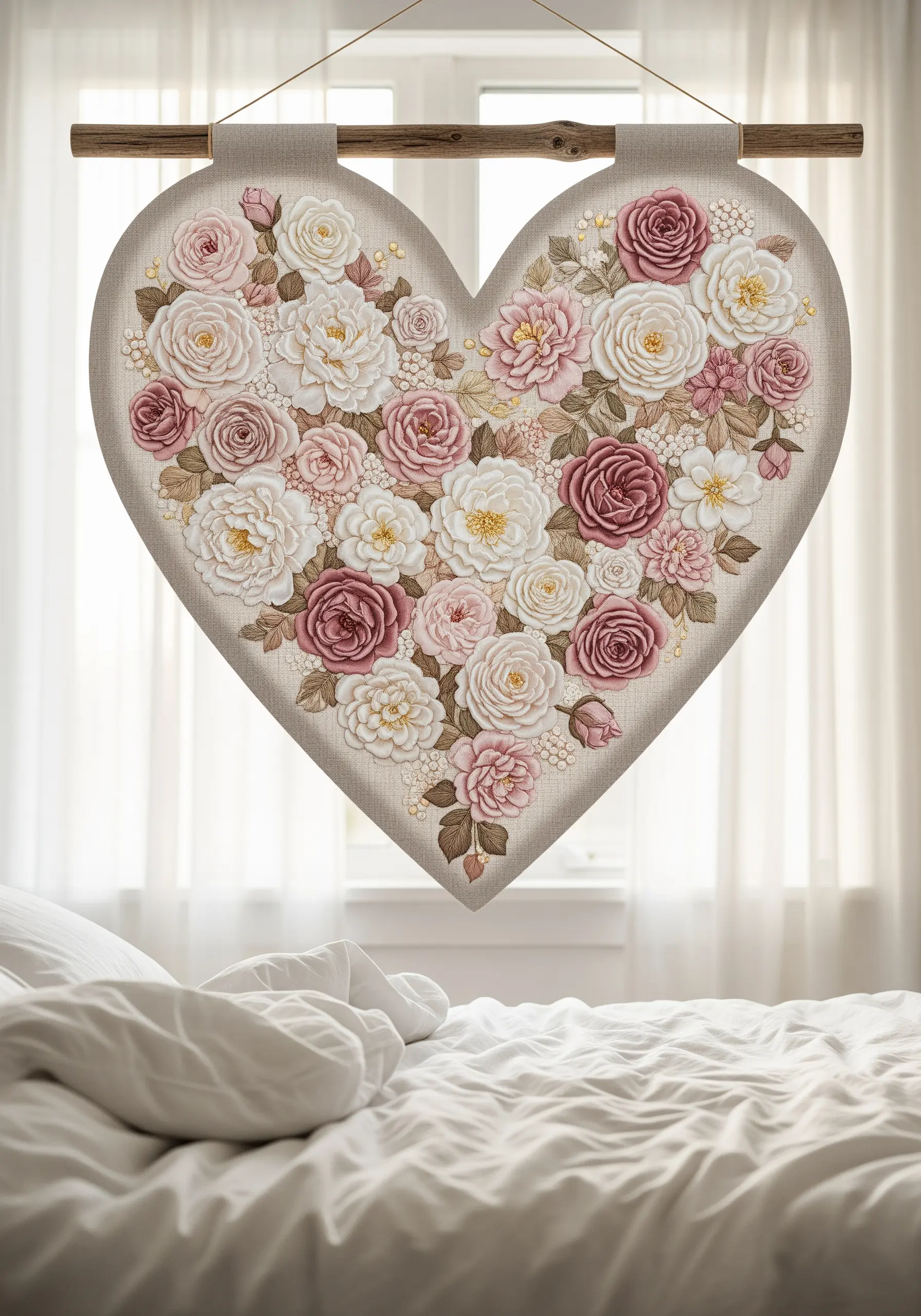
To achieve this plush, layered effect, build your roses with a padded satin stitch.
Start by creating a small satin-stitched underlayer, then stitch your final layer over it in a perpendicular direction—this simple step gives each petal a subtle, raised quality that catches the light.
For the smaller filler flowers and leaves, use single French knots and detached chain stitches to add delicate texture without competing with the main blooms.
The choice of a neutral, oatmeal-colored linen ensures your soft pinks and creams feel romantic and warm, not overwhelming, resulting in gorgeous floral embroidery ideas perfect for a tranquil bedroom.
2. Stitch a Luminous Lunar Cycle
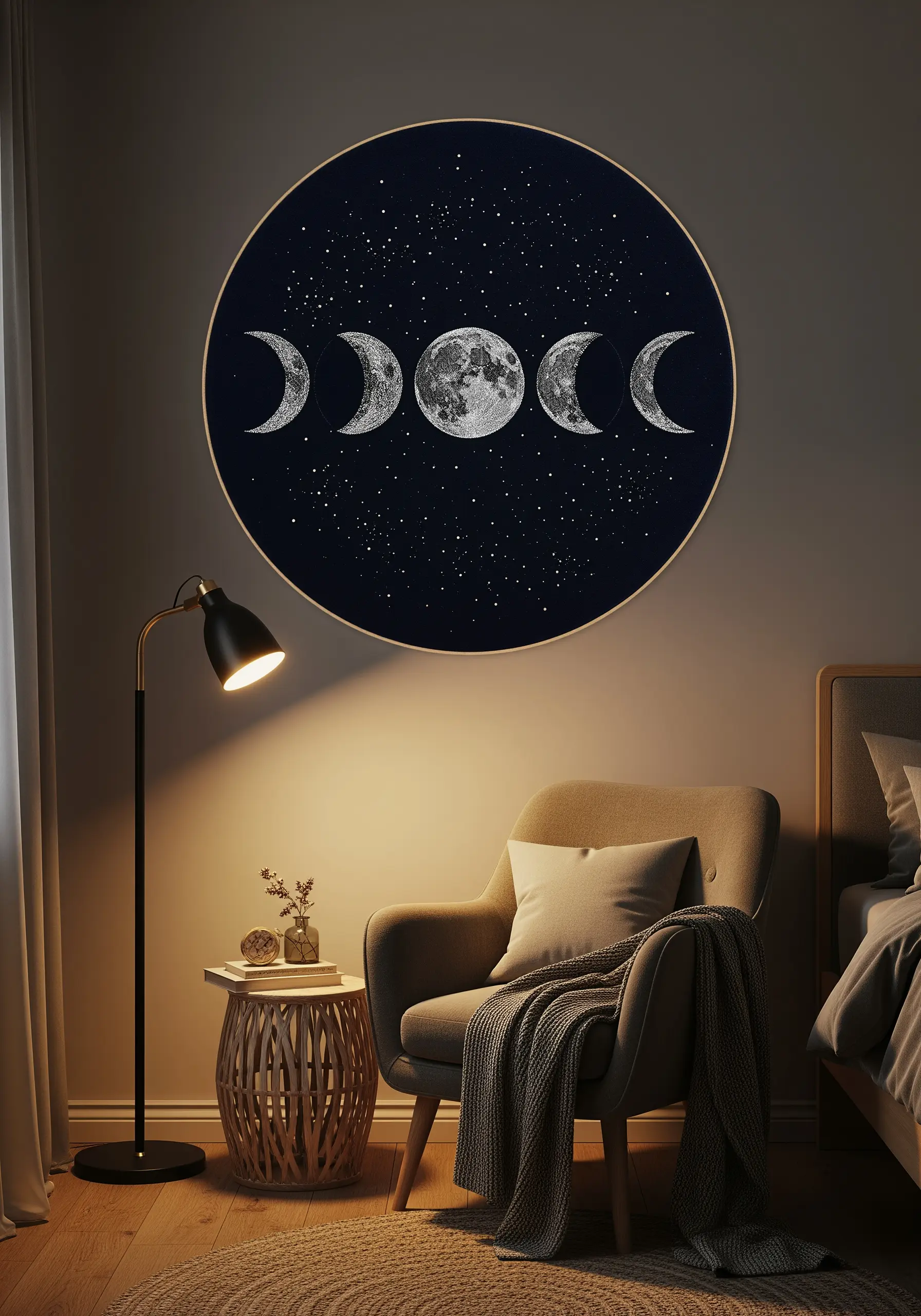
To capture the moon’s texture against a dark fabric, don’t just fill it with white thread—create an illusion of craters and light.
Use a single strand of light gray or silver metallic floss and fill the shapes with a dense pattern of tiny seed stitches, varying their direction to mimic a cratered surface.
For the surrounding stars, use single, randomly placed straight stitches in varying lengths to create a natural, twinkling effect.
This high-contrast approach is one of the most effective minimal sky moon designs for adding a touch of cosmic serenity to a cozy reading corner.
3. Master the Elegance of a Single Line
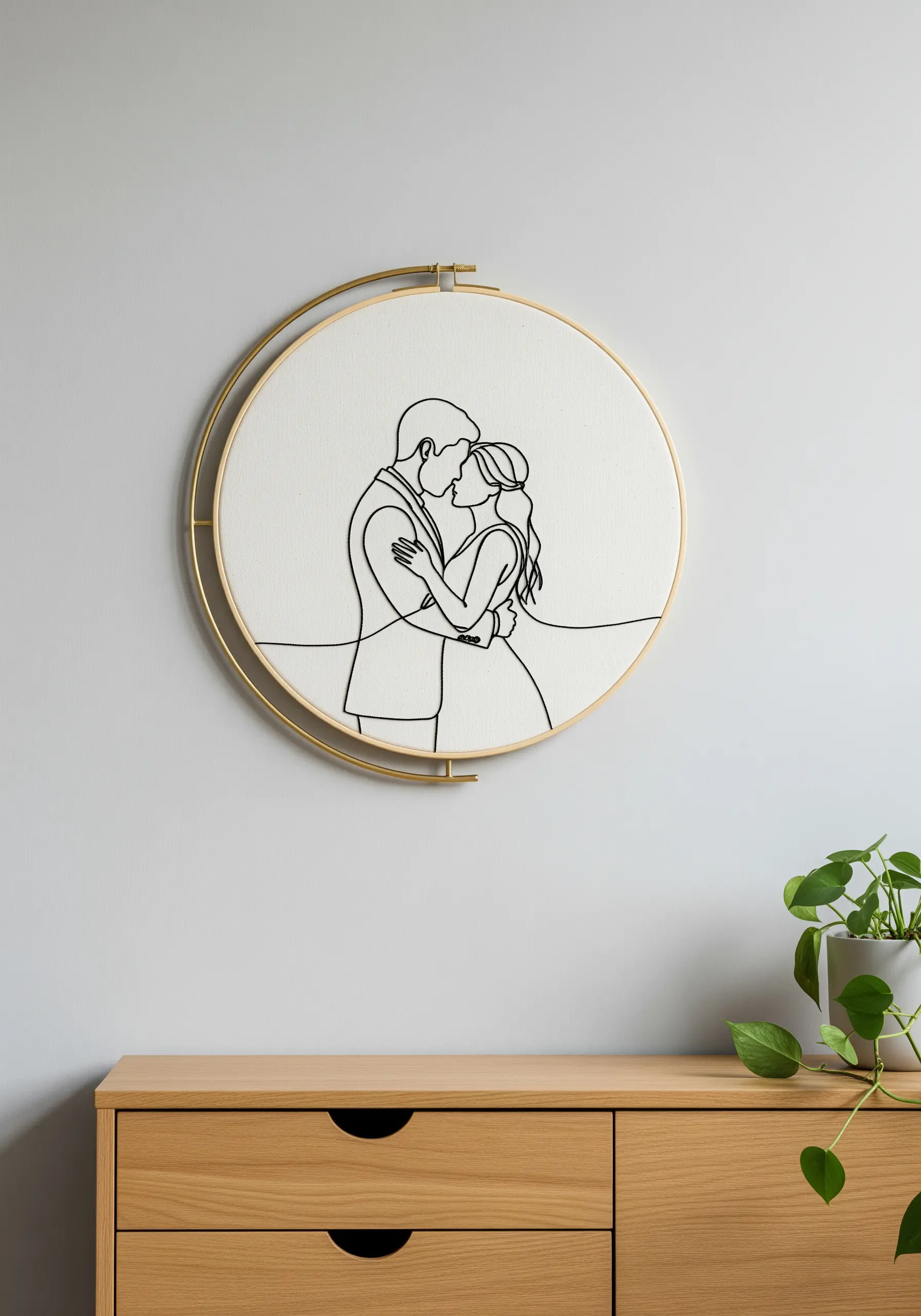
The power of a single-line design lies in its unbroken, fluid quality.
Instead of a standard backstitch, which can look segmented, use a whipped backstitch or a stem stitch to create a smooth, continuous line that flows like ink.
Maintaining consistent tension is crucial to prevent puckering on the light canvas.
This technique elevates simple illustrations into sophisticated art, making it perfect for romantic couple line art embroidery patterns that feel both modern and timeless.
4. Compose a Botanical Wreath with Varied Textures
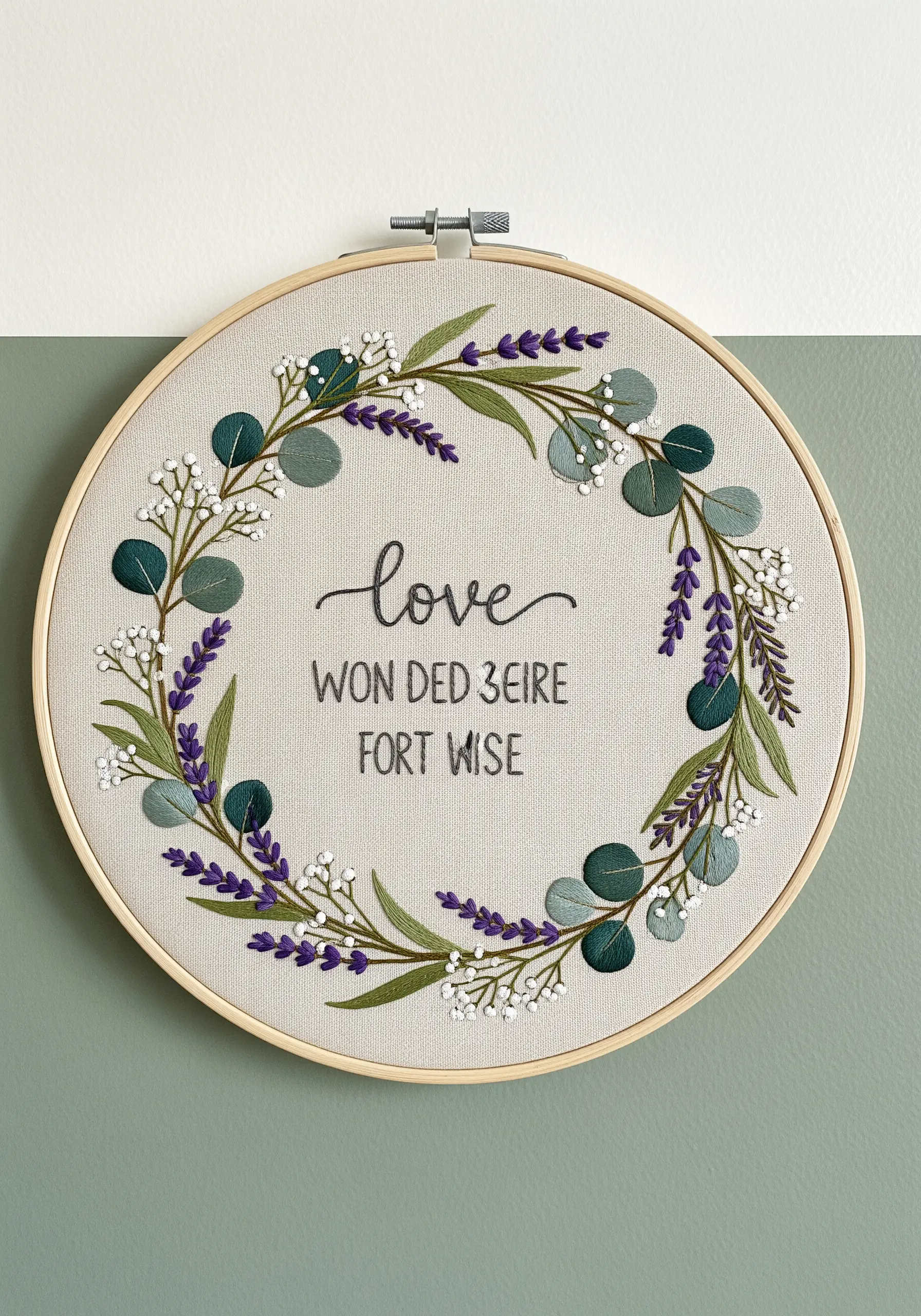
A successful wreath design relies on balancing different textures to create visual interest.
For the eucalyptus leaves, use a smooth satin stitch, angling the stitches outward from a central vein.
Contrast this with delicate French knots for the baby’s breath and stacked detached chain stitches for the lavender sprigs.
This combination of smooth fills, tight knots, and open loops makes the design feel dynamic and lifelike, turning it into one of those gentle botanical embroidery stitches that feels both structured and organic.
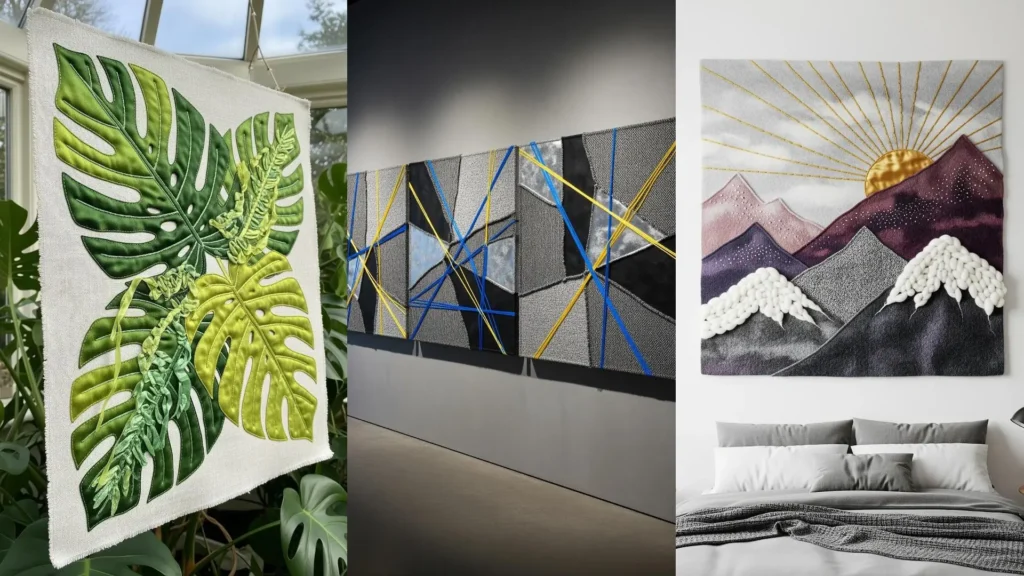
5. Weave an Atmospheric Mountain Tapestry
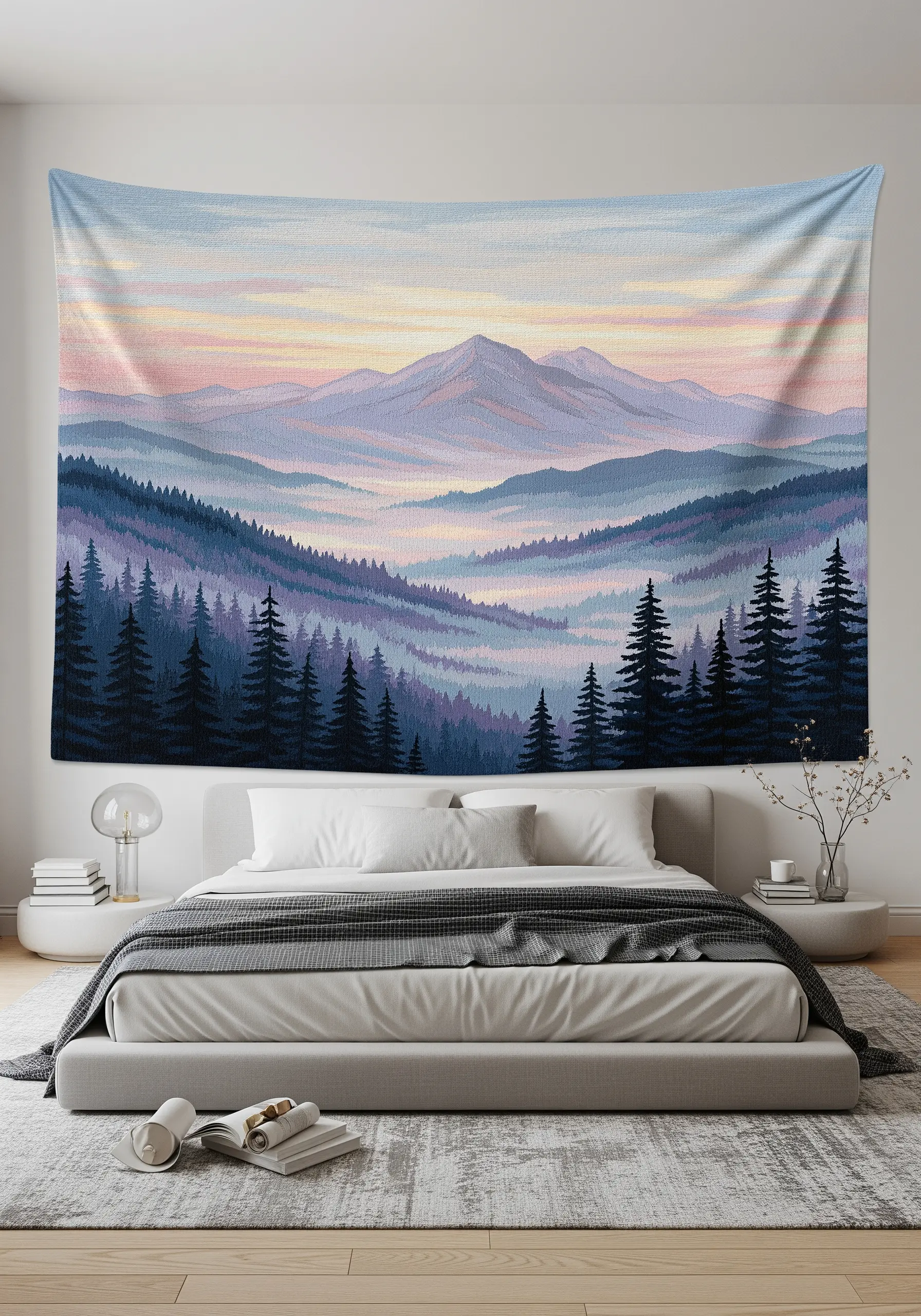
To create a sense of depth in an embroidered landscape, use color and stitch density to your advantage.
Work from back to front: stitch the farthest mountains with single strands of the lightest thread in sparse long-and-short stitches to suggest distance and haze.
As you move to the foreground, switch to darker threads and denser stitches, like split stitch or satin stitch, for the trees and hills.
This technique, known as atmospheric perspective, will instantly make your mountain landscape thread painting feel vast and immersive.
6. Convey Emotion with Expressive Line Art
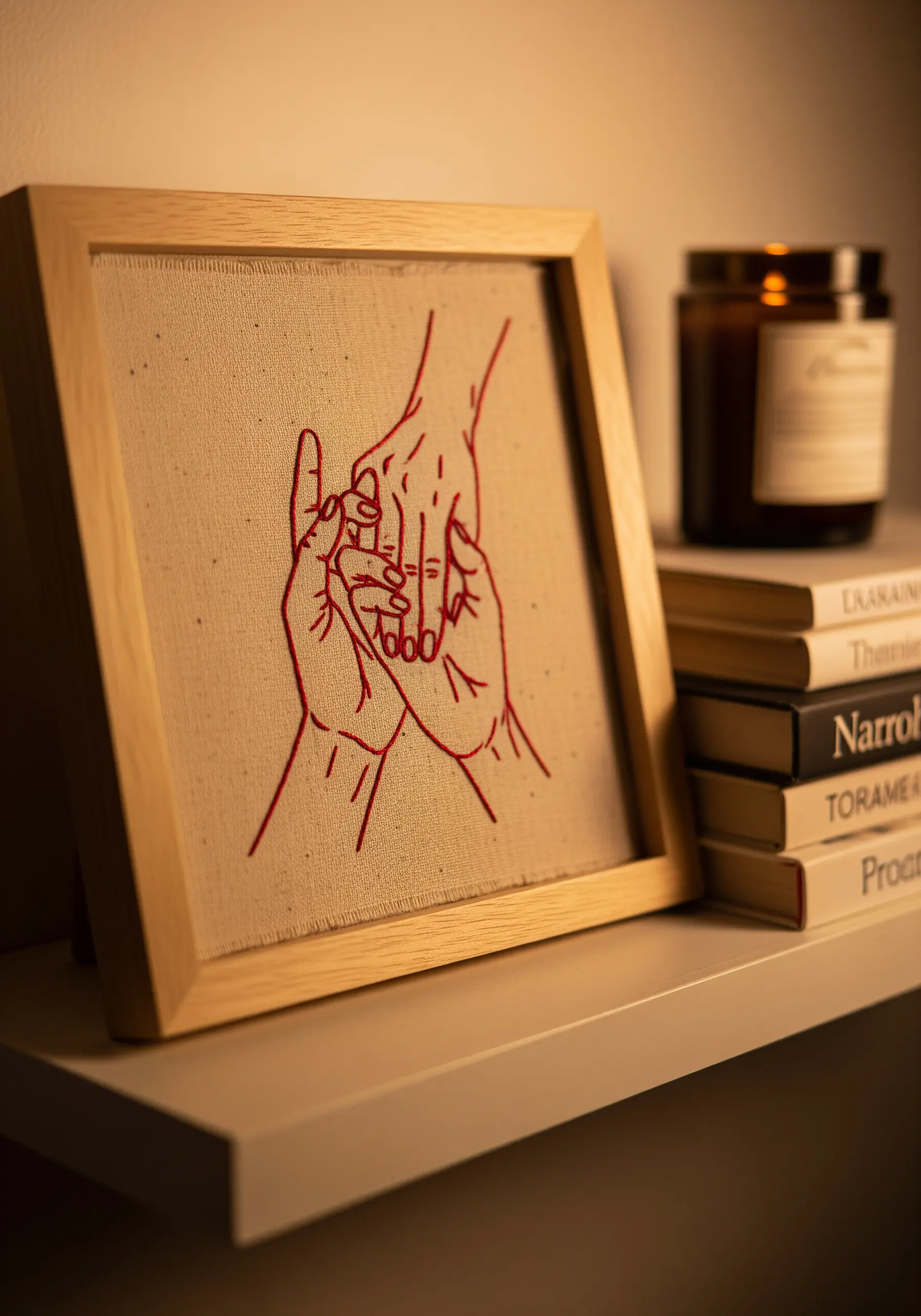
For intimate line art pieces, the weight of your thread can dramatically alter the mood.
Instead of standard six-strand floss, try a single strand of #8 perle cotton.
Its twisted, rope-like quality gives the lines a softer, more substantial presence, adding warmth and tactility to the design.
A single, bold color like red on a neutral linen background focuses all the attention on the form and emotion of the gesture, creating one of those DIY hand-stitched projects that feels deeply personal.
7. Explore Sculptural Form with Chunky Fibers
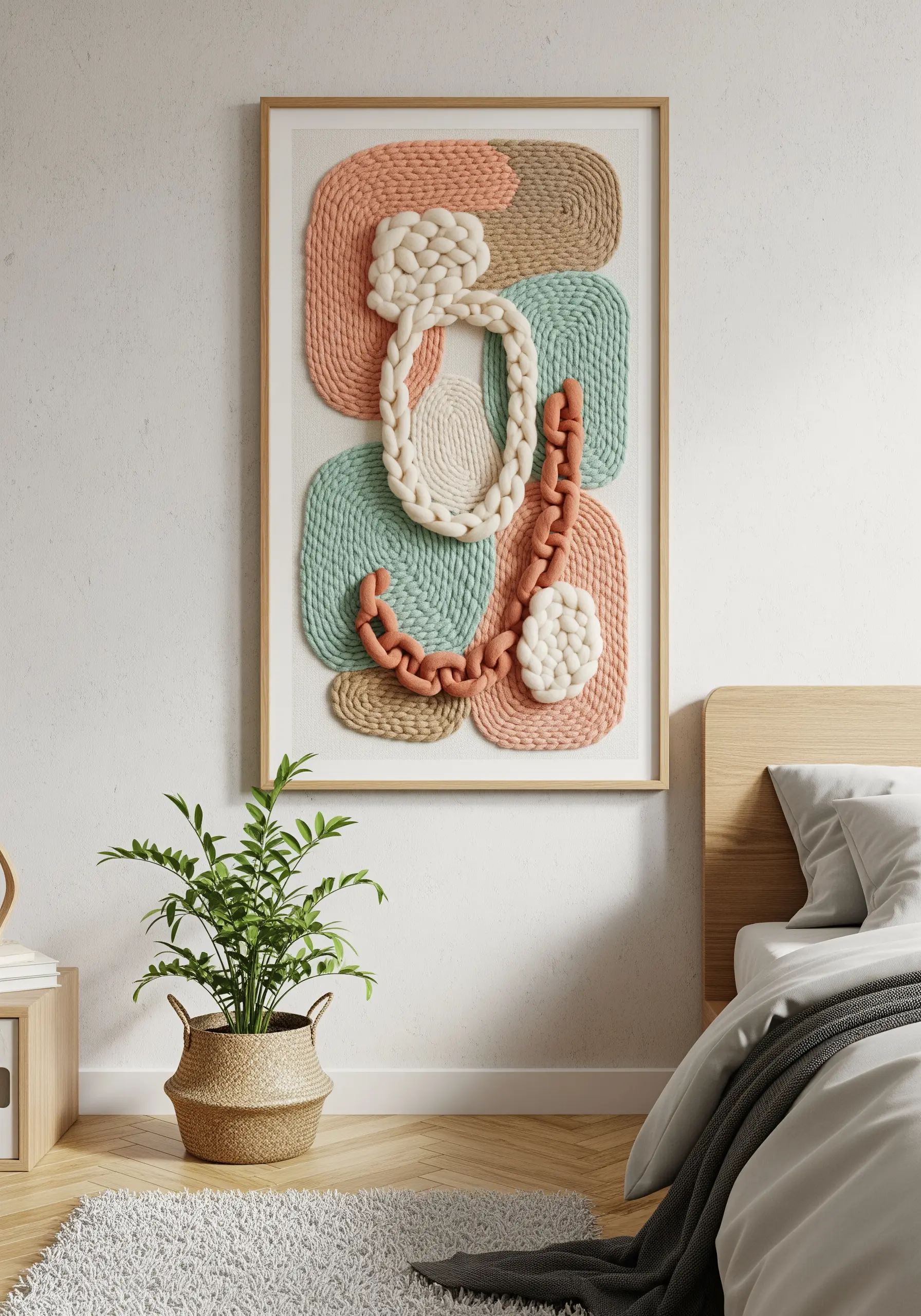
Move beyond thread to create art with dramatic, touchable texture.
This style uses couching—a technique where you lay thick yarn, rope, or wool roving on the fabric’s surface and tack it down with a thinner, matching thread.
This method allows you to create bold, raised textures and organic shapes that would be impossible with traditional stitches.
Arrange your chunky fibers in color-blocked sections for a modern, abstract piece that commands attention.
8. Design an Ethereal Cascading Wisteria Canopy
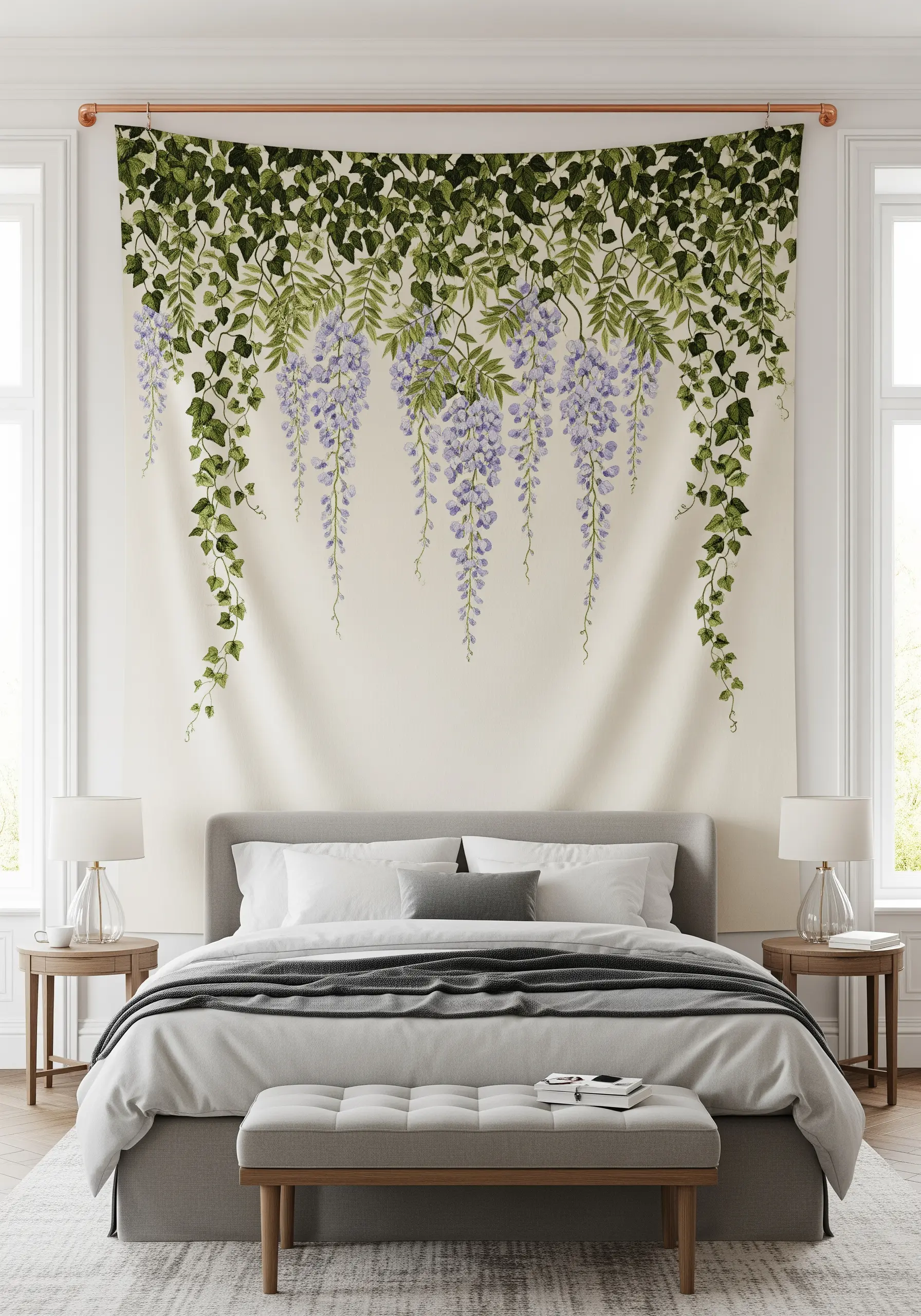
To prevent a large-scale floral design from looking flat, focus on creating density and shadow.
For the wisteria blossoms, use dense clusters of French knots or bullion knots in three to four shades of lavender and periwinkle.
Place the darkest shades at the top of each cluster and the lightest at the bottom to create a natural, weighted drape.
This subtle color shift gives the illusion of light filtering through the flowers, turning a simple tapestry into a botanical textile art installation.
9. Embrace the Sophistication of Monochrome Texture
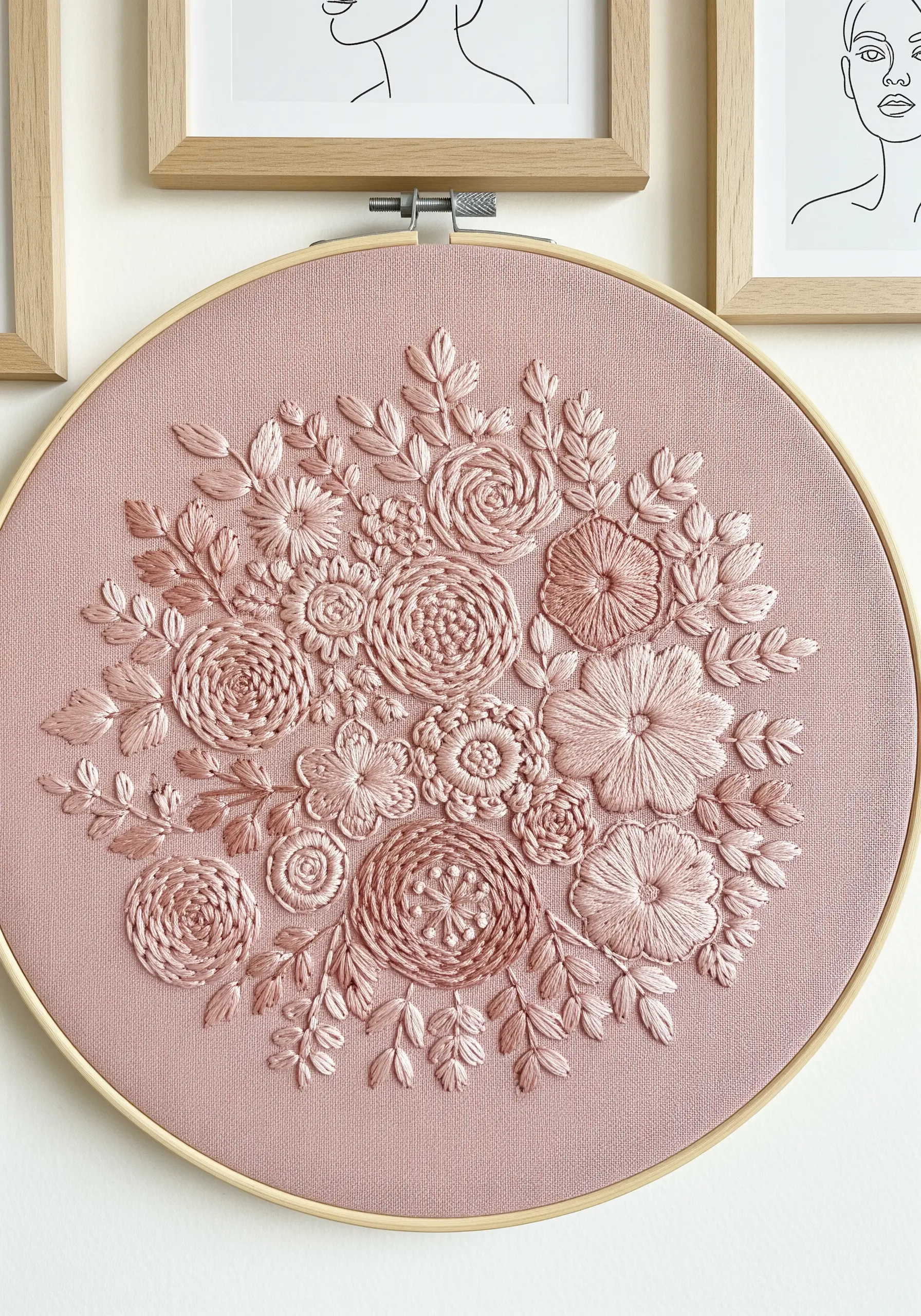
A single-color palette challenges you to create interest through texture alone, resulting in an incredibly chic and cohesive piece.
Combine a variety of stitches—woven wheel roses, directional satin stitch, French knots, and fishbone stitch for leaves—all in the same hue.
The way light hits the different stitch patterns creates a subtle, dynamic surface.
This is one of the most elegant tone-on-tone embroidery techniques for a high-end, gallery-wall look.
10. Chart the Stars with Metallic Precision
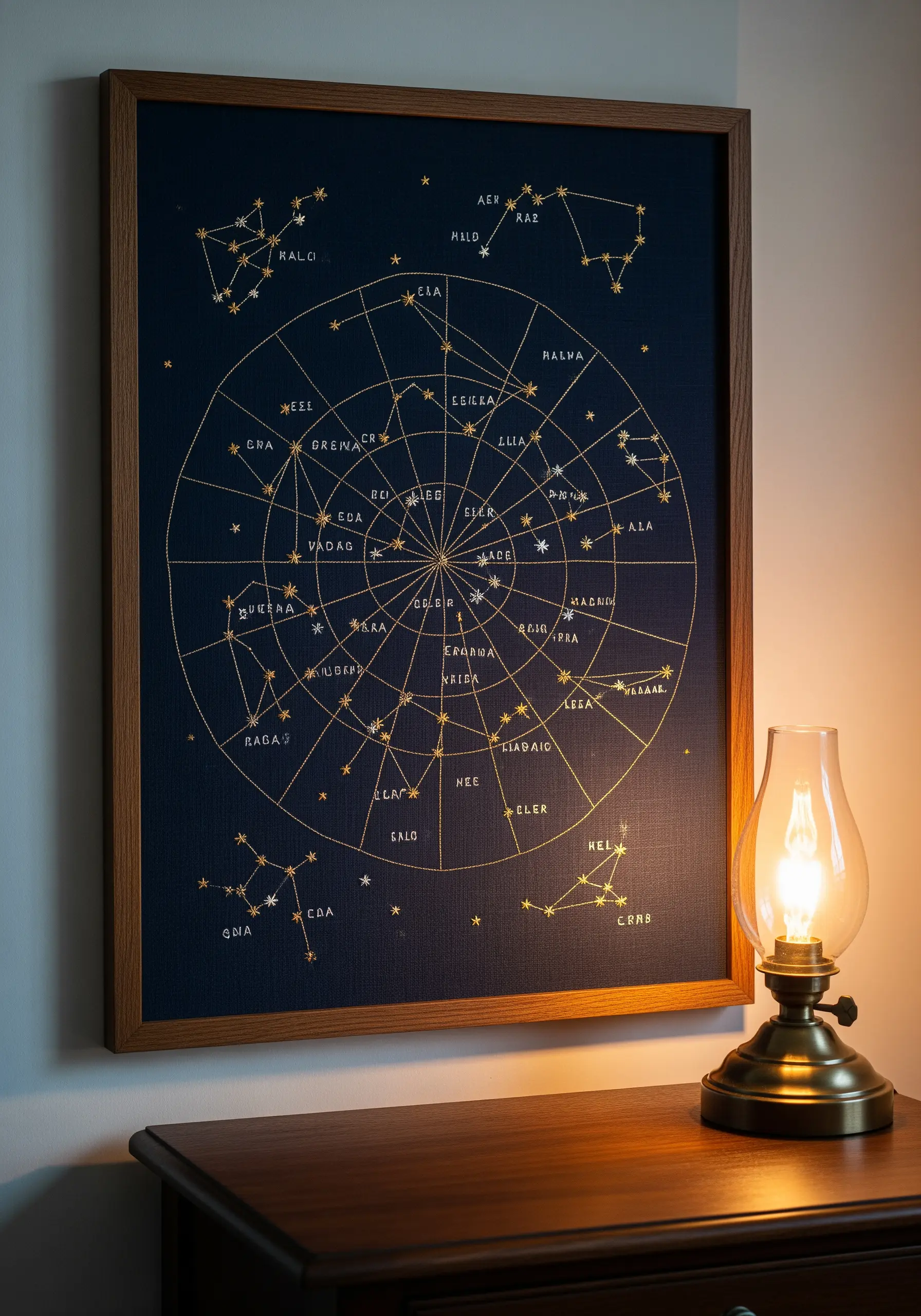
For a design that requires fine, precise lines like a constellation map, your thread choice is paramount.
Opt for a fine metallic thread and use a thread conditioner (like beeswax) to help it glide through the fabric without fraying.
Use a simple backstitch for the lines and tiny, single-seed stitches for the stars to maintain a clean, graphic quality.
This meticulous approach transforms a simple chart into one of those tiny night sky embroidery designs that feels both scientific and magical.
11. Capture Avian Iridescence with Thread Painting
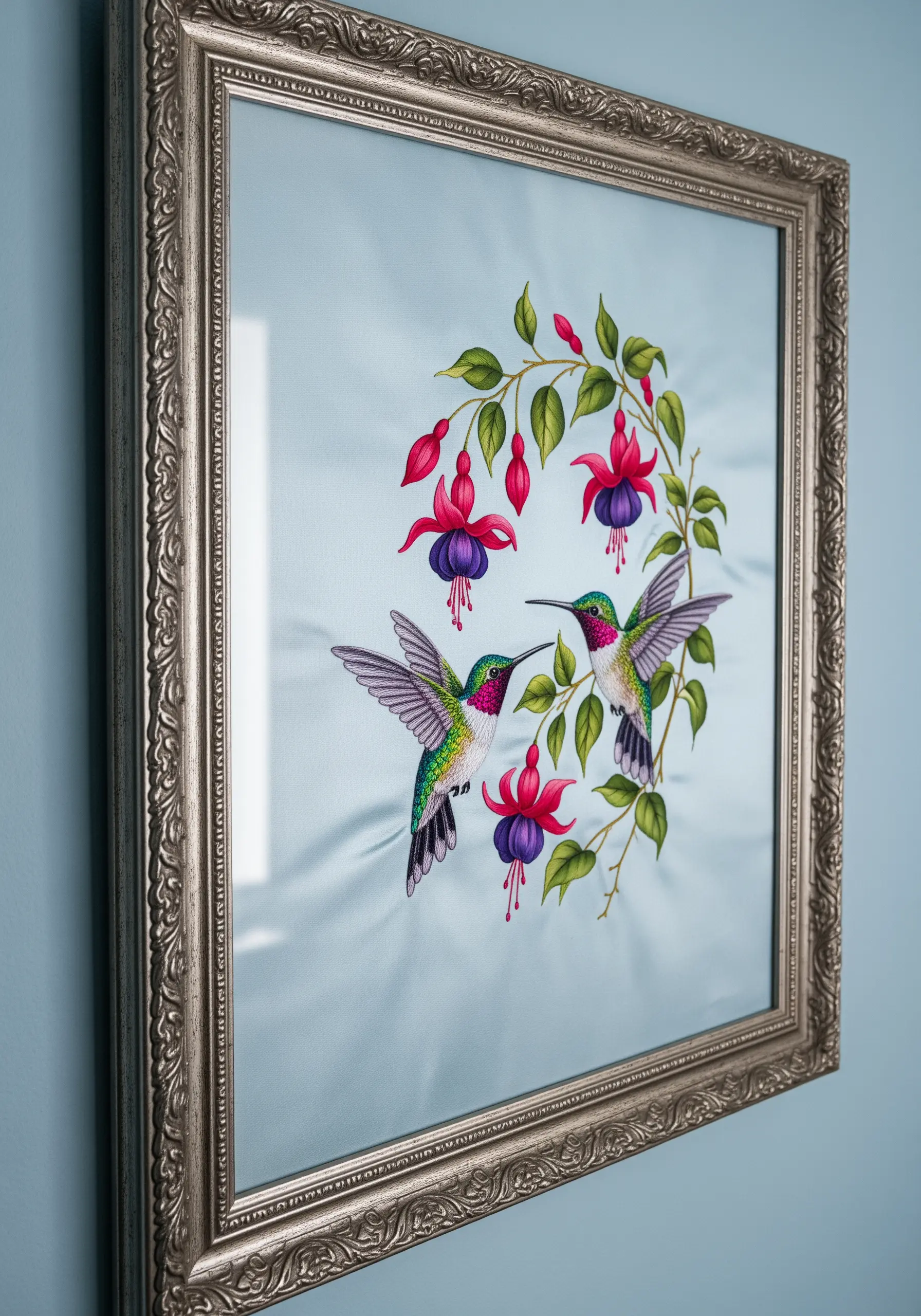
The key to realistic birds is delicate color blending, achieved through thread painting (long-and-short stitch).
Work with a single strand of floss and a small needle to create seamless gradients on the wings and body.
To mimic the hummingbird’s signature shimmer, subtly blend one strand of metallic floss into your greens or purples in the areas where light would naturally hit.
This restrained use of metallic thread adds life to your bird butterfly embroidery patterns without making them look cartoonish.
12. Tell a Story Across a Triptych of Hoops
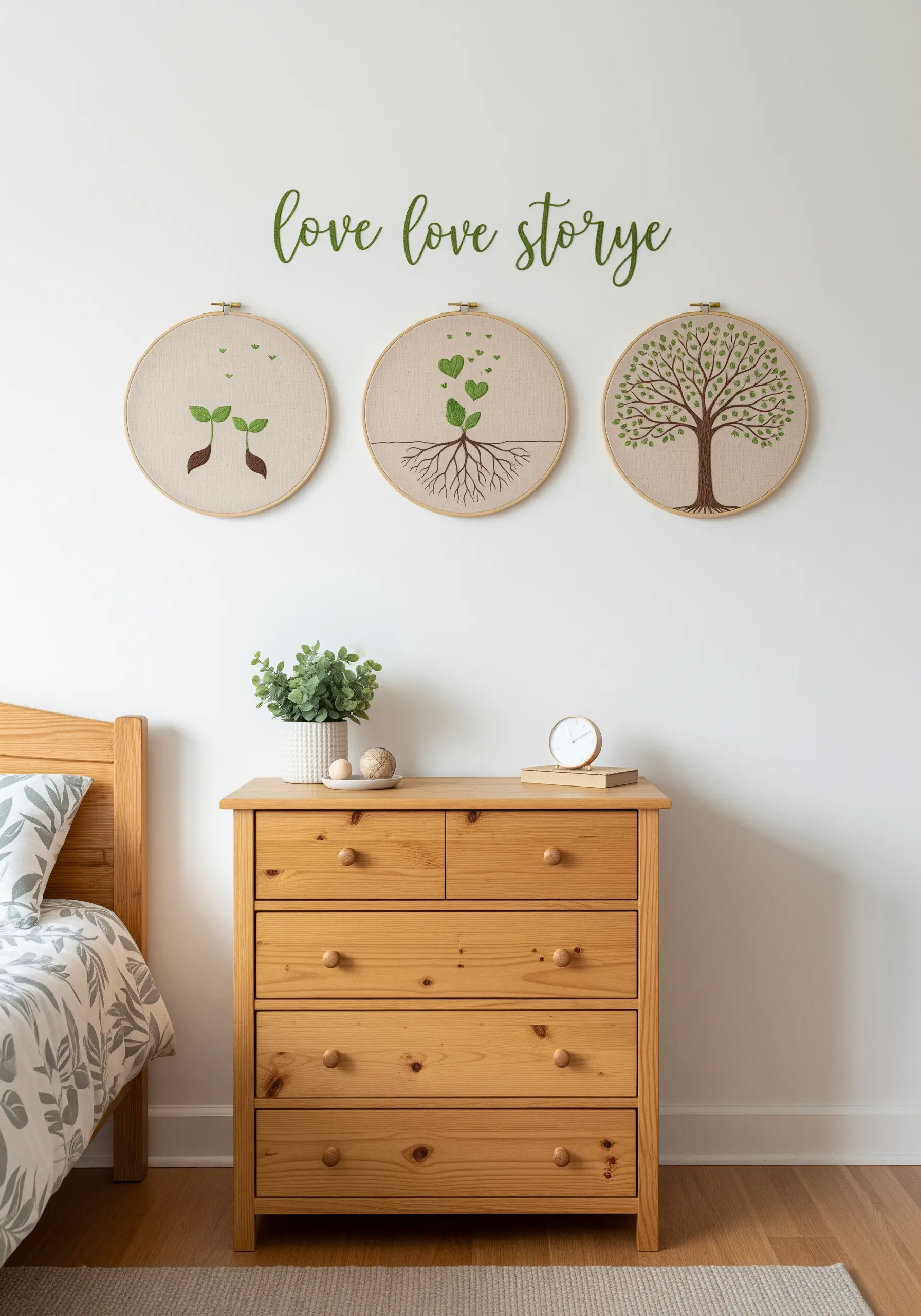
A triptych allows you to explore a narrative progression in a visually balanced way.
To ensure the set feels cohesive, use the same fabric, hoop size, and a restricted color palette across all three pieces.
Let negative space do the talking—simple, iconic motifs that grow or change from one hoop to the next tell a powerful story without clutter.
Arranging embroidery wall hoops in a series is a wonderful way to fill a larger wall and create a meaningful focal point.
13. Add Luxury with Script on Velvet
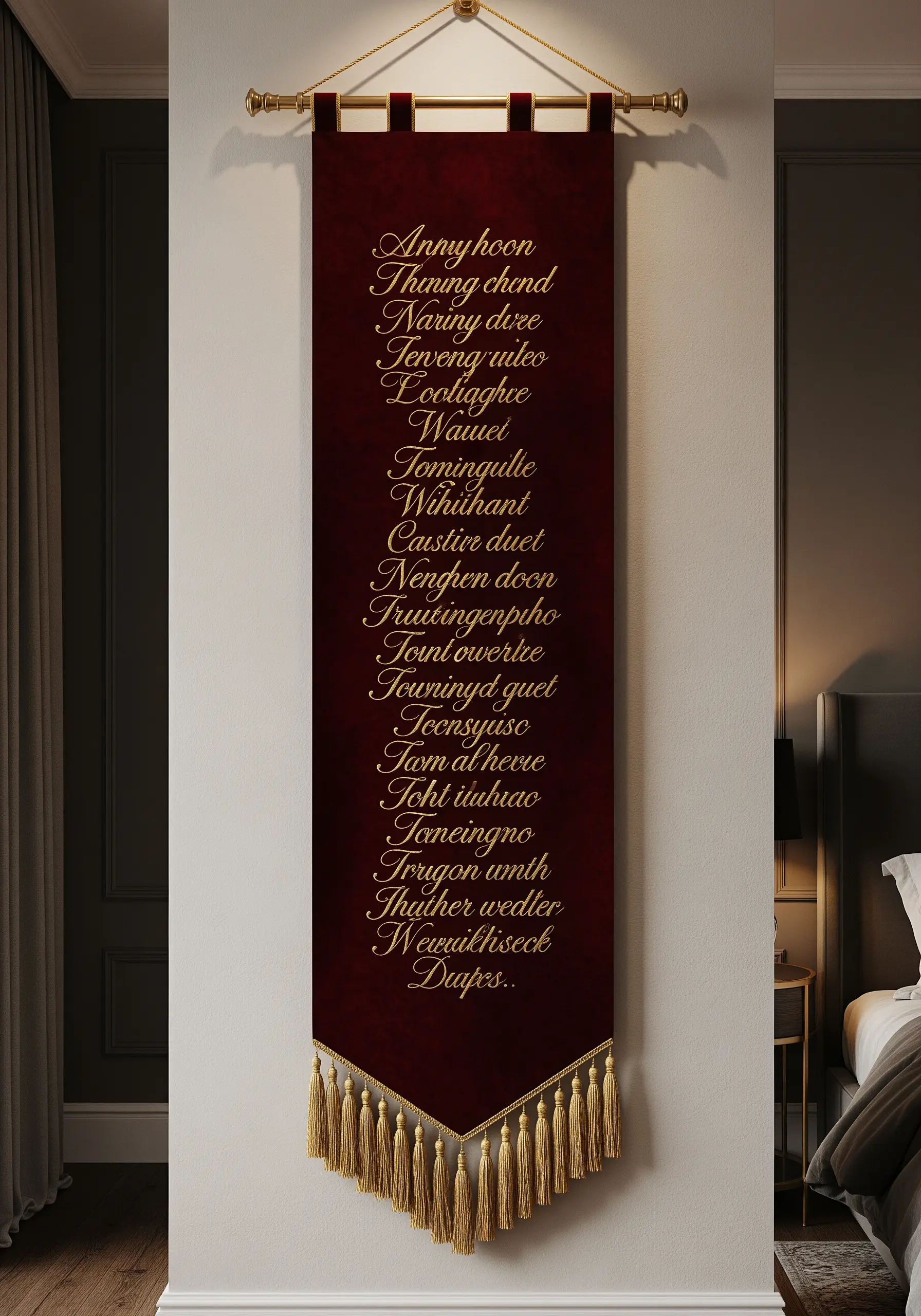
Embroidering on a high-pile fabric like velvet adds instant opulence, but it requires careful preparation.
Always use a tear-away or wash-away stabilizer on the back to prevent the stitches from sinking into the fabric and to ensure clean, crisp lines.
For the lettering, a fine metallic thread stitched in a delicate chain stitch or split stitch provides a classic, elegant finish that complements the richness of the velvet.
This combination of material and technique creates embroidered quote wall hangings with unmatched depth.
14. Marry Macrame and Embroidery for a Boho Statement
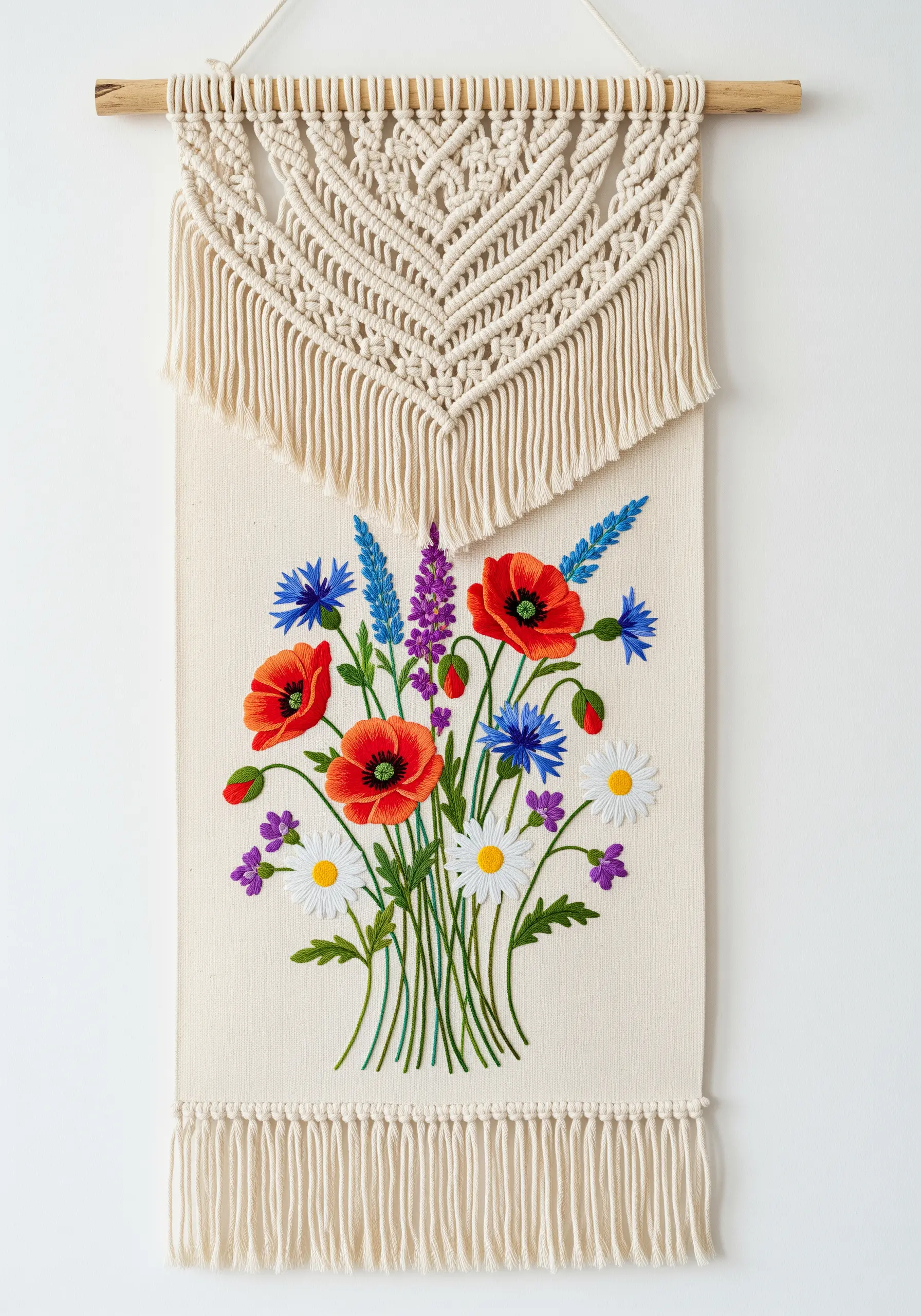
When combining two distinct fiber arts, let each one shine.
The intricate knots of the macrame provide ample texture, so keep the embroidery bold and graphic.
Use a thick floss or perle cotton and fill your floral motifs with dense satin stitch and simple lazy daisies.
Bright, saturated colors for the flowers will pop against the neutral canvas and macrame cord, creating a balanced and beautiful piece for your boho-inspired textile wall art collection.
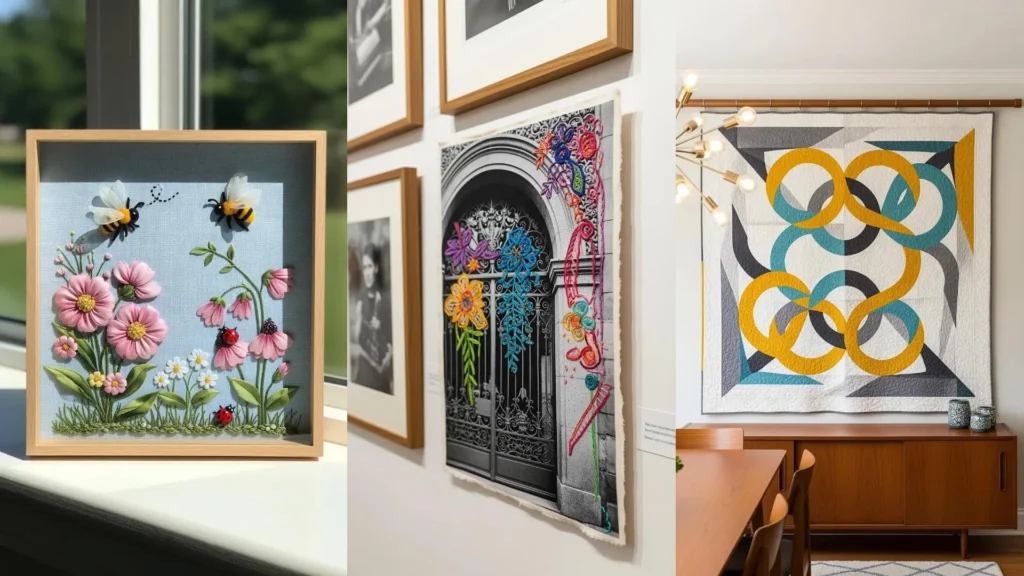
15. Create Delicate Dimension on Blossoms and Bees
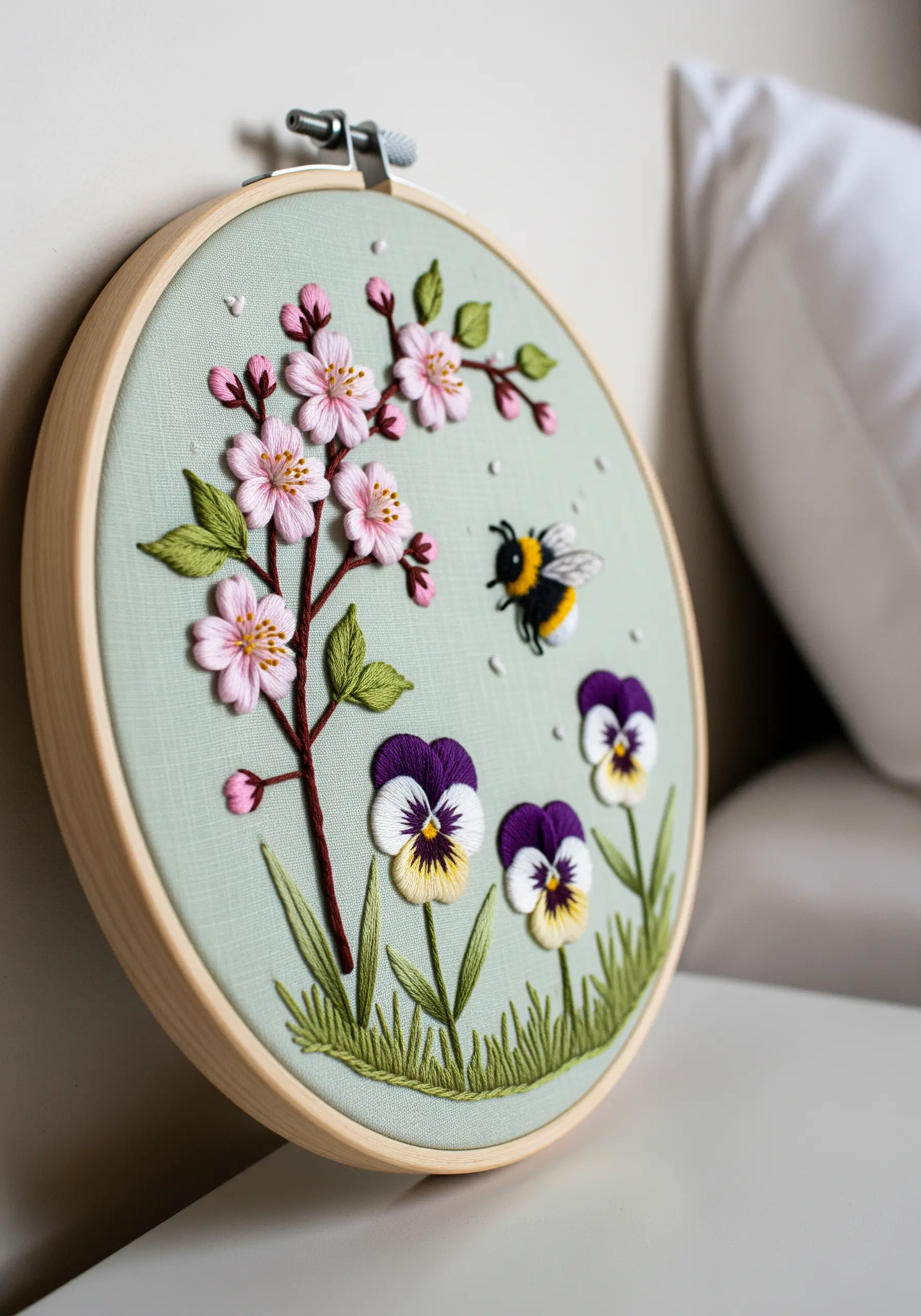
To make small elements stand out, play with dimension.
For the cherry blossom petals, use detached chain stitches and leave a little slack for a slightly lifted, three-dimensional effect.
Give the bee’s body a plump look with a small padded satin stitch base.
These subtle textural shifts make the scene feel more dynamic and alive, transforming it into one of those whimsical embroidery patterns that draws the viewer in for a closer look.
16. Fuse Line Art with a Crown of Abundant Texture
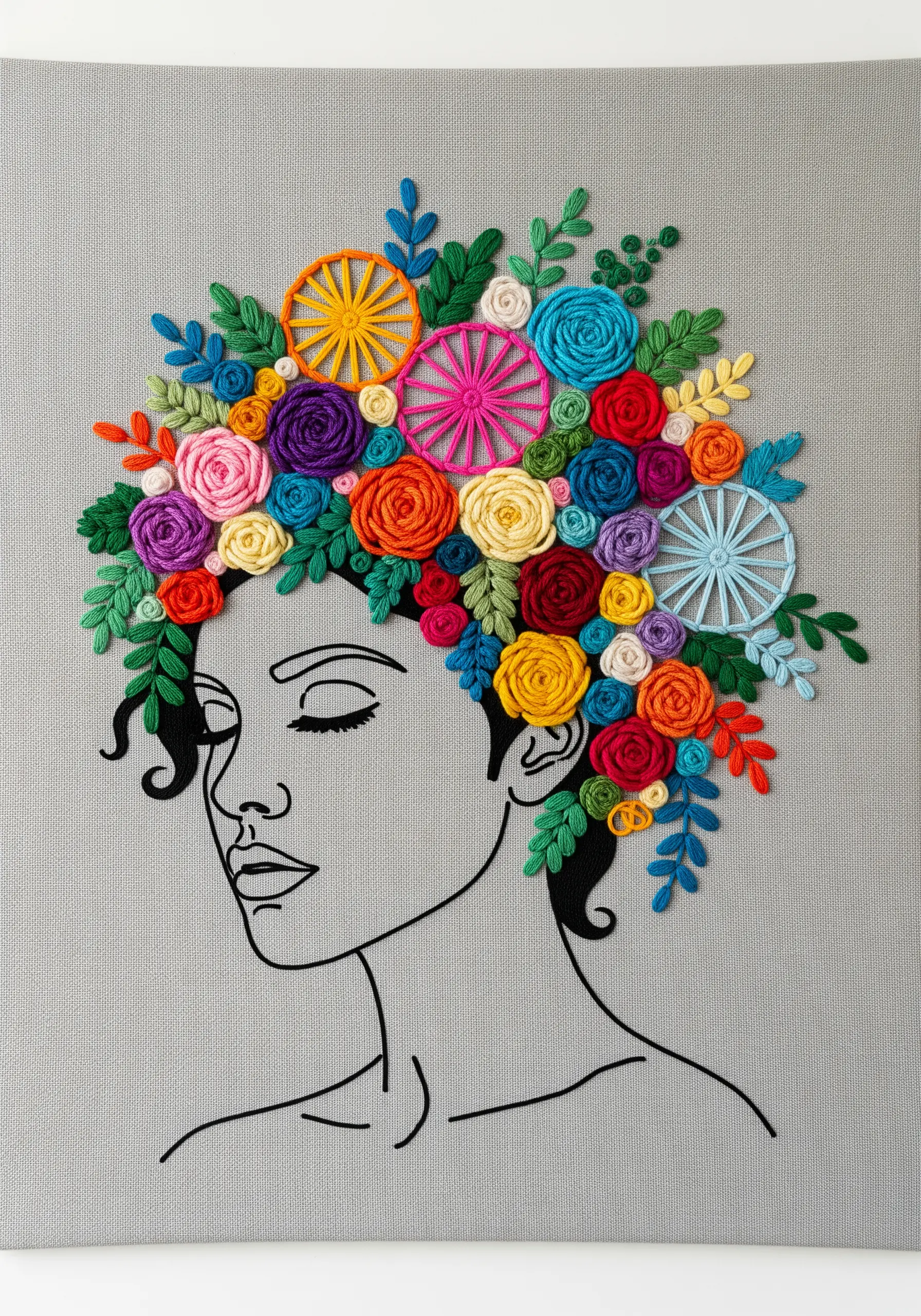
This style is a joyful exploration of how to combine embroidery and mixed media sensibilities within a single piece.
Keep the line-art portrait clean and simple with a single strand of black thread in a stem stitch.
Then, let the floral “hair” become a canvas for texture: pack it with colorful woven wheel roses, bullion knots, and layered leaf stitches of varying sizes.
The contrast between the minimal lines and the maximalist texture creates a stunning, artful composition.
17. Paint a Sunset with Thread Gradients
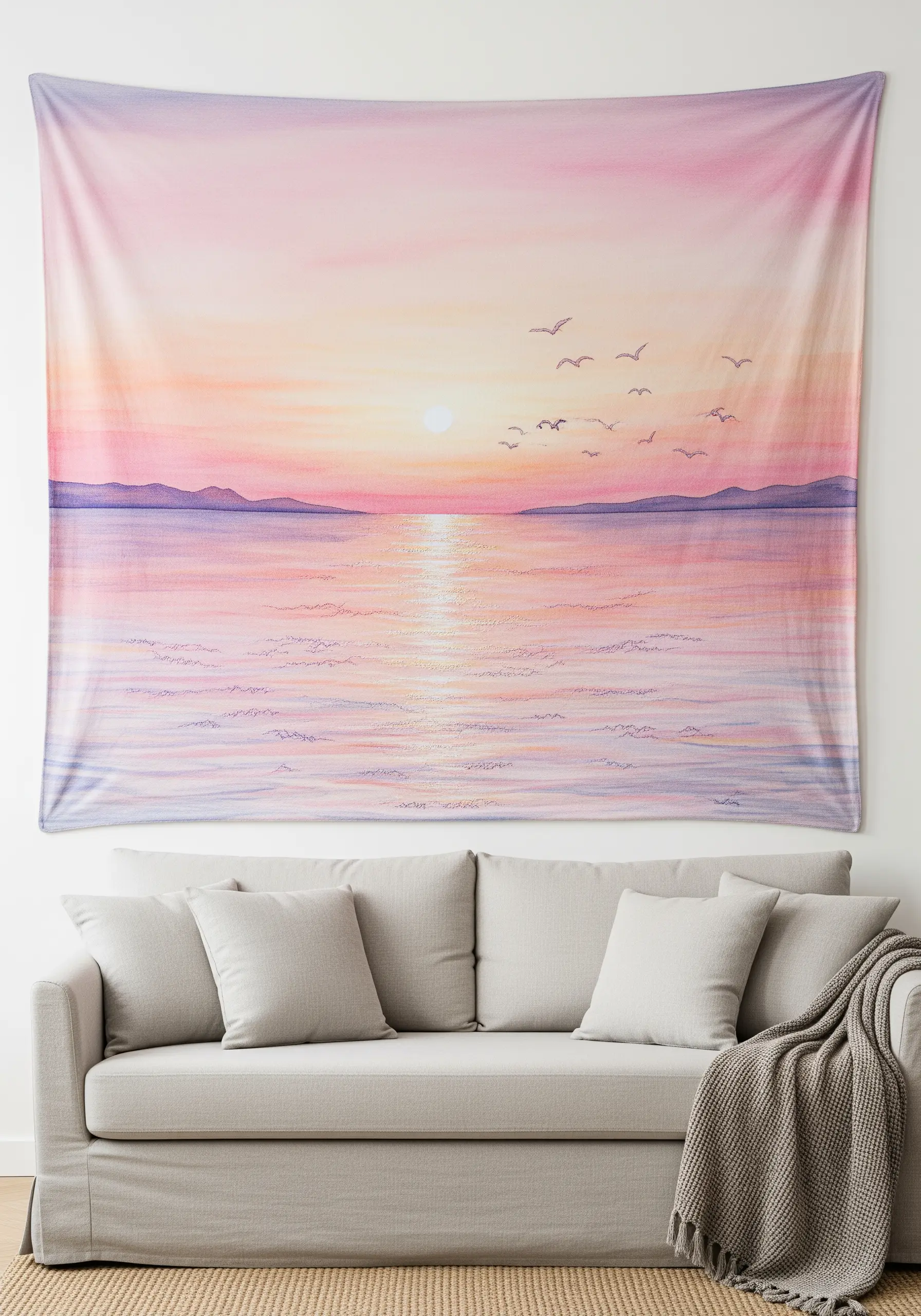
To achieve a soft, painterly effect for a sunset, think in gradients, not solid blocks of color.
Use single strands of floss in adjacent shades (e.g., pale yellow, peach, pink, lavender) and blend them using long-and-short stitch.
For the water’s reflection, run horizontal lines of a light, shimmering thread like a metallic or a silk floss, varying the stitch length to create a gentle sense of movement.
This approach gives your work the soft feel of watercolor-style embroidery patterns.
18. Replicate the Charm of a Vintage Botanical Print
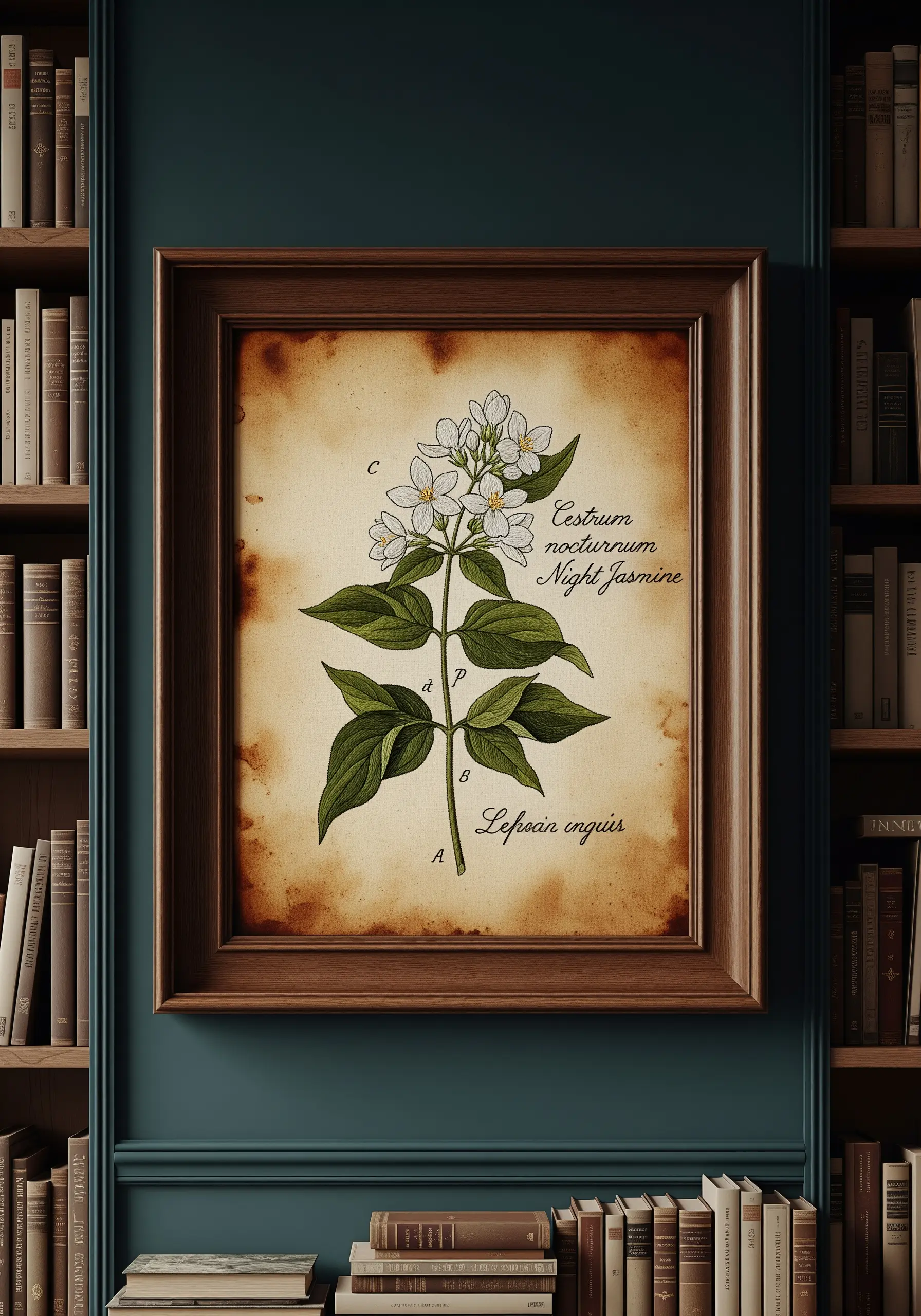
The key to this antique aesthetic is restraint and precision.
Start with a tea- or coffee-stained fabric to create an aged parchment look.
Use a single strand of dark brown or black thread and simple, classic stitches: backstitch for all the outlines and lettering, and a light seed stitch fill for the leaves to suggest shading.
This mimics the look of an old ink illustration and is a beautiful way to create dried-flower-style embroidery ideas with a timeless, scientific appeal.
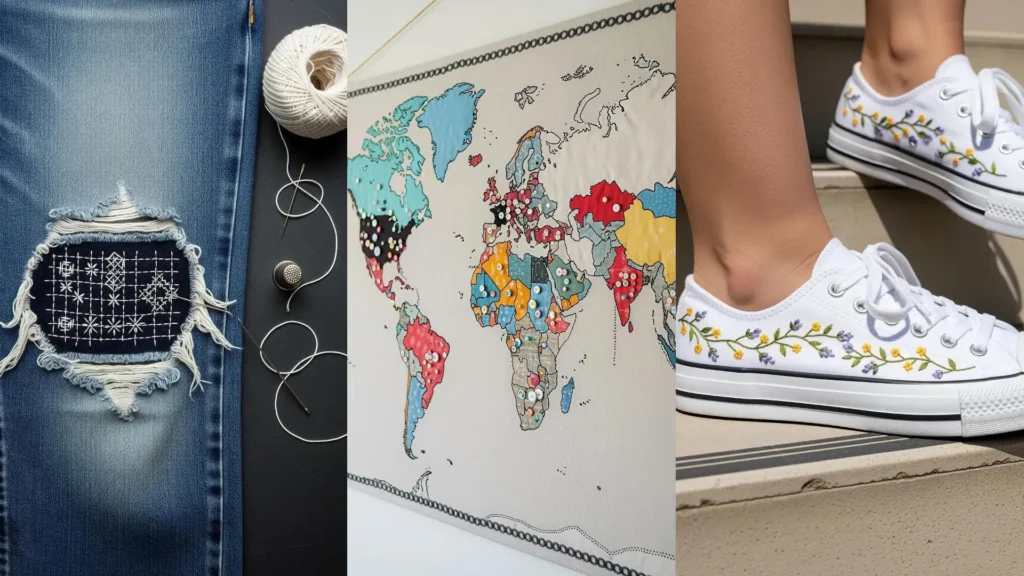
19. Find Calm in Sashiko-Inspired Patchwork
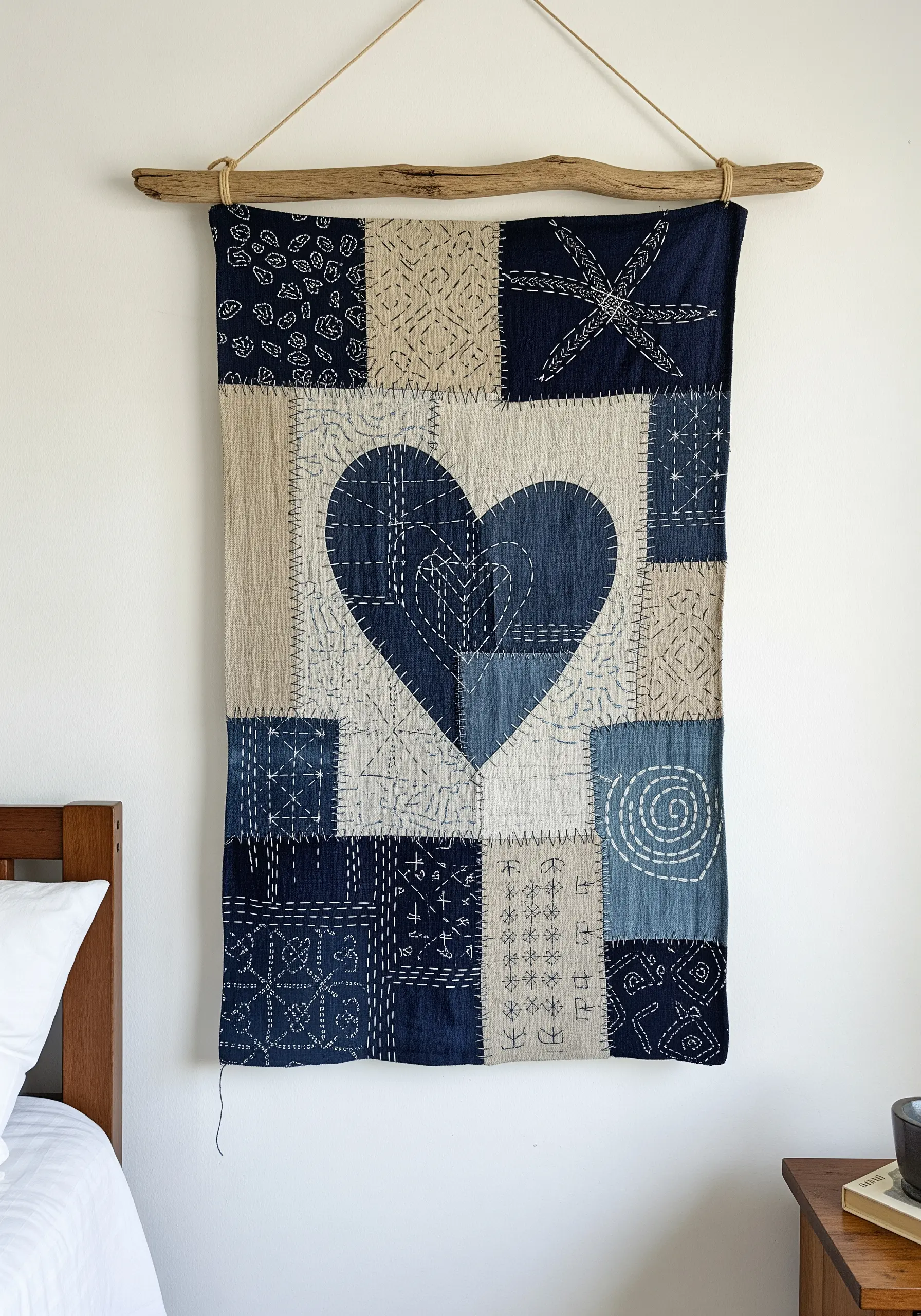
This piece celebrates the mindful rhythm of sashiko, a traditional Japanese stitching technique.
The beauty is in the simplicity of the running stitch; focus on keeping your stitch length and the spaces between them as even as possible.
Use a thick, high-contrast thread (like white perle cotton on indigo fabric) to make the graphic patterns stand out.
Combining different stitched squares into a patchwork creates wonderfully earthy texture embroidery patterns that feel both rustic and deeply intentional.
20. Define Shapes with Bold Metallic Outlines
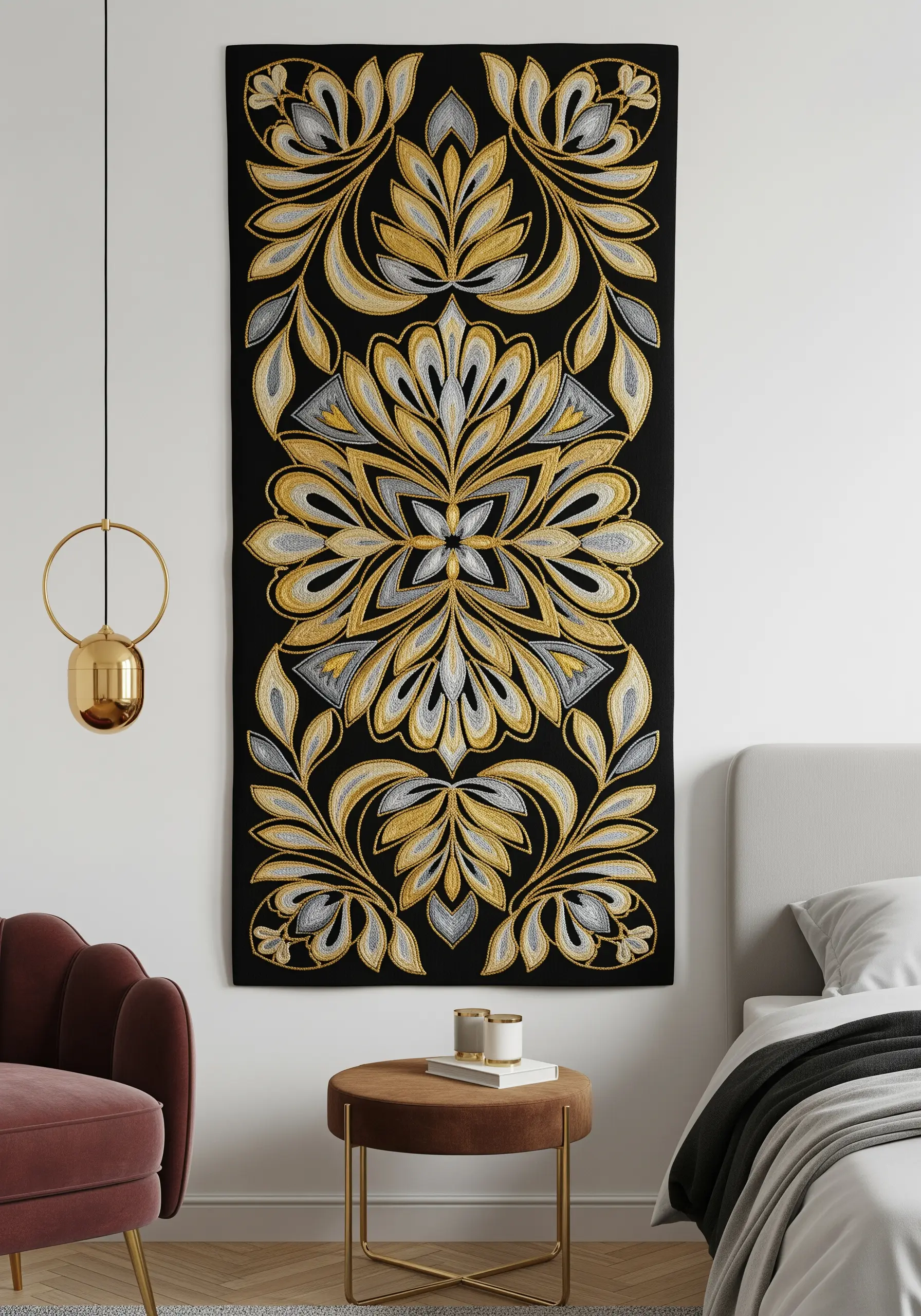
For a graphic, Art Deco-inspired look, use color and outlines to create definition.
Fill each shape with a dense, directional satin stitch, using metallic and matte threads to create contrast in sheen.
Then, outline every single segment with a thin, dark thread using a split stitch or backstitch.
This final step is what gives the design its sharp, stained-glass quality and makes your metallic thread wall art designs look incredibly polished and professional.
21. Personalize with Padded Monograms and Tiny Florals
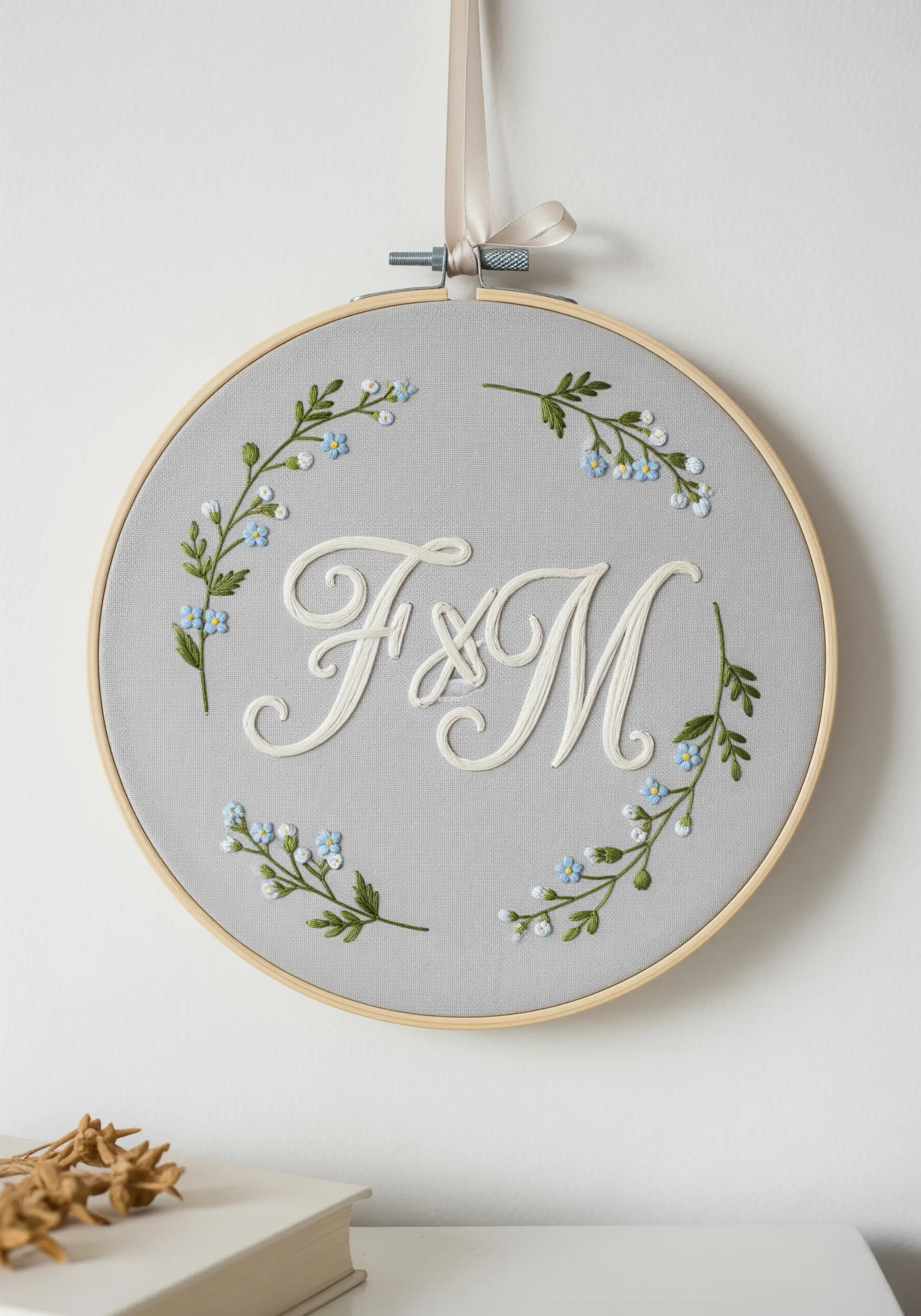
A well-stitched monogram is a timeless gift, and padding is the secret to making it feel luxurious.
First, fill the letter shapes with a base of small, rough satin stitches, then cover that layer with a smooth, perfectly even satin stitch going in the opposite direction.
This raises the letters from the fabric for a beautiful, embossed effect.
Frame your monogram with delicate details, like tiny forget-me-nots, to complete your botanical monogram embroidery ideas with personal charm.